WO2025070163A1 - 作業機械状態管理システム - Google Patents
作業機械状態管理システム Download PDFInfo
- Publication number
- WO2025070163A1 WO2025070163A1 PCT/JP2024/033085 JP2024033085W WO2025070163A1 WO 2025070163 A1 WO2025070163 A1 WO 2025070163A1 JP 2024033085 W JP2024033085 W JP 2024033085W WO 2025070163 A1 WO2025070163 A1 WO 2025070163A1
- Authority
- WO
- WIPO (PCT)
- Prior art keywords
- maintenance work
- work
- occurrence probability
- prediction
- management system
- Prior art date
- Legal status (The legal status is an assumption and is not a legal conclusion. Google has not performed a legal analysis and makes no representation as to the accuracy of the status listed.)
- Pending
Links
Images





Classifications
-
- G—PHYSICS
- G06—COMPUTING OR CALCULATING; COUNTING
- G06Q—INFORMATION AND COMMUNICATION TECHNOLOGY [ICT] SPECIALLY ADAPTED FOR ADMINISTRATIVE, COMMERCIAL, FINANCIAL, MANAGERIAL OR SUPERVISORY PURPOSES; SYSTEMS OR METHODS SPECIALLY ADAPTED FOR ADMINISTRATIVE, COMMERCIAL, FINANCIAL, MANAGERIAL OR SUPERVISORY PURPOSES, NOT OTHERWISE PROVIDED FOR
- G06Q10/00—Administration; Management
- G06Q10/20—Administration of product repair or maintenance
Definitions
- the present invention relates to a work machine status management system for managing the status of a work machine.
- Work machines such as hydraulic excavators and wheel loaders are often operated under harsh conditions in working environments such as construction sites and mines, so traditionally, inspection and repair contracts for the work machines are concluded between the customers who own the work machines and the sales companies that sell the work machines, and the work machines are inspected regularly and repaired as necessary.
- Patent Document 1 discloses an inspection support system that calculates the future failure probability of each part of a specific work machine based on operation data acquired from multiple work machines and the repair history of the work machines, and displays the calculated failure probability on a mobile terminal.
- the object of the present invention is to provide a work machine status management system that is capable of proposing appropriate timing for carrying out various maintenance work, taking into account the reliability of the probability of occurrence of failure events that may occur in a work machine.
- the present invention provides a work machine status management system for managing the status of a work machine, comprising: a controller mounted on the work machine and controlling operation of the work machine; a prediction device provided on a server connected to the controller so as to be able to communicate with the controller and predicting the occurrence of maintenance work for the work machine; and an alarm device for alarming the prediction result predicted by the prediction device, wherein the prediction device creates a prediction model for predicting the occurrence of maintenance work for the work machine based on maintenance work results, which are results of the maintenance work performed on the work machine, and operation data acquired from the controller, calculates a predicted probability of occurrence of the maintenance work as a predicted occurrence probability by applying at least one or more of the current operation data to the prediction model, sets a predetermined past period as a simulation period, and calculates the probability of occurrence of the maintenance work in the simulation period as a simulation occurrence probability by applying at least one or more of the operation data in the set simulation period to the prediction model, calculates a reliability of the
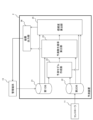
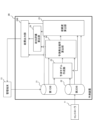
- FIG. 1 is a system configuration diagram showing an example of the configuration of a work machine state management system according to a first embodiment of the present invention.
- FIG. FIG. 2 is a functional block diagram showing functions of the prediction device according to the first embodiment.
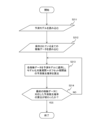
- 5 is a flowchart showing a flow of processing executed by a prediction model creation unit of the prediction device according to the first embodiment.
- 11 is a table illustrating an example of data on prediction target results.
- 1 is a table showing an example of operation data of a hydraulic excavator. 1 is a graph showing a transition of operation data of a hydraulic excavator with respect to the date on which maintenance work was performed.
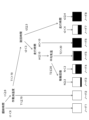
- FIG. 2 is a diagram illustrating an example of a tree structure of a prediction model created by a prediction model creation unit.
- 5 is a flowchart showing a flow of processing executed by a predicted occurrence probability calculation unit of the prediction device according to the first embodiment.
- 13 is a graph showing a transition of a predicted occurrence probability of maintenance work.
- 5 is a flowchart showing the flow of processing executed by a reliability calculation unit of the prediction device according to the first embodiment.
- 11 is a table showing an example of operation data of a hydraulic excavator during a simulation period. 1 is a graph showing the relationship between a predicted date of execution of maintenance work and an actual date of execution of the maintenance work.
- 11 is a table showing the relationship between the maintenance work occurrence date, notification date, and adaptation period during a simulation period.
- FIG. 11 is a diagram illustrating an example of a prediction result in the first embodiment.
- FIG. 11 is a diagram illustrating an example of a prediction result in the first embodiment.
- FIG. 11 is a functional block diagram showing functions of a prediction device according to a second embodiment of the present invention.
- FIG. 11 is a functional block diagram showing functions of a prediction device according to a third embodiment of the present invention.
- FIG. 13 is a diagram illustrating an example of a prediction result in the third embodiment.
- FIG. 1 is a system configuration diagram showing an example of the configuration of a work machine status management system 1 according to a first embodiment of the present invention.
- the work machine condition management system 1 is a system that predicts the occurrence of maintenance work (including inspection work and repair work) on a hydraulic excavator 10 as a work machine, and manages the hydraulic excavator 10 so that its condition is maintained in good condition.
- the hydraulic excavator 10 is equipped with a controller 11 that controls the operation of the hydraulic excavator 10.
- the controller 11 is connected to a server 12 so that information can be exchanged between them via a communication network N, such as an Internet line via satellite communication S or a mobile communication network (not shown).
- the controller 11 transmits current operation data of the hydraulic excavator 10 to the server 12 as needed.
- the server 12 is connected to a management terminal 13 installed in, for example, a sales company that sells the hydraulic excavator 10 or a maintenance company that undertakes the maintenance management of the hydraulic excavator 10, via a communication network N so that they can communicate with each other.
- the management terminal 13 transmits information about the customer who owns the hydraulic excavator 10 and the results of maintenance work performed on the hydraulic excavator 10 (hereinafter simply referred to as "maintenance work results") to the server 12.
- the server 12 also includes a prediction device 2 that predicts the occurrence of maintenance work on the hydraulic excavator 10, as indicated by the dashed line in FIG. 1.
- the results predicted by the prediction device 2 are transmitted to the management terminal 13 and displayed on the screen.
- the management terminal 13 is one aspect of an alarm device that notifies the results predicted by the prediction device 2.
- a monitor installed in the cab of the hydraulic excavator 10 may be used as an alarm device to display the predicted results.
- the server 12 has a hardware configuration including a CPU (Central Processing Unit), RAM (Random Access Memory), ROM (Read Only Memory), HDD (Hard Disk Drive), and I/F (Interface). Each of these components is connected to each other via a common bus.
- CPU Central Processing Unit
- RAM Random Access Memory
- ROM Read Only Memory
- HDD Hard Disk Drive
- I/F Interface
- the CPU is a computing device that controls the overall operation of the server 12.
- RAM is a volatile storage medium that allows high-speed reading and writing of information, and is used, for example, as a working area when the CPU processes management information.
- ROM is a read-only non-volatile storage medium that stores programs such as firmware.
- a HDD is a non-volatile storage medium that can read and write information and has a large storage capacity, and stores the OS (Operating System), control programs for executing various information processing operations described below, and application programs. Note that a HDD can be substituted with any device type, for example an SSD (Solid State Drive), as long as it realizes the function of storing and managing information as a non-volatile storage medium.
- OS Operating System
- SSD Solid State Drive
- the I/F is a connection interface with the communication network N, to which the controller 11 and management terminal 13 are connected.
- the server 12 with such a hardware configuration is an information processing device that realizes processing functions by using the calculation functions of the CPU to process control programs stored in the ROM and control programs and application programs loaded into the RAM from a storage medium such as an HDD.
- a software control unit including various functional modules in the server 12 is configured.
- the combination of the software control unit configured in this way and the hardware resources including the above configuration configures a functional block that realizes the functions of the server 12.
- the controller 11 also has a hardware configuration similar to that described above.
- the server 12 is a server device as shown in FIG. 1, but is not limited to this and may be, for example, a cloud server built on the communication network N.
- FIG. 2 is a functional block diagram showing the functions of the prediction device 2 according to the first embodiment.
- the prediction device 2 includes a first database 21, a second database 22, a prediction model creation unit 23, a predicted occurrence probability calculation unit 24, a reliability calculation unit 25, and a result output unit 26.
- first database 21 will be referred to as the "first DB21”
- second database 22 will be referred to as the "second DB22”.
- the first DB 21 stores the maintenance work records of the hydraulic excavator 10 transmitted from the management terminal 13.
- the second DB 22 stores the operation data of the hydraulic excavator 10 transmitted from the controller 11.
- the prediction model creation unit 23 creates a prediction model that predicts the occurrence of maintenance work on the hydraulic excavator 10 based on at least one or more maintenance work records among the multiple maintenance work records stored in the first DB 21 and at least one or more operation data among the multiple operation data stored in the second DB 22.
- the predicted occurrence probability calculation unit 24 calculates the predicted occurrence probability of maintenance work (the probability of an event that may occur in the hydraulic excavator 10 in the future) as a predicted occurrence probability by applying at least one or more of the most recent operation data, including the latest operation data stored in the second DB 22, to the prediction model created by the prediction model creation unit 23. Note that when the predicted occurrence probability calculation unit 24 reads all of the operation data stored in the second DB 22, the data volume may be too large to read. In such a case, the predicted occurrence probability calculation unit 24 reduces the data volume of the operation data before reading it by limiting the model number and region of the hydraulic excavator 10 on which the maintenance work was performed based on the maintenance work track record stored in the first DB 21.
- the reliability calculation unit 25 sets a predetermined period in the past as a simulation period, and calculates the occurrence probability of maintenance work during the simulation period as a simulation occurrence probability by applying at least one piece of operation data during the simulation period to a prediction model, and calculates the reliability of the predicted occurrence probability calculated by the predicted occurrence probability calculation unit 24 based on the calculated simulation occurrence probability and the maintenance work performance during the simulation period.
- the reliability calculation unit 25 sets that date as a maintenance work occurrence notification date that notifies the occurrence of maintenance work, and calculates the reliability of the predicted occurrence probability calculated by the predicted occurrence probability calculation unit 24 by comparing the set maintenance work occurrence notification date with the date on which the actual maintenance work was performed during the simulation period.
- the result output unit 26 outputs the predicted occurrence probability calculated by the predicted occurrence probability calculation unit 24 and the reliability calculated by the reliability calculation unit 25 to the management terminal 13. In addition, the result output unit 26 outputs a notification signal to notify the management terminal 13 of the predicted occurrence date of the maintenance work set by the reliability calculation unit 25.
- FIG. 3 is a flowchart showing the flow of processing executed by the prediction model creation unit 23 of the prediction device 2 according to the first embodiment.
- FIG. 4 is a table showing an example of data on the actual results to be predicted.
- FIG. 5 is a table showing an example of operation data of the hydraulic excavator 10.
- FIG. 6 is a graph showing the progress of the operation data of the hydraulic excavator 10.
- FIG. 7 is a diagram showing an example of a tree structure of a prediction model created by the prediction model creation unit 23.
- the prediction model creation unit 23 first reads the maintenance work results to be used for prediction (hereinafter simply referred to as "prediction target results") from among the multiple maintenance work results stored in the first DB 21 (step S201).
- the predicted performance is, for example, the data shown in FIG. 4, and includes the model number of the hydraulic excavator 10, the date on which the maintenance work was performed, the number and name of the part on which the maintenance work was performed, and the specific details of the work performed.
- the first line in Figure 4 shows that the main pump with part number xxxxx was replaced on March 2, 2018 for hydraulic excavator 10 with model number AAA#0001.
- the prediction model creation unit 23 then reads the operation data associated with the hydraulic excavator 10 listed in the prediction target performance from the operation data of the multiple hydraulic excavators 10 stored in the second DB 22, as shown in FIG. 5 (step S202).
- the operation data of the hydraulic excavator 10 includes items such as excavation time, main pump discharge pressure, hydraulic oil temperature, swing time, and travel time.
- FIG. 5 also illustrates an example of operation data for the hydraulic excavator 10 with model number AAA#0001 shown in the first line of FIG. 4.
- the prediction model creation unit 23 sets the period (dates and operating hours) used to create the prediction model as the modeling target period. Then, the prediction model creation unit 23 narrows down the prediction target results read in step S201 and the operating data read in step S202 to the set modeling target period, and sets them as modeling data (step S203).
- modeling target period refers to a specified period prior to the most recent maintenance work date at the current time (hereinafter simply referred to as the "most recent maintenance work date”), and more specifically, to a specified period in the past from the most recent maintenance work date minus a specified offset period (see Figure 6).
- the "predetermined offset period" is set to a period according to the desired prediction date for predicting the probability of occurrence of maintenance work on the hydraulic excavator 10. For example, if it is desired to predict whether or not maintenance work will occur on the hydraulic excavator 10 (occurrence probability) 30 days after the latest maintenance work date currently in effect, the offset period is set to 30 days.
- the prediction model creation unit 23 labels (designates) all items of the operational data that fall within the modeling target period (M days) excluding the offset period (N days), starting from the most recent maintenance work date (March 18, 2018), as positive examples, and labels (designates) the period from the most recent maintenance work date to the next maintenance work date as negative examples (step S204).
- the labeling method is shown using the hydraulic oil temperature as an example of all items of the operation data of the hydraulic excavator 10, but the present invention is not limited to this, and all items of operation data that can be obtained from the hydraulic excavator 10 and stored in the second DB 22, such as the operating time, excavation time, engine RPM, attachment operation time, travel time, average load, and pump pressure of the hydraulic excavator 10, as well as basic statistics, differential values, integral values, etc., that use the operation data, can be subject to labeling.
- the prediction model creation unit 23 performs machine learning using the data labeled in step S204 to create a prediction model as shown in FIG. 7 (step S205). Specifically, the prediction model creation unit 23 sets the operation data corresponding to the modeling target period as the target for creating the prediction model, performs machine learning using the maintenance work results as training data, and creates the prediction model. Then, when the processing of step S205 ends, all processing executed by the prediction model creation unit 23 ends.
- Figure 7 shows an example of a prediction model created by a decision tree, which is one of the machine learning methods and uses a tree structure to perform classification and regression.
- the rectangles of nodes 1 to 8 shown in Figure 7 are schematic representations of the predicted probability of maintenance work occurring (proportion of positive cases). For example, the rectangles of nodes 1 and 2 are both painted white, indicating that the predicted probability of maintenance work occurring is 0%. In contrast, the rectangles of nodes 6 and 8 are painted black, indicating that the predicted probability of maintenance work occurring is 100%.
- 5% of the rectangle is filled in black, indicating that the predicted probability of maintenance work occurring is 5%.
- 70% of the rectangle is filled in black, indicating that the predicted probability of maintenance work occurring is 70%.
- 90% of the rectangle is filled in black, indicating that the predicted probability of maintenance work occurring is 90%.
- 43% of the rectangle is filled in black, indicating that the predicted probability of maintenance work occurring is 43%.
- the excavation time t1 is 8 hours or more (t1 ⁇ 8)
- the hydraulic oil temperature T1 is higher than 70°C (T1>70)
- the turning time t2 is 3 hours or more (t2 ⁇ 3)
- the running time t3 is less than 4 hours (t3 ⁇ 4)
- the excavation time t1 is 8 hours or more (t1 ⁇ 8)
- the hydraulic oil temperature T1 is higher than 70°C (T1>70)
- the turning time t2 is less than 3 hours (t2 ⁇ 3)
- the running time t4 is 10 hours or less (t4 ⁇ 10)
- the average air temperature T2 is 20°C or less (T2 ⁇ 20)
- the number of operations N is less than 2 (N ⁇ 2), then it corresponds to node 4, and the probability that maintenance work will occur (equipment will break down) after the offset period of N days is 70%.
- the method for creating a predictive model does not necessarily have to be a machine learning method, and for example, general methods such as multiple regression analysis, random forest, and support vector machine may be used. In other words, there are no particular limitations as long as the method can be used to create a model by setting the maintenance work date as the objective variable and the operation data as the explanatory variables.
- FIG. 8 is a flowchart showing the flow of processing executed by the predicted occurrence probability calculation unit 24 of the prediction device 2 according to the first embodiment.
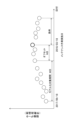
- FIG. 9 is a graph showing the progress of the predicted occurrence probability of maintenance work.
- the predicted occurrence probability calculation unit 24 first reads the prediction model created by the prediction model creation unit 23 (step S211).
- the predicted occurrence probability calculation unit 24 reads all the operation data stored in the second DB 22 (step S212). At this time, if the data volume is too large to read, it is possible to read the data by reducing the data volume by limiting the model number and region of the hydraulic excavator 10 on which the maintenance work was performed based on the maintenance work results stored in the first DB 21.
- the predicted occurrence probability calculation unit 24 applies each piece of operation data read in step S212 to the prediction model read in step S211, and determines which node shown in FIG. 7 it corresponds to.
- the predicted occurrence probability calculation unit 24 calculates the proportion of positive cases for the determined node as the occurrence probability of maintenance work after the modeling target period M days + offset period N days from the date when the calculation started (calculation start date), i.e., the predicted occurrence probability (step S213).
- the excavation time t1 is 3 hours, and t1 ⁇ 8, so this corresponds to node 1 shown in FIG. 7, and the predicted occurrence probability from the calculation start date to the modeling period M days + offset period N days later is calculated to be 0%.
- the predicted occurrence probability calculation unit 24 repeats the calculation, and when the operation data in row D2 shown in FIG. 5 is applied to the prediction model, the excavation time t1 is 8 hours and t1 ⁇ 8, the hydraulic oil temperature T1 is 80°C and T1>70, the turning time t2 is 3 hours and t2 ⁇ 3, and the driving time t3 is 4 hours and t3 ⁇ 4, which corresponds to node 8 shown in FIG. 7 and calculates the predicted occurrence probability to be 100%.
- the image of the predicted occurrence probability calculated in this way is as shown in FIG. 9.
- the predicted occurrence probability calculation unit 24 determines whether or not the calculation of the predicted occurrence probability corresponding to the final operation data among all the operation data read in step S212 has been completed (step S214).
- step S214 If it is determined in step S214 that the calculation of the predicted occurrence probability corresponding to the final operation data has been completed (step S214/YES), all processing executed by the predicted occurrence probability calculation unit 24 is terminated.
- step S214 determines whether the calculation of the predicted occurrence probability corresponding to the final operation data has been completed. If it is determined in step S214 that the calculation of the predicted occurrence probability corresponding to the final operation data has not been completed (step S214/NO), the process returns to step S213 and is repeated until the calculation of the predicted occurrence probability corresponding to the final operation data has been completed.
- FIG. 10 is a flowchart showing the flow of processing executed by the reliability calculation unit 25 of the prediction device 2 according to the first embodiment.
- FIG. 11 is a table showing an example of operation data of the hydraulic excavator 10 during a simulation period.
- FIG. 12 is a graph showing the relationship between the predicted date of maintenance work during the simulation period and the actual date of maintenance work.
- FIG. 13 is a table showing the relationship between the date of occurrence of maintenance work, the notification date, and the adaptation period during the simulation period.
- the reliability calculation unit 25 reads the maintenance work results to be used in the simulation (hereinafter simply referred to as "simulation target results") from among the multiple maintenance work results stored in the first DB 21 (step S221).
- the reliability calculation unit 25 then reads the operation data associated with the hydraulic excavator 10 described in the simulation target performance from the operation data of the multiple hydraulic excavators 10 stored in the second DB 22 (step S222).
- the reliability calculation unit 25 sets the period to be used in the simulation as the simulation period. Then, the reliability calculation unit 25 narrows down the simulation target results read in step S221 and the operation data read in step S222 to the set simulation period, respectively, to obtain data for simulation (step S223).
- An example of operation data within the simulation period is as shown in FIG. 11.
- the reliability calculation unit 25 reads the prediction model created by the prediction model creation unit 23 (step S224).
- the reliability calculation unit 25 applies each of the operation data narrowed down in step S223 to the prediction model read in step S224, and calculates the occurrence probability of maintenance work after the offset period N days, i.e., the occurrence probability for simulation (step S225).
- the reliability calculation unit 25 determines whether the simulation occurrence probability calculated in step S225 exceeds a predetermined threshold (step S226).
- This "predetermined threshold” is an arbitrary probability in the range of, for example, 60 to 90%, and can be appropriately set depending on the events that occur in the hydraulic excavator 10 and the operation method of the work machine status management system 1.
- step S226/YES If it is determined in step S226 that the simulation occurrence probability exceeds a predetermined threshold value (step S226/YES), the reliability calculation unit 25 determines that maintenance work is predicted to occur on that day, and sets the date of that data as the day on which the occurrence of maintenance work will be notified (hereinafter referred to as the "maintenance work occurrence notification date") (step S227).
- step S226 determines whether the simulation occurrence probability does not exceed the predetermined threshold (step S226/NO). If it is determined in step S226 that the simulation occurrence probability does not exceed the predetermined threshold (step S226/NO), the reliability calculation unit 25 skips step S227 and proceeds to step S228.
- the reliability calculation unit 25 determines whether or not the calculation of the occurrence probability for simulation corresponding to the final operation data among all the operation data read in step S222 has been completed (step S228).
- step S228/YES If it is determined in step S228 that the calculation of the occurrence probability for the simulation corresponding to the final operation data has been completed (step S228/YES), the reliability calculation unit 25 calculates the reliability based on the maintenance work occurrence notification date and the simulation target actual results (step S229), and all processing in the reliability calculation unit 25 is thereby completed.
- step S228 determines whether the calculation of the simulation occurrence probability corresponding to the final operation data has been completed. If it is determined in step S228 that the calculation of the simulation occurrence probability corresponding to the final operation data has not been completed (step S228/NO), the process returns to step S225 and is repeated until the calculation of the simulation occurrence probability corresponding to the final operation data has been completed.
- FIG 12 An example of the relationship between the maintenance work occurrence notification date (predicted date in the simulation) set by the reliability calculation unit 25 and the actual date of maintenance work in the simulation period is shown in Figure 12.
- the predicted date of simulation matches the actual date of maintenance work in the simulation period.
- the maintenance work occurrence notification date is set earlier than the actual date of maintenance work.
- the recall rate is used as the reliability of the predicted occurrence probability, but this is not limited to this.
- a commonly used precision rate, an F value or a correct answer rate calculated using the recall rate and the precision rate, etc. may be used as the reliability of the predicted occurrence probability.
- FIG. 14 shows an example of a prediction result in the first embodiment.
- the result output unit 26 of the prediction device 2 outputs the predicted occurrence probability calculated by the predicted occurrence probability calculation unit 24 and the reliability of the predicted occurrence probability calculated by the reliability calculation unit 25 to the management terminal 13 together with the identification information of the hydraulic excavator 10 (e.g., model number).
- the display on the management terminal 13 shown in FIG. 14 includes the model number of the hydraulic excavator 10, the operating hours, the year and month of the occurrence of the maintenance work, the predicted occurrence probability [%], and the reliability [%].
- the predicted occurrence probability and reliability are displayed for each part that is the subject of the maintenance work, such as "pump,” “starter,” and "link.”
- the predicted occurrence probability for maintenance work to occur in November 2020 is 67% for the pump, 95% for the starter, and 98% for the link.
- the reliability of the predicted occurrence probability is 70% for the pump, 60% for the starter, and 75% for the link. Therefore, since the reliability of the predicted occurrence probability for the link is the highest and the predicted occurrence probability value is also the highest, it can be said that there is a very high possibility that maintenance work will occur for the link in November 2020.
- the predicted occurrence probability of maintenance work occurring in November 2020 is 23% for the pump, 86% for the starter, and 61% for the link.
- the reliability of the predicted occurrence probability is 70% for the pump, 60% for the starter, and 75% for the link.
- the predicted occurrence probability is highest for the starter, but the reliability of the starter is the lowest, so the possibility of maintenance work occurring on the starter in November 2020 is not high.
- the prediction device 2 outputs and displays to the management terminal 13 the predicted date for maintenance work for each hydraulic excavator 10, the predicted occurrence probability on the predicted occurrence date, and the reliability of the predicted occurrence probability, based on a specified maintenance work implementation date, making it possible to identify failure events with a high predicted occurrence probability and high reliability, and the hydraulic excavator 10 in which the event will occur.
- This makes it possible to propose an appropriate time to perform maintenance work based on highly accurate information that takes into account the reliability of the occurrence probability of failure events that can occur in the hydraulic excavator 10, making it possible to perform maintenance work efficiently at the appropriate time.
- a prediction device 2A according to a second embodiment of the present invention will be described with reference to Fig. 15.
- Fig. 15 components common to those described in the first embodiment are denoted by the same reference numerals and description thereof will be omitted. The same applies to the third embodiment.
- FIG. 15 is a functional block diagram showing the functions of a prediction device 2A according to the second embodiment of the present invention.
- the prediction device 2A includes a first DB 21, a second DB 22, a prediction model creation unit 23, a predicted occurrence probability calculation unit 24, a reliability calculation unit 25, a result output unit 26A, and an item storage unit 27.
- the item storage unit 27 stores items of operational data (used data items) of the hydraulic excavator 10 that are used in the prediction model created by the prediction model creation unit 23.
- the result output unit 26A outputs to the management terminal 13 the predicted occurrence probability calculated by the predicted occurrence probability calculation unit 24, the reliability of the predicted occurrence probability calculated by the reliability calculation unit 25, and the used data items stored in the item storage unit 27.
- the management terminal 13 can display, for example, the tree structure of the prediction model shown in FIG. 7, each used data item and its contribution in a table format.
- the prediction device 2A can display on the management terminal 13 the items of operational data used when calculating the predicted date of occurrence of maintenance work, the predicted occurrence probability, and the reliability, as well as the contribution of each data item. This makes it possible to judge the accuracy of the prediction by comparing it with the past experience and intuition of the maintenance worker, and to propose the appropriate timing for performing maintenance work based on more accurate information.
- FIG. 16 a functional configuration of a prediction device 2B according to the third embodiment of the present invention will be described with reference to FIGS. 16 and 17.
- FIG. 16 a functional configuration of a prediction device 2B according to the third embodiment of the present invention will be described with reference to FIGS. 16 and 17.
- FIG. 16 is a functional block diagram showing the functions of a prediction device 2B according to a third embodiment of the present invention.
- FIG. 17 is a diagram showing an example of a prediction result in the third embodiment.
- the prediction device 2B includes a first DB 21, a second DB 22, a prediction model creation unit 23, a predicted occurrence probability calculation unit 24, a reliability calculation unit 25, a result output unit 26B, and in addition, an overall evaluation calculation unit 28.
- the overall evaluation calculation unit 28 weights the predicted occurrence probability calculated by the predicted occurrence probability calculation unit 24 and the reliability calculated by the reliability calculation unit 25 according to the priority of the maintenance work, and calculates an overall evaluation for the predicted date of occurrence of the maintenance work.
- the result output unit 26B outputs to the management terminal 13, for example as shown in FIG. 17, a list of target machines in which the overall evaluation calculated by the overall evaluation calculation unit 28 is expressed as marks (for example, "sunny", “cloudy”, “rainy”) divided by a predetermined threshold value.
- the predetermined threshold value can be appropriately changed depending on the operation method of the work machine status management system 1.
- the target machine list shown in Figure 17 shows the overall rating with “Rain”, “Cloudy”, and “Sunny” marks, but this is not limited to this, and the overall rating can also be displayed as “A”, “B”, “C”, or the calculated value.
- the result output unit 26B also outputs the target machine list including the overall evaluation to the management terminal 13, but is not limited to this. It is also possible to set a predetermined threshold value for the overall evaluation, and notify the manager or user of the hydraulic excavator 10 if the overall evaluation is equal to or greater than the predetermined threshold value.
- the overall evaluation calculation unit 28 specifically calculates the overall evaluation using the formula ⁇ x (predicted occurrence probability x reliability) + ⁇ x (predicted occurrence probability x reliability) + ⁇ x (predicted occurrence probability x reliability) + ...
- the coefficients " ⁇ ”, “ ⁇ ”, and “ ⁇ ” in this calculation formula are weights according to the priority of the maintenance work for each part.
- the coefficients " ⁇ ”, “ ⁇ ”, and “ ⁇ ” can be changed depending on the parts and failure events that are the subject of the maintenance work, and can also be changed depending on the operating area of the hydraulic excavator 10 and the months for which the maintenance work is performed.
- the priority order for carrying out the maintenance work can be determined quantitatively.
- each embodiment of the present invention is not limited to each of the above-mentioned embodiments, and includes various modified examples.
- each of the above-mentioned embodiments has been described in detail to clearly explain the present invention, and is not necessarily limited to those having all of the configurations described. It is also possible to replace part of the configuration of each embodiment with the configuration of another embodiment, and it is also possible to add the configuration of another embodiment to the configuration of each embodiment. Furthermore, it is also possible to add, delete, or replace part of the configuration of each embodiment with other configurations.
- a crawler-type hydraulic excavator 10 has been described as an example of a work machine, but the present invention is not limited to this and may be other work machines, such as a wheel loader or a dump truck.
- the pump, starter, and link are given as examples of parts that are subject to maintenance work, but this is not limited to these, and all maintenance work that may occur on the hydraulic excavator 10, such as engine oil change and filter change, is subject to the maintenance work, and it is possible to display the predicted occurrence probability and reliability for all maintenance work set by the prediction devices 2, 2A, and 2B.
- the management terminal 13 displays the reliability calculated by the reliability calculation unit 25 as a numerical value, but this is not limited to this. For example, it is also possible to determine a numerical range and display the reliability as A, B, C or pine, bamboo, plum, etc.
- the prediction model creation unit 23 labels the period before the day the maintenance work was performed as a positive example and the period after the day the maintenance work was performed as a negative example, but this is not limited to this.
- the period M days from N days before the offset period of the hydraulic excavator 10 on which maintenance work was performed as a positive example extract hydraulic excavators 10 that have not had maintenance work performed so that the distribution is the same as the operating time distribution for those excavators with maintenance work records, and label the modeling target period M days from N days before the offset period as a negative example based on the operating time when maintenance work was performed.
- the reliability calculation unit 25 determines that the maintenance work notification date is when the predicted occurrence probability exceeds a predetermined threshold value, but this is not limited to this.
- a predetermined threshold value such as the number of times the predetermined threshold value is exceeded 10 times, or the date being more than x days after the delivery of the hydraulic excavator 10.
Landscapes
- Business, Economics & Management (AREA)
- Human Resources & Organizations (AREA)
- Engineering & Computer Science (AREA)
- Economics (AREA)
- Entrepreneurship & Innovation (AREA)
- Marketing (AREA)
- Operations Research (AREA)
- Quality & Reliability (AREA)
- Strategic Management (AREA)
- Tourism & Hospitality (AREA)
- Physics & Mathematics (AREA)
- General Business, Economics & Management (AREA)
- General Physics & Mathematics (AREA)
- Theoretical Computer Science (AREA)
- Management, Administration, Business Operations System, And Electronic Commerce (AREA)
Priority Applications (1)
| Application Number | Priority Date | Filing Date | Title |
|---|---|---|---|
| JP2025548798A JPWO2025070163A1 (https=) | 2023-09-25 | 2024-09-17 |
Applications Claiming Priority (2)
| Application Number | Priority Date | Filing Date | Title |
|---|---|---|---|
| JP2023161606 | 2023-09-25 | ||
| JP2023-161606 | 2023-09-25 |
Publications (1)
| Publication Number | Publication Date |
|---|---|
| WO2025070163A1 true WO2025070163A1 (ja) | 2025-04-03 |
Family
ID=95203399
Family Applications (1)
| Application Number | Title | Priority Date | Filing Date |
|---|---|---|---|
| PCT/JP2024/033085 Pending WO2025070163A1 (ja) | 2023-09-25 | 2024-09-17 | 作業機械状態管理システム |
Country Status (2)
| Country | Link |
|---|---|
| JP (1) | JPWO2025070163A1 (https=) |
| WO (1) | WO2025070163A1 (https=) |
Citations (6)
| Publication number | Priority date | Publication date | Assignee | Title |
|---|---|---|---|---|
| JP2003323601A (ja) * | 2002-05-01 | 2003-11-14 | Fujitsu Ltd | 信頼性尺度付き予測装置 |
| JP2006163889A (ja) * | 2004-12-08 | 2006-06-22 | Canon Inc | 作業管理指示システム |
| JP2014059592A (ja) * | 2012-09-14 | 2014-04-03 | Kobe Steel Ltd | 出力値予測装置、該方法および該方法のプログラム |
| JP2016157280A (ja) * | 2015-02-25 | 2016-09-01 | 三菱重工業株式会社 | 事象予測システム、事象予測方法及びプログラム |
| JP2019121052A (ja) * | 2017-12-28 | 2019-07-22 | 日立建機株式会社 | 点検支援システム |
| JP2023082994A (ja) * | 2021-12-03 | 2023-06-15 | ナブテスコ株式会社 | 寿命推定システム、寿命推定方法及び寿命推定プログラム |
-
2024
- 2024-09-17 JP JP2025548798A patent/JPWO2025070163A1/ja active Pending
- 2024-09-17 WO PCT/JP2024/033085 patent/WO2025070163A1/ja active Pending
Patent Citations (6)
| Publication number | Priority date | Publication date | Assignee | Title |
|---|---|---|---|---|
| JP2003323601A (ja) * | 2002-05-01 | 2003-11-14 | Fujitsu Ltd | 信頼性尺度付き予測装置 |
| JP2006163889A (ja) * | 2004-12-08 | 2006-06-22 | Canon Inc | 作業管理指示システム |
| JP2014059592A (ja) * | 2012-09-14 | 2014-04-03 | Kobe Steel Ltd | 出力値予測装置、該方法および該方法のプログラム |
| JP2016157280A (ja) * | 2015-02-25 | 2016-09-01 | 三菱重工業株式会社 | 事象予測システム、事象予測方法及びプログラム |
| JP2019121052A (ja) * | 2017-12-28 | 2019-07-22 | 日立建機株式会社 | 点検支援システム |
| JP2023082994A (ja) * | 2021-12-03 | 2023-06-15 | ナブテスコ株式会社 | 寿命推定システム、寿命推定方法及び寿命推定プログラム |
Also Published As
| Publication number | Publication date |
|---|---|
| JPWO2025070163A1 (https=) | 2025-04-03 |
Similar Documents
| Publication | Publication Date | Title |
|---|---|---|
| Angeles et al. | Optimal inspection and preventive maintenance scheduling of mining equipment | |
| US12135545B2 (en) | Systems and methods for automatically scheduling maintenance | |
| JP6865189B2 (ja) | 故障確率評価システム及び方法 | |
| US7496475B2 (en) | Maintenance management of a machine | |
| CN102982400A (zh) | 用于风险管理系统的系统 | |
| CN102982385A (zh) | 为风力发电机管理与全面服务协议相关的风险的系统 | |
| Lugtigheid et al. | Modelling repairable system reliability with explanatory variables and repair and maintenance actions | |
| Ghodrati et al. | Product support improvement by considering system operating environment: A case study on spare parts procurement | |
| Jakkula et al. | Reliability, availability and maintainability (RAM) investigation of Load Haul Dumpers (LHDs): a case study | |
| Kumar et al. | Methods for risk management of mining excavator through FMEA and FMECA | |
| WO2025070163A1 (ja) | 作業機械状態管理システム | |
| JP7607529B2 (ja) | 故障予測装置、故障予測方法、及びプログラム | |
| Moniri-Morad et al. | Reliability-based regression model for complex systems considering environmental uncertainties | |
| JP2002117164A (ja) | 作業車両の修理費予測システム | |
| Asadi | On a parametric model for the mean number of system repairs with applications | |
| US11995577B2 (en) | System and method for estimating a machine's potential usage, profitability, and cost of ownership based on machine's value and mechanical state | |
| Meissner et al. | Improving aircraft maintenance performance through prescriptive maintenance strategies | |
| CN110472753B (zh) | 一种基于深度学习的设备设施单元评估方法及装置 | |
| Sánchez-Herguedas et al. | Finite Time Preventive Maintenance Optimization by Using a Semi-Markov Process with a Degraded State. A Case Study for Diesel Engines in Mining | |
| US12116757B2 (en) | Anomalous operating characteristic detection system, and associated devices and methods | |
| Lugtigheid et al. | Component repairs: when to perform and what to do? | |
| CN121257809A (zh) | 一种工程机械全生命周期成本动态预测方法及装置 | |
| Pardasani | Coverage Adequacy as an Alternative to Demand Forecasting for Aftermarket Spare Parts: The DNEIF Framework | |
| Rustamov et al. | OPTIMIZATION OF THE OPERATIONAL EFFICIENCY OF TRANSPORT AND TECHNOLOGICAL COMPLEXES BASED ON SIMULATION MODELING | |
| KR20260033228A (ko) | 풍력 발전 설비 관리 시스템 및 방법 |
Legal Events
| Date | Code | Title | Description |
|---|---|---|---|
| 121 | Ep: the epo has been informed by wipo that ep was designated in this application |
Ref document number: 24871957 Country of ref document: EP Kind code of ref document: A1 |
|
| DPE1 | Request for preliminary examination filed after expiration of 19th month from priority date (pct application filed from 20040101) | ||
| ENP | Entry into the national phase |
Ref document number: 2025548798 Country of ref document: JP Kind code of ref document: A |
|
| WWE | Wipo information: entry into national phase |
Ref document number: 2025548798 Country of ref document: JP |