WO2025069789A1 - 基板処理装置及び冷却方法 - Google Patents
基板処理装置及び冷却方法 Download PDFInfo
- Publication number
- WO2025069789A1 WO2025069789A1 PCT/JP2024/029501 JP2024029501W WO2025069789A1 WO 2025069789 A1 WO2025069789 A1 WO 2025069789A1 JP 2024029501 W JP2024029501 W JP 2024029501W WO 2025069789 A1 WO2025069789 A1 WO 2025069789A1
- Authority
- WO
- WIPO (PCT)
- Prior art keywords
- flow path
- processing apparatus
- mist
- cold air
- substrate processing
- Prior art date
- Legal status (The legal status is an assumption and is not a legal conclusion. Google has not performed a legal analysis and makes no representation as to the accuracy of the status listed.)
- Pending
Links
Images





Classifications
-
- C—CHEMISTRY; METALLURGY
- C23—COATING METALLIC MATERIAL; COATING MATERIAL WITH METALLIC MATERIAL; CHEMICAL SURFACE TREATMENT; DIFFUSION TREATMENT OF METALLIC MATERIAL; COATING BY VACUUM EVAPORATION, BY SPUTTERING, BY ION IMPLANTATION OR BY CHEMICAL VAPOUR DEPOSITION, IN GENERAL; INHIBITING CORROSION OF METALLIC MATERIAL OR INCRUSTATION IN GENERAL
- C23C—COATING METALLIC MATERIAL; COATING MATERIAL WITH METALLIC MATERIAL; SURFACE TREATMENT OF METALLIC MATERIAL BY DIFFUSION INTO THE SURFACE, BY CHEMICAL CONVERSION OR SUBSTITUTION; COATING BY VACUUM EVAPORATION, BY SPUTTERING, BY ION IMPLANTATION OR BY CHEMICAL VAPOUR DEPOSITION, IN GENERAL
- C23C14/00—Coating by vacuum evaporation, by sputtering or by ion implantation of the coating forming material
- C23C14/22—Coating by vacuum evaporation, by sputtering or by ion implantation of the coating forming material characterised by the process of coating
- C23C14/50—Substrate holders
-
- C—CHEMISTRY; METALLURGY
- C23—COATING METALLIC MATERIAL; COATING MATERIAL WITH METALLIC MATERIAL; CHEMICAL SURFACE TREATMENT; DIFFUSION TREATMENT OF METALLIC MATERIAL; COATING BY VACUUM EVAPORATION, BY SPUTTERING, BY ION IMPLANTATION OR BY CHEMICAL VAPOUR DEPOSITION, IN GENERAL; INHIBITING CORROSION OF METALLIC MATERIAL OR INCRUSTATION IN GENERAL
- C23C—COATING METALLIC MATERIAL; COATING MATERIAL WITH METALLIC MATERIAL; SURFACE TREATMENT OF METALLIC MATERIAL BY DIFFUSION INTO THE SURFACE, BY CHEMICAL CONVERSION OR SUBSTITUTION; COATING BY VACUUM EVAPORATION, BY SPUTTERING, BY ION IMPLANTATION OR BY CHEMICAL VAPOUR DEPOSITION, IN GENERAL
- C23C16/00—Chemical coating by decomposition of gaseous compounds, without leaving reaction products of surface material in the coating, i.e. chemical vapour deposition [CVD] processes
- C23C16/44—Chemical coating by decomposition of gaseous compounds, without leaving reaction products of surface material in the coating, i.e. chemical vapour deposition [CVD] processes characterised by the method of coating
- C23C16/46—Chemical coating by decomposition of gaseous compounds, without leaving reaction products of surface material in the coating, i.e. chemical vapour deposition [CVD] processes characterised by the method of coating characterised by the method used for heating the substrate
-
- H—ELECTRICITY
- H10—SEMICONDUCTOR DEVICES; ELECTRIC SOLID-STATE DEVICES NOT OTHERWISE PROVIDED FOR
- H10P—GENERIC PROCESSES OR APPARATUS FOR THE MANUFACTURE OR TREATMENT OF DEVICES COVERED BY CLASS H10
- H10P14/00—Formation of materials, e.g. in the shape of layers or pillars
- H10P14/60—Formation of materials, e.g. in the shape of layers or pillars of insulating materials
-
- H—ELECTRICITY
- H10—SEMICONDUCTOR DEVICES; ELECTRIC SOLID-STATE DEVICES NOT OTHERWISE PROVIDED FOR
- H10P—GENERIC PROCESSES OR APPARATUS FOR THE MANUFACTURE OR TREATMENT OF DEVICES COVERED BY CLASS H10
- H10P50/00—Etching of wafers, substrates or parts of devices
- H10P50/20—Dry etching; Plasma etching; Reactive-ion etching
- H10P50/24—Dry etching; Plasma etching; Reactive-ion etching of semiconductor materials
- H10P50/242—Dry etching; Plasma etching; Reactive-ion etching of semiconductor materials of Group IV materials
-
- H—ELECTRICITY
- H10—SEMICONDUCTOR DEVICES; ELECTRIC SOLID-STATE DEVICES NOT OTHERWISE PROVIDED FOR
- H10P—GENERIC PROCESSES OR APPARATUS FOR THE MANUFACTURE OR TREATMENT OF DEVICES COVERED BY CLASS H10
- H10P72/00—Handling or holding of wafers, substrates or devices during manufacture or treatment thereof
- H10P72/70—Handling or holding of wafers, substrates or devices during manufacture or treatment thereof for supporting or gripping
Definitions
- An exemplary embodiment of the present disclosure relates to a substrate processing apparatus and a cooling method.
- Patent Document 1 describes a technology in which mist is supplied to a flow path in a chamber and the chamber is cooled by the heat of vaporization of the mist.
- This disclosure provides technology for efficiently cooling components within a substrate processing apparatus.
- a substrate processing apparatus in one exemplary embodiment, includes a member, a cooler, and a controller.
- the member provides a flow path therein having an inlet and an outlet.
- the cooler is configured to cool the member.
- the cooler includes a mist generator, a cold air supplier, and a vacuum pump.
- the mist generator is configured to generate a mist of a cooling liquid and is connected to the inlet of the flow path.
- the cold air supplier is connected to the inlet of the flow path.
- the vacuum pump is connected to the outlet of the flow path.
- the controller is configured to control the cooler to repeatedly perform a process including the steps of (a) supplying mist from the mist generator to the flow path depressurized by the vacuum pump, (b) supplying cold air from the cold air supplier to the flow path, and (c) evacuating the flow path with the vacuum pump.
- a technique for efficiently cooling components within a substrate processing apparatus.
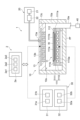
- FIG. 1 is a diagram for explaining a configuration example of a plasma processing system.
- FIG. 1 is a diagram for explaining a configuration example of a capacitively coupled plasma processing apparatus.
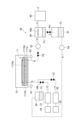
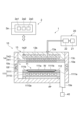
- FIG. 2 illustrates a cooling device according to an exemplary embodiment.
- FIG. 2 illustrates an example mist generator that may be employed in a chiller in accordance with an exemplary embodiment.
- 1 is a flow diagram of a cooling method according to an example embodiment.
- 5 is a timing chart of pressure in a flow passage in a cooling method according to an example embodiment.
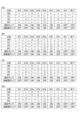
- FIGS. 7(a)-7(d) is a table showing an example of the states of various valves and the states of various pumps in a cooling method according to one example embodiment.
- FIGS. 7(a)-7(d) is a table showing an example of the states of various valves and the states of various pumps in a cooling method according to one example embodiment.
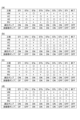
- FIG. 8(a)-8(d) is a table showing an example of the states of various valves and the states of various pumps in a cooling method according to one example embodiment.
- FIGS. 9(a)-9(d) is a table showing examples of the states of various valves and the states of various pumps in a cooling method according to one example embodiment.
- FIGS. 10(a)-10(d) is a table showing an example of the states of various valves and the states of various pumps in a cooling method according to one example embodiment.
- Figures 11(a) to 11(f) illustrates an example of a flow path of the base according to one exemplary embodiment.
- FIG. 13 is a diagram showing a modified example of a plasma processing apparatus according to an exemplary embodiment.
- FIG. 1 is a diagram for explaining an example of the configuration of a plasma processing system.
- the plasma processing system includes a plasma processing device 1 and a control unit 2.
- the plasma processing system is an example of a substrate processing system
- the plasma processing device 1 is an example of a substrate processing device.
- the plasma processing device 1 includes a plasma processing chamber 10, a substrate support unit 11, and a plasma generation unit 12.
- the plasma processing chamber 10 has a plasma processing space.
- the plasma processing chamber 10 also has at least one gas supply port for supplying at least one processing gas to the plasma processing space, and at least one gas exhaust port for exhausting gas from the plasma processing space.
- the gas supply port is connected to a gas supply unit 20 described later, and the gas exhaust port is connected to an exhaust system 40 described later.
- the substrate support unit 11 is disposed in the plasma processing space, and has a substrate support surface for supporting a substrate.
- the plasma generating unit 12 is configured to generate plasma from at least one processing gas supplied into the plasma processing space.
- the plasma formed in the plasma processing space may be capacitively coupled plasma (CCP), inductively coupled plasma (ICP), ECR plasma (Electron-Cyclotron-Resonance Plasma), Helicon Wave Plasma (HWP), or Surface Wave Plasma (SWP), etc.
- various types of plasma generating units may be used, including AC (Alternating Current) plasma generating units and DC (Direct Current) plasma generating units.
- the AC signal (AC power) used in the AC plasma generating unit has a frequency in the range of 100 kHz to 10 GHz.
- AC signals include RF (Radio Frequency) signals and microwave signals.
- the RF signal has a frequency in the range of 100 kHz to 150 MHz.
- the control unit 2 processes computer-executable instructions that cause the plasma processing apparatus 1 to perform the various steps described in this disclosure.
- the control unit 2 may be configured to control each element of the plasma processing apparatus 1 to perform the various steps described herein. In one embodiment, a part or all of the control unit 2 may be included in the plasma processing apparatus 1.
- the control unit 2 may include a processing unit 2a1, a storage unit 2a2, and a communication interface 2a3.
- the control unit 2 is realized, for example, by a computer 2a.
- the processing unit 2a1 may be configured to perform various control operations by reading a program from the storage unit 2a2 and executing the read program. This program may be stored in the storage unit 2a2 in advance, or may be acquired via a medium when necessary.
- the acquired program is stored in the storage unit 2a2 and is read from the storage unit 2a2 by the processing unit 2a1 and executed.
- the medium may be various storage media readable by the computer 2a, or may be a communication line connected to the communication interface 2a3.
- the processing unit 2a1 may be a CPU (Central Processing Unit).
- the memory unit 2a2 may include a RAM (Random Access Memory), a ROM (Read Only Memory), a HDD (Hard Disk Drive), a SSD (Solid State Drive), or a combination of these.
- the communication interface 2a3 may communicate with the plasma processing device 1 via a communication line such as a LAN (Local Area Network).
- FIG. 1 is a diagram for explaining an example of the configuration of a capacitively coupled plasma processing device.
- the capacitively coupled plasma processing apparatus 1 includes a plasma processing chamber 10, a gas supply unit 20, a power supply 30, and an exhaust system 40.
- the plasma processing apparatus 1 also includes a substrate support unit 11 and a gas inlet unit.
- the gas inlet unit is configured to introduce at least one processing gas into the plasma processing chamber 10.
- the gas inlet unit includes a shower head 13.
- the substrate support unit 11 is disposed in the plasma processing chamber 10.
- the shower head 13 is disposed above the substrate support unit 11. In one embodiment, the shower head 13 constitutes at least a part of the ceiling of the plasma processing chamber 10.
- the plasma processing chamber 10 has a plasma processing space 10s defined by the shower head 13, the sidewall 10a of the plasma processing chamber 10, and the substrate support unit 11.
- the plasma processing chamber 10 is grounded.
- the shower head 13 and the substrate support unit 11 are electrically insulated from the housing of the plasma processing chamber 10.
- the substrate support 11 includes a main body 111 and a ring assembly 112.
- the main body 111 has a central region 111a for supporting the substrate W and an annular region 111b for supporting the ring assembly 112.
- a wafer is an example of a substrate W.
- the annular region 111b of the main body 111 surrounds the central region 111a of the main body 111 in a plan view.
- the substrate W is disposed on the central region 111a of the main body 111
- the ring assembly 112 is disposed on the annular region 111b of the main body 111 so as to surround the substrate W on the central region 111a of the main body 111. Therefore, the central region 111a is also called a substrate support surface for supporting the substrate W, and the annular region 111b is also called a ring support surface for supporting the ring assembly 112.
- the main body 111 includes a base 1110 and an electrostatic chuck 1111.
- the base 1110 includes a conductive member.
- the conductive member of the base 1110 may function as a lower electrode.
- the electrostatic chuck 1111 is disposed on the base 1110.
- the electrostatic chuck 1111 includes a ceramic member 1111a and an electrostatic electrode 1111b disposed within the ceramic member 1111a.
- the ceramic member 1111a has a central region 111a. In one embodiment, the ceramic member 1111a also has an annular region 111b. Note that other members surrounding the electrostatic chuck 1111, such as an annular electrostatic chuck or an annular insulating member, may have the annular region 111b.
- the ring assembly 112 may be disposed on the annular electrostatic chuck or the annular insulating member, or may be disposed on both the electrostatic chuck 1111 and the annular insulating member.
- at least one RF/DC electrode coupled to an RF power source 31 and/or a DC power source 32 described later may be disposed in the ceramic member 1111a.
- the at least one RF/DC electrode functions as a lower electrode.
- the RF/DC electrode is also called a bias electrode.
- the conductive member of the base 1110 and the at least one RF/DC electrode may function as multiple lower electrodes.
- the electrostatic electrode 1111b may function as a lower electrode.
- the substrate support 11 includes at least one lower electrode.
- the ring assembly 112 includes one or more annular members.
- the one or more annular members include one or more edge rings and at least one cover ring.
- the edge rings are formed of a conductive or insulating material, and the cover rings are formed of an insulating material.
- the substrate support 11 may also include a temperature adjustment module configured to adjust at least one of the electrostatic chuck 1111, the ring assembly 112, and the substrate to a target temperature.
- the temperature adjustment module may include a heater, a heat transfer medium, a flow passage 1110a, or a combination thereof.
- a heat transfer fluid such as brine or a gas flows through the flow passage 1110a.
- the flow passage 1110a is formed in the base 1110, and one or more heaters are disposed in the ceramic member 1111a of the electrostatic chuck 1111.
- the substrate support 11 may also include a heat transfer gas supply configured to supply a heat transfer gas to a gap between the back surface of the substrate W and the central region 111a.
- the shower head 13 is configured to introduce at least one processing gas from the gas supply unit 20 into the plasma processing space 10s.
- the shower head 13 has at least one gas supply port 13a, at least one gas diffusion chamber 13b, and multiple gas inlets 13c.
- the processing gas supplied to the gas supply port 13a passes through the gas diffusion chamber 13b and is introduced into the plasma processing space 10s from the multiple gas inlets 13c.
- the shower head 13 also includes at least one upper electrode.
- the gas introduction unit may include, in addition to the shower head 13, one or more side gas injectors (SGI) attached to one or more openings formed in the sidewall 10a.
- SGI side gas injectors
- the gas supply unit 20 may include at least one gas source 21 and at least one flow controller 22.
- the gas supply unit 20 is configured to supply at least one process gas from a respective gas source 21 through a respective flow controller 22 to the showerhead 13.
- Each flow controller 22 may include, for example, a mass flow controller or a pressure-controlled flow controller.
- the gas supply unit 20 may include at least one flow modulation device that modulates or pulses the flow rate of the at least one process gas.
- the power supply 30 includes an RF power supply 31 coupled to the plasma processing chamber 10 via at least one impedance matching circuit.
- the RF power supply 31 is configured to supply at least one RF signal (RF power) to at least one lower electrode and/or at least one upper electrode. This causes a plasma to be formed from at least one processing gas supplied to the plasma processing space 10s.
- the RF power supply 31 can function as at least a part of the plasma generating unit 12.
- a bias RF signal to at least one lower electrode, a bias potential is generated on the substrate W, and ion components in the formed plasma can be attracted to the substrate W.
- the RF power supply 31 includes a first RF generating unit 31a and a second RF generating unit 31b.
- the first RF generating unit 31a is coupled to at least one lower electrode and/or at least one upper electrode via at least one impedance matching circuit and configured to generate a source RF signal (source RF power) for plasma generation.
- the source RF signal has a frequency in the range of 10 MHz to 150 MHz.
- the first RF generating unit 31a may be configured to generate multiple source RF signals having different frequencies. The generated one or more source RF signals are supplied to at least one lower electrode and/or at least one upper electrode.
- the second RF generator 31b is coupled to at least one lower electrode via at least one impedance matching circuit and configured to generate a bias RF signal (bias RF power).
- the frequency of the bias RF signal may be the same as or different from the frequency of the source RF signal.
- the bias RF signal has a lower frequency than the frequency of the source RF signal.
- the bias RF signal has a frequency in the range of 100 kHz to 60 MHz.
- the second RF generator 31b may be configured to generate multiple bias RF signals having different frequencies.
- the generated one or more bias RF signals are provided to at least one lower electrode. Also, in various embodiments, at least one of the source RF signal and the bias RF signal may be pulsed.
- the power supply 30 may also include a DC power supply 32 coupled to the plasma processing chamber 10.
- the DC power supply 32 includes a first DC generator 32a and a second DC generator 32b.
- the first DC generator 32a is connected to at least one lower electrode and configured to generate a first DC signal.
- the generated first DC signal is applied to the at least one lower electrode.
- the second DC generator 32b is connected to at least one upper electrode and configured to generate a second DC signal.
- the generated second DC signal is applied to the at least one upper electrode.
- the first and second DC signals may be pulsed.
- a sequence of voltage pulses is applied to at least one lower electrode and/or at least one upper electrode.
- the voltage pulses may have a rectangular, trapezoidal, triangular or combination thereof pulse waveform.
- a waveform generator for generating a sequence of voltage pulses from the DC signal is connected between the first DC generator 32a and at least one lower electrode.
- the first DC generator 32a and the waveform generator constitute a voltage pulse generator.
- the second DC generator 32b and the waveform generator constitute a voltage pulse generator
- the voltage pulse generator is connected to at least one upper electrode.
- the voltage pulses may have a positive polarity or a negative polarity.
- the sequence of voltage pulses may also include one or more positive polarity voltage pulses and one or more negative polarity voltage pulses within one period.
- the first and second DC generating units 32a and 32b may be provided in addition to the RF power source 31, or the first DC generating unit 32a may be provided in place of the second RF generating unit 31b.
- the exhaust system 40 may be connected to, for example, a gas exhaust port 10e provided at the bottom of the plasma processing chamber 10.
- the exhaust system 40 may include a pressure regulating valve and a vacuum pump. The pressure in the plasma processing space 10s is adjusted by the pressure regulating valve.
- the vacuum pump may include a turbomolecular pump, a dry pump, or a combination thereof.
- FIG. 3 is a diagram showing a cooler according to an exemplary embodiment.
- the cooler 50 shown in FIG. 3 is configured to cool a member having a flow path in the substrate processing apparatus.
- the member cooled by the cooler 50 is the substrate support 11, more specifically, the base 1110.
- the cooler 50 includes a mist generator 51, a cold air supplier 52, and a pressure reduction pump 53.
- the cooler 50 may further include a carrier gas supplier 54.
- the mist generator 51 is configured to generate a mist CLM (see FIG. 4) of the cooling liquid CL.
- the mist generator 51 may generate the mist CLM of the cooling liquid CL from a reservoir 59 described below.
- the cooling liquid CL may include water, alcohol, ammonia, or a fluorine-based liquid.
- the water may be pure water, city water, or city water containing additives such as a rust inhibitor.
- the alcohol may be, for example, an ethylene glycol aqueous solution.
- the fluorine-based liquid may include a fluorine-based inert liquid or a perfluoropolyether fluorine-based fluid.
- the mist generator 51 is connected to the inlet 1110i of the flow path 1110a of the substrate support 11.
- the mist generator 51 may be connected to the inlet 1110i via a valve VM.
- the mist CLM generated by the mist generator 51 may be supplied to the flow path 1110a together with a carrier gas supplied from the carrier gas supply unit 54.
- the carrier gas is, for example, dry air.
- FIG. 4 is a diagram showing an example mist generator that can be employed in a cooler according to an exemplary embodiment.
- the mist generator 51 may be a spray nozzle atomization type mist generator as shown in FIG. 4.
- the mist generator 51 includes an inner nozzle 51i and an outer nozzle 51o.
- the inner nozzle 51i is configured to spray a mist CLM of the pressurized cooling liquid CL therein from its orifice.
- the outer nozzle 51o provides a flow path for a carrier gas on the outer periphery of the inner nozzle 51i.
- the outer nozzle 51o provides its orifice in front of the orifice of the inner nozzle 51i.
- the flow path of the outer nozzle 51o extends to the front of the orifice of the inner nozzle 51i and is connected to the orifice of the outer nozzle 51o.
- the mist generator 51 shown in FIG. 4 the mist CLM sprayed from the orifice of the inner nozzle 51i is ejected together with the carrier gas from the orifice of the outer nozzle 51o and supplied to the flow path 1110a.
- the cold air supplier 52 is connected to the inlet 1110i of the flow path 1110a.
- the cold air supplier 52 may be connected to the inlet 1110i via a valve VC.
- the cold air supplier 52 is configured to generate cold air from air supplied from the air supplier 55 and supply it to the flow path 1110a.
- the air supplied from the air supplier 55 is, for example, dry air.
- the cold air supplier 52 may be, for example, an air cooler.
- the cooler 50 may further include a pressure sensor 61.
- the pressure sensor 61 is configured to measure the pressure in the pipes connecting each of the mist generator 51 and the cold air supplier 52 to the inlet 1110i.
- the pressure reducing pump 53 is connected to the outlet 1110o of the flow path 1110a.
- the pressure reducing pump 53 may be connected to the outlet 1110o via a valve VE.
- the pressure reducing pump 53 is configured to discharge the gas and the cooling liquid CL (or its gas) in the flow path 1110a from the flow path 1110a.
- the pressure reducing pump 53 may be, for example, a liquid ring pump.
- the cooler 50 may further include a pressure sensor 62.
- the pressure sensor 62 is configured to measure the pressure in the piping that connects the pressure reducing pump 53 and the outlet 1110o to each other.
- the cold air supplied from the cold air supply 52 promotes condensation of the mist CLM in the flow path 1110a (adsorption to the surface that defines the flow path 1110a).
- the evaporation of the cooling liquid CL that has condensed in the flow path 1110a is promoted by the decompression (or vacuum drawing) of the flow path 1110a by the decompression pump 53. Therefore, with the cooler 50, it is possible to efficiently cool the substrate support 11 or the base 1110.
- the heat exchange medium is not supplied to the flow path 1110a in a pressurized state. Therefore, with the cooler 50, expansion of the substrate support 11 (or the base 1110) is suppressed.
- the cooler 50 may further include a trap 56 (Trap) and a recovery device.
- the trap 56 is connected to the outlet 1110o via the pressure reducing pump 53.
- the trap 56 includes a tank.
- the trap 56 receives the mixture of gas and cooling liquid CL (or its gas) from the pressure reducing pump 53 in the tank.
- the trap 56 includes a separator 56s and is configured to separate the gas and the cooling liquid CL by the separator 56s.
- the gas separated by the separator 56s is discharged to the outside via the filter 60.
- the cooling liquid CL separated by the separator 56s is stored in the tank of the trap 56.
- the collector is configured to collect and store the cooling liquid CL, and is connected between the collector 56 and the mist generator 51.
- the collector may include a receiver 57, a liquid circulation pump 58, and a reservoir 59.
- the receiver 57 has a tank for storing the cooling liquid CL, and is connected between the collector 56 and the liquid circulation pump 58.
- the tank of the receiver 57 may be connected to the tank of the collector 56 via a valve RV.
- the reservoir 59 has another tank for storing the cooling liquid CL, and is connected between the liquid circulation pump 58 and the mist generator 51.
- the liquid circulation pump 58 is operated, and the cooling liquid CL in the tank of the collector 56 is returned to the tank of the reservoir 59 via the tank of the receiver 57 and the liquid circulation pump 58.
- the cooling liquid CL returned to the reservoir 59 is reused in the mist generator 51.
- control unit 2 may be configured to adjust one or more of a plurality of control parameters for adjusting the temperature of a member such as the substrate support 11 by the cooler 50.
- the plurality of control parameters include the amount of mist CLM generated by the mist generator 51, the temperature of the mist CLM, the length of time the mist CLM is supplied to the flow path 1110a, the flow rate of the carrier gas, the flow rate of the cold air supplied from the cold air supplier 52, the temperature of the cold air, the length of time the cold air is supplied, and the exhaust speed of the pressure reducing pump 53.
- the plurality of control parameters may further include the time that the valve VE is opened and/or closed, the time that the supply of the mist CLM is stopped, and the time that the supply of the cold air is stopped.
- FIG. 5 is a flow chart of the cooling method according to one exemplary embodiment.
- Figure 6 is a timing chart of the pressure in the flow path in the cooling method according to one exemplary embodiment.
- each part of the cooler 50 can be controlled by the control unit 2.
- step STi The cooling method shown in FIG. 5 (hereinafter referred to as "method MT") starts with step STi.
- the pressure in flow path 1110a is set to an initial pressure Pi (see FIG. 6).
- the initial pressure Pi is, for example, atmospheric pressure.
- step STd the pressure in flow path 1110a is reduced by the pressure reduction pump 53.
- the pressure in flow path 1110a is reduced until it reaches a first pressure Pv.
- the first pressure Pv may be the minimum pressure that the pressure reduction pump 53 can achieve.
- step STd after the pressure in flow path 1110a reaches the first pressure Pv, the state in which the pressure in flow path 1110a is maintained at the first pressure Pv may continue for a specified time.
- mist CLM of cooling liquid CL is supplied from the mist generator 51 to the flow path 1110a, which has been depressurized by the depressurization pump 53.
- the mist CLM is supplied together with carrier gas from the carrier gas supply unit 54. Due to the supply of mist CLM in step STa, the pressure in the flow path 1110a reaches a second pressure Pc.
- the second pressure Pc is higher than the first pressure Pv.
- the standby state may continue for a specified time.
- step STb cold air from the cold air supplier 52 is supplied to the flow path 1110a.
- step STb the cold air from the cold air supplier 52 promotes condensation of the mist CLM in the flow path 1110a (adsorption to the surface that defines the flow path 1110a).
- the method MT may further include a subsequent step STw. After the supply of cold air in step STb is stopped, a standby state continues for a specified time in step STw. In step STw, condensation of the mist CLM in the flow path 1110a (adsorption to the surface that defines the flow path 1110a) progresses.
- the pressure in the flow path 1110a is reduced by the pressure reduction pump 53.
- the flow path 1110a may be evacuated by the pressure reduction pump 53. This causes the cooling liquid CL in the flow path 1110a to evaporate, and the heat of vaporization cools the substrate support 11 (or the base 1110).
- the pressure in the flow path 1110a may be reduced until it reaches a first pressure Pv.
- the state in which the pressure in the flow path 1110a is maintained at the first pressure Pv may continue for a specified time. Note that the pressure in the flow path 1110a reached in the process STc may be different from the first pressure Pv.
- a cycle including steps STa to STc may be repeated.
- step STj it is determined in step STj whether or not a stop condition is satisfied.
- the stop condition is satisfied when the number of times the cycle is repeated reaches a predetermined number of times, or when the repetition period of the cycle reaches a predetermined length of time. If it is determined that the stop condition is not satisfied in step STj, the cycle is executed again. On the other hand, if it is determined that the stop condition is satisfied in step STj, the process proceeds to step STv.
- step STv the flow path 1110a is evacuated by the pressure reducing pump 53.
- the coolant CL in the flow path 1110a is almost completely removed by the process STv.
- the pressure in the flow path 1110a is returned to the initial pressure Pi.
- the pressure in the flow path 1110a may be returned to the initial pressure by supplying air from the cold air supplier 52 to the flow path 1110a.
- the pressure in the flow path 1110a may be set to atmospheric pressure.
- the cycle including steps STa to STc may further include collecting the cooling liquid CL using a collector 56 connected to the pressure reducing pump 53.
- the cycle may also further include recovering the cooling liquid CL using the recovery device described above.
- each part of the cooler 50 can be controlled by the control unit 2.
- FIGs. 7(a) to 7(d), 8(a) to 8(d), 9(a) to 9(d), and 10(a) to 10(d) is a table showing an example of the state of various valves and the state of various pumps in a cooling method according to one exemplary embodiment.
- the states of the valves VM, VC, VE, and RV in each process are shown.
- a " ⁇ " indicating the state of a valve indicates that the valve is open
- a " ⁇ " indicating the state of a valve indicates that the valve is closed.
- each of these tables shows the state of the pressure reducing pump 53 and the liquid circulating pump 58 in each process.
- a "ON" indicating the state of a pump indicates that the pump is operating
- a "OFF” indicating the state of a pump indicates that the pump is stopped.
- the control unit 2 may control the states of valves VM, VC, VE, and RV, as well as the states of pressure reduction pump 53 and liquid circulation pump 58, as shown in these tables.
- FIG. 11(a) to FIG. 11(f) is a diagram showing an example of a flow path of a base according to one exemplary embodiment.
- the flow path 1110a may be a single flow path that extends between the inlet 1110i and the outlet 1110o without branching.
- the flow path 1110a may include a plurality of branch flow paths 1110b that branch from at least one inlet 1110i and merge with at least one outlet.
- the adsorption of the mist CLM to the surface that defines the flow path 1110a and the detachment of the cooling liquid CL from the surface are promoted.
- the multiple branch flow paths 1110b branch off from a single inlet 1110i and merge into a single outlet 1110o.
- the multiple branch flow paths 1110b extend in a circumferential direction around the central axis of the base 1110.
- the single inlet 1110i is provided in the center of the base 1110, and the single outlet 1110o is provided on the outer edge of the base 1110.
- the single inlet 1110i may be provided on the outer edge of the base 1110, and the single outlet 1110o may be provided in the center of the base 1110.
- the single inlet 1110i is provided on the outer edge of the base 1110, and the single outlet 1110o is provided on the opposite side of the outer edge of the base 1110 from the single outlet 1110o.
- a single inlet 1110i is provided in the center of the base 1110, and multiple outlets 1110o are provided on the outer edge of the base 1110.
- Multiple branch flow paths 1110b branch off from the single inlet 1110i and join at the outer edge of the base 1110, which includes multiple outlets 1110o.
- the multiple branch flow paths 1110b extend radially between the center of the base 1110 and the outer edge of the base 1110. Note that the single outlet 1110o may be provided in the center of the base 1110, and multiple inlets 1110i may be provided on the outer edge of the base 1110.
- FIG. 12 is a diagram showing a modified example of a plasma processing apparatus according to one exemplary embodiment.
- the shower head 13 includes the above-mentioned upper electrode 14.
- the upper electrode 14 provides a flow path 142f therein.
- the upper electrode 14 may include a top plate 141 and a support 142.
- the top plate 141 extends over the plasma processing space 10s so as to contact the plasma processing space 10s.
- the top plate 141 may be formed of a conductive material such as silicon.
- the support 142 detachably supports the top plate 141.
- the support 142 may be formed of a metal material such as aluminum.
- the support 142 may provide the flow path 142f and the gas diffusion chamber 13b.
- the gas inlets 13c may be formed in the support 142 and the top plate 141.
- the side wall 10a of the chamber 10 may have a flow path 10f formed therein.
- one or more coolers 50 may be connected to one or more of the flow paths 10f, 142f, and 1110a. That is, the members cooled by one or more coolers 50 in the plasma processing apparatus 1 may be one or more of the upper electrode 14 (or support 142), the side wall 10a of the chamber 10, and the substrate support 11 (or base 1110).
- E2 a collector connected to the outlet via the vacuum pump and configured to collect the cooling liquid; a collector configured to collect and store the cooling liquid, the collector connected between the collector and the mist generator;
- the substrate processing apparatus of E1 further comprising:
- the collector comprises: A liquid circulation pump; a receiver having a tank for storing the cooling liquid and connected between the collector and the liquid circulation pump; a reservoir having a separate tank for storing the cooling liquid, the reservoir being connected between the liquid circulating pump and the mist generator;
- the substrate processing apparatus of E2 comprising:
- control unit configured to adjust one or more of a plurality of control parameters including the amount of mist generated by the mist generator, the temperature of the mist, the length of time the mist is supplied to the flow path, the flow rate of the carrier gas, the flow rate of the cold air supplied from the cold air supplier, the temperature of the cold air, the length of time the cold air is supplied, and the exhaust speed of the pressure reduction pump.
- the substrate processing apparatus according to any one of E1 to E7.
- a chamber a substrate support disposed within the chamber; an upper electrode provided above the substrate support; Further comprising: The member is the upper electrode.
- the substrate processing apparatus according to any one of E1 to E7.
- the member is a sidewall of the chamber.
- the substrate processing apparatus according to any one of E1 to E7.
- [E12] (a) supplying a mist of a cooling liquid from a mist generator to a flow path of a member that has been depressurized by a depressurization pump; (b) supplying cold air from a cold air supplier to the flow path; (c) drawing a vacuum in the flow path by the pressure reducing pump; (d) repeating a cycle comprising (a), (b), and (c);
- a cooling method comprising:
- the cycle comprises: Collecting the cooling liquid with a collector connected to the decompression pump; and collecting the cooling liquid with a collector connected between the collector and the mist generator.
- the cooling method of E12 comprising:
- 1...plasma processing apparatus 10...chamber, 11...substrate support, 1110...base, 1110a...flow path, 1110i...inlet, 1110o...outlet, 50...cooler, 51...mist generator, 52...cold air supplier, 53...pressure reducing pump, 54...carrier gas supplier, 56...collector, 57...receiver, 58...liquid circulation pump, 59...reservoir.
Landscapes
- Chemical & Material Sciences (AREA)
- Chemical Kinetics & Catalysis (AREA)
- Engineering & Computer Science (AREA)
- Materials Engineering (AREA)
- Mechanical Engineering (AREA)
- Metallurgy (AREA)
- Organic Chemistry (AREA)
- General Chemical & Material Sciences (AREA)
- Drying Of Semiconductors (AREA)
Priority Applications (2)
| Application Number | Priority Date | Filing Date | Title |
|---|---|---|---|
| CN202480059444.4A CN121890305A (zh) | 2023-09-29 | 2024-08-20 | 基板处理装置及冷却方法 |
| JP2025548589A JPWO2025069789A1 (https=) | 2023-09-29 | 2024-08-20 |
Applications Claiming Priority (2)
| Application Number | Priority Date | Filing Date | Title |
|---|---|---|---|
| JP2023169467 | 2023-09-29 | ||
| JP2023-169467 | 2023-09-29 |
Publications (1)
| Publication Number | Publication Date |
|---|---|
| WO2025069789A1 true WO2025069789A1 (ja) | 2025-04-03 |
Family
ID=95203618
Family Applications (1)
| Application Number | Title | Priority Date | Filing Date |
|---|---|---|---|
| PCT/JP2024/029501 Pending WO2025069789A1 (ja) | 2023-09-29 | 2024-08-20 | 基板処理装置及び冷却方法 |
Country Status (4)
| Country | Link |
|---|---|
| JP (1) | JPWO2025069789A1 (https=) |
| CN (1) | CN121890305A (https=) |
| TW (1) | TW202531376A (https=) |
| WO (1) | WO2025069789A1 (https=) |
Citations (6)
| Publication number | Priority date | Publication date | Assignee | Title |
|---|---|---|---|---|
| JPH08285423A (ja) * | 1995-04-13 | 1996-11-01 | Matsushita Refrig Co Ltd | 急速冷却装置 |
| JP2000353707A (ja) * | 1999-06-10 | 2000-12-19 | Dainippon Screen Mfg Co Ltd | 熱処理装置 |
| JP2004127994A (ja) * | 2002-09-30 | 2004-04-22 | Sukegawa Electric Co Ltd | 冷却器付加熱装置 |
| JP2005197600A (ja) * | 2004-01-09 | 2005-07-21 | Tokyo Electron Ltd | 半導体製造装置 |
| JP2008262968A (ja) * | 2007-04-10 | 2008-10-30 | Tokyo Electron Ltd | プラズマ処理装置およびプラズマ処理方法 |
| WO2023012345A1 (en) * | 2021-08-06 | 2023-02-09 | Leybold Gmbh | Cooling device, method for cooling a cooling element and layer deposition apparatus |
-
2024
- 2024-08-20 JP JP2025548589A patent/JPWO2025069789A1/ja active Pending
- 2024-08-20 CN CN202480059444.4A patent/CN121890305A/zh active Pending
- 2024-08-20 WO PCT/JP2024/029501 patent/WO2025069789A1/ja active Pending
- 2024-09-19 TW TW113135474A patent/TW202531376A/zh unknown
Patent Citations (6)
| Publication number | Priority date | Publication date | Assignee | Title |
|---|---|---|---|---|
| JPH08285423A (ja) * | 1995-04-13 | 1996-11-01 | Matsushita Refrig Co Ltd | 急速冷却装置 |
| JP2000353707A (ja) * | 1999-06-10 | 2000-12-19 | Dainippon Screen Mfg Co Ltd | 熱処理装置 |
| JP2004127994A (ja) * | 2002-09-30 | 2004-04-22 | Sukegawa Electric Co Ltd | 冷却器付加熱装置 |
| JP2005197600A (ja) * | 2004-01-09 | 2005-07-21 | Tokyo Electron Ltd | 半導体製造装置 |
| JP2008262968A (ja) * | 2007-04-10 | 2008-10-30 | Tokyo Electron Ltd | プラズマ処理装置およびプラズマ処理方法 |
| WO2023012345A1 (en) * | 2021-08-06 | 2023-02-09 | Leybold Gmbh | Cooling device, method for cooling a cooling element and layer deposition apparatus |
Also Published As
| Publication number | Publication date |
|---|---|
| JPWO2025069789A1 (https=) | 2025-04-03 |
| CN121890305A (zh) | 2026-04-17 |
| TW202531376A (zh) | 2025-08-01 |
Similar Documents
| Publication | Publication Date | Title |
|---|---|---|
| TWI878848B (zh) | 用於處理基板的基板處理系統及方法 | |
| KR102418245B1 (ko) | 플라즈마 처리 방법 및 플라즈마 처리 장치 | |
| KR100939464B1 (ko) | 저오염의 플라즈마 챔버 부품 및 그 제조방법 | |
| KR100319664B1 (ko) | 플라즈마처리장치 | |
| US20080017107A1 (en) | Plasma processing apparatus | |
| US9984907B2 (en) | Evacuation method and vacuum processing apparatus | |
| KR20110139660A (ko) | 기판 처리 방법 | |
| US10043637B2 (en) | Plasma processing apparatus and particle adhesion preventing method | |
| CN101369518A (zh) | 通过脉冲vhf操作的等离子体类型和均匀性控制 | |
| JP2004513516A (ja) | 拡張されたプロセスウィンドウを有する誘電体エッチングチャンバ | |
| US20250191877A1 (en) | Plasma processing apparatus and plasma processing method | |
| KR102189323B1 (ko) | 기판 처리 장치 및 기판 처리 방법 | |
| JP2022114412A (ja) | 基板処理方法、部品処理方法及び基板処理装置 | |
| KR20200051505A (ko) | 배치대 및 기판 처리 장치 | |
| WO2023176555A1 (ja) | プラズマ処理装置及びプラズマ処理方法 | |
| US20140299152A1 (en) | Plasma processing method and plasma processing apparatus | |
| WO2025069789A1 (ja) | 基板処理装置及び冷却方法 | |
| US12261060B2 (en) | Substrate processing apparatus and stage cleaning method | |
| KR102281888B1 (ko) | 기판 처리 장치 및 기판 처리 방법 | |
| KR20260056321A (ko) | 기판 처리 장치 및 냉각 방법 | |
| KR20210046150A (ko) | 기판 처리 시스템 및 방법 | |
| JP2012516056A (ja) | ガス配送システム用粒子削減処理 | |
| JP2022107873A (ja) | 基板処理装置及びクリーニング方法 | |
| JP7572126B2 (ja) | プラズマ処理装置用の電極及びプラズマ処理装置 | |
| US20250357173A1 (en) | Electrostatic chuck |
Legal Events
| Date | Code | Title | Description |
|---|---|---|---|
| 121 | Ep: the epo has been informed by wipo that ep was designated in this application |
Ref document number: 24871591 Country of ref document: EP Kind code of ref document: A1 |
|
| ENP | Entry into the national phase |
Ref document number: 2025548589 Country of ref document: JP Kind code of ref document: A |
|
| WWE | Wipo information: entry into national phase |
Ref document number: 2025548589 Country of ref document: JP |