WO2025041225A1 - Système de communication - Google Patents
Système de communication Download PDFInfo
- Publication number
- WO2025041225A1 WO2025041225A1 PCT/JP2023/030001 JP2023030001W WO2025041225A1 WO 2025041225 A1 WO2025041225 A1 WO 2025041225A1 JP 2023030001 W JP2023030001 W JP 2023030001W WO 2025041225 A1 WO2025041225 A1 WO 2025041225A1
- Authority
- WO
- WIPO (PCT)
- Prior art keywords
- representative
- ues
- processor
- communication system
- power supply
- Prior art date
- Legal status (The legal status is an assumption and is not a legal conclusion. Google has not performed a legal analysis and makes no representation as to the accuracy of the status listed.)
- Pending
Links
Images





Classifications
-
- H—ELECTRICITY
- H04—ELECTRIC COMMUNICATION TECHNIQUE
- H04W—WIRELESS COMMUNICATION NETWORKS
- H04W40/00—Communication routing or communication path finding
- H04W40/02—Communication route or path selection, e.g. power-based or shortest path routing
- H04W40/04—Communication route or path selection, e.g. power-based or shortest path routing based on wireless node resources
- H04W40/10—Communication route or path selection, e.g. power-based or shortest path routing based on wireless node resources based on available power or energy
-
- H—ELECTRICITY
- H04—ELECTRIC COMMUNICATION TECHNIQUE
- H04W—WIRELESS COMMUNICATION NETWORKS
- H04W84/00—Network topologies
- H04W84/02—Hierarchically pre-organised networks, e.g. paging networks, cellular networks, WLAN [Wireless Local Area Network] or WLL [Wireless Local Loop]
- H04W84/10—Small scale networks; Flat hierarchical networks
-
- H—ELECTRICITY
- H04—ELECTRIC COMMUNICATION TECHNIQUE
- H04W—WIRELESS COMMUNICATION NETWORKS
- H04W84/00—Network topologies
- H04W84/18—Self-organising networks, e.g. ad-hoc networks or sensor networks
- H04W84/20—Leader-follower arrangements
-
- H—ELECTRICITY
- H04—ELECTRIC COMMUNICATION TECHNIQUE
- H04W—WIRELESS COMMUNICATION NETWORKS
- H04W88/00—Devices specially adapted for wireless communication networks, e.g. terminals, base stations or access point devices
- H04W88/02—Terminal devices
- H04W88/04—Terminal devices adapted for relaying to or from another terminal or user
Definitions
- This disclosure relates to a communication system.
- the 5th Generation Mobile Communication System is known.
- 5G when a terminal used by a user (UE: User Equipment) communicates via a network, a PDU session is established, QoS (QFI: QoS Flow Identifier) is set according to the contents of the traffic, and the slice type (NSSAI: Network Slice Selection Identifier) is set.
- QoS QoS Flow Identifier
- NSSAI Network Slice Selection Identifier
- each of the multiple UEs used by the user connects to the network individually.
- the network load increases.
- the purpose of this disclosure is to reduce network load.
- a communication system includes a plurality of terminals used by users.
- a representative terminal is determined from among the plurality of terminals.
- the representative terminal performs 5G or beyond 5G communication as a representative of the plurality of terminals.
- This disclosure makes it possible to reduce network load.
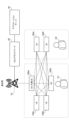
- FIG. 1 is a diagram showing a communication system according to a first embodiment.
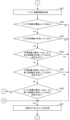
- 1 is a flowchart (part 1) illustrating an example of a process for determining representative UE candidates in the first embodiment.
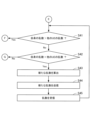
- 11 is a flowchart (part 2) illustrating an example of a process for determining representative UE candidates according to the first embodiment.
- 1 is a flowchart (part 1) illustrating an example of a process for determining a representative UE in the first embodiment.
- 11 is a flowchart (part 2) illustrating an example of a process for determining a representative UE in the first embodiment.
- UE100a, 100b, 100c, and 100d are terminals used by a single user.
- UE100a, 100b, 100c, and 100d are goggle-type devices, glove-type devices, and the like.
- a user can receive services in the metaverse using UE100a, 100b, 100c, and 100d.
- the communication system may include a base station 10, a 5G core network 20, and an application server 30.
- the 5G core network 20 includes a 5G user plane.
- a representative UE is determined from among UEs 100a, 100b, 100c, and 100d.
- FIG. 1 shows, as an example, that UE 100d is the representative UE.
- the representative UE performs 5G communication as a representative of multiple UEs.
- the representative UE communicates with the application server 30 via the base station 10 and the 5G core network 20. In this way, the representative UE communicates as a representative of multiple UEs, thereby reducing the network load.
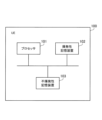
- the UE 100 includes a processor 101, a volatile storage device 102, and a non-volatile storage device 103.
- the processor 101 controls the entire UE 100.
- the processor 101 is a CPU (Central Processing Unit), an FPGA (Field Programmable Gate Array), etc.
- the processor 101 may be a multi-processor.
- the UE 100 may also have a processing circuit.
- the volatile storage device 102 is a main storage device of the UE 100.
- the volatile storage device 102 is a random access memory (RAM).
- the non-volatile storage device 103 is an auxiliary storage device of the UE 100.
- the non-volatile storage device 103 is a solid state drive (SSD).
- the UE 100 may have a battery.
- the UE 100 includes a storage unit 110, a communication unit 120, an acquisition unit 130, a determination unit 140, a determination unit 150, and a calculation unit 160.
- the memory unit 110 may be realized as a memory area reserved in the volatile memory device 102 or the non-volatile memory device 103.
- the communication unit 120, the acquisition unit 130, the judgment unit 140, the determination unit 150, and the calculation unit 160 may be partly or entirely realized by a processing circuit.
- the communication unit 120, the acquisition unit 130, the judgment unit 140, the determination unit 150, and the calculation unit 160 may be partly or entirely realized as a program module executed by the processor 101.
- the storage unit 110 stores various information. The functions of the communication unit 120, the acquisition unit 130, the determination unit 140, the decision unit 150, and the calculation unit 160 will be described in detail later.
- FIG. 4 is a diagram showing a flow of processes executed by a plurality of UEs in the first embodiment.
- the UEs 100a, 100b, 100c, and 100d execute local communication processing.
- the UEs 100a, 100b, 100c, and 100d perform a Peer to Peer (P2P) connection by a side link.
- P2P Peer to Peer
- the communication units of UEs 100a, 100b, 100c, and 100d transmit and receive power supply information and processor information to and from each other.
- the power supply information is information indicating the power supply method. Specifically, the power supply information indicates external power supply or battery power supply. When the power supply information indicates battery power supply, the communication units of UEs 100a, 100b, 100c, and 100d receive battery remaining amount information indicating the remaining battery amount.
- the processor information is information related to the processor. For example, the processor information is the CPU operating frequency, the number of cores, the CPU usage rate, etc.
- Step ST102 The UEs 100a, 100b, 100c, and 100d execute a process of determining representative UE candidates.
- Step ST103 The UEs 100a, 100b, 100c, and 100d execute a process of determining a representative UE.
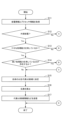
- FIG. 5 is a flowchart (part 1) illustrating an example of a process for determining representative UE candidates according to the first embodiment.
- the acquisition unit 130 acquires its own power supply information and its own processor information.
- the acquisition unit 130 acquires the power supply information and the processor information from the storage unit 110.
- the acquisition unit 130 acquires the power supply information and the processor information from an external device.
- the external device is a device that exists outside the UE 100.
- the external device is a cloud server.
- the external device is omitted in the diagram.
- Step S12 The determination unit 140 determines whether or not its own power supply method is external power supply based on its own power supply information. If the power supply method is external power supply, the process proceeds to step S13. If the power supply method is battery power supply, the process proceeds to step S21.
- step ST101 power supply information transmitted by other UEs is received. Therefore, the determination unit 140 can identify UEs that are operating with external power supply based on the power supply information received from other UEs.
- the determination unit 140 determines whether or not there is a UE having a CPU with a higher CPU operating frequency than the UE's own CPU operating frequency. Also, for example, the determination unit 140 determines whether or not there is a UE having a greater number of cores than the UE's own number of cores.
- step S15 If there is no UE with a processing capability higher than the processing capability of the own processor, the process proceeds to step S15. If there is a UE with a processing capability higher than the processing capability of the own processor, the process proceeds to step S27.
- Step S15 The determination unit 150 determines its own UE as a representative UE candidate.
- Step S16 The calculation unit 160 calculates a random number.
- Step S17 The communication unit 120 transmits information indicating that the UE is a representative UE candidate (hereinafter, representative UE candidate information) and a random number to the other UEs.
- Step S22 The determination unit 140 determines whether the remaining battery charge is equal to or greater than a predetermined threshold based on the remaining battery charge information. If the remaining battery charge is equal to or greater than the threshold, the process proceeds to step S23. If the remaining battery charge is less than the threshold, the process proceeds to step S27.
- Step S23 The determining unit 140 determines whether or not its own processor has sufficient processing power based on its own processor information. For example, the determining unit 140 determines that its own processor has sufficient processing power when the CPU operating frequency is equal to or greater than a predetermined threshold. Also, for example, the determining unit 140 determines that its own processor has sufficient processing power when the number of cores is equal to or greater than a predetermined threshold. If the own processor has sufficient processing power, the process proceeds to step S24. If the own processor does not have sufficient processing power, the process proceeds to step S27.
- Step S24 The determination unit 140 determines whether or not there is a UE that has the same processing capacity as the processing capacity of its own processor, based on the processor information received from the UE operating on external power supply. If the condition is met, the process proceeds to step S27. If the condition is not met, the process proceeds to step S25.
- Step S25 The determination unit 140 determines whether or not a UE with a processing capability higher than the processing capability of its own processor exists based on the processor information received from the UE operating on external power supply. If a UE with a processing capability higher than the processing capability of its own processor does not exist, the process proceeds to step S26. If a UE with a processing capability higher than the processing capability of its own processor exists, the process proceeds to step S27.
- Step S27 The decision unit 150 decides that its own UE will not become the representative UE.
- the representative UE candidate information and the random number are received. For example, if UE100a and 100b are determined as the representative UE candidates, UE100a receives the representative UE candidate information and the random number from UE100b. Also, UE100b receives the representative UE candidate information and the random number from UE100a.
- each of the multiple UEs determines whether or not it is a representative UE candidate based on the power supply method and the processing capacity of its processor. Also, when the power supply method is battery power supply, each of the multiple UEs determines whether or not it is a representative UE candidate based on the remaining battery capacity and the processing capacity of its processor.
- FIG. 7 is a flowchart (part 1) illustrating an example of a process for determining a representative UE according to the first embodiment.
- the determination unit 140 determines whether or not the UE itself is a representative UE candidate. If the UE itself is a representative UE candidate, the process proceeds to step S32. If the UE itself is not a representative UE candidate, the process proceeds to step S34.
- Step S32 The determination unit 140 determines whether or not there is another representative UE candidate. Specifically, when representative UE candidate information is received, the determination unit 140 determines that there is another representative UE candidate. If there is another representative UE candidate, the process proceeds to step S41. If there is no another representative UE candidate, the process proceeds to step S33.
- Step S33 The determination unit 150 determines its own UE as the representative UE.
- Step S34 The determination unit 150 determines that its own UE will not become the representative UE.
- FIG. 8 is a flowchart (part 2) illustrating an example of the representative UE determination process according to the first embodiment.
- Step S41 When step S41 is executed after step S32, the determination unit 140 determines whether the random number transmitted in step S17 is greater than the random number received from another UE.
- step S41 When step S41 is executed after step S45, the determination unit 140 determines whether the random number calculated in step S43 is greater than the random number received in step S45. If the condition is met, the process proceeds to step S33, otherwise the process proceeds to step S42.
- Step S42 When step S41 is executed after step S32, the determination unit 140 determines whether the random number transmitted in step S17 is the same as the random number received from another UE. When step S41 is executed after step S45, the determination unit 140 determines whether the random number calculated in step S43 is the same as the random number received in step S45. If the condition is met, the process proceeds to step S43, otherwise the process proceeds to step S34.
- Step S43 The calculation unit 160 calculates a new random number.
- Step S44 The communication unit 120 transmits a new random number to the UEs among the representative UE candidates that transmitted the same random number value. Here, the UE receives a new random number. When the UE receives the new random number, the UE calculates a new random number. Then, the UE transmits the calculated random number.
- Step S45 The communication unit 120 receives a random number from the UE. Then, the process proceeds to step S41.
- the representative UE is determined in the communication system. In this manner, the representative UE is determined from among the representative UE candidates. When there are multiple representative UE candidates, the representative UE is determined using a random number.
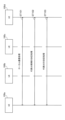
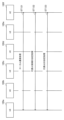
- FIG. 9 is a sequence diagram showing an example of processing performed by the representative UE in the first embodiment.
- the UE 100d collects the IP addresses and traffic types of the UEs 100a, 100b, and 100c.
- the UE 100d configures QoS and NSSAI.
- the UE 100d establishes a connection with the application server 30.
- the UE 100d executes a network address transformation (NAT) process. In the NAT process, traffic integration and traffic allocation are performed.
- NAT network address transformation
- a representative UE is determined from among multiple UEs.
- the representative UE then performs communication as a representative of the multiple UEs.
- the communication system can reduce the network load.
- steps S13 and S23 it is determined whether the processor itself has sufficient processing power.
- the determination unit 140 may determine whether the CPU usage rate of the processor itself is equal to or lower than a predetermined threshold value.
- Embodiment 2 Next, a description will be given of embodiment 2. In embodiment 2, differences from embodiment 1 will be mainly described. Furthermore, in embodiment 2, description of matters common to embodiment 1 will be omitted.
- a case where a representative UE is determined from among multiple UEs owned by one user is described.
- a case where a representative UE is determined from among multiple UEs owned by multiple users is described.
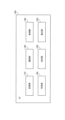
- the communication system includes UEs 100a to 100f.
- the UEs 100a to 100d belong to a user U1, and the UEs 100e and 100f belong to a user U2.
- the users U1 and U2 are in the same room.
- FIG. 11 is a diagram showing a flow of processes executed by a plurality of UEs in the second embodiment.
- the UEs 100a to 100f each execute a local communication process.
- the communication units of the UEs 100a to 100f transmit and receive power supply information and processor information to and from each other.
- the power supply information indicates battery power supply
- the communication units of the UEs 100a to 100f receive battery remaining amount information.
- Step ST122 The UEs 100a to 100f execute a process of determining representative UE candidates.
- the process of determining representative UE candidates is the same as that in step ST102, and therefore will not be described.
- Step ST123 The UEs 100a to 100f execute a process of determining a representative UE.
- the process of determining a representative UE is the same as that in step ST103, and therefore will not be described.
- the representative UE is determined in the communication system.
- the representative UE is assumed to be the UE 100d.
- FIG. 12 is a sequence diagram illustrating an example of processing performed by a representative UE in the second embodiment.
- the UE 100d collects the IP addresses and traffic types of the UEs 100a to 100c, 100e, and 100f.
- the UE 100d configures QoS and NSSAI.
- the UE 100d establishes a connection with the application server 30.
- the UE 100d executes the NAT process.
- a representative UE is determined from among multiple UEs owned by multiple users.
- the representative UE then performs communication as a representative of the multiple UEs.
- the communication system can reduce the network load.
- FIG. 13 is a sequence diagram showing an example in which a UE according to the second embodiment is added. Note that the base station 10 is omitted. It is assumed that the UE 100d is determined to be the representative UE from among the UEs 100a to 100d, and that the UEs 100e and 100f are added.
- Step ST141 The UE 100d establishes connections with the UEs 100e and 100f. This enables local communication between the UE 100d and the UEs 100e and 100f.
- Step ST142 The UE 100d collects the IP addresses and the traffic types of the UEs 100e and 100f.
- Step ST143 The UE 100d configures the QoS and the NSSAI for the UEs 100e and 100f.
- Step ST144 The UE 100d executes the NAT process.
- the above describes the case where UEs 100e and 100f owned by user U2 are added.
- the above content can be applied when a UE owned by user U2 is added. In other words, the above content can be applied when a different user adds a UE.
- the representative UE performs 5G communication as a representative of multiple UEs including multiple UEs (e.g., UEs 100a to 100c) and the new UE (e.g., UEs 100e and 100f). Because the new UE does not establish a connection individually, the network load is reduced.
- Base station 20 5G core network, 30 Application server, 100, 100a to 100f UE, 101 Processor, 102 Volatile storage device, 103 Non-volatile storage device, 110 Storage unit, 120 Communication unit, 130 Acquisition unit, 140 Determination unit, 150 Decision unit, 160 Calculation unit.
Landscapes
- Engineering & Computer Science (AREA)
- Computer Networks & Wireless Communication (AREA)
- Signal Processing (AREA)
- Mobile Radio Communication Systems (AREA)
Abstract
L'invention concerne un système de communication comprenant des UE 100a à100d qui sont utilisés par des utilisateurs. Un UE représentatif est déterminé parmi les UE 100a à 100d. L'UE représentatif effectue une communication 5G ou une communication au-delà de 5G en tant que représentant des UE 100a à100d.
Priority Applications (2)
| Application Number | Priority Date | Filing Date | Title |
|---|---|---|---|
| JP2024510256A JPWO2025041225A1 (fr) | 2023-08-21 | 2023-08-21 | |
| PCT/JP2023/030001 WO2025041225A1 (fr) | 2023-08-21 | 2023-08-21 | Système de communication |
Applications Claiming Priority (1)
| Application Number | Priority Date | Filing Date | Title |
|---|---|---|---|
| PCT/JP2023/030001 WO2025041225A1 (fr) | 2023-08-21 | 2023-08-21 | Système de communication |
Publications (1)
| Publication Number | Publication Date |
|---|---|
| WO2025041225A1 true WO2025041225A1 (fr) | 2025-02-27 |
Family
ID=94731813
Family Applications (1)
| Application Number | Title | Priority Date | Filing Date |
|---|---|---|---|
| PCT/JP2023/030001 Pending WO2025041225A1 (fr) | 2023-08-21 | 2023-08-21 | Système de communication |
Country Status (2)
| Country | Link |
|---|---|
| JP (1) | JPWO2025041225A1 (fr) |
| WO (1) | WO2025041225A1 (fr) |
Citations (4)
| Publication number | Priority date | Publication date | Assignee | Title |
|---|---|---|---|---|
| JP2002165272A (ja) * | 2000-11-28 | 2002-06-07 | Nippon Telegr & Teleph Corp <Ntt> | 通信方法および通信端末 |
| JP2014033371A (ja) * | 2012-08-03 | 2014-02-20 | Sharp Corp | 情報共有システム、端末装置、切替方法及びプログラム |
| WO2014184835A1 (fr) * | 2013-05-15 | 2014-11-20 | 日本電気株式会社 | Systeme de communication, appareil de commande de temporisation de communication, appareil de commande de connexion, procede de commande de temporisation de communication et support lisible par ordinateur |
| WO2022201555A1 (fr) * | 2021-03-26 | 2022-09-29 | 株式会社Nttドコモ | Terminal, station de base et système de communication sans fil |
Family Cites Families (4)
| Publication number | Priority date | Publication date | Assignee | Title |
|---|---|---|---|---|
| JP4670646B2 (ja) * | 2006-01-11 | 2011-04-13 | 株式会社豊田中央研究所 | 接近報知システム |
| WO2016132719A1 (fr) * | 2015-02-16 | 2016-08-25 | 日本電気株式会社 | Système de communication, dispositif de nœud, terminal de communication, procédé de gestion de clé et support lisible par ordinateur non temporaire stockant un programme |
| US20180041337A1 (en) * | 2015-02-16 | 2018-02-08 | Nec Corporation | Communication system, communication terminal, authentication method, and non-transitory computer readable medium storing program |
| JP2020174265A (ja) * | 2019-04-10 | 2020-10-22 | ソニー株式会社 | 無線通信装置、通信制御装置および無線通信システム |
-
2023
- 2023-08-21 WO PCT/JP2023/030001 patent/WO2025041225A1/fr active Pending
- 2023-08-21 JP JP2024510256A patent/JPWO2025041225A1/ja active Pending
Patent Citations (4)
| Publication number | Priority date | Publication date | Assignee | Title |
|---|---|---|---|---|
| JP2002165272A (ja) * | 2000-11-28 | 2002-06-07 | Nippon Telegr & Teleph Corp <Ntt> | 通信方法および通信端末 |
| JP2014033371A (ja) * | 2012-08-03 | 2014-02-20 | Sharp Corp | 情報共有システム、端末装置、切替方法及びプログラム |
| WO2014184835A1 (fr) * | 2013-05-15 | 2014-11-20 | 日本電気株式会社 | Systeme de communication, appareil de commande de temporisation de communication, appareil de commande de connexion, procede de commande de temporisation de communication et support lisible par ordinateur |
| WO2022201555A1 (fr) * | 2021-03-26 | 2022-09-29 | 株式会社Nttドコモ | Terminal, station de base et système de communication sans fil |
Also Published As
| Publication number | Publication date |
|---|---|
| JPWO2025041225A1 (fr) | 2025-02-27 |
Similar Documents
| Publication | Publication Date | Title |
|---|---|---|
| EP3097670B1 (fr) | Procédés, noeud réseau, systèmes, et produits programmes informatiques de commande de l'utilisation de tcp à chemins multiples | |
| US10454827B2 (en) | Method and devices for controlling usage of multi-path TCP | |
| US9332583B2 (en) | Multipoint communication device and method of performing switching from multipoint communication to point-to-point communication | |
| CN114363963B (zh) | 一种云原生upf信令面负载均衡选择方法及系统 | |
| US10367893B1 (en) | Method and apparatus of performing peer-to-peer communication establishment | |
| US10051561B2 (en) | Methods and nodes for M2M communication | |
| CN113206894A (zh) | Dns服务器的发现方法、装置、计算机设备及存储介质 | |
| CN106998576A (zh) | 一种实现上网终端切换的方法及装置 | |
| CN110460641A (zh) | 数据传输方法、装置及系统 | |
| CN109219974A (zh) | 基站设备、终端设备以及QoS控制方法 | |
| CN106572132B (zh) | 分发建链方法、装置和系统 | |
| CN103493399B (zh) | 基于两个或更多个网络提供同时数据传输的方法和设备 | |
| CN106027599B (zh) | 一种数据传输通道建立方法、系统和服务器 | |
| US20160366195A1 (en) | Relayed Communication Channel Establishment | |
| US11363103B2 (en) | Dynamic user plane function (UPF) selection based on supported protocol type | |
| CN106101468B (zh) | 传输链路的确定方法及装置 | |
| US20160212052A1 (en) | Methods, systems, and computer readable media for balancing diameter message traffic received over long-lived diameter connections | |
| WO2025041225A1 (fr) | Système de communication | |
| CN104955125B (zh) | 支持多种类型互联网接入的调度方法、终端、及系统 | |
| CN108574615B (zh) | 一种基于多路径mptcp的内容传输方法、设备及系统 | |
| CN107370647B (zh) | 一种局域内部控制器系统间互联的方法及一种局域网系统 | |
| KR101058275B1 (ko) | 통신 단말기 및 그 제어방법과, p2p 서버 시스템 및 그 제어방법 | |
| CN108632355B (zh) | 一种家电网络选路方法、控制终端、可读存储介质及设备 | |
| CN112235840A (zh) | 会话终端切换方法、装置、实体和系统 | |
| US8605649B2 (en) | Method for providing reliable communication session establishment in a communication infrastructure |
Legal Events
| Date | Code | Title | Description |
|---|---|---|---|
| ENP | Entry into the national phase |
Ref document number: 2024510256 Country of ref document: JP Kind code of ref document: A |
|
| WWE | Wipo information: entry into national phase |
Ref document number: 2024510256 Country of ref document: JP |
|
| 121 | Ep: the epo has been informed by wipo that ep was designated in this application |
Ref document number: 23949686 Country of ref document: EP Kind code of ref document: A1 |
|
| NENP | Non-entry into the national phase |
Ref country code: DE |