WO2025033465A1 - 2次元粒子、2次元粒子含有分散液、2次元粒子含有コンポジット、2次元粒子含有膜、および2次元粒子の製造方法 - Google Patents
2次元粒子、2次元粒子含有分散液、2次元粒子含有コンポジット、2次元粒子含有膜、および2次元粒子の製造方法 Download PDFInfo
- Publication number
- WO2025033465A1 WO2025033465A1 PCT/JP2024/028266 JP2024028266W WO2025033465A1 WO 2025033465 A1 WO2025033465 A1 WO 2025033465A1 JP 2024028266 W JP2024028266 W JP 2024028266W WO 2025033465 A1 WO2025033465 A1 WO 2025033465A1
- Authority
- WO
- WIPO (PCT)
- Prior art keywords
- mxene
- particles
- dimensional
- ligand
- atom
- Prior art date
- Legal status (The legal status is an assumption and is not a legal conclusion. Google has not performed a legal analysis and makes no representation as to the accuracy of the status listed.)
- Pending
Links
Images



Classifications
-
- C—CHEMISTRY; METALLURGY
- C01—INORGANIC CHEMISTRY
- C01B—NON-METALLIC ELEMENTS; COMPOUNDS THEREOF; METALLOIDS OR COMPOUNDS THEREOF NOT COVERED BY SUBCLASS C01C
- C01B32/00—Carbon; Compounds thereof
- C01B32/90—Carbides
- C01B32/914—Carbides of single elements
- C01B32/921—Titanium carbide
-
- H—ELECTRICITY
- H01—ELECTRIC ELEMENTS
- H01B—CABLES; CONDUCTORS; INSULATORS; SELECTION OF MATERIALS FOR THEIR CONDUCTIVE, INSULATING OR DIELECTRIC PROPERTIES
- H01B1/00—Conductors or conductive bodies characterised by the conductive materials; Selection of materials as conductors
- H01B1/06—Conductors or conductive bodies characterised by the conductive materials; Selection of materials as conductors mainly consisting of other non-metallic substances
Definitions
- the present disclosure relates to two-dimensional particles, two-dimensional particle-containing dispersions, two-dimensional particle-containing composites, two-dimensional particle-containing films, and methods for producing two-dimensional particles.
- MXene has been attracting attention as a new material.
- MXene is a type of so-called two-dimensional material, and is a layered material having the form of one or more layers.
- MXene dispersed in water is easily oxidized by water molecules and dissolved oxygen, changing into metal oxide (titanium oxide), and losing its original excellent properties.
- metal oxide titanium oxide
- MXene has a hydrophilic surface, it has low attraction to hydrophobic materials (polymers, organic solvents, etc.), making it difficult to mix with hydrophobic materials to form homogeneous composite materials.
- a liquid process such as spray coating, there is also the issue that high energy must be consumed to remove the water.
- Patent Document 1 discloses two-dimensional MXene particles that are surface-modified with a functional group containing a saturated or unsaturated hydrocarbon; and an organic protective film formed on the surface of the surface-modified two-dimensional MXene particles, the functional group being selected from the group consisting of phosphonates and amines, and the two-dimensional MXene particles that are surface-modified with a functional group containing a saturated or unsaturated hydrocarbon are dispersed in an organic solvent that forms a protective film.
- Patent Document 1 discloses that the two-dimensional MXene particles are easily dispersed in organic solvents, and thus not only are polymer composites containing the particles easy to manufacture, but also have advantageous properties for the application of films and coating products with various performances.
- Non-Patent Document 1 discloses the preparation of a Ti3C2TxMXene particle-containing dispersion stable in an organic solvent for mixing with a non-polar polymer matrix soluble in an organic medium, for example, for the purpose of realizing a stretchable electrode.
- the Ti3C2Tx flakes are prepared by etching Ti3AlC2 using an etching solution in which LiF is dissolved in HCl, and -F, -Cl, -O , and -OH are present on the surface of Ti3C2 .
- the MXene particles of Patent Document 1 and Non-Patent Document 1 can only be dispersed in organic dispersion media that are immiscible with water (solubility in water ⁇ 10% w/w), and there are limitations on the organic dispersion media in which they can be dispersed.
- the MXene particles of Patent Document 1 and Non-Patent Document 1 have a problem in that they have low dispersion stability in organic dispersion media.
- the present disclosure has been made in consideration of the above circumstances, and its purpose is to provide two-dimensional particles that are dispersible in various organic dispersion media and have high dispersion stability in dispersions, two-dimensional particle-containing dispersions, two-dimensional particle-containing composites, and two-dimensional particle-containing films that contain the two-dimensional particles, and methods for producing the two-dimensional particles.
- a two-dimensional particle comprising one or more layers,
- the layer has the following formula: M m X n wherein M is at least one Group 3, 4, 5, 6, or 7 metal; X is a carbon atom, a nitrogen atom, or a combination thereof; n is 1 or more and 4 or less, m is greater than n and is equal to or less than 5.
- the T is at least one selected from the group consisting of a hydroxyl group, a fluorine atom, a chlorine atom, an oxygen atom, and a hydrogen atom
- the layer has a structure in which an M atom of the layer body and a hetero atom of the heteroatom-containing compound having a saturated hydrocarbon group or an unsaturated hydrocarbon group are covalently or ionically bonded via an oxygen atom derived from a hydroxyl group of the layer body, Two-dimensional particles are provided in which the substitution rate of hydroxyl groups present on the surface of the layer body with the above structure is 37.5% or more.
- the present disclosure provides two-dimensional particles that can be dispersed in various organic dispersion media and have high dispersion stability in the dispersion liquid, a two-dimensional particle-containing dispersion liquid, a two-dimensional particle-containing composite, and a two-dimensional particle-containing film that contain the two-dimensional particles, and a method for producing the two-dimensional particles.
- FIG. 1A and 1B are schematic cross-sectional views illustrating MXene (or precursor particles used to produce the two-dimensional particles of this embodiment) constituting the two-dimensional particles of this embodiment, where (a) shows single-layer MXene and (b) shows multi-layer (e.g., two-layer) MXene.
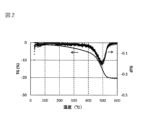
- FIG. 1 shows the weight change by differential thermal analysis of ligand-substituted MXene particles in Example 1-1.
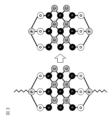
- FIG. 1 is a diagram for explaining prerequisites for calculating the ligand coverage.
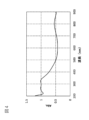
- FIG. 1 is a diagram showing the results of ultraviolet-visible spectrophotometric measurement (ultraviolet-visible absorption spectrum) of Example 1-1.
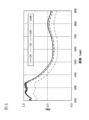
- FIG. 1 is a diagram showing the results of ultraviolet-visible spectrophotometric measurement (ultraviolet-visible absorption spectrum) for each standing time in Example 1-1.
- FIG. 6 is a graph showing the relationship between the standing time and the ratio of absorbance to the initial absorbance (shown as "absorbance (normalized)" in FIG. 6) in Example 1-1.
- FIG. 1 is a graph showing the relationship between the ligand coverage and the dispersion stability in Example 1.
- FIG. 13 shows the relationship between the ligand coverage and the conductivity of the ligand-substituted MXene film in Example 2.
- Patent Document 1 In the manufacturing methods of Patent Document 1 and Non-Patent Document 1, it is necessary to add hydrochloric acid to the aqueous dispersion in which the MXene particles are dispersed to lower the pH (to about 2.5) before the substitution reaction. This is intended to protonate the hydroxyl groups on MXene to increase the reaction rate of the phase separation type interfacial reaction.
- hydrochloric acid to the aqueous dispersion in which the MXene particles are dispersed to lower the pH (to about 2.5) before the substitution reaction.
- This is intended to protonate the hydroxyl groups on MXene to increase the reaction rate of the phase separation type interfacial reaction.
- MXene aggregates and MXene aggregates are formed. The reason for this is thought to be that the zeta potential of MXene changes from negative to near 0, eliminating the electrostatic repulsion between the flakes.
- the substitution reaction will cause the hydroxyl groups present on the surface of the MXene layer body to be replaced by a heteroatom-containing compound (hereinafter sometimes referred to as a "ligand") having a saturated or unsaturated hydrocarbon group only around the MXene aggregates (hereinafter sometimes referred to as "ligand substitution"). It is believed that this will result in a decrease in the substitution rate of the hydroxyl groups present on the surface of the layer body with the heteroatom-containing compound (hereinafter sometimes referred to as the "ligand coverage").
- a low ligand coverage means that the hydrophobization by surface modification of MXene is insufficient, and as a result, it is believed that the dispersion stability in organic dispersion media is low.
- the inventors therefore conducted extensive research and discovered that in order to solve the above problems, it is necessary to perform ligand substitution on each MXene particle (e.g., single-layer or small-layer MXene flakes) in the MXene particle manufacturing process without causing agglomerations of the MXene particles, thereby improving the ligand coverage rate, and that to achieve this, it is necessary to perform ligand substitution without acidifying the aqueous dispersion in which the MXene particles are dispersed prior to the substitution reaction.
- MXene particle e.g., single-layer or small-layer MXene flakes
- the following describes the two-dimensional particles, two-dimensional particle-containing dispersion, two-dimensional particle-containing composite, two-dimensional particle-containing film, and method for producing two-dimensional particles according to the present disclosure.
- the two-dimensional particles are A two-dimensional particle comprising one or more layers,
- the layer has the following formula: M m X n wherein M is at least one Group 3, 4, 5, 6, or 7 metal; X is a carbon atom, a nitrogen atom, or a combination thereof; n is 1 or more and 4 or less, m is greater than n and is equal to or less than 5.
- the T is at least one selected from the group consisting of a hydroxyl group, a fluorine atom, a chlorine atom, an oxygen atom, and a hydrogen atom
- the layer has a structure in which an M atom of the layer body and a hetero atom of the heteroatom-containing compound having a saturated hydrocarbon group or an unsaturated hydrocarbon group are covalently or ionically bonded via an oxygen atom derived from a hydroxyl group of the layer body,
- the substitution rate of the hydroxyl groups present on the surface of the layer body with the structure is 37.5% or more.
- the two-dimensional particles in this embodiment have a high substitution rate of the hydroxyl groups present on the surface of the layer body with the phosphate compound, that is, the M atom of the layer body and the heteroatom of the heteroatom-containing compound having a saturated hydrocarbon group or an unsaturated hydrocarbon group are covalently or ionically bonded via oxygen atoms derived from the hydroxyl groups of the layer body.
- the two-dimensional particles in this embodiment have excellent dispersion stability in an organic dispersion medium.
- the oxidation number of that element is not limited to 0, but can be any number within the range of oxidation numbers that the element can have.
- MXene which constitutes the two-dimensional particles of this embodiment (or the precursor particles used to manufacture the two-dimensional particles of this embodiment).
- the one or more layers may be understood as a layered compound and may also be represented as " MmXnTs " , where s is any number and x or z may be used instead of s as is conventional. Typically, n may be 1, 2, 3 or 4, but is not limited thereto.
- M is preferably at least one selected from the group consisting of Ti, Zr, Hf, V, Nb, Ta, Cr, Mo, and Mn, and more preferably at least one selected from the group consisting of Ti, V, Cr, and Mo. Most preferably, M contains Ti. M may be only Ti.
- M may be titanium or vanadium
- X may be a carbon atom or a nitrogen atom
- the MAX phase may be Ti 3 AlC 2
- MXene may be Ti 3 C 2 Ts (in other words, the layer body is Ti 3 C 2 , M is Ti, X is C, n is 2, and m is 3).
- the layer body is Ti 3 C 2 , two-dimensional particles with a high ligand coverage can be provided.
- two-dimensional particles in which the layer body is Ti 3 C 2 and the surface of the layer body is substituted with a heteroatom-containing compound having a saturated or unsaturated hydrocarbon group, preferably with an alkylphosphonic acid, are preferred because they have extremely high dispersion stability in an organic dispersion medium.
- MXene may contain a relatively small amount of A atoms derived from the precursor phase, the MAX phase, for example, 10 mass% or less of the original A atoms.
- the residual amount of A atoms may be preferably 8 mass% or less, more preferably 6 mass% or less. However, even if the residual amount of A atoms exceeds 10 mass%, there may be cases where this does not pose a problem depending on the application and use conditions of the two-dimensional particles.
- FIGS. 1(a) and 1(b) do not show the substituents on the surface of the layer body that are derived from the heteroatom-containing compound having a saturated or unsaturated hydrocarbon group.
- the MXene constituting the two-dimensional particle of this embodiment is an aggregate including one layer of MXene particles (hereinafter simply referred to as "MXene particles") 10a (single-layer MXene particles) as illustrated in Fig. 1(a ) .
- MXene particles MXene particles
- the MXene particle 10a is an MXene layer 7a having a layer body ( MmXn layer ) 1a represented by MmXn and modifications or terminations T3a, 5a present on the surface of the layer body 1a (more specifically, on at least one of the two surfaces facing each other in each layer).
- MmXnTs MmXnTs
- the two-dimensional particles of this embodiment may include one or more layers.
- MXene particles with multiple layers include, but are not limited to, two-layer MXene particles 10b as shown in FIG. 1(b). 1b, 3b, 5b, and 7b in FIG. 1(b) are the same as 1a, 3a, 5a, and 7a in FIG. 1(a).
- the two adjacent MXene layers (e.g., 7a and 7b) of the multilayer MXene particle do not necessarily have to be completely separated, and may be partially in contact.
- the MXene particle 10a is a single layer in which the multilayer MXene particles 10b are individually separated, and there may be remaining unseparated multilayer MXene particles 10b, forming a mixture of the single layer MXene particles 10a and the multilayer MXene particles 10b.
- the thickness of each layer (corresponding to the above-mentioned MXene layers 7a and 7b) contained in the MXene particle is, for example, 0.8 nm to 5 nm, in particular 0.8 nm to 3 nm (which may vary mainly depending on the number of M atomic layers contained in each layer).
- the interlayer distance (or gap dimension, shown as ⁇ d in FIG. 1(b)) may be, for example, 0.8 nm to 10 nm, in particular 0.8 nm to 5 nm, and more particularly about 1 nm, and the total number of layers may be 2 or more and 20,000 or less.
- the MXene constituting the two-dimensional particles of this embodiment is preferably a multi-layer MXene particle having a small number of layers obtained by a delamination process.
- the "small number of layers” means, for example, that the number of stacked MXene layers is 6 or less.
- the thickness in the stacking direction of the multi-layer MXene particle having a small number of layers is preferably 15 nm or less, and more preferably 10 nm or less.
- this "multi-layer MXene particle having a small number of layers” may be referred to as "few-layer MXene particles”.
- single-layer MXene particles and few-layer MXene particles may be collectively referred to as "single-layer/few-layer MXene particles”.
- the MXene constituting the two-dimensional particles of this embodiment contains a large amount of single-layered and few-layered MXene.
- the specific surface area of MXene can be made larger than that of multi-layered MXene, and as a result, it is thought that the contact area with the ligand in the substitution reaction can be increased and the ligand coverage can be increased.
- the number of MXene layers is 10 or less and the thickness is 15 nm or less, preferably 10 nm or less, and the single-layered and few-layered MXene preferably accounts for 80 volume % or more of the total MXene, more preferably 90 volume % or more, and even more preferably 95 volume % or more. It is also more preferable that the volume of the single-layered MXene is larger than the volume of the few-layered MXene. Since the true density of these MXenes does not vary significantly depending on the form of existence, it can be said that it is more preferable that the mass of the single-layered MXene is larger than the mass of the few-layered MXene.
- the specific surface area can be further increased, and as a result, for example, the dispersion stability can be further improved, and, for example, when the two-dimensional particles of this embodiment are used in an electrode, deterioration of the electrical conductivity over time can be sufficiently suppressed.
- the MXene constituting the two-dimensional particles of this embodiment is formed only of a single layer of MXene.
- the replacement rate (ligand coverage rate) of the hydroxyl groups present on the surface of the layer body with the heteroatom-containing compound is 37.5% or more.
- a dehydration condensation reaction occurs between hydroxyl groups present on the surface of the layer body of the MXene particles (precursor particles) and a heteroatom-containing compound having a saturated or unsaturated hydrocarbon group, which serves as a ligand.
- This reaction can also be said to be a reaction in which the hydroxyl groups (particularly hydrogen) present on the surface of the layer body of the MXene particles (precursor particles) are replaced with a heteroatom-containing compound (preferably alkylphosphonic acid) having a saturated or unsaturated hydrocarbon group.
- this reaction may be referred to as "ligand replacement.”
- the two-dimensional particle according to this embodiment has a structure in which the M atom (preferably a titanium atom) of the layer body and the heteroatom (preferably one or more atoms selected from the group consisting of phosphorus, nitrogen, sulfur, and silicon, more preferably a phosphorus atom) of the heteroatom-containing compound are covalently or ionically bonded via an oxygen atom as a result of the above reaction (M-O-heteroatom covalent or ionic bond, preferably Ti-O-heteroatom covalent or ionic bond, more preferably Ti-O-P covalent bond).
- a hydrophobic ligand is connected to MXene via this structure.
- the above M-O-heteroatom covalent or ionic bond can be confirmed by, for example, EDX, NMR, etc.
- a substitution reaction of the multiple hydroxyl groups present on the surface of the layer body of the MXene particles (precursor particles) with the above-mentioned compound proceeds, increasing the covalent or ionic bonds of the above-mentioned M-O-heteroatoms and increasing the amount of ligands present on the MXene, i.e., increasing the ligand coverage rate, which introduces many hydrophobic functional groups onto the MXene surface, thereby increasing the hydrophobicity of the MXene surface and allowing the production of two-dimensional particles that are easily dispersible in organic dispersion media.
- heteroatom-containing compound examples include phosphoric acid compounds, nitrogen-containing compounds such as amines, silicon-containing compounds such as silanes, and sulfur-containing compounds. Phosphate compounds are preferred.
- the phosphoric acid compound is preferably a phosphonic acid having a saturated or unsaturated hydrocarbon group.
- the saturated or unsaturated hydrocarbon group may be an aliphatic hydrocarbon, an aliphatic cyclic hydrocarbon, or an aromatic hydrocarbon having 1 or more, further 2 or more, or further 3 or more carbon atoms, and having 25 or less, or further 20 or less carbon atoms.
- Examples of the phosphonic acid having a saturated or unsaturated hydrocarbon group include alkylphosphonic acid.
- alkylphosphonic acid There is no restriction on the alkyl chain length of the alkylphosphonic acid, and examples of the alkylphosphonic acid include alkylphosphonic acid having an alkyl chain of C1 to C15, or further C1 to C12. Examples include methylphosphonic acid (C1), propylphosphonic acid (C3), hexylphosphonic acid (C6), octylphosphonic acid (C8), decylphosphonic acid (C10), and dodecylphosphonic acid (C12).
- the ligand coverage is 37.5% or more, preferably 50% or more.
- Increasing the ligand coverage dramatically improves the dispersion stability when dispersed in an organic dispersion medium.
- a possible mechanism is that the hydrophobic surface becomes hydrophobic due to the hydrophobic ligand bonded to MXene, and the degree of hydrophobicity increases.
- the two-dimensional particles according to this embodiment exist in the form of a single layer or a few layers, rather than as aggregates.
- the upper limit of the ligand coverage may be, for example, preferably 95%, more preferably about 90%, from the viewpoint of ensuring dispersion stability.
- the above-mentioned ligand coverage may be calculated as shown in (Calculation of the Ligand Coverage) of Example 1-1 in the Examples described later.
- the above two-dimensional particles can be obtained, for example, by the recommended manufacturing method described below.
- the two-dimensional particle-containing dispersion according to this embodiment contains the two-dimensional particles and an organic dispersion medium.
- the two-dimensional particle-containing dispersion according to this embodiment has a high ligand coverage of the two-dimensional particles contained therein, and many hydrophobic functional groups are introduced onto the MXene surface, so that it has excellent dispersion stability.
- the two-dimensional particle-containing dispersion according to this embodiment uses an organic dispersion medium, so that it is possible to reduce contact with water and oxygen, thereby suppressing oxidation of MXene, and also to reduce energy consumption for removing the dispersion medium during film formation.
- the two-dimensional particles contained in the two-dimensional particle-containing dispersion liquid are as described above (Embodiment 1: Two-dimensional particles).
- the organic dispersion medium is not limited.
- As the organic dispersion medium an organic dispersion medium compatible with water (solubility in water > 10% w/w) may be used, or an organic dispersion medium that is not compatible with water may be used. According to this embodiment, unlike Patent Document 1 and the like, dispersion is also possible in an organic dispersion medium that is compatible with water (solubility in water > 10% w/w), so the selection of organic dispersion mediums is wider than in the past.
- organic dispersion medium for example, one or more selected from the group consisting of ethanol, 2-propanol, ethylene glycol, methanol, acetone, acetonitrile, DMF, NMF, DMSO, and NMP can be used.
- organic dispersion mediums that are not compatible with water include 1-hexanol, chloroform, and toluene.
- the organic dispersion medium is preferably one or more selected from the group consisting of ethanol, 2-propanol, and 1-hexanol.
- a two-dimensional particle-containing dispersion liquid using these organic dispersion media can achieve a dispersion stability of 50 hours or more for the two-dimensional particles (the time it takes for the absorbance of the ultraviolet-visible absorption spectrum to decrease by half from the initial absorbance) as evaluated in the examples described below.
- the two-dimensional particle-containing composite includes the two-dimensional particle-containing dispersion and a polymer material.
- the polymer material may be a solid such as particles, for example, a particulate material that can be dispersed together with two-dimensional particles in the two-dimensional particle-containing dispersion, or a water-soluble polymer that can be dissolved in the dispersion, i.e., a material that is dissolved in the dispersion.
- a solid such as particles, for example, one or more particles of polystyrene, polyurethane, and nylon are included.
- water-soluble polymer for example, water-soluble urethane, acrylic polymer, polyethylene glycol, carboxymethylcellulose (CMC), alginic acid polymer, polyether, polyvinyl alcohol, water-soluble polyester, dicarboxylated polysaccharide, etc. can be included. One or more of these can be used.
- the polymer material it is preferable that one or more selected from the group consisting of urethane, nylon, and carboxymethylcellulose (CMC) are included.
- the ratio of the polymer material in the two-dimensional particle-containing composite can be, for example, 0.01% by mass or more and 50% by mass or less.
- the two-dimensional particle-containing dispersion liquid contained in the two-dimensional particle-containing composite and the two-dimensional particles contained in the dispersion liquid are as described above in (Embodiment 1: Two-dimensional particles) and (Embodiment 2: Two-dimensional particle-containing dispersion liquid).
- the two-dimensional particle-containing composite according to this embodiment is preferably composed of the two-dimensional particle-containing dispersion and a polymeric material, and may be, for example, a two-dimensional particle-containing dispersion in which particles composed of a polymeric material are dispersed together with the two-dimensional particles according to this embodiment.
- the MXene particles of Patent Document 1 and Non-Patent Document 1 can only be dispersed in organic dispersion media that are immiscible with water (solubility in water ⁇ 10% w/w), which means that there are issues with limitations on the resins that can be used when producing composites of MXene particles and resins.
- the two-dimensional particle-containing composite of this embodiment contains two-dimensional particles that can be dispersed in a variety of organic dispersion media, which expands the range of usable resins, making it possible to produce composites of the two-dimensional particles of this embodiment with a variety of resins.
- the two-dimensional particle-containing film according to this embodiment includes two-dimensional particles having a substitution rate (ligand coverage) of hydroxyl groups present on the surface of the layer body of 75.4% or more among the two-dimensional particles described above (Embodiment 1: Two-dimensional particles).
- a two-dimensional particle-containing film containing two-dimensional particles with a high ligand coverage preferably a two-dimensional particle-containing film substantially composed of the above-mentioned two-dimensional particles with a high ligand coverage (unavoidable impurities such as residual dispersion medium are allowed), exhibits high conductivity as shown in the examples described below.
- the ligand coverage of the two-dimensional particles contained in the two-dimensional particle-containing film can be more than 75.4%, even more than 78%, even more than 80%, and even more than 83%.
- the MXene particles of Patent Document 1 and Non-Patent Document 1 have low dispersion stability in organic dispersion media, and the filtration film and spray film made using the MXene particles have low film quality and cannot exhibit the excellent conductivity, which is one of the characteristics of MXene.
- the two-dimensional particle-containing film of this embodiment has a high ligand coverage of the contained two-dimensional particles, and the dispersion stability in organic dispersion media is further improved, and as a result, the film quality of the two-dimensional particle-containing film, such as a filtration film or a spray film, obtained using the two-dimensional particle-containing dispersion liquid is further improved. And as a result, the conductivity is dramatically increased.
- the two-dimensional particle-containing film can achieve a conductivity of preferably 10 S/cm or more and 20,000 S/cm or less, measured by the method described in the examples described below.
- the two-dimensional particle-containing film according to this embodiment has such high conductivity that it is suitable for use, for example, in electrodes.
- two-dimensional particles having a ligand coverage rate of 75.4% or more can be applied to a substrate to form a film containing the two-dimensional particles on the substrate surface.
- the above-mentioned two-dimensional particle-containing dispersion can be used as a method for applying the two-dimensional particles to the substrate.
- the two-dimensional particle-containing dispersion may be a suspension.
- the method for forming a two-dimensional particle-containing film using the two-dimensional particle-containing dispersion is not particularly limited.
- the two-dimensional particle-containing dispersion may be applied to the substrate as is, or after appropriate adjustment (for example, dilution with a medium liquid or addition of a binder).
- application methods include spray application using a nozzle such as a one-fluid nozzle, a two-fluid nozzle, or an airbrush, slit coating using a table coater, a comma coater, or a bar coater, screen printing, metal mask printing, spin coating, dip coating, dripping, etc.
- the dispersion medium constituting the above dispersion include organic dispersion mediums. The organic dispersion medium is not limited.
- an organic dispersion medium that is compatible with water (solubility in water>10% w/w) as described above (Embodiment 2: Two-dimensional particle-containing dispersion liquid) may be used, or an organic dispersion medium that is not compatible with water may be used.
- a slurry containing two-dimensional particles in an organic dispersion medium is first prepared.
- the slurry prepared in this manner is used for spraying to produce a two-dimensional particle-containing film.
- the two-dimensional particle-containing film may contain residual liquid components derived from the organic dispersion medium of the slurry, or may be substantially free of such components.
- the two-dimensional particle-containing film may not contain a so-called binder.
- the substrate is not particularly limited and may be made of any suitable material.
- the substrate may be, for example, a resin film, a metal foil, a printed wiring board, a mounted electronic component, a metal pin, a metal wiring, a metal wire, or the like.
- a substrate made of a metal material suitable for an electrode, a resin, or the like may be appropriately adopted.
- suction filtration can be used to form a two-dimensional particle-containing film without the inclusion of a binder. It can also be used to form a two-dimensional particle-containing film without using a substrate. In the case of suction filtration, the two-dimensional particle-containing film may or may not contain residual liquid components derived from the liquid medium of the slurry.
- the drying may be performed under mild conditions such as natural drying (typically placing in an air atmosphere at room temperature and pressure) or air drying (blowing air) or under relatively active conditions such as hot air drying (blowing heated air), heat drying, and/or vacuum drying.
- drying refers to removing an organic dispersion medium that may be present in the film.
- the drying may be performed, for example, at a temperature of 400 degrees or less using a normal pressure oven or a vacuum oven.
- the formation and drying of the two-dimensional particle-containing film may be repeated as appropriate until a desired thickness of the two-dimensional particle-containing film is obtained. For example, a combination of spraying and drying may be repeated multiple times.
- the method for producing two-dimensional particles includes the steps of: (a) a precursor particle comprising one or more layers, The layer has the following formula: M m X n wherein M is at least one Group 3, 4, 5, 6, or 7 metal; X is a carbon atom, a nitrogen atom, or a combination thereof; n is 1 or more and 4 or less, m is greater than n and is equal to or less than 5.
- T is at least one selected from the group consisting of a hydroxyl group, a fluorine atom, a chlorine atom, an oxygen atom, and a hydrogen atom, and includes at least a hydroxyl group
- T is at least one selected from the group consisting of a hydroxyl group, a fluorine atom, a chlorine atom, an oxygen atom, and a hydrogen atom, and includes at least a hydroxyl group
- T is at least one selected from the group consisting of a hydroxyl group, a fluorine atom, a chlorine atom, an oxygen atom, and a hydrogen atom, and includes at least a hydroxyl group
- T is at least one selected from the group consisting of a hydroxyl group, a fluorine atom, a chlorine atom, an oxygen atom, and a hydrogen atom, and includes at least a hydroxyl group
- T is at least one selected from the group consisting of a hydroxyl group, a fluorine atom
- Step (a) Preparing Predetermined MXene Particles (Precursor Particles)
- Precursor Particles There are no limitations on the method for producing the MXene particles (precursor particles), and the particles can be produced, for example, by the following method.
- the MAX phase has the following formula: M m AX n (wherein M, X, n and m are as defined above, and A is at least one Group 12, 13, 14, 15, 16 element, usually a Group A element, typically Group IIIA and Group IVA, and more particularly may include at least one element selected from the group consisting of Al, Ga, In, Tl, Si, Ge, Sn, Pb, P, As, S and Cd, and is preferably Al).
- Etching is performed by using an etching solution to remove at least a part of A atoms from the precursor.
- the etching solution preferably contains one or more of HF, H 3 PO 4 , HCl, HI, and H 2 SO 4.
- the etching solution more preferably contains at least one of HF (hydrofluoric acid) and H 3 PO 4 (phosphoric acid).
- etching can be performed by the so-called MILD method in which HCl and LiF contained in the etching solution are reacted in the system to generate HF, but it is preferable to etch with an etching solution containing HF (hydrofluoric acid), the so-called ACID method, or an etching solution containing phosphoric acid.
- etching solution a mixture of the above acid and, for example, pure water as a solvent can be used.
- an etching solution that satisfies at least one selected from the group consisting of an HF concentration of 1.5 M or more and 14 M or less, an H 3 PO 4 concentration of 5.5 M or more, an HCl concentration of 6.0 M or more, an HI concentration of 5.0 M or more, and an H 2 SO 4 concentration of 5.0 M or more can be used.
- some of the M atoms may also be selectively etched in some cases.
- An example of the etched product obtained by the above etching is a slurry.
- the above-mentioned MAX phase can be manufactured by a known method. For example, TiC powder, Ti powder, and Al powder are mixed in a ball mill, and the resulting mixed powder is sintered in an Ar atmosphere to obtain a sintered body (block-shaped MAX phase). The resulting sintered body is then pulverized with an end mill to obtain powdered MAX phase for the next process.
- the A atoms (and optionally a part of the M atoms) are selectively etched (removed and optionally layer separated) from the MAX phase, whereby the A atom layer (and optionally a part of the M atoms) is removed, and the surface of the exposed M m X n layer is modified with at least one selected from the group consisting of hydroxyl groups, fluorine atoms, chlorine atoms, oxygen atoms and hydrogen atoms (including at least hydroxyl groups) present in an etching solution (usually, an aqueous solution of a fluorine-containing acid is used, but is not limited to this), thereby terminating the surface.
- an etching solution usually, an aqueous solution of a fluorine-containing acid is used, but is not limited to this
- the etching solution may contain a metal compound containing a monovalent metal ion, and an intercalation process of the monovalent metal ion may be carried out simultaneously with the etching.
- metal compounds containing monovalent metal ions include those used in the intercalation process described below.
- the content of the metal compound containing monovalent metal ions in the etching solution is preferably 0.001 mass% or more. The content is more preferably 0.01 mass% or more, and even more preferably 0.1 mass% or more.
- the content of the metal compound containing monovalent metal ions in the etching solution is preferably 10 mass% or less, and more preferably 1 mass% or less.
- the etched product obtained by the etching is washed with water.
- the acid used in the etching can be sufficiently removed.
- the amount of water to be mixed with the etched product and the washing method are not particularly limited.
- water may be added and stirring, centrifugation, etc. may be performed.
- the stirring method include stirring using a hand shake, an automatic shaker, a shear mixer, a pot mill, etc.
- the degree of stirring, such as the stirring speed and stirring time, may be adjusted according to the amount and concentration of the object to be treated.
- the washing with water may be performed one or more times. Preferably, the washing with water is performed multiple times.
- steps (i) to (iv) of (i) adding water (to the etched product or the remaining precipitate obtained in (iv) below), (ii) stirring, (iii) centrifuging the stirred product, and (iv) discarding the supernatant after centrifugation and recovering the remaining precipitate may be performed two or more times, for example, 15 times or less.
- the treated product (water-washed product) obtained by the water washing may be used to promote layer separation of MXene (delamination, separation of multi-layer MXene into single-layer MXene) by any suitable post-treatment (e.g., ultrasonic treatment, hand shaking, automatic shaker, etc.). Since ultrasonic treatment can destroy MXene due to excessive shear force, it is preferable to apply an appropriate shear force by hand shaking or automatic shaker, etc., when it is desired to obtain MXene particles having a two-dimensional shape with a larger aspect ratio (preferably single-layer MXene). Intercalation treatment and delamination will be described below.
- the intercalation treatment of monovalent metal ions may be performed, which includes a step of mixing the etched product obtained by the etching treatment with a metal compound containing a monovalent metal ion.
- a metal compound containing a monovalent metal ion examples include alkali metal ions such as lithium ions, sodium ions, and potassium ions, copper ions, silver ions, and gold ions.
- the metal compound containing the monovalent metal ion include ionic compounds in which the metal ions and cations are bonded.
- iodides, phosphates, and sulfide salts including sulfates, nitrates, acetates, and carboxylates of the above metal ions are included.
- the monovalent metal ion as described above, lithium ions are preferred, and as the metal compound containing a monovalent metal ion, metal compounds containing lithium ions are preferred, ionic compounds of lithium ions are more preferred, and one or more of iodides, phosphates, and sulfide salts of lithium ions are even more preferred. If lithium ions are used as the metal ions, it is considered that water hydrated to lithium ions has the most negative dielectric constant, and therefore it is easier to form a monolayer.
- the content of the metal compound containing a monovalent metal ion in the compound for intercalation treatment of a monovalent metal ion is preferably 0.001% by mass or more.
- the content is more preferably 0.01% by mass or more, and even more preferably 0.1% by mass or more.
- the content of the metal compound containing a monovalent metal ion is preferably 10% by mass or less, and more preferably 1% by mass or less.
- the specific method of intercalation is not particularly limited, and for example, a metal compound containing a monovalent metal ion may be mixed with the MXene water medium clay, and the mixture may be stirred or left to stand.
- stirring at room temperature may be used.
- the stirring method include a method using a stirrer or other stirring bar, a method using a stirring blade, a method using a mixer, and a method using a centrifugal device.
- the stirring time may be set according to the scale of production of the two-dimensional particles, and may be set, for example, between 12 and 24 hours.
- the intercalation-treated product obtained by intercalation may be used to perform delamination.
- the delamination may include a step of centrifuging the intercalation-treated product, discarding the supernatant, and then washing the remaining precipitate with water.
- the conditions of the delamination treatment are not particularly limited.
- the dispersion medium used for the delamination is also not particularly limited, and for example, one or more of a polar organic dispersion medium and an aqueous dispersion medium may be used.
- the process of adding one or more of the polar organic dispersion medium and the aqueous dispersion medium, stirring, centrifuging, and recovering the supernatant may be repeated once or more, preferably twice or more, and 10 or less times, to obtain a supernatant containing single-layered and small-layered MXene as the delamination-treated product.
- the supernatant may be centrifuged, and the supernatant after centrifugation may be discarded to obtain a single-layered and small-layered MXene-containing clay as the delamination-treated product.
- the obtained delamination-treated product may be used as an aqueous dispersion containing precursor particles.
- the delamination treatment product the supernatant containing the single-layer/several-layer MXene or the single-layer/several-layer MXene-containing clay, may be used to remove the dispersion medium, thereby obtaining a dried precursor particle.
- the aqueous dispersion containing the precursor particles may be the single-layer/few-layer MXene-containing clay obtained by the delamination described above, or the water content of the aqueous dispersion may be adjusted.
- the precursor particles (dried material) obtained by the above method may be dispersed in water.
- the proportion of the precursor particles contained in the aqueous dispersion containing the precursor particles may be, for example, in the range of 0.01% by mass to 1% by mass (solid content).
- the aqueous dispersion containing the precursor particles is not acidic but neutral when mixed with the compound-containing organic solution.
- the aqueous dispersion containing the precursor particles preferably has a pH in the range of 6 to 8. In other words, it differs from Patent Document 1 and Non-Patent Document 1 in that no acid such as hydrochloric acid is added to the aqueous dispersion containing the precursor particles (MXene particles) before mixing with the compound-containing organic solution.
- a compound-containing organic solution is prepared in which a heteroatom-containing compound having a saturated or unsaturated hydrocarbon group is dissolved in an organic solvent compatible with the aqueous dispersion.
- the compounds described above can be used as the heteroatom-containing compound having a saturated or unsaturated hydrocarbon group.
- the organic solvent used to prepare the compound-containing organic solution is not particularly limited as long as it is compatible with the aqueous dispersion (solubility in water > 10% w/w).
- organic solvent compatible with water for example, one or more selected from the group consisting of ethanol, 2-propanol, ethylene glycol, methanol, acetone, acetonitrile, DMF, NMF, DMSO, and NMP can be used.
- the proportion of the heteroatom-containing compound having a saturated or unsaturated hydrocarbon group contained in the compound-containing organic solution can be, for example, in the range of 0.01 mol/L to 1 mol/L.
- Step (c) An aqueous dispersion containing the precursor particles is mixed and stirred with the compound-containing organic solution to obtain a structure in which the M atom of the layer body and the heteroatom of the heteroatom-containing compound having a saturated hydrocarbon group or an unsaturated hydrocarbon group are covalently or ionically bonded via an oxygen atom derived from the hydroxyl group of the layer body.
- the method of mixing and stirring the aqueous dispersion containing the precursor particles and the organic solution containing the compound can be performed, for example, for a period of 6 hours or more and 24 hours or less.
- the aqueous dispersion containing the precursor particles is mixed with a compound dissolved in an organic solvent compatible with the aqueous dispersion and stirred, so that the reaction mode is not a phase-separation type interfacial reaction as in Patent Document 1, but a reaction mode in which the precursor particles (MXene particles) and the ligand are contained in the same system.
- the frequency of contact between the hydroxyl groups on MXene and the ligand is higher than that in the above-mentioned phase-separation type interfacial reaction, and the substitution reaction can be promoted without adding hydrochloric acid as in Patent Document 1.
- the substitution rate (ligand coverage rate) of the ligand on the surface of the precursor particles (MXene particles) can be improved.
- the method for producing two-dimensional particles according to this embodiment may include at least the above steps (a) to (c) in this order, and other steps are not limited.
- a step of washing the ligand-substituted MXene particles obtained by the reaction may be included.
- Example 1-1 In this example, dodecylphosphonic acid (phosphonic acid with an alkyl chain length of 12 (C12)) was used as the ligand (heteroatom-containing compound, surface modifier) to produce alkylphosphonic acid-substituted MXene particles as two-dimensional particles (ligand-substituted MXene particles).
- the type of alkylphosphonic acid is not limited, and various alkylphosphonic acids can be used. Note that when the raw materials such as alkylphosphonic acid are changed, the weight to be added may change taking into account the molecular weight of each.
- precursor particles Single-layer/small-layer MXene-containing samples, MXene particles
- treatments such as ligand replacement: (1) preparation of precursor (MAX), (2) etching of precursor, (3) cleaning after etching, (4) Li intercalation, and (5) delamination, as described in detail below.
- precursor (MAX) TiC powder, Ti powder and Al powder (all manufactured by Kojundo Chemical Laboratory Co., Ltd.) were mixed in a molar ratio of 2:1:1 in a ball mill containing zirconia balls for 24 hours. The mixed powder was sintered at 1350°C for 2 hours in an Ar atmosphere. The sintered body (block-shaped MAX) obtained in this way was pulverized with an end mill to a maximum dimension of 40 ⁇ m or less. As a result, Ti3AlC2 particles were obtained as the precursor (powdered MAX).
- Li Intercalation The Ti 3 AlC 2 T x -water medium clay prepared by the above method was subjected to Li intercalation by stirring for 12 hours at 20° C. to 25° C. using LiCl as a Li-containing compound according to the following conditions.
- Li intercalation conditions Ti 3 AlC 2 T x - water medium clay (MXene after washing): solid content 0.75 g ⁇ LiCl: 0.75g ⁇ Intercalation container: 100 mL Eyeboy ⁇ Temperature: 20°C to 25°C (room temperature) Time: 12 hours Stirrer rotation speed: 800 rpm
- MXene clay single-layer/small-layer MXene-containing clay
- the clay (MXene clay) containing MXene particles (precursor particles) obtained in the preparation of the MXene particles (precursor particles) described above was used, and the following steps were carried out in order to obtain a ligand-substituted MXene particle-containing dispersion: (1) synthesis of ligand-substituted MXene particles, (2) washing of the ligand-substituted MXene particles, and (3) preparation of a ligand-substituted MXene particle-containing dispersion, as described in detail below.
- the ligand-substituted MXene particle-containing dispersion was then used to (4) evaluate the ligand coverage by TG-DTA and (5) evaluate the dispersion stability.
- MXene clay was dispersed in pure water to prepare an aqueous dispersion containing MXene particles, which was adjusted to a MXene solids concentration of 1 mg/mL. 20 mL of the aqueous dispersion containing MXene particles was prepared and transferred to a 50 mL vial containing a stirrer.
- dodecylphosphonic acid 165.2 mg (0.660 mmol) of dodecylphosphonic acid (manufactured by Tokyo Chemical Industry Co., Ltd.) was weighed out in another vial, and the dodecylphosphonic acid was completely dissolved in 5 mL of ethanol (manufactured by Fuji Film Wako Pure Chemical Industries, Ltd.).
- the organic solvent used to dissolve dodecylphosphonic acid is not limited to ethanol as long as it is compatible with water.
- the thermal decomposition behavior of the obtained ligand-substituted MXene particles was confirmed using a TG-DTA (Bruker: 2000SA) under conditions of room temperature to 600°C, N2 atmosphere, and a heating rate of 10°C/min.
- the weight loss results are shown in Figure 2. From Figure 2, weight loss due to the ligand was confirmed near 500°C, and the weight loss rate at 600°C was 19.33%.
- the ligand substitution amount calculated above is a number that can be used only when dodecylphosphonic acid is used as the ligand. Assuming that ligands other than dodecylphosphonic acid are also used, the ligand coverage rate is calculated based on a generalized concept of the ligand. In considering the ligand coverage, the following [a] to [c] were first assumed. [a] One ligand substitutes for three Ti—OH groups to form a “(Ti—O) 3 -ligand”, as shown particularly on the left side of the schematic diagram in FIG.
- the unit cell molecular weight before and after pyrolysis was calculated, and the weight loss rate was estimated to be 33.62% based on the above [a] to [c] assumptions.
- the weight loss rate of 33.62% which was calculated assuming that the only substituents on MXene were -OH, was multiplied by 0.65, the proportion of -OH in the substituents on MXene, to calculate the weight loss rate due to ligand substitution (theoretical value) of 21.85%. This value is for when all of the -OH in the substituents on MXene are replaced with ligands.
- the ligand coverage was calculated using the weight loss rate due to ligand replacement (theoretical value) calculated as above, from [weight loss rate due to ligand replacement (measured value) / weight loss rate due to ligand replacement (theoretical value)] x 100 (%).
- the weight loss rate due to ligand replacement was 19.33%
- the weight loss rate due to ligand replacement was 21.85%
- ratio of absorbance ratio of absorbance to initial absorbance, also called “absorbance (normalized)"
- absorbance initial absorbance
- the dispersion stability was evaluated based on the time at which the ratio of absorbance to initial absorbance became 0.5, which was obtained by determining the relationship between the measured standing time and the ratio of absorbance to initial absorbance (absorbance (normalized)) from the above measurement results, or by directly reading from the graph. The longer the time, the better the dispersion stability.
- Example 1-1 the relationship between the measured standing time and the ratio of absorbance to initial absorbance (absorbance (normalized)) was determined, and the time at which the ratio of absorbance to initial absorbance became 0.5 was calculated from the relationship, which was 347 hours.
- Example 1-2 Ligand-substituted MXene particles were prepared in the same manner as in Example 1-1, except that in (1) of Example 1-1, the weighed amount of dodecylphosphonic acid was changed from 165.2 mg to 99.1 mg or 132.2 mg.
- Table 1 show that there is a correlation between the amount of dodecylphosphonic acid used during synthesis and the ligand coverage rate, and that a smaller amount of dodecylphosphonic acid tends to result in a lower ligand coverage rate.
- Comparative Example 1-1 (1) Synthesis of Ligand-Substituted MXene Particles MXene clay was dispersed in pure water to prepare an MXene particle-containing dispersion adjusted to a MXene solids concentration of 1 mg/mL. 20 mL of the MXene particle-containing dispersion was prepared and transferred to a 50 mL vial containing a stirrer. Then, 10 ⁇ L of hydrochloric acid (manufactured by Fuji Film Wako Pure Chemical Industries, Ltd.) was added to the MXene particle-containing dispersion to acidify the pH of the MXene particle-containing dispersion from around 7 to 2.5.
- hydrochloric acid manufactured by Fuji Film Wako Pure Chemical Industries, Ltd.
- the weight loss rate due to the ligand substitution was determined to be 3.12%, which was calculated by subtracting the absolute value of the weight loss rate at 200°C (2.62%) from the absolute value of the weight loss rate at 600°C (5.74%).
- the ligand coverage rate was calculated in the same manner as in (4) of Example 1-1, and it was found to be 14.2%.
- (5) Evaluation of Dispersion Stability The dispersion stability of the ligand-substituted MXene particle-containing dispersion was evaluated in the same manner as in (5) of Example 1-1. As a result, the time required for the ratio of absorbance to the initial absorbance to reach 0.5 was 9 hours.
- Comparative Example 1-2 Ligand-substituted MXene particles were prepared in the same manner as in Comparative Example 1-1 (1), except that the weighed amount of dodecylphosphonic acid was changed from 33.0 mg to 99.1 mg, 132.2 mg, or 165.2 mg.
- Comparative Examples 1-3 Ligand-substituted MXene particles were prepared in the same manner as in Comparative Example 1-1, except that in (1) of Comparative Example 1-1, the weighed amount of dodecylphosphonic acid was changed to 33.0 mg (0.13 mmol) (same as in Comparative Example 1-1) or 165.2 mg, and in (3) of Comparative Example 1-1, the dispersion medium used to prepare the ligand-substituted MXene particle-containing dispersion was changed to 2-propanol or 1-hexanol instead of ethanol.
- Table 4 shows that all ligand-substituted MXene particles with a ligand coverage rate of less than 37.5% had a dispersion stability of less than 50 hours.
- Figure 7 shows the relationship between the ligand coverage rate and dispersion stability, using the results of Examples 1-1 to 1-3 and Comparative Examples 1-1 to 1-3.
- a dramatic increase in the ligand coverage rate for MXene from approximately 14% to approximately 89% resulted in a dramatic increase in dispersion stability from 9 hours to 347 hours.
- the dispersion stability was 50 hours or more, demonstrating high dispersion stability.
- Example 2 In Example 2, a film was formed using a dispersion of ligand-substituted MXene particles, and the electrical conductivity of the resulting ligand-substituted MXene film was evaluated.
- clay (MXene clay) containing MXene particles (precursor particles) obtained in the preparation of the MXene particles (precursor particles) described above was used, and the following steps were performed in detail: (1) synthesis of ligand-substituted MXene particles, (2) washing of the ligand-substituted MXene particles, (3) preparation of a dispersion containing ligand-substituted MXene particles, (4) film formation using the dispersion containing ligand-substituted MXene particles, and (5) evaluation of the electrical conductivity of the ligand-substituted MXene film.
- MXene clay was dispersed in pure water to prepare an MXene particle-containing dispersion liquid adjusted to a MXene solids concentration of 1 mg/mL.
- 20 mL of the MXene particle-containing dispersion liquid was prepared and transferred to a 50 mL vial containing a stirrer.
- 63.4 mg (0.65 mmol) of methylphosphonic acid (manufactured by Tokyo Chemical Industry Co., Ltd.) was weighed out in another vial, and the methylphosphonic acid was completely dissolved in 5 mL of ethanol (manufactured by Fuji Film Wako Pure Chemical Industries, Ltd.).
- the organic solvent used to dissolve the methylphosphonic acid is not limited to ethanol as long as it is compatible with water.
- the obtained spray film (ligand-substituted MXene film) was dried using a vacuum dryer at 80° C. for 16 hours to obtain a ligand-substituted MXene film.
- the amount of methylphosphonic acid used in the above "(1) Synthesis of ligand-substituted MXene particles” was changed to obtain multiple ligand-substituted MXene films with different ligand coverage rates as shown in Table 5 below.
- the ligand coverage was determined in the same manner as in (4) of Example 1-1. (Spray coating conditions) Syringe flow rate: 5.0 mL/min Atomization pressure: 0.5MPa Distance between nozzle tip and substrate: 15 cm ⁇ Sweep speed: 15cm/s Stage temperature: 25°C
- the electrical conductivity ( ⁇ ) of the ligand-substituted MXene film prepared in (4) above was calculated according to the following formula (1) using the surface resistance and film thickness measurements of the ligand-substituted MXene film, as described in detail below.
- the surface resistance of the ligand-substituted MXene film was measured using a Loresta (MCP-T370, manufactured by Nitto Seiko Co., Ltd.), and the film thickness of the ligand-substituted MXene film was measured using a stylus-type surface profiler (Dektak8, manufactured by ULVAC Co., Ltd.).
- FIG. 8 is a diagram showing the relationship between the ligand coverage and the electrical conductivity of the ligand-substituted MXene film, created based on the results of Table 5.
- ⁇ [S/cm] is the conductivity of the film
- ⁇ [ ⁇ m] is the resistivity
- Rs [ ⁇ /square] is the surface resistance
- t [m] is the film thickness.
- the conductivity of the resulting ligand-substituted MXene film was evaluated in the same manner as in Example 2 (5).
- the ligand coverage was determined in the same manner as in Example 1-1 (4). As a result, the ligand coverage was 30.5%, the surface resistivity was 3,920,000 ⁇ /square, the film thickness was 2.55 ⁇ m, and the conductivity calculated from these values was 0.0010 S/cm.
- the ligand-substituted MXene film (two-dimensional particle-containing film) according to this embodiment exhibits sufficiently high conductivity. This is thought to be because, whereas in Comparative Example 2 the ligand-substituted MXene particles aggregate in the ligand-substituted MXene particle-containing dispersion, in Example 2 the ligand-substituted MXene particles are well dispersed in the ligand-substituted MXene particle-containing dispersion, resulting in improved film quality of the resulting spray film, as described above.
- the two-dimensional particles, two-dimensional particle-containing dispersions, two-dimensional particle-containing composites, and two-dimensional particle-containing films disclosed herein may be used in any suitable application, and may be particularly preferably used, for example, as electrodes in electrical devices.
- a two-dimensional particle including one or more layers The layer has the following formula: M m X n wherein M is at least one Group 3, 4, 5, 6, or 7 metal; X is a carbon atom, a nitrogen atom, or a combination thereof; n is 1 or more and 4 or less, m is greater than n and is equal to or less than 5.
- the T is at least one selected from the group consisting of a hydroxyl group, a fluorine atom, a chlorine atom, an oxygen atom, and a hydrogen atom
- the layer has a structure in which an M atom of the layer body and a hetero atom of the heteroatom-containing compound having a saturated hydrocarbon group or an unsaturated hydrocarbon group are covalently or ionically bonded via an oxygen atom derived from a hydroxyl group of the layer body, Two-dimensional particles, in which the substitution rate of hydroxyl groups present on the surface of the layer body with the above structure is 37.5% or more.
- ⁇ 2> The two-dimensional particle according to ⁇ 1>, wherein the layer body is Ti3C2 .
- ⁇ 3> The two-dimensional particle according to ⁇ 1> or ⁇ 2>, wherein the compound having a saturated hydrocarbon group or an unsaturated hydrocarbon group is a phosphonic acid having a saturated hydrocarbon group or an unsaturated hydrocarbon group.
- a two-dimensional particle-containing dispersion liquid comprising the two-dimensional particle according to any one of ⁇ 1> to ⁇ 3> and an organic dispersion medium.
- ⁇ 5> The two-dimensional particle-containing dispersion liquid according to ⁇ 4>, wherein the organic dispersion medium is at least one selected from the group consisting of ethanol, 2-propanol, and 1-hexanol.
- ⁇ 6> A two-dimensional particle-containing composite comprising the two-dimensional particle-containing dispersion liquid according to ⁇ 4> or ⁇ 5> and a polymer material.
- ⁇ 7> A two-dimensional particle-containing film comprising the two-dimensional particles according to any one of ⁇ 1> to ⁇ 3>, wherein the substitution rate is 75.4% or more.
- a precursor particle including one or more layers The layer has the following formula: M m X n wherein M is at least one Group 3, 4, 5, 6, or 7 metal; X is a carbon atom, a nitrogen atom, or a combination thereof; n is 1 or more and 4 or less, m is greater than n and is equal to or less than 5.
- T is at least one selected from the group consisting of a hydroxyl group, a fluorine atom, a chlorine atom, an oxygen atom, and a hydrogen atom, and includes at least a hydroxyl group
- T is at least one selected from the group consisting of a hydroxyl group, a fluorine atom, a chlorine atom, an oxygen atom, and a hydrogen atom, and includes at least a hydroxyl group
- T is at least one selected from the group consisting of a hydroxyl group, a fluorine atom, a chlorine atom, an oxygen atom, and a hydrogen atom, and includes at least a hydroxyl group
- T is at least one selected from the group consisting of a hydroxyl group, a fluorine atom, a chlorine atom, an oxygen atom, and a hydrogen atom, and includes at least a hydroxyl group
- T is at least one selected from the group consisting of a hydroxyl group, a fluorine atom
Landscapes
- Chemical & Material Sciences (AREA)
- Organic Chemistry (AREA)
- Inorganic Chemistry (AREA)
- Powder Metallurgy (AREA)
Abstract
1つまたは複数の層を含む2次元粒子であって、前記層が以下の式:MmXn(式中、Mは、少なくとも1種の第3、4、5、6、7族金属であり、Xは、炭素原子、窒素原子またはそれらの組み合わせであり、nは、1以上4以下であり、mは、nより大きく、5以下である)で表される層本体と、該層本体の表面に存在する修飾または終端Tとを含み、前記Tは、水酸基、フッ素原子、塩素原子、酸素原子および水素原子からなる群より選択される少なくとも1種であって、層本体のM原子と、飽和炭化水素基または不飽和炭化水素基を有するヘテロ原子含有化合物のヘテロ原子が、層本体の水酸基に由来の酸素原子を介して共有結合またはイオン結合した構造を有し、層本体の表面に存在する水酸基の前記構造への置換率が37.5%以上である2次元粒子。
Description
本開示は、2次元粒子、2次元粒子含有分散液、2次元粒子含有コンポジット、2次元粒子含有膜、および2次元粒子の製造方法に関する。
近年、新規材料としてMXeneが注目されている。MXeneは、いわゆる2次元材料の1種であり、1つまたは複数の層の形態を有する層状材料である。またMXeneは、詳細には、MmXnTsの組成で表される層状化合物であり、前駆体のMAXをエッチング処理することで得られる。上記MAXのエッチングに起因して、MXeneの表面には-OH、=O、-Fなどの修飾または終端が生成される。これらの修飾または終端はMXeneに親水性の特性を付与する。よって、MXeneは、優れた水分散特性を有する。またMXeneは、優れた導電性も示す。
しかし、水に分散されたMXeneは、水分子及び溶存酸素によって容易に酸化されて金属酸化物(酸化チタン)に変化し、本来の優れた特性を失ってしまうとの課題がある。またMXeneは、親水性表面を有するため、疎水性を有する材料(高分子、有機溶媒など)との引力が低く、疎水性を有する材料と混合して均質な複合材料を形成することが困難であるとの課題がある。更に、スプレーコーティングなどの液状工程でMXene膜を形成する場合、水を除去するために高エネルギーを消費する必要がある等の課題もある。
上記課題に対し、特許文献1では、飽和または不飽和炭化水素を含む官能基で表面改質された2次元マキシン(MXene)粒子;及び前記表面改質された2次元マキシン粒子の表面に形成された有機保護膜を含有し、前記官能基がホスホネート(phosphonate)、及びアミン(amine)で構成された群から選択され、飽和または不飽和炭化水素を含む官能基で表面改質された2次元マキシン粒子が、保護膜を形成する有機溶媒に分散されていることが特徴である、不動態化(passivation)された2次元マキシン粒子が開示されている。特許文献1には、上記2次元マキシン粒子が、有機溶媒に分散が容易であって、これを含有する高分子複合体の製造が容易なだけでなく、さまざまな性能のフィルム、コーティング製品の応用に有利な特性を有する、との効果を奏すると示されている。
また非特許文献1には、例えば伸縮性電極の実現を目的として、有機媒体に可溶な非極性高分子マトリックスとの混合のため、有機溶媒中で安定したTi3C2Tx MXene粒子含有分散液を調製することが示されている。詳細には、アルキルホスホン酸(R-P(=O)(OH)2を表面に吸着したTi3C2Txフレークが示されている。このTi3C2Txフレークは、HClにLiFを溶解したエッチング液を用い、Ti3AlC2をエッチングして作製しており、Ti3C2の表面には、-F、-Cl、-O、-OHが存在している。
Nonpolar Organic Dispersion of 2D Ti3C2Tx MXene Flakes via Simultaneous Interfacial Chemical Grafting and Phase Transfer Method. ACS Nano 2019, 13, 12, 13818-13828
特許文献1と非特許文献1のMXene粒子は、水と混ざらない有機系分散媒(solubility in water<10%w/w)にしか分散できず、分散可能な有機系分散媒に制限があった。また、特許文献1と非特許文献1のMXene粒子は、有機系分散媒への分散安定性が低いという課題があった。本開示は上記事情に鑑みてなされたものであって、その目的は、種々の有機系分散媒に分散可能であって、分散液における分散安定性の高い2次元粒子と、該2次元粒子を含む、2次元粒子含有分散液、2次元粒子含有コンポジット、および2次元粒子含有膜と、前記2次元粒子の製造方法とを提供することにある。
本開示の1つの要旨によれば、
1つまたは複数の層を含む2次元粒子であって、
前記層が、以下の式:
MmXn
(式中、Mは、少なくとも1種の第3、4、5、6、7族金属であり、
Xは、炭素原子、窒素原子またはそれらの組み合わせであり、
nは、1以上4以下であり、
mは、nより大きく、5以下である)
で表される層本体と、該層本体の表面に存在する修飾または終端Tとを含み、
前記Tは、水酸基、フッ素原子、塩素原子、酸素原子および水素原子からなる群より選択される少なくとも1種であって、
層本体のM原子と、飽和炭化水素基または不飽和炭化水素基を有するヘテロ原子含有化合物のヘテロ原子とが、層本体の水酸基に由来の酸素原子を介して共有結合またはイオン結合した構造を有し、
層本体の表面に存在する水酸基の前記構造への置換率が37.5%以上である、2次元粒子が提供される。
1つまたは複数の層を含む2次元粒子であって、
前記層が、以下の式:
MmXn
(式中、Mは、少なくとも1種の第3、4、5、6、7族金属であり、
Xは、炭素原子、窒素原子またはそれらの組み合わせであり、
nは、1以上4以下であり、
mは、nより大きく、5以下である)
で表される層本体と、該層本体の表面に存在する修飾または終端Tとを含み、
前記Tは、水酸基、フッ素原子、塩素原子、酸素原子および水素原子からなる群より選択される少なくとも1種であって、
層本体のM原子と、飽和炭化水素基または不飽和炭化水素基を有するヘテロ原子含有化合物のヘテロ原子とが、層本体の水酸基に由来の酸素原子を介して共有結合またはイオン結合した構造を有し、
層本体の表面に存在する水酸基の前記構造への置換率が37.5%以上である、2次元粒子が提供される。
本開示によれば、種々の有機系分散媒に分散可能であって、分散液における分散安定性の高い2次元粒子と、該2次元粒子を含む、2次元粒子含有分散液、2次元粒子含有コンポジット、および2次元粒子含有膜と、前記2次元粒子の製造方法とを提供できる。
MXeneを含み、種々の有機系分散媒に分散可能な2次元粒子が求められている。しかし前述の通り、特許文献1と非特許文献1のMXene粒子は、分散可能な有機系分散媒に制限があり、かつ有機系分散媒への分散安定性が低いとの課題がある。この課題に対し、本発明者が検討したところ、特許文献1と非特許文献1のMXene粒子の製造方法に上記課題の原因があることをまず見出した。特許文献1と非特許文献1の製造方法では、置換反応前の段階で、MXene粒子を分散させた水分散液に塩酸を添加しpHを低下(2.5程度)させる必要がある。これは、MXene上の水酸基をプロトン化させて、相分離型界面反応の反応速度を速めることを目的としている。しかしながら、pH2.5程度の強酸条件ではMXeneが凝集し、MXene凝集体が形成されてしまう。その理由として、MXeneのゼータ電位が負から0付近となり、フレーク同士の静電反発がなくなることが考えられる。置換反応前にMXene凝集体が形成されると、置換反応では、MXene凝集体の周りのみで、MXene層本体の表面に存在する水酸基の、飽和炭化水素基または不飽和炭化水素基を有するヘテロ原子含有化合物(以下「リガンド」ということがある)への置換(以下「リガンド置換」ということがある)が生じ、層本体の表面に存在する水酸基の前記ヘテロ原子含有化合物への置換率(以下「リガンド被覆率」ということがある)が低下すると考えられる。低いリガンド被覆率は、MXeneの表面改質による疎水化が不十分であることを意味しており、その結果、有機系分散媒への分散安定性が低いと考えられる。
そこで本発明者は、鋭意検討した結果、上記課題を解決するにあたり、MXene粒子の製造工程において、MXene粒子の凝集体を生じさせずに、各MXene粒子(例えば単層または少層のMXeneフレーク)に対してリガンド置換を行い、リガンド被覆率を向上させること、そのためには、置換反応前の段階でMXene粒子を分散させた水分散液を酸性状態とすることなく、リガンド置換を行うことが必要であることを見出した。
以下、本開示に係る、2次元粒子、2次元粒子含有分散液、2次元粒子含有コンポジット、2次元粒子含有膜、および2次元粒子の製造方法のそれぞれについて説明する。
(実施形態1:2次元粒子)
以下、本発明の1つの実施形態における2次元粒子について詳述するが、本開示はかかる実施形態に限定されない。
以下、本発明の1つの実施形態における2次元粒子について詳述するが、本開示はかかる実施形態に限定されない。
本実施形態における2次元粒子は、
1つまたは複数の層を含む2次元粒子であって、
前記層が、以下の式:
MmXn
(式中、Mは、少なくとも1種の第3、4、5、6、7族金属であり、
Xは、炭素原子、窒素原子またはそれらの組み合わせであり、
nは、1以上4以下であり、
mは、nより大きく、5以下である)
で表される層本体と、該層本体の表面に存在する修飾または終端Tとを含み、
前記Tは、水酸基、フッ素原子、塩素原子、酸素原子および水素原子からなる群より選択される少なくとも1種であって、
層本体のM原子と、飽和炭化水素基または不飽和炭化水素基を有するヘテロ原子含有化合物のヘテロ原子とが、層本体の水酸基に由来の酸素原子を介して共有結合またはイオン結合した構造を有し、
層本体の表面に存在する水酸基の前記構造への置換率が37.5%以上である。本実施形態における2次元粒子は、前記層本体の表面に存在する複数の水酸基の前記リン酸化合物への置換率が高い、すなわち、層本体のM原子と、飽和炭化水素基または不飽和炭化水素基を有するヘテロ原子含有化合物のヘテロ原子とが、層本体の水酸基に由来の酸素原子を介して共有結合またはイオン結合した構造を多く有している。それにより、本実施形態における2次元粒子は、有機系分散媒における分散安定性に優れている。
1つまたは複数の層を含む2次元粒子であって、
前記層が、以下の式:
MmXn
(式中、Mは、少なくとも1種の第3、4、5、6、7族金属であり、
Xは、炭素原子、窒素原子またはそれらの組み合わせであり、
nは、1以上4以下であり、
mは、nより大きく、5以下である)
で表される層本体と、該層本体の表面に存在する修飾または終端Tとを含み、
前記Tは、水酸基、フッ素原子、塩素原子、酸素原子および水素原子からなる群より選択される少なくとも1種であって、
層本体のM原子と、飽和炭化水素基または不飽和炭化水素基を有するヘテロ原子含有化合物のヘテロ原子とが、層本体の水酸基に由来の酸素原子を介して共有結合またはイオン結合した構造を有し、
層本体の表面に存在する水酸基の前記構造への置換率が37.5%以上である。本実施形態における2次元粒子は、前記層本体の表面に存在する複数の水酸基の前記リン酸化合物への置換率が高い、すなわち、層本体のM原子と、飽和炭化水素基または不飽和炭化水素基を有するヘテロ原子含有化合物のヘテロ原子とが、層本体の水酸基に由来の酸素原子を介して共有結合またはイオン結合した構造を多く有している。それにより、本実施形態における2次元粒子は、有機系分散媒における分散安定性に優れている。
本明細書において、ある元素について「原子」という場合、その元素の酸化数は0に限られず、その元素の取りうる酸化数の範囲内において、任意の数でありうる。
まず、本実施形態の2次元粒子を構成するMXene(または本実施形態の2次元粒子の製造に用いる前駆体粒子)について説明する。
上記1つまたは複数の層は、層状化合物として理解され得、「MmXnTs」とも表され、sは任意の数であり、従来、sに代えてxまたはzが使用されることもある。代表的には、nは、1、2、3または4でありうるが、これに限定されない。
MXeneの上記式中、Mは、Ti、Zr、Hf、V、Nb、Ta、Cr、MoおよびMnからなる群より選択される少なくとも1つであることが好ましく、Ti、V、CrおよびMoからなる群より選択される少なくとも1つであることがより好ましい。最も好ましくはMがTiを含んでいることである。MはTiのみであってもよい。
MXeneは、上記の式:MmXnが、以下のように表現されるものが知られている。
Sc2C、Ti2C、Ti2N、Zr2C、Zr2N、Hf2C、Hf2N、V2C、V2N、Nb2C、Ta2C、Cr2C、Cr2N、Mo2C、Mo1.3C、Cr1.3C、(Ti,V)2C、(Ti,Nb)2C、W2C、W1.3C、Mo2N、Nb1.3C、Mo1.3Y0.6C(上記式中、「1.3」および「0.6」は、それぞれ約1.3(=4/3)および約0.6(=2/3)を意味する。)、
Ti3C2、Ti3N2、Ti3(CN)、Zr3C2、(Ti,V)3C2、(Ti2Nb)C2、(Ti2Ta)C2、(Ti2Mn)C2、Hf3C2、(Hf2V)C2、(Hf2Mn)C2、(V2Ti)C2、(Cr2Ti)C2、(Cr2V)C2、(Cr2Nb)C2、(Cr2Ta)C2、(Mo2Sc)C2、(Mo2Ti)C2、(Mo2Zr)C2、(Mo2Hf)C2、(Mo2V)C2、(Mo2Nb)C2、(Mo2Ta)C2、(W2Ti)C2、(W2Zr)C2、(W2Hf)C2、
Ti4N3、V4C3、Nb4C3、Ta4C3、(Ti,Nb)4C3、(Nb,Zr)4C3、(Ti2Nb2)C3、(Ti2Ta2)C3、(V2Ti2)C3、(V2Nb2)C3、(V2Ta2)C3、(Nb2Ta2)C3、(Cr2Ti2)C3、(Cr2V2)C3、(Cr2Nb2)C3、(Cr2Ta2)C3、(Mo2Ti2)C3、(Mo2Zr2)C3、(Mo2Hf2)C3、(Mo2V2)C3、(Mo2Nb2)C3、(Mo2Ta2)C3、(W2Ti2)C3、(W2Zr2)C3、(W2Hf2)C3、(Mo2.7V1.3)C3(上記式中、「2.7」および「1.3」は、それぞれ約2.7(=8/3)および約1.3(=4/3)を意味する。)
Sc2C、Ti2C、Ti2N、Zr2C、Zr2N、Hf2C、Hf2N、V2C、V2N、Nb2C、Ta2C、Cr2C、Cr2N、Mo2C、Mo1.3C、Cr1.3C、(Ti,V)2C、(Ti,Nb)2C、W2C、W1.3C、Mo2N、Nb1.3C、Mo1.3Y0.6C(上記式中、「1.3」および「0.6」は、それぞれ約1.3(=4/3)および約0.6(=2/3)を意味する。)、
Ti3C2、Ti3N2、Ti3(CN)、Zr3C2、(Ti,V)3C2、(Ti2Nb)C2、(Ti2Ta)C2、(Ti2Mn)C2、Hf3C2、(Hf2V)C2、(Hf2Mn)C2、(V2Ti)C2、(Cr2Ti)C2、(Cr2V)C2、(Cr2Nb)C2、(Cr2Ta)C2、(Mo2Sc)C2、(Mo2Ti)C2、(Mo2Zr)C2、(Mo2Hf)C2、(Mo2V)C2、(Mo2Nb)C2、(Mo2Ta)C2、(W2Ti)C2、(W2Zr)C2、(W2Hf)C2、
Ti4N3、V4C3、Nb4C3、Ta4C3、(Ti,Nb)4C3、(Nb,Zr)4C3、(Ti2Nb2)C3、(Ti2Ta2)C3、(V2Ti2)C3、(V2Nb2)C3、(V2Ta2)C3、(Nb2Ta2)C3、(Cr2Ti2)C3、(Cr2V2)C3、(Cr2Nb2)C3、(Cr2Ta2)C3、(Mo2Ti2)C3、(Mo2Zr2)C3、(Mo2Hf2)C3、(Mo2V2)C3、(Mo2Nb2)C3、(Mo2Ta2)C3、(W2Ti2)C3、(W2Zr2)C3、(W2Hf2)C3、(Mo2.7V1.3)C3(上記式中、「2.7」および「1.3」は、それぞれ約2.7(=8/3)および約1.3(=4/3)を意味する。)
代表的には、上記の式において、Mがチタンまたはバナジウムであり、Xが炭素原子または窒素原子でありうる。例えば、MAX相は、Ti3AlC2であり、MXeneは、Ti3C2Tsでありうる(換言すれば、層本体がTi3C2であって、MがTiであり、XがCであり、nが2であり、mが3である)。前記層本体がTi3C2である場合、リガンド被覆率の高い2次元粒子を提供することができる。また、前記層本体がTi3C2であって、層本体の表面が、飽和炭化水素基または不飽和炭化水素基を有するヘテロ原子含有化合物で置換、好ましくはアルキルホスホン酸で置換された2次元粒子は、有機系分散媒への分散安定性が極めて高いため好ましい。
なお本実施形態において、MXeneは、前駆体相であるMAX相に由来するA原子を比較的少量、例えば元のA原子に対して10質量%以下で含んでいてもよい。A原子の残留量は、好ましくは8質量%以下、より好ましくは6質量%以下でありうる。しかしながら、A原子の残留量は、10質量%を超えていたとしても、2次元粒子の用途や使用条件によっては問題がない場合もありうる。
以下では、本実施形態の2次元粒子を構成するMXene(または本実施形態の2次元粒子の製造に用いる前駆体粒子)について図1を用いて説明する。なお、下記の図1(a)(b)には、層本体の表面の、飽和炭化水素基または不飽和炭化水素基を有するヘテロ原子含有化合物に由来の置換基は示していない。
本実施形態の2次元粒子を構成するMXeneは、図1(a)に模式的に例示する1つの層のMXeneの粒子(以下、単に「MXene粒子」という)10a(単層MXene粒子)を含む集合物である。MXene粒子10aは、より詳細には、MmXnで表される層本体(MmXn層)1aと、層本体1aの表面(より詳細には、各層にて互いに対向する2つの表面の少なくとも一方)に存在する修飾または終端T3a、5aとを有するMXene層7aである。よって、MXene層7aは、「MmXnTs」とも表され、sは任意の数である。
本実施形態の2次元粒子は、1つまたは複数の層を含みうる。複数の層のMXene粒子(多層MXene粒子)として、図1(b)に模式的に示す通り、2つの層のMXene粒子10bが挙げられるが、これらの例に限定されない。図1(b)中の、1b、3b、5b、7bは、前述の図1(a)の1a、3a、5a、7aと同じである。多層MXene粒子の、隣接する2つのMXene層(例えば7aと7b)は、必ずしも完全に離間していなくてもよく、部分的に接触していてもよい。上記MXene粒子10aは、上記多層MXene粒子10bが個々に分離されて1つの層で存在するものであり、分離されていない多層MXene粒子10bが残存し、上記単層MXene粒子10aと多層MXene粒子10bの混合物である場合がある。
本実施形態を限定するものではないが、MXene粒子に含まれる各層(上記のMXene層7a、7bに相当する)の厚さは、例えば0.8nm以上5nm以下、特に0.8nm以上3nm以下である(主に、各層に含まれるM原子層の数により異なりうる)。含まれうる多層MXene粒子の、個々の積層体について、層間距離(または空隙寸法、図1(b)中にΔdにて示す)は、例えば0.8nm以上10nm以下、特に0.8nm以上5nm以下、より特に約1nmであり、層の総数は、2以上、20,000以下でありうる。
本実施形態の2次元粒子を構成するMXeneは、上記含みうる多層MXene粒子が、デラミネーション処理を経て得られた、層数の少ないMXene粒子であることが好ましい。上記「層数が少ない」とは、例えばMXene層の積層数が6層以下であることをいう。また、層数の少ない多層MXene粒子の積層方向の厚さは、15nm以下であることが好ましく、さらに好ましくは10nm以下である。以下、この「層数の少ない多層MXene粒子」を「少層MXene粒子」ということがある。また、単層MXene粒子と少層MXene粒子を併せて「単層・少層MXene粒子」ということがある。
本実施形態の2次元粒子を構成するMXeneとして、単層・少層MXeneを多く含むことが好ましい。単層・少層MXeneを多く含むことによって、MXeneの比表面積を多層MXeneよりも大きくすることができ、その結果、置換反応においてリガンドとの接触面積が増え、リガンド被覆率を高めることができると考えられる。例えば本実施形態に係る層状材料の粒子は、MXeneの積層数が10層以下かつ厚みが15nm以下、好ましくは10nm以下である、単層・少層MXeneが、全MXeneに占める割合で、80体積%以上であることが好ましく、90体積%以上であることがより好ましく、更に好ましくは95体積%以上である。また、単層MXeneの体積が、少層MXeneの体積よりも多いことがより好ましい。これらのMXeneの真密度は、存在形態により大きく変動はしないため、単層MXeneの質量が、少層MXeneの質量よりも多いことがより好ましいともいえる。これらの関係にある場合、比表面積を更に増大させることができ、その結果、例えば分散安定性をより高めることができ、また、例えば本実施形態の2次元粒子を電極に用いた場合に導電性の経時劣化を十分抑制することができる。最も好ましくは、本実施形態の2次元粒子を構成するMXeneが単層MXeneのみで形成されていることである。
本実施形態に係る2次元粒子は、その製造工程において、層本体の表面に存在する修飾または終端Tのうち、少なくとも一部の水酸基が、飽和炭化水素基または不飽和炭化水素基を有するヘテロ原子含有化合物で置換され、層本体の表面に存在する水酸基の前記ヘテロ原子含有化合物への置換率(リガンド被覆率)が37.5%以上である。
本実施形態に係る2次元粒子の製造工程において、MXene粒子(前駆体粒子)の層本体の表面に存在する水酸基と、リガンドである飽和炭化水素基または不飽和炭化水素基を有するヘテロ原子含有化合物との間で脱水縮合反応が生じる。前記反応は、MXene粒子(前駆体粒子)の層本体の表面に存在する水酸基(の特に水素)が、飽和炭化水素基または不飽和炭化水素基を有するヘテロ原子含有化合物(好ましくはアルキルホスホン酸)で置換される反応ともいうことができる。該反応を、以下では「リガンド置換」ということがある。
本実施形態に係る2次元粒子は、上記反応により、層本体のM原子(好ましくはチタン原子)と、ヘテロ原子含有化合物のヘテロ原子(好ましくはリン、窒素、硫黄、およびケイ素よりなる群から選択される1種以上の原子、より好ましくはリン原子)とが、酸素原子を介して共有結合またはイオン結合した構造(M-O-ヘテロ原子の共有結合またはイオン結合、好ましくはTi-O-ヘテロ原子の共有結合またはイオン結合、より好ましくはTi-O-Pの共有結合)を有している。該構造を介して、疎水性を示すリガンドがMXeneに接続される。上記M-O-ヘテロ原子の共有結合またはイオン結合は、例えばEDX、NMR等により確認することができる。
本実施形態に係る2次元粒子は、その製造工程において、MXene粒子(前駆体粒子)の層本体の表面に存在する複数の水酸基の、上記化合物への置換反応が進行し、上記M-O-ヘテロ原子の共有結合またはイオン結合が増加し、MXene上に存在するリガンドの量が増える、すなわちリガンド被覆率が高くなることで、MXene表面に疎水性官能基が多く導入され、その結果、MXene表面の疎水性が高まり、有機系分散媒に容易に分散可能な2次元粒子を得ることができる。
前記ヘテロ原子含有化合物として、リン酸化合物、アミン等の窒素含有化合物、シラン等のケイ素含有化合物、硫黄含有化合物等が挙げられる。好ましくはリン酸化合物である。リン酸化合物として、好ましくは、飽和炭化水素基または不飽和炭化水素基を有するホスホン酸である。前記飽和炭化水素基、不飽和炭化水素基は、炭素数が1以上、更には2以上、更には3以上であって、例えば炭素数が25以下、更には20以下の、脂肪族炭化水素、脂肪族環状炭化水素、芳香族炭化水素でありうる。前記炭化水素の一部の水素が-OH、NH2、-COOH、-CH=CH-等の官能基で置換されていてもよい。前記飽和炭化水素基または不飽和炭化水素基を有するホスホン酸として、アルキルホスホン酸が挙げられる。アルキルホスホン酸のアルキル鎖長に制限はなく、例えばアルキル鎖がC1~C15、更にはC1~C12であるアルキルホスホン酸が挙げられる。例えば、メチルホスホン酸(C1)、プロピルホスホン酸(C3)、ヘキシルホスホン酸(C6)、オクチルホスホン酸(C8)、デシルホスホン酸(C10)、ドデシルホスホン酸(C12)などが挙げられる。
上記リガンド被覆率は、37.5%以上、好ましくは50%以上である。リガンド被覆率が高まることで、有機系分散媒に分散させたときの分散安定性が飛躍的に高まる。考えられうるメカニズムとして、MXeneと結合した疎水性リガンドにより、表面が疎水性となったこと、また疎水性の度合いが大きくなったことによると考えられる。更に、これまで分散しえなかったような、水と相溶可能な(solubility in water>10%w/w)有機系分散媒にも分散可能となった。その理由の1つとして、本実施形態に係る2次元粒子が、凝集体ではなく単層または少層の形態で存在することが考えられる。
リガンド被覆率は、有機系分散媒に分散させたときの分散安定性を高める観点から、高いほど好ましい。なおリガンド被覆率の上限は、分散安定性確保の観点から、例えば好ましくは95%、より好ましくは90%程度でありうる。上記リガンド被覆率は、後述する実施例における実施例1-1の(リガンド被覆率の算出)で示した通り、算出すればよい。
上記2次元粒子は、例えば後述する推奨される製造方法で製造して得ることができる。
(実施形態2:2次元粒子含有分散液)
本実施形態に係る2次元粒子含有分散液は、前記2次元粒子と、有機系分散媒とを含む。本実施形態に係る2次元粒子含有分散液は、含まれる2次元粒子のリガンド被覆率が高く、MXene表面に疎水性官能基が多く導入されているため、分散安定性に優れている。また本実施形態に係る2次元粒子含有分散液によれば、有機系分散媒を用いているため、水や酸素との接触を低減してMXeneの酸化を抑制でき、また、成膜の際の分散媒除去のためのエネルギー消費の低減を図ることができる。
本実施形態に係る2次元粒子含有分散液は、前記2次元粒子と、有機系分散媒とを含む。本実施形態に係る2次元粒子含有分散液は、含まれる2次元粒子のリガンド被覆率が高く、MXene表面に疎水性官能基が多く導入されているため、分散安定性に優れている。また本実施形態に係る2次元粒子含有分散液によれば、有機系分散媒を用いているため、水や酸素との接触を低減してMXeneの酸化を抑制でき、また、成膜の際の分散媒除去のためのエネルギー消費の低減を図ることができる。
2次元粒子含有分散液に含まれる2次元粒子については、前記(実施形態1:2次元粒子)で説明した通りである。有機系分散媒は限定されない。有機系分散媒として、水と相溶可能な(solubility in water>10%w/w)有機系分散媒を用いてもよいし、水との相溶性を示さない有機系分散媒を用いてもよい。本実施形態によれば、特許文献1等と異なり、水と相溶可能な(solubility in water>10%w/w)有機系分散媒にも分散可能であるため、有機系分散媒の選択枝は従来よりも広い。有機系分散媒として、例えばエタノール、2-プロパノール、エチレングリコール、メタノール、アセトン、アセトニトリル、DMF、NMF、DMSO、およびNMPからなる群から選択される1種以上を用いることができる。水との相溶性を示さない有機系分散媒として、1-ヘキサノール、クロロホルム、トルエン等が挙げられる。前記有機系分散媒は、好ましくは、エタノール、2-プロパノール、および1-ヘキサノールからなる群より選択される1以上である。これらを有機系分散媒とする2次元粒子含有分散液は、後述する実施例における、2次元粒子の分散安定性(紫外可視吸収スペクトルの吸光度を用い、初期吸光度から半減するまでの時間)の評価で50時間以上を達成することができる。
(実施形態3:2次元粒子含有コンポジット)
本実施形態に係る2次元粒子含有コンポジットは、前記2次元粒子含有分散液と、高分子材料とを含む。高分子材料は、粒子等の固体、例えば2次元粒子含有分散液に2次元粒子とともに分散可能な粒子状物であってもよいし、分散液に溶解可能な水溶性ポリマー、すなわち分散液に溶解した状態のものであってもよい。粒子等の固体である場合、例えばポリスチレン、ポリウレタン、ナイロンのうちの1以上の粒子が挙げられる。また、水溶性ポリマーとして、例えば、水溶性ウレタン、アクリルポリマー、ポリエチレングリコール、カルボキシメチルセルロース(CMC)、アルギン酸ポリマー、ポリエーテル、ポリビニルアルコール、水溶性ポリエステル、ジカルボキシル化多糖類等が挙げられる。これらのうちの1以上を用いることができる。高分子材料として、ウレタン、ナイロンおよびカルボキシメチルセルロース(CMC)よりなる群から選択される1以上が含まれていることが好ましい。高分子材料を含む場合、2次元粒子含有コンポジットに占める該高分子材料の割合は、例えば0.01質量%以上、50質量%以下とすることが挙げられる。
本実施形態に係る2次元粒子含有コンポジットは、前記2次元粒子含有分散液と、高分子材料とを含む。高分子材料は、粒子等の固体、例えば2次元粒子含有分散液に2次元粒子とともに分散可能な粒子状物であってもよいし、分散液に溶解可能な水溶性ポリマー、すなわち分散液に溶解した状態のものであってもよい。粒子等の固体である場合、例えばポリスチレン、ポリウレタン、ナイロンのうちの1以上の粒子が挙げられる。また、水溶性ポリマーとして、例えば、水溶性ウレタン、アクリルポリマー、ポリエチレングリコール、カルボキシメチルセルロース(CMC)、アルギン酸ポリマー、ポリエーテル、ポリビニルアルコール、水溶性ポリエステル、ジカルボキシル化多糖類等が挙げられる。これらのうちの1以上を用いることができる。高分子材料として、ウレタン、ナイロンおよびカルボキシメチルセルロース(CMC)よりなる群から選択される1以上が含まれていることが好ましい。高分子材料を含む場合、2次元粒子含有コンポジットに占める該高分子材料の割合は、例えば0.01質量%以上、50質量%以下とすることが挙げられる。
2次元粒子含有コンポジットに含まれる2次元粒子含有分散液と、該分散液に含まれる2次元粒子については、前述の(実施形態1:2次元粒子)と(実施形態2:2次元粒子含有分散液)に示した通りである。
本実施形態に係る2次元粒子含有コンポジットは、好ましくは前記2次元粒子含有分散液と、高分子材料とで構成され、例えば、本実施形態に係る2次元粒子と共に、高分子材料で構成された粒子が分散した2次元粒子含有分散液でありうる。
特許文献1と非特許文献1のMXene粒子は、水と混ざらない有機系分散媒(solubility in water<10%w/w)にしか分散できないため、MXene粒子と樹脂とのコンポジットを作製する際、適用可能な樹脂に制限があるなどの課題があった。それに対して、本実施形態の2次元粒子含有コンポジットは、含まれる2次元粒子が種々の有機系分散媒に分散可能であるため、使用可能な樹脂の種類の範囲が広がり、本実施形態の2次元粒子と様々な樹脂とのコンポジットを製造することができる。
(実施形態4:2次元粒子含有膜)
本実施形態に係る2次元粒子含有膜は、前記(実施形態1:2次元粒子)で説明した2次元粒子のうち、層本体の表面に存在する水酸基の置換率(リガンド被覆率)が75.4%以上である2次元粒子を含む。リガンド被覆率の高い2次元粒子を含む2次元粒子含有膜、好ましくは、上記リガンド被覆率の高い2次元粒子から実質的に構成されている(残存する分散媒等の不可避不純物は許容される)2次元粒子含有膜は、後述する実施例に示す通り、高い導電性を示す。
本実施形態に係る2次元粒子含有膜は、前記(実施形態1:2次元粒子)で説明した2次元粒子のうち、層本体の表面に存在する水酸基の置換率(リガンド被覆率)が75.4%以上である2次元粒子を含む。リガンド被覆率の高い2次元粒子を含む2次元粒子含有膜、好ましくは、上記リガンド被覆率の高い2次元粒子から実質的に構成されている(残存する分散媒等の不可避不純物は許容される)2次元粒子含有膜は、後述する実施例に示す通り、高い導電性を示す。
2次元粒子含有膜に含まれる2次元粒子のリガンド被覆率は、更には75.4%超、更には78%以上、更には80%以上、より更には83%以上でありうる。上記特許文献1、非特許文献1のMXene粒子は有機系分散媒への分散安定性が低いことに起因し、該MXene粒子を用いて作製した濾過膜やスプレー膜は、膜質が低く、MXeneの特徴の一つである優れた導電性を発揮できないとの課題があった。それに対して、本実施形態に係る2次元粒子含有膜は、含まれる2次元粒子のリガンド被覆率が高く、有機系分散媒への分散安定性がより更に向上し、その結果、2次元粒子含有分散液を用いて得られた、例えば濾過膜、スプレー膜などの2次元粒子含有膜の膜質がより向上する。そしてその結果として、導電率が飛躍的に高まる。例えば2次元粒子含有膜は、後述する実施例に記載の方法で測定した導電率が、好ましくは10S/cm以上、20000S/cm以下を達成しうる。本実施形態に係る2次元粒子含有膜は、この様に導電率が高く、例えば電極等に好適に用いられる。
次に2次元粒子含有膜の製造方法について述べる。例えば、基材にリガンド被覆率が75.4%以上の2次元粒子を適用して、基材表面に該2次元粒子を含む膜を形成することができる。基材に前記2次元粒子を適用する方法として、例えば、前述した2次元粒子含有分散液を用いることができる。2次元粒子含有分散液は懸濁液であってもよい。2次元粒子含有分散液を用いた2次元粒子含有膜の形成方法は特に限定されない。2次元粒子含有分散液をそのままで、または適宜調整(例えば媒体液で希釈、またはバインダーを添加)して、基材に塗布してもよい。塗布方法として、例えば、1流体ノズル、2流体ノズル、エアブラシ等のノズルを用いて、スプレー塗布を行う方法、テーブルコーター、コンマコーター、バーコーターを用いたスリットコート、スクリーン印刷、メタルマスク印刷等の方法、スピンコート、ディップコート、滴下等が挙げられる。上記分散液を構成する分散媒として、有機系分散媒が挙げられる。有機系分散媒は限定されない。本実施形態によれば、有機系分散媒として、前記(実施形態2:2次元粒子含有分散液)で説明した、水と相溶可能な(solubility in water>10%w/w)有機系分散媒を用いてもよいし、水との相溶性を示さない有機系分散媒を用いてもよい。
スプレーすることにより2次元粒子含有膜を得る場合、まず、2次元粒子を有機系分散媒中に含むスラリーを調製することが挙げられる。このようにして調製したスラリーを用いてスプレーを実施し、2次元粒子含有膜を製造することができる。2次元粒子含有膜は、スラリーの有機系分散媒に由来する液体成分が残留していても、実質的に存在していなくてもよい。2次元粒子含有膜は、いわゆるバインダーを含まなくてもよい。
基材は、特に限定されず、任意の適切な材料から成り得る。基材は、例えば樹脂フィルム、金属箔、プリント配線基板、実装型電子部品、金属ピン、金属配線、金属ワイヤなどであってよい。例えば電極に適した金属材料、樹脂等で形成された基板を適宜採用することができる。任意の適切な基材(2次元粒子含有膜と共に所定の部材を構成するものであっても、最終的に2次元粒子含有膜から分離されてもよい)上に塗工することにより、該基材上に2次元粒子含有膜を形成することができる。
上記塗布の代わりに、吸引ろ過によれば、バインダーを含むことなく、2次元粒子含有膜を形成できる。また基材を用いずに2次元粒子含有膜を形成することができる。吸引ろ過の場合も、2次元粒子含有膜には、スラリーの液状媒体に由来する液体成分が残留していても、実質的に存在していなくてもよい。
乾燥は、自然乾燥(代表的には常温常圧下にて、空気雰囲気中に配置する)や空気乾燥(空気を吹き付ける)などのマイルドな条件で行っても、温風乾燥(加熱した空気を吹き付ける)、加熱乾燥、および/または真空乾燥などの比較的アクティブな条件で行ってもよい。本実施形態において「乾燥」は、膜中に存在し得る有機系分散媒を除去することを意味する。前記乾燥は、例えば、常圧オーブンあるいは真空オーブンを用いて400度以下の温度で行ってもよい。
2次元粒子含有膜の形成および乾燥は、所望の2次元粒子含有膜の厚さが得られるまで適宜繰り返してもよい。例えば、スプレーと乾燥との組み合わせを複数回繰り返して実施してもよい。
(実施形態5:2次元粒子の製造方法)
以下、本発明の1つの実施形態における2次元粒子の製造方法について詳述するが、本開示はかかる実施形態に限定されるものではない。
以下、本発明の1つの実施形態における2次元粒子の製造方法について詳述するが、本開示はかかる実施形態に限定されるものではない。
本実施形態に係る2次元粒子の製造方法は、
(a)1つまたは複数の層を含む前駆体粒子であって、
前記層が、以下の式:
MmXn
(式中、Mは、少なくとも1種の第3、4、5、6、7族金属であり、
Xは、炭素原子、窒素原子またはそれらの組み合わせであり、
nは、1以上4以下であり、
mは、nより大きく、5以下である)
で表される層本体と、該層本体の表面に存在する修飾または終端T(Tは、水酸基、フッ素原子、塩素原子、酸素原子および水素原子からなる群より選択される少なくとも1種であって、少なくとも水酸基を含む)とを含む、前駆体粒子を準備すること、
(b)前記前駆体粒子を含む水分散液と、
飽和炭化水素基または不飽和炭化水素基を有するヘテロ原子含有化合物が、前記水分散液と相溶性のある有機溶媒に溶解した、化合物含有有機溶液とを準備すること、
および
(c)前記前駆体粒子を含む水分散液と、前記化合物含有有機溶液とを混合および撹拌して、
層本体のM原子と、飽和炭化水素基または不飽和炭化水素基を有するヘテロ原子含有化合物のヘテロ原子とが、層本体の水酸基に由来の酸素原子を介して共有結合またはイオン結合した構造を得ること
を含む。該方法によれば、前駆体粒子(MXene粒子)の凝集が抑制されて、リガンド被覆率の高い2次元粒子を得ることができる。
(a)1つまたは複数の層を含む前駆体粒子であって、
前記層が、以下の式:
MmXn
(式中、Mは、少なくとも1種の第3、4、5、6、7族金属であり、
Xは、炭素原子、窒素原子またはそれらの組み合わせであり、
nは、1以上4以下であり、
mは、nより大きく、5以下である)
で表される層本体と、該層本体の表面に存在する修飾または終端T(Tは、水酸基、フッ素原子、塩素原子、酸素原子および水素原子からなる群より選択される少なくとも1種であって、少なくとも水酸基を含む)とを含む、前駆体粒子を準備すること、
(b)前記前駆体粒子を含む水分散液と、
飽和炭化水素基または不飽和炭化水素基を有するヘテロ原子含有化合物が、前記水分散液と相溶性のある有機溶媒に溶解した、化合物含有有機溶液とを準備すること、
および
(c)前記前駆体粒子を含む水分散液と、前記化合物含有有機溶液とを混合および撹拌して、
層本体のM原子と、飽和炭化水素基または不飽和炭化水素基を有するヘテロ原子含有化合物のヘテロ原子とが、層本体の水酸基に由来の酸素原子を介して共有結合またはイオン結合した構造を得ること
を含む。該方法によれば、前駆体粒子(MXene粒子)の凝集が抑制されて、リガンド被覆率の高い2次元粒子を得ることができる。
以下、上記製造方法の各工程について詳述する。
・工程(a)
所定のMXene粒子(前駆体粒子)を準備する。MXene粒子(前駆体粒子)の製造は限定されず、例えば次の方法で製造することができる。
・工程(a)
所定のMXene粒子(前駆体粒子)を準備する。MXene粒子(前駆体粒子)の製造は限定されず、例えば次の方法で製造することができる。
[MAX相のエッチング]
所定の層状材料の粒子(MXene粒子、前駆体粒子)は、MAX相からA原子(および場合によりM原子の一部)を選択的にエッチング(除去および場合により層分離)することにより合成することができる。MAX相は、以下の式:
MmAXn
(式中、M、X、nおよびmは、上記の通りであり、Aは、少なくとも1種の第12、13、14、15、16族元素であり、通常はA族元素、代表的にはIIIA族およびIVA族であり、より詳細にはAl、Ga、In、Tl、Si、Ge、Sn、Pb、P、As、SおよびCdからなる群より選択される少なくとも1種を含み得、好ましくはAlである)
で表され、かつ、MmXnで表される2つの層(各XがMの八面体アレイ内に位置する結晶格子を有し得る)の間に、A原子により構成される層が位置した結晶構造を有する。MAX相は、代表的にm=n+1の場合、n+1層のM原子の層の各間にX原子の層が1層ずつ配置され(これらを合わせて「MmXn層」とも称する)、n+1番目のM原子の層の次の層としてA原子の層(「A原子層」)が配置された繰り返し単位を有するが、これに限定されない。
所定の層状材料の粒子(MXene粒子、前駆体粒子)は、MAX相からA原子(および場合によりM原子の一部)を選択的にエッチング(除去および場合により層分離)することにより合成することができる。MAX相は、以下の式:
MmAXn
(式中、M、X、nおよびmは、上記の通りであり、Aは、少なくとも1種の第12、13、14、15、16族元素であり、通常はA族元素、代表的にはIIIA族およびIVA族であり、より詳細にはAl、Ga、In、Tl、Si、Ge、Sn、Pb、P、As、SおよびCdからなる群より選択される少なくとも1種を含み得、好ましくはAlである)
で表され、かつ、MmXnで表される2つの層(各XがMの八面体アレイ内に位置する結晶格子を有し得る)の間に、A原子により構成される層が位置した結晶構造を有する。MAX相は、代表的にm=n+1の場合、n+1層のM原子の層の各間にX原子の層が1層ずつ配置され(これらを合わせて「MmXn層」とも称する)、n+1番目のM原子の層の次の層としてA原子の層(「A原子層」)が配置された繰り返し単位を有するが、これに限定されない。
エッチング液を用いて、前記前駆体から少なくとも一部のA原子を除去する、エッチングを行う。エッチング液は、HF、H3PO4、HCl、HIおよびH2SO4のうちの1種以上を含むことが好ましい。エッチング液は、HF(フッ酸)とH3PO4(リン酸)の少なくとも一つを含むことがより好ましい。例えばエッチング液に含まれるHClとLiFを系中で反応させてHFを発生させる、いわゆるMILD法でエッチングを行うことも可能であるが、好ましくは、HF(フッ酸)を含むエッチング液でエッチングする、いわゆるACID法か、リン酸を含むエッチング液でエッチングすることが好ましい。これらの方法によれば、前記MILD法よりも、平面領域の大きいフレーク状の層状材料の粒子(MXene粒子)を容易に得られるため好ましい。エッチングのその他の条件は、特に限定されず、既知の条件を採用することができる。エッチング液として、上記酸と溶媒として例えば純水との混合液を用いることが挙げられる。上記エッチング液として、HF濃度が1.5M以上、14M以下、H3PO4濃度が5.5M以上、HCl濃度が6.0M以上、HI濃度が5.0M以上、およびH2SO4濃度が5.0M以上からなる群より選択される少なくとも1つを満たすエッチング液を用いることができる。前記A原子のエッチングでは、A原子と共に、場合によりM原子の一部も選択的にエッチングされうる。上記エッチングにより得られたエッチング処理物として例えばスラリーが挙げられる。
上記MAX相は、既知の方法で製造することができる。例えばTiC粉末、Ti粉末およびAl粉末を、ボールミルで混合し、得られた混合粉末をAr雰囲気下で焼成し、焼成体(ブロック状のMAX相)を得る。その後、得られた焼成体をエンドミルで粉砕して次工程用の粉末状MAX相を得ることができる。
MAX相からA原子(および場合によりM原子の一部)が選択的にエッチング(除去および場合により層分離)されることにより、A原子層(および場合によりM原子の一部)が除去されて、露出したMmXn層の表面にエッチング液(通常、含フッ素酸の水溶液が使用されるがこれに限定されない)中に存在する水酸基、フッ素原子、塩素原子、酸素原子および水素原子からなる群から選択される少なくとも1種等(ただし、少なくとも水酸基を含む)が修飾して、かかる表面を終端する。
上記エッチング液に、1価の金属イオンを含む金属化合物が含まれ、上記エッチングと同時に1価の金属イオンのインターカレーション処理を行ってもよい。1価の金属イオンを含む金属化合物として例えば下記のインターカレーション処理で用いるものが挙げられる。エッチング液中の1価の金属イオンを含む金属化合物の含有率は、0.001質量%以上とすることが好ましい。上記含有率は、より好ましくは0.01質量%以上、更に好ましくは0.1質量%以上である。一方、溶液中の分散性の観点からは、エッチング液中の1価の金属イオンを含む金属化合物の含有率を、10質量%以下とすることが好ましく、より好ましくは1質量%以下である。
(水洗浄)
前記エッチングにより得られたエッチング処理物を、水洗浄する。水洗浄を行うことによって、上記エッチングで用いた酸等を十分に除去できる。エッチング処理物と混合させる水の量や洗浄方法は特に限定されない。例えば水を加えて撹拌、遠心分離等を行うことが挙げられる。撹拌方法として、ハンドシェイク、オートマチックシェイカー、シェアミキサー、ポットミルなどを用いた撹拌が挙げられる。撹拌速度、撹拌時間等の撹拌の程度は、処理対象物の量や濃度等に応じて調整すればよい。前記水での洗浄は1回以上行えばよい。好ましくは水での洗浄を複数回行う。例えば具体的に、(i)(エッチング処理物または下記(iv)で得られた残りの沈殿物に)水を加え、(ii)撹拌し、(iii)撹拌物を遠心分離し、(iv)遠心分離後に上澄み液を廃棄し、残りの沈殿物を回収する、の工程(i)~(iv)を2回以上、例えば15回以下の範囲内で行うことが挙げられる。
前記エッチングにより得られたエッチング処理物を、水洗浄する。水洗浄を行うことによって、上記エッチングで用いた酸等を十分に除去できる。エッチング処理物と混合させる水の量や洗浄方法は特に限定されない。例えば水を加えて撹拌、遠心分離等を行うことが挙げられる。撹拌方法として、ハンドシェイク、オートマチックシェイカー、シェアミキサー、ポットミルなどを用いた撹拌が挙げられる。撹拌速度、撹拌時間等の撹拌の程度は、処理対象物の量や濃度等に応じて調整すればよい。前記水での洗浄は1回以上行えばよい。好ましくは水での洗浄を複数回行う。例えば具体的に、(i)(エッチング処理物または下記(iv)で得られた残りの沈殿物に)水を加え、(ii)撹拌し、(iii)撹拌物を遠心分離し、(iv)遠心分離後に上澄み液を廃棄し、残りの沈殿物を回収する、の工程(i)~(iv)を2回以上、例えば15回以下の範囲内で行うことが挙げられる。
[MXeneの層分離]
前記水洗浄により得られた処理物(水洗浄物)を用い、適宜、任意の適切な後処理(例えば超音波処理、ハンドシェイクまたはオートマチックシェイカーなど)により、MXeneの層分離(デラミネーション、多層MXeneを単層MXeneに分離すること)を促進してもよい。なお、超音波処理は、せん断力が大きすぎてMXeneが破壊され得るので、アスペクト比がより大きい2次元形状のMXene粒子(好ましくは単層MXene)を得ることが望まれる場合には、ハンドシェイクまたはオートマチックシェイカーなどにより適切なせん断力を付与することが好ましい。以下では、インターカレーション処理とデラミネーションについて説明する。
前記水洗浄により得られた処理物(水洗浄物)を用い、適宜、任意の適切な後処理(例えば超音波処理、ハンドシェイクまたはオートマチックシェイカーなど)により、MXeneの層分離(デラミネーション、多層MXeneを単層MXeneに分離すること)を促進してもよい。なお、超音波処理は、せん断力が大きすぎてMXeneが破壊され得るので、アスペクト比がより大きい2次元形状のMXene粒子(好ましくは単層MXene)を得ることが望まれる場合には、ハンドシェイクまたはオートマチックシェイカーなどにより適切なせん断力を付与することが好ましい。以下では、インターカレーション処理とデラミネーションについて説明する。
(インターカレーション処理)
例えば、前記エッチング処理により得られたエッチング処理物と、1価の金属イオンを含む金属化合物とを混合する工程を含む、1価の金属イオンのインターカレーション処理を行ってもよい。1価の金属イオンを含む金属化合物を構成する1価の金属イオンとして、リチウムイオン、ナトリウムイオン及びカリウムイオン等のアルカリ金属イオン、銅イオン、銀イオン、金イオン等が挙げられる。前記1価の金属イオンを含む金属化合物として、上記金属イオンと陽イオンが結合したイオン性化合物が挙げられる。例えば上記金属イオンの、ヨウ化物、リン酸塩、硫酸塩を含む硫化物塩、硝酸塩、酢酸塩、カルボン酸塩が挙げられる。前記1価の金属イオンとして、前述の通りリチウムイオンが好ましく、1価の金属イオンを含む金属化合物として、リチウムイオンを含む金属化合物が好ましく、リチウムイオンのイオン性化合物がより好ましく、リチウムイオンのヨウ化物、リン酸塩、硫化物塩のうちの1以上が更に好ましい。金属イオンとしてリチウムイオンを用いれば、リチウムイオンに水和している水が最も負の誘電率を有するため、単層化しやすくなると考えられる。
例えば、前記エッチング処理により得られたエッチング処理物と、1価の金属イオンを含む金属化合物とを混合する工程を含む、1価の金属イオンのインターカレーション処理を行ってもよい。1価の金属イオンを含む金属化合物を構成する1価の金属イオンとして、リチウムイオン、ナトリウムイオン及びカリウムイオン等のアルカリ金属イオン、銅イオン、銀イオン、金イオン等が挙げられる。前記1価の金属イオンを含む金属化合物として、上記金属イオンと陽イオンが結合したイオン性化合物が挙げられる。例えば上記金属イオンの、ヨウ化物、リン酸塩、硫酸塩を含む硫化物塩、硝酸塩、酢酸塩、カルボン酸塩が挙げられる。前記1価の金属イオンとして、前述の通りリチウムイオンが好ましく、1価の金属イオンを含む金属化合物として、リチウムイオンを含む金属化合物が好ましく、リチウムイオンのイオン性化合物がより好ましく、リチウムイオンのヨウ化物、リン酸塩、硫化物塩のうちの1以上が更に好ましい。金属イオンとしてリチウムイオンを用いれば、リチウムイオンに水和している水が最も負の誘電率を有するため、単層化しやすくなると考えられる。
1価の金属イオンのインターカレーション処理用配合物に占める、1価の金属イオンを含む金属化合物の含有率は、0.001質量%以上とすることが好ましい。上記含有率は、より好ましくは0.01質量%以上、更に好ましくは0.1質量%以上である。一方、溶液中の分散性の観点からは、1価の金属イオンを含む金属化合物の含有率を、10質量%以下とすることが好ましく、より好ましくは1質量%以下である。
インターカレーションの具体的な方法は特に限定されず、例えば、上記MXeneの水分媒体クレイに対して、1価の金属イオンを含む金属化合物を混合し、撹拌を行ってもよいし、静置してもよい。例えば室温で撹拌することが挙げられる。上記撹拌の方法は、例えば、スターラー等の撹拌子を用いる方法、撹拌翼を用いる方法、ミキサーを用いる方法、及び遠心装置を用いる方法等が挙げられる。撹拌時間は、2次元粒子の製造規模に応じて設定することができ、例えば12~24時間の間で設定することが挙げられる。
(デラミネーション)
インターカレーションにより得られたインターカレーション処理物を用い、デラミネーションを行うことが挙げられる。例えば、インターカレーション処理物を、遠心分離し、上澄みを廃棄後に残りの沈殿物を水で洗浄する工程を含む、デラミネーションが挙げられる。デラミネーション処理の条件は特に限定されない。デラミネーションに用いる分散媒も特に限定されず、例えば、極性有機分散媒および水系分散媒のうちの1以上を用いて行うことが挙げられる。該極性有機分散媒および水系分散媒のうちの1以上を加えて撹拌し、遠心分離して上澄み液を回収することを、1回以上、好ましくは2回以上、10回以下繰り返し、単層・少層MXeneを含む上澄み液を、デラミネーション処理物として得ることが挙げられる。または、この上澄み液を遠心分離し、遠心分離後の上澄み液を廃棄して、単層・少層MXene含有クレイをデラミネーション処理物として得てもよい。得られたデラミネーション処理物を、前駆体粒子を含有する水分散液として用いてもよい。
インターカレーションにより得られたインターカレーション処理物を用い、デラミネーションを行うことが挙げられる。例えば、インターカレーション処理物を、遠心分離し、上澄みを廃棄後に残りの沈殿物を水で洗浄する工程を含む、デラミネーションが挙げられる。デラミネーション処理の条件は特に限定されない。デラミネーションに用いる分散媒も特に限定されず、例えば、極性有機分散媒および水系分散媒のうちの1以上を用いて行うことが挙げられる。該極性有機分散媒および水系分散媒のうちの1以上を加えて撹拌し、遠心分離して上澄み液を回収することを、1回以上、好ましくは2回以上、10回以下繰り返し、単層・少層MXeneを含む上澄み液を、デラミネーション処理物として得ることが挙げられる。または、この上澄み液を遠心分離し、遠心分離後の上澄み液を廃棄して、単層・少層MXene含有クレイをデラミネーション処理物として得てもよい。得られたデラミネーション処理物を、前駆体粒子を含有する水分散液として用いてもよい。
デラミネーション処理物である、上記単層・少層MXeneを含む上澄み液または単層・少層MXene含有クレイに含まれる、分散媒を除去する等して、前駆体粒子の乾燥物を得てもよい。
・工程(b)
前記前駆体粒子を含む水分散液と;
飽和炭化水素基または不飽和炭化水素基を有するヘテロ原子含有化合物が、前記水分散液と相溶性のある有機溶媒に溶解した、化合物含有有機溶液と;を準備する。
前記前駆体粒子を含む水分散液と;
飽和炭化水素基または不飽和炭化水素基を有するヘテロ原子含有化合物が、前記水分散液と相溶性のある有機溶媒に溶解した、化合物含有有機溶液と;を準備する。
前記前駆体粒子を含有する水分散液は、上記デラミネーションにより得られた単層・少層MXene含有クレイをそのまま用いてもよいし、または、該水分散液の水分量を調整したものであってもよい。または、上記方法により得られた前駆体粒子(乾燥物)を水に分散させたものであってもよい。前記前駆体粒子を含有する水分散液に含まれる前駆体粒子の割合は、例えば0.01質量%~1質量%(固形分)の範囲でありうる。
前記前駆体粒子を含有する水分散液は、特許文献1等と異なり、化合物含有有機溶液と混合する際、酸性でなく、中性である。前記前駆体粒子を含む水分散液は、好ましくはpHが6~8の範囲にある。すなわち、化合物含有有機溶液と混合する前に、前駆体粒子(MXene粒子)を含む水分散液に塩酸等の酸が添加されない点で、特許文献1および非特許文献1と異なる。
飽和炭化水素基または不飽和炭化水素基を有するヘテロ原子含有化合物が、前記水分散液と相溶性のある有機溶媒に溶解した、化合物含有有機溶液を準備する。飽和炭化水素基または不飽和炭化水素基を有するヘテロ原子含有化合物として、前述した化合物を用いることができる。化合物含有有機溶液の調製に用いる有機溶媒は前記水分散液と相溶性があればよく(solubility in water>10%w/w)、特に限定されない。水と相溶可能な(solubility in water>10%w/w)有機溶媒として、例えば、エタノール、2-プロパノール、エチレングリコール、メタノール、アセトン、アセトニトリル、DMF、NMF、DMSO、およびNMPからなる群より選択される1種以上を用いることができる。
化合物含有有機溶液に含まれる飽和炭化水素基または不飽和炭化水素基を有するヘテロ原子含有化合物の割合は、例えば0.01mol/L~1mol/Lの範囲でありうる。
・工程(c)
前駆体粒子を含有する水分散液と、前記化合物含有有機溶液とを混合および撹拌して、層本体のM原子と、飽和炭化水素基または不飽和炭化水素基を有するヘテロ原子含有化合物のヘテロ原子とが、層本体の水酸基に由来の酸素原子を介して共有結合またはイオン結合した構造を得る。
前駆体粒子を含有する水分散液と、前記化合物含有有機溶液とを混合および撹拌して、層本体のM原子と、飽和炭化水素基または不飽和炭化水素基を有するヘテロ原子含有化合物のヘテロ原子とが、層本体の水酸基に由来の酸素原子を介して共有結合またはイオン結合した構造を得る。
前駆体粒子を含有する水分散液と前記化合物含有有機溶液を、混合し撹拌する方法は特に限定されない。前記撹拌は、例えば6時間以上、24時間以下の範囲で行うことができる。本実施形態によれば、前駆体粒子を含有する水分散液と、該水分散液と相溶性のある有機溶媒に溶解させた化合物とを混合し、撹拌するため、特許文献1等の様な相分離型界面反応ではなく、前駆体粒子(MXene粒子)とリガンドが同一系中に含まれる反応様式である。よって、MXene上の水酸基とリガンドの接触頻度が、上記相分離型界面反応よりも高まり、特許文献1等の様に塩酸を添加せずとも置換反応を促進させることができる。その結果、前駆体粒子(MXene粒子)の表面におけるリガンドへの置換率(リガンド被覆率)を向上できる。
前駆体粒子に対するヘテロ原子含有化合物の配合の割合は多い方が好ましく、前駆体粒子:ヘテロ原子含有化合物=1:(3以上)であることが挙げられる。例えば前駆体粒子がTi3C2(OH)2であって、ヘテロ原子含有化合物がドデシルホスホン酸である場合、配合の割合は、前駆体粒子:ヘテロ原子含有化合物(モル比)=1:(3~20)であることが挙げられ、更には前駆体粒子:ヘテロ原子含有化合物(モル比)=1:(6~10)でありうる。
本実施形態に係る2次元粒子の製造方法は、上記工程(a)~(c)が少なくともこの順に含まれていればよく、その他の工程は限定されない。例えば上記工程(c)の後に、反応で得られたリガンド置換MXene粒子を洗浄する工程等が含まれていてもよい。
以下、実施例を挙げて本開示をより具体的に説明する。本開示は以下の実施例によって制限を受けるものではなく、前述および後述する趣旨に合致し得る範囲で、適宜変更を加えて実施することも可能であり、それらはいずれも本開示の技術的範囲に包含される。
〔実施例1-1〕
本実施例では、リガンド(ヘテロ原子含有化合物、表面修飾剤)としてドデシルホスホン酸(アルキル鎖長が12(C12)のホスホン酸)を用い、2次元粒子(リガンド置換MXene粒子)として、アルキルホスホン酸置換MXene粒子を作製した。しかし、アルキルホスホン酸の種類は限定されず、種々のアルキルホスホン酸を用いることができる。なお、アルキルホスホン酸等の原料を変更した場合、それぞれの分子量を考慮して、添加する重量などが変わりうる。
本実施例では、リガンド(ヘテロ原子含有化合物、表面修飾剤)としてドデシルホスホン酸(アルキル鎖長が12(C12)のホスホン酸)を用い、2次元粒子(リガンド置換MXene粒子)として、アルキルホスホン酸置換MXene粒子を作製した。しかし、アルキルホスホン酸の種類は限定されず、種々のアルキルホスホン酸を用いることができる。なお、アルキルホスホン酸等の原料を変更した場合、それぞれの分子量を考慮して、添加する重量などが変わりうる。
(MXene粒子(前駆体粒子)の調製)
まず、以下に詳述する、〔1〕前駆体(MAX)の準備、〔2〕前駆体のエッチング、〔3〕エッチング後の洗浄、〔4〕Liインターカレーション、〔5〕デラミネーションを順に実施して、リガンド置換等の処理に供する、前駆体粒子(単層・少層MXene含有試料、MXene粒子)を得た。
まず、以下に詳述する、〔1〕前駆体(MAX)の準備、〔2〕前駆体のエッチング、〔3〕エッチング後の洗浄、〔4〕Liインターカレーション、〔5〕デラミネーションを順に実施して、リガンド置換等の処理に供する、前駆体粒子(単層・少層MXene含有試料、MXene粒子)を得た。
〔1〕前駆体(MAX)の準備
TiC粉末、Ti粉末およびAl粉末(いずれも株式会社高純度化学研究所製)を2:1:1のモル比で、ジルコニアボールを入れたボールミルに投入して24時間混合した。得られた混合粉末をAr雰囲気下にて1350℃で2時間焼成した。これにより得られた焼成体(ブロック状MAX)をエンドミルで最大寸法40μm以下まで粉砕した。これにより、前駆体(粉末状MAX)としてTi3AlC2粒子を得た。
TiC粉末、Ti粉末およびAl粉末(いずれも株式会社高純度化学研究所製)を2:1:1のモル比で、ジルコニアボールを入れたボールミルに投入して24時間混合した。得られた混合粉末をAr雰囲気下にて1350℃で2時間焼成した。これにより得られた焼成体(ブロック状MAX)をエンドミルで最大寸法40μm以下まで粉砕した。これにより、前駆体(粉末状MAX)としてTi3AlC2粒子を得た。
〔2〕前駆体(MAX)のエッチング
上記方法で調製したTi3AlC2粒子(粉末)を用い、下記エッチング条件でエッチングを行って、Ti3AlC2粉末に由来する固体成分を含む固液混合物(スラリー)を得た。
(エッチング条件)
・前駆体:Ti3AlC2(目開き45μmふるい通し)
・エッチング液組成:49%HF 6mL
H2O 18mL
HCl(12M) 36mL
・前駆体投入量:3.0g
・エッチング容器:100mLアイボーイ
・エッチング温度:35℃
・エッチング時間:24h
・スターラー回転数:400rpm
上記方法で調製したTi3AlC2粒子(粉末)を用い、下記エッチング条件でエッチングを行って、Ti3AlC2粉末に由来する固体成分を含む固液混合物(スラリー)を得た。
(エッチング条件)
・前駆体:Ti3AlC2(目開き45μmふるい通し)
・エッチング液組成:49%HF 6mL
H2O 18mL
HCl(12M) 36mL
・前駆体投入量:3.0g
・エッチング容器:100mLアイボーイ
・エッチング温度:35℃
・エッチング時間:24h
・スターラー回転数:400rpm
〔3〕エッチング後の洗浄
上記スラリーを2分割して、50mL遠沈管2本にそれぞれ挿入した。そして、遠心分離機を用いて3500G、5分間の条件で遠心分離を行った後、上澄み液を廃棄した。その後、(i)各遠沈管中の残りの沈殿物に純水40mLを追加し、(ii)再度3500G、5分間の条件で遠心分離を行し、(iii)上澄み液を分離除去した。この(i)から(iii)の操作を11回繰り返した。そして最終遠心分離後に、上澄み液を廃棄し、Ti3AlC2Tx-水分媒体クレイを得た。
上記スラリーを2分割して、50mL遠沈管2本にそれぞれ挿入した。そして、遠心分離機を用いて3500G、5分間の条件で遠心分離を行った後、上澄み液を廃棄した。その後、(i)各遠沈管中の残りの沈殿物に純水40mLを追加し、(ii)再度3500G、5分間の条件で遠心分離を行し、(iii)上澄み液を分離除去した。この(i)から(iii)の操作を11回繰り返した。そして最終遠心分離後に、上澄み液を廃棄し、Ti3AlC2Tx-水分媒体クレイを得た。
〔4〕Liインターカレーション
上記方法で調製したTi3AlC2Tx-水分媒体クレイに対し、下記条件の通り、Li含有化合物としてLiClを用い、20℃以上25℃以下で12時間撹拌して、Liインターカレーションを行った。
(Liインターカレーションの条件)
・Ti3AlC2Tx-水分媒体クレイ(洗浄後MXene):固形分0.75g
・LiCl:0.75g
・インターカレーション容器:100mLアイボーイ
・温度:20℃以上25℃以下(室温)
・時間:12時間
・スターラー回転数:800rpm
上記方法で調製したTi3AlC2Tx-水分媒体クレイに対し、下記条件の通り、Li含有化合物としてLiClを用い、20℃以上25℃以下で12時間撹拌して、Liインターカレーションを行った。
(Liインターカレーションの条件)
・Ti3AlC2Tx-水分媒体クレイ(洗浄後MXene):固形分0.75g
・LiCl:0.75g
・インターカレーション容器:100mLアイボーイ
・温度:20℃以上25℃以下(室温)
・時間:12時間
・スターラー回転数:800rpm
〔5〕デラミネーション
Liインターカレーションを行って得られたスラリーを、50mL遠沈管に投入し、遠心分離機を用いて3500Gの条件で遠心分離を行った後、上澄み液を廃棄した。次いで、(i)残りの沈殿物に純水40mLを追加してからシェーカーで15分間撹拌後に、(ii)3500Gで遠心分離し、(iii)上澄み液を単層・少層MXene含有液として回収した。この(i)~(iii)の操作を、合計4回繰り返して、単層・少層MXene含有上澄み液を得た。さらに、この上澄み液を、遠心分離機を用いて4300G、2時間の条件で遠心分離を行った後、上澄み液を廃棄し、残りの沈殿物として単層・少層MXene含有クレイ(以下、単にMXeneクレイと省略する)を、MXene粒子(前駆体粒子)を含むクレイとして得た。
Liインターカレーションを行って得られたスラリーを、50mL遠沈管に投入し、遠心分離機を用いて3500Gの条件で遠心分離を行った後、上澄み液を廃棄した。次いで、(i)残りの沈殿物に純水40mLを追加してからシェーカーで15分間撹拌後に、(ii)3500Gで遠心分離し、(iii)上澄み液を単層・少層MXene含有液として回収した。この(i)~(iii)の操作を、合計4回繰り返して、単層・少層MXene含有上澄み液を得た。さらに、この上澄み液を、遠心分離機を用いて4300G、2時間の条件で遠心分離を行った後、上澄み液を廃棄し、残りの沈殿物として単層・少層MXene含有クレイ(以下、単にMXeneクレイと省略する)を、MXene粒子(前駆体粒子)を含むクレイとして得た。
本実施例では、上記MXene粒子(前駆体粒子)の調製で得られたMXene粒子(前駆体粒子)を含むクレイ(MXeneクレイ)を用い、以下に詳述する、(1)リガンド置換MXene粒子の合成、(2)リガンド置換MXene粒子の洗浄、(3)リガンド置換MXene粒子含有分散液の調製を順に実施して、リガンド置換MXene粒子含有分散液を得た。そして、該リガンド置換MXene粒子含有分散液を用い、(4)TG-DTAによるリガンド被覆率評価と、(5)分散安定性の評価を行った。
(1)リガンド置換MXene粒子の合成
MXeneクレイを純水で分散させ、MXene固形分濃度で1mg/mLとなるように調製したMXene粒子含有水分散液を用意した。該MXene粒子含有水分散液を20mL用意し、撹拌子を入れた50mLバイアル瓶に移した。別のバイアル瓶にドデシルホスホン酸(東京化成工業製)を165.2mg(0.660mmol)秤量し、5mLのエタノール(富士フィルム和光純薬製)で上記ドデシルホスホン酸を完全に溶解させた。ドデシルホスホン酸の溶解に使用する有機溶媒は、水と相溶可能であればよくエタノールに限定されない。
MXeneクレイを純水で分散させ、MXene固形分濃度で1mg/mLとなるように調製したMXene粒子含有水分散液を用意した。該MXene粒子含有水分散液を20mL用意し、撹拌子を入れた50mLバイアル瓶に移した。別のバイアル瓶にドデシルホスホン酸(東京化成工業製)を165.2mg(0.660mmol)秤量し、5mLのエタノール(富士フィルム和光純薬製)で上記ドデシルホスホン酸を完全に溶解させた。ドデシルホスホン酸の溶解に使用する有機溶媒は、水と相溶可能であればよくエタノールに限定されない。
MXene粒子含有分散液の入ったバイアル瓶に、エタノールで溶解させたドデシルホスホン酸を5mL添加し、20~25℃の室温でマグネチックスターラーを用いて800rpmの撹拌速度で24時間撹拌を行って混合溶液を得た。該混合溶液は、撹拌中や撹拌を止めても相分離しておらず、均一系での様式となっていることが分かった。上記混合溶液のpHを測定すると、6.1であった。本実施形態に係る方法で製造することにより、MXene粒子とドデシルホスホン酸が同一系中に含まれる状態で置換反応を実施でき、その結果、置換反応の高効率化とMXeneへのリガンド被覆率の向上につながると考えられる。
(2)リガンド置換MXene粒子の洗浄
攪拌を終了したサンプル液を50mL遠沈管に移し、室温、5000rpm、5分間の条件で遠心分離を行った後、上澄み液を廃棄した。次いで、沈殿物にエタノール20mLを追加して再分散させた。上記沈殿物にエタノールを追加して遠心分離し、上澄み液を廃棄する操作を、更に2回(合計3回)繰り返して、未反応のドデシルホスホン酸と置換反応の生じていないMXeneとを除去した。
攪拌を終了したサンプル液を50mL遠沈管に移し、室温、5000rpm、5分間の条件で遠心分離を行った後、上澄み液を廃棄した。次いで、沈殿物にエタノール20mLを追加して再分散させた。上記沈殿物にエタノールを追加して遠心分離し、上澄み液を廃棄する操作を、更に2回(合計3回)繰り返して、未反応のドデシルホスホン酸と置換反応の生じていないMXeneとを除去した。
(3)リガンド置換MXene粒子含有分散液の調製
上記(2)の3回目の遠心分離で生じた上澄み液を廃棄後、有機系分散媒としてエタノールを20mL沈殿物に添加し分散させて、リガンド置換MXene粒子を有機系分散媒に分散させた分散液を調製した。なお、リガンド置換MXene粒子を分散させる有機系分散媒に制限はなく、上記以外の任意の有機系分散媒を使用できる。
上記(2)の3回目の遠心分離で生じた上澄み液を廃棄後、有機系分散媒としてエタノールを20mL沈殿物に添加し分散させて、リガンド置換MXene粒子を有機系分散媒に分散させた分散液を調製した。なお、リガンド置換MXene粒子を分散させる有機系分散媒に制限はなく、上記以外の任意の有機系分散媒を使用できる。
(4)リガンド被覆率の評価
上記(2)で遠心分離後のリガンド置換MXene粒子含有分散液を10mLシャーレに移し、分散媒であるエタノールを自然乾燥により除去して、リガンド置換MXene粒子を得た。リガンド置換MXene粒子が得られれば上記手法に限定されず、吸引濾過等により分散媒を除去することができる。
上記(2)で遠心分離後のリガンド置換MXene粒子含有分散液を10mLシャーレに移し、分散媒であるエタノールを自然乾燥により除去して、リガンド置換MXene粒子を得た。リガンド置換MXene粒子が得られれば上記手法に限定されず、吸引濾過等により分散媒を除去することができる。
得られたリガンド置換MXene粒子の熱分解挙動を、TG-DTA(Bruker製:2000SA)を用い、室温~600℃、N2雰囲気、昇温速度10℃/minの条件で確認した。その結果として重量減少の結果を図2に示す。図2から、リガンド由来の重量減少が500℃付近で確認され、600℃での重量減少率は19.33%であった。
(リガンド置換量の算出)
リガンド置換量の算出について述べる。リガンド置換MXene粒子はわずかながら水分や残留有機系分散媒(エタノール)を含んでいるため、100℃付近まででも重量減少が確認された。しかしながら、100℃付近までの重量減少はリガンド置換によるものとは無関係であるため、600℃での重量減少率の絶対値から100℃での重量減少率の絶対値を差し引いた値の絶対値を、リガンド置換による重量減少率とした。今回の例では、600℃での重量減少率の絶対値(20.43%)から、100℃での重量減少率の絶対値(1.10%)を引き算した19.33%を、リガンド置換による重量減少率(「リガンド置換量」ともいう)とした。
リガンド置換量の算出について述べる。リガンド置換MXene粒子はわずかながら水分や残留有機系分散媒(エタノール)を含んでいるため、100℃付近まででも重量減少が確認された。しかしながら、100℃付近までの重量減少はリガンド置換によるものとは無関係であるため、600℃での重量減少率の絶対値から100℃での重量減少率の絶対値を差し引いた値の絶対値を、リガンド置換による重量減少率とした。今回の例では、600℃での重量減少率の絶対値(20.43%)から、100℃での重量減少率の絶対値(1.10%)を引き算した19.33%を、リガンド置換による重量減少率(「リガンド置換量」ともいう)とした。
(リガンド被覆率の算出)
次に、リガンド被覆率の算出について述べる。上記(リガンド置換量の算出)で算出したリガンド置換量はあくまでも、リガンドとしてドデシルホスホン酸を用いた場合にのみ用いることのできる数字である。ドデシルホスホン酸以外のリガンドも使用した場合を想定し、リガンドを一般化した概念でとらえたリガンド被覆率を求める。
リガンド被覆率を考える上で、まず以下の[a]~[c]を前提とした。
[a]3つのTi-OHに対して1つのリガンドが置換し、図3の模式図の特に左側に示される通り、「(Ti-O)3-リガンド」を形成する。
[b]MXene上の置換基は全てTi-OHであり、この全てのTi-OHにおける全ての-OHはリガンドで置換される。
[c]TG-DTAでは、図3に示す通り、リガンドのアルキル鎖部分のみが熱分解し、重量減少する。
次に、リガンド被覆率の算出について述べる。上記(リガンド置換量の算出)で算出したリガンド置換量はあくまでも、リガンドとしてドデシルホスホン酸を用いた場合にのみ用いることのできる数字である。ドデシルホスホン酸以外のリガンドも使用した場合を想定し、リガンドを一般化した概念でとらえたリガンド被覆率を求める。
リガンド被覆率を考える上で、まず以下の[a]~[c]を前提とした。
[a]3つのTi-OHに対して1つのリガンドが置換し、図3の模式図の特に左側に示される通り、「(Ti-O)3-リガンド」を形成する。
[b]MXene上の置換基は全てTi-OHであり、この全てのTi-OHにおける全ての-OHはリガンドで置換される。
[c]TG-DTAでは、図3に示す通り、リガンドのアルキル鎖部分のみが熱分解し、重量減少する。
熱分解前後のユニットセル分子量を計算し、上記[a]~[c]を前提とした重量減少率を概算すると33.62%であった。
実際のところ、MXene上の置換基には-OHだけではなく-Clや-Fも存在する。よって、-OH以外の置換基の割合を次の通り考慮した。MXeneの燃焼IC(Ion Chromatograph)分析を行い、MXeneのFとClの重量割合をまず測定した。そして、これらの測定値からMXene上の置換基における-OH,-F,-Clの割合を概算した。その概算の結果、MXeneの置換基の割合はOH:Cl:F=65:5:30となった。MXene上の置換基を-OHのみと想定した重量減少率33.62%に対し、MXene上の置換基に占める上記-OHの比率0.65をかけて、リガンド置換による重量減少率(理論値)である21.85%を算出した。この数値は、MXene上の置換基に占める-OHの全てがリガンドで置換された場合の数値である。
リガンド被覆率は、上記の通り算出したリガンド置換による重量減少率(理論値)を用い、[リガンド置換による重量減少率(測定値)/リガンド置換による重量減少率(理論値)]×100(%)から求めた。本実施例の場合、リガンド置換による重量減少率(測定値)が19.33%、リガンド置換による重量減少率(理論値)が21.85%であり、これらの値を用いて、リガンド被覆率は、(19.33%/21.85%)×100=88.5%と求められた。
(5)分散安定性の評価
上記(3)にて調製したリガンド置換MXene粒子含有分散液を用いて、分散安定性を評価した。
上記(3)にて調製したリガンド置換MXene粒子含有分散液を用いて、分散安定性を評価した。
50mLのバイアル瓶に、リガンド置換MXene粒子含有分散液30mLを添加した。この際、図4に示す通り、紫外可視分光光度計(島津製作所製:UV1800)を用いてMXeneに特有の800nmでの吸光度が0.5程度(この操作はおおよそのリガンド置換MXene粒子濃度を揃えるために実施)となるよう調整した。以下、リガンド置換MXene粒子における吸光度として、800nmでの数値を用いる。
上記分散液を10分間超音波処理してリガンド置換MXene粒子を十分分散させ、静置させた。そして、分散液の上澄み液を抜き取り、紫外可視分光光度計により吸光度を確認した。上澄み溶液を採取する際、沈殿物を巻き上げないように静かに採取した。この分散液の上澄み液を抜き取って吸光度を測定する操作を、一定時間おきに行い、時間経過に対するリガンド置換MXene粒子の沈降速度(=分散安定性)を評価した。その結果を図5と図6に示す。図5は、波長200~900nmにおける、静置時間が0時間、5時間、24時間、144時間の各吸光度を測定した結果である。図6は、図5における波長800nmにおける静置時間が0時間(超音波処理直後)の吸光度(初期吸光度)を1.0とし、初期吸光度に対する、静置時間が5時間、24時間、144時間の各吸光度の比率(初期吸光度に対する吸光度の比率、「吸光度(規格化後)」ともいう)を示したグラフである。本実施例では、上記測定結果から、測定した静置時間と初期吸光度に対する吸光度の比率(吸光度(規格化後))の関係式を求めるか、グラフから直接読み取ることにより求められる、初期吸光度に対する吸光度の比率が0.5となる時間で、分散安定性を評価した。該時間が長いほど、分散安定性に優れていることを示す。実施例1-1では、測定した静置時間と初期吸光度に対する吸光度の比率(吸光度(規格化後))の関係式を求め、該関係式から、初期吸光度に対する吸光度の比率が0.5となる時間を算出したところ、347時間であった。
〔実施例1-2〕
実施例1-1の(1)において、ドデシルホスホン酸の秤量値を165.2mgから、99.1mgまたは132.2mgに変更した以外は、実施例1-1と同様の手順でリガンド置換MXene粒子を作製した。
実施例1-1の(1)において、ドデシルホスホン酸の秤量値を165.2mgから、99.1mgまたは132.2mgに変更した以外は、実施例1-1と同様の手順でリガンド置換MXene粒子を作製した。
(リガンド被覆率の評価)
実施例1-1の(4)と同様にしてリガンド被覆率の評価を行った。その結果を、実施例1-1の結果と共に表1に示す。
実施例1-1の(4)と同様にしてリガンド被覆率の評価を行った。その結果を、実施例1-1の結果と共に表1に示す。
表1の結果から、合成の際のドデシルホスホン酸量とリガンド被覆率には相関があり、ドデシルホスホン酸の量が少ないとリガンド被覆率も低くなる傾向にあることが分かった。
(分散安定性の評価)
実施例1-1の(5)と同様にしてリガンド置換MXene粒子含有分散液の分散安定性を評価した。その結果を、実施例1-1の結果と共に表1に併記する。
実施例1-1の(5)と同様にしてリガンド置換MXene粒子含有分散液の分散安定性を評価した。その結果を、実施例1-1の結果と共に表1に併記する。

表1に示す通り、リガンド被覆率が高くなるほど、リガンド置換MXene粒子含有分散液の分散安定性は高くなった。そして、リガンド被覆率が37.5%以上であるリガンド置換MXene粒子はいずれも分散安定性が50時間以上となることが分かった。
〔実施例1-3〕
実施例1-1の(3)において、リガンド置換MXene粒子含有分散液の調製に用いる有機系分散媒を、エタノールの代わりに、2-プロパノール、または1-ヘキサノールに変更した以外は、実施例1-1と同様の手順でリガンド置換MXene粒子を作製した。
実施例1-1の(3)において、リガンド置換MXene粒子含有分散液の調製に用いる有機系分散媒を、エタノールの代わりに、2-プロパノール、または1-ヘキサノールに変更した以外は、実施例1-1と同様の手順でリガンド置換MXene粒子を作製した。
(リガンド被覆率の評価)
実施例1-1の(4)と同様にしてリガンド被覆率の評価を行った。その結果を、実施例1-1の結果と共に表2に示す。
実施例1-1の(4)と同様にしてリガンド被覆率の評価を行った。その結果を、実施例1-1の結果と共に表2に示す。
(分散安定性の評価)
実施例1-1の(5)と同様にしてリガンド置換MXene粒子含有分散液の分散安定性を評価した。その結果を、実施例1-1の結果と共に表2に併記する。
実施例1-1の(5)と同様にしてリガンド置換MXene粒子含有分散液の分散安定性を評価した。その結果を、実施例1-1の結果と共に表2に併記する。

表2の結果から、リガンド被覆率が37.5%以上であるリガンド置換MXene粒子はいずれも、分散安定性が50時間以上となることを確認した。
〔比較例1-1〕
(1)リガンド置換MXene粒子の合成
MXeneクレイを純水で分散させ、MXene固形分濃度で1mg/mLとなるように調製したMXene粒子含有分散液を用意した。該MXene粒子含有分散液を20mL用意し、撹拌子を入れた50mLバイアル瓶に移した。その後、上記MXene粒子含有分散液に塩酸(富士フィルム和光純薬製)を10μL添加して、上記MXene粒子含有分散液のpHを7付近から2.5へと酸性にした。別のバイアル瓶にドデシルホスホン酸(東京化成工業製)を33.0mg(0.13mmol)秤量し、20mLの1-ヘキサノール(富士フィルム和光純薬製)で上記ドデシルホスホン酸を完全に溶解させた。
(1)リガンド置換MXene粒子の合成
MXeneクレイを純水で分散させ、MXene固形分濃度で1mg/mLとなるように調製したMXene粒子含有分散液を用意した。該MXene粒子含有分散液を20mL用意し、撹拌子を入れた50mLバイアル瓶に移した。その後、上記MXene粒子含有分散液に塩酸(富士フィルム和光純薬製)を10μL添加して、上記MXene粒子含有分散液のpHを7付近から2.5へと酸性にした。別のバイアル瓶にドデシルホスホン酸(東京化成工業製)を33.0mg(0.13mmol)秤量し、20mLの1-ヘキサノール(富士フィルム和光純薬製)で上記ドデシルホスホン酸を完全に溶解させた。
MXene粒子含有分散液の入ったバイアル瓶に、1-ヘキサノールで溶解させたドデシルホスホン酸を20mL添加し、20~25℃の室温でマグネチックスターラーを用いて1500rpmの撹拌速度で24時間撹拌を行って混合溶液を得た。該混合溶液は、実施例1-1で得られた混合溶液と異なり、水相と1-ヘキサノールの相の2相に分離していた。またMXene粒子含有分散液に塩酸を添加することで、MXeneが凝集していた。
(2)リガンド置換MXene粒子の洗浄
攪拌を終了したサンプル液における1-ヘキサノールの相を50mL遠沈管に移し、室温、8000rpm、8分間の条件で遠心分離を行った後、上澄み液を廃棄した。次いで、沈殿物にエタノール20mLを追加して再分散させた。上記沈殿物にエタノールを追加して遠心分離し、上澄み液を廃棄する操作を、更に2回(合計3回)繰り返して、未反応のドデシルホスホン酸を除去した。
攪拌を終了したサンプル液における1-ヘキサノールの相を50mL遠沈管に移し、室温、8000rpm、8分間の条件で遠心分離を行った後、上澄み液を廃棄した。次いで、沈殿物にエタノール20mLを追加して再分散させた。上記沈殿物にエタノールを追加して遠心分離し、上澄み液を廃棄する操作を、更に2回(合計3回)繰り返して、未反応のドデシルホスホン酸を除去した。
(3)リガンド置換MXene粒子含有分散液の調製と(4)リガンド被覆率評価
実施例1-1の(3)と同様にして、リガンド置換MXene粒子含有分散液を調製した後、リガンド置換MXene粒子を得た。そして実施例1-1の(4)と同様にして、上記リガンド置換MXene粒子の熱分解挙動を確認した。
実施例1-1の(3)と同様にして、リガンド置換MXene粒子含有分散液を調製した後、リガンド置換MXene粒子を得た。そして実施例1-1の(4)と同様にして、上記リガンド置換MXene粒子の熱分解挙動を確認した。
(リガンド置換量の算出)
リガンド置換量の算出について述べる。リガンド置換MXene粒子はわずかながら水分や残留有機系分散媒(1-ヘキサノール)を含んでいるため、100℃付近と200℃付近でも重量減少が確認された。しかしながら、上記温度での重量減少はリガンド置換によるものとは無関係であるため、600℃での重量減少率の絶対値から200℃での重量減少率の絶対値を差し引いた値を、リガンド置換による重量減少率とした。今回の例では、600℃での重量減少率の絶対値(5.74%)から、200℃での重量減少率の絶対値(2.62%)を引き算した3.12%を、リガンド置換による重量減少率(リガンド置換量)とした。次いで実施例1-1の(4)と同様にして、リガンド被覆率の算出を行い、リガンド被覆率は14.2%であることが分かった。
(5)分散安定性の評価
実施例1-1の(5)と同様にしてリガンド置換MXene粒子含有分散液の分散安定性を評価した。その結果、初期吸光度に対する吸光度の比率が0.5となる時間は、9時間であった。
リガンド置換量の算出について述べる。リガンド置換MXene粒子はわずかながら水分や残留有機系分散媒(1-ヘキサノール)を含んでいるため、100℃付近と200℃付近でも重量減少が確認された。しかしながら、上記温度での重量減少はリガンド置換によるものとは無関係であるため、600℃での重量減少率の絶対値から200℃での重量減少率の絶対値を差し引いた値を、リガンド置換による重量減少率とした。今回の例では、600℃での重量減少率の絶対値(5.74%)から、200℃での重量減少率の絶対値(2.62%)を引き算した3.12%を、リガンド置換による重量減少率(リガンド置換量)とした。次いで実施例1-1の(4)と同様にして、リガンド被覆率の算出を行い、リガンド被覆率は14.2%であることが分かった。
(5)分散安定性の評価
実施例1-1の(5)と同様にしてリガンド置換MXene粒子含有分散液の分散安定性を評価した。その結果、初期吸光度に対する吸光度の比率が0.5となる時間は、9時間であった。
〔比較例1-2〕
比較例1-1の(1)において、ドデシルホスホン酸の秤量値を、33.0mgから99.1mg、132.2mg、または165.2mgに変更した以外は、比較例1-1と同様の手順でリガンド置換MXene粒子を作製した。
比較例1-1の(1)において、ドデシルホスホン酸の秤量値を、33.0mgから99.1mg、132.2mg、または165.2mgに変更した以外は、比較例1-1と同様の手順でリガンド置換MXene粒子を作製した。
(リガンド被覆率の評価)
実施例1-1の(4)と同様にしてリガンド被覆率の評価を行った。その結果を、比較例1-1の結果と共に表3に示す。
実施例1-1の(4)と同様にしてリガンド被覆率の評価を行った。その結果を、比較例1-1の結果と共に表3に示す。
(分散安定性の評価)
実施例1-1の(5)と同様にしてリガンド置換MXene粒子含有分散液の分散安定性を評価した。その結果を、比較例1-1の結果と共に表3に併記する。
実施例1-1の(5)と同様にしてリガンド置換MXene粒子含有分散液の分散安定性を評価した。その結果を、比較例1-1の結果と共に表3に併記する。

表3に示す通り、比較例に係る方法では、リガンド置換MXene粒子の合成に用いるドデシルホスホン酸量を33.0mgから165.2mgに増やしても、リガンド被覆率は32%程度であり、リガンド被覆率を高めることはできなかった。また、リガンド被覆率が37.5%未満のリガンド置換MXene粒子はいずれも、分散安定性が50時間を下回ることが分かった。
〔比較例1-3〕
比較例1-1の(1)において、ドデシルホスホン酸の秤量値を、33.0mg(0.13mmol)(比較例1-1と同じ)または165.2mgとし、かつ比較例1-1の(3)において、リガンド置換MXene粒子含有分散液の調製に用いる分散媒を、エタノールの代わりに、2-プロパノール、または1-ヘキサノールに変更した以外は、比較例1-1と同様の手順でリガンド置換MXene粒子を作製した。
比較例1-1の(1)において、ドデシルホスホン酸の秤量値を、33.0mg(0.13mmol)(比較例1-1と同じ)または165.2mgとし、かつ比較例1-1の(3)において、リガンド置換MXene粒子含有分散液の調製に用いる分散媒を、エタノールの代わりに、2-プロパノール、または1-ヘキサノールに変更した以外は、比較例1-1と同様の手順でリガンド置換MXene粒子を作製した。
(リガンド被覆率の評価)
実施例1-1の(4)と同様にしてリガンド置換MXene粒子の熱分解挙動を確認した。その結果を表4に示す。
実施例1-1の(4)と同様にしてリガンド置換MXene粒子の熱分解挙動を確認した。その結果を表4に示す。
(分散安定性の評価)
実施例1-1の(5)と同様にしてリガンド置換MXene粒子含有分散液の分散安定性を評価した。その結果を表4に併記する。
実施例1-1の(5)と同様にしてリガンド置換MXene粒子含有分散液の分散安定性を評価した。その結果を表4に併記する。
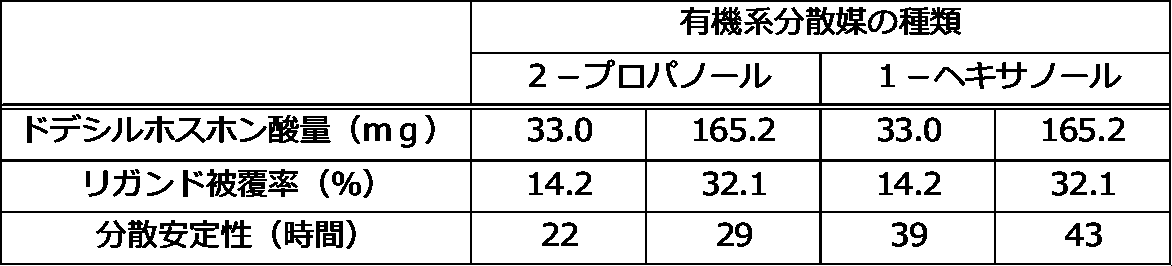
表4より、リガンド被覆率が37.5%未満のリガンド置換MXene粒子はいずれも、分散安定性が50時間を下回ることが分かった。
実施例1-1~1-3及び比較例1-1~1-3の対比により、リガンド置換MXene粒子の製造プロセスを、塩酸を用いず、かつ、二層分離系ではなく混合均一系としリガンドとMXeneの接触頻度を高めたことにより、MXeneへのリガンド被覆率が約14%から約89%へと飛躍的に向上した。
図7は、実施例1-1~1-3及び比較例1-1~1-3の結果を用いて、リガンド被覆率と分散安定性の関係を示した図である。この図7から、MXeneへのリガンド被覆率が約14%から約89%へ飛躍的に向上することで、分散安定性も9時間から347時間に飛躍的に向上した。特にリガンド被覆率が37.5%以上であると、分散安定性は50時間以上となり、高い分散安定性を示した。
〔実施例2〕
実施例2では、リガンド置換MXene粒子の分散液を用いて成膜し、得られたリガンド置換MXene膜の導電率評価を行った。詳細には実施例2では、上記MXene粒子(前駆体粒子)の調製で得られたMXene粒子(前駆体粒子)を含むクレイ(MXeneクレイ)を用い、以下に詳述する、(1)リガンド置換MXene粒子の合成、(2)リガンド置換MXene粒子の洗浄、(3)リガンド置換MXene粒子含有分散液の調製、(4)リガンド置換MXene粒子含有分散液を用いた成膜、(5)リガンド置換MXene膜の導電率評価を行った。
実施例2では、リガンド置換MXene粒子の分散液を用いて成膜し、得られたリガンド置換MXene膜の導電率評価を行った。詳細には実施例2では、上記MXene粒子(前駆体粒子)の調製で得られたMXene粒子(前駆体粒子)を含むクレイ(MXeneクレイ)を用い、以下に詳述する、(1)リガンド置換MXene粒子の合成、(2)リガンド置換MXene粒子の洗浄、(3)リガンド置換MXene粒子含有分散液の調製、(4)リガンド置換MXene粒子含有分散液を用いた成膜、(5)リガンド置換MXene膜の導電率評価を行った。
(1)リガンド置換MXene粒子の合成
MXeneクレイを純水で分散させ、MXene固形分濃度で1mg/mLとなるように調製したMXene粒子含有分散液を用意した。該MXene粒子含有分散液を20mL用意し、撹拌子を入れた50mLバイアル瓶に移した。別のバイアル瓶にメチルホスホン酸(東京化成工業製)を63.4mg(0.65mmol)秤量し、5mLのエタノール(富士フィルム和光純薬製)で上記メチルホスホン酸を完全に溶解させた。メチルホスホン酸の溶解に使用する有機溶媒は、水と相溶可能であればよくエタノールに限定されない。
MXeneクレイを純水で分散させ、MXene固形分濃度で1mg/mLとなるように調製したMXene粒子含有分散液を用意した。該MXene粒子含有分散液を20mL用意し、撹拌子を入れた50mLバイアル瓶に移した。別のバイアル瓶にメチルホスホン酸(東京化成工業製)を63.4mg(0.65mmol)秤量し、5mLのエタノール(富士フィルム和光純薬製)で上記メチルホスホン酸を完全に溶解させた。メチルホスホン酸の溶解に使用する有機溶媒は、水と相溶可能であればよくエタノールに限定されない。
MXene粒子含有分散液の入ったバイアル瓶に、エタノールで溶解させたメチルホスホン酸を5mL添加し、20~25℃の室温でマグネチックスターラーを用いて800rpmの撹拌速度で24時間撹拌を行って混合溶液を得た。該混合溶液は、撹拌中や撹拌を止めても相分離しておらず、均一系での様式となっていることが分かった。上記混合溶液のpHを測定すると、6.5であった。本実施形態に係る方法で製造することにより、MXeneとメチルホスホン酸が同一系中に含まれる状態で置換反応を実施でき、その結果、置換反応の高効率化とMXeneへのリガンド被覆率の向上につながると考えられる。
(2)リガンド置換MXene粒子の洗浄
攪拌を終了したサンプル液を50mL遠沈管に移し、室温、5000rpm、5分間の条件で遠心分離を行った後、上澄み液を廃棄した。次いで、沈殿物にエタノール20mLを追加して再分散させた。上記沈殿物にエタノールを追加して遠心分離し、上澄み液を廃棄する操作を、更に2回(合計3回)繰り返して、未反応のメチルホスホン酸を除去した。
攪拌を終了したサンプル液を50mL遠沈管に移し、室温、5000rpm、5分間の条件で遠心分離を行った後、上澄み液を廃棄した。次いで、沈殿物にエタノール20mLを追加して再分散させた。上記沈殿物にエタノールを追加して遠心分離し、上澄み液を廃棄する操作を、更に2回(合計3回)繰り返して、未反応のメチルホスホン酸を除去した。
(3)リガンド置換MXene粒子含有分散液の調製
上記(2)の3回目の遠心分離で生じた上澄み液を廃棄後、有機系分散媒としてエタノールを20mL沈殿物に添加し分散させて、リガンド置換MXene粒子が有機系分散媒に分散した分散液を調製した。なお、リガンド置換MXene粒子を分散させる有機系分散媒に制限はなく、上記以外の任意の有機系分散媒を使用できる。
上記(2)の3回目の遠心分離で生じた上澄み液を廃棄後、有機系分散媒としてエタノールを20mL沈殿物に添加し分散させて、リガンド置換MXene粒子が有機系分散媒に分散した分散液を調製した。なお、リガンド置換MXene粒子を分散させる有機系分散媒に制限はなく、上記以外の任意の有機系分散媒を使用できる。
(4)リガンド置換MXene粒子含有分散液を用いた成膜
上記(3)で調製したリガンド置換MXene粒子含有分散液を80mL用意した。スプレーコーター(ムラマツ製:M1822J)を用い、次の通り、該リガンド置換MXene粒子含有分散液を、ガラス基板に塗布した。まず、3cm角のガラス基板(SCHOTT製:テンパックス)を酸素プラズマで1分間洗浄し、スプレーコーターのステージにセットした。次いで、以下のスプレーコート条件で、リガンド置換MXene粒子含有分散液をガラス基板上に塗布して、成膜した。得られたスプレー膜(リガンド置換MXene膜)を、真空乾燥機を用いて80℃,16時間の条件で乾燥させて、リガンド置換MXene膜を得た。また上記「(1)リガンド置換MXene粒子の合成」に用いるメチルホスホン酸の量を変えて、下記表5に示す通り、リガンド被覆率の異なる複数のリガンド置換MXene膜を得た。リガンド被覆率は、実施例1-1の(4)と同様にして求めた。
(スプレーコート条件)
・シリンジ流量:5.0mL/min
・霧化圧:0.5MPa
・ノズル先端と基板の距離:15cm
・掃引速度:15cm/s
・ステージ温度:25℃
上記(3)で調製したリガンド置換MXene粒子含有分散液を80mL用意した。スプレーコーター(ムラマツ製:M1822J)を用い、次の通り、該リガンド置換MXene粒子含有分散液を、ガラス基板に塗布した。まず、3cm角のガラス基板(SCHOTT製:テンパックス)を酸素プラズマで1分間洗浄し、スプレーコーターのステージにセットした。次いで、以下のスプレーコート条件で、リガンド置換MXene粒子含有分散液をガラス基板上に塗布して、成膜した。得られたスプレー膜(リガンド置換MXene膜)を、真空乾燥機を用いて80℃,16時間の条件で乾燥させて、リガンド置換MXene膜を得た。また上記「(1)リガンド置換MXene粒子の合成」に用いるメチルホスホン酸の量を変えて、下記表5に示す通り、リガンド被覆率の異なる複数のリガンド置換MXene膜を得た。リガンド被覆率は、実施例1-1の(4)と同様にして求めた。
(スプレーコート条件)
・シリンジ流量:5.0mL/min
・霧化圧:0.5MPa
・ノズル先端と基板の距離:15cm
・掃引速度:15cm/s
・ステージ温度:25℃
(5)リガンド置換MXene膜の導電率評価
上記(4)で作製したリガンド置換MXene膜の導電率(σ)を、次に詳述する通り、リガンド置換MXene膜の表面抵抗測定と膜厚測定を用い、以下の式(1)にしたがって算出した。リガンド置換MXene膜の表面抵抗は、ロレスタ(日東精工製:MCP-T370)を用いて測定し、リガンド置換MXene膜の膜厚は、触針式表面形状測定装置(アルバック製:Dektak8)を用いて測定した。膜厚は1サンプルに対して3か所測定をし、その平均値を用いた。下記式(1)を用いて算出したリガンド置換MXene膜の導電率(σ)を、リガンド被覆率とともに下記表5に示す。また図8は、表5の結果に基づいて作成した、リガンド被覆率とリガンド置換MXene膜の導電率の関係を示す図である。
σ=1/ρ=1/(Rs・t) ・・・(1)
式(1)において、σ[S/cm]は膜の導電率、ρ[Ω・m]は抵抗率、Rs[Ω/square]は表面抵抗、t[m]は膜厚を意味する。
上記(4)で作製したリガンド置換MXene膜の導電率(σ)を、次に詳述する通り、リガンド置換MXene膜の表面抵抗測定と膜厚測定を用い、以下の式(1)にしたがって算出した。リガンド置換MXene膜の表面抵抗は、ロレスタ(日東精工製:MCP-T370)を用いて測定し、リガンド置換MXene膜の膜厚は、触針式表面形状測定装置(アルバック製:Dektak8)を用いて測定した。膜厚は1サンプルに対して3か所測定をし、その平均値を用いた。下記式(1)を用いて算出したリガンド置換MXene膜の導電率(σ)を、リガンド被覆率とともに下記表5に示す。また図8は、表5の結果に基づいて作成した、リガンド被覆率とリガンド置換MXene膜の導電率の関係を示す図である。
σ=1/ρ=1/(Rs・t) ・・・(1)
式(1)において、σ[S/cm]は膜の導電率、ρ[Ω・m]は抵抗率、Rs[Ω/square]は表面抵抗、t[m]は膜厚を意味する。
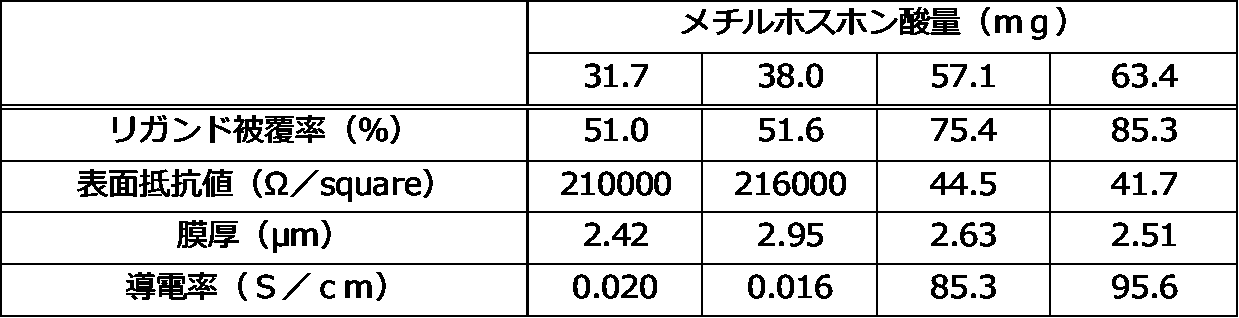
上記表5のいずれのサンプルも、リガンド被覆率が37.5%以上、更には37.5%を超えているため、リガンド置換MXene粒子はいずれも分散安定性が50時間以上となることを別途確認している。
上記表5から、リガンド被覆率が75.4%以上である場合、エタノールへの分散安定性が更に向上し、その結果、得られたスプレー膜の膜質が向上し、導電率が飛躍的に高まった。リガンド被覆率が75.4%を超えて85.3%の場合、エタノールへの分散安定性がより更に向上して、得られたスプレー膜の膜質がより向上し、リガンド被覆率が51.6%で0.016S/cmであった導電率が、約6000倍の95.6S/cmにまで向上した。
〔比較例2〕
比較例1-1の(1)において、ドデシルホスホン酸の代わりに、メチルホスホン酸(東京化成工業製)を63.4mg(0.65mmol)用いた以外は、比較例1-1と同様の手順でリガンド置換MXene粒子を作製した。それから、実施例2の(2)(3)と同様に、リガンド置換MXene粒子の洗浄と、リガンド置換MXene粒子含有分散液の調製とを行った。
比較例1-1の(1)において、ドデシルホスホン酸の代わりに、メチルホスホン酸(東京化成工業製)を63.4mg(0.65mmol)用いた以外は、比較例1-1と同様の手順でリガンド置換MXene粒子を作製した。それから、実施例2の(2)(3)と同様に、リガンド置換MXene粒子の洗浄と、リガンド置換MXene粒子含有分散液の調製とを行った。
次いで、実施例2の(4)と同様にして、リガンド置換MXene粒子含有分散液を用いた成膜を行い、リガンド置換MXene膜を得た。
得られたリガンド置換MXene膜について、実施例2の(5)と同様にリガンド置換MXene膜の導電率の評価を行った。またリガンド被覆率は、実施例1-1の(4)と同様にして求めた。その結果、リガンド被覆率は30.5%、表面抵抗率は3920000Ω/square、膜厚は2.55μmで、これらの値から求められる導電率は0.0010S/cmであった。
実施例2と比較例2の対比から、本実施形態に係るリガンド置換MXene膜(2次元粒子含有膜)は、十分に高い導電率を示すことがわかる。これは、比較例2ではリガンド置換MXene粒子含有分散液中でリガンド置換MXene粒子が凝集しているのに対し、実施例2では、リガンド置換MXene粒子含有分散液中でリガンド置換MXene粒子が良好に分散し、その結果、上述の通り、得られたスプレー膜の膜質が向上したことによると考えられる。
本開示の2次元粒子、2次元粒子含有分散液、2次元粒子含有コンポジット、2次元粒子含有膜は、任意の適切な用途に利用され得、例えば電気デバイスにおける電極として特に好ましく使用され得る。
本明細書の開示内容は、以下の態様を含み得る。
<1>1つまたは複数の層を含む2次元粒子であって、
前記層が、以下の式:
MmXn
(式中、Mは、少なくとも1種の第3、4、5、6、7族金属であり、
Xは、炭素原子、窒素原子またはそれらの組み合わせであり、
nは、1以上4以下であり、
mは、nより大きく、5以下である)
で表される層本体と、該層本体の表面に存在する修飾または終端Tとを含み、
前記Tは、水酸基、フッ素原子、塩素原子、酸素原子および水素原子からなる群より選択される少なくとも1種であって、
層本体のM原子と、飽和炭化水素基または不飽和炭化水素基を有するヘテロ原子含有化合物のヘテロ原子とが、層本体の水酸基に由来の酸素原子を介して共有結合またはイオン結合した構造を有し、
層本体の表面に存在する水酸基の前記構造への置換率が37.5%以上である、2次元粒子。
<2>前記層本体がTi3C2である、<1>に記載の2次元粒子。
<3>前記飽和炭化水素基または不飽和炭化水素基を有する化合物は、飽和炭化水素基または不飽和炭化水素基を有するホスホン酸である、<1>または<2>に記載の2次元粒子。
<4><1>~<3>のいずれか一つに記載の2次元粒子と、有機系分散媒とを含む、2次元粒子含有分散液。
<5>前記有機系分散媒は、エタノール、2-プロパノール、および1-ヘキサノールからなる群より選択される1以上である、<4>に記載の2次元粒子含有分散液。
<6><4>または<5>に記載の2次元粒子含有分散液と、高分子材料とを含む、2次元粒子含有コンポジット。
<7><1>~<3>のいずれか一つに記載の2次元粒子であって、前記置換率が75.4%以上である2次元粒子を含む、2次元粒子含有膜。
<8>(a)1つまたは複数の層を含む前駆体粒子であって、
前記層が、以下の式:
MmXn
(式中、Mは、少なくとも1種の第3、4、5、6、7族金属であり、
Xは、炭素原子、窒素原子またはそれらの組み合わせであり、
nは、1以上4以下であり、
mは、nより大きく、5以下である)
で表される層本体と、該層本体の表面に存在する修飾または終端T(Tは、水酸基、フッ素原子、塩素原子、酸素原子および水素原子からなる群より選択される少なくとも1種であって、少なくとも水酸基を含む)とを含む、前駆体粒子を準備すること、
(b)前記前駆体粒子を含む水分散液と、
飽和炭化水素基または不飽和炭化水素基を有するヘテロ原子含有化合物が、前記水分散液と相溶性のある有機溶媒に溶解した、化合物含有有機溶液とを準備すること、
および
(c)前記前駆体粒子を含む水分散液と、前記化合物含有有機溶液とを混合および撹拌し、
層本体のM原子と、飽和炭化水素基または不飽和炭化水素基を有するヘテロ原子含有化合物のヘテロ原子とが、層本体の水酸基に由来の酸素原子を介して共有結合またはイオン結合した構造を得ること
を含む、2次元粒子の製造方法。
<9>前記前駆体粒子を含む水分散液は、pHが6~8の範囲にある、<8>に記載の2次元粒子の製造方法。
<1>1つまたは複数の層を含む2次元粒子であって、
前記層が、以下の式:
MmXn
(式中、Mは、少なくとも1種の第3、4、5、6、7族金属であり、
Xは、炭素原子、窒素原子またはそれらの組み合わせであり、
nは、1以上4以下であり、
mは、nより大きく、5以下である)
で表される層本体と、該層本体の表面に存在する修飾または終端Tとを含み、
前記Tは、水酸基、フッ素原子、塩素原子、酸素原子および水素原子からなる群より選択される少なくとも1種であって、
層本体のM原子と、飽和炭化水素基または不飽和炭化水素基を有するヘテロ原子含有化合物のヘテロ原子とが、層本体の水酸基に由来の酸素原子を介して共有結合またはイオン結合した構造を有し、
層本体の表面に存在する水酸基の前記構造への置換率が37.5%以上である、2次元粒子。
<2>前記層本体がTi3C2である、<1>に記載の2次元粒子。
<3>前記飽和炭化水素基または不飽和炭化水素基を有する化合物は、飽和炭化水素基または不飽和炭化水素基を有するホスホン酸である、<1>または<2>に記載の2次元粒子。
<4><1>~<3>のいずれか一つに記載の2次元粒子と、有機系分散媒とを含む、2次元粒子含有分散液。
<5>前記有機系分散媒は、エタノール、2-プロパノール、および1-ヘキサノールからなる群より選択される1以上である、<4>に記載の2次元粒子含有分散液。
<6><4>または<5>に記載の2次元粒子含有分散液と、高分子材料とを含む、2次元粒子含有コンポジット。
<7><1>~<3>のいずれか一つに記載の2次元粒子であって、前記置換率が75.4%以上である2次元粒子を含む、2次元粒子含有膜。
<8>(a)1つまたは複数の層を含む前駆体粒子であって、
前記層が、以下の式:
MmXn
(式中、Mは、少なくとも1種の第3、4、5、6、7族金属であり、
Xは、炭素原子、窒素原子またはそれらの組み合わせであり、
nは、1以上4以下であり、
mは、nより大きく、5以下である)
で表される層本体と、該層本体の表面に存在する修飾または終端T(Tは、水酸基、フッ素原子、塩素原子、酸素原子および水素原子からなる群より選択される少なくとも1種であって、少なくとも水酸基を含む)とを含む、前駆体粒子を準備すること、
(b)前記前駆体粒子を含む水分散液と、
飽和炭化水素基または不飽和炭化水素基を有するヘテロ原子含有化合物が、前記水分散液と相溶性のある有機溶媒に溶解した、化合物含有有機溶液とを準備すること、
および
(c)前記前駆体粒子を含む水分散液と、前記化合物含有有機溶液とを混合および撹拌し、
層本体のM原子と、飽和炭化水素基または不飽和炭化水素基を有するヘテロ原子含有化合物のヘテロ原子とが、層本体の水酸基に由来の酸素原子を介して共有結合またはイオン結合した構造を得ること
を含む、2次元粒子の製造方法。
<9>前記前駆体粒子を含む水分散液は、pHが6~8の範囲にある、<8>に記載の2次元粒子の製造方法。
本出願は、日本国特許出願である特願2023-131268号を基礎出願とする優先権主張を伴う。特願2023-131268号は参照することにより本明細書に取り込まれる。
1a、1b 層本体(MmXn層)
3a、5a、3b、5b 修飾または終端T
7a、7b MXene層
10a、10b MXene粒子
3a、5a、3b、5b 修飾または終端T
7a、7b MXene層
10a、10b MXene粒子
Claims (9)
- 1つまたは複数の層を含む2次元粒子であって、
前記層が、以下の式:
MmXn
(式中、Mは、少なくとも1種の第3、4、5、6、7族金属であり、
Xは、炭素原子、窒素原子またはそれらの組み合わせであり、
nは、1以上4以下であり、
mは、nより大きく、5以下である)
で表される層本体と、該層本体の表面に存在する修飾または終端Tとを含み、
前記Tは、水酸基、フッ素原子、塩素原子、酸素原子および水素原子からなる群より選択される少なくとも1種であって、
層本体のM原子と、飽和炭化水素基または不飽和炭化水素基を有するヘテロ原子含有化合物のヘテロ原子とが、層本体の水酸基に由来の酸素原子を介して共有結合またはイオン結合した構造を有し、
層本体の表面に存在する水酸基の前記構造への置換率が37.5%以上である、2次元粒子。 - 前記層本体がTi3C2である、請求項1に記載の2次元粒子。
- 前記飽和炭化水素基または不飽和炭化水素基を有する化合物は、飽和炭化水素基または不飽和炭化水素基を有するホスホン酸である、請求項1または2に記載の2次元粒子。
- 請求項1~3のいずれか1項に記載の2次元粒子と、有機系分散媒とを含む、2次元粒子含有分散液。
- 前記有機系分散媒は、エタノール、2-プロパノール、および1-ヘキサノールからなる群より選択される1以上である、請求項4に記載の2次元粒子含有分散液。
- 請求項4または5に記載の2次元粒子含有分散液と、高分子材料とを含む、2次元粒子含有コンポジット。
- 請求項1~3のいずれか1項に記載の2次元粒子であって、前記置換率が75.4%以上である2次元粒子を含む、2次元粒子含有膜。
- (a)1つまたは複数の層を含む前駆体粒子であって、
前記層が、以下の式:
MmXn
(式中、Mは、少なくとも1種の第3、4、5、6、7族金属であり、
Xは、炭素原子、窒素原子またはそれらの組み合わせであり、
nは、1以上4以下であり、
mは、nより大きく、5以下である)
で表される層本体と、該層本体の表面に存在する修飾または終端T(Tは、水酸基、フッ素原子、塩素原子、酸素原子および水素原子からなる群より選択される少なくとも1種であって、少なくとも水酸基を含む)とを含む、前駆体粒子を準備すること、
(b)前記前駆体粒子を含む水分散液と、
飽和炭化水素基または不飽和炭化水素基を有するヘテロ原子含有化合物が、前記水分散液と相溶性のある有機溶媒に溶解した、化合物含有有機溶液とを準備すること、
および
(c)前記前駆体粒子を含む水分散液と、前記化合物含有有機溶液とを混合および撹拌し、
層本体のM原子と、飽和炭化水素基または不飽和炭化水素基を有するヘテロ原子含有化合物のヘテロ原子とが、層本体の水酸基に由来の酸素原子を介して共有結合またはイオン結合した構造を得ること
を含む、2次元粒子の製造方法。 - 前記前駆体粒子を含む水分散液は、pHが6~8の範囲にある、請求項8に記載の2次元粒子の製造方法。
Applications Claiming Priority (2)
| Application Number | Priority Date | Filing Date | Title |
|---|---|---|---|
| JP2023131268 | 2023-08-10 | ||
| JP2023-131268 | 2023-08-10 |
Publications (1)
| Publication Number | Publication Date |
|---|---|
| WO2025033465A1 true WO2025033465A1 (ja) | 2025-02-13 |
Family
ID=94533954
Family Applications (1)
| Application Number | Title | Priority Date | Filing Date |
|---|---|---|---|
| PCT/JP2024/028266 Pending WO2025033465A1 (ja) | 2023-08-10 | 2024-08-07 | 2次元粒子、2次元粒子含有分散液、2次元粒子含有コンポジット、2次元粒子含有膜、および2次元粒子の製造方法 |
Country Status (1)
| Country | Link |
|---|---|
| WO (1) | WO2025033465A1 (ja) |
Citations (5)
| Publication number | Priority date | Publication date | Assignee | Title |
|---|---|---|---|---|
| CN110783456A (zh) * | 2019-10-09 | 2020-02-11 | 苏州大学 | 基于单层修饰MXene的电存储材料及其制备方法与在制备电存储器件中的应用 |
| JP2020093971A (ja) * | 2018-10-02 | 2020-06-18 | コリア・インスティテュート・オブ・サイエンス・アンド・テクノロジー | 飽和または不飽和炭化水素を含む官能基で表面改質された2次元マキシン(MXene)粒子及びその製造方法及び用途 |
| KR20240006997A (ko) * | 2022-07-07 | 2024-01-16 | 한국교통대학교산학협력단 | 포스페이트로 표면 개질된 맥신, 유기잉크, 그 제조방법 및 그 용도 |
| KR20240037616A (ko) * | 2022-09-15 | 2024-03-22 | 한양대학교 산학협력단 | 광범위 유기용매에 분산 가능한 리간드를 구비한 맥신 및 이의 제조방법 |
| KR20240066308A (ko) * | 2022-11-07 | 2024-05-14 | 국립한국교통대학교산학협력단 | 브랜치드한 말단기를 가진 카테콜 표면 개질 그래핀 옥사이드-맥신 혼합물, 그 혼합물을 이용한 유기잉크, 전자파 차폐막, 및 그 제조방법 |
-
2024
- 2024-08-07 WO PCT/JP2024/028266 patent/WO2025033465A1/ja active Pending
Patent Citations (5)
| Publication number | Priority date | Publication date | Assignee | Title |
|---|---|---|---|---|
| JP2020093971A (ja) * | 2018-10-02 | 2020-06-18 | コリア・インスティテュート・オブ・サイエンス・アンド・テクノロジー | 飽和または不飽和炭化水素を含む官能基で表面改質された2次元マキシン(MXene)粒子及びその製造方法及び用途 |
| CN110783456A (zh) * | 2019-10-09 | 2020-02-11 | 苏州大学 | 基于单层修饰MXene的电存储材料及其制备方法与在制备电存储器件中的应用 |
| KR20240006997A (ko) * | 2022-07-07 | 2024-01-16 | 한국교통대학교산학협력단 | 포스페이트로 표면 개질된 맥신, 유기잉크, 그 제조방법 및 그 용도 |
| KR20240037616A (ko) * | 2022-09-15 | 2024-03-22 | 한양대학교 산학협력단 | 광범위 유기용매에 분산 가능한 리간드를 구비한 맥신 및 이의 제조방법 |
| KR20240066308A (ko) * | 2022-11-07 | 2024-05-14 | 국립한국교통대학교산학협력단 | 브랜치드한 말단기를 가진 카테콜 표면 개질 그래핀 옥사이드-맥신 혼합물, 그 혼합물을 이용한 유기잉크, 전자파 차폐막, 및 그 제조방법 |
Similar Documents
| Publication | Publication Date | Title |
|---|---|---|
| JP7053544B2 (ja) | 飽和または不飽和炭化水素を含む官能基で表面改質された2次元マキシン(MXene)粒子及びその製造方法及び用途 | |
| JP7513110B2 (ja) | 導電性2次元粒子およびその製造方法、導電性膜、導電性複合材料、ならびに導電性ペースト | |
| Park et al. | Highly dispersible edge-selectively oxidized graphene with improved electrical performance | |
| JP4573138B2 (ja) | 銀含有粉体の製造方法、銀含有粉体及びその分散液 | |
| Liu et al. | Lignin-assisted exfoliation of molybdenum disulfide in aqueous media and its application in lithium ion batteries | |
| JP7487783B2 (ja) | 導電性2次元粒子およびその製造方法 | |
| CN1780707B (zh) | 制备银微粒子胶体分散系的方法、银微粒子胶体分散系和导电银膜 | |
| Fu et al. | Ionic liquid-assisted exfoliation of graphite oxide for simultaneous reduction and functionalization to graphenes with improved properties | |
| JP2009131844A (ja) | 透明伝導性ナノ粒子コーティングフィルムの製造方法 | |
| CN108028142A (zh) | 石墨烯分散液及其制造方法、石墨烯-活性物质复合体粒子的制造方法以及电极糊剂的制造方法 | |
| US12304822B2 (en) | Inorganic particle composite, method for producing the same, and inorganic particle composite dispersion | |
| KR20210103399A (ko) | 카테콜 유도체로 표면 개질된 2차원 맥신, 이의 제조 방법, 및 이를 함유하는 맥신 유기 잉크 | |
| KR20100126261A (ko) | 전도층을 위한 코어-쉘 구조를 갖는 입자 | |
| JP7501645B2 (ja) | 導電性2次元粒子およびその製造方法 | |
| JP5672726B2 (ja) | 薄片状ペロブスカイト酸化物粒子を配合した有機溶媒分散体及びその製造方法並びにそれを用いたペロブスカイト酸化物薄膜及びその製造方法 | |
| Birdsong et al. | Large-scale synthesis of 2D-silica (SiO x) nanosheets using graphene oxide (GO) as a template material | |
| WO2023047861A1 (ja) | 導電性2次元粒子含有組成物、導電性膜、および導電性2次元粒子含有組成物の製造方法 | |
| KR102943027B1 (ko) | 브랜치드한 말단기를 가진 카테콜 표면 개질 그래핀 옥사이드-맥신 혼합물, 그 혼합물을 이용한 유기잉크, 전자파 차폐막, 및 그 제조방법 | |
| WO2023048081A1 (ja) | 2次元粒子、導電性膜、導電性ペーストおよび2次元粒子の製造方法 | |
| WO2023120069A1 (ja) | 積層体、物品、および物品の製造方法 | |
| Kopecká et al. | Exfoliation of layered mixed zirconium 4-sulfophenylphosphonate phenylphosphonates | |
| JP7432180B2 (ja) | ペーストおよび導電性フィルムならびにそれらの製造方法 | |
| WO2025182741A1 (ja) | 2次元粒子、2次元粒子含有膜、および2次元粒子含有分散液 | |
| KR100846998B1 (ko) | 결정성 바륨티타네이트 나노입자를 함유한 고 유전율의무/유기 하이브리드 막의 제조방법 | |
| JP2019147713A (ja) | 無機粒子複合体およびその製造方法、並びに無機粒子複合体分散液 |
Legal Events
| Date | Code | Title | Description |
|---|---|---|---|
| 121 | Ep: the epo has been informed by wipo that ep was designated in this application |
Ref document number: 24851886 Country of ref document: EP Kind code of ref document: A1 |
|
| NENP | Non-entry into the national phase |
Ref country code: DE |