WO2025023025A1 - 注入器、並びに該注入器を用いた空隙の形成方法、及び対象に蓄積した間質液を減少させる方法 - Google Patents
注入器、並びに該注入器を用いた空隙の形成方法、及び対象に蓄積した間質液を減少させる方法 Download PDFInfo
- Publication number
- WO2025023025A1 WO2025023025A1 PCT/JP2024/024991 JP2024024991W WO2025023025A1 WO 2025023025 A1 WO2025023025 A1 WO 2025023025A1 JP 2024024991 W JP2024024991 W JP 2024024991W WO 2025023025 A1 WO2025023025 A1 WO 2025023025A1
- Authority
- WO
- WIPO (PCT)
- Prior art keywords
- gas
- liquid
- injector
- target
- subject
- Prior art date
- Legal status (The legal status is an assumption and is not a legal conclusion. Google has not performed a legal analysis and makes no representation as to the accuracy of the status listed.)
- Pending
Links
Images

Classifications
-
- A—HUMAN NECESSITIES
- A61—MEDICAL OR VETERINARY SCIENCE; HYGIENE
- A61K—PREPARATIONS FOR MEDICAL, DENTAL OR TOILETRY PURPOSES
- A61K35/00—Medicinal preparations containing materials or reaction products thereof with undetermined constitution
- A61K35/12—Materials from mammals; Compositions comprising non-specified tissues or cells; Compositions comprising non-embryonic stem cells; Genetically modified cells
-
- A—HUMAN NECESSITIES
- A61—MEDICAL OR VETERINARY SCIENCE; HYGIENE
- A61K—PREPARATIONS FOR MEDICAL, DENTAL OR TOILETRY PURPOSES
- A61K45/00—Medicinal preparations containing active ingredients not provided for in groups A61K31/00 - A61K41/00
-
- A—HUMAN NECESSITIES
- A61—MEDICAL OR VETERINARY SCIENCE; HYGIENE
- A61M—DEVICES FOR INTRODUCING MEDIA INTO, OR ONTO, THE BODY; DEVICES FOR TRANSDUCING BODY MEDIA OR FOR TAKING MEDIA FROM THE BODY; DEVICES FOR PRODUCING OR ENDING SLEEP OR STUPOR
- A61M5/00—Devices for bringing media into the body in a subcutaneous, intra-vascular or intramuscular way; Accessories therefor, e.g. filling or cleaning devices, arm-rests
- A61M5/178—Syringes
- A61M5/30—Syringes for injection by jet action, without needle, e.g. for use with replaceable ampoules or carpules
-
- A—HUMAN NECESSITIES
- A61—MEDICAL OR VETERINARY SCIENCE; HYGIENE
- A61P—SPECIFIC THERAPEUTIC ACTIVITY OF CHEMICAL COMPOUNDS OR MEDICINAL PREPARATIONS
- A61P43/00—Drugs for specific purposes, not provided for in groups A61P1/00-A61P41/00
Definitions
- the present disclosure relates to an injector, a method for forming a void using the injector, and a method for reducing interstitial fluid accumulation in a subject.
- Injectors that inject medicinal liquids into an injection target include needle-equipped syringes that inject via a needle, and needleless syringes that inject without using a needle.
- catheters equipped with a needle and a drive source, and multi-hole injection needles are also used to transport medicinal liquids to an injection target.
- needleless syringes may be configured to inject injection components by applying pressure to a chamber containing the injection liquid using pressurized gas, a spring, or electromagnetic force.
- a configuration is adopted in which multiple nozzle holes are formed inside the syringe body, and pistons that are driven during injection are arranged corresponding to each nozzle hole (Patent Document 1). With this configuration, it is attempted to simultaneously eject the injection liquid from multiple nozzle holes to achieve uniform injection into the subject. Then, a plasmid containing a luciferase gene is injected into a rat, and cell transfer is achieved with high efficiency.
- Non-Patent Document 1 a method is known in which air is mixed into the drug solution when it is injected.
- azacitidine a drug for treating myelodysplastic syndrome
- a needle syringe if it is administered as usual without mixing air, it can cause side effects that make the patient uncomfortable, such as redness of the injection site, pain at the injection site, and bruising at the injection site.
- administration with air prevents contact between the epithelium and the drug solution, thereby reducing side effects.
- a method is known in which a solution containing biomolecules and a predetermined gas are injected into an injection target, and it is disclosed that this method increases the proportion of biomolecules that function in the injection target (Patent Document 3).
- Lymphedema is a type of interstitial edema that occurs primarily in the hands and feet due to the blockage of lymph flow caused by cancer treatment.
- known treatments for lymphedema include complex treatments that combine compression therapy, exercise therapy, lifestyle guidance, skin care, and lymphatic drainage, as well as surgical treatments that eliminate lymphatic congestion through lymphatic venous anastomosis.
- JP 2004-358234 A US Patent Application Publication No. 2005/0010168 International Publication No. 2022/149550
- the objectives of the present disclosure are at least the following: to provide an injector capable of forming a void in a subject; to provide a novel method for forming a void; and to provide a novel method for reducing interstitial fluid.
- the inventors conducted extensive research to solve the above problems and discovered that the above problems can be solved by using a specific injector.
- An injector that injects liquid and gas into a target from an injector body without injecting through a predetermined structure in a state in which the predetermined structure is inserted into the target, comprising: a container that contains the liquid and the gas; a nozzle portion communicating with the container portion and having an ejection port for ejecting the liquid and the gas toward the target; a pressurizing unit that pressurizes the liquid and the gas contained in the container when activated, thereby ejecting the liquid and the gas from the ejection port toward the target; Equipped with The ratio of the volume of the gas to the total volume of the liquid and the gas is more than 60% and not more than 80%. Injector.
- An injector for reducing interstitial fluid accumulation in a subject comprising: An injector that injects liquid and gas into a target from an injector body without performing injection through a predetermined structure in a state in which the predetermined structure is inserted into the target, a container that contains the liquid and the gas; a nozzle portion communicating with the container portion and having an ejection port for ejecting the liquid and the gas toward the target; a pressurizing unit that pressurizes the liquid and the gas contained in the container when activated, thereby ejecting the liquid and the gas from the ejection port toward the target; Equipped with An injector for reducing interstitial fluid accumulation in a subject.
- a method for forming a void using a syringe comprising: The injector comprises: An injector that injects liquid and gas into a target from an injector body without performing injection through a predetermined structure in a state in which the predetermined structure is inserted into the target, a container that contains the liquid and the gas; a nozzle portion communicating with the container portion and having an ejection port for ejecting the liquid and the gas toward the target; a pressurizing unit that pressurizes the liquid and the gas contained in the container when activated, thereby ejecting the liquid and the gas from the ejection port toward the target; Equipped with an injector;
- the forming method includes: storing the liquid and the gas in the storage portion; pressurizing the liquid and the gas contained in the container; and injecting the liquid and the gas into
- a method for reducing interstitial fluid accumulation in a subject using an injector comprising: The injector comprises: An injector that injects liquid and gas into a target from an injector body without performing injection through a predetermined structure in a state in which the predetermined structure is inserted into the target, a container that contains the liquid and the gas; a nozzle portion communicating with the container portion and having an ejection port for ejecting the liquid and the gas toward the target; a pressurizing unit that pressurizes the liquid and the gas contained in the container when activated, thereby ejecting the liquid and the gas from the ejection port toward the target; Equipped with an injector; The method of reducing the amount of storing the liquid and the gas in the storage portion; pressurizing the liquid and the gas contained in the container; and injecting the liquid and the gas into the subject; A method of reducing interstitial fluid accumulation in a subject using an injector.
- the present disclosure may at least provide the effect of forming a void in a given target. It may also provide a novel method for reducing interstitial fluid.
- FIG. 1 is a diagram showing a schematic configuration of an injector according to an embodiment of the present disclosure.
- 1 is an image of a tissue section of Test Example 1 observed under a stereomicroscope (photograph in place of a drawing).
- 1 is an image of a tissue section of Test Example 2 observed under a stereomicroscope (photograph in place of a drawing).
- 1 is an image of a tissue section of Test Example 3 observed under a stereomicroscope (photograph in place of a drawing).
- 1 is an image of a tissue section of Test Example 4 observed under a stereomicroscope (photograph in place of a drawing).
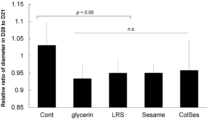
- 1 is a graph showing the relative tail diameters 21 and 28 days after skin ablation.
- the present disclosure includes an invention of an injector (first embodiment), an invention of an injector for reducing interstitial fluid accumulated in a subject (second embodiment), an invention of a method of forming a void using an injector (third embodiment), an invention of a method of reducing interstitial fluid accumulated in a subject using an injector (fourth embodiment), and a method of reducing interstitial fluid accumulated in a subject (fifth embodiment).
- the first embodiment of the present disclosure is An injector that injects liquid and gas into a target from an injector body without performing injection through a predetermined structure in a state in which the predetermined structure is inserted into the target, a container that contains the liquid and the gas; a nozzle portion communicating with the container portion and having an ejection port for ejecting the liquid and the gas toward the target; a pressurizing unit that pressurizes the liquid and the gas contained in the container when activated, thereby ejecting the liquid and the gas from the ejection port toward the target; Equipped with It is an injector.
- the liquid and the gas are present in the container, the liquid is injected into the target while the gas dissolves in the liquid as pressure is increased. After the liquid is injected into the target, a part of the gas that was dissolved in the liquid returns to gas as pressure is reduced, generating countless fine bubbles, and it is presumed that the shearing action of the bubbles can form multiple voids in the target.
- the voids usually have a maximum diameter of about 10 ⁇ m to about 1000 ⁇ m, but larger voids may also be formed by multiple voids communicating with each other. The formation of voids can be confirmed by using a stereomicroscope or the like.
- the void can be used, for example, as a flow path or reservoir for any liquid or gas.
- the liquid contained in the container may be, for example, water, and is preferably a liquid that is isotonic with the body fluids of an animal, and specifically, physiological saline, Ringer's solution, lactate Ringer's solution, acetate Ringer's solution, bicarbonate Ringer's solution, etc. can be suitably used. These can be prepared by known methods, and commercially available products can also be used.
- the liquid that can be injected by the injector of this embodiment may contain conventional additives such as biofunctional substances, buffers, isotonicity agents, pH adjusters, antioxidants, thickeners, stabilizers, humectants, emulsifiers, binders, and oils and fats, as necessary, but even if it does not contain these, it is possible to form voids in a specified target and to reduce interstitial fluid.
- conventional additives such as biofunctional substances, buffers, isotonicity agents, pH adjusters, antioxidants, thickeners, stabilizers, humectants, emulsifiers, binders, and oils and fats, as necessary, but even if it does not contain these, it is possible to form voids in a specified target and to reduce interstitial fluid.
- the biofunctional substance is not particularly limited as long as it exerts physiological activity in a subject.
- the biofunctional substance may be of one type or of multiple types.
- the biofunctional substance may be a natural product or may be artificially synthesized.
- the biofunctional substance is preferably one or more selected from the group consisting of nucleic acids, peptides, proteins, and low molecular weight compounds.
- nucleic acids examples include DNA, RNA, and PNA.
- the nucleic acid may be a nucleic acid that includes a portion that codes for a protein, or a nucleic acid that does not include a portion that codes for a protein (non-coding nucleic acid).
- peptides and proteins include antigens (i.e., those that induce the production of antibodies against the peptide or protein), antibodies, peptide vaccines, protein vaccines, peptide hormones, protein hormones, growth factors, cytokines, blood clotting factors, serum albumin, digestive enzymes, anti-inflammatory peptides, anti-inflammatory proteins, and the like.
- an extracellular matrix can also be used as the protein.
- the extracellular matrix is a non-cellular component that constitutes the human body, and is expected to contribute to maintaining the space as a scaffold for cells. Examples of the extracellular matrix include collagen, fibronectin, and laminin.
- a low molecular weight compound generally refers to a compound with a molecular weight of 2000 or less, but is not limited to this, and includes compounds that can be treated as low molecular weight compounds in the industry.
- Preferred ranges for the molecular weight of low molecular weight compounds include, for example, 50 or more, 100 or more, and 2000 or less, 1000 or less. In other words, examples include 50 to 2000, 50 to 1000, and 100 to 2000.
- physiological activity refers to an effect on a specific physiological regulatory function of a living organism.
- Evaluation indices for physiological activity can be set appropriately depending on the purpose and may be either qualitative or quantitative indices, with quantitative indices being preferred.
- quantitative indices For example, specific mRNA amounts, protein amounts, cytokine amounts, antibody titers, cell counts of specific cell types, etc. can be used as indices. These quantitative indices can be quantified by methods known in the art.
- the biologically functional substance is a nucleic acid that contains a portion that codes for a protein
- the amount of the protein encoded by the nucleic acid can be quantified and used as an evaluation index for physiological activity.
- the activity of the protein may also be quantitatively evaluated.
- the physiological activity can be evaluated by measuring the intensity of bioluminescence.
- the biofunctional substance is a nucleic acid
- the nucleic acid may be incorporated into a viral vector or supported on lipid nanoparticles and contained in the liquid, but viral vectors and lipid nanoparticles do not have to be used. If viral vectors and lipid nanoparticles are not used, the possibility of inducing side reactions such as anaphylaxis in the subject can be reduced.
- the amount of the biofunctional substance contained in the total amount of the liquid can be set appropriately based on the type of the biofunctional substance, the subject, and the physiological activity that the biofunctional substance exerts in the subject into which the biofunctional substance is injected.
- the buffer examples include a buffer using phosphoric acid (e.g., a phosphate buffer, phosphate buffered saline (PBS) (which may be PBS(+) or PBS(-)), Dulbecco's phosphate buffered saline (D-PBS), citrate-phosphate buffer, citrate-phosphate buffered saline, etc.), a citrate buffer, a trishydroxymethylaminomethane-HCl buffer (tris hydrochloric acid buffer), an acetate buffer, a GOOD buffer (e.g., a HEPES-NaOH buffer), an amino acid buffer (e.g., a glycine-hydrochloric acid buffer, a glycine-NaOH buffer, a glycylglycine-KOH buffer), an imidazole buffer, etc.
- a buffer solution using phosphoric acid is preferred from the viewpoint of versatility.
- Examples of the isotonicity adjusting agent include ionic isotonicity adjusting agents and non-ionic isotonicity adjusting agents.
- Examples of ionic tonicity agents include salts such as sodium chloride, potassium chloride, calcium chloride, and magnesium chloride.
- Examples of non-ionic tonicity agents include glycerin, propylene glycol, polyethylene glycol, glucose, sorbitol, mannitol, trehalose, maltose, and sucrose. Among these, sodium chloride is preferred from the viewpoint of versatility.
- pH adjusters include hydrochloric acid, phosphoric acid, citric acid, acetic acid, sodium hydroxide, potassium hydroxide, sodium carbonate, sodium bicarbonate, etc.
- Antioxidants include ascorbic acid, sodium sulfite, butylhydroxyanisole, butylhydroxytoluene, propyl gallate, tocopherol, etc.
- Thickening agents include alginic acid, polyethylene glycol, hydroxypropyl methylcellulose, and sodium carboxymethylcellulose.
- fats and oils examples include sesame oil, soybean oil, rapeseed oil, and olive oil. Glycerin, which is also a component of fats and oils, can also be used. It is expected that these fats and oils will remain in the formed voids and contribute to maintaining the voids.
- the gas contained in the container is not particularly limited, but air can be exemplified.
- the air may be any commonly used air, and its composition is not particularly limited.
- a mixed gas of about 80% nitrogen and about 20% oxygen can be exemplified.
- examples of the gas include nitrogen, oxygen, ozone, carbon dioxide, hydrogen, and carbon monoxide, and a mixed gas of any two or more of these can be exemplified.
- the gas is a gas that does not contain microorganisms, or a gas that contains microorganisms, but in which the microorganisms have been killed.
- the ratio of the volume of the gas to the total volume of the liquid and the gas is not particularly limited, but is preferably 30% or more, and more preferably more than 60%. Also, it is preferably less than 100%, and more preferably 80% or less. In other words, preferred ranges for the volume ratio of the gas include 30% or more and less than 100%, 30% or more and 80% or less, and more than 60% and 80% or less. When the volume of the gas is within this range, multiple voids are likely to form in the target.
- the subject into which the injector according to this embodiment can inject may be a living or non-living object.
- the subject in this embodiment may be, for example, one or more selected from the group consisting of cells, cell sheets, cell masses, tissues, organs (skin, organs, etc.), organ systems, individuals (living bodies), etc. Also, it may be one or more selected from the group consisting of tissues, organs (skin, organs, etc.), organ systems, individuals (living bodies), etc. It may be any of in vitro systems, in vivo systems, and ex vivo systems.
- the cell mass may be a cell mass obtained by three-dimensional culture, and the organ (skin, organ, etc.) may be an organoid.
- the target when injected into the target, it may be injected into a lower level contained therein. That is, for example, when the target is an individual (living organism), it may be injected into tissue contained in the individual (living organism), or it may be injected into cells contained in the individual (living organism), or it may be injected into both. Furthermore, when the target is tissue, it may be injected into cells contained in the tissue, or it may be injected into the extracellular matrix contained in the tissue, or it may be injected into both.
- the subject in this embodiment is one or more selected from the group consisting of cells, cell sheets, cell clumps, tissues, organs (skin, organs, etc.), and organ systems
- it may be one or more selected from the group consisting of cells, cell sheets, cell clumps, tissues, organs (skin, organs, etc.), and organ systems in a state in which they are present in an individual (living organism), or it may be one or more selected from the group consisting of cells, cell sheets, cell clumps, tissues, organs (skin, organs, etc.), and organ systems in a state in which they are not present in an individual (living organism) (for example, in a state in which they have been extracted or separated from an individual (living organism) or in a state in which they have been produced outside an individual (living organism)).
- the subject in this embodiment may be one or more selected from the group consisting of cells, cell sheets, cell masses, tissues, organs (skin, internal organs, etc.), and organ systems derived from stem cells such as iPS cells (induced pluripotent stem cells), and these may be in a state present in an individual (living organism) or in a state not present in an individual (living organism) (for example, in a state of being extracted or separated from an individual (living organism), or in a state of being produced outside an individual (living organism)).
- iPS cells induced pluripotent stem cells
- the individual (living body) is preferably a mammalian individual (living body).
- the mammal is not particularly limited, but examples thereof include humans and non-human mammals.
- Non-human mammals include mice, rats, guinea pigs, hamsters, cows, goats, sheep, pigs, monkeys, dogs, cats, etc.
- the organ may be one or more selected from the group consisting of joint cavities, eyes, skin, muscles, bones, cartilage, bone marrow, ligaments, brain, spinal cord, lungs, liver, heart, kidneys, pancreas, gallbladder, digestive tract, bladder, reproductive organs, lymph nodes, lymphatic network, and blood vessels, as well as tumors occurring in any one of these.
- Reproductive organs include the testes and ovaries.
- injection when injection is performed into a cell, injection may be performed into the cytoplasm of the cell, injection may be performed into the cell nucleus of the cell, or injection may be performed into both the cytoplasm and the cell nucleus of the cell.
- the subject of this embodiment is not particularly limited, but is preferably one or more selected from the group consisting of the intradermal space, subcutaneous space, and underlying muscle layer within the skin of an individual mammalian organism (living body).
- a method can be employed in which the liquid and gas are ejected from an injector toward the skin surface and injected into the skin, thereby injecting into one or more selected from the group consisting of the intradermal space, subcutaneous space, and underlying muscle layer within the skin.
- the target in this embodiment is preferably a site in the skin of a mammalian individual (living body) where interstitial edema occurs.
- the injector of this embodiment is used to inject liquid and gas into an area where interstitial edema is occurring, multiple voids are generated, which act as flow paths for the interstitial fluid, and are believed to reduce the amount of interstitial fluid that has accumulated locally.
- the injection site of the target preferably has a viscoelastic modulus of 47% or more and 82% or less at 25° C.
- An ideal elastic body has a value of 0%, and an ideal viscous body has a value of 100%.
- the viscoelastic modulus of the target at 25° C. is more preferably 47% or more and 71% or less.
- the target injection site preferably has a relaxation time, when viscoelasticity is measured at 25° C., of 0.89 ms or more and 4.39 ms or less, and more preferably 0.89 ms or more and 3.11 ms or less.
- the viscoelastic modulus and relaxation time can be measured according to the instruction manual for a Vesmeter (for biological measurement, E-100HS, WAVECYBER CORP.). Specifically, at room temperature (25° C.), the probe of the Vesmeter is placed vertically on the measurement object from above, and the same location is measured 4 to 35 times, and the average value can be used as the measured value.
- the injector of this embodiment comprises a storage section that stores a liquid and a gas, a nozzle section that communicates with the storage section and has an outlet for ejecting the liquid and the gas toward the target, and a pressurizing section that, when activated, pressurizes the liquid and the gas stored in the storage section, thereby ejecting the liquid and the gas from the outlet toward the target, and injects the liquid and the gas into the target by ejecting the liquid and the gas from the outlet of the nozzle section.
- the injector according to this embodiment injects the liquid and gas into the target from the injector body without injecting through a specified structure with the specified structure inserted into the target.
- the injector according to this embodiment may include a specified structure such as a catheter that guides the liquid and gas from the injector body to the target, for example, when the distance from the injector body to the target is large. Therefore, the injector according to this embodiment may or may not include such a specified structure.
- the energy applied by the pressurizing unit to pressurize the liquid and gas can be in the form of energy applied by a known pressurizing technique.
- the applied energy may be chemically generated energy, for example, combustion energy generated by an oxidation reaction of gunpowder, explosives, etc.
- the energy for pressurization may be generated electrically, for example, energy resulting from a piezoelectric element or electromagnetic actuator driven by input power.
- the energy for pressurization may be generated physically, for example, elastic energy from an elastic body or internal energy of a compressed object such as compressed gas.
- the energy for pressurization may be any energy that enables the injection of the liquid in the injector.
- the energy for pressurization may also be a composite energy that appropriately combines internal energies such as combustion energy, energy from electricity, and elastic energy.
- the pressurizing unit may apply pressure by utilizing the pressure generated by the combustion of explosives ignited by an ignition device, or may apply pressure by utilizing the pressure generated when compressed gas is released.
- the pressurizing unit may also apply pressure by utilizing the biasing force of a compression spring, or may apply pressure by utilizing electromagnetic force, for example, by utilizing a linear electromagnetic actuator.
- the pressurizing unit is preferably of a type that at least utilizes the pressure generated by the combustion of explosives ignited by an ignition device, and may further be used in combination with any of the other pressurizing modes described above.
- the explosives may be, for example, any one of the following explosives: zirconium and potassium perchlorate (ZPP), titanium hydride and potassium perchlorate (THPP), titanium and potassium perchlorate (TiPP), aluminum and potassium perchlorate (APP), aluminum and bismuth oxide (ABO), aluminum and molybdenum oxide (AMO), aluminum and copper oxide (ACO), aluminum and iron oxide (AFO), or a combination of two or more of these explosives.
- ZPP zirconium and potassium perchlorate
- THPP titanium hydride and potassium perchlorate
- TiPP titanium and potassium perchlorate
- APP aluminum and potassium perchlorate
- ABO aluminum and bismuth oxide
- AMO aluminum and molybdenum oxide
- ACO aluminum and copper oxide
- AFO aluminum and iron oxide
- a characteristic of these explosives is that although the combustion products are gaseous at high temperatures, they do not contain gaseous components at room temperature, so the combustion products condense immediately after ignition.
- the pressurizing section uses the energy generated by the combustion of a gas generating agent as the ejection energy
- a gas generating agent such as single-base smokeless powder (GG) or various gas generating agents used in gas generators for airbags and gas generators for seatbelt pretensioners.
- GG single-base smokeless powder
- An example of a single-base smokeless powder is a single-base smokeless powder containing 98% by mass of nitrocellulose, 0.8% by mass of diphenylamine, and 1.2% by mass of potassium sulfate.
- a syringe 1 (needleless syringe) will be described as an example of the injector of this embodiment.
- the following configuration is an example and is not limited to this.
- the terms "tip side” and "base side” are used to indicate the relative positional relationship in the longitudinal direction of the syringe 1.
- the "tip side” refers to a position closer to the tip of the syringe 1, which will be described later, i.e., closer to the injection port 31a
- the “base side” refers to the direction opposite to the "tip side” in the longitudinal direction of the syringe 1, i.e., the direction toward the drive unit 7.
- this example is an example in which the combustion energy of a gunpowder ignited by an ignition device is used as injection energy for pressurization, but the present disclosure is not limited to this.
- (Configuration of Syringe 1) 1 is a diagram showing a schematic configuration of a syringe 1, and is also a cross-sectional view taken along the longitudinal direction of the syringe 1.
- the syringe 1 is configured by attaching a syringe assembly 10, which is an integral assembly of a subassembly consisting of a syringe portion 3 and a plunger 4, and a subassembly consisting of a syringe body 6, a piston 5, and a drive portion 7, to a housing (syringe housing) 2.
- the syringe assembly 10 is configured to be detachable from the housing 2.
- the storage section 32 formed between the syringe portion 3 and the plunger 4 included in the syringe assembly 10 is filled with liquid and gas, and the syringe assembly 10 is a unit that is disposable every time the liquid and the gas are injected.
- the storage section 32 may be composed of a first storage section that stores gas and a second storage section that stores liquid.
- the housing 2 side includes a battery 9 that supplies power to the igniter 71 included in the drive unit 7 of the syringe assembly 10.
- the housing 2 When a user presses the button 8 provided on the housing 2, power is supplied from the battery 9 between the electrode on the housing 2 side and the electrode on the drive unit 7 side of the syringe assembly 10 via wiring.
- the shape and position of the electrode on the housing 2 side and the electrode on the drive unit 7 side of the syringe assembly 10 are designed so that they automatically come into contact when the syringe assembly 10 is attached to the housing 2.
- the housing 2 is a unit that can be used repeatedly as long as the battery 9 has power remaining to supply to the drive unit 7. When the battery 9 runs out of power, the housing 2 can continue to be used with only the battery 9 replaced.
- the syringe portion 3 has a storage portion 32 formed therein, which is a space capable of storing the liquid and the gas. More specifically, as shown in FIG. 1, the plunger 4 is slidably disposed along the inner wall surface of the syringe portion 3 extending in the axial direction, and the storage portion 32 is defined by the inner wall surface of the syringe portion 3 and the plunger 4.
- the syringe portion 3 also has a nozzle portion 31 communicating with the storage portion 32, and an ejection port 31a is formed at the tip side of the nozzle portion 31.
- the nozzle portion 31 has a flow path whose cross-sectional area gradually decreases from the storage portion 32 side toward the ejection port 31a side, and is a flow path for guiding the liquid and gas filled in the storage portion 32 to the ejection port 31a.
- the shape of the tip side of the plunger 4 is roughly the same as the shape of the nozzle portion 31.
- the piston 5 is made of, for example, metal, and is configured to slide through a through hole formed inside the syringe body 6 when pressurized by combustion products (combustion gas) generated by the igniter 71 of the drive unit 7.
- the syringe body 6 is a roughly cylindrical member, and the piston 5 is housed so as to be able to slide freely along its inner wall surface extending in the axial direction.
- the piston 5 may be made of resin, in which case metal may also be used in parts requiring heat resistance and pressure resistance. As shown in FIG. 1, the piston 5 is integrally connected to the plunger 4.
- the drive unit 7 As shown in FIG. 1, the drive unit 7 is fixed to the base end side with respect to the through hole in the syringe body 6.
- the drive unit 7 has an igniter 71, which is an electric igniter.
- the igniter 71 is disposed so as to face the inside of the through hole in the syringe body 6, and contains an ignition charge therein.
- the ignition charge various types of explosives can be used as described above.
- the ignition charge can also be contained in an explosive cup formed of an appropriate thin metal, for example.
- the syringe 1 configured as described above is adjusted so that the volume of the gas contained in the storage section 32 is, for example, 30% to 80% of the capacity of the storage section 32.
- the powder cup of the igniter 71 is split open, and the combustion gas of the ignition charge is released into the through hole in the syringe body 6.
- This causes the pressure in the through hole of the syringe body 6 to increase rapidly, and the piston 5 is pressed toward the tip of the syringe body 6, causing the piston 5 to slide along the inner wall surface of the through hole in the syringe body 6 toward the tip.
- the plunger 4 is connected integrally with the piston 5, so that the plunger 4 also slides along the inner wall surface of the syringe part 3 in conjunction with the piston 5.
- a gas generating agent that burns with the combustion products generated by the explosive combustion in the igniter 71 to generate gas can be arranged in the igniter 71 or in the through hole of the syringe body 6.
- the configuration of arranging a gas generating agent in the igniter 71 is already a known technology as disclosed in International Publication No. 01-031282 and Japanese Patent Application Laid-Open No. 2003-25950.
- a gas generating agent a single-base smokeless powder containing 98% by mass of nitrocellulose, 0.8% by mass of diphenylamine, and 1.2% by mass of potassium sulfate can be mentioned.
- various gas generating agents used in gas generators for airbags and gas generators for seatbelt pretensioners can also be used. By adjusting the dimensions, size, shape, and especially the surface shape of the gas generating agent when it is arranged in the through hole, it is possible to change the combustion completion time of the gas generating agent. This allows the pressure transition applied to the liquid and the gas to be the desired transition, i.e., a transition that allows the liquid and the gas to reach the target appropriately.
- the driving unit 7 also includes a gas generating agent that is used as needed.
- the "pressurizing unit” is configured to include the plunger 4 and the piston 5.
- injecting liquid and gas into a subject by an injector may be injecting liquid and gas into a subject by jet injection.
- jet injection refers to an injection characterized in that liquid and gas are ejected from an ejection port toward a target, thereby forming a through-hole that penetrates the boundary between the inside and outside of the target, and generating a high-pressure ultra-fine liquid flow that can inject the liquid and gas into the target through the through-hole.
- the term refers to an injection characterized in that a high-pressure ultra-fine liquid flow is generated that can penetrate, for example, the skin of the mammalian individual (living body).
- the injector according to this embodiment can inject the liquid and the gas at an injection speed that usually exceeds 83.3 ⁇ L/s.
- the injection speed is preferably 200 ⁇ L/s or more, more preferably 250 ⁇ L/s or more, even more preferably 300 ⁇ L/s or more, even more preferably 350 ⁇ L/s or more, even more preferably 400 ⁇ L/s or more, and most preferably 500 ⁇ L/s or more.
- the upper limit is not particularly limited, but may be 5000 ⁇ L/s or less.
- preferred ranges of the injection speed include more than 83.3 ⁇ L/s and not more than 5000 ⁇ L/s, 200 ⁇ L/s or more and not more than 5000 ⁇ L/s, 250 ⁇ L/s or more and not more than 5000 ⁇ L/s, 300 ⁇ L/s or more and not more than 5000 ⁇ L/s, 350 ⁇ L/s or more and not more than 5000 ⁇ L/s, 400 ⁇ L/s or more and not more than 5000 ⁇ L/s, and 500 ⁇ L/s or more and not more than 5000 ⁇ L/s.
- injection speed is within the above range, injection into a subject can be easily performed as a jet injection.
- the injection speed is the speed of the liquid when it is injected from the injection port, and can be calculated, for example, by dividing the injected volume by the time required from the start to the end of injection.
- the time required from the start to the end of injection can be measured, for example, by capturing an image of the liquid being injected from the injection port with an imaging device such as a high-speed camera.
- the injection speed can be set within the above range by adjusting the injection energy depending on the shape and material of the nozzle portion as well as the volume and viscosity of the liquid.
- the amount of the liquid injected into the subject is determined according to the volume of the storage portion and the volume of the gas stored in the storage portion.
- the amount of the liquid injected into the subject may be, for example, 10 ⁇ L or more, 50 ⁇ L or more, or 100 ⁇ L or more. Also, the amount may be 50 mL or less, 10 mL or less, or 5 mL or less. That is, the amount may be 10 ⁇ L to 50 mL, 50 ⁇ L to 10 mL, or 100 ⁇ L to 5 mL.
- the time required to inject the liquid into the target is not particularly limited as long as it is the time required to inject the injected amount of liquid at the injection speed, but examples include 0.001 seconds or more, 0.005 seconds or more, or 0.01 seconds or more. Other examples include 100 seconds or less, 50 seconds or less, and 10 seconds or less. In other words, examples include 0.001 to 100 seconds, 0.005 to 50 seconds, and 0.01 to 10 seconds.
- An injector for reducing interstitial fluid accumulation in a subject comprising: An injector that injects liquid and gas into a target from an injector body without performing injection through a predetermined structure in a state in which the predetermined structure is inserted into the target, a container that contains the liquid and the gas; a nozzle portion communicating with the container portion and having an ejection port for ejecting the liquid and the gas toward the target; a pressurizing unit that pressurizes the liquid and the gas contained in the container when activated, thereby ejecting the liquid and the gas from the ejection port toward the target; Equipped with An injector for reducing interstitial fluid accumulation in a subject.
- lymphatic vessels When lymphatic vessels are partially removed or damaged during surgery for cancer treatment, the flow of lymph (also called interstitial fluid) is impeded and can accumulate locally, causing interstitial edema. This condition is called lymphedema.
- lymphedema When liquid and gas are injected into an area where cellular interstitial edema is occurring using the injector of this embodiment, multiple voids are generated. It is believed that the voids become flow paths for the interstitial fluid, and the interstitial fluid that has accumulated locally decreases. In this way, the injector of this embodiment can be used as an injector for decreasing interstitial fluid that has accumulated in a subject.
- the interstitial fluid when the interstitial fluid is derived from lymphatic vessels, it can also be used as an injector for treating lymphedema.
- liquid, gas, target, and injector in this embodiment are described in the first embodiment. If the liquid contains a biofunctional substance, collagen is preferred as the biofunctional substance.
- a third embodiment of the present disclosure comprises: A method for forming a void using a syringe, comprising the steps of:
- the injector comprises: An injector that injects liquid and gas into a target from an injector body without performing injection through a predetermined structure in a state in which the predetermined structure is inserted into the target, a container that contains the liquid and the gas; a nozzle portion communicating with the container portion and having an ejection port for ejecting the liquid and the gas toward the target; a pressurizing unit that pressurizes the liquid and the gas contained in the container when activated, thereby ejecting the liquid and the gas from the ejection port toward the target; Equipped with an injector;
- the forming method includes: storing the liquid and the gas in the storage portion; pressurizing the liquid and the gas contained in the container; and injecting the liquid and the gas into the subject;
- the viscoelastic modulus of the target at 25°C is 47% or more and 82% or less. This is
- the process of storing the liquid and the gas in the storage section is not particularly limited, but may be a process of storing the liquid and the gas in the storage section by sucking them from outside the injector through the outlet of the nozzle section.
- the energy imparted by the pressurizing unit in the process of pressurizing the liquid and the gas contained in the container can be in the form of energy imparted by a known pressurizing technique. Specifically, the description of the injector in the first embodiment is used.
- the step of injecting the liquid and the gas into the target may, for example, be performed by ejecting the liquid and the gas through a nozzle portion using ejection energy generated by a step of pressurizing the liquid and the gas while the ejection port is in contact with the target.
- the process of storing the liquid and the gas in the storage section, the process of pressurizing the liquid and the gas stored in the storage section, and the process of injecting the liquid and the gas into the target may be performed once or multiple times. Furthermore, when the injection process is performed multiple times, the injection points on the target may be the same or different.
- a fourth embodiment of the present disclosure is 1.
- a method of reducing interstitial fluid accumulation in a subject using an injector comprising: The injector comprises: An injector that injects liquid and gas into a target from an injector body without performing injection through a predetermined structure in a state in which the predetermined structure is inserted into the target, a container that contains the liquid and the gas; a nozzle portion communicating with the container portion and having an ejection port for ejecting the liquid and the gas toward the target; a pressurizing unit that pressurizes the liquid and the gas contained in the container when activated, thereby ejecting the liquid and the gas from the ejection port toward the target; Equipped with an injector; The method of reducing the amount of storing the liquid and the gas in the storage portion; pressurizing the liquid and the gas contained in the container; and injecting the liquid and the gas into the subject; A method of reducing interstitial fluid accumulation in a subject using an injector. When the interstitial fluid is derived from
- the explanation of the third embodiment is applied to the process of storing the liquid and the gas in the storage section, the process of pressurizing the liquid and the gas stored in the storage section, and the process of injecting the liquid and the gas into the target.
- the reduction method according to this embodiment may further include a step of injecting a solution or cells containing a biofunctional substance into the void formed by the injecting step.
- the voids formed by the above-mentioned injection step can be used as reservoirs for solutions or cells containing biofunctional substances, allowing these solutions to be distributed and retained locally.
- An example of a solution containing a biofunctional substance is one in which a biofunctional substance that can be used in the first embodiment is dissolved (in this disclosure, this includes suspension and emulsification) in a liquid that can be used in the first embodiment.
- the liquid contains a biofunctional substance
- the biofunctional substance contained in the liquid and the biofunctional substance contained in the solution may be the same or different.
- the cells used in the step of injecting the solution or cells containing a biologically functional substance may be cells extracted from a living body, or may be cultured cells derived from stem cells such as iPS cells (induced pluripotent stem cells).
- the cells may be in the form of a cell sheet, cell mass, etc.
- the cell mass may be a cell mass obtained by three-dimensional culture.
- the step of injecting the solution or cells containing the biofunctional substance may be performed using the injector described above, or may be performed using another injector.
- injectors include, but are not limited to, an injector consisting of a syringe, a plunger, and an injection needle.
- the step of injecting a solution or cells containing a biologically functional substance into the void formed by the injection step may be performed once or multiple times.
- a fifth embodiment of the present disclosure includes: A method of reducing interstitial fluid accumulation in a subject in need of treatment, comprising injecting a composition comprising a liquid and a gas into an injection site in the subject.
- the injection can be performed using a needleless syringe, or the injection can be performed using the injector in the first embodiment.
- the liquid may be pressurized. Additionally, the method according to this embodiment may further include pressurizing the liquid and the gas in an injector.
- Rats SD rats, female, 8 weeks old, were used. After anesthetization and shaving, the rats were placed on their sides with their flanks facing upwards, and the rats were then restrained and administered into the flanks. Pigs: SPF domestic pigs were used. After anesthetizing and clipping, the pigs were laid down with their abdomens facing upwards, and the test substance was administered to the abdomen or groin.
- the syringe used had the structure shown in Figure 1.
- PBS Nacalai Tesque, 14249-95
- the plunger was then further pulled up without sucking up the PBS solution, and normal laboratory air was filled in.
- the volumes of liquid and gas sucked up are shown in Table 1. After confirming that air was present on the plunger side and the PBS solution was present on the tip side of the nozzle, the solution was administered to the subject.
- lactated Ringer's solution LLS
- lactated Ringer's solution containing 5% glycerin glycerin
- lactated Ringer's solution containing 5% sesame oil sesame
- collagen solution containing 5% sesame oil ColSes
- the collagen solution was prepared by mixing Nippon Ham pig skin atelocollagen solution (concentration 1%), 10xMinimum Essential Medium (MEM), and reconstitution buffer (2.2 g sodium bicarbonate and 4.77 g HEPES dissolved in 100 mL of 0.05 N NaOH aqueous solution) in a ratio of 8:1:1.
- the diameter at the distal 5 mm position was compared between the values on the 21st and 28th days after skin detachment. The results are shown in FIG. 6.
- the tail diameter was significantly smaller in all injected groups compared to the non-injected group (Cont). Error bars indicate standard deviation.
- the number of specimens was Cont: 9, Glycerin: 9, LRS: 6, Sesami: 6, and ColSes: 6.
- mice Female Bulb/c mice, 8 weeks old, were used. After anesthetization and shaving, the mice were placed facing up and held in a restrained position for administration or measurement on the flank. Pigs: SPF domestic pigs were used. After anesthesia and hair shaving, the pigs were laid with their abdomens facing upwards, and administration or measurement was performed in the abdominal or groin area. Alternatively, after hair shaving, the pigs were laid face down, and administration or measurement was performed on the back. Administration or measurement in the abdominal area was either performed in the normal state or with air introduced into the abdominal cavity and the skin stretched.
- Konjac jelly Konnyaku Hatake (registered trademark), Mannan Life.
- a sheet of Pro Wipe (Daioh Paper Co., Ltd.) was placed on the konjac jelly and measurements were taken on top of it.
- Agarose gel (0.5%, 0.7% or 1%): Agarose (Agarose ME (medium electroosmosis) classic type 100G, Nacalai Tesque, 01158-56) was added to PBS to achieve the above concentration, heated in a microwave oven, and then allowed to stand at 4°C to prepare the gel.
- Marshmallow White Marshmallow (Eiwa Co., Ltd.) was administered.
- Measurements were performed according to the instruction manual for the Vesmeter (for biological measurement, E-100HS, WAVECYBER CORP.). Specifically, at room temperature (25° C.), the probe of the Vesmeter was placed vertically on the measurement subject from above, and the same location was measured 4 to 35 times, and the average value was taken as the measured value.
- the syringe used had the structure shown in Figure 1.
- a predetermined amount of D-PBS(-) (Nacalai Tesque, 14249-24) solution containing 1% malachite green (Malachite Green Oxalate, 21015-12, manufactured by Nacalai Tesque) was sucked up from the nozzle of the syringe in the container of the syringe. Thereafter, the plunger was pulled up to the 100 ⁇ L mark without sucking up the solution, and normal laboratory air was filled. This set the volume ratio of air in the container to 30-80%. After confirming that air was present on the plunger side and the D-PBS solution was present on the tip side of the nozzle, the solution was administered to the subject.
- the konjac jelly was sliced to a size of about 7 mm including the administration position and observed under a microscope.
- the agarose gel was prepared and administered in a 50 mL centrifuge tube and visually observed from outside the tube.
- the marshmallow was split lengthwise at the center of the administration position and visually observed. Sections were prepared from the mice and pigs in the same manner as in Experiment 1, and observed under a microscope. The observed images of each subject are shown in Figures 7 to 15.
- voids were evaluated according to the following criteria.
- C No voids were formed. The gas ratio, hardness, elasticity, viscosity coefficient, viscoelastic modulus, and relaxation time measured by a bessmeter, and the evaluation of void formation are shown in Table 2. Several individual pig inguinal tissues were measured, and the results are designated and identified as pig inguinal tissue 1 and pig inguinal tissue 2, respectively.
- voids were formed in objects with a viscoelastic modulus of 47% or more and 82% or less at 25°C and a relaxation time of 0.89 ms or more and 4.39 ms or less.
Landscapes
- Health & Medical Sciences (AREA)
- Life Sciences & Earth Sciences (AREA)
- Animal Behavior & Ethology (AREA)
- General Health & Medical Sciences (AREA)
- Public Health (AREA)
- Veterinary Medicine (AREA)
- Chemical & Material Sciences (AREA)
- Medicinal Chemistry (AREA)
- Pharmacology & Pharmacy (AREA)
- Engineering & Computer Science (AREA)
- Biomedical Technology (AREA)
- Epidemiology (AREA)
- Heart & Thoracic Surgery (AREA)
- Immunology (AREA)
- Vascular Medicine (AREA)
- Hematology (AREA)
- Biotechnology (AREA)
- Cell Biology (AREA)
- Developmental Biology & Embryology (AREA)
- Anesthesiology (AREA)
- Virology (AREA)
- Zoology (AREA)
- Bioinformatics & Cheminformatics (AREA)
- Chemical Kinetics & Catalysis (AREA)
- General Chemical & Material Sciences (AREA)
- Nuclear Medicine, Radiotherapy & Molecular Imaging (AREA)
- Organic Chemistry (AREA)
- Infusion, Injection, And Reservoir Apparatuses (AREA)
Priority Applications (2)
| Application Number | Priority Date | Filing Date | Title |
|---|---|---|---|
| CN202480048378.0A CN121548441A (zh) | 2023-07-25 | 2024-07-10 | 注入器、以及使用了该注入器的空隙的形成方法、及减少对象中蓄积的细胞间液的方法 |
| JP2025535713A JPWO2025023025A1 (https=) | 2023-07-25 | 2024-07-10 |
Applications Claiming Priority (2)
| Application Number | Priority Date | Filing Date | Title |
|---|---|---|---|
| JP2023120704 | 2023-07-25 | ||
| JP2023-120704 | 2023-07-25 |
Publications (1)
| Publication Number | Publication Date |
|---|---|
| WO2025023025A1 true WO2025023025A1 (ja) | 2025-01-30 |
Family
ID=94375265
Family Applications (1)
| Application Number | Title | Priority Date | Filing Date |
|---|---|---|---|
| PCT/JP2024/024991 Pending WO2025023025A1 (ja) | 2023-07-25 | 2024-07-10 | 注入器、並びに該注入器を用いた空隙の形成方法、及び対象に蓄積した間質液を減少させる方法 |
Country Status (3)
| Country | Link |
|---|---|
| JP (1) | JPWO2025023025A1 (https=) |
| CN (1) | CN121548441A (https=) |
| WO (1) | WO2025023025A1 (https=) |
Citations (6)
| Publication number | Priority date | Publication date | Assignee | Title |
|---|---|---|---|---|
| WO2001031282A1 (en) | 1999-10-28 | 2001-05-03 | Daicel Chemical Industries, Ltd. | Electric type initiator and pretensioner |
| JP2003025950A (ja) | 2001-07-19 | 2003-01-29 | Nippon Kayaku Co Ltd | ガス発生器 |
| JP2004358234A (ja) | 2003-05-09 | 2004-12-24 | Ryuichi Morishita | 複数のノズル孔を有する針無注射器 |
| US20050010168A1 (en) | 2001-07-26 | 2005-01-13 | Kendall Mark Anthony Fernance | Silencing device and method for needleless syringe |
| WO2020116353A1 (ja) * | 2018-12-07 | 2020-06-11 | 株式会社ダイセル | 細胞に物質を導入する装置 |
| WO2022149550A1 (ja) | 2021-01-05 | 2022-07-14 | 株式会社ダイセル | 注入器 |
-
2024
- 2024-07-10 JP JP2025535713A patent/JPWO2025023025A1/ja active Pending
- 2024-07-10 CN CN202480048378.0A patent/CN121548441A/zh active Pending
- 2024-07-10 WO PCT/JP2024/024991 patent/WO2025023025A1/ja active Pending
Patent Citations (6)
| Publication number | Priority date | Publication date | Assignee | Title |
|---|---|---|---|---|
| WO2001031282A1 (en) | 1999-10-28 | 2001-05-03 | Daicel Chemical Industries, Ltd. | Electric type initiator and pretensioner |
| JP2003025950A (ja) | 2001-07-19 | 2003-01-29 | Nippon Kayaku Co Ltd | ガス発生器 |
| US20050010168A1 (en) | 2001-07-26 | 2005-01-13 | Kendall Mark Anthony Fernance | Silencing device and method for needleless syringe |
| JP2004358234A (ja) | 2003-05-09 | 2004-12-24 | Ryuichi Morishita | 複数のノズル孔を有する針無注射器 |
| WO2020116353A1 (ja) * | 2018-12-07 | 2020-06-11 | 株式会社ダイセル | 細胞に物質を導入する装置 |
| WO2022149550A1 (ja) | 2021-01-05 | 2022-07-14 | 株式会社ダイセル | 注入器 |
Non-Patent Citations (1)
| Title |
|---|
| CAN. ONCOL. NURS. J., vol. 22, no. 4, 2012, pages 222 - 34 |
Also Published As
| Publication number | Publication date |
|---|---|
| JPWO2025023025A1 (https=) | 2025-01-30 |
| CN121548441A (zh) | 2026-02-17 |
Similar Documents
| Publication | Publication Date | Title |
|---|---|---|
| JP5575593B2 (ja) | 注射器 | |
| JP5511694B2 (ja) | 薬剤の薬物動力学を制御するデバイス | |
| EP3799865B1 (en) | Core-shell microneedle devices and uses thereof | |
| Shah et al. | Innovative transdermal drug delivery systems: Benefits, challenges, and emerging application | |
| EP3750579B1 (en) | INJECTOR | |
| JP5608498B2 (ja) | 注射器 | |
| WO2019157319A1 (en) | Devices and methods for delivering material into a biological tissue or cell | |
| JP6791484B2 (ja) | 投与装置の設計システム、投与システム、投与装置の設計方法、投与装置の設計プログラム、及び医療装置の設計システム | |
| JP5559647B2 (ja) | 注射器 | |
| Li et al. | Characterization of needle-assisted jet injections | |
| JP7280203B2 (ja) | 注入器及びそれを用いた注入対象の細胞核内への生体分子を含む溶液の注入方法 | |
| JP5989039B2 (ja) | 注射器 | |
| Mao et al. | Fabrication of hollow microneedles with double-layer shell structure for rapid and prolonged local anesthesia | |
| WO2025023025A1 (ja) | 注入器、並びに該注入器を用いた空隙の形成方法、及び対象に蓄積した間質液を減少させる方法 | |
| Leoni et al. | Preclinical development of an automated injection device for intradermal delivery of a cell-based therapy | |
| JP6023118B2 (ja) | 注射器 | |
| JP7853225B2 (ja) | 注入器 | |
| CN117243886A (zh) | 一种治疗糖尿病下肢缺血病变的微针贴片及应用 | |
| WO2023224112A1 (ja) | 液状医薬組成物 | |
| JP2016221411A (ja) | 注射器 | |
| WO2025105251A1 (ja) | 注入器、及び該注入器を用いて対象に溶液を注入する方法 | |
| WO2024057929A1 (ja) | 注入器及び該注入器を用いて溶液を注入する方法 |
Legal Events
| Date | Code | Title | Description |
|---|---|---|---|
| 121 | Ep: the epo has been informed by wipo that ep was designated in this application |
Ref document number: 24845406 Country of ref document: EP Kind code of ref document: A1 |
|
| ENP | Entry into the national phase |
Ref document number: 2025535713 Country of ref document: JP Kind code of ref document: A |
|
| WWE | Wipo information: entry into national phase |
Ref document number: 2025535713 Country of ref document: JP |
|
| WWE | Wipo information: entry into national phase |
Ref document number: 2601000463 Country of ref document: TH |
|
| WWE | Wipo information: entry into national phase |
Ref document number: 202617011307 Country of ref document: IN |
|
| WWP | Wipo information: published in national office |
Ref document number: 202617011307 Country of ref document: IN |
|
| WWE | Wipo information: entry into national phase |
Ref document number: 2024845406 Country of ref document: EP |
|
| NENP | Non-entry into the national phase |
Ref country code: DE |
|
| WWE | Wipo information: entry into national phase |
Ref document number: 11202600374U Country of ref document: SG |
|
| WWP | Wipo information: published in national office |
Ref document number: 11202600374U Country of ref document: SG |