WO2025017965A1 - めっき付着量予測方法、溶融亜鉛めっき鋼帯の製造方法、めっき付着量予測モデルの生成方法及びめっき付着量予測装置 - Google Patents
めっき付着量予測方法、溶融亜鉛めっき鋼帯の製造方法、めっき付着量予測モデルの生成方法及びめっき付着量予測装置 Download PDFInfo
- Publication number
- WO2025017965A1 WO2025017965A1 PCT/JP2024/011308 JP2024011308W WO2025017965A1 WO 2025017965 A1 WO2025017965 A1 WO 2025017965A1 JP 2024011308 W JP2024011308 W JP 2024011308W WO 2025017965 A1 WO2025017965 A1 WO 2025017965A1
- Authority
- WO
- WIPO (PCT)
- Prior art keywords
- steel strip
- plating
- hot
- dip galvanized
- galvanized steel
- Prior art date
- Legal status (The legal status is an assumption and is not a legal conclusion. Google has not performed a legal analysis and makes no representation as to the accuracy of the status listed.)
- Pending
Links
Images


Classifications
-
- C—CHEMISTRY; METALLURGY
- C23—COATING METALLIC MATERIAL; COATING MATERIAL WITH METALLIC MATERIAL; CHEMICAL SURFACE TREATMENT; DIFFUSION TREATMENT OF METALLIC MATERIAL; COATING BY VACUUM EVAPORATION, BY SPUTTERING, BY ION IMPLANTATION OR BY CHEMICAL VAPOUR DEPOSITION, IN GENERAL; INHIBITING CORROSION OF METALLIC MATERIAL OR INCRUSTATION IN GENERAL
- C23C—COATING METALLIC MATERIAL; COATING MATERIAL WITH METALLIC MATERIAL; SURFACE TREATMENT OF METALLIC MATERIAL BY DIFFUSION INTO THE SURFACE, BY CHEMICAL CONVERSION OR SUBSTITUTION; COATING BY VACUUM EVAPORATION, BY SPUTTERING, BY ION IMPLANTATION OR BY CHEMICAL VAPOUR DEPOSITION, IN GENERAL
- C23C2/00—Hot-dipping or immersion processes for applying the coating material in the molten state without affecting the shape; Apparatus therefor
- C23C2/26—After-treatment
- C23C2/28—Thermal after-treatment, e.g. treatment in oil bath
-
- C—CHEMISTRY; METALLURGY
- C23—COATING METALLIC MATERIAL; COATING MATERIAL WITH METALLIC MATERIAL; CHEMICAL SURFACE TREATMENT; DIFFUSION TREATMENT OF METALLIC MATERIAL; COATING BY VACUUM EVAPORATION, BY SPUTTERING, BY ION IMPLANTATION OR BY CHEMICAL VAPOUR DEPOSITION, IN GENERAL; INHIBITING CORROSION OF METALLIC MATERIAL OR INCRUSTATION IN GENERAL
- C23C—COATING METALLIC MATERIAL; COATING MATERIAL WITH METALLIC MATERIAL; SURFACE TREATMENT OF METALLIC MATERIAL BY DIFFUSION INTO THE SURFACE, BY CHEMICAL CONVERSION OR SUBSTITUTION; COATING BY VACUUM EVAPORATION, BY SPUTTERING, BY ION IMPLANTATION OR BY CHEMICAL VAPOUR DEPOSITION, IN GENERAL
- C23C2/00—Hot-dipping or immersion processes for applying the coating material in the molten state without affecting the shape; Apparatus therefor
- C23C2/50—Controlling or regulating the coating processes
-
- C—CHEMISTRY; METALLURGY
- C23—COATING METALLIC MATERIAL; COATING MATERIAL WITH METALLIC MATERIAL; CHEMICAL SURFACE TREATMENT; DIFFUSION TREATMENT OF METALLIC MATERIAL; COATING BY VACUUM EVAPORATION, BY SPUTTERING, BY ION IMPLANTATION OR BY CHEMICAL VAPOUR DEPOSITION, IN GENERAL; INHIBITING CORROSION OF METALLIC MATERIAL OR INCRUSTATION IN GENERAL
- C23C—COATING METALLIC MATERIAL; COATING MATERIAL WITH METALLIC MATERIAL; SURFACE TREATMENT OF METALLIC MATERIAL BY DIFFUSION INTO THE SURFACE, BY CHEMICAL CONVERSION OR SUBSTITUTION; COATING BY VACUUM EVAPORATION, BY SPUTTERING, BY ION IMPLANTATION OR BY CHEMICAL VAPOUR DEPOSITION, IN GENERAL
- C23C2/00—Hot-dipping or immersion processes for applying the coating material in the molten state without affecting the shape; Apparatus therefor
- C23C2/003—Apparatus
-
- C—CHEMISTRY; METALLURGY
- C23—COATING METALLIC MATERIAL; COATING MATERIAL WITH METALLIC MATERIAL; CHEMICAL SURFACE TREATMENT; DIFFUSION TREATMENT OF METALLIC MATERIAL; COATING BY VACUUM EVAPORATION, BY SPUTTERING, BY ION IMPLANTATION OR BY CHEMICAL VAPOUR DEPOSITION, IN GENERAL; INHIBITING CORROSION OF METALLIC MATERIAL OR INCRUSTATION IN GENERAL
- C23C—COATING METALLIC MATERIAL; COATING MATERIAL WITH METALLIC MATERIAL; SURFACE TREATMENT OF METALLIC MATERIAL BY DIFFUSION INTO THE SURFACE, BY CHEMICAL CONVERSION OR SUBSTITUTION; COATING BY VACUUM EVAPORATION, BY SPUTTERING, BY ION IMPLANTATION OR BY CHEMICAL VAPOUR DEPOSITION, IN GENERAL
- C23C2/00—Hot-dipping or immersion processes for applying the coating material in the molten state without affecting the shape; Apparatus therefor
- C23C2/003—Apparatus
- C23C2/0038—Apparatus characterised by the pre-treatment chambers located immediately upstream of the bath or occurring locally before the dipping process
-
- C—CHEMISTRY; METALLURGY
- C23—COATING METALLIC MATERIAL; COATING MATERIAL WITH METALLIC MATERIAL; CHEMICAL SURFACE TREATMENT; DIFFUSION TREATMENT OF METALLIC MATERIAL; COATING BY VACUUM EVAPORATION, BY SPUTTERING, BY ION IMPLANTATION OR BY CHEMICAL VAPOUR DEPOSITION, IN GENERAL; INHIBITING CORROSION OF METALLIC MATERIAL OR INCRUSTATION IN GENERAL
- C23C—COATING METALLIC MATERIAL; COATING MATERIAL WITH METALLIC MATERIAL; SURFACE TREATMENT OF METALLIC MATERIAL BY DIFFUSION INTO THE SURFACE, BY CHEMICAL CONVERSION OR SUBSTITUTION; COATING BY VACUUM EVAPORATION, BY SPUTTERING, BY ION IMPLANTATION OR BY CHEMICAL VAPOUR DEPOSITION, IN GENERAL
- C23C2/00—Hot-dipping or immersion processes for applying the coating material in the molten state without affecting the shape; Apparatus therefor
- C23C2/02—Pretreatment of the material to be coated, e.g. for coating on selected surface areas
- C23C2/022—Pretreatment of the material to be coated, e.g. for coating on selected surface areas by heating
-
- C—CHEMISTRY; METALLURGY
- C23—COATING METALLIC MATERIAL; COATING MATERIAL WITH METALLIC MATERIAL; CHEMICAL SURFACE TREATMENT; DIFFUSION TREATMENT OF METALLIC MATERIAL; COATING BY VACUUM EVAPORATION, BY SPUTTERING, BY ION IMPLANTATION OR BY CHEMICAL VAPOUR DEPOSITION, IN GENERAL; INHIBITING CORROSION OF METALLIC MATERIAL OR INCRUSTATION IN GENERAL
- C23C—COATING METALLIC MATERIAL; COATING MATERIAL WITH METALLIC MATERIAL; SURFACE TREATMENT OF METALLIC MATERIAL BY DIFFUSION INTO THE SURFACE, BY CHEMICAL CONVERSION OR SUBSTITUTION; COATING BY VACUUM EVAPORATION, BY SPUTTERING, BY ION IMPLANTATION OR BY CHEMICAL VAPOUR DEPOSITION, IN GENERAL
- C23C2/00—Hot-dipping or immersion processes for applying the coating material in the molten state without affecting the shape; Apparatus therefor
- C23C2/04—Hot-dipping or immersion processes for applying the coating material in the molten state without affecting the shape; Apparatus therefor characterised by the coating material
- C23C2/06—Zinc or cadmium or alloys based thereon
-
- C—CHEMISTRY; METALLURGY
- C23—COATING METALLIC MATERIAL; COATING MATERIAL WITH METALLIC MATERIAL; CHEMICAL SURFACE TREATMENT; DIFFUSION TREATMENT OF METALLIC MATERIAL; COATING BY VACUUM EVAPORATION, BY SPUTTERING, BY ION IMPLANTATION OR BY CHEMICAL VAPOUR DEPOSITION, IN GENERAL; INHIBITING CORROSION OF METALLIC MATERIAL OR INCRUSTATION IN GENERAL
- C23C—COATING METALLIC MATERIAL; COATING MATERIAL WITH METALLIC MATERIAL; SURFACE TREATMENT OF METALLIC MATERIAL BY DIFFUSION INTO THE SURFACE, BY CHEMICAL CONVERSION OR SUBSTITUTION; COATING BY VACUUM EVAPORATION, BY SPUTTERING, BY ION IMPLANTATION OR BY CHEMICAL VAPOUR DEPOSITION, IN GENERAL
- C23C2/00—Hot-dipping or immersion processes for applying the coating material in the molten state without affecting the shape; Apparatus therefor
- C23C2/14—Removing excess of molten coatings; Controlling or regulating the coating thickness
-
- C—CHEMISTRY; METALLURGY
- C23—COATING METALLIC MATERIAL; COATING MATERIAL WITH METALLIC MATERIAL; CHEMICAL SURFACE TREATMENT; DIFFUSION TREATMENT OF METALLIC MATERIAL; COATING BY VACUUM EVAPORATION, BY SPUTTERING, BY ION IMPLANTATION OR BY CHEMICAL VAPOUR DEPOSITION, IN GENERAL; INHIBITING CORROSION OF METALLIC MATERIAL OR INCRUSTATION IN GENERAL
- C23C—COATING METALLIC MATERIAL; COATING MATERIAL WITH METALLIC MATERIAL; SURFACE TREATMENT OF METALLIC MATERIAL BY DIFFUSION INTO THE SURFACE, BY CHEMICAL CONVERSION OR SUBSTITUTION; COATING BY VACUUM EVAPORATION, BY SPUTTERING, BY ION IMPLANTATION OR BY CHEMICAL VAPOUR DEPOSITION, IN GENERAL
- C23C2/00—Hot-dipping or immersion processes for applying the coating material in the molten state without affecting the shape; Apparatus therefor
- C23C2/14—Removing excess of molten coatings; Controlling or regulating the coating thickness
- C23C2/16—Removing excess of molten coatings; Controlling or regulating the coating thickness using fluids under pressure, e.g. air knives
- C23C2/18—Removing excess of molten coatings from elongated material
- C23C2/20—Strips; Plates
-
- C—CHEMISTRY; METALLURGY
- C23—COATING METALLIC MATERIAL; COATING MATERIAL WITH METALLIC MATERIAL; CHEMICAL SURFACE TREATMENT; DIFFUSION TREATMENT OF METALLIC MATERIAL; COATING BY VACUUM EVAPORATION, BY SPUTTERING, BY ION IMPLANTATION OR BY CHEMICAL VAPOUR DEPOSITION, IN GENERAL; INHIBITING CORROSION OF METALLIC MATERIAL OR INCRUSTATION IN GENERAL
- C23C—COATING METALLIC MATERIAL; COATING MATERIAL WITH METALLIC MATERIAL; SURFACE TREATMENT OF METALLIC MATERIAL BY DIFFUSION INTO THE SURFACE, BY CHEMICAL CONVERSION OR SUBSTITUTION; COATING BY VACUUM EVAPORATION, BY SPUTTERING, BY ION IMPLANTATION OR BY CHEMICAL VAPOUR DEPOSITION, IN GENERAL
- C23C2/00—Hot-dipping or immersion processes for applying the coating material in the molten state without affecting the shape; Apparatus therefor
- C23C2/34—Hot-dipping or immersion processes for applying the coating material in the molten state without affecting the shape; Apparatus therefor characterised by the shape of the material to be treated
- C23C2/36—Elongated material
- C23C2/40—Plates; Strips
-
- C—CHEMISTRY; METALLURGY
- C23—COATING METALLIC MATERIAL; COATING MATERIAL WITH METALLIC MATERIAL; CHEMICAL SURFACE TREATMENT; DIFFUSION TREATMENT OF METALLIC MATERIAL; COATING BY VACUUM EVAPORATION, BY SPUTTERING, BY ION IMPLANTATION OR BY CHEMICAL VAPOUR DEPOSITION, IN GENERAL; INHIBITING CORROSION OF METALLIC MATERIAL OR INCRUSTATION IN GENERAL
- C23C—COATING METALLIC MATERIAL; COATING MATERIAL WITH METALLIC MATERIAL; SURFACE TREATMENT OF METALLIC MATERIAL BY DIFFUSION INTO THE SURFACE, BY CHEMICAL CONVERSION OR SUBSTITUTION; COATING BY VACUUM EVAPORATION, BY SPUTTERING, BY ION IMPLANTATION OR BY CHEMICAL VAPOUR DEPOSITION, IN GENERAL
- C23C2/00—Hot-dipping or immersion processes for applying the coating material in the molten state without affecting the shape; Apparatus therefor
- C23C2/50—Controlling or regulating the coating processes
- C23C2/51—Computer-controlled implementation
-
- C—CHEMISTRY; METALLURGY
- C23—COATING METALLIC MATERIAL; COATING MATERIAL WITH METALLIC MATERIAL; CHEMICAL SURFACE TREATMENT; DIFFUSION TREATMENT OF METALLIC MATERIAL; COATING BY VACUUM EVAPORATION, BY SPUTTERING, BY ION IMPLANTATION OR BY CHEMICAL VAPOUR DEPOSITION, IN GENERAL; INHIBITING CORROSION OF METALLIC MATERIAL OR INCRUSTATION IN GENERAL
- C23C—COATING METALLIC MATERIAL; COATING MATERIAL WITH METALLIC MATERIAL; SURFACE TREATMENT OF METALLIC MATERIAL BY DIFFUSION INTO THE SURFACE, BY CHEMICAL CONVERSION OR SUBSTITUTION; COATING BY VACUUM EVAPORATION, BY SPUTTERING, BY ION IMPLANTATION OR BY CHEMICAL VAPOUR DEPOSITION, IN GENERAL
- C23C2/00—Hot-dipping or immersion processes for applying the coating material in the molten state without affecting the shape; Apparatus therefor
- C23C2/50—Controlling or regulating the coating processes
- C23C2/52—Controlling or regulating the coating processes with means for measuring or sensing
-
- G—PHYSICS
- G06—COMPUTING OR CALCULATING; COUNTING
- G06N—COMPUTING ARRANGEMENTS BASED ON SPECIFIC COMPUTATIONAL MODELS
- G06N20/00—Machine learning
Definitions
- the present invention relates to a coating weight prediction method, a manufacturing method for hot-dip galvanized steel strip, a method for generating a coating weight prediction model, and a coating weight prediction device.
- Hot-dip galvanized steel sheet manufacturing facilities that manufacture hot-dip galvanized steel sheets typically include an annealing device that anneals the steel strip, a plating processing device that plates the steel strip, and a reheating device that reheats the steel strip.
- the annealing device has a preheating zone, a heating zone, a soaking zone, and a cooling zone.
- the plating processing device has a zinc bath in which the steel strip is immersed and a device that adjusts the amount of zinc applied.
- the reheating device has an alloying zone, a holding zone, and a cooling zone.
- Patent Document 1 discloses a method for controlling the amount of molten zinc coating that uses a database in which various operational data in the plating processing unit are input items and the distance between the wiping nozzle and the steel sheet, or the wiping nozzle gas pressure, is output items. According to Patent Document 1, the amount of zinc coating applied to the steel sheet to be plated, sheet thickness, sheet width, steel sheet transport speed, etc. are used as input items to determine the distance between the wiping nozzle and the steel sheet or the wiping nozzle gas pressure, thereby controlling the amount of molten zinc coating.
- Patent Document 1 does not provide sufficient accuracy in predicting the amount of zinc coating applied to steel sheets.
- the present invention has been made in consideration of such conventional techniques, and its object is to provide a coating weight prediction method and coating weight prediction device that can predict the coating weight of hot-dip galvanized steel strip with high accuracy. Furthermore, another object of the present invention is to provide a manufacturing method and coating weight prediction model for hot-dip galvanized steel strip that uses the coating weight prediction method.
- a coating weight prediction method for predicting a coating weight of a hot-dip galvanized steel strip in a manufacturing facility for hot-dip galvanized steel strip having a coating processing section in which a steel strip annealed in an annealing section is immersed in a zinc coating bath comprising: a parameter acquisition step of acquiring one or more operational parameters of the coating processing section and one or more operational parameters of the annealing section; and a coating weight prediction step of inputting input data including the operational parameters acquired in the parameter acquisition step into a coating weight prediction model and outputting the coating weight to predict the coating weight.
- the plating deposition weight prediction method has the following features.
- [2] The coating weight prediction method described in [1], wherein in the parameter acquisition step, one or more quality characteristic parameters of the quality characteristic parameters of the steel strip are further acquired, and in the coating weight prediction step, input data including the operational parameters and the quality characteristic parameters acquired in the parameter acquisition step are input into a coating weight prediction model, and the coating weight is output to predict the coating weight.
- [3] The plating adhesion weight prediction method according to [1] or [2], wherein the plating adhesion weight prediction model is a trained machine learning model obtained by machine learning using a plurality of data sets, each set being a pair of an actual value of the input data and an actual value of the plating adhesion weight, as training data.
- a method for producing a hot-dip galvanized steel strip using a hot-dip galvanized steel strip manufacturing facility having a coating processing section in which a steel strip annealed in an annealing section is immersed in a zinc coating bath comprising: an operational parameter identification step of identifying operational parameters of the coating processing section such that a coating adhesion weight predicted in the coating adhesion weight prediction step in the method for predicting a coating adhesion weight according to any one of [1] to [4] falls within a range of a preset target value; and a hot-dip galvanized steel strip manufacturing step of manufacturing the hot-dip galvanized steel strip under manufacturing conditions including the operational parameters of the coating processing section identified in the operational parameter identification step.
- a method for generating a coating weight prediction model for predicting a coating weight of a hot-dip galvanized steel strip in a manufacturing facility for hot-dip galvanized steel strip having a coating processing section in which a steel strip annealed in an annealing section is immersed in a zinc coating bath comprising: a dataset acquisition step for acquiring a plurality of datasets each including a set of actual values of input data including one or more operational parameters of the coating processing section and one or more operational parameters of the annealing section, and an actual value of the coating weight; and a coating weight prediction model generation step for training a machine learning model using the plurality of datasets as training data to generate the coating weight prediction model.
- [7] The method for generating a coating weight prediction model described in [6], in which the dataset acquisition step acquires a plurality of datasets, each of which is a pair of actual values of input data including one or more operation parameters of the plating processing unit, one or more operation parameters of the annealing unit, and one or more quality characteristic parameters of the steel strip, and an actual value of the coating weight.
- [8] The method for generating a plating coating weight prediction model according to [6] or [7], wherein the machine learning model is any one of a neural network, decision tree learning, random forest, and support vector regression.
- a coating weight prediction device for predicting a coating weight of a hot-dip galvanized steel strip in a manufacturing facility for hot-dip galvanized steel strip having a coating processing section in which a steel strip annealed in an annealing section is immersed in a zinc coating bath, the coating weight prediction device having: a parameter acquisition section that acquires one or more operational parameters of the coating processing section and one or more operational parameters of the annealing section; and a coating weight prediction section that inputs input data including the operational parameters acquired by the parameter acquisition section into a coating weight prediction model and outputs the coating weight.
- the coating weight of the hot-dip galvanized steel strip is predicted using the operating parameters of the annealing section, making it possible to predict the coating weight with higher accuracy than in the past. Furthermore, by controlling the manufacturing conditions of the hot-dip galvanized steel strip using the results of the coating weight prediction, it becomes possible to stably manufacture hot-dip galvanized steel strip with a coating weight within the target value range.
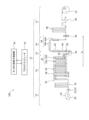
- FIG. 1 is a schematic diagram showing an example of a production facility for a hot-dip galvanized steel strip including a coating weight prediction device capable of implementing the coating weight prediction method according to the present embodiment.
- FIG. 2 is a schematic cross-sectional view of the plating section.
- FIG. 3 is a graph showing the thermal history of a steel strip in the annealing section and the reheating section of a manufacturing apparatus for producing a hot-dip galvanized steel strip.
- FIG. 4 is a schematic diagram showing an example of the configuration of a coating weight prediction device.
- FIG. 5 is a flow diagram showing an example of a process for specifying operation parameters of a plating processing section by the operation parameter specifying section.
- FIG. 6 is a schematic diagram showing a method for generating a plating coating weight prediction model.
- the inventors have confirmed that the coating weight of hot-dip galvanized steel strip is also affected by operational parameters other than the coating treatment section. Specifically, they have confirmed that when the temperature of the steel strip at the cooling zone exit side in the annealing section, which is provided upstream of the coating treatment section, changes, the viscosity of the zinc coating that adheres to the steel strip surface in the zinc coating bath changes, and the coating weight changes even if other wiping conditions are the same. Furthermore, they have confirmed that when the temperature of the steel strip changes, the mechanical properties of the steel strip change, and the shape in the sheet width direction changes during transport by rolls, which changes the distance between the gas wiping device and the steel strip, and the coating weight changes even if other wiping conditions are the same.
- FIG. 1 is a schematic diagram showing an example of a hot-dip galvanized steel strip manufacturing facility 100 including a coating weight prediction device capable of implementing the coating weight prediction method according to this embodiment.
- the hot-dip galvanized steel strip manufacturing facility 100 is a facility that continuously anneals a steel strip 10 that has been reduced in thickness to a predetermined thickness through a hot rolling process, a pickling process, and a cold rolling process, and immerses it in a zinc plating bath for plating, thereby continuously manufacturing a hot-dip galvanized steel strip.
- Arrow A in FIG. 1 indicates the transport direction of the steel strip 10.
- the hot-dip galvanized steel strip manufacturing equipment 100 includes a hot-dip galvanized steel strip manufacturing device 12, a process computer 54, and a coating weight prediction device 56.
- the hot-dip galvanized steel strip manufacturing device 12 includes an entry section 13, an annealing section 14, a plating processing section 15, a reheating section 16, and an exit section 17.
- the entry section 13 has a payoff reel 20, a welding machine 22, an electrolytic cleaning device 23, and an entry looper 24.
- An annealing section 14 is provided downstream of the entry section 13.
- the annealing section 14 has a heating zone 28, a soaking zone 30, and a cooling zone 32.
- a preheating zone 26 may be provided upstream of the heating zone 28.
- the steel strip 10 is heated from near room temperature, held at a preset temperature, and then the temperature of the steel strip 10 is lowered to a temperature suitable for zinc plating, thereby annealing the steel strip 10.
- the heating zone 28 is equipment for raising the temperature of the steel strip 10, and heats it to a temperature that is preset depending on the type of steel. In the heating zone 28, direct flame or radiant combustion burners are used, but the heating method is not particularly limited.
- the soaking zone 30 is equipment for holding the steel strip 10 at a predetermined temperature, and is equipment with a heating capacity sufficient to compensate for the heat dissipated from the furnace body, etc.
- the cooling zone 32 is equipment that cools the steel strip 10 to a temperature suitable for zinc plating. Gas jet cooling is generally used as the cooling means, but the cooling method is not particularly limited as long as it can cool to the specified cooling temperature.
- the cooling zone 32 may be divided into multiple zones, such as a first cooling zone 32a and a second cooling zone 32b, and the thermal history of the steel strip during cooling may be controlled by changing the cooling conditions of the cooling means.
- the plating processing section 15 is provided downstream of the annealing section 14.
- Figure 2 is a schematic cross-sectional view of the plating processing section 15.
- the plating processing section 15 has a snout 34 connected to the outlet of the cooling zone 32, a zinc plating bath 36, and a wiping device 38.
- the snout 34 is a member with a rectangular cross section that defines the space through which the steel strip 10 passes.
- a mixed gas containing hydrogen, nitrogen, and water vapor is supplied inside the snout 34, and the atmospheric gas is adjusted until the steel strip 10 is immersed in the zinc plating bath 36.
- the zinc plating bath 36 is a bottomed, square-tube-shaped container that contains molten zinc inside and has a sink roll 58 and a support roll 60 inside.
- the sink roll 58 immerses the steel strip 10 that has passed through the snout 34 facing downward into the zinc plating bath 36, and pulls the steel strip 10 with molten zinc adhering to its surface above the plating bath.
- the support roll 60 is provided above the sink roll 58, and corrects the shape of the steel strip 10, such as warping, and stabilizes the path.
- the wiping device 38 sprays wiping gas from a pair of nozzles 62 arranged on both sides of the steel strip 10 to scrape off excess molten zinc adhering to the surface of the steel strip 10, and adjusts the amount of molten zinc applied.
- the offset amount means the amount of deviation in the vertical direction (longitudinal direction of the steel strip) of the position where the wiping gas sprayed from the pair of left and right nozzles 62 collides with the steel strip 10.
- the gap amount is the width of the opening of the nozzle 62 from which the wiping gas is sprayed.
- the reheating section 16 is provided downstream of the plating processing section 15.
- the reheating section 16 has an alloying zone 40, a holding zone 42, and a final cooling zone 44.
- An induction heating device is provided in the alloying zone 40.
- the temperature of the steel strip 10, which was lowered in the plating processing section 15 is raised again to promote the Zn-Fe alloying reaction.
- the holding zone 42 the temperature of the steel strip 10 is maintained to advance the alloying reaction.
- the final cooling zone 44 the steel strip 10 is cooled to room temperature.
- the final cooling zone 44 may also be divided into multiple zones, such as a first final cooling zone 44a and a second final cooling zone 44b, to control the thermal history of the steel strip 10 during cooling.
- the exit section 17 is provided downstream of the reheating section.
- the exit section 17 has a temper rolled strip 46, an exit looper 48, an inspection strip 50, and a tension reel 52.
- the exit looper 48 is a device that temporarily stores the steel strip 10 in order to adjust the conveying speed of the steel strip 10 and the processing speed in the exit section 17.
- the inspection strip 50 is a device that inspects the dimensional accuracy and surface quality of the steel strip 10.
- the tension reel 52 is a device that winds the steel strip 10 into a coil. The steel strip 10 that is wound into a coil by the tension reel 52 and judged to pass the quality inspection in the inspection strip 50 is shipped as a product coil.
- the steel strip 10 that is judged to fail the quality inspection in the inspection strip 50 is sent to a recoil line, where the dimensions and weight of the steel strip 10 are adjusted, samples are taken for quality confirmation, shape and dimension inspections are performed, and the coil is rewound.
- thermometers for measuring the surface temperature of the steel strip 10 are installed in the annealing section 14, the plating section 15, and the reheating section 16. Among these, it is particularly preferable to install thermometers from the annealing section 14 to just before the plating section 15 to measure the temperature of the steel strip 10.
- the thermometer for measuring the temperature of the steel strip 10 it is preferable to use a radiation thermometer that continuously measures the surface temperature of the center of the steel strip 10 in the sheet width direction, but a profile radiation thermometer that measures the temperature distribution in the sheet width direction of the steel strip 10 may also be used.
- a furnace thermometer that measures the atmospheric temperature in the furnace in each of the annealing section 14 and the reheating section 16 zones may also be installed.
- the measured surface temperature and atmospheric temperature of the steel strip 10 are output to the process computer 54.
- Figure 3 is a graph showing the temperature of the steel strip 10 from the annealing section 14 to the reheating section 16 of a hot-dip galvanized steel strip manufacturing apparatus for producing hot-dip galvanized steel strip.
- the horizontal axis is time and the vertical axis is the temperature of the steel strip 10.
- the temperature of the steel strip 10 is the surface temperature of the steel strip 10.
- the annealing process is carried out in the preheating zone 26, heating zone 28, soaking zone 30 and cooling zone 32, and then the steel strip passes through the plating processing section 15 and is reheated in the alloying zone 40, holding zone 42 and final cooling zone 44.
- the transport speed of the steel strip 10 in the annealing section 14 is kept constant.
- the line speed may change before and after the welded section. For this reason, the thermal history of the steel strip 10 may vary depending on the position at which the temperature of the steel strip 10 is measured.
- the process computer 54 is, for example, a general-purpose computer such as a workstation or a personal computer.
- the process computer 54 is connected to the hot-dip galvanized steel strip manufacturing apparatus 12 by wire or wirelessly, and controls the hot-dip galvanized steel strip manufacturing process.
- the process computer 54 further acquires quality characteristic parameters of the steel strip 10 from a higher-level computer.
- the quality characteristic parameters include, for example, the thickness, width, yield stress, tensile strength, and surface roughness of the steel strip 10.
- the surface roughness of the steel strip 10 may be measured non-contact and in real time by providing a surface roughness meter using a laser irradiation method in front of the zinc plating bath 36.
- the process computer 54 acquires and stores operational parameters for the entry section 13, annealing section 14, plating processing section 15, reheating section 16, and exit section 17 in the manufacture of hot-dip galvanized steel strip.
- operational parameters for the annealing section 14 the process computer 54 acquires, for example, the line speed and tension of the steel strip 10 in the soaking zone 30, and the surface temperature of the steel strip 10 when immersed in the zinc plating bath 36. It is preferable to install a radiation thermometer in front of the zinc plating bath 36 and measure the surface temperature of the steel strip 10 in real time without contact.
- the process computer 54 acquires the operating parameters of the plating processing section 15, such as the plating temperature of the zinc plating bath 36, the amount of pressure the support roll 60 places on the steel strip 10, the height of the nozzle 62 from the bath surface, the wiping gas spray angle from the nozzle 62, the gap amount at the opening of the nozzle 62, the distance between the nozzle 62 and the steel strip 10, the offset amount of the nozzle 62, and the spray pressure of the wiping gas from the nozzle 62.
- the operating parameters of the plating processing section 15 such as the plating temperature of the zinc plating bath 36, the amount of pressure the support roll 60 places on the steel strip 10, the height of the nozzle 62 from the bath surface, the wiping gas spray angle from the nozzle 62, the gap amount at the opening of the nozzle 62, the distance between the nozzle 62 and the steel strip 10, the offset amount of the nozzle 62, and the spray pressure of the wiping gas from the nozzle 62.
- the coating weight prediction device 56 acquires the operation parameters of the plating processing section 15, the operation parameters of the annealing section 14, and the quality characteristic parameters of the steel strip 10 from the process computer 54.
- the coating weight prediction device 56 inputs input data including each acquired parameter into a coating weight prediction model, and outputs the coating weight. In this way, the coating weight prediction device 56 predicts the coating weight of the hot-dip galvanized steel strip manufactured by the hot-dip galvanized steel strip manufacturing apparatus 12.
- the coating weight prediction device 56 identifies the operation parameters of the plating processing section that will bring the predicted coating weight into the range of a predetermined target value.
- the coating weight prediction device 56 outputs the identified operation parameters of the plating processing section to the process computer 54 to be set as the operation parameters of the plating processing section.
- FIG. 4 is a schematic diagram showing an example of the configuration of the coating weight prediction device 56.
- the coating weight prediction device 56 is, for example, a general-purpose computer such as a workstation or a personal computer.
- the coating weight prediction device 56 has a control unit 70, an input unit 72, an output unit 74, and a storage unit 76.
- the control unit 70 is, for example, a CPU, and functions as a parameter acquisition unit 78, a coating weight prediction unit 80, an operation parameter identification unit 82, and a coating weight prediction model generation unit 84 by executing a program stored in the storage unit 76.
- the input unit 72 is, for example, a keyboard, a touch panel integral with a display, or the like.
- the output unit 74 is, for example, an LCD or CRT display, or the like.
- the storage unit 76 is, for example, an updatable flash memory, a hard disk built-in or connected via a data communication terminal, a memory card, or other information recording medium and a read/write device for the same.
- the storage unit 76 stores programs and data for implementing each function of the coating weight prediction device 56.
- the storage unit 76 further stores a database 86 and a coating weight prediction model 88.
- the database 86 stores 200 or more, more preferably 1000 or more, data sets consisting of actual values of hot-dip galvanized steel strips manufactured in the past by the same hot-dip galvanized steel strip manufacturing apparatus 12.
- the above data set is a data set that includes the actual values of input data including the operating parameters of the coating processing unit 15, the operating parameters of the annealing unit 14, and the quality characteristic parameters of the steel strip 10, and the actual values of the coating weight.
- the coating weight prediction model 88 is a trained machine learning model that has been trained using the data set stored in the database 86 as training data.
- the coating weight prediction model 88 according to this embodiment is a trained machine learning model that receives input data including the operation parameters of the plating processing unit 15, the operation parameters of the annealing unit 14, and the quality characteristic parameters of the steel strip 10 as input, and outputs the coating weight.
- input data may include parameters other than those described above, and may not include the quality characteristic parameters of the steel strip 10.
- the parameter acquisition unit 78 acquires the operation parameters of the plating processing unit 15 and the operation parameters of the annealing unit 14 as input data from the process computer 54. This processing by the parameter acquisition unit 78 is the parameter acquisition step.
- the parameter acquisition unit 78 acquires, as input data, one or more of the operating parameters of the plating processing unit 15 shown below, from the process computer 54.
- ⁇ Operation parameters of plating processing section 15> The plating temperature of the zinc plating bath 36, the amount of pressure of the support roll 60 against the steel strip 10, the height of the nozzle 62 from the bath surface, the angle of wiping gas ejection from the nozzle 62, the gap amount of the opening of the nozzle 62, the distance between the nozzle 62 and the steel strip 10, the offset amount of the nozzle 62, and the ejection pressure of the wiping gas from the nozzle 62.
- the distance from the nozzle 62 changes on the front and back sides when wiping gas is sprayed. This change in distance causes the wiping gas pressure that scrapes off the plating to fluctuate, and so the amount of plating attached to the strip changes.
- the wiping gas spray pressure from the nozzle 62 decreases, the gas pressure that scrapes off the plating on the steel strip surface decreases, so the amount of plating adhesion increases even if other wiping conditions are the same.
- the plating temperature in the zinc plating bath 36 increases, the viscosity of the zinc on the steel sheet surface at the time the wiping gas is sprayed onto the steel strip 10 decreases, so the amount of plating adhesion decreases even if other wiping conditions are the same.
- the wiping gas spray angle from the nozzle 62 decreases, so the gas pressure that scrapes off the plating on the steel strip surface decreases, so the amount of plating adhesion increases even if other wiping conditions are the same.
- the spray pressure of the wiping gas from the nozzle 62 decreases, and therefore the pressure of the gas scraping off the plating on the steel strip surface decreases, and the plating adhesion amount increases even if other wiping conditions are the same.
- the offset amount of the nozzle 62 decreases, the wiping gas on both sides collides with the edge of the steel strip 10, causing edge splashing and reducing the plating adhesion amount. In this way, these operating parameters affect the plating adhesion amount. For this reason, the prediction accuracy of the plating adhesion amount is improved by acquiring one or more of the operating parameters of the plating processing unit 15 and including those parameters in the input data of the plating adhesion amount prediction model.
- the parameter acquisition unit 78 acquires, as input data, one or more of the operating parameters of the annealing unit 14, for example, the following, from the process computer 54.
- the dew point of the annealing section 14 increases, oxides are formed on the surface of the steel strip 10, reducing the plating adhesion. This reduces the plating adhesion even if other wiping conditions are the same.
- the temperature of the annealing section 14 increases or the time it is left in the furnace increases, the hardness of the surface of the steel strip 10 decreases and the amount of plastic strain in the surface decreases. The plastic strain activates the surface of the steel strip 10 and increases the growth rate of the alloy layer during zinc plating. This reduces the plating adhesion even if other wiping conditions are the same when the temperature of the annealing section 14 increases or the time it is left in the furnace increases.
- the parameter acquisition unit 78 acquires, as input data, one or more of the quality characteristic parameters of the steel strip 10 shown below from the process computer 54.
- the distance from the nozzle 62 changes on the front and back sides when the wiping gas is sprayed. This change in distance causes the wiping gas pressure that scrapes off the plating to vary, and so the amount of plating attached varies.
- the steel strip 10 bends in this way the amount of plating attached varies for the same reason as when the steel strip is thinner and wider.
- the parameter acquisition unit 78 outputs the acquired input data to the plating adhesion weight prediction unit 80.
- the coating weight prediction unit 80 When the coating weight prediction unit 80 acquires input data from the parameter acquisition unit 78, it reads out the coating weight prediction model 88 from the storage unit 76, inputs the input data into the coating weight prediction model 88, and predicts the coating weight by outputting the coating weight. This processing by the coating weight prediction unit 80 constitutes the coating weight prediction step.
- the coating weight prediction unit 80 outputs the output coating weight to the output unit 74, and may display the coating weight of the hot-dip galvanized steel strip on the output unit 74. This allows the operator to check the predicted value of the coating weight of the hot-dip galvanized steel strip by visually checking the output unit 74.
- the operation parameter identification unit 82 identifies operation parameters of the plating processing unit that will result in the coating weight of the hot-dip galvanized steel strip predicted by the coating weight prediction unit 80 falling within a range of preset target values.
- the operation parameter identification unit 82 sets the identified operation parameters as the operation parameters of the plating processing unit by outputting them to the process computer 54.
- FIG. 5 is a flow diagram showing an example of a process for identifying operational parameters of a plating processing unit by the operational parameter identification unit 82.
- the flow shown in FIG. 5 is started, for example, by receiving an input from an operator to start the process.
- the parameter acquisition unit 78 acquires the operation parameters of the plating processing unit 15 of the hot-dip galvanized steel strip to be manufactured from the process computer 54 (step S101).
- the parameter acquisition unit 78 acquires the operation parameters of the annealing unit 14 from the process computer 54 (step S102).
- the parameter acquisition unit 78 acquires the quality characteristic parameters of the steel strip 10 from the process computer 54 (step S103).
- the parameter acquisition unit 78 outputs the acquired operation parameters of the plating processing unit 15, operation parameters of the annealing unit 14, and quality characteristic parameters to the plating adhesion weight prediction unit 80.
- the coating weight prediction unit 80 reads out the coating weight prediction model 88 from the storage unit 76.
- the coating weight prediction unit 80 outputs the coating weight by inputting the acquired operational parameters of the plating processing unit 15, the operational parameters of the annealing unit 14, and the quality characteristic parameters into the coating weight prediction model 88. In this way, the coating weight prediction unit 80 predicts the coating weight of the hot-dip galvanized steel sheet to be manufactured (step S104).
- the coating weight prediction unit 80 outputs the output predicted value of the coating weight to the operational parameter identification unit 82.
- the range of the target value of the coating weight of the hot-dip galvanized steel sheet may be determined in advance and stored in the storage unit 76, or may be input by the operator from the input unit 72.
- the operation parameter identification unit 82 acquires the predicted value of the coating weight and the range of the target value of the coating weight of the hot-dip galvanized steel sheet, it judges whether the predicted value of the coating weight is within the range of the target value of the coating weight of the hot-dip galvanized steel sheet (step S105).
- step S105 When the operation parameter identification unit 82 compares the predicted value of the coating weight with the range of the target value, and judges that the predicted value of the coating weight is outside the range of the target value of the coating weight of the hot-dip galvanized steel sheet (step S105: No), it changes the operation parameters of the plating processing unit 15 according to the predetermined conditions (step S106), and returns the process to step S104.
- the coating weight prediction unit 80 inputs the changed operation parameters of the plating processing unit 15, the already acquired operation parameters of the annealing unit 14, and the quality characteristic parameters of the steel strip 10 into the coating weight prediction model 88, and predicts the coating weight again. Steps S104 to S106 are repeated until the predicted plating weight is determined to be within the target range in step S105.
- step S105 determines that the operational parameters of the plating processing unit 15 used to predict the coating weight are the operational parameters of the plating processing unit 15 that can bring the coating weight within the range of the target value (step S107).
- the processing of steps S105 to S107 constitutes the operational parameter identification steps in the manufacturing method of hot-dip galvanized steel strip.
- the operation parameter identification unit 82 When the operation parameters of the plating processing section 15 are identified by the operation parameter identification unit 82, the flow of the operation parameter identification process shown in FIG. 5 ends.
- the operation parameter identification unit 82 outputs the identified operation parameters of the plating processing section 15 to the process computer 54.
- the process computer 54 sets the identified operation parameters of the plating processing section 15 as the operation parameters of the plating processing section 15, and manufactures a hot-dip galvanized steel strip under manufacturing conditions that include the operation parameters. This is the hot-dip galvanized steel strip manufacturing step in the hot-dip galvanized steel strip manufacturing method.
- FIG. 6 is a schematic diagram showing a method for generating a coating weight prediction model.
- the parameter acquisition unit 78 acquires from the process computer 54 the actual values of the operating parameters of the plating processing unit 15 of previously manufactured hot-dip galvanized steel strips, the actual values of the operating parameters of the annealing unit 14, the actual values of the quality characteristic parameters of the steel strip 10, and the actual values of the coating weight of the hot-dip galvanized steel strips, and stores a data set consisting of these in the database 86 of the storage unit 76.
- the number of data sets stored in the database 86 is preferably at least 200 or more, and more preferably 1000 or more.
- the processing of the parameter acquisition unit 78 corresponds to the data set acquisition step in the method for generating a coating weight prediction model.
- the plating adhesion weight prediction model generation unit 84 reads out a pre-stored machine learning model from the storage unit 76, and trains the machine learning model using multiple data sets stored in the database 86 as training data to generate a trained machine learning model. This trained machine learning model becomes the plating adhesion weight prediction model 88.
- the processing of the plating adhesion weight prediction model generation unit 84 becomes the plating adhesion weight prediction model generation step in the plating adhesion weight prediction model generation method.
- the machine learning model used in the plating adhesion weight prediction device 56 may be any of the commonly used neural networks, decision tree learning, random forests, and support vector regression.
- the coating weight prediction model is preferably updated to a new shape prediction model, for example, by re-training it through machine learning every month or year.
- the parameter acquisition unit 78 acquires actual values each time a hot-dip galvanized steel strip is manufactured, and stores them in the database 86.
- the database 86 stores data sets of newly manufactured hot-dip galvanized steel strips, so the number of stored data sets increases. The more data sets there are, the more accurately the coating weight can be predicted. For this reason, by periodically training the shape prediction model through machine learning using the data sets stored in the database 86, the coating weight of hot-dip galvanized steel strips can be predicted with even greater accuracy.
- the coating weight prediction model used in the coating weight prediction device 56 includes the operational parameters of the annealing section 14 in the input data.
- the operational parameters of the annealing section 14 affect the coating weight of the hot-dip galvanized steel strip. Therefore, by including the operational parameters of the annealing section 14 in the input data of the coating weight prediction model, the coating weight prediction model becomes a coating weight prediction model that takes the annealing section 14 into account, and the prediction accuracy of the coating weight of the hot-dip galvanized steel strip is increased.
- the coating weight of the hot-dip galvanized steel strip can be predicted with high accuracy, it is possible to prevent the production of hot-dip galvanized steel strips whose coating weight exceeds the target value range, and it is possible to prevent increases in the manufacturing costs and decreases in productivity of the hot-dip galvanized steel strips.
- the coating weight prediction device 56 may have the function of the process computer 54, and these may be configured as one device.
- the coating weight prediction device 56 shown in FIG. 4 an example of the control unit 70 having an operation parameter specification unit 82 and a coating weight prediction model generation unit 84 is shown, but this is not limited thereto. If the coating weight prediction device 56 predicts the coating weight of the hot-dip galvanized steel strip, the control unit 70 does not need to have the operation parameter specification unit 82. Furthermore, if the coating weight prediction model 88 is generated externally and the generated coating weight prediction model 88 is stored in the storage unit 76 via the parameter acquisition unit 78, the coating weight prediction device 56 does not need to have the coating weight prediction model generation unit 84.
- the line speed of the steel strip 10 in the annealing section 14 and the actual values of the surface temperature of the steel strip 10 when immersed in the zinc plating bath 36 were obtained.
- a radiation thermometer was installed upstream of the zinc plating bath 36, and the value measured using this radiation thermometer was used as the surface temperature of the steel strip 10.
- Different plating adhesion weight prediction models 1 to 3 were generated by changing the actual values of each parameter used as training data for each actual value obtained in this way.
- the conditions for generating plating adhesion weight prediction models 1 to 3 are shown below.
- Plating adhesion weight prediction model 1 A plating adhesion weight prediction model generated by machine learning using 10,000 data sets as training data, each set consisting of a set of actual values of the operating parameters of the plating processing unit 15 and the actual values of the plating adhesion weight.
- Coating weight prediction model 2 A coating weight prediction model generated by machine learning using 10,000 data sets as training data, each set consisting of the actual values of the operating parameters of the plating processing section 15 and the annealing section 14 and the actual values of the coating weight.
- Coating weight prediction model 3 A coating weight prediction model generated by machine learning using 10,000 data sets as training data, each set consisting of the actual values of the operating parameters of the plating processing section 15 and the annealing section 14, and the actual values of the quality characteristic parameters of the steel strip 10 and the actual values of the coating weight.
- coating weight prediction models 1 to 3 thus generated, operational parameters of the plating processing section were specified such that the predicted coating weight of the hot-dip galvanized steel strip would be within the target range of 48 g/ m2 or more and 50 g/m2 or less , according to the flow diagram shown in Fig. 5. Then, 100 coils of hot-dip galvanized steel strip were manufactured under manufacturing conditions including the specified operational parameters of the plating processing section.
- coating weight prediction model 1 the coating weight of the hot-dip galvanized steel strip fell within the above target range for 85% of the 100 coils.
- coating weight prediction model 2 which includes the operational parameters of the annealing section in its input data
- the coating weight of the hot-dip galvanized steel strip fell within the above target range for 90% of the 100 coils.
- coating weight prediction model 3 which includes the operational parameters of the annealing section and the quality characteristic parameters of the steel strip 10 in its input data, the coating weight of the hot-dip galvanized steel strip fell within the above target range for 95% of the 100 coils.
Landscapes
- Chemical & Material Sciences (AREA)
- Engineering & Computer Science (AREA)
- Organic Chemistry (AREA)
- Metallurgy (AREA)
- Mechanical Engineering (AREA)
- Materials Engineering (AREA)
- Chemical Kinetics & Catalysis (AREA)
- Theoretical Computer Science (AREA)
- Software Systems (AREA)
- Physics & Mathematics (AREA)
- Medical Informatics (AREA)
- Mathematical Physics (AREA)
- General Physics & Mathematics (AREA)
- General Engineering & Computer Science (AREA)
- Computing Systems (AREA)
- Evolutionary Computation (AREA)
- Data Mining & Analysis (AREA)
- Computer Vision & Pattern Recognition (AREA)
- Artificial Intelligence (AREA)
- Computer Hardware Design (AREA)
- Oil, Petroleum & Natural Gas (AREA)
- Thermal Sciences (AREA)
- Coating With Molten Metal (AREA)
Priority Applications (5)
| Application Number | Priority Date | Filing Date | Title |
|---|---|---|---|
| CN202480039463.0A CN121311616A (zh) | 2023-07-18 | 2024-03-22 | 镀敷附着量预测方法、熔融镀锌钢带的制造方法、镀敷附着量预测模型的生成方法以及镀敷附着量预测装置 |
| JP2024539276A JPWO2025017965A1 (https=) | 2023-07-18 | 2024-03-22 | |
| EP24842766.8A EP4685262A1 (en) | 2023-07-18 | 2024-03-22 | Plating adhesion amount prediction method, hot-dip galvanized steel strip manufacturing method, plating adhesion amount prediction model generation method, and plating adhesion amount prediction device |
| KR1020257041784A KR20260009930A (ko) | 2023-07-18 | 2024-03-22 | 도금 부착량 예측 방법, 용융 아연 도금 강대의 제조 방법, 도금 부착량 예측 모델의 생성 방법 및 도금 부착량 예측 장치 |
| MX2025015230A MX2025015230A (es) | 2023-07-18 | 2025-12-15 | Metodo de prediccion del peso del recubrimiento, metodo de produccion de bandas de acero galvanizado, metodo de generacion de modelos de prediccion del peso del recubrimiento y dispositivo de prediccion del peso del recubrimiento |
Applications Claiming Priority (2)
| Application Number | Priority Date | Filing Date | Title |
|---|---|---|---|
| JP2023116448 | 2023-07-18 | ||
| JP2023-116448 | 2023-07-18 |
Publications (1)
| Publication Number | Publication Date |
|---|---|
| WO2025017965A1 true WO2025017965A1 (ja) | 2025-01-23 |
Family
ID=94282047
Family Applications (1)
| Application Number | Title | Priority Date | Filing Date |
|---|---|---|---|
| PCT/JP2024/011308 Pending WO2025017965A1 (ja) | 2023-07-18 | 2024-03-22 | めっき付着量予測方法、溶融亜鉛めっき鋼帯の製造方法、めっき付着量予測モデルの生成方法及びめっき付着量予測装置 |
Country Status (6)
| Country | Link |
|---|---|
| EP (1) | EP4685262A1 (https=) |
| JP (1) | JPWO2025017965A1 (https=) |
| KR (1) | KR20260009930A (https=) |
| CN (1) | CN121311616A (https=) |
| MX (1) | MX2025015230A (https=) |
| WO (1) | WO2025017965A1 (https=) |
Citations (5)
| Publication number | Priority date | Publication date | Assignee | Title |
|---|---|---|---|---|
| JP2001049418A (ja) * | 1999-08-10 | 2001-02-20 | Nisshin Steel Co Ltd | 溶融めっき金属帯のめっき付着量制御方法 |
| JP2007262503A (ja) | 2006-03-29 | 2007-10-11 | Jfe Steel Kk | 溶融亜鉛付着量制御方法および装置 |
| JP2022500560A (ja) * | 2018-09-21 | 2022-01-04 | ポスコPosco | メッキ量制御装置およびメッキ量制御方法 |
| JP2022000535A (ja) * | 2020-06-17 | 2022-01-04 | Jfeスチール株式会社 | 付着量予測モデルの生成方法、めっき付着量の予測方法、めっき付着量制御方法、溶融めっき鋼板の製造方法、及びそれらを実行する装置、並びに品質予測モデルの生成方法 |
| WO2022270092A1 (ja) * | 2021-06-25 | 2022-12-29 | Jfeスチール株式会社 | 鋼板の不めっき欠陥予測方法、鋼板の欠陥低減方法、溶融亜鉛めっき鋼板の製造方法、及び鋼板の不めっき欠陥予測モデルの生成方法 |
Family Cites Families (3)
| Publication number | Priority date | Publication date | Assignee | Title |
|---|---|---|---|---|
| JPS4942777B1 (https=) * | 1967-03-31 | 1974-11-16 | ||
| JP2010235967A (ja) * | 2009-03-30 | 2010-10-21 | Jfe Steel Corp | 溶融金属めっき鋼帯の製造装置、及び溶融金属めっき鋼帯の製造方法 |
| BR112018067335B1 (pt) * | 2016-03-29 | 2022-09-06 | Nippon Steel Corporation | Máquina de revestimento contínuo por imersão a quente, e método para revestimento contínuo por imersão a quente |
-
2024
- 2024-03-22 JP JP2024539276A patent/JPWO2025017965A1/ja active Pending
- 2024-03-22 WO PCT/JP2024/011308 patent/WO2025017965A1/ja active Pending
- 2024-03-22 CN CN202480039463.0A patent/CN121311616A/zh active Pending
- 2024-03-22 EP EP24842766.8A patent/EP4685262A1/en active Pending
- 2024-03-22 KR KR1020257041784A patent/KR20260009930A/ko active Pending
-
2025
- 2025-12-15 MX MX2025015230A patent/MX2025015230A/es unknown
Patent Citations (5)
| Publication number | Priority date | Publication date | Assignee | Title |
|---|---|---|---|---|
| JP2001049418A (ja) * | 1999-08-10 | 2001-02-20 | Nisshin Steel Co Ltd | 溶融めっき金属帯のめっき付着量制御方法 |
| JP2007262503A (ja) | 2006-03-29 | 2007-10-11 | Jfe Steel Kk | 溶融亜鉛付着量制御方法および装置 |
| JP2022500560A (ja) * | 2018-09-21 | 2022-01-04 | ポスコPosco | メッキ量制御装置およびメッキ量制御方法 |
| JP2022000535A (ja) * | 2020-06-17 | 2022-01-04 | Jfeスチール株式会社 | 付着量予測モデルの生成方法、めっき付着量の予測方法、めっき付着量制御方法、溶融めっき鋼板の製造方法、及びそれらを実行する装置、並びに品質予測モデルの生成方法 |
| WO2022270092A1 (ja) * | 2021-06-25 | 2022-12-29 | Jfeスチール株式会社 | 鋼板の不めっき欠陥予測方法、鋼板の欠陥低減方法、溶融亜鉛めっき鋼板の製造方法、及び鋼板の不めっき欠陥予測モデルの生成方法 |
Non-Patent Citations (1)
| Title |
|---|
| See also references of EP4685262A1 |
Also Published As
| Publication number | Publication date |
|---|---|
| EP4685262A1 (en) | 2026-01-28 |
| MX2025015230A (es) | 2026-02-03 |
| KR20260009930A (ko) | 2026-01-20 |
| CN121311616A (zh) | 2026-01-09 |
| JPWO2025017965A1 (https=) | 2025-01-23 |
Similar Documents
| Publication | Publication Date | Title |
|---|---|---|
| KR102545735B1 (ko) | 연속 처리 라인을 운영하는 방법 | |
| US20240158885A1 (en) | Continuous annealing equipment, continuous annealing method, method of producing cold-rolled steel sheets and method of producing coated or plated steel sheets | |
| JP7342812B2 (ja) | 鋼帯の材質予測方法、材質制御方法、製造方法および材質予測モデルの生成方法 | |
| EP4324946A1 (en) | Steel sheet non-plating defect prediction method, steel sheet defect reduction method, method for manufacturing hot-dip galvanized steel sheet, and method for generating steel sheet non-plating defect prediction model | |
| EP4549600A1 (en) | Continuous annealing facility, continuous annealing method, method for producing cold-rolled steel sheet, and method for producing plated steel sheet | |
| EP4275806A1 (en) | Method for predicting shape of steel sheet, shape control method, manufacturing method, method for generating shape prediction model, and manufacturing equipment | |
| JP7294242B2 (ja) | 表面粗さの予測方法、鋼帯の製造方法および学習済の機械学習モデルの生成方法 | |
| WO2025017965A1 (ja) | めっき付着量予測方法、溶融亜鉛めっき鋼帯の製造方法、めっき付着量予測モデルの生成方法及びめっき付着量予測装置 | |
| JP2005029890A (ja) | 溶融亜鉛めっき鋼板用めっき浴の温度制御方法および溶融亜鉛めっき鋼板 | |
| US20260091420A1 (en) | Metal-strip warped-shape control method, metal-strip manufacturing method, and metal-strip warped-shape control device | |
| EP4556132A1 (en) | Method of predicting form of warping in metal strip, method of controlling form of warping in metal strip, method of manufacturing metal strip, method of generating warping-form prediction model, and device for controlling form of warping in metal strip | |
| JP7806905B2 (ja) | 鋼帯の板温予測方法、鋼帯の板温制御方法、鋼帯の製造方法及び鋼帯の板温予測モデルの生成方法 | |
| JP7823633B2 (ja) | 不等辺山形鋼の形状予測方法、不等辺山形鋼の製造方法、圧延設備および形状予測モデルの生成方法 | |
| WO2024062766A1 (ja) | 金属帯の反り形状予測方法、金属帯の反り形状制御方法、金属帯の製造方法、反り形状予測モデルの生成方法及び金属帯の反り形状制御装置 | |
| CN114934249A (zh) | 控制热镀锌带钢c翘缺陷的方法、装置及电子设备 | |
| KR20220027543A (ko) | 코일 폭 제어 방법 및 장치 | |
| JP2012158818A (ja) | めっき浴の浴温制御装置及び金属帯のめっき方法 |
Legal Events
| Date | Code | Title | Description |
|---|---|---|---|
| WWE | Wipo information: entry into national phase |
Ref document number: 2024539276 Country of ref document: JP |
|
| 121 | Ep: the epo has been informed by wipo that ep was designated in this application |
Ref document number: 24842766 Country of ref document: EP Kind code of ref document: A1 |
|
| WWE | Wipo information: entry into national phase |
Ref document number: 2024842766 Country of ref document: EP |
|
| ENP | Entry into the national phase |
Ref document number: 2024842766 Country of ref document: EP Effective date: 20251021 |
|
| ENP | Entry into the national phase |
Ref document number: 2024842766 Country of ref document: EP Effective date: 20251021 |
|
| ENP | Entry into the national phase |
Ref document number: 2024842766 Country of ref document: EP Effective date: 20251021 |
|
| ENP | Entry into the national phase |
Ref document number: 2024842766 Country of ref document: EP Effective date: 20251021 |
|
| WWE | Wipo information: entry into national phase |
Ref document number: 202517126375 Country of ref document: IN |
|
| ENP | Entry into the national phase |
Ref document number: 2024842766 Country of ref document: EP Effective date: 20251021 |
|
| ENP | Entry into the national phase |
Ref document number: 1020257041784 Country of ref document: KR Free format text: ST27 STATUS EVENT CODE: A-0-1-A10-A15-NAP-PA0105 (AS PROVIDED BY THE NATIONAL OFFICE) |
|
| WWE | Wipo information: entry into national phase |
Ref document number: 1020257041784 Country of ref document: KR Ref document number: MX/A/2025/015230 Country of ref document: MX |
|
| WWE | Wipo information: entry into national phase |
Ref document number: 2501008580 Country of ref document: TH |
|
| ENP | Entry into the national phase |
Ref document number: 2024842766 Country of ref document: EP Effective date: 20251021 |
|
| WWP | Wipo information: published in national office |
Ref document number: 202517126375 Country of ref document: IN |
|
| WWP | Wipo information: published in national office |
Ref document number: 1020257041784 Country of ref document: KR |
|
| WWP | Wipo information: published in national office |
Ref document number: 2024842766 Country of ref document: EP |
|
| WWP | Wipo information: published in national office |
Ref document number: MX/A/2025/015230 Country of ref document: MX |
|
| NENP | Non-entry into the national phase |
Ref country code: DE |