WO2025013446A1 - ポリ([R,S]β-ヒドロキシ酪酸)の反復単位を含むブロック共重合体及び当該共重合体からのナノ粒子、並びにそれらの製造及び用途 - Google Patents
ポリ([R,S]β-ヒドロキシ酪酸)の反復単位を含むブロック共重合体及び当該共重合体からのナノ粒子、並びにそれらの製造及び用途 Download PDFInfo
- Publication number
- WO2025013446A1 WO2025013446A1 PCT/JP2024/019499 JP2024019499W WO2025013446A1 WO 2025013446 A1 WO2025013446 A1 WO 2025013446A1 JP 2024019499 W JP2024019499 W JP 2024019499W WO 2025013446 A1 WO2025013446 A1 WO 2025013446A1
- Authority
- WO
- WIPO (PCT)
- Prior art keywords
- formula
- bhb
- nano
- substituted
- unsubstituted
- Prior art date
- Legal status (The legal status is an assumption and is not a legal conclusion. Google has not performed a legal analysis and makes no representation as to the accuracy of the status listed.)
- Ceased
Links
Images







Classifications
-
- A—HUMAN NECESSITIES
- A61—MEDICAL OR VETERINARY SCIENCE; HYGIENE
- A61K—PREPARATIONS FOR MEDICAL, DENTAL OR TOILETRY PURPOSES
- A61K31/00—Medicinal preparations containing organic active ingredients
- A61K31/185—Acids; Anhydrides, halides or salts thereof, e.g. sulfur acids, imidic, hydrazonic or hydroximic acids
- A61K31/19—Carboxylic acids, e.g. valproic acid
-
- A—HUMAN NECESSITIES
- A61—MEDICAL OR VETERINARY SCIENCE; HYGIENE
- A61K—PREPARATIONS FOR MEDICAL, DENTAL OR TOILETRY PURPOSES
- A61K47/00—Medicinal preparations characterised by the non-active ingredients used, e.g. carriers or inert additives; Targeting or modifying agents chemically bound to the active ingredient
- A61K47/50—Medicinal preparations characterised by the non-active ingredients used, e.g. carriers or inert additives; Targeting or modifying agents chemically bound to the active ingredient the non-active ingredient being chemically bound to the active ingredient, e.g. polymer-drug conjugates
- A61K47/51—Medicinal preparations characterised by the non-active ingredients used, e.g. carriers or inert additives; Targeting or modifying agents chemically bound to the active ingredient the non-active ingredient being chemically bound to the active ingredient, e.g. polymer-drug conjugates the non-active ingredient being a modifying agent
- A61K47/56—Medicinal preparations characterised by the non-active ingredients used, e.g. carriers or inert additives; Targeting or modifying agents chemically bound to the active ingredient the non-active ingredient being chemically bound to the active ingredient, e.g. polymer-drug conjugates the non-active ingredient being a modifying agent the modifying agent being an organic macromolecular compound, e.g. an oligomeric, polymeric or dendrimeric molecule
- A61K47/59—Medicinal preparations characterised by the non-active ingredients used, e.g. carriers or inert additives; Targeting or modifying agents chemically bound to the active ingredient the non-active ingredient being chemically bound to the active ingredient, e.g. polymer-drug conjugates the non-active ingredient being a modifying agent the modifying agent being an organic macromolecular compound, e.g. an oligomeric, polymeric or dendrimeric molecule obtained otherwise than by reactions only involving carbon-to-carbon unsaturated bonds, e.g. polyureas or polyurethanes
- A61K47/60—Medicinal preparations characterised by the non-active ingredients used, e.g. carriers or inert additives; Targeting or modifying agents chemically bound to the active ingredient the non-active ingredient being chemically bound to the active ingredient, e.g. polymer-drug conjugates the non-active ingredient being a modifying agent the modifying agent being an organic macromolecular compound, e.g. an oligomeric, polymeric or dendrimeric molecule obtained otherwise than by reactions only involving carbon-to-carbon unsaturated bonds, e.g. polyureas or polyurethanes the organic macromolecular compound being a polyoxyalkylene oligomer, polymer or dendrimer, e.g. PEG, PPG, PEO or polyglycerol
-
- A—HUMAN NECESSITIES
- A61—MEDICAL OR VETERINARY SCIENCE; HYGIENE
- A61K—PREPARATIONS FOR MEDICAL, DENTAL OR TOILETRY PURPOSES
- A61K47/00—Medicinal preparations characterised by the non-active ingredients used, e.g. carriers or inert additives; Targeting or modifying agents chemically bound to the active ingredient
- A61K47/50—Medicinal preparations characterised by the non-active ingredients used, e.g. carriers or inert additives; Targeting or modifying agents chemically bound to the active ingredient the non-active ingredient being chemically bound to the active ingredient, e.g. polymer-drug conjugates
- A61K47/69—Medicinal preparations characterised by the non-active ingredients used, e.g. carriers or inert additives; Targeting or modifying agents chemically bound to the active ingredient the non-active ingredient being chemically bound to the active ingredient, e.g. polymer-drug conjugates the conjugate being characterised by physical or galenical forms, e.g. emulsion, particle, inclusion complex, stent or kit
-
- A—HUMAN NECESSITIES
- A61—MEDICAL OR VETERINARY SCIENCE; HYGIENE
- A61P—SPECIFIC THERAPEUTIC ACTIVITY OF CHEMICAL COMPOUNDS OR MEDICINAL PREPARATIONS
- A61P13/00—Drugs for disorders of the urinary system
- A61P13/12—Drugs for disorders of the urinary system of the kidneys
-
- A—HUMAN NECESSITIES
- A61—MEDICAL OR VETERINARY SCIENCE; HYGIENE
- A61P—SPECIFIC THERAPEUTIC ACTIVITY OF CHEMICAL COMPOUNDS OR MEDICINAL PREPARATIONS
- A61P25/00—Drugs for disorders of the nervous system
-
- A—HUMAN NECESSITIES
- A61—MEDICAL OR VETERINARY SCIENCE; HYGIENE
- A61P—SPECIFIC THERAPEUTIC ACTIVITY OF CHEMICAL COMPOUNDS OR MEDICINAL PREPARATIONS
- A61P29/00—Non-central analgesic, antipyretic or antiinflammatory agents, e.g. antirheumatic agents; Non-steroidal antiinflammatory drugs [NSAID]
-
- A—HUMAN NECESSITIES
- A61—MEDICAL OR VETERINARY SCIENCE; HYGIENE
- A61P—SPECIFIC THERAPEUTIC ACTIVITY OF CHEMICAL COMPOUNDS OR MEDICINAL PREPARATIONS
- A61P35/00—Antineoplastic agents
-
- C—CHEMISTRY; METALLURGY
- C08—ORGANIC MACROMOLECULAR COMPOUNDS; THEIR PREPARATION OR CHEMICAL WORKING-UP; COMPOSITIONS BASED THEREON
- C08G—MACROMOLECULAR COMPOUNDS OBTAINED OTHERWISE THAN BY REACTIONS ONLY INVOLVING UNSATURATED CARBON-TO-CARBON BONDS
- C08G63/00—Macromolecular compounds obtained by reactions forming a carboxylic ester link in the main chain of the macromolecule
- C08G63/66—Polyesters containing oxygen in the form of ether groups
- C08G63/664—Polyesters containing oxygen in the form of ether groups derived from hydroxy carboxylic acids
-
- C—CHEMISTRY; METALLURGY
- C08—ORGANIC MACROMOLECULAR COMPOUNDS; THEIR PREPARATION OR CHEMICAL WORKING-UP; COMPOSITIONS BASED THEREON
- C08G—MACROMOLECULAR COMPOUNDS OBTAINED OTHERWISE THAN BY REACTIONS ONLY INVOLVING UNSATURATED CARBON-TO-CARBON BONDS
- C08G63/00—Macromolecular compounds obtained by reactions forming a carboxylic ester link in the main chain of the macromolecule
- C08G63/78—Preparation processes
-
- C—CHEMISTRY; METALLURGY
- C08—ORGANIC MACROMOLECULAR COMPOUNDS; THEIR PREPARATION OR CHEMICAL WORKING-UP; COMPOSITIONS BASED THEREON
- C08J—WORKING-UP; GENERAL PROCESSES OF COMPOUNDING; AFTER-TREATMENT NOT COVERED BY SUBCLASSES C08B, C08C, C08F, C08G or C08H
- C08J3/00—Processes of treating or compounding macromolecular substances
- C08J3/02—Making solutions, dispersions, lattices or gels by other methods than by solution, emulsion or suspension polymerisation techniques
- C08J3/09—Making solutions, dispersions, lattices or gels by other methods than by solution, emulsion or suspension polymerisation techniques in organic liquids
-
- C—CHEMISTRY; METALLURGY
- C08—ORGANIC MACROMOLECULAR COMPOUNDS; THEIR PREPARATION OR CHEMICAL WORKING-UP; COMPOSITIONS BASED THEREON
- C08J—WORKING-UP; GENERAL PROCESSES OF COMPOUNDING; AFTER-TREATMENT NOT COVERED BY SUBCLASSES C08B, C08C, C08F, C08G or C08H
- C08J3/00—Processes of treating or compounding macromolecular substances
- C08J3/12—Powdering or granulating
Definitions
- the present invention relates to block copolymers containing repeating units of poly([R,S] ⁇ -hydroxybutyric acid), and more specifically to poly(ethylene glycol)-b-poly([R,S] ⁇ -hydroxybutyric acid) (PEG-b-PBHB) copolymers, as well as their production methods and uses.
- PEG-b-PBHB poly(ethylene glycol)-b-poly([R,S] ⁇ -hydroxybutyric acid)
- Beta-hydroxybutyrate one of the endogenous ketone bodies, is involved in various signaling pathways (e.g., energy metabolism, inflammatory responses), so that its supplementation is beneficial for the treatment of many diseases.
- Non-Patent Document 1 reported that if continuous supply of BHB is effective, injection of BHB reduces renal ischemia-reperfusion injury.
- BHB is a low molecular weight compound that is easily eliminated from the body after administration. Therefore, if it is possible to provide a sustained release (or sustained release) formulation of BHB, it would be even more advantageous to utilize the physiological activity of BHB in therapeutic applications.
- Patent Document 1 discloses that sustained release nanoparticles of L-DOPA (Nano L-DOPA ) prepared from poly(ethylene glycol)-b-poly(L-DOPA) show advantageous therapeutic effects and reduce adverse effects due to the improved pharmacokinetic profile of L-DOPA.
- diblock copolymers were synthesized by esterification between PEG derivatives and commercially available natural poly([R]- ⁇ -hydroxybutyrate) hydrolysates of bacteria with high molecular weight (MW 200,000-1,000,000 g/mol). This results in less flexibility in controlling the number of BHB units contained in the copolymer.
- poly([R]- ⁇ -hydroxybutyrate) exhibits a high tendency to crystallize and forms crystals quickly, which makes spontaneous self-organization in water difficult and requires strict conditions for the preparation of nanoparticles (CA 2430442 A1, hereinafter sometimes referred to as Patent Document 2).
- Patent Document 2 proposes the preparation of nanoparticles from such copolymers by a time-consuming evaporation method, in which the block copolymer is continuously stirred in the form of an O/W emulsion for a long period of time (i.e., 2 weeks) and the organic phase is slowly evaporated to prepare the desired nanoparticles.
- the present invention aims to provide a means, including a formulation, that can sustained- or extended-release BHB, which has physiological activity involved in various signal transduction pathways, etc.
- poly( ⁇ -hydroxybutyrate) (hereinafter sometimes referred to as "PBHB”) is a hydrophobic polyester that aggregates in an aqueous environment and is therefore not suitable for drug administration via injection. Therefore, the present invention further aims to provide a material that can be stably prepared and exists stably in an aqueous environment.
- BHB has one carboxyl group and one hydroxyl group in its structure, it can bond with each other through ester bonds to form a polymer.
- polymerized BHB i.e., poly( ⁇ -hydroxybutyrate) (PBHB)
- PBHB poly( ⁇ -hydroxybutyrate)
- PEGylation, coating e.g., PEGylation, coating
- the diblock copolymers obtained by esterification reaction between PEG derivatives and natural poly([R]- ⁇ -hydroxybutyric acid) hydrolysis products disclosed in the prior art documents the latter in particular has a high tendency to crystallize as described above, so that it is difficult to prepare the self-assembly compositions thereof.
- Nano BHB nano-sized polymer micelles
- A represents a hydrogen atom, an unsubstituted or substituted C 1 -C 12 alkyl, an unsubstituted or substituted C 1 -C 12 alkoxy, or an unsubstituted or substituted aryl, and when substituted, the substituent is a C 1 -C 4 alkyl, a C 1 -C 4 alkoxy, an aryl, a formyl, a phenylamino, a phenethylamino, or a group represented by the formula R 1 R 2 CH- (wherein R 1 and R 2 are independently C 1 -C 4 alkoxy, or R 1 and R 2 together represent -OCH 2 CH 2 O-, -O(CH 2 ) 3 O-, or -O(CH 2 ) 4 O-); R represents an unsubstituted or substituted C 1-6 alkyl, C 1-4 alkylenecarbonyloxy-unsubstituted or substituted C
- Aspect 2 Nano-sized polymeric micelles or nanoparticles comprising the block copolymer described in aspect 1.
- variable groups or variable moieties in each formula in the reaction scheme are the same as defined for the copolymer represented by formula I in embodiment 1, and X represents a halogen.
- a method for preparing nano-sized polymeric micelles or nanoparticles of a block copolymer represented by formula I comprising the steps of: adding water dropwise to a stirred solution of a plurality of molecules of a block copolymer represented by formula I dissolved in a water-miscible organic solvent; dialyzing the mixture against water through a dialysis membrane to form nano-sized polymeric micelles or nanoparticles; preparing an aqueous solution containing the nanoparticles; and then removing aggregates from the aqueous solution.
- a pharmaceutical preparation comprising as an active ingredient the copolymer represented by formula I described in aspect 1 or the nano-sized polymeric micelle or nanoparticle described in aspect 2, and further comprising a physiologically acceptable diluent or excipient.
- a method for preventing or treating one or more of acute kidney disease, inflammatory disease, brain disease, and cancer by administering an effective amount of the copolymer represented by formula I described in aspect 1 or the nanosized polymeric micelle or nanosized polymeric micelle described in aspect 2 to a subject or patient in need of treatment.
- Aspect 8 Formula II: In the formula: A, R, m, n, and p are as defined for the copolymer represented by formula I in embodiment 1; Each ⁇ -hydroxyl butyric acid unit in the repeating unit marked with m is present in an equivalent amount of the [R] enantiomer and the [S] enantiomer at random relative to each other. or an alkali metal (Li, K, or Na) salt thereof.
- the present invention provides a diblock copolymer that forms nano-sized polymer micelles or nanoparticles that are stable and well-dispersed in water and therefore suitable for pharmaceutical use, and that can sustainedly or slowly release ⁇ -hydroxybutyric acid in vitro or in vivo, which has physiological activity involved in various signal transduction pathways, etc.
- the present invention provides a pharmaceutical preparation that can be used, for example, for the prevention or treatment of acute kidney disease, etc.
- FIG. 1 is a conceptual diagram of the formation of nano-sized polymeric micelles or nanoparticles provided by the present invention.
- 1 shows the 1 H-NMR spectrum (A) and the 1 C-NMR spectrum (B) of the ⁇ -end-modified copolymer produced in Production Example 1.
- FIG. 2 is a graph showing the results of gel filtration chromatography of the ⁇ -terminal-modified copolymer.
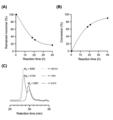
- 1 is a graph showing data relating to (2) polymerization (polymerization kinetics) in Production Example 1.
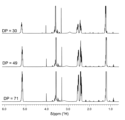
- 1 is a graph showing data relating to copolymers having different degrees of polymerization in Preparation Example 1 (3).
- FIG. 1A and 1B are diagrams showing the results of measurement of the hydrodynamic size of Nano BHB prepared in Production Example 2 by DLS method (in water) and (in saline), respectively, and a transmission electron microscope (TEM) image (C).
- FIG. 2 is a diagram showing a comparison of 1 H NMR spectra of the ⁇ -terminal unmodified copolymer produced in Production Example 3 and the corresponding modified copolymer, and the results of their DSL measurements.
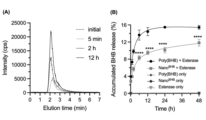
- 1 is a graph showing the release characteristics of BHB from Nano BHB under the influence of esterase in vitro in Test Example 1.
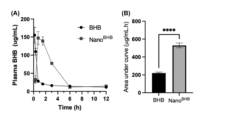
- FIG. 1 shows the in vivo release characteristics of BHB from Nano BHB after intraperitoneal injection in Test Example 2, with graph (A) showing the change in BHB level over time in plasma and graph (B) showing the area under the curve for BHB in plasma.
- FIG. 1 shows the in vivo release characteristics of BHB from Nano BHB after subcutaneous injection in Test Example 3.
- FIG. 1 shows the change in BHB level over time in plasma (A), the change in BHB level over time in the liver (B), and the change in BHB level over time in the kidney (C).
- FIG. 1 shows the area under the curve for BHB in the kidney.
- FIG. 1 shows a data graph relating to the therapeutic effect of subcutaneous injection of Nano BHB on cisplatin-induced acute kidney injury (AKI) in Test Example 4, together with a scheme of the animal experiment.
- 1 shows a graph of data on the therapeutic effect of Nano BHB on AKI by forced oral administration in Test Example 5, together with a scheme of the animal experiment.
- FIG. 1 shows a graph of data on the antidepressant effect of Nano BHB administered orally and ad libitum via the forced swimming test in healthy mice in Test Example 6, together with a scheme of the animal experiment.
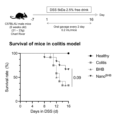
- 1 shows a graph of data regarding the effect of Nano BHB on survival of mice with ulcerative colitis in Test Example 7, together with a scheme of the animal experiment.
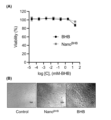
- 1 is a graph showing the results of measuring the cytotoxicity of Nano BHB and BHB after incubating them with BAEC cells for 24 hours in Toxicity Test Example 1.
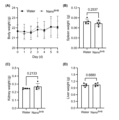
- 1 is a graph showing data on the confirmation of toxicity of Nano BHB by subcutaneous injection of 2-1 in Toxicity Test Example 2.
- 2 is a graph showing data on the confirmation of toxicity of Nano BHB by oral administration of 2-2 in Toxicity Test Example 2.
- Nano-sized polymeric micelles and nanoparticles are used as interchangeable terms and refer to polymeric micelles or particles whose particle size distribution is in the nano-sized range when the particle size distribution of polymeric micelles is measured in an aqueous medium by dynamic light scattering (DLS). From the viewpoint of stability, typical examples include particles of 5 nm to 500 nm, preferably 5 nm to 100 nm, and more preferably 7 nm to 80 nm, although this is not limited thereto.
- nano-sized polymeric micelles or nanoparticles will mainly be referred to as nanoparticles. A conceptual diagram of the formation of such nanoparticles is shown in Figure 1.
- the nanoparticles are formed from a block copolymer containing a diblock of a poly(ethylene glycol) (PEG) segment and a poly([R,S] ⁇ -hydroxybutyrate) (PBHB) segment, in particular, a plurality of molecules of a block copolymer in which the COOH group at the ⁇ -terminus is protected by a suitable hydrophobic group, and that in an aqueous environment (aqueous solution or in vivo), they can exist as so-called core-shell polymeric micelles, with the (PBHB) segment as the core and the (PEG) segment as the shell.
- PEG poly(ethylene glycol)
- PBHB poly([R,S] ⁇ -hydroxybutyrate)
- the copolymer is as defined in embodiment 1 above, and may be collectively referred to as poly(ethylene glycol)-b-poly([R,S]- ⁇ -hydroxybutyric acid) copolymer (hereinafter, sometimes referred to as "PEG-b-PBHB"; ⁇ -end modified).
- PEG-b-PBHB poly(ethylene glycol)-b-poly([R,S]- ⁇ -hydroxybutyric acid) copolymer
- the [R] and [S] isomers do not necessarily have to be present in strictly "equivalent amounts" or "50%" of each other.
- one of the isomers may be present in excess to the extent that it does not adversely affect the intended use, or in the copolymer, depending on the raw materials used, etc., either isomer may be present in a slight excess of one type of isomeric unit depending on the production method, storage conditions, etc., and it is understood to be within the technical scope of the present invention as long as it meets the purpose of the present invention.
- Variable groups or moieties defining the copolymer A corresponds to a protecting group for the ⁇ -terminal OH group of the PEG segment similar to that of the ⁇ -terminal of the PEG segment disclosed in Patent Document 1, and R corresponds to a protecting group or modifying group for the ⁇ -terminal COOH of PEG-b-PBHB.
- R is not limited as long as it is a hydrophobic group that acts to promote the formation of nanoparticles by increasing the hydrophobicity of the PBHB segment of PEG-b-PBHB, particularly a group containing a hydrocarbon group.
- R represents, without being limited thereto, unsubstituted C 1-3 alkyl, C 1-2 alkylenecarbonyloxy-unsubstituted or substituted C 1-21 alkyl, C 1-2 alkylenecarbonyloxy-unsubstituted or substituted C 3-7 cycloalkyl, C 1-2 alkylenecarbonyloxy-unsubstituted or substituted aryl, C 1-2 alkylenecarbonyloxy-unsubstituted or substituted adamantyl, C 1-2 alkylene-unsubstituted or substituted aryl, C 1-2 alkylene-unsubstituted or substituted adamantyl, or a C 1-2 alkylene-unsubstituted or substituted cholesterol residue, wherein the substituent when substituted is preferably a group representing C 1-4 alkyl , C 1-4 alkyloxy or aryl, and when referred to as C 1-4 alkylenecarbonyl
- m is an integer from 20 to 200, preferably an integer from 30 to 180, more preferably an integer from 45 to 80, and n is an integer from 3 to 300, preferably an integer from 10 to 100, more preferably an integer from 20 to 100.
- p is an integer that varies correspondingly to, for example, the oxidation of the other terminal moiety of ⁇ -terminal protected PEG, --CH 2 CH 2 OH, to --CH 2 COOH by a method known in the art in the preparation of a PEG macroinitiator, or the reaction of the OH at the terminal moiety with a halo-C 1-6 alkyl carboxylate to form an ether bond, followed by hydrolysis of the ester moiety to convert it to a carboxyl group (-COOH).
- p is preferably an integer of 1 to 3.
- the alkyl or alkylene groups or moieties mentioned above can be linear or branched.
- Specific examples of C 1 -C 12 alkyl include, but are not limited to, methyl, ethyl, propyl, isopropyl, butyl, sec-butyl, tert-butyl, pentyl, hexyl, heptyl, nonyl, undecyl, tridecyl, heptadecyl, nonadecyl, etc.
- Preferred are C 1-6 alkyls.
- the recited alkylenes correspond to the recited alkyls with the recited carbon atoms.
- C 3-7 cycloalkyl can be cyclopropyl, cyclobutyl, cyclopentyl, cyclohexyl, cycloheptyl, and aryl can be phenyl, biphenyl, naphthyl.
- the copolymer may be produced by any method as long as it has a structure represented by formula I and is known per se in the art. However, it may be conveniently produced based on the reaction scheme 1 described in embodiment 3.
- the organic solvent that does not adversely affect the reaction may be an aprotic solvent, particularly a dipolar aprotic solvent, such as tetrahydrofuran (THF), dioxane, glyme, or dimethylformamide (DMF).
- the anionic polymerization catalyst that generates the metal cation represented by M + may be an alkali metal aromatic adduct, such as K-naphthalene, Na-naphthalene, Na-biphenyl, K-biphenyl, or K-benzophenone.
- reaction scheme 1 a slight molar excess of the alkali metal aromatic adduct is added to the PEG derivative represented by formula (1) to prepare a PEG initiator represented by formula (2), and then, via the thus prepared initiator, [R,S]- ⁇ -lactone is subjected to ring-opening polymerization in the presence of a crown ether, for example, 18-crown-6-ether, if necessary.
- a crown ether for example, 18-crown-6-ether
- These reactions are preferably carried out under a nitrogen atmosphere.
- the amount of ⁇ -lactone used can be selected according to the number m of the repeating unit of [R,S]- ⁇ -hydroxybutyric acid in the copolymer represented by formula I to be targeted.
- the ring-opening polymerization reaction may be carried out by determining the amount of ⁇ -lactone in consideration of the growing end growing in a living manner, or by appropriately terminating the polymerization reaction using a halogen substitution agent to be described later, thereby controlling the molecular weight or the number m of the repeating unit.
- the number n of the repeating unit of ethylene glycol in the copolymer represented by formula I can be controlled by appropriately selecting the number of the corresponding ethylene glycol units in the prepared PEG derivative.
- the polymerization reaction can usually be carried out for one or two days to several days.
- the halogen substitution agent used for terminating the reaction or protecting the ⁇ -terminus represented by RX, has R selected from the groups defined for R above, and X can be a halogen atom, particularly a bromine atom or an iodine atom.
- the copolymer represented by formula I ( ⁇ -terminus modified) thus obtained can be separated and obtained from the reaction mixture by precipitation in a poor or non-solvent for the copolymer (e.g., a mixture of isopropyl alcohol and n-hexane).
- the preparation or production of nanoparticles from the copolymer represented by formula I ( ⁇ -terminal modified) can be carried out according to the preparation method described in aspect 4.
- the copolymer represented by formula II may be contained as an ⁇ -terminal unprotected form, for example, up to 25 mol % of the previous copolymer, so long as it is not contrary to the object of the present invention.
- the water-miscible organic solvent may be a good solvent that can easily dissolve the copolymer of formula I ( ⁇ -terminal modified), such as DMF.
- the solution thus dissolved is stirred as vigorously as possible while an amount of water approximately equal to that of the solution is added dropwise to prepare a mixture.
- the mixture is dialyzed against 20 to 40 times the amount of water of the untreated solution through an RC dialysis membrane with an appropriate molecular weight cutoff (e.g., 3.5 kDa) for 1 to 3 days (if necessary, the water is replaced twice a day).
- the nanoparticle-containing solution thus obtained from which the organic solvent and unreacted raw materials have been removed may be used to remove aggregates coexisting in the solution using a filter with an appropriate pore size.
- the nanoparticles (Nano BHB ) present in the aqueous solution or aqueous suspension usually have a dynamic mean diameter of 7 or 10 nm to 800 nm as measured by DLS, and among these, those having a more stable diameter of 7 nm to 80 nm may be mentioned.
- Nano BHB can thus be provided as a formulation for oral administration or parenteral administration (intraperitoneal administration, intravenous injection, subcutaneous injection, etc.) containing a physiologically acceptable diluent or excipient, if necessary.
- Such diluents can be sterile water, saline, solutions containing physiologically acceptable buffers, etc., and further additives can be, for example, sorbitol, dextrin, glucose, mannitol, amino acids (e.g., glycine, isoleucine, valine, methionine, glutamic acid, etc.), etc.
- Nano BHB when Nano BHB is injected into a living body, they accumulate in the damaged area due to the enhanced vascular permeability and retention (EPR) effect, followed by the disintegration of the nanoparticles and the sustained release of BHB due to enzymatic hydrolysis of PBHB.
- EPR enhanced vascular permeability and retention
- the use of Nano BHB improves the pharmacokinetics of low molecular weight BHB and enhances its bioactivity.
- poly(ethylene glycol)-b-poly([R,S]- ⁇ -hydroxybutyrate) shows a protective effect against acute kidney injury using experimental animals.
- dosage forms of pharmaceutical preparations include liquids (including oral solutions, suspensions, emulsions, and syrups), solids (including tablets, pills, sublingual tablets, capsules, drops, and lozenges), granules, powders, and other powders.
- Solids can also be made into dosage forms with coatings known in the art, such as sugar-coated tablets, gelatin-encapsulated tablets, enteric-coated tablets, film-coated tablets, double-layered tablets, and multi-layered tablets, as necessary.
- each dosage form may be within the range of dosage forms known in the art, and additives such as solubilizers, pH adjusters, carriers, excipients, diluents, binders, disintegrants, lubricants, emulsifiers, bulking agents, colorants, flavorings, sweeteners, stabilizers, and preservatives can be included.
- additives such as solubilizers, pH adjusters, carriers, excipients, diluents, binders, disintegrants, lubricants, emulsifiers, bulking agents, colorants, flavorings, sweeteners, stabilizers, and preservatives can be included.
- Nano BHB the active ingredient in these preparations
- the dosage and frequency of administration of Nano BHB is applied within an optimal concentration range depending on the age, sex, condition, severity of the disease, etc. of the patient, but it is preferable that the amount of Nano BHB administered per day is about 10 ⁇ mg to 1 g per kg of body weight, more preferably 0.1 mg to 100 mg, and this may be administered in 1 to 3 separate doses, but since this pharmaceutical preparation has high bioavailability, it can be expected to be effective even with a single administration per day.
- the specific dosage, administration method, and frequency of administration can be determined by those skilled in the art through animal experiments or experimental administration to humans, with reference to various literature, etc.
- Step 2 Under N2 flow, CH3O- ( CH2CH2O ) n - CH2COOH (2 g, 1 mmol) prepared as above was dissolved in THF (15 mL), followed by the addition of potassium naphthalene 0.9 M/hexane (1.5 mL, 1.35 mmol). Then, 18-crown-6 ether 1 M/THF (2 mL, 2 mmol) was introduced into the mixture obtained above, followed by the addition of [R,S]- ⁇ -butyrolactone (obtained from Tokyo Chemical Industry Co., Ltd., 4 mL, 49 mmol).
- reaction was stopped by adding ethyl bromide (4 mL, 33 mmol).
- ethyl bromide 4 mL, 33 mmol.
- the reaction mixture was precipitated in IPA/n-hexane (20/80), and the product was collected by centrifugation (9000 rpm, 10 min) and dried under reduced pressure.
- Preparation Example 2 Preparation of Nano BHB Nanoparticles (1) Poly(ethylene glycol)-b-poly([R,S]- ⁇ -hydroxybutyrate) (PEG-b-PBHB) copolymer ( ⁇ -end modified) (5.6 g) prepared as described in step 2 of Preparation Example 1 was dissolved in 40 mL of DMF. Then, 40 mL of MiLiQ water was added dropwise to this solution under vigorous stirring. The whole mixture obtained was dialyzed against 2 L of MiLiQ water through a 3.5 kDa RC dialysis membrane for 3 days (water was changed twice a day).
- PEG-b-PBHB Poly(ethylene glycol)-b-poly([R,S]- ⁇ -hydroxybutyrate) copolymer ( ⁇ -end modified) (5.6 g) prepared as described in step 2 of Preparation Example 1 was dissolved in 40 mL of DMF. Then, 40 mL of MiLiQ water was added dropwise to this solution under vigorous
- the nanoparticle solution was filtered through a 0.2 ⁇ m-pore size filter to remove aggregates and then sterilized.
- nanoparticles in saline were prepared by mixing the nanoparticle solution with 9% NaCl (9:1). All of the nanoparticles were stored at 4° C. for further use.
- (C) is the result of a transmission electron microscope.
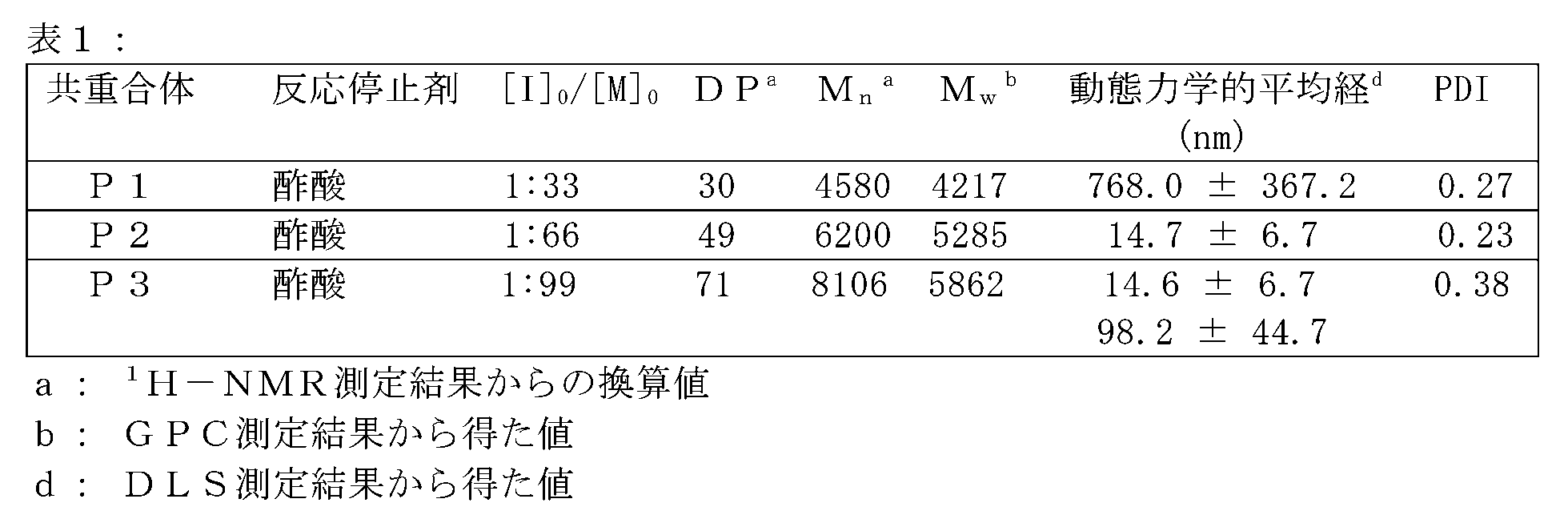
- the characteristics of each copolymer having a different polymerization degree are summarized in Table 1 below.
- Production Example 3 Poly(ethylene glycol)-b-poly([R,S]- ⁇ -hydroxybutyric acid) (PEG-b-PBHB) copolymer ( ⁇ -end unmodified) CH 3 O-(CH 2 CH 2 O) n -CH 2 CO-(OCH(CH 3 )CH 2 CO) m OH
- steps 1 and 2 of Production Example 1 were repeated, except that in the polymerization in step 2 of Production Example 1, instead of "adding ethyl bromide acetate (4 mL, 33 mmol) to terminate the reaction," water or acetic acid was added to terminate the reaction. In this manner, an ⁇ -terminal unmodified copolymer and the like were produced.
- Nano BHB can release free BHB under the influence of esterase in vitro, providing evidence for our strategy of using Nano BHB as a BHB source (see (A)).
- Nano BHB also releases BHB slower but is more stable than homogeneous PBHB polymer (see (B)).
- Test Example 2 In vivo release of BHB by intraperitoneal injection of Nano BHB (1)
- ICR male mice (6 weeks old) were administered Nano BHB or sodium ⁇ -hydroxybutyrate by intraperitoneal injection at a dose of 345 mg equivalent of BHB/kg, respectively.
- mice were sacrificed and plasma was collected. Plasma samples were immediately frozen in liquid nitrogen and stored at -80°C for further analysis. BHB levels in plasma samples were measured by LC-MS/MS system.
- Test Example 3 In vivo release of BHB by subcutaneous injection of Nano BHB (1)
- ICR male mice (6 weeks old) were administered Nano BHB or sodium ⁇ -hydroxybutyrate by subcutaneous injection at a dose of 345 mg equivalent of BHB/kg, respectively.
- mice were sacrificed and plasma, kidney, and liver were collected.
- Plasma and tissue samples were immediately frozen in liquid nitrogen and stored at -80°C for further analysis.
- BHB levels in plasma, kidney, and liver were measured by LC-MS/MS system.
- Nano BHB did not significantly increase the levels of BHB in the blood, but did increase the levels of BHB in the kidney and liver.
- Test Example 4 Protective effect of Nano BHB against acute kidney injury caused by subcutaneous injection (1)
- C57BL/6J male mice (8 weeks old) were divided into 4 groups for different treatments.
- Acute kidney injury was induced by intraperitoneal injection of cisplatin (20 mg/kg).
- mice Seventy-two hours after cisplatin challenge, mice were sacrificed to collect plasma and kidneys. Renal function was assessed by measuring the levels of blood urea nitrogen (BUN), creatinine (CRE), and aspartate transaminase (AST).
- BUN blood urea nitrogen
- CRE creatinine
- AST aspartate transaminase
- Test Example 5 Therapeutic effect of Nano BHB on acute kidney injury caused by oral gavage (1)
- Male C57BL/6J mice (8 weeks old) were divided into four groups and were given different treatments.
- Acute kidney injury was induced by intraperitoneal administration of cisplatin (20 mg/kg).
- BUN blood urea nitrogen
- CRE creatinine
- AST aspartate transaminase
- Nano BHB shows a superior therapeutic effect to sodium BHB when administered by oral gavage every two days, as seen from the lower values of BUN, CRE, ALT, and AST. This suggests that the effect of oral gavage of Nano BHB is sustained, and it can be seen that the use of Nano BHB allows for a reduction in the frequency of drug administration compared to conventional low molecular weight BHB.
- Test Example 6 Antidepressant effect of Nano BHB by free intake (1)
- Male C57BL/6 mice (9 weeks old) were given either water, Nano BHB (20 mM BHB equivalent), or sodium ⁇ -hydroxybutyrate (20 mM BHB equivalent) via a free drinking bottle for 3 days.
- the forced swimming test described in Nature 1977, 266:730-732 was performed with some modifications.
- each mouse was placed in a 2 L plastic beaker filled with water at 25°C at a water level where the mouse's tail did not touch the bottom, and behavior for 6 minutes was recorded with a video recorder, and the time of swimming behavior (mobility) and floating behavior (immobility) were measured.
- Test Example 7 Effect of Nano BHB on survival of mice with ulcerative colitis (1)
- Male C57BL/6J mice (7 weeks old) were allowed to freely consume water (healthy mice) or 2.5% dextran sodium sulfate (DSS). Mice drinking DSS were forcefully orally administered 0.2 mL/mouse of either water, sodium ⁇ -hydroxybutyrate, or Nano BHB (dosage: 70 mg/day in terms of BHB/kg) every 2 days. The survival rate of the mice was observed for 16 days.
- Nano BHB tends to improve the survival rate of mice with DSS-induced colitis.
- Toxicity Test Example 1 Cytotoxicity of Nano BHB (1)
- Bovine aortic endothelial cells (BAEC) (obtained from RIKEN, Tsukuba, Japan) were pre-seeded on 96-well plates and incubated with either Nano BHB or BHB at different concentrations ranging from 0 to 25.4 mM BHB in the medium. After 24 hours, the medium was discarded, followed by addition of 100 ⁇ L of medium containing 10 ⁇ L of WST agent and incubation for 4 hours. In the final step, cell viability was measured based on the ratio of optical signals at 450 nm between the test wells and the water-treated wells in each well.
- BUN blood urea nitrogen
- CRE creatinine
- AST aspartate transaminase
- FIG. 17 The results are shown in Figure 17 and Table 3.
- the figure shows data on toxicity when Nano BHB was orally administered to mice every 2 days, with (A) showing the change in body weight of the test animals and (B) showing the weight of the spleen, liver and pancreas 6 days after the first administration.
- Nano BHB did not affect body weight, organ weight, or overall blood components, suggesting the safety of oral administration of Nano BHB .
- AST, CRE, etc. a decrease in functional biomarkers
Landscapes
- Health & Medical Sciences (AREA)
- Chemical & Material Sciences (AREA)
- Medicinal Chemistry (AREA)
- Chemical Kinetics & Catalysis (AREA)
- Organic Chemistry (AREA)
- Animal Behavior & Ethology (AREA)
- Veterinary Medicine (AREA)
- Public Health (AREA)
- General Health & Medical Sciences (AREA)
- Pharmacology & Pharmacy (AREA)
- Life Sciences & Earth Sciences (AREA)
- Bioinformatics & Cheminformatics (AREA)
- Engineering & Computer Science (AREA)
- General Chemical & Material Sciences (AREA)
- Nuclear Medicine, Radiotherapy & Molecular Imaging (AREA)
- Polymers & Plastics (AREA)
- Epidemiology (AREA)
- Pain & Pain Management (AREA)
- Rheumatology (AREA)
- Biomedical Technology (AREA)
- Neurology (AREA)
- Neurosurgery (AREA)
- Urology & Nephrology (AREA)
- Dispersion Chemistry (AREA)
- Medicinal Preparation (AREA)
Abstract
Description
式I:

Aは、水素原子、非置換若しくは置換C1-C12アルキル、非置換若しくは置換C1-C12アルコキシ、又は非置換若しくは置換アリールを表し、置換されている場合の置換基は、C1-C4アルキル、C1-C4アルコキシ、アリール、ホルミル、フェニルアミノ、フェネチルアミノ又は式R1R2CH-(ここで、R1及びR2は独立して、C1-C4アルコキシ若しくはR1とR2は一緒になって-OCH2CH2O-、-O(CH2)3O-若しくは-O(CH2)4O-を表す。)で表される基を表し、
Rは、非置換若しくは置換C1-6アルキル、C1-4アルキレンカルボニルオキシ-非置換若しくは置換C1-21アルキル、C1-4アルキレンカルボニルオキシ-非置換若しくは置換C3-7シクロアルキル、C1-4アルキレンカルボニルオキシ-非置換若しくは置換アリール、C1-4アルキレンカルボニルオキシ-非置換若しくは置換アダマンチル、C1-4アルキレン-非置換若しくは置換アリール、C1-4アルキレン-非置換若しくは置換アダマンチル、又はC1-4アルキレン-非置換もしくは置換コレステロール残基を表し、ここで、置換されている場合の置換基は、C1-4アルキル、C1-4アルキルオキシ又はアリールを表し、
mは20~200の整数を表し、
nは3~300の整数を表し、
pは1~6の整数を表し、pの付されたアルキレンの水素原子は一つのC1-4アルキルにより置換されていてもよく、
mの付された反復単位中の各β-ヒドロキシル酪酸単位は、[R]型のエナンチオマーと[S]型のエナンチマーの等価量が相互にランダムに存在する、
で表されるブロック共重合体。

式II:

mの付された反復単位中の各β-ヒドロキシル酪酸単位は、[R]型のエナンチオマーと[S]型のエナンチマーの等価量が相互にランダムに存在する、
で表されるブロック共重合体又はそのアルカリ金属(Li、K、又はNa)塩。
Aは特許文献1に開示されたPEGセグメントのα-末端のものと同様なPEGセグメントのα-末端OH基の保護基に相当するものであり、RはPEG-b-PBHBのω-末端COOHの保護基又は修飾基に相当する。Rは、PEG-b-PBHBのPBHBセグメントの疎水性を高めることからのナノ粒子の形成が促進されるように作用する疎水性基、特に、炭化水素基を含む基であれば限定されない。しかし、本発明の目的の一つである、PEG-b-PBHB共重合体(ω-末端修飾済)の製造、さらには、これらの共重合体からナノ粒子の形成を容易にし、形成されたナノ粒子が水性媒体中で安定化するとの観点に立てば、態様1に定義されている各基を具体的なものとして挙げることができる。
当該共重合体は、当該技術分野でそれ自体既知の方法を利用して式Iで表される構造を持つものを製造できるものであればいかなる方法によるものであるかに限定されない。しかし、都合よくは、態様3に記載されるとおりの反応スキーム1に基づいて製造することができる。ここで、反応に悪影響を及ぼさない有機溶媒は、非プロトン性溶媒、特に、双極性非プロトン溶媒であることができ、例えば、テトラヒドロフラン(THF)、ジオキサン、グライム、ジメチルホルムアミド(DMF)であることができる。M+で表される金属カチオンを生じるアニオン重合触媒としては、アルカリ金属芳香族付加体、例えば、K-ナフタレン、Na-ナフタレン、Na-ビフェニル、K-ビフェニル、K-ベンゾフェノンであることができる。
CH3O-(CH2CH2O)n-CH2CO-(OCH(CH3)CH2CO)mOCH2COOCH2CH3
の製造
工程1.PEG-マクロイニシエーター:CH3O-(CH2CH2O)n-CH2COOHの製造
(a)CH3O-(CH2CH2O)n-CH2COOC2H3の合成
N2流下、ブチルリチウム1.6M-ヘキサン(BuLi,10mL,16mmol)をテトラヒドロフラン(THF,50mL)に溶解したCH3O-(CH2CH2O)n-H(mPEG-OH,MW=2000,20g,10mmol)の溶液に加え、続けて臭化酢酸エチル(3.6mL,30mmol)を加えた。1日反応させた後、生成物を-30℃に保管した2-プロパノール(冷IPA)中で沈殿させ、遠心分離(9000rpm,30分)により収集した。この生成物を減圧下で乾燥した(収量:18g)。
室温でCH3O-(CH2CH2O)n-CH2COOC2H3(18g、9mmol)
にMiliQ水(50mL)を加え、続けてNaOH1.5M(10mL,15mmol)を加えた。1日攪拌した後、塩酸を用いて反応系のpHを1~2に調節した。次いで、生成物をジクロロメタン(DCM,3度、各60mL)で抽出した。DCM層を減圧下の回転エバポレーターで濃縮し、冷IPA中で沈殿させた。生成物を遠心分離(9000rpm,5分)により収集し、減圧下で乾燥した(収量:16g)。
(1)重合(典型例)
方法:
N2流下、上記のように用意したCH3O-(CH2CH2O)n-CH2COOH(2g、1mmol)をTHF(15mL)に溶解し、続けてナフタレンカリウム0.9M/ヘキサン(1.5mL,1.35mmol)を加えた。次いで、18-crown-6エーテル 1M/THF(2mL,2mmol)を上記で得た混合物に導入し、続けて[R,S]-β-ブチロラクトン(東京化学工業株式会社から入手、4mL,49mmol)を加えた。2日間反応させた後、臭化酢酸エチル(4mL,33mmol)を加えて反応を停止した。反応混合物をIPA/n-ヘキサン(20/80)中で沈殿させ、生成物を遠心分離(9000rpm,10分)により収集し、減圧下で乾燥した。
方法:
上記(1)重合に記載された処理に準じ、[R,S]-β-ブチロラクトンを加えた後、NMRスペクトルの基準として0.5mLのテトラリンを加えた。 選定した時点(例えば、30分、18時間、21時間、40.5時間)の後、反応混合物の2液滴を集め、液体窒素中で凍結させた。その後、サンプルをNMR測定用にCDCl3と、GPC測定用にTHFと混合した。
1H-NMRから、[R,S]-ブチロラクトンの残存量を相対的に測定し、基準ピークとしてテトラリンを用いて正規化した。当該重合の速度論に関する実験の結果を図4に示す。ここで、(A)は経時的な残存モノマーの変化についてグラフ表示であり、(B)は、CDCl3中の1H-NMRによる、モノマーからポリマーへの変換率をモニターした結果のグラフ表示であり、(C)は、生成物のTHF中におけるGPC測定結果のグラフ表示である。それぞれ、[R,S]-ブチロラクトンの80%以上が40.5時間後に消費され、ポリ(BHB)のシグナルの増加も反応時間と共に観察され、最初のピークは反応時間の増加とともに高分子量領域にシフトしていることから、PEGマクロマー上での重合が示唆される。
上記(1)重合に記載された方法に準じ、18-crown-6-エーテルの導入に続け、異なる量の[R,S]-β-ブチロラクトン(すなわち、2mL、4mL、6mL)を加えた。2日間反応させた後、酢酸を加えて重合反応を停止した。3.5kDa RC透析膜中で生成物をメタノール、ジメチルホルムアミド(DMF)、次いでMiliQ水に対して透析することにより生成物を集め、続けて、減圧下で凍結乾燥することにより乾燥した。得られた各生成物の1H-NMRスペクトルを図5 に示す。これらのスペクトルから換算される各生成物におけるPBHBセグメントの重合度(DP)は、それぞれ、P1(DP=30)、P2(DP=49)、P3(DP=71)である。なお、各生成物中のPEGセグメントについては、上記(1)を参照されたい。
(1)製造例1の工程2に記載したように製造したポリ(エチレングリコール)-b-ポリ([R,S]-β-ヒドロキシ酪酸)(PEG-b-PBHB)共重合体(ω-末端修飾済)(5.6g)をDMF40mLに溶解した。その後、激しい攪拌下、この溶液に40mLのMiliQ水を滴下した。得られた全混合物を2LのMiliQ水に対して、3.5kDa RC透析膜を介して3日間透析した(一日に2回水を交換)。最後の工程において、ナノ粒子溶液を0.2μm-孔サイズのフィルターにより濾過して凝集物を除去し、次いで滅菌した。注入目的で、生理食塩水中のナノ粒子を、ナノ粒子溶液と9%のNaCl(9:1)を混合することにより調製した。ナノ粒子のすべてをさらなる使用のために4℃で貯蔵した。
CH3O-(CH2CH2O)n-CH2CO-(OCH(CH3)CH2CO)mOH
の製造
製造例1における工程2の重合において、「臭化酢酸エチル(4mL,33mmol)を加えて反応を停止」させることに代え、水又は酢酸を加えて反応を停止させたこと以外、製造例1の工程1及び工程2に記載の処理を繰り返した。こうしてω-末端未修飾の共重合体等を製造した。
(1)実験:NanoBHBの19mg/mL(1mL,0.15mmolのBHB含有量)をブタの肝臓エステラーゼ水溶液(0.33mg/mL)の3mL中に分散させ、37℃でインキュベーションした。選定された時点(すなわち、5分、2時間、6時間、12時間、24時間、48時間)の後、反応混合物の100μLを収集し(n=3)、液体窒素中で即座に凍結した。t=48時間の時点でサンプルを採取した後、KOHの1M(1mL,1mmol)を加え、4日間インキュベーションして加水分解を完全に進行させ、その時点をt=∞(無限大)と想定した。BHBの蓄積放出量をLC-MS/MSシステムで測定した。同様の実験をPBHB(19mg/mL)でも行った。蓄積されたBHBは、BHB(%)=[BHB]t×100%/[BHB]t=∞(無限大)として計算した。
上記実験の結果を図8に示す。(A)は経時的なNanoBHBとエステラーゼの混合物のBHB検出LC-MS/MSクロマトグラフであり、(B)は経時的なインキュベーション液中のBHBレベルの定量分析(****p<0.0001対NanoBHB+エステラーズ(Esterase)群)の結果である。
NanoBHBは、イン・ビトロ(in vitro)でエステラーゼの影響下で遊離のBHBを放出でき、BHB供給源としてNanoBHBを使用することについての本発明者らの戦略に関する証拠を提供する((A)参照。)。
(1)実験:
ICR雄マウス(6週齢)にNanoBHB又はβ-ヒドロキシ酪酸ナトリウムを、それぞれ、BHB/kgの換算量345mgの用量にて腹腔内注射により投与した。選定された時点(すなわち、20分、45分、1.5時間、3時間、6時間、12時間)後、マウスを犠牲として屠り、血漿を収集した。血漿試料は液体窒素中で即座に凍結し、さらなる分析用として-80℃で貯蔵した。血漿試料中のBHBレベルはLC-MS/MSシステムで測定した。
(1)実験:
ICR雄マウス(6週齢)にNanoBHB又はβ-ヒドロキシ酪酸ナトリウムを、それぞれ、BHB/kgの換算量345mgの用量にて皮下注射により投与した。選定された時点(すなわち、20分、45分、1.5時間、3時間、6時間、12時間)後、マウスを犠牲として屠り、血漿、腎臓、肝臓を収集した。血漿及び組織試料は液体窒素中で即座に凍結し、さらなる分析用として-80℃で貯蔵した。血漿、腎臓、肝臓中のBHBレベルはLC-MS/MSシステムで測定した。
(1)実験:
C57BL/6J雄マウス(8週齢)を異なる処置で用いるため4群に分割した。急性腎障害は、シスプラチンの腹腔内注射(20mg/kg)により誘導した。シスプラチンに暴露する6時間前に、マウスを生理食塩水(n=11)又はβ-ヒドロキシ酪酸ナトリウム(BHB/kgの換算用量約250mg、n=1)又はNanoBHB(BHB/kgの換算用量約250mg、n=10)にて皮下注射で事前処置した。健常な群(n=8)は、シスプラチンの代わりに生理食塩水を注入した。シスプラチンのチャレンジから72時間後、マウスを犠牲として屠り血漿、腎臓を収集した。腎機能は、血中尿素窒素(BUN)、クレアチニン(CRE)、アスパラギン酸トランスアミナーゼ(AST)のレベルを測定することにより評価した。
シスプラチン誘発急性腎障害(AKI)に対するNanoBHBの皮下注射の投与による治療効果を図11に動物実験のスキームとともに示す。図中、(A)は動物実験のスキームを表し、(B)はシスプラチン注射3日後のAKIマウスの血漿中の、血中尿素窒素に関するデータのグラフ表示であり、(C)はクレアチニンに関するデータのグラフ表示であり、(D)はアスパラギン酸トランスアミナーゼ関するデータのグラフ表示であり、(E)は腎臓組織の20倍拡大における過ヨウ素酸シッフ(PAS)染色の提示画像であり、(F)は染色画像からの腎臓の損傷領域の定量的測定結果のデータをまとめたグラフである。(データは平均値±SD、n=8‐9、*p<0.05、**p<0.01、***p<0.001、****p<0.0001、一元配置分散分析)で表示される。
(1)実験:
C57BL/6J雄性マウス(8週齢)を4群に分け、それぞれ異なる処置を施した。急性腎傷害は、シスプラチン(20mg/kg)の腹腔内投与により誘発した。生理食塩水(n=10)、β-ヒドロキシ酪酸ナトリウム(BHB/kgの換算用量約250mg、n=10)またはNanoBHB(BHB/kgの換算用量約250mg、n=10)を2日ごとに強制経口投与した(-3日目、-1日目)。健常群(n=10)にはシスプラチンの代わりに生理食塩水を注射した。シスプラチンのチャレンジから72時間後、マウスを犠牲にして血漿と腎臓を採取した。腎臓の機能は、血中尿素窒素(BUN)、クレアチニン(CRE)、アスパラギン酸トランスアミナーゼ(AST)の値を測定することによって評価した。すべてのシスプラチン注射群において、血漿クレアチニンレベルが0.2mg/dL未満のマウスはシスプラチン抵抗性とみなし、データ解析から除外した。
AKIに対するNanoBHBの強制経口投与による治療効果を図12に動物実験のスキームとともに示す。図中、(A)は動物実験のスキームであり、(B)はシスプラチン注射3日後のAKIマウスの血漿中の血中尿素窒素の測定値であり、(C)はクレアチニンの測定値であり、(D)はアラニントランスアミナーゼの測定値であり、(E)はアスパラギン酸トランスアミナーゼの測定値である。データは平均値±SDで表示されており、n=8-10、一元配置分散分析法に基づく。
(1)実験:
雄性C57BL/6マウス(9週齢)に水、NanoBHB(BHB換算:20mM)、β-ヒドロキシ酪酸ナトリウム(BHB換算:20mM)のいずれかを自由飲用ボトルを介して3日間投与した。(Nature 1977,266:730-732)に記載されている強制水泳試験を、若干の修正を加えながら行った。ここでは、各マウスを25℃の水で満たした2Lのプラスチックビーカーに、マウスの尾が底に触れない水位で入れ、6分間の行動をビデオレコーダーで記録し、水泳行動(移動性)と浮遊行動(不動性)の時間を測定した。
健常マウスの強制水泳試験を介する経口自由飲用によるNanoBHBの抗抑うつ効果を図13に動物実験のスキームと共に示す。図中のデータは、平均値±SD、n=7‐8、一元配置分散分析に基づく。図から、NanoBHBの自由飲用により強制水泳試験中の抑うつ様挙動が減少し、抗抑うつ様作用が認められた。また、NanoBHBは従来のβ-ヒドロキシ酪酸ナトリウムと同程度のBHB濃度20mMで投与した場合と比較して、統計学的に有意に優れた抗うつ様作用を示すことが解る。
(1)実験:
雄性C57BL/6Jマウス(7週齢)に水(健常マウス)またはデキストラン硫酸ナトリウム2.5%(DSS)を自由摂取させた。DSS飲用マウスには、水、β-ヒドロキシ酪酸ナトリウム、NanoBHB(投与量:BHB/kg換算で1日当たり70mg)のいずれかを2日ごとに0.2mL/匹ずつ強制経口投与した。マウスの生存率を16日間観察した。

DSS誘発潰瘍性大腸炎マウスの生存に対するNanoBHBの強制経口投与(oral gavage)による効果を図14に動物実験のスキームと共に示す。
(1)実験:
96ウエル(穴)プレート上にウシ大動脈内皮細胞(BAEC)(理研(RIKEN,Tsukuba,Japan)から入手)を予め播種しておき、培地中BHBの含有量0~25.4mMの異なる濃度でNanoBHB又はBHBのいずれかとインキュベーションした。24時間後、培地を捨て、続いて10μLのWST剤含有培地100μLを加え、4時間インキュベーションした。最後の工程で、細胞の生存能を各ウエル中の波長450nmにおける被検体ウエルと水処理群ウエルの光学シグナルの比に基づいて測定した。
結果を図15に示す。図中、(A)はウシ大動脈内皮細胞(BAEC)の生存率(平均±SD、n=4)を表し、(B)は24時間培養後のBAEC細胞の代表的な顕微鏡写真画像(スケールバー50μm)である。図から、NanoBHBもBHBも、BAEC細胞の生存率及び形態に影響を及ぼさず、正常細胞に対してin vitroで低い毒性を示すことが解る。
2-1 皮下注射によるNanoBHBの毒性の確認:
(1)実験:
C57BL/6J雄性マウス(8週齢)を処置の異なる2群に分けた。生理食塩水(n=5)またはNanoBHB(BHB/kg換算で約250mg,n=5)を皮下注射した。75時間後、マウスを犠牲にして血漿と腎臓を採取した。腎臓の機能は、血中尿素窒素(BUN)、クレアチニン(CRE)、アスパラギン酸トランスアミナーゼ(AST)のレベルを測定することにより評価した。
結果を図16及び表2に示す。図はマウスへのワンショット皮下注射(s.c.)によるin vivo毒性実験の結果を示し、(A)は被検動物の体重の変化を表し、(B)は注射から3日後の脾臓、肝臓、腎臓の重量を表す。
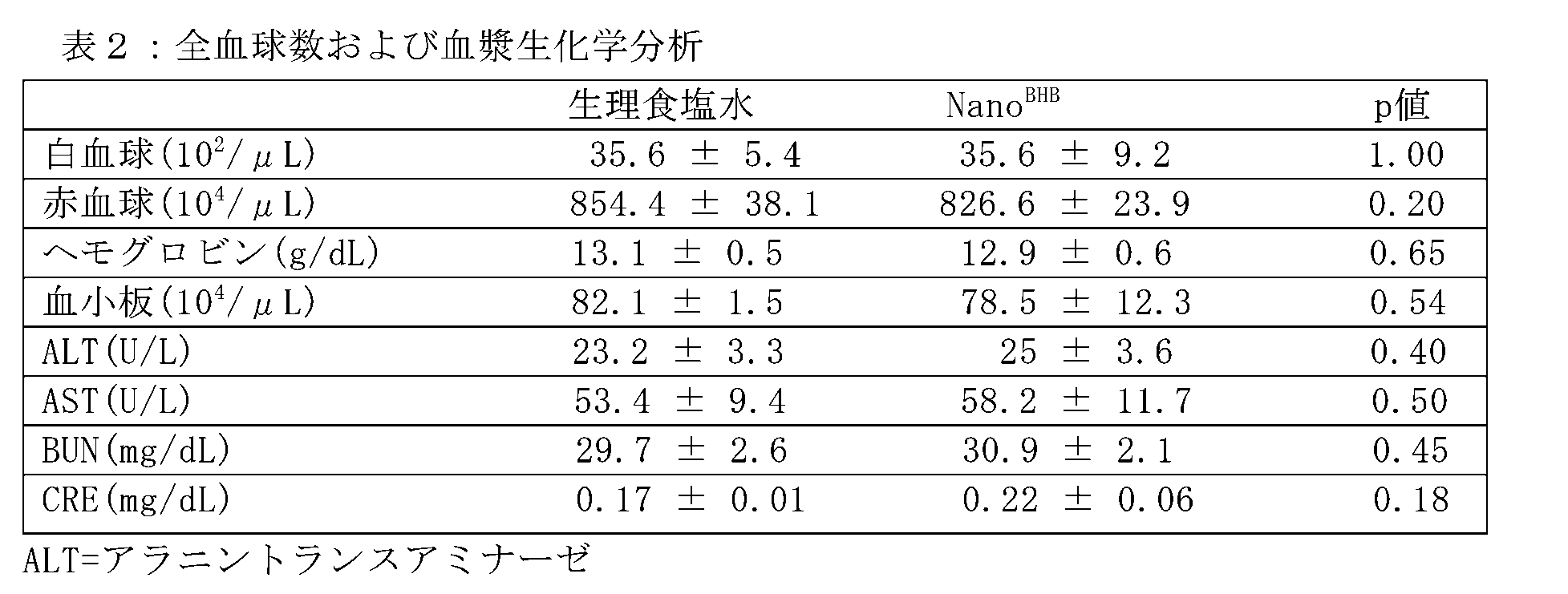
(1)実験:
C57BL/6J雄性マウス(8週齢)を2群に分け、それぞれ異なる処置を施した。生理食塩水(n=5)またはNanoBHB(約250mg-BHB/kg,n=5)を2日おきに経口投与した(0,2日目,4日目)。6日目にマウスを犠牲にし、血漿と腎臓を採取した。腎臓の機能は、血中尿素窒素(BUN)、クレアチニン(CRE)、およびアスパラギン酸トランスアミナーゼ(AST)のレベルを測定することによって評価した。

Claims (8)
- 式I:
式中、
Aは、水素原子、非置換若しくは置換C1-C12アルキル、非置換若しくは置換C1-C12アルコキシ、非置換若しくは置換アリールを表し、置換されている場合の置換基は、C1-C4アルキル、C1-C4アルコキシ、アリール、ホルミル、フェニルアミノ、フェネチルアミノ又は式R1R2CH-(ここで、R1及びR2は独立して、C1-C4アルコキシ若しくはR1とR2は一緒になって-OCH2CH2O-、-O(CH2)3O-もしくは-O(CH2)4O-を表す。)で表される基を表し、
Rは、非置換若しくは置換C1-6アルキル、C1-4アルキレンカルボニルオキシ-非置換若しくは置換C1-21アルキル、C1-4アルキレンカルボニルオキシ-非置換若しくは置換C3-7シクロアルキル、C1-4アルキレンカルボニルオキシ-非置換若しくは置換アリール、C1-4アルキレンカルボニルオキシ-非置換若しくは置換アダマンチル、C1-4アルキレン-非置換若しくは置換アリール、C1-4アルキレン-非置換若しくは置換アダマンチル、又はC1-4アルキレン-非置換もしくは置換コレステロール残基を表し、ここで、置換されている場合の置換基は、C1-4アルキル、C1-4アルキルオキシ又はアリールを表し、
mは20~200の整数を表し、
nは3~300の整数を表し、
pは1~6の整数を表し、pの付されたアルキレンの水素原子は一つのC1-4アルキルにより置換されていてもよく、
mの付された反復単位中の各β-ヒドロキシル酪酸単位は、[R]型のエナンチオマーと[S]型のエナンチマーの等価量が相互にランダムに存在する、
で表されるブロック共重合体。 - 請求項1に記載のブロック共重合体を含むナノサイズの高分子ミセル又はナノ粒子。
- 下記の反応スキーム1に従う式Iで表されるブロック共重重合体の製造方法であって、反応に悪影響を及ぼさない有機溶媒中で、溶解した式(1)で表される化合物を、M+で表される金属カチオンを生じるアニオン重合触媒と接触させて式(2)で表されるマクロイニシエーターを調製するステップ、前記ステップで得られた反応混合物に式(3)で表される[R,S]-β-ラクトンを反応させ、続いて、式(4)で表されるハロゲン置換剤を用いて重合反応を停止されるとともに共重合体のω-末端を修飾して、式Iで表されるブロック共重合体を生成し、生成した当該ブロック共重合体を取得するステップを含む、前記製造方法。
当該反応スキーム中の各式中の可変基又は変動可能な部分等の略号の中、A、R、m、n、pは、請求項1において式Iで表される共重合体について定義したのと同義であり、Xはハロゲンを表す。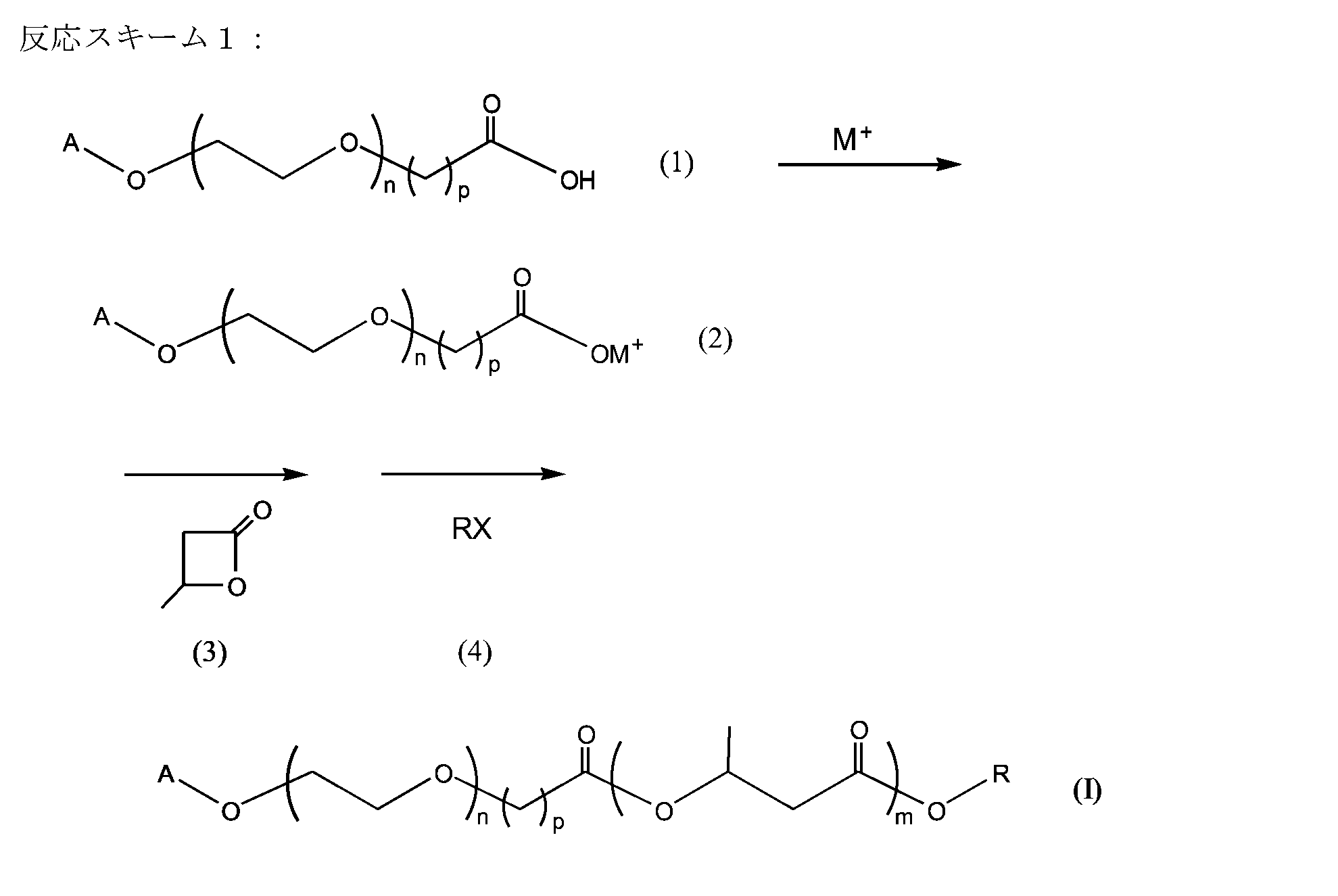
- 攪拌下にある、水混和性の有機溶媒に溶解した請求項1に記載された式Iで表されるブロック共重合体の溶液に水を滴下して調製した混合物を、透析膜を介して水に対して透析することによりナノサイズの高分子ミセル又はナノ粒子を形成し、当該ナノ粒子を含む水溶液を調製するステップ、次いで当該水溶液から凝集物を除去するステップを含む、式Iで表されるブロック共重合体のナノサイズの高分子ミセル又はナノ粒子の調製方法。
- 請求項1に記載の式Iで表される共重合体又は請求項2に記載されたナノサイズの高分子ミセル又はナノ粒子を有効成分とする製薬学的製剤。
- 急性腎臓疾患、炎症性疾患、脳疾患、ガンのいずれか1種以上の疾患の処置に使用するための、請求項5に記載の製薬学的製剤。
- 処置の必要な被験者又は患者に有効量の請求項1に記載の式Iで表される共重合体又は請求項2に記載されたナノサイズの高分子ミセルを投与し、急性腎臓疾患、炎症性疾患、脳疾患のいずれか1種以上の疾患を予防又は治療する方法。
- 式II
式中:A、R、m、n、pは、請求項1において式Iで表される共重合体について定義したのと同義であり、Rは水素原子を表し、
mの付された反復単位中の各β-ヒドロキシル酪酸単位は、[R]型のエナンチオマーと[S]型のエナンチマーの等価量が相互にランダムに存在する、
で表されるブロック共重合体又はそのアルカリ金属塩。
Priority Applications (2)
| Application Number | Priority Date | Filing Date | Title |
|---|---|---|---|
| JP2025532419A JPWO2025013446A1 (ja) | 2023-07-07 | 2024-05-28 | |
| CN202480044855.6A CN121443671A (zh) | 2023-07-07 | 2024-05-28 | 包含聚([R,S]β-羟基丁酸)重复单元的嵌段共聚物和来自该共聚物的纳米颗粒、以及它们的制备和用途 |
Applications Claiming Priority (2)
| Application Number | Priority Date | Filing Date | Title |
|---|---|---|---|
| JP2023112572 | 2023-07-07 | ||
| JP2023-112572 | 2023-07-07 |
Publications (1)
| Publication Number | Publication Date |
|---|---|
| WO2025013446A1 true WO2025013446A1 (ja) | 2025-01-16 |
Family
ID=94215394
Family Applications (1)
| Application Number | Title | Priority Date | Filing Date |
|---|---|---|---|
| PCT/JP2024/019499 Ceased WO2025013446A1 (ja) | 2023-07-07 | 2024-05-28 | ポリ([R,S]β-ヒドロキシ酪酸)の反復単位を含むブロック共重合体及び当該共重合体からのナノ粒子、並びにそれらの製造及び用途 |
Country Status (3)
| Country | Link |
|---|---|
| JP (1) | JPWO2025013446A1 (ja) |
| CN (1) | CN121443671A (ja) |
| WO (1) | WO2025013446A1 (ja) |
Citations (8)
| Publication number | Priority date | Publication date | Assignee | Title |
|---|---|---|---|---|
| JPH08500131A (ja) * | 1992-06-19 | 1996-01-09 | イーストマン ケミカル カンパニー | ポリ(3−ヒドロキシアルカノエート)及びその製造方法 |
| CA2430442A1 (en) | 2003-05-29 | 2004-11-29 | Francois Ravanelle | One-step synthesis of amphiphilic diblock copolymers from bacterial poly(¬r|-3-hydroxybutyric acid) |
| KR20090059880A (ko) * | 2007-12-07 | 2009-06-11 | 한국화학연구원 | 고리상 에스터 모노머의 개환 중합에 의한 블록 공중합체의제조방법 |
| KR20110093210A (ko) * | 2010-02-12 | 2011-08-18 | 아주대학교산학협력단 | 온도감응성의 고분자 중합체를 이용한 약물 함유 고분자 미립구 및 이의 제조방법 |
| CN103408735A (zh) * | 2013-06-24 | 2013-11-27 | 哈尔滨工程大学 | 一种层层组装的球形[(R,S)-β-丁内酯]-b-新戊内酯的制备方法 |
| US20160082109A1 (en) * | 2013-05-28 | 2016-03-24 | Fondazione Istituto Italiano Di Tecnologia | Copolymer and nanoparticles obtained therefrom for drug delivery |
| JP2019519665A (ja) * | 2016-06-24 | 2019-07-11 | アルケマ フランス | ポリエステル型の生分解性ブロックを含むナノ構造化されたブロックコポリマーフィルム |
| WO2020166473A1 (ja) | 2019-02-12 | 2020-08-20 | 国立大学法人筑波大学 | レボドパ誘導体及びその使用 |
-
2024
- 2024-05-28 JP JP2025532419A patent/JPWO2025013446A1/ja active Pending
- 2024-05-28 CN CN202480044855.6A patent/CN121443671A/zh active Pending
- 2024-05-28 WO PCT/JP2024/019499 patent/WO2025013446A1/ja not_active Ceased
Patent Citations (8)
| Publication number | Priority date | Publication date | Assignee | Title |
|---|---|---|---|---|
| JPH08500131A (ja) * | 1992-06-19 | 1996-01-09 | イーストマン ケミカル カンパニー | ポリ(3−ヒドロキシアルカノエート)及びその製造方法 |
| CA2430442A1 (en) | 2003-05-29 | 2004-11-29 | Francois Ravanelle | One-step synthesis of amphiphilic diblock copolymers from bacterial poly(¬r|-3-hydroxybutyric acid) |
| KR20090059880A (ko) * | 2007-12-07 | 2009-06-11 | 한국화학연구원 | 고리상 에스터 모노머의 개환 중합에 의한 블록 공중합체의제조방법 |
| KR20110093210A (ko) * | 2010-02-12 | 2011-08-18 | 아주대학교산학협력단 | 온도감응성의 고분자 중합체를 이용한 약물 함유 고분자 미립구 및 이의 제조방법 |
| US20160082109A1 (en) * | 2013-05-28 | 2016-03-24 | Fondazione Istituto Italiano Di Tecnologia | Copolymer and nanoparticles obtained therefrom for drug delivery |
| CN103408735A (zh) * | 2013-06-24 | 2013-11-27 | 哈尔滨工程大学 | 一种层层组装的球形[(R,S)-β-丁内酯]-b-新戊内酯的制备方法 |
| JP2019519665A (ja) * | 2016-06-24 | 2019-07-11 | アルケマ フランス | ポリエステル型の生分解性ブロックを含むナノ構造化されたブロックコポリマーフィルム |
| WO2020166473A1 (ja) | 2019-02-12 | 2020-08-20 | 国立大学法人筑波大学 | レボドパ誘導体及びその使用 |
Non-Patent Citations (5)
| Title |
|---|
| JEONG, K. H., MACROMOLECULAR RESEARCH, vol. 16, 2008, pages 418 - 423 |
| MAI JINGJING, PRATT STEVEN, LAYCOCK BRONWYN, CHAN CLEMENT MATTHEW: "Synthesis and Characterisation of Poly(3-hydroxybutyrate-co-3-hydroxyvalerate)-b-poly(3-hydroxybutyrate-co-3-hydroxyvalerate) Multi-Block Copolymers Produced Using Diisocyanate Chemistry", POLYMERS, vol. 15, no. 15, CH , pages 3257 - 3257-15, XP093261086, ISSN: 2073-4360, DOI: 10.3390/polym15153257 * |
| NATURE, vol. 266, 1977, pages 730 - 732 |
| RAVENELLE, F., BIOMACROMOLECULES, vol. 4, no. 3, 2003, pages 856 - 858 |
| TAJIMA T., KIDNEY INTERNATIONAL, vol. 95, no. 5, 2019, pages 1120 - 1137 |
Also Published As
| Publication number | Publication date |
|---|---|
| CN121443671A (zh) | 2026-01-30 |
| JPWO2025013446A1 (ja) | 2025-01-16 |
Similar Documents
| Publication | Publication Date | Title |
|---|---|---|
| US6322805B1 (en) | Biodegradable polymeric micelle-type drug composition and method for the preparation thereof | |
| EP1448707B1 (en) | Polymeric micelle composition with improved stability | |
| CN100344293C (zh) | 包封顺铂的高分子微胶粒及其用途 | |
| US7883723B2 (en) | Water soluble chitosan nanoparticle for delivering an anticancer agent and preparing method thereof | |
| KR101180558B1 (ko) | 암의 진단과 치료를 동시에 수행하는 항암제 | |
| WO2009133647A1 (ja) | 高分子化環状二トロキシドラジカル化合物およびその使用 | |
| AU2002348660A1 (en) | Polymeric micelle composition with improved stability | |
| Su et al. | Enzymatic multifunctional biodegradable polymers for pH-and ROS-responsive anticancer drug delivery | |
| EP3284474B1 (en) | Polyion complex of poly(l-arginine) segment-containing block copolymer and polyanionic polymer | |
| US20190367656A1 (en) | Modified alginate copolymer, alginate nanoparticle and applications thereof | |
| JP7410575B2 (ja) | レボドパ誘導体及びその使用 | |
| Sousa-Herves et al. | Synthesis and supramolecular assembly of clicked anionic dendritic polymers into polyion complex micelles | |
| WO2025013446A1 (ja) | ポリ([R,S]β-ヒドロキシ酪酸)の反復単位を含むブロック共重合体及び当該共重合体からのナノ粒子、並びにそれらの製造及び用途 | |
| Feng et al. | Construction of efficacious hepatoma-targeted nanomicelles non-covalently functionalized with galactose for drug delivery | |
| CN108451907B (zh) | 聚合物囊泡在制备治疗多发性骨髓瘤药物中的应用 | |
| Sarkar et al. | RAFT polymerization mediated core–shell supramolecular assembly of PEGMA-co-stearic acid block co-polymer for efficient anticancer drug delivery | |
| US12433857B2 (en) | Conjugate and cancer therapeutic agent | |
| CN116635041B (zh) | 含有聚(乙二醇)和聚(l-氨基酸衍生物)的共聚物、其微粒及其在医药组合物中的使用 | |
| WO2021174330A1 (en) | Amphiphilic alginate-oleic acid macromolecules and process for preparation therof | |
| US20220387596A1 (en) | Biodegradable hydrogel and methods for use thereof | |
| EP4547278A1 (en) | Self-assembling amphiphilic polymers as anti-covid-19 agents | |
| WO2025053156A1 (ja) | N-アシルエタノールアミン又はその同族体若しくは類似体を側鎖に有する反復単位とポリ(エチレングリコール)セグメントを含む共重合体並びに当該共重合体のナノ粒子及びその用途 | |
| WO2023145539A1 (ja) | ポリ(疎水化システイン)セグメントをブロックとして含む共重合体及びその治療用途 | |
| JP7333556B2 (ja) | カテコール型抗酸化ナノ粒子形成性親水-疎水性共重合体及びその使用 | |
| CN101273066A (zh) | 用于递送抗癌剂的水溶性壳聚糖纳米颗粒及其制备方法 |
Legal Events
| Date | Code | Title | Description |
|---|---|---|---|
| 121 | Ep: the epo has been informed by wipo that ep was designated in this application |
Ref document number: 24839343 Country of ref document: EP Kind code of ref document: A1 |
|
| ENP | Entry into the national phase |
Ref document number: 2025532419 Country of ref document: JP Kind code of ref document: A |
|
| WWE | Wipo information: entry into national phase |
Ref document number: 2025532419 Country of ref document: JP |
|
| ENP | Entry into the national phase |
Ref document number: 2024839343 Country of ref document: EP Effective date: 20260209 |
|
| WWE | Wipo information: entry into national phase |
Ref document number: 2024839343 Country of ref document: EP |
|
| NENP | Non-entry into the national phase |
Ref country code: DE |