WO2025009294A1 - 蛍光x線分析装置、試料容器、および、分析方法 - Google Patents
蛍光x線分析装置、試料容器、および、分析方法 Download PDFInfo
- Publication number
- WO2025009294A1 WO2025009294A1 PCT/JP2024/019690 JP2024019690W WO2025009294A1 WO 2025009294 A1 WO2025009294 A1 WO 2025009294A1 JP 2024019690 W JP2024019690 W JP 2024019690W WO 2025009294 A1 WO2025009294 A1 WO 2025009294A1
- Authority
- WO
- WIPO (PCT)
- Prior art keywords
- sample
- stirring
- ray fluorescence
- rays
- fluorescent
- Prior art date
- Legal status (The legal status is an assumption and is not a legal conclusion. Google has not performed a legal analysis and makes no representation as to the accuracy of the status listed.)
- Ceased
Links
Images


Classifications
-
- G—PHYSICS
- G01—MEASURING; TESTING
- G01N—INVESTIGATING OR ANALYSING MATERIALS BY DETERMINING THEIR CHEMICAL OR PHYSICAL PROPERTIES
- G01N23/00—Investigating or analysing materials by the use of wave or particle radiation, e.g. X-rays or neutrons, not covered by groups G01N3/00 – G01N17/00, G01N21/00 or G01N22/00
- G01N23/22—Investigating or analysing materials by the use of wave or particle radiation, e.g. X-rays or neutrons, not covered by groups G01N3/00 – G01N17/00, G01N21/00 or G01N22/00 by measuring secondary emission from the material
- G01N23/2202—Preparing specimens therefor
-
- G—PHYSICS
- G01—MEASURING; TESTING
- G01N—INVESTIGATING OR ANALYSING MATERIALS BY DETERMINING THEIR CHEMICAL OR PHYSICAL PROPERTIES
- G01N23/00—Investigating or analysing materials by the use of wave or particle radiation, e.g. X-rays or neutrons, not covered by groups G01N3/00 – G01N17/00, G01N21/00 or G01N22/00
- G01N23/22—Investigating or analysing materials by the use of wave or particle radiation, e.g. X-rays or neutrons, not covered by groups G01N3/00 – G01N17/00, G01N21/00 or G01N22/00 by measuring secondary emission from the material
- G01N23/223—Investigating or analysing materials by the use of wave or particle radiation, e.g. X-rays or neutrons, not covered by groups G01N3/00 – G01N17/00, G01N21/00 or G01N22/00 by measuring secondary emission from the material by irradiating the sample with X-rays or gamma-rays and by measuring X-ray fluorescence
Definitions
- the present invention relates to an X-ray fluorescence analyzer, a sample container, and an analysis method, and more specifically to an X-ray fluorescence analyzer that handles samples that may have non-uniform components.
- X-ray fluorescence analysis is a method for analyzing the constituent elements of a sample by irradiating the sample with X-rays and measuring the fluorescent X-rays emitted from the sample.
- XRF is broadly divided into energy dispersive X-ray spectroscopy (EDX) and wavelength dispersive X-ray spectroscopy (WDX) depending on the method of detecting fluorescent X-rays.
- each element has its own unique energy
- the type and content of elements that make up a sample can be determined by analyzing the energy and intensity of the fluorescent X-rays emitted from the sample using XRF.
- Patent Document 1 discloses a technology for reducing bias in the irradiation position of primary X-rays by rotating a gripping part around a rotation axis perpendicular to the analysis surface of the sample while the gripping part is holding the sample during primary X-ray irradiation.
- Patent Document 2 discloses a technology that enables an X-ray analyzer to detect whether a sample to be analyzed is liquid or not, and to prohibit or stop the operation of an exhaust device when it is detected to be liquid.
- This disclosure has been made in light of these circumstances, and its purpose is to improve the analytical accuracy of elements contained in samples using X-ray fluorescence analysis equipment.
- the first aspect of the present disclosure is an X-ray fluorescence analysis device that includes a sample stage on which a sample is placed, an X-ray source that irradiates the sample with primary X-rays, a detector that detects fluorescent X-rays emitted from the sample by the irradiated primary X-rays, an analysis unit that analyzes the fluorescent X-rays detected by the detector, and a stirring mechanism that stirs the sample.
- a second aspect of the present disclosure is a sample container that contains a sample to be analyzed by an X-ray fluorescence analyzer, the X-ray fluorescence analyzer includes a stirring mechanism, and the sample container includes a baffle portion that improves the efficiency of stirring the sample by the stirring mechanism.
- a third aspect of the present disclosure is a method for analyzing a sample in an X-ray fluorescence analyzer, comprising the steps of stirring the sample with the X-ray fluorescence analyzer, and irradiating the sample with X-rays to obtain X-ray fluorescence spectrum information of the sample.
- FIG. 1 is a schematic diagram illustrating a configuration of an analysis device according to an embodiment of the present disclosure.
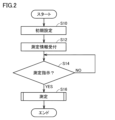
- 4 is a flowchart showing a fluorescent X-ray measurement process performed by the analysis device.
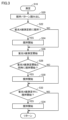
- 3 is a flowchart of a subroutine of the measurement step of FIG. 2 .
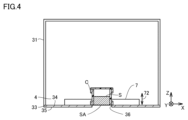
- FIG. 2 is a cross-sectional front view of the analyzer showing the turret set on the sample stage.
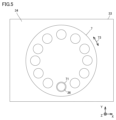
- 5 is a plan view showing the turret as viewed along the Z-axis direction in FIG. 4.
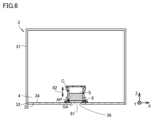
- FIG. 2 is a cross-sectional front view of the analytical device showing the sample spinner set on the sample stage.
- FIG. FIG. 2 is a front cross-sectional view of a sample container showing an embodiment of a stirring mechanism using a baffle portion provided in the sample container.
- 9 is a plan view of the sample container as viewed from the Z-axis direction in FIG. 8 .
- [Overall configuration of X-ray fluorescence analysis device] 1 is a schematic diagram showing a configuration of an analysis device 100 according to an embodiment of the present disclosure.
- the analysis device 100 irradiates an analysis target sample with X-rays and measures fluorescent X-rays emitted from the sample to clarify the types and amounts of elements contained in the sample.
- the analysis device 100 is an EDX device, but a WDX device may be used instead of the EDX device.
- the analysis device 100 includes a control device 1, a stirring mechanism 2, a main body 3, a heating mechanism 6, a display device 16, and an input device 17.
- the main body 3 includes a housing 31, a housing 32, and a sample stage 33.
- the housing 31 is placed on a first surface 34 of the sample stage 33.
- the housing 31 and the sample stage 33 form a sample chamber 4.
- the housing 32 is placed on a second surface 35 of the sample stage 33.
- the housing 32 and the sample stage 33 form a measurement chamber 5.
- the sample chamber 4 and the measurement chamber 5 are enclosed by the housing 31 and the housing 32 so as to be airtight.
- the direction perpendicular to the sample stage 33 is the Z axis
- the plane parallel to the surface of the sample stage 33 is the XY plane.
- the analysis device 100 is used in a state where it is installed so that the Z axis is roughly parallel to the direction of gravity.
- the first surface 34 of the sample stage 33 is the so-called “sample stage upper surface”
- the second surface 35 of the sample stage 33 is the so-called “sample stage lower surface.”
- An opening 36 is formed in the sample stage 33.
- the sample S is placed on the sample stage 33 so as to cover the opening 36. This exposes the analysis surface SA, which is the lower surface of the sample S, to the measurement chamber 5 through the opening 36.
- the sample S is a liquid and is held in a sample container C for holding the sample S.
- the sample S contained in the sample container C is placed on the first surface 34 so as to cover the opening 36.
- the user can select the conditions for stirring by the stirring mechanism 2 in the analytical device 100 based on the information on the "sample type" and/or “sample properties.”
- sample type refers to the type and mixture ratio of substances that make up the sample.
- the sample type includes, for example, at least one of the name and/or chemical formula of the solute substance, the name and/or chemical formula of the solvent substance, and the concentration of the solute.
- the sample may contain fats and oils.
- the components that make up the fats and oils themselves e.g. sulfur in mineral oil
- additives added to the fats and oils may be the subject of analysis, using the fats and oils as a solvent.
- sample properties refers to the characteristics of the sample and the characteristics of the substances that make up the sample. Specifically, the characteristics of the sample are, for example, the viscosity of the sample. Furthermore, the characteristics of the substances that make up the sample include at least one of the ease of separation of the solute substance, the ease of precipitation of the solute substance, the ease of separation of the solvent substance, and the ease of solidification of the solvent substance.
- the sample container C includes, for example, a cylindrical member made of resin and a thin resin film. The opening at the bottom end of the cylindrical member is covered with the film and closed.
- the film is fixed to the sample container C using, for example, a ring-shaped fixing member.
- the film is made of a resin composed of carbon atoms and hydrogen atoms, such as polypropylene and polyethylene terephthalate, or carbon atoms, hydrogen atoms, and oxygen atoms. Since the fluorescent X-rays emitted from these elements are weak, the film has little effect on the fluorescent X-ray analysis in EDX. Since the film is sufficiently thin, the height in the Z-axis direction of the first surface 34 of the sample stage 33 and the analysis surface SA are approximately the same. Therefore, the film is not shown in each figure referred to in this specification.
- the sample container C may have an escape hole for when the liquid expands and/or a liquid retainer.
- the X-ray tube 51 generates X-rays and irradiates the sample S.
- the X-ray tube 51 includes a filament that emits thermoelectrons and a target that converts the thermoelectrons into a predetermined primary X-ray and emits it.
- the detector 52 detects fluorescent X-rays emitted from the sample.
- the detector 52 is composed of a semiconductor detector including a Si element, for example.
- the detector 52 may also be composed of a semiconductor detector including an element in which a Si element is doped with a Li element.
- the X-ray tube 51 and detector 52 are installed on the wall of the measurement chamber 5.
- the primary X-rays emitted from the X-ray tube 51 are irradiated onto the sample S through the opening 36.
- the fluorescent X-rays generated from the sample S are incident on the detector 52, which measures the energy and amount of the fluorescent X-rays. More specifically, the energy of the fluorescent X-rays is generally represented by the wavelength of the fluorescent X-rays.
- the amount of the fluorescent X-rays is generally represented by the number of photons of the fluorescent X-rays per unit time, and is also called the intensity of the fluorescent X-rays.
- the detection result of the detector 52 is typically represented as an X-ray fluorescence spectrum that shows the relationship between the energy and amount of the detected fluorescent X-rays.
- the stirring mechanism 2 is a transport mechanism for moving the sample S between a position where the sample is waiting before measurement and an analysis position AP where the sample S is placed during analysis, and is also capable of stirring the sample S.
- the stirring mechanism 2 includes an X-axis rail 21, a Y-axis rail 22, a Z-axis rail 23, a moving body 24, an arm portion 25, and a gripping portion 26.
- the X-axis rail 21 extends along the X-axis direction.
- the X-axis rail 21 is provided so as to be movable in the Y-axis direction by the Y-axis rail 22.
- the X-axis rail 21 runs on the Y-axis rail 22 by a drive source such as a motor.
- the X-axis direction refers to any one direction in the horizontal direction
- the Y-axis direction refers to a direction perpendicular to the X-axis direction.
- the Y-axis rail 22 extends along the Y-axis direction.
- the Y-axis rail 22 guides the movement of the X-axis rail 21 in the Y-axis direction.
- the Y-axis rail 22 is provided on both ends of the X-axis rail 21 in the X-axis direction.
- the Z-axis rail 23 extends along the Z-axis direction.
- the Z-axis direction is the up-down direction and is perpendicular to the X-axis and Y-axis directions.
- the Z-axis rail 23 is fixed to the moving body 24.
- the Z-axis rail 23 guides the movement of the arm portion 25 along the Z axis.
- the moving body 24 is provided so as to be movable in the X-axis direction along the X-axis rail 21 as indicated by the arrow 27.
- the moving body 24 is moved by a driving source such as a motor.
- the Z-axis rail 23 is fixed to the moving body 24. As a result, when the moving body 24 moves in the X-axis direction, the Z-axis rail 23 also moves along the X-axis direction.
- the arm unit 25 is fixed to the Z-axis rail 23 and is movable in the Z-axis direction along the Z-axis rail 23 as indicated by arrow 28.
- the arm unit 25 is also rotatable about an axis of rotation perpendicular to the analysis surface SA of the sample S as indicated by arrow 29. When the arm unit 25 rotates while gripping the sample S contained in the sample container C, the sample S is rotated and stirred.
- the gripper 26 is provided at the tip (lower end) of the arm 25.
- the gripper 26 is configured to be able to grip the sample S contained in the sample container C.
- the gripper 26 is, for example, a robot arm.
- the gripper 26 is provided so as to be movable in the X-axis, Y-axis, and Z-axis directions. More specifically, the gripper 26 moves along the X-axis direction together with the moving body 24 as the moving body 24 moves in the X-axis direction along the X-axis rail 21. The gripper 26 moves along the Y-axis direction together with the X-axis rail 21 as the X-axis rail 21 moves in the Y-axis direction along the Y-axis rail 22. The gripper 26 moves along the Z-axis direction together with the arm unit 25 as the arm unit 25 moves in the Z-axis direction along the Z-axis rail 23.
- the gripping unit 26 grips the sample S contained in the sample container C, enabling the sample S to be moved between the standby position and the measurement position, and the sample S to be stirred by rotating the arm unit 25.
- the gripping part 26 is provided so as to be rotatable about a rotation axis perpendicular to the analysis surface SA of the sample S. Specifically, when the arm part 25 rotates as described above, the gripping part 26 rotates integrally with the arm part 25. The direction of the rotation axis coincides with the Z-axis direction.
- the control device 1 has as its main components a CPU (Central Processing Unit) 11, a ROM (Read Only Memory) 12, a RAM (Random Access Memory) 13, a HDD (Hard Disk Drive) 14, and an I/O (Input/Output) interface 15. Each component is interconnected by a data bus.
- the control device 1 controls the stirring mechanism 2, the main body 3, and the heating mechanism 6. During measurement, the control device 1 also performs analysis (qualitative analysis and quantitative analysis) of various elements contained in the sample S contained in the sample container C based on the spectrum of fluorescent X-rays detected by the detector 52.
- the control device 1 can be, for example, a personal computer.
- the CPU 11 provides overall control of the entire analysis device 100.
- the ROM 12 stores a program that describes the processing procedures of the analysis device 100 executed by the CPU 11.
- the RAM 13 can temporarily store data generated by the execution of the program in the CPU 11, and can function as a primary storage device.
- the HDD 14 is a non-volatile storage device in which data acquired by the analysis device 100 is saved.
- the control device 1 may have a semiconductor storage device such as a flash memory instead of or in addition to the HDD 14.
- the I/O interface 15 is an interface for input to the stirring mechanism 2, main body 3, and display device 16, or for output from the main body 3 and input device 17.
- the I/O interface 15 is connected to the stirring mechanism 2, X-ray tube 51, detector 52, display device 16, and input device 17.
- the control device 1 controls the movement of the moving body 24 in each of the X-axis, Y-axis, and Z-axis directions, the movement of the gripper 26, the tube voltage, tube current, and irradiation time of the X-ray tube 51, the heating temperature and heating time by the heating mechanism 6, and the display on the display device 16 by sending control signals (commands) via the I/O interface 15.
- the display device 16 is, for example, a liquid crystal monitor.
- the display device 16 displays the results of the fluorescent X-ray detection in accordance with commands from the CPU 11.
- the input device 17 is composed of, for example, a keyboard and a mouse.
- the input device 17 receives instructions from the user to the control device 1 and main body 3, and outputs the instructions to the CPU 11 via the I/O interface 15.
- a touch panel in which the display device 16 and the input device 17 are integrated may also be used.
- the heating mechanism 6 is, for example, a heater, and adjusts the temperature inside the sample chamber 4. By heating the inside of the sample chamber 4, the viscosity of the sample S contained in the sample chamber 4 decreases, making it easier to stir.
- the heating temperature is preferably 50°C or less.
- the heating mechanism 6 is shown in a form that heats the inside of the sample chamber 4, but the heating mechanism 6 may also be configured to heat only the sample S.
- the heating mechanism 6 is installed so as to cover the sample container C, and as the heating mechanism 6 warms up, the sample container C in contact with the heating mechanism 6 is heated, and the sample S is heated.
- X-ray fluorescence analysis is a useful analytical method for determining the elemental composition of a sample. Specifically, the sample is irradiated with primary X-rays, and the fluorescent X-rays that are generated can be analyzed to determine the types and amounts of elements contained in the sample.
- the analytical precision and analytical sensitivity tend to be poorer for parts of the sample that are far from the analytical surface (SA in Figure 1) than for parts that are closer to the analytical surface. This is because, to measure parts of the sample that are far from the analytical surface, the primary X-rays and fluorescent X-rays must pass through the sample, during which the X-rays are absorbed by the sample, resulting in attenuation of energy.
- the sample is not homogeneous, it becomes difficult to accurately analyze the elemental composition of the entire sample. Therefore, when analyzing the elemental composition of the entire sample, it is important that the sample is mixed homogeneously. In conventional technology, the user must manually mix the sample before X-ray fluorescence analysis to ensure that the sample is homogeneous.
- the stirring mechanism 2 stirs the sample during or immediately before the fluorescent X-ray analysis. This makes it possible to prevent the occurrence of bias in the components of the sample during the fluorescent X-ray analysis.
- the analysis device 100 also has a heating mechanism 6 that warms the sample, and can stir even a highly viscous sample, thereby making it possible to prevent the occurrence of bias in the components of the sample during the fluorescent X-ray analysis.
- Agitation of a sample is stirring the sample contained in a sample container by rotating and/or vibrating the sample container in which the sample is contained.
- Rotation is rotating the sample around a rotation axis.
- the sample In rotating a sample, the sample may be rotated around one rotation axis or around multiple rotation axes.
- Rotation is specified by a rotation speed, a rotation direction, and a rotation time. At least one of these may be changed or may be changed according to input from a user.
- the rotation speed and/or the rotation direction may change during the rotation time.
- Vibration is shaking the sample up and down and/or left and right.
- the vibration mode may change periodically or non-periodically. Vibration is specified by a vibration direction, an amplitude, a speed, an acceleration, and a vibration time.
- At least one of these may be changed according to input from a user.
- the parameters that specify the rotation and/or vibration in the above-mentioned stirring are called stirring parameters.
- the stirring pattern when measuring a sample, the combination of sample stirring parameters and the timing to start stirring the sample, or the combination of these and the timing to end stirring the sample, is called the stirring pattern.
- the stirring of the sample may be achieved by a stirring unit provided inside the sample container.
- the stirring unit includes a propeller blade.
- the propeller blade rotates within the sample to stir the sample.
- a baffle portion may be provided inside the sample container, and the baffle portion may improve the efficiency of stirring the sample. Specifically, the baffle portion improves the efficiency of stirring the sample when the sample container in which the sample is stored is rotated and/or vibrated to stir the sample.
- the baffle portion includes unevenness inside the sample container, and as the sample container rotates, the unevenness formed inside the sample container generates turbulence, making the stirring of the sample more efficient.
- the sample may be stirred once or multiple times for each X-ray fluorescence measurement.
- the sample may be stirred either before the start of the X-ray fluorescence measurement, at the same time as the start of the X-ray fluorescence measurement, or during the X-ray fluorescence measurement.
- the user can select the timing of sample stirring according to the type and/or properties of the sample. For example, if the components contained in the sample become non-uniform within the sample before fluorescent X-ray measurement, it is desirable to start stirring the sample before starting fluorescent X-ray measurement, or to stir the sample multiple times before starting fluorescent X-ray measurement. Also, for example, if the components contained in the sample become non-uniform within the sample during fluorescent X-ray measurement, it is desirable to stir the sample during fluorescent X-ray measurement. By stirring the sample before and/or during fluorescent X-ray measurement, it is possible to prevent the components contained in the sample from becoming non-uniform within the sample during fluorescent X-ray measurement.
- sample stirring position When the sample is stirred during the measurement of fluorescent X-rays, the sample is stirred while placed at the fluorescent X-ray measurement position. In this case, the manner of rotation and/or vibration is adjusted to stir the sample so that the analysis surface of the sample does not move away from the sample stage. For example, the sample S is stirred while the analysis surface SA of the sample S is in contact with the first surface 34 of the sample stage 33.
- the position at which the sample is stirred is not particularly limited. The sample may be stirred while placed at the fluorescent X-ray measurement position, or may be stirred at a position different from the fluorescent X-ray measurement position.
- the sample to be analyzed by the X-ray fluorescence analyzer is not limited to a liquid, but may be a solid. In the case of a solid, the X-ray fluorescence measurement is performed without stirring.
- the analysis device 100 may use an acceleration sensor to determine whether the sample S is a liquid, and may stir the sample S if it is determined that the sample S is a liquid.
- Flow of X-ray fluorescence measurement process 2 is a flowchart showing an X-ray fluorescence measurement process performed by the analytical device 100. In one implementation, the process is executed when an X-ray fluorescence measurement application is launched.
- the control device 1 performs initial settings for the fluorescent X-ray measurement. Items set in the initial settings include whether or not to use heating by the heating mechanism 6, and the heating temperature if heating is used.
- the heating temperature may be set by the user, or the control device 1 may call up settings that have been saved in advance in the HDD 14. There are no limitations on the timing at which heating begins, but it is preferable that the temperature of the sample S stabilize before the start of the fluorescent X-ray measurement.
- the control device 1 advances control to S12.
- the control device 1 accepts information on the fluorescent X-ray measurement.
- the information on the fluorescent X-ray measurement includes at least one of the fluorescent X-ray measurement time and the sample stirring pattern.
- the control device 1 may call up settings for the fluorescent X-ray measurement time and/or the sample stirring pattern that have been previously stored in the HDD 14 based on the type of sample and/or the properties of the sample input by the user. The control device 1 then advances control to S14.
- control device 1 determines whether or not a measurement has been instructed by the user.
- the control device 1 repeats the control of S12 until it determines that a measurement has been instructed (NO in S12).
- control device 1 determines that a measurement has been instructed (YES in S12)
- the control proceeds to S16.
- the control device 1 outputs an instruction to execute X-ray fluorescence measurement to the main body 3 based on the information of the X-ray fluorescence measurement received in S12.
- the main body 3 that has received the instruction to execute X-ray fluorescence measurement starts the measurement.
- the main body 3 sends the measurement results to the control device 1.
- the control device 1 ends the X-ray fluorescence measurement process.
- FIG. 3 is a flowchart of the subroutine of S16 in FIG. 2. As shown in FIG. 3, in the control of S20, the stirring pattern included in the fluorescent X-ray measurement information received in S12 is read out.
- the control device 1 determines whether the stirring pattern read out in S20 includes an instruction to stir before fluorescent X-ray measurement. If the control device 1 determines that stirring has been instructed before fluorescent X-ray measurement (YES in S22), the control proceeds to S24. If the control device 1 determines that stirring has not been instructed before fluorescent X-ray measurement (NO in S22), the control proceeds to S26.
- the control device 1 sends an instruction to start stirring to the stirring mechanism 2.
- the stirring mechanism 2 which has received the instruction to start stirring, stirs the sample S based on the stirring pattern received in S20. Note that the stirring started in S24 may end in S24, or may continue after S24. Also, stirring may be started and ended multiple times in S24.
- the control device 1 then advances the process to S26.
- the control device 1 sends an instruction to start fluorescent X-ray measurement to the main body 3.
- the main body 3 irradiates primary X-rays from the X-ray tube 51 onto the sample S, and detects the fluorescent X-rays emitted from the sample S with the detector 52.
- the control device 1 then advances the process to S28.
- the control device 1 determines whether the stirring pattern read out in S20 includes an instruction to stir simultaneously with the start of fluorescent X-ray measurement. If the control device 1 determines that stirring has been instructed simultaneously with the start of fluorescent X-ray measurement (YES in S28), the control proceeds to S30. If the control device 1 determines that stirring has not been instructed before fluorescent X-ray measurement (NO in S28), the control proceeds to S32.
- the control device 1 sends an instruction to start stirring to the stirring mechanism 2.
- the stirring mechanism 2 which has received the instruction to start stirring, stirs the sample S based on the stirring pattern received in S20. Note that the stirring started in S30 may end in S30, or may continue after S30. Also, stirring may be started and ended multiple times in S30.
- the control device 1 then advances the process to S32.
- control device 1 determines whether the stirring pattern read out in S20 includes an instruction to stir during fluorescent X-ray measurement. If the control device 1 determines that stirring has been instructed during fluorescent X-ray measurement (YES in S32), control proceeds to S34. If the control device 1 determines that stirring has not been instructed before fluorescent X-ray measurement (NO in S32), it ends the subroutine and returns control to the main routine.
- the control device 1 sends an instruction to start stirring to the stirring mechanism 2.
- the stirring mechanism 2 which has received the instruction to start stirring, stirs the sample S based on the stirring pattern received in S20.
- the stirring started in S34 may end in S34, or may continue after S34. Also, stirring may be started and ended multiple times in S34. Thereafter, the control device 1 ends the subroutine and returns control to the main routine.
- the fluorescent X-ray analyzer according to the embodiment described above is equipped with a mechanism for stirring the sample, which makes it possible to prevent the concentration in the sample from becoming non-uniform during analysis. This makes it possible to improve the analytical sensitivity and analytical accuracy of elemental analysis of the entire sample.
- the X-ray fluorescence analyzer is equipped with a mechanism for stirring the sample, so even if components in the sample precipitate, the precipitate can be dispersed. This makes it possible to improve the analytical sensitivity and analytical accuracy of elemental analysis of samples in which components will precipitate if left for a long period of time.
- the X-ray fluorescence analyzer according to this embodiment is equipped with a heating mechanism, so that the sample can be heated. Therefore, by heating the sample, the viscosity of the sample is reduced, and the efficiency of stirring the sample can be improved.
- Example 1 Stirring of sample when conveying mechanism is used as stirring mechanism
- stirring mechanism 2 stirs the sample S by rotating the gripper 26 while the gripper 26 grips the sample container C containing the sample S.
- the arm portion 25 is configured to be rotatable around a rotation axis perpendicular to the analysis surface SA of the sample S. Therefore, when the gripping portion 26 grips the sample container C containing the sample S, the arm portion 25 is rotated to rotate and stir the sample S.
- the rotation speed is approximately 10 to 1000 rpm. In this case, the sample S may be rotated before or during the measurement of fluorescent X-rays.
- the rotation axis of the arm unit 25 does not have to be perpendicular to the XY plane.
- the sample S may be stirred by rotating the arm unit 25 at an angle to the Z axis. Such rotation of the sample S is performed before measuring the fluorescent X-rays. This is because if the sample rotates around a rotation axis that is not perpendicular to the XY plane, the analysis surface SA will not be uniformly irradiated with respect to the sample, which may make fluorescent X-ray analysis difficult.
- the stirring mechanism 2 may stir the sample S by vibrating the gripping portion 26 while the gripping portion 26 grips the sample container C containing the sample S.
- the arm portion 25 is configured to be capable of vibrating along the Z-axis direction and/or along any one of the horizontal directions. Therefore, when the gripping portion 26 grips the sample container C containing the sample S, the arm portion 25 is vibrated to stir the sample S. Note that it is desirable to vibrate the sample S along the Z-axis direction before measuring the fluorescent X-rays. This is because if the analysis surface SA vibrates along the Z-axis direction, the analysis surface SA may not be exposed to the measurement chamber 5 from the opening 36, making it impossible to stably irradiate the sample S with primary X-rays, which may affect the measurement of the fluorescent X-rays.
- the stirring of the sample S by rotating the arm unit 25 and the stirring of the sample S by vibrating the arm unit 25 may be performed in combination.
- the arm unit 25 is configured to be rotatable around a rotation axis perpendicular to the analysis surface SA of the sample S and to be vibrated along the Z-axis direction.
- FIG. 4 is a front cross-sectional view of the analysis device 100, showing the turret 7 set on the sample stage 33.
- FIG. 4 shows the inside of the sample chamber 4 formed by the housing 31 and the sample stage 33 in FIG. 1.
- FIG. 5 is a plan view showing the turret 7 as viewed along the Z-axis direction in FIG. 4.
- the housing 31 is not shown in FIG. 5.
- the turret 7 is arranged so as to be rotatable on the XY plane with the center of the turret 7 as the axis of rotation, as shown by the arrow 73 in FIG. 5.
- the turret 7 is arranged on the first surface 34 of the sample stage 33.
- the turret 7 has a plurality of openings 71 (for example, 12 openings).
- a sample container C containing a sample S is placed in each opening 71 so as to cover the opening 71.
- the turret 7 can rotate to switch the sample S to be analyzed.
- the opening 71 in which the sample S to be analyzed is placed is positioned so as to overlap with the opening 36 at the bottom of the housing 31.
- the turret used for the continuous analysis of multiple samples is capable of stirring the samples.
- the sample S is stirred by rotating the turret 7 with the sample container C containing the sample S placed on it.
- the rotation speed is, for example, about 10 to 1000 rpm.
- the rotation direction is switched, for example, between clockwise and counterclockwise at regular time intervals, and the acceleration of the sample S changes, causing the inertial force acting on the sample S to stir the sample S.
- Stirring by rotating the turret 7 may be performed before or during the analysis of the fluorescent X-rays of the sample S.
- the sample S is rotated so that the analysis surface SA of the sample S overlaps the entire surface of the opening 36.
- the direction of rotation is controlled as one of the parameters that determine the rotation.
- stirring the sample being analyzed will also stir the other samples placed on the turret 7. This allows multiple samples to be stirred simultaneously, shortening the time required for stirring when measuring the fluorescent X-rays of multiple samples.
- the turret 7 may be configured to vibrate along the Z-axis direction while a sample container C containing the sample S is placed on the turret 7, thereby stirring the sample S.
- the turret 7 is arranged on the first surface 34 of the sample stage 33 so as to be vibrated along the Z-axis direction, as shown by the arrow 72 in FIG. 4. Therefore, the sample S can be stirred by vibrating the turret 7 with the sample container C containing the sample S placed on it. Note that it is preferable to vibrate the sample S along the Z-axis direction before measuring the fluorescent X-rays. This is because if the analysis surface SA vibrates along the Z-axis direction, the analysis surface SA may not be exposed to the measurement chamber 5 from the opening 36, making it impossible to stably irradiate the sample S with primary X-rays, which may affect the measurement of the fluorescent X-rays.
- stirring of the sample S by rotating the turret 7 and stirring of the sample S by vibrating the turret 7 may be performed in combination.
- the turret 7 is configured to be rotatable around the center of the turret 7 as the rotation axis and to be vibrated along the Z-axis direction.
- the turret 7 vibrates to stir the sample S with the sample S placed in the opening 71 of the turret 7, and during the fluorescent X-ray measurement of the sample S, the turret rotates to stir the sample S.
- Stirring the sample S by combining rotation and vibration can improve the stirring efficiency of a sample that is difficult to stir by stirring by either rotation or vibration alone.
- FIG. 6 is a front cross-sectional view of the analysis device 100 showing the sample spinner 8 set on the sample stage 33.
- FIG. 6 shows the inside of the sample chamber 4 formed by the housing 31 and the sample stage 33 of FIG. 1.
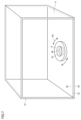
- FIG. 7 is a perspective view of the sample spinner 8. For convenience of explanation, the front of the housing 31 and the sample container C are not shown in FIG. 7.
- the sample spinner 8 has an opening 81 formed therein for the passage of primary X-rays and fluorescent X-rays.
- the sample spinner 8 is placed on the sample stage 33 so that the analysis surface SA is exposed from the opening 36 at the bottom of the housing 31.
- a sample container C containing a sample S is placed on the sample spinner 8 so as to cover the opening 81.
- the sample spinner 8 is installed so that it can rotate about an axis of rotation perpendicular to the analysis surface SA of the sample S, as shown by arrow 83 in Figure 7.
- the sample container C containing the sample S is placed on the sample spinner 8 and rotated at 10 to 100 rpm to prevent bias in the part of the sample S that is irradiated with the primary X-rays.
- the sample S to be analyzed rotates about an axis of rotation perpendicular to the analysis surface SA of the sample S, with the analysis surface SA exposed from the opening 36 at the bottom of the housing 31.
- the above-mentioned sample spinner can also rotate to stir the sample. Specifically, the sample S is stirred by rotating the sample spinner 8 while the sample container C containing the sample S is placed therein.
- the rotation speed for such stirring is about 100 to 1000 rpm.
- the sample spinner 8 can also rotate to reduce bias in the X-ray irradiation position on the sample S, but when rotating for the purpose of stirring, it is characterized by rotating at a higher speed than when rotating for the purpose of reducing bias in the X-ray irradiation position.
- the sample spinner can be switched between clockwise and counterclockwise at regular time intervals, changing the acceleration of the sample S, and stirring the sample S by the inertial force applied to the sample S. Stirring by rotating the sample spinner 8 can be performed before or during the analysis of the fluorescent X-rays of the sample S.
- the sample S may be stirred by vibrating the sample spinner 8 in the Z-axis direction while the sample container C containing the sample S is placed in position.
- the sample spinner 8 is arranged on the first surface 34 of the sample stage 33 so that it can vibrate along the Z-axis direction. Therefore, when a sample container C containing a sample S is placed at the measurement position, the sample spinner 8 vibrates, thereby stirring the sample S. Note that it is preferable to vibrate the sample S along the Z-axis direction before measuring the fluorescent X-rays. This is because if the analysis surface SA vibrates along the Z-axis direction, the analysis surface SA may not be exposed to the measurement chamber 5 from the opening 36, making it impossible to stably irradiate the sample S with primary X-rays, which may affect the measurement of the fluorescent X-rays.
- stirring of the sample S by rotating the sample spinner 8 and stirring of the sample S by vibrating the sample spinner 8 may be performed in combination.
- the sample spinner 8 is configured to be rotatable around the center of the placed sample container C as the rotation axis and to be vibrated along the Z-axis direction.
- Example 3 a modified example is also envisioned in which the sample spinner 8 described in Example 3 is disposed in the opening 71 of the turret 7 described in Example 2.
- the sample can be stirred by the rotation and/or vibration of the turret 7 and sample spinner 8, thereby improving the efficiency of stirring the sample.
- FIG. 8 is a cross-sectional front view of sample container C showing an embodiment of a stirring mechanism using a baffle portion 93 provided in sample container C.
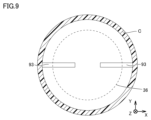
- FIG. 9 is a plan view of sample container C as viewed from the Z-axis direction in FIG. 8. For ease of explanation, the sample S and the lid of sample container C are not shown in FIG. 9.
- the sample container C includes a baffle portion 93.
- the sample container C is configured such that the baffle portion 93 improves the stirring efficiency when the sample S is stirred by rotating the sample container C.
- the baffle portion 93 is fixed to the inner wall of the sample container C, and multiple baffle portions (for example, two) are attached. For example, when the sample S is rotated by the gripper 26 ( Figure 1), the turret 7 ( Figure 4), and the sample spinner 8 ( Figure 6), the baffle portion 93 generates turbulence within the sample S, thereby improving the stirring efficiency of the sample S.
- the sample container C having the baffle portion 93 By disposing of the sample container C having the baffle portion 93, contamination of the sample can be prevented. Also, the sample container C may be reused.
- the baffle section 93 provided inside the sample container C is configured so as not to affect the measurement of the fluorescent X-rays.
- the baffle section 93 is made of a material that does not affect the measurement of the fluorescent X-rays of the sample S, or is placed in a position that does not affect the measurement of the fluorescent X-rays of the sample S.
- the material is made of a resin such as polypropylene or polyethylene terephthalate that has almost no effect on the analysis of the sample S even when irradiated with primary X-rays.
- the position at which the baffle section 93 is placed is selected so that it does not affect the irradiation of the primary X-rays and the measurement of the fluorescent X-rays.
- the stirring of the sample is not limited to the above-mentioned embodiment, and any configuration capable of stirring a liquid sample can be applied to the present disclosure.
- the X-ray fluorescence analysis device may include a sample stage on which a sample is placed, an X-ray source that irradiates the sample with primary X-rays, a detector that detects fluorescent X-rays emitted from the sample by the irradiated primary X-rays, an analysis unit that analyzes the fluorescent X-rays detected by the detector, and a stirring mechanism that stirs the sample.
- the X-ray fluorescence analyzer described in paragraph 1 provides a technique for improving the analytical accuracy of the elements contained in the sample by stirring the sample, thereby reducing bias in the concentrations of the substances that make up the sample.
- the stirring mechanism may stir the sample while the sample is being irradiated with the primary X-rays.
- the sample is stirred while being irradiated with primary X-rays, thereby reducing bias in the concentration of the substances that make up the sample, and providing a technology for improving the analytical accuracy of the elements contained in the sample.
- the stirring mechanism may stir the sample before the primary X-rays are irradiated onto the sample.
- the sample is stirred before being irradiated with primary X-rays, which reduces bias in the concentration of the substances that make up the sample and provides a technology for improving the analytical accuracy of the elements contained in the sample.
- the stirring mechanism may stir the sample by vibrating it, and at least one of the direction, amplitude, speed, acceleration, and vibration time of the vibration may be variable.
- the X-ray fluorescence analyzer described in paragraph 4 provides a technique for improving the analytical accuracy of the elements contained in a sample by agitating the sample through vibration, thereby reducing bias in the concentration of the substances that make up the sample.
- the stirring mechanism may stir the sample by vibrating it, and at least one of the direction, amplitude, speed, acceleration, and vibration time of the vibration may be variable depending on at least one of the type and properties of the sample.
- the X-ray fluorescence analyzer described in paragraph 5 provides a technique for improving the analytical accuracy of the elements contained in a sample by agitating the sample through vibration, thereby reducing bias in the concentration of the substances that make up the sample.
- the stirring mechanism may stir the sample by rotating it, and at least one of the rotation speed, direction, and time of the rotation may be variable.
- the X-ray fluorescence analysis device described in paragraph 6 provides a technique for improving the analytical accuracy of the elements contained in the sample by reducing bias in the concentration of the substances that make up the sample by rotating and stirring the sample.
- the stirring mechanism may stir the sample by rotating it, and at least one of the rotation speed, direction, and time of the rotation may be variable depending on at least one of the type and properties of the sample.
- the X-ray fluorescence analysis device described in paragraph 7 provides a technique for improving the analytical accuracy of the elements contained in the sample by reducing bias in the concentration of the substances that make up the sample by rotating and stirring the sample.
- the type of the sample may include at least one of the name of the substance that is a solute of the sample, the chemical formula of the substance that is a solute of the sample, the name of the substance that is a solvent of the sample, the chemical formula of the substance that is a solvent of the sample, and the concentration of the substance that is a solute of the sample.
- the X-ray fluorescence analyzer described in paragraph 8 provides a technique for changing the vibration mode in response to at least one piece of information: the name of the substance that is the solute of the sample, the chemical formula of the substance that is the solute of the sample, the name of the substance that is the solvent of the sample, the chemical formula of the substance that is the solvent of the sample, and the concentration of the substance that is the solute of the sample.
- the properties of the sample may include at least one of the following: viscosity of the sample, ease of separation of the solute substance of the sample, ease of precipitation of the solute substance of the sample, ease of separation of the solvent substance of the sample, and ease of precipitation of the solvent substance of the sample.
- the X-ray fluorescence analyzer described in paragraph 9 provides a technique for changing the vibration mode in response to at least one piece of information among the viscosity of the sample, the ease of separation of the solute material of the sample, the ease of precipitation of the solute material of the sample, the ease of separation of the solvent material of the sample, and the ease of precipitation of the solvent material of the sample.
- the stirring mechanism may include a gripping portion that grips the sample, and the gripping portion may stir the sample by vibrating or rotating the sample gripped by the gripping portion.
- the sample is stirred by vibration or rotation using the gripping part, which reduces bias in the concentration of the substances that make up the sample and provides a technology for improving the analytical accuracy of the elements contained in the sample.
- the stirring mechanism may be disposed on the sample stage, and may stir the sample by vibrating or rotating the sample.
- the stirring mechanism arranged on the sample stage stirs the sample by vibration or rotation, thereby reducing bias in the concentration of the substances that make up the sample, and providing a technology for improving the analytical accuracy of the elements contained in the sample.
- the X-ray fluorescence analyzer described in any one of paragraphs 1 to 11 may further include a heating mechanism for heating the sample.
- the sample is heated by the heating mechanism, which improves the stirring efficiency of the stirring mechanism, reduces bias in the concentrations of the substances that make up the sample, and provides a technology for improving the analytical accuracy of the elements contained in the sample.
- the sample may be contained in a sample container, and the sample container may be provided with a baffle portion that improves the efficiency of stirring the sample by the stirring mechanism.
- the X-ray fluorescence analysis device described in paragraph 13 provides a technique for improving the efficiency of stirring the sample by using a baffle provided in the sample container, reducing bias in the concentration of the substances that make up the sample, and improving the analytical accuracy of the elements contained in the sample.
- the sample container is a sample container that holds a sample to be analyzed by an X-ray fluorescence analyzer, and the X-ray fluorescence analyzer is equipped with a stirring mechanism, and the sample container may be equipped with a baffle portion that improves the efficiency of stirring the sample by the stirring mechanism.
- the sample container described in paragraph 14 provides a technique for improving the efficiency of stirring the sample by using a baffle provided in the sample container, reducing bias in the concentration of the substances that make up the sample, and improving the analytical accuracy of the elements contained in the sample.
- a method for analyzing a sample using an X-ray fluorescence analyzer may include a step of stirring the sample using the X-ray fluorescence analyzer, and a step of irradiating the sample with X-rays and acquiring X-ray fluorescence spectrum information of the sample.
- the sample is stirred, which reduces bias in the concentrations of the substances that make up the sample, providing a technology for improving the analytical accuracy of the elements contained in the sample.
- the stirring step may be performed during the execution of the acquiring step.
- the sample is stirred while acquiring information on the fluorescent X-ray spectrum emitted from the sample, thereby reducing bias in the concentration of the substances that make up the sample, and providing a technology for improving the analytical accuracy of the elements contained in the sample.
- stirring step may be performed immediately before the acquisition step is started.
- the sample is stirred before acquiring information on the fluorescent X-ray spectrum emitted from the sample, thereby reducing bias in the concentrations of the substances that make up the sample, and providing a technology for improving the analytical accuracy of the elements contained in the sample.
- the analysis method according to any one of 15 to 17 may further include a step of heating the sample.
- the sample is heated by the heating mechanism, which improves the stirring efficiency of the stirring mechanism, reduces bias in the concentrations of the substances that make up the sample, and provides a technology for improving the analytical accuracy of the elements contained in the sample.
Landscapes
- Physics & Mathematics (AREA)
- Health & Medical Sciences (AREA)
- Life Sciences & Earth Sciences (AREA)
- Chemical & Material Sciences (AREA)
- Analytical Chemistry (AREA)
- Biochemistry (AREA)
- General Health & Medical Sciences (AREA)
- General Physics & Mathematics (AREA)
- Immunology (AREA)
- Pathology (AREA)
- Analysing Materials By The Use Of Radiation (AREA)
Priority Applications (1)
| Application Number | Priority Date | Filing Date | Title |
|---|---|---|---|
| JP2025531422A JPWO2025009294A1 (https=) | 2023-07-04 | 2024-05-29 |
Applications Claiming Priority (2)
| Application Number | Priority Date | Filing Date | Title |
|---|---|---|---|
| JP2023109920 | 2023-07-04 | ||
| JP2023-109920 | 2023-07-04 |
Publications (1)
| Publication Number | Publication Date |
|---|---|
| WO2025009294A1 true WO2025009294A1 (ja) | 2025-01-09 |
Family
ID=94171988
Family Applications (1)
| Application Number | Title | Priority Date | Filing Date |
|---|---|---|---|
| PCT/JP2024/019690 Ceased WO2025009294A1 (ja) | 2023-07-04 | 2024-05-29 | 蛍光x線分析装置、試料容器、および、分析方法 |
Country Status (2)
| Country | Link |
|---|---|
| JP (1) | JPWO2025009294A1 (https=) |
| WO (1) | WO2025009294A1 (https=) |
Citations (3)
| Publication number | Priority date | Publication date | Assignee | Title |
|---|---|---|---|---|
| JPH0592703U (ja) * | 1992-05-22 | 1993-12-17 | 日本アイ.テイー.エス株式会社 | 螢光x線分析用液体試料容器 |
| JP2017083346A (ja) * | 2015-10-29 | 2017-05-18 | 株式会社堀場製作所 | 液体試料分析装置 |
| JP2021135160A (ja) * | 2020-02-27 | 2021-09-13 | 株式会社島津製作所 | 蛍光x線分析装置 |
-
2024
- 2024-05-29 WO PCT/JP2024/019690 patent/WO2025009294A1/ja not_active Ceased
- 2024-05-29 JP JP2025531422A patent/JPWO2025009294A1/ja active Pending
Patent Citations (3)
| Publication number | Priority date | Publication date | Assignee | Title |
|---|---|---|---|---|
| JPH0592703U (ja) * | 1992-05-22 | 1993-12-17 | 日本アイ.テイー.エス株式会社 | 螢光x線分析用液体試料容器 |
| JP2017083346A (ja) * | 2015-10-29 | 2017-05-18 | 株式会社堀場製作所 | 液体試料分析装置 |
| JP2021135160A (ja) * | 2020-02-27 | 2021-09-13 | 株式会社島津製作所 | 蛍光x線分析装置 |
Also Published As
| Publication number | Publication date |
|---|---|
| JPWO2025009294A1 (https=) | 2025-01-09 |
Similar Documents
| Publication | Publication Date | Title |
|---|---|---|
| EP2275823B1 (en) | Automated analyzer | |
| US10926232B2 (en) | Automatic analyzing apparatus | |
| JP2000146986A (ja) | 化学分析装置 | |
| JP4887174B2 (ja) | 自動分析装置 | |
| US6773672B2 (en) | Automatic analysis apparatus | |
| JP6312313B2 (ja) | 自動分析装置及び自動分析方法 | |
| CN114981663A (zh) | 自动分析装置 | |
| JP5921336B2 (ja) | 自動分析装置及び前処理装置 | |
| WO2025009294A1 (ja) | 蛍光x線分析装置、試料容器、および、分析方法 | |
| JP3641992B2 (ja) | 化学分析装置 | |
| JP2003172738A (ja) | 自動分析装置 | |
| JP7773353B2 (ja) | 自動分析装置 | |
| JP4377318B2 (ja) | 自動分析装置 | |
| JP7810463B1 (ja) | 蛍光x線分析システム、情報記憶媒体、蛍光x線分析システムに用いられる液体試料セル及び蛍光x線分析プログラム | |
| JP2009103668A (ja) | 分析容器と分析装置 | |
| JP6260486B2 (ja) | 検査装置、及び、検査プログラム | |
| JP6839555B2 (ja) | 自動分析装置 | |
| JPWO2025009294A5 (https=) | ||
| JP2015118042A (ja) | 検査装置、検査方法及びコンピュータプログラム | |
| JP2014010043A (ja) | 検査システム、検査対象受体および検査方法 | |
| JP2005062207A (ja) | 自動分析装置 | |
| JP2020094848A (ja) | 自動分析装置および自動分析方法 | |
| JP2003083884A (ja) | 分析装置における光学測定部の自動調整装置 | |
| JPH0644003B2 (ja) | 分析装置 | |
| JP2017181113A (ja) | 撹拌装置及び容器 |
Legal Events
| Date | Code | Title | Description |
|---|---|---|---|
| 121 | Ep: the epo has been informed by wipo that ep was designated in this application |
Ref document number: 24835815 Country of ref document: EP Kind code of ref document: A1 |
|
| ENP | Entry into the national phase |
Ref document number: 2025531422 Country of ref document: JP Kind code of ref document: A |
|
| WWE | Wipo information: entry into national phase |
Ref document number: 2025531422 Country of ref document: JP |
|
| NENP | Non-entry into the national phase |
Ref country code: DE |