WO2025005276A1 - グラム陰性菌の外膜透過性ポリペプチド、該ポリペプチドを含む抗菌性タンパク質、抗菌剤又は消毒剤、医薬組成物並びに抗菌剤組成物又は消毒剤組成物 - Google Patents
グラム陰性菌の外膜透過性ポリペプチド、該ポリペプチドを含む抗菌性タンパク質、抗菌剤又は消毒剤、医薬組成物並びに抗菌剤組成物又は消毒剤組成物 Download PDFInfo
- Publication number
- WO2025005276A1 WO2025005276A1 PCT/JP2024/023622 JP2024023622W WO2025005276A1 WO 2025005276 A1 WO2025005276 A1 WO 2025005276A1 JP 2024023622 W JP2024023622 W JP 2024023622W WO 2025005276 A1 WO2025005276 A1 WO 2025005276A1
- Authority
- WO
- WIPO (PCT)
- Prior art keywords
- polypeptide
- gram
- antibacterial
- disinfectant
- amino acid
- Prior art date
- Legal status (The legal status is an assumption and is not a legal conclusion. Google has not performed a legal analysis and makes no representation as to the accuracy of the status listed.)
- Ceased
Links
Images



Classifications
-
- A—HUMAN NECESSITIES
- A01—AGRICULTURE; FORESTRY; ANIMAL HUSBANDRY; HUNTING; TRAPPING; FISHING
- A01N—PRESERVATION OF BODIES OF HUMANS OR ANIMALS OR PLANTS OR PARTS THEREOF; BIOCIDES, e.g. AS DISINFECTANTS, AS PESTICIDES OR AS HERBICIDES; PEST REPELLANTS OR ATTRACTANTS; PLANT GROWTH REGULATORS
- A01N63/00—Biocides, pest repellants or attractants, or plant growth regulators containing microorganisms, viruses, microbial fungi, animals or substances produced by, or obtained from, microorganisms, viruses, microbial fungi or animals, e.g. enzymes or fermentates
- A01N63/50—Isolated enzymes; Isolated proteins
-
- A—HUMAN NECESSITIES
- A01—AGRICULTURE; FORESTRY; ANIMAL HUSBANDRY; HUNTING; TRAPPING; FISHING
- A01P—BIOCIDAL, PEST REPELLANT, PEST ATTRACTANT OR PLANT GROWTH REGULATORY ACTIVITY OF CHEMICAL COMPOUNDS OR PREPARATIONS
- A01P3/00—Fungicides
-
- A—HUMAN NECESSITIES
- A61—MEDICAL OR VETERINARY SCIENCE; HYGIENE
- A61K—PREPARATIONS FOR MEDICAL, DENTAL OR TOILETRY PURPOSES
- A61K38/00—Medicinal preparations containing peptides
- A61K38/16—Peptides having more than 20 amino acids; Gastrins; Somatostatins; Melanotropins; Derivatives thereof
- A61K38/43—Enzymes; Proenzymes; Derivatives thereof
- A61K38/46—Hydrolases (3)
- A61K38/47—Hydrolases (3) acting on glycosyl compounds (3.2), e.g. cellulases, lactases
-
- A—HUMAN NECESSITIES
- A61—MEDICAL OR VETERINARY SCIENCE; HYGIENE
- A61K—PREPARATIONS FOR MEDICAL, DENTAL OR TOILETRY PURPOSES
- A61K47/00—Medicinal preparations characterised by the non-active ingredients used, e.g. carriers or inert additives; Targeting or modifying agents chemically bound to the active ingredient
- A61K47/06—Organic compounds, e.g. natural or synthetic hydrocarbons, polyolefins, mineral oil, petrolatum or ozokerite
- A61K47/16—Organic compounds, e.g. natural or synthetic hydrocarbons, polyolefins, mineral oil, petrolatum or ozokerite containing nitrogen, e.g. nitro-, nitroso-, azo-compounds, nitriles, cyanates
- A61K47/18—Amines; Amides; Ureas; Quaternary ammonium compounds; Amino acids; Oligopeptides having up to five amino acids
-
- A—HUMAN NECESSITIES
- A61—MEDICAL OR VETERINARY SCIENCE; HYGIENE
- A61P—SPECIFIC THERAPEUTIC ACTIVITY OF CHEMICAL COMPOUNDS OR MEDICINAL PREPARATIONS
- A61P11/00—Drugs for disorders of the respiratory system
-
- A—HUMAN NECESSITIES
- A61—MEDICAL OR VETERINARY SCIENCE; HYGIENE
- A61P—SPECIFIC THERAPEUTIC ACTIVITY OF CHEMICAL COMPOUNDS OR MEDICINAL PREPARATIONS
- A61P27/00—Drugs for disorders of the senses
- A61P27/02—Ophthalmic agents
-
- A—HUMAN NECESSITIES
- A61—MEDICAL OR VETERINARY SCIENCE; HYGIENE
- A61P—SPECIFIC THERAPEUTIC ACTIVITY OF CHEMICAL COMPOUNDS OR MEDICINAL PREPARATIONS
- A61P31/00—Antiinfectives, i.e. antibiotics, antiseptics, chemotherapeutics
- A61P31/04—Antibacterial agents
-
- C—CHEMISTRY; METALLURGY
- C07—ORGANIC CHEMISTRY
- C07K—PEPTIDES
- C07K14/00—Peptides having more than 20 amino acids; Gastrins; Somatostatins; Melanotropins; Derivatives thereof
- C07K14/005—Peptides having more than 20 amino acids; Gastrins; Somatostatins; Melanotropins; Derivatives thereof from viruses
-
- C—CHEMISTRY; METALLURGY
- C07—ORGANIC CHEMISTRY
- C07K—PEPTIDES
- C07K14/00—Peptides having more than 20 amino acids; Gastrins; Somatostatins; Melanotropins; Derivatives thereof
- C07K14/435—Peptides having more than 20 amino acids; Gastrins; Somatostatins; Melanotropins; Derivatives thereof from animals; from humans
-
- C—CHEMISTRY; METALLURGY
- C07—ORGANIC CHEMISTRY
- C07K—PEPTIDES
- C07K19/00—Hybrid peptides, i.e. peptides covalently bound to nucleic acids, or non-covalently bound protein-protein complexes
-
- C—CHEMISTRY; METALLURGY
- C12—BIOCHEMISTRY; BEER; SPIRITS; WINE; VINEGAR; MICROBIOLOGY; ENZYMOLOGY; MUTATION OR GENETIC ENGINEERING
- C12N—MICROORGANISMS OR ENZYMES; COMPOSITIONS THEREOF; PROPAGATING, PRESERVING, OR MAINTAINING MICROORGANISMS; MUTATION OR GENETIC ENGINEERING; CULTURE MEDIA
- C12N15/00—Mutation or genetic engineering; DNA or RNA concerning genetic engineering, vectors, e.g. plasmids, or their isolation, preparation or purification; Use of hosts therefor
- C12N15/09—Recombinant DNA-technology
- C12N15/11—DNA or RNA fragments; Modified forms thereof; Non-coding nucleic acids having a biological activity
- C12N15/62—DNA sequences coding for fusion proteins
Definitions
- the present invention relates to an outer membrane-permeable polypeptide of a gram-negative bacterium, an antibacterial protein containing the polypeptide, an antibacterial agent or disinfectant, a pharmaceutical composition, and an antibacterial agent composition or disinfectant composition.
- polypeptides that have permeability to the lipopolysaccharide-containing outer membrane of gram-negative bacteria may be abbreviated as “outer membrane-permeable polypeptides.”
- Pseudomonas aeruginosa is a pathogenic bacterium that is innately resistant to drugs and can also acquire drug resistance, causing difficult-to-treat infections in humans and animals (cattle, dogs, etc.). It is also included in the list of drug-resistant bacteria of high urgency published by the WHO. Today, there is a demand for the development of new antibacterial agents against Pseudomonas aeruginosa.
- Patent Document 1 discloses an endolysin protein against staphylococci.
- Non-patent documents 1 to 3 disclose endolysin proteins of gram-negative bacteria.
- the cell walls of gram-negative bacteria have an outer membrane, and natural endolysins alone cannot kill them.
- natural endolysins capable of killing such gram-negative bacteria do not have the bactericidal effect necessary and sufficient for use as a treatment for infectious diseases.
- One object of the present invention is to provide an antibacterial agent or disinfectant that is effective against gram-negative bacteria, including multidrug-resistant bacteria, and in particular against Pseudomonas aeruginosa.
- Another object of the present invention is to provide a polypeptide capable of increasing the permeability of endolysin through the outer membrane of Gram-negative bacteria, and a polynucleotide encoding the same.
- a polypeptide having lipopolysaccharide-containing outer membrane permeability of Gram-negative bacteria which is one of the following (i) to (iii): (i) a polypeptide consisting of the amino acid sequence represented by SEQ ID NO:1; SEQ ID NO: 1: NSGTPKNVSRGTSSTKTTPKYKVKNGDNLTKIAKKHNTTVATLLKLNPGIKDPNMIRVGQTLNVTGSGGKTHKVKSGDTLSKIAVDNKTTVSKLMNLNPEITNPNHIKVGQTIRLSRKLRRLKRKIAHKVKKY (ii) a polypeptide having an amino acid sequence in which one or several amino acids are deleted, substituted, inserted and/or added in the amino acid sequence represented by SEQ ID NO:
- a pharmaceutical composition comprising the antibacterial protein according to [3].
- An antibacterial composition or disinfectant composition comprising the antibacterial protein according to [3] and an outer membrane permeabilizing agent, the outer membrane permeabilizing agent being ethylenediaminetetraacetic acid (EDTA) or a salt thereof.
- EDTA ethylenediaminetetraacetic acid
- a method for preventing a disease caused by infection with gram-negative bacteria or for killing gram-negative bacteria comprising administering to a human a pharmaceutical composition containing the antibacterial protein according to [3].
- a method for preventing a disease caused by infection with gram-negative bacteria or for killing gram-negative bacteria comprising administering to an animal a pharmaceutical composition containing the antibacterial protein according to [3].
- the present invention provides an antibacterial agent, disinfectant, antibacterial composition, and disinfectant composition that are effective against gram-negative bacteria, including Pseudomonas aeruginosa, and in particular against multidrug-resistant gram-negative bacteria.
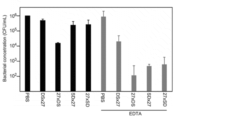
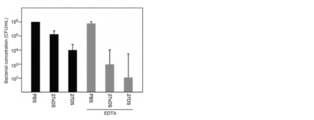
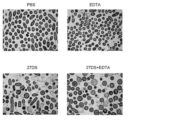
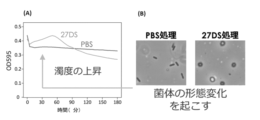
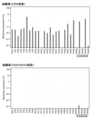
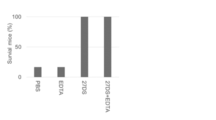
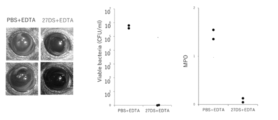
- Viable bacteria count results Viable bacteria count results Morphological observation of bactericidal activity against Pseudomonas aeruginosa strain PAO1 Comparison of turbidity and morphological observations of Pseudomonas aeruginosa strain PAO1 Inhibitory effect on growth of Pseudomonas aeruginosa strain PAO1 Bactericidal activity against Pseudomonas aeruginosa Bactericidal effect against various bacteria Results of a two-day observation of survival in a mouse model of sepsis Methods and results of therapeutic experiments in mice infected with Pseudomonas aeruginosa Efficacy study results for keratitis mouse model
- the antibacterial protein of the present invention comprises an outer membrane-permeable polypeptide and an endolysin.
- the outer membrane-permeable polypeptide and the endolysin may be linked directly or via a suitable linker.
- the linker may be a polypeptide containing one amino acid or two or more amino acids.
- amino acid includes the 20 types of amino acids that make up proteins (Gly, Ala, Met, Ser, Thr, Cys, Met, Asp, Asn, Glu, Gln, Leu, Ile, Val, His, Lys, Arg, Phe, Tyr, and Trp).
- the deletion of an amino acid refers to the selection and deletion of an arbitrary amino acid from the amino acid sequence of an outer membrane-permeable polypeptide or an endolysin.
- the insertion of an amino acid refers to the insertion of one to several amino acids at a site other than the N-terminus or C-terminus of the amino acid sequence of an outer membrane-permeable polypeptide or an endolysin.
- the addition of an amino acid refers to the addition of one to several amino acids at the N-terminus or C-terminus of the amino acid sequence of an outer membrane-permeable polypeptide or an endolysin. Examples of amino acid substitutions include conservative amino acid substitutions.
- Conservative amino acid substitutions refer to the substitution of amino acids with similar properties such as polarity, electrical properties, and structural properties, such as hydrophobic amino acids, polar amino acids, acidic amino acids, basic amino acids, amino acids with branched side chains, and aromatic amino acids.
- hydrophobic (non-polar) amino acids include glycine, alanine, valine, leucine, isoleucine, and proline; examples of polar amino acids include serine, threonine, cysteine, methionine, asparagine, and glutamine; examples of acidic amino acids include aspartic acid and glutamic acid; examples of basic amino acids include lysine, arginine, and histidine; examples of amino acids with branched side chains include valine, isoleucine, and leucine; examples of aromatic amino acids include phenylalanine, tyrosine, tryptophan, and histidine.
- Preferred conservative amino acid substitutions include substitutions between amino acids selected from valine, leucine, and isoleucine, phenylalanine and tyrosine, lysine and arginine, alanine and valine, and asparagine and glutamine.
- deletion, substitution, insertion and/or addition of amino acids can be achieved by modifying the gene encoding the antibacterial protein, outer membrane permeable polypeptide or endolysin by methods known in the art.
- Mutations can be introduced into the gene by known methods such as the Kunkel method or the gapped duplex method or methods equivalent thereto, for example, by using a mutation introduction kit that utilizes site-directed mutagenesis (e.g. Mutant-K (manufactured by TAKARA Bio), Mutant-G (manufactured by TAKARA Bio)) or the like, or by using the LA PCR in vitro Mutagenesis series kit (manufactured by TAKARA Bio).
- Mutant-K manufactured by TAKARA Bio
- Mutant-G manufactured by TAKARA Bio
- LA PCR in vitro Mutagenesis series kit manufactured by TAKARA Bio
- the number of amino acids in the linker is preferably 1, 2, 3, 4, 5, 6, 7, 8, 9 or 10, more preferably 1, 2, 3, 4, 5 or 6, and even more preferably 1, 2, 3 or 4.
- the outer membrane permeable polypeptide and the endolysin are preferably directly linked.
- the outer membrane permeable polypeptide is preferably present on the C-terminal side of the endolysin.
- Outer membrane-permeable polypeptides and polynucleotides encoding the same Outer membrane-permeable polypeptides are the following polypeptides (i) to (iii): (i) a polypeptide consisting of the amino acid sequence represented by SEQ ID NO:1 (ii) A polypeptide having an amino acid sequence in which one or several amino acids have been deleted, substituted, inserted and/or added in the amino acid sequence represented by SEQ ID NO: 1 and having permeability to the lipopolysaccharide-containing outer membrane of Gram-negative bacteria.
- the polypeptide represented by SEQ ID NO: 1 is a polypeptide in which the following D domain and S domain are linked, with the D domain located at the N-terminus and the S domain located at the C-terminus of the polypeptide (DS).
- a polypeptide having an S domain at the N-terminus and a D domain at the C-terminus (SD) has a significantly weaker effect of enhancing the antibacterial activity of endolysin against gram-negative bacteria than DS.
- Amino acid sequence of the D domain (SEQ ID NO: 3): NSGTPKNVSRGTSSTKTTPKYKVKNGDNLTKIAKKHNTTVATLLKLNPGIKDPNMIRVGQTLNVTGSGGKTHKVKSGDTLSKIAVDNKTTVSKLMNLNPEITNPNHIKVGQTIRLS
- Amino acid sequence of S domain (SEQ ID NO: 4): RKLRRLKRKIAHKVKKY
- a particularly preferred outer membrane permeable polypeptide is that set forth in SEQ ID NO:1.
- one or several (e.g., 9, 8, 7, 6, 5, 4, 3, 2) amino acids of the polypeptide represented by SEQ ID NO:1 may be deleted, substituted, inserted, and/or added.
- the outer membrane permeable polypeptide may have a sequence identity of 80% or more, 81% or more, 82% or more, 83% or more, 84% or more, 85% or more, 86% or more, 87% or more, 88% or more, 89% or more, 90% or more, 91% or more, 92% or more, 93% or more, 94% or more, 95% or more, 96% or more, 97% or more, 98% or more, or 99% or more with the amino acid sequence represented by SEQ ID NO: 1.
- the sequence identity value indicates a value calculated with default settings using software (e.g., FASTA, DANASYS, and BLAST) that calculates identity between multiple amino acid sequences.
- the polynucleotide is a polynucleotide that encodes an outer membrane permeable polypeptide.
- a polynucleotide encoding a preferred outer membrane permeable polypeptide of the present invention is (iv) a polynucleotide consisting of a DNA sequence encoding the amino acid sequence represented by SEQ ID NO:1; (v) a polynucleotide consisting of a DNA sequence represented by SEQ ID NO:2. (vi) A polynucleotide having a DNA sequence that has 80% or more sequence identity with a polynucleotide having the DNA sequence of (iv) or (v) and that encodes a polypeptide that has lipopolysaccharide-containing outer membrane permeability of Gram-negative bacteria.
- the polynucleotide encoding the outer membrane permeable polypeptide may have sequence identity of 80% or more, 81% or more, 82% or more, 83% or more, 84% or more, 85% or more, 86% or more, 87% or more, 88% or more, 89% or more, 90% or more, 91% or more, 92% or more, 93% or more, 94% or more, 95% or more, 96% or more, 97% or more, 98% or more, or 99% or more with a polynucleotide consisting of a DNA sequence encoding the amino acid sequence represented by SEQ ID NO:1 or a polynucleotide represented by SEQ ID NO:2.
- the sequence identity value indicates a value calculated with default settings using software (e.g., FASTA, DANASYS, and BLAST) that calculates identity between multiple amino acid sequences.
- Endolysin Endolysin is a protein having peptidoglycan decomposition activity.
- peptidoglycan decomposition activity refers to an activity of binding to or recognizing peptidoglycan in the cell wall of gram-negative bacteria including Pseudomonas aeruginosa, and cleaving the peptidoglycan to specifically cause bacteriolysis.
- endolysin known endolysins are widely used, for example, endolysins derived from phages of Gram-negative bacteria.
- Specific endolysins include a polypeptide ply_pitti26 isolated from the lytic phage pitti26 for use in staphylococcal infection symptoms (JP Patent Publication No. 2010-536354), an endolysin from S. aureus phage ⁇ 2638a (JP Patent Publication No. 6261086), an endolysin derived from phage phi MR11 (J Infect Dis.
- Non-Patent Documents 1 to 3 the endolysin derived from the Bacillus amyloliquefaciens phage (FEBS Letter. 500(1-2), 56-59, 2001), and the Artilysins (mBio. 2014 Jul. 1;5(4):e01379-14. doi: 10.1128/mBio.01379-14.).
- the endolysin contained in the antibacterial protein of the present invention may be a modified protein thereof, so long as it has the above-mentioned peptidoglycan decomposition activity.
- Modified proteins include proteins consisting of an amino acid sequence in which one or several (e.g., 9, 8, 7, 6, 5, 4, 3, 2) amino acids have been deleted, substituted, inserted, and/or added to the amino acid sequence of a known endolysin, and have peptidoglycan decomposition activity, and proteins consisting of an amino acid sequence that has 80% or more, 81% or more, 82% or more, 83% or more, 84% or more, 85% or more, 86% or more, 87% or more, 88% or more, 89% or more, 90% or more, 91% or more, 92% or more, 93% or more, 94% or more, 95% or more, 96% or more, 97% or more, 98% or more, 99% or more sequence identity to the amino acid sequence of a known endolysin, and have peptid
- the antibacterial protein of the present invention comprises an outer membrane permeable polypeptide and an endolysin.
- a preferred antibacterial protein has an endolysin at the N-terminus and an outer membrane permeable polypeptide at the C-terminus.
- the antibacterial protein can be linked to tags such as Strep tag, His tag, Flag tag, Xpress tag, Avi tag, calmodulin tag, polyglutamate tag, HA tag, Myc tag, Nus tag, S tag, X tag, SBP tag, Sof tag, V5 tag, CBP, GST, MBP, GFP, thioredoxin tag, or a combination thereof.
- a 6xHis tag is preferred.
- the antibacterial protein, antibacterial agent, disinfectant, antibacterial composition and disinfectant composition of the present invention are effective against gram-negative bacteria, particularly multidrug-resistant gram-negative bacteria.
- gram-negative bacteria include Pseudomonas aeruginosa, Escherichia coli, enterohemorrhagic Escherichia coli (EHEC), Enterobacteriaceae, Vibrio, Campylobacter, Salmonella, Legionella, cholera, Haemophilus influenzae, Klebsiella, Enterobacter, Serratia, Pertussis, Yersinia, Pseudomonas, Helicobacter pylori, and more specifically, Escherichia coli, Klebsiella pneumoniae, Pseudomonas aeruginosa, Enterobacter spp., Serratia marcescens, Acinetobacter spp., Proteus spp., Klebsiella oxytoca,
- Multidrug-resistant gram-negative bacteria include multidrug-resistant Acinetobacter (MDRA), multidrug-resistant Pseudomonas aeruginosa (MDRP), and carbapenem-resistant Enterobacteriaceae.
- MDRA multidrug-resistant Acinetobacter
- MDRP multidrug-resistant Pseudomonas aeruginosa
- Enterobacteriaceae carbapenem-resistant Enterobacteriaceae.
- the antibacterial protein of the present invention can be produced by genetic engineering methods using a polynucleotide containing a gene that encodes it.
- it can be produced by a method in which RNA is prepared by in vitro transcription from a recombinant vector having a polynucleotide containing a gene that encodes the antibacterial protein, and then this is used as a template for in vitro translation, or by a method in which a polynucleotide containing a gene that encodes the antibacterial protein is operably linked to and incorporated into a suitable vector, which is then introduced into a host cell to produce a transformed cell, and the desired antibacterial protein is expressed from the transformed cell.
- expression includes any step involved in the production of a protein, including transcription, post-transcriptional modification, translation, post-translational modification, and secretion.
- the vector can be appropriately selected and used from those suitable for the host cell into which it is introduced.
- the vector also contains a polynucleotide containing a gene encoding the antibacterial protein of the present invention operably linked to an appropriate promoter, and preferably contains a transcription termination signal, i.e., a terminator region, downstream of the polynucleotide. It can also contain a selection marker gene (drug resistance gene, gene complementing auxotrophic mutation, etc.) for selecting transformants. It can also contain a sequence encoding a tag sequence useful for separating and purifying the expressed protein.
- the vector can also be one that is incorporated into the genome of the host cell.
- the vector can be introduced into the host cell by a transformation method known per se, such as the competent cell method, the protoplast method, or the calcium phosphate coprecipitation method.
- the host cells into which the vector is introduced and used to express the recombinant protein may be any cells capable of expressing the vector, including commonly used known microorganisms such as bacteria, yeast, fungi, and mammalian cells. Examples of bacteria include gram-positive bacteria such as Bacillus or Streptomyces.
- the recombinant cells can be cultured by a known method suitable for the host cells.
- the expressed protein can be purified by collecting the cells from the culture supernatant of the host cells by centrifugation or the like, grinding them with ultrasound or glass beads, etc., removing solid matter such as cell debris by centrifugation or the like to prepare a crude enzyme solution, and then using one or more of the known methods used for purifying proteins or peptides, such as ammonium sulfate salting out, precipitation separation with organic solvents (ethanol, methanol, acetone, etc.), ion exchange chromatography, isoelectric focusing chromatography, gel filtration chromatography, hydrophobic chromatography, adsorption column chromatography, affinity chromatography using a substrate or antibody, etc., reverse phase column chromatography, chromatography such as HPLC, and filtration processes such as microfiltration, ultrafiltration, and reverse osmosis filtration, in combination.
- the known methods used for purifying proteins or peptides such as ammonium sulfate salting out, precipitation separation with organic solvents (ethanol
- the antibacterial protein of the present invention can also be produced by chemical synthesis based on its amino acid sequence.
- chemically synthesizing an antibacterial protein it can be done by known chemical synthesis methods such as the Fmoc method (fluorenylmethyloxycarbonyl method) and the tBoc method (t-butyloxycarbonyl method).
- the present invention also provides the antibacterial protein, antibacterial agent or disinfectant, pharmaceutical composition, and antibacterial agent composition or disinfectant composition of the present invention for use as a human medicine.
- the antibacterial agent, disinfectant, antibacterial agent composition, and disinfectant composition of the present invention may contain a "pharmaceutical acceptable carrier.” Acceptable for use in mammals, including humans, include any adjuvant, carrier, excipient, glidant, sweetener, diluent, preservative, dye/colorant, flavoring, surfactant, wetting agent, dispersant, suspending agent, stabilizer, isotonic agent, solvent, surfactant, or emulsifier approved by the Japanese Pharmacopoeia, the U.S. Food and Drug Administration, etc.
- Exemplary pharma- ceutically acceptable carriers include, but are not limited to, sugars such as lactose, glucose, and saccharose; starches such as corn starch and potato starch; cellulose and its derivatives such as sodium carboxymethylcellulose, ethylcellulose, and cellulose acetate; tragacanth; malt; gelatin; talc; cocoa butter, waxes, tallow and vegetable fats, paraffin, silicones, bentonite, silicic acid, zinc oxide; oils such as peanut oil, cottonseed oil, safflower oil, sesame oil, olive oil, corn oil, and soybean oil; glycols such as propylene glycol; polyols such as glycerin, sorbitol, mannitol, and polyethylene glycol; esters such as ethyl oleate and ethyl laurate; agar; buffers such as magnesium hydroxide and aluminum hydroxide, alginic acid, pyrogen-free water,
- the antimicrobial agents, disinfectants, antimicrobial compositions and disinfectant compositions of the present invention are formulated for parenteral administration, e.g., intravascular (intravenous or intraarterial) administration.
- parenteral administration e.g., intravascular (intravenous or intraarterial) administration.
- the antimicrobial agents and antimicrobial compositions contemplated herein may be injected intravenously into a mammalian subject, such as a human, in a single dose.
- Preferred embodiments of the antibacterial agent, disinfectant, antibacterial composition, and disinfectant composition of the present invention include use for diseases such as pneumonia, bacteremia, septicemia, tetanus, Salmonella infection, meningitis, scarlet fever, grassland fever, sexually transmitted bacterial diseases, surgical site infections, necrotizing fasciitis, Escherichia coli infection, bacterial skin diseases, Campylobacter infection, cholera, gastritis, peptic ulcer, diarrhea, dysentery, food poisoning, typhoid fever, Legionnaires' disease, opportunistic infections, urinary tract infections, and whooping cough, or use for disinfecting hands, medical instruments, or medical materials.
- they can be used for the purpose of disinfecting medical instruments and peripherals in the eyes, urinary system, or respiratory system where Pseudomonas aeruginosa may occur.
- Another preferred embodiment of the present invention is for ophthalmic diseases, and can be used in the form of eye drops, eye ointments, etc. to treat keratitis, corneal ulcers, blepharitis, conjunctivitis, styes, blepharitis, dacryocystitis, prevent bacterial infections before and after ophthalmic surgery including cataract surgery, and as a contact lens preservative.
- the antibacterial protein of the present invention can also be used for animals (veterinary).
- the antibacterial protein, antibacterial agent or disinfectant, pharmaceutical composition and antibacterial agent or disinfectant composition of the present invention will typically be administered in an acceptable formulation according to normal veterinary practice, and a veterinarian can determine the dosage regimen and route of administration that is most suitable for a particular animal.
- they may contain the aforementioned "pharmaceutical acceptable carriers,” use the aforementioned routes of administration, and be used for the aforementioned purposes of disinfection or for the prevention or treatment of disease against ophthalmic diseases.
- the term "animal” includes mammals, non-mammals, birds, etc., and preferably, the animals of the present invention are livestock, pet animals, laboratory animals, farm animals, etc. More specifically, the animals of the present invention include, but are not limited to, cows, horses, donkeys, camels, alpacas, pigs, goats, sheep, dogs, cats, chinchillas, rabbits, minks, ferrets, guinea pigs, mice, rats, hedgehogs, weasels, kangaroos, chimpanzees, gorillas, orangutans, cynomolgus monkeys, baboons, chickens, pigeons, turkeys, pheasants, ostriches, guinea fowl, ducks, and the like.
- the antibacterial protein of the present invention when used in veterinary medicine, it can also be used for the purpose of preventing or treating typical infectious diseases in animals.
- typical infectious diseases in animals include those described in Journal of the Japanese Society of Veterinary Medicine 29, 429-433 (1976).
- infectious diseases in animals that are the target of the antibacterial protein of the present invention include, but are not limited to, acute or chronic mastitis, genital infection, septicemia, and sole ulcers (foot disease) in cattle; endometritis, genital infection, and pulmonary suppuration in horses; bronchopneumonia, fibrous pleurisy, and hemorrhagic enteritis in pigs; otitis externa, genital infection, urethritis, endocarditis, pneumonia, septicemia, and eye inflammation in dogs; and otitis externa, genital infection, urethritis, endocarditis, pneumonia, septicemia, and eye inflammation in cats.
- the present invention provides the use of an antimicrobial protein of the present invention in the manufacture of a human or veterinary medicament for the prevention or treatment of a medical condition caused by a Gram-negative bacterial infection in a human or animal.
- Example 1 We created a protein by fusing endolysin from Pseudomonas aeruginosa phage PAJU2 (YP_002284408; 138 aa; sequence number 5), a partial sequence of endolysin [Bacillus amyloliquefaciens phage Morita2001] (143-258 aa of AAK40280; sequence number 6), and the peptide SMAP17 (RKLRRLKRKIAHKVKKY), which is a mutated peptide with a partial sequence of ovine antibacterial peptide SMAP29 (1-17 aa of AAA85470; sequence number 7).
- the base sequence used is as follows:
- the fusion genes DS and SD were cloned, and 27 was cloned, and the cloning was carried out so that a protein fused with 27 and DS or SD could be expressed. There is a restriction enzyme site at each end.
- SalI-DS-XbaI, SalI-SD-XbaI, SacI-DS-XhoI, and SacI-SD-XhoI were introduced into pColdII XhoI-27-EcoRI to create the following fusion protein expression plasmids.
- Expression method 1 One colony was picked from LB medium containing 100 ⁇ g/ml ampicillin, inoculated into an LB medium solution containing 100 ⁇ g/ml ampicillin, and cultured overnight at 37° C. with shaking. 2. Add the bacteria that have been cultured overnight to the culture medium (LB + 100 ⁇ g/ml ampicillin), and when the OD600 reaches 1.0, cool the culture medium on ice and leave it for 30 minutes. *It takes time to reach OD1.0, so for 1L culture, about 40ml of overnight cultured bacteria is needed. *In Takara's protocol, the OD600 is 0.4 to 0.5, but when the expression of this protein was examined, the highest expression level was found at OD1.0. 3. IPTG was added to a final concentration of 1.0 mM, and the mixture was cultured with shaking at 15°C for 24 hours.
- HIGH Density COBALT (Protenova, Kagawa, Japan) equilibrated with 100 mM phosphate buffer (300 mM NaCl, pH 7.8) was added to the resulting supernatant and allowed to bind overnight at 4°C with rotation. 4. The protein-bound HIGH Density COBALT was allowed to fall by gravity, and the excess turbid liquid (supernatant) was discarded. 5. 25 ml of 100 mM phosphate buffer (300 mM NaCl, pH 7.8) was added, and the HIGH Density COBALT was washed for 10 minutes with rotation at 4°C. 6.
- HMELGTLEMRTSQRGIDLIKSFEGLRLSAYQDSVGVWTIGYGTTRGVTRYMTITVEQAERMLSNDIQRFEPELDRLAKVPLNQNQWDALMSFVYNLGAANLASSTLLKLLNKGDYQGAADQFPRWVNAGGKRLDGLVKRRAAERALFLEPLSKL VDNSGTPKNVSRGTSSTKTTPKYKVKNGDNLTKIAKKHNTTVATLLKLNPGIKDPNMIRVGQTLNVTGSGGKTHKVKSGDTLSKIAVDNKTTVSKLMNLNPEITNPNHIKVGQTIRLSRKLRRLKRKIAHKVKKYSRHHHHHH (54+62 116) >27DS (SEQ ID NO:9) HMMRTSQRGIDLIKSFEGLRLSAYQDSVGVWTIGYGTTRGVTRYMTITVEQAERMLSNDIQRFEPELDRLAK
- Example 2 Examination of the in vitro bactericidal effect of "27DS" [Preparation of bacteria] 0.25 ml of P. aeruginosa PAO1 strain cultured overnight was added to 7 ml LB broth (18 mm test tube) and incubated with shaking at 37°C. ⁇ After 2-3 hours, use a Taitec digital colorimeter and simple OD monitor miniphoto518R, and when the OD 660 reaches around 0.6, collect it. ⁇ Wash once with PBS (centrifuge, discard supernatant, resuspend in PBS, centrifuge, add PBS). ⁇ Using a 96-well spectrophotometer (Multi-scan FC, ThermoFisher Scientific), the bacterial turbidity was adjusted with PBS to an OD 595 of 0.5 to 1.0.
- the cells were incubated with shaking at 37°C for 30 min, and gluteraldehyde (2%) was added to stop the reaction. After centrifugation, the cells were coated with 1% agarose and washed with PBS containing 5% sucrose. They were fixed with 1.5% osmium tetroxide in 0.1 mol/l phosphate buffer containing 5% sucrose for 1 h at 4°C, and then dehydrated using graded ethanol solutions. The fixative was replaced with propylene oxide, and the samples were embedded in epoxy resin. Ultrathin sections were prepared, stained with uranyl acetate and lead citrate, and observed under a transmission electron microscope (Figure 3).
- Bacterial proportion (%) bacterial concentration (treatment group; cfu/mL)/ bacterial concentration (PBS group; cfu/mL) 27DS alone can kill Pseudomonas aeruginosa, including multidrug-resistant Pseudomonas aeruginosa. 27DS+EDTA shows a very high bactericidal effect.
- 27DS and 27DS+EDTA treatments showed weak bactericidal activity against Klebsiella pneumoniae (Klebsiella pneumoniae NDM3, Klebsiella pneumoniae IID5209).
- Example 3 Efficacy of "27DS" in an infected mouse model 3.1. Efficacy study in a septic mouse model Pseudomonas aeruginosa PAO1 was cultured in LB medium, raised to mid-log phase, and washed three times with saline. 6.8 x 10 6 bacteria/mL of P. aeruginosa PAO1 suspended in saline was prepared.
- Example 4 Resistant bacteria of 27DS are unlikely to occur 27DS was subcultured and the minimum inhibitory concentration (MIC) was measured before and after the culture. The measurement method was in accordance with the CLSI (Clinical & Laboratory Standards Institute) Guidelines. Even after 20 subcultures, no change was observed in the MIC value of the bacterial strain, suggesting that resistant bacteria of 27DS are unlikely to occur.
- CLSI Circal & Laboratory Standards Institute
Landscapes
- Health & Medical Sciences (AREA)
- Life Sciences & Earth Sciences (AREA)
- Chemical & Material Sciences (AREA)
- Organic Chemistry (AREA)
- Engineering & Computer Science (AREA)
- General Health & Medical Sciences (AREA)
- Genetics & Genomics (AREA)
- Medicinal Chemistry (AREA)
- Zoology (AREA)
- Proteomics, Peptides & Aminoacids (AREA)
- Molecular Biology (AREA)
- Biochemistry (AREA)
- Bioinformatics & Cheminformatics (AREA)
- Chemical Kinetics & Catalysis (AREA)
- General Chemical & Material Sciences (AREA)
- Pharmacology & Pharmacy (AREA)
- Animal Behavior & Ethology (AREA)
- Public Health (AREA)
- Veterinary Medicine (AREA)
- Wood Science & Technology (AREA)
- Biophysics (AREA)
- Gastroenterology & Hepatology (AREA)
- Biomedical Technology (AREA)
- Biotechnology (AREA)
- Plant Pathology (AREA)
- Microbiology (AREA)
- Nuclear Medicine, Radiotherapy & Molecular Imaging (AREA)
- Environmental Sciences (AREA)
- General Engineering & Computer Science (AREA)
- Virology (AREA)
- Pest Control & Pesticides (AREA)
- Epidemiology (AREA)
- Toxicology (AREA)
- Communicable Diseases (AREA)
- Immunology (AREA)
- Physics & Mathematics (AREA)
- Oncology (AREA)
- Agronomy & Crop Science (AREA)
- Dentistry (AREA)
- Ophthalmology & Optometry (AREA)
Abstract
Description
しかしながら、低分子化合物ライブラリーには限りがあり、新規の作用機序を有する感染症薬の発見が極めて、難しい状況にある。このような状況があるため、今日、抗菌ペプチド、ファージ、エンドライシンが全く異なる感染症薬の新規モダリティとして研究されている。
〔1〕
以下の(i)~(iii)のグラム陰性菌のリポ多糖含有外膜透過性を有するポリペプチド:
(i) 配列番号1で表されるアミノ酸配列からなるポリペプチド、
配列番号1:NSGTPKNVSRGTSSTKTTPKYKVKNGDNLTKIAKKHNTTVATLLKLNPGIKDPNMIRVGQTLNVTGSGGKTHKVKSGDTLSKIAVDNKTTVSKLMNLNPEITNPNHIKVGQTIRLSRKLRRLKRKIAHKVKKY
(ii) 配列番号1で表されるアミノ酸配列において、1若しくは数個のアミノ酸が欠失、置換、挿入及び/又は付加されたアミノ酸配列からなり、かつ、グラム陰性菌のリポ多糖含有外膜透過性を有するポリペプチド、
(iii) 配列番号1で表されるアミノ酸配列と80%以上の配列同一性を有するアミノ酸配列からなり、かつ、グラム陰性菌のリポ多糖含有外膜透過性を有するポリペプチド。
〔2〕
以下の(iv)~(vi)のポリヌクレオチド:
(iv) 〔1〕に記載のポリペプチドをコードするDNA配列からなるポリヌクレオチド、
(v) 配列番号2で表されるDNA配列からなるポリヌクレオチド、
配列番号2:AATTCTGGCACGCCTAAGAACGTATCGCGCGGCACGTCATCCACGAAGACGACGCCTAAGTACAAGGTAAAGAACGGCGATAATCTCACCAAAATTGCCAAGAAACACAATACGACAGTGGCTACTTTATTAAAACTCAATCCAGGCATTAAAGATCCGAACATGATTCGTGTCGGTCAAACATTAAATGTGACAGGGAGCGGCGGTAAGACACACAAAGTAAAGAGTGGTGATACCTTGAGCAAGATTGCCGTGGATAATAAGACTACAGTTAGTAAGTTGATGAATTTGAATCCTGAGATCACAAATCCTAATCATATCAAAGTAGGGCAGACCATTCGCTTAAGCCGGAAGCTCCGTCGGCTTAAACGTAAGATCGCTCACAAGGTAAAAAAATAT
(vi) (iv)又は(v)のDNA配列からなるポリヌクレオチドと配列同一性が80%以上のDNA配列からなり、かつ、グラム陰性菌のリポ多糖含有外膜透過性を有するポリペプチドをコードするポリヌクレオチド。
〔3〕
エンドライシンと〔1〕に記載のポリペプチドを含み、前記エンドライシンのN末端側またはC末端側に請求項1に記載のポリペプチドを含む抗菌性タンパク質。
〔4〕
〔3〕に記載の抗菌性タンパク質をコードするポリヌクレオチド。
〔5〕
〔3〕に記載の抗菌性タンパク質を含むグラム陰性菌に対する抗菌剤又は消毒剤。
〔6〕
グラム陰性菌が多剤耐性菌または緑膿菌である、〔5〕に記載の抗菌剤又は消毒剤。
〔7〕
〔3〕に記載の抗菌性タンパク質を含む医薬組成物。
〔8〕
前記緑膿菌の対象となる疾患が、角膜炎、涙嚢炎、眼内炎、蜂窩織炎による眼感染症、敗血症、肺炎、多剤耐性グラム陰性菌感染症、日和見感染症、又はその他、緑膿菌が起因する疾患から選択される1種又は複数種の疾患である〔7〕に記載の医薬組成物。
〔9〕
〔3〕に記載の抗菌性タンパク質と外膜透過剤と含み、前記外膜透過剤がエチレンジアミン四酢酸(EDTA)又はその塩である、抗菌剤組成物又は消毒剤組成物。
〔10〕
グラム陰性菌が多剤耐性菌または緑膿菌である、〔9〕に記載の抗菌剤組成物又は消毒剤組成物。
〔11〕
〔3〕に記載の抗菌性タンパク質を含む医薬組成物をヒトに投与することを含む、グラム陰性菌の感染に起因する疾患を予防またはグラム陰性菌を殺菌する方法。
〔12〕
〔3〕に記載の抗菌性タンパク質を含む医薬組成物を動物に投与することを含む、グラム陰性菌の感染に起因する疾患を予防またはグラム陰性菌を殺菌する方法。
本明細書において、「含有する(comprise)」は、「実質的にのみからなる(consist essentially of)」、及び「のみからなる(consist of)」も包含する概念である。
外膜透過性ポリペプチドは、以下の(i)~(iii)のポリペプチドである。
(i) 配列番号1で表されるアミノ酸配列からなるポリペプチド
(ii) 配列番号1で表されるアミノ酸配列において、1若しくは数個のアミノ酸が欠失、置換、挿入及び/又は付加されたアミノ酸配列からなり、かつ、グラム陰性菌のリポ多糖含有外膜透過性を有するポリペプチド
(iii) 配列番号1で表されるアミノ酸配列と80%以上の配列同一性を有するアミノ酸配列からなり、かつ、グラム陰性菌のリポ多糖含有外膜透過性を有するポリペプチド
配列番号1で表されるポリペプチドは、下記のDドメインとSドメインを連結したものであり、ポリペプチドのN末端側にDドメイン、C末端側にSドメインを配置する(DS)。N末端側にSドメイン、C末端側にDドメインを有するポリペプチド(SD)は、グラム陰性菌に対するエンドライシンの抗菌作用を高める作用がDSに対して著しく弱い。Dドメインのアミノ酸配列(配列番号3):NSGTPKNVSRGTSSTKTTPKYKVKNGDNLTKIAKKHNTTVATLLKLNPGIKDPNMIRVGQTLNVTGSGGKTHKVKSGDTLSKIAVDNKTTVSKLMNLNPEITNPNHIKVGQTIRLS
Sドメインのアミノ酸配列(配列番号4):RKLRRLKRKIAHKVKKY
特に好ましい外膜透過性ポリペプチドは、配列番号1で表されるものである。
(iv) 配列番号1で表されるアミノ酸配列をコードするDNA配列からなるポリヌクレオチド(v) 配列番号2で表されるDNA配列からなるポリヌクレオチド
(vi) (iv)又は(v)のDNA配列からなるポリヌクレオチドと配列同一性が80%以上のDNA配列からなり、かつ、グラム陰性菌のリポ多糖含有外膜透過性を有するポリペプチドをコードするポリヌクレオチド
である。
エンドライシンは、ペプチドグリカン分解活性を有するタンパク質である。本明細書において、「ペプチドグリカン分解活性」とは、緑膿菌を含むグラム陰性菌の細胞壁のペプチドグリカンに結合若しくはペプチドグリカンを認識し、これを切断して特異的に溶菌を起こす活性をいう。
本発明の抗菌性タンパク質は、外膜透過性ポリペプチドとエンドライシンを含むものである。好ましい抗菌性タンパク質は、エンドライシンがN末端側、外膜透過性ポリペプチドがC末端側にあるのが好ましい。抗菌性タンパク質は、Strepタグ、Hisタグ、Flagタグ、Xpressタグ、Aviタグ、カルモジュリンタグ、ポリグルタミン酸塩タグ、HAタグ、Mycタグ、Nusタグ、Sタグ、Xタグ、SBPタグ、Sofタグ、V5タグ、CBP、GST、MBP、GFP、チオレドキシンタグ、またはそれらの組み合わせなどのタグを結合させることができる。6xHisタグが好ましい。
実施例1
緑膿菌ファージPAJU2のエンドライシン(YP_002284408;138aa;配列番号5)、endolysin [Bacillus amyloliquefaciens phage Morita2001]の部分配列(AAK40280の143-258aa;配列番号6)、羊の抗菌ぺプチドSMAP29の部分配列(AAA85470の1-17aa;配列番号7)に変異を加えたペプチドSMAP17(RKLRRLKRKIAHKVKKY)を融合させたタンパク質を創出した。

pBluescript SK(-) SalI-DS-XbaI
pBluescript SK(-) SalI-SD-XbaI
pBluescript SK(-) SacI-DS-XhoI
pBluescript SK(-) SacI-SD-XhoI
pColdII XhoI-27-EcoRI

上記のプラスミドをBL21株へ導入した。
タンパク質の発現のプロトコルは、以下のとおりである。
1. 100 μg/mlアンピシリンを含むLB培地上の1コロニーをひろい、100 μg/mlアンピシリンを含むLB培地溶液に植菌し、37℃で振とうさせながら一晩培養した。
2.培養液(LB+100μg/mlアンピシリン)に一晩培養した菌をいれ、OD600が1.0となった時点で培養液を氷冷させ、30分間放置する。
※OD1.0になるまで時間がかかるため、1L培養液の場合、一晩培養菌は約40ml
※takaraのプロトコルでは、OD600が0.4~0.5であるが、このタンパク質の発現の検討をした結果、OD1.0で発現量が最も高い。
3. 1.0 mMとなるようにIPTGを添加し、15℃で24時間振とう培養した。
1.培養終了後、遠心分離(10,000 × g, 10分, 4 ℃)し、ペレットを取得した。
2.菌ペレットに100 mMリン酸緩衝液(300 mM NaCl, pH 7.8)を25 mLいれ、Q700 超音波ホモジナイザー(ワケンビーテック株式会社、京都、日本)を使用して、氷上で5分間(5secON/5secOFF)を行った。(培養液250 mLに対して、25 mLのリン酸緩衝液)
3.超音波処理後、遠心(8,000 × g, 20分, 4 ℃)し、上清を回収した。得られた上清に、100 mMリン酸緩衝液(300 mM NaCl, pH 7.8)で平衡化したHIGH Density COBALT(プロテノバ株式会社、香川、日本)を加え、4℃一晩回転させながら結合させた。
4.タンパクと結合したHIGH Density COBALTを自然落下させ、余分な混濁液(上清)を捨てた。
5.100 mMリン酸緩衝液(300 mM NaCl, pH 7.8)を25ml加え、HIGH Density COBALT を4℃で回転させながら10分間洗浄した。
6.そのあと、タンパクと結合したHIGH Density COBALTを自然落下させ、余分なリン酸緩衝液(上清)を捨てた。
7.5-6を2回繰り返した。
8.終濃度500mMイミダゾールを加えたリン酸緩衝液を500μl加え、溶出したタンパクを収集した。
7 ml LB broth(18 mm試験管)に一晩培養した緑膿菌PAO1株0.25 mlを添加し、37℃で振盪培養。
↓2~3時間
タイテック デジタル比色計 簡易ODモニター miniphoto518Rを使用して、OD660 0.6付近になったら、回収。
↓
PBSで1回wash(遠心、上清捨てる、PBSに懸濁、遠心、PBSを加える)。
↓
タイテック デジタル比色計 簡易ODモニター miniphoto518Rを使用して、OD660 0.2付近になるようにPBSで菌濁度を調整。
96ウエルプレートのウエルの中で以下を混和し、30分、37℃で振盪培養し、原液と段階希釈したものを角型シャーレに10μL滴下させた。培養した。
タンパク質処置:菌液50μL+タンパク質 25μL(final 0.1 mg/ml)+PBS 25μLコントロール:菌液50μL+PBS 50μL
EDTA添加したときのタンパク質の殺菌効果の検討(図1)
タンパク質処置:菌液50μL+タンパク質 25μL(final 0.025mg/ml)+EDTA 25μL(final 0.5 mM)
コントロール:菌液50μL+PBS 25μL+EDTA 25μL(final 0.5 mM)この結果から、最も活性の高い「27xDS」を選択した。

結果は図2に示す。
以上から、「27DS」を候補分子として選抜した。
>27xDS(配列番号8)
HMELGTLEMRTSQRGIDLIKSFEGLRLSAYQDSVGVWTIGYGTTRGVTRYMTITVEQAERMLSNDIQRFEPELDRLAKVPLNQNQWDALMSFVYNLGAANLASSTLLKLLNKGDYQGAADQFPRWVNAGGKRLDGLVKRRAAERALFLEPLSKLVDNSGTPKNVSRGTSSTKTTPKYKVKNGDNLTKIAKKHNTTVATLLKLNPGIKDPNMIRVGQTLNVTGSGGKTHKVKSGDTLSKIAVDNKTTVSKLMNLNPEITNPNHIKVGQTIRLSRKLRRLKRKIAHKVKKYSRHHHHHH(54+62=116)
>27DS(配列番号9)
HMMRTSQRGIDLIKSFEGLRLSAYQDSVGVWTIGYGTTRGVTRYMTITVEQAERMLSNDIQRFEPELDRLAKVPLNQNQWDALMSFVYNLGAANLASSTLLKLLNKGDYQGAADQFPRWVNAGGKRLDGLVKRRAAERALFLEPLSNSGTPKNVSRGTSSTKTTPKYKVKNGDNLTKIAKKHNTTVATLLKLNPGIKDPNMIRVGQTLNVTGSGGKTHKVKSGDTLSKIAVDNKTTVSKLMNLNPEITNPNHIKVGQTIRLSRKLRRLKRKIAHKVKKYHHHHHH
>27DS(配列番号10)
ATGATGCGTACATCCCAACGAGGCATCGACCTCATCAAATCCTTCGAGGGCCTGCGCCTGTCCGCTTACCAGGACTCGGTGGGTGTCTGGACCATAGGTTACGGCACCACTCGGGGCGTCACCCGCTACATGACGATCACCGTCGAGCAGGCCGAGCGGATGCTGTCGAACGACATTCAGCGCTTCGAGCCAGAGCTAGACAGGCTGGCGAAGGTGCCACTGAACCAGAACCAGTGGGATGCCCTGATGAGCTTCGTGTACAACCTGGGCGCGGCCAATCTGGCGTCGTCCACGCTGCTCAAGCTGCTGAACAAGGGTGACTACCAGGGAGCAGCGGACCAGTTCCCGCGCTGGGTGAATGCGGGCGGTAAGCGCTTGGATGGTCTGGTTAAGCGTCGAGCAGCCGAGCGTGCGCTGTTCCTGGAGCCACTATCGAATTCTGGCACGCCTAAGAACGTATCGCGCGGCACGTCATCCACGAAGACGACGCCTAAGTACAAGGTAAAGAACGGCGATAATCTCACCAAAATTGCCAAGAAACACAATACGACAGTGGCTACTTTATTAAAACTCAATCCAGGCATTAAAGATCCGAACATGATTCGTGTCGGTCAAACATTAAATGTGACAGGGAGCGGCGGTAAGACACACAAAGTAAAGAGTGGTGATACCTTGAGCAAGATTGCCGTGGATAATAAGACTACAGTTAGTAAGTTGATGAATTTGAATCCTGAGATCACAAATCCTAATCATATCAAAGTAGGGCAGACCATTCGCTTAAGCCGGAAGCTCCGTCGGCTTAAACGTAAGATCGCTCACAAGGTAAAAAAATATCATCATCATCATCATCATTAG
〔菌の調製〕
7 ml LB broth(18 mm試験管)に一晩培養した緑膿菌PAO1株0.25 mlを添加し、37℃で振盪培養。
↓2~3時間
タイテック デジタル比色計 簡易ODモニター miniphoto518Rを使用して、OD660 0.6付近になったら、回収。
↓
PBSで1回wash(遠心、上清捨てる、PBSに懸濁、遠心、PBSを加える)。
↓
96wellの吸光度測定機(ThermoFisher Scientific社Multi-scan FC)で、OD595 0.5~1.0になるようにPBSで菌濁度を調整。
96ウエルプレートのウエルの中に、以下をそれぞれミックスした。
27DSのみの殺菌効果の検討
27DS処置:菌液50μL+27DS 25μL(final 0.1 mg/ml)+PBS 25μLコントロール:菌液50μL+PBS 50μL
EDTA添加したときの27DSの殺菌効果の検討
27DS処置:菌液50μL+27DS 25μL(final 0.025 mg/ml)+EDTA 25μL(final 0.5 mM)コントロール:菌液50μL+PBS 25μL+EDTA 25μL(final 0.5 mM)
96ウエルプレートのウエルの中に、以下をそれぞれミックスした。
27DS処置:菌液50μL+27DS 25μL(final 0.1 mg/ml)
PBS 25μLコントロール:菌液50μL+PBS 50μL
0~180分間、37℃で振盪培養し、一定時間経過後、各時点のサンプルを595nmにて濁度測定し、その経時的変化をコントロールと比較した。コントロールでは実験期間の間で濁度がほぼ一定であったのに対し、27DSを添加したサンプルでは、0~60分間で濁度が上昇し、その後は濁度が減少することが観察され、PAO1株の増殖が阻害されていることが示唆された。また、このときの菌体を、2.1.に記載されたように処理して透過型電子顕微鏡で観察したところ、27DS処理に伴って菌体の形態変化を起こすことが示唆された(図4)。
10 ml LB broth(18 mm試験管)に一晩培養した緑膿菌PAO1株0.15 mlを添加し、37℃で振盪培養した。対数増殖期にある培養液(培養60分、OD600=0.2)において、片方にはコントロールとしてのPBS 0.1 ml、もう一方には27DS 0.1 ml(5 mg/ml)を加えた。その後培養開始から320分間まで培養を行った。その結果、培養320分間経過後のOD600の値はPBS添加コントロールでは約1.0であったのに対し、27DSを添加したサンプルではOD600の値は0.6程度にとどまっており、PAO1の増殖を阻害することが明らかとなった(図5)。
〔生菌数の測定プロトコル〕
96ウエルプレートのウエルの中に、以下をそれぞれミックスした。
27DSのみの殺菌効果の検討
27DS処置:菌液50μL+27DS 25μL(final 0.1 mg/ml)+PBS 25μLコントロール:菌液50μL+PBS 50μL
EDTA添加したときの27DSの殺菌効果の検討
27DS処置:菌液50μL+27DS 25μL(final 0.1 mg/ml)+EDTA 25μL(final 0.5 mM)コントロール:菌液50μL+PBS 25μL+EDTA 25μL(final 0.5 mM)30分、37℃で振盪培養し、原液と段階希釈したものを角型シャーレに10μL滴下させた。培養した。
Bacterial proportion (%) = 細菌の濃度(処置群; cfu/mL)/ 細菌の濃度(PBS群; cfu/mL)
多剤耐性緑膿菌を含む緑膿菌に対して27DSのみでも殺菌可能である。
27DS+EDTAの場合、非常に高い殺菌効果を示す。
Escherichia coli NDM2
Escherichia coli NDM4
Salmonella Typhimurium IID1000
Citrobacter freundii NIH10018-68
Escherichia coli DH5α
Acinetobacter calcoaceticus IAM1517
へは、27DS処置殺菌作用を示した。
27DS+EDTA処置では、高い殺菌作用を示した。
3.1.敗血症マウスモデルに対する有効性検討
緑膿菌PAO1をLB培地で培養し、mid-log phaseで引き上げ、3回 salineでwashした。Salineに懸濁した緑膿菌PAO1 6.8 × 10⁶ bacteria/mLを調製した。
0.2 mL 緑膿菌+0.2 mL EDTA(2 mM)
0.2 mL 緑膿菌+0.2 mL 27DS(0.2 mg/mL)
0.2 mL 緑膿菌+0.2 mL 27DS(0.2 mg/mL)+EDTA(2 mM)を混和し、0.4 mLを各郡6匹に腹腔投与した。
(この時の27DS 0.1 mg/mL, EDTA 1 mM)
マウスの生存に関して、2日間観察を行った。結果を図8に示す。
接種後、0 h, 2 h 6 h後に0.2mLのPBSあるいは以下の薬剤を投与した。方法および結果を図9に示す。
EDTA (2 mM)
27DS (0.2 mg/mL) + EDTA (2 mM)
緑膿菌PAO1をLB培地で培養し、mid-log phaseで引き上げ、3回 salineでwashした。
5 × 10⁴ cells/5μl
3本線の傷をつけて、菌を5 μl点眼
点眼後アンチセダンですぐ起こす
30分後、マウスを保持して抗菌酵素27DS(0.58mg/ml)+EDTA(10mM)を10μl点眼(1回のみ)
24時間後Sacrificed
眼球ごと採取、500μlのPBSで破砕、希釈後15μlの菌液を角型の選択培地へ滴下し、24時間培養した。
好中球のMyeloperoxidase(MPO)の測定用に125μl採取し、希釈せず測定した。結果を図10に示す。
27DS+EDTAが角膜炎に有効であることが明らかになった。
27DSを継代培養し、培養前と後での最小発育阻止濃度(MIC)の測定を行った。測定方法は、CLSI (Clinical & Laboratory Standards Institute)Guidelinesに準拠した。20回継代培養した後でも、菌体株のMICの値には変化が見られず、27DSの耐性菌は生じにくいことが示唆された。
Claims (12)
- 以下の(i)~(iii)のグラム陰性菌のリポ多糖含有外膜透過性を有するポリペプチド:
(i) 配列番号1で表されるアミノ酸配列からなるポリペプチド、
(ii) 配列番号1で表されるアミノ酸配列において、1若しくは数個のアミノ酸が欠失、置換、挿入及び/又は付加されたアミノ酸配列からなるポリペプチド、又は、
(iii) 配列番号1で表されるアミノ酸配列と80%以上の配列同一性を有するアミノ酸配列からなるポリペプチド。 - 以下の(iv)~(vi)のポリヌクレオチド:
(iv)請求項1に記載のポリペプチドをコードするDNA配列からなるポリヌクレオチド、
(v) 配列番号2で表されるDNA配列からなるポリヌクレオチド、又は、
(vi) (iv)若しくは(v)のDNA配列からなるポリヌクレオチドと配列同一性が80%以上のDNA配列からなり、かつ、グラム陰性菌のリポ多糖含有外膜透過性を有するポリペプチドをコードするポリヌクレオチド。 - エンドライシンと請求項1に記載のポリペプチドを含み、前記エンドライシンのN末端側またはC末端側に請求項1に記載のポリペプチドを含む抗菌性タンパク質。
- 請求項3に記載の抗菌性タンパク質をコードするポリヌクレオチド。
- 請求項3に記載の抗菌性タンパク質を含むグラム陰性菌に対する抗菌剤又は消毒剤。
- グラム陰性菌が多剤耐性菌または緑膿菌である、請求項5に記載の抗菌剤又は消毒剤。
- 請求項3に記載の抗菌性タンパク質を含む医薬組成物。
- 前記緑膿菌の対象となる疾患が、角膜炎、涙嚢炎、眼内炎、蜂窩織炎による眼感染症、敗血症、肺炎、多剤耐性グラム陰性菌感染症、日和見感染症、又はその他、緑膿菌が起因する疾患から選択される1種又は複数種の疾患である請求項7に記載の医薬組成物。
- 請求項3に記載の抗菌性タンパク質と外膜透過剤と含み、前記外膜透過剤がエチレンジアミン四酢酸(EDTA)又はその塩である、抗菌剤組成物又は消毒剤組成物。
- グラム陰性菌が多剤耐性菌または緑膿菌である、請求項9に記載の抗菌剤組成物又は消毒剤組成物。
- 請求項3に記載の抗菌性タンパク質を含む医薬組成物をヒトに投与することを含む、グラム陰性菌の感染に起因する疾患を予防またはグラム陰性菌を殺菌する方法。
- 請求項3に記載の抗菌性タンパク質を含む医薬組成物を動物に投与することを含む、グラム陰性菌の感染に起因する疾患を予防またはグラム陰性菌を殺菌する方法。
Priority Applications (4)
| Application Number | Priority Date | Filing Date | Title |
|---|---|---|---|
| KR1020267002691A KR20260033037A (ko) | 2023-06-30 | 2024-06-28 | 그람 음성균의 외막 투과성 폴리펩티드, 그 폴리펩티드를 포함하는 항균성 단백질, 항균제 또는 소독제, 의약 조성물 그리고 항균제 조성물 또는 소독제 조성물 |
| CN202480044487.5A CN121420063A (zh) | 2023-06-30 | 2024-06-28 | 可穿透革兰氏阴性菌外膜的多肽、包含所述多肽的抗菌蛋白、抗菌剂或消毒剂、药物组合物、以及抗菌剂组合物或消毒剂组合物 |
| JP2025530249A JPWO2025005276A1 (ja) | 2023-06-30 | 2024-06-28 | |
| EP24832133.3A EP4737573A1 (en) | 2023-06-30 | 2024-06-28 | Polypeptide permeable through outer membrane of gram-negative bacterium, antibacterial protein comprising said polypeptide, antibacterial agent or disinfectant, pharmaceutical composition, and antibacterial agent composition or disinfectant composition |
Applications Claiming Priority (2)
| Application Number | Priority Date | Filing Date | Title |
|---|---|---|---|
| JP2023108915 | 2023-06-30 | ||
| JP2023-108915 | 2023-06-30 |
Publications (1)
| Publication Number | Publication Date |
|---|---|
| WO2025005276A1 true WO2025005276A1 (ja) | 2025-01-02 |
Family
ID=93938520
Family Applications (1)
| Application Number | Title | Priority Date | Filing Date |
|---|---|---|---|
| PCT/JP2024/023622 Ceased WO2025005276A1 (ja) | 2023-06-30 | 2024-06-28 | グラム陰性菌の外膜透過性ポリペプチド、該ポリペプチドを含む抗菌性タンパク質、抗菌剤又は消毒剤、医薬組成物並びに抗菌剤組成物又は消毒剤組成物 |
Country Status (5)
| Country | Link |
|---|---|
| EP (1) | EP4737573A1 (ja) |
| JP (1) | JPWO2025005276A1 (ja) |
| KR (1) | KR20260033037A (ja) |
| CN (1) | CN121420063A (ja) |
| WO (1) | WO2025005276A1 (ja) |
Citations (5)
| Publication number | Priority date | Publication date | Assignee | Title |
|---|---|---|---|---|
| JP2010536354A (ja) | 2007-08-22 | 2010-12-02 | ヒグロス インベスト ゲーエムベーハー | ヒトおよび動物のブドウ球菌(Staphylococcus)感染症において使用するための新しいタンパク質 |
| JP6261086B2 (ja) | 2011-05-04 | 2018-01-17 | マイクレオス ヒューマン ヘルス ビー.ブイ.Micreos Human Health B.V. | ポリペプチド |
| JP2021112152A (ja) | 2020-01-20 | 2021-08-05 | 日本全薬工業株式会社 | バクテリオファージ由来エンドライシン |
| WO2022158550A1 (ja) * | 2021-01-22 | 2022-07-28 | 国立研究開発法人産業技術総合研究所 | 糖尿病誘起細菌に感染するバクテリオファージ及びその用途 |
| JP2023517245A (ja) * | 2020-03-11 | 2023-04-24 | テラム セラピューティクス エセ.エレ. | 新たな組換え溶解素及びグラム陰性細菌感染の治療におけるその使用 |
-
2024
- 2024-06-28 CN CN202480044487.5A patent/CN121420063A/zh active Pending
- 2024-06-28 EP EP24832133.3A patent/EP4737573A1/en active Pending
- 2024-06-28 KR KR1020267002691A patent/KR20260033037A/ko active Pending
- 2024-06-28 WO PCT/JP2024/023622 patent/WO2025005276A1/ja not_active Ceased
- 2024-06-28 JP JP2025530249A patent/JPWO2025005276A1/ja active Pending
Patent Citations (5)
| Publication number | Priority date | Publication date | Assignee | Title |
|---|---|---|---|---|
| JP2010536354A (ja) | 2007-08-22 | 2010-12-02 | ヒグロス インベスト ゲーエムベーハー | ヒトおよび動物のブドウ球菌(Staphylococcus)感染症において使用するための新しいタンパク質 |
| JP6261086B2 (ja) | 2011-05-04 | 2018-01-17 | マイクレオス ヒューマン ヘルス ビー.ブイ.Micreos Human Health B.V. | ポリペプチド |
| JP2021112152A (ja) | 2020-01-20 | 2021-08-05 | 日本全薬工業株式会社 | バクテリオファージ由来エンドライシン |
| JP2023517245A (ja) * | 2020-03-11 | 2023-04-24 | テラム セラピューティクス エセ.エレ. | 新たな組換え溶解素及びグラム陰性細菌感染の治療におけるその使用 |
| WO2022158550A1 (ja) * | 2021-01-22 | 2022-07-28 | 国立研究開発法人産業技術総合研究所 | 糖尿病誘起細菌に感染するバクテリオファージ及びその用途 |
Non-Patent Citations (10)
| Title |
|---|
| DE MAESSCHALCK VGUTIERREZ DPAESHUYSE JLAVIGNE RBRIERS Y.: "Advanced engineering of third-generation lysins and formulation strategies for clinical applications.", CRIT REV MICROBIOL., vol. 46, no. 5, 2020, pages 548 - 564 |
| FEBS LETTER., vol. 500, no. 1-2, 2001, pages 56 - 59 |
| J INFECT DIS., vol. 196, no. 8, 2007, pages 1237 - 47 |
| JOURNAL OF THE JAPAN VETERINARY MEDICAL ASSOCIATION, vol. 29, 1976, pages 429 - 433 |
| LAI WCBCHEN XHO MKYXIA JLEUNG SSY: "Bacteriophage-derived endolysins to target Gram-negative bacteria", INT J PHARM., vol. 589, 2020, pages 119833 |
| MBIO., vol. 5, no. 4, 1 July 2014 (2014-07-01), pages e01379 - 14 |
| ORITO Y, ET AL: "Bacillus amyloliquefaciens phage endolysin can enhance permeability of Pseudomonas aeruginosa outer membrane and induce cell lysis.", APPLIED MICROBIOLOGY AND BIOTECHNOLOGY, SPRINGER BERLIN HEIDELBERG, BERLIN/HEIDELBERG, vol. 65, no. 1, 1 July 2004 (2004-07-01), Berlin/Heidelberg, pages 105 - 109, XP002579253, ISSN: 0175-7598, DOI: 10.1007/S00253-003-1522-1 * |
| RAYMOND M. DAWSON; CHUN-QIANG LIU;: "Analogues of peptide SMAP-29 with comparable antimicrobial potency and reduced cytotoxicity", INTERNATIONAL JOURNAL OF ANTIMICROBIAL AGENTS, ELSEVIER, AMSTERDAM, NL, vol. 37, no. 5, 7 January 2011 (2011-01-07), AMSTERDAM, NL , pages 432 - 437, XP028188417, ISSN: 0924-8579, DOI: 10.1016/j.ijantimicag.2011.01.007 * |
| SHIN SONG YUB, PARK EUN JU, YANG SUNG-TAE, JUNG HOI JONG, EOM SOO HYUN, SONG WOO KEUN, KIM YANGMEE, HAHM KYUNG-SOO, KIM JAE IL: "Structure–Activity Analysis of SMAP-29, a Sheep Leukocytes-Derived Antimicrobial Peptide", BIOCHEMICAL AND BIOPHYSICAL RESEARCH COMMUNICATIONS, ELSEVIER, AMSTERDAM NL, vol. 285, no. 4, 1 July 2001 (2001-07-01), Amsterdam NL , pages 1046 - 1051, XP093253582, ISSN: 0006-291X, DOI: 10.1006/bbrc.2001.5280 * |
| VIRUS RESEARCH., vol. 139, no. 1, 2009, pages 131 - 134 |
Also Published As
| Publication number | Publication date |
|---|---|
| EP4737573A1 (en) | 2026-05-06 |
| CN121420063A (zh) | 2026-01-27 |
| JPWO2025005276A1 (ja) | 2025-01-02 |
| KR20260033037A (ko) | 2026-03-10 |
Similar Documents
| Publication | Publication Date | Title |
|---|---|---|
| US11339386B2 (en) | Endolysin polypeptide | |
| CN105440139B (zh) | 抗微生物剂 | |
| TW201239095A (en) | Antimicrobial agents | |
| AU2015279705B2 (en) | Acinetobacter lysins | |
| CN115605587B (zh) | 新型重组溶素及其在治疗革兰氏阴性菌感染中的用途 | |
| JP2016208985A (ja) | バイオフィルムの低減方法 | |
| Shekh et al. | Biochemical characterization of an anti-Candida factor produced by Enterococcus faecalis | |
| JP2023526388A (ja) | 新規なポリペプチド、融合ポリペプチド、およびこれを含むグラム陰性菌に対する抗生物質 | |
| US20230158122A1 (en) | A chimeric endolysin polypeptide | |
| CN117586352A (zh) | 一种基于宽体金线蛭唾液腺的抗菌多肽aph220及其应用 | |
| WO2009026155A2 (en) | Antimicrobial activity of bovine bactericidal/permeability-increasing protein (bpi) - derived peptides against gram-negative bacterial mastitis isolates | |
| WO2025005276A1 (ja) | グラム陰性菌の外膜透過性ポリペプチド、該ポリペプチドを含む抗菌性タンパク質、抗菌剤又は消毒剤、医薬組成物並びに抗菌剤組成物又は消毒剤組成物 | |
| CN107619444A (zh) | 嵌合穿膜抗菌肽b6n2及其应用 | |
| Huang et al. | Antimicrobial activity of histone-derived peptides H2A and H4 from silver pomfret (Pampus argenteus) against Photobacterium damselae subsp. damselae | |
| US20250051403A1 (en) | Antimicrobial peptides, variants and chemical analogues thereof and their uses | |
| Son et al. | Effects of C-terminal residues of 12-mer peptides on antibacterial efficacy and mechanism | |
| CN112778424B (zh) | 嵌合肽r7及其应用 | |
| JP2023528151A (ja) | エンテロシンおよびその使用方法 | |
| CN112409457A (zh) | 一类抗细菌多肽及其应用 | |
| US20230263865A1 (en) | Compositions and methods comprising lysin plycp025 and derivatives thereof | |
| WO2020093057A1 (en) | Compositions and methods comprising lysocins as bioengineered antimicrobials for use in targeting gram-negative bacteria | |
| US20220387563A1 (en) | Novel polypeptides and antibiotics against Gram-negative bacterium comprising the same | |
| Rao et al. | A novel phage endolysin inactivates a wide range of Staphylococcus aureus and eliminates mono-and mixed-species biofilms associated with S. aureus | |
| KR20240154659A (ko) | 키메라 엔도라이신 폴리펩티드 | |
| D’Andrea et al. | Fighting multi-drug resistant Klebsiella pneumoniae by using lytic phages |
Legal Events
| Date | Code | Title | Description |
|---|---|---|---|
| 121 | Ep: the epo has been informed by wipo that ep was designated in this application |
Ref document number: 24832133 Country of ref document: EP Kind code of ref document: A1 |
|
| ENP | Entry into the national phase |
Ref document number: 2025530249 Country of ref document: JP Kind code of ref document: A |
|
| WWE | Wipo information: entry into national phase |
Ref document number: 2501008946 Country of ref document: TH |
|
| ENP | Entry into the national phase |
Ref document number: 1020267002691 Country of ref document: KR Free format text: ST27 STATUS EVENT CODE: A-0-1-A10-A15-NAP-PA0105 (AS PROVIDED BY THE NATIONAL OFFICE) |
|
| WWE | Wipo information: entry into national phase |
Ref document number: 2024832133 Country of ref document: EP |
|
| NENP | Non-entry into the national phase |
Ref country code: DE |
|
| ENP | Entry into the national phase |
Ref document number: 2024832133 Country of ref document: EP Effective date: 20260130 |
|
| ENP | Entry into the national phase |
Ref document number: 2024832133 Country of ref document: EP Effective date: 20260130 |