WO2025005196A1 - タンパク質シンチレーター - Google Patents
タンパク質シンチレーター Download PDFInfo
- Publication number
- WO2025005196A1 WO2025005196A1 PCT/JP2024/023407 JP2024023407W WO2025005196A1 WO 2025005196 A1 WO2025005196 A1 WO 2025005196A1 JP 2024023407 W JP2024023407 W JP 2024023407W WO 2025005196 A1 WO2025005196 A1 WO 2025005196A1
- Authority
- WO
- WIPO (PCT)
- Prior art keywords
- amino acid
- protein
- fluorescent protein
- barrel
- acid sequence
- Prior art date
- Legal status (The legal status is an assumption and is not a legal conclusion. Google has not performed a legal analysis and makes no representation as to the accuracy of the status listed.)
- Ceased
Links
Images


Classifications
-
- C—CHEMISTRY; METALLURGY
- C07—ORGANIC CHEMISTRY
- C07K—PEPTIDES
- C07K14/00—Peptides having more than 20 amino acids; Gastrins; Somatostatins; Melanotropins; Derivatives thereof
- C07K14/435—Peptides having more than 20 amino acids; Gastrins; Somatostatins; Melanotropins; Derivatives thereof from animals; from humans
-
- C—CHEMISTRY; METALLURGY
- C12—BIOCHEMISTRY; BEER; SPIRITS; WINE; VINEGAR; MICROBIOLOGY; ENZYMOLOGY; MUTATION OR GENETIC ENGINEERING
- C12M—APPARATUS FOR ENZYMOLOGY OR MICROBIOLOGY; APPARATUS FOR CULTURING MICROORGANISMS FOR PRODUCING BIOMASS, FOR GROWING CELLS OR FOR OBTAINING FERMENTATION OR METABOLIC PRODUCTS, i.e. BIOREACTORS OR FERMENTERS
- C12M1/00—Apparatus for enzymology or microbiology
-
- C—CHEMISTRY; METALLURGY
- C12—BIOCHEMISTRY; BEER; SPIRITS; WINE; VINEGAR; MICROBIOLOGY; ENZYMOLOGY; MUTATION OR GENETIC ENGINEERING
- C12N—MICROORGANISMS OR ENZYMES; COMPOSITIONS THEREOF; PROPAGATING, PRESERVING, OR MAINTAINING MICROORGANISMS; MUTATION OR GENETIC ENGINEERING; CULTURE MEDIA
- C12N15/00—Mutation or genetic engineering; DNA or RNA concerning genetic engineering, vectors, e.g. plasmids, or their isolation, preparation or purification; Use of hosts therefor
- C12N15/09—Recombinant DNA-technology
-
- C—CHEMISTRY; METALLURGY
- C12—BIOCHEMISTRY; BEER; SPIRITS; WINE; VINEGAR; MICROBIOLOGY; ENZYMOLOGY; MUTATION OR GENETIC ENGINEERING
- C12N—MICROORGANISMS OR ENZYMES; COMPOSITIONS THEREOF; PROPAGATING, PRESERVING, OR MAINTAINING MICROORGANISMS; MUTATION OR GENETIC ENGINEERING; CULTURE MEDIA
- C12N15/00—Mutation or genetic engineering; DNA or RNA concerning genetic engineering, vectors, e.g. plasmids, or their isolation, preparation or purification; Use of hosts therefor
- C12N15/09—Recombinant DNA-technology
- C12N15/63—Introduction of foreign genetic material using vectors; Vectors; Use of hosts therefor; Regulation of expression
- C12N15/74—Vectors or expression systems specially adapted for prokaryotic hosts other than E. coli, e.g. Lactobacillus, Micromonospora
-
- C—CHEMISTRY; METALLURGY
- C12—BIOCHEMISTRY; BEER; SPIRITS; WINE; VINEGAR; MICROBIOLOGY; ENZYMOLOGY; MUTATION OR GENETIC ENGINEERING
- C12N—MICROORGANISMS OR ENZYMES; COMPOSITIONS THEREOF; PROPAGATING, PRESERVING, OR MAINTAINING MICROORGANISMS; MUTATION OR GENETIC ENGINEERING; CULTURE MEDIA
- C12N15/00—Mutation or genetic engineering; DNA or RNA concerning genetic engineering, vectors, e.g. plasmids, or their isolation, preparation or purification; Use of hosts therefor
- C12N15/09—Recombinant DNA-technology
- C12N15/63—Introduction of foreign genetic material using vectors; Vectors; Use of hosts therefor; Regulation of expression
- C12N15/79—Vectors or expression systems specially adapted for eukaryotic hosts
-
- C—CHEMISTRY; METALLURGY
- C12—BIOCHEMISTRY; BEER; SPIRITS; WINE; VINEGAR; MICROBIOLOGY; ENZYMOLOGY; MUTATION OR GENETIC ENGINEERING
- C12N—MICROORGANISMS OR ENZYMES; COMPOSITIONS THEREOF; PROPAGATING, PRESERVING, OR MAINTAINING MICROORGANISMS; MUTATION OR GENETIC ENGINEERING; CULTURE MEDIA
- C12N15/00—Mutation or genetic engineering; DNA or RNA concerning genetic engineering, vectors, e.g. plasmids, or their isolation, preparation or purification; Use of hosts therefor
- C12N15/09—Recombinant DNA-technology
- C12N15/63—Introduction of foreign genetic material using vectors; Vectors; Use of hosts therefor; Regulation of expression
- C12N15/79—Vectors or expression systems specially adapted for eukaryotic hosts
- C12N15/80—Vectors or expression systems specially adapted for eukaryotic hosts for fungi
-
- C—CHEMISTRY; METALLURGY
- C12—BIOCHEMISTRY; BEER; SPIRITS; WINE; VINEGAR; MICROBIOLOGY; ENZYMOLOGY; MUTATION OR GENETIC ENGINEERING
- C12N—MICROORGANISMS OR ENZYMES; COMPOSITIONS THEREOF; PROPAGATING, PRESERVING, OR MAINTAINING MICROORGANISMS; MUTATION OR GENETIC ENGINEERING; CULTURE MEDIA
- C12N15/00—Mutation or genetic engineering; DNA or RNA concerning genetic engineering, vectors, e.g. plasmids, or their isolation, preparation or purification; Use of hosts therefor
- C12N15/09—Recombinant DNA-technology
- C12N15/63—Introduction of foreign genetic material using vectors; Vectors; Use of hosts therefor; Regulation of expression
- C12N15/79—Vectors or expression systems specially adapted for eukaryotic hosts
- C12N15/80—Vectors or expression systems specially adapted for eukaryotic hosts for fungi
- C12N15/81—Vectors or expression systems specially adapted for eukaryotic hosts for fungi for yeasts
-
- C—CHEMISTRY; METALLURGY
- C12—BIOCHEMISTRY; BEER; SPIRITS; WINE; VINEGAR; MICROBIOLOGY; ENZYMOLOGY; MUTATION OR GENETIC ENGINEERING
- C12N—MICROORGANISMS OR ENZYMES; COMPOSITIONS THEREOF; PROPAGATING, PRESERVING, OR MAINTAINING MICROORGANISMS; MUTATION OR GENETIC ENGINEERING; CULTURE MEDIA
- C12N5/00—Undifferentiated human, animal or plant cells, e.g. cell lines; Tissues; Cultivation or maintenance thereof; Culture media therefor
- C12N5/10—Cells modified by introduction of foreign genetic material
-
- C—CHEMISTRY; METALLURGY
- C12—BIOCHEMISTRY; BEER; SPIRITS; WINE; VINEGAR; MICROBIOLOGY; ENZYMOLOGY; MUTATION OR GENETIC ENGINEERING
- C12P—FERMENTATION OR ENZYME-USING PROCESSES TO SYNTHESISE A DESIRED CHEMICAL COMPOUND OR COMPOSITION OR TO SEPARATE OPTICAL ISOMERS FROM A RACEMIC MIXTURE
- C12P21/00—Preparation of peptides or proteins
- C12P21/02—Preparation of peptides or proteins having a known sequence of two or more amino acids, e.g. glutathione
Definitions
- the present invention relates to a protein scintillator.
- the present invention also relates to a method for designing and producing a protein that functions as a scintillator, and a method for photosynthesis using radiation.
- Fluorescent proteins have been widely used as one of the methods for in vivo molecular imaging. Since its discovery, Aequorea victoria-derived green fluorescent protein (avGFP) is the fluorescent protein that has been most modified and improved, and has been used in a variety of ways. By introducing various mutations into avGFP, fluorescent proteins with advanced functions, such as wavelength, brightness, pH sensitivity, and maturation speed, have been obtained. In terms of wavelength, fluorescent proteins that emit a wide range of visible light from blue to red have been obtained, and in the blue region, fluorescent proteins that emit shorter wavelengths have also been obtained (Non-Patent Documents 1 and 2).
- the inventors have now discovered that ⁇ -barrel fluorescent proteins that have a fluorescence peak at short wavelengths function as scintillators.
- the present invention is based on this finding.
- the present invention aims to provide a protein that functions as a scintillator. It also aims to provide a method for designing and producing a protein that functions as a scintillator, as well as a method for applying and utilizing the protein to the optical response of living organisms by causing the protein to emit light when exposed to radiation.
- ⁇ -barrel fluorescent protein as a scintillator, wherein the ⁇ -barrel fluorescent protein is a fluorescent protein having a fluorescence peak at 500 nm or less.
- the ⁇ -barrel fluorescent protein is selected from the following (a), (b), and (c): (a) a protein consisting of an amino acid sequence set forth in any one of SEQ ID NOs: 1 to 4; The use according to [1] above, wherein the protein is selected from the group consisting of: (b) a protein consisting of an amino acid sequence having 80% or more identity to the amino acid sequence of any one of SEQ ID NOs: 1 to 4, and which emits light when exposed to ⁇ rays or an electron beam; and (c) a protein consisting of an amino acid sequence in which one or more amino acids have been deleted, substituted, inserted and/or added in the amino acid sequence of any one of SEQ ID NOs: 1 to 4, and which emits light when exposed to ⁇ rays or an electron beam.
- ⁇ -barrel fluorescent protein is selected from the group consisting of Sumire, Sirius, moxBFP, mTurquoise2, mTurquoise, SCFP1, SCFP2, SCFP3A, mTFP1 and oxBFP.
- a method for designing a protein that functions as a scintillator comprising the following steps (A) and (B): (A) identifying one or more amino acids selected from the group consisting of the following (1) to (3) in the amino acid sequence of a ⁇ -barrel fluorescent protein to be mutated: (1) an amino acid corresponding to the amino acid at position 65 of any of the amino acid sequences of SEQ ID NOs: 1 to 4; (2) an amino acid corresponding to the amino acid at position 66 of the amino acid sequence of any one of SEQ ID NOs: 1 to 4; (3) an amino acid corresponding to the amino acid at position 203 of the amino acid sequence of any one of SEQ ID NOs: 1 to 4; (B) constructing an amino acid sequence in which one or more amino acids identified in step (A) are replaced with the following amino acids based on the amino acid sequence of the protein to be mutated; (1) an amino acid corresponding to the amino acid at position 65 of the amino acid sequence of any one of SEQ ID NOs: 1 to 4: serine
- a radiation-assisted photosynthesis method in which a ⁇ -barrel fluorescent protein is made to emit light by ⁇ -rays or an electron beam, and photosynthesis is driven by the fluorescence emitted by the protein, wherein the ⁇ -barrel fluorescent protein is a fluorescent protein having a fluorescence peak at 500 nm or less.
- a photosynthetic apparatus comprising a ⁇ -barrel fluorescent protein and a photosynthetic organism in which photosynthesis is driven by the fluorescence emitted by the protein, wherein the ⁇ -barrel fluorescent protein is a fluorescent protein having a fluorescence peak at 500 nm or less.
- the photosynthetic device according to [9] above, further comprising a ⁇ -ray or electron beam emission source.
- the present invention provides a protein scintillator that has not been reported before. Because protein scintillators can be expressed through genetic manipulation, the present invention will contribute to elucidating biological functions through optogenetics and developing new treatment methods, as well as contributing to radiation-based photosynthesis technology.
- FIG. 1 shows the amino acid sequences of Sumire, Sirius, moxBFP, and mTurquoise2.
- Figure 2 shows the emission of radiation from 35S in each fluorescent protein. The fluorescence count value per minute of each protein minus the background (count value in a solution without protein) is plotted. Lowercase letters indicate significant differences between different signs (p ⁇ 0.05) (Tukey test).
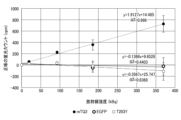
- 3 shows the relationship between the intensity of radiation irradiated to each fluorescent protein and the resulting fluorescence counts, where the counts for each protein minus the background (counts in a solution without protein) are plotted.
- FIG. 1 shows the amino acid sequences of Sumire, Sirius, moxBFP, and mTurquoise2.
- Figure 2 shows the emission of radiation from 35S in each fluorescent protein. The fluorescence count value per minute of each protein minus the background (count value in a solution without protein) is plotted. Lowercase letters indicate significant differences between different signs (p ⁇ 0.05) (Tukey test).
- 3 shows the relationship between
- FIG. 4 shows (A) the excitation wavelength spectrum and (B) the fluorescence wavelength spectrum of mTurquoise2 and mTurquoise2 in which threonine (T) at position 203 in the amino acid sequence has been mutated to tyrosine (Y) (hereinafter referred to as T203Y mutant).
- Figure 5 shows the three-dimensional structures and predicted three-dimensional structures of mTurquoise2 and the T203Y mutant, respectively.
- (A) shows the three-dimensional structure of mTurquoise2 (PDB ID: 3ZTF). The numbers indicate the distance between the 203rd amino acid residue and the chromophore.
- (B) shows the predicted three-dimensional structure of the T203Y mutant. The numbers indicate the distance between the 203rd amino acid residue and the chromophore.
- a ⁇ -barrel fluorescent protein can be used as a scintillator.
- the ⁇ -barrel fluorescent protein refers to a protein that has a barrel-shaped three-dimensional structure called a ⁇ -barrel and emits fluorescence of a longer wavelength when it absorbs light of a specific wavelength.
- Fluorescent proteins with a ⁇ -barrel structure are well known to those of skill in the art and include the green fluorescent protein from Aequorea victoria (avGFP) or derivatives thereof that have the same folding conformation as avGFP.
- avGFP green fluorescent protein from Aequorea victoria
- examples of ⁇ -barrel fluorescent proteins include fluorescent proteins having a fluorescence peak at 500 nm or less, and preferably fluorescent proteins having a fluorescence peak at 480 nm or less, 450 nm or less, or 420 nm or less.
- fluorescent peak refers to the peak of the fluorescence wavelength.
- fluorescent proteins with a ⁇ -barrel structure derived from avGFP examples include purple fluorescent protein, ultramarine fluorescent protein, blue fluorescent protein (BFP), and cyan fluorescent protein (CFP).
- Fluorescent proteins that can be used as protein scintillators in the present invention include the following (a), (b), and (c): (a) a protein consisting of an amino acid sequence set forth in any one of SEQ ID NOs: 1 to 4; (b) a protein consisting of an amino acid sequence having 80% or more identity to any of the amino acid sequences of SEQ ID NOs: 1 to 4, and emitting light when exposed to ⁇ -rays or an electron beam, and (c) a protein consisting of an amino acid sequence in which one or more amino acids have been deleted, substituted, inserted and/or added in any of the amino acid sequences of SEQ ID NOs: 1 to 4, and emitting light when exposed to ⁇ -rays or an electron beam.
- the amino acid sequences of SEQ ID NOs: 1 to 4 are as shown in FIG.
- the protein consisting of the amino acid sequence of SEQ ID NO:1 in (a) is Sumire, and has a fluorescence peak at 414 nm (Non-Patent Document 1).
- This fluorescent protein is a purple fluorescent protein derived from avGFP.
- the protein consisting of the amino acid sequence of SEQ ID NO:2 in (a) is Sirius, and has a fluorescence peak at 424 nm (Non-Patent Document 2).
- This fluorescent protein is an ultramarine fluorescent protein derived from avGFP.
- the protein consisting of the amino acid sequence of SEQ ID NO:3 is moxBFP, which has a fluorescence peak at 445 nm (Heim R. & Tsien R Y, Current Biology, 6(2), pp178-182(1996)).
- This fluorescent protein is a blue fluorescent protein (BFP) derived from avGFP.
- the protein consisting of the amino acid sequence of SEQ ID NO:4 is mTurquoise2 (sometimes referred to as "mTQ2" in this specification and drawings), and has a fluorescence peak at 474 nm (J. Goedhart et al., Nature Communications Vol. 3, Article number: 751 (2012)).
- This fluorescent protein is a cyan fluorescent protein (CFP) derived from avGFP.
- the amino acid positions in the amino acid sequences of SEQ ID NOs: 1 to 4 are not counted, and are notated without counting the second V (valine).
- V valine
- the amino acids at positions 65, 66, and 203 of Sumire are G (glycine), Y (tyrosine), and V (valine), respectively, which correspond to the amino acids at positions 66, 67, and 204 in the actual amino acid sequence of SEQ ID NO: 1 (counting the second V).
- emitting light when exposed to ⁇ -rays or electron beams refers to transitioning from the ground state to an excited state when exposed to ⁇ -rays or electron beams, and emitting fluorescence when returning to the ground state.
- identity is used in a sense that includes “homology.”
- identity refers to the degree of identity when the sequences being compared are properly aligned, and means the percentage of exact amino acid matches between the sequences.
- identity refers to the degree of identity when the sequences being compared are properly aligned, and means the percentage of exact amino acid matches between the sequences.
- the alignment can be performed, for example, by using any algorithm; specifically, publicly available homology search software such as BLAST (Basic local alignment search tool) (Altschul et al., J. Mol. Biol.
- identity can be calculated using, for example, a publicly available homology search program such as those described above, for example, the National Center for Biotechnology Information (NCBI) homology algorithm BLAST (https://blast.ncbi.nlm.nih.gov/Blast.cgi) using default parameters.
- NCBI National Center for Biotechnology Information
- the identity in (b) is, for example, 80% or more, preferably 85% or more, more preferably 90% or more, and even more preferably 91% or more, 92% or more, 93% or more, 94% or more, 95% or more, 96% or more, 97% or more, 98% or more, 99% or more, or 99.5% or more.
- the protein (c) may have one or more modifications selected from the group consisting of deletion, substitution, insertion, and addition in the amino acid sequence of any one of SEQ ID NOs: 1 to 4.
- the number of modified amino acids is, for example, 1 to 47, preferably 1 to 35, more preferably 1 to 23, even more preferably 1 to 21, 1 to 19, 1 to 16, 1 to 14, 1 to 11, 1 to 9, 1 to 7, 1 to 6, 1 to 5, or 1 to 4, and particularly preferably 1 to several, 1 to 3, 1 to 2, or 1.
- the number of modified amino acids may also be the number of mutations that occur by known methods such as site-directed mutagenesis, or the number of mutations that occur naturally. For this reason, the term "modification" is used in a sense that includes mutation.
- the modifications may occur continuously or discontinuously.
- the modifications may also be multiple homogeneous modifications (e.g., multiple substitutions) or multiple heterogeneous modifications (e.g., a combination of one or more deletions and one or more substitutions).
- the insertion of amino acids in (c) above can be, for example, an insertion into the interior of the amino acid sequence.
- the addition of amino acids can be, for example, addition to either the N-terminus or C-terminus of the amino acid sequence, or addition to both the N-terminus and C-terminus.
- the amino acid modification may be a conservative modification (e.g., a conservative mutation).
- Constant modification or “conservative mutation” means modifying or mutating one or more amino acids so as not to substantially modify the function of the protein.
- the amino acid substitution may also be a conservative substitution.
- Consservative substitution means replacing one or more amino acids with another amino acid and/or amino acid derivative so as not to substantially modify the function of the protein.
- the substituted amino acid and the substituted amino acid are similar in nature and/or function, for example. Specifically, it is preferable that the chemical properties such as hydrophobicity and hydrophilicity index, polarity, and charge, or the physical properties such as secondary structure are similar.
- nonpolar amino acids include alanine, valine, isoleucine, leucine, proline, tryptophan, phenylalanine, methionine, etc.
- polar amino acids neutral amino acids
- positively charged amino acids basic amino acids
- negatively charged amino acids include aspartic acid, glutamic acid, etc.
- amino acids can be identified by the following three-letter or one-letter codes well known in the art.
- Alanine Ala
- Arginine Arg R
- Asparagine Asn N Aspartic acid: Asp D
- Cysteine Cys C
- Glutamine Gln Q
- Glutamic acid Glu E
- Glycine Gly G Histidine: His H Isoleucine: Ile I Leucine: Leu L Lysine: Lys K Methionine: Met M Phenylalanine: Phe F
- Proline Pro
- Serine Ser S Threonine: Thr T Tryptophan: Trp W Tyrosine: Tyr Y Valin: Val V
- amino acids at positions 65, 66 and/or 203 in each of the amino acid sequences of SEQ ID NOs: 1 to 4 remain in their original sequence (are not modified).
- test protein is a "protein that emits light when exposed to ⁇ rays or an electron beam"
- fluorescent properties of the test protein for example, by irradiating the test protein with ⁇ rays or an electron beam and measuring the scintillation light using a scintillation counter or the like.
- CFPs that can be used as protein scintillators include the following proteins derived from avGFP.
- mTurquoise (sometimes referred to as "mTQ" in the present specification and drawings) (J. Goedhart et al., Nature Methods Vol. 7, 137-139 (2010))
- SCFP3A (GJ Kremers et al., Biochemistry, Vol. 45(21), 6570-6580 (2006))
- SCFP2 GJ Kremers et al., Biochemistry, Vol. 45(21), 6570-6580 (2006)
- SCFP1 GJ Kremers et al., Biochemistry, Vol. 45(21), 6570-6580 (2006)
- ⁇ mTFP1 Hui-wang Ai et al., Biochem J. 400(3):531-540(2006)
- examples of BFP that can be used as a protein scintillator include the following proteins derived from avGFP. ⁇ oxBFP (Costantini Lm et al., Nature Communications, 6(1), 7670 (2015))
- the present invention provides a method for designing a protein scintillator, which comprises the steps of: (A) specifying, in the amino acid sequence of a ⁇ -barrel fluorescent protein to be mutated, one or more amino acids selected from the group consisting of the following (1) to (3); (2) an amino acid corresponding to the amino acid at position 66 of the amino acid sequence of any one of SEQ ID NOs: 1 to 4; (3) an amino acid corresponding to the amino acid at position 203 of any one of the amino acid sequences of SEQ ID NOs: 1 to 4; and (B) a step of constructing an amino acid sequence in which one or more amino acids identified in step (A) are replaced with specific amino acids based on the amino acid sequence of the protein to be mutated.
- Step (A) can be carried out by aligning the ⁇ -barrel fluorescent protein to be mutated with any of the amino acid sequences of SEQ ID NOs: 1 to 4, and identifying, in the ⁇ -barrel fluorescent protein to be mutated, an amino acid that corresponds to an amino acid at a specific position in any of the amino acid sequences of SEQ ID NOs: 1 to 4.
- the amino acid sequence of SEQ ID NOs: 1 to 4 to be aligned with the ⁇ -barrel fluorescent protein to be mutated can be selected to have the highest identity with the target of mutation.
- the amino acid after substitution can be any of the following amino acids: (1) an amino acid corresponding to the 65th amino acid in any one of the amino acid sequences of SEQ ID NOs: 1 to 4: serine (S), glycine (G), or glutamine (Q); (2) an amino acid corresponding to the amino acid at position 66 of any of the amino acid sequences of SEQ ID NOs: 1 to 4: tryptophan (W), histidine (H), tyrosine (Y), or phenylalanine (F); (3) An amino acid corresponding to the amino acid at position 203 of any one of the amino acid sequences of SEQ ID NOs: 1 to 4: threonine (T) or valine (V)
- the amino acid sequence aligned with the ⁇ -barrel fluorescent protein to be mutated is the amino acid sequence of SEQ ID NO: 3 or 4, the amino acid at position 65 after substitution can be serine (S). If the amino acid sequence aligned with the ⁇ -barrel fluorescent protein to be mutated is the amino acid sequence of SEQ ID NO: 1, the amino acid at position 65 after substitution can be glycine (G). If the amino acid sequence aligned with the ⁇ -barrel fluorescent protein to be mutated is the amino acid sequence of SEQ ID NO: 2, the amino acid at position 65 after substitution can be glutamine (Q).
- the amino acid sequence aligned with the ⁇ -barrel fluorescent protein to be mutated is the amino acid sequence of SEQ ID NO: 4, the amino acid at position 66 after substitution can be tryptophan (W). If the amino acid sequence aligned with the ⁇ -barrel fluorescent protein to be mutated is the amino acid sequence of SEQ ID NO: 3, the amino acid at position 66 after substitution can be histidine (H). If the amino acid sequence aligned with the ⁇ -barrel fluorescent protein to be mutated is the amino acid sequence of SEQ ID NO: 1, the amino acid at position 66 after substitution can be tyrosine (Y). If the amino acid sequence aligned with the ⁇ -barrel fluorescent protein to be mutated is the amino acid sequence of SEQ ID NO: 2, the amino acid at position 66 after substitution can be phenylalanine (F).
- the amino acid sequence aligned with the ⁇ -barrel fluorescent protein to be mutated is the amino acid sequence of SEQ ID NO: 3 or 4
- the amino acid at position 203 after substitution can be threonine (T).
- the amino acid sequence aligned with the ⁇ -barrel fluorescent protein to be mutated is the amino acid sequence of SEQ ID NO: 1 or 2
- the amino acid at position 203 after substitution can be valine (V).
- amino acid (3) is associated with the inner surface of the ⁇ -barrel structure.
- amino acids (1) and (2) are related to luminophores. By making amino acids (1) and (2) specific amino acids as described above, it is possible to maintain their function as a protein scintillator.
- the present invention provides a method for preparing a protein scintillator.
- the preparation method of the present invention allows a protein scintillator to be prepared based on an amino acid sequence constructed by the design method of the present invention, and specifically comprises the step of (P) expressing in a host a polynucleotide encoding the amino acid sequence constructed by the design method of the present invention.
- Step (P) can be carried out by culturing a host transformed with an expression vector having a polynucleotide operably linked thereto.
- the preparation method of the present invention may further include, after the above-mentioned culturing step, a step of collecting an expression product from the host and/or culture obtained by culturing, and in some cases, isolating or purifying the protein to be prepared.
- the polynucleotide encoding the amino acid sequence of the protein to be prepared is not particularly limited as long as it is expressible in the host used and is composed of codons that encode a protein that functions as a protein scintillator, and codons may be optimized to enable expression in the host used or to increase the amount of expression. Codon optimization can be performed by known methods commonly used in this field.
- an expression vector is prepared in which a polynucleotide encoding the amino acid sequence of the protein to be prepared is operably linked, and a host transformed with this vector can be cultured.
- the expression vector into which the polynucleotide can be inserted can be selected depending on the host, and there are no particular limitations as long as it is an expression vector that is commonly used in this field.
- a vector capable of autonomous replication in the host or a vector that can be integrated into the host chromosome can be used as the expression vector.
- a host microorganism such as Escherichia coli or Bacillus subtilis is used as the host, for example, pET, pBAD, or pUC can be used as the expression vector.
- the promoter that can be linked to the expression vector can be selected depending on the host, and there is no particular limitation as long as it is a promoter that is commonly used in this field.
- promoters derived from E. coli or phages such as the trp promoter, lac promoter, tac promoter, and PL promoter, or modified versions of these promoters can be used as promoters.
- the host to be transformed in the preparation method of the present invention is not particularly limited, so long as it is a host that is commonly used in this field.
- microorganisms or cells such as bacteria (Escherichia coli, Bacillus subtilis, etc.), yeast, filamentous fungi, insect cells, eukaryotic cells, etc. can be used as hosts.
- ⁇ Use as a protein scintillator> there is provided a method for making a ⁇ -barrel fluorescent protein emit light by irradiation with ⁇ -rays or an electron beam.
- the fluorescent protein used in the luminescence method of the present invention can be the above-mentioned ⁇ -barrel fluorescent protein.
- emitting light with ⁇ -rays or an electron beam refers to causing a ⁇ -barrel fluorescent protein to transition from a ground state to an excited state with ⁇ -rays or an electron beam, and emitting fluorescence when returning to the ground state.
- a ⁇ -barrel fluorescent protein can be made to emit light using a ⁇ -ray emission source or an electron beam emission source.
- ⁇ -ray emission sources include radioactive substances that emit ⁇ -rays.
- the radioactive substances that emit ⁇ -rays are not particularly limited, and include radioactive substances such as 3 H, 14 C, 32 P, 35 S, 90 Sr, 131 I, and 137 Cs.
- Examples of electron beam emission sources include devices that emit electron beams.
- the devices that emit electron beams (electron beam emitters) are not particularly limited, and include, for example, linear accelerators.
- the arrangement of the ⁇ -barrel fluorescent protein and the ⁇ -ray emission source or the electron beam emission source can be determined taking into consideration the flight distance of the ⁇ -ray or electron beam in air or liquid and the transmission distance within the body.
- the light emission method of the present invention can include a step of arranging the ⁇ -ray emission source or the electron beam emission source and the ⁇ -barrel fluorescent protein so that the ⁇ -barrel fluorescent protein is excited by the ⁇ -ray or the electron beam.
- the luminescence method of the present invention can be used, for example, in optogenetics.
- the luminescence method of the present invention can also be used in photosynthesis. Each of these will be explained below.
- the ⁇ -barrel fluorescent protein can be present in an in vitro cell or tissue. That is, in such an embodiment, the ⁇ -ray or electron beam can be irradiated from the outside, and the ⁇ -barrel fluorescent protein present in the cell or tissue can be made to emit light by the ⁇ -ray or electron beam that has passed through the cell or tissue.
- the ⁇ -barrel fluorescent protein can also be present inside a human or non-human organism.
- the ⁇ -ray or electron beam can be irradiated from the outside of a human or organism, and the ⁇ -barrel fluorescent protein present in the body can be made to emit light by the ⁇ -ray or electron beam that has passed through the organism.
- the non-human organism is not particularly limited, and non-limiting examples of the non-human organism include non-human mammals such as mice, rats, monkeys, and rabbits, as well as insects, plants, and microorganisms.
- a technique in which a light-sensitive protein (e.g., opsin) is made to exist in a cell, tissue, or living organism, and cellular functions are manipulated by irradiation with light.
- a ⁇ -barrel fluorescent protein is made to exist in a living organism, which is poorly penetrated by visible light, and the protein is made to emit light by ⁇ -rays or an electron beam, and the light-sensitive protein is stimulated by the fluorescence, making it possible to remotely manipulate the functions of cells and proteins in the living organism.
- an embodiment in which a ⁇ -barrel fluorescent protein is made to exist in a living organism is advantageous in that it does not require surgery to embed an optical fiber in the living organism, and the ⁇ -barrel fluorescent protein can be expressed in a target site.
- the ⁇ -barrel fluorescent protein can be made to exist in the vicinity of the site where the light-sensitive protein exists, and the ⁇ -barrel fluorescent protein can be expressed in a target site-specific manner, for example, by tissue-specific expression technology, etc.
- light can be emitted by ⁇ -rays or an electron beam, and photosynthesis can be driven by the fluorescence of the ⁇ -barrel fluorescent protein. That is, according to the present invention, there is provided a radiation-induced photosynthesis method in which a ⁇ -barrel fluorescent protein is caused to emit light by ⁇ -rays or an electron beam, and photosynthesis is driven by the fluorescence of the ⁇ -barrel fluorescent protein.
- the present invention by driving photosynthesis with fluorescence, light energy can be converted into storable chemical energy (e.g., carbohydrates), so the present invention has the advantage of being able to convert radiation energy into industrially usable energy.
- storable chemical energy e.g., carbohydrates
- photosynthetic organisms can be driven.
- photosynthetic pathway in photosynthetic organisms, carbon dioxide can be assimilated by light energy to synthesize organic matter.
- photosynthetic organisms include: Cyanobacteria (blue-green algae) such as Spirulina; Eukaryotic algae such as green algae (Chlorella, Lumium, Chlamydomonas, etc.) and Euglena algae (Euglena, etc.); Plants such as mosses and higher plants; Examples include:
- the combination and arrangement of the ⁇ -barrel fluorescent protein and the photosynthetic organism can be determined taking into consideration the driving of photosynthesis by the fluorescence emitted by the ⁇ -barrel fluorescent protein.
- the combination of the ⁇ -barrel fluorescent protein and the photosynthetic organism can be selected so that the fluorescent wavelength emitted by the ⁇ -barrel fluorescent protein and the light wavelength received by the photosynthetic organism at least overlap.
- the arrangement of the ⁇ -barrel fluorescent protein and the photosynthetic organism can be determined so that the fluorescence emitted by the ⁇ -barrel fluorescent protein reaches the photoreceptor substance (e.g., light-harvesting pigment protein) of the photosynthetic organism (e.g., photosynthetic bacteria) without attenuation, and specifically the distance between the ⁇ -barrel fluorescent protein and the photosynthetic organism can be determined.
- the photoreceptor substance e.g., light-harvesting pigment protein
- the photosynthetic organism e.g., photosynthetic bacteria
- the positioning of the ⁇ -barrel fluorescent protein and the ⁇ -ray emission source or the electron beam emission source can be determined taking into account the flight distance and transmittance of the ⁇ -ray or electron beam.
- the ⁇ -barrel fluorescent protein is excited by the ⁇ -ray or electron beam and emits sufficient fluorescence to drive photosynthesis, there are no limitations on the positional relationship or distance between the ⁇ -barrel fluorescent protein and the ⁇ -ray emission source or the electron beam emission source.
- the present invention provides a photosynthetic device comprising a ⁇ -barrel fluorescent protein and a photosynthetic organism in which photosynthesis is driven by the fluorescence of the protein.
- the photosynthetic device of the present invention can be implemented according to the luminescence method of the present invention and the photosynthesis method of the present invention.
- the photosynthetic device of the present invention may not be equipped with a beta ray emission source or an electron beam emission source, and the device of the present invention may be installed and used near a beta ray emission source or an electron beam emission source. In such an embodiment, a beta ray emission source that is difficult to move may be used.
- the photosynthetic device of the present invention may also further be equipped with a beta ray emission source or an electron beam emission source.
- a photosynthetic device of the present invention further equipped with spent nuclear fuel, which is prepared in advance for use in photosynthesis.
- radioactive waste that is difficult to reuse can be turned into a resource through photosynthesis, and further, it is advantageous in that it contributes to a low-carbon society through carbon fixation. In addition, it is advantageous in that it is less susceptible to environmental fluctuations such as temperature, does not occupy above-ground parts, can be installed underground, etc., and can be stacked.
- a ⁇ -barrel fluorescent protein can be present in a photosynthetic organism (particularly a photosynthetic microorganism).
- the ⁇ -barrel fluorescent protein can be present in the vicinity of a photoreceptor of the photosynthetic organism, and for example, the ⁇ -barrel fluorescent protein can be expressed at a desired site by recombinant gene technology.
- the fluorescent energy of the ⁇ -barrel fluorescent protein can be advantageously transferred to the photoreceptor efficiently.
- a photosynthetic organism that possesses an expressible ⁇ -barrel fluorescent protein, and in which photosynthesis is driven by the fluorescence of the protein.
- the photosynthetic organism of the present invention can be produced according to the luminescence method of the present invention and the photosynthesis method of the present invention.
- the photosynthetic organism is preferably a photosynthetic microorganism, more preferably a cyanobacterium.
- Example 1 Identification of proteins that emit fluorescence when excited by radiation (1) Method Each of the fluorescent proteins Sumire, Sirius, moxBFP, mTurquoise2, mTFP1, EGFP, Venus, Achilles, mScarlet, and mRaspberry was highly expressed in E. coli using the pET system. Specifically, a plasmid pRSETB (Thermo Fisher Scientific) was prepared in which a nucleotide sequence encoding a fusion protein with a 6xHis tag at the C-terminus of each fluorescent protein was inserted immediately after the T7 promoter, and E. coli JM109 (DE3) (Promega) was transformed with this plasmid, and the E.
- pRSETB Thermo Fisher Scientific
- coli was then cultured in 200 ml of LB medium at 22°C for 3 days. After the cultivation, the fluorescent proteins were purified with Ni-NTA Agarose (QIAGEN).
- the DNA sequences encoding the fluorescent proteins used for transformation of E. coli were as follows: Sumire: SEQ ID NO: 5, Sirius: SEQ ID NO: 6, moxBFP: SEQ ID NO: 7, mTurquoise2: SEQ ID NO: 8, mTFP1: SEQ ID NO: 9, EGFP: SEQ ID NO: 10, Venus: SEQ ID NO: 11, Achilles: SEQ ID NO: 12, mScarlet: SEQ ID NO: 13, mRaspberry: SEQ ID NO: 14.
- Each purified fluorescent protein solution was dispensed into a 96-well plate, radioisotope 35 S was added thereto, and measurement was performed using a liquid scintillation counter MicroBeta2 (PerkinElmer Japan Co., Ltd.) The measurement was performed for 1 minute using a MicroBeta 2 microplate RI glow luminescence measurement system.
- T203Y a fluorescent protein (hereafter referred to as T203Y) was created by introducing a mutation into mTurquoise2 (mTQ2) to replace T (threonine) at position 203 with Y (tyrosine). After high expression of the protein using the same method as above, the expressed protein was purified and subjected to a luminescence test. In addition, the excitation and emission spectra of mTQ2 and T203Y were measured.
- the DNA sequence encoding T203Y used to transform E. coli was a DNA sequence in which the 610th to 612th ACC bases in the DNA sequence of mTurquoise2 (sequence number 8) were replaced with TAT.
- T203Y remained a fluorescent protein. Analysis of the T203Y fluorescence properties showed that the excitation and emission peak wavelengths were shifted to longer wavelengths compared to mTQ2 ( Figure 4). Specifically, in the excitation spectrum, the three peaks of 233 nm, 281 nm, and 438 nm in mTQ2 were 256 nm, 284 nm, and 455 nm in T203Y, respectively. In addition, the emission spectrum peak was 479 nm in mTQ2, but 515 nm in T203Y.
Landscapes
- Health & Medical Sciences (AREA)
- Life Sciences & Earth Sciences (AREA)
- Genetics & Genomics (AREA)
- Engineering & Computer Science (AREA)
- Chemical & Material Sciences (AREA)
- Organic Chemistry (AREA)
- Zoology (AREA)
- Bioinformatics & Cheminformatics (AREA)
- Wood Science & Technology (AREA)
- Biotechnology (AREA)
- General Engineering & Computer Science (AREA)
- Biomedical Technology (AREA)
- Biochemistry (AREA)
- General Health & Medical Sciences (AREA)
- Microbiology (AREA)
- Molecular Biology (AREA)
- Biophysics (AREA)
- Physics & Mathematics (AREA)
- Plant Pathology (AREA)
- Mycology (AREA)
- Proteomics, Peptides & Aminoacids (AREA)
- Medicinal Chemistry (AREA)
- Sustainable Development (AREA)
- Gastroenterology & Hepatology (AREA)
- Toxicology (AREA)
- Cell Biology (AREA)
- Chemical Kinetics & Catalysis (AREA)
- General Chemical & Material Sciences (AREA)
- Peptides Or Proteins (AREA)
- Apparatus Associated With Microorganisms And Enzymes (AREA)
- Preparation Of Compounds By Using Micro-Organisms (AREA)
- Micro-Organisms Or Cultivation Processes Thereof (AREA)
Abstract
本発明は、シンチレーターとして機能するタンパク質と、シンチレーターとして機能するタンパク質の設計方法の提供を目的とする。本発明によれば、シンチレーターとしてのβバレル型蛍光タンパク質の使用であって、βバレル型蛍光タンパク質が500nm以下に蛍光ピークを有する蛍光タンパク質である使用が提供される。本発明によればまた、シンチレーターとして機能するタンパク質の設計方法であって、(A)変異対象であるβバレル型蛍光タンパク質のアミノ酸配列において、特定のアミノ酸を特定する工程と、(B)変異対象タンパク質のアミノ酸配列に基づいて、工程(A)で特定されたアミノ酸を他の特定のアミノ酸に置換したアミノ酸配列を構築する工程を含んでなる、設計方法が提供される。
Description
本願は、先行する日本国出願である特願2023-105343(出願日:2023年6月27日)の優先権の利益を享受するものであり、その開示内容全体は引用することにより本明細書の一部とされる。
本発明はタンパク質シンチレーターに関する。本発明はまた、シンチレーターとして機能するタンパク質の設計方法および製造方法、並びに放射線による光合成方法にも関する。
これまでに生体内分子イメージングの手法の1つとして蛍光タンパク質が汎用されてきた。オワンクラゲ由来の緑色蛍光タンパク質(avGFP)はその発見以来、最も改変および改良がなされ、様々な活用がなされてきた蛍光タンパク質である。avGFPに様々な変異を導入することによって、波長や輝度、pH感受性、成熟速度など、機能が高度化した蛍光タンパク質が得られてきた。波長については、青色から赤色まで幅広い可視光を発するものが得られてきており、青色領域ではより短い波長の蛍光を発するものも得られている(非特許文献1および2)。
しかしながら、放射線(α線、γ線、β線、X線、電子線等)で励起され、蛍光を発するタンパク質はこれまで報告がなかった。
Sugiura K. and Nagai T., Communications Biology 5, 1172 (2022)
Tomosugi W. et al., Nature Methods 6(5), 351-353 (2009)
本発明者らは今般、βバレル型蛍光タンパク質のうち短波長に蛍光ピークを有するものがシンチレーターとして機能することを見出した。本発明はこの知見に基づくものである。
本発明は、シンチレーターとして機能するタンパク質を提供することを目的とする。本発明はまた、シンチレーターとして機能するタンパク質の設計方法および製造方法、並びに放射線でタンパク質を発光させることに伴う生物の光応答への応用利用方法を提供することを目的とする。
本発明によれば以下の発明が提供される。
[1]シンチレーターとしてのβバレル型蛍光タンパク質の使用であって、βバレル型蛍光タンパク質が500nm以下に蛍光ピークを有する蛍光タンパク質である、使用。
[2]前記βバレル型蛍光タンパク質が、下記(a)、(b)および(c):
(a)配列番号1~4のいずれかのアミノ酸配列からなるタンパク質、
(b)配列番号1~4のいずれかのアミノ酸配列に対して80%以上の同一性を有するアミノ酸配列からなり、かつ、β線または電子線により発光するタンパク質、および
(c)配列番号1~4のいずれかのアミノ酸配列において、1または複数個のアミノ酸が欠失、置換、挿入および/または付加されたアミノ酸配列からなり、かつ、β線または電子線により発光するタンパク質
からなる群から選択されるタンパク質である、上記[1]に記載の使用。
[3]前記βバレル型蛍光タンパク質が、Sumire、Sirius、moxBFP、mTurquoise2、mTurquoise、SCFP1、SCFP2、SCFP3A、mTFP1およびoxBFPからなる群から選択される、上記[1]または[2]に記載の使用。
[4]シンチレーターとして機能するタンパク質の設計方法であって、下記工程(A)および(B):
(A)変異対象であるβバレル型蛍光タンパク質のアミノ酸配列において、下記(1)~(3)からなる群から選択される1個または2個以上のアミノ酸を特定する工程:
(1)配列番号1~4のいずれかのアミノ酸配列の65位のアミノ酸に相当するアミノ酸;
(2)配列番号1~4のいずれかのアミノ酸配列の66位のアミノ酸に相当するアミノ酸;
(3)配列番号1~4のいずれかのアミノ酸配列の203位のアミノ酸に相当するアミノ酸
(B)変異対象タンパク質のアミノ酸配列に基づいて、工程(A)で特定された1個または2個以上のアミノ酸を下記アミノ酸に置換したアミノ酸配列を構築する工程
(1)配列番号1~4のいずれかのアミノ酸配列の65位のアミノ酸に相当するアミノ酸:セリン(S)、グリシン(G)またはグルタミン(Q);
(2)配列番号1~4のいずれかのアミノ酸配列の66位のアミノ酸に相当するアミノ酸:トリプトファン(W)、ヒスチジン(H)、チロシン(Y)またはフェニルアラニン(F);
(3)配列番号1~4のいずれかのアミノ酸配列の203位のアミノ酸に相当するアミノ酸:トレオニン(T)またはバリン(V);
を含んでなる、設計方法。
[5]シンチレーターとして機能するタンパク質の調製方法であって、上記[5]に記載された設計方法により構築されたアミノ酸配列をコードするポリヌクレオチドを宿主において発現させる工程を含んでなる、調製方法。
[6]βバレル型蛍光タンパク質をβ線または電子線により発光させる、放射線による蛍光タンパク質の発光方法であって、βバレル型蛍光タンパク質が500nm以下に蛍光ピークを有する蛍光タンパク質である、発光方法。
[7]βバレル型蛍光タンパク質が非ヒト動物の体内に存在する、上記[6]に記載の発光方法。
[8]βバレル型蛍光タンパク質をβ線または電子線により発光させ、前記タンパク質が発する蛍光により光合成を駆動する、放射線による光合成方法であって、βバレル型蛍光タンパク質が500nm以下に蛍光ピークを有する蛍光タンパク質である、光合成方法。
[9]βバレル型蛍光タンパク質と、前記タンパク質が発する蛍光により光合成が駆動される光合成生物とを備えた光合成装置であって、βバレル型蛍光タンパク質が500nm以下に蛍光ピークを有する蛍光タンパク質である、光合成装置。
[10]β線または電子線放出源をさらに備えた、上記[9]に記載の光合成装置。
[11]βバレル型蛍光タンパク質を発現可能に保有する光合成生物であって、前記タンパク質が発する蛍光により光合成が駆動され、かつ、βバレル型蛍光タンパク質が500nm以下に蛍光ピークを有する蛍光タンパク質である、光合成生物。
[12]光合成生物がシアノバクテリアである、上記[11]に記載の光合成生物。
[1]シンチレーターとしてのβバレル型蛍光タンパク質の使用であって、βバレル型蛍光タンパク質が500nm以下に蛍光ピークを有する蛍光タンパク質である、使用。
[2]前記βバレル型蛍光タンパク質が、下記(a)、(b)および(c):
(a)配列番号1~4のいずれかのアミノ酸配列からなるタンパク質、
(b)配列番号1~4のいずれかのアミノ酸配列に対して80%以上の同一性を有するアミノ酸配列からなり、かつ、β線または電子線により発光するタンパク質、および
(c)配列番号1~4のいずれかのアミノ酸配列において、1または複数個のアミノ酸が欠失、置換、挿入および/または付加されたアミノ酸配列からなり、かつ、β線または電子線により発光するタンパク質
からなる群から選択されるタンパク質である、上記[1]に記載の使用。
[3]前記βバレル型蛍光タンパク質が、Sumire、Sirius、moxBFP、mTurquoise2、mTurquoise、SCFP1、SCFP2、SCFP3A、mTFP1およびoxBFPからなる群から選択される、上記[1]または[2]に記載の使用。
[4]シンチレーターとして機能するタンパク質の設計方法であって、下記工程(A)および(B):
(A)変異対象であるβバレル型蛍光タンパク質のアミノ酸配列において、下記(1)~(3)からなる群から選択される1個または2個以上のアミノ酸を特定する工程:
(1)配列番号1~4のいずれかのアミノ酸配列の65位のアミノ酸に相当するアミノ酸;
(2)配列番号1~4のいずれかのアミノ酸配列の66位のアミノ酸に相当するアミノ酸;
(3)配列番号1~4のいずれかのアミノ酸配列の203位のアミノ酸に相当するアミノ酸
(B)変異対象タンパク質のアミノ酸配列に基づいて、工程(A)で特定された1個または2個以上のアミノ酸を下記アミノ酸に置換したアミノ酸配列を構築する工程
(1)配列番号1~4のいずれかのアミノ酸配列の65位のアミノ酸に相当するアミノ酸:セリン(S)、グリシン(G)またはグルタミン(Q);
(2)配列番号1~4のいずれかのアミノ酸配列の66位のアミノ酸に相当するアミノ酸:トリプトファン(W)、ヒスチジン(H)、チロシン(Y)またはフェニルアラニン(F);
(3)配列番号1~4のいずれかのアミノ酸配列の203位のアミノ酸に相当するアミノ酸:トレオニン(T)またはバリン(V);
を含んでなる、設計方法。
[5]シンチレーターとして機能するタンパク質の調製方法であって、上記[5]に記載された設計方法により構築されたアミノ酸配列をコードするポリヌクレオチドを宿主において発現させる工程を含んでなる、調製方法。
[6]βバレル型蛍光タンパク質をβ線または電子線により発光させる、放射線による蛍光タンパク質の発光方法であって、βバレル型蛍光タンパク質が500nm以下に蛍光ピークを有する蛍光タンパク質である、発光方法。
[7]βバレル型蛍光タンパク質が非ヒト動物の体内に存在する、上記[6]に記載の発光方法。
[8]βバレル型蛍光タンパク質をβ線または電子線により発光させ、前記タンパク質が発する蛍光により光合成を駆動する、放射線による光合成方法であって、βバレル型蛍光タンパク質が500nm以下に蛍光ピークを有する蛍光タンパク質である、光合成方法。
[9]βバレル型蛍光タンパク質と、前記タンパク質が発する蛍光により光合成が駆動される光合成生物とを備えた光合成装置であって、βバレル型蛍光タンパク質が500nm以下に蛍光ピークを有する蛍光タンパク質である、光合成装置。
[10]β線または電子線放出源をさらに備えた、上記[9]に記載の光合成装置。
[11]βバレル型蛍光タンパク質を発現可能に保有する光合成生物であって、前記タンパク質が発する蛍光により光合成が駆動され、かつ、βバレル型蛍光タンパク質が500nm以下に蛍光ピークを有する蛍光タンパク質である、光合成生物。
[12]光合成生物がシアノバクテリアである、上記[11]に記載の光合成生物。
本発明はこれまで報告がなされていないタンパク質シンチレーターを提供するものである。タンパク質シンチレーターは遺伝子操作により発現させることができるため、本発明は光遺伝学による生体機能の解明や新たな治療方法の開発に貢献するとともに、放射線による光合成技術にも貢献するものである。
<βバレル型蛍光タンパク質>
本発明においてはβバレル型蛍光タンパク質をシンチレーターとして使用することができる。βバレル型蛍光タンパク質は、βバレルと呼ばれる樽型の立体構造を持ち、特定の波長の光を吸収した際により長波長の蛍光を発するタンパク質を意味する。
本発明においてはβバレル型蛍光タンパク質をシンチレーターとして使用することができる。βバレル型蛍光タンパク質は、βバレルと呼ばれる樽型の立体構造を持ち、特定の波長の光を吸収した際により長波長の蛍光を発するタンパク質を意味する。
βバレル構造を有する蛍光タンパク質は当業者に周知であり、オワンクラゲ(Aequorea victoria)由来の緑色蛍光タンパク質(avGFP)またはavGFPと同じ折り畳み形態を有するその誘導体を含む。
本発明においてβバレル型蛍光タンパク質としては、500nm以下に蛍光ピークを有する蛍光タンパク質が挙げられ、好ましくは480nm以下、450nm以下、または420nm以下に蛍光ピークを有する蛍光タンパク質が挙げられる。なお、本発明において「蛍光ピーク」とは蛍光波長のピークを意味する。
avGFPから誘導されたβバレル構造を有する蛍光タンパク質のうち、500nm以下に蛍光ピークを有する蛍光タンパク質としては、例えば、紫色蛍光タンパク質、群青色蛍光タンパク質、青色蛍光タンパク質(BFP)、シアン色蛍光タンパク質(CFP)が挙げられる。
本発明においてタンパク質シンチレーターとして使用することができる蛍光タンパク質としては下記(a)、(b)および(c):
(a)配列番号1~4のいずれかのアミノ酸配列からなるタンパク質、
(b)配列番号1~4のいずれかのアミノ酸配列に対して80%以上の同一性を有するアミノ酸配列からなり、かつ、β線または電子線により発光するタンパク質、および
(c)配列番号1~4のいずれかのアミノ酸配列において、1または複数個のアミノ酸が欠失、置換、挿入および/または付加されたアミノ酸配列からなり、かつ、β線または電子線により発光するタンパク質
からなる群から選択されるタンパク質が挙げられる。配列番号1~4のアミノ酸配列は図1に示される通りである。
(a)配列番号1~4のいずれかのアミノ酸配列からなるタンパク質、
(b)配列番号1~4のいずれかのアミノ酸配列に対して80%以上の同一性を有するアミノ酸配列からなり、かつ、β線または電子線により発光するタンパク質、および
(c)配列番号1~4のいずれかのアミノ酸配列において、1または複数個のアミノ酸が欠失、置換、挿入および/または付加されたアミノ酸配列からなり、かつ、β線または電子線により発光するタンパク質
からなる群から選択されるタンパク質が挙げられる。配列番号1~4のアミノ酸配列は図1に示される通りである。
(a)の配列番号1のアミノ酸配列からなるタンパク質は、Sumireであり、414nmに蛍光ピークを有する(非特許文献1)。この蛍光タンパク質はavGFPから誘導された紫色蛍光タンパク質である。
(a)の配列番号2のアミノ酸配列からなるタンパク質は、Siriusであり、424nmに蛍光ピークを有する(非特許文献2)。この蛍光タンパク質はavGFPから誘導された群青色蛍光タンパク質である。
(a)の配列番号3のアミノ酸配列からなるタンパク質は、moxBFPであり、445nmに蛍光ピークを有する(Heim R. & Tsien R Y, Current Biology, 6(2), pp178-182(1996))。この蛍光タンパク質はavGFPから誘導された青色蛍光タンパク質(BFP)である。
(a)の配列番号4のアミノ酸配列からなるタンパク質は、mTurquoise2(本明細書および図面において、「mTQ2」ということがある)であり、474nmに蛍光ピークを有する(J. Goedhart et al., Nature Communications Vol. 3, Article number: 751 (2012))。この蛍光タンパク質はavGFPから誘導されたシアン色蛍光タンパク質(CFP)である。
本発明においては、配列番号1~4のアミノ酸配列におけるアミノ酸の位置の表記は、第2番目のV(バリン)を数えずに表記するものとする。これは野生型GFPのアミノ酸位置番号に倣った当業界で慣用される表記である。例えば、Sumire(配列番号1のアミノ酸配列)の65位、66位および203位のアミノ酸は、それぞれG(グリシン)、Y(チロシン)、V(バリン)であるが、配列番号1の実際のアミノ酸配列(第2番目のVを数える)では66位、67位および204位のアミノ酸に対応する。
本発明において「β線または電子線により発光する」とは、β線または電子線により基底状態から励起状態に遷移し、基底状態に戻る際に蛍光を放出することをいう。
前記(b)において、「同一性」は「相同性」を含む意味で用いられる。ここで「同一性」は、例えば、比較する配列同士を適切に整列(アライメント)させたときの同一性の程度であり、前記配列間のアミノ酸の正確な一致の出現率(%)を意味する。同一性の算出にあたっては、例えば、配列におけるギャップの存在およびアミノ酸の性質が考慮される(Wilbur, Natl. Acad. Sci. U.S.A. 80:726-730(1983))。前記アライメントは、例えば、任意のアルゴリズムの利用により行うことができ、具体的に、BLAST(Basic local alignment search tool)(Altschul et al., J. Mol. Biol. 215:403-410 (1990))、FASTA(Peasron et al., Methods in Enzymology 183:63-69 (1990))、Smith-Waterman(Meth. Enzym., 164, 765 (1988))などの公に利用可能な相同性検索ソフトウェアを使用することができる。また、同一性の算出は、例えば、前記のような公に利用可能な相同性検索プログラムを用いて行うことができ、例えば、米国国立生物工学情報センター(NCBI)の相同性アルゴリズムBLAST(https://blast.ncbi.nlm.nih.gov/Blast.cgi)において、デフォルトのパラメーターを用いることによって算出することができる。
前記(b)における同一性は、例えば、80%以上、好ましくは85%以上、より好ましくは90%以上、さらに好ましくは91%以上、92%以上、93%以上、94%以上、95%以上、96%以上、97%以上、98%以上、99%以上または99.5%以上である。
前記(c)のタンパク質は、配列番号1~4のいずれかのアミノ酸配列において、欠失、置換、挿入および付加からなる群から選択される1個または複数個の改変を有していてもよい。改変されるアミノ酸の個数は、例えば、1~47個、好ましくは1~35個、より好ましくは1~23個、さらに好ましくは1~21個、1~19個、1~16個、1~14個、1~11個、1~9個、1~7個、1~6個、1~5個または1~4個、特に好ましくは1~数個、1~3個、1~2個または1個である。改変されるアミノ酸の個数はまた、部位突然変異誘発法などの公知の方法により生じる程度の変異数、あるいは、天然に生じる程度の変異数とすることができる。このため「改変」は変異を含む意味で用いられるものとする。前記アミノ酸配列において、前記改変は、連続して生じてもよいし、不連続に生じてもよい。前記改変はまた、複数の同種の改変(例えば、複数の置換)であってもよいし、複数の異種の改変(例えば、1個以上の欠失と1個以上の置換の組合せ)であってもよい。
また、前記(c)におけるアミノ酸の挿入としては、例えば、アミノ酸配列の内部への挿入が挙げられる。さらに、アミノ酸の付加は、例えば、アミノ酸配列のN末端およびC末端のいずれかへの付加であっても、N末端およびC末端の両末端への付加であってもよい。
前記アミノ酸の改変は保存的改変(例えば、保存的変異)であってもよい。「保存的改変」または「保存的変異」は、タンパク質の機能を実質的に改変しないように、1個または複数個のアミノ酸を改変し、または変異させることを意味する。前記アミノ酸の置換はまた、保存的置換であってもよい。「保存的置換」は、タンパク質の機能を実質的に改変しないように、1個または複数個のアミノ酸を、別のアミノ酸および/またはアミノ酸誘導体に置換することを意味する。保存的置換において、置換されるアミノ酸と置換後のアミノ酸とは、例えば、性質および/または機能が類似していることが好ましい。具体的には、疎水性および親水性の指標、極性、電荷などの化学的性質、あるいは二次構造などの物理的性質が類似していることが好ましい。このように、性質および/または機能が類似するアミノ酸またはアミノ酸誘導体は、当該技術分野において公知である。例えば、非極性アミノ酸(疎水性アミノ酸)としては、例えば、アラニン、バリン、イソロイシン、ロイシン、プロリン、トリプトファン、フェニルアラニン、メチオニンなどが挙げられる。極性アミノ酸(中性アミノ酸)は、グリシン、セリン、スレオニン、チロシン、グルタミン、アスパラギン、システインなどが挙げられる。陽電荷を有するアミノ酸(塩基性アミノ酸)は、アルギニン、ヒスチジン、リジンなどが挙げられ、負電荷を有するアミノ酸(酸性アミノ酸)は、アスパラギン酸、グルタミン酸などが挙げられる。
本発明においてアミノ酸は、当業界で周知の以下の3文字表記又は1文字表記により特定することができる。
アラニン:Ala A
アルギニン:Arg R
アスパラギン:Asn N
アスパラギン酸:Asp D
システイン:Cys C
グルタミン:Gln Q
グルタミン酸:Glu E
グリシン:Gly G
ヒスチジン:His H
イソロイシン:Ile I
ロイシン:Leu L
リシン:Lys K
メチオニン:Met M
フェニルアラニン:Phe F
プロリン:Pro P
セリン:Ser S
トレオニン:Thr T
トリプトファン:Trp W
チロシン:Tyr Y
バリン:Val V
アラニン:Ala A
アルギニン:Arg R
アスパラギン:Asn N
アスパラギン酸:Asp D
システイン:Cys C
グルタミン:Gln Q
グルタミン酸:Glu E
グリシン:Gly G
ヒスチジン:His H
イソロイシン:Ile I
ロイシン:Leu L
リシン:Lys K
メチオニン:Met M
フェニルアラニン:Phe F
プロリン:Pro P
セリン:Ser S
トレオニン:Thr T
トリプトファン:Trp W
チロシン:Tyr Y
バリン:Val V
前記(b)および(c)のアミノ酸配列において、配列番号1~4のそれぞれのアミノ酸配列の65位、66位および/または203位のアミノ酸(特に203位のアミノ酸)は、もとの配列のままであること(改変されていないこと)が好ましい。
前記(b)および(c)において、「β線または電子線により発光するタンパク質」であるか否かは、被験タンパク質の蛍光特性を指標に評価することができ、例えば、被験タンパク質にβ線または電子線を照射し、シンチレーションカウンター等を用いてシンチレーション光を測定することにより評価することができる。
タンパク質シンチレーターとして使用できるCFPとしては、mTurquoise2以外に、avGFPから誘導された下記のタンパク質が挙げられる。
・mTurquoise(本明細書および図面中で「mTQ」ということがある)(J. Goedhart et al., Nature Methods Vol. 7, 137-139 (2010))
・SCFP3A(GJ Kremers et al., Biochemistry, Vol. 45(21), 6570-6580 (2006))
・SCFP2(GJ Kremers et al., Biochemistry, Vol. 45(21), 6570-6580 (2006))
・SCFP1(GJ Kremers et al., Biochemistry, Vol. 45(21), 6570-6580 (2006))
・mTFP1(Hui-wang Ai et al., Biochem J. 400(3):531-540(2006))
・mTurquoise(本明細書および図面中で「mTQ」ということがある)(J. Goedhart et al., Nature Methods Vol. 7, 137-139 (2010))
・SCFP3A(GJ Kremers et al., Biochemistry, Vol. 45(21), 6570-6580 (2006))
・SCFP2(GJ Kremers et al., Biochemistry, Vol. 45(21), 6570-6580 (2006))
・SCFP1(GJ Kremers et al., Biochemistry, Vol. 45(21), 6570-6580 (2006))
・mTFP1(Hui-wang Ai et al., Biochem J. 400(3):531-540(2006))
タンパク質シンチレーターとして使用できるBFPとしては、moxBFP以外に、avGFPから誘導された下記のタンパク質が挙げられる。
・oxBFP(Costantini Lm et al., Nature Communications, 6(1), 7670 (2015))
・oxBFP(Costantini Lm et al., Nature Communications, 6(1), 7670 (2015))
<放射線シンチレータータンパク質の設計方法>
本発明によればタンパク質シンチレーターの設計方法が提供される。本発明の設計方法は、(A)変異対象であるβバレル型蛍光タンパク質のアミノ酸配列において、下記(1)~(3)からなる群から選択される1個または2個以上のアミノ酸を特定する工程と(1)配列番号1~4のいずれかのアミノ酸配列の65位のアミノ酸に相当するアミノ酸;
(2)配列番号1~4のいずれかのアミノ酸配列の66位のアミノ酸に相当するアミノ酸;
(3)配列番号1~4のいずれかのアミノ酸配列の203位のアミノ酸に相当するアミノ酸
(B)変異対象タンパク質のアミノ酸配列に基づいて、工程(A)で特定された1個または2個以上のアミノ酸を特定のアミノ酸に置換したアミノ酸配列を構築する工程とを含んでなるものである。
本発明によればタンパク質シンチレーターの設計方法が提供される。本発明の設計方法は、(A)変異対象であるβバレル型蛍光タンパク質のアミノ酸配列において、下記(1)~(3)からなる群から選択される1個または2個以上のアミノ酸を特定する工程と(1)配列番号1~4のいずれかのアミノ酸配列の65位のアミノ酸に相当するアミノ酸;
(2)配列番号1~4のいずれかのアミノ酸配列の66位のアミノ酸に相当するアミノ酸;
(3)配列番号1~4のいずれかのアミノ酸配列の203位のアミノ酸に相当するアミノ酸
(B)変異対象タンパク質のアミノ酸配列に基づいて、工程(A)で特定された1個または2個以上のアミノ酸を特定のアミノ酸に置換したアミノ酸配列を構築する工程とを含んでなるものである。
工程(A)は、変異対象であるβバレル型蛍光タンパク質を配列番号1~4のいずれかのアミノ酸配列と整列させ、配列番号1~4のいずれかのアミノ酸配列の特定位置のアミノ酸に相当するアミノ酸を変異対象であるβバレル型蛍光タンパク質において特定することにより実施することができる。変異対象であるβバレル型蛍光タンパク質と整列させる配列番号1~4のアミノ酸配列は、変異対象との同一性が最も高いものを選択することができる。
工程(B)において、置換後のアミノ酸は以下のアミノ酸とすることができる。
(1)配列番号1~4のいずれかのアミノ酸配列の65位のアミノ酸に相当するアミノ酸:セリン(S)、グリシン(G)またはグルタミン(Q);
(2)配列番号1~4のいずれかのアミノ酸配列の66位のアミノ酸に相当するアミノ酸:トリプトファン(W)、ヒスチジン(H)、チロシン(Y)またはフェニルアラニン(F);
(3)配列番号1~4のいずれかのアミノ酸配列の203位のアミノ酸に相当するアミノ酸:トレオニン(T)またはバリン(V)
(1)配列番号1~4のいずれかのアミノ酸配列の65位のアミノ酸に相当するアミノ酸:セリン(S)、グリシン(G)またはグルタミン(Q);
(2)配列番号1~4のいずれかのアミノ酸配列の66位のアミノ酸に相当するアミノ酸:トリプトファン(W)、ヒスチジン(H)、チロシン(Y)またはフェニルアラニン(F);
(3)配列番号1~4のいずれかのアミノ酸配列の203位のアミノ酸に相当するアミノ酸:トレオニン(T)またはバリン(V)
上記(1)において、変異対象であるβバレル型蛍光タンパク質と整列させたアミノ酸配列が配列番号3または4のアミノ酸配列の場合には、置換後の65位のアミノ酸はセリン(S)とすることができる。変異対象であるβバレル型蛍光タンパク質と整列させたアミノ酸配列が配列番号1のアミノ酸配列の場合には、置換後の65位のアミノ酸はグリシン(G)とすることができる。変異対象であるβバレル型蛍光タンパク質と整列させたアミノ酸配列が配列番号2のアミノ酸配列の場合には、置換後の65位のアミノ酸はグルタミン(Q)とすることができる。
上記(2)において、変異対象であるβバレル型蛍光タンパク質と整列させたアミノ酸配列が配列番号4のアミノ酸配列の場合には、置換後の66位のアミノ酸はトリプトファン(W)とすることができる。変異対象であるβバレル型蛍光タンパク質と整列させたアミノ酸配列が配列番号3のアミノ酸配列の場合には、置換後の66位のアミノ酸はヒスチジン(H)とすることができる。変異対象であるβバレル型蛍光タンパク質と整列させたアミノ酸配列が配列番号1のアミノ酸配列の場合には、置換後の66位のアミノ酸はチロシン(Y)とすることができる。変異対象であるβバレル型蛍光タンパク質と整列させたアミノ酸配列が配列番号2のアミノ酸配列の場合には、置換後の66位のアミノ酸はフェニルアラニン(F)とすることができる。
上記(3)において、変異対象であるβバレル型蛍光タンパク質と整列させたアミノ酸配列が配列番号3または4のアミノ酸配列の場合には、置換後の203位のアミノ酸はトレオニン(T)とすることができる。変異対象であるβバレル型蛍光タンパク質と整列させたアミノ酸配列が配列番号1または2のアミノ酸配列の場合には、置換後の203位のアミノ酸はバリン(V)とすることができる。
変異対象であるβバレル型蛍光タンパク質の特定位置(1)~(3)のいずれかのアミノ酸が既に上記のアミノ酸となっている場合にはその配列においてアミノ酸を置換する必要はない。
上記(1)~(3)のアミノ酸のうち(3)のアミノ酸はβバレル構造の内面部位に関連する。(3)のアミノ酸を上記の通り特定アミノ酸とすることでタンパク質シンチレーターとしての機能確保を図ることができる。
上記(1)~(3)のアミノ酸のうち(1)および(2)のアミノ酸は発光団に関連する。(1)および(2)のアミノ酸を上記の通りそれぞれ特定アミノ酸とすることでタンパク質シンチレーターとしての機能維持を図ることができる。
<タンパク質シンチレーターの調製方法>
本発明によればタンパク質シンチレーターの調製方法が提供される。本発明の調製方法では、本発明の設計方法で構築したアミノ酸配列に基づいてタンパク質シンチレーターを調製することができ、具体的には、(P)本発明の設計方法により構築されたアミノ酸配列をコードするポリヌクレオチドを宿主において発現させる工程を含んでなるものである。
本発明によればタンパク質シンチレーターの調製方法が提供される。本発明の調製方法では、本発明の設計方法で構築したアミノ酸配列に基づいてタンパク質シンチレーターを調製することができ、具体的には、(P)本発明の設計方法により構築されたアミノ酸配列をコードするポリヌクレオチドを宿主において発現させる工程を含んでなるものである。
工程(P)は、ポリヌクレオチドを作動可能に連結してなる発現ベクターにより形質転換した宿主を培養することにより実施することができる。本発明の調製方法はまた、上記培養工程の後、培養して得られた宿主および/または培養物から発現産物を採取し、場合によっては調製対象タンパク質を単離または精製する工程をさらに含んでいてもよい。
本発明において調製対象タンパク質のアミノ酸配列をコードするポリヌクレオチドは、使用する宿主において発現可能で、かつ、タンパク質シンチレーターとして機能するタンパク質をコードするコドンで構成されたものであれば特に限定されることなく、使用する宿主において発現可能にするため、あるいは、発現量を増加させるためにコドンの最適化を行ってもよい。コドン最適化は、本分野において通常使用されている公知の方法によって行うことができる。
本発明の調製方法の一態様においては、調製対象タンパク質のアミノ酸配列をコードするポリヌクレオチドを作動可能に連結してなる発現ベクターを準備し、これを用いて形質転換した宿主を培養することができる。
本発明の調製方法において、ポリヌクレオチドを挿入することができる発現ベクターは宿主に応じて選択することができ、本分野において通常使用されている発現ベクターであれば、特に制限はない。例えば、宿主において自立複製が可能なベクターや宿主染色体に組み込まれ得るベクターを発現ベクターとして使用することができる。宿主として大腸菌や枯草菌等の宿主微生物を用いる場合には、発現ベクターとして、例えば、pET、pBAD、pUCを用いることができる。
本発明において発現ベクターに連結できるプロモーターは宿主に応じて選択することができ、本分野において通常使用されているプロモーターであれば、特に限定はない。例えば、大腸菌ではtrpプロモーター、lacプロモーター、tacプロモーター、PLプロモーターのような大腸菌やファージなどに由来するプロモーターやそれらの改変体をプロモーターとして使用することができる。
本発明の調製方法において形質転換する宿主としては、本分野において通常使用されている宿主であれば、特に制限はない。例えば、細菌(大腸菌、枯草菌など)、酵母、糸状菌、昆虫細胞、真核細胞等の微生物または細胞を宿主として使用することができる。
本発明の調製方法において形質転換された宿主は、当該宿主の培養に適した培地において培養することができる。使用する培地は、宿主が生育でき、本発明の調製対象タンパク質を産生しうる栄養培地であれば特に限定されず、合成培地および天然培地のいずれであってもよい。また、時間、温度などの培養条件は、培養する宿主に適した条件を適宜選択することができる。
<タンパク質シンチレーターとしての使用>
発光方法
本発明によればβバレル型蛍光タンパク質をβ線または電子線により発光させる、放射線による蛍光タンパク質の発光方法が提供される。本発明の発光方法に使用する蛍光タンパク質は、前記のβバレル型蛍光タンパク質を用いることができる。
発光方法
本発明によればβバレル型蛍光タンパク質をβ線または電子線により発光させる、放射線による蛍光タンパク質の発光方法が提供される。本発明の発光方法に使用する蛍光タンパク質は、前記のβバレル型蛍光タンパク質を用いることができる。
本発明において「β線または電子線により発光させる」とは、β線または電子線によりβバレル型蛍光タンパク質を基底状態から励起状態に遷移させ、基底状態に戻る際に蛍光を放出させることをいう。
本発明の発光方法においてはβ線放出源または電子線放出源を用いてβバレル型蛍光タンパク質を発光させることができる。β線放出源としてはβ線を放出する放射性物質が挙げられる。β線を放出する放射性物質は特に限定されず、3H、14C、32P、35S、90Sr、131I、137Cs等の放射性物質が挙げられる。また電子線放出源としては電子線を放出する機器が挙げられる。電子線を放出する機器(電子線放出器)は特に限定されないが、例えば、線形加速器が挙げられる。
本発明の発光方法においては、β線または電子線の空気中または液体中の飛行距離や体内の透過距離を考慮してβバレル型蛍光タンパク質とβ線放出源または電子線放出源の配置を決定することができる。すなわち、本発明の発光方法は、βバレル型蛍光タンパク質がβ線または電子線により励起されるようにβ線放出源または電子線放出源とβバレル型蛍光タンパク質とを配置する工程を含むことができる。
本発明の発光方法は、例えば、光遺伝学において利用できる。本発明の発光方法はまた、光合成においても利用できる。以下、それぞれについて説明する。
光遺伝学への利用
本発明の発光方法においては、βバレル型蛍光タンパク質をインビトロの細胞または組織に存在させることができる。すなわち、このような態様においては、外部からβ線または電子線を照射し、細胞または組織を透過したβ線または電子線により細胞または組織に存在するβバレル型蛍光タンパク質を発光させることができる。本発明の発光方法においてはまた、βバレル型蛍光タンパク質をヒトまたは非ヒト生物の内部に存在させることができる。すなわち、このような態様においては、ヒトまたは生物の外からβ線または電子線を照射し、生体を通過したβ線または電子線により体内に存在するβバレル型蛍光タンパク質を発光させることができる。非ヒト生物は特に限定されないが、非ヒト生物の非限定的例としては、マウス、ラット、サル、ウサギ等の非ヒト哺乳動物の他、昆虫、植物、微生物が挙げられる。
本発明の発光方法においては、βバレル型蛍光タンパク質をインビトロの細胞または組織に存在させることができる。すなわち、このような態様においては、外部からβ線または電子線を照射し、細胞または組織を透過したβ線または電子線により細胞または組織に存在するβバレル型蛍光タンパク質を発光させることができる。本発明の発光方法においてはまた、βバレル型蛍光タンパク質をヒトまたは非ヒト生物の内部に存在させることができる。すなわち、このような態様においては、ヒトまたは生物の外からβ線または電子線を照射し、生体を通過したβ線または電子線により体内に存在するβバレル型蛍光タンパク質を発光させることができる。非ヒト生物は特に限定されないが、非ヒト生物の非限定的例としては、マウス、ラット、サル、ウサギ等の非ヒト哺乳動物の他、昆虫、植物、微生物が挙げられる。
光遺伝学の分野においては、光感受性タンパク質(例えば、オプシン)を細胞、組織または生体内に存在させ、光照射により細胞機能を操作する技術が知られている。本発明の発光方法においては、可視光が透過しにくい生体内にβバレル型蛍光タンパク質を存在させ、該タンパク質をβ線または電子線により発光させ、その蛍光により光感受性タンパク質を刺激し、生体内の細胞やタンパク質の機能を遠隔的に操作することができる。本発明の発光方法においてβバレル型蛍光タンパク質を生体内に存在させた態様は、生体内へ光ファイバーを埋設する手術が不要である上に、βバレル型蛍光タンパク質を標的部位において発現させることができる点で有利である。このような態様においては、光感受性タンパク質が存在する部位の近傍にβバレル型蛍光タンパク質を存在させることができ、例えば、組織特異的発現技術等により標的部位特異的にβバレル型蛍光タンパク質を発現させることができる。
光合成への利用
本発明の発光方法においては、β線または電子線により発光させ、βバレル型蛍光タンパク質の蛍光により光合成を駆動することができる。すなわち、本発明によれば、βバレル型蛍光タンパク質をβ線または電子線により発光させ、βバレル型蛍光タンパク質の蛍光により光合成を駆動する、放射線による光合成方法が提供される。
本発明の発光方法においては、β線または電子線により発光させ、βバレル型蛍光タンパク質の蛍光により光合成を駆動することができる。すなわち、本発明によれば、βバレル型蛍光タンパク質をβ線または電子線により発光させ、βバレル型蛍光タンパク質の蛍光により光合成を駆動する、放射線による光合成方法が提供される。
本発明においては蛍光で光合成を駆動することにより光エネルギーを貯蔵可能な化学エネルギー(例えば、炭水化物)に変換することができるため、本発明は放射線のエネルギーを産業上利用可能なエネルギーに変換できる点で有利である。
本発明の発光方法においては、例えば、光合成生物の光合成を駆動することができる。光合成生物に備わる光合成経路を利用すると、光エネルギーにより炭酸を同化して有機物を合成することができる。使用できる光合成生物としては、
スピルリナ等のシアノバクテリア(ラン藻);
緑藻類(クロレラ、ミカヅキモ、クラミドモナス等)、ユーグレナ藻(ミドリムシ等)等の真核藻類;
コケ類、高等植物等の植物;
が挙げられる。
スピルリナ等のシアノバクテリア(ラン藻);
緑藻類(クロレラ、ミカヅキモ、クラミドモナス等)、ユーグレナ藻(ミドリムシ等)等の真核藻類;
コケ類、高等植物等の植物;
が挙げられる。
本発明の光合成方法においては、βバレル型蛍光タンパク質が発した蛍光による光合成の駆動を考慮してβバレル型蛍光タンパク質と光合成生物との組合せや配置を決定することができる。βバレル型蛍光タンパク質と光合成生物との組合せは、βバレル型蛍光タンパク質が発する蛍光波長と光合成生物が受容する光波長が少なくとも重複するように選択することができる。βバレル型蛍光タンパク質と光合成生物との配置は、βバレル型蛍光タンパク質が発する蛍光が減衰せずに光合成生物(例えば、光合成細菌)の光受容物質(例えば、集光色素タンパク質)へ到達するように決定することができ、具体的にはβバレル型蛍光タンパク質と光合成生物との距離を決定することができる。
本発明の光合成方法においてはまた、β線または電子線の飛行距離や透過率を考慮してβバレル型蛍光タンパク質とβ線放出源または電子線放出源との配置を決定することができる。β線または電子線によりβバレル型蛍光タンパク質が励起され、光合成駆動に十分な蛍光が発せられる限りにおいて、βバレル型蛍光タンパク質とβ線放出源または電子線放出源との位置関係または距離に制限はない。
本発明においては、βバレル型蛍光タンパク質と、前記タンパク質の蛍光により光合成が駆動される光合成生物とを備えた光合成装置が提供される。本発明の光合成装置は本発明の発光方法および本発明の光合成方法に従って実施することができる。
本発明の光合成装置はβ線放出源または電子線放出源を備えていなくてもよく、本発明の装置をβ線放出源または電子線放出源の近傍に設置して使用してもよい。このような態様においては、移動が困難なβ線放出源が挙げられる。本発明の光合成装置はまた、β線放出源または電子線放出源をさらに備えていてもよい。このような態様としては、例えば、光合成利用を目的とした使用済み核燃料等を予め準備し、使用済み核燃料をさらに備えた本発明の光合成装置が挙げられる。これらの態様においては再利用が困難な放射性廃棄物を光合成を通じて資源化することができ、さらに炭酸固定を通じて低炭素社会にも資する点で有利である。また、温度等の環境変動の影響を受けづらい点、地上部を占有せず、地下等にも設置でき、さらに積層可能である点でも有利である。
本発明の光合成方法においてはまた、光合成生物(特に光合成微生物)中にβバレル型蛍光タンパク質を存在させることができる。このような態様においては、光合成生物の光受容物質の近傍にβバレル型蛍光タンパク質を存在させることができ、例えば、遺伝子組み換え技術により所望の部位にβバレル型蛍光タンパク質を発現させることができる。光合成生物中において光受容物質の近傍にβバレル型蛍光タンパク質を存在させることにより、βバレル型蛍光タンパク質の蛍光エネルギーを効率的に光受容物質に移動させることができる点で有利である。すなわち、本発明の別の側面によると、βバレル型蛍光タンパク質を発現可能に保有する光合成生物であって、前記タンパク質の蛍光により光合成が駆動される光合成生物が提供される。本発明の光合成生物は本発明の発光方法および本発明の光合成方法に従って実施することができる。光合成生物は、遺伝子組み換え技術の適用を考慮すると光合成微生物が好ましく、より好ましくはシアノバクテリアである。
以下の例に基づき本発明をより具体的に説明するが、本発明はこれらの例に限定されるものではない。
例1:放射線で励起され、蛍光を発するタンパク質の特定
(1)方法
Sumire、Sirius、moxBFP、mTurquoise2、mTFP1、EGFP、Venus、Achilles、mScarlet、mRaspberryの各蛍光タンパク質をpETシステムで大腸菌で高発現させた。具体的には、それぞれの蛍光タンパク質についてC末端に6×Hisタグを付与した融合タンパク質をコードするヌクレオチド配列をT7プロモーター直後に挿入したプラスミドpRSETB(Thermo Fisher Scientific社)を作成し、これを用いて大腸菌JM109(DE3)(Promega社)を形質転換した後、当該大腸菌を200mlのLB培地にて22℃、3日間で培養した。培養後、Ni-NTA Agarose(QIAGEN社)で蛍光タンパク質を精製した。大腸菌の形質転換に使用した、蛍光タンパク質をコードするDNA配列は以下の通りであった。Sumire:配列番号5、Sirius:配列番号6、moxBFP:配列番号7、mTurquoise2:配列番号8、mTFP1:配列番号9、EGFP:配列番号10、Venus:配列番号11、Achilles:配列番号12、mScarlet:配列番号13、mRaspberry:配列番号14。
(1)方法
Sumire、Sirius、moxBFP、mTurquoise2、mTFP1、EGFP、Venus、Achilles、mScarlet、mRaspberryの各蛍光タンパク質をpETシステムで大腸菌で高発現させた。具体的には、それぞれの蛍光タンパク質についてC末端に6×Hisタグを付与した融合タンパク質をコードするヌクレオチド配列をT7プロモーター直後に挿入したプラスミドpRSETB(Thermo Fisher Scientific社)を作成し、これを用いて大腸菌JM109(DE3)(Promega社)を形質転換した後、当該大腸菌を200mlのLB培地にて22℃、3日間で培養した。培養後、Ni-NTA Agarose(QIAGEN社)で蛍光タンパク質を精製した。大腸菌の形質転換に使用した、蛍光タンパク質をコードするDNA配列は以下の通りであった。Sumire:配列番号5、Sirius:配列番号6、moxBFP:配列番号7、mTurquoise2:配列番号8、mTFP1:配列番号9、EGFP:配列番号10、Venus:配列番号11、Achilles:配列番号12、mScarlet:配列番号13、mRaspberry:配列番号14。
精製した各蛍光タンパク質溶液を96穴プレートに分注し、そこに放射性同位体35Sを加え、液体シンチレーションカウンターMicroBeta2(パーキンエルマージャパン社)により測定した。測定は、MicroBeta2 マイクロプレートRI・グロー発光測定システムにおいて、1分間測定した。
上記に加えてmTurquoise2(mTQ2)に対し、203番目のT(スレオニン)をY(チロシン)に置換する変異を導入した蛍光タンパク質(以下、T203Y)を作成した。上記同様の方法でタンパク質を高発現させた後、発現タンパク質を精製し、発光試験へと共した。また、mTQ2とT203Yそれぞれの励起および発光スペクトルを測定した。大腸菌の形質転換に使用したT203YをコードするDNA配列は、mTurquoise2(配列番号8)のDNA配列において610~612番目のACCの塩基をTATに置換したDNA配列を使用した。
(2)結果および考察
精製したそれぞれの蛍光タンパク質を10μM、放射性同位体35Sを800Bq/μl、最終液量100μlの条件にて液体シンチレーションカウンターで測定したところ、Sumire、Sirius、moxBFP、mTurquoise2で強い蛍光カウント値が得られたが、mTFP1、EGFP、Venus、Achilles、mScarlet、mRaspberryでは非常に弱い蛍光カウント値が認められ、mTQ2にT203Yの変異を入れたものは蛍光が認められなかった(図2)。このとき発光したmTQ2に加え、mTQ2にT203Yの変異を入れたものとEGFPについて、放射線の強度依存性を調べたところ、mTQ2は照射される放射線量に応じてカウント値が直線的に増加した一方で、T203YやEGFPは放射線量を増加させてもカウント値は得られなかった(図3)。これらの結果から、500nm以下に蛍光ピークを有するβバレル型蛍光タンパク質は放射線により発光すること、特にSumire、Sirius、moxBFP、mTurquoise2は放射線により強い蛍光を発することが示された。
精製したそれぞれの蛍光タンパク質を10μM、放射性同位体35Sを800Bq/μl、最終液量100μlの条件にて液体シンチレーションカウンターで測定したところ、Sumire、Sirius、moxBFP、mTurquoise2で強い蛍光カウント値が得られたが、mTFP1、EGFP、Venus、Achilles、mScarlet、mRaspberryでは非常に弱い蛍光カウント値が認められ、mTQ2にT203Yの変異を入れたものは蛍光が認められなかった(図2)。このとき発光したmTQ2に加え、mTQ2にT203Yの変異を入れたものとEGFPについて、放射線の強度依存性を調べたところ、mTQ2は照射される放射線量に応じてカウント値が直線的に増加した一方で、T203YやEGFPは放射線量を増加させてもカウント値は得られなかった(図3)。これらの結果から、500nm以下に蛍光ピークを有するβバレル型蛍光タンパク質は放射線により発光すること、特にSumire、Sirius、moxBFP、mTurquoise2は放射線により強い蛍光を発することが示された。
mTQ2が放射線で発光した一方で、変異を入れたT203Yは発光しなかった。一方でT203YはmTQ2同様、蛍光は発するタンパク質のままであった。T203Y蛍光特性を解析した結果、励起、発光のピーク波長はmTQ2と比べて長波長側にシフトした(図4)。具体的には、励起スペクトルにおいては、mTQ2での233nm、281nm、438nmの3つのピークは、それぞれT203Yにおいて256nm、284nm、455nmとなった。また、発光スペクトルのピークはmTQ2では479nmであったところ、T203Yでは515nmであった。すなわち、CFPであるmTurquoise2に対してT203Y変異を加えた場合、蛍光波長の長波長化が観察された。以下の理論に拘束される訳ではないが、T203Y変異による蛍光ピークの長波長化がmTurquoise2のシンチレーター能低下の一因であると考えられる。以上から、mTurquoise2に対するT203Y変異についての観察結果は、Sumire、Sirius、moxBFP、mTurquoise2についての観察結果とともに、βバレル型蛍光タンパク質が500nm以下に蛍光ピークを有することと、放射線による発光現象とが相関していることを示している。
ところで、mTurquose2と同様にβバレル型蛍光タンパク質であるEGFPに対してT203Y変異を加えた場合、吸収波長のピークが434nmから463nmにシフトするとともに、蛍光波長のピークが476nmから506nmにシフトすることが報告されている(Sawano A and Miyawaki A, Nucleic Acids Res. 2000 Aug 15;28(16):E78)。この結果は本実施例のmTurquoise2に対するT203Y変異導入で観察された結果とほぼ一致する。また、T203Y変異を加えたEGFPでは0.4あった蛍光量子収率がEGFPのT203Y変異体では0.14まで大幅に減少したことも報告されている(前掲Sawano A and Miyawaki A)。EGFPに対するT203Y変異導入で観察された蛍光量子収率の減少はmTurquose2でも起こり得ると予想される。このため、mTurquoise2に対するT203Y変異導入で観察された結果は、T203Y変異による吸収波長の長波長化により放射線で励起されにくくなり、かつ、蛍光量子収率の低下により放射線による発光量が大幅に低下したことも一因であると考えられる。
Claims (12)
- シンチレーターとしてのβバレル型蛍光タンパク質の使用であって、βバレル型蛍光タンパク質が500nm以下に蛍光ピークを有する蛍光タンパク質である、使用。
- 前記βバレル型蛍光タンパク質が、下記(a)、(b)および(c):
(a)配列番号1~4のいずれかのアミノ酸配列からなるタンパク質、
(b)配列番号1~4のいずれかのアミノ酸配列に対して80%以上の同一性を有するアミノ酸配列からなり、かつ、β線または電子線により発光するタンパク質、および
(c)配列番号1~4のいずれかのアミノ酸配列において、1または複数個のアミノ酸が欠失、置換、挿入および/または付加されたアミノ酸配列からなり、かつ、β線または電子線により発光するタンパク質
からなる群から選択されるタンパク質である、請求項1に記載の使用。 - 前記βバレル型蛍光タンパク質が、Sumire、Sirius、moxBFP、mTurquoise2、mTurquoise、SCFP1、SCFP2、SCFP3A、mTFP1およびoxBFPからなる群から選択される、請求項1または2に記載の使用。
- シンチレーターとして機能するタンパク質の設計方法であって、下記工程(A)および(B):
(A)変異対象であるβバレル型蛍光タンパク質のアミノ酸配列において、下記(1)~(3)からなる群から選択される1個または2個以上のアミノ酸を特定する工程:
(1)配列番号1~4のいずれかのアミノ酸配列の65位のアミノ酸に相当するアミノ酸;
(2)配列番号1~4のいずれかのアミノ酸配列の66位のアミノ酸に相当するアミノ酸;
(3)配列番号1~4のいずれかのアミノ酸配列の203位のアミノ酸に相当するアミノ酸
(B)変異対象タンパク質のアミノ酸配列に基づいて、工程(A)で特定された1個または2個以上のアミノ酸を下記アミノ酸に置換したアミノ酸配列を構築する工程
(1)配列番号1~4のいずれかのアミノ酸配列の65位のアミノ酸に相当するアミノ酸:セリン(S)、グリシン(G)またはグルタミン(Q);
(2)配列番号1~4のいずれかのアミノ酸配列の66位のアミノ酸に相当するアミノ酸:トリプトファン(W)、ヒスチジン(H)、チロシン(Y)またはフェニルアラニン(F);
(3)配列番号1~4のいずれかのアミノ酸配列の203位のアミノ酸に相当するアミノ酸:トレオニン(T)またはバリン(V);
を含んでなる、設計方法。 - シンチレーターとして機能するタンパク質の調製方法であって、請求項4に記載された設計方法により構築されたアミノ酸配列をコードするポリヌクレオチドを宿主において発現させる工程を含んでなる、調製方法。
- βバレル型蛍光タンパク質をβ線または電子線により発光させる、放射線による蛍光タンパク質の発光方法であって、βバレル型蛍光タンパク質が500nm以下に蛍光ピークを有する蛍光タンパク質である、発光方法。
- βバレル型蛍光タンパク質が非ヒト動物の体内に存在する、請求項6に記載の発光方法。
- βバレル型蛍光タンパク質をβ線または電子線により発光させ、前記タンパク質が発する蛍光により光合成を駆動する、放射線による光合成方法であって、βバレル型蛍光タンパク質が500nm以下に蛍光ピークを有する蛍光タンパク質である、光合成方法。
- βバレル型蛍光タンパク質と、前記タンパク質が発する蛍光により光合成が駆動される光合成生物とを備えた光合成装置であって、βバレル型蛍光タンパク質が500nm以下に蛍光ピークを有する蛍光タンパク質である、光合成装置。
- β線または電子線放出源をさらに備えた、請求項9に記載の光合成装置。
- βバレル型蛍光タンパク質を発現可能に保有する光合成生物であって、前記タンパク質が発する蛍光により光合成が駆動され、かつ、βバレル型蛍光タンパク質が500nm以下に蛍光ピークを有する蛍光タンパク質である、光合成生物。
- 光合成生物がシアノバクテリアである、請求項11に記載の光合成生物。
Applications Claiming Priority (2)
| Application Number | Priority Date | Filing Date | Title |
|---|---|---|---|
| JP2023-105343 | 2023-06-27 | ||
| JP2023105343A JP2025005236A (ja) | 2023-06-27 | 2023-06-27 | タンパク質シンチレーター |
Publications (1)
| Publication Number | Publication Date |
|---|---|
| WO2025005196A1 true WO2025005196A1 (ja) | 2025-01-02 |
Family
ID=93939195
Family Applications (1)
| Application Number | Title | Priority Date | Filing Date |
|---|---|---|---|
| PCT/JP2024/023407 Ceased WO2025005196A1 (ja) | 2023-06-27 | 2024-06-27 | タンパク質シンチレーター |
Country Status (2)
| Country | Link |
|---|---|
| JP (1) | JP2025005236A (ja) |
| WO (1) | WO2025005196A1 (ja) |
Citations (5)
| Publication number | Priority date | Publication date | Assignee | Title |
|---|---|---|---|---|
| US20100087006A1 (en) * | 2008-09-18 | 2010-04-08 | TransAlgae Ltd | Use of fluorescent protein in cyanobacteria and algae for improving photosynthesis and preventing cell damage |
| WO2010150862A1 (ja) * | 2009-06-24 | 2010-12-29 | 国立大学法人北海道大学 | 蛍光温度プローブおよびそれを用いた温度測定装置 |
| WO2021150937A1 (en) * | 2020-01-23 | 2021-07-29 | The Rockefeller University | Phase separation sensors and uses thereof |
| WO2021226543A2 (en) * | 2020-05-08 | 2021-11-11 | Seattle Children's Hospital D/B/A Seattle Children's Research Institute | Chimeric antigen receptors (cars) targeting natural killer cells |
| WO2023022176A1 (ja) * | 2021-08-18 | 2023-02-23 | 公立大学法人横浜市立大学 | 相同組換え活性を測定可能な核酸構築物及びその利用 |
-
2023
- 2023-06-27 JP JP2023105343A patent/JP2025005236A/ja active Pending
-
2024
- 2024-06-27 WO PCT/JP2024/023407 patent/WO2025005196A1/ja not_active Ceased
Patent Citations (5)
| Publication number | Priority date | Publication date | Assignee | Title |
|---|---|---|---|---|
| US20100087006A1 (en) * | 2008-09-18 | 2010-04-08 | TransAlgae Ltd | Use of fluorescent protein in cyanobacteria and algae for improving photosynthesis and preventing cell damage |
| WO2010150862A1 (ja) * | 2009-06-24 | 2010-12-29 | 国立大学法人北海道大学 | 蛍光温度プローブおよびそれを用いた温度測定装置 |
| WO2021150937A1 (en) * | 2020-01-23 | 2021-07-29 | The Rockefeller University | Phase separation sensors and uses thereof |
| WO2021226543A2 (en) * | 2020-05-08 | 2021-11-11 | Seattle Children's Hospital D/B/A Seattle Children's Research Institute | Chimeric antigen receptors (cars) targeting natural killer cells |
| WO2023022176A1 (ja) * | 2021-08-18 | 2023-02-23 | 公立大学法人横浜市立大学 | 相同組換え活性を測定可能な核酸構築物及びその利用 |
Non-Patent Citations (1)
| Title |
|---|
| SUGIURA KAZUNORI, NAGAI TAKEHARU: "Extension of the short wavelength side of fluorescent proteins using hydrated chromophores, and its application", COMMUNICATIONS BIOLOGY, NATURE PUBLISHING GROUP UK, vol. 5, no. 1, XP093253579, ISSN: 2399-3642, DOI: 10.1038/s42003-022-04153-7 * |
Also Published As
| Publication number | Publication date |
|---|---|
| JP2025005236A (ja) | 2025-01-16 |
Similar Documents
| Publication | Publication Date | Title |
|---|---|---|
| CA2267068C (en) | Renilla luciferase and green fluorescent protein fusion genes | |
| BR102019017792A2 (pt) | Receptáculo proteico, método para produção do receptáculo, método de identificação de patógenos ou de diagnóstico de doenças, e, uso do receptáculo | |
| Reis et al. | Discovering selective binders for photoswitchable proteins using phage display | |
| CN111269324B (zh) | 高斯荧光素酶和地高辛单链抗体的融合蛋白及其应用 | |
| ES2340154T3 (es) | Proteinas fluorescentes de aequorea coerulescens y uso de las mismas. | |
| WO2022215532A1 (ja) | 蛍光特性を示す新規なポリペプチド、およびその利用 | |
| Kuduğ et al. | Production of red fluorescent protein (mCherry) in an inducible E. coli expression system in a bioreactor, purification and characterization | |
| JP2026512777A (ja) | フルクトース-1,6-ビスリン酸光学プローブ及びその調製方法と用途 | |
| WO2025005196A1 (ja) | タンパク質シンチレーター | |
| JP2014001161A (ja) | 赤色蛍光蛋白質を用いたカルシウムセンサー蛋白質 | |
| Subach et al. | The mRubyFT protein, genetically encoded blue-to-red fluorescent timer | |
| US20160319287A1 (en) | Atypical inteins | |
| JP6667897B2 (ja) | 蛍光特性を示すポリペプチド、およびその利用 | |
| CN111378022B (zh) | 荧光蛋白及其制备方法和应用 | |
| JP2026507391A (ja) | ホスホエノールピルビン酸光学プローブ及びその調製方法と用途 | |
| US10899804B2 (en) | Fluorescent protein | |
| CN113817067B (zh) | 一种环二鸟苷酸光学探针及其制备方法和应用 | |
| İncir et al. | Development of a fluorescent protein based FRET biosensor for determination of protease activity | |
| Espinoza-Corral et al. | The phycobilisome linker protein ApcG interacts with photosystem II and regulates energy transfer to photosystem I in Synechocystis Sp. PCC 6803 | |
| CN121064311A (zh) | 近红外荧光激活蛋白及其基因、表达盒及其使用方法、细胞及试剂盒 | |
| JP5788160B2 (ja) | 特定部位のアミノ酸を置換した緑色蛍光蛋白質又はそのホモログを用いたカルシウムセンサー蛋白質 | |
| CN120209102A (zh) | 赖氨酸光学探针及其应用 | |
| US20120282643A1 (en) | Cyan and yellow fluorescent color variants of split gfp | |
| TWI412589B (zh) | 突變藍色螢光蛋白及其用於螢光共振能量傳遞與藍色螢光魚之方法 | |
| CN121494998A (zh) | 一种新型多激发荧光蛋白及其应用 |
Legal Events
| Date | Code | Title | Description |
|---|---|---|---|
| 121 | Ep: the epo has been informed by wipo that ep was designated in this application |
Ref document number: 24832054 Country of ref document: EP Kind code of ref document: A1 |
|
| NENP | Non-entry into the national phase |
Ref country code: DE |