WO2025005135A1 - 記憶障害改善剤 - Google Patents
記憶障害改善剤 Download PDFInfo
- Publication number
- WO2025005135A1 WO2025005135A1 PCT/JP2024/023169 JP2024023169W WO2025005135A1 WO 2025005135 A1 WO2025005135 A1 WO 2025005135A1 JP 2024023169 W JP2024023169 W JP 2024023169W WO 2025005135 A1 WO2025005135 A1 WO 2025005135A1
- Authority
- WO
- WIPO (PCT)
- Prior art keywords
- memory impairment
- pkcγ
- improving agent
- memory
- present
- Prior art date
- Legal status (The legal status is an assumption and is not a legal conclusion. Google has not performed a legal analysis and makes no representation as to the accuracy of the status listed.)
- Ceased
Links
Classifications
-
- A—HUMAN NECESSITIES
- A61—MEDICAL OR VETERINARY SCIENCE; HYGIENE
- A61K—PREPARATIONS FOR MEDICAL, DENTAL OR TOILETRY PURPOSES
- A61K31/00—Medicinal preparations containing organic active ingredients
- A61K31/70—Carbohydrates; Sugars; Derivatives thereof
- A61K31/7042—Compounds having saccharide radicals and heterocyclic rings
- A61K31/7048—Compounds having saccharide radicals and heterocyclic rings having oxygen as a ring hetero atom, e.g. leucoglucosan, hesperidin, erythromycin, nystatin, digitoxin or digoxin
-
- A—HUMAN NECESSITIES
- A23—FOODS OR FOODSTUFFS; TREATMENT THEREOF, NOT COVERED BY OTHER CLASSES
- A23L—FOODS, FOODSTUFFS OR NON-ALCOHOLIC BEVERAGES, NOT OTHERWISE PROVIDED FOR; PREPARATION OR TREATMENT THEREOF
- A23L33/00—Modifying nutritive qualities of foods; Dietetic products; Preparation or treatment thereof
- A23L33/10—Modifying nutritive qualities of foods; Dietetic products; Preparation or treatment thereof using additives
-
- A—HUMAN NECESSITIES
- A61—MEDICAL OR VETERINARY SCIENCE; HYGIENE
- A61K—PREPARATIONS FOR MEDICAL, DENTAL OR TOILETRY PURPOSES
- A61K31/00—Medicinal preparations containing organic active ingredients
- A61K31/33—Heterocyclic compounds
- A61K31/335—Heterocyclic compounds having oxygen as the only ring hetero atom, e.g. fungichromin
- A61K31/35—Heterocyclic compounds having oxygen as the only ring hetero atom, e.g. fungichromin having six-membered rings with one oxygen as the only ring hetero atom
- A61K31/352—Heterocyclic compounds having oxygen as the only ring hetero atom, e.g. fungichromin having six-membered rings with one oxygen as the only ring hetero atom condensed with carbocyclic rings, e.g. methantheline
-
- A—HUMAN NECESSITIES
- A61—MEDICAL OR VETERINARY SCIENCE; HYGIENE
- A61K—PREPARATIONS FOR MEDICAL, DENTAL OR TOILETRY PURPOSES
- A61K45/00—Medicinal preparations containing active ingredients not provided for in groups A61K31/00 - A61K41/00
-
- A—HUMAN NECESSITIES
- A61—MEDICAL OR VETERINARY SCIENCE; HYGIENE
- A61P—SPECIFIC THERAPEUTIC ACTIVITY OF CHEMICAL COMPOUNDS OR MEDICINAL PREPARATIONS
- A61P25/00—Drugs for disorders of the nervous system
- A61P25/28—Drugs for disorders of the nervous system for treating neurodegenerative disorders of the central nervous system, e.g. nootropic agents, cognition enhancers, drugs for treating Alzheimer's disease or other forms of dementia
-
- A—HUMAN NECESSITIES
- A61—MEDICAL OR VETERINARY SCIENCE; HYGIENE
- A61P—SPECIFIC THERAPEUTIC ACTIVITY OF CHEMICAL COMPOUNDS OR MEDICINAL PREPARATIONS
- A61P43/00—Drugs for specific purposes, not provided for in groups A61P1/00-A61P41/00
-
- C—CHEMISTRY; METALLURGY
- C12—BIOCHEMISTRY; BEER; SPIRITS; WINE; VINEGAR; MICROBIOLOGY; ENZYMOLOGY; MUTATION OR GENETIC ENGINEERING
- C12N—MICROORGANISMS OR ENZYMES; COMPOSITIONS THEREOF; PROPAGATING, PRESERVING, OR MAINTAINING MICROORGANISMS; MUTATION OR GENETIC ENGINEERING; CULTURE MEDIA
- C12N9/00—Enzymes; Proenzymes; Compositions thereof; Processes for preparing, activating, inhibiting, separating or purifying enzymes
- C12N9/10—Transferases (2.)
- C12N9/12—Transferases (2.) transferring phosphorus containing groups, e.g. kinases (2.7)
-
- C—CHEMISTRY; METALLURGY
- C12—BIOCHEMISTRY; BEER; SPIRITS; WINE; VINEGAR; MICROBIOLOGY; ENZYMOLOGY; MUTATION OR GENETIC ENGINEERING
- C12Y—ENZYMES
- C12Y207/00—Transferases transferring phosphorus-containing groups (2.7)
- C12Y207/11—Protein-serine/threonine kinases (2.7.11)
- C12Y207/11013—Protein kinase C (2.7.11.13)
Definitions
- the present invention relates to an agent for improving memory disorders.
- Memory impairment is known to be caused by irreversible neurodegeneration, such as Alzheimer's disease. Memory impairment caused by irreversible neurodegeneration is not something that can be improved, as the cause is irreversible, and the only treatment available is to slow the progression.
- memory problems are also known to be caused by other factors, such as depression, trauma, stress, and brain fog.
- Non-Patent Document 1 describes that memory impairment is a neuropsychological symptom of depression, and that the brain function of depression recovers in line with clinical recovery.
- memory impairment is a symptom of brain fog, which is rapidly increasing as a sequelae of COVID-19
- Non-Patent Document 2 describes that brain fog often recovers gradually over time
- Non-Patent Document 3 describes that, although there are individual differences, more than half of the sequelae tend to feel improvement in symptoms within five months.
- Non-Patent Document 4 describes that the main symptom of dissociative amnesia caused by trauma or stress is memory impairment that does not correspond to normal forgetfulness, and that most patients regain their lost memories and amnesia is resolved. In other words, memory impairment caused by these other factors is fundamentally different from memory impairment caused by the above-mentioned irreversible neurodegeneration in that it is a symptom that can be expected to recover.
- the object of the present invention is to provide a memory impairment improving agent with a clear mechanism of action.
- the inventors used DGK ⁇ knockout mice, which were found to show increased PKC ⁇ phosphorylation in the brain (abnormal PKC ⁇ activity), as a unique model of memory impairment, and found that administering a PKC ⁇ activity inhibitor to the mice normalized PKC ⁇ activity in the brain and improved memory impairment.
- the present invention was completed through further investigations based on this finding.
- Item 1 A memory disorder improving agent comprising a PKC ⁇ activity inhibitor as an active ingredient.
- Item 2. The memory impairment improving agent according to Item 1, wherein the PKC ⁇ activity inhibitor is a flavonoid selected from the group consisting of scutellarin, baicalin, baicalein, luteonin, apigenin, apigenin glucoside, and salts thereof.
- Item 3. The memory impairment ameliorating agent according to Item 1 or 2, which is used for improving memory impairment not caused by accumulation of amyloid ⁇ .
- Item 4. The memory impairment improving agent according to any one of Items 1 to 3, which is used for improving memory impairment not caused by exposure to general anesthesia.
- Item 6. A food product comprising the memory impairment improving agent according to any one of Items 1 to 5.
- Item 7. Use of a PKC ⁇ activity inhibitor for the manufacture of an agent for improving memory impairment.
- Item 8. A PKC ⁇ activity inhibitor used as an agent for improving memory disorders.
- Item 9. A method for improving memory impairment, comprising the step of administering an effective amount of a PKC ⁇ activity inhibitor to a subject in need of improvement of memory impairment.
- the present invention provides a new memory impairment improving agent with a clear mechanism of action.
- 1 shows the results of confirming the effect of orally administering a PKC ⁇ activity inhibitor on improving memory impairment in mice using a Y-maze test.
- 1 shows the results of confirming PKC activity in the cerebral cortex of mice administered a PKC ⁇ activity inhibitor by Western blotting.
- 1 shows the results of confirming PKC activity in the hippocampus of mice administered a PKC ⁇ activity inhibitor by Western blotting. The results of confirming the PKC ⁇ activity inhibitory effect of various flavonoids are shown below.
- Agent for Improving Memory Impairment The agent for improving memory impairment of the present invention is characterized by comprising a PKC ⁇ activity inhibitor as an active ingredient.
- the active ingredient PKC ⁇ activity inhibitor is not particularly limited as long as it is a compound that has an effect of inhibiting phosphorylation of PKC ⁇ .
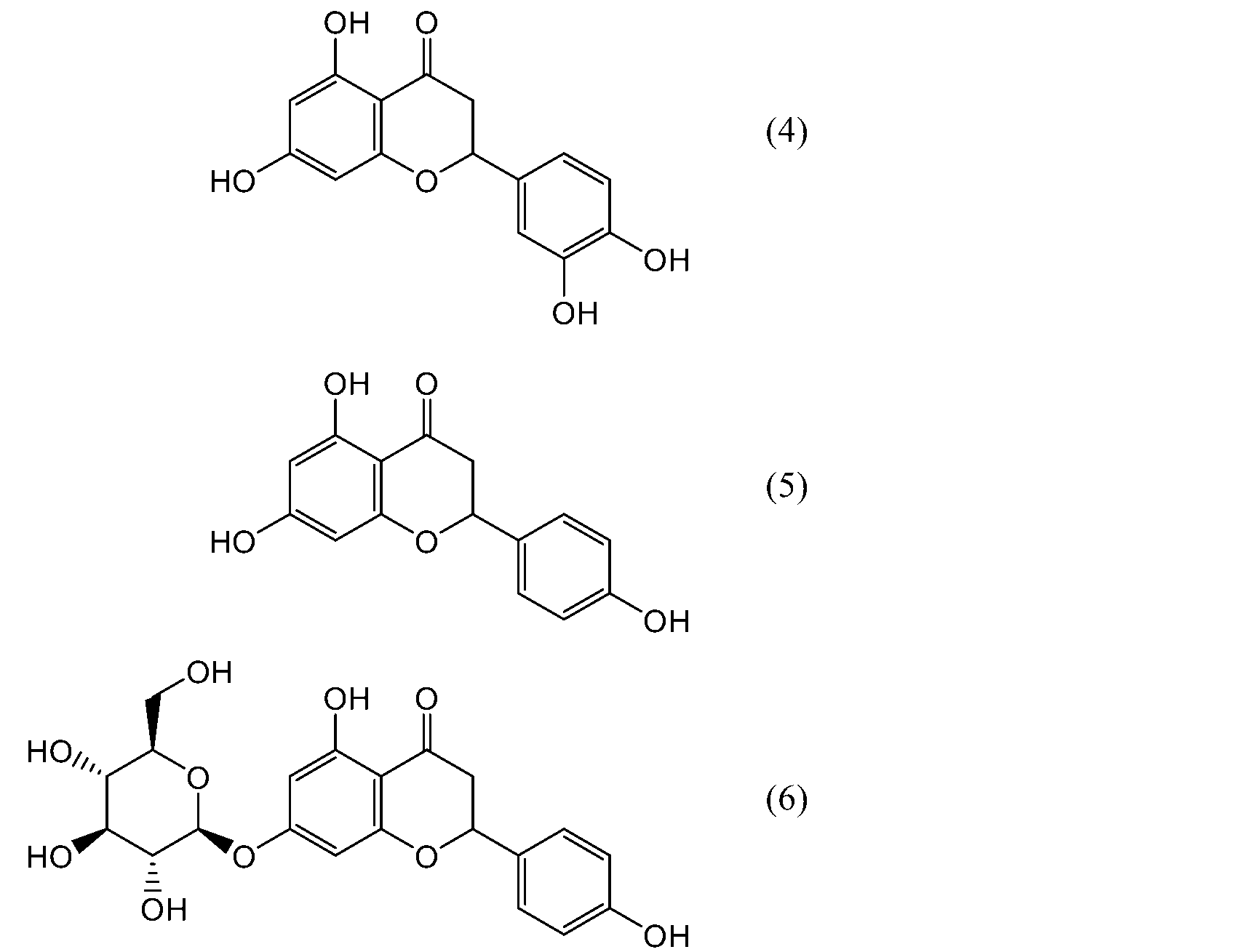
- Preferred PKC ⁇ activity inhibitors used in the present invention include flavonoids such as scutellarin (formula (1) below), baicalin (formula (2) below), baicalein (formula (3) below), luteonin (formula (4) below), apigenin (formula (5) below), apigenin glucoside (formula (6) below), and salts thereof.
- the salt is not particularly limited as long as it is pharma- ceutical or food-acceptable, and examples include alkali metal salts such as sodium salts.
- the memory disorder improving agent of the present invention may contain one of these PKC ⁇ activity inhibitors alone or a combination of two or more of them.
- PKC ⁇ activity inhibitors preferred are scutellarin, baicalin, luteolin, and apigenin, more preferred are baicalin and luteolin, and even more preferred is baicalin.
- the amount of the PKC ⁇ activity inhibitor contained in the memory impairment improving agent of the present invention is not particularly limited and can be appropriately set depending on the formulation form and/or specific use of the memory impairment improving agent, but can be, for example, 40 to 100% by weight, preferably 60 to 90% by weight.
- the memory disorder improving agent of the present invention may or may not further contain additives and/or bases depending on the formulation form and use, in addition to the above-mentioned active ingredients, within the scope of not impairing the effects of the present invention.
- the additives and bases which may or may not be contained, are not particularly limited as long as they are pharmacologic acceptable, and examples thereof include excipients, binders, disintegrants, lubricants, isotonicity agents, plasticizers, dispersants, emulsifiers, solubilizers, wetting agents, stabilizers, suspending agents, adhesives, gelling agents, coating agents, glossing agents, water, oils and fats, waxes, hydrocarbons, fatty acids, higher alcohols, esters, water-soluble polymers, surfactants, metal soaps, lower alcohols, polyhydric alcohols, pH adjusters, buffers, antioxidants, UV inhibitors, preservatives, flavorings, fragrances, powders, thickeners, colorants, chel
- the memory disorder improving agent of the present invention may or may not contain other nutritional components and/or pharmacological components in addition to the above-mentioned active ingredients, so long as the effects of the present invention are not impaired.
- Such nutritional components and pharmacological components are not particularly limited as long as they are pharmacologic acceptable, and examples thereof include antacids, stomachic agents, digestive agents, intestinal regulators, antispasmodics, mucosal repair agents, anti-inflammatory agents, astringents, antiemetics, antitussives, expectorants, anti-inflammatory enzymes, sedatives, hypnotics, antihistamines, caffeine, cardiac diuretics, antibacterial agents, vasoconstrictors, vasodilators, local anesthetics, herbal extracts, vitamins, menthols, etc.
- These nutritional components and/or pharmacological components may be used alone or in combination of two or more types. The content of these components is appropriately set according to the type of components used.
- the form and properties of the memory impairment improving agent of the present invention are not particularly limited as long as it contains the above-mentioned active ingredient.
- the administration form of the memory impairment improving agent of the present invention includes both oral and parenteral administration forms. Therefore, the memory impairment improving agent of the present invention can be prepared as an oral agent, an injection, an infusion, a nasal drop, or the like.
- the memory impairment improving agent of the present invention is preferably an oral agent that can be easily administered (ingested) on a daily and/or continuous basis.
- the memory impairment improving agent of the present invention may be in liquid or solid form.
- liquid forms include liquids, beverages, emulsions, suspensions, spirits, syrups, elixirs, soft extracts, etc.
- solid forms include tablets, pills, powders, fine granules, granules, tablets, capsules (including hard capsules and soft capsules), troches, chewable tablets, dry extracts, etc.
- the memory impairment improving agent of the present invention When the memory impairment improving agent of the present invention is in solid form, it may be in a sustained or sustained release dosage form, or may be mixed with water or the like when administered or ingested.
- the memory impairment improving agent of the present invention can also be used as an additive that adds value to foods, medicines, quasi-drugs, etc.
- Foods to which the memory impairment improving agent of the present invention can be added include general foods and beverages, and health functional foods (including foods for specified health uses, foods with nutrient functions, and foods with functional claims, etc.).
- the active ingredient of the memory impairment improving agent of the present invention contains flavonoids that can be ingested as food ingredients, it is preferable to use it by adding it to health functional foods that can be easily ingested daily and/or continuously, and since the memory impairment improving agent of the present invention exerts its efficacy based on the effect of reducing PKC ⁇ phosphorylation (normalizing PKC ⁇ activity), it is particularly preferable to use it by adding it to foods for specified health uses or foods with functional claims.
- the manufacturing method of the memory impairment improving agent of the present invention may be a conventional formulation method using the above-mentioned active ingredient and other ingredients to be mixed as necessary, depending on various forms and properties, and the purpose of use.
- the memory impairment improving agent of the present invention is used for the purpose of improving memory impairment through normalization of PKC ⁇ activity.
- the memory impairment is not particularly limited as long as it is caused by inhibition of PKC ⁇ activity.
- memory impairment caused by aging, depression, trauma, stress, and/or brain fog can be mentioned.
- the memory impairment improving agent of the present invention it is preferable that the memory impairment is not caused by either irreversible neurodegenerative disease or accumulation of amyloid ⁇ , is not caused by exposure to general anesthesia (particularly isoflurane), and is not caused by cerebral infarction.
- the object of memory is not particularly limited, but preferably includes spatial memory (i.e., memory required for actions such as searching for an object, heading to a destination, and returning to an original location).
- spatial memory i.e., memory required for actions such as searching for an object, heading to a destination, and returning to an original location.
- the dose of the memory impairment improving agent of the present invention in terms of the dose for humans, is, in terms of the amount of a PKC ⁇ activity inhibitor, for example, 0.1 g/day/60 kg or more, preferably 0.3 g/day/60 kg or more, more preferably 0.5 g/day/60 kg or more, and even more preferably 1 g/day/60 kg or more.
- the method of administration (ingestion) of the memory impairment improving agent of the present invention is not particularly limited, but for example, it can be administered orally or parenterally once or multiple times a day, and preferably, it can be administered orally once or 2 to 3 times a day.
- PKC ⁇ Activity Inhibitor Among the isoflavones used as the PKC ⁇ activity inhibitor of the active ingredient in the memory disorder improving agent of the present invention, baicalin (above formula (2)), baicalein (above formula (3)), luteonin (above formula (4)), apigenin (above formula (5)), apigenin glucoside (above formula (6)), and salts thereof are not known to have an inhibitory effect on PKC ⁇ activity. Therefore, the present invention also provides a PKC ⁇ activity inhibitor containing a compound selected from the group consisting of baicalin, baicalein, luteonin, apigenin, apigenin glucoside, and salts thereof as an active ingredient. These PKC ⁇ activity inhibitors can be used to improve any symptoms caused by abnormal PKC ⁇ activity.
- DGK ⁇ memory impairment model mouse
- DGK ⁇ diacylglycerol kinase
- this memory impairment model mouse is not a mouse showing intracerebral accumulation of A ⁇ , nor a model mouse of irreversible neurodegenerative disease, nor a mouse exposed to general anesthesia such as isoflurane, nor a model mouse of cerebral infarction.
- Memory impairment model mice were orally administered scutellarin, a PKC ⁇ activity inhibitor, at a dose of 100 mg/mouse for 10 days.
- normal mice were prepared and similarly orally administered scutellarin, a PKC ⁇ activity inhibitor, at a dose of 100 mg/mouse for 10 days.
- the Y-maze is an apparatus in which three arms of the same size are connected radially at 120° intervals, and is used in a spontaneous alternation behavior test, which is one of the spatial memory evaluation tests.
- a spontaneous alternation behavior test which is one of the spatial memory evaluation tests.
- As an evaluation index of spatial memory a value obtained by dividing the number of times that the rat entered three consecutive different arms by the total number of times that the rat entered the arms minus 1 and then multiplying the result by 100 (cross-reaction, Alternations) was used. The lower the Alternations, the higher the degree of memory impairment.
- mice administered scutellarin were subjected to Western blotting to evaluate the activation of PKC. The results are shown in Figure 2 (cerebral cortex) and Figure 3 (hippocampus).
Landscapes
- Health & Medical Sciences (AREA)
- Life Sciences & Earth Sciences (AREA)
- Chemical & Material Sciences (AREA)
- General Health & Medical Sciences (AREA)
- Engineering & Computer Science (AREA)
- Medicinal Chemistry (AREA)
- Bioinformatics & Cheminformatics (AREA)
- Organic Chemistry (AREA)
- Veterinary Medicine (AREA)
- Public Health (AREA)
- Animal Behavior & Ethology (AREA)
- Pharmacology & Pharmacy (AREA)
- Epidemiology (AREA)
- Genetics & Genomics (AREA)
- Biomedical Technology (AREA)
- Zoology (AREA)
- Wood Science & Technology (AREA)
- Nuclear Medicine, Radiotherapy & Molecular Imaging (AREA)
- Neurology (AREA)
- Neurosurgery (AREA)
- General Engineering & Computer Science (AREA)
- Molecular Biology (AREA)
- Biochemistry (AREA)
- General Chemical & Material Sciences (AREA)
- Chemical Kinetics & Catalysis (AREA)
- Polymers & Plastics (AREA)
- Food Science & Technology (AREA)
- Nutrition Science (AREA)
- Mycology (AREA)
- Hospice & Palliative Care (AREA)
- Microbiology (AREA)
- Biotechnology (AREA)
- Psychiatry (AREA)
- Pharmaceuticals Containing Other Organic And Inorganic Compounds (AREA)
- Medicines That Contain Protein Lipid Enzymes And Other Medicines (AREA)
- Coloring Foods And Improving Nutritive Qualities (AREA)
Abstract
Description
項1. PKCγ活性阻害剤を有効成分とする、記憶障害改善剤。
項2. 前記PKCγ活性阻害剤が、スクテラリン、バイカリン、バイカレイン、ルテオニン、アピゲニン、アピゲニングルコシド、及びこれらの塩からなる群より選択されるフラボノイド類である、項1に記載の記憶障害改善剤。
項3. アミロイドβの蓄積に起因しない記憶障害の改善に用いられる、項1又は2に記載の記憶障害改善剤。
項4. 全身麻酔暴露に起因しない記憶障害の改善に用いられる、項1~3のいずれかに記載の記憶障害改善剤。
項5. 脳梗塞に起因しない記憶障害の改善に用いられる、項1~4のいずれかに記載の記憶障害改善剤。
項6. 項1~5のいずれかに記載の記憶障害改善剤を含む食品。
項7. PKCγ活性阻害剤の、記憶障害改善剤の製造のための使用。
項8. 記憶障害改善剤に使用される、PKCγ活性阻害剤。
項9. 記憶障害の改善を要する対象に、有効量のPKCγ活性阻害剤を投与する工程を含む、記憶障害の改善方法。
本発明の記憶障害改善剤は、PKCγ活性阻害剤を有効成分として含むことを特徴とする。
PKCγ活性阻害剤としては、PKCγのリン酸化を阻害する作用がある化合物であれば特に限定されない。本発明で用いられる好ましいPKCγ活性阻害剤としては、スクテラリン(下記式(1))、バイカリン(下記式(2))、バイカレイン(下記式(3))、ルテオニン(下記式(4))、アピゲニン(下記式(5))、アピゲニングルコシド(下記式(6))、及びこれらの塩等のフラボノイド類が挙げられる。

本発明の記憶障害改善剤は、上記有効成分以外に、本発明の効果を損なわない範囲で、製剤形態及び用途に応じた添加剤及び/又は基剤をさらに含んでいてもよいし、含まなくてもよい。このような含有の有無を問わない添加剤及び基剤としては、薬学的に許容されることを限度として特に制限されないが、例えば、賦形剤、結合剤、崩壊剤、滑沢剤、等張化剤、可塑剤、分散剤、乳化剤、溶解補助剤、湿潤化剤、安定化剤、懸濁化剤、粘着剤、ゲル化剤、コーティング剤、光沢化剤、水、油脂類、ロウ類、炭化水素類、脂肪酸類、高級アルコール類、エステル類、水溶性高分子、界面活性剤、金属石鹸、低級アルコール類、多価アルコール、pH調整剤、緩衝剤、酸化防止剤、紫外線防止剤、防腐剤、矯味剤、香料、粉体、増粘剤、着色料、キレート剤、甘味料等が挙げられる。これらの添加剤は、1種単独で使用してもよく、また2種以上を組み合わせて使用してもよい。また、これらの添加剤及び基剤の含有量については、使用する添加剤及び基剤の種類、本発明の記憶障害改善剤の製剤形態及び用途等に応じて適宜設定される。
本発明の記憶障害改善剤は、上記有効成分を含む限り、その形態及び性状は特に限定されない。
本発明の記憶障害改善剤の製造方法は、上記有効成分と、必要に応じて配合されるその他の成分とを用いて、各種形態及び性状、並びに使用目的に応じ、従来公知の通常の製剤手順に従えばよい。
本発明の記憶障害改善剤は、PKCγ活性の正常化を通じて記憶障害を改善する目的で使用される。記憶障害としては、PKCγ活性阻害を原因とするものであれば特に限定されない。例えば、老化、うつ病、心的外傷、ストレス、及び/又はブレインフォグ等により生じる記憶障害が挙げられる。なお、本発明の記憶障害改善剤においては、記憶障害が、非可逆性神経変性疾患及びアミロイドβの蓄積のいずれにも起因しない記憶障害、全身麻酔(特に、イソフルラン)暴露に起因しない記憶障害、及び脳梗塞に起因しない記憶障害であることが好ましい。
本発明の記憶障害改善剤の用量としては、ヒトへの用量で、PKCγ活性阻害剤換算量で、例えば0.1g/日/60kg以上、好ましくは0.3g/日/60kg以上、より好ましくは0.5g/日/60kg以上、さらに好ましくは1g/日/60kg以上が挙げられる。
上記本発明の記憶障害改善剤で有効成分のPKCγ活性阻害剤として用いられるイソフラボン類のうち、バイカリン(上記式(2))、バイカレイン(上記式(3))、ルテオニン(上記式(4))、アピゲニン(上記式(5))、アピゲニングルコシド(上記式(6))、及びこれらの塩については、PKCγ活性阻害作用が知られてない。従って、本願発明は、更に、バイカリン、バイカレイン、ルテオニン、アピゲニン、アピゲニングルコシド、及びこれらの塩からなる群より選択される化合物を有効成分とする、PKCγ活性阻害剤も提供する。これらPKCγ活性阻害剤は、PKCγ活性異常に起因する任意の症状の改善に用いることができる。
(記憶障害モデルマウス)
哺乳類で10種類のサブタイプが発見されているジアシルグリセロールキナーゼ(DGK)の中の一つのサブタイプであるDGKβは、特に脳の海馬、大脳皮質、線条体に多く、神経ネットワークが発達する時期に急増すること、また、神経特異的に発現し、神経突起伸長を促進することが本発明者により見いだされている。このDGKβをノックアウトしたマウス(DGKβKOマウス)を記憶障害モデルとして作製した。なお、この記憶障害モデルマウスは、Aβの脳内蓄積を示すマウスでもなく、非可逆的神経変性疾患モデルマウスでもなく、イソフルラン等の全身麻酔を暴露されたマウスでもなく、脳梗塞モデルマウスでもない。
Y-maze装置(Y迷路)を用いた。Y迷路は、同じ大きさの3本のアームが120°間隔で放射状に連結された装置であり、空間記憶評価試験の1つである自発交替行動試験に用いられる。空間記憶の評価指標として、3回連続して異なるアームへ進入した回数をアームへの総進入回数から1を引いた値で除した後、100を乗することで得られる値(交差反応、Alternations)を用いた。Alternationsが低いほど、記憶障害の程度が高いことを示す。
結果を図1に示す。図中、WTは正常マウスの結果、KOは記憶障害モデルマウスの結果、-はスクテラリン投与なしの結果、+はスクテラリン投与ありの結果を示す。また、「WT-: 5」等の形式で記載されている数値は、マウスの数を表す(以降の図においても同様)。図1に示す通り、スクテラリン投与なし(-)の記憶障害マウス(KO)群ではAlternationsの値が有意に低くなり、記憶障害が生じていることが明らかとなった。さらに、スクテラリンを投与(+)することで、Alternationsの値が有意に高くなり、記憶障害マウス(KO)群における記憶障害が正常マウス(WT)に近いレベルまで改善したことが認められた。
各種フラボノイド類のPKCγ活性阻害作用を試験した。各種フラボノイド類として、具合的には、スクテラリン(Scu)、バイカリン(Bai)、ルテオリン(Lut)、及びアピゲニン(Api)をそれぞれ用いた。COS7細胞にGFP-PKCγをコードするプラスミドをエレクトロポレーションで導入し、48時間培養することで、GFP-PKCγを発現させた。TPA(12-O-Tetradecanoylphorbol-13-acetate、PKCγの活性化剤)と各フラボノイド類とで細胞を処理した後に、細胞を摩砕し、タンパク質をSDS-PAGEに供した。その後、PKCγ及びリン酸化PKCγ(活性化型)についてウエスタンブロッティングを行った。
Claims (6)
- PKCγ活性阻害剤を有効成分とする、記憶障害改善剤。
- 前記PKCγ活性阻害剤が、スクテラリン、バイカリン、バイカレイン、ルテオニン、アピゲニン、アピゲニングルコシド、及びこれらの塩からなる群より選択されるフラボノイド類である、請求項1に記載の記憶障害改善剤。
- アミロイドβの蓄積に起因しない記憶障害の改善に用いられる、請求項1に記載の記憶障害改善剤。
- 全身麻酔暴露に起因しない記憶障害の改善に用いられる、請求項1に記載の記憶障害改善剤。
- 脳梗塞に起因しない記憶障害の改善に用いられる、請求項1に記載の記憶障害改善剤。
- 請求項1に記載の記憶障害改善剤を含む食品。
Priority Applications (2)
| Application Number | Priority Date | Filing Date | Title |
|---|---|---|---|
| EP24831994.9A EP4728879A1 (en) | 2023-06-28 | 2024-06-26 | Memory disorder ameliorating agent |
| CN202480042344.0A CN121368433A (zh) | 2023-06-28 | 2024-06-26 | 记忆障碍改善剂 |
Applications Claiming Priority (2)
| Application Number | Priority Date | Filing Date | Title |
|---|---|---|---|
| JP2023105921A JP2025005660A (ja) | 2023-06-28 | 2023-06-28 | 記憶障害改善剤 |
| JP2023-105921 | 2023-06-28 |
Publications (1)
| Publication Number | Publication Date |
|---|---|
| WO2025005135A1 true WO2025005135A1 (ja) | 2025-01-02 |
Family
ID=93938641
Family Applications (1)
| Application Number | Title | Priority Date | Filing Date |
|---|---|---|---|
| PCT/JP2024/023169 Ceased WO2025005135A1 (ja) | 2023-06-28 | 2024-06-26 | 記憶障害改善剤 |
Country Status (4)
| Country | Link |
|---|---|
| EP (1) | EP4728879A1 (ja) |
| JP (1) | JP2025005660A (ja) |
| CN (1) | CN121368433A (ja) |
| WO (1) | WO2025005135A1 (ja) |
-
2023
- 2023-06-28 JP JP2023105921A patent/JP2025005660A/ja active Pending
-
2024
- 2024-06-26 WO PCT/JP2024/023169 patent/WO2025005135A1/ja not_active Ceased
- 2024-06-26 EP EP24831994.9A patent/EP4728879A1/en active Pending
- 2024-06-26 CN CN202480042344.0A patent/CN121368433A/zh active Pending
Non-Patent Citations (9)
| Title |
|---|
| DE LUCA PIETRO, CAMAIONI ANGELO, MARRA PASQUALE, SALZANO GIOVANNI, CARRIERE GIOVANNI, RICCIARDI LUCA, PUCCI RESI, MONTEMURRO NICOL: "Effect of Ultra-Micronized Palmitoylethanolamide and Luteolin on Olfaction and Memory in Patients with Long COVID: Results of a Longitudinal Study", CELLS, MDPI AG, vol. 11, no. 16, pages 2552, XP093254413, ISSN: 2073-4409, DOI: 10.3390/cells11162552 * |
| KUMIKO ARAI: "What is brain fog that is rapidly increasing due to sequelae of novel coronavirus?", DIFFERENCE FROM DEMENTIA AND FORGETFULNESS, [ONLINE, 13 February 2023 (2023-02-13), Retrieved from the Internet <URL:https://nishiharu-clinic.com/2023/02/13/korona-bureinfogu> |
| MATHIS, C. ; LEHMANN, J. ; UNGERER, A.: "The selective protein kinase C inhibitor, NPC 15437, induces specific deficits in memory retention in mice", EUROPEAN JOURNAL OF PHARMACOLOGY, ELSEVIER SCIENCE, NL, vol. 220, no. 1, 10 September 1992 (1992-09-10), NL , pages 107 - 110, XP023748846, ISSN: 0014-2999, DOI: 10.1016/0014-2999(92)90020-5 * |
| SHIRAI, YASUHITO: "Analysis of molecular mechanism regulating spatio-temporal localization and activity of protein kinase C and diacylglycerol kinase using live imaging", NIHON NAIBUNPI GAKKAI ZASSHI - FOLIA ENDOCRINOLOGICA JAPONICA, NIHON NAIBUNPI GAKKAI, JP, vol. 123, no. 3, 29 February 2004 (2004-02-29), JP , pages 189 - 196, XP009559714, ISSN: 0029-0661, DOI: 10.1254/fpj.123.189 * |
| SHIRAI, YASUHITO: "Function of diacylglycerol kinase β in neurons", NIHON NAIBUNPI GAKKAI ZASSHI - FOLIA ENDOCRINOLOGICA JAPONICA, NIHON NAIBUNPI GAKKAI, JP, vol. 143, no. 3, 10 March 2014 (2014-03-10), JP , pages 131 - 136, XP009559715, ISSN: 0029-0661, DOI: 10.1254/fpj.143.131 * |
| THEOHARIDES THEOHARIS C., CHOLEVAS CHRISTOS, POLYZOIDIS KONSTANTINOS, POLITIS ANTONIOS: "Long‐COVID syndrome‐associated brain fog and chemofog: Luteolin to the rescue", BIOFACTORS, OXFORD UNIVERSITY PRESS, OXFORD., GB, vol. 47, no. 2, 1 March 2021 (2021-03-01), GB , pages 232 - 241, XP093254411, ISSN: 0951-6433, DOI: 10.1002/biof.1726 * |
| YASUHITO SHIRAI;NAOAKI SAITO: "Diacylglycerol kinase as a possible therapeutic target for neuronal diseases", JOURNAL OF BIOMEDICAL SCIENCE, KLUWER ACADEMIC PUBLISHERS, DO, vol. 21, no. 1, 7 April 2014 (2014-04-07), Do , pages 28, XP021184195, ISSN: 1423-0127, DOI: 10.1186/1423-0127-21-28 * |
| YASUMASA OKAMOTO: "Functional Brain Basis of Pathophysiology in Depression", PSYCHIATRIA ET NEUROLOGIA JAPONICA, vol. 111, no. 11, 2009, pages 1330 - 1344 |
| ZHAO, W.Q. ; SEDMAN, G.L. ; GIBBS, M.E. ; NG, K.T.: "Effect of PKC inhibitors and activators on memory", BEHAVIOURAL BRAIN RESEARCH., ELSEVIER, AMSTERDAM., NL, vol. 60, no. 2, 28 February 1994 (1994-02-28), NL , pages 151 - 160, XP024101347, ISSN: 0166-4328, DOI: 10.1016/0166-4328(94)90142-2 * |
Also Published As
| Publication number | Publication date |
|---|---|
| JP2025005660A (ja) | 2025-01-17 |
| CN121368433A (zh) | 2026-01-20 |
| EP4728879A1 (en) | 2026-04-22 |
Similar Documents
| Publication | Publication Date | Title |
|---|---|---|
| Berry et al. | A multicentre placebo-controlled study in general practice to evaluate the efficacy and safety of tizanidine in acute low-back pain | |
| US4507323A (en) | Treatment of psychosexual dysfunctions | |
| RU2232016C2 (ru) | Изовалерамид-антиспастическое и противосудорожное средство, экстракт из растения семейства valerianaceae или хмеля - средство для лечения симптома спастичности и способ устранения этого симптома, способ лечения патологии, снимаемой центрально-опосредованным снижением мышечного тонуса | |
| Dose et al. | The benzamide tiapride: treatment of extrapyramidal motor and other clinical syndromes | |
| Scott et al. | Effects of amitriptyline and zimelidine in combination with ethanol | |
| Direkvand-Moghadam et al. | Evaluating Shirazi (Thymus vulgaris) on menstrual pain using verbal multidimensional scoring system (VMS) | |
| JP7111375B2 (ja) | 学習記憶能力増強組成物 | |
| WO2025005135A1 (ja) | 記憶障害改善剤 | |
| Dabaghian et al. | An overview on multi-ingredient memory enhancers and anti-Alzheimer’s formulations from traditional Persian pharmacy | |
| EP0171227B1 (en) | Use of propiophenone compound | |
| ITMI20121317A1 (it) | Composizioni per il trattamento della fatica oncologica | |
| JP2011037722A (ja) | 小胞体ストレスによる神経細胞死の予防又は抑制剤 | |
| KR101417201B1 (ko) | 신경변성 질환을 치료하기 위한 조성물 및 방법 | |
| JP6904802B2 (ja) | 軽度認知障害改善用の組成物 | |
| KR20060103335A (ko) | 불면증 치료를 위한 가복사돌의 용도 | |
| EP4566600A1 (en) | Affective disorder ameliorating agent | |
| AU749169B2 (en) | A method for preventing the onset of asthma | |
| JP2017031144A (ja) | 経口用医薬組成物 | |
| JP2021195358A (ja) | 腎臓機能改善剤 | |
| Larsen et al. | Tremor in healthy volunteers after bambuterol and terbutaline CR-tablets | |
| JPH05262660A (ja) | 三成分配合剤 | |
| EP1289520A2 (en) | Pharmaceutical compositions for the treatment of depression comprising famotidine | |
| Nidhin et al. | A Comparative Pharmaceutico-Analytical Study of Saindavadhi Ghrita Prepared with Murchchhit and Amurchchhit Ghrita and Evaluation of Its Antiepileptic Efficacy in Swiss | |
| JP4747579B2 (ja) | アトピー性皮膚炎の予防・治療剤 | |
| Sonibare et al. | Toxicological evaluation, antioxidant and in vivo antipsychotic activities of Acanthospermum hispidum DC. and Clerodendrum capitatum (Willd.) Schumach. & Thonn. leaf extracts |
Legal Events
| Date | Code | Title | Description |
|---|---|---|---|
| 121 | Ep: the epo has been informed by wipo that ep was designated in this application |
Ref document number: 24831994 Country of ref document: EP Kind code of ref document: A1 |
|
| WWE | Wipo information: entry into national phase |
Ref document number: 2024831994 Country of ref document: EP Ref document number: 24831994 Country of ref document: EP |
|
| ENP | Entry into the national phase |
Ref document number: 2024831994 Country of ref document: EP Effective date: 20260115 |
|
| ENP | Entry into the national phase |
Ref document number: 2024831994 Country of ref document: EP Effective date: 20260115 |
|
| NENP | Non-entry into the national phase |
Ref country code: DE |
|
| ENP | Entry into the national phase |
Ref document number: 2024831994 Country of ref document: EP Effective date: 20260115 |
|
| ENP | Entry into the national phase |
Ref document number: 2024831994 Country of ref document: EP Effective date: 20260115 |
|
| WWP | Wipo information: published in national office |
Ref document number: 2024831994 Country of ref document: EP |