WO2025005015A1 - 組成物及びその製造方法、乾燥体及びその製造方法、固体電解質、並びに蓄電デバイス - Google Patents
組成物及びその製造方法、乾燥体及びその製造方法、固体電解質、並びに蓄電デバイス Download PDFInfo
- Publication number
- WO2025005015A1 WO2025005015A1 PCT/JP2024/022651 JP2024022651W WO2025005015A1 WO 2025005015 A1 WO2025005015 A1 WO 2025005015A1 JP 2024022651 W JP2024022651 W JP 2024022651W WO 2025005015 A1 WO2025005015 A1 WO 2025005015A1
- Authority
- WO
- WIPO (PCT)
- Prior art keywords
- compound
- electron
- solvent
- solid electrolyte
- solution
- Prior art date
- Legal status (The legal status is an assumption and is not a legal conclusion. Google has not performed a legal analysis and makes no representation as to the accuracy of the status listed.)
- Ceased
Links
Classifications
-
- Y—GENERAL TAGGING OF NEW TECHNOLOGICAL DEVELOPMENTS; GENERAL TAGGING OF CROSS-SECTIONAL TECHNOLOGIES SPANNING OVER SEVERAL SECTIONS OF THE IPC; TECHNICAL SUBJECTS COVERED BY FORMER USPC CROSS-REFERENCE ART COLLECTIONS [XRACs] AND DIGESTS
- Y02—TECHNOLOGIES OR APPLICATIONS FOR MITIGATION OR ADAPTATION AGAINST CLIMATE CHANGE
- Y02E—REDUCTION OF GREENHOUSE GAS [GHG] EMISSIONS, RELATED TO ENERGY GENERATION, TRANSMISSION OR DISTRIBUTION
- Y02E60/00—Enabling technologies; Technologies with a potential or indirect contribution to GHG emissions mitigation
- Y02E60/10—Energy storage using batteries
Definitions
- lithium-ion secondary batteries are used in a wide range of applications due to their high energy density and battery capacity.
- sodium-ion secondary batteries, potassium-ion secondary batteries, magnesium-ion secondary batteries, and other post-lithium ion secondary batteries that use elements to replace the rare metal lithium have been attracting attention.
- Lithium-ion secondary batteries which are widely used as power storage devices, are secondary batteries that have a negative electrode, a positive electrode, and an electrolyte, and are charged and discharged by transferring lithium ions between the two electrodes via the electrolyte.
- organic electrolyte solutions have been used primarily as electrolytes.
- solid or gel electrolytes using inorganic or organic materials have been proposed instead of organic electrolyte solutions as a technology to eliminate concerns about electrolyte leakage and short circuits inside the battery due to overcharging and overdischarging.
- This disclosure has been made in light of these circumstances, and its primary objective is to provide a solid electrolyte that exhibits high ionic conductivity at room temperature and has small variability in ionic conductivity.
- a charge transfer complex formed by using an electron donor compound having a phenylene oxide structure, an electron acceptor compound, and a specific solvent can provide a solid electrolyte that exhibits high ionic conductivity at room temperature and has small variability in ionic conductivity.
- the following composition and method for producing the same, dried body and method for producing the same, solid electrolyte, and electricity storage device are provided.
- a composition comprising a charge transfer complex formed from an electron donor compound and an electron acceptor compound, and a non-aqueous solvent, wherein the electron donor compound has a phenylene oxide structure, and the non-aqueous solvent has a relative dielectric constant greater than 2.0 and less than 40.
- composition according to the above [1], which is for use as a solid electrolyte [3] The composition according to the above [1] or [2], which has a Gardner color number of 13 or more as measured in accordance with JIS K 0071-2. [4] The composition according to any one of the above [1] to [3], wherein the non-aqueous solvent has a relative dielectric constant of 35 or less. [5] The composition according to any one of the above [1] to [4], wherein the non-aqueous solvent is a compound having an oxygen atom and/or an aromatic ring structure.
- the non-aqueous solvent is at least one selected from the group consisting of a chain ketone, a chain ether, a cyclic ether, a chain carboxylate ester, a chain carbonate ester, an aromatic hydrocarbon, and a lactam.
- the electron donor compound is a polymer having a repeating unit represented by the following formula (1): In formula (1), R 1 and R 2 are the same or different and each represents a hydrogen atom or an alkyl group.
- DDQ 2,3-dichloro-5,6-dicyano-p-benzoquinone
- chloranil 2,3,5,6-tetrachloro-1,4-benzoquinone
- TCNQ 7,7,8,8-tetracyanoquinodimethane
- o-benzoquinone o-benzoquinone
- m-benzoquinone m-benzoquinone
- p-benzoquinone
- the alkali metal-containing compound comprises an alkali metal salt.
- the alkali metal-containing compound comprises a lithium-containing compound.
- a composition comprising the dried product according to [13] above and an alkali metal-containing compound.
- a method for producing the composition according to any one of the above [1] to [9], comprising a step of mixing a first solution obtained by dissolving the electron-donating compound in a first solvent with a second solution obtained by dissolving the electron-accepting compound in a second solvent, wherein the first solvent and the second solvent are the same or different and are non-aqueous solvents having a relative dielectric constant greater than 2.0 and less than 40.
- a method for producing a dried body according to the above [13], comprising the steps of: mixing a first solution, which is a solution obtained by dissolving the electron-donor compound in a first solvent, with a second solution, which is a solution obtained by dissolving the electron-accepting compound in a second solvent; and removing the non-aqueous solvent from a mixed solution of the first solution and the second solution, wherein the first solvent and the second solvent are the same or different and are non-aqueous solvents having a relative dielectric constant greater than 2.0 and less than 40.
- a solid electrolyte that exhibits high ionic conductivity at room temperature and has small variation in ionic conductivity.
- an electricity storage device such as a secondary battery or capacitor
- composition of the present disclosure is a charge-transfer complex solution containing a charge-transfer complex as component (A) and a non-aqueous solvent as component (B).
- the component (A) contained in the present composition is a charge-transfer complex formed by an electron-donating compound having a phenylene oxide structure and an electron-accepting compound.
- the component (B) is a non-aqueous solvent having a relative dielectric constant of more than 2.0 and less than 40.
- the present composition in a solution state containing the component (A) (charge-transfer complex) and the component (B) (non-aqueous solvent) is also simply referred to as a "charge-transfer complex solution” or "the present complex solution”.
- Charge-transfer complexes have a deep color due to the strong absorption characteristic of each complex. Therefore, when a charge-transfer complex is formed by an electron-donating compound and an electron-accepting compound, the complex formation appears as a change in color. Therefore, by carrying out a color test of this composition, the degree of complex formation in this complex solution can be evaluated. For example, in the case of a color test using the Gardner color scale, the higher the value of the Gardner color scale, the higher the degree of complex formation in the charge-transfer complex solution.
- the present complex solution preferably has a Gardner color number of 13 or more as measured in accordance with JIS K 0071-2.
- the Gardner color number of the present complex solution is more preferably 14 or more, even more preferably 15 or more, and even more preferably 18 or more.
- the Gardner color number of the charge transfer complex solution is a value measured for a solution in which the total amount of the electron donor compound and the electron acceptor compound is 20 mass% relative to the total amount of the charge transfer complex solution. The method for measuring the Gardner color number follows the method described in the Examples below.
- the electron-donor compound constituting component (A) has a phenylene oxide structure.
- a molecule having a phenylene oxide structure (hereinafter also referred to as "phenylene oxide”) has a structure represented by the general formula: -(C 6 R 4 -O) n - (wherein R is the same or different and is a hydrogen atom or an alkyl group, and n is an integer of 1 or more).
- R is an alkyl group
- the carbon number of the alkyl group is preferably 1 or 2, and more preferably 1.
- n is, for example, 1 to 600.
- phenylene oxides when n in the above general formula is 1 include 2,6-dimethyl-1,4-phenylene oxide and 2,5-dimethyl-1,4-phenylene oxide.
- phenylene oxides when n is 2 or more include polymers having a structure represented by the general formula: -(C 6 R 4 -O) n - as a repeating unit.
- the electron donor compound is preferred, in that it can increase the ionic conductivity of the solid electrolyte and can provide a solid electrolyte excellent in mechanical strength, durability, and heat resistance, and a polymer having a repeating unit represented by the following formula (1) is particularly preferred.
- R 1 and R 2 are the same or different and each represents a hydrogen atom or an alkyl group.
- R1 and R2 in the above formula (1) are preferably alkyl groups. From the viewpoint of easy availability of materials, R1 and R2 in the above formula (1) are preferably methyl groups or ethyl groups, and more preferably methyl groups.
- the number average molecular weight of polyphenylene oxide is, for example, 500 to 30,000, preferably 500 to 20,000, more preferably 1,000 to 20,000, even more preferably 1,000 to 15,000, and even more preferably 1,000 to 10,000.
- Polyphenylene oxide is commercially available, for example, from SABIC.
- As the electron donor compound one type may be used alone, or two or more types may be used in combination.
- the electron-accepting compound may be any compound capable of forming a charge-transfer complex with the electron-donating compound.
- the electron-accepting compound include quinones, cyanides, oxygen, ozone, iodine, sulfur trioxide, transition metal oxides (e.g., manganese dioxide), and the like.
- Specific examples of quinones include 2,3,5,6-tetrachloro-1,4-benzoquinone (chloranil), 2,3-dichloro-5,6-dicyano-p-benzoquinone (DDQ), o-benzoquinone, m-benzoquinone, p-benzoquinone, and the like.
- cyanides include 7,7,8,8-tetracyanoquinodimethane (TCNQ), tetracyanoethylene (TCNE), and the like.
- the electron-accepting compound may be used alone or in combination of two or more.
- the electron-accepting compound preferably contains at least one selected from the group consisting of quinones and cyanides, because it is easy to form a charge-transfer complex with phenylene oxide and can obtain a solid electrolyte with high ionic conductivity.
- it is particularly preferable to contain at least one selected from the group consisting of 2,3,5,6-tetrachloro-1,4-benzoquinone (chloranil), 2,3-dichloro-5,6-dicyano-p-benzoquinone (DDQ), 7,7,8,8-tetracyanoquinodimethane (TCNQ), o-benzoquinone, m-benzoquinone, and p-benzoquinone.
- the ratio of the molar amount of the electron-accepting compound to the molar amount of the electron-donating compound is preferably 0.1 or more and 1.0 or less.
- the molar amount of the electron-accepting compound/molar amount of the electron-donating compound is more preferably 0.15 or more, even more preferably 0.2 or more, and even more preferably 0.25 or more.
- the upper limit of the molar amount of the electron-accepting compound/molar amount of the electron-donating compound is more preferably 0.9 or less, even more preferably 0.8 or less, and even more preferably 0.7 or less.
- the relative dielectric constant ( ⁇ r ) of the non-aqueous solvent contained in this complex solution is more than 2.0 and less than 40. If the relative dielectric constant of the non-aqueous solvent is 2.0 or less or 40 or more, the degree of complex formation of the (A) component is low, and when a solid electrolyte is produced, the ion conductivity is poor. From the viewpoint of increasing the degree of complex formation of the (A) component and obtaining a solid electrolyte with high ion conductivity, the dielectric constant of the non-aqueous solvent is preferably 35 or less, more preferably 30 or less, and even more preferably 20 or less. The lower limit of the dielectric constant of the non-aqueous solvent is preferably 3 or more, more preferably 5 or more.
- the relative dielectric constant of the non-aqueous solvent is the value described in "Chemical Handbook: Basics," 5th Revised Edition, edited by the Chemical Society of Japan (Maruzen Co., Ltd.).
- the non-aqueous solvent one type may be used alone, or two or more types may be used in combination.
- the relative dielectric constant ( ⁇ rmix ) of the mixed solvent is a value calculated by Wiener's limit formula shown in the following formula (1).
- ⁇ rmix ⁇ r2 + ( ⁇ r1 - ⁇ r2 ) ⁇ 1 (1)
- ⁇ rmix relative dielectric constant of mixed solvent
- ⁇ r1 relative dielectric constant of solvent 1
- ⁇ r2 relative dielectric constant of solvent 2
- ⁇ 1 volume fraction of solvent 1
- the non-aqueous solvent used as component (B) is not particularly limited as long as it has a relative dielectric constant greater than 2.0 and less than 40.
- Specific examples of non-aqueous solvents include at least one compound selected from the group consisting of hydrocarbons, alcohol compounds, ether compounds, ketone compounds, ester compounds, amide compounds, and nitrile compounds, and which has a relative dielectric constant greater than 2.0 and less than 40.
- Alcohol compounds include methanol, ethanol, 1-propanol, 2-propanol, 1-butanol, 2-butanol, isobutyl alcohol, isopentyl alcohol, cyclohexanol, ethylene glycol, propylene glycol, 2-methoxyethanol, 2-ethoxyethanol, diethylene glycol, and triethylene glycol.
- Ether compounds include diethyl ether, diisopropyl ether, tetrahydrofuran, tetrahydropyran, 1,4-dioxane, anisole, 1,2-dimethoxyethane, etc.
- Ketone compounds include acetone, 2-butanone, cyclohexanone, etc.
- Ester compounds include ethyl acetate, butyl acetate, and ⁇ -butyrolactone.
- Amide compounds include N,N-dimethylformamide, N,N-dimethylacetamide, N-methyl-2-pyrrolidone, and hexamethylphosphoric acid triamide.
- Nitrile compounds include acetonitrile, propionitrile, and benzonitrile.
- the non-aqueous solvent is preferably a compound that has an oxygen atom and/or an aromatic ring structure and has a relative dielectric constant greater than 2.0 and less than 40, and among these, a compound with a relative dielectric constant of 35 or less is more preferred, and a compound with a relative dielectric constant of 30 or less is even more preferred.
- the non-aqueous solvent is preferably at least one selected from the group consisting of ketone compounds, ether compounds, ester compounds, amide compounds, and hydrocarbons, and more preferably at least one compound selected from the group consisting of chain ketones, chain ethers, cyclic ethers, chain carboxylates, chain carbonates, aromatic hydrocarbons, cyclic esters, and cyclic amides, in that a solid electrolyte having high ionic conductivity and small variation in ionic conductivity can be obtained.
- the nonaqueous solvent is preferably at least one selected from the group consisting of a compound represented by the following formula (2), a compound represented by the following formula (3), a compound represented by the following formula (4), and a compound represented by the following formula (5), and the compound has a relative dielectric constant of more than 2.0 and less than 40.
- R3 may be the same or different and is an alkyl group or two R3 are bonded to form a cyclic structure.
- X1 represents -CO-, -CO-O-, or -O-CO-O-.
- R4 may be the same or different and is an alkyl group.
- R 5 is the same or different and is a hydrogen atom or an alkyl group.
- X2 is -NR6- or -O-.
- R6 is a hydrogen atom or an alkyl group.
- n is an integer of 2 to 4.
- examples of the alkyl group include a methyl group, an ethyl group, a 1-propyl group, a 2-propyl group, an n-butyl group, a sec-butyl group, an isobutyl group and a tert-butyl group.
- the boiling point of the non-aqueous solvent is not particularly limited, but is preferably 50°C or higher from the viewpoint of suppressing the volatilization of the non-aqueous solvent during the manufacturing process, etc. Furthermore, from the viewpoint of enabling the desolvation of the complex solution by a simple operation (e.g., heating at the lowest possible temperature), the boiling point of the non-aqueous solvent is preferably 200°C or lower, more preferably 180°C or lower, and even more preferably 150°C or lower. Note that the boiling point is the value under atmospheric pressure.
- the content of the non-aqueous solvent in the present complex solution is preferably 40% by mass or more, more preferably 45% by mass or more, and even more preferably 50% by mass or more, based on the total amount of the charge-transfer complex solution, in that a solid electrolyte having high ionic conductivity at room temperature and small variation in ionic conductivity can be obtained.
- the content of the non-aqueous solvent is preferably 99% by mass or less, and more preferably 90% by mass or less, based on the total amount of the charge-transfer complex solution.
- the present complex solution may further contain a component (hereinafter also referred to as "other component") different from the above-mentioned (A) component and (B) component, within a range that does not impair the effects of the present disclosure.
- the other component include a non-aqueous solvent different from the (B) component, water, a binder, etc.
- the present composition contains a non-aqueous solvent different from the (B) component and/or water as the other component, the total content of the non-aqueous solvent different from the (B) component and/or water is, for example, 0.5 mass% or less, preferably 0.1 mass% or less, relative to the mass of the (B) component.
- This complex solution can be produced by a method (hereinafter also referred to as "this production method") that includes a step of mixing a first solution, which is a solution obtained by dissolving phenylene oxide, an electron-donor compound, in a first solvent, with a second solution, which is a solution obtained by dissolving, in a second solvent, an electron-accepting compound, which is a compound capable of forming a charge-transfer complex with phenylene oxide.
- this production method includes a step of mixing a first solution, which is a solution obtained by dissolving phenylene oxide, an electron-donor compound, in a first solvent, with a second solution, which is a solution obtained by dissolving, in a second solvent, an electron-accepting compound, which is a compound capable of forming a charge-transfer complex with phenylene oxide.
- the first solvent and the second solvent are preferably non-aqueous solvents having a relative dielectric constant of more than 2.0 and less than 40.
- non-aqueous solvents having a relative dielectric constant of more than 2.0 and less than 40 include the above-mentioned component (B).
- the first solvent and the second solvent may be the same or different. Considering the prevention of a decrease in the degree of complex formation and ease of operation, it is preferable that the first solvent and the second solvent are the same, or, if the first solvent and the second solvent are different, they are compatible with each other.
- the content of the electron donor compound in the first solution and the content of the electron acceptor compound in the second solution are each, for example, 0.05 to 60% by mass. From the viewpoint of efficiently removing the solvent when removing it from the solution, the content of the electron donor compound in the first solution and the content of the electron acceptor compound in the second solution are each preferably 1% by mass or more, and more preferably 10% by mass or more. Furthermore, the upper limit of the content is preferably 55% by mass or less, and more preferably 50% by mass or less, from the viewpoint of obtaining a mixed solution in which the electron donor compound and the electron acceptor compound are uniformly mixed.
- the method for mixing the first solution and the second solution is not particularly limited, and any appropriate method can be used.
- one of the first solution and the second solution may be added to the other, or the first solution and the second solution may be added simultaneously to a specified container.
- the first solution and the second solution may be added all at once or in portions.
- the mixture of the first solution and the second solution may be appropriately subjected to a process such as stirring in order to mix the first solution and the second solution uniformly.
- the concentrations and amounts of the first solution and the second solution it is preferable to adjust the concentrations and amounts of the first solution and the second solution and mix them so that the ratio of the molar amount of the electron-accepting compound to the molar amount of the electron-donating compound (however, in terms of monomers if the electron-donating compound is a polymer) ([molar amount of electron-accepting compound]/[molar amount of electron-donating compound]) is 0.1 or more and 1.0 or less.
- [Molar amount of electron-accepting compound]/[molar amount of electron-donating compound] is more preferably 0.15 or more, even more preferably 0.2 or more, and even more preferably 0.25 or more.
- the upper limit of [molar amount of electron-accepting compound]/[molar amount of electron-donating compound] is more preferably 0.9 or less, even more preferably 0.8 or less, and even more preferably 0.7 or less.
- the complex solution may contain an electron donor compound and/or an electron acceptor compound.
- the amount of the electron donor compound and/or the electron acceptor compound contained in the charge transfer complex solution is as small as possible, that is, it is preferable that the degree of complex formation of the charge transfer complex obtained by using the electron donor compound and the electron acceptor compound as raw materials is high.
- the electron donor compound and the electron acceptor compound are mixed in solution, so that the electron donor compound and the electron acceptor compound can be mixed more uniformly than in dry blending. Therefore, the solid electrolyte obtained using this complex solution has a uniform composition, which is believed to increase ionic conductivity at room temperature while reducing ionic conductivity variation.
- the degree of complex formation of the charge transfer complex can be increased by using component (B) as a solvent, which is believed to have made it possible to obtain a solid electrolyte with high ionic conductivity at room temperature.
- the dried form of the present complex solution (hereinafter also referred to as the "present dried form") is obtained by removing the solvent from the above-mentioned charge-transfer complex solution.
- the present dried product can be obtained by a method including a step of removing the non-aqueous solvent from the mixed liquid of the first solution and the second solution in the above-described method for producing the present composition.
- the method for removing the solvent from the mixture of the first and second solutions can be carried out by appropriately adopting a known desolvation method.
- the desolvation may be carried out by heating, or by appropriately combining one or more of natural drying, air blowing, freeze-drying, etc.
- the heating temperature can be appropriately set depending on the type of non-aqueous solvent, but can be, for example, 80 to less than 150°C.
- the heating time is, for example, 30 minutes to 2 hours.
- the desolvation process may be carried out under atmospheric pressure or under reduced pressure. When a non-aqueous solvent with a boiling point of 150°C or higher is used as the first solvent and/or the second solvent, the desolvation process is preferably carried out under reduced pressure at a heating temperature of less than 150°C.
- dry refers to a state in which the nonaqueous solvent has been completely removed, as well as a state in which the nonaqueous solvent remains during the drying process.
- the nonaqueous solvent content of the dried product obtained by the drying process is, for example, 10% by mass or less, and preferably 5% by mass or less.
- the Gardner color number measured according to JIS K 0071-2 for a solution obtained by dissolving the dried body obtained as described above in a non-aqueous solvent having a relative dielectric constant of more than 2.0 and less than 40 is preferably 13 or more, more preferably 14 or more, even more preferably 15 or more, and even more preferably 18 or more.
- the Gardner color number of a solution obtained by dissolving the dried body in the non-aqueous solvent hereinafter also referred to as the "dried body solution”
- the degree of complex formation of the component (A) in the dried body is sufficiently high, and the ionic conductivity of the solid electrolyte obtained by using the dried body can be further increased.
- the Gardner color number of the dried body solution is a value measured for a solution in which the content of the dried body is 20 mass% with respect to the total amount of the dried body solution.
- the method for measuring the Gardner color number follows the method described in the Examples below.
- Examples of non-aqueous solvents having a relative dielectric constant of more than 2.0 and less than 40 include the compounds described above as the component (B).
- composition for electrolyte formation is a composition containing the charge transfer complex solution of the present disclosure or a dried form thereof and an alkali metal-containing compound (hereinafter, also referred to as an "electrolyte-forming composition").
- the electrolyte-forming composition can provide a solid electrolyte that exhibits high ionic conductivity at room temperature and has small variation in ionic conductivity.
- the alkali metal-containing compound is not particularly limited as long as it is a compound that generates alkali metal ions.
- Specific examples of the alkali metal-containing compound include lithium-containing compounds, sodium-containing compounds, and potassium-containing compounds.
- lithium-containing compounds or sodium-containing compounds are preferred, and lithium-containing compounds are more preferred, in that they can improve the ion conductivity of the solid electrolyte.
- alkali metal-containing compound examples include oxides of alkali metals, hydroxides of alkali metals, and salts of alkali metals. Specific examples of these include oxides of alkali metals such as lithium oxide, sodium oxide, and potassium oxide. Specific examples of hydroxides of alkali metals such as lithium hydroxide, sodium hydroxide, and potassium hydroxide.
- alkali metal salts include lithium salts such as Li2CO3 , LiBr, LiCl, LiI, LiSCN , LiBF4 , LiAsF6 , LiClO4, CH3COOLi , CF3COOLi , LiCF3SO3, LiPF6 , LiC( CF3SO2 ) 3 , lithium bis(fluorosulfonyl)imide (Li + ( FSO2 ) 2N- ), lithium bis(trifluoromethanesulfonyl)imide (Li + ( CF3SO2 ) 2N- ) , and lithium ( fluorosulfonyl )(trifluoromethanesulfonyl)imide; and salts of the anions of these lithium salts with alkali metals other than lithium (e.g., sodium , potassium, etc.).
- lithium salts such as Li2CO3 , LiBr, LiCl, LiI, LiSCN , LiBF4 ,
- the alkali metal-containing compound is preferably an alkali metal salt, more preferably a lithium salt or a sodium salt, and even more preferably a lithium salt, in that it can produce a solid electrolyte with small variation in ionic conductivity.
- the lithium salts lithium bis(fluorosulfonyl)imide, lithium bis(trifluoromethanesulfonyl)imide, or lithium (fluorosulfonyl)(trifluoromethanesulfonyl)imide is particularly preferred in terms of high ion dissociation.
- the amount of the alkali metal-containing compound is preferably such that the ratio of the alkali metal-containing compound to the total molar amount of the electron donor compound (when the electron donor compound is a polymer, the amount is calculated as a monomer) and the electron acceptor compound, which are the supply components of the (A) component, ([molar amount of component (C)]/[molar amount of electron donor compound + molar amount of electron acceptor compound]) is 0.03 or more and 1.0 or less.
- [molar amount of component (C)]/[molar amount of electron donor compound + molar amount of electron acceptor compound] is more preferably 0.05 or more, even more preferably 0.1 or more, even more preferably 0.2 or more, and even more preferably 0.3 or more.
- the upper limit of [molar amount of component (C)]/[molar amount of electron donor compound + molar amount of electron acceptor compound] is preferably 0.9 or less, more preferably 0.8 or less, even more preferably 0.7 or less, and even more preferably 0.6 or less.
- the alkali metal-containing compound one type may be used alone, or two or more types may be used in combination.
- the electrolyte-forming composition is obtained by mixing the present complex solution or its dried form with the (C) component.
- the (C) component may be in any state, such as a solid, a molten liquid, or a solution in which the (C) component is dissolved in a solvent.
- the solvent that dissolves the (C) component include the non-aqueous solvents exemplified as the (B) component described above.
- component (C) may be added to the present complex solution or its dried form, or the present complex solution or its dried form and component (C) may be added simultaneously to a specified container.
- the present complex solution or its dried form and component (C) may be added all at once or in portions.
- a treatment such as stirring may be appropriately performed on the mixture of the present complex solution or its dried form and component (C).
- the complex solution or its dried form may be mixed with the component (C) in a dry or wet manner.
- the complex solution or its dried form may be mixed with the component (C) in a heated state.
- the dried form of the complex solution may be mixed with the component (C) in a heated state and a crushed state to obtain an electrolyte-forming composition.
- the dried form of the complex solution and the component (C) are crushed and heated, the dried form of the complex solution and the component (C) may be crushed and then heated, or the dried form of the complex solution and the component (C) may be heated and then crushed.
- the method for crushing the dried form of the complex solution and the component (C) is not particularly limited, but it is preferable to use a crusher such as a ball mill, a bead mill, or a blender.
- the crushing process for obtaining the electrolyte-forming composition may be performed only once or multiple times.
- the temperature at which the dried form of the complex solution and the component (C) are heated is usually 100 to 300°C, and preferably 100 to 250°C.
- the heating time is, for example, 5 to 30 minutes.
- the solid electrolyte of the present disclosure (hereinafter also referred to as the “present solid electrolyte”) is a solid electrolyte formed from a composition containing the present complex solution or a dried form thereof and the component (C).
- the method for producing the present solid electrolyte is not particularly limited.
- a preferred embodiment of the method for producing the present solid electrolyte is as follows.
- the composition When the present solid electrolyte is produced using a composition containing the present complex solution and component (C), the composition is first placed in a container and the solvent is removed by heating or the like. This results in a solid product of the desired shape.
- the present solid electrolyte is produced using a composition containing a dried form of the present complex solution and component (C), the composition is molded into the desired shape.
- known methods such as extrusion molding, injection molding, pressure molding, casting molding, mold cast molding, and tape molding can be used. Of these, it is preferable to obtain a molded product by pressure molding of the present composition.
- the shape of the molded product There are no particular limitations on the shape of the molded product, and it can be set appropriately depending on the shape of the applied power storage device.
- the shape of the molded product is, for example, rectangular or circular.
- the solid or molded body is preferably heated at a temperature equal to or higher than the melting point of the alkali metal-containing compound.
- This heat treatment relieves residual stress, thereby stabilizing the dimensional accuracy of the solid electrolyte and suppressing deformation such as distortion and cracking.
- the temperature during the annealing treatment is preferably higher than the melting point of the alkali metal-containing compound.
- the annealing treatment time is, for example, 1 to 24 hours, and preferably 2 to 24 hours.
- the temperature of the solid electrolyte may be lowered by rapidly cooling the solid electrolyte (e.g., placing the solid electrolyte in a thermostatic bath at a low temperature (e.g., 25°C or less) for about 2 hours or less), or by gradually cooling the solid electrolyte (e.g., slowly lowering to room temperature over 3 to 48 hours). From the viewpoint of suppressing crystallization of the alkali metal-containing compound, it is preferable to lower the temperature of the solid electrolyte by the former (rapid cooling).
- the temperature of the thermostatic bath When lowering the temperature of the solid electrolyte by rapid cooling, if the solid electrolyte is cooled by placing it in a thermostatic bath, it is preferable to set the temperature of the thermostatic bath to 0°C or less, and more preferably to -15°C or less.
- the ionic conductivity measured at 25°C using an AC impedance method for a solid electrolyte having a thickness of about 300 ⁇ m (more specifically, 300 ⁇ 30 ⁇ m) is preferably 3 ⁇ 10 ⁇ 7 S ⁇ cm ⁇ 1 or more.
- the ionic conductivity under the same conditions is more preferably 5 ⁇ 10 ⁇ 7 S ⁇ cm ⁇ 1 or more, and even more preferably 8 ⁇ 10 ⁇ 7 S ⁇ cm ⁇ 1 or more.
- the details of the method for measuring the ionic conductivity are as described in the examples below.
- the variation in ionic conductivity refers to the fact that when the ionic conductivity of the same solid electrolyte is measured multiple times under the same conditions, the measured values do not match between the measurements and are distributed irregularly.
- This solid electrolyte exhibits high ionic conductivity at room temperature, while showing little variation in ionic conductivity. Therefore, by using this solid electrolyte as the electrolyte in an electricity storage device, it is possible to obtain an electricity storage device of stable quality.
- the power storage device of the present disclosure includes the solid electrolyte.
- the device include secondary batteries and capacitors.
- the device is a secondary battery
- one embodiment of the device is an all-solid-state battery, and a lithium-ion secondary battery is preferred in terms of excellent ion conductivity.
- a lithium-ion secondary battery is a laminate comprising electrodes consisting of a positive electrode and a negative electrode, and a solid electrolyte, with the solid electrolyte being disposed between the positive electrode and the negative electrode so that the solid electrolyte is in contact with the electrode.
- the materials constituting the positive electrode and the negative electrode there are no particular limitations on the materials constituting the positive electrode and the negative electrode, and any suitable material may be selected from materials known as electrode materials for lithium-ion secondary batteries.
- a metal foil such as aluminum or stainless steel may be used as the positive electrode current collector.
- a metal foil such as copper foil or lithium foil may be used as the negative electrode current collector.
- the solid electrolyte contains the above-mentioned components (A) and (C).
- the thickness of the solid electrolyte is not particularly limited and can be set appropriately depending on the application of the secondary battery.
- the thickness of the solid electrolyte is, for example, 5 to 500 ⁇ m.
- the method for producing a lithium ion secondary battery is not particularly limited, and a known method can be appropriately adopted depending on the battery structure, etc.
- a laminate comprising a positive electrode, a solid electrolyte, and a negative electrode may be produced by sandwiching a solid electrolyte obtained by annealing a molded body of the present composition between a positive electrode and a negative electrode.
- a laminate comprising a positive electrode, a solid electrolyte, and a negative electrode may be produced by placing the present composition between a positive electrode and a negative electrode in a container and then annealing the container.
- a laminate comprising a positive electrode, a solid electrolyte, and a negative electrode is usually placed in a case and used as a secondary battery.
- the device is not limited to the above configuration in which the carrier for ion conduction is lithium ions, but may be a secondary battery in which other ions, such as sodium ions, are used as the carrier.
- the device may also be a capacitor.
- One form of the capacitor is one that includes an anode body, a cathode body, and a solid electrolyte, with the solid electrolyte disposed between the anode body and the cathode body so that the solid electrolyte is in contact with the electrode.
- Electricity storage devices containing this solid electrolyte can be used for a variety of purposes. Specifically, they can be used as a power source for, for example, various mobile devices such as mobile phones, personal computers, smartphones, game devices, and wearable devices; various moving objects such as electric cars, hybrid cars, robots, and drones; various electric and electronic devices such as digital cameras, video cameras, music players, power tools, and home appliances; etc.
- various mobile devices such as mobile phones, personal computers, smartphones, game devices, and wearable devices
- various moving objects such as electric cars, hybrid cars, robots, and drones
- various electric and electronic devices such as digital cameras, video cameras, music players, power tools, and home appliances; etc.
- Example 1 (Preparation of Charge-Transfer Complex Solution) Poly(2,6-dimethyl-1,4-phenylene oxide) (SA90 manufactured by SABIC, hereinafter also referred to as “SA90”) (100 mg) was added to 2-butanone (hereinafter also referred to as "MEK”) so that the concentration was 20 mass %. 2,3-Dichloro-5,6-dicyano-p-benzoquinone (hereinafter also referred to as "DDQ”) (47 mg) was added to MEK so as to make the concentration 20 mass %. The obtained MEK mixed solution of SA90 and MEK mixed solution of DDQ were mixed to obtain a charge transfer complex solution DE-1 as a composition for a solid electrolyte.
- SA90 Poly(2,6-dimethyl-1,4-phenylene oxide)
- MEK 2-butanone
- DDQ 2,3-Dichloro-5,6-dicyano-p-benzoquinone
- the Gardner color scale most similar to the sample was determined, and a color scale lighter than the determined color scale number was indicated as "-", and a color scale darker than the determined color scale number was indicated as "+”.
- charge-transfer complexes have a specific strong absorption called the charge-transfer absorption band and exhibit a deep color. Therefore, the higher the Gardner color value of a charge-transfer complex solution, the higher the degree of complex formation.
- the electrolyte-forming composition CE-1 was filled in 240 mg each into three sets of all-solid-state battery evaluation cells (KP-SolidCell manufactured by Hosen Co., Ltd.), dried at 100° C. for 1 hour, and then sealed with a torque of 20 N m.
- SKD steel (diameter 1 cm) was used as a disk for sandwiching the dried electrolyte-forming composition CE-1.
- the evaluation cell was heated (annealed) for 10 hours on a hot plate set at 110° C., and then cooled at 25° C. for 2 hours to obtain solid electrolyte SE-1.
- the ionic conductivity ( ⁇ ) was calculated by the following formula (2) and was found to be 5 ⁇ 10 ⁇ 5 S ⁇ cm ⁇ 1 , 1 ⁇ 10 ⁇ 5 S ⁇ cm ⁇ 1 and 5 ⁇ 10 ⁇ 5 S ⁇ cm ⁇ 1 .
- the value of the ionic conductivity calculated from the three measurements of the ionic conductivity using the following formula (3) was evaluated based on the following criteria, and was judged to be "A.” Note that A and B below indicate that the variation in ionic conductivity is small and within an acceptable range, and C indicates that the variation in ionic conductivity is large to an unacceptable extent.
- s ⁇ (MAX)/ ⁇ (MIN) (3)
- ⁇ (MAX) represents the maximum value of the measured ionic conductivity (unit: S ⁇ cm ⁇ 1 )
- ⁇ (MIN) represents the minimum value of the measured value.
- B s is 100 or more but less than 1,000
- C s is 1,000 or more
- molar ratio (electron-accepting compound)/(electron-donor compound) indicates the ratio of the molar amount of the electron-accepting compound to the molar amount (monomer equivalent) of the electron-donor compound.
- molar ratio (C)/[(electron-donor compound)+(electron-accepting compound)] indicates the ratio of the molar amount of component (C) to the total amount of the molar amount (monomer equivalent) of the electron-accepting compound and the molar amount of the electron-donor compound.
- Examples 2 to 10 and Comparative Examples 1 and 2 Charge-transfer complex solutions DE-2 to DE-12, electrolyte-forming compositions CE-2 to CE-12, and solid electrolytes SE-2 to SE-12 were obtained by the same operation as in Example 1, except that the types and amounts of raw materials were changed as shown in Table 1.
- the Gardner color numbers of the charge-transfer complex solutions DE-2 to DE-12 and the ionic conductivity and variation thereof of the solid electrolytes SE-2 to SE-12 were measured by the same operation as in Example 1. The results are shown in Table 1.
- SA90 Poly(2,6-dimethyl-1,4-phenylene oxide) with terminal hydroxyl groups (manufactured by SABIC Corporation, R 1 and R 2 in formula (1) are both methyl groups, number average molecular weight 1,600)
- SA9000 poly(2,6-dimethyl-1,4-phenylene oxide) having a terminal methacryloyl group (manufactured by SABIC Corporation, R 1 and R 2 in formula (1) are both methyl groups, number average molecular weight 2,300).
- DDQ 2,3-dichloro-5,6-dicyano-p-benzoquinone (manufactured by Fujifilm Wako Pure Chemical Industries, Ltd.)
- Chloranil 2,3,5,6-tetrachloro-1,4-benzoquinone (manufactured by Fujifilm Wako Pure Chemical Industries, Ltd.)
- TCNQ 7,7,8,8-tetracyanoquinodimethane (manufactured by Fujifilm Wako Pure Chemical Industries, Ltd.)
- BQ p-benzoquinone (manufactured by Fujifilm Wako Pure Chemical Industries, Ltd.)
- LiTFSI Lith
- Example 11 The charge-transfer complex solution DE-1 obtained in Example 1 was heated at 100° C. for 1 hour to remove the MEK, and a dry product was obtained.
- the dried product obtained above was dissolved in MEK to a concentration of 20% by mass, and the Gardner color number of the solution measured in accordance with JIS K 0071-2:1998 was "18+”.
- the above dried product (147 mg) and LiFTFSI (63 mg) were pulverized for 60 minutes at a frequency of 40 Hz using a ball mill (Mini Mill PULVERISETTE 23 manufactured by FRITSCH; hereinafter, also simply referred to as "ball mill”), and then heated for 10 minutes on a hot plate set at 150°C to melt the LiFTFSI.
- electrolyte-forming composition CE-13 After cooling, the product was pulverized for 60 minutes at 40 Hz using a ball mill to obtain a solid electrolyte powder (this is referred to as electrolyte-forming composition CE-13). Furthermore, 30 mg of the electrolyte-forming composition CE-13 was filled into three sets of all-solid-state battery evaluation cells (KP-SolidCell manufactured by Hosen Co., Ltd.) and sealed with a torque of 20 N m. SKD steel (diameter 1 cm) was used as the disk for sandwiching the electrolyte-forming composition CE-13. The evaluation cell was heated (annealed) for 10 hours on a hot plate set at 110° C., and then cooled at 25° C. for 2 hours to obtain solid electrolyte SE-13.
- KP-SolidCell manufactured by Hosen Co., Ltd. all-solid-state battery evaluation cells
- SKD steel (diameter 1 cm) was used as the disk for sandwiching the electrolyte-forming composition CE-13.
- the ionic conductivity of the solid electrolyte SE-13 was measured by the same procedure as in Example 1. As a result, the ionic conductivity was 4 ⁇ 10 ⁇ 5 S ⁇ cm ⁇ 1 (the maximum value of three measurements), and the variation in the ionic conductivity was judged to be “A”.
- Example 6 when focusing on the relative dielectric constant of the non-aqueous solvent, when Examples 1 to 5 and 11 are compared with Example 6, better ionic conductivity was observed when the relative dielectric constant was 35 or less (Examples 1 to 5 and 11).
- a solid electrolyte obtained from the composition of the present disclosure which contains a charge-transfer complex formed from an electron-donor compound having a phenylene oxide structure and an electron-acceptor compound, and a non-aqueous solvent, the non-aqueous solvent having a relative dielectric constant of more than 2.0 and less than 40, exhibits high ionic conductivity at room temperature and has small variation in ionic conductivity.
Landscapes
- Conductive Materials (AREA)
- Secondary Cells (AREA)
Abstract
電子供与性化合物と電子受容性化合物とにより形成されてなる電荷移動錯体と、非水溶媒と、を含み、電子供与性化合物がフェニレンオキシド構造を有し、当該非水溶媒の比誘電率が2.0超40未満である組成物とする。
Description
[関連出願の相互参照]
本出願は、2023年6月29日に出願された日本特許出願番号2023-107173号に基づく優先権を主張し、その全体が参照により本明細書に組み込まれる。
本開示は、組成物及びその製造方法、乾燥体及びその製造方法、固体電解質、並びに蓄電デバイスに関する。
本出願は、2023年6月29日に出願された日本特許出願番号2023-107173号に基づく優先権を主張し、その全体が参照により本明細書に組み込まれる。
本開示は、組成物及びその製造方法、乾燥体及びその製造方法、固体電解質、並びに蓄電デバイスに関する。
蓄電デバイスとしては、ニッケル水素二次電池やリチウムイオン二次電池等の各種二次電池や、電気二重層キャパシタ等といった様々なデバイスが実用化されている。中でも、リチウムイオン二次電池は、高いエネルギー密度や電池容量を有する点において広範な用途で利用されている。また近年では、レアメタルであるリチウムに替わる元素を使用するポストリチウムイオン二次電池として、ナトリウムイオン二次電池やカリウムイオン二次電池、マグネシウムイオン二次電池等が注目を集めている。
蓄電デバイスとして広く用いられているリチウムイオン二次電池は、負極、正極及び電解質を有し、電解質を介して両極間でリチウムイオンを移動させることによって充放電を行う二次電池である。電解質としては、従来、有機電解液が主に用いられてきている。これに対し、近年、電解液の液漏れや、過充電・過放電による電池内部での短絡の懸念を払拭する技術として、有機電解液に代えて、無機材料や有機材料を用いた固体又はゲル状の電解質が提案されている。
固体電解質としては、室温でガラス状態にあるポリフェニレンスルフィドを酸化剤でドープして得られる電荷移動錯体と、イオン伝導のキャリアとなり得るイオン源を有する化合物(イオン化合物)との複合体が開発されている(例えば、特許文献1参照)。
本発明者らが検討したところ、特許文献1に開示されている固体電解質は、室温において比較的高いイオン伝導性を示すものの、同一の固体電解質のイオン伝導度を同一条件で複数回測定した場合の測定値のばらつき(以下では、「イオン伝導度のばらつき」ともいう。)が大きいことが分かった。固体電解質においてイオン伝導度のばらつきが大きい場合、その固体電解質を用いて製造された二次電池は電池性能が安定せず、品質保証の点で劣ることが懸念される。
本開示はこのような事情に鑑みてなされたものであり、室温において高いイオン伝導性を示し、かつイオン伝導度のばらつきが小さい固体電解質を提供することを主たる目的とする。
本発明者らは、上記課題を解決するために鋭意検討した結果、フェニレンオキシド構造を有する電子供与性化合物と電子受容性化合物と特定の溶媒を用いることによって形成された電荷移動錯体により、室温において高いイオン伝導性を示し、かつイオン伝導度のばらつきが小さい固体電解質が得られることを見出した。本開示によれば、以下の組成物及びその製造方法、乾燥体及びその製造方法、固体電解質、並びに蓄電デバイスが提供される。
〔1〕 電子供与性化合物と電子受容性化合物とにより形成されてなる電荷移動錯体と、非水溶媒と、を含み、前記電子供与性化合物は、フェニレンオキシド構造を有し、前記非水溶媒の比誘電率が2.0超40未満である、組成物。
〔2〕 固体電解質用である、上記〔1〕に記載の組成物。
〔3〕 JIS K 0071-2に準拠して測定されるガードナー色数が13以上である、上記〔1〕又は〔2〕に記載の組成物。
〔4〕 前記非水溶媒の比誘電率が35以下である、上記〔1〕~〔3〕のいずれかに記載の組成物。
〔5〕 前記非水溶媒は、酸素原子及び/又は芳香環構造を有する化合物である、上記〔1〕~〔4〕のいずれかに記載の組成物。
〔6〕 前記非水溶媒は、鎖状ケトン、鎖状エーテル、環状エーテル、鎖状カルボン酸エステル、鎖状炭酸エステル、芳香族炭化水素及びラクタムからなる群より選択される少なくとも1種である、上記〔1〕~〔5〕のいずれかに記載の組成物。
〔3〕 JIS K 0071-2に準拠して測定されるガードナー色数が13以上である、上記〔1〕又は〔2〕に記載の組成物。
〔4〕 前記非水溶媒の比誘電率が35以下である、上記〔1〕~〔3〕のいずれかに記載の組成物。
〔5〕 前記非水溶媒は、酸素原子及び/又は芳香環構造を有する化合物である、上記〔1〕~〔4〕のいずれかに記載の組成物。
〔6〕 前記非水溶媒は、鎖状ケトン、鎖状エーテル、環状エーテル、鎖状カルボン酸エステル、鎖状炭酸エステル、芳香族炭化水素及びラクタムからなる群より選択される少なくとも1種である、上記〔1〕~〔5〕のいずれかに記載の組成物。
〔7〕 前記電子供与性化合物のモル量(ただし、前記電子供与性化合物が重合体の場合には単量体換算)に対する、前記電子受容性化合物のモル量の比率が0.1以上1.0以下である、上記〔1〕~〔6〕のいずれかに記載の組成物。
〔8〕 前記電子供与性化合物は、下記式(1)で表される繰り返し単位を有する重合体である、上記〔1〕~〔7〕のいずれかに記載の組成物。

(式(1)中、R1及びR2は、同一又は異なって、水素原子又はアルキル基である。)
〔9〕 前記電子受容性化合物が、2,3-ジクロロ-5,6-ジシアノ-p-ベンゾキノン(DDQ)、2,3,5,6-テトラクロロ-1,4-ベンゾキノン(クロラニル)、7,7,8,8-テトラシアノキノジメタン(TCNQ)、o-ベンゾキノン、m-ベンゾキノン及びp-ベンゾキノンからなる群より選択される少なくとも1種を含む、上記〔1〕~〔8〕のいずれかに記載の組成物。
〔8〕 前記電子供与性化合物は、下記式(1)で表される繰り返し単位を有する重合体である、上記〔1〕~〔7〕のいずれかに記載の組成物。
〔9〕 前記電子受容性化合物が、2,3-ジクロロ-5,6-ジシアノ-p-ベンゾキノン(DDQ)、2,3,5,6-テトラクロロ-1,4-ベンゾキノン(クロラニル)、7,7,8,8-テトラシアノキノジメタン(TCNQ)、o-ベンゾキノン、m-ベンゾキノン及びp-ベンゾキノンからなる群より選択される少なくとも1種を含む、上記〔1〕~〔8〕のいずれかに記載の組成物。
〔10〕 更に、アルカリ金属含有化合物を含む、上記〔1〕~〔9〕のいずれかに記載の組成物。
〔11〕 前記アルカリ金属含有化合物がアルカリ金属塩を含む、上記〔10〕に記載の組成物。
〔12〕 前記アルカリ金属含有化合物がリチウム含有化合物を含む、上記〔10〕又は〔11〕に記載の組成物。
〔13〕 上記〔1〕~〔9〕のいずれかに記載の組成物の乾燥体。
〔11〕 前記アルカリ金属含有化合物がアルカリ金属塩を含む、上記〔10〕に記載の組成物。
〔12〕 前記アルカリ金属含有化合物がリチウム含有化合物を含む、上記〔10〕又は〔11〕に記載の組成物。
〔13〕 上記〔1〕~〔9〕のいずれかに記載の組成物の乾燥体。
〔14〕 上記〔13〕に記載の乾燥体を、比誘電率が2.0超40未満である非水溶媒に溶解した溶液のJIS K 0071-2に準拠して測定されるガードナー色数が13以上である、乾燥体。
〔15〕 上記〔13〕に記載の乾燥体と、アルカリ金属含有化合物とを含む、組成物。
〔16〕 上記〔1〕~〔9〕のいずれかに記載の組成物の製造方法であって、前記電子供与性化合物を第1の溶媒に溶解した溶液である第1溶液と、前記電子受容性化合物を第2の溶媒に溶解した溶液である第2溶液とを混合する工程を含み、前記第1の溶媒及び前記第2の溶媒は、同一又は異なって、比誘電率が2.0超40未満の非水溶媒である、組成物の製造方法。
〔17〕 上記〔13〕に記載の乾燥体の製造方法であって、前記電子供与性化合物を第1の溶媒に溶解した溶液である第1溶液と、前記電子受容性化合物を第2の溶媒に溶解した溶液である第2溶液とを混合する工程と、前記第1溶液と前記第2溶液との混合液から前記非水溶媒を除去する工程と、を含み、前記第1の溶媒及び前記第2の溶媒は、同一又は異なって、比誘電率が2.0超40未満の非水溶媒である、乾燥体の製造方法。
〔15〕 上記〔13〕に記載の乾燥体と、アルカリ金属含有化合物とを含む、組成物。
〔16〕 上記〔1〕~〔9〕のいずれかに記載の組成物の製造方法であって、前記電子供与性化合物を第1の溶媒に溶解した溶液である第1溶液と、前記電子受容性化合物を第2の溶媒に溶解した溶液である第2溶液とを混合する工程を含み、前記第1の溶媒及び前記第2の溶媒は、同一又は異なって、比誘電率が2.0超40未満の非水溶媒である、組成物の製造方法。
〔17〕 上記〔13〕に記載の乾燥体の製造方法であって、前記電子供与性化合物を第1の溶媒に溶解した溶液である第1溶液と、前記電子受容性化合物を第2の溶媒に溶解した溶液である第2溶液とを混合する工程と、前記第1溶液と前記第2溶液との混合液から前記非水溶媒を除去する工程と、を含み、前記第1の溶媒及び前記第2の溶媒は、同一又は異なって、比誘電率が2.0超40未満の非水溶媒である、乾燥体の製造方法。
〔18〕 上記〔10〕又は〔15〕に記載の組成物を用いて形成された、固体電解質。
〔19〕 上記〔18〕に記載の固体電解質を備える、蓄電デバイス。
〔19〕 上記〔18〕に記載の固体電解質を備える、蓄電デバイス。
本開示によれば、室温において高いイオン伝導性を示し、かつイオン伝導度のばらつきが小さい固体電解質を得ることができる。このような本開示の固体電解質を二次電池やキャパシタ等の蓄電デバイスの電解質として用いることにより、電解質の固体化による安全性確保と、電池性能とを兼ね備える蓄電デバイスを得ることができる。
以下、本開示について詳しく説明する。
≪組成物≫
本開示の組成物(以下、「本組成物」ともいう。)の一つの形態は、(A)成分である電荷移動錯体と、(B)成分である非水溶媒とを含む電荷移動錯体溶液である。本組成物に含まれる(A)成分は、フェニレンオキシド構造を有する電子供与性化合物と、電子受容性化合物とにより形成されてなる電荷移動錯体である。また、(B)成分は、比誘電率が2.0超40未満の非水溶媒である。このような(A)成分及び(B)成分を含む本組成物を用いることにより、イオン伝導性に優れた固体電解質を得ることができる。すなわち、本組成物は固体電解質用として好適である。なお、以下では便宜上、(A)成分(電荷移動錯体)と(B)成分(非水溶媒)とを含む溶液状態の本組成物を単に「電荷移動錯体溶液」又は「本錯体溶液」とも称する。
本開示の組成物(以下、「本組成物」ともいう。)の一つの形態は、(A)成分である電荷移動錯体と、(B)成分である非水溶媒とを含む電荷移動錯体溶液である。本組成物に含まれる(A)成分は、フェニレンオキシド構造を有する電子供与性化合物と、電子受容性化合物とにより形成されてなる電荷移動錯体である。また、(B)成分は、比誘電率が2.0超40未満の非水溶媒である。このような(A)成分及び(B)成分を含む本組成物を用いることにより、イオン伝導性に優れた固体電解質を得ることができる。すなわち、本組成物は固体電解質用として好適である。なお、以下では便宜上、(A)成分(電荷移動錯体)と(B)成分(非水溶媒)とを含む溶液状態の本組成物を単に「電荷移動錯体溶液」又は「本錯体溶液」とも称する。
電荷移動錯体は、各錯体に特有の強い吸収を持つことにより濃色を呈する。したがって、電子供与性化合物と電子受容性化合物とにより電荷移動錯体が形成された場合には、錯体形成が色の変化として現れる。このため、本組成物の色試験を行うことにより、本錯体溶液における錯体形成度を評価することができる。例えば、ガードナー色数による色試験の場合、ガードナー色数の値が大きいほど、その電荷移動錯体溶液の錯体形成度が高いといえる。
具体的には、本錯体溶液は、JIS K 0071-2に準拠して測定されるガードナー色数が13以上であることが好ましい。本組成物のガードナー色数が13以上である場合、本錯体溶液中における(A)成分の錯体形成度が十分に高く、本錯体溶液を用いて得られる固体電解質のイオン伝導性をより高めることができる。こうした観点から、本錯体溶液のガードナー色数は、14以上がより好ましく、15以上が更に好ましく、18以上がより更に好ましい。なお、本明細書において、電荷移動錯体溶液のガードナー色数は、電子供与性化合物と電子受容性化合物との合計量が、電荷移動錯体溶液の全量に対して20質量%である溶液について測定される値である。ガードナー色数の測定方法は、後述する実施例に記載の方法に従う。
<(A)成分:電荷移動錯体>
・電子供与性化合物
(A)成分を構成する電子供与性化合物は、フェニレンオキシド構造を有する。フェニレンオキシド構造を有する分子(以下、「フェニレンオキシド」ともいう。)は、一般式:-(C6R4-O)n-で示される構造(ただし、Rは、同一又は異なって、水素原子又はアルキル基であり、nは1以上の整数である。)を有する。Rがアルキル基である場合、当該アルキル基の炭素数は1又は2が好ましく、1がより好ましい。nは、例えば1~600である。
・電子供与性化合物
(A)成分を構成する電子供与性化合物は、フェニレンオキシド構造を有する。フェニレンオキシド構造を有する分子(以下、「フェニレンオキシド」ともいう。)は、一般式:-(C6R4-O)n-で示される構造(ただし、Rは、同一又は異なって、水素原子又はアルキル基であり、nは1以上の整数である。)を有する。Rがアルキル基である場合、当該アルキル基の炭素数は1又は2が好ましく、1がより好ましい。nは、例えば1~600である。
フェニレンオキシドの具体例としては、上記一般式中のnが1の場合として、2,6-ジメチル-1,4-フェニレンオキシド、2,5-ジメチル-1,4-フェニレンオキシド等が挙げられる。また、nが2以上の場合(以下、「ポリフェニレンオキシド」ともいう。)としては、一般式:-(C6R4-O)n-で示される構造を繰り返し単位として有する重合体が挙げられる。電子供与性化合物は、固体電解質のイオン伝導性を高くでき、また機械的強度や耐久性、耐熱性に優れた固体電解質を得ることができる点において、これらのうち、ポリフェニレンオキシドが好ましく、下記式(1)で表される繰り返し単位を有する重合体が特に好ましい。

(式(1)中、R1及びR2は、同一又は異なって、水素原子又はアルキル基である。)
電子供与性化合物が上記式(1)で表される繰り返し単位を有するポリフェニレンオキシドである場合、ポリフェニレンオキシドの電子供与性を高め、電子受容性化合物との錯体形成を促進する観点から、上記式(1)中のR1及びR2はアルキル基であることが好ましい。また、上記式(1)中のR1及びR2は、材料の入手容易性の観点から、メチル基又はエチル基であることが好ましく、メチル基であることがより好ましい。
ポリフェニレンオキシドの数平均分子量は、例えば500~30,000であり、500~20,000であることが好ましく、1,000~20,000であることがより好ましく、1,000~15,000であることが更に好ましく、1,000~10,000であることがより更に好ましい。なお、ポリフェニレンオキシドは、例えばSABIC社等から市販品として入手可能である。電子供与性化合物としては1種を単独で使用してもよく、2種以上を組み合わせて使用してもよい。
・電子受容性化合物
電子受容性化合物は、上記の電子供与性化合物と電荷移動錯体を形成可能であればよい。電子受容性化合物の具体例としては、キノン類、シアン類、酸素、オゾン、ヨウ素、三酸化硫黄、遷移金属酸化物(例えば二酸化マンガン)等が挙げられる。これらのうち、キノン類の具体例としては、2,3,5,6-テトラクロロ-1,4-ベンゾキノン(クロラニル)、2,3-ジクロロ-5,6-ジシアノ-p-ベンゾキノン(DDQ)、o-ベンゾキノン、m-ベンゾキノン、p-ベンゾキノン等が挙げられる。シアン類としては、7,7,8,8-テトラシアノキノジメタン(TCNQ)、テトラシアノエチレン(TCNE)等が挙げられる。なお、電子受容性化合物としては1種を単独で使用してもよく、2種以上を組み合わせて使用してもよい。
電子受容性化合物は、上記の電子供与性化合物と電荷移動錯体を形成可能であればよい。電子受容性化合物の具体例としては、キノン類、シアン類、酸素、オゾン、ヨウ素、三酸化硫黄、遷移金属酸化物(例えば二酸化マンガン)等が挙げられる。これらのうち、キノン類の具体例としては、2,3,5,6-テトラクロロ-1,4-ベンゾキノン(クロラニル)、2,3-ジクロロ-5,6-ジシアノ-p-ベンゾキノン(DDQ)、o-ベンゾキノン、m-ベンゾキノン、p-ベンゾキノン等が挙げられる。シアン類としては、7,7,8,8-テトラシアノキノジメタン(TCNQ)、テトラシアノエチレン(TCNE)等が挙げられる。なお、電子受容性化合物としては1種を単独で使用してもよく、2種以上を組み合わせて使用してもよい。
フェニレンオキシドと電荷移動錯体を形成しやすく、イオン伝導性が高い固体電解質を得ることができる点において、電子受容性化合物は上記の中でも、キノン類及びシアン類からなる群より選ばれる少なくとも1種を含むことが好ましい。これらの中でも特に、2,3,5,6-テトラクロロ-1,4-ベンゾキノン(クロラニル)、2,3-ジクロロ-5,6-ジシアノ-p-ベンゾキノン(DDQ)、7,7,8,8-テトラシアノキノジメタン(TCNQ)、o-ベンゾキノン、m-ベンゾキノン及びp-ベンゾキノンからなる群より選択される少なくとも1種を含むことが好ましい。
(A)成分において、電子供与性化合物のモル量(ただし、電子供与性化合物が重合体の場合には単量体換算)に対する、電子受容性化合物のモル量の比率(以下、「〔電子受容性化合物のモル量〕/〔電子供与性化合物のモル量〕」ともいう。)は、0.1以上1.0以下であることが好ましい。〔電子受容性化合物のモル量〕/〔電子供与性化合物のモル量〕を上記範囲とすることにより、イオン伝導性により優れた固体電解質を得ることができる。こうした観点から、〔電子受容性化合物のモル量〕/〔電子供与性化合物のモル量〕は、0.15以上であることがより好ましく、0.2以上であることが更に好ましく、0.25以上であることがより更に好ましい。〔電子受容性化合物のモル量〕/〔電子供与性化合物のモル量〕の上限については、0.9以下がより好ましく、0.8以下が更に好ましく、0.7以下がより更に好ましい。
<(B)成分:非水溶媒>
本錯体溶液に含まれる非水溶媒の比誘電率(εr)は2.0超40未満である。非水溶媒の比誘電率が2.0以下又は40以上であると、(A)成分の錯体形成度が低く、固体電解質を製造した場合にイオン伝導性に劣る。(A)成分の錯体形成度を高くし、イオン伝導性が高い固体電解質を得る観点から、非水溶媒の誘電率は、35以下が好ましく、30以下がより好ましく、20以下が更に好ましい。非水溶媒の誘電率の下限については、3以上が好ましく、5以上がより好ましい。
本錯体溶液に含まれる非水溶媒の比誘電率(εr)は2.0超40未満である。非水溶媒の比誘電率が2.0以下又は40以上であると、(A)成分の錯体形成度が低く、固体電解質を製造した場合にイオン伝導性に劣る。(A)成分の錯体形成度を高くし、イオン伝導性が高い固体電解質を得る観点から、非水溶媒の誘電率は、35以下が好ましく、30以下がより好ましく、20以下が更に好ましい。非水溶媒の誘電率の下限については、3以上が好ましく、5以上がより好ましい。
ここで、本明細書において、非水溶媒の比誘電率は、「化学便覧 基礎編」改訂5版、日本化学会編(丸善株式会社)に記載された値を用いる。なお、非水溶媒としては1種を単独で使用してもよく、2種以上を組み合わせて使用してもよい。非水溶媒として2種以上を組み合わせた混合溶媒を使用する場合、当該混合溶媒の比誘電率(εrmix)は、下記数式(1)に示すWienerの限界式により算出した値である。
εrmix=εr2+(εr1-εr2)Φ1 (1)
数式(1)において、
εrmix:混合溶媒の比誘電率
εr1:溶媒1の比誘電率
εr2:溶媒2の比誘電率
Φ1:溶媒1の体積率
εrmix=εr2+(εr1-εr2)Φ1 (1)
数式(1)において、
εrmix:混合溶媒の比誘電率
εr1:溶媒1の比誘電率
εr2:溶媒2の比誘電率
Φ1:溶媒1の体積率
(B)成分として用いる非水溶媒は、比誘電率が2.0超40未満である限り特に限定されない。非水溶媒の具体例としては、炭化水素、アルコール化合物、エーテル化合物、ケトン化合物、エステル化合物、アミド化合物、及びニトリル化合物からなる群より選択される少なくとも1種の化合物であり、かつ比誘電率が2.0超40未満である化合物が挙げられる。
これらの具体例としては、炭化水素として、シクロヘキサン、トルエン等が挙げられる。アルコール化合物として、メタノール、エタノール、1-プロパノール、2-プロパノール、1-ブタノール、2-ブタノール、イソブチルアルコール、イソペンチルアルコール、シクロヘキサノール、エチレングリコール、プロピレングリコール、2-メトキシエタノール、2-エトキシエタノール、ジエチレングリコール、トリエチレングリコール等が挙げられる。
エーテル化合物として、ジエチルエーテル、ジイソプロピルエーテル、テトラヒドロフラン、テトラヒドロピラン、1,4-ジオキサン、アニソール、1,2-ジメトキシエタン等が挙げられる。ケトン化合物として、アセトン、2-ブタノン、シクロヘキサノン等が挙げられる。
エステル化合物として、酢酸エチル、酢酸ブチル、γ-ブチロラクトン等が挙げられる。アミド化合物として、N,N-ジメチルホルムアミド、N,N-ジメチルアセトアミド、N-メチル-2-ピロリドン、ヘキサメチルリン酸トリアミド等が挙げられる。ニトリル化合物として、アセトニトリル、プロピオニトリル、ベンゾニトリル等が挙げられる。
イオン伝導性が高い固体電解質を得ることができる点で、非水溶媒は、酸素原子及び/又は芳香環構造を有し、かつ比誘電率が2.0超40未満である化合物が好ましく、これらの中でも、比誘電率が35以下である化合物がより好ましく、比誘電率が30以下である化合物が更に好ましい。
非水溶媒は、ケトン化合物、エーテル化合物、エステル化合物、アミド化合物、及び炭化水素からなる群より選択される少なくとも1種であることが好ましく、イオン伝導性が高く、かつイオン伝導度のばらつきが小さい固体電解質を得ることができる点において、鎖状ケトン、鎖状エーテル、環状エーテル、鎖状カルボン酸エステル、鎖状炭酸エステル、芳香族炭化水素、環状エステル及び環状アミドからなる群より選択される少なくとも1種の化合物であることがより好ましい。
非水溶媒は中でも、下記式(2)で表される化合物、下記式(3)で表される化合物、下記式(4)で表される化合物、及び下記式(5)で表される化合物からなる群より選択される少なくとも1種であって、かつ比誘電率が2.0超40未満である化合物が好ましい。

(式(2)中、R3は、同一又は異なって、アルキル基であるか、又は2つのR3が結合してなる環状構造を表す。)

(式(3)中、X1は、-CO-、-CO-O-、又は-O-CO-O-を表す。R4は、同一又は異なって、アルキル基である。)

(式(4)中、R5は、同一又は異なって、水素原子又はアルキル基である。)

(式(5)中、X2は、-NR6-又は-O-である。R6は、水素原子又はアルキル基である。nは2~4である。)
上記式(2)~(5)で表される化合物において、R3、R4、R5及びR6がアルキル基である場合、当該アルキル基としては、メチル基、エチル基、1-プロピル基、2-プロピル基、n-ブチル基、sec-ブチル基、イソブチル基、tert-ブチル基等が挙げられる。
非水溶媒の沸点は特に限定されるものではないが、製造過程等において非水溶媒の揮発を抑制する観点から、50℃以上が好ましい。また、非水溶媒の沸点は、本錯体溶液の脱溶媒を簡便な操作(例えば、できるだけ低温の加熱)により実施可能にする観点から、200℃以下が好ましく、180℃以下がより好ましく、150℃以下が更に好ましい。なお、沸点は大気圧下の値を示す。
本錯体溶液における非水溶媒の含有量は、室温のイオン伝導性が高く、かつイオン伝導度のばらつきが小さい固体電解質を得ることができる点において、電荷移動錯体溶液の全量に対して、40質量%以上が好ましく、45質量%以上がより好ましく、50質量%以上が更に好ましい。また、非水溶媒の含有量は、電荷移動錯体溶液の全量に対して、99質量%以下が好ましく、90質量%以下がより好ましい。
<他の成分>
本錯体溶液は、本開示の効果を損なわない範囲において、上記の(A)成分及び(B)成分とは異なる成分(以下、「他の成分」ともいう。)を更に含んでいてもよい。他の成分としては、(B)成分とは異なる非水溶媒、水、結合剤等が挙げられる。本組成物が他の成分として(B)成分とは異なる非水溶媒及び/又は水を含む場合、(B)成分とは異なる非水溶媒及び/又は水の合計の含有割合は、(B)成分の質量に対して、例えば0.5質量%以下であり、好ましくは0.1質量%以下である。
本錯体溶液は、本開示の効果を損なわない範囲において、上記の(A)成分及び(B)成分とは異なる成分(以下、「他の成分」ともいう。)を更に含んでいてもよい。他の成分としては、(B)成分とは異なる非水溶媒、水、結合剤等が挙げられる。本組成物が他の成分として(B)成分とは異なる非水溶媒及び/又は水を含む場合、(B)成分とは異なる非水溶媒及び/又は水の合計の含有割合は、(B)成分の質量に対して、例えば0.5質量%以下であり、好ましくは0.1質量%以下である。
<電荷移動錯体溶液の製造方法>
本錯体溶液は、電子供与性化合物であるフェニレンオキシドを第1の溶媒に溶解した溶液である第1溶液と、フェニレンオキシドと電荷移動錯体を形成可能な化合物である電子受容性化合物を第2の溶媒に溶解した溶液である第2溶液とを混合する工程を含む方法(以下、「本製造方法」ともいう)により製造することができる。
本錯体溶液は、電子供与性化合物であるフェニレンオキシドを第1の溶媒に溶解した溶液である第1溶液と、フェニレンオキシドと電荷移動錯体を形成可能な化合物である電子受容性化合物を第2の溶媒に溶解した溶液である第2溶液とを混合する工程を含む方法(以下、「本製造方法」ともいう)により製造することができる。
第1の溶媒及び第2の溶媒は、フェニレンオキシドと電子受容性化合物との錯体形成度を高める観点から、比誘電率が2.0超40未満の非水溶媒であることが好ましい。比誘電率が2.0超40未満の非水溶媒としては、上述する(B)成分が挙げられる。第1の溶媒と第2の溶媒は同一であってもよく、異なっていてもよい。錯体形成度の低下の抑制や操作の簡便性を考慮すると、第1の溶媒と第2の溶媒とは同一であるか、又は第1の溶媒と第2の溶媒とが異なる場合には互いに相溶することが好ましい。
第1溶液における電子供与性化合物の含有割合、及び第2溶液における電子受容性化合物の含有割合はそれぞれ、例えば0.05~60質量%である。溶液から溶媒を除去する場合に溶媒を効率よく除去する観点から、第1溶液における電子供与性化合物の含有割合、及び第2溶液における電子受容性化合物の含有割合はそれぞれ、好ましくは1質量%以上であり、より好ましくは10質量%以上である。また、含有割合の上限については、電子供与性化合物と電子受容性化合物とが均一に混合した混合液を得る観点から、55質量%以下が好ましく、50質量%以下がより好ましい。
第1溶液と第2溶液とを混合する方法は特段の制約はなく、適宜の方法を用いて行うことができる。例えば、第1溶液及び第2溶液の一方に対し他方を添加してもよいし、所定の容器内に第1溶液と第2溶液とを同時に添加してもよい。第1溶液及び第2溶液の添加は、一括して行ってもよく、分割して行ってもよい。また、第1溶液と第2溶液とを均一に混合すること等を目的として、第1溶液と第2溶液との混合液に対して撹拌等の処理を適宜行ってもよい。
第1溶液と第2溶液とを混合する際に、電子供与性化合物のモル量(ただし、電子供与性化合物が重合体の場合には単量体換算)に対する、電子受容性化合物のモル量の比率(〔電子受容性化合物のモル量〕/〔電子供与性化合物のモル量〕)が0.1以上1.0以下となるように、第1溶液及び第2溶液の濃度や量を調整して混合することが好ましい。〔電子受容性化合物のモル量〕/〔電子供与性化合物のモル量〕は、0.15以上であることがより好ましく、0.2以上であることが更に好ましく、0.25以上であることがより更に好ましい。〔電子受容性化合物のモル量〕/〔電子供与性化合物のモル量〕の上限については、0.9以下がより好ましく、0.8以下が更に好ましく、0.7以下がより更に好ましい。
なお、第1溶液と第2溶液との混合液に含まれる電子供与性化合物及び電子受容性化合物の全てが電荷移動錯体を形成している必要はなく、本錯体溶液中に電子供与性化合物及び/又は電子受容性化合物が含まれていてもよい。ただし、高いイオン伝導性を示すとともにイオン伝導度のばらつきが小さい固体電解質を得る観点からすると、電荷移動錯体溶液中に含まれる電子供与性化合物及び/又は電子受容性化合物の量は極力少ない、すなわち、電子供与性化合物及び電子受容性化合物を原料に用いて得られる電荷移動錯体の錯体形成度が高いことが好ましい。
第1溶液と第2溶液との混合液が含んでいてもよい(B)成分以外の成分の具体例及び含有割合は、本錯体溶液が含んでいてもよい他の成分の説明が適用される。
本製造方法によれば、電子供与性化合物と電子受容性化合物とを溶液状態で混合するため、ドライブレンドと比較して電子供与性化合物と電子受容性化合物とを均一に混合することができる。そのため、本錯体溶液を用いて得られる固体電解質は組成が均一であり、これにより、室温でのイオン伝導性を高めつつ、イオン伝導度のばらつきを小さくすることができたものと考えられる。また、電子供与性化合物であるフェニレンオキシドと電子受容性化合物との電荷移動錯体の形成に際し、溶媒として(B)成分を用いることにより電荷移動錯体の錯体形成度を高くでき、これにより、室温におけるイオン伝導性の高い固体電解質を得ることができたものと考えられる。
≪乾燥体≫
本錯体溶液の乾燥体(以下、「本乾燥体」ともいう。)は、上述した電荷移動錯体溶液から溶媒を除去したものである。
本錯体溶液の乾燥体(以下、「本乾燥体」ともいう。)は、上述した電荷移動錯体溶液から溶媒を除去したものである。
<乾燥体の製造方法>
本乾燥体は、上述する本組成物の製造方法における第1溶液と第2溶液との混合液から非水溶媒を除去する工程を含む方法により得られる。
本乾燥体は、上述する本組成物の製造方法における第1溶液と第2溶液との混合液から非水溶媒を除去する工程を含む方法により得られる。
第1溶液と第2溶液との混合液から溶媒を除去する方法については特段の制約はなく、公知の脱溶媒方法を適宜採用することにより行うことができる。例えば、加温処理により脱溶媒を行ってもよく、自然乾燥や送風処理、凍結乾燥処理等の1種又は2種以上を適宜組み合わせて脱溶媒を行ってもよい。加温により非水溶媒を除去する場合、加熱温度は非水溶媒の種類に応じて適宜設定され得るが、例えば80~150℃未満とすることができる。加熱時間は、例えば30分~2時間である。また、脱溶媒処理は大気圧下で行ってもよく、減圧下で行ってもよい。なお、第1の溶媒及び/又は第2の溶媒として沸点が150℃以上の非水溶媒を用いる場合には、減圧下、かつ加熱温度を150℃未満とする条件で脱溶媒処理を実施するとよい。
なお、本明細書において「乾燥」とは、非水溶媒が完全に除去された状態のほか、乾燥過程において非水溶媒が残存している状態を含む意味である。乾燥処理により得られる乾燥体の非水溶媒含有割合は、例えば10質量%以下であり、好ましくは5質量%以下である。
<乾燥体の特性>
上記のようにして得られた乾燥体を比誘電率が2.0超40未満である非水溶媒に溶解した溶液につき、JIS K 0071-2に準拠して測定されるガードナー色数が13以上であることが好ましく、14以上がより好ましく、15以上が更に好ましく、18以上がより更に好ましい。本乾燥体を上記の非水溶媒に溶解した溶液(以下、「本乾燥体溶液」ともいう。)のガードナー色数が上記範囲であると、本乾燥体における(A)成分の錯体形成度が十分に高く、本乾燥体を用いて得られる固体電解質のイオン伝導性をより高めることができる。なお、本明細書において、本乾燥体溶液のガードナー色数は、本乾燥体の含有量が、本乾燥体溶液の全量に対して20質量%である溶液について測定される値である。ガードナー色数の測定方法は、後述する実施例に記載の方法に従う。比誘電率が2.0超40未満である非水溶媒としては、上述する(B)成分として説明した化合物が挙げられる。
上記のようにして得られた乾燥体を比誘電率が2.0超40未満である非水溶媒に溶解した溶液につき、JIS K 0071-2に準拠して測定されるガードナー色数が13以上であることが好ましく、14以上がより好ましく、15以上が更に好ましく、18以上がより更に好ましい。本乾燥体を上記の非水溶媒に溶解した溶液(以下、「本乾燥体溶液」ともいう。)のガードナー色数が上記範囲であると、本乾燥体における(A)成分の錯体形成度が十分に高く、本乾燥体を用いて得られる固体電解質のイオン伝導性をより高めることができる。なお、本明細書において、本乾燥体溶液のガードナー色数は、本乾燥体の含有量が、本乾燥体溶液の全量に対して20質量%である溶液について測定される値である。ガードナー色数の測定方法は、後述する実施例に記載の方法に従う。比誘電率が2.0超40未満である非水溶媒としては、上述する(B)成分として説明した化合物が挙げられる。
≪電解質形成用組成物≫
本組成物の他の一つの形態は、上述した本開示の電荷移動錯体溶液又はその乾燥体と、アルカリ金属含有化合物とを含む組成物(以下、「電解質形成用組成物」ともいう。)である。電解質形成用組成物によれば、室温において高いイオン伝導性を示すとともに、イオン伝導度のばらつきが小さい固体電解質を得ることができる。
本組成物の他の一つの形態は、上述した本開示の電荷移動錯体溶液又はその乾燥体と、アルカリ金属含有化合物とを含む組成物(以下、「電解質形成用組成物」ともいう。)である。電解質形成用組成物によれば、室温において高いイオン伝導性を示すとともに、イオン伝導度のばらつきが小さい固体電解質を得ることができる。
<(C)成分:アルカリ金属含有化合物>
アルカリ金属含有化合物は、アルカリ金属イオンを生じる化合物であればよく、特に限定されない。アルカリ金属含有化合物の具体例としては、リチウム含有化合物、ナトリウム含有化合物、カリウム含有化合物等が挙げられる。これらのうち、固体電解質のイオン伝導性をより良好にできる点において、リチウム含有化合物又はナトリウム含有化合物が好ましく、リチウム含有化合物がより好ましい。
アルカリ金属含有化合物は、アルカリ金属イオンを生じる化合物であればよく、特に限定されない。アルカリ金属含有化合物の具体例としては、リチウム含有化合物、ナトリウム含有化合物、カリウム含有化合物等が挙げられる。これらのうち、固体電解質のイオン伝導性をより良好にできる点において、リチウム含有化合物又はナトリウム含有化合物が好ましく、リチウム含有化合物がより好ましい。
アルカリ金属含有化合物としては、アルカリ金属の酸化物、アルカリ金属の水酸化物、アルカリ金属塩等が挙げられる。これらの具体例としては、アルカリ金属の酸化物として、酸化リチウム、酸化ナトリウム、酸化カリウム等が挙げられる。アルカリ金属の水酸化物としては、水酸化リチウム、水酸化ナトリウム、水酸化カリウム等が挙げられる。アルカリ金属塩としては、例えば、Li2CO3、LiBr、LiCl、LiI、LiSCN、LiBF4、LiAsF6、LiClO4、CH3COOLi、CF3COOLi、LiCF3SO3、LiPF6、LiC(CF3SO2)3、リチウムビス(フルオロスルホニル)イミド(Li+(FSO2)2N-)、リチウムビス(トリフルオロメタンスルホニル)イミド(Li+(CF3SO2)2N-)、リチウム(フルオロスルホニル)(トリフルオロメタンスルホニル)イミド等のリチウム塩;これらのリチウム塩のアニオンと、リチウム以外のアルカリ金属(例えば、ナトリウムやカリウム等)との塩が挙げられる。
イオン伝導度のばらつきが小さい固体電解質を得ることができる点において、アルカリ金属含有化合物は、上記のうち、アルカリ金属塩が好ましく、リチウム塩又はナトリウム塩がより好ましく、リチウム塩が更に好ましい。また、イオンの解離性が高い点において、リチウム塩の中でも特に、リチウムビス(フルオロスルホニル)イミド、リチウムビス(トリフルオロメタンスルホニル)イミド又はリチウム(フルオロスルホニル)(トリフルオロメタンスルホニル)イミドが好ましい。
電解質形成用組成物において、アルカリ金属含有化合物の配合量は、(A)成分の供給成分である電子供与性化合物(ただし、電子供与性化合物が重合体の場合には単量体換算)と電子受容性化合物との合計のモル量に対するアルカリ金属含有化合物の比率(〔(C)成分のモル量〕/〔電子供与性化合物のモル量+電子受容性化合物のモル量〕)が、0.03以上1.0以下となる量とすることが好ましい。〔(C)成分のモル量〕/〔電子供与性化合物のモル量+電子受容性化合物のモル量〕が上記範囲であることにより、より良好なイオン伝導性を示す固体電解質を得ることができる。このような観点から、〔(C)成分のモル量〕/〔電子供与性化合物のモル量+電子受容性化合物のモル量〕は、0.05以上であることがより好ましく、0.1以上であることが更に好ましく、0.2以上であることがより更に好ましく、0.3以上であることが一層好ましい。〔(C)成分のモル量〕/〔電子供与性化合物のモル量+電子受容性化合物のモル量〕の上限については、0.9以下であることがより好ましく、0.8以下であることが更に好ましく、0.7以下であることがより更に好ましく、0.6以下であることが一層好ましい。なお、アルカリ金属含有化合物としては、1種を単独で使用してもよく、2種以上を組み合わせて使用してもよい。
電解質形成用組成物は、本錯体溶液又はその乾燥体と(C)成分とを混合することにより得られる。本錯体溶液又はその乾燥体と(C)成分とを混合する際の(C)成分は、固体、溶融液、及び(C)成分を溶媒に溶解させた溶液のいずれの状態であってもよい。(C)成分を溶解する溶媒としては、上述する(B)成分として例示した非水溶媒が挙げられる。
本錯体溶液又はその乾燥体と(C)成分とを混合する方法は特段の制約はなく、適宜の方法を用いて行うことができる。例えば、本錯体溶液又はその乾燥体に対し、(C)成分を添加してもよいし、所定の容器内に本錯体溶液又はその乾燥体と(C)成分とを同時に添加してもよい。本錯体溶液又はその乾燥体と(C)成分の添加は、一括して行ってもよく、分割して行ってもよい。また、本錯体溶液又はその乾燥体と(C)成分とを均一に混合すること等を目的として、本錯体溶液又はその乾燥体と(C)成分との混合物に対して撹拌等の処理を適宜行ってもよい。
本錯体溶液又はその乾燥体と(C)成分との混合は乾式でもよく湿式でもよい。また、本錯体溶液又はその乾燥体と(C)成分とを混合する際に加熱を行ってもよい。また例えば、本錯体溶液の乾燥体と(C)成分とを混合する際に、加熱処理と共に粉砕処理を行うことにより、電解質形成用組成物を得てもよい。本錯体溶液の乾燥体と(C)成分とを粉砕及び加熱する場合、本錯体溶液の乾燥体と(C)成分とを粉砕した後に加熱処理を行ってもよいし、本錯体溶液の乾燥体と(C)成分とを加熱した後に粉砕処理を行ってもよい。本錯体溶液の乾燥体と(C)成分を粉砕する方法は特に限定されないが、ボールミルやビーズミル、ブレンダー等の粉砕機を用いて行うことが好ましい。なお、電解質形成用組成物を得るための粉砕処理は、1回のみ行ってもよいし、複数回行ってもよい。本錯体溶液の乾燥体と(C)成分を加熱する際の温度は、通常100~300℃であり、100~250℃が好ましい。加熱時間は、例えば5~30分である。
≪固体電解質≫
本開示の固体電解質(以下、「本固体電解質」ともいう。)は、本錯体溶液又はその乾燥体と(C)成分とを含有する組成物により形成された固体電解質である。
本開示の固体電解質(以下、「本固体電解質」ともいう。)は、本錯体溶液又はその乾燥体と(C)成分とを含有する組成物により形成された固体電解質である。
<固体電解質の製造方法>
本固体電解質を製造する方法は特に限定されない。本固体電解質を製造する方法の好ましい一態様としては、以下の方法が挙げられる。
本固体電解質を製造する方法は特に限定されない。本固体電解質を製造する方法の好ましい一態様としては、以下の方法が挙げられる。
本錯体溶液と(C)成分とを含有する組成物を用いて本固体電解質を製造する場合、まず、当該組成物を容器に入れ、加熱処理等を行うことにより溶媒を除去する。これにより、所望の形状の固形物を得る。また、本錯体溶液の乾燥体と(C)成分とを含有する組成物を用いて本固体電解質を製造する場合には、当該組成物を所望の形状に成形する。本組成物の成形方法は特に限定されず、押出成形や射出成形、加圧成形、鋳込み成形、モールドキャスト成形、テープ成形等の公知の方法を採用することができる。これらのうち、本組成物の加圧成形により成形体を得ることが好ましい。成形体の形状は特に限定されず、適用する蓄電デバイスの形状に応じて適宜設定され得る。成形体の形状は、例えば矩形状、円形状である。
続いて、上記の固形物又は成形体を、アルカリ金属含有化合物の融点以上の温度で加熱することが好ましい。この加熱処理(アニール処理)により残留応力を緩和することにより、固体電解質の寸法精度の安定化や、歪み等の変形及び割れの抑制を図ることができる。アニール処理時の温度は、アルカリ金属含有化合物の融点よりも高い温度とすることが好ましい。アニール処理の時間は、例えば1~24時間であり、好ましくは2~24時間である。
加熱後は、固体電解質を急速に冷却する(例えば、固体電解質を低温(例えば25℃以下)の恒温槽に2時間程度又はそれよりも短い時間入れる)ことにより固体電解質の温度を低下させてもよいし、固体電解質を徐々に冷却する(例えば、3~48時間かけてゆっくりと室温まで下げる)ことにより固体電解質の温度を低下させてもよい。アルカリ金属含有化合物の結晶化を抑制する観点から、前者(急速冷却)により固体電解質の温度を低下させることが好ましい。急速冷却により固体電解質の温度を低下させる際、固体電解質を恒温槽に入れて冷却する場合には、恒温槽の温度を0℃以下とすることが好ましく、-15℃以下とすることがより好ましい。
<固体電解質の特性>
本固体電解質は、室温において高いイオン伝導性を示す。具体的には、厚み300μm程度(より具体的には300±30μm)の固体電解質につき、交流インピーダンス法を用いて25℃で測定されるイオン伝導度が、3×10⁻⁷S・cm-1以上であることが好ましい。優れた性能の蓄電デバイスを得る観点から、同条件におけるイオン伝導度は、5×10⁻⁷S・cm-1以上であることがより好ましく、8×10⁻⁷S・cm-1以上であることが更に好ましい。イオン伝導度の測定方法の詳細は、後述する実施例に記載の方法に従う。本明細書において、イオン伝導度のばらつきとは、同一の固体電解質のイオン伝導度を同一条件で複数回測定した場合に、測定値が測定回の間で一致せず不規則に分布することを指す。
本固体電解質は、室温において高いイオン伝導性を示す。具体的には、厚み300μm程度(より具体的には300±30μm)の固体電解質につき、交流インピーダンス法を用いて25℃で測定されるイオン伝導度が、3×10⁻⁷S・cm-1以上であることが好ましい。優れた性能の蓄電デバイスを得る観点から、同条件におけるイオン伝導度は、5×10⁻⁷S・cm-1以上であることがより好ましく、8×10⁻⁷S・cm-1以上であることが更に好ましい。イオン伝導度の測定方法の詳細は、後述する実施例に記載の方法に従う。本明細書において、イオン伝導度のばらつきとは、同一の固体電解質のイオン伝導度を同一条件で複数回測定した場合に、測定値が測定回の間で一致せず不規則に分布することを指す。
本固体電解質は、室温において高いイオン伝導性を示しながら、イオン伝導度のばらつきが小さい。このため、本固体電解質を蓄電デバイスの電解質として用いることにより、安定した品質の蓄電デバイスを得ることができる。
≪蓄電デバイス≫
本開示の蓄電デバイス(以下、「本デバイス」ともいう。)は本固体電解質を備える。本デバイスとしては、二次電池、キャパシタ等が挙げられる。本デバイスが二次電池である場合、その一態様は全固体電池であり、イオン伝導性に優れる点でリチウムイオン二次電池が好ましい。
本開示の蓄電デバイス(以下、「本デバイス」ともいう。)は本固体電解質を備える。本デバイスとしては、二次電池、キャパシタ等が挙げられる。本デバイスが二次電池である場合、その一態様は全固体電池であり、イオン伝導性に優れる点でリチウムイオン二次電池が好ましい。
本デバイスの一態様である全固体リチウムイオン二次電池について説明する。リチウムイオン二次電池は、正極及び負極からなる電極と、固体電解質とを備える積層体であり、固体電解質と電極とが接するように正極と負極との間に固体電解質が配置されている。正極及び負極を構成する材料は特に限定されず、リチウムイオン二次電池の電極材料として公知の材料から適宜選択して使用することができる。例えば、正極集電体としては、アルミニウム、ステンレス鋼等の金属箔を用いることができる。負極集電体としては、銅箔やリチウム箔等の金属箔を用いることができる。
本開示のリチウムイオン二次電池において、固体電解質は、上述した(A)成分及び(C)成分を含む。固体電解質の厚みは特に限定されず、二次電池の用途等に応じて適宜設定できる。固体電解質の厚みは、例えば5~500μmである。
リチウムイオン二次電池を製造する方法は特に限定されず、電池構造等に応じて公知の方法を適宜採用することができる。例えば、本組成物の成形体をアニール処理して得られた固体電解質を正極と負極で挟み込むことにより、正極、固体電解質及び負極を備える積層体を製造してもよい。あるいは、本組成物を正極と負極で挟み込むようにして容器内に収容し、その収容体に対しアニール処理を施すことにより、正極、固体電解質及び負極を備える積層体を製造してもよい。正極、固体電解質及び負極を備える積層体は、通常、ケースに収容されて二次電池として使用される。
なお、本デバイスは、イオン伝導のキャリアがリチウムイオンである上記構成に限らず、例えば、ナトリウムイオン等の他のイオンをキャリアとする二次電池であってもよい。また、本デバイスはキャパシタであってもよい。キャパシタの一態様としては、陽極体と陰極体と固体電解質とを備え、固体電解質と電極とが接するように陽極体と陰極体との間に固体電解質が配置された構成が挙げられる。
本固体電解質を備える蓄電デバイスは種々の用途に適用することができる。具体的には、例えば、携帯電話機やパソコン、スマートフォン、ゲーム機器、ウェアラブル端末等の各種モバイル機器;電気自動車やハイブリッド車、ロボット、ドローン等の各種移動体;デジタルカメラ、ビデオカメラ、音楽プレーヤー、電動工具、家電製品等の各種電気・電子機器;等における動力源として使用することができる。
以下、実施例に基づいて本開示を具体的に説明する。なお、本開示はこれらの実施例により限定されるものではない。以下において「部」及び「%」は、特に断らない限り、それぞれ「質量部」、「質量%」を意味する。
[実施例1]
(電荷移動錯体溶液の製造)
ポリ(2,6-ジメチル-1,4-フェニレンオキシド)(SABIC社製 SA90、以下、「SA90」ともいう。)(100mg)を20質量%となるよう2-ブタノン(以下、「MEK」ともいう。)に加えた。
2,3-ジクロロ-5,6-ジシアノ-p-ベンゾキノン(以下、「DDQ」ともいう。)(47mg)を20質量%となるようMEKに加えた。
得られた、SA90のMEK混合溶液とDDQのMEK混合溶液とを混合し、固体電解質用の組成物として電荷移動錯体溶液DE-1を得た。
(電荷移動錯体溶液の製造)
ポリ(2,6-ジメチル-1,4-フェニレンオキシド)(SABIC社製 SA90、以下、「SA90」ともいう。)(100mg)を20質量%となるよう2-ブタノン(以下、「MEK」ともいう。)に加えた。
2,3-ジクロロ-5,6-ジシアノ-p-ベンゾキノン(以下、「DDQ」ともいう。)(47mg)を20質量%となるようMEKに加えた。
得られた、SA90のMEK混合溶液とDDQのMEK混合溶液とを混合し、固体電解質用の組成物として電荷移動錯体溶液DE-1を得た。
(電荷移動錯体溶液のガードナー色数の測定)
JIS K 0071-2:1998に従い、電荷移動錯体溶液とガードナー色数標準液とを目視によって比較することにより、電荷移動錯体溶液の錯体形成度を評価した。その結果、電荷移動錯体溶液DE-1のガードナー色数は「18+」であった。
ここで、ガードナー色数は、電荷移動錯体溶液を試料とし、この試料とガードナー色数標準液の色が一致した場合のガードナー色数標準液の番号を測定値とした。なお、試料の色がガードナー色数標準液と一致しない場合は、試料に最も近似したガードナー色数を決定し、その決定した色数番号よりも明るい場合を“-”、決定した色数番号よりも暗い場合を“+”と表記することとした。
一般に、電荷移動錯体は、電荷移動吸収帯と呼称される特有の強い吸収を持ち、濃色を呈す。そのため、電荷移動錯体溶液は、その溶液のガードナー色数の値が大きいほど錯体形成度が高いことを意味する。
JIS K 0071-2:1998に従い、電荷移動錯体溶液とガードナー色数標準液とを目視によって比較することにより、電荷移動錯体溶液の錯体形成度を評価した。その結果、電荷移動錯体溶液DE-1のガードナー色数は「18+」であった。
ここで、ガードナー色数は、電荷移動錯体溶液を試料とし、この試料とガードナー色数標準液の色が一致した場合のガードナー色数標準液の番号を測定値とした。なお、試料の色がガードナー色数標準液と一致しない場合は、試料に最も近似したガードナー色数を決定し、その決定した色数番号よりも明るい場合を“-”、決定した色数番号よりも暗い場合を“+”と表記することとした。
一般に、電荷移動錯体は、電荷移動吸収帯と呼称される特有の強い吸収を持ち、濃色を呈す。そのため、電荷移動錯体溶液は、その溶液のガードナー色数の値が大きいほど錯体形成度が高いことを意味する。
(電解質形成用組成物の製造)
続いて、上記で得られた電荷移動錯体溶液に、リチウム(フルオロスルホニル)(トリフルオロメタンスルホニル)イミド(富士フイルム和光純薬社製;商品名(フルオロスルホニル)(トリフルオロメタンスルホニル)イミド=リチウム以下、「LiFTFSI」ともいう。)(63mg)の20質量%MEK溶液を加え、固体電解質形成用の組成物として、20質量%の電解質形成用組成物CE-1を得た。
続いて、上記で得られた電荷移動錯体溶液に、リチウム(フルオロスルホニル)(トリフルオロメタンスルホニル)イミド(富士フイルム和光純薬社製;商品名(フルオロスルホニル)(トリフルオロメタンスルホニル)イミド=リチウム以下、「LiFTFSI」ともいう。)(63mg)の20質量%MEK溶液を加え、固体電解質形成用の組成物として、20質量%の電解質形成用組成物CE-1を得た。
(固体電解質の製造)
電解質形成用組成物CE-1を全固体電池評価セル(宝泉社製 KP-SolidCell)3セットに各240mg充填し、100℃で1時間乾燥させた後、20N・mのトルクで封止した。乾燥後の電解質形成用組成物CE-1を挟む円盤にはSKD鋼製(直径1cm)を使用した。
上記評価セルを、110℃に設定されたホットプレート上で10時間加熱(アニール)した。その後、25℃で2時間冷却し、固体電解質SE-1とした。
電解質形成用組成物CE-1を全固体電池評価セル(宝泉社製 KP-SolidCell)3セットに各240mg充填し、100℃で1時間乾燥させた後、20N・mのトルクで封止した。乾燥後の電解質形成用組成物CE-1を挟む円盤にはSKD鋼製(直径1cm)を使用した。
上記評価セルを、110℃に設定されたホットプレート上で10時間加熱(アニール)した。その後、25℃で2時間冷却し、固体電解質SE-1とした。
(イオン伝導度の測定)
測定には、電極間に交流(印加電圧は100mV)を印加して抵抗成分を測定する交流インピーダンス法を用いて、得られたコール・コールプロットの実数インピーダンス切片よりイオン伝導度を算出した。
なお、測定にはインピーダンス・アナライザ(バイオロジック社製 SP-300)を用い、25℃で測定した。
以上の操作全てについて、露点-60℃のドライルームで行った。
下記数式(2)によりイオン伝導度(σ)を求めた結果、5×10⁻⁵S・cm-1、1×10⁻⁵S・cm-1、5×10⁻⁵S・cm-1であった。なお、表1中のイオン伝導度(σ)は、3回の測定結果の最高値である。
σ=H/(R×S) (2)
(数式(2)中、σはイオン伝導度(単位:S・cm-1)、Rは抵抗(単位:Ω)、Sは固体電解質膜の測定時の断面積(単位:cm2)、Hは電極間距離(単位:cm)を示す。)
測定には、電極間に交流(印加電圧は100mV)を印加して抵抗成分を測定する交流インピーダンス法を用いて、得られたコール・コールプロットの実数インピーダンス切片よりイオン伝導度を算出した。
なお、測定にはインピーダンス・アナライザ(バイオロジック社製 SP-300)を用い、25℃で測定した。
以上の操作全てについて、露点-60℃のドライルームで行った。
下記数式(2)によりイオン伝導度(σ)を求めた結果、5×10⁻⁵S・cm-1、1×10⁻⁵S・cm-1、5×10⁻⁵S・cm-1であった。なお、表1中のイオン伝導度(σ)は、3回の測定結果の最高値である。
σ=H/(R×S) (2)
(数式(2)中、σはイオン伝導度(単位:S・cm-1)、Rは抵抗(単位:Ω)、Sは固体電解質膜の測定時の断面積(単位:cm2)、Hは電極間距離(単位:cm)を示す。)
上記イオン伝導度の3回の測定結果から下記数式(3)により求めた値を、以下の基準に基づいて評価した結果、「A」と判断された。なお、以下のA及びBは、イオン伝導度のばらつきが小さく許容できる範囲であり、Cは、イオン伝導度のばらつきが許容できない程度に大きいことを意味する。
s=σ(MAX)/σ(MIN) (3)
(数式(3)中、σ(MAX)はイオン伝導度(単位:S・cm-1)の測定値の最大値、σ(MIN)は当該測定値の最小値を示す。)
A:sが100未満
B:sが100以上1,000未満
C:sが1,000以上
s=σ(MAX)/σ(MIN) (3)
(数式(3)中、σ(MAX)はイオン伝導度(単位:S・cm-1)の測定値の最大値、σ(MIN)は当該測定値の最小値を示す。)
A:sが100未満
B:sが100以上1,000未満
C:sが1,000以上
固体電解質SE-1の評価結果を表1に示す。なお、表1中、「モル比(電子受容性化合物)/(電子供与性化合物)」は、電子供与性化合物のモル量(単量体換算)に対する電子受容性化合物のモル量の比を表す。「モル比(C)/〔(電子供与性化合物)+(電子受容性化合物)〕」は、電子受容性化合物のモル量(単量体換算)と電子供与性化合物のモル量の合計量に対する(C)成分のモル量の比を表す。
[実施例2~10及び比較例1,2]
原料の種類、仕込み量を表1に記載した通り変更した以外は、実施例1と同様の操作を行い、電荷移動錯体溶液DE-2~DE-12、電解質形成用組成物CE-2~CE-12及び固体電解質SE-2~SE-12を得た。実施例1と同様の操作により、電荷移動錯体溶液DE-2~DE-12のガードナー色数、固体電解質SE-2~SE-12のイオン伝導度及びそのばらつきを測定した。結果を表1に示す。
原料の種類、仕込み量を表1に記載した通り変更した以外は、実施例1と同様の操作を行い、電荷移動錯体溶液DE-2~DE-12、電解質形成用組成物CE-2~CE-12及び固体電解質SE-2~SE-12を得た。実施例1と同様の操作により、電荷移動錯体溶液DE-2~DE-12のガードナー色数、固体電解質SE-2~SE-12のイオン伝導度及びそのばらつきを測定した。結果を表1に示す。
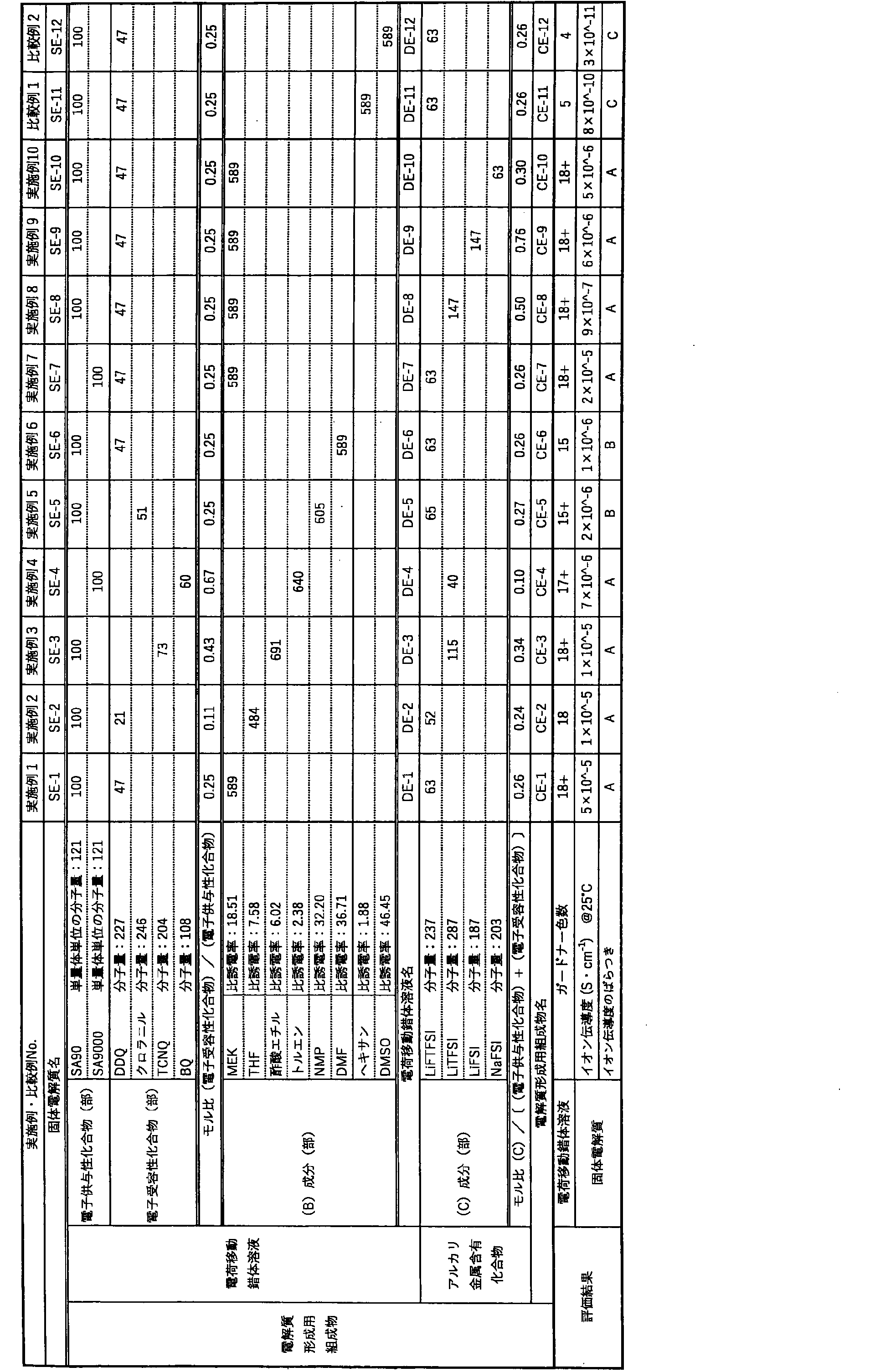
表1において用いた化合物の詳細を以下に示す。なお、表1記載の非水溶媒((B)成分)の比誘電率は、「改訂5版 化学便覧 基礎編I」日本化学会編(丸善株式会社)に記載の値を引用した。
・SA90:末端水酸基のポリ(2,6-ジメチル-1,4-フェニレンオキシド)〔SABIC社製、式(1)中のR1及びR2はいずれもメチル基、数平均分子量1,600〕
・SA9000:末端メタクリロイル基のポリ(2,6-ジメチル-1,4-フェニレンオキシド)〔SABIC社製、式(1)中のR1及びR2はいずれもメチル基、数平均分子量2,300〕
・DDQ:2,3-ジクロロ-5,6-ジシアノ-p-ベンゾキノン〔富士フイルム和光純薬社製〕
・クロラニル:2,3,5,6-テトラクロロ-1,4-ベンゾキノン〔富士フイルム和光純薬社製〕
・TCNQ:7,7,8,8-テトラシアノキノジメタン〔富士フイルム和光純薬社製〕
・BQ:p-ベンゾキノン〔富士フイルム和光純薬社製〕
・LiFTFSI:リチウム(フルオロスルホニル)(トリフルオロメタンスルホニル)イミド〔富士フイルム和光純薬社製、商品名(フルオロスルホニル)(トリフルオロメタンスルホニル)イミド=リチウム〕
・LiTFSI:リチウムビス(トリフルオロメタンスルホニル)イミド〔富士フイルム和光純薬社製〕
・LiFSI:リチウムビス(フルオロスルホニル)イミド〔富士フイルム和光純薬社製〕
・NaFSI:ビス(フルオロスルホニル)イミドナトリウム〔富士フイルム和光純薬社製〕
・MEK:2-ブタノン〔富士フイルム和光純薬社製〕
・THF:テトラヒドロフラン〔富士フイルム和光純薬社製〕
・NMP:N-メチル-2-ピロリドン〔富士フイルム和光純薬社製〕
・DMF:ジメチルホルムアミド〔富士フイルム和光純薬社製〕
・DMSO:ジメチルスルホキシド〔富士フイルム和光純薬社製〕
・SA90:末端水酸基のポリ(2,6-ジメチル-1,4-フェニレンオキシド)〔SABIC社製、式(1)中のR1及びR2はいずれもメチル基、数平均分子量1,600〕
・SA9000:末端メタクリロイル基のポリ(2,6-ジメチル-1,4-フェニレンオキシド)〔SABIC社製、式(1)中のR1及びR2はいずれもメチル基、数平均分子量2,300〕
・DDQ:2,3-ジクロロ-5,6-ジシアノ-p-ベンゾキノン〔富士フイルム和光純薬社製〕
・クロラニル:2,3,5,6-テトラクロロ-1,4-ベンゾキノン〔富士フイルム和光純薬社製〕
・TCNQ:7,7,8,8-テトラシアノキノジメタン〔富士フイルム和光純薬社製〕
・BQ:p-ベンゾキノン〔富士フイルム和光純薬社製〕
・LiFTFSI:リチウム(フルオロスルホニル)(トリフルオロメタンスルホニル)イミド〔富士フイルム和光純薬社製、商品名(フルオロスルホニル)(トリフルオロメタンスルホニル)イミド=リチウム〕
・LiTFSI:リチウムビス(トリフルオロメタンスルホニル)イミド〔富士フイルム和光純薬社製〕
・LiFSI:リチウムビス(フルオロスルホニル)イミド〔富士フイルム和光純薬社製〕
・NaFSI:ビス(フルオロスルホニル)イミドナトリウム〔富士フイルム和光純薬社製〕
・MEK:2-ブタノン〔富士フイルム和光純薬社製〕
・THF:テトラヒドロフラン〔富士フイルム和光純薬社製〕
・NMP:N-メチル-2-ピロリドン〔富士フイルム和光純薬社製〕
・DMF:ジメチルホルムアミド〔富士フイルム和光純薬社製〕
・DMSO:ジメチルスルホキシド〔富士フイルム和光純薬社製〕
[実施例11]
実施例1で得られた電荷移動錯体溶液DE-1を100℃で1時間加熱してMEKを除去し、乾燥体を得た。
ここで、上記で得られた乾燥体を、20質量%となるようMEKに溶解した溶液のJIS K 0071-2:1998に準拠して測定されるガードナー色数は「18+」であった。
上記乾燥体(147mg)とLiFTFSI(63mg)を、ボールミル(FRITSCH社製ミニミルPULVERISETTE23;以下、単に「ボールミル」ともいう。)を用いて周波数40Hzで60分間粉砕した後、150℃に設定されたホットプレートで10分間加熱し、LiFTFSIを溶融させた。冷却後、ボールミルを用いて40Hzで60分間粉砕し、固体電解質粉末(これを電解質形成用組成物CE-13とする)を得た。
さらに、電解質形成用組成物CE-13を全固体電池評価セル(宝泉社製KP-SolidCell)3セットに各30mg充填し、20N・mのトルクで封止した。電解質形成用組成物CE-13を挟む円盤にはSKD鋼製(直径1cm)を使用した。
上記評価セルを、110℃に設定されたホットプレート上で10時間加熱(アニール)した。その後、25℃で2時間冷却し、固体電解質SE-13とした。
実施例1と同様の操作により、固体電解質SE-13のイオン伝導度を測定した結果、イオン伝導度は4×10⁻⁵S・cm-1(3回の測定結果の最高値)であり、またイオン伝導度のばらつきは「A」と判断された。
実施例1で得られた電荷移動錯体溶液DE-1を100℃で1時間加熱してMEKを除去し、乾燥体を得た。
ここで、上記で得られた乾燥体を、20質量%となるようMEKに溶解した溶液のJIS K 0071-2:1998に準拠して測定されるガードナー色数は「18+」であった。
上記乾燥体(147mg)とLiFTFSI(63mg)を、ボールミル(FRITSCH社製ミニミルPULVERISETTE23;以下、単に「ボールミル」ともいう。)を用いて周波数40Hzで60分間粉砕した後、150℃に設定されたホットプレートで10分間加熱し、LiFTFSIを溶融させた。冷却後、ボールミルを用いて40Hzで60分間粉砕し、固体電解質粉末(これを電解質形成用組成物CE-13とする)を得た。
さらに、電解質形成用組成物CE-13を全固体電池評価セル(宝泉社製KP-SolidCell)3セットに各30mg充填し、20N・mのトルクで封止した。電解質形成用組成物CE-13を挟む円盤にはSKD鋼製(直径1cm)を使用した。
上記評価セルを、110℃に設定されたホットプレート上で10時間加熱(アニール)した。その後、25℃で2時間冷却し、固体電解質SE-13とした。
実施例1と同様の操作により、固体電解質SE-13のイオン伝導度を測定した結果、イオン伝導度は4×10⁻⁵S・cm-1(3回の測定結果の最高値)であり、またイオン伝導度のばらつきは「A」と判断された。
[評価結果]
実施例1~11の結果から明らかなように、本開示の組成物は、錯体形成度が高く、当該組成物により得られる固体電解質は、室温においても高いイオン伝導性を示し、かつ、その値のばらつきは小さかった。
実施例1~11の結果から明らかなように、本開示の組成物は、錯体形成度が高く、当該組成物により得られる固体電解質は、室温においても高いイオン伝導性を示し、かつ、その値のばらつきは小さかった。
これらの中でも、非水溶媒の比誘電率に着目すると、実施例1~5、11と実施例6を比較した場合、比誘電率が35以下であると(実施例1~5、11)、より良好なイオン伝導性を示した。
以上の結果から、フェニレンオキシド構造を有する電子供与性化合物と電子受容性化合物とにより形成されてなる電荷移動錯体と、非水溶媒を含み、当該非水溶媒の比誘電率が2.0超40未満である本開示の組成物により得られる固体電解質は、室温において高いイオン伝導性を示し、かつ、イオン伝導度のばらつきが小さいことが明らかとなった。
本発明は、上記の実施の形態に限定されるものではなく、本発明の趣旨を逸脱しない範囲において、様々な変形例や均等範囲内の変形をも包含する。したがって、上記教示に照らして様々な組み合わせや形態、更には、それらに一要素のみ、それ以上、あるいはそれ以下を含む他の組み合わせや形態をも、本発明の範疇や思想範囲に入るものと理解されるべきである。
Claims (21)
- 電子供与性化合物と電子受容性化合物とにより形成されてなる電荷移動錯体と、
非水溶媒と、
を含み、
前記電子供与性化合物はフェニレンオキシド構造を有し、
前記非水溶媒の比誘電率が2.0超40未満である、組成物。 - 固体電解質用である、請求項1に記載の組成物。
- JIS K 0071-2に準拠して測定されるガードナー色数が13以上である、請求項1に記載の組成物。
- 前記非水溶媒の比誘電率が35以下である、請求項1に記載の組成物。
- 前記非水溶媒は、酸素原子及び/又は芳香環構造を有する化合物である、請求項1に記載の組成物。
- 前記非水溶媒は、鎖状ケトン、鎖状エーテル、環状エーテル、鎖状カルボン酸エステル、鎖状炭酸エステル、芳香族炭化水素及びラクタムからなる群より選択される少なくとも1種である、請求項1に記載の組成物。
- 前記電子供与性化合物のモル量(ただし、前記電子供与性化合物が重合体の場合には単量体換算)に対する、前記電子受容性化合物のモル量の比率が0.1以上1.0以下である、請求項1に記載の組成物。
- 前記電子供与性化合物は、下記式(1)で表される繰り返し単位を有する重合体である、請求項1に記載の組成物。

- 前記電子受容性化合物が、2,3-ジクロロ-5,6-ジシアノ-p-ベンゾキノン(DDQ)、2,3,5,6-テトラクロロ-1,4-ベンゾキノン(クロラニル)、7,7,8,8-テトラシアノキノジメタン(TCNQ)、o-ベンゾキノン、m-ベンゾキノン及びp-ベンゾキノンからなる群より選択される少なくとも1種を含む、請求項1に記載の組成物。
- 更に、アルカリ金属含有化合物を含む、請求項1~9のいずれか一項に記載の組成物。
- 前記アルカリ金属含有化合物がアルカリ金属塩を含む、請求項10に記載の組成物。
- 前記アルカリ金属含有化合物がリチウム含有化合物を含む、請求項10に記載の組成物。
- 請求項1~9のいずれか一項に記載の組成物の乾燥体。
- 請求項13に記載の乾燥体を、比誘電率が2.0超40未満である非水溶媒に溶解した溶液のJIS K 0071-2に準拠して測定されるガードナー色数が13以上である、乾燥体。
- 請求項13に記載の乾燥体と、アルカリ金属含有化合物とを含む、組成物。
- 請求項1~9のいずれか一項に記載の組成物の製造方法であって、
前記電子供与性化合物を第1の溶媒に溶解した溶液である第1溶液と、前記電子受容性化合物を第2の溶媒に溶解した溶液である第2溶液とを混合する工程を含み、
前記第1の溶媒及び前記第2の溶媒は、同一又は異なって、比誘電率が2.0超40未満の非水溶媒である、組成物の製造方法。 - 請求項13に記載の乾燥体の製造方法であって、
前記電子供与性化合物を第1の溶媒に溶解した溶液である第1溶液と、前記電子受容性化合物を第2の溶媒に溶解した溶液である第2溶液とを混合する工程と、
前記第1溶液と前記第2溶液との混合液から前記非水溶媒を除去する工程と、
を含み、
前記第1の溶媒及び前記第2の溶媒は、同一又は異なって、比誘電率が2.0超40未満の非水溶媒である、乾燥体の製造方法。 - 請求項10に記載の組成物を用いて形成された、固体電解質。
- 請求項15に記載の組成物を用いて形成された、固体電解質。
- 請求項18に記載の固体電解質を備える、蓄電デバイス。
- 請求項19に記載の固体電解質を備える、蓄電デバイス。
Priority Applications (1)
| Application Number | Priority Date | Filing Date | Title |
|---|---|---|---|
| JP2025530101A JPWO2025005015A1 (ja) | 2023-06-29 | 2024-06-21 |
Applications Claiming Priority (2)
| Application Number | Priority Date | Filing Date | Title |
|---|---|---|---|
| JP2023-107173 | 2023-06-29 | ||
| JP2023107173 | 2023-06-29 |
Publications (1)
| Publication Number | Publication Date |
|---|---|
| WO2025005015A1 true WO2025005015A1 (ja) | 2025-01-02 |
Family
ID=93939035
Family Applications (1)
| Application Number | Title | Priority Date | Filing Date |
|---|---|---|---|
| PCT/JP2024/022651 Ceased WO2025005015A1 (ja) | 2023-06-29 | 2024-06-21 | 組成物及びその製造方法、乾燥体及びその製造方法、固体電解質、並びに蓄電デバイス |
Country Status (2)
| Country | Link |
|---|---|
| JP (1) | JPWO2025005015A1 (ja) |
| WO (1) | WO2025005015A1 (ja) |
Citations (3)
| Publication number | Priority date | Publication date | Assignee | Title |
|---|---|---|---|---|
| US20140243487A1 (en) * | 2011-10-12 | 2014-08-28 | Mxpolymers B.V. | Process for crosslinking a polymer comprising pyridyl groups |
| WO2021065904A1 (ja) * | 2019-09-30 | 2021-04-08 | 積水化学工業株式会社 | リチウムイオン二次電池用電極、及びリチウムイオン二次電池 |
| WO2024048746A1 (ja) * | 2022-09-02 | 2024-03-07 | 東亞合成株式会社 | 固体電解質及びその製造方法、並びに蓄電デバイス |
-
2024
- 2024-06-21 WO PCT/JP2024/022651 patent/WO2025005015A1/ja not_active Ceased
- 2024-06-21 JP JP2025530101A patent/JPWO2025005015A1/ja active Pending
Patent Citations (3)
| Publication number | Priority date | Publication date | Assignee | Title |
|---|---|---|---|---|
| US20140243487A1 (en) * | 2011-10-12 | 2014-08-28 | Mxpolymers B.V. | Process for crosslinking a polymer comprising pyridyl groups |
| WO2021065904A1 (ja) * | 2019-09-30 | 2021-04-08 | 積水化学工業株式会社 | リチウムイオン二次電池用電極、及びリチウムイオン二次電池 |
| WO2024048746A1 (ja) * | 2022-09-02 | 2024-03-07 | 東亞合成株式会社 | 固体電解質及びその製造方法、並びに蓄電デバイス |
Also Published As
| Publication number | Publication date |
|---|---|
| JPWO2025005015A1 (ja) | 2025-01-02 |
Similar Documents
| Publication | Publication Date | Title |
|---|---|---|
| Voropaeva et al. | Polymer electrolytes for metal-ion batteries | |
| CN109776423B (zh) | 一种双咪唑环功能离子液体及其制备方法和电解液以及锂二次电池 | |
| CN103563155B (zh) | 包含碳氟化合物电解质添加剂的锂离子电化学电池 | |
| JP5487458B2 (ja) | リチウムイオン二次電池 | |
| CN102714316B (zh) | 液态疏水性相变物质及使用该液态疏水性相变物质的电池 | |
| CN104798244B (zh) | 锂二次电池 | |
| CN102119462A (zh) | 制备凝胶聚合物电解质二次电池的方法和凝胶聚合物电解质二次电池 | |
| KR20160118330A (ko) | 설폰 화합물에 기반한 비수성 전해질을 포함하는 특정 리튬 배터리 | |
| US20050042519A1 (en) | Electrolyte composition, lithium battery using the same, and method of manufacturing the lithium battery | |
| US20190355989A1 (en) | Coated lithium-nickel composite oxide particles, and method for producing coated lithium-nickel composite oxide particles | |
| KR20160050870A (ko) | 유무기 복합 고분자 겔 전해질 및 이를 포함하는 리튬 이차전지 | |
| JP2023553853A (ja) | 新規な非水系電解液用添加剤およびそれを含むリチウム二次電池 | |
| CN107994257A (zh) | 一种高性能固态电解质及其制备方法 | |
| EP4708538A1 (en) | Separator, secondary battery, and electronic device | |
| JPH08306367A (ja) | 非水系ポリマー電池 | |
| JP2009123474A (ja) | 非水電解質電池 | |
| US20050042520A1 (en) | Electrolyte composition, lithium battery using the same, and method of manufacturing the lithium battery | |
| CN118525397A (zh) | 包含离子型双官能分子的固体电解质及其在电化学中的用途 | |
| KR102233775B1 (ko) | 고분자, 및 이를 포함하는 전해질과 리튬 전지 | |
| WO2024048746A1 (ja) | 固体電解質及びその製造方法、並びに蓄電デバイス | |
| JP2022031092A (ja) | ポリマー電解質 | |
| WO2025005015A1 (ja) | 組成物及びその製造方法、乾燥体及びその製造方法、固体電解質、並びに蓄電デバイス | |
| JP5487442B2 (ja) | リチウムイオン二次電池 | |
| JP4037560B2 (ja) | 非水系二次電池 | |
| WO2014084182A1 (ja) | 蓄電デバイス、およびそれに用いる電極並びに多孔質シート |
Legal Events
| Date | Code | Title | Description |
|---|---|---|---|
| 121 | Ep: the epo has been informed by wipo that ep was designated in this application |
Ref document number: 24831876 Country of ref document: EP Kind code of ref document: A1 |
|
| ENP | Entry into the national phase |
Ref document number: 2025530101 Country of ref document: JP Kind code of ref document: A |
|
| WWE | Wipo information: entry into national phase |
Ref document number: 2025530101 Country of ref document: JP |
|
| NENP | Non-entry into the national phase |
Ref country code: DE |