WO2025004752A1 - 固体電解質の製造方法、固体電解質、正極材料、および電池 - Google Patents
固体電解質の製造方法、固体電解質、正極材料、および電池 Download PDFInfo
- Publication number
- WO2025004752A1 WO2025004752A1 PCT/JP2024/020793 JP2024020793W WO2025004752A1 WO 2025004752 A1 WO2025004752 A1 WO 2025004752A1 JP 2024020793 W JP2024020793 W JP 2024020793W WO 2025004752 A1 WO2025004752 A1 WO 2025004752A1
- Authority
- WO
- WIPO (PCT)
- Prior art keywords
- solid electrolyte
- fluorine
- raw material
- producing
- oxide
- Prior art date
- Legal status (The legal status is an assumption and is not a legal conclusion. Google has not performed a legal analysis and makes no representation as to the accuracy of the status listed.)
- Ceased
Links
Images


Classifications
-
- H—ELECTRICITY
- H01—ELECTRIC ELEMENTS
- H01M—PROCESSES OR MEANS, e.g. BATTERIES, FOR THE DIRECT CONVERSION OF CHEMICAL ENERGY INTO ELECTRICAL ENERGY
- H01M10/00—Secondary cells; Manufacture thereof
- H01M10/05—Accumulators with non-aqueous electrolyte
- H01M10/056—Accumulators with non-aqueous electrolyte characterised by the materials used as electrolytes, e.g. mixed inorganic/organic electrolytes
- H01M10/0561—Accumulators with non-aqueous electrolyte characterised by the materials used as electrolytes, e.g. mixed inorganic/organic electrolytes the electrolyte being constituted of inorganic materials only
- H01M10/0562—Solid materials
-
- H—ELECTRICITY
- H01—ELECTRIC ELEMENTS
- H01M—PROCESSES OR MEANS, e.g. BATTERIES, FOR THE DIRECT CONVERSION OF CHEMICAL ENERGY INTO ELECTRICAL ENERGY
- H01M10/00—Secondary cells; Manufacture thereof
- H01M10/05—Accumulators with non-aqueous electrolyte
- H01M10/052—Li-accumulators
-
- H—ELECTRICITY
- H01—ELECTRIC ELEMENTS
- H01M—PROCESSES OR MEANS, e.g. BATTERIES, FOR THE DIRECT CONVERSION OF CHEMICAL ENERGY INTO ELECTRICAL ENERGY
- H01M2300/00—Electrolytes
- H01M2300/0017—Non-aqueous electrolytes
- H01M2300/0065—Solid electrolytes
- H01M2300/0068—Solid electrolytes inorganic
- H01M2300/008—Halides
-
- Y—GENERAL TAGGING OF NEW TECHNOLOGICAL DEVELOPMENTS; GENERAL TAGGING OF CROSS-SECTIONAL TECHNOLOGIES SPANNING OVER SEVERAL SECTIONS OF THE IPC; TECHNICAL SUBJECTS COVERED BY FORMER USPC CROSS-REFERENCE ART COLLECTIONS [XRACs] AND DIGESTS
- Y02—TECHNOLOGIES OR APPLICATIONS FOR MITIGATION OR ADAPTATION AGAINST CLIMATE CHANGE
- Y02E—REDUCTION OF GREENHOUSE GAS [GHG] EMISSIONS, RELATED TO ENERGY GENERATION, TRANSMISSION OR DISTRIBUTION
- Y02E60/00—Enabling technologies; Technologies with a potential or indirect contribution to GHG emissions mitigation
- Y02E60/10—Energy storage using batteries
Definitions
- the present disclosure relates to a method for producing a solid electrolyte, a solid electrolyte, a positive electrode material, and a battery.
- Patent Document 1 discloses a method for producing a halide solid electrolyte, such as a solid electrolyte represented by the composition Li 3 YBr 3 Cl 3.
- Non-Patent Document 1 discloses a solid electrolyte represented by the composition LiYF 4 and a method for producing the same.
- the purpose of this disclosure is to provide a new manufacturing method that can stably synthesize a halide solid electrolyte having a desired composition.
- the method for producing a solid electrolyte according to the present disclosure includes: (A) subjecting a raw material containing a composite oxide containing Li and Ti to a fluorination treatment to obtain a solid electrolyte containing a crystalline phase represented by the following composition formula (1); Includes.
- This disclosure provides a new manufacturing method that can stably synthesize a halide solid electrolyte having a desired composition.
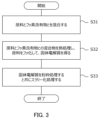
- FIG. 1 is a flow chart showing an example of a method for producing a solid electrolyte according to the first embodiment.
- FIG. 2 is a flowchart showing an example of a method for producing a solid electrolyte according to the second embodiment.
- FIG. 3 is a flowchart showing a modified example of the method for producing a solid electrolyte according to the second embodiment.
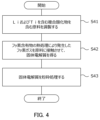
- FIG. 4 is a flowchart showing an example of a method for producing a solid electrolyte according to the third embodiment.
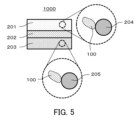
- FIG. 5 shows a cross-sectional view of a battery 1000 according to a fourth embodiment.
- Example 1 is a graph showing an X-ray diffraction pattern of a solid electrolyte after a heat treatment (i.e., after fluorination) and before a pulverization treatment in the production method of Example 1 ((a) after fluorination), an X-ray diffraction pattern of a solid electrolyte after a pulverization treatment obtained in Example 1 ((b) after pulverization), and an X-ray diffraction pattern of a solid electrolyte obtained in Comparative Example 1 ((c) Comparative Example 1).
- the manufacturing method according to the first embodiment includes the steps of: (A) subjecting a raw material containing a composite oxide containing Li and Ti to a fluorination treatment to obtain a solid electrolyte containing a crystalline phase represented by the following composition formula (1); Includes.
- the manufacturing method according to the first embodiment makes it possible to stably synthesize a solid electrolyte having a desired composition. The reasons for this are explained in more detail below.
- titanium fluoride e.g., TiF4
- TiF4 titanium fluoride
- titanium fluoride is a relatively unstable substance that is easily evaporated and has deliquescent properties. Therefore, the produced solid electrolyte may have compositional variations (i.e., compositional deviation) and changes (e.g., inclusion of moisture, etc.).
- compositional variations i.e., compositional deviation
- changes e.g., inclusion of moisture, etc.
- a composite oxide containing Li and Ti can be used as the Ti source.
- a solid electrolyte containing a crystalline phase represented by the composition formula (1): Li2TiF6 can be synthesized without using the unstable and high-cost titanium fluoride as a raw material. Therefore, the production method according to the first embodiment is less likely to cause compositional variations and changes in the produced solid electrolyte, and can reproducibly and stably synthesize a solid electrolyte having a target composition while suppressing the generation of a secondary phase.
- fluoride can be produced at a lower temperature than in the conventional manufacturing method in which a fluoride raw material is subjected to a solid-phase reaction, so that the raw material and the produced solid electrolyte are not easily exposed to high temperatures.
- the produced solid electrolyte is not sintered and hardened, and the grain growth of the solid electrolyte does not proceed too much, and a fine-particle solid electrolyte that is soft and has excellent deformability is obtained.
- the density of the compressed powder can be, for example, 2.15 g/ cm3 or more and 2.18 g/cm3 or less. This is greater than the density of the compressed powder, 2.04 g/cm3 or more and 2.13 g/cm3 or less, which can be achieved by using a fluoride as a raw material and compressing Li2TiF6 obtained by solid-phase synthesis from the fluoride under the same pressure.
- the manufacturing method according to the first embodiment can provide a useful solid electrolyte that, for example, when used in the solid electrolyte layer of a battery, can realize a thin solid electrolyte layer, or can be suitably used as a coating layer for active material particles. Therefore, the solid electrolyte manufactured by the manufacturing method according to the first embodiment can provide a high-performance battery.
- the fluorination treatment of the raw material may be carried out, for example, by heat treating a thermally decomposable fluorine-containing material.
- the above (A) is (A-1) mixing the raw material with the fluorine-containing material; (A-2) heat-treating the mixture containing the raw material and the fluorine-containing material obtained in (A-1) above to fluorinate the raw material to obtain a solid electrolyte; may also include
- a heat treatment for fluorination can be carried out on a homogeneous mixture of the raw material and the fluorine-containing material.
- the contact area between the raw material and the fluorine-containing material can be increased. This promotes homogeneous fluorination of the raw material, making it possible to obtain a solid electrolyte that is homogeneous and has excellent properties.
- FIG. 1 is a flow chart showing an example of a method for producing a solid electrolyte according to the first embodiment.
- the production method according to the first embodiment an example of a production method in which the above (A-1) and (A-2) are implemented will be described.
- the raw material and the fluorine-containing material are mixed (S11).
- the raw material contains a composite oxide containing Li and Ti.
- the fluorine-containing material has thermal decomposition properties.
- the obtained mixture containing the raw material and the fluorine-containing material is heat-treated to fluorinate the raw material (S12). This results in a solid electrolyte containing a crystalline phase represented by the composition formula (1): Li 2 TiF 6 .
- the raw material includes a composite oxide containing Li and Ti.
- titanium oxide e.g., TiO 2
- titanium oxide is likely to produce titanium fluoride (e.g., TiF 4 ) that is likely to cause problems of evaporation and deliquescence during the fluorination process.
- the Ti component may disappear during the synthesis process, or moisture may be included due to the deliquescence of titanium fluoride, which may lead to deviation from the desired composition. Therefore, titanium fluoride may cause a decrease in the ionic conductivity and reliability of the solid electrolyte.
- a composite oxide containing Li and Ti can be used as the Ti source, there is no need to use titanium oxide. Therefore, since the compositional variation and alteration of the solid electrolyte caused by the use of titanium oxide as described above can be suppressed, a solid electrolyte having high ionic conductivity can be stably manufactured.
- the raw material does not substantially contain TiO 2.
- the raw material does not substantially contain TiO 2 means that the content of TiO 2 in the entire raw material is 0.3 mass% or less.
- composition formula (2) Li x Ti y O z
- the composite oxide represented by the composition formula (2) Li x Ti y O z is an oxide that is stable in an air environment. Therefore, by using the composite oxide represented by the composition formula (2) Li x Ti y O z , a solid electrolyte containing a crystalline phase represented by the composition formula (1): Li 2 TiF 6 can be synthesized stably in an air environment with good reproducibility and good characteristics.
- the composite oxide containing Li and Ti may be Li2TiO3 .
- Li2TiO3 a solid electrolyte containing a crystalline phase represented by composition formula ( 1 ): Li2TiF6 , which is stable, reproducible, and has good characteristics in an air environment, can be produced more efficiently.
- the raw material may be, for example, particulate. This makes it easier for fluorination from the particle surface of the raw material (i.e., replacement of elemental fluorine with elemental oxygen) and solid-phase reaction in the raw material to occur simultaneously. Therefore, fluoride can be synthesized in a short time while reducing reaction residues such as oxides. This makes it possible to obtain a solid electrolyte that is homogeneous and has excellent properties. Furthermore, particulate raw materials have good reactivity in terms of fluoridability and solid-phase reactivity, and therefore excellent productivity can be achieved.
- the composite oxide contained in the raw material may be particulate, and the BET specific surface area of the composite oxide may be 1.0 m 2 /g or more and 30 m 2 /g or less.
- a composite oxide having such a BET specific surface area is suitable for fluorination treatment. Therefore, by using a composite oxide having such a configuration as a raw material, fluorination (i.e., replacement of fluorine element with oxygen element) from the particle surface of the composite oxide and a solid-phase reaction tend to occur simultaneously. Therefore, it is possible to synthesize a fluoride having, for example, composition formula (1): Li 2 TiF 6 in a short time while reducing reaction residues such as oxides. As a result, a solid electrolyte containing a crystalline phase represented by composition formula (1): Li 2 TiF 6 can be synthesized in large quantities at low cost.
- the BET specific surface area of the composite oxide may be 1.5 m2 /g or more and 30 m2 /g or less, 1.5 m2 /g or more and 10 m2 /g or less, or 1.0 m2 /g or more and 10 m2 /g or less.
- a dispersant may be used.
- the dispersant may be a known dispersant that can be used when producing a solid electrolyte.
- the raw material may have an average particle size of, for example, 0.1 ⁇ m or more and 20 ⁇ m or less, or an average particle size of 0.5 ⁇ m or more and 20 ⁇ m or less.
- the average particle size of the complex oxide contained in the raw material may also be, for example, 0.1 ⁇ m or more and 20 ⁇ m or less, or 0.5 ⁇ m or more and 20 ⁇ m or less.
- the raw material may be further refined and may have an average particle size of, for example, 0.1 ⁇ m or more and 1.0 ⁇ m or less.
- the average particle size of the complex oxide contained in the raw material may also have an average particle size of, for example, 0.1 ⁇ m or more and 1.0 ⁇ m or less.
- the average particle size of the raw material and the complex oxide is not limited to the above range, and any particle size and shape may be appropriately selected from the viewpoint of fluorination and solid-phase reaction.
- the smaller the particle size of the raw material and the complex oxide the lower the conversion temperature to fluoride.
- the average particle size of the raw material and the composite oxide is the median size, which means the particle size (d50) corresponding to 50% cumulative volume, determined from the particle size distribution measured on a volume basis by the laser diffraction scattering method.
- the above-mentioned complex oxide can be a precursor of the crystalline phase represented by the composition formula (1): Li 2 TiF 6 contained in the target solid electrolyte produced by the production method according to the first embodiment.
- the above-mentioned complex oxide is a single phase of Li 2 TiO 3 , since it can be converted to a fluoride without precipitating an unnecessary phase.
- the above-mentioned complex oxide is a single phase of Li 2 TiO 3 in the XRD measurement, it is possible to obtain a single phase of Li 2 TiF 6 without generating TiF 4 by subjecting it to a fluorination treatment.
- the above-mentioned composite oxide used as a raw material may be synthesized in the manufacturing method according to the first embodiment.
- the above (A) may include synthesizing the above composite oxide using at least one selected from the group consisting of an oxide of Li, a carbonate of Li, and a hydroxide of Li , and at least one selected from the group consisting of an oxide of Ti, a carbonate of Ti, and a hydroxide of Ti.
- the above composite oxide can be synthesized as a raw material using a Li source and a Ti source that have higher stability against air and moisture and are less expensive than LiF and TiF 4.
- the composite oxide thus synthesized can be produced by fluorination treatment with good reproducibility and high quality in the crystal phase represented by the composition formula (1): Li 2 TiF 6.
- Li raw material at least one selected from the group consisting of Li oxide, Li carbonate, and Li hydroxide
- Ti raw material at least one selected from the group consisting of Ti oxide, Ti carbonate, and Ti hydroxide
- the Li raw material and the Ti raw material used in the synthesis of the above-mentioned composite oxide are, for example, particulate.
- the particle size and shape of the Li raw material and the Ti raw material are arbitrary and are not particularly limited.
- the average particle size of the Li raw material and the Ti raw material may be 0.1 ⁇ m or more and 20 ⁇ m or less from the viewpoint of ease of handling.
- the particles of the Li raw material and the Ti raw material may be spherical, elliptical, or aggregates of fine particles.
- the general oxide synthesis process means a manufacturing process of a normal ceramic material.
- the synthesis of the above-mentioned composite oxide may be performed, for example, by a general solid-phase method.
- the mixing of the raw materials for synthesizing the above-mentioned composite oxide may be performed by dry mixing or wet mixing, and may be performed by any mixing method that can homogenize the raw materials.
- a known general dispersant such as polycarboxylate ammonium or nonionic surfactant
- the synthesized complex oxide may be pulverized after the solid-phase synthesis, for example.
- the pulverization can reduce the particle size of the complex oxide and expose the fractured surface of the particles broken by the pulverization.
- the fractured surface of the particle is more active than the unbroken surface. Therefore, the reactivity of the complex oxide (i.e., the reactivity in the solid-phase reaction and the fluorination reaction) can be increased by such a pulverization. Therefore, by pulverizing the complex oxide, the complex oxide can be made into a precursor material with high reactivity, and as a result, the temperature for the synthesis of the solid electrolyte can be lowered and the reaction can be made uniform.
- the complex oxide may also be a mixture of pulverized powder and non-pulverized powder.
- the fractured surface of the pulverized powder of the complex oxide can be observed from a state different from the free surface by observing the powder of the complex oxide with a scanning electron microscope (SEM).
- SEM scanning electron microscope
- the fluorine-containing material has a thermal decomposition property.
- the thermal decomposition onset temperature of the fluorine-containing material used may be, for example, 100°C or higher and 600°C or lower.
- the fluorine-containing material has stability in handling, such as storage and mixing, and the obtained solid electrolyte can be prevented from becoming too hard.
- the fluorine-containing material may be, for example, particulate. This makes it easier for the fluorine-containing material to thermally decompose. Therefore, by using a particulate fluorine-containing material, the raw material can be fluorinated efficiently, and the fluorine-containing material is less likely to remain in the final solid electrolyte.
- the fluorination reaction can be controlled by the particle shape of the fluorine-containing material. For example, by making the particles of the fluorine-containing material finer, the fluorination temperature can be lowered and the fluorination speed can be increased. In addition, by mixing the raw material and the fluorine-containing material, uniform fluorination of the entire powder is possible.
- the fluorine-containing material may have, for example, an average particle size of 0.5 ⁇ m or more and 500 ⁇ m or less, an average particle size of 0.5 ⁇ m or more and 150 ⁇ m or less, or an average particle size of 0.5 ⁇ m or more and 100 ⁇ m or less.
- the fluorine-containing material may have any particle size and shape.
- the average particle size of the fluorine-containing material may be larger than the average particle size of the raw material. This results in a large volume and fluffy mixed powder of the raw material and the fluorine-containing material. In other words, the surface exposed area (i.e., the exposed area) of the raw material is large, and the contact points between the raw material particles are reduced.
- the fluorine of the fluorine-containing material reacts with the raw material particles in a pyrolyzed gas state. Therefore, fluorination is more likely to proceed from the surface of the raw material particles, and a homogeneous fluoride solid electrolyte can be obtained.
- the average particle size of the fluorine-containing material may be 5 ⁇ m or more and 150 ⁇ m or less, 5 ⁇ m or more and 100 ⁇ m or less, 5 ⁇ m or more and 20 ⁇ m or less, 50 ⁇ m or more and 100 ⁇ m or less, 50 ⁇ m or more and 20 ⁇ m or less, or 80 ⁇ m or more and 150 ⁇ m or less.
- the average particle size of the fluorine-containing material can be appropriately adjusted taking into account the fluorination temperature or reactivity. For example, by increasing the average particle size of the fluorine-containing material, the heat treatment temperature for the fluorination treatment can be increased.
- the fluorine-containing material may contain ammonium fluoride (NH 4 F).
- Ammonium fluoride starts to decompose thermally at a relatively low temperature (for example, about 150° C.). Therefore, ammonium fluoride salt is unlikely to remain as an unnecessary inorganic component in the finally obtained solid electrolyte, and can be thermally decomposed at a low temperature to fluorinate the raw material. Therefore, by using ammonium fluoride as the fluorine-containing material, it is possible to suppress the unnecessary inorganic components derived from the fluorine-containing material from remaining in the finally obtained solid electrolyte.
- NH 4 F ammonium fluoride
- ammonium fluoride can fluorinate the raw material at a low temperature (for example, about 150° C.), it is possible to synthesize a solid electrolyte without promoting grain growth and sintering. Therefore, compared with a solid electrolyte obtained by a solid-phase reaction from a fluoride raw material, a soft and fine solid electrolyte can be obtained. Therefore, in the manufacturing method according to embodiment 1, by performing a fluorination treatment of the raw material using a fluorine-containing material, it is possible to manufacture a solid electrolyte that can realize densification and thinning of the compact.
- the obtained solid electrolyte When the obtained solid electrolyte is used in the solid electrolyte layer of a battery, it can realize a further thinning and high ion conductivity of the solid electrolyte layer, or can be suitably used in the coating layer of active material particles to realize high ion conductivity of the electrode. Therefore, a battery with good performance having improved conductivity and reliability can be obtained by using the solid electrolyte manufactured by the manufacturing method according to embodiment 1.
- ammonium fluoride as the fluorine-containing material, energy saving in synthesis is achieved and the time required for heating and cooling is also reduced, thereby improving productivity.
- the durability of the furnace material is improved and the running costs and replacement frequency of the synthesis components are significantly reduced. Only ammonium salts may be used as the fluorine-containing material.
- the fluorine-containing material may contain a resin.
- a resin as the fluorine-containing material, the fluorine-containing material can fluorinate the raw material while being thermally decomposed at a relatively high temperature (e.g., about 450°C or higher and 600°C or lower). Therefore, the method including a resin as the fluorine-containing material is suitable when it is desired to carry out the fluorination and solid-state reaction at a relatively high temperature (e.g., about 450°C or higher and 600°C or lower).
- a resin used as a fluorine-containing material is a fluororesin.
- a fluororesin polytetrafluoroethylene (PTFE) and polyvinylidene fluoride (PVDF) can be used.
- Fluorine resins such as PTFE and PVDF can fluorinate the raw material while being thermally decomposed at a relatively high temperature (for example, about 400°C or higher and 600°C or lower). Therefore, the method of using a fluororesin as a fluorine-containing material is suitable when it is desired to carry out fluorination and solid-state reaction at a relatively high temperature.
- PVDF is suitable for fluorination at 400°C or higher
- PTFE is suitable for fluorination at 500°C or higher.
- the fluorine-containing material may contain, for example, a material that does not substantially include inorganic components generated by thermal decomposition by the heat treatment in (A) in the solid electrolyte produced, except for elemental fluorine.
- the fluorine-containing material used in the fluorination treatment is required to replace the elemental fluorine generated by thermal decomposition by the heat treatment in (A) with the oxygen element of the raw material, while not allowing other components to be mixed as inorganic residues in the solid electrolyte finally obtained.
- the fluorine-containing material By using a material that does not substantially include inorganic components generated by thermal decomposition by the heat treatment in the solid electrolyte finally obtained, except for elemental fluorine, as the fluorine-containing material, it is possible to suppress the mixing of inorganic residues into the solid electrolyte and obtain a desired solid electrolyte.
- the inorganic components generated by thermal decomposition by the heat treatment are not substantially included in the solid electrolyte produced, except for elemental fluorine
- the content ratio of the inorganic components in the solid electrolyte is, for example, 0.5 mass% or less.
- the fluorine-containing material may contain multiple types of fluorine-containing compounds.
- the raw material can be appropriately fluorinated by using multiple types of fluorine-containing compounds with different thermal decomposition properties or multiple types of fluorine-containing compounds with different particle sizes.
- both ammonium fluoride and fluororesin may be used as the fluorine-containing material. This allows the temperature range in which the fluorine-containing material acts as a fluorine source to be widely controlled, so that the conversion of the raw material to fluoride and the solid-phase reaction temperature can be controlled over a wide range. This makes it easier to obtain the desired solid electrolyte.
- the amount of the fluorine-containing material used is not particularly limited as long as it is an amount sufficient to fluorinate the entire amount of the compound to be fluorinated.
- the molar amount of the fluorine-containing material for stoichiometrically fluorinating the entire compound in the reaction for fluorinating the compound to be fluorinated i.e., a stoichiometrically equivalent molar amount, in other words, a molar amount required to completely replace the anion of the compound to be fluorinated with F anion
- the amount of the fluorine-containing material may be, for example, 103% or more and 150% or less, 103% or more and 130% or less, or 103% or more and 110% or less.
- the raw material can be uniformly converted into fluoride. This allows the synthesis of a homogeneous solid electrolyte.
- a pulverization process may be carried out to adjust the particle size of the fluorine-containing material.
- the synthesis temperature of the solid electrolyte can be lowered, for example, by about 10°C to 50°C. This further suppresses the sintering and grain growth of the solid electrolyte, resulting in a softer and finer solid electrolyte.
- a powder of a raw material containing a composite oxide containing Li and Ti and a powder of a fluorine-containing material are mixed in a desired ratio.
- the raw material and the powder of the fluorine-containing material are mixed uniformly.
- they may be mixed uniformly by repeatedly mixing with a spatula, or they may be mixed using a dry mixing device such as a mortar and pestle, a crusher, or a V-blender. They may also be mixed using a medium such as a zirconia ball and crushed as necessary. Any mixing means may be used as long as these powders can be mixed uniformly.
- the uniformity can be evaluated using, for example, energy dispersive X-ray spectroscopy (EDS) or an electron probe microanalyzer (EPMA). For example, the uniformity can be confirmed by observing a composition mapping image.
- EDS energy dispersive X-ray spectroscopy
- EPMA electron probe microanalyzer
- a general electric furnace may be used for the heat treatment.
- the atmosphere for the heat treatment may be selected as necessary, and the heat treatment may be performed in air, in an inert gas atmosphere (e.g., nitrogen gas or argon gas), or in a reducing gas (e.g., hydrogen or carbon dioxide).
- the synthesized fluoride is usually obtained as a powder, but when heat treated at or above the melting point, it may be obtained as a molten body, a sintered body, or a block-shaped mass in which the powder has solidified.
- the above-mentioned uniformly mixed mixture is placed in an alumina heat-resistant container (sheath), and the mixture is fired in a firing furnace in an arbitrary atmosphere.
- an inert gas such as nitrogen gas is flowed into the furnace, and gases (e.g., ammonium, hydrogen chloride, carbon dioxide, etc.) generated by fluorination are discharged, while the mixture is heat-treated in an atmospheric furnace at a temperature of, for example, 200°C or higher and 600°C or lower for, for example, 1 hour or higher and 40 hours or lower, to synthesize a solid electrolyte containing a crystalline phase represented by the composition formula ( 1 ): Li2TiF6 .
- the composition formula ( 1 ): Li2TiF6 Li2TiF6
- the inert gas When introducing the inert gas into the furnace, it is preferable to prevent the inert gas from directly hitting the sheath containing the mixture.
- air may be introduced into the furnace.
- a plate larger than the gas inlet is installed between the gas inlet and the sheath. The thickness of the plate need not be damaged by the gas flow or handling. For example, it is better to partially shield it by leaning a plate such as an alumina plate against it. By shielding the space between the gas inlet and the sheath in this way, the gas will go around the shielding plate before coming into contact with the sheath.
- the temperature will be lower in the area where the gas directly hits, and the problem of a large temperature distribution inside the sheath will be reduced. This will suppress uneven distribution of the progress state (i.e., variation in the progress state) for the fluorination reaction of the raw materials and the solid-phase reaction to synthesize the solid electrolyte.
- the gas inlet should be installed on the bottom side of the furnace, and the exhaust port on the top side (for example, on the ceiling side or above the side wall). This allows the reaction gas to be smoothly discharged outside the furnace by riding on the convection currents (from bottom to top) inside the furnace, reducing the amount of unwanted residual components that get mixed into the solid electrolyte.
- the gas to be introduced may be heated before being introduced into the furnace. This prevents the temperature distribution in the sheath from becoming uneven. This allows the synthesis reaction of the solid electrolyte to occur uniformly, resulting in a more homogeneous solid electrolyte.
- the heat treatment temperature is, for example, 200° C. or more and 600° C. or less, as described above.
- the heat treatment time is, for example, 1 hour or more and 40 hours or less, as described above. The lower the heat treatment temperature and the shorter the treatment time, the less the sintering and grain growth of the solid electrolyte progress, so that a solid electrolyte composed of soft fine particles can be obtained. By manufacturing in this manner, a solid electrolyte capable of forming a compact that is dense and has excellent ion conductivity can be obtained.
- the heat treatment temperature and heat treatment time can be arbitrarily determined in consideration of the properties of the raw materials (e.g., crystal system and powder characteristics, etc.), the properties of the solid electrolyte to be synthesized (e.g., crystal system and powder characteristics, etc.), the temperature required for synthesis of the solid electrolyte containing the crystalline phase represented by the composition formula (1): Li 2 TiF 6 , the time required for synthesis, and the time required for exhausting the reaction gas.
- the furnace used for the heat treatment can be a known firing furnace (for example, an electric furnace) or an atmospheric firing furnace. Note that in order to remove the air and moisture between the particles deep inside the sheath and completely replace it with an inert gas, a vacuum replacement can be performed before the inert gas is flowed. This can reduce the effects of reactive components and moisture contained in the air. The vacuum replacement can be performed repeatedly.
- the temperature distribution within the sheath during heat treatment may be within the temperature distribution range of a commonly used firing furnace, for example, 30°C. Note that the temperature distribution within the sheath referred to here is the difference between the maximum and minimum temperatures within the sheath.
- the heat treatment in the manufacturing method according to the first embodiment has very good productivity and workability, and is extremely valuable industrially.
- a solid electrolyte containing a crystalline phase represented by the composition formula (1): Li 2 TiF 6 which has excellent ionic conductivity and stability (e.g., electrochemical stability and heat resistance), can be obtained by such a manufacturing method with excellent productivity.
- the raw material contains a small amount of titanium oxide as an impurity, a small amount of titanium fluoride (e.g., TiF 4 ) may be generated.
- a small amount of titanium fluoride evaporates and disappears. Therefore, even in such a case, it is possible to obtain a titanium fluoride-free solid electrolyte having excellent characteristics and reliability.
- the sheath material does not have to be alumina.
- heat-resistant containers made of various dense materials (e.g., relative density 98% or more), such as mullite and SiC, can be used for the sheath.
- a material suitable for the sheath may be selected from the viewpoint of the reaction between the raw materials, fluorine-containing material, and solid electrolyte contained in the sheath.
- materials that are dense, heat-resistant, and have a small heat capacity can be used as the sheath material.
- Various shapes such as cylindrical, prismatic, and gourd-shaped can be used for the sheath.
- a rotary furnace such as a rotary kiln may be used, or the heat treatment may be performed by spraying the mixed powder as in spray drying.
- the step of uniformly mixing the raw material and the fluorine-containing material before the fluorination treatment does not necessarily have to be carried out.
- the fluorine-containing material may be added to the raw material, and the heat treatment may be carried out without sufficient mixing.
- the raw material may be fluorinated by, for example, adding the fluorine-containing material to the raw material and then leaving it at room temperature for a long period of time.
- the surface of a solid electrolyte synthesized by fluorination treatment and not subsequently subjected to a pulverization treatment as in the manufacturing method according to the second embodiment described below is a free surface.
- This free surface is not a highly reactive active surface that is exposed after pulverization, and therefore has high surface stability.
- Such a solid electrolyte is stable and has particularly excellent environmental resistance (storage characteristics). Therefore, depending on the application and needs, the pulverization process after fluorination can be omitted or added as appropriate, such as performing a pulverization treatment after long-term storage.
- an additive may be added to the raw material as necessary before the fluorination treatment.
- an additive for promoting the fluorination reaction of the raw material an additive for promoting the solid-phase reaction of the raw material, etc. may be added.
- the above additive may be added when the composite oxide containing Li and Ti used as a raw material is synthesized.
- additives include oxides containing at least one element selected from the group consisting of Zn, Mg, Nb, P, Ga, K, Na, Ca, Fe, Si, and Cu.
- Zn oxide, Mg oxide, Nb oxide, and P oxide when added in small amounts to the raw material, they can lower the reaction temperature of the fluorination reaction and solid-phase reaction by, for example, about 10°C to 20°C, or improve the reactivity of the fluorination reaction and solid-phase reaction. This can promote the fluorination reaction and solid-phase reaction of the raw material.
- Two or more selected from the group consisting of Zn oxide, Mg oxide, Nb oxide, and P oxide may be added together, or only one selected from the group consisting of Zn oxide, Mg oxide, Nb oxide, and P oxide may be added.
- P can also be diluted with an aqueous phosphoric acid solution and added.
- the amount of additive added is not particularly limited, as it can be appropriately selected depending on the compound to be added and its purpose.
- the total amount of Zn oxide, Mg oxide, Nb oxide, and P oxide added may be, for example, 0.001 mol% or more and 0.3 mol% or less with respect to the raw material.
- Additives such as Zn oxide, Mg oxide, Nb oxide, and P oxide may be, for example, particulate.
- the effect of the additive may vary depending on the particle form of the additive and the dispersion state in the raw material.
- the particle size of the additive may be smaller than that of the composite oxide particles constituting the raw material.
- the additive may be fine particles with a particle size of 0.1 ⁇ m or less and a BET of 100 m 2 /g or more.
- Zn oxide, Mg oxide, Nb oxide, and P oxide may generate an extra precipitated phase other than the solid electrolyte, which may reduce ion conductivity. Therefore, it is desirable to adjust the particle size and the amount of addition to an appropriate amount.
- Zn, Mg, Nb, and P derived from Zn oxide, Mg oxide, Nb oxide, and P oxide added as additives act as, for example, assistants for conversion to fluoride and solid-phase reaction, and are incorporated into the solid electrolyte.
- the Zn oxide, Mg oxide, Nb oxide, and P oxide have particle sizes and amounts such that Zn, Mg, Nb, and P are not detected as composition phases in X-ray diffraction measurement of the finally obtained solid electrolyte. This allows the synthesis of a solid electrolyte with high ionic conductivity while obtaining a reaction promotion effect.
- the obtained solid electrolyte contains at least one selected from the group consisting of Zn, Mg, Nb, and P. That is, in this case, the solid electrolyte obtained by the manufacturing method according to the first embodiment contains a crystal phase represented by composition formula (1): Li 2 TiF 6 , and further contains at least one selected from the group consisting of Zn, Mg, Nb, and P. With this configuration, a homogeneous solid electrolyte with excellent ion conductivity is obtained.
- the amount of oxygen as an impurity in the solid electrolyte obtained by the manufacturing method according to the first embodiment may be 0.5 mass% or less. According to the manufacturing method according to the first embodiment, a solid electrolyte with low oxygen contamination can be obtained. The amount of oxygen as an impurity in the solid electrolyte may be, for example, 0.1 mass% or more.
- Zn oxide, Mg oxide, Nb oxide, and P oxide when at least one selected from the group consisting of Zn oxide, Mg oxide, Nb oxide, and P oxide is added as an additive for promoting the reaction of the raw material, Zn, Mg, Nb, and P may not be detected as a composition phase in X-ray diffraction measurement. Even in this case, the inclusion of Zn, Mg, Nb, and P in the solid electrolyte can be confirmed by a highly sensitive composition analysis (area analysis, etc.) such as an electron probe microanalyzer (EPMA).
- EPMA electron probe microanalyzer
- the total content of Zn, Mg, Nb, and P contained in the solid electrolyte may be, for example, 0.0003 at. % or more and 0.3 at. % or less.
- the content of Zn, Mg, Nb, and P can be determined by EPMA, etc.
- the solid electrolyte obtained by the manufacturing method according to the first embodiment desirably does not substantially contain TiF 4 .
- the solid electrolyte obtained by the manufacturing method according to the first embodiment may be a solid electrolyte containing a crystalline phase represented by the composition formula (1): Li 2 TiF 6 , and substantially not containing TiF 4.
- solid electrolyte substantially not containing TiF 4 means that the content ratio of TiF 4 in the solid electrolyte is, for example, 0.5 mass% or less, preferably 0.1 mass% or less.
- the content ratio of TiF 4 in the solid electrolyte can be determined, for example, by performing composition analysis on the cross section of a compact of a halogenated solid electrolyte or the particle surface of the solid electrolyte by elemental analysis using energy dispersive X-ray spectroscopy (EDS) or electron probe microanalyzer (EPMA), and the content ratio can be obtained from the area ratio of the detected TiF 4 portion.
- EDS energy dispersive X-ray spectroscopy
- EPMA electron probe microanalyzer
- the raw material of the solid electrolyte contains a small amount of titanium oxide (TiO 2 )
- TiO 2 titanium oxide
- a small amount of TiF 4 may be generated during the fluorination process.
- the fluorination process is performed in an open state, so that the TiF 4 can be evaporated and eliminated. Therefore, a solid electrolyte that does not substantially contain TiF 4 and has excellent characteristics and reliability can be obtained.
- the solid electrolyte obtained by the manufacturing method according to the first embodiment may be substantially free of TiF 4 and may be composed of a single phase of the crystal phase represented by the composition formula (1): Li 2 TiF 6.
- the fact that the solid electrolyte obtained by the manufacturing method according to the first embodiment is composed of a single phase of the crystal phase represented by the composition formula (1): Li 2 TiF 6 can be confirmed by an X-ray diffraction pattern obtained by X-ray diffraction measurement.
- the X-ray diffraction pattern can be measured by the ⁇ -2 ⁇ method using Cu-K ⁇ rays (wavelengths 1.5405 ⁇ and 1.5444 ⁇ ) as an X-ray source.
- the peak of the X-ray diffraction pattern is defined as an angle showing the maximum intensity of a mountain-shaped portion having an S/N ratio (i.e., the ratio of the signal S to the background noise N) of 1.3 or more and a half-width of 10° or less.
- the half-width is the width expressed by the difference between two diffraction angles at which the intensity is half the maximum intensity of the X-ray diffraction peak IMAX .
- a peak with a half-width of more than 5° is considered to be non-existent.
- the obtained solid electrolyte contains a crystalline phase represented by composition formula (1): Li2TiF6 , and further contains at least one selected from the group consisting of Zn, Mg, Nb , and P. It is desirable that such a solid electrolyte also does not substantially contain TiF4 .
- the solid electrolyte obtained by the manufacturing method according to the first embodiment may be particulate. With this configuration, a relatively soft particulate solid electrolyte can be realized. Thus, a compact of such a solid electrolyte has high ionic conductivity, excellent stability, and can have any shape. Thus, a compact of a solid electrolyte having such characteristics can realize a solid electrolyte layer or a coating layer of active material particles of a battery having excellent characteristics and high reliability. As a result, a high-performance and highly reliable battery can be realized with the solid electrolyte obtained by the manufacturing method according to the first embodiment.
- the size and shape of the solid electrolyte particles can be appropriately selected depending on the application.
- the solid electrolyte obtained by the manufacturing method according to the first embodiment includes a crystalline phase represented by the composition formula (1): Li2TiF6 .
- This crystalline phase includes, for example, a first crystalline phase belonging to a tetragonal system. This configuration makes it possible to obtain a solid electrolyte having high ionic conductivity.
- the solid electrolyte can have a heat resistance of about 250°C to 300°C, a highly reliable battery can be obtained.
- the solid electrolyte obtained by the manufacturing method according to the first embodiment may further include a second crystalline phase having a crystalline system different from that of the first crystalline phase.
- the solid electrolyte obtained by the manufacturing method according to the first embodiment may contain an amorphous phase.
- the amorphous portion of the solid electrolyte becomes softer, has better deformability, and improves the bonding between particles. Therefore, a compact of the solid electrolyte can be configured to have a solid electrolyte layer with higher ionic conductivity and higher stability in any shape. Therefore, when the solid electrolyte contains an amorphous phase, the compact of the solid electrolyte can realize a solid electrolyte layer or a coating layer of active material particles of a battery with excellent characteristics and high reliability. As a result, a battery with high performance and high reliability is realized.
- Patent Document 1 discloses a halide solid electrolyte such as Li 3 YBr 3 Cl 3 and a manufacturing method thereof.
- This halide solid electrolyte such as Li 3 YBr 3 Cl 3 is synthesized from raw materials containing a simple oxide Y 2 O 3 and further containing NH 4 Cl and LiBr.
- the halogenation conditions i.e., halogenation behavior
- the reaction path becomes complicated, and intermediate synthetic products generated during the process tend to remain, which makes it difficult to obtain a solid electrolyte having the desired composition.
- Non-Patent Document 1 discloses a solid electrolyte represented by the composition LiYF4 and a manufacturing method thereof .
- LiYF4 is synthesized by a solid-phase reaction using Li2CO3 , Y2O3 , and NH4F .
- Li2CO3 and Y2O3 have different halogenation behaviors, and also have the same problems as the method described in Patent Document 1.
- the method for producing a solid electrolyte according to the first embodiment solves the above problems of the production methods described in Patent Document 1 and Non-Patent Document 1, and is a synthesis method that uses a precursor oxide (e.g., Li2TiO3 ) containing multiple cations as a raw material and converts the precursor oxide into a fluoride. Therefore, the production method according to the first embodiment is clearly different from the production methods disclosed in Patent Document 1 and Non-Patent Document 1, and can stably synthesize a halide solid electrolyte having a target composition.
- a precursor oxide e.g., Li2TiO3
- a solid electrolyte having excellent ionic conductivity and reliability can be obtained with powder characteristics (e.g., particle shape and particle size) suitable for the application.
- powder characteristics e.g., particle shape and particle size
- the solid electrolyte can be made amorphous, it is possible to improve the ionic conductivity and improve the softness of the solid electrolyte particles.
- By improving the softness of the solid electrolyte particles it is possible to improve the density of the compact of the solid electrolyte. Therefore, with the solid electrolyte obtained by the manufacturing method of the second embodiment, a dense compact with high ionic conductivity can be formed.
- FIG. 2 is a flowchart showing an example of a method for producing a solid electrolyte according to the second embodiment.
- A a production method in which (A-1) and (A-2) are carried out as (A), which is an example of the production method described in the first embodiment, is described, in which (B) is carried out after (A-2).
- the raw material and the fluorine-containing material are mixed (S21).
- the obtained mixture containing the raw material and the fluorine-containing material is heat-treated to perform a fluorination treatment on the raw material (S22).
- a solid electrolyte containing a crystal phase represented by composition formula (1): Li2TiF6 is obtained.
- the solid electrolyte obtained in S22 is subjected to a pulverization treatment (S23).
- S21 and S22 are the same as S11 and S12 described in the first embodiment, so detailed explanation will be omitted here.
- the solid electrolyte synthesized by (A) above has an average particle size of, for example, 3 ⁇ m or more and 20 ⁇ m or less.
- such a solid electrolyte synthesized by (A) above is pulverized so that the average particle size is, for example, 0.1 ⁇ m or more and 2 ⁇ m or less.
- the solid electrolyte pulverized in (A) above includes, for example, fine particles having a BET specific surface area of 2.0 m 2 /g or more and 30 m 2 /g or less.
- Such a solid electrolyte has excellent ionic conductivity and excellent stability in the atmosphere, and is soft and therefore deformable, and can also be pulverized. Therefore, since it has, it is useful for a solid electrolyte layer, a composite component of an active material layer, and a coating layer of active material particles. Therefore, it realizes high performance and high reliability of a battery.
- the solid electrolyte pulverized in (B) above includes, for example, fine particles having a BET specific surface area of 4.0 m 2 /g or more and 150 m 2 /g or less.
- the grinding process may be a dry process or a wet process using water or a solvent (e.g., ethanol, butyl acetate, etc.) as long as it can finely grind the fluoride to the desired particle size.
- a solvent e.g., ethanol, butyl acetate, etc.
- zirconia balls e.g., balls with a diameter of 1 mm to 30 mm
- the ball mill container may be, for example, a polyethylene container, or a container lined with fluororesin or zirconia.
- the grinding process in (B) above may include, for example, mechanochemical processing.
- the mechanochemical processing here is carried out to introduce distorted crystals or amorphousness into the crystals of the solid electrolyte.
- the distorted crystals or amorphousness are mainly introduced into the surface layer of the solid electrolyte particles.
- the specific means may be the same as the grinding process described above, for example, a ball mill is used. However, the grinding conditions may be strengthened or the time may be extended.
- the equipment and media used for the mechanochemical processing may be the same as those used for the grinding process, and generally, the grinding and mechanochemical processing proceed simultaneously.
- a ball mill container lined with zirconia is used, and zirconia balls are placed in a volume ratio of 10% to 60% to perform mechanochemical milling together with grinding.
- the diameter of the zirconia balls is not particularly limited, and any size can be used. Typically, as described above, commercially available balls with a diameter of 1 mm to 30 mm are used, but balls with a smaller or larger diameter than these may also be used. The diameter of the balls used may be selected as desired depending on the desired particle size or degree of amorphization.
- an appropriate amount of an additive that does not adversely affect the properties of the solid electrolyte such as ethanol, may be added. It is preferable that the additive can be removed by drying later.
- the introduction of amorphousness into the solid electrolyte can be confirmed by the X-ray diffraction pattern obtained by X-ray diffraction measurement.
- the X-ray diffraction pattern can be measured by the ⁇ -2 ⁇ method using Cu-K ⁇ radiation (wavelengths 1.5405 ⁇ and 1.5444 ⁇ ) as the X-ray source. Specifically, this can be confirmed by the fact that the peaks in the X-ray diffraction pattern of the solid electrolyte after the crushing process are broadened compared to the peaks in the X-ray diffraction pattern of the solid electrolyte before the crushing process. The peaks are broadened, meaning that the half-width is wider.
- TEM transmission electron microscope
- the change in deformability due to amorphization can be evaluated using evaluation methods such as micro-Vickers.
- the solid electrolyte obtained by the manufacturing method according to the second embodiment includes, for example, an amorphous phase.
- the amorphous portion of the solid electrolyte becomes even softer and has better deformability. Therefore, a pressed powder of the solid electrolyte can be configured to form a solid electrolyte layer with higher ionic conductivity and higher stability in any shape. Therefore, a pressed powder of the solid electrolyte including an amorphous phase can realize a solid electrolyte layer for a battery with excellent characteristics and high reliability.
- the solid electrolyte may be converted into a slurry for forming a coating film at the same time.
- FIG. 3 is a flowchart showing a modified example of the method for producing a solid electrolyte according to the second embodiment.
- the raw material and the fluorine-containing material are mixed (S31).
- the obtained mixture containing the raw material and the fluorine-containing material is heat-treated to perform a fluorination treatment on the raw material (S32).
- a solid electrolyte containing a crystal phase represented by composition formula (1): Li2TiF6 is obtained.
- the solid electrolyte obtained in S32 is subjected to a pulverization treatment and a slurry treatment (S33).
- S31 and S32 are the same as S11 and S12 described in the first embodiment, so detailed explanation will be omitted here.
- the grinding process is the same as the grinding process in S23 described as an example of the manufacturing method of the second embodiment.
- a slurrying process is further performed.
- the slurrying process is performed, for example, by adding an organic binder and a plasticizer, etc., dispersed in an organic solvent such as tetralin, to the solid electrolyte at the same time as the grinding process.
- An example of the organic binder is, for example, styrene butadiene block copolymer (SBS).
- SBS styrene butadiene block copolymer
- An example of the plasticizer is, for example, bisbutyl phthalate (DBP) and butyl benzyl phthalate (BBP).
- the obtained solid electrolyte slurry can be used for printing or coating.
- the thickness of the coating film can be, for example, 10 ⁇ m or more and 100 ⁇ m or less, and this allows, for example, a slurry of the solid electrolyte that has been pulverized to contain amorphous parts to be directly coated.
- an organic binder, a plasticizer, etc. can be added in the pulverization process to prepare a solid electrolyte slurry, and the slurry can be used to form a coating film.
- This allows the formation of a coating film of a solid electrolyte with excellent properties.
- Such a coating film can be used, for example, in the manufacture of coated cells.
- fluorine gas is generated by heat-treating a fluorine-containing material, and the raw material is fluorinated by contacting the fluorine gas with the raw material.
- the above (A) may be followed by the crushing treatment of (B) described in the second embodiment.
- FIG. 4 is a flow chart showing an example of a method for producing a solid electrolyte according to the third embodiment.
- a raw material containing a composite oxide containing Li and Ti is prepared (S41).
- the raw material and a fluorine-containing material are placed at a predetermined position, and the fluorine-containing material is heat-treated to bring the generated fluorine gas into contact with the raw material (S42).
- This performs a fluorination treatment on the raw material.
- the solid electrolyte obtained in S42 may be subjected to a pulverization treatment (S43).
- the raw material can be fluorinated by the generated fluorine gas without directly contacting the raw material with the fluorine-containing material. Therefore, even if a fluorine-containing material containing inorganic components other than elemental fluorine (e.g., a material that is discharged as fluorine gas by heating, such as CuF2 ) is used, it is not necessary to consider inorganic residues in the solid electrolyte to be manufactured. Therefore, the range of usable fluorine-containing materials can be expanded.
- a fluorine-containing material containing inorganic components other than elemental fluorine e.g., a material that is discharged as fluorine gas by heating, such as CuF2
- the raw material is placed on a fine-meshed nickel mesh, and a fluorine-containing material such as ammonium fluoride is placed under the nickel mesh.
- a fluorine-containing material such as ammonium fluoride
- the raw material and the fluorine-containing material are placed without contacting each other.
- fluorine gas is generated, and the gas passes through the nickel mesh and comes into contact with the raw material.
- the raw material and the fluorine-containing material are as described in the first embodiment.
- the heat treatment can be performed in the air, but it is preferable to perform the heat treatment in a nitrogen atmosphere or a reducing atmosphere so as not to oxidize the nickel mesh.
- the battery according to the fourth embodiment includes a positive electrode, an electrolyte layer, and a negative electrode.
- the electrolyte layer is provided between the positive electrode and the negative electrode.
- At least one selected from the group consisting of the positive electrode, the electrolyte layer, and the negative electrode includes a solid electrolyte containing a crystal phase represented by composition formula (1): Li 2 TiF 6 and substantially no TiF 4 , or a solid electrolyte containing a crystal phase represented by composition formula (1): Li 2 TiF 6 and further containing at least one selected from the group consisting of Zn, Mg, Nb, and P.
- the solid electrolyte can be produced by, for example, the production method according to the first embodiment, the second embodiment, or the third embodiment.
- a solid electrolyte contained in the battery according to the fourth embodiment which includes a crystalline phase represented by composition formula (1): Li2TiF6 and substantially does not include TiF4 , or a solid electrolyte which includes a crystalline phase represented by composition formula ( 1 ): Li2TiF6 and further includes at least one selected from the group consisting of Zn, Mg, Nb, and P, will be referred to as a solid electrolyte according to the fourth embodiment.
- the solid electrolyte according to the fourth embodiment is described in the first, second, or third embodiment as an example of a solid electrolyte that can be manufactured by, for example, the manufacturing method according to the first, second, or third embodiment.
- the solid electrolyte according to the fourth embodiment may be in a particulate form.
- the solid electrolyte according to the fourth embodiment may include an amorphous phase, as described in the second embodiment.
- the battery according to the fourth embodiment has excellent charge/discharge characteristics because it contains the solid electrolyte according to the fourth embodiment.
- FIG. 5 shows a cross-sectional view of a battery 1000 according to the fourth embodiment.
- the battery 1000 according to the fourth embodiment includes a positive electrode 201, an electrolyte layer 202, and a negative electrode 203.
- the electrolyte layer 202 is provided between the positive electrode 201 and the negative electrode 203.
- the positive electrode 201 may include a positive electrode material including a halide electrolyte according to the fourth embodiment.
- the positive electrode 201 contains a positive electrode active material 204 and a solid electrolyte 100.
- the electrolyte layer 202 contains an electrolyte material.
- the negative electrode 203 contains a negative electrode active material 205 and a solid electrolyte 100.
- the solid electrolyte 100 includes, for example, a solid electrolyte according to the fourth embodiment.
- the solid electrolyte 100 may be particles containing the solid electrolyte according to the fourth embodiment as a main component. Particles containing the solid electrolyte according to the fourth embodiment as a main component refer to particles in which the component contained most abundantly in terms of molar ratio is the solid electrolyte according to the fourth embodiment.
- the solid electrolyte 100 may be particles made of the solid electrolyte according to the fourth embodiment.
- the positive electrode 201 contains a material capable of absorbing and releasing metal ions (e.g., lithium ions).
- the material is, for example, the positive electrode active material 204.
- Examples of the positive electrode active material 204 include a lithium-containing transition metal oxide, a transition metal fluoride, a polyanion, a fluorinated polyanion material, a transition metal sulfide, a transition metal oxyfluoride, a transition metal oxysulfide, or a transition metal oxynitride.
- Examples of the lithium-containing transition metal oxide include Li(Ni,Co,Mn) O2 , Li(Ni,Co,Al) O2 , or LiCoO2 .
- (A, B, C) means "at least one selected from the group consisting of A, B, and C.”
- the shape of the positive electrode active material 204 is not limited to a specific shape.
- the positive electrode active material 204 may be particles.
- the positive electrode active material 204 may have a median diameter of 0.1 ⁇ m or more and 100 ⁇ m or less. When the positive electrode active material 204 has a median diameter of 0.1 ⁇ m or more, the positive electrode active material 204 and the solid electrolyte 100 can be well dispersed in the positive electrode 201. This improves the charge and discharge characteristics of the battery 1000. When the positive electrode active material 204 has a median diameter of 100 ⁇ m or less, the lithium diffusion rate in the positive electrode active material 204 improves. This allows the battery 1000 to operate at a high output.
- the positive electrode active material 204 may have a median diameter larger than that of the solid electrolyte 100. This allows the positive electrode active material 204 and the solid electrolyte 100 to be well dispersed in the positive electrode 201.
- the ratio of the volume of the positive electrode active material 204 to the sum of the volume of the positive electrode active material 204 and the volume of the solid electrolyte 100 may be 0.30 or more and 0.95 or less.
- a coating layer may be formed on at least a portion of the surface of the positive electrode active material 204.
- the coating layer may be formed on the surface of the positive electrode active material 204, for example, before mixing with the conductive assistant and the binder.
- coating materials included in the coating layer include a sulfide solid electrolyte, an oxide solid electrolyte, or a solid electrolyte.
- the coating material may contain a solid electrolyte according to the fourth embodiment in order to suppress oxidative decomposition of the sulfide solid electrolyte.
- the coating material may contain an oxide solid electrolyte in order to suppress oxidative decomposition of the solid electrolyte.
- Lithium niobate which has excellent stability at high potentials, may be used as the oxide solid electrolyte. By suppressing oxidative decomposition, the overvoltage rise of the battery 1000 can be suppressed.
- the positive electrode material may include the solid electrolyte according to the fourth embodiment as the solid electrolyte 100, or may include the solid electrolyte according to the fourth embodiment as a coating material that coats the positive electrode active material 204.
- the positive electrode 201 may have a thickness of 10 ⁇ m or more and 500 ⁇ m or less.
- the electrolyte layer 202 contains an electrolyte material.
- the electrolyte material is, for example, a solid electrolyte.
- the solid electrolyte may include the solid electrolyte according to the fourth embodiment.
- the electrolyte layer 202 may be a solid electrolyte layer.
- the electrolyte layer 202 may contain 50% by mass or more of the solid electrolyte according to the fourth embodiment.
- the electrolyte layer 202 may contain 70% by mass or more of the solid electrolyte according to the fourth embodiment.
- the electrolyte layer 202 may contain 90% by mass or more of the solid electrolyte according to the fourth embodiment.
- the electrolyte layer 202 may consist of only the solid electrolyte according to the fourth embodiment.
- the solid electrolyte according to the fourth embodiment will be referred to as the first solid electrolyte.
- a solid electrolyte different from the first solid electrolyte will be referred to as the second solid electrolyte.
- the electrolyte layer 202 may contain not only the first solid electrolyte but also the second solid electrolyte. In the electrolyte layer 202, the first solid electrolyte and the second solid electrolyte may be uniformly dispersed. A layer made of the first solid electrolyte and a layer made of the second solid electrolyte may be stacked along the stacking direction of the battery 1000.
- the battery according to the fourth embodiment may include a positive electrode 201, a second electrolyte layer, a first electrolyte layer, and a negative electrode 203 in this order.
- the solid electrolyte contained in the first electrolyte layer may have a lower reduction potential than the solid electrolyte contained in the second electrolyte layer. This allows the solid electrolyte contained in the second electrolyte layer to be used without being reduced. As a result, the charge/discharge efficiency of the battery 1000 can be improved.
- the first electrolyte layer may contain a sulfide solid electrolyte in order to suppress the reductive decomposition of the solid electrolyte.
- the second electrolyte layer may contain the first solid electrolyte. Since the first solid electrolyte has high oxidation resistance, a battery with excellent charge/discharge characteristics can be realized.
- the electrolyte layer 202 may consist only of the second solid electrolyte.
- the electrolyte layer 202 may have a thickness of 1 ⁇ m or more and 1000 ⁇ m or less. If the electrolyte layer 202 has a thickness of 1 ⁇ m or more, the positive electrode 201 and the negative electrode 203 are less likely to short-circuit. If the electrolyte layer 202 has a thickness of 1000 ⁇ m or less, the battery 1000 can operate at high power.
- Examples of the second solid electrolyte are Li2MgX4 , Li2FeX4 , Li(Al,Ga,In) X4 , Li3 (Al,Ga,In) X6 , or LiI, where X is at least one selected from the group consisting of F, Cl, Br, and I.
- the electrolyte layer 202 may have a thickness of 1 ⁇ m or more and 1000 ⁇ m or less.
- the negative electrode 203 contains a material capable of absorbing and releasing metal ions (e.g., lithium ions).
- the material is, for example, the negative electrode active material 205.
- Examples of the negative electrode active material 205 are metal materials, carbon materials, oxides, nitrides, tin compounds, or silicon compounds.
- the metal material may be a single metal or an alloy.
- Examples of the metal material are lithium metal or lithium alloys.
- Examples of the carbon material are natural graphite, coke, partially graphitized carbon, carbon fiber, spherical carbon, artificial graphite, or amorphous carbon. From the viewpoint of capacity density, suitable examples of the negative electrode active material are silicon (i.e., Si), tin (i.e., Sn), silicon compounds, or tin compounds.
- the negative electrode active material 205 may be selected in consideration of the reduction resistance of the solid electrolyte contained in the negative electrode 203.
- the negative electrode active material 205 may be a material capable of absorbing and releasing lithium ions at 0.27 V or more relative to lithium.
- examples of such negative electrode active materials are titanium oxide, indium metal , or lithium alloy.
- examples of titanium oxide are Li4Ti5O12 , LiTi2O4 , or TiO2 .
- the shape of the negative electrode active material 205 is not limited to a specific shape.
- the negative electrode active material 205 may be particles.
- the negative electrode active material 205 may have a median diameter of 0.1 ⁇ m or more and 100 ⁇ m or less.
- the negative electrode active material 205 and the solid electrolyte 100 can be well dispersed in the negative electrode 203. This improves the charge and discharge characteristics of the battery 1000.
- the negative electrode active material 205 has a median diameter of 100 ⁇ m or less, the lithium diffusion rate in the negative electrode active material 205 improves. This allows the battery 1000 to operate at a high output.
- the negative electrode active material 205 may have a median diameter larger than that of the solid electrolyte 100. This allows the negative electrode active material 205 and the solid electrolyte 100 to be well dispersed in the negative electrode 203.
- the ratio of the volume of the negative electrode active material 205 to the sum of the volume of the negative electrode active material 205 and the volume of the solid electrolyte 100 may be 0.30 or more and 0.95 or less.
- the negative electrode 203 may have a thickness of 10 ⁇ m or more and 500 ⁇ m or less.
- At least one selected from the group consisting of the positive electrode 201, the electrolyte layer 202, and the negative electrode 203 may contain a second solid electrolyte for the purpose of increasing ionic conductivity, chemical stability, and electrochemical stability.
- the second solid electrolyte may be a sulfide solid electrolyte.
- Examples of sulfide solid electrolytes are Li2S - P2S5 , Li2S - SiS2 , Li2S - B2S3 , Li2S - GeS2 , Li3.25Ge0.25P0.75S4 , or Li10GeP2S12 .
- the negative electrode 203 may contain a sulfide solid electrolyte to suppress reductive decomposition of the solid electrolyte.
- the negative electrode active material By covering the negative electrode active material with an electrochemically stable sulfide solid electrolyte, it is possible to suppress the first solid electrolyte from coming into contact with the negative electrode active material. As a result, the internal resistance of the battery 1000 can be reduced.
- the second solid electrolyte may be an oxide solid electrolyte.
- oxide solid electrolytes include: (i) NASICON-type solid electrolytes such as LiTi2 ( PO4 ) 3 or elemental substitutions thereof; (ii) Perovskite-type solid electrolytes such as (LaLi) TiO3 ; (iii ) LISICON-type solid electrolytes such as Li14ZnGe4O16, Li4SiO4 , LiGeO4 or elemental substitutions thereof ; ( iv) garnet-type solid electrolytes such as Li7La3Zr2O12 or elemental substitutions thereof ; or (v) Li3PO4 or its N -substituted derivatives; It is.
- the second solid electrolyte may be a halide solid electrolyte.
- halide solid electrolytes are Li2MgX4 , Li2FeX4 , Li(Al,Ga,In) X4 , Li3 (Al,Ga,In) X6 , or LiI, where X is at least one selected from the group consisting of F, Cl, Br, and I.
- halide solid electrolyte is a compound represented by Li a Me b Y c Z 6.
- Me is at least one selected from the group consisting of metal elements other than Li and Y and metalloid elements.
- Z is at least one selected from the group consisting of F, Cl, Br, and I.
- m represents the valence of Me.
- Metalloid elements are B, Si, Ge, As, Sb, and Te.
- Metal elements are all elements included in Groups 1 to 12 of the periodic table (excluding hydrogen), and all elements included in Groups 13 to 16 of the periodic table (excluding B, Si, Ge, As, Sb, Te, C, N, P, O, S, and Se).
- Me may be at least one selected from the group consisting of Mg, Ca, Sr, Ba, Zn, Sc, Al, Ga, Bi, Zr, Hf, Ti, Sn, Ta, and Nb.
- the halide solid electrolyte may be Li3YCl6 or Li3YBr6 .
- the second solid electrolyte may be an organic polymer solid electrolyte.
- organic polymer solid electrolytes examples include polymer compounds and lithium salt compounds.
- the polymer compound may have an ethylene oxide structure.
- a polymer compound having an ethylene oxide structure can contain a large amount of lithium salt, and therefore can further increase the ionic conductivity.
- lithium salt examples include LiPF6 , LiBF4 , LiSbF6, LiAsF6 , LiSO3F3 , LiN ( SO2CF3 ) 2 , LiN (SO2C2F5)2, LiN(SO2CF3)(SO2C4F9), or LiC(SO2CF3)3 .
- One type of lithium salt selected from these may be used alone. Alternatively, a mixture of two or more types of lithium salts selected from these may be used.
- At least one selected from the group consisting of the positive electrode 201, the electrolyte layer 202, and the negative electrode 203 may contain a nonaqueous electrolyte, a gel electrolyte, or an ionic liquid to facilitate the transfer of lithium ions and improve the output characteristics of the battery.
- the non-aqueous electrolyte contains a non-aqueous solvent and a lithium salt dissolved in the non-aqueous solvent.
- non-aqueous solvents examples include cyclic carbonate solvents, chain carbonate solvents, cyclic ether solvents, chain ether solvents, cyclic ester solvents, chain ester solvents, or fluorine solvents.
- cyclic carbonate solvents are ethylene carbonate, propylene carbonate, or butylene carbonate.
- chain carbonate solvents are dimethyl carbonate, ethyl methyl carbonate, or diethyl carbonate.
- Examples of cyclic ether solvents are tetrahydrofuran, 1,4-dioxane, or 1,3-dioxolane.
- chain ether solvents are 1,2-dimethoxyethane or 1,2-diethoxyethane.
- An example of a cyclic ester solvent is ⁇ -butyrolactone.
- An example of a chain ester solvent is methyl acetate.
- fluorine solvents are fluoroethylene carbonate, methyl fluoropropionate, fluorobenzene, fluoroethyl methyl carbonate, or fluorodimethylene carbonate.
- One type of non-aqueous solvent selected from these may be used alone. Alternatively, a combination of two or more types of non-aqueous solvents selected from these may be used.
- lithium salt examples include LiPF6 , LiBF4 , LiSbF6, LiAsF6 , LiSO3CF3 , LiN ( SO2CF3 ) 2 , LiN ( SO2C2F5 ) 2 , LiN( SO2CF3 )(SO2C4F9), or LiC( SO2CF3 ) 3 .
- One type of lithium salt selected from these may be used alone. Alternatively, a mixture of two or more types of lithium salts selected from these may be used.
- the concentration of the lithium salt is, for example , in the range of 0.5 mol/L or more and 2 mol/L or less.
- a polymer material impregnated with a non-aqueous electrolyte may be used.
- polymer materials are polyethylene oxide, polyacrylonitrile, polyvinylidene fluoride, polymethyl methacrylate, or a polymer having an ethylene oxide bond.
- cations contained in ionic liquids are: (i) Aliphatic chain quaternary salts such as tetraalkylammonium or tetraalkylphosphonium; (ii) aliphatic cyclic ammoniums such as pyrrolidiniums, morpholiniums, imidazoliniums, tetrahydropyrimidiniums, piperaziniums, or piperidiniums, or (iii) nitrogen-containing heterocyclic aromatic cations such as pyridiniums or imidazoliums.
- Aliphatic chain quaternary salts such as tetraalkylammonium or tetraalkylphosphonium
- aliphatic cyclic ammoniums such as pyrrolidiniums, morpholiniums, imidazoliniums, tetrahydropyrimidiniums, piperaziniums, or piperidiniums
- nitrogen-containing heterocyclic aromatic cations such as
- Examples of anions contained in the ionic liquid are PF6- , BF4- , SbF6- , AsF6- , SO3CF3- , N ( SO2CF3 ) 2- , N ( SO2C2F5 ) 2- , N( SO2CF3 ) ( SO2C4F9 ) - , or C ( SO2CF3 ) 3- .
- the ionic liquid may contain a lithium salt.
- At least one selected from the group consisting of the positive electrode 201, the electrolyte layer 202, and the negative electrode 203 may contain a binder to improve adhesion between particles.
- binders are polyvinylidene fluoride, polytetrafluoroethylene, polyethylene, polypropylene, aramid resin, polyamide, polyimide, polyamideimide, polyacrylonitrile, polyacrylic acid, polyacrylic acid methyl ester, polyacrylic acid ethyl ester, polyacrylic acid hexyl ester, polymethacrylic acid, polymethacrylic acid methyl ester, polymethacrylic acid ethyl ester, polymethacrylic acid hexyl ester, polyvinyl acetate, polyvinylpyrrolidone, polyether, polyethersulfone, hexafluoropolypropylene, styrene butadiene rubber, or carboxymethylcellulose.
- Copolymers may also be used as binders.
- binders are copolymers of two or more materials selected from the group consisting of tetrafluoroethylene, hexafluoroethylene, hexafluoropropylene, perfluoroalkyl vinyl ether, vinylidene fluoride, chlorotrifluoroethylene, ethylene, propylene, pentafluoropropylene, fluoromethyl vinyl ether, acrylic acid, and hexadiene.
- a mixture of two or more of these materials may be used as a binder.
- At least one selected from the positive electrode 201 and the negative electrode 203 may contain a conductive additive to improve electronic conductivity.
- Examples of the conductive additive include: (i) graphites, such as natural or synthetic graphite; (ii) Carbon blacks such as acetylene black or ketjen black; (iii) conductive fibers, such as carbon or metal fibers; (iv) fluorocarbons, (v) metal powders such as aluminum; (vi) conductive whiskers such as zinc oxide or potassium titanate; (vii) a conductive metal oxide such as titanium oxide, or (viii) a conductive polymer compound such as polyaniline, polypyrrole, or polythiophene.
- the conductive assistant of (i) or (ii) above may be used.
- a separator impregnated with an electrolyte solution may be used instead of the electrolyte layer, and the exterior housing that houses the positive electrode, the separator portion, and the negative electrode may be filled with the electrolyte solution.
- the electrolyte solution may be, for example, the nonaqueous electrolyte solution described above.
- shapes of the battery according to the fourth embodiment include a coin type, a cylindrical type, a square type, a sheet type, a button type, a flat type, or a laminated type.
- the battery according to the fourth embodiment may be manufactured, for example, by preparing a material for forming a positive electrode, a material for forming an electrolyte layer, and a material for forming a negative electrode, and producing a laminate in which the positive electrode, electrolyte layer, and negative electrode are arranged in this order using a known method.
- composition formula (1) Li 2 TiF 6
- Titanium fluoride (TiF 4 ) is a relatively unstable substance, such as being easily evaporated and having deliquescent properties. Furthermore, titanium fluoride is a very expensive substance. According to the manufacturing method of technology 1, a composite oxide containing Li and Ti can be used as the Ti source. Therefore, according to the manufacturing method of technology 1, a solid electrolyte containing a crystalline phase represented by the composition formula (1): Li 2 TiF 6 can be synthesized reproducibly and stably without using the unstable and expensive titanium fluoride as a raw material. Furthermore, according to the manufacturing method of technology 1, a dry room with a controlled dew point is not required.
- a solid electrolyte having excellent properties such as ion conductivity, in which composition fluctuation (i.e., composition deviation), alteration (e.g., inclusion of moisture, etc.), and generation of secondary phases are suppressed can be manufactured reproducibly and stably at low cost. Furthermore, according to the manufacturing method of technology 1, fluorides are generated at a lower temperature than in conventional manufacturing methods, so that the raw material and the manufactured solid electrolyte are less likely to be exposed to high temperatures.
- the produced solid electrolyte is not sintered and hardened, and the grain growth of the solid electrolyte does not proceed too much, and a fine-particle solid electrolyte that is soft and excellent in deformability is obtained.
- a fine-particle solid electrolyte with excellent deformability is compressed into a powder body, an interface where the particles are in close contact with each other is likely to be formed.
- the contact between the particles that are difficult to deform is a point contact
- the contact between the particles that are easy to deform is a surface (bonding interface) formed by spreading the contact points between the particles. This reduces voids and realizes densification.
- the solid electrolyte having the above configuration can be easily made dense and thinned, and can also be expected to have improved ionic conductivity. Therefore, for example, when used in a solid electrolyte layer of a battery, a useful solid electrolyte can be obtained that can realize the thinning of the solid electrolyte layer or can be suitably used in the coating layer of active material particles. Therefore, a high-performance battery is realized by the solid electrolyte produced by the production method of technology 1.
- composition formula (2) Li x Ti y O z
- composition formula (2) Li x Ti y O z
- an oxide that is stable in an air environment can be used as a composite oxide containing Li and Ti. Therefore, a solid electrolyte with good properties can be synthesized stably and reproducibly in an air environment.
- Li2TiO3 which is stable in an air environment, can be used as a composite oxide containing Li and Ti .
- a crystal phase represented by the composition formula (1): Li2TiF6 can be produced with good reproducibility and high quality. Therefore, according to the manufacturing method of Technology 3, a solid electrolyte with good characteristics can be synthesized stably and reproducibly in an air environment.
- the step (A) comprises synthesizing the composite oxide using at least one selected from the group consisting of an oxide of Li, a carbonate of Li, and a hydroxide of Li, and at least one selected from the group consisting of an oxide of Ti, a carbonate of Ti, and a hydroxide of Ti; Including, 4.
- a composite oxide i.e., a composite oxide containing Li and Ti
- the composite oxide thus synthesized can be produced by fluorination treatment to have a crystal phase represented by the composition formula (1): Li 2 TiF 6 with good reproducibility and high quality.
- the manufacturing method of technology 4 for example, high-quality Li 2 TiO 3 controlled to a single phase can be obtained with good reproducibility. Therefore, according to the manufacturing method of technology 4, a solid electrolyte with good characteristics can be synthesized stably and reproducibly in an air environment.
- the composite oxide is in particulate form, 5.
- the composite oxide having the above-mentioned structure is suitable for fluorination treatment. Therefore, according to the manufacturing method of the technique 5 , a solid electrolyte containing a crystalline phase represented by the composition formula (1): Li2TiF6 can be synthesized in large quantities at low cost.
- TiF 4 titanium tetrafluoride
- the fluorination of the raw material containing a composite oxide containing Li and Ti and the solid-phase reaction are simultaneously caused to occur, and a solid electrolyte containing a crystalline phase represented by the composition formula (1): Li 2 TiF 6 can be synthesized. Therefore, a solid electrolyte with homogeneous and excellent properties can be obtained in a short time while reducing reaction residues such as oxides.
- the fluorination treatment is performed by heat treating a fluorine-containing material having thermal decomposition properties, the reactivity (fluoridability) of the composite oxide contained in the raw material is good, and the productivity is also excellent.
- the temperature of the fluorination reaction and the solid-phase reaction of the raw material and the reaction rate thereof can be controlled by selecting a fluorine-containing material having a different thermal decomposition temperature, adjusting the particle size of the raw material, etc. For this reason, a fluorination treatment suitable for various raw materials can be performed.
- the temperature of the heat treatment is 200° C. or more and 600° C. or less.
- the solid electrolyte obtained by the manufacturing method of technique 8 can more easily realize the densification and thinning of the compact.
- the solid electrolyte obtained by the manufacturing method of technique 8 when used in a solid electrolyte layer of a battery, the solid electrolyte layer can be further thinned and highly ionic conductive, or it can be suitably used in a coating layer of active material particles to realize a high ionic conductivity of the electrode. Therefore, the solid electrolyte produced by the production method of Technique 8 can realize a battery with higher performance.
- the manufacturing method of technology 9 makes it easier for the fluorine-containing material to thermally decompose, and increases the contact area between the raw material and the fluorine-containing material. Therefore, the manufacturing method of technology 9 makes it possible to efficiently fluorinate the raw material, and makes it difficult for the fluorine-containing material to remain in the solid electrolyte finally obtained.
- the fluorination reaction can be controlled by the particle shape of the fluorine-containing material. For example, by making the particles of the fluorine-containing material finer, the fluorination temperature can be lowered and the fluorination speed can be increased. In addition, by mixing the raw material and the fluorine-containing material, homogeneous fluorination of the entire powder is possible.
- the fluorine-containing material can be used in the amount necessary for fluorinating the raw material, it is possible to suppress the emission of excess fluorine gas, unlike when fluorine gas is introduced into the furnace. This reduces the burden on the environment and also reduces the impact on corrosion of furnace materials, etc.
- the (A) is (A-1) mixing the raw material with the fluorine-containing material; (A-2) heat-treating the mixture containing the raw material and the fluorine-containing material obtained in (A-1) to fluorinate the raw material to obtain the solid electrolyte;
- a heat treatment for fluorination can be performed on a homogeneous mixture of the raw material and the fluorine-containing material.
- the contact area between the raw material and the fluorine-containing material can be increased. Therefore, according to the manufacturing method of Technology 10, the fluorination of the raw material can be promoted homogeneously. As a result, a solid electrolyte that is homogeneous and has excellent properties can be obtained with good productivity.
- step (A) the fluorine-containing material is heat-treated to generate fluorine gas, and the raw material is fluorinated by contacting the fluorine gas with the raw material to obtain the solid electrolyte. 10. The method for producing a solid electrolyte according to any one of claims 7 to 9.
- the raw material can be fluorinated by the generated fluorine gas without directly contacting the raw material with the fluorine-containing material. Therefore, even if a fluorine-containing material containing inorganic components in addition to elemental fluorine is used, there is no need to consider inorganic residues in the solid electrolyte produced. This makes it possible to expand the range of usable fluorine-containing materials.
- the fluorine-containing material includes ammonium fluoride. 12. The method for producing a solid electrolyte according to any one of claims 7 to 11.
- Ammonium fluoride starts to thermally decompose at a relatively low temperature (for example, about 150°C). Therefore, ammonium salts are unlikely to remain as unnecessary inorganic components in the final solid electrolyte, and can be thermally decomposed at a low temperature to fluorinate the raw material. Therefore, according to the manufacturing method of technology 12, fluorine-containing substances effectively act on the fluorination of raw materials at low temperatures (for example, about 150 to 200°C). As a result, according to the manufacturing method of technology 12, it is possible to further suppress the solid electrolyte produced from being sintered and hardened, or the grain growth of the solid electrolyte from progressing too much.
- the solid electrolyte obtained by the manufacturing method of technology 12 makes it easier to realize densification and thinning of the compact.
- the solid electrolyte obtained by the manufacturing method of technology 12 when used in the solid electrolyte layer of a battery, it can realize a further thinning and high ion conductivity of the solid electrolyte layer, or it can be suitably used in the coating layer of active material particles to realize high ion conductivity of the electrode. Therefore, the solid electrolyte produced by the manufacturing method of Technology 12 can realize a battery with higher performance.
- the fluorine-containing material includes a resin. 13.
- the raw material can be fluorinated while the fluorine-containing material is thermally decomposed at a relatively high temperature (e.g., about 450°C or higher and 600°C or lower). Therefore, the manufacturing method of Technology 13 is suitable for cases where it is desired to carry out the fluorination of the raw material and the solid-phase reaction at a relatively high temperature (e.g., about 450°C or higher and 600°C or lower).
- a relatively high temperature e.g., about 450°C or higher and 600°C or lower.
- the resin is a fluororesin. 14.
- Fluororesins such as PTFE and PVDF can fluorinate the raw material while pyrolyzing at a relatively high temperature (e.g., about 400°C or higher and 600°C or lower). Therefore, the manufacturing method of Technology 14 is suitable for cases where it is desired to carry out the fluorination of the raw material and the solid-state reaction at a relatively high temperature (e.g., about 400°C or higher and 600°C or lower).
- the fluorine-containing material includes a substance that does not substantially include inorganic components generated by thermal decomposition by the heat treatment in (A) in the solid electrolyte, except for elemental fluorine. 15. The method for producing a solid electrolyte according to any one of claims 7 to 14.
- the fluorine-containing material is required to replace the fluorine element generated by the thermal decomposition by the heat treatment in the above (A) with the oxygen element of the raw material, while other components are not mixed as inorganic residues into the solid electrolyte containing the crystal phase represented by the composition formula (1): Li 2 TiF 6 finally obtained.
- the fluorine-containing material a substance that does not substantially contain inorganic components generated by thermal decomposition by the heat treatment in the finally obtained solid electrolyte, except for the fluorine element, is used, so that only the fluorine element is replaced with oxygen of the oxide, and the mixing of inorganic residues into the solid electrolyte is suppressed.
- the fluorine-containing material that does not substantially contain inorganic components other than the fluorine element generated by thermal decomposition by the heat treatment in the finally obtained solid electrolyte is, for example, a substance in which inorganic components other than the fluorine element generated by thermal decomposition by the heat treatment are gasified and exhausted.
- the fluorine-containing material includes a plurality of fluorine-containing compounds. 17.
- both ammonium fluoride and fluororesin can be used as the fluorine-containing material.
- the manufacturing method of Technology 17 makes it possible to obtain a solid electrolyte with powder characteristics (e.g., particle shape and particle size) suitable for the application.
- powder characteristics e.g., particle shape and particle size
- the solid electrolyte can be made amorphous, it is possible to improve the ionic conductivity and the softness of the solid electrolyte particles.
- the softness of the solid electrolyte particles it is possible to improve the density of the pressed powder of the solid electrolyte. Therefore, the solid electrolyte obtained by the manufacturing method of Technology 17 makes it possible to form a dense pressed powder with high ionic conductivity.
- composition formula (1) Li 2 TiF 6
- This configuration makes it possible to obtain a solid electrolyte with excellent ionic conductivity.
- the solid electrolyte according to the technology 18 does not substantially contain TiF 4 , it is possible to suppress the change over time in the properties and mechanical properties of the solid electrolyte caused by the evaporation and deliquescence of TiF 4. Therefore, a solid electrolyte with excellent properties and reliability can be realized. Even if the raw material contains a small amount of TiF 4 , the TiF 4 can be evaporated and disappeared by the heat treatment for the fluorination treatment. Therefore, a solid electrolyte with excellent properties and reliability that does not substantially contain TiF 4 can be obtained.
- composition formula (1) Li 2 TiF 6
- This configuration makes it possible to suppress the change over time in the characteristics and mechanical properties of the solid electrolyte caused by the evaporation and deliquescence of TiF4 . Therefore, a solid electrolyte with excellent characteristics and reliability can be realized. Even if the raw material contains a small amount of TiF4 , the TiF4 can be evaporated and eliminated by the heat treatment for the fluorination treatment. Therefore, a solid electrolyte with excellent characteristics and reliability that does not substantially contain TiF4 can be obtained.
- This configuration provides a soft solid electrolyte that is easy to form an interface. Therefore, the compact of the solid electrolyte of Technology 21 has high ionic conductivity, excellent stability, and can be formed into any shape. In addition, since it can be formed into any shape, the compact of the solid electrolyte of Technology 21 has excellent deformability. Therefore, the compact of the solid electrolyte of Technology 22 can realize a solid electrolyte layer or a coating layer of active material particles of a battery with excellent characteristics and high reliability. As a result, the solid electrolyte of Technology 21 realizes a battery with high performance and high reliability. The size and shape of the solid electrolyte particles can be selected appropriately depending on the application.
- the crystalline phase includes a first crystalline phase belonging to a tetragonal system; 22.
- This configuration makes it possible to obtain a solid electrolyte with high ionic conductivity.
- the solid electrolyte can be heat-resistant to approximately 250°C to 300°C, a highly reliable battery can be obtained.
- the solid electrolyte includes an amorphous phase. 23.
- the pressed powder of the solid electrolyte can be configured to form a solid electrolyte layer with higher ionic conductivity and higher stability in any shape. Therefore, the pressed powder of the solid electrolyte of Technology 24 can realize a solid electrolyte layer or a coating layer of active material particles of a battery with excellent characteristics and high reliability. As a result, the solid electrolyte of Technology 24 realizes a battery with high performance and high reliability.
- Li2TiO3 a composite oxide used as a raw material, was synthesized.
- Li2O powder average particle size: about 1.5 ⁇ m
- TiO2 powder average particle size: about 0.3 ⁇ m, rutile type
- ZnO average particle size: about 1.5 ⁇ m
- MgO average particle size: 2.2 ⁇ m
- Nb2O5 average particle size: about 1.6 ⁇ m
- P2O5 average particle size: about 2.4 ⁇ m
- each powder was weighed out so that the ZnO was 0.02 mol%, the MgO was 0.004 mol%, the Nb2O5 was 0.15 mol%, and the P2O5 was 0.03 mol% relative to the Li2TiO3 to be synthesized.
- the weighing of these starting materials and additives was performed in an air atmosphere.
- the powders of the starting materials and additives weighed as above were mixed.
- 30 g of the obtained mixed powder, 600 g of zirconia balls with a diameter of 5 mm, and 200 mL of ethanol were placed in a ball mill with a capacity of 600 mL, and mixed and ground for 20 hours to prepare a slurry.
- the obtained slurry was dried for 20 hours under atmospheric pressure using a hot air dryer at about 50 to 60 °C.
- the dried powder was crushed for about 10 minutes using a mortar and pestle, and then passed through a #32 mesh sieve to obtain a raw material powder containing Li2TiO3 .
- the average particle size of the obtained raw material powder was about 0.8 ⁇ m.
- the raw material powder also contained the above-mentioned additives.
- NH4F powder (average particle size: about 120 ⁇ m) containing fluorine was prepared and mixed with the raw material powder prepared by the above method.
- the amount of NH4F powder required for fluorinating the raw material was added. Specifically, an amount of NH4F that would fluorinate all of the raw material according to the reaction formula was used.
- the mixture of raw material powder and NH 4 F powder was mixed in an alumina mortar with a pestle for about 10 minutes until it was homogeneous (this step corresponds to (A-1) above). This resulted in a mixture containing the composite oxide Li 2 TiO 3 , the additives, and a fluorine-containing substance. The mixing of these substances was carried out in normal air, the same as when they were weighed.
- a high-purity (SSA-H) alumina crucible (diameter ⁇ : 36 mm, height: 40 mm) was used for the sheath, and about 3 g of the mixture was placed in the crucible.
- SSA-H high-purity alumina crucible
- a spacer (thickness 0.5 mm) was placed on the outer edge of the upper surface of the sheath, and an alumina plate-shaped lid was placed on it to prevent foreign objects from falling.
- the sheath with the lid placed on it was placed in the center of the firing furnace and heat-treated.
- the sheath was placed on a small heat capacity tsuku made of mullite with a porosity of about 20%.
- a tsuku with a length of 10 mm, width of 10 mm, and height of 10 mm was used, and three tsuku were placed under one sheath to float the sheath from the bottom of the furnace.
- the heater (radiation) heat and the inert gas were allowed to reach the bottom of the scabbard.
- nitrogen gas was introduced as the inert gas at 2 L/min from the inlet at the bottom of the furnace and discharged from the exhaust port on the upper side of the ceiling. The gas continued to flow until the heat treatment was completed.
- the temperature of the heat treatment was 700°C.
- the solid electrolyte obtained by the above heat treatment was subjected to a pulverization process (a process corresponding to (B) above).
- a dry pulverization process was performed. Specifically, zirconia balls (diameter: 15 mm) and the solid electrolyte obtained by the above heat treatment were placed in a ball mill (volume: 1 L) with a zirconia lining, and pulverized for 20 hours.
- Example 1 The solid electrolyte of Example 1 synthesized as described above was evaluated for its crystal phase, ionic conductivity, electronic conductivity, average particle size, and BET specific surface area.
- the crystal phase, ionic conductivity, average particle size, and BET specific surface area were evaluated for both the solid electrolyte after the heat treatment and before the pulverization treatment and the solid electrolyte after the pulverization treatment.
- the crystal phase of the solid electrolyte of Comparative Example 1 was also evaluated.
- the solid electrolyte of Example 1 was also analyzed for trace components.
- Crystal Phase The crystal phase was confirmed by powder X-ray diffraction measurement both before and after the heat treatment and the grinding treatment.
- An X-ray diffraction device (MiniFlex600, manufactured by RIGAKU Corporation) was used for the measurement.
- Cu-K ⁇ radiation (wavelengths 1.5405 ⁇ and 1.5444 ⁇ ) was used as the X-ray source.
- FIG. 6 is a graph showing the X-ray diffraction pattern ((a) after fluorination) of the solid electrolyte after heat treatment (i.e., after fluorination) and before pulverization in the manufacturing method of Example 1, the X-ray diffraction pattern ((b) after pulverization) of the solid electrolyte after pulverization obtained in Example 1, and the X-ray diffraction pattern ((c) Comparative Example 1) of the solid electrolyte obtained in Comparative Example 1.
- an XRD pattern of a tetragonal Li 2 TiF 6 single phase was confirmed.
- the ionic conductivity was calculated from the area, thickness, and impedance characteristics at room temperature of a compressed powder sample obtained by putting a solid electrolyte powder into a mold with a diameter of 10 mm and applying a pressure of about 3 t/cm using a uniaxial hydraulic press. The impedance measurement was performed at room temperature while applying pressure. The impedance measurement was performed at a measurement frequency of 10 Hz to 10 MHz, a measurement voltage of 1 Vrms, and without DC bias. The deviation in the electrical length of the cable and the measuring jig was offset and evaluated.
- the ionic conductivity before the pulverization treatment was 0.87 ⁇ S/cm
- the ionic conductivity after the pulverization treatment was 1.6 ⁇ S/cm.
- the electronic conductivity was calculated from the DC voltage and current characteristics.
- the electronic conductivity of the solid electrolyte of Example 1 was ⁇ 1.0 ⁇ 10 ⁇ 9 ⁇ S/cm, which was a value that could be determined to have no electronic conductivity.
- the average particle size is the value of the median diameter D50 obtained from the volumetric particle size distribution measured by a laser diffraction scattering type particle size distribution measuring device. Specifically, the powder of the solid electrolyte was dispersed in a 0.01 wt% aqueous solution of Na hexametaphosphate using a homogenizer, and then the particle size distribution of the solid electrolyte was measured using a laser diffraction scattering type particle size distribution measuring device (manufactured by Microtrac, product name: MT3100II). The value of D50 (i.e., cumulative 50% particle size) of the measured particle size distribution was regarded as the average particle size. For the solid electrolyte of Example 1, the average particle size before the pulverization treatment was 0.74 ⁇ m, and the average particle size after the pulverization treatment was 0.61 ⁇ m.
- the BET specific surface area was measured by a multipoint BET method using a nitrogen gas adsorption apparatus.
- the solid electrolyte of Example 1 had a BET specific surface area of 2.7 m2 /g before the pulverization treatment and a BET specific surface area of 3.6 m2 /g after the pulverization treatment.
- the trace components contained in the solid electrolyte were analyzed by EPMA. Specifically, the analysis was performed as follows. A sample (powder) of the solid electrolyte was attached to a conductive tape and fixed (the sample was fixed to a 5 mm x 5 mm area to form a solid), and the composition (quantitative) was examined by point analysis. Although not confirmed by X-ray diffraction measurement, it was confirmed that the solid electrolyte of Example 1 contained Zn, Mg, Nb, and P. The Zn content was 0.02 at. %, the Mg content was 0.003 at. %, the Nb content was 0.2 at. %, and the P content was 0.06 at. %.
- Example 1 From the evaluation results of the solid electrolyte obtained in Example 1, it was found that the manufacturing method of the present disclosure was able to convert an oxide into a homogeneous fluoride, and as a result, a high ionic conductivity of 1.6 ⁇ S/cm was obtained. This ionic conductivity was equal to or higher than that obtained by synthesis from a fluoride raw material, and the manufacturing method of the present disclosure was able to obtain a solid electrolyte with excellent properties. It was confirmed that the electronic conductivity was ⁇ 1.0 ⁇ 10 ⁇ 9 ⁇ S/cm, which was an ionically conductive solid electrolyte that did not have electronic conductivity (i.e., had a negligible level of electronic conductivity).
- Example 1 From the X-ray diffraction pattern shown in FIG. 6, the method of Example 1 confirmed the crystal phase represented by the composition formula (1): Li 2 TiF 6. In addition, from these X-ray diffraction patterns, it was confirmed that the solid electrolyte obtained in Example 1 has the same crystal quality as the solid electrolyte of Comparative Example 1 synthesized by the conventional method, and the composition fluctuation is suppressed compared to the solid electrolyte of Comparative Example 1. In addition, for the solid electrolyte of Example 1, the X-ray diffraction pattern after the pulverization process changed to a broader peak than the X-ray diffraction pattern before the pulverization process, and the progress of amorphization was confirmed.
- the amount of oxygen as an impurity in the solid electrolyte of Example 1 was 0.12% by mass, and it was confirmed that the oxygen in the oxide was converted to fluorine.
- the amount of oxygen was evaluated based on the measurement results by using a melt extraction type device to measure the gas (CO 2 , CO) generated by melting a sample (powder) of the solid electrolyte.
- the amount of oxygen in the solid electrolyte of Example 1 was rather lower than that of the solid electrolyte obtained by the synthesis method using fluoride as the starting material.
- the amount of oxygen in the solid electrolyte obtained by the synthesis method using fluoride as the starting material is usually more than 0.5% by mass and about 1.0% by mass or less.
- a solid electrolyte containing a crystalline phase represented by the composition formula (1): Li2TiF6 can be manufactured by a normal synthesis process (i.e., without sealing or the like, and in a synthesis environment in the atmosphere) with little compositional variation, high ionic conductivity comparable to that of conventional manufacturing methods, softness, and excellent deformability.
- fluoride raw materials are extremely expensive
- the manufacturing method of the present disclosure uses inexpensive oxide raw materials, so that the manufacturing cost of the solid electrolyte can be reduced. Therefore, the manufacturing method of the present disclosure has great industrial utility value.
- the method for producing a solid electrolyte according to the present disclosure can be used, for example, as a method for producing a solid electrolyte for secondary batteries such as all-solid-state batteries used in various electronic devices or automobiles.
Landscapes
- Chemical & Material Sciences (AREA)
- Engineering & Computer Science (AREA)
- Manufacturing & Machinery (AREA)
- Chemical Kinetics & Catalysis (AREA)
- Electrochemistry (AREA)
- General Chemical & Material Sciences (AREA)
- Physics & Mathematics (AREA)
- Condensed Matter Physics & Semiconductors (AREA)
- General Physics & Mathematics (AREA)
- Inorganic Chemistry (AREA)
- Conductive Materials (AREA)
Priority Applications (3)
| Application Number | Priority Date | Filing Date | Title |
|---|---|---|---|
| CN202480037825.2A CN121263857A (zh) | 2023-06-29 | 2024-06-06 | 固体电解质的制造方法、固体电解质、正极材料和电池 |
| JP2025529591A JPWO2025004752A1 (https=) | 2023-06-29 | 2024-06-06 | |
| US19/425,409 US20260112691A1 (en) | 2023-06-29 | 2025-12-18 | Method for producing solid electrolyte, solid electrolyte, positive electrode material, and battery |
Applications Claiming Priority (2)
| Application Number | Priority Date | Filing Date | Title |
|---|---|---|---|
| JP2023-107590 | 2023-06-29 | ||
| JP2023107590 | 2023-06-29 |
Related Child Applications (1)
| Application Number | Title | Priority Date | Filing Date |
|---|---|---|---|
| US19/425,409 Continuation US20260112691A1 (en) | 2023-06-29 | 2025-12-18 | Method for producing solid electrolyte, solid electrolyte, positive electrode material, and battery |
Publications (1)
| Publication Number | Publication Date |
|---|---|
| WO2025004752A1 true WO2025004752A1 (ja) | 2025-01-02 |
Family
ID=93938689
Family Applications (1)
| Application Number | Title | Priority Date | Filing Date |
|---|---|---|---|
| PCT/JP2024/020793 Ceased WO2025004752A1 (ja) | 2023-06-29 | 2024-06-06 | 固体電解質の製造方法、固体電解質、正極材料、および電池 |
Country Status (4)
| Country | Link |
|---|---|
| US (1) | US20260112691A1 (https=) |
| JP (1) | JPWO2025004752A1 (https=) |
| CN (1) | CN121263857A (https=) |
| WO (1) | WO2025004752A1 (https=) |
Citations (5)
| Publication number | Priority date | Publication date | Assignee | Title |
|---|---|---|---|---|
| CN105140510A (zh) * | 2015-09-08 | 2015-12-09 | 上海空间电源研究所 | 一种经表面氟化处理的锂离子电池nca正极材料及其制备方法 |
| JP2018186026A (ja) * | 2017-04-27 | 2018-11-22 | トヨタ自動車株式会社 | 電極活物質、フッ化物イオン全固体電池、および電極活物質の製造方法 |
| JP2019036536A (ja) * | 2017-08-10 | 2019-03-07 | 出光興産株式会社 | アルジロダイト型結晶構造を有する硫化物固体電解質の製造方法 |
| US20210028487A1 (en) * | 2018-08-28 | 2021-01-28 | Toyota Motor Engineering & Manufacturing North America, Inc. | Novel fluoride compounds as lithium super-ionic conductors, solid electrolyte and coating layer for lithium metal battery and lithium ion battery |
| JP2021136198A (ja) * | 2020-02-28 | 2021-09-13 | Agc株式会社 | リチウムイオン二次電池に用いられる正極層及びリチウムイオン二次電池 |
-
2024
- 2024-06-06 WO PCT/JP2024/020793 patent/WO2025004752A1/ja not_active Ceased
- 2024-06-06 CN CN202480037825.2A patent/CN121263857A/zh active Pending
- 2024-06-06 JP JP2025529591A patent/JPWO2025004752A1/ja active Pending
-
2025
- 2025-12-18 US US19/425,409 patent/US20260112691A1/en active Pending
Patent Citations (5)
| Publication number | Priority date | Publication date | Assignee | Title |
|---|---|---|---|---|
| CN105140510A (zh) * | 2015-09-08 | 2015-12-09 | 上海空间电源研究所 | 一种经表面氟化处理的锂离子电池nca正极材料及其制备方法 |
| JP2018186026A (ja) * | 2017-04-27 | 2018-11-22 | トヨタ自動車株式会社 | 電極活物質、フッ化物イオン全固体電池、および電極活物質の製造方法 |
| JP2019036536A (ja) * | 2017-08-10 | 2019-03-07 | 出光興産株式会社 | アルジロダイト型結晶構造を有する硫化物固体電解質の製造方法 |
| US20210028487A1 (en) * | 2018-08-28 | 2021-01-28 | Toyota Motor Engineering & Manufacturing North America, Inc. | Novel fluoride compounds as lithium super-ionic conductors, solid electrolyte and coating layer for lithium metal battery and lithium ion battery |
| JP2021136198A (ja) * | 2020-02-28 | 2021-09-13 | Agc株式会社 | リチウムイオン二次電池に用いられる正極層及びリチウムイオン二次電池 |
Also Published As
| Publication number | Publication date |
|---|---|
| JPWO2025004752A1 (https=) | 2025-01-02 |
| CN121263857A (zh) | 2026-01-02 |
| US20260112691A1 (en) | 2026-04-23 |
Similar Documents
| Publication | Publication Date | Title |
|---|---|---|
| CN111492443B (zh) | 固体电解质材料和电池 | |
| CN111566757B (zh) | 固体电解质材料和电池 | |
| EP2911223B1 (en) | Titanium-niobium composite oxide-based electrode active material and lithium secondary battery using the same | |
| JP7836999B2 (ja) | 被覆正極活物質、正極材料、電池、および被覆正極活物質の製造方法 | |
| WO2020137026A1 (ja) | 固体電解質材料、およびそれを用いた電池 | |
| US20230307704A1 (en) | Solid electrolyte material, and battery in which same is used | |
| JPWO2019135341A1 (ja) | 固体電解質材料、および、電池 | |
| EP4163990A1 (en) | Solid electrolyte material, and battery in which same is used | |
| EP4238937A1 (en) | Solid electrolyte material and battery using same | |
| WO2025004749A1 (ja) | ハロゲン化物固体電解質の製造方法、ハロゲン化物固体電解質、正極材料、および電池 | |
| WO2022239352A2 (ja) | 固体電解質、固体電解質の製造方法、および電池 | |
| Kim et al. | Research on carbon-coated Li4Ti5O12 material for lithium ion batteries | |
| WO2025004752A1 (ja) | 固体電解質の製造方法、固体電解質、正極材料、および電池 | |
| JP7118187B1 (ja) | リチウム金属複合酸化物、リチウム二次電池用正極活物質、リチウム二次電池用正極及びリチウム二次電池 | |
| WO2023199629A1 (ja) | 固体電解質材料およびそれを用いた電池 | |
| JP7624636B2 (ja) | 固体電解質材料およびそれを用いた電池 | |
| WO2025004751A1 (ja) | 固体電解質、固体電解質の製造方法、正極材料、および電池 | |
| JP7664537B2 (ja) | 固体電解質材料およびそれを用いた電池 | |
| WO2025004753A1 (ja) | ハロゲン化物固体電解質の製造方法、ハロゲン化物固体電解質、正極材料、および電池 | |
| WO2025004748A1 (ja) | ハロゲン化物固体電解質の製造方法、ハロゲン化物固体電解質、正極材料、および電池 | |
| WO2025004750A1 (ja) | ハロゲン化物固体電解質の製造方法、ハロゲン化物固体電解質、正極材料、および電池 | |
| WO2023002827A1 (ja) | 正極材料および電池 | |
| EP4144700A1 (en) | Solid electrolyte material and battery using same | |
| WO2026058687A1 (ja) | 固体電解質材料、正極材料、および電池 | |
| US20240162433A1 (en) | POSITIVE ELECTRODE ACTIVE MATERIAL FOR Li-ION SECONDARY BATTERY, METHOD FOR PRODUCING THE SAME, POSITIVE ELECTRODE FOR Li-ION SECONDARY BATTERY, AND Li-ION SECONDARY BATTERY |
Legal Events
| Date | Code | Title | Description |
|---|---|---|---|
| 121 | Ep: the epo has been informed by wipo that ep was designated in this application |
Ref document number: 24831622 Country of ref document: EP Kind code of ref document: A1 |
|
| ENP | Entry into the national phase |
Ref document number: 2025529591 Country of ref document: JP Kind code of ref document: A |
|
| WWE | Wipo information: entry into national phase |
Ref document number: 2025529591 Country of ref document: JP |
|
| NENP | Non-entry into the national phase |
Ref country code: DE |