WO2024262463A1 - 生体信号取得用粘着性電極、電極片及び生体センサ - Google Patents
生体信号取得用粘着性電極、電極片及び生体センサ Download PDFInfo
- Publication number
- WO2024262463A1 WO2024262463A1 PCT/JP2024/021916 JP2024021916W WO2024262463A1 WO 2024262463 A1 WO2024262463 A1 WO 2024262463A1 JP 2024021916 W JP2024021916 W JP 2024021916W WO 2024262463 A1 WO2024262463 A1 WO 2024262463A1
- Authority
- WO
- WIPO (PCT)
- Prior art keywords
- adhesive
- acquiring
- electrode
- adhesive electrode
- meth
- Prior art date
- Legal status (The legal status is an assumption and is not a legal conclusion. Google has not performed a legal analysis and makes no representation as to the accuracy of the status listed.)
- Ceased
Links
Images
Classifications
-
- A—HUMAN NECESSITIES
- A61—MEDICAL OR VETERINARY SCIENCE; HYGIENE
- A61B—DIAGNOSIS; SURGERY; IDENTIFICATION
- A61B5/00—Measuring for diagnostic purposes; Identification of persons
- A61B5/24—Detecting, measuring or recording bioelectric or biomagnetic signals of the body or parts thereof
- A61B5/25—Bioelectric electrodes therefor
- A61B5/251—Means for maintaining electrode contact with the body
- A61B5/257—Means for maintaining electrode contact with the body using adhesive means, e.g. adhesive pads or tapes
-
- A—HUMAN NECESSITIES
- A61—MEDICAL OR VETERINARY SCIENCE; HYGIENE
- A61B—DIAGNOSIS; SURGERY; IDENTIFICATION
- A61B5/00—Measuring for diagnostic purposes; Identification of persons
- A61B5/24—Detecting, measuring or recording bioelectric or biomagnetic signals of the body or parts thereof
- A61B5/25—Bioelectric electrodes therefor
- A61B5/263—Bioelectric electrodes therefor characterised by the electrode materials
- A61B5/268—Bioelectric electrodes therefor characterised by the electrode materials containing conductive polymers, e.g. PEDOT:PSS polymers
-
- C—CHEMISTRY; METALLURGY
- C08—ORGANIC MACROMOLECULAR COMPOUNDS; THEIR PREPARATION OR CHEMICAL WORKING-UP; COMPOSITIONS BASED THEREON
- C08K—Use of inorganic or non-macromolecular organic substances as compounding ingredients
- C08K5/00—Use of organic ingredients
- C08K5/04—Oxygen-containing compounds
- C08K5/05—Alcohols; Metal alcoholates
- C08K5/053—Polyhydroxylic alcohols
-
- C—CHEMISTRY; METALLURGY
- C08—ORGANIC MACROMOLECULAR COMPOUNDS; THEIR PREPARATION OR CHEMICAL WORKING-UP; COMPOSITIONS BASED THEREON
- C08L—COMPOSITIONS OF MACROMOLECULAR COMPOUNDS
- C08L101/00—Compositions of unspecified macromolecular compounds
- C08L101/12—Compositions of unspecified macromolecular compounds characterised by physical features, e.g. anisotropy, viscosity or electrical conductivity
-
- C—CHEMISTRY; METALLURGY
- C08—ORGANIC MACROMOLECULAR COMPOUNDS; THEIR PREPARATION OR CHEMICAL WORKING-UP; COMPOSITIONS BASED THEREON
- C08L—COMPOSITIONS OF MACROMOLECULAR COMPOUNDS
- C08L33/00—Compositions of homopolymers or copolymers of compounds having one or more unsaturated aliphatic radicals, each having only one carbon-to-carbon double bond, and only one being terminated by only one carboxyl radical, or of salts, anhydrides, esters, amides, imides or nitriles thereof; Compositions of derivatives of such polymers
-
- C—CHEMISTRY; METALLURGY
- C08—ORGANIC MACROMOLECULAR COMPOUNDS; THEIR PREPARATION OR CHEMICAL WORKING-UP; COMPOSITIONS BASED THEREON
- C08L—COMPOSITIONS OF MACROMOLECULAR COMPOUNDS
- C08L49/00—Compositions of homopolymers or copolymers of compounds having one or more carbon-to-carbon triple bonds; Compositions of derivatives of such polymers
-
- C—CHEMISTRY; METALLURGY
- C08—ORGANIC MACROMOLECULAR COMPOUNDS; THEIR PREPARATION OR CHEMICAL WORKING-UP; COMPOSITIONS BASED THEREON
- C08L—COMPOSITIONS OF MACROMOLECULAR COMPOUNDS
- C08L65/00—Compositions of macromolecular compounds obtained by reactions forming a carbon-to-carbon link in the main chain; Compositions of derivatives of such polymers
-
- C—CHEMISTRY; METALLURGY
- C08—ORGANIC MACROMOLECULAR COMPOUNDS; THEIR PREPARATION OR CHEMICAL WORKING-UP; COMPOSITIONS BASED THEREON
- C08L—COMPOSITIONS OF MACROMOLECULAR COMPOUNDS
- C08L79/00—Compositions of macromolecular compounds obtained by reactions forming in the main chain of the macromolecule a linkage containing nitrogen with or without oxygen or carbon only, not provided for in groups C08L61/00 - C08L77/00
Definitions
- the present invention relates to an adhesive electrode, electrode piece, and biosensor for acquiring biosignals.
- biosensors when using biosensors to measure bioinformation such as electrocardiogram waveforms, pulse waves, brain waves, and electromyography, adhesive electrodes for acquiring biosignals (bioelectrodes) are used, which are placed in contact with the subject's skin to acquire electrical signals related to the bioinformation.
- biosignals bioelectrodes
- a stretchable electrode formed in a sheet shape by laminating a stretchable conductor layer containing at least conductive particles in a flexible resin onto a first insulating layer has been disclosed (see, for example, Patent Document 1).
- One aspect of the present invention aims to provide an adhesive electrode for acquiring biosignals that has a longer service life.
- One aspect of the adhesive electrode for acquiring a biological signal is An adhesive electrode for acquiring a biological signal, comprising a conductive polymer, an adhesive material, and a moisturizing agent,
- the moisture content is 0.9 wt % to 4.0 wt %;
- the content of the moisturizing agent is 4.0 wt % to 20.0 wt % based on the total amount of the adhesive electrode for acquiring biological signals.
- One embodiment of the adhesive electrode for acquiring biosignals according to the present invention can have a longer service life.
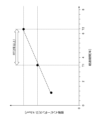
- FIG. 11 is a diagram showing an example of a relationship between a service life and a contact impedance.
- the adhesive electrode for acquiring a biological signal will be described.
- the biological body refers to the human body (person) and animals such as cows, horses, pigs, chickens, dogs, and cats.
- the biological sensor according to the present embodiment can be suitably used for biological bodies, particularly for the human body. In the present embodiment, the case where the biological body is a human will be described as an example.
- the adhesive electrode for acquiring biosignals is a bioelectrode that is attached to a part of a living body (e.g., the skin, scalp, or forehead) to detect bioinformation.
- a part of a living body e.g., the skin, scalp, or forehead
- biosignals are electrical signals that represent, for example, electrocardiogram waveforms, brain waves, pulse rate, etc.
- the adhesive electrode for acquiring a biosignal has a sheet-like shape, and in a plan view, one side (one end) of the adhesive electrode for acquiring a biosignal may be formed in a substantially rectangular shape, and the other side (the other end) of the adhesive electrode for acquiring a biosignal may be formed in a substantially arc shape.
- the adhesive electrode for acquiring a biosignal can be used, for example, by attaching it to and contacting the skin, which is an example of a living body, to measure the potential difference (polarization voltage) between the skin and the adhesive electrode for acquiring a biosignal, and to detect an electrical signal (biosignal) related to the subject's bioinformation.
- the adhesive electrode for acquiring a biosignal may have other shapes, such as a rod shape, in addition to the sheet shape.
- the shape of the adhesive electrode for acquiring a biosignal in a plan view is not limited to the above shape, and may be designed into any shape appropriate for the application, etc., and may be formed into any shape, such as a substantially rectangular, substantially polygonal, substantially circular, or substantially elliptical shape.
- the thickness of the adhesive electrode for acquiring a biosignal may be any appropriate thickness within a range that ensures strength, flexibility, low resistance, and conductivity depending on the application, size, etc.
- the thickness of the adhesive electrode for acquiring a biosignal refers to the length in the direction perpendicular to the surface of the adhesive electrode for acquiring a biosignal.
- the thickness of the adhesive electrode for acquiring a biosignal is, for example, the thickness when an arbitrary location is measured on the cross section of the adhesive electrode for acquiring a biosignal, and when measurements are taken at multiple arbitrary locations, the thickness may be the average value of the thicknesses at these measurement locations.
- the adhesive electrode for acquiring biosignals is an electrode having adhesive properties (adhesive electrode), and contains a conductive polymer, an adhesive material, and a moisturizer, and may contain additives and the like as optional components.
- the moisture content of the adhesive electrode for acquiring biosignals is 0.9 wt% to 4.0 wt%.
- the moisture content is preferably 1.7 wt% or more, and more preferably 2.9 wt% or more. If the moisture content is 0.9 wt% to 4.0 wt%, the elastic modulus of the adhesive electrode for acquiring biosignals is kept low, and an increase in resistance is suppressed.
- the moisture content of the adhesive electrode for acquiring a biosignal can be calculated using a general calculation method, for example, the Karl Fischer method. Specifically, the moisture content of the adhesive electrode for acquiring a biosignal can be calculated by measuring the amount of moisture when heated to 140°C and 400°C using the Karl Fischer method. The adhesive electrode for acquiring a biosignal is heated to 140°C, and the released moisture content (ppm by mass) is measured using a Karl Fischer moisture meter. The adhesive electrode for acquiring a biosignal is then further heated to 400°C, and the released moisture content (ppm by mass) is measured using a Karl Fischer moisture meter. The moisture content at each temperature is then calculated as the moisture content of the adhesive electrode for acquiring a biosignal. The moisture content may be measured using a commonly used measuring device under an atmosphere such as a nitrogen atmosphere. The moisture content of the adhesive electrode for acquiring a biosignal may be calculated using a sample of the adhesive electrode for acquiring a biosignal.
- the present inventors have noticed that when using an adhesive electrode for acquiring biosignals that contains an adhesive material as a binder resin and has adhesive properties, the moisture content and moisturizer content of the adhesive electrode for acquiring biosignals affect the service life of the adhesive electrode for acquiring biosignals.
- the present inventors have discovered that by setting the moisture content and moisturizer content of the adhesive electrode for acquiring biosignals within a specified range, an increase in resistance value can be suppressed over a long period of time, and the service life can be extended.
- the conductive polymer contained in the adhesive electrode for acquiring biological signals may be, for example, a polythiophene-based conductive polymer, a polyaniline-based conductive polymer, a polypyrrole-based conductive polymer, a polyacetylene-based conductive polymer, a polyphenylene-based conductive polymer, or a derivative thereof, or a complex thereof. These may be used alone or in combination of two or more kinds.
- Polythiophene-based conductive polymers include polythiophene, poly3-methylthiophene, poly3-ethylthiophene, poly3-propylthiophene, poly3-butylthiophene, poly3-hexylthiophene, poly3-heptylthiophene, poly3-octylthiophene, poly3-decylthiophene, poly3-dodecylthiophene, poly3-octadecylthiophene, poly3-bromothiophene, poly3-chlorothiophene, poly3-iodothiophene, poly3-cyanothiophene, poly3-phenylthiophene, poly3,4-dimethylthiophene, poly3,4-dibutylthiophene, poly3-hydroxythiophene, poly3-methoxythiophene, poly3-ethoxythiophene, poly3
- Polyanion-based conductive polymers include polymers having sulfonic acid groups, such as polystyrene sulfonic acid (also called "PSS"), polyvinyl sulfonic acid, polyallyl sulfonic acid, polyacrylic sulfonic acid, polymethacrylic sulfonic acid, poly(2-acrylamido-2-methylpropanesulfonic acid), polyisoprene sulfonic acid, polysulfoethyl methacrylate, poly(4-sulfobutyl methacrylate), and polymethacryloxybenzenesulfonic acid, as well as polymers having carboxylic acid groups, such as polyvinyl carboxylic acid, polystyrene carboxylic acid, polyallyl carboxylic acid, polyacrylic carboxylic acid, polymethacrylic carboxylic acid, poly(2-acrylamido-2-methylpropanecarboxylic acid), polyisoprene carboxylic acid, and poly
- polystyrene sulfonic acid may be used as homopolymers in which one type is polymerized alone, or as copolymers of two or more types.
- polymers having sulfonic acid groups are preferred because they can provide higher conductivity, and polystyrene sulfonic acid is more preferred.
- polypyrrole-based conductive polymers include polypyrrole, poly(N-methylpyrrole), poly(3-methylpyrrole), poly(3-ethylpyrrole), poly(3-n-propylpyrrole), poly(3-butylpyrrole), poly(3-octylpyrrole), poly(3-decylpyrrole), poly(3-dodecylpyrrole), poly(3,4-dimethylpyrrole), poly(3,4-dibutylpyrrole), poly(3-carboxypyrrole), poly(3-methyl-4-carboxypyrrole), poly(3-methyl-4-carboxyethylpyrrole), poly(3-methyl-4-carboxybutylpyrrole), poly(3-hydroxypyrrole), poly(3-methoxypyrrole), poly(3-ethoxypyrrole), poly(3-butoxypyrrole), poly(3-hexyloxypyrrole), and poly(3-
- polyacetylene-based conductive polymers include polyacetylenes with polar groups, such as polyphenylacetylene monoesters having an ester at the para position of phenylacetylene and polyphenylacetylene monoamides having an amide at the para position of phenylacetylene.
- polyphenylene-based conductive polymers examples include polyphenylene vinylene.
- composites in which polythiophene is doped with polyaniline as a dopant are preferred.
- polythiophene and polyaniline it is more preferred to use PEDOT/PSS in which PEDOT is doped with PSS, because it has a lower contact impedance with the living body and high conductivity.
- the content of the conductive polymer is preferably 0.20 parts by mass to 20 parts by mass, more preferably 2.5 parts by mass to 15 parts by mass, and even more preferably 3.0 parts by mass to 12 parts by mass, per 100 parts by mass of the adhesive electrode for acquiring a biological signal. If the content is within the above preferred range per 100 parts by mass of the adhesive electrode for acquiring a biological signal, the adhesive electrode for acquiring a biological signal can have excellent conductivity, toughness, and flexibility.
- the conductive polymer may be used as an aqueous solution dissolved in a solvent.
- the solvent may be an organic solvent or an aqueous solvent.
- organic solvents include ketones such as acetone and methyl ethyl ketone (MEK); esters such as ethyl acetate; ethers such as propylene glycol monomethyl ether; and amides such as N,N-dimethylformamide.
- aqueous solvents include water; and alcohols such as methanol, ethanol, propanol, and isopropanol. Of these, it is preferable to use an aqueous solvent.
- the adhesive material contained in the adhesive electrode for acquiring a biological signal is used as a binder resin for the adhesive electrode for acquiring a biological signal.
- a water-based emulsion adhesive or the like can be used as the adhesive material.
- the aqueous emulsion adhesive has the function of improving the adhesiveness and flexibility of the adhesive electrode for acquiring biological signals. Therefore, by including an aqueous emulsion adhesive in the adhesive electrode for acquiring biological signals, the adhesive electrode for acquiring biological signals can have low elasticity and can improve its ability to conform to the irregularities of the surface of a living body.
- a water-based emulsion adhesive it is preferable to use an acrylic emulsion adhesive.
- the acrylic emulsion adhesive preferably uses a silane emulsion adhesive that contains a water-dispersible copolymer and an organic liquid component that is compatible with the water-dispersible copolymer.
- a water-dispersible copolymer is a polymer obtained by copolymerizing a monomer mixture containing an alkyl (meth)acrylate with a silane monomer that is copolymerizable with the alkyl (meth)acrylate.
- a monomer mixture containing an alkyl (meth)acrylate is a monomer mixture that contains an alkyl (meth)acrylate as the main component, and preferably contains 50 wt% to 100 wt% of an alkyl (meth)acrylate.
- (meth)acrylic acid alkyl ester a straight-chain or branched alkyl ester having an alkyl group with 1 to 15 carbon atoms, preferably 1 to 9 carbon atoms.
- Specific examples include (meth)acrylic acid alkyl esters having a straight-chain or branched alkyl group, such as methyl (meth)acrylate, ethyl (meth)acrylate, n-butyl (meth)acrylate, isobutyl (meth)acrylate, pentyl (meth)acrylate, hexyl (meth)acrylate, heptyl (meth)acrylate, n-octyl (meth)acrylate, isooctyl (meth)acrylate, 2-ethylhexyl (meth)acrylate, n-nonyl (meth)acrylate, isononyl (meth)acrylate, decyl (meth)acrylate, undecy
- the monomer mixture containing the (meth)acrylic acid alkyl ester may also contain a carboxyl group-containing monomer copolymerizable with the (meth)acrylic acid alkyl ester.
- Carboxyl group-containing monomers copolymerizable with (meth)acrylic acid alkyl esters are not particularly limited as long as they are polymerizable compounds containing a carboxyl group in their structure and are copolymerizable with (meth)acrylic acid alkyl esters, but examples include (meth)acrylic acid, itaconic acid, maleic acid, maleic anhydride, and 2-methacryloyloxyethyl succinic acid. Acrylic acid is particularly preferred.
- the carboxyl group-containing monomer is contained in an amount of 0.1 wt% to 10 wt% relative to 100 wt% of the monomer mixture containing the (meth)acrylic acid alkyl ester.
- silane monomer copolymerizable with (meth)acrylic acid alkyl ester is not particularly limited as long as it is a polymerizable compound having a silicon atom and is copolymerizable with (meth)acrylic acid alkyl ester, but silane compounds having a (meth)acryloyl group such as (meth)acryloyloxyalkylsilane derivatives are preferred because of their excellent copolymerizability with (meth)acrylic acid alkyl esters.
- silane monomers include 3-(meth)acryloyloxypropyltrimethoxysilane, 3-(meth)acryloyloxypropyltriethoxysilane, 3-(meth)acryloyloxypropylmethyldimethoxysilane, and 3-(meth)acryloyloxypropylmethyldiethoxysilane. These silane monomers can be used alone or in combination of two or more.
- silane monomers that can be used include, for example, vinyltrimethoxysilane, vinyltriethoxysilane, 4-vinylbutyltrimethoxysilane, 4-vinylbutyltriethoxysilane, 8-vinyloctyltrimethoxysilane, 8-vinyloctyltriethoxysilane, 10-methacryloyloxydecyltrimethoxysilane, 10-acryloyloxydecyltrimethoxysilane, 10-methacryloyloxydecyltriethoxysilane, and 10-acryloyloxydecyltriethoxysilane.
- silane monomer with the monomer mixture containing the (meth)acrylic acid alkyl ester in an amount of 0.005 wt% to 2 wt% per 100 wt% of the monomer mixture containing the (meth)acrylic acid alkyl ester.
- the silane compounds that act as crosslinking points are evenly distributed within the molecules of the resulting copolymer.
- the aqueous emulsion adhesive is a water-dispersed type, the inside and outside of the aqueous emulsion adhesive particles are evenly crosslinked, giving it excellent cohesive strength, and the addition of organic liquid components makes it less irritating to the skin, while also providing excellent fixation and sweat-resistant fixation.
- the aqueous dispersion type copolymer may be a copolymer of a monomer copolymerizable with the (meth)acrylic acid alkyl ester other than the above-mentioned silane-based monomer and carboxyl group-containing monomer, if necessary.
- the monomer copolymerizable with the (meth)acrylic acid alkyl ester other than the silane-based monomer and carboxyl group-containing monomer can be used for the purpose of adjusting the cohesive force of the adhesive electrode for acquiring biosignals when the aqueous emulsion adhesive is formed into a sheet or the like, or for the purpose of improving compatibility with organic liquid components, and the amount used can be set arbitrarily according to the purpose by replacing a part of the content of the (meth)acrylic acid alkyl ester.
- Monomers copolymerizable with (meth)acrylic acid alkyl esters other than silane-based monomers and carboxyl group-containing monomers include, for example, sulfoxyl group-containing monomers such as styrene sulfonic acid, allyl sulfonic acid, sulfopropyl (meth)acrylate, (meth)acryloyloxynaphthalene sulfonic acid, and acrylamidomethylpropane sulfonic acid, hydroxyl group-containing monomers such as (meth)acrylic acid hydroxyethyl ester, (meth)acrylic acid hydroxypropyl ester, amide group-containing monomers such as (meth)acrylamide, dimethyl (meth)acrylamide, N-butylacrylamide, N-methylol (meth)acrylamide, and N-methylolpropane (meth)acrylamide, (meth)acrylic acid alkylamino alkyl esters such as (
- Examples of the (meth)acrylic acid alkoxyalkyl esters include diethyl ester and ethoxyethyl ester of (meth)acrylic acid; alkoxy group (or ether bond on the side chain)-containing (meth)acrylic acid esters such as methoxyethylene glycol ester of (meth)acrylic acid, tetrahydrofurfuryl ester of (meth)acrylic acid, methoxyethylene glycol ester of (meth)acrylic acid, methoxydiethylene glycol ester of (meth)acrylic acid, methoxypolyethylene glycol ester of (meth)acrylic acid, and methoxypolypropylene glycol ester of (meth)acrylic acid; and vinyl monomers such as (meth)acrylonitrile, vinyl acetate, vinyl propionate, N-vinyl-2-pyrrolidone, methylvinylpyrrolidone, vinylpyridine, vinylpiperidine, vinylpyrimidine, vinylpiperazine
- the water-dispersed polymer can be prepared as a water dispersion of a (meth)acrylic acid alkyl ester copolymer, for example, by subjecting a mixture of a monomer mixture containing a (meth)acrylic acid alkyl ester and a silane-based monomer to conventional emulsion polymerization.
- the polymerization method can be the usual one-step polymerization, continuous dropwise polymerization, or divided dropwise polymerization, and the polymerization temperature is, for example, 20°C to 100°C.
- the polymerization initiator used in the polymerization is not particularly limited, and any general component used as a polymerization initiator can be used.
- a chain transfer agent may be used in the polymerization.
- the chain transfer agent There are no particular limitations on the chain transfer agent, and any of the general components used as chain transfer agents can be used.
- the water-dispersible copolymer may be prepared by obtaining a copolymer of a monomer mixture containing a (meth)acrylic acid ester and a silane monomer by a method other than emulsion polymerization, and then dispersing the copolymer in water with an emulsifier.
- the organic liquid components contained in the acrylic emulsion adhesive are blended with a water-dispersible copolymer to maintain good adhesion to the skin surface, while reducing damage to the keratin when peeled off from the skin surface and reducing pain when peeled off.
- the organic liquid component is liquid at room temperature and has good compatibility with the water-dispersible copolymer. "Compatibility” means that the organic liquid component is uniformly dissolved and incorporated into the water-dispersible copolymer, and that no separation can be confirmed by visual inspection.
- organic liquid components examples include esters of monobasic or polybasic acids having 8 to 18 carbon atoms and branched alcohols having 14 to 18 carbon atoms, and esters of unsaturated fatty acids or branched acids having 14 to 18 carbon atoms and alcohols with tetrahydric or less.
- esters of monobasic or polybasic acids having 8 to 18 carbon atoms with branched alcohols having 14 to 18 carbon atoms include isostearyl laurate, isocetyl myristate, octyldodecyl myristate, isostearyl palmitate, isocetyl stearate, octyldodecyl oleate, diisostearyl adipate, diisocetyl sebacate, trioleyl trimellitate, and triisocetyl trimellitate.
- Examples of unsaturated fatty acids or branched acids with 14 to 18 carbon atoms include myristoleic acid, oleic acid, linoleic acid, linolenic acid, isopalmitic acid, and isostearic acid.
- tetrahydric or lower alcohols examples include ethylene glycol, propylene glycol, glycerin, trimethylolpropane, pentaerythritol, and sorbitan.
- the content of the organic liquid component can be set as appropriate depending on the type of water-dispersible copolymer and the organic liquid component, and may be, for example, 20 wt% to 80 wt% relative to 100 wt% of the water-dispersible copolymer.
- the acrylic emulsion adhesive is a silane emulsion adhesive
- the acrylic emulsion adhesive may be a silane emulsion adhesive containing 2-ethylhexyl acrylate, methyl methacrylate, acrylic acid, and 3-methacryloxypropyltrimethoxysilane.
- the acrylic emulsion adhesive may be a two-component or three-component acrylic emulsion adhesive that contains a monomer mixture containing an alkyl (meth)acrylate ester and a carboxyl group-containing monomer. These may contain solvents and other components in appropriate amounts within the range in which performance can be exhibited.
- the monomer mixture containing the (meth)acrylic acid alkyl ester contained in the two-component or three-component acrylic emulsion adhesive is similar to the monomer mixture containing the (meth)acrylic acid alkyl ester contained in the above-mentioned silane-based emulsion adhesive, so details are omitted.
- the carboxyl group-containing monomer is preferably a carboxyl group-containing monomer copolymerizable with an alkyl (meth)acrylate ester.
- the carboxyl group-containing monomer copolymerizable with an alkyl (meth)acrylate ester is the same as the carboxyl group-containing monomer contained in the monomer mixture containing an alkyl (meth)acrylate described above, so details are omitted.
- two-component acrylic emulsion adhesives that can be used include an adhesive that contains 2-ethylhexyl acrylate, which is a monomer mixture that contains an alkyl (meth)acrylate ester, and acrylic acid, which is a carboxyl group-containing monomer mixture.
- three-component acrylic emulsion adhesives that can be used include an adhesive that contains 2-ethylhexyl acrylate and methyl methacrylate, which are monomer mixtures that contain (meth)acrylic acid alkyl esters, and acrylic acid, which is a carboxyl group-containing monomer mixture.
- the average particle size of the aqueous emulsion adhesive is preferably 100 nm to 1.0 ⁇ m, more preferably 100 nm to 500 nm, and even more preferably 100 nm to 300 nm. If the average particle size is within the above preferred range, it is possible to impart adhesive strength and water resistance to the adhesive electrode for acquiring biological signals.
- the shape of the aqueous emulsion adhesive is not particularly limited, and may be, for example, spherical, ellipsoidal, spindle-shaped, crushed, plate-shaped, or columnar.
- the average particle size refers to the volume average particle size based on the effective diameter.
- the average particle size is the particle size (median diameter) when the cumulative amount of particles, starting from the smallest, accounts for 50% by volume on a particle size distribution curve obtained by measuring the particle size distribution of an emulsion adhesive or an acrylic emulsion adhesive using, for example, a laser diffraction/scattering method or a dynamic light scattering method.
- the content of the aqueous emulsion adhesive is preferably 35 wt% to 90 wt%, more preferably 40 wt% to 85 wt%, and even more preferably 50 wt% to 80 wt%, relative to 100 wt% of the adhesive electrode for acquiring biosignals.
- the content of the aqueous emulsion adhesive is within the above preferred range, it is possible to impart adhesive strength and softness to the adhesive electrode for acquiring biosignals, and to suppress a decrease in conductivity.
- the moisturizing agent contained in the adhesive electrode for acquiring biosignals has the function of improving the conductivity of the adhesive electrode for acquiring biosignals as well as improving the adhesive strength and flexibility.
- Humectants include polyol compounds such as glycerin, ethylene glycol, propylene glycol, sorbitol, and polymers of these, and aprotic compounds such as N-methylpyrrolidone (NMP), dimethylformaldehyde (DMF), N-N'-dimethylacetamide (DMAc), and dimethylsulfoxide (DMSO). These may be used alone or in combination of two or more. Of these, glycerin is preferred from the standpoint of compatibility with other components.
- NMP N-methylpyrrolidone
- DMF dimethylformaldehyde
- DMAc N-N'-dimethylacetamide
- DMSO dimethylsulfoxide
- the content of the moisturizer is preferably 4.0 wt% to 20.0 wt% relative to 100 wt% of the adhesive electrode for acquiring biosignals (total amount of the adhesive electrode for acquiring biosignals), more preferably 5.0 wt% to 17.0 wt%, and even more preferably 7.0 wt% to 15.0 wt%. If the content of the moisturizer is within the above preferred range, the adhesive strength of the adhesive electrode for acquiring biosignals can be improved and high adhesion to the surface of the skin can be maintained, and the storage modulus can be reduced and an increase in the modulus can be suppressed, thereby suppressing an increase in the resistance value. In addition, the adhesive electrode for acquiring biosignals can be suppressed from absorbing water from the outside, suppressing swelling.
- the content of the moisturizing agent may be measured using commonly used analytical measuring equipment, such as gas chromatography (GC) or a thermogravimetric differential thermal analyzer (TG-DTA) that simultaneously performs thermogravimetry (TG) and differential thermal analysis (DTA).
- analytical measuring equipment such as gas chromatography (GC) or a thermogravimetric differential thermal analyzer (TG-DTA) that simultaneously performs thermogravimetry (TG) and differential thermal analysis (DTA).
- the adhesive electrode for acquiring biosignals is heated to 150°C for 10 minutes, and the gas components (ppm by mass) released during this time are measured.
- the adhesive electrode for acquiring biosignals is then further heated to 240°C, and the gas components (ppm by mass) released are measured.
- the combined value of the gas components at each temperature may then be calculated as the moisturizer content contained in the adhesive electrode for acquiring biosignals.
- the adhesive electrode for acquiring biosignals is heated to 50°C and the gas components (ppm by mass) released during this time are measured.
- the adhesive electrode for acquiring biosignals is then further heated to 300°C and the gas components (ppm by mass) released are measured.
- the combined value of the gas components at each temperature is then calculated as the moisturizer content contained in the adhesive electrode for acquiring biosignals.
- the adhesive electrode for acquiring biological signals may contain additives and the like as optional components.
- the additive has a neutralizing effect on the conductive polymer, neutralizing the conductive polymer and improving its flexibility.
- the conductive polymer is PEDOT-PSS
- the additive forms an organic salt when neutralized with PSS, which is a strong acid, and can improve water absorbency while at the same time making the polymer insoluble in water.
- Preferred examples of additives include imidazole compounds.
- Imidazole compounds are organic structures that have an imidazole group.
- the imidazole group of an imidazole compound acts as an additive, for example, in the pH range of 3.5 to 6.5.
- Examples of imidazole compounds include heterocyclic amines.
- Heterocyclic amines include, for example, imidazole, 2-methylimidazole, 2-propylimidazole, 2-undecylimidazole, 2-phenylimidazole, N-methylimidazole, 1-(2-hydroxyethyl)imidazole, 2-ethyl-4-methylimidazole, 1,2-dimethylimidazole, 1-benzyl-2-methylimidazole, 1-benzyl-2-phenylimidazole, 1-cyanoethyl-2-methylimidazole, and 1-cyanoethyl -2-ethyl-4-methylimidazole, 2-phenyl-4,5-dihydroxymethylimidazole, 1-acetylimidazole, 4,5-imidazoledicarboxylic acid, dimethyl 4,5-imidazoledicarboxylate, benzimidazole, 2-aminobenzimidazole, 2-aminobenzimidazole-2-sulfonic acid, 2-a
- the content of the additive is preferably 0.5 wt% to 2.4 wt%, more preferably 0.7 wt% to 2.2 wt%, and even more preferably 0.8 wt% to 2.0 wt%, relative to 100 wt% of the adhesive electrode for acquiring biosignals.
- the method for manufacturing the adhesive electrode for acquiring a biosignal according to this embodiment is not particularly limited. An example of a method for manufacturing an adhesive electrode for acquiring a biosignal will be described below.
- the conductive polymer is mixed with water to prepare an aqueous solution containing the conductive polymer (process for preparing an aqueous solution containing the conductive polymer).
- the conductive polymer and water may be mixed while stirring using a commonly used stirrer or the like so that the conductive polymer is mixed as uniformly as possible in the conductive polymer-containing solution.
- the mixing ratio of the conductive polymer to water, mixing conditions such as mixing time, stirring speed of the conductive polymer-containing solution, temperature, etc. are not particularly limited and may be set arbitrarily as long as the conductive polymer can be sufficiently mixed into the conductive polymer-containing solution, although it depends on the size of the stirring tank used, etc.
- the conductive polymer-containing aqueous solution is mixed with an adhesive material, a moisturizer, and, if necessary, an additive to prepare a conductive composition-containing aqueous solution (mixing process).
- the conductive composition-containing aqueous solution is used as a composition for forming an adhesive electrode.
- the adhesive material and the moisturizer may be mixed with stirring using a commonly used stirrer or the like so that they are mixed as uniformly as possible into the aqueous solution containing the conductive composition.
- the mixing ratio of the conductive polymer-containing aqueous solution, the adhesive material, and the moisturizer, etc., the mixing time of the conductive polymer-containing aqueous solution, the adhesive material, and the moisturizer, etc., and the mixing conditions such as the stirring speed and temperature of the conductive composition-containing aqueous solution are not particularly limited and may be set arbitrarily as long as the adhesive material and the moisturizer, etc. can be sufficiently mixed into the conductive polymer-containing aqueous solution, although this depends on the size of the stirring tank used, etc.
- the aqueous solution containing the conductive composition is applied to the surface (coating surface) of the release substrate, and then dried to evaporate the water contained in the aqueous solution containing the conductive composition (coating and drying process).
- the adhesive materials bond and fuse together while containing the conductive polymer and moisturizer inside, forming a coating film that is a hardened product of the adhesive electrode-forming composition.
- the shape of the adhesive electrode for acquiring biosignals depends on the shape of the coating, and may be in the form of a sheet or the like. Therefore, the coating is formed taking into consideration the fact that the thickness of the coating will become thinner when heated and the desired thickness of the adhesive electrode for acquiring biosignals, etc.
- a release liner or a core material can be used as the release substrate.
- a resin film such as a polyethylene terephthalate (PET) film, a polyethylene (PE) film, a polypropylene (PP) film, a polyamide (PA) film, a polyimide (PI) film, or a fluororesin film can be used.
- a resin film such as a PET film or a PI film; a ceramic sheet; a metal film such as an aluminum foil; a resin substrate reinforced with glass fiber or plastic nonwoven fiber; a silicone substrate or a glass substrate can be used.
- the method for applying the aqueous solution containing the conductive composition to the application surface of the release substrate is not particularly limited as long as the aqueous solution containing the conductive composition can be applied to the release substrate, and any general application method may be used.
- Application methods that can be used include roll coating, screen coating, gravure coating, spin coating, reverse coating, bar coating, blade coating, spray coating, air knife coating, dipping, dispensing, and the like, as well as a method in which a small amount of aqueous solution containing a conductive composition is dropped onto the coating surface of the substrate and spread with a doctor blade. By using these application methods, the aqueous solution containing the conductive composition can be applied evenly onto the coating surface.
- the drying conditions for the aqueous solution containing the conductive composition applied to the coating surface of the release substrate are not particularly limited, so long as they allow the aqueous solution containing the conductive composition applied to the release substrate to be dried, and general drying conditions may be used.
- the solution may be dried at room temperature or may be heated using a dryer.
- a dryer a general dryer such as a drying oven, a vacuum oven, an air circulation type oven, a hot air dryer, a far-infrared dryer, a microwave reduced pressure dryer, or a high-frequency dryer may be used.
- the aqueous solution containing the conductive composition applied to the coating surface of the substrate may be dried by a method of heating the inside of the dryer to a high temperature, a method of heating the substrate, a method of blowing hot air onto the aqueous solution containing the conductive composition, or a method of irradiating the aqueous solution containing the conductive composition with far-infrared rays, microwaves, or high frequencies, etc.
- the heating temperature (drying temperature) and heating time (drying time) when heating the aqueous solution containing the conductive composition using a dryer should be a temperature and time that can evaporate the water contained in the aqueous solution containing the conductive composition.
- the heating temperature may be, for example, 100°C to 200°C. If the conductive composition contains a crosslinking agent, a heating temperature in the range of 100°C to 200°C can promote evaporation of water contained in the aqueous solution containing the conductive composition.
- the heating time for the aqueous solution containing the conductive composition may be, for example, 0.5 to 300 minutes. If the heating time is 0.5 to 300 minutes, the water contained in the aqueous solution containing the conductive composition can be sufficiently evaporated.
- the line speed (transport speed) of the release substrate coated with the aqueous solution containing a conductive composition may be set so as to obtain an adhesive electrode for acquiring a biosignal having a desired thickness, taking into consideration the heating temperature of the aqueous solution containing a conductive composition, the thickness of the adhesive electrode for acquiring a biosignal, etc.
- the obtained cured product is punched (pressed) using a press or the like as necessary to mold the outer shape of the cured product into a predetermined shape (molding process).
- a laser processing machine may be used for molding.
- the obtained cured product may be molded into a predetermined shape only in terms of its outer shape.
- the cured product can be used as it is as an adhesive electrode for acquiring biosignals, the cured product may be used as such without being molded or otherwise processed.
- the adhesive electrode for acquiring a biological signal includes a conductive polymer, an adhesive material, and a moisturizer, has a moisture percentage of 0.9 wt% to 4.0 wt%, and contains 4.0 wt% to 20.0 wt% of the moisturizer relative to the total amount of the adhesive electrode for acquiring a biological signal.
- the adhesive electrode for acquiring a biological signal can suppress the decrease in moisture inside by releasing the moisture inside the electrode to the outside due to drying or the like.
- the adhesive electrode for acquiring a biological signal can suppress the increase in elasticity, and therefore the increase in resistance. Therefore, the adhesive electrode for acquiring a biological signal according to this embodiment can have a longer service life because the increase in resistance is suppressed over a long period of time.
- the adhesive electrode for acquiring a biosignal has a longer service life, and as shown in FIG. 1, the time T1 at which the adhesive electrode for acquiring a biosignal reaches a predetermined value (e.g., 150 ⁇ /4.5 cm2 or less) required as a preferred contact impedance when used in a generating sensor, and the time T2 at which the adhesive electrode for acquiring a biosignal deteriorates and reaches an upper limit of the contact impedance (e.g., 200 ⁇ /4.5 cm2 ) at which it is difficult to use the adhesive electrode for acquiring a biosignal as a generating sensor can be extended.
- a predetermined value e.g. 150 ⁇ /4.5 cm2 or less
- an upper limit of the contact impedance e.g. 200 ⁇ /4.5 cm2
- the time T1 is the time at which the adhesive electrode for acquiring a biosignal is assembled into a biosensor.
- the time T2 is the time at which the biosensor assembled using the adhesive electrode for acquiring a biosignal can be used to its limit.
- the remaining service life RT is the remaining service life of the biosensor assembled using the adhesive electrode for acquiring a biosignal. Therefore, the adhesive electrode for acquiring biological signals according to this embodiment can ensure a longer remaining usable period RT (e.g., two years or more) even if it is stored for a long period of time and goes unused for a long period of time (e.g., several months to several years).
- the service life is the service life of the adhesive electrode for acquiring a biological signal, and refers to the period during which the contact impedance (electrode impedance) of the adhesive electrode for acquiring a biological signal can be maintained at a predetermined upper limit (e.g., 200 ⁇ /4.5 cm2 ) or less.
- the service life may be calculated using a general calculation method, for example, based on the results of a predetermined accelerated test.
- the degree of decrease in moisture content at a predetermined temperature is obtained by actual measurement or simulation, and the relationship between the storage period at the predetermined temperature and the contact impedance of the adhesive electrode for acquiring a biological signal (relationship between the storage period at the predetermined temperature and the contact impedance) is calculated.
- the degree of increase in the contact impedance of the adhesive electrode for acquiring a biological signal is calculated by an accelerated test, for example, based on the following Arrhenius formula (1).
- D D 0 ⁇ exp(-Ea/(RT))...(1) (In the formula, D is the reaction rate constant, D0 is the frequency factor, Ea is the activation energy, R is the gas constant, and T is the absolute temperature (K).)
- the results of the accelerated test are converted into a service life based on the relationship between the storage period at a predetermined temperature and the contact impedance of the adhesive electrode for acquiring a biological signal, and the relationship between the degree of increase in the contact impedance of the adhesive electrode for acquiring a biological signal obtained by the accelerated test.
- the service life may be calculated using the following formula (2) which is a conversion of the above formula (1). Then, a diagram showing the relationship between the service life and the contact impedance (relational formula between the service life and the contact impedance) is created.
- the period T1 at which the contact impedance becomes the initial value (e.g., 150 ⁇ / 4.5cm2 or less) and the period T2 at which the contact impedance becomes the upper limit value (e.g., 200 ⁇ /4.5cm2) are calculated.
- the remaining service life RT of the adhesive electrode for acquiring biological signals is calculated by subtracting the period T1 from the period T2 .
- the method for measuring the contact impedance of the adhesive electrode for acquiring biosignals is not particularly limited, and can be measured by any suitable method.
- a predetermined area e.g., 4.5 cm2
- the end of the electrode is bonded to the end of a copper plate having a predetermined size (e.g., 15 mm wide x 3 cm long), and then the electrode surfaces are bonded together, and the surface of the copper plate opposite to the surface bonded to the electrode is fixed with a clip connected to a cable.
- the clip on the opposite side of the cable is connected to an impedance analyzer, and the contact impedance is measured for a predetermined time (e.g., 1 minute).
- the remaining usable period refers to the period from the period from when the adhesive electrode for acquiring a biological signal reaches an initial value (e.g., 150 ⁇ /4.5cm2 or less ) required as a preferable contact impedance when used in a generating sensor to when the adhesive electrode for acquiring a biological signal deteriorates and reaches an upper limit of the contact impedance (e.g., 200 ⁇ / 4.5cm2 ) at which it is difficult to use the adhesive electrode for acquiring a biological signal.
- an initial value e.g., 150 ⁇ /4.5cm2 or less
- an upper limit of the contact impedance e.g. 200 ⁇ / 4.5cm2
- the remaining usable period RT is expressed as the difference (T2-T1) between the period T1 until the adhesive electrode for acquiring a biological signal reaches a predetermined value required as a preferable contact impedance when used in a generating sensor and the period T2 until the upper limit of the contact impedance at which it is difficult to use the adhesive electrode for acquiring a biological signal is reached.
- the adhesive electrode for acquiring biosignals can exhibit conductivity by including a conductive polymer. Furthermore, the adhesive electrode for acquiring biosignals can exhibit adhesiveness and self-adhesiveness by including an adhesive material. Therefore, the adhesive electrode for acquiring biosignals can exhibit adhesiveness to the skin and can easily conform to the surface of the skin, so that even if the surface of the skin is deformed due to body movement, it can maintain a state of being attached to the skin and keep the contact impedance low.
- the adhesive electrode for acquiring a biological signal can use a water-based emulsion adhesive as the adhesive material.
- a water-based emulsion adhesive By including a water-based emulsion adhesive, the adhesive electrode for acquiring a biological signal has self-adhesive properties and can increase flexibility, so that it can exhibit adhesion to the skin while improving its ability to follow the surface of the skin. Therefore, even if the surface of the skin is deformed due to body movement, the adhesive electrode for acquiring a biological signal can maintain a state of being attached to the skin and keep the contact impedance low.
- the adhesive electrode for acquiring a biological signal according to this embodiment can be more easily deformed, such as warped and stretched, by using a water-dispersed adhesive as the adhesive material, and can easily follow deformations of the skin. Therefore, the adhesive electrode for acquiring a biological signal according to this embodiment can adhere closely to the skin without any gaps, and can follow while maintaining a state of adhesion even if deformation occurs on the surface of the skin based on human movement, so that it can acquire a biological signal.
- the method for measuring the adhesive strength of the adhesive electrode for acquiring a biosignal is not particularly limited, and can be measured by any suitable method.
- the adhesive strength of the adhesive electrode for acquiring a biosignal may be obtained by performing a 180° peel test and measuring the 180° peel strength.
- an electrode sheet cut to a predetermined area e.g., 10 cm 2
- the electrode sheet is attached to a support base material (e.g., a PET film, etc.) to form a backing, to prepare a measurement sample.
- the measurement sample is cut to a predetermined size (e.g., 1 cm x 1 cm) and attached to an adherend (e.g., a stainless steel plate, a bakelite plate, etc.) and fixed. Then, using a tensile tester, the load when the measurement sample is peeled off from the adherend is measured under peel conditions of a peel angle of 180° and a predetermined peel speed (e.g., 300 mm/min), and the adhesive strength (unit: N/10 mm) is measured.
- a predetermined size e.g., 1 cm x 1 cm
- an adherend e.g., a stainless steel plate, a bakelite plate, etc.
- the adhesive electrode for acquiring biosignals can use an acrylic emulsion adhesive instead of a water-based emulsion adhesive. This allows the adhesive electrode for acquiring biosignals to suppress a decrease in adhesive strength while maintaining resistance, and reliably improve conformability to the skin surface. This allows the adhesive electrode for acquiring biosignals to have high adhesive strength and conformability to the skin surface.
- the adhesive electrode for acquiring biosignals can use a silane-based emulsion adhesive containing a water-dispersible copolymer and an organic liquid component as the acrylic emulsion adhesive. This ensures that the adhesive electrode for acquiring biosignals has a low viscoelasticity, thereby increasing the adhesive strength and further improving the conformability to the skin surface. This allows the adhesive electrode for acquiring biosignals to have even greater flexibility and more reliably maintain its adhesiveness.
- the adhesive electrode for acquiring biosignals can use at least one conductive polymer selected from the group consisting of polythiophene-based conductive polymers, polyaniline-based conductive polymers, and polyacetylene-based conductive polymers as the conductive polymer. This allows the adhesive electrode for acquiring biosignals to reliably exhibit conductivity.
- the adhesive electrode for acquiring biosignals can use glycerin as a moisturizer.
- glycerin functions as a dispersant for PEDOT, which is used as a conductive polymer, and can increase the dispersibility of PEDOT and reduce resistance.
- glycerin can increase the crystallization of PEDOT, which is used as a conductive polymer, and increase conductivity. Therefore, the adhesive electrode for acquiring biosignals can improve conductivity and suppress noise generation.
- the adhesive electrode for acquiring a biological signal can be formed into a film shape, and therefore can be used as an electrode piece in which the adhesive electrode for acquiring a biological signal is provided on a substrate.
- the electrode piece has higher rigidity than the adhesive electrode for acquiring a biological signal used alone, and therefore can be easily handled.
- the substrate used for the electrode pieces can be formed using any suitable material.
- substrates that can be used for the electrode pieces include polyolefin resins such as polyethylene (PE) and polyethylene naphthalate (PEN), polyester resins such as polyethylene terephthalate (PET), acrylic resins, polyurethane resins, polystyrene resins, silicone resins, acrylic resins, vinyl chloride resins, plastic substrates such as polyimide (PI) and polycarbonate (PC), metal plates, and glass substrates.
- the substrates used for the electrode pieces may be substrates that do not have a porous structure, or substrates (porous bodies) that have a porous structure such as nonwoven fabric sheets.
- the adhesive electrode for acquiring biosignals has excellent adhesion to the skin, can stably measure biosignals, and has a long service life. For this reason, the adhesive electrode for acquiring biosignals can be effectively used as an electrode (bioelectrode) for a biosensor, particularly a stick-on biosensor that requires stable acquisition of biosignals, adhesion to the living body, and a long service life.
- Example 1 Preparation of Conductive Composition
- PEDOT/PSS pellets (“Orgacon DRY", Agfa Materials Japan) as a conductive polymer and 23 g of water were added to a container, and mixed and stirred for 10 minutes at a rotation speed of 2000 rpm using a stirring mixer (Thinky Corporation).
- the PET film coated with the aqueous conductive composition solution was placed on a conveyor belt and conveyed to a drying oven (SPHH-201, manufactured by ESPEC Co., Ltd.) at a conveying speed (line speed) of 2 m/min, and the temperature in the drying oven was set to 120° C., and the aqueous conductive composition solution was dried in the drying oven to produce a cured product of the conductive composition.
- the cured product was punched (pressed) into a desired shape to form a sheet, to produce an electrode sheet (bioelectrode) having a thickness of 40 ⁇ m.
- the moisture content of the electrode sheet was calculated using the Karl Fischer method.
- the electrode sheet was heated to 140°C, and the released moisture content (ppm by mass) was measured using a Karl Fischer moisture meter.
- the electrode sheet was then further heated to 400°C, and the released moisture content (ppm by mass) was measured using a Karl Fischer moisture meter.
- the total value of the moisture content at each temperature was taken as the moisture content of the adhesive electrode for acquiring biosignals.
- the moisture content was measured under a nitrogen atmosphere using a commonly used measuring device.
- the content of glycerin contained in the electrode sheet was measured using gas chromatography (GC).
- GC gas chromatography
- the electrode sheet was heated to 150°C for 10 minutes, and the gas components (ppm by mass) released during this time were measured.
- the electrode sheet was then further heated to 240°C, and the gas components (ppm by mass) released were measured.
- the total value of the gas components at each temperature was calculated as the content of the moisturizer contained in the adhesive electrode for acquiring biosignals.
- Example 2 to 10 An electrode sheet was produced in the same manner as in Example 1, except that the line speed, drying temperature, thickness of the electrode sheet, moisture content, and glycerin content were changed to the values shown in Table 1.
- Comparative Example 3 the PET film on which the aqueous solution of the conductive composition was applied was placed on a conveyor belt and dried at 130° C. in a drying oven while being conveyed, and then the PET film on which a cured product of the conductive composition was formed was placed in another drying oven and dried at 60° C. for 3 days.
- the electrode sheet was cut into two pieces with an area of 4.5 cm2 to prepare a test specimen of the electrode sheet.
- the ends of the copper plate cut to a width of 15 mm and a length of 5 cm were attached to the ends of the test specimen, and then the electrode surfaces were attached, and the opposite side of the copper plate to the surface attached to the test specimen was fixed with an alligator clip provided on one end of the cable.
- the clip on the other end of the cable was connected to an impedance analyzer (product name: ZM2371, manufactured by NF Corporation, frequency set to 10 Hz), and the contact impedance was measured for 1 minute.
- the measurement results of the contact impedance of the electrode sheets of each example and comparative example are shown in Table 1.
- the results of the accelerated test were converted into service life from the relationship between the storage period at a specified temperature and the contact impedance of the adhesive electrode for acquiring a biological signal, and the relationship between the increase in the contact impedance of the adhesive electrode for acquiring a biological signal obtained by the accelerated test.
- a diagram showing the relationship between the service life and the contact impedance (relationship between the service life and the contact impedance) was created, and the period during which the contact impedance reached its initial value (150 ⁇ /4.5cm2 or less ) and the period during which the contact impedance reached its upper limit (200 ⁇ / 4.5cm2 ) were calculated.
- the electrode sheet of each of the above examples can have a long lifespan if it contains a conductive polymer, an adhesive material, and a moisturizer, has a moisture content of 0.9 wt% to 4.0 wt%, and contains glycerin of 8.3 wt% to 13.1 wt% relative to the total weight of the adhesive electrode for acquiring biosignals.
- An adhesive electrode for acquiring a biological signal comprising a conductive polymer, an adhesive material, and a moisturizing agent, The moisture content is 0.9 wt % to 4.0 wt %;
- An adhesive electrode for acquiring a biological signal wherein the content of the moisturizer is 4.0 wt % to 20.0 wt % based on the total amount of the adhesive electrode for acquiring a biological signal.
- the acrylic emulsion adhesive is a silane emulsion adhesive containing a water-dispersible copolymer and an organic liquid component compatible with the water-dispersible copolymer.
- ⁇ 5> The adhesive electrode for acquiring a biological signal according to any one of ⁇ 1> to ⁇ 4>, wherein the conductive polymer is at least one kind of conductive polymer selected from the group consisting of a polythiophene-based conductive polymer, a polyaniline-based conductive polymer, and a polyacetylene-based conductive polymer.
- the conductive polymer is at least one kind of conductive polymer selected from the group consisting of a polythiophene-based conductive polymer, a polyaniline-based conductive polymer, and a polyacetylene-based conductive polymer.
- ⁇ 6> The adhesive electrode for acquiring a biological signal according to any one of ⁇ 1> to ⁇ 5>, wherein the moisturizer is glycerin.
- An electrode piece comprising the adhesive electrode for acquiring a biological signal according to any one of ⁇ 1> to ⁇ 6> provided on a substrate.
- a biosensor comprising the adhesive electrode for acquiring a
Landscapes
- Chemical & Material Sciences (AREA)
- Health & Medical Sciences (AREA)
- Life Sciences & Earth Sciences (AREA)
- Chemical Kinetics & Catalysis (AREA)
- Medicinal Chemistry (AREA)
- Polymers & Plastics (AREA)
- Organic Chemistry (AREA)
- Engineering & Computer Science (AREA)
- Molecular Biology (AREA)
- Pathology (AREA)
- Physics & Mathematics (AREA)
- Biomedical Technology (AREA)
- Heart & Thoracic Surgery (AREA)
- Medical Informatics (AREA)
- Biophysics (AREA)
- Surgery (AREA)
- Animal Behavior & Ethology (AREA)
- General Health & Medical Sciences (AREA)
- Public Health (AREA)
- Veterinary Medicine (AREA)
- Adhesives Or Adhesive Processes (AREA)
Priority Applications (1)
| Application Number | Priority Date | Filing Date | Title |
|---|---|---|---|
| JP2025528052A JPWO2024262463A1 (https=) | 2023-06-19 | 2024-06-17 |
Applications Claiming Priority (2)
| Application Number | Priority Date | Filing Date | Title |
|---|---|---|---|
| JP2023-100204 | 2023-06-19 | ||
| JP2023100204 | 2023-06-19 |
Publications (1)
| Publication Number | Publication Date |
|---|---|
| WO2024262463A1 true WO2024262463A1 (ja) | 2024-12-26 |
Family
ID=93935331
Family Applications (1)
| Application Number | Title | Priority Date | Filing Date |
|---|---|---|---|
| PCT/JP2024/021916 Ceased WO2024262463A1 (ja) | 2023-06-19 | 2024-06-17 | 生体信号取得用粘着性電極、電極片及び生体センサ |
Country Status (2)
| Country | Link |
|---|---|
| JP (1) | JPWO2024262463A1 (https=) |
| WO (1) | WO2024262463A1 (https=) |
Citations (6)
| Publication number | Priority date | Publication date | Assignee | Title |
|---|---|---|---|---|
| JPH0556941A (ja) * | 1991-08-30 | 1993-03-09 | Takiron Co Ltd | 導電性粘着剤 |
| JPH11406A (ja) * | 1997-06-11 | 1999-01-06 | Nitto Denko Corp | スナップ付き生体用電極 |
| JP2001181597A (ja) * | 1999-12-24 | 2001-07-03 | Three M Innovative Properties Co | 導電性接着剤及び生体電極 |
| KR101419018B1 (ko) * | 2013-01-22 | 2014-08-13 | 강원대학교산학협력단 | 인체측정 전극용 점착성 겔 조성물 |
| JP2019033809A (ja) * | 2017-08-10 | 2019-03-07 | 日本電信電話株式会社 | 伸縮性電極及びその製造方法、並びにウエアラブル電極 |
| WO2023120327A1 (ja) * | 2021-12-20 | 2023-06-29 | 日東電工株式会社 | 生体信号取得用粘着性電極、電極片及び生体センサ |
-
2024
- 2024-06-17 WO PCT/JP2024/021916 patent/WO2024262463A1/ja not_active Ceased
- 2024-06-17 JP JP2025528052A patent/JPWO2024262463A1/ja active Pending
Patent Citations (6)
| Publication number | Priority date | Publication date | Assignee | Title |
|---|---|---|---|---|
| JPH0556941A (ja) * | 1991-08-30 | 1993-03-09 | Takiron Co Ltd | 導電性粘着剤 |
| JPH11406A (ja) * | 1997-06-11 | 1999-01-06 | Nitto Denko Corp | スナップ付き生体用電極 |
| JP2001181597A (ja) * | 1999-12-24 | 2001-07-03 | Three M Innovative Properties Co | 導電性接着剤及び生体電極 |
| KR101419018B1 (ko) * | 2013-01-22 | 2014-08-13 | 강원대학교산학협력단 | 인체측정 전극용 점착성 겔 조성물 |
| JP2019033809A (ja) * | 2017-08-10 | 2019-03-07 | 日本電信電話株式会社 | 伸縮性電極及びその製造方法、並びにウエアラブル電極 |
| WO2023120327A1 (ja) * | 2021-12-20 | 2023-06-29 | 日東電工株式会社 | 生体信号取得用粘着性電極、電極片及び生体センサ |
Also Published As
| Publication number | Publication date |
|---|---|
| JPWO2024262463A1 (https=) | 2024-12-26 |
Similar Documents
| Publication | Publication Date | Title |
|---|---|---|
| Zucca et al. | Roll to roll processing of ultraconformable conducting polymer nanosheets | |
| AU652717B2 (en) | Non-stringy adhesive hydrophilic gels | |
| JP7216702B2 (ja) | 分散液、層状体(1)、層状体(1)を製造する方法、層状体(1)の使用、および治療的送電システムまたは受電システム | |
| JP7283654B2 (ja) | 粘着シート | |
| JP6814899B2 (ja) | 生体センサ | |
| WO2024204664A1 (ja) | 生体信号取得用粘着性電極、電極片、生体センサ及び生体信号取得用粘着性電極の製造方法 | |
| WO2023120327A1 (ja) | 生体信号取得用粘着性電極、電極片及び生体センサ | |
| WO2022046405A1 (en) | Electrically conductive compositions | |
| WO2024262463A1 (ja) | 生体信号取得用粘着性電極、電極片及び生体センサ | |
| Zhao et al. | Adhesive and conductive hydrogels based on poly (acrylic acid) composites for application as flexible biosensors | |
| WO2020184346A1 (ja) | 生体センサ | |
| US20260013767A1 (en) | Adhesive electrode for biosignal acquisition and biosensor | |
| KR20130074065A (ko) | 인체측정 전극용 점착성 겔 조성물 | |
| JP2025168678A (ja) | 生体信号取得用粘着性電極及び生体センサ | |
| WO2025205372A1 (ja) | 生体信号取得用粘着性電極、電極片及び生体センサ | |
| KR101419018B1 (ko) | 인체측정 전극용 점착성 겔 조성물 | |
| JPH0669442B2 (ja) | 医療用導電性粘着剤およびそれを用いた医療用粘着電極 | |
| KR101419020B1 (ko) | 인체측정 전극용 점착성 겔 조성물 | |
| JP2025165306A (ja) | 導電性糸状配線、生体情報測定装置及び導電性糸状配線の製造方法 | |
| CN116178867B (zh) | 一种导电水凝胶生物界面材料及其制备方法和应用 | |
| US20250339075A1 (en) | Biological sensor | |
| JP2020145156A (ja) | 導電性材料の製造方法 | |
| Tong et al. | Strongly Stretch, Adhesive Conductive Transparent Cellulose-Based Hydrogel for Wearable Strain Sensors and Arrays | |
| JP2015003977A (ja) | 粘着性ゲルシート、電極および粘着性ゲルシートの製造方法 | |
| KR101419023B1 (ko) | 인체측정 전극용 점착성 겔 조성물 |
Legal Events
| Date | Code | Title | Description |
|---|---|---|---|
| 121 | Ep: the epo has been informed by wipo that ep was designated in this application |
Ref document number: 24825864 Country of ref document: EP Kind code of ref document: A1 |
|
| ENP | Entry into the national phase |
Ref document number: 2025528052 Country of ref document: JP Kind code of ref document: A |
|
| WWE | Wipo information: entry into national phase |
Ref document number: 2025528052 Country of ref document: JP |
|
| NENP | Non-entry into the national phase |
Ref country code: DE |