WO2024257778A1 - 情報処理装置、ソーシャルvrシステム、情報処理方法、および、記録媒体 - Google Patents
情報処理装置、ソーシャルvrシステム、情報処理方法、および、記録媒体 Download PDFInfo
- Publication number
- WO2024257778A1 WO2024257778A1 PCT/JP2024/021269 JP2024021269W WO2024257778A1 WO 2024257778 A1 WO2024257778 A1 WO 2024257778A1 JP 2024021269 W JP2024021269 W JP 2024021269W WO 2024257778 A1 WO2024257778 A1 WO 2024257778A1
- Authority
- WO
- WIPO (PCT)
- Prior art keywords
- group
- user
- information processing
- feature
- player
- Prior art date
- Legal status (The legal status is an assumption and is not a legal conclusion. Google has not performed a legal analysis and makes no representation as to the accuracy of the status listed.)
- Ceased
Links
Images



Classifications
-
- G—PHYSICS
- G06—COMPUTING OR CALCULATING; COUNTING
- G06F—ELECTRIC DIGITAL DATA PROCESSING
- G06F3/00—Input arrangements for transferring data to be processed into a form capable of being handled by the computer; Output arrangements for transferring data from processing unit to output unit, e.g. interface arrangements
- G06F3/01—Input arrangements or combined input and output arrangements for interaction between user and computer
- G06F3/048—Interaction techniques based on graphical user interfaces [GUI]
- G06F3/0481—Interaction techniques based on graphical user interfaces [GUI] based on specific properties of the displayed interaction object or a metaphor-based environment, e.g. interaction with desktop elements like windows or icons, or assisted by a cursor's changing behaviour or appearance
-
- G—PHYSICS
- G06—COMPUTING OR CALCULATING; COUNTING
- G06Q—INFORMATION AND COMMUNICATION TECHNOLOGY [ICT] SPECIALLY ADAPTED FOR ADMINISTRATIVE, COMMERCIAL, FINANCIAL, MANAGERIAL OR SUPERVISORY PURPOSES; SYSTEMS OR METHODS SPECIALLY ADAPTED FOR ADMINISTRATIVE, COMMERCIAL, FINANCIAL, MANAGERIAL OR SUPERVISORY PURPOSES, NOT OTHERWISE PROVIDED FOR
- G06Q50/00—Information and communication technology [ICT] specially adapted for implementation of business processes of specific business sectors, e.g. utilities or tourism
- G06Q50/10—Services
-
- H—ELECTRICITY
- H04—ELECTRIC COMMUNICATION TECHNIQUE
- H04L—TRANSMISSION OF DIGITAL INFORMATION, e.g. TELEGRAPHIC COMMUNICATION
- H04L51/00—User-to-user messaging in packet-switching networks, transmitted according to store-and-forward or real-time protocols, e.g. e-mail
- H04L51/52—User-to-user messaging in packet-switching networks, transmitted according to store-and-forward or real-time protocols, e.g. e-mail for supporting social networking services
-
- H—ELECTRICITY
- H04—ELECTRIC COMMUNICATION TECHNIQUE
- H04L—TRANSMISSION OF DIGITAL INFORMATION, e.g. TELEGRAPHIC COMMUNICATION
- H04L67/00—Network arrangements or protocols for supporting network services or applications
- H04L67/01—Protocols
- H04L67/131—Protocols for games, networked simulations or virtual reality
Definitions
- This disclosure relates to an information processing device, a social VR system, an information processing method, and an information processing program.
- Patent Literature 1 discloses a technology for controlling communication between avatars according to the distance in a virtual space. In this technology, a unique area is first set around each avatar. Then, when the unique area of one user's avatar overlaps with the unique area of another user's avatar, a message exchange session is established. This technology enables communication between users whose avatars happen to be nearby in the virtual space.
- Patent Document 2 also discloses technology that supports communication between multiple avatars that have gathered for a specific purpose.
- this technology first, character information for the characters (avatars) that have gathered at a party in a virtual space is displayed in a specified position on the display screen. Then, text information entered for each character is displayed in an area adjacent to the character information. It is described that this allows the information required by the player (user) to be displayed accurately in a realistic manner. It is also described that this does not impair the operability of the game.
- the present invention was made in consideration of the above problems, and aims to provide an information processing device etc. that can provide a virtual space in which users can easily discover unknown users who have the same interests and concerns as themselves.
- the information processing device disclosed herein has a partition information acquisition means for acquiring partition information related to partitions in a virtual space, a group detection means for detecting groups formed by multiple users for each partition, a group feature extraction means for extracting group features that are features of the groups, and a tag display means for displaying tags indicating the group features for each partition.
- the social VR (Virtual Reality) system disclosed herein also includes the information processing device described above and a virtual space generation server that generates the virtual space.
- an information processing device acquires partition information about partitions in a virtual space, detects groups formed by multiple members for each partition, extracts group features that are characteristics of the groups, and displays tags that indicate the group features for each partition.
- the information processing program disclosed herein also causes a computer to execute the following processes: acquiring partition information about partitions in a virtual space; detecting groups formed by multiple members for each partition; extracting group features that are characteristics of the groups; and displaying tags that indicate the group features for each partition.
- the effect of the present invention is to provide an information processing device or the like that can provide a virtual space in which a user can easily discover unknown users who share the same interests and concerns as the user.
- FIG. 1 is a block diagram illustrating an example of an information processing device.
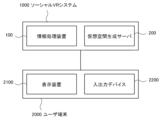
- FIG. 1 is a block diagram showing an example of a social VR system.
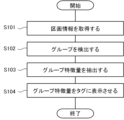
- 10 is a flowchart illustrating an example of an operation of the information processing device.
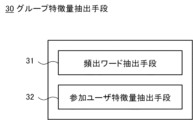
- FIG. 2 is a block diagram showing an example of a group feature extraction unit;
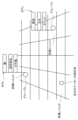
- FIG. 13 is a schematic diagram showing an example of a display of a virtual space.
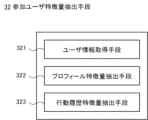
- FIG. 13 is a block diagram showing an example of a participating user feature extraction means.
- FIG. 2 is a block diagram showing an example of a behavior history feature amount extraction means.
- FIG. 2 is a block diagram showing an example of a hardware configuration of an information processing device.
- FIG. 13 is a block diagram showing an example of an information processing device according to a modified example.
- FIG. 2 is a block diagram showing an example of a player feature extraction means.
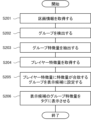
- 13 is a flowchart showing an example of an operation of an information processing device according to a modified example.
- (First embodiment) 1 is a block diagram showing an example of an information processing device 100.
- the information processing device 100 includes a block information acquisition unit 10, a group detection unit 20, a group feature extraction unit 30, and a tag display unit 40.
- the partition information acquisition means 10 acquires partition information relating to partitions in the virtual space. Partitions are set to identify locations in the virtual space. By the partition information acquisition means 10 acquiring the partition information, it becomes possible to link other information with locations in the virtual space. For example, partitions are formed by dividing the virtual space into a grid.
- a group formed by a plurality of users is detected by the group detection means 20.
- users can communicate with each other, for example, in the following manner.
- Each user uses an avatar that can move around in the virtual space.
- the avatars (users) can communicate with each other.
- Methods of communication include, for example, voice conversation, exchanging text messages, sharing files, etc.
- the group detection means 20 detects that the above-mentioned communication-related data has been generated. This detection then detects the formation of a group.
- avatars can communicate with each other when they come close to each other. For this reason, each group is linked to a section within the virtual space. In other words, various groups can be formed in each section.
- the group feature extraction means 30 extracts group features for each group. Specific group features will be described later, but for example, group features may be topics discussed in the group or attributes common to the users who form the group.
- the tag display means 40 displays a tag indicating the extracted group feature in the corresponding section.
- the above configuration makes it easy for users to find groups that match their interests and concerns.
- the reasons for this are as follows: When the virtual space is vast and the number of participants is large, it becomes difficult to find an area containing groups that match the user's interests and concerns. Also, when contacting nearby groups at random, the user has to spend time checking whether the group's topics match the user's interests and concerns. Furthermore, there is a risk that the user will end up participating in conversations in which he or she does not want to be involved.
- the user can easily understand the characteristics of the groups formed in each section by looking at the tags. As a result, the user can easily find groups that interest or concern them.
- FIG. 2 is a block diagram showing an example of a social VR system 1000.
- the social VR system 1000 includes an information processing device 100 and a virtual space generation server 200 according to this embodiment.
- the virtual space generation server 200 generates a virtual space.
- the virtual space is divided into sections corresponding to addresses in the real world.
- the virtual space generation server 200 generates and controls avatars in response to user requests.
- the virtual space also provides an environment that allows communication between avatars (users). For example, communication is possible when one avatar approaches another avatar within a predetermined contact distance. Means of communication include, for example, exchanging text messages, talking by voice, and displaying files. Then, the information processing device 100 displays tags representing group features in each section. Note that natural landforms such as mountains and oceans, buildings, shops, stations, objects, and other objects may also be generated in the virtual space.
- the user accesses the social VR system 1000 using the user terminal 2000.
- the user then logs into the virtual space using an avatar.
- the user terminal 2000 has the functions of a general computer, such as a calculation function, a storage function, and a communication function.
- the user terminal 2000 also has a display device 2100 and an input/output device 2200.
- the display device 2100 and the input/output device 2200 may be separate.
- the display device 2100 and the input/output device 2200 may also be integrated.
- the display device 2100 is, for example, a head mounted display (HMD) or a flat panel display. Using an HMD enhances the user's sense of immersion and realism.
- HMD head mounted display
- the user operates the input/output device 2200 to control an avatar in the virtual space.
- the user operates the input/output device 2200 to move the avatar in the virtual space.
- the input/output device 2200 is provided with an audio input unit and a speaker, making it possible to input and output audio. This makes it possible, for example, to have an audio conversation in the virtual space.
- FIG. 3 is a flowchart showing an example of the operation of the information processing device 100.
- the information processing device 100 acquires partition information from the virtual space generation server 200 (S101).
- the group detection means 20 detects groups formed in each partition (S102). At this time, the users participating in each group are also identified.
- the user information is, for example, stored in the virtual space generation server 200.
- the groups formed are linked to the partitions and identified.
- the group feature extraction means 30 acquires user information of the users participating in each group.
- the group feature extraction means 30 extracts the features of each group.
- the group features are extracted as group features (S103). Details of the group features will be described later.
- the extracted group features are displayed as tags in the virtual space (S104). For example, the extraction of the group features is repeated at a predetermined extraction cycle. Also, the tag display is updated at a predetermined update cycle, for example.
- the characteristics of the groups formed in each section are displayed in tags.
- tags By referring to these tags, users can easily find groups that interest or concern them.
- Fig. 4 is a block diagram showing an example of the group feature extraction means.
- the group feature extraction means 30 in this example includes a frequent word extraction means 31 and a participating user feature extraction means 32.
- the frequent word extraction means 31 extracts words that frequently appeared in communication between groups formed in a certain section. First, during a predetermined frequent word extraction period, the frequent word extraction means 31 records words that appeared in messages and conversations. When a conversation is conducted by voice, the frequent word extraction means 31 records the characters converted from the spoken words. Next, the recorded words are ranked according to their frequency of appearance. Then, a predetermined number of words are selected in descending order of rank as frequent words to be displayed in the tag.
- FIG. 5 is a schematic diagram showing an example of a virtual space display.
- the virtual space is divided into grid-like sections.
- Group a is formed in section a (x1, y1).
- Group b is formed in section b (x2, y2).
- the user's (own) avatar is in section c (x3, y3), which is separate from sections a and b.
- section a "war,” “Takeda Shingen,” and “Kawanakajima,” which are extracted as frequently occurring words, are displayed in tag a.
- “baseball,” “Otani,” and “tickets” are displayed in tag b.
- the group feature may include a feature common to the users participating in each group.
- the participating user feature extraction means 32 extracts this feature as the participating user feature.
- the user feature includes the feature of the user's profile and the feature of the user's behavior.
- the participating user feature extraction means 32 extracts the profile feature and the behavior feature.
- the participating user feature extraction means 32 includes a user information acquisition means 321.
- the participating user feature extraction means 32 also includes a profile feature extraction means 322.
- the participating user feature extraction means 32 also includes a behavior history feature extraction means 323.
- FIG. 6 is a block diagram showing an example of the participating user feature extraction means 32.
- the user information acquisition means 321 acquires user information of users participating in the group.
- the user information is acquired from the virtual space generation server 200.
- the user information is stored in the social VR system 1000.
- each user registers their own profile information in the system.
- the profile information includes, for example, hobbies, interests and concerns.
- the profile feature extraction means 322 extracts profiles common to users participating in this group. For example, if many users in a certain group have watching baseball registered as a hobby in their profile information, then watching baseball is extracted as the profile information for this group. Also, if many users have mountain climbing registered as an interest, then mountain climbing is extracted as the profile information for this group. The profile information is then ranked according to the number of common users. Next, a predetermined number of profile information is extracted in descending order of rank as profile features to be displayed in the tag.
- behavioral history features are features of behavioral history common to users participating in the group.
- the behavioral history feature extraction means 323 extracts the behavioral history features. Note that this behavioral history is a behavioral history in the virtual space.
- FIG. 7 is a block diagram showing an example of the behavior history feature extraction means 323.
- the behavior history feature extraction means 323 includes a participation group feature extraction means 3231, an uttered word feature extraction means 3232, and an object involvement feature extraction means 3233.
- the participating group feature extraction means 3231 extracts participating group features related to groups that each user has participated in in the past.
- the behavioral features include the groups that the user has stayed in in the past, the group features of those groups, and the user's stay time in those groups. Then, for example, the groups are ranked according to the stay time, and the features of the top groups are extracted as participating group features.
- the uttered word feature extraction means 3232 extracts the features of the words uttered by each user.
- the uttered word features include words that frequently appeared in messages uttered by each user in text or voice.
- words uttered in message exchanges within a group are given a ranking according to the number of times they appeared. Then, the words with the highest rankings are extracted as the uttered word features.
- the behavioral history may also include each user's involvement with objects in the virtual space.
- the object involvement feature extraction means 3233 extracts features of this involvement with the object.
- the features of the involvement with the object are extracted as object involvement features.
- Objects include, for example, natural landforms such as mountains and the sea, buildings, shops, stations, objects, etc.
- the user's involvement with the object includes, for example, touching the object, gazing at the object, etc.
- the involvement with the object is ranked according to, for example, the number of times of involvement, the duration of involvement, etc.
- the features are ranked according to the cumulative involvement time, which is the cumulative involvement time, and the features with the highest rankings are extracted as object involvement features.
- the above participating group features, uttered word features, and object involvement features are assigned to the tag.
- the tag is then displayed in the relevant section.
- the profile and behavioral history which are the personalities of each user constituting the group, are reflected in the group features.
- the group features are then displayed as tags. This allows a user who has just logged in to the virtual space to easily find a group that matches their own interests and concerns.
- Figure 8 is a block diagram showing an example of the hardware configuration of the information processing device 100.
- the information processing device 100 is implemented in, for example, a general computer.
- This computer includes, for example, a processor 110, a memory 120, a display unit 130, an input/output unit 140, a storage unit 150, and a communication interface 160.
- the processor 110 performs calculations necessary for information processing such as tag display.
- the memory 120 stores data used in the calculations.
- the display unit 130 displays data and images.
- the input/output unit 140 is a device that inputs and outputs data.
- the input/output unit 140 includes, for example, a keyboard, a mouse, an audio signal output unit, and a print signal output unit.
- the storage unit 150 stores data.
- the communication interface 160 performs interface processing for communication. The above hardware configuration enables the control necessary for information processing.
- FIG. 9 is a block diagram showing an example of an information processing device 101 according to a modified example.
- the information processing device 101 has a partition information acquisition means 10, a group detection means 20, and a group feature extraction means 30.
- it has a player feature acquisition means 33.
- the tag display means 40a has a feature comparison means 41. Note that a description of the same components as the information processing device 100 will be omitted.
- the player characteristic amount acquisition means 33 acquires player characteristic amounts.
- FIG. 10 is a block diagram showing an example of the player characteristic amount acquisition means 33.
- the player characteristic amount acquisition means 33 includes a player information acquisition means 331, a player profile characteristic amount extraction means 332, and a player action history characteristic amount extraction means 333.
- the player information acquisition means 331 acquires player information.
- the player information is similar to the user information in the information processing device 100.
- the player information includes the player's profile information and the player's action history in the virtual space.
- the player information is stored, for example, in the virtual space generation server 200. Alternatively, the player information may be stored in the user terminal 2000.
- the player information acquisition means 331 then acquires this player information.
- the player profile feature extraction means 332 extracts player profile features from the acquired player information.
- Player profile features include, for example, the hobbies and interests and concerns registered by the player.
- the player behavior history feature extraction means 333 extracts behavior history features from the acquired player information.
- This behavior history is the player's behavior history in the virtual space.
- the player behavior history features are similar to the user behavior history features in the information processing device 100.
- the behavior history features include, for example, the player's participation group features, the player's uttered words features, and object involvement features.
- Participating group features are features of groups in which a player has stayed in the past. For example, groups are ranked according to the player's length of stay, and the features of the top-ranking groups are extracted as participating group features.
- the player action history feature extraction means 333 extracts the features of words uttered by the player.
- the player issues messages in the form of text or voice.
- the player action history feature extraction means 333 extracts words that have appeared frequently in messages issued by the player in the past. In other words, words are given a ranking according to the number of times they have appeared in messages issued by the player. Then, the words with the highest rankings are extracted as the uttered word features.
- the behavior history may also include the player's involvement with objects in the virtual space.
- the player behavior history feature extraction means 333 extracts the features of this involvement with the object. For example, an object with which the player has a long cumulative involvement time is extracted as an object involvement feature.
- the player action history features including the above-mentioned participating group features, uttered word features, and object involvement features, are extracted by the player action history feature extraction means 333.
- the player characteristic amount acquisition means 33 acquires the player characteristic amount.
- the characteristic amount comparison means 41 compares the group characteristic amount with the player characteristic amount.
- the characteristic amount comparison means 41 sets a group having a group characteristic amount that matches the player characteristic amount as a tag display candidate.
- the tag display means 40a displays the characteristic amount of the group set as the tag display candidate in a tag.
- the information processing device 101 acquires partition information of the virtual space (S201).
- the group detection means 20 detects groups formed in each partition (S202).
- the group characteristic amount extraction means 30 extracts the characteristic amount of each group. This characteristic amount is extracted as a group characteristic amount (S203).
- the player characteristic amount acquisition means 33 acquires the player characteristic amount (S204).
- the characteristic amount comparison means 41 compares the player characteristic amount with the group characteristic amount. Then, the characteristic amount comparison means 41 sets the group whose group characteristic amount matches the player characteristic amount as a tag display candidate (S205).
- the tag display means 40a displays the group characteristic amount of the tag display candidate group in the tag in the virtual space (S206).
- the tag display means 40a displays the group characteristic amount of the tag display candidate group in the tag in the virtual space (S206).
- the groups whose tags are displayed are narrowed down to groups that the player is interested in or concerned about.
- the groups whose tags are displayed in the virtual space are narrowed down to groups that the player is interested in. This makes it easier for the player to search for groups that interest him or her.
- the information processing device 100 of this embodiment has a partition information acquisition means 10, a group detection means 20, a group feature extraction means 30, and a tag display means 40.
- the partition information acquisition means 10 acquires partition information relating to partitions in a virtual space.
- the group detection means 20 detects groups formed by a plurality of users for each partition.
- the group feature extraction means 30 extracts group features that are features of the groups.
- the tag display means 40 displays tags that display the group features for each partition.
- the characteristics of groups formed in the virtual space are displayed in tags for each section.
- tags By referring to these tags, users searching for groups can easily find the group they are looking for.
- the group features include words that appear frequently in message exchanges in each of the groups.
- the features of the group include participating user features.
- the participating user features are extracted from the user information of each user participating in the group.
- the user information includes profile information preset by the user.
- the user information includes behavior history information regarding the behavior history of the user in the virtual space.
- the behavioral history includes the content of the user's past utterances.
- the tags display the characteristics of past utterances made by users who are members of each group. This makes it easier to find groups that bring together users who make utterances that match your preferences.
- the information processing device 101 includes a player characteristic amount acquisition means 33 and a characteristic amount comparison means 41.
- a player is a user who searches for the group that matches his/her purpose.
- the player characteristic amount acquisition means 33 acquires the player characteristic amount related to this player.
- the characteristic amount comparison means 41 compares the player characteristic amount with the group characteristic amount.
- the tag display means 40a displays the tag of the group that has the group characteristic amount that matches the player characteristic amount.
- the social VR system 1000 of this embodiment also includes the information processing device 100 and a virtual space generation server 200.
- the virtual space generation server 200 generates a virtual space.
- VR is an abbreviation for Virtual Reality.
- the above configuration makes it easier for users (players) who are searching for a group to contact in virtual space to search for a group that meets their needs.
- the information processing device 100 acquires partition information relating to partitions in the virtual space.
- the information processing device 100 also detects groups formed by multiple users for each partition.
- the information processing device 100 also extracts features of the groups.
- the information processing device 100 also displays tags indicating the features of the groups for each partition.
- the characteristics of groups formed in the virtual space are displayed in tags for each section.
- tags By referencing these tags, users who are searching for a group they would like to join can easily find the group they are looking for.
- the information processing program of this embodiment also causes the computer to execute a process of acquiring partition information about partitions in the virtual space, and a process of detecting groups formed by multiple users for each partition.
- the information processing program also causes the computer to execute a process of extracting features of the groups.
- the information processing program also causes the computer to execute a process of displaying tags for each partition. At this time, the tags display the features of the groups.
- the characteristics of groups formed in the virtual space are displayed in tags for each section.
- tags By referring to these tags, users searching for groups can easily find the group they are looking for.
- the scope of the present invention also includes a program that causes a computer to execute any of the processes disclosed above, and a recording medium on which the program is stored.
- a recording medium for example, a magnetic disk, a magnetic tape, an optical disk, a magneto-optical disk, a semiconductor memory, etc. can be used.
- a partition information acquisition means for acquiring partition information relating to a partition in a virtual space; a group detection means for detecting a group formed by a plurality of users for each of the sections; a group feature extraction means for extracting a group feature which is a feature of the group; a tag display means for displaying a tag indicating the group feature for each of the sections; 13.
- An information processing device comprising:
- the group feature is containing words that frequently appear in message exchanges in each of the groups, 2.
- the information processing device according to claim 1 The information processing device according to claim 1 .
- the group feature is including a participating user feature extracted from user information regarding each of the users participating in the group; 3.
- the information processing device according to claim 1 or 2.
- the user information is Including profile information preset by the user; 4.
- the information processing device according to claim 3.
- the user information is Including behavior history information regarding the behavior history of the user in the virtual space, 5.
- the information processing device according to claim 3 or 4.
- the behavioral history is Including the user's past utterances, 6.
- the information processing device according to claim 5,
- the behavioral history is A history of the user's involvement with an object provided in the virtual space is included. 7. The information processing device according to claim 5 or 6.
- a player characteristic amount acquiring means for acquiring a player characteristic amount relating to a player who is a user searching for a group to join; a feature comparison means for comparing the player feature with the group feature, The tag display means displaying the tag of the group having the group characteristic that matches the player characteristic;
- a virtual space generation server that generates the virtual space
- a social VR (Virtual Reality) system comprising:
- An information processing device obtaining parcel information relating to a parcel in the virtual space; Detecting a group formed by a plurality of users for each of the partitions; Extracting features of the group; displaying a tag indicating the feature amount of the group for each of the sections; 23.
- An information processing method comprising:
- REFERENCE SIGNS LIST 10 Boundary information acquisition means 20: Group detection means 30: Group feature extraction means 31: Frequently used word extraction means 32: Participating user feature extraction means 33: Player feature acquisition means 40, 40a: Tag display means 41: Feature comparison means 100, 101: Information processing device 200: Virtual space generation server 1000: Social VR system 2000: User terminal 2100: Display device 2200: Input/output device
Landscapes
- Engineering & Computer Science (AREA)
- Business, Economics & Management (AREA)
- Theoretical Computer Science (AREA)
- General Physics & Mathematics (AREA)
- Signal Processing (AREA)
- Tourism & Hospitality (AREA)
- General Engineering & Computer Science (AREA)
- Computer Networks & Wireless Communication (AREA)
- Physics & Mathematics (AREA)
- Strategic Management (AREA)
- Marketing (AREA)
- Primary Health Care (AREA)
- Human Resources & Organizations (AREA)
- General Health & Medical Sciences (AREA)
- General Business, Economics & Management (AREA)
- Economics (AREA)
- Computing Systems (AREA)
- Health & Medical Sciences (AREA)
- Human Computer Interaction (AREA)
- Information Transfer Between Computers (AREA)
Abstract
ユーザが、自分と同じ興味や関心のある未知のユーザを発見しやすい仮想空間を提供できる情報処理装置等を提供する。情報処理装置は、仮想空間における区画に関する区画情報を取得する区画情報取得手段と、前記区画ごとに、複数のユーザによって形成されているグループを検出するグループ検出手段と、前記グループの特徴量であるグループ特徴量を抽出するグループ特徴量抽出手段と、前記グループ特徴量を表示するタグを前記区画ごとに表示させるタグ表示手段と、を有する。
Description
本開示は、情報処理装置、ソーシャルVRシステム、情報処理方法、および、情報処理プログラムに関する。
近年、インターネット上の仮想空間を利用したコミュニケーションが盛んになっている。仮想空間の利用にあたっては、例えば、ユーザの化身となるアバターが仮想空間に生成される。そして、仮想空間内で、このアバターと他のユーザのアバターとがコミュニケーションを行う。これにより、仮想空間を介した、複数のユーザのコミュニケーションが可能になる。このようなコミュニケーションを支援する方法が検討されている、
例えば、特許文献1には、仮想空間内における距離に応じて、アバター同士のコミュニケーションを制御する技術が開示されている。この技術では、まず、各アバターの周辺に固有領域が設定される。そして、自分のアバターの固有領域と他のユーザのアバターの固有領域と重なり合った際に、メッセージ交換のセッションが確立される。この技術では、仮想空間内でアバターが近くに居合わせたユーザ間のコミュニケーションが可能になる。
例えば、特許文献1には、仮想空間内における距離に応じて、アバター同士のコミュニケーションを制御する技術が開示されている。この技術では、まず、各アバターの周辺に固有領域が設定される。そして、自分のアバターの固有領域と他のユーザのアバターの固有領域と重なり合った際に、メッセージ交換のセッションが確立される。この技術では、仮想空間内でアバターが近くに居合わせたユーザ間のコミュニケーションが可能になる。
また、特許文献2には、特定の目的で集まった複数のアバターの間のコミュニケーションを支援する技術が開示されている。この技術では、まず、仮想空間内のパーティに集まったキャラクタ(アバター)のキャラクタ情報が、表示画面上の所定の位置に表示される。また、キャラクタ情報に隣接する領域に,各キャラクタに対して入力されたテキスト情報が表示される。これにより、プレイヤ(ユーザ)が必要とする情報が,リアリティある態様で的確に表示される、と記載されている。また、この際、ゲームの操作性が損なわれない、と記載されている。
上記の特許文献1の技術では、新たに出会えるアバターが、仮想空間上で近くにいたアバターに限られる。このため、相手のアバターのユーザが、自分と同じ興味や関心を持っているとは限らない。つまり、自分と同じ興味や関心を持っているユーザと出会える確率が偶然に左右されるという問題があった。
また、特許文献2の技術では、出会うユーザが、予め設定された目的に賛同したユーザに限られていた。このため、自分と同じ興味や関心を持った未知のユーザとの出会いの機会が少ないという問題があった。
本発明は上記の問題点に鑑みてなされたものであり、ユーザが、自分と同じ興味や関心のある未知のユーザを発見しやすい仮想空間を提供できる情報処理装置等を提供することを目的としている。
上記の課題を解決するため、本開示の情報処理装置は、仮想空間における区画に関する区画情報を取得する区画情報取得手段と、前記区画ごとに、複数のユーザによって形成されているグループを検出するグループ検出手段と、前記グループの特徴量であるグループ特徴量を抽出するグループ特徴量抽出手段と、前記グループ特徴量を表示するタグを前記区画ごとに表示させるタグ表示手段と、を有する。
また、本開示のソーシャルVR(Virtual Reality)システムは、上記の情報処理装置と、前記仮想空間を生成する仮想空間生成サーバと、を有する。
また、本開示の情報処理方法は、情報処理装置が、仮想空間における区画に関する区画情報を取得し、前記区画ごとに、複数のメンバーによって形成されているグループを検出し、前記グループの特徴量であるグループ特徴量を抽出し、前記グループ特徴量を表示するタグを前記区画ごとに表示させる。
また、本開示の情報処理プログラムは、仮想空間における区画に関する区画情報を取得する処理と、前記区画ごとに、複数のメンバーによって形成されているグループを検出する処理と、前記グループの特徴量であるグループ特徴量を抽出する処理と、前記グループ特徴量を表示するタグを前記区画ごとに表示させる処理と、をコンピュータに実行させる。
本発明の効果は、ユーザが、自分と同じ興味や関心のある未知のユーザを発見しやすい仮想空間を提供できる情報処理装置等を提供できることである。
以下、図面を参照しながら、本発明の実施形態を詳細に説明する。但し、以下に述べる実施形態には、本開示を実施するために技術的に好ましい限定がされているが、開示の範囲を以下に限定するものではない。なお各図面の同様の構成要素には同じ番号を付し、説明を省略する場合がある。
(第1の実施形態)
図1は、情報処理装置100の一例を示すブロック図である。情報処理装置100は、区画情報取得手段10と、グループ検出手段20と、グループ特徴量抽出手段30と、タグ表示手段40とを有する。
図1は、情報処理装置100の一例を示すブロック図である。情報処理装置100は、区画情報取得手段10と、グループ検出手段20と、グループ特徴量抽出手段30と、タグ表示手段40とを有する。
仮想空間上の区画に関する区画情報を、区画情報取得手段10が取得する。仮想空間上の場所を特定するために、区画が設定される。区画情報取得手段10が区画情報を取得することで、他の情報と仮想空間上の場所との紐づけが可能になる。例えば、仮想空間が格子状に区分されることで、区画が形成される。
区画ごとに、複数のユーザによって形成されているグループを、グループ検出手段20が検出する。ここで、本実施形態では、例えば、以下のような仕組みで、ユーザ同士がコミュニケーションできるものとする。
・各ユーザが仮想空間内を移動可能なアバターを用いる。
・あるアバターと他のアバターが接近することで、アバター(ユーザ)同士のコミュニケーション可能になる。
・コミュニケーションの方法としては、例えば、音声による会話、テキストメッセージの交換、ファイルの共有などがある。
・各ユーザが仮想空間内を移動可能なアバターを用いる。
・あるアバターと他のアバターが接近することで、アバター(ユーザ)同士のコミュニケーション可能になる。
・コミュニケーションの方法としては、例えば、音声による会話、テキストメッセージの交換、ファイルの共有などがある。
上記のようなコミュニケーションに関わるデータが生成されたことを、グループ検出手段20が検出する。そして、この検出によって、グループの形成が検出される。上述のように、本実施形態の仮想空間では、アバター同士が接近することでコミュニケーションが可能になる。このため、それぞれのグループと仮想空間内の区画とが紐づけられる。つまり、区画ごとに様々なグループが形成され得る。
グループが検出されると、グループ特徴量抽出手段30が、それぞれのグループのグループ特徴量を抽出する。具体的なグループ特徴量については後述するが、例えば、当該グループで話題になっている事柄や、グループを形成するユーザに共通する属性などがグループ特徴量となる。
そして、抽出されたグループ特徴量を表示するタグを、タグ表示手段40が、当該区画に表示させる。
上記の構成では、自身の興味や関心に一致するグループをユーザが発見しやすい。その理由は、以下である。仮想空間が広大かつ参加人数が多くなると、自身の興味や関心があるグループのいる区画の発見が困難になる。また、近くにいるグループと手当たり次第にコンタクトを取る方法では、グループの話題が自身の興味や関心に一致するか確認する作業に、ユーザが時間を要する。さらに、自分が関わりたくない会話に、ユーザが参加してしまう恐れがある。
一方、本実施形態の構成では、ユーザがタグを見ることで、各区画に形成されているグループの特徴をユーザが容易に把握できる。その結果、自身の興味や関心のあるグループを、ユーザが容易に発見できる。
図2は、ソーシャルVRシステム1000の一例を示すブロック図である。ソーシャルVRシステム1000は、本実施形態の情報処理装置100と仮想空間生成サーバ200とを備える。
仮想空間生成サーバ200が、仮想空間を生成する。仮想空間は、実空間の住所に対応する区画に区分される。また、ユーザの要求に応じて、仮想空間生成サーバ200がアバターの生成と制御を行う。また、仮想空間では、アバター(ユーザ)同士のコミュニケーションを可能にする環境が提供される。例えば、あるアバターと別のアバターとが、予め定めたコンタクト可能距離以内に接近することで、コミュニケーションが可能になる。コミュニケーションの手段は、例えば、テキストメッセージの交換、音声による会話、ファイルの表示などである。そして、グループ特徴量を表すタグを、情報処理装置100が、それぞれの区画に表示させる。なお、仮想空間には山、海などの自然の地形、建築物、店舗、駅、物などのオブジェクトが生成されても良い。
ユーザ端末2000を用いて、ユーザがソーシャルVRシステム1000にアクセスする。そして、ユーザがアバターを用いて仮想空間にログインする。ユーザ端末2000は、一般的なコンピュータの機能の演算機能、記憶機能、通信機能を備える。また、ユーザ端末2000は、表示装置2100と入出力デバイス2200を備える。表示装置2100と入出力デバイス2200とは、別体でも良い。また、表示装置2100と入出力デバイス2200とが、一体でも良い。表示装置2100は、例えば、ヘッドマウントディスプレイ(Head Mount Display、HMD)やフラットパネルディスプレイである。HMDを用いることで、ユーザの没入感や臨場感が高められる。
また、ユーザが入出力デバイス2200を操作することで、仮想空間内のアバターが制御される。例えば、ユーザが入出力デバイス2200を操作することで、仮想空間におけるアバターの移動が実行される。また、例えば、入出力デバイス2200が音声入力部とスピーカーを備えることで、音声の入出力が可能になる。これにより、例えば、仮想空間内で音声による会話を行うことが可能となる。
次に、情報処理装置100の動作について説明する。図3は、情報処理装置100の動作の一例を示すフローチャートである。まず、情報処理装置100が、仮想空間生成サーバ200から、区画情報を取得する(S101)。次に、グループ検出手段20が、それぞれの区画に形成されたグループを検出する(S102)。この際、それぞれのグループに参加しているユーザも識別される。ユーザの情報は、例えば、仮想空間生成サーバ200に保持されている。こうして、情報処理装置100において、形成されたグループが区画と紐づけて識別される。そして、グループ特徴量抽出手段30が、それぞれのグループに参加中のユーザのユーザ情報を取得する。次に、それぞれのグループの特徴量を、グループ特徴量抽出手段30が抽出する。グループの特徴量は、グループ特徴量として抽出される(S103)。グループ特徴量の詳細については後述する。次に、抽出されたグループ特徴量を、タグとして仮想空間に表示させる(S104)。なお、例えば、グループ特徴量の抽出は、予め定めた抽出周期で繰り返される。また、タグ表示は、例えば、予め定めた更新周期で更新される。
以上に説明したように、本実施形態の構成によれば、それぞれの区画に形成されているグループの特徴が、タグに表示される。このタグを参照することで、自身が興味や関心のあるグループをユーザが容易に発見できる。
(具体例1)
次に、グループ特徴量とグループ特徴量抽出手段30の具体例について説明する。図4は、グループ特徴量抽出手段の一例を示すブロック図である。本例のグループ特徴量抽出手段30は、頻出ワード抽出手段31と参加ユーザ特徴量抽出手段32とを備える。
次に、グループ特徴量とグループ特徴量抽出手段30の具体例について説明する。図4は、グループ特徴量抽出手段の一例を示すブロック図である。本例のグループ特徴量抽出手段30は、頻出ワード抽出手段31と参加ユーザ特徴量抽出手段32とを備える。
ある区画に形成されたグループのコミュニケーションで頻出したワードを、頻出ワード抽出手段31が抽出する。まず、予め定めた頻出ワード抽出期間において、頻出ワード抽出手段31がメッセージや会話に登場したワードを記録する。音声による会話が行われた場合には、発音されたワードを変換した文字を頻出ワード抽出手段31が記録する。次に、出現頻度に応じて記録されたワードに順位を付ける。そして、順位の高い順に、予め定めた数のワードを、タグに表示する頻出ワードして選択する。
図5は、仮想空間の表示の一例を示す模式図である。仮想空間が格子状の区画に区分されている。そして、区画a(x1,y1)にグループaが形成されている。また、区画b(x2,y2)にグループbが形成されている。ここで、ユーザ(自分)のアバターは、区画a、区画bとは離れた区画c(x3,y3)にいる。そして、区画aには、頻出ワードとして抽出された「戦」、「武田信玄」、「川中島」がタグaに表示されている。また、区画bには「野球」、「大谷」、「チケット」がタグbに表示されている。これらのタグを参照することで、ユーザは、自分が興味や関心のあるグループを容易に発見できる。そして、ユーザが興味のある区画に移動することで、そこに形成されたグループとのコミュニケーションが可能になる。
(具体例2)
グループ特徴量には、それぞれのグループに参加しているユーザに共通する特徴量が含まれても良い。そして、参加ユーザ特徴量抽出手段32が、この特徴量を参加ユーザ特徴量として抽出する。また、ユーザの特徴量には、ユーザのプロフィールの特徴量と、ユーザの行動の特徴量が含まれる。そこで、参加ユーザ特徴量抽出手段32が、プロフィール特徴量と行動特徴量とを抽出する。そのために、参加ユーザ特徴量抽出手段32が、ユーザ情報取得手段321を備える。また、参加ユーザ特徴量抽出手段32が、プロフィール特徴量抽出手段322を備える。また、参加ユーザ特徴量抽出手段32が、行動履歴特徴量抽出手段323を備える。図6は、参加ユーザ特徴量抽出手段32の一例を示すブロック図である。
グループ特徴量には、それぞれのグループに参加しているユーザに共通する特徴量が含まれても良い。そして、参加ユーザ特徴量抽出手段32が、この特徴量を参加ユーザ特徴量として抽出する。また、ユーザの特徴量には、ユーザのプロフィールの特徴量と、ユーザの行動の特徴量が含まれる。そこで、参加ユーザ特徴量抽出手段32が、プロフィール特徴量と行動特徴量とを抽出する。そのために、参加ユーザ特徴量抽出手段32が、ユーザ情報取得手段321を備える。また、参加ユーザ特徴量抽出手段32が、プロフィール特徴量抽出手段322を備える。また、参加ユーザ特徴量抽出手段32が、行動履歴特徴量抽出手段323を備える。図6は、参加ユーザ特徴量抽出手段32の一例を示すブロック図である。
ユーザ情報取得手段321が、グループに参加中のユーザのユーザ情報を取得する。例えば、仮想空間生成サーバ200から、ユーザ情報が取得される。ここで、例えば、ソーシャルVRシステム1000にユーザ情報が保持されている。例えば、ソーシャルVRシステム1000の利用に当たって、各ユーザが自身のプロフィール情報をシステムに登録する。プロフィール情報には、例えば、趣味、興味や関心のある事項などが含まれる。
このグループに参加中のユーザに共通のプロフィールを、プロフィール特徴量抽出手段322が抽出する。例えば、あるグループにおいて、プロフィール情報に趣味に野球観戦が登録されているユーザが多ければ、野球観戦がこのグループのプロフィール情報として抽出される。また、興味・関心に登山が登録されているユーザが多ければ、登山がこのグループのプロフィール情報として抽出される。そして、共通するユーザ数が多い順にプロフィール情報に順位が付与される。次いで、順位の高い順に、タグに表示されるプロフィール特徴量として、予め定めた数のプロフィール情報が抽出される。
また、各ユーザ情報にユーザの行動履歴が含まれていれば、行動履歴特徴量が抽出される。行動履歴特徴量は、グループに参加中のユーザに共通する行動履歴の特徴量である。行動履歴特徴量抽出手段323が、行動履歴特徴量を抽出する。なお、この行動履歴は、仮想空間における行動履歴である。
図7は、行動履歴特徴量抽出手段323の一例を示すブロック図である。行動履歴特徴量抽出手段323は、参加グループ特徴量抽出手段3231と、発出ワード特徴量抽出手段3232と、オブジェクト関与特徴量抽出手段3233とを備える。
各ユーザが過去に参加したグループに関する参加グループ特徴量を、参加グループ特徴量抽出手段3231が抽出する。例えば、過去に滞在したグループと、当該グループのグループ特徴量、当該グループにおけるユーザの滞在時間が行動特徴量に含まれる。そして、例えば、滞在時間に応じてグループが順位付けされ、上位のグループの特徴量が参加グループ特徴量として抽出される。
各ユーザが発出したワードの特徴量を、発出ワード特徴量抽出手段3232が抽出する。例えば、ここでは、各ユーザがテキストや音声で発出したメッセージに頻出したワードが発出ワード特徴量に含まれる。つまり、グループ内で行われたメッセージ交換で発出されたワードに対して、登場回数に応じて順位が付与される。そして、順位の高いワードが発出ワード特徴量として抽出される。
また、行動履歴には、仮想空間内のオブジェクトへの各ユーザの関与が含まれても良い。このオブジェクトへの関与の特徴量を、オブジェクト関与特徴量抽出手段3233が抽出する。オブジェクトへの関与の特徴量は、オブジェクト関与特徴量として抽出される。オブジェクトには、例えば、山、海などの自然の地形、建築物、店舗、駅、物などが含まれる。そして、オブジェクトへのユーザの関与には、例えば、オブジェクトへの接触、ユーザのオブジェクトの注視などが含まれる。そして、このオブジェクトへの関与が、例えば、関与回数、関与時間などに応じて順位付けされる。一例では、関与時間を累積した累積関与時間によって、特徴量が順位付けされ、高順位のものが、オブジェクト関与特徴量として抽出される。
上記の、参加グループ特徴量、発出ワード特徴量、オブジェクト関与特徴量がタグに付与される。そして、タグが当該区画に表示される。
以上説明したように、具体例2の構成よれば、グループを構成する各ユーザの個性であるプロフィールや、行動履歴がグループ特徴量に反映される。そして、グループ特徴量がタグとして表示される。このため、自身の興味や関心に適合するグループを、新たに仮想空間にログインしたユーザが容易に発見できる。
次に、情報処理装置100のハードウェア構成について説明する。図8は、情報処理装置100のハードウェア構成の一例を示すブロック図である。
情報処理装置100は、例えば、一般的なコンピュータに実装される。そして、このコンピュータは、例えば、プロセッサ110と、メモリ120と、表示部130と、入出力部140と、記憶部150と、通信インターフェイス160とを備える。プロセッサ110は、タグ表示等の情報処理に必要な演算を行う。メモリ120は、演算に使用されるデータを記憶する。表示部130は、データや画像を表示する。入出力部140は、データの入出力を行うデバイスである。入出力部140には、例えば、キーボード、マウス、音声信号出力部、印刷信号出力部などが含まれる。記憶部150はデータを記憶する。通信インターフェイス160は、通信のインターフェイス処理を行う。以上のような、ハードウェア構成によって、情報処理に必要な制御が可能になる。
(変形例)
具体例1および具体例2では、グループの特徴量をそれぞれの区画にタグ表示する方法について説明した。この方法で、全てのグループのグループ特徴量がタグ表示された場合、形成されたグループの数が増大すると、タグの数も増大する。そして、タグの数が膨大になった際には、参加グループ探索中のユーザにとって、自身の興味や関心に合致するグループを探すことが困難になる。そこで、変形例では、表示されるタグを絞り込む構成について説明する。なお、以降の説明では、既にグループに参加中のユーザと、参加グループを探索中のユーザとを区別するために、参加検討中のユーザがプレイヤーと呼称される。
具体例1および具体例2では、グループの特徴量をそれぞれの区画にタグ表示する方法について説明した。この方法で、全てのグループのグループ特徴量がタグ表示された場合、形成されたグループの数が増大すると、タグの数も増大する。そして、タグの数が膨大になった際には、参加グループ探索中のユーザにとって、自身の興味や関心に合致するグループを探すことが困難になる。そこで、変形例では、表示されるタグを絞り込む構成について説明する。なお、以降の説明では、既にグループに参加中のユーザと、参加グループを探索中のユーザとを区別するために、参加検討中のユーザがプレイヤーと呼称される。
図9は、変形例の情報処理装置101の一例を示すブロック図である。情報処理装置101は、情報処理装置100と同様に、区画情報取得手段10と、グループ検出手段20と、グループ特徴量抽出手段30とを有する。それに加えて、プレイヤー特徴量取得手段33を備えている。また、タグ表示手段40aが、特徴量比較手段41を備えている。なお、情報処理装置100と同じ構成については、説明を省略する。
プレイヤー特徴量取得手段33は、プレイヤー特徴量を取得する。図10は、プレイヤー特徴量取得手段33の一例を示すブロック図である。プレイヤー特徴量取得手段33は、プレイヤー情報取得手段331と、プレイヤープロフィール特徴量抽出手段332と、プレイヤー行動履歴特徴量抽出手段333とを備える。
プレイヤー情報取得手段331が、プレイヤー情報を取得する。プレイヤー情報は、情報処理装置100におけるユーザ情報と同様な情報である。つまり、プレイヤー情報には、プレイヤーのプロフィール情報と、プレイヤーの仮想空間における行動履歴が含まれる。プレイヤー情報は、例えば、仮想空間生成サーバ200に保持されてる。あるいは、ユーザ端末2000に、プレイヤー情報が保持されても良い。そして、プレイヤー情報取得手段331が、このプレイヤー情報を取得する。
取得したプレイヤー情報から、プレイヤープロフィール特徴量抽出手段332がプレイヤープロフィール特徴量を抽出する。プレイヤープロフィール特徴量には、例えば、プレイヤーが登録した趣味や、興味や関心のある事項などが含まれる。
また、取得したプレイヤー情報から、プレイヤー行動履歴特徴量抽出手段333が行動履歴特徴量を抽出する。この行動履歴は、プレイヤーの仮想空間における行動履歴である。プレイヤー行動履歴特徴量は、情報処理装置100におけるユーザの行動履歴特徴量と同様である。つまり、行動履歴特徴量には、例えば、プレイヤーの参加グループ特徴量、プレイヤーの発出ワード特徴量、オブジェクト関与特徴量が含まれる。
参加グループ特徴量は、プレイヤーが過去に滞在したグループの特徴量である。例えば、プレイヤーの滞在時間に応じてグループが順位付けされ、上位のグループの特徴量が参加グループ特徴量として抽出される。
また、プレイヤーが発出したワードの特徴量を、プレイヤー行動履歴特徴量抽出手段333が抽出する。仮想空間の中では、プレイヤーが、テキストや音声でメッセージを発出する。例えば、プレイヤーが過去に発出したメッセージにおいて頻出したワードを、プレイヤー行動履歴特徴量抽出手段333が抽出する。つまり、プレイヤーが発出したメッセージの中で、登場回数に応じてワードに順位が付与される。そして、順位の高いワードが発出ワード特徴量として抽出される。
また、行動履歴には、仮想空間内のオブジェクトへのプレイヤーの関与が含まれても良い。このオブジェクトへの関与の特徴量を、プレイヤー行動履歴特徴量抽出手段333が抽出する。例えば、プレイヤーの累積関与時間が長いオブジェクトが、オブジェクト関与特徴量として抽出される。
上記の参加グループ特徴量、発出ワード特徴量、オブジェクト関与特徴量を含むプレイヤー行動履歴特徴量が、プレイヤー行動履歴特徴量抽出手段333によって抽出される。
以上のような構成によって、プレイヤー特徴量取得手段33がプレイヤー特徴量を取得する。次に、特徴量比較手段41が、グループ特徴量とプレイヤー特徴量とを比較する。次に、特徴量比較手段41によって、プレイヤー特徴量に合致したグループ特徴量を持つグループがタグ表示候補に設定される。そして、タグ表示手段40aが、タグ表示候補に設定されたグループの特徴量をタグに表示させる。
図11は、変形例の情報処理装置101の動作の一例を示すフローチャートである。まず、情報処理装置101が、仮想空間の区画情報を取得する(S201)。次に、グループ検出手段20が、それぞれの区画に形成されたグループを検出する(S202)。次に、グループ特徴量抽出手段30が、それぞれのグループの特徴量を抽出する。この特徴量は、グループ特徴量として抽出される(S203)。次に、プレイヤー特徴量取得手段33が、プレイヤー特徴量を取得する(S204)。次に、特徴量比較手段41が、プレイヤー特徴量とグループ特徴量とを比較する。そして、プレイヤー特徴量にグループ特徴量が合致するグループを、特徴量比較手段41がタグ表示候補に設定する(S205)。次に、タグ表示候補のグループのグループ特徴量を、タグ表示手段40aが仮想空間内のタグに表示させる(S206)。以上の動作では、プレイヤー特徴量に合致するグループ特徴量を持つグループのタグだけが、仮想空間に表示される。このため、タグの表示されるグループが、プレイヤーが興味や関心を持つグループに絞り込まれる。
以上説明したように、変形例の情報処理装置101によれば、仮想空間にタグが表示されるグループが、プレイヤーが興味や関心を持つグループに絞り込まれる。このため、プレイヤーが興味や関心を持つグループの探索が容易になる。
以上、本実施形態の情報処理装置等について説明した。
本実施形態の情報処理装置100は、区画情報取得手段10と、グループ検出手段20と、グループ特徴量抽出手段30と、タグ表示手段40とを有する。仮想空間における区画に関する区画情報を、区画情報取得手段10が取得する。また、前記区画ごとに、複数のユーザによって形成されているグループを、グループ検出手段20が検出する。また、前記グループの特徴量であるグループ特徴量を、グループ特徴量抽出手段30が抽出する。また、前記グループ特徴量を表示するタグを、タグ表示手段40が前記区画ごとに表示させる。
以上の構成とすることによって、仮想空間上に形成されたグループの特徴量が、区画ごとにタグに表示される。このタグを参照することによって、グループを探索するユーザは、目的とするグループを容易に発見できる。
また、一態様によれば、情報処理装置100において、前記グループ特徴量が、それぞれの前記グループにおけるメッセージ交換に頻出するワードを含む。
上記の構成により、それぞれのグループで話題になっているワードがタグに表示される。このため、自身の興味や関心の事柄を話題にしているグループの発見が容易になる。
また、一態様によれば、情報処理装置100において、前記グループの特徴量が、参加ユーザ特徴量を含む。参加ユーザ特徴量は、グループに参加している各ユーザのユーザ情報から抽出される。
上記の構成によれば、それぞれのグループに参加しているユーザの特徴がタグに表示される。このため、自身と興味や関心が共通するユーザが集うグループの発見が容易になる。
また、一態様によれば、情報処理装置100において、前記ユーザ情報が、前記ユーザが予め設定したプロフィール情報を含む。
上記の構成によれば、それぞれのグループに参加しているユーザのプロフィールの特徴がタグに表示される。このため、自身の好みに合ったユーザが集うグループの発見が容易になる。
また、一態様によれば、情報処理装置100において、前記ユーザ情報が、前記仮想空間における前記ユーザの行動履歴に関する行動履歴情報を含む。
上記の構成によれば、それぞれのグループに参加しているユーザの行動履歴の特徴がタグに表示される。このため、自身の好みに合った行動を行うユーザが集うグループの発見が容易になる。
また、一態様によれば、情報処理装置において、前記行動履歴が、前記ユーザの過去の発話内容を含む。
上記の構成によれば、それぞれのグループに参加しているユーザの過去の発話内容の特徴がタグに表示される。このため、自身の好みに合った発言を行うユーザが集うグループの発見が容易になる。
また、一態様によれば、情報処理装置101が、プレイヤー特徴量取得手段33と、特徴量比較手段41とを備える。プレイヤーは、目的に合った前記グループを探索するユーザである。このプレイヤーに関するプレイヤー特徴量をプレイヤー特徴量取得手段33が取得する。また、前記プレイヤー特徴量と前記グループ特徴量とを、特徴量比較手段41が比較する。そして、タグ表示手段40aが、前記プレイヤー特徴量に合致する前記グループ特徴量を持つ前記グループの前記タグを表示させる。
上記の構成では、プレイヤーの特徴量に合致するグループ特徴量を持つグループのタグだけが、仮想空間に表示される。このため、タグを表示するグループが、プレイヤーが興味や関心を持つグループに絞り込まれる。このため、プレイヤーにとって、参加を希望するグループの発見が容易になる。
また、本実施形態のソーシャルVRシステム1000は、上記の情報処理装置100と、仮想空間生成サーバ200とを有する。仮想空間生成サーバ200が、仮想空間を生成する。ここで、VRは、Virtual Realityの略である。
上記の構成とすることによって、仮想空間で自分がコンタクトを取るグループを探索中のユーザ(プレイヤー)による、希望に合ったグループの探索が容易になる。
また本実施形態の情報処理方法は、情報処理装置100が、仮想空間における区画に関する区画情報を取得する。また、情報処理装置100が、前記区画ごとに、複数のユーザによって形成されているグループを検出する。また、情報処理装置100が、前記グループの特徴量を抽出する。また、情報処理装置100が、前記グループの特徴量を表示するタグを前記区画ごとに表示させる。
以上の構成とすることによって、仮想空間上に形成されたグループの特徴量が、区画ごとにタグに表示される。このタグを参照することによって、自身が参加を希望するグループを探索中のユーザが、目的のグループを容易に発見できる。
また、本実施形態の情報処理プログラムは、コンピュータに、仮想空間における区画に関する区画情報を取得する処理と、前記区画ごとに、複数のユーザによって形成されているグループを検出する処理とを実行させる。また情報処理プログラムは、コンピュータに、前記グループの特徴量を抽出する処理を実行させる。また、情報処理プログラムは、タグを前記区画ごとに表示させる処理を実行させる。この際、タグが、前記グループの特徴量を表示する。
以上の構成とすることによって、仮想空間上に形成されたグループの特徴量が、区画ごとにタグに表示される。このタグを参照することによって、グループを探索中のユーザが、目的のグループを容易に発見できる。
上記の開示のいずれかの処理を、コンピュータに実行させるプログラムおよび該プログラムを格納した記録媒体も本発明の範囲に含む。記録媒体としては、例えば、磁気ディスク、磁気テープ、光ディスク、光磁気ディスク、半導体メモリ、などを用いることができる。
以上、第1の実施形態を模範的な例として本開示を説明した。しかしながら、本開示は、上記実施形態には限定されない。即ち、本開示は、本開示のスコープ内において、当業者が理解し得る様々な態様を適用することができる。
上記の実施形態の一部又は全部は、以下の付記のようにも記載されうる。しかし、本開示のスコープは、以下には限られない。
(付記1)
仮想空間における区画に関する区画情報を取得する区画情報取得手段と、
前記区画ごとに、複数のユーザによって形成されているグループを検出するグループ検出手段と、
前記グループの特徴量であるグループ特徴量を抽出するグループ特徴量抽出手段と、
前記グループ特徴量を表示するタグを前記区画ごとに表示させるタグ表示手段と、
を有することを特徴とする情報処理装置。
仮想空間における区画に関する区画情報を取得する区画情報取得手段と、
前記区画ごとに、複数のユーザによって形成されているグループを検出するグループ検出手段と、
前記グループの特徴量であるグループ特徴量を抽出するグループ特徴量抽出手段と、
前記グループ特徴量を表示するタグを前記区画ごとに表示させるタグ表示手段と、
を有することを特徴とする情報処理装置。
(付記2)
前記グループ特徴量が、
それぞれの前記グループにおけるメッセージ交換に頻出するワードを含む、
ことを特徴とする付記1に記載の情報処理装置。
前記グループ特徴量が、
それぞれの前記グループにおけるメッセージ交換に頻出するワードを含む、
ことを特徴とする付記1に記載の情報処理装置。
(付記3)
前記グループ特徴量が、
前記グループに参加している各前記ユーザに関するユーザ情報から抽出された参加ユーザ特徴量を含む、
ことを特徴とする付記1または2に記載の情報処理装置。
前記グループ特徴量が、
前記グループに参加している各前記ユーザに関するユーザ情報から抽出された参加ユーザ特徴量を含む、
ことを特徴とする付記1または2に記載の情報処理装置。
(付記4)
前記ユーザ情報が、
前記ユーザが予め設定したプロフィール情報を含む、
ことを特徴とする付記3に記載の情報処理装置。
前記ユーザ情報が、
前記ユーザが予め設定したプロフィール情報を含む、
ことを特徴とする付記3に記載の情報処理装置。
(付記5)
前記ユーザ情報が、
前記仮想空間における前記ユーザの行動履歴に関する行動履歴情報を含む、
ことを特徴とする付記3または4に記載の情報処理装置。
前記ユーザ情報が、
前記仮想空間における前記ユーザの行動履歴に関する行動履歴情報を含む、
ことを特徴とする付記3または4に記載の情報処理装置。
(付記6)
前記行動履歴が、
前記ユーザの過去の発話内容を含む、
ことを特徴とする付記5に記載の情報処理装置。
前記行動履歴が、
前記ユーザの過去の発話内容を含む、
ことを特徴とする付記5に記載の情報処理装置。
(付記7)
前記行動履歴が、
前記仮想空間に設けられたオブジェクトに対して前記ユーザが関与した履歴を含む、
ことを特徴とする付記5または6に記載の情報処理装置。
前記行動履歴が、
前記仮想空間に設けられたオブジェクトに対して前記ユーザが関与した履歴を含む、
ことを特徴とする付記5または6に記載の情報処理装置。
(付記8)
参加する前記グループを探索するユーザであるプレイヤーに関するプレイヤー特徴量を取得するプレイヤー特徴量取得手段と、
前記プレイヤー特徴量と前記グループ特徴量とを比較する特徴量比較手段とを、備え、
前記タグ表示手段が、
前記プレイヤー特徴量に合致する前記グループ特徴量を持つ前記グループの前記タグを表示させる、
ことを特徴とする付記1乃至7のいずれか一付記に記載の情報処理装置。
参加する前記グループを探索するユーザであるプレイヤーに関するプレイヤー特徴量を取得するプレイヤー特徴量取得手段と、
前記プレイヤー特徴量と前記グループ特徴量とを比較する特徴量比較手段とを、備え、
前記タグ表示手段が、
前記プレイヤー特徴量に合致する前記グループ特徴量を持つ前記グループの前記タグを表示させる、
ことを特徴とする付記1乃至7のいずれか一付記に記載の情報処理装置。
(付記9)
付記1乃至8のいずれか一付記に記載の情報処理装置と、
前記仮想空間を生成する仮想空間生成サーバと、
を有することを特徴とするソーシャルVR(Virtual Reality)システム。
付記1乃至8のいずれか一付記に記載の情報処理装置と、
前記仮想空間を生成する仮想空間生成サーバと、
を有することを特徴とするソーシャルVR(Virtual Reality)システム。
(付記10)
情報処理装置が、
仮想空間における区画に関する区画情報を取得し、
前記区画ごとに、複数のユーザによって形成されているグループを検出し、
前記グループの特徴量を抽出し、
前記グループの特徴量を表示するタグを前記区画ごとに表示させる、
ことを特徴とする情報処理方法。
情報処理装置が、
仮想空間における区画に関する区画情報を取得し、
前記区画ごとに、複数のユーザによって形成されているグループを検出し、
前記グループの特徴量を抽出し、
前記グループの特徴量を表示するタグを前記区画ごとに表示させる、
ことを特徴とする情報処理方法。
(付記11)
仮想空間における区画に関する区画情報を取得する処理と、
前記区画ごとに、複数のユーザによって形成されているグループを検出する処理と、
前記グループの特徴量を抽出する処理と、
前記グループの特徴量を表示するタグを前記区画ごとに表示させる処理と、
をコンピュータに実行させることを特徴とする情報処理プログラム。
以上、上述した実施形態を模範的な例として本発明を説明した。しかしながら、本発明は、上述した実施形態には限定されない。即ち、本発明は、本発明のスコープ内において、当業者が理解し得る様々な態様を適用することができる。
この出願は、2023年6月13日に出願された日本出願特願2023-096810を基礎とする優先権を主張し、その開示の全てをここに取り込む。
仮想空間における区画に関する区画情報を取得する処理と、
前記区画ごとに、複数のユーザによって形成されているグループを検出する処理と、
前記グループの特徴量を抽出する処理と、
前記グループの特徴量を表示するタグを前記区画ごとに表示させる処理と、
をコンピュータに実行させることを特徴とする情報処理プログラム。
以上、上述した実施形態を模範的な例として本発明を説明した。しかしながら、本発明は、上述した実施形態には限定されない。即ち、本発明は、本発明のスコープ内において、当業者が理解し得る様々な態様を適用することができる。
この出願は、2023年6月13日に出願された日本出願特願2023-096810を基礎とする優先権を主張し、その開示の全てをここに取り込む。
10 区画情報取得手段
20 グループ検出手段
30 グループ特徴量抽出手段
31 頻出ワード抽出手段
32 参加ユーザ特徴量抽出手段
33 プレイヤー特徴量取得手段
40、40a タグ表示手段
41 特徴量比較手段
100、101 情報処理装置
200 仮想空間生成サーバ
1000 ソーシャルVRシステム
2000 ユーザ端末
2100 表示装置
2200 入出力デバイス
20 グループ検出手段
30 グループ特徴量抽出手段
31 頻出ワード抽出手段
32 参加ユーザ特徴量抽出手段
33 プレイヤー特徴量取得手段
40、40a タグ表示手段
41 特徴量比較手段
100、101 情報処理装置
200 仮想空間生成サーバ
1000 ソーシャルVRシステム
2000 ユーザ端末
2100 表示装置
2200 入出力デバイス
Claims (25)
- 仮想空間における区画に関する区画情報を取得する区画情報取得手段と、
前記区画ごとに、複数のユーザによって形成されているグループを検出するグループ検出手段と、
前記グループの特徴量であるグループ特徴量を抽出するグループ特徴量抽出手段と、
前記グループ特徴量を表示するタグを前記区画ごとに表示させるタグ表示手段と、
を有することを特徴とする情報処理装置。 - 前記グループ特徴量が、
それぞれの前記グループにおけるメッセージ交換に頻出するワードを含む、
ことを特徴とする請求項1に記載の情報処理装置。 - 前記グループの特徴量が、
前記グループに参加している各前記ユーザに関するユーザ情報から抽出された参加ユーザ特徴量を含む、
ことを特徴とする請求項1または2に記載の情報処理装置。 - 前記ユーザ情報が、
前記ユーザが予め設定したプロフィール情報を含む、
ことを特徴とする請求項3に記載の情報処理装置。 - 前記ユーザ情報が、
前記仮想空間における前記ユーザの行動履歴に関する行動履歴情報を含む、
ことを特徴とする請求項3に記載の情報処理装置。 - 前記行動履歴が、
前記ユーザの過去の発話内容を含む、
ことを特徴とする請求項5に記載の情報処理装置。 - 前記行動履歴が、
前記仮想空間に設けられたオブジェクトに対して前記ユーザが関与した履歴を含む、
ことを特徴とする請求項5または6に記載の情報処理装置。 - 参加を希望する前記グループを探索するユーザであるプレイヤーに関するプレイヤー特徴量を取得するプレイヤー特徴量取得手段と、
前記プレイヤー特徴量と前記グループ特徴量とを比較する特徴量比較手段とを、備え、
前記タグ表示手段が、
前記プレイヤー特徴量に合致する前記グループ特徴量を持つ前記グループの前記タグを表示させる、
ことを特徴とする請求項1に記載の情報処理装置。 - 請求項1または2に記載の情報処理装置と、
前記仮想空間を生成する仮想空間生成サーバと、
を有することを特徴とするソーシャルVR(Virtual Reality)システム。 - 情報処理装置が、
仮想空間における区画に関する区画情報を取得し、
前記区画ごとに、複数のユーザによって形成されているグループを検出し、
前記グループの特徴量であるグループ特徴量を抽出し、
前記グループ特徴量を表示するタグを前記区画ごとに表示させる、
ことを特徴とする情報処理方法。 - 前記グループ特徴量が、
それぞれの前記グループにおけるメッセージ交換に頻出するワードを含む、
ことを特徴とする請求項10に記載の情報処理方法。 - 前記グループの特徴量が、
前記グループに参加している各前記ユーザに関するユーザ情報から抽出された参加ユーザ特徴量を含む、
ことを特徴とする請求項10または11に記載の情報処理方法。 - 前記ユーザ情報が、
前記ユーザが予め設定したプロフィール情報を含む、
ことを特徴とする請求項12に記載の情報処理方法。 - 前記ユーザ情報が、
前記仮想空間における前記ユーザの行動履歴に関する行動履歴情報を含む、
ことを特徴とする請求項12または13に記載の情報処理方法。 - 前記行動履歴が、
前記ユーザの過去の発話内容を含む、
ことを特徴とする請求項14に記載の情報処理方法。 - 前記行動履歴が、
前記仮想空間に設けられたオブジェクトに対して前記ユーザが関与した履歴を含む、
ことを特徴とする請求項14または15に記載の情報処理方法。 - 情報処理装置が、
参加を希望する前記グループを探索するユーザであるプレイヤーに関するプレイヤー特徴量を取得し、
前記プレイヤー特徴量と前記グループ特徴量とを比較し、
前記プレイヤー特徴量に合致する前記グループ特徴量を持つ前記グループの前記タグを表示させる、
ことを特徴とする請求項10乃至16のいずれか1項に記載の情報処理方法。 - 仮想空間における区画に関する区画情報を取得する処理と、
前記区画ごとに、複数のユーザによって形成されているグループを検出する処理と、
前記グループの特徴量であるグループ特徴量を抽出する処理と、
前記グループ特徴量を表示するタグを前記区画ごとに表示させる処理と、
をコンピュータに実行させることを特徴とする情報処理プログラムを格納した、一時的でない記録媒体。 - 前記グループ特徴量が、
それぞれの前記グループにおけるメッセージ交換に頻出するワードを含む、
ことを特徴とする請求項18に記載の記録媒体。 - 前記グループの特徴量が、
前記グループに参加している各前記ユーザに関するユーザ情報から抽出された参加ユーザ特徴量を含む、
ことを特徴とする請求項18または19に記載の記録媒体。 - 前記ユーザ情報が、
前記ユーザが予め設定したプロフィール情報を含む、
ことを特徴とする請求項20に記載の記録媒体。 - 前記ユーザ情報が、
前記仮想空間における前記ユーザの行動履歴に関する行動履歴情報を含む、
ことを特徴とする請求項20または21に記載の記録媒体。 - 前記行動履歴が、
前記ユーザの過去の発話内容を含む、
ことを特徴とする請求項22に記載の記録媒体。 - 前記行動履歴が、
前記仮想空間に設けられたオブジェクトに対して前記ユーザが関与した履歴を含む、
ことを特徴とする請求項22または23に記載の記録媒体。 - 情報処理プログラムが、
参加を希望する前記グループを探索するユーザであるプレイヤーに関するプレイヤー特徴量を取得し、
前記プレイヤー特徴量と前記グループ特徴量とを比較し、
前記プレイヤー特徴量に合致する前記グループ特徴量を持つ前記グループの前記タグを表示させる、
ことをコンピュータに実行させることを特徴とする請求項18乃至24のいずれか1項に記載の記録媒体。
Priority Applications (1)
| Application Number | Priority Date | Filing Date | Title |
|---|---|---|---|
| JP2025527953A JPWO2024257778A5 (ja) | 2024-06-12 | 情報処理装置、ソーシャルvrシステム、情報処理方法、および、情報処理プログラム |
Applications Claiming Priority (2)
| Application Number | Priority Date | Filing Date | Title |
|---|---|---|---|
| JP2023-096810 | 2023-06-13 | ||
| JP2023096810 | 2023-06-13 |
Publications (1)
| Publication Number | Publication Date |
|---|---|
| WO2024257778A1 true WO2024257778A1 (ja) | 2024-12-19 |
Family
ID=93852141
Family Applications (1)
| Application Number | Title | Priority Date | Filing Date |
|---|---|---|---|
| PCT/JP2024/021269 Ceased WO2024257778A1 (ja) | 2023-06-13 | 2024-06-12 | 情報処理装置、ソーシャルvrシステム、情報処理方法、および、記録媒体 |
Country Status (1)
| Country | Link |
|---|---|
| WO (1) | WO2024257778A1 (ja) |
Citations (3)
| Publication number | Priority date | Publication date | Assignee | Title |
|---|---|---|---|---|
| JP2009259135A (ja) * | 2008-04-21 | 2009-11-05 | Tetsuo Kamei | ネットワーク型リアルタイムコミュニケーションシステム |
| JP2022184546A (ja) * | 2021-06-01 | 2022-12-13 | 株式会社コロプラ | プログラム、コンピュータ、システム、方法 |
| JP2023036519A (ja) * | 2021-09-02 | 2023-03-14 | 株式会社ドワンゴ | コミュニケーション支援システム、コミュニケーション支援方法、及びコミュニケーション支援プログラム |
-
2024
- 2024-06-12 WO PCT/JP2024/021269 patent/WO2024257778A1/ja not_active Ceased
Patent Citations (3)
| Publication number | Priority date | Publication date | Assignee | Title |
|---|---|---|---|---|
| JP2009259135A (ja) * | 2008-04-21 | 2009-11-05 | Tetsuo Kamei | ネットワーク型リアルタイムコミュニケーションシステム |
| JP2022184546A (ja) * | 2021-06-01 | 2022-12-13 | 株式会社コロプラ | プログラム、コンピュータ、システム、方法 |
| JP2023036519A (ja) * | 2021-09-02 | 2023-03-14 | 株式会社ドワンゴ | コミュニケーション支援システム、コミュニケーション支援方法、及びコミュニケーション支援プログラム |
Also Published As
| Publication number | Publication date |
|---|---|
| JPWO2024257778A1 (ja) | 2024-12-19 |
Similar Documents
| Publication | Publication Date | Title |
|---|---|---|
| JP7273100B2 (ja) | ゲームコミュニケーションの写しからのテキストタグの生成 | |
| JP6882463B2 (ja) | コンピュータによるエージェントのための合成音声の選択 | |
| CN112396456B (zh) | 广告推送方法、装置、存储介质以及终端 | |
| CN107368508B (zh) | 利用通讯工具服务的关键词检索方法及系统 | |
| US8972265B1 (en) | Multiple voices in audio content | |
| US20200030702A1 (en) | In-game resource surfacing platform | |
| JP2014519124A (ja) | オンライン体験のための感情に基づくユーザー識別 | |
| CN111708948B (zh) | 内容项推荐方法、装置、服务器及计算机可读存储介质 | |
| CN111369275B (zh) | 识别和描述群体方法、协调装置及计算机可读取存储介质 | |
| US20190299103A1 (en) | System and method for updating an application client | |
| JP2019016347A (ja) | エモーティコンを用いた検索サービスを提供するユーザー端末、検索サーバー及びその動作方法 | |
| KR20250138698A (ko) | 인공지능 캐릭터의 대화 엔진 학습 방법 및 그 시스템 | |
| KR20190003709A (ko) | 메시지 교환 스레드를 사용한 효율적인 검색 촉진 | |
| CN114270348A (zh) | 恶意游戏的检测 | |
| JP2007116525A (ja) | 話題情報提供方法及び装置及びプログラム | |
| CN118279078A (zh) | 人工智能社交促进引擎 | |
| JP2021012645A (ja) | 情報処理装置、情報処理方法および情報処理プログラム | |
| JP2023156239A (ja) | 位置関連トピックディスカッションシステム、及びその実行方法 | |
| KR20140019136A (ko) | 네트워크를 경유한 지식컨텐츠의 제공방법 | |
| JP5460977B2 (ja) | 仮想空間においてログオフ中の出来事を矛盾なく構成する方法、プログラム及びシステム | |
| CN117319340A (zh) | 语音消息的播放方法、装置、终端及存储介质 | |
| CN111095397A (zh) | 自然言语数据生成系统和方法 | |
| CN113656693A (zh) | 资源获取方法及装置 | |
| KR102726251B1 (ko) | 메타버스에서 사용자 맞춤형 학습 컨텐츠 추천을 위한 서버 및 그 방법 | |
| CN119474471B (zh) | 一种对象处理的方法、装置、设备、存储介质及程序产品 |
Legal Events
| Date | Code | Title | Description |
|---|---|---|---|
| 121 | Ep: the epo has been informed by wipo that ep was designated in this application |
Ref document number: 24823393 Country of ref document: EP Kind code of ref document: A1 |
|
| ENP | Entry into the national phase |
Ref document number: 2025527953 Country of ref document: JP Kind code of ref document: A |
|
| WWE | Wipo information: entry into national phase |
Ref document number: 2025527953 Country of ref document: JP |
|
| NENP | Non-entry into the national phase |
Ref country code: DE |