WO2024257568A1 - 塗料の硬化状態を観察する方法 - Google Patents
塗料の硬化状態を観察する方法 Download PDFInfo
- Publication number
- WO2024257568A1 WO2024257568A1 PCT/JP2024/018806 JP2024018806W WO2024257568A1 WO 2024257568 A1 WO2024257568 A1 WO 2024257568A1 JP 2024018806 W JP2024018806 W JP 2024018806W WO 2024257568 A1 WO2024257568 A1 WO 2024257568A1
- Authority
- WO
- WIPO (PCT)
- Prior art keywords
- sample
- temperature
- curing agent
- infrared absorption
- absorption spectrum
- Prior art date
- Legal status (The legal status is an assumption and is not a legal conclusion. Google has not performed a legal analysis and makes no representation as to the accuracy of the status listed.)
- Ceased
Links
Images
Classifications
-
- G—PHYSICS
- G01—MEASURING; TESTING
- G01N—INVESTIGATING OR ANALYSING MATERIALS BY DETERMINING THEIR CHEMICAL OR PHYSICAL PROPERTIES
- G01N21/00—Investigating or analysing materials by the use of optical means, i.e. using sub-millimetre waves, infrared, visible or ultraviolet light
- G01N21/17—Systems in which incident light is modified in accordance with the properties of the material investigated
- G01N21/55—Specular reflectivity
- G01N21/552—Attenuated total reflection
-
- G—PHYSICS
- G01—MEASURING; TESTING
- G01N—INVESTIGATING OR ANALYSING MATERIALS BY DETERMINING THEIR CHEMICAL OR PHYSICAL PROPERTIES
- G01N21/00—Investigating or analysing materials by the use of optical means, i.e. using sub-millimetre waves, infrared, visible or ultraviolet light
- G01N21/17—Systems in which incident light is modified in accordance with the properties of the material investigated
- G01N21/25—Colour; Spectral properties, i.e. comparison of effect of material on the light at two or more different wavelengths or wavelength bands
- G01N21/31—Investigating relative effect of material at wavelengths characteristic of specific elements or molecules, e.g. atomic absorption spectrometry
- G01N21/35—Investigating relative effect of material at wavelengths characteristic of specific elements or molecules, e.g. atomic absorption spectrometry using infrared light
-
- G—PHYSICS
- G01—MEASURING; TESTING
- G01N—INVESTIGATING OR ANALYSING MATERIALS BY DETERMINING THEIR CHEMICAL OR PHYSICAL PROPERTIES
- G01N21/00—Investigating or analysing materials by the use of optical means, i.e. using sub-millimetre waves, infrared, visible or ultraviolet light
- G01N21/84—Systems specially adapted for particular applications
- G01N21/8422—Investigating thin films, e.g. matrix isolation method
-
- G—PHYSICS
- G01—MEASURING; TESTING
- G01N—INVESTIGATING OR ANALYSING MATERIALS BY DETERMINING THEIR CHEMICAL OR PHYSICAL PROPERTIES
- G01N33/00—Investigating or analysing materials by specific methods not covered by groups G01N1/00 - G01N31/00
- G01N33/26—Oils; Viscous liquids; Paints; Inks
- G01N33/32—Paints; Inks
-
- G—PHYSICS
- G01—MEASURING; TESTING
- G01N—INVESTIGATING OR ANALYSING MATERIALS BY DETERMINING THEIR CHEMICAL OR PHYSICAL PROPERTIES
- G01N21/00—Investigating or analysing materials by the use of optical means, i.e. using sub-millimetre waves, infrared, visible or ultraviolet light
- G01N21/17—Systems in which incident light is modified in accordance with the properties of the material investigated
- G01N2021/1789—Time resolved
-
- G—PHYSICS
- G01—MEASURING; TESTING
- G01N—INVESTIGATING OR ANALYSING MATERIALS BY DETERMINING THEIR CHEMICAL OR PHYSICAL PROPERTIES
- G01N21/00—Investigating or analysing materials by the use of optical means, i.e. using sub-millimetre waves, infrared, visible or ultraviolet light
- G01N21/17—Systems in which incident light is modified in accordance with the properties of the material investigated
- G01N21/25—Colour; Spectral properties, i.e. comparison of effect of material on the light at two or more different wavelengths or wavelength bands
- G01N21/31—Investigating relative effect of material at wavelengths characteristic of specific elements or molecules, e.g. atomic absorption spectrometry
- G01N21/35—Investigating relative effect of material at wavelengths characteristic of specific elements or molecules, e.g. atomic absorption spectrometry using infrared light
- G01N2021/3595—Investigating relative effect of material at wavelengths characteristic of specific elements or molecules, e.g. atomic absorption spectrometry using infrared light using FTIR
-
- G—PHYSICS
- G01—MEASURING; TESTING
- G01N—INVESTIGATING OR ANALYSING MATERIALS BY DETERMINING THEIR CHEMICAL OR PHYSICAL PROPERTIES
- G01N21/00—Investigating or analysing materials by the use of optical means, i.e. using sub-millimetre waves, infrared, visible or ultraviolet light
- G01N21/01—Arrangements or apparatus for facilitating the optical investigation
- G01N21/03—Cuvette constructions
- G01N21/0332—Cuvette constructions with temperature control
Definitions
- the present invention relates to a method for observing the curing state of paint.
- Polyisocyanates derived from aliphatic or alicyclic diisocyanates are known to be non-yellowing curing agents with excellent weather resistance, chemical resistance, and flexibility.
- Blocked polyisocyanates in which the isocyanate groups of polyisocyanates are blocked with a thermally dissociable blocking agent, do not react at room temperature even when mixed with the main active hydrogen compound, but when heated, the blocking agent dissociates, regenerating the isocyanate groups and allowing curing to proceed.
- Non-Patent Document 1 discloses a pendulum-type viscoelasticity measuring device that measures viscoelasticity that reflects changes in crosslink density that are closely related to curing, or a method for analyzing changes in the amount and reaction rate of isocyanate using infrared spectroscopy.
- Non-Patent Document 1 In the infrared spectroscopy analysis method described in Non-Patent Document 1, a mixture of hydroxyl-containing acrylic resin and isocyanate curing agent is used as a model paint, and the curing process is evaluated at a specified temperature (140°C). However, while this method can evaluate changes in curing over time, it cannot evaluate the curing process due to temperature changes. In paint development, to find the optimal curing temperature, the method described in Non-Patent Document 1 requires the user to set the temperature each time and obtain analysis data, and also manually compile the data obtained for each temperature, requiring excessive effort to find the optimal curing conditions.
- the present invention was made to solve the above problems, and its purpose is to provide a method for evaluating the curing state of paint from the standpoint of temperature and time during the curing process, thereby reducing the burden on users.
- the first aspect of the present invention is a method for producing a cellular membrane comprising the steps of: contacting a sample of the mixture of the hardener and the paint with a surface of a diamond prism; measuring an infrared absorption spectrum of the sample while controlling the temperature of the sample, and acquiring time-series data of the amount of functional groups of the curing agent in the sample from the obtained infrared absorption spectrum; and visualizing the relationship between time or temperature and the amount of functional groups contained in the curing agent in the sample.
- the method according to the present invention makes it possible to obtain data on the curing state of a paint from the viewpoints of temperature and time during the curing process of the paint, thereby reducing the burden on the user in determining the curing conditions of the paint to be evaluated.
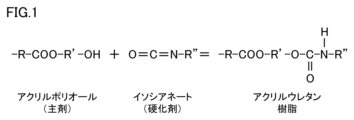
- FIG. 2 is a diagram showing a reaction formula of the acrylic urethane resin used in Experimental Example 1.
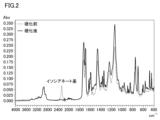
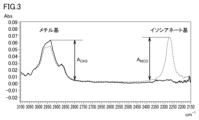
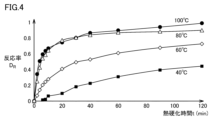
- 1 shows spectra before and after the coating material is cured in Experimental Example 1. This is an enlarged spectrum of the 3100 to 2150 cm ⁇ 1 portion of FIG. 1 is a graph showing the relationship between reaction rate and heat curing time at each constant temperature.
- the first aspect of the present invention is a method for producing a cellular membrane comprising the steps of: contacting a sample of the mixture of the hardener and the paint with a surface of a diamond prism; measuring an infrared absorption spectrum (IR spectrum: InfraRed absorption spectrometry) of the sample while controlling the temperature of the sample, and acquiring time-series data of the amount of functional groups of the curing agent in the sample from the obtained infrared absorption spectrum; and visualizing the relationship between time or temperature and the amount of functional groups contained in the curing agent in the sample.
- IR spectrum InfraRed absorption spectrometry
- an apparatus equipped with a diamond prism which is capable of measuring the infrared absorption spectrum while changing the temperature of the sample.
- an apparatus include a heated single reflection type total reflection measuring apparatus MicromATR (manufactured by Czitech) combined with a Fourier transform infrared spectrophotometer (FTIR: Fourier Transform Infrared Spectroscopy) IRTracer-100 (trademark) (manufactured by Shimadzu Corporation), and a Golden Gate (trademark) (diamond ATR (attenuated total reflection) apparatus) (manufactured by Specac) combined with a 4000 series (trademark) temperature controller (manufactured by Specac), but are not limited thereto as long as the apparatus satisfies the above prerequisites.
- a sample of a mixture of a hardener and a paint is first brought into contact with the surface of a diamond prism.
- the infrared absorption spectrum of a sample is measured while controlling the temperature of the sample, and time series data on the amount of functional groups possessed by the curing agent in the sample is obtained from the obtained infrared absorption spectrum.
- time series data on the amount of functional groups possessed by the curing agent in the sample is obtained from the obtained infrared absorption spectrum.
- the measurement of the infrared absorption spectrum of the sample while controlling the temperature of the sample is preferably performed both when the infrared absorption spectrum of the sample is measured while maintaining the temperature of the sample constant, and when the infrared absorption spectrum of the sample is measured while changing the temperature of the sample at a predetermined rate of change.
- time series data showing the relationship between time and the amount of functional groups possessed by the curing agent in the sample is obtained, while by measuring the infrared absorption spectrum of the sample while changing the temperature of the sample at a predetermined rate of change, time series data showing the relationship between temperature and the amount of functional groups possessed by the curing agent in the sample is obtained.
- the temperature when kept constant is not particularly limited, and can be appropriately selected according to the temperature at which the curing agent contained in the sample cures.
- the predetermined rate of change when changing the temperature is not particularly limited, and the temperature change may be continuous or intermittent.
- the relationship between time or temperature and the amount of functional groups in the curing agent in the sample is then visualized. Specifically, the obtained time series data is graphed with time or temperature on the horizontal axis and the amount of functional groups in the curing agent on the vertical axis, thereby visualizing the relationship between time or temperature and the amount of functional groups in the curing agent.
- the curing change over time evaluated not only is the curing change over time evaluated, but the curing process due to temperature changes is also evaluated. This reduces the burden on the user required to find the curing conditions for the paint being evaluated.
- the functional group of the curing agent is not particularly limited as long as the relationship between the infrared spectrum and the curing temperature is known, such as an isocyanate group in the case of an isocyanate curing agent.
- the functional group of such a curing agent include epoxy groups, primary amino groups, secondary amino groups, primary amide groups, tertiary amide groups, ether groups, hydroxyl groups, and carbonyl groups, as described in Morio Tsuge, "Application of Fourier Transform Infrared Spectroscopy to Thermosetting Resin Analysis," Thermosetting Resins, Vol. 12, No. 4 (1991), p. 209-234 (Non-Patent Document 2).
- the curing agent may be a known curing agent that is generally used to cure thermosetting resins, but it is preferable that the curing agent is an isocyanate curing agent and that the functional group of the curing agent in the sample is an isocyanate group.
- an isocyanate curing agent a polyfunctional isocyanate curing agent such as an aliphatic, alicyclic, aromatic group-containing aliphatic or aromatic diisocyanate, a diisocyanate dimer, or a diisocyanate trimer (preferably an isocyanurate-type isocyanate (so-called isocyanurate)) may be used.
- Typical isocyanate curing agents include, for example, aromatic diisocyanates such as tolylene diisocyanate (TDI), 4,4'-diphenylmethane diisocyanate (MDI), xylylene diisocyanate (XDI), and meta-xylylene diisocyanate (MXDI); hexamethylene diisocyanate (HDI), tetramethylene diisocyanate, 2-methyl-pentane-1,5-diisocyanate, 3-methyl-pentane-1,5-diisocyanate, lysine diisocyanate, and trioxyethylene.
- aromatic diisocyanates such as tolylene diisocyanate (TDI), 4,4'-diphenylmethane diisocyanate (MDI), xylylene diisocyanate (XDI), and meta-xylylene diisocyanate (MXDI)
- HDI hexamethylene diisocyanate
- Aliphatic diisocyanates such as diisocyanate; alicyclic diisocyanates such as isophorone diisocyanate (IPDI), cyclohexyl diisocyanate, 4,4'-dicyclohexylmethane diisocyanate, norbornane diisocyanate, hydrogenated tolylene diisocyanate, hydrogenated xylene diisocyanate, and hydrogenated tetramethylxylene diisocyanate; and their biuret forms, nurate forms, trimethylolpropane (TMP) adducts, and uretdione forms. These may be used alone or in combination of two or more.
- IPDI isophorone diisocyanate
- cyclohexyl diisocyanate 4,4'-dicyclohexylmethane diisocyanate
- norbornane diisocyanate norbornane diisocyanate
- hydrogenated tolylene diisocyanate hydrogen
- a blocked isocyanate can also be used as the isocyanate curing agent.
- a blocked isocyanate can be prepared by blocking the isocyanate group of the polyfunctional isocyanate curing agent with a blocking agent. The blocking agent is added to the polyisocyanate group and is stable at room temperature, but can regenerate free isocyanate groups when heated to the dissociation temperature or higher. Commonly used blocking agents such as ⁇ -caprolactam and butyl cellosolve can be used.
- a specific example of a suitable isocyanate curing agent is Duranate (trademark) TPA-100 (manufactured by Asahi Kasei Corporation), which is disclosed in Non-Patent Document 1 and contains a trimer (isocyanurate) of hexamethylene diisocyanate as a main component.
- the paint (base resin) contained in the sample used in the first aspect of the present invention can be any suitable conventional paint used in combination with an isocyanate curing agent without any particular restrictions, but a suitable example is a hydroxyl group-containing acrylic resin.
- Hydroxyl-containing acrylic resins can be suitably prepared by copolymerizing a monomer mixture containing a hydroxyl-containing ethylenically unsaturated monomer.
- hydroxyl-containing ethylenically unsaturated monomers include 2-hydroxyethyl (meth)acrylate, hydroxypropyl (meth)acrylate, 2,3-dihydroxybutyl (meth)acrylate, 4-hydroxybutyl (meth)acrylate, reaction products of these hydroxyl-containing (meth)acrylates with ⁇ -caprolactone, and esters of polyhydric alcohols such as polyethylene glycol mono(meth)acrylate with acrylic acid or methacrylic acid.
- reaction products obtained by ring-opening polymerization of ⁇ -caprolactone with monoesters of the above polyhydric alcohols with acrylic acid or methacrylic acid can also be used.
- the monomer mixture may contain ethylenically unsaturated monomers other than the hydroxyl group-containing ethylenically unsaturated monomer.
- ethylenically unsaturated monomers include (meth)acrylic acid alkyl ester monomers such as methyl (meth)acrylate, ethyl (meth)acrylate, propyl (meth)acrylate, n-, i- or t-butyl (meth)acrylate, 2-ethylhexyl (meth)acrylate, and lauryl (meth)acrylate; carboxyl group-containing ethylenically unsaturated monomers such as acrylic acid, methacrylic acid, crotonic acid, maleic acid, itaconic acid, and fumaric acid, and dicarboxylic acid monoester monomers such as ethyl maleate, butyl maleate, ethyl itaconate, and butyl itaconate; amino group-containing e
- ethylenically unsaturated monomers containing an alicyclic group such as acrylate aminoalkyl ester monomers such as aminoethyl (meth)acrylate, dimethylaminoethyl (meth)acrylate, and butylaminoethyl (meth)acrylate; aminoalkylamide monomers such as aminoethyl (meth)acrylamide, dimethylaminomethyl (meth)acrylamide, and methylaminopropyl (meth)acrylamide; other ethylenically unsaturated monomers containing an amide group such as acrylamide, methacrylamide, N-methylolacrylamide, methoxybutylacrylamide, and diacetoneacrylamide; vinyl cyanide monomers such as (meth)acrylonitrile and ⁇ -chloroacrylonitrile; vinyl ester monomers of saturated aliphatic carboxylic acids such as vinyl acetate and vinyl propionate; styrene monomers such as styren
- (meth)acrylate means "acrylate or methacrylate.”
- a method commonly used by those skilled in the art can be used to polymerize the monomer mixture.
- a bulk polymerization method using a radical polymerization initiator, a solution polymerization method, or a two-stage bulk-suspension polymerization method in which suspension polymerization is performed after bulk polymerization can be used.
- a specific example of a suitable paint is a hydroxyl-containing acrylic resin (weight average molecular weight: 12,500, number average molecular weight: 6,430) that is polymerized at 80°C using methyl ethyl ketone as a solvent, with 4 PHR of azobisisobutyronitrile added as an initiator to a monomer composition (hydroxyl value 150) of methyl methacrylate (weight ratio: 33), n-butyl acrylate (weight ratio: 15.9), 2-hydroxyethyl acrylate (weight ratio: 31.1), and styrene (weight ratio: 20), as disclosed in Non-Patent Document 1.
- Example 1 The thermal curing reaction of the paint was measured in real time using a Fourier transform infrared spectrophotometer (FTIR) IRTracer-100 (trademark) (manufactured by Shimadzu Corporation) and a heated single reflection total reflection measuring device MicromATR (manufactured by Czitech) equipped with a diamond prism.
- FTIR Fourier transform infrared spectrophotometer
- IRTracer-100 trademark
- MicromATR manufactured by Czitech
- the measurements were carried out under the following conditions. ⁇ Disassembly: 4cm -1 ⁇ Number of times: 20 Wave number range: 4000 to 400 cm Apodization function: Happ-Genzel Detector: DLATGS (Deuterated L-Alanine Triglycine Sulfate)
- the Microm ATR used a heating disk and performed measurements while heating (the Microm ATR heating disk can perform measurements in the temperature range from room temperature to 130° C.).
- FIG. 1 shows an overlay of the spectrum before curing, measured immediately after mixing the base agent and curing agent, and the spectrum after leaving the mixture at room temperature for three days and completely curing.
- the isocyanate group contained in the curing agent can be confirmed at around 2270 cm -1 , but since the isocyanate group is not observed after curing, it can be seen that information about curing can be obtained by focusing on the isocyanate group.
- Fig. 3 is an enlarged spectrum of the 3100 to 2150 cm -1 portion of Fig. 2, and as shown in Fig. 3, the reaction rate D R was calculated from the peak intensity (A CH3 ) derived from the methyl group near 2940 cm -1 , which does not change before and after thermal curing, by calculating the peak intensity derived from the isocyanate group near 2270 cm -1 and the following formula.
- thermosetting reaction of the paint was measured in real time using the FTIR and heating ATR accessories. It was found that the thermosetting of the acrylic urethane paint progressed with increasing temperature, and since no change in the thermosetting reaction rate was observed above 80°C, it was inferred that a thermosetting temperature of 80°C is suitable. By tracking the thermosetting reaction in real time, it became possible to estimate the optimal thermosetting temperature and time.
- One embodiment of a method for observing the cured state of a paint in situ includes the steps of contacting a sample of a mixture of a curing agent and a paint with the surface of a diamond prism, measuring the infrared absorption spectrum of the sample while controlling the temperature of the sample, and obtaining time-series data on the amount of functional groups contained in the curing agent in the sample from the obtained infrared absorption spectrum, and visualizing the relationship between time or temperature and the amount of functional groups contained in the curing agent in the sample.
- the method described in paragraph 1 makes it possible to obtain data on the curing state of a paint from the viewpoints of temperature and time during the curing process of the paint, thereby reducing the burden on the user in determining the curing conditions of the paint to be evaluated.
Landscapes
- Physics & Mathematics (AREA)
- Chemical & Material Sciences (AREA)
- Health & Medical Sciences (AREA)
- Life Sciences & Earth Sciences (AREA)
- General Physics & Mathematics (AREA)
- Analytical Chemistry (AREA)
- Biochemistry (AREA)
- General Health & Medical Sciences (AREA)
- Immunology (AREA)
- Pathology (AREA)
- Spectroscopy & Molecular Physics (AREA)
- Mathematical Physics (AREA)
- Engineering & Computer Science (AREA)
- Food Science & Technology (AREA)
- Medicinal Chemistry (AREA)
- Investigating Or Analysing Materials By Optical Means (AREA)
Priority Applications (3)
| Application Number | Priority Date | Filing Date | Title |
|---|---|---|---|
| JP2025527606A JPWO2024257568A1 (cg-RX-API-DMAC7.html) | 2023-06-13 | 2024-05-22 | |
| EP24823190.4A EP4729926A1 (en) | 2023-06-13 | 2024-05-22 | Method for observing cured state of coating material |
| CN202480039677.8A CN121488154A (zh) | 2023-06-13 | 2024-05-22 | 观察涂料固化状态的方法 |
Applications Claiming Priority (2)
| Application Number | Priority Date | Filing Date | Title |
|---|---|---|---|
| JP2023096935 | 2023-06-13 | ||
| JP2023-096935 | 2023-06-13 |
Publications (1)
| Publication Number | Publication Date |
|---|---|
| WO2024257568A1 true WO2024257568A1 (ja) | 2024-12-19 |
Family
ID=93851771
Family Applications (1)
| Application Number | Title | Priority Date | Filing Date |
|---|---|---|---|
| PCT/JP2024/018806 Ceased WO2024257568A1 (ja) | 2023-06-13 | 2024-05-22 | 塗料の硬化状態を観察する方法 |
Country Status (4)
| Country | Link |
|---|---|
| EP (1) | EP4729926A1 (cg-RX-API-DMAC7.html) |
| JP (1) | JPWO2024257568A1 (cg-RX-API-DMAC7.html) |
| CN (1) | CN121488154A (cg-RX-API-DMAC7.html) |
| WO (1) | WO2024257568A1 (cg-RX-API-DMAC7.html) |
Citations (8)
| Publication number | Priority date | Publication date | Assignee | Title |
|---|---|---|---|---|
| JPH0862126A (ja) * | 1994-07-29 | 1996-03-08 | Bayer Ag | 重縮合または重付加反応の監視方法 |
| JP2000055806A (ja) * | 1998-08-04 | 2000-02-25 | Fujikura Ltd | 紫外線硬化型樹脂の硬化特性評価方法およびこれに用いられる装置 |
| JP2001296243A (ja) * | 2000-04-14 | 2001-10-26 | Sumitomo Electric Ind Ltd | 赤外吸収測定方法及びそれを用いた光ファイバの製造方法 |
| JP2002022648A (ja) * | 2000-07-03 | 2002-01-23 | Mitsubishi Rayon Co Ltd | 樹脂被膜が形成された樹脂成形品の耐候性評価方法およびポリカーボネート製成形品 |
| JP2004021814A (ja) * | 2002-06-19 | 2004-01-22 | Konica Minolta Holdings Inc | Icカードの作成方法及びicカード |
| JP2006003196A (ja) * | 2004-06-17 | 2006-01-05 | Canon Inc | 樹脂の化学状態変化の評価方法及び評価装置 |
| JP2007248431A (ja) * | 2006-03-20 | 2007-09-27 | Seiko Epson Corp | 硬化性樹脂の硬化度測定方法 |
| JP2021135093A (ja) * | 2020-02-25 | 2021-09-13 | 日本電産株式会社 | 判定装置および接合体の製造方法 |
-
2024
- 2024-05-22 JP JP2025527606A patent/JPWO2024257568A1/ja active Pending
- 2024-05-22 WO PCT/JP2024/018806 patent/WO2024257568A1/ja not_active Ceased
- 2024-05-22 EP EP24823190.4A patent/EP4729926A1/en active Pending
- 2024-05-22 CN CN202480039677.8A patent/CN121488154A/zh active Pending
Patent Citations (8)
| Publication number | Priority date | Publication date | Assignee | Title |
|---|---|---|---|---|
| JPH0862126A (ja) * | 1994-07-29 | 1996-03-08 | Bayer Ag | 重縮合または重付加反応の監視方法 |
| JP2000055806A (ja) * | 1998-08-04 | 2000-02-25 | Fujikura Ltd | 紫外線硬化型樹脂の硬化特性評価方法およびこれに用いられる装置 |
| JP2001296243A (ja) * | 2000-04-14 | 2001-10-26 | Sumitomo Electric Ind Ltd | 赤外吸収測定方法及びそれを用いた光ファイバの製造方法 |
| JP2002022648A (ja) * | 2000-07-03 | 2002-01-23 | Mitsubishi Rayon Co Ltd | 樹脂被膜が形成された樹脂成形品の耐候性評価方法およびポリカーボネート製成形品 |
| JP2004021814A (ja) * | 2002-06-19 | 2004-01-22 | Konica Minolta Holdings Inc | Icカードの作成方法及びicカード |
| JP2006003196A (ja) * | 2004-06-17 | 2006-01-05 | Canon Inc | 樹脂の化学状態変化の評価方法及び評価装置 |
| JP2007248431A (ja) * | 2006-03-20 | 2007-09-27 | Seiko Epson Corp | 硬化性樹脂の硬化度測定方法 |
| JP2021135093A (ja) * | 2020-02-25 | 2021-09-13 | 日本電産株式会社 | 判定装置および接合体の製造方法 |
Non-Patent Citations (2)
| Title |
|---|
| KANJI MORI: "Tracking Method of Crosslinking Density during Curing Process of Paint Film -Proportionality between Storage Modulus and Crosslinking Density", J. JPN. SOC. COLOUR MATER., vol. 86, no. 4, 2013, pages 123 - 127 |
| MORIO TSUGE: "Application of Fourier Transform Infrared Spectroscopy to the Analysis of Thermal Curing Resins", THERMAL CURING RESINS, vol. 12, no. 4, 1991, pages 209 - 234 |
Also Published As
| Publication number | Publication date |
|---|---|
| EP4729926A1 (en) | 2026-04-22 |
| CN121488154A (zh) | 2026-02-06 |
| JPWO2024257568A1 (cg-RX-API-DMAC7.html) | 2024-12-19 |
Similar Documents
| Publication | Publication Date | Title |
|---|---|---|
| US6005045A (en) | Waterborne, ambient temperature curable film-forming compositions | |
| CA2486034C (en) | Acrylate-functional blocked polyisocyanate resin for uv/thermally curable coatings | |
| EP2102263B1 (de) | Beschichtungsmittel mit hoher kratzbeständigkeit und witterungsstabilität | |
| CN105418886B (zh) | 多异氰酸酯组合物、涂料组合物以及涂装方法 | |
| EP2561001B1 (de) | Beschichtungsmittel mit hohem festkörpergehalt und gutem verlauf sowie daraus hergestellte mehrschichtlackierungen und deren verwendung | |
| JP6699191B2 (ja) | 低温解離型ブロックポリイソシアネート組成物及びこれを含有する塗料組成物 | |
| WO1995023832A1 (de) | Beschichtungsmittel auf basis eines vernetzbaren hydroxylgruppenhaltigen poly(meth)acrylatharzes | |
| US20070004815A1 (en) | Self-photoinitiating multifunctional urethane oligomers containing pendant acrylate groups | |
| AU3122099A (en) | Novel polycarbodiimide polymers and their use as adhesive intermediate layers in automotive coatings | |
| ES2363244T3 (es) | Agentes de recubrimiento que contienen oligocarbonato para lacas de recubrimiento reistentes a los arañazos. | |
| US20220298293A1 (en) | Aliphatic polyisocyanate composition, preparation method therefor, and coating composition | |
| DE19629851A1 (de) | Beschichtungsmittel auf Basis eines verzweigten hydroxylgruppenhaltigen Polyacrylatharzes enthaltend cycloaliphatische Monomereinheiten und seine Verwendung in Verfahren zur Herstellung einer Mehrschichtlackierung | |
| GB2068388A (en) | Polymers of isocyanatoalkyl(meth)acrylates | |
| WO2022058176A1 (en) | A coating composition, its preparation and use thereof | |
| JP3091871B2 (ja) | 自己架橋性樹脂の製造方法 | |
| JP3170617B2 (ja) | 自己架橋性樹脂 | |
| EP4729926A1 (en) | Method for observing cured state of coating material | |
| US4351755A (en) | Isocyanate-functional polymers containing a terminal monosulfide group | |
| US4446175A (en) | Coatings formed from isocyanate-functional polymers containing a terminal monosulfide group | |
| CN119285885A (zh) | 一种光固化材料及其制备方法与应用 | |
| US4474855A (en) | Coated article | |
| DE3137133A1 (de) | Verfahren zur herstellung von ueberzuegen | |
| EP0973816A1 (en) | Aqueous coating composition | |
| EP0741149B1 (de) | Neue niedermolekulare OH-funktionelle Copolymerisate mit hoher Seitenkettenverzweigung, Verfahren zu ihrer Herstellung sowie ihre Verwendung | |
| Tan et al. | Preparation of a novel prepolymer of polyurethane acrylate |
Legal Events
| Date | Code | Title | Description |
|---|---|---|---|
| 121 | Ep: the epo has been informed by wipo that ep was designated in this application |
Ref document number: 24823190 Country of ref document: EP Kind code of ref document: A1 |
|
| ENP | Entry into the national phase |
Ref document number: 2025527606 Country of ref document: JP Kind code of ref document: A |
|
| WWE | Wipo information: entry into national phase |
Ref document number: 2025527606 Country of ref document: JP |
|
| WWE | Wipo information: entry into national phase |
Ref document number: 2024823190 Country of ref document: EP |
|
| NENP | Non-entry into the national phase |
Ref country code: DE |
|
| ENP | Entry into the national phase |
Ref document number: 2024823190 Country of ref document: EP Effective date: 20260113 |
|
| ENP | Entry into the national phase |
Ref document number: 2024823190 Country of ref document: EP Effective date: 20260113 |
|
| ENP | Entry into the national phase |
Ref document number: 2024823190 Country of ref document: EP Effective date: 20260113 |
|
| ENP | Entry into the national phase |
Ref document number: 2024823190 Country of ref document: EP Effective date: 20260113 |
|
| WWP | Wipo information: published in national office |
Ref document number: 2024823190 Country of ref document: EP |