WO2024252900A1 - ペット用おむつ - Google Patents
ペット用おむつ Download PDFInfo
- Publication number
- WO2024252900A1 WO2024252900A1 PCT/JP2024/018390 JP2024018390W WO2024252900A1 WO 2024252900 A1 WO2024252900 A1 WO 2024252900A1 JP 2024018390 W JP2024018390 W JP 2024018390W WO 2024252900 A1 WO2024252900 A1 WO 2024252900A1
- Authority
- WO
- WIPO (PCT)
- Prior art keywords
- ventral
- pet
- leg
- diaper
- pet diaper
- Prior art date
- Legal status (The legal status is an assumption and is not a legal conclusion. Google has not performed a legal analysis and makes no representation as to the accuracy of the status listed.)
- Ceased
Links
Images




Classifications
-
- A—HUMAN NECESSITIES
- A01—AGRICULTURE; FORESTRY; ANIMAL HUSBANDRY; HUNTING; TRAPPING; FISHING
- A01K—ANIMAL HUSBANDRY; AVICULTURE; APICULTURE; PISCICULTURE; FISHING; REARING OR BREEDING ANIMALS, NOT OTHERWISE PROVIDED FOR; NEW BREEDS OF ANIMALS
- A01K23/00—Manure or urine pouches
Definitions
- the present invention relates to a diaper for pets.
- Patent Document 1 discloses a tape-type pet absorbent article that is equipped with a pair of fastening tapes, a fastening area for fastening the fastening tapes, and perforations in a pair of arc-shaped areas for fastening the leg openings, and can accommodate pets with various sizes of waist and leg circumferences.
- leg openings that form the leg openings are small, they are likely to interfere with the base of the pet's legs when put on, which may result in poor fit and skin problems.
- the leg openings are large, they are likely to shift position between the legs when put on, which may result in excrement leakage.
- the present invention was made in consideration of the above problems, and its purpose is to provide a pet diaper that is easy to wear and does not easily slip out of place.
- the main invention for achieving the above object is a pet wear that, in a stretched and unfolded state, has a front-to-rear direction, a left-to-right direction, and a thickness direction that intersect with one another, and has a ventral waist section, a rear waist section, a crotch section between the ventral waist section and the rear waist section in the front-to-rear direction, a pair of fastening tabs arranged on both sides in the left-to-right direction of the ventral waist section, and a tail insertion section for passing a pet's tail through, and is provided with a pair of leg openings on both sides in the left-to-right direction of the crotch section that are narrower in width in the left-to-right direction than the ventral waist section and the rear waist section,
- the pet diaper has a through-portion that penetrates the crotch portion in the thickness direction from the periphery of the leg opening portion toward the inside in the left-right direction, and is characterized in that, in
- the present invention provides a pet diaper that is easy to wear and does not easily slip out of place.
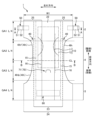
- FIG. 2 is a plan view of the diaper 1 in an unfolded and extended state.
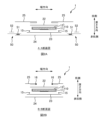
- Fig. 2A is a schematic cross-sectional view taken along line AA in Fig. 1.
- Fig. 2B is a schematic cross-sectional view taken along line BB in Fig. 1.
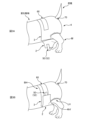
- 3A and 3B are diagrams for explaining the operation when putting the diaper 1 on a pet.
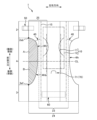
- 11 is a diagram illustrating the shape of a leg opening LH.
- FIG. FIG. 5 is a diagram illustrating the diaper 1 in the unfolded and stretched state of FIG. 4 folded in half at a center position CL in the front-rear direction.
- 4A to 4C are diagrams illustrating details of a through portion 40.
- FIG. 13 is a diagram showing a case where a perforation (a through-hole 40) and a leg elastic member 15 overlap each other.
- FIG. 8A and 8B are diagrams for explaining a mechanism for suppressing tearing of the perforation (penetration portion 40).
- 9A and 9B are diagrams for explaining the positional relationship between the perforation (the through-hole 40) and the periphery of the abdominal leg opening 4lhf.
- 10A and 10B are diagrams showing modified examples of the through-hole 40.
- FIG. 13 is a diagram illustrating the arrangement of the tail insertion section 70.
- FIG. 13A and 13B are diagrams showing modified examples of the tail insertion section 70.
- FIG. 2 is a plan view showing the diaper 100 in an unfolded and stretched state.
- FIG. 14 is a diagram illustrating the diaper 100 in the unfolded and stretched state of FIG. 13 folded in half at a center position CL in the front-rear direction.
- the garment In a stretched and unfolded state, the garment has a front-rear direction, a left-right direction, and a thickness direction that intersect with one another, and includes a ventral waist portion, a rear waist portion, a crotch portion between the ventral waist portion and the rear waist portion in the front-rear direction, a pair of fastening tabs arranged on both sides of the ventral waist portion in the left-right direction, and a tail insertion portion for passing a pet's tail through, and a pair of leg openings are provided on both sides of the crotch portion in the left-right direction, the leg openings being narrower in width in the left-right direction than the ventral waist portion and the rear waist portion, a pet diaper having a through-portion penetrating the crotch portion in the thickness direction from the periphery of the leg opening portion toward the inside in the left-right direction, the area of a portion enclosed by
- the leg openings are formed wider on the ventral side, so that when the diaper is put on, the ventral edge of the leg opening is less likely to interfere with the base of the pet's legs between the pet's legs, improving fit. Also, the provision of a through-hole makes it easier to prevent the edge of the ventral leg opening from digging into the base of the pet's legs. Meanwhile, because the dorsal side of the leg openings is narrower than the ventral side, the leg openings as a whole do not widen excessively, making it less likely to shift out of position when the diaper is put on. Therefore, it is possible to achieve both good fit and less likely to shift out of position.
- the periphery of the ventral leg loop portion is narrowed inward, so that it is less likely to interfere with the base of the pet's legs when the diaper is put on by a pet. This prevents the periphery of the ventral leg loop portion from digging into the base of the legs, further improving fit.
- the garment has a front-rear direction, a left-right direction, and a thickness direction that intersect with one another, and includes a ventral waist portion, a rear waist portion, a crotch portion between the ventral waist portion and the rear waist portion in the front-rear direction, a pair of fastening tabs arranged on both sides of the ventral waist portion in the left-right direction, and a tail insertion portion for passing a pet's tail through, and a pair of leg openings are provided on both sides of the crotch portion in the left-right direction, the leg openings being narrower in width in the left-right direction than the ventral waist portion and the rear waist portion, a pet diaper having a through-portion penetrating the crotch portion in the thickness direction from the periphery of the leg opening portion toward the inside in the left-right direction, the area of a portion enclosed by a straight line connecting the dorsal end of the left-right side edge of
- the leg opening is wider on the back side when worn, making it easy to adjust the position on the pet's back and improving the fit.
- the ventral side of the leg opening is not excessively large, making it difficult for the absorbent body to shift position between the pet's legs when adjusting the position.
- the periphery of the ventral leg opening interferes with the pet's legs, the through-hole (perforation) can be torn and adjusted to suppress the interference. Therefore, it is possible to achieve both good wearability and difficulty in shifting position.
- the periphery of the rear leg opening section is less likely to interfere with the pet's legs, making it easier to adjust the position. This makes it easier to engage the fastening tab with the rear waist section, and thus improves the fit of the pet diaper.
- the perforations can be torn and cut into the ventral leg openings to make interference less likely. This can improve the fit when the diaper is put on. And by changing the amount the perforations are torn, the fit can be freely adjusted to suit the pet's body shape.
- the top sheet and the core wrap sheet are not pierced in the thickness direction by perforations (penetrations), so when worn, urine and other excrement are prevented from leaking along the perforations from the skin side to the non-skin side in the thickness direction.
- the number of sheet members stacked at the inner left-right end (end) which is the end point when the perforation is torn to the maximum extent is greater than the number of sheet members stacked at the outer left-right end (end) which is the starting point when starting to tear the perforation. This allows the user to easily start tearing from the end of the perforation, and also prevents the user from tearing the diaper (absorbent body, etc.) beyond the end of the perforation.
- the contractile force of the leg elastic members is less likely to act on the perforations, and the leg elastic members are prevented from pulling the perforations to both sides. This prevents the perforations from tearing naturally, making it easier to maintain good fit.
- the leg elastic members are cut at the points where they intersect with the perforations, and contract toward both sides of the perforations, making it easier for force to act in the direction of opening (tearing) the perforations. This makes it easier to tear the perforations even with a weak force, making it easier to adjust the fit of the pet diaper.
- the part that is the starting point for the tear is located at a distance inside the periphery of the leg opening, so a large force is required to start tearing the perforation. This makes it possible to prevent the perforation from tearing naturally or from tearing unintentionally by the user.
- the positions of the ventral waist part, the dorsal waist part, and the crotch part can be easily adjusted based on the position of the pet's tail when the diaper is put on. This makes it easier to properly place each part of the pet diaper on the appropriate part of the pet's body.
- the pet diaper of aspect 14 prevents the area behind the tail insertion part from becoming excessively narrow when the diaper is worn, making it easier to prevent the pet's back from being insufficiently covered and to prevent excrement from leaking out from the rear.
- Fig. 1 is a plan view of the diaper 1 in an unfolded and stretched state.
- Fig. 2A is a schematic cross-sectional view taken along the line A-A in Fig. 1.
- Fig. 2B is a schematic cross-sectional view taken along the line B-B in Fig. 1.
- the diaper 1 refers to a state in which the product (diaper 1) is stretched without wrinkles, specifically, a state in which each of the components constituting the diaper 1 (for example, the back sheet 24 described below, etc.) is stretched to a length that matches or is close to the dimensions of the individual components.
- each direction is defined. That is, the direction along the longitudinal direction of the diaper 1 is defined as the "front-rear direction", and the direction perpendicular to the front-rear direction and along the width direction of the diaper 1 is defined as the "left-right direction”.
- the "front side” in the front-rear direction is the side that is located on the ventral side of the wearer (pet in this case) when the diaper 1 is worn, and is hereinafter also referred to as the "ventral side”.
- the “rear side” in the front-rear direction is the side that is located on the dorsal side of the wearer (pet) when the diaper 1 is worn, and is hereinafter also referred to as the "dorsal side”. Also, as shown in Figs.
- the direction perpendicular to the front-rear direction and the left-right direction is defined as the "thickness direction”
- the side that comes into contact with the skin of the wearer (pet) is defined as the “skin side”
- the opposite side is defined as the "non-skin side”.
- the diaper 1 is a so-called open-type tape-type disposable diaper, and has an absorbent body 10, a top sheet 22, a leak-proof sheet 23, a back sheet 24, a side sheet 25, a penetration part 40, a fastening tab 50, and a target area 60.
- the absorbent body 10 has an absorbent core 11 (e.g., made of pulverized pulp or a highly absorbent polymer) that absorbs and retains liquids such as excrement, and a liquid-permeable core wrap sheet 12 (e.g., a tissue sheet or a spunbond nonwoven fabric) that covers the absorbent core 11.
- the absorbent core 11 (absorbent body 10) has a generally hourglass shape in plan view with a narrowed central portion in the longitudinal direction, and is disposed in the center in the left-right direction with its longitudinal direction aligned with the front-to-rear direction of the diaper 1. By providing such a narrowed portion in the absorbent core 11, it becomes easier for the pet to move its legs when wearing the diaper 1.
- the shape of the absorbent body 10 does not necessarily have to be an hourglass shape as shown in FIG. 1, and may be, for example, a rectangular shape.
- the top sheet 22 is a liquid-permeable sheet member arranged on the skin side of the absorbent body 10, and is formed of, for example, an air-through nonwoven fabric or a spunbond nonwoven fabric.
- a pair of side sheets 25, 25 that protrude outward in the left-right direction are joined to the skin side and both left-right sides of the top sheet 22.
- the inner left-right end of the side sheet 25 is folded outward, and a leak-proof wall elastic member 16 such as rubber thread is sandwiched and joined to the folded-back portion in a state of being stretched in the front-rear direction (see FIG. 2).
- the inner left-right end of the side sheet 25 stands up against the skin side of the wearer (pet) due to the elasticity exhibited by the leak-proof wall elastic member 16, forming a so-called leak-proof wall to suppress lateral leakage of urine, etc.
- the leakproof sheet 23 is a liquid-impermeable member arranged on the non-skin side of the absorbent 10, and is, for example, a resin film.
- the backsheet 24 is arranged on the non-skin side of the leakproof sheet 23, and is a member (exterior sheet) that constitutes the exterior of the diaper 1 closest to the skin, and is made of, for example, nonwoven fabric.
- leg elastic members 15, 15 made of rubber thread or the like are sandwiched and joined in a state stretched in the front-to-rear direction outside the absorbent body 10 in the left-right direction.
- the leg elastic members 15 exhibit stretchability in the front-to-rear direction, which makes it easier for the leg openings LH (see FIG. 3 described later) to fit around the pet's legs when the diaper 1 is put on, improving the fit and preventing lateral leakage of urine and other excrement.
- the diaper 1 in the unfolded and stretched state is formed so that the width in the left-right direction is wide on the ventral side and the back side in the front-to-rear direction as a whole, and the width in the left-right direction is narrow in the center part in the front-to-rear direction.
- the part with the widest width in the left-to-right direction on the ventral side in the front-to-rear direction is referred to as the ventral waistline section 2
- the part with the widest width in the left-to-right direction on the back side in the front-to-rear direction is referred to as the back waistline section 3.
- the rectangular part represented by the left-to-right width W1 on the ventral side in the front-to-rear direction is the ventral waistline section 2. That is, the ventral waistline section 2 is a part surrounded by side edges along the front-to-rear direction on both left-to-right sides, a straight line connecting the front ends of a pair of side edges, and a straight line connecting the rear ends of a pair of side edges.
- the rectangular part represented by the left-to-right width W1 on the back side in the front-to-rear direction is the back waistline section 3.
- the section between the ventral waist section 2 and the rear waist section 3 in the front-rear direction is referred to as the crotch section 4.
- the width of the crotch section 4 in the left-right direction is narrower than the width W1 of the ventral waist section 2 and the rear waist section 3 in the left-right direction.
- the crotch section 4 has both sides cut out in the left-right direction, and its periphery is narrowed from the outside (ventral side and rear side) to the center in the front-rear direction.
- the part constituting the periphery of the crotch section 4 is referred to as the leg opening 4lh.
- This leg opening 4lh is a part that forms the leg opening LH when the diaper 1 is put on a pet (see FIG. 3 described later).
- the part of the leg opening 4lh that is closer to the ventral side (front side) than the center position CL in the front-rear direction is referred to as the ventral leg opening 4lhf
- the part that is closer to the rear side (rear side) than the center position CL in the front-rear direction is referred to as the rear leg opening 4lhb.
- a pair of through-holes 40 are provided in the crotch portion 4 of the diaper 1 on the ventral side of the center position CL in the front-to-rear direction, penetrating the crotch portion 4 in the thickness direction.
- a pair of through-holes 40, 40 are provided that extend from the periphery of the ventral leg opening 4lhf toward the inside in the left-right direction and toward the ventral side in the front-to-rear direction. Details of the through-holes 40 will be described later.
- the abdominal waist portion 2 of the diaper 1 is provided with a pair of fastening tabs 50, 50 extending outward from both left-right ends of the side sheet 25 and the back sheet 24.
- the fastening tab 50 has a tape base material 51 and a locking portion 52.
- the tape base material 51 is a substantially rectangular sheet member made of, for example, nonwoven fabric, and one left-right end is fixed to the side sheet 25 or the back sheet 24, and the other left-right end extends outward from both sides of the side sheet 25 and the back sheet 24.
- the locking portion 52 is a so-called hook-and-loop fastener having a plurality of locking projections (hooks, not shown), and is provided on the skin-facing surface of the tape base material 51 in the thickness direction.
- a target area 60 is provided on the non-skin side of the backsheet 24.
- the target area 60 is an area that can engage with the fastening portion 52, and is formed, for example, by processing the fibers on the surface of the nonwoven fabric into a loop shape to provide a member that makes it easier to engage the fastening protrusions (hooks) of the fastening portion 52.
- the target area 60 may be formed by processing a partial area of the backsheet 24 in the rear waistband portion 3.
- a tail insertion section 70 is provided in the center in the left-right direction of the crotch section 4 of the diaper 1, through which the pet's tail can be passed when putting on the diaper 1.
- the tail insertion section 70 is formed by a slit 71 that penetrates the top sheet 22, the leakproof sheet 23, and the back sheet 24 in the thickness direction.
- 3A and 3B are diagrams for explaining the operation when putting the diaper 1 on a pet.
- the diaper 1 When putting the diaper 1 on a pet, first, as shown in FIG. 3A, the diaper 1 is folded in half in the front-to-back direction while the rear waist portion 3 is placed against the pet's back while the pet's tail is passed through the tail insertion portion 70.
- the ventral waist portion 2 of the diaper 1 is placed on the pet's ventral side
- the absorbent body 10 is also placed on the pet's ventral side (i.e., the side where the pet's excretory organs are located).
- the absorbent body 10 can be correctly placed at the position of the pet's excretory organs.
- the leg openings 4lh that form the leg openings LH have the ventral leg openings 4lhf on the ventral side in the front-to-rear direction in contact with the base of the pet's legs (hind legs) (see FIG. 3B).
- the periphery of the ventral leg openings 4lhf may interfere with the base of the pet's hind legs.
- the fastening tabs 50 are pulled strongly on both sides in the left-right direction in an attempt to improve the fit around the waist, the periphery of the ventral leg openings 4lhf may dig into the base of the pet's legs, which may worsen fit or cause skin problems.
- FIG 4 is a diagram for explaining the shape of the leg openings LH.
- Figure 4 shows the diaper 1 in an unfolded and stretched state, as in Figure 1.
- the area indicated by the hatched area on the left and right outer side of the leg openings 4lh of the crotch portion 4 is the area that forms the leg openings LH when the diaper 1 is worn.
- the leg openings LH are formed by the area surrounded by the straight line connecting the back end 2eb in the front-to-rear direction of the left-to-right side edges of the ventral waist portion 2 and the ventral end 3ef in the front-to-rear direction of the left-to-right side edges of the back waist portion 3, and the periphery of the leg openings 4lh.
- the portion on the ventral side of the center position CL in the front-rear direction is designated as the ventral opening A
- the portion on the rear side of the center position CL in the front-rear direction is designated as the rear opening B.
- the area of the ventral opening A is larger than the area of the rear opening B. Because the area of the ventral opening A is larger, the leg opening is wider on the ventral side when worn. Therefore, the periphery of the ventral leg opening 4lhf is less likely to interfere with the base of the pet's hind legs between both legs, improving wearability.
- the leg opening LH as a whole does not become excessively wide, and misalignment is less likely to occur when worn. This allows for both good wearability and resistance to misalignment.
- the leg cutouts 4lh are formed so that the periphery of the ventral leg cutouts 4lhf is constricted laterally inward relative to the periphery of the rear leg cutouts 4lhb.
- Fig. 5 is a diagram showing the diaper 1 in the unfolded and extended state of Fig. 4 folded in half at the center position CL in the front-to-rear direction.
- the ventral waistline section 2 and the rear waistline section 3 are overlapped as shown in Fig. 5, the periphery of the ventral leg cutouts 4lhf is located laterally inward relative to the periphery of the rear leg cutouts 4lhb.
- point Pf on the periphery of the ventral leg cutouts 4lhf is located laterally inward relative to point Pb on the periphery of the rear leg cutouts 4lhb.
- the periphery of the ventral leg opening 4lhf bent inward, when the diaper 1 is put on a pet as shown in FIG. 3B, the periphery of the ventral leg opening 4lhf is less likely to interfere with the base of the pet's legs. This prevents the periphery of the ventral leg opening 4lhf from digging into the base of the pet's legs, further improving fit.
- the diaper 1 also has a pair of through-holes 40, 40 extending inward in the left-right direction from the periphery of the ventral leg opening 4lhf, which helps prevent the periphery of the ventral leg opening 4lhf from digging into the base of the pet's legs.
- Figure 6 is a diagram explaining the details of the through-holes 40.
- Figure 6 is an enlarged view of the area adjacent to the ventral waist portion 2 of the ventral leg opening 4lhf of the diaper 1 in an unfolded and extended state.
- the through-hole 40 in the first embodiment is a so-called perforation in which a plurality of grooves 41, 41... that penetrate the crotch portion 4 in the thickness direction are intermittently arranged from the periphery of the ventral leg opening 4lhf toward the inside in the left-right direction.
- the interference can be made less likely by forming a cut in the ventral leg opening 4lhf. This can further improve the fit of the diaper 1 when it is put on. And, by changing the amount of tearing the perforation (the length of the cut), the fit can be freely adjusted to suit the pet's body shape.
- the perforation (penetrating portion 40) may extend from the crotch portion 4 to the ventral waist portion 2. In other words, the perforation (penetrating portion 40) may penetrate a portion of the ventral waist portion 2 in the thickness direction.
- the perforation (penetration portion 40) does not overlap at least one of the core wrap sheet 12 covering the absorbent core 11 and the top sheet 22 provided on the skin side of the absorbent body 10. If the perforation (penetration portion 40) were provided overlapping the core wrap sheet 12 or the top sheet 22, the core wrap sheet 12 or the top sheet 22 would be penetrated in the thickness direction, which may cause urine and other excrement to easily leak from the skin side to the non-skin side through the penetration portion 40 when the diaper 1 is worn.
- the inner end (also called the terminal end) of the perforation (penetration portion 40) is located outside the outer ends of the core wrap sheet 12 and the top sheet 22 in the left-right direction.
- the perforation (penetration portion 40) does not overlap with either the core wrap sheet 12 or the top sheet 22. Therefore, when the diaper 1 is worn, urine, etc. is prevented from leaking from the skin side to the non-skin side in the thickness direction along the perforation.
- the inner end of the perforation (penetration portion 40) in the left-right direction overlaps with the leakproof sheet 23.
- the end of the perforation (penetration portion 40) is disposed at a position overlapping with the leakproof sheet 23.
- the end of the perforation (penetration portion 40) penetrates at least three sheet members, the side sheet 25, the leakproof sheet 23, and the back sheet 24, in the thickness direction.
- the outer end (also called the tip) of the perforation (penetration portion 40) in the left-right direction does not overlap with the leakproof sheet 23, and penetrates two sheet members, the side sheet 25 and the back sheet 24.
- two sheet members are stacked at the outer end (tip) in the left-right direction, which is the starting point when starting to tear the perforation, and three sheet members are stacked at the inner end (terminal) in the left-right direction, which is the end point when the perforation is torn to its maximum extent.
- the perforation (through portion 40) does not overlap with the leg elastic member 15 and its extension.
- the perforation (through portion 40) is provided by forming a plurality of grooves 41 using a predetermined cutter or the like after joining the side sheet 25 and the back sheet 24 with the leg elastic member 15 sandwiched therebetween during the manufacturing process of the diaper 1. Therefore, if the perforation and the leg elastic member 15 overlap, there is a high possibility that the leg elastic member 15 will be cut in the process of forming the groove 41.
- the contraction force of the leg elastic member 15 (the force contracting from the part where the leg elastic member 15 is cut toward the side where it is not cut) will act on both sides of the perforation.
- the perforation may be pulled in a direction intersecting the perforation, which may cause the perforation to tear spontaneously.
- the contraction force of the leg elastic member 15 may act, causing the perforation to tear spontaneously.
- the perforation (through portion 40) does not overlap with the leg elastic member 15 and its extension, so the contractile force of the leg elastic member 15 is less likely to act on the perforation (through portion 40).
- the leg elastic member 15 prevents the perforation from being pulled to both sides (in directions intersecting the perforation). This prevents the perforation from tearing naturally, making it easier to maintain good fit of the diaper 1.
- FIG. 7 shows a case where the perforation (through portion 40) overlaps with the leg elastic member 15.
- the leg elastic member 15 is cut at the point where it intersects with the perforation and divided into a ventral elastic member 15f located on the ventral side of the perforation and a rear elastic member 15fb located on the rear side of the perforation.
- the ventral elastic member 15f and the rear elastic member 15fb each contract, and a force acts in the direction of opening (tearing) the perforation.
- the contraction force of the ventral elastic member 15f and the rear elastic member 15fb acts on both sides of the perforation, making it easier to tear the perforation even with a weak force. This makes it easier to adjust the fit of the diaper 1.
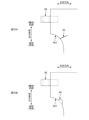
- FIGs 8A and 8B are diagrams explaining the tear suppression mechanism for the perforation (through portion 40).
- a vertical groove 42 is provided that is arranged in a direction intersecting the perforation, inside the innermost end of the perforation in the left-right direction.
- a vertical groove 42 that extends in a direction intersecting the inner end groove 41i is arranged further inside than the inner end groove 41i that is located at the innermost end (end) in the left-right direction.
- the vertical groove 42 (hereinafter also referred to as the "crossing groove") that intersects with the tearing direction (the direction along the perforation), the vertical groove 42 will block the force tearing the perforation, preventing the perforation from tearing excessively.
- a C-shaped groove 43 is provided inside the innermost end of the perforation in the left-right direction.
- the C-shaped groove 43 has a portion that intersects with the inner end groove 41i further inside than the inner end groove 41i of the perforation, and functions as a cross groove portion like the vertical groove 42. This blocks the force that tears the perforation, and prevents the perforation from tearing beyond the end portion (inner end groove 41i).
- a cross groove portion that intersects with the perforation may be provided inside the innermost end of the perforation in the left-right direction. Such a cross groove portion functions as a tear suppression mechanism, thereby preventing the diaper 1 from tearing excessively.
- FIG. 9A and 9B are diagrams for explaining the positional relationship between the perforation (penetration portion 40) and the periphery of the abdominal leg cutout portion 4lhf.
- the outer end groove 41 East side is the part that serves as the starting point for starting the tear when the perforation is torn to form a cut in the periphery of the abdominal leg cutout portion 4lhf.
- the outer end groove 41 Brighton is configured to overlap the periphery of the abdominal leg cutout portion 4lhf as in FIG. 9A, when the user tears the perforation to form a cut in the abdominal leg cutout portion 4lhf, it is possible to start tearing the perforation with a weak force, and the operation of tearing the perforation can be performed safely and easily. In addition, since it is difficult to apply unnecessary force, it is possible to prevent parts other than the perforations from being accidentally torn.
- the outer end groove 41 East when the diaper 1 is viewed in the thickness direction, the outer end groove 41 East located at the outermost (tip side) side of the perforation in the left-right direction does not intersect with the periphery of the abdominal leg cutout 4lhf. That is, the outer end groove 41 Brighton is located inside the periphery of the abdominal leg cutout 4lhf in the left-right direction. Since the outer end groove 41 1958, which is the starting point for tearing, is located at a distance inside the periphery of the abdominal leg cutout 4lhf, the force required to start tearing the perforation is greater than in the case of FIG. 9A.
- the through-holes 40 of the diaper 1 may have the following configurations other than the perforations described above.
- Figures 10A and 10B are diagrams showing modified examples of the through-holes 40.
- the through-holes 40 are formed by a single groove. That is, the through-holes 40 are formed by cuts 45 extending from the periphery of the abdominal leg cut-outs 4lhf toward the inside in the left-right direction and toward the abdominal side in the front-rear direction. Since the cuts 45 are provided in advance on the periphery of the abdominal leg cut-outs 4lhf, the leg openings LH can be widened without the trouble of tearing the perforations.
- the through-hole 40 is formed by a hole having a relatively large area. That is, the through-hole 40 is formed by a cut-out portion 46 in which a predetermined area of the crotch portion 4, including the periphery of the ventral leg cut-out portion 4lhf, is cut out in the thickness direction.
- a cut-out portion 46 in which a predetermined area of the crotch portion 4, including the periphery of the ventral leg cut-out portion 4lhf, is cut out in the thickness direction.
- a cutout 46 as shown in FIG. 10B is provided on the periphery of the ventral leg cutout 4lhf, the area of the portion cut out by the cutout 46 is not included in the area of the ventral opening A described in FIG. 4.
- the area of the ventral opening A is determined based on the periphery of the lateral leg cutout 4lhf when the cutout 46 is not formed (the imaginary line shown by the dotted line in FIG. 10B).
- the tail insertion section 70 for passing the pet's tail when worn is disposed closer to the back side than the center position CL in the front-rear direction of the crotch section 4.
- the tail insertion section 70 is disposed so as to overlap with the third region (referred to as the third region GA3) from the ventral side (front side) when the length L of the diaper 1 in the unfolded and extended state is divided into four equal parts.
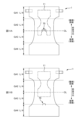
- FIG 11 is a diagram explaining the positioning of the tail insertion section 70.
- the tail insertion section 70 is positioned so as to overlap with the third area GA3, which is the third area from the ventral side (front side) when the diaper 1 is divided into four equal parts in the front-to-rear direction, but a part of the tail insertion section 70 (notch 71) may overlap with the second area (referred to as second area GA2) from the ventral side (front side) when the diaper 1 is divided into four equal parts in the front-to-rear direction.
- the ventral end of the tail insertion section 70 in the front-to-rear direction is positioned so as to overlap with the second area GA2. Even with this configuration, the position of the diaper 1 can be easily adjusted when putting it on a pet.
- the tail insertion section 70 may be formed so as to overlap with the absorbent core 11.
- the tail insertion section 70 is positioned so as not to overlap with the fourth region (fourth region GA4) from the ventral side (front side) when the diaper 1 is divided into four equal parts in the front-rear direction.
- FIG. 11B shows a case where the rear end of the tail insertion section 70 in the front-rear direction overlaps with the fourth region GA4.
- the region on the back side is narrower than the tail insertion section 70, and the pet's back is not sufficiently covered when the diaper 1 is worn, which may cause excrement to leak to the rear.
- the position of the leg openings LH relative to both legs of the pet may easily shift, which may deteriorate the fit of the diaper 1.
- the rear end of the tail insertion section 70 in the front-rear direction is positioned so as to overlap with the third region GA3 rather than the fourth region GA4 (see FIG. 1 and FIG. 11A). This makes it easier to prevent the pet's back from being insufficiently covered when the diaper 1 is worn, and to prevent excrement from leaking to the rear.
- the configuration of the tail insertion section 70 may also be modified as follows.
- Figure 12 shows modified versions of the tail insertion section 70.
- the tail insertion section 70 is formed by a cross-shaped groove 72 that penetrates the crotch section 4 in the thickness direction.
- the tail insertion section 70 is formed by a hole 73 that is approximately circular or elliptical. Even when the tail insertion section 70 is formed by such grooves 72 or holes 73, it is possible to achieve the same function as the notch 71.
- a pet diaper 100 (hereinafter also referred to as diaper 100) in which the shape of leg openings 4lh is different from that of the diaper 1 of the first embodiment will be described.
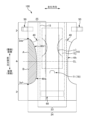
- Fig. 13 is a plan view showing the diaper 100 in an unfolded and extended state.
- the configuration other than the shape of the leg openings 4lh is almost the same as that of the diaper 1 of the first embodiment, and therefore a description of the configuration of each part of the diaper 100 will be omitted.
- the area indicated by the hatched portion in FIG. 13, which is laterally outboard of the leg openings 4lh of the crotch portion 4, is the area which forms the leg openings LH when the diaper 1 is worn.
- the leg openings LH are formed by the area surrounded by the straight line connecting the back end 2eb in the front-to-rear direction of the left-to-right side edge of the ventral waist portion 2 and the ventral end 3ef in the front-to-rear direction of the left-to-right side edge of the ventral waist portion 3, and the periphery of the leg openings 4lh.
- the area of the rear opening B is larger than the area of the ventral opening A. Since the area of the rear opening B is large, when the diaper 100 is put on a pet, it is easy to adjust the position on the rear side of the pet, and it is easy to improve the fit. On the other hand, since the area of the ventral opening A is not excessively large, it is possible to prevent the absorbent body 10 from shifting between the pet's legs (rear legs) when adjusting the position.
- the ventral leg opening portion 4lhf of the diaper 100 is provided with a perforation (through portion 40), and if the periphery of the ventral leg opening portion 4lhf interferes with the pet's legs, the interference can be suppressed by tearing and adjusting the perforation. This makes it possible to create a pet diaper that is easy to wear and less likely to slip out of place.
- FIG. 14 shows the diaper 100 in the unfolded and stretched state of FIG. 13 folded in half at the center position CL in the front-rear direction.
- the periphery of the ventral leg section 4lhf is located laterally outboard of the periphery of the rear leg section 4lhb.
- a point Pf on the periphery of the ventral leg section 4lhf is located laterally outboard of a point Pb on the periphery of the rear leg section 4lhb. That is, in the diaper 100 of the second embodiment, the leg section 4lh is formed so that the periphery of the rear leg section 4lhb is constricted laterally inward of the periphery of the ventral leg section 4lhf.
- the periphery of the rear leg opening 4lhb is narrowed inward, which makes it easier to adjust the position of the rear waist section 3 when putting the diaper 100 on a pet.
- the periphery of the rear leg opening 4lhb is less likely to interfere with the pet's legs, making it easier to adjust the position. This makes it easier to engage the fastening tab 50 with the target area 60 provided on the rear waist section 3, improving the fit of the diaper 100.
- Diaper first embodiment, pet diaper
- 2 ventral waist portion 2eb end (dorsal end of left and right side edge), 3 Dorsal waist portion, 3ef end (ventral end of left and right side edge), 4 Crotch part, 4lh leg opening part, 4lhf ventral leg opening part, 4lhb dorsal leg opening part, 10 absorbent body, 11 absorbent core, 12 core wrap sheet, 15 leg elastic member, 16 leak-proof wall elastic member, 22 top sheet, 23 leak-proof sheet, 24 back sheet, 25 side sheet, 40 Penetration portion, 41 groove, 41i inner end groove, 41 Ltd outer end groove, 42 vertical groove, 43 C-shaped groove, 45 cutout, 46 cutout portion, 50 fastening tabs, 51 tape base material, 52 engaging portion, 60 target area, 70 tail insertion part, 71 notch, 72 groove, 73 hole, 100 Diaper (second embodiment, pet diaper), BH waist opening, LH leg opening
Landscapes
- Life Sciences & Earth Sciences (AREA)
- Environmental Sciences (AREA)
- Animal Husbandry (AREA)
- Biodiversity & Conservation Biology (AREA)
- Absorbent Articles And Supports Therefor (AREA)
Abstract
腹側胴回り部(2)と、背側胴回り部(3)と、股下部(4)と、一対のファスニングタブ(50)と、尻尾挿入部(70)と、を有し、股下部(4)の左右方向における両側に、一対の脚繰り部(4lh)が設けられており、前後方向の中央位置よりも腹側に股下部(4)を厚さ方向に貫通する貫通部(40)を有するペット用おむつ(1)であって、伸長状態において、腹側胴回り部(2)の左右方向の側縁の背側端(2eb)と、背側胴回り部(3)の左右方向の側縁の腹側端(3ef)とを結んだ直線と、脚繰り部(4lh)の周縁と、によって囲まれる部分の面積のうち、前後方向の中央位置よりも腹側における面積(A)は、前後方向の中央位置よりも背側における面積(B)よりも大きい。
Description
本発明は、ペット用おむつに関する。
従来、犬や猫等のペットに装着されるペット用おむつとして、ファス二ングタブ(ファスニングテープ)によってペットの胴回りに固定するタイプのテープ型ペット用おむつが知られている。例えば、特許文献1には、一対のファスニングテープと、当該ファスニングテープを係止するための止着領域と、脚開口部を係止するための一対の円弧状領域にミシン目を備え、様々なサイズの胴周りや脚回りを有するペットに対応することが可能な、テープ型のペット用吸収性物品が開示されている。
しかしながら、従来のテープ型のペット用おむつにおいて、脚回り開口を形成する脚繰りの抉れが小さいと、装着時にペットの両脚の脚の付け根に干渉しやすく、装着性が悪化したり肌トラブル等の原因となったりするおそれがある。一方、脚繰りの抉れが大きいと、装着時に両脚の間で位置ずれが生じやすくなり、排泄漏れ等が生じるおそれがある。
本発明は、上記のような問題に鑑みてなされたものであって、その目的とするところは、良好な装着性を備え、位置ずれが生じ難いペット用おむつを提供することにある。
上記目的を達成するための主たる発明は、伸長且つ展開状態において、互いに交差する前後方向と左右方向と厚さ方向とを有し、腹側胴回り部と、背側胴回り部と、前記前後方向において前記腹側胴回り部と前記背側胴回り部との間の股下部と、前記腹側胴回り部の前記左右方向における両側に配置された一対のファスニングタブと、ペットの尻尾を通すための尻尾挿入部と、を有し、前記股下部の前記左右方向における両側に、前記腹側胴回り部及び前記背側胴回り部よりも前記左右方向における幅が狭くなった一対の脚繰り部が設けられており、前記前後方向の中央位置よりも腹側に、前記脚繰り部の周縁から前記左右方向の内側へ向かって、前記股下部を前記厚さ方向に貫通する貫通部を有するペット用おむつであって、伸長状態において、前記腹側胴回り部の前記左右方向の側縁の背側端と、前記背側胴回り部の前記左右方向の側縁の腹側端とを結んだ直線と、前記脚繰り部の周縁とによって囲まれる部分の面積のうち、前記前後方向の中央位置よりも腹側における面積は、前記前後方向の中央位置よりも背側における面積よりも大きい、ことを特徴とするペット用おむつである。
本発明の他の特徴については、本明細書及び添付図面の記載により明らかにする。
本発明の他の特徴については、本明細書及び添付図面の記載により明らかにする。
本発明によれば、良好な装着性を備え、位置ずれが生じ難いペット用おむつを提供することができる。
本明細書及び添付図面の記載により、少なくとも以下の事項が明らかとなる。
(態様1)
伸長且つ展開状態において、互いに交差する前後方向と左右方向と厚さ方向とを有し、腹側胴回り部と、背側胴回り部と、前記前後方向において前記腹側胴回り部と前記背側胴回り部との間の股下部と、前記腹側胴回り部の前記左右方向における両側に配置された一対のファスニングタブと、ペットの尻尾を通すための尻尾挿入部と、を有し、前記股下部の前記左右方向における両側に、前記腹側胴回り部及び前記背側胴回り部よりも前記左右方向における幅が狭くなった一対の脚繰り部が設けられており、前記前後方向の中央位置よりも腹側に、前記脚繰り部の周縁から前記左右方向の内側へ向かって、前記股下部を前記厚さ方向に貫通する貫通部を有するペット用おむつであって、伸長状態において、前記腹側胴回り部の前記左右方向の側縁の背側端と、前記背側胴回り部の前記左右方向の側縁の腹側端とを結んだ直線と、前記脚繰り部の周縁とによって囲まれる部分の面積のうち、前記前後方向の中央位置よりも腹側における面積は、前記前後方向の中央位置よりも背側における面積よりも大きい、ことを特徴とするペット用おむつ。
態様1のペット用おむつによれば、脚回り開口が腹側において広く形成されるため、装着時にペットの両脚の間で、脚繰り部の腹側の周縁がペットの脚の付け根に干渉し難くなり、装着性が向上する。また、貫通部が設けられていることにより、腹側脚繰り部の周縁がペットの脚の付け根に食い込んでしまうことを抑制しやすい。一方、脚回り開口の背側が腹側と比較して狭くなるため、脚回り開口は全体として過度に広がらず、装着時に位置ずれが生じ難い。したがって、良好な装着性と、位置ずれの生じ難さを両立することができる。
(態様2)
前記前後方向の中央位置よりも腹側おける前記脚繰り部の周縁は、前記前後方向の中央位置よりも背側における前記脚繰り部の周縁よりも前記左右方向の内側に括れている、態様1に記載のペット用おむつ。
前記前後方向の中央位置よりも腹側おける前記脚繰り部の周縁は、前記前後方向の中央位置よりも背側における前記脚繰り部の周縁よりも前記左右方向の内側に括れている、態様1に記載のペット用おむつ。
態様2のペット用おむつによれば、腹側脚繰り部の周縁が内側に括れた形状を有していることにより、ペットに装着させた際に、ペットの脚の付け根により干渉し難くなる。したがって、腹側脚繰り部の周縁が脚の付け根に食い込んでしまうことが抑制され、装着性をより向上させることができる。
(態様3)
伸長且つ展開状態において、互いに交差する前後方向と左右方向と厚さ方向とを有し、腹側胴回り部と、背側胴回り部と、前記前後方向において前記腹側胴回り部と前記背側胴回り部との間の股下部と、前記腹側胴回り部の前記左右方向における両側に配置された一対のファスニングタブと、ペットの尻尾を通すための尻尾挿入部と、を有し、前記股下部の前記左右方向における両側に、前記腹側胴回り部及び前記背側胴回り部よりも前記左右方向における幅が狭くなった一対の脚繰り部が設けられており、前記前後方向の中央位置よりも腹側に、前記脚繰り部の周縁から前記左右方向の内側へ向かって、前記股下部を前記厚さ方向に貫通する貫通部を有するペット用おむつであって、伸長状態において、前記腹側胴回り部の前記左右方向の側縁の背側端と、前記背側胴回り部の前記左右方向の側縁の腹側端とを結んだ直線と、前記脚繰り部の周縁とによって囲まれる部分の面積のうち、前記前後方向の中央位置よりも背側における面積は、前記前後方向の中央位置よりも腹側における面積よりも大きい、ことを特徴とするペット用おむつ。
伸長且つ展開状態において、互いに交差する前後方向と左右方向と厚さ方向とを有し、腹側胴回り部と、背側胴回り部と、前記前後方向において前記腹側胴回り部と前記背側胴回り部との間の股下部と、前記腹側胴回り部の前記左右方向における両側に配置された一対のファスニングタブと、ペットの尻尾を通すための尻尾挿入部と、を有し、前記股下部の前記左右方向における両側に、前記腹側胴回り部及び前記背側胴回り部よりも前記左右方向における幅が狭くなった一対の脚繰り部が設けられており、前記前後方向の中央位置よりも腹側に、前記脚繰り部の周縁から前記左右方向の内側へ向かって、前記股下部を前記厚さ方向に貫通する貫通部を有するペット用おむつであって、伸長状態において、前記腹側胴回り部の前記左右方向の側縁の背側端と、前記背側胴回り部の前記左右方向の側縁の腹側端とを結んだ直線と、前記脚繰り部の周縁とによって囲まれる部分の面積のうち、前記前後方向の中央位置よりも背側における面積は、前記前後方向の中央位置よりも腹側における面積よりも大きい、ことを特徴とするペット用おむつ。
態様3のペット用おむつによれば、装着時において脚回り開口が背側において広くなるため、ペットの背側における位置調整が容易であり、フィット性を向上させやすい。一方、脚回り開口の腹側が過度に大きくないため、位置調整の際にペットの両脚の間で吸収体の位置ずれ等を生じ難くすることができる。そして、腹側脚繰り部の周縁がペットの脚に干渉する場合には貫通部(ミシン目)を破いて調整することで、干渉を抑制することができる。したがって、良好な装着性と、位置ずれの生じ難さを両立することができる。
(態様4)
前記前後方向の中央位置よりも背側における脚繰り部の周縁は、前記前後方向の中央位置よりも腹側における脚繰り部の周縁よりも前記左右方向の内側に括れている、態様3に記載のペット用おむつ。
前記前後方向の中央位置よりも背側における脚繰り部の周縁は、前記前後方向の中央位置よりも腹側における脚繰り部の周縁よりも前記左右方向の内側に括れている、態様3に記載のペット用おむつ。
態様4のペット用おむつによれば、ペットの尻尾を尻尾挿入部に通した後で、背側胴回り部の左右方向における位置を調整する際に、背側脚繰り部の周縁がペットの脚に干渉し難くなるため、位置調整を行いやすくなる。これにより、背側胴回り部にファスニングタブを係合させやすくなる等、ペット用おむつの装着性をより向上させることができる。
(態様5)
前記貫通部は、前記股下部を前記厚さ方向に貫通する複数の溝が、前記脚繰り部の周縁から前記左右方向の内側へ向かって断続的に並んだミシン目である、態様1~4の何れかに記載のペット用おむつ。
前記貫通部は、前記股下部を前記厚さ方向に貫通する複数の溝が、前記脚繰り部の周縁から前記左右方向の内側へ向かって断続的に並んだミシン目である、態様1~4の何れかに記載のペット用おむつ。
態様5のペット用おむつによれば、装着時に、腹側脚繰り部の周縁がペットの脚の付け根に干渉してしまうような場合であっても、ミシン目を破いて腹側脚繰り部に切り込みを形成することで、干渉を生じ難くすることができる。これにより、装着時のフィット性をより高めることができる。そして、ミシン目を破る量を変更することで、ペットの体型に合わせてフィット性を自在に調整することができる。
(態様6)
液吸収性の吸収体と、前記吸収体よりも肌側に配置されたトップシートと、前記吸収体を覆うコアラップシートと、を有し、前記厚さ方向に見たときに、前記ミシン目が、前記トップシート及び前記コアラップシートの少なくとも何れかと重複していない、態様1~5の何れかに記載のペット用おむつ。
液吸収性の吸収体と、前記吸収体よりも肌側に配置されたトップシートと、前記吸収体を覆うコアラップシートと、を有し、前記厚さ方向に見たときに、前記ミシン目が、前記トップシート及び前記コアラップシートの少なくとも何れかと重複していない、態様1~5の何れかに記載のペット用おむつ。
態様6のペット用おむつによれば、トップシートやコアラップシートがミシン目(貫通部)によって厚さ方向に貫通されていないため、装着時に尿等の排泄物がミシン目を伝って厚さ方向の肌側から非肌側へ漏れ出すことが抑制される。
(態様7)
液吸収性の吸収体と、前記吸収体よりも非肌側に配置された防漏シートと、を有し、前記厚さ方向に見たときに、前記ミシン目の前記左右方向における内側の端部が、前記防漏シートと重複する部分を有している、態様1~6の何れかに記載のペット用おむつ。
液吸収性の吸収体と、前記吸収体よりも非肌側に配置された防漏シートと、を有し、前記厚さ方向に見たときに、前記ミシン目の前記左右方向における内側の端部が、前記防漏シートと重複する部分を有している、態様1~6の何れかに記載のペット用おむつ。
態様7のペット用おむつによれば、ミシン目を破り始める際に起点となる左右方向外側端部(先端部)に積層されているシート部材の枚数よりも、ミシン目を最大限に破った場合の終点となる左右方向内側端部(終端部)に積層されているシート部材の枚数が多くなる。したがって、ユーザーは、ミシン目の先端部から簡単に破り始めることが可能であり、また、ミシン目の終端部を超えておむつ(吸収体等)を余計に破いてしまうことが抑制される。
(態様8)
前記左右方向の両側に、前記前後方向に伸縮する脚回り弾性部材を有し、前記厚さ方向に見たときに、前記脚回り弾性部材またはその延長線と、前記ミシン目とが交差していない、態様1~7の何れかに記載のペット用おむつ。
前記左右方向の両側に、前記前後方向に伸縮する脚回り弾性部材を有し、前記厚さ方向に見たときに、前記脚回り弾性部材またはその延長線と、前記ミシン目とが交差していない、態様1~7の何れかに記載のペット用おむつ。
態様8のペット用おむつによれば、ミシン目に対して脚回り弾性部材の収縮力が作用し難く、脚回り弾性部材によってミシン目が両側に引っ張られてしまうことが抑制される。したがって、ミシン目が自然に破れてしまうことが抑制され、良好な装着性を維持しやすくすることができる。
(態様9)
前記左右方向の両側に、前記前後方向に伸縮する脚回り弾性部材を有し、前記厚さ方向に見たときに、前記脚回り弾性部材またはその延長線と、前記ミシン目とが交差している、態様1~8の何れかに記載のペット用おむつ。
前記左右方向の両側に、前記前後方向に伸縮する脚回り弾性部材を有し、前記厚さ方向に見たときに、前記脚回り弾性部材またはその延長線と、前記ミシン目とが交差している、態様1~8の何れかに記載のペット用おむつ。
態様9のペット用おむつによれば、脚回り弾性部材がミシン目と交差した点において切断され、ミシン目の両側に向かって収縮することとで、ミシン目を開く(破る)方向に力が作用しやすくなる。これにより、弱い力でもミシン目を破りやすくなり、ペット用おむつの装着性の調整を行いやすくすることができる。
(態様10)
前記左右方向において、前記ミシン目の最も内側の端よりも内側に、前記ミシン目と交差する方向に配置された溝を有する、態様1~9の何れかに記載のペット用おむつ。
前記左右方向において、前記ミシン目の最も内側の端よりも内側に、前記ミシン目と交差する方向に配置された溝を有する、態様1~9の何れかに記載のペット用おむつ。
態様10のペット用おむつによれば、ユーザーがミシン目を先端側から終端側に向かって破る際に、誤ってミシン目の終端部を超えて破ろうとしてしまった場合であっても、交差溝部が設けられていることにより、該交差溝部によってミシン目を破る力がせき止められて、ミシン目が過度に破れてしまうことを抑制することができる。
(態様11)
前記厚さ方向に見たときに、前記ミシン目を構成する複数の前記溝のうち、前記左右方向の最も外側に位置する外側端部溝と、前記脚繰り部の周縁とが交差している、態様1~10の何れかに記載のペット用おむつ。
(態様11)
前記厚さ方向に見たときに、前記ミシン目を構成する複数の前記溝のうち、前記左右方向の最も外側に位置する外側端部溝と、前記脚繰り部の周縁とが交差している、態様1~10の何れかに記載のペット用おむつ。
態様11のペット用おむつによれば、ユーザーがミシン目を破る際に、脚繰り部の周縁において破り始めの起点となる部分を弱い力で破り始めることができるため、安全且つ簡単にミシン目を破る動作を行うことができる。また、破り始める際に余計な力がかかり難くなるため、誤ってミシン目以外の部分が破れてしまうこと等を抑制できる。
(態様12)
前記厚さ方向に見たときに、前記ミシン目を構成する複数の前記溝のうち、前記左右方向の最も外側に位置する外側端部溝と、前記脚繰り部の周縁とが交差していない、態様1~11の何れかに記載のペット用おむつ。
(態様12)
前記厚さ方向に見たときに、前記ミシン目を構成する複数の前記溝のうち、前記左右方向の最も外側に位置する外側端部溝と、前記脚繰り部の周縁とが交差していない、態様1~11の何れかに記載のペット用おむつ。
態様12のペット用おむつによれば、破り始めの起点となる部分が脚繰り部の周縁の内側に離間して配置されているため、ミシン目の破り始める際に要する力が大きくなる。これにより、ミシン目が自然に破れてしまったり、ユーザーが意図していない破れが生じたりすることを抑制できる。
(態様13)
伸長且つ展開状態において前記前後方向に4等分したときの腹側から3番目の領域と、前記尻尾挿入部とが重複する部分を有している、態様1~12の何れかに記載のペット用おむつ。
(態様13)
伸長且つ展開状態において前記前後方向に4等分したときの腹側から3番目の領域と、前記尻尾挿入部とが重複する部分を有している、態様1~12の何れかに記載のペット用おむつ。
態様13のペット用おむつによれば、尻尾挿入部の前後方向における位置を規定することで、装着時にペットの尻尾の位置を基準として、腹側胴回り部、背側胴回り部、及び股下部の位置を容易に調節しやすくなる。これにより、ペットの身体の適正な位置にペット用おむつの各部位を正しく当接させやすくなる。
(態様14)
前記尻尾挿入部の前記前後方向における背側の端が、前記腹側から3番目の領域に位置している、態様1~13の何れかに記載のペット用おむつ。
(態様14)
前記尻尾挿入部の前記前後方向における背側の端が、前記腹側から3番目の領域に位置している、態様1~13の何れかに記載のペット用おむつ。
態様14のペット用おむつによれば、装着時に尻尾挿入部よりも背側の領域が過度に狭くなりすぎず、ペットの背部が十分に覆われなくなったり、排泄物の後ろ漏れが生じたりすることを抑制しやすくなる。
===第1実施形態===
<おむつ1の基本的構成>
犬や猫等のペットに装着させるペット用おむつの一例として、ペット用のテープ型使い捨ておむつ1(以下、「おむつ1」とも呼ぶ)の基本的な構成について説明する。図1は、展開且つ伸長状態であるおむつ1の平面図である。図2Aは、図1のA-A矢視について表す概略断面図である。図2Bは、図1のB-B矢視について表す概略断面図である。なお、図1における伸長状態とは、製品(おむつ1)を皺なく伸長させた状態、具体的には、おむつ1を構成する各部材(例えば、後述するバックシート24等)の寸法がその部材単体の寸法と一致又はそれに近い長さになるまで伸長した状態のことを言う。
<おむつ1の基本的構成>
犬や猫等のペットに装着させるペット用おむつの一例として、ペット用のテープ型使い捨ておむつ1(以下、「おむつ1」とも呼ぶ)の基本的な構成について説明する。図1は、展開且つ伸長状態であるおむつ1の平面図である。図2Aは、図1のA-A矢視について表す概略断面図である。図2Bは、図1のB-B矢視について表す概略断面図である。なお、図1における伸長状態とは、製品(おむつ1)を皺なく伸長させた状態、具体的には、おむつ1を構成する各部材(例えば、後述するバックシート24等)の寸法がその部材単体の寸法と一致又はそれに近い長さになるまで伸長した状態のことを言う。
図1に示すように、各方向を定義する。すなわち、おむつ1の長手方向に沿った方向を「前後方向」とし、前後方向と直交し、おむつ1の幅方向に沿った方向を「左右方向」とする。前後方向の「前側」は、おむつ1の装着時に装着対象者(ここではペット)の腹側に位置する側であり、以下「腹側」とも呼ぶ。前後方向の「後側」は、おむつ1の装着時に装着対象者(ペット)の背側に位置する側であり、以下「背側」とも呼ぶ。また、図2A及び図2Bに示すように、前後方向及び左右方向と直交する方向を「厚さ方向」とし、装着対象者(ペット)の肌と当接する側を「肌側」とし、その反対側を「非肌側」とする。
おむつ1は、所謂オープンタイプのテープ型使い捨ておむつであり、吸収体10と、トップシート22と、防漏シート23と、バックシート24と、サイドシート25と、貫通部40と、ファスニングタブ50と、ターゲット領域60と、を有する。
吸収体10は、排泄物等の液体を吸収して保持する吸収性コア11(例えば粉砕パルプや高吸収ポリマーで構成される)と、吸収性コア11を被覆する液透過性のコアラップシート12(例えばティッシュシートやスパンボンド不織布)とを有する。本実施形態において吸収性コア11(吸収体10)は、長手方向の中央部がくびれた平面視略砂時計型の形状をなし、その長手方向をおむつ1の前後方向に沿わせつつ左右方向の中央に配置されている。吸収性コア11にこのようなくびれが設けられることにより、おむつ1の装着時において、ペットが脚を動かしやすくなる。但し、吸収体10の形状は必ずしも図1に示されるような砂時計型である必要ななく、例えば、長方形型等であっても良い。
トップシート22は、吸収体10の肌側に配置される液透過性のシート部材であり、例えば、エアスルー不織布やスパンボンド不織布等によって形成される。また、トップシート22の肌側且つ左右方向両側には、左右方向の外側に張り出した一対のサイドシート25,25が接合されている。サイドシート25は、左右方向における内側端部が外側に折り返されており、当該折り返された部分には、糸ゴム等の防漏壁弾性部材16が前後方向に伸長した状態で挟み込まれ、接合されている(図2参照)。おむつ1をペットに装着させる際には、該防漏壁弾性部材16が発現する伸縮性に基づいてサイドシート25の左右方向内側端部が装着者(ペット)の肌側に起立し、所謂防漏壁を形成して、尿等の横漏れを抑制する。
防漏シート23は、吸収体10の非肌側に配置された液不透過性の部材であり、例えば樹脂製のフィルム等が用いられる。バックシート24は、防漏シート23よりも非肌側に配置され、おむつ1の最も非肌側の外装を構成する部材(外装シート)であり、例えば不織布によって構成される。
また、吸収体10よりも左右方向の外側には、糸ゴム等からなる一対の脚回り弾性部材15,15が前後方向に伸長した状態で挟み込まれ、接合されている。当該脚回り弾性部材15が前後方向に沿って伸縮性を発現することにより、おむつ1の装着時に脚回り開口LH(後述する図3参照)がペットの脚回りに沿ってフィットしやすくなり、装着性が向上すると共に、尿等の排泄物の横漏れが抑制される。
これらの部材が厚さ方向に積層され、積層された部材同士の一部がホットメルト接着剤等の接着剤によって適宜接合されることによって、おむつ1が形成される。
図1に示されるように、展開且つ伸長状態のおむつ1は、全体として前後方向の腹側及び背側において左右方向の幅が広く、前後方向の中央部において左右方向の幅が狭くなるように形成されている。以下、前後方向の腹側において左右方向の幅が最も広くなる部分を腹側胴回り部2とし、前後方向の背側において左右方向の幅が最も広くなる部分を背側胴回り部3とする。図1では、前後方向の腹側において左右方向の幅W1で表される矩形状の部分が腹側胴回り部2となる。すなわち、腹側胴回り部2は、左右方向の両側で前後方向に沿った側縁と、一対の側縁の前端同士を結ぶ直線と、一対の側縁の後端同士を結ぶ直線とによって囲まれた部分である。同様に、図1で、前後方向の背側において左右方向の幅W1で表される矩形状の部分が背側胴回り部3となる。
そして、前後方向において、腹側胴回り部2と背側胴回り部3との間の部分を股下部4とする。股下部4では、左右方向における幅が腹側胴回り部2及び背側胴回り部3の左右方向における幅W1よりも狭くなっている。具体的に、股下部4は、左右方向における両側部が切り欠かれており、その周縁が、前後方向の外側(腹側及び背側)から中心側に向かって左右方向の外側から内側に括れた形状を有している。以下、股下部4の周縁を構成する部分を脚繰り部4lhとする。この脚繰り部4lhは、おむつ1をペットに装着させた際に、脚回り開口LHを形成する部分である(後述する図3参照)。以下では、脚繰り部4lhのうち、前後方向において中央位置CLよりも腹側(前側)の部分を腹側脚繰り部4lhfとも呼び、前後方向において中央位置CLよりも背側(後側)の部分を背側脚繰り部4lhbとも呼ぶ。
おむつ1の股下部4のうち、前後方向における中央位置CLよりも腹側には、該股下部4を記厚さ方向に貫通する一対の貫通部40が設けられている。図1では、腹側脚繰り部4lhfの周縁から左右方向の内側且つ前後方向の腹側に向かって延びる、一対の貫通部40,40が設けられている。貫通部40の詳細については後で説明する。
また、おむつ1の腹側胴回り部2には、図1及び図2に示されるように、サイドシート25及びバックシート24の左右方向における両側端から外側に延出する一対のファスニングタブ50,50が設けられている。ファスニングタブ50はテープ基材51と、係止部52とを有している。テープ基材51は、例えば不織布等からなる略矩形状のシート部材であり、左右方向における一方側の端部がサイドシート25やバックシート24に固定され、左右方向における他方側の端部がサイドシート25及びバックシート24の両側から外側に延出している。係止部52は、係止用突起(不図示のフック)を複数備えた、所謂面ファスナーであり、テープ基材51の厚さ方向における肌側の面に設けられている。
一方、おむつ1の背側胴回り部3には、バックシート24の非肌側面にターゲット領域60が設けられている。ターゲット領域60は、係止部52と係合可能な領域であり、例えば、不織布の表面の繊維をループ状に加工して係止部52の係止用突起(フック)を係合させやすくした部材を設けることによって形成される。また、ターゲット領域60とバックシート24とを異なる部材とするのではなく、背側胴回り部3においてバックシート24の一部の領域を加工することによってターゲット領域60が形成されるのであっても良い。
おむつ1をペットに装着させる際には、背側胴回り部3に設けられたターゲット領域60に腹側胴回り部2に設けられた一対のファスニングタブ50,50(係止部52,52)をそれぞれ係止させる。これにより、胴回り開口BH、及び、一対の脚回り開口LHが形成される(図3A及び図3B参照)。おむつ1の装着時の具体的動作、及び、胴回り開口BH,脚回り開口LHについては後で説明する。
また、おむつ1の股下部4の左右方向における中央部には、おむつ1を装着する際にペットの尻尾を通すための尻尾挿入部70が設けられている。図1において、尻尾挿入部70は、トップシート22、防漏シート23、及びバックシート24を厚さ方向に貫通する切り込み71によって形成される。おむつ1に尻尾挿入部70が設けられていることにより、該おむつ1をペットに装着させる際に尻尾が邪魔にならず、おむつ1の着脱を楽に行うことができる。また、ペットの身体に対するおむつ1のフィット性を高くすると共に、位置ずれが生じることを抑制することができる。
<おむつ1の装着について>
図3A及び図3Bは、おむつ1をペットに装着させる際の動作について説明する図である。ペットにおむつ1を装着させる際には、先ず、図3Aのように、尻尾挿入部70にペットの尻尾を通しながら背側胴回り部3をペットの背中側に当てがいつつ、おむつ1を前後方向に二つ折りにする。この状態において、おむつ1の腹側胴回り部2はペットの腹側に配置され、吸収体10もペットの腹側(すなわちペットの排泄器官がある側)に配置される。尻尾挿入部70を基準とすることで、ペットの排泄器官の位置に吸収体10を正しく配置することができる。
図3A及び図3Bは、おむつ1をペットに装着させる際の動作について説明する図である。ペットにおむつ1を装着させる際には、先ず、図3Aのように、尻尾挿入部70にペットの尻尾を通しながら背側胴回り部3をペットの背中側に当てがいつつ、おむつ1を前後方向に二つ折りにする。この状態において、おむつ1の腹側胴回り部2はペットの腹側に配置され、吸収体10もペットの腹側(すなわちペットの排泄器官がある側)に配置される。尻尾挿入部70を基準とすることで、ペットの排泄器官の位置に吸収体10を正しく配置することができる。
次に、腹側胴回り部2に設けられている一対のファスニングタブ50を左右方向の両側に引っ張り上げながら、係止部52の係止用突起を、背側胴回り部3に設けられているターゲット領域60に引っかけて係止させる。これにより、腹側胴回り部2と背側胴回り部3とが環状に連結され、図3Bに示されるような胴回り開口BHが形成される。また、股下部4の左右方向両側の脚繰り部4lh,4lhによって、一対の脚回り開口LH,LHが形成される。
おむつ1の装着時には、脚回り開口LHを形成している脚繰り部4lhのうち、前後方向腹側の腹側脚繰り部4lhfが、ペットの両脚(後脚)の間で脚の付け根部分に当接した状態となる(図3B参照)。そのため、腹側脚繰り部4lhfの周縁がペットの後脚の付け根に干渉してしまう場合がある。例えば、胴回りにおけるフィット性を高めようとして、ファスニングタブ50を左右方向の両側に強く引っ張ると、腹側脚繰り部4lhfの周縁がペットの脚の付け根に食い込んでしまい、装着性が悪化したり肌トラブルの原因となったりするおそれがある。
そこで、本実施形態のおむつ1では、装着時における脚回り開口LHの形状を適当に調整することにより、良好な装着性を実現している。図4は、脚回り開口LHの形状について説明する図である。同図4は、図1と同様に展開且つ伸長状態のおむつ1について表している。図4において、股下部4の脚繰り部4lhよりも左右方向の外側において、斜線部で示されている領域が、おむつ1の装着時に脚回り開口LHを形成する領域である。すなわち、腹側胴回り部2の左右方向側縁の前後方向における背側の端2ebと、背側胴回り部3の左右方向側縁の前後方向における腹側の端3efとを結ぶ直線と、脚繰り部4lhの周縁とによって囲まれる部分によって、脚回り開口LHが形成される。
そしてこの脚回り開口LHを形成する斜線部で示される領域のうち、前後方向において中央位置CLよりも腹側の部分を腹側開口部A、前後方向において中央位置CLよりも背側の部分を背側開口部Bとする。第1実施形態のおむつ1では、腹側開口部Aの面積が背側開口部Bの面積よりも大きくなっている。腹側開口部Aの面積が大きいため、装着時において脚回り開口が腹側において広くなる。したがって、ペットの両脚の間で、腹側脚繰り部4lhfの周縁がペットの後脚の付け根に干渉し難くなり、装着性が向上する。一方、背側開口部Bの面積は腹側開口部Aと比較して小さいため、脚回り開口LHは全体として過度に広がらず、装着時に位置ずれが生じ難い。これにより、良好な装着性と、位置ずれの生じ難さを両立することができる。
さらに、第1実施形態のおむつ1では、腹側脚繰り部4lhfの周縁が、背側脚繰り部4lhbの周縁よりも左右方向の内側に括れるように、脚繰り部4lhが形成されている。図5は、図4の展開且つ伸長状態のおむつ1を、前後方向における中央位置CLにて二つ折りにした状態を表す図である。図5の様に腹側胴回り部2と背側胴回り部3とを重ね合わせた状態において、腹側脚繰り部4lhfの周縁は、背側脚繰り部4lhbの周縁よりも左右方向の内側に位置している。例えば、前後方向において中央位置CLから距離h1だけ離間した位置で、腹側脚繰り部4lhfの周縁における点Pfは、背側脚繰り部4lhbの周縁における点Pbよりも、左右方向の内側に位置している。
このように、腹側脚繰り部4lhfの周縁が内側に括れていることによって、図3Bのようにおむつ1をペットに装着させた際に、腹側脚繰り部4lhfの周縁がペットの脚の付け根により干渉し難くなる。したがって、腹側脚繰り部4lhfの周縁が脚の付け根に食い込んでしまうことが抑制され、装着性をより向上させることができる。
また、おむつ1では、腹側脚繰り部4lhfの周縁から左右方向の内側へ向かって延びる一対の貫通部40,40が設けられていることにより、腹側脚繰り部4lhfの周縁がペットの脚の付け根に食い込んでしまうことを抑制しやすくなっている。図6は、貫通部40の詳細について説明する図である。同図6は、展開且つ伸長状態のおむつ1の腹側脚繰り部4lhfのうち、腹側胴周り部2に隣接する領域を拡大して表したものである。
第1実施形態の貫通部40は、股下部4を厚さ方向に貫通する複数の溝41,41…が腹側脚繰り部4lhfの周縁から左右方向の内側へ向かって断続的に並んだ、所謂ミシン目である。このようなミシン目(貫通部40)が設けられていることにより、ユーザー(ペットの飼い主等)は、股下部4の一部を当該ミシン目に沿って裂くことができる。すなわち、腹側脚繰り部4lhfの周縁に切り込みを形成することができる。このような構成であれば、おむつ1の装着時に、ペットの体型によって腹側脚繰り部4lhfの周縁が脚の付け根に干渉してしまうような場合であっても、腹側脚繰り部4lhfに切り込みを形成することで、干渉を生じ難くすることができる。これにより、おむつ1装着時のフィット性をより高めることができる。そして、ミシン目を破る量(切り込みの長さ)を変更することで、ペットの体型に合わせてフィット性を自在に調整することができる。
なお、ミシン目(貫通部40)は、股下部4から腹側胴回り部2まで達していても良い。すなわち、ミシン目(貫通部40)が腹側胴回り部2の一部を厚さ方向に貫通していても良い。
また、おむつ1を厚さ方向に見たときに、ミシン目(貫通部40)が、吸収性コア11を覆うコアラップシート12、及び、吸収体10よりも肌側に設けられたトップシート22の少なくとも何れかと重複していないことが好ましい。仮に、コアラップシート12やトップシート22と重複してミシン目(貫通部40)が設けられていた場合、コアラップシート12やトップシート22が厚さ方向に貫通されることにより、おむつ1の装着時に尿等の排泄物が貫通部40を通過して肌側から非肌側に漏出しやすくなるおそれがある。
これに対して、おむつ1では図6に示されるように、左右方向において、ミシン目(貫通部40)の内側端部(終端部とも呼ぶ)が、コアラップシート12及びトップシート22の外側端よりも外側に位置している。つまり、ミシン目(貫通部40)は、コアラップシート12及びトップシート22の何れとも重複していない。したがって、おむつ1の装着時に尿等がミシン目を伝って厚さ方向の肌側から非肌側へ漏れ出すことが抑制される。
また、おむつ1を厚さ方向に見たときに、ミシン目(貫通部40)の左右方向における内側端部は、防漏シート23と重複している。図6では、ミシン目(貫通部40)の終端部が、防漏シート23と重複した位置に配置されている。この場合、ミシン目(貫通部40)の終端部は、厚さ方向において、少なくともサイドシート25及び防漏シート23及びバックシート24の3枚のシート部材を貫通している。一方、ミシン目(貫通部40)の左右方向における外側端部(先端部とも呼ぶ)は、防漏シート23と重複しておらず、サイドシート25及びバックシート24の2枚のシート部材を貫通している。
つまり、ミシン目を破り始める際に起点となる左右方向における外側端部(先端部)では2枚のシート部材が積層されており、ミシン目を最大限に破った場合の終点となる左右方向における内側端部(終端部)では3枚のシート部材が積層されている。このような構成であれば、ミシン目を破る際に、破り始めとなる先端部付近では比較的弱い力で破ることが可能となり、破り終わりとなる終端部付近では、先端部よりも強い力が必要となる。これにより、ユーザーは、ミシン目の先端部から簡単に破り始めることが可能であり、また、ミシン目の終端部を超えておむつ1(吸収体10等)を余計に破いてしまうことが抑制される。
また、おむつ1を厚さ方向に見たときに、ミシン目(貫通部40)は、脚回り弾性部材15及びその延長線と重複していない。ミシン目(貫通部40)は、おむつ1の製造工程において脚回り弾性部材15を挟み込んだ状態でサイドシート25とバックシート24とを接合した後で、所定のカッター等を用いて複数の溝41を形成することによって設けられる。したがって、ミシン目と脚回り弾性部材15とが重複していた場合、溝41を形成する過程で脚回り弾性部材15が切断されてしまう可能性が高い。そして、仮に、脚回り弾性部材15がミシン目によって切断されていた場合、ミシン目の両側に脚回り弾性部材15の収縮力(脚回り弾性部材15が切断された箇所から切断されていない側に向かって収縮する力)が作用することになる。すなわち、ミシン目と交差する方向に該ミシン目が引っ張られることによって、ミシン目が自然に破れやすくなるおそれがある。同様に、ミシン目(貫通部40)が、脚回り弾性部材15の延長線と交差している場合にも、脚回り弾性部材15の収縮力が作用して、ミシン目が自然に破れやすくなるおそれがある。
これに対して、第1実施形態のおむつ1では、図6に示されるように、ミシン目(貫通部40)が脚回り弾性部材15及びその延長線と重複していないため、ミシン目(貫通部40)に対して脚回り弾性部材15の収縮力が作用し難い。すなわち、脚回り弾性部材15によってミシン目が両側(ミシン目と交差する方向)に引っ張られてしまうことが抑制される。これにより、ミシン目が自然に破れてしまうことが抑制され、おむつ1の良好な装着性を維持しやすくすることができる。
一方、おむつ1を厚さ方向に見たときに、ミシン目(貫通部40)と、脚回り弾性部材15及びその延長線とが重複する構成としても良い。図7は、ミシン目(貫通部40)と脚回り弾性部材15とが重複する場合について表す図である。図7では、脚回り弾性部材15がミシン目と交差した点において切断され、ミシン目よりも腹側に位置する腹側弾性部材15fと、ミシン目よりも背側に位置する背側弾性部材15fbとに分割されている。この場合、腹側弾性部材15fと背側弾性部材15fbとがそれぞれ収縮して、ミシン目を開く(破る)方向に力が作用する。例えば、おむつ1を構成しているシート部材(サイドシート25やバックシート24等)が厚く、ミシン目を破るために大きな力が必要となる場合等には、ミシン目の両側に腹側弾性部材15f及び背側弾性部材15fbによる収縮力が作用するようにしておくことで、弱い力でもミシン目を破りやすくすることができる。これにより、おむつ1の装着性の調整を行いやすくすることができる。
また、ミシン目の終端部側に、ミシン目が過度に破れてしまうことを抑制するための破れ抑制機構を設けておくと良い。図8A及び図8Bは、ミシン目(貫通部40)破れ抑制機構について説明する図である。図8Aでは、左右方向において、ミシン目の最も内側の端よりも内側に、ミシン目と交差する方向に配置された縦溝42が設けられている。すなわち、ミシン目を構成している複数の溝41,41…のうち、左右方向の最も内側(終端側)に位置する内側端部溝41iよりもさらに内側に、内側端部溝41iと交差する方向に延びる縦溝42が配置されている。例えば、ユーザーがミシン目を先端側から終端側に向かって破る動作を行う際に、誤ってミシン目の終端部(内側端部溝41i)を超えて破ろうとしてしまった場合に、破る方向(ミシン目に沿った方向)と交差する縦溝42(以下、「交差溝部」とも呼ぶ)が設けられていれば、当該縦溝42によってミシン目を破る力がせき止められて、ミシン目が過度に破れてしまうことが抑制される。
図8Bでは、縦溝42に替えて、左右方向において、ミシン目の最も内側の端よりも内側に、C型溝43が設けられている。C型溝43は、ミシン目の内側端部溝41iよりもさらに内側に、内側端部溝41iと交差する部分を有しており、縦溝42と同様に交差溝部として機能する。これにより、ミシン目を破る力がC型溝43によってせき止められ、ミシン目が終端部(内側端部溝41i)を超えて破れてしまうことが抑制される。また、縦溝42やC型溝43以外に、左右方向においてミシン目の最も内側の端よりも内側に、ミシン目と交差する交差溝部が設けられていても良い。このような交差溝部が破れ抑制機構として機能することで、おむつ1が過度に破れてしまうことが抑制される。
図9A及び図9Bは、ミシン目(貫通部40)と腹側脚繰り部4lhfの周縁との位置関係について説明する図である。図9Aでは、おむつ1を厚さ方向に見たときに、ミシン目(貫通部40)を構成している複数の溝41,41…のうち、左右方向の最も外側(先端側)に位置する外側端部溝41оと、腹側脚繰り部4lhfの周縁とが交差している。外側端部溝41оは、ミシン目を破いて腹側脚繰り部4lhfの周縁に切れ目を形成する際に、破り始めの起点となる部分である。したがって、図9Aのように外側端部溝41оが腹側脚繰り部4lhfの周縁と重複する構成であれば、ユーザーがミシン目を破いて腹側脚繰り部4lhfに切れ目を形成する際に、弱い力でミシン目を破り始めることが可能となり、安全且つ簡単にミシン目を破る動作を行うことができる。また、余計な力がかかり難いため、誤ってミシン目以外の部分が破れてしまうこと等を抑制できる。
一方、図9Bでは、おむつ1を厚さ方向に見たときに、ミシン目の左右方向の最も外側(先端側)に位置する外側端部溝41оと、腹側脚繰り部4lhfの周縁とが交差してない。すなわち、外側端部溝41оが腹側脚繰り部4lhfの周縁よりも左右方向の内側に配置されている。破り始めの起点となる外側端部溝41оが腹側脚繰り部4lhfの周縁の内側に離間して配置されているため、図9Aの場合と比較してミシン目の破り始める際に要する力が大きくなる。したがって、図9Bのように外側端部溝41оが腹側脚繰り部4lhfの周縁と重複していない構成とすることにより、ミシン目が自然に破れてしまったり、ユーザーが意図していない破れが生じたりすることを抑制しやすくなる。
(貫通部40の変形例)
おむつ1の貫通部40は上述したミシン目以外に、以下の様な構成としても良い。図10A及び図10Bは、貫通部40の変形例について表す図である。図10Aでは、一つの溝により貫通部40が構成されている。すなわち、腹側脚繰り部4lhfの周縁から左右方向の内側且つ前後方向の腹側に向かって延びる切り込み45によって貫通部40が構成されている。腹側脚繰り部4lhfの周縁部に予め切り込み45が設けられていることにより、ミシン目を破く手間をかけずに脚回り開口LHを広げることができる。
おむつ1の貫通部40は上述したミシン目以外に、以下の様な構成としても良い。図10A及び図10Bは、貫通部40の変形例について表す図である。図10Aでは、一つの溝により貫通部40が構成されている。すなわち、腹側脚繰り部4lhfの周縁から左右方向の内側且つ前後方向の腹側に向かって延びる切り込み45によって貫通部40が構成されている。腹側脚繰り部4lhfの周縁部に予め切り込み45が設けられていることにより、ミシン目を破く手間をかけずに脚回り開口LHを広げることができる。
また、図10Bでは、或る程度広い面積を有する孔により貫通部40が構成されている。すなわち、腹側脚繰り部4lhfの周縁を含む股下部4の所定の領域が厚さ方向にくり抜かれたくり抜き部46によって貫通部40が構成されている。腹側脚繰り部4lhfの周縁部を含む一部の領域が予めくり抜かれていることにより、装着時に腹側脚繰り部4lhfの周縁がペットの脚の付け根に食い込んでしまうことをより抑制しやすくなる。
なお、腹側脚繰り部4lhfの周縁に図10Bのようなくり抜き部46が設けられている場合、当該くり抜き部46によってくり抜かれた部分の面積は、図4で説明した腹側開口部Aの面積には含まれないものとする。すなわち、腹側開口部Aの面積と背側開口部Bの面積とを比較する際には、くり抜き部46が形成されていない場合における側脚繰り部4lhfの周縁(図10Bの点線で示される仮想線)に基づいて腹側開口部Aの面積が決定される。
<尻尾挿入部70の構成>
おむつ1において、装着時にペットの尻尾を通すための尻尾挿入部70は、股下部4のうち前後方向の中央位置CLよりも背側寄りに配置されている。具体的には、図1のように、展開且つ伸長状態のおむつ1の前後方向の長さをLとして、長さLを4等分したときに、腹側(前側)から3番目の領域(第3領域GA3とする)と重複するように尻尾挿入部70が配置される。尻尾挿入部70の前後方向における位置を規定することで、おむつ1の装着時にペットの尻尾の位置を基準として、腹側胴回り部2、背側胴回り部3、及び股下部4の位置を容易に調節しやすくなる。これにより、ペットの身体の適正な位置におむつ1の各部位を正しく当接させやすくなる。例えば、ペットの排泄口に対する吸収体10の位置や、ペットの両脚に対する脚回り開口LHの位置が適正に定められる。また、おむつ1を装着した状態において、尻尾挿入部70の位置が固定されるため、装着後におむつ1の位置ズレ等が生じ難くなる。
おむつ1において、装着時にペットの尻尾を通すための尻尾挿入部70は、股下部4のうち前後方向の中央位置CLよりも背側寄りに配置されている。具体的には、図1のように、展開且つ伸長状態のおむつ1の前後方向の長さをLとして、長さLを4等分したときに、腹側(前側)から3番目の領域(第3領域GA3とする)と重複するように尻尾挿入部70が配置される。尻尾挿入部70の前後方向における位置を規定することで、おむつ1の装着時にペットの尻尾の位置を基準として、腹側胴回り部2、背側胴回り部3、及び股下部4の位置を容易に調節しやすくなる。これにより、ペットの身体の適正な位置におむつ1の各部位を正しく当接させやすくなる。例えば、ペットの排泄口に対する吸収体10の位置や、ペットの両脚に対する脚回り開口LHの位置が適正に定められる。また、おむつ1を装着した状態において、尻尾挿入部70の位置が固定されるため、装着後におむつ1の位置ズレ等が生じ難くなる。
図11は尻尾挿入部70配置について説明する図である。尻尾挿入部70は、おむつ1を前後方向に4等分したときの腹側(前側)から3番目の第3領域GA3と重複するように配置することを説明したが、尻尾挿入部70(切り込み71)の一部がおむつ1を前後方向に4等分したときの腹側(前側)から2番目の領域(第2領域GA2とする)と重複していても良い。図11Aでは、尻尾挿入部70の前後方向における腹側端が第2領域GA2と重複するように配置されている。このような構成であっても、ペットに装着させる際のおむつ1の位置調整を容易に行うことができる。
なお、図11Aのように尻尾挿入部70の一部が第2領域GA2と重複する場合、尻尾挿入部70と吸収体10(吸収性コア11)とが重複する可能性がある。この場合、図11Aのように尻尾挿入部70と重複しないよう吸収性コア11の形状を変更すると良い。但し、吸収性コア11と重複して尻尾挿入部70が形成されるのであっても良い。
一方、尻尾挿入部70は、おむつ1を前後方向に4等分したときの腹側(前側)から4番目の領域(第4領域GA4とする)とは重複しないように配置される。図11Bは、尻尾挿入部70の前後方向の後側端が第4領域GA4と重複する場合について表している。図11Bの場合、尻尾挿入部70よりも背側の領域が狭くなり、おむつ1の装着時にペットの背部が十分に覆われ難く、排泄物の後ろ漏れの原因となるおそれがある。また、ペットの両脚に対する脚回り開口LHの位置がずれやすく、装着性が悪化するおそれがある。したがって、おむつ1では、尻尾挿入部70の前後方向の後側端が、第4領域GA4ではなく第3領域GA3と重複して配置されるようにしている(図1及び図11A参照)。これにより、装着時にペットの背部が十分に覆われなくなったり、排泄物の後ろ漏れが生じたりすることを抑制しやすくなる。
また、尻尾挿入部70の構成は、以下のように変形しても良い。図12は、尻尾挿入部70の変形例について表す図である。図12Aでは、股下部4を厚さ方向に貫通する十字型の溝72によって尻尾挿入部70が形成されている。図12Bでは、略円形状や楕円形状に空いた穴73によって尻尾挿入部70が形成されている。このような溝72や穴73によって尻尾挿入部70が形成される場合であっても、切り込み71と同様に尻尾挿入部70の機能を実現することができる。
===第2実施形態===
第2実施形態では、脚繰り部4lhの形状が第1実施形態のおむつ1とは異なるペット用おむつ100(以下、おむつ100とも呼ぶ)について説明する。図13は、展開且つ伸長状態のおむつ100を表す平面図である。第2実施形態のおむつ100において、脚繰り部4lhの形状以外の構成は第1実施形態のおむつ1とほぼ同様であるため、おむつ100の各部の構成については説明を省略する。
第2実施形態では、脚繰り部4lhの形状が第1実施形態のおむつ1とは異なるペット用おむつ100(以下、おむつ100とも呼ぶ)について説明する。図13は、展開且つ伸長状態のおむつ100を表す平面図である。第2実施形態のおむつ100において、脚繰り部4lhの形状以外の構成は第1実施形態のおむつ1とほぼ同様であるため、おむつ100の各部の構成については説明を省略する。
おむつ100において、股下部4の脚繰り部4lhよりも左右方向の外側において、図13の斜線部で示されている領域が、おむつ1の装着時に脚回り開口LHを形成する領域である。すなわち、腹側胴回り部2の左右方向側縁の前後方向における背側の端2ebと、背側胴回り部3の左右方向側縁の前後方向における腹側の端3efとを結ぶ直線と、脚繰り部4lhの周縁とによって囲まれる部分によって、脚回り開口LHが形成される。
そして、前後方向において中央位置CLよりも腹側の部分を腹側開口部A、前後方向において中央位置CLよりも背側の部分を背側開口部Bとすると、おむつ100では、背側開口部Bの面積が腹側開口部Aの面積よりも大きくなっている。背側開口部Bの面積が大きいため、おむつ100をペットに装着させる際に、ペットの背側における位置調整が容易であり、フィット性を向上させやすい。一方、腹側開口部Aの面積が過度に大きくないため、位置調整の際にペットの両脚(後脚)の間で吸収体10の位置ずれを生じ難くすることができる。なお、腹側開口部Aの面積が小さいと、腹側脚繰り部4lhfの周縁がペットの脚の付け根に干渉しやすくなるおそれがある。しかしながら、おむつ100の腹側脚繰り部4lhfにはミシン目(貫通部40)が設けられており、腹側脚繰り部4lhfの周縁がペットの脚に干渉する場合には当該ミシン目を破いて調整することで、干渉を抑制することができる。これにより、良好な装着性を備え、位置ずれが生じ難いペット用おむつを実現することができる。
図14は、図13の展開且つ伸長状態のおむつ100を、前後方向における中央位置CLにて二つ折りにした状態を表す図である。第2実施形態のおむつ100では、図5の様に腹側胴回り部2と背側胴回り部3とを重ね合わせた状態において、腹側脚繰り部4lhfの周縁は、背側脚繰り部4lhbの周縁よりも左右方向の外側に位置している。例えば、前後方向において中央位置CLから距離h1だけ離間した位置で、腹側脚繰り部4lhfの周縁における点Pfは、背側脚繰り部4lhbの周縁における点Pbよりも、左右方向の外側に位置している。すなわち、第2実施形態のおむつ100では、背側脚繰り部4lhbの周縁が、腹側脚繰り部4lhfの周縁よりも左右方向の内側に括れるように、脚繰り部4lhが形成されている。
背側脚繰り部4lhbの周縁が内側に括れていることによって、おむつ100をペットに装着させようとする際に背側胴回り部3の位置調整が容易になる。例えば、図3Aのようにペットの尻尾を尻尾挿入部70に通した後で、背側胴回り部3の左右方向における位置を調整する際に、背側脚繰り部4lhbの周縁がペットの脚に干渉し難くなるため、位置調整を行いやすくなる。これにより、背側胴回り部3に設けられたターゲット領域60に対してファスニングタブ50を係合させやすくなり、おむつ100の装着性を向上させることができる。
===その他の実施の形態===
以上、本発明の実施形態について説明したが、上記の実施形態は、本発明の理解を容易にするためのものであり、本発明を限定して解釈するためのものではない。また、本発明は、その趣旨を逸脱することなく、変更や改良され得るとともに、本発明にはその等価物が含まれるのは言うまでもない。
以上、本発明の実施形態について説明したが、上記の実施形態は、本発明の理解を容易にするためのものであり、本発明を限定して解釈するためのものではない。また、本発明は、その趣旨を逸脱することなく、変更や改良され得るとともに、本発明にはその等価物が含まれるのは言うまでもない。
1 おむつ(第1実施形態、ペット用おむつ)、
2 腹側胴回り部、2eb 端(左右方向の側縁の背側端)、
3 背側胴回り部、3ef 端(左右方向の側縁の腹側端)、
4 股下部、4lh 脚繰り部、4lhf 腹側脚繰り部、4lhb 背側脚繰り部、
10 吸収体、
11 吸収性コア、12 コアラップシート、
15 脚回り弾性部材、16 防漏壁弾性部材、
22 トップシート、23 防漏シート、24 バックシート、25 サイドシート、
40 貫通部、
41 溝、41i 内側端部溝、41о 外側端部溝、
42 縦溝、43 C型溝、
45 切り込み、46 くり抜き部、
50 ファスニングタブ、
51 テープ基材、52 係止部、
60 ターゲット領域、
70 尻尾挿入部、
71 切り込み、72 溝、73 穴、
100 おむつ(第2実施形態、ペット用おむつ)、
BH 胴回り開口、LH 脚回り開口
Claims (14)
- 伸長且つ展開状態において、互いに交差する前後方向と左右方向と厚さ方向とを有し、
腹側胴回り部と、背側胴回り部と、前記前後方向において前記腹側胴回り部と前記背側胴回り部との間の股下部と、
前記腹側胴回り部の前記左右方向における両側に配置された一対のファスニングタブと、
ペットの尻尾を通すための尻尾挿入部と、
を有し、
前記股下部の前記左右方向における両側に、前記腹側胴回り部及び前記背側胴回り部よりも前記左右方向における幅が狭くなった一対の脚繰り部が設けられており、
前記前後方向の中央位置よりも腹側に、前記脚繰り部の周縁から前記左右方向の内側へ向かって、前記股下部を前記厚さ方向に貫通する貫通部を有するペット用おむつであって、
伸長状態において、前記腹側胴回り部の前記左右方向の側縁の背側端と、前記背側胴回り部の前記左右方向の側縁の腹側端とを結んだ直線と、前記脚繰り部の周縁とによって囲まれる部分の面積のうち、前記前後方向の中央位置よりも腹側における面積は、前記前後方向の中央位置よりも背側における面積よりも大きい、ことを特徴とするペット用おむつ。 - 請求項1に記載のペット用おむつであって、
前記前後方向の中央位置よりも腹側おける前記脚繰り部の周縁は、
前記前後方向の中央位置よりも背側における前記脚繰り部の周縁よりも前記左右方向の内側に括れている、ことを特徴とするペット用おむつ。 - 伸長且つ展開状態において、互いに交差する前後方向と左右方向と厚さ方向とを有し、
腹側胴回り部と、背側胴回り部と、前記前後方向において前記腹側胴回り部と前記背側胴回り部との間の股下部と、
前記腹側胴回り部の前記左右方向における両側に配置された一対のファスニングタブと、
ペットの尻尾を通すための尻尾挿入部と、
を有し、
前記股下部の前記左右方向における両側に、前記腹側胴回り部及び前記背側胴回り部よりも前記左右方向における幅が狭くなった一対の脚繰り部が設けられており、
前記前後方向の中央位置よりも腹側に、前記脚繰り部の周縁から前記左右方向の内側へ向かって、前記股下部を前記厚さ方向に貫通する貫通部を有するペット用おむつであって、
伸長状態において、前記腹側胴回り部の前記左右方向の側縁の背側端と、前記背側胴回り部の前記左右方向の側縁の腹側端とを結んだ直線と、前記脚繰り部の周縁とによって囲まれる部分の面積のうち、前記前後方向の中央位置よりも背側における面積は、前記前後方向の中央位置よりも腹側における面積よりも大きい、ことを特徴とするペット用おむつ。 - 請求項3に記載のペット用おむつであって、
前記前後方向の中央位置よりも背側における脚繰り部の周縁は、
前記前後方向の中央位置よりも腹側における脚繰り部の周縁よりも前記左右方向の内側に括れている、ことを特徴とするペット用おむつ。 - 請求項1~4の何れか1項に記載のペット用おむつであって、
前記貫通部は、前記股下部を前記厚さ方向に貫通する複数の溝が、前記脚繰り部の周縁から前記左右方向の内側へ向かって断続的に並んだミシン目である、ことを特徴とするペット用おむつ。 - 請求項5に記載のペット用おむつであって、
液吸収性の吸収体と、
前記吸収体よりも肌側に配置されたトップシートと、前記吸収体を覆うコアラップシートと、を有し、
前記厚さ方向に見たときに、前記ミシン目が、前記トップシート及び前記コアラップシートの少なくとも何れかと重複していない、ことを特徴とするペット用おむつ。 - 請求項5に記載のペット用おむつであって、
液吸収性の吸収体と、
前記吸収体よりも非肌側に配置された防漏シートと、を有し、
前記厚さ方向に見たときに、前記ミシン目の前記左右方向における内側の端部が、前記防漏シートと重複する部分を有している、ことを特徴とするペット用おむつ。 - 請求項5に記載のペット用おむつであって、
前記左右方向の両側に、前記前後方向に伸縮する脚回り弾性部材を有し、
前記厚さ方向に見たときに、前記脚回り弾性部材またはその延長線と、前記ミシン目とが交差していない、ことを特徴とするペット用おむつ。 - 請求項5に記載のペット用おむつであって、
前記左右方向の両側に、前記前後方向に伸縮する脚回り弾性部材を有し、
前記厚さ方向に見たときに、前記脚回り弾性部材またはその延長線と、前記ミシン目とが交差している、ことを特徴とするペット用おむつ。 - 請求項5に記載のペット用おむつであって、
前記左右方向において、前記ミシン目の最も内側の端よりも内側に、前記ミシン目と交差する方向に配置された溝を有する、ことを特徴とするペット用おむつ。 - 請求項5に記載のペット用おむつであって、
前記厚さ方向に見たときに、前記ミシン目を構成する複数の前記溝のうち、前記左右方向の最も外側に位置する外側端部溝と、前記脚繰り部の周縁とが交差している、ことを特徴とするペット用おむつ。 - 請求項5に記載のペット用おむつであって、
前記厚さ方向に見たときに、前記ミシン目を構成する複数の前記溝のうち、前記左右方向の最も外側に位置する外側端部溝と、前記脚繰り部の周縁とが交差していない、ことを特徴とするペット用おむつ。 - 請求項1~4の何れか1項に記載のペット用おむつであって、
伸長且つ展開状態において前記前後方向に4等分したときの腹側から3番目の領域と、前記尻尾挿入部とが重複する部分を有している、ことを特徴とするペット用おむつ。 - 請求項13に記載のペット用おむつであって、
前記尻尾挿入部の前記前後方向における背側の端が、前記腹側から3番目の領域に位置している、ことを特徴とするペット用おむつ。
Priority Applications (1)
| Application Number | Priority Date | Filing Date | Title |
|---|---|---|---|
| CN202480037393.5A CN121263060A (zh) | 2023-06-07 | 2024-05-17 | 宠物用尿布 |
Applications Claiming Priority (2)
| Application Number | Priority Date | Filing Date | Title |
|---|---|---|---|
| JP2023-094372 | 2023-06-07 | ||
| JP2023094372A JP2024176112A (ja) | 2023-06-07 | 2023-06-07 | ペット用おむつ |
Publications (1)
| Publication Number | Publication Date |
|---|---|
| WO2024252900A1 true WO2024252900A1 (ja) | 2024-12-12 |
Family
ID=93795385
Family Applications (1)
| Application Number | Title | Priority Date | Filing Date |
|---|---|---|---|
| PCT/JP2024/018390 Ceased WO2024252900A1 (ja) | 2023-06-07 | 2024-05-17 | ペット用おむつ |
Country Status (3)
| Country | Link |
|---|---|
| JP (1) | JP2024176112A (ja) |
| CN (1) | CN121263060A (ja) |
| WO (1) | WO2024252900A1 (ja) |
Citations (5)
| Publication number | Priority date | Publication date | Assignee | Title |
|---|---|---|---|---|
| JP2004159591A (ja) * | 2002-11-14 | 2004-06-10 | Unicharm Petcare Corp | ペット用おむつ |
| JP2006240692A (ja) * | 2005-03-04 | 2006-09-14 | Toppan Printing Co Ltd | 包装袋 |
| JP2014117175A (ja) * | 2012-12-13 | 2014-06-30 | Uni Charm Corp | ペット用使い捨ておむつ |
| WO2017077737A1 (ja) * | 2015-11-02 | 2017-05-11 | ユニ・チャーム株式会社 | 愛玩動物用の吸収性物品 |
| JP2022154828A (ja) * | 2021-03-30 | 2022-10-13 | 日本製紙クレシア株式会社 | ペット用吸収性物品 |
-
2023
- 2023-06-07 JP JP2023094372A patent/JP2024176112A/ja active Pending
-
2024
- 2024-05-17 CN CN202480037393.5A patent/CN121263060A/zh active Pending
- 2024-05-17 WO PCT/JP2024/018390 patent/WO2024252900A1/ja not_active Ceased
Patent Citations (5)
| Publication number | Priority date | Publication date | Assignee | Title |
|---|---|---|---|---|
| JP2004159591A (ja) * | 2002-11-14 | 2004-06-10 | Unicharm Petcare Corp | ペット用おむつ |
| JP2006240692A (ja) * | 2005-03-04 | 2006-09-14 | Toppan Printing Co Ltd | 包装袋 |
| JP2014117175A (ja) * | 2012-12-13 | 2014-06-30 | Uni Charm Corp | ペット用使い捨ておむつ |
| WO2017077737A1 (ja) * | 2015-11-02 | 2017-05-11 | ユニ・チャーム株式会社 | 愛玩動物用の吸収性物品 |
| JP2022154828A (ja) * | 2021-03-30 | 2022-10-13 | 日本製紙クレシア株式会社 | ペット用吸収性物品 |
Also Published As
| Publication number | Publication date |
|---|---|
| JP2024176112A (ja) | 2024-12-19 |
| CN121263060A (zh) | 2026-01-02 |
Similar Documents
| Publication | Publication Date | Title |
|---|---|---|
| EP2807998B1 (en) | Disposable diaper | |
| US20250008927A1 (en) | Diaper for pets | |
| US10645906B2 (en) | Absorbent article for pet | |
| CN108347904B (zh) | 玩赏动物用的吸收性物品 | |
| JP5291216B1 (ja) | 使い捨ておむつ | |
| KR102479241B1 (ko) | 일회용 기저귀 | |
| US20220409444A1 (en) | Diaper for pet | |
| CN107072173B (zh) | 玩赏动物用的吸收性物品 | |
| JP2011010822A (ja) | 使い捨ておむつ | |
| KR20170036006A (ko) | 일회용 기저귀 | |
| JP7796062B2 (ja) | ペット用おむつ | |
| JP2024176112A (ja) | ペット用おむつ | |
| WO2024209881A1 (ja) | ペット用吸収性物品 | |
| JP7107750B2 (ja) | 使い捨てパンツ型おむつ | |
| JP6709842B2 (ja) | 吸収性物品 | |
| JP5314824B2 (ja) | ペット用オムツ | |
| JP6709843B2 (ja) | 吸収性物品 | |
| CN213250442U (zh) | 吸收性物品 | |
| JP7719144B2 (ja) | ペット用おむつ | |
| RU2681686C1 (ru) | Одноразовый подгузник | |
| JP2025077953A (ja) | ペット用おむつ | |
| WO2025100374A1 (ja) | ペット用おむつ | |
| JP2025027183A (ja) | ペット用吸収性物品 | |
| EP4026527A1 (en) | Underpants-type disposable diaper | |
| CN121240770A (zh) | 宠物用内裤型一次性尿布 |
Legal Events
| Date | Code | Title | Description |
|---|---|---|---|
| 121 | Ep: the epo has been informed by wipo that ep was designated in this application |
Ref document number: 24819133 Country of ref document: EP Kind code of ref document: A1 |
|
| NENP | Non-entry into the national phase |
Ref country code: DE |
|
| 122 | Ep: pct application non-entry in european phase |
Ref document number: 24819133 Country of ref document: EP Kind code of ref document: A1 |