WO2024242056A1 - 環状ペプチド化合物とそれを含む抗菌剤 - Google Patents
環状ペプチド化合物とそれを含む抗菌剤 Download PDFInfo
- Publication number
- WO2024242056A1 WO2024242056A1 PCT/JP2024/018354 JP2024018354W WO2024242056A1 WO 2024242056 A1 WO2024242056 A1 WO 2024242056A1 JP 2024018354 W JP2024018354 W JP 2024018354W WO 2024242056 A1 WO2024242056 A1 WO 2024242056A1
- Authority
- WO
- WIPO (PCT)
- Prior art keywords
- compound
- ddd
- group
- nmr
- mmol
- Prior art date
- Legal status (The legal status is an assumption and is not a legal conclusion. Google has not performed a legal analysis and makes no representation as to the accuracy of the status listed.)
- Ceased
Links
Images

Classifications
-
- A—HUMAN NECESSITIES
- A61—MEDICAL OR VETERINARY SCIENCE; HYGIENE
- A61K—PREPARATIONS FOR MEDICAL, DENTAL OR TOILETRY PURPOSES
- A61K38/00—Medicinal preparations containing peptides
- A61K38/04—Peptides having up to 20 amino acids in a fully defined sequence; Derivatives thereof
- A61K38/15—Depsipeptides; Derivatives thereof
-
- A—HUMAN NECESSITIES
- A61—MEDICAL OR VETERINARY SCIENCE; HYGIENE
- A61P—SPECIFIC THERAPEUTIC ACTIVITY OF CHEMICAL COMPOUNDS OR MEDICINAL PREPARATIONS
- A61P31/00—Antiinfectives, i.e. antibiotics, antiseptics, chemotherapeutics
- A61P31/04—Antibacterial agents
-
- C—CHEMISTRY; METALLURGY
- C07—ORGANIC CHEMISTRY
- C07B—GENERAL METHODS OF ORGANIC CHEMISTRY; APPARATUS THEREFOR
- C07B61/00—Other general methods
-
- C—CHEMISTRY; METALLURGY
- C07—ORGANIC CHEMISTRY
- C07K—PEPTIDES
- C07K7/00—Peptides having 5 to 20 amino acids in a fully defined sequence; Derivatives thereof
- C07K7/50—Cyclic peptides containing at least one abnormal peptide link
- C07K7/54—Cyclic peptides containing at least one abnormal peptide link with at least one abnormal peptide link in the ring
Definitions
- the present invention relates to cyclic peptide compounds that have high antibacterial activity against bacteria.
- Non-Patent Document 1 Non-Patent Document 2
- the mechanism of action is based on the following:
- the ADEP side chain has an electrophilic reactive group, ⁇ , ⁇ -unsaturated carbonyl, which is found in many covalent drugs.
- the present invention was conceived in light of the above problems, and by conducting SAR research on the side chain, we created a highly active derivative with improved metabolic stability, resulting in a new antibacterial agent.
- cyclic peptide compound according to the present invention is a cyclic peptide compound having the structure of formula (1).
- R1 is any of a phenyl group, a naphthyl group, a cyclohexyl group, an adamantane group, a C3-C18 linear alkyl group, and a phenyl group in which any hydrogen has been substituted (the substituted functional group is at least one of a C3-C18 linear alkyl group, a C1-C3 alkoxyl group, a halogen group, a C1-C3 perfluoroalkyl group, a nitro group, a trifluoromethoxy group, and a cyclopentyl group).
- Antibacterial tests were performed using the positive control ADEP1, compound 1, and this compound group against B. subtilis ATCC6051, Staphylococcus epidermidis ATCC12228, and B. cereus ATCC11778, with the following results.
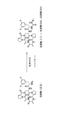
- 1 shows a reaction scheme of a cyclic peptide compound according to the present invention. 1 is a known reaction scheme showing the synthesis of the starting material for the cyclic peptide compound of the present invention.
- the present invention is a cyclic peptide compound having the structure of the following formula (1).
- R1 is any of the following: phenyl group, naphthyl group, cyclohexyl group, adamantane group, C3-C18 linear alkyl group, and phenyl group in which any hydrogen has been substituted (the substituted functional group is at least one of C3-18 linear alkyl group, C1-C3 alkoxyl group, halogen group, C1-C3 perfluoroalkyl group, nitro group, trifluoromethoxy group, and cyclopentyl group).
- C represents carbon, and the number after C indicates the number of carbons.
- the cyclic peptide compound of formula (1) is a new substance obtained through SAR research using compound 1 shown in formula (2) as the parent compound.
- Compound 1 was chosen as the parent compound because it is easy to synthesize, is one of the synthetic compounds that exhibits high activity, and has a track record of being used as a positive control in many studies.
- the cyclic peptide compound of the present invention was synthesized by expanding the structure of the side chain portion of compound 1 to produce compound 1 derivatives with different side chain structures.
- the cyclic peptide compound according to the present invention can be synthesized by the reaction scheme shown in Figure 1. In other words, it can be obtained by a coupling reaction between the synthesized compound (23) and an isocyanate having a functional group R1 bonded thereto.
- Compound (23) (see Figure 1) was synthesized by the method disclosed in Non-Patent Document 4. The reaction scheme is shown in Figure 2. Referring to Figure 2, the compound (23) is obtained when R is hydrogen in the substance (S6).
- the cyclic peptide compound according to the present invention can be produced by a step of coupling reaction of compound (23) with an isocyanate having a functional group R1.
- the present invention can also provide an antibacterial agent containing at least one of the above compounds as an active ingredient.
- the antibacterial agent of the present invention can be administered by intravenous, subcutaneous, or intramuscular injection.
- the antibacterial agent of the present invention may be formulated into an external preparation such as a liquid, ointment, cream, gelling agent, patch, or aerosol, and administered parenterally.
- water, lower alcohol, solubilizing agent, surfactant, emulsion stabilizer, gelling agent, adhesive, and other necessary base components can be blended.
- additives such as vasodilators, adrenal cortical hormones, keratolytic agents, moisturizers, bactericides, antioxidants, cooling agents, fragrances, and colorants may be appropriately blended.
- the numbers in formula (3) indicate functional group numbers, where functional group 1 is a phenyl group, functional group 2 is a naphthyl group, functional group 3 is a tolyl group, functional group 4 is an ethylphenyl group, functional group 5 is a butylphenyl group, functional group 6 is a p-methoxyphenyl group, functional group 7 is an ethoxyphenyl group, functional group 8 is a fluorophenyl group, functional group 9 is a chlorophenyl group, functional group 10 is a trifluorophenyl group, functional group 11 is a nitrophenyl group, functional group 12 is an acetophenyl group, functional group 13 is a C3 linear alkyl group, functional group 14 is a C4 linear alkyl group, functional group 15 is a C6 linear alkyl group, functional group 16 is a C7 linear alkyl group, functional group 17 is a C12 linear alkyl group, functional group 18 is a C18 linear
- each functional group in formula (3) is R1 in formula (1)
- compounds (1) to (22) and compound (24) are referred to as compounds (1) to (22) and compound (24), respectively.
- the compounds are distinguished by the numbers of the functional groups.
- EtOAc stands for ethyl acetate
- EtOH stands for ethanol.
- the synthesis procedures for each compound are shown below.
- the compound (1) was subjected to 1 H-NMR, 13 C-NMR and mass spectrometry (high-resolution electrospray ionization mass spectrometry, HR-ESI-MS) measurements, and the results are shown below.
- the compound (2) was subjected to 1 H-NMR, 13 C-NMR and mass spectrometry (high-resolution electron spray ionization nmass spectrometry, HR-ESI-MS) measurements, and the results are shown below.
- the compound (3) was subjected to 1 H-NMR, 13 C-NMR and mass spectrometry (high-resolution electron spray ionization nmass spectrometry, HR-ESI-MS) measurements, and the results are shown below.
- the compound (4) was subjected to 1 H-NMR, 13 C-NMR and mass spectrometry (high-resolution electron spray ionization nmass spectrometry, HR-ESI-MS) measurements, and the results are shown below.
- the compound (5) was subjected to 1 H-NMR, 13 C-NMR and mass spectrometry (high-resolution electron spray ionization nmass spectrometry, HR-ESI-MS) measurements, and the results are shown below.
- the compound (6) was subjected to 1 H-NMR, 13 C-NMR and mass spectrometry (high-resolution electron spray ionization nmass spectrometry, HR-ESI-MS) measurements, and the results are shown below.
- the compound (7) was subjected to 1 H-NMR, 13 C-NMR and mass spectrometry (high-resolution electron spray ionization nmass spectrometry, HR-ESI-MS) measurements, and the results are shown below.
- the compound (8) was subjected to 1 H-NMR, 13 C-NMR and mass spectrometry (high-resolution electron spray ionization nmass spectrometry, HR-ESI-MS) measurements, and the results are shown below.
- the compound (9) was subjected to 1 H-NMR, 13 C-NMR and mass spectrometry (high-resolution electron spray ionization nmass spectrometry, HR-ESI-MS) measurements, and the results are shown below.
- the compound (10) was subjected to 1 H-NMR, 13 C-NMR and mass spectrometry (high-resolution electron spray ionization nmass spectrometry, HR-ESI-MS) measurements, and the results are shown below.
- the compound (11) was subjected to 1 H-NMR, 13 C-NMR and mass spectrometry (high-resolution electron spray ionization nmass spectrometry, HR-ESI-MS) measurements, and the results are shown below.
- the compound (12) was subjected to 1 H-NMR, 13 C-NMR and mass spectrometry (high-resolution electron spray ionization nmass spectrometry, HR-ESI-MS) measurements, and the results are shown below.
- the compound (13) was subjected to 1 H-NMR, 13 C-NMR and mass spectrometry (high-resolution electron spray ionization nmass spectrometry, HR-ESI-MS) measurements, and the results are shown below.
- the compound (14) was subjected to 1 H-NMR, 13 C-NMR and mass spectrometry (high-resolution electron spray ionization nmass spectrometry, HR-ESI-MS) measurements, and the results are shown below.
- the compound (15) was subjected to 1 H-NMR, 13 C-NMR and mass spectrometry (high-resolution electron spray ionization nmass spectrometry, HR-ESI-MS) measurements, and the results are shown below.
- the compound (16) was subjected to 1 H-NMR, 13 C-NMR and mass spectrometry (high-resolution electron spray ionization nmass spectrometry, HR-ESI-MS) measurements, and the results are shown below.
- the compound (17) was subjected to 1 H-NMR, 13 C-NMR and mass spectrometry (high-resolution electron spray ionization nmass spectrometry, HR-ESI-MS) measurements, and the results are shown below.
- the compound (18) was subjected to 1 H-NMR, 13 C-NMR and mass spectrometry (high-resolution electron spray ionization nmass spectrometry, HR-ESI-MS) measurements, and the results are shown below.
- the compound (19) was subjected to 1 H-NMR, 13 C-NMR and mass spectrometry (high-resolution electron spray ionization nmass spectrometry, HR-ESI-MS) measurements, and the results are shown below.
- the compound (20) was subjected to 1 H-NMR, 13 C-NMR and mass spectrometry (high-resolution electron spray ionization nmass spectrometry, HR-ESI-MS) measurements, and the results are shown below.
- the compound (21) was subjected to 1 H-NMR, 13 C-NMR and mass spectrometry (high-resolution electron spray ionization nmass spectrometry, HR-ESI-MS) measurements, and the results are shown below.
- the compound (22) was subjected to 1 H-NMR, 13 C-NMR and mass spectrometry (high-resolution electron spray ionization nmass spectrometry, HR-ESI-MS) measurements, and the results are shown below.
- the compound (24) was subjected to 1 H-NMR, 13 C-NMR and mass spectrometry (high-resolution electrospray ionization mass spectrometry, HR-ESI-MS) measurements, and the results are shown below.
- ADEP1 has a structure represented by formula (4).
- the general formulas of compound 1 (formula (2)) and the compounds of the present invention (formulas (1) and (2), and the functional group portions of compounds (1) to (22) and (24) (formula (3)) are also shown below.
- the unit is ( ⁇ g/mL)
- compounds (3), (4), (5), (6), (7), and (9) exhibited 32-fold, 128-fold, 4-fold, 4-fold, and 16-fold higher antibacterial activity than ADEP1.
- Compounds (3), (4), and (9) also exhibited 6-fold, 26-fold, and 3-fold higher antibacterial activity than compound 1.
- compounds (5), (6), and (7) exhibited the same level of antibacterial activity as compound 1.
- compound (3) exhibited 32 times higher antibacterial activity than ADEP1.
- Compound (3) also exhibited 2 times higher antibacterial activity than compound 1.
- compound (6) is the position of the methoxy group bonded to the benzene ring (meta vs. para), but since they have almost the same antibacterial activity, it is believed that the position of the terminal functional group bonded to the phenyl group has almost no effect on antibacterial activity.
- the cyclic peptide compound according to the present invention has an antibacterial effect against various bacteria and can be provided as an antibacterial agent. Furthermore, by utilizing the cyclic peptide compound according to the present invention in cell biology, molecular biology, and biochemistry research, it is not only useful as a research tool for elucidating the protein degradation system in microorganisms, but also as a drug discovery seed with a new mechanism of action.
Landscapes
- Health & Medical Sciences (AREA)
- Chemical & Material Sciences (AREA)
- Organic Chemistry (AREA)
- Life Sciences & Earth Sciences (AREA)
- Medicinal Chemistry (AREA)
- General Health & Medical Sciences (AREA)
- Animal Behavior & Ethology (AREA)
- Proteomics, Peptides & Aminoacids (AREA)
- Veterinary Medicine (AREA)
- Public Health (AREA)
- Pharmacology & Pharmacy (AREA)
- General Chemical & Material Sciences (AREA)
- Molecular Biology (AREA)
- Chemical Kinetics & Catalysis (AREA)
- Oncology (AREA)
- Biochemistry (AREA)
- Biophysics (AREA)
- Genetics & Genomics (AREA)
- Nuclear Medicine, Radiotherapy & Molecular Imaging (AREA)
- Communicable Diseases (AREA)
- Gastroenterology & Hepatology (AREA)
- Engineering & Computer Science (AREA)
- Bioinformatics & Cheminformatics (AREA)
- Immunology (AREA)
- Epidemiology (AREA)
- Organic Low-Molecular-Weight Compounds And Preparation Thereof (AREA)
Priority Applications (1)
| Application Number | Priority Date | Filing Date | Title |
|---|---|---|---|
| JP2025522386A JPWO2024242056A1 (https=) | 2023-05-22 | 2024-05-17 |
Applications Claiming Priority (2)
| Application Number | Priority Date | Filing Date | Title |
|---|---|---|---|
| JP2023-083850 | 2023-05-22 | ||
| JP2023083850 | 2023-05-22 |
Publications (1)
| Publication Number | Publication Date |
|---|---|
| WO2024242056A1 true WO2024242056A1 (ja) | 2024-11-28 |
Family
ID=93589443
Family Applications (1)
| Application Number | Title | Priority Date | Filing Date |
|---|---|---|---|
| PCT/JP2024/018354 Ceased WO2024242056A1 (ja) | 2023-05-22 | 2024-05-17 | 環状ペプチド化合物とそれを含む抗菌剤 |
Country Status (2)
| Country | Link |
|---|---|
| JP (1) | JPWO2024242056A1 (https=) |
| WO (1) | WO2024242056A1 (https=) |
Citations (3)
| Publication number | Priority date | Publication date | Assignee | Title |
|---|---|---|---|---|
| JP2005510468A (ja) * | 2001-09-19 | 2005-04-21 | バイエル・ヘルスケア・アクチェンゲゼルシャフト | 抗菌性マクロ環 |
| WO2015031871A1 (en) * | 2013-08-30 | 2015-03-05 | St. Jude Children's Research Hospital | Substituted urea depsipeptide analogs as activators of the clpp endopeptidase |
| WO2016141351A1 (en) * | 2015-03-04 | 2016-09-09 | St. Jude Children's Research Hospital | Substituted urea depsipeptide analogs as activators of the clpp endopeptidase |
-
2024
- 2024-05-17 JP JP2025522386A patent/JPWO2024242056A1/ja active Pending
- 2024-05-17 WO PCT/JP2024/018354 patent/WO2024242056A1/ja not_active Ceased
Patent Citations (3)
| Publication number | Priority date | Publication date | Assignee | Title |
|---|---|---|---|---|
| JP2005510468A (ja) * | 2001-09-19 | 2005-04-21 | バイエル・ヘルスケア・アクチェンゲゼルシャフト | 抗菌性マクロ環 |
| WO2015031871A1 (en) * | 2013-08-30 | 2015-03-05 | St. Jude Children's Research Hospital | Substituted urea depsipeptide analogs as activators of the clpp endopeptidase |
| WO2016141351A1 (en) * | 2015-03-04 | 2016-09-09 | St. Jude Children's Research Hospital | Substituted urea depsipeptide analogs as activators of the clpp endopeptidase |
Also Published As
| Publication number | Publication date |
|---|---|
| JPWO2024242056A1 (https=) | 2024-11-28 |
Similar Documents
| Publication | Publication Date | Title |
|---|---|---|
| ROKHUM et al. | A practical one-pot synthesis of azides directly from alcohols | |
| KR102528106B1 (ko) | 칸타리딘 및 생활성 칸타리딘 유도체의 상업적으로 실행 가능한 합성 | |
| AU2012601A (en) | Novel esters derived from (rr,ss)-2-hydroxybenzoate of 3-(2-dimethylaminomethyl-1-hydroxycyclohexyl)phenyl | |
| US4859661A (en) | Alkyl-substituted benzoxazinorifamycin derivative, process for preparing the same and antibacterial agent containing the same | |
| EP3858814A1 (en) | Nitroxoline prodrug and use thereof | |
| Lautens et al. | Amphoteric Character of 2‐Vinyloxiranes: Synthetic Equivalents of β, γ‐Unsaturated Aldehydes and a Vinylogous Enolate | |
| Kumar et al. | A convenient practical synthesis of alkyl and aryl oxime esters | |
| EP3600333A1 (en) | Cu-and ni-catalyzed decarboxylative borylation reactions | |
| WO2024242056A1 (ja) | 環状ペプチド化合物とそれを含む抗菌剤 | |
| US3976596A (en) | Hydridometallic carborane catalytic compounds | |
| Yuan et al. | Total synthesis, structural revision and biological evaluation of γ-elemene-type sesquiterpenes | |
| Alizadeh et al. | Synthesis of functionalized sulfonamides via multicomponent reaction of alkyl isocyanide and dialkyl acetylenedicarboxylate with 4-methylbenzenesulfonic acid monohydrate | |
| CN117024302B (zh) | 一种大麻二酚乙酰胺及其制备方法与应用 | |
| EP2607353B1 (fr) | "Nouveau procédé de synthèse de l'ivabradine et de ses sels d'addition à un acide pharmaceutiquement acceptable" | |
| Zhang et al. | Design, Synthesis, and Structure–Activity Relationship Study of Epoxysuccinyl–Peptide Derivatives as Cathepsin B Inhibitors | |
| Anary-Abbasinejad et al. | Synthesis of unsaturated amidines by three component reaction of alkylisocyanides, dialkyl acetylenedicarboxylates, and aromatic amides | |
| JP3780218B2 (ja) | 新規キラル銅触媒とそれを用いたn−アシル化アミノ酸誘導体の製造方法 | |
| JP3738225B2 (ja) | 新規キラル銅触媒とそれを用いたn−アシル化アミノ酸誘導体の製造方法 | |
| JP2016537420A (ja) | エステルの合成方法および該合成のための触媒 | |
| Rajakumar et al. | Synthesis, characterization, and anti-bacterial efficacy of some novel cyclophane amide | |
| JP2014152158A (ja) | アミン化合物の製造方法 | |
| EP2519218B1 (fr) | Dérivés de peroxydes de dibenzoyle, leur procédé de préparation, les compositions cosmétiques ou dermatologiques les contenant | |
| KR20230046122A (ko) | 고순도 n-아실 유도체의 제조방법 | |
| EP0772630A1 (fr) | Derives de streptogramine, leur preparation et les compositions pharmaceutiques qui les contiennent | |
| JP3987944B2 (ja) | 多置換シクロブタン及び多置換シクロブテン化合物の製造方法 |
Legal Events
| Date | Code | Title | Description |
|---|---|---|---|
| 121 | Ep: the epo has been informed by wipo that ep was designated in this application |
Ref document number: 24811063 Country of ref document: EP Kind code of ref document: A1 |
|
| ENP | Entry into the national phase |
Ref document number: 2025522386 Country of ref document: JP Kind code of ref document: A |
|
| WWE | Wipo information: entry into national phase |
Ref document number: 2025522386 Country of ref document: JP |
|
| NENP | Non-entry into the national phase |
Ref country code: DE |