WO2024241474A1 - 電力供給装置及び車載システム - Google Patents
電力供給装置及び車載システム Download PDFInfo
- Publication number
- WO2024241474A1 WO2024241474A1 PCT/JP2023/019099 JP2023019099W WO2024241474A1 WO 2024241474 A1 WO2024241474 A1 WO 2024241474A1 JP 2023019099 W JP2023019099 W JP 2023019099W WO 2024241474 A1 WO2024241474 A1 WO 2024241474A1
- Authority
- WO
- WIPO (PCT)
- Prior art keywords
- conductive path
- power supply
- power
- unit
- side conductive
- Prior art date
- Legal status (The legal status is an assumption and is not a legal conclusion. Google has not performed a legal analysis and makes no representation as to the accuracy of the status listed.)
- Ceased
Links
Images



Classifications
-
- B—PERFORMING OPERATIONS; TRANSPORTING
- B60—VEHICLES IN GENERAL
- B60R—VEHICLES, VEHICLE FITTINGS, OR VEHICLE PARTS, NOT OTHERWISE PROVIDED FOR
- B60R16/00—Electric or fluid circuits specially adapted for vehicles and not otherwise provided for; Arrangement of elements of electric or fluid circuits specially adapted for vehicles and not otherwise provided for
- B60R16/02—Electric or fluid circuits specially adapted for vehicles and not otherwise provided for; Arrangement of elements of electric or fluid circuits specially adapted for vehicles and not otherwise provided for electric constitutive elements
- B60R16/03—Electric or fluid circuits specially adapted for vehicles and not otherwise provided for; Arrangement of elements of electric or fluid circuits specially adapted for vehicles and not otherwise provided for electric constitutive elements for supply of electrical power to vehicle subsystems or for
Definitions
- the power supply device of the present disclosure comprises: A power supply device provided in an in-vehicle system including a first power supply unit, a load, a first power conversion unit provided between the first power supply unit and the load, and a second power supply unit, the first power conversion unit converting power supplied from a first input side conductive path on the first power supply unit side and outputting the power to a first output side conductive path on the load side,
- the inverter further includes a second power conversion unit that is provided between the second power supply unit and the load and converts power supplied from a second input side conductive path on the second power supply unit side and outputs the power to a second output side conductive path on the load side.
- the technology disclosed herein can provide redundancy in the power supply source for a load.
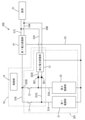
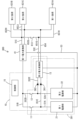
- FIG. 1 is a block diagram illustrating a schematic example of an in-vehicle system including a power supply device according to the first embodiment.
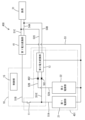
- FIG. 2 is a block diagram illustrating a schematic example of an in-vehicle system including a power supply device according to the second embodiment.
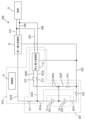
- FIG. 3 is a block diagram illustrating a schematic example of an in-vehicle system including a power supply device according to the third embodiment.
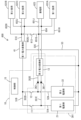
- FIG. 4 is a block diagram illustrating a schematic example of an in-vehicle system including a power supply device according to the fourth embodiment.
- FIG. 5 is a block diagram illustrating a schematic example of an in-vehicle system including a power supply device according to the fifth embodiment.
- FIG. 1 is a block diagram illustrating a schematic example of an in-vehicle system including a power supply device according to the first embodiment.
- FIG. 2 is a block diagram illustrating a schematic example of an in-vehicle system including a power supply device according to the
- FIG. 6 is a block diagram illustrating a schematic example of an in-vehicle system including a power supply device according to the sixth embodiment.
- FIG. 7 is a block diagram illustrating a schematic example of an in-vehicle system including a power supply device according to the seventh embodiment.
- FIG. 8 is a block diagram illustrating a schematic example of an in-vehicle system including a power supply device according to the eighth embodiment.
- a power supply device provided in an in-vehicle system including a first power supply unit, a load, a first power conversion unit provided between the first power supply unit and the load, and a second power supply unit, the first power conversion unit converting power supplied from a first input side conductive path on the first power supply unit side and outputting the power to a first output side conductive path on the load side, a second power conversion unit provided between the second power supply unit and the load, converting power supplied from a second input side conductive path on the second power supply unit side and outputting the power to a second output side conductive path on the load side.
- the power supplied from the second power supply unit in addition to the configuration in which the power supplied from the first power supply unit is converted by the first power conversion unit and supplied to the load, the power supplied from the second power supply unit can be further converted by the second power conversion unit and supplied to the load. Therefore, power can be supplied to the load from either the first power supply unit or the second power supply unit. Therefore, the power supply device can achieve redundancy of the power supply source for the load.
- the power supplied from the first power supply unit can also be converted by the second power conversion unit and supplied to the load. This makes it possible to provide a redundant power supply source for the second power conversion unit.
- a power supply device provided in the in-vehicle system, the power supply device including a first power source side conductive path to which an output voltage of the first power source unit is applied, a first branch path branched off from the first power source side conductive path, a second power source side conductive path to which an output voltage of the second power source unit is applied, and a second branch path branched off from the second power source side conductive path, the first power conversion unit is provided between the second power supply unit and the load, converts power supplied from the second power supply unit via the first input side conductive path, and outputs the converted power to the first output side conductive path; Furthermore, a first switch portion provided between the first power supply side conductive path and the first input side conductive path; a second switch portion provided between the second power supply side conductive path and the first input side conductive path, The second power conversion unit is a second output side conductive path that is provided between the first branch path and the load and converts power supplied from the first power supply unit through the first branch path and outputs the converted
- the power supplied from the second power supply unit can also be converted by the first power conversion unit and supplied to the load. Therefore, it is possible to achieve redundancy of the power supply source for the first power conversion unit. Furthermore, when an abnormality occurs in the vehicle, the first switch unit cuts off the connection between the first power supply side conductive path and the first input side conductive path, thereby preventing power supply from the first power supply unit to the first input side conductive path. Similarly, the second switch unit cuts off the connection between the second power supply side conductive path and the second input side conductive path, thereby preventing power supply from the second power supply unit to the second input side conductive path.
- the second power conversion unit is provided between the first branch path branched from the first power supply side conductive path and the load, it is possible to convert the power supplied from the first power supply unit through the first branch path and output it to the load side (second output side conductive path) with the first switch unit in an interrupted state.
- the second power conversion unit is provided between the second branch path branched from the second power supply side conductive path and the load, it is possible to convert the power supplied from the second power supply unit through the second branch path and output it to the load side (second output side conductive path) with the second switch unit in an interrupted state. Then, even in the event of an abnormality in which the first switch unit and the second switch unit are in an interrupted state, it is possible to prevent a situation in which power cannot be supplied to the load from both the first power supply unit and the second power supply unit.
- a power supply device provided in the in-vehicle system, the power supply device including a first power supply side conductive path to which an output voltage of the first power supply unit is applied, a branch path branched from the first power supply side conductive path, and a second power supply side conductive path to which an output voltage of the second power supply unit is applied, Furthermore, a switch portion provided between the first power supply side conductive path and the first input side conductive path, The second power conversion unit is The power supply device according to claim 2, further comprising: a power supply section for supplying power to the load through the branch path and converting the power supplied from the first power supply section through the branch path and outputting the power to the second output side conductive path.
- the switch unit cuts off the connection between the first power supply side conductive path and the first input side conductive path, thereby preventing power supply from the first power supply unit to the first input side conductive path. Furthermore, since the second power conversion unit is provided between the first branch path branched off from the first power supply side conductive path and the load, with the switch unit in a cut-off state, it is possible to convert the power supplied from the first power supply unit via the first branch path and output it to the load side (second output side conductive path).
- a power supply device provided in the in-vehicle system, wherein the first power supply unit is a first storage unit, the second power supply unit is a second storage unit, and the second storage unit is connected in series to the first storage unit on a lower potential side than the first storage unit, the power supply device including a first power supply side conductive path to which an output voltage of the first power supply unit is applied, a branch path branching from the first power supply side conductive path, a second power supply side conductive path to which an output voltage of the second power supply unit is applied, and a reference conductive path, Furthermore, a first changeover switch unit provided between the first power supply side conductive path and the first input side conductive path; a second changeover switch unit provided between the branch path and the second input side conductive path; a third changeover switch unit provided between the second power supply side conductive path and the second input side conductive path; a fourth changeover switch unit provided between the second power supply side conductive path and the reference conductive path;
- the power supply device according to [1], further compris
- the second and fourth changeover switch units can be set to a conductive state and the other switch units to a cut-off state
- power can be supplied from the first storage unit to the load via the second power conversion unit.
- the third and fifth changeover switches in a conductive state and placing the other switches in a cut-off state
- the power storage unit and the power conversion unit can be selected based on the control of each switch unit, and the desired power can be supplied to the load.
- a power supply device provided in the in-vehicle system, the power supply device including: a power storage unit that is charged by power supplied from the first output-side conductive path and is charged by power supplied from the second output-side conductive path; and a load that is supplied with power from the first output-side conductive path, is supplied with power from the second output-side conductive path, and is supplied with power from the power storage unit, the load including a first load and a second load, a switching unit provided between the first output side conductive path and the second output side conductive path, the power storage unit and the first load are electrically connected to a first conductive path between the second output side conductive path and the switching unit; the second load is electrically connected to a second conductive path between the first output side conductive path and the switching unit;
- the power supply device according to claim 1 or 2, wherein the switching unit switches between an allowable state that allows a current to flow between the first conductive path and the second conductive path and a cut-off state that cuts off the current.
- the power supply device of [6] above when the switching unit is in a permissive state (a state in which current is permitted to flow between the first conductive path and the second conductive path), power can be supplied from the first power supply unit to the power storage unit, the first load, and the second load via the first power conversion unit.
- a permissive state a state in which current is permitted to flow between the first conductive path and the second conductive path
- power can be supplied from the first power supply unit to the power storage unit, the first load, and the second load via the first power conversion unit.
- the switching unit when the switching unit is in a cut-off state (a state in which current is cut off between the first conductive path and the second conductive path), power can be supplied from the second power supply unit to the power storage unit and the first load via the second power conversion unit. Therefore, the power supply device can supply power preferentially to the power storage unit and the first load.
- a power supply device provided in the in-vehicle system, the power supply device including: a power storage unit that is charged by power supplied from the first output-side conductive path and is charged by power supplied from the second output-side conductive path; and a load that is supplied with power from the first output-side conductive path, is supplied with power from the second output-side conductive path, and is supplied with power from the power storage unit, the load including a first load and a second load, a first switching unit provided between the first output side conductive path and the second output side conductive path; a second switching unit provided between the first output side conductive path and the second load, the power storage unit is electrically connected to a first electrical path between the first output-side conductive path and the first switching unit; the first load is electrically connected to a second electrical path between the second output-side conductive path and the first switching unit; the first switching unit switches between a first permitting state in which a current flows between the first electrical path and the second electrical path and a first blocking state in which a current flows
- a power supply device provided in the in-vehicle system, the power supply device including: a load to which power is supplied from the first output-side conductive path and to which power is supplied from the second output-side conductive path, the load including a first load and a second load, a switching unit provided between the first output side conductive path and the second output side conductive path, the first load is electrically connected to a first conductive path between the second output side conductive path and the switching unit; the second load is electrically connected to a second conductive path between the first output side conductive path and the switching unit;
- the power supply device according to claim 1, wherein the switching unit switches between an allowable state that allows a current to flow between the first conductive path and the second conductive path and a cut-off state that cuts off a current flow between the first conductive path and the second conductive path.
- a first diode is provided in the second input side conductive path that supplies power from the first power supply unit to the second power conversion unit, and regulates a flow of current from the second power conversion unit side to the first power supply unit side; a second diode provided in the second input side conductive path that supplies power from the second power supply unit to the second power conversion unit, and that regulates a current flow from the second power conversion unit side to the second power supply unit side;
- the second diode when the voltage applied from the first power supply unit to the second power conversion unit via the second input side conductive path is greater than the voltage applied from the second power supply unit to the second power conversion unit via the second input side conductive path, the second diode can suppress the flow of current (reverse flow) from the second power conversion unit side to the first power supply unit side.
- the first diode when the voltage applied from the second power supply unit to the second power conversion unit via the second input side conductive path is greater than the voltage applied from the first power supply unit to the second power conversion unit via the second input side conductive path, the first diode can suppress the flow of current (reverse flow) from the second power conversion unit side to the second power supply unit side.
- An in-vehicle system including the power supply device according to [1] or [2], a power storage unit that is charged by power supplied from the first output side conductive path and is charged by power supplied from the second output side conductive path; a load to which power is supplied from the first output-side conductive path, to which power is supplied from the second output-side conductive path, and to which power is supplied from the power storage unit;
- power can be supplied from the first power supply unit to the load via the first output side conductive path. Also, power can be supplied from the second power supply unit to the load via the second output side conductive path. Also, power can be supplied from the power storage unit to the load. Therefore, the power supply device can provide a redundant power supply source for the load. Furthermore, the power storage unit can be charged by power from the first power supply unit via the first output side conductive path, and can be charged by power from the second power supply unit via the second output side conductive path.
- First Embodiment (In-vehicle system configuration) 1 is a system mounted on a vehicle.
- the in-vehicle system 100 includes a power supply device 10, a first power supply unit 21, a second power supply unit 22, a load 31, and a first power conversion unit 41.
- the in-vehicle system 100 is configured to supply power from the first power supply unit 21 and the second power supply unit 22 to the load 31.
- the in-vehicle system 100 further includes a first power supply side conductive path 51A, a first input side conductive path 51B, a first output side conductive path 51C, a second power supply side conductive path 52A, a second input side conductive path 52B, a second output side conductive path 52C, a first reference conductive path 53, a second reference conductive path 54A, and a third reference conductive path 54B.
- the first power supply side conductive path 51A, the first input side conductive path 51B, and the first output side conductive path 51C are provided between the first power supply unit 21 and the load 31.
- the second power supply side conductive path 52A, the second input side conductive path 52B, and the second output side conductive path 52C are provided between the second power supply unit 22 and the load 31.
- the first reference conductive path 53 is a conductive path to which a lower voltage is applied than the first power supply side conductive path 51A, the first input side conductive path 51B, the second power supply side conductive path 52A, and the second input side conductive path 52B, or is a conductive path that is grounded.
- the second reference conductive path 54A is a conductive path to which a lower voltage is applied than the first output side conductive path 51C, or is a conductive path that is grounded.
- the third reference conductive path 54B is a conductive path to which a lower voltage is applied than the second output side conductive path 52C, or is a conductive path that is grounded.
- the first power supply unit 21 and the second power supply unit 22 are different power sources.
- the first power supply unit 21 and the second power supply unit 22 may be configured with a secondary battery such as a lithium ion battery, or may be configured with other types of storage batteries.
- the first power supply unit 21 has a high potential side terminal and a low potential side terminal.
- the high potential side terminal of the first power supply unit 21 is electrically connected to one end of the first power supply side conductive path 51A.
- the low potential side terminal of the first power supply unit 21 is electrically connected to the first reference conductive path 53.
- the first power supply unit 21 applies an output voltage based on the low potential side terminal to the first power supply side conductive path 51A.
- the second power supply unit 22 is provided with a high potential side terminal and a low potential side terminal.
- the high potential side terminal of the second power supply unit 22 is electrically connected to one end of the second power supply side conductive path 52A.
- the low potential side terminal of the second power supply unit 22 is electrically connected to the first reference conductive path 53.
- the second power supply unit 22 applies an output voltage based on the low potential side terminal to the second power supply side conductive path 52A.
- connection objects preferably means a configuration in which the connection objects are connected in a mutually conductive state (a state in which current can flow) so that the potentials of both connection objects are equal.
- electrically connected may also mean a configuration in which the connection objects are connected in a state in which they can be conductive with an electrical component interposed between them.
- the load 31 is an in-vehicle electrical device, such as an air conditioner, audio, door opening/closing device, parking brake, various sensors, etc.
- the load 31 is electrically connected to the first output side conductive path 51C and the second reference conductive path 54A.
- the power supply device 10 has a first switch unit 11, a second switch unit 12, a second power conversion unit 13, and a control unit 15.
- the first switch section 11 is provided between the first power supply side conductive path 51A and the first input side conductive path 51B. One end of the first switch section 11 is electrically connected to the other end of the first power supply side conductive path 51A. The other end of the first switch section 11 is electrically connected to one end of the first input side conductive path 51B.
- the first switch section 11 switches between an allowable state (on state) that allows current to flow between the first power supply side conductive path 51A and the first input side conductive path 51B and a blocking state (off state) that blocks the flow of current.
- the first switch section 11 is configured as, for example, a semiconductor switch such as a MOSFET, a relay switch, etc.
- the first power conversion unit 41 is provided between the first input side conductive path 51B and the first output side conductive path 51C.
- the first power conversion unit 41 converts the power supplied from the first input side conductive path 51B on the first power supply unit 21 side and outputs it to the first output side conductive path 51C on the load 31 side.
- the first power conversion unit 41 operates based on the control of the control unit 15 described later.
- the first power conversion unit 41 is configured as, for example, a DCDC converter.
- the first power conversion unit 41 performs a voltage conversion operation, for example, by stepping down the voltage applied to the first input side conductive path 51B and applying it to the first output side conductive path 51C.
- the high-potential side input terminal of the first power conversion unit 41 is electrically connected to the other end of the first input side conductive path 51B.
- the low-potential side input terminal of the first power conversion unit 41 is electrically connected to the first reference conductive path 53.
- the high-potential side output terminal of the first power conversion unit 41 is electrically connected to one end of the first output side conductive path 51C.
- the low-potential side output terminal of the first power conversion unit 41 is electrically connected to one end of the second reference conductive path 54A.
- the other end of the first output side conductive path 51C is electrically connected to the high potential side input terminal of the load 31.
- the other end of the second reference conductive path 54A is electrically connected to the low potential side input terminal of the load 31.
- the second switch section 12 is provided between the second power supply side conductive path 52A and the second input side conductive path 52B. One end of the second switch section 12 is electrically connected to the other end of the second power supply side conductive path 52A. The other end of the second switch section 12 is electrically connected to one end of the second input side conductive path 52B.
- the second switch section 12 switches between an allowable state (on state) that allows current to flow between the second power supply side conductive path 52A and the second input side conductive path 52B and a blocking state (off state) that blocks the flow of current.
- the second switch section 12 is configured as, for example, a semiconductor switch such as a MOSFET, a relay switch, etc.
- the second power conversion unit 13 is provided between the second input side conductive path 52B and the second output side conductive path 52C.
- the second power conversion unit 13 converts the power supplied from the second input side conductive path 52B on the second power supply unit 22 side and outputs it to the second output side conductive path 52C on the load 31 side.
- the second power conversion unit 13 operates under the control of the control unit 15 described later.
- the second power conversion unit 13 is configured as, for example, a DCDC converter.
- the second power conversion unit 13 performs a voltage conversion operation, for example, by stepping down the voltage applied to the second input side conductive path 52B and applying it to the second output side conductive path 52C.
- the high-potential side input terminal of the second power conversion unit 13 is electrically connected to the other end of the second input side conductive path 52B.
- the low-potential side input terminal of the second power conversion unit 13 is electrically connected to the first reference conductive path 53.
- the high-potential side output terminal of the second power conversion unit 13 is electrically connected to one end of the second output side conductive path 52C.
- the in-vehicle system 100 further includes a battery pack (junction box) 101.
- the battery pack 101 houses a first power supply unit 21, a second power supply unit 22, a first switch unit 11, and a second switch unit 12.
- the battery pack 101 further houses a second power conversion unit 13.
- the second power conversion unit 13 is disposed, for example, in a non-crushable zone in the vehicle (an area different from the crushable zone).
- the other end of the second output side conductive path 52C is electrically connected to the first output side conductive path 51C. That is, the second output side conductive path 52C branches off from the first output side conductive path 51C.
- the low potential side output terminal of the second power conversion unit 13 is electrically connected to one end of the third reference conductive path 54B.
- the other end of the third reference conductive path 54B is electrically connected to the second reference conductive path 54A. That is, the third reference conductive path 54B branches off from the second reference conductive path 54A.
- the control unit 15 is an information processing device having information processing functions, calculation functions, control functions, etc.
- the control unit 15 is mainly composed of a microcomputer, for example, and has a calculation device such as a CPU (Central Processing Unit), and memory such as a ROM (Read Only Memory) or RAM (Random Access Memory), etc.
- the control unit 15 has a function of transmitting control signals to the first switch unit 11, the second switch unit 12, the first power conversion unit 41, the second power conversion unit 13, etc. to control their operation.
- the control unit 15 can perform, for example, the first control, the second control, and the third control described below.
- the control unit 15 converts the power from the first power supply unit 21 by the first power conversion unit 41 and supplies it to the load 31, and also converts the power from the second power supply unit 22 by the second power conversion unit 13 and supplies it to the load 31.
- the control unit 15 performs an ON control to control the first switch unit 11 to a permissive state (ON state), and also performs an ON control to control the second switch unit 12 to a permissive state (ON state).
- the control unit 15 converts the power from the first power supply unit 21 using the first power conversion unit 41 and supplies it to the load 31, and does not supply power from the second power supply unit 22 to the load 31 via the second power conversion unit 13. Specifically, the control unit 15 performs on control to control the first switch unit 11 to a permissive state (on state), and performs off control to control the second switch unit 12 to a blocked state (off state).
- the control unit 15 does not convert the power from the first power supply unit 21 using the first power conversion unit 41 and supply it to the load 31, but supplies power from the second power supply unit 22 to the load 31 via the second power conversion unit 13. Specifically, the control unit 15 performs off control to control the first switch unit 11 to a blocked state (off state), and performs on control to control the second switch unit 12 to a permissive state (on state).
- the control unit 15 performs the first control when the vehicle is normal, and performs either the second control or the third control when the vehicle is abnormal. Specifically, the control unit 15 switches from the first control to the third control when the vehicle is abnormal and power from the first power supply unit 21 cannot be supplied to the load 31 via the first power conversion unit 41.
- Examples of a state in which power from the first power supply unit 21 cannot be supplied to the load 31 via the first power conversion unit 41 include when the first power supply unit 21 fails, when a ground fault occurs in the first power supply side conductive path 51A or the first input side conductive path 51B, when the amount of stored power in the first power supply unit 21 decreases, when an abnormality occurs in the first power conversion unit 41, etc.
- the control unit 15 also switches from the first control to the second control when an abnormality occurs in the vehicle such that power from the second power supply unit 22 cannot be supplied to the load 31 via the second power conversion unit 13.
- Examples of a state in which power from the second power supply unit 22 cannot be supplied to the load 31 via the second power conversion unit 13 include when the second power supply unit 22 fails, when a ground fault occurs in the second power supply side conductive path 52A or the second input side conductive path 52B, when the amount of stored electricity in the second power supply unit 22 decreases, when an abnormality occurs in the second power conversion unit 13, etc.
- the power supplied from the first power supply unit 21 can be converted by the first power conversion unit 41 and supplied to the load 31.
- the power supplied from the second power supply unit 22 can be converted by the second power conversion unit 13 and supplied to the load 31. Therefore, power can be supplied to the load 31 from either the first power supply unit 21 or the second power supply unit 22. Therefore, the power supply device 10 can achieve redundancy of the power supply source for the load 31.
- the in-vehicle system 200 of the second embodiment differs from the first embodiment in that it is also possible to convert power from the first power supply unit 21 by the second power conversion unit 13 and supply the converted power to the load 31, but is otherwise common to both embodiments.
- the same components as those of the first embodiment are denoted by the same reference numerals, and detailed description thereof will be omitted.
- (In-vehicle system configuration) 2 shows an in-vehicle system 200 of the second embodiment.
- the in-vehicle system 200 of the second embodiment further includes a second input-side conductive path 251D in addition to the in-vehicle system 100 of the first embodiment.
- the second input-side conductive path 251D is provided between the first power supply unit 21 and the load 31.
- the second input-side conductive path 251D is provided between the first input-side conductive path 51B and the second power conversion unit 13.
- One end of the second input-side conductive path 251D is electrically connected to the first input-side conductive path 51B. That is, the second input-side conductive path 251D branches off from the first input-side conductive path 51B.
- the other end of the second input-side conductive path 251D is connected to the high-potential input terminal of the second power conversion unit 13.
- the second input side conductive path 251D and the second input side conductive path 52B may be connected to the input terminal of the second power conversion unit 13 after merging, or may be connected to a different input terminal of the second power conversion unit 13 without merging.
- a fourth control shown below can be performed.
- the control unit 15 converts the power from the first power supply unit 21 by the second power conversion unit 13 and supplies the converted power to the load 31. Specifically, the control unit 15 controls the first switch unit 11 to be on and controls the second switch unit 12 to be off, thereby not operating the first power conversion unit 41 and operating the second power conversion unit 13. Note that in the fourth control, the control unit 15 may also control the second switch unit 12 to be on.
- control unit 15 performs the first control when the vehicle is normal, and performs the fourth control when the vehicle is abnormal. Specifically, the control unit 15 switches from the first control to the fourth control when an abnormality occurs in the first power conversion unit 41 and power from the first power supply unit 21 cannot be supplied to the load 31 via the first power conversion unit 41.
- the power supplied from the first power supply unit 21 can also be converted by the second power conversion unit 13 and supplied to the load 31. Therefore, it is possible to achieve redundancy of the power supply source for the second power conversion unit 13.
- the in-vehicle system 300 of the third embodiment differs from the second embodiment mainly in that it is also possible to convert power from the second power supply unit 22 by the first power conversion unit 41 and supply the converted power to the load 31, but is otherwise common to both embodiments. Note that the same components as those of the second embodiment are denoted by the same reference numerals and detailed description thereof will be omitted.
- (In-vehicle system configuration) 3 shows an in-vehicle system 300 according to a third embodiment.
- the in-vehicle system 300 according to the third embodiment further includes a first branch path 351E and a second branch path 352E in addition to the components of the in-vehicle system 200 according to the second embodiment.
- the in-vehicle system 300 does not include a second input-side conductive path 52B.
- the first branch path 351E branches off from the first power supply side conductive path 51A. One end of the first branch path 351E is electrically connected to the first power supply side conductive path 51A. The other end of the first branch path 351E is electrically connected to the high potential side input terminal of the second power conversion unit 13.
- the first branch path 351E is formed of, for example, a bus bar.
- the first branch path 351E corresponds to an example of a "second input side conductive path" of the present invention.
- the first branch path 351E is provided with a first diode 361.
- the anode of the first diode 361 is provided on the first power supply side conductive path 51A side.
- the cathode of the first diode 361 is provided on the second power conversion unit 13 side.
- the first diode 361 regulates the flow of current from the second power conversion unit 13 to the first power supply unit 21.
- the second branch path 352E branches off from the second power source side conductive path 52A. One end of the second branch path 352E is electrically connected to the second power source side conductive path 52A. The other end of the second branch path 352E is electrically connected to the high potential side input terminal of the second power conversion unit 13.
- the first branch path 351E and the second branch path 352E may be connected to the input terminal of the second power conversion unit 13 after merging, or may be connected to a different input terminal of the second power conversion unit 13 without merging.
- the second branch path 352E is formed of, for example, a bus bar.
- the second branch path 352E corresponds to an example of a "second input side conductive path" in the present invention.
- a second diode 362 is provided in the second branch path 352E.
- the anode of the second diode 362 is provided on the second power supply side conductive path 52A side.
- the cathode of the second diode 362 is provided on the second power conversion unit 13 side.
- the second diode 362 regulates the flow of current from the second power conversion unit 13 to the second power supply unit 22.
- a relay conductive path 352D is provided between the second switch section 12 and the first input side conductive path 51B.
- the other end of the second switch section 12 is electrically connected to one end of the relay conductive path 352D.
- the other end of the relay conductive path 352D is electrically connected to the first input side conductive path 51B.
- the relay conductive path 352D branches off from the first input side conductive path 51B.
- the first power conversion unit 41 is provided between the second power supply unit 22 and the load 31, and converts the power supplied from the second power supply unit 22 via the first input side conductive path 51B and outputs it to the first output side conductive path 51C.
- the second power conversion unit 13 is provided between the first branch path 351E and the load 31.
- the second power conversion unit 13 converts the power supplied from the first power supply unit 21 via the first branch path 351E and outputs it to the second output side conductive path 52C.
- the second power conversion unit 13 is provided between the second branch path 352E and the load 31, and converts the power supplied from the second power supply unit 22 via the second branch path 352E and outputs it to the second output side conductive path 52C.
- the in-vehicle system 300 further includes a battery pack (junction box) 301.
- the battery pack 301 houses a first power supply unit 21, a second power supply unit 22, a first switch unit 11, a second switch unit 12, and a second power conversion unit 13.
- the battery pack 301 further houses a first branch path 351E and a second branch path 352E.
- control unit 15 can perform, for example, the first control and the second control described below.
- the control unit 15 causes the first power conversion unit 41 to convert the power from the first power supply unit 21 and supply it to the load 31, and also causes the first power conversion unit 41 to convert the power from the second power supply unit 22 and supply it to the load 31.
- the control unit 15 controls the first switch unit 11 to be on, and also controls the second switch unit 12 to be on.
- the control unit 15 converts the power from either the first power supply unit 21 or the second power supply unit 22, whichever has the higher output voltage, using the second power conversion unit 13, and supplies the converted power to the load 31. Specifically, the control unit 15 controls the first switch unit 11 to be turned off, and also controls the second switch unit 12 to be turned off.
- control unit 15 performs the first control when the vehicle is normal, and performs the second control when the vehicle is abnormal. For example, even if both the first switch unit 11 and the second switch unit 12 are controlled to be turned off when the vehicle is abnormal, such as a collision, it is possible to prevent a situation in which power cannot be supplied to the load 31 from both the first power supply unit 21 and the second power supply unit 22.
- An abnormality in the vehicle may be when one of the first power supply unit 21 and the second power supply unit 22 fails, when a ground fault occurs in the first power supply side conductive path 51A, the second power supply side conductive path 52A, or the first input side conductive path 51B, when the amount of stored electricity in one of the first power supply unit 21 and the second power supply unit 22 decreases, when an abnormality occurs in the first power conversion unit 41, etc.
- the power supplied from the second power supply unit 22 can also be converted by the first power conversion unit 41 and supplied to the load. Therefore, it is possible to achieve redundancy of the power supply source for the first power conversion unit 41.
- the first switch unit 11 cuts off the connection between the first power supply side conductive path 51A and the first input side conductive path 51B, thereby preventing power supply from the first power supply unit 21 to the first input side conductive path 51B.
- the second switch unit 12 cuts off the connection between the second power supply side conductive path 52A and the second input side conductive path 52B, thereby preventing power supply from the second power supply unit 22 to the second input side conductive path 52B.
- the second power conversion unit 13 is provided between the load 31 and the first branch path 351E branched from the first power supply side conductive path 51A, and therefore can convert the power supplied from the first power supply unit 21 through the first branch path 351E with the first switch unit 11 in an interrupted state and output the converted power to the load 31 side (second output side conductive path 52C).
- the second power conversion unit 13 is provided between the load 31 and the second branch path 352E branched from the second power supply side conductive path 52A, and therefore can convert the power supplied from the second power supply unit 22 through the second branch path 352E with the second switch unit 12 in an interrupted state and output the converted power to the load 31 side (second output side conductive path 52C).
- the second diode 362 can suppress the flow (reverse flow) of current from the second power conversion unit 13 side to the first power supply unit 21 side.
- the first diode 361 can suppress the flow (reverse flow) of current from the second power conversion unit 13 side to the second power supply unit 22 side.
- the in-vehicle system 400 of the fourth embodiment is different from the third embodiment mainly in that the power from the second power supply unit 22 is not converted by the first power conversion unit 41 and supplied to the load 31, but is otherwise the same as the third embodiment. Note that the same components as those of the third embodiment are denoted by the same reference numerals and detailed description thereof will be omitted.
- FIG. 4 shows an in-vehicle system 400 of the fourth embodiment.
- the in-vehicle system 400 of the fourth embodiment includes a first switch section 11, as in the third embodiment.
- the first switch section 11 corresponds to an example of the "switch section" of the present invention.
- a second power supply side conductive path 52A and a second input side conductive path 52B are provided between the second power supply section 22 and the second power conversion section 13, as in the first embodiment.
- a second switch section 12 is not provided between the second power supply side conductive path 52A and the second input side conductive path 52B. That is, the other end of the second power supply side conductive path 52A and one end of the second input side conductive path 52B are electrically connected.
- a second diode 462 is provided on the second input side conductive path 52B.
- the anode of the second diode 462 is provided on the second power supply side conductive path 52A side.
- the cathode of the second diode 462 is provided on the second power conversion unit 13 side.
- the second diode 462 can prevent current from flowing from the second power conversion unit 13 to the second power supply unit 22.
- the in-vehicle system 400 further includes a battery pack (junction box) 401.
- the battery pack 401 houses the first power supply unit 21, the second power supply unit 22, the first switch unit 11, and the second power conversion unit 13.
- the battery pack 401 further houses the first branch path 351E and the second input side conductive path 52B.
- control unit 15 can perform, for example, the first control and the second control described below.
- the control unit 15 causes the first power conversion unit 41 to convert the power from the first power supply unit 21 and supply it to the load 31, and also causes the second power conversion unit 13 to convert the power from the second power supply unit 22 and supply it to the load 31.
- the control unit 15 controls the first switch unit 11 to be turned on.
- control unit 15 converts the power from either the first power supply unit 21 or the second power supply unit 22, whichever has the higher output voltage, using the second power conversion unit 13 and supplies it to the load 31. Specifically, the control unit 15 controls the first switch unit 11 to turn off.
- control unit 15 performs the first control when the vehicle is normal, and performs the second control when the vehicle is abnormal. Specifically, an abnormality in the vehicle occurs when the first power supply unit 21 fails, when a ground fault occurs in the first power supply side conductive path 51A or the first input side conductive path 51B, when the amount of stored electricity in the first power supply unit 21 decreases, when an abnormality occurs in the first power conversion unit 41, etc.
- the first switch unit 11 cuts off the connection between the first power supply side conductive path 51A and the first input side conductive path 51B, thereby preventing power supply from the first power supply unit 21 to the first input side conductive path 51B.
- the second power conversion unit 13 is provided between the load 31 and a first branch path 351E branched off from the first power supply side conductive path 51A, and therefore can convert the power supplied from the first power supply unit 21 via the first branch path 351E with the first switch unit 11 in the cutoff state and output it to the load 31 side (second output side conductive path 52C).
- the in-vehicle system 500 of the fifth embodiment differs from the first embodiment, etc. mainly in that the first power supply unit and the second power supply unit are connected in series, but is otherwise the same as the first embodiment, etc. Note that the same components as those of the first embodiment, etc. are denoted by the same reference numerals, and detailed description thereof will be omitted.
- (In-vehicle system configuration) 5 shows an in-vehicle system 500 of the fifth embodiment.
- the first power supply unit 21 is a first power storage unit 521.
- the second power supply unit 22 is a second power storage unit 522.
- the first power storage unit 521 and the second power storage unit 522 form a battery module.
- the first power storage unit 521 and the second power storage unit 522 are formed as battery cells.
- the second power storage unit 522 is connected in series to the first power storage unit 521 on the lower potential side than the first power storage unit 521.
- the in-vehicle system 500 includes a power supply device 510 and a first power conversion unit 41.
- the power supply device 510 includes a second power conversion unit 13, and further includes a first changeover switch unit 511, a second changeover switch unit 512, a third changeover switch unit 513, a fourth changeover switch unit 514, and a fifth changeover switch unit 515.
- the first changeover switch unit 511, the second changeover switch unit 512, the third changeover switch unit 513, the fourth changeover switch unit 514, and the fifth changeover switch unit 515 are switched between an allowable state (on state) and a blocked state (off state) by on/off control of the control unit 15.
- the first changeover switch unit 511 is provided between the first power supply side conductive path 551A and the first input side conductive path 551B.
- the output voltage of the first power supply unit 21 (first power storage unit 521) is applied to the first power supply side conductive path 551A.
- One end of the first power supply side conductive path 551A is electrically connected to the high potential terminal of the first power storage unit 521.
- the other end of the first power supply side conductive path 551A is electrically connected to one end of the first changeover switch unit 511.
- One end of the first input side conductive path 551B is electrically connected to the other end of the first changeover switch unit 511.
- the other end of the first input side conductive path 551B is electrically connected to the input terminal of the first power conversion unit 41.
- the second changeover switch section 512 is provided between the branch path 551E and the second input side conductive path 551D.
- the branch path 551E branches off from the first power supply side conductive path 551A. That is, one end of the branch path 551E is electrically connected to the first power supply side conductive path 551A. The other end of the branch path 551E is electrically connected to one end of the second changeover switch section 512.
- the branch path 551E is formed, for example, of a bus bar.
- One end of the second input side conductive path 551D is electrically connected to the other end of the second changeover switch section 512.
- the other end of the second input side conductive path 551D is electrically connected to the input terminal of the second power conversion section 13.
- the third changeover switch unit 513 is provided between the second power supply side conductive path 552A and the second input side conductive path 552B.
- the output voltage of the second power supply unit 22 (second power storage unit 522) is applied to the second power supply side conductive path 552A.
- One end of the second power supply side conductive path 552A is electrically connected to the connection point between the low potential side terminal of the first power storage unit 521 and the high potential side terminal of the second power storage unit 522.
- the other end of the second power supply side conductive path 552A is electrically connected to one end of the third changeover switch unit 513.
- One end of the second input side conductive path 552B is electrically connected to the other end of the third changeover switch unit 513.
- the other end of the second input side conductive path 552B is electrically connected to the input terminal of the second power conversion unit 13.
- the second input side conductive path 551D and the second input side conductive path 552B may be connected to the input terminal of the second power conversion unit 13 after merging, or may be connected to a different input terminal of the second power conversion unit 13 without merging.
- the fourth changeover switch unit 514 is provided between the second power supply side conductive path 552A and the reference conductive path 553.
- a relay conductive path 552F branches off from the second power supply side conductive path 552A.
- One end of the relay conductive path 552F is electrically connected to the second power supply side conductive path 552A.
- the other end of the relay conductive path 552F is electrically connected to one end of the fourth changeover switch unit 514.
- the other end of the fourth changeover switch unit 514 is electrically connected to the reference conductive path 553.
- the fifth changeover switch unit 515 is provided between the low potential side terminal of the second storage unit 522 and the reference conductive path 553.
- the low potential side terminal of the second storage unit 522 is electrically connected to one end of the relay conductive path 551F.
- the other end of the relay conductive path 551F is electrically connected to one end of the fifth changeover switch unit 515.
- the other end of the fifth changeover switch unit 515 is electrically connected to the reference conductive path 553.
- the reference conductive path 553 is electrically connected to the low potential side input terminal of the first power conversion unit 41 and the low potential side input terminal of the second power conversion unit 13.
- the in-vehicle system 500 further includes a battery pack (junction box) 501.
- the battery pack 501 houses a first power supply unit 21, a second power supply unit 22, a first changeover switch unit 511, a second changeover switch unit 512, a third changeover switch unit 513, a fourth changeover switch unit 514, a fifth changeover switch unit 515, and a second power conversion unit 13.
- the battery pack 501 further houses a branch path 551E.
- control unit 15 can perform, for example, the first control, the second control, and the third control described below.
- the control unit 15 converts the power from the first power storage unit 521 and the second power storage unit 522 by the first power conversion unit 41 and supplies the converted power to the load 31.
- the control unit 15 controls the first changeover switch unit 511 and the fifth changeover switch unit 515 to be turned on, and controls the second changeover switch unit 512, the third changeover switch unit 513, and the fourth changeover switch unit 514 to be turned off.
- the control unit 15 converts the power from the first power storage unit 521 and the second power storage unit 522 using the second power conversion unit 13 and supplies the converted power to the load 31. Specifically, the control unit 15 controls the second changeover switch unit 512 and the fifth changeover switch unit 515 to be on, and controls the first changeover switch unit 511, the third changeover switch unit 513, and the fourth changeover switch unit 514 to be off.
- the control unit 15 converts the power from the first power storage unit 521 using the second power conversion unit 13 and supplies it to the load 31. Specifically, the control unit 15 controls the second changeover switch unit 512 and the fourth changeover switch unit 514 to be on, and controls the first changeover switch unit 511, the third changeover switch unit 513, and the fifth changeover switch unit 515 to be off.
- the control unit 15 converts the power from the second power storage unit 522 using the second power conversion unit 13 and supplies it to the load 31. Specifically, the control unit 15 controls the third changeover switch unit 513 and the fifth changeover switch unit 515 to be on, and controls the first changeover switch unit 511, the second changeover switch unit 512, and the fourth changeover switch unit 514 to be off.
- the control unit 15 performs the first control when the vehicle is normal, and performs any one of the second control, third control, or fourth control when the vehicle is abnormal. Specifically, the control unit 15 switches from the first control to the second control when the vehicle is abnormal, such as when a ground fault occurs in the first input side conductive path 551B or when an abnormality occurs in the first power conversion unit 41. The control unit 15 also switches from the first control to the third control when the vehicle is abnormal, such as when the second power storage unit 522 fails. The control unit 15 also switches from the first control to the fourth control when the vehicle is abnormal, such as when the first power storage unit 521 fails.
- first changeover switch unit 511 and the fourth changeover switch unit 514 By setting the first changeover switch unit 511 and the fourth changeover switch unit 514 to a conductive state and the other switch units to a cut-off state, power can be supplied from the first storage unit 521 to the load 31 via the first power conversion unit 41. Moreover, by bringing the second changeover switch unit 512 and the fourth changeover switch unit 514 into a conductive state and bringing the other switch units into a cut-off state, it is possible to supply power from the first power storage unit 521 to the load 31 via the second power conversion unit 13.
- the in-vehicle system 600 of the sixth embodiment differs from the third embodiment mainly in that it is provided with a power storage unit to which power is supplied and multiple types of loads, but is otherwise common to both embodiments. Note that the same components as those of the third embodiment are denoted by the same reference numerals, and detailed explanations will be omitted.
- (In-vehicle system configuration) 6 shows an in-vehicle system 600 according to a sixth embodiment.
- the in-vehicle system 600 according to the sixth embodiment further includes a power storage unit 623, a first load 631A, and second loads 631B and 631C.
- the power storage unit 623 is formed, for example, by a capacitor.
- the power storage unit 623 may be formed, for example, by a secondary battery such as a lithium ion battery, or may be formed by another type of storage battery.
- the power storage unit 623 is charged by the power supplied from the first output side conductive path 51C, and is also charged by the power supplied from the second output side conductive path 52C.
- the first load 631A and the second loads 631B and 631C correspond to examples of the "load" of the present invention.
- the first load 631A is a backup target load, and is a load to which power is supplied in preference to the second loads 631B and 631C, which are not backup target loads, in the event of an abnormality in the vehicle, etc.
- the first load 631A is, for example, a door opening/closing device, a parking brake, various sensors, etc.
- the second loads 631B and 631C are, for example, an air conditioner, audio equipment, etc.
- the power supply device 10 further includes a switching unit 613.
- the switching unit 613 is provided between the first output side conductive path 51C and the second output side conductive path 52C.
- the switching unit 613 is configured as, for example, a semiconductor switch such as a MOSFET, a relay switch, etc.
- a first conductive path 651G is provided between the second output side conductive path 52C and the switching unit 613.
- One end of the first conductive path 651G is electrically connected to the other end of the second output side conductive path 52C.
- the other end of the first conductive path 651G is electrically connected to one end of the switching unit 613.
- the high potential side terminal of the storage unit 623 is electrically connected to one end of the first conductive path 651G via the storage unit side conductive path 651J.
- the high potential side input terminal of the first load 631A is electrically connected to one end of the first conductive path 651G and the storage unit side conductive path 651J via the first load side conductive path 651H.
- a second conductive path 652G is provided between the first output side conductive path 51C and the switching unit 613.
- One end of the second conductive path 652G is electrically connected to the other end of the first output side conductive path 51C.
- the other end of the second conductive path 652G is electrically connected to the other end of the switching unit 613.
- the high potential side input terminal of the second load 631B is electrically connected to one end of the second conductive path 652G via the second load side conductive path 652H.
- the high potential side input terminal of the second load 631C is electrically connected to one end of the second conductive path 652G via the second load side conductive path 652J.
- the switching unit 613 switches between a permissive state that allows current to flow between the first conductive path 651G and the second conductive path 652G and a blocking state that blocks the flow of current.
- the low potential side output terminal of the first power conversion unit 41, the low potential side output terminal of the second power conversion unit 13, and the low potential side terminal of the power storage unit 623 are electrically connected to the second reference conductive path 654.
- the low potential side input terminal of the first load 631A, the low potential side input terminal of the second load 631B, and the low potential side input terminal of the second load 631C are electrically connected to the second reference conductive path 654.
- the first load 631A and the second loads 631B and 631C are supplied with power from the first output side conductive path 51C, are supplied with power from the second output side conductive path 52C, and are supplied with power from the power storage unit 623.
- control unit 15 can perform, for example, the first control and the second control described below.
- the control unit 15 converts the power from the first power supply unit 21 and the second power supply unit 22 by the first power conversion unit 41, and supplies the converted power to the first load 631A, the second loads 631B and 631C, and the power storage unit 623.
- the control unit 15 controls the first switch unit 11, the second switch unit 12, and the switching unit 613 to turn them on.
- the control unit 15 converts the power from the first power supply unit 21 or the second power supply unit 22, whichever has the higher output voltage, in the second power conversion unit 13 and supplies it to the first load 631A, and also supplies power from the power storage unit 623 to the first load 631A. Specifically, the control unit 15 controls the first switch unit 11, the second switch unit 12, and the switching unit 613 to turn off.
- power can be supplied from the first power supply unit 21 to the first load 631A and the second loads 631B, 631C via the first output side conductive path 51C.
- power can be supplied from the second power supply unit 22 to the first load 631A and the second loads 631B, 631C via the second output side conductive path 52C.
- power can be supplied from the storage unit 623 to the first load 631A and the second loads 631B, 631C. Therefore, the power supply device 10 can provide a redundant power supply source for the first load 631A and the second loads 631B, 631C.
- the storage unit 623 can be charged by power from the first power supply unit 21 via the first output side conductive path 51C, and can be charged by power from the second power supply unit 22 via the second output side conductive path 52C.
- the switching unit 613 when the switching unit 613 is in a permissive state (a state in which a current is permitted to flow between the first conductive path 651G and the second conductive path 652G), power can be supplied from the first power supply unit 21 to the power storage unit 623, the first load 631A, and the second loads 631B and 631C via the first power conversion unit 41.
- the switching unit 613 when the switching unit 613 is in a cut-off state (a state in which a current is cut off between the first conductive path 651G and the second conductive path 652G), power can be supplied from the second power supply unit 22 to the power storage unit 623 and the first load 631A via the second power conversion unit 13. Therefore, the power supply device 10 can supply power preferentially to the power storage unit 623 and the first load 631A.
- the in-vehicle system 700 of the seventh embodiment differs from the sixth embodiment mainly in that a second switching unit is provided between the first output-side conductive path and the switching unit (first switching unit), but is otherwise common to both embodiments. Note that the same components as those of the sixth embodiment are denoted by the same reference numerals, and detailed explanations thereof will be omitted.
- the power supply device 10 of the in-vehicle system 700 according to the seventh embodiment further includes a first switching unit 713 and a second switching unit 714.
- the first switching unit 713 is provided between the first output-side conductive path 51C and the second output-side conductive path 52C.
- the second switching unit 714 is provided between the first output-side conductive path 51C and the second loads 631B, 631C.
- the first switching unit 713 and the second switching unit 714 are configured as, for example, a semiconductor switch such as a MOSFET, a relay switch, or the like.
- a first electrical path 751G is provided between the first output side conductive path 51C and the first switching unit 713. One end of the first electrical path 751G is electrically connected to the other end of the first output side conductive path 51C. The other end of the first electrical path 751G is electrically connected to one end of the first switching unit 713.
- the high-potential terminal of the storage unit 623 is electrically connected to the first electrical path 751G via the storage unit side conductive path 751J.
- the first load 631A is electrically connected to the second electrical path 752G.
- the high-potential input terminal of the first load 631A is electrically connected to one end of the second electrical path 752G via the first load side conductive path 651H and to the other end of the second output side conductive path 52C.
- One end of the second switching unit 714 is electrically connected to the other end of the first output side conductive path 51C and one end of the first electrical path 751G via the relay conductive path 751K.
- the high potential side input terminal of the second load 631B is electrically connected to the other end of the second switching unit 714 via the second load side conductive path 652H and the relay conductive path 751L.
- the high potential side input terminal of the second load 631C is electrically connected to the other end of the second switching unit 714 via the second load side conductive path 652J and the relay conductive path 751L.
- the first switching unit 713 switches between a first permissive state that allows current to flow between the first electrical path 751G and the second electrical path 752G, and a first blocked state that blocks the flow.
- the second switching unit 714 switches between a second permissive state that allows current to flow from the first electrical path 751G side to the second loads 631B, 631C side, and a second blocked state that blocks the flow.
- control unit 15 can perform, for example, the first control and the second control described below.
- the control unit 15 converts the power from the first power supply unit 21 and the second power supply unit 22 by the first power conversion unit 41, and supplies the converted power to the first load 631A, the second loads 631B and 631C, and the power storage unit 623.
- the control unit 15 controls the first switch unit 11, the second switch unit 12, the first switching unit 713, and the second switching unit 714 to turn them on.
- the control unit 15 converts the power from the first power supply unit 21 or the second power supply unit 22, whichever has the higher output voltage, in the second power conversion unit 13 and supplies it to the first load 631A, and also supplies power from the power storage unit 623 to the first load 631A. Specifically, the control unit 15 controls the first switching unit 713 to be on, and controls the first switch unit 11, the second switch unit 12, and the second switching unit 714 to be off.
- the in-vehicle system 800 of the eighth embodiment is different from the sixth embodiment mainly in that it does not include a power storage unit, but is otherwise common to both embodiments. Note that the same components as those of the sixth embodiment are denoted by the same reference numerals, and detailed description thereof will be omitted.
- (In-vehicle system configuration) 8 shows an in-vehicle system 800 according to an eighth embodiment.
- the power storage unit 623 according to the sixth embodiment is not provided.
- the first load 631A and the second loads 631B and 631C correspond to an example of a "load" according to the present invention.
- the first load 631A is a backup target load, and is a load to which power is supplied in preference to the second loads 631B and 631C, which are non-backup target loads, in the event of an abnormality in the vehicle or the like.
- the power supply device 10 has a switching unit 613.
- the switching unit 613 is provided between the first output side conductive path 51C and the second output side conductive path 52C.
- the switching unit 613 switches between a permissive state that allows current to flow between the first conductive path 651G and the second conductive path 652G and a blocking state that blocks the flow of current.
- control unit 15 can perform, for example, the first control and the second control described below.
- the control unit 15 converts the power from the first power supply unit 21 and the second power supply unit 22 by the first power conversion unit 41, and supplies the converted power to the first load 631A and the second loads 631B and 631C.
- the control unit 15 controls the first switch unit 11, the second switch unit 12, and the changeover unit 613 to turn them on.
- the control unit 15 converts the power from either the first power supply unit 21 or the second power supply unit 22, whichever has the higher output voltage, in the second power conversion unit 13 and supplies the converted power to the first load 631A. Specifically, the control unit 15 controls the first switch unit 11, the second switch unit 12, and the switching unit 613 to turn off.
- the first power supply side conductive path 51A is connected to the first input side conductive path 51B
- the second power supply side conductive path 52A is connected to the second input side conductive path 52B
- a conductive path (a merging conductive path) connected to both the first power supply side conductive path 51A and the second power supply side conductive path 52A may be configured to be divided into the first input side conductive path 51B and the second input side conductive path 52B.
- a diode having a configuration similar to that of the first diode 361 of the third embodiment may be provided in the second input side conductive path 251D, and a diode having a configuration similar to that of the first diode 361 of the third embodiment may be provided in the second input side conductive path 52B.
- the first power conversion unit 41 is configured to perform a voltage conversion operation in which the voltage applied to the first input side conductive path 51B is stepped down and applied to the first output side conductive path 51C.
- the first power conversion unit 41 may also be configured to perform a current conversion operation in which the magnitude of the current input from the first input side conductive path 51B is changed and output to the first output side conductive path 51C. The same applies to the second power conversion unit 13.
- the first power conversion unit 41 is configured to have its operation controlled by the control unit 15, but it may also be configured to have its operation controlled by a control unit different from the control unit 15 (a control unit that does not necessarily have to be included in the power supply device).
- Power supply device 11 First switch unit (switch unit) Description of the Reference Number 12: Second switch unit 13: Second power conversion unit 15: Control unit 21: First power supply unit 22: Second power supply unit 31: Load 41: First power conversion unit 51A: First power supply side conductive path 51B: First input side conductive path 51C: First output side conductive path 52A: Second power supply side conductive path 52B: Second input side conductive path 52C: Second output side conductive path 53: First reference conductive path 54A: Second reference conductive path 54B: Third reference conductive path 100: In-vehicle system 101: Battery pack (junction box) 200: In-vehicle system 251D: Second input side conductive path 300: In-vehicle system 301: Battery pack (junction box) 351E: First branch path (second input side conductive path, branch path) 352D: relay conductive path 352E: second branch path (second input side conductive path) 361: First diode 362: Second diode 400: In-veh
Landscapes
- Engineering & Computer Science (AREA)
- Mechanical Engineering (AREA)
- Charge And Discharge Circuits For Batteries Or The Like (AREA)
Priority Applications (3)
| Application Number | Priority Date | Filing Date | Title |
|---|---|---|---|
| CN202380098073.6A CN121175223A (zh) | 2023-05-23 | 2023-05-23 | 电力供给装置及车载系统 |
| JP2025521676A JPWO2024241474A1 (https=) | 2023-05-23 | 2023-05-23 | |
| PCT/JP2023/019099 WO2024241474A1 (ja) | 2023-05-23 | 2023-05-23 | 電力供給装置及び車載システム |
Applications Claiming Priority (1)
| Application Number | Priority Date | Filing Date | Title |
|---|---|---|---|
| PCT/JP2023/019099 WO2024241474A1 (ja) | 2023-05-23 | 2023-05-23 | 電力供給装置及び車載システム |
Publications (1)
| Publication Number | Publication Date |
|---|---|
| WO2024241474A1 true WO2024241474A1 (ja) | 2024-11-28 |
Family
ID=93589200
Family Applications (1)
| Application Number | Title | Priority Date | Filing Date |
|---|---|---|---|
| PCT/JP2023/019099 Ceased WO2024241474A1 (ja) | 2023-05-23 | 2023-05-23 | 電力供給装置及び車載システム |
Country Status (3)
| Country | Link |
|---|---|
| JP (1) | JPWO2024241474A1 (https=) |
| CN (1) | CN121175223A (https=) |
| WO (1) | WO2024241474A1 (https=) |
Citations (4)
| Publication number | Priority date | Publication date | Assignee | Title |
|---|---|---|---|---|
| JP2018121397A (ja) * | 2017-01-23 | 2018-08-02 | トヨタ自動車株式会社 | 電動自動車 |
| JP2018191440A (ja) * | 2017-05-08 | 2018-11-29 | 株式会社オートネットワーク技術研究所 | 車両用電源制御装置、車両用電源装置、及び車両用電源制御装置の制御回路 |
| JP2019047247A (ja) * | 2017-08-31 | 2019-03-22 | 株式会社オートネットワーク技術研究所 | 接続ユニット及び電源システム |
| JP2023007922A (ja) * | 2021-07-02 | 2023-01-19 | 株式会社デンソー | 電源システム |
-
2023
- 2023-05-23 WO PCT/JP2023/019099 patent/WO2024241474A1/ja not_active Ceased
- 2023-05-23 CN CN202380098073.6A patent/CN121175223A/zh active Pending
- 2023-05-23 JP JP2025521676A patent/JPWO2024241474A1/ja active Pending
Patent Citations (4)
| Publication number | Priority date | Publication date | Assignee | Title |
|---|---|---|---|---|
| JP2018121397A (ja) * | 2017-01-23 | 2018-08-02 | トヨタ自動車株式会社 | 電動自動車 |
| JP2018191440A (ja) * | 2017-05-08 | 2018-11-29 | 株式会社オートネットワーク技術研究所 | 車両用電源制御装置、車両用電源装置、及び車両用電源制御装置の制御回路 |
| JP2019047247A (ja) * | 2017-08-31 | 2019-03-22 | 株式会社オートネットワーク技術研究所 | 接続ユニット及び電源システム |
| JP2023007922A (ja) * | 2021-07-02 | 2023-01-19 | 株式会社デンソー | 電源システム |
Also Published As
| Publication number | Publication date |
|---|---|
| JPWO2024241474A1 (https=) | 2024-11-28 |
| CN121175223A (zh) | 2025-12-19 |
Similar Documents
| Publication | Publication Date | Title |
|---|---|---|
| US10919468B2 (en) | Vehicular electric power supply system | |
| US10256746B2 (en) | Low-voltage discharge and actuation circuit for the traction converter of a vehicle | |
| US20180262044A1 (en) | Battery storage system and on-board electrical system for supplying power in a fault-tolerant manner to safety-relevant loads in a vehicle | |
| CN104704698B (zh) | 用于多电压电网的保护电路装置 | |
| US20180126866A1 (en) | Vehicle | |
| JP6178328B2 (ja) | 電気化学セルを含むdc電圧源 | |
| US20250091536A1 (en) | Vehicle electrical system and method for the operation thereof | |
| WO2017141686A1 (ja) | 車載電源用のスイッチ装置および車載用電源装置 | |
| US11648851B2 (en) | On-board electrical system and method for operating an on-board network | |
| US9882491B2 (en) | Power supply system | |
| JP7425997B2 (ja) | 配電モジュール | |
| MXPA05010785A (es) | Convertidor de energia. | |
| JP7578910B2 (ja) | 車載用切替装置 | |
| WO2024241474A1 (ja) | 電力供給装置及び車載システム | |
| US11721970B2 (en) | On-board electrical system for a vehicle and process for operating an on-board electrical system | |
| US20250135951A1 (en) | On-board electrical system for a motor vehicle and method for operating an on-board electrical system for a motor vehicle | |
| KR101405196B1 (ko) | 하이브리드 전기자동차의 비상 제어장치 및 방법 | |
| US11626722B2 (en) | On-board power supply system for a vehicle | |
| US20240181907A1 (en) | Motor vehicle comprising a high-voltage on-board electrical system | |
| US20240343154A1 (en) | Energy Supply Module and Energy Supply Management System | |
| US20230015170A1 (en) | System for the electric power supply of a vehicle | |
| US20240162734A1 (en) | An electric battery junction arrangement and an electrical system | |
| Tran et al. | Self-Protection Module for Power Line Communication Node in DC Micro Grid System | |
| CN120348170A (zh) | 一种动力电池与车辆 | |
| WO2023218530A1 (ja) | 電力制御システム |
Legal Events
| Date | Code | Title | Description |
|---|---|---|---|
| 121 | Ep: the epo has been informed by wipo that ep was designated in this application |
Ref document number: 23938444 Country of ref document: EP Kind code of ref document: A1 |
|
| ENP | Entry into the national phase |
Ref document number: 2025521676 Country of ref document: JP Kind code of ref document: A |
|
| NENP | Non-entry into the national phase |
Ref country code: DE |