WO2024236817A1 - 保守システム - Google Patents
保守システム Download PDFInfo
- Publication number
- WO2024236817A1 WO2024236817A1 PCT/JP2023/018660 JP2023018660W WO2024236817A1 WO 2024236817 A1 WO2024236817 A1 WO 2024236817A1 JP 2023018660 W JP2023018660 W JP 2023018660W WO 2024236817 A1 WO2024236817 A1 WO 2024236817A1
- Authority
- WO
- WIPO (PCT)
- Prior art keywords
- information
- maintenance
- interface
- response unit
- message
- Prior art date
- Legal status (The legal status is an assumption and is not a legal conclusion. Google has not performed a legal analysis and makes no representation as to the accuracy of the status listed.)
- Ceased
Links
Images



Classifications
-
- B—PERFORMING OPERATIONS; TRANSPORTING
- B66—HOISTING; LIFTING; HAULING
- B66B—ELEVATORS; ESCALATORS OR MOVING WALKWAYS
- B66B5/00—Applications of checking, fault-correcting, or safety devices in elevators
Definitions
- This disclosure relates to a maintenance system.
- Patent Document 1 discloses an information provision system for maintaining machines.
- first recommendation information and second recommendation information for dealing with abnormalities in the equipment are communicated to the user in the form of chat or the like.
- the first recommendation information is information on how to deal with events that may become abnormal.
- the second recommendation information is information on how to deal with further events that may occur in the equipment in the future. This allows the user to deal with only the necessary repairs while referring to the second recommendation information.
- This disclosure has been made to solve the above-mentioned problems.
- the purpose of this disclosure is to provide a maintenance system that makes it easy to know the relevance of the information provided.
- the maintenance system disclosed herein includes an interface unit that creates a messaging service interface to which multiple accounts can post messages in a viewable format; an access unit that is provided in a maintenance terminal carried by a maintenance worker who maintains the elevator and reflects input content received from the maintenance worker in the interface; a first response unit that is capable of posting a message to the interface indicating maintenance work instructions to the maintenance worker based on the content reflected in the interface by the access unit and work instruction information related to maintenance; and a second response unit that is capable of posting a message to the interface indicating second information required to perform maintenance work included in the work instruction information when an inquiry is received from the first response unit; and the first response unit queries the second response unit for the second information, and then posts a message to the interface indicating maintenance work included in the work instruction information using at least a portion of the second information posted to the interface by the second response unit.
- the first response unit posts a message to the interface inquiring of the second response unit about at least a portion of the second information required to perform the maintenance work.
- the second response unit posts a message to the interface indicating the content of the inquiry.
- the first response unit posts a message to the interface indicating the maintenance work based on the response from the second response unit.
- the maintenance staff can view these exchanges in the interface. This allows the maintenance staff to easily know the relevance of the information provided.
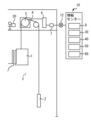
- FIG. 1 is a schematic diagram of an elevator to which a maintenance system according to a first embodiment is applied.
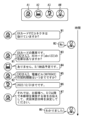
- FIG. 2 is a diagram illustrating an example of an interface of the maintenance system in the first embodiment.
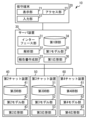
- FIG. 2 is a functional block diagram of the maintenance system according to the first embodiment.
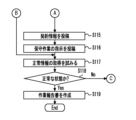
- 4 is a flowchart for explaining an overview of the operation of the maintenance system in the first embodiment.
- 2 is a hardware configuration diagram of a server device of the maintenance system according to the first embodiment.
- FIG. 11 is a functional block diagram of a maintenance system in a second embodiment. 11 is a flowchart for explaining an overview of the operation of the maintenance system in the second embodiment. 11 is a flowchart for explaining an overview of the operation of the maintenance system in the second embodiment.
- FIG. 11 is a functional block diagram of a maintenance system in a third embodiment.
- FIG. 1 is a schematic diagram of an elevator to which a maintenance system according to a first embodiment of the present invention is applied.
- FIG. 1 shows an overview of a building in which an elevator system is installed.
- the maintenance system 10 is applied to an elevator.
- the elevator is an elevator system.
- the elevator system includes a car 1 and a counterweight 2.
- the car 1 and the counterweight 2 are suspended by a rope 4 inside a hoistway 3.
- FIG. 1 shows an elevator system using a 1:1 roping system.
- the middle portion of the rope 4 is wound around a hoist 5.
- the car 1 and the counterweight 2 rise and fall in opposite directions.
- the control panel 6 is capable of controlling the entire elevator system. For example, the control panel 6 controls the rotation of the hoist 5, thereby controlling the operation of the car 1.
- the monitoring device 7 is capable of acquiring information from the control panel 6.
- the monitoring device 7 is capable of communicating, via a network, with an information center device 8 provided in an information center away from the building.
- the information center is operated by a company that performs maintenance and management of the elevator system.
- the maintenance system 10 includes at least a maintenance terminal 20 and a server device 30.
- the server device 30 includes a function as a first chat device.
- the maintenance system 10 may include at least one of a second chat device 40, a third chat device 50, and a fourth chat device 60.
- Each device included in the maintenance system 10 and the information center device 8 can communicate with each other via a network.
- the maintenance terminal 20 is a terminal carried by a maintenance worker who performs maintenance management of the elevator. Although not shown, each of the multiple maintenance workers has their own maintenance terminal 20. In other words, the maintenance system 10 includes multiple maintenance terminals 20.
- the maintenance terminal 20 is a portable device such as a smartphone or a notebook computer. As an example, in this embodiment, the maintenance terminal 20 is a smartphone.
- the maintenance terminal 20 realizes functions in the maintenance system 10 by means of installed applications. In the following explanation, each function of the maintenance terminal 20 is realized by the processing circuit of the maintenance terminal 20 executing the application.
- the server device 30 is provided in an information center.
- the server device 30 provides a messaging service.
- the server device 30 provides an interface of the messaging service to the maintenance terminal 20.
- the interface is a chat room where messages are exchanged. In the interface, a message posted to a specific chat room can be viewed by multiple accounts participating in the chat room.
- the server device 30 has a first account A1 in the messaging service as a first chat device, and can post messages to the interface.
- the interface also includes a maintenance account AM that corresponds to the maintenance terminal 20.
- the maintenance account AM corresponds to each of the multiple maintenance personnel.
- the second chat device 40, the third chat device 50, and the fourth chat device 60 are all provided in an information center.
- the second chat device 40 has a second account A2 in the messaging service and can post messages.
- the third chat device 50 has a third account in the messaging service and can post messages.
- the fourth chat device 60 has a fourth account in the messaging service and can post messages.
- the second chat device 40, the third chat device 50, and the fourth chat device 60 are each capable of posting different types of information.
- the control panel 6 notifies the monitoring device 7 of the fault.
- the monitoring device 7 notifies the information center device 8 of the fault.
- a maintenance worker is dispatched to the elevator device.
- An abnormality code indicating the nature of the abnormality that has occurred is displayed on the control panel 6.
- the maintenance worker operates his/her maintenance terminal 20 to access the messaging service interface and post a message including the model of the elevator device and the abnormality code of the control panel 6.
- the first chat device posts a message indicating instructions for maintenance work to be performed based on a message posted by the maintenance account AM of the maintenance terminal 20.
- the first chat device exchanges messages in chat format by sending a message instructing the maintenance terminal 20 to post a message indicating more detailed equipment status, measurement results of a measuring instrument, etc.
- the first chat device posts a message to the second account A2, the third account A3, or the fourth account A4 requesting the provision of corresponding information.
- the second chat device 40, the third chat device 50, and the fourth chat device 60 post a message indicating the corresponding information as a response to the interface.
- the maintenance staff performs maintenance work based on the multiple messages posted to the interface and responds to the failure. After completing the response, the server device 30 organizes at least some of the messages posted to the interface and creates the organized information as part of a work report.
- FIG. 2 is a diagram showing an example of an interface of the maintenance system according to the first embodiment.
- At least a maintenance account AM, a first account A1, a second account A2, and a third account A3 participate in the chat room of the interface.
- icons corresponding to the accounts are displayed in association with messages posted by the accounts.
- the first account A1 can post first information that includes general instructions for maintenance work based on work instruction information, which is a maintenance work manual.
- the second account A2 can post parts management information, such as parts inventory status and estimated delivery time when parts are ordered, as second information.
- the third account can post contract information regarding the contents of the maintenance contract with the elevator owner as third information.
- the first account A1 posts a message M1 indicating an instruction for maintenance work to check the condition of a possibly broken part.
- the first account A1 may post the message indicating the instruction for maintenance work in a format in which the result can be answered.
- the first account A1 posts a message in a format in which the instruction for maintenance work can be answered with Yes or No, in a format in which the measurement value of an instrument such as a voltage value can be answered numerically, or in a format in which multiple options are presented and one can be answered selectively.
- the first account A1 posts a message M1 including an instruction to check the condition of the part, such as "Is the XX card YYZ connector loose?", and an inquiry that can be answered with Yes or No about the result of the inspection.
- the first account A1 may post a selectable button as a message in the interface.
- the first account A1 may post a selectable Yes button and a selectable No button in the interface.
- First account A1 analyzes the response to message M2 and posts message M3 indicating that the part is faulty based on the response.
- Message M3 further includes a request to second account A2 to inquire about the availability of the part in stock, which is the second information.
- first account A1 includes in message M3 the wake word W1, "[Mr. B]", which is used to request a response from second account A2.
- the second account A2 reads the wake word W1 from the message M3 and checks whether the part included in the inquiry is in stock. In this example, the part is not in stock, so the second account A2 posts a response message M4 indicating that the part is not in stock and including the estimated delivery date of the part.
- the first account A1 posts a message M5 to the third account A3 inquiring about the contract details for the elevator, which is the third information.
- the message M5 includes at least the items of the contract details that need to be confirmed.
- the first account A1 includes in the message M5 a wake word W2 for requesting a response from the third account A3.
- the contract details may include information for determining whether or not a part replacement is possible.
- the third account A3 reads the wake word W2 from the message M5 and posts a message M6 as a response to the contract information, which includes the items in the elevator contract included in the inquiry that need to be confirmed.
- the third account A3 includes in the message M6 the inquired information about the contract expiration date from the contract details.
- the first account A1 reads messages M4 and M6, determines that the contract deadline when the part can be replaced is after the estimated delivery date of the part, and posts a message M7 with instructions to replace the part.
- Message M7 may include maintenance work instructions for the maintenance staff.
- message M7 includes instructions to replace the part, such as an instruction to inform the customer that the repair will be performed after the estimated delivery date, and an instruction to consult with the customer to decide on the date and time of the next visit.
- the maintenance worker posts a response message M8 to the effect that he/she accepts the maintenance work instructions.
- Message M8 may include specific wording that urges the user to end the chat and create a work report.
- the server device 30 uses the wording "I understand" in message M8 as a trigger to create information for a work report that includes at least some of the messages in the chat room printed out in chronological order.
- FIG. 3 is a functional block diagram of the maintenance system according to the first embodiment.
- the maintenance terminal 20 has, as its functions, a display unit 21, an input unit 22, and an access unit 23.
- the display unit 21 is a display that displays information.
- the input unit 22 is a device that accepts information input from a person.
- the input unit 22 is a button.
- the display unit 21 and the input unit 22 may be provided integrally as a touch panel.
- the access unit 23 is a function that accesses the interface of the messaging service.
- the access unit 23 is software installed in the maintenance terminal 20.
- the access unit 23 displays the interface on the display unit 21.
- the access unit 23 reflects input received by the input unit 22 in the interface.
- the access unit 23 reflects characters received by the input unit 22 in the interface.
- the access unit 23 may also reflect the selection of a button received by the input unit 22 in the interface.
- the access unit 23 accesses the interface using a maintenance account AM that is unique to the maintenance worker who owns the maintenance terminal 20.
- the maintenance account AM is associated with the identification information of the maintenance worker.
- the server device 30 has, as functions, an interface unit 31, an analysis unit 32, a report creation unit 33, a first DB unit 34, a first model unit 35, and a first response unit 36.
- the first DB unit 34, the first model unit 35, and the first response unit 36 are functions that constitute a first chat device.
- the first chat device manages a first account A1.
- the interface unit 31 provides an interface for the messaging service. For example, in response to a notification from the maintenance terminal 20, the interface unit 31 creates a chat room for a group chat in which the maintenance account AM of the maintenance terminal 20, the first account A1, the second account A2, the third account A3, and the fourth account A4 participate.
- the analysis unit 32 analyzes the text of messages posted to the interface by the maintenance account AM, the second account A2, the third account A3, and the fourth account A4, and extracts information indicating the intention contained in the messages. For example, the analysis unit 32 extracts specific words from the messages. Specific words include words expressing affirmation or negation, words expressing location, words expressing the name of equipment, words expressing the name of parts, words expressing the state of equipment or parts, and the like. For example, if the reply message from the maintenance account AM to the inquiry message "Is it working?" from the first account A1 is "It's working," the analysis unit 32 considers the intention of the reply message to be positive, and extracts Yes from the message.
- the report creation unit 33 creates information for a work report based on the messages in the chat room. For example, after the exchange of messages in a chat room is completed, the report creation unit 33 creates information for a work report that includes at least some of the messages in the chat room, arranged in chronological order. Note that the format of the work report is not limited as long as the work report created includes at least some of the messages in the chat room.
- the first DB unit 34 stores work instruction information, which is the first information.
- the work instruction information includes information such as a response manual for elevator maintenance work, past response history, and statistical relationships between types of malfunctions and their causes.
- the first DB unit 34 stores the latest work instruction information for each elevator model as a database of the first information.
- the information stored in the first DB unit 34 is created and managed by the first department under the responsibility of the first department. For example, the first department is a department that oversees work instructions. Members of the first department update the response manual at any time based on past response history, statistical relationships regarding malfunctions, etc.
- the first model unit 35 stores information of a first model for outputting maintenance work instructions based on the work instruction information.
- the first model is a trained model generated using the first information stored in the first DB unit 34 as training data.
- the first model is a model that proceeds with processing based on a corresponding manual, and is a model for outputting maintenance work instructions from inputs included in messages from the maintenance account AM.
- Table 1 below is an example of work instruction information that is referenced when output by the trained model.
- the work instruction information is information that associates an "ID", "post content”, "branch”, and "branch transition destination”.
- the work instruction information contains multiple rows of information shown in each row of Table 1. For example, the rows and branches contained in the work instruction information differ depending on the model of elevator.
- the first column from the left shows a unique ID for the message indicating maintenance work instructions. This ID is used to sort the messages.
- the second column from the left shows the content of the message, which is the "posted content.”
- the "****" in the "posted content” is substituted with the name of the elevator model currently in question, the name of the site, the name of the part, etc.
- the "posted content” may also include a wake word, such as [Mr. A2].
- a "branch” is a branching condition that depends on the content of a message posted by an account other than the first account A1 after the "post content” is posted. If the content of the message satisfies the conditions of a certain "branch", a transition will occur to the message with the "ID” shown in the "branch transition destination” that corresponds to the "branch” that satisfies the condition.
- branches is not limited to two, but may be, for example, three or more types of branches divided according to the range to which the device's measurement values belong, or may be one type of branch.
- the first response unit 36 posts a message to the interface as the first account A1 by using the first model stored in the first model unit 35 based on the work instruction information stored in the first DB unit 34.
- the first response unit 36 posts a message indicating maintenance work instructions based on the work instruction information as the first account A1.
- the first response unit 36 may also post a message indicating maintenance work instructions as the first account A1 based on a message posted to the interface by another account, such as the maintenance account AM, and the work instruction information.
- the second chat device 40 manages the second account A2.
- the second chat device 40 has, as functions, a second DB unit 41, a second model unit 42, and a second response unit 43.
- the second DB unit 41 stores the second information, which is part management information, as a database.
- the second information is information required to perform maintenance work.
- the part management information is information that associates, for each part, the part's inventory status, the compatibility of the part with the elevator model, the estimated delivery time if the part is ordered, and the like.
- the second DB unit 41 stores the latest part management information for each part as a database of the second information.
- the information stored in the second DB unit 41 is created and managed by the second department under the responsibility of the second department. Note that the first department and the second department may be the same department or different departments.
- the second model unit 42 stores information of a second model for outputting part management information related to the queried part based on the part management information.
- the second model is a trained model generated using the part management information stored in the second DB unit 41 as training data.
- the second response unit 43 posts a message to the interface as the second account A2 by using the second model stored in the second model unit 42 based on the part management information stored in the second DB unit 41. For example, when a message including a wake word corresponding to the second account A2 is posted to the interface, the second response unit 43 extracts information related to part management information such as part names from the message. At this time, the second response unit 43 may extract the content inquired about in the message from the content included in the part management information. The second response unit 43 posts a message including at least a part of the part management information to the interface as a response to the message. At this time, the second response unit 43 may post a message to the interface including only the content inquired about in the message including the wake word from the part management information.
- the second response unit 43 may change the content to be included in the response message depending on the inventory status in the parts management information. Specifically, if the inquired part is in stock, the second response unit 43 posts a message to the interface as the second information to the effect that the part is in stock. If the inquired part is not in stock, the second response unit 43 posts a message to the interface as the second information to the effect that the part is not in stock and including the estimated delivery time of the part.
- the third chat device 50 manages the third account A3.
- the third chat device 50 has, as functions, a third DB unit 51, a third model unit 52, and a third response unit 53.
- the third DB unit 51 stores the third information, that is, contract information, as a database.
- the contract information is information required for performing maintenance work.
- the contract information is information in which the contract code, the installation location of the elevator, the contractor, the contract contents, the contract expiration date, and the like are associated with each elevator for which a maintenance management contract has been made.
- the contract contents include items related to parts replacement, such as contract menu A and contract menu B, as items related to maintenance work.
- the maintenance staff is basically permitted to replace parts without checking with the contractor each time.
- contract menu B, not contract menu A has been concluded, the maintenance staff is basically required to check with the contractor each time whether or not it is OK to replace the part.
- the contract information includes information on whether or not the part can be replaced.
- the third DB unit 51 stores the latest contract information for each elevator as a database of the third information.
- the information stored in the third DB unit 51 is created and managed by the third department under the responsibility of the third department.
- the third department may be the same department as the first or second department, or it may be a different department.
- the third model unit 52 stores information of a third model for outputting contract information related to the inquired elevator based on the contract information.
- the third model is a trained model generated using the contract information stored in the third DB unit 51 as training data.
- the third response unit 53 posts a message to the interface as the third account A3 by using the third model stored in the third model unit 52 based on the contract information stored in the third DB unit 51. For example, when a message including a wake word corresponding to the third account A3 is posted to the interface, the third response unit 53 extracts information related to the contract information of the elevator, etc. from the message. At this time, the third response unit 53 may extract the content inquired about in the message from the content included in the contract information. The third response unit 53 posts a message including at least a part of the contract information to the interface as a response to the message. At this time, the third response unit 53 may post a message including only the content inquired about in the message including the wake word from the contract information to the interface.
- the third response unit 53 may post a message including a message indicating only the contract expiration date to the interface.
- the third response unit 53 may post as a response a message including the deadline by which the part can be replaced, such as "Parts can be replaced until December 31, 2023," instead of responding with the contract details and contract expiration date.
- the fourth chat device 60 manages the fourth account.
- the fourth chat device 60 has, as functions, a fourth DB unit 61, a fourth model unit 62, and a fourth response unit 63.
- the fourth DB unit 61 stores the fourth information, which is the site information, as a database.
- the site information is information that corresponds to the site where each elevator for which a maintenance contract is made is installed, such as the location of the site, the site map, information for entering the site during the daytime, which is the first time period, information for entering the site during the night, which is the second time period, and comments left by maintenance personnel during previous maintenance work.
- the site information is information that includes at least one of information for going to the location where the elevator is installed and information on the maintenance response history to be referred to when performing maintenance work on the elevator.
- the fourth DB unit 61 stores the latest site information for each elevator as a database of site information.
- the information stored in the fourth DB unit 61 is created and managed by the fourth department under the responsibility of the fourth department.
- the fourth department may be the same department as the first department, the second department, or the third department, or it may be a different department.
- the fourth model unit 62 stores information of a fourth model for outputting on-site information about the inquired elevator based on the on-site information.
- the fourth model is a trained model generated using the on-site information stored in the fourth DB unit 61 as training data.
- the fourth response unit 63 posts a message to the interface as the fourth account A4 by using the fourth model stored in the fourth model unit 62 based on the site information stored in the fourth DB unit 61. For example, when a message including a wake word corresponding to the fourth account A4 is posted to the interface, the fourth response unit 63 extracts information related to the site information of the elevator from the message. At this time, the fourth response unit 63 may extract the content inquired about in the message from the content included in the site information. The fourth response unit 63 posts a message including at least a part of the site information to the interface as a response to the message. At this time, the fourth response unit 63 may post a message including only the content inquired about in the message including the wake word from the site information to the interface. Specifically, the fourth response unit 63 may post a message including a message indicating only information for entering the site at night, which is the second time period.
- the fourth response unit 63 may change the content of the on-site information response depending on the time when the inquiry message is posted from the first response unit 36, i.e., the time period of the response. Specifically, when posting during the first time period set as daytime, the fourth response unit 63 posts a message including information for entering the site during the first time period as information for heading to the location where the elevator is installed. When posting during the second time period set as night, the fourth response unit 63 posts a message including information for entering the site during the second time period as information for heading to the location where the elevator is installed.
- the first account A1 posts a message to the interface that includes a wake word to the fourth account and an inquiry about the site information of that elevator.
- the fourth response unit 63 posts a message including the site information of the queried elevator as a response to the interface.
- FIG. 4 is a flowchart for explaining an outline of the operation of the maintenance system in the first embodiment.
- FIG. 4 shows an example of a maintenance worker accessing the interface after arriving at the site of maintenance work. That is, in step S001, the maintenance worker arrives at the site.
- step S002 the maintenance personnel operates the maintenance terminal 20 to access the server device 30.
- the access unit 23 of the maintenance terminal 20 transmits, in response to the maintenance personnel's operation, a notification to the server device 30 that the interface is to be used, and the maintenance personnel's identification information.
- step S003 the interface unit 31 of the server device 30 creates a chat group, which is an individual user interface, on the maintenance terminal 20.
- the first response unit 36 posts a message to the interface prompting the maintenance account AM to enter information such as an error code as a reflection operation of the input contents.
- the analysis unit 32 extracts information from the message.
- step S004 the access unit 23 of the maintenance terminal 20 accepts input to the interface from the maintenance worker, such as elevator model information, error codes, etc.
- step S005 the first response unit 36 selects corresponding work instruction information based on the information indicated in the message of the maintenance account AM.
- the first response unit 36 posts a message indicating the maintenance work instructions contained in the selected work instruction information to the interface.
- the message is displayed on the interface on the display unit 21 of the maintenance terminal 20.
- the maintenance worker performs the maintenance work according to the instructions contained in the message.
- step S006 the maintenance worker inputs the results of the maintenance work to the interface. That is, the access unit 23 accepts input from the maintenance worker to the interface regarding the work results via the input unit 22. The access unit 23 reflects the input to the interface. If the input is a message, the analysis unit 32 extracts information from the message.
- the first response unit 36 determines whether or not it is necessary to replace the part. This determination is made based on the first model. As an example, the first response unit 36 determines that it is necessary to replace the part when the "post content" at the transition destination of the work instruction information includes a wake word to the second account A2. Note that the work instruction information may include criteria for replacing the part. In this case, the first response unit 36 may determine whether or not it is necessary to replace the part based on the criteria and a message from the maintenance account AM.
- step S008 the operation of step S008 is performed.
- the first response unit 36 posts a message to the interface inquiring about part management information for a certain part as second information required to perform the maintenance work included in the work instruction.
- step S009 the second response unit 43 refers to the parts management information and determines whether the queried part is in stock.
- step S010 the second response unit 43 posts a message to the interface indicating that the part is in stock.
- step S011 the operation of step S011 is performed.
- step S011 the second response unit 43 posts a message to the interface indicating that the part is not in stock and including the estimated delivery time of the part.
- step S010 After the operation of step S010 or step S011 is performed, the operation of step S012 is performed.
- step S012 the first response unit 36 posts a message to the interface inquiring of the third response unit 53 about the third information, which is the contract information.
- step S013 the third response unit 53 posts a message including the contract information as the third information to the interface.
- the third response unit 53 posts a message including the contract expiration date for the elevator.
- step S014 the first response unit 36 posts a message to the interface indicating instructions for the necessary maintenance work to the maintenance personnel based on the response message from the second response unit 43, the response message from the third response unit 53, and the work instruction information. Specifically, if the contract deadline is after the estimated delivery date, the first response unit 36 posts a message to the interface indicating instructions to replace parts that need to be replaced.
- step S015 the operation of step S015 is performed.
- the maintenance staff posts a message to the interface via the maintenance account AM to the effect that the maintenance work has been completed. That is, the access unit 23 receives input from the maintenance staff via the input unit 22 to the interface regarding the completion of the maintenance work. The input is reflected in the interface.
- the message to the effect that the maintenance work has been completed may also include the contents of the final response.
- step S016 the first response unit 36 notifies the outside of the content of the final response based on the content of the response.
- the report creation unit 33 creates information for the work report.
- the maintenance system 10 includes an interface unit 31, an access unit 23, a first response unit 36, and a second response unit 43.
- the first response unit 36 posts a message to the interface inquiring of at least a part of the second information to the second response unit 43.
- the second response unit 43 posts a message indicating the inquired content to the interface.
- the first response unit 36 posts a message indicating maintenance work to the interface using at least a part of the second information posted to the interface by the second response unit 43.
- the maintenance staff can read these exchanges in the interface. Therefore, the maintenance staff can know how and on what second information the maintenance work instruction was given. That is, the maintenance staff can easily know the relevance of the information provided.
- the first response unit 36 and the second response unit 43 are realized by devices rather than people. In other words, responses to inquiries that have traditionally been performed by human operators can now be realized by devices. This makes it possible to reduce the resources required to respond to such inquiries. Furthermore, since maintenance work instructions can be issued regardless of the operator's own ability, it is possible to prevent errors in judgment and omissions due to lack of experience and resources of maintenance personnel and operators.
- the second information is parts management information. If the inquired part is not in stock, the second response unit 43 posts a message to the interface to the effect that the part is not in stock and the estimated delivery date of the part. This makes it possible to reduce the process of inquiring about the estimated delivery date when the part is not in stock.
- the maintenance system 10 further includes a third response unit 53.
- the third response unit 53 posts a message indicating third information related to the contract details.
- a work plan needs to be made based on the contract details of the elevator in question.
- the first response unit 36 also posts a message to the interface indicating an instruction to replace the part based on the estimated delivery date included in the second information and the contract expiration date included in the third information. This makes it possible to prevent, for example, entering into a work plan with the contractor to replace the part after the contract expiration date.
- the maintenance system 10 further includes a fourth response unit 63.
- the fourth response unit 63 posts a message of the fourth information, which is information about the site. This allows workers to easily learn information about the site where maintenance work is being performed.
- the fourth information also includes at least some of the comments left by maintenance personnel during previous elevator maintenance work.
- the maintenance personnel performing the current maintenance work can easily see those comments.
- the maintenance work can be carried out more efficiently, the cause of a malfunction can be discovered early, the equipment can be diagnosed with greater accuracy, and other benefits can be obtained.
- the fourth response unit 63 also posts different information depending on the time period of the posting. For example, when posting in the first time period, information about entering the site in the second time period is unnecessary and potentially misleading, which is redundant information.
- the fourth response unit 63 can suppress the posting of redundant information. As a result, the maintenance personnel can efficiently carry out maintenance work.
- the maintenance system 10 also includes a report creation unit 33.
- An important element of maintenance work is that the maintenance worker performs the work correctly on-site based on appropriate judgment.
- a work report is a document in which it is important that such elements are properly recorded.
- the report creation unit 33 reflects the message in the work report using a device, thereby preventing mistakes such as omissions in the work report. It is also possible to reduce the amount of work that the maintenance worker has to do to write up the work report.
- the departments that update and manage the work instruction information, second information, third information, and fourth information may be separate.
- the task of updating information is prevented from being concentrated in one department, and maintenance of each piece of information can be performed frequently.
- the amount of learning required for each model can be reduced.
- the maintenance instructions obtained become more appropriate, that is, the accuracy of the instructions can be improved.
- each department manages the corresponding information under the responsibility of that department, so that responsibility for maintenance instructions becomes clear.
- the elevator to which the maintenance system 10 is applied may be an elevator device, escalator, etc., of a different type than the elevator device shown in FIG. 1.
- FIG. 5 is a hardware configuration diagram of the server device of the maintenance system according to the first embodiment.
- Each function of the server device 30 can be realized by a processing circuit.
- the processing circuit includes at least one processor 100a and at least one memory 100b.
- the processing circuit includes at least one dedicated hardware 200.
- each function of the server device 30 is realized by software, firmware, or a combination of software and firmware. At least one of the software and firmware is written as a program. At least one of the software and firmware is stored in at least one memory 100b. At least one processor 100a realizes each function of the server device 30 by reading and executing the program stored in at least one memory 100b. At least one processor 100a is also called a central processing unit, processing unit, arithmetic unit, microprocessor, microcomputer, or DSP.
- At least one memory 100b is a non-volatile or volatile semiconductor memory such as RAM, ROM, flash memory, EPROM, EEPROM, etc., a magnetic disk, a flexible disk, an optical disk, a compact disk, a mini disk, a DVD, etc.
- the processing circuit includes at least one dedicated hardware 200
- the processing circuit is realized, for example, by a single circuit, a composite circuit, a programmed processor, a parallel programmed processor, an ASIC, an FPGA, or a combination of these.
- each function of the server device 30 is realized by a processing circuit.
- each function of the server device 30 is realized collectively by a processing circuit.
- the functions of the server device 30 may be realized by dedicated hardware 200, and the other parts may be realized by software or firmware.
- the functions related to the first chat device may be realized by a processing circuit as the dedicated hardware 200, and functions other than the functions related to the first chat device may be realized by at least one processor 100a reading and executing a program stored in at least one memory 100b.
- the processing circuitry realizes each function of the server device 30 using hardware 200, software, firmware, or a combination of these.
- the server device 30 may be realized on a cloud server.
- the processing circuit is composed of multiple partial circuits.
- the multiple partial processing circuits are provided in each of the multiple devices that make up the cloud server.
- Each of the multiple devices that make up the cloud server may be provided in a different building.
- the functions of the maintenance terminal 20, the second chat device 40, the third chat device 50 and the fourth chat device 60 are also realized by processing circuits equivalent to the processing circuits that realize the functions of the server device 30.
- the functions of the second chat device 40, the functions of the third chat device 50, and the functions of the fourth chat device 60 may be included in any of the server device 30, the second chat device 40, the third chat device 50, and the fourth chat device 60.
- the functions of the server device 30, the functions of the second chat device 40, the functions of the third chat device 50, and the functions of the fourth chat device 60 may be provided in any device in any form as the maintenance system 10.
- Embodiment 2. 6 is a functional block diagram of a maintenance system in embodiment 2. Note that the same reference numerals are used to designate parts that are the same as or correspond to parts in embodiment 1. Explanation of these parts will be omitted.
- the maintenance system 10 includes a monitoring device 7.
- the maintenance system 10 may further include a control panel 6.
- the server device 30 further includes a monitoring unit 37.
- the monitoring unit 37 is capable of communicating with the monitoring device 7 via a network.
- the monitoring unit 37 may also be capable of communicating with the monitoring device 7 via the information center device 8.
- the monitoring unit 37 obtains alarm information from the control panel 6 via the monitoring device 7, the alarm information including the abnormality code of the abnormality, the model of the elevator in which the abnormality has occurred, and information identifying the elevator.
- the information identifying the elevator is a serial number assigned to each elevator.
- the monitoring unit 37 may obtain warning information when the control panel 6 detects an abnormality in the elevator. Also, when the control panel 6 detects an abnormality in the elevator, the monitoring device 7 may obtain an abnormality code for the abnormality and transmit warning information to the monitoring unit 37.
- the monitoring unit 37 obtains a normal signal indicating that the control panel 6 has changed from an abnormal state to a normal state via the monitoring device 7 at any timing, such as when a command is received from the first response unit 36.
- FIG. 7 and FIG. 7 and 8 are flow charts for explaining an outline of the operation of the maintenance system in the second embodiment.
- the flowcharts shown in Figures 7 and 8 start when an abnormality occurs in an elevator. At this time, the information center selects a maintenance worker to deal with the elevator abnormality.
- step S101 the selected maintenance worker accesses the messaging service interface from the maintenance terminal 20.
- the interface unit 31 creates a chat room, which is the interface.
- step S102 the first response unit 36 posts a message to the interface prompting the maintenance account AM to enter information identifying the elevator in which the abnormality occurred.
- step S103 the access unit 23 of the maintenance terminal 20 accepts input of information identifying the elevator in which the abnormality has occurred from the maintenance worker into the interface.
- the access unit 23 posts a message of the information identifying the elevator to the interface.
- step S104 the first response unit 36 issues a command to the monitoring unit 37 to obtain information about the elevator identified from the message.
- the monitoring unit 37 obtains warning information from the elevator.
- step S105 the first response unit 36 posts a message to the interface that includes the contents of the alarm information and an inquiry to confirm whether the elevator being maintained is the correct one.
- the maintenance worker replies via the interface, via the maintenance terminal 20, whether the elevator being maintained is the correct one.
- step S106 the first response unit 36 determines whether or not the elevator is correct. If the elevator is not correct, the operations from step S102 onwards are carried out.
- step S107 If the elevator is found to be correct in step S106, the operations from step S107 onwards are carried out.
- the operations from step S107 to S116 are the same as the operations from step S005 to step S014 in the flowchart of FIG. 4 of embodiment 1.
- step S107 compared to the operation of step S005 in FIG. 4, the first response unit 36 posts a message indicating maintenance work instructions to the interface based on the alarm information and work instruction information acquired by the monitoring unit 37, instead of the elevator model and abnormality code, which are the information accepted as input by the access unit 23.
- step S117 the first response unit 36 issues a command to the monitoring unit 37 to acquire normal information of the elevator.
- the monitoring unit 37 attempts to acquire normal information from the elevator. Specifically, for example, the monitoring unit 37 checks whether the signal status of the elevator is normal.
- step S118 the first response unit 36 determines whether the elevator is in a normal state.
- step S118 If the condition is normal in step S118, the operation of step S119 is performed.
- step S119 the content of the final response is notified to the outside based on the content of the response.
- the report creation unit 33 creates information for the work report. Thereafter, the maintenance system 10 ends its operation.
- step S104 onwards are carried out. By carrying out the operations from step S104 onwards in this way, further work can be carried out if the abnormality has not yet been resolved or another abnormality has occurred.
- the maintenance system 10 further includes a monitoring unit 37.
- the first response unit 36 posts a message indicating instructions for maintenance work to the interface based on the information acquired by the monitoring unit 37. This reduces the work of the worker inputting information about the elevator from the maintenance terminal 20. Furthermore, by reading the message posted to the interface before arriving at the site, the maintenance worker can learn the abnormality code and the work required to deal with the abnormality. As a result, the working time of the maintenance worker can be reduced. Furthermore, the maintenance worker can make arrangements for parts and the like in advance, and the abnormal condition of the elevator can be resolved early.
- the monitoring unit 37 may post the acquired alarm information to the interface as the fifth account.
- the first response unit 36 may post a message indicating an inquiry about the alarm information to the fifth account of the monitoring unit 37 to the interface.
- the monitoring unit 37 may read the inquiry message, acquire the alarm information, and post it to the interface.
- the maintenance system disclosed herein can be used for maintenance work on elevator equipment.
Landscapes
- Indicating And Signalling Devices For Elevators (AREA)
- Maintenance And Inspection Apparatuses For Elevators (AREA)
Priority Applications (3)
| Application Number | Priority Date | Filing Date | Title |
|---|---|---|---|
| JP2025520372A JPWO2024236817A1 (https=) | 2023-05-18 | 2023-05-18 | |
| CN202380098121.1A CN121127432A (zh) | 2023-05-18 | 2023-05-18 | 维护系统 |
| PCT/JP2023/018660 WO2024236817A1 (ja) | 2023-05-18 | 2023-05-18 | 保守システム |
Applications Claiming Priority (1)
| Application Number | Priority Date | Filing Date | Title |
|---|---|---|---|
| PCT/JP2023/018660 WO2024236817A1 (ja) | 2023-05-18 | 2023-05-18 | 保守システム |
Publications (1)
| Publication Number | Publication Date |
|---|---|
| WO2024236817A1 true WO2024236817A1 (ja) | 2024-11-21 |
Family
ID=93519590
Family Applications (1)
| Application Number | Title | Priority Date | Filing Date |
|---|---|---|---|
| PCT/JP2023/018660 Ceased WO2024236817A1 (ja) | 2023-05-18 | 2023-05-18 | 保守システム |
Country Status (3)
| Country | Link |
|---|---|
| JP (1) | JPWO2024236817A1 (https=) |
| CN (1) | CN121127432A (https=) |
| WO (1) | WO2024236817A1 (https=) |
Citations (4)
| Publication number | Priority date | Publication date | Assignee | Title |
|---|---|---|---|---|
| JP2014012606A (ja) * | 2013-10-08 | 2014-01-23 | Japan Elevator Service Co Ltd | 遠隔監視支援装置および遠隔監視システム |
| JP2014528393A (ja) * | 2011-10-14 | 2014-10-27 | オーチス エレベータ カンパニーOtis Elevator Company | 保守の自動化のためのメッセージングを行うエレベータ装置 |
| JP2017162277A (ja) * | 2016-03-10 | 2017-09-14 | 東芝エレベータ株式会社 | ヘルプデスクシステム |
| JP2021134023A (ja) * | 2020-02-25 | 2021-09-13 | 株式会社日立ビルシステム | ビル設備の保守作業支援装置 |
-
2023
- 2023-05-18 JP JP2025520372A patent/JPWO2024236817A1/ja active Pending
- 2023-05-18 CN CN202380098121.1A patent/CN121127432A/zh active Pending
- 2023-05-18 WO PCT/JP2023/018660 patent/WO2024236817A1/ja not_active Ceased
Patent Citations (4)
| Publication number | Priority date | Publication date | Assignee | Title |
|---|---|---|---|---|
| JP2014528393A (ja) * | 2011-10-14 | 2014-10-27 | オーチス エレベータ カンパニーOtis Elevator Company | 保守の自動化のためのメッセージングを行うエレベータ装置 |
| JP2014012606A (ja) * | 2013-10-08 | 2014-01-23 | Japan Elevator Service Co Ltd | 遠隔監視支援装置および遠隔監視システム |
| JP2017162277A (ja) * | 2016-03-10 | 2017-09-14 | 東芝エレベータ株式会社 | ヘルプデスクシステム |
| JP2021134023A (ja) * | 2020-02-25 | 2021-09-13 | 株式会社日立ビルシステム | ビル設備の保守作業支援装置 |
Also Published As
| Publication number | Publication date |
|---|---|
| JPWO2024236817A1 (https=) | 2024-11-21 |
| CN121127432A (zh) | 2025-12-12 |
Similar Documents
| Publication | Publication Date | Title |
|---|---|---|
| CN100567120C (zh) | 维护电梯或自动扶梯设备的方法和装置 | |
| JP6868050B2 (ja) | 検査室の管理のための情報処理装置及び方法 | |
| US20110035253A1 (en) | Systems and Methods for Optimizing Enterprise Performance Relationships to Other Applications | |
| CN111480171B (zh) | 设备管理用本地服务器和代理管理用中心服务器 | |
| AU2023202792A1 (en) | Method and system for resolving service requests | |
| WO2019032964A1 (en) | DYNAMIC CALIBRATION SYSTEM OF INTERNAL BUSINESS PROCESSES RELATING TO REGULATORY COMPLIANCE AND ASSOCIATED BUSINESS REQUIREMENTS | |
| WO2024236817A1 (ja) | 保守システム | |
| WO2021090389A1 (ja) | ビル情報処理装置 | |
| JP7491872B2 (ja) | 昇降機の保守作業を支援する方法 | |
| Wang | CE Department Management | |
| JP2006199469A (ja) | エレベータの点検報告システム及びその制御方法 | |
| Todorova | Exploring lean implementation success factors in job shop, batch shop, and assembly line manufacturing settings | |
| JP6976983B2 (ja) | プロジェクト進行管理表作成システム | |
| JP7781704B2 (ja) | ビル設備の保全システム及びビル設備の保全方法 | |
| TWI900822B (zh) | 法規增修鑑別管理系統的執行方法 | |
| JP7810374B1 (ja) | 情報処理方法、およびタスク支援システム | |
| JP7370927B2 (ja) | 保守情報参照装置およびその方法 | |
| US20250037063A1 (en) | System and Method for Preventing Human Errors | |
| Sutcliffe et al. | Analysing Socio-Technical System Requirements | |
| Stark | Friday 7 June | |
| JP2025068821A (ja) | 作業工数集計装置、作業工数集計方法 | |
| Gouws et al. | Common pitfalls with SAP™-based plant maintenance systems | |
| Bayda et al. | Forming guidelines for software evaluation in bridge structural health monitoring systems | |
| JP4774354B2 (ja) | 作業管理システム及び作業管理プログラム | |
| NORDSTRÖM | LINDA NORDSTRÖM |
Legal Events
| Date | Code | Title | Description |
|---|---|---|---|
| 121 | Ep: the epo has been informed by wipo that ep was designated in this application |
Ref document number: 23937553 Country of ref document: EP Kind code of ref document: A1 |
|
| ENP | Entry into the national phase |
Ref document number: 2025520372 Country of ref document: JP Kind code of ref document: A |
|
| WWE | Wipo information: entry into national phase |
Ref document number: 2025520372 Country of ref document: JP |
|
| NENP | Non-entry into the national phase |
Ref country code: DE |