WO2024225320A1 - 活力向上剤、活力向上用組成物、及び活力向上用食品組成物 - Google Patents
活力向上剤、活力向上用組成物、及び活力向上用食品組成物 Download PDFInfo
- Publication number
- WO2024225320A1 WO2024225320A1 PCT/JP2024/016081 JP2024016081W WO2024225320A1 WO 2024225320 A1 WO2024225320 A1 WO 2024225320A1 JP 2024016081 W JP2024016081 W JP 2024016081W WO 2024225320 A1 WO2024225320 A1 WO 2024225320A1
- Authority
- WO
- WIPO (PCT)
- Prior art keywords
- pine needle
- vitality
- needle extract
- composition
- pine
- Prior art date
- Legal status (The legal status is an assumption and is not a legal conclusion. Google has not performed a legal analysis and makes no representation as to the accuracy of the status listed.)
- Ceased
Links
Images



Classifications
-
- A—HUMAN NECESSITIES
- A61—MEDICAL OR VETERINARY SCIENCE; HYGIENE
- A61P—SPECIFIC THERAPEUTIC ACTIVITY OF CHEMICAL COMPOUNDS OR MEDICINAL PREPARATIONS
- A61P17/00—Drugs for dermatological disorders
- A61P17/14—Drugs for dermatological disorders for baldness or alopecia
-
- A—HUMAN NECESSITIES
- A23—FOODS OR FOODSTUFFS; TREATMENT THEREOF, NOT COVERED BY OTHER CLASSES
- A23L—FOODS, FOODSTUFFS OR NON-ALCOHOLIC BEVERAGES, NOT OTHERWISE PROVIDED FOR; PREPARATION OR TREATMENT THEREOF
- A23L33/00—Modifying nutritive qualities of foods; Dietetic products; Preparation or treatment thereof
- A23L33/10—Modifying nutritive qualities of foods; Dietetic products; Preparation or treatment thereof using additives
- A23L33/105—Plant extracts, their artificial duplicates or their derivatives
-
- A—HUMAN NECESSITIES
- A61—MEDICAL OR VETERINARY SCIENCE; HYGIENE
- A61K—PREPARATIONS FOR MEDICAL, DENTAL OR TOILETRY PURPOSES
- A61K36/00—Medicinal preparations of undetermined constitution containing material from algae, lichens, fungi or plants, or derivatives thereof, e.g. traditional herbal medicines
- A61K36/13—Coniferophyta (gymnosperms)
- A61K36/15—Pinaceae (Pine family), e.g. pine or cedar
-
- A—HUMAN NECESSITIES
- A61—MEDICAL OR VETERINARY SCIENCE; HYGIENE
- A61K—PREPARATIONS FOR MEDICAL, DENTAL OR TOILETRY PURPOSES
- A61K8/00—Cosmetics or similar toiletry preparations
- A61K8/18—Cosmetics or similar toiletry preparations characterised by the composition
- A61K8/96—Cosmetics or similar toiletry preparations characterised by the composition containing materials, or derivatives thereof of undetermined constitution
- A61K8/97—Cosmetics or similar toiletry preparations characterised by the composition containing materials, or derivatives thereof of undetermined constitution from algae, fungi, lichens or plants; from derivatives thereof
- A61K8/9755—Gymnosperms [Coniferophyta]
- A61K8/9767—Pinaceae [Pine family], e.g. pine or cedar
-
- A—HUMAN NECESSITIES
- A61—MEDICAL OR VETERINARY SCIENCE; HYGIENE
- A61P—SPECIFIC THERAPEUTIC ACTIVITY OF CHEMICAL COMPOUNDS OR MEDICINAL PREPARATIONS
- A61P25/00—Drugs for disorders of the nervous system
- A61P25/24—Antidepressants
-
- A—HUMAN NECESSITIES
- A61—MEDICAL OR VETERINARY SCIENCE; HYGIENE
- A61Q—SPECIFIC USE OF COSMETICS OR SIMILAR TOILETRY PREPARATIONS
- A61Q7/00—Preparations for affecting hair growth
-
- A—HUMAN NECESSITIES
- A61—MEDICAL OR VETERINARY SCIENCE; HYGIENE
- A61K—PREPARATIONS FOR MEDICAL, DENTAL OR TOILETRY PURPOSES
- A61K2236/00—Isolation or extraction methods of medicinal preparations of undetermined constitution containing material from algae, lichens, fungi or plants, or derivatives thereof, e.g. traditional herbal medicine
- A61K2236/30—Extraction of the material
- A61K2236/33—Extraction of the material involving extraction with hydrophilic solvents, e.g. lower alcohols, esters or ketones
- A61K2236/333—Extraction of the material involving extraction with hydrophilic solvents, e.g. lower alcohols, esters or ketones using mixed solvents, e.g. 70% EtOH
Definitions
- the present invention relates to a vitality enhancer, a composition for enhancing vitality, and a food composition for enhancing vitality.
- Scalp hair loss is a condition that can occur for a variety of reasons, including aging. Although hair loss itself is not a dangerous condition, given the importance of scalp hair loss to appearance, it can have a significant impact on an individual's quality of life. For this reason, various treatments for hair loss are being researched.
- antidepressants are artificially synthesized low molecular weight compounds, which have side effects such as nausea, loss of appetite, drowsiness, and low blood pressure. There is also the problem that excessive intake of these drugs often leads to severe toxicity. For this reason, there is a demand for antidepressants derived from natural products that are expected to have fewer side effects and be safer.
- the present invention aims to provide a vitality enhancer derived from natural products.
- the present invention includes the following aspects.
- a vitality enhancer containing pine needle extract as an active ingredient [2] The vitality enhancer described in [1], wherein the pine needle extract is an extract using water or a mixture of water and alcohol as the extraction solvent. [3] The vitality enhancer according to [1] or [2], wherein the pine needle extract contains 500 to 9,500 ppm by mass of D-pinitol and 30 to 8,500 ppm by mass of shikimic acid. [4] The vitality enhancer according to any one of [1] to [3], wherein the pine needle extract is substantially free of resin acids.
- a composition for improving vitality comprising the vitality enhancer according to any one of [1] to [4] and a pharma- ceutically acceptable carrier.
- a food composition for improving vitality comprising the vitality enhancer according to any one of [1] to [4].
- [P1] A hair growth agent containing pine needle extract as an active ingredient.
- [P2] The hair growth agent according to [P1], wherein the pine needle extract is an extract using alcohol or a mixture of water and alcohol as the extraction solvent.
- [P3] A composition for hair growth comprising the hair growth agent according to [P1] or [P2] and a pharma- ceutically acceptable carrier.
- [P4] An antidepressant containing pine needle extract as an active ingredient.
- [P5] The antidepressant described in [P4], wherein the pine needle extract is an extract using alcohol or a mixture of water and alcohol as an extraction solvent.
- [P6] A composition for treating depression, comprising the antidepressant according to [P4] or [P5] and a pharma- ceutically acceptable carrier.
- the present invention provides a vitality enhancer derived from natural products.
- FIG. 1 is a graph showing the results of measuring cell viability in Experimental Example 4.
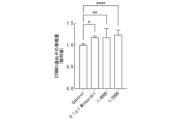
- FIG. 2 is a graph showing the results of quantitative real-time PCR of the CTNNB1 gene in Experimental Example 6.
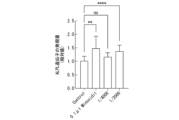
- FIG. 3 is a graph showing the results of quantitative real-time PCR of the ALPL gene in Experimental Example 6.
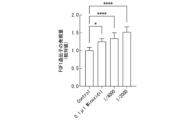
- FIG. 4 is a graph showing the results of quantitative real-time PCR of the FGF1 gene in Experimental Example 6.
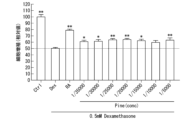
- FIG. 5 is a graph showing the results of evaluating cell proliferation in Experimental Example 8.
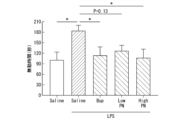
- FIG. 6 is a graph showing the results of the tail suspension test in Experimental Example 9.
- FIG. 7 is a graph showing the results of Experimental Example 10.
- FIG. 8 shows the results of Gene Ontology (GO) analysis of the group of genes whose expression was altered in the group administered high-dose pine needle extract in Experimental Example 11.
- GO Gene Ontology
- the present invention provides a vitality enhancer containing pine needle extract as an active ingredient.
- the administration of the vitality enhancer of this embodiment can improve or treat age-related decline in vitality in humans or non-human animals.
- Age-related decline in vitality can include hair loss, depression, etc.
- Non-human animals include pets and livestock.
- Pets include dogs, cats, rabbits, hamsters, etc.
- Livestock include horses, cows, etc.
- the vitality enhancer of the present invention has a hair growth effect in humans or non-human animals.
- the non-human animals are the same as those described above. Therefore, in one embodiment, the present invention can be said to provide a hair growth agent containing pine needle extract as an active ingredient. As described later in the examples, the inventors have clarified that pine needle extract has a hair growth promoting effect.
- the hair growth agent of this embodiment can be said to be a treatment for alopecia, a hair growth agent, etc.
- "using as an active ingredient” means that the agent contains pine needle extract in an amount sufficient to exert an effect as a hair growth agent. Alternatively, it means that the agent contains pine needle extract as a main active ingredient.
- the effect as a hair growth agent can be, for example, promoting hair growth.
- the effect as a hair growth agent can be, for example, increasing the expression level of hair growth-related genes in hair papilla cells in the presence of the hair growth agent compared to the absence of the hair growth agent. Examples of hair growth-related genes include the CTNNB1 gene ( ⁇ -catenin), the ALPL gene (alkaline phosphatase), and the FGF1 gene (fibroblast growth factor 1).
- the hair growth agent of this embodiment can significantly increase the expression level of hair growth-related genes in hair papilla cells. Therefore, the hair growth agent of this embodiment can also be said to be an expression promoter of the CTNNB1 gene, the ALPL gene, or the FGF1 gene.
- the pine needles used as the material for the pine needle extract may be the leaves of a plant (pine) belonging to the genus Pinus of the family Pinaceae.
- pine a plant belonging to the genus Pinus of the family Pinaceae.
- pine There are no particular limitations on the type of pine, and examples of such species include Japanese red pine (Pinus densiflora), P. densata, P. fragilissima, Spanish pine (P. heldreichii), P. henryi, and P. hwangshanensis, P. kesiya, Ryukyu sylvestris (P. luchuensis Mayr), Masson pine (P. massoniana), Montana pine (P. mugo), European black pine (P. nigra), Resinosa pine (P.
- the pine needles may be subjected to the extraction process in their raw form, or may be subjected to the extraction process after drying. They may also be subjected to the extraction process after being crushed or pulverized.
- the extraction solvent may be, for example, water, alcohol, or a mixture of water and alcohol.
- the alcohol is not particularly limited, and may be, for example, a lower alcohol having 1 to 4 carbon atoms, such as ethanol, methanol, propanol, butanol, or 1,3-butanediol.
- the alcohol may be used alone or in combination of two or more kinds.
- the extraction solvent may be prepared by mixing alcohol with water.
- the extraction solvent is preferably water or a mixture of water and alcohol.
- the concentration of alcohol in the mixture of water and alcohol may be 10-98% by volume, for example, 20-98% by volume, for example, 40-98% by volume, for example, 60-98% by volume, for example, approximately 70% by volume.
- Water is particularly preferred as the extraction solvent. As described later in the Examples, when water is used as the extraction solvent, the pine needle extract tends to have low cytotoxicity.
- Pine needles can be extracted using commonly used methods.
- pine needles can be immersed in the above-mentioned extraction solvent and extracted.
- the extraction solvent is a mixture of water and alcohol
- the extraction temperature can be, for example, 1 to 50°C, 10 to 30°C, or room temperature of 15 to 25°C.
- the extraction time can be several hours to several weeks, for example, 1 to 10 days, for example, 3 to 10 days, for example, 5 to 10 days, or for example, about 7 days.
- the extraction solvent can also be stirred during extraction.
- the extraction temperature may be 60°C or higher, 70°C or higher, 80°C or higher, 90°C or higher, or 100°C.
- Pressure may be applied during extraction. When pressure is applied, the extraction temperature may exceed 100°C.
- the extraction temperature may be 100°C or higher, 105°C or higher, or 110°C or higher.
- the extraction time may be 24 hours or less, 12 hours or less, 6 hours or less, 3 hours or less, 1 hour or less, or about 30 minutes.
- the extraction solvent may be stirred during extraction.
- “about” means that the period includes ⁇ 10%. Therefore, about 7 days may be 6.3 to 7.7 days. Also, about 30 minutes may be 27 to 33 minutes.
- the extraction temperature is preferably 60°C or higher.
- the extraction time is preferably 24 hours or less.
- the obtained pine needle extract may be used as is after removing solid matter by filtration or centrifugation as necessary, or the solvent may be distilled off to use as a soft extract, or it may be dried by vacuum drying or freeze-drying, etc., to be used as a dried extract.
- the pine needle extract preferably contains 500 ppm by mass or more of D-pinitol, more preferably 700 ppm by mass or more of D-pinitol, even more preferably 1,000 ppm by mass or more of D-pinitol, particularly preferably 2,000 ppm by mass or more of D-pinitol, preferably 9,500 ppm by mass or less of D-pinitol, and more preferably 5,000 ppm by mass or less of D-pinitol.
- the pine needle extract also preferably contains 30 ppm by mass or more of shikimic acid, more preferably 100 ppm by mass or more of shikimic acid, even more preferably 1,000 ppm by mass or more of shikimic acid, particularly preferably 2,000 ppm by mass or more of shikimic acid, and preferably 8,500 ppm by mass or less of shikimic acid.
- the pine needle extract preferably contains 500 to 9,500 ppm by mass of D-pinitol and 30 to 8,500 ppm by mass of shikimic acid, and more preferably 2,000 to 9,500 ppm by mass of D-pinitol and 2,000 to 8,500 ppm by mass of shikimic acid.
- Pine needle extracts extracted under conditions containing these components in the above amounts tend to have a high effect of enhancing the expression of hair growth-related genes.
- the contents of D-pinitol and shikimic acid in this embodiment are calculated values assuming that the non-volatile content of the pine needle extract is 3% by mass, as described later in the Examples.
- the pine needle extract is substantially free of resin acids.
- Resin acids are the main components of rosin and refer to a mixture of various isomers of abietic acid, dehydroabietic acid, palustric acid, pimaric acid, and communic acid.
- the resin acids also include resin acid derivatives such as hydrogenated resin acids.
- pine needle extracts with a high content of resin acids tend to have high cytotoxicity.
- substantially free of resin acids means that the pine needle extract is allowed to contain resin acids to the extent that cytotoxicity is not an issue. If the total amount of resin acids is about 200 ppm by mass or less, it can be said that the extract is substantially free of resin acids.
- the vitality enhancer of this embodiment is preferably formulated as a vitality enhancing composition including a pharma- ceutically acceptable carrier.
- the vitality enhancing composition may be a pharmaceutical composition.
- the vitality enhancing composition of this embodiment can be called a hair growth composition or a hair growth composition.
- the hair growth composition includes a pine needle extract and a pharma-ceutically acceptable carrier.
- the pharma- ceutically acceptable carrier is not particularly limited, and examples thereof include excipients, binders, disintegrants, lubricants, emulsifiers, thickeners, wetting agents, and solvents for injections.
- the hair growth composition may further contain additives.
- Additives are not particularly limited, but examples include preservatives, pH adjusters, stabilizers, UV absorbers, antioxidants, colorants, fragrances, etc.
- pharma- ceutically acceptable carriers and additives for example, common raw materials described in the 18th Revised Japanese Pharmacopoeia, etc., can be used.
- the hair growth composition may be in the form of, for example, orally administered tablets, coated tablets, pills, powders, granules, capsules, liquids, suspensions, emulsions, etc., or parenterally administered tablets, such as injections, suppositories, and topical skin preparations.
- External skin preparations include, for example, creams, lotions, skin toners, milky lotions, foundations, packs, foams, plasters, ointments, poultices, and aerosols.
- the hair growth composition may be a drug for treating alopecia, a cosmetic product, or a food product such as a supplement.
- the content of the hair growth agent (pine needle extract) in the hair growth composition calculated as the solid content (dry mass) of the hair growth agent, can be, for example, in the range of 0.01 to 50 mass%, 0.01 to 30 mass%, 0.01 to 10 mass%, 0.01 to 5 mass%, or 0.01 to 1 mass%.
- the method of administration of the hair growth agent or hair growth composition is not particularly limited and may be appropriately determined depending on the symptoms, weight, age, sex, etc. of the subject to be administered.
- tablets, coated tablets, pills, powders, granules, capsules, liquids, suspensions, emulsions, etc. are administered orally.
- Injections are administered intravenously either alone or mixed with standard replacement fluids such as glucose or amino acids, and may also be administered intraarterially, intramuscularly, intradermally, subcutaneously, or intraperitoneally as necessary.
- Suppositories are administered rectally. Topical skin preparations are applied, pasted, or sprayed onto the affected area.
- the dosage of the hair growth agent or hair growth composition varies depending on the symptoms, body weight, age, sex, etc. of the recipient and cannot be determined in general, but in the case of oral administration, for example, 0.01 to 5,000 mg/kg body weight of active ingredient (pine needle extract) may be administered per day. In the case of injections, for example, 0.01 to 500 mg of active ingredient may be administered per day. In the case of suppositories, for example, 0.01 to 1,000 mg of active ingredient may be administered per day. In the case of topical skin preparations, for example, 0.01 to 500 mg of active ingredient may be administered per day.
- the present invention provides a hair growth food composition containing pine needle extract as an active ingredient.
- the food composition of this embodiment contains the above-mentioned hair growth agent.
- Ingestion of the food composition of this embodiment can promote hair growth in humans or non-human animals.
- ingestion of the food composition of this embodiment can increase the expression level of hair growth-related genes in hair papilla cells in humans or non-human animals.
- the food composition of this embodiment can also be called a hair growth promoting food composition, a hair growth food composition, etc.
- the preferred intake amount of the food composition of this embodiment is the same as the hair growth agent or composition for hair growth described above, and includes, for example, an intake amount of 0.01 to 5,000 mg/kg body weight of the active ingredient (pine needle extract) per day.
- the food composition may be taken once a day or in divided doses about 2 to 4 times a day.
- the food composition of this embodiment may be in the form of, for example, a supplement, a beverage, a solid, semi-solid or gel food, or any cooked food.
- Examples of the form of supplements include powders, granules, tablets, and capsules.
- Examples of beverages include coffee, tea, black tea, sports drinks, fruit and vegetable drinks, and carbonated drinks.
- the food composition of this embodiment may be a food with functional claims.
- a food with functional claims means a food that has been notified to the Consumer Affairs Agency as displaying functionality on the product packaging based on scientific evidence.
- the energy enhancer of the present invention has an antidepressant effect in humans or non-human animals.
- the non-human animals are the same as those described above. Therefore, in one embodiment, the present invention provides an antidepressant containing pine needle extract as an active ingredient. As described later in the Examples, the inventors have clarified that pine needle extract has a neuroprotective effect. Since the antidepressant of this embodiment is derived from a natural product, it is considered to be safe with few side effects.
- the pine needle extract is contained in an amount sufficient to exert an effect as an antidepressant.
- it means that the pine needle extract is contained as the main active ingredient.
- An example of the effect as an antidepressant is that it exerts a neuroprotective effect.
- the neuroprotective effect can be alternatively referred to as an antidepressant effect, an anti-stress effect, etc.
- the antidepressant of this embodiment can be alternatively referred to as a treatment for depression, a neuroprotectant, an anti-stress agent, etc.
- the pine needle extract is the same as that described above.
- the pine needle extract is preferably an extract using ethanol or a mixture of water and ethanol as the extraction solvent, and more preferably an extract using water as the extraction solvent.
- the vitality enhancer of this embodiment is preferably formulated as a vitality enhancing composition including a pharma- ceutically acceptable carrier.
- the vitality enhancing composition may be a pharmaceutical composition.
- the vitality enhancing composition of this embodiment can be referred to as a composition for treating depression.
- the composition for treating depression includes a pine needle extract and a pharma- ceutically acceptable carrier.
- Examples of pharma- ceutically acceptable carriers include those similar to those described above for the hair growth composition.
- the depression treatment composition may further contain additives, which are similar to those described above.
- pharma-ceutically acceptable carriers and additives for example, common raw materials described in the 18th Revised Japanese Pharmacopoeia and the like can be used.
- dosage forms of compositions for treating depression include oral dosage forms such as tablets, coated tablets, pills, powders, granules, capsules, liquids, suspensions, and emulsions, as well as parenteral dosage forms such as injections, suppositories, and topical skin preparations.
- External skin preparations include, for example, creams, lotions, skin toners, milky lotions, foundations, packs, foams, plasters, ointments, poultices, and aerosols.
- the composition for treating depression may be a drug for treating depression, a cosmetic product, or a food product such as a supplement.
- the content of the antidepressant (pine needle extract) in the composition for treating depression calculated as the solid content (dry mass) of the antidepressant, can be, for example, in the range of 0.01 to 50 mass%, 0.01 to 30 mass%, 0.01 to 10 mass%, 0.01 to 5 mass%, or 0.01 to 1 mass%.
- the method of administration of antidepressants or compositions for treating depression is not particularly limited and may be appropriately determined depending on the symptoms, weight, age, sex, etc. of the person to be administered.
- tablets, coated tablets, pills, powders, granules, capsules, liquids, suspensions, emulsions, etc. are administered orally.
- Injections are administered intravenously alone or mixed with common replacement fluids such as glucose or amino acids, and may also be administered intraarterially, intramuscularly, intradermally, subcutaneously, or intraperitoneally as necessary.
- Suppositories are administered rectally. Topical skin preparations are applied, pasted, or sprayed onto the affected area.
- an antidepressant or composition for treating depression varies depending on the symptoms, body weight, age, sex, etc. of the person to be administered, and cannot be determined in general, but in the case of oral administration, for example, 0.01 to 5,000 mg/kg body weight of active ingredient (pine needle extract) may be administered per day.
- 0.01 to 500 mg of active ingredient may be administered per day.
- suppositories for example, 0.01 to 1,000 mg of active ingredient may be administered per day.
- topical skin preparations for example, 0.01 to 500 mg of active ingredient may be administered per day.
- the present invention provides a food composition for improving depression, which contains a pine needle extract as an active ingredient.
- the food composition of this embodiment contains the above-mentioned antidepressant. Ingestion of the food composition in this form can exert a neuroprotective effect in humans or non-human animals. The neuroprotective effect can be expressed in other words as an antidepressant effect, an anti-stress effect, etc.
- the food composition of the embodiment can be referred to as a food composition for improving depression, a food composition for neuroprotection, an anti-stress food composition, etc.
- the preferred intake amount of the food composition of this embodiment is the same as the hair growth agent or composition for hair growth described above, and includes, for example, an intake amount of 0.01 to 5,000 mg/kg body weight of the active ingredient (pine needle extract) per day.
- the food composition may be taken once a day or in divided doses about 2 to 4 times a day.
- the food composition of this embodiment may be in the form of, for example, a supplement, a beverage, a solid, semi-solid or gel food, or any cooked food.
- Examples of the form of supplements include powders, granules, tablets, and capsules.
- Examples of beverages include coffee, tea, black tea, sports drinks, fruit and vegetable drinks, and carbonated drinks.
- the food composition of this embodiment may be a food with functional claims.
- a food with functional claims means a food that has been notified to the Consumer Affairs Agency as displaying functionality on the product packaging based on scientific evidence.
- the present invention provides a method for treating age-related decline in vitality, comprising administering to a patient in need of treatment an effective amount of pine needle extract.
- the present invention provides a pine needle extract for use in treating age-related loss of vitality.
- the present invention provides the use of a pine needle extract for the manufacture of a treatment for age-related loss of vitality.
- the present invention provides a pine needle extract for use in the treatment of alopecia.
- the present invention provides the use of a pine needle extract for the manufacture of a medicament for treating alopecia.
- the present invention provides a method for treating depression, comprising administering an effective amount of pine needle extract to a patient in need of treatment.
- the present invention provides a pine needle extract for use in the treatment of depression.
- the present invention provides the use of a pine needle extract for the manufacture of a medicament for treating depression.
- the pine needle extract, dosage form, dosage amount, etc. are the same as those described above.
- the pine needle extract is preferably formulated as a pharmaceutical composition containing a pharma- ceutical acceptable carrier.
- the pharma- ceutical acceptable carrier is the same as those described above.
- Example 1 Preparation of pine needle extract of Production Example 1 Dried pine needles from Japanese red pine seedlings were ground in a mixer. Then, 100 mg of ground pine needles were mixed with 1 mL of 70% by volume aqueous ethanol, and extracted in the dark at room temperature for one week to obtain the pine needle extract of Production Example 1. During extraction, the sample was stirred by vortex every day. Then, the mixture was centrifuged at 1,000 ⁇ g for 15 minutes to collect the supernatant. Then, the supernatant was sterilized through a filter with a pore size of 0.22 ⁇ m and stored at ⁇ 20° C. The pine needle extract was directly diluted with the culture medium of the cells used in each experiment before use.
- GC Agilent 7890A (manufactured by Agilent Technologies)
- MS Agilent 5977A (manufactured by Agilent Technologies)
- Autosampler MPS robotic pro (GERSTEL) Column: VF-5ms (0.25mm x 0.25 ⁇ m x 30m)
- Carrier gas He
- Tables 2 and 3 below show the amount of D-pinitol, shikimic acid, and resin acid present in each pine needle extract. In Tables 2 and 3 below, the amount of each component present is expressed in ppm by mass. The contents of D-pinitol and shikimic acid are converted values assuming the non-volatile content of the pine needle extract to be 3% by mass. The method for measuring the non-volatile content of the pine needle extract was as follows.
- Non-volatile content of pine needle extract (C - A) / B x 100
- the conversion values when the non-volatile content is 3% by mass are calculated to be 2,000 ppm D-pinitol and 2,000 ppm shikimic acid.
- the pine needle extracts of Production Examples 1 to 7 contained 500 to 9,500 ppm of D-pinitol and 30 to 8,500 ppm of shikimic acid when the non-volatile content was 3% by mass.
- the pine needle extracts of Production Examples 6 and 7 were shown to contain a large amount of resin acid.
- the cell culture medium was replaced with medium containing 0 (control), 1/6,000, 1/5,000, 1/4,000, 1/3,000, 1/2,000, 1/1,000, 1/500, 1/250, or 1/100 volume of pine needle extract, and incubated for 48 hours.
- MTT 3-(4,5-dimethyl-thiazol-2-yl)-2,5-diphenyltetrazolium bromide
- SDS sodium dodecyl sulfate
- Figure 1 is a graph showing the results of measuring cell viability.
- “ns” indicates no significant difference, and “***” indicates a significant difference at P ⁇ 0.0001.
- HFDPCs were seeded at 5 x 10⁴ cells/well in a 6-well plate and incubated at 37°C for 24 hours. The medium was then removed and replaced with a medium containing pine needle extract at 1/4,000 or 1/2,000 volume. For comparison, cells were also prepared in which minoxidil (0.1 ⁇ M), an existing hair loss treatment drug, was added to the medium.
- cDNA was synthesized from the extracted total RNA using the SuperScript III Reverse Transcription Kit (Thermo Fisher Scientific) with a cycling protocol of 95°C for 10 min, 40 cycles of 95°C for 15 s, and 60°C for 1 min.
- Real-time PCR was then performed using the 7500 Fast Real-Time PCR System (Software 1.3.1, Thermo Fisher Scientific) and TaqMan probes specific for CTNNB1, ALPL, and FGF1.
- GAPDH was used as an endogenous control, and the 2 ⁇ Ct method was applied to calculate relative mRNA abundance compared to GAPDH.
- Figure 2 is a graph showing the results of quantitative real-time PCR of the CTNNB1 gene.
- Figure 3 is a graph showing the results of quantitative real-time PCR of the ALPL gene.
- Figure 4 is a graph showing the results of quantitative real-time PCR of the FGF1 gene.
- “ns” indicates no significant difference
- "*” indicates a significant difference at P ⁇ 0.05
- "**” indicates a significant difference at P ⁇ 0.01
- "****” indicates a significant difference at P ⁇ 0.0001.
- D-pinitol and shikimic acid showed an effect of enhancing the expression of CTNNB1 and FGF1, but did not show an effect of enhancing the gene expression of ALPL.
- the pine needle extracts of Production Examples 3 to 6 showed an effect of enhancing the expression of ALPL.
- the pine needle extracts of Production Examples 4 to 6 showed an effect of enhancing the expression of all of CTNNB1, ALPL, and FGF1.
- Example 8 (Study of neuroprotective effect of pine needle extract of Production Example 1) Using an in vitro depression model evaluation system, we investigated the neuroprotective effects (antidepressant and anti-stress effects) of pine needle extract. More specifically, we treated SH-SY5Y cells, a human neuroblastoma cell line, with dexamethasone, a neurotoxin, in the presence of pine needle extract to examine whether dexamethasone-induced neuronal cell death was suppressed.
- SH-SY5Y cells were seeded at 2.0 ⁇ 104 cells/well in a 96-well plate and cultured for 24 hours at 37°C in the presence of 5% CO2 .
- the medium used was a 1:1 (v:v) mixture of DMEM and Ham's F-12 nutrient mixture, supplemented with 15% fetal bovine serum (FBS), 1% penicillin/streptomycin, and 1% non-essential amino acids.
- the medium was replaced with medium containing pine needle extract at volumes of 0 (control), 1/35,000, 1/30,000, 1/25,000, 1/20,000, 1/15,000, 1/10,000, and 1/5000, and incubated for 1 hour.
- medium containing pine needle extract at volumes of 0 (control), 1/35,000, 1/30,000, 1/25,000, 1/20,000, 1/15,000, 1/10,000, and 1/5000, and incubated for 1 hour.
- cells were also prepared in which rosmarinic acid (10 ⁇ M), known to have neuroprotective effects, was added to the medium. After 1 hour, 0.5 mM dexamethasone was added to each well, and the cells were incubated for a further 48 hours.
- MTT reagent (5 mg/mL) was added to the cells and incubated for 24 hours, after which 10% sodium dodecyl sulfate (SDS) was added and incubated for 24 hours.
- SDS sodium dodecyl sulfate
- Figure 5 is a graph showing the results of evaluating cell proliferation.
- “Ctrl” indicates the result of the control where neither dexamethasone nor pine needle extract was added
- Dex indicates the result where only dexamethasone was added
- "RA” indicates the result where rosmarinic acid was added
- “Pine” indicates the result where pine needle extract was added.
- “*” indicates that there is a significant difference at P ⁇ 0.05 compared to cells where only dexamethasone was added
- "**” indicates that there is a significant difference at P ⁇ 0.01 compared to cells where only dexamethasone was added.
- mice were prepared in the groups shown in Table 6 below.
- “LPS” stands for lipopolysaccharide.
- Bupropion which was administered to the positive control group, is an antidepressant.
- Each group of mice was bred for 7 days to allow them to acclimate, and then pine needle extract was orally administered daily for 7 days. LPS was then administered once intraperitoneally to induce neuroinflammation in the brain and cause depression.
- a tail suspension test was performed the day after LPS administration.
- a SMART 3.0 video image behavioral analyzer (Panlab) was used for the tail suspension test. The brain was removed the day after the tail suspension test, and the hippocampus was collected and used in the experiment described below.
- Table 7 shows the changes in body weight and total food intake of mice in each group during the period of oral administration of pine needle extract. As a result, oral administration of pine needle extract for 7 days did not affect body weight or total food intake. From these results, it was considered that pine needle extract does not exhibit severe toxicity.
- Figure 6 is a graph showing the results of the tail suspension test.
- “Saline” indicates saline
- “Bup” indicates bupropion
- “LowPN” indicates the results for the group administered low doses of pine needle extract
- “HighPN” indicates the results for the group administered high doses of pine needle extract.
- “*” indicates a significant difference at p ⁇ 0.05.
- Example 10 Protein expression analysis in mouse hippocampus
- the hippocampi of each group of mice collected in Experimental Example 9 were subjected to ELISA to quantify mature BDNF, dopamine, noradrenaline, serotonin, and acetylcholine.
- Figure 7 is a graph showing the quantitative results.
- “Saline” indicates saline
- “Bup” indicates bupropion
- “LowPN” indicates the results for the group administered low doses of pine needle extract
- “HighPN” indicates the results for the group administered high doses of pine needle extract.
- “*” indicates that there is a significant difference at p ⁇ 0.05
- "**” indicates that there is a significant difference at p ⁇ 0.01.
- Example 11 Comprehensive gene expression analysis in the mouse hippocampus
- the hippocampi of the mice from each group collected in Experimental Example 9 were subjected to DNA microarray analysis, and gene expression in the high-dose pine needle extract-administered group and the LPS-administered group was comprehensively analyzed.
- FIG 8 shows the results of Gene Ontology (GO) analysis of the gene groups whose expression changed in the high-dose pine needle extract group.
- BP biological process
- CC stands for cellular components
- KEGG Kyoto Encyclopedia of Genes and Genomes
- the present invention provides a vitality enhancer derived from natural products.
Landscapes
- Health & Medical Sciences (AREA)
- Life Sciences & Earth Sciences (AREA)
- Animal Behavior & Ethology (AREA)
- General Health & Medical Sciences (AREA)
- Public Health (AREA)
- Veterinary Medicine (AREA)
- Engineering & Computer Science (AREA)
- Chemical & Material Sciences (AREA)
- Medicinal Chemistry (AREA)
- Natural Medicines & Medicinal Plants (AREA)
- Botany (AREA)
- Mycology (AREA)
- Pharmacology & Pharmacy (AREA)
- Biotechnology (AREA)
- Epidemiology (AREA)
- Bioinformatics & Cheminformatics (AREA)
- Nuclear Medicine, Radiotherapy & Molecular Imaging (AREA)
- General Chemical & Material Sciences (AREA)
- Dermatology (AREA)
- Organic Chemistry (AREA)
- Chemical Kinetics & Catalysis (AREA)
- Microbiology (AREA)
- Food Science & Technology (AREA)
- Nutrition Science (AREA)
- Psychiatry (AREA)
- Polymers & Plastics (AREA)
- Biomedical Technology (AREA)
- Neurology (AREA)
- Neurosurgery (AREA)
- Pain & Pain Management (AREA)
- Medical Informatics (AREA)
- Alternative & Traditional Medicine (AREA)
- Birds (AREA)
- Medicines Containing Plant Substances (AREA)
- Cosmetics (AREA)
- Coloring Foods And Improving Nutritive Qualities (AREA)
Priority Applications (3)
| Application Number | Priority Date | Filing Date | Title |
|---|---|---|---|
| CN202480028583.0A CN121419782A (zh) | 2023-04-28 | 2024-04-24 | 活力提高剂、活力提高用组合物以及活力提高用食品组合物 |
| JP2025516850A JPWO2024225320A1 (cg-RX-API-DMAC7.html) | 2023-04-28 | 2024-04-24 | |
| EP24797066.8A EP4702982A1 (en) | 2023-04-28 | 2024-04-24 | Vitality improving agent, composition for improving vitality, and food composition for improving vitality |
Applications Claiming Priority (2)
| Application Number | Priority Date | Filing Date | Title |
|---|---|---|---|
| JP2023075024 | 2023-04-28 | ||
| JP2023-075024 | 2023-04-28 |
Publications (1)
| Publication Number | Publication Date |
|---|---|
| WO2024225320A1 true WO2024225320A1 (ja) | 2024-10-31 |
Family
ID=93256648
Family Applications (1)
| Application Number | Title | Priority Date | Filing Date |
|---|---|---|---|
| PCT/JP2024/016081 Ceased WO2024225320A1 (ja) | 2023-04-28 | 2024-04-24 | 活力向上剤、活力向上用組成物、及び活力向上用食品組成物 |
Country Status (5)
| Country | Link |
|---|---|
| EP (1) | EP4702982A1 (cg-RX-API-DMAC7.html) |
| JP (1) | JPWO2024225320A1 (cg-RX-API-DMAC7.html) |
| CN (1) | CN121419782A (cg-RX-API-DMAC7.html) |
| TW (1) | TW202506154A (cg-RX-API-DMAC7.html) |
| WO (1) | WO2024225320A1 (cg-RX-API-DMAC7.html) |
Citations (10)
| Publication number | Priority date | Publication date | Assignee | Title |
|---|---|---|---|---|
| US4139619A (en) | 1976-05-24 | 1979-02-13 | The Upjohn Company | 6-Amino-4-(substituted amino)-1,2-dihydro-1-hydroxy-2-iminopyrimidine, topical compositions and process for hair growth |
| JPS5459311A (en) * | 1977-10-19 | 1979-05-12 | Yoshinobu Midorikawa | Herb medicine |
| JPH05339133A (ja) * | 1992-06-04 | 1993-12-21 | Hayashibara Biochem Lab Inc | マツエキス含有外用養毛剤 |
| JPH069419A (ja) * | 1992-04-02 | 1994-01-18 | Hayashibara Biochem Lab Inc | マツエキスの嗜好性改善方法およびこの方法により得られる経口摂取物 |
| US20020042425A1 (en) | 1993-10-15 | 2002-04-11 | Gormley Glenn J. | Transdermal treatment with 5-alpha reductase inhibitors |
| JP2003155219A (ja) * | 2001-11-19 | 2003-05-27 | Tadao Inoue | 赤松を用いた育毛剤及びその製造方法 |
| US20040121010A1 (en) | 2002-10-25 | 2004-06-24 | Collegium Pharmaceutical, Inc. | Pulsatile release compositions of milnacipran |
| JP2010514756A (ja) * | 2006-12-28 | 2010-05-06 | フワル キム,ジ | 脱毛予防及び発毛促進のためのナノ粒子組成物 |
| JP2011225506A (ja) * | 2010-04-20 | 2011-11-10 | Yoshiaki Higami | 発毛促進飲料・松葉ドリンク |
| JP2023075024A (ja) | 2021-11-18 | 2023-05-30 | パナソニックIpマネジメント株式会社 | 撮像装置および情報提示システム |
-
2024
- 2024-04-24 JP JP2025516850A patent/JPWO2024225320A1/ja active Pending
- 2024-04-24 CN CN202480028583.0A patent/CN121419782A/zh active Pending
- 2024-04-24 EP EP24797066.8A patent/EP4702982A1/en active Pending
- 2024-04-24 WO PCT/JP2024/016081 patent/WO2024225320A1/ja not_active Ceased
- 2024-04-26 TW TW113115778A patent/TW202506154A/zh unknown
Patent Citations (10)
| Publication number | Priority date | Publication date | Assignee | Title |
|---|---|---|---|---|
| US4139619A (en) | 1976-05-24 | 1979-02-13 | The Upjohn Company | 6-Amino-4-(substituted amino)-1,2-dihydro-1-hydroxy-2-iminopyrimidine, topical compositions and process for hair growth |
| JPS5459311A (en) * | 1977-10-19 | 1979-05-12 | Yoshinobu Midorikawa | Herb medicine |
| JPH069419A (ja) * | 1992-04-02 | 1994-01-18 | Hayashibara Biochem Lab Inc | マツエキスの嗜好性改善方法およびこの方法により得られる経口摂取物 |
| JPH05339133A (ja) * | 1992-06-04 | 1993-12-21 | Hayashibara Biochem Lab Inc | マツエキス含有外用養毛剤 |
| US20020042425A1 (en) | 1993-10-15 | 2002-04-11 | Gormley Glenn J. | Transdermal treatment with 5-alpha reductase inhibitors |
| JP2003155219A (ja) * | 2001-11-19 | 2003-05-27 | Tadao Inoue | 赤松を用いた育毛剤及びその製造方法 |
| US20040121010A1 (en) | 2002-10-25 | 2004-06-24 | Collegium Pharmaceutical, Inc. | Pulsatile release compositions of milnacipran |
| JP2010514756A (ja) * | 2006-12-28 | 2010-05-06 | フワル キム,ジ | 脱毛予防及び発毛促進のためのナノ粒子組成物 |
| JP2011225506A (ja) * | 2010-04-20 | 2011-11-10 | Yoshiaki Higami | 発毛促進飲料・松葉ドリンク |
| JP2023075024A (ja) | 2021-11-18 | 2023-05-30 | パナソニックIpマネジメント株式会社 | 撮像装置および情報提示システム |
Non-Patent Citations (5)
| Title |
|---|
| JOO⁃YEUN JANG, MYUNG⁃JOO KIM, MI⁃KYUNG LEE, DUK⁃JIN KIM: "Effect of pine needle water extract on cadmium-induced oxidative stress in rats.", JOURNAL OF THE KOREAN SOCIETY OF FOOD SCIENCE AND NUTRITION, vol. 36, no. 4, 1 January 2007 (2007-01-01), pages 411 - 418, XP093228614 * |
| KURIBARA HISASHI, TOMIOKA HIDEO, TAKAHASHI REIKO, ONOZATO KAZUMI, MUROHASHI NAOMI, NUMAJIRI TOMOMI, IWATA HISATO, KOYA SAKUJI: "An antidepressant effect of Sho‐ju‐sen, a Japanese herbal medicine, assessed by learned helplessness model in mice", PHYSIOTHERAPY RESEARCH, JOHN WILEY & SONS LTD. CHICHESTER., GB, vol. 18, no. 2, 1 February 2004 (2004-02-01), GB , pages 173 - 176, XP093228598, ISSN: 0951-418X, DOI: 10.1002/ptr.1412 * |
| KURIHARA, H., TAKAHASHI, R., TOMIOKA, H., GOTO, K., OKAZATO, T., KOYA, S.: "A Tonic Effect of Sho-ju-sen, a Japanese Herbal Medicine", SHINYAKU TO RINSHO - JOURNAL OF NEW REMEDIES AND CLINICS, SHINYAKU TO RINSHO-SHA, TOKYO, JP, vol. 51, no. 1, 1 January 2002 (2002-01-01), JP , pages 22 - 29, XP009559162, ISSN: 0559-8672 * |
| LEE JIN-SEOK; KIM HYEONG-GEUG; LEE HYE-WON; KIM WON-YONG; AHN YO-CHAN; SON CHANG-GUE: "Pine needle extract prevents hippocampal memory impairment in acute restraint stress mouse model", JOURNAL OF ETHNOPHARMACOLOGY, ELSEVIER IRELAND LTD, IE, vol. 207, 19 June 2017 (2017-06-19), IE , pages 226 - 236, XP085126318, ISSN: 0378-8741, DOI: 10.1016/j.jep.2017.06.024 * |
| See also references of EP4702982A1 |
Also Published As
| Publication number | Publication date |
|---|---|
| CN121419782A (zh) | 2026-01-27 |
| TW202506154A (zh) | 2025-02-16 |
| EP4702982A1 (en) | 2026-03-04 |
| JPWO2024225320A1 (cg-RX-API-DMAC7.html) | 2024-10-31 |
Similar Documents
| Publication | Publication Date | Title |
|---|---|---|
| KR101840508B1 (ko) | 피부 미용 촉진제 및 그의 이용 | |
| KR101986882B1 (ko) | 오시멘, 유게놀 또는 이의 약학적으로 허용 가능한 염을 유효성분으로 포함하는 근육 질환 예방 또는 치료용 조성물 | |
| JP5990058B2 (ja) | エストロゲン受容体β活性化剤 | |
| US20210128664A1 (en) | Agent for Activating Astrocyte Glucose Metabolism | |
| CA3055164A1 (en) | Composition for inhibiting myofibrosis | |
| KR101842948B1 (ko) | 데칸알 또는 이의 약학적으로 허용 가능한 염을 유효성분으로 포함하는 근육 질환 예방 또는 치료용 조성물 | |
| KR102061933B1 (ko) | 세스퀴테르펜 유도체를 유효성분으로 함유하는 근력강화, 근육증강, 근육분화, 근육재생 또는 근감소증 억제효과를 갖는 조성물 | |
| WO2021220793A1 (ja) | オートファジー活性化剤 | |
| CN119770402B (zh) | 一种重组白蛋白抗衰老组合物及其制备方法和应用 | |
| CN113613666A (zh) | 包含肉豆蔻提取物或肉豆蔻木酚素作为有效成分的用于缓解由环境污染因素引起的皮肤刺激及保护皮肤的组合物 | |
| KR101809379B1 (ko) | 디오스민 또는 이의 약학적으로 허용 가능한 염을 유효성분으로 포함하는 근육 질환 예방 또는 치료용 조성물 | |
| JP6843425B2 (ja) | 幹細胞の未分化状態維持剤及び増殖促進剤 | |
| TW202506154A (zh) | 活力提升劑、活力提升用組成物、以及活力提升用食品組成物 | |
| JP7301347B2 (ja) | サーチュイン1活性化剤及びサーチュイン1活性化用皮膚化粧料 | |
| JP4971535B2 (ja) | 月経前症候群抑制組成物 | |
| JP2011162504A (ja) | Atp産生促進剤、およびその利用 | |
| JP2005272355A (ja) | 脳機能改善剤 | |
| KR101986883B1 (ko) | 시멘 또는 이의 약학적으로 허용 가능한 염을 유효성분으로 포함하는 근육 질환 예방 또는 치료용 조성물 | |
| KR20010091310A (ko) | 숙취해소용 음료조성물 및 그 제조방법 | |
| KR102949856B1 (ko) | 1,1-다이에톡시에떼인을 유효성분으로 포함하는 pten 산화적 불활성화 유도제 및 이의 용도 | |
| JP7610209B2 (ja) | ミトコンドリア活性向上用組成物 | |
| JP2013203670A (ja) | 長命草ポリフェノール並びにビタミンe及び/又はビタミンcを含む組成物 | |
| WO2009110495A1 (ja) | インスリン様成長因子-1分泌促進剤およびそれを含む飲食品 | |
| KR101947907B1 (ko) | 유칼리프톨을 유효성분으로 함유하는 근력강화, 근육증강, 근육분화, 근육재생 또는 근감소증 억제효과를 갖는 조성물 | |
| KR20260052475A (ko) | 가르시니아 캄보지아 추출물을 포함하는 비만 예방 또는 약학적 조성물 및 이를 포함하는 주사제 |
Legal Events
| Date | Code | Title | Description |
|---|---|---|---|
| 121 | Ep: the epo has been informed by wipo that ep was designated in this application |
Ref document number: 24797066 Country of ref document: EP Kind code of ref document: A1 |
|
| ENP | Entry into the national phase |
Ref document number: 2025516850 Country of ref document: JP Kind code of ref document: A |
|
| WWE | Wipo information: entry into national phase |
Ref document number: 2025516850 Country of ref document: JP |
|
| WWE | Wipo information: entry into national phase |
Ref document number: 2024797066 Country of ref document: EP |
|
| NENP | Non-entry into the national phase |
Ref country code: DE |
|
| ENP | Entry into the national phase |
Ref document number: 2024797066 Country of ref document: EP Effective date: 20251128 |
|
| ENP | Entry into the national phase |
Ref document number: 2024797066 Country of ref document: EP Effective date: 20251128 |
|
| ENP | Entry into the national phase |
Ref document number: 2024797066 Country of ref document: EP Effective date: 20251128 |
|
| ENP | Entry into the national phase |
Ref document number: 2024797066 Country of ref document: EP Effective date: 20251128 |
|
| ENP | Entry into the national phase |
Ref document number: 2024797066 Country of ref document: EP Effective date: 20251128 |
|
| ENP | Entry into the national phase |
Ref document number: 2024797066 Country of ref document: EP Effective date: 20251128 |
|
| ENP | Entry into the national phase |
Ref document number: 2024797066 Country of ref document: EP Effective date: 20251128 |
|
| ENP | Entry into the national phase |
Ref document number: 2024797066 Country of ref document: EP Effective date: 20251128 |
|
| ENP | Entry into the national phase |
Ref document number: 2024797066 Country of ref document: EP Effective date: 20251128 |
|
| WWP | Wipo information: published in national office |
Ref document number: 2024797066 Country of ref document: EP |