WO2024219149A1 - 液体クロマトグラフシステムおよび制御方法 - Google Patents
液体クロマトグラフシステムおよび制御方法 Download PDFInfo
- Publication number
- WO2024219149A1 WO2024219149A1 PCT/JP2024/010996 JP2024010996W WO2024219149A1 WO 2024219149 A1 WO2024219149 A1 WO 2024219149A1 JP 2024010996 W JP2024010996 W JP 2024010996W WO 2024219149 A1 WO2024219149 A1 WO 2024219149A1
- Authority
- WO
- WIPO (PCT)
- Prior art keywords
- analysis
- sample
- stream
- streams
- batch
- Prior art date
- Legal status (The legal status is an assumption and is not a legal conclusion. Google has not performed a legal analysis and makes no representation as to the accuracy of the status listed.)
- Ceased
Links
Images



Classifications
-
- G—PHYSICS
- G01—MEASURING; TESTING
- G01N—INVESTIGATING OR ANALYSING MATERIALS BY DETERMINING THEIR CHEMICAL OR PHYSICAL PROPERTIES
- G01N30/00—Investigating or analysing materials by separation into components using adsorption, absorption or similar phenomena or using ion-exchange, e.g. chromatography or field flow fractionation
- G01N30/02—Column chromatography
-
- G—PHYSICS
- G01—MEASURING; TESTING
- G01N—INVESTIGATING OR ANALYSING MATERIALS BY DETERMINING THEIR CHEMICAL OR PHYSICAL PROPERTIES
- G01N30/00—Investigating or analysing materials by separation into components using adsorption, absorption or similar phenomena or using ion-exchange, e.g. chromatography or field flow fractionation
- G01N30/02—Column chromatography
- G01N30/26—Conditioning of the fluid carrier; Flow patterns
- G01N30/38—Flow patterns
- G01N30/46—Flow patterns using more than one column
Definitions
- the present disclosure relates to a liquid chromatography system and a control method, and more particularly to a technique for allocating analysis in a liquid chromatography system having multiple streams.
- Liquid chromatography is a technique for separating the components contained in a sample by introducing the sample to be analyzed into a column together with the mobile phase (eluent). The components of the sample separated by liquid chromatography are analyzed by a detector such as a mass spectrometer.
- Patent Document 1 U.S. Patent Application Publication No. 2022/0137011 (Patent Document 1) and "Nexera QX" by Shimadzu Corporation (Non-Patent Document 1) describe analytical systems with multiple streams, each of which includes multiple columns.
- the analytical systems described in Patent Document 1 and Non-Patent Document 1 connect one of the multiple streams to a mass spectrometer by a valve having multiple ports connected to the mass spectrometer.
- the analytical efficiency can be improved by continuing mass analysis using multiple streams.
- the configuration of each stream e.g., type of mobile phase, type of column
- samples with different analytical conditions cannot be analyzed depending on the stream.
- the objective of this disclosure is to efficiently analyze samples with different analytical conditions using a liquid chromatography system that includes multiple streams.
- a liquid chromatograph system is a liquid chromatograph system for analyzing a plurality of samples.
- the liquid chromatograph system includes a stream, a sample injection device, a detector, and a control device.
- the plurality of streams separate samples.
- the sample injection device injects a sample into each of the plurality of streams.
- the detector is disposed downstream of the plurality of streams and analyzes the sample separated in each of the plurality of streams.
- the control device stores, for each sample, analysis conditions for separating the sample.
- Each of the plurality of streams includes a column and a supply device.
- the column separates the sample injected into the stream.
- the supply device supplies a mobile phase to be used in the column.
- the plurality of streams include at least two streams having different stream configurations for sample separation.
- the control device selects a stream having a stream configuration corresponding to the analysis conditions of the sample from among the plurality of streams.
- a method for controlling a liquid chromatograph system is a method for controlling a liquid chromatograph system for performing analysis of a plurality of samples, executed by a computer.
- the liquid chromatograph system includes a stream, a sample injection device, and a detector.
- the plurality of streams separate samples.
- the sample injection device injects a sample into each of the plurality of streams.
- the detector is disposed downstream of the plurality of streams and analyzes the sample separated in each of the plurality of streams.
- Each of the plurality of streams includes a column and a supply device.
- the column separates the sample injected into the stream.
- the supply device supplies a mobile phase for use in the column.
- the plurality of streams include at least two streams having different stream configurations for sample separation.
- the control method includes a step of selecting a stream having a stream configuration corresponding to an analysis condition for separating the sample from the plurality of streams, and a step of performing analysis of the sample in the selected stream.
- samples with different analytical conditions can be efficiently analyzed using a liquid chromatography system including multiple streams.
- FIG. 1 is a schematic diagram of a liquid chromatography system.
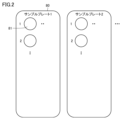
- FIG. 2 is a diagram for explaining a sample plate.
- FIG. 2 is a schematic diagram of a stream.
- FIG. 2 is a diagram illustrating a configuration of a control device.
- 4 is a flowchart showing a process related to control of the liquid chromatograph system.
- 13 is a flowchart illustrating an allocation process of stream-based analysis.
- 13 is a flowchart illustrating a batch-based analysis allocation process.
- 13 is a flowchart for explaining allocation processing of plate-based analysis.
- 13 is a flowchart illustrating a process of performing a priority analysis.
- 13 is an example of a display screen showing the progress of all analyses.
- FIG. 1 is a schematic diagram of a liquid chromatography system (hereinafter, referred to as an LC (Liquid Chromatography) system) 10.
- the LC system 10 includes an analysis device 100 and a control device 110.
- the analytical device 100 separates and analyzes components contained in a sample.
- the analytical device 100 includes a sample injection device 18, multiple analytical flow paths (hereinafter referred to as "streams") 60A-60D, a divert valve 90, and a detector 500.
- the sample injection device 18 is a device for injecting samples into each of the streams 60A to 60D.
- the sample injection device 18 is, for example, an autosampler, and includes one or more sample plates 80 (see FIG. 2) capable of accommodating one or more samples, and a needle (not shown).
- One sample injection device 18 usually includes several or more sample plates 80.
- Each sample plate 80 is managed, for example, by a plate number.
- One sample plate 80 accommodates, for example, about 10 to several hundred samples.
- the sample plate 80 may be configured to accommodate samples in a container such as a vial, or may be configured to accommodate samples directly without a container, such as a microplate.
- Each sample plate 80 is usually assigned a sample number corresponding to the position at which the sample is accommodated.
- the sample accommodated at the position indicated by 81 in FIG. 2 is distinguished from other samples as the sample with plate number 1 and sample number 1.
- the needle aspirates a specific sample from the sample plate 80 as instructed by the control device 110, and injects the aspirated sample into a specific stream as instructed by the control device 110.
- Streams 60A to 60D are flow paths provided for separating samples, through which the mobile phase flows.
- Each of streams 60A to 60D is connected to detector 500 via a divert valve 90.
- the divert valve 90 has ports 91 to 96. Streams 60A to 60D are connected to ports 91 to 94, respectively. Detector 500 is connected to port 95. A drain pipe (not shown) is connected to port 96. The divert valve 90 fluidly connects one of streams 60A to 60D to detector 500 by switching the connection destination of ports 91 to 94 to port 95 or port 96, respectively.
- Detector 500 is disposed downstream of streams 60A-60D and is a device that analyzes samples separated in each of streams 60A-60D.
- detector 500 is a mass spectrometer that performs mass analysis on the samples. Note that detector 500 is not limited to a mass spectrometer, and may be an absorbance detector, a fluorescence detector, a refractive index detector, an electrical conductivity detector, an evaporative light scattering detector, or the like, and is not particularly limited.
- multiple streams 60A-60D are connected in parallel and connected to the detector 500 via the divert valve 90, so that sample separation can be performed in parallel using each of the streams 60A-60D.
- Stream 60A includes column 70A, supply device 50A, and valve 180A.
- the mobile phase is sent from supply device 50A to column 70A, and sent to divert valve 90 through column 70A.
- the supply device 50A is a device for supplying the mobile phase used in the column 70A.
- the supply device 50A supplies the mobile phase flowing in the stream 60A.
- the supply device 50A includes a plurality of mobile phase containers 20A, a mixer 30A, and a mobile phase pump 40A.
- the multiple mobile phase containers 20A are containers that each store a predetermined type of mobile phase.
- the mobile phase stored in the mobile phase container 20A is used as an eluent for sample separation in the column 70A.
- the types of mobile phase stored in each of the multiple mobile phase containers 20A are different from each other. However, at least two of the mobile phases stored in each of the multiple mobile phase containers 20A may be the same.
- the types of mobile phase include, but are not limited to, types of mobile phases that are within the range of mobile phases commonly used by those skilled in the art, such as water, acetonitrile, methanol, organic acids of a predetermined concentration, acetone, etc.
- the types of mobile phase also include those in which at least two of water, acetonitrile, methanol, organic acids of a predetermined concentration, acetone, etc. are premixed in a predetermined mixing ratio.
- the mobile phase container corresponds to one embodiment of the "container".
- the mixer 30A mixes the mobile phases in the multiple mobile phase containers 20A at a set mixing ratio.
- the mixing ratio includes 0:100.
- the mixing ratio is set, for example, by the control device 110 based on the analysis conditions of the samples to be separated.
- the mixing ratio may be set to be constant during the analysis of the samples, or may be set to change over time during the analysis.
- the mixer 30A may mix the mobile phase contained in all of the mobile phase containers 20A included in the stream 60A, or may mix only the mobile phase contained in at least two of the mobile phase containers 20A. Also, only the mobile phase contained in one of the mobile phase containers 20A may be used. In these cases, the unmixed mobile phase has a mixing ratio of 0.
- each supply device may have only one mobile phase container, in which case there is no need to install a mixer.
- the mobile phase pump 40A is a pump for supplying the mobile phase to the column 70A at a predetermined pressure.
- the mobile phase pump 40A sends the mixed liquid mixed by the mixer 30A as the mobile phase toward the valve 180A.
- the mobile phase pump 40A corresponds to one embodiment of the "pump" in this specification. Note that, in the example of FIG. 5, one mobile phase pump is connected downstream of the mixer 30A, but one mobile phase pump may be provided between each of the multiple mobile phase containers 20A and the mixer 30A.
- the valve 180A switches the flow path connected to the supply device 50A between a flow path that passes through the sample injection device 18 and is connected to the column 70A, and a flow path that is connected to the column 70A without passing through the sample injection device 18. If the flow path in which the supply device 50A, the sample injection device 18, and the column 70A are connected in series in that order is called the "injection flow path,” and the flow path in which the supply device 50A and the column 70A are connected in series in that order without passing through the sample injection device 18 is called the "direct flow path,” then the valve 180A can be said to switch between the injection flow path and the direct flow path.
- Column 70A separates the sample injected into stream 60A.
- Column 70A is packed with a stationary phase for separating the components of the sample.
- stream 60A has been described in detail above.
- the configurations of streams 60B to 60D are the same as stream 60A in that they include an injection path and a direct-connected flow path, and also include a mobile phase container, a mobile phase pump, a high-pressure valve, and a column. However, at least two of streams 60A to 60D may have different stream configurations with respect to sample separation.
- the stream configuration may include, for example, the type of mobile phase.
- the types of mobile phases contained in each stream may be different from each other.
- the case where the types of mobile phases are different between streams includes, for example, a case where a type 1 mobile phase and a type 2 mobile phase are used in stream 60A, and only a type 1 mobile phase is used in stream 60B.
- stream 60B has one mobile phase container, so there is no need to provide a mixer.
- the stream configuration may include, for example, the type of column.
- "Different types of columns” includes, for example, at least one of the types of column packing, its chemical modification, particle size, length, and diameter is different from each other. The user can use different types of columns depending on the application.
- the column is, for example, a C18 column or a C8 column.
- the C18 column and the C8 column are columns for reverse-phase HPLC containing different types of packing materials.
- the control device 110 can switch between streams 60A to 60D to be used for sample separation. Therefore, the LC system 10 can continuously analyze various samples in the detector 500.
- analysis conditions samples with different conditions for separating the samples
- the analysis conditions are, for example, at least one of the type of mobile phase supplied to the column and the type of column.
- the analysis conditions may include other conditions such as the temperature control temperature of the column and the mixing ratio of the mobile phase.
- Each analysis condition may be stored and managed in the control device 110, or may be managed by the user without being stored in the control device 110.
- the control device 110 or the user selects a stream having a stream configuration corresponding to the analysis conditions of the sample from among the streams 60A to 60D. This allows analysis to be performed under analysis conditions suitable for each sample.
- the control device 110 can separate samples in parallel in multiple streams and analyze each of the separated samples by the detector 500 for different periods of time. In this way, the control device 110 can use each stream efficiently by appropriately allocating the separation of each sample to each stream.
- Configuration of the control device] 4 is a diagram illustrating the configuration of the control device 110.
- the control device 110 includes a main body 111, an input device 14, and a display device 15.
- the main body 111 includes a processor 11, a memory 12, and an input/output interface (I/F) 13.
- the processor 11 is typically an arithmetic processing unit such as a CPU (Central Processing Unit) or an MPU (Multi-Processing Unit).
- the processor 11 realizes the processing of the LC system by reading and executing the programs stored in the memory 12.
- the memory 12 is realized by a non-volatile memory such as a RAM (Random Access Memory), a ROM (Read Only Memory) and a flash memory.
- the memory 12 may be configured by a CD-ROM (Compact Disc - Read Only Memory), a DVD-ROM (Digital Versatile Disk - Read Only Memory), a USB (Universal Serial Bus) memory, a memory card, a D (Flexible Disk), a hard disk, an SSD (Solid State Drive), a magnetic tape, a cassette tape, an MO (Magnetic Optical Disc), an MD (Mini Disc), an IC (Integrated Circuit) card (excluding memory cards), an optical card, a mask ROM, or an EPROM, so long as the memory 12 can non-temporarily record a program in a format readable by the processor 11.
- the memory 12 stores the analysis conditions for separating the sample for each sample.
- the input/output I/F 13 is an interface for exchanging various types of data between the processor 11 and external devices connected to the input/output I/F 13.
- the external devices include an input device 14 and a display device 15.
- the input device 14 is composed of, for example, a keyboard and a mouse. The user can input various instructions to the control device 110 by operating the input device 14.
- the display device 15 displays an image according to the video signal output by the control device 110.
- the display device 15 is, for example, a display.
- Patent Document 1 and Non-Patent Document 1 disclose an analysis system including an autosampler for pre- and post-treatment of a sample, a plurality of streams for separating components present in the pre-treated sample, and a mass spectrometer for detecting the separated components.
- Such an analysis system is also called a multiplex LC-MS (Liquid Chromatography-Mass spectrometry) system.
- the LC system 10 includes multiple streams with different stream configurations related to the analysis conditions of the samples. This makes it possible to analyze samples with different analysis conditions, such as samples that use different types of columns for separation, in a single system.
- the LC system 10 is a system that can appropriately handle multiple analysis conditions (multi-methods).
- LC system 10 assigns analyses to each stream also differs from conventional analysis systems in which all streams have the same stream configuration. In such conventional analysis systems, the same streams can naturally be used for each analysis. On the other hand, in LC system 10, each stream can handle different analysis conditions. Therefore, in LC system 10, control device 110 performs a process to appropriately assign analyses to each stream according to predetermined criteria. Furthermore, in LC system 10, the user can select the criteria according to their own purpose.
- the LC system 10 includes streams 1 to 4. Each stream has a different stream configuration (combination of column type and mobile phase type).
- a type 1 column is installed, and the mobile phases are types 1, 2, and 3, respectively, contained in three mobile phase containers.
- the mobile phases are types 1, 2, 3, and 4, respectively, contained in four mobile phase containers.
- Table 1 below shows the stream configurations of streams 1 to 4, including the above-mentioned streams 1 and 2, in this example.
- analysis condition 1 is to use a type 1 column and a mixture of types 1 and 2 mobile phases.
- the control device 110 acquires the unit configurations of streams 1 to 4 and the analysis conditions 1 to 4. It then compares the unit configurations of streams 1 to 4 with the analysis conditions 1 to 4 to determine the analysis conditions that can be implemented in each stream. Specifically, if the stream configuration of a given stream satisfies a given analysis condition, the control device 110 determines that the given analysis condition can be implemented in the given stream. In this specification, the ability of a given analysis condition to be implemented in a given stream configuration is also referred to as "the analysis condition corresponds to the stream configuration.”
- the control device 110 assigns an analysis to each stream according to predetermined criteria, described below, based on the analytical conditions that can be performed in each determined stream. For example, if stream 1 is a stream in which analysis is not currently being performed (hereinafter also referred to as an "empty stream"), the control device 110 assigns an analysis under analytical condition 1 or analytical condition 2. With this configuration, when the previous analysis in a stream is completed and the stream becomes empty, it is possible to search for and start an analysis that can be performed in that empty stream. This allows the streams to be used effectively, improving the throughput of the analysis device 100.
- the process of assigning executable analysis conditions to each stream may be performed by the control device 110 as in the above example, or the user may input the assignment he or she has devised into the control device 110 and store it.
- the analysis is managed as a bundle of multiple analyses called a batch analysis.
- the multiple analyses in a batch analysis are typically assigned an analysis number for management purposes.
- a batch analysis is typically an analysis in which at least one of the analysis elements, such as collection date and time, analysis purpose, analysis performer, analysis requester, etc., is the same.
- the control device 110 stores sample information linked to each analysis included in the batch analysis.
- the sample information includes at least the plate number, sample number, and analysis conditions corresponding to the sample.
- the sample information may also include other information such as the sample name, sample ID, collection date and time, analysis purpose, analysis performer, and analysis requester.
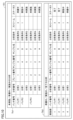
- the plate number, sample number, and analysis conditions for each analysis included in the batch analysis are registered in the LC system 10, for example, as shown in Table 4 below.
- the batch analysis number will be referred to as the "batch number.”
- analysis 1-1 the analysis with analysis number 1 in the batch analysis of batch number 1
- the same analysis conditions are often set for multiple analyses within a batch analysis, but different analysis conditions may also be set for each analysis, as in the example of Table 4.
- Table 4 shows the plate numbers, sample numbers, and analysis conditions for the samples corresponding to each analysis included in batch analyses 1 and 2.
- analysis 1-1 is the analysis of sample number 1 on plate number 1, and the analysis conditions are 1.
- the control device 110 obtains the plate number, sample number, analysis conditions, etc. from the sample information registered for each analysis as described above. Then, as described below, the control device 110 assigns the analysis to a stream that corresponds to the analysis conditions based on predetermined criteria based on the analysis number, plate number, etc. As described above, the control device 110 can select an appropriate stream and perform the analysis even when there are analyses with different analysis conditions among analyses managed in batch format.
- the control device 110 performs all the analyses of one batch analysis, and then performs all the analyses of the next batch analysis. In other words, the control device 110 selects an unperformed analysis among the batch analyses including the currently performed analysis as a candidate for the next analysis. For example, in the above example, after analyses 1 to 4 of batch analysis 1 are performed, analyses 1 to 4 of batch analysis 2 are performed. Such a criterion is referred to as a "batch criterion" in this specification. The batch criterion corresponds to one embodiment of the "second criterion".
- batch analyses often have common analytical elements such as the analysis date and time, the purpose of the analysis, the person who performed the analysis, and the person who requested the analysis, so all the analysis results within a batch analysis are often used together. Therefore, there is an advantage in that as soon as all the analyses within a given batch analysis are completed, the analysis results of that given batch analysis can be used without waiting for the analysis of all the batch analyses to be completed. In other words, as soon as the analysis of each batch analysis unit is completed, the results can be used sequentially.
- control device 110 performs analyses within a batch analysis in ascending order of analysis number. This has the advantage that it is easy for the user to see how far the analysis has progressed within the batch analysis. However, within a batch analysis in progress, the control device 110 may start with an analysis that has analysis conditions that correspond to an empty stream, regardless of the analysis number. In this case, streams can be used more effectively than when analyses are performed in order of analysis number within a batch analysis. For example, when analyses have been performed up to analysis 2-1 in the above example, if the stream corresponding to analysis condition 3 becomes an empty stream, analysis 2-2 can be skipped and analysis 2-3 can be performed.
- the control device 110 When the user desires to analyze each sample plate 80, the control device 110 performs analysis of all samples contained in one sample plate 80, and then performs analysis of all samples contained in the next sample plate 80. In other words, the control device 110 selects an unperformed analysis among the sample plates that contained samples of the analysis in progress as a candidate for the next analysis. For example, in the above example, analyses 1-1, 1-2, 2-1, and 2-2 contained in the sample plate 80 with plate number 1 are performed, and then analyses 1-3 and 1-4 contained in the sample plate 80 with plate number 2 are performed. Such a criterion is referred to as a "plate criterion" in this specification. The plate criterion corresponds to one example of the "third criterion".
- sample plates 80 often have common analysis elements such as analysis date and time, analysis purpose, analysis performer, and analysis requester.
- a series of samples with a specific analysis purpose may be stored in plate number 1 in order for each day the samples were obtained, and a series of samples with a different analysis purpose may be stored in plate number 2 in order for each day the samples were obtained.
- the analysis results of samples stored in the same sample plate 80 are often used together. Therefore, there is an advantage that as soon as the analysis of all samples in a specific sample plate 80 is completed, the analysis results of the samples in that specific sample plate 80 can be used without waiting for the analysis of all samples in all sample plates 80 to be completed. In other words, as soon as the analysis of each sample plate 80 is completed, the results can be used sequentially.
- control device 110 performs analysis on the sample plate 80 in ascending order of sample numbers. This has the advantage that it is easy for the user to see up to which sample number the analysis has progressed in the sample plate 80.
- control device 110 may also perform analysis on a sample plate 80 that contains a sample currently being analyzed, starting with a sample with analysis conditions corresponding to an empty stream, regardless of the sample number. In this case, the streams can be used more effectively than when the analysis is performed in the order of sample numbers on the sample plate 80.
- the control device 110 searches for an analysis that can be performed in an empty stream from among unperformed analyses included in all batch analyses, and performs the analysis in order to increase the drive rate of each stream. In other words, the control device 110 selects an unperformed analysis from among the analyses included in the batch analysis for each batch analysis, and sets it as a candidate for the next analysis.
- a criterion that prioritizes the drive rate of a stream is referred to as a "stream criterion" in this specification.
- the stream criterion corresponds to an example of the "first criterion".
- control device 110 selects the analysis with the smallest analysis number among the analyses not yet performed in each batch analysis as a candidate for analysis to be performed in an empty stream. Then, from the selected candidates, the analysis to be performed in the empty stream is determined. In this case, the analyses proceed in order of analysis number within each batch analysis, which has the advantage that it is easy for the user to see how far the analysis has progressed within the batch analysis.
- the control device 110 may select as an analysis candidate within each batch analysis an analysis that has analysis conditions corresponding to an empty stream, regardless of analysis number. In this case, the streams can be used more effectively than when analyses are performed in order of analysis number within each batch analysis.
- control device 110 may have a function of giving priority to an analysis designated by the user. For example, if the user wants to check the analysis results of an analysis earlier than other analyses, the user designates the analysis as a "priority analysis" that is to be given priority. Priorities can be set among the priority analyses, and the control device 110 may be configured to perform the priority analyses in the order of the priorities.
- an analysis that satisfies the predetermined criteria is selected as a candidate for the next analysis. Then, from among the candidates, an analysis having analysis conditions corresponding to the stream configuration of the empty stream is determined as the next analysis. This allows the analysis to proceed in an analysis order that reflects the needs of the user. Furthermore, by configuring the system so that the user can select which of the predetermined criteria to adopt using the input device 14, the user can reselect the criteria each time the LC system 10 is used. Specifically, the user can select the stream criteria when the user places the greatest importance on throughput, the batch criteria when the user wishes to perform analysis in batch units, and the plate criteria when the user wishes to perform analysis in sample plate 80 units.
- the user can proceed with the analysis in an analysis order that is convenient for the user according to the circumstances such as the purpose of the analysis, by a simple method. It is also possible to perform the priority analysis specified by the user first. This allows the LC system 10 to realize the progress of the analysis that meets the needs of the user.
- FIG. 5 is a flowchart showing a process related to control of the liquid chromatograph system according to this embodiment.
- step (hereinafter referred to as "S") the control device 110 obtains the criteria for analysis allocation selected by the input device 14.
- the user uses the input device 14 to select one of three criteria displayed on the display device 15: "stream criteria,” "batch criteria,” or "plate criteria.”
- the input device 14 then transmits the criteria selected by the user to the control device 110.
- analysis of analysis number 1 of a specific batch analysis is performed.
- the specific batch analysis may be, for example, the batch analysis of batch number 1, or may be a batch analysis selected by the user.
- control device 110 selects an analysis that has not yet been performed that meets a predetermined criterion as a candidate for the next analysis.
- control device 110 determines whether or not there is an empty stream that is not currently being analyzed among the multiple streams included in the LC system 10. According to one embodiment, each stream transmits a signal to the control device 110 indicating whether or not it is an empty stream. Then, the control device 110 determines whether or not each stream is an empty stream based on the signal.
- control device 110 If there are no free streams (NO in S08), the control device 110 returns to S08.
- control device 110 acquires information indicating the stream configuration of the empty stream.
- information indicating the stream configuration of each stream is stored in the memory 12 of the control device 110. Then, from that information, the control device 110 acquires information indicating the stream configuration of the empty stream.
- control device 110 determines, from among the candidates selected in S06, the analysis that has analysis conditions that correspond to the stream configuration of the free stream as the next analysis.
- control device 110 performs the analysis determined in S12 in the free stream.
- the controller 110 determines whether all analyses have been performed. If all analyses have been performed (YES in S16), the control device 110 ends the process.
- control device 110 If there are any analyses remaining to be performed (NO in S16), the control device 110 returns the process to S06.
- FIG. 6 is a flow chart for explaining the allocation process of the stream-based analysis.
- FIG. 6 S06 in FIG. 5 has been replaced with S06A.
- the other steps in FIG. 6 are the same as those in FIG. 5, so their explanation will be omitted.
- control device 110 selects, for each batch analysis, the analysis that has not been performed and has the smallest analysis number among the analyses included in the batch analysis, and selects it as a candidate for the next analysis.
- (6-3. Analysis Allocation Process Based on Batch Criteria) 7 is a flow chart for explaining the batch-based analysis allocation process, in which the analysis of samples proceeds on a batch-by-batch basis.
- control device 110 selects, as a candidate for the next analysis, an analysis that has not been performed and has the smallest analysis number among the batch analyses that include an analysis being performed in at least one of the multiple streams.
- control device 110 determines whether all analyses in the ongoing batch analysis have been performed.
- the control device 110 returns the process to S06B.
- control device 110 determines whether there is an unperformed batch analysis. Note that an "unperformed batch analysis” is a batch analysis in which all of the analyses included in the batch analysis have not yet been performed.
- control device 110 ends the process.
- the control device 110 performs the analysis of analysis number 1 of one of the unperformed batch analyses, and then returns the process to S06B.
- An example of the one batch analysis is a batch analysis with a batch number one greater than the batch analysis performed immediately before. In this case, the user can easily grasp the progress of all analyses.
- Another example of the one batch analysis is a batch analysis in which analysis number 1 can be performed in a stream that is expected to be the next free stream. The stream that is expected to be the next free stream is, for example, a stream whose analysis is expected to end soon. In this case, the stream can be used more effectively than when the analyses are performed in order of batch numbers.
- Yet another example of the one batch analysis is a batch analysis determined by the analysis order of the batch analyses that the user has specified in advance. In this case, the batch analysis for which the user wants to obtain results quickly can be executed with priority.
- samples with different analytical conditions can be analyzed efficiently using a liquid chromatography system that includes multiple streams. Furthermore, the analysis can be carried out in batch analysis units.
- (6-4. Analysis Allocation Process Based on Plate Criteria) 8 is a flow chart for explaining the allocation process of plate-based analysis. In the process of FIG. 8, the analysis of samples proceeds for each sample plate.
- control device 110 selects, from among the sample plates 80 that contain samples for analyses currently being performed in at least one of the multiple streams, an analysis that has not yet been performed and has the smallest analysis number as a candidate for the next analysis.
- control device 110 determines whether or not analysis has been performed on all samples on the sample plate being analyzed.
- control device 110 If the sample plate being analyzed contains samples that have not yet been analyzed (NO in S16B), the control device 110 returns the process to S06C.
- control device 110 determines whether there is a sample plate for which analysis has not been performed. Note that an "unperformed sample plate” is a batch analysis in which each of the analyses corresponding to all samples contained in the sample plate is an unperformed analysis.
- control device 110 ends the process.
- the control device 110 performs analysis of sample number 1 of one of the sample plates, and then returns the process to S06C.
- An example of the one sample plate is a sample plate with a plate number one higher than the sample plate that was previously performed. In this case, there is an advantage that the user can easily grasp the progress of all analyses.
- Another example of the one sample plate is a sample plate in which analysis of sample number 1 is possible in the stream that is expected to be the next free stream. In this case, the stream can be used more effectively than when analysis is performed in the order of plate numbers.
- Yet another example of the one sample plate is a sample plate determined by the analysis order of sample plates previously specified by the user. In this case, the analysis of the sample plate for which the user wants results quickly can be performed with priority.
- FIG. 9 is a flowchart for explaining the process of performing the priority analysis.
- steps S011D and S012D have been added before step S02 in Figure 5.
- the other steps are the same as in Figure 5, so the explanation will be omitted.
- the control device 110 determines whether input of an analysis to be prioritized has been received.
- the user uses the input device 14 to select an analysis to be executed as a priority from among the analyses displayed on the display device 15, as necessary.
- the input device 14 then transmits information regarding the analysis selected by the user to the control device 110.
- control device 110 performs the selected analysis as the prioritized analysis before other analyses.
- control device 110 proceeds to S02.
- the LC system 10 performs all analyses according to a criterion selected by the user from among a number of criteria. Therefore, the order in which the analyses are performed may differ depending on the criterion. In particular, when all analyses are performed according to a stream criterion, each batch analysis is performed in parallel, making it difficult for the user to understand the progress within each batch.
- the progress of each batch analysis is displayed on the display device 15 to help the user understand.
- FIG. 10 is an example of a display screen 151 showing the progress of all analyses.
- the display screen 151 is displayed on the display device 15.
- a display screen 151 includes a table Tb1 and a table Tb2.
- Table Tb1 is a table that displays information on analyses that have not yet been performed. In the example of Fig. 10, table Tb1 also displays information on analyses in preparation and analyses in progress. "In preparation” refers to a state in which, for example, in a stream in which the previous analysis has been completed, the next sample to be analyzed has been determined and preparations for the next analysis are being made.
- Table Tb1 displays each analysis for each batch analysis, and displays information about each analysis. Specifically, Table Tb1 includes items such as "Batch number,” “Plate number,” “Sample number,” “Sample name,” “Analysis conditions,” “Stream,” and “Status.” The column corresponding to each item displays the corresponding value. For example, the value corresponding to the "Status” item is either “In preparation,” “In progress,” or “Not yet completed.”
- Table Tb2 is a table that displays information about completed analyses.
- table Tb1 also displays information about analyses in preparation and analyses being carried out.
- Table Tb2 the analyses, including preparation, are displayed in the order in which they were performed, and information about the analyses is displayed.
- Table Tb2 contains the same items as Table Tb1, as well as an item for the "order in which" the analyses were performed. The corresponding value is displayed in the column for each item. However, the value for the "Status" item in Table Tb2 is either "In preparation,” “In progress,” or "Completed.”
- the user can easily check the analyses in the stream that have not been completed by looking at table Tb1. Furthermore, the user can easily check whether each analysis included in the analyses that have not been completed is an analysis that has not been performed, an analysis that is in preparation, or an analysis that is being performed.
- Table Tb1 displays the analyses by batch analysis
- the progress of each batch analysis can be easily understood. For example, it is easy to see how many analyses have been performed and/or what percentage of each batch analysis has not been performed.
- batch analyses in which all analyses have been completed are not displayed in Table Tb1, by checking the batch number column in Table Tb1, it is easy to find batch analyses in which all analyses have been completed.
- the user can confirm the analyses for which the analysis, including preparation, has already started in the stream. Furthermore, the user can easily confirm whether each analysis included in the analysis for which the analysis has already started is an analysis in preparation, an analysis in progress, or an analysis that has been completed.
- the display screen 151 allows the user to intuitively grasp the progress of all analyses. Specifically, the user can easily read multiple pieces of important information related to the analyses from two simple tables. This can prevent the user from experiencing inconvenience and stress due to difficulty in understanding the progress of the entire analysis or each batch analysis. For example, the user can easily grasp the progress of the entire analysis and wait for the entire analysis to be completed while recognizing that the progress is going smoothly. This also makes it easy for the user to perform other tasks in parallel while the entire analysis is being performed in the LC system 10. In addition, because it is easy to get a good overview of the analysis as a whole, it is also easy to plan other tasks to be performed after the entire analysis is completed.
- the display screen 151 may also include other information that is useful to the user, such as the name of the criteria selected by the user, the status of each stream (e.g., analysis in progress, preparing for analysis, free stream, etc.), and an estimate of the time required for the entire analysis calculated by the control device 110.
- a liquid chromatograph system is a liquid chromatograph system for analyzing a plurality of samples.
- the liquid chromatograph system includes a stream, a sample injection device, a detector, and a control device.
- the plurality of streams separate samples.
- the sample injection device injects a sample into each of the plurality of streams.
- the detector is disposed downstream of the plurality of streams and analyzes the samples separated in each of the plurality of streams.
- the control device stores analysis conditions for separating the sample for each sample.
- Each of the plurality of streams includes a column and a supply device.
- the column separates the sample injected into the stream.
- the supply device supplies a mobile phase for use in the column.
- the plurality of streams include at least two streams having different stream configurations for sample separation.
- the control device selects a stream having a stream configuration corresponding to the analysis conditions of the sample from among the plurality of streams.
- the analysis of samples with different analytical conditions can be performed by selecting a stream that can implement each analytical condition. Therefore, samples with different analytical conditions can be efficiently analyzed using a liquid chromatography system including multiple streams.
- the analysis conditions are at least one of the type of mobile phase supplied to the column and the type of column.
- samples that have different analytical conditions can be efficiently analyzed using a liquid chromatography system including multiple streams.
- the supply device includes a container and a pump.
- the container stores a predetermined type of mobile phase.
- the pump supplies the mobile phase stored in the container to the column.
- the stream configuration includes at least one of the type of mobile phase stored in the container and the type of column.
- samples that have different analytical conditions such as the type of mobile phase and the type of column, can be efficiently analyzed using a liquid chromatography system including multiple streams.
- control device determines an analysis whose analysis conditions correspond to the stream configuration of the empty stream as the next analysis to be performed in the empty stream.
- control device selects, from among the analyses that have not yet been performed, an analysis that meets a predetermined criterion as a candidate for the next analysis.
- the control device determines, from among the candidates, an analysis that has analysis conditions that correspond to the stream configuration of the free stream as the next analysis.
- the liquid chromatography system described in paragraph 5 allows analysis to be performed in an analysis order that reflects the user's needs.
- the analysis of the multiple samples includes one or more batch analyses.
- the batch analysis includes multiple analyses each having an analysis number.
- control device can select an appropriate stream and perform the analysis even when there are analyses with different analytical conditions during analyses managed in batch format.
- the first predetermined criterion is that, for each batch analysis, an analysis that has not been performed among the analyses included in the batch analysis is selected and made a candidate.
- liquid chromatography system described in paragraph 7 can reduce the time required to perform the entire analysis even further than the second and third criteria described below.
- the predetermined criterion is a second criterion that an unperformed analysis is considered as a candidate among the batch analyses that include an ongoing analysis.
- the liquid chromatographic system according to 5 or 6 further comprises one or more sample plates, each of which contains one or more samples.
- the predetermined criterion is a third criterion that an analysis that has not yet been performed is selected as a candidate from among the sample plates that contained samples for the analysis currently being performed.
- control device includes an input device that allows a user to select an analysis of a sample.
- the control device performs an analysis selected using the input device prior to other analyses.
- the liquid chromatography system described in paragraph 10 allows the analysis that the user has selected as a priority to be carried out first.
- control device includes an input device.
- the predetermined criteria are criteria selected by a user using the input device.
- the liquid chromatography system described in paragraph 11 allows the user to carry out the analysis in a convenient order according to the purpose of the analysis and other circumstances of the user in a simple manner.
- control device further includes a display device that displays the progress of each batch analysis.
- the liquid chromatography system described in paragraph 12 allows the user to easily understand the progress of the entire analysis or each batch analysis. This can prevent the user from experiencing inconvenience and stress due to difficulty in understanding the progress of the entire analysis or each batch analysis.
- a control method is a control method for a liquid chromatograph system for analyzing a plurality of samples, executed by a computer.
- the liquid chromatograph system includes a stream, a sample injection device, and a detector.
- the plurality of streams separate samples.
- the sample injection device injects a sample into each of the plurality of streams.
- the detector is disposed downstream of the plurality of streams and analyzes the sample separated in each of the plurality of streams.
- Each of the plurality of streams includes a column and a supply device.
- the column separates the sample injected into the stream.
- the supply device supplies a mobile phase for use in the column.
- the plurality of streams include at least two streams having different stream configurations for sample separation.
- the control method includes a step of selecting a stream having a stream configuration corresponding to an analysis condition for separating the sample from the plurality of streams, and a step of performing an analysis of the sample in the selected stream.
- the analysis of samples with different analytical conditions can be performed by selecting a stream capable of implementing each analytical condition. Therefore, samples with different analytical conditions can be efficiently analyzed using a liquid chromatograph system including multiple streams.
- 60A, 60B, 60C, 60D streams 70A column, 10 LC system, 11 processor, 12 memory, 13 input/output I/F, 14 input device, 15 display device, 18 sample injector, 20A mobile phase container, 30A mixer, 180A valve, 40A mobile phase pump, 50A supply device, 80 sample plate, 90 divert valve, 91, 92, 93, 94, 95, 96 ports, 100 analyzer, 110 control device, 111 main body, 151 display screen, 292 detector flow path, 500 detector.
Landscapes
- Physics & Mathematics (AREA)
- Health & Medical Sciences (AREA)
- Life Sciences & Earth Sciences (AREA)
- Chemical & Material Sciences (AREA)
- Analytical Chemistry (AREA)
- Biochemistry (AREA)
- General Health & Medical Sciences (AREA)
- General Physics & Mathematics (AREA)
- Immunology (AREA)
- Pathology (AREA)
- Automatic Analysis And Handling Materials Therefor (AREA)
Priority Applications (2)
| Application Number | Priority Date | Filing Date | Title |
|---|---|---|---|
| CN202480018609.3A CN120883051A (zh) | 2023-04-17 | 2024-03-21 | 液相色谱仪系统及控制方法 |
| JP2025515106A JPWO2024219149A1 (https=) | 2023-04-17 | 2024-03-21 |
Applications Claiming Priority (2)
| Application Number | Priority Date | Filing Date | Title |
|---|---|---|---|
| US202363459716P | 2023-04-17 | 2023-04-17 | |
| US63/459,716 | 2023-04-17 |
Publications (1)
| Publication Number | Publication Date |
|---|---|
| WO2024219149A1 true WO2024219149A1 (ja) | 2024-10-24 |
Family
ID=93152558
Family Applications (1)
| Application Number | Title | Priority Date | Filing Date |
|---|---|---|---|
| PCT/JP2024/010996 Ceased WO2024219149A1 (ja) | 2023-04-17 | 2024-03-21 | 液体クロマトグラフシステムおよび制御方法 |
Country Status (3)
| Country | Link |
|---|---|
| JP (1) | JPWO2024219149A1 (https=) |
| CN (1) | CN120883051A (https=) |
| WO (1) | WO2024219149A1 (https=) |
Citations (5)
| Publication number | Priority date | Publication date | Assignee | Title |
|---|---|---|---|---|
| JP2001208738A (ja) * | 2000-01-28 | 2001-08-03 | Sumitomo Chem Co Ltd | 分析条件選択方法および高速液体クロマトグラフィ装置 |
| WO2015063886A1 (ja) * | 2013-10-30 | 2015-05-07 | 株式会社島津製作所 | 液体クロマトグラフ装置 |
| JP2018169350A (ja) * | 2017-03-30 | 2018-11-01 | 株式会社島津製作所 | 液体クロマトグラフ |
| JP2020506370A (ja) * | 2016-12-23 | 2020-02-27 | エフ.ホフマン−ラ ロシュ アーゲーF. Hoffmann−La Roche Aktiengesellschaft | 分析系におけるプロセス中に試薬を同定するための方法 |
| WO2020084785A1 (ja) * | 2018-10-26 | 2020-04-30 | 株式会社島津製作所 | クロマトグラフ制御装置、クロマトグラフシステム、クロマトグラフ制御方法およびクロマトグラフ制御プログラム |
-
2024
- 2024-03-21 WO PCT/JP2024/010996 patent/WO2024219149A1/ja not_active Ceased
- 2024-03-21 CN CN202480018609.3A patent/CN120883051A/zh active Pending
- 2024-03-21 JP JP2025515106A patent/JPWO2024219149A1/ja active Pending
Patent Citations (5)
| Publication number | Priority date | Publication date | Assignee | Title |
|---|---|---|---|---|
| JP2001208738A (ja) * | 2000-01-28 | 2001-08-03 | Sumitomo Chem Co Ltd | 分析条件選択方法および高速液体クロマトグラフィ装置 |
| WO2015063886A1 (ja) * | 2013-10-30 | 2015-05-07 | 株式会社島津製作所 | 液体クロマトグラフ装置 |
| JP2020506370A (ja) * | 2016-12-23 | 2020-02-27 | エフ.ホフマン−ラ ロシュ アーゲーF. Hoffmann−La Roche Aktiengesellschaft | 分析系におけるプロセス中に試薬を同定するための方法 |
| JP2018169350A (ja) * | 2017-03-30 | 2018-11-01 | 株式会社島津製作所 | 液体クロマトグラフ |
| WO2020084785A1 (ja) * | 2018-10-26 | 2020-04-30 | 株式会社島津製作所 | クロマトグラフ制御装置、クロマトグラフシステム、クロマトグラフ制御方法およびクロマトグラフ制御プログラム |
Also Published As
| Publication number | Publication date |
|---|---|
| JPWO2024219149A1 (https=) | 2024-10-24 |
| CN120883051A (zh) | 2025-10-31 |
Similar Documents
| Publication | Publication Date | Title |
|---|---|---|
| JP6790963B2 (ja) | 液体クロマトグラフ | |
| JP2005172829A (ja) | 移動相の再循環機能を有するクロマトグラフシステム | |
| Pirzada et al. | Systematic evaluation of new chiral stationary phases for supercritical fluid chromatography using a standard racemate library | |
| WO2016021715A1 (ja) | 分取液体クロマトグラフ装置及び分取条件探索方法 | |
| JP2020180826A (ja) | 分析データ解析システム | |
| WO2014068786A1 (ja) | クロマトグラフ分析装置 | |
| JP7138340B2 (ja) | クロマトグラフ、およびクロマトグラフの分析方法決定装置 | |
| Sharma et al. | Cation-exchange high-performance liquid chromatography for variant hemoglobins and HbF/A2: What must hematopathologists know about methodology? | |
| Degandt et al. | Evaluation of four hemoglobin separation analyzers for hemoglobinopathy diagnosis | |
| Yun et al. | Hb variants in Korea: effect on HbA1c using five routine methods | |
| Reed et al. | Automated preparation of MS-sensitive fluorescently labeled N-glycans with a commercial pipetting robot | |
| WO2024219149A1 (ja) | 液体クロマトグラフシステムおよび制御方法 | |
| JP2012181023A (ja) | 自動分析用制御装置及びプログラム | |
| Benedetti et al. | Plasma metabolomics profiling of 580 patients from an Early Detection Research Network prostate cancer cohort | |
| CN108027345A (zh) | 分析数据解析装置以及分析数据解析用程序 | |
| Ziegler et al. | Mulheim computer system for analytical instrumentation | |
| JP4062155B2 (ja) | クロマトグラフ用データ処理装置 | |
| CN115524441A (zh) | 色谱法用数据处理系统 | |
| EP0393776B1 (en) | Liquid chromatography | |
| Pongracz et al. | GlycoDash: automated, visually assisted curation of glycoproteomics datasets for large sample numbers | |
| CN116125080A (zh) | 生物样本分析系统及信息显示方法 | |
| JP7782309B2 (ja) | 分取液体クロマトグラフ装置及び分取条件決定支援方法 | |
| Arthur et al. | Proteomic analysis for identification of biomarkers that predict severe acute kidney injury | |
| CN112888942A (zh) | 色谱仪控制装置、色谱仪系统、色谱仪控制方法以及色谱仪控制程序 | |
| Reid et al. | Drug determination in therapeutic and forensic contexts |
Legal Events
| Date | Code | Title | Description |
|---|---|---|---|
| 121 | Ep: the epo has been informed by wipo that ep was designated in this application |
Ref document number: 24792425 Country of ref document: EP Kind code of ref document: A1 |
|
| ENP | Entry into the national phase |
Ref document number: 2025515106 Country of ref document: JP Kind code of ref document: A |
|
| WWE | Wipo information: entry into national phase |
Ref document number: 2025515106 Country of ref document: JP |
|
| WWE | Wipo information: entry into national phase |
Ref document number: 202480018609.3 Country of ref document: CN |
|
| WWP | Wipo information: published in national office |
Ref document number: 202480018609.3 Country of ref document: CN |
|
| NENP | Non-entry into the national phase |
Ref country code: DE |
|
| 122 | Ep: pct application non-entry in european phase |
Ref document number: 24792425 Country of ref document: EP Kind code of ref document: A1 |