WO2024209684A1 - 安定化されたたばこ香味成分の回収方法および再生たばこ材料の製造方法 - Google Patents
安定化されたたばこ香味成分の回収方法および再生たばこ材料の製造方法 Download PDFInfo
- Publication number
- WO2024209684A1 WO2024209684A1 PCT/JP2023/014404 JP2023014404W WO2024209684A1 WO 2024209684 A1 WO2024209684 A1 WO 2024209684A1 JP 2023014404 W JP2023014404 W JP 2023014404W WO 2024209684 A1 WO2024209684 A1 WO 2024209684A1
- Authority
- WO
- WIPO (PCT)
- Prior art keywords
- tobacco
- tobacco flavor
- component
- flavor components
- stabilized
- Prior art date
- Legal status (The legal status is an assumption and is not a legal conclusion. Google has not performed a legal analysis and makes no representation as to the accuracy of the status listed.)
- Ceased
Links
Images






Classifications
-
- A—HUMAN NECESSITIES
- A24—TOBACCO; CIGARS; CIGARETTES; SIMULATED SMOKING DEVICES; SMOKERS' REQUISITES
- A24B—MANUFACTURE OR PREPARATION OF TOBACCO FOR SMOKING OR CHEWING; TOBACCO; SNUFF
- A24B15/00—Chemical features or treatment of tobacco; Tobacco substitutes, e.g. in liquid form
- A24B15/18—Treatment of tobacco products or tobacco substitutes
- A24B15/28—Treatment of tobacco products or tobacco substitutes by chemical substances
- A24B15/30—Treatment of tobacco products or tobacco substitutes by chemical substances by organic substances
- A24B15/32—Treatment of tobacco products or tobacco substitutes by chemical substances by organic substances by acyclic compounds
-
- A—HUMAN NECESSITIES
- A24—TOBACCO; CIGARS; CIGARETTES; SIMULATED SMOKING DEVICES; SMOKERS' REQUISITES
- A24B—MANUFACTURE OR PREPARATION OF TOBACCO FOR SMOKING OR CHEWING; TOBACCO; SNUFF
- A24B15/00—Chemical features or treatment of tobacco; Tobacco substitutes, e.g. in liquid form
- A24B15/10—Chemical features of tobacco products or tobacco substitutes
-
- A—HUMAN NECESSITIES
- A24—TOBACCO; CIGARS; CIGARETTES; SIMULATED SMOKING DEVICES; SMOKERS' REQUISITES
- A24B—MANUFACTURE OR PREPARATION OF TOBACCO FOR SMOKING OR CHEWING; TOBACCO; SNUFF
- A24B15/00—Chemical features or treatment of tobacco; Tobacco substitutes, e.g. in liquid form
- A24B15/10—Chemical features of tobacco products or tobacco substitutes
- A24B15/12—Chemical features of tobacco products or tobacco substitutes of reconstituted tobacco
-
- A—HUMAN NECESSITIES
- A24—TOBACCO; CIGARS; CIGARETTES; SIMULATED SMOKING DEVICES; SMOKERS' REQUISITES
- A24B—MANUFACTURE OR PREPARATION OF TOBACCO FOR SMOKING OR CHEWING; TOBACCO; SNUFF
- A24B15/00—Chemical features or treatment of tobacco; Tobacco substitutes, e.g. in liquid form
- A24B15/10—Chemical features of tobacco products or tobacco substitutes
- A24B15/16—Chemical features of tobacco products or tobacco substitutes of tobacco substitutes
-
- A—HUMAN NECESSITIES
- A24—TOBACCO; CIGARS; CIGARETTES; SIMULATED SMOKING DEVICES; SMOKERS' REQUISITES
- A24B—MANUFACTURE OR PREPARATION OF TOBACCO FOR SMOKING OR CHEWING; TOBACCO; SNUFF
- A24B15/00—Chemical features or treatment of tobacco; Tobacco substitutes, e.g. in liquid form
- A24B15/18—Treatment of tobacco products or tobacco substitutes
- A24B15/24—Treatment of tobacco products or tobacco substitutes by extraction; Tobacco extracts
- A24B15/241—Extraction of specific substances
-
- A—HUMAN NECESSITIES
- A24—TOBACCO; CIGARS; CIGARETTES; SIMULATED SMOKING DEVICES; SMOKERS' REQUISITES
- A24B—MANUFACTURE OR PREPARATION OF TOBACCO FOR SMOKING OR CHEWING; TOBACCO; SNUFF
- A24B15/00—Chemical features or treatment of tobacco; Tobacco substitutes, e.g. in liquid form
- A24B15/18—Treatment of tobacco products or tobacco substitutes
- A24B15/28—Treatment of tobacco products or tobacco substitutes by chemical substances
- A24B15/287—Treatment of tobacco products or tobacco substitutes by chemical substances by inorganic substances only
-
- A—HUMAN NECESSITIES
- A24—TOBACCO; CIGARS; CIGARETTES; SIMULATED SMOKING DEVICES; SMOKERS' REQUISITES
- A24B—MANUFACTURE OR PREPARATION OF TOBACCO FOR SMOKING OR CHEWING; TOBACCO; SNUFF
- A24B15/00—Chemical features or treatment of tobacco; Tobacco substitutes, e.g. in liquid form
- A24B15/18—Treatment of tobacco products or tobacco substitutes
- A24B15/28—Treatment of tobacco products or tobacco substitutes by chemical substances
- A24B15/30—Treatment of tobacco products or tobacco substitutes by chemical substances by organic substances
- A24B15/36—Treatment of tobacco products or tobacco substitutes by chemical substances by organic substances containing a heterocyclic ring
- A24B15/40—Treatment of tobacco products or tobacco substitutes by chemical substances by organic substances containing a heterocyclic ring having only oxygen or sulfur as hetero atoms
- A24B15/403—Treatment of tobacco products or tobacco substitutes by chemical substances by organic substances containing a heterocyclic ring having only oxygen or sulfur as hetero atoms having only oxygen as hetero atoms
-
- A—HUMAN NECESSITIES
- A24—TOBACCO; CIGARS; CIGARETTES; SIMULATED SMOKING DEVICES; SMOKERS' REQUISITES
- A24D—CIGARS; CIGARETTES; TOBACCO SMOKE FILTERS; MOUTHPIECES OF CIGARS OR CIGARETTES; MANUFACTURE OF TOBACCO SMOKE FILTERS OR MOUTHPIECES
- A24D1/00—Cigars; Cigarettes
- A24D1/20—Cigarettes specially adapted for simulated smoking devices
-
- A—HUMAN NECESSITIES
- A24—TOBACCO; CIGARS; CIGARETTES; SIMULATED SMOKING DEVICES; SMOKERS' REQUISITES
- A24F—SMOKERS' REQUISITES; MATCH BOXES; SIMULATED SMOKING DEVICES
- A24F40/00—Electrically operated smoking devices; Component parts thereof; Manufacture thereof; Maintenance or testing thereof; Charging means specially adapted therefor
- A24F40/20—Devices using solid inhalable precursors
-
- A—HUMAN NECESSITIES
- A24—TOBACCO; CIGARS; CIGARETTES; SIMULATED SMOKING DEVICES; SMOKERS' REQUISITES
- A24F—SMOKERS' REQUISITES; MATCH BOXES; SIMULATED SMOKING DEVICES
- A24F40/00—Electrically operated smoking devices; Component parts thereof; Manufacture thereof; Maintenance or testing thereof; Charging means specially adapted therefor
- A24F40/40—Constructional details, e.g. connection of cartridges and battery parts
- A24F40/46—Shape or structure of electric heating means
Definitions
- the present invention relates to a method for recovering stabilized tobacco flavor components and a method for producing regenerated tobacco materials.
- heating flavor inhalers non-combustion heating flavor inhalers
- heating flavor inhalers have been developed to replace combustion flavor inhalers for cigarettes and the like, which provide users with tobacco flavor by heating a tobacco flavor source without burning it.
- a tobacco molded body obtained by molding a tobacco material together with an aerosol source is generally used as the tobacco flavor source.
- the objective of the present invention is to provide a technology that can stably preserve tobacco flavor components derived from tobacco materials.
- the present invention provides a technology that can stably preserve tobacco flavor components derived from tobacco materials.
- FIG. 1 is a flow chart showing an example of a method for producing regenerated tobacco material.
- FIG. 2 is a schematic diagram showing an example of a reaction system.
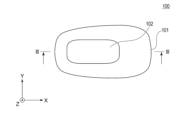
- FIG. 3A is a schematic front view showing an example of an aerosol generating device.
- FIG. 3B is a schematic top view of the aerosol generating device shown in FIG. 3A.
- FIG. 3C is a schematic bottom view of the aerosol generating device shown in FIG. 3A.
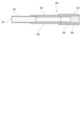
- FIG. 4 is a schematic cross-sectional side view showing an example of a flavor generating article.
- FIG. 5 is a cross-sectional view taken along line III-III of the aerosol generating device shown in FIG. 3B.
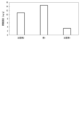
- FIG. 6 is a graph showing the amount of acetic acid in a tobacco flavor liquid.
- FIG. 1 is a flow chart showing an example of a method for producing regenerated tobacco material.
- FIG. 2 is a schematic diagram showing an example of a reaction system.
- FIG. 3A is a schematic
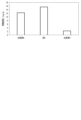
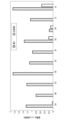
- FIG. 7 is a graph showing the amount of organic acids in a tobacco flavor liquid.
- FIG. 8 is a graph showing the amount of acetic acid in a tobacco flavor liquid.
- FIG. 9 is a graph showing the amount of organic acids in a tobacco flavor liquid.
- FIG. 10 is a graph showing the amount of acetic acid in a tobacco flavor liquid.
- FIG. 11 is a graph showing the amount of organic acid in a tobacco flavor liquid.
- Method for recovering stabilized tobacco flavor components and method for producing regenerated tobacco material As described in the Background Art section, it is known to heat a tobacco material to generate a gas containing tobacco flavor components, and dissolve the resulting gas in a liquid to obtain a flavor component-containing liquid. In addition, in the art, it is common to heat a tobacco material in an extraction solvent to extract tobacco flavor components from the tobacco material in order to produce a regenerated tobacco material. In either case, the intention is to separate the tobacco flavor components from the tobacco material and efficiently release the tobacco flavor components using a heated flavor inhaler.
- tobacco flavor components separated from tobacco materials have a problem of being easily volatilized during subsequent processing steps and storage.
- the inventors discovered that by heating the tobacco material to generate gas containing the tobacco flavor components and reacting the resulting gas with a base component in water, the organic acids serving as tobacco flavor components are less likely to volatilize and can be stably maintained, which led to the completion of the present invention.
- the present invention is a "method for recovering a stabilized tobacco flavor component". That is, the method for recovering a stabilized tobacco flavor component includes: heating the tobacco material to vaporize tobacco flavor components from the tobacco material; recovering the tobacco flavor components; and reacting the tobacco flavor component with a base component to obtain a stabilized tobacco flavor component. In another aspect, this method can also be expressed as a "method for stabilizing a tobacco flavor component".
- the “stabilized tobacco flavor component” may be an ionized product of the tobacco flavor component, or a salt obtained by a chemical reaction between the tobacco flavor component and a base component.
- the tobacco flavor component is an organic acid
- the “stabilized tobacco flavor component” may be an organic acid ion, or a salt obtained by a chemical reaction between the organic acid and a base component.
- the recovery can be performed by passing a gas containing the tobacco flavor components through an inert liquid and recovering the tobacco flavor components in the liquid.
- the recovery and the reaction can be carried out simultaneously by passing the gas containing the tobacco flavor components through an inert liquid to which the base component has been added.
- the recovery and the reaction can be carried out simultaneously by bubbling the gas containing the tobacco flavor components into an inert liquid to which the base component has been added.
- the "method for recovering stabilized tobacco flavor components” includes heating a tobacco material to vaporize the tobacco flavor components from the tobacco material, and bubbling the gas containing the tobacco flavor components into an inert liquid to which a base component has been added to obtain stabilized tobacco flavor components in the liquid. This method may further include a step of drying and concentrating the "bubbling liquid containing tobacco flavor components" obtained in the bubbling step.
- inert liquid refers to a liquid that is inert (i.e., does not chemically react) to gases, including tobacco flavor components, and base components.
- gases including tobacco flavor components, and base components.
- base component refers to a component that can increase the pH of the inert liquid.
- the "stabilized tobacco flavor component" obtained by the above-mentioned method can be used to produce a regenerated tobacco material. That is, the method for producing a regenerated tobacco material includes the following steps: Obtaining the stabilized tobacco flavor component according to the above-mentioned "method for recovering stabilized tobacco flavor component”; and mixing the stabilized tobacco flavor component with the heated tobacco material to obtain a reconstituted tobacco material.
- Figure 1 shows a flow chart of an example of a method for producing regenerated tobacco material.
- Heating process (S1) In the heating step (S1), the tobacco material is heated to vaporize the tobacco flavor components from the tobacco material.
- the heating step (S1) produces a "gas containing tobacco flavor components" (see FIG. 1).
- the components include organic acids.
- tobacco material can be tobacco shreds that are ready to be incorporated into tobacco products, such as combustion-type or heat-type flavor inhalers.
- tobacco shreds ready to be incorporated into tobacco products refers to tobacco shreds that have been through a drying process on the farm, a long-term aging process of one to several years at a raw material factory, and various other processing steps, such as blending and cutting at a manufacturing factory, and are ready to be incorporated into tobacco products.
- Tobacco shreds are cut tobacco leaves.
- the tobacco shreds may be shredded leaves, shredded backbones, shredded reconstituted tobacco (i.e., tobacco material produced by processing leaf waste, shredded waste, backbone waste, fine powder, etc. generated during factory operations into a reusable form), or a mixture of these.
- the tobacco shreds may be pulverized, and the resulting pulverized material may be used for the heating step (S1).
- pulverized tobacco shreds as the tobacco material can increase the efficiency of recovery of tobacco flavor components from the tobacco material. This can increase the amount of tobacco flavor components recovered and the amount of tobacco flavor components contained in the final reconstituted tobacco material.
- the tobacco shreds may be of any variety, such as flue-cured, burley, or oriental, etc.
- the tobacco shreds may be of a single variety or a mixture of different varieties.
- the tobacco material preferably has a pH of 4.5 to 6.0.
- the pH of the tobacco material refers to the value measured by the following measurement method.
- the heating can be carried out at a temperature of, for example, 180 to 250°C, preferably 190 to 225°C.
- the heating can be carried out for, for example, 1 to 120 minutes, preferably 10 to 40 minutes.
- the heating process produces a gas containing tobacco flavor components.
- the "stabilized tobacco flavor components" obtained in this process are ionized tobacco flavor components. Most of the tobacco flavor components are ionized into ions in the bubbling liquid, but the base components also ionize into ions. With the ions of the base components present as counter ions, the tobacco flavor components are believed to exist stably in the ionized state in the bubbling liquid and are less likely to volatilize.
- water with added base components is used as the bubbling liquid, but the base components may be added to an inert liquid other than water.
- Any inert liquid may be used as long as it is inert (i.e. does not chemically react) to the gas containing the tobacco flavor components and the base components.
- the base component contained in the bubbling liquid is not limited as long as it is a component that can increase the pH of the water.
- the base component may be a weak base. That is, the base component may be, for example, a substance containing a salt that forms an ion of a weak acid with a pKa of 3 to 5 when ionized.
- the base component may be a salt that forms an ion of a weak acid with a pKa of 3 to 5 when ionized.
- a weak base has the advantage of being highly safe when performing the bubbling step (S2).
- the base component may be a strong base. That is, the base component may be, for example, a substance that forms hydroxide ions when ionized. Strong bases have the advantage that they are highly efficient at stabilizing tobacco flavor components even when used in small amounts.
- the base component is, for example, at least one selected from the group consisting of potassium carbonate, sodium carbonate, sodium bicarbonate, sodium carbonate peroxide, sodium hypochlorite, sodium hydroxide, potassium hydroxide, calcium hydroxide, sodium formate, and potassium formate.
- the base component can be added to the inert liquid (water in this example) so that the pH of the bubbling liquid (reaction mixture) obtained after the bubbling step (S2) is 6.5 to 10.
- the base component is a weak base, it can be added to an inert liquid (in this example, water) in an amount of, for example, 15 to 100 mg per gram of raw tobacco material. If the base component is a strong base, it can be added to an inert liquid (in this example, water) in an amount of, for example, 10 to 60 mg per gram of raw tobacco material.
- the bubbling liquid can be used in an amount of, for example, 1 to 50 mL.
- the recovery of the tobacco flavor components and the reaction of the tobacco flavor components with the base component are carried out simultaneously, but the "gas containing the tobacco flavor components" obtained in the heating step (S1) may be bubbled into water, and then the base component may be added to the water to cause the tobacco flavor components to react with the base component.
- the above-mentioned heating step (S1) and bubbling step (S2) can be performed, for example, by using a reaction system 20 shown in Fig. 2.
- the reaction system 20 includes a heating device 20A, a bubbling device 20B, a gas flow path 25 connecting these two devices, and a pump 26 for transporting the gas in the gas flow path 25.
- the heating device 20A includes a heating container 21 for containing tobacco material 23, a heater 22 surrounding the heating container 21, and a thermocouple 24 for measuring the temperature of the internal space of the heating container 21.
- the bubbling device 20B includes a cooling container 27 for containing the bubbling liquid 28 and a spiral cooling pipe 29 connected to the gas flow path 25.
- the tobacco material 23 is placed in the heating container 21, and the heating container 21 is sealed.
- the tobacco material 23 in the heating container 21 is heated by the heater 22.
- gas containing tobacco flavor components is generated from the tobacco material 23. This gas is discharged from a gas exhaust hole provided on the upper surface of the heating container 21 and sent to the gas flow path 25.
- the internal space of the heating container 21 is measured by a thermocouple 24 and controlled to a predetermined temperature.
- the gas containing the tobacco flavor components is sent to the cooling pipe 29 through the gas flow path 25 by the action of the pump 26.
- the cooling pipe 29 is a stainless steel spiral pipe.
- the gas is cooled while passing through the cooling pipe 29.
- the cooled gas is then bubbled into the bubbling liquid 28 in the cooling container 27.
- the gas containing the tobacco flavor components dissolves in the bubbling liquid 28 and is collected.
- the bubbling liquid 28 contains a base component
- the tobacco flavor components react with the base component, and stabilized tobacco flavor components are obtained in the bubbling liquid 28.
- most of the "stabilized tobacco flavor components” are thought to be ionized forms of the tobacco flavor components.
- the tobacco flavor components are thought to exist stably in the form of ions in the bubbling liquid 28 and are in a state that is difficult to volatilize.
- drying can be performed by heating the "bubbling liquid containing tobacco flavor components" obtained in the bubbling step (S2) at a temperature of 70 to 120°C for 10 to 120 minutes.
- a concentrated liquid may be obtained directly in the drying step (S3), or a dried solid may be obtained in the drying step (S3) and then dissolved in a small amount of water to obtain a concentrated liquid.
- the tobacco flavor components react chemically with the base component to form a salt.
- the salt obtained by the chemical reaction between the tobacco flavor components and the base component is a stable substance and is unlikely to volatilize.
- the dried solid is dissolved in a small amount of water, it is believed that the tobacco flavor components become ionized tobacco flavor components again.
- the ionized tobacco flavor components exist in the form of ions in water, and are therefore stable and unlikely to volatilize, since the ions of the base component exist as counter ions.
- tobacco flavor components are vaporized from the tobacco material, recovered in the bubbling liquid, and reacted with the base component.
- the tobacco flavor components e.g., organic acids
- the tobacco flavor components are ionized in the bubbling liquid, and are less likely to volatilize due to the presence of counter ions of the base component.
- the tobacco flavor components react with the base component to form salts, which are less likely to volatilize.
- the tobacco flavor components are less likely to volatilize and can be stably maintained, whether they are dissolved in the bubbling liquid or in the form of a dried solid.
- a "bubbling liquid containing tobacco flavor components” is obtained in the bubbling step (S2), a “concentrated liquid of tobacco flavor components” is obtained in the drying step (S3), and a “regenerated tobacco material” is obtained in the mixing step (S4).
- These can be incorporated into a heated flavor inhaler. Since these contain stabilized tobacco flavor components (i.e., ionized products of tobacco flavor components and/or salts obtained by chemical reactions between tobacco flavor components and base components), the tobacco flavor components can be stably maintained without volatilization during subsequent processing steps or storage. Therefore, when these are incorporated into a heated flavor inhaler and a user inhales through the heated flavor inhaler, a larger amount of tobacco flavor components can be released.
- Tobacco flavor liquid The "bubbling liquid containing tobacco flavor components" obtained in the bubbling step (S2) and the “concentrated liquid of tobacco flavor components” obtained in the drying step (S3) can be incorporated into a heated flavor inhaler as a tobacco flavor liquid.
- the "bubbling liquid containing tobacco flavor components” and the “concentrated liquid of tobacco flavor components” can be incorporated as a liquid in a liquid atomization type heated flavor inhaler and atomized when in use, allowing them to be used as a tobacco flavor source for the heated flavor inhaler.
- the "bubbling liquid containing tobacco flavor components" and the "concentrated liquid of tobacco flavor components” can be added to tobacco material (e.g., deboned leaves or tobacco leaves), the resulting mixture can be dried, and the resulting dried product can be used as a tobacco flavor source in a heated flavor inhaler.
- a non-combustion heating type flavor inhaler contains a "bubbling liquid containing tobacco flavor components" or a "concentrated liquid of tobacco flavor components.”
- Regenerated tobacco materials The "bubbling liquid containing tobacco flavor components" obtained in the bubbling step (S2) is mixed with the "heated tobacco material” remaining after the above-mentioned heating step (S1), and the resulting mixture (i.e., regenerated tobacco material) can be used as a tobacco flavor source for a heated flavor inhaler.
- the "concentrated liquid of tobacco flavor components” obtained in the drying step (S3) is mixed with the "heated tobacco material” remaining after the above-mentioned heating step (S1), and the resulting mixture (i.e., regenerated tobacco material) can be used as a tobacco flavor source for a heated flavor inhaler.
- tobacco molded products such as tobacco sheets or tobacco granules can be produced from the above-mentioned regenerated tobacco material, and the tobacco molded products can be used as a tobacco flavor source for a heated flavor inhaler.
- tobacco molded products are also included in the category of regenerated tobacco materials. In the examples described below, an example of preparing tobacco sheets as a regenerated tobacco material is shown.
- the reconstituted tobacco material may contain additives such as binders, pH adjusters, preservatives, and antioxidants, as necessary.
- a method for producing a regenerated tobacco material which comprises mixing a "bubbling liquid containing tobacco flavor components" or a “concentrated liquid of tobacco flavor components” with the "heated tobacco material” remaining after the above-mentioned heating step (S1) to obtain a regenerated tobacco material.
- a regenerated tobacco material obtained by the above-mentioned method there is provided a non-combustion heating type flavor inhaler containing the regenerated tobacco material obtained by the above-mentioned method.
- the regenerated tobacco material can have a pH of, for example, 6 to 9, and preferably a pH of 6 to 8. When the regenerated tobacco material is within this pH range, it is less likely to develop the unpleasant odor that tobacco material with a basic pH is prone to emit.
- the pH of the regenerated tobacco material refers to a value measured using the same method as the "method for measuring the pH of tobacco material" described above. In other words, the pH of the regenerated tobacco material refers to a value measured using the following measurement method.
- regenerated tobacco material 2.0 g is weighed into a vial, 20 mL of distilled water is added, and the mixture is shaken at 200 rpm for 10 minutes for extraction. The resulting extract is allowed to stand for 5 minutes, after which the pH of the extract is measured using a pH meter (LAQUA F-72, manufactured by Horiba, Ltd.). The measured pH is the pH of the regenerated tobacco material.
- Non-combustion heating type flavor inhaler is a flavor inhaler that provides a user with tobacco flavor by heating a tobacco flavor source without burning it. Hereinafter, it will also be referred to simply as a "heating type flavor inhaler.”
- the heating type flavor inhaler of the present invention has the same configuration as a normal heating type flavor inhaler, except that the tobacco flavor source is replaced with any one of the above-mentioned "bubbling liquid containing tobacco flavor components," the above-mentioned "concentrated liquid of tobacco flavor components,” and the above-mentioned "regenerated tobacco material.”
- the heated flavor inhaler is composed of an aerosol generating device 100 and a tobacco stick 200.
- Figure 3A is a schematic front view of an example of an aerosol generating device.
- Figure 3B is a schematic top view of the aerosol generating device shown in Figure 3A.
- Figure 3C is a schematic bottom view of the aerosol generating device shown in Figure 3A.
- Figure 4 is a schematic side cross-sectional view of an example of a tobacco stick.
- Figure 5 is a cross-sectional view taken along line III-III of the aerosol generating device shown in Figure 3B.
- the drawings may include an X-Y-Z Cartesian coordinate system.
- the Z axis faces vertically upward
- the X-Y plane is arranged to cut the aerosol generating device 100 horizontally
- the Y axis is arranged to extend from the front to the back of the aerosol generating device 100.
- the Z axis can also be referred to as the insertion direction of the tobacco stick contained in the chamber 150 of the atomizing unit 130 described below, or the axial direction of the chamber 150.
- the X axis is a direction perpendicular to the Y axis and the Z axis, and the X axis and the Y axis can also be referred to as the radial direction perpendicular to the axial direction of the chamber 150, or the radial direction of the chamber 150.
- the aerosol generating device 100 is configured to generate an aerosol containing a tobacco flavor by heating a tobacco stick having a flavor source containing any of the above-mentioned "bubbling liquid containing tobacco flavor components," the above-mentioned “concentrated liquid of tobacco flavor components,” and the above-mentioned “regenerated tobacco material.”
- the aerosol generating device 100 has an outer housing 101 (corresponding to an example of a housing), a slide cover 102, and a switch unit 103.
- the outer housing 101 constitutes the outermost housing of the aerosol generating device 100 and has a size that fits in the user's hand. When the user uses the flavor inhaler, the user can hold the aerosol generating device 100 in his/her hand and inhale the aerosol.
- the outer housing 101 may be formed by assembling multiple members.
- the outer housing 101 is made of resin, for example, and in particular, may be formed of polycarbonate (PC), ABS (Acrylonitrile-Butadiene-Styrene) resin, PEEK (Polyetheretherketone) or a polymer alloy containing multiple types of polymers, or a metal such as aluminum.
- PC polycarbonate
- ABS Acrylonitrile-Butadiene-Styrene
- PEEK Polyetheretherketone
- a polymer alloy containing multiple types of polymers or a metal such as aluminum.
- the outer housing 101 has an opening (not shown) for receiving a tobacco stick, and the slide cover 102 is slidably attached to the outer housing 101 to close this opening.
- the slide cover 102 is configured to be movable along the outer surface of the outer housing 101 between a closed position (position shown in Figures 3A and 3B) in which the opening of the outer housing 101 is closed, and an open position (position shown in Figure 5) in which the opening is open.
- a user can manually operate the slide cover 102 to move the slide cover 102 between the closed position and the open position. This makes it possible to permit or restrict access of tobacco sticks to the inside of the aerosol generating device 100.
- the switch unit 103 is used to switch the operation of the aerosol generating device 100 on and off.
- a user can insert a tobacco stick into the aerosol generating device 100 and operate the switch unit 103 to supply power from a power source (see reference numeral 121 in FIG. 5) to a heater (see reference numeral 140 in FIG. 5), thereby heating the tobacco stick without burning it.
- the switch unit 103 may be a switch provided outside the outer housing 101, or may be a switch located inside the outer housing 101. When the switch is located inside the outer housing 101, the switch is indirectly pressed by pressing the switch unit 103 on the surface of the outer housing 101. In this example, an example in which the switch of the switch unit 103 is located inside the outer housing 101 will be described.
- the aerosol generating device 100 may further have a terminal (not shown).
- the terminal may be an interface that connects the aerosol generating device 100 to, for example, an external power source. If the power source provided in the aerosol generating device 100 is a rechargeable battery, connecting the external power source to the terminal allows the external power source to pass current through the power source and charge the power source. Also, connecting a data transmission cable to the terminal may enable data related to the operation of the aerosol generating device 100 to be transmitted to an external device.
- FIG. 4 is a schematic side cross-sectional view of an example of a tobacco stick 200.
- the aerosol generating device 100 and the tobacco stick 200 form a flavor inhaler.
- the tobacco stick 200 has a smokable article 201, a tubular member 204, a hollow filter portion 206, and a filter portion 205.
- the smokable article 201 is wrapped in a first wrapping paper 202.
- the tubular member 204, hollow filter portion 206, and filter portion 205 are wrapped in a second wrapping paper 203 that is different from the first wrapping paper 202.
- the second wrapping paper 203 also wraps a portion of the first wrapping paper 202 that wraps the smokable article 201. This connects the tubular member 204, hollow filter portion 206, and filter portion 205 to the smokable article 201.
- the second wrapping paper 203 may be omitted, and the tubular member 204, hollow filter portion 206, and filter portion 205 may be connected to the smokable article 201 using the first wrapping paper 202.
- a lip release agent 207 is applied to the outer surface of the second wrapping paper 203 near the end on the filter portion 205 side to make it easier for the user to release their lips from the second wrapping paper 203.
- the portion of the tobacco stick 200 to which the lip release agent 207 is applied functions as the mouthpiece of the tobacco stick 200.
- the smokable article 201 contains as a flavor source any one of the above-mentioned "bubbling liquid containing tobacco flavor components," the above-mentioned “concentrated liquid of tobacco flavor components,” and the above-mentioned “reconstituted tobacco material.” As described above, these contain stabilized tobacco flavor components, so that when a user inhales from this heated flavor inhaler, a greater amount of tobacco flavor components can be released.
- the first wrapping paper 202 that wraps the smokable article 201 may be a breathable sheet member.
- the tubular member 204 may be a paper tube or a hollow filter.
- the tobacco stick 200 includes the smokable article 201, the tubular member 204, the hollow filter portion 206, and the filter portion 205, but the configuration of the tobacco stick 200 is not limited to this.
- the hollow filter portion 206 may be omitted, and the tubular member 204 and the filter portion 205 may be disposed adjacent to each other.
- FIG. 5 is a cross-sectional view of the aerosol generating device 100 taken along line III-III in FIG. 3B.
- an inner housing 110 (corresponding to an example of a housing) is provided inside the outer housing 101 of the aerosol generating device 100.
- the inner housing 110 is made of resin, for example, and may be formed of polycarbonate (PC), ABS (Acrylonitrile-Butadiene-Styrene) resin, PEEK (Polyetheretherketone), or a polymer alloy containing multiple types of polymers, or a metal such as aluminum. From the viewpoint of heat resistance and strength, the inner housing 110 is preferably made of PEEK.
- a power supply unit 120 and an atomization unit 130 are provided in the internal space of the inner housing 110.
- the power supply unit 120 has a power supply 121.
- the power supply 121 may be, for example, a rechargeable battery or a non-rechargeable battery.
- the power supply 121 is electrically connected to the atomization unit 130. This allows the power supply 121 to supply power to the atomization unit 130 so as to appropriately heat the tobacco stick 200.
- the atomization section 130 has a metallic chamber 150 (corresponding to an example of a cylindrical section) that extends in the insertion direction (Z-axis direction) of the tobacco stick 200, a heater 140 that covers part of the chamber 150, a heat insulating section 132, and a substantially cylindrical insertion guide member 134 (corresponding to an example of a guide section) that abuts against the opening of the chamber 150.
- the chamber 150 is configured to surround the periphery of the tobacco stick 200.
- the heater 140 is configured to include a heating section that contacts the outer peripheral surface of the chamber 150 and heats the tobacco stick 200 inserted into the chamber 150.
- a bottom member 136 (corresponding to an example of an abutment portion) is provided at the bottom of the chamber 150.
- the bottom member 136 abuts against the tobacco stick 200 inserted into the chamber 150 in the insertion direction of the tobacco stick 200, and can function as a stopper to position the tobacco stick 200.
- the chamber 150 and the bottom member 136 form a storage portion that stores at least a portion of the tobacco stick 200.
- the bottom member 136 can be formed from a resin material, for example.
- the bottom member 136 has an uneven surface with which the tobacco stick 200 abuts, and can define a first air flow path that can supply air to the air intake of the tobacco stick 200 (i.e., communicates with the tobacco stick 200 stored in the storage portion).
- the bottom member 136 is made of resin, for example, and may be made of polycarbonate (PC), ABS (Acrylonitrile-Butadiene-Styrene) resin, PEEK (Polyether Ether Ketone), a polymer alloy containing multiple types of polymers, or a metal such as aluminum. Note that the bottom member 136 is preferably made of a material with low thermal conductivity to prevent heat from being transferred to the insulating portion 132, etc.
- the insulating section 132 is generally cylindrical and is arranged to cover the chamber 150.
- the insulating section 132 may include, for example, an aerogel sheet.
- the insertion guide member 134 is provided between the slide cover 102 in the closed position and the chamber 150.
- the insertion guide member 134 may be made of, for example, a resin, and may be formed in particular from polycarbonate (PC), ABS (Acrylonitrile-Butadiene-Styrene) resin, PEEK (Polyether Ether Ketone), or a polymer alloy containing multiple types of polymers.
- the insertion guide member 134 may be formed from metal, glass, ceramic, or the like. From the viewpoint of heat resistance, it is preferable that the insertion guide member 134 is PEEK.
- the insertion guide member 134 communicates with the outside of the aerosol generating device 100, and guides the insertion of the tobacco stick 200 into the chamber 150 by inserting the tobacco stick 200 into the insertion guide member 134.
- the tobacco stick 200 can be easily inserted into the chamber 150.
- the aerosol generating device 100 further has a first holding part 137 and a second holding part 138 that hold both ends of the chamber 150 and the insulating part 132.
- the first holding part 137 is positioned so as to hold the ends of the chamber 150 and the insulating part 132 on the negative Z-axis side.
- the second holding part 138 is positioned so as to hold the ends of the chamber 150 and the insulating part 132 on the slide cover 102 side (positive Z-axis side).
- the method for recovering a stabilized tobacco flavor component includes bubbling a gas containing the tobacco flavor component into an inert liquid to which a base component has been added, to obtain the stabilized tobacco flavor component in the liquid (i.e., obtaining the liquid containing the stabilized tobacco flavor component).
- [B1] Obtaining the stabilized tobacco flavor component (e.g., the liquid containing the stabilized tobacco flavor component or a concentrated solution thereof) according to any one of the methods of [A1] to [A7]; and mixing the stabilized tobacco flavor component with the heated tobacco material to obtain a regenerated tobacco material.
- [B2] Obtaining the stabilized tobacco flavor component in the liquid according to any one of the methods according to [A2] to [A5]; and mixing the liquid containing the stabilized tobacco flavor components with the heated tobacco material to obtain a regenerated tobacco material.
- [B3] obtaining the stabilized tobacco flavor component in the liquid concentrate according to the method of [A6] or [A7]; and mixing the concentrated liquid containing the stabilized tobacco flavor components with the heated tobacco material to obtain a regenerated tobacco material.
- [B4] The method according to any one of [B1] to [B3], further comprising molding the reconstituted tobacco material to produce a tobacco molded product.
- [C1] The method according to any one of [A1] to [A7] and [B1] to [B4], wherein the tobacco material is tobacco shreds.
- [C2] The method according to any one of [A1] to [A7], [B1] to [B4] and [C1], wherein the tobacco material has a pH of 4.5 to 6.0.
- [C3] The method according to any one of [A1] to [A7], [B1] to [B4] and [C1] to [C2], wherein the heating is carried out at a temperature of 180 to 250°C, preferably 190 to 225°C.
- [C4] The method according to any one of [A1] to [A7], [B1] to [B4] and [C1] to [C3], wherein the heating is carried out for 1 to 120 minutes, preferably 10 to 40 minutes.
- [C5] The method according to any one of [A2] to [A7], [B1] to [B4], and [C1] to [C4], wherein the base component is contained in the inert liquid so that the reaction mixture obtained after the recovery and the reaction has a pH of 6.5 to 10.
- [C6] The method according to any one of [A1] to [A7], [B1] to [B4] and [C1] to [C5], wherein the base component is a weak base.
- [C7] The method according to any one of [A1] to [A7], [B1] to [B4], and [C1] to [C6], wherein the base component is a substance containing a salt that forms an ion of a weak acid having a pKa of 3 to 5 upon ionization.
- [C8] The method according to any one of [A1] to [A7], [B1] to [B4], and [C1] to [C7], wherein the base component is a salt that forms an ion of a weak acid having a pKa of 3 to 5 upon ionization.
- [C9] The method according to any one of [A1] to [A7], [B1] to [B4] and [C1] to [C5], wherein the base component is a strong base.
- [C10] The method according to any one of [A1] to [A7], [B1] to [B4], [C1] to [C5] and [C9], wherein the base component is a substance that forms hydroxide ions when ionized.
- [C11] The method according to any one of [A1] to [A7], [B1] to [B4], and [C1] to [C10], wherein the base component is at least one selected from the group consisting of potassium carbonate, sodium carbonate, sodium bicarbonate, sodium carbonate perhydrogenate, sodium hypochlorite, sodium hydroxide, potassium hydroxide, calcium hydroxide, sodium formate, and potassium formate.
- the base component is at least one selected from the group consisting of potassium carbonate, sodium carbonate, sodium bicarbonate, sodium carbonate perhydrogenate, sodium hypochlorite, sodium hydroxide, potassium hydroxide, calcium hydroxide, sodium formate, and potassium formate.
- [C12] The method according to any one of [A1] to [A7], [B1] to [B4], and [C1] to [C11], wherein the stabilized tobacco flavor component is an ionized product of the tobacco flavor component.
- [C13] The method according to any one of [A1] to [A7], [B1] to [B4], and [C1] to [C12], wherein the tobacco flavor component is an organic acid, and the stabilized tobacco flavor component is an organic acid ion.
- [C14] The method according to any one of [A1] to [A7], [B1] to [B4], and [C1] to [C11], wherein the stabilized tobacco flavor component is a salt obtained by a chemical reaction between the tobacco flavor component and the base component.
- [C15] The method according to any one of [A1] to [A7], [B1] to [B4], [C1] to [C11] and [C14], wherein the tobacco flavor component is an organic acid, and the stabilized tobacco flavor component is a salt obtained by a chemical reaction between the organic acid and the base component.
- [D1] A stabilized tobacco flavor component obtained by the method according to any one of [A1] to [A7] and [C1] to [C15] (for example, an inert liquid containing a stabilized tobacco flavor component or a concentrated solution thereof).
- [D2] A non-combustion heating type flavor inhaler containing a stabilized tobacco flavor component (for example, an inert liquid containing the stabilized tobacco flavor component or a concentrated solution thereof) obtained by the method according to any one of [A1] to [A7] and [C1] to [C15].
- a flavor source containing a stabilized tobacco flavor component (e.g., an inert liquid containing a stabilized tobacco flavor component or a concentrate thereof) obtained by the method according to any one of [A1] to [A7] and [C1] to [C15]; and a heater for heating the flavor source.
- a stabilized tobacco flavor component e.g., an inert liquid containing a stabilized tobacco flavor component or a concentrate thereof
- a flavor source containing a stabilized tobacco flavor component (e.g., an inert liquid containing a stabilized tobacco flavor component or a concentrate thereof) obtained by the method according to any one of [A1] to [A7] and [C1] to [C15]; and a wrapping paper wrapped around the flavor source.
- a stabilized tobacco flavor component e.g., an inert liquid containing a stabilized tobacco flavor component or a concentrate thereof
- [E1] A regenerated tobacco material obtained by the method according to any one of [B1] to [B4] and [C1] to [C15].
- [E2] The reconstituted tobacco material according to [E1], having a pH of 6 to 9, preferably 6 to 8.
- [E3] A non-combustion heating type flavor inhaler comprising a regenerated tobacco material obtained by the method according to any one of [B1] to [B4] and [C1] to [C15].
- [E4] A flavor source comprising a reconstituted tobacco material obtained by the method according to any one of [B1] to [B4] and [C1] to [C15]; and a heater for heating the flavor source.
- a flavor source comprising a reconstituted tobacco material obtained by the method according to any one of [B1] to [B4] and [C1] to [C15]; and a wrapping paper wrapped around the flavor source.
- Experiment 1 In Experiment 1, a flue-cured tobacco material was used as the tobacco material, and sodium hydroxide was used as the base component.
- Example 1 Preparation of Tobacco Flavor Liquid
- 30 g of flue-cured tobacco material (pH 4.8, i.e., not subjected to alkali treatment) was heated in the heating device 20A of the reaction system 20 shown in Fig. 2.
- the tobacco material was placed in a heating container 21 and heated by a heater 22. Heating was carried out at 225°C for 40 minutes. The heating temperature here was measured by a thermocouple 24.
- the components volatilized from the tobacco material were bubbled into the bubbling liquid 28 using the bubbling device 20B of the reaction system 20 shown in Figure 2.
- the bubbling liquid 28 was prepared by adding 900 mg of sodium hydroxide to 20 mL of water. This allowed for the recovery of the tobacco flavor components and the reaction of the tobacco flavor components with sodium hydroxide to be carried out simultaneously.
- the bubbling liquid (reaction mixture) recovered after bubbling had a pH of 9.1.
- the reaction mixture was placed in an electric oven at 100°C and dried.
- the resulting dried product was then dissolved again in 20 mL of water. This resulted in a "concentrated solution of tobacco flavor components" being obtained as a tobacco flavor liquid.
- Comparative Example 1 In Comparative Example 1, a "concentrated liquid of tobacco flavor components" was obtained in the same manner as in Example 1, except that 20 mL of water was used as the bubbling liquid 28 instead of the water to which sodium hydroxide had been added. In Comparative Example 1, the bubbling liquid (reaction mixture) recovered after bubbling had a pH of 4.4.
- Comparative Example 2 In Comparative Example 2, a reaction mixture was obtained in the same manner as in Example 1, except that 20 mL of water was used as the bubbling liquid 28 instead of water containing sodium hydroxide, and the bubbling liquid (reaction mixture) recovered after bubbling was not dried. In Comparative Example 2, the bubbling liquid (reaction mixture) recovered after bubbling had a pH of 4.4.
- the types of organic acids measured are as follows: The symbols 1A to 1I written before each organic acid are used in FIG. 1A: Propanoic acid 1B: 2-methylpropanoic acid 1C: Butanoic acid 1D: 2-propenoic acid 1E: 2-methylbutanoic acid 1F: 2-methyl-2-propenoic acid 1G: 3-methylpentanoic acid 1H: 4-methyl-2-pentenoic acid 1I: Benzeneacetic acid
- Example 7 The measurement results are shown in Figure 7.
- the amounts of organic acids in Example 1 and Comparative Example 1 are shown as relative values when the amount of organic acid in Comparative Example 2 is set to 1.
- the amount of organic acid was calculated as an area ratio by dividing the area values of the chromatograms of Example 1 and Comparative Example 1 by the area value of the chromatogram of Comparative Example 2.
- the results of Comparative Example 2 are not shown in Figure 7, the area ratio of Comparative Example 2 is 1 for all organic acids.
- Example 2 Preparation of tobacco flavor liquid Example 2 In Example 2, except that a Burley tobacco material (pH 5.5, i.e., not alkali-treated) was used instead of the flue-cured tobacco material, a "concentrated liquid of tobacco flavor components" was obtained in the same manner as in Example 1. In Example 2, the bubbling liquid (reaction mixture) recovered after bubbling had a pH of 9.8.
- Comparative Example 3 In Comparative Example 3, a "concentrated liquid of tobacco flavor components" was obtained in the same manner as in Example 2, except that 20 mL of water was used as the bubbling liquid 28 instead of the water to which sodium hydroxide had been added. In Comparative Example 3, the bubbling liquid (reaction mixture) recovered after bubbling had a pH of 7.1.
- Comparative Example 4 In Comparative Example 4, a reaction mixture was obtained in the same manner as in Example 2, except that 20 mL of water was used as the bubbling liquid 28 instead of water containing sodium hydroxide, and the bubbling liquid (reaction mixture) recovered after bubbling was not dried. In Comparative Example 2, the bubbling liquid (reaction mixture) recovered after bubbling had a pH of 7.1.
- the types of organic acids measured are as follows: The reference characters 2A to 2I in front of each organic acid are used in FIG. 2A: Propanoic acid 2B: 2-methylpropanoic acid 2C: Butanoic acid 2D: 3-methylbutanoic acid 2E: Pentanoic acid 2F: 3-methylpentanoic acid 2G: 3-methyl-2-butenoic acid 2H: 4-methyl-2-pentenoic acid 2I: Hexanoic acid
- the measurement results are shown in Figure 9.
- the amounts of organic acids in Example 2 and Comparative Example 3 are shown as relative values when the amount of organic acid in Comparative Example 4 is set to 1.
- the amount of organic acid was calculated as an area ratio by dividing the area values of the chromatograms of Example 2 and Comparative Example 3 by the area value of the chromatogram of Comparative Example 4.
- the results of Comparative Example 4 are not shown in Figure 9, the area ratio of Comparative Example 4 is 1 for all organic acids.
- Example 3 Preparation of Tobacco Flavor Liquid Example 3
- a "concentrated liquid of tobacco flavor components” was obtained in the same manner as in Example 1, except that 20 mL of water containing 2,000 mg of potassium carbonate was used as the bubbling liquid 28, instead of the water containing sodium hydroxide.
- the bubbling liquid (reaction mixture) recovered after bubbling had a pH of 8.9.
- Comparative Example 5 In Comparative Example 5, a "concentrated liquid of tobacco flavor components" was obtained in the same manner as in Example 3, except that 20 mL of water was used instead of the water containing potassium carbonate as the bubbling liquid 28. In Comparative Example 5, the bubbling liquid (reaction mixture) recovered after bubbling had a pH of 4.0.
- Comparative Example 6 In Comparative Example 6, a reaction mixture was obtained in the same manner as in Example 3, except that 20 mL of water was used as the bubbling liquid 28 instead of the water containing potassium carbonate, and the bubbling liquid (reaction mixture) recovered after bubbling was not dried. In Comparative Example 6, the bubbling liquid (reaction mixture) recovered after bubbling had a pH of 4.0.
- the types of organic acids measured are as follows: The reference characters 3A to 3J in front of each organic acid are used in FIG. 3A: Propanoic acid 3B: 2-methylpropanoic acid 3C: Butanoic acid 3D: 2-propenoic acid 3E: 2-methylbutanoic acid 3F: 2-methyl-2-propenoic acid 3G: Pentanoic acid 3H: 2-butenoic acid 3I: 3-methylpentanoic acid 3J: Benzeneacetic acid
- the measurement results are shown in Figure 11.
- the amounts of organic acids in Example 3 and Comparative Example 5 are shown as relative values when the amount of organic acid in Comparative Example 6 is set to 1.
- the amount of organic acid was calculated as an area ratio by dividing the area values of the chromatograms of Example 3 and Comparative Example 5 by the area value of the chromatogram of Comparative Example 6.
- the results of Comparative Example 6 are not shown in Figure 9, the area ratio of Comparative Example 6 is 1 for all organic acids.
- 20 ... reaction system, 20A ... heating device, 20B ... bubbling device, 21 ... heating container, 22 ... heater, 23 ... tobacco material, 24 ... thermocouple, 25 ... gas flow path, 26 ... pump, 27 ... cooling container, 28 ... bubbling liquid, 29 ...
- cooling tube 100...aerosol generating device, 101...outer housing, 102...slide cover, 103...switch section, 110...inner housing, 120...power supply section, 121...power supply, 130...atomization section, 132...insulation section, 134...insertion guide member, 136...bottom member, 137...first holding section, 138...second holding section, 140...heater, 150...chamber, 200...tobacco stick, 201...smokable article, 202...first cigarette paper, 203...second cigarette paper, 204...cylindrical member, 205...filter section, 206...hollow filter section, 207...lip release agent.
Landscapes
- Chemical & Material Sciences (AREA)
- Chemical Kinetics & Catalysis (AREA)
- General Chemical & Material Sciences (AREA)
- Health & Medical Sciences (AREA)
- General Health & Medical Sciences (AREA)
- Toxicology (AREA)
- Inorganic Chemistry (AREA)
- Manufacture Of Tobacco Products (AREA)
- Life Sciences & Earth Sciences (AREA)
- Engineering & Computer Science (AREA)
- Oil, Petroleum & Natural Gas (AREA)
- Wood Science & Technology (AREA)
- Organic Chemistry (AREA)
Priority Applications (11)
| Application Number | Priority Date | Filing Date | Title |
|---|---|---|---|
| KR1020257032304A KR20250161576A (ko) | 2023-04-07 | 2023-04-07 | 안정화된 담배 향미 성분의 회수 방법 및 재생 담배 재료의 제조 방법 |
| EP23932094.8A EP4691269A1 (en) | 2023-04-07 | 2023-04-07 | Method for recovering stabilized tobacco flavor components and method for producing regenerated tobacco material |
| CN202380096050.1A CN120826168A (zh) | 2023-04-07 | 2023-04-07 | 用于回收稳定的烟草风味组分的方法和用于生产再生烟草材料的方法 |
| JP2025512377A JPWO2024209684A1 (https=) | 2023-04-07 | 2023-04-07 | |
| PCT/JP2023/014404 WO2024209684A1 (ja) | 2023-04-07 | 2023-04-07 | 安定化されたたばこ香味成分の回収方法および再生たばこ材料の製造方法 |
| EP23932125.0A EP4691268A1 (en) | 2023-04-07 | 2023-08-24 | Tobacco filler and non-combustion heating flavor inhaler |
| JP2025512400A JPWO2024209715A1 (https=) | 2023-04-07 | 2023-08-24 | |
| US19/470,850 US20260101922A1 (en) | 2023-04-07 | 2023-08-24 | Tobacco filler and heat-not-burn flavor inhaler |
| PCT/JP2023/030518 WO2024209715A1 (ja) | 2023-04-07 | 2023-08-24 | たばこ充填物および非燃焼加熱型香味吸引器 |
| KR1020257032338A KR20250161577A (ko) | 2023-04-07 | 2023-08-24 | 담배 충전제 및 비연소 가열식 향미 흡인기 |
| CN202380096128.XA CN120826167A (zh) | 2023-04-07 | 2023-08-24 | 烟草填料和加热不灼烧式风味吸入器 |
Applications Claiming Priority (1)
| Application Number | Priority Date | Filing Date | Title |
|---|---|---|---|
| PCT/JP2023/014404 WO2024209684A1 (ja) | 2023-04-07 | 2023-04-07 | 安定化されたたばこ香味成分の回収方法および再生たばこ材料の製造方法 |
Publications (1)
| Publication Number | Publication Date |
|---|---|
| WO2024209684A1 true WO2024209684A1 (ja) | 2024-10-10 |
Family
ID=92971625
Family Applications (2)
| Application Number | Title | Priority Date | Filing Date |
|---|---|---|---|
| PCT/JP2023/014404 Ceased WO2024209684A1 (ja) | 2023-04-07 | 2023-04-07 | 安定化されたたばこ香味成分の回収方法および再生たばこ材料の製造方法 |
| PCT/JP2023/030518 Ceased WO2024209715A1 (ja) | 2023-04-07 | 2023-08-24 | たばこ充填物および非燃焼加熱型香味吸引器 |
Family Applications After (1)
| Application Number | Title | Priority Date | Filing Date |
|---|---|---|---|
| PCT/JP2023/030518 Ceased WO2024209715A1 (ja) | 2023-04-07 | 2023-08-24 | たばこ充填物および非燃焼加熱型香味吸引器 |
Country Status (6)
| Country | Link |
|---|---|
| US (1) | US20260101922A1 (https=) |
| EP (2) | EP4691269A1 (https=) |
| JP (2) | JPWO2024209684A1 (https=) |
| KR (2) | KR20250161576A (https=) |
| CN (2) | CN120826168A (https=) |
| WO (2) | WO2024209684A1 (https=) |
Citations (3)
| Publication number | Priority date | Publication date | Assignee | Title |
|---|---|---|---|---|
| JP2014509645A (ja) * | 2011-03-29 | 2014-04-21 | ティルセ アクチエボラグ | 遊離塩形態のニコチンを含有するパウチ |
| WO2017144705A1 (en) | 2016-02-25 | 2017-08-31 | Philip Morris Products S.A. | Method of manufacturing a pre-vapor formulation including volatiles |
| JP2021528986A (ja) * | 2018-06-29 | 2021-10-28 | ネルディア リミテッド | 再構成植物材料を製造する方法 |
Family Cites Families (5)
| Publication number | Priority date | Publication date | Assignee | Title |
|---|---|---|---|---|
| TW201032738A (en) * | 2009-01-23 | 2010-09-16 | Japan Tobacco Inc | Cigarette |
| US11202470B2 (en) | 2013-05-22 | 2021-12-21 | Njoy, Inc. | Compositions, devices, and methods for nicotine aerosol delivery |
| RU2745863C1 (ru) | 2017-09-05 | 2021-04-02 | Джапан Тобакко Инк. | Табачный материал, способ производства табачного материала, табачный продукт и способ его производства |
| TW202215986A (zh) * | 2020-07-01 | 2022-05-01 | 瑞士商傑太日煙國際股份有限公司 | 包括粒狀風味顆粒之氣溶膠產生基質 |
| WO2022138261A1 (ja) * | 2020-12-24 | 2022-06-30 | 日本たばこ産業株式会社 | たばこ組成物、たばこ含有セグメント、非燃焼加熱型香味吸引器具、及び非燃焼加熱型香味吸引システム |
-
2023
- 2023-04-07 JP JP2025512377A patent/JPWO2024209684A1/ja active Pending
- 2023-04-07 KR KR1020257032304A patent/KR20250161576A/ko active Pending
- 2023-04-07 WO PCT/JP2023/014404 patent/WO2024209684A1/ja not_active Ceased
- 2023-04-07 EP EP23932094.8A patent/EP4691269A1/en active Pending
- 2023-04-07 CN CN202380096050.1A patent/CN120826168A/zh active Pending
- 2023-08-24 WO PCT/JP2023/030518 patent/WO2024209715A1/ja not_active Ceased
- 2023-08-24 CN CN202380096128.XA patent/CN120826167A/zh active Pending
- 2023-08-24 EP EP23932125.0A patent/EP4691268A1/en active Pending
- 2023-08-24 KR KR1020257032338A patent/KR20250161577A/ko active Pending
- 2023-08-24 JP JP2025512400A patent/JPWO2024209715A1/ja active Pending
- 2023-08-24 US US19/470,850 patent/US20260101922A1/en active Pending
Patent Citations (4)
| Publication number | Priority date | Publication date | Assignee | Title |
|---|---|---|---|---|
| JP2014509645A (ja) * | 2011-03-29 | 2014-04-21 | ティルセ アクチエボラグ | 遊離塩形態のニコチンを含有するパウチ |
| WO2017144705A1 (en) | 2016-02-25 | 2017-08-31 | Philip Morris Products S.A. | Method of manufacturing a pre-vapor formulation including volatiles |
| JP2019507592A (ja) * | 2016-02-25 | 2019-03-22 | フィリップ・モーリス・プロダクツ・ソシエテ・アノニム | 揮発分を含むプレベイパー製剤を製造する方法 |
| JP2021528986A (ja) * | 2018-06-29 | 2021-10-28 | ネルディア リミテッド | 再構成植物材料を製造する方法 |
Non-Patent Citations (1)
| Title |
|---|
| See also references of EP4691269A1 |
Also Published As
| Publication number | Publication date |
|---|---|
| JPWO2024209684A1 (https=) | 2024-10-10 |
| WO2024209715A1 (ja) | 2024-10-10 |
| KR20250161577A (ko) | 2025-11-17 |
| CN120826167A (zh) | 2025-10-21 |
| CN120826168A (zh) | 2025-10-21 |
| JPWO2024209715A1 (https=) | 2024-10-10 |
| US20260101922A1 (en) | 2026-04-16 |
| EP4691269A1 (en) | 2026-02-11 |
| KR20250161576A (ko) | 2025-11-17 |
| EP4691268A1 (en) | 2026-02-11 |
Similar Documents
| Publication | Publication Date | Title |
|---|---|---|
| RU2766077C1 (ru) | Составы табачного продукта и система доставки | |
| TW202034799A (zh) | 非燃燒型加熱吸煙物品及其使用方法,以及非燃燒型加熱吸煙系統 | |
| EP3711494A1 (en) | Method for manufacturing fragrance-carrying tobacco filler, fragrance-carrying tobacco filler, and heating type flavor inhaler | |
| WO2013088230A1 (en) | Composition for electronic cigarettes | |
| CN105142430A (zh) | 含有香味成分的嗜好品的构成元件的制造方法及含有香味成分的嗜好品的构成元件 | |
| CN109475181B (zh) | 非燃烧型加热吸烟物品用的烟草填充物 | |
| KR20160003858A (ko) | 증발 가능한 재료 | |
| WO2024209684A1 (ja) | 安定化されたたばこ香味成分の回収方法および再生たばこ材料の製造方法 | |
| JP7419548B2 (ja) | たばこ充填材、非燃焼加熱型香味吸引器、およびたばこ充填材の製造方法 | |
| JP7681726B2 (ja) | 漂白されたたばこ残渣およびその製造方法、再生たばこ材料およびその製造方法、並びにたばこ製品 | |
| JP7849508B2 (ja) | 香味発生物品の香料担持構成部材およびその製造方法、香味発生物品、並びに塗工液およびその製造方法 | |
| EP4480326A1 (en) | Production method for tobacco flavored liquid, tobacco flavored liquid, reconstituted tobacco material, and flavor inhaler | |
| WO2024095398A1 (ja) | 香味成分吸着体およびその製造方法、香味成型体およびその製造方法、並びに非燃焼加熱型香味吸引器 | |
| KR102789942B1 (ko) | 발열성분을 함유하는 필터를 포함하는 흡연물품 | |
| JP7733212B2 (ja) | 香味成分吸着体およびその製造方法、香味成型体およびその製造方法、非燃焼加熱型香味吸引器、並びに香味発生物品 | |
| KR20220033293A (ko) | 에어로졸 발생 물품 및 시스템 | |
| CN109152418B (zh) | 非燃烧型加热吸烟物品用的烟草填充物 | |
| WO2023145009A1 (ja) | たばこ充填材および非燃焼加熱型香味吸引器 | |
| KR20260026544A (ko) | 향미 성분 함유액의 제조 방법, 및 담배 향미액의 제조 방법 | |
| WO2024034013A1 (ja) | たばこ成形体およびその製造方法 | |
| RU2803182C2 (ru) | Способ составления предшественника аэрозоля для устройства доставки аэрозоля | |
| WO2025012028A1 (en) | Methods of treating botanical material, treated botanical material and uses thereof | |
| HK40004316A (en) | Tobacco filler for non-combustion type heat smoking article |
Legal Events
| Date | Code | Title | Description |
|---|---|---|---|
| 121 | Ep: the epo has been informed by wipo that ep was designated in this application |
Ref document number: 23932094 Country of ref document: EP Kind code of ref document: A1 |
|
| ENP | Entry into the national phase |
Ref document number: 2025512377 Country of ref document: JP Kind code of ref document: A |
|
| WWE | Wipo information: entry into national phase |
Ref document number: 2025512377 Country of ref document: JP |
|
| WWE | Wipo information: entry into national phase |
Ref document number: 202380096050.1 Country of ref document: CN |
|
| ENP | Entry into the national phase |
Ref document number: 1020257032304 Country of ref document: KR Free format text: ST27 STATUS EVENT CODE: A-0-1-A10-A15-NAP-PA0105 (AS PROVIDED BY THE NATIONAL OFFICE) |
|
| WWE | Wipo information: entry into national phase |
Ref document number: KR1020257032304 Country of ref document: KR |
|
| WWP | Wipo information: published in national office |
Ref document number: 202380096050.1 Country of ref document: CN |
|
| WWE | Wipo information: entry into national phase |
Ref document number: 2023932094 Country of ref document: EP |
|
| NENP | Non-entry into the national phase |
Ref country code: DE |
|
| ENP | Entry into the national phase |
Ref document number: 2023932094 Country of ref document: EP Effective date: 20251107 |
|
| ENP | Entry into the national phase |
Ref document number: 2023932094 Country of ref document: EP Effective date: 20251107 |
|
| ENP | Entry into the national phase |
Ref document number: 2023932094 Country of ref document: EP Effective date: 20251107 |
|
| ENP | Entry into the national phase |
Ref document number: 2023932094 Country of ref document: EP Effective date: 20251107 |
|
| ENP | Entry into the national phase |
Ref document number: 2023932094 Country of ref document: EP Effective date: 20251107 |
|
| ENP | Entry into the national phase |
Ref document number: 2023932094 Country of ref document: EP Effective date: 20251107 |
|
| ENP | Entry into the national phase |
Ref document number: 2023932094 Country of ref document: EP Effective date: 20251107 |
|
| ENP | Entry into the national phase |
Ref document number: 2023932094 Country of ref document: EP Effective date: 20251107 |
|
| WWP | Wipo information: published in national office |
Ref document number: 2023932094 Country of ref document: EP |