WO2024209590A1 - モータ制御装置 - Google Patents
モータ制御装置 Download PDFInfo
- Publication number
- WO2024209590A1 WO2024209590A1 PCT/JP2023/014091 JP2023014091W WO2024209590A1 WO 2024209590 A1 WO2024209590 A1 WO 2024209590A1 JP 2023014091 W JP2023014091 W JP 2023014091W WO 2024209590 A1 WO2024209590 A1 WO 2024209590A1
- Authority
- WO
- WIPO (PCT)
- Prior art keywords
- spindle motor
- motor
- speed
- unit
- stop
- Prior art date
- Legal status (The legal status is an assumption and is not a legal conclusion. Google has not performed a legal analysis and makes no representation as to the accuracy of the status listed.)
- Ceased
Links
Images


Classifications
-
- H—ELECTRICITY
- H02—GENERATION; CONVERSION OR DISTRIBUTION OF ELECTRIC POWER
- H02P—CONTROL OR REGULATION OF ELECTRIC MOTORS, ELECTRIC GENERATORS OR DYNAMO-ELECTRIC CONVERTERS; CONTROLLING TRANSFORMERS, REACTORS OR CHOKE COILS
- H02P6/00—Arrangements for controlling synchronous motors or other dynamo-electric motors using electronic commutation dependent on the rotor position; Electronic commutators therefor
- H02P6/24—Arrangements for stopping
-
- H—ELECTRICITY
- H02—GENERATION; CONVERSION OR DISTRIBUTION OF ELECTRIC POWER
- H02P—CONTROL OR REGULATION OF ELECTRIC MOTORS, ELECTRIC GENERATORS OR DYNAMO-ELECTRIC CONVERTERS; CONTROLLING TRANSFORMERS, REACTORS OR CHOKE COILS
- H02P1/00—Arrangements for starting electric motors or dynamo-electric converters
- H02P1/02—Details of starting control
- H02P1/029—Restarting, e.g. after power failure
-
- H—ELECTRICITY
- H02—GENERATION; CONVERSION OR DISTRIBUTION OF ELECTRIC POWER
- H02P—CONTROL OR REGULATION OF ELECTRIC MOTORS, ELECTRIC GENERATORS OR DYNAMO-ELECTRIC CONVERTERS; CONTROLLING TRANSFORMERS, REACTORS OR CHOKE COILS
- H02P23/00—Arrangements or methods for the control of AC motors characterised by a control method other than vector control
- H02P23/20—Controlling the acceleration or deceleration
-
- H—ELECTRICITY
- H02—GENERATION; CONVERSION OR DISTRIBUTION OF ELECTRIC POWER
- H02P—CONTROL OR REGULATION OF ELECTRIC MOTORS, ELECTRIC GENERATORS OR DYNAMO-ELECTRIC CONVERTERS; CONTROLLING TRANSFORMERS, REACTORS OR CHOKE COILS
- H02P6/00—Arrangements for controlling synchronous motors or other dynamo-electric motors using electronic commutation dependent on the rotor position; Electronic commutators therefor
- H02P6/14—Electronic commutators
- H02P6/16—Circuit arrangements for detecting position
- H02P6/18—Circuit arrangements for detecting position without separate position detecting elements
- H02P6/182—Circuit arrangements for detecting position without separate position detecting elements using back-emf in windings
Definitions
- This disclosure relates to a motor control device.
- This disclosure has been made in consideration of the above problems, and aims to provide technology that can shorten the start-up time after power is restored, even if a power outage occurs while the spindle motor is rotating.
- the present disclosure relates to a motor control device that controls a spindle motor of an industrial machine, the motor control device comprising: a speed detection unit that detects the speed of the spindle motor; an initial speed storage unit that stores the initial speed of the spindle motor immediately after power-on detected by the speed detection unit; an initial state determination unit that determines whether the initial state of the spindle motor immediately after power-on is a rotating state by comparing the initial speed of the spindle motor stored by the initial speed storage unit with a preset zero speed detection level that serves as a standard for regarding the speed of the spindle motor as zero; a stop determination unit that determines to stop the spindle motor if it is determined that the spindle motor is still rotating by comparing the current speed of the spindle motor detected by the speed detection unit with the zero speed detection level according to the determination result of the initial state determination unit; and a control stop unit that controls and stops the spindle motor according to the determination result of the stop determination unit.
- This disclosure provides a motor control device that can shorten the start-up time after power is restored, even if a power outage occurs while the spindle motor is rotating.
- FIG. 1 is a functional block diagram of a motor control device according to an embodiment of the present disclosure.
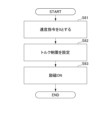
- 4 is a flowchart showing a procedure of a control process performed by a motor control device according to an embodiment of the present disclosure.
- 5 is a flowchart showing a procedure of a control stop process performed by a motor control device according to an embodiment of the present disclosure.
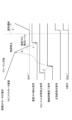
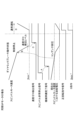
- 6 is a time chart showing an example of a change in spindle speed when the spindle motor is an induction motor. 6 is a time chart showing an example of a change in spindle speed when the spindle motor is a synchronous motor.
- FIG. 1 is a functional block diagram of a motor control device 1 according to an embodiment of the present disclosure.
- the motor control device 1 according to this embodiment is a motor control device that can shorten the start-up time by controlling and stopping the spindle motor after the power is restored, even if a power outage occurs while the spindle motor is rotating.
- the motor control device 1 controls the spindle motor of an industrial machine (not shown).
- the industrial machine may be a machine tool or a robot.
- an induction motor or a synchronous motor may be used as the spindle motor, i.e., the spindle motor, of such an industrial machine.
- the motor control device 1 is configured using a computer equipped with memories such as a ROM (read only memory) and a RAM (random access memory), a CPU (control processing unit), and a communication control unit, which are connected to each other via a bus.
- the functions and operations of each functional unit described below are achieved by the cooperation of the CPU and memory mounted on the computer, and the control program stored in the memory.
- the motor control device 1 may also be configured to include a numerical control device (CNC: Computer Numerical Controller) or a PLC (Programmable Logic Controller), and may be connected to a higher-level computer that outputs machining conditions such as rotation speed in addition to the machining program.
- CNC Computer Numerical Controller
- PLC Programmable Logic Controller
- the motor control device 1 includes, as functional units, a speed detection unit 11, an initial speed storage unit 12, an initial state determination unit 13, a motor type determination unit 14, a stop determination unit 15, a control stop unit 16 having a shock reduction unit 17, a back electromotive force calculation unit 18, and a back electromotive force determination unit 19.
- the speed detection unit 11 detects the speed of the spindle motor. Specifically, the speed detection unit 11 acquires a detection signal from a sensor, such as an encoder, provided on the spindle motor, and detects the speed (number of rotations) of the spindle motor based on the detection signal.
- a sensor such as an encoder
- the initial speed memory unit 12 stores the initial speed of the spindle motor immediately after power is applied, which is detected by the speed detection unit 11. More specifically, the initial speed memory unit 12 stores as the initial speed the speed of the spindle motor detected by the speed detection unit 11 immediately after power is applied to the numerical control device, amplifier, etc. after recovery from a power outage, etc.
- the initial state determination unit 13 determines whether the initial state of the spindle motor immediately after power-on is a rotating state by comparing the initial speed of the spindle motor stored by the initial speed memory unit 12 with the zero speed detection level. More specifically, if the initial speed of the spindle motor stored by the initial speed memory unit 12 is greater than the zero speed detection level, the initial state determination unit 13 determines that the initial state of the spindle motor immediately after power-on is a rotating state.
- the fact that the spindle motor is in the initial state immediately after power is turned on means that the spindle motor is rotating by inertia without being under the control of the motor control device 1 due to a power outage or the like.
- the motor control device 1 of this embodiment controls and stops the spindle motor by the control stop unit 16 described below, without waiting for such rotation by inertia to stop naturally.
- such a rotation state by inertia is called a coasting (free-running) state in the case of an induction motor.
- a synchronous motor has a permanent magnet built into the rotor, so when the spindle motor rotates by inertia due to a power outage or the like, it operates as a generator and a high voltage is generated at the power line terminal.
- a dynamic brake circuit is provided, which is a safety circuit that converts rotational energy into Joule heat by shorting the power line consisting of multiple windings through a resistor, thereby braking the rotation of the motor, and since the dynamic brake circuit operates, the above rotation state is called a dynamic brake operation state.
- the zero speed detection level is the standard for regarding the spindle motor speed as zero, and is set in advance by conducting experiments, etc. This is because even when the spindle motor has actually stopped completely, it may still vibrate and rotate due to disturbances, i.e., some external influence, so the speed when the spindle motor is completely stopped is obtained, and the zero speed level is set in advance based on this obtained speed. In this way, by comparing this zero speed detection level with the initial speed, it is possible to more accurately determine the rotation state of the spindle motor.
- the motor type determination unit 14 determines the type of the spindle motor. Specifically, the motor type determination unit 14 determines whether the spindle motor is an induction motor or a synchronous motor. For example, the motor type determination unit 14 determines whether the spindle motor is an induction motor or a synchronous motor based on the machining program, user input information, an external signal, etc.
- the stop determination unit 15 compares the current speed of the spindle motor detected by the speed detection unit 11 with the zero speed detection level according to the determination result of the initial state determination unit 13, and determines to stop the spindle motor if it is determined that the spindle motor is still rotating. More specifically, if the current speed of the spindle motor detected by the speed detection unit 11 is greater than the zero speed detection level, the stop determination unit 15 determines that the spindle motor is still rotating and determines to stop the spindle motor. This makes it possible to avoid a situation in which, when the initial state determination unit 13 determines that the initial state of the spindle motor immediately after power-on is a rotating state, the control stop unit 16 described below executes a control stop even though the spindle motor is not currently rotating.
- the control stop unit 16 controls and stops the spindle motor depending on the judgment result of the stop judgment unit 15. Specifically, the control stop unit 16 controls and stops the spindle motor by exciting the spindle motor with a speed command value of zero. This causes the spindle motor to quickly go from a rotating state to a stopped state.
- the control stop unit 16 has a shock reduction unit 17 that reduces the shock (excessive load) that occurs in the spindle motor when the spindle motor is controlled and stopped. This shock reduction unit 17 will be described in detail later.
- control stop unit 16 controls and stops the spindle motor according to the determination results of the stop determination unit 15 and the back electromotive force determination unit 19 described below.
- the back electromotive force determination unit 19 will be described in detail later.
- the shock reduction unit 17 reduces the shock (excessive load) to the spindle motor when the spindle motor is controlled to stop. Specifically, the shock reduction unit 17 reduces the shock to the spindle motor by limiting the torque command value of the spindle motor. For example, the shock reduction unit 17 may reduce the shock to the spindle motor by initially setting the torque command value of the spindle motor small and gradually increasing it. Alternatively, the shock reduction unit 17 may reduce the shock to the spindle motor by decelerating the current speed of the spindle motor detected by the speed detection unit 11 with a time constant.
- the back electromotive force calculation unit 18 calculates the back electromotive force at the current speed of the spindle motor based on the current speed of the spindle motor detected by the speed detection unit 11 and the back electromotive force constant of the spindle motor in accordance with the judgment result of the initial state judgment unit 13.
- the back electromotive force constant of the spindle motor is a value that expresses the ratio of the back electromotive force generated by rotation per unit number of rotations, and is a value unique to each spindle motor. This back electromotive force constant is obtained, for example, from the machining program, user input information, or an external signal.
- the back electromotive force determination unit 19 determines whether or not to stop the spindle motor control by comparing the back electromotive force at the current speed of the spindle motor calculated by the back electromotive force calculation unit 18 with the capacitor withstand voltage of the motor drive device (amplifier) that drives the spindle motor. Specifically, the back electromotive force determination unit 19 determines that the spindle motor control can be stopped if the back electromotive force at the current speed of the spindle motor calculated by the back electromotive force calculation unit 18 is smaller than the capacitor withstand voltage.
- the capacitor withstand voltage of the motor drive device is a value specific to each amplifier. This capacitor withstand voltage can be obtained, for example, from user input information or an external signal.
- Fig. 2 is a flowchart showing the procedure of the control processing executed by the motor control device 1 of this embodiment.
- Fig. 3 is a flowchart showing the procedure of the control stop processing executed by the motor control device 1 of this embodiment. Note that the processing shown in Figs. 2 and 3 is started and executed in response to the occurrence of a power outage.
- step S2 the system determines whether the emergency stop of the spindle motor has been released and the industrial machine is ready to go. Specifically, the system determines whether the user has pressed the emergency stop release button, for example, to switch the emergency stop signal of the spindle motor (spindle motor) from OFF to ON, and the industrial machine is ready to go in response to this and the machine ready signal has switched from OFF to ON. If the answer is YES, the system proceeds to step S3; if the answer is NO, the control process ends.
- step S5 it is determined whether the spindle motor is still rotating. Specifically, it is determined whether the current speed v of the spindle motor is greater than the zero speed detection level v_sst . If this determination is YES, it is determined that the spindle motor is still rotating, and the process proceeds to step S6 where a control stop process is executed. If this determination is NO, it is determined that the spindle motor is not currently rotating but is stopped, and the process proceeds to step S7 where the control process is terminated without executing the control stop process.
- a torque limit is set.
- the torque command value for the spindle motor may be set small at first and then gradually increased.
- the spindle motor may be decelerated from its current speed using a time constant. This reduces shock (excessive load) to the spindle motor. Then, proceed to step S63.
- step S63 the excitation of the spindle motor is turned ON. This causes the spindle motor to be stopped immediately. After that, this control stop process ends.
- the motor control device 1 according to the present embodiment described above provides the following advantages.
- an initial speed storage unit 12 that stores the initial speed of the spindle motor immediately after power is turned on, detected by the speed detection unit 11; an initial state determination unit 13 that determines whether the initial state of the spindle motor immediately after power is turned on by comparing the initial speed of the spindle motor with the zero speed detection level; a stop determination unit 15 that determines to stop the spindle motor if it is determined that the spindle motor is still rotating by comparing the current speed of the spindle motor with the zero speed detection level depending on the determination result of the initial state determination unit 13; and a control stop unit 16 that controls and stops the spindle motor depending on the determination result of the stop determination unit 15.
- a motor type determination unit 14 that determines the type of the spindle motor
- a back electromotive force calculation unit 18 that calculates the back electromotive force at the current speed of the spindle motor based on the current speed of the spindle motor and the back electromotive force constant of the spindle motor according to the determination result of the initial state determination unit 13, and a back electromotive force determination unit 19 that determines whether or not to stop the spindle motor by comparing the back electromotive force at the current speed of the spindle motor with the capacitor withstand voltage of the motor drive device that drives the spindle motor, and the control stop unit 16 is configured to stop the spindle motor according to the determination results of the stop determination unit 15 and the back electromotive force determination unit 19 when it is determined that the spindle motor is a synchronous motor.
- the spindle motor is controlled and stopped by the control stop unit 16, which excites the spindle motor with its speed command value set to zero.
- the torque command value of the spindle motor is limited by initially setting it to a small value and gradually increasing it, and a shock reduction unit 17 is provided to reduce shock to the spindle motor when the spindle motor is controlled and stopped, for example by decelerating the spindle motor from its current speed with a time constant.
- a motor control device (1) for controlling a spindle motor of an industrial machine A speed detection unit (11) for detecting the speed of the spindle motor; an initial speed storage unit (12) that stores an initial speed of the spindle motor immediately after power-on, the initial speed being detected by the speed detection unit (11); an initial state determination unit (13) for determining whether the initial state of the spindle motor immediately after power-on is a rotating state by comparing the initial speed of the spindle motor stored in the initial speed memory unit (12) with a preset zero speed detection level that is a reference for regarding the speed of the spindle motor as zero; a stop determination unit (15) which, in response to a determination result of the initial state determination unit (13), compares the current speed of the spindle motor detected by the speed detection unit (11) with the zero speed detection level, and determines whether the spindle motor is stopped when it is determined that the spindle motor is still rotating; and a control stop unit (16
- a motor type determination unit (14) that determines the type of the spindle motor; a back electromotive voltage calculation unit (18) that calculates a back electromotive voltage at the current speed of the spindle motor based on the current speed of the spindle motor detected by the speed detection unit (11) and a back electromotive voltage constant of the spindle motor in response to a determination result of the initial state determination unit (13); a back electromotive voltage determination unit (19) for determining whether or not to stop control of the spindle motor by comparing the back electromotive voltage at the current speed of the spindle motor calculated by the back electromotive voltage calculation unit (18) with a capacitor withstand voltage of a motor drive device that drives the spindle motor,
- the control stop unit (16) controls and stops the spindle motor in accordance with the determination results of the stop determination unit (15) and the back electromotive force determination unit (19).
- the back electromotive voltage determination unit (19) determines that it is possible to stop control of the spindle motor when the back electromotive voltage at the current speed of the spindle motor calculated by the back electromotive voltage calculation unit (18) is smaller than the capacitor withstand voltage.
- the shock reducing unit (17) limits a torque command value of the spindle motor.
- the shock reducing section (17) decelerates the spindle motor from the current speed detected by the speed detecting section (11) with a time constant.
Landscapes
- Engineering & Computer Science (AREA)
- Power Engineering (AREA)
- Control Of Electric Motors In General (AREA)
- Stopping Of Electric Motors (AREA)
Priority Applications (4)
| Application Number | Priority Date | Filing Date | Title |
|---|---|---|---|
| CN202380096354.8A CN120958717A (zh) | 2023-04-05 | 2023-04-05 | 电动机控制装置 |
| DE112023005690.0T DE112023005690T5 (de) | 2023-04-05 | 2023-04-05 | Motorsteuervorrichtung |
| JP2025512291A JPWO2024209590A1 (https=) | 2023-04-05 | 2023-04-05 | |
| PCT/JP2023/014091 WO2024209590A1 (ja) | 2023-04-05 | 2023-04-05 | モータ制御装置 |
Applications Claiming Priority (1)
| Application Number | Priority Date | Filing Date | Title |
|---|---|---|---|
| PCT/JP2023/014091 WO2024209590A1 (ja) | 2023-04-05 | 2023-04-05 | モータ制御装置 |
Publications (1)
| Publication Number | Publication Date |
|---|---|
| WO2024209590A1 true WO2024209590A1 (ja) | 2024-10-10 |
Family
ID=92973034
Family Applications (1)
| Application Number | Title | Priority Date | Filing Date |
|---|---|---|---|
| PCT/JP2023/014091 Ceased WO2024209590A1 (ja) | 2023-04-05 | 2023-04-05 | モータ制御装置 |
Country Status (4)
| Country | Link |
|---|---|
| JP (1) | JPWO2024209590A1 (https=) |
| CN (1) | CN120958717A (https=) |
| DE (1) | DE112023005690T5 (https=) |
| WO (1) | WO2024209590A1 (https=) |
Citations (2)
| Publication number | Priority date | Publication date | Assignee | Title |
|---|---|---|---|---|
| JP2012032960A (ja) * | 2010-07-29 | 2012-02-16 | Shin Nippon Koki Co Ltd | 数値制御装置 |
| JP2021035707A (ja) * | 2019-08-30 | 2021-03-04 | 株式会社Fuji | 工作機械 |
-
2023
- 2023-04-05 JP JP2025512291A patent/JPWO2024209590A1/ja active Pending
- 2023-04-05 WO PCT/JP2023/014091 patent/WO2024209590A1/ja not_active Ceased
- 2023-04-05 CN CN202380096354.8A patent/CN120958717A/zh active Pending
- 2023-04-05 DE DE112023005690.0T patent/DE112023005690T5/de active Pending
Patent Citations (2)
| Publication number | Priority date | Publication date | Assignee | Title |
|---|---|---|---|---|
| JP2012032960A (ja) * | 2010-07-29 | 2012-02-16 | Shin Nippon Koki Co Ltd | 数値制御装置 |
| JP2021035707A (ja) * | 2019-08-30 | 2021-03-04 | 株式会社Fuji | 工作機械 |
Also Published As
| Publication number | Publication date |
|---|---|
| CN120958717A (zh) | 2025-11-14 |
| DE112023005690T5 (de) | 2025-12-11 |
| JPWO2024209590A1 (https=) | 2024-10-10 |
Similar Documents
| Publication | Publication Date | Title |
|---|---|---|
| CN1032948C (zh) | 用于转换器的电源故障制动电路 | |
| JP2016025828A (ja) | 停電時におけるトルク指令制限機能を備えたモータ制御装置 | |
| JP2005124336A (ja) | 交流電動機の制御方法及び制御装置 | |
| JPS63290197A (ja) | エレベ−タ駆動用インバ−タ | |
| EP2808454B1 (en) | Motor Controller and Construction Machine Provided Therewith | |
| CN109687793B (zh) | 电动机控制装置 | |
| JP7064063B1 (ja) | 制御装置 | |
| JPH11308894A (ja) | 電動機の停電時処理方法 | |
| WO2024209590A1 (ja) | モータ制御装置 | |
| JP5630236B2 (ja) | 蓄電装置 | |
| JP4311172B2 (ja) | 電動機制御装置の制御方法 | |
| CN114649978B (zh) | 电动机驱动用电源电路的放电电路及方法、机器人控制器 | |
| CN103580552B (zh) | 马达减速方法及应用该减速方法的马达驱动装置 | |
| US11223194B2 (en) | Motor control apparatus including protection mechanism | |
| WO2004082123A1 (ja) | 交流電動機の制御方法及び制御装置 | |
| US7218490B2 (en) | Process and device for determining a run-away condition of a rotation-speed controlled, permanent-excited synchronous motor | |
| JP2906636B2 (ja) | 誘導電動機用インバータの制御装置 | |
| JP4859813B2 (ja) | 印刷機の駆動制御装置 | |
| JP5537264B2 (ja) | 電気推進船の駆動装置及び駆動方法 | |
| JP2011200073A (ja) | モータ駆動装置 | |
| JP5402175B2 (ja) | 電動機駆動システム | |
| JP4164646B2 (ja) | 停電時におけるモータの減速停止制御方法及びモータ可変速駆動装置 | |
| JP3749658B2 (ja) | 電源電圧保持装置 | |
| JP7480681B2 (ja) | 真空ポンプおよび真空ポンプ用コントローラ | |
| JPWO2014207779A1 (ja) | 数値制御装置 |
Legal Events
| Date | Code | Title | Description |
|---|---|---|---|
| 121 | Ep: the epo has been informed by wipo that ep was designated in this application |
Ref document number: 23932002 Country of ref document: EP Kind code of ref document: A1 |
|
| WWE | Wipo information: entry into national phase |
Ref document number: CN2023800963548 Country of ref document: CN |
|
| WWE | Wipo information: entry into national phase |
Ref document number: 112023005690 Country of ref document: DE |
|
| ENP | Entry into the national phase |
Ref document number: 2025512291 Country of ref document: JP Kind code of ref document: A |
|
| WWE | Wipo information: entry into national phase |
Ref document number: 2025512291 Country of ref document: JP |
|
| WWP | Wipo information: published in national office |
Ref document number: 112023005690 Country of ref document: DE |
|
| 122 | Ep: pct application non-entry in european phase |
Ref document number: 23932002 Country of ref document: EP Kind code of ref document: A1 |