WO2024204623A1 - 方向性電磁鋼板および巻鉄心 - Google Patents
方向性電磁鋼板および巻鉄心 Download PDFInfo
- Publication number
- WO2024204623A1 WO2024204623A1 PCT/JP2024/012849 JP2024012849W WO2024204623A1 WO 2024204623 A1 WO2024204623 A1 WO 2024204623A1 JP 2024012849 W JP2024012849 W JP 2024012849W WO 2024204623 A1 WO2024204623 A1 WO 2024204623A1
- Authority
- WO
- WIPO (PCT)
- Prior art keywords
- mass
- steel sheet
- grain
- oriented electrical
- inclusions
- Prior art date
- Legal status (The legal status is an assumption and is not a legal conclusion. Google has not performed a legal analysis and makes no representation as to the accuracy of the status listed.)
- Ceased
Links
Images


Classifications
-
- C—CHEMISTRY; METALLURGY
- C22—METALLURGY; FERROUS OR NON-FERROUS ALLOYS; TREATMENT OF ALLOYS OR NON-FERROUS METALS
- C22C—ALLOYS
- C22C38/00—Ferrous alloys, e.g. steel alloys
- C22C38/02—Ferrous alloys, e.g. steel alloys containing silicon
-
- C—CHEMISTRY; METALLURGY
- C21—METALLURGY OF IRON
- C21D—MODIFYING THE PHYSICAL STRUCTURE OF FERROUS METALS; GENERAL DEVICES FOR HEAT TREATMENT OF FERROUS OR NON-FERROUS METALS OR ALLOYS; MAKING METAL MALLEABLE, e.g. BY DECARBURISATION OR TEMPERING
- C21D6/00—Heat treatment of ferrous alloys
- C21D6/008—Heat treatment of ferrous alloys containing Si
-
- C—CHEMISTRY; METALLURGY
- C21—METALLURGY OF IRON
- C21D—MODIFYING THE PHYSICAL STRUCTURE OF FERROUS METALS; GENERAL DEVICES FOR HEAT TREATMENT OF FERROUS OR NON-FERROUS METALS OR ALLOYS; MAKING METAL MALLEABLE, e.g. BY DECARBURISATION OR TEMPERING
- C21D8/00—Modifying the physical properties of ferrous metals or ferrous alloys by deformation combined with, or followed by, heat treatment
- C21D8/12—Modifying the physical properties of ferrous metals or ferrous alloys by deformation combined with, or followed by, heat treatment during manufacturing of articles with special electromagnetic properties
-
- C—CHEMISTRY; METALLURGY
- C21—METALLURGY OF IRON
- C21D—MODIFYING THE PHYSICAL STRUCTURE OF FERROUS METALS; GENERAL DEVICES FOR HEAT TREATMENT OF FERROUS OR NON-FERROUS METALS OR ALLOYS; MAKING METAL MALLEABLE, e.g. BY DECARBURISATION OR TEMPERING
- C21D8/00—Modifying the physical properties of ferrous metals or ferrous alloys by deformation combined with, or followed by, heat treatment
- C21D8/12—Modifying the physical properties of ferrous metals or ferrous alloys by deformation combined with, or followed by, heat treatment during manufacturing of articles with special electromagnetic properties
- C21D8/1216—Modifying the physical properties of ferrous metals or ferrous alloys by deformation combined with, or followed by, heat treatment during manufacturing of articles with special electromagnetic properties characterised by the working steps
- C21D8/1222—Hot rolling
-
- C—CHEMISTRY; METALLURGY
- C21—METALLURGY OF IRON
- C21D—MODIFYING THE PHYSICAL STRUCTURE OF FERROUS METALS; GENERAL DEVICES FOR HEAT TREATMENT OF FERROUS OR NON-FERROUS METALS OR ALLOYS; MAKING METAL MALLEABLE, e.g. BY DECARBURISATION OR TEMPERING
- C21D8/00—Modifying the physical properties of ferrous metals or ferrous alloys by deformation combined with, or followed by, heat treatment
- C21D8/12—Modifying the physical properties of ferrous metals or ferrous alloys by deformation combined with, or followed by, heat treatment during manufacturing of articles with special electromagnetic properties
- C21D8/1216—Modifying the physical properties of ferrous metals or ferrous alloys by deformation combined with, or followed by, heat treatment during manufacturing of articles with special electromagnetic properties characterised by the working steps
- C21D8/1233—Cold rolling
-
- C—CHEMISTRY; METALLURGY
- C21—METALLURGY OF IRON
- C21D—MODIFYING THE PHYSICAL STRUCTURE OF FERROUS METALS; GENERAL DEVICES FOR HEAT TREATMENT OF FERROUS OR NON-FERROUS METALS OR ALLOYS; MAKING METAL MALLEABLE, e.g. BY DECARBURISATION OR TEMPERING
- C21D8/00—Modifying the physical properties of ferrous metals or ferrous alloys by deformation combined with, or followed by, heat treatment
- C21D8/12—Modifying the physical properties of ferrous metals or ferrous alloys by deformation combined with, or followed by, heat treatment during manufacturing of articles with special electromagnetic properties
- C21D8/1244—Modifying the physical properties of ferrous metals or ferrous alloys by deformation combined with, or followed by, heat treatment during manufacturing of articles with special electromagnetic properties characterised by the heat treatment
- C21D8/1272—Final recrystallisation annealing
-
- C—CHEMISTRY; METALLURGY
- C21—METALLURGY OF IRON
- C21D—MODIFYING THE PHYSICAL STRUCTURE OF FERROUS METALS; GENERAL DEVICES FOR HEAT TREATMENT OF FERROUS OR NON-FERROUS METALS OR ALLOYS; MAKING METAL MALLEABLE, e.g. BY DECARBURISATION OR TEMPERING
- C21D8/00—Modifying the physical properties of ferrous metals or ferrous alloys by deformation combined with, or followed by, heat treatment
- C21D8/12—Modifying the physical properties of ferrous metals or ferrous alloys by deformation combined with, or followed by, heat treatment during manufacturing of articles with special electromagnetic properties
- C21D8/1277—Modifying the physical properties of ferrous metals or ferrous alloys by deformation combined with, or followed by, heat treatment during manufacturing of articles with special electromagnetic properties involving a particular surface treatment
- C21D8/1283—Application of a separating or insulating coating
-
- C—CHEMISTRY; METALLURGY
- C21—METALLURGY OF IRON
- C21D—MODIFYING THE PHYSICAL STRUCTURE OF FERROUS METALS; GENERAL DEVICES FOR HEAT TREATMENT OF FERROUS OR NON-FERROUS METALS OR ALLOYS; MAKING METAL MALLEABLE, e.g. BY DECARBURISATION OR TEMPERING
- C21D9/00—Heat treatment, e.g. annealing, hardening, quenching or tempering, adapted for particular articles; Furnaces therefor
- C21D9/46—Heat treatment, e.g. annealing, hardening, quenching or tempering, adapted for particular articles; Furnaces therefor for sheet metals
-
- C—CHEMISTRY; METALLURGY
- C22—METALLURGY; FERROUS OR NON-FERROUS ALLOYS; TREATMENT OF ALLOYS OR NON-FERROUS METALS
- C22C—ALLOYS
- C22C38/00—Ferrous alloys, e.g. steel alloys
- C22C38/002—Ferrous alloys, e.g. steel alloys containing In, Mg, or other elements not provided for in one single group C22C38/001 - C22C38/60
-
- C—CHEMISTRY; METALLURGY
- C22—METALLURGY; FERROUS OR NON-FERROUS ALLOYS; TREATMENT OF ALLOYS OR NON-FERROUS METALS
- C22C—ALLOYS
- C22C38/00—Ferrous alloys, e.g. steel alloys
- C22C38/004—Very low carbon steels, i.e. having a carbon content of less than 0,01%
-
- C—CHEMISTRY; METALLURGY
- C22—METALLURGY; FERROUS OR NON-FERROUS ALLOYS; TREATMENT OF ALLOYS OR NON-FERROUS METALS
- C22C—ALLOYS
- C22C38/00—Ferrous alloys, e.g. steel alloys
- C22C38/005—Ferrous alloys, e.g. steel alloys containing rare earths, i.e. Sc, Y, Lanthanides
-
- C—CHEMISTRY; METALLURGY
- C22—METALLURGY; FERROUS OR NON-FERROUS ALLOYS; TREATMENT OF ALLOYS OR NON-FERROUS METALS
- C22C—ALLOYS
- C22C38/00—Ferrous alloys, e.g. steel alloys
- C22C38/007—Ferrous alloys, e.g. steel alloys containing silver
-
- C—CHEMISTRY; METALLURGY
- C22—METALLURGY; FERROUS OR NON-FERROUS ALLOYS; TREATMENT OF ALLOYS OR NON-FERROUS METALS
- C22C—ALLOYS
- C22C38/00—Ferrous alloys, e.g. steel alloys
- C22C38/008—Ferrous alloys, e.g. steel alloys containing tin
-
- C—CHEMISTRY; METALLURGY
- C22—METALLURGY; FERROUS OR NON-FERROUS ALLOYS; TREATMENT OF ALLOYS OR NON-FERROUS METALS
- C22C—ALLOYS
- C22C38/00—Ferrous alloys, e.g. steel alloys
- C22C38/04—Ferrous alloys, e.g. steel alloys containing manganese
-
- C—CHEMISTRY; METALLURGY
- C22—METALLURGY; FERROUS OR NON-FERROUS ALLOYS; TREATMENT OF ALLOYS OR NON-FERROUS METALS
- C22C—ALLOYS
- C22C38/00—Ferrous alloys, e.g. steel alloys
- C22C38/08—Ferrous alloys, e.g. steel alloys containing nickel
-
- C—CHEMISTRY; METALLURGY
- C22—METALLURGY; FERROUS OR NON-FERROUS ALLOYS; TREATMENT OF ALLOYS OR NON-FERROUS METALS
- C22C—ALLOYS
- C22C38/00—Ferrous alloys, e.g. steel alloys
- C22C38/10—Ferrous alloys, e.g. steel alloys containing cobalt
-
- C—CHEMISTRY; METALLURGY
- C22—METALLURGY; FERROUS OR NON-FERROUS ALLOYS; TREATMENT OF ALLOYS OR NON-FERROUS METALS
- C22C—ALLOYS
- C22C38/00—Ferrous alloys, e.g. steel alloys
- C22C38/12—Ferrous alloys, e.g. steel alloys containing tungsten, tantalum, molybdenum, vanadium, or niobium
-
- C—CHEMISTRY; METALLURGY
- C22—METALLURGY; FERROUS OR NON-FERROUS ALLOYS; TREATMENT OF ALLOYS OR NON-FERROUS METALS
- C22C—ALLOYS
- C22C38/00—Ferrous alloys, e.g. steel alloys
- C22C38/14—Ferrous alloys, e.g. steel alloys containing titanium or zirconium
-
- C—CHEMISTRY; METALLURGY
- C22—METALLURGY; FERROUS OR NON-FERROUS ALLOYS; TREATMENT OF ALLOYS OR NON-FERROUS METALS
- C22C—ALLOYS
- C22C38/00—Ferrous alloys, e.g. steel alloys
- C22C38/16—Ferrous alloys, e.g. steel alloys containing copper
-
- C—CHEMISTRY; METALLURGY
- C22—METALLURGY; FERROUS OR NON-FERROUS ALLOYS; TREATMENT OF ALLOYS OR NON-FERROUS METALS
- C22C—ALLOYS
- C22C38/00—Ferrous alloys, e.g. steel alloys
- C22C38/18—Ferrous alloys, e.g. steel alloys containing chromium
- C22C38/26—Ferrous alloys, e.g. steel alloys containing chromium with niobium or tantalum
-
- C—CHEMISTRY; METALLURGY
- C22—METALLURGY; FERROUS OR NON-FERROUS ALLOYS; TREATMENT OF ALLOYS OR NON-FERROUS METALS
- C22C—ALLOYS
- C22C38/00—Ferrous alloys, e.g. steel alloys
- C22C38/18—Ferrous alloys, e.g. steel alloys containing chromium
- C22C38/30—Ferrous alloys, e.g. steel alloys containing chromium with cobalt
-
- C—CHEMISTRY; METALLURGY
- C22—METALLURGY; FERROUS OR NON-FERROUS ALLOYS; TREATMENT OF ALLOYS OR NON-FERROUS METALS
- C22C—ALLOYS
- C22C38/00—Ferrous alloys, e.g. steel alloys
- C22C38/18—Ferrous alloys, e.g. steel alloys containing chromium
- C22C38/32—Ferrous alloys, e.g. steel alloys containing chromium with boron
-
- C—CHEMISTRY; METALLURGY
- C22—METALLURGY; FERROUS OR NON-FERROUS ALLOYS; TREATMENT OF ALLOYS OR NON-FERROUS METALS
- C22C—ALLOYS
- C22C38/00—Ferrous alloys, e.g. steel alloys
- C22C38/18—Ferrous alloys, e.g. steel alloys containing chromium
- C22C38/34—Ferrous alloys, e.g. steel alloys containing chromium with more than 1.5% by weight of silicon
-
- C—CHEMISTRY; METALLURGY
- C22—METALLURGY; FERROUS OR NON-FERROUS ALLOYS; TREATMENT OF ALLOYS OR NON-FERROUS METALS
- C22C—ALLOYS
- C22C38/00—Ferrous alloys, e.g. steel alloys
- C22C38/18—Ferrous alloys, e.g. steel alloys containing chromium
- C22C38/40—Ferrous alloys, e.g. steel alloys containing chromium with nickel
- C22C38/42—Ferrous alloys, e.g. steel alloys containing chromium with nickel with copper
-
- C—CHEMISTRY; METALLURGY
- C22—METALLURGY; FERROUS OR NON-FERROUS ALLOYS; TREATMENT OF ALLOYS OR NON-FERROUS METALS
- C22C—ALLOYS
- C22C38/00—Ferrous alloys, e.g. steel alloys
- C22C38/18—Ferrous alloys, e.g. steel alloys containing chromium
- C22C38/40—Ferrous alloys, e.g. steel alloys containing chromium with nickel
- C22C38/44—Ferrous alloys, e.g. steel alloys containing chromium with nickel with molybdenum or tungsten
-
- C—CHEMISTRY; METALLURGY
- C22—METALLURGY; FERROUS OR NON-FERROUS ALLOYS; TREATMENT OF ALLOYS OR NON-FERROUS METALS
- C22C—ALLOYS
- C22C38/00—Ferrous alloys, e.g. steel alloys
- C22C38/18—Ferrous alloys, e.g. steel alloys containing chromium
- C22C38/40—Ferrous alloys, e.g. steel alloys containing chromium with nickel
- C22C38/46—Ferrous alloys, e.g. steel alloys containing chromium with nickel with vanadium
-
- C—CHEMISTRY; METALLURGY
- C22—METALLURGY; FERROUS OR NON-FERROUS ALLOYS; TREATMENT OF ALLOYS OR NON-FERROUS METALS
- C22C—ALLOYS
- C22C38/00—Ferrous alloys, e.g. steel alloys
- C22C38/18—Ferrous alloys, e.g. steel alloys containing chromium
- C22C38/40—Ferrous alloys, e.g. steel alloys containing chromium with nickel
- C22C38/48—Ferrous alloys, e.g. steel alloys containing chromium with nickel with niobium or tantalum
-
- C—CHEMISTRY; METALLURGY
- C22—METALLURGY; FERROUS OR NON-FERROUS ALLOYS; TREATMENT OF ALLOYS OR NON-FERROUS METALS
- C22C—ALLOYS
- C22C38/00—Ferrous alloys, e.g. steel alloys
- C22C38/18—Ferrous alloys, e.g. steel alloys containing chromium
- C22C38/40—Ferrous alloys, e.g. steel alloys containing chromium with nickel
- C22C38/50—Ferrous alloys, e.g. steel alloys containing chromium with nickel with titanium or zirconium
-
- C—CHEMISTRY; METALLURGY
- C22—METALLURGY; FERROUS OR NON-FERROUS ALLOYS; TREATMENT OF ALLOYS OR NON-FERROUS METALS
- C22C—ALLOYS
- C22C38/00—Ferrous alloys, e.g. steel alloys
- C22C38/18—Ferrous alloys, e.g. steel alloys containing chromium
- C22C38/40—Ferrous alloys, e.g. steel alloys containing chromium with nickel
- C22C38/52—Ferrous alloys, e.g. steel alloys containing chromium with nickel with cobalt
-
- C—CHEMISTRY; METALLURGY
- C22—METALLURGY; FERROUS OR NON-FERROUS ALLOYS; TREATMENT OF ALLOYS OR NON-FERROUS METALS
- C22C—ALLOYS
- C22C38/00—Ferrous alloys, e.g. steel alloys
- C22C38/60—Ferrous alloys, e.g. steel alloys containing lead, selenium, tellurium, or antimony, or more than 0.04% by weight of sulfur
-
- H—ELECTRICITY
- H01—ELECTRIC ELEMENTS
- H01F—MAGNETS; INDUCTANCES; TRANSFORMERS; SELECTION OF MATERIALS FOR THEIR MAGNETIC PROPERTIES
- H01F1/00—Magnets or magnetic bodies characterised by the magnetic materials therefor; Selection of materials for their magnetic properties
- H01F1/01—Magnets or magnetic bodies characterised by the magnetic materials therefor; Selection of materials for their magnetic properties of inorganic materials
- H01F1/03—Magnets or magnetic bodies characterised by the magnetic materials therefor; Selection of materials for their magnetic properties of inorganic materials characterised by their coercivity
- H01F1/12—Magnets or magnetic bodies characterised by the magnetic materials therefor; Selection of materials for their magnetic properties of inorganic materials characterised by their coercivity of soft-magnetic materials
- H01F1/14—Magnets or magnetic bodies characterised by the magnetic materials therefor; Selection of materials for their magnetic properties of inorganic materials characterised by their coercivity of soft-magnetic materials metals or alloys
- H01F1/147—Alloys characterised by their composition
-
- H—ELECTRICITY
- H01—ELECTRIC ELEMENTS
- H01F—MAGNETS; INDUCTANCES; TRANSFORMERS; SELECTION OF MATERIALS FOR THEIR MAGNETIC PROPERTIES
- H01F1/00—Magnets or magnetic bodies characterised by the magnetic materials therefor; Selection of materials for their magnetic properties
- H01F1/01—Magnets or magnetic bodies characterised by the magnetic materials therefor; Selection of materials for their magnetic properties of inorganic materials
- H01F1/03—Magnets or magnetic bodies characterised by the magnetic materials therefor; Selection of materials for their magnetic properties of inorganic materials characterised by their coercivity
- H01F1/12—Magnets or magnetic bodies characterised by the magnetic materials therefor; Selection of materials for their magnetic properties of inorganic materials characterised by their coercivity of soft-magnetic materials
- H01F1/14—Magnets or magnetic bodies characterised by the magnetic materials therefor; Selection of materials for their magnetic properties of inorganic materials characterised by their coercivity of soft-magnetic materials metals or alloys
- H01F1/147—Alloys characterised by their composition
- H01F1/14766—Fe-Si based alloys
- H01F1/14775—Fe-Si based alloys in the form of sheets
-
- H—ELECTRICITY
- H01—ELECTRIC ELEMENTS
- H01F—MAGNETS; INDUCTANCES; TRANSFORMERS; SELECTION OF MATERIALS FOR THEIR MAGNETIC PROPERTIES
- H01F1/00—Magnets or magnetic bodies characterised by the magnetic materials therefor; Selection of materials for their magnetic properties
- H01F1/01—Magnets or magnetic bodies characterised by the magnetic materials therefor; Selection of materials for their magnetic properties of inorganic materials
- H01F1/03—Magnets or magnetic bodies characterised by the magnetic materials therefor; Selection of materials for their magnetic properties of inorganic materials characterised by their coercivity
- H01F1/12—Magnets or magnetic bodies characterised by the magnetic materials therefor; Selection of materials for their magnetic properties of inorganic materials characterised by their coercivity of soft-magnetic materials
- H01F1/14—Magnets or magnetic bodies characterised by the magnetic materials therefor; Selection of materials for their magnetic properties of inorganic materials characterised by their coercivity of soft-magnetic materials metals or alloys
- H01F1/147—Alloys characterised by their composition
- H01F1/14766—Fe-Si based alloys
- H01F1/14775—Fe-Si based alloys in the form of sheets
- H01F1/14783—Fe-Si based alloys in the form of sheets with insulating coating
-
- H—ELECTRICITY
- H01—ELECTRIC ELEMENTS
- H01F—MAGNETS; INDUCTANCES; TRANSFORMERS; SELECTION OF MATERIALS FOR THEIR MAGNETIC PROPERTIES
- H01F1/00—Magnets or magnetic bodies characterised by the magnetic materials therefor; Selection of materials for their magnetic properties
- H01F1/01—Magnets or magnetic bodies characterised by the magnetic materials therefor; Selection of materials for their magnetic properties of inorganic materials
- H01F1/03—Magnets or magnetic bodies characterised by the magnetic materials therefor; Selection of materials for their magnetic properties of inorganic materials characterised by their coercivity
- H01F1/12—Magnets or magnetic bodies characterised by the magnetic materials therefor; Selection of materials for their magnetic properties of inorganic materials characterised by their coercivity of soft-magnetic materials
- H01F1/14—Magnets or magnetic bodies characterised by the magnetic materials therefor; Selection of materials for their magnetic properties of inorganic materials characterised by their coercivity of soft-magnetic materials metals or alloys
- H01F1/16—Magnets or magnetic bodies characterised by the magnetic materials therefor; Selection of materials for their magnetic properties of inorganic materials characterised by their coercivity of soft-magnetic materials metals or alloys in the form of sheets
-
- H—ELECTRICITY
- H01—ELECTRIC ELEMENTS
- H01F—MAGNETS; INDUCTANCES; TRANSFORMERS; SELECTION OF MATERIALS FOR THEIR MAGNETIC PROPERTIES
- H01F27/00—Details of transformers or inductances, in general
- H01F27/24—Magnetic cores
- H01F27/245—Magnetic cores made from sheets, e.g. grain-oriented
-
- C—CHEMISTRY; METALLURGY
- C21—METALLURGY OF IRON
- C21D—MODIFYING THE PHYSICAL STRUCTURE OF FERROUS METALS; GENERAL DEVICES FOR HEAT TREATMENT OF FERROUS OR NON-FERROUS METALS OR ALLOYS; MAKING METAL MALLEABLE, e.g. BY DECARBURISATION OR TEMPERING
- C21D2201/00—Treatment for obtaining particular effects
- C21D2201/05—Grain orientation
-
- Y—GENERAL TAGGING OF NEW TECHNOLOGICAL DEVELOPMENTS; GENERAL TAGGING OF CROSS-SECTIONAL TECHNOLOGIES SPANNING OVER SEVERAL SECTIONS OF THE IPC; TECHNICAL SUBJECTS COVERED BY FORMER USPC CROSS-REFERENCE ART COLLECTIONS [XRACs] AND DIGESTS
- Y02—TECHNOLOGIES OR APPLICATIONS FOR MITIGATION OR ADAPTATION AGAINST CLIMATE CHANGE
- Y02P—CLIMATE CHANGE MITIGATION TECHNOLOGIES IN THE PRODUCTION OR PROCESSING OF GOODS
- Y02P10/00—Technologies related to metal processing
- Y02P10/20—Recycling
Definitions
- the present invention relates to grain-oriented electromagnetic steel sheets suitable for use as transformer core materials, and wound cores manufactured using these steel sheets.
- Grain-oriented electrical steel is a soft magnetic material that is primarily used as the core material for transformers and large generators. It is characterized by having a texture in which the crystal orientation ⁇ 001> axis, which is the axis of easy magnetization of iron, is highly aligned in the rolling direction of the steel sheet. This texture can be obtained by inducing secondary recrystallization and preferentially growing crystal grains with the ⁇ 110 ⁇ 001> orientation, known as the Goss orientation.
- iron loss characteristics are of utmost importance due to their applications. Iron loss indicates the amount of energy lost, mainly as heat, when the steel sheet is excited; the lower the value, the less loss there is and the better the material is considered to be.
- Known methods for reducing the above-mentioned iron loss include reducing the variation in the Goss orientation to bring it closer to the ideal Goss orientation, and using a special process called magnetic domain refining.
- grain-oriented electrical steel sheets are generally used in layers, so an insulating coating is formed on the surface of the steel sheet, and applying tensile tension to the steel sheet surface with this coating can also reduce iron loss.
- Transformer cores using grain-oriented electromagnetic steel sheets are broadly divided into wound cores and stacked cores.
- Wound cores are a type in which steel sheets are wound and stacked, and are used in relatively small transformers.
- Patent Document 1 discloses a method for creating a three-phase three-limbed transformer using a wound core.
- Patent Document 2 discloses a manufacturing method for a wound core that can achieve low iron loss.
- Patent Document 3 describes a technology for extending the tool life during slitting by applying an organic substance to the surface of grain-oriented electromagnetic steel sheets for wound cores.
- stacked cores are a type in which cut sheets cut into rectangular or trapezoidal shapes are stacked, and are often used in relatively large transformers.
- Patent Document 4 and Patent Document 5 disclose technologies related to reducing iron loss in three-phase stacked transformers.
- Patent Document 6 describes a manufacturing technology for a three-phase stacked transformer that achieves low iron loss and low noise.
- Japanese Patent Application Publication No. 05-101943 Japanese Unexamined Patent Publication No. 15309/1983 Japanese Unexamined Patent Publication No. 62-14405 Japanese Patent Application Publication No. 06-251966 Japanese Patent Application Publication No. 10-261536 JP 2000-114064 A
- the grain-oriented electromagnetic steel sheets used in the above-mentioned wound cores are bent during the manufacturing process, but the poor accuracy of this bending process has become a problem.
- the steel sheets used in Unicore are slit to a specified width and then bent in several places, as shown in Figure 1.
- Figure 2 after the bending process, there are often cases where the two sides of the butted ends of the steel sheets are not parallel. This makes it difficult to stack the steel sheets, which creates the problem of not being able to form the core.
- the present invention was made in consideration of the above problems with the conventional technology, and its purpose is to provide a grain-oriented electromagnetic steel sheet that has excellent bending processing accuracy without causing deterioration of magnetic properties, and a wound core manufactured using the above steel sheet.
- the inventors conducted extensive research, focusing on the effect that inclusions present inside the product sheet have on the magnetic properties and bending processing accuracy. As a result, they discovered that in order to improve the bending processing accuracy without degrading the magnetic properties, it is important to have fine inclusions present inside the steel sheet and to optimize their number density, which led to the development of the present invention.
- the present invention provides a grain-oriented electrical steel sheet having a base coating mainly composed of forsterite on the surface of a base steel sheet, the base steel sheet having a component composition containing C: 0.0050 mass% or less, Si: 2.0 to 8.0 mass%, Mn: 0.02 to 1.0 mass%, with the balance being Fe and unavoidable impurities, and the number density of inclusions having a diameter of 0.5 ⁇ m or more and 3.0 ⁇ m or less present inside the base steel sheet is 1.0 pieces/ mm2 or more and 20.0 pieces/ mm2 or less.
- the grain-oriented electrical steel sheet of the present invention contains 0.0005 to 0.0100 mass% S and 0.0005 to 0.0100 mass% Se, and when the concentration distributions of Se and S in the sheet thickness direction from the steel sheet surface are measured by glow discharge optical emission spectrometry, peaks in the emission intensity profiles of Se and S are present at the interface between the base coating and the base steel sheet, and the peak value ISe of the emission intensity of Se and the peak value IS of the emission intensity of S satisfy the following formula (1): I Se /I S ⁇ 1.0 (1)
- the present invention is characterized in that:
- the grain-oriented electrical steel sheet of the present invention is characterized in that the number density of inclusions having a diameter of more than 5.0 ⁇ m present inside the base steel sheet is 2.0 pieces/mm2 or less.
- the base steel sheet in the grain-oriented electrical steel sheet of the present invention further contains Sn: 0.005-0.500 mass%, Cr: 0.005-0.500 mass%, Cu: 0.01-0.50 mass%, Ag: 0.001-0.050 mass%, Au: 0.001-0.050 mass%, Ni: 0.01-0.50 mass%, Bi: 0.
- the present invention also relates to a wound core made of any of the grain-oriented electromagnetic steel sheets described above.
- the present invention provides grain-oriented electrical steel sheets that not only have excellent magnetic properties but also excellent bending processing accuracy, making it possible to manufacture highly efficient wound cores.
- FIG. 2 is a schematic diagram illustrating a bending process of a steel plate when manufacturing a Unicore.
- FIG. 2 is a schematic diagram illustrating defects in the bending process of a steel plate when manufacturing a Unicore.
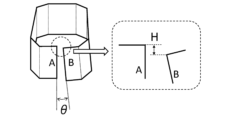
- FIG. 11 is a diagram for explaining ⁇ and H which are parameters for evaluating machining accuracy.
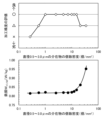
- 1 is a graph showing the effect of the number density of inclusions having a diameter of 0.5 to 3.0 ⁇ m on the processing accuracy of bending and iron loss.
- the nitrogen partial pressure and treatment time were adjusted to variously change the amount and size of inclusions contained in the molten steel. Furthermore, in order to change the state of inclusions in the steel, when the molten steel was continuously cast to produce a slab, the casting speed was changed in the range of 0.4 to 1.5 m/min. The slab obtained as described above was then reheated to a temperature of 1230°C, hot-rolled to a hot-rolled sheet having a thickness of 2.4 mm, and the scale on the surface of the hot-rolled sheet was removed by pickling, and then cold-rolled to a cold-rolled sheet having a final thickness of 0.23 mm.
- the cold-rolled sheet was then subjected to decarburization annealing, which also served as primary recrystallization annealing, at 850°C x 200s in an atmosphere of 60 vol% H 2 + 40 vol% N 2 with a dew point of 45°C, to obtain a decarburized annealed sheet.
- decarburization annealing which also served as primary recrystallization annealing, at 850°C x 200s in an atmosphere of 60 vol% H 2 + 40 vol% N 2 with a dew point of 45°C, to obtain a decarburized annealed sheet.
- An annealing separator mainly composed of MgO was then applied to the surface of the decarburized annealed sheet and dried.
- the steel sheet was subjected to finish annealing in which the steel sheet was held at 1200°C for 5 hours in a H2 atmosphere for purification, to obtain a grain-oriented electrical steel sheet (product sheet) having a base coating mainly composed of forsterite.
- a compositional analysis of the base steel sheet obtained in the manner described above after removing the forsterite-based undercoat formed on the steel sheet surface revealed a composition of C: 0.0008-0.0021 mass%, Si: 3.20-3.35 mass%, Mn: 0.07-0.11 mass%, with the remainder being Fe and unavoidable impurities.
- the iron loss W 17/50 is 0.85 W/kg or less, the iron loss property is evaluated as good.
- a sample with a width of 150 mm and a length of 1000 mm was cut from the above product plate, with the length direction being the rolling direction, and was bent at 45° at eight points in the length direction with a radius of curvature r: 3 mm, as shown in Figure 1.
- the processing accuracy of the ring-shaped sample after the above bending processing was evaluated using the two parameters ⁇ and H shown in Figure 3.
- ⁇ is the angle between the two butted sides (A and B in Figure 3)
- H is the vertical deviation distance between the two butted sides A and B.
- one side of a sample taken from the above-mentioned product plate was pickled with hydrochloric acid and removed down to the center of the plate thickness to reveal a surface passing through the center of the plate thickness which was parallel to the rolled surface (steel plate surface).
- the size and number of inclusions present in the surface were then measured over an area of 50 mm2 using a scanning electron microscope (Personal SEM: ASPEX) equipped with an automatic particle measurement mechanism.
- Figure 4 shows the relationship between the number density (pieces/ mm2 ) of inclusions with diameters of 0.5 ⁇ m to 3.0 ⁇ m measured as described above and the evaluation results of iron loss W 17/50 and processing accuracy. From this figure, it can be seen that both iron loss W 17/50 and processing accuracy are good when the number density of inclusions of the above size is in the range of 1.0 pieces/ mm2 to 20.0 pieces/ mm2 .
- the diameter of the inclusions refers to the average value of the Feret diameter in the rolling direction and the plate width direction read from the SEM image.
- the grain-oriented electrical steel sheet is characterized by the crystal orientation of the base steel sheet being highly aligned in a specific direction and the crystal grains being coarse. Therefore, there are few places where stress is concentrated when bending, and the starting point of processing is uneven, so deformation is likely to be uneven.
- stress is concentrated on the inclusions, which become the starting point of deformation, and when the inclusions are uniformly distributed, the starting point of deformation is also uniform, improving the processing accuracy.
- the size of the inclusions is less than 0.5 ⁇ m or the number density of the inclusions is less than 1.0 pieces/mm 2 , the effect of improving the processing accuracy cannot be sufficiently obtained. Conversely, if the number density exceeds 20.0 pieces/mm 2 , the inclusions hinder the movement of the domain walls, and the iron loss deteriorates.
- the force that inhibits the movement of the domain walls depends on the average grain size and the amount of inclusions present, but when considering a single inclusion, the larger the grain size, the greater the force, and particularly when the grain size exceeds 3.0 ⁇ m, the force becomes significant.
- C 0.0050 mass% or less If the C content in the finished sheet exceeds 0.0050 mass%, magnetic aging occurs, which leads to iron loss deterioration, so the C content is limited to 0.0050 mass% or less, preferably 0.0030 mass% or less.
- Si:2.0 ⁇ 8.0mass% Silicon is an element necessary for increasing the resistivity of steel and reducing iron loss. However, if the Si content is less than 2.0 mass%, the above effects cannot be sufficiently obtained. If the Si content exceeds 0 mass%, the workability of the steel decreases, and slitting and bending of the steel sheet becomes difficult. Therefore, the Si content is set to the range of 2.0 to 8.0 mass%, preferably 3.0 to 8.0 mass%. The range is 6.5 mass%.
- Mn 0.02 to 1.0 mass%
- Mn is an element effective in improving hot workability and stabilizing secondary recrystallization. However, if the Mn content is less than 0.02 mass%, the above effects are poor and the reduction However, if the Mn content exceeds 1.0 mass%, the magnetic flux density of the finished sheet decreases. Therefore, the Mn content is set to the range of 0.02 to 1.0 mass%. The range of 0.05 to 0.50 mass% is preferable.
- the remainder other than the above C, Si, and Mn is essentially Fe and unavoidable impurities.
- the following elements are added: Sn: 0.005-0.500 mass%, Cr: 0.005-0.500 mass%, Cu: 0.01-0.50 mass%, Ag: 0.001-0.050 mass%, Au: 0.001-0.050 mass%, Ni: 0.01-0.50 mass%, Bi: 0.005-0.500 mass% , P: 0.005 to 0.50 mass%, Sb: 0.005 to 0.50 mass%, Mo: 0.005 to 0.50 mass%, B: 0.00001 to 0.00250 mass%, Nb: 0.001 to 0.020 mass%, Ti: 0.0005 to 0.0400 mass% , V: 0.001 to 0.020 mass%, As: 0.0010 to 0.
- the grain-oriented electrical steel sheet of the present invention inclusions having a diameter of 0.5 ⁇ m to 3.0 ⁇ m are present inside the steel sheet (base steel sheet) after removing the base coating mainly composed of forsterite from the steel sheet surface, and the number density of the inclusions is required to be in the range of 1.0 pieces/ mm2 to 20.0 pieces/ mm2 .
- the number density is a value measured in a plane parallel to the steel sheet surface including the center of the sheet thickness. If the number density is less than 1.0 pieces/ mm2 , the effect of improving the processing accuracy described above cannot be sufficiently obtained, while if it exceeds 20.0 pieces/ mm2 , the iron loss increases significantly.
- the range is preferably 1.0 pieces/ mm2 to 10.0 pieces/ mm2 .
- the number density of inclusions exceeding 5.0 ⁇ m in diameter which are a major obstacle to the movement of the domain walls, is preferably 2.0 pieces/ mm2 or less, and more preferably 1.0 pieces/ mm2 or less.
- the steel material (slab) used in the production of the grain-oriented electrical steel sheet of the present invention is produced by refining molten pig iron obtained by a blast furnace process or molten steel obtained by an electric furnace process using a conventionally known refining process, adjusting the components, and melting steel having the component composition described above, and then producing the molten steel using a continuous casting process, an ingot casting-slabbing rolling process, or the like.
- the above steel material preferably contains C in the range of 0.010 to 0.090 mass%.
- C is an element that is reduced to 0.0050 mass% or less in the decarburization annealing process so that the finished sheet does not undergo magnetic aging. However, if it exceeds 0.090 mass%, there is a risk that insufficient decarburization will occur and the C in the finished sheet will exceed 0.0050 mass%.
- C is an element that has the effect of strengthening the grain boundaries of the steel material and improving the texture through the ⁇ - ⁇ transformation of the hot-rolled sheet, and in order to obtain such effects, it is preferable for it to contain 0.010 mass% or more.
- the steel material preferably contains, in addition to the composition described above, the inhibitor-forming components Al, N, S, and Se.
- the inhibitor-forming components Al, N, S, and Se.
- AlN when used as the inhibitor, it is preferable to contain Al in the range of 0.010 to 0.040 mass%, and N in the range of 0.005 to 0.020 mass%.
- MnS and/or MnSe when used as the inhibitor, it is preferable to contain S in the range of 0.005 to 0.040 mass% and/or Se in the range of 0.005 to 0.040 mass%.
- the inhibitor-forming components are reduced to the impurity level by the purification treatment in the finish annealing described below.
- the inhibitors AlN and MnS and/or MnSe may be used alone or in combination.
- the inhibitor-forming components S and Se are elements that contribute to improving the adhesion of the forsterite base coating, so it is preferable to appropriately contain them within the above ranges.
- C can be reduced in the decarburization annealing process
- N can be nitrogenated in the finish annealing process.
- the present invention in addition to adjusting the steel composition to the above-mentioned composition range in the refining process, it is important to control the shape of inclusions present in the steel.
- inclusions present in steel deteriorate the iron loss in grain-oriented electrical steel sheets, so it is considered desirable to reduce them as much as possible.
- Methods for controlling the shape of the above-mentioned inclusions include, for example, shortening the time during primary refining in a converter, limiting the amount of slag discharged, reducing the flow rate of gas injected during secondary refining, shortening the injection time, etc.
- the present invention does not particularly limit the method.
- the steel material (slab) with the steel composition and inclusions appropriately controlled is heated to a prescribed temperature using normal methods and conditions, and then hot rolled to produce a hot-rolled sheet of the prescribed thickness.
- the slab contains inhibitor-forming components, the slab is preferably heated to a temperature of 1350°C or higher before the hot rolling in order to completely dissolve the inhibitors.
- the slab does not contain inhibitor-forming components, the slab is preferably heated to a temperature of 1250°C or lower, which is higher than the temperature at which hot rolling is possible, in order to reduce thermal energy costs.
- the steel sheet (hot-rolled sheet) after the hot rolling may be subjected to hot-rolled sheet annealing depending on the required characteristics.
- the annealing temperature is preferably in the range of 800°C or higher and 1150°C or lower. If the hot-rolled sheet annealing temperature is less than 800°C, the band structure formed by hot rolling will remain, making it difficult to obtain a uniform primary recrystallized structure, and there is a risk that the development of secondary recrystallized grains will be hindered. On the other hand, if the hot-rolled sheet annealing temperature exceeds 1150°C, the grain size after hot-rolled sheet annealing will become too coarse, making it difficult to obtain a uniform primary recrystallized structure.
- the hot-rolled sheet or the hot-rolled sheet after hot-rolled sheet annealing is then cold-rolled once or cold-rolled at least twice with intermediate annealing in between to produce a cold-rolled sheet of the final thickness (product thickness).
- the annealing temperature is preferably in the range of 900°C to 1200°C. If the annealing temperature is less than 900°C, the recrystallized grains become finer, and the Goss nuclei in the primary recrystallized structure decrease, which may result in deterioration of the magnetic properties. On the other hand, if the annealing temperature exceeds 1200°C, the grain size becomes too coarse, as with hot-rolled sheet annealing, making it difficult to obtain a uniformly grained primary recrystallized structure.
- the final cold rolling to produce the final plate thickness
- warm rolling in which the steel plate temperature during cold rolling is raised to 100°C to 300°C
- interpass aging in which aging is performed between rolling passes. This can improve the recrystallized texture and enhance the magnetic properties.
- the cold-rolled sheet having the final thickness is subjected to decarburization annealing, which also serves as primary recrystallization annealing.
- the decarburization annealing is preferably performed at an annealing temperature in the range of 800° C. to 900° C.
- the atmosphere during the decarburization annealing is preferably a moist atmosphere with a dew point of 30° C. or higher.
- the atmosphere preferably contains H 2 in the range of 5 vol.% to 70 vol.%.
- the heating rate up to the annealing temperature is preferably 100° C./s or higher. However, the higher the heating rate, the more expensive the equipment required to achieve it, so the upper limit is preferably about 2000° C./s.
- the steel sheet is coated with an annealing separator on its surface, dried, wound into a coil, and subjected to finish annealing.
- an annealing separator mainly composed of MgO it is possible to prevent the steel sheets from fusing together during annealing and to form a base coating mainly composed of forsterite on the steel sheet surface.
- mainly composed of MgO means that the annealing separator contains 75 mass% or more of MgO.
- “mainly composed of forsterite” means that the base coating contains 80 mass% or more of forsterite.
- the above-mentioned finish annealing is preferably performed at 800°C or higher in order to induce secondary recrystallization, and is preferably held at a temperature of 800°C or higher for 20 hours or more in order to complete secondary recrystallization. Furthermore, in order to purify impurities in the steel and form a forsterite film, it is preferable to heat the steel to a high temperature of about 1200°C in an H2- containing atmosphere after completing secondary recrystallization. Furthermore, in order to further promote the purification of impurities, it is preferable to hold the steel at a temperature of 1180°C or higher for 3 hours or more in an H2 atmosphere.
- the steel sheet is preferably subjected to flattening annealing to remove any unreacted annealing separator by washing with water, brushing, pickling, etc., and then to correct the shape of the steel sheet and improve the iron loss characteristics.
- an insulating coating on the surface of the steel sheet during flattening annealing or during a process before or after flattening annealing in order to further improve iron loss.
- a tension-imparting type insulating coating that can impart tensile tension to the steel sheet.
- a method of forming a tension coating via a binder or forming an inorganic coating on the surface of the steel sheet by physical vapor deposition or chemical vapor deposition a coating with excellent adhesion can be obtained and a significant iron loss reduction effect can be achieved.
- one method for evaluating the adhesion strength of the coating of grain-oriented electrical steel sheets is to measure the bending peeling diameter.
- small pieces taken from the grain-oriented electrical steel sheet are wrapped around the surfaces of several round bars of different diameters to determine the limit value (bending peeling diameter) of the round bar diameter at which defects and peeling occur in the coating, and it is evaluated that the smaller the bending peeling diameter, the better the peeling resistance.
- the curvature radius of each bend may be 10 mm or less.
- the forsterite-based base coating formed on the steel sheet surface is subjected to large strain, so there is a problem that even if the evaluation test for the bending peeling diameter described above is good, the coating is prone to peeling.
- Means for having sulfides or selenides present at the interface include, for example, a method of including S or Se as a steel material component, or a method of using an annealing separator to which a compound containing S or Se has been added, as described in the examples, but the latter method is preferred in terms of the degree of freedom in implementation.
- the S content is within the range of 0.0005 to 0.0100 mass% and the Se content is within the range of 0.0005 to 0.0100 mass% when the entire steel sheet including the base coating is subjected to a component analysis, and that when the concentration distributions of Se and S in the sheet thickness direction from the steel sheet surface are measured by glow discharge optical emission spectrometry, the peaks of the emission intensity profiles of Se and S are present at the interface between the base coating and the base steel sheet, and further, the ratio I Se /I S of the peak value I Se of the emission intensity of Se to the peak value I S of the emission intensity of S is 1.0 or less. More preferably, the S content is within the range of 0.0020 to 0.0090 mass%, the Se content is within the range of 0.0030 to 0.0090 mass%, and the ratio I Se /I S is 0.8 or less.
- the reason why the above ratio I Se /I S is preferably 1.0 or less is that sulfides are softer than selenides and have a higher effect of suppressing peeling, so it is preferable to have a large amount of sulfides present.
- the grain-oriented electrical steel sheet of the present invention may be subjected to a magnetic domain refinement treatment, which has a large effect of reducing iron loss.
- Wound cores are generally subjected to stress relief annealing, but in the case of unicore types, stress relief annealing may not be performed. Therefore, as a method for the above-mentioned magnetic domain refinement treatment, in addition to heat-resistant magnetic domain refinement treatment such as providing grooves on the steel sheet surface, non-heat-resistant magnetic domain refinement treatment in which a laser or electron beam is irradiated onto the steel sheet surface may also be applied.
- the grain-oriented electrical steel sheet of the present invention manufactured to satisfy the above conditions not only has excellent magnetic properties, but also has excellent processing accuracy when folded, making it suitable for use in wound cores.
- the grain-oriented electrical steel sheet of the present invention which has appropriate amounts of S and Se at the interface between the undercoat and the base steel sheet, also has excellent resistance to coating peeling, making it suitable for use in "Unicore" type wound cores that have folded sections with a small radius of curvature.
- the molten steel that was primarily refined in an electric furnace was secondarily refined by ladle refining (LF) to produce a steel having a composition containing C: 0.034-0.085 mass%, Si: 3.11-3.40 mass%, Mn: 0.07-0.12 mass%, Al: 0.004-0.007 mass%, N: 0.003-0.004 mass%, S: 0-0.022 mass%, Se: 0-0.007 mass%, Sb: 0.022-0.031 mass%, and Sn: 0.045-0.055 mass%, with the balance being Fe and unavoidable impurities.
- the amount and particle size of inclusions in the steel were adjusted by changing the amount of Ar gas blown in from the bottom of the furnace and the refining time.
- the casting speed was changed in the range of 0.6 to 1.6 m/min in order to further change the state of the inclusions in the steel.
- the slab obtained as described above was reheated to a temperature of 1200°C, and then hot-rolled to a hot-rolled sheet having a thickness of 2.4 mm.
- the scale on the surface of the hot-rolled sheet was removed by pickling, and then cold-rolled to a cold-rolled sheet having a final thickness of 0.23 mm.
- the above-mentioned cold-rolled sheet was subjected to decarburization annealing, which also served as primary recrystallization annealing, at 840°C x 100s in an atmosphere of 60 vol% H 2 + 40 vol% N 2 with a dew point of 60°C, to obtain a decarburized annealed sheet.
- decarburization annealing which also served as primary recrystallization annealing, at 840°C x 100s in an atmosphere of 60 vol% H 2 + 40 vol% N 2 with a dew point of 60°C, to obtain a decarburized annealed sheet.
- an annealing separator mainly composed of MgO was applied to the surface of the above-mentioned decarburized annealed sheet, and dried.
- the steel sheet was subjected to finish annealing in which it was held at a temperature of 1200°C for 5 hours in a H2 atmosphere for purification, to obtain a grain-oriented electrical steel sheet (product sheet) having a base coating mainly composed of forsterite.
- a compositional analysis was carried out on the steel sheets (base steel sheets) obtained from the product sheets obtained in this way after removing the undercoating. All steel sheets contained C: 0.0008-0.0015 mass%, Si: 3.11-3.40 mass%, Mn: 0.07-0.12 mass%, Sb: 0.022-0.031 mass%, and Sn: 0.045-0.055 mass%, with the remainder being Fe and unavoidable impurities.
- test piece with a width of 100 mm and a length of 300 mm, with the rolling direction as the length direction, was taken from the product sheet, and the core loss W 17/50 was measured by the single sheet magnetic property test method described in JIS C 2556.
- a sample with a width of 150 mm and a length of 1000 mm was cut out from the product plate, with the rolling direction as the length direction, and was bent at 45° at eight locations in the length direction with a radius of curvature r of 3 mm, as shown in Figure 1.
- the two parameters ⁇ and H shown in Figure 3 were measured, and if ⁇ was within the range of 0 to 3.0° and H was within the range of 0 to 5.0 mm, the product plate was evaluated as having good processing accuracy (passed). Furthermore, in order to evaluate the inclusions in the product plate, a test piece was taken from the product plate, and one side was pickled with hydrochloric acid to reveal a surface parallel to the steel plate surface including the center of the plate thickness of the steel plate.
- a scanning electron microscope equipped with an automatic particle measuring mechanism was used to measure the number density (pieces/ mm2 ) of inclusions with a diameter of 0.5 ⁇ m or more and 3.0 ⁇ m or less present within a range of 50 mm2 on the surface.
- the molten iron tapped from the blast furnace is first refined in a converter to decarburize, dephosphorize, and desulfurize it, and then it is second refined in a vacuum degassing process and the components are finally adjusted to the following composition: C: 0.006-0.153 mass%, Si: 1.1-8.5 mass%, Mn: 0.01-1.5 mass%, Al: 0-0.032 mass%, N: 0.0005-0.0112 mass%, S: 0-0.012 mass%, and Se: 0-0.021 mass%.
- the above molten steel was made into a steel material (slab) by a continuous casting method.
- the above slab was reheated to a temperature of 1230 ° C. and then hot rolled to make a hot-rolled sheet having a plate thickness of 2.7 mm.
- the scale on the surface of the hot-rolled sheet was removed by pickling, and then cold-rolled to an intermediate thickness of 1.6 mm.
- intermediate annealing at 1000 ° C. ⁇ 100 s
- the cold-rolled sheet was subjected to a second cold rolling to obtain a cold-rolled sheet with a final thickness of 0.23 mm.
- the cold-rolled sheet was subjected to decarburization annealing, which also served as primary recrystallization annealing at 850 ° C.
- the undercoat was removed and the components of the base steel sheet were analyzed. Further, a test piece having a width of 100 mm and a length of 300 mm, with the rolling direction being the length direction, was taken, and the magnetic properties were measured by the single sheet magnetic property test method described in JIS C 2556. In addition, to evaluate the processing precision, a sample with a width of 150 mm and a length of 1000 mm, with the rolling direction as the length direction, was cut out from the above product plate, and bending was performed at 45° at 8 points in the length direction with a curvature radius r of 3 mm as shown in Figure 1.
- the two parameters ⁇ and H shown in Figure 3 were measured, and it was evaluated that the processing precision was good (passed) if ⁇ was within the range of 0 to 3.0° and H was within the range of 0 to 5.0 mm. Furthermore, in order to evaluate the inclusions in the product plate, a test piece was taken from the product plate, and one side was pickled with a mixed solution of hydrofluoric acid and hydrogen peroxide to reveal a surface parallel to the steel plate surface including the center of the steel plate thickness.
- a scanning electron microscope equipped with an automatic particle measuring mechanism was used to measure the number density (pieces/ mm2 ) of inclusions with diameters of 0.5 ⁇ m to 3.0 ⁇ m and greater than 5.0 ⁇ m that existed within a range of 50 mm2 on the surface.
- the steel sheet after decarburization annealing of No. 1 produced in Example 2 was used as a material, and an annealing separator mainly composed of MgO was applied to the surface of the steel sheet and dried.
- the steel material of the steel sheet of No. 1 contained S: 0.0050 mass% and Se: 0.0040 mass%.
- five kinds of annealing separators were applied: one containing no magnesium sulfate or sodium selenate per 100 parts by mass of MgO (No. 1-1), one containing 3 parts by mass of magnesium sulfate per 100 parts by mass of MgO (No. 1-2), one containing 4 parts by mass of sodium selenate per 100 parts by mass of MgO (No.
- the steel sheet was subjected to finish annealing in which the secondary recrystallization was completed and the steel sheet was held at a temperature of 1200 ° C. for 5 hours in a H 2 atmosphere for purification, to obtain a grain-oriented electrical steel sheet (product sheet) having a forsterite coating.
- Samples were taken from the product sheets thus obtained, and the C, Si and Mn contents of the base steel sheet from which the forsterite-based undercoating had been removed, and the S and Se contents of the steel sheet including the undercoating were analyzed.
- concentration distributions of Se and S from the steel sheet surface in the thickness direction of the above samples were measured by glow discharge optical emission spectrometry, and it was confirmed that the peaks of the emission intensity profiles of Se and S were present at the interface between the base coating and the base steel sheet, and the ratio I Se /I S of the peak values I Se and I S of the emission intensities of Se and S, respectively, was determined.
- the two parameters ⁇ and H shown in Figure 3 were measured for the ring-shaped sample obtained after bending, and it was evaluated that the processing accuracy was good (passed) if ⁇ was within the range of 0 to 3.0° and H was within the range of 0 to 5.0 mm. At this time, the surface of the folded portion was visually observed to check whether or not the undercoat had peeled off.
- a hoop coil 150 mm wide and 100 m long was made from the product plate, and 100 ring-shaped samples were folded using a steel plate bending and cutting machine for Unicore. 100 sheets were stacked to make a Unicore with an outer diameter of long side: 300 mm x short side: 200 mm, and the core's iron loss W17/ 50 was measured.
- a Unicore made of a steel plate with a thickness of 0.23 mm is evaluated as good if its iron loss W17 /50 is 1.00 W/kg or less. Furthermore, in order to evaluate the inclusions in the above-mentioned product plate, a test piece was taken from the above-mentioned product plate, and one side was pickled with a mixed solution of hydrofluoric acid and hydrogen peroxide to reveal a surface parallel to the steel plate surface including the center of the steel plate thickness.Then, using a scanning electron microscope equipped with an automatic particle measuring mechanism, the number density (pieces/ mm2 ) of inclusions with a diameter of 0.5 ⁇ m or more and 3.0 ⁇ m or less present within a range of 50 mm2 on the above-mentioned surface was measured.
Landscapes
- Chemical & Material Sciences (AREA)
- Engineering & Computer Science (AREA)
- Metallurgy (AREA)
- Organic Chemistry (AREA)
- Mechanical Engineering (AREA)
- Materials Engineering (AREA)
- Physics & Mathematics (AREA)
- Electromagnetism (AREA)
- Power Engineering (AREA)
- Crystallography & Structural Chemistry (AREA)
- Thermal Sciences (AREA)
- Manufacturing & Machinery (AREA)
- Dispersion Chemistry (AREA)
- Manufacturing Of Steel Electrode Plates (AREA)
- Soft Magnetic Materials (AREA)
Priority Applications (5)
| Application Number | Priority Date | Filing Date | Title |
|---|---|---|---|
| CN202480022613.7A CN120981593A (zh) | 2023-03-30 | 2024-03-28 | 取向性电磁钢板和卷绕铁芯 |
| EP24780722.5A EP4682288A1 (en) | 2023-03-30 | 2024-03-28 | Grain-oriented electrical steel sheet and wound core |
| KR1020257030844A KR20250150098A (ko) | 2023-03-30 | 2024-03-28 | 방향성 전자 강판 및 권철심 |
| JP2024541206A JP7589869B1 (ja) | 2023-03-30 | 2024-03-28 | 方向性電磁鋼板および巻鉄心 |
| MX2025011593A MX2025011593A (es) | 2023-03-30 | 2025-09-29 | Chapa de acero electrico de grano orientado y nucleo de hierro enrollado |
Applications Claiming Priority (2)
| Application Number | Priority Date | Filing Date | Title |
|---|---|---|---|
| JP2023054829 | 2023-03-30 | ||
| JP2023-054829 | 2023-03-30 |
Publications (1)
| Publication Number | Publication Date |
|---|---|
| WO2024204623A1 true WO2024204623A1 (ja) | 2024-10-03 |
Family
ID=92906848
Family Applications (1)
| Application Number | Title | Priority Date | Filing Date |
|---|---|---|---|
| PCT/JP2024/012849 Ceased WO2024204623A1 (ja) | 2023-03-30 | 2024-03-28 | 方向性電磁鋼板および巻鉄心 |
Country Status (6)
| Country | Link |
|---|---|
| EP (1) | EP4682288A1 (https=) |
| JP (1) | JP7589869B1 (https=) |
| KR (1) | KR20250150098A (https=) |
| CN (1) | CN120981593A (https=) |
| MX (1) | MX2025011593A (https=) |
| WO (1) | WO2024204623A1 (https=) |
Citations (8)
| Publication number | Priority date | Publication date | Assignee | Title |
|---|---|---|---|---|
| JPS6115309A (ja) | 1984-07-02 | 1986-01-23 | Kawasaki Steel Corp | 鉄損の低い変圧器用巻き鉄心 |
| JPS6214405A (ja) | 1985-07-12 | 1987-01-23 | Nippon Steel Corp | 切断性のすぐれた巻鉄心用方向性電磁鋼板 |
| JPH05101943A (ja) | 1991-05-08 | 1993-04-23 | Toshiba Corp | 三相巻鉄心 |
| JP2000114064A (ja) | 1998-10-06 | 2000-04-21 | Sumitomo Metal Ind Ltd | 低損失低騒音積み鉄心およびその製造方法 |
| JP2006152387A (ja) * | 2004-11-30 | 2006-06-15 | Jfe Steel Kk | 磁気特性に優れた方向性電磁鋼板 |
| JP2012102344A (ja) * | 2010-11-05 | 2012-05-31 | Jfe Steel Corp | 方向性電磁鋼板 |
| JP2020508391A (ja) * | 2016-12-22 | 2020-03-19 | ポスコPosco | 方向性電磁鋼板およびその製造方法 |
| CN115896602A (zh) * | 2022-11-11 | 2023-04-04 | 湖南华菱涟源钢铁有限公司 | 取向硅钢板坯的生产方法和取向硅钢板坯 |
Family Cites Families (2)
| Publication number | Priority date | Publication date | Assignee | Title |
|---|---|---|---|---|
| JPH06251966A (ja) | 1993-02-23 | 1994-09-09 | Kawasaki Steel Corp | 鉄損の低い三相積鉄心変圧器 |
| JPH10261536A (ja) | 1997-03-17 | 1998-09-29 | Nippon Steel Corp | 三相変圧器積鉄心のヨーク締め付け方法 |
-
2024
- 2024-03-28 JP JP2024541206A patent/JP7589869B1/ja active Active
- 2024-03-28 WO PCT/JP2024/012849 patent/WO2024204623A1/ja not_active Ceased
- 2024-03-28 CN CN202480022613.7A patent/CN120981593A/zh active Pending
- 2024-03-28 EP EP24780722.5A patent/EP4682288A1/en active Pending
- 2024-03-28 KR KR1020257030844A patent/KR20250150098A/ko active Pending
-
2025
- 2025-09-29 MX MX2025011593A patent/MX2025011593A/es unknown
Patent Citations (8)
| Publication number | Priority date | Publication date | Assignee | Title |
|---|---|---|---|---|
| JPS6115309A (ja) | 1984-07-02 | 1986-01-23 | Kawasaki Steel Corp | 鉄損の低い変圧器用巻き鉄心 |
| JPS6214405A (ja) | 1985-07-12 | 1987-01-23 | Nippon Steel Corp | 切断性のすぐれた巻鉄心用方向性電磁鋼板 |
| JPH05101943A (ja) | 1991-05-08 | 1993-04-23 | Toshiba Corp | 三相巻鉄心 |
| JP2000114064A (ja) | 1998-10-06 | 2000-04-21 | Sumitomo Metal Ind Ltd | 低損失低騒音積み鉄心およびその製造方法 |
| JP2006152387A (ja) * | 2004-11-30 | 2006-06-15 | Jfe Steel Kk | 磁気特性に優れた方向性電磁鋼板 |
| JP2012102344A (ja) * | 2010-11-05 | 2012-05-31 | Jfe Steel Corp | 方向性電磁鋼板 |
| JP2020508391A (ja) * | 2016-12-22 | 2020-03-19 | ポスコPosco | 方向性電磁鋼板およびその製造方法 |
| CN115896602A (zh) * | 2022-11-11 | 2023-04-04 | 湖南华菱涟源钢铁有限公司 | 取向硅钢板坯的生产方法和取向硅钢板坯 |
Non-Patent Citations (1)
| Title |
|---|
| See also references of EP4682288A1 |
Also Published As
| Publication number | Publication date |
|---|---|
| JPWO2024204623A1 (https=) | 2024-10-03 |
| JP7589869B1 (ja) | 2024-11-26 |
| EP4682288A1 (en) | 2026-01-21 |
| MX2025011593A (es) | 2025-11-03 |
| KR20250150098A (ko) | 2025-10-17 |
| CN120981593A (zh) | 2025-11-18 |
Similar Documents
| Publication | Publication Date | Title |
|---|---|---|
| KR101620763B1 (ko) | 방향성 전기 강판 및 그 제조 방법 | |
| KR101498404B1 (ko) | 방향성 전기 강판의 제조 방법 | |
| JP4258349B2 (ja) | 方向性電磁鋼板の製造方法 | |
| JP5954347B2 (ja) | 方向性電磁鋼板およびその製造方法 | |
| CN102803521B (zh) | 方向性电磁钢板的制造方法 | |
| JP6350398B2 (ja) | 方向性電磁鋼板およびその製造方法 | |
| CN102906283A (zh) | 单向性电磁钢板的制造方法 | |
| JP6436316B2 (ja) | 方向性電磁鋼板の製造方法 | |
| KR20140077223A (ko) | 방향성 전기 강판의 제조 방법 | |
| JP4962516B2 (ja) | 方向性電磁鋼板の製造方法 | |
| WO2011102456A1 (ja) | 方向性電磁鋼板の製造方法 | |
| EP4335938A1 (en) | Method for producing grain-oriented electromagnetic steel sheet | |
| CN111868272A (zh) | 方向性电磁钢板的制造方法以及方向性电磁钢板 | |
| RU2686725C1 (ru) | Способ производства электротехнического стального листа с ориентированной зеренной структурой | |
| JP4784347B2 (ja) | 方向性電磁鋼板の製造方法 | |
| CN107406936A (zh) | 取向性电磁钢板及其制造方法 | |
| JP7589869B1 (ja) | 方向性電磁鋼板および巻鉄心 | |
| WO2022210504A1 (ja) | 方向性電磁鋼板の製造方法 | |
| JP5310510B2 (ja) | 方向性電磁鋼板の製造方法 | |
| KR20230159874A (ko) | 방향성 전자 강판의 제조 방법 | |
| JP2011208196A (ja) | 著しく鉄損が低い方向性電磁鋼板の製造方法 | |
| JP7816665B1 (ja) | 方向性電磁鋼板の製造方法 | |
| JP7816664B1 (ja) | 方向性電磁鋼板の製造方法 | |
| US20240254601A1 (en) | Method for producing grain-oriented electrical steel sheet | |
| RU2768932C1 (ru) | Способ производства листа электротехнической стали с ориентированной зеренной структурой |
Legal Events
| Date | Code | Title | Description |
|---|---|---|---|
| WWE | Wipo information: entry into national phase |
Ref document number: 2024541206 Country of ref document: JP |
|
| 121 | Ep: the epo has been informed by wipo that ep was designated in this application |
Ref document number: 24780722 Country of ref document: EP Kind code of ref document: A1 |
|
| ENP | Entry into the national phase |
Ref document number: 1020257030844 Country of ref document: KR Free format text: ST27 STATUS EVENT CODE: A-0-1-A10-A15-NAP-PA0105 (AS PROVIDED BY THE NATIONAL OFFICE) |
|
| WWE | Wipo information: entry into national phase |
Ref document number: 202517091553 Country of ref document: IN |
|
| WWE | Wipo information: entry into national phase |
Ref document number: MX/A/2025/011593 Country of ref document: MX |
|
| WWP | Wipo information: published in national office |
Ref document number: 202517091553 Country of ref document: IN |
|
| WWE | Wipo information: entry into national phase |
Ref document number: 2024780722 Country of ref document: EP |
|
| WWP | Wipo information: published in national office |
Ref document number: 1020257030844 Country of ref document: KR |
|
| NENP | Non-entry into the national phase |
Ref country code: DE |
|
| WWP | Wipo information: published in national office |
Ref document number: MX/A/2025/011593 Country of ref document: MX |
|
| ENP | Entry into the national phase |
Ref document number: 2024780722 Country of ref document: EP Effective date: 20251014 |
|
| ENP | Entry into the national phase |
Ref document number: 2024780722 Country of ref document: EP Effective date: 20251014 |
|
| ENP | Entry into the national phase |
Ref document number: 2024780722 Country of ref document: EP Effective date: 20251014 |
|
| ENP | Entry into the national phase |
Ref document number: 2024780722 Country of ref document: EP Effective date: 20251014 |
|
| ENP | Entry into the national phase |
Ref document number: 2024780722 Country of ref document: EP Effective date: 20251014 |
|
| WWP | Wipo information: published in national office |
Ref document number: 2024780722 Country of ref document: EP |