WO2024203784A1 - ポリペプチドの製造方法 - Google Patents
ポリペプチドの製造方法 Download PDFInfo
- Publication number
- WO2024203784A1 WO2024203784A1 PCT/JP2024/011171 JP2024011171W WO2024203784A1 WO 2024203784 A1 WO2024203784 A1 WO 2024203784A1 JP 2024011171 W JP2024011171 W JP 2024011171W WO 2024203784 A1 WO2024203784 A1 WO 2024203784A1
- Authority
- WO
- WIPO (PCT)
- Prior art keywords
- sequence
- polypeptide
- amino acid
- block
- sequence block
- Prior art date
- Legal status (The legal status is an assumption and is not a legal conclusion. Google has not performed a legal analysis and makes no representation as to the accuracy of the status listed.)
- Ceased
Links
Images










Classifications
-
- C—CHEMISTRY; METALLURGY
- C07—ORGANIC CHEMISTRY
- C07K—PEPTIDES
- C07K1/00—General methods for the preparation of peptides, i.e. processes for the organic chemical preparation of peptides or proteins of any length
- C07K1/04—General methods for the preparation of peptides, i.e. processes for the organic chemical preparation of peptides or proteins of any length on carriers
-
- C—CHEMISTRY; METALLURGY
- C07—ORGANIC CHEMISTRY
- C07K—PEPTIDES
- C07K14/00—Peptides having more than 20 amino acids; Gastrins; Somatostatins; Melanotropins; Derivatives thereof
-
- C—CHEMISTRY; METALLURGY
- C07—ORGANIC CHEMISTRY
- C07K—PEPTIDES
- C07K14/00—Peptides having more than 20 amino acids; Gastrins; Somatostatins; Melanotropins; Derivatives thereof
- C07K14/435—Peptides having more than 20 amino acids; Gastrins; Somatostatins; Melanotropins; Derivatives thereof from animals; from humans
- C07K14/78—Connective tissue peptides, e.g. collagen, elastin, laminin, fibronectin, vitronectin or cold insoluble globulin [CIG]
-
- C—CHEMISTRY; METALLURGY
- C07—ORGANIC CHEMISTRY
- C07K—PEPTIDES
- C07K19/00—Hybrid peptides, i.e. peptides covalently bound to nucleic acids, or non-covalently bound protein-protein complexes
Definitions
- the present invention relates to a method for producing a polypeptide.
- Elastin is an important functional protein that provides elasticity and stretchability to biological tissues, but its use as a material has been significantly delayed due to the difficulty of handling caused by its high hydrophobicity.
- the present inventor has developed a doubly hydrophobic elastin-like polypeptide (GPG) that forms self-assembling nanofibers in water (Non-Patent Document 1).
- GPG doubly hydrophobic elastin-like polypeptide
- the resulting fibers can form physical gels, and are expected to be applied to, for example, biomaterials such as artificial blood vessels, cell culture substrates, functional cosmetics, etc.
- Non-Patent Document 1 GPG is produced intracellularly using recombinant gene technology.
- this production technology is undesirable due to the presence of biological impurities, the difficulty of quality control, and consumer resistance to recombinant gene technology.
- Non-Patent Document 2 since elastin-like polypeptides have several tens of amino acid residues or more, it was thought that chemical synthesis would be difficult (Non-Patent Document 2). Furthermore, when multiple fragments are linked using a chemical reaction, it was thought that the linking sites in the resulting elastin-like polypeptide resulting from the above chemical reaction would inhibit the elastin-like polypeptide from forming fibers.
- the objective of the present invention is to provide a method for producing elastin-like polypeptides without relying on genetic recombination technology.
- the present inventors have conducted intensive research in view of the above problems, and have found that the above problems can be solved by a method for producing a polypeptide containing an elastin-like block peptide sequence including a G sequence block consisting of (SEQ ID NO: 1 : X1GGX2G ) n (wherein X1 is the same or different and represents V or L, X2 is the same or different and represents V or L, and n is an integer of 2 or more) and a P sequence block consisting of (SEQ ID NO: 2: VPGX3G ) m (wherein X3 is the same or different and represents any amino acid, and m is an integer of 5 or more), the method comprising (a) a step of solid-phase synthesis of the polypeptide and/or a divided fragment of the polypeptide, and/or (b) a step of linking the terminal regions of a plurality of divided fragments of the polypeptide by chemical reaction. Based on this finding, the present inventors have conducted further research
- a method for producing a polypeptide comprising an elastin-like block peptide sequence comprising a G sequence block consisting of (SEQ ID NO: 1 : X1GGX2G ) n (wherein X1 is the same or different and represents V or L, X2 is the same or different and represents V or L, and n is an integer of 2 or more) and a P sequence block consisting of (SEQ ID NO: 2: VPGX3G ) m (wherein X3 is the same or different and represents any amino acid, and m is an integer of 5 or more), comprising: (a) a step of solid-phase synthesis of the polypeptide and/or a divided fragment of the polypeptide, and/or (b) a step of linking the terminal regions of a plurality of divided fragments of the polypeptide by a chemical reaction;
- a manufacturing method comprising:
- Item 2 The method of manufacture according to Item 1, in which the sequence structure of the elastin-like block peptide sequence is, from the N-terminus, G sequence block-P sequence block-G sequence block, G sequence block-P sequence block-P sequence block-G sequence block, P sequence block-G sequence block, or G sequence block-P sequence block.
- Item 3 The method according to item 1 or 2, which includes step (a) and in which the number of amino acid residues in the divided fragments of the polypeptide is 30 or more.
- Item 4 The method according to Item 3, wherein the number of amino acid residues in the divided fragments of the polypeptide is 50 or more.
- Item 5 The method according to any one of Items 1 to 4, which includes step (a) and in which the split fragments in step (a) include all or a part of the P sequence block.
- Item 6 The method according to any one of items 1 to 5, comprising step (a), and wherein the polypeptide and/or the divided fragment of the polypeptide comprises a hydrophilic amino acid-rich sequence.
- Item 7 The method according to any one of items 1 to 6, which includes step (b) and in which the chemical reaction in step (b) is a reaction between a thiol group in the amino acid residue a in the terminal region of one of the split fragments a and a vinyl group or maleimide group added to the amino acid residue b in the terminal region of the other of the split fragments b.
- R1 represents a vinyl group or a maleimide group.
- L1 represents a linker containing an amide bond or an ester bond.
- R2 represents an aromatic ring.
- L2 represents a linker.
- Item 9 The method according to any one of items 1 to 8, wherein the polypeptide has 80 or more amino acid residues.
- Item 10 The polypeptide, an elastin-like block peptide sequence including a G sequence block consisting of (SEQ ID NO: 1 : X1GGX2G ) n (wherein X1 is the same or different and represents V or L, X2 is the same or different and represents V or L, and n is an integer of 2 or more) and a P sequence block consisting of (SEQ ID NO: 2: VPGX3G ) m (wherein X3 is the same or different and represents any amino acid, and m is an integer of 5 or more); (c) the sequence structure of the elastin-like block peptide sequence is G sequence block-P sequence block from the N-terminus; and/or (d) m is an integer of 5 to 22; Item 9.
- the method for producing the present invention according to any one of items 1 to 8.
- An elastin-like block peptide sequence including a G sequence block consisting of (SEQ ID NO: 1 : X1GGX2G ) n (wherein X1 is the same or different and represents V or L, X2 is the same or different and represents V or L, and n is an integer of 4 or more) and a P sequence block consisting of (SEQ ID NO: 2: VPGX3G ) m (wherein X3 is the same or different and represents any amino acid, and m is an integer of 5 or more), and (c) the sequence structure of the elastin-like block peptide sequence is G sequence block-P sequence block from the N-terminus, and/or (d) m is an integer of 5 to 22, Polypeptides.
- Item 12 The polypeptide according to Item 11, wherein m is 13 to 22.
- Item 13 A gel composition containing the polypeptide according to item 11 or 12.
- the present invention provides a method for producing an elastin-like polypeptide without relying on genetic recombination technology.
- the present invention also provides an elastin-like polypeptide with a novel structure that is suitable for production by the method.
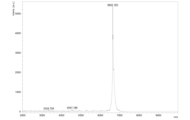
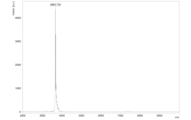
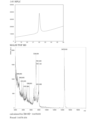
- MALDI-TOF MS data and HPLC data for the polypeptide (MG5PPPPP) synthesized in Test Example 1 are shown.
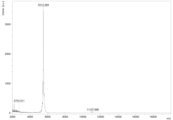
- MALDI-TOF MS data for the polypeptide (MG5P) synthesized in Test Example 2 is shown.
- MALDI-TOF MS data for the polypeptide (MG5PP) synthesized in Test Example 2 is shown.
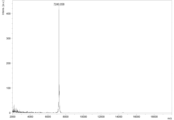
- MALDI-TOF MS data for the polypeptide (PHis) synthesized in Test Example 2 is shown.
- MALDI-TOF MS data for the polypeptide (PPHis) synthesized in Test Example 2 is shown.
- MALDI-TOF MS data for the polypeptide (PPPHis) synthesized in Test Example 2 is shown.
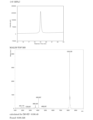
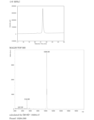
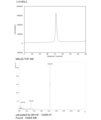
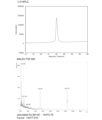
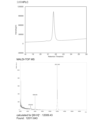
- HPLC data and MALDI-TOF MS data of the polypeptide (MG5P-PHis) synthesized in Test Example 3 are shown.
- HPLC data and MALDI-TOF MS data for the polypeptide (MG5P-PPHis) synthesized in Test Example 3 are shown.
- HPLC data and MALDI-TOF MS data of the polypeptide (MG5P-PPPHis) synthesized in Test Example 3 are shown.
- HPLC data and MALDI-TOF MS data of the polypeptide (MG5PP-PPPHis) synthesized in Test Example 3 are shown.
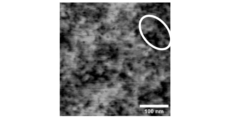
- 1 shows an image of the MG5P-PPPHis gel of Test Example 4 observed by an atomic force microscope.
- 1 shows the measurement results of storage modulus (G') in frequency dispersion in Test Example 5.
- GP2 shows the measurement results of MG5P-PHis gel
- GP3 shows the measurement results of MG5P-PPHis gel
- GP4 shows the measurement results of MG5P-PPPHis gel
- GP5 shows the measurement results of MG5PP-PPPHis gel.
- 1 shows the measurement results of loss tangent (tan ⁇ ) in frequency dispersion in Test Example 5.
- GP2 shows the measurement results for MG5P-PHis gel
- GP3 shows the measurement results for MG5P-PPHis gel
- GP4 shows the measurement results for MG5P-PPPHis gel
- GP5 shows the measurement results for MG5PP-PPPHis gel.
- GP2 shows the measurement results for MG5P-PHis gel
- GP3 shows the measurement results for MG5P-PPHis gel
- GP4 shows the measurement results for MG5P-PPPHis gel
- GP5 shows the measurement results for MG5PP-PPPHis gel.
- MALDI-TOF MS data for the polypeptide (MPP) synthesized in Test Example 6 is shown.
- MALDI-TOF MS data for the polypeptide (MPPP) synthesized in Test Example 6 is shown.
- MALDI-TOF MS data for the polypeptide (MG4PP) synthesized in Test Example 6 is shown.
- MALDI-TOF MS data for the polypeptide (PG5His) synthesized in Test Example 6 is shown.
- MALDI-TOF MS data for the polypeptide (PPG4His) synthesized in Test Example 6 is shown.
- MALDI-TOF MS data for the polypeptide (PPG5His) synthesized in Test Example 6 is shown.
- HPLC data and MALDI-TOF MS data of the polypeptide (MPP-PG5His) synthesized in Test Example 7 are shown.
- HPLC data and MALDI-TOF MS data of the polypeptide (MPP-PPG5His) synthesized in Test Example 7 are shown.
- HPLC data and MALDI-TOF MS data for the polypeptide (MPPP-PPG5His) synthesized in Test Example 7 are shown.
- HPLC data and MALDI-TOF MS data of the polypeptide (MPP-PPG4His) synthesized in Test Example 7 are shown.
- HPLC data and MALDI-TOF MS data for the polypeptide (MG4PP-PPHis) synthesized in Test Example 7 are shown.
- amino acid residues in an amino acid sequence may be referred to simply as the amino acid or as a specific amino acid name (valine, leucine, etc.).
- amino acid residues in an amino acid sequence may be referred to as the single-letter code for the amino acid.
- the present invention relates to a method for producing a polypeptide (sometimes referred to as the "polypeptide of the present invention” herein) containing an elastin-like block peptide sequence including a G sequence block consisting of ( SEQ ID NO : 1: X1GGX2G )n (wherein X1 is the same or different and represents V or L, X2 is the same or different and represents V or L, and n is an integer of 2 or more) and a P sequence block consisting of (SEQ ID NO: 2: VPGX3G) m (wherein X3 is the same or different and represents any amino acid, and m is an integer of 5 or more), the method comprising (a) a step of solid-phase synthesis of the polypeptide and/or a divided fragment of the polypeptide, and/or (b) a step of linking the terminal regions of a plurality of divided fragments of the polypeptide by chemical reaction (sometimes referred to as the "production method of the present
- polypeptide of the present invention that is the subject of production will be described.
- the G sequence block is not particularly limited as long as it is a block consisting of a repeat sequence ( X1GGX2G ) n of the amino acid sequence ( X1GGX2G ) shown in SEQ ID NO: 1.
- the G sequence block is usually a block capable of adopting a ⁇ -sheet structure.
- the G sequence block can impart the ability to form fibers by self-assembly to the polypeptide.
- X 1 is the same or different and represents V or L
- X 2 is the same or different and represents V or L.
- X 1 and X 2 are preferably V.
- n represents an integer of 2 or more. By setting n to 2 or more, the polypeptide of the present invention can form a fibrous self-assembly.
- n is preferably 3 or more, more preferably 4 or more, even more preferably 4 to 20, even more preferably 4 to 12, particularly more preferably 4 to 8, and especially even more preferably 4 to 6.
- the P sequence block is not particularly limited as long as it is a block consisting of a repeat sequence (VPGX 3 G) m of the amino acid sequence (VPGX 3 G) shown in SEQ ID NO: 2.
- the P sequence block is usually a block that can have a ⁇ -turn structure.
- the P sequence block gives the polypeptide a lower critical solution temperature (LCST), and the polypeptide self-assembles at or above the LCST and phase-separates from an aqueous solution.
- LCST critical solution temperature
- the presence of the P sequence block, or the combination of the P sequence block with other sequence structures of the polypeptide of the present invention further improves the efficiency of solid-phase synthesis.
- the LCST of the polypeptide of the present invention (solvent: water, concentration: 0.03 wt%) is, for example, 10 to 30°C, preferably 15 to 25°C.
- X3 may be the same or different and represents any amino acid.
- the amino acid represented by X3 include amino acids having a basic side chain such as lysine, arginine, histidine, etc.; amino acids having an acidic side chain such as aspartic acid, glutamic acid, etc.; amino acids having a non-charged polar side chain such as glycine, asparagine, glutamine, serine, threonine, tyrosine, cysteine, etc.; amino acids having a non-polar side chain such as alanine, valine, leucine, isoleucine, proline, phenylalanine, methionine, tryptophan, etc.; amino acids having a ⁇ -branched side chain such as threonine, valine, isoleucine, etc.; amino acids having an aromatic side chain such as tyrosine, phenylalanine, tryptophan, etc.
- the amino acid represented by X3 is preferably an
- the LCST can be adjusted by the amino acid represented by X3.
- the amino acid represented by X3 is a hydrophilic amino acid
- the LCST tends to be too high, which is not preferred.
- an appropriate (physiologically acceptable) temperature e.g., 30 to 40°C
- it is preferred that some of the amino acids represented by X3 in the P sequence block are non-aromatic hydrophobic amino acids such as valine and leucine (preferably valine), and the other amino acids are aromatic hydrophobic amino acids such as phenylalanine and tryptophan (preferably phenylalanine).
- the ratio of the number of non-aromatic hydrophobic amino acids represented by X3 to the total number of X3 in the P sequence block is, for example, 60 to 95%, preferably 70 to 90%, more preferably 75 to 85%, and the ratio of the number of aromatic hydrophobic amino acids represented by X3 to the total number of X3 in the P sequence block is, for example, 5 to 40%, preferably 10 to 30%, more preferably 15 to 25%. Furthermore, in this case, it is preferable that the aromatic hydrophobic amino acid represented by X3 appears as dispersedly as possible in the P sequence block.
- a repeat unit in which X3 is an aromatic hydrophobic amino acid appears at a ratio of 1 to 10, preferably 2 to 8, more preferably 3 to 7, further preferably 4 to 6, particularly preferably 5 repeat units ( VPGX3G ).
- m represents an integer of 5 or more. From the viewpoint of a high storage modulus of the gel obtained from the polypeptide of the present invention, a low loss tangent, and the ability to maintain solid properties against strain, m is preferably 5 to 25, more preferably 8 to 25, even more preferably 13 to 25, even more preferably 13 to 22, particularly preferably 13 to 20, and particularly preferably 14 to 17. In one embodiment of the present invention, m can be 5 to 22 or 13 to 22.
- the elastin-like block peptide sequence is not particularly limited as long as it contains a G sequence block and a P sequence block.
- the number of G sequence blocks in the elastin-like block peptide sequence is not particularly limited, but is, for example, 1 to 5, preferably 1 to 4, more preferably 1 to 3, even more preferably 1 to 2, and particularly preferably 1.
- the number of P sequence blocks in the elastin-like block peptide sequence is not particularly limited, but is, for example, 1 to 5, preferably 1 to 4, more preferably 1 to 3, even more preferably 1 to 2, and particularly preferably 1.
- the blocks (between the G sequence block and the P sequence block, between the G sequence block and the G sequence block, and between the P sequence block and the P sequence block) may be directly linked or may have a linker sequence intervening therebetween.
- the linker sequence is not particularly limited as long as it does not significantly reduce the fiber-forming ability due to the self-assembly of the elastin-like block peptide sequence, and generally any amino acid or amino acid sequence can be used without major restrictions.
- the length of the linker sequence is, for example, 1 to 20 amino acids, preferably 1 to 15, more preferably 1 to 10, even more preferably 1 to 8, and even more preferably 2 to 8.
- linker sequences include the amino acid sequence shown in SEQ ID NO: 9: LWLGSG and the amino acid sequence shown in KL, and further, amino acid sequences in which one or more (for example, 1 to 5, preferably 1 to 3, more preferably 1 to 2, and even more preferably 1) amino acids have been mutated (for example, substituted, deleted, inserted, added, preferably substituted, more preferably conservatively substituted) with respect to these amino acid sequences can be used.
- conservative substitution means that an amino acid is replaced with an amino acid having a similar side chain.
- substitution between amino acids having basic side chains such as lysine, arginine, and histidine is a conservative substitution.
- Other conservative substitutions include substitution between amino acids having acidic side chains such as aspartic acid and glutamic acid; amino acids having non-charged polar side chains such as glycine, asparagine, glutamine, serine, threonine, tyrosine, and cysteine; amino acids having non-polar side chains such as alanine, valine, leucine, isoleucine, proline, phenylalanine, methionine, and tryptophan; amino acids having ⁇ -branched side chains such as threonine, valine, and isoleucine; and amino acids having aromatic side chains such as tyrosine, phenylalanine, tryptophan, and histidine.
- the sequence structure of the elastin-like block peptide sequence is preferably, from the N-terminus, G sequence block-P sequence block-G sequence block, G sequence block-P sequence block-P sequence block-G sequence block, P sequence block-G sequence block, or G sequence block-P sequence block.
- the sequence structure is particularly preferably G sequence block-P sequence block.
- "-" indicates a direct connection (between blocks) or another sequence (e.g., a linker sequence, etc.).
- the polypeptide of the present invention preferably contains a hydrophilic amino acid rich sequence.
- the hydrophilic amino acid rich sequence can further improve the efficiency of solid-phase synthesis, the ease of purification due to improved solubility of the polypeptide, gel formation, etc.
- the hydrophilic amino acid rich sequence is not particularly limited as long as it is a sequence with a high proportion of hydrophilic amino acids (amino acids with basic side chains, amino acids with acidic side chains, amino acids with uncharged polar side chains), and examples thereof include amino acid sequences with a length of 3 to 15 or 5 to 10 amino acids that contain hydrophilic amino acids at a ratio of 50% or more, 60% or more, 70% or more, 80% or more, or 90% or more.
- a preferred hydrophilic amino acid rich sequence is a consecutive histidine sequence (His tag sequence). It is preferred that the other amino acid sequence contains amino acids with functional groups that can be used in crosslinking reactions (e.g., lysine, cysteine, etc.).
- the cell adhesion sequence is located at the terminus (N-terminus and/or C-terminus) of the polypeptide of the present invention, preferably at the C-terminus.
- the hydrophilic amino acid-rich sequence may be located at only one of the N-terminus or C-terminus, or at both.
- the polypeptide of the present invention may have a cell adhesive sequence at its terminus.
- the cell adhesive sequence may be one that does not have cell selectivity, such as RGDS (sequence number 10), or one that has cell selectivity (for example, REDV (sequence number 22)).
- Sequences with cell selectivity include, for example, HHH, VVV, TTT, TGA, NNN, KKK, AAA, RRR, YYY, TTT, GAT, GGG, PGH, GQA, QGD, GIG, EKG, KGK, QGF, GMK, GLS, CAG, CNG, KGT, PLG, NRG, CSG, LGL, AVG, GHP, GLI, GVG, GPS, SPG, GPP, GIS, GY L, GEK, QGE, CNY, FPG, GAP, APG, GEC, LPG, GPR, PCG, GDV, IGG, CDG, AVA, FLM, GFD, GTP, GPY, VSG, DGR, GIT, GFL, ASG, GCP, NQG, SGL, GGA, PDG, QAL, GLK, GSP, GEP, GNS , AKG, DGY, TGP, VGP, SLW, AAG, AGA, A
- the cell adhesion sequence is located at the termini (N-terminus and/or C-terminus) of the polypeptide of the present invention, preferably at the C-terminus.
- the cell adhesion sequence may be located at only one of the N-terminus and C-terminus, or at both. In a preferred embodiment of the present invention, the cell adhesion sequence is located at only one terminus.
- the number of amino acid residues in the elastin-like block peptide sequence is preferably 50% or more, more preferably 60% or more, even more preferably 70% or more, even more preferably 80% or more, and particularly preferably 90% or more, relative to 100% of the number of amino acid residues in the polypeptide of the present invention.
- the number of amino acid residues in the polypeptide of the present invention is, for example, 80 or more, preferably 80 to 250, more preferably 90 to 200, and even more preferably 100 to 180.
- the polypeptide of the present invention can be one consisting only of a polymer in which amino acids are linked by amide bonds (typical polypeptide), or one in which the terminal amino acid residues of the typical polypeptide are linked together by a chemical reaction (linked polypeptide).
- a linker number of main chain atoms, for example, 2-25, 5-20, 7-15
- a bond formed by a chemical reaction is placed between multiple typical polypeptides (for example, 2-5, 2-4, 2-3, 2).
- the main chain is the chain that connects the terminal amino acid residues of the typical polypeptide, and in the case of an intervening ring, it is the chain obtained by tracing the atoms in the ring so that the chain length is the shortest.
- the polypeptide of the present invention may be chemically modified as long as its gel-forming property is not significantly impaired.
- the presence or absence of the gel-forming property can be evaluated according to Test Examples 4 and 5 described below.
- the C-terminus of the polypeptide of the present invention may be any of a carboxyl group (--COOH), a carboxylate (--COO - ), an amide (--CONH 2 ) or an ester (--COOR).
- examples of R in the ester include C1-6 alkyl groups such as methyl, ethyl, n-propyl, isopropyl, and n-butyl; C3-8 cycloalkyl groups such as cyclopentyl and cyclohexyl; C6-12 aryl groups such as phenyl and ⁇ -naphthyl; C1-2 phenyl- C1-2 alkyl groups such as benzyl and phenethyl; C7-14 aralkyl groups such as ⁇ -naphthyl- C1-2 alkyl groups such as ⁇ -naphthylmethyl; and pivaloyloxymethyl groups.
- C1-6 alkyl groups such as methyl, ethyl, n-propyl, isopropyl, and n-butyl
- C3-8 cycloalkyl groups such as cyclopentyl and cyclohexyl
- C6-12 aryl groups such
- the polypeptide of the present invention may have a carboxyl group (or carboxylate) other than that at the C-terminus amidated or esterified.
- the ester may be, for example, the C-terminus ester described above.
- the polypeptide of the present invention also includes those in which the amino group of the N-terminal amino acid residue is protected with a protecting group (e.g., a C1-6 acyl group, such as a formyl group, a C1-6 alkanoyl group, such as an acetyl group), those in which the N-terminal glutamine residue which may be generated by cleavage in the body is pyroglutamated, those in which substituents on the side chains of amino acids in the molecule (e.g., -OH, -SH, amino groups, imidazole groups, indole groups, guanidino groups, etc.) are protected with appropriate protecting groups (e.g., a C1-6 acyl group, such as a formyl group, a C1-6 alkanoyl group, such as an acetyl group), and conjugated proteins such as so-called glycoproteins to which sugar chains are bound.
- a protecting group e.g., a C1-6 acyl group
- the polypeptide of the present invention may be in the form of a pharma- ceutically acceptable salt with an acid or base.
- the salt is not particularly limited as long as it is a pharma- ceutically acceptable salt, and both acid salts and basic salts can be used.
- acid salts include inorganic acid salts such as hydrochloride, hydrobromide, sulfate, nitrate, and phosphate; organic acid salts such as acetate, propionate, tartrate, fumarate, maleate, malate, citrate, methanesulfonate, and paratoluenesulfonate; and amino acid salts such as aspartate and glutamate.
- Examples of basic salts include alkali metal salts such as sodium salt and potassium salt; and alkaline earth metal salts such as calcium salt and magnesium salt.
- the polypeptide of the present invention may be in the form of a solvate.
- the solvent is not particularly limited as long as it is pharma- ceutically acceptable, and examples of the solvent include water, ethanol, glycerol, and acetic acid.
- step (a) the polypeptide of the present invention and/or a fragment of the polypeptide of the present invention is synthesized by solid phase synthesis.
- the fragments of the polypeptide of the present invention are polypeptides consisting of a part of the amino acid sequence of the polypeptide of the present invention, and are not particularly limited in that respect.
- the number of amino acid residues in the divided fragments is, for example, 30 or more, preferably 40 or more, and more preferably 50 or more. If the divided fragments are of the polypeptide of the present invention, solid-phase synthesis is possible even for such long polypeptide chains.
- the divided fragments preferably contain all or a part of the P sequence block of the polypeptide of the present invention. This can further improve the efficiency of solid-phase synthesis.
- the number of repeats of the P sequence block (SEQ ID NO: 2: VPGX 3 G) in the divided fragments can be preferably 3 or more, more preferably 5 or more, and the upper limit is not particularly limited and can be the upper limit of the number of repeats of the P sequence block in the polypeptide of the present invention.
- the number of amino acid residues in the P sequence block is preferably 25% or more, more preferably 30% or more, even more preferably 35% or more, even more preferably 40% or more, particularly preferably 50% or more, especially more preferably 60% or more, and especially preferably 70% or more, relative to the number of amino acid residues in the divided fragments (100%).
- the split fragments do not contain the G sequence block of the polypeptide of the present invention. This can further improve the efficiency of solid-phase synthesis.
- the split fragments preferably contain a hydrophilic amino acid-rich sequence of the polypeptide of the present invention. This can further improve the efficiency of solid-phase synthesis, the ease of purification due to improved solubility of the polypeptide, gel-forming properties, etc.
- the amino acid residues in the terminal regions of the split fragments can be amino acid residues having side chains that can be used in the chemical reaction for linking in the step (b) described below, or amino acid residues to which a group that can be used in the chemical reaction has been added.
- amino acid residues in the terminal region are, for example, amino acid residues in a region of 1 to 5 amino acids at the terminal, preferably amino acid residues in a region of 1 to 3 amino acids, more preferably amino acid residues in a region of 1 to 2 amino acids, and particularly preferably amino acid residues in the terminal amino acid residues.
- the amino acid residue having a side chain that can be used in a chemical reaction is preferably a cysteine residue.
- the thiol group of the cysteine residue side chain can be used for linking by thiol-ene reaction or Michael addition reaction.
- Groups that can be used in chemical reactions are preferably vinyl groups and maleimide groups, and particularly preferably vinyl groups.
- Vinyl groups can be used in thiol-ene reactions with thiol groups, and maleimide groups can be used in Michael addition reactions with thiol groups.
- the terminal regions of the split fragments should be provided with a group represented by the general formula (A):
- R1 represents a vinyl group or a maleimide group.
- R2 represents an aromatic ring.
- L2 represents a linker. It is preferable that a group represented by the following formula (I) is added.
- the maleimide group represented by R1 has the formula (B):
- the number of atoms constituting the main chain of the linker represented by L1 is preferably 2 to 5, more preferably 2 to 4, further preferably 2 to 3, and particularly preferably 2.
- the linker represented by L1 has a chain structure not containing a ring structure.
- the aromatic ring represented by R2 may be, for example, an aromatic ring having 5 to 20 carbon atoms, preferably 5 to 12, and more preferably 5 to 7.
- a particularly preferred example of the aromatic ring is a benzene ring.
- the number of atoms constituting the main chain of the linker represented by L2 is preferably 1 to 5, more preferably 1 to 3, and even more preferably 2.
- the linker represented by L2 has a chain structure not containing a ring structure.
- the solid-phase synthesis is not particularly limited and can be carried out according to or in accordance with a known method.
- the general steps of the solid phase synthesis method are as follows: An amino acid whose N-terminus is protected with a protecting group (typically Fmoc or Boc) (protected amino acid) is bound to a solid insoluble support (typically polystyrene resin beads) at the C-terminus of the protected amino acid, optionally via a linker. Next, unreacted protected amino acids, i.e., protected amino acids that are not bound to the support, are removed. Next, the protecting group of the protected amino acid is removed under conditions in which the protected amino acid bound to the support is not released from the support. Separately, a second protected amino acid is prepared in which the N-terminus of the amino acid to be bound to the amino acid bound to the support is protected with a protecting group.
- a protecting group typically Fmoc or Boc
- the second protected amino acid is added to the amino acid bound to the support, and the N-terminus of the amino acid bound to the support and the C-terminus of the second protected amino acid are condensed.
- the unreacted second protected amino acid is removed, and then the protecting group of the second protected amino acid is removed.
- a third amino acid whose N-terminus is protected with a protecting group is added, and the N-terminus of the second amino acid and the C-terminus of the third protected amino acid are condensed. This process is repeated to synthesize a peptide with the desired amino acid sequence bound to the carrier.
- the desired peptide is obtained by separating the peptide from the carrier.
- Protective groups for amino groups on the main chain include, for example, 9-fluorenylmethyloxycarbonyl (Fmoc), tertiary butoxycarbonyl (Boc), benzyloxycarbonyl (Z), tertiary amyloxycarbonyl, isobornyloxycarbonyl, 4-methoxybenzyloxycarbonyl, 2-chlorobenzyloxycarbonyl (Cl-Z), 2-bromobenzyloxycarbonyl (Br-Z), adamantyloxycarbonyl, trifluoroacetyl, phthalyl, formyl, 2-nitrophenylsulfenyl, diphenylphosphinothioyl, and the like.
- F-moc and Boc preferred is preferred.
- a protected amino acid in which the reactive side chain is protected with an appropriate protecting group can be used.
- the protecting group for the carboxyl group include alkyl esters (e.g., ester groups such as methyl, ethyl, propyl, butyl, tertiary butyl, cyclopentyl, cyclohexyl, cycloheptyl, cyclooctyl, and 2-adamantyl), benzyl esters, 2-nitrobenzyl esters, 4-methoxybenzyl esters, 4-chlorobenzyl esters, benzhydryl esters, phenacyl esters, benzyloxycarbonyl hydrazide, tertiary butoxycarbonyl hydrazide, and trityl hydrazide.
- alkyl esters e.g., ester groups such as methyl, ethyl, propyl, butyl, tertiary butyl, cycl
- the hydroxyl group of serine can be protected, for example, by esterification or etherification.
- groups suitable for this esterification include lower alkanoyl groups such as acetyl (preferably alkanoyl groups having 1 to 3 carbon atoms), aroyl groups such as benzoyl, and groups derived from carbonic acid such as benzyloxycarbonyl and ethoxycarbonyl.
- groups suitable for etherification include benzyl, tetrahydropyranyl, and tertiary butyl.
- protective groups for the phenolic hydroxyl group of tyrosine include benzyl (Bzl), 2,6-dichlorobenzyl (Cl 2 -Bzl), 2-nitrobenzyl, Br-Z, and tertiary butyl (tBu).
- protective groups for the imidazole of histidine include paratoluenesulfonyl (Tos), 4-methoxy-2,3,6-trimethylbenzenesulfonyl, dinitrophenyl (DNP), benzyloxymethyl, tertiary butoxymethyl (Bum), Boc, trityl (Trt), and Fmoc.
- Examples of carriers include, but are not limited to, styrene resin, acrylamide resin, polyethylene glycol-acrylamide composite resin, polyoxyethylene grafted styrene resin, etc. These may be crosslinked with divinylbenzene, and may be used alone or in combination of two or more. A wide variety of known linkers can be used as the linker.
- linkers include, but are not limited to, chloromethyl, hydroxymethyl, benzhydrylamine, aminomethyl, 4-benzyloxybenzyl alcohol, 4-methylbenzhydrylamine, phenylacetamidomethyl, 4-hydroxymethylphenylacetamidomethyl, 4-(2',4'-dimethoxyphenyl-hydroxymethyl)phenoxy, 2-chlorotrityl chloride resin, 4-hydroxymethylphenoxyacetic acid (HMPA), 4-hydroxymethylbenzoic acid (HMBA), 2,4-dimethoxy-4-hydroxybenzophenone, etc.
- HMPA 4-hydroxymethylphenoxyacetic acid
- HMBA 4-hydroxymethylbenzoic acid
- 2,4-dimethoxy-4-hydroxybenzophenone etc.
- the protecting group removal agent may be appropriately selected taking into consideration the protecting group, solid phase support, linker, etc. used.
- an N,N-dimethylformamide (DMF) solution containing 20% v/v piperidine can be used to remove Fmoc.
- an aqueous protecting group removal agent such as aqueous ethanol containing sodium hydroxide (e.g., 90% aqueous ethanol containing 0.1 M NaOH) can be used.
- protecting group removal agents include 25% v/v hydrogen bromide-acetic acid solution, anhydrous hydrogen fluoride, methanesulfonic acid, trifluoromethanesulfonic acid, and trifluoroacetic acid (TFA).
- TFA trifluoroacetic acid
- the 2,4-dinitrophenyl group used as the imidazole protecting group of histidine can be removed by thiophenol treatment
- the formyl group used as the indole protecting group of tryptophan can be removed by alkali treatment with dilute sodium hydroxide, dilute ammonia, etc., in addition to deprotection by acid treatment in the presence of 1,2-ethanedithiol, 1,4-butanedithiol, etc., as described above.
- the protection and protecting groups of functional groups that should not be involved in the condensation reaction, as well as the removal of the protecting groups, activation of functional groups involved in the reaction, reaction conditions, etc. can also be appropriately selected from known groups or known means.
- the isolated peptides are purified, if necessary, by standard methods, such as extraction, partitioning, reprecipitation, recrystallization, column chromatography, or high performance liquid chromatography.
- step (b) the terminal regions of multiple split fragments of the polypeptide of the present invention are linked together by a chemical reaction.
- the number of split fragments to be linked in step (b) is not particularly limited, but can be, for example, 2 to 5, 2 to 4, 2 to 3, or 2.
- the number of split fragments is 3 or more, the 3 or more split fragments may be linked simultaneously, or the 3 or more split fragments may be linked sequentially (2 split fragments are linked and the resulting fragment is linked to another split fragment).
- the chemical reaction in step (b) is not particularly limited as long as it is a reaction that can link two molecules by a covalent bond, but from the viewpoints of reaction efficiency, position selectivity, etc., it is preferable to use a click reaction.
- click reactions from the viewpoint of the safety of the components used in the reaction to living organisms, for example, a thiol-ene reaction, a Michael addition reaction, or a Huisgen cycloaddition reaction is preferable, with the thiol-ene reaction and the Michael addition reaction being preferable, and the thiol-ene reaction being particularly preferable.
- the chemical reaction in step (b) is particularly preferably a reaction between a thiol group of amino acid residue a in the terminal region of one of the split fragments a and a vinyl group or maleimide group added to amino acid residue b in the terminal region of the other split fragment b.
- a group represented by the above general formula (A) is added to the terminal region of the split fragment b.
- the amino acid residue a is an amino acid residue in the C-terminal region
- the amino acid residue b is an amino acid residue in the N-terminal region.
- the amount of one split fragment to be linked per mole of the other split fragment is, for example, 0.5 to 3 moles, preferably 0.8 to 2 moles.
- the solvent used in step (b) is not particularly limited as long as it dissolves the polypeptide, but water is particularly preferred.
- the reaction solution in step (b) preferably contains a buffer such as a sodium carbonate buffer.
- the pH of the reaction solution is preferably 8 to 12, more preferably 9 to 11, and particularly preferably 9.5 to 10.5.
- the reaction liquid may contain additives such as catalysts and polymerization initiators as necessary, depending on the type of chemical reaction.
- additives such as catalysts and polymerization initiators as necessary, depending on the type of chemical reaction.
- radicals can be generated by irradiation with light or heating, allowing the reaction to proceed.
- the reaction can be carried out under heating, at room temperature, or under cooling, preferably at 30 to 80°C, and more preferably at 40 to 60°C. There are no particular restrictions on the reaction time, and it can usually be 30 minutes to 30 hours.
- the solvent is removed by distillation, and the product is purified, if necessary, by conventional methods such as extraction, distribution, reprecipitation, recrystallization, column chromatography, or high performance liquid chromatography.
- Step (b) is an efficient and preferred synthetic route because it is a convergent synthetic route.
- the purification procedure for the target polypeptide of the present invention can be made easier.
- Step (b) can be used for combinatorial synthesis. That is, by preparing multiple types of split fragments in advance, these split fragments can be combined in any desired combination and subjected to step (b) to easily produce a variety of polypeptides of the present invention. By using the library of polypeptides of the present invention thus obtained, it becomes possible to more easily and efficiently screen for the polypeptides of the present invention that are optimal for any purpose.
- step (a) and/or step (b) By using step (a) and/or step (b) (particularly preferably using steps (a) and (b) from the viewpoints of production efficiency, safety to living organisms, etc.), an elastin-like polypeptide can be produced without relying on genetic recombination technology.
- the polypeptide of the present invention obtained by the production method of the present invention can maintain and/or exhibit the gelling performance of the polypeptide.
- the production method of the present invention provides an elastin-like polypeptide having a novel structure (novel polypeptide): an elastin-like block peptide sequence including a G sequence block consisting of (SEQ ID NO: 1 : X1GGX2G ) n (wherein X1 is the same or different and represents V or L, X2 is the same or different and represents V or L, and n is an integer of 4 or more) and a P sequence block consisting of (SEQ ID NO: 2: VPGX3G ) m (wherein X3 is the same or different and represents any amino acid, and m is an integer of 5 or more), and (c) the sequence structure of the elastin-like block peptide sequence is G sequence block-P sequence block from the N-terminus, and/or (d) m is an integer of 5 to 22, It is suitable for producing polypeptides.
- the novel polypeptide is superior to conventional elastin-like polypeptides in that the resulting gel has a high storage modulus and a low loss tangent, and is more capable of retaining solid properties against strain. From this viewpoint, it is preferable that the requirement (d) above is satisfied, and it is particularly preferable that both the requirements (c) and (d) above are satisfied. From the same viewpoint, m is more preferably 8 to 22, even more preferably 13 to 22, even more preferably 13 to 17, and particularly preferably 14 to 16.
- a gel-like composition containing the polypeptide of the present invention can be obtained by dissolving the polypeptide of the present invention in a solvent at a temperature below the LCST (e.g., 0-15°C, 2-10°C), and then heating the resulting solution to a temperature above the LCST (e.g., 30-50°C, 30-45°C, 30-40°C) and leaving it to stand for a certain period of time (e.g., 1-300 hours, preferably 8-120 hours, more preferably 12-80 hours).
- Water is used as the solvent, but a mixed solvent of water and an organic solvent can also be used.
- the concentration of the polypeptide of the present invention in the gel composition of the present invention is, from the viewpoint of gel forming ability, for example, 0.2 w/v% or more, preferably 0.3 w/v% or more, and more preferably 0.35 w/v% or more.
- the concentration is, for example, 3.0 w/v% or less, preferably 2.0 w/v% or less, more preferably 1.5 w/v% or less, even more preferably 1.0 w/v% or less, and even more preferably 0.8 w/v% or less.
- Test Example 1 Polypeptide synthesis 1 (solid phase synthesis) A polypeptide with the following amino acid sequence and structure was synthesized by solid-phase synthesis. Amino acid residues are indicated by single letter code.
- HATU O-(7-azabenzotriazol-1-yl)-N,N,N',N'-tetramethyluronium hexafluorophosphate
- HCTU O-(1H-6-chlorobenzotriazol-1-yl)-N,N,N',N'-tetramethyluronium hexafluorophosphate
- HPLC High performance liquid chromatography.
- Solid-phase peptide synthesis was performed using the Fmoc method either on an automated synthesizer or manually.
- the amino acid reagents used were Fmoc-Cys(Trt)-OH, Fmoc-Glu(OtBu)-OH, Fmoc-Gly-OH, Fmoc-His(1-Trt)-OH, Fmoc-Leu-OH, Fmoc-Lys(Boc)-OH, Fmoc-Phe-OH, Fmoc-Pro-OH, Fmoc-Ser(tBu)-OH, Fmoc-Trp(Boc)-OH, and Fmoc-Val-OH.
- 2-Chlorotryl polystyrene resin was used as the solid phase, and the first amino acid residue was manually supported on the resin.
- the peptide was then elongated according to the following standard protocol. Fmoc-deprotection was performed with piperidine 20% in DMF (8 min ⁇ 2). Coupling was performed in DMF for 60 min using Fmoc-amino acids (4 molar equivalents relative to the amino acid loading on the resin), HCTU or HATU (4 molar equivalents), and N-methylmorpholine (8 molar equivalents). Double coupling (repeated coupling step) was performed if necessary.
- the crude product was dissolved in an aqueous solution of acetonitrile containing 0.1 v/v% TFA, filtered using a 0.45 ⁇ m membrane filter, and then purified by preparative HPLC. The obtained fraction was lyophilized to obtain the target peptide.
- the column was typically pre-equilibrated with the starting solvent composition for 10 minutes. After sample injection, the column was run with the starting solvent composition for 10 minutes, and then gradient run to the final solvent composition (e.g., 50% acetonitrile). After reaching the final solvent composition, the solvent composition was changed to 95% acetonitrile within 1 minute, the column was washed for 10 minutes, and the solvent composition was changed to 10% acetonitrile within another minute to complete the run.
- the final solvent composition e.g. 50% acetonitrile
- Analytical HPLC was performed on a Capcell Pak MG-II (Shiseido, 5 ⁇ m, pore size 120 ⁇ , i.d. 4.6 mm x 250 mm), Jupiter C18 (Phenomenex, 5 ⁇ m, pore size 300 ⁇ , i.d. 4.6 mm x 250 mm), or Jupiter C4 (Phenomenex, 5 ⁇ m, 300 ⁇ , i.d. 4.6 mm x 250 mm) at a flow rate of 1 mL/min.
- Capcell Pak MG-II Shiseido, 5 ⁇ m, pore size 120 ⁇ , i.d. 4.6 mm x 250 mm
- Jupiter C18 Phenomenex, 5 ⁇ m, pore size 300 ⁇ , i.d. 4.6 mm x 250 mm
- Jupiter C4 Phenomenex, 5 ⁇ m, 300 ⁇ , i.d. 4.6 mm x 250 mm
- Preparative HPLC was performed using Capcell pak C18 UG80 (Shiseido, 5 ⁇ m, pore size 80 ⁇ , id 50 mm x 250 mm), Jupiter C18 (Phenomenex, 5 ⁇ m, pore size 300 ⁇ , id 30 mm x 250 mm), Jupiter C18 (Phenomenex, 5 ⁇ m, pore size 300 ⁇ , id 21.2 mm x 2 50 mm), Jupiter C4 (Phenomenex, 5 ⁇ m, 300 ⁇ pore size, 30 mm x 250 mm i.d.), or Jupiter C4 (Phenomenex, 5 ⁇ m, 300 ⁇ pore size, 21.2 mm x 250 mm i.d.).
- CHCA ⁇ -cyano-4-hydroxycinnamic acid
- Test Example 2 Polypeptide synthesis 2 (solid phase synthesis) Polypeptides having the following amino acid sequence and structure were synthesized by solid-phase synthesis in the same manner as in Test Example 1. Only the C-terminal cysteine residue in MG5P and MG5PP is represented by three-letter code, and other amino acid residues are represented by one-letter code. In Phis, PPHis, and PPPHis, the -NH- to the left of the N-terminal V (valine residue) is a group derived from the valine residue.
- Mass spectrometry confirmed that the target polypeptides (MG5P, MG5PP, Phis, PPHis, and PPPHis) were synthesized ( Figures 2 to 6). The yields were as follows: MG5P: yield 19%. MG5PP: Yield 16%. Phis: Yield 27%. PPHis: 15% yield. PPPHis: Yield 6%.
- Test Example 3 Polypeptide synthesis 3 (linking by chemical reaction) A polypeptide was synthesized with the following amino acid sequence and structure:
- MG5P-PHis was synthesized by linking MG5P and PHis via a thiol-ene reaction.
- MG5P-PPHis was synthesized by linking MG5P and PPHis via a thiol-ene reaction.
- MG5P-PPPHis was synthesized by linking MG5P and PPPHis via a thiol-ene reaction.
- MG5PP-PPPHis was synthesized by linking MG5PP and PPPHis via a thiol-ene reaction.
- the thiol-ene reaction was carried out as follows: 1.5 molar equivalents of peptide segment 1 (MG5P or MG5PP) and 1.0 molar equivalent of peptide segment 2 (PHis, PPHis or PPPHis) were weighed into a vial, and sodium carbonate buffer (pH 10) was added to adjust the concentration of peptide segment 2 to 10 mM. Dissolved oxygen was removed from the buffer in advance by bubbling nitrogen gas through it. The reaction solution was heated to 50°C with stirring and reacted for 18 hours. The reaction was monitored by analytical HPLC. The mixture was then diluted with 50% aqueous acetonitrile containing 0.1 v/v% TFA and purified by preparative HPLC.
- Mass spectrometry confirmed that the target polypeptides (MG5P, MG5PP, Phis, PPHis, and PPPHis) were synthesized (FIGS. 7 to 10). The yields were as follows: MG5P-PHis: yield 24%. MG5P-PPHis: yield 24%. MG5P-PPPHis: yield 21%. MG5PP-PPPHis: yield 15%.
- Test Example 4 Gelation of Polypeptide Solution MG5P-PHis, MG5P-PPHis, MG5P-PPPHis, and MG5PP-PPPHis were each dissolved in a 10 w/v% aqueous sucrose solution to a final concentration of 0.5% by weight. The resulting polypeptide solution was heated and maintained at 37°C and allowed to stand. After 7 days, the polypeptide solution had become a transparent gel.
- the MG5P-PPHis dispersion was dissolved in a 10 w/v% sucrose solution to a final concentration of 0.1% by weight, and kept at 37°C for 7 days. The dispersion was then dropped onto a mica substrate and dried at 37°C. When the sample was observed with an atomic force microscope (AFM), an entangled nanofiber structure was observed (Figure 11).
- AFM atomic force microscope
- Test Example 5 Dynamic Viscoelasticity Measurement The polypeptide gel obtained in Test Example 4 was set in a rheometer MCR302 adjusted to 37°C, and dynamic viscoelasticity measurement was performed. The dynamic viscoelasticity was measured by frequency dispersion, and the storage modulus (G') and loss tangent (tan ⁇ ) were measured. The frequency dispersion measurement was performed at a constant strain of 0.1% in the angular frequency range of 100-0.1 rad/s.
- Figure 12 shows that MG5P-PHis, MG5P-PPHis, and MG5P-PPPHis have higher storage moduli than MG5PP-PPPHis.
- Figure 13 shows that tan ⁇ ⁇ 1 for all samples, regardless of the angular frequency ⁇ .
- Figures 12 and 13 also show that MG5P-PPHis has the largest G' and the smallest tan ⁇ , meaning it forms the hardest and most solid gel.
- Test Example 6 Polypeptide synthesis 4 (solid phase synthesis) Polypeptides having the following amino acid sequences and structures were synthesized by solid-phase synthesis in the same manner as in Test Example 1. Only the C-terminal cysteine residues in MPP, MPPP, and MG4PP are represented by three-letter code, and other amino acid residues are represented by one-letter code. In Phis, PPHis, and PPPHis, the -NH- to the left of the N-terminal V (valine residue) is a group derived from the valine residue.
- Mass spectrometry confirmed that the target polypeptides (MPP, MPPP, MG4PP, PG5His, PPG4His, and PPG5His) were synthesized (FIGS. 15 to 20). The yields were as follows: MPP: Yield 52%. MPPP: Yield 29%. MG4PP: Yield 20%. PG5His: yield 17%. PPG4His: 10% yield. PPG5His: yield 6%.
- Test Example 7 Synthesis of Polypeptides 5 (Linking by Chemical Reaction) A polypeptide was synthesized with the following amino acid sequence and structure:
- MPP-PG5His was synthesized by linking MPP and PG5His via a thiol-ene reaction.
- MPP-PPG5His was synthesized by linking MPP and PPG5His via a thiol-ene reaction.
- MPPP-PPG5His was synthesized by linking MPPP and PPG5His via a thiol-ene reaction.
- MPP-PPG4His was synthesized by linking MPP and PPG4His via a thiol-ene reaction.
- MG4PP-PPHis was synthesized by linking MG4PP and PPHis via a thiol-ene reaction.
- the thiol-ene reaction was carried out as follows: 1.5 molar equivalents of peptide segment 1 (MPP, MPPP, or MG4PP) and 1.0 molar equivalent of peptide segment 2 (PG5His, PPG4His, and PPG5His or PPHis) were weighed into a vial, and sodium carbonate buffer (pH 10) was added to adjust the concentration of peptide segment 2 to 10 mM. Dissolved oxygen was removed from the buffer in advance by bubbling nitrogen gas through it. The reaction solution was heated to 50°C with stirring and reacted for 18 hours. The reaction was monitored by analytical HPLC. The mixture was then diluted with 50% aqueous acetonitrile containing 0.1 v/v% TFA and purified by preparative HPLC.
- MG4PP-PPHis Yield % 20.
Landscapes
- Chemical & Material Sciences (AREA)
- Organic Chemistry (AREA)
- Health & Medical Sciences (AREA)
- Life Sciences & Earth Sciences (AREA)
- Biochemistry (AREA)
- Molecular Biology (AREA)
- Genetics & Genomics (AREA)
- Medicinal Chemistry (AREA)
- General Health & Medical Sciences (AREA)
- Proteomics, Peptides & Aminoacids (AREA)
- Biophysics (AREA)
- Gastroenterology & Hepatology (AREA)
- Analytical Chemistry (AREA)
- Toxicology (AREA)
- Zoology (AREA)
- Peptides Or Proteins (AREA)
Priority Applications (1)
| Application Number | Priority Date | Filing Date | Title |
|---|---|---|---|
| JP2025510681A JPWO2024203784A1 (https=) | 2023-03-27 | 2024-03-21 |
Applications Claiming Priority (2)
| Application Number | Priority Date | Filing Date | Title |
|---|---|---|---|
| JP2023049791 | 2023-03-27 | ||
| JP2023-049791 | 2023-03-27 |
Publications (1)
| Publication Number | Publication Date |
|---|---|
| WO2024203784A1 true WO2024203784A1 (ja) | 2024-10-03 |
Family
ID=92906232
Family Applications (1)
| Application Number | Title | Priority Date | Filing Date |
|---|---|---|---|
| PCT/JP2024/011171 Ceased WO2024203784A1 (ja) | 2023-03-27 | 2024-03-21 | ポリペプチドの製造方法 |
Country Status (2)
| Country | Link |
|---|---|
| JP (1) | JPWO2024203784A1 (https=) |
| WO (1) | WO2024203784A1 (https=) |
Cited By (1)
| Publication number | Priority date | Publication date | Assignee | Title |
|---|---|---|---|---|
| WO2025089316A1 (ja) * | 2023-10-24 | 2025-05-01 | 国立大学法人東海国立大学機構 | 組成物 |
Citations (3)
| Publication number | Priority date | Publication date | Assignee | Title |
|---|---|---|---|---|
| JP2012232961A (ja) * | 2011-05-09 | 2012-11-29 | Osaka Prefecture Univ | 温度応答性複合ポリマー |
| JP2018507908A (ja) * | 2015-02-09 | 2018-03-22 | モザイク バイオサイエンシズ,インコーポレイティド | 分解性チオール−エンポリマー及びそれを製造する方法 |
| WO2021090787A1 (ja) * | 2019-11-05 | 2021-05-14 | 国立大学法人東海国立大学機構 | ポリペプチド |
-
2024
- 2024-03-21 JP JP2025510681A patent/JPWO2024203784A1/ja active Pending
- 2024-03-21 WO PCT/JP2024/011171 patent/WO2024203784A1/ja not_active Ceased
Patent Citations (3)
| Publication number | Priority date | Publication date | Assignee | Title |
|---|---|---|---|---|
| JP2012232961A (ja) * | 2011-05-09 | 2012-11-29 | Osaka Prefecture Univ | 温度応答性複合ポリマー |
| JP2018507908A (ja) * | 2015-02-09 | 2018-03-22 | モザイク バイオサイエンシズ,インコーポレイティド | 分解性チオール−エンポリマー及びそれを製造する方法 |
| WO2021090787A1 (ja) * | 2019-11-05 | 2021-05-14 | 国立大学法人東海国立大学機構 | ポリペプチド |
Non-Patent Citations (1)
| Title |
|---|
| NOSE, TAKERU: "Development of the novel food materials based on elastin-derived peptides possessing temperature-dependent coacervation property", URAKAMI FOUNDATION MEMOIRS, vol. 22, 1 January 2015 (2015-01-01), pages 10 - 15, XP093219334 * |
Cited By (1)
| Publication number | Priority date | Publication date | Assignee | Title |
|---|---|---|---|---|
| WO2025089316A1 (ja) * | 2023-10-24 | 2025-05-01 | 国立大学法人東海国立大学機構 | 組成物 |
Also Published As
| Publication number | Publication date |
|---|---|
| JPWO2024203784A1 (https=) | 2024-10-03 |
Similar Documents
| Publication | Publication Date | Title |
|---|---|---|
| AU615181B2 (en) | Synthetic resin | |
| CA2513701C (en) | Dimerized peptide | |
| US10647742B2 (en) | Method for synthesizing etelcalcetide | |
| CN115925790A (zh) | 用于合成α4β7肽拮抗剂的方法 | |
| KR20110056536A (ko) | 프람린티드의 제조 방법 | |
| KR20170026326A (ko) | Amg 416의 제조 방법 | |
| JP2015522264A (ja) | 細胞透過性ペプチドおよび細胞透過性ペプチドを同定する方法 | |
| WO2021249505A1 (zh) | 一种德谷胰岛素衍生物及其制备方法和应用 | |
| CN102239176A (zh) | 用于制备治疗性肽的方法 | |
| WO2019136824A1 (zh) | 抑制MERS-CoV感染的多肽 | |
| CN101437836B (zh) | 肽的硫酯化合物的制造方法 | |
| TW200831527A (en) | Method of peptide synthesis | |
| WO2024203784A1 (ja) | ポリペプチドの製造方法 | |
| CN105408344B (zh) | 肽-树脂结合物及其用途 | |
| US9150615B2 (en) | Process for the preparation of leuprolide and its pharmaceutically acceptable salts | |
| US20230331778A1 (en) | An improved process for fmoc synthesis of etelcalcetide | |
| WO2021249564A1 (zh) | 一种索玛鲁肽衍生物及其制备方法和应用 | |
| CN100357313C (zh) | 非靶位点胺基被保护的肽,其制备方法以及使用该肽制备特异性地结合的peg肽的方法 | |
| TWI549963B (zh) | 適於ncl法之多胜肽片段之有效率的製造方法 | |
| CN114945580A (zh) | 用于合成南吉博肽的方法 | |
| KR102465713B1 (ko) | 펩타이드 기반 일산화질소 공여체의 제조방법 | |
| WO2017113445A1 (zh) | 促红细胞生成素肽及衍生物和聚合物、制备方法和应用 | |
| CN119948044A (zh) | 二丙胺作为碱用于固相肽合成中Fmoc脱保护 | |
| HK1081975B (en) | Dimerized peptide | |
| HK1141539B (en) | Dimerized peptide |
Legal Events
| Date | Code | Title | Description |
|---|---|---|---|
| DPE2 | Request for preliminary examination filed before expiration of 19th month from priority date (pct application filed from 20040101) | ||
| 121 | Ep: the epo has been informed by wipo that ep was designated in this application |
Ref document number: 24779903 Country of ref document: EP Kind code of ref document: A1 |
|
| ENP | Entry into the national phase |
Ref document number: 2025510681 Country of ref document: JP Kind code of ref document: A |
|
| WWE | Wipo information: entry into national phase |
Ref document number: 2025510681 Country of ref document: JP |
|
| NENP | Non-entry into the national phase |
Ref country code: DE |
|
| 122 | Ep: pct application non-entry in european phase |
Ref document number: 24779903 Country of ref document: EP Kind code of ref document: A1 |