WO2024202033A1 - 運転支援装置、運転支援方法、記憶媒体及びプログラム - Google Patents
運転支援装置、運転支援方法、記憶媒体及びプログラム Download PDFInfo
- Publication number
- WO2024202033A1 WO2024202033A1 PCT/JP2023/013625 JP2023013625W WO2024202033A1 WO 2024202033 A1 WO2024202033 A1 WO 2024202033A1 JP 2023013625 W JP2023013625 W JP 2023013625W WO 2024202033 A1 WO2024202033 A1 WO 2024202033A1
- Authority
- WO
- WIPO (PCT)
- Prior art keywords
- person
- driving assistance
- image
- assistance device
- output
- Prior art date
- Legal status (The legal status is an assumption and is not a legal conclusion. Google has not performed a legal analysis and makes no representation as to the accuracy of the status listed.)
- Ceased
Links
Images




Classifications
-
- G—PHYSICS
- G06—COMPUTING OR CALCULATING; COUNTING
- G06V—IMAGE OR VIDEO RECOGNITION OR UNDERSTANDING
- G06V40/00—Recognition of biometric, human-related or animal-related patterns in image or video data
- G06V40/10—Human or animal bodies, e.g. vehicle occupants or pedestrians; Body parts, e.g. hands
- G06V40/16—Human faces, e.g. facial parts, sketches or expressions
- G06V40/172—Classification, e.g. identification
-
- B—PERFORMING OPERATIONS; TRANSPORTING
- B60—VEHICLES IN GENERAL
- B60R—VEHICLES, VEHICLE FITTINGS, OR VEHICLE PARTS, NOT OTHERWISE PROVIDED FOR
- B60R1/00—Optical viewing arrangements; Real-time viewing arrangements for drivers or passengers using optical image capturing systems, e.g. cameras or video systems specially adapted for use in or on vehicles
- B60R1/02—Rear-view mirror arrangements
- B60R1/04—Rear-view mirror arrangements mounted inside vehicle
-
- G—PHYSICS
- G06—COMPUTING OR CALCULATING; COUNTING
- G06V—IMAGE OR VIDEO RECOGNITION OR UNDERSTANDING
- G06V10/00—Arrangements for image or video recognition or understanding
- G06V10/70—Arrangements for image or video recognition or understanding using pattern recognition or machine learning
- G06V10/74—Image or video pattern matching; Proximity measures in feature spaces
- G06V10/75—Organisation of the matching processes, e.g. simultaneous or sequential comparisons of image or video features; Coarse-fine approaches, e.g. multi-scale approaches; using context analysis; Selection of dictionaries
- G06V10/751—Comparing pixel values or logical combinations thereof, or feature values having positional relevance, e.g. template matching
-
- G—PHYSICS
- G06—COMPUTING OR CALCULATING; COUNTING
- G06V—IMAGE OR VIDEO RECOGNITION OR UNDERSTANDING
- G06V20/00—Scenes; Scene-specific elements
- G06V20/50—Context or environment of the image
- G06V20/56—Context or environment of the image exterior to a vehicle by using sensors mounted on the vehicle
- G06V20/58—Recognition of moving objects or obstacles, e.g. vehicles or pedestrians; Recognition of traffic objects, e.g. traffic signs, traffic lights or roads
-
- G—PHYSICS
- G06—COMPUTING OR CALCULATING; COUNTING
- G06V—IMAGE OR VIDEO RECOGNITION OR UNDERSTANDING
- G06V40/00—Recognition of biometric, human-related or animal-related patterns in image or video data
- G06V40/10—Human or animal bodies, e.g. vehicle occupants or pedestrians; Body parts, e.g. hands
-
- G—PHYSICS
- G06—COMPUTING OR CALCULATING; COUNTING
- G06V—IMAGE OR VIDEO RECOGNITION OR UNDERSTANDING
- G06V40/00—Recognition of biometric, human-related or animal-related patterns in image or video data
- G06V40/10—Human or animal bodies, e.g. vehicle occupants or pedestrians; Body parts, e.g. hands
- G06V40/103—Static body considered as a whole, e.g. static pedestrian or occupant recognition
-
- G—PHYSICS
- G07—CHECKING-DEVICES
- G07C—TIME OR ATTENDANCE REGISTERS; REGISTERING OR INDICATING THE WORKING OF MACHINES; GENERATING RANDOM NUMBERS; VOTING OR LOTTERY APPARATUS; ARRANGEMENTS, SYSTEMS OR APPARATUS FOR CHECKING NOT PROVIDED FOR ELSEWHERE
- G07C5/00—Registering or indicating the working of vehicles
-
- G—PHYSICS
- G08—SIGNALLING
- G08G—TRAFFIC CONTROL SYSTEMS
- G08G1/00—Traffic control systems for road vehicles
- G08G1/09—Arrangements for giving variable traffic instructions
- G08G1/0962—Arrangements for giving variable traffic instructions having an indicator mounted inside the vehicle, e.g. giving voice messages
-
- G—PHYSICS
- G08—SIGNALLING
- G08G—TRAFFIC CONTROL SYSTEMS
- G08G1/00—Traffic control systems for road vehicles
- G08G1/16—Anti-collision systems
-
- G—PHYSICS
- G08—SIGNALLING
- G08G—TRAFFIC CONTROL SYSTEMS
- G08G1/00—Traffic control systems for road vehicles
- G08G1/16—Anti-collision systems
- G08G1/166—Anti-collision systems for active traffic, e.g. moving vehicles, pedestrians, bikes
-
- H—ELECTRICITY
- H04—ELECTRIC COMMUNICATION TECHNIQUE
- H04N—PICTORIAL COMMUNICATION, e.g. TELEVISION
- H04N7/00—Television systems
- H04N7/18—Closed-circuit television [CCTV] systems, i.e. systems in which the video signal is not broadcast
-
- G—PHYSICS
- G06—COMPUTING OR CALCULATING; COUNTING
- G06V—IMAGE OR VIDEO RECOGNITION OR UNDERSTANDING
- G06V10/00—Arrangements for image or video recognition or understanding
- G06V10/70—Arrangements for image or video recognition or understanding using pattern recognition or machine learning
- G06V10/82—Arrangements for image or video recognition or understanding using pattern recognition or machine learning using neural networks
Definitions
- the present invention relates to a driving assistance device, a driving assistance method, a storage medium, and a program.
- a driving support technology that analyzes video of the surroundings of a vehicle (also called a moving object) captured by a camera installed inside the vehicle, and if it is determined that an object in the video is an object requiring caution, displays a warning image on a display device at the predicted location of the object requiring caution (Patent Document 1). If the driving support technology can promptly notify the driver of warnings regarding objects requiring caution, the driver can pay attention to objects that pose a high risk and appropriately avoid danger.
- the present invention was made in consideration of the above problems, and its purpose is to realize a technology that can accurately detect passersby outside a vehicle when using captured images that include both the interior of the vehicle and the exterior of the vehicle.
- a driving assistance device attached to a moving body, an imaging means for capturing an image including an interior of the moving body and a subject outside the moving body; A recognition means for recognizing a person in a captured image using the captured image; an estimation means for estimating one or more characteristics of a person in a recognized image; a detection means for detecting a person in the image, the person having one or more estimated characteristics each satisfying a predetermined criterion, as a passerby; an output control means for causing an output device to output a warning regarding the presence of the detected pedestrian;
- a driving assistance device is provided, characterized in that the one or more characteristics include at least one of the distance of the person from the driving assistance device, the relative moving speed of the person with respect to the moving object, and the height of the person.
- the present invention makes it possible to accurately detect passersby outside the vehicle when using captured images that include both the interior of the vehicle and the exterior of the vehicle.
- FIG. 2 is a diagram illustrating a configuration example of a moving body (vehicle) according to an embodiment
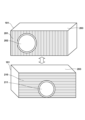
- FIG. 2 is a diagram illustrating an example of the external configuration of a drive recorder as an example of a driving assistance device according to an embodiment
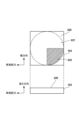
- FIG. 2 is a diagram showing an external configuration of an output device according to an embodiment
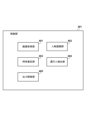
- FIG. 1 is a block diagram showing an example of a hardware configuration of a drive recorder according to an embodiment
- FIG. 1 is a block diagram showing an example of a functional configuration of a drive recorder according to an embodiment
- FIG. 1 is a diagram for explaining characteristics (relative moving speed) of a person according to an embodiment
- FIG. 1 is a diagram for explaining characteristics of a person (distance from a drive recorder) according to an embodiment
- the driving assistance device is a drive recorder that is attached inside a vehicle, captures images of the front, sides, and rear of the vehicle, and records the state of the vehicle while it is traveling on a recording medium.
- the driving assistance device may be a device other than a drive recorder as long as it is attached to a vehicle and can capture images of the outside world of the vehicle.
- the moving object is, for example, a vehicle.
- the vehicle is typically a four-wheeled vehicle, but this embodiment may be applied to other types of vehicles.
- a drive recorder 101 is mounted on a vehicle 100.
- the drive recorder 101 is mounted near the rearview mirror or on the rearview mirror of the vehicle 100 at a position on the windshield of the vehicle 100 that does not obstruct the driver's field of vision.
- the mounting position of the drive recorder 101 is not limited to this, and may be any position that can capture an image of the outside world of the vehicle 100.
- the drive recorder 101 can, for example, wirelessly or wiredly transmit information that needs to be output to the driver to the external output device 102, and cause the transmitted warning to be output from the output device 102.
- the output device 102 is an external device to the drive recorder 101.
- the drive recorder 101 may also be equipped with an output device (i.e., a display for display or a speaker for audio output).
- the drive recorder 101 includes an imaging device 202 on a front surface 201, and captures an image of the forward direction (movement direction) of the vehicle 100.
- the imaging device 202 is, for example, an imaging device equipped with a wide-angle lens.
- the drive recorder 101 also includes an imaging device 211 on a rear surface 210, and captures images of the sides and rear of the vehicle 100.
- the imaging device 211 is, for example, an imaging device equipped with a fisheye lens.
- the image captured by the imaging device 211 includes the driver of the vehicle 100.
- 203 constitutes the upper surface of the drive recorder 101.
- the output device 102 is a device for outputting information to an occupant of the vehicle 100.
- the output device 102 includes a display device (e.g., a display or a light-emitting element) that provides visual information, and an audio device (e.g., a speaker) that provides auditory information.
- the output device 102 communicates with the drive recorder 101 wirelessly or via a wire, thereby displaying information on the display device.
- the output device 102 is provided with a display device on the upper surface 220.
- the output device 102 can color a partial area (e.g., 222) within a circle 221 representing the periphery of the vehicle 100 in response to an instruction from the drive recorder 101.
- the colored area 222 serves as a warning to the driver or the like that a risk exists in the corresponding direction.
- the output device 102 is installed, for example, on the dashboard near the driver's seat of the vehicle 100.
- the output device 102 may further include a half mirror to reflect the light output from the upper surface 220 in the direction of the driver.
- the drive recorder 101 includes, for example, a control unit 301, a storage device 302, an imaging device 303, an input device 304, and a communication device 305.
- the control unit 301 includes a processor such as a CPU (Central Processing Unit) and controls the operation of the entire drive recorder 101.
- the control unit 301 may be realized, for example, by the CPU expanding and executing a program stored in the storage device 302.
- the control unit 301 may further include a GPU (Graphics Processing Unit) and dedicated circuits for image processing, machine learning, etc.
- GPU Graphics Processing Unit
- the storage device 302 is a device that stores data and programs related to the operation of the drive recorder 101.
- the storage device 302 may store a program that defines the operation of the drive recorder 101, temporary data when this program is executed, images captured by the imaging device 303, environmental sounds picked up by a microphone, etc.
- the storage device 302 may be realized by a memory such as a RAM (Random Access Memory) or a ROM (Read Only Memory).
- the storage device 302 may include an auxiliary storage device such as an SSD (Solid State Drive).
- the imaging device 303 includes a camera for capturing images of the outside world in front of the vehicle 100.
- the imaging device 303 may be, for example, a wide-angle camera. This camera is the imaging device 202 described above, which is located in front of the drive recorder 101 (the front side of the vehicle 100).
- the imaging device 303 also includes a camera capable of capturing images of the rear and the left and right sides of the vehicle 100, that is, the imaging device 211 described above.
- This camera may be a camera equipped with a fisheye lens.
- the camera capturing images of the rear is disposed behind the drive recorder (the rear side of the vehicle). In this embodiment, an example will be described in which the same camera captures images of the rear and sides of the vehicle. However, the camera capturing images of the rear and the sides may be separate cameras.
- the camera capturing images of the sides may be disposed on the side of the drive recorder. Some of the cameras capturing images in multiple directions may be separate from the drive recorder.
- the input device 304 is a device for inputting instructions from the occupants of the vehicle 100.
- the input device 304 includes, for example, a button or a touch panel.
- the input device 304 may also include a microphone for inputting the voice of the occupants and sounds from the outside world.
- the communication device 305 is a device for the drive recorder 101 to communicate with the output device 102 in a wired or wireless manner.
- the communication device 305 transmits warning information generated by the driving assistance process in the control unit 301 to the output device 102.
- the communication device 305 may communicate with other devices in a wired manner or may communicate with other devices wirelessly.
- the wireless communication may be communication conforming to a protocol such as short-range communication (e.g., Bluetooth (registered trademark)).
- the communication device 305 may be configured to be able to communicate with the control ECU of the vehicle 100 in a wired or wireless manner.
- the communication device 305 may be optional.
- ⁇ Example of functional configuration of a drive recorder> An example of a functional configuration realized by the control unit 301 of the drive recorder 101 will be described with reference to Fig. 4. Each unit shown in Fig. 4 is realized, for example, by the CPU of the control unit 301 executing a computer program.
- the image acquisition unit 401 acquires a forward captured image from the imaging device 202 that captures an image in front of the drive recorder 101.
- the image acquisition unit 401 also acquires a rear captured image from the imaging device 211 that captures an image behind the drive recorder 101.
- the rear captured image includes a subject outside the vehicle and the interior of the vehicle. For example, the rear captured image includes a passerby walking outside the vehicle 100 and an occupant present inside the vehicle.
- the person recognition unit 402 recognizes people included in the image (rear captured image) acquired by the image acquisition unit 401.
- the person recognition unit 402 may use a neural network that inputs the rear captured image and outputs person recognition results. When at least a part of a person's body is included in the image, the person recognition unit 402 may be able to recognize that part as a person.
- the characteristic estimation unit 403 estimates one or more characteristics of the person in the image recognized by the person recognition unit 402.
- the one or more characteristics include, for example, at least one of the person's distance from the drive recorder 101, the person's moving speed relative to the vehicle 100, and the person's height. The person's characteristics will be described later.
- the passerby detection unit 404 determines whether one or more characteristics of a person estimated by the characteristic estimation unit 403 satisfy predetermined criteria, and detects a person who satisfies all of the criteria as a passerby.
- the criteria that the characteristics must satisfy will be described later.
- the output control unit 405 causes the output device 102 to output a warning when the detected pedestrian approaches a position within a predetermined range from the travel path of the vehicle 100.
- the control unit 301 estimates a predicted path for the detected pedestrian, and when a warning is necessary, causes the output device 102 to output a warning indicating the direction in which the pedestrian is located.
- Figure 5 shows a specific example in which the person characteristic is the person's relative moving speed with respect to the vehicle 100.
- the characteristic estimation unit 403 can estimate the predicted trajectory and moving speed of the vehicle according to changes in the (time-series) front captured images or the (time-series) rear captured images.
- the characteristic estimation unit 403 can also estimate the moving speeds of persons 501, 502, and 503 using the (time-series) rear captured images. For example, the characteristic estimation unit 403 estimates the absolute value of the relative moving speeds of these persons with respect to the vehicle 100 based on changes in the areas of persons 501 and 502, or the predicted trajectories of the persons.
- the characteristic estimation unit 403 also estimates the absolute value of the relative moving speed of person 503 with respect to the vehicle 100 based on changes in the area of person 503 or the predicted trajectory of person 503.
- the moving speed of a person may be estimated by any known method other than the above-mentioned method, for example, by inputting a rear-view image into a neural network.
- the passerby detection unit 404 determines that the person in the image meets the criteria for the relative moving speed of the person with respect to the vehicle 100.
- the absolute values of the relative moving speeds of the people 501 and 502 with respect to the vehicle 100 are generally small (i.e., smaller than the threshold). In this case, for example, the passerby detection unit 404 determines that the people 501 and 502 do not meet the criteria for the relative moving speed, and does not detect the people 501 and 502 as passersby.
- the passerby detection unit 404 determines that the person 503 meets the criteria for the relative moving speed, and detects the person as a passerby. In this way, by taking into account the relative moving speed of the person, it is possible to exclude people having a moving speed that is not appropriate for a passerby from the processing target, and it becomes possible to accurately detect passersby outside the vehicle.
- FIG. 6 shows a specific example in which the characteristic of a person is the distance of the person from the drive recorder 101.
- the characteristic of a person is the distance of the person from the drive recorder 101.
- persons 501 and 502 are riding in the vehicle 100, and person 503 is passing outside the vehicle.
- the characteristic estimation unit 403 uses the (time-series) rear-view captured images to estimate the distance from the drive recorder 101 to the person 501, person 502, and person 503.
- the distance from the drive recorder 101 to the person may be estimated by a known method, for example, by inputting the rear-view captured images into a neural network.
- the passerby detection unit 404 determines that the persons 501 and 502 do not meet the distance criteria. Therefore, the persons 501 and 502 are not detected as passersby.
- passerby detection unit 404 determines that person 503 meets the criteria for the person's distance from the drive recorder. Therefore, person 503 is detected as a passerby. In this way, taking into account the distance from drive recorder 100, it is possible to exclude from processing persons located at a distance that is inappropriate for a passerby, and it becomes possible to accurately detect passersby outside the vehicle.
- the characteristic of a person may be the person's height.
- the size of a person's face varies little from person to person, and is therefore a useful parameter when detecting a person from an image.
- the size of the face in the image becomes very small.
- the height of a person is used as a characteristic of a person in order to perform an effective evaluation using image information even if the person is far away from the imaging device.
- the size of the person's face may also be used as a characteristic of a person.
- the characteristic estimation unit 403 estimates the height of the person based on the size of the person area in the image.
- the height of the person may be estimated by a known method, for example, by inputting a rear-view image into a neural network.
- the passerby detection unit 404 determines that a person meets the height criteria if the person's height falls within a range determined according to the person's distance from the drive recorder 101.
- an allowable error range for the estimated height is determined in advance for each distance from the drive recorder 101. In this way, in this embodiment, if the estimated height exceeds the allowable error range, the person is not detected as a passerby. In this way, taking into account the person's height, people with heights that are inappropriate for a passerby can be excluded from the processing target, making it possible to accurately detect passersby outside the vehicle.
- a process for detecting passersby taking as an example a case where people in an image who meet predetermined criteria are detected as passersby.
- the process for detecting passersby may include any other detection process.
- this embodiment by preventing people in an image whose characteristics do not meet predetermined criteria from being detected as passersby, it is possible to reduce false detections of passersby, and as a result, it is possible to accurately detect passersby outside the vehicle.
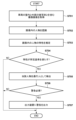
- the image acquisition unit 401 acquires a rear captured image of the area behind the drive recorder 101.
- the rear captured image includes subjects outside the vehicle and the interior of the vehicle.
- the person recognition unit 402 recognizes a person in the image.
- the characteristic estimation unit 403 estimates one or more characteristics of the person in the image.
- the person's characteristics include at least one of the person's distance from the drive recorder 101, the person's relative moving speed with respect to the vehicle 100, and the person's height.
- the passerby detection unit 404 determines whether the estimated characteristics satisfy predetermined criteria. Specifically, as described with reference to Figures 4, 5, and 6, it determines whether the estimated characteristics, such as the person's height, satisfy each predetermined criterion. If the passerby detection unit 404 determines that the characteristics of the passerby satisfy the predetermined criteria (if multiple characteristics are handled, all criteria are satisfied), the process proceeds to S705; otherwise, this series of processes ends. In S705, the passerby detection unit 404 detects the person being processed as a passerby. For example, in the examples of Figures 5 and 6 above, person 503 is detected as a passerby.
- the output control unit 405 determines whether it is necessary to output a warning to the driver regarding the detected pedestrian. For example, the output control unit 405 determines that it is necessary to output a warning when the detected pedestrian approaches a position within a predetermined range from the traveling trajectory of the vehicle 100. If the output control unit 405 determines that it is necessary to output a warning, the process proceeds to S707; otherwise, this series of processes ends.
- the output control unit 405 causes the output device 102 to output a warning indicating the direction in which a passerby is present (e.g., area 222 in FIG. 2B).
- the output control unit 405 causes the output device 102 to output a warning indicating the direction in which a passerby is present, based on, for example, a trajectory that has already been obtained for the detected passerby.
- the control unit 302 may perform a process of excluding registered occupants from the processing target before the characteristic estimation unit 403 performs a process of estimating the characteristics of the person. For example, the control unit 302 may register the faces of the occupants in advance in the drive recorder 101 (by a user operation, etc.). Then, the control unit 302 may identify, for example, a person in a recognized image who has facial characteristics that match the facial characteristics registered in advance. The characteristic estimation unit 403 may estimate one or more characteristics of a person other than the identified person. In this way, unnecessary estimation processes for the occupants can be omitted, and processing speed can be increased and power consumption can be reduced.
- the warning is output from the output device 102, but the warning may be output from at least one of a smartphone, a tablet device, a head-mounted display, and a wearable device. These devices communicate with the drive recorder 101 wirelessly or via a wired connection to display the warning on a display device.
- the driving assistance device (for example, 101) of the above embodiment includes: A driving assistance device attached to a moving body (e.g., 100), An imaging means (e.g., 401) for capturing an image including an interior of the moving body and a subject outside the moving body; A recognition means (e.g., 402) for recognizing a person in a captured image using the captured image; - an estimation means (e.g., 403) for estimating one or more characteristics of a person in a recognized image; a detection means (e.g., 404) for detecting, as passers-by, persons in the image whose estimated one or more characteristics respectively satisfy a predetermined criterion; and an output control means (e.g., 405) for causing an output device to output a warning regarding the presence of the detected pedestrian;
- the one or more characteristics include at least one of a distance of the person from the driving assistance device, a moving speed of the person relative to the moving object, and a height of the person.
- the detection means determines that the person in the image meets the distance criterion for the person from the driving assistance device if the distance of the person in the image from the driving assistance device is greater than a threshold corresponding to the interior of the moving body and is less than or equal to a threshold defining the far distance.
- the detection means determines that the person in the image satisfies a criterion for the relative moving speed of the person with respect to the moving body.
- the detection means determines that the person in the image meets a standard for person height when the height of the person falls within a range determined according to a distance of the person from the driving assistance device.
- the height of a person is taken into consideration and people whose height falls within an inappropriate range for a pedestrian can be excluded from the processing target, making it possible to accurately detect pedestrians outside the vehicle.
- the estimation means estimates one or more characteristics of people in the recognized image other than people having facial features matching pre-registered facial features.
- unnecessary estimation processing for occupants can be omitted, which can speed up processing and reduce power consumption.
- the output control means causes the output device to output a warning indicating the direction in which the detected pedestrian is present.
- the driver can quickly and easily determine where the warning target is located around the vehicle.
- the output device is included in the driving assistance device.
- driving assistance can be provided by a single driving assistance device with an easy-to-install configuration.
- the output device communicates with the driving assistance device wirelessly or via a wired connection to cause the warning to be displayed on a display device of the output device.
- This embodiment makes it possible to place the output device in a position that is easily perceptible by the driver.
- the output device is at least one of a smartphone, a tablet terminal, a head-mounted display, and a wearable terminal.
- a separately used device can be used as an output device, making it possible to reduce the manufacturing costs of the driving assistance device.
- the driving assistance method in the above embodiment is A driving assistance method executed by a driving assistance device (e.g., 101) attached to a moving body (e.g., 100), comprising: Capturing an image including an interior of the moving body and a subject outside the moving body (e.g., S701); Recognizing a person in the captured image using the captured image (e.g., S702); Estimating one or more characteristics of a person in a recognized image (e.g., S703); Detecting people in the image as passersby, where the one or more estimated characteristics each satisfy a predetermined criterion (e.g., S704); and outputting a warning regarding the presence of the detected passerby from an output device (e.g., S705).
- the one or more characteristics include at least one of a distance of the person from the driving assistance device, a moving speed of the person relative to the moving object, and a height of the person.
- the program in the above embodiment is A program for causing a computer to function as each means of a driving assistance device (e.g., 101) attached to a moving body (e.g., 100), the driving assistance device comprising: An imaging means (e.g., 401) for capturing an image including an interior of the moving body and a subject outside the moving body; A recognition means (e.g., 402) for recognizing a person in a captured image using the captured image; - an estimation means (e.g., 403) for estimating one or more characteristics of a person in a recognized image; a detection means (e.g., 404) for detecting, as passers-by, persons in the image whose estimated one or more characteristics respectively satisfy a predetermined criterion; and an output control means (e.g., 405) for causing an output device to output a warning regarding the presence of the detected pedestrian;
- the one or more characteristics include at least one of a distance of the person from the driving assistance device, a moving speed of the person relative to the
- the storage medium in the above embodiment is A storage medium (e.g., 302) for storing a program for causing a computer to function as each means of a driving assistance device (e.g., 101) attached to a moving body (e.g., 100), the driving assistance device comprising: An imaging means (e.g., 401) for capturing an image including an interior of the moving body and a subject outside the moving body; A recognition means (e.g., 402) for recognizing a person in a captured image using the captured image; - an estimation means (e.g., 403) for estimating one or more characteristics of a person in a recognized image; a detection means (e.g., 404) for detecting, as passers-by, persons in the image whose estimated one or more characteristics respectively satisfy a predetermined criterion; and an output control means (e.g., 405) for causing an output device to output a warning regarding the presence of the detected pedestrian;
- the one or more characteristics include at least one of a distance of the person
Landscapes
- Engineering & Computer Science (AREA)
- General Physics & Mathematics (AREA)
- Physics & Mathematics (AREA)
- Theoretical Computer Science (AREA)
- Multimedia (AREA)
- Health & Medical Sciences (AREA)
- General Health & Medical Sciences (AREA)
- Computer Vision & Pattern Recognition (AREA)
- Human Computer Interaction (AREA)
- Evolutionary Computation (AREA)
- Medical Informatics (AREA)
- Software Systems (AREA)
- Artificial Intelligence (AREA)
- Databases & Information Systems (AREA)
- Oral & Maxillofacial Surgery (AREA)
- Computing Systems (AREA)
- Mechanical Engineering (AREA)
- Signal Processing (AREA)
- Traffic Control Systems (AREA)
Abstract
Description
移動体に取り付けられる運転支援装置であって、
前記移動体の室内と前記移動体の外部の被写体とを含む画像を撮像する撮像手段と、
撮像された画像を用いて画像内の人物を認識する認識手段と、
認識された画像内の人物の1つ以上の特性を推定する推定手段と、
推定された前記1つ以上の特性がそれぞれ予め定めた基準を満たす前記画像内の人物を、通行人として検出する検出手段と、
検出された前記通行人の存在に関する警告を、出力装置から出力させる出力制御手段と、を備え、
前記1つ以上の特性は、前記人物の前記運転支援装置からの距離、前記人物の前記移動体に対する相対的な移動速度、及び前記人物の身長の少なくともいずれかを含む、ことを特徴とする運転支援装置が提供される。
図2Aを参照して、ドライブレコーダ101の外観構成例について説明する。ドライブレコーダ101は、前面201に撮像装置202を備え、車両100の前方方向(移動方向)を撮像する。撮像装置202は、例えば広角なレンズを備える撮像装置である。また、ドライブレコーダ101は背面210に撮像装置211を備え、車両100の側方及び後方を撮像する。撮像装置211は、例えば魚眼レンズを備える撮像装置である。撮像装置211によって撮像された画像には、車両100の運転者が含まれる。203は、ドライブレコーダ101の上面を構成する。
図2Bを参照して、出力装置102の外観構成例について説明する。出力装置102は、車両100の乗員に向けて情報を出力するための装置である。出力装置102は、視覚情報を提供する表示装置(例えばディスプレイ或いは発光素子)と、聴覚情報を提供する音響装置(例えば、スピーカ)とを含む。出力装置102は、ドライブレコーダ101と無線又は有線で通信することにより、情報を表示装置に表示させる。
図3を参照して、ドライブレコーダ101のハードウェア構成例について説明する。ドライブレコーダ101は、例えば、制御部301と、記憶装置302と、撮像装置303と、入力装置304と、通信装置305とを備える。
図4を参照して、ドライブレコーダ101の制御部301によって実現される機能構成例について説明する。図4に示す各部は、例えば、制御部301のCPUがコンピュータプログラムを実行することにより実現される。
次に、図7を参照して、ドライブレコーダ101において実行される運転支援処理の一連の動作について説明する。なお、本処理は、制御部301のCPUが記憶装置302に記憶されたコンピュータプログラムを実行することにより実現される。
1.上記実施形態の運転支援装置(例えば、101)は、
移動体(例えば、100)に取り付けられる運転支援装置であって、
前記移動体の室内と前記移動体の外部の被写体とを含む画像を撮像する撮像手段(例えば、401)と、
撮像された画像を用いて画像内の人物を認識する認識手段(例えば、402)と、
認識された画像内の人物の1つ以上の特性を推定する推定手段(例えば、403)と、
推定された前記1つ以上の特性がそれぞれ予め定めた基準を満たす前記画像内の人物を、通行人として検出する検出手段(例えば、404)と、
検出された前記通行人の存在に関する警告を、出力装置から出力させる出力制御手段(例えば、405)と、を備え、
前記1つ以上の特性は、前記人物の前記運転支援装置からの距離、前記人物の前記移動体に対する相対的な移動速度、及び前記人物の身長の少なくともいずれかを含む。
前記検出手段は、前記画像内の人物の前記運転支援装置からの距離が、前記移動体の室内に相当する閾値より大きく且つ遠方を規定する閾値以下である場合、前記画像内の人物が、前記人物の前記運転支援装置からの距離の基準を満たすと判定する。
前記検出手段は、前記人物の前記移動体に対する相対的な移動速度の絶対値が、予め定めた閾値より大きい場合、前記画像内の人物が、前記人物の前記移動体に対する相対的な移動速度の基準を満たすと判定する。
前記検出手段は、前記人物の身長が、前記運転支援装置からの前記人物の距離に応じて定められる範囲に含まれる場合、前記画像内の人物が、人物の身長の基準を満たすと判定する。
前記推定手段は、認識された画像内の人物のうち、予め登録された顔の特徴と一致する顔の特徴を有する人物以外の人物の1つ以上の特性を推定する。
前記出力制御手段は、検出された前記通行人の存在する方向を示す警告を、前記出力装置から出力させる。
前記出力装置は、前記運転支援装置に含まれる。
前記出力装置は、前記運転支援装置と無線又は有線で通信することにより、前記警告を前記出力装置の表示装置に表示させる。
前記出力装置は、スマートフォン、タブレット端末、ヘッドマウントディスプレイ、及びウェアラブル端末の少なくともいずれかである。
移動体(例えば、100)に取り付けられる運転支援装置(例えば、101)によって実行される運転支援方法であって、
前記移動体の室内と前記移動体の外部の被写体とを含む画像を撮像すること(例えば、S701)と、
撮像された画像を用いて画像内の人物を認識すること(例えば、S702)と、
認識された画像内の人物の1つ以上の特性を推定すること(例えば、S703)と、
推定された前記1つ以上の特性がそれぞれ予め定めた基準を満たす前記画像内の人物を、通行人として検出すること(例えば、S704)と、
検出された前記通行人の存在に関する警告を、出力装置から出力させること(例えば、S705)と、を備え、
前記1つ以上の特性は、前記人物の前記運転支援装置からの距離、前記人物の前記移動体に対する相対的な移動速度、及び前記人物の身長の少なくともいずれかを含む。
コンピュータを、移動体(例えば、100)に取り付けられる運転支援装置(例えば、101)の各手段として機能させるためのプログラムであって、前記運転支援装置は、
前記移動体の室内と前記移動体の外部の被写体とを含む画像を撮像する撮像手段(例えば、401)と、
撮像された画像を用いて画像内の人物を認識する認識手段(例えば、402)と、
認識された画像内の人物の1つ以上の特性を推定する推定手段(例えば、403)と、
推定された前記1つ以上の特性がそれぞれ予め定めた基準を満たす前記画像内の人物を、通行人として検出する検出手段(例えば、404)と、
検出された前記通行人の存在に関する警告を、出力装置から出力させる出力制御手段(例えば、405)と、を備え、
前記1つ以上の特性は、前記人物の前記運転支援装置からの距離、前記人物の前記移動体に対する相対的な移動速度、及び前記人物の身長の少なくともいずれかを含む。
コンピュータを、移動体(例えば、100)に取り付けられる運転支援装置(例えば、101)の各手段として機能させるためのプログラムを格納する記憶媒体(例えば、302)であって、前記運転支援装置は、
前記移動体の室内と前記移動体の外部の被写体とを含む画像を撮像する撮像手段(例えば、401)と、
撮像された画像を用いて画像内の人物を認識する認識手段(例えば、402)と、
認識された画像内の人物の1つ以上の特性を推定する推定手段(例えば、403)と、
推定された前記1つ以上の特性がそれぞれ予め定めた基準を満たす前記画像内の人物を、通行人として検出する検出手段(例えば、404)と、
検出された前記通行人の存在に関する警告を、出力装置から出力させる出力制御手段(例えば、405)と、を備え、
前記1つ以上の特性は、前記人物の前記運転支援装置からの距離、前記人物の前記移動体に対する相対的な移動速度、及び前記人物の身長の少なくともいずれかを含む。
Claims (12)
- 移動体に取り付けられる運転支援装置であって、
前記移動体の室内と前記移動体の外部の被写体とを含む画像を撮像する撮像手段と、
撮像された画像を用いて画像内の人物を認識する認識手段と、
認識された画像内の人物の1つ以上の特性を推定する推定手段と、
推定された前記1つ以上の特性がそれぞれ予め定めた基準を満たす前記画像内の人物を、通行人として検出する検出手段と、
検出された前記通行人の存在に関する警告を、出力装置から出力させる出力制御手段と、を備え、
前記1つ以上の特性は、前記人物の前記運転支援装置からの距離、前記人物の前記移動体に対する相対的な移動速度、及び前記人物の身長の少なくともいずれかを含む、ことを特徴とする運転支援装置。 - 前記検出手段は、前記画像内の人物の前記運転支援装置からの距離が、前記移動体の室内に相当する閾値より大きく且つ遠方を規定する閾値以下である場合、前記画像内の人物が、前記人物の前記運転支援装置からの距離の基準を満たすと判定する、ことを特徴とする請求項1に記載の運転支援装置。
- 前記検出手段は、前記人物の前記移動体に対する相対的な移動速度の絶対値が、予め定めた閾値より大きい場合、前記画像内の人物が、前記人物の前記移動体に対する相対的な移動速度の基準を満たすと判定する、ことを特徴とする請求項1に記載の運転支援装置。
- 前記検出手段は、前記人物の身長が、前記運転支援装置からの前記人物の距離に応じて定められる範囲に含まれる場合、前記画像内の人物が、人物の身長の基準を満たすと判定する、ことを特徴とする請求項1に記載の運転支援装置。
- 前記推定手段は、認識された画像内の人物のうち、予め登録された顔の特徴と一致する顔の特徴を有する人物以外の人物の1つ以上の特性を推定する、ことを特徴とする請求項1に記載の運転支援装置。
- 前記出力制御手段は、検出された前記通行人の存在する方向を示す警告を、前記出力装置から出力させる、ことを特徴とする請求項1に記載の運転支援装置。
- 前記出力装置は、前記運転支援装置に含まれる、ことを特徴とする請求項1に記載の運転支援装置。
- 前記出力装置は、前記運転支援装置と無線又は有線で通信することにより、前記警告を前記出力装置の表示装置に表示させる、ことを特徴とする請求項1に記載の運転支援装置。
- 前記出力装置は、スマートフォン、タブレット端末、ヘッドマウントディスプレイ、及びウェアラブル端末の少なくともいずれかである、ことを特徴とする請求項8に記載の運転支援装置。
- 移動体に取り付けられる運転支援装置によって実行される運転支援方法であって、
前記移動体の室内と前記移動体の外部の被写体とを含む画像を撮像することと、
撮像された画像を用いて画像内の人物を認識することと、
認識された画像内の人物の1つ以上の特性を推定することと、
推定された前記1つ以上の特性がそれぞれ予め定めた基準を満たす前記画像内の人物を、通行人として検出することと、
検出された前記通行人の存在に関する警告を、出力装置から出力させることと、を備え、
前記1つ以上の特性は、前記人物の前記運転支援装置からの距離、前記人物の前記移動体に対する相対的な移動速度、及び前記人物の身長の少なくともいずれかを含む、ことを特徴とする運転支援方法。 - コンピュータを、移動体に取り付けられる運転支援装置の各手段として機能させるためのプログラムであって、前記運転支援装置は、
前記移動体の室内と前記移動体の外部の被写体とを含む画像を撮像する撮像手段と、
撮像された画像を用いて画像内の人物を認識する認識手段と、
認識された画像内の人物の1つ以上の特性を推定する推定手段と、
推定された前記1つ以上の特性がそれぞれ予め定めた基準を満たす前記画像内の人物を、通行人として検出する検出手段と、
検出された前記通行人の存在に関する警告を、出力装置から出力させる出力制御手段と、を備え、
前記1つ以上の特性は、前記人物の前記運転支援装置からの距離、前記人物の前記移動体に対する相対的な移動速度、及び前記人物の身長の少なくともいずれかを含む、ことを特徴とするプログラム。 - コンピュータを、移動体に取り付けられる運転支援装置の各手段として機能させるためのプログラムを格納する記憶媒体であって、前記運転支援装置は、
前記移動体の室内と前記移動体の外部の被写体とを含む画像を撮像する撮像手段と、
撮像された画像を用いて画像内の人物を認識する認識手段と、
認識された画像内の人物の1つ以上の特性を推定する推定手段と、
推定された前記1つ以上の特性がそれぞれ予め定めた基準を満たす前記画像内の人物を、通行人として検出する検出手段と、
検出された前記通行人の存在に関する警告を、出力装置から出力させる出力制御手段と、を備え、
前記1つ以上の特性は、前記人物の前記運転支援装置からの距離、前記人物の前記移動体に対する相対的な移動速度、及び前記人物の身長の少なくともいずれかを含む、ことを特徴とする記憶媒体。
Priority Applications (4)
| Application Number | Priority Date | Filing Date | Title |
|---|---|---|---|
| CN202380095666.7A CN120836050A (zh) | 2023-03-31 | 2023-03-31 | 驾驶辅助装置、驾驶辅助方法、存储介质以及程序 |
| JP2025509615A JPWO2024202033A1 (ja) | 2023-03-31 | 2023-03-31 | |
| PCT/JP2023/013625 WO2024202033A1 (ja) | 2023-03-31 | 2023-03-31 | 運転支援装置、運転支援方法、記憶媒体及びプログラム |
| US19/340,789 US20260024353A1 (en) | 2023-03-31 | 2025-09-25 | Driver-assistance apparatus, driver-assistance method, and storage medium |
Applications Claiming Priority (1)
| Application Number | Priority Date | Filing Date | Title |
|---|---|---|---|
| PCT/JP2023/013625 WO2024202033A1 (ja) | 2023-03-31 | 2023-03-31 | 運転支援装置、運転支援方法、記憶媒体及びプログラム |
Related Child Applications (1)
| Application Number | Title | Priority Date | Filing Date |
|---|---|---|---|
| US19/340,789 Continuation US20260024353A1 (en) | 2023-03-31 | 2025-09-25 | Driver-assistance apparatus, driver-assistance method, and storage medium |
Publications (1)
| Publication Number | Publication Date |
|---|---|
| WO2024202033A1 true WO2024202033A1 (ja) | 2024-10-03 |
Family
ID=92904524
Family Applications (1)
| Application Number | Title | Priority Date | Filing Date |
|---|---|---|---|
| PCT/JP2023/013625 Ceased WO2024202033A1 (ja) | 2023-03-31 | 2023-03-31 | 運転支援装置、運転支援方法、記憶媒体及びプログラム |
Country Status (4)
| Country | Link |
|---|---|
| US (1) | US20260024353A1 (ja) |
| JP (1) | JPWO2024202033A1 (ja) |
| CN (1) | CN120836050A (ja) |
| WO (1) | WO2024202033A1 (ja) |
Citations (5)
| Publication number | Priority date | Publication date | Assignee | Title |
|---|---|---|---|---|
| JP2013008328A (ja) * | 2011-06-27 | 2013-01-10 | Clarion Co Ltd | 車両周囲監視装置 |
| JP2020166485A (ja) * | 2019-03-29 | 2020-10-08 | 本田技研工業株式会社 | 運転支援装置 |
| JP2021051604A (ja) * | 2019-09-25 | 2021-04-01 | 株式会社Jvcケンウッド | ドライブレコーダ、データ記録方法およびプログラム |
| JP2021517313A (ja) * | 2017-08-10 | 2021-07-15 | ベイジン センスタイム テクノロジー デベロップメント カンパニー, リミテッド | 車両乗員の危険動作の認識方法及び装置、電子機器、並びに記憶媒体 |
| JP2022140026A (ja) * | 2021-03-12 | 2022-09-26 | 本田技研工業株式会社 | 画像処理装置、画像処理方法およびプログラム |
-
2023
- 2023-03-31 WO PCT/JP2023/013625 patent/WO2024202033A1/ja not_active Ceased
- 2023-03-31 JP JP2025509615A patent/JPWO2024202033A1/ja active Pending
- 2023-03-31 CN CN202380095666.7A patent/CN120836050A/zh active Pending
-
2025
- 2025-09-25 US US19/340,789 patent/US20260024353A1/en active Pending
Patent Citations (5)
| Publication number | Priority date | Publication date | Assignee | Title |
|---|---|---|---|---|
| JP2013008328A (ja) * | 2011-06-27 | 2013-01-10 | Clarion Co Ltd | 車両周囲監視装置 |
| JP2021517313A (ja) * | 2017-08-10 | 2021-07-15 | ベイジン センスタイム テクノロジー デベロップメント カンパニー, リミテッド | 車両乗員の危険動作の認識方法及び装置、電子機器、並びに記憶媒体 |
| JP2020166485A (ja) * | 2019-03-29 | 2020-10-08 | 本田技研工業株式会社 | 運転支援装置 |
| JP2021051604A (ja) * | 2019-09-25 | 2021-04-01 | 株式会社Jvcケンウッド | ドライブレコーダ、データ記録方法およびプログラム |
| JP2022140026A (ja) * | 2021-03-12 | 2022-09-26 | 本田技研工業株式会社 | 画像処理装置、画像処理方法およびプログラム |
Also Published As
| Publication number | Publication date |
|---|---|
| JPWO2024202033A1 (ja) | 2024-10-03 |
| US20260024353A1 (en) | 2026-01-22 |
| CN120836050A (zh) | 2025-10-24 |
Similar Documents
| Publication | Publication Date | Title |
|---|---|---|
| US11606516B2 (en) | Image processing device, image processing method, and image processing system | |
| US11427195B1 (en) | Automatic collision detection, warning, avoidance and prevention in parked cars | |
| US10322696B2 (en) | Vehicle environment imaging systems and methods | |
| US9736364B2 (en) | Camera capable of reducing motion blur in a low luminance environment and vehicle including the same | |
| US9352689B2 (en) | Driver assistance apparatus capable of diagnosing vehicle parts and vehicle including the same | |
| US10007854B2 (en) | Computer vision based driver assistance devices, systems, methods and associated computer executable code | |
| KR102309316B1 (ko) | 차량용 디스플레이 장치 및 이를 구비한 차량 | |
| KR101565006B1 (ko) | 차량용 어라운드뷰 제공 장치 및 이를 구비한 차량 | |
| JP6888950B2 (ja) | 画像処理装置、外界認識装置 | |
| JP6891926B2 (ja) | 車両システム、車両システムで実行される方法、および運転者支援システム | |
| KR20160147559A (ko) | 차량 운전 보조 장치 및 차량 | |
| US20180162274A1 (en) | Vehicle side-rear warning device and method using the same | |
| US20160193921A1 (en) | Vehicular display device | |
| WO2024202033A1 (ja) | 運転支援装置、運転支援方法、記憶媒体及びプログラム | |
| KR20160064762A (ko) | 차량용 디스플레이 장치 및 이를 구비한 차량 | |
| JP2015219721A (ja) | 動作支援システム及び物体認識装置 | |
| US20260018053A1 (en) | Driver-assistance apparatus, driver-assistance method, and storage medium | |
| EP4603351A1 (en) | Control device for vehicle, control method for vehicle, and computer program | |
| US12570305B2 (en) | Driving information display apparatus and method | |
| KR102536826B1 (ko) | 차량의 주행 정보 표시 장치 및 방법과, 이 방법을 구현하는 기록매체에 저장되는 프로그램 | |
| KR102745993B1 (ko) | 블랙박스 영상을 통한 사람과 사물감지 시스템 | |
| US12409792B2 (en) | Vehicle and method of controlling the same | |
| KR20150074753A (ko) | 차량 운전 보조 장치 및 이를 구비한 차량 | |
| KR102296213B1 (ko) | 영상 기록 장치 및 그 동작 방법 | |
| JP2007249324A (ja) | 車両周辺監視システム、車両、車両周辺監視プログラム、および車両周辺システムの構成方法 |
Legal Events
| Date | Code | Title | Description |
|---|---|---|---|
| 121 | Ep: the epo has been informed by wipo that ep was designated in this application |
Ref document number: 23930667 Country of ref document: EP Kind code of ref document: A1 |
|
| WWE | Wipo information: entry into national phase |
Ref document number: 202380095666.7 Country of ref document: CN |
|
| ENP | Entry into the national phase |
Ref document number: 2025509615 Country of ref document: JP Kind code of ref document: A |
|
| WWE | Wipo information: entry into national phase |
Ref document number: 2025509615 Country of ref document: JP |
|
| WWP | Wipo information: published in national office |
Ref document number: 202380095666.7 Country of ref document: CN |
|
| NENP | Non-entry into the national phase |
Ref country code: DE |
|
| 122 | Ep: pct application non-entry in european phase |
Ref document number: 23930667 Country of ref document: EP Kind code of ref document: A1 |