WO2024201664A1 - 監視システム、監視装置、及び監視方法 - Google Patents
監視システム、監視装置、及び監視方法 Download PDFInfo
- Publication number
- WO2024201664A1 WO2024201664A1 PCT/JP2023/012252 JP2023012252W WO2024201664A1 WO 2024201664 A1 WO2024201664 A1 WO 2024201664A1 JP 2023012252 W JP2023012252 W JP 2023012252W WO 2024201664 A1 WO2024201664 A1 WO 2024201664A1
- Authority
- WO
- WIPO (PCT)
- Prior art keywords
- abnormality
- sensing
- cause
- estimated
- detection unit
- Prior art date
- Legal status (The legal status is an assumption and is not a legal conclusion. Google has not performed a legal analysis and makes no representation as to the accuracy of the status listed.)
- Ceased
Links
Images



Classifications
-
- G—PHYSICS
- G08—SIGNALLING
- G08B—SIGNALLING SYSTEMS, e.g. PERSONAL CALLING SYSTEMS; ORDER TELEGRAPHS; ALARM SYSTEMS
- G08B25/00—Alarm systems in which the location of the alarm condition is signalled to a central station, e.g. fire or police telegraphic systems
-
- H—ELECTRICITY
- H04—ELECTRIC COMMUNICATION TECHNIQUE
- H04M—TELEPHONIC COMMUNICATION
- H04M3/00—Automatic or semi-automatic exchanges
- H04M3/42—Systems providing special services or facilities to subscribers
- H04M3/56—Arrangements for connecting several subscribers to a common circuit, i.e. affording conference facilities
Definitions
- This disclosure relates to a monitoring system, a monitoring device, and a monitoring method.
- a monitoring system called a signal 5G (Generation) system, which is related technology, monitors traffic and road conditions at intersections using camera images captured by cameras.
- optical fiber sensing which uses optical fiber as a sensor
- Optical fiber sensing can detect vibrations and sounds caused by abnormalities occurring around the optical fiber. Therefore, optical fiber sensing not only detects abnormalities occurring around the optical fiber, but also estimates the cause of the abnormality (for example, a traffic accident that occurred on the road) by comparing the images with camera footage.
- an abnormality detected by optical fiber sensing cannot be inferred from camera images. For example, if an abnormality occurs, such as a burst water pipe under the road, the abnormality can be detected by optical fiber sensing. However, because the water pipe is not visible in the camera image, it is not possible to infer from the camera image that the cause of the abnormality is a burst water pipe.
- the purpose of this disclosure is to provide a monitoring system, monitoring device, and monitoring method that can efficiently detect abnormalities whose causes cannot be estimated.
- a monitoring system includes: Optical fiber laid in a given area; An acquisition unit that acquires video images captured in the predetermined area; a detection unit that detects an abnormality occurring in the predetermined area by performing sensing using the optical fiber as a sensor; a determination unit that determines whether or not a cause of the detected abnormality can be estimated based on information included in the video; and a notification unit that, when the judgment result indicates that the cause of the detected abnormality cannot be estimated, determines that the detected abnormality is an unknown abnormality and notifies an alarm.
- a monitoring device includes: An acquisition unit that acquires an image captured in a predetermined area where optical fibers are installed; a detection unit that detects an abnormality occurring in the predetermined area by performing sensing using the optical fiber as a sensor; a determination unit that determines whether or not a cause of the detected abnormality can be estimated based on information included in the video; and a notification unit that, when the judgment result indicates that the cause of the detected abnormality cannot be estimated, determines that the detected abnormality is an unknown abnormality and notifies an alarm.
- a monitoring method includes: A monitoring method using a monitoring device, comprising: An acquisition step of acquiring an image captured in a predetermined area where an optical fiber is installed; a first detection step of detecting an abnormality occurring in the predetermined area by performing sensing using the optical fiber as a sensor; a first determination step of determining whether or not a cause of the detected abnormality can be estimated based on information included in the image; The method includes a first notification step of determining that the detected abnormality is an unknown abnormality and notifying an alarm if the judgment result indicates that the cause of the detected abnormality cannot be estimated.
- the above-mentioned aspects have the advantage of providing a monitoring system, a monitoring device, and a monitoring method that can efficiently detect anomalies whose causes cannot be estimated.
- FIG. 1 is a diagram illustrating a configuration example of a monitoring system according to a first embodiment
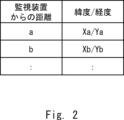
- 5 is a diagram showing an example of a correspondence table held by a detection unit according to the first embodiment
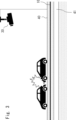
- FIG. 5A to 5C are diagrams showing specific examples of abnormalities determined by a determination unit according to the first embodiment
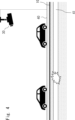
- 11A and 11B are diagrams showing other specific examples of abnormalities determined by the determination unit according to the first embodiment
- 4 is a flow diagram showing an example of a schematic operation flow of the monitoring system according to the first embodiment.
- FIG. 11 is a flow diagram showing an example of a schematic operation flow of a monitoring system according to a second embodiment.
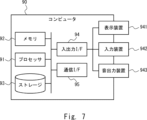
- 2 is a block diagram showing an example of a hardware configuration of a computer that realizes the monitoring device according to the first and second embodiments.
- the optical fiber is laid in a specific area to be monitored, but in each of the embodiments described below, the object to be monitored is a road, and the optical fiber is laid on the road.
- the monitoring system according to the first embodiment includes an optical fiber 10 and a monitoring device 20.
- the optical fiber 10 is buried under the road 40 along the road 40 that is the subject of monitoring.
- the optical fiber 10 is placed above the water pipe 41, but this is not limited thereto and the optical fiber 10 may be placed below the water pipe 41.
- the monitoring device 20 is a device for monitoring the road 40 that is the monitoring target, and is realized by a sensing device such as a Distributed Fiber Optic Sensing (DFOS) device.
- the monitoring device 20 includes a detection unit 21, an acquisition unit 22, a determination unit 23, and a notification unit 24.
- DFOS Distributed Fiber Optic Sensing
- the detection unit 21 is connected to the optical fiber 10 and performs optical fiber sensing (hereinafter simply referred to as "sensing") using the optical fiber 10 as a sensor.
- sensing optical fiber sensing
- the detection unit 21 transmits pulsed light to the optical fiber 10.
- the detection unit 21 also receives backscattered light generated as the pulsed light is transmitted through the optical fiber 10 as an optical signal from the optical fiber 10.
- the detection unit 21 is capable of detecting vibrations and sounds transmitted to the optical fiber 10 based on the optical signal received from the optical fiber 10, and is also capable of detecting the intensity of the vibrations and sounds.
- the detection unit 21 can determine the position where the optical signal was generated, i.e., the position where the vibration or sound detected based on the optical signal was generated (the distance of the optical fiber 10 from the monitoring device 20).
- the detection unit 21 also holds in advance a correspondence table showing the distance from the monitoring device 20 on the optical fiber 10 and the latitude/longitude at that distance.
- An example of the correspondence table is shown in FIG. 2. Therefore, by using a correspondence table such as that shown in FIG. 2, the detection unit 21 can identify the latitude/longitude of the position where vibration or sound is generated. For example, in the example of FIG. 2, if vibration occurs at a position on the optical fiber 10 that is a distance a from the monitoring device 20, the detection unit 21 identifies the position where the vibration occurred as being at latitude/longitude Xa/Ya.
- the correspondence table does not necessarily have to be held by the detection unit 21.
- any component inside or outside the monitoring device 20 may hold the correspondence table, and the detection unit 21 may read and use the correspondence table.
- the detection unit 21 can detect vibrations and sounds generated around the optical fiber 10, detect the intensity of the vibrations and sounds, and identify the location where the vibrations and sounds originated (the distance of the optical fiber 10 from the monitoring device 20; latitude/longitude if a correspondence table is used).
- the detection unit 21 is therefore able to generate sensing data of vibrations and sounds occurring around the optical fiber 10 based on the optical signal received from the optical fiber 10.
- the sensing data may be sensing data in which the horizontal axis represents the distance of the optical fiber 10 from the monitoring device 20 and the vertical axis represents the intensity of the vibrations and sounds occurring at that distance, or sensing data in which the horizontal axis represents the distance of the optical fiber 10 from the monitoring device 20 and the vertical axis represents the time course of the vibrations and sounds occurring at that distance.
- the detection unit 21 compares the vibration and sound sensing data generated as described above with past sensing data.
- the past sensing data is, for example, sensing data when some abnormality occurred on the road 40 in the past.
- the detection unit 21 performs pattern matching to compare the pattern of the generated sensing data with the pattern of the past sensing data. If the pattern matching result shows that the matching rate of the pattern is equal to or greater than a threshold value, the detection unit 21 determines that an abnormality has occurred around the optical fiber 10.
- the detection unit 21 detects abnormalities occurring around the optical fiber 10, i.e., abnormalities occurring on the road 40.
- the acquisition unit 22 acquires the image captured by the camera 30 on the road 40.
- the acquisition unit 22 acquires the image from the camera 30 via a wireless line, but this is not limited to this.
- the acquisition unit 22 may also acquire the image from the camera 30 via an optical fiber 10 or another wired line.
- the determination unit 23 determines whether or not it is possible to estimate the cause of the abnormality detected by the detection unit 21 based on the information contained in the image of the camera 30 acquired by the acquisition unit 22.
- the notification unit 24 determines that the abnormality detected by the detection unit 21 is an unknown abnormality and notifies an alarm.
- the destination of the alarm notification may be a terminal in a management system that manages the road 40 or a management room that manages the road 40.
- the alarm notification method may be, for example, a method of displaying a GUI (Graphical User Interface) screen on a display or monitor of the notification destination. Or, the alarm notification method may be a method of outputting an audio message from a speaker of the notification destination.
- the notification unit 24 does not issue an alarm. In addition, the notification unit 24 does not issue an alarm even in a situation where an abnormality is not detected by the detection unit 21.
- a traffic accident occurs on road 40 in which two vehicles collide, and detection unit 21 detects this traffic accident as an abnormality.
- the situation of the traffic accident is captured on the image of camera 30. Therefore, the determination unit 23 determines that the cause of the abnormality detected by the detection unit 21 can be estimated.
- the detection unit 21 detects the burst of the water pipe 41 as an abnormality. At this time, the state of the burst of the water pipe 41 is not captured on the image of the camera 30. Therefore, the determination unit 23 determines that the cause of the abnormality detected by the detection unit 21 cannot be estimated.
- the acquisition unit 22 acquires an image captured by the camera 30 on the road 40 (step S11).
- the detection unit 21 performs sensing using the optical fiber 10 as a sensor to detect an abnormality that occurs on the road 40 (step S12).
- the determination unit 23 determines whether or not it is possible to estimate the cause of the abnormality detected by the detection unit 21 based on the information contained in the image of the camera 30 acquired by the acquisition unit 22 (step S13).
- the notification unit 24 judges the abnormality detected by the detection unit 21 to be an unknown abnormality and notifies an alarm (step S14). On the other hand, when the determination result by the determination unit 23 indicates that the cause of the abnormality detected by the detection unit 21 has been estimated (No in step S13), the notification unit 24 does not issue an alarm.
- the acquisition unit 22 acquires the video captured by the camera 30 on the road 40.
- the detection unit 21 detects an abnormality that has occurred on the road 40 by performing sensing using the optical fiber 10 as a sensor.
- the determination unit 23 determines whether or not the cause of the detected abnormality can be estimated based on the information contained in the video of the camera 30. If the determination result indicates that the cause of the detected abnormality cannot be estimated, the notification unit 24 determines that the notified abnormality is an unknown abnormality and notifies an alarm.
- the second embodiment has the same configuration as the first embodiment described above, but includes an additional operation to be performed when the cause of the abnormality is estimated from the image captured by the camera 30. Specifically, in the second embodiment, when the cause of an abnormality can be estimated from the image of the camera 30, the notification of an alarm is suspended, the sensing mode of the detection unit 21 is changed, and the detection unit 21 continues to detect whether any abnormality other than the abnormality whose cause can be estimated from the image of the camera 30 has occurred. As a result, when an unknown abnormality whose cause cannot be estimated from the image of the camera 30 is detected, an alarm is notified, but when such an unknown abnormality cannot be detected, an alarm is not notified.
- the notification unit 24 suspends the notification of an alarm.
- the detection unit 21 changes the sensing mode and executes sensing to redetect the abnormality that has occurred on the road 40.
- the sensing mode of the detection unit 21 is changed as follows.
- the detection unit 21 changes the sensing accuracy and performs sensing.
- the sensing data used in sensing is vibration sensing data in which the horizontal axis represents the distance of the optical fiber 10 from the monitoring device 20 and the vertical axis represents the intensity of vibration or sound generated at that distance.
- the detection unit 21 performed sensing using data in which the intensity of vibration or sound is equal to or greater than a first threshold value before the change in sensing accuracy.
- the detection unit 21 sets the threshold value to a second threshold value that is smaller than the first threshold value, and performs sensing using data in which the intensity of vibration or sound is equal to or greater than the second threshold value. That is, after the change in sensing accuracy, the detection unit 21 performs sensing using more data.
- the detection unit 21 changes the sensing items and performs sensing. For example, assume that before the sensing items are changed, the detection unit 21 performed sensing using only vibration sensing data. In this case, after the sensing items are changed, the detection unit 21 performs sensing using vibration and sound sensing data.
- the detection unit 21 changes the sensing interval and performs sensing. For example, assume that before the sensing interval is changed, the detection unit 21 performed sensing using data obtained after the sensing data was thinned at a first thinning rate. In this case, after the sensing interval is changed, the detection unit 21 sets the thinning rate to a second thinning rate that is smaller than the first thinning rate, and performs sensing using the data obtained after the sensing data was thinned at the second thinning rate. In other words, after the sensing interval is changed, the detection unit 21 performs sensing using more data.
- the detection unit 21 performs sensing by changing the number of pieces of past sensing data to be compared with the sensing data generated based on the optical signal received from the optical fiber 10. For example, it is assumed that before changing the number of pieces of data, the detection unit 21 performed sensing by comparing the generated sensing data with only one representative piece of past sensing data. In this case, after changing the number of pieces of data, the detection unit 21 performs sensing by comparing the generated sensing data with multiple pieces of past sensing data.
- the determination unit 23 determines whether or not it is possible to estimate the cause of the abnormality redetected by the detection unit 21 based on the information contained in the video of the camera 30 acquired by the acquisition unit 22.
- the notification unit 24 determines that the abnormality redetected by the detection unit 21 is an unknown abnormality and notifies an alarm.
- the notification unit 24 does not issue an alarm. In addition, the notification unit 24 does not issue an alarm even in a situation where an abnormality is not redetected by the detection unit 21.
- the detection unit 21 detects a traffic accident as an abnormality as shown in the example of Fig. 3.
- the determination unit 23 determines that the cause of the detected abnormality can be estimated. Therefore, the notification unit 24 suspends the notification of an alarm, and the detection unit 21 changes the sensing mode, performs sensing, and continues to detect the abnormality.
- the detection unit 21 redetects a burst of the water pipe 41 as an abnormality, as in the example of FIG. 4.
- the determination unit 23 determines that it cannot estimate the cause of the redetected abnormality. Therefore, the notification unit 24 issues an alarm.
- the notification unit 24 determines that the abnormality detected by the detection unit 21 is an unknown abnormality and notifies an alarm (step S24).
- step S23 if the determination result by the determination unit 23 indicates that the cause of the abnormality detected by the detection unit 21 has been estimated (No in step S23), the notification unit 24 suspends the alarm notification, and the detection unit 21 changes the sensing mode (step S25) and performs sensing to redetect the abnormality that has occurred on the road 40 (step S26).
- the determination unit 23 determines whether or not it is possible to estimate the cause of the abnormality redetected by the detection unit 21 based on the information contained in the image of the camera 30 acquired by the acquisition unit 22 (step S27).
- the notification unit 24 judges the abnormality redetected by the detection unit 21 to be an unknown abnormality and notifies an alarm (step S28).
- the notification unit 24 does not issue an alarm.
- the detection unit 21 changes the sensing mode and performs sensing to redetect the abnormality that has occurred on the road 40.
- the determination unit 23 determines whether or not the cause of the redetected abnormality can be estimated based on the information contained in the image of the camera 30. If the determination result indicates that the cause of the redetected abnormality cannot be estimated, the notification unit 24 determines that the redetected abnormality is an unknown abnormality and notifies an alarm.
- the sensing mode of the detection unit 21 is changed and detection is continued to check whether any abnormalities other than the abnormality whose cause can be estimated have occurred. If an unknown abnormality whose cause cannot be estimated is detected as a result, an alarm is notified. This makes it possible to detect unknown abnormalities whose cause cannot be estimated even more efficiently.
- only one detection unit 21 is provided, but this is not limited to this.
- a plurality of detection units 21 may be provided corresponding to the plurality of optical fibers 10, respectively.
- the detection unit 21 is connected only to the corresponding optical fiber 10, and sensing is performed using only the corresponding optical fiber 10 as a sensor.
- the computer 90 includes a processor 91, a memory 92, a storage 93, an input/output interface (input/output I/F) 94, and a communication interface (communication I/F) 95.
- the processor 91, the memory 92, the storage 93, the input/output interface 94, and the communication interface 95 are connected by a data transmission path for transmitting and receiving data to and from each other.
- the processor 91 is, for example, an arithmetic processing device such as a CPU (Central Processing Unit) or a GPU (Graphics Processing Unit).
- the memory 92 is, for example, a memory such as a RAM (Random Access Memory) or a ROM (Read Only Memory).
- the storage 93 is, for example, a storage device such as a HDD (Hard Disk Drive), an SSD (Solid State Drive), or a memory card.
- the storage 93 may also be a memory such as a RAM or ROM.
- Storage 93 stores programs that realize the functions of the components of monitoring device 20.
- Processor 91 executes each of these programs to realize the functions of each of the components of monitoring device 20.
- processor 91 may read these programs onto memory 92 before executing them, or may execute them without reading them onto memory 92.
- Memory 92 and storage 93 also serve to store information and data held by the components of monitoring device 20.
- Non-transitory computer readable medium includes various types of tangible storage medium.
- Examples of non-transitory computer readable medium include magnetic recording media (e.g., flexible disks, magnetic tapes, hard disk drives), magneto-optical recording media (e.g., magneto-optical disks), Compact Disc-ROM (CD-ROM), CD-Recordable (CD-R), CD-ReWritable (CD-R/W), and semiconductor memory (e.g., mask ROM, Programmable ROM (PROM), Erasable PROM (EPROM), flash ROM, RAM).
- magnetic recording media e.g., flexible disks, magnetic tapes, hard disk drives
- magneto-optical recording media e.g., magneto-optical disks
- CD-ROM Compact Disc-ROM
- CD-R CD-Recordable
- CD-R/W CD-ReWritable
- semiconductor memory e.g., mask ROM, Programmable ROM (PROM), Erasable PROM (EPROM), flash ROM,
- the program may also be supplied to a computer by various types of transitory computer readable medium.
- Examples of transitory computer readable medium include electrical signals, optical signals, and electromagnetic waves.
- the temporary computer-readable medium can provide the program to the computer via a wired communication path, such as an electric wire or optical fiber, or via a wireless communication path.
- the input/output interface 94 is connected to a display device 941, an input device 942, a sound output device 943, etc.
- the display device 941 is a device that displays a screen corresponding to drawing data processed by the processor 91, such as an LCD (Liquid Crystal Display), a CRT (Cathode Ray Tube) display, or a monitor.
- the input device 942 is a device that accepts operational input from an operator, such as a keyboard, a mouse, or a touch sensor.
- the display device 941 and the input device 942 may be integrated and realized as a touch panel.
- the sound output device 943 is a device that acoustically outputs sound corresponding to the audio data processed by the processor 91, such as a speaker.
- the communication interface 95 transmits and receives data to and from an external device.
- the communication interface 95 communicates with the external device via a wired communication path or a wireless communication path.
- (Appendix 1) Optical fiber laid in a given area; An acquisition unit that acquires video images captured in the predetermined area; a detection unit that detects an abnormality occurring in the predetermined area by performing sensing using the optical fiber as a sensor; a determination unit that determines whether or not a cause of the detected abnormality can be estimated based on information included in the video; and a notification unit that, when the determination result indicates that the cause of the detected abnormality cannot be estimated, determines that the detected abnormality is an unknown abnormality and notifies an alarm.
- Surveillance system Surveillance system.
- the detection unit is When the determination result indicates that a cause of the detected abnormality can be estimated, the sensing accuracy is changed and the sensing is performed, thereby redetecting the abnormality that has occurred in the predetermined area. 2.
- the monitoring system of claim 1. (Appendix 3) The detection unit is When the determination result indicates that a cause of the detected abnormality can be estimated, the sensing item is changed and the sensing is performed, thereby redetecting the abnormality that has occurred in the predetermined area. 2.
- the monitoring system of claim 1. (Appendix 4) The detection unit is When the determination result indicates that a cause of the detected abnormality can be estimated, the sensing interval is changed and the sensing is performed, thereby redetecting the abnormality occurring in the predetermined area. 2.
- the detection unit is performing the sensing by generating sensing data based on the optical signal received from the optical fiber and comparing the generated sensing data with past sensing data; When the determination result indicates that the cause of the detected abnormality has been estimated, the number of past sensing data to be compared is changed and the sensing is performed, thereby redetecting the abnormality that has occurred in the predetermined area. 2.
- the monitoring system of claim 1. (Appendix 6)
- the determination unit is determining whether a cause of the redetected abnormality can be estimated based on information contained in the image; The notification unit is If the determination result indicates that the cause of the redetected abnormality cannot be estimated, the redetected abnormality is determined to be an unknown abnormality, and an alarm is issued. 6.
- An acquisition unit that acquires an image captured in a predetermined area where optical fibers are installed; a detection unit that detects an abnormality occurring in the predetermined area by performing sensing using the optical fiber as a sensor; a determination unit that determines whether or not a cause of the detected abnormality can be estimated based on information included in the video; and a notification unit that, when the determination result indicates that the cause of the detected abnormality cannot be estimated, determines that the detected abnormality is an unknown abnormality and notifies an alarm.
- Surveillance equipment that acquires an image captured in a predetermined area where optical fibers are installed; a detection unit that detects an abnormality occurring in the predetermined area by performing sensing using the optical fiber as a sensor; a determination unit that determines whether or not a cause of the detected abnormality can be estimated based on information included in the video; and a notification unit that, when the determination result indicates that the cause of the detected abnormality cannot be estimated, determines that the detected abnormality is an unknown abnormality and notifies an alarm.
- the detection unit is When the determination result indicates that a cause of the detected abnormality can be estimated, the sensing accuracy is changed and the sensing is performed, thereby redetecting the abnormality that has occurred in the predetermined area. 8. The monitoring device of claim 7. (Appendix 9) The detection unit is When the determination result indicates that a cause of the detected abnormality can be estimated, the sensing item is changed and the sensing is performed, thereby redetecting the abnormality that has occurred in the predetermined area. 8. The monitoring device of claim 7. (Appendix 10) The detection unit is When the determination result indicates that a cause of the detected abnormality can be estimated, the sensing interval is changed and the sensing is performed, thereby redetecting the abnormality occurring in the predetermined area. 8.
- the monitoring device of claim 7 (Appendix 11)
- the detection unit is performing the sensing by generating sensing data based on the optical signal received from the optical fiber and comparing the generated sensing data with past sensing data; When the determination result indicates that the cause of the detected abnormality has been estimated, the number of past sensing data to be compared is changed and the sensing is performed, thereby redetecting the abnormality that has occurred in the predetermined area.
- the determination unit is determining whether a cause of the redetected abnormality can be estimated based on information contained in the image;
- the notification unit is If the determination result indicates that the cause of the redetected abnormality cannot be estimated, the redetected abnormality is determined to be an unknown abnormality, and an alarm is issued.
- the monitoring device of any one of claims 8 to 11.
- a monitoring method using a monitoring device comprising: An acquisition step of acquiring an image captured in a predetermined area where an optical fiber is installed; a first detection step of detecting an abnormality occurring in the predetermined area by performing sensing using the optical fiber as a sensor; a first determination step of determining whether or not a cause of the detected abnormality can be estimated based on information included in the image; and a first notification step of determining that the detected abnormality is an unknown abnormality and notifying an alarm when the determination result indicates that a cause of the detected abnormality cannot be estimated.
- Monitoring methods comprising: An acquisition step of acquiring an image captured in a predetermined area where an optical fiber is installed; a first detection step of detecting an abnormality occurring in the predetermined area by performing sensing using the optical fiber as a sensor; a first determination step of determining whether or not a cause of the detected abnormality can be estimated based on information included in the image; and a first notification step of determining that the detected abnormality is an unknown abnormality and notifying an alarm when the determination result
- the sensing is performed by generating sensing data based on the optical signal received from the optical fiber and comparing the generated sensing data with past sensing data;
- the monitoring method includes: a second detection step of re-detecting an abnormality occurring in the predetermined area by changing the number of pieces of past sensing data to be compared and executing the sensing step when the determination result indicates that a cause of the detected abnormality has been estimated; 14.
- the monitoring method of claim 13
Landscapes
- Engineering & Computer Science (AREA)
- Business, Economics & Management (AREA)
- Emergency Management (AREA)
- Physics & Mathematics (AREA)
- General Physics & Mathematics (AREA)
- Multimedia (AREA)
- Signal Processing (AREA)
- Alarm Systems (AREA)
Priority Applications (2)
| Application Number | Priority Date | Filing Date | Title |
|---|---|---|---|
| JP2025509294A JPWO2024201664A1 (https=) | 2023-03-27 | 2023-03-27 | |
| PCT/JP2023/012252 WO2024201664A1 (ja) | 2023-03-27 | 2023-03-27 | 監視システム、監視装置、及び監視方法 |
Applications Claiming Priority (1)
| Application Number | Priority Date | Filing Date | Title |
|---|---|---|---|
| PCT/JP2023/012252 WO2024201664A1 (ja) | 2023-03-27 | 2023-03-27 | 監視システム、監視装置、及び監視方法 |
Publications (1)
| Publication Number | Publication Date |
|---|---|
| WO2024201664A1 true WO2024201664A1 (ja) | 2024-10-03 |
Family
ID=92903531
Family Applications (1)
| Application Number | Title | Priority Date | Filing Date |
|---|---|---|---|
| PCT/JP2023/012252 Ceased WO2024201664A1 (ja) | 2023-03-27 | 2023-03-27 | 監視システム、監視装置、及び監視方法 |
Country Status (2)
| Country | Link |
|---|---|
| JP (1) | JPWO2024201664A1 (https=) |
| WO (1) | WO2024201664A1 (https=) |
Citations (4)
| Publication number | Priority date | Publication date | Assignee | Title |
|---|---|---|---|---|
| JP2017134673A (ja) * | 2016-01-28 | 2017-08-03 | 日本ドライケミカル株式会社 | 火災、侵入、漏水等の検知及び照明手段を備えた検知および報知システム |
| WO2019189192A1 (ja) * | 2018-03-27 | 2019-10-03 | 日本電気株式会社 | 光ファイバセンサ及び解析方法 |
| WO2020095379A1 (ja) * | 2018-11-07 | 2020-05-14 | 日本電気株式会社 | 画像処理装置、画像処理方法、及びコンピュータ可読媒体 |
| WO2021038695A1 (ja) * | 2019-08-26 | 2021-03-04 | 日本電気株式会社 | 光ファイバセンシングシステム、道路監視方法、及び光ファイバセンシング機器 |
-
2023
- 2023-03-27 JP JP2025509294A patent/JPWO2024201664A1/ja active Pending
- 2023-03-27 WO PCT/JP2023/012252 patent/WO2024201664A1/ja not_active Ceased
Patent Citations (4)
| Publication number | Priority date | Publication date | Assignee | Title |
|---|---|---|---|---|
| JP2017134673A (ja) * | 2016-01-28 | 2017-08-03 | 日本ドライケミカル株式会社 | 火災、侵入、漏水等の検知及び照明手段を備えた検知および報知システム |
| WO2019189192A1 (ja) * | 2018-03-27 | 2019-10-03 | 日本電気株式会社 | 光ファイバセンサ及び解析方法 |
| WO2020095379A1 (ja) * | 2018-11-07 | 2020-05-14 | 日本電気株式会社 | 画像処理装置、画像処理方法、及びコンピュータ可読媒体 |
| WO2021038695A1 (ja) * | 2019-08-26 | 2021-03-04 | 日本電気株式会社 | 光ファイバセンシングシステム、道路監視方法、及び光ファイバセンシング機器 |
Also Published As
| Publication number | Publication date |
|---|---|
| JPWO2024201664A1 (https=) | 2024-10-03 |
Similar Documents
| Publication | Publication Date | Title |
|---|---|---|
| WO2020116030A1 (ja) | 道路監視システム、道路監視装置、道路監視方法、及び非一時的なコンピュータ可読媒体 | |
| JP7318706B2 (ja) | 光ファイバセンシングシステム及び音源位置特定方法 | |
| US12596386B2 (en) | Optical fiber sensing system, optical fiber sensing equipment, and unmanned aerial vehicle allocation method | |
| JP7574842B2 (ja) | 光ファイバセンシングシステム、光ファイバセンシング機器、及び停電検出方法 | |
| JP2024162251A (ja) | 光ファイバセンシングシステム、光ファイバセンシング装置、及び破断検知方法 | |
| WO2023056316A1 (en) | System and method for autonomous robots for perimeter protection | |
| US12009855B2 (en) | Monitoring system, monitoring device, and monitoring method | |
| JP7578290B2 (ja) | 光ファイバセンシングシステム、光ファイバセンシング機器、及び救助要請検知方法 | |
| WO2024004119A1 (ja) | センシングシステム、センシング機器、及びセンシング方法 | |
| JP7338687B2 (ja) | 光ファイバセンシングシステム、光ファイバセンシング機器、及び地中行動監視方法 | |
| WO2024201664A1 (ja) | 監視システム、監視装置、及び監視方法 | |
| US12416520B2 (en) | Specifying system, specifying apparatus, and specifying method | |
| US20240393163A1 (en) | Optical fiber sensing system, optical fiber sensing device, and road monitoring method | |
| US20230070029A1 (en) | Detection system, detection device, and detection method | |
| JP7574926B2 (ja) | 検出システム、検出装置、及び検出方法 | |
| US12146786B2 (en) | Optical fiber sensing system and monitoring method including an abnormality detector | |
| WO2023073914A1 (ja) | 光ファイバセンシングシステム、光ファイバセンシング機器、及び光ファイバセンシング方法 | |
| JP2025006752A (ja) | 光ファイバセンシングシステム、光ファイバセンシング装置、及び光ファイバセンシング方法 | |
| US20230081172A1 (en) | Power failure detection system, power failure detection device, and power failure detection method | |
| JP7831616B2 (ja) | 光ファイバセンシングシステム、光ファイバセンシング機器、及び破断検知方法 | |
| JP7173364B2 (ja) | 光ファイバセンシングシステム、光ファイバセンシング機器、及び貯水池監視方法 | |
| US20240134077A1 (en) | Fiber sensing system, relaying apparatus, and fiber sensing method | |
| WO2024201773A1 (ja) | 通信制御システム、通信制御装置、及び通信制御方法 | |
| US20240353253A1 (en) | Detection system, detection apparatus, and detection method | |
| US20160093204A1 (en) | Surveillance method, surveillance apparatus, and marking module |
Legal Events
| Date | Code | Title | Description |
|---|---|---|---|
| 121 | Ep: the epo has been informed by wipo that ep was designated in this application |
Ref document number: 23930304 Country of ref document: EP Kind code of ref document: A1 |
|
| ENP | Entry into the national phase |
Ref document number: 2025509294 Country of ref document: JP Kind code of ref document: A |
|
| WWE | Wipo information: entry into national phase |
Ref document number: 2025509294 Country of ref document: JP |
|
| NENP | Non-entry into the national phase |
Ref country code: DE |
|
| 122 | Ep: pct application non-entry in european phase |
Ref document number: 23930304 Country of ref document: EP Kind code of ref document: A1 |