WO2024195634A1 - 検出装置 - Google Patents
検出装置 Download PDFInfo
- Publication number
- WO2024195634A1 WO2024195634A1 PCT/JP2024/009595 JP2024009595W WO2024195634A1 WO 2024195634 A1 WO2024195634 A1 WO 2024195634A1 JP 2024009595 W JP2024009595 W JP 2024009595W WO 2024195634 A1 WO2024195634 A1 WO 2024195634A1
- Authority
- WO
- WIPO (PCT)
- Prior art keywords
- photodiode
- light
- wavelength region
- light source
- turned
- Prior art date
- Legal status (The legal status is an assumption and is not a legal conclusion. Google has not performed a legal analysis and makes no representation as to the accuracy of the status listed.)
- Ceased
Links
Images




Classifications
-
- G—PHYSICS
- G01—MEASURING; TESTING
- G01J—MEASUREMENT OF INTENSITY, VELOCITY, SPECTRAL CONTENT, POLARISATION, PHASE OR PULSE CHARACTERISTICS OF INFRARED, VISIBLE OR ULTRAVIOLET LIGHT; COLORIMETRY; RADIATION PYROMETRY
- G01J1/00—Photometry, e.g. photographic exposure meter
- G01J1/42—Photometry, e.g. photographic exposure meter using electric radiation detectors
- G01J1/4228—Photometry, e.g. photographic exposure meter using electric radiation detectors arrangements with two or more detectors, e.g. for sensitivity compensation
-
- G—PHYSICS
- G01—MEASURING; TESTING
- G01J—MEASUREMENT OF INTENSITY, VELOCITY, SPECTRAL CONTENT, POLARISATION, PHASE OR PULSE CHARACTERISTICS OF INFRARED, VISIBLE OR ULTRAVIOLET LIGHT; COLORIMETRY; RADIATION PYROMETRY
- G01J1/00—Photometry, e.g. photographic exposure meter
- G01J1/02—Details
- G01J1/08—Arrangements of light sources specially adapted for photometry standard sources, also using luminescent or radioactive material
-
- G—PHYSICS
- G06—COMPUTING OR CALCULATING; COUNTING
- G06V—IMAGE OR VIDEO RECOGNITION OR UNDERSTANDING
- G06V10/00—Arrangements for image or video recognition or understanding
- G06V10/10—Image acquisition
- G06V10/12—Details of acquisition arrangements; Constructional details thereof
- G06V10/14—Optical characteristics of the device performing the acquisition or on the illumination arrangements
- G06V10/143—Sensing or illuminating at different wavelengths
-
- H—ELECTRICITY
- H10—SEMICONDUCTOR DEVICES; ELECTRIC SOLID-STATE DEVICES NOT OTHERWISE PROVIDED FOR
- H10F—INORGANIC SEMICONDUCTOR DEVICES SENSITIVE TO INFRARED RADIATION, LIGHT, ELECTROMAGNETIC RADIATION OF SHORTER WAVELENGTH OR CORPUSCULAR RADIATION
- H10F39/00—Integrated devices, or assemblies of multiple devices, comprising at least one element covered by group H10F30/00, e.g. radiation detectors comprising photodiode arrays
- H10F39/10—Integrated devices
- H10F39/12—Image sensors
-
- H—ELECTRICITY
- H10—SEMICONDUCTOR DEVICES; ELECTRIC SOLID-STATE DEVICES NOT OTHERWISE PROVIDED FOR
- H10F—INORGANIC SEMICONDUCTOR DEVICES SENSITIVE TO INFRARED RADIATION, LIGHT, ELECTROMAGNETIC RADIATION OF SHORTER WAVELENGTH OR CORPUSCULAR RADIATION
- H10F55/00—Radiation-sensitive semiconductor devices covered by groups H10F10/00, H10F19/00 or H10F30/00 being structurally associated with electric light sources and electrically or optically coupled thereto
-
- H—ELECTRICITY
- H10—SEMICONDUCTOR DEVICES; ELECTRIC SOLID-STATE DEVICES NOT OTHERWISE PROVIDED FOR
- H10K—ORGANIC ELECTRIC SOLID-STATE DEVICES
- H10K30/00—Organic devices sensitive to infrared radiation, light, electromagnetic radiation of shorter wavelength or corpuscular radiation
- H10K30/30—Organic devices sensitive to infrared radiation, light, electromagnetic radiation of shorter wavelength or corpuscular radiation comprising bulk heterojunctions, e.g. interpenetrating networks of donor and acceptor material domains
-
- H—ELECTRICITY
- H10—SEMICONDUCTOR DEVICES; ELECTRIC SOLID-STATE DEVICES NOT OTHERWISE PROVIDED FOR
- H10K—ORGANIC ELECTRIC SOLID-STATE DEVICES
- H10K30/00—Organic devices sensitive to infrared radiation, light, electromagnetic radiation of shorter wavelength or corpuscular radiation
- H10K30/60—Organic devices sensitive to infrared radiation, light, electromagnetic radiation of shorter wavelength or corpuscular radiation in which radiation controls flow of current through the devices, e.g. photoresistors
-
- H—ELECTRICITY
- H10—SEMICONDUCTOR DEVICES; ELECTRIC SOLID-STATE DEVICES NOT OTHERWISE PROVIDED FOR
- H10K—ORGANIC ELECTRIC SOLID-STATE DEVICES
- H10K39/00—Integrated devices, or assemblies of multiple devices, comprising at least one organic radiation-sensitive element covered by group H10K30/00
- H10K39/30—Devices controlled by radiation
- H10K39/32—Organic image sensors
-
- H—ELECTRICITY
- H10—SEMICONDUCTOR DEVICES; ELECTRIC SOLID-STATE DEVICES NOT OTHERWISE PROVIDED FOR
- H10K—ORGANIC ELECTRIC SOLID-STATE DEVICES
- H10K65/00—Integrated devices, or assemblies of multiple devices, comprising at least one organic light-emitting element and at least one organic radiation-sensitive element, e.g. organic opto-couplers
Definitions
- the present invention relates to a detection device.
- an OPD organic photodiode
- Patent Document 1 an OPD (organic photodiode) that uses an organic semiconductor material
- the present invention aims to provide a detection device that uses an OPD to have good detection sensitivity for different wavelengths and to enable high-precision detection.
- a detection device includes a first photodiode having sensitivity to at least a first wavelength region, a second photodiode having sensitivity to a second wavelength region and a third wavelength region different from the first wavelength region, a first light source that emits light in the first wavelength region and light in the second wavelength region, and a second light source that emits light in at least the third wavelength region, and the first photodiode and the second photodiode are connected in series and in reverse.
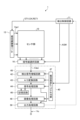
- FIG. 1 is a plan view illustrating a detection device according to a first embodiment.
- FIG. 2 is a block diagram showing an example of the configuration of the detection device according to the first embodiment.
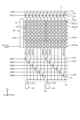
- FIG. 3 is a circuit diagram showing the detection device according to the first embodiment.
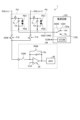
- FIG. 4 is a circuit diagram showing a sensor pixel and a detection circuit according to the first embodiment.
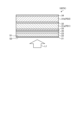
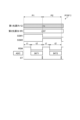
- FIG. 5 is a cross-sectional view that typically shows a cross section of the first photodiode and the second photodiode.
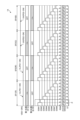
- FIG. 6 is a timing waveform diagram illustrating an example of the operation of the detection device according to the first embodiment.
- FIG. 7 is an enlarged timing waveform diagram showing a region P in FIG. FIG.
- FIG. 8 is a timing waveform diagram showing an example of the operation of the detection device according to the modified example.
- FIG. 9 is a circuit diagram showing a sensor pixel and a detection circuit of the detection device according to the second embodiment.
- FIG. 10 is a timing waveform diagram illustrating an example of the operation of the detection device according to the second embodiment.
- the term "on top” is used, unless otherwise specified, to include both a case in which another structure is placed directly on top of a structure so as to be in contact with the structure, and a case in which another structure is placed above a structure via yet another structure.
- First Embodiment 1 is a plan view showing a detection device according to the first embodiment.
- the detection device 1 of this embodiment has an OPD (Organic Photodiode) as an optical sensor, and is used in a color scanner, a digital camera, or the like that captures an image of a detection target.
- OPD Organic Photodiode
- the detection device 1 has a substrate 21, a sensor unit 10, a gate line driving circuit 15, a signal line selection circuit 16, a detection circuit 48, a control circuit 122, a power supply circuit 123, a first light source 51, and a second light source 52.
- the control board 121 is electrically connected to the board 21 via a wiring board 71.
- the wiring board 71 is, for example, a flexible printed circuit board or a rigid board.
- the wiring board 71 is provided with a detection circuit 48.
- the control board 121 is provided with a control circuit 122 and a power supply circuit 123.
- the control circuit 122 is, for example, an FPGA (Field Programmable Gate Array).
- the control circuit 122 supplies control signals to the sensor unit 10, the gate line driving circuit 15, and the signal line selection circuit 16 to control the detection operation of the sensor unit 10.
- the control circuit 122 also supplies control signals to the first light source 51 and the second light source 52 to control the lighting or non-lighting of each light-emitting element of the first light source 51 and the second light source 52.
- the power supply circuit 123 supplies voltage signals such as the drive voltage VDD-ORG (see FIG. 4) to the sensor unit 10, the gate line drive circuit 15, and the signal line selection circuit 16.
- the power supply circuit 123 also supplies a power supply voltage to the first light source 51 and the second light source 52.
- the substrate 21 has a detection area AA and a peripheral area GA.
- the detection area AA is an area in which the multiple photodiodes PD (see FIG. 4) of the sensor unit 10 are provided.
- the peripheral area GA is an area between the outer periphery of the detection area AA and the outer edge of the substrate 21, and is an area in which the multiple photodiodes PD are not provided.
- the gate line driving circuit 15 and the signal line selection circuit 16 are provided in the peripheral area GA. Specifically, the gate line driving circuit 15 is provided in a region of the peripheral area GA that extends along the second direction Dy. The signal line selection circuit 16 is provided in a region of the peripheral area GA that extends along the first direction Dx, and is provided between the sensor unit 10 and the detection circuit 48.
- the first direction Dx is a direction in a plane parallel to the substrate 21.
- the second direction Dy is a direction in a plane parallel to the substrate 21, and is a direction perpendicular to the first direction Dx.
- the second direction Dy may intersect the first direction Dx without being perpendicular to it.
- the third direction Dz is a direction perpendicular to the first direction Dx and the second direction Dy.
- the third direction Dz is the normal direction of the substrate 21.
- plane view refers to the positional relationship when viewed from a direction perpendicular to the substrate 21.
- the first light source 51 has a first light source substrate 57, and a plurality of first light-emitting elements 53 and a plurality of second light-emitting elements 54 provided on the first light source substrate 57.
- the first light source 51 is disposed along one side of the sensor unit 10, outside one side of the sensor unit 10 (the right side in FIG. 1).
- the plurality of first light-emitting elements 53 and the plurality of second light-emitting elements 54 are arranged alternately along one side of the sensor unit 10.
- the second light source 52 has a second light source substrate 58, and a plurality of third light-emitting elements 55 and a plurality of fourth light-emitting elements 56 provided on the second light source substrate 58.
- the second light source 52 is disposed outside the other side of the sensor unit 10 (the left side in FIG. 1) and along the other side of the sensor unit 10.
- the plurality of third light-emitting elements 55 and the plurality of fourth light-emitting elements 56 are arranged alternately along the other side of the sensor unit 10.
- the first light source 51 and the second light source 52 are electrically connected to the control circuit 122 and the power supply circuit 123 via terminals 124 and 125, respectively, provided on the control board 121.
- the first light-emitting elements 53, the second light-emitting elements 54, the third light-emitting elements 55, and the fourth light-emitting elements 56 are, for example, inorganic LEDs (Light Emitting Diodes) or organic ELs (OLEDs: Organic Light Emitting Diodes).
- the first light-emitting elements 53, the second light-emitting elements 54, the third light-emitting elements 55, and the fourth light-emitting elements 56 each emit light in a different wavelength range.
- the first light-emitting elements 53 emit light in a first wavelength region.
- the second light-emitting elements 54 emit light in a second wavelength region.
- the third light-emitting elements 55 emit light in a third wavelength region.
- the fourth light-emitting elements 56 emit light in a fourth wavelength region.
- the first wavelength region is the wavelength region of red light (hereinafter referred to as R).
- the second wavelength region is the wavelength region of green light (hereinafter referred to as G).
- the third wavelength region is the wavelength region of blue light (hereinafter referred to as B).
- the fourth wavelength region is the wavelength region of near-infrared light (hereinafter referred to as IR).
- the multiple first light sources 51 and the multiple second light sources 52 may have multiple LEDs that emit white light.
- the light emitted from the first light source 51 and the second light source 52 is reflected by the surface of the object to be detected and enters the sensor unit 10. This allows the sensor unit 10 to capture an image of the object to be detected.
- the arrangement of the light-emitting elements of the first light source 51 and the second light source 52 may be changed as appropriate.
- the multiple first light-emitting elements 53 may be arranged in a row along one side of the sensor unit 10
- the multiple second light-emitting elements 54 may be arranged in a row along the arrangement direction of the multiple first light-emitting elements 53, adjacent to the multiple first light-emitting elements 53.
- the multiple third light-emitting elements 55 may be arranged in a row along the other side of the sensor unit 10, and the multiple fourth light-emitting elements 56 may be arranged in a row along the arrangement direction of the multiple third light-emitting elements 55, adjacent to the multiple third light-emitting elements 55.
- FIG. 2 is a block diagram showing an example of the configuration of the detection device according to the first embodiment.
- the detection device 1 further includes a detection control circuit 11 and a detection unit 40. Some or all of the functions of the detection control circuit 11 are included in the control circuit 122. In addition, some or all of the functions of the detection unit 40 other than the detection circuit 48 are included in the control circuit 122.
- the sensor unit 10 has multiple photodiodes PD.
- the photodiodes PD of the sensor unit 10 output electrical signals corresponding to the irradiated light as output signals Vdet to the signal line selection circuit 16.
- the sensor unit 10 also performs detection according to the gate drive signal Vgcl supplied from the gate line drive circuit 15.
- the detection control circuit 11 is a circuit that supplies control signals to the gate line drive circuit 15, the signal line selection circuit 16, and the detection unit 40, respectively, and controls their operation.
- the detection control circuit 11 supplies various control signals, such as a start signal STV, a clock signal CK, and a reset signal RST1, to the gate line drive circuit 15.
- the detection control circuit 11 also supplies various control signals, such as a selection signal ASW, to the signal line selection circuit 16.
- the detection control circuit 11 also supplies various control signals to the first light source 51 and the second light source 52, and controls the lighting and non-lighting of each.
- the gate line driving circuit 15 is a circuit that drives multiple gate lines GCL (see FIG. 3) based on various control signals.
- the gate line driving circuit 15 selects multiple gate lines GCL sequentially or simultaneously, and supplies a gate driving signal Vgcl to the selected gate lines GCL. In this way, the gate line driving circuit 15 selects multiple photodiodes PD connected to the gate lines GCL.
- the signal line selection circuit 16 is a switch circuit that sequentially or simultaneously selects multiple signal lines SGL (see FIG. 3).
- the signal line selection circuit 16 is, for example, a multiplexer.
- the signal line selection circuit 16 connects the selected signal line SGL to the detection circuit 48 based on the selection signal ASW supplied from the detection control circuit 11. As a result, the signal line selection circuit 16 outputs the output signal Vdet of the photodiode PD to the detection unit 40.
- the detection unit 40 includes a detection circuit 48, a signal processing circuit 44, a memory circuit 46, a detection timing control circuit 47, an image processing circuit 49, and an output processing circuit 50.
- the detection timing control circuit 47 controls the detection circuit 48, the signal processing circuit 44, and the image processing circuit 49 to operate in synchronization based on a control signal supplied from the detection control circuit 11.
- the detection circuit 48 is, for example, an analog front-end circuit (AFE).
- the detection circuit 48 is a signal processing circuit having at least the functions of a detection signal amplifier circuit 42 and an A/D conversion circuit 43.
- the detection signal amplifier circuit 42 amplifies the output signal Vdet.
- the A/D conversion circuit 43 converts the analog signal output from the detection signal amplifier circuit 42 into a digital signal.
- the detection circuit 48 outputs red (R), green (G), and blue (B) color signals for each sensor pixel PX.
- the signal processing circuit 44 performs a predetermined correction on the color signals for red (R), green (G), and blue (B) received from the detection circuit 48. For example, the signal processing circuit 44 performs a predetermined correction on the color signals to suppress variations in the intensity of the light irradiated from the first light source 51 and the second light source 52 within the detection area AA and variations in the detection sensitivity of the photodiodes PD.
- the signal processing circuit 44 may also acquire output signals Vdet detected simultaneously by multiple photodiodes PD and perform a process of averaging these. In this case, the detection unit 40 suppresses noise and measurement errors caused by relative positional deviation between the detected object and the sensor unit 10, enabling stable detection.
- the memory circuit 46 temporarily stores the signal calculated by the signal processing circuit 44.
- the memory circuit 46 may be, for example, a RAM (Random Access Memory), a register circuit, etc.
- the image processing circuit 49 combines the output signals Vdet output from each photodiode PD of the sensor unit 10 to generate two-dimensional information of the image. Note that the image processing circuit 49 may output the output signal Vdet as the sensor output voltage Vo without calculating image data. Also, the image processing circuit 49 may not be included in the detection unit 40.
- the output processing circuit 50 functions as a processing unit that performs processing based on the outputs from the multiple photodiodes PD.
- the output processing circuit 50 may include two-dimensional information generated by the image processing circuit 49 in the sensor output voltage Vo.
- the functions of the output processing circuit 50 may be integrated into another configuration (e.g., the image processing circuit 49, etc.).
- FIG. 3 is a circuit diagram showing the detection device according to the first embodiment.
- the sensor unit 10 has a plurality of sensor pixels PX arranged in a matrix. Each of the plurality of sensor pixels PX is provided with a photodiode PD.
- the plurality of sensor pixels PX including the photodiode PD are arranged on a substrate 21.
- the photodiode PD is an OPD (Organic Photodiode) that uses an organic semiconductor.
- OPD Organic Photodiode
- the gate line GCL extends in the first direction Dx and is connected to a number of sensor pixels PX arranged in the first direction Dx.
- the gate lines GCL(1), GCL(2), ..., GCL(8) are arranged in the second direction Dy and are each connected to the gate line driving circuit 15.
- gate lines GCL when there is no need to distinguish between the gate lines GCL(1), GCL(2), ..., GCL(8), they are simply referred to as gate lines GCL.
- the signal line SGL extends in the second direction Dy and is connected to the photodiodes PD of the multiple sensor pixels PX arranged in the second direction Dy.
- the multiple signal lines SGL(1), SGL(2), ..., SGL(12) are arranged in the first direction Dx and are each connected to the signal line selection circuit 16 and the reset circuit 17.
- signal lines SGL when it is not necessary to distinguish between the multiple signal lines SGL(1), SGL(2), ..., SGL(12), they will simply be referred to as signal lines SGL.
- the sensor unit 10 is provided between the signal line selection circuit 16 and the reset circuit 17.
- the signal line selection circuit 16 and the reset circuit 17 may each be connected to the ends of the signal lines SGL in the same direction.
- the gate line driving circuit 15 receives various control signals, such as a start signal STV, a clock signal CK, and a reset signal RST1, from the control circuit 122 (see FIG. 1). Based on the various control signals, the gate line driving circuit 15 sequentially selects multiple gate lines GCL(1), GCL(2), ..., GCL(8) in a time-division multiplexing manner. The gate line driving circuit 15 supplies a gate driving signal Vgcl to the selected gate line GCL. As a result, the gate driving signal Vgcl is supplied to multiple transistors Tr connected to the gate line GCL, and multiple sensor pixels PX arranged in the first direction Dx are selected as detection targets.
- various control signals such as a start signal STV, a clock signal CK, and a reset signal RST1
- the signal line selection circuit 16 has a plurality of selection signal lines Lsel, a plurality of output signal lines Lout, and an output transistor TrS.
- the plurality of output transistors TrS are provided corresponding to the plurality of signal lines SGL, respectively.
- the six signal lines SGL(1), SGL(2), ..., SGL(6) are connected to a common output signal line Lout1.
- the six signal lines SGL(7), SGL(8), ..., SGL(12) are connected to a common output signal line Lout2.
- the output signal lines Lout1, Lout2 are each connected to a detection circuit 48.
- the signal lines SGL(1), SGL(2), ..., SGL(6) are defined as a first signal line block
- the signal lines SGL(7), SGL(8), ..., SGL(12) are defined as a second signal line block.
- the multiple selection signal lines Lsel are each connected to the gate of the output transistor TrS included in one signal line block. Furthermore, one selection signal line Lsel is connected to the gates of the output transistors TrS of the multiple signal line blocks.
- the control circuit 122 (see FIG. 1) sequentially supplies the selection signal ASW to the selection signal line Lsel.
- the signal line selection circuit 16 sequentially selects the signal lines SGL in one signal line block in a time-division manner by the operation of the output transistor TrS.
- the signal line selection circuit 16 also selects one signal line SGL in each of the multiple signal line blocks.
- the detection device 1 can reduce the number of ICs (Integrated Circuits) including the detection circuit 48, or the number of IC terminals.
- the signal line selection circuit 16 may also bundle multiple signal lines SGL and connect them to the detection circuit 48.
- the reset circuit 17 has a reference signal line Lvr, a reset signal line Lrst, and a reset transistor TrR.
- the reset transistor TrR is provided corresponding to the multiple signal lines SGL.
- the reference signal line Lvr is connected to one of the sources or drains of the multiple reset transistors TrR.
- the reset signal line Lrst is connected to the gates of the multiple reset transistors TrR.
- the control circuit 122 supplies a reset signal RST2 to the reset signal line Lrst. This turns on the multiple reset transistors TrR, and the multiple signal lines SGL are electrically connected to the reference signal line Lvr.
- the power supply circuit 123 supplies a reference potential COM to the reference signal line Lvr. This causes the reference potential COM to be supplied to the capacitive elements Ca included in the multiple sensor pixels PX.
- FIG. 4 is a circuit diagram showing a sensor pixel and a detection circuit according to the first embodiment. Note that FIG. 4 also shows the circuit configuration of the power supply circuit 123. FIG. 4 also shows two adjacent sensor pixels PX. The left sensor pixel PX is connected to a signal line SGL(n). The right sensor pixel PX is connected to a signal line SGL(n+1). The transistors Tr of the two adjacent sensor pixels PX are connected to a common gate line GCL (see FIG. 3). Each of the multiple sensor pixels PX has the same configuration. Note that in the following description, when there is no need to distinguish between the signal lines SGL(n) and SGL(n+1), they may simply be referred to as the signal line SGL.
- each sensor pixel PX includes a first photodiode PD1, a second photodiode PD2, a capacitance element Ca, and a transistor Tr.
- the first photodiode PD1 is sensitive to a first wavelength region (R) and a fourth wavelength region (IR) different from the first wavelength region (R).
- the second photodiode PD2 is sensitive to a second wavelength region (G) and a third wavelength region (B) different from the first wavelength region (R).
- the wavelength region (R, IR) to which the first photodiode PD1 is sensitive overlaps with a portion (R) of the wavelength region of the light emitted from the first light source 51 (first light-emitting element 53 (R) and second light-emitting element 54 (G)).
- the wavelength region (R, IR) to which the first photodiode PD1 is sensitive overlaps with a portion (IR) of the wavelength region of the light emitted from the second light source 52 (third light-emitting element 55 (B) and fourth light-emitting element 56 (IR)).
- the wavelength region (G, B) to which the second photodiode PD2 is sensitive overlaps with a portion (G) of the wavelength region of the light emitted from the first light source 51 (first light-emitting element 53 (R) and second light-emitting element 54 (G)).
- the wavelength region (G, B) to which the second photodiode PD2 is sensitive overlaps with a portion (B) of the wavelength region of the light emitted from the second light source 52 (third light-emitting element 55 (B) and fourth light-emitting element 56 (IR)).
- photodiode PD when there is no need to distinguish between the first photodiode PD1 and the second photodiode PD2, they may simply be referred to as photodiode PD.
- the first photodiode PD1 and the second photodiode PD2 are connected in series and in the opposite direction. Note that “connected in the opposite direction” refers to a connection configuration in which the rectification characteristics of the first photodiode PD1 and the second photodiode PD2 are in the opposite direction.
- the anode of the first photodiode PD1 and the anode of the second photodiode PD2 are electrically connected.
- One end of the first photodiode PD1 and the second photodiode PD2 connected in series, i.e., the cathode of the first photodiode PD1 is connected to the signal line SGL via the transistor Tr.
- the other end of the first photodiode PD1 and the second photodiode PD2 connected in series, i.e., the cathode of the second photodiode PD2 is electrically connected to the drive signal supply circuit 123a (power supply circuit 123) and is supplied with the drive voltage VDD-ORG.
- the capacitance element Ca is a capacitance (sensor capacitance) formed in the photodiode PD, and is equivalently connected in parallel with the photodiode PD (the first photodiode PD1 and the second photodiode PD2 connected in series).
- the capacitance element Ca is electrically connected to the cathode of the first photodiode PD1
- the other end of the capacitance element Ca is electrically connected to the cathode of the second photodiode PD2.
- the transistor Tr is provided corresponding to the photodiode PD (first photodiode PD1 and second photodiode PD2).
- the transistor Tr is composed of a thin film transistor, and in this example, is composed of an n-channel MOS (Metal Oxide Semiconductor) type TFT (Thin Film Transistor).
- the gate of the transistor Tr is connected to the gate line GCL (see FIG. 3).
- the source of the transistor Tr is connected to the signal line SGL.
- the drain of the transistor Tr is connected to the cathode of the first photodiode PD1 and one end of the capacitance element Ca.
- the signal line SGL (signal line SGL(n), signal line SGL(n+1)) and the cathode of the first photodiode PD1 are supplied with a reference potential COM, which is the initial potential of the signal line SGL and each photodiode PD, from the power supply circuit 123.
- a bias voltage VB is supplied to each photodiode PD using the drive voltage VDD-ORG and the reference potential COM.
- the drive voltage VDD-ORG is supplied to the other end side of the first photodiode PD1 and second photodiode PD2 connected in series, i.e., the cathode of the second photodiode PD2, and the reference potential COM is supplied to one end side of the first photodiode PD1 and second photodiode PD2 connected in series, i.e., the cathode of the first photodiode PD1.
- One of the first photodiode PD1 and the second photodiode PD2 connected in series is forward biased and the other is reverse biased, so different voltages are applied to the first photodiode PD1 and the second photodiode PD2.
- the second voltage signal supply circuit 123L is a circuit that supplies a second voltage signal VL having a lower voltage level than the reference potential COM.
- the switch BSW is a switch element that switches the connection state between the first voltage signal supply circuit 123H and the second voltage signal supply circuit 123L and each photodiode PD of the sensor pixel PX.
- the drive signal supply circuit 123a supplies the first voltage signal VH and the second voltage signal VL to each photodiode PD of the sensor pixel PX in a time-division manner.
- the polarity of the drive voltage VDD-ORG supplied to the first photodiode PD1 and the second photodiode PD2 connected in series is alternately switched for each period.
- one of the first photodiode PD1 and the second photodiode PD2 is reverse-bias driven and set to an active state.
- the "active state” refers to a state in which a reverse bias voltage is supplied to the photodiode PD and irradiated light can be detected.
- the first photodiode PD1 is driven with a forward bias
- the second photodiode PD2 is driven with a reverse bias.
- the second photodiode PD2 detects light in the second wavelength region (G) and light in the third wavelength region (B), and a forward current flows through the first photodiode PD1.
- the first photodiode PD1 is refreshed in synchronization with the detection period during which the second photodiode PD2 performs detection.
- a "refresh operation” refers to an operation of returning the characteristics of the OPD to their initial state by passing a forward bias current through the photodiode PD.
- the first photodiode PD1 when the second voltage signal VL (VL ⁇ COM) is supplied from the drive signal supply circuit 123a to the cathode of the second photodiode PD2, the first photodiode PD1 is driven with a reverse bias, and the second photodiode PD2 is driven with a forward bias.
- the first photodiode PD1 detects light in the first wavelength region (R) and light in the fourth wavelength region (IR), and a forward current flows through the second photodiode PD2, thereby performing a refresh.
- the detection device 1 detects red light (R) and near-infrared light (IR) using the first photodiode PD1, and detects green light (G) and blue light (B) using the second photodiode PD2 in a time-division manner with one sensor pixel PX.
- a current corresponding to the amount of light irradiated flows through the photodiode PD (the photodiode PD that is reverse-bias driven among the first photodiode PD1 and the second photodiode PD2), causing charge to accumulate in the capacitance element Ca.
- the transistor Tr When the transistor Tr is turned on, a current flows through the signal line SGL according to the charge accumulated in the capacitance element Ca.
- the signal line SGL is electrically connected to the detection circuit 48 via the output transistor TrS of the signal line selection circuit 16. This allows the detection device 1 to detect a signal corresponding to the amount of light irradiated onto each photodiode PD for each sensor pixel PX.
- the switch SSW of the detection circuit 48 is turned on and connected to the signal line SGL.
- the detection signal amplifier circuit 42 of the detection circuit 48 converts the current or charge supplied from the signal line SGL into a voltage corresponding to the current or charge.
- a reference potential (Vref) having a fixed potential is input to the non-inverting input section (+) of the detection signal amplifier circuit 42, and the signal line SGL is connected to the inverting input section (-).
- a signal that is the same as the reference potential COM is input as the reference potential (Vref).
- the signal processing circuit 44 calculates the difference between the output signal Vdet when light is irradiated and the output signal Vdet when light is not irradiated as the sensor output voltage Vo.
- the detection signal amplifier circuit 42 also has a capacitance element Cb and a reset switch RSW. During the reset period, the reset switch RSW is turned on, and the charge of the capacitance element Cb is reset.
- FIG. 5 is a cross-sectional view that shows a schematic cross section of the first photodiode and the second photodiode.
- the first photodiode PD1 and the second photodiode PD2 of the sensor unit 10 are stacked on the substrate 21 in the following order: the lower electrode 35, the lower buffer layer 33, the first active layer 31a, the upper buffer layer 32, the second active layer 31b, and the upper electrode 34.
- the sensor unit 10 includes a circuit formation layer 22 and an insulating layer 23 between the substrate 21 and the lower electrode 35 of the photodiode PD.
- the sensor unit 10 may also include a sealing layer or a protective layer on the upper electrode 34 as necessary.
- the substrate 21 is an insulating base material, and for example, glass or a resin material is used.
- the substrate 21 is not limited to a flat plate shape, and may have a curved surface. In this case, the substrate 21 may be a film-like resin.
- the substrate 21 has a first surface S1 and a second surface S2 opposite the first surface S1.
- a circuit formation layer 22, an insulating layer 23, a lower electrode 35, a lower buffer layer 33, a first active layer 31a, an upper buffer layer 32, a second active layer 31b, and an upper electrode 34 are laminated in this order.
- a configuration in which light L1 is irradiated to the photodiode PD from the second surface S2 side will be described. However, this is not limited to this, and a configuration in which light L1 is irradiated to the photodiode PD from the first surface S1 side may also be used.
- the circuit formation layer 22 is provided with circuits such as the gate line driving circuit 15 and signal line selection circuit 16 described above.
- the circuit formation layer 22 is provided with various wiring such as TFTs such as transistors Tr that the sensor pixels PX have, gate lines GCL, and signal lines SGL.
- the substrate 21 and the circuit formation layer 22 are a drive circuit board that drives the sensors for each predetermined detection area, and are also called a backplane or array board.
- the insulating layer 23 is an organic insulating layer that is provided on the circuit-forming layer 22.
- the insulating layer 23 is a planarizing layer that flattens irregularities formed by the transistors Tr and various conductive layers formed on the circuit-forming layer 22.
- the lower electrode 35 is provided on the insulating layer 23 and is electrically connected to the transistor Tr of the circuit formation layer 22 through a contact hole (not shown).
- the lower electrode 35 is the cathode of the first photodiode PD1 and is an electrode for reading out the output signal Vdet.
- the lower electrode 35 is formed of a conductive material having translucency, such as ITO (Indium Tin Oxide).
- the characteristics (e.g., voltage-current characteristics and resistance value) of the first active layer 31a and the second active layer 31b change depending on the light irradiated.
- Organic materials are used as the materials for the first active layer 31a and the second active layer 31b.
- the first active layer 31a and the second active layer 31b are bulk heterostructures in which p-type organic semiconductors and n-type organic semiconductors are mixed.
- the first active layer 31a (first photodiode PD1) has sensitivity in the first wavelength region (R) and the fourth wavelength region (IR).
- the first active layer 31a is formed by mixing PCDTBT:PC70BM and DPP-DTT:PC70BM.
- PCDTBT:PC70BM is a blend of poly(N-9'-heptadecanyl-2,7-carbazole-ortho-5.5) and (4',7'-di-2-phenyl-2',1',3' methyl butyrate).
- DPP-DTT:PC70BM is a blend of diketopyrrolopyrrole-dichlorodiphenyltrichloroethane and (4',7'-di-2-phenyl-2',1',3' methyl butyrate).
- the second active layer 31b (second photodiode PD2) has sensitivity in the second wavelength region (G) and the third wavelength region (B)
- the second active layer 31b is made of 1a:C 60 (fullerene), which is a low molecular weight organic material.
- the materials for the first active layer 31a and the second active layer 31b are merely examples, and other materials may be used depending on the wavelength range to be detected, or the above-mentioned materials may be combined with other materials.
- the upper electrode 34 is the cathode of the second photodiode PD2, and is an electrode for supplying the drive voltage VDD-ORG to the photodiode PD.
- the upper electrode 34 and the lower electrode 35 face each other with the first active layer 31a and the second active layer 31b in between.
- the upper electrode 34 is made of, for example, aluminum (Al).
- the upper electrode 34 may be made of a metal material such as silver (Ag), or an alloy material containing at least one of these metal materials.
- the lower buffer layer 33 and the upper buffer layer 32 are provided to facilitate the holes and electrons generated in the first active layer 31a and the second active layer 31b reaching the upper electrode 34 or the lower electrode 35.
- the lower buffer layer 33 is an electron transport layer, and is provided between the lower electrode 35 and the first active layer 31a in a direction perpendicular to the first surface S1 of the substrate 21.
- the material used for the lower buffer layer 33 is, for example, ethoxylated polyethyleneimine (PEIE).
- the upper buffer layer 32 is a hole transport layer, and is provided between the first active layer 31a and the second active layer 31b in a direction perpendicular to the first surface S1 of the substrate 21.
- the upper buffer layer 32 is made of a polythiophene-based conductive polymer (PEDOT (Poly(3,4-ethylenedioxythiophene)):PSS (poly(styrene sulfonate))).
- PEDOT Poly(3,4-ethylenedioxythiophene)
- PSS poly(styrene sulfonate)
- the upper buffer layer 32 is shared by the first photodiode PD1 and the second photodiode PD2.
- a configuration has been described in which light L1 is irradiated onto the photodiode PD from the second surface S2 side, but light L1 may be irradiated onto the photodiode PD from the first surface S1 side.
- a light-transmitting conductive material such as ITO is used as the upper electrode 34
- a metal material such as aluminum or silver is used as the lower electrode 35.
- the upper electrode 34 may be made light-transmitting by forming a thin film of the metal material.
- FIG. 6 is a timing waveform diagram showing an example of the operation of the detection device according to the first embodiment.
- FIG. 7 is a timing waveform diagram showing an enlarged view of region P in FIG. 6.
- the detection device 1 divides one frame period during which the photodiode PD in the detection area AA is scanned into multiple subframe periods SF, and detects light in different wavelength regions for each of the multiple subframe periods SF.
- the detection device 1 has a first period SF1, a second period SF2, a third period SF3, and a fourth period SF4 as multiple subframe periods SF.
- the detection device 1 detects light (R) in the first wavelength region in the first period SF1.
- the detection device 1 detects light (G) in the second wavelength region in the second period SF2.
- the detection device 1 detects light (B) in the third wavelength region in the third period SF3.
- the detection device 1 detects light (IR) in the fourth wavelength region in the fourth period SF4.
- the detection device 1 controls the driving (active state, inactive state) of the first photodiode PD1 and the second photodiode PD2 for each of a plurality of subframe periods SF.
- the detection device 1 also controls the driving (lighting, non-lighting) of the first light source 51 and the second light source 52 for each of a plurality of subframe periods SF.
- the drive signal supply circuit 123a supplies the second voltage signal VL as the drive voltage VDD-ORG. This causes the first photodiode PD1 to be reverse bias driven, and the second photodiode PD2 to be forward bias driven.
- the first light source 51 is turned on (ON) and the second light source 52 is turned off (OFF) based on a control signal from the control circuit 122.
- the first light source 51 has a plurality of first light-emitting elements 53 that emit light in the first wavelength region (R), and a plurality of second light-emitting elements 54 that emit light in the second wavelength region (G).
- the first photodiode PD1 which is in an active state in the first period SF1, is sensitive to light (R) in the first wavelength region of the wavelength region of the light emitted from the first light source 51, and is not sensitive (has low sensitivity) to light (G) in the second wavelength region. This allows the detection device 1 to detect light (R) in the first wavelength region in the first period SF1.
- the first light source 51 does not need to individually control the lighting and non-lighting of the multiple first light-emitting elements 53 and the multiple second light-emitting elements 54, and lights up the multiple first light-emitting elements 53 and the multiple second light-emitting elements 54 simultaneously.
- FIG. 6 shows an example in which a detection circuit 48 is connected to each of multiple signal line blocks.
- the selection signals ASW is on in each signal line block.
- the switches SSW1, SSW2, ..., SSW8 of each of the multiple detection circuits 48 are turned on sequentially in a time-division manner.
- the multiple detection circuits 48 corresponding to each of the switches SSW1, SSW2, ..., SSW8 are connected to the signal line SGL.
- switch SSW1 is turned on in partial period P1
- switch SSW2 is turned on in partial period P2.
- Partial periods P1 and P2 each have a reset period t1 and a readout period t2.
- the reset period t1 the reset switch RSW of the detection circuit 48 is turned on, and the charge of the capacitance element Cb is reset.
- the readout period t2 signal processing is performed by the detection signal amplifier circuit 42 and A/D conversion circuit 43 of the detection circuit 48, and the sensor output voltage Vo is output.
- the on/off of switches SSW1 and SSW2 in each partial period P1 and P2 is controlled based on a control signal ST from the control circuit 122.
- the drive signal supply circuit 123a supplies the first voltage signal VH as the drive voltage VDD-ORG. This causes the first photodiode PD1 to be driven with a forward bias, and the second photodiode PD2 to be driven with a reverse bias.
- the first light source 51 is turned on (ON) and the second light source 52 is turned off (OFF) based on a control signal from the control circuit 122.
- the driving of the first light source 51 and the second light source 52 is maintained in the same state throughout the first period SF1 and the second period SF2. That is, the multiple first light-emitting elements 53 of the first light source 51 emit light in the first wavelength region (R), and the multiple second light-emitting elements 54 emit light in the second wavelength region (G).
- the second photodiode PD2 which is in an active state in the second period SF2, is sensitive to light (G) in the second wavelength region of the wavelength region of the light emitted from the first light source 51, and is not sensitive (has low sensitivity) to light (R) in the first wavelength region.
- the first light source 51 does not need to individually control the lighting and non-lighting of the multiple first light-emitting elements 53 and the multiple second light-emitting elements 54, and lights up the multiple first light-emitting elements 53 and the multiple second light-emitting elements 54 simultaneously, continuing from the first period SF1.
- the drive signal supply circuit 123a supplies the first voltage signal VH as the drive voltage VDD-ORG.
- the drive of the first photodiode PD1 and the second photodiode PD2 is maintained in the same state throughout the second period SF2 and the third period SF3. That is, the first photodiode PD1 is driven with a forward bias, and the second photodiode PD2 is driven with a reverse bias.
- the first light source 51 is turned off (OFF) and the second light source 52 is turned on (ON) based on a control signal from the control circuit 122.
- the multiple third light-emitting elements 55 of the second light source 52 emit light in the third wavelength region (B), and the multiple fourth light-emitting elements 56 emit light in the fourth wavelength region (IR).
- the second photodiode PD2 which is in an active state in the third period SF3, is sensitive to light (B) in the third wavelength region among the wavelength regions of the light emitted from the second light source 52, and is not sensitive (has low sensitivity) to light (IR) in the fourth wavelength region.
- the detection device 1 detects light (B) in the third wavelength region in the third period SF3.
- the second light source 52 does not need to individually control the lighting and non-lighting of the multiple third light-emitting elements 55 and the multiple fourth light-emitting elements 56, and lights up the multiple third light-emitting elements 55 and the multiple fourth light-emitting elements 56 simultaneously.
- the drive signal supply circuit 123a supplies the second voltage signal VL as the drive voltage VDD-ORG. This causes the first photodiode PD1 to be reverse bias driven, and the second photodiode PD2 to be forward bias driven.
- the first light source 51 is turned off (OFF) and the second light source 52 is turned on (ON) based on a control signal from the control circuit 122.
- the driving of the first light source 51 and the second light source 52 is maintained in the same state throughout the third period SF3 and the fourth period SF4. That is, the multiple third light-emitting elements 55 of the second light source 52 emit light in the third wavelength region (B), and the multiple fourth light-emitting elements 56 emit light in the fourth wavelength region (IR).
- the first photodiode PD1 which becomes active in the fourth period SF4, is sensitive to light (IR) in the fourth wavelength region among the wavelength regions of the light emitted from the second light source 52, and is not sensitive (has low sensitivity) to light (B) in the third wavelength region.
- the second light source 52 does not need to individually control the lighting and non-lighting of the multiple third light-emitting elements 55 and the multiple fourth light-emitting elements 56, and lights up the multiple third light-emitting elements 55 and the multiple fourth light-emitting elements 56 simultaneously, continuing from the third period SF3.
- the detection device 1 can detect light in different wavelength regions with one sensor pixel PX by combining the driving of the first photodiode PD1 and the second photodiode PD2 with the driving of the first light source 51 and the second light source 52 in each period.
- the arrangement pitch of the sensor pixels PX can be made smaller, and detection can be made more precise.
- the active states of the first photodiode PD1 and the second photodiode PD2 can be controlled simply by switching the polarity of the drive voltage VDD-ORG. In other words, it is easier to control the first photodiode PD1 and the second photodiode PD2 than to control the active states of the four photodiodes PD corresponding to the four different wavelength regions of light.
- the two first light sources 51 and the two second light sources 52 are controlled to be turned on or off, thereby making it possible to detect light in four different wavelength regions. More specifically, in the first light source 51, the turning on or off of the multiple first light-emitting elements 53 and the multiple second light-emitting elements 54 is controlled synchronously. In addition, in the second light source 52, the turning on or off of the multiple third light-emitting elements 55 and the multiple fourth light-emitting elements 56 is controlled synchronously.
- the configurations of the first photodiode PD1 and the second photodiode PD2 shown in FIG. 5 and the like and the operation examples shown in FIG. 6 and FIG. 7 are merely examples and can be modified as appropriate.
- the first photodiode PD1 has been described as being sensitive to the first wavelength region (R) and the fourth wavelength region (IR), but is not limited to this. It is sufficient that the first photodiode PD1 has sensitivity to at least the first wavelength region (R).
- the first active layer 31a of the first photodiode PD1 only needs to have sensitivity in the first wavelength region (R).
- the first active layer 31a may be made of PCDTBT:PC70BM and may not have DPP-DTT:PC70BM.
- the second active layer 31b of the second photodiode PD2 has sensitivity in the second wavelength region (G) and the third wavelength region (B) as in the above example.
- the second active layer 31b is made of 1a:C 60 (fullerene).
- the second light source 52 may have at least the third light-emitting element 55 that emits light in the third wavelength region (B), and may not have the fourth light-emitting element 56 that emits light in the fourth wavelength region (IR).
- the detection device 1 can omit the fourth period SF4. That is, in the first period SF1 in which the first photodiode PD1 is reverse-bias driven, the first light source 51 is turned on, and the second light source 52 is turned off.
- the detection device 1 can detect light in the first wavelength region (R), light in the second wavelength region (G), and light in the third wavelength region (B) in the first period SF1, the second period SF2, and the third period SF3, respectively.
- Modification 8 is a timing waveform diagram showing an example of the operation of the detection device according to the modified example.
- the same components as those described in the above embodiment are denoted by the same reference numerals, and duplicated descriptions are omitted.
- the detection device 1A in the first period SF1, the first photodiode PD1 is reverse bias driven, the first light source 51 is turned on, and the second light source 52 is turned off.
- the detection device 1A detects light (R) in the first wavelength region in the first period SF1. Note that the operation of the first period SF1 of the modified example is the same as the first period SF1 of the first embodiment described above, and a repeated explanation will be omitted.
- the first photodiode PD1 is reverse bias driven, the second light source 52 is turned on, and the first light source 51 is turned off.
- the detection device 1A detects light in the fourth wavelength region (IR) during the second period SF2. Note that the operation of the second period SF2 of the modified example is the same as that of the fourth period SF4 of the first embodiment described above, and a repeated explanation will be omitted.
- the second photodiode PD2 is reverse bias driven, the first light source 51 is turned on, and the second light source 52 is turned off.
- the detection device 1A detects light in the second wavelength region (G) during the third period SF3. Note that the operation of the third period SF3 of the modified example is the same as that of the second period SF2 of the first embodiment described above, and a repeated explanation will be omitted.
- the second photodiode PD2 is reverse bias driven, the second light source 52 is turned on, and the first light source 51 is turned off.
- the detection device 1A detects light (B) in the third wavelength region during the fourth period SF4. Note that the operation of the fourth period SF4 of the modified example is the same as that of the third period SF3 of the first embodiment described above, and a repeated explanation will be omitted.
- the order of detection of light in the first wavelength region (R), light in the second wavelength region (G), light in the third wavelength region (B), and light in the fourth wavelength region (IR) is not limited to the examples shown in Figures 6 and 8, and may be any order.
- Second Embodiment Fig. 9 is a circuit diagram showing a sensor pixel and a detection circuit of the detection device according to the second embodiment
- Fig. 10 is a timing waveform diagram showing an operation example of the detection device according to the second embodiment.
- the sensor pixel PX has a first photodiode PD1 and does not have a second photodiode PD2. That is, the cathode of the first photodiode PD1 is connected to the signal line SGL via the transistor Tr.
- the anode of the first photodiode PD1 is electrically connected to the drive signal supply circuit 123a (power supply circuit 123) and is supplied with the drive voltage VDD-ORG.
- the drive signal supply circuit 123a supplies a first voltage signal VH (VH>COM) to the anode of the first photodiode PD1, the first photodiode PD1 is forward bias driven and the first photodiode PD1 is refreshed.
- the drive signal supply circuit 123a supplies a second voltage signal VL (VL ⁇ COM) to the anode of the first photodiode PD1, the first photodiode PD1 is reverse bias driven and becomes active. In this case, the first photodiode PD1 detects light in the first wavelength region (R) and light in the fourth wavelength region (IR).
- the detection device 1B in the first period SF1, the first photodiode PD1 is reverse bias driven, the first light source 51 is turned on, and the second light source 52 is turned off.
- the detection device 1B detects light (R) in the first wavelength region in the first period SF1.
- the first photodiode PD1 is reverse bias driven, the second light source 52 is turned on, and the first light source 51 is turned off.
- the detection device 1B detects light in the fourth wavelength region (IR) during the second period SF2.
- the detection device 1B can detect light in two different wavelength regions (R, IR) using one first photodiode PD1 and two light sources (first light source 51 and second light source 52).
- a configuration having a second photodiode PD2 can be adopted instead of the first photodiode PD1.
- VH voltage signal
- the second photodiode PD2 is reverse bias driven and becomes active.
- first light source 51 and second light source 52 light in two different wavelength regions (blue and green) can be detected.
- Detector 10 Sensor section 21 Substrate 31a First active layer 31b Second active layer 32 Upper buffer layer 33 Lower buffer layer 34 Upper electrode 35 Lower electrode 48 Detection circuit 51 First light source 52 Second light source 53 First light emitting element 54 Second light emitting element 55 Third light emitting element 56 Fourth light emitting element PD Photodiode PD1 First photodiode PD2 Second photodiode PX Sensor pixel Tr Transistor
Landscapes
- Physics & Mathematics (AREA)
- General Physics & Mathematics (AREA)
- Spectroscopy & Molecular Physics (AREA)
- Electromagnetism (AREA)
- Engineering & Computer Science (AREA)
- Multimedia (AREA)
- Theoretical Computer Science (AREA)
- Solid State Image Pick-Up Elements (AREA)
Priority Applications (2)
| Application Number | Priority Date | Filing Date | Title |
|---|---|---|---|
| JP2025508343A JPWO2024195634A1 (https=) | 2023-03-23 | 2024-03-12 | |
| US19/332,390 US20260016332A1 (en) | 2023-03-23 | 2025-09-18 | Detection device |
Applications Claiming Priority (2)
| Application Number | Priority Date | Filing Date | Title |
|---|---|---|---|
| JP2023046331 | 2023-03-23 | ||
| JP2023-046331 | 2023-03-23 |
Related Child Applications (1)
| Application Number | Title | Priority Date | Filing Date |
|---|---|---|---|
| US19/332,390 Continuation US20260016332A1 (en) | 2023-03-23 | 2025-09-18 | Detection device |
Publications (1)
| Publication Number | Publication Date |
|---|---|
| WO2024195634A1 true WO2024195634A1 (ja) | 2024-09-26 |
Family
ID=92841447
Family Applications (1)
| Application Number | Title | Priority Date | Filing Date |
|---|---|---|---|
| PCT/JP2024/009595 Ceased WO2024195634A1 (ja) | 2023-03-23 | 2024-03-12 | 検出装置 |
Country Status (3)
| Country | Link |
|---|---|
| US (1) | US20260016332A1 (https=) |
| JP (1) | JPWO2024195634A1 (https=) |
| WO (1) | WO2024195634A1 (https=) |
Citations (5)
| Publication number | Priority date | Publication date | Assignee | Title |
|---|---|---|---|---|
| JPH0589230A (ja) * | 1991-09-30 | 1993-04-09 | Fuji Xerox Co Ltd | 画像読み取り/表示装置 |
| JP2004179244A (ja) * | 2001-09-28 | 2004-06-24 | Tai-Her Yang | トランジスタの光エネルギーを電気エネルギーに変換する駆動電気回路 |
| JP2010535594A (ja) * | 2007-08-08 | 2010-11-25 | ノーニン メディカル, インコーポレイテッド | 生理学的データおよび生物測定学的識別を提供するセンサーおよびシステム |
| US20150129747A1 (en) * | 2013-11-12 | 2015-05-14 | Intrinsix Corporation | Stacked photodiode multispectral imager |
| WO2022163681A1 (ja) * | 2021-01-26 | 2022-08-04 | 株式会社ジャパンディスプレイ | 検出装置 |
-
2024
- 2024-03-12 WO PCT/JP2024/009595 patent/WO2024195634A1/ja not_active Ceased
- 2024-03-12 JP JP2025508343A patent/JPWO2024195634A1/ja active Pending
-
2025
- 2025-09-18 US US19/332,390 patent/US20260016332A1/en active Pending
Patent Citations (5)
| Publication number | Priority date | Publication date | Assignee | Title |
|---|---|---|---|---|
| JPH0589230A (ja) * | 1991-09-30 | 1993-04-09 | Fuji Xerox Co Ltd | 画像読み取り/表示装置 |
| JP2004179244A (ja) * | 2001-09-28 | 2004-06-24 | Tai-Her Yang | トランジスタの光エネルギーを電気エネルギーに変換する駆動電気回路 |
| JP2010535594A (ja) * | 2007-08-08 | 2010-11-25 | ノーニン メディカル, インコーポレイテッド | 生理学的データおよび生物測定学的識別を提供するセンサーおよびシステム |
| US20150129747A1 (en) * | 2013-11-12 | 2015-05-14 | Intrinsix Corporation | Stacked photodiode multispectral imager |
| WO2022163681A1 (ja) * | 2021-01-26 | 2022-08-04 | 株式会社ジャパンディスプレイ | 検出装置 |
Also Published As
| Publication number | Publication date |
|---|---|
| US20260016332A1 (en) | 2026-01-15 |
| JPWO2024195634A1 (https=) | 2024-09-26 |
Similar Documents
| Publication | Publication Date | Title |
|---|---|---|
| JP7708400B2 (ja) | 検出装置 | |
| EP1444683B1 (en) | Display driver circuits for electro-optic displays | |
| EP3779948B1 (en) | Pixel circuit and driving method therefor, and display panel | |
| US11783620B2 (en) | Display device | |
| US11315990B2 (en) | AMOLED display panel having image scanning function | |
| US11436859B2 (en) | Fingerprint detection device and display device with fingerprint detection device | |
| JP7751416B2 (ja) | 検出装置 | |
| JP7529906B2 (ja) | 検出装置 | |
| JP2009253683A (ja) | 光センサ | |
| JP7818127B2 (ja) | 検出装置 | |
| US12514092B2 (en) | Detection device and imaging device | |
| CN115335849A (zh) | 检测装置、指纹检测装置以及静脉检测装置 | |
| US12237346B2 (en) | Detection device with stacked photodiodes | |
| CN116134620A (zh) | 检测装置 | |
| US20250237547A1 (en) | Detection device | |
| US20240324259A1 (en) | Detection device | |
| WO2024195634A1 (ja) | 検出装置 | |
| JP7806101B2 (ja) | 検出装置 | |
| JP2023068878A (ja) | 検出装置 | |
| US20250311524A1 (en) | Detection device | |
| WO2024117209A1 (ja) | 検出装置 | |
| WO2026075082A1 (ja) | 検出装置 | |
| WO2024135768A1 (ja) | 検出装置 | |
| HK1069000B (en) | Display driver circuits for electro-optic displays |
Legal Events
| Date | Code | Title | Description |
|---|---|---|---|
| 121 | Ep: the epo has been informed by wipo that ep was designated in this application |
Ref document number: 24774773 Country of ref document: EP Kind code of ref document: A1 |
|
| ENP | Entry into the national phase |
Ref document number: 2025508343 Country of ref document: JP Kind code of ref document: A |
|
| WWE | Wipo information: entry into national phase |
Ref document number: 2025508343 Country of ref document: JP |
|
| NENP | Non-entry into the national phase |
Ref country code: DE |
|
| 122 | Ep: pct application non-entry in european phase |
Ref document number: 24774773 Country of ref document: EP Kind code of ref document: A1 |