WO2024190409A1 - 樹脂組成物およびその製造方法 - Google Patents
樹脂組成物およびその製造方法 Download PDFInfo
- Publication number
- WO2024190409A1 WO2024190409A1 PCT/JP2024/007244 JP2024007244W WO2024190409A1 WO 2024190409 A1 WO2024190409 A1 WO 2024190409A1 JP 2024007244 W JP2024007244 W JP 2024007244W WO 2024190409 A1 WO2024190409 A1 WO 2024190409A1
- Authority
- WO
- WIPO (PCT)
- Prior art keywords
- resin composition
- fibrous filler
- maleic anhydride
- organic fibrous
- thermoplastic resin
- Prior art date
- Legal status (The legal status is an assumption and is not a legal conclusion. Google has not performed a legal analysis and makes no representation as to the accuracy of the status listed.)
- Ceased
Links
Images



Classifications
-
- C—CHEMISTRY; METALLURGY
- C08—ORGANIC MACROMOLECULAR COMPOUNDS; THEIR PREPARATION OR CHEMICAL WORKING-UP; COMPOSITIONS BASED THEREON
- C08J—WORKING-UP; GENERAL PROCESSES OF COMPOUNDING; AFTER-TREATMENT NOT COVERED BY SUBCLASSES C08B, C08C, C08F, C08G or C08H
- C08J3/00—Processes of treating or compounding macromolecular substances
- C08J3/20—Compounding polymers with additives, e.g. colouring
- C08J3/205—Compounding polymers with additives, e.g. colouring in the presence of a continuous liquid phase
- C08J3/21—Compounding polymers with additives, e.g. colouring in the presence of a continuous liquid phase the polymer being premixed with a liquid phase
- C08J3/215—Compounding polymers with additives, e.g. colouring in the presence of a continuous liquid phase the polymer being premixed with a liquid phase at least one additive being also premixed with a liquid phase
-
- C—CHEMISTRY; METALLURGY
- C08—ORGANIC MACROMOLECULAR COMPOUNDS; THEIR PREPARATION OR CHEMICAL WORKING-UP; COMPOSITIONS BASED THEREON
- C08B—POLYSACCHARIDES; DERIVATIVES THEREOF
- C08B3/00—Preparation of cellulose esters of organic acids
- C08B3/08—Preparation of cellulose esters of organic acids of monobasic organic acids with three or more carbon atoms, e.g. propionate or butyrate
- C08B3/10—Preparation of cellulose esters of organic acids of monobasic organic acids with three or more carbon atoms, e.g. propionate or butyrate with five or more carbon-atoms, e.g. valerate
-
- C—CHEMISTRY; METALLURGY
- C08—ORGANIC MACROMOLECULAR COMPOUNDS; THEIR PREPARATION OR CHEMICAL WORKING-UP; COMPOSITIONS BASED THEREON
- C08B—POLYSACCHARIDES; DERIVATIVES THEREOF
- C08B3/00—Preparation of cellulose esters of organic acids
- C08B3/12—Preparation of cellulose esters of organic acids of polybasic organic acids
-
- C—CHEMISTRY; METALLURGY
- C08—ORGANIC MACROMOLECULAR COMPOUNDS; THEIR PREPARATION OR CHEMICAL WORKING-UP; COMPOSITIONS BASED THEREON
- C08J—WORKING-UP; GENERAL PROCESSES OF COMPOUNDING; AFTER-TREATMENT NOT COVERED BY SUBCLASSES C08B, C08C, C08F, C08G or C08H
- C08J3/00—Processes of treating or compounding macromolecular substances
- C08J3/12—Powdering or granulating
-
- C—CHEMISTRY; METALLURGY
- C08—ORGANIC MACROMOLECULAR COMPOUNDS; THEIR PREPARATION OR CHEMICAL WORKING-UP; COMPOSITIONS BASED THEREON
- C08J—WORKING-UP; GENERAL PROCESSES OF COMPOUNDING; AFTER-TREATMENT NOT COVERED BY SUBCLASSES C08B, C08C, C08F, C08G or C08H
- C08J5/00—Manufacture of articles or shaped materials containing macromolecular substances
- C08J5/04—Reinforcing macromolecular compounds with loose or coherent fibrous material
- C08J5/045—Reinforcing macromolecular compounds with loose or coherent fibrous material with vegetable or animal fibrous material
-
- C—CHEMISTRY; METALLURGY
- C08—ORGANIC MACROMOLECULAR COMPOUNDS; THEIR PREPARATION OR CHEMICAL WORKING-UP; COMPOSITIONS BASED THEREON
- C08J—WORKING-UP; GENERAL PROCESSES OF COMPOUNDING; AFTER-TREATMENT NOT COVERED BY SUBCLASSES C08B, C08C, C08F, C08G or C08H
- C08J5/00—Manufacture of articles or shaped materials containing macromolecular substances
- C08J5/04—Reinforcing macromolecular compounds with loose or coherent fibrous material
- C08J5/06—Reinforcing macromolecular compounds with loose or coherent fibrous material using pretreated fibrous materials
-
- C—CHEMISTRY; METALLURGY
- C08—ORGANIC MACROMOLECULAR COMPOUNDS; THEIR PREPARATION OR CHEMICAL WORKING-UP; COMPOSITIONS BASED THEREON
- C08K—Use of inorganic or non-macromolecular organic substances as compounding ingredients
- C08K5/00—Use of organic ingredients
- C08K5/04—Oxygen-containing compounds
- C08K5/09—Carboxylic acids; Metal salts thereof; Anhydrides thereof
- C08K5/092—Polycarboxylic acids
-
- C—CHEMISTRY; METALLURGY
- C08—ORGANIC MACROMOLECULAR COMPOUNDS; THEIR PREPARATION OR CHEMICAL WORKING-UP; COMPOSITIONS BASED THEREON
- C08K—Use of inorganic or non-macromolecular organic substances as compounding ingredients
- C08K7/00—Use of ingredients characterised by shape
- C08K7/02—Fibres or whiskers
-
- C—CHEMISTRY; METALLURGY
- C08—ORGANIC MACROMOLECULAR COMPOUNDS; THEIR PREPARATION OR CHEMICAL WORKING-UP; COMPOSITIONS BASED THEREON
- C08K—Use of inorganic or non-macromolecular organic substances as compounding ingredients
- C08K9/00—Use of pretreated ingredients
- C08K9/04—Ingredients treated with organic substances
- C08K9/06—Ingredients treated with organic substances with silicon-containing compounds
-
- C—CHEMISTRY; METALLURGY
- C08—ORGANIC MACROMOLECULAR COMPOUNDS; THEIR PREPARATION OR CHEMICAL WORKING-UP; COMPOSITIONS BASED THEREON
- C08L—COMPOSITIONS OF MACROMOLECULAR COMPOUNDS
- C08L1/00—Compositions of cellulose, modified cellulose or cellulose derivatives
- C08L1/02—Cellulose; Modified cellulose
-
- C—CHEMISTRY; METALLURGY
- C08—ORGANIC MACROMOLECULAR COMPOUNDS; THEIR PREPARATION OR CHEMICAL WORKING-UP; COMPOSITIONS BASED THEREON
- C08L—COMPOSITIONS OF MACROMOLECULAR COMPOUNDS
- C08L77/00—Compositions of polyamides obtained by reactions forming a carboxylic amide link in the main chain; Compositions of derivatives of such polymers
- C08L77/02—Polyamides derived from omega-amino carboxylic acids or from lactams thereof
-
- C—CHEMISTRY; METALLURGY
- C08—ORGANIC MACROMOLECULAR COMPOUNDS; THEIR PREPARATION OR CHEMICAL WORKING-UP; COMPOSITIONS BASED THEREON
- C08L—COMPOSITIONS OF MACROMOLECULAR COMPOUNDS
- C08L77/00—Compositions of polyamides obtained by reactions forming a carboxylic amide link in the main chain; Compositions of derivatives of such polymers
- C08L77/06—Polyamides derived from polyamines and polycarboxylic acids
-
- C—CHEMISTRY; METALLURGY
- C08—ORGANIC MACROMOLECULAR COMPOUNDS; THEIR PREPARATION OR CHEMICAL WORKING-UP; COMPOSITIONS BASED THEREON
- C08J—WORKING-UP; GENERAL PROCESSES OF COMPOUNDING; AFTER-TREATMENT NOT COVERED BY SUBCLASSES C08B, C08C, C08F, C08G or C08H
- C08J2300/00—Characterised by the use of unspecified polymers
- C08J2300/22—Thermoplastic resins
-
- C—CHEMISTRY; METALLURGY
- C08—ORGANIC MACROMOLECULAR COMPOUNDS; THEIR PREPARATION OR CHEMICAL WORKING-UP; COMPOSITIONS BASED THEREON
- C08J—WORKING-UP; GENERAL PROCESSES OF COMPOUNDING; AFTER-TREATMENT NOT COVERED BY SUBCLASSES C08B, C08C, C08F, C08G or C08H
- C08J2377/00—Characterised by the use of polyamides obtained by reactions forming a carboxylic amide link in the main chain; Derivatives of such polymers
-
- C—CHEMISTRY; METALLURGY
- C08—ORGANIC MACROMOLECULAR COMPOUNDS; THEIR PREPARATION OR CHEMICAL WORKING-UP; COMPOSITIONS BASED THEREON
- C08J—WORKING-UP; GENERAL PROCESSES OF COMPOUNDING; AFTER-TREATMENT NOT COVERED BY SUBCLASSES C08B, C08C, C08F, C08G or C08H
- C08J2377/00—Characterised by the use of polyamides obtained by reactions forming a carboxylic amide link in the main chain; Derivatives of such polymers
- C08J2377/02—Polyamides derived from omega-amino carboxylic acids or from lactams thereof
-
- C—CHEMISTRY; METALLURGY
- C08—ORGANIC MACROMOLECULAR COMPOUNDS; THEIR PREPARATION OR CHEMICAL WORKING-UP; COMPOSITIONS BASED THEREON
- C08J—WORKING-UP; GENERAL PROCESSES OF COMPOUNDING; AFTER-TREATMENT NOT COVERED BY SUBCLASSES C08B, C08C, C08F, C08G or C08H
- C08J2423/00—Characterised by the use of homopolymers or copolymers of unsaturated aliphatic hydrocarbons having only one carbon-to-carbon double bond; Derivatives of such polymers
- C08J2423/02—Characterised by the use of homopolymers or copolymers of unsaturated aliphatic hydrocarbons having only one carbon-to-carbon double bond; Derivatives of such polymers not modified by chemical after treatment
- C08J2423/10—Homopolymers or copolymers of propene
-
- C—CHEMISTRY; METALLURGY
- C08—ORGANIC MACROMOLECULAR COMPOUNDS; THEIR PREPARATION OR CHEMICAL WORKING-UP; COMPOSITIONS BASED THEREON
- C08J—WORKING-UP; GENERAL PROCESSES OF COMPOUNDING; AFTER-TREATMENT NOT COVERED BY SUBCLASSES C08B, C08C, C08F, C08G or C08H
- C08J2423/00—Characterised by the use of homopolymers or copolymers of unsaturated aliphatic hydrocarbons having only one carbon-to-carbon double bond; Derivatives of such polymers
- C08J2423/02—Characterised by the use of homopolymers or copolymers of unsaturated aliphatic hydrocarbons having only one carbon-to-carbon double bond; Derivatives of such polymers not modified by chemical after treatment
- C08J2423/18—Homopolymers or copolymers of hydrocarbons having four or more carbon atoms
- C08J2423/20—Homopolymers or copolymers of hydrocarbons having four or more carbon atoms having four to nine carbon atoms
-
- C—CHEMISTRY; METALLURGY
- C08—ORGANIC MACROMOLECULAR COMPOUNDS; THEIR PREPARATION OR CHEMICAL WORKING-UP; COMPOSITIONS BASED THEREON
- C08L—COMPOSITIONS OF MACROMOLECULAR COMPOUNDS
- C08L2203/00—Applications
- C08L2203/30—Applications used for thermoforming
-
- C—CHEMISTRY; METALLURGY
- C08—ORGANIC MACROMOLECULAR COMPOUNDS; THEIR PREPARATION OR CHEMICAL WORKING-UP; COMPOSITIONS BASED THEREON
- C08L—COMPOSITIONS OF MACROMOLECULAR COMPOUNDS
- C08L2205/00—Polymer mixtures characterised by other features
- C08L2205/03—Polymer mixtures characterised by other features containing three or more polymers in a blend
- C08L2205/035—Polymer mixtures characterised by other features containing three or more polymers in a blend containing four or more polymers in a blend
-
- C—CHEMISTRY; METALLURGY
- C08—ORGANIC MACROMOLECULAR COMPOUNDS; THEIR PREPARATION OR CHEMICAL WORKING-UP; COMPOSITIONS BASED THEREON
- C08L—COMPOSITIONS OF MACROMOLECULAR COMPOUNDS
- C08L2205/00—Polymer mixtures characterised by other features
- C08L2205/14—Polymer mixtures characterised by other features containing polymeric additives characterised by shape
- C08L2205/16—Fibres; Fibrils
Definitions
- This disclosure relates to a resin composition made from organic fibrous fillers and thermoplastic resins, which has excellent strength and environmental friendliness, and a method for producing the same.
- Patent Document 1 discloses a method of dispersing resin and cellulose while heating them using water as a solvent, and removing the water to obtain a mixture of resin and cellulose.
- Patent Document 2 discloses a method of mixing highly hydrophobic polypropylene with cellulose having a hydrophilic surface, in which cellulose fibers are carboxymethylated and composited with a polymer having an amino group or an acid-modified polyolefin resin.
- thermoplastic resins engineering plastics such as polyamides, which have excellent strength, are particularly difficult to composite because of their poor wettability with cellulose.
- Patent Document 4 discloses that polyphenylene ether is added when polyamides and cellulose fibers are composited to promote homogeneous composite formation and to increase strength.
- Patent Document 5 discloses that hydroxyl groups on the surface of cellulose fibers are acetylated to increase heat resistance of the cellulose fibers and to protect the cellulose fibers from damage caused by heating during composite formation, thereby increasing strength.
- JP 2019-43976 A WO2014/087767 publication JP 2004-58562 A WO2021/080010 JP 2021-187885 A
- the above-mentioned composites of cellulose fiber and resin are known, there are limitations to increasing strength by improving wettability at the interface between the resin and cellulose fiber or improving the heat resistance of the cellulose fiber.
- the mixing of cellulose fiber and thermoplastic resin is a physical mixing, and improving wettability reduces the gaps at the interface between the cellulose fiber and thermoplastic resin.
- the gap can become the starting point of microcracks that lead to destruction when stress is applied, and can cause a decrease in strength.
- the resin composition according to the present disclosure contains an organic fibrous filler and a thermoplastic resin, and is a resin composition in which the thermoplastic resin and the organic fibrous filler are chemically bonded, and the chemical bond between the thermoplastic resin and the organic fibrous filler contains a carbonyl group based on something other than the thermoplastic resin.
- the method for producing a resin composition according to the present disclosure includes a step of powder-mixing a thermoplastic resin, an organic fibrous filler, and a maleic anhydride structure-containing additive to obtain a powder mixture, and a step of stirring and kneading the powder mixture while thermally melting it to obtain a resin composition.
- a method for producing a resin composition includes a step of powder-mixing an organic fibrous filler and an epoxy-group-containing alkoxysilane to produce an epoxy-group-modified organic fibrous filler, a step of powder-mixing a thermoplastic resin, an epoxy-group-modified organic fibrous filler, and an additive containing a maleic anhydride structure to produce a powder mixture, and a step of stirring and kneading the powder mixture while thermally melting it to produce a resin composition.
- the resin composition according to the present disclosure is formed by blending a predetermined amount of a thermoplastic resin, an organic fibrous filler, and an additive containing a maleic anhydride structure, powder-mixing the blend, and subjecting the powder mixture to hot melt stirring or hot melt kneading.
- Hot melt stirring or hot melt kneading causes the maleic anhydride structure in the maleic anhydride structure-containing material to ring-opening, and the open ring portion bonds to the functional group in the plastic resin and the hydroxyl group on the organic fibrous filler, respectively, to form an ester structure.
- the organic fibrous filler and the thermoplastic resin are chemically bonded via this ester structure, forming a three-dimensional cross-linked structure between the thermoplastic resin and the organic fibrous filler, resulting in a high-strength resin composition.
- FIG. 2 is a diagram showing an AFM image of the resin composition in Example 1.
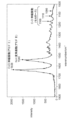
- FIG. 2 is a diagram showing an AFM-IR measurement spectrum of a resin composition in Example 1.
- FIG. 2 is a diagram showing an example of an AFM image of a resin composition in Comparative Example 1.
- FIG. 2 is a diagram showing an AFM-IR measurement spectrum of a resin composition in Comparative Example 1.
- Table 1 shows the weight parts of each raw material in Examples 1 to 8 and the evaluation results.
- Table 2 shows the weight parts of each raw material and the evaluation results in Examples 9 to 15 and a comparative example.
- the resin composition according to the first aspect of the present disclosure includes an organic fibrous filler and a thermoplastic resin, and is a resin composition in which the thermoplastic resin and the organic fibrous filler are chemically bonded, and the chemical bond between the thermoplastic resin and the organic fibrous filler includes a carbonyl group based on something other than the thermoplastic resin.
- the carbonyl group may be part of an ester bond.
- the organic fibrous filler may be cellulose fiber.
- the resin composition according to the fourth aspect of the present disclosure may be the resin composition according to the third aspect above, in which the weight content of cellulose fiber in the entire resin composition is 30% by weight or more and 90% by weight or less.
- thermoplastic resin may be polyamide.
- the method for producing a resin composition according to the sixth aspect of the present disclosure includes a step of powder-mixing a thermoplastic resin, an organic fibrous filler, and a maleic anhydride structure-containing additive to obtain a powder mixture, and a step of stirring and kneading the powder mixture while thermally melting it to obtain a resin composition.
- the method for producing a resin composition according to the seventh aspect of the present disclosure may be the sixth aspect, in which in the step of preparing a resin composition, a chemical bond having an ester bond containing a carbonyl group is generated between the thermoplastic resin and the organic fibrous filler by a reaction induced by ring-opening of the maleic anhydride structure in the maleic anhydride structure-containing additive.
- the method for producing a resin composition according to the eighth aspect of the present disclosure includes the steps of powder-mixing an organic fibrous filler and an epoxy-containing alkoxysilane to produce an epoxy-modified organic fibrous filler, powder-mixing a thermoplastic resin, an epoxy-modified organic fibrous filler, and an additive containing a maleic anhydride structure to produce a powder mixture, and stirring and kneading the powder mixture while thermally melting it to produce a resin composition.
- the method for producing a resin composition according to the ninth aspect of the present disclosure may be the eighth aspect, in which in the step of preparing a resin composition, a chemical bond having an ester bond containing a carbonyl group is generated between the thermoplastic resin and the epoxy group-modified organic fibrous filler by a reaction induced by ring-opening of the maleic anhydride structure in the maleic anhydride structure-containing additive.
- the resin composition according to the first embodiment is a resin composition containing an organic fibrous filler and a thermoplastic resin, in which the thermoplastic resin and the organic fibrous filler are chemically bonded.
- the chemical bond between the thermoplastic resin and the organic fibrous filler contains a carbonyl group based on a material other than the thermoplastic resin. Specifically, the carbonyl group is, for example, a part of an ester bond.
- the organic fibrous filler is, for example, a cellulose fiber.
- the weight content of the cellulose fiber in the entire resin composition is, for example, 30% by weight or more and 90% by weight or less.
- the thermoplastic resin may be, for example, a polyamide.
- An example of a method for producing a resin composition according to the present disclosure includes the steps of: (A) a step of powder-mixing a thermoplastic resin, an organic fibrous filler, and a maleic anhydride structure-containing additive to obtain a powder mixture; (B) stirring and kneading the powder mixture while heat-melting it to obtain a resin composition; Includes.
- Another example of a method for producing a resin composition according to the present disclosure is (A0) a step of powder-mixing an organic fibrous filler and an epoxy group-containing alkoxysilane to produce an epoxy group-modified organic fibrous filler; (A1) a step of powder-mixing a thermoplastic resin, an epoxy group-modified organic fibrous filler, and a maleic anhydride structure-containing additive to obtain a powder mixture; (B) stirring and kneading the powder mixture while heat-melting it to obtain a resin composition; Includes.
- the step of preparing a powder mixture is a step of physically mixing a pellet-shaped thermoplastic resin, an organic fibrous filler, and, for example, a powdered maleic anhydride structure-containing material to prepare a physical mixture (powder mixture).
- the step of preparing a resin composition is a manufacturing process in which the physical mixture (powder mixture) is kneaded while being heated using a device capable of hot melt mixing, such as a single-shaft kneader, a twin-shaft kneader, or a Banbury mixer.
- a device capable of hot melt mixing such as a single-shaft kneader, a twin-shaft kneader, or a Banbury mixer.
- the resin and the maleic anhydride structure-containing material are bonded by, for example, a terminal functional group or a part of the skeletal structure of the resin reacting with an active site generated by ring-opening of the maleic anhydride structure, and a chemical bond is formed between the organic fibrous filler and the maleic anhydride structure by the reaction between a hydroxyl group present on the surface of the organic fibrous filler and an active site generated by ring-opening of the maleic anhydride structure-containing material.
- a maleic anhydride structure other than the maleic anhydride structure bonded to the resin reacts with the organic fibrous filler, and the organic fibrous filler and the thermoplastic resin are chemically bonded via a carbonyl group in the ester bond derived from the maleic anhydride structure.
- thermoplastic resin is a material that is deformed by being heated and melted, and that contains not only organic fibrous fillers but also glass fillers, glass fibers, and other inorganic fillers. Any material that can be mixed with the thermoplastic resin may be used. A mixture of multiple thermoplastic resins may also be used.
- Thermoplastic resins are not limited to the following, but examples include polyethylene, polyvinyl chloride, polypropylene, and polystyrene.
- acrylonitrile butadiene styrene acrylonitrile styrene
- polymethyl methacrylate polybutylene terephthalate
- polyethylene terephthalate polyamide
- polyoxymethylene polyvinyl alcohol
- polyphenylene ether polycarbonate
- polyphenylene sulfide polyphenylene sulfide
- aromatic polyether ketone polyimide, etc.
- those having a softening temperature of 150° C. or higher and 250° C. or lower are preferred.
- the compound has reactivity with the chemically active site generated by the ring-opening of maleic anhydride.
- the compound has an amino group, a hydroxyl group, a carboxyl group, a thiol group, an ester structure, an amide structure, a urea structure, an amine structure, etc.
- the thermoplastic resin in the present disclosure is preferably a polyamide or a polyester, and particularly preferred specific examples are polybutylene terephthalate, polyethylene terephthalate, and nylon 6 polyamide. , nylon 66, etc.
- Organic fibrous filler those derived from known plant fibers can be used. Specifically, but not limited to, cellulose, cellulose fiber, cellulose nanofiber, lignocellulose, lignocellulose fiber, lignocellulose nanofiber, pulp, rayon, acetate, cupra, cotton, hemp, jute fiber, etc. can be used. Among them, celluloses are preferably used from the viewpoint of having a stable surface structure and being easy to modify, and these plant fiber-derived fibrous fillers may be mixed.
- the length of the fibrous filler can be 50 nm or more and 500 ⁇ m or less. If it is shorter than 50 nm, it will aggregate violently, making it difficult to disperse it during hot melt mixing. If it is longer than 500 ⁇ m, the viscosity during hot melting will be too high, making molding difficult. From the viewpoint of achieving both inhibition of aggregation and inhibition of high viscosity, a length of 100 nm or more and 100 ⁇ m or less is even more preferable.
- the organic fibrous filler may be surface-modified in advance, and alkoxysilanes such as epoxy group-containing alkoxysilanes and amino group-containing alkoxysilanes can be used as surface modifiers, as they react easily with additives containing maleic anhydride structures.
- alkoxysilanes such as epoxy group-containing alkoxysilanes and amino group-containing alkoxysilanes can be used as surface modifiers, as they react easily with additives containing maleic anhydride structures.
- Surface modification methods include dispersing organic fibrous fillers in a solvent such as water or alcohol to form a dispersion, dropping a specified amount of the alkoxysilanes into the dispersion while stirring, and then heating the dispersion in a heating furnace to volatilize the solvent, or stirring and mixing the organic fibrous fillers and the alkoxysilanes in a known dry blending device such as a Henschel mixer.
- the amount of alkoxysilanes used for surface modification is not limited, but can be 0.1% by weight to 2% by weight based on the weight of the organic fibrous filler.
- the amount is less than 0.1% by weight, the amount of alkoxysilanes is too small, and the effect of the reaction with the maleic anhydride structure-containing additive due to surface modification is insufficient, and if the amount is more than 2% by weight, agglomerates are formed due to the reaction between the alkoxysilanes themselves, which can be a factor in preventing uniform dispersion of the organic fibrous filler.
- the epoxy groups or amino groups react easily with the ring-open structure of the maleic anhydride structure in the maleic anhydride structure-containing additive described below, making it possible to achieve even higher strength than when an organic fibrous filler that is not surface-modified is used.
- the maleic anhydride structure-containing additive may be one containing at least one maleic anhydride structure in one molecule.
- the maleic anhydride structure-containing additive is not limited to the above.
- the maleic anhydride structure opens its ring, and the ring-opened structure reacts with the thermoplastic resin, while another maleic anhydride structure contained in the same molecule as the molecule containing the maleic anhydride structure opens its ring, and the ring-opened structure reacts with the hydroxyl group on the organic fibrous filler, chemically bonding the thermoplastic resin and the organic fibrous filler, firmly adhering the thermoplastic resin and the organic fibrous filler, and improving the strength of the composite, i.e., the resin composition.
- maleic anhydride structure-containing compounds that function in this way include maleic anhydride-styrene copolymers, maleic anhydride-vinyl acetate copolymers, maleic anhydride-vinyl benzoate copolymers, poly(ethylene-alt-maleic anhydride), polypropylene-graft-maleic anhydride, poly(isobutylene-alt-maleic anhydride), poly(methyl vinyl ether-alt-maleic anhydride), polystyrene-block-poly(ethylene-lan-butylene)-block-polystyrene-graft-maleic anhydride, (-)-2,3-bis[(2R,5R)-2,5-dimethylphosphorano]maleic anhydride, citraconic anhydride, and cyclobutane-1,2,3,4-tetracarboxylic dianhydride.
- the amount of the maleic anhydride structure-containing material added can be 0.5% by weight to 7% by weight based on the total weight of the resin composition, depending on the blending ratio of the organic fibrous filler to the resin composition. If it is less than 0.5% by weight, sufficient effect on improving the strength described above cannot be obtained. If it is more than 7% by weight, a large amount of maleic anhydride structures that do not form an open ring structure and do not react with the organic fibrous filler or part of the thermoplastic resin will be contained. These unreacted maleic anhydride structures become foreign matter that does not perform its function and can become the starting point for cracks, which is not preferable. From the viewpoint of the maleic anhydride structure reacting with the organic fibrous filler and thermoplastic resin in the right amount, 1.25% by weight to 5% by weight is even more preferable.
- the method for producing the resin composition in the embodiment can be produced by mixing the thermoplastic resin, organic fibrous filler, and maleic acid structure-containing substance in specified amounts, forming a mixture, hot melt mixing, and cooling. To mix, each composition is weighed into a container or bag, and mixed manually using a spatula or a rod-shaped jig that can be used for stirring, or a rotary mixer such as a Henschel mixer is used to mix the components approximately uniformly. From the viewpoint of ease of the above mixing process, the thermoplastic resin and the maleic acid structure-containing substance are preferably in powder or pellet form.
- the approximately uniformly mixed powder mixture can be mixed using a single-shaft kneader, a twin-shaft kneader, a roll kneader, a kneader, a Banbury mixer, or the like, and can also be hot melt mixed by combining them.
- the mixture can be cooled to a temperature at which pulverization is possible, to obtain the resin composition according to the present disclosure.
- other additives such as pigments and flame retardants can be added to the mixture to be added to the hot melt mixer as appropriate depending on the application.
- the incorporation of organic fibrous filler results in a higher biomass content than conventional resin molded products, which contributes to reducing the burden on the environment, while at the same time maintaining strength through the crosslinking reaction between the organic fibrous filler and the thermoplastic resin, resulting in an excellent molded product that is both environmentally friendly and strong.
- Example 1 ⁇ Production of Resin Composition>
- a thermoplastic resin 43.9 parts by weight of nylon 6, a type of polyamide, 55 parts by weight of cellulose fiber (Nippon Paper Industries Co., Ltd. (KC Flock (W-100G)) as the organic fibrous filler, and 1.1 parts by weight of polypropylene-graft-maleic anhydride as a maleic anhydride structure-containing additive were prepared. These were charged into one polyethylene container and mixed by stirring manually for 5 minutes using a spatula.
- the mixture was then successively charged into the hopper of a twin-screw kneader set at 260°C, while being extruded at a rotation speed of 100 rpm to perform hot melt mixing, and the molten mixture was collected from the discharge port to obtain the resin composition according to Example 1.
- AFM-IR measurement was performed to analyze the molecular structure of the resin composition.
- a piece of the resin composition sliced by a microtome for TEM observation was observed with an optical microscope to determine an observation spot, and an AFM image and infrared absorption spectrum reflection measurement were performed at the spot to perform a nano-scale structural analysis.
- Figure 1 shows an example of an AFM image of the resin composition in Example 1.
- Figure 2 shows an example of a spectrum obtained by AFM-IR measurement of the resin composition in Example 1.
- the boundary between the maleic anhydride structure-containing additive and the resin is unclear, and it can be seen that the maleic anhydride structure-containing additive is chemically reacting.
- polyamide resin is impregnated between the fibers of the cellulose fiber, and Figure 2 shows that a peak of a carbonyl group that is not derived from the polyamide, which is the raw material resin, is confirmed in the resin phase.
- the maleic anhydride structure in the polypropylene-graft-maleic anhydride is opened, and the ring-opened structure reacts with the hydroxyl group on the surface of the cellulose fiber. Furthermore, the ring-opened structure of another maleic anhydride structure in the molecule of the polypropylene-graft-maleic anhydride having the above maleic anhydride structure reacts with the amino group at the end of the polymer chain of the polyamide. This chemically bonds the cellulose fiber and polyamide, improving compatibility and allowing the polyamide resin to permeate between the fibers of the cellulose fiber.
- the carbonyl groups not derived from polyamide confirmed in the spectrum from AFM-IR measurement, are due to ester bonds formed by the ring-opening structure of the additive containing a maleic anhydride structure, indicating that the cellulose fiber and polyamide are chemically bonded.
- Example 2 The embodiment was the same as Example 1, except that an epoxy surface-modified organic fibrous filler was used as the organic fibrous filler.
- the epoxy surface-modified organic fibrous filler was produced by the following method.
- the organic fibrous filler was a surface-modified organic fibrous filler, and the surface modification was carried out with an epoxy group-containing alkoxysilane.
- 1,000 parts by weight of cellulose fiber (Nippon Paper Industries Co., Ltd. (KC Flock (W-100G)) was prepared as an organic fibrous filler, and 50 parts by weight of 3-glycidoxypropyltrimethoxysilane (Shin-Etsu Chemical Co., Ltd. KBM403) was prepared as an epoxy group-containing alkoxysilane.
- Example 3 The same procedure as in Example 2 was used, except that 68.9 parts by weight of nylon 6 was used as the thermoplastic resin, and 30 parts by weight of epoxy surface-modified cellulose fiber was used as the organic fibrous filler.
- Example 4 The same procedure as in Example 2 was used, except that 8.9 parts by weight of nylon 6 was used as the thermoplastic resin, and 90 parts by weight of epoxy surface-modified cellulose fiber was used as the organic fibrous filler.
- Example 5 The same as in Example 2, except that 43.9 parts by weight of nylon 66, a type of polyamide, was prepared as the thermoplastic resin.
- Example 6 The same procedure as in Example 2 was used, except that 44.5 parts by weight of nylon 6 was used as the thermoplastic resin, and 0.5 parts by weight of polypropylene-graft-maleic anhydride was used as the maleic anhydride structure-containing additive.
- Example 7 The same procedure as in Example 2 was used, except that 38.0 parts by weight of nylon 6 was used as the thermoplastic resin, and 7.0 parts by weight of polypropylene-graft-maleic anhydride was used as the maleic anhydride structure-containing additive.
- Example 8 The procedure was the same as in Example 2, except that 43.75 parts by weight of nylon 6 was prepared as the thermoplastic resin, and 1.25 parts by weight of polypropylene-graft-maleic anhydride was prepared as the maleic anhydride structure-containing additive.
- Example 9 The same procedure as in Example 2 was used, except that 40.0 parts by weight of nylon 6 was used as the thermoplastic resin, and 5.0 parts by weight of polypropylene-graft-maleic anhydride was used as the maleic anhydride structure-containing additive.
- Example 10 This is the same as Example 1, except that poly(isobutylene-alt-maleic anhydride) was used as the maleic anhydride structure-containing additive.
- Example 11 This was the same as in Example 1, except that amino-surface-modified cellulose fiber (KC Flock (W-100G) by Nippon Paper Industries Co., Ltd.) was used as the organic fibrous filler.
- the amino-surface-modified cellulose fiber was produced in the same manner as in Example 2, using 3-aminopropyltrimethoxysilane (KBM903 by Shin-Etsu Chemical Co., Ltd.) as the amino group-containing alkoxysilane.
- thermoplastic resin 45 parts by weight of nylon 6 was prepared, and as the organic fibrous filler, 55 parts by weight of the cellulose fiber (Nippon Paper Industries Co., Ltd. (KC Flock (W-100G)) was prepared. The same procedure as in Example 1 was repeated, except that no maleic anhydride structure-containing additive was added.
- Figure 3 shows an example of an AFM image of the resin composition in Comparative Example 1.
- Figure 4 shows an example of a spectrum obtained by AFM-IR measurement of the resin composition in Comparative Example 1. That is, the boundary between the cellulose fiber and the resin is confirmed in Figure 3, and the AFM-IR measurement spectrum at that interface is shown in Figure 4.
- a broad peak specific to the carbonyl group derived from the ester bond and not derived from the amide was confirmed at the boundary between the cellulose fiber and the resin in Example 1, but it can be seen that this is not confirmed in Figure 4. Therefore, it can be seen that in this comparative example, a structure that directly bonds the resin and cellulose fiber, as confirmed in Example 1, is not formed.
- Example 12 The same procedure as in Example 1 was used, except that 73.9 parts by weight of nylon 6 was used as the thermoplastic resin, and 25 parts by weight of epoxy surface-modified cellulose fiber was used as the organic fibrous filler.
- Example 13 The same procedure as in Example 1 was used, except that 6.9 parts by weight of nylon 6 was used as the thermoplastic resin, and 92 parts by weight of epoxy surface-modified cellulose fiber was used as the organic fibrous filler.
- Example 14 The same procedure as in Example 1 was used, except that 44.7 parts by weight of nylon 6 was used as the thermoplastic resin, and 0.3 parts by weight of polypropylene-graft-maleic anhydride was used as the maleic anhydride structure-containing additive.
- Example 15 The same procedure as in Example 1 was used, except that 36.0 parts by weight of nylon 6 was used as the thermoplastic resin, and 9.0 parts by weight of polypropylene-graft-maleic anhydride was used as the maleic anhydride structure-containing additive.
- the resin composition according to the present disclosure can be injection molded.
- the resin composition was pulverized in a pulverizer to form pellets, and then the pellets were used to prepare dumbbell test pieces of the resin composition using an injection molding machine (180AD manufactured by Japan Steel Works, Ltd.).
- the conditions for preparing the dumbbell test pieces were a resin temperature of 240°C, a mold temperature of 80°C, an injection speed of 60 mm/s, and a holding pressure of 100 MPa.
- the shape of the test piece was a dumbbell test piece of JIS K7139 dumbbell test piece type A for measuring the elastic modulus and elongation at break.
- the test pieces of the resin composition thus obtained were evaluated by the following method.
- a resin composition with a modulus of elasticity and elongation at break of A is designated as A, which is a resin composition with particularly excellent strength.
- a resin composition having excellent strength is classified as B, if neither the elastic modulus nor the elongation at break is A, but neither is C.
- Those with either modulus of elasticity or elongation at break of B or higher are classified as C, It was decided.
- a resin composition having both an elastic modulus and an elongation at break of C or less is classified as having poor strength as D.
- Table 1 in Figure 5 shows the parts by weight of each raw material in Examples 1 to 8 and the evaluation results.
- Table 2 in Figure 6 shows the parts by weight of each raw material in Examples 9 to 15 and the Comparative Example.
- Examples 1, 2, and 11 show that if the surface of the cellulose fiber is appropriately modified when adding a substance containing a maleic anhydride structure, the effect is even more pronounced, resulting in a resin composition with even greater strength.
- Examples 3, 4, 12, and 13 show that the amount of organic fibrous filler added is preferably 30% by weight or more and 90% by weight or less, resulting in a resin composition with excellent strength.
- Examples 2 and 5 show that the resin to which this disclosure can be applied is not limited to the type of polyamide, and high strength can be achieved.
- the amount of the maleic anhydride structure-containing substance to be added can be 0.5% by weight or more and 7% by weight or less, and that 1.25% by weight or more and 5% by weight or less is particularly preferable.
- Examples 1 and 10 show that multiple types of maleic anhydride structure-containing materials can be used.
- the resin composition disclosed herein has excellent strength and can be used in a variety of environmentally friendly industrial products.
Landscapes
- Chemical & Material Sciences (AREA)
- Health & Medical Sciences (AREA)
- Chemical Kinetics & Catalysis (AREA)
- Medicinal Chemistry (AREA)
- Polymers & Plastics (AREA)
- Organic Chemistry (AREA)
- Engineering & Computer Science (AREA)
- Materials Engineering (AREA)
- Manufacturing & Machinery (AREA)
- Life Sciences & Earth Sciences (AREA)
- Biochemistry (AREA)
- Compositions Of Macromolecular Compounds (AREA)
Priority Applications (4)
| Application Number | Priority Date | Filing Date | Title |
|---|---|---|---|
| JP2025506679A JPWO2024190409A1 (https=) | 2023-03-16 | 2024-02-28 | |
| CN202480013785.8A CN120731253A (zh) | 2023-03-16 | 2024-02-28 | 树脂组合物及其制造方法 |
| EP24770521.3A EP4682208A1 (en) | 2023-03-16 | 2024-02-28 | Resin composition and method for producing same |
| US19/321,890 US20260002016A1 (en) | 2023-03-16 | 2025-09-08 | Resin composition and method for producing same |
Applications Claiming Priority (2)
| Application Number | Priority Date | Filing Date | Title |
|---|---|---|---|
| JP2023-042108 | 2023-03-16 | ||
| JP2023042108 | 2023-03-16 |
Related Child Applications (1)
| Application Number | Title | Priority Date | Filing Date |
|---|---|---|---|
| US19/321,890 Continuation US20260002016A1 (en) | 2023-03-16 | 2025-09-08 | Resin composition and method for producing same |
Publications (1)
| Publication Number | Publication Date |
|---|---|
| WO2024190409A1 true WO2024190409A1 (ja) | 2024-09-19 |
Family
ID=92754899
Family Applications (1)
| Application Number | Title | Priority Date | Filing Date |
|---|---|---|---|
| PCT/JP2024/007244 Ceased WO2024190409A1 (ja) | 2023-03-16 | 2024-02-28 | 樹脂組成物およびその製造方法 |
Country Status (5)
| Country | Link |
|---|---|
| US (1) | US20260002016A1 (https=) |
| EP (1) | EP4682208A1 (https=) |
| JP (1) | JPWO2024190409A1 (https=) |
| CN (1) | CN120731253A (https=) |
| WO (1) | WO2024190409A1 (https=) |
Citations (8)
| Publication number | Priority date | Publication date | Assignee | Title |
|---|---|---|---|---|
| JP2004058562A (ja) | 2002-07-31 | 2004-02-26 | Ube Ind Ltd | 帯電防止フィルムおよびその製法 |
| WO2014087767A1 (ja) | 2012-12-05 | 2014-06-12 | 日本製紙株式会社 | 複合材料及びそれを用いた成形体 |
| JP2019043976A (ja) | 2017-08-29 | 2019-03-22 | 旭化成株式会社 | セルロース配合樹脂組成物の製造方法 |
| WO2019098210A1 (ja) * | 2017-11-16 | 2019-05-23 | ユニチカ株式会社 | 摺動部材 |
| WO2021080010A1 (ja) | 2019-10-24 | 2021-04-29 | 旭化成株式会社 | ポリアミド-セルロース樹脂組成物 |
| JP2021084999A (ja) * | 2019-11-29 | 2021-06-03 | 宇部興産株式会社 | 繊維強化ポリアミド樹脂組成物 |
| JP2021187885A (ja) | 2020-05-26 | 2021-12-13 | 旭化成株式会社 | セルロース樹脂組成物及びその製造方法 |
| JP2022159126A (ja) * | 2021-04-01 | 2022-10-17 | 旭化成株式会社 | 樹脂組成物及びその製造方法 |
-
2024
- 2024-02-28 JP JP2025506679A patent/JPWO2024190409A1/ja active Pending
- 2024-02-28 EP EP24770521.3A patent/EP4682208A1/en active Pending
- 2024-02-28 WO PCT/JP2024/007244 patent/WO2024190409A1/ja not_active Ceased
- 2024-02-28 CN CN202480013785.8A patent/CN120731253A/zh active Pending
-
2025
- 2025-09-08 US US19/321,890 patent/US20260002016A1/en active Pending
Patent Citations (8)
| Publication number | Priority date | Publication date | Assignee | Title |
|---|---|---|---|---|
| JP2004058562A (ja) | 2002-07-31 | 2004-02-26 | Ube Ind Ltd | 帯電防止フィルムおよびその製法 |
| WO2014087767A1 (ja) | 2012-12-05 | 2014-06-12 | 日本製紙株式会社 | 複合材料及びそれを用いた成形体 |
| JP2019043976A (ja) | 2017-08-29 | 2019-03-22 | 旭化成株式会社 | セルロース配合樹脂組成物の製造方法 |
| WO2019098210A1 (ja) * | 2017-11-16 | 2019-05-23 | ユニチカ株式会社 | 摺動部材 |
| WO2021080010A1 (ja) | 2019-10-24 | 2021-04-29 | 旭化成株式会社 | ポリアミド-セルロース樹脂組成物 |
| JP2021084999A (ja) * | 2019-11-29 | 2021-06-03 | 宇部興産株式会社 | 繊維強化ポリアミド樹脂組成物 |
| JP2021187885A (ja) | 2020-05-26 | 2021-12-13 | 旭化成株式会社 | セルロース樹脂組成物及びその製造方法 |
| JP2022159126A (ja) * | 2021-04-01 | 2022-10-17 | 旭化成株式会社 | 樹脂組成物及びその製造方法 |
Non-Patent Citations (1)
| Title |
|---|
| See also references of EP4682208A1 |
Also Published As
| Publication number | Publication date |
|---|---|
| JPWO2024190409A1 (https=) | 2024-09-19 |
| EP4682208A1 (en) | 2026-01-21 |
| CN120731253A (zh) | 2025-09-30 |
| US20260002016A1 (en) | 2026-01-01 |
Similar Documents
| Publication | Publication Date | Title |
|---|---|---|
| Lee et al. | Thermal and mechanical properties of wood flour/talc-filled polylactic acid composites: Effect of filler content and coupling treatment | |
| Mahmud et al. | Toughening polylactide by direct blending of cellulose nanocrystals and epoxidized soybean oil | |
| CN113088055A (zh) | 一种高性能聚乙醇酸基复合材料及其制备方法 | |
| CA2900596C (en) | Microstructured composite material, method for the production thereof, moulded articles made hereof and also purposes of use | |
| Zhu et al. | Modification of lignin with silane coupling agent to improve the interface of poly (L-lactic) acid/lignin composites | |
| CN105001569B (zh) | 一种聚乙烯醇/贝壳粉生物质复合材料及其制备方法 | |
| Cakir Yigit et al. | A review of recent advances in bio-based polymer composite filaments for 3D printing | |
| CN110483968B (zh) | 一种聚乳酸/成核剂改性的纤维素纳米晶复合材料及方法 | |
| CN112280263A (zh) | 一种木质素基可生物降解高分子复合材料薄膜及其制备方法 | |
| CN109791812A (zh) | 碳纤维和纳米管与聚合物的原位结合 | |
| JP2011178877A (ja) | 炭含有樹脂の製造方法、炭含有樹脂、成形体、炭化成形体の製造方法及び炭化成形体 | |
| Xu et al. | Study of polypropylene/polyethylene terephthalate blends compatibilized with polypropylene double‐grafted maleic anhydride and epoxy resin | |
| CN116875009B (zh) | 一种增强增韧聚乳酸复合材料及其制备方法和应用 | |
| CN109721786A (zh) | 一种聚乙烯复合材料及其制备方法 | |
| Ye et al. | Bamboo powders effectively reinforcing the modulus of PBAT composites and creep resistance | |
| He et al. | Mechanochemically activated waste‐derived cellulose as a novel functional additive to enhance melt processability and mechanical properties of poly (vinyl alcohol) | |
| Yan et al. | Preparation and characterization of fibrous sepiolite modified silane coupling agent/fluororubber nanocomposite | |
| WO2024190409A1 (ja) | 樹脂組成物およびその製造方法 | |
| CN102585431B (zh) | 一种abs基木塑复合材料的制备方法 | |
| Li et al. | Effects of E44 and KH560 modifiers on properties of distillers grains poly (butylene succinate) composites | |
| Khemakhem et al. | Biocomposites based on polylactic acid and olive solid waste fillers: Effect of two compatibilization approaches on the physicochemical, rheological, and mechanical properties | |
| CN121086490A (zh) | 一种改性聚乳酸耐高温可降解复合材料及其制备方法 | |
| CN100412126C (zh) | 一类类流体无机纳米粒子与聚合物的复合材料及制备 | |
| US20260055274A1 (en) | Resin composition | |
| Zaaba et al. | The influence of different compounding sequence and peanut shell powder loading on properties of polylactic acid/thermoplastic corn starch biocomposites |
Legal Events
| Date | Code | Title | Description |
|---|---|---|---|
| 121 | Ep: the epo has been informed by wipo that ep was designated in this application |
Ref document number: 24770521 Country of ref document: EP Kind code of ref document: A1 |
|
| WWE | Wipo information: entry into national phase |
Ref document number: 202480013785.8 Country of ref document: CN |
|
| ENP | Entry into the national phase |
Ref document number: 2025506679 Country of ref document: JP Kind code of ref document: A |
|
| WWE | Wipo information: entry into national phase |
Ref document number: 2025506679 Country of ref document: JP |
|
| WWP | Wipo information: published in national office |
Ref document number: 202480013785.8 Country of ref document: CN |
|
| WWE | Wipo information: entry into national phase |
Ref document number: 2024770521 Country of ref document: EP |
|
| NENP | Non-entry into the national phase |
Ref country code: DE |
|
| ENP | Entry into the national phase |
Ref document number: 2024770521 Country of ref document: EP Effective date: 20251016 |
|
| ENP | Entry into the national phase |
Ref document number: 2024770521 Country of ref document: EP Effective date: 20251016 |
|
| ENP | Entry into the national phase |
Ref document number: 2024770521 Country of ref document: EP Effective date: 20251016 |
|
| ENP | Entry into the national phase |
Ref document number: 2024770521 Country of ref document: EP Effective date: 20251016 |
|
| ENP | Entry into the national phase |
Ref document number: 2024770521 Country of ref document: EP Effective date: 20251016 |
|
| WWP | Wipo information: published in national office |
Ref document number: 2024770521 Country of ref document: EP |