WO2024189899A1 - 交渉システム、交渉方法、およびプログラム - Google Patents
交渉システム、交渉方法、およびプログラム Download PDFInfo
- Publication number
- WO2024189899A1 WO2024189899A1 PCT/JP2023/010324 JP2023010324W WO2024189899A1 WO 2024189899 A1 WO2024189899 A1 WO 2024189899A1 JP 2023010324 W JP2023010324 W JP 2023010324W WO 2024189899 A1 WO2024189899 A1 WO 2024189899A1
- Authority
- WO
- WIPO (PCT)
- Prior art keywords
- agreement
- candidate
- concession
- negotiation
- proposal
- Prior art date
- Legal status (The legal status is an assumption and is not a legal conclusion. Google has not performed a legal analysis and makes no representation as to the accuracy of the status listed.)
- Ceased
Links
Images


Classifications
-
- G—PHYSICS
- G06—COMPUTING OR CALCULATING; COUNTING
- G06Q—INFORMATION AND COMMUNICATION TECHNOLOGY [ICT] SPECIALLY ADAPTED FOR ADMINISTRATIVE, COMMERCIAL, FINANCIAL, MANAGERIAL OR SUPERVISORY PURPOSES; SYSTEMS OR METHODS SPECIALLY ADAPTED FOR ADMINISTRATIVE, COMMERCIAL, FINANCIAL, MANAGERIAL OR SUPERVISORY PURPOSES, NOT OTHERWISE PROVIDED FOR
- G06Q30/00—Commerce
- G06Q30/06—Buying, selling or leasing transactions
Definitions
- the present invention relates to technology for conducting negotiations.
- Patent document 1 describes a technology in which an inference unit transmits a proposal to another inference unit, and if the proposal is rejected by the other inference unit, the next proposal is transmitted to the other inference unit to negotiate.
- One aspect of the present invention has been made in consideration of the above problems, and one of its objectives is to provide a technique that reduces the possibility that negotiations will ultimately result in a failure to agree.
- a negotiation system includes a candidate agreement acquisition means for acquiring a first candidate agreement provided by a negotiating subject in a negotiation with a negotiating subject, a concession status information acquisition means for acquiring concession status information indicating the concession status of the negotiating subject in the first candidate agreement, and a response means for executing a process to respond to the first candidate agreement in accordance with the concession status indicated by the concession status information.
- a negotiation method is a negotiation method executed by one or more processors, and includes the steps of: acquiring a first candidate agreement proposal provided by a negotiating subject, which is a negotiating partner, in a negotiation with the negotiating subject; acquiring concession status information indicating the concession status of the negotiating subject in the first candidate agreement proposal; and executing a process to respond to the first candidate agreement proposal according to the concession status indicated by the concession status information.
- a program causes a computer to function as: a candidate agreement acquisition means for acquiring a first candidate agreement provided by a negotiating subject in a negotiation with a negotiating subject; a concession status information acquisition means for acquiring concession status information indicating the concession status of the negotiating subject in the first candidate agreement; and a response means for executing a process to respond to the first candidate agreement depending on the concession status indicated by the concession status information.
- One aspect of the present invention can reduce the likelihood that negotiations will ultimately result in a failure to reach an agreement.
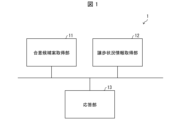
- FIG. 1 is a block diagram showing a configuration of a negotiation system according to an exemplary embodiment 1 of the present invention.
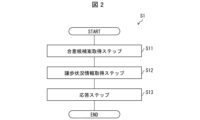
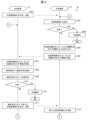
- FIG. 2 is a flow chart showing the flow of a negotiation method according to the first exemplary embodiment of the present invention.
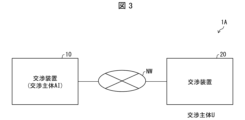
- FIG. 11 is a block diagram showing a configuration of a negotiation system according to an exemplary embodiment 2 of the present invention.
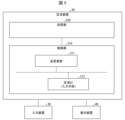
- FIG. 11 is a block diagram showing a functional configuration of a negotiation device according to an exemplary embodiment 2 of the present invention.
- FIG. 11 is a block diagram showing an example of a functional configuration of another negotiation device according to an exemplary embodiment 2 of the present invention.
- FIG. 11 is a flow chart showing the flow of a negotiation method according to an exemplary embodiment 2 of the present invention.
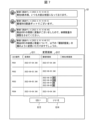
- FIG. 13 is a diagram showing an example of a screen including a candidate agreement proposal presented in exemplary embodiment 2 of the present invention.
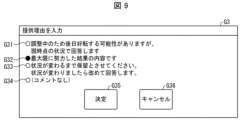
- FIG. 13 is a diagram showing an example of a screen for inputting a reason for provision, which is presented in the second exemplary embodiment of the present invention.
- FIG. 11 is a diagram showing an example of a screen including recommendation information presented in exemplary embodiment 2 of the present invention.
- FIG. 13 is a diagram showing an example of a screen including a new proposed agreement, presented in exemplary embodiment 2 of the present invention.
- FIG. 11 is a block diagram showing a configuration of a negotiation device according to a modified example of the second exemplary embodiment of the present invention.
- FIG. 13 is a block diagram showing a configuration of a negotiation system according to another modified example of the second exemplary embodiment of the present invention.
- FIG. 2 is a diagram illustrating an example of the hardware configuration of each device in each exemplary embodiment of the present invention.
- a "negotiating entity” refers to, for example, an entity that has the ability to generate a candidate agreement proposal to be provided to other negotiating entities, and the ability to decide whether or not to agree to a candidate agreement proposal obtained from another negotiating entity.
- a negotiating entity may be a device, a human, or an organization.
- a "negotiating device” refers to, for example, a device that functions as a negotiating entity.
- a “negotiating device” may also refer to, for example, a device that functions based on the operation of a human who is a negotiating entity or a human who belongs to an organization that is a negotiating entity.
- Computers, robots, drones, and self-driving cars are examples of negotiation devices.
- a “negotiation” refers to, for example, the negotiating entities alternately providing each other with a candidate agreement proposal until an agreement is reached between the negotiating entities.
- the negotiation may be between entities with conflicting interests, or it may be a negotiation (adjustment) between entities with no conflicting interests.
- Example embodiment 1 DETAILED DESCRIPTION OF THE PREFERRED EMBODIMENTS
- This exemplary embodiment is a basic form of the exemplary embodiments described below.
- FIG. 1 is a block diagram showing the configuration of the negotiation system 1.
- the negotiation system 1 includes an agreement candidate acquisition unit 11, a concession status information acquisition unit 12, and a response unit 13.
- the agreement candidate acquisition unit 11 is an example of a configuration for realizing the agreement candidate acquisition means described in the claims.
- the concession status information acquisition unit 12 is an example of a configuration for realizing the concession status information acquisition means described in the claims.
- the response unit 13 is an example of a configuration for realizing the response means described in the claims.
- the agreement candidate acquisition unit 11 acquires a first agreement candidate provided by a negotiating entity, which is a negotiating partner, in a negotiation conducted with the negotiating entity.
- the concession status information acquisition unit 12 acquires concession status information indicating the concession status of the negotiating entity in the first agreement candidate.
- the response unit 13 executes a process of responding to the first agreement candidate according to the concession status indicated by the concession status information.
- the negotiation system 1 When the negotiation system 1 is configured by a computer including a processor and a memory, the memory stores the following program according to this exemplary embodiment.
- the program causes the computer to function as a candidate agreement proposal acquisition unit 11 that acquires a first candidate agreement proposal provided by a negotiating subject that is a negotiating partner in a negotiation with the negotiating subject, a concession status information acquisition unit 12 that acquires concession status information indicating the concession status of the negotiating subject in the first candidate agreement proposal, and a response unit 13 that executes a process of responding to the first candidate agreement proposal according to the concession status indicated by the concession status information.
- Flow of negotiation method S1 The negotiation system 1 configured as above executes a negotiation method S1 according to this exemplary embodiment.
- the flow of the negotiation method S1 will be described with reference to Fig. 2.
- Fig. 2 is a flow diagram showing the flow of the negotiation method S1.
- the negotiation method S1 is a method in which one or more processors included in the negotiation system 1 execute steps S11, S12, and S13.
- step S11 the one or more processors acquire a first candidate agreement proposal provided by a negotiating subject in a negotiation with the negotiating subject.
- step S12 the one or more processors acquire concession status information indicating the concession status of the negotiating subject in the first candidate agreement proposal.
- step S13 the one or more processors execute a process to respond to the first candidate agreement proposal according to the concession status indicated by the concession status information.
- Exemplary embodiment 2 A second exemplary embodiment of the present invention will be described in detail with reference to the drawings. Note that components having the same functions as those described in the first exemplary embodiment are denoted by the same reference numerals, and the description thereof will be omitted as appropriate.
- Fig. 3 is a block diagram showing a configuration of a negotiation system 1A according to this exemplary embodiment.
- the negotiation system 1A includes a negotiation device 10 and a negotiation device 20.
- the negotiation device 10 and the negotiation device 20 are communicatively connected to each other via a network NW.
- the negotiation device 10 functions as a negotiation entity AI that negotiates with other negotiation entities without user operation.
- the negotiation device 20 is a device that a negotiation entity U, which is a human or organization, uses to negotiate with other negotiation entities.
- the negotiation device 20 has a function of negotiating with other negotiation entities based on the operation of the human who is the negotiation entity U (or the operation of a human who belongs to the organization that is the negotiation entity U).
- the negotiation entity U is an example of a "negotiation entity" as described in the claims.
- Fig. 4 is a block diagram showing the functional configuration of the negotiation device 10.
- the negotiation device 10 includes a control unit 110 and a storage unit 120.
- the control unit 110 controls each unit of the negotiation device 10.
- the control unit 110 includes a candidate agreement proposal acquisition unit 111, a concession status information acquisition unit 112, an agreement determination unit 113, and a candidate agreement proposal provision unit 114.
- the storage unit 120 stores various data used by the control unit 110.
- the various data stored in the storage unit 120 includes negotiation status information.
- the candidate agreement proposal acquisition unit 111 receives the candidate agreement proposal U provided by the negotiating entity U from the negotiation device 20.
- the candidate agreement proposal U is an example of the "first candidate agreement proposal" described in the claims.
- the concession status information acquisition unit 112 receives concession status information indicating the concession status of the negotiating subject U in the candidate agreement plan U from the negotiation device 20. Furthermore, when the concession status information acquisition unit 112 acquires the reason for providing the candidate agreement plan U as the concession status information, it estimates the concession status according to the reason for providing. Furthermore, when the concession status information acquisition unit 112 acquires information indicating that the candidate agreement plan U is the final plan as the concession status information, it applies the concession status of "the concession status is at its maximum" that is associated with the "being the final plan”.
- the agreement determination unit 113 executes a process of determining whether or not to agree to the candidate agreement plan U, depending on the concession status indicated by the concession status information. This "determination process" is included in the “responding process” described in the claims.
- the agreement determination unit 113 is an example of a configuration that realizes the "responding means” described in the claims. For example, the agreement determination unit 113 executes a process of determining whether or not to agree to the candidate agreement plan U, based on whether or not the utility of the negotiating subject AI side obtained from the candidate agreement plan U is greater than a threshold value. In addition, the agreement determination unit 113 uses a smaller threshold value as the degree of concession indicated by the concession status information is greater.
- the utility of the negotiating subject AI side is calculated using a utility function that calculates the utility for the negotiating subject AI from any candidate agreement plan.
- the utility of the negotiating subject AI side will also be referred to as utility AI.
- the agreement candidate proposal providing unit 114 executes a process of providing the negotiating subject with an agreement candidate proposal AI according to the concession situation indicated by the concession situation information.
- the agreement candidate proposal AI is an example of a "second agreement candidate proposal” as described in the claims.
- the “provision process” is included in the "responding process” as described in the claims.
- the agreement candidate proposal providing unit 114 is an example of a configuration that realizes the "responding means” as described in the claims.
- the agreement candidate proposal providing unit 114 provides a second agreement candidate proposal in which the obtained utility AI is smaller or the estimated utility of the negotiating subject U is larger as the degree of concession indicated by the concession situation information increases.
- the utility of the negotiating subject U is calculated using a utility function that estimates the utility for the negotiating subject U from any agreement candidate proposal.
- the utility of the negotiating subject U is also referred to as utility U.
- the negotiation status information stored in the storage unit 120 will be described.
- the negotiation status information is information indicating the status of the negotiation.
- the negotiation status information is associated with identification information that identifies the negotiation.
- the negotiation status information associated with the identification information of the negotiation is also described as the negotiation status information of the negotiation.
- the negotiation status information may include a history of the candidate agreement proposal shared in the negotiation.
- the negotiation status information may further include the result of the negotiation.
- the result of the negotiation indicates a final agreement, a final non-agreement, or the cancellation of the negotiation itself.
- the negotiation status information is appropriately referred to in the process in which the agreement determination unit 113 performs an agreement determination.
- the negotiation status information is appropriately referred to in the process in which the candidate agreement proposal providing unit 114 generates a candidate agreement proposal AI.
- the concession status of the negotiating entity U in the candidate agreement draft U represents the degree of concession made by the negotiating entity U in generating the candidate agreement draft U.
- the degree of concession is classified into two stages: "maximum concession made” and "no concession made.”
- the concession status is not limited to the above-mentioned example.
- the concession status information is information that indicates the concession status of the negotiating entity U.
- the concession status information may be added to the candidate agreement plan U and transmitted from the negotiation device 20 to the negotiation device 10.
- the concession status information may also be transmitted from the negotiation device 20 to the negotiation device 10 without being added to the candidate agreement plan U. In the latter case, the concession status information indicates the concession status in the candidate agreement plan U that was most recently transmitted from the negotiation device 20 to the negotiation device 10.
- the concession status information may be, for example, information that directly indicates the concession status, or information that indirectly indicates the concession status.
- information that directly indicates the concession status is "information that indicates that this is the final proposal.” "Information that indicates that this is the final proposal” is associated with the concession status of "maximum concessions have been made" in the candidate agreement proposal U, and directly indicates the concession status.
- information that directly indicates the concession status is not limited to the above examples.
- Information that indirectly indicates the concession situation is information that is referenced to estimate the concession situation, and one example is the reason for providing the candidate agreement proposal U.
- the negotiation situation of negotiation Y affects the consensus formation in negotiation X.
- an example of a "reason for providing" is a reason that includes the negotiation situation in negotiation Y.
- such a reason for providing is an example of information that is referenced to estimate the concession situation.
- information that indirectly indicates the concession situation is not limited to the above-mentioned examples.
- Fig. 5 is a block diagram showing an example of a functional configuration of the negotiation device 20.
- the negotiation device 20 includes a control unit 210 and a storage unit 220.
- the negotiation device 20 is also connected to an input device 30 and a display device 40.
- the control unit 210 controls each unit of the negotiation device 20.
- the control unit 210 includes a transmission/reception unit 211 and a negotiation user interface (hereinafter referred to as a negotiation UI) 212.
- the negotiation UI 212 is an example of a configuration that realizes the input means described in the claims.
- the storage unit 220 stores various data used by the control unit 210.
- the transmitter/receiver 211 transmits the candidate agreement plan U and the concession status information to the negotiation device 10, and receives the candidate agreement plan AI from the negotiation device 10.
- the negotiation UI 212 displays the candidate agreement proposal AI on the display device 40.
- the negotiation UI 212 also accepts an operation to input the candidate agreement proposal U.
- the negotiation UI 212 also accepts an operation to input concession status information from the negotiating entity U.
- the negotiation UI 212 may accept input of (1) information indicating the reason for providing the candidate agreement proposal U, or (2) information indicating that the candidate agreement proposal U is the final proposal, as the concession status information.
- the "final proposal" is the proposal with the lowest utility U on the side of the negotiating entity U, or the highest utility AI estimated by the negotiating entity U, among one or more candidate agreement proposals U that the negotiating entity U considers possible to provide to the negotiating entity AI.
- the negotiation UI 212 may receive an input of an instruction from the negotiating entity U to switch the negotiation to a negotiation conducted with an operator. For example, when the transmission/reception unit 211 receives the input of such an instruction, it transmits information indicating the instruction to the negotiation device 10. Furthermore, when the instruction is input, the negotiation UI 212 may input concession status information and output information recommending that the negotiation be continued.
- Fig. 6 is a flow diagram showing the flow of the negotiation method S2. As shown in Fig. 6, the negotiation method S2 includes steps S201 to S213.
- Step S201 the candidate agreement proposal providing unit 114 of the negotiation device 10 (negotiating entity AI) generates a candidate agreement proposal AI and transmits it to the negotiation device 20 (used by the negotiating entity U).
- step S202 the transmitting/receiving unit 211 of the negotiation device 20 receives the candidate agreement proposal AI.
- the negotiation UI 212 displays the candidate agreement proposal AI on the display device 40. As a result, the candidate agreement proposal AI is presented to the negotiating entity U.
- FIG. 7 is a diagram showing an example screen G1 including a candidate agreement plan AI presented in step S202.
- negotiation X regarding the purchase and sale of a product is applied as the negotiation in this exemplary embodiment.
- the negotiation X is a negotiation to change the delivery schedule of product X001 that has already been ordered by customer B to trading company A, at the request of customer B.
- a person in charge at trading company A who sells the product is applied as a negotiating entity U using the negotiation device 20.
- a customer B bot that functions as a proxy for customer B who purchases the product is applied as a negotiating entity AI (negotiating device 10).
- Screen example G1 includes a delivery schedule G11 before the change and a customer B proposal G12.
- the delivery schedule G11 before the change is the currently scheduled information for product X001 that has already been ordered by customer B from trading company A.
- the delivery schedule G11 includes the delivery date and quantity for each order (order numbers P001 to P004).
- the customer B proposal G12 is an example of an agreement candidate proposal AI generated by the customer B bot.
- the customer B proposal G12 has contents in which the delivery date "2022-09-05" and the quantity "240" of order number P003 included in the delivery schedule G11 before the change have been changed to the delivery date and quantity of each of the four installments.
- the operation object G13 (the "Yes” button) accepts an operation indicating agreement with the customer B proposal G12, which is the agreement candidate proposal AI.
- Operation object G14 ("No" button) accepts an operation indicating that customer B does not agree with proposal G12.
- Step S203 will be described with reference to Fig. 6 again.
- the negotiation UI 212 determines whether or not to agree to the candidate agreement proposal AI based on the operation of the negotiating entity U. For example, in the example of Fig. 7, when the operation object G13 is operated, the negotiation UI 212 determines that the candidate agreement proposal AI is agreed to. Also, when the operation object G14 is operated, the negotiation UI 212 determines that the candidate agreement proposal AI is not agreed to.
- step S204 is executed.
- the transmitter/receiver 211 transmits information indicating that the candidate agreement proposal AI is agreed to, to the negotiation device 10. Then, the negotiation system 1A ends the negotiation method S2.
- step S205 is executed.
- the negotiation UI 212 accepts an operation from the negotiating subject U to input one or both of the candidate agreement plan U and the concession status information.
- both pieces of information may be described as "candidate agreement plan with concession status information added.”
- the candidate agreement plan U is a counter offer to the candidate agreement plan AI.
- the negotiating subject U inputs a plan in which the utility U obtained from the candidate agreement plan U is greater than the utility U obtained from the candidate agreement plan AI.
- the concession status information As the concession status information, as described above, the reason for offering, information indicating that it is the final plan, or a combination of some or all of these is input. Note that the concession status information does not necessarily have to be input, and there are cases in which only the candidate agreement plan U is input. Also, if the candidate agreement plan U has already been sent to the negotiation device 10, the candidate agreement plan U may not be input, and only the concession status information may be input.
- step S206 the transmitter/receiver 211 transmits one or both of the candidate agreement plan U and the concession status information to the negotiation device 10.
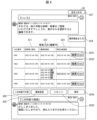
- Example of screen in step S205 is a diagram showing a screen example G2 on which the candidate agreement plan U (trading company A proposal G23) and the concession status information can be input, which are presented in step S205.
- the screen example G2 is displayed on the display device 40 following the screen example G1 shown in FIG. 7. Specifically, when the operation object G14 (the "No" button) is operated on the screen example G1, the screen example G2 may be displayed in place of the screen example G1, or the screen example G1 may be scrolled upward and the screen example G2 may be added and displayed below.
- Screen example G2 includes the delivery schedule G11 before the change, customer B's proposal G12, and trading company A's proposal G23.
- the delivery schedule G11 before the change and customer B's proposal G12 are the same as those displayed in screen example G1.
- Trading company A's proposal G23 is a counter offer to customer B's proposal G12, and can be edited by the trading company A's staff member operating operation objects G231 to G234.
- Operation objects G231 and G232 are displayed for each of the orders (order numbers P001 to P004) included in customer B's proposal G12.
- the operation object G231 ("COPY" button) accepts an operation to copy the delivery schedule of the order in the customer B proposal. When an operation on the operation object G231 is accepted, the delivery date and quantity for the order in the customer B proposal are copied as the initial values of the delivery schedule of the order in the trading company A proposal G23.
- the operation object G232 ("Edit” button) accepts an operation to switch the delivery schedule for the order in the trading company A proposal G23 to edit mode. When an operation on the operation object G232 is accepted, an operation to change the delivery date and quantity of the order in the trading company A proposal G23 becomes possible.
- the trading company A proposal G23 has been changed from the four delivery dates and quantities of order number P003 included in the customer B proposal G12 to a single delivery date of "2022-08-31" and quantity of "240".
- the delivery date "2022-08-31" is later than the earliest delivery date "2022-08-25" of the four delivery dates for order number P003 included in customer B proposal G12, but is earlier than the delivery date "2022-09-05" for order number P0003 in delivery schedule G11 before the change.
- trading company A's proposal G23 has a smaller utility U for trading company A than delivery schedule G11 but a greater utility U than customer B's proposal G12, and was created as a compromise by trading company A's staff.
- the operation object G233 ("Reset” button) accepts an operation to reset the editing operation on Trading Company A's proposal G23. When an operation on this operation object G233 is accepted, Trading Company A's proposal G23 is reset to the state before editing (blank, or the state when it was last saved).
- the operation object G234 ("Save” button) accepts an operation to save Trading Company A's proposal G23. When an operation on this operation object G234 is accepted, information indicating Trading Company A's proposal G23 is stored in the memory unit 220, and can be called up at a later date.
- the example screen G2 includes operation objects G24 to G26 for sending one or both of the concession status information and the trading company A proposal G23.
- the operation object G24 ("Enter reason for offering” button) accepts an operation to input the reason for offering the trading company A proposal G23 (an example of concession status information).
- the operation object G25 (“Final response” button) accepts an operation to send information that the trading company A proposal G23 is the final proposal (an example of concession status information) and the trading company A proposal G23 to the customer B bot.
- the operation object G26 ("Ask about this content” button) accepts an operation to send the reason for offering (an example of concession status information) and the trading company A proposal G23 to the customer B bot if a reason for offering has been input.
- the operation object G26 ("Ask about this content” button) accepts an operation to send the trading company A proposal G23 to the customer B bot if a reason for offering has not been input. By operating any of the operation objects G24 to G26, one or both of the trading company A proposal G23 and the concession status information are sent to the customer B bot.
- the operation object G27 (the "give up” button) accepts an instruction to give up on the negotiation X with the customer B bot and switch to negotiation with the operator.
- FIG. 9 is a diagram showing an example screen G3 in which a reason for providing is input.
- the example screen G3 is displayed on the display device 40 following the example screen G2 when the operation object G24 is operated in the example screen G2.
- the example screen G3 may be displayed by switching from the example screen G2, or the example screen G2 may be scrolled upward and added below the example screen G3.
- the example screen G3 may also be displayed by being superimposed on the example screen G2 as a dialogue.
- Screen example G3 includes reasons for provision G31 to G34 and operation objects G35 to G36.
- Reasons for provision G31 to G34 accept an operation to select one of them.
- Operation object G35 ("OK" button) accepts an operation to confirm the selection operation for reasons for provision G31 to G34.
- the negotiation UI 212 temporarily stores reason for provision G32 selected from reasons for provision G31 to G34 in the memory unit 220 as concession status information.
- Operation object G36 ("Cancel" button) accepts an operation to cancel the selection operation for the provision reasons G31 to G34.
- the negotiation UI 212 does not store the provision reason in the storage unit 220, even if a provision reason has been selected from among the provision reasons G31 to G34.
- example screen G2 is displayed following example screen G3.
- example screen G2 may be displayed by switching from example screen G3, or example screen G3 may be scrolled upward and example screen G2 may be added and displayed below it.
- example screen G3 may be hidden and example screen G2 may be displayed.
- the person in charge of trading company A edits trading company A's proposal G23 on screen example G2, and then selects the reason for offering G32 "This is the result of our best efforts" on screen example G5, and operates operation object G35 (the "OK” button).
- the person in charge of trading company A then operates operation object G26 (the "Ask about this content” button) on screen example G2.
- This causes the transmission/reception unit 211 to send to the customer B bot the trading company A proposal G23 to which the reason for offering G32 "This is the result of our best efforts" stored in the memory unit 220 has been added as concession status information.
- the person in charge of trading company A can give an instruction to give up on negotiation X with customer B bot and switch the negotiation X to negotiation with the operator by operating operation object G27 ("give up” button).
- the person in charge of trading company A may operate operation object G27 ("give up” button) without editing trading company A proposal G23.
- the transmitter/receiver 211 may transmit information to customer B bot instructing the bot to switch to negotiation with the operator.
- customer B bot receives the instruction information, it may, for example, perform a process of switching to negotiation with customer B bot, who is a human person in charge of customer B.
- the negotiation UI 212 may input concession status information and display information recommending that the negotiation X with the customer B bot be continued.
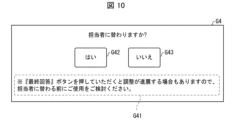
- the 10 is a diagram showing a screen example G4 including the recommended information.
- the screen example G4 may be displayed by switching from the screen example G2, or the screen example G2 may be scrolled upward and the screen example G4 may be added and displayed below.
- the screen example G4 may also be displayed by being superimposed on the screen example G2 as a dialogue.
- the screen example G4 includes recommended information G41 and operation objects G42 to G43.
- the recommended information G41 is an example of "information recommending inputting concession status information to continue negotiation X with the customer B bot" and includes information recommending the operation of the operation object G25 ("final response" button).
- the transmission/reception unit 211 transmits information indicating an instruction to switch to negotiation with the customer B bot's representative to the customer B bot.
- the operation object G43 (No" button) is operated, the screen example G2 is displayed following the screen example G4 without transmitting the information indicating the instruction.
- the example screen G2 may be displayed by switching from the example screen G4, or the example screen G4 may be scrolled upward and the example screen G2 may be added and displayed below it. Also, if the example screen G4 is displayed as a dialogue, the example screen G4 may be made invisible and the example screen G4 may be displayed.
- the person in charge at trading company A may operate the operation object G43 (the "No” button), and then return to the example screen G2 and operate the operation object G25 (the "Final response” button).
- Step S207 Steps S207 and after will be described with reference to Fig. 6 again.
- the candidate agreement proposal acquisition unit 111 of the negotiation device 10 receives the candidate agreement proposal U from the negotiation device 20.
- the concession status information acquisition unit 112 receives the concession status information from the negotiation device 20. As described above, there are cases where either the candidate agreement proposal U or the concession status information is received.
- Step S208 is a step that is executed when a provision reason is received as concession status information.
- the concession status information acquisition unit 112 infers the concession status by referring to the provision reason G32 "This is the result of our best efforts."
- the concession status information acquisition unit 112 may infer the concession status of "the maximum concession has been made” by referring to the provision reason G32 "This is the result of our best efforts.”
- the concession status information acquisition unit 112 may infer the concession status of "the maximum information has not been made” by referring to the provision reason G31 "This is currently being adjusted, so it may improve at a later date, but we will respond based on the current situation.” Note that this step is omitted when a provision reason is not received as concession status information.
- the agreement determination unit 113 determines whether to agree to the candidate agreement plan U according to the concession situation indicated by the concession situation information. Specifically, the agreement determination unit 113 sets a lower threshold value to be compared with the utility AI obtained from the candidate agreement plan U as the threshold value for comparison with the greater degree of concession indicated by the concession situation information. For example, if the concession situation information indicates that "maximum information is being provided," the agreement determination unit 113 determines to use a first value as the threshold value. Also, if the concession situation information does not indicate that "maximum information is being provided,” the agreement determination unit 113 determines to use a second value greater than the first value as the threshold value. Also, if the utility AI obtained from the candidate agreement plan U is greater than the determined threshold value, the agreement determination unit 113 determines to agree to the candidate agreement plan U, and if it is less than the threshold value, determines not to agree.
- step S211 is executed.
- the agreement determination unit 113 transmits information indicating that an agreement has been reached on the candidate agreement plan U to the negotiation device 20. Then, the negotiation system 1A ends the negotiation method S2.
- step S212 is executed.
- the candidate agreement plan providing unit 114 generates a new candidate agreement plan AI in which the obtained utility AI is smaller or the estimated utility U is larger as the degree of concession indicated by the concession status information is greater.
- the new candidate agreement plan AI is a counteroffer to the most recently received candidate agreement plan U.
- the candidate agreement plan providing unit 114 also transmits the generated new candidate agreement plan AI to the negotiation device 20. Note that if the concession status information is not received in step S207, the candidate agreement plan providing unit 114 generates a new candidate agreement plan AI without considering the concession status.
- a known technology can be adopted as a method for generating a new candidate agreement plan AI without considering the concession status.
- the new agreement candidate proposal AI is a proposal in which the utility AI obtained from the new agreement candidate proposal AI is smaller than the utility AI obtained from the most recently transmitted agreement candidate proposal AI.
- the agreement candidate proposal providing unit 114 may adopt, as the new agreement candidate proposal AI, a candidate with a smaller utility AI as the degree of concession indicated by the concession status increases.
- the agreement candidate proposal providing unit 114 may also adopt, as the new agreement candidate proposal AI, a candidate with a larger utility U as the degree of concession indicated by the concession status increases.
- the agreement candidate proposal providing unit 114 may also adopt, as the new agreement candidate proposal AI, a candidate with a smaller utility AI and a larger utility U as the degree of concession indicated by the concession status increases.
- the agreement candidate providing unit 114 adopts the second candidate with the lower utility AI as the new agreement candidate AI. Also, if the concession status information does not indicate that "maximum concessions have been made,” the agreement candidate providing unit 114 adopts the first candidate with the higher utility AI as the new agreement candidate AI.
- the agreement candidate providing unit 114 adopts the fourth candidate with the higher utility U as the new agreement candidate AI. Also, if the concession status information does not indicate that "maximum concessions have been made,” the agreement candidate providing unit 114 adopts the third candidate with the lower utility U as the new agreement candidate AI.
- step S213 the transceiver 211 of the negotiation device 20 receives the new candidate agreement proposal AI.
- the negotiation device 20 then repeats the process from step S202.
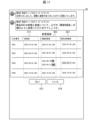
- Example of screen at step S202 for the second time 11 is a diagram showing a screen example G5 including a new candidate agreement proposal AI (customer B proposal G52) presented in the second step S202.
- Screen example G5 is configured almost the same as screen example G1, but differs in that it includes customer B proposal G52 instead of customer B proposal G12, and further includes trading company A proposal G23.
- Customer B proposal G52 is generated by the candidate agreement proposal providing unit 114 of customer B bot as a counter offer to trading company A proposal G23, and is a proposal with a smaller utility U than trading company A proposal G23.
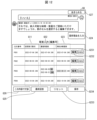
- Example of screen at step S205 for the second time 12 is a diagram showing a screen example G6 on which the candidate agreement plan U (trading company A's proposal G23) and the concession status information, which are presented in step S205 for the second time, can be input.
- Screen example G6 is configured almost the same as screen example G2 shown in FIG. 8, but differs in that it includes customer B's proposal G52 instead of customer B's proposal G12. Customer B's proposal G52 is as described above.
- trading company A's proposal G23 is the maximum concession for the person in charge of trading company A
- the person in charge of trading company A does not perform an operation to edit trading company A's proposal G23, but instead operates, for example, operation object G25 ("final response" button) as an operation to input the concession status information.
- Step S207 to S212 for the second time Customer B bot takes into account the concession situation in which Trading Company A's proposal G23 is the final proposal and determines whether or not to agree.
- Customer B bot is more likely to agree to Trading Company A's proposal G23.
- Customer B bot determines not to agree, it generates a new Customer B proposal according to the concession situation indicated by the concession situation information.
- the new Customer B proposal will have a smaller utility AI than the previous Customer B proposal G52, and an even smaller utility AI (utility U is larger) than if the concession situation was not taken into account, increasing the likelihood that Trading Company A will be able to agree.
- the present exemplary embodiment employs a configuration in which the agreement determination unit 113 of the negotiation device 10 (negotiator AI) determines whether or not to agree to the proposed agreement candidate U provided by the negotiator U according to the concession status indicated by the concession status information.
- the agreement determination unit 113 of the negotiation device 10 determines whether or not to agree to the proposed agreement candidate U provided by the negotiator U according to the concession status indicated by the concession status information.
- this exemplary embodiment employs a configuration in which the agreement determination unit 113 of the negotiation device 10 (negotiating entity AI) executes a process to determine whether or not to agree to the candidate agreement plan U based on whether the utility AI obtained from the candidate agreement plan U is greater than a threshold, and a smaller threshold is used as the threshold value the greater the degree of concession indicated by the concession status information.
- the greater the degree of concession made by the negotiating entity U in creating the candidate agreement plan U the higher the possibility that the negotiating entity AI will agree to the candidate agreement plan U.
- this exemplary embodiment employs a configuration in which the agreement candidate proposal providing unit 114 of the negotiation device 10 (negotiating entity AI) provides the negotiating entity U with a new agreement candidate proposal AI that corresponds to the concession status indicated by the concession status information when the negotiating entity AI does not agree to the agreement candidate proposal U.
- the agreement candidate proposal providing unit 114 of the negotiation device 10 (negotiating entity AI) provides the negotiating entity U with a new agreement candidate proposal AI that corresponds to the concession status indicated by the concession status information when the negotiating entity AI does not agree to the agreement candidate proposal U.
- this exemplary embodiment employs a configuration in which the agreement candidate proposal providing unit 114 of the negotiation device 10 (negotiating entity AI) provides a new agreement candidate proposal AI with a smaller obtained utility AI or a larger estimated utility U, the greater the degree of concession indicated by the concession status information.
- the smaller the utility AI on the side of the negotiating entity AI the greater the utility U on the side of the negotiating entity U. Therefore, the greater the degree of concession made by the negotiating entity U, the more likely it is that the new agreement candidate proposal AI will be agreeable to the negotiating entity U. As a result, it is possible to reduce the possibility that the negotiation will ultimately end in a failure to reach an agreement.
- this exemplary embodiment employs a configuration in which, when the concession status information acquisition unit 112 of the negotiation device 10 (negotiating entity AI) acquires the reason for providing the candidate agreement proposal U as concession status information, it estimates the concession status according to the reason for providing. As a result, the concession status is estimated according to the reason for providing, which is the concession status information provided by the negotiating entity U, so that the concession status can be estimated more accurately.
- the negotiation device 20 used by the negotiating subject U includes a negotiation UI that accepts input of concession status information from the negotiating subject U.
- the concession status information is obtained through input by the negotiating subject U, so that a response can be made that is appropriate to the concession status of the negotiating subject U.
- this exemplary embodiment employs a configuration in which the negotiation UI accepts input of information indicating the reason for providing the candidate agreement plan U, or information indicating that the candidate agreement plan U is the final plan, as concession status information. This allows the negotiating subject U to more easily input concession status information.
- this exemplary embodiment employs a configuration in which the negotiation UI accepts input of an instruction from the negotiating subject U to switch the negotiation to one conducted with the operator. This may lead to an agreement being reached with the operator, thereby reducing the possibility that the negotiation will ultimately result in a disagreement.
- this exemplary embodiment employs a configuration in which the negotiation UI outputs information recommending the input of concession status information when an instruction to continue negotiations with the operator is input by the negotiating entity U.
- This increases the likelihood that concession status information will be input and negotiations with the negotiating entity AI will continue, even if the negotiating entity U attempts to switch to negotiations with the operator.
- the negotiating entity AI performs processing to respond according to the concession status, thereby reducing the likelihood that the negotiations will ultimately end in a disagreement.
- the above-described negotiation system 1A can be modified so as to transition to an automatic negotiation mode in which the negotiation is automatically continued when concession status information indicating that the proposal is the final one is input by the negotiating entity U.
- the automatic negotiation mode is a mode in which the same agreement candidate proposal as the agreement candidate proposal U to which the concession status information indicating that the proposal is the final one is added is repeatedly provided as a new agreement candidate proposal U from the negotiating entity U to the negotiating entity AI without the need for input by the negotiating entity U.
- the negotiation system 1A is configured in a manner similar to that described above, except that it includes a negotiation device 20B instead of the negotiation device 20.
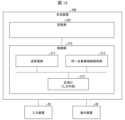
- the configuration of the negotiation device 20B will be described with reference to FIG. 13.
- FIG. 13 is a block diagram showing the configuration of the negotiation device 20B.
- the control unit 210 of the negotiation device 20B includes a same agreement candidate proposal providing unit 213 in addition to the configuration shown in FIG. 5.
- the same agreement candidate proposal providing unit 213 is an example of a configuration that realizes the same agreement candidate proposal providing means described in the claims.
- the same agreement candidate proposal providing unit 213 determines to transition to automatic negotiation mode when the concession status information indicates that the agreement candidate proposal U is the final proposal and the negotiating subject U does not agree to the corresponding agreement candidate proposal AI.
- the same agreement candidate proposal providing unit 213 provides the agreement candidate proposal that is the same as the agreement candidate proposal U to which concession status information indicating that it is the final proposal has been added as a new agreement candidate proposal U (counter offer) to the agreement candidate proposal acquisition unit 111 of the negotiation device 10.
- the new agreement candidate proposal U acquired by the agreement candidate proposal acquisition unit 111 of the negotiation device 10 will be the same as the already received agreement candidate proposal U to which the concession status information indicating that it is the final proposal has been added. If there is no agreement on the new agreement candidate proposal U, the agreement candidate proposal provision unit 114 provides the negotiating subject U with a new agreement candidate proposal AI having a lower utility AI than the previous agreement candidate proposal AI.
- step S2 when the negotiation system 1A accepts input of the agreement candidate plan U and the concession status information indicating that the plan is the final plan in step S205 for the Nth time (N is an integer equal to or greater than 1), it transitions to automatic negotiation mode and executes the subsequent steps. Thereafter, the negotiation device 20 omits step S205 (input of a new agreement candidate plan U) from the (N+1)th time onwards, and in the following step S206, the same agreement candidate plan providing unit 213 transmits the same agreement candidate plan U as the previous time to the negotiation device 10 as a new agreement candidate plan. Also, in steps S207 to S212 from the (N+1)th time onwards, the negotiation device 10 operates by referring to the agreement candidate plan U and the concession status information acquired in step S207 for the Nth time.
- the condition for ending the repetition may be, but is not limited to, that the negotiating subject U agrees (the operation object G13 is operated) or that the number of repetitions reaches a predetermined number.
- the negotiations can be continued to gradually draw out concessions from the negotiating entity AI without inputting a new candidate agreement proposal U. This can reduce the possibility that the negotiations will ultimately end in a failure to reach an agreement.
- the negotiation system 1A does not need to include the negotiation device 20B, but does include the negotiation device 20.
- the candidate agreement proposal acquisition unit 111 of the negotiation device 10 is modified as follows. When the concession status information indicates that the candidate agreement proposal U is the final proposal and the negotiating entity U does not agree to the corresponding candidate agreement proposal AI, the candidate agreement proposal acquisition unit 111 acquires, as a new candidate agreement proposal U, an agreement proposal that is identical to the candidate agreement proposal U to which concession status information indicating that it is the final proposal has been added.
- the negotiation system 1A when the negotiation system 1A accepts input of the candidate agreement plan U and the concession status information indicating that the plan is the final plan in step S205 for the Nth time (N is an integer equal to or greater than 1), it transitions to automatic negotiation mode and executes the subsequent steps. Thereafter, instead of executing steps S205 to S206 from the (N+1)th time onwards, the negotiation device 20 transmits information indicating that the candidate agreement plan AI is not agreed to to the negotiation device 10. Also, in steps S207 to S212 from the (N+1)th time onwards, the negotiation device 10 operates by referring to the candidate agreement plan U and the concession status information acquired in step S207 for the Nth time.
- Fig. 14 is a block diagram showing the configuration of a negotiation system 1B according to this modification.
- the negotiation system 1B includes a negotiation platform 80 and a terminal 90.
- the negotiation platform 80 and the terminal 90 are communicatively connected via a network.
- the negotiation platform 80 includes the negotiation device 10 and the negotiation device 20.
- Negotiation platform 80 is, for example, configured with one or more computers, and realizes each function of negotiation device 10 and negotiation device 20 by executing a program stored in memory.
- Negotiation device 20 functions based on the operation of terminal 90 used by negotiating entity U.
- input device 30 and display device 40 are connected to terminal 90 or are built-in.
- negotiation device 10 and negotiation device 20 may provide/obtain agreement candidate proposals and concession status information by sharing agreement candidate proposals and concession status information via memory, instead of transmitting and receiving agreement candidate proposals and concession status information to each other via a network.
- This modified example achieves the same effects as exemplary embodiment 2 described above.
- the negotiation device 20 has been described as a device used by a negotiating entity U, which is a human or an organization, to negotiate with other negotiating entities.
- the negotiation device 20 may be a device that functions as a negotiating entity that negotiates with other negotiating entities without user operation.
- the negotiation device 20 may execute a process of generating the concession status information and the candidate agreement proposal U instead of acquiring them through user input.
- Some or all of the functions of the negotiation system 1 and the negotiation devices 10, 20 may be realized by hardware such as an integrated circuit (IC chip), or by software.
- the device is realized, for example, by a computer that executes instructions of a program, which is software that realizes each function.
- a computer that executes instructions of a program, which is software that realizes each function.
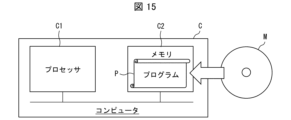
- FIG. 15 An example of such a computer (hereinafter referred to as computer C) is shown in FIG. 15.
- Computer C has at least one processor C1 and at least one memory C2.
- Memory C2 stores program P for operating computer C as the device.
- processor C1 reads and executes program P from memory C2, thereby realizing each function of the device.
- the processor C1 may be, for example, a CPU (Central Processing Unit), GPU (Graphic Processing Unit), DSP (Digital Signal Processor), MPU (Micro Processing Unit), FPU (Floating point number Processing Unit), PPU (Physics Processing Unit), TPU (Tensor Processing Unit), quantum processor, microcontroller, or a combination of these.
- the memory C2 may be, for example, a flash memory, HDD (Hard Disk Drive), SSD (Solid State Drive), or a combination of these.
- Computer C may further include a RAM (Random Access Memory) for expanding program P during execution and for temporarily storing various data.
- Computer C may further include a communications interface for sending and receiving data to and from other devices.
- Computer C may further include an input/output interface for connecting input/output devices such as a keyboard, mouse, display, and printer.
- the program P can also be recorded on a non-transitory, tangible recording medium M that can be read by the computer C.
- a recording medium M can be, for example, a tape, a disk, a card, a semiconductor memory, or a programmable logic circuit.
- the computer C can obtain the program P via such a recording medium M.
- the program P can also be transmitted via a transmission medium.
- a transmission medium can be, for example, a communications network or broadcast waves.
- the computer C can also obtain the program P via such a transmission medium.
- an agreement candidate proposal acquisition means for acquiring a first agreement candidate proposal provided by a negotiating entity in a negotiation with a negotiating entity that is a negotiating counterpart; a concession status information acquisition means for acquiring concession status information indicating a concession status of the negotiating parties in the first candidate agreement; a response means for executing a process of responding to the first candidate agreement plan in accordance with a concession status indicated by the concession status information; ,Negotiation system.
- the process of responding includes a process of determining whether to agree to the first candidate agreement plan according to a compromise status indicated by the compromise status information. 2.
- the process of responding includes a process of providing, when the first candidate agreement plan is not agreed to, the negotiating parties with a second candidate agreement plan corresponding to the concession status indicated by the concession status information; 3.
- the response means is execute a process of determining whether to agree to the first candidate agreement plan based on whether a utility obtained from the first candidate agreement plan is greater than a threshold value; As the threshold value, a smaller threshold value is used as the degree of concession indicated by the concession status information increases. 3.
- the response means is providing a second candidate agreement plan in which the utility obtained is smaller or the estimated utility for the negotiating parties is larger as the degree of concession indicated by the concession status information is larger; 4.
- the agreement candidate acquisition means acquires an agreement candidate that is the same as the first agreement candidate as a new first agreement candidate; 4.
- Appendix 9 A negotiation system as described in any one of appendix 1 to 8, further comprising an input means for receiving input of the concession status information from the negotiating entity.
- the input means receives, as the concession status information, an input of information indicating a reason for providing the first agreement candidate proposal, or information indicating that the first agreement candidate proposal is a final proposal. 10.
- the input means includes: receiving, from the negotiation subject, an input of an instruction to switch the negotiation to negotiation with an operator; 10. The negotiation system of claim 9.
- the input means includes: inputting the concession status information and outputting information recommending that the negotiation be continued when the instruction is input by the negotiating subject; 12.
- a method of negotiation executed by one or more processors comprising: In a negotiation conducted with a negotiating entity that is a negotiating partner, a first candidate agreement proposal provided by the negotiating entity is obtained; acquiring concession status information indicating a concession status of the negotiating parties in the first candidate agreement; executing a process of responding to the first candidate agreement proposal according to the compromise status indicated by the compromise status information; including, how to negotiate.
- an agreement candidate proposal acquisition means for acquiring a first agreement candidate proposal provided by a negotiating entity in a negotiation with a negotiating entity that is a negotiating counterpart; a concession status information acquisition means for acquiring concession status information indicating a concession status of the negotiating parties in the first candidate agreement; a response means for executing a process of responding to the first candidate agreement plan in accordance with a concession status indicated by the concession status information;
- a program that functions as a
- At least one processor comprising: An agreement candidate proposal acquisition process for acquiring a first agreement candidate proposal provided by a negotiating entity in a negotiation with a negotiating entity that is a negotiating partner; a concession status information acquisition process for acquiring concession status information indicating a concession status of the negotiating entity in the first candidate agreement; a response process for executing a process for responding to the first candidate agreement plan according to the compromise status indicated by the compromise status information;
- An agreement candidate proposal acquisition process for acquiring a first agreement candidate proposal provided by a negotiating entity in a negotiation with a negotiating entity that is a negotiating partner
- a concession status information acquisition process for acquiring concession status information indicating a concession status of the negotiating entity in the first candidate agreement
- a response process for executing a process for responding to the first candidate agreement plan according to the compromise status indicated by the compromise status information
- a negotiation system that executes
- the negotiation system may further include a memory that stores a program for causing the processor to execute the process for obtaining the candidate agreement proposal, the process for obtaining the concession status information, and the response process.
- the program may also be recorded on a computer-readable, non-transitory, tangible recording medium.
Landscapes
- Business, Economics & Management (AREA)
- Accounting & Taxation (AREA)
- Finance (AREA)
- Development Economics (AREA)
- Economics (AREA)
- Marketing (AREA)
- Strategic Management (AREA)
- Physics & Mathematics (AREA)
- General Business, Economics & Management (AREA)
- General Physics & Mathematics (AREA)
- Engineering & Computer Science (AREA)
- Theoretical Computer Science (AREA)
- Management, Administration, Business Operations System, And Electronic Commerce (AREA)
Priority Applications (2)
| Application Number | Priority Date | Filing Date | Title |
|---|---|---|---|
| PCT/JP2023/010324 WO2024189899A1 (ja) | 2023-03-16 | 2023-03-16 | 交渉システム、交渉方法、およびプログラム |
| JP2025506425A JPWO2024189899A1 (cg-RX-API-DMAC7.html) | 2023-03-16 | 2023-03-16 |
Applications Claiming Priority (1)
| Application Number | Priority Date | Filing Date | Title |
|---|---|---|---|
| PCT/JP2023/010324 WO2024189899A1 (ja) | 2023-03-16 | 2023-03-16 | 交渉システム、交渉方法、およびプログラム |
Publications (1)
| Publication Number | Publication Date |
|---|---|
| WO2024189899A1 true WO2024189899A1 (ja) | 2024-09-19 |
Family
ID=92754912
Family Applications (1)
| Application Number | Title | Priority Date | Filing Date |
|---|---|---|---|
| PCT/JP2023/010324 Ceased WO2024189899A1 (ja) | 2023-03-16 | 2023-03-16 | 交渉システム、交渉方法、およびプログラム |
Country Status (2)
| Country | Link |
|---|---|
| JP (1) | JPWO2024189899A1 (cg-RX-API-DMAC7.html) |
| WO (1) | WO2024189899A1 (cg-RX-API-DMAC7.html) |
Citations (2)
| Publication number | Priority date | Publication date | Assignee | Title |
|---|---|---|---|---|
| US20120290485A1 (en) * | 2011-05-13 | 2012-11-15 | Mohmel Kivanc Ozonat | Automated negotiation |
| WO2021033302A1 (ja) * | 2019-08-22 | 2021-02-25 | 日本電気株式会社 | 受注側交渉装置、受注側交渉方法および受注側交渉プログラム |
-
2023
- 2023-03-16 JP JP2025506425A patent/JPWO2024189899A1/ja active Pending
- 2023-03-16 WO PCT/JP2023/010324 patent/WO2024189899A1/ja not_active Ceased
Patent Citations (2)
| Publication number | Priority date | Publication date | Assignee | Title |
|---|---|---|---|---|
| US20120290485A1 (en) * | 2011-05-13 | 2012-11-15 | Mohmel Kivanc Ozonat | Automated negotiation |
| WO2021033302A1 (ja) * | 2019-08-22 | 2021-02-25 | 日本電気株式会社 | 受注側交渉装置、受注側交渉方法および受注側交渉プログラム |
Non-Patent Citations (1)
| Title |
|---|
| 森顕之. 推定期待効用に基づく自動交渉エージェントの提案. 情報処理学会論文誌. [online], October 2015, vol. 56, no. 10, pp. 1968-1976, (MORI, Akiyuki, ITO, Takayuki. An Automated Negotiating Agent Based on The Estimated Expected Utility. Transactions of the Information Processing Society of Japan.) * |
Also Published As
| Publication number | Publication date |
|---|---|
| JPWO2024189899A1 (cg-RX-API-DMAC7.html) | 2024-09-19 |
Similar Documents
| Publication | Publication Date | Title |
|---|---|---|
| CN102132310B (zh) | 内容共享和即时消息收发 | |
| JP3930489B2 (ja) | チャットシステム、通信装置、その制御方法及びプログラム | |
| US8166121B2 (en) | Situation based presence notification leveraging | |
| JP2019121366A (ja) | 相続準備支援システムおよび相続準備支援プログラム | |
| KR101310274B1 (ko) | 메신저 서비스를 제공하는 방법 및 그 서버 | |
| CN116346842B (zh) | 跨生态设备管控方法、装置、存储介质及电子设备 | |
| WO2017073123A1 (ja) | 表示方法、情報処理装置、情報処理端末、表示プログラム | |
| US20110173280A1 (en) | Status messages conveyed during communication session to session participants | |
| JP2019053623A (ja) | 共有口座管理プログラム、共有口座管理方法及び共有口座管理装置 | |
| CN115471293A (zh) | 一种报价单生成的方法、装置和系统 | |
| JP6902133B2 (ja) | 動画配信システム、情報処理方法およびコンピュータプログラム | |
| JP7355962B1 (ja) | 情報処理プログラム、情報処理装置、情報処理方法 | |
| JP7326801B2 (ja) | 交流支援装置及びプログラム | |
| JP4854424B2 (ja) | チャットシステム、通信装置、その制御方法及びプログラム | |
| KR20200003764A (ko) | 업무객체 기반 업무처리장치 및 방법 | |
| CN114602169B (zh) | 游戏交互方法及装置、可读存储介质及电子设备 | |
| CN111833035A (zh) | 信息处理程序、信息处理方法以及信息处理装置 | |
| JP5508098B2 (ja) | プログラマブルコントローラ、データ通信方法及びコンピュータプログラム | |
| CN113658213B (zh) | 形象呈现方法、相关装置及计算机程序产品 | |
| CN115865544A (zh) | 群组会议控制方法、装置及电子设备 | |
| WO2024079843A1 (ja) | 交渉装置、交渉方法、およびプログラム | |
| JP7499596B2 (ja) | ワークフローシステム及び処理方法 | |
| JP2022123439A (ja) | 情報処理方法、プログラム、及び、情報処理装置 | |
| US20120060155A1 (en) | Method, system, and computer readable medium for workflow communication wherein instructions to a workflow application are written by the workflow application | |
| JPWO2020183709A1 (ja) | 自動交渉装置、自動交渉方法、及びプログラム |
Legal Events
| Date | Code | Title | Description |
|---|---|---|---|
| 121 | Ep: the epo has been informed by wipo that ep was designated in this application |
Ref document number: 23927518 Country of ref document: EP Kind code of ref document: A1 |
|
| ENP | Entry into the national phase |
Ref document number: 2025506425 Country of ref document: JP Kind code of ref document: A |
|
| WWE | Wipo information: entry into national phase |
Ref document number: 2025506425 Country of ref document: JP |
|
| NENP | Non-entry into the national phase |
Ref country code: DE |
|
| 122 | Ep: pct application non-entry in european phase |
Ref document number: 23927518 Country of ref document: EP Kind code of ref document: A1 |