WO2024181416A1 - オリゴヌクレオチド、ならびにそれを用いるrest発現抑制剤および医薬組成物 - Google Patents
オリゴヌクレオチド、ならびにそれを用いるrest発現抑制剤および医薬組成物 Download PDFInfo
- Publication number
- WO2024181416A1 WO2024181416A1 PCT/JP2024/006991 JP2024006991W WO2024181416A1 WO 2024181416 A1 WO2024181416 A1 WO 2024181416A1 JP 2024006991 W JP2024006991 W JP 2024006991W WO 2024181416 A1 WO2024181416 A1 WO 2024181416A1
- Authority
- WO
- WIPO (PCT)
- Prior art keywords
- group
- carbon atoms
- rest
- seq
- branched
- Prior art date
- Legal status (The legal status is an assumption and is not a legal conclusion. Google has not performed a legal analysis and makes no representation as to the accuracy of the status listed.)
- Ceased
Links
Images






Classifications
-
- A—HUMAN NECESSITIES
- A61—MEDICAL OR VETERINARY SCIENCE; HYGIENE
- A61P—SPECIFIC THERAPEUTIC ACTIVITY OF CHEMICAL COMPOUNDS OR MEDICINAL PREPARATIONS
- A61P25/00—Drugs for disorders of the nervous system
-
- A—HUMAN NECESSITIES
- A61—MEDICAL OR VETERINARY SCIENCE; HYGIENE
- A61K—PREPARATIONS FOR MEDICAL, DENTAL OR TOILETRY PURPOSES
- A61K31/00—Medicinal preparations containing organic active ingredients
- A61K31/70—Carbohydrates; Sugars; Derivatives thereof
- A61K31/7088—Compounds having three or more nucleosides or nucleotides
-
- A—HUMAN NECESSITIES
- A61—MEDICAL OR VETERINARY SCIENCE; HYGIENE
- A61K—PREPARATIONS FOR MEDICAL, DENTAL OR TOILETRY PURPOSES
- A61K31/00—Medicinal preparations containing organic active ingredients
- A61K31/70—Carbohydrates; Sugars; Derivatives thereof
- A61K31/7088—Compounds having three or more nucleosides or nucleotides
- A61K31/712—Nucleic acids or oligonucleotides having modified sugars, i.e. other than ribose or 2'-deoxyribose
-
- A—HUMAN NECESSITIES
- A61—MEDICAL OR VETERINARY SCIENCE; HYGIENE
- A61K—PREPARATIONS FOR MEDICAL, DENTAL OR TOILETRY PURPOSES
- A61K31/00—Medicinal preparations containing organic active ingredients
- A61K31/70—Carbohydrates; Sugars; Derivatives thereof
- A61K31/7088—Compounds having three or more nucleosides or nucleotides
- A61K31/7125—Nucleic acids or oligonucleotides having modified internucleoside linkage, i.e. other than 3'-5' phosphodiesters
-
- C—CHEMISTRY; METALLURGY
- C12—BIOCHEMISTRY; BEER; SPIRITS; WINE; VINEGAR; MICROBIOLOGY; ENZYMOLOGY; MUTATION OR GENETIC ENGINEERING
- C12N—MICROORGANISMS OR ENZYMES; COMPOSITIONS THEREOF; PROPAGATING, PRESERVING, OR MAINTAINING MICROORGANISMS; MUTATION OR GENETIC ENGINEERING; CULTURE MEDIA
- C12N15/00—Mutation or genetic engineering; DNA or RNA concerning genetic engineering, vectors, e.g. plasmids, or their isolation, preparation or purification; Use of hosts therefor
- C12N15/09—Recombinant DNA-technology
- C12N15/11—DNA or RNA fragments; Modified forms thereof; Non-coding nucleic acids having a biological activity
-
- C—CHEMISTRY; METALLURGY
- C12—BIOCHEMISTRY; BEER; SPIRITS; WINE; VINEGAR; MICROBIOLOGY; ENZYMOLOGY; MUTATION OR GENETIC ENGINEERING
- C12N—MICROORGANISMS OR ENZYMES; COMPOSITIONS THEREOF; PROPAGATING, PRESERVING, OR MAINTAINING MICROORGANISMS; MUTATION OR GENETIC ENGINEERING; CULTURE MEDIA
- C12N15/00—Mutation or genetic engineering; DNA or RNA concerning genetic engineering, vectors, e.g. plasmids, or their isolation, preparation or purification; Use of hosts therefor
- C12N15/09—Recombinant DNA-technology
- C12N15/11—DNA or RNA fragments; Modified forms thereof; Non-coding nucleic acids having a biological activity
- C12N15/113—Non-coding nucleic acids modulating the expression of genes, e.g. antisense oligonucleotides; Antisense DNA or RNA; Triplex- forming oligonucleotides; Catalytic nucleic acids, e.g. ribozymes; Nucleic acids used in co-suppression or gene silencing
Definitions
- the present invention relates to oligonucleotides, as well as REST expression inhibitors and pharmaceutical compositions that use the same.
- the transcriptional repressor REST (RE1-silencing transcription factor), which is involved in neuronal-specific gene expression, binds to the 21-bp RE1 element on genes and suppresses downstream neuronal-specific gene expression.
- REST is not expressed as a result of pre-mRNA splicing, but it is abnormally expressed in malignant brain tumors such as neuroblastoma (Non-Patent Documents 1-3), medulloblastoma (Non-Patent Document 4), and glioblastoma (Non-Patent Documents 5-8), where it functions as a carcinogenic factor (Non-Patent Document 9). It has also been reported that REST expression gradually increases with age, suppressing neural gene expression and thus contributing to dementia (Non-Patent Document 10).
- Fibromyalgia is a disease with a high incidence rate, affecting approximately 1.7% of Japanese people (approximately 2 million people), similar to that in Europe and the United States. It has been reported that promotion of REST expression is involved in fibromyalgia and neuropathic pain (Non-Patent Document 11).
- Neuron-specific splicing of zinc finger transcription factor REST/NRSF/XBR is frequent in neuroblastomas and conserved in human, mouse and rat. Brain Res Mol Brain Res. 1999; 72:30.
- the REST gene signature predicts drug sensitivity in neuroblastoma cell lines and is significantly associated with neuroblastoma tumor stage.
- the risk-associated long noncoding RNA NBAT-1 controls neuroblastoma progression by regulating cell proliferation and neuronal differentiation. Cancer Cell. 2014; 26:722.
- the neuronal repressor REST/NRSF is an essential regulator in medulloblastoma cells. Nat Med. 2000; 6:826. Neuronal expression of zinc finger transcription factor REST/NRSF/XBR gene.
- the present invention aims to solve the above problems, and its purpose is to provide oligonucleotides that can target and control the abnormal expression of REST, which affects various neurological disorders, as well as REST expression inhibitors and pharmaceutical compositions that use the same.
- the present invention relates to an oligonucleotide or a pharmacologically acceptable salt thereof, which contains a nucleotide sequence complementary to a sequence of at least 15 consecutive bases in a target region consisting of the base sequence of SEQ ID NO:1 and is capable of controlling the expression of REST.
- the oligonucleotide is 16 to 25 bases in length.
- the oligonucleotide comprises a sequence that is complementary to a target region consisting of a sequence within the base sequence from position 900 to position 4700 of SEQ ID NO:1.
- the 5' end of the target region is at position 923, 1522, 1523, 1524, 2248, 4082, 4083, 4084, 4085, 4629, 4631, 4632, 4633, 4634, 4635, or 4645 of SEQ ID NO:1.
- the oligonucleotide comprises: REST-923-17(L) (SEQ ID NO: 18), REST-1522-17(L) (SEQ ID NO: 19), REST-1523-17(L) (SEQ ID NO: 20), REST-1524-17(L) (SEQ ID NO:21), REST-2248-17(L) (SEQ ID NO:22), REST-4082-17(L) (SEQ ID NO:23), REST-4083-17(L) (SEQ ID NO:24), REST-4084-17(L) (SEQ ID NO:25), REST-4085-17(L) (SEQ ID NO:26), REST-4629-17(L) (SEQ ID NO:27), REST-4631-17(L) (SEQ ID NO:28), REST-4632-17(L) (SEQ ID NO:29), REST-4633-17(L) (SEQ ID NO: 30), REST-4634-17(L) (SEQ ID NO:31), REST-4635-17(L) (SEQ ID NO
- the oligonucleotide or a pharmacologically acceptable salt thereof has a nucleoside structure represented by the following formula (I):
- BASE represents a purine-9-yl group which may have one or more optional substituents selected from group ⁇ , or a 2-oxo-1,2-dihydropyrimidin-1-yl group which may have one or more optional substituents selected from group ⁇ , wherein group ⁇ consists of a hydroxyl group, a hydroxyl group protected with a protecting group for nucleic acid synthesis, a linear alkyl group having 1 to 6 carbon atoms, a linear alkoxy group having 1 to 6 carbon atoms, a mercapto group, a mercapto group protected with a protecting group for nucleic acid synthesis, a linear alkylthio group having 1 to 6 carbon atoms, an amino group, a linear alkylamino group having 1 to 6 carbon atoms, an amino group protected with a protecting group for nucleic acid synthesis, and a halogen atom;
- A is the following:
- R1 represents a hydrogen atom, an alkyl group having 1 to 7 carbon atoms which may form a branched or cyclic group, an alkenyl group having 2 to 7 carbon atoms which may form a branched or cyclic group, an aryl group having 3 to 12 carbon atoms which may have one or more optional substituents selected from the ⁇ group and which may contain a heteroatom, an aralkyl group having an aryl moiety having 3 to 12 carbon atoms which may have one or more optional substituents selected from the ⁇ group and which may contain a heteroatom, or a protecting group for an amino group in nucleic acid synthesis;
- R 2 and R 3 are each independently a hydrogen atom; an alkyl group having 1 to 7 carbon atoms which may be substituted with an aryl group having 3 to 12 carbon atoms which may contain a heteroatom and which may form a branched or cyclic group; or an aralkyl group having an aryl
- R 17 , R 18 and R 19 each independently represent a hydrogen atom, an alkyl group having 1 to 7 carbon atoms which may be branched or cyclic, a protecting group for an amino group, or
- R 13 and R 14 are each independently a group selected from the group consisting of a hydrogen atom; a hydroxyl group; an alkyl group having 1 to 7 carbon atoms which may be branched or cyclic; an alkoxy group having 1 to 7 carbon atoms which may be branched or cyclic; an amino group; and an amino group protected by a protecting group for nucleic acid synthesis;
- m is an integer from 0 to 2;
- n is an integer from 0 to 1;
- R 10 is a hydrogen atom, an alkyl group having 1 to 7 carbon atoms which may be branched or cyclic, a protecting group for an amino group, or
- R 15 and R 16 each independently represent a hydrogen atom, an alkyl group having 1 to 7 carbon atoms which may be branched or cyclic, a protecting group for an amino group, or
- R 10 is —(C ⁇ (NHR 17 ) + )—NR 18 R 19 , p is 0;
- X is an oxygen atom, a sulfur atom, or an amino group; and
- Y is an oxygen atom or a sulfur atom. At least one of the following is included.
- the oligonucleotide is a gapmer consisting of a gap region of 9-15 bases, a 5' wing of 3-5 bases and a 3' wing of 3-5 bases;
- the gap region is positioned between the 5' wing and the 3' wing, and the 5' wing and the 3' wing comprise at least one nucleoside structure of formula (I) above.
- the linkage between the nucleotides constituting the oligonucleotide comprises phosphorothioate.
- the present invention also relates to an agent for suppressing REST expression, comprising the above-mentioned oligonucleotide or a pharmacologically acceptable salt thereof.
- the present invention also relates to a pharmaceutical composition
- a pharmaceutical composition comprising the above oligonucleotide or a pharmacologically acceptable salt thereof.
- the pharmaceutical composition of the present invention is used for the treatment of a nervous system disease.
- REST can be targeted to, for example, effectively inhibit its expression.
- the oligonucleotides and pharmacologically acceptable salts thereof of the present invention are also useful for developing therapeutic agents for various nervous system diseases (e.g., malignant tumors, dementia, and central nervous system diseases) and diabetes, which are believed to be caused by the expression of REST.
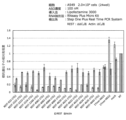
- 1 is a graph showing the results of the analysis of REST expression levels using gapmer-type antisense oligonucleotides (ASOs) performed in Example 3.
- Graph (a) shows the results of optimizing the ASO concentration using REST-4632-17(L) and NEG2 performed in Example 4 (REST), and graph (b) shows the results of optimizing the ASO concentration (Actin).
- This is a graph showing the results of the analysis of REST expression levels using gapmer-type ASO conducted in Example 5.
- 1 is a graph showing the results of ASO concentration-dependent activity using REST-2248-17(L), REST-4082-17(L), and REST-4633-17(L) performed in Example 6.
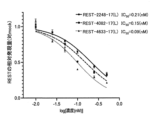
- Example 13 is a graph showing the relative expression level of REST versus the logarithm of the ASO concentration, prepared based on the results of the ASO concentration-dependent activity using REST-2248-17(L), REST-4082-17(L), and REST-4633-17(L) performed in Example 6.
- 1 is a graph showing the results of the analysis of cell proliferation inhibition in A549 cells using REST-2248-17(L), REST-4082-17(L), and REST-4633-17(L) performed in Example 7.
- 1 is a graph showing the results of the analysis of cell proliferation inhibition in U-251 cells using REST-2248-17(L), REST-4082-17(L), and REST-4633-17(L) performed in Example 8.
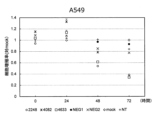
- 1 is a graph showing the results of cell proliferation rate in A549 cells using REST-2248-17(L), REST-4082-17(L), and REST-4633-17(L) performed in Example 9.
- 1 is a graph showing the results of the analysis of cell proliferation rates in U-251 cells using REST-2248-17(L), REST-4082-17(L), and REST-4633-17(L) performed in Example 10.
- 1 shows photographs illustrating the results of REST protein expression using anti-REST antibody in Example 11. This is a graph showing the results of the analysis of REST expression levels using gapmer-type ASO performed in Example 12.
- nucleoside includes “nucleosides” in which a purine or pyrimidine base is bound to a sugar, as well as “nucleosides” in which a sugar is bound to an aromatic heterocycle and aromatic hydrocarbon ring other than purine and pyrimidine that can substitute for a purine or pyrimidine base.
- Natural nucleosides are also called “natural nucleosides.” Modified non-natural nucleosides are also called “modified nucleosides,” and nucleotides in which the sugar portion has been modified are particularly called “sugar-modified nucleosides.” “Nucleotide” refers to a compound in which a phosphate group is bound to the sugar of a nucleoside.
- oligonucleotide refers to a polymer of "nucleotides” in which the same or different "nucleosides" are linked through phosphodiester bonds or other bonds, and includes both natural and non-natural oligonucleotides.
- Non-natural oligonucleotides preferably include sugar derivatives in which the sugar moiety is modified; thioate derivatives in which the phosphodiester moiety is thioated; esters in which the terminal phosphate moiety is esterified; and amides in which the amino group on the purine base is amidated, and more preferably sugar derivatives in which the sugar moiety is modified.
- the term "pharmacologically acceptable salt thereof” refers to a salt of an oligonucleotide containing at least one nucleoside structure, for example as represented by the following formula (I), which is a physiologically and pharma- ceutical acceptable salt of the oligonucleotide of the present invention, i.e., a salt that retains the desired biological activity of the oligonucleotide and does not impart undesired toxicological effects.
- Such salts include, for example, alkali metal salts such as sodium salt, potassium salt, and lithium salt, alkaline earth metal salts such as calcium salt and magnesium salt, metal salts such as aluminum salt, iron salt, zinc salt, copper salt, nickel salt, and cobalt salt; inorganic salts such as ammonium salt, t-octylamine salt, dibenzylamine salt, morpholine salt, glucosamine salt, phenylglycine alkyl ester salt, ethylenediamine salt, N-methylglucamine salt, guanidine salt, diethylamine salt, triethylamine salt, dicyclohexylamine salt, N,N'-dibenzylethylenediamine salt, chloroprocaine salt, procaine salt, diethanolamine salt, N-benzyl-phenethylamine salt, piperazine salt, tetrahydrofuran ...
- alkali metal salts such as sodium salt, potassium salt, and lithium salt
- salts include amine salts, such as organic salts like methylammonium salts and tris(hydroxymethyl)aminomethane salts; inorganic salts like hydrohalogen salts like hydrofluoride, hydrochloride, hydrobromide and hydroiodide, nitrates, perchlorates, sulfates and phosphates; organic salts like lower alkane sulfonates like methanesulfonate, trifluoromethanesulfonate and ethanesulfonate, arylsulfonates like benzenesulfonate and p-toluenesulfonate, acetates, malates, fumarates, succinates, citrates, tartrates, oxalates and maleates; and amino acid salts like glycine salts, lysine salts, arginine salts, ornithine salts, glutamate salts and aspartate salts.
- nucleic acid bases can form so-called Watson-Crick base pairs (natural base pairs) or non-Watson-Crick base pairs (Hoogsteen base pairs, wobble base pairs, etc.) through hydrogen bonds.
- complementary sequence is used to mean not only a sequence that is completely complementary (i.e., hybridizes without mismatches) to a target sequence (e.g., a complementary sequence in a complementary strand, a sequence of a target region in a target RNA, etc.), but also a sequence that contains one to several (e.g., 2, 3, 4, 5 or more) mismatches as long as it can hybridize with the target sequence under stringent conditions or under the physiological conditions of mammalian cells. In other words, the inclusion of mismatches in the complementary strand is permitted.
- the sequence may have an identity of 80% or more (e.g., 85% or more, 90% or more, 95% or more, 96% or more, 97% or more, 98% or more, 99% or more), and most preferably 100%, to a sequence that is completely complementary to the target sequence.
- alkyl group having 1 to 3 carbon atoms includes any alkyl group having 1 to 3 carbon atoms. Specific examples include methyl, ethyl, n-propyl, and isopropyl groups.
- straight-chain alkyl group having 1 to 6 carbon atoms includes any straight-chain alkyl group having 1 to 6 carbon atoms. Specific examples include methyl, ethyl, n-propyl, n-butyl, n-pentyl, and n-hexyl groups.
- the term "straight-chain alkoxy group having 1 to 6 carbon atoms” includes alkoxy groups having any straight-chain alkyl group having 1 to 6 carbon atoms. Examples include methyloxy group, ethyloxy group, n-propyloxy group, etc.
- the term “straight-chain or branched-chain alkoxy group having 1 to 6 carbon atoms” includes alkoxy groups having any straight-chain or branched-chain alkyl group having 1 to 6 carbon atoms.
- Examples include methyloxy group, ethyloxy group, n-propyloxy group, isopropyloxy group, n-butyloxy group, isobutyloxy group, tert-butyloxy group, n-pentyloxy group, isopentyloxy group, etc.
- the term "straight-chain alkylthio group having 1 to 6 carbon atoms” includes alkylthio groups having any straight-chain alkyl group having 1 to 6 carbon atoms. Examples include methylthio group, ethylthio group, n-propylthio group, etc.
- the term “straight-chain or branched-chain alkylthio group having 1 to 6 carbon atoms” includes alkylthio groups having any straight-chain or branched-chain alkyl group having 1 to 6 carbon atoms.
- Examples include methylthio group, ethylthio group, n-propylthio group, isopropylthio group, n-butylthio group, isobutylthio group, tert-butylthio group, n-pentylthio group, isopentylthio group, etc.
- cyanoalkoxy group having 1 to 6 carbon atoms refers to a group in which at least one hydrogen atom constituting the linear alkoxy group having 1 to 6 carbon atoms is replaced with a cyano group.
- the term "straight-chain alkylamino group having 1 to 6 carbon atoms” includes groups in which one or two of the hydrogen atoms constituting the amino group are replaced with a straight-chain alkyl group having 1 to 6 carbon atoms. Examples include methylamino group, dimethylamino group, ethylamino group, methylethylamino group, diethylamino group, etc.
- the term “straight-chain or branched-chain alkylamino group having 1 to 6 carbon atoms” includes groups in which one or two of the hydrogen atoms constituting the amino group are replaced with any straight-chain or branched-chain alkyl group having 1 to 6 carbon atoms.
- Examples include methylamino group, dimethylamino group, ethylamino group, methylethylamino group, diethylamino group, n-propylamino group, di-n-propylamino group, isopropylamino group, diisopropylamino group, etc.
- alkyl group having 1 to 7 carbon atoms which may be branched or cyclic
- alkyl group having 3 to 7 carbon atoms includes any straight-chain alkyl group having 1 to 7 carbon atoms, any branched-chain alkyl group having 3 to 7 carbon atoms, and any cyclic alkyl group having 3 to 7 carbon atoms.
- any straight-chain alkyl group having 1 to 7 carbon atoms includes methyl, ethyl, n-propyl, n-butyl, n-pentyl, n-hexyl, and n-heptyl
- any branched-chain alkyl group having 3 to 7 carbon atoms includes isopropyl, isobutyl, tert-butyl, and isopentyl
- any cyclic alkyl group having 3 to 7 carbon atoms includes cyclobutyl, cyclopentyl, and cyclohexyl.
- alkenyl group having 2 to 7 carbon atoms which may form a branched or cyclic ring includes any straight-chain alkenyl group having 2 to 7 carbon atoms, any branched-chain alkenyl group having 3 to 7 carbon atoms, and any cyclic alkenyl group having 3 to 7 carbon atoms.
- any linear alkenyl group having 2 to 7 carbon atoms includes ethenyl, 1-propenyl, 2-propenyl, 1-butenyl, 2-butenyl, 1-pentenyl, 2-pentenyl, 3-pentenyl, 4-pentenyl, and 1-hexenyl groups
- any branched alkenyl group having 3 to 7 carbon atoms includes isopropenyl, 1-methyl-1-propenyl, 1-methyl-2-propenyl, 2-methyl-1-propenyl, 2-methyl-2-propenyl, and 1-methyl-2-butenyl groups
- any cyclic alkenyl group having 3 to 7 carbon atoms includes cyclobutenyl, cyclopentenyl, and cyclohexenyl groups.
- alkoxy group having 1 to 7 carbon atoms which may form a branched or cyclic group
- alkoxy group having 1 to 7 carbon atoms which may form a branched or cyclic group
- alkoxy group having 3 to 7 carbon atoms includes any linear alkoxy group having 1 to 7 carbon atoms, any branched alkoxy group having 3 to 7 carbon atoms, and any cyclic alkoxy group having 3 to 7 carbon atoms.
- any linear alkoxy group having 1 to 7 carbon atoms includes a methoxy group, an ethoxy group, an n-propoxy group, an n-butyloxy group, an n-pentyloxy group, an n-hexyloxy group, and an n-heptyloxy group
- any branched alkoxy group having 3 to 7 carbon atoms includes an isopropoxy group, an isobutyloxy group, a tert-butyloxy group, an isopentyloxy group, and the like
- any cyclic alkoxy group having 3 to 7 carbon atoms includes a cyclobutyloxy group, a cyclopentyloxy group, and a cyclohexyloxy group.
- aryl group having 3 to 12 carbon atoms, which may contain a heteroatom includes any aryl group having 6 to 12 carbon atoms, which is composed only of hydrocarbons, and any heteroaryl group having 3 to 12 carbon atoms, in which at least one carbon atom constituting the ring structure of the aryl group is replaced with a heteroatom (e.g., a nitrogen atom, an oxygen atom, a sulfur atom, or a combination thereof).
- a heteroatom e.g., a nitrogen atom, an oxygen atom, a sulfur atom, or a combination thereof.
- Examples of the aryl group having 6 to 12 carbon atoms include a phenyl group, a naphthyl group, an indenyl group, an azulenyl group, and the like, and examples of the heteroaryl group having 3 to 12 carbon atoms include a pyridyl group, a pyrrolyl group, a quinolyl group, an indolyl group, an imidazolyl group, a furyl group, a thienyl group, and the like.
- aralkyl group having an aryl portion having 3 to 12 carbon atoms which may contain a heteroatom examples include benzyl, phenethyl, naphthylmethyl, 3-phenylpropyl, 2-phenylpropyl, 4-phenylbutyl, 2-phenylbutyl, pyridylmethyl, indolylmethyl, furylmethyl, thienylmethyl, pyrrolylmethyl, 2-pyridylethyl, 1-pyridylethyl, and 3-thienylpropyl groups.
- acyl group examples include aliphatic acyl groups and aromatic acyl groups.
- aliphatic acyl groups include formyl, acetyl, propionyl, butyryl, isobutyryl, pentanoyl, pivaloyl, valeryl, isovaleryl, octanoyl, nonanoyl, decanoyl, 3-methylnonanoyl, 8-methylnonanoyl, 3-ethyloctanoyl, 3,7-dimethyloctanoyl, undecanoyl, dodecanoyl, tridecanoyl, tetradecanoyl, pentadecanoyl, hexadecanoyl, 1-methylpentadecanoyl, 14-methylpentadecanoyl, 13,13-dimethyltetradecanoyl, heptadecanoyl, 1-methylpenta
- lower alkylcarbonyl groups include alkylcarbonyl groups such as enoyl, 15-methylhexadecanoyl, octadecanoyl, 1-methylheptadecanoyl, nonadecanoyl, eicosanoyl, and henaicosanoyl groups; carboxylated alkylcarbonyl groups such as succinoyl, glutaroyl, and adipoyl groups; halogeno lower alkylcarbonyl groups such as chloroacetyl, dichloroacetyl, trichloroacetyl, and trifluoroacetyl groups; lower alkoxy lower alkylcarbonyl groups such as methoxyacetyl group; and unsaturated alkylcarbonyl groups such as (E)-2-methyl-2-butenoyl group.
- alkylcarbonyl groups such as enoyl, 15-methylhexadecanoyl, octa
- aromatic acyl groups include arylcarbonyl groups such as benzoyl, ⁇ -naphthoyl, and ⁇ -naphthoyl; halogenoarylcarbonyl groups such as 2-bromobenzoyl and 4-chlorobenzoyl; lower alkylated arylcarbonyl groups such as 2,4,6-trimethylbenzoyl and 4-toluoyl; lower alkoxylated arylcarbonyl groups such as 4-anisoyl; carboxylated arylcarbonyl groups such as 2-carboxybenzoyl, 3-carboxybenzoyl, and 4-carboxybenzoyl; nitrated arylcarbonyl groups such as 4-nitrobenzoyl and 2-nitrobenzoyl; lower alkoxycarbonylated arylcarbonyl groups such as 2-(methoxycarbonyl)benzoyl; and arylated arylcarbonyl groups such as 4-phenylbenzoyl.
- sil group examples include tri-lower alkylsilyl groups such as trimethylsilyl group, triethylsilyl group, isopropyldimethylsilyl group, t-butyldimethylsilyl group, methyldiisopropylsilyl group, methyldi-t-butylsilyl group, and triisopropylsilyl group; and tri-lower alkylsilyl groups substituted with one or two aryl groups such as diphenylmethylsilyl group, butyldiphenylbutylsilyl group, diphenylisopropylsilyl group, and phenyldiisopropylsilyl group.
- trimethylsilyl group triethylsilyl group, triisopropylsilyl group, t-butyldimethylsilyl group, and t-butyldiphenylsilyl group, and more preferred is trimethylsilyl group.
- halogen atom includes, for example, a fluorine atom, a chlorine atom, a bromine atom, or an iodine atom.
- a fluorine atom or a chlorine atom is preferable.
- halide ion includes, for example, a fluoride ion, a chloride ion, a bromide ion, or an iodide ion.
- a fluoride ion or a chloride ion is preferable.
- protecting group in the terms “protecting group for an amino group in nucleic acid synthesis,” “protecting group for a hydroxyl group in nucleic acid synthesis,” “hydroxyl group protected by a protecting group in nucleic acid synthesis,” “phosphate group protected by a protecting group in nucleic acid synthesis,” and “mercapto group protected by a protecting group in nucleic acid synthesis” is not particularly limited as long as it is capable of stably protecting an amino group, hydroxyl group, phosphate group, or mercapto group during nucleic acid synthesis.
- protecting group that is stable under acidic or neutral conditions and can be cleaved by chemical methods such as hydrogenolysis, hydrolysis, electrolysis, and photolysis.
- protecting groups include lower alkyl groups, lower alkenyl groups, acyl groups, tetrahydropyranyl or tetrahydrothiopyranyl groups, tetrahydrofuranyl or tetrahydrothiofuranyl groups, silyl groups, lower alkoxymethyl groups, lower alkoxylated lower alkoxymethyl groups, halogeno lower alkoxymethyl groups, lower alkoxylated ethyl groups, halogenated ethyl groups, methyl groups substituted with 1 to 3 aryl groups, "methyl groups substituted with 1 to 3 aryl groups in which the aryl ring is substituted with a lower alkyl group, a lower alkoxy group, a halogen atom or a cyano group", lower alkoxycarbonyl groups
- examples of the tetrahydropyranyl group or tetrahydrothiopyranyl group include tetrahydropyran-2-yl group, 3-bromotetrahydropyran-2-yl group, 4-methoxytetrahydropyran-4-yl group, tetrahydrothiopyran-4-yl group, and 4-methoxytetrahydrothiopyran-4-yl group.
- examples of the tetrahydrofuranyl group or tetrahydrothiofuranyl group include tetrahydrofuran-2-yl group and tetrahydrothiofuran-2-yl group.
- Examples of the lower alkoxymethyl group include methoxymethyl group, 1,1-dimethyl-1-methoxymethyl group, ethoxymethyl group, propoxymethyl group, isopropoxymethyl group, butoxymethyl group, and t-butoxymethyl group.
- Examples of the lower alkoxylated lower alkoxymethyl group include 2-methoxyethoxymethyl group.
- Examples of the halogeno lower alkoxymethyl group include 2,2,2-trichloroethoxymethyl group and bis(2-chloroethoxy)methyl group.
- Examples of lower alkoxylated ethyl groups include 1-ethoxyethyl and 1-(isopropoxy)ethyl groups.
- Examples of halogenated ethyl groups include 2,2,2-trichloroethyl groups.
- Examples of the "methyl group substituted with 1 to 3 aryl groups in which the aryl ring is substituted with a lower alkyl group, a lower alkoxy group, a halogen atom, or a cyano group” include a 4-methylbenzyl group, a 2,4,6-trimethylbenzyl group, a 3,4,5-trimethylbenzyl group, a 4-methoxybenzyl group, a 4-methoxyphenyldiphenylmethyl group, a 4,4'-dimethoxytriphenylmethyl group, a 2-nitrobenzyl group, a 4-nitrobenzyl group, a 4-chlorobenzyl group, a 4-bromobenzyl group, and a 4-cyanobenzyl group.
- Examples of the lower alkoxycarbonyl group include a methoxycarbonyl group, an ethoxycarbonyl group, a t-butoxycarbonyl group, and an isobutoxycarbonyl group.
- Examples of the "aryl group substituted with a halogen atom, a lower alkoxy group, or a nitro group” include a 4-chlorophenyl group, a 2-fluorophenyl group, a 4-methoxyphenyl group, a 4-nitrophenyl group, and a 2,4-dinitrophenyl group.
- lower alkoxycarbonyl groups substituted with halogen atoms or tri-lower alkylsilyl groups include 2,2,2-trichloroethoxycarbonyl and 2-trimethylsilylethoxycarbonyl groups.
- alkenyloxycarbonyl groups include vinyloxycarbonyl and aryloxycarbonyl groups.
- aralkyloxycarbonyl groups in which the aryl ring may be substituted with lower alkoxy or nitro groups include benzyloxycarbonyl, 4-methoxybenzyloxycarbonyl, 3,4-dimethoxybenzyloxycarbonyl, 2-nitrobenzyloxycarbonyl and 4-nitrobenzyloxycarbonyl groups.
- Examples of “lower alkoxycarbonyl groups substituted with cyano groups” include cyanoethoxycarbonyl groups.
- Examples of “benzenesulfonyl groups substituted with 1 to 4 nitro groups” include 2-nitrobenzenesulfonyl and 2,4-dinitrobenzenesulfonyl groups.
- the protective group for the "protected hydroxyl group in nucleic acid synthesis” is preferably an aliphatic acyl group, an aromatic acyl group, a "methyl group substituted with 1 to 3 aryl groups", an "aryl group substituted with a halogen atom, a lower alkoxy group, or a nitro group", a lower alkyl group, or a lower alkenyl group, and more preferably a benzoyl group, a benzyl group, a 2-chlorophenyl group, a 4-chlorophenyl group, or a 2-propenyl group.
- the "protective group of an amino group in nucleic acid synthesis” is preferably an acyl group, and more preferably a benzoyl group.
- the "protective group” of the "phosphate group protected by a protective group in nucleic acid synthesis” is preferably a lower alkyl group, a lower alkyl group substituted with a cyano group, an aralkyl group, an "aralkyl group in which an aryl ring is substituted with a nitro group or a halogen atom,” or an "aryl group substituted with a lower alkyl group, a halogen atom, or a nitro group,” and more preferably a 2-cyanoethyl group, a 2,2,2-trichloroethyl group, a benzyl group, a 2-chlorophenyl group, or a 4-chlorophenyl group.
- the protective group constituting the "phosphate group protected by a protective group in nucleic acid synthesis” may be one or more.
- the "protective group” of the "mercapto group protected by a protective group in nucleic acid synthesis” is preferably an aliphatic acyl group or an aromatic acyl group, and more preferably a benzoyl group.
- examples of the "amino-protecting group" for R 10 include an acetyl group, a tert-butoxycarbonyl (Boc) group, a 9-fluorenylmethyloxycarbonyl (Fmoc) group and the like.
- R 24 and R 25 each independently represent a hydroxyl group, a hydroxyl group protected by a protecting group for nucleic acid synthesis, a mercapto group, a mercapto group protected by a protecting group for nucleic acid synthesis, an amino group, a straight-chain or branched-chain alkoxy group having 1 to 6 carbon atoms, a straight-chain or branched-chain alkylthio group having 1 to 6 carbon atoms, a cyanoalkoxy group having 1 to 6 carbon atoms, or a straight-chain or branched-chain alkylamino group having 1 to 6 carbon atoms), a group in which R 24 is -OR 24a and R 25 is -N(R 25a ) 2 can be represented is referred to as a "phosphoramidite group".
- the phosphoramidite group is preferably a group represented by the formula -P(OC 2 H 4 CN)(N(iPr) 2 ) or a group represented by the formula -P(OCH 3 )(N(iPr) 2 ), where iPr represents an isopropyl group.
- the oligonucleotide of the present invention or a pharmacologically acceptable salt thereof includes, for example, an antisense oligonucleotide (ASO) targeting the REST gene and a pharmacologically acceptable salt thereof.
- ASO antisense oligonucleotide
- the nucleotide sequence of the human REST gene is available from NCBI Reference Sequence: NG_029447.1 Homo sapiens RE1 silencing transcription factor (REST), RefSeqGene on chromosome 4.
- Antisense oligonucleotides (ASOs) in the present invention are oligonucleotides that can suppress the expression of target gene mRNA.
- the oligonucleotide of the present invention contains a nucleotide sequence that is complementary to at least a portion of a contiguous sequence in a target region consisting of the base sequence of SEQ ID NO: 1.
- This target region is a region that can control the expression of REST, and refers to a region that can, for example, suppress the expression of REST itself.
- the target region consisting of the base sequence of SEQ ID NO: 1 is, for example, composed of a contiguous sequence of at least 15 bases in length, and has, for example, a length of 15, 16, 17, 18, 19, 20, 21, 22, 23, 24, 25, 26, 27, 28, 29, 30, 31, 32, 33, 34, or 35 bases, but the base length of the region is not limited to these.
- the oligonucleotides of the present invention (e.g., antisense oligonucleotides) have a length of at least 15 bases, for example, 15, 16, 17, 18, 19, 20, 21, 22, 23, 24, 25, 26, 27, 28, 29, 30, 31, 32, 33, 34 or 35 bases, and preferably 16 to 25 bases.
- REST can be expressed more effectively.
- oligonucleotides e.g., antisense oligonucleotides
- the oligonucleotides (e.g., antisense oligonucleotides) of the present invention also contain a sequence that is complementary to a target region consisting of the base sequence of SEQ ID NO: 1, preferably a target region consisting of positions 900 to 4700, more preferably positions 2000 to 4650, even more preferably positions 2200 to 4100 and/or positions 4600 to 4640 of SEQ ID NO: 1.
- the oligonucleotides (e.g., antisense oligonucleotides) of the present invention contain a sequence that is complementary to a target region consisting of a continuous sequence of at least 15 bases in the base sequence of positions 923 to 939, 1522 to 1540, 2248 to 2264, 4082 to 4101, and 4629 to 4651 of SEQ ID NO: 1.
- the 5' end of the target region in the oligonucleotide (e.g., antisense oligonucleotide) of the present invention is at position 923, 1522, 1523, 1524, 2248, 4082, 4083, 4084, 4085, 4629, 4631, 4632, 4633, 4634, 4635, or 4645 of SEQ ID NO: 1.
- Designing the sequence of an antisense oligonucleotide based on such a selected target region can be done by a method commonly used by those skilled in the art.
- Examples of the base sequence of the antisense oligonucleotide include the following sequences (shown in the 5' to 3' direction) (also, the target region is shown as (5' end position - 3' end position) using the base position numbers of SEQ ID NO: 1): cgttaggcagggccatt (SEQ ID NO:2) (923-939); atatcgattagtattgt (SEQ ID NO: 3) (1522-1538); catatcgattagtattg (SEQ ID NO: 4) (1523-1539); tcatatcgattagtatt (SEQ ID NO:5) (1524-1540); tttctctgctttgacgg (SEQ ID NO:6) (2248-2264); ggcgattgaggtgttttg (SEQ ID NO: 7) (4082-4098); tggcgattgaggtgttt (SEQ ID NO: 8) (4083-4099); atggcgattgaggt
- one to several bases may be added to the 5' end and/or 3' end of the above sequence, so long as it is capable of binding to the REST gene and has activity capable of regulating the expression of the REST gene.
- the added base may be a base complementary to a base in the sequence shown in SEQ ID NO: 1 adjacent to the target region of the sequence to which the base is added.
- Oligonucleotides according to the present invention include oligonucleotides containing chemically modified DNA. Such modifications may alter the activity of the oligonucleotide, for example, increasing affinity for a target nucleic acid or increasing resistance to nucleic acid degrading enzymes (nucleases). Increasing the affinity of an oligonucleotide for a target may allow the use of shorter oligonucleotides.
- the oligonucleotide according to the present invention may contain at least one sugar-modified nucleoside at any position.
- This sugar-modified nucleoside has a bridge between the 2- and 4-positions of the sugar ring, for example, as described below.
- the oligonucleotide according to the present invention contains at least one nucleoside structure represented by the following formula (I) as a sugar-modified nucleoside:
- BASE represents a purine-9-yl group which may have one or more optional substituents selected from group ⁇ , or a 2-oxo-1,2-dihydropyrimidin-1-yl group which may have one or more optional substituents selected from group ⁇ , wherein group ⁇ consists of a hydroxyl group, a hydroxyl group protected with a protecting group for nucleic acid synthesis, a linear alkyl group having 1 to 6 carbon atoms, a linear alkoxy group having 1 to 6 carbon atoms, a mercapto group, a mercapto group protected with a protecting group for nucleic acid synthesis, a linear alkylthio group having 1 to 6 carbon atoms, an amino group, a linear alkylamino group having 1 to 6 carbon atoms, an amino group protected with a protecting group for nucleic acid synthesis, and a halogen atom;
- A is the following:
- R1 represents a hydrogen atom, an alkyl group having 1 to 7 carbon atoms which may form a branched or cyclic group, an alkenyl group having 2 to 7 carbon atoms which may form a branched or cyclic group, an aryl group having 3 to 12 carbon atoms which may have one or more optional substituents selected from the ⁇ group and which may contain a heteroatom, an aralkyl group having an aryl moiety having 3 to 12 carbon atoms which may have one or more optional substituents selected from the ⁇ group and which may contain a heteroatom, or a protecting group for an amino group in nucleic acid synthesis;
- R 2 and R 3 are each independently a hydrogen atom; an alkyl group having 1 to 7 carbon atoms which may be substituted with an aryl group having 3 to 12 carbon atoms which may contain a heteroatom and which may form a branched or cyclic group; or an aralkyl group having an aryl
- R 17 , R 18 and R 19 each independently represent a hydrogen atom, an alkyl group having 1 to 7 carbon atoms which may be branched or cyclic, a protecting group for an amino group, or
- R 17 , R 18 and R 19 each independently represent a hydrogen atom, an alkyl group having 1 to 7 carbon atoms which may be branched or cyclic, a protecting group for an amino group, or
- R 13 and R 14 are each independently a group selected from the group consisting of a hydrogen atom; a hydroxyl group; an alkyl group having 1 to 7 carbon atoms which may be branched or cyclic; an alkoxy group having 1 to 7 carbon atoms which may be branched or cyclic; an amino group; and an amino group protected by a protecting group for nucleic acid synthesis;
- m is an integer from 0 to 2;
- n is an integer from 0 to 1;
- R 10 is a hydrogen atom, an alkyl group having 1 to 7 carbon atoms which may be branched or cyclic, a protecting group for an amino group, or
- R 15 and R 16 each independently represent a hydrogen atom, an alkyl group having 1 to 7 carbon atoms which may be branched or cyclic, a protecting group for an amino group, or
- R 10 is —(C ⁇ (NHR 17 ) + )—NR 18 R 19 , p is 0;
- X is an oxygen atom, a sulfur atom, or an amino group; and
- Y is an oxygen atom or a sulfur atom.
- nucleoside structure represented by formula (I) above is:
- Base, R 1 , X, m, and n are as described above for formula (I).
- An amide (-CONR 1 -) is introduced into the bridge between the 2'-position and the 4'-position, and such a nucleoside structure is also called an amide bridged nucleic acid, amide BNA (Bridged Nucleic Acid), or AmNA.
- R 1 is a hydrogen atom, an alkyl group having 1 to 7 carbon atoms which may form a branched or cyclic ring, an alkenyl group having 2 to 7 carbon atoms which may form a branched or cyclic ring, an aryl group having 3 to 12 carbon atoms which may have one or more optional substituents selected from the ⁇ group and which may contain a heteroatom, or an aralkyl group having an aryl moiety having 3 to 12 carbon atoms which may have one or more optional substituents selected from the ⁇ group and which may contain a heteroatom.
- R 1 is a hydrogen atom, a methyl group, an ethyl group, an n-propyl group, an isopropyl group, a phenyl group, or a benzyl group, and even more preferably, R 1 is a hydrogen atom or a methyl group.
- n is an integer from 0 to 1. That is, the ring including the 2', 3', and 4' positions and the bridging portion is a 5- to 7-membered ring.
- X is an oxygen atom, a sulfur atom, an amino group, or a methylene group.
- X is an oxygen atom or an amino group.
- X is an amino group or a methylene group, it may be substituted with a lower alkyl group.
- the nucleoside structure represented by the above formula (I) is a structure represented by the above formula (I-1), and in this formula (I-1), m is 0, and R 1 is a hydrogen atom, a methyl group, an ethyl group, an n-propyl group, an isopropyl group, a phenyl group, or a benzyl group.
- an amide bond is formed between the amino group at the 2' position of the sugar moiety and the carbonyl group extending from the 4' position. In this way, because there is an amide bond with little structural fluctuation and excellent hydrophilicity, the structure of the sugar moiety of the nucleoside is fixed by crosslinking.
- nucleoside structure represented by formula (I) above also includes, for example, the following formulas (I-3) to (I-7):
- Formula (I-7) corresponds to a nucleoside structure called 2',4'-BNA or LNA (Locked Nucleic Acid) (also referred to as "2',4'-BNA/LNA” or "LNA” in this specification) (as an example, R 13 and R 14 are both hydrogen atoms).
- Formula (I-3) has a structure in which a spirocyclopropane group is introduced at the 6' position of the bridged structure of 2',4'-BNA/LNA, and is also called spirocyclopropane bridged nucleic acid (scpBNA).
- Base is a purine base (i.e., a purine-9-yl group) or a pyrimidine base (i.e., a 2-oxo-1,2-dihydropyrimidin-1-yl group).
- bases may have one or more optional substituents selected from the ⁇ group consisting of a hydroxyl group, a linear alkyl group having 1 to 6 carbon atoms, a linear alkoxy group having 1 to 6 carbon atoms, a mercapto group, a linear alkylthio group having 1 to 6 carbon atoms, an amino group, a linear alkylamino group having 1 to 6 carbon atoms, and a halogen atom.
- Base examples include adenyl, guanyl, cytosinyl, uracilyl, and thyminyl groups, as well as 6-aminopurin-9-yl, 2,6-diaminopurin-9-yl, 2-amino-6-chloropurin-9-yl, 2-amino-6-fluoropurin-9-yl, 2-amino-6-bromopurin-9-yl, 2-amino-6-hydroxypurin-9-yl, 6-amino-2-methoxypurin-9-yl, 6-amino-2-chloropurin-9-yl, 6-amino-2-fluoropurin-9-yl, 2,6-dimethoxypurin-9-yl, 2,6-dichloropurin-9-yl, and 6-mercaptopurin-9-yl groups.
- thyminyl group cytosinyl group, adeninyl group, guaninyl group, 5-methylcytosinyl group and uracilyl group
- 2-oxo-4-hydroxy-5-methyl-1,2-dihydropyrimidin-1-yl group 2-oxo-4-amino-1,2-dihydropyrimidin-1-yl group, 6-aminopurin-9-yl group, 2-amino-6-hydroxypurin-9-yl group
- 4-amino-5-methyl-2-oxo-1,2-dihydropyrimidin-1-yl group and 2-oxo-4-hydroxy-1,2-dihydropyrimidin-1-yl group are preferred, and in particular, 2-oxo-4-hydroxy-5-methyl-1,2-dihydropyrimidin-1-yl group and thyminyl group are preferred.
- 2-oxo-4-hydroxy-5-methyl-1,2-dihydropyrimidin-1-yl group and thyminyl group
- the oligonucleotide according to the present invention contains a nucleoside structure represented by the above formula (I-4), (I-4-1), or (I-4-2) as a sugar-modified nucleoside
- the nucleoside structure represented by the formula (I-4), (I-4-1), or (I-4-2) is kept electrically neutral by an anion (which can be represented as Z- , for example) not represented in the formula (I-4), (I-4-1), or (I-4-2).
- an anion include a halide ion (for example, a chloride ion), a phosphate ion, and the like.
- Oligonucleotides containing at least one sugar-modified nucleoside structure as described above can be synthesized, for example, using sugar-modified nucleoside compounds, using methods such as those described in WO 2011/052436, JP 2014-043462, WO 2014/046212, and WO 2015/125783.
- a sugar-modified nucleoside compound is a compound represented by the following formula (II) or a salt thereof:
- Base represents a purine-9-yl group which may have one or more optional substituents selected from group ⁇ , or a 2-oxo-1,2-dihydropyrimidin-1-yl group which may have one or more optional substituents selected from group ⁇ , wherein group ⁇ consists of a hydroxyl group, a hydroxyl group protected with a protecting group for nucleic acid synthesis, a linear alkyl group having 1 to 6 carbon atoms, a linear alkoxy group having 1 to 6 carbon atoms, a mercapto group, a mercapto group protected with a protecting group for nucleic acid synthesis, a linear alkylthio group having 1 to 6 carbon atoms, an amino group, a linear alkylamino group having 1 to 6 carbon atoms, an amino group protected with a protecting group for nucleic acid synthesis, and a halogen atom;
- A is the following:
- R1 represents a hydrogen atom, an alkyl group having 1 to 7 carbon atoms which may form a branched or cyclic group, an alkenyl group having 2 to 7 carbon atoms which may form a branched or cyclic group, an aryl group having 3 to 12 carbon atoms which may have one or more optional substituents selected from the ⁇ group and which may contain a heteroatom, an aralkyl group having an aryl moiety having 3 to 12 carbon atoms which may have one or more optional substituents selected from the ⁇ group and which may contain a heteroatom, or a protecting group for an amino group in nucleic acid synthesis;
- R 2 and R 3 are each independently a hydrogen atom; an alkyl group having 1 to 7 carbon atoms which may be substituted with an aryl group having 3 to 12 carbon atoms which may contain a heteroatom and which may form a branched or cyclic group; or an aralkyl group having an aryl
- R 17 , R 18 and R 19 each independently represent a hydrogen atom, an alkyl group having 1 to 7 carbon atoms which may be branched or cyclic, a protecting group for an amino group, or
- R 13 and R 14 are each independently a group selected from the group consisting of a hydrogen atom; a hydroxyl group; an alkyl group having 1 to 7 carbon atoms which may be branched or cyclic; an alkoxy group having 1 to 7 carbon atoms which may be branched or cyclic; an amino group; and an amino group protected by a protecting group for nucleic acid synthesis;
- m is an integer from 0 to 2;
- n is an integer from 0 to 1;
- R 10 is a hydrogen atom, an alkyl group having 1 to 7 carbon atoms which may be branched or cyclic, a protecting group for an amino group, or
- R 15 and R 16 each independently represent a hydrogen atom, an alkyl group having 1 to 7 carbon atoms which may be branched or cyclic, a protecting group for an amino group, or
- R 22 and R 23 each independently represent a hydrogen atom, a protecting group for a hydroxyl group in nucleic acid synthesis, an alkyl group having 1 to 7 carbon atoms which may form a branched or cyclic ring, an alkenyl group having 2 to 7 carbon atoms which may form a branched or cyclic ring, an aryl group having 3 to 12 carbon atoms which may have one or more optional substituents selected from the ⁇ group and which may contain a heteroatom, an aralkyl group having an aryl portion having 3 to 12 carbon atoms which may have one or more optional substituents selected from the ⁇ group and which may contain a heteroatom, an acyl group which may have one or more optional substituents selected from the ⁇ group, a silyl group which may have one or more optional substituents selected from the ⁇ group,
- sugar-modified nucleosides can be easily prepared.
- triphosphorylation can be easily carried out according to the method described in M. Kuwahara et al., Nucleic Acids Res., 2008, vol. 36, No. 13, pp. 4257-65.
- nucleotide modifications other than the sugar modifications described above that are known in the art can also be used.
- nucleotide modifications include phosphate modifications and nucleic acid base modifications. Such nucleic acid modifications can be carried out based on methods known in the art.
- phosphate modifications include the phosphodiester bond found in natural nucleic acids, S-oligo (phosphorothioate), D-oligo (phosphodiester), M-oligo (methylphosphonate), and boranophosphate.
- S-oligo phosphorothioate
- D-oligo phosphodiester
- M-oligo methylphosphonate
- boranophosphate S-oligo (phosphorothioate) has a PS backbone in which the oxygen atom of the phosphate group of the phosphodiester bond between nucleosides is replaced with a sulfur atom.
- This modification is incorporated into oligonucleotides according to known methods.
- Antisense oligonucleotides that have one or more of these modifications in the oligonucleotide are called S-oligo type (phosphorothioate type).
- nucleic acid base modifications examples include 5-methylcytosine, 5-hydroxymethylcytosine, and 5-propynylcytosine.
- the position and number of sugar-modified nucleosides are not particularly limited and can be designed appropriately according to the purpose.
- the two or more sugar-modified nucleosides may be, for example, the same as each other or different.
- the oligonucleotides of the present invention are preferably gapmers.
- a gapmer refers to an oligonucleotide that includes a central region, a "gap,” and two regions on either side of the gap, namely, a "5' wing” on the 5' side and a "3' wing” on the 3' side.
- the gap region can be 9-15 bases long, and the wing regions can be 3-5 bases long.
- the gap is composed of natural nucleosides, and the wings can include at least one modified nucleotide.
- the oligonucleotides of the present invention include at least one, preferably 1-5, sugar-modified nucleosides in the "5' wing" and/or "3' wing.”
- the gapmer is composed of a gap region of 9-13 bases, a 5' wing of 3-5 bases, and a 3' wing of 3-5 bases, the gap region being positioned between the 5' wing and the 3' wing, and the 5' wing and the 3' wing can include at least one nucleoside structure represented by the above formula (I).
- phosphate modifications, base modifications, etc. may be included.
- the type, number, and position of modifications in one wing may be the same as or different from the type, number, and position of modifications in the other wing.
- the "wing" of a gapmer may be one in which all of the bases constituting the wing are modified nucleotides or one in which natural nucleosides are included as a part, for example, one in which one base at the 3' end of the 3' wing is a natural nucleoside (e.g., DNA).
- a natural nucleoside e.g., DNA
- the oligonucleotide of the present invention is an oligonucleotide that contains a base sequence represented by any one of the base sequences of SEQ ID NOs: 2 to 17, and at least one of the bases is the sugar-modified nucleoside described above.
- oligonucleotides include the following: REST-923-17(L) (SEQ ID NO: 18), REST-1522-17(L) (SEQ ID NO: 19), REST-1523-17(L) (SEQ ID NO: 20), REST-1524-17(L) (SEQ ID NO:21), REST-2248-17(L) (SEQ ID NO:22), REST-4082-17(L) (SEQ ID NO:23), REST-4083-17(L) (SEQ ID NO:24), REST-4084-17(L) (SEQ ID NO:25), REST-4085-17(L) (SEQ ID NO:26), REST-4629-17(L) (SEQ ID NO:27), REST-4631-17(L) (SEQ ID NO:28), REST-4632-17(L) (SEQ ID NO:29), REST-4633-17(L) (SEQ ID NO: 30), REST-4634-17(L) (SEQ ID NO:31), REST-4635-17(L) (SEQ ID
- (L) indicates that the oligonucleotide contains a nucleic acid called “LNA” and is represented by formula (a) below
- (Y) indicates that the oligonucleotide contains a nucleic acid called “AmNA” and is represented by formula (b) below.
- the oligonucleotides and pharmacologically acceptable salts thereof of the present invention can be synthesized by standard methods using the sugar-modified nucleosides and natural nucleosides described above, and can be easily synthesized, for example, by a commercially available automated nucleic acid synthesizer (e.g., manufactured by Applied Biosystems, Gene Design, etc.).
- the synthesis method includes solid-phase synthesis using phosphoramidites and solid-phase synthesis using hydrogen phosphonates. For example, these methods are disclosed in Tetrahedron Letters, 1981, vol. 22, pp. 1859-1862, WO 2011/052436, WO 2014/046212, WO 2015/125783, etc.
- the REST expression inhibitor of the present invention contains the above-mentioned oligonucleotide or a pharmacologically acceptable salt thereof, and can be used to inhibit the expression of the REST gene either in vivo or in vitro.
- the REST expression inhibitor of the present invention is a pharmaceutical composition. That is, the pharmaceutical composition of the present invention contains the above-mentioned oligonucleotide or a pharmacologically acceptable salt thereof.
- the pharmaceutical composition can be used for treating, for example, various nervous system diseases caused by the expression of REST (e.g., malignant tumors, dementia, and central nervous system diseases), diabetes, and other various nervous system diseases.
- compositions of the present invention can be administered by a variety of methods depending on the local or systemic treatment or area to be treated.
- the administration method may be, for example, topical (including, for example, ophthalmic, intravaginal, rectal, intranasal, transdermal), oral, or parenteral.
- Parenteral administration includes intravenous injection or infusion, subcutaneous, intraperitoneal or intramuscular injection, pulmonary administration via the airways by aspiration or inhalation, etc.
- compositions for oral administration include powders, granules, suspensions or solutions in water or non-aqueous media, capsules, powders, tablets, and the like.
- compositions for parenteral administration include sterile aqueous solutions containing buffers, diluents, and other suitable additives.
- the REST expression inhibitor and pharmaceutical composition of the present invention may contain, in addition to the above-mentioned oligonucleotide or a pharmacologically acceptable salt thereof, various pharmaceutical additives such as excipients, binders, wetting agents, disintegrants, lubricants, diluents, etc., in effective amounts and/or appropriate for the dosage form, as necessary.
- the composition may be sterilized together with a suitable carrier.
- the REST expression inhibitor and pharmaceutical composition of the present invention may also be used for various "individuals.”
- the "individuals” are preferably mammals, more preferably humans, monkeys, dogs, cats, rats and mice, and even more preferably humans.
- the effective dose depends on the type, sex, age, weight, symptoms, etc. of the individual to be administered, and an appropriate amount can be selected by one skilled in the art depending on the method, route, frequency, etc. of administration.
- Example 1 Oligonucleotide synthesis
- the oligonucleotides related to the present invention were synthesized by the methods described in Tetrahedron Letters 22, 1859-1862 (1981), WO 2011/052436, etc.
- Base is a 5-methylcytosinyl group, a thyminyl group, an adenyl group, or a guanyl group.
- oligonucleotide containing amide BNA represented by the following formula (b) was synthesized with reference to the method described in International Publication No. 2011/052436.
- Base is a 5-methylcytosinyl group, a thyminyl group, an adenyl group, or a guanyl group, and Me is methyl.
- 17-mer oligonucleotides containing 2',4'-BNA/LNA represented by formula (a) or amide BNA (AmNA) represented by formula (b) were synthesized on a 0.2 ⁇ mol scale using an automatic nucleic acid synthesizer (nS-8 model, manufactured by Gene Design Co., Ltd.).
- Antisense oligonucleotides were designed to target the pre-mRNA of the human REST gene (NCBI Reference Sequence: NG_029447.1 Homo sapiens RE1 silencing transcription factor (REST), RefSeqGene on chromosome 4. (SEQ ID NO: 1)).
- oligonucleotide consisting of a base sequence complementary to the candidate sequence selected as described above was designed as a gapmer-type antisense oligonucleotide (hereinafter sometimes referred to as "gapmer-type ASO"). Specifically, the length of the antisense oligonucleotide was set to 17-mer, and artificial nucleic acid regions containing sugar-modified nucleosides corresponding to the above formula (a) or (b) were provided at the 5'-end and 3'-end, and a natural nucleic acid region containing natural nucleosides (DNA) was provided in the center.
- gapmer-type ASO gapmer-type antisense oligonucleotide
- a 3-11-3 type gapmer was designed in which the 3 bases on the 5'-end side (5' wing region) are sugar-modified nucleosides, followed by 11 bases (gap region) which are natural nucleosides (DNA), and then the 3 bases on the 3'-end side (3' wing region) which are sugar-modified nucleosides.
- Table 1 shows the sequence (5' ⁇ 3' direction) of a gapmer-type antisense oligonucleotide using 2',4'-BNA/LNA (shown as "(L)" in Table 1) as a sugar-modified nucleoside, and the 5' end and 3' end of the sequence of its target region in base position of SEQ ID NO:1.
- Table 2 shows the sequence (5' ⁇ 3' direction) of a gapmer-type antisense oligonucleotide using AmNA (shown as "(Y)” in Table 2) as a sugar-modified nucleoside, and the 5' end and 3' end of the sequence of its target region in terms of base positions in SEQ ID NO:1.
- phosphorothioated refers to the replacement of the oxygen atom of the phosphate group in a phosphodiester bond with a sulfur atom (the group corresponding to the phosphate group is called a phosphorothioate group).
- an oligonucleotide in which all of the phosphate groups have been replaced with phosphorothioate groups is specifically called an S-oligonucleotide. All of the oligonucleotides listed in Table 1 were S-oligonucleotides.
- Example 3 Analysis of REST expression level using gapmer-type ASO (1)
- Example 2 those shown in Table 1 were used to analyze the REST expression level as follows.
- Human lung cancer cells (A549 cells) were seeded on a 24-well plate at 2.0 ⁇ 10 4 cells, cultured at 37 ° C for 24 hours under 5% CO 2 conditions, and lipofected with Lipofectamine 3000 (Invitrogen) to a final concentration of 100 nM for each ASO. After further culture for 24 hours, the cells were collected, RNA was extracted using RNeasy Plus Micro Kit (QIAGEN), and reverse transcription was performed using SuperScript IV VILO Master Mix. RT-PCR was performed using Step One Plus Real Time PCR System with TaqMan Fast Advanced Master Mix (Applied Biosystems) and TaqMan gene expression assay (Applied Biosystems). The primers and probes used were REST, Hs05028212_s1 (ThermoFisher Scientific), and Actin, Hs99999903_m1 (ThermoFisher Scientific).
- Control refers to untreated (same below). The results are shown in Figure 1.
- concentration optimization was performed using REST-4632-17(L) (sequence number 30) and NEG2, which show a relatively small decrease in actin and are unlikely to be off-target.
- Example 4 Optimization of ASO concentration using REST-4632-17(L) and NEG2 Human lung cancer cells (A549 cells) were seeded into a 24-well plate at 2.0 x 10 4 cells and cultured at 37°C under 5% CO2 conditions for 24 hours.
- Lipofectamine 3000 (Invitrogen) was used to perform lipofection so that the final concentrations of each ASO (REST-4632-17(L) (sequence number 30) or NEG2) were 10 nM, 5 nM, 3 nM, 1 nM, 0.5 nM, 0.3 nM, and 0.1 nM (hereinafter, these will be abbreviated as 4632_10, 4632_5, 4632_3, 4632_1, 4632_0.5, 4632_0.3, 4632_0.1, NEG2_10, NEG2_5, NEG2_3, and NEG_1, respectively).
- RT-PCR was performed using Step One Plus Real Time PCR System with TaqMan Fast Advanced Master Mix (Applied Biosystems) and TaqMan gene expression assay (Applied Biosystems). The primers and probes used were REST, Hs05028212_s1, and Actin, Hs99999903_m1. Sterile water was used as a control (mock). Control (NT) represents untreated. The results are shown in Figure 2.
- Example 5 Analysis of REST expression level using gapmer-type ASO (2)
- Example 2 those shown in Table 1 were used to analyze the REST expression level as follows.
- Human lung cancer cells (A549 cells) were seeded onto a 24-well plate at 2.0 ⁇ 10 4 cells, cultured at 37°C for 24 hours under 5% CO 2 conditions, and lipofection was performed using Lipofectamine 3000 (Invitrogen) so that the final concentration of each ASO was 0.5 nM, and the REST expression level using gapmer-type ASO was analyzed in the same manner as in Example 3. The results are shown in Figure 3.
- REST-2248-17(L) (sequence number 22), REST-4082-17(L) (sequence number 23), and REST-4633-17(L) (sequence number 30) in particular suppressed the expression of REST more effectively.
- Example 6 Evaluation of concentration-dependent activity of gapmer-type ASOs Human lung cancer cells (A549 cells) were seeded onto a 24-well plate at 2.0 ⁇ 10 4 cells and cultured at 37°C for 24 hours under 5% CO 2 conditions.
- Lipofectamine 3000 (Invitrogen) was used to perform lipofection of each ASO (REST-2248-17(L) (SEQ ID NO: 22), REST-4082-17(L) (SEQ ID NO: 23), and REST-4633-17(L) (SEQ ID NO: 30)) to final concentrations of 0.5 nM, 0.3 nM, 0.1 nM, 0.05 nM, 0.03 nM, and 0.01 nM (hereinafter, these are referred to as 2 (These are abbreviated as 248_0.5, 2248_0.3, 2248_0.1, 2248_0.05, 2248_0.03, 2248_0.01, 4082_0.5, 4082_0.3, 4082_0.1, 4082_0.05, 4082_0.03, 40
- RT-PCR was performed using the Step One Plus Real Time PCR System with TaqMan Fast Advanced Master Mix (Applied Biosystems) and TaqMan gene expression assay (Applied Biosystems).
- the primers and probes used were REST, Hs05028212_s1, and Actin, Hs99999903_m1.
- Sterile water was used as a control (mock).
- the control (NT) represents no treatment.
- the results are shown in Figure 4.
- the results of the relative expression level of REST versus the logarithmic value of the ASO concentration are shown in Figure 5.
- Example 7 Analysis of cell proliferation inhibition in A549 cells
- Human lung cancer cells (A549 cells) were seeded in a 96-well plate at 1.0 ⁇ 10 3 cells, cultured at 37° C. for 24 hours under 5% CO 2 conditions, and lipofected with each ASO (REST-2248-17(L) (SEQ ID NO: 22), REST-4082-17(L) (SEQ ID NO: 23), and REST-4633-17(L) (SEQ ID NO: 30)) to a final concentration of 10 nM using Lipofectamine 3000 (Invitrogen) (hereinafter, these are abbreviated as 2248, 4082, and 4633, respectively).
- ASO Lipofectamine 3000
- the time point at which lipofection was performed was set to 0 hours, and the luminescence of live cells was measured every 24 hours using CellTiter-Glo 3D Cell Viability Assay (Promega), and the cell proliferation rate was calculated from the relative value to the luminescence at 0 hours.
- the results are shown in FIG. 6.
- cell proliferation of A549 cells was inhibited by suppressing the expression of REST using REST-2248-17(L) (sequence number 22), REST-4082-17(L) (sequence number 23), or REST-4633-17(L) (sequence number 30), and it was found that the ability to suppress cell proliferation was proportional to the ability to suppress the expression of REST (2248 ⁇ 4082 ⁇ 4633).
- Example 8 Analysis of cell proliferation inhibition in U-251 cells
- Human glioblastoma cells (U-251 cells) were seeded in a 96-well plate at 5.0 ⁇ 10 2 cells, cultured at 37° C. for 24 hours under 5% CO 2 conditions, and lipofected with each ASO (REST-2248-17(L) (SEQ ID NO: 22), REST-4082-17(L) (SEQ ID NO: 23), and REST-4633-17(L) (SEQ ID NO: 30)) to a final concentration of 5 nM using Lipofectamine 3000 (Invitrogen) (hereinafter, these are abbreviated as 2248, 4082, and 4633, respectively).
- the time point at which lipofection was performed was set to 0 hours, and the luminescence of live cells was measured every 24 hours using CellTiter-Glo 3D Cell Viability Assay (Promega), and the cell proliferation rate was calculated from the relative value to the luminescence at 0 hours.
- the results are shown in FIG. 7.
- Example 9 Cytostatic activity in A549 cells The cell proliferation rate was calculated from the relative value between the amount of luminescence of live cells obtained in the analysis of cell proliferation inhibition in human lung cancer cells (A549 cells) in Example 7 and the amount of luminescence in mock at each time point (0 hours, 24 hours, 48 hours, and 72 hours). The results are shown in Figure 8.
- Example 10 Cytostatic activity in U-251 cells
- the cell proliferation rate was calculated from the relative value between the amount of luminescence of live cells obtained in the analysis of cell proliferation inhibition in human glioblastoma cells (U-251 cells) in Example 8 and the amount of luminescence in mock at each time point (0 hours, 24 hours, 48 hours, and 72 hours). The results are shown in Figure 9.
- Example 11 Analysis of REST protein expression using anti-REST antibody Human lung cancer cells (A549 cells) were seeded in a 6-well plate at 9.0 ⁇ 10 4 cells, and cultured at 37° C. for 24 hours under 5% CO 2 conditions.
- Lipofectamine 3000 (Invitrogen) was used to carry out lipofection of each ASO (REST-2248-17(L) (SEQ ID NO: 22), REST-4082-17(L) (SEQ ID NO: 23), REST-4633-17(L) (SEQ ID NO: 30), NEG1, NEG2, mock, and NT) to a final concentration of 5 nM (hereinafter, these are abbreviated as 2248, 4082, 4633, NEG1, NEG2, mock, and NT, respectively).
- Example 12 Analysis of REST expression level using gapmer-type ASO (3) (REST expression level due to differences in modified nucleic acids)
- the REST expression levels were compared between REST-2248-17(L) (sequence number 22), REST-4082-17(L) (sequence number 23), and REST-4633-17(L) (sequence number 30) which used 2',4'-BNA/LNA shown in Table 1, and REST-2248-17(Y) (sequence number 34), REST-4082-17(Y) (sequence number 35), and REST-4633-17(Y) (sequence number 36) which used amide BNA (AmNA) shown in Table 2, as follows.
- AmNA amide BNA
- Human lung cancer cells (A549 cells) were seeded in a 24-well plate at 2.0 ⁇ 10 4 cells, cultured at 37 ° C for 24 hours under 5% CO 2 conditions, and lipofection was performed so that the final concentration of each ASO was 1 nM (hereinafter, these are abbreviated as 2248-LNA, 4082-LNA, 4633-LNA, NEG1-LNA, NEG2-LNA, 2248-AmNA, 4082-AmNA, 4633-AmNA, NEG1-AmNA, NEG2-AmNA mock, and NT, respectively).
- the primers and probe used were REST, Hs05028212_s1, and Actin, Hs99999903_m1. The results are shown in Figure 11.
- ASOs incorporating either LNA (i.e., 2',4'-BNA/LNA) or AmNA (amide BNA) were able to effectively suppress REST expression.
- the present invention is useful, for example, in the manufacture of medicines for various nervous system diseases (e.g., malignant tumors, dementia, and central nervous system diseases), diabetes, etc., in which the expression of REST is believed to be a factor.
- various nervous system diseases e.g., malignant tumors, dementia, and central nervous system diseases
- diabetes etc.
- the expression of REST is believed to be a factor.
Landscapes
- Health & Medical Sciences (AREA)
- Life Sciences & Earth Sciences (AREA)
- Chemical & Material Sciences (AREA)
- Engineering & Computer Science (AREA)
- Genetics & Genomics (AREA)
- Biomedical Technology (AREA)
- Molecular Biology (AREA)
- General Health & Medical Sciences (AREA)
- Organic Chemistry (AREA)
- Bioinformatics & Cheminformatics (AREA)
- Biochemistry (AREA)
- General Engineering & Computer Science (AREA)
- Pharmacology & Pharmacy (AREA)
- Medicinal Chemistry (AREA)
- Animal Behavior & Ethology (AREA)
- Wood Science & Technology (AREA)
- Public Health (AREA)
- Veterinary Medicine (AREA)
- Zoology (AREA)
- Biotechnology (AREA)
- Epidemiology (AREA)
- Biophysics (AREA)
- Physics & Mathematics (AREA)
- Plant Pathology (AREA)
- Microbiology (AREA)
- Nuclear Medicine, Radiotherapy & Molecular Imaging (AREA)
- General Chemical & Material Sciences (AREA)
- Chemical Kinetics & Catalysis (AREA)
- Neurosurgery (AREA)
- Neurology (AREA)
- Pharmaceuticals Containing Other Organic And Inorganic Compounds (AREA)
Priority Applications (2)
| Application Number | Priority Date | Filing Date | Title |
|---|---|---|---|
| EP24763895.0A EP4674962A1 (en) | 2023-02-28 | 2024-02-27 | Oligonucleotide, and rest expression suppressing agent and pharmaceutical composition using same |
| JP2025503916A JPWO2024181416A1 (https=) | 2023-02-28 | 2024-02-27 |
Applications Claiming Priority (2)
| Application Number | Priority Date | Filing Date | Title |
|---|---|---|---|
| JP2023-029297 | 2023-02-28 | ||
| JP2023029297 | 2023-02-28 |
Publications (1)
| Publication Number | Publication Date |
|---|---|
| WO2024181416A1 true WO2024181416A1 (ja) | 2024-09-06 |
Family
ID=92589825
Family Applications (1)
| Application Number | Title | Priority Date | Filing Date |
|---|---|---|---|
| PCT/JP2024/006991 Ceased WO2024181416A1 (ja) | 2023-02-28 | 2024-02-27 | オリゴヌクレオチド、ならびにそれを用いるrest発現抑制剤および医薬組成物 |
Country Status (3)
| Country | Link |
|---|---|
| EP (1) | EP4674962A1 (https=) |
| JP (1) | JPWO2024181416A1 (https=) |
| WO (1) | WO2024181416A1 (https=) |
Citations (9)
| Publication number | Priority date | Publication date | Assignee | Title |
|---|---|---|---|---|
| WO2011031998A1 (en) * | 2009-09-11 | 2011-03-17 | Isis Pharmaceuticals, Inc. | Modulation of re1 silencing transcription factor expression |
| WO2011052436A1 (ja) | 2009-10-29 | 2011-05-05 | 国立大学法人大阪大学 | 架橋型人工ヌクレオシドおよびヌクレオチド |
| WO2014046212A1 (ja) | 2012-09-21 | 2014-03-27 | 国立大学法人大阪大学 | グアニジン架橋を有する人工ヌクレオシドおよびオリゴヌクレオチド |
| WO2015125783A1 (ja) | 2014-02-18 | 2015-08-27 | 国立大学法人大阪大学 | 架橋型ヌクレオシドおよびヌクレオチド |
| WO2016089928A1 (en) * | 2014-12-01 | 2016-06-09 | Weitz Andrew C | Methods for treating and assessing tumor invasion and metastasis |
| WO2019009298A1 (ja) * | 2017-07-05 | 2019-01-10 | 国立大学法人大阪大学 | α-シヌクレイン発現抑制剤 |
| WO2020027227A1 (ja) * | 2018-07-31 | 2020-02-06 | 国立大学法人大阪大学 | オリゴヌクレオチドを含有する小細胞肺癌治療薬 |
| JP2021529169A (ja) * | 2018-06-18 | 2021-10-28 | ユニバーシティー オブ ロチェスター | 統合失調症及び他の神経精神障害の治療方法 |
| WO2022181807A1 (ja) * | 2021-02-25 | 2022-09-01 | 国立大学法人大阪大学 | REST mRNA前駆体のプロセシングにおけるNエキソンのスキッピングを誘導するオリゴヌクレオチド |
-
2024
- 2024-02-27 JP JP2025503916A patent/JPWO2024181416A1/ja active Pending
- 2024-02-27 WO PCT/JP2024/006991 patent/WO2024181416A1/ja not_active Ceased
- 2024-02-27 EP EP24763895.0A patent/EP4674962A1/en active Pending
Patent Citations (10)
| Publication number | Priority date | Publication date | Assignee | Title |
|---|---|---|---|---|
| WO2011031998A1 (en) * | 2009-09-11 | 2011-03-17 | Isis Pharmaceuticals, Inc. | Modulation of re1 silencing transcription factor expression |
| WO2011052436A1 (ja) | 2009-10-29 | 2011-05-05 | 国立大学法人大阪大学 | 架橋型人工ヌクレオシドおよびヌクレオチド |
| JP2014043462A (ja) | 2009-10-29 | 2014-03-13 | Osaka Univ | 架橋型人工ヌクレオシドおよびヌクレオチド |
| WO2014046212A1 (ja) | 2012-09-21 | 2014-03-27 | 国立大学法人大阪大学 | グアニジン架橋を有する人工ヌクレオシドおよびオリゴヌクレオチド |
| WO2015125783A1 (ja) | 2014-02-18 | 2015-08-27 | 国立大学法人大阪大学 | 架橋型ヌクレオシドおよびヌクレオチド |
| WO2016089928A1 (en) * | 2014-12-01 | 2016-06-09 | Weitz Andrew C | Methods for treating and assessing tumor invasion and metastasis |
| WO2019009298A1 (ja) * | 2017-07-05 | 2019-01-10 | 国立大学法人大阪大学 | α-シヌクレイン発現抑制剤 |
| JP2021529169A (ja) * | 2018-06-18 | 2021-10-28 | ユニバーシティー オブ ロチェスター | 統合失調症及び他の神経精神障害の治療方法 |
| WO2020027227A1 (ja) * | 2018-07-31 | 2020-02-06 | 国立大学法人大阪大学 | オリゴヌクレオチドを含有する小細胞肺癌治療薬 |
| WO2022181807A1 (ja) * | 2021-02-25 | 2022-09-01 | 国立大学法人大阪大学 | REST mRNA前駆体のプロセシングにおけるNエキソンのスキッピングを誘導するオリゴヌクレオチド |
Non-Patent Citations (4)
| Title |
|---|
| M. KUWAHARA ET AL., NUCLEIC ACIDS RES., vol. 36, no. 13, 2008, pages 4257 - 65 |
| See also references of EP4674962A1 |
| TETRAHEDRON LETTERS, vol. 22, 1981, pages 1859 - 1862 |
| YUSUKE TAMENORI, SATOSHI KOBIGA, MASAHITO SHIMOJO: " 28ISP-20 (27C2-am01S) Development of gapmer antisense oligonucleotide for transcriptional repressor REST that causes several malignant brain tumors", ABSTRACTS OF ANNUAL MEETING OF PHARMACEUTICAL SOCIETY OF JAPAN (CD-ROM), PHARMACEUTICAL SOCIETY OF JAPAN, JP, 3 March 2023 (2023-03-03) - 28 March 2023 (2023-03-28), JP , XP009557129, ISSN: 0918-9823 * |
Also Published As
| Publication number | Publication date |
|---|---|
| EP4674962A1 (en) | 2026-01-07 |
| JPWO2024181416A1 (https=) | 2024-09-06 |
Similar Documents
| Publication | Publication Date | Title |
|---|---|---|
| US9611479B2 (en) | Crosslinked nucleoside and nucleotide | |
| JP6562517B2 (ja) | 架橋型ヌクレオシドおよびヌクレオチド | |
| JP7473113B2 (ja) | オリゴヌクレオチドを含有する小細胞肺癌治療薬 | |
| JP6569920B2 (ja) | α−シヌクレイン発現抑制剤 | |
| US12398171B2 (en) | 5′-modified nucleoside and nucleotide using same | |
| WO2011052436A1 (ja) | 架橋型人工ヌクレオシドおよびヌクレオチド | |
| CN109415732B (zh) | 用于调节htra1表达的反义寡核苷酸 | |
| WO2019009298A1 (ja) | α-シヌクレイン発現抑制剤 | |
| US20220127300A1 (en) | 5'-modified nucleoside and nucleotide using same | |
| US20240148775A1 (en) | Oligonucleotide for inducing n-exon skipping during rest mrna precursor processing | |
| WO2024181416A1 (ja) | オリゴヌクレオチド、ならびにそれを用いるrest発現抑制剤および医薬組成物 | |
| WO2015125845A1 (ja) | 含窒素非芳香族複素環を含む核酸のリン酸部位修飾 | |
| US12606589B2 (en) | Bridged nucleoside and nucleotide using same | |
| JP7650412B2 (ja) | 5′位修飾ヌクレオシドおよびそれを用いたヌクレオチド | |
| WO2026023273A1 (ja) | リガンド-核酸コンジュゲート体およびそれを用いた医薬組成物 | |
| WO2023149038A1 (ja) | フェノキサジン誘導体およびそれを用いたドラッグデリバリーシステム製剤 | |
| WO2022215704A1 (ja) | リガンド-核酸コンジュゲート体 | |
| HK40021168A (en) | Antisense oligonucleotides for modulating htra1 expression | |
| HK1262526A1 (en) | Antisense oligonucleotides for modulating htra1 expression |
Legal Events
| Date | Code | Title | Description |
|---|---|---|---|
| 121 | Ep: the epo has been informed by wipo that ep was designated in this application |
Ref document number: 24763895 Country of ref document: EP Kind code of ref document: A1 |
|
| ENP | Entry into the national phase |
Ref document number: 2025503916 Country of ref document: JP Kind code of ref document: A |
|
| WWE | Wipo information: entry into national phase |
Ref document number: 2025503916 Country of ref document: JP |
|
| WWE | Wipo information: entry into national phase |
Ref document number: 2024763895 Country of ref document: EP |
|
| NENP | Non-entry into the national phase |
Ref country code: DE |
|
| ENP | Entry into the national phase |
Ref document number: 2024763895 Country of ref document: EP Effective date: 20250929 |
|
| ENP | Entry into the national phase |
Ref document number: 2024763895 Country of ref document: EP Effective date: 20250929 |
|
| ENP | Entry into the national phase |
Ref document number: 2024763895 Country of ref document: EP Effective date: 20250929 |
|
| WWP | Wipo information: published in national office |
Ref document number: 2024763895 Country of ref document: EP |