WO2024176802A1 - 無線通信端末および通信方法 - Google Patents
無線通信端末および通信方法 Download PDFInfo
- Publication number
- WO2024176802A1 WO2024176802A1 PCT/JP2024/003800 JP2024003800W WO2024176802A1 WO 2024176802 A1 WO2024176802 A1 WO 2024176802A1 JP 2024003800 W JP2024003800 W JP 2024003800W WO 2024176802 A1 WO2024176802 A1 WO 2024176802A1
- Authority
- WO
- WIPO (PCT)
- Prior art keywords
- wireless communication
- unit
- distance
- communication
- terminal
- Prior art date
- Legal status (The legal status is an assumption and is not a legal conclusion. Google has not performed a legal analysis and makes no representation as to the accuracy of the status listed.)
- Ceased
Links
Images



Classifications
-
- H—ELECTRICITY
- H04—ELECTRIC COMMUNICATION TECHNIQUE
- H04W—WIRELESS COMMUNICATION NETWORKS
- H04W64/00—Locating users or terminals or network equipment for network management purposes, e.g. mobility management
-
- H—ELECTRICITY
- H04—ELECTRIC COMMUNICATION TECHNIQUE
- H04M—TELEPHONIC COMMUNICATION
- H04M1/00—Substation equipment, e.g. for use by subscribers
- H04M1/72—Mobile telephones; Cordless telephones, i.e. devices for establishing wireless links to base stations without route selection
- H04M1/724—User interfaces specially adapted for cordless or mobile telephones
- H04M1/72448—User interfaces specially adapted for cordless or mobile telephones with means for adapting the functionality of the device according to specific conditions
- H04M1/72457—User interfaces specially adapted for cordless or mobile telephones with means for adapting the functionality of the device according to specific conditions according to geographic location
-
- H—ELECTRICITY
- H04—ELECTRIC COMMUNICATION TECHNIQUE
- H04W—WIRELESS COMMUNICATION NETWORKS
- H04W4/00—Services specially adapted for wireless communication networks; Facilities therefor
- H04W4/90—Services for handling of emergency or hazardous situations, e.g. earthquake and tsunami warning systems [ETWS]
-
- H—ELECTRICITY
- H04—ELECTRIC COMMUNICATION TECHNIQUE
- H04W—WIRELESS COMMUNICATION NETWORKS
- H04W76/00—Connection management
- H04W76/10—Connection setup
-
- H—ELECTRICITY
- H04—ELECTRIC COMMUNICATION TECHNIQUE
- H04W—WIRELESS COMMUNICATION NETWORKS
- H04W76/00—Connection management
- H04W76/50—Connection management for emergency connections
-
- H—ELECTRICITY
- H04—ELECTRIC COMMUNICATION TECHNIQUE
- H04W—WIRELESS COMMUNICATION NETWORKS
- H04W88/00—Devices specially adapted for wireless communication networks, e.g. terminals, base stations or access point devices
- H04W88/02—Terminal devices
- H04W88/06—Terminal devices adapted for operation in multiple networks or having at least two operational modes, e.g. multi-mode terminals
-
- Y—GENERAL TAGGING OF NEW TECHNOLOGICAL DEVELOPMENTS; GENERAL TAGGING OF CROSS-SECTIONAL TECHNOLOGIES SPANNING OVER SEVERAL SECTIONS OF THE IPC; TECHNICAL SUBJECTS COVERED BY FORMER USPC CROSS-REFERENCE ART COLLECTIONS [XRACs] AND DIGESTS
- Y02—TECHNOLOGIES OR APPLICATIONS FOR MITIGATION OR ADAPTATION AGAINST CLIMATE CHANGE
- Y02D—CLIMATE CHANGE MITIGATION TECHNOLOGIES IN INFORMATION AND COMMUNICATION TECHNOLOGIES [ICT], I.E. INFORMATION AND COMMUNICATION TECHNOLOGIES AIMING AT THE REDUCTION OF THEIR OWN ENERGY USE
- Y02D30/00—Reducing energy consumption in communication networks
- Y02D30/70—Reducing energy consumption in communication networks in wireless communication networks
Definitions
- This disclosure relates to a wireless communication terminal and a communication method.
- Transmission processing in emergency mode can cause communication interference, such as interference and congestion, that affects normal communication processing.
- a wireless communication terminal when a wireless communication terminal is in emergency mode, it is considered that an emergency has occurred to the user, and prompt rescue is required. Therefore, it is conceivable that the wireless communication terminal of a rescuer heading for the rescue connects via short-range wireless communication to the wireless communication terminal of the person in need of rescue who has entered emergency mode, and by temporarily suspending the transmission processing of the wireless communication terminal of the person in need of rescue while the rescuer is heading for the rescue, the effects of interference and congestion can be minimized.
- the present disclosure aims to provide a wireless communication terminal and a communication method that can accept a connection request from another wireless communication terminal that is closer.
- the wireless communication terminal of the present disclosure includes a first communication unit that performs a first wireless communication using a first wireless communication method, a second communication unit that performs a second wireless communication using a second wireless communication method different from the first wireless communication method, a storage unit that stores distance information, a location information acquisition unit that acquires location information of the terminal itself and a destination terminal, a distance calculation unit that calculates a distance from the location information, and a control unit that includes a communication control unit that controls the first communication unit and the second communication unit, and when the first communication unit switches from a normal communication mode to a predetermined communication mode in which continuous transmission is performed, the second communication unit receives a connection request signal and transmits a response signal that permits the connection to the wireless communication terminal that made the connection request as the destination terminal.
- the location information acquisition unit acquires location information of the terminal itself and location information of the destination terminal, and the distance calculation unit calculates the distance between the destination terminal and the terminal itself and compares the distance with the distance information stored in the storage unit. If the distance is smaller, the communication control unit controls the first communication unit to temporarily stop continuous transmission using the first wireless communication method, and the location information acquisition unit stores distance information related to the distance in the storage unit. If the distance is larger, the communication control unit controls the second communication unit to disconnect the communication connection using the second wireless communication method.
- the communication method disclosed herein includes, when the first communication unit has switched from a normal communication mode to a predetermined communication mode for continuous transmission and the second communication unit has received a connection request signal and transmitted a response signal permitting the connection to communicate with the wireless communication terminal that made the connection request as the destination terminal, a step of acquiring location information of the terminal itself and location information of the destination terminal to calculate the distance between the destination terminal and the terminal itself, a step of comparing the distance information stored in a storage unit with the distance, and a step of the communication control unit controlling the first communication unit to temporarily stop continuous transmission by the first wireless communication method and the location information acquisition unit storing distance information relating to the distance in the storage unit, and a step of the communication control unit controlling the second communication unit to disconnect the communication connection by the second wireless communication method, when the distance is greater.
- the present disclosure provides a wireless communication terminal and a communication method that can accept a connection request from another wireless communication terminal that is closer.
- FIG. 1 is a diagram showing an example of the configuration of a wireless communication system according to the first embodiment.
- FIG. 2 is a diagram for explaining an overview of the processing of the wireless communication terminal according to the first embodiment.
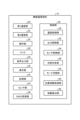
- FIG. 3 is a block diagram showing an example of the configuration of the wireless communication terminal according to the first embodiment.
- FIG. 4 is a flowchart showing the processing contents of the wireless communication terminal according to the first embodiment.
- FIG. 5 is a block diagram showing an example of the configuration of a wireless communication terminal according to the second embodiment.
- FIG. 1 is a diagram showing an example of the configuration of a wireless communication system according to the first embodiment.
- the wireless communication system 1 includes a management device 10, a server device 12, a base station device 14, and a wireless communication terminal 16.
- the wireless communication system 1 includes two wireless communication terminals 16, wireless communication terminal 16-1 and wireless communication terminal 16-2, but the present disclosure is not limited to this. In the present disclosure, there is no limit to the number of wireless communication terminals 16 included in the wireless communication system 1.
- the management device 10, the server device 12, and the base station device 14 are communicatively connected via a network N.
- the network N is, for example, the Internet, but is not limited to this.
- the management device 10 manages the communications carried out on the wireless communication system 1.
- the management device 10 for example, manages the communications carried out between the wireless communication terminal 16-1 and the wireless communication terminal 16-2 on the wireless communication system 1.
- the management device 10 for example, manages various application software stored in the wireless communication terminal 16.
- the management device 10 for example, manages settings related to the communications of the wireless communication terminal 16.
- the management device 10 can be realized, for example, by a PC (Personal Computer).
- the server device 12 controls the communications carried out on the wireless communication system 1.
- the server device 12 controls, for example, the communications carried out on the wireless communication system 1 between the wireless communication terminal 16-1 and the wireless communication terminal 16-2.
- the server device 12 controls, for example, various application software stored in the wireless communication terminal 16.
- the server device 12 controls, for example, settings related to the communications of the wireless communication terminal 16.
- the server device 12 can be realized, for example, by a server PC or a cloud server.
- the base station device 14 is a wireless communication device that performs wireless communication with the wireless communication terminal 16.
- the base station device 14 transmits and receives various types of data to and from the wireless communication terminal 16, for example.
- the base station device 14 is, for example, a commercial wireless base station, or a wireless communication device that supports 3G (third generation mobile communication system), 4G (fourth generation mobile communication system), or 5G (fifth generation mobile communication system).
- the wireless communication terminal 16 is a terminal device used by a user on the wireless communication system 1.
- a user on the wireless communication system 1 can use the wireless communication terminal 16 to talk to other users who have other wireless communication terminals 16.
- the wireless communication terminal 16 has a function of switching from a normal communication mode to a predetermined communication mode when an emergency occurs that requires rescue for the user, and notifying the user of the occurrence of the emergency.
- the predetermined communication mode may be an emergency mode that includes a transmission process for notifying the user of the emergency by automatic transmission without PTT operation.
- the predetermined communication mode may also be a communication mode that performs only emergency transmission without an alarm by automatic transmission without PTT operation.
- the normal communication mode is an operation mode for performing normal communication such as a call.
- the emergency mode is an operation mode for notifying the user of the occurrence of an emergency. After switching to the emergency mode, the wireless communication terminal 16 switches to the normal communication mode when a predetermined condition is satisfied.
- the wireless communication terminal 16 may be configured as one device or may be configured as multiple devices. The configuration of the wireless communication terminal 16 will be described later.
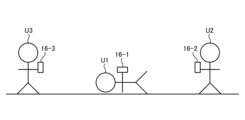
- FIG. 2 is a diagram for explaining the overview of the processing of the wireless communication terminal according to the first embodiment.
- users U1, U2, and U3 are shown.
- User U1 uses wireless communication terminal 16-1
- user U2 uses wireless communication terminal 16-2
- user U3 uses wireless communication terminal 16-3.
- wireless communication terminal 16-1 detects that user U1 has fallen, it switches to emergency mode.
- Wireless communication terminal 16-1 switches to emergency mode, sounds an alarm, and performs emergency operation of repeating continuous transmission by the first wireless communication method, that is, wireless transmission processing and standby processing, and starts holding processing by the second wireless communication method.
- continuous transmission may be performed by automatic transmission without PTT operation to perform wireless transmission processing continuously.
- continuous transmission may be performed by automatic transmission without PTT operation to perform wireless transmission processing intermittently.
- wireless communication terminal 16-2 receives a wireless signal from wireless communication terminal 16-1, user U2 heads to rescue user U1.
- wireless communication terminal 16-1 executes a process to enable communication connection with the closer of wireless communication terminal 16-2 and wireless communication terminal 16-3.
- Fig. 3 is a block diagram showing a configuration example of the wireless communication terminal according to the first embodiment.
- the wireless communication terminal 16 includes a first communication unit 20, a second communication unit 22, an operation unit 24, a microphone 26, an audio output unit 28, a display unit 30, a memory unit 32, a sensor unit 34, a GNSS (Global Navigation Satellite System) receiving unit 36, and a control unit 38.
- the wireless communication terminal 16 is, for example, a commercial wireless device, but is not limited to this.
- the wireless communication terminal 16 may be, for example, a smartphone.
- the wireless communication terminal 16 may be, for example, a combination of a commercial wireless device and a smartphone.
- the first communication unit 20 communicates with the base station device 14 or other wireless communication terminals 16 by transmitting RF (Radio Frequency) signals.
- the method of communication used by the first communication unit 20 is called the first wireless communication method.
- Examples of the first wireless communication method include digital business radio such as APCO-P25 (Association of Public safety Communications Officials international Project 25) and NXDN (registered trademark).
- the first wireless communication method may be, for example, wireless communication using a mobile phone network.
- the second communication unit 22 communicates with other wireless communication terminals 16 by transmitting short-range wireless signals.
- the method of communication used by the second communication unit 22 is called the second wireless communication method.
- Examples of the second wireless communication method include, but are not limited to, communication using Wi-Fi (registered trademark) and Bluetooth (registered trademark).
- the wireless communication terminal 16 may, for example, be equipped with a USB communication unit including a USB (Universal Serial Bus) port, in addition to the first communication unit 20 and the second communication unit 22.
- a USB communication unit including a USB (Universal Serial Bus) port
- the operation unit 24 accepts various input operations for the wireless communication terminal 16.
- the operation unit 24 outputs an input signal corresponding to the accepted input operation to the control unit 38.
- the operation unit 24 includes, for example, a touch panel, a button, a switch, a PTT (Push to Talk) button, etc.
- the microphone 26 is a microphone that detects sounds around the wireless communication terminal 16.
- the microphone 26 detects, for example, the voice of the user of the wireless communication terminal 16.
- the microphone 26 outputs, for example, an audio signal corresponding to the detected sound to the control unit 38.
- the audio output unit 28 outputs various sounds. For example, the audio output unit 28 outputs the voice of a user of another wireless communication terminal 16. For example, the audio output unit 28 outputs an alarm when the wireless communication terminal 16 is in emergency mode.
- the audio output unit 28 is a speaker.
- the display unit 30 displays various images.
- the display unit 30 is, for example, a display including a liquid crystal display (LCD) or an organic electroluminescence (EL) display.
- LCD liquid crystal display
- EL organic electroluminescence
- the memory unit 32 stores various types of information.
- the memory unit 32 stores information such as the calculation contents of the control unit 38 and programs.
- the memory unit 32 includes at least one of a RAM (Random Access Memory), a main memory such as a ROM (Read Only Memory), and an external memory such as a HDD (Hard Disk Drive).
- a RAM Random Access Memory
- main memory such as a ROM (Read Only Memory)
- HDD Hard Disk Drive
- the storage unit 32 stores various application software.
- the storage unit 32 stores, for example, distance information between the wireless communication terminal 16 and another wireless communication terminal 16 that is communicatively connected to the wireless communication terminal 16 using the second wireless communication method by the second communication unit 22.
- the other wireless communication terminal 16 that is communicatively connected to the wireless communication terminal 16 may also be referred to as a destination terminal.
- the sensor unit 34 detects the state of the user of the wireless communication terminal 16.
- the sensor unit 34 detects that the user of the wireless communication terminal 16 has entered an emergency.
- the sensor unit 34 includes, for example, an inclination sensor that detects the angle of the user (wireless communication terminal 16) with respect to the ground.
- the inclination sensor detects that the user has fallen to the ground by detecting that the angle of the user with respect to the ground has reached a predetermined value, for example 0 degrees.
- the sensor unit 34 includes, for example, an acceleration sensor that detects acceleration.
- the acceleration sensor detects that the user has fallen to the ground by detecting acceleration of a predetermined magnitude or greater.
- the sensor unit 34 may include only one type of sensor, or may include multiple types of sensors.
- the GNSS receiving unit 36 is composed of a GNSS receiver that receives GNSS signals from GNSS satellites.
- the GNSS receiving unit 36 outputs the received GNSS signals to the position information acquisition unit 60 of the control unit 38.
- the control unit 38 controls each part of the wireless communication terminal 16.
- the control unit 38 has, for example, an information processing device such as a CPU (Central Processing Unit) or an MPU (Micro Processing Unit), and a storage device such as a RAM or ROM.
- the control unit 38 may be realized by, for example, an integrated circuit such as an ASIC (Application Specific Integrated Circuit) or an FPGA (Field Programmable Gate Array).
- the control unit 38 may be realized by a combination of hardware and software.
- the control unit 38 includes a communication control unit 50, an output control unit 52, a sensor control unit 54, a state determination unit 56, a mode switching unit 58, a position information acquisition unit 60, and a distance calculation unit 62.
- the communication control unit 50 controls the first communication unit 20 and the second communication unit 22.
- the communication control unit 50 controls the first communication unit 20 to perform the first wireless communication with the base station device 14 or another wireless communication terminal 16 in the first wireless communication method.
- the communication control unit 50 controls the first communication unit 20 to repeatedly perform the wireless transmission process and the first standby process.
- the first standby process is, for example, a standby process for receiving an RF signal from another wireless communication terminal 16.
- the communication control unit 50 controls the second communication unit 22 to perform the second wireless communication with the other wireless communication terminal 16 in the second wireless communication method.
- the communication control unit 50 controls the second communication unit 22 to perform, for example, the second standby process.
- the second standby process is a standby process for receiving a short-range wireless signal from the other wireless communication terminal 16.
- the output control unit 52 controls the audio output unit 28 and the display unit 30.
- the output control unit 52 controls the audio output unit 28 to output various sounds.
- the output control unit 52 controls the display unit 30 to display various images.
- the sensor control unit 54 controls the sensor unit 34.
- the sensor control unit 54 controls the sensor unit 34 to detect the state of the user of the wireless communication terminal 16.
- the sensor control unit 54 controls the sensor unit 34, for example, to detect whether the user of the wireless communication terminal 16 is in an emergency.
- the sensor control unit 54 acquires sensor information indicating the detection result of the user's state from the sensor unit 34.
- the state determination unit 56 determines the state of the user of the wireless communication terminal 16.
- the state determination unit 56 determines the state of the user of the wireless communication terminal 16 based on information acquired by the sensor control unit 54 from the sensor unit 34.
- the state determination unit 56 determines, for example, whether the user of the wireless communication terminal 16 is in an emergency situation requiring rescue.
- the mode switching unit 58 switches between normal communication mode and emergency mode. When it is determined that the state of the user of the wireless communication terminal 16 is an emergency, the mode switching unit 58 switches from the normal communication mode to the emergency mode.
- the location information acquisition unit 60 acquires the current location information of the wireless communication terminal 16.
- the location information acquisition unit 60 acquires the current location information of the wireless communication terminal 16 based on the GNSS signal received by the GNSS receiving unit 36.
- the location information acquisition unit 60 acquires the current location information of the other wireless communication terminal 16.
- the location information acquisition unit 60 acquires the current location information of the other wireless communication terminal 16 based on the GNSS signal included in the RF signal received from the other wireless communication terminal 16.
- the distance calculation unit 62 calculates the distance between the wireless communication terminal 16 and the other wireless communication terminal 16 based on the current location information of the wireless communication terminal 16 acquired by the location information acquisition unit 60 and the current location information of the other wireless communication terminal 16.
- Fig. 4 is a flowchart showing the processing contents of the wireless communication terminal according to the first embodiment.
- FIG. 4 shows the flow of processing when it is determined that the user of the wireless communication terminal 16 is in an emergency state and the processing switches from the normal communication mode to a specified communication mode.
- the specified communication mode in this case is assumed to be the emergency mode.
- the control unit 38 initializes distance information regarding the distance to another wireless communication terminal 16 stored in the storage unit 32 (step S10). If no distance information is stored in the storage unit 32, the control unit 38 may omit the process of step S10. Then, the control unit 38 proceeds to step S12.
- the mode switching unit 58 switches the mode set in the wireless communication terminal 16 from the normal communication mode to the emergency mode (step S12). Then, the process proceeds to step S14.
- the communication control unit 50 controls the second communication unit 22 to execute a second standby process using the second wireless communication method (step S14). Specifically, the communication control unit 50 executes an emergency operation that repeats wireless transmission process using the first wireless communication method and standby process, and starts a hold process using the second wireless communication method. In the standby process using the second wireless communication method, the communication control unit 50 controls the second communication unit 22 to execute a process for receiving a connection request signal indicating a request for communication connection from another wireless communication terminal 16. Then, the process proceeds to step S16.
- the communications control unit 50 determines whether or not a connection request signal has been received through the second standby process (step S16). If it is determined that a connection request signal has not been received (step S16; No), the process proceeds to step S18. If it is determined that a connection request signal has been received (step S16; Yes), the process proceeds to step S22.
- step S18 determines whether a first predetermined time has elapsed.
- the first predetermined time may be set arbitrarily. If it is determined that the first predetermined time has elapsed (step S18; Yes), the process proceeds to step S20. If it is not determined that the first predetermined time has elapsed (step S18; No), the process proceeds to step S14.
- step S18 returns Yes, the control unit 38 initializes distance information regarding the distance to the other wireless communication terminal 16 stored in the storage unit 32 (step S20). If no distance information is stored in the storage unit 32, that is, if the distance information has already been initialized, the control unit 38 may omit the process of step S20. Then, the control unit 38 proceeds to step S14. In other words, if the control unit 38 has not received a connection request signal from the other wireless communication terminal 16, the control unit 38 repeats the processes from step S14 to step S20.
- step S22 the communication control unit 50 controls the second communication unit 22 to establish a communication connection with the other wireless communication terminal 16 using the second wireless communication method.
- communication using the second wireless communication method is established by the second communication unit 22 by transmitting a connection permission signal, which is a response signal that accepts the connection request signal and permits the connection, to the other wireless communication terminal 16 that has transmitted the connection request signal.
- the other wireless communication terminal 16 with which a new communication connection has been established in step S22 is also referred to as the second destination terminal. Then, the process proceeds to step S24.
- the location information acquisition unit 60 acquires the current location information of the other wireless communication terminal 16 (step S24). Then, the process proceeds to step S26.
- the distance calculation unit 62 calculates the distance between the wireless communication terminal 16 and the other wireless communication terminal 16 based on the current location information of the wireless communication terminal 16 and the current location information of the other wireless communication terminal 16 (step S26).
- the distance between the wireless communication terminal 16 and the other wireless communication terminal 16 calculated in step S26 is also called the second distance. Then, the process proceeds to step S28.
- the distance calculation unit 62 reads out distance information related to the distance to the other wireless communication terminal 16 stored in the storage unit 32 (step S28).
- the other wireless communication terminal 16 related to the distance information read out in step S28 is also called the first destination terminal.
- This first destination terminal is the other wireless communication terminal 16 that is closer to the wireless communication terminal 16 among the other wireless communication terminals 16 connected to the wireless communication terminal 16, and the distance information of the first destination terminal is stored in the storage unit 32.
- the distance to the other wireless communication terminal 16 read out in step S28 is also called the first distance. If no distance information is stored in the storage unit 32, the distance calculation unit 62 may omit the processing of step S28, assuming that the distance information of the storage unit 32 is initialized. Then, proceed to step S30.
- the distance calculation unit 62 determines whether the other wireless communication terminal 16 with which the communication connection is established by the second wireless communication method is a wireless communication terminal closer to the wireless communication terminal 16 (step S30). Specifically, the distance calculation unit 62 compares the distance information read in step S28 with the distance calculated in step S26, and determines whether the other wireless communication terminal 16 with which the communication connection is established by the second wireless communication method is a wireless communication terminal closer to the wireless communication terminal 16. If the distance information is not stored in the storage unit 32 in step S28, the distance calculation unit 62 determines that the other wireless communication terminal 16 with which the communication connection is established by the second wireless communication method is a wireless communication terminal closer to the wireless communication terminal 16.
- step S30 If it is determined that the other wireless communication terminal 16 is closer to the wireless communication terminal 16 (step S30; Yes), the process proceeds to step S32. If it is not determined that the other wireless communication terminal is closer to the wireless communication terminal 16 (step S30; No), the process proceeds to step S46.
- step S30 the mode switching unit 58 suspends the emergency mode (step S32).
- the communication control unit 50 controls the first communication unit 20 to suspend the continuous transmission of the RF signal by the first wireless communication method. Then, the process proceeds to step S34.
- the distance calculation unit 62 stores distance information regarding the distance to the other wireless communication terminal 16 that is closer in the storage unit 32 (step S34). Then, the process proceeds to step S36.
- the communication control unit 50 controls the second communication unit 22 to execute a stop request standby process using the second wireless communication method (step S36). Specifically, the communication control unit 50 controls the second communication unit 22 to execute a stop request standby process to receive a stop request signal indicating a request to stop the emergency mode from another wireless communication terminal 16. Then, the process proceeds to step S38.
- the communication control unit 50 determines whether or not a stop request signal has been received from another wireless communication terminal 16 (step S38). If it is determined that a stop request signal has been received from another wireless communication terminal 16 (step S38; Yes), the process proceeds to step S40. If it is not determined that a stop request signal has been received from another wireless communication terminal 16 (step S38; No), the process proceeds to step S42.
- the mode switching unit 58 stops the specified communication mode (step S40).
- the specified communication mode here is the emergency mode. Specifically, the mode switching unit 58 completely stops continuous transmission in the emergency mode and switches to the normal communication mode. Then, the processing in FIG. 4 ends.
- step S42 determines whether a predetermined second predetermined time has elapsed.
- the second predetermined time may be set arbitrarily. If it is determined that the second predetermined time has elapsed (step S42; Yes), the process proceeds to step S44. If it is not determined that the second predetermined time has elapsed (step S42; No), the process proceeds to step S34. That is, the control unit 38 suspends the continuous transmission of the RF signal by the first wireless communication method in the emergency mode, and if a stop request signal is not received, repeats the processes of steps S34, S36, S38, and S42 for the second predetermined time.
- step S42 the mode switching unit 58 returns the wireless communication terminal 16 to emergency mode (step S44).
- the communication control unit 50 controls the first communication unit 20 to resume continuous transmission of the RF signal by the first wireless communication method. Then, the process proceeds to step S46.
- the communication control unit 50 controls the second communication unit 22 to disconnect the communication connection with the other wireless communication terminal 16 by the second wireless communication method (step S46). Then, the process proceeds to step S14. That is, the control unit 38 repeatedly executes the processes from step S14 to step S46 until it receives a request signal to stop the emergency mode. That is, when the communication connection is disconnected in the second communication unit 22 while the emergency mode is temporarily stopped, the communication control unit 50 controls the first communication unit 20 to resume the temporarily stopped process and to repeatedly perform the wireless transmission process by the first wireless communication method and the first standby process.
- the communication control unit 50 proceeds to step S14, it may control the wireless transmission interval to be extended when controlling the repeated wireless transmission process by the first wireless communication method and the standby process. The order of the processes of steps S44 and S46 may be reversed.
- the first embodiment establishes a communication connection based on the distance to multiple other wireless communication terminals 16. This allows the first embodiment to establish a communication connection with other wireless communication terminals 16 that are closer in distance.
- the control unit 38 acquires identification information for uniquely identifying the other wireless communication terminal 16 in addition to the location information of the other wireless communication terminal 16.
- the identification information is, for example, a unique ID set for each wireless communication terminal 16.
- step S28 shown in FIG. 4 the control unit 38 reads out the distance information and identification information of the other wireless communication terminal 16 stored in the storage unit 32.
- step S30 the control unit 38 may determine whether the identification information of the other wireless communication terminal 16 with which communication connection was established in step S22 is the same as the identification information of the other wireless communication terminal 16 read out in step S28. In this case, if the identification information is the same, the control unit 38 may proceed to step S32, and if the identification information is different, the control unit 38 may determine whether the other wireless communication terminal 16 with which communication connection was established in step S22 is a wireless communication terminal that is closer to the wireless communication terminal 16.
- control unit 38 when a communication connection is established with another wireless communication terminal 16, if it is the same as the other wireless communication terminal 16 with which communication connection was established last time, the control unit 38 does not determine the distance, but only if it is different.
- the control unit 38 may transmit the identification information of the other wireless communication terminal 16 with which a communication connection was established last time to the other wireless communication terminal 16 with which a communication connection has been established this time.
- the first modified example of the first embodiment establishes a communication connection based on the distance to multiple other wireless communication terminals 16 and the identification information. This allows the first modified example of the first embodiment to establish a communication connection with other wireless communication terminals 16 that are closer in distance. Furthermore, in the first modified example of the first actual embodiment, the process of step S30 shown in FIG. 4 is executed only if the identification information differs, thereby reducing the processing load.
- the wireless communication terminal 16 stops the emergency mode when a stop request signal is received from another wireless communication terminal 16.
- the distance at which the stop request signal can be received is the same as the distance at which a communication connection can be established in the second wireless communication method.
- the distance at which the stop request signal can be received from another wireless communication terminal 16 may be shorter than the distance at which a communication connection can be established in the second wireless communication method.
- the wireless communication terminal 16 receives a stop request signal from the other wireless communication terminal 16 when the distance to the other wireless communication terminal 16 is greater than a predetermined distance, and stops the emergency mode.
- the user of the other wireless communication terminal 16 who goes to rescue the user of the wireless communication terminal 16 may not be able to find the user of the wireless communication terminal 16 because the distance to the wireless communication terminal 16 is greater than a predetermined distance. Therefore, after receiving the stop request signal from the other wireless communication terminal 16, the wireless communication terminal 16 may maintain the emergency mode until the distance to the other wireless communication terminal 16 becomes less than a predetermined distance. In this case, the wireless communication terminal 16 may stop the emergency mode at the point when the distance to the other wireless communication terminal 16 becomes less than a predetermined distance after receiving the stop request signal from the other wireless communication terminal 16.
- the emergency mode is maintained until the distance to the other wireless communication terminal 16 becomes equal to or less than a predetermined distance.
- the second modified example of the first embodiment can prevent other users who go to rescue the user of the wireless communication terminal 16 from losing sight of the user of the wireless communication terminal 16.
- FIG. 5 is a block diagram showing an example of the configuration of a wireless communication terminal according to the second embodiment.
- the wireless communication terminal 16A includes a smartphone 100 and a commercial wireless device 110.
- the smartphone 100 and the commercial wireless device 110 are connected to each other so as to be able to communicate with each other via a USB cable or the like.
- the wireless communication terminal may include multiple wireless communication devices of different types.
- the user can use the smartphone 100 to talk to other users.
- the commercial radio 110 functions as a speaker microphone.
- the commercial radio 110 outputs the received audio from other users.
- the user inputs audio into the commercial radio 110 while pressing the PTT button of the commercial radio 110, and the audio signal is transmitted from the smartphone 100.
- the user If the user is outside the range of mobile phone signals, the user communicates using the commercial radio 110 alone.
- a wireless communication terminal can be configured using multiple communication devices of different types.
- each device shown in the figure are conceptual and functional, and do not necessarily have to be physically configured as shown.
- the specific form of distribution and integration of each device is not limited to that shown in the figure, and all or part of the devices can be functionally or physically distributed and integrated in any unit depending on various loads, usage conditions, etc. This distribution and integration configuration may also be performed dynamically.
- the wireless communication terminal and communication method disclosed herein can be used in commercial radios or portable communication devices such as smartphones.
Landscapes
- Engineering & Computer Science (AREA)
- Computer Networks & Wireless Communication (AREA)
- Signal Processing (AREA)
- Environmental & Geological Engineering (AREA)
- Human Computer Interaction (AREA)
- Business, Economics & Management (AREA)
- Health & Medical Sciences (AREA)
- Emergency Management (AREA)
- Public Health (AREA)
- Mobile Radio Communication Systems (AREA)
- Telephone Function (AREA)
Abstract
無線通信端末は、第1通信部と、第2無線通信を行う第2通信部と、距離情報を記憶する記憶部と、自端末と接続先端末の位置情報を取得する位置情報取得部と、位置情報から距離を算出する距離算出部と、第1通信部と第2通信部とを制御する通信制御部を備える。第1通信部が通常通信モードから継続送信を行う所定の通信モードに切り替わった状態で、第2通信部が接続要求を行った無線通信端末を接続先端末として第2無線通信方式で通信接続した際に、位置情報取得部は、自端末の位置情報と接続先端末の位置情報とを取得し、距離算出部は、接続先端末と自端末との間の距離を距離算出部が算出し、記憶部に記憶された距離情報と距離とを比較する。距離の方が小さい場合は、第1無線通信方式による継続送信を一時的に停止し、距離に関する距離情報を記憶部に記憶させる。距離の方が大きい場合は、第2無線通信方式による通信接続を切断する。
Description
本開示は、無線通信端末および通信方法に関する。
無線通信端末を持つユーザに緊急事態が起こった際に、無線通信端末がエマージェンシーモードに入り、ユーザがエマージェンシー状態になったことを同一グループに属する他の無線通信端末に自動送信する技術が知られている(例えば、特許文献1参照)。
エマージェンシーモードによる送信処理は、通常の通信処理に対して混信や輻輳等の影響を与える通信妨害となることがある。また、無線通信端末がエマージェンシーモードであることは所持するユーザに緊急事態が発生していると考えられ、迅速な救助を要する。そこで、救助に向かっている救援者の無線通信端末により、エマージェンシーモードに入った要救助者の無線通信端末と近距離無線通信により接続し、救援者が救助に向かっている間は要救援者の無線通信端末の送信処理を一時停止させることで、混信や輻輳等の影響を最小限に抑えることが考えられる。また、迅速に救助されるためには、より近くにいる救助者の無線通信端末と接続して救助を待つことが望まれる。しかし、複数の端末と同時接続できない近接無線通信では、接続すると他の端末とは接続できなくなるため、要救助者の無線通信端末がより近い他の無線通信端末と適切に通信を行うことができない可能性がある。
本開示は、より近い他の無線通信端末からの接続要求を受け入れることができる無線通信端末および通信方法を提供することを目的とする。
本開示の無線通信端末は、第1無線通信方式で第1無線通信を行う第1通信部と、前記第1無線通信方式とは異なる第2無線通信方式で第2無線通信を行う第2通信部と、距離情報を記憶する記憶部と、自端末と接続先端末の位置情報を取得する位置情報取得部と、位置情報から距離を算出する距離算出部と、前記第1通信部と前記第2通信部とを制御する通信制御部を備える制御部と、を備え、前記第1通信部が通常通信モードから継続送信を行う所定の通信モードに切り替わった状態で、前記第2通信部が接続要求信号を受信し、接続を許可する応答信号を送信して接続要求を行った無線通信端末を接続先端末として第2無線通信方式で通信接続した際に、前記位置情報取得部は、前記自端末の位置情報と前記接続先端末の位置情報とを取得し、前記距離算出部は、前記接続先端末と自端末との間の距離を前記距離算出部が算出し、前記記憶部に記憶された距離情報と前記距離とを比較し、前記距離の方が小さい場合は、前記通信制御部が、前記第1無線通信方式による継続送信を一時的に停止するように前記第1通信部を制御するとともに、前記位置情報取得部は前記距離に関する距離情報を前記記憶部に記憶させ、前記距離の方が大きい場合は、前記通信制御部が、前記第2無線通信方式による通信接続を切断するよう前記第2通信部を制御する。
本開示の通信方法は、第1通信部が通常通信モードから継続送信を行う所定の通信モードに切り替わった状態で、第2通信部が接続要求信号を受信し、接続を許可する応答信号を送信して接続要求を行った無線通信端末を接続先端末として第2無線通信方式で通信接続した際に、自端末の位置情報と前記接続先端末の位置情報とを取得して、前記接続先端末と自端末との間の距離を算出するステップと、記憶部に記憶された距離情報と前記距離とを比較するステップと、前記距離の方が小さい場合は、前記通信制御部が、前記第1無線通信方式による継続送信を一時的に停止するように前記第1通信部を制御するとともに、前記位置情報取得部は前記距離に関する距離情報を前記記憶部に記憶させるステップと、前記距離の方が大きい場合は、前記通信制御部が、前記第2無線通信方式による通信接続を切断するよう前記第2通信部を制御するステップと、を含む。
本開示によれば、より近い他の無線通信端末からの接続要求を受け入れることができる無線通信端末および通信方法を提供することができる。
以下、添付図面を参照して、本開示に係る実施形態を詳細に説明する。なお、この実施形態により本開示が限定されるものではなく、また、以下の実施形態において、同一の部位には同一の符号を付することにより重複する説明を省略する。
[第1実施形態]
(無線通信システム)
図1を用いて、第1実施形態に係る無線通信システムの構成例について説明する。図1は、第1実施形態に係る無線通信システムの構成例を示す図である。
(無線通信システム)
図1を用いて、第1実施形態に係る無線通信システムの構成例について説明する。図1は、第1実施形態に係る無線通信システムの構成例を示す図である。
図1に示すように、無線通信システム1は、管理装置10と、サーバ装置12と、基地局装置14と、無線通信端末16と、を含む。図1に示す例では、無線通信システム1には、無線通信端末16として、無線通信端末16-1と、無線通信端末16-2との2台が含まれているが、本開示は、これに限定されない。本開示では、無線通信システム1に含まれる無線通信端末16の数に制限はない。
管理装置10と、サーバ装置12と、基地局装置14とは、ネットワークNを介して、通信可能に接続されている。ネットワークNは、例えば、インターネット網であるが、これに限定されない。
管理装置10は、無線通信システム1上で行われる通信を管理する。管理装置10は、例えば、無線通信システム1上で行われる、無線通信端末16-1と、無線通信端末16-2との間の通信を管理する。管理装置10は、例えば、無線通信端末16に記憶されている各種のアプリケーションソフトを管理する。管理装置10は、例えば、無線通信端末16の通信に関する設定事項を管理する。管理装置10は、例えば、PC(Personal Computer)で実現することができる。
サーバ装置12は、無線通信システム1上で行われる通信を制御する。サーバ装置12は、例えば、無線通信システム1上で行われる、無線通信端末16-1と、無線通信端末16-2との間の通信を制御する。サーバ装置12は、例えば、無線通信端末16に記憶されている各種のアプリケーションソフトを制御する。サーバ装置12は、例えば、無線通信端末16の通信に関する設定事項を制御する。サーバ装置12は、例えば、サーバPCやクラウドサーバで実現することができる。
基地局装置14は、無線通信端末16と無線通信を行う無線通信装置である。基地局装置14は、例えば、無線通信端末16との間で各種のデータの送受信を行う。基地局装置14は、例えば、業務用無線基地局、3G(第3世代移動通信システム)、4G(第4世代移動通信システム)、または5G(第5世代移動通信システム)に対応した無線通信装置である。
無線通信端末16は、無線通信システム1上のユーザにより利用される端末装置である。無線通信システム1上のユーザは、無線通信端末16を用いて、他の無線通信端末16を持つ他のユーザと通話することができる。無線通信端末16は、ユーザに救助が必要な緊急事態が発生した場合に、通常通信モードから所定の通信モードに切り替えて、ユーザに緊急事態が発生したことを通知する機能を有する。ここで、所定の通信モードは、PTT操作を伴わない自動送信により緊急事態を通知するための送信処理を伴うエマージェンシーモードであるとよい。また所定の通信モードは、PTT操作を伴わない自動送信によりアラームを伴わない緊急送信のみを行う通信モードであってもよい。通常通信モードは、通話等の通常の通信を行う動作モードである。エマージェンシーモードは、ユーザに緊急事態が発生したことを通知する動作モードである。無線通信端末16は、エマージェンシーモードに切り替わった後、所定の条件を満たした場合に、通常通信モードに切り替える。無線通信端末16は、1つの装置で構成されてもよいし、複数の装置で構成されてもよい。無線通信端末16の構成は、後述する。
(無線通信端末の処理の概要)
図2を用いて、第1実施形態に係る無線通信端末の処理の概要を説明する。図2は、第1実施形態に係る無線通信端末の処理の概要を説明するための図である。
図2を用いて、第1実施形態に係る無線通信端末の処理の概要を説明する。図2は、第1実施形態に係る無線通信端末の処理の概要を説明するための図である。
図2には、ユーザU1と、ユーザU2と、ユーザU3が示されている。ユーザU1は無線通信端末16-1を利用し、ユーザU2は無線通信端末16-2を利用し、ユーザU3は無線通信端末16-3を利用するのもとする。無線通信端末16-1は、ユーザU1が倒れたことを検出すると、エマージェンシーモードに切り替える。無線通信端末16-1は、エマージェンシーモードに切り替えて、アラームを鳴らし、第1無線通信方式による継続送信、つまり無線送信処理と、待ち受け処理とを繰り返す緊急動作を実行し、かつ第2無線通信方式による持ち受け処理とを開始する。ここで、継続送信はPTT操作を伴わない自動送信により連続的に無線送信処理を行うようにしてもよい。また、継続送信はPTT操作を伴わない自動送信により間欠的に無線送信処理を行うようにしてもよい。ユーザU2は、無線通信端末16-2が無線通信端末16-1から無線信号を受信すると、ユーザU1の救助に向かう。ユーザU1と、ユーザU2との距離が所定以下となると、無線通信端末16―1と、無線通信端末16-2との間で近距離無線通信により通信接続が確立される。ここで、ユーザU3もユーザU1の救助に向かい、ユーザU2よりもユーザU1に近づいたとする。この場合、無線通信端末16-1と、無線通信端末16-2とが近距離無線通信により通信接続されているので、ユーザU3がユーザU2よりもユーザU1に近づいたとしても、ユーザU3の無線通信端末16-3と、無線通信端末16-1との間で通信接続ができないため、ユーザU1の救助活動に支障をきたす可能性がある。そこで、本実施形態では、無線通信端末16-1は、所定の条件を満たした場合に、無線通信端末16-2および無線通信端末16-3のうち、近い方と通信接続できるような処理を実行する。
(無線通信端末)
図3を用いて、第1実施形態に係る無線通信端末の構成例について説明する。図3は、第1実施形態に係る無線通信端末の構成例を示すブロック図である。
図3を用いて、第1実施形態に係る無線通信端末の構成例について説明する。図3は、第1実施形態に係る無線通信端末の構成例を示すブロック図である。
図3に示すように、無線通信端末16は、第1通信部20と、第2通信部22と、操作部24と、マイク26と、音声出力部28と、表示部30と、記憶部32と、センサ部34と、GNSS(Global Navigation Satellite System)受信部36と、制御部38と、を備える。無線通信端末16は、例えば、業務用無線機であるが、これに限定されない。無線通信端末16は、例えば、スマートフォンであってもよい。無線通信端末16は、例えば、業務用無線機と、スマートフォンとの組み合わせであってもよい。
第1通信部20は、RF(Radio Frequency)信号を送信することで基地局装置14または他の無線通信端末16と通信を行う。第1通信部20が行う通信の方式は、第1無線通信方式と呼ばれる。第1無線通信方式は、例えば、APCO-P25(Association of Public safety Communications Officials international Project 25)およびNXDN(登録商標)といったデジタル業務無線が挙げられる。第1無線通信方式は、例えば、携帯電話網を用いた無線通信であってもよい。
第2通信部22は、近距離無線信号を送信することで他の無線通信端末16と通信を行う。第2通信部22が行う通信の方式は、第2無線通信方式と呼ばれる。第2無線通信方式は、例えば、Wi-Fi(登録商標)およびBluetooth(登録商標)による通信が例示されるが、これらに限定されない。
無線通信端末16は、例えば、第1通信部20と、第2通信部22とに加えて、USB(Universal Serial Bus)ポートなどで構成される、USB通信部を備えていてもよい。
操作部24は、無線通信端末16に対する各種の入力操作を受け付ける。操作部24は、受け付けた入力操作に応じた入力信号を制御部38に出力する。操作部24は、例えば、タッチパネル、ボタン、スイッチ、PTT(Push to Talk)ボタンなどを含む。
マイク26は、無線通信端末16の周辺の音声を検出するマイクロフォンである。マイク26は、例えば、無線通信端末16のユーザの音声を検出する。マイク26は、例えば、検出した音声に応じた音声信号を制御部38に出力する。
音声出力部28は、各種の音声を出力する。音声出力部28は、例えば、他の無線通信端末16のユーザの音声を出力する。音声出力部28は、例えば、無線通信端末16がエマージェンシーモードの際にアラームを出力する。音声出力部28は、スピーカである。
表示部30は、各種の映像を表示する。表示部30は、例えば、液晶ディスプレイ(LCD:Liquid Crystal Display)、有機EL(Electro-Luminescence)などを含むディスプレイである。
記憶部32は、各種の情報を記憶している。記憶部32は、制御部38の演算内容、およびプログラム等の情報を記憶する。記憶部32は、例えば、RAM(Random Access Memory)と、ROM(Read Only Memory)のような主記憶装置、HDD(Hard Disk Drive)等の外部記憶装置とのうち、少なくとも1つ含む。
記憶部32は、各種のアプリケーションソフトを記憶している。記憶部32は、例えば、第2通信部22による第2無線通信方式で無線通信端末16と通信接続された他の無線通信端末16との間の距離情報を記憶している。ここで、無線通信端末16と通信接続された他の無線通信端末16を接続先端末と呼ぶこともある。
センサ部34は、無線通信端末16のユーザの状態を検出する。センサ部34は、無線通信端末16のユーザが緊急事態になったことを検出する。センサ部34は、例えば、ユーザ(無線通信端末16)の地面に対する角度を検出する傾斜センサを含む。傾斜センサは、ユーザの地面に対する角度が所定値、例えば0度になったことを検出することで、ユーザが地面に倒れたことを検出する。センサ部34は、例えば、加速度を検出する加速度センサを含む。加速度センサは、所定以上の大きさの加速度を検出することで、地面に倒れたことを検出する。センサ部34は、1つの種類のセンサのみを含んでいてもよいし、複数種類のセンサを含んでいてもよい。
GNSS受信部36は、GNSS衛星からのGNSS信号を受信するGNSS受信機などで構成される。GNSS受信部36は、受信したGNSS信号を制御部38の位置情報取得部60へ出力する。
制御部38は、無線通信端末16の各部を制御する。制御部38は、例えば、CPU(Central Processing Unit)やMPU(Micro Processing Unit)などの情報処理装置と、RAMまたはROMなどの記憶装置とを有する。制御部38は、例えば、ASIC(Application Specific Integrated Circuit)やFPGA(Field Programmable Gate Array)などの集積回路により実現されてもよい。制御部38は、ハードウェアと、ソフトウェアとの組み合わせで実現されてもよい。
制御部38は、通信制御部50と、出力制御部52と、センサ制御部54と、状態判定部56と、モード切替部58と、位置情報取得部60と、距離算出部62と、を備える。
通信制御部50は、第1通信部20と、第2通信部22とを制御する。通信制御部50は、例えば、第1無線通信方式で基地局装置14または他の無線通信端末16と第1無線通信を行うように第1通信部20を制御する。通信制御部50は、例えば、無線送信処理と第1待受け処理とを繰り返し行うように第1通信部20を制御する。第1待ち受け処理は、例えば、他の無線通信端末16からのRF信号を受信するための待ち受け処理である。通信制御部50は、例えば、第2無線通信方式で他の無線通信端末16と第2無線通信を行うように第2通信部22を制御する。通信制御部50は、例えば、第2待受け処理を行うように第2通信部22を制御する。第2待ち受け処理は、他の無線通信端末16から近距離無線信号を受信するための待ち受け処理である。
出力制御部52は、音声出力部28と、表示部30とを制御する。出力制御部52は、例えば、各種の音声を出力させるように音声出力部28を制御する。出力制御部52は、例えば、各種の映像を表示させるように表示部30を制御する。
センサ制御部54は、センサ部34を制御する。センサ制御部54は、センサ部34を制御して、無線通信端末16のユーザの状態を検出させる。センサ制御部54は、例えば、センサ部34を制御して、無線通信端末16のユーザが緊急事態であるか否かを検出させる。センサ制御部54は、ユーザの状態の検出結果を示すセンサ情報を、センサ部34から取得する。
状態判定部56は、無線通信端末16のユーザの状態を判定する。状態判定部56は、センサ制御部54がセンサ部34から取得した情報に基づいて、無線通信端末16のユーザの状態を判定する。状態判定部56は、例えば、無線通信端末16のユーザが、救助が必要な緊急事態であるか否かを判定する。
モード切替部58は、通常通信モードとエマージェンシーモードとを切り替える。モード切替部58は、無線通信端末16のユーザの状態が緊急事態であると判定された場合に、通常通信モードからエマージェンシーモードに切り替える。
位置情報取得部60は、無線通信端末16の現在の位置情報を取得する。位置情報取得部60は、GNSS受信部36が受信したGNSS信号に基づいて、無線通信端末16の現在の位置情報を取得する。
位置情報取得部60は、他の無線通信端末16の現在の位置情報を取得する。位置情報取得部60は、他の無線通信端末16から受信したRF信号に含まれるGNSS信号に基づいて、他の無線通信端末16の現在の位置情報を取得する。
距離算出部62は、位置情報取得部60が取得した無線通信端末16の現在の位置情報と、他の無線通信端末16の現在の位置情報とに基づいて、無線通信端末16と、他の無線通信端末16との間の距離を算出する。
(処理内容)
図4を用いて、第1実施形態に係る無線通信端末の処理内容について説明する。図4は、第1実施形態に係る無線通信端末の処理内容を示すフローチャートである。
図4を用いて、第1実施形態に係る無線通信端末の処理内容について説明する。図4は、第1実施形態に係る無線通信端末の処理内容を示すフローチャートである。
図4は、無線通信端末16のユーザが緊急状態と判定され、通常通信モードから所定の通信モードに切り替える際の処理の流れを示している。ここでの所定の通信モードは、エマージェンシーモードであるものとして進める。
制御部38は、記憶部32に記憶されている他の無線通信端末16との間の距離に関する距離情報を初期化する(ステップS10)。制御部38は、記憶部32に距離情報が記憶されていない場合には、ステップS10の処理を省略してもよい。そして、ステップS12に進む。
モード切替部58は、無線通信端末16に設定されているモードを通常通信モードからエマージェンシーモードに切り替える(ステップS12)。そして、ステップS14に進む。
通信制御部50は、第2通信部22を制御して、第2無線通信方式による第2待ち受け処理を実行する(ステップS14)。具体的には、通信制御部50は、第1無線通信方式による無線送信処理と、待ち受け処理とを繰り返す緊急動作を実行し、かつ第2無線通信方式による持ち受け処理とを開始する。通信制御部50は、第2無線通信方式による待ち受け処理では、第2通信部22を制御して、他の無線通信端末16からの通信接続の要求を示す接続要求信号を受信するための処理を実行する。そして、ステップS16に進む。
通信制御部50は、第2待ち受け処理によって、接続要求信号を受信したか否かを判定する(ステップS16)。接続要求信号を受信したと判定されない場合(ステップS16;No)、ステップS18に進む。接続要求信号を受信したと判定された場合(ステップS16;Yes)、ステップS22に進む。
ステップS16でNoと判定された場合は、制御部38は、予め定めた第1の所定時間を経過したか否かを判定する(ステップS18)。第1の所定時間は、任意に設定されてよい。第1の所定時間を経過したと判定された場合(ステップS18;Yes)、ステップS20に進む。第1の所定時間を経過したと判定されない場合(ステップS18;No)、ステップS14に進む。
ステップS18でYesと判定された場合、制御部38は、記憶部32に記憶されている他の無線通信端末16との間の距離に関する距離情報を初期化する(ステップS20)。制御部38は、記憶部32に距離情報が記憶されていない場合、つまり距離情報が初期化済みである場合には、ステップS20の処理を省略してもよい。そして、ステップS14に進む。すなわち、制御部38は、他の無線通信端末16から接続要求信号を受信していない場合には、ステップS14からステップS20の処理を繰り返す。
ステップS16でYesと判定された場合、通信制御部50は、第2通信部22を制御して、他の無線通信端末16との間で第2無線通信方式による通信接続を確立させる(ステップS22)。ここでは、接続要求信号を送信してきた他の無線通信端末16に対して、接続要求信号を受け入れて接続を許可する応答信号である接続許可信号を送信することで、第2通信部22による第2無線通信方式の通信が確立する。ステップS22で新たに通信接続が確立された他の無線通信端末16は、第2接続先端末とも呼ばれる。そして、ステップS24に進む。
位置情報取得部60は、他の無線通信端末16の現在の位置情報を取得する(ステップS24)。そして、ステップS26に進む。
距離算出部62は、無線通信端末16の現在の位置情報と、他の無線通信端末16の現在の位置情報とに基づいて、無線通信端末16と、他の無線通信端末16との間の距離を算出する(ステップS26)。ステップS26で算出された、無線通信端末16と、他の無線通信端末16との間の距離は、第2距離とも呼ばれる。そして、ステップS28に進む。
距離算出部62は、記憶部32に記憶されている他の無線通信端末16との間の距離に関する距離情報を読み出す(ステップS28)。ステップS28で読み出される距離情報に関連する他の無線通信端末16は、第1接続先端末とも呼ばれる。この第1接続先端末は、無線通信端末16に接続された他の無線通信端末16のうち、無線通信端末16により近かった他の無線通信端末16であり、その第1接続先端末の距離情報が記憶部32に記憶されている。ステップS28で読み出される他の無線通信端末16との間の距離は、第1距離とも呼ばれる。距離算出部62は、記憶部32に距離情報が記憶されていない場合には記憶部32の距離情報が初期化されているとして、ステップS28の処理を省略してもよい。そして、ステップS30に進む。
距離算出部62は、第2無線通信方式で通信接続が確立した他の無線通信端末16は、無線通信端末16から近い無線通信端末であるか否かを判定する(ステップS30)。具体的には、距離算出部62は、ステップS28で読み出した距離情報と、ステップS26で算出した距離とに基づいて比較し、第2無線通信方式で通信接続が確立した他の無線通信端末16は、無線通信端末16からより近い無線通信端末であるか否かを判定する。距離算出部62は、ステップS28で記憶部32に距離情報が記憶されていなかった場合には、第2無線通信方式で通信接続が確立した他の無線通信端末16が無線通信端末16からより近い無線通信端末であると判定する。無線通信端末16からより近い無線通信端末であると判定された場合(ステップS30;Yes)、ステップS32に進む。無線通信端末16からより近い無線通信端末であると判定されない場合(ステップS30;No)、ステップS46に進む。
ステップS30でYesと判定された場合、モード切替部58は、エマージェンシーモードを一時停止させる(ステップS32)。ここでは、モード切替部58によるエマージェンシーモードの一時停止により、通信制御部50は、第1通信部20を制御して、第1無線通信方式によるRF信号の継続送信を一時停止する。そして、ステップS34に進む。
距離算出部62は、より近い他の無線通信端末16までの距離に関する距離情報を記憶部32に記憶させる(ステップS34)。そして、ステップS36に進む。
通信制御部50は、第2通信部22を制御して、第2無線通信方式による停止要求待ち受け処理を実行する(ステップS36)。具体的には、通信制御部50は、第2通信部22を制御して、他の無線通信端末16からのエマージェンシーモードの停止要求を示す停止要求信号を受信するための停止要求待ち受け処理を実行する。そして、ステップS38に進む。
通信制御部50は、他の無線通信端末16から停止要求信号を受信したか否かを判定する(ステップS38)。他の無線通信端末16から停止要求信号を受信したと判定された場合(ステップS38;Yes)、ステップS40に進む。他の無線通信端末16から停止要求信号を受信したと判定されない場合(ステップS38;No)、ステップS42に進む。
ステップS38でYesと判定された場合、モード切替部58は、所定の通信モードを停止させる(ステップS40)。ここでの所定の通信モードは、エマージェンシーモードである。具体的には、モード切替部58は、エマージェンシーモードによる継続送信を完全に停止させて、通常通信モードに切り替える。そして、図4の処理を終了する。
ステップS38でNoと判定された場合、制御部38は、予め定めた第2の所定時間を経過したか否かを判定する(ステップS42)。第2の所定時間は、任意に設定されてよい。第2の所定時間を経過したと判定された場合(ステップS42;Yes)、ステップS44に進む。第2の所定時間を経過したと判定されない場合(ステップS42;No)、ステップS34に進む。すなわち、制御部38は、エマージェンシーモードにおける第1無線通信方式によるRF信号の継続送信を一時停止し、かつ停止要求信号を受信しない場合には、第2の所定時間の間、ステップS34、ステップS36、ステップS38、およびステップS42の処理を繰り返す。
ステップS42でYesと判定された場合、モード切替部58は、無線通信端末16をエマージェンシーモードに復帰させる(ステップS44)。ここでは、モード切替部58によるエマージェンシーモードの復帰により、通信制御部50は、第1通信部20を制御して、第1無線通信方式によるRF信号の継続送信を再開する。そして、ステップS46に進む。
通信制御部50は、第2通信部22を制御して、他の無線通信端末16との間の第2無線通信方式による通信接続を切断させる(ステップS46)。そして、ステップS14に進む。すなわち、制御部38は、エマージェンシーモードの停止要求信号を受信するまで、ステップS14からステップS46の処理を繰り返し実行する。すなわち、エマージェンシーモードが一時的に停止している状態で、第2通信部22において通信接続が切断された場合、通信制御部50は、第1通信部20に対して一時的に停止していた処理を復帰させ、第1無線通信方式による無線送信処理と第1待受け処理とを繰り返し行うように第1通信部20を制御する。ここで、通信制御部50は、ステップS14に進んだ際には、第1無線通信方式による無線送信処理と、待ち受け処理とを繰り返す制御を行う際に、無線の送信間隔を広げるように制御してもよい。なお、ステップS44とステップS46の処理の順番は、逆であってもよい。
上述のとおり、第1実施形態は、複数の他の無線通信端末16との距離に基づいて、通信接続を確立する。これにより、第1実施形態は、距離がより近い他の無線通信端末16と通信接続することができる。
[第1実施形態の第1変形例]
第1実施形態の第1変形例について説明する。第1実施形態では、他の無線通信端末16との距離に基づいて、通信接続を確立するか否かを決定する。第1実施形態の第1変形例では、他の無線通信端末16との距離と、他の無線通信端末16の識別情報とに基づいて、通信接続をするか否かを決定する。
第1実施形態の第1変形例について説明する。第1実施形態では、他の無線通信端末16との距離に基づいて、通信接続を確立するか否かを決定する。第1実施形態の第1変形例では、他の無線通信端末16との距離と、他の無線通信端末16の識別情報とに基づいて、通信接続をするか否かを決定する。
例えば、制御部38は、図4に示すステップS24において、他の無線通信端末16の位置情報に加えて、他の無線通信端末16を一意に識別するための識別情報を取得する。識別情報は、例えば、無線通信端末16ごとに設定されている固有のIDである。
例えば、制御部38は、図4に示すステップS28において、記憶部32に記憶された他の無線通信端末16の距離情報と、識別情報とを読み出す。
例えば、制御部38は、ステップS30において、ステップS22で通信接続された他の無線通信端末16の識別情報と、ステップS28で読み出された他の無線通信端末16の識別情報とが同じであるか否かを判定してもよい。この場合、制御部38は、識別情報が同じであった場合にはステップS32に進み、異なっていた場合にはステップS22で通信接続が確立した他の無線通信端末16が無線通信端末16からより近い無線通信端末であるか否かを判定してもよい。すなわち、第1実施形態の変形例では、他の無線通信端末16との通信接続が確立した場合、前回通信接続が確立した他の無線通信端末16と同じ場合には距離の判定を行わずに、異なる場合にのみ距離の判定を行う。
例えば、制御部38は、今回通信接続が確立した他の無線通信端末16の識別情報と、前回通信接続が確立した他の無線通信端末16の識別情報とが異なり、かつ前回通信接続が確立した他の無線通信端末16の方が距離が近い場合には、今回通信接続が確立した他の無線通信端末16に対して、前回通信接続した他の無線通信端末16の識別情報を送信してもよい。
上述のとおり、第1実施形態の第1変形例は、複数の他の無線通信端末16との距離と、識別情報とに基づいて、通信接続を確立する。これにより、第1実施形態の第1変形例は、距離がより近い他の無線通信端末16と通信接続することができる。また、第1実際形態の第1変形例波では、識別情報が異なっていた場合にのみ図4に示すステップS30の処理を実行するので、処理の負荷を軽減することができる。
[第1実施形態の第2変形例]
第1実施形態の第2変形例について説明する。第1実施形態では、無線通信端末16は他の無線通信端末16から停止要求信号を受信した場合に、エマージェンシーモードを停止する。第1実施形態では、停止要求信号を受信できる距離は、第2無線通信方式で通信接続が確立できる距離と同じである。第1実施形態の第2変形例では、他の無線通信端末16から停止要求信号受信できる距離は、第2無線通信方式で通信接続が確立できる距離よりも短くしてもよい。
第1実施形態の第2変形例について説明する。第1実施形態では、無線通信端末16は他の無線通信端末16から停止要求信号を受信した場合に、エマージェンシーモードを停止する。第1実施形態では、停止要求信号を受信できる距離は、第2無線通信方式で通信接続が確立できる距離と同じである。第1実施形態の第2変形例では、他の無線通信端末16から停止要求信号受信できる距離は、第2無線通信方式で通信接続が確立できる距離よりも短くしてもよい。
例えば、無線通信端末16は、他の無線通信端末16までの距離が所定以上離れている状態で、他の無線通信端末16から停止要求信号を受信し、エマージェンシーモードを停止したとする。この場合、無線通信端末16のユーザの救助に向かった他の無線通信端末16のユーザは、無線通信端末16までの距離が所定以上離れているため、無線通信端末16のユーザを見つけることができない可能性がある。そこで、無線通信端末16は、他の無線通信端末16から停止要求信号を受信した後、他の無線通信端末16までの距離が所定以下となるまでエマージェンシーモードが維持するようにしてもよい。この場合、無線通信端末16は、他の無線通信端末16から停止要求信号を受信した後、他の無線通信端末16までの距離が所定以下となった時点で、エマージェンシーモードを停止するようにすればよい。
上述のとおり、第1実施形態の第2変形例は、無線通信端末16は、他の無線通信端末16から停止要求信号を受信した後、他の無線通信端末16までの距離が所定以下となるまでエマージェンシーモードが維持される。これにより、第1実施形態の第2変形例は、無線通信端末16のユーザの救助に向かった他のユーザが、無線通信端末16のユーザを見失ってしまうことを防止することができる。
[第2実施形態]
図5を用いて、第2実施形態に係る無線通信端末の構成例について説明する。図5は、第2実施形態に係る無線通信端末の構成例を示すブロック図である。
図5を用いて、第2実施形態に係る無線通信端末の構成例について説明する。図5は、第2実施形態に係る無線通信端末の構成例を示すブロック図である。
図5に示すように、無線通信端末16Aは、スマートフォン100と、業務用無線機110と、を備える。スマートフォン100と、業務用無線機110とは、USBケーブル等で通信可能に接続されている。すなわち、本開示においては、無線通信端末は、種類の異なる複数の無線通信装置を含んでよい。
携帯電話の電波が届く圏内であれば、ユーザは、スマートフォン100を用いて他のユーザと通話可能である。スマートフォン100が通話に利用されている間は、業務用無線機110は、スピーカーマイクとして機能する。すなわち、業務用無線機110は、他のユーザからの受信音声を出力する。ユーザは、業務用無線機110のPTTボタンを押しながら、業務用無線機110に音声を入力することで、スマートフォン100から音声信号が送信される。
携帯電話の電波が届かない圏外であれば、ユーザは、業務用無線機110単体で通信を行う。
上述のとおり、第2実施形態は、種類の異なる複数の通信装置を用いて、無線通信端末を構成することができる。
図示した各装置の各構成要素は機能概念的なものであり、必ずしも物理的に図示の如く構成されていることを要しない。すなわち、各装置の分散・統合の具体的形態は図示のものに限られず、その全部または一部を、各種の負荷や使用状況などに応じて、任意の単位で機能的または物理的に分散・統合して構成することができる。なお、この分散・統合による構成は動的に行われてもよい。
以上、本開示の実施形態を説明したが、これら実施形態の内容により本開示が限定されるものではない。また、前述した構成要素には、当業者が容易に想定できるもの、実質的に同一のもの、いわゆる均等の範囲のものが含まれる。さらに、前述した構成要素は適宜組み合わせることが可能である。さらに、前述した実施形態の要旨を逸脱しない範囲で構成要素の種々の省略、置換又は変更を行うことができる。
本開示の無線通信端末および通信方法は、業務用無線機またはスマートフォンなどの携帯型の通信装置に利用することができる。
1 無線通信システム
10 管理装置
12 サーバ装置
14 基地局装置
16,16A 無線通信端末
20 第1通信部
22 第2通信部
24 操作部
26 マイク
28 音声出力部
30 表示部
32 記憶部
34 センサ部
36 GNSS受信部
38 制御部
50 通信制御部
52 出力制御部
54 センサ制御部
56 状態判定部
58 モード切替部
60 位置情報取得部
62 距離算出部
100 スマートフォン
110 業務用無線機
10 管理装置
12 サーバ装置
14 基地局装置
16,16A 無線通信端末
20 第1通信部
22 第2通信部
24 操作部
26 マイク
28 音声出力部
30 表示部
32 記憶部
34 センサ部
36 GNSS受信部
38 制御部
50 通信制御部
52 出力制御部
54 センサ制御部
56 状態判定部
58 モード切替部
60 位置情報取得部
62 距離算出部
100 スマートフォン
110 業務用無線機
Claims (5)
- 第1無線通信方式で第1無線通信を行う第1通信部と、
前記第1無線通信方式とは異なる第2無線通信方式で第2無線通信を行う第2通信部と、
距離情報を記憶する記憶部と、
自端末と接続先端末の位置情報を取得する位置情報取得部と、位置情報から距離を算出する距離算出部と、前記第1通信部と前記第2通信部とを制御する通信制御部を備える制御部と、
を備え、
前記第1通信部が通常通信モードから継続送信を行う所定の通信モードに切り替わった状態で、前記第2通信部が接続要求信号を受信し、接続を許可する応答信号を送信して接続要求を行った無線通信端末を接続先端末として第2無線通信方式で通信接続した際に、
前記位置情報取得部は、前記自端末の位置情報と前記接続先端末の位置情報とを取得し、
前記距離算出部は、前記接続先端末と自端末との間の距離を前記距離算出部が算出し、前記記憶部に記憶された距離情報と前記距離とを比較し、
前記距離の方が小さい場合は、前記通信制御部が、前記第1無線通信方式による継続送信を一時的に停止するように前記第1通信部を制御するとともに、前記位置情報取得部は前記距離に関する距離情報を前記記憶部に記憶させ、
前記距離の方が大きい場合は、前記通信制御部が、前記第2無線通信方式による通信接続を切断するよう前記第2通信部を制御する、
無線通信端末。 - 前記距離算出部が前記記憶部に記憶された距離情報と前記距離とを比較する際に、
前記記憶部に記憶された距離情報が初期化されている場合は、
前記通信制御部は、前記第1無線通信方式による継続送信を一時的に停止するように前記第1通信部を制御し、
前記距離算出部は、前記距離を距離情報として前記記憶部に記憶する
請求項1に記載の無線通信端末。 - 前記第1通信部が通常通信モードから継続送信を行う所定の通信モードに切り替わった状態で、前記第2通信部が接続要求信号を受信せずに所定時間が経過した際に、
前記制御部は、前記記憶部に記憶している距離情報を初期化するよう制御する、
請求項1または請求項2に記載の無線通信端末。 - 前記第1通信部が継続送信を一時的に停止した状態で、
前記第2通信部が停止要求信号を前記接続先端末から受信した場合、
前記通信制御部は、前記第1無線通信方式による継続送信を完全に停止させるように前記第1通信部を制御する
請求項1または2に記載の無線通信端末。 - 第1通信部が通常通信モードから継続送信を行う所定の通信モードに切り替わった状態で、第2通信部が接続要求信号を受信し、接続を許可する応答信号を送信して接続要求を行った無線通信端末を接続先端末として第2無線通信方式で通信接続した際に、
自端末の位置情報と前記接続先端末の位置情報とを取得して、前記接続先端末と自端末との間の距離を算出するステップと、
記憶部に記憶された距離情報と前記距離とを比較するステップと、
前記距離の方が小さい場合は、通信制御部が、第1無線通信方式による継続送信を一時的に停止するように前記第1通信部を制御するとともに、位置情報取得部は前記距離に関する距離情報を前記記憶部に記憶させるステップと、
前記距離の方が大きい場合は、前記通信制御部が、第2無線通信方式による通信接続を切断するよう前記第2通信部を制御するステップと、
を含む、無線通信方法。
Priority Applications (1)
| Application Number | Priority Date | Filing Date | Title |
|---|---|---|---|
| US19/287,862 US20250358779A1 (en) | 2023-02-24 | 2025-08-01 | Wireless communication terminal and communication method |
Applications Claiming Priority (2)
| Application Number | Priority Date | Filing Date | Title |
|---|---|---|---|
| JP2023027354A JP2024120515A (ja) | 2023-02-24 | 2023-02-24 | 無線通信端末および通信方法 |
| JP2023-027354 | 2023-02-24 |
Related Child Applications (1)
| Application Number | Title | Priority Date | Filing Date |
|---|---|---|---|
| US19/287,862 Continuation US20250358779A1 (en) | 2023-02-24 | 2025-08-01 | Wireless communication terminal and communication method |
Publications (1)
| Publication Number | Publication Date |
|---|---|
| WO2024176802A1 true WO2024176802A1 (ja) | 2024-08-29 |
Family
ID=92500619
Family Applications (1)
| Application Number | Title | Priority Date | Filing Date |
|---|---|---|---|
| PCT/JP2024/003800 Ceased WO2024176802A1 (ja) | 2023-02-24 | 2024-02-06 | 無線通信端末および通信方法 |
Country Status (3)
| Country | Link |
|---|---|
| US (1) | US20250358779A1 (ja) |
| JP (1) | JP2024120515A (ja) |
| WO (1) | WO2024176802A1 (ja) |
Citations (3)
| Publication number | Priority date | Publication date | Assignee | Title |
|---|---|---|---|---|
| JP2003109160A (ja) * | 2001-09-29 | 2003-04-11 | Toshiba Corp | 緊急救助支援システム、緊急救助機能付き携帯端末、緊急救助情報受信無線端末及び緊急救助支援方法 |
| JP2005323091A (ja) * | 2004-05-07 | 2005-11-17 | Sony Corp | 携帯電子機器及びその無線接続制御方法 |
| JP2009199542A (ja) * | 2008-02-25 | 2009-09-03 | Fujitsu Ltd | 携帯端末装置および救助情報発信方法 |
-
2023
- 2023-02-24 JP JP2023027354A patent/JP2024120515A/ja active Pending
-
2024
- 2024-02-06 WO PCT/JP2024/003800 patent/WO2024176802A1/ja not_active Ceased
-
2025
- 2025-08-01 US US19/287,862 patent/US20250358779A1/en active Pending
Patent Citations (3)
| Publication number | Priority date | Publication date | Assignee | Title |
|---|---|---|---|---|
| JP2003109160A (ja) * | 2001-09-29 | 2003-04-11 | Toshiba Corp | 緊急救助支援システム、緊急救助機能付き携帯端末、緊急救助情報受信無線端末及び緊急救助支援方法 |
| JP2005323091A (ja) * | 2004-05-07 | 2005-11-17 | Sony Corp | 携帯電子機器及びその無線接続制御方法 |
| JP2009199542A (ja) * | 2008-02-25 | 2009-09-03 | Fujitsu Ltd | 携帯端末装置および救助情報発信方法 |
Also Published As
| Publication number | Publication date |
|---|---|
| JP2024120515A (ja) | 2024-09-05 |
| US20250358779A1 (en) | 2025-11-20 |
Similar Documents
| Publication | Publication Date | Title |
|---|---|---|
| US9680986B2 (en) | Automatically disabling the on-screen keyboard of an electronic device in a vehicle | |
| JP7194201B2 (ja) | Dciの伝送方法、端末及び基地局 | |
| JP5278506B2 (ja) | 近距離無線通信装置 | |
| EP4294114A2 (en) | Information reporting | |
| JP2023516605A (ja) | 許可とポリシーパラメータ配置方法、端末及びネットワーク機能 | |
| CN110769440B (zh) | 一种干扰上报控制方法、用户设备和网络侧设备 | |
| US20140004799A1 (en) | Communication method, communication device, and computer program product | |
| EP3996286A1 (en) | Interference processing method, terminal and network-side device | |
| EP3419267B1 (en) | Emergency notification device and emergency notification system | |
| US20260059262A1 (en) | Electronic device and operation method using a geo-fence | |
| KR101122889B1 (ko) | 통신 단말 | |
| WO2024176802A1 (ja) | 無線通信端末および通信方法 | |
| WO2014002541A1 (en) | Communication method, communication device, and program | |
| JP7823445B2 (ja) | 管理装置、および制御方法 | |
| KR101702496B1 (ko) | 상황인지 기반 전자 디바이스 분실방지시스템 및 그 방법 | |
| JP5894032B2 (ja) | 携帯通信装置、通信システム及び報知方法 | |
| WO2024181206A1 (ja) | 通信端末装置および無線通信方法 | |
| WO2024176762A1 (ja) | 無線通信端末、通信方法およびプログラム | |
| WO2023181693A1 (ja) | 無線通信装置、および無線通信方法 | |
| JP5160153B2 (ja) | 携帯通信機器及び携帯通信機器の制御方法 | |
| JP2008140227A (ja) | 移動通信端末装置 | |
| KR101126221B1 (ko) | 이동통신단말기에서 미아의 위치 추적 방법 | |
| JP2002081959A (ja) | Gps機能付携帯端末、報知端末および操作端末 | |
| JP6286027B2 (ja) | 位置情報伝達装置、位置情報伝達システム、位置情報伝達方法およびプログラム | |
| JP2009135652A (ja) | 無線通信端末 |
Legal Events
| Date | Code | Title | Description |
|---|---|---|---|
| 121 | Ep: the epo has been informed by wipo that ep was designated in this application |
Ref document number: 24760108 Country of ref document: EP Kind code of ref document: A1 |
|
| NENP | Non-entry into the national phase |
Ref country code: DE |
|
| 122 | Ep: pct application non-entry in european phase |
Ref document number: 24760108 Country of ref document: EP Kind code of ref document: A1 |