WO2024176293A1 - 推定装置、推定システム、推定方法、及び、記録媒体 - Google Patents
推定装置、推定システム、推定方法、及び、記録媒体 Download PDFInfo
- Publication number
- WO2024176293A1 WO2024176293A1 PCT/JP2023/005957 JP2023005957W WO2024176293A1 WO 2024176293 A1 WO2024176293 A1 WO 2024176293A1 JP 2023005957 W JP2023005957 W JP 2023005957W WO 2024176293 A1 WO2024176293 A1 WO 2024176293A1
- Authority
- WO
- WIPO (PCT)
- Prior art keywords
- customer
- estimation
- store
- time
- information
- Prior art date
- Legal status (The legal status is an assumption and is not a legal conclusion. Google has not performed a legal analysis and makes no representation as to the accuracy of the status listed.)
- Ceased
Links
Images




Classifications
-
- G—PHYSICS
- G06—COMPUTING OR CALCULATING; COUNTING
- G06Q—INFORMATION AND COMMUNICATION TECHNOLOGY [ICT] SPECIALLY ADAPTED FOR ADMINISTRATIVE, COMMERCIAL, FINANCIAL, MANAGERIAL OR SUPERVISORY PURPOSES; SYSTEMS OR METHODS SPECIALLY ADAPTED FOR ADMINISTRATIVE, COMMERCIAL, FINANCIAL, MANAGERIAL OR SUPERVISORY PURPOSES, NOT OTHERWISE PROVIDED FOR
- G06Q50/00—Information and communication technology [ICT] specially adapted for implementation of business processes of specific business sectors, e.g. utilities or tourism
- G06Q50/10—Services
- G06Q50/12—Hotels or restaurants
Definitions
- the present disclosure relates to an estimation device, an estimation system, an estimation method, and a recording medium.
- Patent Document 1 discloses a method for calculating an estimated time each user will use a seat based on data on remaining food obtained by image recognition.
- Patent Document 2 discloses a method for estimating an estimated time a customer will leave a restaurant by correcting a customer's stay time, which is estimated based on information on the customer's attributes, based on information on the pace at which the customer eats and drinks.
- Patent Documents 1 and 2 estimate the estimated time of leaving the restaurant based on the customer's meal status, but other factors may affect the estimated time of leaving the restaurant.
- One example of the objective of this disclosure is to provide an estimation device that can further improve the accuracy of estimating estimated store exit times.
- the estimation device includes a progress acquisition means for acquiring progress information indicating the progress of a customer's meal while seated in a restaurant, an action acquisition means for acquiring action information indicating the customer's actions, an estimation means for estimating an estimated time until the customer leaves the restaurant based on the progress information and the action information, and an output means for outputting the estimated result.
- the estimation system is an estimation system having the above-mentioned estimation device and a photographing device installed in a position capable of photographing the actions of a customer while using a seat in the store, and the action acquisition means acquires action information indicating the customer's actions by analyzing the image captured by the photographing device.
- the estimation method involves a computer acquiring progress information indicating the progress of a customer's meal while seated in a restaurant, acquiring motion information indicating the customer's motion, estimating an estimated time until the customer leaves the restaurant based on the progress information and the motion information, and outputting the estimated result.
- the recording medium stores a program that causes a computer to execute a process of acquiring progress information indicating the progress of a customer's meal while seated in a restaurant, acquiring motion information indicating the customer's motion, estimating an estimated time until the customer leaves the restaurant based on the progress information and motion information, and outputting the estimated result.
- the present disclosure provides an estimation device that can further improve the accuracy of estimating estimated store exit times.
- FIG. 1 is a block diagram showing an example of a configuration including an estimation device according to a first embodiment.
- FIG. 2 is a diagram showing a hardware configuration in which the estimation device according to the first embodiment is realized by a computer device and its peripheral devices.
- FIG. 3 is a diagram for explaining an example of a usage scene in the first embodiment.
- FIG. 4 is an example of an output of an estimated store exit time by the output unit in the first embodiment.
- FIG. 5 is a flowchart showing the operation of the estimation device in the first embodiment.
- FIG. 6 is a block diagram showing an example of a configuration including an estimation device according to the second embodiment.
- FIG. 7 is a flowchart showing the operation of the estimation device in the second embodiment.
- FIG. 8 is a flowchart showing the operation of the estimation device in the modified example of the second embodiment.
- Fig. 1 is a block diagram showing an example of a configuration of an estimation device 100 in an estimation system 10 according to the first embodiment.
- the estimation system 10 is connected, via a network, to an image capture device 200 installed at a position where the estimation device 100 can capture an image of a customer sitting at a seat in a store, and an output device 300 that outputs an estimation result.
- the estimation device 100 is a device for estimating the estimated time of leaving a restaurant for customers who are eating inside the restaurant.
- the invention disclosed herein is applicable to restaurants in general, but is particularly intended for restaurants such as cafes and family restaurants where customers stay for purposes other than eating.
- the estimation device 100 includes a progress acquisition unit 101, an operation acquisition unit 102, an estimation unit 103, and an output unit 104.
- FIG. 2 is a diagram showing an example of a hardware configuration in which the estimation device 100 in the first embodiment of the present disclosure is realized by a computer device 500 including a processor.
- the estimation device 100 includes a CPU (Central Processing Unit) 501, memories such as a ROM (Read Only Memory) 502 and a RAM (Random Access Memory) 503, a storage device 505 such as a hard disk for storing a program 504, a communication interface 508 for network connection, and an input/output interface 509 for inputting and outputting data.
- the estimation device 100 is connected to each component via a bus 510.
- the estimation device 100 in the first embodiment shown in FIG. 1 can also be configured using cloud computing or the like.
- the CPU 501 runs an operating system to control the entire estimation device 100 according to the first embodiment of the present invention.
- the CPU 501 also reads programs and data from a recording medium 506 mounted in, for example, a drive device 507 into memory.
- the CPU 501 also functions as the progress acquisition unit 101, the action acquisition unit 102, the estimation unit 103, and the output unit 104 in the first embodiment, or as part of these, and executes the processes or commands in the flowchart shown in FIG. 5, which will be described later, based on the programs.
- the recording medium 506 is, for example, an optical disk, a flexible disk, a magneto-optical disk, an external hard disk, or a semiconductor memory.
- the semiconductor memory which is part of the recording medium, is a non-volatile storage device in which the program is recorded.
- the program may also be downloaded from an external computer (not shown) that is connected to a communication network.
- the first embodiment shown in FIG. 1 is realized by the computer hardware shown in FIG. 2.
- the means for realizing each part of the estimation device 100 in FIG. 1 is not limited to the configuration described above.
- the estimation device 100 may be realized by a single physically combined device, or may be realized by a system consisting of two or more physically separated devices connected by wire or wirelessly.
- FIG. 3 is a diagram for explaining an example of a usage scenario of this embodiment.
- an employee inputs customer information, such as the table number and age, number of customers, or information indicating the relationship between customers, into a POS (Point Of Sale) terminal, and starts up a tablet terminal placed on the table.
- the tablet terminal is equipped with a photographing device 200, which captures images of the situation at the customer's table and the customer's actions. If the tablet terminal has an image analysis function, the above-mentioned customer information may be automatically input by analyzing the images captured by the photographing device 200.
- menu information ordered by the customer on the tablet terminal is stored in the POS terminal via the network.
- the progress acquisition unit 101 is a means for acquiring progress information indicating the progress of a customer's meal while seated in the store.
- the progress information includes information that allows the progress of an order and meal to be understood.
- the progress information may include at least one of the following information: the remaining amount of food on the customer's table, the order item category, the number of items ordered, and the length of time spent there.
- the progress acquisition unit 101 acquires the remaining amount of food on the customer's table and the order item category by analyzing an image captured by the image capture device 200 of the customer's table.
- the progress acquisition unit 101 also acquires the number of items ordered and the length of time spent there from the POS terminal.
- the method of acquiring this information is not limited to the above-mentioned example.
- the progress acquisition unit 101 analyzes the image acquired from the image capture device 200 to determine whether or not tableware is present and the amount of food remaining on the table, and acquires the progress of the meal from the image when the completion of eating is regarded as 100%.
- the progress acquisition unit 101 may analyze the rate at which food is being consumed from the image, and may determine that the meal is finished if the food has not been consumed for a predetermined period of time or more.
- the progress acquisition unit 101 may also estimate the progress of the meal from the duration of the meal based on, for example, the average duration of the meal by attribute.
- the progress acquisition unit 101 acquires the progress of the order based on, for example, the number of items ordered or the order item category.
- the order item category is a category that allows the progress of the order of appetizers, main dishes, desserts, etc. to be grasped.
- the progress acquisition unit 101 acquires the progress from the number of items ordered based on, for example, the average number of items ordered by attribute.
- the progress acquisition unit 101 outputs the progress information acquired in this way to the estimation unit 103.
- the motion acquisition unit 102 is a means for acquiring motion information indicating the motion of a customer.
- the state of a customer is a motion that the customer is currently performing, such as eating, drinking, taking a nap, working on a PC, reading a book, talking, or putting on a jacket.
- the motion acquisition unit 102 acquires the motion information by analyzing an image of the customer captured by a tablet terminal or an image capture device 200 such as a security camera device in a store. For example, the motion acquisition unit 102 reads out a motion analysis rule that associates the posture of the customer extracted from the characteristics of the image with a motion pattern from the storage device 505, and acquires the motion of the customer.
- the motion of the customer may be analyzed based on the personal belongings.
- the motion acquisition unit 102 may exclude the estimated time of leaving the store from the estimation target.
- the method by which the motion acquisition unit 102 acquires the motion information of the customer is not limited to the above-mentioned method.
- the motion acquisition unit 102 outputs the acquired motion information to the estimation unit 103.
- the estimation unit 103 is a means for estimating an estimated time it takes for a customer to leave the restaurant based on the progress information and the action information. Specifically, the estimation unit 103 estimates the time it takes for the customer to finish eating based on the progress information, and corrects the customer's estimated time to leave based on the customer's action information. For example, if a customer has finished eating but is about to start working on a PC or the like or is working on a PC, the estimation unit 103 estimates the estimated time to leave by taking into account the time spent working on the PC.
- the estimation device 100 stores information on the average time spent by customers who have started each action in the storage device 505, and the estimation unit 103 estimates the estimated time to leave based on the average time spent. On the other hand, if the customer has left food on their table but is getting ready to leave by putting on a jacket, the estimation unit 103 shortens the estimated time to leave to, for example, 0 to 5 minutes.
- the output unit 104 is a means for outputting the estimated result.
- the output unit 104 outputs the estimated exit time.
- the output unit 104 displays the estimated exit time on an output device 300 such as a display installed in the back yard of the store.
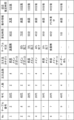
- FIG. 4 is an example of the output of the estimated exit time by the output unit 104 in this embodiment.
- the estimated exit time is linked to the table number, customer information such as age and number of customers, number of ordered items, order item category, table status and progress information of stay time, and action information, and the estimated exit times are sorted in order of earliest to latest and output.
- the estimation unit 103 estimates that customer No. 6 has no tableware and has finished his meal, but because he is working on a PC, the estimated exit time is 40 minutes later.
- the output unit 104 may change the output mode of the estimated exit time based on the accuracy of the estimated exit time estimated by the estimation unit 103. Examples of the output mode include changing the color or size of the text, highlighting, and the like. For example, the output unit 104 may highlight information where the estimated exit time is within a predetermined time or within a predetermined order in a different mode from other waiting times. In the example of FIG. 4, information where the estimated exit time is within 15 minutes is underlined.
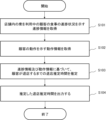
- FIG. 5 is a flowchart showing an outline of the operation of the estimation device 100 in the first embodiment. Note that the processing according to this flowchart may be executed based on program control by the above-mentioned processor. This flow is executed, for example, when an instruction is given to the estimation device 100 to estimate the estimated time of customers leaving a store.
- the progress acquisition unit 101 acquires progress information indicating the progress of a customer's meal at a seat in the restaurant (step S101).
- the action acquisition unit 102 acquires action information indicating the customer's action (step S102).
- the estimation unit 103 estimates an estimated restaurant exit time until the customer leaves the restaurant based on the progress information and the action information (step S103).
- the output unit 104 outputs the estimated restaurant exit time (step S104). With this, the estimation device 100 ends the estimation process.
- the estimation unit 103 estimates the estimated store leaving time until the customer leaves the store based on the progress information and the operation information. Furthermore, the output unit 104 outputs the estimated store leaving time. In this way, the estimated store leaving time is estimated taking into account, for example, cases in which the customer may stay even after finishing their meal. Therefore, the estimation device 100 can further improve the estimation accuracy of the estimated store leaving time.
- the estimation unit 103 estimates the estimated store exit time until the customer leaves the store based on the progress information and the operation information.
- the estimation unit 103 may further estimate the estimated store exit time based on customer information or the type of store.
- the customer information is information indicating the age, sex, and number of customers, or the relationship between customers such as family, work, or friends.
- the estimation unit 103 acquires customer information from, for example, a POS terminal.
- the estimation unit 103 estimates the estimated store exit time based on the customer information using a known method. For example, the estimation unit 103 acquires customer information and estimates the estimated store exit time based on the average stay time recorded for each age group or sex. In addition, when a predetermined number of people or more visit the store, the estimation unit 103 may estimate the estimated store exit time to be longer than the average stay time.
- the estimation unit 103 also acquires information indicating the type of business of the store, such as breakfast, lunch, or dinner, from the POS terminal. For example, the estimation unit 103 may estimate an estimated exit time for customers who visit the store during lunch time to be shorter than an estimated exit time for customers who visit the store during dinner time.
- Fig. 6 is a block diagram of an estimation system 11 including an estimation device 110 according to the second embodiment. In this embodiment, it is assumed that a store is full and there is a waiting line to enter the store.
- each component in each embodiment of the present disclosure can be realized not only in hardware, but also in a computer device based on program control and software.
- the estimation device 110 in this embodiment includes a progress acquisition unit 111, an action acquisition unit 112, an estimation unit 113, a visiting customer acquisition unit 114, and an output unit 115. That is, the estimation device 110 differs from the estimation device 100 at least in that it includes the visiting customer acquisition unit 114.
- the progress acquisition unit 111 and the action acquisition unit 112 in this embodiment have the same configuration as the progress acquisition unit 101 and the action acquisition unit 102 in the first embodiment.
- the visiting customer acquisition unit 114 is a means for acquiring information on the order in which visiting customers enter the store when the store is full. For example, the visiting customer acquisition unit 114 acquires information indicating the order in which customers enter the store when they register to enter at a ticket issuing machine installed at the store entrance. The ticket issuing machine also issues numbered tickets indicating the order in which customers enter the store. Furthermore, if a reservation to enter the store can be made on the store's application program, the visiting customer acquisition unit 114 may acquire information indicating the order in which customers enter the store when a reservation to enter the store is accepted. The visiting customer acquisition unit 114 outputs the information on the order in which customers enter the store to the estimation unit 113.
- the estimation unit 113 estimates the waiting time of visiting customers based on the estimated exit time of customers whose exit order corresponds to their entry order when the current customers are rearranged in order of earliest estimated exit time. That is, for example, if the entry order input from the visiting customer acquisition unit 114 is the first, the estimation unit 113 estimates the estimated exit time of the first customer when the current customers are rearranged in order of earliest estimated exit time as the waiting time of the visiting customer. Similarly, for example, if the entry order input from the visiting customer acquisition unit 114 is the second, the estimation unit 113 estimates the estimated exit time of the second customer when the current customers are rearranged in order of earliest estimated exit time as the waiting time of the visiting customer. Furthermore, the estimation unit 113 may add a predetermined time to the estimated estimated exit time to obtain the waiting time. The predetermined time to be added may be the average time required for an employee to clear a table after a customer leaves the store.
- the output unit 115 outputs the waiting time. For example, in the example of FIG. 4, the output unit 115 notifies the first customer waiting to enter that the waiting time is 5 minutes, based on the estimated leaving time of the first customer who is to leave, which is 5 minutes later. Similarly, the output unit 104 notifies the second customer waiting to enter that the waiting time is 10 minutes, based on the estimated leaving time of the second customer who is to leave, which is 10 minutes later.
- the output unit 115 may change the output mode of the waiting time based on the accuracy of the waiting time estimated by the estimation unit 113. Examples of the output mode include changing the color or size of the text, highlighting, etc. For example, the output unit 115 may highlight waiting times within a predetermined time by using a color or the like different from other waiting times.
- the output unit 115 may, for example, output the waiting time of visiting customers along with the order of entry onto the numbered ticket issued to the customer by the ticket issuing machine, or may output a list of waiting times linked to the numbered ticket to an output device 310 installed within the store.
- the output unit 115 may also output the waiting time of visiting customers along with the order of entry onto an application program.
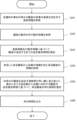
- FIG. 7 is a flowchart showing an outline of the operation of the estimation device 110 in the second embodiment.
- the processing according to this flowchart may be executed based on program control by the processor described above.
- the processing according to this flow is executed, for example, when estimating the waiting time before customers enter a store when the store is full.
- the progress acquisition unit 111 acquires progress information indicating the progress of the meal of a customer currently using a seat in the restaurant (step S201).
- the action acquisition unit 112 acquires action information indicating the action of the customer (step S202).
- the estimation unit 113 estimates the estimated exit time until the customer leaves the restaurant based on the progress information and the action information (step S203).
- the visiting customer acquisition unit 114 acquires visiting customer information including information on the order of entry of the visiting customers who have visited the restaurant (step S204).
- the estimation unit 113 estimates the waiting time of the visiting customers based on the estimated exit time of the customers whose exit order corresponds to the order of entry when the customers currently using the restaurant are sorted in order of the earliest estimated exit time (step S205). Finally, the output unit 115 outputs the waiting time (step S206). With this, the estimation device 110 ends the estimation process.
- the estimation unit 113 estimates the waiting time of visiting customers based on the estimated store exit time of customers whose exit order corresponds to their entry order when the current customers are sorted in order of earliest estimated store exit time.
- the output unit 115 outputs the waiting time of visiting customers. This makes it possible to notify customers who enter the store when it is full of the waiting time estimated based on the estimated store exit time with high estimation accuracy.
- the visiting customer acquisition unit 114 further acquires information on the visiting customer's desired time of leaving the store as information on the visiting customer.
- the storage device 505 stores a customer ID, the customer's biometric authentication information, and boarding information on the transportation facility the customer plans to board, linked to the customer ID.
- the visiting customer acquisition unit 114 acquires information on the visiting customer's desired time to leave the restaurant.
- the desired time to leave the restaurant is the time at which a customer must finish eating at the restaurant and leave in order to be on time for their scheduled schedule.
- the visiting customer acquisition unit 114 accepts input of information on the desired time to leave the restaurant when the visiting customer registers for entry at a ticket machine installed at the entrance of the restaurant, and acquires the information.
- the visiting customer acquisition unit 114 may accept input of information on the desired time to leave the restaurant when accepting the reservation for entry, and acquire the information.
- the visiting customer acquisition unit 114 may acquire menu information if input of menu information to be ordered by the visiting customer along with the desired time to leave the restaurant is accepted when the visiting customer registers for entry or makes a reservation for entry.
- the visiting customer acquisition unit 114 may also calculate the desired store exit time based on, for example, the visiting customer's schedule information.
- the visiting customer acquisition unit 114 may acquire, for example, schedule information stored on a terminal carried by the visiting customer.
- the schedule information includes the planned location and the planned time.
- the visiting customer acquisition unit 114 uses a known method to calculate the desired store exit time that allows the visiting customer to arrive at the planned location at the planned time.
- the visiting customer acquisition unit 114 acquires the schedule information by reading the boarding information stored on the ticket.
- a two-dimensional code is printed on the ticket, which stores information on the boarding location and departure time of the intended means of transportation, such as an airplane, train, or bus, and the visiting customer acquisition unit 114 acquires the schedule information by reading the two-dimensional code with a reading device provided in a ticket issuing machine or the like.
- the two-dimensional code may store information that can identify the boarding gate and the closing time for the security checkpoint.
- the visiting customer acquisition unit 114 reads the visiting customer's biometric authentication information and acquires the boarding information linked to the visiting customer's customer ID from the storage device 505.
- the biometric authentication information is not particularly limited, and may be any biometric authentication information that can identify the visiting customer, such as facial authentication information, iris authentication information, fingerprint authentication information, or vein authentication information.
- the visiting customer acquisition unit 114 acquires facial feature data of the visiting customer from an image captured by a photographing device provided in a ticket issuing machine, for example.
- the visiting customer acquisition unit 114 identifies a customer ID that matches the facial feature data of the visiting customer from the storage device 505, and acquires the boarding information linked to the customer ID.
- the means for identifying the customer ID is not limited to this.
- the estimation unit 113 estimates whether or not the visiting customer will make it to the desired store leaving time based on the waiting time and the planned time of stay in the store.
- the estimation unit 113 acquires the waiting time in the same manner as the estimation unit 113 in the second embodiment.
- the estimation unit 113 also estimates the planned time of stay of the visiting customer in the store based on the average stay time.
- the average stay time is stored in the storage device 505, for example, in association with the number or attributes of customers.
- the estimation unit 113 estimates whether or not the visiting customer will make it to the desired store leaving time based on whether the time when the waiting time and the planned time of stay in the store have elapsed, calculated from the current time, is before or after the desired store leaving time.
- the estimation unit 113 may estimate using the average food serving time and meal time for each menu item instead of the average stay time.
- a known method is used to acquire the food serving time and meal time for each menu item.
- the food serving time is the time from the time an order is placed at the POS terminal until the ordered food is served at the table, and the serving of food is detected by analyzing an image captured by the image capture device 210 of the table.
- the meal time is the time from the time the ordered food is served at the table until the leftover food is consumed, and the remaining food is detected by analyzing an image of the plate.
- the average food serving time and meal time acquired in this way are linked to the menu name and stored in the storage device 505.
- the estimation unit 113 may estimate menu information that will be available in time for the desired time to leave.
- the estimation unit 113 determines the available stay time as the time until the desired time to leave minus the waiting time, and estimates the menu information that can be ordered within the available stay time using the average values of the food preparation time and meal time associated with each menu.
- the average meal time may be calculated for each attribute, such as gender or age.
- the output unit 115 outputs the estimated result of whether or not the customer will arrive in time for the desired store leaving time. In addition, if the output unit 115 estimates that menu information will arrive in time for the desired store leaving time, it may output the menu information.
- FIG. 8 is a flowchart showing an outline of the operation of the estimation device 110 in a modified example of the second embodiment. Note that the processing according to this flowchart may be executed based on program control by the processor described above.
- the progress acquisition unit 111 acquires progress information indicating the progress of a customer's meal at a seat in the restaurant (step S301).
- the action acquisition unit 112 acquires action information indicating the customer's action (step S302).
- the estimation unit 113 estimates an estimated exit time until the customer leaves the restaurant based on the progress information and the action information (step S303).
- the visiting customer acquisition unit 114 acquires visiting customer information including the order in which the customers entered the restaurant and their desired exit time (step S304).
- the estimation unit 203 estimates the waiting time of the visiting customers based on the estimated exit time of the customers whose exit order corresponds to the order in which they entered the restaurant when the customers are sorted in order of earliest estimated exit time (step S305).
- the estimation unit 113 estimates whether or not the customer will make the desired store exit time based on the waiting time of the visiting customer and the average stay time for each menu (step S307). On the other hand, if the visiting customer acquisition unit 114 has not received the menu information to be ordered (S306; NO), the estimation unit 113 estimates whether or not the customer will make the desired store exit time based on the waiting time of the visiting customer and the average stay time in the store (step S308). If the estimation unit 113 estimates that the customer will make the desired store exit time (S308; YES), it estimates menu information that will make the desired store exit time (step S309). If the estimation unit 113 estimates that the customer will not make the desired store exit time (S308; NO), the flow proceeds to step S310. Finally, the output unit 115 outputs the estimation result (step S310). With this, the estimation device 110 ends the process.
- the visiting customer acquisition unit 114 further acquires information on the visiting customer's desired time to leave the restaurant, and the estimation unit 113 estimates whether the visiting customer will be able to make the desired time to leave the restaurant based on the visiting customer's waiting time and the planned time of stay in the restaurant. This allows the visiting customer to know whether they will be able to make the scheduled schedule even if they eat at the restaurant. Furthermore, in this embodiment, if the estimation unit 113 has received menu information to be ordered from the visiting customer, it estimates whether the visiting customer will be able to make the desired time to leave the restaurant based on the waiting time of the visiting customer and the average stay time for each menu.
- the estimation unit 113 estimates menu information that will make the desired time to leave the restaurant. This allows the visiting customer to make the scheduled schedule even if they eat at the restaurant if they order that menu.
- the output unit 115 may display a list of the average meal time for each menu item according to customer attributes.
- store employees can be encouraged to review the menu, such as by ceasing to serve menu items with an average meal time of more than a predetermined time during lunch hours when the turnover rate is to be increased.
- Appendix 1 a progress acquisition means for acquiring progress information indicating the progress of a meal of a customer currently using a seat in the restaurant;
- a motion acquisition means for acquiring motion information indicating the motion of the customer;
- An estimation means for estimating an estimated store exit time until the customer leaves the store based on the progress information and the action information;
- An estimation device comprising: an output means for outputting an estimation result.
- (Appendix 2) The estimation device according to claim 1, wherein the progress acquisition means acquires progress information of at least one of the remaining amount of food placed on the customer's table, the order item category, the number of ordered items, and the customer's stay time.
- Appendix 4 The estimation device according to any one of appendices 1 to 3, wherein the estimation means further estimates a time until the customer leaves the store based on information indicating the business type of the store.
- the estimation means estimates a waiting time of the visiting customer based on an estimated store exit time of a customer whose exit order corresponds to the store entry order when the customers using the store are rearranged in order of earliest estimated store exit time,
- the estimation device according to any one of claims 1 to 4, wherein the output means outputs the waiting time as the estimation result.
- the visiting customer acquisition means further acquires information on a desired time of leaving the store of the visiting customer,
- the estimation means estimates whether the customer will arrive at the desired store leaving time based on a waiting time and a planned stay time in the store,
- the estimation device outputs an estimation result.
- the visiting customer acquisition means further acquires menu information ordered by the visiting customer,
- the estimation device according to claim 6, wherein the estimation means further estimates menu information that will be available in time for the desired leaving time.
- An estimation system including the estimation device according to any one of Supplementary Notes 1 to 9, and a photographing device installed in a position capable of photographing the actions of a customer who is using a seat in the store,
- the motion acquisition means acquires motion information indicating the motion of the customer by analyzing the image captured by the photographing device.
- the computer Acquire progress information indicating the progress of a meal of a customer currently seated in the restaurant, acquiring motion information indicating a motion of the customer; estimating an estimated store exit time until the customer leaves the store based on the progress information and the operation information; An estimation method that outputs the estimated estimation result.
- (Appendix 12) Acquire progress information indicating the progress of a meal of a customer currently seated in the restaurant, acquiring motion information indicating a motion of the customer; estimating an estimated store exit time until the customer leaves the store based on the progress information and the operation information;
- a recording medium storing a program for causing a computer to execute a process for outputting the estimated results.
Landscapes
- Business, Economics & Management (AREA)
- Tourism & Hospitality (AREA)
- Health & Medical Sciences (AREA)
- Economics (AREA)
- General Health & Medical Sciences (AREA)
- Human Resources & Organizations (AREA)
- Marketing (AREA)
- Primary Health Care (AREA)
- Strategic Management (AREA)
- Physics & Mathematics (AREA)
- General Business, Economics & Management (AREA)
- General Physics & Mathematics (AREA)
- Engineering & Computer Science (AREA)
- Theoretical Computer Science (AREA)
- Management, Administration, Business Operations System, And Electronic Commerce (AREA)
- Cash Registers Or Receiving Machines (AREA)
Abstract
Description
まず、本開示の第一の実施形態について図面を参照して詳細に説明する。図1は、第一の実施形態にかかる推定システム10における推定装置100の構成の一例を示すブロック図である。推定システム10は、推定装置100が店舗内の席を利用している顧客の動作を撮影可能な位置に設置された撮影装置200及び推定結果を出力する出力装置300と、ネットワークを介して接続されている。
上述の第一の実施形態では、推定部103が進捗情報及び動作情報に基づいて、顧客が退店するまでの退店推定時間を推定した。推定部103は、更に、顧客情報又は店舗の業態に基づいて、退店推定時間を推定しても構わない。顧客情報とは、顧客の年代、性別、人数、又は、家族、仕事関係、若しくは、友人といった顧客同士の関係を示す情報である。推定部103は、例えば、POS端末から顧客情報を取得する。推定部103は、公知の方法で顧客情報に基づいて、退店推定時間を推定する。例えば、推定部103は、顧客情報を取得し、年代又は性別毎に記録された平均滞在時間に基づき、退店推定時間を推定する。また、推定部103は、所定人数以上で来店している場合は、平均滞在時間よりも退店推定時間を長めに推定してもよい。
次に、本開示の第二の実施形態について図面を参照して詳細に説明する。図6は、第二の実施形態における推定装置110を含む推定システム11のブロック図を示す図である。本実施形態は、店舗が満席であり、入店に順番待ちが発生している場合を想定する。
次に、本開示の第二の実施形態の変形例について、第二の実施形態と異なるところを中心に説明する。本変形例では、店舗が満席である場合に、来店した顧客が店舗で食事をしても、予定しているスケジュールに間に合うか否かを推定する。本変形例では、来店顧客取得部114が、来店顧客の情報として、来店顧客の退店希望時刻の情報を更に取得する。また、本変形例において、記憶装置505には、顧客IDに、顧客の生体認証情報と、顧客が乗車予定の交通機関に関する乗車情報とが紐づけられて格納されているとする。
店舗内の席を利用中の顧客の食事の進捗状況を示す進捗情報を取得する、進捗取得手段と、
前記顧客の動作を示す動作情報を取得する、動作取得手段と、
前記進捗情報及び前記動作情報に基づいて、前記顧客が退店するまでの退店推定時間を推定する、推定手段と、
推定した推定結果を出力する、出力手段と、を備える、推定装置。
前記進捗取得手段は、前記顧客のテーブルに置かれた料理の残量及び注文品カテゴリ、注文品数、並びに、滞在時間の少なくともいずれかの進捗情報を取得する、付記1に記載の推定装置。
前記推定手段は、更に、顧客情報に基づいて、前記顧客が退店するまでの時間を推定する、付記1又は付記2に記載の推定装置。
前記推定手段は、更に、前記店舗の業態を示す情報に基づいて、前記顧客が退店するまでの時間を推定する、付記1~3のいずれかに記載の推定装置。
前記店舗が満席である場合に、来店した来店顧客の入店順の情報を含む来店顧客の情報を取得する来店顧客取得手段を備え、
前記推定手段は、前記利用中の顧客を退店推定時間が早い順に並び変えた場合における退店順が前記入店順に対応する顧客の退店推定時間に基づいて、前記来店顧客の待ち時間を推定し、
前記出力手段は、前記推定結果として前記待ち時間を出力する、付記1~4のいずれかに記載の推定装置。
来店顧客取得手段は、前記来店顧客の退店希望時刻の情報を更に取得し、
前記推定手段は、前記来店顧客の待ち時間と前記店舗での滞在予定時間に基づいて、前記退店希望時刻に間に合うか否かを推定し、
前記出力手段は、推定結果を出力する、付記5に記載の推定装置。
来店顧客取得手段は、前記来店顧客が注文するメニュー情報を更に取得し、
前記推定手段は、更に、前記退店希望時刻に間に合うメニュー情報を推定する、付記6に記載の推定装置。
前記来店顧客取得手段は、前記来店顧客のスケジュール情報に基づいて、前記退店希望時刻を算出する、付記6又は付記7に記載の推定装置。
前記出力手段は、前記推定手段が推定した前記退店推定時間の精度に基づいて、前記推定結果の出力態様を変化させる、付記1~8のいずれかに記載の推定装置。
付記1~9のいずれかに記載の前記推定装置と、前記店舗内の席を利用中の顧客の動作を撮影可能な位置に設置された撮影装置と、を有する推定システムであって、
前記動作取得手段は、前記撮影装置で撮影された撮影画像を解析することにより、前記顧客の動作を示す動作情報を取得する、推定システム。
コンピュータが、
店舗内の席を利用中の顧客の食事の進捗状況を示す進捗情報を取得し、
前記顧客の動作を示す動作情報を取得し、
前記進捗情報及び前記動作情報に基づいて、前記顧客が退店するまでの退店推定時間を推定し、
推定した推定結果を出力する、推定方法。
店舗内の席を利用中の顧客の食事の進捗状況を示す進捗情報を取得し、
前記顧客の動作を示す動作情報を取得し、
前記進捗情報及び前記動作情報に基づいて、前記顧客が退店するまでの退店推定時間を推定し、
推定した推定結果を出力する処理をコンピュータに実行させるプログラムを格納した記録媒体。
100、110 推定装置
101、111 進捗取得部
102、112 動作取得部
103、113 推定部
104、115 出力部
114 来店顧客取得部
200、210 撮影装置
300、310 出力装置
500 コンピュータ装置
501 CPU
502 ROM
503 RAM
504 プログラム
505 記憶装置
506 記録媒体
507 ドライブ装置
508 通信インタフェース
509 入出力インタフェース
510 バス
Claims (12)
- 店舗内の席を利用中の顧客の食事の進捗状況を示す進捗情報を取得する、進捗取得手段と、
前記顧客の動作を示す動作情報を取得する、動作取得手段と、
前記進捗情報及び前記動作情報に基づいて、前記顧客が退店するまでの退店推定時間を推定する、推定手段と、
推定した推定結果を出力する、出力手段と、を備える、推定装置。 - 前記進捗取得手段は、前記顧客のテーブルに置かれた料理の残量及び注文品カテゴリ、注文品数、並びに、滞在時間の少なくともいずれかの進捗情報を取得する、請求項1に記載の推定装置。
- 前記推定手段は、更に、顧客情報に基づいて、前記顧客が退店するまでの時間を推定する、請求項1又は請求項2に記載の推定装置。
- 前記推定手段は、更に、前記店舗の業態を示す情報に基づいて、前記顧客が退店するまでの時間を推定する、請求項1~3のいずれか一項に記載の推定装置。
- 前記店舗が満席である場合に、来店した来店顧客の入店順の情報を含む来店顧客の情報を取得する来店顧客取得手段を備え、
前記推定手段は、前記利用中の顧客を退店推定時間が早い順に並び変えた場合における退店順が前記入店順に対応する顧客の退店推定時間に基づいて、前記来店顧客の待ち時間を推定し、
前記出力手段は、前記推定結果として前記待ち時間を出力する、請求項1~4のいずれか一項に記載の推定装置。 - 来店顧客取得手段は、前記来店顧客の退店希望時刻の情報を更に取得し、
前記推定手段は、前記来店顧客の待ち時間と前記店舗での滞在予定時間に基づいて、前記退店希望時刻に間に合うか否かを推定し、
前記出力手段は、推定結果を出力する、請求項5に記載の推定装置。 - 来店顧客取得手段は、前記来店顧客が注文するメニュー情報を更に取得し、
前記推定手段は、更に、前記退店希望時刻に間に合うメニュー情報を推定する、請求項6に記載の推定装置。 - 前記来店顧客取得手段は、前記来店顧客のスケジュール情報に基づいて、前記退店希望時刻を算出する、請求項6又は請求項7に記載の推定装置。
- 前記出力手段は、前記推定手段が推定した前記退店推定時間の精度に基づいて、前記推定結果の出力態様を変化させる、請求項1~8のいずれか一項に記載の推定装置。
- 請求項1~9のいずれか一項に記載の前記推定装置と、前記店舗内の席を利用中の顧客の動作を撮影可能な位置に設置された撮影装置と、を有する推定システムであって、
前記動作取得手段は、前記撮影装置で撮影された撮影画像を解析することにより、前記顧客の動作を示す動作情報を取得する、推定システム。 - コンピュータが、
店舗内の席を利用中の顧客の食事の進捗状況を示す進捗情報を取得し、
前記顧客の動作を示す動作情報を取得し、
前記進捗情報及び前記動作情報に基づいて、前記顧客が退店するまでの退店推定時間を推定し、
推定した推定結果を出力する、推定方法。 - 店舗内の席を利用中の顧客の食事の進捗状況を示す進捗情報を取得し、
前記顧客の動作を示す動作情報を取得し、
前記進捗情報及び前記動作情報に基づいて、前記顧客が退店するまでの退店推定時間を推定し、
推定した推定結果を出力する処理をコンピュータに実行させるプログラムを格納した記録媒体。
Priority Applications (2)
| Application Number | Priority Date | Filing Date | Title |
|---|---|---|---|
| JP2025501924A JPWO2024176293A5 (ja) | 2023-02-20 | 推定装置、推定システム、推定方法、及び、コンピュータプログラム | |
| PCT/JP2023/005957 WO2024176293A1 (ja) | 2023-02-20 | 2023-02-20 | 推定装置、推定システム、推定方法、及び、記録媒体 |
Applications Claiming Priority (1)
| Application Number | Priority Date | Filing Date | Title |
|---|---|---|---|
| PCT/JP2023/005957 WO2024176293A1 (ja) | 2023-02-20 | 2023-02-20 | 推定装置、推定システム、推定方法、及び、記録媒体 |
Publications (1)
| Publication Number | Publication Date |
|---|---|
| WO2024176293A1 true WO2024176293A1 (ja) | 2024-08-29 |
Family
ID=92500592
Family Applications (1)
| Application Number | Title | Priority Date | Filing Date |
|---|---|---|---|
| PCT/JP2023/005957 Ceased WO2024176293A1 (ja) | 2023-02-20 | 2023-02-20 | 推定装置、推定システム、推定方法、及び、記録媒体 |
Country Status (1)
| Country | Link |
|---|---|
| WO (1) | WO2024176293A1 (ja) |
Citations (3)
| Publication number | Priority date | Publication date | Assignee | Title |
|---|---|---|---|---|
| JP2005338993A (ja) * | 2004-05-25 | 2005-12-08 | Nec Corp | 利用状況予測システムおよび方法ならびにデータ処理装置およびプロブラム |
| US20170018040A1 (en) * | 2015-07-15 | 2017-01-19 | Toshiba Tec Kabushiki Kaisha | Customer management system, customer management method, and customer management program |
| JP2022165206A (ja) * | 2021-04-19 | 2022-10-31 | 東芝テック株式会社 | 情報管理装置および情報管理プログラム |
-
2023
- 2023-02-20 WO PCT/JP2023/005957 patent/WO2024176293A1/ja not_active Ceased
Patent Citations (3)
| Publication number | Priority date | Publication date | Assignee | Title |
|---|---|---|---|---|
| JP2005338993A (ja) * | 2004-05-25 | 2005-12-08 | Nec Corp | 利用状況予測システムおよび方法ならびにデータ処理装置およびプロブラム |
| US20170018040A1 (en) * | 2015-07-15 | 2017-01-19 | Toshiba Tec Kabushiki Kaisha | Customer management system, customer management method, and customer management program |
| JP2022165206A (ja) * | 2021-04-19 | 2022-10-31 | 東芝テック株式会社 | 情報管理装置および情報管理プログラム |
Also Published As
| Publication number | Publication date |
|---|---|
| JPWO2024176293A1 (ja) | 2024-08-29 |
Similar Documents
| Publication | Publication Date | Title |
|---|---|---|
| JP7589765B2 (ja) | 状況通知装置、状況通知方法、及びプログラム | |
| US20250278969A1 (en) | Information processing apparatus, information processing method, and storage medium | |
| CN105741451B (zh) | 信息处理系统及信息处理方法 | |
| JP7298594B2 (ja) | 店舗管理装置および店舗管理方法、プログラム | |
| US20180308100A1 (en) | System and method of client recognition for service provider transactions | |
| US9310880B2 (en) | Self-service computer with dynamic interface | |
| JP4086787B2 (ja) | サービス支援システム、サービス支援サーバ、サービス支援方法 | |
| JP2017102846A (ja) | 接客対応評価装置及び接客対応評価方法 | |
| JP6596831B2 (ja) | 予測システム、予測方法およびプログラム | |
| US9147128B1 (en) | Machine learning enhanced facial recognition | |
| US10776613B1 (en) | Facial recognition system and methods for identity credentialing and personalized services | |
| EP3944180A1 (en) | Information processing device, server device, information processing method, and recording medium | |
| JP2004326208A (ja) | 顧客管理システム、該システムの機能を実現するプログラム及び記録媒体 | |
| JP2006350637A (ja) | 商品情報表示システム及び電子棚札 | |
| JP7509440B2 (ja) | 情報処理装置、制御方法及びプログラム | |
| CN108470157A (zh) | 一种客户信息获取方法及系统 | |
| US20240256644A1 (en) | System, server apparatus, authentication method, and storage medium | |
| JP2026034746A (ja) | 情報処理装置、情報処理方法及び記録媒体 | |
| WO2024176293A1 (ja) | 推定装置、推定システム、推定方法、及び、記録媒体 | |
| US20230169506A1 (en) | Store system, information processing apparatus, and information processing method | |
| JP7593442B2 (ja) | 情報処理装置、情報処理方法、及び、プログラム | |
| JP6773144B2 (ja) | コンテンツ選択装置、コンテンツ選択方法、コンテンツ選択システム及びプログラム | |
| US20240028988A1 (en) | Data distribution platform, information processing system, information processing method, and recording medium | |
| JP7471545B1 (ja) | 情報表示システム、表示制御装置、プログラム及び表示制御方法 | |
| JP7521679B2 (ja) | 情報処理装置、情報処理システム、情報処理方法及びプログラム |
Legal Events
| Date | Code | Title | Description |
|---|---|---|---|
| 121 | Ep: the epo has been informed by wipo that ep was designated in this application |
Ref document number: 23923949 Country of ref document: EP Kind code of ref document: A1 |
|
| ENP | Entry into the national phase |
Ref document number: 2025501924 Country of ref document: JP Kind code of ref document: A |
|
| WWE | Wipo information: entry into national phase |
Ref document number: 2025501924 Country of ref document: JP |
|
| NENP | Non-entry into the national phase |
Ref country code: DE |
|
| 122 | Ep: pct application non-entry in european phase |
Ref document number: 23923949 Country of ref document: EP Kind code of ref document: A1 |