WO2024166607A1 - 空間の埋設方法及び埋設システム - Google Patents
空間の埋設方法及び埋設システム Download PDFInfo
- Publication number
- WO2024166607A1 WO2024166607A1 PCT/JP2024/000715 JP2024000715W WO2024166607A1 WO 2024166607 A1 WO2024166607 A1 WO 2024166607A1 JP 2024000715 W JP2024000715 W JP 2024000715W WO 2024166607 A1 WO2024166607 A1 WO 2024166607A1
- Authority
- WO
- WIPO (PCT)
- Prior art keywords
- space
- slurry
- carbon dioxide
- parts
- composition
- Prior art date
- Legal status (The legal status is an assumption and is not a legal conclusion. Google has not performed a legal analysis and makes no representation as to the accuracy of the status listed.)
- Ceased
Links
Images

Classifications
-
- C—CHEMISTRY; METALLURGY
- C04—CEMENTS; CONCRETE; ARTIFICIAL STONE; CERAMICS; REFRACTORIES
- C04B—LIME, MAGNESIA; SLAG; CEMENTS; COMPOSITIONS THEREOF, e.g. MORTARS, CONCRETE OR LIKE BUILDING MATERIALS; ARTIFICIAL STONE; CERAMICS; REFRACTORIES; TREATMENT OF NATURAL STONE
- C04B22/00—Use of inorganic materials as active ingredients for mortars, concrete or artificial stone, e.g. accelerators or shrinkage compensating agents
- C04B22/06—Oxides, Hydroxides
-
- C—CHEMISTRY; METALLURGY
- C04—CEMENTS; CONCRETE; ARTIFICIAL STONE; CERAMICS; REFRACTORIES
- C04B—LIME, MAGNESIA; SLAG; CEMENTS; COMPOSITIONS THEREOF, e.g. MORTARS, CONCRETE OR LIKE BUILDING MATERIALS; ARTIFICIAL STONE; CERAMICS; REFRACTORIES; TREATMENT OF NATURAL STONE
- C04B24/00—Use of organic materials as active ingredients for mortars, concrete or artificial stone, e.g. plasticisers
- C04B24/04—Carboxylic acids; Salts, anhydrides or esters thereof
-
- C—CHEMISTRY; METALLURGY
- C04—CEMENTS; CONCRETE; ARTIFICIAL STONE; CERAMICS; REFRACTORIES
- C04B—LIME, MAGNESIA; SLAG; CEMENTS; COMPOSITIONS THEREOF, e.g. MORTARS, CONCRETE OR LIKE BUILDING MATERIALS; ARTIFICIAL STONE; CERAMICS; REFRACTORIES; TREATMENT OF NATURAL STONE
- C04B24/00—Use of organic materials as active ingredients for mortars, concrete or artificial stone, e.g. plasticisers
- C04B24/24—Macromolecular compounds
- C04B24/26—Macromolecular compounds obtained by reactions only involving carbon-to-carbon unsaturated bonds
-
- C—CHEMISTRY; METALLURGY
- C04—CEMENTS; CONCRETE; ARTIFICIAL STONE; CERAMICS; REFRACTORIES
- C04B—LIME, MAGNESIA; SLAG; CEMENTS; COMPOSITIONS THEREOF, e.g. MORTARS, CONCRETE OR LIKE BUILDING MATERIALS; ARTIFICIAL STONE; CERAMICS; REFRACTORIES; TREATMENT OF NATURAL STONE
- C04B24/00—Use of organic materials as active ingredients for mortars, concrete or artificial stone, e.g. plasticisers
- C04B24/24—Macromolecular compounds
- C04B24/38—Polysaccharides or derivatives thereof
-
- C—CHEMISTRY; METALLURGY
- C04—CEMENTS; CONCRETE; ARTIFICIAL STONE; CERAMICS; REFRACTORIES
- C04B—LIME, MAGNESIA; SLAG; CEMENTS; COMPOSITIONS THEREOF, e.g. MORTARS, CONCRETE OR LIKE BUILDING MATERIALS; ARTIFICIAL STONE; CERAMICS; REFRACTORIES; TREATMENT OF NATURAL STONE
- C04B26/00—Compositions of mortars, concrete or artificial stone, containing only organic binders, e.g. polymer or resin concrete
- C04B26/02—Macromolecular compounds
- C04B26/28—Polysaccharides or derivatives thereof
-
- C—CHEMISTRY; METALLURGY
- C04—CEMENTS; CONCRETE; ARTIFICIAL STONE; CERAMICS; REFRACTORIES
- C04B—LIME, MAGNESIA; SLAG; CEMENTS; COMPOSITIONS THEREOF, e.g. MORTARS, CONCRETE OR LIKE BUILDING MATERIALS; ARTIFICIAL STONE; CERAMICS; REFRACTORIES; TREATMENT OF NATURAL STONE
- C04B28/00—Compositions of mortars, concrete or artificial stone, containing inorganic binders or the reaction product of an inorganic and an organic binder, e.g. polycarboxylate cements
- C04B28/02—Compositions of mortars, concrete or artificial stone, containing inorganic binders or the reaction product of an inorganic and an organic binder, e.g. polycarboxylate cements containing hydraulic cements other than calcium sulfates
- C04B28/08—Slag cements
-
- C—CHEMISTRY; METALLURGY
- C04—CEMENTS; CONCRETE; ARTIFICIAL STONE; CERAMICS; REFRACTORIES
- C04B—LIME, MAGNESIA; SLAG; CEMENTS; COMPOSITIONS THEREOF, e.g. MORTARS, CONCRETE OR LIKE BUILDING MATERIALS; ARTIFICIAL STONE; CERAMICS; REFRACTORIES; TREATMENT OF NATURAL STONE
- C04B40/00—Processes, in general, for influencing or modifying the properties of mortars, concrete or artificial stone compositions, e.g. their setting or hardening ability
- C04B40/02—Selection of the hardening environment
Definitions
- the present invention relates to a method and system for filling a space. More specifically, the present invention relates to a method and system for filling a space by injecting a slurry of a specific composition into the space using a borehole and reacting it with carbon dioxide.
- Greenhouse gases such as carbon dioxide are believed to be the cause of global warming, and efforts to reduce emissions are being made in various countries.
- developed countries, including Japan are promoting the development of technology to fix the greenhouse gas carbon dioxide as a component of mineral structures (known as "mineralization of carbon dioxide” or “mineral carbonation”).
- Minerals used for carbon dioxide mineralization begin with natural rocks and silicate minerals such as basalt, olivine, serpentine, and wollastonite, and research is now expanding to include various types of industrial by-products or waste materials.
- Patent Document 1 discloses a carbon dioxide fixation method in which carbon dioxide is supplied to an aqueous solution of a mixture of granulated blast furnace slag, which is a specific type of blast furnace slag, and an alkali, and the supplied carbon dioxide reacts with calcium dissolved from the slag to produce CaCO 3 (calcium carbonate).
- Patent Document 2 discloses a carbon dioxide fixation method including adding NaOH to a mixture of a predetermined ratio of pulverized blast furnace slag and water to decompose the blast furnace slag, and then hydrothermally reacting the blast furnace slag with carbon dioxide.
- the space to be filled is often partially narrowed or complicated due to deformation or submergence of pores and underground cavities in the strata leading from the well. Therefore, in order to fill every corner of such partially narrowed or complicated spaces with a filling material, it is preferable that the filling material has a sufficiently high fluidity and has a solidification performance that suppresses solidification near the injection port in the space to be filled by controlling and delaying the solidification time, while at the same time allowing solidification to proceed once the filling material has spread throughout the entire space.
- the present invention aims to provide a method and a system corresponding to this method that utilizes a borehole to efficiently fill a space with a solidifying material that has suitable fluidity and solidification properties, react with carbon dioxide, a greenhouse gas, to solidify it, and fill the space.
- a method for filling a space using a borehole comprising the steps of: Preparing a composition containing a hydraulic material and at least one selected from the group consisting of an alkaline irritant, a dispersant, and a hardening inhibitor; A method comprising: injecting a slurry containing the composition into a space using a borehole, and reacting the composition with carbon dioxide injected into the space together with the slurry or with carbon dioxide injected into the space separately from the slurry to fill the space.
- a space embedding system comprising: a slurry preparation unit that prepares a slurry using a composition containing a hydraulic material and at least one selected from the group consisting of an alkaline stimulant, a dispersant, and a hardening inhibitor; a slurry injection unit that injects the slurry or the slurry and carbon dioxide into a space; and a carbon dioxide injection unit that separately injects carbon dioxide into the space when the slurry injection unit is a slurry injection unit that injects the slurry into the space without carbon dioxide.
- the space burying system is not limited to the mode of using a borehole.
- a method for filling an underground space using a borehole comprising the steps of: Preparing a composition containing an aluminosilicate material and an alkaline irritant; The method includes further adding a dispersant or a hardening inhibitor to the composition, and injecting a slurry containing the composition into the underground space using a well, reacting the composition with carbon dioxide injected into the underground space together with the slurry or with carbon dioxide injected into the underground space separately from the slurry, thereby filling the underground space.
- the space filling method (or space filling system) according to the present invention utilizes a borehole to inject a slurry of a composition, which is a solidifying material with suitable fluidity and solidification properties, into the space, and causes it to react with carbon dioxide, a greenhouse gas, making it possible to efficiently fill and solidify spaces of various shapes (e.g. underground spaces), thereby filling the space.
- a composition which is a solidifying material with suitable fluidity and solidification properties
- FIG. 1 is a schematic diagram of an embodiment in which a space burying method (burying system) according to the present invention is applied to a former underground coal mining site of an underground coal mine.
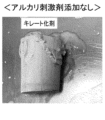
- FIG. 2 is a photograph showing the appearance of a composition slurry when it is removed from a formwork after being in contact with carbon dioxide for 24 hours in an embodiment of the space filling method according to the present invention, in which the composition slurry does not contain an alkaline irritant but contains a chelating agent.
- FIG. 1 is a schematic diagram of an embodiment in which a space burying method (burying system) according to the present invention is applied to a former underground coal mining site of an underground coal mine.
- FIG. 2 is a photograph showing the appearance of a composition slurry when it is removed from a formwork after being in contact with carbon dioxide for 24 hours in an embodiment of the space filling method according to the present invention, in which the composition slurry does not contain an alkaline irritant but contains a chelating agent.
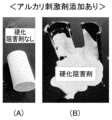
- FIG. 3 is a drawing showing an external photograph (left side (A)) of the composition slurry when it is removed from a formwork after being in contact with carbon dioxide for 24 hours in an embodiment of the space filling method according to the present invention, in which the composition slurry contains an alkaline irritant and does not contain a hardening inhibitor, and an external photograph (right side (B)) of the composition slurry when it is in contact with carbon dioxide for 24 hours in an embodiment of the space filling method according to the present invention.
- the space filling system according to the present invention is essentially a system for realizing the space filling method according to the present invention, so below we will mainly explain the embodiment of the filling method.
- the method for filling a space includes preparing a composition containing a hydraulic material and at least one selected from the group consisting of an alkaline irritant, a dispersant, and a hardening inhibitor.
- the method includes preparing a composition containing a hydraulic material and an alkaline irritant, and optionally containing at least one selected from the group consisting of a dispersant and a set inhibitor.
- the method includes preparing a composition containing a hydraulic material and an alkaline irritant, and optionally containing at least one selected from the group consisting of a dispersant, a set inhibitor, and a chelating agent (metal release agent).
- the method includes preparing a composition containing a hydraulic material and, optionally, at least one selected from the group consisting of an alkaline irritant, a dispersant, a set inhibitor, and a chelating agent (metal release agent).
- a composition containing a hydraulic material and, optionally, at least one selected from the group consisting of an alkaline irritant, a dispersant, a set inhibitor, and a chelating agent (metal release agent).
- a chelating agent metal release agent
- the hydraulic material which is one component of the composition used in the method for filling a space according to the present invention, is not particularly limited as long as it is a substance that can react with water at a predetermined pH to liberate and release metal ions and fix carbon dioxide as a mineral (mineralize) by hardening together with the metal ions.
- hydraulic materials include steel slag such as blast furnace slag and steelmaking slag, fly ash, copper slag, Portland cement, mixed cement, alumina cement, blast furnace cement, and other cements. Hydraulic materials are also called "binders" due to their functionality.
- hydraulic materials from the viewpoint of stable mineralization and fixation of carbon dioxide, materials containing aluminosilicate such as blast furnace slag and fly ash, or mixtures thereof, are preferred.
- blast furnace slag is more preferred.
- These hydraulic materials may be used alone or in admixture of two or more kinds.
- Blast furnace slag is a material that is recovered from a blast furnace, which is a smelting furnace that produces pig iron by reducing and melting iron ore with coke, by melting and melting components other than iron contained in iron ore, mainly limestone as an auxiliary material and ash in the coke.
- Blast furnace slag includes slowly cooled slag, which is obtained by slowly cooling the molten material, and granulated slag, which is obtained by rapidly cooling the molten material. Slowly cooled slag is crystalline and rock-like, while granulated slag is glassy and finely granulated.
- Blast furnace slag is mainly composed of CaO (calcium oxide: quicklime), SiO 2 (silica), and Al 2 O 3 (alumina), and the CaO content is usually about 40 to 45 mass%, and the SiO 2 mass ratio can be about 30 to 35 mass%.
- Fine powder of blast furnace slag forms a stable hydrate in the presence of an alkaline aqueous solution, providing a function of densifying the hardened body structure.
- the blast furnace slag may be finely ground prior to mixing with water to form a slurry.
- Fly ash is a molten fine coal ash particle generated by the combustion of coal in a boiler, which floats in high-temperature combustion gas and then becomes spherical fine particles as the temperature at the boiler outlet drops. Fly ash can usually be collected at the boiler outlet by an electric dust collector or the like.
- the main components of fly ash (usually about 70 to 80 mass%) are SiO 2 (silica) and Al 2 O 3 (alumina), and the main constituent phases are a glass phase (amorphous Al-Si), crystalline silica (quartz), and crystalline aluminosilicate (3Al 2 O 3.2SiO 2 : mullite).
- fly ash can also contain ferric oxide (Fe 2 O 3 ), calcium oxide (CaO), magnesium oxide (MgO), magnetite (Fe 3 O 4 ) , and the like.
- the glass phase has pozzolanic reactivity with alkaline substances such as calcium hydroxide. That is, the glass phase of fly ash, in the presence of calcium hydroxide produced by, for example, cement hydration, reacts gently with it to produce calcium silicate hydrate and calcium aluminate hydrate, thereby providing the function of increasing the durability and watertightness of the hardened material (immobilized and mineralized carbon dioxide).
- Fly ash may have a particle size of about 0.1 to 300 ⁇ m. Fly ash may contain trace amounts of heavy metals such as selenium, fluorine, boron, and arsenic.
- the alkaline stimulant that can be selected as one component of the composition used in the method for filling a space according to the present invention is not particularly limited as long as it can impart alkaline stimulation to the hydraulic material and promote its hydration and hardening.
- the alkaline stimulant also has the function of promoting the pozzolanic reaction of the hydraulic material.
- alkaline stimulants include, but are not limited to, calcium hydroxide (slaked lime: Ca(OH) 2 ), sodium hydroxide ( NaOH ), potassium hydroxide (KOH), sodium carbonate ( Na2CO3 ), potassium carbonate ( K2CO3 ), sodium sulfate ( Na2SO4 ), calcium nitrite (Ca( NO2 ) 2 ) , aluminum sulfate ( Al2 ( SO4 ) 3 ), various gypsums ( anhydrous gypsum: calcium sulfate ( CaSO4 ), its dihydrate and hemihydrate), various cements, lime dust, sodium silicate (water glass: Na2O.SiO2 ), etc.
- alkaline stimulants calcium hydroxide, sodium hydroxide, and sodium silicate are preferred from the viewpoint of functionality in promoting hydration and hardening of hydraulic materials.
- Sodium hydroxide is more preferred from the viewpoint of availability and cost.
- alkaline irritants may be used alone or in combination.
- Sodium silicate water glass: Na2O.SiO2
- a hydraulic material e.g., blast furnace slag
- the nature of the hydration reaction between sodium silicate (water glass) and a hydraulic material can be determined by the molar ratio SiO2 / Na2O of the SiO2 component and the Na2O component in the sodium silicate.
- the mass proportions of various components including SiO2 and Na2O in sodium silicate are standardized by JIS K1408-1966, with "No.
- the amount of alkaline irritant in the above composition is not particularly limited, but can be optimized from the viewpoint of sufficiently promoting the hydration and hardening of the hydraulic material, and from the viewpoint of balancing these desired effects with efficiency and economy.
- the amount of the alkaline stimulant (if used) is, for example, 0.05 parts by weight or more and 5 parts by weight or less, preferably 0.05 parts by weight or more and 4 parts by weight or less, 0.05 parts by weight or more and 3 parts by weight or less, 0.05 parts by weight or more and 2 parts by weight, 0.05 parts by weight or more and 1 part by weight or less, 0.05 parts by weight or more and 0.8 parts by weight or less, 0.07 parts by weight or more and 5 parts by weight or less, and 0.07 parts by weight or more and 4 parts by weight, based on 100 parts by weight of the hydraulic material.
- Parts by weight or less 0.07 parts by weight or more and 3 parts by weight or less, 0.07 parts by weight or more and 2 parts by weight, 0.07 parts by weight or more and 1 part by weight or less, 0.07 parts by weight or more and 0.8 parts by weight, 0.1 parts by weight or more and 5 parts by weight or less, 0.1 parts by weight or more and 3 parts by weight or less, 0.1 parts by weight or more and 2 parts by weight or less, 0.1 parts by weight and 1 part by weight or less, or 0.1 parts by weight and 0.8 parts by weight It may be the following.
- the dispersant that can be selected as one component of the composition is not particularly limited as long as it has the function of dispersing the inorganic hydraulic material well in the slurry.
- a well-dispersed state in the slurry refers to a state in which hydraulic material particles having an average particle size of about 500 nm to 500 ⁇ m are suspended in the aqueous medium without settling.
- the dispersant that can be used is not particularly limited, but examples thereof include polymer-type dispersants, surfactant-type dispersants, and inorganic dispersants.
- polymeric dispersants include sulfonic acid polymers having sulfonic acid groups in the molecule, and polycarboxylic acid polymers having carboxyl groups in the molecule.
- polymeric dispersants include anionic polymeric dispersants such as polycarboxylic acid ether polymers having carboxyl groups and polyoxyalkylene chains in the molecule, and phosphoric acid polymers having phosphoric acid groups in the molecule, cationic polymeric dispersants such as polyalkylene polyamine polymers, and nonionic polymeric dispersants such as polyethylene glycol and polyether polymers.
- the sulfonic acid polymer may be any compound having a sulfonic acid group or a sulfonic acid salt group in the molecule.
- the compound having a sulfonic acid group or a sulfonic acid salt group is preferably one having an aromatic ring in the molecule.
- sulfonic acid polymer examples include polyalkylarylsulfonate-based polymers such as naphthalenesulfonic acid formaldehyde condensates, methylnaphthalenesulfonic acid formaldehyde condensates, and anthracenesulfonic acid formaldehyde condensates; melamine formalin resin sulfonate-based polymers such as melamine sulfonic acid formaldehyde condensates; aromatic aminosulfonate-based polymers such as aminoarylsulfonic acid-phenol-formaldehyde condensates; ligninsulfonate-based water reducing agents such as ligninsulfonates and modified ligninsulfonates; and polystyrenesulfonate-based polymers.
- polyalkylarylsulfonate-based polymers such as naphthalenesulfonic acid formaldehyde condensates, methylnaphthalene
- the polycarboxylic acid polymer is preferably a polymer obtained by polymerizing an unsaturated carboxylic acid monomer.
- a polycarboxylic acid ether polymer obtained by copolymerizing a monomer component containing an unsaturated carboxylic acid monomer and a (poly)alkylene glycol monomer is preferably used.
- the unsaturated carboxylic acid monomer is not particularly limited as long as it has a carboxyl group and an ethylenically unsaturated hydrocarbon group, and includes unsaturated monocarboxylic acid monomers and unsaturated dicarboxylic acid monomers.
- the unsaturated monocarboxylic acid monomer examples include (meth)acrylic acid, crotonic acid, and the like, and their monovalent metal salts, divalent metal salts, ammonium salts, and organic ammonium salts; half esters of unsaturated dicarboxylic acid monomers and alcohols having 1 to 22 carbon atoms or glycols having 2 to 4 carbon atoms; and half amides of unsaturated dicarboxylic acid monomers and amines having 1 to 22 carbon atoms.
- the alcohols having 1 to 22 carbon atoms include methanol, ethanol, propanol, butanol, hexanol, and octanol.
- glycol having 2 to 4 carbon atoms examples include ethylene glycol, propylene glycol, and diethylene glycol
- examples of the amine having 1 to 22 carbon atoms include methylamine, ethylamine, propylamine, butylamine, dimethylamine, diethylamine, dipropylamine, dibutylamine, octylamine, and dodecylamine.
- Specific examples of the unsaturated dicarboxylic acid monomer include maleic acid, itaconic acid, mesaconic acid, citraconic acid, fumaric acid, etc., and their monovalent metal salts, divalent metal salts, ammonium salts, organic ammonium salts, etc., and their anhydrides.
- the unsaturated carboxylic acid monomer (meth)acrylic acid (salt), maleic acid (salt), or maleic anhydride is preferred.
- the (poly)alkylene glycol monomer is not particularly limited as long as it has a (poly)alkylene glycol group and an ethylenically unsaturated hydrocarbon group.
- the (poly)alkylene glycol group is preferably an oxyalkylene group having 2 to 18 carbon atoms or a polyoxyalkylene group which is an adduct of one or more of the above oxyalkylene groups and has an average molar addition number of more than 1.
- the above oxyalkylene group preferably has 2 to 12 carbon atoms, more preferably 2 to 8 carbon atoms, and even more preferably 2 to 4 carbon atoms.
- the oxyalkylene group is an alkylene oxide adduct, and examples of such alkylene oxides include alkylene oxides having 2 to 8 carbon atoms such as ethylene oxide, propylene oxide, butylene oxide, and styrene oxide. More preferably, it is an alkylene oxide having 2 to 4 carbon atoms such as ethylene oxide, propylene oxide, and butylene oxide, and even more preferably, it is ethylene oxide or propylene oxide.
- the polyalkylene glycol is an adduct of any two or more kinds of alkylene oxides selected from ethylene oxide, propylene oxide, butylene oxide, styrene oxide, etc., it may be in any form of random addition, block addition, alternating addition, etc.
- the average number of moles of oxyalkylene groups added to form the (poly)alkylene glycol group is preferably 1 to 300, more preferably 2 to 200, and even more preferably 2 to 150.
- the ethylenically unsaturated hydrocarbon group is not particularly limited, but an alkenyl group having 2 to 8 carbon atoms, a (meth)acryloyl group, or the like is preferred.
- R 1 , R 2 and R 3 are the same or different and represent a hydrogen atom or a methyl group.
- R 4 is a hydrogen atom or a hydrocarbon group having 1 to 30 carbon atoms.
- R 5 O are the same or different and represent an oxyalkylene group having 2 to 18 carbon atoms.
- n represents the average number of moles of oxyalkylene groups added and is a number from 1 to 300.
- x is a number from 0 to 4.
- y is 0 or 1.
- R 1 and R 2 are hydrogen atoms
- R 3 is a hydrogen atom or a methyl group.
- R 1 and R 2 are hydrogen atoms
- R 3 is a methyl group.
- R 4 in the above formula (1) is preferably a hydrogen atom or a hydrocarbon group having 1 to 18 carbon atoms, more preferably a hydrogen atom or a hydrocarbon group having 1 to 8 carbon atoms, even more preferably a hydrogen atom or a hydrocarbon group having 1 to 6 carbon atoms, and particularly preferably a hydrogen atom or a hydrocarbon group having 1 to 3 carbon atoms.
- the hydrocarbon group include an alkyl group (linear, branched, or cyclic), a phenyl group, and an alkyl-substituted phenyl group.
- R 5 O is the same or different and represents an oxyalkylene group having 2 to 18 carbon atoms, which means that n oxyalkylene groups of R 5 O present in the polyalkylene glycol group may all be the same or different.
- the preferred ranges of the carbon number, etc. of the oxyalkylene group are as described above.
- n is preferably 2 to 200, and more preferably 2 to 150.
- x is preferably 1 to 4, more preferably 1 or 2, and even more preferably 2.
- R3 is preferably a methyl group.
- x is preferably 0.
- R3 is more preferably a hydrogen atom or a methyl group.
- the (poly)alkylene glycol monomer examples include polyalkylene glycol (meth)acrylates such as polyethylene glycol (meth)acrylate and alkoxy polyalkylene glycol (meth)acrylates in which the ends are hydrophobically modified with a hydrocarbon group having 1 to 30 carbon atoms; compounds in which 1 to 300 moles of alkylene oxide are added to unsaturated alcohols having 2 to 8 carbon atoms such as vinyl alcohol, allyl alcohol, methallyl alcohol, 3-methyl-3-buten-1-ol, 3-methyl-2-buten-1-ol, 2-methyl-3-buten-1-ol, 2-methyl-2-buten-1-ol, and 3-allyloxy-1,2-propanediol, and compounds in which the ends are hydrophobically modified with a hydrocarbon group having 1 to 30 carbon atoms.
- polyalkylene glycol (meth)acrylates such as polyethylene glycol (meth)acrylate and alkoxy polyalkylene glycol (meth)acrylates in
- a compound in which 1 to 300 moles of alkylene oxide are added to an unsaturated alcohol having 2 to 8 carbon atoms a compound in which an alkylene oxide is added to 4-hydroxybutyl-1-monovinyl ether, (meth)allyl alcohol, or 3-methyl-3-buten-1-ol is preferred.
- the polycarboxylic acid polymer and the polycarboxylic acid ether polymer may be copolymerized with a copolymerizable monomer other than the unsaturated carboxylic acid monomer and the (poly)alkylene glycol monomer.
- copolymerizable monomers include 3-(meth)allyloxy-2-hydroxypropanesulfonic acid, 2-(meth)allyloxyethylenesulfonic acid, 2-acrylamido-2-methylpropanesulfonic acid, p-styrenesulfonic acid, ⁇ -methyl-p-styrenesulfonic acid, vinylsulfonic acid, vinylsulfamic acid, (meth)allyl sulfonic acid, isoprene sulfonic acid, 4-(allyloxy)benzenesulfonic acid, 1-methyl-2-propene-1-sulfonic acid, 1,1-dimethyl-2-propene-1-sulfonic acid, 3-butene-1-sulfonic acid, 1-butene-3-sulfonic acid, 2-acrylamido-1-methylpropanesulfonic acid, 2-acrylamidopropanesulfonic acid, 2-acrylamido-n-butenesulfonic acid, and the like
- unsaturated sulfonic acids and salts thereof such as ethanesulfonic acid, 2-acrylamido-2-phenylpropanesulfonic acid, and 2-((meth)acryloyloxy)ethanesulfonic acid; hydroxyl group-containing ethers, such as 3-(meth)allyloxy-1,2-dihydroxypropane and 1-allyloxy-3-butoxypropan-2-ol; N-vinyl lactam monomers, such as N-vinylpyrrolidone; (meth)acrylate, methyl (meth)acrylate, ethyl (meth)acrylate, propyl (meth)acrylate, butyl (meth)acrylate, cyclohexyl (meth)acrylate, 2-ethylhexyl (meth)acrylate, n-octyl (meth)acrylate, iso-nonyl (meth)acrylate, dodecyl (meth)acrylate, and
- Examples of the phosphoric acid polymer include phosphoric acid polymers containing a polyalkylene glycol group and phosphoric acid condensates.
- the phosphoric acid polymer is preferably a polymer obtained by copolymerizing a monomer component containing a (poly)alkylene glycol monomer and a phosphoric acid monomer.
- Examples of the phosphoric acid monomer include mono(2-hydroxyethyl)(meth)acrylic acid ester, di- ⁇ (2-hydroxyethyl)(meth)acrylic acid ⁇ ester, and (poly)alkylene glycol mono(meth)acrylate acid phosphoric acid ester.
- a condensate of a phosphoric acid ester and an aldehyde compound is suitable.
- the phosphoric acid ester is not particularly limited as long as it is an esterification product of phosphoric acid (which may be a salt) and a hydroxyl group-containing compound, and one or more kinds can be used.
- any of phosphoric acid monoester, phosphoric acid diester, and phosphoric acid triester may be used.
- surfactant-type dispersants examples include anionic surfactant-type dispersants such as alkylsulfonic acid-based dispersants, cationic surfactant-type dispersants such as quaternary ammonium-based and alkylpolyamine-based dispersants, and nonionic surfactant-type dispersants such as higher alcohol alkylene oxide-based and polyhydric alcohol ester-based dispersants.
- examples of inorganic dispersants include anionic inorganic dispersants such as polyphosphates (for example, sodium tripolyphosphate). These dispersants may be used alone or in combination.
- the amount of dispersant in the above composition is not particularly limited, but can be optimized from the viewpoint of dispersing the hydraulic material well in the slurry and from the viewpoint of balancing this effect with efficiency and economy.
- the amount of dispersant (if used) is, for example, 0.01 to 4 parts by mass relative to 100 parts by mass of hydraulic material, preferably 0.01 to 3 parts by mass, 0.01 to 2 parts by mass, 0.01 to 1 part by mass, 0.01 to 0.8 parts by mass, 0.01 to 0.5 parts by mass, 0.012 to 4 parts by mass, 0.012 to 3 parts by mass, 0.012 to 10 ...
- the amount may be 0.015 parts by mass or more and 0.5 parts by mass or less.
- a hardening inhibitor that can be selected as one component of the composition has the function of inhibiting and delaying the early hardening reaction between the hydraulic material in the slurry and carbon dioxide.
- hardening inhibitors include, but are not limited to, oxycarboxylic acids such as gluconic acid, glucoheptonic acid, arabinic acid, tartaric acid, malic acid, and citric acid, or salts thereof; keto acids such as pyruvic acid, oxaloacetic acid, ⁇ -ketoglutaric acid, acetoacetic acid, acetone dicarboxylic acid, levulinic acid, propionylacetic acid, and benzoylacetic acid, or salts thereof; monosaccharides such as glucose, fructose, galactose, saccharose, xylose, apiose, ribose, and isomerized sugars, oligosaccharides such as disaccharides and trisaccharides, oligosaccharides such as dextrin, and polysaccharides such as dextran, and sugars such as molasses containing these; sugar alcohols such as sorbitol; polyhydr
- the hardening inhibitor preferably contains at least one selected from the group consisting of oxycarboxylic acid or its salt, keto acid or its salt, sugar, and sugar alcohol, and more preferably contains oxycarboxylic acid or its salt that also acts as a chelating agent (metal eluting agent) described later.
- the amount of the hardening inhibitor in the composition (if used) is not particularly limited, but can be optimized from the viewpoint of sufficiently inhibiting and delaying the hardening reaction of the hydraulic material in the slurry while not excessively stopping the hardening reaction.
- the amount of the hardening inhibitor (if used) is, for example, 0.04 parts by mass or more and 4 parts by mass or less, preferably 0.04 parts by mass or more and 3 parts by mass or less, 0.04 parts by mass or more and 2 parts by mass or less, 0.04 parts by mass or more and 1 part by mass or less, 0.04 parts by mass or more and 0.8 parts by mass or less, 0.04 parts by mass or more and 0.5 parts by mass or less, 0.06 parts by mass or more and 4 parts by mass or less, 0.06 parts by mass or more and 3 parts by mass or less, 0.06 parts by mass or more and 2 parts by mass or less, 0.06 parts by mass or more and 1 part by mass or less, 0.06 parts by mass or more and 0.8 parts by mass or less, 0.06 parts by mass or
- the amount may be greater than or equal to 0.5 parts by mass.
- the composition may contain an aluminosilicate material and an alkaline stimulant as hydraulic materials, as well as a dispersant or a hardening inhibitor.
- a composition having such a component configuration can be prepared, for example, by first preparing a composition containing an aluminosilicate material and an alkaline stimulant, and then adding a dispersant or a hardening inhibitor to this composition at an appropriate timing. This addition order is an example, and is not particularly limited, and a different order can be adopted.
- a chelating agent (which may also be referred to as a metal eluting agent) that may be selected as one component of the composition functions to elute metal ions into the slurry by chelating the metal that constitutes the hydraulic material in the slurry of the composition.
- a chelating agent metal eluting agent
- the metal ions that constitute the hydraulic material are eluted, thereby promoting the reaction between the metal and carbon dioxide, and it becomes possible to increase the amount of carbon dioxide fixed when filling the space.
- the chelating agent is not particularly limited, but examples thereof include ethylenediaminetetraacetic acid (EDTA), nitrilotriacetic acid (NTA), hydroxyethyliminodiacetic acid (HIDA), hydroxyethylethylenediaminetriacetic acid (HEDTA), diethylenetriaminepentaacetic acid (DTPA), triethylenetetraminehexaacetic acid (TTHA), 1,3-propanediaminetetraacetic acid (PDTA), dihydroxyethylethylenediaminediacetic acid (DHEDDA), 1,3-diamino-2-hydroxypropane-tetraacetic acid (DPTA-OH), dihydroxyethyl Aminocarboxylic acid chelating agents such as glycine (DHEG), glycol ether diamine tetraacetic acid (GEDTA), dicarboxymethyl glutamic acid (CMGA), ethylenediamine-N,N'-disuccinic acid (EDTA), hydroxye
- the amount of chelating agent (metal eluting agent) in the above composition (if used) is not particularly limited, but can be optimized from the viewpoint of sufficiently promoting the elution of metals from the hydraulic material in the slurry, and from the viewpoint of balancing this effect with efficiency and economy.
- the amount of chelating agent (metal eluting agent) is, for example, 0.04 parts by mass or more and 4 parts by mass or less, preferably 0.04 parts by mass or more and 3 parts by mass or less, 0.04 parts by mass or more and 2 parts by mass or less, 0.04 parts by mass or more and 1 part by mass or less, 0.04 parts by mass or more and 0.8 parts by mass or more, 0.04 parts by mass or more and 0.5 parts by mass or more, 0.06 parts by mass or more and 4 parts by mass or less, 0.06 parts by mass or more and 3 parts by mass or less, for 100 parts by mass of hydraulic material.
- the amount of water contained in the slurry of the composition is not particularly limited, but can be optimized from the viewpoint of ensuring the fluidity of the slurry when it is pressed into the space and the balance between the effectiveness and efficiency of the hardening reaction.
- the amount of water contained in the slurry of the composition is usually 5 parts by mass or more and 500 parts by mass or less, preferably 5 parts by mass or more and 400 parts by mass or less, 5 parts by mass or more and 300 parts by mass or less, 5 parts by mass or more and 200 parts by mass or less, 5 parts by mass or more and 100 parts by mass or less, 10 parts by mass or more and 500 parts by mass or less, 10 parts by mass or more and 400 parts by mass or less, 10 parts by mass or more and 300 parts by mass or less, 10 parts by mass or more and 200 parts by mass or less, 10 parts by mass or more and 100 parts by mass or less, 20 parts by mass or more and 500 parts by mass or less, 20 parts by mass or more and 400 parts by mass or less, Less than or equal to 20
- the composition slurry can be obtained by stirring and mixing the above essential hydraulic materials and, if necessary, optional components and water in a specified ratio. Stirring and mixing can usually be performed at room temperature, but may also be performed at, for example, 5°C or higher and 50°C or lower.
- the stirring and mixing time is not particularly limited, but may be 10 seconds or longer and 1 hour or shorter, and typically 20 seconds or longer and 40 minutes or shorter.
- a geopolymer slurry can be formed by mixing an aluminosilicate material (active filler) such as blast furnace slag or fly ash as a hydraulic material, water, and other alkaline stimulants such as sodium hydroxide (NaOH) as necessary, in the presence of sodium silicate (water glass).
- active filler such as blast furnace slag or fly ash
- other alkaline stimulants such as sodium hydroxide (NaOH) as necessary
- NaOH sodium hydroxide
- the mechanism of the hardening reaction of geopolymer is shown in the following formula. This reaction is polymerization by condensation polymerization.
- the bonds of Si and Al contained in the aluminosilicate material are destroyed by alkaline stimulation, and the metal ions contained therein, such as Ca2+ and Na +, are dissolved, and OH and metal ions react with each other to form monomers.
- This monomer combines with the metal ions while dehydrating, forming a polymer and hardening. At the same time, these metal ions react with carbon dioxide to form a hardened material, and these reactions combine to form a strong composite hardened body.
- Hardened geopolymers have better fire resistance and acid resistance than hardened cement, which is thought to be because the chemical composition of the active filler produces products that are different from cement hydrates.
- Aluminosilicate materials such as blast furnace slag and fly ash, which are commonly used as binders for geopolymers, have less Ca content than Portland cement and are less likely to turn into gypsum when exposed to acid, making them more acid-resistant.
- the main component of geopolymers is an amorphous gel, they also have the advantage of being less susceptible to strength loss due to exposure to heat and having excellent high-temperature resistance.
- the time until the hydraulic material, water, and carbon dioxide start to come into contact with the slurry and the slurry of the composition completely loses fluidity and hardens is usually 1 hour or more, preferably 3 hours or more, more preferably 5 hours or more, even more preferably 10 hours or more, even more preferably 15 hours or more, and most preferably 24 hours (1 day) or more or more than 24 hours (1 day).
- a state in which the composition slurry has not "completely lost fluidity and hardened" means that, after a predetermined period of time has elapsed since the slurry of the composition was poured into a specified mold at 20° C.
- the slurry cannot be removed from the mold at all (the adhesion of the slurry to the inner surface of the mold is still maintained), or the slurry cannot be removed in such a clean state that substantially all of the shape of the inner surface of the mold is reflected in the outer shape of the cured product (for example, since not all parts have hardened, it is unavoidable that part of the cured product will be damaged when removed from the mold).
- the method of filling a space involves injecting a slurry containing the composition into the space using a well (e.g., by placing a conduit through an existing well or by using the well itself as an introduction route) and allowing it to react with carbon dioxide injected into the space with the slurry or with carbon dioxide injected into the space separately from the slurry, thereby filling the space.
- the space intended to be filled by the space filling method of the present invention is not particularly limited and includes spaces having any shape and volume.
- the space includes spaces existing above ground and spaces existing underground (for example, holes in the earth layer, underground tunnels, coal mining sites, etc.).
- the volume of the space to be buried is not limited in any way, but may be, for example, 10 -3 m to 10 7 m, and typically 1 m to 10 6 m, 1 m to 10 5 m, 5 m to 10 4 m , 5 m to 10 3 m , or 10 m to 10 3 m.
- the source of carbon dioxide used in the spatial burial method of the present invention is not particularly limited.
- the carbon dioxide used in this method includes carbon dioxide emitted and recovered from various chemical plants such as power plants, oil refineries, and ammonia production facilities.
- the pressure at which the carbon dioxide is injected into the space can be determined by various factors, such as the form of the carbon dioxide, the diameter and length of the conduit from the inlet to the space (if the borehole itself is used as the introduction path, the diameter and length of the well), and the shape and volume of the space to be buried.
- the pressure at which the carbon dioxide is injected is not particularly limited, but may be, for example, above atmospheric pressure and up to 100 MPaG, typically between 1 MPaG and 50 MPaG, between 2 MPaG and 40 MPaG, or between 3 MPaG and 30 MPaG.
- An example of the space is an underground coal mine site or tunnels that continue from a well.
- Another example of the space is underground buried pipes for various purposes such as sewerage, water supply, gas, electricity/communications, and water, which are no longer used due to deterioration or damage.
- underground coal mine sites and tunnels in closed coal mines, or buried underground pipes that have deteriorated or been damaged often have partially narrowed or complicated spaces to be filled, such as deformation or submersion of underground cavities.
- such underground coal mine sites and tunnels of underground coal mines may have a depth of several hundred meters to more than 1,000 meters underground.
- a well can be used (for example, by placing a conduit through an existing well, or by using the well itself as an introduction path) to efficiently fill and solidify carbon dioxide, which is a greenhouse gas, into every corner of the space together with a solidification substance having suitable fluidity and solidification properties, while suppressing solidification near the injection port in the space, particularly in a space that includes at least a partially narrowed or complicated shape, thereby embedding the space.
- the embedding efficiency and strength of the space can be increased, and a larger amount of carbon dioxide can be fixed and mineralized, which contributes to the prevention of global warming and environmental conservation.
- the carbon dioxide and the slurry of the composition when carbon dioxide and the slurry of the composition are injected into a space using a well (e.g., by placing a conduit through an existing well or by using the well itself as an introduction path), the carbon dioxide and the slurry of the composition can be mixed before being introduced into the space, i.e., the carbon dioxide and the slurry of the composition can share a common path into the space.
- the carbon dioxide and the slurry of the composition when the carbon dioxide and the slurry of the composition are injected into the space, the carbon dioxide and the slurry of the composition are introduced into the space through multiple separate paths without mixing the carbon dioxide and the slurry of the composition in advance, and the reaction occurs only when the carbon dioxide and the slurry reach the space, thereby achieving filling of the slurry of the composition and immobilization of carbon dioxide.
- Multiple separate paths include a case where one well or conduit is used with a time lag, and a case where two or more physically separated multiple wells or multiple conduits are used.
- the supply conditions such as the supply speed (flow rate) and supply pressure of the slurry into the space can be appropriately adjusted as long as the slurry of the composition reaches every corner of the space to be buried before it completely loses fluidity and hardens.
- the supply rate of the slurry to the space is not limited in any way, and may be, for example, 10 ⁇ 3 m 3 /min to 5 ⁇ 10 3 m 3 /min, typically 10 ⁇ 3 m 3 /min to 10 3 m 3 /min, 10 ⁇ 3 m 3 /min to 10 2 m 3 /min, 10 ⁇ 2 m 3 /min to 10 3 m 3 /min, 10 ⁇ 2 m 3 /min to 10 2 m 3 /min, 10 ⁇ 1 m 3 /min to 10 2 m 3 /min, or 10 ⁇ 1 m 3 /min to 10 m 3 /min.
- the carbon dioxide injected into the space dissolves in the water in the slurry and becomes carbonate ions or bicarbonate ions. These carbonate ions or bicarbonate ions combine with metal ions, such as calcium ions, originating from the hydraulic material to generate solid metal carbonates (e.g., calcium carbonate), which fixes the carbon dioxide.
- the carbon dioxide injected into the space is not limited to gaseous carbon dioxide, but may be carbon dioxide in a supercritical state. Considering various factors such as the position, shape, and size of the space to be buried, and the type and amount of the hydraulic material and optional components of the slurry, the properties of the carbon dioxide used can be appropriately selected from the viewpoint of the ease of handling and efficiency of injecting and fixing the carbon dioxide.
- the carbon dioxide gas gas from liquid carbon dioxide, compressed carbon dioxide gas, gas from dry ice, carbon dioxide gas generated by a chemical reaction, etc. can be used.
- the concentration of the carbon dioxide gas injected is preferably 75% or more, more preferably 80% or more, even more preferably 85% or more, even more preferably 90% or more, and most preferably 95% or more.
- the amount of carbon dioxide that is buried in a space and immobilized/mineralized by the space burying method of any of the above embodiments depends on the type and amount of the hydraulic material and other optional components used in the slurry, the hardening reaction rate determined by them, and also depends on the procedure for supplying the slurry and carbon dioxide to the space, and is not particularly limited.
- the degree to which the composition slurry is immobilized through a curing reaction with carbon dioxide can be quantified by introducing the slurry and a saturated amount of carbon dioxide into a closed system and measuring the amount of carbon dioxide adsorption per unit volume of the slurry after, for example, 30 minutes (amount of carbon dioxide reduction in the system: kg/m 3 ).
- the amount of carbon dioxide adsorption 30 minutes after the composition slurry starts to come into contact with carbon dioxide may be preferably 50 kg/m 3 or more, more preferably 100 kg/m 3 or more, even more preferably 200 kg/m 3 or more, and most preferably 300 kg/m 3 or more.
- the amount of carbon dioxide that is buried in the space and fixed/mineralized can be grasped by subjecting the product of the hardening reaction between metal ions derived from the hydraulic material and carbon dioxide (for example, calcium carbonate: CaCO 3 ) to thermogravimetric differential thermal analysis (TG-DTA) and analyzing the amount of carbon dioxide:CO 2 fixed per unit weight of the product (i.e., the proportion of weight lost by thermogravimetric differential thermal analysis).
- TG-DTA thermogravimetric differential thermal analysis
- the decomposition temperature is about 230°C to about 730°C, so it is sufficient to subject it to thermogravimetric differential thermal analysis between these temperatures and analyze the proportion of weight lost per unit weight of the product. That is, the amount of fixed carbon dioxide (%) W CO2 at this time can be calculated by the following formula, where m 0 (mg) is the mass of the product sample of the hardening reaction minus the mass of free moisture, and m 1 (mg) is the mass decreased within a predetermined temperature range by thermogravimetric differential thermal analysis (for calcium carbonate, the mass decreased between about 230° C. and about 730° C.: that is, the mass of carbon dioxide generated by the thermal decomposition of calcium carbonate).
- W CO2 (m 1 /m 0 ) x 100 (%)
- the amount of carbon dioxide that is buried in the space and fixed/mineralized is preferably such that the amount of fixed carbon dioxide WCO2 is 2.0% or more, more preferably 4.0% or more, even more preferably 5.0% or more, still more preferably 6.0% or more, even more preferably 7.0% or more, and most preferably 8.0% or more, 14 days (i.e., 2 weeks) after the slurry (containing the hydraulic material, optional components, and water) starts to come into contact with the carbon dioxide.
- an exhaust conduit for unreacted (unfixed) carbon dioxide among the carbon dioxide injected into the space is also preferable to provide an exhaust conduit for unreacted (unfixed) carbon dioxide among the carbon dioxide injected into the space.
- an existing borehole separate from the introduction route or a conduit provided therein can be used as such an exhaust conduit.
- FIG. 1 is a schematic diagram of an embodiment of the space filling method or space filling system according to the present invention, which is applied to the underground coal mining site of an underground coal mine. Please note that this is a non-limiting example.
- 1 is the space filling system
- 2 is a carbon dioxide storage facility
- 3 is a carbon dioxide injection well
- 4 is a carbon dioxide injection conduit
- 5 is an underground aquifer
- 6 is a coal seam
- 7 is an underground coal mining site of an underground coal mine
- 8 is a space to be filled.
- An existing well can be used for the carbon dioxide injection well 3 and the carbon dioxide injection conduit 4.
- the carbon dioxide injection well 3 and the carbon dioxide injection conduit 4 can be arranged through an existing well, or the well itself can be used as the carbon dioxide injection well 3 and the carbon dioxide injection conduit 4.
- Carbon dioxide e.g., liquefied matter or supercritical fluid
- a storage facility 2 such as a tank
- ammonia production facilities is temporarily stored in a storage facility 2 such as a tank, and then injected and filled from a carbon dioxide injection well 3 toward a space 8 to be buried through an injection pipe 4.
- the injection port of the carbon dioxide injection well 3 may usually be equipped with a pump for reliably sending carbon dioxide to the space.
- the underground coal mining site 7 of an underground coal mine is often installed deep underground, for example, at a depth of several hundred meters to more than 1000 meters underground.
- the carbon dioxide injection pipe 4 is arranged so as to pass through an underground aquifer 5 to the underground coal mine site 7 of an underground coal mine present in a coal seam 6 and the space 8 to be buried therein.
- a slurry of a composition containing a hydraulic material is fed and filled into the space 8.
- the conduit may be common to the conduit 4 for injecting carbon dioxide, or may be provided separately. In the latter case, the conduit for the composition slurry may also be disposed through an existing well, or the well itself may be used as the conduit.
- the injection speed of carbon dioxide (and pump pressure) into the space 8 and the injection speed of the composition slurry are not particularly limited, as long as the composition slurry reaches every corner of the space to be buried before the composition slurry completely loses fluidity and hardens after contact with carbon dioxide.
- the composition slurry is first introduced into the space to be buried through a route separated (in time or physically) without mixing the carbon dioxide and the composition slurry in advance, and then carbon dioxide is introduced into the space, and they react only when they reach the space, thereby achieving filling of the composition slurry and fixation of carbon dioxide.
- the composition slurry can be efficiently filled and solidified to every corner of the space to be buried, while suppressing solidification of the composition slurry near the injection port, particularly in a space including at least a partially narrowed or complicated shape, so that the efficiency and strength of the space to be buried can be increased, and a larger amount of carbon dioxide can be fixed and mineralized, which contributes to preventing global warming and protecting the environment.
- Hydraulic material (binder) - Blast furnace slag powder "Spirits 4000" (product name) manufactured by Nippon Steel Cement Co., Ltd. Density 2.91g/cm 3 , specific surface area 4050cm 2 /g Fly ash: manufactured by Hokuden Kogyo Co., Ltd. Composition: SiO 2 : 58.4%, Al 2 O 3 : 23.2%, Fe 2 O 3 : 5.9%, CaO: 3.7%, SO3 : 1.0%, MgO: 0.8%
- Example 1 Blast furnace slag was used as the hydraulic material (binder), and the mass ratio of water to blast furnace slag (W/B) was 0.35, and the blast furnace slag and water were placed in a beaker. Then, in an environment of 20°C, these were kneaded in a mixer for 1 minute, scraped off for 1 minute, and further kneaded in a mixer for 4 minutes to obtain composition slurry 1. Then, this composition slurry 1 was cured in a carbon dioxide (CO 2 )-promoted environment (i.e., in an environment of 100% carbon dioxide), and composition slurry 1' into which carbon dioxide was injected was obtained.
- CO 2 carbon dioxide
- Example 2 Composition slurry 2 and composition slurry 2' into which carbon dioxide had been injected were obtained in the same manner as in Example 1 above, except that, in addition to blast furnace slag and water as the hydraulic material (binder), sodium hydroxide was also added to the beaker as an alkaline irritant in an amount such that the mass ratio (Na 2 O/B) of Na 2 O from sodium hydroxide (NaOH) to the hydraulic material (binder) was 0.045.
- Example 3 Composition slurry 3 and composition slurry 3 ' into which carbon dioxide had been injected were obtained in the same manner as in Example 1 above, except that blast furnace slag and water were placed in a beaker so that the mass ratio (W/B) of water to blast furnace slag as a hydraulic material (binder) was 0.5, and sodium hydroxide was also added to the beaker as an alkaline irritant in an amount such that the mass ratio ( Na2O /B) of Na2O from sodium hydroxide (NaOH) to the hydraulic material (binder) was 0.09.
- Example 4 Composition slurry 4 and composition slurry 4' into which carbon dioxide had been injected were obtained in the same manner as in Example 1 above, except that fly ash was used as the hydraulic material (binder), and fly ash and water were placed in a beaker with a mass ratio of water to fly ash ( W /B) of 0.4.
- sodium hydroxide was also added to the beaker as an alkaline irritant in an amount such that the mass ratio of Na 2 O from sodium hydroxide (NaOH) to the hydraulic material (binder) (Na 2 O/B) was 0.148.
- Example 5 Composition slurry 5 and composition slurry 5' into which carbon dioxide had been injected were obtained in the same manner as in Example 1 above, except that fly ash was used as the hydraulic material (binder), and fly ash and water were placed in a beaker with a mass ratio of water to fly ash ( W /B) of 0.5.
- sodium hydroxide was also added to the beaker as an alkaline irritant in an amount such that the mass ratio of Na 2 O from sodium hydroxide (NaOH) to the hydraulic material (binder) (Na 2 O/B) was 0.185.
- the slurry thus introduced into the formwork was cured for 14 days at room temperature (about 20°C) in a carbon dioxide atmosphere of 80% or more, and the compressive strength was measured in accordance with the concrete compression test method of JIS A1108.
- the samples were demolded at one day of age and cured. Samples that could not be demolded in one day (after 24 hours), that is, samples in which the adhesion of the slurry to the inner surface of the formwork was maintained, were cured without being demolded. After curing for 14 days in a carbon dioxide atmosphere, the driving surface was polished so that the load was applied uniformly.
- a load was applied uniformly using a compressive strength tester to a degree that did not cause impact, and the loading speed was about 0.6 ⁇ 0.4 (N/mm 2 ) per second.
- the compressive strength was calculated by reading the maximum load indicated by the tester when the target sample was destroyed up to 0.5 (kN) and dividing this by the cross-sectional area of the sample.
- the mixed slurry cannot be demolded within one day (after 24 hours) from the start of curing in a carbon dioxide atmosphere, that is, the adhesion of the slurry to the inner surface of the formwork is maintained, or the formwork cannot be demolded in such a clean state that substantially all of the inner surface shape is reflected in the outer shape of the hardened product (for example, since not all parts have hardened, it is not possible to avoid damage to a part of the hardened product when demolded), then the slurry can be judged as "unhardened".
- the mixed slurry can be demolded within one day (after 24 hours) from the start of curing in a carbon dioxide atmosphere, that is, the adhesion of the slurry to the inner surface of the formwork is not maintained, or the formwork cannot be demolded in such a clean state that substantially all of the inner surface shape is reflected in the outer shape of the hardened product, then the slurry can be judged as "hardened".
- the decomposition temperature is about 230°C to about 730°C, so that the amount of carbon dioxide fixation (%) and even the amount of calcium carbonate (CaCO 3 ) generated (%) can be quantified by analyzing the ratio of the weight loss per unit weight of the product from that temperature.
- the amount of fixed carbon dioxide (%) W CO2 can be calculated by the following formula, where m 0 (mg) is the mass of the sample (the product of the hardening reaction between the hydraulic material of the slurry and carbon dioxide) minus the mass of free water, and m 1 ( mg) is the mass lost within the above-mentioned temperature range in thermogravimetric differential thermal analysis (for calcium carbonate, the mass lost between about 230°C and about 730°C: that is, the mass of carbon dioxide generated by the thermal decomposition of calcium carbonate).
- W CO2 (m 1 /m 0 ) x 100 (%)
- the amount of calcium carbonate ( CaCO3 ) generated (%) WCaCO3 (the mass proportion of calcium carbonate in the sample after aging treatment) can be calculated from the thermal decomposition reaction formula CaCO3 (molecular weight 100) ⁇ CaO (molecular weight 56) + CO2 (molecular weight 44) using the following calculation formula.
- W CaCO3 W CO2 ⁇ (100/44) (%)
- the amount of CO2 fixed per slurry volume (kg/ m3 ) was calculated from the amount of CaCO3 produced.
- the space filling method according to the present invention makes it possible to fill and solidify a larger amount of carbon dioxide while controlling the fluidity and hardening speed within an appropriate range and efficiently filling the space by adjusting the type and amount of hydraulic material in the composition, as well as the presence or absence of an alkaline irritant or its amount.
- Example 6 Blast furnace slag was used as the hydraulic material (binder), and the mass ratio of water to blast furnace slag (W/B) was 0.35. Blast furnace slag and water were placed in a beaker, and dispersant "JW-7" was added in a mass ratio (solid content equivalent) of 0.018 mass% relative to the blast furnace slag. The mixture was mixed by hand at room temperature (about 20°C) for 30 seconds to obtain composition slurry 6.
- Example 7 Composition slurry 7 was obtained in the same manner as in Example 6, except that a chelating agent "CY-1" (also functions as a dispersant) was added as a slurry component in an amount of 0.2 mass% (solid content equivalent) relative to the blast furnace slag instead of the dispersant "JW-7".
- CY-1 also functions as a dispersant
- Example 8 Blast furnace slag was used as the hydraulic material (binder), and the mass ratio of water to blast furnace slag (W/B) was 0.35. Blast furnace slag and water were placed in a beaker, and NaOH was added as an alkaline irritant in an amount such that the mass ratio of Na 2 O from sodium hydroxide (NaOH) to the hydraulic material (binder) (Na 2 O/B) was 0.045, and a dispersant "MJ-3" was added in an amount of 0.2 mass% (solids equivalent) relative to the blast furnace slag. The mixture was mixed by hand at room temperature (approximately 20°C) for 30 seconds to prepare composition slurry 8.
- NaOH sodium hydroxide
- MJ-3 dispersant
- Example 9 Composition slurry 9 was obtained in the same manner as in Example 8, except that the mass ratio (solid content equivalent) of the dispersant "MJ-3" to the blast furnace slag was changed to 0.15 mass%, and further, a hardening inhibitor "KS-1" was added as a slurry component in a mass ratio (solid content equivalent) of 0.2 mass% to the blast furnace slag.
- compositions of Composition Slurries 6 to 9 are shown in Table 2 below.
- “mass %/B” indicates the mass ratio % of the component relative to the hydraulic material (binder) (the same applies to Table 3).
- Composition Slurries 6 to 9 were subjected to the above-mentioned tests for measuring the physical properties (i) to (iii).
- the compressive strength was measured when the sample could be demolded after curing in a carbon dioxide atmosphere for one day (24 hours).
- the values were measured after curing in a carbon dioxide atmosphere for one day (24 hours) and after curing for 14 days.
- Figure 3 (A) shows a photograph of the appearance of composition slurry 8 (containing an alkali stimulant and not containing a hardening inhibitor) when it was removed from the mold after being in contact with carbon dioxide for 24 hours. From this photograph, it can be understood that the state was "possible to be removed from the mold" as defined above. In other words, the adhesion of the slurry to the inner surface of the mold was not maintained, and the slurry was hardened overall.
- Figure 3 (B) The appearance photograph of the composition slurry 9 (containing both an alkali stimulant and a hardening inhibitor) when it was removed from the mold after being in contact with carbon dioxide for 24 hours is shown in Figure 3 (B).
- the space filling method according to the present invention can increase the amount of carbon dioxide fixed by adding an appropriate additive, even if the composition does not contain an alkaline irritant.
- a high amount of carbon dioxide was fixed when a chelating agent was added.
- the amount of carbon dioxide fixed was greater when the composition contained an alkaline irritant than when it did not contain the alkaline irritant.
- the composition contains an alkaline irritant
- the amount of carbon dioxide fixed increases while the hardening rate also tends to increase, but by adding a hardening inhibitor as an additive, the hardening rate can be controlled to a low level, and it was found that after 14 days of curing in a carbon dioxide atmosphere, hardening progresses and a suitable strength is reached.
- a hardening rate delayed by days can be obtained regardless of the presence or absence of an alkaline irritant, and it is believed that it is possible to achieve reliable filling and embedding in every corner of a space of a complex shape.
- a method for filling a space using a borehole comprising the steps of: Preparing a composition containing a hydraulic material and at least one selected from the group consisting of an alkaline stimulant, a dispersant, and a hardening inhibitor; A method comprising: injecting a slurry containing the composition into a space using a borehole, and reacting the composition with carbon dioxide injected into the space together with the slurry or with carbon dioxide injected into the space separately from the slurry to fill the space.
- the space includes at least one selected from the group consisting of pores in a geological formation, underground tunnels, and coal mines.
- the hydraulic material comprises an aluminosilicate material.
- the aluminosilicate material comprises blast furnace slag.
- the alkaline irritant comprises sodium hydroxide.
- the dispersant contains a polycarboxylic acid-based polymer.
- the curing inhibitor comprises at least one member selected from the group consisting of an oxycarboxylic acid or a salt thereof, a keto acid or a salt thereof, a sugar, and a sugar alcohol.
- a space embedding system comprising: a slurry preparation unit that prepares a slurry using a composition containing a hydraulic material and at least one selected from the group consisting of an alkaline stimulant, a dispersant, and a hardening inhibitor; a slurry injection unit that injects the slurry or the slurry and carbon dioxide into a space;
- the slurry injection unit is a slurry injection unit that injects the slurry into the space without carbon dioxide
- the system further includes a carbon dioxide injection unit that separately injects carbon dioxide into the space.
- a method for filling an underground space using a borehole comprising the steps of: Preparing a composition containing an aluminosilicate material and an alkaline irritant; The method includes further adding a dispersant or a hardening inhibitor to the composition, and injecting a slurry containing the composition into the underground space using a well, reacting the composition with carbon dioxide injected into the underground space together with the slurry or with carbon dioxide injected into the underground space separately from the slurry, thereby filling the underground space.
- the aluminosilicate material comprises blast furnace slag
- the alkaline irritant comprises sodium hydroxide.
- the dispersant comprises a polycarboxylic acid-based polymer.
- the curing inhibitor comprises at least one selected from the group consisting of an oxycarboxylic acid or a salt thereof, a keto acid or a salt thereof, a sugar, and a sugar alcohol.
Landscapes
- Chemical & Material Sciences (AREA)
- Engineering & Computer Science (AREA)
- Ceramic Engineering (AREA)
- Materials Engineering (AREA)
- Structural Engineering (AREA)
- Organic Chemistry (AREA)
- Chemical Kinetics & Catalysis (AREA)
- Inorganic Chemistry (AREA)
- Health & Medical Sciences (AREA)
- Toxicology (AREA)
- Curing Cements, Concrete, And Artificial Stone (AREA)
Applications Claiming Priority (2)
| Application Number | Priority Date | Filing Date | Title |
|---|---|---|---|
| JP2023016392A JP7709696B2 (ja) | 2023-02-06 | 2023-02-06 | 空間の埋設方法及び埋設システム |
| JP2023-016392 | 2023-02-06 |
Publications (1)
| Publication Number | Publication Date |
|---|---|
| WO2024166607A1 true WO2024166607A1 (ja) | 2024-08-15 |
Family
ID=92262323
Family Applications (1)
| Application Number | Title | Priority Date | Filing Date |
|---|---|---|---|
| PCT/JP2024/000715 Ceased WO2024166607A1 (ja) | 2023-02-06 | 2024-01-15 | 空間の埋設方法及び埋設システム |
Country Status (2)
| Country | Link |
|---|---|
| JP (1) | JP7709696B2 (https=) |
| WO (1) | WO2024166607A1 (https=) |
Citations (6)
| Publication number | Priority date | Publication date | Assignee | Title |
|---|---|---|---|---|
| US5307876A (en) * | 1992-10-22 | 1994-05-03 | Shell Oil Company | Method to cement a wellbore in the presence of carbon dioxide |
| JP2006256919A (ja) * | 2005-03-18 | 2006-09-28 | Denki Kagaku Kogyo Kk | セメント組成物およびその使用方法 |
| US20080028995A1 (en) * | 2006-08-07 | 2008-02-07 | Veronique Barlet-Gouedard | Geopolymer composition and application for carbon dioxide storage |
| JP2013545714A (ja) * | 2010-12-17 | 2013-12-26 | ザ カソリック ユニヴァーシティ オブ アメリカ | 超高性能コンクリート用ジオポリマー複合体 |
| JP2017186797A (ja) * | 2016-04-06 | 2017-10-12 | サンソー技研株式会社 | 地下空洞部の充填工法 |
| US20210087457A1 (en) * | 2018-02-07 | 2021-03-25 | Petroliam Nasional Berhad | Pumpable geopolymer cement |
Family Cites Families (4)
| Publication number | Priority date | Publication date | Assignee | Title |
|---|---|---|---|---|
| IT1317704B1 (it) * | 2000-05-29 | 2003-07-15 | Sitma Spa | Procedimento di alimentazione di prodotti in foglio ad untrasportatore e gruppo di prelievo. |
| CN106946255B (zh) | 2017-04-26 | 2019-04-30 | 清华大学 | 一种坑口燃煤电厂废物处理及二氧化碳封存的方法 |
| CN114622953B (zh) * | 2022-03-28 | 2023-04-18 | 中国矿业大学 | 煤矿矸石及co2采动覆岩隔离注浆充填减排方法 |
| CN115306479B (zh) * | 2022-08-23 | 2023-06-09 | 中国矿业大学 | 一种基于废弃矿井采空区的co2区块化封存方法 |
-
2023
- 2023-02-06 JP JP2023016392A patent/JP7709696B2/ja active Active
-
2024
- 2024-01-15 WO PCT/JP2024/000715 patent/WO2024166607A1/ja not_active Ceased
Patent Citations (6)
| Publication number | Priority date | Publication date | Assignee | Title |
|---|---|---|---|---|
| US5307876A (en) * | 1992-10-22 | 1994-05-03 | Shell Oil Company | Method to cement a wellbore in the presence of carbon dioxide |
| JP2006256919A (ja) * | 2005-03-18 | 2006-09-28 | Denki Kagaku Kogyo Kk | セメント組成物およびその使用方法 |
| US20080028995A1 (en) * | 2006-08-07 | 2008-02-07 | Veronique Barlet-Gouedard | Geopolymer composition and application for carbon dioxide storage |
| JP2013545714A (ja) * | 2010-12-17 | 2013-12-26 | ザ カソリック ユニヴァーシティ オブ アメリカ | 超高性能コンクリート用ジオポリマー複合体 |
| JP2017186797A (ja) * | 2016-04-06 | 2017-10-12 | サンソー技研株式会社 | 地下空洞部の充填工法 |
| US20210087457A1 (en) * | 2018-02-07 | 2021-03-25 | Petroliam Nasional Berhad | Pumpable geopolymer cement |
Also Published As
| Publication number | Publication date |
|---|---|
| JP2024111720A (ja) | 2024-08-19 |
| JP7709696B2 (ja) | 2025-07-17 |
Similar Documents
| Publication | Publication Date | Title |
|---|---|---|
| JP4913303B2 (ja) | 反応性酸化マグネシウムセメント | |
| WO2021257757A1 (en) | Carbonatable compositions with admixtures | |
| KR100943096B1 (ko) | 제지애시를 이용한 다기능성 결합재 조성물 | |
| JP5237633B2 (ja) | セメント状組成物への耐凍結融解性の装備 | |
| US10000414B2 (en) | Accelerated drying concrete compositions and methods of manufacturing thereof | |
| EP4204382B1 (en) | Limestone calcined clay cement (lc3) construction composition | |
| WO2005019131A1 (ja) | 吹付け材料及びそれを用いた吹付け工法 | |
| JP2015129092A (ja) | 吹付け可能な水硬性結合剤組成物及びその使用方法 | |
| JP2008502565A (ja) | 無水注型セメント状混合物の耐凍結融解性の改善 | |
| WO2014015289A1 (en) | Accelerated drying concrete compositions and methods of manufacturing thereof | |
| JP2008502565A5 (https=) | ||
| Krivenko et al. | Enhancement of alkali-activated slag cement concretes crack resistance for mitigation of steel reinforcement corrosion | |
| CN113905997A (zh) | 喷射混凝土组合物 | |
| KR20250044743A (ko) | 콘크리트 혼화제 | |
| CN116194422A (zh) | 水泥减量的建筑组合物 | |
| JP7709696B2 (ja) | 空間の埋設方法及び埋設システム | |
| KR102158523B1 (ko) | 블록제조용 결합재 조성물 | |
| JP2024536208A (ja) | セメント質系用の凝結制御組成物 | |
| KR101931721B1 (ko) | 친환경 무기계 폴리머를 사용하는 콘크리트구조물 보수 공법 | |
| Ding et al. | Effect of the Retarder on Initial Hydration and Mechanical Properties of the “one-step” Alkali-activated Composite Cementitious Materials | |
| CN116917130A (zh) | 胶结组合物 | |
| Kryvenko et al. | Improvement of early strength of slag containing portland cements | |
| WO1999033763A1 (en) | Controlling setting in a high-alumina cement | |
| JP2009504545A (ja) | 石灰非依存性セメント混合物 | |
| JP7538660B2 (ja) | 水硬性組成物、水硬性組成物の製造方法、成形体、硬化物、及び硬化物の製造方法 |
Legal Events
| Date | Code | Title | Description |
|---|---|---|---|
| 121 | Ep: the epo has been informed by wipo that ep was designated in this application |
Ref document number: 24751972 Country of ref document: EP Kind code of ref document: A1 |
|
| NENP | Non-entry into the national phase |
Ref country code: DE |
|
| 122 | Ep: pct application non-entry in european phase |
Ref document number: 24751972 Country of ref document: EP Kind code of ref document: A1 |