WO2024134799A1 - 楽曲再生装置、楽曲再生方法およびプログラム - Google Patents
楽曲再生装置、楽曲再生方法およびプログラム Download PDFInfo
- Publication number
- WO2024134799A1 WO2024134799A1 PCT/JP2022/047074 JP2022047074W WO2024134799A1 WO 2024134799 A1 WO2024134799 A1 WO 2024134799A1 JP 2022047074 W JP2022047074 W JP 2022047074W WO 2024134799 A1 WO2024134799 A1 WO 2024134799A1
- Authority
- WO
- WIPO (PCT)
- Prior art keywords
- cue point
- music
- parts
- played
- playback
- Prior art date
- Legal status (The legal status is an assumption and is not a legal conclusion. Google has not performed a legal analysis and makes no representation as to the accuracy of the status listed.)
- Ceased
Links
Images


Classifications
-
- G—PHYSICS
- G10—MUSICAL INSTRUMENTS; ACOUSTICS
- G10H—ELECTROPHONIC MUSICAL INSTRUMENTS; INSTRUMENTS IN WHICH THE TONES ARE GENERATED BY ELECTROMECHANICAL MEANS OR ELECTRONIC GENERATORS, OR IN WHICH THE TONES ARE SYNTHESISED FROM A DATA STORE
- G10H1/00—Details of electrophonic musical instruments
- G10H1/0033—Recording/reproducing or transmission of music for electrophonic musical instruments
-
- G—PHYSICS
- G10—MUSICAL INSTRUMENTS; ACOUSTICS
- G10H—ELECTROPHONIC MUSICAL INSTRUMENTS; INSTRUMENTS IN WHICH THE TONES ARE GENERATED BY ELECTROMECHANICAL MEANS OR ELECTRONIC GENERATORS, OR IN WHICH THE TONES ARE SYNTHESISED FROM A DATA STORE
- G10H1/00—Details of electrophonic musical instruments
- G10H1/36—Accompaniment arrangements
- G10H1/40—Rhythm
-
- G—PHYSICS
- G10—MUSICAL INSTRUMENTS; ACOUSTICS
- G10H—ELECTROPHONIC MUSICAL INSTRUMENTS; INSTRUMENTS IN WHICH THE TONES ARE GENERATED BY ELECTROMECHANICAL MEANS OR ELECTRONIC GENERATORS, OR IN WHICH THE TONES ARE SYNTHESISED FROM A DATA STORE
- G10H2210/00—Aspects or methods of musical processing having intrinsic musical character, i.e. involving musical theory or musical parameters or relying on musical knowledge, as applied in electrophonic musical tools or instruments
- G10H2210/031—Musical analysis, i.e. isolation, extraction or identification of musical elements or musical parameters from a raw acoustic signal or from an encoded audio signal
- G10H2210/056—Musical analysis, i.e. isolation, extraction or identification of musical elements or musical parameters from a raw acoustic signal or from an encoded audio signal for extraction or identification of individual instrumental parts, e.g. melody, chords, bass; Identification or separation of instrumental parts by their characteristic voices or timbres
-
- G—PHYSICS
- G10—MUSICAL INSTRUMENTS; ACOUSTICS
- G10H—ELECTROPHONIC MUSICAL INSTRUMENTS; INSTRUMENTS IN WHICH THE TONES ARE GENERATED BY ELECTROMECHANICAL MEANS OR ELECTRONIC GENERATORS, OR IN WHICH THE TONES ARE SYNTHESISED FROM A DATA STORE
- G10H2240/00—Data organisation or data communication aspects, specifically adapted for electrophonic musical tools or instruments
- G10H2240/325—Synchronizing two or more audio tracks or files according to musical features or musical timings
-
- G—PHYSICS
- G10—MUSICAL INSTRUMENTS; ACOUSTICS
- G10H—ELECTROPHONIC MUSICAL INSTRUMENTS; INSTRUMENTS IN WHICH THE TONES ARE GENERATED BY ELECTROMECHANICAL MEANS OR ELECTRONIC GENERATORS, OR IN WHICH THE TONES ARE SYNTHESISED FROM A DATA STORE
- G10H2250/00—Aspects of algorithms or signal processing methods without intrinsic musical character, yet specifically adapted for or used in electrophonic musical processing
- G10H2250/541—Details of musical waveform synthesis, i.e. audio waveshape processing from individual wavetable samples, independently of their origin or of the sound they represent
- G10H2250/641—Waveform sampler, i.e. music samplers; Sampled music loop processing, wherein a loop is a sample of a performance that has been edited to repeat seamlessly without clicks or artifacts
Definitions
- the present invention relates to a music playback device, a music playback method, and a program.
- a playback start position within a song is specified, and when a specific operation is performed, playback of the song begins from the specified playback start position.
- the specified playback start position is also called a cue point.
- Technology for playing songs using such cue points is described, for example, in Patent Document 1.
- Patent Document 2 describes a technology that creates arranged part data by arranging specific part data from the multiple part data separated by a song separation means, and transmits the arranged part data and original song part data obtained by excluding the specific part data from the multiple part data.
- the present invention aims to provide a music playback device, a music playback method, and a program that make it possible to easily execute playback using the audio data of each separated part of a song when playing back the song using a cue point.
- a music playback device comprising: a music playback unit that plays a music piece including multiple acoustically separable parts; a cue point setting unit that records the position of a cue point in the music piece and which part of the multiple parts is to be played from the cue point as cue point information in response to a user's operation; a playback position control unit that plays the music piece from the cue point in response to the user's operation and the cue point information; and a playback part control unit that plays only some of the multiple parts when the music piece is played from the cue point in response to the cue point information.
- the multiple parts include three or more parts, and the cue point setting unit records two or more parts as the cue point information as parts to be played from the cue point.
- the music playback device according to [1] or [2], wherein the cue point setting unit sets the part to be played from the cue point after setting the position of the cue point.
- the music playback device according to [1] or [2], wherein the cue point setting unit sets the position of the cue point after setting the part to be played from the cue point.
- a method for playing a piece of music comprising the steps of: playing a piece of music including a plurality of acoustically separable parts; recording, in response to a user's operation, the position of a cue point within the piece of music and a part of the plurality of parts to be played from the cue point as cue point information; and, in response to the user's operation and the cue point information, playing the piece of music from the cue point, and playing only a portion of the plurality of parts when the piece of music is played from the cue point.
- a program for causing a computer to function as a music playback device comprising: a music playback unit that plays a music piece including multiple acoustically separable parts; a cue point setting unit that records the position of a cue point in the music piece and which of the multiple parts is to be played from the cue point as cue point information in response to a user's operation; a playback position control unit that plays the music piece from the cue point in response to the user's operation and the cue point information; and a playback part control unit that plays only some of the multiple parts when the music piece is played from the cue point in response to the cue point information.
- FIG. 1 is a diagram showing an overall configuration of a system according to an embodiment of the present invention
- 2 is a block diagram showing a functional configuration included in the music playback device shown in FIG. 1
- FIG. 11 is a diagram showing an example of a cue point setting screen in the embodiment of the present invention.
- 10 is a flowchart showing an example of a process for setting a cue point in a music playback device according to an embodiment of the present invention.
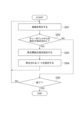
- 10 is a flowchart showing an example of a process performed when playing music from a cue point in a music playback device according to an embodiment of the present invention.
- FIG. 1 is a diagram showing the overall configuration of a system according to one embodiment of the present invention.
- the system 10 includes a PC (Personal Computer) 100, a DJ controller 200, and a speaker 300.
- the PC 100 is a device that stores, processes, and plays audio data, and may be a terminal device such as a tablet or smartphone, rather than a PC.
- the PC 100 includes a display 101 that displays information to the user, and an input device such as a touch panel or mouse that acquires user input.
- the DJ controller 200 is connected to the PC 100 via a communication means such as a USB (Universal Serial Bus), and acquires user input related to music playback using a channel fader, crossfader, performance pad, jog dial, and various knobs and buttons.
- the audio data is played using, for example, a speaker 300.
- the PC 100 functions as a music playback device in the system 10 as described above.
- the PC 100 executes the music playback device processes described below in response to user operation input acquired via an input device such as a touch panel or mouse, or via the DJ controller 200.
- the PC 100 functions as a music playback device, but in other embodiments, DJ equipment such as a mixer or an all-in-one DJ system (digital audio player with communication and mixing functions) may function as a music playback device.
- a server connected to the PC or DJ equipment via a network may function as a music playback device.
- PC 100 includes an operation unit 110, music playback unit 120, audio output unit 130, cue point setting unit 140, playback position control unit 150, and playback part control unit 160.
- Operation unit 110 is implemented by an input device such as a touch panel or mouse of PC 100, or an interface that receives operation signals from DJ controller 200.
- Music playback unit 120, audio output unit 130, cue point setting unit 140, playback position control unit 150, and playback part control unit 160 are implemented by a CPU (Central Processing Unit) or DSP (Digital Signal Processor) that operates according to a program stored in memory or storage. The function of each unit will be further explained below.
- CPU Central Processing Unit
- DSP Digital Signal Processor
- the music playback unit 120 plays music according to the user's operation. More specifically, the music playback unit 120 controls the audio output unit 130 according to music audio data 121 stored in the storage of the PC 100 or acquired from an external device such as a server, and the user's operation acquired by the operation unit 110, to output the music from the speaker 300.
- the audio output unit 130 is, for example, a driver for the speaker 300 connected to the PC 100 via the DJ controller 200, and outputs the sound from the speaker 300 according to the control of the music playback unit 120.
- the music playback unit 120 can play music in parallel on two decks of the DJ controller 200.
- the music audio data 121 includes a song that includes multiple acoustically separable parts. Audioally separable parts are parts such as vocals and instrument sounds that are separated within a song by, for example, frequency bands. For example, a single instrument sound may be separated into multiple parts, such as the bass drum, hi-hat, and snare sounds of a drum sound.
- the music audio data 121 may include audio data of multiple parts separated using, for example, a known music separation engine, or may include audio data of multiple parts that have been recorded for each part from the beginning. Alternatively, audio data of multiple parts of a song being played in real time may be input as the music audio data 121.
- the cue point setting unit 140 records the position of the cue point in the song set in response to the user's operation acquired by the operation unit 110, and the part of the multiple parts of the song to be played from the cue point as cue point information 141.
- a cue point is a point recorded to play a song from a specific position in the song in response to the user's operation.
- the position of the cue point in the song is recorded, for example, by a timestamp.
- the part to be played from the cue point is set, for example, by using an ID given to each of the multiple parts of the song audio data 121.
- cue point information such as "play only vocals from 1 minute 12 seconds (chorus)", “play only drums from 0 seconds (intro)", or “play only parts other than bass from 3 minutes 12 seconds (outro)”. Note that it is not necessary for only some parts of the song to be instructed to be played by the cue point information 141, and at least some of the cue point information may instruct to play all parts of the song.
- the cue point setting unit 140 may set multiple types of cue points that differ in the way they are recorded and in the way they behave in response to user operations. Specifically, for example, hot cues may be set that are assigned to and recorded on a cue button, which will be described later, and that immediately start playback from the cue point when the user operates it, or memory cues may be set that are automatically sorted and recorded in chronological order, and that go into playback standby mode when the user operates it, and then start playback from the cue point when the next operation is performed.
- hot cues may be set that are assigned to and recorded on a cue button, which will be described later, and that immediately start playback from the cue point when the user operates it
- memory cues may be set that are automatically sorted and recorded in chronological order, and that go into playback standby mode when the user operates it, and then start playback from the cue point when the next operation is performed.
- the cue point setting unit 140 sets a cue point in response to an operation performed by the user on the operation unit 110 while listening to the sound of the music being output by, for example, the music playback unit 120 and the audio output unit 130.
- Either the position of the cue point or the part to be played may be set first.
- the user may perform an operation to set the position of the cue point and then an operation to select the part to be played from the set cue point, or may perform an operation to select the part to be played first and then an operation to set the position of the cue point.
- the cue point setting unit 140 may set the part to be played from the cue point once and record the cue point information 141, and then update the cue point information 141 in accordance with the user's operation to change the part to be played from the cue point.
- the playback position control unit 150 plays the song from a cue point in the song in response to the user's operation acquired by the operation unit 110 and the cue point information 141.
- the cue point information 141 may be set by the cue point setting unit 140 of the PC 100, or may be set by an external device and transmitted to the PC 100.
- the playback position control unit 150 controls the music playback unit 120 so that playback of the song begins from the playback position indicated by the cue point information 141 at the timing specified by the user's operation.
- the playback part control unit 160 plays only some of the multiple parts of the song when the song is played from the cue point, in response to the user's operation acquired by the operation unit 110 and the cue point information 141. Specifically, the playback part control unit 160 controls the song playback unit 120 to play only some of the multiple parts of the song by activating some of the audio data of the multiple parts included in the song audio data 121 and deactivating the rest. This allows, for example, a song that was played with all parts to be played with only some parts, or a song that was played with one part to be played with another part, when playback of the song starts from the cue point. Separately, the playback part control unit 160 may be able to play a song that was played with only some parts with all parts when playback of the song starts from the cue point.
- the cue point setting unit 140 sets one of the two parts as the part to be played from the cue point. Also, if a song contains three or more parts, the cue point setting unit 140 may set only one part as the part to be played from the cue point, or may set two or more parts.
- FIG. 3 is a diagram showing an example of a cue point setting screen in one embodiment of the present invention.
- a screen 500 is displayed as a GUI (Graphical User Interface) on the display 101 of the PC 100 shown in FIG. 1.
- the screen 500 includes a currently playing waveform 510, an editing waveform 520, a track selection button 530, and a cue point assignment button 540.
- the currently playing waveform 510 displays the waveform of the song being played by the song playback unit 120.
- the editing waveform 520 displays the waveform of the song used to set a cue point by the cue point setting unit 140.
- a user sets a cue point that plays a part selected by the track selection button 530 from a position in the song indicated by the playback head of the editing waveform, and assigns it to the cue point assignment button 540.
- track selection buttons 530 include buttons 531-534 for selecting one or more of up to four parts contained in a song, and button 535 for selecting all parts.
- cue point assignment buttons 540 include buttons 541-548 to which up to eight cue points can be assigned. Note that, because it is already known that song parts can be selected and song playback positions can be set individually using cue points, the settings are not limited to the illustrated example, and various known GUIs can be used.
- step S101 when the music playback unit 120 is playing a song (step S101), a cue point setting operation is performed. Specifically, the cue point setting unit 140 sets the position of the cue point (step S102) and sets the part to be played from the cue point (step S103) according to the user's operation acquired by the operation unit 110. Note that steps S102 and S103 may be performed almost simultaneously or with a time difference, and either may be performed first.
- the cue point setting unit 140 records cue point information 141 including the position of the set cue point and information on the part to be played (step S104).
- step S105 The above processing is repeated until the user performs an end operation (step S105), and multiple cue points may be set for one song, for example.
- a procedure may be performed in which the user listens to the song by playing it at the playback position and part set before recording the cue point information.
- step S201 when the music playback unit 120 is playing music (step S201), an instruction to play music from a cue point is given according to a user operation acquired by the operation unit 110 (step S202).
- step S203 the playback position control unit 150 sets the playback start position of the music (step S203)
- step S204 the playback part control unit 160 sets the part of the music to be played (step S204)
- the music is played from the set position with the set part (step S201).
- steps S203 and S204 may be executed first, or may be executed almost simultaneously, as long as they are completed before the music is played from the cue point. If playback from the cue point is not instructed, the music continues to be played until it ends (step S205). Although not shown, in addition to steps S202 to S204, the user may be able to perform an operation to play a song from a cue point without changing the part being played, or an operation to change the part being played without changing the playback position.
- 10...system 100...PC, 101...display, 110...operation section, 120...music playback section, 121...music audio data, 130...audio output section, 140...cue point setting section, 141...cue point information, 150...playback position control section, 160...playback part control section, 200...DJ controller, 300...speaker, 500...screen, 510...waveform currently being played, 520...waveform for editing, 530...track selection button, 540...cue point assignment button.
Landscapes
- Physics & Mathematics (AREA)
- Engineering & Computer Science (AREA)
- Acoustics & Sound (AREA)
- Multimedia (AREA)
- Management Or Editing Of Information On Record Carriers (AREA)
- Indexing, Searching, Synchronizing, And The Amount Of Synchronization Travel Of Record Carriers (AREA)
Priority Applications (3)
| Application Number | Priority Date | Filing Date | Title |
|---|---|---|---|
| EP22969187.8A EP4641558A1 (en) | 2022-12-21 | 2022-12-21 | Music playback device, music playback method, and program |
| PCT/JP2022/047074 WO2024134799A1 (ja) | 2022-12-21 | 2022-12-21 | 楽曲再生装置、楽曲再生方法およびプログラム |
| JP2024565472A JP7795653B2 (ja) | 2022-12-21 | 2022-12-21 | 楽曲再生装置、楽曲再生方法およびプログラム |
Applications Claiming Priority (1)
| Application Number | Priority Date | Filing Date | Title |
|---|---|---|---|
| PCT/JP2022/047074 WO2024134799A1 (ja) | 2022-12-21 | 2022-12-21 | 楽曲再生装置、楽曲再生方法およびプログラム |
Publications (1)
| Publication Number | Publication Date |
|---|---|
| WO2024134799A1 true WO2024134799A1 (ja) | 2024-06-27 |
Family
ID=91588194
Family Applications (1)
| Application Number | Title | Priority Date | Filing Date |
|---|---|---|---|
| PCT/JP2022/047074 Ceased WO2024134799A1 (ja) | 2022-12-21 | 2022-12-21 | 楽曲再生装置、楽曲再生方法およびプログラム |
Country Status (3)
| Country | Link |
|---|---|
| EP (1) | EP4641558A1 (https=) |
| JP (1) | JP7795653B2 (https=) |
| WO (1) | WO2024134799A1 (https=) |
Citations (8)
| Publication number | Priority date | Publication date | Assignee | Title |
|---|---|---|---|---|
| JP2008204560A (ja) * | 2007-02-21 | 2008-09-04 | D & M Holdings Inc | 再生装置、再生方法、プログラム及び記録媒体 |
| JP2009186729A (ja) | 2008-02-06 | 2009-08-20 | Taito Corp | 楽曲送信プログラム、楽曲送信サーバ及び楽曲送信システム |
| JP4781491B1 (ja) * | 2010-12-15 | 2011-09-28 | パイオニア株式会社 | 操作装置、再生システム、操作装置の操作方法、プログラム |
| US20140229829A1 (en) * | 2013-02-08 | 2014-08-14 | Native Instruments Gmbh | Device and method for controlling playback of digital multimedia data as well as a corresponding computer-readable storage medium and a corresponding computer program |
| JP2015149115A (ja) * | 2014-02-10 | 2015-08-20 | Pioneer DJ株式会社 | コンテンツ処理装置、コンテンツ処理装置の処理方法およびプログラム |
| JP6263417B2 (ja) | 2014-03-04 | 2018-01-17 | Pioneer DJ株式会社 | 再生装置及び方法、並びにコンピュータプログラム |
| JP2021141586A (ja) * | 2020-03-06 | 2021-09-16 | アルゴリディム ゲー・エム・ベー・ハーalgoriddim GmbH | オーディオデータの分解、ミキシング、再生のためのaiベースのdjシステムおよび方法 |
| JP2022006386A (ja) * | 2020-06-24 | 2022-01-13 | カシオ計算機株式会社 | 演奏システム、端末装置、電子楽器、方法、およびプログラム |
-
2022
- 2022-12-21 EP EP22969187.8A patent/EP4641558A1/en active Pending
- 2022-12-21 JP JP2024565472A patent/JP7795653B2/ja active Active
- 2022-12-21 WO PCT/JP2022/047074 patent/WO2024134799A1/ja not_active Ceased
Patent Citations (8)
| Publication number | Priority date | Publication date | Assignee | Title |
|---|---|---|---|---|
| JP2008204560A (ja) * | 2007-02-21 | 2008-09-04 | D & M Holdings Inc | 再生装置、再生方法、プログラム及び記録媒体 |
| JP2009186729A (ja) | 2008-02-06 | 2009-08-20 | Taito Corp | 楽曲送信プログラム、楽曲送信サーバ及び楽曲送信システム |
| JP4781491B1 (ja) * | 2010-12-15 | 2011-09-28 | パイオニア株式会社 | 操作装置、再生システム、操作装置の操作方法、プログラム |
| US20140229829A1 (en) * | 2013-02-08 | 2014-08-14 | Native Instruments Gmbh | Device and method for controlling playback of digital multimedia data as well as a corresponding computer-readable storage medium and a corresponding computer program |
| JP2015149115A (ja) * | 2014-02-10 | 2015-08-20 | Pioneer DJ株式会社 | コンテンツ処理装置、コンテンツ処理装置の処理方法およびプログラム |
| JP6263417B2 (ja) | 2014-03-04 | 2018-01-17 | Pioneer DJ株式会社 | 再生装置及び方法、並びにコンピュータプログラム |
| JP2021141586A (ja) * | 2020-03-06 | 2021-09-16 | アルゴリディム ゲー・エム・ベー・ハーalgoriddim GmbH | オーディオデータの分解、ミキシング、再生のためのaiベースのdjシステムおよび方法 |
| JP2022006386A (ja) * | 2020-06-24 | 2022-01-13 | カシオ計算機株式会社 | 演奏システム、端末装置、電子楽器、方法、およびプログラム |
Non-Patent Citations (1)
| Title |
|---|
| See also references of EP4641558A1 |
Also Published As
| Publication number | Publication date |
|---|---|
| EP4641558A1 (en) | 2025-10-29 |
| JPWO2024134799A1 (https=) | 2024-06-27 |
| JP7795653B2 (ja) | 2026-01-07 |
Similar Documents
| Publication | Publication Date | Title |
|---|---|---|
| JP2012075085A (ja) | 音声処理装置 | |
| JP7124371B2 (ja) | 電子楽器、方法及びプログラム | |
| JP2019066649A (ja) | 歌唱音声の編集支援方法、および歌唱音声の編集支援装置 | |
| JP3633459B2 (ja) | ミキシング録音再生装置、方法及び記憶媒体 | |
| JP7602624B2 (ja) | 音響装置、音響装置の制御方法およびプログラム | |
| JPH09244666A (ja) | カラオケ装置 | |
| JP7521002B2 (ja) | 音響機器、音響機器の制御方法およびプログラム | |
| JP7795653B2 (ja) | 楽曲再生装置、楽曲再生方法およびプログラム | |
| JP3861381B2 (ja) | カラオケ装置 | |
| JP7674476B2 (ja) | 音響機器、楽曲の再生方法およびプログラム | |
| JP5999408B2 (ja) | 楽音信号制御システムおよびプログラム | |
| JP7598449B2 (ja) | 音響装置、音響装置の制御方法およびプログラム | |
| JP7826493B2 (ja) | 音声データ処理装置、音声データ処理方法およびプログラム | |
| JP3213389U (ja) | マルチサウンドトラックの即時編集に用いられる電子装置 | |
| WO2017119115A1 (ja) | 音響制御システム | |
| JP7826494B2 (ja) | 音声データ処理装置、音声データ処理方法およびプログラム | |
| JP3781171B2 (ja) | 楽音発生方法 | |
| WO2024171354A1 (ja) | 音響装置、音響装置の制御方法およびプログラム | |
| JP6020134B2 (ja) | 演奏データセット編集プログラム及び装置 | |
| WO2025134279A1 (ja) | 音響装置、音響装置の制御方法およびプログラム | |
| WO2025004201A1 (ja) | 操作支援装置、操作支援方法およびプログラム | |
| JP6681240B2 (ja) | 電子楽器システム、楽曲再生制御装置、及び電子楽器 | |
| JP4120979B2 (ja) | 波形再生装置 | |
| JP4858174B2 (ja) | 電子楽器及びプログラム | |
| JPWO2010119541A1 (ja) | 音発生装置、音発生方法、音発生プログラム、及び記録媒体 |
Legal Events
| Date | Code | Title | Description |
|---|---|---|---|
| 121 | Ep: the epo has been informed by wipo that ep was designated in this application |
Ref document number: 22969187 Country of ref document: EP Kind code of ref document: A1 |
|
| WWE | Wipo information: entry into national phase |
Ref document number: 2024565472 Country of ref document: JP |
|
| WWE | Wipo information: entry into national phase |
Ref document number: 2022969187 Country of ref document: EP |
|
| NENP | Non-entry into the national phase |
Ref country code: DE |
|
| ENP | Entry into the national phase |
Ref document number: 2022969187 Country of ref document: EP Effective date: 20250721 |
|
| ENP | Entry into the national phase |
Ref document number: 2022969187 Country of ref document: EP Effective date: 20250721 |
|
| ENP | Entry into the national phase |
Ref document number: 2022969187 Country of ref document: EP Effective date: 20250721 |
|
| WWP | Wipo information: published in national office |
Ref document number: 2022969187 Country of ref document: EP |