WO2024111414A1 - 化合物、硬化性樹脂組成物およびその硬化物 - Google Patents
化合物、硬化性樹脂組成物およびその硬化物 Download PDFInfo
- Publication number
- WO2024111414A1 WO2024111414A1 PCT/JP2023/040220 JP2023040220W WO2024111414A1 WO 2024111414 A1 WO2024111414 A1 WO 2024111414A1 JP 2023040220 W JP2023040220 W JP 2023040220W WO 2024111414 A1 WO2024111414 A1 WO 2024111414A1
- Authority
- WO
- WIPO (PCT)
- Prior art keywords
- compound
- formula
- compound represented
- bis
- resin composition
- Prior art date
- Legal status (The legal status is an assumption and is not a legal conclusion. Google has not performed a legal analysis and makes no representation as to the accuracy of the status listed.)
- Ceased
Links
Images




Classifications
-
- C—CHEMISTRY; METALLURGY
- C08—ORGANIC MACROMOLECULAR COMPOUNDS; THEIR PREPARATION OR CHEMICAL WORKING-UP; COMPOSITIONS BASED THEREON
- C08F—MACROMOLECULAR COMPOUNDS OBTAINED BY REACTIONS ONLY INVOLVING CARBON-TO-CARBON UNSATURATED BONDS
- C08F212/00—Copolymers of compounds having one or more unsaturated aliphatic radicals, each having only one carbon-to-carbon double bond, and at least one being terminated by an aromatic carbocyclic ring
- C08F212/02—Monomers containing only one unsaturated aliphatic radical
- C08F212/04—Monomers containing only one unsaturated aliphatic radical containing one ring
- C08F212/14—Monomers containing only one unsaturated aliphatic radical containing one ring substituted by heteroatoms or groups containing heteroatoms
- C08F212/16—Halogens
- C08F212/18—Chlorine
-
- B—PERFORMING OPERATIONS; TRANSPORTING
- B01—PHYSICAL OR CHEMICAL PROCESSES OR APPARATUS IN GENERAL
- B01J—CHEMICAL OR PHYSICAL PROCESSES, e.g. CATALYSIS OR COLLOID CHEMISTRY; THEIR RELEVANT APPARATUS
- B01J23/00—Catalysts comprising metals or metal oxides or hydroxides, not provided for in group B01J21/00
- B01J23/02—Catalysts comprising metals or metal oxides or hydroxides, not provided for in group B01J21/00 of the alkali- or alkaline earth metals or beryllium
- B01J23/04—Alkali metals
-
- C—CHEMISTRY; METALLURGY
- C07—ORGANIC CHEMISTRY
- C07C—ACYCLIC OR CARBOCYCLIC COMPOUNDS
- C07C22/00—Cyclic compounds containing halogen atoms bound to an acyclic carbon atom
- C07C22/02—Cyclic compounds containing halogen atoms bound to an acyclic carbon atom having unsaturation in the rings
- C07C22/04—Cyclic compounds containing halogen atoms bound to an acyclic carbon atom having unsaturation in the rings containing six-membered aromatic rings
-
- C—CHEMISTRY; METALLURGY
- C07—ORGANIC CHEMISTRY
- C07C—ACYCLIC OR CARBOCYCLIC COMPOUNDS
- C07C17/00—Preparation of halogenated hydrocarbons
- C07C17/26—Preparation of halogenated hydrocarbons by reactions involving an increase in the number of carbon atoms in the skeleton
- C07C17/272—Preparation of halogenated hydrocarbons by reactions involving an increase in the number of carbon atoms in the skeleton by addition reactions
- C07C17/275—Preparation of halogenated hydrocarbons by reactions involving an increase in the number of carbon atoms in the skeleton by addition reactions of hydrocarbons and halogenated hydrocarbons
-
- C—CHEMISTRY; METALLURGY
- C08—ORGANIC MACROMOLECULAR COMPOUNDS; THEIR PREPARATION OR CHEMICAL WORKING-UP; COMPOSITIONS BASED THEREON
- C08F—MACROMOLECULAR COMPOUNDS OBTAINED BY REACTIONS ONLY INVOLVING CARBON-TO-CARBON UNSATURATED BONDS
- C08F12/00—Homopolymers and copolymers of compounds having one or more unsaturated aliphatic radicals, each having only one carbon-to-carbon double bond, and at least one being terminated by an aromatic carbocyclic ring
- C08F12/02—Monomers containing only one unsaturated aliphatic radical
- C08F12/04—Monomers containing only one unsaturated aliphatic radical containing one ring
- C08F12/14—Monomers containing only one unsaturated aliphatic radical containing one ring substituted by hetero atoms or groups containing heteroatoms
- C08F12/16—Halogens
- C08F12/18—Chlorine
-
- C—CHEMISTRY; METALLURGY
- C08—ORGANIC MACROMOLECULAR COMPOUNDS; THEIR PREPARATION OR CHEMICAL WORKING-UP; COMPOSITIONS BASED THEREON
- C08F—MACROMOLECULAR COMPOUNDS OBTAINED BY REACTIONS ONLY INVOLVING CARBON-TO-CARBON UNSATURATED BONDS
- C08F12/00—Homopolymers and copolymers of compounds having one or more unsaturated aliphatic radicals, each having only one carbon-to-carbon double bond, and at least one being terminated by an aromatic carbocyclic ring
- C08F12/34—Monomers containing two or more unsaturated aliphatic radicals
-
- C—CHEMISTRY; METALLURGY
- C08—ORGANIC MACROMOLECULAR COMPOUNDS; THEIR PREPARATION OR CHEMICAL WORKING-UP; COMPOSITIONS BASED THEREON
- C08F—MACROMOLECULAR COMPOUNDS OBTAINED BY REACTIONS ONLY INVOLVING CARBON-TO-CARBON UNSATURATED BONDS
- C08F2/00—Processes of polymerisation
- C08F2/04—Polymerisation in solution
- C08F2/06—Organic solvent
-
- C—CHEMISTRY; METALLURGY
- C08—ORGANIC MACROMOLECULAR COMPOUNDS; THEIR PREPARATION OR CHEMICAL WORKING-UP; COMPOSITIONS BASED THEREON
- C08F—MACROMOLECULAR COMPOUNDS OBTAINED BY REACTIONS ONLY INVOLVING CARBON-TO-CARBON UNSATURATED BONDS
- C08F232/00—Copolymers of cyclic compounds containing no unsaturated aliphatic radicals in a side chain, and having one or more carbon-to-carbon double bonds in a carbocyclic ring system
- C08F232/08—Copolymers of cyclic compounds containing no unsaturated aliphatic radicals in a side chain, and having one or more carbon-to-carbon double bonds in a carbocyclic ring system having condensed rings
-
- C—CHEMISTRY; METALLURGY
- C07—ORGANIC CHEMISTRY
- C07C—ACYCLIC OR CARBOCYCLIC COMPOUNDS
- C07C2603/00—Systems containing at least three condensed rings
- C07C2603/02—Ortho- or ortho- and peri-condensed systems
- C07C2603/04—Ortho- or ortho- and peri-condensed systems containing three rings
- C07C2603/06—Ortho- or ortho- and peri-condensed systems containing three rings containing at least one ring with less than six ring members
- C07C2603/10—Ortho- or ortho- and peri-condensed systems containing three rings containing at least one ring with less than six ring members containing five-membered rings
- C07C2603/12—Ortho- or ortho- and peri-condensed systems containing three rings containing at least one ring with less than six ring members containing five-membered rings only one five-membered ring
- C07C2603/18—Fluorenes; Hydrogenated fluorenes
Definitions
- the present invention relates to a compound having a specific structure, a curable resin composition and a cured product thereof, which are suitable for use in electrical and electronic components such as semiconductor encapsulants, printed wiring boards and build-up laminates, lightweight, high-strength materials such as carbon fiber reinforced plastics and glass fiber reinforced plastics, and 3D printing applications.
- the transmission loss that occurs on printed circuit boards is due to conductor loss and dielectric loss.
- dielectric loss is proportional to the square root of the relative dielectric constant and the dielectric loss tangent of the dielectric, so it can be said that improving the dielectric loss tangent, which has a higher contribution rate than the relative dielectric constant, is effective in reducing transmission loss.
- Low-dielectric materials include thermoplastic materials such as PTFE (polytetrafluoroethylene) and LCP (liquid crystal polymer), but they are less moldable than thermosetting resins. In light of this, the development of thermosetting resins with excellent low dielectric properties is desired.
- PTFE polytetrafluoroethylene
- LCP liquid crystal polymer
- Non-Patent Document 2 Non-Patent Document 2
- Patent Document 1 proposes a thermosetting resin composition containing a maleimide resin and a phenol aralkyl resin having a group containing an aliphatic unsaturated bond such as a propenyl group.
- Patent Document 2 discloses an allyl ether modified resin in which phenolic hydroxyl groups are allyl etherified.
- Claisen rearrangement occurs at 190°C, and at 200°C, which is the molding temperature for general circuit boards, phenolic hydroxyl groups that do not contribute to the curing reaction are generated, so the electrical properties are not satisfactory.
- the present invention was made in consideration of these circumstances, and aims to provide a compound, a curable resin composition, and a cured product thereof that have excellent heat resistance and low dielectric properties without corroding copper foil.
- a and B each represent a hydrogen atom or a hydrocarbon group having 1 to 5 carbon atoms, and a and b each represent an integer from 1 to 4.
- C represents a hydrogen atom or a hydrocarbon group having 1 to 5 carbon atoms
- X represents a halogen element
- c represents an integer of 1 to 4.
- C represents a hydrogen atom or a hydrocarbon group having 1 to 5 carbon atoms
- X represents a halogen element
- c represents an integer of 1 to 4.
- a method for producing a compound represented by the following formula (3) which is obtained by reacting a compound represented by the following formula (1) with a compound represented by the following formula (2-1) and/or a compound represented by the formula (2-2) in the presence of a basic catalyst in an aprotic polar solvent.
- a and B each represent a hydrogen atom or a hydrocarbon group having 1 to 5 carbon atoms, and a and b each represent an integer from 1 to 4.
- C represents a hydrogen atom or a hydrocarbon group having 1 to 5 carbon atoms
- X represents a halogen element
- c represents an integer of 1 to 4.
- A, B, a, and b represent A, B, a, and b in the above formula (1)
- C and c represent C and c in the above formula (2-1) or (2-2).
- the compound and curable resin composition of the present invention have excellent heat resistance and low dielectric properties without corroding copper foil.
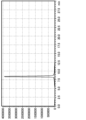
- Example 1 shows an HP-LC chart of Example 1.
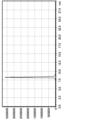
- 3 shows the HP-LC chart of Example 2.
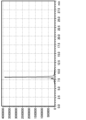
- 3 shows the HP-LC chart of Example 3.
- 4 shows the HP-LC chart of Example 4.
- 4 shows the HP-LC chart of Example 5.
- 4 shows the HP-LC chart of Example 6.
- 4 shows the HP-LC chart of Example 7.
- the compound of the present invention can be obtained by reacting a compound represented by the following formula (1) with a compound represented by the following formula (2-1) and/or a compound represented by the following formula (2-2).
- a and B each represent a hydrogen atom or a hydrocarbon group having 1 to 5 carbon atoms, preferably a hydrogen atom or a hydrocarbon group having 1 to 3 carbon atoms, and more preferably a hydrogen atom. If the number of carbon atoms is 5 or less, the molecular vibration is unlikely to occur when exposed to high frequency waves, resulting in excellent electrical properties. Furthermore, if it is a hydrogen atom, it is possible to suppress the deterioration of the dielectric properties and water absorption properties associated with the generation of polar groups resulting from the oxidation reaction of the alkyl group during high-temperature storage tests.
- a and b each represent an integer of 1 to 4, and preferably 1.
- C represents a hydrogen atom or a hydrocarbon group having 1 to 5 carbon atoms, preferably a hydrogen atom or a hydrocarbon group having 1 to 3 carbon atoms, and more preferably a hydrogen atom. If the number of carbon atoms is 5 or less, the molecular vibration is unlikely to occur when exposed to high frequency waves, and the electrical properties are excellent. Furthermore, if it is a hydrogen atom, the deterioration of the dielectric properties and water absorption properties due to the generation of polar groups resulting from the oxidation reaction of the alkyl group during high temperature storage tests can be suppressed.
- X represents a halogen element, and from the viewpoint of reactivity and suppression of waste generation, it is preferably a bromine atom or a chlorine atom, and more preferably a chlorine atom.
- c represents an integer of 1 to 4, preferably 1.
- the compound obtained by reacting the compound represented by formula (1) with the compound represented by formula (2-1) and/or the compound represented by formula (2-2) is represented by the following formula (3).
- the compound of the present invention has low dielectric properties.
- the dielectric tangent at 25°C and a frequency of 10 GHz measured by the method described in the Examples below, is preferably 0.0016 or less, and more preferably 0.0012 or less.
- These values are required by the market and correspond to, for example, the values of MEGTRON (registered trademark) 8 manufactured by Panasonic Corporation (see Panasonic Holdings Co., Ltd. press release dated January 18, 2022, "Development of 'Low Transmission Loss Multilayer Circuit Board Material MEGTRON 8' for High-Speed Communication Network Equipment").
- the number of moles of the compound represented by formula (1) when the number of moles of the compound represented by formula (1) is ⁇ , the number of moles of the compound represented by formula (2-1) is ⁇ 1, and the number of moles of the compound represented by formula (2-2) is ⁇ 2, ( ⁇ 1+ ⁇ 2)/ ⁇ is preferably 1.8 to 2.1, more preferably 1.8 to 2.0, and particularly preferably 1.8 to 1.95. If ( ⁇ 1+ ⁇ 2)/ ⁇ is less than 1.8, the compound represented by formula (1) remains unreacted, which may reduce the toughness of the cured film and may deteriorate the dielectric properties.
- the unreacted compound represented by formula (1) does not have a structure that can be crosslinked, and the methylene structure at the 9th position of the compound represented by formula (1) reacts with oxygen to generate a ketone, which increases polarity.
- the halogen element of the compound represented by formula (2) that has not been completely removed by purification may be eliminated during curing (for example, at temperatures of 175°C or higher) or during high-temperature, high-humidity testing (85°C, 85% humidity, 120°C, 100% humidity, etc.), which may lead to corrosion of the copper wiring.
- the amount of residual halogen contained in the compound of the present invention is preferably 1 to 10,000 ppm, more preferably 1 to 3,000 ppm, and even more preferably 1 to 2,000 ppm.
- ⁇ 1/ ⁇ 2 is preferably 0.5 to 25, more preferably 0.8 to 3.0, and particularly preferably 0.9 to 1.1. If ⁇ 1/ ⁇ 2 is 25 or less, the crystallinity of the compound is low, and the solvent solubility is good. The closer to 1 the solvent solubility is, the better it is. On the other hand, if ⁇ 1/ ⁇ 2 is 0.5 or more, this is due to an increase in the compound represented by formula (2-1), and steric hindrance is reduced, resulting in good reactivity and good curability.
- the method for producing the compound of the present invention is not particularly limited, and the compound can be derived from the compound represented by the formula (1) and the compound represented by the formula (2-1) and/or the compound represented by the formula (2-2).
- the compound of the present invention can be obtained by reacting the compound represented by formula (1) with the compound represented by formula (2-1) and/or the compound represented by formula (2-2) in an aprotic polar solvent in the presence of a basic catalyst.
- aprotic polar solvents include dimethylsulfone, dimethylsulfoxide, dimethylformamide, dimethylacetamide, 1,3-dimethyl-2-imidazolidinone, and N-methylpyrrolidone, and two or more of these may be used in combination.
- non-water-soluble solvent may be used in combination as necessary.
- non-water-soluble solvents include, but are not limited to, aromatic solvents such as toluene and xylene, aliphatic solvents such as cyclohexane and n-hexane, ether-based solvents such as diethyl ether and diisopropyl ether, ester-based solvents such as ethyl acetate and butyl acetate, and ketone-based solvents such as methyl isobutyl ketone and cyclopentanone, and two or more of these may be used in combination.
- the catalyst is not particularly limited, and examples thereof include basic catalysts such as sodium hydroxide, potassium hydroxide, and potassium carbonate.
- the order of adding the compound represented by the formula (1), the compound represented by the formula (2-1) and/or the compound represented by the formula (2-2), and the base can be changed as necessary, but a method of adding the compound represented by the formula (1), an aprotic polar solvent, and a base, sufficiently ionizing the compound represented by the formula (1), and then adding the compound represented by the formula (2-1) and/or the compound represented by the formula (2-2) is preferred.
- the reaction is carried out without using an aprotic polar solvent, the reaction rate is significantly reduced.
- an aprotic polar solvent is not used, the reaction is generally carried out using a phase transfer catalyst.
- the raw material is dissolved in a non-aqueous solvent such as toluene, and the compound represented by the formula (1), the compound represented by the formula (2-1) and/or the compound represented by the formula (2-2) are reacted in the presence of a base catalyst such as an aqueous sodium hydroxide solution, or a phase transfer catalyst such as tetrabutylammonium bromide.
- a base catalyst such as an aqueous sodium hydroxide solution
- a phase transfer catalyst such as tetrabutylammonium bromide.
- the remaining phase transfer catalyst may cause problems such as ion migration when the substrate material using the compound of the present invention is subjected to a long-term wet heat reliability test or the like.
- the reaction temperature is preferably 0 to 100°C, more preferably 0 to 80°C, and even more preferably 0 to 60°C.
- the compound of the present invention may self-polymerize and gel.
- the reaction may not proceed sufficiently.
- neutralization may be performed with any acid compound.
- an alcohol compound, water, or the like may be added to the reaction solution as necessary to recover the target product as crystals.
- the obtained reaction solution or crystals may be re-dissolved in any solvent and an extraction step may be performed.
- an aromatic hydrocarbon solvent such as toluene or xylene may be used alone, or a non-aromatic hydrocarbon such as cyclohexane may be used in combination.
- the organic layer is washed with water until the wastewater becomes neutral, and the solvent is removed using an evaporator or the like to obtain the target compound.
- the compound of the present invention can be cured by itself by heating or other methods, but performance can also be improved by adding various materials to form a curable resin composition.
- the curable resin composition of the present invention can also have improved curability by adding a curing accelerator.
- a curing accelerator an anionic curing accelerator that accelerates the curing reaction by generating anions upon irradiation with ultraviolet light or visible light or heating, or a cationic curing accelerator that accelerates the curing reaction by generating cations upon irradiation with ultraviolet light or visible light or heating, is preferred.
- anionic curing accelerators examples include imidazoles such as 2-methylimidazole, 2-ethylimidazole, and 2-ethyl-4-methylimidazole; trialkylamines such as triethylamine and tributylamine; 4-dimethylaminopyridine, benzyldimethylamine, 2,4,6-tris(dimethylaminomethyl)phenol, and 1,8-diazabicyclo(5,4,0)-undecene; of which 4-dimethylaminopyridine and 1,8-diazabicyclo(5,4,0)-undecene are preferred.
- imidazoles such as 2-methylimidazole, 2-ethylimidazole, and 2-ethyl-4-methylimidazole
- trialkylamines such as triethylamine and tributylamine
- 4-dimethylaminopyridine benzyldimethylamine, 2,4,6-tris(dimethylaminomethyl)
- phosphines such as triphenylphosphine
- quaternary ammonium salts such as tetrabutylammonium salts, triisopropylmethylammonium salts, trimethyldecanylammonium salts, cetyltrimethylammonium salts, and hexadecyltrimethylammonium hydroxide, but are not limited to these. These may be used alone or in combination.
- cationic curing accelerators include quaternary phosphonium salts such as triphenylbenzylphosphonium salt, triphenylethylphosphonium salt, and tetrabutylphosphonium salt (the counter ion of the quaternary salt may be a halogen, an organic acid ion, a hydroxide ion, or the like, but is not limited to organic acid ions and hydroxide ions); transition metal compounds (transition metal salts) such as tin octylate, zinc carboxylate (zinc 2-ethylhexanoate, zinc stearate, zinc behenate, zinc myristate), and zinc phosphate ester (zinc octylphosphate, zinc stearylphosphate); but are not limited to these. These may be used alone or in combination.
- quaternary phosphonium salts such as triphenylbenzylphosphonium salt, triphenylethylphosphonium salt, and t
- the amount of the curing accelerator used is 0.01 to 5.0 parts by mass per 100 parts by mass of the curable resin composition, as needed.
- the curable resin composition of the present invention may contain an inorganic filler.
- inorganic fillers include powders such as fused silica, crystalline silica, porous silica, alumina, zircon, calcium silicate, calcium carbonate, quartz powder, silicon carbide, silicon nitride, boron nitride, zirconia, aluminum nitride, graphite, forsterite, steatite, spinel, mullite, titania, talc, clay, iron oxide asbestos, and glass powder, and inorganic fillers obtained by making these into a spherical or crushed shape, but are not limited thereto. In addition, these may be used alone or in combination.
- the inorganic filler When obtaining a curable resin composition for semiconductor encapsulation, the inorganic filler is used in an amount of preferably 80 to 92 parts by mass, and more preferably 83 to 90 parts by mass, per 100 parts by mass of the curable resin composition.
- the inorganic filler When obtaining a curable resin composition for use as an interlayer insulating layer forming material, or as a substrate material such as a copper-clad laminate, prepreg, or RCC, the inorganic filler is used in an amount of preferably 5 to 80 parts by mass, and more preferably 10 to 60 parts by mass, per 100 parts by mass of the curable resin composition.
- the curable resin composition of the present invention can also improve the curability by adding a polymerization initiator.
- the polymerization initiator is a compound capable of polymerizing an olefin functional group such as an ethylenically unsaturated bond, and examples of the polymerization initiator include an olefin metathesis polymerization initiator, an anionic polymerization initiator, a cationic polymerization initiator, and a radical polymerization initiator. Among these, it is preferable to use a radical polymerization initiator having curability and moderate stability.
- the radical polymerization initiator is a compound that generates radicals by irradiation with ultraviolet light or visible light or by heating, and starts a chain polymerization reaction.
- radical polymerization initiators examples include organic peroxides, azo compounds, and benzopinacoles, and it is preferable to use an organic peroxide because it has little effect on curing temperature control, outgassing suppression, and electrical properties of decomposition products.
- organic peroxides include, for example, ketone peroxides such as methyl ethyl ketone peroxide and acetylacetone peroxide, diacyl peroxides such as benzoyl peroxide, dialkyl peroxides such as dicumyl peroxide and 1,3-bis-(t-butylperoxyisopropyl)-benzene, peroxyketals such as t-butyl peroxybenzoate and 1,1-di-t-butylperoxycyclohexane, ⁇ -cumyl peroxyneodecanoate, t-butyl peroxyneodecanoate, t-butyl peroxypivalate, 1,1,3,3-tetramethylbutylperoxy-2-ethylhexanoate, t-amyl peroxy-2-ethylhexanoate, and t-butyl peroxypivalate.
- ketone peroxides such as
- peroxycarbonate examples include, but are not limited to, alkyl peresters such as peroxy-2-ethylhexanoate, t-amylperoxy-3,5,5-trimethylhexanoate, t-butylperoxy-3,5,5-trimethylhexanoate, and t-amylperoxybenzoate, peroxycarbonates such as di-2-ethylhexylperoxydicarbonate, bis(4-t-butylcyclohexyl)peroxydicarbonate, t-butylperoxyisopropylcarbonate, and 1,6-bis(t-butylperoxycarbonyloxy)hexane, t-butyl hydroperoxide, cumene hydroperoxide, t-butylperoxyoctoate, and lauroyl peroxide.
- alkyl peresters such as peroxy-2-ethylhexanoate, t-amylperoxy-3,5,5-
- ketone peroxides diacyl peroxides, hydroperoxides, dialkyl peroxides, peroxyketals, alkyl peresters, percarbonates, etc. are preferred, with dialkyl peroxides being more preferred.
- azo compounds examples include, but are not limited to, azobisisobutyronitrile, 4,4'-azobis(4-cyanovaleric acid), 2,2'-azobis(2,4-dimethylvaleronitrile), etc. Furthermore, these may be used alone or in combination.
- the amount of polymerization initiator added is preferably 0.01 to 5 parts by mass, and particularly preferably 0.01 to 3 parts by mass, per 100 parts by mass of the curable resin composition. If the amount of polymerization initiator used is less than 0.01 parts by mass, there is a risk that the molecular weight will not be sufficiently extended during the polymerization reaction, and if it is more than 5 parts by mass, there is a risk that the dielectric properties such as the dielectric constant and dielectric tangent will be impaired.
- the curable resin composition of the present invention may contain a polymerization inhibitor.
- a polymerization inhibitor By containing a polymerization inhibitor, storage stability is improved and the reaction initiation temperature can be controlled. By controlling the reaction initiation temperature, it becomes easy to ensure fluidity, impregnation into glass cloth and the like is not impaired, and B-stage such as prepreg formation is facilitated. If the polymerization reaction proceeds too much during prepreg formation, problems such as difficulty in lamination during the lamination process are likely to occur.
- the polymerization inhibitor may be added when synthesizing the compound of the present invention, or after synthesis.
- the amount of the polymerization inhibitor used is 0.008 to 2 parts by weight, preferably 0.01 to 1 part by weight, per 100 parts by weight of the compound of the present invention.
- polymerization inhibitor examples include phenol-based, sulfur-based, phosphorus-based, hindered amine-based, nitroso-based, and nitroxyl radical-based polymerization inhibitors.
- a single type of polymerization inhibitor may be used, or multiple types may be used in combination. Of these, in the present invention, phenol-based, hindered amine-based, nitroso-based, and nitroxyl radical-based polymerization inhibitors are preferred.
- phenol-based polymerization inhibitors include, for example, monophenols such as 2,6-di-t-butyl-p-cresol, butylated hydroxyanisole, 2,6-di-t-butyl-p-ethylphenol, stearyl- ⁇ -(3,5-di-t-butyl-4-hydroxyphenyl)propionate, isooctyl-3-(3,5-di-t-butyl-4-hydroxyphenyl)propionate, 2,4-bis-(n-octylthio)-6-(4-hydroxy-3,5-di-t-butylanilino)-1,3,5-triazine, and 2,4-bis[(octylthio)methyl]-o-cresol; -t-butylphenol), 2,2'-methylenebis(4-ethyl-6-t-butylphenol), 4,4'-thiobis(3-methyl-6-t-butyl
- sulfur-based polymerization inhibitors examples include, but are not limited to, dilauryl-3,3'-thiodipropionate, dimyristyl-3,3'-thiodipropionate, and distearyl-3,3'-thiodipropionate.
- Examples of the phosphorus-based polymerization inhibitors include triphenyl phosphite, diphenyl isodecyl phosphite, phenyl diisodecyl phosphite, tris(nonylphenyl) phosphite, diisodecyl pentaerythritol phosphite, tris(2,4-di-t-butylphenyl) phosphite, cyclic neopentane tetrayl bis(octadecyl) phosphite, cyclic neopentane tetrayl bi(2,4-di-t-butylphenyl) phosphite, cyclic neopentane tetrayl bi(2,4-di-t-butyl-4-methylphenyl) phosphite, bis[2-t -butyl-6-
- hindered amine polymerization inhibitor examples include ADK STAB LA-40MP, ADK STAB LA-40Si, ADK STAB LA-402AF, ADK STAB LA-87, ADK STAB LA-82, ADK STAB LA-81, ADK STAB LA-77Y, ADK STAB LA-77G, ADK STAB LA-72, ADK STAB LA-68, ADK STAB LA-63P, ADK STAB LA-57, and ADK STAB LA-52 (ADE Corporation).
- nitroso-based polymerization inhibitor examples include, but are not limited to, p-nitrosophenol, N-nitrosodiphenylamine, and the ammonium salt of N-nitrosophenylhydroxyamine (cupferron). Of these, the ammonium salt of N-nitrosophenylhydroxyamine (cupferron) is preferred.
- nitroxyl radical polymerization inhibitor examples include, but are not limited to, di-tert-butyl nitroxide, 2,2,6,6-tetramethylpiperidine-1-oxyl, 4-hydroxy-2,2,6,6-tetramethylpiperidine-1-oxyl, 4-oxo-2,2,6,6-tetramethylpiperidine-1-oxyl, 4-amino-2,2,6,6-tetramethylpiperidine-1-oxyl, 4-methoxy-2,2,6,6-tetramethylpiperidine-1-oxyl, 4-acetoxy-2,2,6,6-tetramethylpiperidine-1-oxyl, and 4-benzoyloxy-2,2,6,6-tetramethylpiperidine-1-oxyl.
- the curable resin composition of the present invention may contain a flame retardant.
- the flame retardant include halogen-based flame retardants, inorganic flame retardants (antimony compounds, metal hydroxides, nitrogen compounds, boron compounds, etc.), and phosphorus-based flame retardants. From the viewpoint of achieving halogen-free flame retardancy, phosphorus-based flame retardants are preferred.
- the phosphorus-based flame retardant may be of a reactive type or an additive type.
- phosphoric acid esters such as trimethyl phosphate, triethyl phosphate, tricresyl phosphate, trixylyleneyl phosphate, cresyl diphenyl phosphate, cresyl-2,6-dixylyleneyl phosphate, 1,3-phenylene bis(dixylyleneyl phosphate), 1,4-phenylene bis(dixylyleneyl phosphate), and 4,4'-biphenyl(dixylyleneyl phosphate), phosphanes such as 9,10-dihydro-9-oxa-10-phosphaphenanthrene-10-oxide and 10(2,5-dihydroxyphenyl)-10H-9-oxa-10-phosphaphenanthrene-10-oxide, phosphorus-containing epoxy compounds obtained by reacting epoxy resins with active hydrogen of the phosphanes, red phosphorus, and the like, but are not limited thereto.
- phosphoric acid esters such as
- phosphates, phosphanes, and phosphorus-containing epoxy compounds are preferred, with 1,3-phenylenebis(dixylilenyl phosphate), 1,4-phenylenebis(dixylilenyl phosphate), 4,4'-biphenyl(dixylilenyl phosphate) and phosphorus-containing epoxy compounds being particularly preferred.
- the content of the flame retardant is preferably in the range of 0.1 to 10 parts by mass in 100 parts by mass of the curable resin composition. If the content is less than 0.1 part by mass, the flame retardancy may be insufficient, and if the content is more than 10 parts by mass, the moisture absorption and dielectric properties of the cured product may be adversely affected.
- the curable resin composition of the present invention may contain a light stabilizer.
- a light stabilizer a hindered amine light stabilizer (HALS) or the like is preferable.
- HALS include reaction products of dibutylamine, 1,3,5-triazine, N,N'-bis(2,2,6,6-tetramethyl-4-piperidyl-1,6-hexamethylenediamine and N-(2,2,6,6-tetramethyl-4-piperidyl)butylamine, reaction products of dimethyl succinate-1-(2-hydroxyethyl)-4-hydroxy-2,2,6,6-tetramethylpiperidine, poly[ ⁇ 6-(1,1,3,3-tetramethylbutyl)amino-1,3,5-triazine-2,4-diyl ⁇ (2,2,6,6-tetramethyl-4-piperidyl)imino ⁇ hexamethylene ⁇ (2,2,6,6-tetramethyl-4-piperidyl)imino ⁇ ], bis(
- the content of the light stabilizer is preferably in the range of 0.001 to 0.1 parts by mass per 100 parts by mass of the curable resin composition. If it is less than 0.001 parts by mass, it may be insufficient to achieve the light stabilizing effect, and if it is more than 0.1 parts by mass, it may have a negative effect on the moisture absorption and dielectric properties of the cured product.
- the curable resin composition of the present invention may use a binder resin.
- the binder resin include, but are not limited to, butyral resins, acetal resins, acrylic resins, epoxy-nylon resins, NBR-phenol resins, epoxy-NBR resins, and silicone resins. These may be used alone or in combination.
- the amount of binder resin used is preferably within a range that does not impair the flame retardancy and heat resistance of the cured product, and is preferably 0.05 to 50 parts by mass, and more preferably 0.05 to 20 parts by mass, per 100 parts by mass of the curable resin composition, as needed.
- the curable resin composition of the present invention may contain additives, such as modified acrylonitrile copolymers, polyethylene, fluororesins, silicone gels, silicone oils, surface treatment agents for fillers such as silane coupling agents, release agents, and colorants such as carbon black, phthalocyanine blue, and phthalocyanine green.
- additives such as modified acrylonitrile copolymers, polyethylene, fluororesins, silicone gels, silicone oils, surface treatment agents for fillers such as silane coupling agents, release agents, and colorants such as carbon black, phthalocyanine blue, and phthalocyanine green.
- the amount of additive is preferably 1 part by mass or less, more preferably 0.7 parts by mass or less, per 100 parts by mass of the curable resin composition.
- the curable resin composition of the present invention may further contain epoxy resins, active ester compounds, phenolic resins, polyphenylene ether compounds, amine resins, compounds having ethylenically unsaturated bonds, isocyanate resins, polyamide resins, maleimide compounds, cyanate ester resins, polyimide resins, polybutadiene and modified products thereof, polystyrene and modified products thereof, polyethylene and modified products thereof, etc., which may be used alone or in combination.
- polyphenylene ether compounds compounds having ethylenically unsaturated bonds, cyanate ester resins, polybutadiene and modified products thereof, and polystyrene and modified products thereof, in view of the balance of heat resistance, adhesion, and dielectric properties.
- polyphenylene ether compounds compounds having ethylenically unsaturated bonds, cyanate ester resins, polybutadiene and modified products thereof, and polystyrene and modified products thereof, in view of the balance of heat resistance, adhesion, and dielectric properties.
- the total amount of these compounds used is preferably 10 times or less by mass, more preferably 5 times or less by mass, and particularly preferably 3 times or less by mass, relative to the compound of the present invention, unless otherwise specified.
- the lower limit is preferably 0.1 times by mass or more, more preferably 0.25 times by mass or more, and even more preferably 0.5 times by mass or more.
- epoxy resin Preferred examples of the epoxy resin are shown below, but the epoxy resin is not limited thereto.
- the epoxy resin may be liquid or solid, and may be used alone or in combination.
- liquid epoxy resins examples include bisphenol A type epoxy resins, bisphenol F type epoxy resins, bisphenol AF type epoxy resins, naphthalene type epoxy resins, glycidyl ester type epoxy resins, glycidyl amine type epoxy resins, phenol novolac type epoxy resins, alicyclic epoxy resins having an ester skeleton, cyclohexane type epoxy resins, cyclohexane dimethanol type epoxy resins, glycidyl amine type epoxy resins, and epoxy resins having a butadiene structure.
- solid epoxy resins include bixylenol type epoxy resins, naphthalene type epoxy resins, naphthalene type tetrafunctional epoxy resins, cresol novolac type epoxy resins, dicyclopentadiene type epoxy resins, trisphenol type epoxy resins, naphthol type epoxy resins, biphenyl type epoxy resins, naphthylene ether type epoxy resins, anthracene type epoxy resins, bisphenol A type epoxy resins, bisphenol AF type epoxy resins, and tetraphenylethane type epoxy resins, and examples of such solid epoxy resins include naphthol type epoxy resins, bisphenol AF type epoxy resins, naphthalene type epoxy resins, and biphenyl type epoxy resins.
- HP4032H manufactured by DIC Corporation, naphthalene type epoxy resin
- HP-4700 manufactured by DIC Corporation, naphthalene type tetrafunctional epoxy resin
- HP-4710 all manufactured by DIC Corporation, naphthalene type tetrafunctional epoxy resin
- N-690 manufactured by DIC Corporation, cresol novolac type epoxy resin
- N-695" manufactured by DIC Corporation, cresol novolac type epoxy resin
- HP-7200 manufactured by DIC Corporation, dicyclopentadiene type epoxy resin
- HP-7200 manufactured by DIC Corporation, dicyclopentadiene type epoxy resin
- HP-7200 manufactured by DIC Corporation, dicyclopentadiene type epoxy resin
- HP-7200 manufactured by DIC Corporation, dicyclopentadiene type epoxy resin
- HP-7200 manufactured by DIC Corporation, dicyclopentadiene type epoxy resin
- HP-7200 manufactured by DIC Corporation, dicyclopentadiene type epoxy resin
- HP-7200HH manufactured by DIC Corporation, dicyclopentad
- epoxy resin "EXA-7311”, “EXA-7311-G3", “EXA-7311-G4", “EXA-7311-G4S”, "HP-6000” (all manufactured by DIC Corporation, naphthylene ether type epoxy resin), "EPPN-502H” (manufactured by Nippon Kayaku Co., Ltd., trisphenol type epoxy resin), "NC-7000L”, “NC-7300” (all manufactured by Nippon Kayaku Co., Ltd., naphthol-cresol novolac type epoxy resin), "NC-3000H”, “NC-3000”, “NC-3000L”, “NC-3100” (all manufactured by Nippon Kayaku Co., Ltd., biphenyl ether type epoxy resin).
- the active ester compound refers to a compound that contains at least one ester bond in the structure and has an aliphatic chain, an aliphatic ring, or an aromatic ring bonded to both sides of the ester bond.
- the active ester compound include compounds having two or more highly reactive ester groups in one molecule, such as phenol esters, thiophenol esters, N-hydroxyamine esters, and esters of heterocyclic hydroxy compounds, and are obtained by a condensation reaction between at least one compound of a carboxylic acid compound, an acid chloride, or a thiocarboxylic acid compound and at least one compound of a hydroxy compound or a thiol compound.
- the hydroxy compound is preferably a phenol compound or a naphthol compound.
- the active ester compound may be used alone or in combination of two or more types.
- carboxylic acid compounds examples include benzoic acid, acetic acid, succinic acid, maleic acid, itaconic acid, phthalic acid, isophthalic acid, terephthalic acid, and pyromellitic acid.
- Examples of the acid chlorides include acetyl chloride, acrylic acid chloride, methacrylic acid chloride, malonyl chloride, succinic acid dichloride, diglycolyl chloride, glutaric acid dichloride, suberic acid dichloride, sebacic acid dichloride, adipic acid dichloride, dodecandioyl dichloride, azelaic acid chloride, 2,5-furandicarbonyl dichloride, phthaloyl chloride, isophthaloyl chloride, terephthaloyl chloride, trimesic acid chloride, bis(4-chlorocarbonylphenyl) ether, 4,4'-diphenyldicarbonyl chloride, and 4,4'-azodibenzoyl dichloride.
- phenol compounds and naphthol compounds include, for example, hydroquinone, resorcin, bisphenol A, bisphenol F, bisphenol S, phenolphthaline, methylated bisphenol A, methylated bisphenol F, methylated bisphenol S, phenol, o-cresol, m-cresol, p-cresol, catechol, ⁇ -naphthol, ⁇ -naphthol, 1,5-dihydroxynaphthalene, 1,6-dihydroxynaphthalene, 2,6-dihydroxynaphthalene, dihydroxybenzophenone, trihydroxybenzophenone, tetrahydroxybenzophenone, phloroglucin, benzenetriol, dicyclopentadiene-type diphenol compounds, phenol novolac, and phenol resins described below.
- dicyclopentadiene-type diphenol compounds refers to diphenol compounds obtained by condensing one molecule of dicyclopentadiene with two molecules of
- active ester compounds include active ester compounds containing a dicyclopentadiene-type diphenol structure, active ester compounds containing a naphthalene structure, active ester compounds containing an acetylated phenol novolac, active ester compounds containing a benzoylated phenol novolac, the compounds described in Example 2 of WO 2020/095829, and the compounds disclosed in WO 2020/059625.
- active ester compounds containing a naphthalene structure and active ester compounds containing a dicyclopentadiene-type diphenol structure are more preferred.
- the dicyclopentadiene-type diphenol structure refers to a divalent structural unit consisting of phenylene-dicyclopentylene-phenylene.
- active ester compounds include, for example, "EXB9451”, “EXB9460”, “EXB9460S”, “HPC-8000-65T”, “HPC-8000H-65TM”, “EXB-8000L-65TM”, and “EXB-8150-65T” (manufactured by DIC Corporation) as active ester compounds containing a dicyclopentadiene-type diphenol structure, “EXB9416-70BK” (manufactured by DIC Corporation) as an active ester compound containing a naphthalene structure, and "phenolnoxamine” (manufactured by DIC Corporation).
- active ester compounds containing acetylated volac examples include “DC808” (manufactured by Mitsubishi Chemical Corporation), active ester compounds containing benzoylated phenol novolac include “YLH1026", “YLH1030", and “YLH1048” (manufactured by Mitsubishi Chemical Corporation), active ester curing agent that is an acetylated phenol novolac, and "EXB-9050L-62M” (manufactured by DIC Corporation) as an active ester curing agent containing phosphorus atoms.
- a phenolic resin is a compound having two or more phenolic hydroxyl groups in a molecule.
- the phenolic resin include, but are not limited to, a reaction product of a phenol with an aldehyde, a reaction product of a phenol with a diene compound, a reaction product of a phenol with a ketone, a reaction product of a phenol with a substituted biphenyl, a reaction product of a phenol with a substituted phenyl, a reaction product of a bisphenol with an aldehyde, and the like. These may be used alone or in combination. Specific examples of the above-mentioned raw materials are given below, but the raw materials are not limited thereto.
- Phenol alkyl-substituted phenol, aromatic-substituted phenol, hydroquinone, resorcin, naphthol, alkyl-substituted naphthol, dihydroxybenzene, alkyl-substituted dihydroxybenzene, dihydroxynaphthalene, etc.
- ⁇ Aldehydes > Formaldehyde, acetaldehyde, alkyl aldehyde, benzaldehyde, alkyl-substituted benzaldehyde, hydroxybenzaldehyde, naphthaldehyde, glutaraldehyde, phthalaldehyde, crotonaldehyde, cinnamaldehyde, furfural, and the like.
- ⁇ Diene Compound Dicyclopentadiene, terpenes, vinylcyclohexene, norbornadiene, vinylnorbornene, tetrahydroindene, divinylbenzene, divinylbiphenyl, diisopropenylbiphenyl, butadiene, isoprene, and the like.
- ⁇ Ketones Acetone, methyl ethyl ketone, methyl isobutyl ketone, acetophenone, benzophenone, fluorenone, etc.
- ⁇ Substituted biphenyls > 4,4'-bis(chloromethyl)-1,1'-biphenyl, 4,4'-bis(methoxymethyl)-1,1'-biphenyl, 4,4'-bis(hydroxymethyl)-1,1'-biphenyl, and the like.
- ⁇ Substituted phenyls > 1,4-bis(chloromethyl)benzene, 1,4-bis(methoxymethyl)benzene, 1,4-bis(hydroxymethyl)benzene and the like.
- the polyphenylene ether compound is preferably a polyphenylene ether compound having an ethylenically unsaturated bond, and more preferably a polyphenylene ether compound having an acrylic group, a methacrylic group, or a styrene structure.
- Commercially available products include SA-9000 (manufactured by SABIC, a polyphenylene ether compound having a methacrylic group) and OPE-2St 1200 (manufactured by Mitsubishi Gas Chemical Company, a polyphenylene ether compound having a styrene structure).
- the number average molecular weight (Mn) of the polyphenylene ether compound is preferably 500 to 5000, more preferably 2000 to 5000, and more preferably 2000 to 4000. If the molecular weight is less than 500, the heat resistance of the cured product tends to be insufficient. If the molecular weight is more than 5000, the melt viscosity increases and sufficient fluidity cannot be obtained, which tends to lead to molding defects. In addition, the reactivity decreases, the curing reaction takes a long time, and the amount of unreacted material that is not incorporated into the curing system increases, which decreases the glass transition temperature of the cured product and tends to decrease the heat resistance of the cured product.
- the number average molecular weight of the polyphenylene ether compound is 500 to 5000, it is possible to exhibit excellent heat resistance, moldability, etc. while maintaining excellent dielectric properties.
- the number average molecular weight here can be specifically measured using gel permeation chromatography, etc.
- the polyphenylene ether compound may be one obtained by a polymerization reaction, or one obtained by a redistribution reaction of a high molecular weight polyphenylene ether compound having a number average molecular weight of about 10,000 to 30,000. These may also be used as raw materials and reacted with a compound having an ethylenically unsaturated bond, such as methacryl chloride, acrylic chloride, or chloromethylstyrene, to impart radical polymerizability.
- a compound having an ethylenically unsaturated bond such as methacryl chloride, acrylic chloride, or chloromethylstyrene
- the polyphenylene ether compound obtained by the redistribution reaction may be obtained, for example, by heating a high molecular weight polyphenylene ether compound in a solvent such as toluene in the presence of a phenolic compound and a radical initiator to cause a redistribution reaction.
- the polyphenylene ether compound obtained by the redistribution reaction in this way has hydroxyl groups derived from phenolic compounds that contribute to hardening at both ends of the molecular chain, and is therefore preferable in that it can maintain even higher heat resistance, and that functional groups can be introduced at both ends of the molecular chain even after modification with a compound having an ethylenically unsaturated bond.
- the polyphenylene ether compound obtained by the polymerization reaction is also preferable in that it exhibits excellent fluidity.
- the molecular weight of the polyphenylene ether compound can be adjusted by adjusting the polymerization conditions.
- the molecular weight of the obtained polyphenylene ether compound can be adjusted by adjusting the conditions of the redistribution reaction. More specifically, it is possible to adjust the amount of the phenolic compound used in the redistribution reaction. That is, the greater the amount of the phenolic compound, the lower the molecular weight of the obtained polyphenylene ether compound.
- poly(2,6-dimethyl-1,4-phenylene ether) or the like can be used as a high molecular weight polyphenylene ether compound that undergoes the redistribution reaction.
- the phenolic compound used in the redistribution reaction is not particularly limited, but for example, a multifunctional phenolic compound having two or more phenolic hydroxyl groups in the molecule, such as bisphenol A, phenol novolac, cresol novolac, etc., is preferably used. These may be used alone or in combination of two or more.
- the amine resin is a compound having two or more amino groups in the molecule.
- the amine resin include diaminodiphenylmethane, diaminodiphenylsulfone, isophoronediamine, naphthalenediamine, aniline novolak (a reaction product of aniline and formalin), N-methylaniline novolak (a reaction product of N-methylaniline and formalin), orthoethylaniline novolak (a reaction product of orthoethylaniline and formalin), a reaction product of 2-methylaniline and formalin, a reaction product of 2,6-diisopropylaniline and formalin, a reaction product of 2,6-diethylaniline and formalin, a reaction product of 2-ethyl-6-ethylaniline and formalin, a reaction product of 2,6-dimethylaniline and formalin, and a reaction product obtained by reacting aniline and xylylene chloride.
- aniline resin examples include, but are not limited to, the aniline resin disclosed in Japanese Patent No. 6429862, a reaction product of aniline and a substituted biphenyl (4,4'-bis(chloromethyl)-1,1'-biphenyl and 4,4'-bis(methoxymethyl)-1,1'-biphenyl, etc.), a reaction product of aniline and a substituted phenyl (1,4-bis(chloromethyl)benzene, 1,4-bis(methoxymethyl)benzene and 1,4-bis(hydroxymethyl)benzene, etc.), 4,4'-(1,3-phenylenediisopropylidene)bisaniline, 4,4'-(1,4-phenylenediisopropylidene)bisaniline, a reaction product of aniline and diisopropenylbenzene, dimer diamine, etc. Furthermore, these may be used alone or in combination.
- the compound containing an ethylenically unsaturated bond is a compound having one or more ethylenically unsaturated bonds in the molecule that can be polymerized by heat or light, regardless of whether a polymerization initiator is used or not.
- Examples of the compound containing an ethylenically unsaturated bond include, but are not limited to, a reaction product of the phenol resin with an ethylenically unsaturated bond-containing halogen-based compound (chloromethylstyrene, allyl chloride, methallyl chloride, acrylic acid chloride, methacrylic acid chloride, etc.), a reaction product of an ethylenically unsaturated bond-containing phenol (2-allylphenol, 2-propenylphenol, 4-allylphenol, 4-propenylphenol, eugenol, isoeugenol, etc.) with a halogen-based compound (1,4-bis(chloromethyl)benzene, 4,4'-bis(chloromethyl)biphenyl, 4,4'-difluorobenzophenone, 4,4'-dichlorobenzophenone, 4,4'-dibromobenzophenone, cyanuric chloride, etc.), a reaction
- An isocyanate resin is a compound having two or more isocyanate groups in the molecule.
- the isocyanate resin include aromatic diisocyanates such as p-phenylene diisocyanate, m-phenylene diisocyanate, p-xylylene diisocyanate, m-xylylene diisocyanate, 2,4-tolylene diisocyanate, 2,6-tolylene diisocyanate, 4,4'-diphenylmethane diisocyanate, and naphthalene diisocyanate; aliphatic or alicyclic diisocyanates such as isophorone diisocyanate, hexamethylene diisocyanate, 4,4'-dicyclohexylmethane diisocyanate, hydrogenated xylene diisocyanate, norbornene diisocyanate, and lysine diisocyanate; polyisocyanates such as one or more biure
- polyamide resin examples include reaction products of one or more of diamines, diisocyanates, and oxazolines with dicarboxylic acids, reaction products of diamines with acid chlorides, and ring-opening polymers of lactam compounds. These may be used alone or in combination. Specific examples of the above-mentioned raw materials are given below, but the raw materials are not limited thereto.
- ⁇ Dicarboxylic acid> Oxalic acid, malonic acid, succinic acid, glutaric acid, adipic acid, suberic acid, azelaic acid, sebacic acid, undecanedioic acid, dodecanedioic acid, terephthalic acid, isophthalic acid, 5-hydroxyisophthalic acid, 2-chloroterephthalic acid, 2-methylterephthalic acid, 5-methylisophthalic acid, 5-sodium sulfoisophthalic acid, hexahydroterephthalic acid, hexahydroisophthalic acid, cyclohexanedicarboxylic acid, biphenyldicarboxylic acid, naphthalenedicarboxylic acid, benzophenonedicarboxylic acid, furandicarboxylic acid, 4,4'-dicarboxydiphenyl ether, and 4,4'-dicarboxydiphenyl sulfide.
- ⁇ Acid chloride Acetyl chloride, acrylic acid chloride, methacrylic acid chloride, malonyl chloride, succinic acid dichloride, diglycolyl chloride, glutaric acid dichloride, suberic acid dichloride, sebacic acid dichloride, adipic acid dichloride, dodecandioyl dichloride, azelaic acid chloride, 2,5-furandicarbonyl dichloride, phthaloyl chloride, isophthaloyl chloride, terephthaloyl chloride, trimesic acid chloride, bis(4-chlorocarbonylphenyl) ether, 4,4'-diphenyldicarbonyl chloride, 4,4'-azodibenzoyl dichloride, and the like.
- ⁇ Lactam > ⁇ -caprolactam, ⁇ -undecanelactam, ⁇ -laurolactam, and the like.
- polyimide resin examples include, but are not limited to, reaction products of the diamines and the tetracarboxylic dianhydrides shown below. These may be used alone or in combination.
- the curable resin composition of the present invention may contain a maleimide compound.
- a maleimide compound is a compound having one or more maleimide groups in the molecule.
- the maleimide compound include 4,4'-diphenylmethane bismaleimide, polyphenylmethane maleimide, m-phenylene bismaleimide, 2,2'-bis[4-(4-maleimidophenoxy)phenyl]propane, 3,3'-dimethyl-5,5'-diethyl-4,4'-diphenylmethane bismaleimide, 4-methyl-1,3-phenylene bismaleimide, 4,4'-diphenylether bismaleimide, 4,4'-diphenylsulfone bismaleimide, 1,3-bis(3-maleimidophenoxy)benzene, 1,3-bis(4-maleimidophenoxy)benzene), and Xylox type maleimide compounds (anilix).
- maleimide manufactured by Mitsui Chemicals Fine Co., Ltd.
- biphenylaralkyl-type maleimide compound solidified by distilling off the solvent under reduced pressure from a resin solution containing the maleimide compound (M2) described in Example 4 of JP 2009-001783 A), bisaminocumylbenzene-type maleimide (maleimide compound described in WO 2020/054601 A), maleimide compounds having an indane structure described in JP 6629692 A or WO 2020/217679 A, MATERIAL STAGE Vol. 18, No. 12 2019 “Continued Epoxy Resin CAS Number Story – Hardener CAS Number Memorandum No. 31 Bismaleimide (1)” and MATERIAL STAGE Vol. 19, No.
- maleimide compounds include, but are not limited to, the maleimide compounds described in "Epoxy Resin CAS Number Story Continued - Hardener CAS Number Memorandum No. 32 Bismaleimide (2)" in 2019. These compounds may be used alone or in combination.
- the cyanate ester resin is a cyanate ester compound obtained by reacting a phenol resin with a cyanogen halide, and specific examples thereof include dicyanatobenzene, tricyanatobenzene, dicyanatonaphthalene, dicyanatobiphenyl, 2,2'-bis(4-cyanatophenyl)propane, bis(4-cyanatophenyl)methane, bis(3,5-dimethyl-4-cyanatophenyl)methane, 2,2'-bis(3,5-dimethyl-4-cyanatophenyl)propane, 2,2'-bis(4-cyanatophenyl)ethane, 2,2'-bis(4-cyanatophenyl)hexafluoropropane, bis(4-cyanatophenyl)sulfone, bis(4-cyanatophenyl)thioether, phenol novolac cyanate, and phenol-dicyclopent
- the cyanate ester compound is particularly preferred as the cyanate ester compound because it has low moisture absorption, excellent flame retardancy, and excellent dielectric properties.
- the cyanate ester resin may contain a catalyst such as zinc naphthenate, cobalt naphthenate, copper naphthenate, lead naphthenate, zinc octoate, tin octoate, lead acetylacetonate, or dibutyltin maleate, if necessary, to trimerize the cyanate group to form a sym-triazine ring.
- the catalyst is preferably used in an amount of 0.0001 to 0.10 parts by mass, and more preferably 0.00015 to 0.0015 parts by mass, per 100 parts by mass of cyanate ester resin.
- polybutadiene and its modified products are polybutadiene or compounds having a structure derived from polybutadiene in the molecule.
- the unsaturated bonds in the polybutadiene-derived structure may be partially or entirely converted to single bonds by hydrogenation.
- Examples of polybutadiene and modified products thereof include, but are not limited to, polybutadiene, hydroxyl-terminated polybutadiene, (meth)acrylated polybutadiene, carboxylic acid-terminated polybutadiene, amine-terminated polybutadiene, styrene butadiene rubber, and the like. These may be used alone or in combination.
- polybutadiene or styrene butadiene rubber is preferred from the viewpoint of dielectric properties.
- styrene butadiene rubber examples include RICON-100, RICON-181, RICON-184 (all manufactured by Cray Valley Corporation), 1,2-SBS (manufactured by Nippon Soda Co., Ltd.), and examples of polybutadiene include B-1000, B-2000, B-3000 (all manufactured by Nippon Soda Co., Ltd.).
- the molecular weight of polybutadiene and styrene butadiene rubber is preferably a weight average molecular weight of 500 to 10,000, more preferably 750 to 7,500, and even more preferably 1,000 to 5,000.
- the compound of the present invention is excellent in compatibility with materials having low polarity and low dielectric properties and compounds composed only of hydrocarbons, due to the fact that the compound itself does not have a skeleton design in which heteroatoms such as oxygen and nitrogen are actively introduced.
- Polystyrene and its modified products are polystyrene or compounds having a structure derived from polystyrene in the molecule.
- examples of polystyrene and modified products thereof include polystyrene, styrene-2-isopropenyl-2-oxazoline copolymers (Epocross RPS-1005, RP-61, both manufactured by Nippon Shokubai Co., Ltd.), SEP (styrene-ethylene-propylene copolymer: Septon 1020, manufactured by Kuraray Co., Ltd.), SEPS (styrene-ethylene-propylene-styrene copolymer: Septon 2002, Septon 2004F, Septon 2005, Septon 2006, Septon 2063, Septon 2104, all manufactured by Kuraray Co., Ltd.), SEEPS (styrene-ethylene/ethylene-propylene-styrene block copolymer: Septon 4003,
- block copolymer examples include, but are not limited to, SEEPS-OH (a styrene-ethylene/ethylene propylene-styrene block copolymer having a hydroxyl group at the end: SEPTON HG252, manufactured by Kuraray Co., Ltd.), SIS (styrene-isoprene-styrene block copolymer: SEPTON 5125, SEPTON 5127, manufactured by Kuraray Co., Ltd.), hydrogenated SIS (hydrogenated styrene-isoprene-styrene block copolymer: HYBRAR 7125F, HYBRAR 7311F, manufactured by Kuraray Co., Ltd.), SIBS (styrene-isobutylene-styrene block copolymer: SIBSTAR073T, SIBSTAR102T, SIBSTAR103T (all manufactured by Kaneka Corporation), SEPTON V9827 (manufactured by Kuraray Co.
- Polystyrene and its modified products have higher heat resistance and are less susceptible to oxidative deterioration, so it is preferable that they do not have unsaturated bonds.
- weight average molecular weight of polystyrene and its modified products there is no particular limit to the weight average molecular weight of polystyrene and its modified products as long as it is 10,000 or more, but if it is too large, the compatibility with not only polyphenylene ether compounds but also low molecular weight components with a weight average molecular weight of about 50 to 1,000 and oligomer components with a weight average molecular weight of about 1,000 to 5,000 deteriorates, making it difficult to ensure mixing and solvent stability, so it is preferably about 10,000 to 300,000.
- Polyethylene and its modified products are compounds having polyethylene or a structure derived from polyethylene in the molecule.
- Examples of polyethylene and modified products thereof include ethylene-propylene copolymers, ethylene-styrene copolymers, ethylene-propylene-ethylidene norbornene copolymers (EBT: K-8370EM, K-9330M, etc., manufactured by Mitsui Chemicals, Inc.), ethylene-propylene-vinyl norbornene copolymers (VNB-EPT: PX-006M, PX-008M, PX-009M, etc., manufactured by Mitsui Chemicals, Inc.), ethylene-vinyl alcohol copolymers, ethylene-vinyl acetate copolymers, etc., but are not limited thereto.
- ethylene-propylene-ethylidene norbornene copolymers and ethylene-propylene-vinyl norbornene copolymers containing a crosslinkable structure may be used alone or in combination.
- the weight-average molecular weight of polyethylene and modified products thereof is not particularly limited as long as it is 10,000 or more. However, if it is too large, compatibility with not only the polyphenylene ether compound but also low molecular weight components having a weight-average molecular weight of about 50 to 1,000 and oligomer components having a weight-average molecular weight of about 1,000 to 5,000 deteriorates, making it difficult to ensure mixing and solvent stability. Therefore, it is preferably about 10,000 to 300,000.
- the curable resin composition of the present invention can be obtained by preparing the above components in a prescribed ratio, pre-curing at 130-180°C for 30-500 seconds, and then post-curing at 150-200°C for 2-15 hours, allowing the curing reaction to proceed sufficiently to obtain the cured product of the present invention.
- the components of the curable resin composition can also be uniformly dispersed or dissolved in a solvent, etc., and cured after removing the solvent.
- the method for preparing the curable resin composition of the present invention is not particularly limited, but the components may be mixed uniformly or may be prepolymerized.
- a mixture containing the compound of the present invention is prepolymerized by heating in the presence or absence of a curing accelerator or polymerization initiator, and in the presence or absence of a solvent.
- amine compounds, compounds having ethylenically unsaturated bonds, maleimide compounds, cyanate ester compounds, polybutadiene and modified products thereof, polystyrene and modified products thereof, inorganic fillers, and other additives may be added to form a prepolymer.
- the components may be mixed or prepolymerized using, for example, an extruder, kneader, rolls, etc. in the absence of a solvent, and a reaction kettle with a stirrer, etc. in the presence of a solvent.
- the mixture is kneaded at a temperature in the range of 50 to 100°C using a device such as a kneader, roll, or planetary mixer to obtain a uniform resin composition.
- the obtained resin composition is crushed and then molded into a cylindrical tablet using a molding machine such as a tablet machine, or into a granular powder or powder molded body, or these compositions can be melted on a surface support and molded into a sheet having a thickness of 0.05 mm to 10 mm to obtain a molded curable resin composition.
- the obtained molded body is a non-sticky molded body at 0 to 20°C, and even if stored at -25 to 0°C for one week or more, the flowability and curability are hardly reduced.
- the obtained molded article can be molded into a cured product using a transfer molding machine or a compression molding machine.
- the curable resin composition of the present invention can be made into a varnish-like composition (hereinafter simply referred to as varnish) by adding an organic solvent.
- the curable resin composition of the present invention can be dissolved in a solvent such as toluene, xylene, acetone, methyl ethyl ketone, methyl isobutyl ketone, dimethylformamide, dimethylacetamide, N-methylpyrrolidone, etc.
- a varnish which can be impregnated into a substrate such as glass fiber, carbon fiber, polyester fiber, polyamide fiber, alumina fiber, paper, etc., and dried by heating to obtain a prepreg, which can be hot-press molded to obtain a cured product of the curable resin composition of the present invention.
- the solvent used in this case is in an amount that occupies 10 to 70% by weight, preferably 15 to 70% by weight, of the mixture of the curable resin composition of the present invention and the solvent. If the composition is in a liquid state, a cured product of the curable resin containing carbon fiber can be obtained as it is, for example, by the RTM method.
- the curable resin composition of the present invention can also be used as a modifier for film-type compositions. Specifically, it can be used to improve flexibility and the like in the B-stage.
- a film-type resin composition can be obtained as a sheet-like adhesive by applying the curable resin composition of the present invention as the curable resin composition varnish onto a release film, removing the solvent under heating, and then carrying out B-stage formation.
- This sheet-like adhesive can be used as an interlayer insulating layer in a multilayer substrate, etc.
- the curable resin composition of the present invention can be heated and melted to reduce the viscosity, and impregnated into reinforcing fibers such as glass fibers, carbon fibers, polyester fibers, polyamide fibers, and alumina fibers to obtain a prepreg.
- reinforcing fibers such as glass fibers, carbon fibers, polyester fibers, polyamide fibers, and alumina fibers
- Specific examples include glass fibers such as E glass cloth, D glass cloth, S glass cloth, Q glass cloth, spherical glass cloth, NE glass cloth, and T glass cloth, as well as inorganic fibers other than glass, and organic fibers such as polyparaphenylene terephthalamide (Kevlar (registered trademark), manufactured by DuPont), fully aromatic polyamide, polyester, polyparaphenylene benzoxazole, polyimide, and carbon fibers, but are not limited to these.
- the shape of the substrate is not particularly limited, but examples include woven fabric, nonwoven fabric, roving, chopped strand mat, and the like.
- plain weave, saddle weave, twill weave, and the like are known as ways of weaving woven fabric, and these known methods can be appropriately selected and used depending on the intended use and performance.
- woven fabrics that have been subjected to fiber opening treatment and glass woven fabrics that have been surface-treated with a silane coupling agent or the like are preferably used.
- the thickness of the substrate is not particularly limited, but is preferably about 0.01 to 0.4 mm. Prepregs can also be obtained by impregnating reinforcing fibers with the varnish and drying them by heating.
- a laminate can be manufactured using the prepreg.
- the laminate is not particularly limited as long as it has one or more prepregs, and may have any other layer.
- the manufacturing method of the laminate can be appropriately applied by a generally known method, and is not particularly limited. For example, when molding a metal foil-clad laminate, a multi-stage press machine, a multi-stage vacuum press machine, a continuous molding machine, an autoclave molding machine, etc. can be used, and the prepregs are laminated together and heated and pressurized to obtain a laminate. At this time, the heating temperature is not particularly limited, but is preferably 65 to 300 ° C, and more preferably 120 to 270 ° C.
- the pressure to be applied is not particularly limited, but if the pressure is too high, it is difficult to adjust the solid content of the resin of the laminate, and the quality is not stable, and if the pressure is too low, air bubbles and adhesion between the laminates are deteriorated, so that 2.0 to 5.0 MPa is preferable, and 2.5 to 4.0 MPa is more preferable.
- the laminate of this embodiment can be suitably used as a metal foil-clad laminate described later by providing a layer made of metal foil. The prepreg is cut into a desired shape and laminated with copper foil or the like as necessary. The laminate is then heated and cured while applying pressure thereto by press molding, autoclave molding, sheet winding molding or the like, to obtain an electrical and electronic laminate (printed wiring board) or a carbon fiber reinforced material.
- the curable resin composition of the present invention can also be made into a resin sheet.
- a method for obtaining a resin sheet from the curable resin composition of the present invention includes, for example, applying the curable resin composition onto a support film (support), drying the composition, and forming a resin composition layer on the support film.
- the curable resin composition of the present invention it is essential that the film softens under the lamination temperature conditions (70°C to 140°C) in the vacuum lamination method, and exhibits fluidity (resin flow) that allows resin to fill via holes or through holes in the circuit board at the same time as laminating the circuit board, and it is preferable to mix the above-mentioned components so as to exhibit such characteristics.
- the obtained resin sheet or circuit board (copper-clad laminate, etc.) is required to have a uniform appearance in order to exhibit a certain performance at any part without causing a phenomenon in which different characteristic values are locally exhibited due to phase separation, etc.
- the through holes in the circuit board have a diameter of 0.1 to 0.5 mm and a depth of 0.1 to 1.2 mm, and it is preferable to make it possible to fill them with resin within this range. If both sides of the circuit board are to be laminated, it is desirable to fill about half of the through holes.
- a specific method for producing the resin sheet is to prepare a resin composition that has been varnished by blending an organic solvent, and then to apply the varnished resin composition to the surface of a support film (Y), and then to dry the organic solvent by heating or blowing hot air onto the resin composition to form a resin composition layer (X).
- the organic solvents used here preferably include, for example, ketones such as acetone, methyl ethyl ketone, and cyclohexanone; acetate esters such as ethyl acetate, butyl acetate, cellosolve acetate, propylene glycol monomethyl ether acetate, and carbitol acetate; carbitols such as cellosolve and butyl carbitol; aromatic hydrocarbons such as toluene and xylene; dimethylformamide, dimethylacetamide, and N-methylpyrrolidone; and it is preferable to use them in a proportion that results in a non-volatile content of 30 to 60% by mass.
- ketones such as acetone, methyl ethyl ketone, and cyclohexanone
- acetate esters such as ethyl acetate, butyl acetate, cellosolve acetate, propylene glycol monomethyl ether
- the thickness of the resin composition layer (X) formed must be equal to or greater than the thickness of the conductor layer. Since the thickness of the conductor layer of the circuit board is in the range of 5 to 70 ⁇ m, the thickness of the resin composition layer (X) is preferably 10 to 100 ⁇ m.
- the resin composition layer (X) in the present invention may be protected with a protective film, which will be described later. By protecting the resin composition layer with a protective film, it is possible to prevent the adhesion of dirt and the like to the surface of the resin composition layer and prevent scratches.
- the support film and protective film may be made of polyolefins such as polyethylene, polypropylene, and polyvinyl chloride; polyesters such as polyethylene terephthalate (PET) and polyethylene naphthalate; polycarbonate; polyimide; and even release paper and metal foils such as copper foil and aluminum foil.
- the support film and protective film may be subjected to a mud treatment, corona treatment, or release treatment. There are no particular limitations on the thickness of the support film, but it is generally in the range of 10 to 150 ⁇ m, and preferably 25 to 50 ⁇ m.
- the protective film is preferably made 1 to 40 ⁇ m thick.
- the support film (Y) is peeled off after laminating it onto the circuit board, or after forming an insulating layer by heat curing. If the support film (Y) is peeled off after the resin composition layer constituting the resin sheet has been heat cured, the adhesion of dust and the like during the curing process can be prevented. If the support film is peeled off after curing, a release treatment is applied to the support film beforehand.
- a multilayer printed circuit board can be manufactured from the resin sheet obtained as described above.
- the protective film is peeled off, and then the resin composition layer (X) is laminated on one or both sides of the circuit board so as to be in direct contact with the circuit board, for example, by a vacuum lamination method.
- the lamination method may be a batch method or a continuous method using a roll. If necessary, the resin sheet and the circuit board may be heated (preheated) before lamination.
- the lamination conditions are preferably a pressure bonding temperature (lamination temperature) of 70 to 140°C, a pressure bonding pressure of 1 to 11 kgf/cm 2 (9.8 ⁇ 10 4 to 107.9 ⁇ 10 4 N/m 2 ), and lamination is preferably performed under reduced pressure of 20 mmHg (26.7 hPa) or less.
- the curable resin composition of the present invention can be used to manufacture semiconductor devices.
- semiconductor devices include DIP (dual in-line package), QFP (quad flat package), BGA (ball grid array), CSP (chip size package), SOP (small outline package), TSOP (thin small outline package), TQFP (thin quad flat package), etc.
- the curable resin composition of the present invention and its cured product can be used in a wide range of fields. Specifically, they can be used in various applications such as molding materials, adhesives, composite materials, and paints.
- the cured product of the curable resin composition of the present invention exhibits excellent heat resistance and dielectric properties, and is therefore suitable for use in electrical and electronic components such as encapsulants for semiconductor elements, encapsulants for liquid crystal display elements, encapsulants for organic EL elements, laminates (printed wiring boards, BGA substrates, build-up substrates, etc.), lightweight and high-strength structural composite materials such as carbon fiber reinforced plastics and glass fiber reinforced plastics, 3D printing, etc.
- HP-LC High Performance Liquid Chromatography
- LC-20AB liquid delivery unit
- DGU-20A3 online degasser
- SIL-20A autosampler
- CTO-20A column oven
- CBM-20A system controller
- SPD-M20A photodiode array detector
- Example 1 While purging nitrogen into a flask equipped with a thermometer, a cooling tube, and a stirrer, 200 parts of dimethyl sulfoxide (hereinafter also referred to as DMSO), 33.3 parts of fluorene, and 24 parts of sodium hydroxide were added and stirred at 35°C for 30 minutes.
- DMSO dimethyl sulfoxide
- 200 parts of methanol and 100 parts of water were added to crystallize, and the crystals were collected by filtration. The collected crystals were dissolved in 200 parts of toluene, and the organic layer was washed four times with 100 parts of water.
- Example 2 While purging with nitrogen into a flask equipped with a thermometer, a condenser, and a stirrer, 200 parts of DMSO, 33.3 parts of fluorene, and 24 parts of sodium hydroxide were added and stirred at 35 ° C for 30 minutes.
- the obtained organic layer was concentrated to obtain 56.4 parts of compound (A2).
- the HP-LC chart of the obtained compound (A2) is shown in FIG. 2.
- Example 3 While purging with nitrogen into a flask equipped with a thermometer, a condenser, and a stirrer, 100 parts of DMSO, 33.3 parts of fluorene, and 24 parts of sodium hydroxide were added and stirred at 35 ° C for 30 minutes.
- the obtained organic layer was concentrated to obtain 58.0 parts of compound (A3).
- the HP-LC chart of the obtained compound (A3) is shown in FIG.
- Example 4 While purging with nitrogen into a flask equipped with a thermometer, a condenser, and a stirrer, 200 parts of DMSO, 33.3 parts of fluorene, and 24 parts of sodium hydroxide were added and stirred at 35 ° C for 30 minutes.
- Example 5 While purging with nitrogen into a flask equipped with a thermometer, a condenser, and a stirrer, 100 parts of DMSO, 33.3 parts of fluorene, and 24 parts of sodium hydroxide were added and stirred at 25°C for 30 minutes.
- the obtained organic layer was concentrated to obtain 59.0 parts of compound (A6).
- the HP-LC chart of the obtained compound (A6) is shown in FIG.
- Examples 6 to 10, Comparative Examples 1 to 3 The compounds (A1 to A7) obtained in Examples 1 to 5 and Comparative Synthesis Examples 1 and 2, and OPE-2St (polyphenylene ether compound, manufactured by Mitsubishi Gas Chemical Co., Ltd.) were used in the amounts shown in Table 1, and were sandwiched between mirror-finished copper foils (T4X: manufactured by Fukuda Metal Copper Foil Co., Ltd.) and vacuum-press molded, followed by curing for 2 hours at 220°C. At this time, a piece of cushion paper with a thickness of 250 ⁇ m was used as a spacer, with the center cut out to 150 mm length and width. For the evaluation, a test piece was cut out to the desired size using a laser cutter as necessary, and the evaluation was performed.
- OPE-2St polyphenylene ether compound, manufactured by Mitsubishi Gas Chemical Co., Ltd.
- the compounds of the present invention are suitable for use in electrical and electronic components such as semiconductor encapsulants, printed wiring boards, and build-up laminates.
Landscapes
- Chemical & Material Sciences (AREA)
- Organic Chemistry (AREA)
- Chemical Kinetics & Catalysis (AREA)
- Health & Medical Sciences (AREA)
- Medicinal Chemistry (AREA)
- Polymers & Plastics (AREA)
- Engineering & Computer Science (AREA)
- Materials Engineering (AREA)
- Organic Low-Molecular-Weight Compounds And Preparation Thereof (AREA)
- Compositions Of Macromolecular Compounds (AREA)
- Addition Polymer Or Copolymer, Post-Treatments, Or Chemical Modifications (AREA)
- Macromolecular Compounds Obtained By Forming Nitrogen-Containing Linkages In General (AREA)
Priority Applications (4)
| Application Number | Priority Date | Filing Date | Title |
|---|---|---|---|
| JP2024522420A JP7551036B1 (ja) | 2022-11-25 | 2023-11-08 | 化合物、硬化性樹脂組成物およびその硬化物 |
| CN202380081184.6A CN120265666A (zh) | 2022-11-25 | 2023-11-08 | 化合物、硬化性树脂组合物及其硬化物 |
| US19/131,746 US20260078208A1 (en) | 2022-11-25 | 2023-11-08 | Compound, curable resin composition and cured product of same |
| KR1020257016920A KR20250114303A (ko) | 2022-11-25 | 2023-11-08 | 화합물, 경화성 수지 조성물 및 그의 경화물, 그리고 화합물의 제조 방법 |
Applications Claiming Priority (2)
| Application Number | Priority Date | Filing Date | Title |
|---|---|---|---|
| JP2022187893 | 2022-11-25 | ||
| JP2022-187893 | 2022-11-25 |
Publications (1)
| Publication Number | Publication Date |
|---|---|
| WO2024111414A1 true WO2024111414A1 (ja) | 2024-05-30 |
Family
ID=91195550
Family Applications (1)
| Application Number | Title | Priority Date | Filing Date |
|---|---|---|---|
| PCT/JP2023/040220 Ceased WO2024111414A1 (ja) | 2022-11-25 | 2023-11-08 | 化合物、硬化性樹脂組成物およびその硬化物 |
Country Status (6)
| Country | Link |
|---|---|
| US (1) | US20260078208A1 (https=) |
| JP (1) | JP7551036B1 (https=) |
| KR (1) | KR20250114303A (https=) |
| CN (1) | CN120265666A (https=) |
| TW (1) | TW202442708A (https=) |
| WO (1) | WO2024111414A1 (https=) |
Cited By (2)
| Publication number | Priority date | Publication date | Assignee | Title |
|---|---|---|---|---|
| JP7795668B1 (ja) * | 2025-03-24 | 2026-01-07 | 第一工業製薬株式会社 | ジビニルベンジルフルオレン化合物、及びその製造方法 |
| JP7838167B1 (ja) * | 2025-09-02 | 2026-03-31 | 第一工業製薬株式会社 | ポリフルオレン、硬化性樹脂組成物、及び硬化物 |
Citations (4)
| Publication number | Priority date | Publication date | Assignee | Title |
|---|---|---|---|---|
| WO2002083610A1 (fr) * | 2001-04-09 | 2002-10-24 | Showa Highpolymer Co., Ltd. | Compose de polyvinylbenzyle drucissable et procede de production correspondant |
| CN112876584A (zh) * | 2019-11-29 | 2021-06-01 | 常州强力电子新材料股份有限公司 | 可聚合的芴类光引发剂、包含其的光固化组合物及其应用 |
| WO2022207741A1 (en) * | 2021-03-31 | 2022-10-06 | Huntsman Advanced Materials Licensing (Switzerland) Gmbh | Low dielectric resin composition and an article of manufacture prepared therefrom |
| JP2022167558A (ja) * | 2021-04-23 | 2022-11-04 | 日鉄ケミカル&マテリアル株式会社 | ジビニルベンジルフルオレン化合物及びその製造方法、それから得られる硬化性樹脂組成物、硬化性樹脂硬化物、光学物品及び撮像装置 |
Family Cites Families (4)
| Publication number | Priority date | Publication date | Assignee | Title |
|---|---|---|---|---|
| JP4585505B2 (ja) * | 2001-04-09 | 2010-11-24 | 昭和電工株式会社 | 硬化性ポリビニルベンジル化合物およびその製造方法 |
| JP3615742B2 (ja) * | 2002-03-25 | 2005-02-02 | 昭和高分子株式会社 | 硬化性ビニルベンジル化合物およびその製造方法 |
| JP4248939B2 (ja) | 2003-06-09 | 2009-04-02 | 三井化学株式会社 | カレンダー成形性を改良したポリオレフィン組成物およびこれを用いた壁紙 |
| GB2511574B (en) | 2013-03-08 | 2017-10-04 | Magnomatics Ltd | Permanent magnet assembly for mounting to a rotor |
-
2023
- 2023-11-08 WO PCT/JP2023/040220 patent/WO2024111414A1/ja not_active Ceased
- 2023-11-08 KR KR1020257016920A patent/KR20250114303A/ko active Pending
- 2023-11-08 US US19/131,746 patent/US20260078208A1/en active Pending
- 2023-11-08 JP JP2024522420A patent/JP7551036B1/ja active Active
- 2023-11-08 CN CN202380081184.6A patent/CN120265666A/zh active Pending
- 2023-11-21 TW TW112144977A patent/TW202442708A/zh unknown
Patent Citations (4)
| Publication number | Priority date | Publication date | Assignee | Title |
|---|---|---|---|---|
| WO2002083610A1 (fr) * | 2001-04-09 | 2002-10-24 | Showa Highpolymer Co., Ltd. | Compose de polyvinylbenzyle drucissable et procede de production correspondant |
| CN112876584A (zh) * | 2019-11-29 | 2021-06-01 | 常州强力电子新材料股份有限公司 | 可聚合的芴类光引发剂、包含其的光固化组合物及其应用 |
| WO2022207741A1 (en) * | 2021-03-31 | 2022-10-06 | Huntsman Advanced Materials Licensing (Switzerland) Gmbh | Low dielectric resin composition and an article of manufacture prepared therefrom |
| JP2022167558A (ja) * | 2021-04-23 | 2022-11-04 | 日鉄ケミカル&マテリアル株式会社 | ジビニルベンジルフルオレン化合物及びその製造方法、それから得られる硬化性樹脂組成物、硬化性樹脂硬化物、光学物品及び撮像装置 |
Cited By (2)
| Publication number | Priority date | Publication date | Assignee | Title |
|---|---|---|---|---|
| JP7795668B1 (ja) * | 2025-03-24 | 2026-01-07 | 第一工業製薬株式会社 | ジビニルベンジルフルオレン化合物、及びその製造方法 |
| JP7838167B1 (ja) * | 2025-09-02 | 2026-03-31 | 第一工業製薬株式会社 | ポリフルオレン、硬化性樹脂組成物、及び硬化物 |
Also Published As
| Publication number | Publication date |
|---|---|
| JP7551036B1 (ja) | 2024-09-13 |
| TW202442708A (zh) | 2024-11-01 |
| CN120265666A (zh) | 2025-07-04 |
| KR20250114303A (ko) | 2025-07-29 |
| JPWO2024111414A1 (https=) | 2024-05-30 |
| US20260078208A1 (en) | 2026-03-19 |
Similar Documents
| Publication | Publication Date | Title |
|---|---|---|
| JP7551036B1 (ja) | 化合物、硬化性樹脂組成物およびその硬化物 | |
| WO2024195767A1 (ja) | 化合物および化合物の製造方法、硬化性樹脂組成物およびその硬化物 | |
| WO2024070793A1 (ja) | 硬化性樹脂組成物、樹脂シート、および硬化物 | |
| JP7561302B1 (ja) | 化合物、硬化性樹脂組成物およびその硬化物 | |
| JP2025006205A (ja) | 化合物、混合物、硬化性樹脂組成物およびこれらの硬化物 | |
| JP7602311B1 (ja) | 化合物、その製造方法、硬化性樹脂組成物およびその硬化物 | |
| JP7716605B1 (ja) | 化合物、硬化性樹脂組成物およびその硬化物ならびに化合物の製造方法 | |
| JP7530537B1 (ja) | 化合物および化合物の製造方法、硬化性樹脂組成物およびその硬化物 | |
| JP7572496B1 (ja) | 硬化性樹脂組成物およびその硬化物 | |
| JP7570449B2 (ja) | 硬化性樹脂組成物およびその硬化物 | |
| JP7500693B2 (ja) | 化合物、硬化性樹脂組成物およびその硬化物 | |
| JP7565403B1 (ja) | 硬化性樹脂組成物およびその硬化物 | |
| JP7759530B1 (ja) | 化合物、硬化性樹脂組成物およびその硬化物 | |
| JP7590495B1 (ja) | 硬化性樹脂組成物およびその硬化物 | |
| JP7590484B2 (ja) | 硬化性樹脂組成物、プリプレグおよびそれらの硬化物 | |
| WO2025063083A1 (ja) | 化合物、その製造方法、硬化性樹脂組成物およびその硬化物 | |
| JP2024139797A (ja) | 化合物、硬化性樹脂組成物およびその硬化物 | |
| WO2024154628A1 (ja) | 混合物、硬化性樹脂組成物およびその硬化物 | |
| WO2026014500A1 (ja) | 化合物及びその製造方法、硬化性樹脂組成物およびこれらの硬化物 | |
| JP2026012029A (ja) | 化合物、硬化性樹脂組成物およびこれらの硬化物 | |
| JP2024051546A (ja) | 硬化性樹脂組成物、樹脂シート、および硬化物 | |
| WO2026018825A1 (ja) | 混合物、硬化性樹脂組成物およびその硬化物 | |
| WO2024190736A1 (ja) | 硬化性樹脂、硬化性樹脂組成物、硬化物、プリプレグ、積層板、および半導体基板 | |
| WO2024122376A1 (ja) | エポキシ樹脂、硬化性樹脂組成物、硬化物、およびフェノール樹脂 | |
| WO2025169746A1 (ja) | 化合物、硬化性樹脂組成物およびその硬化物 |
Legal Events
| Date | Code | Title | Description |
|---|---|---|---|
| WWE | Wipo information: entry into national phase |
Ref document number: 2024522420 Country of ref document: JP |
|
| 121 | Ep: the epo has been informed by wipo that ep was designated in this application |
Ref document number: 23894424 Country of ref document: EP Kind code of ref document: A1 |
|
| WWE | Wipo information: entry into national phase |
Ref document number: 2501003378 Country of ref document: TH Ref document number: 202380081184.6 Country of ref document: CN |
|
| NENP | Non-entry into the national phase |
Ref country code: DE |
|
| WWE | Wipo information: entry into national phase |
Ref document number: 11202503490P Country of ref document: SG |
|
| WWP | Wipo information: published in national office |
Ref document number: 11202503490P Country of ref document: SG |
|
| WWP | Wipo information: published in national office |
Ref document number: 202380081184.6 Country of ref document: CN |
|
| WWP | Wipo information: published in national office |
Ref document number: 1020257016920 Country of ref document: KR |
|
| 122 | Ep: pct application non-entry in european phase |
Ref document number: 23894424 Country of ref document: EP Kind code of ref document: A1 |