WO2024101159A1 - 医薬組成物、吸着方法、治療方法および予防方法 - Google Patents
医薬組成物、吸着方法、治療方法および予防方法 Download PDFInfo
- Publication number
- WO2024101159A1 WO2024101159A1 PCT/JP2023/038555 JP2023038555W WO2024101159A1 WO 2024101159 A1 WO2024101159 A1 WO 2024101159A1 JP 2023038555 W JP2023038555 W JP 2023038555W WO 2024101159 A1 WO2024101159 A1 WO 2024101159A1
- Authority
- WO
- WIPO (PCT)
- Prior art keywords
- pharmaceutical composition
- disease
- group
- composition according
- mqo
- Prior art date
- Legal status (The legal status is an assumption and is not a legal conclusion. Google has not performed a legal analysis and makes no representation as to the accuracy of the status listed.)
- Ceased
Links
Images
Classifications
-
- A—HUMAN NECESSITIES
- A61—MEDICAL OR VETERINARY SCIENCE; HYGIENE
- A61K—PREPARATIONS FOR MEDICAL, DENTAL OR TOILETRY PURPOSES
- A61K33/00—Medicinal preparations containing inorganic active ingredients
- A61K33/24—Heavy metals; Compounds thereof
-
- A—HUMAN NECESSITIES
- A61—MEDICAL OR VETERINARY SCIENCE; HYGIENE
- A61P—SPECIFIC THERAPEUTIC ACTIVITY OF CHEMICAL COMPOUNDS OR MEDICINAL PREPARATIONS
- A61P13/00—Drugs for disorders of the urinary system
- A61P13/12—Drugs for disorders of the urinary system of the kidneys
-
- A—HUMAN NECESSITIES
- A61—MEDICAL OR VETERINARY SCIENCE; HYGIENE
- A61P—SPECIFIC THERAPEUTIC ACTIVITY OF CHEMICAL COMPOUNDS OR MEDICINAL PREPARATIONS
- A61P7/00—Drugs for disorders of the blood or the extracellular fluid
- A61P7/08—Plasma substitutes; Perfusion solutions; Dialytics or haemodialytics; Drugs for electrolytic or acid-base disorders, e.g. hypovolemic shock
Definitions
- the present disclosure relates to pharmaceutical compositions, adsorption methods, treatment methods, and prevention methods.
- kidney function declines due to kidney disease, disease-causing substances accumulate in the blood, which can result in uremia, electrolyte metabolism disorders, autoimmune diseases, and more.
- hemodialysis-type kidney function substitutes are used to remove disease-causing substances from the body.
- Non-Patent Document 1 describes an adsorption-type blood purifier that uses cellulose beads with cetylamine fixed thereon as an adsorbent as a filter used in a hemodialysis-type kidney function substitute.
- Non-Patent Document 2 describes medicinal charcoal that can adsorb gases and poisons in the digestive tract.
- Non-patent documents 3 and 4 describe carbon-based adsorbents that can adsorb uremic toxins present in the digestive tract without being absorbed by the body, and excrete them together with feces.
- Non-Patent Document 5 describes a calcium-type cation exchange resin that can exchange potassium ions in the intestinal tract for calcium ions in the structure, thereby lowering blood potassium levels.
- Non-Patent Document 6 describes a polycationic polymer that binds to phosphate ions released from food in the digestive tract and can be excreted in the feces without being absorbed.
- the adsorbent described in Non-Patent Document 1 is intended to function within the blood circuit of a hemodialysis device using extracorporeal circulation.
- the adsorbents described in Non-Patent Documents 2 to 6 are all intended for adsorbates that are present in the digestive tract as a result of oral ingestion, enterohepatic circulation, or production via intestinal bacteria. Furthermore, the adsorbents described in Non-Patent Documents 1 to 6 are limited in the types of adsorbates.
- One of the objectives of the present disclosure is to provide a novel pharmaceutical composition, preferably a pharmaceutical composition capable of adsorbing various disease-causing substances in the body.
- the present disclosure also aims to provide a novel method for adsorbing, treating, or preventing disease-causing substances.
- compositions of the present disclosure include those having the following formula: MQ a O b (wherein M is at least one element selected from the group consisting of Groups 3, 4, 5, 6, and 7; Q is at least one element selected from the group consisting of Groups 12, 13, 14, 15, and 16 (excluding O); a is 0 to 2, b is greater than 0 and less than or equal to 2;
- MQ a O b wherein M is at least one element selected from the group consisting of Groups 3, 4, 5, 6, and 7; Q is at least one element selected from the group consisting of Groups 12, 13, 14, 15, and 16 (excluding O); a is 0 to 2, b is greater than 0 and less than or equal to 2;
- the nanofibers and/or nanoflakes of the material represented by formula (I) are included.
- the present disclosure may provide a novel pharmaceutical composition, preferably a pharmaceutical composition capable of adsorbing disease-causing substances in vivo.
- the present disclosure may also provide a novel adsorption method, treatment method, or prevention method.
- the pharmaceutical composition of the present disclosure contains nanofibers and/or nanoflakes of a material represented by MQ a O b (also referred to simply as "MQO" in the present disclosure) and is capable of adsorbing substances that may cause diseases (disease-causing substances), and is therefore useful for the treatment and/or prevention of various diseases.
- MQ a O b also referred to simply as "MQO” in the present disclosure
- disease-causing substances such as metabolites, waste products, toxic substances, and excess electrolytes are primarily excreted in two ways: from the bile duct via the duodenum to the digestive tract after being incorporated into bile in the liver, or excreted in urine via glomerular filtration in the kidneys.
- the kidneys are not able to fully excrete metabolites, and periodic dialysis (hemodialysis, peritoneal dialysis, etc.) is required, resulting in a significant decline in quality of life.
- the MQO contained in the pharmaceutical composition of the present disclosure has the ability to preferentially adsorb these disease-causing substances, etc., and is therefore expected to be able to adsorb disease-causing substances in the blood and eliminate them from the blood through the mutual access between the intestine and blood vessels while remaining in the intestine when orally administered.
- adsorbing substances that may be converted into harmful substances after being absorbed into the blood from the intestine, it is expected to adsorb and eliminate harmful effects on the body before they occur.
- MQO that has adsorbed disease-causing substances is not thought to be absorbed from the intestine, it is expected to pass through the digestive tract and be excreted as is with feces.
- the living body is originally equipped with two excretory functions, bile excretion and urinary excretion, but the metabolic pathway of the pharmaceutical composition of the present disclosure can be said to be a third metabolic pathway, and is expected to lead to a reduction in the treatment related to dialysis therapy in patients with renal failure, for example.
- the MQO of the present disclosure will adsorb disease-causing substances, etc. contained in the contents of food in the digestive tract and not be absorbed by the intestine.
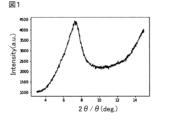
- Example 1 shows the XRD pattern of the material (TiCO) produced in Example 1.
- the pharmaceutical composition of the present disclosure contains a specific material (substance).
- the specific material that can be used in this embodiment is a material represented by the following formula (1).
- M is at least one element selected from the group consisting of groups 3, 4, 5, 6 and 7, and may include at least one element selected from the group consisting of so-called early transition metals, such as Sc, Ti, Zr, Hf, V, Nb, Ta, Cr, Mo and Mn, and preferably at least one element selected from the group consisting of Ti, V, Cr, Mo and Mn;
- Q is at least one element selected from the group consisting of Groups 12, 13, 14, 15 and 16 (excluding O), and may include, for example, at least one element selected from the group consisting of B, C, N, Si, P and S; a is 0 to 2, b is greater than 0 and less than or equal to 2;
- compositions of the present disclosure comprise nanofibers and/or nanoflakes of a material represented by MQ a O b and are useful for the treatment and/or prevention of various diseases by virtue of their ability to adsorb substances that may cause disease (disease-causing substances).
- MQO predetermined material
- MQO predetermined material
- examples of MQO include materials represented by formulas such as TiO2 , TiCO, TiCON, VO2 , VCO, VCON, CrO2 , CrCO, CrCON, MoO2 , MoCO, MoCON, MnO2 , MnCO, and MnCON.
- M may be Ti and Q may be C.
- a may not be 0.
- MQO may typically have a peak in an X-ray diffraction (XRD) pattern where the diffraction angle 2 ⁇ is in the range of 2° to 12°.
- XRD X-ray diffraction
- a c-axis oriented MQO film in the XRD analyzer (for example, as in the examples described below, a free-standing film obtained by removing the filter after suction filtration is placed with the surface that was in contact with the filter facing down).
- the crystal structure of MQO can be considered to be anatase type or lepidocrocite type, or a mixture of these at present.
- the crystal structure of MQO may be lepidocrocite type.
- MQO can be produced, for example, using a first raw material and a second raw material as follows.
- the first raw material contains at least the above-mentioned M
- the second raw material contains at least the above-mentioned Q
- the first raw material and the second raw material can react in a protic solvent to produce MQO.
- a material represented by the following formula (2) can be used as the first raw material.
- M c A 1 d ... (2) (wherein M is as defined above, A1 is at least one element selected from the group consisting of Groups 12, 13, 14, 15 and 16, and may include, for example, at least one element selected from the group consisting of B, C, N, O, Si, P and S; c and d are each independently 1 to 5.
- the material represented by formula (2) must be different from the product MQO.
- the material represented by formula (2) may typically have no peak in an X-ray diffraction (XRD) pattern in the range of a diffraction angle 2 ⁇ of 2° or more and 12° or less.
- XRD X-ray diffraction
- Examples of the first raw material represented by formula (2) include TiB2 , TiB, TiC, TiN , TiO2, Ti5Si3 , Ti2SbP , VO2 , V2O4 , NbC , Nb2O5 , MoO2 , MoO3 , MoS2 , MnO2 , Mn3O4 , MnCO3 , etc.
- a material represented by the following formula (3) (hereinafter also simply referred to as a "MAX phase” or a "MAX raw material”) may be used as the first raw material.
- M is as defined above, X is at least one element selected from the group consisting of C and N; n is 1 or more and 4 or less, m is greater than n and is less than or equal to 5; A2 is at least one element selected from the group consisting of Groups 12, 13, 14, 15 and 16, usually Group A elements, typically Groups IIIA and IVA, and more specifically may include at least one element selected from the group consisting of Al, Ga, In, Tl, Si, Ge, Sn, Pb, P, As, S and Cd, and is preferably Al.
- the MAX phase has a crystal structure in which a layer composed of A2 atoms is located between two layers represented by MmXn (each X may have a crystal lattice located in the octahedral array of M).
- MmXn layers a layer of A2 atoms
- A2 atomic layer is located as the layer next to the n+1th layer of M atoms.
- the MAX phase is not limited thereto.
- Examples of the first raw material represented by formula (3) include Ti 3 AlC 2 , Ti 3 GaC 2 , Ti 3 SiC 2 and the like.
- a material represented by formula (2) and a material represented by formula (3) may be used together (e.g., as a mixture).
- an ionically bondable substance having a carbon-containing group may be used as the second raw material.
- the ionically bondable substance having a carbon-containing group contains C.
- Examples of ionically bondable substances include ammonium salts, phosphates, sulfates, etc.
- a quaternary ammonium salt may be used as the second raw material.
- quaternary ammonium salts include tetramethylammonium hydroxide (TMAH), tetraethylammonium hydroxide (TEAH), tetrapropylammonium hydroxide (TPAH), tetrabutylammonium hydroxide (TBAH or TBAOH), benzyltrimethylammonium hydroxide, tetrabutylammonium fluoride (TBAF), tetrabutylammonium chloride (TBAC1), tetrabutylammonium bromide (TBAB), tetrabutylammonium iodide (TBAI), benzyltriethylammonium chloride (BTEAC), hexadecyltrimethylammonium bromide, cetyltrimethylammonium bromide (CTAB), benzethonium chloride, benzalkonium chloride
- the protic solvent may be any solvent capable of at least partially dissolving the first and second raw materials, and may in particular be an aqueous solvent.
- protic solvents include water, alcohols (e.g., ethanol, 2-propanol, 2-propanol, isopropanol), and carboxylic acids (e.g., acetic acid and formic acid).
- the aqueous solvent may be composed of water and, in some cases, a liquid substance compatible with water (e.g., a protic solvent other than water), and is preferably water.
- the first raw material and the second raw material are reacted in a protic solvent.
- the second raw material may be added to the protic solvent in advance.
- the ratio of the second raw material to the total of the protic solvent and the second raw material may be, for example, 5% by mass or more, particularly 20% by mass or more, and/or, for example, 80% by mass or less, particularly 50% by mass or less.
- the first raw material may be further added to the protic solvent to which the second raw material has been added, and mixed. In such a mixture, a reaction to produce MQO proceeds.
- the temperature (reaction temperature) of the mixture (which may contain a reaction product) may be, for example, 15° C. or more, particularly 40° C. or more, and/or, for example, 100° C.
- the mixing time may be, for example, 1 day or more, particularly 2 days or more, and/or, for example, 10 days or less, particularly 7 days or less.
- the mixing may be performed, for example, using a hot plate stirrer.
- the processing operations and conditions (temperature, time, etc.) that can cause the reaction to proceed are not limited to those described above and may be selected appropriately depending on the first raw material, the second raw material, the protic solvent, etc. used.
- MQO MQO
- the resulting MQO nanofibers may be in the form of nanoribbons extending in two dimensions.
- Multiple MQO nanofibers e.g., nanoribbons
- Multiple MQO nanoflakes may be stacked on top of each other (e.g., by van der Waals forces) to form a laminate. While the present disclosure is not bound by any theory, the production and growth of such MQO may be believed to be due to a bottom-up synthesis reaction (see, for example, Non-Patent Document 7).
- MQO is a solid content.
- MQO may typically be particles (or powder).
- the mixture after the reaction (also called the reaction mixture) may be subjected to post-treatment as appropriate.
- post-treatment include washing, impact (including shear force), drying (e.g. freeze-drying, heat drying), and pulverization.
- Washing may be carried out using a protic solvent.
- the protic solvent which may be washed, for example, with water or alcohol.
- a separation operation centrifugation and/or decantation
- the washing and separation operations may be repeated until the pH of the supernatant after centrifugation is, for example, 8 or less.
- washing may be performed using an aqueous solution of a metal salt.
- the metal salt may be, for example, a halide (fluoride, chloride, bromide, iodide) of an alkali metal (Li, Na, K, etc.), typically LiCl, NaCl, KCl, etc.
- washing may be performed using, for example, an aqueous metal salt solution of 1 to 10 molar concentration.
- a separation operation centrifugation and/or decantation
- washing and separation operations may be repeated as necessary until the pH of the supernatant after centrifugation is, for example, 8 or less.
- impact such as vibration and/or ultrasonic waves may be applied.
- MQO particles e.g., nanofibers/nanoflakes, the same below. If the MQO particles are aggregated, they can be broken down. This effect is particularly noticeable when impact is applied during washing with an aqueous solution of a metal salt (it is believed that metal cations derived from the metal salt penetrate into the gaps in the aggregates and break them down).
- the impact can be applied using one or more of, for example, a handshake, an automatic shaker, a mechanical shaker, a vortex mixer, a homogenizer, and an ultrasonic bath.
- a separation operation may be performed at any appropriate time to remove unnecessary liquid components, if any.
- a drying operation typically freeze-drying or thermal drying, may be performed. Freeze-drying may be performed, for example, by freezing a mixture containing MQO particles and liquid components at any appropriate temperature (e.g., -40°C) and then drying under reduced pressure. Thermal drying may be performed, for example, by drying a mixture containing MQO particles and liquid components at a temperature of 25°C or higher (e.g., 200°C or lower) under normal pressure or reduced pressure. Grinding may be performed using, but is not limited to, a mortar and pestle combination, an IKA mill, or the like. Grinding may be performed after drying.
- MQO is represented by formula (1), but the particles of MQO do not necessarily have to consist only of the constituent elements of formula (1).
- the particles of MQO may optionally have at least one type selected from the group consisting of hydroxyl groups, chlorine atoms, oxygen atoms, hydrogen atoms, and nitrogen atoms as a modification or terminal T present on the surface.
- the particles of MQO may also have two or more layers, and at least one type selected from the group consisting of ammonium ions (e.g., quaternary ammonium cations) and metal cations (e.g., alkali metal ions, alkaline earth metal ions) may be present between these layers.
- ammonium ions e.g., quaternary ammonium cations
- metal cations e.g., alkali metal ions, alkaline earth metal ions
- the BET specific surface area of the MQO particles is not particularly limited, and may be, for example, 10 m 2 /g or more and 500 m 2 /g or less.
- the BET specific surface area is calculated using the BET equation from an isothermal adsorption curve of nitrogen gas or other suitable gas (e.g., krypton (Kr) gas, etc.) at liquid nitrogen temperature (77 K) by an adsorption method using nitrogen gas or other suitable gas.
- nitrogen gas or other suitable gas e.g., krypton (Kr) gas, etc.
- the particle size of the MQO particles may be, for example, 0.01 nm or more, in particular 0.1 nm or more, or even 1 nm or more, and/or may be, for example, less than 1000 nm, in particular less than 100 nm, or even less than 50 nm. Such particles may also be referred to as nanoparticles.
- the particle morphology of the MQO may be at least one selected from the group consisting of nanofibers, nanoflakes, and nanoflake laminates. Nanoflakes and nanoflake laminates are included in the category of two-dimensional materials.
- Nanofibers may also be referred to as nanowires.
- a nanofiber is a solid object extending in the longitudinal direction, and the external dimensions in a cross section perpendicular to the longitudinal direction are on the nano order (i.e., 1 nm or more and less than 1000 nm) or smaller, sub-nanometer order (less than 1 nm, for example, 0.1 nm or more and less than 1 nm).
- the cross-sectional external dimensions of a nanofiber may be, for example, 0.1 nm or more, particularly 1 nm or more, and may be, for example, 100 nm or less, particularly 50 nm or less, and preferably 15 nm or less.
- Nanoflakes may also be referred to as nanosheets or two-dimensional (nano)sheets. Nanoflakes refer to solid objects having a two-dimensional surface and a relatively small thickness relative to the maximum dimension of the surface, the thickness being on the nano-order or even smaller, the sub-nanometer order.
- the thickness of one layer of nanoflakes may be, for example, 0.01 nm or more, particularly 0.8 nm or more, and for example 20 nm or less, particularly 3 nm or less.
- the maximum dimension in a plane parallel to the layer of nanoflakes may be, for example, 0.1 ⁇ m or more, particularly 1 ⁇ m or more, and for example 200 ⁇ m or less, particularly 40 ⁇ m or less.
- Nanoflakes may be formed by an assembly of nanofibers.
- the stack of nanoflakes may also be referred to as a multi-layer MQO.
- the distance (interlayer distance or gap size) between two adjacent nanoflakes (or two adjacent layers of MQO) is not particularly limited.
- the above-mentioned dimensions can be determined as number-average dimensions (number-average of at least 40) based on photographs observed with a scanning electron microscope (SEM), a transmission electron microscope (TEM) or an atomic force microscope (AFM) (after processing using a method such as focused ion beam (FIB) if necessary), or as distances in real space calculated from the position in reciprocal space of the (002) plane measured by X-ray diffraction (XRD).
- SEM scanning electron microscope
- TEM transmission electron microscope
- AFM atomic force microscope
- FIB focused ion beam
- the MQO is not limited to the above forms and may have any suitable form.
- the pharmaceutical composition of the present disclosure may contain unreacted first and/or second raw materials as impurities, and may also contain substances derived from the first and second raw materials and/or protic solvents.
- N may be present (residual) in any form in the particles of MQO.
- the particles of MQO may contain a relatively small amount of residual A atoms, for example, 10% by mass or less of the original A atoms.
- the amount of residual A atoms may be preferably 8% by mass or less, more preferably 6% by mass or less. However, even if the amount of residual A atoms exceeds 10% by mass, there may be cases where there is no problem depending on the conditions of use, etc.
- Such a supernatant can be used as is, appropriately diluted with a liquid medium, or mixed with a liquid medium after drying to form a slurry containing MQO particles.
- the intermediates and the target product in the manufacturing method described above may be isolated by a commonly used purification method.
- purification methods include suction filtration; drying such as heat drying, freeze drying, and vacuum drying.
- MQO e.g., MQO particles
- a pharmaceutical composition containing MQO can be used to adsorb disease-causing substances in vivo.
- the disease-causing substances may include electrolytes, and more specifically, at least one selected from the group consisting of Na and K.
- the disease-causing substances may include uremic substances with a molecular weight of 100 or more, and more specifically, ⁇ 2-microglobulin, etc.
- disease-causing substances include parathyroid hormone, uremic proteins (specifically, medium-molecular-weight uremic substances) such as the aforementioned ⁇ 2-microglobulin, and other proteins such as albumin and M protein.
- disease-causing substances may include cytokines such as interleukins, interferons, chemokines, hematopoietic factors, cell growth factors, and tumor necrosis factors (in one embodiment, inflammatory cytokines such as interleukin-18, interleukin-6 (IL-6), interferon- ⁇ (INF- ⁇ ), and tumor necrosis factor (TNF- ⁇ )).
- cytokines such as interleukins, interferons, chemokines, hematopoietic factors, cell growth factors, and tumor necrosis factors
- inflammatory cytokines such as interleukin-18, interleukin-6 (IL-6), interferon- ⁇ (INF- ⁇ ), and tumor necrosis factor (TNF- ⁇ )).
- the above-mentioned inflammatory cytokines can cause various inflammatory symptoms in the body, and adsorbing these is expected to have an inflammation-preventing effect.
- Disease-causing substances may include enzymes such as ⁇ -amylase, whose blood levels increase due to decreased renal function.
- a pharmaceutical composition containing MQO is useful for treating or preventing a disease.
- diseases include symptoms associated with renal diseases (which may also be referred to as kidney disease or renal dysfunction) such as acute kidney disease (including acute renal failure) and chronic kidney disease (including chronic renal failure and end-stage renal failure), particularly symptoms associated with renal failure.
- a method for treating or preventing symptoms associated with renal disease can be carried out, which includes administering an effective amount of MQO to a subject.
- Specific examples of symptoms associated with renal disease include electrolyte metabolism disorders such as hypernatremia and/or hyperkalemia.
- an adsorption method can be carried out that includes administering an effective amount of MQO to a subject and adsorbing disease-causing substances in the body.
- an adsorption method includes administering an effective amount of MQO to a subject and adsorbing disease-causing substances in the body.
- the ability to reduce disease-causing substances in the blood will lead to a reduction in the treatment required for dialysis therapy and a reduction in the burden on organs such as the kidneys.
- the pharmaceutical composition of this embodiment can be in various dosage forms depending on the method of use.
- dosage forms include powders, granules, fine granules, dry syrups, tablets, capsules, liquids, sublingual preparations, etc., as well as injections, ointments, suppositories, patches, etc.
- the pharmaceutical composition according to this embodiment can be prepared as a pharmaceutical composition further containing MQO as an active ingredient and pharmacologically acceptable additives by known methods according to the dosage form.
- additives can include excipients, disintegrants, binders, lubricants, diluents, buffers, isotonicity agents, preservatives, wetting agents, emulsifiers, dispersants, stabilizers, solubilizers, etc.
- the pharmaceutical composition of the present disclosure can be prepared by appropriately mixing MQO with the additives, or diluting and dissolving MQO with the additives.
- the pharmaceutical composition of this embodiment can be administered systemically or locally, orally or parenterally (intranasally, pulmonary, intravenously, rectally, subcutaneously, intramuscularly, transdermally). In one aspect, the pharmaceutical composition of this embodiment can be administered orally.
- the dosage of its active ingredient, MQO is appropriately determined depending on the patient's age, sex, weight, disease, and degree of treatment.
- the effective dosage is approximately 100 mg to 10 g per body per day for an adult (body weight 60 kg), and may be administered once or in divided doses as appropriate.
- compositions containing MQO can be used to manufacture medicines for treating or preventing diseases.
- the present disclosure includes the following.
- MQ a O b (wherein M is at least one element selected from the group consisting of Groups 3, 4, 5, 6, and 7; Q is at least one element selected from the group consisting of Groups 12, 13, 14, 15, and 16 (excluding O); a is 0 to 2, b is greater than 0 and less than or equal to 2; 23.
- a pharmaceutical composition comprising nanofibers and/or nanoflakes of a material represented by formula (I).
- [3] The pharmaceutical composition according to [1] or [2], wherein M is Ti, Q is C, and a is not 0.
- [4] The pharmaceutical composition according to any one of [1] to [3], which is used for adsorbing disease-causing substances in a living body.
- the disease-causing substance comprises a uremic substance having a molecular weight of 100 or more.
- the pharmaceutical composition described in [5], wherein the uremic substance having a molecular weight of 100 or more includes ⁇ 2-microglobulin.
- the pharmaceutical composition according to any one of [4] to [6], wherein the disease-causing substance comprises an electrolyte.
- Example 1 [Preparation of TiCO] First, 10 g of titanium carbide (TiC, manufactured by Kojundo Chemical Laboratory Co., Ltd.) and 30 mL of 25% by mass tetramethylammonium hydroxide (TMAH) aqueous solution (manufactured by Tokyo Chemical Industry Co., Ltd.) were placed in a container (100 mL Eyeboy). A stirrer tip with a length of approximately the same size (35 mm) as the inner diameter of the circular bottom of the container was placed therein. While the container was kept at 50 ° C. in a water bath, the mixture in the container was stirred with the stirrer tip and maintained for 120 hours, thereby allowing the reaction to proceed.
- TiC titanium carbide
- TMAH tetramethylammonium hydroxide
- reaction mixture in the container was transferred to a 50 mL centrifuge tube with a stainless steel spatula (without adding a liquid medium such as ethanol or water).
- the solid content was precipitated by centrifuging at 3500 G and 5 minutes using a centrifuge.
- the supernatant was discarded,
- 40 mL of ethanol manufactured by Fujifilm Wako Pure Chemical Industries, Ltd. was added to the remaining precipitate in the centrifuge tube, and the handshake was performed for 5 minutes (reslurry), and
- centriii) centrifugation was performed under the same conditions as above.
- the steps (i) to (iii) were repeated until the pH of the supernatant was 8 or less.
- the pH of the supernatant was 8 or less, so the supernatant was discarded and the repetition was terminated.
- 40 mL of pure water was added to the remaining sediment in the centrifuge tube, and the mixture was shaken and stirred for 15 minutes using an automatic shaker. Then, the mixture was centrifuged at 3500 G for 30 minutes using a centrifuge, and the supernatant was collected as a sample slurry.
- the obtained sample slurry corresponds to a slurry containing TiCO (which may have the form of nanofibers and/or nanoflakes) (see the analysis results below).
- the sample slurry prepared above was suction filtered overnight using a Nutsche filter.
- a membrane filter (Durapore, pore size 0.45 ⁇ m, manufactured by Merck Ltd.) was used as the suction filtration filter.
- the precursor film on the filter was dried overnight at 80° C. in a vacuum oven, and the filter was removed to obtain a free-standing film.
- the free-standing film thus obtained was analyzed by X-ray photoelectron spectroscopy (XPS), and the obtained XPS spectrum showed peaks corresponding to Ti 2p, C 1s, O 1s, and N 1s, and thus Ti, C, O, and N were detected.
- XPS X-ray photoelectron spectroscopy
- N is considered to be a residual component of the raw material TMAH
- the material of the free-standing film is considered to be composed of Ti, C, and O.
- Example 2 [Preparation of TiCO] First, 1.16 g of titanium boride (TiB 2 , manufactured by Kojundo Chemical Laboratory Co., Ltd.) and 30 mL of 25% by mass tetramethylammonium hydroxide (TMAH) aqueous solution (manufactured by Tokyo Chemical Industry Co., Ltd.) were placed in a container (100 mL Eyeboy). A stirrer tip with a length of approximately the same size (35 mm) as the inner diameter of the circular bottom of the container was placed therein. While the container was kept at 50° C. in a water bath, the mixture in the container was stirred with the stirrer tip and maintained for 72 hours, thereby allowing the reaction to proceed.
- TiB 2 titanium boride
- TMAH tetramethylammonium hydroxide
- the reaction mixture in the container was transferred to a 50 mL centrifuge tube with a stainless steel spatula (without adding a liquid medium such as ethanol or water). Centrifugation was performed at 3500 G and 5 minutes using a centrifuge to settle the solid content. (i) After centrifugation, the supernatant was discarded, (ii) 40 mL of ethanol (manufactured by Fujifilm Wako Pure Chemical Industries Co., Ltd.) was added to the remaining sediment in the centrifuge tube, and handshake was performed for 5 minutes (reslurry), and (iii) centrifugation was performed under the same conditions as above. The steps (i) to (iii) were repeated until the pH of the supernatant was 8 or less.
- the pH of the supernatant was 8 or less, so the supernatant was discarded and the repetition was terminated.
- 40 mL of pure water was added to the remaining sediment in the centrifuge tube, and the mixture was shaken and stirred for 15 minutes using an automatic shaker. Then, the mixture was centrifuged at 3500 G for 30 minutes using a centrifuge, and the supernatant was collected as a sample slurry.
- Example 3 [Preparation of TiCO] First, 10 g of titanium carbide (TiC, manufactured by Kojundo Chemical Laboratory Co., Ltd.) and 30 mL of 25% by mass tetramethylammonium hydroxide (TMAH) aqueous solution (manufactured by Tokyo Chemical Industry Co., Ltd.) were placed in a container (100 mL Eyeboy). A stirrer tip with a length of approximately the same size (35 mm) as the inner diameter of the circular bottom of the container was placed therein. While the container was kept at 50 ° C. in a water bath, the mixture in the container was stirred with the stirrer tip and maintained for 24 hours, thereby allowing the reaction to proceed.
- TiC titanium carbide
- TMAH tetramethylammonium hydroxide
- reaction mixture in the container was transferred to a 50 mL centrifuge tube with a stainless steel spatula (without adding a liquid medium such as ethanol or water).
- the solid content was precipitated by centrifuging at 3500 G and 5 minutes using a centrifuge.
- the supernatant was discarded,
- 40 mL of ethanol manufactured by Fujifilm Wako Pure Chemical Industries, Ltd. was added to the remaining precipitate in the centrifuge tube, and the handshake was performed for 5 minutes (reslurry), and
- centriii) centrifugation was performed under the same conditions as above.
- the steps (i) to (iii) were repeated until the pH of the supernatant was 8 or less.
- the pH of the supernatant was 8 or less, so the supernatant was discarded and the repetition was terminated.
- 40 mL of pure water was added to the remaining sediment in the centrifuge tube, and the mixture was shaken and stirred for 15 minutes using an automatic shaker. Then, the mixture was centrifuged at 3500 G for 30 minutes using a centrifuge, and the supernatant was collected as a sample slurry.
- Comparative Example 2 An adsorption-type blood purifier ("RIXEL", manufactured by Kaneka Corporation) was disassembled, and the adsorbent taken out was subjected to adsorption evaluation.
- RIXEL adsorption-type blood purifier
- Comparative Example 3 Medicinal charcoal (manufactured by Nichi-Iko Pharmaceutical Co., Ltd.) was used for adsorption evaluation.
- TITEC BR-43FM thermostatic shaker
- Component analysis was performed for Na, P, K, ⁇ 2-microglobulin, interleukin-18 (IL-18), ⁇ -amylase, and albumin. Measurements of Na and K were performed by the electrode method; measurements of P and ⁇ -amylase were performed by the enzymatic method; measurements of ⁇ 2-microglobulin were performed by the latex agglutination method; measurements of interleukin-18 were performed by the EIA method; and measurements of albumin were performed by the colorimetric method (BGC method).
- Example 1 The dry powders of Examples 1 to 3 were confirmed to have the ability to adsorb disease-causing substances, particularly Na and K (electrolytes) and ⁇ 2-microglobulin (a uremic substance). Therefore, a pharmaceutical composition containing MQO (TiCO in Example 1) may be useful in treating diseases.
- adsorb disease-causing substances particularly Na and K (electrolytes) and ⁇ 2-microglobulin (a uremic substance). Therefore, a pharmaceutical composition containing MQO (TiCO in Example 1) may be useful in treating diseases.
- cytokine reagents 10 ng of interferon- ⁇ (INF- ⁇ ) (manufactured by FUJIFILM Wako Pure Chemical Industries, Ltd.), 10 ng of interleukin-1 ⁇ (IL-1 ⁇ ) (manufactured by FUJIFILM Wako Pure Chemical Industries, Ltd.), 10 ng of interleukin-6 (IL-6) (manufactured by FUJIFILM Wako Pure Chemical Industries, Ltd.), 10 ng of tumor necrosis factor (TNF- ⁇ ) (manufactured by FUJIFILM Wako Pure Chemical Industries, Ltd.), 0.5 mg of adsorbent (dried powder of Example 2), and 20 mL of pure water were added to a 50 mL centrifuge tube, and the mixture was shaken and stirred for 15 minutes using a thermostatic shaker (TAITEC BR-43FM) set at 37° C. Then, the
- the absorbance of INF- ⁇ , IL-1 ⁇ , IL-6, and TNF- ⁇ was measured using the ELISA method (sandwich method), and the amount of cytokine adsorption (cytokine + adsorbent concentration) was calculated using a previously determined calibration curve of absorbance and cytokine adsorption amount.
- MQO exhibits the ability to adsorb INF- ⁇ , IL-6, and TNF- ⁇ .
- no ability to adsorb IL-1 ⁇ was observed. From these findings, it can be said that MQO also has the effect of adsorbing the cytokines INF- ⁇ , IL-6, and TNF- ⁇ , and that pharmaceutical compositions containing MQO may be useful in the treatment of diseases.
- composition of the present disclosure can be used for a wide variety of purposes, including, but not limited to, adsorption of disease-causing substances in vivo.
Landscapes
- Health & Medical Sciences (AREA)
- Public Health (AREA)
- Chemical & Material Sciences (AREA)
- Veterinary Medicine (AREA)
- Medicinal Chemistry (AREA)
- Pharmacology & Pharmacy (AREA)
- Life Sciences & Earth Sciences (AREA)
- Animal Behavior & Ethology (AREA)
- General Health & Medical Sciences (AREA)
- Epidemiology (AREA)
- Inorganic Chemistry (AREA)
- Engineering & Computer Science (AREA)
- Bioinformatics & Cheminformatics (AREA)
- Chemical Kinetics & Catalysis (AREA)
- General Chemical & Material Sciences (AREA)
- Nuclear Medicine, Radiotherapy & Molecular Imaging (AREA)
- Organic Chemistry (AREA)
- Urology & Nephrology (AREA)
- Diabetes (AREA)
- Hematology (AREA)
- Pharmaceuticals Containing Other Organic And Inorganic Compounds (AREA)
Priority Applications (2)
| Application Number | Priority Date | Filing Date | Title |
|---|---|---|---|
| JP2024557309A JPWO2024101159A1 (https=) | 2022-11-08 | 2023-10-25 | |
| US19/198,642 US20250262240A1 (en) | 2022-11-08 | 2025-05-05 | Pharmaceutical compositions and related methods |
Applications Claiming Priority (2)
| Application Number | Priority Date | Filing Date | Title |
|---|---|---|---|
| US202263423608P | 2022-11-08 | 2022-11-08 | |
| US63/423,608 | 2022-11-08 |
Related Child Applications (1)
| Application Number | Title | Priority Date | Filing Date |
|---|---|---|---|
| US19/198,642 Continuation US20250262240A1 (en) | 2022-11-08 | 2025-05-05 | Pharmaceutical compositions and related methods |
Publications (1)
| Publication Number | Publication Date |
|---|---|
| WO2024101159A1 true WO2024101159A1 (ja) | 2024-05-16 |
Family
ID=91032613
Family Applications (1)
| Application Number | Title | Priority Date | Filing Date |
|---|---|---|---|
| PCT/JP2023/038555 Ceased WO2024101159A1 (ja) | 2022-11-08 | 2023-10-25 | 医薬組成物、吸着方法、治療方法および予防方法 |
Country Status (3)
| Country | Link |
|---|---|
| US (1) | US20250262240A1 (https=) |
| JP (1) | JPWO2024101159A1 (https=) |
| WO (1) | WO2024101159A1 (https=) |
Cited By (1)
| Publication number | Priority date | Publication date | Assignee | Title |
|---|---|---|---|---|
| EP4491187A4 (en) * | 2022-04-21 | 2026-03-18 | Murata Manufacturing Co | Pharmaceutical composition, adsorption method, treatment method, and prevention method |
Citations (3)
| Publication number | Priority date | Publication date | Assignee | Title |
|---|---|---|---|---|
| WO2008005055A2 (en) * | 2005-12-29 | 2008-01-10 | The Board Of Trustees Of The University Of Illinois | Nanoparticles containing titanium oxide |
| CN109133162A (zh) * | 2018-07-30 | 2019-01-04 | 大连理工大学 | 一种大比表面超薄二维氧化钛纳米片材料及制备方法 |
| CN114917247A (zh) * | 2022-05-18 | 2022-08-19 | 广东省疾病预防控制中心 | 纳米二氧化钛在防治肾损伤中的应用 |
-
2023
- 2023-10-25 JP JP2024557309A patent/JPWO2024101159A1/ja active Pending
- 2023-10-25 WO PCT/JP2023/038555 patent/WO2024101159A1/ja not_active Ceased
-
2025
- 2025-05-05 US US19/198,642 patent/US20250262240A1/en active Pending
Patent Citations (3)
| Publication number | Priority date | Publication date | Assignee | Title |
|---|---|---|---|---|
| WO2008005055A2 (en) * | 2005-12-29 | 2008-01-10 | The Board Of Trustees Of The University Of Illinois | Nanoparticles containing titanium oxide |
| CN109133162A (zh) * | 2018-07-30 | 2019-01-04 | 大连理工大学 | 一种大比表面超薄二维氧化钛纳米片材料及制备方法 |
| CN114917247A (zh) * | 2022-05-18 | 2022-08-19 | 广东省疾病预防控制中心 | 纳米二氧化钛在防治肾损伤中的应用 |
Non-Patent Citations (3)
| Title |
|---|
| ROSENKRANZ ANDREAS, PERINI GIORDANO; AGUILAR-HURTADO JOSE Y.; ZAMBRANO DARIO F.; WANG BO; NICCOLINI BENEDETTA; HENRIQUES PATRICIA : "Laser-Mediated antibacterial effects of Few- and Multi-Layer Ti3C2Tx MXenes", APPLIED SURFACE SCIENCE, ELSEVIER, AMSTERDAM , NL, vol. 567, 1 November 2021 (2021-11-01), Amsterdam , NL , pages 150795, XP093171816, ISSN: 0169-4332, DOI: 10.1016/j.apsusc.2021.150795 * |
| SHAO GUOZHENG, TANG HAO; REN SHEN; CREASON SHARON A.; FAISAL SYED; GALPERIN ANNA; ALISEDA ALBERTO; GAO DAYONG; RATNER BUDDY; HINDS: "Dialysate regeneration via urea photodecomposition with TiO2 nanowires at therapeutic rates", ARTIFICIAL ORGANS, BLACKWELL SCIENTIFIC PUBLICATIONS, INC., BOSTON, US, vol. 47, no. 7, 1 July 2023 (2023-07-01), US , pages 1174 - 1183, XP093171814, ISSN: 0160-564X, DOI: 10.1111/aor.14514 * |
| VERNEKAR AMIT A, SINHA DEVANJAN; SRIVASTAVA SHUBHI; PARAMASIVAM PRASATH U.; D’SILVA PATRICK; MUGESH GOVINDASAMY: "An antioxidant nanozyme that uncovers the cytoprotective potential of vanadia nanowires", NATURE COMMUNICATIONS, NATURE PUBLISHING GROUP, UK, vol. 5, no. 1, UK, XP093171819, ISSN: 2041-1723, DOI: 10.1038/ncomms6301 * |
Cited By (1)
| Publication number | Priority date | Publication date | Assignee | Title |
|---|---|---|---|---|
| EP4491187A4 (en) * | 2022-04-21 | 2026-03-18 | Murata Manufacturing Co | Pharmaceutical composition, adsorption method, treatment method, and prevention method |
Also Published As
| Publication number | Publication date |
|---|---|
| US20250262240A1 (en) | 2025-08-21 |
| JPWO2024101159A1 (https=) | 2024-05-16 |
Similar Documents
| Publication | Publication Date | Title |
|---|---|---|
| US20250041331A1 (en) | Pharmaceutical composition, adsorption method, treatment method, and prevention method | |
| JP5781164B2 (ja) | 経口投与用吸着剤 | |
| US4822765A (en) | Process for treating activated carbon with aqueous ammonia | |
| US11951125B2 (en) | Drug and production method therefor | |
| US20250262240A1 (en) | Pharmaceutical compositions and related methods | |
| KR101856048B1 (ko) | 의약용 흡착제 및 그 제조방법 | |
| JP2004244414A (ja) | 医薬用吸着剤及びその製法 | |
| KR20050042262A (ko) | 경구투여용 흡착제, 신질환 치료 또는 예방제 및 간질환치료 또는 예방제 | |
| US20230347290A1 (en) | Adsorbent, method for manufacturing the same, adsorption sheet, artificial dialysis membrane, and artificial dialyzer | |
| CN101466388A (zh) | 抗微生物碳 | |
| EP2601955A1 (en) | Adsorbent for oral administration, method for producing same, and drug using same | |
| US20050152890A1 (en) | Adsorbent for oral administration | |
| TWI341732B (en) | Adsorbent for oral administration,agent for treating or preventing renal disease, and | |
| CN103946019A (zh) | 铁-纤维组合物、其制备和用途 | |
| CN101028252A (zh) | 一种注射用乙酰半胱氨酸粉针药物组合物及其制备方法 | |
| WO2023203791A1 (ja) | 医薬組成物、吸着方法、治療方法および予防方法 | |
| WO2024135617A1 (ja) | 水素吸着材および水素吸着装置 | |
| US20250213607A1 (en) | Pharmaceutical compositions for improving intestinal bacterial flora and related treatment methods | |
| JP3989525B1 (ja) | リン障害予防改善治療剤及びその製造方法 | |
| TWI382842B (zh) | 快速製備磷結合劑的方法及含磷結合劑的醫藥組合物 | |
| CN1411739A (zh) | 魔芋葡甘聚糖降解物与银杏叶提取物保健食品及制备方法 | |
| JP4177868B2 (ja) | 飲食品中のリン酸イオンを吸着するための飲食品付加剤又は飲食品補助剤及びその製造方法 | |
| WO2024237307A1 (ja) | メタン吸着材およびメタン吸着装置 | |
| CN1264501C (zh) | 砒霜纳米粒的制备工艺 | |
| HK1262654B (zh) | 金属离子-功能性纤维组分络合物组合物、其制备及用途 |
Legal Events
| Date | Code | Title | Description |
|---|---|---|---|
| 121 | Ep: the epo has been informed by wipo that ep was designated in this application |
Ref document number: 23888507 Country of ref document: EP Kind code of ref document: A1 |
|
| WWE | Wipo information: entry into national phase |
Ref document number: 2024557309 Country of ref document: JP |
|
| NENP | Non-entry into the national phase |
Ref country code: DE |
|
| 122 | Ep: pct application non-entry in european phase |
Ref document number: 23888507 Country of ref document: EP Kind code of ref document: A1 |