WO2024100893A1 - モデル生成装置及びモデル生成方法並びにモデル生成プログラム - Google Patents
モデル生成装置及びモデル生成方法並びにモデル生成プログラム Download PDFInfo
- Publication number
- WO2024100893A1 WO2024100893A1 PCT/JP2022/042108 JP2022042108W WO2024100893A1 WO 2024100893 A1 WO2024100893 A1 WO 2024100893A1 JP 2022042108 W JP2022042108 W JP 2022042108W WO 2024100893 A1 WO2024100893 A1 WO 2024100893A1
- Authority
- WO
- WIPO (PCT)
- Prior art keywords
- unit
- communication quality
- physical space
- model
- space information
- Prior art date
- Legal status (The legal status is an assumption and is not a legal conclusion. Google has not performed a legal analysis and makes no representation as to the accuracy of the status listed.)
- Ceased
Links
Images


Classifications
-
- H—ELECTRICITY
- H04—ELECTRIC COMMUNICATION TECHNIQUE
- H04W—WIRELESS COMMUNICATION NETWORKS
- H04W24/00—Supervisory, monitoring or testing arrangements
- H04W24/06—Testing, supervising or monitoring using simulated traffic
-
- G—PHYSICS
- G06—COMPUTING OR CALCULATING; COUNTING
- G06N—COMPUTING ARRANGEMENTS BASED ON SPECIFIC COMPUTATIONAL MODELS
- G06N20/00—Machine learning
-
- G—PHYSICS
- G06—COMPUTING OR CALCULATING; COUNTING
- G06N—COMPUTING ARRANGEMENTS BASED ON SPECIFIC COMPUTATIONAL MODELS
- G06N3/00—Computing arrangements based on biological models
- G06N3/02—Neural networks
- G06N3/08—Learning methods
-
- G—PHYSICS
- G06—COMPUTING OR CALCULATING; COUNTING
- G06N—COMPUTING ARRANGEMENTS BASED ON SPECIFIC COMPUTATIONAL MODELS
- G06N3/00—Computing arrangements based on biological models
- G06N3/02—Neural networks
- G06N3/08—Learning methods
- G06N3/09—Supervised learning
-
- H—ELECTRICITY
- H04—ELECTRIC COMMUNICATION TECHNIQUE
- H04W—WIRELESS COMMUNICATION NETWORKS
- H04W16/00—Network planning, e.g. coverage or traffic planning tools; Network deployment, e.g. resource partitioning or cells structures
- H04W16/18—Network planning tools
Definitions
- This disclosure relates to a model generation device, a model generation method, and a model generation program.
- the communication quality changes according to changes in the environment, such as the movement of objects in the vicinity. Due to changes in the environment, it may become impossible to meet the service provided by the communication device or the communication quality required by the system.
- fifth-generation communications such as "IEEE802.11ad” and cellular communications use high frequencies in the millimeter range, so blocking caused by obstacles between the transmitter and receiver in wireless communications has a significant impact on communication quality.
- Non-Patent Documents 1 and 2 disclose a method of predicting communication quality when the wireless communication channel of millimeter wave communication is interrupted by the passage of an object, using physical space information obtained from a depth camera.
- Non-Patent Documents 1 and 2 when generating a model of wireless communication quality, people participate in experiments to collect the data required for predicting wireless communication quality. For example, data is collected by people walking while holding a communication terminal, walking while wearing a VR device, etc., which poses the problem of requiring a lot of manual labor.
- the present disclosure has been made in consideration of the above circumstances, and its purpose is to provide a model generation device, a model generation method, and a model generation program that are capable of collecting data and generating a predictive model with reduced manual effort.
- a model generation device includes a moving unit, an information acquisition unit that acquires physical space information around the moving unit, a communication quality acquisition unit that acquires communication quality of the moving unit or a communication terminal installed around the moving unit, a generation unit that performs machine learning based on the communication quality and the physical space information to generate a prediction model that associates the physical space information with communication quality, an evaluation unit that evaluates the prediction result based on the prediction result of the prediction model and an actual measurement value of the communication quality, and a designation unit that designates the movement conditions of the moving unit based on the evaluation result by the evaluation unit.
- a model generation method includes acquiring physical space information around a moving unit, acquiring communication quality of the moving unit or a communication terminal installed around the moving unit, performing machine learning based on the communication quality and the physical space information, generating a prediction model that associates the physical space information with communication quality, evaluating the prediction result based on the prediction result of the prediction model and an actual measurement value of the communication quality, and specifying the movement conditions of the moving unit based on the evaluation result.
- One aspect of the present disclosure is a model generation program for causing a computer to function as the model generation device.
- This disclosure makes it possible to collect data and generate predictive models with less manual effort.
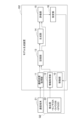
- FIG. 1 is a block diagram showing the configuration of a model generating device according to an embodiment and its peripheral devices.
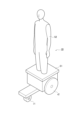
- FIG. 2 is a perspective view showing the configuration of the moving unit.
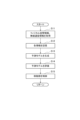
- FIG. 3 is a flowchart showing a processing procedure for generating a prediction model by the model generation device according to the embodiment.
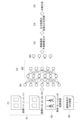
- FIG. 4 is a flow diagram showing a flow of generating a prediction model for predicting communication quality based on physical space information of the moving unit and communication quality of the communication terminal.
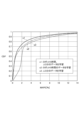
- FIG. 5 is a graph showing the estimation results when a test was conducted using a prediction model trained using five hours' worth of robot data and five minutes' worth of human data.
- FIG. 6 is a graph showing estimated values and actual measured values of throughput estimated using 19 hours' worth of robot data and 5 minutes' worth of human data.
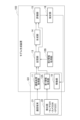
- FIG. 7 is a block diagram showing the configuration of a model generating device according to a first modified example and its peripheral devices.
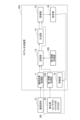
- FIG. 8 is a block diagram showing the configuration of a model generating device according to the second modified example and its peripheral devices.
- FIG. 9 is a block diagram showing the configuration of a model generating device according to the third modified example and its peripheral devices.
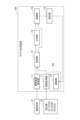
- FIG. 10 is a block diagram showing the configuration of a model generating device according to the fourth modified example and its peripheral devices.
- FIG. 11 is a block diagram showing the hardware configuration of this embodiment.
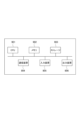
- Fig. 1 is a block diagram showing the configuration of a model generation device according to an embodiment and its peripheral devices.
- a model generation device 101 includes a moving unit 10, a communication quality acquisition unit 11, an information acquisition unit 12, a storage unit 13, a generation unit 14, an evaluation unit 15, and a designation unit 16.
- the moving unit 10 is capable of moving on the floor surface, and moves on the floor surface along a travel route input by the user or a travel route specified by the specification unit 16 (details of which will be described later).
- the moving unit 10 is equipped with a cart 51 equipped with wheels r1 and r2 and capable of moving on the road, and a robot 52 installed on the upper surface of the cart 51.
- the robot 52 is designed to simulate a human being.
- the relative dielectric constant and electrical conductivity of the robot 52 are designed to be close to those of the human body.
- the moving unit 10 is equipped with a communication terminal 21 and a detection unit 22, which will be described later.
- the robot 52's right hand, left hand, head, and torso can move in a way that mimics the movements of a human. For example, it can hold a communication terminal 21 in its right hand.
- the moving unit 10 may have other configurations as long as it has a configuration capable of reproducing a scenario to be predicted other than the robot 52. Scenarios to be predicted include walking scenes, scenes in which goggles are worn and VR (Virtual Reality) is used, etc.
- the moving unit 10 may be configured without the cart 51 if it can be used in place of a human body. In addition, it does not have to be a combination of the cart 51 and the robot 52, and it may be configured to collect data in place of a human, such as by preparing a bipedal human body model and having it walk on its own.
- the communication terminal 21 shown in FIG. 1 is, for example, a smartphone, a tablet terminal, or a PC (personal computer), and is capable of voice calls, data communications, etc.
- the detection unit 22 detects physical space information of the robot 52.
- the physical space information includes information on the positions, speed, and acceleration of parts of the robot 52 (hands, shoulders, head, etc.).
- the physical space information includes information on obstacles and moving objects that exist around the moving unit 10.
- the detection unit 22 includes at least one of a sensor 22A, a camera 22B, and a GPS receiver 22C.
- the sensor 22A detects the position, speed, acceleration, and combinations of these of parts of the robot 52.
- Sensor 22A is, for example, a three-dimensional position sensor, a speed sensor, and an acceleration sensor. Sensor 22A detects the position, speed, and acceleration of parts of robot 52.
- Camera 22B captures images of robot 52 and analyzes the captured images to detect the positions, speed, and acceleration of parts of robot 52. Camera 22B captures images of the surroundings of robot 52 and analyzes the captured images to detect stationary objects and moving objects present around robot 52.
- the GPS receiver 22C acquires GPS information for the communication terminal 21 by communicating with GPS satellites.
- the communication quality acquisition unit 11 is connected to the communication terminal 21 wirelessly or by wire.
- the communication quality acquisition unit 11 may be integrated with the communication terminal 21.
- the communication quality acquisition unit 11 acquires the communication quality when the communication terminal 21 communicates with an external device via a network.
- the communication quality is, for example, bandwidth throughput, RSSI (Received Signal Strength Indicator) indicating the received signal strength of radio waves, RSRP (Reference Signal Received Power) indicating the radio wave strength of a base station, RSRQ (Reference Signal Received Quality) indicating the received strength of radio waves, and SINR (Signal to Interference and Noise) indicating the reception quality of a signal.
- RSSI Receiveived Signal Strength Indicator
- RSRP Reference Signal Received Power
- RSRQ Reference Signal Received Quality
- SINR Signal to Interference and Noise
- the information acquisition unit 12 acquires physical space information of the moving unit 10 detected by the detection unit 22.
- the information acquisition unit 12 classifies the physical space information into categories, creates a database to be input to a model of a prediction model for predicting wireless communication quality, and utilizes the information as learning data for the prediction model for predicting wireless communication quality.
- the categories include a bounding box 61 shown in C1 of FIG. 4, which will be described later, skeleton coordinate information 62, and GPS information of the communication terminal 21. Note that the components shown within the frame marked with symbol Q1 in FIG. 1 are mounted on the moving unit 10 and move together with the moving unit 10.
- the storage unit 13 includes a storage medium such as a hard disk, and stores the communication quality acquired by the communication quality acquisition unit 11 and the physical space information acquired by the information acquisition unit 12.
- the generation unit 14 performs machine learning based on the communication quality and physical space information stored in the storage unit 13 to generate a prediction model that uses physical space information as input and communication quality as output. That is, the generation unit 14 performs machine learning based on the communication quality and physical space information to associate the physical space information with communication quality.
- the evaluation unit 15 compares the prediction results of the prediction model generated by the generation unit 14 with the communication quality and physical space information stored in the storage unit 13 to evaluate the accuracy of the prediction model. That is, the evaluation unit 15 evaluates the prediction results based on the prediction results of the prediction model and the actual measured values of the communication quality.
- the designation unit 16 designates the movement conditions of the movement unit 10 based on the evaluation result by the evaluation unit 15. Based on the evaluation result by the evaluation unit 15 of the prediction model generated by the generation unit 14, the designation unit 16 outputs an instruction to the movement unit 10 to focus on moving areas where the evaluation of the prediction model is lower than a predetermined value.
- the designation unit 16 designates at least one of an area where the user of the communication terminal 21 can operate and an area where the frequency of operation of the user is higher than a predetermined value as the movement route along which the movement unit 10 moves.
- Fig. 3 is a flowchart showing the processing procedure for generating a prediction model of communication quality
- Fig. 4 is a flow diagram showing the flow for generating a prediction model of communication quality using physical space information of the moving unit 10 and the communication quality of the communication terminal 21 as input.
- the communication quality acquisition unit 11 acquires the communication quality when the communication terminal 21 is communicating with an external device via a network. Furthermore, the information acquisition unit 12 acquires physical space information of the moving unit 10.
- the position, speed, and acceleration of parts of the robot 52 are detected from the coordinates of the image within the bounding box and changes in the coordinates.
- position information of the hands, head, and torso of the robot 52 is detected based on the coordinate information of the skeleton.
- the sensor 22A detects skeletal coordinate information 62, as shown in C1 of FIG. 4 as an example.
- the camera 22B detects information on a bounding box 61 that changes over time, as shown in C1 of FIG. 4 as an example.
- the GPS receiver 22C acquires GPS information 63, as shown in C1 of FIG. 4 as an example. Each of these data is output to the information acquisition unit 12.
- step S12 the storage unit 13 stores the physical space information acquired by the information acquisition unit 12, the communication quality acquired by the communication quality acquisition unit 11, and the GPS information.
- step S13 the generation unit 14 generates a prediction model that takes physical space information as input and outputs communication quality based on the communication quality and physical space information stored in the storage unit 13.
- the generation unit 14 generates a prediction model that estimates communication quality using physical space information as input, using a neural network consisting of an input layer W1, at least one intermediate layer W2, and an output layer W3, as shown in "C2" in Figure 4.
- step S14 the evaluation unit 15 compares the estimation result using the prediction model generated by the generation unit 14 with the communication quality and physical space information stored in the storage unit 13, and evaluates the accuracy of the prediction model based on indicators such as the error between the two. In other words, it determines whether the accuracy of the estimation result using the prediction model generated by the generation unit 14 is higher than a predetermined value.
- step S15 the designation unit 16 designates a driving route along which the moving unit 10 will move. Specifically, the designation unit 16 designates a driving route so as to focus on areas where the evaluation by the evaluation unit 15 is lower than a predetermined value and areas where the surrounding environment has changed significantly. As a result, communication quality and physical space information can be obtained at points where the prediction accuracy is lower than a predetermined value, and the accuracy of the prediction model can be improved. After that, the process is repeated from step S11.
- Figure 5 is a graph showing the estimation results when a test was conducted using a prediction model trained using five hours' worth of data (hereafter referred to as "robot data”) acquired using a robot in accordance with a scenario of straight-line walking, and five minutes' worth of data (hereafter referred to as "human data”) acquired by a person actually carrying a communications terminal 21.
- robot data five hours' worth of data
- human data five minutes' worth of data
- Curve s1 shows the estimation results when 5 hours' worth of robot data and 5 minutes' worth of human data are used
- curve s2 shows the estimation results when only 5 hours' worth of robot data is used
- curve s3 shows the estimation results when only 5 minutes' worth of human data is used.
- curves s1, s2, and s3 where the MAPE is 2% show CDFs of 75%, 68%, and 50%, respectively.
- the CDFs where the MAPE is within 2% are 75%, 68%, and 50%.
- FIG. 6 is a graph showing the results of estimating throughput using 19 hours' worth of robot data and 5 minutes' worth of human data.
- the measured values are shown by solid lines, and the estimated values are shown by dashed lines. It can be seen from the graph shown in FIG. 6 that the results of estimation using the prediction model according to this embodiment are almost identical to the measured values.
- the model generation device 101 includes a moving unit 10, an information acquisition unit 12 that acquires physical space information around the moving unit, a communication quality acquisition unit 11 that acquires communication quality of the moving unit 10 or a communication terminal 21 installed around the moving unit 10, a generation unit 14 that performs machine learning based on the communication quality and the physical space information to generate a prediction model that associates the physical space information with the communication quality, an evaluation unit 15 that evaluates the prediction result based on the prediction result of the prediction model and the actual measured value of the communication quality, and a designation unit 16 that designates the movement conditions of the moving unit 10 based on the evaluation result by the evaluation unit.
- the robot 52 mounted on the moving unit 10 acquires physical space information and generates a predictive model. This reduces the work of a person having to carry a communication terminal to collect physical space information when generating a predictive model, making it possible to simplify the work.
- Human movements are particularly diverse, and it is difficult to obtain the data necessary to predict communication quality based on human movements.
- the robot 52 mounted on the moving unit 10 is moved for a long period of time, and data is obtained focusing on locations where the prediction accuracy is lower than a predetermined value, making it possible to generate a highly accurate prediction model.
- robot data can be used as a precise substitute for human data, making it possible to collect the vast amounts of data required for deep learning.
- Fig. 7 is a block diagram showing the configuration of a model generation device 102 according to a first modified example.
- the first modified example differs from the first embodiment described above in that the communication terminal 21 and the communication quality acquisition unit 11 are not mounted on the moving unit 10. That is, the components in the symbol Q2 are mounted on the moving unit 10 and move together with the moving unit 10.
- the communication terminal 21 and the communication quality acquisition unit 11 are mounted on a control device installed in, for example, a base station that remotely operates the mobile unit 10.
- a control device installed in, for example, a base station that remotely operates the mobile unit 10.
- the model generation device 102 it becomes possible to generate a prediction model capable of predicting the communication quality of the communication terminal 21, for example, when the mobile unit 10 passes near a person who is communicating using the communication terminal 21.
- FIG. 8 is a block diagram showing the configuration of a model generating device 103 according to the second modified example.
- the second modified example is equipped with a first information acquisition unit 12A and a second information acquisition unit 12B, and differs from the first embodiment described above in that the first information acquisition unit 12A is mounted on the moving unit 10, while the second information acquisition unit 12B is not mounted on the moving unit 10.
- the components in the symbol Q3 are mounted on the moving unit 10 and move together with the moving unit 10.
- the second information acquisition unit acquires various types of physical space information, for example, from a detection unit (not shown) such as a sensor or camera installed near the road on which the moving unit 10 travels.
- a detection unit such as a sensor or camera installed near the road on which the moving unit 10 travels.
- the first information acquisition unit 12A and the second information acquisition unit 12B it is possible to acquire physical space information in the vicinity of the moving unit 10 and physical space information around the moving unit 10, making it possible to generate a prediction model with higher accuracy.
- FIG. 9 is a block diagram showing the configuration of a model generation device 104 according to the third modified example.
- the third modified example is equipped with a first information acquisition unit 12A and a second information acquisition unit 12B, and differs from the first modified example shown in FIG. 7 in that the first information acquisition unit 12A is mounted on the moving unit 10, while the second information acquisition unit 12B is not mounted on the moving unit 10.
- the components in the symbol Q4 are mounted on the moving unit 10 and move together with the moving unit 10.
- the second information acquisition unit 12B acquires various types of physical space information, for example, from a detection unit (not shown) such as a sensor or a camera that is installed near the road on which the moving unit 10 travels.
- a detection unit such as a sensor or a camera that is installed near the road on which the moving unit 10 travels.
- the model generation device 104 is capable of generating a prediction model that can predict the communication quality of the communication terminal 21 when the moving unit 10 passes near a person who is communicating using the communication terminal 21.
- FIG. 10 is a block diagram showing the configuration of a model generating device 105 according to the fourth modified example.
- the fourth modified example differs from the first embodiment described above in that the communication quality acquisition unit 11 and the information acquisition unit 12 are not mounted on the moving unit 10.
- the components in the symbol Q5 are mounted on the moving unit 10 and move together with the moving unit 10.
- the communication quality acquisition unit 11 is mounted on, for example, a control device installed in a base station that remotely operates the mobile unit 10.
- the detection unit 22 and the information acquisition unit 12 are installed, for example, near the road on which the mobile unit 10 travels, and acquire various types of physical space information.
- model generation device 105 In the model generation device 105 according to the fourth modified example, only the moving unit 10 moves, and the other components do not move together with the moving unit 10. Therefore, as in the first and third modified examples, it becomes possible to generate a prediction model capable of predicting the communication quality of the communication terminal 21, for example, when the moving unit 10 passes near a person who is communicating using the communication terminal 21.
- the model generating device 101 of the present embodiment described above can be, for example, a general-purpose computer system including a CPU (Central Processing Unit, processor) 901, memory 902, storage 903 (HDD: Hard Disk Drive, SSD: Solid State Drive), communication device 904, input device 905, and output device 906, as shown in FIG. 11.
- the memory 902 and storage 903 are storage devices.
- the CPU 901 executes a predetermined program loaded onto the memory 902, thereby realizing each function of the model generating device 101.
- the model generating device 101 may be implemented in one computer, or in multiple computers.
- the model generating device 101 may also be a virtual machine implemented in a computer.
- the program for the model generating device 101 can be stored on a computer-readable recording medium such as a HDD, SSD, USB (Universal Serial Bus) memory, CD (Compact Disc), or DVD (Digital Versatile Disc), or can be distributed via a network.
- a computer-readable recording medium such as a HDD, SSD, USB (Universal Serial Bus) memory, CD (Compact Disc), or DVD (Digital Versatile Disc), or can be distributed via a network.
- the computer-readable recording medium is, for example, a non-transitory recording medium.
Landscapes
- Engineering & Computer Science (AREA)
- Theoretical Computer Science (AREA)
- Software Systems (AREA)
- Physics & Mathematics (AREA)
- Artificial Intelligence (AREA)
- General Engineering & Computer Science (AREA)
- Data Mining & Analysis (AREA)
- Evolutionary Computation (AREA)
- Mathematical Physics (AREA)
- General Physics & Mathematics (AREA)
- Computing Systems (AREA)
- Computer Networks & Wireless Communication (AREA)
- Signal Processing (AREA)
- Computer Vision & Pattern Recognition (AREA)
- Medical Informatics (AREA)
- Molecular Biology (AREA)
- General Health & Medical Sciences (AREA)
- Computational Linguistics (AREA)
- Biophysics (AREA)
- Biomedical Technology (AREA)
- Life Sciences & Earth Sciences (AREA)
- Health & Medical Sciences (AREA)
- Control Of Position, Course, Altitude, Or Attitude Of Moving Bodies (AREA)
- Management, Administration, Business Operations System, And Electronic Commerce (AREA)
Priority Applications (3)
| Application Number | Priority Date | Filing Date | Title |
|---|---|---|---|
| JP2024556995A JPWO2024100893A1 (cg-RX-API-DMAC7.html) | 2022-11-11 | 2022-11-11 | |
| US19/123,439 US20260149987A1 (en) | 2022-11-11 | 2022-11-11 | Model generation device, and model generation method, and model generation program |
| PCT/JP2022/042108 WO2024100893A1 (ja) | 2022-11-11 | 2022-11-11 | モデル生成装置及びモデル生成方法並びにモデル生成プログラム |
Applications Claiming Priority (1)
| Application Number | Priority Date | Filing Date | Title |
|---|---|---|---|
| PCT/JP2022/042108 WO2024100893A1 (ja) | 2022-11-11 | 2022-11-11 | モデル生成装置及びモデル生成方法並びにモデル生成プログラム |
Publications (1)
| Publication Number | Publication Date |
|---|---|
| WO2024100893A1 true WO2024100893A1 (ja) | 2024-05-16 |
Family
ID=91032148
Family Applications (1)
| Application Number | Title | Priority Date | Filing Date |
|---|---|---|---|
| PCT/JP2022/042108 Ceased WO2024100893A1 (ja) | 2022-11-11 | 2022-11-11 | モデル生成装置及びモデル生成方法並びにモデル生成プログラム |
Country Status (3)
| Country | Link |
|---|---|
| US (1) | US20260149987A1 (cg-RX-API-DMAC7.html) |
| JP (1) | JPWO2024100893A1 (cg-RX-API-DMAC7.html) |
| WO (1) | WO2024100893A1 (cg-RX-API-DMAC7.html) |
Citations (1)
| Publication number | Priority date | Publication date | Assignee | Title |
|---|---|---|---|---|
| CN113839725A (zh) * | 2020-06-24 | 2021-12-24 | 华为技术有限公司 | 无线信号传播预测方法及装置 |
Family Cites Families (1)
| Publication number | Priority date | Publication date | Assignee | Title |
|---|---|---|---|---|
| US10664502B2 (en) * | 2017-05-05 | 2020-05-26 | Irobot Corporation | Methods, systems, and devices for mapping wireless communication signals for mobile robot guidance |
-
2022
- 2022-11-11 JP JP2024556995A patent/JPWO2024100893A1/ja active Pending
- 2022-11-11 US US19/123,439 patent/US20260149987A1/en active Pending
- 2022-11-11 WO PCT/JP2022/042108 patent/WO2024100893A1/ja not_active Ceased
Patent Citations (1)
| Publication number | Priority date | Publication date | Assignee | Title |
|---|---|---|---|---|
| CN113839725A (zh) * | 2020-06-24 | 2021-12-24 | 华为技术有限公司 | 无线信号传播预测方法及装置 |
Non-Patent Citations (1)
| Title |
|---|
| RIICH KUDO: "Wireless Link Quality Prediction Using Physical Space Information based on Deep Learning", IEICE TRANSACTIONS ON INFORMATION AND COMMUNICATION ENGINEERS, B, vol. J105-B, no. 10, 12 May 2022 (2022-05-12), pages 749 - 760, XP093169416, DOI: 10.14923/transcomj.2021mji0003 * |
Also Published As
| Publication number | Publication date |
|---|---|
| JPWO2024100893A1 (cg-RX-API-DMAC7.html) | 2024-05-16 |
| US20260149987A1 (en) | 2026-05-28 |
Similar Documents
| Publication | Publication Date | Title |
|---|---|---|
| US12028788B2 (en) | Communication system and base station | |
| Atia et al. | Dynamic online-calibrated radio maps for indoor positioning in wireless local area networks | |
| Butt et al. | ML-assisted UE positioning: Performance analysis and 5G architecture enhancements | |
| KR102332925B1 (ko) | 무선 커버리지를 제공하기 위한 방법 및 디바이스들 | |
| CN105336097B (zh) | 人口流动轨迹的交通预警方法及装置 | |
| JP6296454B2 (ja) | 基地局による測位方法及び装置 | |
| Mohamed et al. | DeepFeat: Robust large-scale multi-features outdoor localization in LTE networks using deep learning | |
| Shin et al. | MRI: Model-based radio interpolation for indoor war-walking | |
| KR102398413B1 (ko) | 건설 통합 플랫폼을 제공하는 방법 및 장치 | |
| US20220345919A1 (en) | Communication terminal and communication quality prediction method | |
| Nguyen et al. | Low speed vehicle localization using wifi fingerprinting | |
| Kianoush et al. | Leveraging RF signals for human sensing: fall detection and localization in human-machine shared workspaces | |
| Dashti et al. | Rssi localization with gaussian processes and tracking | |
| EP4205311A1 (en) | Technique for predicting radio quality | |
| CN109462820B (zh) | 一种用于跟踪低速移动车辆的rssi拟合方法 | |
| Wang et al. | Mobile device localization in 5G wireless networks | |
| Zheng et al. | RSS-based indoor passive localization using clustering and filtering in a LTE network | |
| KR20200074719A (ko) | 이동체의 자기 위치 추정 방법 및 그 이동체 | |
| US20250315238A1 (en) | Charging station update platform | |
| CN114514437B (zh) | 用于定位和跟踪的传感器选择的方法和装置 | |
| JP2018115974A (ja) | 情報処理装置、情報処理方法、およびプログラム | |
| Palaniappan et al. | Autonomous RF surveying robot for indoor localization and tracking | |
| TW201728361A (zh) | 以無線訊號強度評估卡路里消耗量之分析系統及分析方法 | |
| JP7453587B2 (ja) | 通信品質予測装置、通信品質予測システム、通信品質予測方法、及び、通信品質予測プログラム | |
| KR102492309B1 (ko) | 사용자 단말 및 이를 이용한 위치 추정 방법 |
Legal Events
| Date | Code | Title | Description |
|---|---|---|---|
| 121 | Ep: the epo has been informed by wipo that ep was designated in this application |
Ref document number: 22965217 Country of ref document: EP Kind code of ref document: A1 |
|
| WWE | Wipo information: entry into national phase |
Ref document number: 2024556995 Country of ref document: JP |
|
| NENP | Non-entry into the national phase |
Ref country code: DE |
|
| 122 | Ep: pct application non-entry in european phase |
Ref document number: 22965217 Country of ref document: EP Kind code of ref document: A1 |