WO2024069762A1 - 情報処理システム、情報処理方法、及び記録媒体 - Google Patents
情報処理システム、情報処理方法、及び記録媒体 Download PDFInfo
- Publication number
- WO2024069762A1 WO2024069762A1 PCT/JP2022/035974 JP2022035974W WO2024069762A1 WO 2024069762 A1 WO2024069762 A1 WO 2024069762A1 JP 2022035974 W JP2022035974 W JP 2022035974W WO 2024069762 A1 WO2024069762 A1 WO 2024069762A1
- Authority
- WO
- WIPO (PCT)
- Prior art keywords
- eye image
- subject
- information processing
- eye
- eyes
- Prior art date
- Legal status (The legal status is an assumption and is not a legal conclusion. Google has not performed a legal analysis and makes no representation as to the accuracy of the status listed.)
- Ceased
Links
Images





Classifications
-
- G—PHYSICS
- G06—COMPUTING OR CALCULATING; COUNTING
- G06V—IMAGE OR VIDEO RECOGNITION OR UNDERSTANDING
- G06V40/00—Recognition of biometric, human-related or animal-related patterns in image or video data
- G06V40/50—Maintenance of biometric data or enrolment thereof
-
- A—HUMAN NECESSITIES
- A61—MEDICAL OR VETERINARY SCIENCE; HYGIENE
- A61B—DIAGNOSIS; SURGERY; IDENTIFICATION
- A61B3/00—Apparatus for testing the eyes; Instruments for examining the eyes
- A61B3/10—Objective types, i.e. instruments for examining the eyes independent of the patients' perceptions or reactions
- A61B3/14—Arrangements specially adapted for eye photography
-
- G—PHYSICS
- G06—COMPUTING OR CALCULATING; COUNTING
- G06V—IMAGE OR VIDEO RECOGNITION OR UNDERSTANDING
- G06V10/00—Arrangements for image or video recognition or understanding
- G06V10/98—Detection or correction of errors, e.g. by rescanning the pattern or by human intervention; Evaluation of the quality of the acquired patterns
- G06V10/993—Evaluation of the quality of the acquired pattern
-
- G—PHYSICS
- G06—COMPUTING OR CALCULATING; COUNTING
- G06V—IMAGE OR VIDEO RECOGNITION OR UNDERSTANDING
- G06V40/00—Recognition of biometric, human-related or animal-related patterns in image or video data
- G06V40/10—Human or animal bodies, e.g. vehicle occupants or pedestrians; Body parts, e.g. hands
- G06V40/18—Eye characteristics, e.g. of the iris
-
- G—PHYSICS
- G06—COMPUTING OR CALCULATING; COUNTING
- G06V—IMAGE OR VIDEO RECOGNITION OR UNDERSTANDING
- G06V40/00—Recognition of biometric, human-related or animal-related patterns in image or video data
- G06V40/10—Human or animal bodies, e.g. vehicle occupants or pedestrians; Body parts, e.g. hands
- G06V40/18—Eye characteristics, e.g. of the iris
- G06V40/197—Matching; Classification
-
- G—PHYSICS
- G06—COMPUTING OR CALCULATING; COUNTING
- G06V—IMAGE OR VIDEO RECOGNITION OR UNDERSTANDING
- G06V40/00—Recognition of biometric, human-related or animal-related patterns in image or video data
- G06V40/60—Static or dynamic means for assisting the user to position a body part for biometric acquisition
- G06V40/67—Static or dynamic means for assisting the user to position a body part for biometric acquisition by interactive indications to the user
-
- A—HUMAN NECESSITIES
- A61—MEDICAL OR VETERINARY SCIENCE; HYGIENE
- A61B—DIAGNOSIS; SURGERY; IDENTIFICATION
- A61B3/00—Apparatus for testing the eyes; Instruments for examining the eyes
- A61B3/10—Objective types, i.e. instruments for examining the eyes independent of the patients' perceptions or reactions
- A61B3/12—Objective types, i.e. instruments for examining the eyes independent of the patients' perceptions or reactions for looking at the eye fundus, e.g. ophthalmoscopes
- A61B3/1216—Objective types, i.e. instruments for examining the eyes independent of the patients' perceptions or reactions for looking at the eye fundus, e.g. ophthalmoscopes for diagnostics of the iris
Definitions
- This disclosure relates to the technical fields of information processing systems, information processing methods, and recording media.
- Patent Document 1 discloses a system that determines whether the degree to which the eyelids are open is equal to or greater than a predetermined value, and issues guidance instructions if the eyelids are not sufficiently open.
- Patent Document 2 discloses a system that detects the state of the eyelids of the subject's eye (open state), and notifies the examiner if the eyelid state is insufficient.
- One aspect of the information processing system disclosed herein includes an acquisition means for acquiring an eye image including the subject's eyes, a determination means for determining whether the eye image is suitable for registration, a detection means for detecting the degree to which the subject's eyes are open in the eye image when the eye image is determined to be unsuitable for registration, and an output means for outputting guide information for encouraging the subject to open their eyes using their finger based on the degree to which the eyes are open.
- One aspect of the information processing method disclosed herein involves using at least one computer to obtain an eye image including the subject's eyes, determine whether the eye image is suitable for registration, and if it is determined that the eye image is not suitable for registration, detect the degree to which the subject's eyes are open in the eye image, and output guide information to encourage the subject to open their eyes using their finger based on the degree to which the eyes are open.
- a computer program is recorded on at least one computer to execute an information processing method that acquires an eye image including the eyes of a subject, determines whether the eye image is suitable for registration, and if it is determined that the eye image is not suitable for registration, detects the degree to which the subject's eyes are open in the eye image, and outputs guide information to encourage the subject to open their eyes using their finger based on the degree to which the eyes are open.
- FIG. 1 is a block diagram showing a hardware configuration of an information processing system according to a first embodiment.
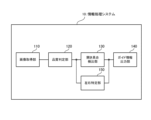
- 1 is a block diagram showing a functional configuration of an information processing system according to a first embodiment.
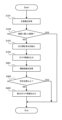
- 4 is a flowchart showing a flow of operations of the information processing system according to the first embodiment.
- FIG. 2 is a plan view showing an example of guide information in the information processing system according to the first embodiment.
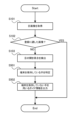
- 10 is a flowchart showing a flow of operations of an information processing system according to a second embodiment.
- FIG. 11 is a plan view showing an example of guide information in an information processing system according to a second embodiment.
- 13 is a flowchart showing a flow of operations of an information processing system according to a third embodiment.
- FIG. 13 is a plan view showing an example of guide information in the information processing system according to the third embodiment.
- 13 is a flowchart showing a flow of operations of an information processing system according to a fourth embodiment.
- FIG. 13 is a block diagram showing a functional configuration of an information processing system according to a fifth embodiment.
- 13 is a flowchart showing the flow of operations of an information processing system according to a fifth embodiment.
- FIG. 13 is a plan view showing an example of guide information in an information processing system according to a fifth embodiment.
- FIG. 1 An information processing system according to a first embodiment will be described with reference to FIGS. 1 to 4.
- FIG. 1 An information processing system according to a first embodiment will be described with reference to FIGS. 1 to 4.
- FIG. 1 An information processing system according to a first embodiment will be described with reference to FIGS. 1 to 4.
- FIG. 1 An information processing system according to a first embodiment will be described with reference to FIGS. 1 to 4.
- FIG. 1 An information processing system according to a first embodiment will be described with reference to FIGS. 1 to 4.
- Fig. 1 is a block diagram showing the hardware configuration of the information processing system according to the first embodiment.
- the information processing system 10 includes a processor 11, a RAM (Random Access Memory) 12, a ROM (Read Only Memory) 13, and a storage device 14.
- the information processing system 10 may further include an input device 15 and an output device 16.
- the above-mentioned processor 11, RAM 12, ROM 13, storage device 14, input device 15, and output device 16 are connected via a data bus 17.
- the processor 11 reads a computer program.
- the processor 11 is configured to read a computer program stored in at least one of the RAM 12, the ROM 13, and the storage device 14.
- the processor 11 may read a computer program stored in a computer-readable storage medium using a storage medium reading device (not shown).
- the processor 11 may obtain (i.e., read) a computer program from a device (not shown) disposed outside the information processing system 10 via a network interface.
- the processor 11 controls the RAM 12, the storage device 14, the input device 15, and the output device 16 by executing the computer program that the processor 11 reads.
- the processor 11 when the processor 11 executes the computer program that the processor 11 reads, a functional block for outputting guide information when capturing an eye image is realized within the processor 11. That is, the processor 11 may function as a controller that executes each control in the information processing system 10.
- the processor 11 may be configured as, for example, a CPU (Central Processing Unit), a GPU (Graphics Processing Unit), an FPGA (field-programmable gate array), a DSP (Demand-Side Platform), an ASIC (Application Specific Integrated Circuit), or a quantum processor.
- the processor 11 may be configured as one of these, or may be configured to use multiple processors in parallel.
- RAM 12 temporarily stores computer programs executed by processor 11.
- RAM 12 temporarily stores data that processor 11 uses temporarily while processor 11 is executing a computer program.
- RAM 12 may be, for example, a D-RAM (Dynamic Random Access Memory) or an SRAM (Static Random Access Memory). Also, other types of volatile memory may be used instead of RAM 12.
- ROM 13 stores computer programs executed by processor 11. ROM 13 may also store other fixed data. ROM 13 may be, for example, a P-ROM (Programmable Read Only Memory) or an EPROM (Erasable Read Only Memory). Also, other types of non-volatile memory may be used instead of ROM 13.
- the storage device 14 stores data that the information processing system 10 stores long-term.
- the storage device 14 may operate as a temporary storage device for the processor 11.
- the storage device 14 may include, for example, at least one of a hard disk device, a magneto-optical disk device, an SSD (Solid State Drive), and a disk array device.
- the input device 15 is a device that receives input instructions from a user of the information processing system 10.
- the input device 15 may include, for example, at least one of a keyboard, a mouse, and a touch panel.
- the input device 15 may be configured as a mobile terminal such as a smartphone or a tablet.
- the input device 15 may be, for example, a device that includes a microphone and is capable of voice input.
- the output device 16 is a device that outputs information related to the information processing system 10 to the outside.
- the output device 16 may be a display device (e.g., a display) that can display information related to the information processing system 10.
- the output device 16 may also be a speaker or the like that can output information related to the information processing system 10 as audio.
- the output device 16 may be configured as a mobile terminal such as a smartphone or a tablet.
- the output device 16 may also be a device that outputs information in a format other than an image.
- the output device 16 may be a speaker that outputs information related to the information processing system 10 as audio.
- FIG. 1 shows an example of an information processing system 10 including multiple devices, all or some of these functions may be realized by a single device (information processing device).
- the information processing device may be configured to include only the above-mentioned processor 11, RAM 12, and ROM 13, and the other components (i.e., storage device 14, input device 15, output device 16) may be provided by an external device connected to the information processing device.
- the information processing device may have some of its calculation functions realized by an external device (e.g., an external server, cloud, etc.).
- Fig. 2 is a block diagram showing the functional configuration of the information processing system according to the first embodiment.
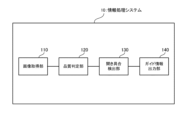
- the information processing system 10 is configured to include, as components for realizing its functions, an image acquisition unit 110, a quality determination unit 120, an opening degree detection unit 130, and a guide information output unit 140.
- Each of the image acquisition unit 110, the quality determination unit 120, the opening degree detection unit 130, and the guide information output unit 140 may be a processing block realized by, for example, the above-mentioned processor 11 (see FIG. 1).
- the image acquisition unit 110 is configured to be able to acquire an eye image including the subject's eyes. This eye image is registered as an image showing the subject's eyes.
- the eye image may be an image registered as a registered image for iris authentication (i.e., an eye image showing the iris of a registered user).
- the eye image acquired by the image acquisition unit 110 is configured to be output to the quality determination unit 120.
- the quality determination unit 120 is configured to be able to determine whether or not the eye image acquired by the image acquisition unit 110 is suitable for registration. Whether or not an image is suitable for registration may be determined, for example, based on a score indicating the quality of the eye image. In this case, the quality determination unit 120 may be configured to determine, for example, whether or not the score indicating the quality of the eye image is equal to or greater than a predetermined threshold. The result of the determination by the quality determination unit 120 is configured to be output to the opening degree detection unit 130.
- the opening degree detection unit 130 is configured to detect the degree to which the subject's eyes are open in the eye image when the quality determination unit 120 determines that the eye image is not suitable for registration.
- the opening degree detection unit 130 may detect the degree to which the eyelids overlap the iris or the degree to which the iris is hidden by the eyelids as the degree to which the eyes are open. Note that a specific method for detecting the degree to which the eyes are open can be appropriately adopted from existing technologies, so a detailed explanation will be omitted here.
- the detection result by the opening degree detection unit 130 is configured to be output to the guide information output unit 140.
- the guide information output unit 140 is configured to output guide information to encourage the subject to open their eyes using their fingers, based on the degree of eye opening detected by the eye opening degree detection unit 130.
- the guide information may include information that encourages the subject to open their eyes using their fingers.
- the guide information may be displayed as an image using, for example, a display.
- the guide information may be output as audio using a speaker.
- the guide information may be output to a device installed in the vicinity of the subject, or may be output to a terminal or the like held by the subject. Specific examples of guide information will be described in detail later.
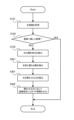
- Fig. 3 is a flowchart showing the flow of operations performed by the information processing system according to the first embodiment.
- the image acquisition unit 110 first acquires an eye image including the subject's eyes (step S101). Then, the quality determination unit 120 determines whether the eye image acquired by the image acquisition unit 110 is suitable for registration (step S102). If it is determined that the eye image is suitable for registration (step S102: YES), the subsequent processes are omitted and the series of operations ends. In this case, the information processing system 10 may execute a process of registering the eye image determined to be suitable for registration (i.e., a process of storing it as the subject's eye image).
- step S102 determines that the eye image is not suitable for registration.
- the eye opening degree detection unit 130 detects the degree of eye opening of the subject in the eye image (step S103). Then, the guide information output unit 140 outputs guide information based on the eye opening degree detected by the eye opening degree detection unit 130 (step S104). This makes it possible to encourage the subject to use their finger to open their eyes.
- the image acquisition unit 110 may be configured to acquire an eye image of the subject who has their eyes open using a finger. Then, a process may be performed to register the newly acquired eye image (i.e., an eye image whose quality has been improved by opening the eyes) as the eye image of the subject.
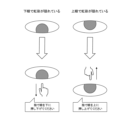
- Fig. 4 is a plan view showing an example of guide information in the information processing system according to the first embodiment.
- the guide information output by the information processing system 10 may be information that encourages the action of pushing up or down the eyelid that overlaps the iris.
- the guide information may include a message saying, "Please push your eyelid down with your finger.”
- the guide information may include a message saying, "Please push your eyelid up with your finger.”
- the guide information may include an image of a finger or an arrow (i.e., an arrow showing the direction in which to move the finger) to clearly communicate the action to the subject.
- the image of the finger or the arrow may be displayed so as to move. For example, when encouraging the action of pressing down an eyelid with a finger, the image of the finger may move downwards or the arrow may move so as to extend downwards.
- the information processing system 10 when it is determined that the eye image of the subject is not suitable for registration, guide information according to the degree to which the subject's eyes are open (specifically, information to have the subject open their eyes using their finger) is output. In this way, it is possible to encourage the subject to open their eyes using their finger. As a result, it becomes possible to capture an eye image when the eyes are fully open, and a high-quality eye image (e.g., an image in which the entire iris is clearly visible) can be obtained. This makes it possible to improve the accuracy of biometric authentication using, for example, a registered eye image.
- a high-quality eye image e.g., an image in which the entire iris is clearly visible
- the information processing system 10 according to the second embodiment will be described with reference to Fig. 5 and Fig. 6.
- the second embodiment differs from the first embodiment in some operations, and other operations may be the same as those of the first embodiment. Therefore, the following will describe in detail the parts that differ from the first embodiment already described, and will omit descriptions of other overlapping parts as appropriate.
- FIG. 5 is a flowchart showing the flow of operations performed by the information processing system according to the second embodiment. Note that in Fig. 5, the same processes as those shown in Fig. 3 are denoted by the same reference numerals.
- the image acquisition unit 110 first acquires an eye image including the subject's eyes (step S101). Then, the quality determination unit 120 determines whether the eye image acquired by the image acquisition unit 110 is suitable for registration (step S102). If it is determined that the eye image is suitable for registration (step S102: YES), the subsequent processing is omitted and the series of operations ends.
- the eye opening detection unit 130 detects the degree of eye opening of the subject in the eye image (step S103). In the second embodiment, the eye opening detection unit 130 further detects the eyelid that overlaps with the subject's iris (step S201). For example, the eye opening detection unit 130 detects whether it is the upper eyelid or the lower eyelid that overlaps with the iris.
- the guide information output unit 140 outputs guide information based on the degree of eye opening detected by the eye opening detection unit 130 and the eyelid that overlaps with the iris (step S202).
- a predetermined highlighting is performed on the eyelid that overlaps with the iris.
- the form of highlighting is not particularly limited, and may be, for example, a difference in display color, the size or thickness of the characters, movement (animation), etc.
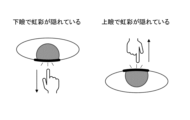
- Fig. 6 is a plan view showing an example of guide information in the information processing system according to the second embodiment.
- the guide information output by the information processing system 10 has a predetermined highlighting on the eyelid that overlaps with the iris, as described above. Specifically, when the iris is hidden by the lower eyelid, the lower eyelid is highlighted. Also, when the iris is hidden by the upper eyelid, the upper eyelid is highlighted. Note that when the iris is hidden by both the upper and lower eyelids, both the upper and lower eyelids may be highlighted. Alternatively, the upper or lower eyelid whichever overlaps more with the iris may be highlighted.
- Highlighting may be applied to the entire upper or lower eyelid, or only to the part that overlaps with the iris.
- a thick line in a conspicuous color e.g., red or fluorescent color
- the eyelid that is causing the iris to be hidden in other words, the eyelid that is required to be opened with a finger
- Highlighting may also be applied to parts other than the eyelid. For example, if the iris is hidden by the lower eyelid, the lower half of the eye may be highlighted, and if the iris is hidden by the upper eyelid, the upper half of the eye may be highlighted.
- a predetermined highlighting is performed on the eyelid that overlaps with the iris. In this way, it is possible to properly inform the subject which eyelid to open with the finger.
- the information processing system 10 according to the third embodiment will be described with reference to Fig. 7 and Fig. 8.
- the third embodiment differs from the second embodiment in some operations, and other operations may be the same as the first and second embodiments. Therefore, the following will describe in detail the parts that differ from the embodiments already described, and will omit descriptions of other overlapping parts as appropriate.
- Fig. 7 is a flowchart showing the flow of operations performed by the information processing system according to the third embodiment.
- the same processes as those shown in Fig. 5 are denoted by the same reference numerals.
- the image acquisition unit 110 first acquires an eye image including the subject's eyes (step S101). Then, the quality determination unit 120 determines whether the eye image acquired by the image acquisition unit 110 is suitable for registration (step S102). If it is determined that the eye image is suitable for registration (step S102: YES), the subsequent processing is omitted and the series of operations ends.
- the eye opening degree detection unit 130 detects the degree of eye opening of the subject in the eye image (step S103).
- the eye opening degree detection unit 130 also detects the eyelid that overlaps with the subject's iris (step S201).
- the eye opening detection unit 130 further calculates the force required to open the eyes from the degree of eye opening (step S301). That is, the eye opening calculation unit 130 calculates how much force should be applied to the fingers in order to open the eyes and capture an appropriate image.
- the force required to open the eyes may be calculated to be weak when the eyes are widely opened and strong when the eyes are not widely opened.
- the guide information output unit 140 outputs guide information based on the degree of eye opening detected by the eye opening degree detection unit 130, the eyelid that overlaps with the iris, and the force used to open the eyes (step S302).
- the manner of highlighting is changed depending on the force used to open the eyes. That is, different highlighting is used when the force used to open the eyes is strong and when the force used to open the eyes is weak.
- Fig. 8 is a plan view showing an example of guide information in the information processing system according to the third embodiment.
- the guide information output by the information processing system 10 according to the third embodiment is highlighted in accordance with the force used to open the eyes. Specifically, when the iris is only slightly hidden (in other words, when a small force is acceptable to open the eyes), the highlighting is performed in blue. On the other hand, when a large portion of the iris is hidden (in other words, when a large force is required to open the eyes), the highlighting is performed in red. Also, when a large portion of the iris is hidden, the image of the finger and the arrow are displayed relatively larger than when the iris is only slightly hidden. Note that the above-mentioned highlighting mode is merely one example, and the display mode may be changed as appropriate so that the strength of the force can be intuitively understood.
- the manner of highlighting is changed according to the strength of force required when opening the eyes with a finger. In this way, it is possible to properly communicate to the subject how much force is required to open the eyelids.
- the information processing system 10 according to the fourth embodiment will be described with reference to Fig. 9.
- the fourth embodiment differs from the first to third embodiments in some operations, and other operations may be the same as those of the first to third embodiments. Therefore, the following will describe in detail the parts that differ from the embodiments already described, and will omit descriptions of other overlapping parts as appropriate.
- Fig. 9 is a flowchart showing the flow of operations performed by the information processing system according to the fourth embodiment. Note that in Fig. 9, the same processes as those shown in Fig. 3 are denoted by the same reference numerals.
- the image acquisition unit 110 first acquires an eye image including the subject's eyes (step S101). Then, the quality determination unit 120 determines whether the eye image acquired by the image acquisition unit 110 is suitable for registration (step S102). If it is determined that the eye image is suitable for registration (step S102: YES), the subsequent processing is omitted and the series of operations ends.
- the eye opening degree detection unit 130 detects the eye opening degree of the subject in the eye image (step S103). Then, the guide information output unit 140 outputs guide information based on the eye opening degree detected by the eye opening degree detection unit 130 (step S104).
- the image acquisition unit 110 acquires an image captured with the subject opening their eyes with their fingers (hereinafter, appropriately referred to as an "open-eye image") (step S401).
- the quality determination unit 120 determines whether the quality of the open-eye image (more specifically, the quality of the iris in the open-eye image) is equal to or higher than a predetermined quality (step S402).
- the determination criteria here may be the same as the criteria for determining whether an image is suitable for registration (i.e., the determination criteria in step S102), or may be different.
- the determination criteria in step S402 may be slightly stricter than the determination criteria in step S102, or conversely, may be slightly looser.
- step S402 If it is determined that the quality of the eye-open image is equal to or higher than the predetermined quality (step S402: YES), the subsequent processes are omitted and the series of operations ends. At this time, the information processing system 10 may execute a process of registering the eye-open image as an image of the subject's eyes.
- the guide information output unit 140 further outputs second guide information for improving the quality of the eye-opening image (step S403).
- the second guide information may be the same as the initially output guide information (i.e., the guide information output in step S104).
- the second guide information may be different from the initially output guide information.
- the second guide information may include information for fine-tuning the subject's already-performed eye-opening action, such as "Please push up your eyelids with a little more force.”
- the second guide information may include information other than information for having the subject open their eyes with their fingers.
- the second guide information may include a message such as "Please move your eyes a little closer to the camera.”
- the second guide information is further output. In this way, even if the initially output guide information is not enough to open the eyes, the second guide information can prompt the user to take action to further improve the quality of the eye image.
- the information processing system 10 according to the fifth embodiment will be described with reference to Fig. 10 to Fig. 12.
- the fifth embodiment differs from the first to fourth embodiments in part of its configuration and operation, and other parts may be the same as the first to fourth embodiments. Therefore, the following will describe in detail the parts that differ from the embodiments already described, and will omit a description of other overlapping parts as appropriate.
- Fig. 10 is a block diagram showing the functional configuration of the information processing system according to the fifth embodiment.
- the same components as those shown in Fig. 2 are denoted by the same reference numerals.
- the information processing system 10 is configured to include, as components for realizing its functions, an image acquisition unit 110, a quality determination unit 120, an opening degree detection unit 130, a guide information output unit 140, and a left/right identification unit 150. That is, the information processing system 10 according to the fifth embodiment further includes a left/right identification unit 150 in addition to the configuration of the first embodiment described above (see FIG. 2).
- the left/right identification unit 150 may be a processing block realized by, for example, the processor 11 described above (see FIG. 1).
- the left/right identification unit 150 is configured to be able to identify whether the subject is holding a device for capturing an eye image (e.g., a smartphone with a camera) in the right hand or the left hand.
- the left/right identification unit 150 may determine in which hand the subject is holding the device, for example, based on the output of various sensors (e.g., a tilt sensor, a gyro sensor, etc.) mounted on the device.
- the left/right identification unit 150 may determine in which hand the subject is holding the device, based on the eye image acquired by the image acquisition unit 110. More specifically, the left/right identification unit 150 may determine in which hand the subject is holding the device, based on the angle of view of the eye image, etc.
- the identification result by the left/right identification unit 150 is configured to be output to the guide information output unit 140.
- the guide information output unit 140 is configured to output guide information based on the identification result of the left/right identification unit 150 (i.e., whether the subject is holding the terminal in the right hand or the left hand) in addition to the degree of eye opening detected by the eye opening detection unit 140. Specific examples of guide information will be described in detail later.
- Fig. 11 is a flowchart showing the flow of operations performed by the information processing system according to the fifth embodiment.
- the same processes as those shown in Fig. 3 are denoted by the same reference numerals.
- the image acquisition unit 110 first acquires an eye image including the subject's eyes (step S101). Then, the quality determination unit 120 determines whether the eye image acquired by the image acquisition unit 110 is suitable for registration (step S102). If it is determined that the eye image is suitable for registration (step S102: YES), the subsequent processing is omitted and the series of operations ends.
- the eye opening degree detection unit 130 detects the eye opening degree of the subject in the eye image (step S103). Furthermore, in the fifth embodiment, the left/right identification unit 150 further identifies whether the hand with which the subject is holding the terminal is the left or right hand (step S501).
- the guide information output unit 140 outputs guide information based on the degree of eye opening detected by the eye opening detection unit 130 and information about the hand holding the terminal identified by the left/right identification unit 150 (step S502).
- the content of the guide information according to the fifth embodiment changes depending on whether the subject is holding the terminal in his/her right hand or left hand.
- Fig. 12 is a plan view showing an example of guide information in the information processing system according to the fifth embodiment.
- the guide information is output to encourage the subject to open their eyes using the fingers of the opposite right hand.
- the guide information may include a message specifying the hand to be used, such as "Push down your eyelids with the fingers of your right hand.”
- an image of the right hand may be displayed to indicate the hand to be used.
- guide information is output to encourage the subject to open their eyes using the fingers of their opposite left hand.
- the guide information may include a message such as "Push your eyelids down with the fingers of your left hand.”
- an image of the left hand may be displayed to indicate which hand to use.
- guide information is output to encourage the subject holding the terminal to open their eyes using the fingers of the hand opposite the hand holding the terminal. In this way, the subject holding the terminal can be prompted to open their eyes in a more understandable manner.
- each embodiment also includes a processing method in which a program that operates the configuration of each embodiment to realize the functions of the above-mentioned embodiments is recorded on a recording medium, the program recorded on the recording medium is read as code, and executed on a computer.
- computer-readable recording media are also included in the scope of each embodiment.
- each embodiment includes not only the recording medium on which the above-mentioned program is recorded, but also the program itself.
- the recording medium may be, for example, a floppy disk, hard disk, optical disk, magneto-optical disk, CD-ROM, magnetic tape, non-volatile memory card, or ROM.
- the scope of each embodiment is not limited to programs recorded on the recording medium that execute processes by themselves, but also includes programs that operate on an OS in conjunction with other software or the functions of an expansion board to execute processes.
- the program itself may be stored on a server, and part or all of the program may be made downloadable from the server to a user terminal.
- the program may be provided to the user in, for example, a SaaS (Software as a Service) format.
- the information processing system described in Appendix 1 is an information processing system including an acquisition means for acquiring an eye image including the eyes of a subject, a determination means for determining whether the eye image is suitable for registration or not, a detection means for detecting the degree of opening of the subject's eyes in the eye image when it is determined that the eye image is not suitable for registration, and an output means for outputting guide information to encourage the subject to open their eyes using their finger based on the degree of opening of the eyes.
- Appendix 2 The information processing system described in Appendix 2 is the information processing system described in Appendix 1, wherein the detection means detects the eyelid that overlaps with the subject's iris, and the output means outputs the guide information with a predetermined highlighting on the eyelid that overlaps with the iris.
- Appendix 3 The information processing system described in Appendix 3 is the information processing system described in Appendix 2, wherein the output means changes the manner of the specified highlighting depending on the strength of force required when using a finger to open the eyes.
- Appendix 4 The information processing system described in Appendix 4 is the information processing system described in any one of Appendixes 1 to 3, wherein the acquisition means acquires an open-eye image including the eyes held open by fingers after outputting the guide information, the determination means determines whether the quality of the iris of the subject in the open-eye image is equal to or higher than a predetermined quality, and the output means further outputs second guide information for improving the quality of the iris if the quality of the iris is less than the predetermined quality.
- Appendix 5 The information processing system described in Appendix 5 is an information processing system described in any one of Appendixes 1 to 3, further comprising an identification means for identifying whether the subject is holding a terminal for capturing the eye image in his/her right hand or left hand, and the output means outputs guide information for opening the eyes using the fingers of the hand opposite to the hand holding the terminal.
- the information processing method described in Appendix 6 is an information processing method that acquires an eye image including the eyes of a subject by at least one computer, determines whether the eye image is suitable for registration, and if it is determined that the eye image is not suitable for registration, detects the degree to which the subject's eyes are opened in the eye image, and outputs guide information to cause the subject to open their eyes using their finger based on the degree to which the eyes are opened.
- the recording medium described in Appendix 7 is a recording medium having recorded thereon a computer program for causing at least one computer to execute an information processing method, which comprises obtaining an eye image including the eyes of a subject, determining whether the eye image is suitable for registration, and if it is determined that the eye image is not suitable for registration, detecting the degree to which the subject's eyes are opened in the eye image, and outputting guide information for encouraging the subject to open their eyes using their finger based on the degree to which the eyes are opened.
- Appendix 8 The computer program described in Appendix 8 is a computer program that causes at least one computer to execute an information processing method of acquiring an eye image including the eyes of a subject, determining whether the eye image is suitable for registration, and if it is determined that the eye image is not suitable for registration, detecting the degree to which the subject's eyes are opened in the eye image, and outputting guide information to cause the subject to open their eyes using their finger based on the degree to which the eyes are opened.
Landscapes
- Engineering & Computer Science (AREA)
- Physics & Mathematics (AREA)
- General Physics & Mathematics (AREA)
- Multimedia (AREA)
- Theoretical Computer Science (AREA)
- Human Computer Interaction (AREA)
- Health & Medical Sciences (AREA)
- General Health & Medical Sciences (AREA)
- Ophthalmology & Optometry (AREA)
- Life Sciences & Earth Sciences (AREA)
- Quality & Reliability (AREA)
- Biophysics (AREA)
- Heart & Thoracic Surgery (AREA)
- Medical Informatics (AREA)
- Molecular Biology (AREA)
- Surgery (AREA)
- Animal Behavior & Ethology (AREA)
- Public Health (AREA)
- Veterinary Medicine (AREA)
- Biomedical Technology (AREA)
- Collating Specific Patterns (AREA)
- Measurement Of The Respiration, Hearing Ability, Form, And Blood Characteristics Of Living Organisms (AREA)
Priority Applications (4)
| Application Number | Priority Date | Filing Date | Title |
|---|---|---|---|
| JP2024548882A JP7800712B2 (ja) | 2022-09-27 | 2022-09-27 | 情報処理システム、情報処理方法、及び記録媒体 |
| EP22960826.0A EP4597459A4 (en) | 2022-09-27 | 2022-09-27 | INFORMATION PROCESSING SYSTEM AND METHOD, RECORDING MEDIUM |
| PCT/JP2022/035974 WO2024069762A1 (ja) | 2022-09-27 | 2022-09-27 | 情報処理システム、情報処理方法、及び記録媒体 |
| US18/859,614 US20250265869A1 (en) | 2022-09-27 | 2022-09-27 | Information processing system, information processing method, and non-transitory recording medium |
Applications Claiming Priority (1)
| Application Number | Priority Date | Filing Date | Title |
|---|---|---|---|
| PCT/JP2022/035974 WO2024069762A1 (ja) | 2022-09-27 | 2022-09-27 | 情報処理システム、情報処理方法、及び記録媒体 |
Publications (1)
| Publication Number | Publication Date |
|---|---|
| WO2024069762A1 true WO2024069762A1 (ja) | 2024-04-04 |
Family
ID=90476616
Family Applications (1)
| Application Number | Title | Priority Date | Filing Date |
|---|---|---|---|
| PCT/JP2022/035974 Ceased WO2024069762A1 (ja) | 2022-09-27 | 2022-09-27 | 情報処理システム、情報処理方法、及び記録媒体 |
Country Status (4)
| Country | Link |
|---|---|
| US (1) | US20250265869A1 (https=) |
| EP (1) | EP4597459A4 (https=) |
| JP (1) | JP7800712B2 (https=) |
| WO (1) | WO2024069762A1 (https=) |
Citations (8)
| Publication number | Priority date | Publication date | Assignee | Title |
|---|---|---|---|---|
| JP2000207536A (ja) * | 1998-02-20 | 2000-07-28 | Oki Electric Ind Co Ltd | 撮影装置およびアイリス画像入力装置およびアイリス画像入力方法 |
| JP2001236499A (ja) * | 2000-02-25 | 2001-08-31 | Oki Electric Ind Co Ltd | アイリス画像判定装置 |
| JP2009131591A (ja) | 2007-11-08 | 2009-06-18 | Nidek Co Ltd | 眼底カメラ |
| JP2012196364A (ja) * | 2011-03-23 | 2012-10-18 | Panasonic Corp | 瞳孔径検出装置 |
| US20180032815A1 (en) * | 2016-08-01 | 2018-02-01 | Samsung Electronics Co., Ltd. | Electronic device and method for iris authentication thereof |
| WO2021084643A1 (ja) * | 2019-10-30 | 2021-05-06 | 日本電気株式会社 | 認証装置、認証方法及び記録媒体 |
| WO2021245823A1 (ja) | 2020-06-03 | 2021-12-09 | 日本電気株式会社 | 情報取得装置、情報取得方法及び記憶媒体 |
| WO2022092134A1 (ja) * | 2020-10-28 | 2022-05-05 | ライオン株式会社 | 検査方法、機械学習実行方法、検査装置及び機械学習実行方法 |
Family Cites Families (2)
| Publication number | Priority date | Publication date | Assignee | Title |
|---|---|---|---|---|
| US10803160B2 (en) * | 2014-08-28 | 2020-10-13 | Facetec, Inc. | Method to verify and identify blockchain with user question data |
| JP6946649B2 (ja) * | 2017-01-31 | 2021-10-06 | ソニーグループ株式会社 | 電子機器、情報処理方法およびプログラム |
-
2022
- 2022-09-27 WO PCT/JP2022/035974 patent/WO2024069762A1/ja not_active Ceased
- 2022-09-27 US US18/859,614 patent/US20250265869A1/en active Pending
- 2022-09-27 JP JP2024548882A patent/JP7800712B2/ja active Active
- 2022-09-27 EP EP22960826.0A patent/EP4597459A4/en active Pending
Patent Citations (8)
| Publication number | Priority date | Publication date | Assignee | Title |
|---|---|---|---|---|
| JP2000207536A (ja) * | 1998-02-20 | 2000-07-28 | Oki Electric Ind Co Ltd | 撮影装置およびアイリス画像入力装置およびアイリス画像入力方法 |
| JP2001236499A (ja) * | 2000-02-25 | 2001-08-31 | Oki Electric Ind Co Ltd | アイリス画像判定装置 |
| JP2009131591A (ja) | 2007-11-08 | 2009-06-18 | Nidek Co Ltd | 眼底カメラ |
| JP2012196364A (ja) * | 2011-03-23 | 2012-10-18 | Panasonic Corp | 瞳孔径検出装置 |
| US20180032815A1 (en) * | 2016-08-01 | 2018-02-01 | Samsung Electronics Co., Ltd. | Electronic device and method for iris authentication thereof |
| WO2021084643A1 (ja) * | 2019-10-30 | 2021-05-06 | 日本電気株式会社 | 認証装置、認証方法及び記録媒体 |
| WO2021245823A1 (ja) | 2020-06-03 | 2021-12-09 | 日本電気株式会社 | 情報取得装置、情報取得方法及び記憶媒体 |
| WO2022092134A1 (ja) * | 2020-10-28 | 2022-05-05 | ライオン株式会社 | 検査方法、機械学習実行方法、検査装置及び機械学習実行方法 |
Non-Patent Citations (1)
| Title |
|---|
| See also references of EP4597459A4 |
Also Published As
| Publication number | Publication date |
|---|---|
| EP4597459A1 (en) | 2025-08-06 |
| US20250265869A1 (en) | 2025-08-21 |
| JP7800712B2 (ja) | 2026-01-16 |
| EP4597459A4 (en) | 2025-10-29 |
| JPWO2024069762A1 (https=) | 2024-04-04 |
Similar Documents
| Publication | Publication Date | Title |
|---|---|---|
| US10268910B1 (en) | Authentication based on heartbeat detection and facial recognition in video data | |
| CN114077726B (zh) | 用于对用户进行认证的系统、方法和机器可读介质 | |
| CN106572049B (zh) | 一种身份验证方法及装置 | |
| JP7006584B2 (ja) | 生体データ処理装置、生体データ処理システム、生体データ処理方法、生体データ処理プログラム、生体データ処理プログラムを記憶する記憶媒体 | |
| WO2016124063A1 (zh) | 支付认证的方法和装置 | |
| CN108804884A (zh) | 身份认证的方法、装置及计算机存储介质 | |
| US20150046161A1 (en) | Device implemented learning validation | |
| US11625754B2 (en) | Method for providing text-reading based reward-type advertisement service and user terminal for executing same | |
| WO2017113407A1 (zh) | 一种手势识别方法、装置及电子设备 | |
| JP2018520442A (ja) | 手書き署名認証システム及び方法 | |
| WO2023248384A1 (ja) | 情報処理装置、情報処理システム、情報処理方法、及び記録媒体 | |
| JP2026040643A (ja) | 検出システム、検出方法、及びコンピュータプログラム | |
| JP7800712B2 (ja) | 情報処理システム、情報処理方法、及び記録媒体 | |
| CN106295288A (zh) | 一种信息校验方法及装置 | |
| JP7740551B2 (ja) | 情報処理システム、情報処理方法、及び記録媒体 | |
| EP4411631A1 (en) | Information processing system, information processing device, information processing method, and recording medium | |
| JP6496220B2 (ja) | 情報配信装置および情報配信プログラム | |
| JP7852739B2 (ja) | 情報処理システム、情報処理方法、及び記録媒体 | |
| JP2023036273A (ja) | 情報処理装置及び情報処理プログラム | |
| US10380460B2 (en) | Description of content image | |
| US20250182531A1 (en) | Living body detection support apparatus, face authentication apparatus, living body detection support method, face authentication method, program, and recording medium | |
| JP7652296B2 (ja) | 認証装置、認証システム及び認証方法 | |
| JP5891898B2 (ja) | 情報処理装置、プログラム、及び情報処理方法 | |
| US12488626B1 (en) | Liveness detection | |
| JP6471589B2 (ja) | 説明支援装置、説明支援方法及び説明支援プログラム |
Legal Events
| Date | Code | Title | Description |
|---|---|---|---|
| 121 | Ep: the epo has been informed by wipo that ep was designated in this application |
Ref document number: 22960826 Country of ref document: EP Kind code of ref document: A1 |
|
| WWE | Wipo information: entry into national phase |
Ref document number: 18859614 Country of ref document: US |
|
| WWE | Wipo information: entry into national phase |
Ref document number: 2024548882 Country of ref document: JP |
|
| WWE | Wipo information: entry into national phase |
Ref document number: 2022960826 Country of ref document: EP |
|
| NENP | Non-entry into the national phase |
Ref country code: DE |
|
| ENP | Entry into the national phase |
Ref document number: 2022960826 Country of ref document: EP Effective date: 20250428 |
|
| WWP | Wipo information: published in national office |
Ref document number: 2022960826 Country of ref document: EP |
|
| WWP | Wipo information: published in national office |
Ref document number: 18859614 Country of ref document: US |