WO2024057506A1 - 冷却加熱装置 - Google Patents
冷却加熱装置 Download PDFInfo
- Publication number
- WO2024057506A1 WO2024057506A1 PCT/JP2022/034637 JP2022034637W WO2024057506A1 WO 2024057506 A1 WO2024057506 A1 WO 2024057506A1 JP 2022034637 W JP2022034637 W JP 2022034637W WO 2024057506 A1 WO2024057506 A1 WO 2024057506A1
- Authority
- WO
- WIPO (PCT)
- Prior art keywords
- temperature
- circulating fluid
- path
- refrigerant
- cooling
- Prior art date
- Legal status (The legal status is an assumption and is not a legal conclusion. Google has not performed a legal analysis and makes no representation as to the accuracy of the status listed.)
- Ceased
Links
Images



Classifications
-
- F—MECHANICAL ENGINEERING; LIGHTING; HEATING; WEAPONS; BLASTING
- F25—REFRIGERATION OR COOLING; COMBINED HEATING AND REFRIGERATION SYSTEMS; HEAT PUMP SYSTEMS; MANUFACTURE OR STORAGE OF ICE; LIQUEFACTION SOLIDIFICATION OF GASES
- F25B—REFRIGERATION MACHINES, PLANTS OR SYSTEMS; COMBINED HEATING AND REFRIGERATION SYSTEMS; HEAT PUMP SYSTEMS
- F25B25/00—Machines, plants or systems, using a combination of modes of operation covered by two or more of the groups F25B1/00 - F25B23/00
- F25B25/005—Machines, plants or systems, using a combination of modes of operation covered by two or more of the groups F25B1/00 - F25B23/00 using primary and secondary systems
-
- F—MECHANICAL ENGINEERING; LIGHTING; HEATING; WEAPONS; BLASTING
- F25—REFRIGERATION OR COOLING; COMBINED HEATING AND REFRIGERATION SYSTEMS; HEAT PUMP SYSTEMS; MANUFACTURE OR STORAGE OF ICE; LIQUEFACTION SOLIDIFICATION OF GASES
- F25B—REFRIGERATION MACHINES, PLANTS OR SYSTEMS; COMBINED HEATING AND REFRIGERATION SYSTEMS; HEAT PUMP SYSTEMS
- F25B30/00—Heat pumps
- F25B30/02—Heat pumps of the compression type
-
- F—MECHANICAL ENGINEERING; LIGHTING; HEATING; WEAPONS; BLASTING
- F24—HEATING; RANGES; VENTILATING
- F24D—DOMESTIC- OR SPACE-HEATING SYSTEMS, e.g. CENTRAL HEATING SYSTEMS; DOMESTIC HOT-WATER SUPPLY SYSTEMS; ELEMENTS OR COMPONENTS THEREFOR
- F24D3/00—Hot-water central heating systems
- F24D3/18—Hot-water central heating systems using heat pumps
-
- F—MECHANICAL ENGINEERING; LIGHTING; HEATING; WEAPONS; BLASTING
- F25—REFRIGERATION OR COOLING; COMBINED HEATING AND REFRIGERATION SYSTEMS; HEAT PUMP SYSTEMS; MANUFACTURE OR STORAGE OF ICE; LIQUEFACTION SOLIDIFICATION OF GASES
- F25B—REFRIGERATION MACHINES, PLANTS OR SYSTEMS; COMBINED HEATING AND REFRIGERATION SYSTEMS; HEAT PUMP SYSTEMS
- F25B49/00—Arrangement or mounting of control or safety devices
- F25B49/02—Arrangement or mounting of control or safety devices for compression type machines, plants or systems
-
- F—MECHANICAL ENGINEERING; LIGHTING; HEATING; WEAPONS; BLASTING
- F25—REFRIGERATION OR COOLING; COMBINED HEATING AND REFRIGERATION SYSTEMS; HEAT PUMP SYSTEMS; MANUFACTURE OR STORAGE OF ICE; LIQUEFACTION SOLIDIFICATION OF GASES
- F25B—REFRIGERATION MACHINES, PLANTS OR SYSTEMS; COMBINED HEATING AND REFRIGERATION SYSTEMS; HEAT PUMP SYSTEMS
- F25B2309/00—Gas cycle refrigeration machines
- F25B2309/06—Compression machines, plants or systems characterised by the refrigerant being carbon dioxide
- F25B2309/061—Compression machines, plants or systems characterised by the refrigerant being carbon dioxide with cycle highest pressure above the supercritical pressure
-
- F—MECHANICAL ENGINEERING; LIGHTING; HEATING; WEAPONS; BLASTING
- F25—REFRIGERATION OR COOLING; COMBINED HEATING AND REFRIGERATION SYSTEMS; HEAT PUMP SYSTEMS; MANUFACTURE OR STORAGE OF ICE; LIQUEFACTION SOLIDIFICATION OF GASES
- F25B—REFRIGERATION MACHINES, PLANTS OR SYSTEMS; COMBINED HEATING AND REFRIGERATION SYSTEMS; HEAT PUMP SYSTEMS
- F25B2339/00—Details of evaporators; Details of condensers
- F25B2339/04—Details of condensers
- F25B2339/047—Water-cooled condensers
-
- F—MECHANICAL ENGINEERING; LIGHTING; HEATING; WEAPONS; BLASTING
- F25—REFRIGERATION OR COOLING; COMBINED HEATING AND REFRIGERATION SYSTEMS; HEAT PUMP SYSTEMS; MANUFACTURE OR STORAGE OF ICE; LIQUEFACTION SOLIDIFICATION OF GASES
- F25B—REFRIGERATION MACHINES, PLANTS OR SYSTEMS; COMBINED HEATING AND REFRIGERATION SYSTEMS; HEAT PUMP SYSTEMS
- F25B2600/00—Control issues
- F25B2600/11—Fan speed control
- F25B2600/111—Fan speed control of condenser fans
-
- F—MECHANICAL ENGINEERING; LIGHTING; HEATING; WEAPONS; BLASTING
- F25—REFRIGERATION OR COOLING; COMBINED HEATING AND REFRIGERATION SYSTEMS; HEAT PUMP SYSTEMS; MANUFACTURE OR STORAGE OF ICE; LIQUEFACTION SOLIDIFICATION OF GASES
- F25B—REFRIGERATION MACHINES, PLANTS OR SYSTEMS; COMBINED HEATING AND REFRIGERATION SYSTEMS; HEAT PUMP SYSTEMS
- F25B2600/00—Control issues
- F25B2600/25—Control of valves
- F25B2600/2513—Expansion valves
-
- F—MECHANICAL ENGINEERING; LIGHTING; HEATING; WEAPONS; BLASTING
- F25—REFRIGERATION OR COOLING; COMBINED HEATING AND REFRIGERATION SYSTEMS; HEAT PUMP SYSTEMS; MANUFACTURE OR STORAGE OF ICE; LIQUEFACTION SOLIDIFICATION OF GASES
- F25B—REFRIGERATION MACHINES, PLANTS OR SYSTEMS; COMBINED HEATING AND REFRIGERATION SYSTEMS; HEAT PUMP SYSTEMS
- F25B2700/00—Sensing or detecting of parameters; Sensors therefor
- F25B2700/19—Pressures
- F25B2700/195—Pressures of the condenser
-
- F—MECHANICAL ENGINEERING; LIGHTING; HEATING; WEAPONS; BLASTING
- F25—REFRIGERATION OR COOLING; COMBINED HEATING AND REFRIGERATION SYSTEMS; HEAT PUMP SYSTEMS; MANUFACTURE OR STORAGE OF ICE; LIQUEFACTION SOLIDIFICATION OF GASES
- F25B—REFRIGERATION MACHINES, PLANTS OR SYSTEMS; COMBINED HEATING AND REFRIGERATION SYSTEMS; HEAT PUMP SYSTEMS
- F25B2700/00—Sensing or detecting of parameters; Sensors therefor
- F25B2700/21—Temperatures
- F25B2700/2115—Temperatures of a compressor or the drive means therefor
- F25B2700/21152—Temperatures of a compressor or the drive means therefor at the discharge side of the compressor
-
- F—MECHANICAL ENGINEERING; LIGHTING; HEATING; WEAPONS; BLASTING
- F25—REFRIGERATION OR COOLING; COMBINED HEATING AND REFRIGERATION SYSTEMS; HEAT PUMP SYSTEMS; MANUFACTURE OR STORAGE OF ICE; LIQUEFACTION SOLIDIFICATION OF GASES
- F25B—REFRIGERATION MACHINES, PLANTS OR SYSTEMS; COMBINED HEATING AND REFRIGERATION SYSTEMS; HEAT PUMP SYSTEMS
- F25B2700/00—Sensing or detecting of parameters; Sensors therefor
- F25B2700/21—Temperatures
- F25B2700/2116—Temperatures of a condenser
- F25B2700/21161—Temperatures of a condenser of the fluid heated by the condenser
-
- F—MECHANICAL ENGINEERING; LIGHTING; HEATING; WEAPONS; BLASTING
- F25—REFRIGERATION OR COOLING; COMBINED HEATING AND REFRIGERATION SYSTEMS; HEAT PUMP SYSTEMS; MANUFACTURE OR STORAGE OF ICE; LIQUEFACTION SOLIDIFICATION OF GASES
- F25B—REFRIGERATION MACHINES, PLANTS OR SYSTEMS; COMBINED HEATING AND REFRIGERATION SYSTEMS; HEAT PUMP SYSTEMS
- F25B6/00—Compression machines, plants or systems, with several condenser circuits
- F25B6/04—Compression machines, plants or systems, with several condenser circuits arranged in series
-
- F—MECHANICAL ENGINEERING; LIGHTING; HEATING; WEAPONS; BLASTING
- F25—REFRIGERATION OR COOLING; COMBINED HEATING AND REFRIGERATION SYSTEMS; HEAT PUMP SYSTEMS; MANUFACTURE OR STORAGE OF ICE; LIQUEFACTION SOLIDIFICATION OF GASES
- F25B—REFRIGERATION MACHINES, PLANTS OR SYSTEMS; COMBINED HEATING AND REFRIGERATION SYSTEMS; HEAT PUMP SYSTEMS
- F25B9/00—Compression machines, plants or systems, in which the refrigerant is air or other gas of low boiling point
- F25B9/002—Compression machines, plants or systems, in which the refrigerant is air or other gas of low boiling point characterised by the refrigerant
- F25B9/008—Compression machines, plants or systems, in which the refrigerant is air or other gas of low boiling point characterised by the refrigerant the refrigerant being carbon dioxide
Definitions
- the present invention relates to a cooling/heating device, and particularly to a cooling/heating device used to adjust various manufacturing equipment such as semiconductor manufacturing equipment, various measuring devices, etc. to a predetermined temperature.
- cooling/heating device that has a circulation path through which a heat medium circulates, and uses the heat medium circulating in the circulation path to cool or heat a controlled object that requires temperature adjustment. It is being
- This type of cooling/heating device includes a vapor compression refrigeration cycle chiller, etc. that cools a circulating heat medium, and a heater, etc. that heats the cooled heat medium.
- Patent Document 1 discloses an area-based parameter control type hybrid chiller used to control the temperature of various devices such as semiconductor manufacturing equipment, processes, etc.
- the area-specific parameter control type hybrid chiller disclosed in this document has a circulating fluid circulation circuit that supplies circulating fluid that has been cooled to a predetermined temperature by a refrigeration cycle to a controlled object, and a circulating fluid that is cooled to a predetermined temperature by cooling water that is cooled by a cooling tower. and a second circulating fluid circulation circuit that supplies the cooled circulating fluid to the controlled object.
- a heater that heats the circulating fluid is provided in a circulating fluid supply path that sends the circulating fluid to the controlled object.
- the circulating fluid supplied to the controlled object can be cooled by using either a method of cooling the circulating fluid using the refrigeration cycle or a method of cooling the circulating fluid using the cooling water of the cooling tower. be exposed.
- Circulating fluid cooled by a refrigeration cycle or a cooling tower is heated to a predetermined temperature by a heater such as a heater, and then supplied to a controlled object.
- Patent Document 2 describes a first circulation system that circulates the first refrigerant in the condenser back to the condenser via a pump, a heater, a throttle valve, and a vaporizer;
- a cooling device is disclosed that includes a second circulation system that includes a disposed heat exchanger and circulates a second refrigerant that cools the first refrigerant.
- the first circulation system cools the object to be cooled using the latent heat of vaporization of the first refrigerant that boils in the vaporizer.
- the second circulation system includes a compressor, a second condenser, an expansion valve, and a heat exchanger, and uses the latent heat of vaporization of the second refrigerant in the heat exchanger installed inside the condenser of the first circulation system. to cool and condense the first refrigerant.
- a second heat exchanger that heats the first refrigerant by condensing the second refrigerant is provided as a heater of the first circulation system.
- the second refrigerant in the second circulation system is pressurized by the compressor and sent to the second heat exchanger to heat the first refrigerant in the first circulation system.
- JP2015-59726A Japanese Patent Application Publication No. 2022-20088
- the temperature of a controlled object such as manufacturing equipment may be changed in response to a processing process, a measurement process, etc.
- the set temperature may have to be changed to 130°C.
- the conventional cooling/heating device requires a long time to change the temperature of the controlled object to a predetermined set temperature. The time required to change the temperature of the controlled object in this way results in a time loss in the manufacturing process.
- the conventional cooling/heating device in order to increase the temperature by changing the set temperature of the controlled object, it was necessary to heat the circulating fluid for a long time with a heater such as an electric heater.
- the step of heating the circulating fluid with a heater or the like to raise the temperature of the controlled object is performed until the temperature of the controlled object reaches a stable set temperature.
- the time required to heat the circulating fluid with a heater or the like to raise the temperature of the controlled object is a waiting time during which processing processes, measurement processes, etc. cannot be performed in semiconductor manufacturing equipment or the like.
- the cooling/heating device of the prior art is configured to cool the circulating fluid with an evaporator of the refrigeration cycle circuit, and then heat the cooled circulating fluid to a predetermined temperature with a heater such as a heater. Therefore, there is a problem in that the energy consumed to heat the circulating fluid, that is, the amount of electric power consumed by the heater etc. increases.
- Patent Document 2 describes that the second refrigerant of the second circulation system that cools the first refrigerant of the first circulation system using the latent heat of vaporization is cooled in the second heat exchanger using the latent heat of condensation. Heating the first refrigerant is disclosed. In this way, by heating the first refrigerant, which corresponds to the circulating fluid supplied to the controlled object, using the latent heat of condensation of the second refrigerant, which is the refrigerant of the refrigeration cycle, the heater, etc. necessary for heating the circulating fluid is heated. energy consumption can be reduced.
- An object of the present invention is to provide a cooling/heating device that can improve productivity in semiconductor manufacturing and the like by shortening the time required for temperature adjustment when changing the set temperature.
- Another object of the present invention is to provide a cooling/heating device that can reduce energy consumption and save energy in semiconductor manufacturing and the like.
- the cooling/heating device of the present invention includes a refrigeration cycle circuit in which a compression means, a gas cooler, a throttle means, and an evaporator are sequentially connected to circulate a refrigerant, and a circulation pump and a heater are provided in which a circulating liquid is circulated to adjust the temperature of a controlled object.
- a circulating fluid circuit wherein the circulating fluid circuit includes a freely openable and closable low-temperature path through which the circulating fluid flows through the evaporator so that the circulating fluid can exchange heat with the refrigerant; and a low temperature path that allows the circulating fluid to exchange heat with the refrigerant.
- a high-temperature path that can be opened and closed and flows through the gas cooler, and the high-temperature path is provided with a high-temperature tank that stores the circulating fluid heated by the refrigerant in the gas cooler.
- a refrigeration cycle circuit in which a compression means, a gas cooler, a throttle means, and an evaporator are sequentially connected to circulate a refrigerant, and a circulation fluid in which a circulation pump and a heater are provided to adjust the temperature of a controlled object.
- a circulating fluid circuit in which the circulating fluid circulates, and the circulating fluid circuit includes a low-temperature path that can be opened and closed and allows the circulating fluid to flow through the evaporator in a manner capable of exchanging heat with the refrigerant; and a high temperature path that can be opened and closed and flows through the gas cooler.
- the low temperature path of the circulating fluid circuit is opened so that the circulating fluid flows through the low temperature path. Then, the circulating fluid flows through the low-temperature path and is cooled using the latent heat of the refrigerant that evaporates in the evaporator of the refrigeration cycle circuit.
- the circulating fluid cooled in the refrigeration cycle circuit is heated to a predetermined temperature by the heater of the circulating fluid circuit, and is supplied to the controlled object at a suitable temperature so that the controlled object reaches the set temperature.
- the cooling/heating device can heat the circulating fluid using the heat radiation of the refrigerant flowing through the gas cooler of the refrigeration cycle circuit.
- the circulating fluid heated by the gas cooler of the refrigeration cycle circuit is heated to a predetermined temperature by the heater of the circulating fluid circuit, and is supplied to the controlled object at a suitable temperature so that the controlled object has an accurate set temperature.
- the circulating fluid can be heated using the heat dissipated by the gas cooler in the refrigeration cycle circuit, so the energy consumed by the heater in the circulating fluid circuit can be kept to a minimum and highly efficient temperature adjustment can be performed. can.
- the cooling/heating device of the present invention can perform highly efficient temperature adjustment with little waste heat loss by utilizing both the cold and warm heat generated in the refrigeration cycle circuit.
- the high-temperature path is provided with a high-temperature tank that stores the circulating fluid heated by the refrigerant in the gas cooler.
- a high-temperature tank that stores the circulating fluid heated by the refrigerant in the gas cooler.
- the refrigerant may be carbon dioxide
- the circulating fluid may be heated at supercritical pressure in the gas cooler.
- the circulating fluid can be efficiently heated to a high temperature.
- the refrigeration cycle circuit can reach high temperature ranges that were not possible with conventional chiller and other condensers that use HFC (hydrofluorocarbon) refrigerants, HFO (hydrofluoroolefins) refrigerants, or mixtures of these refrigerants.
- Circulating fluid can be heated with a gas cooler. Therefore, even in cases where the set temperature is changed to a high temperature of 130° C., for example, due to changes in processing steps, the temperature of the circulating fluid can be raised to a high temperature in a short time. Therefore, time loss caused by temperature adjustment can be reduced, and productivity of semiconductor devices and the like can be improved. Furthermore, since the amount of heating by the heater in the circulating fluid circuit can be reduced, energy consumption by the heater can be reduced and energy savings can be achieved.
- the refrigeration cycle circuit may include a second gas cooler downstream of the gas cooler that releases heat of the refrigerant to the outside.
- the gas cooler is provided inside the high temperature tank so that the refrigerant flows from top to bottom, and the refrigerant flowing through the gas cooler is the circulating liquid in the high temperature tank. You can also heat it.
- the circulating fluid in the high-temperature path is not used as the circulating fluid to be supplied to the controlled object, and even when the circulating fluid in the high-temperature path is not flowing, the refrigerant flowing through the gas cooler can be used to supply the circulating fluid in the high-temperature tank. can be heated.
- the circulating fluid stored in the high-temperature tank can be heated to a high temperature by the gas cooler without providing a circulation pump or the like to flow the circulating fluid through the high-temperature path for heating by the gas cooler. Therefore, when the refrigeration cycle circuit is operating to cool the circulating fluid in the low-temperature path, the exhaust heat from the gas cooler can be effectively utilized without circulating the circulating fluid in the high-temperature path.
- the low temperature path includes a low temperature tank that stores the circulating fluid, a low temperature pump that sends the circulating fluid, and a low temperature pump that does not send the circulating fluid to the controlled object.
- a low temperature circulation path returning to the entrance side of the path may be provided. Because the low-temperature tank is installed, when the temperature of the circulating fluid is significantly lowered by changing the set temperature of the controlled object due to changes in the processing process, etc., the low-temperature circulating fluid stored in the cold tank can be transferred to the circulating fluid circuit.
- the temperature of the circulating fluid supplied to the pump and circulating through the circulating fluid circuit can be rapidly lowered to a predetermined temperature in a short period of time. Therefore, the time required to change the set temperature can be significantly shortened, and the time loss associated with changing the temperature until starting a processing step, a measurement step, etc. can be reduced.
- the low-temperature path is provided with a low-temperature pump that sends circulating fluid and a low-temperature circulation path that returns the circulating fluid from the outlet side to the inlet side of the low-temperature path. Therefore, even if the circulating fluid in the low-temperature path is not used as the circulating fluid to be supplied to the controlled object, the circulating fluid in the low-temperature path can be circulated and cooled by the refrigerant flowing through the evaporator. The cooled refrigerant can then be stored in the low temperature tank. Furthermore, even if the circulating fluid in the low-temperature route is not being supplied to the controlled object, the refrigeration cycle circuit can be operated to heat the circulating fluid in the high-temperature route with the refrigerant of the gas cooler.
- the circulating fluid circuit includes a three-way valve that switches whether or not the circulating fluid returning from the controlled object is sent to the high-temperature path, and is provided downstream of the three-way valve.
- a mixing valve that mixes the circulating fluid that has passed through the low-temperature path with the circulating fluid that is supplied to the controlled object may be provided.
- the mixing valve it is possible to mix the circulating fluid cooled by the evaporator with the circulating fluid returned from the controlled object to achieve a suitable temperature. Furthermore, the circulating fluid heated by the gas cooler and the circulating fluid cooled by the evaporator are not supplied to the controlled object, and only the circulating fluid returned from the controlled object is heated by a heater and sent to the controlled object to be circulated at a temperature Adjustment operation can also be performed. In this way, the temperature of the controlled object can be adjusted efficiently and with less energy consumption by circulating the circulating fluid through a suitable path depending on the situation of the controlled object.
- the cooling/heating device of the present invention there are a plurality of the objects to be controlled, and the circulating fluid circuit is provided with a plurality of circuit modules connected to the low temperature path and the high temperature path via system branch pipes.
- Each of the circuit modules may include the circulation pump and the heater, and may send the circulating fluid to different controlled objects.
- control targets such as a plurality of processing points and measurement points can be cooled and heated with high efficiency, and each can be adjusted to a suitable temperature.
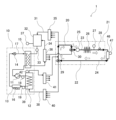
- FIG. 1 is a diagram showing a cooling/heating device according to an embodiment of the present invention.
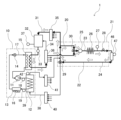
- FIG. 2 is a diagram showing a control system of the cooling/heating device according to the embodiment of the present invention.
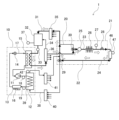
- FIG. 3 is a diagram showing a flow path of circulating fluid in the cooling/heating device according to the embodiment of the present invention.
- FIG. 4 is a diagram showing a flow path of circulating fluid in the cooling/heating device according to the embodiment of the present invention.
- FIG. 5 is a diagram showing a flow path of circulating fluid in the cooling/heating device according to the embodiment of the present invention.
- FIG. 6 is a diagram showing a flow path of circulating fluid in the cooling/heating device according to the embodiment of the present invention.
- FIG. 1 is a diagram showing a schematic configuration of a cooling/heating device 1 according to an embodiment of the present invention.
- a cooling/heating device 1 controls an object 46 to be controlled, such as various manufacturing devices such as a semiconductor manufacturing device, or various measuring devices used in a semiconductor manufacturing process, to a predetermined temperature according to the process. This is a device used to adjust the object 46 to be controlled, such as various manufacturing devices such as a semiconductor manufacturing device, or various measuring devices used in a semiconductor manufacturing process, to a predetermined temperature according to the process. This is a device used to adjust the object 46 to be controlled, such as various manufacturing devices such as a semiconductor manufacturing device, or various measuring devices used in a semiconductor manufacturing process, to a predetermined temperature according to the process. This is a device used to adjust the object 46 to be controlled, such as various manufacturing devices such as a semiconductor manufacturing device, or various measuring devices used in a semiconductor manufacturing process, to a predetermined temperature according to the process. This is a device used to adjust the object 46 to be controlled, such as
- the cooling/heating device 1 includes a refrigeration cycle circuit 10 that forms a vapor compression refrigeration cycle and cools or heats circulating fluid with a refrigerant, and a refrigeration cycle circuit 10 that circulates the circulating fluid cooled or heated in the refrigeration cycle circuit 10 to send it to a controlled object 46.
- the circulating fluid circuit 20 adjusts the temperature of the controlled object 46 by adjusting the temperature of the controlled object 46.
- the circulating fluid circulating in the circulating fluid circuit 20 contains, for example, water.
- the circulating fluid is cooled or heated by the refrigerant in the refrigeration cycle circuit 10, heated to a suitable temperature by the heater 26 in the circulating fluid circuit 20, and supplied to a controlled object 46 such as semiconductor manufacturing equipment.
- the controlled object 46 is cooled or heated by the circulating fluid adjusted to a suitable temperature, and controlled to have a suitable temperature suitable for each manufacturing process, measurement process, etc.
- the refrigeration cycle circuit 10 is formed by sequentially connecting a compressor 11 as a compression means, a gas cooler 12, a radiator 13 as a second gas cooler, an expansion valve 14 as a throttle means, and an evaporator 15 via a refrigerant pipe 17. has been done.
- the refrigeration cycle circuit 10 constitutes a closed circuit in which a refrigerant circulates and a vapor compression refrigeration cycle is operated.
- the compressor 11 is a compression means that compresses refrigerant and sends it to the gas cooler 12.
- various types of compression devices such as a rotary type, a scroll type, a reciprocating type, a screw type, and others can be adopted.
- the rotary compressor 11 is suitable for constructing a compact cooling/heating device 1 with a small cooling capacity.
- the compressor 11 may be of a two-stage compression type. Adopting a two-stage compression type as the compressor 11 is suitable for compressing carbon dioxide refrigerant which becomes high pressure.
- the gas cooler 12 is a heat exchanger that performs heat exchange between the refrigerant compressed by the compressor 11 and brought to a high pressure and high temperature, and the circulating fluid of the circulating fluid circuit 20.
- the gas cooler 12 is provided, for example, inside a high-temperature tank 39 in which circulating fluid is stored, and has a plurality of tubes through which a refrigerant flows, although not shown.
- the tube is, for example, a steel pipe.
- the tube of the gas cooler 12 has an inlet at the top and an outlet at the bottom so that the refrigerant flows from top to bottom, is wound into a substantially spiral shape, and is provided inside the high-temperature tank 39. .
- the refrigerant flowing through the gas cooler 12 can efficiently heat the circulating liquid in the high temperature tank 39.
- the circulating fluid in the high-temperature tank 39 can be heated by the refrigerant flowing through the gas cooler 12.
- the circulating fluid in order to heat the circulating fluid in the gas cooler 12, the circulating fluid is stored in the high-temperature tank 39 without providing a circulation pump or the like for flowing the circulating fluid into the high-temperature path 38 of the circulating fluid circuit 20.
- the circulating fluid can be heated to a high temperature by the gas cooler 12.
- the refrigeration cycle circuit 10 when the refrigeration cycle circuit 10 is operating to cool the circulating fluid using the latent heat of vaporization of the evaporator 15, the exhaust heat from the gas cooler 12 can be effectively used without circulating the circulating fluid through the high temperature path 38.
- the circulating fluid in the high temperature tank 39 can be heated to a high temperature.
- the gas cooler 12 may be provided outside the high-temperature tank 39 as long as the refrigerant can exchange heat with the circulating fluid.
- the gas cooler 12 may be a plate type heat exchanger, a shell and tube type heat exchanger, a double pipe type heat exchanger, or various other types of heat exchangers.
- the radiator 13 is a second gas cooler that releases heat of the refrigerant to the outside, and is provided downstream of the gas cooler 12.
- the radiator 13 is, for example, an air-cooled heat exchanger in which air to exchange heat with a refrigerant is sent by a blower fan 16.
- the heat radiator 13 may be a fin-and-tube heat exchanger. That is, the radiator 13 includes a plurality of tubes such as copper tubes through which a refrigerant flows, and a plurality of aluminum fins provided in parallel, and the tubes are inserted into holes formed in the fins. There is.
- the radiator 13 may be a water-cooled heat exchanger. Further, as the heat radiator 13, various types of heat exchangers such as a plate type, a shell and tube type, a double pipe type, and others can be adopted. In particular, a plate type heat exchanger is preferable because it has high heat exchange efficiency and allows the radiator 13 to be made compact.
- the radiator 13 is provided downstream of the gas cooler 12, so that the refrigerant whose temperature has been lowered by heating the circulating fluid in the gas cooler 12 can be further cooled to a lower temperature. Also, even when the circulating fluid in the high-temperature tank 39 becomes hot and there is no need to heat the circulating fluid with the refrigerant flowing through the gas cooler 12, the high-temperature refrigerant that has passed through the gas cooler 12 can be cooled by heat dissipation in the radiator 13.
- the cooling capacity of the refrigeration cycle circuit 10 i.e., the capacity to cool the circulating fluid by utilizing the latent heat of evaporation of the refrigerant in the evaporator 15, is exerted.
- the expansion valve 14 is a throttle means that reduces the pressure of the high-pressure refrigerant that has passed through the gas cooler 12 and the radiator 13 and has become low temperature. Furthermore, the expansion valve 14 has a function of adjusting the flow of refrigerant.
- an electronic expansion valve As the expansion valve 14, an electronic expansion valve, a thermostatic expansion valve, a capillary tube, and various other types of throttle means can be employed. By employing an electronic expansion valve as the expansion valve 14, cooling and heating of the circulating fluid by the refrigeration cycle circuit 10 can be controlled with high performance.
- the evaporator 15 is a heat exchanger that evaporates a low-pressure liquid refrigerant and cools the circulating liquid using its latent heat of evaporation.
- various types of heat exchangers such as a plate type, double pipe type, tube contact type, shell and tube type and others can be adopted.
- a plate type heat exchanger is preferable because it has high heat exchange efficiency and allows the evaporator 15 to be made compact.
- the double pipe type and the tube contact type are excellent in that they are easy to manufacture and process and can easily obtain suitable pressure resistance.
- a refrigerant pipe 17 downstream of the evaporator 15 is connected to the compressor 11 via an accumulator (not shown).
- a closed circuit of the refrigeration cycle circuit 10 is formed in which the compressor 11, gas cooler 12, radiator 13, expansion valve 14, and evaporator 15 are sequentially connected.
- the refrigerant used in the refrigeration cycle circuit 10 is carbon dioxide. Then, the carbon dioxide refrigerant heats the circulating fluid at supercritical pressure in the gas cooler 12. Thereby, the circulating fluid can be efficiently heated to a high temperature.
- the gas cooler 12 of the refrigeration cycle circuit 10 heats the circulating fluid to a high temperature range that was not possible with conventional condensers such as chillers that use HFC refrigerant, HFO refrigerant, or a mixture of these refrigerants. can do.
- the cooling/heating device 1 can raise the temperature of the circulating fluid to a high temperature in a short time even when changing the set temperature to a high temperature of 130° C. due to changes in processing steps or the like. Therefore, the cooling/heating device 1 can reduce time loss caused by temperature adjustment and improve productivity of semiconductor devices and the like. Further, since the amount of heating by the heater 26 of the circulating fluid circuit 20 can be reduced, the amount of energy consumed by the heater 26 can be reduced, and energy savings in semiconductor manufacturing and the like can be achieved.
- the refrigeration cycle circuit 10 is also provided with a refrigerant temperature sensor 18 that measures the temperature of the refrigerant, a pressure sensor 19 that measures the pressure of the refrigerant, and the like.
- the control device 43 (see FIG. 2), in addition to the set temperature and measured temperature information of the controlled object 46, based on the refrigerant temperature measured by the refrigerant temperature sensor 18, the refrigerant pressure measured by the pressure sensor 19, etc.
- the rotation speed of the compressor 11 and the opening degree of the expansion valve 14 are controlled.
- the circulating fluid circuit 20 constitutes a closed circuit in which circulating fluid that cools and heats the controlled object 46 circulates.
- the circulating fluid circuit 20 includes a plurality of circuit modules 21 that are connected to the controlled object 46 and circulate the circulating fluid, and a low-temperature circuit to which the circuit modules 21 are connected and the circulating fluid flows through the evaporator 15 so as to be able to exchange heat with the refrigerant. It has a path 31 and a high temperature path 38 to which the circuit module 21 is connected and through which the circulating fluid flows through the gas cooler 12 so as to be able to exchange heat with the refrigerant.
- the circuit module 21 is a device that supplies circulating fluid to the controlled object 46 and adjusts the temperature of the controlled object 46.
- Each circuit module 21 is formed with a basic circulation path 22 that is a basic closed circuit for circulating circulating fluid.
- the circuit module 21 is connected to a feed path 23 that supplies circulating fluid to a controlled object 46 such as semiconductor manufacturing equipment, and a return path 24 to which the circulating fluid that has cooled and heated the controlled object 46 is returned.
- a basic circulation path 22, which is a closed circuit, is formed.
- the feed path 23 of each circuit module 21 includes a circulation pump 25 that sends the circulating fluid to the controlled object 46, a heater 26 that heats the circulating fluid supplied to the controlled object 46 and adjusts the temperature, and a heater 26.
- a temperature sensor 27 is provided to measure the temperature of the circulating fluid heated by the temperature sensor 27 .
- the heater 26 is a resistance heating type electric heater or the like, and is, for example, a sheathed heater in which a nichrome wire serving as a heating element is covered with a metal pipe. Further, the heater 26 may be an induction heating type heating means, for example, an induction coil connected to an induction heating power source (not shown).
- the temperature sensor 27 is provided in the feed path 23 downstream of the heater 26 and measures the temperature of the circulating fluid heated by the heater 26.
- Circulation pump 25, heater 26, and temperature sensor 27 are connected to control device 43.
- the control device 43 controls the circulation pump 25 and the heater 26 so that the temperature of the circulating fluid measured by the temperature sensor 27 becomes a predetermined temperature. As a result, the temperature of the controlled object 46 is controlled to reach the set temperature.
- each circuit module 21 is provided with a solenoid valve 28 that opens and closes the feed path 23. Thereby, if temperature control is not required for the controlled object 46 connected to the circuit module 21, the solenoid valve 28 can be closed to stop the flow of the circulating fluid.
- the low temperature path 31 is a path for cooling the circulating fluid by the refrigeration cycle circuit 10.
- the low temperature path 31 has an inlet side connected to the return path 24 side of the circuit module 21 and an outlet side connected to the feed path 23 side of the circuit module 21 so as to form a bypass path for circulating fluid in the basic circulation path 22.
- the circulating fluid circulating in the basic circulation path 22 of the circuit module 21 can flow into the low temperature path 31 at the branch point that becomes the entrance of the low temperature path 31, and can also flow into the feed path 23 side without flowing into the low temperature path 31. It is also possible to flow.
- a mixing valve 30 is provided at the confluence of the outlet of the low temperature path 31 and the basic circulation path 22.
- the mixing valve 30 is a valve that mixes the circulating fluid that has passed through the low-temperature path 31 with the circulating fluid that is supplied to the controlled object 46 via the feed path 23 of the circuit module 21 . That is, the low temperature path 31 can be opened and closed by the mixing valve 30, and the flow rate can be adjusted.
- the mixing valve 30 it is also possible to perform an operation in which the circulating fluid cooled by the evaporator 15 is not supplied to the controlled object 46. That is, temperature adjustment is performed such that only the circulating fluid returned from the controlled object 46 or only the circulating fluid heated by the gas cooler 12 is sent to the feed path 23, heated by the heater 26, and supplied to the controlled object 46 for circulation. You can also drive.
- the low-temperature path 31 also includes a low-temperature tank 32 that stores circulating fluid, a low-temperature pump 33 that sends the circulating fluid, and a low-temperature circulation path 34 that returns the circulating fluid to the inlet side of the low-temperature path 31 without sending it to the controlled object 46. , is provided.
- a low temperature tank 32 is provided on the inlet side of the low temperature path 31, a low temperature pump 33 is provided downstream of the low temperature tank 32, and an evaporator 15 is provided downstream of the low temperature pump 33.
- the low temperature circulation path 34 may be provided to connect the system branch pipe 36 provided downstream of the evaporator 15 of the low temperature path 31 and the low temperature tank 32 provided on the inlet side of the low temperature path 31. good.
- the low temperature tank 32 is provided with a low temperature sensor 37 that measures the temperature of the circulating fluid within the low temperature tank 32.
- the low temperature pump 33 and the low temperature sensor 37 are connected to a control device 43.
- the control device 43 may control the operation of the circulation pump 25 and the low temperature pump 33, the opening degree adjustment of the mixing valve 30, etc. by using the temperature information of the circulating fluid measured by the low temperature sensor 37 for calculation.
- the low-temperature path 31 is provided with a low-temperature tank 32, a low-temperature pump 33 that sends circulating fluid, and a low-temperature circulation path 34 that returns the circulating fluid from the outlet side of the low-temperature path 31 to the inlet side. Therefore, even if the circulating fluid in the low-temperature path 31 is not used as the circulating fluid to be supplied to the controlled object 46, the circulating fluid in the low-temperature path 31 can be circulated and cooled by the refrigerant flowing through the evaporator 15. can.
- the circulating fluid cooled by the refrigerant is stored in the low-temperature tank 32, and the stored low-temperature circulating fluid can be supplied to the circulating fluid circuit 20 as needed.
- the circulating fluid when changing the set temperature of the controlled object 46 due to a change in the processing process or the like to significantly lower the temperature of the circulating fluid, it is possible to supply the circulating fluid at a low temperature stored in a cold tank to the circulating fluid circuit 20. .
- the temperature of the circulating fluid circulating in the circulating fluid circuit 20 can be rapidly lowered to a predetermined temperature in a short time. Therefore, the time required to change the set temperature can be significantly shortened, and the time loss associated with changing the temperature until starting a processing step, a measurement step, etc. can be reduced.
- the low temperature path 31 is provided with a low temperature tank 32, a low temperature pump 33, and a low temperature circulation path 34. Therefore, even if the circulating fluid in the low-temperature path 31 is not being supplied to the controlled object 46, the refrigeration cycle circuit 10 can be operated to heat the circulating fluid in the high-temperature path 38 with the refrigerant in the gas cooler 12.
- the high temperature path 38 is a path for heating the circulating fluid by the refrigeration cycle circuit 10.
- the high temperature path 38 has an inlet side connected to the return path 24 side of the circuit module 21 and an outlet side connected to the feed path 23 side of the circuit module 21 so as to form a bypass path for circulating fluid in the basic circulation path 22.
- the basic circulation path 22 of the circulating fluid circuit 20 is provided with a three-way valve 29 upstream of the branch point to the low temperature path 31.
- the three-way valve 29 is a valve that switches whether or not to send the circulating fluid returning from the controlled object 46 to the high temperature path 38 . That is, the high temperature path 38 can be opened and closed by the three-way valve 29.
- the inlet of the high temperature path 38 is connected to the three-way valve 29.
- the outlet of the high temperature path 38 is connected to the basic circulation path 22 downstream of the three-way valve 29 and upstream of the branch point to the low temperature path 31 .
- the high temperature path 38 is provided with a high temperature tank 39 that stores circulating fluid heated to a high temperature, and a high temperature sensor 42 that measures the temperature of the circulating fluid in the high temperature tank 39.
- a gas cooler 12 of the refrigeration cycle circuit 10 is provided inside the high temperature tank 39 so that the circulating fluid can be heated by the refrigerant.
- the high temperature tank 39 has an inlet for circulating fluid formed at the bottom and an outlet for circulating fluid at the top. Thereby, the high temperature circulating fluid stored in the high temperature tank 39 can be efficiently supplied to the controlled object 46.
- the low-temperature circulating fluid returning from the controlled object 46 flows into the high-temperature path 38 via the three-way valve 29, and flows into the high-temperature tank 39 from an inlet formed at the bottom of the high-temperature tank 39.
- the high-temperature circulating fluid stored in the high-temperature tank 39 is sent to the basic circulation path 22 from an outlet formed in the upper part of the high-temperature tank 39, and is supplied to the controlled object 46.
- the cooling/heating device 1 includes the high temperature tank 39 and can send the high temperature circulating fluid stored in the high temperature tank 39 to the basic circulation path 22. Therefore, for example, when changing the set temperature of the controlled object 46 to significantly increase the temperature of the circulating fluid due to changes in processing steps, etc., highly efficient temperature changes are possible.
- the high temperature circulating fluid stored in the high temperature tank 39 can be supplied to the circulating fluid circuit 20, and the temperature of the circulating fluid circulating in the circulating fluid circuit 20 can be rapidly raised to a predetermined temperature in a short time. Therefore, the cooling/heating device 1 can significantly shorten the time required to change the set temperature, and reduce the time loss associated with temperature changes until starting processing steps, measurement steps, etc.
- control device 43 may use temperature information of the circulating fluid in the high temperature tank 39 measured by the high temperature sensor 42 for calculations that perform opening/closing control of the three-way valve 29. Thereby, the flow in the high temperature path 38 can be controlled according to the amount of high temperature circulating fluid stored in the high temperature tank 39. Therefore, when the high-temperature circulating fluid stored in the high-temperature tank 39 is insufficient, it is possible to prevent low-temperature circulating fluid from being sent to the basic circulation path 22 and causing a time loss in changing the temperature.
- the low-temperature path 31 and the high-temperature path 38 are provided with system merging pipes 35 and 40 and system branch pipes 36 and 41 that connect the plurality of circuit modules 21.
- the low temperature path 31 is provided with a system merging pipe 35 on the inlet side and a system branch pipe 36 on the exit side.
- the high temperature path 38 is provided with a system merging pipe 40 on the inlet side and a system branch pipe 41 on the exit side.
- circuit modules 21, for example, 2 to 8 or more circuit modules 21, are connected to the low temperature path 31 and the high temperature path 38 via the system merging pipes 35, 40 and the system branch pipes 36, 41. can do.
- Each of the plurality of circuit modules 21 has a circulation pump 25 and a heater 26, and can circulate circulating fluid to a different controlled object 46.
- a circulation pump 25 and a heater 26 can circulate circulating fluid to a different controlled object 46.
- FIG. 2 is a block diagram showing the control system of the cooling/heating device 1.
- the cooling/heating device 1 includes a control device 43 that controls each component.
- the control device 43 is a control means equipped with a microprocessor, and controls the temperature of the controlled object 46 (see FIG. 1) by executing predetermined calculations.
- Inputs of the control device 43 include a refrigerant temperature sensor 18 that detects the temperature of the refrigerant, a pressure sensor 19 that detects the pressure of the refrigerant, a temperature sensor 27 that detects the temperature of the circulating fluid supplied to the controlled object 46, and a low temperature path 31. Sensors such as a low temperature sensor 37 that detects the temperature of the circulating fluid in the high temperature path 38, a high temperature sensor 42 that detects the temperature of the circulating fluid in the high temperature path 38, and a temperature sensor 47 that detects the temperature of the controlled object 46 are connected.
- the output of the control device 43 includes the compressor 11, expansion valve 14, and blower fan 16 of the refrigeration cycle circuit 10, as well as the circulation pump 25, heater 26, solenoid valve 28, three-way valve 29, and mixing valve 30 of the circulating liquid circuit 20. and a low temperature pump 33 etc. are connected.
- the control device 43 is also provided with an input device 44 for inputting the set temperature of the controlled object 46 and other operating information, and a display device 45 for displaying temperature information and other control information for each part. Note that other not-illustrated sensors, information input devices, display devices, control target devices, recording devices, etc. may be connected to the control device 43.
- the control device 43 performs a predetermined calculation based on input from the refrigerant temperature sensor 18, pressure sensor 19, temperature sensor 27, low temperature sensor 37, high temperature sensor 42, temperature sensor 47, and input device 44, and controls the compressor 11, expansion valve 14, blower fan 16, circulation pump 25, heater 26, solenoid valve 28, three-way valve 29, mixing valve 30, and low temperature pump 33, etc.
- FIG. 3 is a diagram showing the flow path of the circulating fluid, and shows an example in which the circulating fluid cooled or heated in the refrigeration cycle circuit 10 is not used.
- the path through which the circulating fluid flows is shown by a thick line, and the flow direction is shown by an arrow.
- the circulating fluid cooled by the evaporator 15 and the circulating fluid heated by the gas cooler 12 are controlled. 46 may also be omitted. That is, the circulating fluid circulates through the basic circulation path 22 without passing through the low temperature path 31 and the high temperature path 38. In this way, the circulating fluid flowing through the low-temperature path 31 or the high-temperature path 38 is not sent to the feed path 23, and only the circulating fluid returned from the controlled object 46 is sent directly to the feed path 23, heated by the heater 26, and controlled. It is also possible to perform a temperature adjustment operation in which it is sent to the target 46 and circulated.
- FIG. 4 is a diagram showing the flow path of the circulating fluid when temperature adjustment operation is performed using the circulating fluid cooled in the refrigeration cycle circuit 10.
- the path through which the circulating fluid flows is shown by a thick line, and the flow direction is shown by an arrow.
- the mixing valve 30 is controlled by the control device 43 (see FIG. 2), so that the circulating fluid flows through the low temperature path 31. Path 31 is opened.
- a part of the circulating fluid returned from the controlled object 46 flows through the low temperature path 31 and is cooled using the latent heat of the refrigerant evaporated in the evaporator 15 of the refrigeration cycle circuit 10.
- the circulating fluid cooled in the refrigeration cycle circuit 10 merges with the circulating fluid in the basic circulation path 22 that did not flow through the low-temperature path 31, and is heated to a predetermined temperature by the heater 26, so that the controlled object 46 reaches the set temperature. It is supplied to the controlled object 46 at a suitable temperature so as to achieve the desired temperature.
- FIG. 5 is a diagram showing another example of utilizing the circulating fluid cooled by the refrigeration cycle circuit 10.
- the path through which the circulating fluid flows is shown by a thick line, and the flow direction is shown by an arrow.
- the mixing valve 30 may be controlled to open the low temperature path 31 100%. That is, the circulating fluid returning from the controlled object 46 does not directly pass through the mixing valve 30, but all passes through the low temperature path 31. Then, only the circulating fluid cooled by the refrigerant in the refrigeration cycle circuit 10 passes through the mixing valve 30 and is sent to the feed path 23.
- FIG. 6 is a diagram showing the flow path of the circulating fluid when temperature adjustment operation is performed using the circulating fluid heated in the refrigeration cycle circuit 10.
- the path through which the circulating fluid flows is shown by a thick line, and the flow direction is shown by an arrow.
- the three-way valve 29 is controlled by the control device 43 (see FIG. 2).
- Hot path 38 of circuit 20 is opened.
- the circulating liquid in the high-temperature tank 39 which has become high in temperature using the heat dissipation of the refrigerant flowing through the gas cooler 12 of the refrigeration cycle circuit 10, is sent to the basic circulation path 22.
- the circulating fluid heated in the refrigeration cycle circuit 10 is sent to the feed path 23 via the mixing valve 30, and heated to a predetermined temperature by the heater 26, which is suitable for controlling the controlled object 46 to the correct set temperature. It is supplied to the controlled object 46 at a temperature of
- the heat dissipated by the gas cooler 12 of the refrigeration cycle circuit 10 is used to heat the circulating fluid and store it in the high temperature tank 39, and the high temperature circulating fluid stored in the high temperature tank 39 is supplied to the basic circulation path 22.
- the temperature of the circulating fluid flowing through the basic circulation path 22 can be changed to a high temperature in a short time. Therefore, the energy consumed by the heater 26 of the circulating fluid circuit 20 can be suppressed to a low level, and highly efficient temperature adjustment can be performed.
- the control device 43 opens the three-way valve 29
- the high temperature circulating fluid stored in the high temperature tank 39 is sent to the basic circulation path 22.
- the three-way valve 29 is closed by the control device 43 to circulate the fluid, as shown in FIGS. 3, 4, and 5.
- a normal temperature adjustment operation in which the liquid does not flow through the high temperature path 38 may be performed.
- an operation may be performed in which the circulating fluid circulating through the basic circulation path 22 is heated only by the heater 26 and the temperature is adjusted without using the refrigeration cycle circuit 10. Further, as shown in FIG. 4, an operation may be performed in which the circulating fluid circulating in the basic circulation path 22 is mixed with a low-temperature refrigerant flowing in the low-temperature path 31 to adjust the temperature. In addition, as shown in FIG. 5, the temperature adjustment operation is performed in which the low-temperature path 31 is 100% opened by the mixing valve 30 and all the circulating fluid circulating in the basic circulation path 22 is sent to the feed path 23 via the low-temperature path 31. may be performed.
- Temperature adjustment can be performed using small cooling and heating capacities corresponding to the above.
- the cooling/heating device 1 can circulate the circulating fluid through a suitable path depending on the situation of the controlled object 46, change the set temperature efficiently in a short time, and efficiently adjust the temperature of the controlled object 46. It can be adjusted with low energy consumption.
- the cooling/heating device 1 utilizes both cold heat and warm heat generated in the refrigeration cycle circuit 10 to reduce waste heat loss for the controlled object 46 such as semiconductor manufacturing equipment. Highly efficient temperature adjustment can be performed.
- Cooling and heating device 10
- Refrigeration cycle circuit 11
- Compressor 12 Gas cooler 13
- Heat radiator 14 Expansion valve 15
- Evaporator 16 Blow fan 17
- Refrigerant piping 18
- Pressure sensor 20
- Circulating fluid circuit 21 Circuit module 22
- Basic circulation path 23
- Feeding path 24
- Return path 25
- Circulation pump 26
- Heater 27
- Temperature sensor 28
- Solenoid valve Three-way valve 30
- Mixing valve 31
- Low temperature path 32
- Low temperature pump 34 Low temperature circulation path 35
- System merging pipe 36
- System branch pipe 37 Low temperature sensor 38
- High temperature path 39
- High temperature tank 40 40
- System merging pipe 41
- System branch pipe 42
- Control device 44 44
- Display device 46
- Control target 47 47
Landscapes
- Engineering & Computer Science (AREA)
- Physics & Mathematics (AREA)
- Thermal Sciences (AREA)
- Mechanical Engineering (AREA)
- General Engineering & Computer Science (AREA)
- Chemical & Material Sciences (AREA)
- Combustion & Propulsion (AREA)
- Cooling Or The Like Of Semiconductors Or Solid State Devices (AREA)
Priority Applications (5)
| Application Number | Priority Date | Filing Date | Title |
|---|---|---|---|
| JP2024546643A JP7650118B2 (ja) | 2022-09-15 | 2022-09-15 | 冷却加熱装置 |
| PCT/JP2022/034637 WO2024057506A1 (ja) | 2022-09-15 | 2022-09-15 | 冷却加熱装置 |
| US19/111,228 US20250264253A1 (en) | 2022-09-15 | 2022-09-15 | Cooling and heating device |
| EP22958826.4A EP4589216A1 (en) | 2022-09-15 | 2022-09-15 | Cooling and heating device |
| TW112134761A TW202414517A (zh) | 2022-09-15 | 2023-09-13 | 冷卻加熱裝置 |
Applications Claiming Priority (1)
| Application Number | Priority Date | Filing Date | Title |
|---|---|---|---|
| PCT/JP2022/034637 WO2024057506A1 (ja) | 2022-09-15 | 2022-09-15 | 冷却加熱装置 |
Publications (1)
| Publication Number | Publication Date |
|---|---|
| WO2024057506A1 true WO2024057506A1 (ja) | 2024-03-21 |
Family
ID=90274664
Family Applications (1)
| Application Number | Title | Priority Date | Filing Date |
|---|---|---|---|
| PCT/JP2022/034637 Ceased WO2024057506A1 (ja) | 2022-09-15 | 2022-09-15 | 冷却加熱装置 |
Country Status (5)
| Country | Link |
|---|---|
| US (1) | US20250264253A1 (https=) |
| EP (1) | EP4589216A1 (https=) |
| JP (1) | JP7650118B2 (https=) |
| TW (1) | TW202414517A (https=) |
| WO (1) | WO2024057506A1 (https=) |
Citations (7)
| Publication number | Priority date | Publication date | Assignee | Title |
|---|---|---|---|---|
| JPH0791754A (ja) * | 1993-09-28 | 1995-04-04 | Sanyo Electric Co Ltd | 空気調和機 |
| JP2005205876A (ja) * | 2003-12-25 | 2005-08-04 | Innotech Corp | 加熱冷却装置 |
| CN104296276A (zh) * | 2014-09-01 | 2015-01-21 | 中国电器科学研究院有限公司 | 一种环境室工况调节系统 |
| JP2015059726A (ja) | 2013-09-20 | 2015-03-30 | 株式会社ナカヤ | エリア別パラメータ制御方式ハイブリッドチラー及びそれを用いた循環液温度調節方法 |
| JP2016132429A (ja) * | 2015-01-22 | 2016-07-25 | 株式会社デンソー | 車両用冷凍サイクル装置 |
| JP2020045068A (ja) * | 2018-09-21 | 2020-03-26 | サンデンホールディングス株式会社 | 車両用空調システム |
| JP2022020088A (ja) | 2020-06-26 | 2022-02-01 | キヤノン株式会社 | 冷却装置、半導体製造装置および半導体製造方法 |
Family Cites Families (5)
| Publication number | Priority date | Publication date | Assignee | Title |
|---|---|---|---|---|
| BRPI0712184A2 (pt) * | 2006-06-07 | 2012-01-17 | Waters Hot Inc | sistema e método de aquecimento e resfriamento de energia térmica renovável |
| JP5866000B2 (ja) * | 2012-04-25 | 2016-02-17 | 株式会社日立製作所 | 空調給湯システム |
| MX369977B (es) * | 2013-09-26 | 2019-11-27 | Nooter/Eriksen Inc | Sistema y metodo de intercambio de calor para un generador de vapor de recuperacion de calor. |
| JP6398764B2 (ja) * | 2015-02-06 | 2018-10-03 | 株式会社デンソー | 車両用熱管理システム |
| DE102016110443B4 (de) * | 2016-06-06 | 2018-03-29 | Konvekta Aktiengesellschaft | Kälteanlage, Kälteanlagensystem und Verfahren mit Kältemittelverlagerung |
-
2022
- 2022-09-15 WO PCT/JP2022/034637 patent/WO2024057506A1/ja not_active Ceased
- 2022-09-15 US US19/111,228 patent/US20250264253A1/en not_active Abandoned
- 2022-09-15 JP JP2024546643A patent/JP7650118B2/ja active Active
- 2022-09-15 EP EP22958826.4A patent/EP4589216A1/en not_active Withdrawn
-
2023
- 2023-09-13 TW TW112134761A patent/TW202414517A/zh unknown
Patent Citations (7)
| Publication number | Priority date | Publication date | Assignee | Title |
|---|---|---|---|---|
| JPH0791754A (ja) * | 1993-09-28 | 1995-04-04 | Sanyo Electric Co Ltd | 空気調和機 |
| JP2005205876A (ja) * | 2003-12-25 | 2005-08-04 | Innotech Corp | 加熱冷却装置 |
| JP2015059726A (ja) | 2013-09-20 | 2015-03-30 | 株式会社ナカヤ | エリア別パラメータ制御方式ハイブリッドチラー及びそれを用いた循環液温度調節方法 |
| CN104296276A (zh) * | 2014-09-01 | 2015-01-21 | 中国电器科学研究院有限公司 | 一种环境室工况调节系统 |
| JP2016132429A (ja) * | 2015-01-22 | 2016-07-25 | 株式会社デンソー | 車両用冷凍サイクル装置 |
| JP2020045068A (ja) * | 2018-09-21 | 2020-03-26 | サンデンホールディングス株式会社 | 車両用空調システム |
| JP2022020088A (ja) | 2020-06-26 | 2022-02-01 | キヤノン株式会社 | 冷却装置、半導体製造装置および半導体製造方法 |
Also Published As
| Publication number | Publication date |
|---|---|
| JP7650118B2 (ja) | 2025-03-24 |
| JPWO2024057506A1 (https=) | 2024-03-21 |
| US20250264253A1 (en) | 2025-08-21 |
| EP4589216A1 (en) | 2025-07-23 |
| TW202414517A (zh) | 2024-04-01 |
Similar Documents
| Publication | Publication Date | Title |
|---|---|---|
| KR101212698B1 (ko) | 히트 펌프식 급탕장치 | |
| CN102124286B (zh) | 制冷装置 | |
| US20060107683A1 (en) | Air conditioning system and method for controlling the same | |
| CN110618085B (zh) | 测试室和方法 | |
| CN117750720A (zh) | 双冷源热管理系统及其控制方法、控制设备和介质 | |
| CN106016541A (zh) | 自然冷机房空调及其过冷度控制方法 | |
| WO2014115497A1 (ja) | 暖房システム | |
| JP2009236403A (ja) | 地熱利用ヒートポンプ装置 | |
| JP6133129B2 (ja) | 温度制御装置 | |
| JP2007303806A (ja) | 冷凍サイクル装置とその運転方法 | |
| US11656016B2 (en) | Cooling system that comprises multiple cooling apparatus and reduces power consumption | |
| CN109341121B (zh) | 一种制冷系统和控制方法 | |
| JP2007093100A (ja) | ヒートポンプ給湯機の制御方法及びヒートポンプ給湯機 | |
| JP7650118B2 (ja) | 冷却加熱装置 | |
| CN209147486U (zh) | 一种制冷系统 | |
| JP2022046849A (ja) | 冷温同時温度調整装置 | |
| JP6496346B2 (ja) | 温度制御装置 | |
| JP5056026B2 (ja) | 自動販売機 | |
| JP7019215B1 (ja) | 冷温同時温度調整装置 | |
| JP7708479B2 (ja) | 加熱装置及びそれを備えた温度調整装置 | |
| JP2002277138A (ja) | 熱媒体流体用の温度調整装置 | |
| JPWO2019026234A1 (ja) | 冷凍サイクル装置 | |
| JP6650062B2 (ja) | 環境試験装置 | |
| CN223487155U (zh) | 电化学储能热管理用的压缩机温控系统 | |
| JP2011075185A (ja) | 恒温庫 |
Legal Events
| Date | Code | Title | Description |
|---|---|---|---|
| 121 | Ep: the epo has been informed by wipo that ep was designated in this application |
Ref document number: 22958826 Country of ref document: EP Kind code of ref document: A1 |
|
| WWE | Wipo information: entry into national phase |
Ref document number: 2024546643 Country of ref document: JP |
|
| WWE | Wipo information: entry into national phase |
Ref document number: 2022958826 Country of ref document: EP |
|
| NENP | Non-entry into the national phase |
Ref country code: DE |
|
| ENP | Entry into the national phase |
Ref document number: 2022958826 Country of ref document: EP Effective date: 20250415 |
|
| WWP | Wipo information: published in national office |
Ref document number: 2022958826 Country of ref document: EP |
|
| WWW | Wipo information: withdrawn in national office |
Ref document number: 2022958826 Country of ref document: EP |