WO2024048633A1 - 組成物、硬化物、表示装置、及び固体撮像素子 - Google Patents
組成物、硬化物、表示装置、及び固体撮像素子 Download PDFInfo
- Publication number
- WO2024048633A1 WO2024048633A1 PCT/JP2023/031424 JP2023031424W WO2024048633A1 WO 2024048633 A1 WO2024048633 A1 WO 2024048633A1 JP 2023031424 W JP2023031424 W JP 2023031424W WO 2024048633 A1 WO2024048633 A1 WO 2024048633A1
- Authority
- WO
- WIPO (PCT)
- Prior art keywords
- group
- formula
- acid
- meth
- acrylate
- Prior art date
- Legal status (The legal status is an assumption and is not a legal conclusion. Google has not performed a legal analysis and makes no representation as to the accuracy of the status listed.)
- Ceased
Links
Classifications
-
- G—PHYSICS
- G03—PHOTOGRAPHY; CINEMATOGRAPHY; ANALOGOUS TECHNIQUES USING WAVES OTHER THAN OPTICAL WAVES; ELECTROGRAPHY; HOLOGRAPHY
- G03F—PHOTOMECHANICAL PRODUCTION OF TEXTURED OR PATTERNED SURFACES, e.g. FOR PRINTING, FOR PROCESSING OF SEMICONDUCTOR DEVICES; MATERIALS THEREFOR; ORIGINALS THEREFOR; APPARATUS SPECIALLY ADAPTED THEREFOR
- G03F7/00—Photomechanical, e.g. photolithographic, production of textured or patterned surfaces, e.g. printing surfaces; Materials therefor, e.g. comprising photoresists; Apparatus specially adapted therefor
- G03F7/004—Photosensitive materials
- G03F7/0045—Photosensitive materials with organic non-macromolecular light-sensitive compounds not otherwise provided for, e.g. dissolution inhibitors
-
- C—CHEMISTRY; METALLURGY
- C08—ORGANIC MACROMOLECULAR COMPOUNDS; THEIR PREPARATION OR CHEMICAL WORKING-UP; COMPOSITIONS BASED THEREON
- C08F—MACROMOLECULAR COMPOUNDS OBTAINED BY REACTIONS ONLY INVOLVING CARBON-TO-CARBON UNSATURATED BONDS
- C08F265/00—Macromolecular compounds obtained by polymerising monomers on to polymers of unsaturated monocarboxylic acids or derivatives thereof as defined in group C08F20/00
- C08F265/04—Macromolecular compounds obtained by polymerising monomers on to polymers of unsaturated monocarboxylic acids or derivatives thereof as defined in group C08F20/00 on to polymers of esters
- C08F265/06—Polymerisation of acrylate or methacrylate esters on to polymers thereof
-
- C—CHEMISTRY; METALLURGY
- C08—ORGANIC MACROMOLECULAR COMPOUNDS; THEIR PREPARATION OR CHEMICAL WORKING-UP; COMPOSITIONS BASED THEREON
- C08F—MACROMOLECULAR COMPOUNDS OBTAINED BY REACTIONS ONLY INVOLVING CARBON-TO-CARBON UNSATURATED BONDS
- C08F290/00—Macromolecular compounds obtained by polymerising monomers on to polymers modified by introduction of aliphatic unsaturated end or side groups
- C08F290/08—Macromolecular compounds obtained by polymerising monomers on to polymers modified by introduction of aliphatic unsaturated end or side groups on to polymers modified by introduction of unsaturated side groups
- C08F290/12—Polymers provided for in subclasses C08C or C08F
- C08F290/126—Polymers of unsaturated carboxylic acids or derivatives thereof
-
- C—CHEMISTRY; METALLURGY
- C08—ORGANIC MACROMOLECULAR COMPOUNDS; THEIR PREPARATION OR CHEMICAL WORKING-UP; COMPOSITIONS BASED THEREON
- C08G—MACROMOLECULAR COMPOUNDS OBTAINED OTHERWISE THAN BY REACTIONS ONLY INVOLVING UNSATURATED CARBON-TO-CARBON BONDS
- C08G75/00—Macromolecular compounds obtained by reactions forming a linkage containing sulfur with or without nitrogen, oxygen, or carbon in the main chain of the macromolecule
- C08G75/02—Polythioethers
- C08G75/06—Polythioethers from cyclic thioethers
-
- C—CHEMISTRY; METALLURGY
- C08—ORGANIC MACROMOLECULAR COMPOUNDS; THEIR PREPARATION OR CHEMICAL WORKING-UP; COMPOSITIONS BASED THEREON
- C08L—COMPOSITIONS OF MACROMOLECULAR COMPOUNDS
- C08L101/00—Compositions of unspecified macromolecular compounds
- C08L101/12—Compositions of unspecified macromolecular compounds characterised by physical features, e.g. anisotropy, viscosity or electrical conductivity
-
- G—PHYSICS
- G03—PHOTOGRAPHY; CINEMATOGRAPHY; ANALOGOUS TECHNIQUES USING WAVES OTHER THAN OPTICAL WAVES; ELECTROGRAPHY; HOLOGRAPHY
- G03F—PHOTOMECHANICAL PRODUCTION OF TEXTURED OR PATTERNED SURFACES, e.g. FOR PRINTING, FOR PROCESSING OF SEMICONDUCTOR DEVICES; MATERIALS THEREFOR; ORIGINALS THEREFOR; APPARATUS SPECIALLY ADAPTED THEREFOR
- G03F7/00—Photomechanical, e.g. photolithographic, production of textured or patterned surfaces, e.g. printing surfaces; Materials therefor, e.g. comprising photoresists; Apparatus specially adapted therefor
- G03F7/004—Photosensitive materials
- G03F7/027—Non-macromolecular photopolymerisable compounds having carbon-to-carbon double bonds, e.g. ethylenic compounds
- G03F7/028—Non-macromolecular photopolymerisable compounds having carbon-to-carbon double bonds, e.g. ethylenic compounds with photosensitivity-increasing substances, e.g. photoinitiators
-
- G—PHYSICS
- G03—PHOTOGRAPHY; CINEMATOGRAPHY; ANALOGOUS TECHNIQUES USING WAVES OTHER THAN OPTICAL WAVES; ELECTROGRAPHY; HOLOGRAPHY
- G03F—PHOTOMECHANICAL PRODUCTION OF TEXTURED OR PATTERNED SURFACES, e.g. FOR PRINTING, FOR PROCESSING OF SEMICONDUCTOR DEVICES; MATERIALS THEREFOR; ORIGINALS THEREFOR; APPARATUS SPECIALLY ADAPTED THEREFOR
- G03F7/00—Photomechanical, e.g. photolithographic, production of textured or patterned surfaces, e.g. printing surfaces; Materials therefor, e.g. comprising photoresists; Apparatus specially adapted therefor
- G03F7/004—Photosensitive materials
- G03F7/027—Non-macromolecular photopolymerisable compounds having carbon-to-carbon double bonds, e.g. ethylenic compounds
- G03F7/032—Non-macromolecular photopolymerisable compounds having carbon-to-carbon double bonds, e.g. ethylenic compounds with binders
-
- G—PHYSICS
- G09—EDUCATION; CRYPTOGRAPHY; DISPLAY; ADVERTISING; SEALS
- G09F—DISPLAYING; ADVERTISING; SIGNS; LABELS OR NAME-PLATES; SEALS
- G09F9/00—Indicating arrangements for variable information in which the information is built-up on a support by selection or combination of individual elements
- G09F9/30—Indicating arrangements for variable information in which the information is built-up on a support by selection or combination of individual elements in which the desired character or characters are formed by combining individual elements
Definitions
- the present invention relates to a composition.
- the present invention also relates to a cured product of the composition, a display device including the cured product, and a solid-state imaging device including the cured product.
- Lenses can be obtained from highly refractive materials and can control the optical path within an optical device. Lenses are used in solid-state image sensors to improve the efficiency of light collection to each photoelectric conversion element, and lenses are used in display devices to improve the efficiency of light extraction from pixels. Conventionally, various high refractive materials have been developed (for example, Patent Document 1).
- a composition containing a compound represented by formula (I) and an alkali-soluble resin [In formula (I), n represents any integer from 0 to 6, L represents a single bond or a divalent group, and multiple Ls may be the same or different, R 11 represents a monovalent substituent, and when there are multiple R 11s , the multiple R 11s may be the same or different, R 12 is selected from the group consisting of a hydrogen atom, formula (1a), and formula (1b), and a plurality of R 12s may be the same or different.
- A represents an O atom or an S atom, and when there are multiple A's in formula (I), the multiple A's may be the same or different, m a represents 0 or 1, and when there is a plurality of m a in formula (I), the plural m a may be the same or different, R 2 represents a hydrogen atom or a monovalent substituent, and when there is a plurality of R 2 , the plurality of R 2 may be the same or different, * represents a bond with L.
- R 13 represents a monovalent substituent, and when there are multiple R 13s , the multiple R 13s may be the same or different, * represents a bond with L.
- the resin contains one polymerizable group selected from the group consisting of a (meth)acryloyl group, a mercapto group, a cyclic ether group having 2 to 4 carbon atoms, and a cyclic sulfide group having 2 to 4 carbon atoms.
- the compound represented by formula (I) is a compound represented by any one of [1] to [3], including a compound in which multiple R 12s in formula (I) are represented by formula (1a). Compositions as described.
- [5] A cured product of the composition according to any one of [1] to [4].
- [6] A display device comprising the cured product according to [5].
- [7] A solid-state imaging device comprising the cured product according to [5].
- composition (I) comprises a compound represented by formula (I) (hereinafter also referred to as “compound (I)”) and an alkali-soluble resin (hereinafter also referred to as “compound (I)”). (also referred to as “resin (I)”).
- compound (I) By containing compound (I), composition (I) can provide a cured product exhibiting a high refractive index, and can also exhibit excellent curability.
- Composition (I) may contain two or more types of compound (I).
- Composition (I) may contain two or more types of resin (I).
- Composition (I) may contain compound (I), resin (I), and other components other than these.
- a molded article containing a cured product of composition (I) can be formed. The molded product containing the cured product is a product containing the cured product and molded into a desired shape.
- Compound (I) is a compound represented by formula (I).
- n represents any integer from 0 to 6
- L represents a single bond or a divalent group, and multiple Ls may be the same or different
- R 11 represents a monovalent substituent, and when there are multiple R 11s , the multiple R 11s may be the same or different
- R 12 is selected from the group consisting of a hydrogen atom, formula (1a), and formula (1b), and a plurality of R 12s may be the same or different.
- A represents an O atom or an S atom, and when there are multiple A's in formula (I), the multiple A's may be the same or different, m a represents 0 or 1, and when there is a plurality of m a in formula (I), the plural m a may be the same or different, R 2 represents a hydrogen atom or a monovalent substituent, and when there is a plurality of R 2 , the plurality of R 2 may be the same or different, * represents a bond with L.
- R 13 represents a monovalent substituent, and when there are multiple R 13s , the multiple R 13s may be the same or different, * represents a bond with L.
- Formula (I) is a group represented by the two following formulas may be bonded to any of the 1st to 4th positions of the naphthalene ring, or any of the 5th to 8th positions, and one group may be bonded to any of the 1st to 4th positions of the naphthalene ring. represents that the other group may be bonded to any position from the 5th to 8th positions of the naphthalene ring. The same applies to the two R 11s .
- L represents a single bond or a divalent group.
- each independently includes, for example, a divalent aliphatic chain hydrocarbon group which may have a substituent, a divalent aliphatic chain hydrocarbon group which may have a substituent, A divalent hydrocarbon group such as an alicyclic hydrocarbon group, a divalent aromatic hydrocarbon group which may have a substituent, and a divalent group consisting of a combination thereof (aralkylene group, etc.) Can be mentioned.
- -CH 2 - contained in the divalent hydrocarbon group is -O-, -S-, -NR 1A - (R 1A represents a hydrogen atom or an alkyl group having 1 to 6 carbon atoms), -CO-, It may be substituted with -SO 2 -.
- divalent aliphatic chain hydrocarbon group examples include saturated or unsaturated aliphatic chain hydrocarbon groups, and specifically, methylene group, ethylene group, propanediyl group, butanediyl group, pentanediyl group, etc.
- the divalent aliphatic chain hydrocarbon group may be linear or branched.
- the number of carbon atoms in the divalent aliphatic chain hydrocarbon group is usually 1 to 20, preferably 1 to 10, more preferably 1 to 6, still more preferably 1 to 4, even more preferably 1 or 2. be.
- substituents that the divalent aliphatic chain hydrocarbon group may have include halogen atoms such as fluorine atom, chlorine atom, bromine atom, and iodine atom, hydroxy group, amino group, acetyl group, and cyano group. Examples include groups.
- divalent alicyclic hydrocarbon group examples include saturated or unsaturated alicyclic hydrocarbon groups, specifically cyclopropanediyl group, cyclobutanediyl group, cyclopentanediyl group, cyclohexanediyl group.
- monocyclic alicyclic hydrocarbon groups such as group, cyclooctanediyl group, cyclononanediyl group, cyclodecanediyl group; bicyclo[1.1.0]butanediyl group, tricyclo[2.2.1.0]heptanediyl group group, bicyclo[3.2.1]octanediyl group, bicyclo[2.2.2.
- Polycyclic alicyclic hydrocarbon groups such as an octanediyl group, an adamantanediyl group, a bicyclo[4.3.2]undecanediyl group, and a tricyclo[5.3.1.1]dodecanediyl group.
- the divalent alicyclic hydrocarbon group usually has 3 to 20 carbon atoms, preferably 3 to 10 carbon atoms, more preferably 3 to 6 carbon atoms, and still more preferably 5 or 6 carbon atoms.
- substituents that the divalent alicyclic hydrocarbon group may have include methyl group, ethyl group, propyl group, butyl group, pentyl group, hexyl group, heptyl group, octyl group, nonyl group, Alkyl groups having 1 to 10 carbon atoms (preferably 1 to 4 carbon atoms) such as decyl groups, halogen atoms such as fluorine atoms, chlorine atoms, bromine atoms, and iodine atoms, hydroxy groups, amino groups, acetyl groups, cyano Examples include groups.
- the divalent aromatic hydrocarbon group may be monocyclic or polycyclic, and includes, for example, a phenylene group, a naphthylene group, an anthracenediyl group, a fluorenediyl group, and the like.
- the divalent aromatic hydrocarbon group usually has 6 to 20 carbon atoms, preferably 6 to 10 carbon atoms.
- substituents that the divalent aromatic hydrocarbon group may have include methyl group, ethyl group, propyl group, butyl group, pentyl group, hexyl group, heptyl group, octyl group, nonyl group, and decyl group.
- At least one of the two L's is a single bond or an alkanediyl group, and more preferably both are a single bond or an alkanediyl group.
- the alkanediyl group preferably has 1 to 10 carbon atoms, more preferably 1 to 6 carbon atoms, still more preferably 1 to 4 carbon atoms, and even more preferably 1 or 2 carbon atoms.
- the two n's are each independently an integer of 0 to 3, preferably an integer of 0 to 2, and more preferably 0 or 1. More preferably, both n's are 0.
- R 11 representing a monovalent substituent
- each independently represents, for example, a monovalent aliphatic chain hydrocarbon group which may have a substituent, a monovalent aliphatic chain hydrocarbon group which may have a substituent, monovalent alicyclic hydrocarbon groups which may have substituents, monovalent aromatic hydrocarbon groups which may have substituents, monovalent groups consisting of combinations thereof (aralkyl groups, etc.), etc.
- Monovalent hydrocarbon group hydroxy group; substituted with one or two alkyl groups having 1 to 6 carbon atoms such as amino group, monomethylamino group, monoethylamino group, dimethylamino group, diethylamino group, methylethylamino group, etc.
- Amino groups that may be substituted pyrrolidinyl group, pyrrolinyl group, imidazolidinyl group, imidazolinyl group, oxazolinyl group, thiazolyl group, piperidinyl group, morpholinyl group, piperazinyl group, indolyl group, isoindolyl group, quinolyl group, thienyl group, pyrrolyl group, and heterocyclic groups such as aliphatic heterocyclic groups having 4 to 20 carbon atoms such as furyl group or aromatic heterocyclic groups having 3 to 20 carbon atoms; halogen atom; nitro group; cyano group; carboxy group; sulfo group; thiol group; formyl group; -SF 3 group; -SF 5 group.
- -CH 2 - contained in the monovalent hydrocarbon group is -O-, -S-, -NR 1B - (R 1B represents a hydrogen atom or an alkyl group having 1 to 6 carbon atoms), -CO-, It may be substituted with -SO 2 -.
- groups in which -CH 2 - contained in the monovalent hydrocarbon group are substituted with -O- include methoxy group, ethoxy group, propoxy group, butoxy group, pentyloxy group, hexyloxy group, heptyloxy group. and alkoxy groups having 1 to 12 carbon atoms such as octyloxy groups; alkoxyalkyl groups such as methoxymethyl groups, ethoxymethyl groups, and methoxyethyl groups.
- Examples of the monovalent aliphatic chain hydrocarbon group include saturated or unsaturated aliphatic chain hydrocarbon groups, and specifically, methyl group, ethyl group, propyl group, butyl group, pentyl group. , alkyl groups such as hexyl group, heptyl group, octyl group, nonyl group, decyl group, undecyl group, dodecyl group, tridecyl group, tetradecyl group, pentadecyl group, hexadecyl group, heptadecyl group, octadecyl group, nonadecyl group, eicosyl group, etc. can be mentioned.
- the monovalent aliphatic chain hydrocarbon group may be linear or branched.
- the number of carbon atoms in the monovalent aliphatic chain hydrocarbon group is usually 1 to 20, preferably 1 to 10, more preferably 1 to 6, still more preferably 1 to 4, even more preferably 1 or 2. be.
- substituents that the monovalent aliphatic chain hydrocarbon group may have include halogen atoms such as fluorine atom, chlorine atom, bromine atom, and iodine atom, hydroxy group, amino group, acetyl group, and cyano group. Examples include groups.
- Examples of the monovalent alicyclic hydrocarbon group include saturated or unsaturated alicyclic hydrocarbon groups, specifically, cyclopropyl group, cyclobutyl group, cyclopentyl group, cyclohexyl group, cyclooctyl group. , cyclononyl group, monocyclic alicyclic hydrocarbon group such as cyclodecyl group; bicyclo[1.1.0]butyl group, tricyclo[2.2.1.0]heptyl group, bicyclo[3.2.1] Octyl group, bicyclo [2.2.2.
- Polycyclic alicyclic hydrocarbon groups such as an octyl group, an adamantyl group, a bicyclo[4.3.2]undecyl group, and a tricyclo[5.3.1.1]dodecyl group.
- the monovalent alicyclic hydrocarbon group usually has 3 to 20 carbon atoms, preferably 3 to 10 carbon atoms, more preferably 3 to 6 carbon atoms, and even more preferably 5 or 6 carbon atoms.
- substituents that the monovalent alicyclic hydrocarbon group may have include methyl group, ethyl group, propyl group, butyl group, pentyl group, hexyl group, heptyl group, octyl group, nonyl group, Alkyl groups having 1 to 10 carbon atoms (preferably 1 to 4 carbon atoms) such as decyl groups, halogen atoms such as fluorine atoms, chlorine atoms, bromine atoms, and iodine atoms, hydroxy groups, amino groups, acetyl groups, cyano Examples include groups.
- the monovalent aromatic hydrocarbon group may be monocyclic or polycyclic, and includes, for example, a phenyl group, a naphthyl group, an anthracenyl group, a fluorenyl group, and the like.
- the monovalent aromatic hydrocarbon group usually has 6 to 20 carbon atoms, preferably 6 to 10 carbon atoms.
- Examples of the substituents that the monovalent aromatic hydrocarbon group may have include methyl group, ethyl group, propyl group, butyl group, pentyl group, hexyl group, heptyl group, octyl group, nonyl group, Alkyl groups having 1 to 10 carbon atoms (preferably 1 to 4 carbon atoms) such as decyl groups, halogen atoms such as fluorine atoms, chlorine atoms, bromine atoms, and iodine atoms, hydroxy groups, amino groups, acetyl groups, cyano Examples include groups.
- R 12 is selected from the group consisting of a hydrogen atom, formula (1a), and formula (1b), and a plurality of R 12s may be the same or different.
- compound (I) includes a curable compound (I).
- Examples of compounds in which multiple R 12s in formula (I) are represented by hydrogen atoms include compounds represented by formula (IB).
- Examples of compounds in which multiple R 12s in formula (I) are represented by formula (1b) include compounds represented by formula (IC).
- L to which R 12 is connected is preferably an alkanediyl group.
- Compound (I) preferably includes a compound in which multiple R 12s in formula (I) are represented by formula (1a).
- two m a are each independently 0 or 1, preferably 0. More preferably, both m a are 0.
- R 2 represents a hydrogen atom or a monovalent substituent, and a plurality of R 2 may be the same or different, preferably the same.
- Specific examples of the monovalent substituent include the same ones as R 11 .
- the two R 2 's are each independently preferably a hydrogen atom or a monovalent aliphatic chain hydrocarbon group, more preferably a hydrogen atom or a monovalent aliphatic chain hydrocarbon group having 1 to 6 carbon atoms. It is a hydrocarbon group, more preferably a hydrogen atom or an alkyl group having 1 to 6 carbon atoms, and particularly preferably a hydrogen atom, a methyl group, or an ethyl group.
- formula (IA) A compound in which multiple R 12s in formula (I) are represented by formula (1a) is represented by formula (IA) below.
- L, R 11 , R 2 , A, n, and m a have the same meanings as above.
- the following compounds are exemplified as the compound represented by formula (IA).
- the alkanediyl group preferably has 1 to 10 carbon atoms, more preferably 1 to 6 carbon atoms, still more preferably 1 to 4 carbon atoms, and even more preferably 1 or 2 carbon atoms.
- the two m a 's are each independently 0 or 1, preferably 0. More preferably, both m a are 0.
- n is any integer from 0 to 6, preferably any integer from 0 to 4, more preferably any integer from 0 to 2, still more preferably 0 or 1, Particularly preferably, it is 0.
- the two R 2 are each independently preferably a hydrogen atom or a monovalent aliphatic chain hydrocarbon group. More preferably a hydrogen atom or a monovalent aliphatic chain hydrocarbon group having 1 to 6 carbon atoms, still more preferably a hydrogen atom or an alkyl group having 1 to 6 carbon atoms, and particularly preferably, A hydrogen atom, a methyl group or an ethyl group. Two R 2 are preferably the same.
- the molecular weight of compound (I) is preferably 2000 or less, more preferably 1000 or less, even more preferably 500 or less. Further, from the viewpoint of volatility, the molecular weight is preferably 50 or more, more preferably 100 or more, and still more preferably 150 or more.
- the content of compound (I) in composition (I) is preferably 1% by mass or more, more preferably 2% by mass or more, even more preferably 5% by mass, based on the total solid content of composition (I).
- the content is preferably 99% by mass or less, more preferably 95% by mass or less, and may be 90% by mass or less or 80% by mass or less.
- the total solid content of composition (I) means the total of the components contained in composition (I) excluding the solvent.
- the content of each component in the solid content of the composition can be measured by known analytical means such as liquid chromatography or gas chromatography.
- the content of each component in the solid content of composition (I) may be calculated from the formulation at the time of preparing the composition.
- Compound (I) in which R 12 is a group represented by formula (1a) can be produced by a method including the first step or the first step and the second step shown below.
- Reaction of the compound represented by formula (II) (hereinafter also referred to as “compound (II)”) and the compound represented by formula (III) (hereinafter also referred to as “compound (III)”) in the first step can be carried out, for example, in the presence of a base. Two or more types of bases may be used in combination.
- Inorganic bases such as potassium bicarbonate, lithium bicarbonate, cesium bicarbonate; sodium methoxide, potassium methoxide, lithium methoxide, sodium ethoxide, potassium ethoxide, sodium isopropoxide, potassium isopropoxide, sodium t-butoxide , metal alkoxides such as potassium t-butoxide; ammonia, methylamine, dimethylamine, trimethylamine, triethylamine, diisopropylethylamine, triisopropylamine, DBU, DABCO, pyridine, 2,6-dimethylpyridine, 2,6-di-t-butyl Examples include organic bases such as pyridine, dimethylaminopyridine, triphenylphosphin
- the leaving group represented by X includes halogen atoms such as fluorine atom, chlorine atom, bromine atom, and iodine atom; Alkylsulfonyl groups such as fluoromethylsulfonyl group, perfluoroethylsulfonyl group, perfluoropropylsulfonyl group, perfluorobutylsulfonyl group; phenylsulfonyl group, p-toluenesulfonyl group, p-fluorophenylsulfonyl group, pentafluorophenylsulfonyl group Examples include arylsulfonyl groups such as.
- compound (III) is an epihalohydrin compound (a compound in which X is a halogen atom, L is a methylene group, and m a is 0).
- the amount of compound (III) used is, for example, 0.01 to 20 mol, preferably 0.5 to 15 mol, per 1 mol of compound (II).
- the first step may be carried out using two or more types of compound (III).
- solvents include ketones, aromatic hydrocarbons, halogenated aromatic hydrocarbons, aliphatic hydrocarbons, halogenated aliphatic hydrocarbons, ethers, alcohols, glymes, and esters. , aliphatic nitriles, sulfoxides, amides, and other organic solvents. Two or more types of solvents may be used in combination. Specific examples of the organic solvent include the following solvents.
- Ketones acetone, methyl ethyl ketone, diethyl ketone, butyl methyl ketone, diisobutyl ketone, methyl isobutyl ketone, methyl isoamyl ketone, 2-heptanone, 2-octanone, cyclopentanone, cyclohexanone, etc.
- Aromatic hydrocarbons benzene, toluene, xylene , mesitylene, naphthalene, anisole, nitrobenzene, aniline, tetralin, durene, etc.
- Halogenated aromatic hydrocarbons chlorobenzene, dichlorobenzene, chloronaphthalene, etc.
- Aliphatic hydrocarbons pentane, hexane, heptane, etc.
- Halogenated aliphatic hydrocarbons dichloromethane , chloroform, 1,2-dichloroethane, tetrachloroethane, etc.
- Ethers diethyl ether, diisopropyl ether, methyl t-butyl ether, cyclopentyl methyl ether, diphenyl ether, dimethoxyethane, dioxane, etc.
- Alcohols methanol, ethanol, propanol, isopropanol, butanol, t-Butanol, hexanol, cyclohexanol, ethylene glycol, propylene glycol, hexafluoroisopropanol, etc.
- Glyme methyl diglyme, ethyl diglyme, triglyme, diethylene glycol butyl methyl ether, etc.
- Esters methyl acetate, ethyl acetate, propyl acetate, acetic acid Butyl, etc.
- Aliphatic nitriles acetonitrile, etc.
- Sulfoxides dimethyl sulfoxide, sulfolane, etc. Amides: N,N-dimethylformamide, N,N-dimethylacetamide, N-methylpyrrolidone, etc.
- the temperature for the reaction between compound (II) and compound (III) is, for example, -80 to 200°C, preferably 0 to 150°C.
- the compound represented by formula (I) in which A in formula (1a) is an O atom obtained by the reaction may be isolated or may be subjected to the second step without being isolated. .
- the reaction carried out in the second step involves replacing the oxygen atom of the epoxy group or oxetanyl group of the compound represented by formula (I) in which A in formula (1a) is an O atom with a sulfur atom using a sulfurizing agent. , a reaction that forms a thiirane group (episulfide group) or a thietane group.
- the sulfurizing agent include thiourea, methylthiourea, dimethylthiourea, trimethylthiourea, tetramethylthiourea, tetraethylthiourea, ethylenethiourea, sodium thiocyanate, potassium thiocyanate, and the like.
- the amount of the sulfurizing agent used is, for example, 0.01 to 20 mol, preferably 0.01 to 20 mol, per 1 mol of the compound represented by formula (I) in which A in formula (1a) is an O atom.
- the amount is 5 to 10 moles.
- the reaction between the compound represented by formula (I) in which A in formula (1a) is an O atom and the sulfurizing agent is preferably carried out in a solvent.
- the solvent the organic solvents exemplified above can be used. Two or more types of organic solvents may be used in combination.
- the temperature of the reaction of the compound represented by formula (I) in which A in formula (1a) is an O atom with a sulfurizing agent is, for example, -80 to 200°C, preferably 0 to 100°C.
- a polymerization inhibitor may be added in order to suppress the polymerization of the produced compound represented by formula (I) in which A is an S atom.
- the polymerization inhibitor include acids, acid anhydrides, and the like. Specifically, nitric acid, hydrochloric acid, perchloric acid, hypochlorous acid, chlorine dioxide, hydrofluoric acid, sulfuric acid, fuming sulfuric acid, sulfuryl chloride, boric acid, arsenic acid, arsenous acid, pyroarsenic acid, phosphoric acid, phosphorous acid, Hypophosphorous acid, phosphorus oxychloride, phosphorus oxybromide, phosphorus sulfide, phosphorus trichloride, phosphorus tribromide, phosphorus pentachloride, hydrocyanic acid, chromic acid, nitric anhydride, sulfuric anhydride, boron oxide, arsenic pentoxide, Inorganic acidic compounds such as phosphorous oxide
- Acids, phosphoric acids such as mono, di and trimethyl phosphate, mono, di and triethyl phosphate, mono, di and triisobutyl phosphate, mono, di and tributyl phosphate, mono, di and trilauryl phosphate and these phosphate moieties are phosphites.
- phosphorous acids organic phosphorus compounds such as dialkyldithiophosphoric acids represented by dimethyldithiophosphoric acid, phenol, catechol, t-butylcatechol, 2,6-di-t-butylcresol, 2,6-di-t -Butylethylphenol, resorcinol, hydroquinone, phloroglucin, pyrogallol, cresol, ethylphenol, butylphenol, nonylphenol, hydroxyphenylacetic acid, hydroxyphenylpropionic acid, hydroxyphenylacetamide, methyl hydroxyphenylacetate, ethyl hydroxyphenylacetate, hydroxyphenethyl alcohol, Hydroxyphenethylamine, hydroxybenzaldehyde, phenylphenol, bisphenol-A, 2,2'-methylene-bis(4-methyl-6-t-butylphenol), bisphenol-F, bisphenol-S, ⁇ -naphthol,
- the amount of the polymerization inhibitor used is, for example, 0.0001 to 1.0 mol, preferably 0.0001 to 1.0 mol, per 1 mol of the compound represented by formula (I) in which A in formula (1a) is an O atom. is 0.01 to 0.2 mol.
- the polymerization inhibitor acetic acid, acetic anhydride, maleic acid, and maleic anhydride are preferred.
- the product solution after the reaction is washed with an acidic aqueous solution to improve the stability over time of the compound represented by formula (I) in which A in formula (1a) is an S atom.
- acids used in the acidic aqueous solution include nitric acid, hydrochloric acid, sulfuric acid, boric acid, arsenic acid, phosphoric acid, hydrocyanic acid, acetic acid, chloroacetic acid, dichloroacetic acid, trichloroacetic acid, trifluoroacetic acid, peracetic acid, thioacetic acid, oxalic acid, Examples include tartaric acid, succinic acid, and maleic acid. These may be used alone or in combination of two or more. Aqueous solutions of these acids are usually effective at a pH of 6 or less, but are more effective at a pH of 3 or less. Preferred are hydrochloric acid and sulfuric acid.
- a hydrogen sulfide adsorbent can also be used to improve the stability of the compound represented by formula (I) in which A in formula (1a) is an S atom.
- hydrogen sulfide adsorbents include iron (III) hydroxide, zinc oxide, KNK-301 (zinc oxide-based adsorbent, manufactured by Kureha Yushi Kogyo), Nionon 202A (iron oxide-based adsorbent, manufactured by Ibuki Tadashi Co., Ltd.), Examples include Rimonic (iron hydroxide type, manufactured by Nippon Rimonic).
- the hydrogen sulfide adsorbent may be added during the second step reaction, or may be used in purification after the reaction.
- Resin (I) is an alkali-soluble resin, and is not particularly limited as long as it is other than compound (I).
- the alkali-soluble resin is a resin that contains an acidic group and is soluble in an alkaline developer. Examples of the acidic group include a carboxy group, a sulfo group, and a phenolic hydroxy group.
- the alkali-soluble resin (I) includes at least one monomer selected from the group consisting of novolac resins, resins having structural units derived from hydroxystyrene, unsaturated carboxylic acids, and unsaturated carboxylic acid anhydrides (hereinafter referred to as “resin (B)"), etc.
- resin (B) unsaturated carboxylic acid anhydrides
- the resin may be a combination of the above resins.
- the resin (I) may contain one polymerizable group selected from the group consisting of a (meth)acryloyl group, a mercapto group, a cyclic ether group having 2 to 4 carbon atoms, and a cyclic sulfide group having 2 to 4 carbon atoms. preferable.
- a resin By using such a resin, excellent curability can be exhibited.
- the cyclic ether group include an epoxy group and an oxetanyl group.
- Examples of the cyclic sulfide group include a thiirane group and a thietane group.
- Novolak resin is a resin obtained by condensing a phenol compound and an aldehyde in the presence of a catalyst.
- phenolic compounds include phenol; o-cresol, m-cresol, or p-cresol; 2,3-xylenol, 2,5-xylenol, 3,4-xylenol, or 3,5-xylenol; - Trimethylphenol; 2-tert-butylphenol, 3-tert-butylphenol or 4-tert-butylphenol; 2-tert-butyl-4-methylphenol- or 2-tert-butyl-5-methylphenol; 2-dimethoxyphenol, 4 -dimethoxyphenol or 5-methylresorcinol; 2-methoxyphenol, 3-methoxyphenol or 4-methoxyphenol; 2,3-dimethoxyphenol, 2,5-dimethoxyphenol- or 3,5-dimethoxyphenol; 2-methoxyresorcinol; 4-tert-butylcatechol; 2-ethy
- phenolic compounds include o-cresol, m-cresol, p-cresol, 2,3-xylenol, 2,5-xylenol, 3,4-xylenol, 3,5-xylenol, 2,3,5- Trimethylphenol, 2-tert-butylphenol, 3-tert-butylphenol, 4-tert-butylphenol, 2-tert-butyl-4-methylphenol, and 2-tert-butyl-5-methylphenol are preferred.
- aldehydes include aliphatic aldehydes such as formaldehyde, acetaldehyde, propionaldehyde, n-butyraldehyde, isobutyraldehyde, acrolein, or crotonaldehyde; alicyclic aldehydes such as cyclohexanaldehyde, cyclopentanaldehyde, furfural, or furyl acrolein; benzaldehyde; , o-methylbenzaldehyde, m-methylbenzaldehyde, p-methylbenzaldehyde, p-ethylbenzaldehyde, 2,4-, 2,5-, 3,4- or 3,5-dimethylbenzaldehyde, o-hydroxybenzaldehyde, m- Aromatic aldehydes such as hydroxybenzaldehyde or p-hydroxybenzaldehyde; araliphatic alde
- catalysts used for the condensation of phenolic compounds and aldehydes include inorganic acids such as hydrochloric acid, sulfuric acid, perchloric acid or phosphoric acid; organic acids such as formic acid, acetic acid, oxalic acid, trichloroacetic acid or p-toluenesulfonic acid; acetic acid.
- examples include divalent metal salts such as zinc, zinc chloride, and magnesium acetate. Two or more of these catalysts may be used in combination. The amount of such catalyst used is usually 0.01 to 1 mol per 1 mol of aldehyde.
- the condensation reaction between a phenol compound and an aldehyde can be carried out, for example, by mixing the phenol compound and aldehyde and then reacting at a temperature of 60 to 120°C for 2 to 30 hours.
- the condensation reaction may be performed in the presence of a solvent.
- the solvent in the condensation reaction include methyl ethyl ketone, methyl isobutyl ketone, and acetone.
- the novolac resin can be taken out by, for example, adding a water-insoluble solvent to the reaction mixture as needed, washing the reaction mixture with water, and then concentrating it.
- the weight average molecular weight of the novolak resin is usually 3,000 to 50,000, preferably 4,000 to 40,000, and more preferably 5,000 to 30,000.
- weight average molecular weight of the novolac resin is within the above range, it is possible to effectively prevent formation of a thin film and the remaining of residue after development.
- the resin having polymerized units derived from hydroxystyrene is typically polyvinylphenol, preferably polyp-vinylphenol.
- the resin (B) has a structure derived from at least one monomer (hereinafter sometimes referred to as "monomer (a)") selected from the group consisting of unsaturated carboxylic acids and unsaturated carboxylic acid anhydrides. It has a unit.
- monomer (a) selected from the group consisting of unsaturated carboxylic acids and unsaturated carboxylic acid anhydrides. It has a unit.
- Examples of the resin (B) include the following resins [K1] to [K6].
- (meth)acrylic acid represents at least one selected from the group consisting of acrylic acid and methacrylic acid. Notations such as “(meth)acryloyl” and “(meth)acrylate” have similar meanings.
- Examples of the monomer (a) include unsaturated monocarboxylic acids such as acrylic acid, methacrylic acid, crotonic acid, and o-, m-, p-vinylbenzoic acid; Maleic acid, fumaric acid, citraconic acid, mesaconic acid, itaconic acid, 3-vinylphthalic acid, 4-vinylphthalic acid, 3,4,5,6-tetrahydrophthalic acid, 1,2,3,6-tetrahydrophthalic acid, dimethyl unsaturated dicarboxylic acids such as tetrahydrophthalic acid and 1,4-cyclohexenedicarboxylic acid; Methyl-5-norbornene-2,3-dicarboxylic acid, 5-carboxybicyclo[2.2.1]hept-2-ene, 5,6-dicarboxybicyclo[2.2.1]hept-2-ene, 5-Carboxy-5-methylbicyclo[2.2.1]hept-2-ene, 5-carboxy-5-eth
- acrylic acid, methacrylic acid, o-, m-, p-vinylbenzoic acid, maleic anhydride, and the like are preferred from the viewpoint of copolymerization reactivity and the solubility of the resulting resin in aqueous alkaline solutions.
- the monomer (b) has a cyclic ether structure having 2 to 4 carbon atoms (for example, at least one member selected from the group consisting of an oxirane ring, an oxetane ring, and a tetrahydrofuran ring (oxolane ring)) and an ethylenically unsaturated bond.
- a cyclic ether structure having 2 to 4 carbon atoms for example, at least one member selected from the group consisting of an oxirane ring, an oxetane ring, and a tetrahydrofuran ring (oxolane ring)
- oxolane ring tetrahydrofuran ring
- the monomer (b) for example, a monomer having an oxiranyl group and an ethylenically unsaturated bond (hereinafter sometimes referred to as “monomer (b1)”), an oxetanyl group and an ethylenically unsaturated bond (hereinafter sometimes referred to as “monomer (b2)”), a monomer having a tetrahydrofuryl group and an ethylenically unsaturated bond (hereinafter referred to as "monomer (b3)”) ), etc.
- the monomer (b1) for example, a monomer having a structure in which a linear or branched unsaturated aliphatic hydrocarbon is epoxidized (hereinafter referred to as "monomer (b1-1)”) ), and a monomer having a structure in which an unsaturated alicyclic hydrocarbon is epoxidized (hereinafter sometimes referred to as “monomer (b1-2)").
- the monomer (b1-1) is preferably a monomer having a glycidyl group and an ethylenically unsaturated bond.
- the monomer (b1-1) include glycidyl (meth)acrylate, ⁇ -methylglycidyl (meth)acrylate, ⁇ -ethylglycidyl (meth)acrylate, glycidyl vinyl ether, o-vinylbenzylglycidyl ether, m-vinyl Benzyl glycidyl ether, p-vinylbenzyl glycidyl ether, ⁇ -methyl-o-vinylbenzyl glycidyl ether, ⁇ -methyl-m-vinylbenzyl glycidyl ether, ⁇ -methyl-p-vinylbenzyl glycidyl ether, 2,3-bis( glycidyloxymethyl)styrene, 2,4-bis(g
- Examples of the monomer (b1-2) include vinylcyclohexene monooxide, 1,2-epoxy-4-vinylcyclohexane (for example, Celoxide (registered trademark) 2000; manufactured by Daicel Corporation), 3,4-epoxy Cyclohexylmethyl (meth)acrylate (for example, Cyclomer (registered trademark) A400; manufactured by Daicel Corporation), 3,4-epoxycyclohexylmethyl (meth)acrylate (for example, Cyclomer (registered trademark) M100; manufactured by Daicel Corporation) ), a compound represented by formula (BI), a compound represented by formula (BII), and the like.
- R a and R b each independently represent a hydrogen atom or an alkyl group having 1 to 4 carbon atoms, and the hydrogen atom contained in the alkyl group is a hydroxy group. may be replaced with .
- X a and X b each independently represent a single bond, *-R c -, *-R c -O-, *-R c -S-, or *-R c -NH-.
- R c represents an alkanediyl group having 1 to 6 carbon atoms. * represents a bond with O.
- alkyl group having 1 to 4 carbon atoms examples include methyl group, ethyl group, n-propyl group, isopropyl group, n-butyl group, sec-butyl group, and tert-butyl group.
- alkyl group in which a hydrogen atom is substituted with hydroxy examples include hydroxymethyl group, 1-hydroxyethyl group, 2-hydroxyethyl group, 1-hydroxypropyl group, 2-hydroxypropyl group, 3-hydroxypropyl group, 1-hydroxypropyl group, -hydroxy-1-methylethyl group, 2-hydroxy-1-methylethyl group, 1-hydroxybutyl group, 2-hydroxybutyl group, 3-hydroxybutyl group, 4-hydroxybutyl group, and the like.
- R a and R b include a hydrogen atom, a methyl group, a hydroxymethyl group, a 1-hydroxyethyl group, and a 2-hydroxyethyl group, and more preferably a hydrogen atom and a methyl group.
- alkanediyl groups include methylene group, ethylene group, propane-1,2-diyl group, propane-1,3-diyl group, butane-1,4-diyl group, pentane-1,5-diyl group, Examples include hexane-1,6-diyl group.
- X a and X b include a single bond, a methylene group, an ethylene group, *-CH 2 -O-, *-CH 2 CH 2 -O-, and more preferably a single bond, *-CH 2 Examples include CH 2 -O- (* represents a bond with O).
- Examples of the compound represented by formula (BI) include compounds represented by any of formulas (BI-1) to (BI-15). Among them, formula (BI-1), formula (BI-3), formula (BI-5), formula (BI-7), formula (BI-9) and formula (BI-11) to formula (BI-15) Compounds represented by formula (BI-1), formula (BI-7), formula (BI-9) and formula (BI-15) are more preferred.
- Examples of the compound represented by formula (BII) include compounds represented by any one of formula (BII-1) to formula (BII-15), among which compounds represented by formula (BII-1) and formula (BII-15) are preferred. (BII-3), formula (BII-5), formula (BII-7), formula (BII-9) and formulas (BII-11) to (BII-15), and more. Preferred are compounds represented by formula (BII-1), formula (BII-7), formula (BII-9) and formula (BII-15).
- the compound represented by formula (BI) and the compound represented by formula (BII) may be used alone, or two or more types may be used in combination.
- the compound represented by formula (BI) and the compound represented by formula (BII) may be used together.
- their content ratio [compound represented by formula (BI): compound represented by formula (BII)] is On a molar basis, the ratio is preferably 5:95 to 95:5, more preferably 10:90 to 90:10, even more preferably 20:80 to 80:20.
- the monomer (b2) having an oxetanyl group and an ethylenically unsaturated bond a monomer having an oxetanyl group and a (meth)acryloyloxy group is more preferable.
- the monomer (b2) include 3-methyl-3-(meth)acryloyloxymethyloxetane, 3-ethyl-3-(meth)acryloyloxymethyloxetane, and 3-methyl-3-(meth)acryloyl. Examples include oxyethyloxetane, 3-ethyl-3-(meth)acryloyloxyethyloxetane, and the like.
- the monomer (b3) having a tetrahydrofuryl group and an ethylenically unsaturated bond a monomer having a tetrahydrofuryl group and a (meth)acryloyloxy group is more preferable.
- the monomer (b3) include tetrahydrofurfuryl acrylate (eg, Viscoat V #150, manufactured by Osaka Organic Chemical Industry Co., Ltd.), tetrahydrofurfuryl methacrylate, and the like.
- the monomer (b) is preferably the monomer (b1), since it can improve the reliability of the resulting cured product in terms of heat resistance, chemical resistance, etc. Furthermore, monomer (b1-2) is more preferred in that composition (I) has excellent storage stability.
- Examples of the monomer (c) include methyl (meth)acrylate, ethyl (meth)acrylate, n-butyl (meth)acrylate, sec-butyl (meth)acrylate, tert-butyl (meth)acrylate, and 2-ethylhexyl.
- Examples of the vinyl group-containing aromatic compound include compounds having a carbazole ring which may have a substituent such as N-vinylcarbazole, and preferably a compound represented by formula (III).
- R 1 represents a hydrogen atom, a methyl group, or a hydroxymethyl group.
- R 2 to R 9 each independently represent a hydrogen atom, a halogen atom, a saturated hydrocarbon group having 1 to 20 carbon atoms, or an aryl group having 6 to 20 carbon atoms, and the hydrogen atoms contained in the saturated hydrocarbon group are , an alkoxy group or an aryl group.
- X represents a single bond, an alkanediyl group having 1 or more carbon atoms, or a linear or branched group represented by the following formula (V).
- V represents a single bond, an alkanediyl group having 1 or more carbon atoms, or a linear or branched group represented by the following formula (V).
- l represents an integer of 0 or more.
- m represents an integer of 1 or more.
- Examples of the compound represented by formula (III) include N-vinylcarbazole, N-allylcarbazole, N-(meth)acryloylcarbazole, 2-(9-carbazolyl)ethyl(meth)acrylate, 2-(9-carbazolyl) Examples include ethoxyethyl (meth)acrylate, 2-(9-carbazolyl)-2-methylethyl (meth)acrylate, and 2-(9-carbazolyl)-1-methylethyl (meth)acrylate. Among these, N-vinylcarbazole, N-allylcarbazole, and 2-(9-carbazolyl)ethyl (meth)acrylate are preferred.
- the ratio of structural units derived from each is as follows among all structural units constituting resin [K1]: Structural unit derived from monomer (a); 2 to 60 mol% Structural unit derived from monomer (b); 40 to 98 mol% It is preferable that Structural unit derived from monomer (a); 10 to 50 mol% Structural unit derived from monomer (b); 50 to 90 mol% It is more preferable that Specifically, the resin [K1] is produced by placing predetermined amounts of monomer (a) and monomer (b), a polymerization initiator, a solvent, etc. in a reaction container, and replacing oxygen with nitrogen, for example.
- an example of this method is to create a deoxidized atmosphere and heat and keep the temperature while stirring.
- the polymerization initiator, solvent, etc. used here are not particularly limited, and those commonly used in the field can be used.
- an azo compound (2,2'-azobisisobutyronitrile, 2,2'-azobis(2,4-dimethylvaleronitrile), etc.
- an organic peroxide (benzoyl peroxide, t -butylperoxy-2-ethylhexanoate, etc.)
- the solvent may be any solvent as long as it dissolves each monomer, and examples of the organic solvent for the curable resin composition of the present invention include the solvents described below. It will be done.
- the obtained copolymer may be used as it is as a solution after the reaction, a concentrated or diluted solution, or a solid (powder) obtained by a method such as reprecipitation. May be used.
- a solvent contained in the curable resin composition of the present invention as a solvent during this polymerization, the solution after the reaction can be used as it is for preparing the curable resin composition of the present invention. Therefore, the manufacturing process of the curable resin composition of the present invention can be simplified.
- the ratio of structural units derived from each is as follows among all structural units constituting resin [K2]: Structural unit derived from monomer (a); 2 to 45 mol% Structural unit derived from monomer (b); 2 to 95 mol% Structural unit derived from monomer (c); 1 to 65 mol% It is preferable that Structural unit derived from monomer (a); 5 to 40 mol% Structural unit derived from monomer (b); 5 to 80 mol% Structural unit derived from monomer (c); 5 to 60 mol% It is more preferable that Resin [K2] can be produced, for example, in the same manner as the method described as the method for producing resin [K1].
- resin [K3] the ratio of structural units derived from each is as follows among all structural units constituting resin [K3]: Structural unit derived from monomer (a); 2 to 60 mol% Structural unit derived from monomer (c); 40 to 98 mol% It is preferable that Structural unit derived from monomer (a); 10 to 50 mol% Structural unit derived from monomer (c); 50 to 90 mol% It is more preferable that Resin [K3] can be produced, for example, in the same manner as the method described as the production method for resin [K1].
- Resin [K4] is obtained by obtaining a copolymer of monomer (a) and monomer (c), and converting a cyclic ether having 2 to 4 carbon atoms in monomer (b) into monomer (a). ) can be produced by adding it to the carboxylic acid and/or carboxylic acid anhydride possessed by.
- a copolymer of monomer (a) and monomer (c) is produced in the same manner as described as the method for producing resin [K1]. In this case, the ratio of structural units derived from each is preferably the same as that listed for resin [K3].
- reaction catalyst with ether e.g., tris(dimethylaminomethyl)phenol, triphenylphosphine, etc.
- a polymerization inhibitor e.g., hydroquinone, methoquinone, etc.
- Resin [K4] can be produced by time-reacting.
- the amount of monomer (b) used is preferably 5 to 80 moles, more preferably 10 to 75 moles, per 100 moles of (a). Since the reactivity of the cyclic ether is high and unreacted monomer (b) is difficult to remain, monomer (b1) is preferable as the monomer (b) used in the resin [K4], and Body (b1-1) is preferred.
- resin [K5] is obtained by producing a copolymer of monomer (b) and monomer (c) in the same manner as the method for producing resin [K1] described above.
- the obtained copolymer may be used as it is as a solution after the reaction, a concentrated or diluted solution may be used, or it may be converted into a solid (powder) by a method such as reprecipitation. You may use the one taken out.
- the ratio of structural units derived from monomer (b) and monomer (c) is, respectively, relative to the total number of moles of all structural units constituting the above copolymer.
- monomer Resin [K5] can be obtained by reacting the carboxylic acid or carboxylic acid anhydride that body (a) has.
- the amount of monomer (a) used to react with the copolymer is preferably 5 to 100 mol per 100 mol of monomer (b). Since the reactivity of the cyclic ether is high and unreacted monomer (b) is difficult to remain, monomer (b1) is preferable as the monomer (b) used in the resin [K5], and Body (b1-1) is preferred.
- Resin [K6] is a resin obtained by reacting resin [K5] with a polycarboxylic acid and/or a carboxylic acid anhydride.
- the hydroxy group generated by the reaction between the cyclic ether derived from monomer (b) and the carboxylic acid or carboxylic acid anhydride derived from monomer (a) is further combined with a polyhydric carboxylic acid and/or carboxylic acid anhydride.
- polyhydric carboxylic acids include oxalic acid, malonic acid, succinic acid, maleic acid, fumaric acid, glutaric acid, and tricarbanic acid.
- carboxylic anhydrides include succinic anhydride, maleic anhydride, citraconic anhydride, itaconic anhydride, 3-vinyl phthalic anhydride, 4-vinyl phthalic anhydride, and 3,4,5,6-tetrahydrophthalic acid.
- Examples include anhydride, 1,2,3,6-tetrahydrophthalic anhydride, dimethyltetrahydrophthalic anhydride, 5,6-dicarboxybicyclo[2.2.1]hept-2-ene anhydride, and the like.
- the amount of polyhydric carboxylic acid and/or carboxylic acid anhydride used is preferably 0.05 to 1 mol, more preferably 0.1 to 0.5 mol, per 1 mol of monomer (a). preferable.
- the resin (B) includes 3,4-epoxycyclohexylmethyl (meth)acrylate/(meth)acrylic acid copolymer, 3,4-epoxytricyclo[5.2.1.0 2,6 ] Decyl (meth)acrylate/(meth)acrylic acid copolymer, 3,4-epoxytricyclo[5.2.1.0 2,6 ]decyl (meth)acrylate/benzyl (meth)acrylate/(meth) Acrylic acid copolymer, 3,4-epoxy tricyclo[5.2.1.0 2,6 ]decyl (meth)acrylate/N-vinylcarbazole/(meth)acrylic acid copolymer, 3,4-epoxy Tricyclo[5.2.1.0 2,6 ]decyl (meth)acrylate/phenyl (meth)acrylate/o-vinylbenzoic acid copolymer, 3,4-epoxytricyclo[5.2.1.0 2,6 ]decyl (meth)acryl
- the resin (B) contains at least a structural unit derived from the monomer (a) and a structural unit derived from the monomer (b). It is preferable to contain at least one copolymer containing at least one copolymer, and more preferably at least one copolymer containing a structural unit derived from monomer (a) and a structural unit derived from monomer (b1).
- the weight average molecular weight (Mw) of the resin (B) in terms of polystyrene is preferably 1,000 or more and 100,000 or less, more preferably 2,000 or more and 50,000 or less, and still more preferably 3,000 or more. It is 30,000 or less, and even more preferably 5,000 or more and 30,000 or less.
- Mw weight average molecular weight
- the dispersity [weight average molecular weight (Mw)/number average molecular weight (Mn)] of the resin (B) is preferably 1 or more and 6 or less, more preferably 1 or more and 5 or less, and even more preferably 1 or more and 4 or less. It is.
- the acid value (solid content equivalent) of the resin (I) is preferably 10 to 170 mg KOH/g, more preferably 20 to 150 mg, from the viewpoint of improving the developability and solvent resistance of the cured product of the composition (I). KOH/g, more preferably 30 to 140 mg KOH/g.
- the acid value is a value measured as the amount (mg) of potassium hydroxide required to neutralize 1 g of alkali-soluble resin, and can be determined, for example, by titration using an aqueous potassium hydroxide solution.
- the content of resin (I) is preferably 5 to 90% by mass, more preferably 10 to 80% by mass, even more preferably 13 to 80% by mass, based on 100% by mass of the solid content of composition (I).
- the content is 70% by mass, and even more preferably 15 to 60% by mass.
- composition (I) examples include polymerizable compounds other than compound (I), resins other than resin (I) (hereinafter also referred to as "resin (II)"), and polymerization initiators. , a polymerization initiation aid, a leveling agent, an antioxidant, a curing agent, and the like.
- the curing agent examples include polycarboxylic acids and imidazole compounds.
- Polymerizable compound Composition (I) can contain one or more polymerizable compounds in addition to compound (I). By containing the polymerizable compound in the composition (I), the viscosity or curability of the composition (I) can be adjusted, and the mechanical properties and/or optical properties of the obtained cured product and molded products containing the same can be adjusted. It is possible to do this.
- the polymerizable compound is not limited as long as it is a compound other than compound (I) and has polymerizability.
- the polymerizable compound is a monomer that reacts with heat or the action of a polymerization initiator, and examples of the monomer include compounds having an ethylenically unsaturated bond, preferably (meth)acrylic compounds, and more preferably Examples include compounds having at least one group selected from the group consisting of an acryloyl group and a methacryloyl group.
- Examples of (meth)acrylic compounds having two (meth)acryloyl groups include 1,3-butanediol di(meth)acrylate, 1,3-butanediol (meth)acrylate, and 1,6-hexanediol di(meth)acrylate.
- ethylene glycol di(meth)acrylate diethylene glycol di(meth)acrylate, neopentyl glycol di(meth)acrylate, triethylene glycol di(meth)acrylate, tetraethylene glycol di(meth)acrylate, polyethylene glycol diacrylate, bisphenol Bis(acryloyloxyethyl) ether of A, ethylene oxide-modified bisphenol A di(meth)acrylate, propylene oxide-modified neopentyl glycol di(meth)acrylate, ethylene oxide-modified neopentyl glycol di(meth)acrylate, 3-methylpentanediol diol Examples include (meth)acrylate.
- Examples of (meth)acrylic compounds having three or more (meth)acryloyl groups include trimethylolpropane tri(meth)acrylate, pentaerythritol tri(meth)acrylate, tris(2-hydroxyethyl)isocyanurate tri(meth)acrylate, Ethylene oxide modified trimethylolpropane tri(meth)acrylate, propylene oxide modified trimethylolpropane tri(meth)acrylate, pentaerythritol tetra(meth)acrylate, dipentaerythritol penta(meth)acrylate, dipentaerythritol hexa(meth)acrylate, tri Pentaerythritol tetra(meth)acrylate, tripentaerythritol penta(meth)acrylate, tripentaerythritol hexa(meth)acrylate, tripentaerythritol hepta(meth
- the (meth)acrylic compound a (meth)acrylic compound having three or more (meth)acryloyl groups is preferable, and dipentaerythritol hexa(meth)acrylate is more preferable.
- composition (I) contains a polymerizable compound
- the content of the polymerizable compound is preferably 1% by mass or more, more preferably 2% by mass or more, based on the total solid content of composition (I). It is preferably 30% by mass or less, more preferably 20% by mass or less.
- Resin (II) Composition (I) can contain one or more resins (II).
- Composition (I) containing resin (II) imparts developability to the cured product of composition (I) and improves the mechanical and/or optical properties of the cured product and molded products containing it. It is possible to make adjustments.
- Resin (II) is not limited as long as it is a resin other than resin (I), and includes thermoplastic resins and curable resins.
- the curable resin may be a photocurable resin that is cured by irradiation with active energy rays, or a thermosetting resin that is cured by heat.
- thermoplastic resins examples include olefin resins such as polyethylene resins, polypropylene resins, and polycycloolefin resins, (meth)acrylic resins such as poly(meth)acrylate resins, polystyrene resins, and styrene-acrylonitrile resins.
- olefin resins such as polyethylene resins, polypropylene resins, and polycycloolefin resins
- (meth)acrylic resins such as poly(meth)acrylate resins, polystyrene resins, and styrene-acrylonitrile resins.
- Resin acrylonitrile-butadiene-styrene resin, polyvinyl chloride resin, polyvinylidene chloride resin, polyvinyl acetate resin, polyvinyl butyral resin, ethylene-vinyl acetate copolymer, ethylene-vinyl alcohol resin, polyethylene
- polyester resins such as terephthalate resin, polybutylene terephthalate resin, and liquid crystal polyester resin, polyacetal resin, polyamide resin, polycarbonate resin, polyurethane resin, and polyphenylene sulfide resin.
- One or more of these resins may be used as a polymer blend or polymer alloy.
- the curable resin examples include resins having a photopolymerizable group or a thermopolymerizable group, such as (meth)acrylic resins, epoxy resins, melamine resins, unsaturated polyester resins, phenolic resins, urea resins, and alkyd resins. , polyimide resin, etc.
- Polymerization initiator Composition (I) can contain one or more types of polymerization initiator.
- the polymerization initiator is not particularly limited as long as it can initiate the polymerization of compound (I), and includes, for example, radical polymerization initiators, cationic polymerization initiators, anionic polymerization initiators, radical and cationic polymerization initiators, etc. and can be selected and used as appropriate. These polymerization initiators generate radicals, acids, or bases by at least one of active energy ray irradiation and heat, and advance radical polymerization, cationic polymerization, or anionic polymerization of the polymerizable compound.
- the polymerization initiator is preferably a polymerization initiator containing at least one selected from the group consisting of O-acyloxime compounds, alkylphenone compounds, triazine compounds, acylphosphine oxide compounds, and biimidazole compounds; More preferred are polymerization initiators containing. These polymerization initiators tend to have high sensitivity and high transmittance in the visible light region.
- the O-acyloxime compound is a compound having a structure represented by formula (D1). Hereinafter, * represents a bond.
- O-acyloxime compounds include N-benzoyloxy-1-(4-phenylsulfanylphenyl)butan-1-one-2-imine, N-benzoyloxy-1-(4-phenylsulfanylphenyl)octane- 1-one-2-imine, N-benzoyloxy-1-(4-phenylsulfanylphenyl)-3-cyclopentylpropan-1-one-2-imine, N-acetoxy-1-[9-ethyl-6-( 2-Methylbenzoyl)-9H-carbazol-3-yl]ethane-1-imine, N-acetoxy-1-[9-ethyl-6- ⁇ 2-methyl-4-(3,3-dimethyl-2,4 -dioxacyclopentanylmethyloxy)benzoyl ⁇ -9H-carbazol-3-yl]ethane-1-imine, N-acetoxy-1-[9-ethyl-6-(2-methyl
- the alkylphenone compound is a compound having a structure represented by formula (D2-1) or a structure represented by formula (D2-2). In these structures, the benzene ring may have a substituent.
- Examples of the compound having the structure represented by formula (D2-1) include 2-methyl-2-morpholino-1-(4-methylsulfanylphenyl)propan-1-one, 2-dimethylamino-1-( 4-morpholinophenyl)-2-benzylbutan-1-one, 2-(dimethylamino)-2-[(4-methylphenyl)methyl]-1-[4-(4-morpholinyl)phenyl]butane-1-
- Irgacure registered trademark
- a polymerization initiator having a group capable of causing chain transfer which is described in Japanese Patent Publication No.
- the alkylphenone compound is preferably a compound having a structure represented by formula (D2-1).
- triazine compounds examples include 2,4-bis(trichloromethyl)-6-(4-methoxyphenyl)-1,3,5-triazine, 2,4-bis(trichloromethyl)-6-(4-methoxyphenyl) naphthyl)-1,3,5-triazine, 2,4-bis(trichloromethyl)-6-piperonyl-1,3,5-triazine, 2,4-bis(trichloromethyl)-6-(4-methoxystyryl) )-1,3,5-triazine, 2,4-bis(trichloromethyl)-6-[2-(5-methylfuran-2-yl)ethenyl]-1,3,5-triazine, 2,4- Bis(trichloromethyl)-6-[2-(furan-2-yl)ethenyl]-1,3,5-triazine, 2,4-bis(trichloromethyl)-6-[2-(4-diethylamino-2) -methylphen
- acylphosphine oxide compound examples include 2,4,6-trimethylbenzoyldiphenylphosphine oxide.
- Commercial products such as Irgacure 819 (manufactured by BASF Japan Co., Ltd.) may be used.
- biimidazole compounds include 2,2'-bis(2-chlorophenyl)-4,4',5,5'-tetraphenylbiimidazole, 2,2'-bis(2,3-dichlorophenyl)-4 , 4',5,5'-tetraphenylbiimidazole (see, for example, JP-A-6-75372, JP-A-6-75373, etc.), 2,2'-bis(2-chlorophenyl)-4, 4',5,5'-tetraphenylbiimidazole, 2,2'-bis(2-chlorophenyl)-4,4',5,5'-tetra(alkoxyphenyl)biimidazole, 2,2'-bis( 2-chlorophenyl)-4,4',5,5'-tetra(dialkoxyphenyl)biimidazole, 2,2'-bis(2-chlorophenyl)-4,4',5,5'-tetra(
- benzoin compounds such as benzoin, benzoin methyl ether, benzoin ethyl ether, benzoin isopropyl ether, and benzoin isobutyl ether; benzophenone, methyl o-benzoylbenzoate, 4-phenylbenzophenone, 4-benzoyl-4'- Benzophenone compounds such as methyldiphenyl sulfide, 3,3',4,4'-tetra(tert-butylperoxycarbonyl)benzophenone, 2,4,6-trimethylbenzophenone; 9,10-phenanthrenequinone, 2-ethyl Examples include quinone compounds such as anthraquinone and camphorquinone; 10-butyl-2-chloroacridone, benzyl, methyl phenylglyoxylate, and titanocene compounds. These can be used in combination with a polymerization initiation aid (especially an amine compound
- An acid generator can also be used as a polymerization initiator.
- acid generators include 4-hydroxyphenyldimethylsulfonium p-toluenesulfonate, 4-hydroxyphenyldimethylsulfonium hexafluoroantimonate, 4-acetoxyphenyldimethylsulfonium p-toluenesulfonate, and 4-acetoxyphenyl methyl sulfonate.
- Onium salts such as benzylsulfonium hexafluoroantimonate, triphenylsulfonium p-toluenesulfonate, triphenylsulfonium hexafluoroantimonate, diphenyliodonium p-toluenesulfonate, diphenyliodonium hexafluoroantimonate, nitrobenzyl tosylate, benzoin Examples include tosylate.
- composition (I) contains a polymerizable compound and a polymerization initiator
- the content of the polymerization initiator is preferably 0.1 to 30 parts by mass based on 100 parts by mass of the total content of the resin and the polymerizable compound. parts, more preferably 0.5 to 15 parts by weight, still more preferably 1 to 8 parts by weight.
- the visible light transmittance of the resulting cured product tends to be high.
- the polymerization initiation aid is a compound or sensitizer used together with the polymerization initiator to promote the polymerization of a polymerizable compound whose polymerization has been initiated by the polymerization initiator.
- polymerization initiation aid examples include thiazoline compounds, amine compounds, alkoxyanthracene compounds, thioxanthone compounds, and carboxylic acid compounds.
- Examples of the thiazoline compound include compounds represented by formulas (H1-1) to (H1-3), compounds described in JP-A-2008-65319, and the like.
- amine compounds include triethanolamine, methyldiethanolamine, triisopropanolamine, methyl 4-dimethylaminobenzoate, ethyl 4-dimethylaminobenzoate, isoamyl 4-dimethylaminobenzoate, 2-dimethylaminoethyl benzoate, and 4-dimethylaminobenzoate.
- alkoxyanthracene compounds include 9,10-dimethoxyanthracene, 2-ethyl-9,10-dimethoxyanthracene, 9,10-diethoxyanthracene, 2-ethyl-9,10-diethoxyanthracene, 9,10-dibutoxy Examples include anthracene, 2-ethyl-9,10-dibutoxyanthracene, and the like.
- Examples of the thioxanthone compound include 2-isopropylthioxanthone, 4-isopropylthioxanthone, 2,4-diethylthioxanthone, 2,4-dichlorothioxanthone, and 1-chloro-4-propoxythioxanthone.
- carboxylic acid compounds include phenylsulfanylacetic acid, methylphenylsulfanylacetic acid, ethylphenylsulfanylacetic acid, methylethylphenylsulfanylacetic acid, dimethylphenylsulfanylacetic acid, methoxyphenylsulfanylacetic acid, dimethoxyphenylsulfanylacetic acid, chlorophenylsulfanylacetic acid, dichlorophenylsulfanylacetic acid, N -Phenylglycine, phenoxyacetic acid, naphthylthioacetic acid, N-naphthylglycine, naphthoxyacetic acid and the like.
- composition (I) contains a polymerizable compound, a polymerization initiator, and a polymerization initiation aid
- the content of the polymerization initiation aid is based on 100 parts by mass of the total content of the resin (I) and the polymerizable compound. , preferably 0.1 to 30 parts by weight, more preferably 0.2 to 10 parts by weight.
- the amount of the polymerization initiation aid is within the above range, the sensitivity tends to be even higher when forming a cured product.
- Leveling agent examples include silicone surfactants, fluorine surfactants, and silicone surfactants containing fluorine atoms. These may have a polymerizable group in the side chain.
- silicone surfactant examples include surfactants having a siloxane bond in the molecule.
- Toray silicone DC3PA, SH7PA, DC11PA, SH21PA, SH28PA, SH29PA, SH30PA, SH8400 product name: manufactured by Dow Corning Toray Co., Ltd.
- KP321, KP322, KP323, KP324 , KP326, KP340, KP341 manufactured by Shin-Etsu Chemical Co., Ltd.
- TSF400 TSF401, TSF410, TSF4300, TSF4440, TSF4445, TSF4446, TSF4452 and TSF4460 (manufactured by Momentive Performance Materials Japan LLC).
- fluorine-based surfactants examples include surfactants having a fluorocarbon chain in the molecule.
- Florado registered trademark
- FC430 Florado FC431 (manufactured by Sumitomo 3M Ltd.), Megafac (registered trademark) F142D, Florado (registered trademark) F171, Florado F172, Florado F173, Florado F177, Florado F183, Florado F554, Megafac (registered trademark) R30, RS-718-K (manufactured by DIC Corporation), EFTOP (registered trademark) EF301, EF303, EF351, EF352 (manufactured by Mitsubishi Materials Electronic Chemicals Co., Ltd.), Surflon (registered trademark) S381, Examples include S382, SC101, SC105 (manufactured by Asahi Glass Co., Ltd.), and E5844 (manufactured by Daikin
- silicone surfactant having a fluorine atom examples include surfactants having a siloxane bond and a fluorocarbon chain in the molecule.
- a fluorine atom examples include surfactants having a siloxane bond and a fluorocarbon chain in the molecule.
- Megafac (registered trademark) R08, Megafac (registered trademark) BL20, Megafac (registered trademark) F475, Megafac (registered trademark) F477, and Megafac (registered trademark) F443 manufactured by DIC Corporation
- its content is preferably 0.001% by mass or more and 0.2% by mass or less, more preferably 0.002% by mass or more and 0.1% by mass, based on the total amount of the resin composition. It is not more than 0.005% by mass and not more than 0.07% by mass.
- antioxidants examples include phenolic antioxidants, sulfur-based antioxidants, phosphorus-based antioxidants, and amine-based antioxidants. Among these, phenolic antioxidants are preferred in that the resulting film is less colored.
- phenolic antioxidants examples include 2-tert-butyl-6-(3-tert-butyl-2-hydroxy-5-methylbenzyl)-4-methylphenylacrylate, 2-[1-(2-hydroxy -3,5-di-tert-pentylphenyl)ethyl]-4,6-di-tert-pentylphenyl acrylate, 3,9-bis[2- ⁇ 3-(3-tert-butyl-4-hydroxy-5 -methylphenyl)propionyloxy ⁇ -1,1-dimethylethyl]-2,4,8,10-tetraoxaspiro[5.5]undecane, 2,2'-methylenebis(6-tert-butyl-4-methyl phenol), 4,4'-butylidenebis(6-tert-butyl-3-methylphenol), 4,4'-thiobis(2-tert-butyl-5-methylphenol), 2,2'-thiobis(6- tert-butyl-4-methylphenol),
- phenolic antioxidant commercially available products may be used.
- examples of commercially available phenolic antioxidants include Sumilizer (registered trademark) BHT, GM, GS, and GP (all of the above). (manufactured by Sumitomo Chemical Co., Ltd.), and Irganox (registered trademark) 1010, 1076, 1330, and 3114 (all manufactured by BASF Corporation).
- sulfur-based antioxidants examples include dilauryl 3,3'-thiodipropionate, dimyristyl 3,3'-thiodipropionate, distearyl 3,3'-thiodipropionate, pentaerythrityltetrakis (3 -laurylthiopropionate).
- sulfur-based antioxidant commercially available products may be used.
- sulfur-based antioxidants include Sumilizer (registered trademark) TPL-R and TP-D (all manufactured by Sumitomo Chemical Co., Ltd.).
- phosphorus antioxidants examples include trioctyl phosphite, trilauryl phosphite, tridecyl phosphite, tris(nonylphenyl) phosphite, distearyl pentaerythritol diphosphite, tetra(tridecyl)-1,1, 3-tris(2-methyl-5-tert-butyl-4-hydroxyphenyl)butane diphosphite is mentioned.
- the phosphorus antioxidant a commercially available product may be used.
- Examples of commercially available phosphorus antioxidants include Irgafos (registered trademark) 168, 12, and 38 (all manufactured by BASF Corporation), ADEKA STAB 329K, and ADEKA STAB PEP36 (all manufactured by ADEKA Corporation). can be mentioned.
- amine antioxidants examples include N,N'-di-sec-butyl-p-phenylenediamine, N,N'-di-isopropyl-p-phenylenediamine, and N,N'-dicyclohexyl-p-phenylene. Examples include diamine, N,N'-diphenyl-p-phenylenediamine, and N,N'-bis(2-naphthyl)-p-phenylenediamine. As the amine antioxidant, a commercially available product may be used. Examples of commercially available amine antioxidants include Sumilizer (registered trademark) BPA, BPA-M1, and 4ML (all manufactured by Sumitomo Chemical Co., Ltd.).
- composition (I) contains an antioxidant
- the content thereof is preferably 0.1 parts by mass or more and 5 parts by mass or less, more preferably 0.1 parts by mass or more and 5 parts by mass or less, based on 100 parts by mass of the total content of the resin and the polymerizable compound. is 0.5 parts by mass or more and 3 parts by mass or less.
- the content of the antioxidant is within the above range, the resulting cured product tends to have excellent heat resistance and pencil hardness.
- a polycarboxylic acid can be used as a curing agent.
- the polycarboxylic acid is at least one compound selected from the group consisting of polycarboxylic anhydrides and polycarboxylic acids.
- a polyvalent carboxylic acid is a compound having two or more carboxy groups, and a polyvalent carboxylic acid anhydride is an anhydride of a polyvalent carboxylic acid.
- the molecular weight of the polyvalent carboxylic acid is preferably 3,000 or less, more preferably 1,000 or less.
- polyhydric carboxylic anhydride examples include maleic anhydride, succinic anhydride, glutaric anhydride, citraconic anhydride, itaconic anhydride, 2-dodecylsuccinic anhydride, 2-(2-octaconic anhydride) -3-enyl)succinic anhydride, 2-(2,4,6-trimethylnon-3-enyl)succinic anhydride, tricarballylic anhydride, 1,2,3,4-butanetetracarboxylic acid dianhydride Chain polyvalent carboxylic acid anhydrides such as anhydrides; 3,4,5,6-tetrahydrophthalic anhydride, 1,2,3,6-tetrahydrophthalic anhydride, dimethyltetrahydrophthalic anhydride, hexahydro Phthalic anhydride, 4-methylhexahydrophthalic anhydride, norbornenedicarboxylic anhydride, methylbicyclo[2.2.1]heptane
- polyvalent carboxylic acids examples include chain polyvalent carboxylic acids such as oxalic acid, malonic acid, adipic acid, sebacic acid, fumaric acid, tartaric acid, citric acid, and polyvalent carboxylic acids that lead to chain polyvalent carboxylic acid anhydrides.
- chain carboxylic acid anhydrides and alicyclic polycarboxylic acid anhydrides are preferred, since the resulting film has excellent heat resistance and is less likely to reduce transparency, especially in the visible light region.
- Carboxylic acid anhydrides are more preferred.
- the content thereof is preferably 1 to 30 parts by mass, more preferably 2 to 20 parts by mass, based on 100 parts by mass of the total content of the resin and the polymerizable compound. Parts by weight, more preferably 2 to 15 parts by weight.
- the content of polyhydric carboxylic acid is within the above range, the resulting film will have excellent heat resistance and adhesion.
- An imidazole compound can be used as a curing agent.
- the imidazole compound is not particularly limited as long as it has an imidazole skeleton, and examples thereof include compounds known as epoxy curing agents. Among these, the compound represented by formula (G2-1) is preferred.
- R 31 represents an alkyl group having 1 to 20 carbon atoms, a phenyl group, a benzyl group, or a cyanoalkyl group having 2 to 5 carbon atoms.
- R 32 to R 34 each independently represent a hydrogen atom, a halogen atom, an alkyl group having 1 to 20 carbon atoms, a phenyl group, a nitro group, or an acyl group having 1 to 20 carbon atoms, and the alkyl group and the phenyl group The hydrogen atom contained in may be substituted with a hydroxy group.
- alkyl group having 1 to 20 carbon atoms examples include methyl group, ethyl group, propyl group, isobutyl group, butyl group, tert-butyl group, hexyl group, heptyl group, octyl group, nonyl group, decyl group, heptadecyl group. , undecyl group.
- cyanoalkyl group having 2 to 5 carbon atoms include a cyanomethyl group, a cyanoethyl group, a cyanopropyl group, a cyanobutyl group, and a cyanopentyl group.
- halogen atom examples include a fluorine atom, a chlorine atom, and a bromine atom.
- acyl group having 1 to 20 carbon atoms include formyl group, acetyl group, propionyl group, isobutyryl group, valeryl group, isovaleryl group, pivaloyl group, lauroyl group, myristoyl group, and stearoyl group.
- imidazole compounds include 1-methylimidazole, 2-methylimidazole, 2-hydroxymethylimidazole, 2-methyl-4-hydroxymethylimidazole, 5-hydroxymethyl-4-methylimidazole, 2-ethylimidazole, 2-methylimidazole, and 2-methylimidazole.
- composition (I) contains an imidazole compound
- its content is preferably 0.1 parts by mass or more and 25 parts by mass or less, more preferably The content is 0.2 parts by mass or more and 15 parts by mass or less, more preferably 0.5 parts by mass or more and 5 parts by mass or less.
- the resulting cured product tends to have excellent transparency in the visible light region.
- Solvent Composition (I) contains a solvent.
- the solvent is not particularly limited, and includes solvents commonly used in the field. For example, ester solvents (solvents that contain -COO- but no -O- in the molecule), ether solvents (solvents that contain -O- but no -COO- in the molecule), and ether ester solvents (solvents that contain -O- but no -COO- in the molecule).
- solvents containing -COO- and -O- solvents containing -COO- and -O-
- ketone solvents solvents containing -CO- in the molecule but not -COO-
- alcohol solvents solvents containing OH in the molecule, -O-, - (CO- and -COO--free solvents), aromatic hydrocarbon solvents, amide solvents, dimethyl sulfoxide, and the like.
- Ester solvents include methyl lactate, ethyl lactate, butyl lactate, methyl 2-hydroxyisobutanoate, ethyl acetate, n-butyl acetate, isobutyl acetate, pentyl formate, isopentyl acetate, butyl propionate, isopropyl butyrate, ethyl butyrate, butyl butyrate. , methyl pyruvate, ethyl pyruvate, propyl pyruvate, methyl acetoacetate, ethyl acetoacetate, cyclohexanol acetate, and ⁇ -butyrolactone.
- Ether solvents include ethylene glycol monomethyl ether, ethylene glycol monoethyl ether, ethylene glycol monopropyl ether, ethylene glycol monobutyl ether, diethylene glycol monomethyl ether, diethylene glycol monoethyl ether, diethylene glycol monobutyl ether, propylene glycol monomethyl ether, propylene glycol monoethyl ether.
- propylene glycol monopropyl ether propylene glycol monobutyl ether, 3-methoxy-1-butanol, 3-methoxy-3-methylbutanol, tetrahydrofuran, tetrahydropyran, 1,4-dioxane, diethylene glycol dimethyl ether, diethylene glycol diethyl ether, diethylene glycol methyl ethyl
- examples include ether, diethylene glycol dipropyl ether, diethylene glycol dibutyl ether, anisole, phenetol, and methylanisole.
- Ether ester solvents include methyl methoxy acetate, ethyl methoxy acetate, butyl methoxy acetate, methyl ethoxy acetate, ethyl ethoxy acetate, methyl 3-methoxypropionate, ethyl 3-methoxypropionate, methyl 3-ethoxypropionate, 3-ethoxy Ethyl propionate, methyl 2-methoxypropionate, ethyl 2-methoxypropionate, propyl 2-methoxypropionate, methyl 2-ethoxypropionate, ethyl 2-ethoxypropionate, methyl 2-methoxy-2-methylpropionate, Ethyl 2-ethoxy-2-methylpropionate, 3-methoxybutyl acetate, 3-methyl-3-methoxybutyl acetate, propylene glycol monomethyl ether acetate, propylene glycol monoethyl ether acetate, propylene glycol monopropyl
- Ketone solvents include 4-hydroxy-4-methyl-2-pentanone, acetone, 2-butanone, 2-heptanone, 3-heptanone, 4-heptanone, 4-methyl-2-pentanone, cyclopentanone, cyclohexanone and isophorone. Examples include.
- alcohol solvents examples include methanol, ethanol, propanol, butanol, hexanol, cyclohexanol, ethylene glycol, propylene glycol, and glycerin.
- aromatic hydrocarbon solvents include benzene, toluene, xylene, and mesitylene.
- amide solvent examples include N,N-dimethylformamide, N,N-dimethylacetamide, and N-methylpyrrolidone.
- organic solvents having a boiling point of 100° C. or more and 200° C. or less at 1 atm are preferred from the viewpoint of coating properties and drying properties.
- the solvent propylene glycol monomethyl ether acetate, propylene glycol monomethyl ether, methyl 3-methoxypropionate, ethyl 3-ethoxypropionate, ethylene glycol ethyl methyl ether, cyclohexanone, methoxybutanol and methoxybutyl acetate are preferred, and propylene glycol monomethyl ether More preferred are acetate, propylene glycol monomethyl ether, ethylene glycol ethyl methyl ether, methoxybutanol and methoxybutyl acetate.
- the content of the solvent in composition (I) is preferably 60 to 95% by mass, more preferably 70 to 95% by mass, based on the total amount of composition (I).
- the solid content of the composition (I) of the present invention is preferably 5 to 40% by weight, more preferably 5 to 30% by weight.
- Composition (I) may contain additives known in the technical field, such as fillers, other polymer compounds, ultraviolet absorbers, chain transfer agents, adhesion promoters, etc., as necessary. May contain.
- composition (I) consists of compound (I), resin (I), and a solvent, a polymerizable compound, a polymerization initiator, and a polymerization initiation promoter, which are used as necessary. It can be manufactured by mixing the agent, leveling agent, antioxidant, curing agent, and other components by a known method. After mixing, it is preferable to filter through a filter with a pore size of about 0.05 to 1.0 ⁇ m.
- the present invention provides a cured product of composition (I) and a molded article containing the cured product. Since the composition (I) has excellent curability, it is suitable as a curable material for producing a cured product or a molded product containing the same.
- the cured product can be obtained by curing composition (I) using at least one of active energy ray irradiation and heat.
- the shape of the molded product containing the cured product is not particularly limited, and may include film (membrane), plate, lens, powder, granules, non-spherical particles, crushed particles, porous, continuous lumps, and fibers. The shape may be any shape depending on the purpose of the molded product, including shape, tubular shape, hollow fiber shape, etc.
- the method for obtaining a molded article from composition (I) is not particularly limited, and examples include a method of forming a film on a substrate and then molding by etching, etc., an injection molding method, a cast polymerization method, and the like.
- the composition (I) is injected into a mold, defoamed etc. as necessary, and then cured by heating in an oven, etc., and the obtained molded product is taken out. .
- the removed molded product may be further irradiated with active energy rays to additionally cure the molded product.
- the composition (I) When forming a film as a molded article on a substrate, the composition (I) is applied to the substrate, dried as necessary to form a coating layer, and the coating layer is cured to form a cured film.
- the molded article may be a patterned cured film.
- a patterned cured film can be obtained by patterning by a method such as a photolithography method, an inkjet method, or a printing method.
- the patterning method is preferably a photolithography method.
- the photolithography method is a method in which composition (I) is applied to a substrate, dried if necessary to form a coating layer, exposed to light through a photomask, and then developed.
- Substrates include glass plates such as quartz glass, borosilicate glass, alumina silicate glass, and soda lime glass whose surface is coated with silica, resin plates such as polycarbonate, polymethyl methacrylate, and polyethylene terephthalate, silicon, and the above substrates.
- resin plates such as polycarbonate, polymethyl methacrylate, and polyethylene terephthalate, silicon, and the above substrates.
- a material in which a thin film of aluminum, silver, silver/copper/palladium alloy, etc. is formed can be used.
- Examples of the method for applying the composition (I) to the substrate include a spin coating method, a slit coating method, and a slit and spin coating method.
- the light source used for exposure is preferably a light source that generates light with a wavelength of 250 nm or more and 450 nm or less. For example, from the light of this wavelength, depending on the absorption wavelength of the photopolymerization initiator, light around 436 nm, around 408 nm, or around 365 nm may be selectively extracted using a bandpass filter.
- Specific examples of the light source include a mercury lamp, a light emitting diode, a metal halide lamp, and a halogen lamp. Heating (pre-development bake) may be performed after pattern exposure and before development.
- Examples of the developer used for development include aqueous solutions of alkaline compounds such as potassium hydroxide, sodium hydrogen carbonate, sodium carbonate, and tetramethylammonium hydroxide, and organic solvents.
- alkaline compounds such as potassium hydroxide, sodium hydrogen carbonate, sodium carbonate, and tetramethylammonium hydroxide
- organic solvents include ketones, aromatic hydrocarbons, halogenated aromatic hydrocarbons, aliphatic hydrocarbons, halogenated aliphatic hydrocarbons, ethers, alcohols, glymes, esters, aliphatic Examples include organic solvents such as nitriles, sulfoxides, and amides. Two or more types of solvents may be used in combination.
- the developer may contain a surfactant.
- the developing method may be any of the paddle method, dipping method, spray method, etc.
- the patterned film obtained by development may be further heated (post-baked).
- the cured product or the molded product containing the same is formed from the composition (I), it can exhibit a high refractive index, and the refractive index depends on the composition of the composition (I), etc. By adjusting the refractive index, it is possible to control the refractive index to a desired value.
- the cured product or the molded product containing the same has a refractive index at a wavelength of 550 nm of 1.60 or more, 1.65 or more, 1.68 or more, 1.70 or more, 1.72 or more, and even 1.75 or more. obtain.
- the refractive index at a wavelength of 550 nm is, for example, 1.80 or less, and may be 1.78 or less.
- a cured product or molded product having a high refractive index, or a cured product or molded product having a desired refractive index can be obtained.
- Applications of the cured product or molded product include, for example, glass substitutes and their surface coating materials; coating materials for window glass, lighting glass, and light source protection glass for residences, facilities, transportation equipment, etc.; residences, facilities, transportation equipment, etc. Window films such as; interior and exterior materials and interior and exterior paints for houses, facilities, transportation equipment, etc., and coatings formed by such coatings; alkyd resin lacquer paints and coatings formed by such coatings; acrylic lacquer paints and coatings formed by such coatings.
- Coating film formed Materials for light sources that emit ultraviolet rays such as fluorescent lamps and mercury lamps; Materials for blocking electromagnetic waves, etc. generated from precision machinery, electronic and electrical equipment materials, and various displays; Containers or packaging for foods, chemicals, drugs, etc. Materials; Bottles, boxes, blisters, cups, special packaging, compact disk coatings, agricultural and industrial sheet or film materials; Anti-fading agents for printed matter, dyed products, dyes and pigments; For polymer supports (e.g.
- Print overcoats Inkjet media coatings; Laminated matte; Optical light films; Safety glass/windshield interlayers; Electrochromic/photochromic applications; Overlaminate films; Solar thermal control coatings; Cosmetics such as sunscreen creams, shampoos, conditioners, and hair conditioners; Textile products and fibers for clothing such as sportswear, stockings, and hats; Home interior products such as curtains, carpets, and wallpaper; Plastic lenses, contact lenses, and artificial eyes, etc.
- Optical products such as optical filters, backlight display films, prisms, lenses (e.g., eyeglass lenses, camera lenses, and microlenses and pickup lenses described below), mirrors, and photographic materials; mold films, transfer type Examples include stationery such as stickers, anti-graffiti films, tapes, and inks; sign boards, signage devices, etc. and their surface coating materials; substrates used in optical devices, etc.; optical waveguides; holograms; LED sealing materials; and the like.
- the molded product is suitably used as a lens, which is an optical article used in optical equipment.
- optical devices include solid-state image sensors, display devices, and the like. Lenses are used in solid-state image sensors to improve the efficiency of light collection to each photoelectric conversion element, and lenses are used in display devices to improve the efficiency of light extraction from pixels.
- the lens may be a microlens.
- As a display device it is suitably used for a liquid crystal display device, an organic EL display device, etc.
- the temperature was maintained at 80°C for 4 hours, and then cooled to room temperature to prepare a copolymer (resin (Ba)) solution with a solid content of 35.1% and a viscosity of 125 mPas as measured by a B-type viscometer (23°C). I got it.
- the weight average molecular weight Mw of the produced copolymer was 9.2 ⁇ 10 3 , the degree of dispersion was 2.08, and the acid value in terms of solid content was 77 mg-KOH/g.
- the resin (Ba) has the following structural units.
- Example 1 Preparation of composition
- 50 parts by mass of the compound represented by formula (Ib-1) obtained in Synthesis Example 1 50 parts by mass of the resin represented by formula (Ba), 5 parts by mass of polymerization initiator A, and as a solvent.
- 310 parts by mass of cyclopentanone was placed in a flask and stirred to obtain a liquid composition. Visual inspection of the composition revealed that it was transparent and that the ingredients were uniformly dissolved.
- Examples 2 to 5, Comparative Example 1 A liquid composition was obtained in the same manner as in Example 1, except that the types of ingredients and the amounts added in the composition were as shown in Table 1. The compositions of Examples 2 to 5 and Comparative Example 1 were transparent when visually observed, and it was confirmed that the ingredients were uniformly dissolved.
- the thickness of the cured film on the alkali-free glass was measured using a stylus-type film thickness meter (DekTak XT, manufactured by Bruker) and found to be 1.5 ⁇ m.
- the reflection spectrum in the wavelength range from 300 nm to 800 nm was measured using a visible and ultraviolet spectrophotometer (V-650, manufactured by JASCO Corporation) with an integrating sphere unit (ISV-922, manufactured by JASCO Corporation) and the transmission spectrum. Reflection spectra were measured.
- the thickness of the cured film on the alkali-free glass was measured using a stylus-type film thickness meter (DekTak XT, manufactured by Bruker) and found to be 1.5 ⁇ m.
- the alkali-free glass plate on which the exposed coating layer was formed was heated at 80° C. for 2 minutes, immersed in a 2.38% by mass TMAH aqueous solution for 1 minute, and then immersed in pure water for 1 minute for development. Subsequently, it was heated on a hot plate at 120° C. for 5 minutes to obtain alkali-free glass on which a patterned cured film was formed.
- the thickness of the non-patterned portion of the cured film on the alkali-free glass was measured using a stylus-type film thickness meter (DekTak XT, manufactured by Bruker) and found to be 1.5 ⁇ m.
Landscapes
- Chemical & Material Sciences (AREA)
- Physics & Mathematics (AREA)
- Organic Chemistry (AREA)
- Health & Medical Sciences (AREA)
- Chemical Kinetics & Catalysis (AREA)
- Medicinal Chemistry (AREA)
- Polymers & Plastics (AREA)
- General Physics & Mathematics (AREA)
- Spectroscopy & Molecular Physics (AREA)
- Engineering & Computer Science (AREA)
- Theoretical Computer Science (AREA)
- Organic Low-Molecular-Weight Compounds And Preparation Thereof (AREA)
- Compositions Of Macromolecular Compounds (AREA)
- Addition Polymer Or Copolymer, Post-Treatments, Or Chemical Modifications (AREA)
- Polymers With Sulfur, Phosphorus Or Metals In The Main Chain (AREA)
- Macromonomer-Based Addition Polymer (AREA)
- Devices For Indicating Variable Information By Combining Individual Elements (AREA)
Abstract
Description
〔1〕 式(I)で表される化合物とアルカリ可溶性の樹脂とを含む組成物。

nは0~6のいずれかの整数を表し、
Lは単結合又は2価の基を表し、複数あるLは同一であっても異なっていてもよく、
R11は1価の置換基を表し、R11が複数ある場合、複数のR11は同一であっても異なっていてもよく、
R12は、水素原子、式(1a)、及び式(1b)からなる群から選択され、複数あるR12は同一であっても異なっていてもよい。
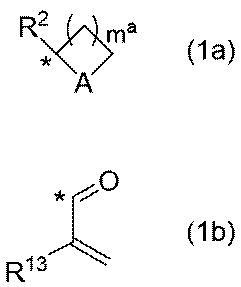
AはO原子またはS原子を表し、式(I)においてAが複数ある場合、複数のAは同一であっても異なっていてもよく、
maは0又は1を表し、式(I)においてmaが複数ある場合、複数のmaは同一であっても異なっていてもよく、
R2は、水素原子又は1価の置換基を表し、R2が複数ある場合、複数のR2は同一であっても異なっていてもよく、
*はLとの結合手を表す。
式(1b)中、
R13は1価の置換基を表し、R13が複数ある場合、複数のR13は同一であっても異なっていてもよく、
*はLとの結合手を表す。]
〔2〕 前記樹脂は、(メタ)アクリロイル基、メルカプト基、炭素数2~4の環状エーテル基、及び炭素数2~4の環状スルフィド基からなる群より選ばれる一つの重合性基を含む、〔1〕に記載の組成物。
〔3〕 さらに重合開始剤を含む、〔1〕又は〔2〕に記載の組成物。
〔4〕 式(I)で表される化合物は、式(I)中に複数あるR12が式(1a)で表される化合物を含む、〔1〕~〔3〕のいずれか1項に記載の組成物。
〔5〕 〔1〕~〔4〕のいずれか1項に記載の組成物の硬化物。
〔6〕 〔5〕に記載の硬化物を含む表示装置。
〔7〕 〔5〕に記載の硬化物を含む固体撮像素子。
本発明に係る組成物(以下、「組成物(I)」ともいう)は、式(I)で表される化合物(以下、「化合物(I)」ともいう)とアルカリ可溶性の樹脂(以下、「樹脂(I)」ともいう)とを含む。組成物(I)は、化合物(I)を含むことにより、高い屈折率を示す硬化物を与えることができ、また、優れた硬化性を示すことができる。組成物(I)は、化合物(I)を2種以上含んでいてもよい。組成物(I)は、樹脂(I)を2種以上含んでいてもよい。組成物(I)は、化合物(I)と、樹脂(I)と、これら以外の他の成分を含んでいてもよい。組成物(I)を硬化させることにより、組成物(I)の硬化物を含む成形物を形成することができる。上記硬化物を含む成形物とは、上記硬化物を含む物であって、所望の形状に成形された物をいう。
化合物(I)は、式(I)で表される化合物である。
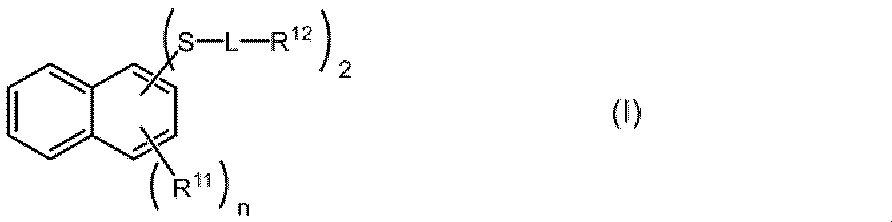
nは0~6のいずれかの整数を表し、
Lは単結合又は2価の基を表し、複数あるLは同一であっても異なっていてもよく、
R11は1価の置換基を表し、R11が複数ある場合、複数のR11は同一であっても異なっていてもよく、
R12は、水素原子、式(1a)、及び式(1b)からなる群から選択され、複数あるR12は同一であっても異なっていてもよい。
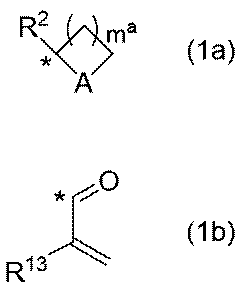
AはO原子またはS原子を表し、式(I)においてAが複数ある場合、複数のAは同一であっても異なっていてもよく、
maは0又は1を表し、式(I)においてmaが複数ある場合、複数のmaは同一であっても異なっていてもよく、
R2は、水素原子又は1価の置換基を表し、R2が複数ある場合、複数のR2は同一であっても異なっていてもよく、
*はLとの結合手を表す。
式(1b)中、
R13は1価の置換基を表し、R13が複数ある場合、複数のR13は同一であっても異なっていてもよく、
*はLとの結合手を表す。]


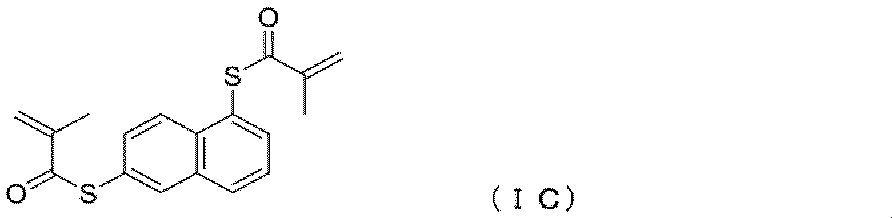
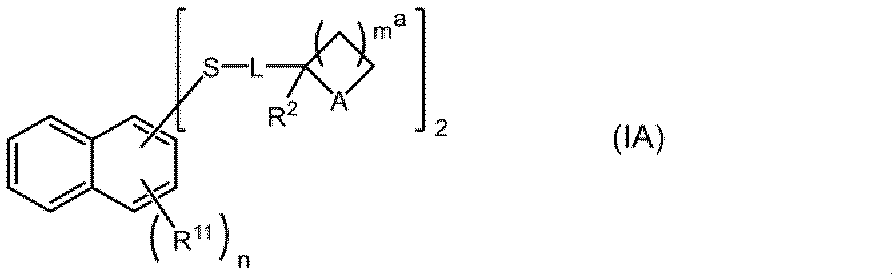
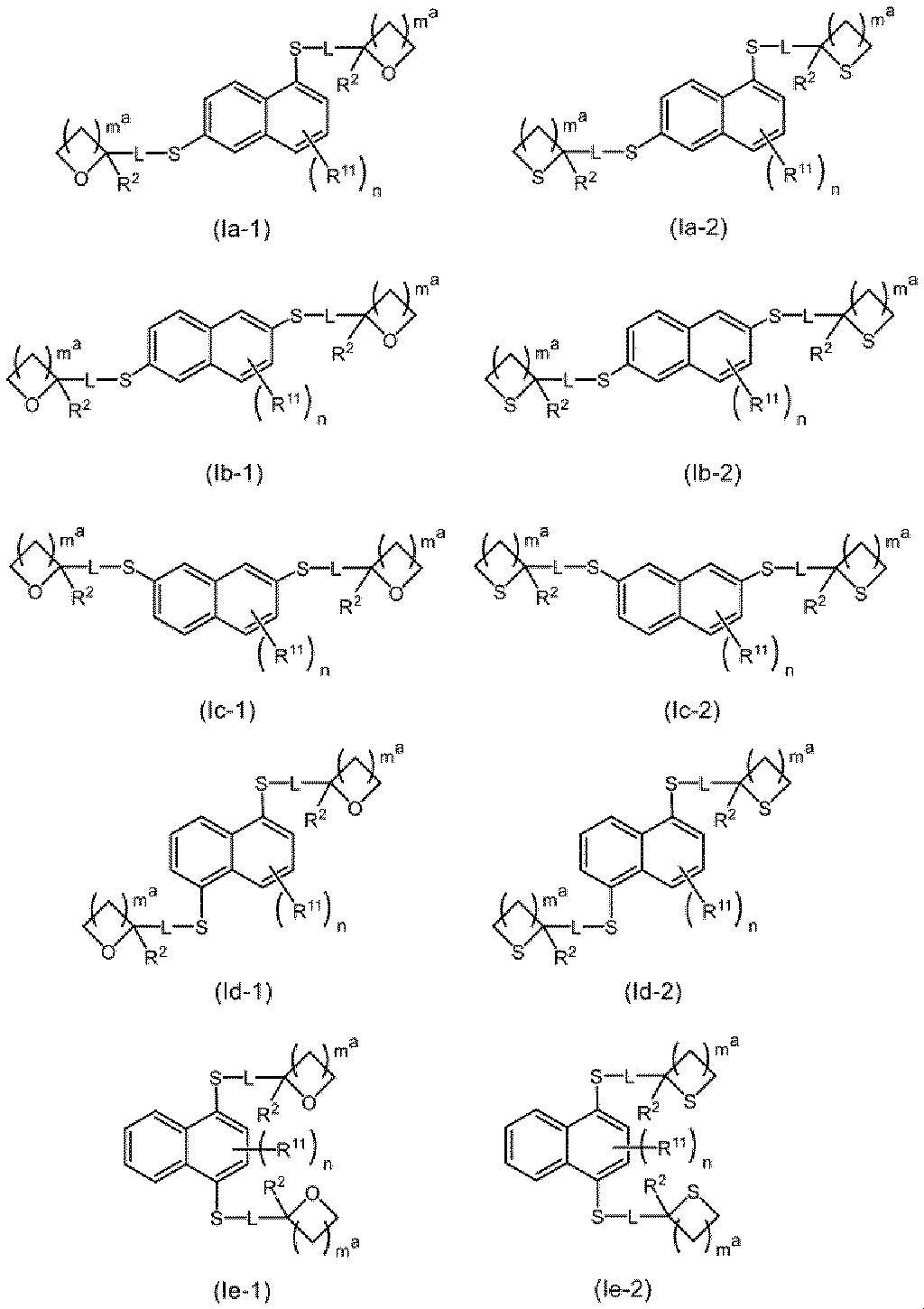
nは、0~6のいずれかの整数であり、好ましくは0~4のいずれかの整数であり、より好ましくは0~2のいずれかの整数であり、さらに好ましくは0又は1であり、特に好ましくは0である。


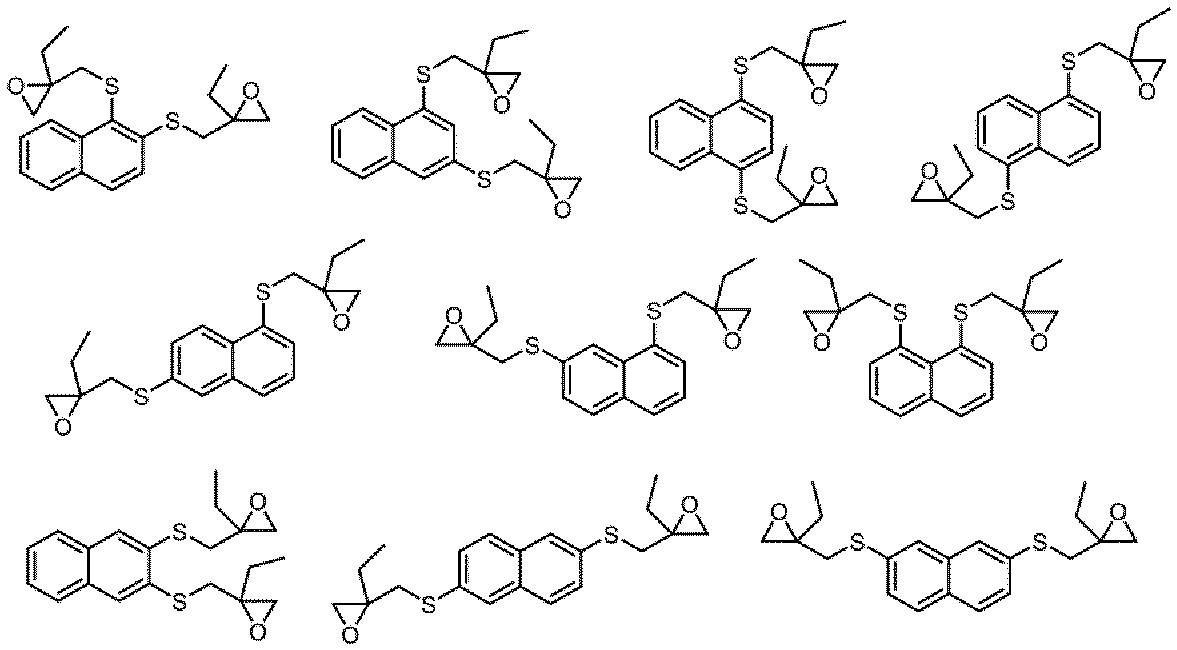

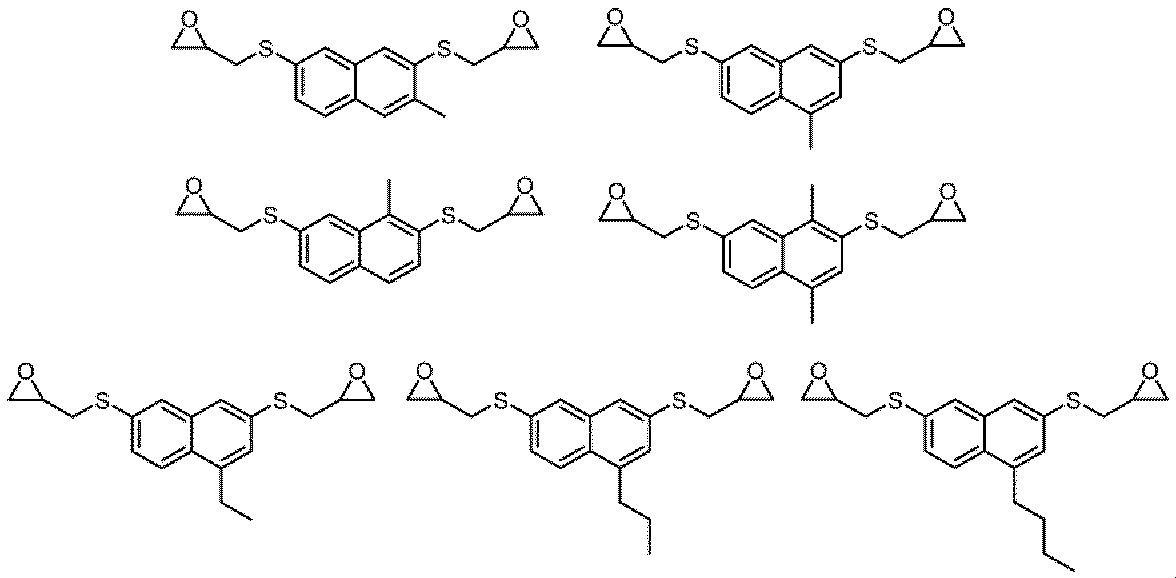
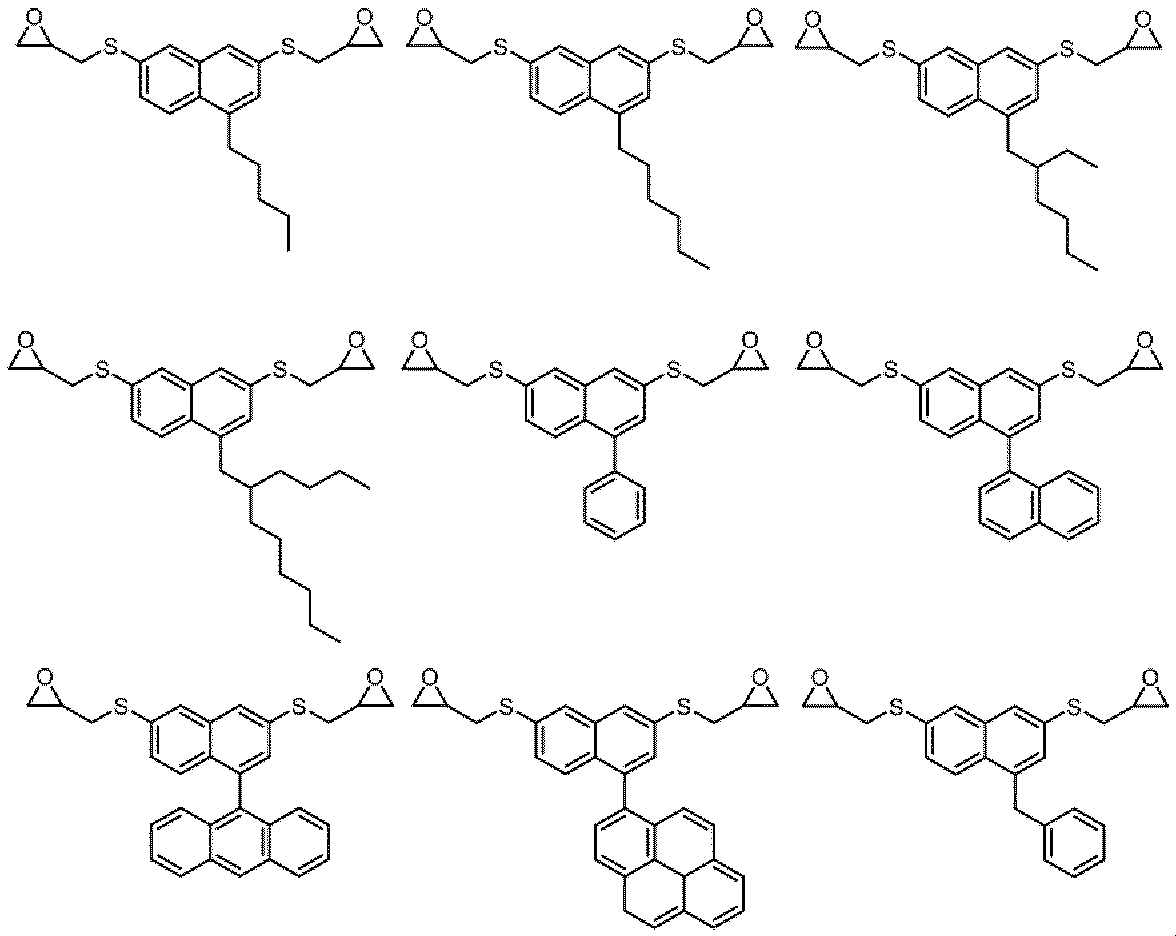
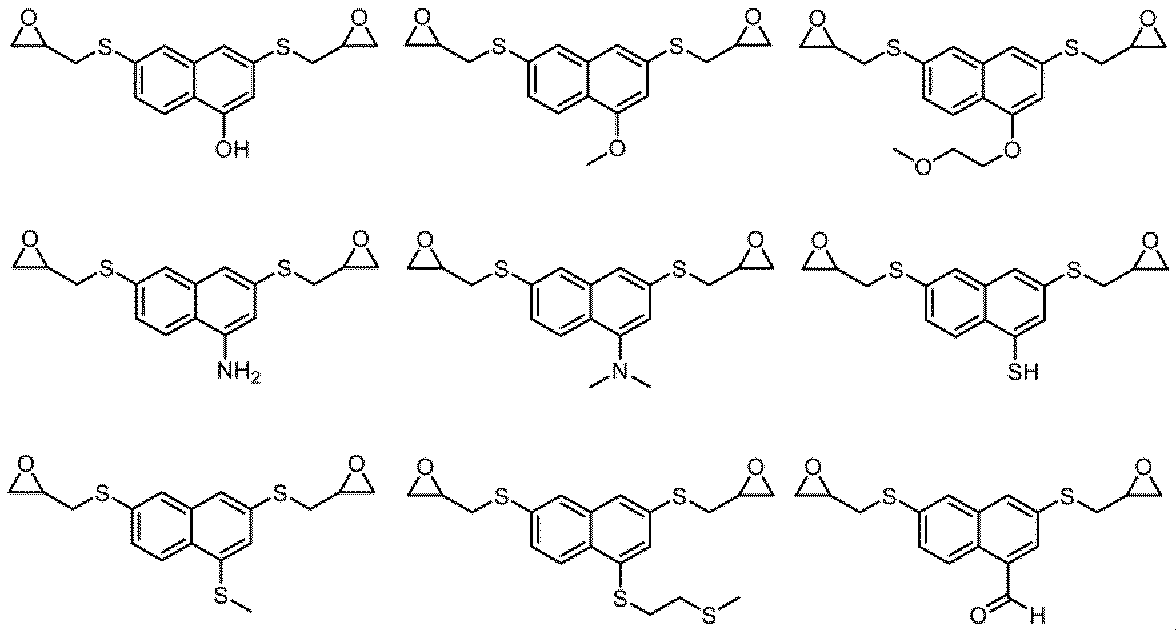
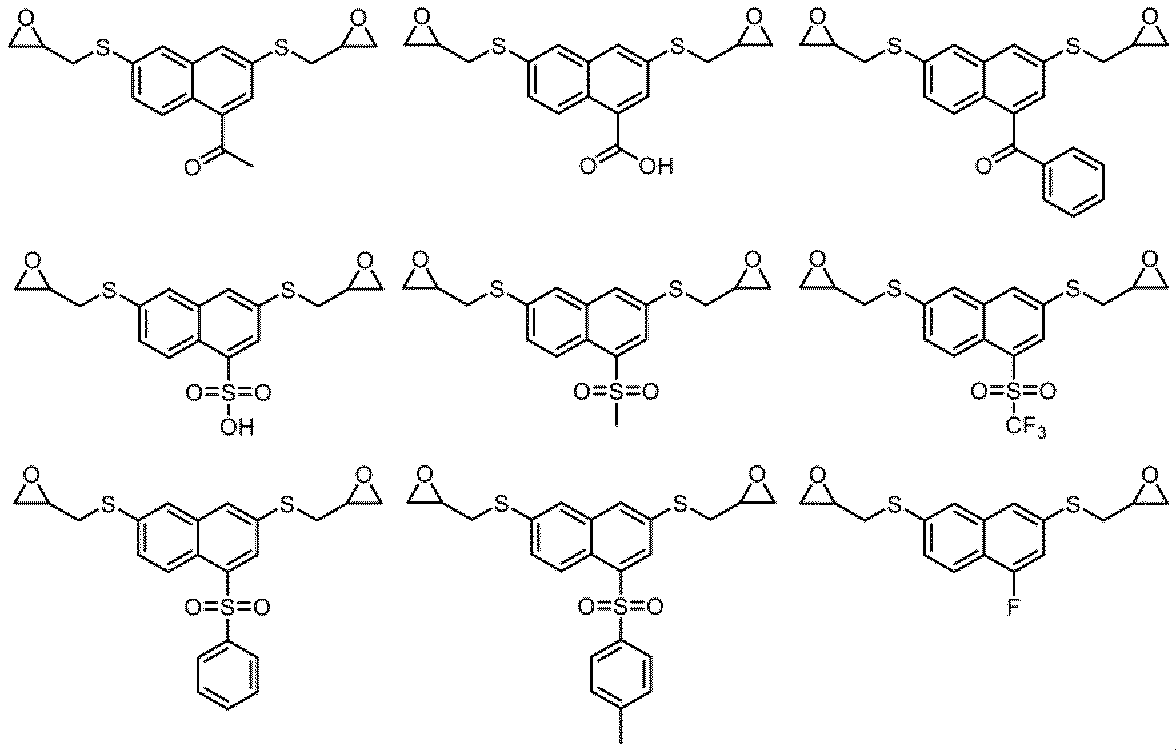
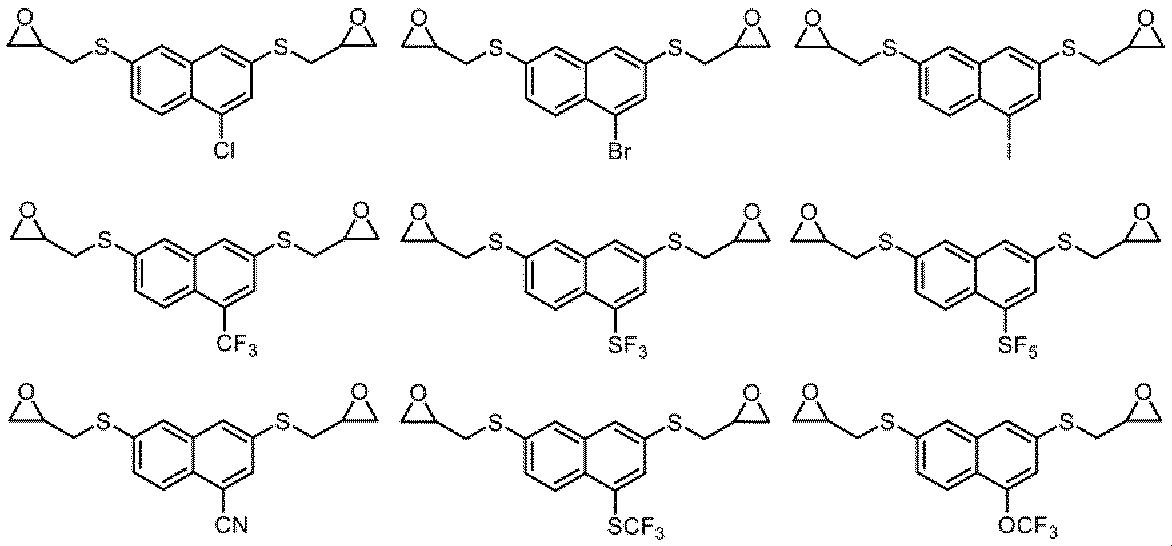
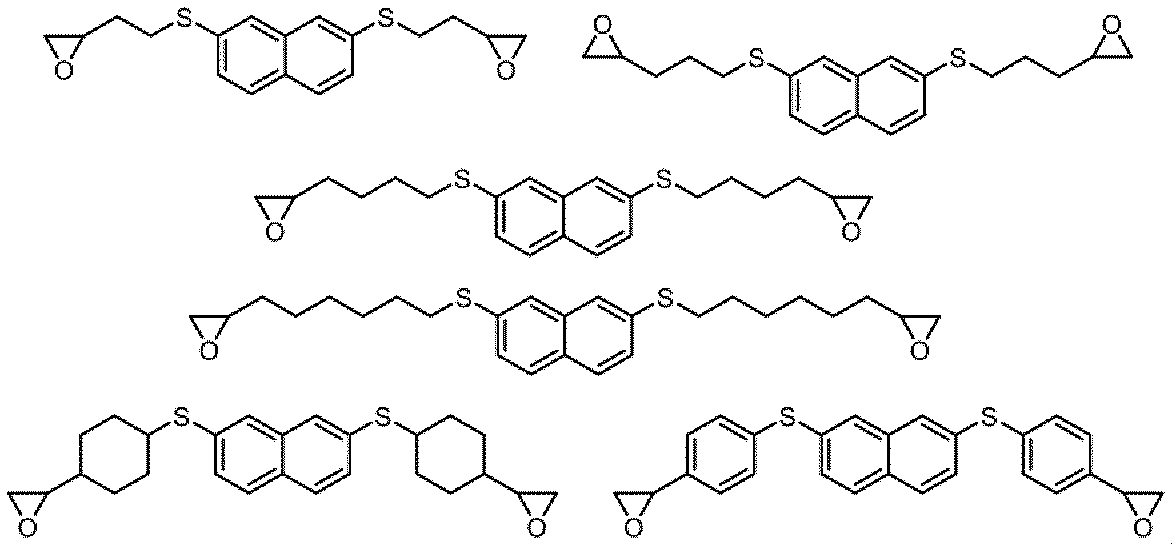

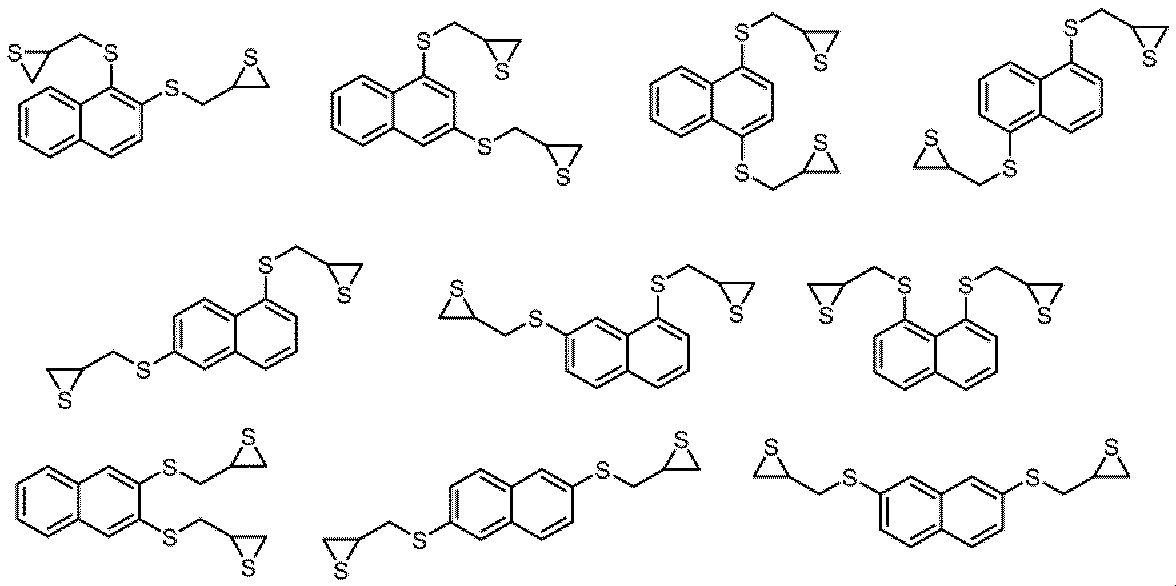
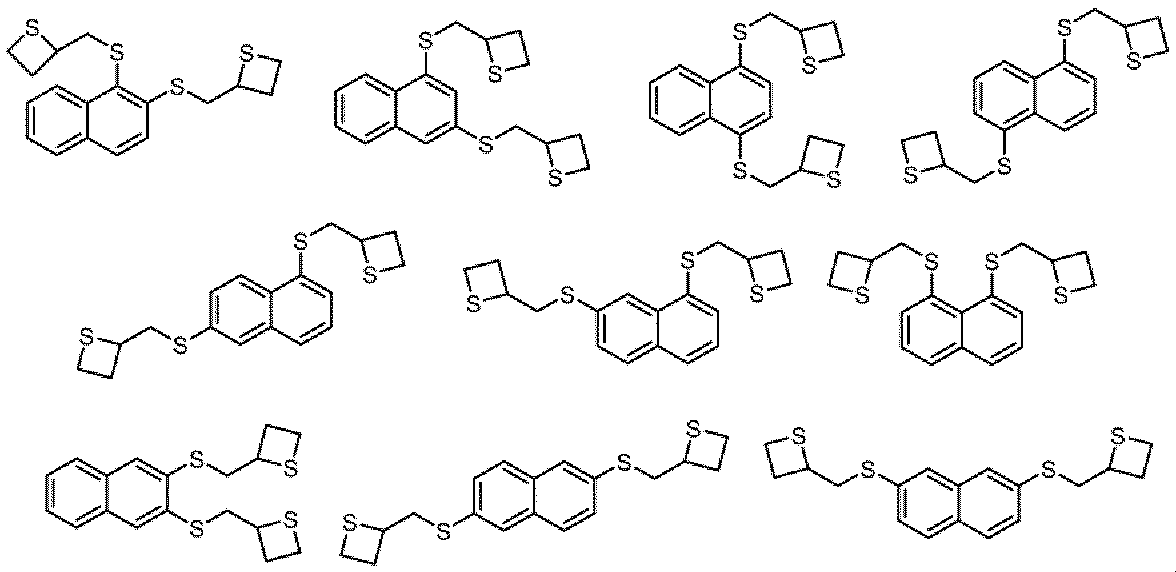

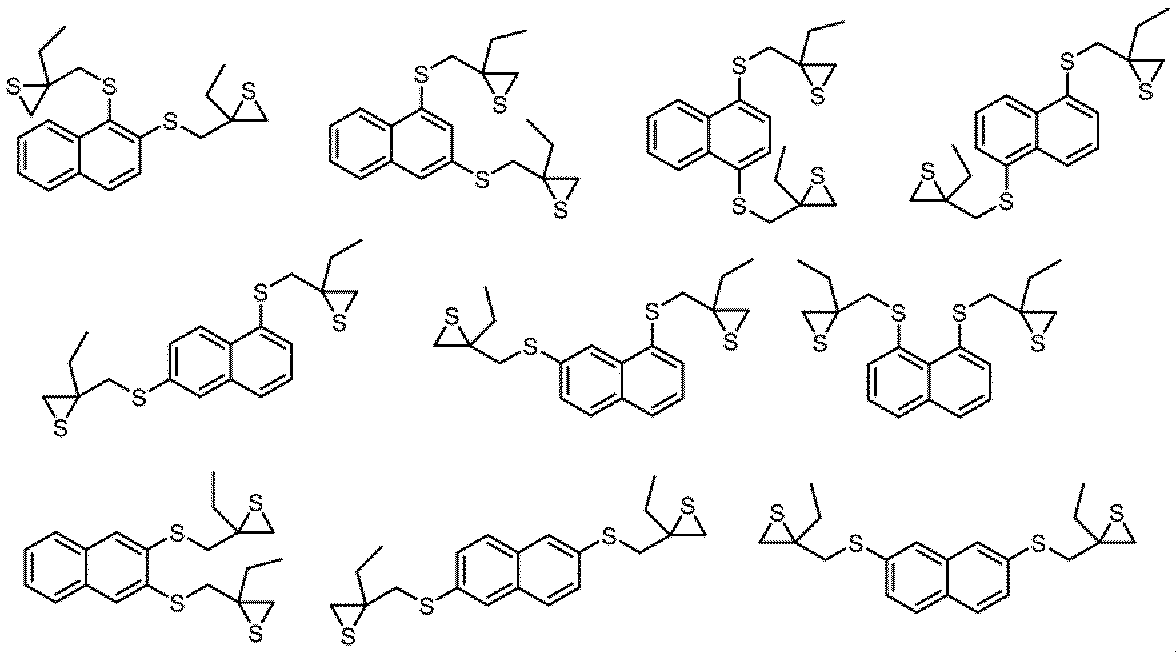

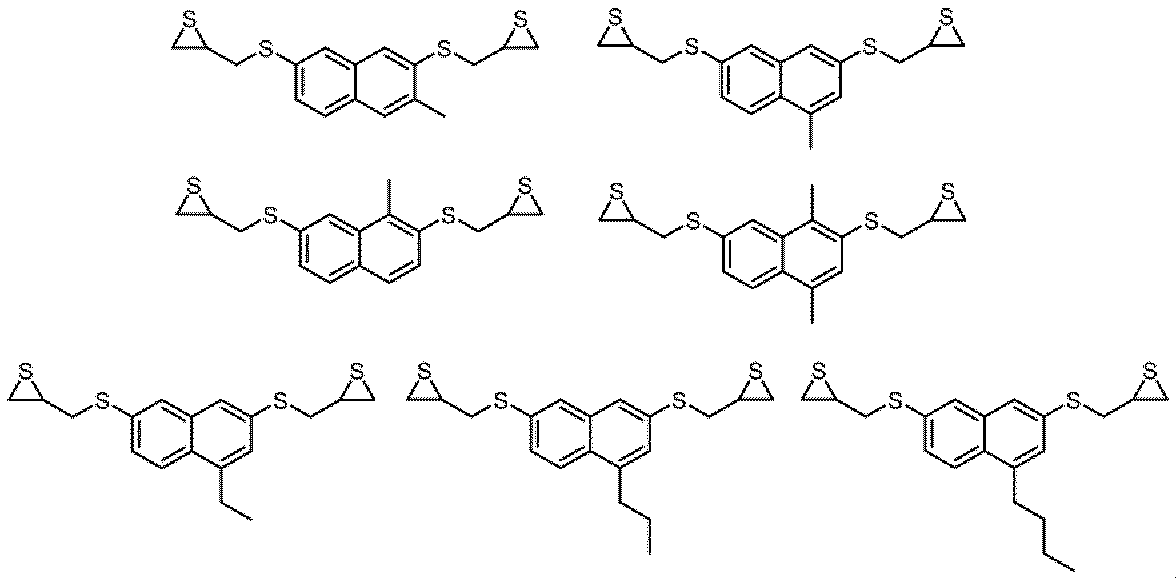
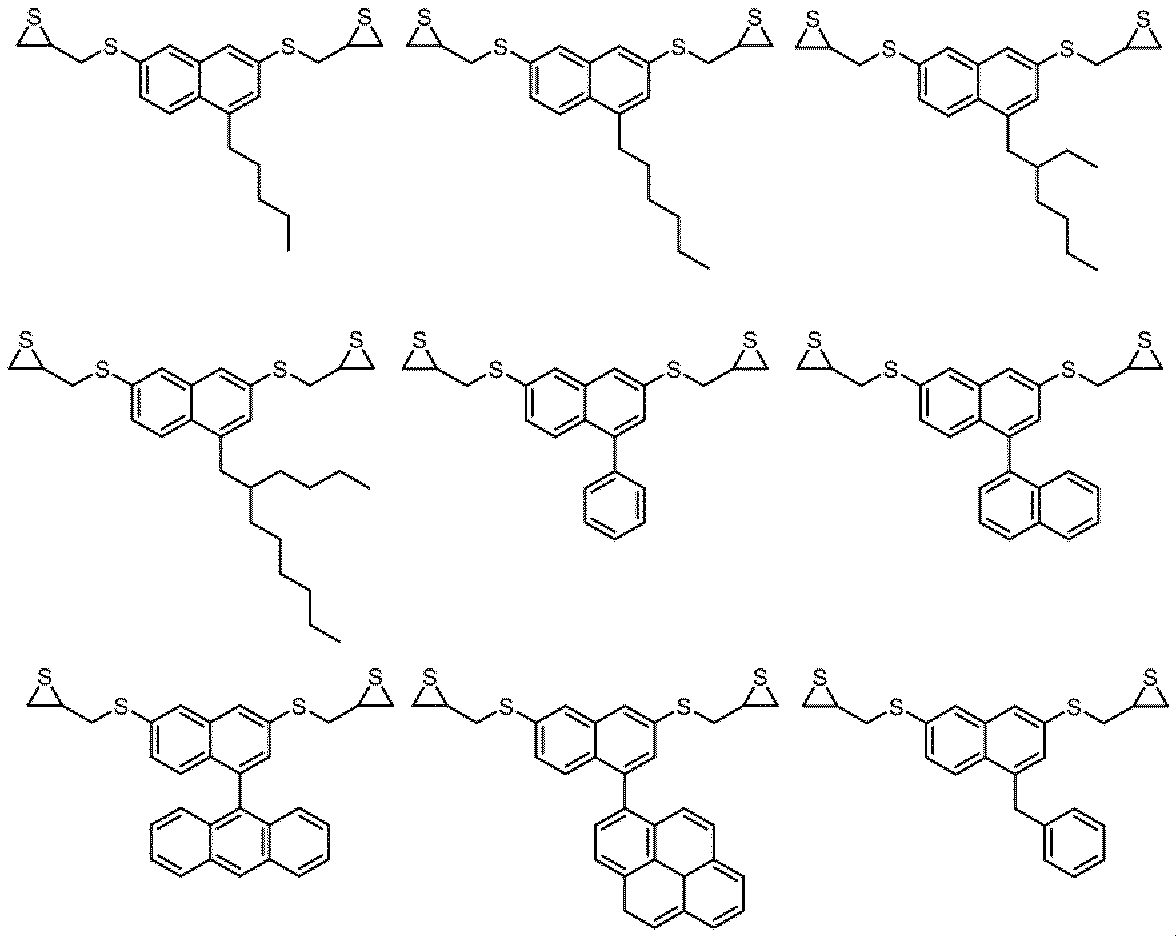

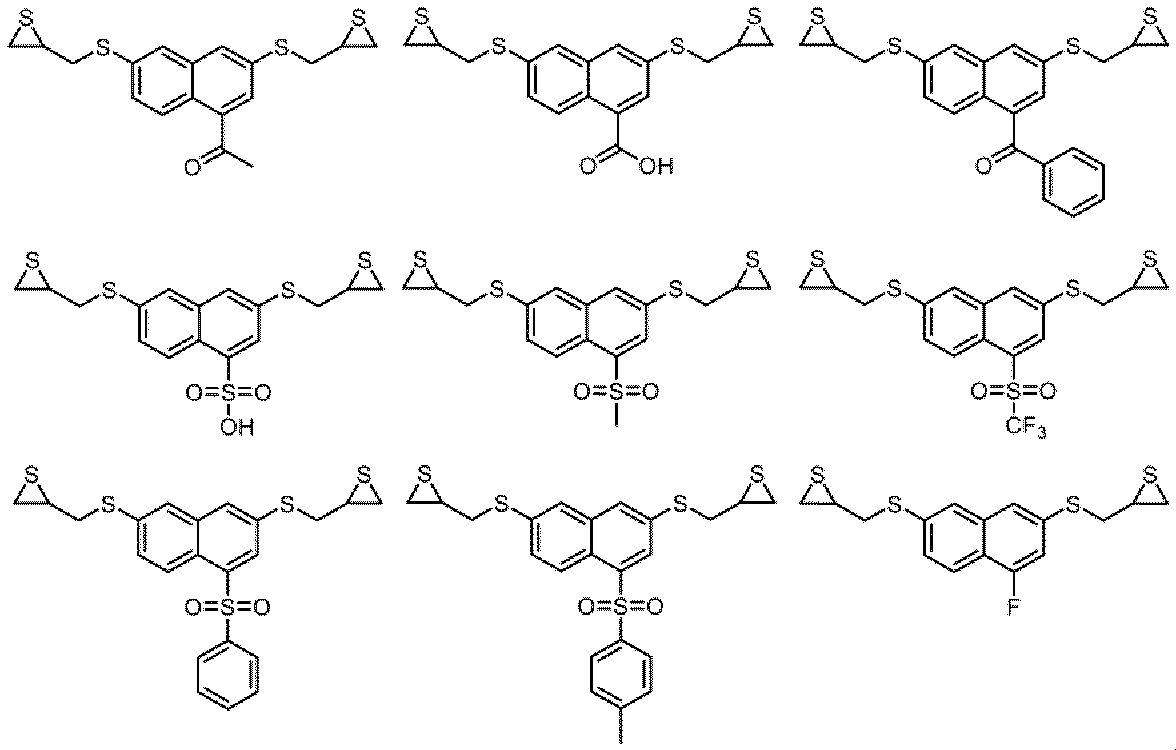
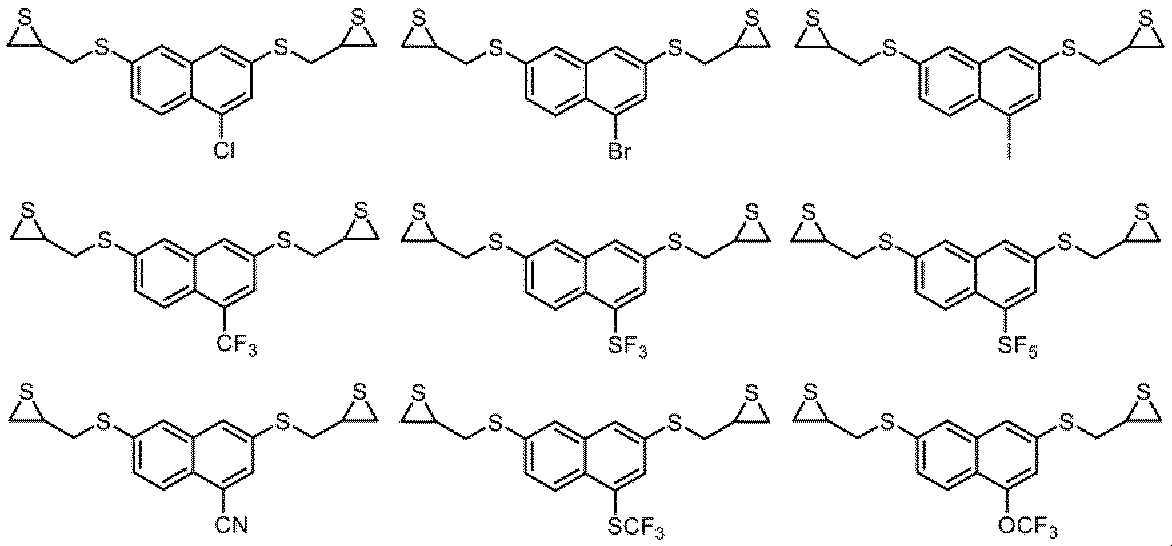
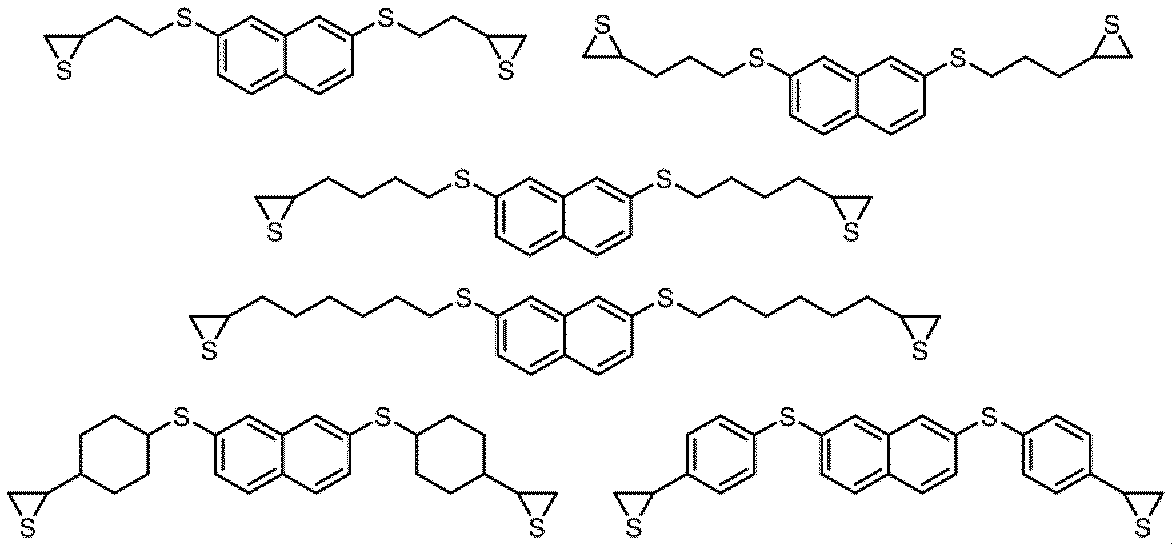
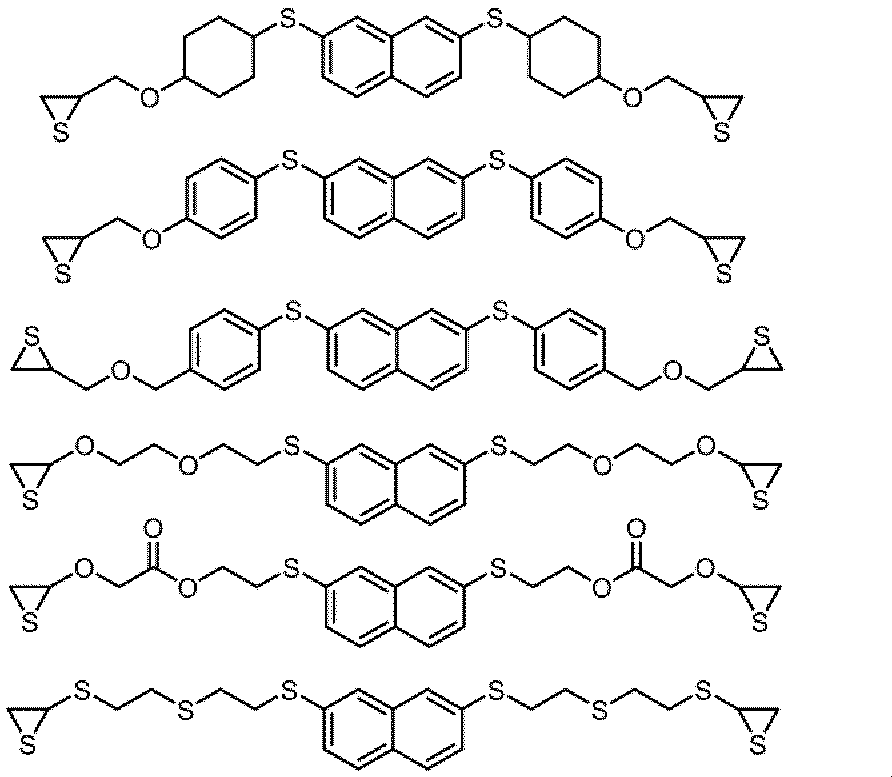
R12が式(1a)で表される基である化合物(I)は、下記に示す第1工程を含むか、又は、第1工程及び第2工程を含む方法によって製造することができる。
第1工程:式(II)
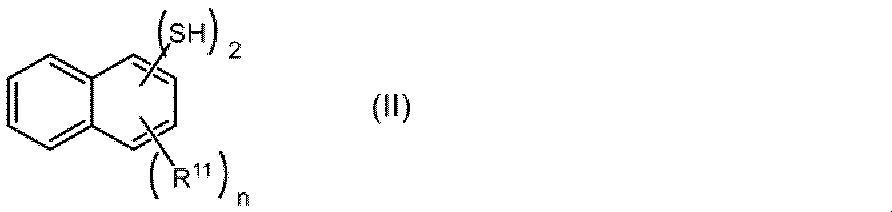
で表される化合物と、式(III)

で表される化合物とを反応させることにより、式(1a)中のAがO原子である式(I)で表される化合物を得る工程;
第2工程:式(1a)中のAがO原子である式(I)で表される化合物と硫化剤との反応により、式(1a)中のAがS原子である式(I)で表される化合物を得る工程
芳香族炭化水素類:ベンゼン、トルエン、キシレン、メシチレン、ナフタレン、アニソール、ニトロベンゼン、アニリン、テトラリン、デュレン等
ハロゲン化芳香族炭化水素:クロロベンゼン、ジクロロベンゼン、クロロナフタレン等
脂肪族炭化水素:ペンタン、ヘキサン、ヘプタン等
ハロゲン化脂肪族炭化水素類:ジクロロメタン、クロロホルム、1,2-ジクロロエタン、テトラクロロエタン等
エーテル類:ジエチルエーテル、ジイソプロピルエーテル、メチルt-ブチルエーテル、シクロペンチルメチルエーテル、ジフェニルエーテル、ジメトキシエタン、ジオキサン等
アルコール類:メタノール、エタノール、プロパノール、イソプロパノール、ブタノール、t-ブタノール、ヘキサノール、シクロヘキサノール、エチレングリコール、プロピレングリコール、ヘキサフルオロイソプロパノール等
グライム類:メチルジグライム、エチルジグライム、トリグライム、ジエチレングリコールブチルメチルエーテル等
エステル類:酢酸メチル、酢酸エチル、酢酸プロピル、酢酸ブチル等
脂肪族ニトリル類:アセトニトリル等
スルホキシド類:ジメチルスルホキシド、スルホラン等
アミド類:N,N-ジメチルホルムアミド、N,N-ジメチルアセトアミド、N-メチルピロリドン等。
樹脂(I)は、アルカリ可溶性の樹脂であり、化合物(I)以外であれば特に限定されない。アルカリ可溶性の樹脂とは、酸性基を含有し、アルカリ現像液に可溶な樹脂である。酸性基は、例えば、カルボキシ基、スルホ基、フェノール性ヒドロキシ基等が挙げられる。組成物(I)がアルカリ可溶性の樹脂(I)を含むことにより、組成物(I)の硬化物に現像性を付与することができる。
樹脂(B)としては、例えば以下の樹脂[K1]~[K6]等が挙げられる。
樹脂[K1];単量体(a)に由来する構造単位と、炭素数2~4の環状エーテル構造及びエチレン性不飽和結合を有する単量体(b)(以下「単量体(b)」という場合がある)に由来する構造単位とを有する共重合体;
樹脂[K2];単量体(a)に由来する構造単位と単量体(b)に由来する構造単位と、単量体(a)と共重合可能な単量体(c)(ただし、単量体(a)及び単量体(b)とは異なる。)(以下「単量体(c)」という場合がある)に由来する構造単位とを有する共重合体;
樹脂[K3];単量体(a)に由来する構造単位と単量体(c)に由来する構造単位とを有する共重合体;
樹脂[K4];単量体(a)に由来する構造単位に単量体(b)を付加させた構造単位と単量体(c)に由来する構造単位とを有する共重合体;
樹脂[K5];単量体(b)に由来する構造単位に単量体(a)を付加させた構造単位と単量体(c)に由来する構造単位とを有する共重合体;
樹脂[K6];単量体(b)に由来する構造単位に単量体(a)を付加させ、多価カルボン酸及び/又はカルボン酸無水物をさらに付加させた構造単位と単量体(c)に由来する構造単位とを有する共重合体。
マレイン酸、フマル酸、シトラコン酸、メサコン酸、イタコン酸、3-ビニルフタル酸、4-ビニルフタル酸、3,4,5,6-テトラヒドロフタル酸、1,2,3,6-テトラヒドロフタル酸、ジメチルテトラヒドロフタル酸及び1,4-シクロヘキセンジカルボン酸等の不飽和ジカルボン酸;
メチル-5-ノルボルネン-2,3-ジカルボン酸、5-カルボキシビシクロ[2.2.1]ヘプト-2-エン、5,6-ジカルボキシビシクロ[2.2.1]ヘプト-2-エン、5-カルボキシ-5-メチルビシクロ[2.2.1]ヘプト-2-エン、5-カルボキシ-5-エチルビシクロ[2.2.1]ヘプト-2-エン、5-カルボキシ-6-メチルビシクロ[2.2.1]ヘプト-2-エン及び5-カルボキシ-6-エチルビシクロ[2.2.1]ヘプト-2-エン等のカルボキシ基を含有するビシクロ不飽和化合物;
無水マレイン酸、シトラコン酸無水物、イタコン酸無水物、3-ビニルフタル酸無水物、4-ビニルフタル酸無水物、3,4,5,6-テトラヒドロフタル酸無水物、1,2,3,6-テトラヒドロフタル酸無水物、ジメチルテトラヒドロフタル酸無水物、5,6-ジカルボキシビシクロ[2.2.1]ヘプト-2-エン無水物等の不飽和ジカルボン酸無水物;
こはく酸モノ〔2-(メタ)アクリロイルオキシエチル〕及びフタル酸モノ〔2-(メタ)アクリロイルオキシエチル〕等の2価以上の多価カルボン酸の不飽和モノ〔(メタ)アクリロイルオキシアルキル〕エステル;
α-(ヒドロキシメチル)アクリル酸等、同一分子中にヒドロキシ基及びカルボキシ基を含有する不飽和アクリレート;等が挙げられる。
単量体(b)は、炭素数2~4の環状エーテルと(メタ)アクリロイルオキシ基とを有する単量体であることが好ましい。
単量体(b1-1)としては、例えば、グリシジル(メタ)アクリレート、β-メチルグリシジル(メタ)アクリレート、β-エチルグリシジル(メタ)アクリレート、グリシジルビニルエーテル、o-ビニルベンジルグリシジルエーテル、m-ビニルベンジルグリシジルエーテル、p-ビニルベンジルグリシジルエーテル、α-メチル-o-ビニルベンジルグリシジルエーテル、α-メチル-m-ビニルベンジルグリシジルエーテル、α-メチル-p-ビニルベンジルグリシジルエーテル、2,3-ビス(グリシジルオキシメチル)スチレン、2,4-ビス(グリシジルオキシメチル)スチレン、2,5-ビス(グリシジルオキシメチル)スチレン、2,6-ビス(グリシジルオキシメチル)スチレン、2,3,4-トリス(グリシジルオキシメチル)スチレン、2,3,5-トリス(グリシジルオキシメチル)スチレン、2,3,6-トリス(グリシジルオキシメチル)スチレン、3,4,5-トリス(グリシジルオキシメチル)スチレン、2,4,6-トリス(グリシジルオキシメチル)スチレン等が挙げられる。

Xa及びXbは、互いに独立に、単結合、*-Rc-、*-Rc-O-、*-Rc-S-又は*-Rc-NH-を表す。
Rcは、炭素数1~6のアルカンジイル基を表す。
*は、Oとの結合手を表す。]


単量体(b2)としては、例えば、3-メチル-3-(メタ)アクリルロイルオキシメチルオキセタン、3-エチル-3-(メタ)アクリロイルオキシメチルオキセタン、3-メチル-3-(メタ)アクリロイルオキシエチルオキセタン、3-エチル-3-(メタ)アクリロイルオキシエチルオキセタン等が挙げられる。
単量体(b3)としては、例えば、テトラヒドロフルフリルアクリレート(例えば、ビスコートV#150、大阪有機化学工業(株)製)、テトラヒドロフルフリルメタクリレート等が挙げられる。
2-ヒドロキシエチル(メタ)アクリレート及び2-ヒドロキシプロピル(メタ)アクリレート等のヒドロキシ基含有(メタ)アクリル酸エステル;
2,2,3,3,4,4,5,5-オクタフルオロペンチル(メタ)アクリレート等のハロゲン原子含有(メタ)アクリル酸エステル;
マレイン酸ジエチル、フマル酸ジエチル及びイタコン酸ジエチル等のジカルボン酸ジエステル;
ビシクロ[2.2.1]ヘプト-2-エン、5-メチルビシクロ[2.2.1]ヘプト-2-エン、5-エチルビシクロ[2.2.1]ヘプト-2-エン、5-ヒドロキシビシクロ[2.2.1]ヘプト-2-エン、5-ヒドロキシメチルビシクロ[2.2.1]ヘプト-2-エン、5-(2’-ヒドロキシエチル)ビシクロ[2.2.1]ヘプト-2-エン、5-メトキシビシクロ[2.2.1]ヘプト-2-エン、5-エトキシビシクロ[2.2.1]ヘプト-2-エン、5,6-ジヒドロキシビシクロ[2.2.1]ヘプト-2-エン、5,6-ジ(ヒドロキシメチル)ビシクロ[2.2.1]ヘプト-2-エン、5,6-ジ(2’-ヒドロキシエチル)ビシクロ[2.2.1]ヘプト-2-エン、5,6-ジメトキシビシクロ[2.2.1]ヘプト-2-エン、5,6-ジエトキシビシクロ[2.2.1]ヘプト-2-エン、5-ヒドロキシ-5-メチルビシクロ[2.2.1]ヘプト-2-エン、5-ヒドロキシ-5-エチルビシクロ[2.2.1]ヘプト-2-エン、5-ヒドロキシメチル-5-メチルビシクロ[2.2.1]ヘプト-2-エン、5-tert-ブトキシカルボニルビシクロ[2.2.1]ヘプト-2-エン、5-シクロヘキシルオキシカルボニルビシクロ[2.2.1]ヘプト-2-エン、5-フェノキシカルボニルビシクロ[2.2.1]ヘプト-2-エン、5,6-ビス(tert-ブトキシカルボニル)ビシクロ[2.2.1]ヘプト-2-エン及び5,6-ビス(シクロヘキシルオキシカルボニル)ビシクロ[2.2.1]ヘプト-2-エン等のビシクロ不飽和化合物;
N-フェニルマレイミド、N-シクロヘキシルマレイミド、N-ベンジルマレイミド、N-スクシンイミジル-3-マレイミドベンゾエート、N-スクシンイミジル-4-マレイミドブチレート、N-スクシンイミジル-6-マレイミドカプロエート、N-スクシンイミジル-3-マレイミドプロピオネート及びN-(9-アクリジニル)マレイミド等のジカルボニルイミド誘導体;
スチレン、o-メチルスチレン、m-メチルスチレン、p-メチルスチレン、ビニルトルエン、N-ビニルカルバゾール及びp-メトキシスチレン等のビニル基含有芳香族化合物;(メタ)アクリロニトリル等のビニル基含有ニトリル;塩化ビニル及び塩化ビニリデン等のハロゲン化炭化水素;(メタ)アクリルアミド等のビニル基含有アミド;酢酸ビニル等のエステル;1,3-ブタジエン、イソプレン及び2,3-ジメチル-1,3-ブタジエン等のジエン;等が挙げられる。

R2~R9は、互いに独立に、水素原子、ハロゲン原子、炭素数1~20の飽和炭化水素基又は炭素数6~20のアリール基を表し、該飽和炭化水素基に含まれる水素原子は、アルコキシ基又はアリール基で置換されていてもよい。
Xは、単結合、炭素数1以上のアルカンジイル基、もしくは直鎖状又は分枝鎖状の下記の式(V)で表される基を表す。

単量体(a)に由来する構造単位;2~60モル%
単量体(b)に由来する構造単位;40~98モル%
であることが好ましく、
単量体(a)に由来する構造単位;10~50モル%
単量体(b)に由来する構造単位;50~90モル%
であることがより好ましい。
樹脂[K1]は、具体的には、単量体(a)及び単量体(b)の所定量、重合開始剤及び溶剤等を反応容器中に入れて、例えば、窒素により酸素を置換することにより、脱酸素雰囲気にし、撹拌しながら、加熱及び保温する方法が挙げられる。なお、ここで用いられる重合開始剤及び溶剤等は、特に限定されず、当該分野で通常使用されているものを使用することができる。例えば、重合開始剤としては、アゾ化合物(2,2’-アゾビスイソブチロニトリル、2,2’-アゾビス(2,4-ジメチルバレロニトリル)等)や有機過酸化物(ベンゾイルペルオキシド、t-ブチルパーオキシ-2-エチルヘキサノエート等)が挙げられ、溶剤としては、各モノマーを溶解するものであればよく、本発明の硬化性樹脂組成物の有機溶剤として後述する溶剤等が挙げられる。
得られた共重合体は、反応後の溶液をそのまま使用してもよいし、濃縮あるいは希釈した溶液を使用してもよいし、再沈殿等の方法で固体(粉体)として取り出したものを使用してもよい。特に、この重合の際に溶剤として、本発明の硬化性樹脂組成物に含まれる溶剤を使用することにより、反応後の溶液をそのまま本発明の硬化性樹脂組成物の調製に使用することができるため、本発明の硬化性樹脂組成物の製造工程を簡略化することができる。
単量体(a)に由来する構造単位;2~45モル%
単量体(b)に由来する構造単位;2~95モル%
単量体(c)に由来する構造単位;1~65モル%
であることが好ましく、
単量体(a)に由来する構造単位;5~40モル%
単量体(b)に由来する構造単位;5~80モル%
単量体(c)に由来する構造単位;5~60モル%
であることがより好ましい。
樹脂[K2]は、例えば、樹脂[K1]の製造方法として記載した方法と同様に製造することができる。
単量体(a)に由来する構造単位;2~60モル%
単量体(c)に由来する構造単位;40~98モル%
であることが好ましく、
単量体(a)に由来する構造単位;10~50モル%
単量体(c)に由来する構造単位;50~90モル%
であることがより好ましい。
樹脂[K3]は、例えば、樹脂[K1]の製造方法として記載した方法と同様に製造することができる。
まず単量体(a)と単量体(c)との共重合体を、樹脂[K1]の製造方法として記載した方法と同様に製造する。この場合、それぞれに由来する構造単位の比率は、樹脂[K3]で挙げたものと同じ比率であることが好ましい。
次に、前記共重合体中の単量体(a)に由来するカルボン酸及び/又はカルボン酸無水物の一部に、単量体(b)が有する炭素数2~4の環状エーテルを反応させる。
単量体(a)と単量体(c)との共重合体の製造に引き続き、フラスコ内雰囲気を窒素から空気に置換し、単量体(b)、カルボン酸又はカルボン酸無水物と環状エーテルとの反応触媒(例えばトリス(ジメチルアミノメチル)フェノール、トリフェニルホスフィン等)及び重合禁止剤(例えばハイドロキノン、メトキノン等)等をフラスコ内に入れて、例えば、60~130℃で、1~10時間反応することにより、樹脂[K4]を製造することができる。
単量体(b)の使用量は、(a)100モルに対して、5~80モルが好ましく、より好ましくは10~75モルである。
環状エーテルの反応性が高く、未反応の単量体(b)が残存しにくいことから、樹脂[K4]に用いる単量体(b)としては単量体(b1)が好ましく、さらに単量体(b1-1)が好ましい。
単量体(b)及び単量体(c)に由来する構造単位の比率は、前記の共重合体を構成する全構造単位の合計モル数に対して、それぞれ、
単量体(b)に由来する構造単位;5~95モル%
単量体(c)に由来する構造単位;5~95モル%
であることが好ましく、
単量体(b)に由来する構造単位;10~90モル%
単量体(c)に由来する構造単位;10~90モル%
であることがより好ましい。
さらに、樹脂[K4]の製造方法と同様の条件で、単量体(b)と単量体(c)との共重合体が有する単量体(b)に由来する環状エーテルに、単量体(a)が有するカルボン酸又はカルボン酸無水物を反応させることにより、樹脂[K5]を得ることができる。
前記の共重合体に反応させる単量体(a)の使用量は、単量体(b)100モルに対して、5~100モルが好ましい。環状エーテルの反応性が高く、未反応の単量体(b)が残存しにくいことから、樹脂[K5]に用いる単量体(b)としては単量体(b1)が好ましく、さらに単量体(b1-1)が好ましい。
多価カルボン酸としては、シュウ酸、マロン酸、コハク酸、マレイン酸、フマル酸、グルタル酸、トリカルバニル酸等が挙げられる。カルボン酸無水物としては、無水コハク酸、無水マレイン酸、シトラコン酸無水物、イタコン酸無水物、3-ビニルフタル酸無水物、4-ビニルフタル酸無水物、3,4,5,6-テトラヒドロフタル酸無水物、1,2,3,6-テトラヒドロフタル酸無水物、ジメチルテトラヒドロフタル酸無水物、5,6-ジカルボキシビシクロ[2.2.1]ヘプト-2-エン無水物等が挙げられる。多価カルボン酸及び/又はカルボン酸無水物の使用量は、単量体(a)の使用量1モルに対して、0.05~1モルが好ましく、0.1~0.5モルがより好ましい。
中でも、樹脂(B)としては、単量体(a)に由来する構造単位及び単量体(b)に由来する構造単位を含む共重合体が好ましい。
組成物(I)に含まれる上記他の成分としては、例えば、化合物(I)以外の重合性化合物、樹脂(I)以外の樹脂(以下、「樹脂(II)」ともいう)、重合開始剤、重合開始助剤、レベリング剤、酸化防止剤、硬化剤等を含んでいてもよい。硬化剤としては、多価カルボン酸、イミダゾール化合物等が例示される。
組成物(I)は、化合物(I)以外に重合性化合物を1種又は2種以上含むことができる。組成物(I)が重合性化合物を含むことにより、組成物(I)の粘度又は硬化性を調整したり、得られる硬化物及びそれを含む成形物の機械的特性及び/又は光学特性を調整したりすることが可能である。
組成物(I)は、1種又は2種以上の樹脂(II)を含むことができる。組成物(I)が樹脂(II)を含むことにより、組成物(I)の硬化物に現像性を付与したり、該硬化物及びそれを含む成形物の機械的特性及び/又は光学特性を調整したりすることが可能である。樹脂(II)としては、樹脂(I)以外の樹脂であれば限定されることはなく、熱可塑性樹脂及び硬化性樹脂が挙げられる。硬化性樹脂は、活性エネルギー線照射により硬化する光硬化性樹脂であってもよいし、熱により硬化する熱硬化性樹脂であってもよい。
組成物(I)は、1種又は2種以上の重合開始剤を含むことができる。重合開始剤としては、化合物(I)の重合を開始できるものであれば特に制限されず、例えば、ラジカル重合開始剤、カチオン重合開始剤、アニオン重合開始剤、ラジカル及びカチオン重合開始剤等が挙げられ、適宜選択して用いられる。これらの重合開始剤は、活性エネルギー線照射及び熱の少なくとも1種によりラジカル、酸又は塩基を発生し、重合性化合物のラジカル重合、カチオン重合又はアニオン重合を進行させる。
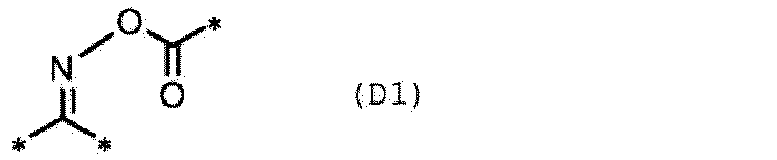

重合開始助剤は、重合開始剤とともに、重合開始剤によって重合が開始された重合性化合物の重合を促進するために用いられる化合物、もしくは増感剤である。
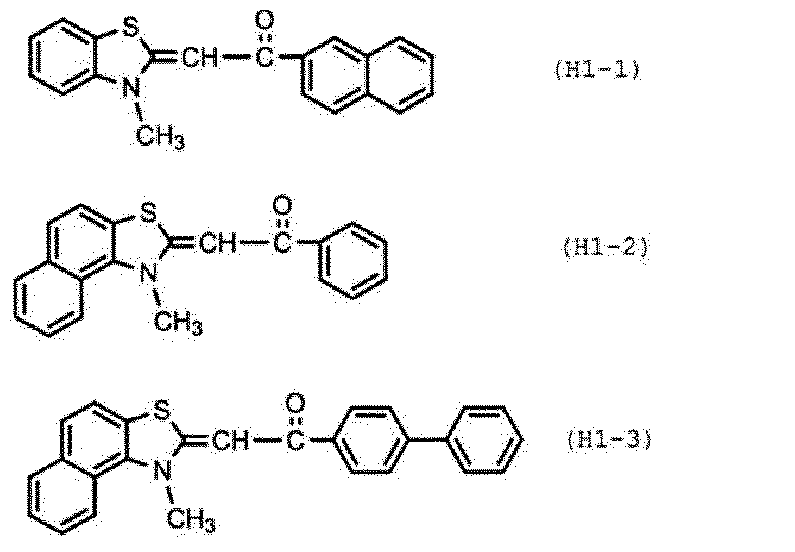
レベリング剤としては、シリコーン系界面活性剤、フッ素系界面活性剤及びフッ素原子を有するシリコーン系界面活性剤等が挙げられる。これらは、側鎖に重合性基を有していてもよい。
酸化防止剤としては、フェノール系酸化防止剤、イオウ系酸化防止剤、リン系酸化防止剤、アミン系酸化防止剤が挙げられる。中でも、得られる膜の着色が少ないという点で、フェノール系酸化防止剤が好ましい。
<多価カルボン酸>
硬化剤として多価カルボン酸を用いることができる。多価カルボン酸は、多価カルボン酸無水物及び多価カルボン酸からなる群から選ばれる少なくとも1種の化合物である。多価カルボン酸とは、2つ以上のカルボキシ基を有する化合物であり、多価カルボン酸無水物とは、多価カルボン酸の無水物である。多価カルボン酸の分子量は、好ましくは3000以下、より好ましくは1000以下である。
硬化剤としてイミダゾール化合物を用いることができる。イミダゾール化合物は、イミダゾール骨格を有する化合物であれば特に限定されず、例えば、エポキシ硬化剤として知られている化合物が挙げられる。中でも、式(G2-1)で表される化合物が好ましい。
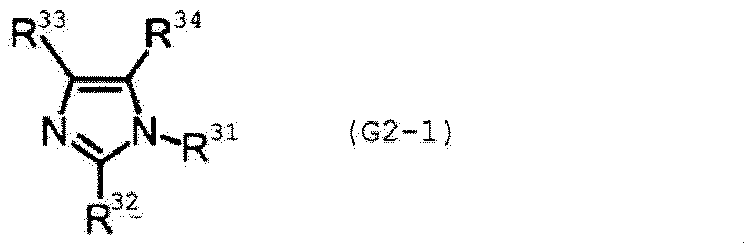
R32~R34は、互いに独立に、水素原子、ハロゲン原子、炭素数1~20のアルキル基、フェニル基、ニトロ基又は炭素数1~20のアシル基を表し、該アルキル基及び該フェニル基に含まれる水素原子は、ヒドロキシ基で置換されていてもよい。]
炭素数2~5のシアノアルキル基としては、例えば、シアノメチル基、シアノエチル基、シアノプロピル基、シアノブチル基、シアノペンチル基が挙げられる。
炭素数1~20のアシル基としては、例えば、ホルミル基、アセチル基、プロピオニル基、イソブチリル基、バレリル基、イソバレリル基、ピバロイル基、ラウロイル基、ミリストイル基、ステアロイル基が挙げられる。
組成物(I)は、溶剤を含有する。溶剤としては、特に限定されず、当該分野で通常使用される溶剤を挙げることができる。例えば、エステル溶剤(分子内に-COO-を含み、-O-を含まない溶剤)、エーテル溶剤(分子内に-O-を含み、-COO-を含まない溶剤)、エーテルエステル溶剤(分子内に-COO-と-O-とを含む溶剤)、ケトン溶剤(分子内に-CO-を含み、-COO-を含まない溶剤)、アルコール溶剤(分子内にOHを含み、-O-、-CO-及び-COO-を含まない溶剤)、芳香族炭化水素溶剤、アミド溶剤、ジメチルスルホキシド等が挙げられる。
組成物(I)には、必要に応じて、充填剤、その他の高分子化合物、紫外線吸収剤、連鎖移動剤、密着促進剤等、当該技術分野において公知の添加剤を含有していてもよい。
組成物(I)は、化合物(I)及び樹脂(I)、並びに、必要に応じて用いられる、溶剤、重合性化合物、重合開始剤、重合開始助剤、レベリング剤、酸化防止剤、硬化剤及びその他の成分を、公知の方法で混合することにより製造することができる。混合後は、孔径0.05~1.0μm程度のフィルタでろ過することが好ましい。
本発明は、組成物(I)の硬化物、及び該硬化物を含む成形物を提供する。組成物(I)は硬化性に優れているため、硬化物又はそれを含む成形物を作製するための硬化性材料として好適である。該硬化物は、活性エネルギー線照射及び熱の少なくともいずれかにより組成物(I)を硬化させることにより得ることができる。該硬化物を含む成形物の形状は特に制限されず、フィルム(膜)状、板状、レンズ形状、粉状、粒状、非球粒子状、破砕粒子状、多孔質状、塊状連続体、繊維状、管状、中空糸状等を含む、成形物の用途等に応じた任意の形状であってよい。
本発明によると高屈折率を有する硬化物若しくは成形物、又は所望の屈折率を有する硬化物又は成形物を得ることができる。該硬化物又は成形物の用途としては、例えば、ガラス代替品とその表面コーティング材;住居、施設、輸送機器等の窓ガラス、採光ガラス及び光源保護ガラス用のコーティング材;住居、施設、輸送機器等のウインドウフィルム;住居、施設、輸送機器等の内外装材及び内外装用塗料及び該塗料によって形成させる塗膜;アルキド樹脂ラッカー塗料及び該塗料によって形成される塗膜;アクリルラッカー塗料及び該塗料によって形成される塗膜;蛍光灯、水銀灯等の紫外線を発する光源用部材;精密機械、電子電気機器用部材、各種ディスプレイから発生する電磁波等の遮断用材;食品、化学品、薬品等の容器又は包装材;ボトル、ボックス、ブリスター、カップ、特殊包装用、コンパクトディスクコート、農工業用シート又はフィルム材;印刷物、染色物、染顔料等の退色防止剤;ポリマー支持体用(例えば、機械及び自動車部品のようなプラスチック製部品用)の保護膜;印刷物オーバーコート;インクジェット媒体被膜;積層艶消し;オプティカルライトフィルム;安全ガラス/フロントガラス中間層;エレクトロクロミック/フォトクロミック用途;オーバーラミネートフィルム;太陽熱制御膜;日焼け止めクリーム、シャンプー、リンス、整髪料等の化粧品;スポーツウェア、ストッキング、帽子等の衣料用繊維製品及び繊維;カーテン、絨毯、壁紙等の家庭用内装品;プラスチックレンズ、コンタクトレンズ、義眼等の医療用器具;光学フィルタ、バックライトディスプレーフィルム、プリズム、レンズ(例えば、眼鏡レンズ、カメラレンズ、及び後述するマイクロレンズ、ピックアップレンズ等)、鏡、写真材料等の光学用品;金型膜、転写式ステッカー、落書き防止膜、テープ、インク等の文房具;標示板、標示器等とその表面コーティング材;光学装置等に用いられる基板;光導波路;ホログラム;LED封止材;等を挙げることができる。
<合成例1:式(Ia-21)で表される化合物の合成>
式(Ia-11)で表される化合物の合成
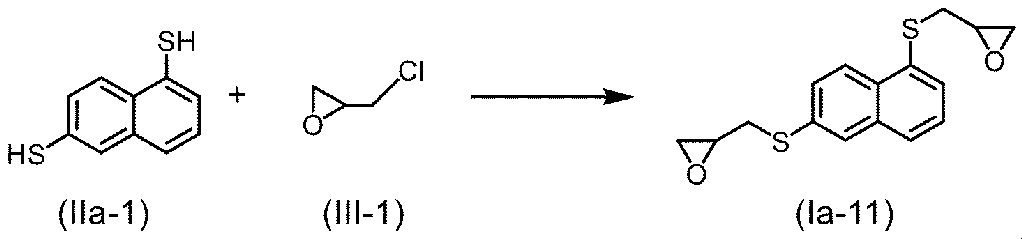
1H-NMR(重クロロホルム)δ:8.37~8.39(1H)、7.85(1H)、7.39~7.70(4H)、3.08~3.29(5H)、2.94~2.98(1H)、2.57~2.81(3H)、2.39~2.41(1H)
LC-MS;[M+H]+=305.5
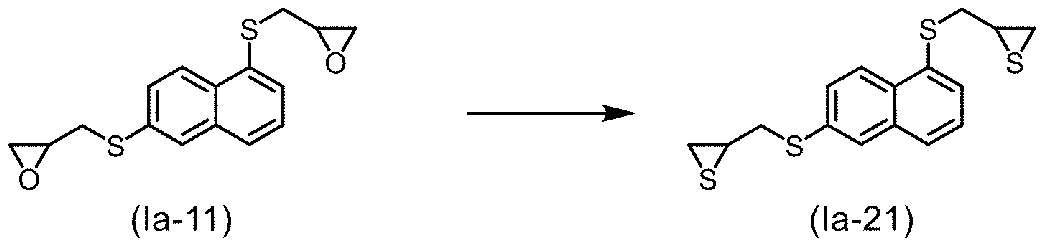
1H-NMR(重クロロホルム)δ:8.39~8.43(1H)、7.86(1H)、7.40~7.74(4H)、3.40~3.53(2H)、3.04~3.18(2H)、2.78~2.96(2H)、2.47~2.49(1H)、2.35~2.36
(1H)、2.14~2.16(1H)、1.93~1.94(1H)
LC-MS;[M+H]+=337.5
(1)式(Ic-11)で表される化合物の合成

1H-NMR(重クロロホルム)δ:7.70~7.76(4H)、7.43~7.45(2H)、3.21~3.27(4H)、3.05~3.11(2H)、2.78~2.80(2H)、2.57~2.58(2H)
LC-MS;[M+H]+=305.5

1H-NMR(重クロロホルム)δ:7.73~7.79(4H)、7.46~7.48(2H)、3.52~3.57(2H)、3.14~3.18(2H)、2.90~2.96(2H)、2.49~2.51(2H)、2.15~2.17(2H)
LC-MS;[M+H]+=337.5
<合成例3:式(Ba)で表される樹脂の合成>
還流冷却器、滴下ロート及び攪拌機を備えたフラスコ内に窒素を適量流し窒素雰囲気に置換し、プロピレングリコールモノメチルエーテルアセテート280部を入れ、攪拌しながら80℃まで加熱した。次いで、アクリル酸38部、3,4-エポキシトリシクロ[5.2.1.02,6]デカン-8-イルアクリレート及び3,4-エポキシトリシクロ[5.2.1.02,6]デカン-9-イルアクリレートの混合物(含有比はモル比で1:1)289部、プロピレングリコールモノメチルエーテルアセテート125部の混合溶液を5時間かけて滴下した。一方、2,2-アゾビス(2,4-ジメチルバレロニトリル)33部をプロピレングリコールモノメチルエーテルアセテート235部に溶解させた溶液を6時間かけて滴下した。滴下終了後、80℃で4時間保持した後、室温まで冷却して、固形分35.1%、B型粘度計(23℃)で測定した粘度125mPasの共重合体(樹脂(Ba))溶液を得た。生成した共重合体の重量平均分子量Mwは9.2×10³、分散度2.08、固形分換算の酸価は77mg-KOH/gであった。樹脂(Ba)は、以下の構造単位を有する。
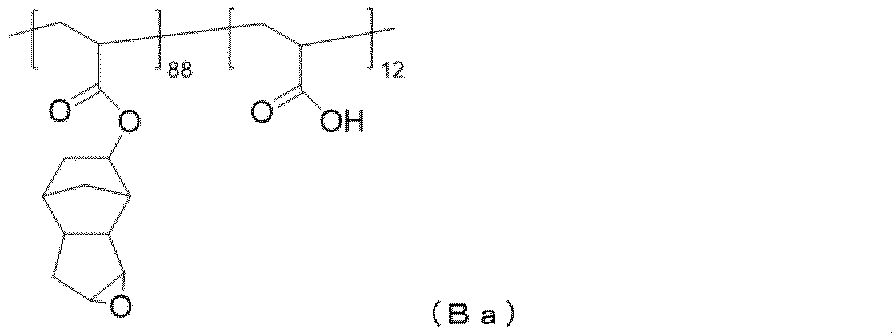
ART CURE RA-4101(根上工業株式会社製;側鎖に二重結合を含有するポリマー)
合成例1で得られた式(Ib-1)で表される化合物を50質量部、式(Ba)で表される樹脂を50質量部、重合開始剤Aを5質量部、及び溶剤としてのシクロペンタノンを310質量部をフラスコに入れ、攪拌して液状の組成物を得た。組成物を目視したところ透明であり、配合成分が均一に溶解されていることが確認された。
組成物における配合成分の種類及びそれらの添加量を表1に示すとおりとしたこと以外は、実施例1と同様にして液状の組成物を得た。実施例2~5、及び比較例1の組成物は、目視したところ透明であり、配合成分が均一に溶解されていることが確認された。
〔1〕(Ia-21):式(Ia-21)で表される化合物
〔2〕(Ic-21):式(Ic-21)で表される化合物
〔3〕(IC):式(IC)で表される化合物
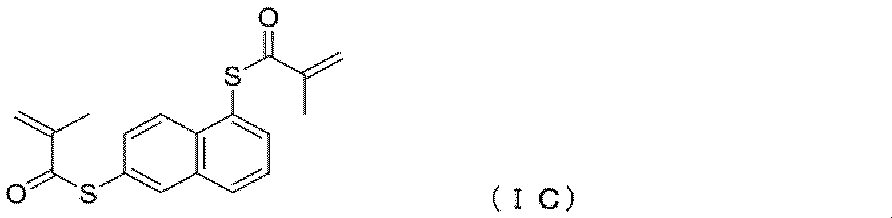
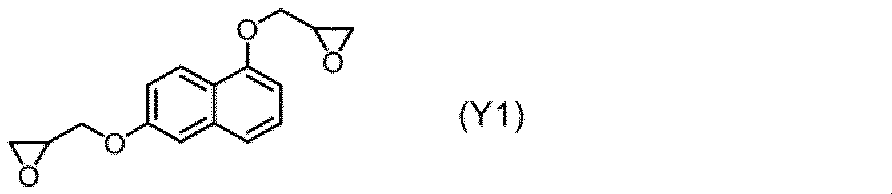
〔6〕(Bb):式(Bb)で表される樹脂
〔7〕重合開始剤A:スルホニウム塩タイプの光カチオン重合開始剤(サンアプロ株式会社製「VC-1S」)
〔8〕重合開始剤B:スルホニウム塩タイプの光カチオン重合開始剤(サンアプロ株式会社製「VC-1FG」)
〔9〕重合開始剤C:ボレート塩タイプの光アニオン重合開始剤(富士フイルム和光純薬株式会社製「WPAG-300」)
〔10〕光増感剤A:1,4-ジエトキシ-ナフタレン
〔11〕重合開始剤D:オキシムエステル型光ラジカル重合開始剤(BASF社製「イルガキュアOXE03」)
(1)硬化物の屈折率
上記で調製した組成物を、無アルカリガラス(Eagle XG 厚み0.7mm、コーニング社製)上に約3cc滴下し、1000rpm、20秒の条件でスピンコーター(MS-B100、ミカサ製)を用いてスピンコートして、塗布層を形成した。塗布層が形成された無アルカリガラス板を60℃で2分間加熱した。次に、塗布層が形成された無アルカリガラス板に高圧水銀灯プロキシミティUV露光装置(UV-3300SC、ウシオ製)を用いて大気雰囲気中、1000mJ/cm2の照射エネルギーで露光した。続いて、露光後の塗布層が形成された無アルカリガラス板を120℃で5分間加熱して、硬化膜が形成された無アルカリガラスを得た。触針式膜厚計(DekTak XT、Bruker製)で無アルカリガラス上の硬化膜の膜厚を測定したところ1.5μmであった。
上記で調製した組成物を、無アルカリガラス(Eagle XG 厚み0.7mm、コーニング社製)上に約3cc滴下し、1000rpm、20秒の条件でスピンコーター(MS-B100、ミカサ製)を用いてスピンコートして、塗布層を形成した。塗布層が形成された無アルカリガラス板を60℃で2分間加熱した。次に、塗布層が形成された無アルカリガラス板に高圧水銀灯プロキシミティUV露光装置(UV-3300SC、ウシオ製)を用いて大気雰囲気中、1000mJ/cm2の照射エネルギーで露光した。続いて、露光後の塗布層が形成された無アルカリガラス板を120℃で5分間加熱して、硬化膜が形成された無アルカリガラスを得た。触針式膜厚計(DekTak XT、Bruker製)で無アルカリガラス上の硬化膜の膜厚を測定したところ1.5μmであった。
A:膜厚保持率が100%以下90%以上
B:膜厚保持率が90%未満80%以上
C:膜厚保持率が80%未満
上記で調製した組成物を、無アルカリガラス(Eagle XG 厚み0.7mm、コーニング社製)上に約3cc滴下し、1000rpm、20秒の条件でスピンコーター(MS-B100、ミカサ製)を用いてスピンコートして、塗布層を形成した。塗布層が形成された無アルカリガラス板を60℃で2分間加熱した。次に、塗布層が形成された無アルカリガラス板に高圧水銀灯プロキシミティUV露光装置(UV-3300SC、ウシオ製)を用いて大気雰囲気中、1000mJ/cm2の照射エネルギーでフォトマスク越しにフォトマスクと塗布面の間に200μmのギャップを設けてプロキシミティ露光した。続いて、露光後の塗布層が形成された無アルカリガラス板を80℃で2分間加熱したのち、TMAH2.38質量%水溶液に1分間浸漬したのち純水に1分間浸漬し現像を行った。続いて、ホットプレートで120℃で5分間加熱してパターニング硬化膜が形成された無アルカリガラスを得た。触針式膜厚計(DekTak XT、Bruker製)で無アルカリガラス上の硬化膜の非パターニング部の膜厚を測定したところ1.5μmであった。
A:トップロス率が0%以上10%以下
B:トップロス率が10%より高く20%以下
C:トップロス率が20%より高く40%以下
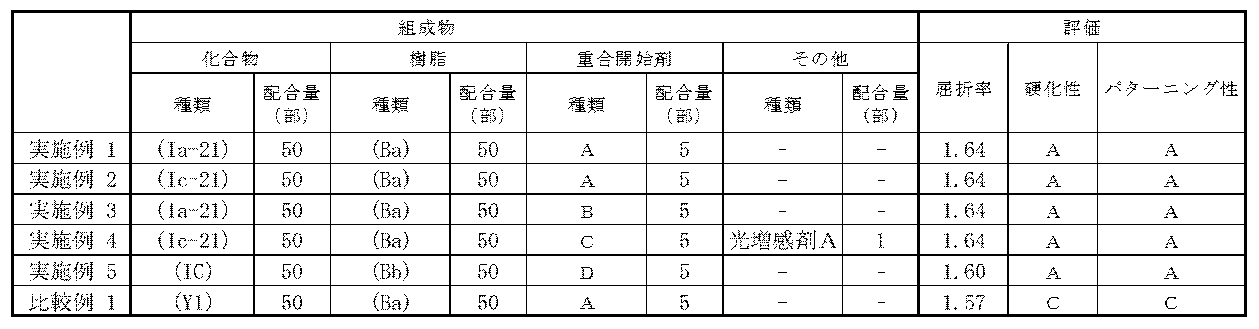
Claims (7)
- 式(I)で表される化合物とアルカリ可溶性の樹脂とを含む組成物。
[式(I)中、
nは0~6のいずれかの整数を表し、
Lは単結合又は2価の基を表し、複数あるLは同一であっても異なっていてもよく、
R11は1価の置換基を表し、R11が複数ある場合、複数のR11は同一であっても異なっていてもよく、
R12は、水素原子、式(1a)、及び式(1b)からなる群から選択され、複数あるR12は同一であっても異なっていてもよい。
式(1a)中、
AはO原子またはS原子を表し、式(I)においてAが複数ある場合、複数のAは同一であっても異なっていてもよく、
maは0又は1を表し、式(I)においてmaが複数ある場合、複数のmaは同一であっても異なっていてもよく、
R2は、水素原子又は1価の置換基を表し、R2が複数ある場合、複数のR2は同一であっても異なっていてもよく、
*はLとの結合手を表す。
式(1b)中、
R13は1価の置換基を表し、R13が複数ある場合、複数のR13は同一であっても異なっていてもよく、
*はLとの結合手を表す。] - 前記樹脂は、(メタ)アクリロイル基、メルカプト基、炭素数2~4の環状エーテル基、及び炭素数2~4の環状スルフィド基からなる群より選ばれる一つの重合性基を含む、請求項1に記載の組成物。
- さらに重合開始剤を含む、請求項1に記載の組成物。
- 式(I)で表される化合物は、式(I)中に複数あるR12が式(1a)で表される化合物を含む、請求項1に記載の組成物。
- 請求項1に記載の組成物の硬化物。
- 請求項5に記載の硬化物を含む表示装置。
- 請求項5に記載の硬化物を含む固体撮像素子。
Priority Applications (2)
| Application Number | Priority Date | Filing Date | Title |
|---|---|---|---|
| CN202380063201.3A CN119816543A (zh) | 2022-09-02 | 2023-08-30 | 组合物、固化物、显示装置及固体摄像器件 |
| KR1020257010556A KR20250057881A (ko) | 2022-09-02 | 2023-08-30 | 조성물, 경화물, 표시 장치, 및 고체 촬상 소자 |
Applications Claiming Priority (2)
| Application Number | Priority Date | Filing Date | Title |
|---|---|---|---|
| JP2022-140253 | 2022-09-02 | ||
| JP2022140253A JP2024035657A (ja) | 2022-09-02 | 2022-09-02 | 組成物、硬化物、表示装置、及び固体撮像素子 |
Publications (1)
| Publication Number | Publication Date |
|---|---|
| WO2024048633A1 true WO2024048633A1 (ja) | 2024-03-07 |
Family
ID=90099691
Family Applications (1)
| Application Number | Title | Priority Date | Filing Date |
|---|---|---|---|
| PCT/JP2023/031424 Ceased WO2024048633A1 (ja) | 2022-09-02 | 2023-08-30 | 組成物、硬化物、表示装置、及び固体撮像素子 |
Country Status (5)
| Country | Link |
|---|---|
| JP (1) | JP2024035657A (ja) |
| KR (1) | KR20250057881A (ja) |
| CN (1) | CN119816543A (ja) |
| TW (1) | TW202419550A (ja) |
| WO (1) | WO2024048633A1 (ja) |
Families Citing this family (2)
| Publication number | Priority date | Publication date | Assignee | Title |
|---|---|---|---|---|
| WO2026004808A1 (ja) * | 2024-06-28 | 2026-01-02 | 富士フイルム株式会社 | 硬化性組成物、硬化物、光学材料、マイクロレンズ及び回折光学素子 |
| JP2026075918A (ja) * | 2024-10-23 | 2026-05-11 | 住友化学株式会社 | 組成物及びその硬化物、成形物、表示装置、並びに固体撮像素子 |
Citations (4)
| Publication number | Priority date | Publication date | Assignee | Title |
|---|---|---|---|---|
| JP2008527413A (ja) * | 2004-12-30 | 2008-07-24 | スリーエム イノベイティブ プロパティズ カンパニー | 高屈折率、耐久性ハードコート |
| WO2022085330A1 (ja) * | 2020-10-19 | 2022-04-28 | 三菱瓦斯化学株式会社 | 組成物並びにこれを用いた光学材料およびレンズ |
| WO2022203081A1 (ja) * | 2021-03-26 | 2022-09-29 | パナソニックIpマネジメント株式会社 | 光硬化性樹脂組成物、光学部品、光学部品の製造方法、及び発光装置 |
| WO2023058449A1 (ja) * | 2021-10-05 | 2023-04-13 | スガイ化学工業株式会社 | ナフタレンジチオールおよびその誘導体、ならびにこれらの製造方法および用途 |
Family Cites Families (4)
| Publication number | Priority date | Publication date | Assignee | Title |
|---|---|---|---|---|
| US20050152373A1 (en) | 2004-01-08 | 2005-07-14 | Interdigital Technology Corporation | Packet scheduling in a wireless local area network |
| JP2013112700A (ja) * | 2011-11-25 | 2013-06-10 | Osaka Prefecture Univ | 含硫黄π−共役系化合物及びその製造方法 |
| JP2024035819A (ja) * | 2022-09-02 | 2024-03-14 | 住友化学株式会社 | 化合物及びその製造方法 |
| JP2024116759A (ja) * | 2023-02-16 | 2024-08-28 | 住友化学株式会社 | 化合物及びその製造方法、組成物、硬化物、表示装置、並びに固体撮像素子 |
-
2022
- 2022-09-02 JP JP2022140253A patent/JP2024035657A/ja active Pending
-
2023
- 2023-08-30 CN CN202380063201.3A patent/CN119816543A/zh active Pending
- 2023-08-30 WO PCT/JP2023/031424 patent/WO2024048633A1/ja not_active Ceased
- 2023-08-30 KR KR1020257010556A patent/KR20250057881A/ko active Pending
- 2023-08-31 TW TW112132997A patent/TW202419550A/zh unknown
Patent Citations (4)
| Publication number | Priority date | Publication date | Assignee | Title |
|---|---|---|---|---|
| JP2008527413A (ja) * | 2004-12-30 | 2008-07-24 | スリーエム イノベイティブ プロパティズ カンパニー | 高屈折率、耐久性ハードコート |
| WO2022085330A1 (ja) * | 2020-10-19 | 2022-04-28 | 三菱瓦斯化学株式会社 | 組成物並びにこれを用いた光学材料およびレンズ |
| WO2022203081A1 (ja) * | 2021-03-26 | 2022-09-29 | パナソニックIpマネジメント株式会社 | 光硬化性樹脂組成物、光学部品、光学部品の製造方法、及び発光装置 |
| WO2023058449A1 (ja) * | 2021-10-05 | 2023-04-13 | スガイ化学工業株式会社 | ナフタレンジチオールおよびその誘導体、ならびにこれらの製造方法および用途 |
Also Published As
| Publication number | Publication date |
|---|---|
| CN119816543A (zh) | 2025-04-11 |
| KR20250057881A (ko) | 2025-04-29 |
| JP2024035657A (ja) | 2024-03-14 |
| TW202419550A (zh) | 2024-05-16 |
Similar Documents
| Publication | Publication Date | Title |
|---|---|---|
| JP7405791B2 (ja) | 緑色着色感光性樹脂組成物 | |
| CN108459468B (zh) | 树脂组合物及固化膜 | |
| TWI738750B (zh) | 硬化性樹脂組成物及硬化膜 | |
| KR20250057881A (ko) | 조성물, 경화물, 표시 장치, 및 고체 촬상 소자 | |
| WO2024048632A1 (ja) | 化合物及びその製造方法 | |
| KR102021613B1 (ko) | 감광성 수지 조성물 | |
| TWI735423B (zh) | 著色感光性樹脂組合物 | |
| TWI778963B (zh) | 樹脂組成物及硬化膜 | |
| TWI781141B (zh) | 樹脂組成物、膜及共聚物 | |
| KR102443099B1 (ko) | 액정 표시 장치용 수지 조성물, 액정 표시 장치용 막 및 공중합체 | |
| CN118434805A (zh) | 树脂组合物、膜及显示装置 | |
| CN103116244B (zh) | 固化性树脂组合物 | |
| CN117098788A (zh) | 树脂组合物、膜和共聚物 | |
| WO2024048634A1 (ja) | 組成物、硬化物、表示装置、及び固体撮像素子 | |
| KR20240113969A (ko) | 렌즈를 제조하는 방법 | |
| JP2024070237A (ja) | 硬化性樹脂組成物及び膜 | |
| CN120386140A (zh) | 化合物、组合物及其固化物、成型物、显示装置以及固体摄像器件 | |
| CN120386142A (zh) | 化合物、组合物及其固化物、成型物、显示装置以及固体摄像器件 | |
| WO2026088849A1 (ja) | 組成物及びその硬化物、成形物、表示装置、並びに固体撮像素子 |
Legal Events
| Date | Code | Title | Description |
|---|---|---|---|
| 121 | Ep: the epo has been informed by wipo that ep was designated in this application |
Ref document number: 23860395 Country of ref document: EP Kind code of ref document: A1 |
|
| WWE | Wipo information: entry into national phase |
Ref document number: 202380063201.3 Country of ref document: CN |
|
| ENP | Entry into the national phase |
Ref document number: 20257010556 Country of ref document: KR Kind code of ref document: A |
|
| NENP | Non-entry into the national phase |
Ref country code: DE |
|
| WWP | Wipo information: published in national office |
Ref document number: 202380063201.3 Country of ref document: CN |
|
| WWP | Wipo information: published in national office |
Ref document number: 1020257010556 Country of ref document: KR |
|
| 122 | Ep: pct application non-entry in european phase |
Ref document number: 23860395 Country of ref document: EP Kind code of ref document: A1 |