WO2024009486A1 - 並走管理装置及び並走管理方法 - Google Patents
並走管理装置及び並走管理方法 Download PDFInfo
- Publication number
- WO2024009486A1 WO2024009486A1 PCT/JP2022/027043 JP2022027043W WO2024009486A1 WO 2024009486 A1 WO2024009486 A1 WO 2024009486A1 JP 2022027043 W JP2022027043 W JP 2022027043W WO 2024009486 A1 WO2024009486 A1 WO 2024009486A1
- Authority
- WO
- WIPO (PCT)
- Prior art keywords
- parallel running
- vehicle
- section
- delivery
- unit
- Prior art date
- Legal status (The legal status is an assumption and is not a legal conclusion. Google has not performed a legal analysis and makes no representation as to the accuracy of the status listed.)
- Ceased
Links
Images






Classifications
-
- G—PHYSICS
- G06—COMPUTING OR CALCULATING; COUNTING
- G06Q—INFORMATION AND COMMUNICATION TECHNOLOGY [ICT] SPECIALLY ADAPTED FOR ADMINISTRATIVE, COMMERCIAL, FINANCIAL, MANAGERIAL OR SUPERVISORY PURPOSES; SYSTEMS OR METHODS SPECIALLY ADAPTED FOR ADMINISTRATIVE, COMMERCIAL, FINANCIAL, MANAGERIAL OR SUPERVISORY PURPOSES, NOT OTHERWISE PROVIDED FOR
- G06Q10/00—Administration; Management
- G06Q10/08—Logistics, e.g. warehousing, loading or distribution; Inventory or stock management
-
- G—PHYSICS
- G01—MEASURING; TESTING
- G01C—MEASURING DISTANCES, LEVELS OR BEARINGS; SURVEYING; NAVIGATION; GYROSCOPIC INSTRUMENTS; PHOTOGRAMMETRY OR VIDEOGRAMMETRY
- G01C21/00—Navigation; Navigational instruments not provided for in groups G01C1/00 - G01C19/00
- G01C21/26—Navigation; Navigational instruments not provided for in groups G01C1/00 - G01C19/00 specially adapted for navigation in a road network
- G01C21/34—Route searching; Route guidance
- G01C21/3407—Route searching; Route guidance specially adapted for specific applications
- G01C21/3438—Rendezvous; Ride sharing
-
- G—PHYSICS
- G01—MEASURING; TESTING
- G01C—MEASURING DISTANCES, LEVELS OR BEARINGS; SURVEYING; NAVIGATION; GYROSCOPIC INSTRUMENTS; PHOTOGRAMMETRY OR VIDEOGRAMMETRY
- G01C21/00—Navigation; Navigational instruments not provided for in groups G01C1/00 - G01C19/00
- G01C21/26—Navigation; Navigational instruments not provided for in groups G01C1/00 - G01C19/00 specially adapted for navigation in a road network
- G01C21/34—Route searching; Route guidance
- G01C21/3453—Special cost functions, i.e. other than distance or default speed limit of road segments
- G01C21/3492—Special cost functions, i.e. other than distance or default speed limit of road segments employing speed data or traffic data, e.g. real-time or historical
-
- G—PHYSICS
- G06—COMPUTING OR CALCULATING; COUNTING
- G06Q—INFORMATION AND COMMUNICATION TECHNOLOGY [ICT] SPECIALLY ADAPTED FOR ADMINISTRATIVE, COMMERCIAL, FINANCIAL, MANAGERIAL OR SUPERVISORY PURPOSES; SYSTEMS OR METHODS SPECIALLY ADAPTED FOR ADMINISTRATIVE, COMMERCIAL, FINANCIAL, MANAGERIAL OR SUPERVISORY PURPOSES, NOT OTHERWISE PROVIDED FOR
- G06Q10/00—Administration; Management
- G06Q10/04—Forecasting or optimisation specially adapted for administrative or management purposes, e.g. linear programming or "cutting stock problem"
- G06Q10/047—Optimisation of routes or paths, e.g. travelling salesman problem
-
- G—PHYSICS
- G06—COMPUTING OR CALCULATING; COUNTING
- G06Q—INFORMATION AND COMMUNICATION TECHNOLOGY [ICT] SPECIALLY ADAPTED FOR ADMINISTRATIVE, COMMERCIAL, FINANCIAL, MANAGERIAL OR SUPERVISORY PURPOSES; SYSTEMS OR METHODS SPECIALLY ADAPTED FOR ADMINISTRATIVE, COMMERCIAL, FINANCIAL, MANAGERIAL OR SUPERVISORY PURPOSES, NOT OTHERWISE PROVIDED FOR
- G06Q30/00—Commerce
- G06Q30/06—Buying, selling or leasing transactions
- G06Q30/0601—Electronic shopping [e-shopping]
- G06Q30/0633—Managing shopping lists, e.g. compiling or processing purchase lists
-
- G—PHYSICS
- G08—SIGNALLING
- G08G—TRAFFIC CONTROL SYSTEMS
- G08G1/00—Traffic control systems for road vehicles
- G08G1/01—Detecting movement of traffic to be counted or controlled
- G08G1/0104—Measuring and analyzing of parameters relative to traffic conditions
- G08G1/0137—Measuring and analyzing of parameters relative to traffic conditions for specific applications
- G08G1/0145—Measuring and analyzing of parameters relative to traffic conditions for specific applications for active traffic flow control
-
- G—PHYSICS
- G08—SIGNALLING
- G08G—TRAFFIC CONTROL SYSTEMS
- G08G1/00—Traffic control systems for road vehicles
- G08G1/01—Detecting movement of traffic to be counted or controlled
- G08G1/052—Detecting movement of traffic to be counted or controlled with provision for determining speed or overspeed
Definitions
- the present disclosure relates to a side-by-side running management device and a side-by-side running management method that transfers goods by controlling vehicles to run side by side.
- Patent Document 1 a system is known that uses an unmanned aircraft to deliver food and drinks (see, for example, Patent Document 1).
- an unmanned aircraft loaded with food and drinks is sent to a user riding a cart at a golf course after calculating a delivery route so as not to interfere with the competition.
- This system makes it possible to provide a delivery service with no waiting time.
- Patent Document 1 uses an unmanned aircraft to deliver food and drinks. This system makes it possible to provide a delivery service with no waiting time. However, even in this system, the user needs to stop the vehicle temporarily and then pick up food and drink.
- an unmanned aircraft if an unmanned aircraft is used, delivery cannot be carried out in bad weather. Furthermore, when using an unmanned aircraft, it is necessary to secure a place where the unmanned aircraft can safely land. However, since it is not easy to prepare multiple such locations, waiting congestion may occur as unmanned aircraft wait for landing. Furthermore, when unmanned aircraft are used, there is a high risk of damage or deterioration of luggage. Therefore, in this case, excessive packaging is required for the cargo, and in actual operation, it takes time and effort to prepare and unpack the cargo.
- the present disclosure has been made in order to solve the above-mentioned problems, and aims to provide a side-by-side running management device that can receive goods while moving without temporarily stopping.
- a parallel running management device includes: an order information acquisition unit that acquires information indicating an order of goods; a user vehicle arrival detection unit that detects that a user vehicle has arrived at a parallel running section; When the arrival detection unit detects that a user vehicle has arrived at a parallel section, the parallel section congestion detection section detects the congestion situation in the parallel section, and the detection results by the parallel section congestion detection section. a route calculation unit that calculates the travel route of the user vehicle and the travel route of the delivery vehicle when delivering the goods indicated by the information acquired by the order information acquisition unit, based on the calculation result by the route calculation unit;
- the present invention is characterized by comprising a parallel running control unit that performs parallel running control on the user vehicle and the delivery vehicle and instructs the delivery of the article.
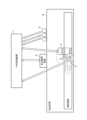
- FIG. 1 is a diagram showing a configuration example of a parallel running management system according to Embodiment 1.
- FIG. 3 is a diagram showing an example of the configuration of a providing facility according to the first embodiment.
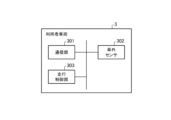
- 1 is a diagram showing a configuration example of a user vehicle according to Embodiment 1.
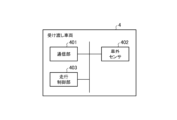
- FIG. 1 is a diagram illustrating a configuration example of a delivery vehicle according to Embodiment 1.
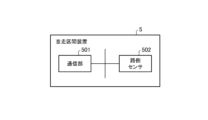
- FIG. 1 is a diagram illustrating a configuration example of a parallel running section device according to Embodiment 1.
- FIG. 1 is a diagram illustrating a configuration example of a central management device according to Embodiment 1.
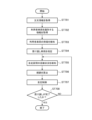
- FIG. 3 is a flowchart illustrating an example of the operation of the central management device according to the first embodiment.
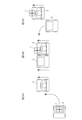
- FIGS. 10A to 10C are diagrams showing an example of a style in which the user vehicle and the delivery vehicle run side by side in the first embodiment.
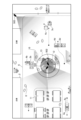
- FIG. 3 is a diagram illustrating a specific example of the operation of a route calculation unit and a parallel running control unit in the first embodiment.
- FIG. 3 is a diagram illustrating a specific example of the operation of a route calculation unit and a parallel running control unit in the first embodiment.
- 13A and 13B are diagrams showing an example of the hardware configuration of the central management device according to the first embodiment.
- FIG. 1 is a diagram showing a configuration example of a parallel running management system according to the first embodiment.
- the parallel running management system includes a central management device 1, a provision facility 2, a user vehicle 3, a delivery vehicle 4, and a parallel running section device 5.
- the central management device 1 manages the delivery of goods at the provision facility 2 by managing the user vehicles 3 and delivery vehicles 4 to run side by side in the parallel running section 6 . That is, here, a case is shown in which a parallel running management device is applied to the central management device 1.
- the parallel running section 6 is a section in which the user vehicle 3 and the delivery vehicle 4 can run in parallel, and is a section in which goods can be delivered between the user vehicle 3 and the delivery vehicle 4. Details of this central management device 1 will be described later.
- the provision facility 2 is a facility that accepts orders for goods from users and delivers the goods.
- Examples of the provision facility 2 include a store in a commercial facility such as a drive-through or food court, a counter such as a prescription counter in a hospital, or a store located in a wide area facility. Examples of wide-area facilities include airports, golf courses, and promenades at tourist spots.
- the providing facility 2 includes a communication department 201 and an order reception department 202.
- the communication unit 201 exchanges information between the communication unit 101 provided in the central management device 1 and a terminal such as a mobile terminal held by a user.
- the order reception unit 202 receives orders for goods from users.
- Information indicating the order for the article accepted by the order reception unit 202 is sent to the central management device 1 via the communication unit 201.
- the information indicating the order of the article includes, for example, the type of the ordered article and information indicating the time when the order of the article was received.
- the information indicating the order of the article may include information indicating the side-by-side driving style of the user vehicle 3 and the delivery vehicle 4 when the article is delivered. Note that a specific example of the parallel running style will be described later.
- the order receiving unit 202 receives information that allows identification of the user vehicle 3 in which the user rides. Examples of information that can identify the user vehicle 3 include a vehicle number attached to the user vehicle 3. Information that can identify the user vehicle 3 received by the order reception section 202 is sent to the central management device 1 via the communication section 201.
- the user sends information indicating an order for an article to the order reception unit 202 using, for example, a terminal such as a mobile terminal that the user owns.
- the user sends information by which the user vehicle 3 can be identified to the order reception unit 202 using, for example, a terminal such as a mobile terminal that the user owns.
- the order reception unit 202 may present the available time for the item to the user. That is, the order reception unit 202 sends information indicating the available time for providing the item to a terminal such as a mobile terminal held by the user via the communication unit 201.
- the provision facility 2 when the provision facility 2 receives information that can identify the delivery vehicle 4 used for delivery of goods from the central management device 1, the provision facility 2 transmits information to the worker or robot, etc. who loads the goods into the delivery vehicle 4. The information will be notified to those concerned. Then, the worker, robot, etc. that has received the notification loads the goods into the delivery vehicle 4 indicated by the notification.
- the user vehicle 3 is a vehicle in which a user rides, and is a vehicle that can travel in the parallel running section 6.
- This user vehicle 3 is a personal mobility vehicle that can run independently.
- the user After placing an order for goods with the order reception unit 202, the user can board the user vehicle 3 and drive in the parallel running section 6, or by boarding the user vehicle 3 and placing an order with the order reception unit 202.
- the vehicle After placing an order for an article, the vehicle travels in a parallel section 6 to receive the article from a delivery vehicle 4 running in parallel.
- the user vehicle 3 includes a communication section 301, an external sensor 302, and a travel control section 303.
- the communication unit 301 exchanges information with the communication unit 101 provided in the central management device 1.
- the external sensor 302 is a sensor that can detect the surrounding situation of the user vehicle 3.
- this vehicle exterior sensor 302 one or more sensors such as a camera sensor, a position sensor, LiDAR, or sonar are used, for example.
- Data indicating the detection result by the external sensor 302 is sent to the central management device 1 via the communication unit 301 at least when the user vehicle 3 is in the parallel running section 6.
- the travel control unit 303 controls the travel of the user vehicle 3 according to the control by the central management device 1, at least when the user vehicle 3 is in the parallel travel section 6. That is, the travel control unit 303 controls the traveling route, traveling speed, etc. of the user vehicle 3 according to the above-mentioned control.
- the delivery vehicle 4 is a vehicle capable of loading goods, and is a vehicle capable of traveling in the parallel running section 6. This delivery vehicle 4 is a robot that can run independently. After the goods are loaded at the provision facility 2, the delivery vehicle 4 runs parallel to the user vehicle 3 in the parallel running section 6, and delivers the goods to the users riding in the user vehicle 3. Carry out the handover. As shown in FIG. 4, the delivery vehicle 4 includes a communication section 401, an external sensor 402, and a travel control section 403.
- the communication unit 401 exchanges information with the communication unit 101 provided in the central management device 1.
- the vehicle exterior sensor 402 is a sensor that can detect the surrounding situation of the delivery vehicle 4 .
- sensors such as a camera sensor, a position sensor, LiDAR, or sonar is used, for example.
- Data indicating the detection result by the vehicle external sensor 402 is sent to the central management device 1 via the communication section 401.
- the travel control unit 403 controls the travel of the delivery vehicle 4 according to the control by the central management device 1. That is, the travel control unit 403 controls the traveling route, traveling speed, etc. of the delivery vehicle 4 according to the above control.
- the parallel running section device 5 is a device provided for the parallel running section 6. As shown in FIG. 5, this parallel running section device 5 includes a communication section 501 and a roadside sensor 502.
- the communication unit 501 exchanges information with the communication unit 101 provided in the central management device 1.
- the roadside sensor 502 is a sensor that can detect the situation within the parallel running section 6.
- the roadside sensor 502 one or more of sensors such as a camera sensor, LiDAR, or a millimeter wave sensor is used, for example.
- One or more roadside sensors 502 are provided for the parallel running section 6. Data indicating the detection result by the roadside sensor 502 is sent to the central management device 1 via the communication section 501.
- the central management device 1 includes a communication section 101, a parallel running section information acquisition section 102, a delivery vehicle information acquisition section 103, an order information acquisition section 104, a user vehicle information acquisition section 105, and a user vehicle arrival information acquisition section 102. It includes a detection section 106, a delivery vehicle designation section 107, a parallel section congestion detection section 108, a route calculation section 109, a parallel travel control section 110, and a delivery confirmation section 111.
- the communication unit 101 includes a communication unit 201 provided in the providing facility 2, a communication unit 301 provided in the user vehicle 3, a communication unit 401 provided in the delivery vehicle 4, and a communication unit 401 provided in the parallel running section device 5. Information is exchanged with the communication unit 501.
- the parallel running section information acquisition unit 102 acquires information regarding the parallel running section 6.
- the information regarding the parallel running section 6 includes, for example, map information indicating the parallel running section 6, and information indicating the installation location and detection range of the roadside sensor 502 for the parallel running section 6.
- the map information indicating the parallel running section 6 is not limited to fixed map information, but may also be map information in which the position of a moving object such as a person or a vehicle is updated in real time.
- the delivery vehicle information acquisition unit 103 obtains information regarding the delivery vehicle 4 used in the parallel running section 6.
- the information regarding the delivery vehicle 4 includes, for example, information that allows the delivery vehicle 4 to be identified and information indicating the operating status of the delivery vehicle 4. Examples of information that can identify the delivery vehicle 4 include a vehicle number attached to the delivery vehicle 4. Note that it is desirable that the information indicating the operating status of the delivery vehicle 4 be updated in real time.
- the order information acquisition unit 104 acquires information indicating the order for the item sent by the order reception unit 202.
- the order information acquisition unit 104 may calculate the available time for providing the article. At this time, for example, the order information acquisition unit 104 calculates the available time for providing the item by adding the available available time set in advance for the item to the time when the order for the item was accepted. Information indicating the available time of the article calculated by the order information acquisition unit 104 is sent to the order reception unit 202 via the communication unit 101.
- the user vehicle information acquisition unit 105 acquires information that can identify the user vehicle 3 sent by the order reception unit 202.
- the user vehicle arrival detection unit 106 detects that the user vehicle 3 with the user on board has arrived at the parallel running section 6. At this time, the user vehicle arrival detection unit 106 detects one or more of the detection results by the roadside sensor 502 provided in the parallel section device 5 or the detection result by the external sensor 302 provided in the user vehicle 3. The above detection is performed based on.
- the user vehicle arrival detection unit 106 uses information that can identify the user vehicle 3 acquired by the user vehicle information acquisition unit 105 based on the detection result by the roadside sensor 502 provided in the parallel section device 5. The arrival of the user vehicle 3 may be detected by confirming that the user vehicle 3 to which the information matching is attached has entered the parallel running section 6. Further, for example, the user vehicle arrival detection unit 106 detects that the user vehicle 3 enters an environment that matches the environment within the parallel running section 6 based on the detection result by the external sensor 302 provided in the user vehicle 3. The arrival of the user vehicle 3 may be detected by confirming that the user vehicle 3 has arrived.
- the user vehicle arrival detection unit 106 also detects the time when the vehicle estimated to be the user vehicle 3 entered the parallel running section 6, and the time calculated by the order information acquisition unit 104.
- the arrival of the user vehicle 3 may also be detected based on the time when the article can be provided. That is, for example, the user vehicle arrival detection unit 106 detects that the time when the vehicle estimated to be the user vehicle 3 enters the parallel running section 6 is within a predetermined time range with respect to the time when the article can be provided. In this case, the vehicle may be determined to be the user vehicle 3, and the arrival of the user vehicle 3 may be detected.
- the delivery vehicle designation unit 107 designates the delivery vehicle 4 used for delivering the article. At this time, the delivery vehicle designation unit 107 performs the above designation based on the acquisition result by the order information acquisition unit 104 and the acquisition result by the delivery vehicle information acquisition unit 103.
- the delivery vehicle designation unit 107 designates a delivery vehicle 4 among the delivery vehicles 4 that is capable of loading the article indicated by the information acquired by the order information acquisition unit 104 and is currently on standby.
- the parallel section congestion detection unit 108 detects the congestion situation of the parallel section 6.
- the parallel section congestion situation detection unit 108 detects the detection result by the roadside sensor 502 provided in the parallel section device 5, the detection result by the external sensor 302 provided in the user vehicle 3, or the detection result from the delivery vehicle 4. The above-mentioned detection is performed based on one or more of the detection results by the provided external sensor 402.
- the route calculation unit 109 determines the travel route of the user vehicle 3 when delivering the goods and the delivery vehicle 4 specified by the delivery vehicle designation unit 107 based on the detection result by the parallel section congestion situation detection unit 108. Calculate the progress route. At this time, the route calculation unit 109 performs the above calculation while referring to the acquisition result by the parallel running section information acquisition unit 102.
- the route calculation unit 109 calculates a route that allows the shortest and safe delivery of the goods as the traveling route of the user vehicle 3 and the traveling route of the delivery vehicle 4 when delivering the goods. . That is, for example, the route calculation unit 109 calculates a route in which there are fewer people, other user vehicles 3, or delivery vehicles 4 in the parallel running section 6.
- the route calculation unit 109 performs the above calculation based also on the side-by-side driving style of the user vehicle 3 and the delivery vehicle 4.
- the side-by-side running style of the user vehicle 3 and the delivery vehicle 4 can be confirmed based on the type of article indicated by the information acquired by the order information acquisition unit 104 or the side-by-side running style selected by the user.
- the route calculation unit 109 also calculates the traveling speed of the user vehicle 3 when delivering goods based on the detection result by the parallel section congestion detection unit 108 and the delivery vehicle designation unit 107.
- the traveling speed of the designated delivery vehicle 4 may also be calculated.
- the parallel running control unit 110 performs parallel running control on the user vehicle 3 and the delivery vehicle 4 designated by the delivery vehicle designation unit 107 based on the calculation result by the route calculation unit 109, and instructs them to deliver the goods. .
- the parallel running control unit 110 detects one or more of the detection result by the external sensor 302 provided in the user vehicle 3 or the detection result by the external sensor 402 provided in the delivery vehicle 4, and the parallel running control unit 110.
- Parallel running control is dynamically performed based on the detection results from the roadside sensor 502 provided in the running section device 5.
- the delivery confirmation unit 111 confirms that the delivery of the article is completed after the control by the parallel running control unit 110.
- the user may send a receipt confirmation notification to the central management device 1 using a terminal such as a mobile terminal that the user owns.
- the delivery confirmation unit 111 can confirm completion of delivery of the article by receiving the receipt confirmation notification.
- a sensor such as a load sensor or an image sensor capable of detecting the presence or absence of loading of goods may be attached to the delivery vehicle 4, and the detection result by the sensor may be configured to be sent to the central management device 1. .
- the delivery confirmation unit 111 can confirm completion of the delivery of the article by confirming a change corresponding to the presence or absence of the article from the detection result by the sensor.
- the delivery confirmation unit 111 confirms that the delivery of the article has not been completed, that is, the delivery of the article has failed, it instructs the parallel section congestion situation detection unit 108 to perform re-detection. Thereafter, the central management device 1 causes the user vehicle 3 and the delivery vehicle 4 to deliver the goods again.
- the delivery confirmation unit 111 can confirm the failure in delivery of the article by receiving the notification of failure in delivery.
- a sensor such as a load sensor or an image sensor capable of detecting the presence or absence of loading of goods may be attached to the delivery vehicle 4, and the detection result by the sensor may be configured to be sent to the central management device 1. .
- the delivery confirmation unit 111 can confirm failure in delivery of the article if no change corresponding to the presence or absence of the article is confirmed even after a certain period of time from the detection result by the sensor.
- FIG. 6 shows a case where the central management device 1 is provided with a delivery vehicle designation unit 107 and a delivery confirmation unit 111.
- the delivery vehicle designation section 107 and the delivery confirmation section 111 are not essential components of the central management device 1 and may not be provided in the central management device 1.
- the parallel running section information acquisition unit 102 has acquired information regarding the parallel running section 6.
- the information regarding the parallel running section 6 includes, for example, map information indicating the parallel running section 6, and information indicating the installation location and detection range of the roadside sensor 502 for the parallel running section 6.
- the delivery vehicle information acquisition unit 103 obtains information regarding the delivery vehicle 4 used in the parallel running section 6.
- the information regarding the delivery vehicle 4 includes, for example, information that allows the delivery vehicle 4 to be identified and information indicating the operating status of the delivery vehicle 4. Note that it is desirable that the information indicating the operating status of the delivery vehicle 4 be updated in real time.
- step ST701 In the operation example of the central management device 1 according to the first embodiment shown in FIG. 6, as shown in FIG. Acquire (step ST701).
- the order information acquisition unit 104 may calculate the available time for providing the article. At this time, the order information acquisition unit 104 calculates the available time for providing the item by adding the available available time set in advance for the item to the time when the order for the item was accepted. Information indicating the available time of the article calculated by the order information acquisition unit 104 is sent to the order reception unit 202 via the communication unit 101.
- the user vehicle information acquisition unit 105 acquires information that can identify the user vehicle 3 sent by the order reception unit 202 (step ST702).
- the user vehicle arrival detection unit 106 detects that the user vehicle 3 in which the user is riding has arrived at the parallel running section 6 (step ST703). At this time, the user vehicle arrival detection unit 106 detects one or more of the detection results by the roadside sensor 502 provided in the parallel section device 5 or the detection result by the external sensor 302 provided in the user vehicle 3. The above detection is performed based on.
- the user vehicle arrival detection unit 106 uses information that can identify the user vehicle 3 acquired by the user vehicle information acquisition unit 105 based on the detection result by the roadside sensor 502 provided in the parallel section device 5. The arrival of the user vehicle 3 may be detected by confirming that the user vehicle 3 to which the information matching is attached has entered the parallel running section 6. Further, for example, the user vehicle arrival detection unit 106 detects that the user vehicle 3 enters an environment that matches the environment within the parallel running section 6 based on the detection result by the external sensor 302 provided in the user vehicle 3. The arrival of the user vehicle 3 may be detected by confirming that the user vehicle 3 has arrived.
- the user vehicle arrival detection unit 106 also detects the time when the vehicle estimated to be the user vehicle 3 enters the parallel running section 6, and the item count calculated by the order information acquisition unit 104.
- the arrival of the user vehicle 3 may also be detected based on the available time. That is, the user vehicle arrival detection unit 106 detects when the time when the vehicle estimated to be the user vehicle 3 enters the parallel running section 6 is within a predetermined time range with respect to the time when the goods can be provided. , the vehicle may be determined to be the user vehicle 3, and the arrival of the user vehicle 3 may be detected.
- the delivery vehicle designation unit 107 designates the delivery vehicle 4 used for delivering the article (step ST704). At this time, the delivery vehicle designation unit 107 performs the above designation based on the acquisition result by the order information acquisition unit 104 and the acquisition result by the delivery vehicle information acquisition unit 103.
- the delivery vehicle designation unit 107 designates a delivery vehicle 4 among the delivery vehicles 4 that is capable of loading the article indicated by the information acquired by the order information acquisition unit 104 and is currently on standby.
- the providing facility 2 receives information that can identify the delivery vehicle 4 used for delivering the goods sent from the central management device 1, and sends the information to the worker or robot, etc. who loads the goods into the delivery vehicle 4. Notify me of information. Then, the worker, robot, etc. that has received the notification loads the goods into the delivery vehicle 4 indicated by the notification.
- the parallel section congestion detection section 108 detects the congestion situation of the parallel section 6. (Step ST705).
- the parallel section congestion situation detection unit 108 detects the detection result by the roadside sensor 502 provided in the parallel section device 5, the detection result by the external sensor 302 provided in the user vehicle 3, or the detection result from the delivery vehicle 4. The above-mentioned detection is performed based on one or more of the detection results by the provided external sensor 402.
- the route calculation unit 109 determines the travel route of the user vehicle 3 when delivering the goods and the delivery route specified by the delivery vehicle designation unit 107 based on the detection result by the parallel section congestion situation detection unit 108.
- the traveling route of the vehicle 4 is calculated (step ST706).
- the route calculation unit 109 performs the above calculation while referring to the acquisition result by the parallel running section information acquisition unit 102.
- the route calculation unit 109 calculates a route that can avoid waiting traffic congestion, depending on the congestion situation detected by the parallel section congestion situation detection unit 108.
- the route calculation unit 109 performs the above calculation based also on the side-by-side driving style of the user vehicle 3 and the delivery vehicle 4.
- the side-by-side running style of the user vehicle 3 and the delivery vehicle 4 can be confirmed based on the type of article indicated by the information acquired by the order information acquisition unit 104 or the side-by-side running style selected by the user.
- the route calculation unit 109 also calculates the traveling speed of the user vehicle 3 when delivering goods based on the detection result by the parallel section congestion detection unit 108 and the delivery vehicle designation unit 107.
- the traveling speed of the designated delivery vehicle 4 may also be calculated.
- the parallel running control unit 110 performs parallel running control on the user vehicle 3 and the delivery vehicle 4 designated by the delivery vehicle designation unit 107 based on the calculation result by the route calculation unit 109, and transfers the goods. instruct (step ST707).
- the parallel running control unit 110 detects one or more of the detection result by the external sensor 302 provided in the user vehicle 3 or the detection result by the external sensor 402 provided in the delivery vehicle 4, and the parallel running control unit 110.
- Parallel running control is dynamically performed based on the detection results from the roadside sensor 502 provided in the running section device 5.
- the parallel running control unit 110 allows the user vehicle 3 and the delivery vehicle 4 to pass the goods while running side by side without temporarily stopping.
- the blind spot is Detection can also be performed for areas where In this case, the parallel running control unit 110 can perform parallel running control with higher accuracy.
- the side-by-side running style of the user vehicle 3 and the delivery vehicle 4 by the side-by-side running control unit 110 includes, for example, facing side-by-side running as shown in FIG. 8, rear following as shown in FIG. 9, and An example of this is running in parallel next to each other as shown in .
- the reference numeral 7 shown in FIGS. 8 to 10 indicates an article.
- arrows indicated by broken lines indicate the traveling route of the user vehicle 3 and the traveling route of the delivery vehicle 4.
- Facing parallel running as shown in FIG. 8 refers to a parallel running style in which the user vehicle 3 and the delivery vehicle 4 face each other and run parallel in tandem.
- This side-by-side running is an effective side-by-side running style when the item requires an explanation at the time of delivery.
- An example of an item that requires explanation at the time of delivery is a pharmaceutical product.
- the side-by-side running control unit 110 moves the delivery vehicle 4 loaded with articles in front of the user vehicle 3 in the forward direction so as to face the user vehicle 3. Then, by switching to reverse driving and moving, the user vehicle 3 and the delivery vehicle 4 are placed facing each other. Thereafter, as shown in FIG.
- the parallel running control unit 110 causes the user vehicle 3 and the delivery vehicle 4 to proceed in the same (including substantially the same meaning) direction at the same (including substantially the same meaning) speed. This allows them to run parallel in tandem while facing each other.
- the parallel running control unit 110 controls the traveling speed of the user vehicle 3 and the delivery vehicle 4 to be slower than when normally traveling. You may.
- the delivery vehicle 4 stores the article in a storage (not shown) provided in front of the user vehicle 3, or the user himself or herself receives the article. Further, at this time, for example, the delivery vehicle 4 may explain to the user vehicle 3 the article to be delivered by display or voice.
- the parallel running control unit 110 moves the delivery vehicle 4 away from the user vehicle 3, as shown in FIG. 8C.
- rear following as shown in FIG. 9 refers to a parallel driving style in which the delivery vehicle 4 follows the user vehicle 3 from behind and runs parallel to the user vehicle 3 in tandem.
- This rear following is a parallel running style that is effective when the item does not require any explanation at the time of delivery and is stored in a storage compartment (not shown) provided at the rear of the user vehicle 3. be.
- the parallel running control unit 110 causes the delivery vehicle 4 loaded with articles to go around directly behind the user vehicle 3, and then causes it to follow the user vehicle 3. Thereafter, as shown in FIG.
- the parallel running control unit 110 causes the user vehicle 3 and the delivery vehicle 4 to proceed in the same (including substantially the same meaning) direction at the same (including substantially the same meaning) speed. This allows them to run parallel in tandem while remaining in the tracking state.
- the parallel running control unit 110 controls the traveling speed of the user vehicle 3 and the delivery vehicle 4 to be slower than when normally traveling. You may.
- the delivery vehicle 4 stores the article in a storage provided at the rear of the user vehicle 3.
- the parallel running control unit 110 moves the delivery vehicle 4 away from the user vehicle 3, as shown in FIG. 9C.
- side-by-side parallel running refers to a parallel running style in which the user vehicle 3 and the delivery vehicle 4 are placed next to each other and run side by side in a horizontal row.
- This side-by-side running is carried out when the goods do not require any explanation at the time of delivery, and when the goods are stored in a storage compartment (not shown) provided in the front of the user vehicle 3, or when the goods are carried by the user himself.
- This is an effective side-by-side style when receiving items.
- this side-by-side running parallel for example, as shown in FIG. 3 and the delivery vehicle 4 are placed next to each other. Thereafter, as shown in FIG.
- the parallel running control unit 110 causes the user vehicle 3 and the delivery vehicle to travel in the same (including substantially the same meaning) direction at the same (including substantially the same meaning) speed. 4 are run side by side in a horizontal row. At this time, in order to safely transfer the goods between the user vehicle 3 and the delivery vehicle 4, the parallel running control unit 110 controls the traveling speed of the user vehicle 3 and the delivery vehicle 4 to be slower than when normally traveling. You may. Then, the delivery vehicle 4 stores the article in a storage provided at the rear of the user vehicle 3, or the user himself or herself receives the article. After the goods are delivered, the parallel running control unit 110 moves the delivery vehicle 4 away from the user vehicle 3, as shown in FIG. 10C.
- FIG. 11 shows an example in which the providing facility 2 is a prescription counter of a hospital having a parallel section 6.
- two roadside sensors 502 are provided for the parallel running section 6 that the providing facility 2 has.
- user vehicles 3a to 3d and delivery vehicles 4a to 4d are shown as the user vehicles 3 and delivery vehicles 4 processed by the route calculation unit 109 and the parallel running control unit 110.
- numeral 8 indicates a person
- numeral 9 indicates a bench
- numeral 10 indicates a crowded area.
- the congested area is an area determined to be congested by the parallel section congestion situation detection unit 108.
- the route calculation unit 109 calculates a straight route for the user vehicle 3a and the delivery vehicle 4a because there is no congested area that would be an obstacle. Similarly, for example, the route calculation unit 109 calculates a straight route for the user vehicle 3b and the delivery vehicle 4b because there is no congested area that would be an obstacle. Similarly, for example, the route calculation unit 109 calculates a straight route for the user vehicle 3c and the delivery vehicle 4c because there is no congested area that would be an obstacle. On the other hand, for example, the route calculating unit 109 calculates a route that avoids the congested area since there is a congested area that becomes an obstacle for the user vehicle 3d and the delivery vehicle 4d. Note that in FIG.
- the parallel running control unit 110 controls the parallel running of the user vehicles 3a to 3d and the delivery vehicles 4a to 4c according to the route calculated by the route calculation unit 109 as described above.
- FIG. 12 shows an example in which the providing facility 2 is a store of a commercial facility having a parallel running section 6. Moreover, in this FIG. 12, three roadside sensors 502 are provided for the parallel running section 6 that the providing facility 2 has. Furthermore, user vehicles 3a to 3d and delivery vehicles 4a to 4d are shown as the user vehicles 3 and delivery vehicles 4 processed by the route calculation unit 109 and the parallel running control unit 110. Further, in FIG. 12, reference numeral 11 indicates a table set, reference numeral 12 indicates planting, and reference numeral 13 indicates a donut-shaped bench. In this case, for example, the route calculation unit 109 calculates a straight route for the user vehicle 3a and the delivery vehicle 4a because there is no congested area that would be an obstacle.
- the route calculation unit 109 calculates a straight route for the user vehicle 3b and the delivery vehicle 4b because there is no congested area that would be an obstacle. Similarly, for example, the route calculation unit 109 calculates a straight route for the user vehicle 3c and the delivery vehicle 4c because there is no congested area that would be an obstacle. On the other hand, for example, the route calculating unit 109 calculates a route that avoids the congested area since there is a congested area that becomes an obstacle for the user vehicle 3d and the delivery vehicle 4d. In addition, in FIG. 12, it is assumed that the article is an article that does not require explanation at the time of delivery, and rear following or side-by-side parallel running is selected as the parallel running style.
- the parallel running control unit 110 controls the parallel running of the user vehicles 3a to 3d and the delivery vehicles 4a to 4c according to the route calculated by the route calculation unit 109 as described above.
- the delivery confirmation unit 111 confirms whether the delivery of the article is completed (step ST708).
- the delivery confirmation unit 111 confirms that the delivery of the article has been completed, the sequence ends.
- the user may send a receipt confirmation notification to the central management device 1 using a terminal such as a mobile terminal that the user owns.
- the delivery confirmation unit 111 can confirm completion of delivery of the article by receiving the receipt confirmation notification.
- a sensor such as a load sensor or an image sensor capable of detecting the presence or absence of loading of goods may be attached to the delivery vehicle 4, and the detection result by the sensor may be configured to be sent to the central management device 1. .
- the delivery confirmation unit 111 can confirm completion of the delivery of the article by confirming a change corresponding to the presence or absence of the article from the detection result by the sensor.
- step ST708 if the delivery confirmation unit 111 confirms that the delivery of the article has not been completed, that is, the delivery of the article has failed, the sequence returns to step ST705, and the parallel section congestion situation detection unit 108 Instructs to re-detect. Thereafter, the central management device 1 causes the user vehicle 3 and the delivery vehicle 4 to deliver the goods again.
- the delivery confirmation unit 111 can confirm the failure in delivery of the article by receiving the notification of failure in delivery.
- a sensor such as a load sensor or an image sensor capable of detecting the presence or absence of loading of goods may be attached to the delivery vehicle 4, and the detection result by the sensor may be configured to be sent to the central management device 1. .
- the delivery confirmation unit 111 can confirm failure in delivery of the article if no change corresponding to the presence or absence of the article is confirmed even after a certain period of time from the detection result by the sensor.
- the central management device 1 calculates the route along which the user vehicle 3 and the delivery vehicle 4 run parallel in the parallel running section 6, and the user vehicle 3 and the delivery vehicle 4 run in parallel according to the route. Articles are delivered by controlling the vehicles 4 to run in parallel.
- the central management device 1 according to Embodiment 1 calculates the optimal supply route according to the increase or decrease in demand without fixing the supply location of the goods, and runs both sides in parallel without stopping temporarily. Goods can be delivered.
- the central management device 1 according to the first embodiment it is possible to eliminate waiting time and waiting congestion compared to the conventional system, and also it is possible to freely change the delivery space, thereby increasing the operating rate. becomes.
- the delivery vehicle 4 since the delivery vehicle 4 is used to deliver the goods, it is possible to deliver goods even in bad weather compared to the case where an unmanned aircraft is used.
- the delivery vehicle 4 that can run independently is used to deliver goods while running parallel to the user vehicle 3, so when an unmanned aircraft is used, On the other hand, it is not necessary to secure a place for the delivery vehicle 4 to temporarily stop, and waiting congestion can be avoided.
- the parallel running management system according to the first embodiment since the delivery vehicle 4 is used to deliver the goods, the risk of damage or deterioration of the goods is lower than when an unmanned aircraft is used. Excessive packaging becomes unnecessary.
- the central management device 1 it is possible for the user vehicle 3 to receive the goods while moving forward without stopping, so that the user can receive the goods without feeling any waiting time. becomes.
- the central management device 1 according to the first embodiment it is possible to have a certain degree of freedom in the delivery location of goods. Therefore, in the central management device 1 according to the first embodiment, it is possible to avoid congestion during delivery, and it is possible to improve the operating efficiency of article provision.
- the central management device 1 when the providing facility 2 is a prescription counter of a hospital, the central management device 1 according to the first embodiment can perform travel control to prevent users from staying, which is effective as a countermeasure against infectious diseases.
- the providing facility 2 is a prescription counter of a hospital
- the same effect as described above can be obtained for other providing facilities 2 as well.
- the central management device 1 allows the delivery vehicle 4, which is a robot, to deliver the goods, which is effective in preventing infectious diseases.
- the providing facility 2 is a prescription counter of a hospital
- the same effect as described above can be obtained for other providing facilities 2 as well.
- the central management device 1 can avoid congestion during delivery of goods during peak times such as lunch or dinner.
- the central management device 1 when the providing facility 2 is a store of a large commercial facility, the central management device 1 according to the first embodiment has a vehicle 4 that delivers goods ordered in advance by the user and stores the goods in the user's vehicle 3.
- the vehicle 4 delivers goods ordered in advance by the user and stores the goods in the user's vehicle 3.
- the parallel running management device is applied to the central management device 1 which is a separate device from the user vehicle 3 and the delivery vehicle 4.
- the present invention is not limited to this, and the parallel running management device may be applied to the user vehicle 3 or the delivery vehicle 4.
- a case has been described in which all the configurations of the parallel running management device are applied to one device.
- the configuration is not limited to this, and the configuration of the parallel running management device may be divided and applied to two or more of the central management device 1, the user vehicle 3, and the delivery vehicle 4.
- the parallel running management system includes the order information acquisition unit 104 that acquires information indicating the order of goods, and the information that the user vehicle 3 has arrived at the parallel running section 6.
- the parallel running detection unit 106 detects the congestion situation of the parallel running section 6. Based on the detection results by the running section congestion situation detection section 108 and the parallel running section congestion situation detection section 108, the traveling route of the user vehicle 3 when delivering the goods indicated by the information acquired by the order information acquisition section 104.
- the parallel running management system can receive items while moving without temporarily stopping.
- the processing circuit 51 may be dedicated hardware as shown in FIG. 13A, or may be a CPU (Central Processing Unit) that executes a program stored in the memory 53, as shown in FIG. 13B. It may be a processing device, an arithmetic device, a microprocessor, a microcomputer, a processor, or a DSP (Digital Signal Processor)) 52.
- the processing circuit 51 may be, for example, a single circuit, a composite circuit, a programmed processor, a parallel programmed processor, an ASIC (Application Specific Integrated Circuit), or an FPGA (Field Programmable Gate). Array), or a combination of these.
- the functions of the congestion situation detection section 108, route calculation section 109, parallel running control section 110, and delivery confirmation section 111 may be realized by the processing circuit 51, or the functions of each section may be realized by the processing circuit 51. It may be realized.
- the processing circuit 51 When the processing circuit 51 is the CPU 52, the communication section 101, parallel running section information acquisition section 102, delivery vehicle information acquisition section 103, order information acquisition section 104, user vehicle information acquisition section 105, user vehicle arrival detection section 106, delivery
- the functions of the vehicle specifying unit 107, parallel running section congestion situation detection unit 108, route calculation unit 109, parallel running control unit 110, and delivery confirmation unit 111 are realized by software, firmware, or a combination of software and firmware. .
- Software and firmware are written as programs and stored in memory 53.
- the processing circuit 51 realizes the functions of each section by reading and executing programs stored in the memory 53. That is, the central management device 1 includes a memory 53 for storing a program that, when executed by the processing circuit 51, results in each step shown in, for example, FIG.
- These programs also include communication section 101, parallel running section information acquisition section 102, delivery vehicle information acquisition section 103, order information acquisition section 104, user vehicle information acquisition section 105, user vehicle arrival detection section 106, and delivery vehicle information acquisition section 102. It can also be said that the computer executes the procedures and methods of the specifying section 107, the parallel running section congestion situation detection section 108, the route calculation section 109, the parallel running control section 110, and the delivery confirmation section 111.
- RAM Random Access Memory
- ROM Read Only Memory
- flash memory EPROM (Erasable Programmable ROM)
- EEPROM Electrical Non-volatile or volatile semiconductor memory such as ly EPROM
- communication section 101 parallel running section information acquisition section 102, delivery vehicle information acquisition section 103, order information acquisition section 104, user vehicle information acquisition section 105, user vehicle arrival detection section 106, delivery vehicle specification section 107, Regarding the functions of the running section congestion detection unit 108, route calculation unit 109, parallel running control unit 110, and delivery confirmation unit 111, some of them are realized by dedicated hardware, and some of them are realized by software or firmware. You can do it like this.
- the function of the communication unit 101 is realized by a processing circuit 51 as dedicated hardware, including a parallel running section information acquisition unit 102, a delivery vehicle information acquisition unit 103, an order information acquisition unit 104, and a user vehicle information acquisition unit.
- the processing circuit 51 is connected to the memory 53.
- the function can be realized by reading and executing the program stored in the .
- the processing circuit 51 can realize each of the above functions using hardware, software, firmware, or a combination thereof.
- the parallel running management device makes it possible to receive goods while moving without temporarily stopping, and can be used as a parallel running management device etc. that transfers goods by controlling vehicles to run side by side. suitable for
Landscapes
- Engineering & Computer Science (AREA)
- Business, Economics & Management (AREA)
- Radar, Positioning & Navigation (AREA)
- Remote Sensing (AREA)
- General Physics & Mathematics (AREA)
- Physics & Mathematics (AREA)
- Economics (AREA)
- Strategic Management (AREA)
- Human Resources & Organizations (AREA)
- Automation & Control Theory (AREA)
- Theoretical Computer Science (AREA)
- Development Economics (AREA)
- General Business, Economics & Management (AREA)
- Marketing (AREA)
- Tourism & Hospitality (AREA)
- Finance (AREA)
- Accounting & Taxation (AREA)
- Entrepreneurship & Innovation (AREA)
- Operations Research (AREA)
- Quality & Reliability (AREA)
- Chemical & Material Sciences (AREA)
- Analytical Chemistry (AREA)
- Game Theory and Decision Science (AREA)
- Traffic Control Systems (AREA)
- Management, Administration, Business Operations System, And Electronic Commerce (AREA)
- Control Of Position, Course, Altitude, Or Attitude Of Moving Bodies (AREA)
- Warehouses Or Storage Devices (AREA)
Abstract
Description
また、無人飛行機を用いた場合には、無人飛行機が安全に着陸できる場所の確保が必要である。しかしながら、そのような場所を複数箇所用意することは容易ではないため、無人飛行機の着陸待ちによる待機渋滞が発生する可能性がある。
また、無人飛行機を用いた場合には、荷物の破損又は劣化等のリスクが高い。そのため、この場合には、荷物に対する過剰な梱包が必要となり、実際の運用ではその準備及び荷解き等の手間と時間がかかる。
実施の形態1.
図1は実施の形態1に係る並走管理システムの構成例を示す図である。
並走管理システムは、図1に示すように、中央管理装置1、提供施設2、利用者車両3、受け渡し車両4、及び、並走区間装置5を備えている。
この中央管理装置1の詳細については後述する。
この提供施設2は、図2に示すように、通信部201、及び、注文受付部202を備えている。
また、この際、注文受付部202は、利用者が搭乗する利用者車両3を識別可能な情報を受け付ける。利用者車両3を識別可能な情報としては、例えば、利用者車両3に付された車両ナンバーが挙げられる。この注文受付部202により受け付けられた利用者車両3を識別可能な情報は、通信部201を介して、中央管理装置1に送られる。
同様に、利用者は、例えば、自身が保持する携帯端末等の端末を用いて、注文受付部202に対し、利用者車両3を識別可能な情報を送る。
そして、上記通知を受け付けた作業員又はロボット等は、当該通知が示す受け渡し車両4に対して物品の積み込みを行う。
利用者は、注文受付部202に対して物品の注文を行った後に利用者車両3に搭乗して並走区間6を走行することで、又は、利用者車両3に搭乗しながら注文受付部202に対して物品の注文を行った後に並走区間6を走行することで、並走する受け渡し車両4から当該物品を受け取る。
この利用者車両3は、図3に示すように、通信部301、車外センサ302、及び、走行制御部303を備えている。
この車外センサ302による検知結果を示すデータは、少なくとも利用者車両3が並走区間6にいる場合に、通信部301を介して、中央管理装置1に送られる。
受け渡し車両4は、提供施設2において物品が積み込まれた後、並走区間6において利用者車両3と並走することで、当該利用者車両3に乗車している利用者に対して当該物品の受け渡しを行う。
この受け渡し車両4は、図4に示すように、通信部401、車外センサ402、及び、走行制御部403を備えている。
この車外センサ402による検知結果を示すデータは、通信部401を介して、中央管理装置1に送られる。
この並走区間装置5は、図5に示すように、通信部501、及び、路側センサ502を備えている。
この路側センサ502による検知結果を示すデータは、通信部501を介して、中央管理装置1に送られる。
中央管理装置1は、図6に示すように、通信部101、並走区間情報取得部102、受け渡し車両情報取得部103、注文情報取得部104、利用者車両情報取得部105、利用者車両到着検知部106、受け渡し車両指定部107、並走区間混雑状況検知部108、経路算出部109、並走制御部110、及び、受け渡し確認部111を備えている。
なお、並走区間6を示す地図情報としては、固定の地図情報に限らず、人又は車両等の移動物体の位置がリアルタイムに更新される地図情報を用いることも可能である。
また、例えば、利用者車両到着検知部106は、利用者車両3に設けられた車外センサ302による検知結果に基づいて、利用者車両3が並走区間6内の環境と一致する環境内に入ったことを確認することで、利用者車両3の到着を検知してもよい。
また、例えば、受け渡し車両4に物品の積み込みの有無を検知可能な荷重センサ又は画像センサ等のセンサが取り付けられ、当該センサによる検知結果が中央管理装置1に送られるように構成されていてもよい。この場合、受け渡し確認部111は、上記センサによる検知結果から、物品の有無に相当する変化を確認することで、物品の受け渡しの完了を確認することができる。
また、例えば、受け渡し車両4に物品の積み込みの有無を検知可能な荷重センサ又は画像センサ等のセンサが取り付けられ、当該センサによる検知結果が中央管理装置1に送られるように構成されていてもよい。この場合、受け渡し確認部111は、上記センサによる検知結果から、物品の有無に相当する変化が一定時間経っても確認されないことで、物品の受け渡しの失敗を確認することができる。
なお、並走区間情報取得部102は、並走区間6に関する情報を取得している。並走区間6に関する情報には、例えば、並走区間6を示す地図情報、及び、並走区間6に対する路側センサ502の設置場所及び検知範囲を示す情報が含まれる。
また、受け渡し車両情報取得部103は、並走区間6で用いられる受け渡し車両4に関する情報を取得している。受け渡し車両4に関する情報には、例えば、受け渡し車両4を識別可能な情報、及び、受け渡し車両4の稼働状況を示す情報が含まれる。なお、受け渡し車両4の稼働状況を示す情報は、リアルタイムに更新されることが望ましい。
また、例えば、利用者車両到着検知部106は、利用者車両3に設けられた車外センサ302による検知結果に基づいて、利用者車両3が並走区間6内の環境と一致する環境内に入ったことを確認することで、利用者車両3の到着を検知してもよい。
そして、上記通知を受け付けた作業員又はロボット等は、当該通知が示す受け渡し車両4に対して物品の積み込みを行う。
この並走制御部110により、利用者車両3及び受け渡し車両4は一時停車することなく並走した状態で、物品の受け渡しが行われる。
ここで、並走制御部110による利用者車両3及び受け渡し車両4の並走スタイルとしては、例えば、図8に示すような向かい合わせ並走、図9に示すような後方追従、及び、図10に示すような隣り合わせ並走が挙げられる。なお、図8~図10に示す符号7は物品を示している。また、図8~図10において、破線で示す矢印は、利用者車両3の進行経路、及び、受け渡し車両4の進行経路を示している。
この向かい合わせ並走では、例えば、まず、図8Aに示すように、並走制御部110は、物品が積み込まれた受け渡し車両4を、前進方向で利用者車両3の前方に対面向きで移動させ、その後、バック走行に切り替えて移動させることで、利用者車両3及び受け渡し車両4を向かい合わせ状態とする。
その後、図8Bに示すように、並走制御部110は、利用者車両3及び受け渡し車両4を、同一(略同一の意味を含む)方向に同一(略同一の意味を含む)速度で進行させることで、向かい合わせ状態のまま縦列で並走させる。なお、この際、利用者車両3及び受け渡し車両4間での物品の受け渡しを安全に行うため、並走制御部110は、利用者車両3及び受け渡し車両4の進行速度を通常走行時よりも遅くしてもよい。そして、受け渡し車両4が利用者車両3の前方に設けられた収納庫(不図示)に物品を格納する、又は、利用者自身が物品の受け取りを行う。また、この際、例えば、受け渡し車両4は、利用者車両3に対し、受け渡し対象である物品の説明を表示又は音声等で行ってもよい。
そして、物品の受け渡し後、図8Cに示すように、並走制御部110は、受け渡し車両4を、利用者車両3から離すように移動させる。
この後方追従では、例えば、まず、図9Aに示すように、並走制御部110は、物品が積み込まれた受け渡し車両4を、利用者車両3の真後ろに回り込ませ、その後、追従させる。
その後、図9Bに示すように、並走制御部110は、利用者車両3及び受け渡し車両4を、同一(略同一の意味を含む)方向に同一(略同一の意味を含む)速度で進行させることで、追従状態のまま縦列で並走させる。なお、この際、利用者車両3及び受け渡し車両4間での物品の受け渡しを安全に行うため、並走制御部110は、利用者車両3及び受け渡し車両4の進行速度を通常走行時よりも遅くしてもよい。そして、受け渡し車両4は、利用者車両3の後方に設けられた収納庫に物品を格納する。
そして、物品の受け渡し後、図9Cに示すように、並走制御部110は、受け渡し車両4を、利用者車両3から離すように移動させる。
この隣り合わせ並走では、例えば、まず、図10Aに示すように、並走制御部110は、受け渡し車両4を、利用者車両3の斜め後ろに回り込ませ、その後、追従させることで、利用者車両3及び受け渡し車両4を隣り合わせ状態とする。
その後、図10Bに示すように、並走制御部110は、同一(略同一の意味を含む)方向に同一(略同一の意味を含む)速度で進行させることで、利用者車両3及び受け渡し車両4を、隣り合わせ状態のまま横列で並走させる。なお、この際、利用者車両3及び受け渡し車両4間での物品の受け渡しを安全に行うため、並走制御部110は、利用者車両3及び受け渡し車両4の進行速度を通常走行時よりも遅くしてもよい。そして、受け渡し車両4が利用者車両3の後方に設けられた収納庫に物品を格納する、又は、利用者自身が物品の受け取りを行う。
そして、物品の受け渡し後、図10Cに示すように、並走制御部110は、受け渡し車両4を、利用者車両3から離すように移動させる。
この場合、例えば、経路算出部109は、利用者車両3a及び受け渡し車両4aに対しては、障害となる混雑領域は存在しないため、直線状の経路を算出している。同様に、例えば、経路算出部109は、利用者車両3b及び受け渡し車両4bに対しては、障害となる混雑領域は存在しないため、直線状の経路を算出している。同様に、例えば、経路算出部109は、利用者車両3c及び受け渡し車両4cに対しては、障害となる混雑領域は存在しないため、直線状の経路を算出している。
一方、例えば、経路算出部109は、利用者車両3d及び受け渡し車両4dに対しては、障害となる混雑領域が存在するため、この混雑領域を回避するような経路を算出している。
なお、図11では、物品が医薬品である場合を想定しており、並走スタイルとして向かい合わせ並走が選択されている。そして、並走制御部110は、上記のようにして経路算出部109により算出された経路に応じて、利用者車両3a~3d及び受け渡し車両4a~4cの並走制御を行っている。
この場合、例えば、経路算出部109は、利用者車両3a及び受け渡し車両4aに対しては、障害となる混雑領域は存在しないため、直線状の経路を算出している。同様に、例えば、経路算出部109は、利用者車両3b及び受け渡し車両4bに対しては、障害となる混雑領域は存在しないため、直線状の経路を算出している。同様に、例えば、経路算出部109は、利用者車両3c及び受け渡し車両4cに対しては、障害となる混雑領域は存在しないため、直線状の経路を算出している。
一方、例えば、経路算出部109は、利用者車両3d及び受け渡し車両4dに対しては、障害となる混雑領域が存在するため、この混雑領域を回避するような経路を算出している。
なお、図12では、物品が、受け渡しの際に説明が不要な物品である場合を想定しており、並走スタイルとして後方追従又は隣り合わせ並走が選択されている。そして、並走制御部110は、上記のようにして経路算出部109により算出された経路に応じて、利用者車両3a~3d及び受け渡し車両4a~4cの並走制御を行っている。
このステップST708において、受け渡し確認部111が物品の受け渡しを完了したことを確認した場合、シーケンスは終了する。
また、例えば、受け渡し車両4に物品の積み込みの有無を検知可能な荷重センサ又は画像センサ等のセンサが取り付けられ、当該センサによる検知結果が中央管理装置1に送られるように構成されていてもよい。この場合、受け渡し確認部111は、上記センサによる検知結果から、物品の有無に相当する変化を確認することで、物品の受け渡しの完了を確認することができる。
また、例えば、受け渡し車両4に物品の積み込みの有無を検知可能な荷重センサ又は画像センサ等のセンサが取り付けられ、当該センサによる検知結果が中央管理装置1に送られるように構成されていてもよい。この場合、受け渡し確認部111は、上記センサによる検知結果から、物品の有無に相当する変化が一定時間経っても確認されないことで、物品の受け渡しの失敗を確認することができる。
これに対し、実施の形態1に係る並走管理システムでは、一時停車することなく受け渡し車両4が利用者車両3に対して並走して物品を受け渡すことが可能である。そのため、この実施の形態1に係る中央管理装置1では、従来に対し、物品の受け渡し作業の時間短縮に繋がる。
また、実施の形態1に係る並走管理システムでは、自立走行が可能な受け渡し車両4を用いて利用者車両3に対して並走しながら物品の受け渡しを行うため、無人飛行機を用いた場合に対し、受け渡し車両4が一時停車する場所の確保は不要であり、待機渋滞を回避可能となる。
また、実施の形態1に係る並走管理システムでは、受け渡し車両4を用いて物品の受け渡しを行うため、無人飛行機を用いた場合に対し、物品の破損又は劣化等のリスクは低くなり、物品に対する過剰な梱包は不要となる。
また、上記では、1つの装置に並走管理装置が有する全ての構成が適用された場合を示した。しかしながら、これに限らず、中央管理装置1、利用者車両3及び受け渡し車両4のうちの2つ以上の装置に、並走管理装置が有する構成が分割されて適用されていてもよい。
中央管理装置1における通信部101、並走区間情報取得部102、受け渡し車両情報取得部103、注文情報取得部104、利用者車両情報取得部105、利用者車両到着検知部106、受け渡し車両指定部107、並走区間混雑状況検知部108、経路算出部109、並走制御部110、及び、受け渡し確認部111の各機能は、処理回路51により実現される。処理回路51は、図13Aに示すように、専用のハードウェアであってもよいし、図13Bに示すように、メモリ53に格納されるプログラムを実行するCPU(Central Processing Unit、中央処理装置、処理装置、演算装置、マイクロプロセッサ、マイクロコンピュータ、プロセッサ、又はDSP(Digital Signal Processor)ともいう)52であってもよい。
Claims (6)
- 物品の注文を示す情報を取得する注文情報取得部と、
利用者車両が並走区間に到着したことを検知する利用者車両到着検知部と、
前記利用者車両到着検知部により利用者車両が並走区間に到着したことが検知された場合、当該並走区間の混雑状況を検知する並走区間混雑状況検知部と、
前記並走区間混雑状況検知部による検知結果に基づいて、前記注文情報取得部により取得された情報が示す物品の受け渡しを行う際の利用者車両の進行経路及び受け渡し車両の進行経路を算出する経路算出部と、
前記経路算出部による算出結果に基づいて、利用者車両及び受け渡し車両に対し、並走制御を行い、物品の受け渡しを指示する並走制御部と
を備えた並走管理装置。 - 前記経路算出部は、前記並走区間混雑状況検知部による検知結果に基づいて、前記注文情報取得部により取得された情報が示す物品の受け渡しを行う際の利用者車両の進行速度及び受け渡し車両の進行速度を更に算出する
ことを特徴とする請求項1記載の並走管理装置。 - 前記並走制御部は、利用者車両に設けられて周囲の状況を検知可能とする車外センサによる検知結果、又は、受け渡し車両に設けられて周囲の状況を検知可能とする車外センサによる検知結果のうちの1つ以上、並びに、並走区間に対して設けられて当該並走区間内の状況を検知可能とする路側センサによる検知結果に基づいて、動的に並走制御を行う
ことを特徴とする請求項1又は請求項2記載の並走管理装置。 - 前記利用者車両到着検知部は、並走区間に対して設けられて当該並走区間内の状況を検知可能とする路側センサによる検知結果、又は、利用者車両に設けられて周囲の状況を検知可能とする車外センサによる検知結果のうちの1つ以上に基づいて、検知を行う
ことを特徴とする請求項1から請求項3のうちの何れか1項記載の並走管理装置。 - 前記並走制御部による制御後、物品の受け渡しが完了したことを確認する受け渡し確認部を備え、
前記受け渡し確認部により物品の受け渡しに失敗したことが確認された場合、前記並走区間混雑状況検知部は並走区間の混雑状況を再検知する
ことを特徴とする請求項1から請求項4のうちの何れか1項記載の並走管理装置。 - 注文情報取得部が、物品の注文を示す情報を取得するステップと、
利用者車両到着検知部が、利用者車両が並走区間に到着したことを検知するステップと、
並走区間混雑状況検知部が、前記利用者車両到着検知部により利用者車両が並走区間に到着したことが検知された場合、当該並走区間の混雑状況を検知するステップと、
経路算出部が、前記並走区間混雑状況検知部による検知結果に基づいて、前記注文情報取得部により取得された情報が示す物品の受け渡しを行う際の利用者車両の進行経路及び受け渡し車両の進行経路を算出するステップと、
並走制御部が、前記経路算出部による算出結果に基づいて、利用者車両及び受け渡し車両に対し、並走制御を行い、物品の受け渡しを指示するステップと
を有する並走管理方法。
Priority Applications (5)
| Application Number | Priority Date | Filing Date | Title |
|---|---|---|---|
| PCT/JP2022/027043 WO2024009486A1 (ja) | 2022-07-08 | 2022-07-08 | 並走管理装置及び並走管理方法 |
| DE112022007204.0T DE112022007204T5 (de) | 2022-07-08 | 2022-07-08 | Parelleles-Verfahren-Verrwaltungsvorrichtung und Paralleles-Verfahren-Verwaltungsverfahren |
| CN202280097683.XA CN119452403A (zh) | 2022-07-08 | 2022-07-08 | 并行管理装置以及并行管理方法 |
| JP2024531872A JP7570566B2 (ja) | 2022-07-08 | 2022-07-08 | 並走管理装置及び並走管理方法 |
| US19/006,310 US20250155248A1 (en) | 2022-07-08 | 2024-12-31 | Parallel traveling management device and parallel traveling management method |
Applications Claiming Priority (1)
| Application Number | Priority Date | Filing Date | Title |
|---|---|---|---|
| PCT/JP2022/027043 WO2024009486A1 (ja) | 2022-07-08 | 2022-07-08 | 並走管理装置及び並走管理方法 |
Related Child Applications (1)
| Application Number | Title | Priority Date | Filing Date |
|---|---|---|---|
| US19/006,310 Continuation US20250155248A1 (en) | 2022-07-08 | 2024-12-31 | Parallel traveling management device and parallel traveling management method |
Publications (1)
| Publication Number | Publication Date |
|---|---|
| WO2024009486A1 true WO2024009486A1 (ja) | 2024-01-11 |
Family
ID=89453108
Family Applications (1)
| Application Number | Title | Priority Date | Filing Date |
|---|---|---|---|
| PCT/JP2022/027043 Ceased WO2024009486A1 (ja) | 2022-07-08 | 2022-07-08 | 並走管理装置及び並走管理方法 |
Country Status (5)
| Country | Link |
|---|---|
| US (1) | US20250155248A1 (ja) |
| JP (1) | JP7570566B2 (ja) |
| CN (1) | CN119452403A (ja) |
| DE (1) | DE112022007204T5 (ja) |
| WO (1) | WO2024009486A1 (ja) |
Citations (6)
| Publication number | Priority date | Publication date | Assignee | Title |
|---|---|---|---|---|
| JP2005316649A (ja) * | 2004-04-28 | 2005-11-10 | Mitsubishi Electric Corp | ドライブスルーシステム |
| CN110597263A (zh) * | 2019-09-25 | 2019-12-20 | 福州大学 | 一种无人餐厅自动送餐路径规划方法 |
| JP2020006949A (ja) * | 2019-08-29 | 2020-01-16 | 楽天株式会社 | 無人航空機制御システム、無人航空機制御方法、及びプログラム |
| JP2020007148A (ja) * | 2018-07-12 | 2020-01-16 | 株式会社Zmp | 無人配送車両による無人配送システム |
| JP2021107993A (ja) * | 2019-12-27 | 2021-07-29 | ソフトバンクグループ株式会社 | 道路構造、配車システム、及び都市構造 |
| JP2021172481A (ja) * | 2020-04-24 | 2021-11-01 | 西部電機株式会社 | 搬送装置および搬送システム |
Family Cites Families (2)
| Publication number | Priority date | Publication date | Assignee | Title |
|---|---|---|---|---|
| US9409644B2 (en) * | 2014-07-16 | 2016-08-09 | Ford Global Technologies, Llc | Automotive drone deployment system |
| US20210109546A1 (en) * | 2019-10-14 | 2021-04-15 | Hyundai Motor Company | Predictive landing for drone and moving vehicle |
-
2022
- 2022-07-08 CN CN202280097683.XA patent/CN119452403A/zh active Pending
- 2022-07-08 JP JP2024531872A patent/JP7570566B2/ja active Active
- 2022-07-08 WO PCT/JP2022/027043 patent/WO2024009486A1/ja not_active Ceased
- 2022-07-08 DE DE112022007204.0T patent/DE112022007204T5/de active Pending
-
2024
- 2024-12-31 US US19/006,310 patent/US20250155248A1/en active Pending
Patent Citations (6)
| Publication number | Priority date | Publication date | Assignee | Title |
|---|---|---|---|---|
| JP2005316649A (ja) * | 2004-04-28 | 2005-11-10 | Mitsubishi Electric Corp | ドライブスルーシステム |
| JP2020007148A (ja) * | 2018-07-12 | 2020-01-16 | 株式会社Zmp | 無人配送車両による無人配送システム |
| JP2020006949A (ja) * | 2019-08-29 | 2020-01-16 | 楽天株式会社 | 無人航空機制御システム、無人航空機制御方法、及びプログラム |
| CN110597263A (zh) * | 2019-09-25 | 2019-12-20 | 福州大学 | 一种无人餐厅自动送餐路径规划方法 |
| JP2021107993A (ja) * | 2019-12-27 | 2021-07-29 | ソフトバンクグループ株式会社 | 道路構造、配車システム、及び都市構造 |
| JP2021172481A (ja) * | 2020-04-24 | 2021-11-01 | 西部電機株式会社 | 搬送装置および搬送システム |
Also Published As
| Publication number | Publication date |
|---|---|
| DE112022007204T5 (de) | 2025-03-13 |
| US20250155248A1 (en) | 2025-05-15 |
| CN119452403A (zh) | 2025-02-14 |
| JPWO2024009486A1 (ja) | 2024-01-11 |
| JP7570566B2 (ja) | 2024-10-21 |
Similar Documents
| Publication | Publication Date | Title |
|---|---|---|
| US11396428B2 (en) | Flexible automated sorting and transport arrangement | |
| US11099562B1 (en) | Autonomous delivery device | |
| US11378968B2 (en) | Autonomous ground vehicle (AGV) cart for item distribution | |
| US9663296B1 (en) | Mobile drive unit charging | |
| ES3047090T3 (en) | Robot dwell time minimization in warehouse order fulfillment operations | |
| JP6884682B2 (ja) | 位置決定装置、位置決定方法、自律走行車、及び位置決定システム | |
| US10198006B2 (en) | Parking management system and its control method | |
| US10214354B2 (en) | Method and system for automated transport of items | |
| US10108194B1 (en) | Object placement verification | |
| JP2021193569A (ja) | 自律的又は半自律的配達の方法及びシステム | |
| US20180024554A1 (en) | Autonomous ground vehicles based at delivery locations | |
| US9471062B1 (en) | Vehicle operating method and system | |
| US11480953B2 (en) | Autonomous broadcasting system for self-driving vehicle | |
| CA3070310A1 (en) | Systems and methods for augmented capabilities for remote operation of robot vehicles | |
| JP2020529374A5 (ja) | ||
| JP2018163415A (ja) | 搬送システム、搬送方法、および自動搬送車 | |
| JP2020104986A (ja) | 物品出荷方法、プログラム及び物品出荷システム | |
| CN107249969A (zh) | 用于运行车辆的方法 | |
| JP2021039450A (ja) | 設計支援システム、設計支援方法、及びプログラム | |
| JP2022117832A (ja) | ロボット制御システム、ロボット制御方法、及びプログラム | |
| US20220258976A1 (en) | Transport system, transport method, and transport program | |
| WO2024009486A1 (ja) | 並走管理装置及び並走管理方法 | |
| US11914397B2 (en) | Robot control system, robot control method, and program | |
| GB2542265A (en) | Shopping facility track system and method of routing motorized transport units | |
| JP7590802B1 (ja) | 搬送車の走行制御システム及び搬送車の走行制御方法 |
Legal Events
| Date | Code | Title | Description |
|---|---|---|---|
| 121 | Ep: the epo has been informed by wipo that ep was designated in this application |
Ref document number: 22950280 Country of ref document: EP Kind code of ref document: A1 |
|
| WWE | Wipo information: entry into national phase |
Ref document number: 2024531872 Country of ref document: JP |
|
| WWE | Wipo information: entry into national phase |
Ref document number: 202280097683.X Country of ref document: CN |
|
| WWE | Wipo information: entry into national phase |
Ref document number: 112022007204 Country of ref document: DE |
|
| WWP | Wipo information: published in national office |
Ref document number: 202280097683.X Country of ref document: CN |
|
| WWP | Wipo information: published in national office |
Ref document number: 112022007204 Country of ref document: DE |
|
| 122 | Ep: pct application non-entry in european phase |
Ref document number: 22950280 Country of ref document: EP Kind code of ref document: A1 |