WO2023281672A1 - システム、サーバ装置、情報提供方法及び記憶媒体 - Google Patents
システム、サーバ装置、情報提供方法及び記憶媒体 Download PDFInfo
- Publication number
- WO2023281672A1 WO2023281672A1 PCT/JP2021/025688 JP2021025688W WO2023281672A1 WO 2023281672 A1 WO2023281672 A1 WO 2023281672A1 JP 2021025688 W JP2021025688 W JP 2021025688W WO 2023281672 A1 WO2023281672 A1 WO 2023281672A1
- Authority
- WO
- WIPO (PCT)
- Prior art keywords
- question
- server device
- terminal
- user
- answer
- Prior art date
- Legal status (The legal status is an assumption and is not a legal conclusion. Google has not performed a legal analysis and makes no representation as to the accuracy of the status listed.)
- Ceased
Links
Images











Classifications
-
- G—PHYSICS
- G06—COMPUTING OR CALCULATING; COUNTING
- G06F—ELECTRIC DIGITAL DATA PROCESSING
- G06F16/00—Information retrieval; Database structures therefor; File system structures therefor
- G06F16/90—Details of database functions independent of the retrieved data types
Definitions
- the present invention relates to systems, server devices, information providing methods, and storage media.
- Patent Document 1 states that a visitor to an area is provided with information more in line with what the person wants to know.
- the method of Patent Document 1 is an information providing method for providing answers to questions about areas, and acquires a plurality of answer area information related to an answer area to be answered from a plurality of terminals that satisfy predetermined conditions. .
- question area information relating to a question area to be questioned and question information indicating the content of the question are acquired from one terminal that satisfies the above-described predetermined conditions.
- one or more destination terminals to which the question information is to be sent are specified among the plurality of terminals based on the plurality of answer area information and the question area information.
- the question information is transmitted to the one or more destination terminals, and from at least one of the one or more destination terminals, an answer to the question indicated by the question information is indicated.
- the above answer information is acquired.
- one or more pieces of reply information are transmitted to the one terminal.
- Patent Document 2 states that it provides a system that matches more appropriate respondents in a system where users ask and answer questions.
- the posting server of Patent Literature 2 receives and stores posted data including an arbitrary message and first location information, which is location information of the first user terminal, from a first user terminal.
- the second user terminal obtains a question written in a natural language, and prepares a question set consisting of the question and second location information representing a location associated with the question on the management server.
- Send to The management server obtains a plurality of pieces of posted data stored in the post server, and when receiving a question set from the second user terminal, the management server obtains the second location information included in the question set and the second location information included in the posted data.
- Determine answer candidates who are candidates for answering the question based on one piece of location information and the result of comparing the question text and the message included in the posted data transfer the question text to the user terminal of
- Patent Document 3 describes a form of active information provision from the server to the user terminal.
- the main purpose of the present invention is to provide a system, a server device, an information providing method, and a storage medium that contribute to providing more suitable information to users who request information.
- a server device a first terminal that transmits a question message including location information and question content of a first user to the server device, and a plurality of second uses and a second terminal owned by each of the users, wherein the server device is at least one of the plurality of second users who resides in an area corresponding to the current location of the first user. extracting the third user of the at least one or more third users, sending a request message containing the content of the question to the second terminal of the at least one or more third users, A second terminal transmits an answer message including an answer to the question to the server device, and the server device sends the answer message to the first terminal.
- a communication control unit for controlling communication with other devices, and a question message including location information and question content of the first user from the first terminal.
- receive extract at least one or more third users residing in an area corresponding to the current location of the first user from among the plurality of second users, and extract the at least one or more third users Sending a request message containing the content of the question to the user's second terminal, and receiving a reply message containing the content of the answer to the question from the at least one or more third user's second terminals , and a question and answer control unit that transmits the answer message to the first terminal.
- the server device receives a question message containing the location information of the first user and the content of the question from the first terminal, and selects from among the plurality of second users At least one or more third users residing in an area corresponding to the current location of the first user are extracted, and the content of the question is sent to the second terminals of the at least one or more third users. receive a reply message containing a reply to the question from the second terminal of the at least one or more third users, and transmit the reply message to the first terminal , an information provision method is provided.
- a computer installed in a server device receives a question message including location information of a first user and question content from a first terminal; a process of extracting at least one or more third users residing in an area corresponding to the current location of the first user from among the two users; A process of transmitting a request message containing the content of the question to the second terminal, and a process of receiving a reply message containing the content of the answer to the question from the second terminal of the at least one or more third users. , a process of transmitting the reply message to the first terminal, and a computer-readable storage medium storing a program for executing the processing.
- a system, a server device, an information providing method, and a storage medium that contribute to providing more suitable information to users who request information are provided.
- the effect of this invention is not limited above. Other effects may be achieved by the present invention instead of or in addition to this effect.
- FIG. 1 is a diagram for explaining an overview of one embodiment.
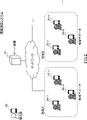
- FIG. 2 is a diagram showing an example of a schematic configuration of an information providing system according to the first embodiment.
- FIG. 3 is a diagram for explaining the operation of the information providing system according to the first embodiment.
- FIG. 4 is a diagram illustrating an example of a processing configuration of a server device according to the first embodiment;
- FIG. 5 is a diagram for explaining the operation of the local supporter registration unit according to the first embodiment.
- FIG. 6 is a diagram showing an example of table information in which addresses and area names are associated and stored.
- FIG. 7 is a diagram showing an example of a regional supporter database according to the first embodiment.
- FIG. 8 is a diagram showing an example of a contact information database according to the first embodiment.
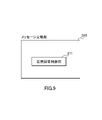
- FIG. 9 is a diagram illustrating an example of a processing configuration of a message exchange unit according to the first embodiment
- FIG. FIG. 10 is a flowchart showing an example of the operation of the question answer control unit according to the first embodiment
- FIG. 11 is a diagram showing an example of table information in which areas and coordinate ranges defining the areas are stored in association with each other.
- 12 is a diagram illustrating an example of a processing configuration of a tourist terminal according to the first embodiment
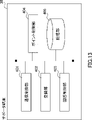
- FIG. 13 is a diagram illustrating an example of a processing configuration of a supporter terminal according to the first embodiment
- FIG. FIG. 14 is a diagram for explaining the operation of the answer control unit according to the first embodiment
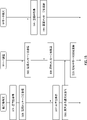
- 15 is a sequence diagram illustrating an example of the operation of the information providing system according to the first embodiment
- FIG. 16 is a diagram illustrating an example of a processing configuration of a message exchange unit according to the second embodiment
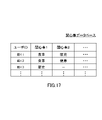
- FIG. 17 is a diagram illustrating an example of a matter-of-interest database according to the second embodiment.
- FIG. 18 is a diagram for explaining the operation of the question control unit according to the second embodiment;
- FIG. 19 is a diagram illustrating an example of a processing configuration of a server device according to the third embodiment;
- FIG. 20 is a diagram showing an example of a tourist database according to the third embodiment.
- FIG. 21 is a diagram illustrating an example of a processing configuration of a message exchange unit according to the third embodiment;
- FIG. 22 is a diagram illustrating an example of a processing configuration of a tourist terminal according to the third embodiment;
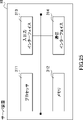
- FIG. 23 is a diagram for explaining the operation of the push message processing unit according to the third embodiment;
- FIG. 24 is a diagram for explaining the operation of the answer control unit according to the third embodiment.
- FIG. 25 is a diagram illustrating an example of a hardware configuration of a server device according to the disclosure of the present application.
- FIG. 26 is a diagram for explaining the operation of the tourist terminal according to the modification of the disclosure of the present application.
- FIG. 27 is a diagram for explaining the operation of the tourist terminal according to the modification of the disclosure of the present application.
- FIG. 28 is a diagram for explaining the operation of the tourist terminal according to the modification of the disclosure of the present application.
- a system includes a server device 101, a first terminal 102, and a second terminal 103 (see FIG. 1).
- the first terminal 102 transmits to the server device 101 a question message including the location information of the first user and the content of the question.
- a second terminal 103 is a terminal possessed by each of a plurality of second users.
- the server device 101 extracts at least one or more third users who live in an area corresponding to the current location of the first user from among the plurality of second users.
- the server device 101 transmits a request message including question content to at least one or more third users' second terminals 103 .
- the second terminal 103 of at least one or more third users transmits to the server device 101 a reply message containing the reply to the question.
- Server device 101 transmits a reply message to first terminal 102 .
- a first user inquires of the server device 101 what he/she wants to know about a tourist spot.
- the server device 10 requests an answer from the residents (third user) of the tourist spot.
- residents of tourist spots are familiar with the information of the tourist spots, and can answer the information that tourists really want to know. Therefore, tourists can easily obtain the information they really want to know. That is, the server device 101 can provide more suitable information to tourists (users) who request information. In this way, the server device 101 does not set users who are simply staying at tourist spots as respondents to questions, but sets residents who live in areas including the tourist spots as respondents. As a result, the questioner (tourist) is provided with more useful and suitable information.
- FIG. 2 is a diagram showing an example of a schematic configuration of an information providing system according to the first embodiment.
- the information providing system includes a server device 10 .
- the server device 10 provides the user with connections with others.
- the server device 10 implements a so-called SNS (Social Networking Service).
- SNS Social Networking Service
- the user sends and receives texts, photos, videos, etc. to and from others via the server device 10.
- the server device 10 implements message exchange between users. Also, the user may receive information from organizations such as companies and local governments through the server device 10 .
- the server device 10 has a function of providing information in response to requests from users. More specifically, the server device 10 receives questions from users and answers the questions. Questions and answers are sent and received via SNS.
- the tourist terminal 20 when a tourist arrives at a target tourist destination, he/she uses the tourist terminal 20 he/she owns to input a question such as "What is your recommended lunch?" At that time, the tourist terminal 20 notifies the server device 10 of its current position (position information, coordinate information).
- the server device 10 Based on the current position acquired from the tourist terminal 20, the server device 10 identifies the tourist spot (region) visited by the tourist. In the example of FIG. 2, the server device 10 identifies whether the tourist is asking from area A or from area B. In the example of FIG.
- the server device 10 After specifying the tourist destination (area) visited by the tourist, the server device 10 requests the area supporter to answer the question of the tourist.
- a community supporter is a resident who lives in an area of a predetermined unit (predetermined range) and is registered in the system in advance as having the intention to support tourists (willingness to provide information, willingness to answer questions). are residents.
- Each regional supporter has a terminal.
- the regional supporter of region A has supporter terminals 30-1 to 30-3, and the regional supporter of region B has supporter terminals 30-4 to 30-6.
- Regional supporters can also be called citizen supporters.
- supporter terminals 30-1 to 30-6 are simply referred to as “supporter terminal 30" unless there is a particular reason to distinguish them.
- the server device 10 when receiving a question from a tourist, the server device 10 requests the local supporter to answer the question. For example, in the example of FIG. 2, when a tourist is visiting area A, the server device 10 requests an answer to the tourist's question from the area supporter who lives in the area A. FIG.
- the server device 10 transmits the questions of the tourists to the supporter terminals 30-1 to 30-3 owned by the regional supporters of the region A, and requests their answers.
- the server device 10 Upon receiving a response from each regional supporter, the server device 10 notifies the tourist of the response. Specifically, the server device 10 transmits to the tourist terminal 20 the responses obtained from each of the regional supporters. The tourist terminal 20 outputs the answers obtained from each local supporter (see FIG. 3).
- the tourist will act with reference to the answers provided.
- the tourist selects a favorite restaurant and goes out to eat.
- the tourist may operate the tourist terminal 20 to notify the server device 10 of the answer that was used as a reference.
- the tourist presses the "reference" button corresponding to the answer referred to.
- the server device 10 stores and manages local supporters who have provided useful information to tourists in response to pressing of the button.
- the server device 10 manages evaluations of local supporters using "evaluation points”.
- a user ID is assigned to a user of the SNS.
- user A is assigned a user ID such as "ID01”
- user B is assigned a user ID such as "ID02”.
- the terminal owned by each user (tourist terminal 20, supporter terminal 30) stores the user ID of the owner and the user ID of others (for example, friends).
- the server device 10 also associates and stores the user ID and the contact information of the terminal owned by the user corresponding to the user ID (for example, telephone number, email address, SNS (Social Networking Service) account, etc.).
- FIG. 4 is a diagram showing an example of a processing configuration (processing modules) of the server device 10 according to the first embodiment.
- server device 10 includes communication control section 201 , regional supporter registration section 202 , message exchange section 203 , regional supporter management section 204 , and storage section 205 .
- the communication control unit 201 is means for controlling communication with other devices. For example, the communication control unit 201 receives data (packets) from the tourist terminal 20 . Also, the communication control unit 201 transmits data to the tourist terminal 20 . The communication control unit 201 transfers data received from other devices to other processing modules. The communication control unit 201 transmits data acquired from other processing modules to other devices. In this manner, other processing modules transmit and receive data to and from other devices via the communication control unit 201 .
- the communication control unit 201 has a function as a receiving unit that receives data from another device and a function as a transmitting unit that transmits data to the other device.
- the regional supporter registration unit 202 is means for realizing the registration of regional supporters.
- a user a user who intends to become a regional supporter
- the regional supporter registration unit 202 displays a GUI (Graphical User Interface) for registering a regional supporter. Displayed on the supporter terminal 30 .
- GUI Graphic User Interface
- the regional supporter registration unit 202 displays a GUI as shown in FIG.
- the local supporter operates the supporter terminal 30 to input personal information such as name, age, gender, and address. It should be noted that the local supporter does not have to register personal information such as name and gender in the system. The local supporter should register at least an address in the server device 10 .
- the local supporter registration unit 202 acquires the user ID of the user from the supporter terminal 30 together with the personal information.
- the regional supporter registration unit 202 converts the acquired address into a region.
- the regional supporter registration unit 202 refers to table information that stores addresses and region names in association with each other, and converts the address of the regional supporter into a predetermined region (see FIG. 6).
- the regional supporter registration unit 202 associates the acquired user ID, the region converted from the address, personal information, etc., and stores them in the regional supporter database (see FIG. 7). As shown in FIG. 7, the regional supporter database stores user IDs, regions in charge, evaluation points, and personal information (attribute information) in association with each other. Note that the local supporter database shown in FIG. 7 is an example, and is not meant to limit the items to be stored. For example, a "face image" may be registered in the regional supporter database as biometric information.
- the regional supporter registration unit 202 registers users (second users) who are willing to support tourists (first users) as "regional supporters" in the system. Further, the regional supporter registration unit 202 acquires at least the address of the regional supporter, converts the acquired address into the region in charge, and registers it in the regional supporter database.
- the message exchange unit 203 is means for realizing message exchange between users.
- the message exchange unit 203 receives a message including the user ID of the message transmission source, the user ID of the message transmission destination, contents (text, photo, moving image, etc.) and the like from the terminal.
- the message exchange unit 203 refers to the contact information database as shown in FIG. ).
- the message exchange unit 203 transmits texts, photos, moving images, etc. to the obtained contacts.
- the messages processed by the server device 10 include three messages in addition to normal messages transmitted and received between users.
- the first message is a question message that the tourist asks the server device 10.
- the second message is a request message that the server device 10 requests the local supporter to reply.
- the third message is a reply message in which the tourist answers the question.
- a question message includes a question flag indicating that the message is a question message.
- the user ID of the questioner (tourist) is set as the ID of the message transmission source, and nothing is set as the ID of the message transmission destination (the ID of the message transmission destination is blank).
- the question message also includes the current position of the questioner (tourist terminal 20) and the content of the question.
- a request message contains a request flag indicating that the message is a request message.
- the user ID of the tourist is set as the ID of the message transmission source
- the user ID of the local supporter is set as the ID of the message transmission destination.
- the request message includes the content of the question.
- a reply message contains a reply flag indicating that the message is a reply message.
- the user ID of the respondent regional supporter
- the user ID of the questioner is set as the ID of the message transmission destination.
- the response message includes the content of the response.
- the message exchange unit 203 has a submodule called a question answer control unit 211 (see FIG. 9).
- the question and answer control unit 211 is means for processing question messages, request messages and answer messages.
- the question answer control unit 211 is means for controlling questions from tourists and answers from local supporters.
- the message exchange unit 203 When the message exchange unit 203 receives the question message and the answer message, it passes these messages to the question answer control unit 211. Since the request message is a message sent from the server device 10 to the supporter terminal 30, the message exchange section 203 never receives the message.
- FIG. 10 is a flow chart showing an example of the operation of the question answer control section 211. As shown in FIG.
- the question answer control unit 211 determines whether the flag set in the message is a question flag (step S101). If the question flag is set, the question answer control section 211 executes the processes from step S102 onward.
- the question answer control unit 211 identifies the area corresponding to the tourist's visiting place based on the current position included in the question message (step S102). For example, the question-and-answer control unit 211 refers to table information that associates and stores areas and coordinate ranges that define the areas, and identifies the corresponding areas (see FIG. 11).
- the question-and-answer control unit 211 searches the regional supporter database using the specified region as a key, and extracts regional supporters who live in the region (step S103).
- the question-and-answer control unit 211 generates a request message to be transmitted to the extracted regional supporter (step S104).
- the question answer control unit 211 sets a request flag in the flag storage area of the message, sets the user ID of the tourist as the ID of the message transmission source, and sets the user ID of each local supporter as the ID of the message transmission destination.
- the question answer control unit 211 transcribes the question content included in the question message to the request message.
- the question and answer control unit 211 extracts the user ID of the tourist set in the request message from the question message. More specifically, the question answer control unit 211 extracts the ID of the message transmission source of the question message as the user ID of the tourist. In addition, the question answer control unit 211 generates the same number of request messages as the number of the extracted regional supporters.
- the question-and-answer control unit 211 transmits the generated request message to each regional supporter (step S105).
- the messages received by the question and answer control unit 211 are of two types: question messages and answer messages. Therefore, if the determination result in step S101 is "No", the question answer control section 211 has received the answer message.
- step S101 When an answer message is received (step S101, No branch), the question answer control unit 211 transfers the message to the tourist terminal 20 (step S106).
- the regional supporter management unit 204 is means for managing regional supporters. More specifically, the local supporter management unit 204 receives a reference notification regarding the response of the local supporter from the tourist and processes the notification. More specifically, the regional supporter management unit 204 receives the “answer reference notification” from the tourist terminal 20 .
- the answer reference notification includes the user ID of the respondent (regional supporter) whose answer the tourist referred to.
- the regional supporter management unit 204 searches the regional supporter database using the user ID as a key.
- the regional supporter management unit 204 adds "1" to the setting value of the evaluation point field of the regional supporter specified by the search.
- the regional supporter management unit 204 controls point inquiries from regional supporters.
- the regional supporter management unit 204 receives a "point inquiry" to be described later, the regional supporter database is searched using the user ID included in the inquiry as a key, and the corresponding regional supporter is specified.
- the regional supporter management unit 204 transmits a response including the evaluation points of the identified regional supporter to the supporter terminal 30 .
- the storage unit 205 is means for storing information necessary for the operation of the server device 10 .
- the storage unit 205 includes a regional supporter database, a contact information database, and the like.
- the tourist terminal 20 is a first terminal that transmits to the server device 10 a question message including location information of the tourist (first user) and question content.
- FIG. 12 is a diagram showing an example of the processing configuration (processing modules) of the tourist terminal 20 according to the first embodiment.
- the tourist terminal 20 includes a communication control section 301, a question control section 302, and a storage section 303.
- the communication control unit 301 is means for controlling communication with other devices. For example, the communication control unit 301 receives data (packets) from the server device 10 . Also, the communication control unit 301 transmits data to the server device 10 . The communication control unit 301 passes data received from other devices to other processing modules. The communication control unit 301 transmits data acquired from other processing modules to other devices. In this way, other processing modules transmit and receive data to and from other devices via the communication control unit 301 .
- the communication control unit 301 has a function as a receiving unit that receives data from another device and a function as a transmitting unit that transmits data to the other device.
- the question control unit 302 is means for controlling questions from tourists.
- the question control unit 302 displays an interface for the tourist to input questions when the tourist performs a predetermined action (for example, presses the "question chat" button on the menu screen).
- the question control unit 302 displays an area for entering a question as shown in the uppermost part of FIG. 3 and acquires the content of the question.
- the question control unit 302 confirms the content of the question when the tourist presses the "send” button shown in FIG. Note that FIG. 3 shows a "send” button for easy understanding, but in reality, the button is hidden when the question content is confirmed.
- the question control unit 302 acquires the location information of its own device (tourist terminal 20).
- the query control unit 302 receives GPS signals from GPS (Global Positioning System) satellites, performs positioning, and generates position information including the latitude and longitude of its own device.
- the query control section 302 may communicate with a wireless access point and treat the location of the wireless access point as the location of its own device.
- the query control section 302 may generate location information based on the strength of radio waves received from a wireless access point.
- the question control unit 302 sets a question flag in the flag storage area, sets the user ID of the tourist in the ID of the message sender, and generates a question message. Further, the question control unit 302 stores the generated position information and question content in the question message.
- the question control unit 302 transmits the generated question message to the server device 10.
- the question control unit 302 receives an answer message from the server device 10.
- Question control unit 302 receives at least one or more answer messages.
- the question control unit 302 displays the content of the reply contained in the received reply message.
- the question control unit 302 displays the contents of answers included in the received answer messages in the order of the received answer messages.
- the question control unit 302 performs display (display including three answer contents) as shown in FIG.
- the question control unit 302 displays buttons for evaluating answers from local supporters (evaluation by tourists) corresponding to the contents of the answers (see FIG. 3).
- the tourist presses a "reference” button corresponding to the content of the answer that serves as a reference.
- the question control unit 302 transmits to the server device 10 an "answer reference notification" including the user ID of the message transmission source (the user ID of the local supporter whose answer was evaluated) included in the answer message corresponding to the reference button.
- the storage unit 303 is means for storing information necessary for the operation of the tourist terminal 20.
- the storage unit 303 stores user IDs of users (tourists) and user IDs of friends and the like.
- the supporter terminal 30 is a second terminal owned by each of a plurality of local supporters (a plurality of second users).
- FIG. 13 is a diagram showing an example of the processing configuration (processing modules) of the supporter terminal 30 according to the first embodiment.
- supporter terminal 30 includes communication control section 401 , registration section 402 , answer control section 403 , point control section 404 , and storage section 405 .
- the communication control unit 401 is means for controlling communication with other devices. For example, the communication control unit 401 receives data (packets) from the server device 10 . Also, the communication control unit 401 transmits data to the server device 10 . The communication control unit 401 transfers data received from other devices to other processing modules. The communication control unit 401 transmits data acquired from other processing modules to other devices. In this manner, other processing modules transmit and receive data to and from other devices via the communication control unit 401 .
- the communication control unit 401 has a function as a receiving unit that receives data from another device and a function as a transmitting unit that transmits data to the other device.
- the registration unit 402 is means for realizing the registration of local supporters.
- the registration unit 402 accesses the server device 10 in response to a predetermined operation of the regional supporter (for example, pressing the "regional supporter registration" button displayed on the menu screen).
- the registration unit 402 receives data for displaying a GUI such as that shown in FIG.
- the registration unit 402 transmits the user ID of the local supporter to the server device 10 together with the acquired name and the like.
- the reply control unit 403 is means for controlling the reply of the regional supporter.
- the reply control unit 403 receives a request message from the server device 10 .
- the response control unit 403 displays an interface for the local supporter to input a response in response to receiving the request message.
- the answer control unit 403 displays as shown in FIG. As shown in FIG. 14, the answer control unit 403 displays the content of the question included in the request message and requests the local supporter to answer the question.
- the answer control unit 403 displays an area for entering an answer as shown in FIG. 14 and acquires the content of the answer.
- the reply control section 403 confirms the content of the reply.
- the answer control unit 403 displays a button (“eg, 'cancel' button”) for obtaining the intention of the regional supporter not to answer the question on the answer input screen.
- a button eg, 'cancel' button
- the answer control unit 403 sets an answer flag in the flag storage area.
- the answer control unit 403 also sets the user ID of the respondent (regional supporter) as the ID of the message transmission source and the user ID of the questioner (tourist) as the ID of the message transmission destination, respectively, and generates a response message. Furthermore, the reply control unit 403 stores the obtained reply content in the reply message.
- the reply control unit 403 transmits the generated reply message to the server device 10.
- the point control unit 404 is means for controlling and managing evaluation points given to regional supporters.
- the point control unit 404 transmits a "point inquiry" to the server device 10 in response to a predetermined operation of the local supporter (for example, pressing a "point confirmation” button displayed on the menu screen).
- the point inquiry includes the user ID of the local supporter.
- the point control unit 404 displays the evaluation points included in the response from the server device 10 (response to the point inquiry).
- the storage unit 405 is means for storing information necessary for the operation of the supporter terminal 30 .
- the storage unit 405 stores user IDs of users (regional supporters) and user IDs of friends and the like.
- the tourist terminal 20 and the supporter terminal 30 are different types of terminals, and the processing configuration and the like have been described. , may operate as the supporter terminal 30 . That is, the user (tourist, local supporter) possesses a terminal having the functions of the tourist terminal 20 and the supporter terminal 30 described above.
- FIG. 15 is a sequence diagram showing an example of the operation of the information providing system according to the first embodiment. Referring to FIG. 15, the system operation when answering questions from tourists will be described.
- the tourist terminal 20 acquires the tourist's question (step S01).
- the tourist terminal 20 generates a question message including the acquired question, and transmits the question message to the server device 10 (step S02).
- the server device 10 Upon receiving the question message, the server device 10 extracts a regional supporter who answers the question, and transmits a request message to the supporter terminal 30 of the extracted regional supporter (step S03).
- the supporter terminal 30 Upon receiving the request message, the supporter terminal 30 displays the question included in the request message and obtains the answer from the local supporter (step S04).
- the supporter terminal 30 generates a reply message including the obtained reply and transmits it to the server device 10 (step S05).
- the server device 10 transfers the reply message to the tourist terminal 20 of the questioner (tourist) (step S06).
- the tourist terminal 20 Upon receiving the reply message, the tourist terminal 20 displays the reply included in the reply message (step S07).
- the tourist terminal 20 transmits an answer reference notification corresponding to the answer referred to (adopted by the tourist) by the tourist to the server device 10 (step S08).
- the server device 10 Upon receiving the reply reference notification, the server device 10 updates the regional supporter database (DB; Data Base) by incrementing the evaluation points of the regional supporters referred to by the tourists (step S09). In this way, the tourist terminal 20 transmits the reply reference notification to the server device 10 when the tourist refers to the reply from the local supporter.
- the server device 10 corresponds to the current position of a tourist (first user) among a plurality of local supporters (second user). Local supporters (third users) residing in the local area are extracted.
- the server device 10 transmits a request message including the content of the question to the supporter terminals 30 of the extracted regional supporters.
- the supporter terminal 30 of the regional supporter (third user) to whom the answer is requested transmits an answer message including the answer to the question to the server device 10 .
- the server device 10 transmits the reply message to the tourist terminal 20.
- the server device 10 requests an answer from the inhabitants (residents) of the tourist spot.
- residents of tourist spots are familiar with the information of the tourist spots, and can answer the information that tourists really want to know. In other words, the tourist can easily obtain the information that he or she really wants to know without having to sort through the information.
- tourists feel that convenience has improved.
- the server device 10 requests each regional supporter in the region to answer questions from tourists.
- the server device 10 nominates a respondent will be described. More specifically, the server device 10 selects a regional supporter (fourth user) who will answer the question from among the regional supporters (third user) living in the tourist area, and displays the selected region. A request message is transmitted to the supporter terminal 30 of the supporter.
- the configuration of the information providing system according to the second embodiment can be the same as that of the first embodiment, so the description corresponding to FIG. 2 is omitted.
- the question answer control unit 211 selects (selects) a respondent from the regional supporters registered in advance in the system, and requests the selected respondent to answer the tourist's question. do.
- the question answer control unit 211 selects a respondent from among three regional supporters who have supporter terminals 30-1 to 30-3, and asks the question. request a response to
- the question answer control unit 211 selects (determines) respondents by various methods.
- the question control unit 302 of the tourist terminal 20 notifies the server device 10 of the tourist's attribute information (profile; for example, gender, age, etc.) when transmitting the question message. Specifically, the question control unit 302 transmits to the server device 10 a question message including attribute information in addition to question content.
- Information registered in the SNS application may be used as the tourist attribute information, or the tourist terminal 20 may acquire the attribute information again.
- the question-and-answer control unit 211 selects respondents using attribute information of tourists and attribute information of each regional supporter registered in the system. For example, the question answering control unit 211 selects, as answerers, regional supporters who have the same attributes (for example, gender and/or age) as the questioner.
- the question-and-answer control unit 211 extracts the local supporter of the area corresponding to the place visited by the tourist (the place where the question was asked) from the local supporter database. Further, the question answering control unit 211 identifies a local supporter having the same attribute as the tourist from among the extracted local supporters (entries).
- the question-and-answer control unit 211 transmits a request message to the specified regional supporter. For example, if the tourist who visited region A is a woman in her twenties, the question and answer control unit 211 selects a woman in her twenties among the regional supporters of region A as a respondent, and A request message is transmitted to the supporter terminal 30 .
- the server device 10 based on the attribute information of the tourist (first user) and the attribute information of at least one or more local supporters (third user), the respondent (fourth user ) may be selected.
- the question/answer control unit 211 may select a respondent based on the content of the question and the interest of the local supporter obtained from the post (conversation with others) of the local supporter.
- the message exchange unit 203 includes a message analysis unit 212 as shown in FIG.
- the message analysis unit 212 analyzes the message posted by the local supporter and calculates the interests of the local supporter.
- the message analysis unit 212 determines that the local supporter is interested in matters related to the keyword. judge.
- the message analysis unit 212 detects the local supporter who posted the keyword. set their interest to "food”.
- the message analysis unit 212 selects “history” as the interest of the local supporter who posted the keyword. set.
- the message analysis unit 212 stores the number of times a keyword has been posted for each regional supporter. set things up. For example, in the above example of food, when keywords such as "lunch” and “dinner” are repeatedly posted, the area supporter's interest is set to "meal".
- the message analysis unit 212 associates the user ID of the local supporter with the interest and stores them in the interest database (see FIG. 17).
- the regional supporter database and the interest database are described as different databases, but the interests of each regional supporter may be stored in the regional supporter database.
- the message analysis unit 212 may analyze the message (calculate matters of interest) in real time, or may analyze the message after the fact.
- the message exchange unit 203 accumulates the conversations (posts) of the local supporters together with the user IDs.
- the message analysis unit 212 may analyze the accumulated conversation (dialogue log) periodically or at a predetermined timing, and calculate the interests of the local supporter.
- the question answer control unit 211 Upon receiving a question message, the question answer control unit 211 identifies the question genre from the question content (keywords included in the question) of the question message. For example, when keywords such as “lunch” and "Japanese food” are included, the question answer control unit 211 sets the genre of the question to "meal".
- the question answer control section 211 may identify the question genre by referring to table information that stores keywords and question genres in association with each other.
- the question answer control unit 211 may identify the question genre using a learning model obtained by machine learning.
- a learning model can be obtained by performing machine learning using teacher data in which the question content is labeled (question genre).
- the question answer control unit 211 acquires a question genre by inputting question content into the learning model.
- Any algorithm such as a support vector machine, boosting, or neural network can be used to generate the learning model. Since well-known techniques can be used for algorithms such as the support vector machine, the description thereof is omitted.
- the question answer control unit 211 searches the regional supporter database and extracts the regional supporter corresponding to the questioner's current location. Further, the question answering control unit 211 identifies regional supporters who are interested in the question genre from among the extracted regional supporters.
- the question-and-answer control unit 211 transmits a request message to the specified regional supporter. For example, if the question genre of a tourist who has visited area A is "meals", the question answer control unit 211 selects, from among the area supporters of area A, those who have a strong interest in food as respondents. The question answer control unit 211 transmits a request message to the supporter terminal 30 of the selected answerer.
- the server device 10 may select an answerer (fourth user) to answer the question based on the content of the question and the interests of the local supporter (third user).
- the question answer control section 211 may select the regional supporter based on the evaluation (evaluation points) of each regional supporter. For example, the question answering control unit 211 may preferentially select a highly rated local supporter and request that they answer questions from tourists.
- the question answer control section 211 may select respondents by combining the selection methods 1 to 3.
- FIG. Specifically, the question answering control unit 211 may select a regional supporter as a respondent based on the attribute information of the respondent and the regional supporter, the content of the question, and the interests of the regional supporter.
- the question answer control unit 211 When a plurality of regional supporters can be selected (extracted) by executing any one of the selection methods 1 to 4, the question answer control unit 211 according to the second embodiment You may send a request message to each regional supporter.
- the question answer control unit 211 may transmit a request message to the supporter terminals 30 of the two regional supporters.
- the question answer control section 211 transmits to the tourist terminal 20 each of the answer messages obtained from the two supporter terminals 30 .
- the server device 10 may acquire requests from tourists regarding the number of respondents.
- users can use the information providing system free of charge.
- the function that allows tourists to specify the number of respondents may be optional and may be provided as a paid service.
- the system usage fee may be set higher if the function relating to the designation of the number of people is used.
- the system usage fee may be set so as to vary according to the number of people who wish to answer.
- the question answer control section 211 may process the question and the answer one by one.
- each of the three regional supporters in region A is a regional supporter who can give an accurate answer to a question.
- the question answer control section 211 selects one of the three and requests an answer.
- the question answer control unit 211 notifies the questioner of the obtained answer. If the questioner refers to the answer (if the answer is adopted), the question answer control section 211 terminates the process.
- the question answer control unit 211 requests other regional supporters to answer the question, and obtains provide the answer to the questioner (tourist).
- the question answer control section 211 repeats such control.
- the question control unit 302 of the tourist terminal 20 displays a button for obtaining the tourist's intention (referring to or not referring to the answer) (see FIG. 18).
- the question control unit 302 sends a re-question message to the server device 10 when the tourist presses the "non-reference" button.
- a re-question message is a message in which a re-question flag is set in the flag storage area of a question message that has already been sent.
- the question answer control unit 211 of the server device 10 Upon receiving the re-question message, the question answer control unit 211 of the server device 10 selects a regional supporter different from the previously selected regional supporter and requests an answer (transmits a request message).
- the tourist terminal 20 sends a re-question message corresponding to the question message to the server device 10 when the tourist does not refer to the answer of the first responder (fourth user). Send.
- the server device 10 selects another responder (fifth user) different from the first responder from among the appropriate regional supporters (third user) as the respondent. to select.
- the server device 10 may transmit related information (for example, attributes, concerns, evaluation points, etc.) regarding the respondent (regional supporter) of the reply message to the tourist terminal 20 together with the reply message.
- the tourist terminal 20 may display the related information together with the content of the reply.
- the tourist may evaluate the respondent based on the response of the local supporter and related information.
- the server device 10 receives a question message for the first time, the server device 10 extracts answerer candidates who will answer the question message, and transmits related information (attributes, etc.) of the extracted candidates to the tourist terminal 20.
- the tourist terminal 20 may display the transmitted related information so that the tourist can select the local supporter to whom he/she wishes to reply first.
- the server device 10 can be used by the questioner or the respondent who requests an answer according to the content of the question among the local supporters of the tourist spot visited by the tourist. to select.
- more useful information can be provided to tourists.
- there is no mismatch such as a local supporter who is familiar with the history of the tourist spot answering a question about food, so the information that the tourist wants to know is provided accurately.
- the server device 10 answers questions from tourists has been described.
- the third embodiment a case will be described where organizations such as local supporters and local governments actively provide tourists with useful information.
- the configuration of the information providing system according to the third embodiment can be the same as that of the first embodiment, so the description corresponding to FIG. 2 is omitted.
- FIG. 19 is a diagram showing an example of the processing configuration (processing modules) of the server device 10 according to the third embodiment. Referring to FIG. 19, a tourist management unit 206 is added to the configuration of the server device 10 according to the first embodiment.
- the tourist management unit 206 is a means of managing tourists. Among other things, the tourist management unit 206 manages the current locations of tourists.
- the tourist management unit 206 identifies the current location of tourists by various methods.
- the tourist management unit 206 identifies the current location of the tourist from the current location included in the question message.
- the tourist terminal 20 may notify the server device 10 of the tourist's user ID and current location periodically or at a predetermined timing.
- the tourist management unit 206 may identify the tourist's current location based on the notification.
- the tourist management unit 206 may specify the tourist's current location based on the evaluation of the tourist's answer (answer reference notification). For example, when a tourist presses the "Reference" button in response to an answer that recommends "Japanese restaurant A", the tourist management unit 206 identifies the tourist's current location as being at or near Japanese restaurant A. do. In this way, by specifying the current position by the tourist's selection, even if the GPS function of the tourist terminal 20 is disabled, the tourist management unit 206 can identify the current position of the tourist. can be estimated. For example, if a tourist presses a "reference" button in response to a question about a restaurant for dinner, the tourist management unit 206 can presume that the tourist eats at the restaurant during dinner hours.
- the tourist management unit 206 associates the user ID of the tourist with the current position and stores it in the tourist database (see FIG. 20). Note that the tourist database shown in FIG. 20 is an example, and is not meant to limit the items to be stored.
- the message exchange unit 203 of the server device 10 includes a push information control unit 213, as shown in FIG.
- the push information control unit 213 is means for actively providing information (push type information provision) from the server device 10 to tourists.
- the push information control unit 213 provides information according to the tourist's current location. For example, the push information control unit 213 provides information (sightseeing spot information) about tourist spots near the tourist's current location and information about events (event information).
- the push information control unit 213 periodically or at a predetermined timing accesses the tourist database and determines whether or not the tourist is visiting a predetermined position (spot). When a tourist visits a predetermined spot, the push information control unit 213 transmits information on the spot to the tourist terminal 20 .
- the push information control unit 213 sends a push message including sightseeing spot information about the historical building to the tourist terminal 20. Send to
- the push message is a message with a push flag set in the flag storage area and the user ID of the tourist set in the message destination ID.
- the push message includes tourist information about the historic building.
- the push information control unit 213 may send a push message including event information regarding an event held at the event venue to the tourist terminal 20.
- the push information control unit 213 may transmit a push message including the evacuation information to the tourist terminal 20 when the evacuation information is acquired from the local government (local government server). At that time, the push information control unit 213 does not transmit the push message if the tourist's current position is not in the evacuation target area, and transmits the push message if the tourist's current position is in the evacuation target area.
- FIG. 22 is a diagram showing an example of the processing configuration (processing modules) of the tourist terminal 20 according to the third embodiment.
- a push message processing unit 304 is added to the configuration of the tourist terminal 20 according to the first embodiment.
- the push message processing unit 304 is means for processing push messages received from the server device 10 .
- the push message processing unit 304 displays information contained in the push message and provides information to tourists (see FIG. 23).
- the server device 10 may acquire information to be provided to tourists from local supporters.
- the push information control unit 213 when the push information control unit 213 recognizes that a tourist is staying at a predetermined place (spot), it extracts regional supporters in the region corresponding to the spot. The push information control unit 213 transmits a request message including the current location of the tourist to the supporter terminal 30 of the extracted local supporter. The push information control unit 213 sets information about the tourist's current location in place of the content of the question in the above-described request message. For example, the push information control unit 213 converts the tourist's current position into a landmark, and transmits a request message including the landmark (for example, the name of a soccer field, the name of a historical building) to the supporter terminal 30. .
- the landmark for example, the name of a soccer field, the name of a historical building
- the reply control unit 403 of the supporter terminal 30 displays the received request message and requests the regional supporter to reply.
- the response control unit 403 performs display as shown in FIG. 24 and acquires responses from local supporters.
- the reply control unit 403 generates a reply message including the obtained reply and transmits it to the server device 10 .
- the server device 10 changes the received reply message into a push message (sets a push flag in the flag storage area) and transmits the push message to the tourist terminal 20 .
- the server device 10 may acquire push information to be notified to tourists from local supporters.
- the server device 10 may request the local supporter to provide information on the current location of the tourist.
- the server device 10 may send a request message including a landmark corresponding to the tourist's current location to the supporter terminal 30 of the local supporter.
- the server device 10 may identify information required by the tourist (information that pleases the tourist) from the tourist's attribute information, interests (hobbies and tastes), and action history, and provide the information. For example, the server device 10 may provide a tourist who visits many historical buildings with information such as the locations of nearby historical buildings by push message. Note that the message analysis unit 212 of the server device 10 may analyze the tourist's post and calculate the tourist's interests (hobbies and tastes) and action history.
- the question answer control unit 211 of the server device 10 selects a local supporter who can provide the useful information based on the information useful to the tourist (information that pleases the tourist) and the attribute information and interests of the local supporter, You may ask the local supporter to provide information.
- the server device 10 may actively notify tourists of information (push notification).
- tourists can get information they would otherwise have missed.
- the server device 10 can also provide tourists with evacuation information (disaster countermeasure information; for example, guide information for evacuation centers, etc.). can enjoy.
- FIG. 25 is a diagram showing an example of the hardware configuration of the server device 10. As shown in FIG.
- the server device 10 can be configured by an information processing device (so-called computer), and has the configuration illustrated in FIG.
- the server device 10 includes a processor 311, a memory 312, an input/output interface 313, a communication interface 314, and the like.
- Components such as the processor 311 are connected by an internal bus or the like and configured to be able to communicate with each other.
- FIG. 25 is not intended to limit the hardware configuration of the server device 10.
- the server device 10 may include hardware (not shown) and may not include the input/output interface 313 as necessary. Also, the number of processors 311 and the like included in the server device 10 is not limited to the example shown in FIG.
- the processor 311 is, for example, a programmable device such as a CPU (Central Processing Unit), MPU (Micro Processing Unit), DSP (Digital Signal Processor). Alternatively, processor 311 may be a device such as FPGA (Field Programmable Gate Array), ASIC (Application Specific Integrated Circuit), or the like. The processor 311 executes various programs including an operating system (OS).
- OS operating system
- the memory 312 is RAM (Random Access Memory), ROM (Read Only Memory), HDD (Hard Disk Drive), SSD (Solid State Drive), or the like.
- the memory 312 stores an OS program, application programs, and various data.
- the input/output interface 313 is an interface for a display device and an input device (not shown).
- the display device is, for example, a liquid crystal display.
- the input device is, for example, a device such as a keyboard or mouse that receives user operations.
- the communication interface 314 is a circuit, module, etc. that communicates with other devices.
- the communication interface 314 includes a NIC (Network Interface Card) or the like.
- the functions of the server device 10 are realized by various processing modules.
- the processing module is implemented by the processor 311 executing a program stored in the memory 312, for example.
- the program can be recorded in a computer-readable storage medium.
- the storage medium can be non-transitory such as semiconductor memory, hard disk, magnetic recording medium, optical recording medium, and the like. That is, the present invention can also be embodied as a computer program product.
- the program can be downloaded via a network or updated using a storage medium storing the program.
- the processing module may be realized by a semiconductor chip.
- terminals can also be configured by an information processing device in the same manner as the server device 10, and the basic hardware configuration thereof is the same as that of the server device 10, so description thereof is omitted. do.
- the server device 10 which is an information processing device, is equipped with a computer, and the functions of the server device 10 can be realized by causing the computer to execute a program. Moreover, the server device 10 executes the information providing method by the program.
- a tourist visiting a tourist spot sends a question to the server device 10.
- residents of a tourist spot may send questions about the tourist spot to the server device 10 . That is, in the information providing system disclosed in the present application, residents of a tourist spot may transmit and receive questions and answers to each other.
- the server device 10 requests the local supporter to answer the tourist's question.
- the relevant area supporter lives in the target area (has a residence), it does not have to be staying in the relevant area when receiving the response request. That is, if it is confirmed that the local supporter is a resident of the tourist spot, the current position of the local supporter may be any place, and the local supporter does not necessarily have to be in the tourist spot (current position of the tourist).
- the case where information is provided to users via a message-exchange-type SNS has been described.
- the information may be provided by other types of SNS, such as a photo posting type, a message spreading type, a diary type, and the like.
- the server device 10 obtains an answer to a tourist's question from a local supporter and presents the answer to the tourist to answer the tourist's question.
- the server device 10 may refer to a database prepared in advance, automatically select an answer to the tourist's question, and provide the selected answer to the tourist. That is, the server device 10 may store a large number of assumed questions and answers (combinations of questions and answers) and use the assumed questions and answers to answer questions from tourists.
- the tourist terminal 20 displays as shown in FIG.
- the tourist may transmit his/her safety information, status, evacuation site, and other information to the server device 10 .
- the push information control unit 213 of the tourist terminal 20 displays a GUI for inquiring about the tourist's safety, condition, and evacuation site, and acquires safety information and the like.
- the push information control unit 213 transmits the acquired safety information and the like to the server device 10 .
- the server device 10 may use the acquired information to provide further information to the tourist.
- the server device 10 may request the local government (local government staff) to provide information on better evacuation sites.
- the server device 10 may provide information in the language used by the user (tourist, local supporter, local government employee, etc.). More specifically, the server device 10 may receive questions and answers in various languages, and translate the received questions and answers in accordance with the language used by the user to whom the message is to be sent. For example, when receiving a question in a foreign language, the question answer control unit 211 of the server device 10 translates the foreign language into Japanese and stores it in the request message. The local supporter recognizes the question in Japanese and transmits an answer in Japanese to the server device 10 . The question answer control unit 211 of the server device 10 translates the Japanese answer into a foreign language, stores it in an answer message, and transmits it to the tourist terminal 20 .
- the server device 10 translates the question from the tourist into a foreign language and requests the foreigner's regional supporter to answer the question.
- the server device 10 translates the acquired answers in foreign languages into Japanese, and transmits an answer message including the answers in Japanese to the tourist terminal 20 .
- the server device 10 may acquire the user's nationality from the local supporter registration or the tourist's profile, and grasp the language used. In this way, the server device 10 may translate the content of the question or the content of the answer.
- the server device 10 may translate the information included in the push message and provide it to the user. That is, the server device 10 may provide information to tourists with different languages, cultures, and experiences using accurate and easy-to-understand expressions.
- Server device 10 may improve the translation engine in response to the notification.
- evaluation points may be converted into local currency that can be used in the area where the local supporter resides, points that can be used at stores in the area of residence, or the like.
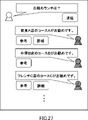
- the server device 10 may transmit to the tourist terminal 20 a reply message containing supplementary information regarding the regional supporter's reply. For example, when a local supporter transmits information (response) about a restaurant, the server device 10 (question answer control unit 211) may transmit a response message including incidental information about the restaurant to the tourist terminal 20. . For example, the server device 10 may transmit a reply message including information such as the location of the restaurant, contact information, and website address as additional information. Further, when the tourist terminal 20 receives an answer message including supplementary information, the tourist terminal 20 may display a button (for example, a detail button) for displaying the supplementary information (see FIG. 27). ). Note that the server device 10 may refer to a database or the like prepared in advance that stores store names and details regarding the incidental information.
- the server device 10 may determine a local supporter to request an answer to the question based on the wording (for example, place name, tourist spot name) included in the content of the question from the tourist. For example, when the server device 10 receives a question such as "Where is the recommended lunch in tourist spot A?" You can request it. By such operation of the server device 10, even if the tourist has not actually visited the tourist spot, the tourist can obtain desired information about the tourist spot (can be checked in advance). With such correspondence, the server device 10 can specify the area that the tourist is planning to visit without acquiring the tourist's location information. As a result, concerns about tourists using the system (concerns about providing location information) are eliminated, and the possibility of using the system can be increased.
- the wording for example, place name, tourist spot name
- the server device 10 may confirm the identity of the supporter when registering the local supporter. Specifically, the server device 10 acquires the biometric information (eg, face image) of the local supporter and an identification document (eg, passport) containing the biometric information. The server device 10 performs one-to-one matching using the biometric information of the identification document and the biometric information obtained from the local supporter. The server device 10 may perform regional supporter registration when the collation is successful.
- biometric information eg, face image
- an identification document eg, passport
- the server device 10 may perform regional supporter registration when the collation is successful.
- the server device 10 may associate and store the current position of the tourist and the content of the question asked by the tourist, and provide useful information to the association managing the tourist spot. For example, the server device 10 may provide information such as a ranking of frequently asked questions for each sightseeing spot to a tourism association or the like. The tourism association or the like may grasp the needs of tourists based on the information provided by the server device 10 .
- the server device 10 may add a predetermined value to the evaluation points of the regional supporter in response to receiving the reply message from the regional supporter. In this way, the server device 10 may increase the evaluation points according to the fact that the local supporter's answer was referred to and/or that the local supporter answered the question. Moreover, the server device 10 may give different values to the points given to the regional supporter when the answer is accepted and the points given to the regional supporter when the answer is simply given. Alternatively, the server device 10 may manage the number of responses to questions for each local supporter and change the points given to the local supporter according to the number of responses. For example, the server device 10 may award more points to regional supporters who frequently reply.
- the server device 10 may acquire a request from the tourist regarding the selection method of the local supporter when selecting the local supporter who will answer the question.
- the server device 10 may acquire a tourist's preference as to whether to select a local supporter based on attributes or to select a local supporter based on interests.
- the tourist terminal 20 may display candidates for the selection method and provide an interface for the tourist to select from among the candidates (see FIG. 28).
- the tourist terminal 20 may provide an interface that allows direct input from the tourist. In this way, when there are multiple options for selecting a regional supporter, information on each option (for example, details of the selection method) is also displayed, and even if the respondent is selected from multiple options, good.
- the tourist may select one respondent from among the presented multiple options (respondents), or may select a plurality of responders.
- each device server device 10, tourist terminal 20, supporter terminal 30
- the data transmitted and received between these devices may be encrypted.
- Private information such as moving pictures and photographs are transmitted and received between these devices, and it is desirable to transmit and receive encrypted data in order to appropriately protect such information.
- each embodiment may be used alone or in combination.
- additions, deletions, and replacements of other configurations are possible for some of the configurations of the embodiments.
- the industrial applicability of the present invention is clear, and the present invention can be suitably applied to information providing systems that provide various information to users.
- [Appendix 1] a server device; a first terminal that transmits a question message including location information and question content of the first user to the server device; a second terminal owned by each of a plurality of second users; including The server device extracts at least one or more third users residing in an area corresponding to the current location of the first user from among the plurality of second users, and Sending a request message including the content of the question to the second terminal of the third user, the second terminal of the at least one or more third users transmits an answer message including an answer to the question to the server device; The system, wherein the server device transmits the reply message to the first terminal.
- [Appendix 2] The server device selects a fourth user who answers the question from the at least one or more third users, and sends the request message to the second terminal of the fourth user. 10. The system of clause 1, transmitting.
- [Appendix 3] The system according to appendix 2, wherein the server device selects the fourth user based on the attribute information of the first user and the attribute information of the at least one or more third users.
- [Appendix 4] 4 4. The system according to appendix 2 or 3, wherein the server device selects the fourth user based on the content of the question and the interests of the at least one or more third users.
- the first terminal is if the first user does not refer to the answer of the fourth user, sending a re-question message corresponding to the question message to the server device;
- the server device selects a fifth user different from the fourth user from the at least one or more third users in response to receiving the re-question message. 5.
- Appendix 7 Any one of Appendices 1 to 5, wherein the server device generates a push message including evacuation information based on the current location of the first user, and transmits the generated push message to the first terminal. or the system according to item 1.
- the server device transmits the request message including the landmark corresponding to the current location of the first user to the second terminals of the at least one or more third users, A system according to any one of clauses.
- the first terminal is when the first user refers to the content of the answer, sending an answer reference notification to the server device; 10.
- the server device according to any one of appendices 1 to 9, wherein in response to receiving the answer reference notification, the server device increases the evaluation of the third user who made the answer referred to by the first user. system.
- the server device increases the evaluation of the third user who made the answer referred to by the first user. system.
- the server device selects the fourth user based on the evaluation of the at least one or more third users.
- Appendix 12 12.
- [Appendix 13] a communication control unit that controls communication with another device; receiving a question message including location information and question content of the first user from the first terminal; extracting at least one or more third users residing in an area corresponding to the current location of the first user from among the plurality of second users; Sending a request message including the content of the question to the second terminal of the at least one or more third users, receiving an answer message including an answer to the question from the second terminal of the at least one or more third users; a question answer control unit that transmits the answer message to the first terminal; A server device.
- [Appendix 14] in the server device receiving a question message including location information and question content of the first user from the first terminal; extracting at least one or more third users residing in an area corresponding to the current location of the first user from among the plurality of second users; Sending a request message including the content of the question to the second terminal of the at least one or more third users, receiving an answer message including an answer to the question from the second terminal of the at least one or more third users; An information providing method, wherein the reply message is transmitted to the first terminal.
- Appendix 15 The computer installed in the server device, A process of receiving a question message including location information of the first user and question content from the first terminal; A process of extracting at least one or more third users residing in an area corresponding to the current location of the first user from among the plurality of second users; a process of transmitting a request message including the content of the question to the second terminal of the at least one or more third users; A process of receiving an answer message including an answer to the question from the second terminal of the at least one or more third users; a process of transmitting the reply message to the first terminal; A computer-readable storage medium that stores a program for executing
- Server device 20
- Training terminal 30
- Supporter terminal 30-1
- Supporter terminal 30-2
- Supporter terminal 30-3
- Supporter terminal 30-4
- Supporter terminal 30-5
- Supporter terminal 30-6
- Server device 102
- First terminal 103
- Second 2 terminal 201
- communication control unit 202
- local supporter registration unit 203
- message exchange unit 204
- local supporter management unit 205
- storage unit 206
- tourist management unit 211 question and answer control unit
- message analysis unit 213 push information control unit
- communication control unit 302 question control Unit
- Storage unit 304
- Push message processing unit 311 Processor 312 Memory 313 Input/output interface 314
- Communication interface 402 Registration unit 403
- Answer control unit 404
Landscapes
- Engineering & Computer Science (AREA)
- Databases & Information Systems (AREA)
- Theoretical Computer Science (AREA)
- Data Mining & Analysis (AREA)
- Physics & Mathematics (AREA)
- General Engineering & Computer Science (AREA)
- General Physics & Mathematics (AREA)
- Management, Administration, Business Operations System, And Electronic Commerce (AREA)
Priority Applications (2)
| Application Number | Priority Date | Filing Date | Title |
|---|---|---|---|
| PCT/JP2021/025688 WO2023281672A1 (ja) | 2021-07-07 | 2021-07-07 | システム、サーバ装置、情報提供方法及び記憶媒体 |
| JP2023532960A JP7683958B2 (ja) | 2021-07-07 | 2021-07-07 | システム、サーバ装置、情報提供方法及びプログラム |
Applications Claiming Priority (1)
| Application Number | Priority Date | Filing Date | Title |
|---|---|---|---|
| PCT/JP2021/025688 WO2023281672A1 (ja) | 2021-07-07 | 2021-07-07 | システム、サーバ装置、情報提供方法及び記憶媒体 |
Publications (1)
| Publication Number | Publication Date |
|---|---|
| WO2023281672A1 true WO2023281672A1 (ja) | 2023-01-12 |
Family
ID=84801476
Family Applications (1)
| Application Number | Title | Priority Date | Filing Date |
|---|---|---|---|
| PCT/JP2021/025688 Ceased WO2023281672A1 (ja) | 2021-07-07 | 2021-07-07 | システム、サーバ装置、情報提供方法及び記憶媒体 |
Country Status (2)
| Country | Link |
|---|---|
| JP (1) | JP7683958B2 (https=) |
| WO (1) | WO2023281672A1 (https=) |
Cited By (1)
| Publication number | Priority date | Publication date | Assignee | Title |
|---|---|---|---|---|
| JP2024114411A (ja) * | 2023-02-13 | 2024-08-23 | 東芝テック株式会社 | 情報処理装置及びそのプログラム |
Citations (4)
| Publication number | Priority date | Publication date | Assignee | Title |
|---|---|---|---|---|
| JP2005190421A (ja) * | 2003-12-26 | 2005-07-14 | Toshiba Corp | コンテンツ提供装置と方法、およびプログラム |
| JP2012033076A (ja) * | 2010-07-30 | 2012-02-16 | Okwave:Kk | Q&aサイトの会員募集システム |
| JP2018206338A (ja) * | 2017-05-31 | 2018-12-27 | パナソニック インテレクチュアル プロパティ コーポレーション オブ アメリカPanasonic Intellectual Property Corporation of America | 情報提供方法、サーバ、端末、及び情報提供プログラム |
| WO2021130964A1 (ja) * | 2019-12-26 | 2021-07-01 | 日本電気株式会社 | 情報提供方法 |
-
2021
- 2021-07-07 WO PCT/JP2021/025688 patent/WO2023281672A1/ja not_active Ceased
- 2021-07-07 JP JP2023532960A patent/JP7683958B2/ja active Active
Patent Citations (4)
| Publication number | Priority date | Publication date | Assignee | Title |
|---|---|---|---|---|
| JP2005190421A (ja) * | 2003-12-26 | 2005-07-14 | Toshiba Corp | コンテンツ提供装置と方法、およびプログラム |
| JP2012033076A (ja) * | 2010-07-30 | 2012-02-16 | Okwave:Kk | Q&aサイトの会員募集システム |
| JP2018206338A (ja) * | 2017-05-31 | 2018-12-27 | パナソニック インテレクチュアル プロパティ コーポレーション オブ アメリカPanasonic Intellectual Property Corporation of America | 情報提供方法、サーバ、端末、及び情報提供プログラム |
| WO2021130964A1 (ja) * | 2019-12-26 | 2021-07-01 | 日本電気株式会社 | 情報提供方法 |
Cited By (1)
| Publication number | Priority date | Publication date | Assignee | Title |
|---|---|---|---|---|
| JP2024114411A (ja) * | 2023-02-13 | 2024-08-23 | 東芝テック株式会社 | 情報処理装置及びそのプログラム |
Also Published As
| Publication number | Publication date |
|---|---|
| JP7683958B2 (ja) | 2025-05-27 |
| JPWO2023281672A1 (https=) | 2023-01-12 |
Similar Documents
| Publication | Publication Date | Title |
|---|---|---|
| US20210319047A1 (en) | Systems and methods enabling real-time permission based privacy protection of real-time location and related location information | |
| KR101302729B1 (ko) | 사용자 프레즌스 검출 및 이벤트 발견 | |
| Vu et al. | Breach of traveller privacy in location-based social media | |
| Ross et al. | The advantages and limitations of seeking sex online: A comparison of reasons given for online and offline sexual liaisons by men who have sex with men | |
| US20120066202A1 (en) | Method and apparatus for enhancing search results by extending search to contacts of social networks | |
| JP2019028647A (ja) | 研修情報提供装置、方法およびプログラム | |
| US12314334B2 (en) | Curated result finder | |
| JP4828653B1 (ja) | サーバ、辞書生成方法、辞書生成プログラム、及びそのプログラムを記録するコンピュータ読み取り可能な記録媒体 | |
| JP3813850B2 (ja) | 検索方法および検索装置 | |
| JP2019125029A (ja) | 周辺情報表示装置、その方法及びプログラム | |
| JP2015122090A (ja) | 利用者ベースのバイアスを使用した検索結果の取得又は提供方法および装置 | |
| JP5809511B2 (ja) | 人脈に基づく文書を提供するシステムおよび方法 | |
| US20150052204A1 (en) | System and Method of anonymously messaging, generating social percentile, match making, personal recommendation and geolocation search | |
| JP7683958B2 (ja) | システム、サーバ装置、情報提供方法及びプログラム | |
| Olmsted-Hawala et al. | Willingness of the public to share geolocation information in a US census bureau survey | |
| WO2020026967A1 (ja) | 店舗予約装置、プログラム、店舗予約システム | |
| KR20040073803A (ko) | 이동 단말기를 이용한 실시간 맞춤 이상형 검색 서비스시스템 및 방법 | |
| KR102041849B1 (ko) | 다중 id를 이용한 공간 정보 공유 서비스 시스템 및 그 방법 | |
| KR101410223B1 (ko) | 위치정보를 이용한 모바일 디바이스의 다이렉트 통신 프로필의 공유 방법 | |
| US10489823B2 (en) | Service system to determine journeys based on companion relationship | |
| Waller | Diverse everyday information practices in Australian households | |
| KR102488989B1 (ko) | 동네 친구 찾기 서비스 제공 장치 및 방법 | |
| JP2013206387A (ja) | データ検索システム及びデータ検索方法 | |
| Wasomi et al. | Location Based Services Acceptance and Adoption Evaluation: An Investigation on Mobile Phone Users’ Response to Awareness and Utilization of LBS Technology in Nairobi Kenya | |
| KR20170119404A (ko) | 사진 이미지와 명함 정보의 매핑 방법 |
Legal Events
| Date | Code | Title | Description |
|---|---|---|---|
| 121 | Ep: the epo has been informed by wipo that ep was designated in this application |
Ref document number: 21949305 Country of ref document: EP Kind code of ref document: A1 |
|
| WWE | Wipo information: entry into national phase |
Ref document number: 2023532960 Country of ref document: JP |
|
| NENP | Non-entry into the national phase |
Ref country code: DE |
|
| 122 | Ep: pct application non-entry in european phase |
Ref document number: 21949305 Country of ref document: EP Kind code of ref document: A1 |