WO2023248690A1 - 植物病害抵抗性誘導剤、植物病害抵抗性誘導方法、及び、植物病害抵抗性誘導剤の製造方法 - Google Patents
植物病害抵抗性誘導剤、植物病害抵抗性誘導方法、及び、植物病害抵抗性誘導剤の製造方法 Download PDFInfo
- Publication number
- WO2023248690A1 WO2023248690A1 PCT/JP2023/019242 JP2023019242W WO2023248690A1 WO 2023248690 A1 WO2023248690 A1 WO 2023248690A1 JP 2023019242 W JP2023019242 W JP 2023019242W WO 2023248690 A1 WO2023248690 A1 WO 2023248690A1
- Authority
- WO
- WIPO (PCT)
- Prior art keywords
- disease resistance
- plant disease
- outer membrane
- cell wall
- protein
- Prior art date
- Legal status (The legal status is an assumption and is not a legal conclusion. Google has not performed a legal analysis and makes no representation as to the accuracy of the status listed.)
- Ceased
Links
Images

Classifications
-
- C—CHEMISTRY; METALLURGY
- C12—BIOCHEMISTRY; BEER; SPIRITS; WINE; VINEGAR; MICROBIOLOGY; ENZYMOLOGY; MUTATION OR GENETIC ENGINEERING
- C12N—MICROORGANISMS OR ENZYMES; COMPOSITIONS THEREOF; PROPAGATING, PRESERVING, OR MAINTAINING MICROORGANISMS; MUTATION OR GENETIC ENGINEERING; CULTURE MEDIA
- C12N1/00—Microorganisms; Compositions thereof; Processes of propagating, maintaining or preserving microorganisms or compositions thereof; Processes of preparing or isolating a composition containing a microorganism; Culture media therefor
- C12N1/20—Bacteria; Culture media therefor
-
- A—HUMAN NECESSITIES
- A01—AGRICULTURE; FORESTRY; ANIMAL HUSBANDRY; HUNTING; TRAPPING; FISHING
- A01N—PRESERVATION OF BODIES OF HUMANS OR ANIMALS OR PLANTS OR PARTS THEREOF; BIOCIDES, e.g. AS DISINFECTANTS, AS PESTICIDES OR AS HERBICIDES; PEST REPELLANTS OR ATTRACTANTS; PLANT GROWTH REGULATORS
- A01N63/00—Biocides, pest repellants or attractants, or plant growth regulators containing microorganisms, viruses, microbial fungi, animals or substances produced by, or obtained from, microorganisms, viruses, microbial fungi or animals, e.g. enzymes or fermentates
- A01N63/20—Bacteria; Substances produced thereby or obtained therefrom
-
- A—HUMAN NECESSITIES
- A01—AGRICULTURE; FORESTRY; ANIMAL HUSBANDRY; HUNTING; TRAPPING; FISHING
- A01P—BIOCIDAL, PEST REPELLANT, PEST ATTRACTANT OR PLANT GROWTH REGULATORY ACTIVITY OF CHEMICAL COMPOUNDS OR PREPARATIONS
- A01P15/00—Biocides for specific purposes not provided for in groups A01P1/00 - A01P13/00
-
- A—HUMAN NECESSITIES
- A01—AGRICULTURE; FORESTRY; ANIMAL HUSBANDRY; HUNTING; TRAPPING; FISHING
- A01P—BIOCIDAL, PEST REPELLANT, PEST ATTRACTANT OR PLANT GROWTH REGULATORY ACTIVITY OF CHEMICAL COMPOUNDS OR PREPARATIONS
- A01P21/00—Plant growth regulators
-
- C—CHEMISTRY; METALLURGY
- C07—ORGANIC CHEMISTRY
- C07K—PEPTIDES
- C07K14/00—Peptides having more than 20 amino acids; Gastrins; Somatostatins; Melanotropins; Derivatives thereof
- C07K14/195—Peptides having more than 20 amino acids; Gastrins; Somatostatins; Melanotropins; Derivatives thereof from bacteria
-
- C—CHEMISTRY; METALLURGY
- C12—BIOCHEMISTRY; BEER; SPIRITS; WINE; VINEGAR; MICROBIOLOGY; ENZYMOLOGY; MUTATION OR GENETIC ENGINEERING
- C12N—MICROORGANISMS OR ENZYMES; COMPOSITIONS THEREOF; PROPAGATING, PRESERVING, OR MAINTAINING MICROORGANISMS; MUTATION OR GENETIC ENGINEERING; CULTURE MEDIA
- C12N15/00—Mutation or genetic engineering; DNA or RNA concerning genetic engineering, vectors, e.g. plasmids, or their isolation, preparation or purification; Use of hosts therefor
- C12N15/09—Recombinant DNA-technology
-
- C—CHEMISTRY; METALLURGY
- C12—BIOCHEMISTRY; BEER; SPIRITS; WINE; VINEGAR; MICROBIOLOGY; ENZYMOLOGY; MUTATION OR GENETIC ENGINEERING
- C12N—MICROORGANISMS OR ENZYMES; COMPOSITIONS THEREOF; PROPAGATING, PRESERVING, OR MAINTAINING MICROORGANISMS; MUTATION OR GENETIC ENGINEERING; CULTURE MEDIA
- C12N15/00—Mutation or genetic engineering; DNA or RNA concerning genetic engineering, vectors, e.g. plasmids, or their isolation, preparation or purification; Use of hosts therefor
- C12N15/09—Recombinant DNA-technology
- C12N15/11—DNA or RNA fragments; Modified forms thereof; Non-coding nucleic acids having a biological activity
- C12N15/113—Non-coding nucleic acids modulating the expression of genes, e.g. antisense oligonucleotides; Antisense DNA or RNA; Triplex- forming oligonucleotides; Catalytic nucleic acids, e.g. ribozymes; Nucleic acids used in co-suppression or gene silencing
-
- C—CHEMISTRY; METALLURGY
- C12—BIOCHEMISTRY; BEER; SPIRITS; WINE; VINEGAR; MICROBIOLOGY; ENZYMOLOGY; MUTATION OR GENETIC ENGINEERING
- C12N—MICROORGANISMS OR ENZYMES; COMPOSITIONS THEREOF; PROPAGATING, PRESERVING, OR MAINTAINING MICROORGANISMS; MUTATION OR GENETIC ENGINEERING; CULTURE MEDIA
- C12N15/00—Mutation or genetic engineering; DNA or RNA concerning genetic engineering, vectors, e.g. plasmids, or their isolation, preparation or purification; Use of hosts therefor
- C12N15/09—Recombinant DNA-technology
- C12N15/63—Introduction of foreign genetic material using vectors; Vectors; Use of hosts therefor; Regulation of expression
- C12N15/74—Vectors or expression systems specially adapted for prokaryotic hosts other than E. coli, e.g. Lactobacillus, Micromonospora
-
- C—CHEMISTRY; METALLURGY
- C12—BIOCHEMISTRY; BEER; SPIRITS; WINE; VINEGAR; MICROBIOLOGY; ENZYMOLOGY; MUTATION OR GENETIC ENGINEERING
- C12R—INDEXING SCHEME ASSOCIATED WITH SUBCLASSES C12C - C12Q, RELATING TO MICROORGANISMS
- C12R2001/00—Microorganisms ; Processes using microorganisms
- C12R2001/89—Algae ; Processes using algae
Definitions
- the present disclosure relates to a plant disease resistance inducing agent that is a natural metabolite that contributes to inducing disease resistance in plants, a method for inducing plant disease resistance, and a method for producing a plant disease resistance inducing agent.
- Patent Document 1 As naturally occurring substances that induce disease resistance in plants, certain oxo fatty acid derivatives (Patent Document 1) and polypeptide chains forming part of elongation factor (EF-Tu) (Patent Document 1) are used as naturally occurring substances that induce disease resistance in plants. Document 2) is known. Furthermore, it is known that disease resistance can be induced in plants by, for example, inoculating them with specific microbial species (Patent Document 3).
- the present disclosure provides a plant disease resistance agent that can effectively induce disease resistance in plants, and a method for inducing plant disease resistance. Further, the present disclosure provides a method for producing a plant disease resistance inducer, which allows the plant disease resistance inducer to be produced easily and efficiently.
- a plant disease resistance inducer includes cyanobacterial secretions.
- the plant disease resistance inducing agent and the plant disease resistance inducing method of the present disclosure can effectively induce disease resistance in plants. Moreover, the method for producing a plant disease resistance inducer of the present disclosure allows the production of a plant disease resistance inducer simply and efficiently.
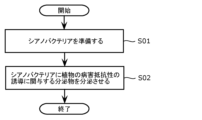
- FIG. 1 is a flowchart showing an example of a method for producing a plant disease resistance inducer according to an embodiment.
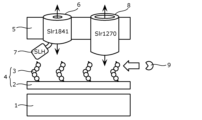
- FIG. 2 is a diagram schematically showing the cell surface layer of cyanobacteria.
- FIG. 3 is a transmission electron microscope image of an ultrathin section of the modified cyanobacteria of Example 1.
- FIG. 4 is an enlarged image of the broken line area A in FIG.
- FIG. 5 is a transmission electron microscope image of an ultrathin section of the modified cyanobacteria of Example 2.
- FIG. 6 is an enlarged image of the broken line area B in FIG.
- FIG. 7 is a transmission electron microscope image of an ultrathin section of the modified cyanobacteria of Comparative Example 1.
- FIG. 8 is an enlarged image of the broken line area C in FIG. FIG.
- FIG. 10 shows SEQ ID NO: 01 to SEQ ID NO: 03.
- FIG. 11 shows SEQ ID NO: 04 to SEQ ID NO: 06.
- FIG. 12 shows SEQ ID NO:07.
- FIG. 13 shows SEQ ID NO:08.
- FIG. 14 shows SEQ ID NO:09.
- FIG. 15 shows SEQ ID NO: 10 to SEQ ID NO: 11.
- FIG. 16 shows SEQ ID NO: 12 to SEQ ID NO: 18.
- FIG. 17 shows SEQ ID NO: 19 to SEQ ID NO: 22.
- Patent Document 1 discloses a plant activator that induces systemic resistance in plants through the salicylic acid pathway and suppresses plant diseases by applying oxo fatty acid derivatives, which are fatty acid metabolites of bacteria, to plants. There is. Furthermore, since oxo fatty acid derivatives are naturally occurring fatty acid oxides, it has been reported that the plant activator has a low environmental impact and causes almost no phytotoxicity to the plants to which it is applied.
- Patent Document 2 describes a polypeptide consisting of a part of an elongation factor (EF-Tu) that is widely conserved in plant pathogenic bacteria and non-plant pathogenic bacteria, and consisting of a predetermined amino acid sequence. , discloses polypeptides that are active in inducing immune responses in grasses.
- the polypeptide is highly safe for humans and has an extremely low environmental impact, and because it is a relatively low molecular weight polypeptide, it can be easily produced using bacteria at low cost. has been reported. It has also been reported that the peptide and the plant disease resistance inducer containing the same are less likely to produce drug-resistant mutants and can be applied over a long period of time.
- Patent Document 3 discloses the use of a novel Paenibacillus genus bacteria having a plant disease control effect for plant disease control. Specifically, it has been reported that Paenibacillus spores, vegetative cells, dried cells, whole cultures, or their freeze-dried powders can be applied to plants in various forms to be effective. There is.
- Cyanobacteria also called cyanobacteria or blue-green algae
- Cyanobacteria are a group of eubacteria that decompose water through photosynthesis to produce oxygen, and use the energy obtained to fix CO2 in the air.
- cyanobacteria can also fix nitrogen (N 2 ) in the air.
- N 2 nitrogen
- cyanobacteria can obtain most of the raw materials (i.e., nutrients) and energy necessary for bacterial growth from air, water, and light, so cyanobacteria can be grown using inexpensive raw materials and simple processes. Cyanobacteria can be cultured.
- cyanobacteria are known to grow quickly and have high light utilization efficiency, and in addition, they are easier to genetically manipulate than other algal species, so cyanobacteria are the most popular photosynthetic microorganisms.
- Active research and development is being carried out regarding material production. For example, production of fuels such as ethanol, isobutanol, alkanes, and fatty acids (Patent Document 4: Japanese Patent No. 6341676) has been reported as an example of substance production using cyanobacteria.
- Research and development is also being conducted on the production of substances that serve as nutritional sources for living organisms. For example, since proteins can only be synthesized by living organisms, there is a need for the development of technology to easily and efficiently produce proteins.
- Non-patent Document 1 Jie Zhou et al. ., “Discovery of a super-strong promoter enable efficient production of heterologous proteins in cyanobacteria”, Scientific Reports, Nature Research, 2014, Vol.4, Article No.4500).
- Non-Patent Document 1 For example, with the technique described in Non-Patent Document 1 mentioned above, efficient expression of a heterologous gene can be realized in cyanobacteria. Using this technology, it is possible to produce a desired protein within the cells of cyanobacteria (hereinafter also referred to as inside the bacterial cells). However, since proteins produced within cyanobacterial cells are difficult to secrete outside the cells, it is necessary to crush the cyanobacterial cells and extract the proteins produced within the cells.
- the present inventors succeeded in secreting proteins and intracellular metabolites produced within the cyanobacterial cell to the outside of the cell. We found that this makes it easier to Furthermore, the present inventors have also discovered that cyanobacterial secretions have the effect of inducing disease resistance in plants. Thereby, the plant disease resistance-inducing substance secreted outside the cyanobacterial cells can be efficiently produced without disrupting the cyanobacterial cells. In addition, since operations such as extraction are not required, the physiological activity of the plant disease resistance inducer is less likely to be impaired, so the plant disease resistance inducer containing the secretion can effectively prevent plant disease. Resistance can be induced.
- the plant disease resistance inducing agent and the plant disease resistance inducing method of the present disclosure can effectively induce disease resistance in plants. Moreover, the method for producing a plant disease resistance inducer of the present disclosure allows the production of a plant disease resistance inducer simply and efficiently.
- a plant disease resistance inducer includes cyanobacterial secretions.
- the plant disease resistance inducer contains a secretion that is involved in inducing disease resistance in plants, and therefore can effectively induce disease resistance in plants.
- the cyanobacterium may be a modified cyanobacterium in which the function of a protein involved in bonding the outer membrane and the cell wall is suppressed or lost.
- the bond between the cell wall and the outer membrane (that is, the amount of bond and binding force) is partially reduced, making it easier for the outer membrane to partially detach from the cell wall. Therefore, in the modified cyanobacteria, proteins and metabolites produced within the bacterial body (that is, substances produced within the bacterial body) tend to leak out of the outer membrane (that is, outside the bacterial body). This facilitates the secretion of proteins and metabolites produced within the cells of the modified cyanobacteria to the outside of the cells, thereby eliminating the need for extraction treatment for substances produced within the cells, such as crushing the cells.
- plant disease resistance substances involved in inducing disease resistance in plants
- a decrease in the physiological activity of the inducing substance (also referred to as an inducer) and a decrease in yield are also less likely to occur. Therefore, the plant disease resistance inducer according to one embodiment of the present disclosure can effectively induce disease resistance in plants.
- the protein involved in binding the outer membrane and the cell wall is an SLH (Surface Layer Homology) domain-retaining outer membrane protein and a cell wall-pyruvic acid protein. It may be at least one modified enzyme.
- SLH Surface Layer Homology domain-retaining outer membrane protein and a cell wall-pyruvic acid protein. It may be at least one modified enzyme.
- modified cyanobacteria for example, (i) an enzyme that catalyzes the reaction of pyruvate modification of the SLH domain-retaining outer membrane protein that binds to the cell wall and the bound sugar chain on the surface of the cell wall (i.e., cell wall-pyruvate modification); (ii) the expression of at least one of an SLH domain-retaining outer membrane protein and a cell wall-pyruvate modifying enzyme is suppressed. Therefore, the bond between the SLH domain of the SLH domain-retaining outer membrane protein in the outer membrane and the covalent sugar chain on the surface of the cell wall (that is, the amount and strength of the bond) is reduced.
- the plant disease resistance inducing agent contains a plant disease resistance inducing substance efficiently secreted by the modified cyanobacteria, and thus can effectively induce resistance to plant diseases. Can be done.
- the SLH domain-retaining outer membrane protein is Slr1841, which consists of the amino acid sequence shown by SEQ ID NO: 1, and NIES970_09470, which consists of the amino acid sequence shown by SEQ ID NO: 2.
- Anacy_3458 consisting of the amino acid sequence shown in SEQ ID NO: 3, or a protein having an amino acid sequence that is 50% or more identical to any of these SLH domain-retaining outer membrane proteins.
- any of the SLH domain-retaining outer membrane proteins shown in SEQ ID NOs: 1 to 3 above or any of these SLH domain-retaining outer membrane proteins and the amino acid sequence The function of a protein that is 50% or more identical is suppressed or lost, or (ii) any of the SLH domain-retaining outer membrane proteins shown in SEQ ID NOs: 1 to 3 above or the SLH domain of any of these. Expression of a protein whose amino acid sequence is 50% or more identical to the retained outer membrane protein is suppressed.
- the function of the SLH domain-retaining outer membrane protein or a protein having the same function as the SLH domain-retaining outer membrane protein in the outer membrane is suppressed or lost; or (ii) The expression level of an SLH domain-retaining outer membrane protein or a protein having a function equivalent to the SLH domain-retaining outer membrane protein in the outer membrane is reduced.
- the binding domain for binding the outer membrane to the cell wall for example, the SLH domain
- the binding domain for binding the outer membrane to the cell wall has a reduced binding amount and binding force to the cell wall, resulting in the outer membrane partially detaching from the cell wall. It becomes easier.
- the plant disease resistance inducing agent contains a plant disease resistance inducing substance efficiently secreted by the modified cyanobacteria, and therefore can effectively induce disease resistance in plants. can.
- the cell wall-pyruvic acid modifying enzyme is Slr0688, which consists of the amino acid sequence shown in SEQ ID NO: 4, Synpcc7942_1529, which consists of the amino acid sequence shown in SEQ ID NO: 5, It may be Anacy_1623 consisting of the amino acid sequence shown in SEQ ID NO: 6, or a protein having an amino acid sequence that is 50% or more identical to any of these cell wall-pyruvate modifying enzymes.
- any of the cell wall-pyruvate modifying enzymes shown in SEQ ID NOs: 4 to 6 above or any of these cell wall-pyruvate modifying enzymes and the amino acid sequence are 50% or (ii) any of the cell wall-pyruvate modification enzymes shown in SEQ ID NOs: 4 to 6 above or the cell wall-pyruvate modification of any of these.
- the expression of proteins whose amino acid sequences are 50% or more identical to the enzyme is suppressed.
- modified cyanobacteria (i) the function of a cell wall-pyruvate modifying enzyme or a protein having an equivalent function to the enzyme is suppressed or lost, or (ii) the function of a cell wall-pyruvate modifying enzyme or a protein having an equivalent function to the enzyme is
- the expression level of proteins with equivalent functions decreases. This makes it difficult for the covalent sugar chains on the surface of the cell wall to be modified with pyruvate, so the amount and binding force of the sugar chains on the cell wall to bind to the SLH domain of the SLH domain-retaining outer membrane protein in the outer membrane. is reduced.
- the plant disease resistance inducing agent contains a plant disease resistance inducing substance efficiently secreted by the modified cyanobacteria, and therefore can effectively induce disease resistance in plants. can.
- the cyanobacterium is a modified cyanobacterium in which a gene that expresses a protein involved in binding the outer membrane and the cell wall has been deleted or inactivated. It may also be bacteria.
- the modified cyanobacteria improves the productivity of secretion of plant disease resistance inducers produced within the bacterial cells.
- the plant disease resistance inducer according to one embodiment of the present disclosure can effectively induce disease resistance in plants.
- the gene for expressing the protein involved in the binding between the outer membrane and the cell wall is a gene encoding an SLH domain-retaining outer membrane protein, and a gene encoding an SLH domain-retaining outer membrane protein; - It may be at least one gene encoding a pyruvate modifying enzyme.
- the modified cyanobacteria As a result, in the modified cyanobacteria, at least one of the genes encoding the SLH domain-retaining outer membrane protein and the gene encoding the cell wall-pyruvate modifying enzyme has been deleted or inactivated. Therefore, in the modified cyanobacteria, for example, (i) the expression of at least one of the SLH domain-retaining outer membrane protein and cell wall-pyruvate modification enzyme is suppressed, or (ii) the SLH domain-retaining outer membrane protein and the cell wall - At least one function of the pyruvate-modifying enzyme is inhibited or lost.
- the bond between the SLH domain of the SLH domain-retaining outer membrane protein in the outer membrane and the covalent sugar chain on the surface of the cell wall (that is, the amount and strength of the bond) is reduced.
- the binding between the outer membrane and the cell wall is reduced, making it easier for the outer membrane to partially detach from the cell wall, allowing proteins and metabolites produced within the cell to leak out of the cell.
- the plant disease resistance inducing agent contains a plant disease resistance inducing substance efficiently secreted by the modified cyanobacteria, and therefore cannot effectively induce disease resistance in plants. can.
- the gene encoding the SLH domain-retaining outer membrane protein includes slr1841, which consists of the nucleotide sequence shown in SEQ ID NO: 7, and slr1841, which consists of the nucleotide sequence shown in SEQ ID NO: 8.
- the gene may be nies970_09470 consisting of the sequence nies970_09470, anacy_3458 consisting of the base sequence shown in SEQ ID NO: 9, or a gene whose base sequence is 50% or more identical to any of these genes.
- the modified cyanobacteria a gene encoding any of the SLH domain-retaining outer membrane proteins shown in SEQ ID NOs: 7 to 9 above, or a gene that is 50% or more identical to the base sequence of any of these genes. is deleted or inactivated. Therefore, in the modified cyanobacteria, (i) the expression of any of the above-mentioned SLH domain-retaining outer membrane proteins or a protein having a function equivalent to any of these proteins is suppressed, or (ii) the above-mentioned The function of any SLH domain-retaining outer membrane protein or a protein having a function equivalent to any of these proteins is suppressed or lost.
- the binding domain for example, SLH domain
- the binding domain for binding the outer membrane to the cell wall has a reduced binding amount and binding force, so the outer membrane tends to partially detach from the cell wall.
- the proteins and metabolites produced within the bacterial cells tend to leak out of the bacterial cells, so that the plant disease resistance-inducing substances produced within the bacterial cells also tend to leak out of the bacterial cells. Therefore, the plant disease resistance inducer according to one aspect of the present disclosure contains a plant disease resistance inducer efficiently secreted by the modified cyanobacteria, and therefore can effectively induce disease resistance in plants. .
- the gene encoding the cell wall-pyruvic acid modifying enzyme includes slr0688, which consists of the base sequence shown in SEQ ID NO: 10, and slr0688, which consists of the base sequence shown in SEQ ID NO: 11. It may be synpcc7942_1529 consisting of the nucleotide sequence shown in SEQ ID NO: 12, anacy_1623 consisting of the nucleotide sequence shown in SEQ ID NO: 12, or a gene whose nucleotide sequence is 50% or more identical to any of these genes.
- the nucleotide sequence is 50% or more identical to the gene encoding any of the cell wall-pyruvate modifying enzymes shown in SEQ ID NOs: 10 to 12 above, or the gene encoding any of these enzymes.
- a gene is deleted or inactivated. Therefore, in the modified cyanobacteria, (i) the expression of any of the above cell wall-pyruvate modifying enzymes or a protein having a function equivalent to any of these enzymes is suppressed, or (ii) any of the above The function of the cell wall-pyruvate modifying enzyme or a protein having a function equivalent to any of these enzymes is suppressed or lost.
- the plant disease resistance inducing agent contains a plant disease resistance inducing substance efficiently secreted by the modified cyanobacteria, and therefore can effectively induce disease resistance in plants. can.
- a method for inducing plant disease resistance uses a plant disease resistance inducing agent containing a cyanobacterial secretion.
- the disease resistance in plants can be effectively induced. can be induced.
- a method for producing a plant disease resistance inducer includes the steps of: preparing cyanobacteria; causing the cyanobacteria to secrete a secretion involved in inducing disease resistance in plants; including.
- a plant disease resistance inducer containing the following can be produced.
- each figure is not necessarily strictly illustrated.
- substantially the same components are denoted by the same reference numerals, and overlapping explanations may be omitted or simplified.
- the numerical range does not represent only a strict meaning, but includes a substantially equivalent range, for example, measuring the amount of protein (for example, number or concentration, etc.) or the range thereof.
- both a bacterial body and a cell represent one individual cyanobacterium.
- BLAST Basic Local Alignment Search Tool
- NCBI National Center for Biotechnology Information
- Ru Information regarding cyanobacterial genes and proteins encoded by the genes is published, for example, in the NCBI database mentioned above and Cyanobase (http://genome.microbedb.jp/cyanobase/). From these databases, the amino acid sequences of proteins of interest and the base sequences of genes encoding those proteins can be obtained.
- a plant disease resistance inducer refers to a drug for inducing resistance to a plant disease and controlling the plant disease. Since the plant disease resistance inducer is intended to prevent disease, it may be applied before the onset of disease.
- the plant disease resistance inducer may be used by any of the following methods: spraying, dusting, dipping, coating, coating, fumigation, smoking, irrigation, etc. Specific methods of use include methods of spraying or applying the drug to plants, soaking plant seeds in a liquid containing the drug, and spraying the drug to fields where the disease is occurring or is likely to be infected. methods, or methods of mixing chemicals into soil.
- the amount of the plant disease resistance inducer to be used may be determined as appropriate depending on the type of target plant, the growth stage of the target plant, the nature of the soil, the type of formulation, the method of application, the timing of application, and the like.
- Plants to which the plant disease resistance inducer is applied include all cultivated plants, and may be either monocotyledonous plants or dicotyledonous plants.
- cruciferous plants such as cabbage, grasses such as rice, corn, barley, and wheat, solanaceous plants such as tomatoes, eggplants, potatoes, and tobacco, cucurbits such as cucumbers, melons, and pumpkins, etc.
- leguminous plants such as soybeans, peas, kidney beans, alfalfa, and peanuts; rose family plants such as strawberries, apples, and pears; mulberry plants such as mulberry; mallow plants such as cotton; carrots and parsley.
- Examples include, but are not limited to, plants of the Umbelliferae family such as , celery, Asteraceae plants such as burdock and lettuce, and Vitaceae plants such as grapes.
- the plant disease resistance inducer includes cyanobacterial secretions.
- the cyanobacteria are, for example, modified cyanobacteria (hereinafter also referred to as parent cyanobacteria) in which the function of a protein involved in binding between the outer membrane and the cell wall (hereinafter also referred to as binding-related protein) is suppressed or lost. It's bacteria. Note that cyanobacteria (that is, parent cyanobacteria) and modified cyanobacteria will be described later.
- the plant disease resistance inducer includes a secreted product secreted by the above-mentioned cyanobacteria and involved in inducing disease resistance in plants. Being involved in inducing disease resistance in plants means not only being directly involved in inducing disease resistance in plants, but also indirectly (in other words, auxiliary) being involved in inducing disease resistance in plants. It may also include doing. As a result, the plant disease resistance inducer can effectively induce resistance to plant diseases, so applying the plant disease resistance inducer to plants can improve the yield and quality of plants. be able to.
- the secreted material contains proteins and metabolites produced within the cyanobacterial cells (hereinafter also referred to as intracellularly produced substances).
- the intracellularly produced substances include substances that induce plant disease resistance (so-called plant disease resistance inducing substances).
- Substances produced within bacteria include, for example, organic substance degrading enzymes such as peptidase, nuclease, or phosphatase, DNA metabolism-related substances such as adenosine or guanosine, and nucleic acid (for example, DNA or RNA) synthesis promoting substances such as p-aminobenzoic acid or spermidine.
- organic substance degrading enzymes such as peptidase, nuclease, or phosphatase
- DNA metabolism-related substances such as adenosine or guanosine
- nucleic acid for example, DNA or RNA
- synthesis promoting substances such as p-aminobenzoic acid or spermidine.
- FIG. 1 is a flowchart showing an example of a method for producing a plant disease resistance inducer according to the present embodiment.
- the method for producing a plant disease resistance inducer includes the steps of preparing cyanobacteria (step S01), and causing the cyanobacteria to secrete secretions involved in inducing plant disease resistance (step S01). S02).
- cyanobacteria are, for example, modified cyanobacteria (so-called parent cyanobacteria) in which the function of a protein involved in bonding the outer membrane and the cell wall is suppressed or lost. Therefore, in step S01, modified cyanobacteria may be prepared. In this case, in step S02, the modified cyanobacteria are caused to secrete secretions that are involved in inducing disease resistance in plants.
- the secreted material contains proteins and metabolites produced within the cells of the cyanobacteria (that is, substances produced within the cells). These intracellularly produced substances include substances involved in inducing disease resistance in plants (that is, plant disease resistance inducers).
- step S01 the above cyanobacteria are prepared.
- Preparing cyanobacteria refers to adjusting the state of cyanobacteria to a state where they can secrete secretions, for example, by restoring bacterial cells from freeze-dried cyanobacteria or glycerol stocks.
- the cyanobacteria that have finished secreting the plant disease resistant substance in step S02 may be collected.
- preparing the cyanobacteria may mean, for example, producing a modified cyanobacterium by genetically modifying a parent cyanobacterium, or a freeze-dried product or The method may be to restore the bacterial cells from the glycerol stock, or it may be to collect the modified cyanobacteria that have finished secreting the plant disease resistance inducer in step S02.
- cyanobacteria are caused to secrete secretions that are involved in inducing disease resistance in plants.
- the cyanobacteria in this embodiment are modified cyanobacteria (that is, parent cyanobacteria) in which the function of a protein involved in bonding the outer membrane and the cell wall is suppressed or lost; The proteins and metabolites that are produced are likely to be secreted outside the outer membrane (that is, outside the bacterial cell).
- These intracellularly produced substances include substances involved in inducing disease resistance in plants. Therefore, in step S02, by culturing the modified cyanobacteria under predetermined conditions, intracellularly produced substances that are involved in inducing disease resistance in plants are secreted outside the bacterial cells.
- Cultivation of cyanobacteria can generally be carried out based on liquid culture using BG-11 medium (see Table 2) or a modified method thereof. Therefore, culturing of modified cyanobacteria may be carried out in the same manner.
- the cyanobacterial culture period for producing a plant disease resistance inducer may be any period that allows proteins and metabolites to accumulate at a high concentration under conditions where the bacterial cells sufficiently proliferate. For example, , may be for 1 to 3 days, or may be for 4 to 7 days.
- the culture method may be, for example, aeration agitation culture or shaking culture.
- the modified cyanobacteria produce proteins and metabolites (that is, intracellularly produced substances) within the bacterial cells, and secrete the intracellularly produced substances into the culture solution.
- the substance produced inside the fungus includes a substance produced inside the fungus that is involved in inducing disease resistance in plants (that is, a plant disease resistance inducing substance).
- the culture solution is filtered or centrifuged to remove solids such as cells (i.e., bacterial bodies), and the culture supernatant is recovered. may be collected.
- the secreted substance containing intracellularly produced substances involved in inducing disease resistance in plants is Since it is secreted outside the bacterial cells, there is no need to disrupt the cells to recover the plant disease resistance inducer. Therefore, the modified cyanobacteria remaining after recovery of the plant disease resistance inducing substance can be repeatedly used to produce a plant disease resistance inducing agent.
- the method for recovering the plant disease resistance inducer secreted into the culture solution is not limited to the above example, and it is also possible to recover the plant disease resistance inducer in the culture solution while culturing the modified cyanobacteria. good.
- the plant disease resistance inducing substance that has passed through the permeable membrane may be recovered.
- the plant disease resistance-inducing substance in the culture solution can be recovered while cultivating the modified cyanobacteria, so that there is no need to remove the cells of the modified cyanobacteria from the culture solution. Therefore, a plant disease resistance inducer can be produced more easily and efficiently.
- the recovery process of bacterial cells from the culture solution and the process of crushing the bacterial cells are not necessary, damage and stress to the modified cyanobacteria can be reduced. Therefore, the secretion productivity of the plant disease resistance inducer of the modified cyanobacteria is less likely to decrease, and the modified cyanobacteria can be used for a longer period of time.
- a plant disease resistance inducer can be obtained easily and efficiently.
- cyanobacteria (so-called parent cyanobacteria) and modified cyanobacteria will be explained.
- the parent cyanobacteria will be referred to as cyanobacteria
- the cyanobacteria in this embodiment will be referred to as modified cyanobacteria.
- Cyanobacteria also called blue-green algae or cyanobacteria, are a group of prokaryotes that perform photosynthesis while collecting light energy with chlorophyll and electrolyzing water to generate oxygen. Cyanobacteria are highly diverse, and include, for example, unicellular species such as Synechocystis sp. PCC 6803 and filamentous multicellular species such as Anabaena sp. PCC 7120. Regarding the growing environment, there are thermophilic species such as Thermosynechococcus elongatus, marine species such as Synechococcus elongatus, and freshwater species such as Synechocystis.
- FIG. 2 is a diagram schematically showing the cell surface layer of cyanobacteria.
- the cell surface layer of cyanobacteria is composed of, in order from the inside, a plasma membrane (also called inner membrane 1), peptidoglycan 2, and outer membrane 5, which is a lipid membrane that forms the outermost layer of the cell.
- Ru Sugar chains 3 composed of glucosamine, mannosamine, etc. are covalently bonded to peptidoglycan 2, and pyruvate is bonded to these covalently bonded sugar chains 3 (Non-patent Document 2: Jurgens and Weckesser, 1986, J. Bacteriol., 168:568-573).
- the peptidoglycan 2 and the covalent sugar chain 3 are collectively referred to as a cell wall 4.
- the gap between the plasma membrane (that is, the inner membrane 1) and the outer membrane 5 is called the periplasm, and is used for protein decomposition or three-dimensional structure formation, lipid or nucleic acid decomposition, or the uptake of extracellular nutrients.
- the periplasm the gap between the plasma membrane (that is, the inner membrane 1) and the outer membrane 5 is called the periplasm, and is used for protein decomposition or three-dimensional structure formation, lipid or nucleic acid decomposition, or the uptake of extracellular nutrients.
- the SLH domain-retaining outer membrane protein (for example, Slr1841 in the figure) consists of a C-terminal region embedded in the lipid membrane (also referred to as outer membrane 5) and an N-terminal SLH domain 7 that protrudes from the lipid membrane. It is widely distributed in cyanobacteria and bacteria belonging to the class Negativicutes, a group of Gram-negative bacteria (Non-Patent Document 3: Kojima et al., 2016, Biosci. Biotech. Biochem., 10:1954-1959). The region embedded in the lipid membrane (i.e.
- Patent Document 4 Kowata et al., 2017, J. Bacteriol., 199:e00371-17).
- SLH domain 7 In order for SLH domain 7 to bind to cell wall 4, covalent sugar chain 3 in peptidoglycan 2 needs to be modified with pyruvate (Non-Patent Document 5: Kojima et al., 2016, J. Biol Chem., 291:20198-20209).
- genes encoding SLH domain-retaining outer membrane protein 6 include slr1841 or slr1908 held by Synechocystis sp. PCC 6803, or oprB held by Anabaena sp. 90.
- cell wall-pyruvate modification enzyme 9 The enzyme that catalyzes the pyruvate modification reaction of covalent sugar chain 3 in peptidoglycan 2 (hereinafter referred to as cell wall-pyruvate modification enzyme 9) was identified in the Gram-positive bacterium Bacillus anthracis and named CsaB. (Non-patent document 6: Mesnage et al., 2000, EMBO J., 19:4473-4484). Among cyanobacteria whose genome sequences have been published, many species possess genes encoding homologous proteins with amino acid sequence identity of 30% or more with CsaB. Examples include slr0688 held by Synechocystis sp. PCC 6803 or syn7502_03092 held by Synechococcus sp. 7502.
- cyanobacteria CO 2 fixed through photosynthesis is converted into precursors of various amino acids and intracellular molecules through multistep enzymatic reactions.
- proteins and metabolites are synthesized within the cytoplasm of cyanobacteria. Some of these proteins and metabolites function within the cytoplasm, while others are transported from the cytoplasm to the periplasm and function within the periplasm.
- no case of active secretion of proteins and metabolites outside the cell has been reported in cyanobacteria.
- cyanobacteria Because cyanobacteria have a high photosynthetic ability, they do not necessarily need to take in organic matter from the outside as nutrients. Therefore, cyanobacteria have very few channel proteins in their outer membrane 5 that allow organic substances to pass therethrough, such as the organic substance channel protein 8 (eg, Slr1270) in FIG. For example, in Synechocystis sp. PCC 6803, organic channel protein 8, which allows organic matter to pass through, is present in only about 4% of the total protein content of outer membrane 5.
- organic substance channel protein 8 eg, Slr1270
- cyanobacteria in order for cyanobacteria to take in inorganic ions necessary for growth into cells with high efficiency, only inorganic ions can be permeated by cyanobacteria, such as SLH domain-retaining outer membrane protein 6 (e.g., Slr1841) shown in Figure 2.
- the outer membrane 5 contains many ion channel proteins that cause For example, in Synechocystis sp. PCC 6803, ion channel proteins that permeate inorganic ions account for about 80% of the total protein content of the outer membrane 5.
- the cyanobacteria in this embodiment are modified cyanobacteria (so-called parent cyanobacteria) in which the function of a protein involved in binding between the outer membrane 5 and the cell wall 4 (so-called binding-related protein) is suppressed or lost. It's bacteria. More specifically, for example, the modified cyanobacteria is such that the total amount of proteins involved in binding between the outer membrane 5 and the cell wall 4 (i.e., binding-related proteins) is lower than that in the parent strain (i.e., parent cyanobacteria). The total amount of protein is suppressed to 30% or more and 70% or less.
- the total amount of binding-related proteins is suppressed to 30% of the total amount of the protein in the parent strain
- the bond between the outer membrane 5 and the cell wall 4 (for example, the amount of bond and the binding force) is partially reduced, so that the outer membrane 5 is easily partially detached from the cell wall 4. Therefore, the modified cyanobacteria has improved secretion productivity of intracellularly produced substances, such as proteins and metabolites produced within the microbial cells, to the outside of the microbial cells.
- intracellularly produced substances include intracellularly produced substances that are involved in inducing disease resistance in plants (that is, plant disease resistance inducing substances). Therefore, the modified cyanobacteria also improves the secretion productivity of the plant disease resistance inducing substance, which secretes the plant disease resistance inducing substance produced inside the bacterial body to the outside of the bacterial body. Furthermore, since there is no need to crush the bacterial cells to recover the plant disease resistance inducer, the modified cyanobacteria can be used repeatedly even after the plant disease resistance inducer has been recovered.
- production means that the modified cyanobacteria produce proteins and metabolites within the bacterial cells, and secretion production means that the produced proteins and metabolites are secreted outside the bacterial cells.
- the protein involved in the binding between the outer membrane 5 and the cell wall 4 may be, for example, at least one of the SLH domain-retaining outer membrane protein 6 and the cell wall-pyruvate modifying enzyme 9.
- the modified cyanobacterium has, for example, the function of at least one of the SLH domain-retaining outer membrane protein 6 and the cell wall-pyruvate modifying enzyme 9 suppressed or lost.
- the modified cyanobacteria (i) at least one function of the SLH domain-retaining outer membrane protein 6 and the cell wall-pyruvate modifying enzyme 9 may be suppressed or lost, and (ii) the SLH domain that binds to the cell wall 4 may be suppressed or lost.
- At least one of the expression of the retained outer membrane protein 6 and the expression of an enzyme that catalyzes the pyruvate modification reaction of sugar chains bound to the surface of the cell wall 4 may be suppressed. .
- the outer membrane 5 is modified to partially detach from the cell wall 4 by suppressing the function of at least one binding-related protein of the SLH domain-retaining outer membrane protein 6 and the cell wall-pyruvate modifying enzyme 9.
- the following cyanobacteria will be explained in more detail.
- the cyanobacteria that are the parent microorganisms of the modified cyanobacteria in this embodiment, before suppressing or losing at least one of the expression of the SLH domain-retaining outer membrane protein 6 and the expression of the cell wall-pyruvate modifying enzyme 9 is not particularly limited, and may be any type of cyanobacteria.
- the parent cyanobacteria may be of the genus Synechocystis, Synechococcus, Anabaena, or Thermosynechococcus, among them Synechocystis sp. PCC 6803, Synechococcus sp. PCC 7942, or Thermosynechococcus elongatus BP-1. Good too.
- the base sequence and the position of the gene on the chromosomal DNA or plasmid can be confirmed in the NCBI database and Cyanobase mentioned above.
- the SLH domain-retaining outer membrane protein 6 and the cell wall-pyruvic acid modifying enzyme 9, whose functions are suppressed or lost in the modified cyanobacteria according to the present embodiment, can be used in any of the parent cyanobacteria as long as they are possessed by the parent cyanobacteria. They may be of cyanobacteria, and are not limited by the location of the genes encoding them (for example, on chromosomal DNA or on plasmids).
- the SLH domain-retaining outer membrane protein 6 may be Slr1841, Slr1908, or Slr0042 when the parent cyanobacterium belongs to the genus Synechocystis, or may be NIES970_09470 when the parent cyanobacterium belongs to the genus Synechococcus.
- the parent cyanobacteria is of the genus Anabaena, it may be Anacy_5815 or Anacy_3458, etc.
- the parent cyanobacteria is of the genus Microcystis, it may be A0A0F6U6F8_MICAE, etc.
- the parent cyanobacteria When the parent cyanobacteria is of the genus Cyanothece, it may be A0A3B8XX12_9CYAN, etc. When the parent cyanobacterium belongs to the genus Leptolyngbya, it may be A0A1Q8ZE23_9CYAN, etc. When the parent cyanobacterium belongs to the genus Calothrix, it may be A0A1Z4R6U0_9CYAN, and when the parent cyanobacterium belongs to the genus Nostoc, it may be A0A1C0VG86_9NOSO, etc.
- the parent cyanobacterium belongs to the genus Crocosphaera, it may be B1WRN6_CROS5, and when the parent cyanobacterium belongs to the genus Pleurocapsa, it may be K9TAE4_9CYAN.
- the SLH domain-retaining outer membrane protein 6 is, for example, Slr1841 (SEQ ID NO: 1) of Synechocystis sp. PCC 6803, NIES970_09470 (SEQ ID NO: 2) of Synechococcus sp. NIES-970, or Anabaena cylindrica PCC. 7122 Anacy_3458 (SEQ ID NO: 3), etc. may be used.
- it may be a protein that has an amino acid sequence that is 50% or more identical to these SLH domain-retaining outer membrane proteins 6.
- the function of the protein whose sequence is 50% or more identical may be suppressed or lost, and
- the expression of a protein whose amino acid sequence is 50% or more identical to SLH domain-retaining outer membrane protein 6 may be suppressed.
- the function of the SLH domain-retaining outer membrane protein 6 in the outer membrane 5 or a protein having a function equivalent to the SLH domain-retaining outer membrane protein 6 is suppressed or lost;
- the expression level of the SLH domain-retaining outer membrane protein 6 or a protein having the same function as the SLH domain-retaining outer membrane protein 6 in the outer membrane 5 is reduced.
- the binding domain for example, SLH domain 7
- the binding domain for example, SLH domain 7 for binding the outer membrane 5 to the cell wall 4 decreases the binding amount and binding force with the cell wall 4, so that the outer membrane 5 binds to the cell wall 4. Partial detachment becomes easier.
- substances produced inside the bacteria are likely to leak out of the cells, and plant disease resistance-inducing substances produced inside the cells are also likely to leak out of the cells.
- the amino acid sequences of a protein are 30% or more identical, the protein has a high degree of homology in its three-dimensional structure and is therefore likely to have the same function as the protein in question. Therefore, as the SLH domain-retaining outer membrane protein 6 whose function is suppressed or lost, for example, the amino acid sequence of any of the SLH domain-retaining outer membrane proteins 6 shown in SEQ ID NOs: 1 to 3 above, and 40% It consists of an amino acid sequence having an identity of preferably 50% or more, more preferably 60% or more, still more preferably 70% or more, even more preferably 80% or more, even more preferably 90% or more, and It may be a protein or polypeptide that has the function of binding to the covalent sugar chain 3.
- the cell wall-pyruvate modifying enzyme 9 may be Slr0688, etc. when the parent cyanobacterium belongs to the genus Synechocystis, and may be Syn7502_03092 or Synpcc7942_1529, etc. when the parent cyanobacterium belongs to the genus Synechococcus. If the cyanobacterium belongs to the genus Anabaena, it may be ANA_C20348 or Anacy_1623, and if the parent cyanobacterium belongs to the genus Microcystis, it may be CsaB (NCBI access ID: TRU80220), or if the parent cyanobacterium belongs to the genus Cyanothece.
- the parent cyanobacterium belongs to the genus Spirulina, it may be CsaB (NCBI access ID: WP_026079530.1), etc. If the parent cyanobacterium belongs to the genus Calothrix, it may be CsaB (NCBI access ID: WP_096658142.1), etc., and if the parent cyanobacterium belongs to the genus Nostoc, it may be CsaB (NCBI access ID: WP_099068528.1), etc.
- the parent cyanobacterium belongs to the genus Crocosphaera, it may be CsaB (NCBI access ID: WP_012361697.1), and if the parent cyanobacterium belongs to the genus Pleurocapsa, it may be CsaB (NCBI access ID: WP_036798735), etc. Good too.
- the cell wall-pyruvate modifying enzyme 9 is, for example, Slr0688 (SEQ ID NO: 4) of Synechocystis sp. PCC 6803, Synpcc7942_1529 (SEQ ID NO: 5) of Synechococcus sp. Anacy_1623 (SEQ ID NO: 6) or the like may be used. Further, it may be a protein having an amino acid sequence that is 50% or more identical to these cell wall-pyruvate modifying enzymes 9.
- the function of proteins that are 50% or more identical may be suppressed or lost
- any of the cell walls shown in SEQ ID NOs: 4 to 6 above - pyruvate modifying enzyme 9 or the cell wall of any of these - Expression of a protein whose amino acid sequence is 50% or more identical to pyruvate modifying enzyme 9 may be suppressed.
- the function of the cell wall-pyruvate modifying enzyme 9 or a protein having an equivalent function to the enzyme is suppressed or lost, or (ii) the function of the cell wall-pyruvate modifying enzyme 9 or the relevant enzyme is suppressed or lost.
- the expression level of proteins with functions equivalent to enzymes decreases. This makes it difficult for the covalent sugar chains 3 on the surface of the cell wall 4 to be modified with pyruvate, so that the sugar chains 3 on the cell wall 4 interact with the SLH domain 7 of the SLH domain-retaining outer membrane protein 6 in the outer membrane 5. The amount of binding and the binding strength are reduced.
- the covalently bonded sugar chains 3 on the surface of the cell wall 4 are difficult to be modified with pyruvate, so the binding force between the cell wall 4 and the outer membrane 5 is weakened, and the outer membrane 5 becomes easily partially detached from the cell wall 4.
- the modified cyanobacteria substances produced inside the bacteria are likely to leak out of the cells, and plant disease resistance-inducing substances produced inside the cells are also likely to leak out of the cells.
- the cell wall-pyruvate modifying enzyme 9 whose function is suppressed or lost is, for example, an amino acid sequence of any of the cell wall-pyruvate modifying enzymes 9 shown in SEQ ID NOS: 4 to 6 above, and 40% or more of the amino acid sequence
- the peptidoglycan of the cell wall 4 preferably consists of an amino acid sequence having an identity of 50% or more, more preferably 60% or more, still more preferably 70% or more, even more preferably 80% or more, still more preferably 90% or more, and It may be a protein or polypeptide that has a function of catalyzing a reaction that modifies the covalently bonded sugar chain 3 of 2 with pyruvate.
- suppressing or losing the function of the SLH domain-retaining outer membrane protein 6 means suppressing or losing the ability of the protein to bind to the cell wall 4, and refers to suppressing or losing the ability of the protein to bind to the outer membrane 5. or the ability of the protein to become embedded in the outer membrane 5 and function.
- suppressing or losing the function of the cell wall-pyruvic acid modifying enzyme 9 means suppressing or losing the function of the protein to modify the covalent sugar chain 3 of the cell wall 4 with pyruvate.
- the means for suppressing or losing the function of these proteins is not particularly limited as long as it is a means commonly used for suppressing or losing the function of proteins.
- the means includes, for example, deleting or inactivating the gene encoding the SLH domain-retaining outer membrane protein 6 and the gene encoding the cell wall-pyruvate modifying enzyme 9, inhibiting the transcription of these genes,
- the method may include inhibiting the translation of transcription products of these genes, or administering an inhibitor that specifically inhibits these proteins.
- the modified cyanobacterium has a gene that expresses a protein involved in binding the outer membrane 5 and the cell wall 4 deleted or inactivated.
- the modified cyanobacteria the expression of proteins involved in binding between the cell wall 4 and outer membrane 5 is suppressed, or the function of the protein is suppressed or lost, so that the cell wall 4 and outer membrane 5 are bonded.
- the binding (that is, the binding amount and binding strength) is partially reduced.
- the outer membrane 5 tends to be partially detached from the cell wall 4. Therefore, in the modified cyanobacteria, intracellularly produced substances such as proteins and metabolites produced inside the microbial cell are removed from the outer membrane 5.
- the modified cyanobacteria improves the secretion productivity of the plant disease resistance inducing substance, which secretes the plant disease resistance inducing substance produced within the bacterial body to the outside of the bacterial body.
- the modified cyanobacteria can be repeatedly used to produce plant disease resistance-inducing substances.
- the gene that expresses the protein involved in the binding between the outer membrane 5 and the cell wall 4 is, for example, at least one of the gene encoding the SLH domain-retaining outer membrane protein 6 and the gene encoding the cell wall-pyruvate modifying enzyme 9. There may be.
- the modified cyanobacteria at least one of the genes encoding SLH domain-retaining outer membrane protein 6 and the gene encoding cell wall-pyruvate modifying enzyme 9 has been deleted or inactivated.
- the modified cyanobacteria for example, (i) the expression of at least one of the SLH domain-retaining outer membrane protein 6 and the cell wall-pyruvate modifying enzyme 9 is suppressed, or (ii) the SLH domain-retaining outer membrane protein At least one function of cell wall-pyruvate modifying enzyme 6 and cell wall-pyruvate modifying enzyme 9 is suppressed or lost. Therefore, the bond between the SLH domain 7 of the SLH domain-retaining outer membrane protein 6 in the outer membrane 5 and the covalent sugar chain 3 on the surface of the cell wall 4 (that is, the bond amount and binding force) is reduced.
- the SLH domain-retaining outer membrane protein 6 in order to suppress or lose at least one function of the SLH domain-retaining outer membrane protein 6 and the cell wall-pyruvate modifying enzyme 9 in cyanobacteria, for example, the SLH domain-retaining outer membrane protein 6 is used. Transcription of at least one of the gene encoding cell wall-pyruvate modifying enzyme 9 may be suppressed.
- the gene encoding SLH domain-retaining outer membrane protein 6 may be slr1841, slr1908, or slr0042 when the parent cyanobacterium belongs to the genus Synechocystis, and may be nies970_09470 when the parent cyanobacterium belongs to the genus Synechococcus.
- the parent cyanobacteria when the parent cyanobacteria is of the genus Anabaena, it may be anacy_5815 or anacy_3458, etc.
- the parent cyanobacteria is of the genus Microcystis, it may be A0A0F6U6F8_MICAE, etc.
- the parent cyanobacteria When the parent cyanobacteria is of the genus Cyanothece, it may be A0A3B8XX12_9CYAN, etc. If the parent cyanobacteria belongs to the genus Leptolyngbya, it may be A0A1Q8ZE23_9CYAN, etc. If the parent cyanobacterium belongs to the genus Calothrix, it may be A0A1Z4R6U0_9CYAN, and if the parent cyanobacterium belongs to the genus Nostoc, it may be A0A1C0VG86_9NOSO, etc.
- the parent cyanobacterium belongs to the genus Crocosphaera, it may be B1WRN6_CROS5, and when the parent cyanobacterium belongs to the genus Pleurocapsa, it may be K9TAE4_9CYAN.
- the base sequences of these genes can be obtained from the NCBI database or Cyanobase mentioned above.
- genes encoding SLH domain-retaining outer membrane protein 6 include slr1841 (SEQ ID NO: 7) of Synechocystis sp. PCC 6803, nies970_09470 (SEQ ID NO: 8) of Synechococcus sp. NIES-970, and Anabaena cylindrica PCC. 7122 anacy_3458 (SEQ ID NO: 9), or a gene whose amino acid sequence is 50% or more identical to these genes.
- the gene encoding any of the SLH domain-retaining outer membrane protein 6 shown in SEQ ID NOs: 7 to 9 above, or the base sequence of any of these genes is 50% or more identical. Genes are deleted or inactivated. Therefore, in the modified cyanobacteria, (i) the expression of any of the above-mentioned SLH domain-retaining outer membrane protein 6 or a protein having a function equivalent to any of these proteins is suppressed, or (ii) the above-mentioned The function of any of the SLH domain-retaining outer membrane protein 6 or a protein having a function equivalent to any of these proteins is suppressed or lost.
- the binding domain for example, SLH domain 7
- the binding domain decreases the binding amount and binding force with the cell wall 4, so that the outer membrane 5 is separated from the cell wall 4. Parts become easier to disengage.
- the proteins and metabolites produced within the bacterial cells tend to leak out of the bacterial cells, so that the plant disease resistance-inducing substances produced within the bacterial cells also tend to leak out of the bacterial cells.
- the amino acid sequences of a protein are 30% or more identical, it is said that the protein is likely to have the same function as the protein. Therefore, if the base sequences of genes encoding proteins are 30% or more identical, it is considered that there is a high possibility that a protein having the same function as the protein will be expressed. Therefore, as a gene encoding the SLH domain-retaining outer membrane protein 6 whose function is suppressed or lost, for example, any of the genes encoding the SLH domain-retaining outer membrane protein 6 shown in SEQ ID NOs: 7 to 9 above.
- the gene encoding cell wall-pyruvate modifying enzyme 9 may be slr0688, etc. when the parent cyanobacterium belongs to the genus Synechocystis, and may be syn7502_03092 or synpcc7942_1529, etc. when the parent cyanobacterium belongs to the genus Synechococcus. If the parent cyanobacterium belongs to the genus Anabaena, it may be ana_C20348 or anacy_1623, and if the parent cyanobacterium belongs to the genus Microcystis, it may be csaB (NCBI access ID: TRU80220), etc.
- the parent cyanobacterium belongs to the genus Cyanothece, it may be csaB (NCBI access ID: WP_107667006.1), etc., and if the parent cyanobacterium belongs to the genus Spirulina, it may be csaB (NCBI access ID: WP_026079530.1), etc. , if the parent cyanobacteria belongs to the genus Calothrix, it may be csaB (NCBI access ID: WP_096658142.1), etc., and if the parent cyanobacteria belongs to the genus Nostoc, it may be csaB (NCBI access ID: WP_099068528.1), etc.
- the parent cyanobacterium belongs to the genus Crocosphaera, it may be csaB (NCBI access ID: WP_012361697.1), and if the parent cyanobacterium belongs to the genus Pleurocapsa, it may be csaB (NCBI access ID: WP_036798735). etc. may be used.
- the base sequences of these genes can be obtained from the NCBI database or Cyanobase mentioned above.
- the gene encoding cell wall-pyruvate modification enzyme 9 is slr0688 (SEQ ID NO: 10) of Synechocystis sp. PCC 6803, synpcc7942_1529 (SEQ ID NO: 11) of Synechococcus sp. PCC 7942, or Anabaena cylindrica PCC. 7122 anacy_1623 (SEQ ID NO: 12).
- the gene may have a base sequence that is 50% or more identical to these genes.
- the base sequence of the gene encoding any of the cell wall-pyruvic acid modifying enzymes 9 shown in SEQ ID NOs: 10 to 12 above or the gene encoding any of these enzymes is 50% or more. Genes that are identical are deleted or inactivated. Therefore, in the modified cyanobacteria, (i) the expression of any of the above cell wall-pyruvate modifying enzymes 9 or a protein having a function equivalent to any of these enzymes is suppressed, or (ii) the above-mentioned The function of any cell wall-pyruvate modifying enzyme 9 or a protein having a function equivalent to any of these enzymes is suppressed or lost.
- any of the genes encoding the cell wall-pyruvate modifying enzyme 9 shown in SEQ ID NOs: 10 to 12 above can be used. From a base sequence having an identity of 40% or more, preferably 50% or more, more preferably 60% or more, still more preferably 70% or more, even more preferably 80% or more, even more preferably 90% or more with the base sequence. It may also be a gene that encodes a protein or polypeptide that has the function of catalyzing a reaction that modifies the covalent sugar chain 3 of the peptidoglycan 2 of the cell wall 4 with pyruvate.
- the method for producing a modified cyanobacterium includes the step of suppressing or losing the function of a protein involved in binding the outer membrane 5 and the cell wall 4 in the cyanobacterium.
- the protein involved in the binding between the outer membrane 5 and the cell wall 4 may be, for example, at least one of the SLH domain-retaining outer membrane protein 6 and the cell wall-pyruvic acid modifying enzyme 9.
- Means for suppressing or losing protein function include, but are not particularly limited to, deletion or deletion of the gene encoding the SLH domain-retaining outer membrane protein 6 and the gene encoding the cell wall-pyruvate modifying enzyme 9. Whether it is by inactivating these genes, inhibiting the transcription of these genes, inhibiting the translation of the transcripts of these genes, or administering inhibitors that specifically inhibit these proteins. good.
- Means for deleting or inactivating the above gene include, for example, introducing a mutation into one or more bases on the base sequence of the gene, replacing the base sequence with another base sequence, or replacing the base sequence with another base sequence. It may be insertion, or deletion of part or all of the base sequence of the gene.
- Means for inhibiting the transcription of the above genes include, for example, introducing mutations into the promoter region of the gene, inactivating the promoter by substituting or inserting other base sequences, or CRISPR interference (non-transfer).
- Patent Document 7 Yao et al., ACS Synth. Biol., 2016, 5:207-212).
- Specific methods for the above-mentioned mutagenesis or base sequence substitution or insertion may be, for example, ultraviolet irradiation, site-specific mutagenesis, or homologous recombination.
- the means for inhibiting the translation of the transcription product of the gene may be, for example, RNA (ribonucleic acid) interference.
- modified cyanobacteria may be produced by suppressing or losing the function of a protein involved in binding the outer membrane 5 and cell wall 4 in cyanobacteria.
- modified cyanobacteria produced by the above production method, the bond between the cell wall 4 and the outer membrane 5 (that is, the bond amount and binding force) is partially reduced, so that the outer membrane 5 is partially separated from the cell wall 4. It becomes easier to detach.
- substances produced within the bacterium such as proteins and metabolites that are produced within the bacterium tend to leak out of the outer membrane 5 (in other words, out of the bacterium), resulting in plant disease resistance.
- Substances involved in sexual induction that is, plant disease resistance inducers
- modified cyanobacteria with improved secretion productivity of plant disease resistance-inducing substances can be provided.
- the plant disease resistance-inducing substances produced within the bacterial cells leak out of the bacterial cells, so the bacterial cells are crushed in order to recover the substances. There's no need to. For example, it is sufficient to cultivate the modified cyanobacteria under appropriate conditions and then recover the plant disease resistance inducer secreted into the culture solution. It is also possible to recover the material. Therefore, by using the modified cyanobacteria obtained by this production method, it is possible to efficiently produce microbiological plant disease resistance inducers. Therefore, according to the method for producing modified cyanobacteria in the present embodiment, it is possible to provide modified cyanobacteria with high utilization efficiency that can be repeatedly used even after the plant disease resistance-inducing substance is recovered.
- the method for inducing plant disease resistance according to this embodiment uses the above-mentioned plant disease resistance inducing agent.
- the plant disease resistance inducing agent according to the present embodiment is a plant disease resistance inducing agent with improved plant disease resistance inducing effect, so that by using the above plant disease resistance inducing agent, , can effectively induce plant disease resistance.
- the above-mentioned plant disease resistance inducers may be used as they are, or after being concentrated or diluted.
- concentration and application method of the plant disease resistance inducer should be determined as appropriate depending on the type of plant, soil properties, purpose, etc. Good too.
- the plant disease resistance inducer may be, for example, the culture solution itself of the modified cyanobacteria, or it may be a solution obtained by removing the cells of the modified cyanobacteria from the culture solution, and the plant disease resistance inducer may be a solution obtained by removing the cells of the modified cyanobacteria from the culture solution. It may also be an extract extracted by.
- the dosage form of the plant disease resistance inducing agent may be liquid, or may be a powder obtained by drying a liquid plant disease resistance inducing agent, for example, by a technique such as spray drying.
- the method for applying the plant disease resistance inducer to plants may be, for example, spraying on plants or soil, irrigation, or mixing. More specifically, for example, several milliliters per individual plant may be added to the base of the plant about once a week, or may be sprayed on the leaves.
- the modified cyanobacteria the method for producing the modified cyanobacteria, the plant disease resistance inducer, the method for inducing plant disease resistance, and the method for producing the plant disease resistance inducer of the present disclosure will be specifically explained in Examples.
- the present disclosure is in no way limited to the following examples.
- cyanobacteria As a method for partially detaching the outer membrane of cyanobacteria from the cell wall, we will suppress the expression of the slr1841 gene encoding an SLH domain-retaining outer membrane protein (Example 1) and modify the cell wall with pyruvate. The expression of the slr0688 gene encoding the enzyme was suppressed (Example 2), and two types of modified cyanobacteria were produced. Then, the protein secretion productivity of these modified cyanobacteria was measured, and the secreted intracellular substances (here, proteins and intracellular metabolites) were identified.
- the cyanobacterial species used in this example is Synechocystis sp. PCC 6803 (hereinafter simply referred to as "cyanobacteria").
- Example 1 In Example 1, a modified cyanobacterium in which the expression of the slr1841 gene encoding the SLH domain-retaining outer membrane protein was suppressed was produced.
- a modified cyanobacterial strain in which slr1841 gene expression is suppressed CRISPR (Clustered Regularly Interspaced Short Palindromic Repeat) interference method was used as a method for suppressing gene expression.
- CRISPR Clustered Regularly Interspaced Short Palindromic Repeat
- the expression of the slr1841 gene is suppressed by introducing the gene encoding the dCas9 protein (hereinafter referred to as the dCas9 gene) and the slr1841_sgRNA (single-guide Ribonucleic Acid) gene into the chromosomal DNA of cyanobacteria. Can be done.
- the mechanism of gene expression suppression using this method is as follows.
- a Cas9 protein lacking nuclease activity (dCas9) and sgRNA (slr1841_sgRNA) that binds complementary to the base sequence of the slr1841 gene form a complex.
- this complex recognizes the slr1841 gene on the cyanobacterial chromosomal DNA and specifically binds to the slr1841 gene. This binding causes steric hindrance, which inhibits transcription of the slr1841 gene. As a result, the expression of the cyanobacterial slr1841 gene is suppressed.
- the three genes mentioned above are inserted into the psbA1 gene on the chromosomal DNA in a linked state, so they can be amplified as one DNA fragment by PCR.
- the obtained DNA fragment is referred to as "psbA1::dCas9 cassette.”
- the psbA1::dCas9 cassette was inserted into the pUC19 plasmid using the In-Fusion PCR cloning method (registered trademark) to obtain the pUC19-dCas9 plasmid.
- sgRNA specifically binds to the target gene by introducing a sequence of approximately 20 bases complementary to the target sequence into a region called protospacer on the sgRNA gene. do.
- the protospacer sequences used in this example are shown in Table 3.
- the sgRNA gene (excluding the protospacer region) and the kanamycin resistance marker gene are inserted into the slr2030-slr2031 gene on the chromosomal DNA in a linked form. Therefore, by adding a protospacer sequence (SEQ ID NO: 21) complementary to the slr1841 gene (SEQ ID NO: 7) to the primers used when amplifying the sgRNA gene by PCR, we created an sgRNA (slr1841_sgRNA) that specifically recognizes slr1841. ) can be easily obtained.
- a DNA fragment (slr2030-2031::slr1841_sgRNA) was obtained in which i) slr2030 gene fragment, (ii) slr1841_sgRNA, (iii) kanamycin resistance marker gene, and (iv) slr2031 gene fragment were linked in this order.
- slr2030-2031::slr1841_sgRNA was inserted into the pUC19 plasmid to obtain the pUC19-slr1841_sgRNA plasmid.
- the pUC19-slr1841_sgRNA plasmid was introduced into the Synechocystis dCas9 strain in the same manner as in (1-1) above, and the transformed cells were selected on a BG-11 agar medium containing 30 ⁇ g/mL kanamycin.
- a transformant Synechocystis dCas9 slr1841_sgRNA strain (hereinafter also referred to as slr1841 suppressed strain) in which slr1841_sgRNA was inserted into the slr2030-slr2031 gene on the chromosomal DNA was obtained.
- Example 2 a modified cyanobacterium in which the expression of the slr0688 gene encoding a cell wall-pyruvate modifying enzyme was suppressed was obtained by the following procedure.
- the set of primers slr2030-Fw (SEQ ID NO: 15) and sgRNA_slr0688-Rv (SEQ ID NO: 19) and the set of sgRNA_slr0688-Fw (SEQ ID NO: 20) and slr2031-Rv (SEQ ID NO: 18) listed in Table 1 were used.
- In-Fusion PCR was performed on a DNA fragment (slr2030-2031::slr0688_sgRNA) in which (i) slr2030 gene fragment, (ii) slr0688_sgRNA, (iii) kanamycin resistance marker gene, and (iv) slr2031 gene fragment were linked in this order.
- Example 1 the cell surface conditions of the bacterial strains obtained in Example 1, Example 2, and Comparative Example 1 were observed and protein secretion productivity tests were conducted. The details will be explained below.
- the cells in the resin were sliced to a thickness of 70 nm using an ultramicrotome (Ultracut) to create ultrathin sections.
- This ultrathin section was stained with a 2% uranium acetate and 1% lead citrate solution to prepare a transmission electron microscopy sample of the slr1841 suppressed strain of Example 1. Note that the same operation was performed for the slr0688 suppressed strain of Example 2 and the Control strain of Comparative Example 1, respectively, to prepare samples for transmission electron microscopy.
- FIG. 3 is a TEM (Transmission Electron Microscope) image of the slr1841 suppressed strain of Example 1.
- FIG. 4 is an enlarged image of the broken line area A in FIG.
- FIG. 4(a) is an enlarged TEM image of the broken line area A in FIG. 3
- FIG. 4(b) is a diagram depicting the enlarged TEM image of FIG. 4(a).
- FIG. 5 is a TEM image of the slr0688 suppressed strain of Example 2.
- FIG. 6 is an enlarged image of the broken line area B in FIG. 6(a) is an enlarged TEM image of the broken line area B in FIG. 5, and
- FIG. 6(b) is a diagram depicting the enlarged TEM image of FIG. 6(a).
- FIG. 7 is a TEM image of the Control strain of Comparative Example 1.
- FIG. 8 is an enlarged image of the broken line area C in FIG.
- FIG. 8(a) is an enlarged TEM image of the broken line area C in FIG. 7
- FIG. 8(b) is a diagram depicting the enlarged TEM image of FIG. 8(a).
- the cell surface layer of the Control strain of Comparative Example 1 was well-organized, and the inner membrane, cell wall, outer membrane, and S layer remained laminated in this order.
- the parts where the outer membrane detached from the cell wall, the parts where the outer membrane peeled off from the cell wall (that is, the parts fell off), and the parts where the outer membrane bent were I could't see it.
- Protein secretion productivity test The slr1841 suppressed strain of Example 1, the slr0688 suppressed strain of Example 2, and the Control strain of Comparative Example 1 were cultured, and the amount of protein secreted outside the cells (hereinafter referred to as secreted (also referred to as protein amount) was measured. The protein secretion productivity of each of the above bacterial strains was evaluated based on the amount of protein in the culture solution. Note that protein secretion productivity refers to the ability to produce proteins by secreting proteins produced within the cells to the outside of the cells. A specific method will be explained below.
- Example 1 Culture of strain The slr1841 suppressed strain of Example 1 was cultured in the same manner as in (3-1) above. Culturing was performed independently three times. The strains of Example 2 and Comparative Example 1 were also cultured under the same conditions as the strains of Example 1.
- the culture solution obtained in (4-1) above was centrifuged at 2,500 g for 10 minutes at room temperature to obtain a culture supernatant.
- the obtained culture supernatant was filtered using a membrane filter with a pore size of 0.22 ⁇ m to completely remove the cells of the slr1841 suppressed strain of Example 1.
- the total amount of protein contained in the culture supernatant after filtration was quantified by the BCA (Bicinchoninic Acid) method. This series of operations was performed for each of the three independently cultured cultures, and the average value and standard deviation of the amount of protein secreted extracellularly of the slr1841 suppressed strain of Example 1 was determined.
- the protein in the three culture solutions was quantified under the same conditions, and the average value and standard deviation of the protein amounts in the three culture solutions were determined.
- the amount of protein secreted into the culture supernatant (mg/ L) was improved by about 25 times.
- the absorbance (730 nm) of the culture solution was measured and the amount of secreted protein per 1 g of bacterial cell dry weight (mg protein/g cell dry weight) was calculated.
- the amount of secreted protein per gram of bacterial cell dry weight was approximately 36 times higher than that of the Control strain of Comparative Example 1.
- the gene encoding the cell wall-pyruvate modifying enzyme ( The slr0688 suppressed strain of Example 2, in which the expression of slr0688) was suppressed, had a higher amount of protein secreted into the culture supernatant. This is thought to be related to the fact that the number of covalently bonded sugar chains on the cell wall surface is greater than the number of SLH domain-retaining outer membrane proteins (Slr1841) in the outer membrane.
- IAA iodoacetamide
- cysteine was added at a final concentration of 60 mM, and the mixture was allowed to stand at room temperature for 10 minutes.
- 400 ng of trypsin was added and left standing at 37°C overnight to fragment the protein into peptide fragments.
- TFA Trifluoroacetic Acid
- the sample was dried using a centrifugal evaporator. Thereafter, 3% acetonitrile and 0.1% formic acid were added, and the sample was dissolved using a closed ultrasonic crusher. The peptide concentration was adjusted to 200 ng/ ⁇ L.
- Sample injection amount 200ng
- Solvent A solvent is 0.1% formic acid aqueous solution, B solvent is 0.1% formic acid + 80% acetonitrile
- Gradient program B solvent 8% after 4 minutes of sample injection, B solvent 44% after 27 minutes, B solvent 80% after 28 minutes, 34 Measurement ends after minutes
- Plant Cultivation Test (7-1-1) Tomato Cultivation Test In the tomato cultivation test, cherry tomatoes were grown in the following manner. First, commercially available culture soil was placed in a cultivation planter (22 cm x 16 cm), and three tomato seeds were sown per planter. Cultivation was performed at an indoor temperature of 23° C., a white light source photon flux density of 250 ⁇ mol/m 2 /s, and 16 hours of light and 8 hours of darkness. Approximately one week after the start of cultivation, when the cotyledons had developed, the plants were thinned out to equalize the size of the plants in each planter.
- Example 3 In Example 3, as described above, the individual sizes of each planter were made the same, and after planting cherry tomato seedlings, a plant disease resistance inducer diluted 20 times with water was applied at a rate of 10 mL per tomato plant once every two weeks. It was sprayed on the leaves.
- Comparative Example 2 Comparative Example 2 was carried out in the same manner as Example 3 except that water was used instead of the disease resistance inducer.
- Example 4 In Example 4, as described above, the individual size of each pot was made the same, and two weeks after sowing, a plant disease resistance inducer diluted 20 times with water was sprayed on the leaves to the extent that the leaves were visually wet.
- Comparative Example 3 Comparative Example 3 was carried out in the same manner as Example 4 except that water was used instead of the disease resistance inducer.
- RNA plant kit manufactured by Takara Bio Inc.
- This total RNA is processed with TruSeq (registered trademark) Standard mRNA LT Sample Prep Kit (manufactured by Illumina) to create a library, and the created library is subjected to transcriptome analysis using NovaSeq (registered trademark) next-generation sequencer (manufactured by Illumina). Performed sequencing.
- RNA-Seq by performing RNA-Seq on the samples of the comparative example (untreated group) and the example (treated group) using a next-generation sequencer, we can identify differences in expression levels between the untreated group and the treated group.
- Transcripts genes
- the NPR1 (Nonexpressor of Pathogenesis-Related 1) gene, TGA gene, and PR gene which are widely present in plants in general, are genes involved in plant disease resistance (hereinafter referred to as plant disease resistance-related genes).
- plant disease resistance-related genes By analyzing the expression level of the Pathogenesis-Related-1 (Pathogenesis-Related-1) gene, we investigated changes in the expression of genes related to plant disease resistance.
- Table 6 shows the results of expression level analysis of plant disease resistance-related genes in Examples 3 and 4. Additionally, Table 7 shows the NCBI-gene IDs of the disease resistance genes corresponding to *1 to *8 listed in Table 6.
- Table 6 shows, as a result of the expression level analysis of Example 3, the expression level (also referred to as transcription level) of the plant disease resistance-related gene of the cherry tomato of Comparative Example 2, and the plant disease resistance of the cherry tomato of Example 3. Relative values of expression levels (transcription levels) of sex-related genes are shown. Table 6 also shows the results of the expression level analysis in Example 4, showing the expression levels (transcription levels) of plant disease resistance-related genes in spinach grown in Comparative Example 3 compared to the expression levels (transcription levels) of spinach grown in Example 4. The relative values of expression levels (transcription levels) of plant disease resistance-related genes are shown.
- cherry tomatoes (Example 3) and spinach (Example 4) to which the plant disease resistance inducer of the present disclosure was applied were found to have a high level of NPR1 gene, TGA gene, and PR-1 gene. It was confirmed that the expression level increased at least twice. Specifically, the expression level of the NPR1 gene was doubled in both cherry tomatoes (Example 3) and spinach (Example 4). Furthermore, the expression level of the TGA gene increased nearly 15 times in cherry tomatoes (Example 3), and increased 4 to 53 times in spinach (Example 4). Furthermore, the expression level of PR-1 gene 3 increased twice in cherry tomatoes (Example 3), and increased three to four times in spinach (Example 4).
- the NPR1 gene, TGA gene, and PR-1 gene are widely present in plants in general and are known to improve disease resistance.
- the above results suggest that the disease resistance inducer of the present disclosure has a versatile effect applicable to various plants and significantly activates disease resistance-related genes. Therefore, it was confirmed that the plant disease resistance inducer of the present disclosure can effectively induce disease resistance in plants.
- the plant disease resistance inducing agent and the plant disease resistance inducing method of the present disclosure it is possible to effectively induce disease resistance in plants, thereby improving the resistance of plants to diseases. Furthermore, according to the method for producing a plant disease resistance inducer of the present disclosure, by culturing cyanobacteria, a plant disease resistance inducer containing the secretions thereof can be produced. It can be manufactured easily and efficiently. Therefore, according to the present disclosure, it is possible to increase the resistance of plants to diseases, so it is possible to expect increased yield and higher quality of crops.
Landscapes
- Life Sciences & Earth Sciences (AREA)
- Health & Medical Sciences (AREA)
- Engineering & Computer Science (AREA)
- Chemical & Material Sciences (AREA)
- Zoology (AREA)
- Genetics & Genomics (AREA)
- Wood Science & Technology (AREA)
- Biotechnology (AREA)
- Organic Chemistry (AREA)
- General Health & Medical Sciences (AREA)
- Bioinformatics & Cheminformatics (AREA)
- Biomedical Technology (AREA)
- General Engineering & Computer Science (AREA)
- Plant Pathology (AREA)
- Microbiology (AREA)
- Biochemistry (AREA)
- Molecular Biology (AREA)
- Pest Control & Pesticides (AREA)
- Virology (AREA)
- Environmental Sciences (AREA)
- Biophysics (AREA)
- Medicinal Chemistry (AREA)
- Physics & Mathematics (AREA)
- Chemical Kinetics & Catalysis (AREA)
- General Chemical & Material Sciences (AREA)
- Dentistry (AREA)
- Agronomy & Crop Science (AREA)
- Tropical Medicine & Parasitology (AREA)
- Botany (AREA)
- Gastroenterology & Hepatology (AREA)
- Proteomics, Peptides & Aminoacids (AREA)
- Micro-Organisms Or Cultivation Processes Thereof (AREA)
- Breeding Of Plants And Reproduction By Means Of Culturing (AREA)
- Agricultural Chemicals And Associated Chemicals (AREA)
Priority Applications (5)
| Application Number | Priority Date | Filing Date | Title |
|---|---|---|---|
| EP23826878.3A EP4541190A4 (en) | 2022-06-20 | 2023-05-24 | AGENT FOR INDUCTING PLANT DISEASE RESISTANCE, METHOD FOR INDUCTING PLANT DISEASE RESISTANCE, AND METHOD FOR PRODUCING THE AGENT FOR INDUCTING PLANT DISEASE RESISTANCE |
| CN202380047980.8A CN119384223A (zh) | 2022-06-20 | 2023-05-24 | 植物病害抵抗性诱导剂、植物病害抵抗性诱导方法、和植物病害抵抗性诱导剂的制造方法 |
| JP2024528630A JPWO2023248690A1 (https=) | 2022-06-20 | 2023-05-24 | |
| MX2024014279A MX2024014279A (es) | 2022-06-20 | 2024-11-19 | Agente inductor de resistencia a enfermedades de las plantas, metodo inductor de resistencia a enfermedades de las plantas y metodo para producir un agente inductor de resistencia a enfermedades de las plantas |
| US18/974,875 US20250098687A1 (en) | 2022-06-20 | 2024-12-10 | Plant disease resistance inducing agent, plant disease resistance inducing method, and method for producing plant disease resistance inducing agent |
Applications Claiming Priority (2)
| Application Number | Priority Date | Filing Date | Title |
|---|---|---|---|
| JP2022099144 | 2022-06-20 | ||
| JP2022-099144 | 2022-06-20 |
Related Child Applications (1)
| Application Number | Title | Priority Date | Filing Date |
|---|---|---|---|
| US18/974,875 Continuation US20250098687A1 (en) | 2022-06-20 | 2024-12-10 | Plant disease resistance inducing agent, plant disease resistance inducing method, and method for producing plant disease resistance inducing agent |
Publications (1)
| Publication Number | Publication Date |
|---|---|
| WO2023248690A1 true WO2023248690A1 (ja) | 2023-12-28 |
Family
ID=89379790
Family Applications (1)
| Application Number | Title | Priority Date | Filing Date |
|---|---|---|---|
| PCT/JP2023/019242 Ceased WO2023248690A1 (ja) | 2022-06-20 | 2023-05-24 | 植物病害抵抗性誘導剤、植物病害抵抗性誘導方法、及び、植物病害抵抗性誘導剤の製造方法 |
Country Status (6)
| Country | Link |
|---|---|
| US (1) | US20250098687A1 (https=) |
| EP (1) | EP4541190A4 (https=) |
| JP (1) | JPWO2023248690A1 (https=) |
| CN (1) | CN119384223A (https=) |
| MX (1) | MX2024014279A (https=) |
| WO (1) | WO2023248690A1 (https=) |
Citations (8)
| Publication number | Priority date | Publication date | Assignee | Title |
|---|---|---|---|---|
| JP4359619B2 (ja) | 2004-08-09 | 2009-11-04 | 科研製薬株式会社 | 新規なPaenibacillus属菌およびそれらの菌もしくはそれらの菌の培養物質を利用した植物病害防除 |
| WO2012046758A1 (ja) * | 2010-10-07 | 2012-04-12 | 味の素株式会社 | イネ科植物病害抵抗性増強剤およびそれを用いたイネ科植物の病害防除法 |
| JP2012211124A (ja) * | 2011-03-24 | 2012-11-01 | National Agriculture & Food Research Organization | 青枯病抵抗性誘導剤及び青枯病防除方法 |
| JP2013082661A (ja) * | 2011-02-24 | 2013-05-09 | Univ Of Tokyo | プラントアクティベーター |
| JP2015077116A (ja) | 2013-10-18 | 2015-04-23 | 味の素株式会社 | イネ科植物の病害抵抗性を誘導するポリペプチド、及びその利用 |
| JP6341676B2 (ja) | 2014-01-31 | 2018-06-13 | 花王株式会社 | 改変シアノバクテリア |
| JP6759448B2 (ja) | 2017-03-14 | 2020-09-23 | イビデン株式会社 | 植物賦活剤 |
| WO2021132110A1 (ja) * | 2019-12-23 | 2021-07-01 | パナソニックIpマネジメント株式会社 | 植物成長促進剤の製造方法、植物成長促進剤、及び、植物成長促進方法 |
Family Cites Families (2)
| Publication number | Priority date | Publication date | Assignee | Title |
|---|---|---|---|---|
| EP4063485A4 (en) * | 2019-11-21 | 2023-07-19 | Panasonic Intellectual Property Management Co., Ltd. | ELECTRON CARRIER, METHOD OF MAKING AN ELECTRON CARRIER AND METHOD OF ELECTRON TRANSFER |
| WO2021100640A1 (ja) * | 2019-11-21 | 2021-05-27 | パナソニックIpマネジメント株式会社 | 改変シアノバクテリア、改変シアノバクテリアの製造方法、及び、タンパク質の製造方法 |
-
2023
- 2023-05-24 JP JP2024528630A patent/JPWO2023248690A1/ja active Pending
- 2023-05-24 EP EP23826878.3A patent/EP4541190A4/en active Pending
- 2023-05-24 WO PCT/JP2023/019242 patent/WO2023248690A1/ja not_active Ceased
- 2023-05-24 CN CN202380047980.8A patent/CN119384223A/zh active Pending
-
2024
- 2024-11-19 MX MX2024014279A patent/MX2024014279A/es unknown
- 2024-12-10 US US18/974,875 patent/US20250098687A1/en active Pending
Patent Citations (8)
| Publication number | Priority date | Publication date | Assignee | Title |
|---|---|---|---|---|
| JP4359619B2 (ja) | 2004-08-09 | 2009-11-04 | 科研製薬株式会社 | 新規なPaenibacillus属菌およびそれらの菌もしくはそれらの菌の培養物質を利用した植物病害防除 |
| WO2012046758A1 (ja) * | 2010-10-07 | 2012-04-12 | 味の素株式会社 | イネ科植物病害抵抗性増強剤およびそれを用いたイネ科植物の病害防除法 |
| JP2013082661A (ja) * | 2011-02-24 | 2013-05-09 | Univ Of Tokyo | プラントアクティベーター |
| JP2012211124A (ja) * | 2011-03-24 | 2012-11-01 | National Agriculture & Food Research Organization | 青枯病抵抗性誘導剤及び青枯病防除方法 |
| JP2015077116A (ja) | 2013-10-18 | 2015-04-23 | 味の素株式会社 | イネ科植物の病害抵抗性を誘導するポリペプチド、及びその利用 |
| JP6341676B2 (ja) | 2014-01-31 | 2018-06-13 | 花王株式会社 | 改変シアノバクテリア |
| JP6759448B2 (ja) | 2017-03-14 | 2020-09-23 | イビデン株式会社 | 植物賦活剤 |
| WO2021132110A1 (ja) * | 2019-12-23 | 2021-07-01 | パナソニックIpマネジメント株式会社 | 植物成長促進剤の製造方法、植物成長促進剤、及び、植物成長促進方法 |
Non-Patent Citations (11)
| Title |
|---|
| "Glutathione in Plant Growth, Development, and Stress Tolerance", 1 January 2017, SPRINGER INTERNATIONAL PUBLISHING, Cham, ISBN: 978-3-319-66682-2, article GULLNER GÁBOR, ZECHMANN BERND, KÜNSTLER ANDRÁS, KIRÁLY LÓRÁNT: "Chapter 15: The Signaling Roles of Glutathione in Plant Disease Resistance", pages: 331 - 357, XP009551260, DOI: 10.1007/978-3-319-66682-2_15 * |
| JIE ZHOU ET AL.: "Discovery of a super-strong promoter enable efficient production of heterologous proteins in cyanobacteria", SCIENTIFIC REPORTS, NATURE RESEARCH, vol. 4, no. 4500, 2014 |
| JURGENSWECKESSER, J. BACTERIOL., vol. 168, 1986, pages 568 - 573 |
| KAORI SENDA , MASAKI IWABUCHI , KENICHI OGAWA: "Involvement of Glutathione in PR-1 Expression in Arabidopsis thaliana", JAPANESE SOCIETY OF PLANT PHYSIOLOGISTS 2003 ANNUAL MEETING AND 43RD SYMPOSIUM ABSTRACTS, JAPAN SOCIETY OF PLANT PHYSIOLOGISTS, JP, 27 March 2023 (2023-03-27), JP, pages 175, XP009551774, DOI: 10.14841/jspp.2003.0.175.0 * |
| KOJIMA ET AL., BIOSCI. BIOTECH. BIOCHEM., vol. 10, 2016, pages 1954 - 1959 |
| KOJIMA ET AL., J. BIOL. CHEM., vol. 291, 2016, pages 20198 - 20209 |
| KOWATA ET AL., J. BACTERIOL., vol. 199, 2017, pages e00371 - 17 |
| MESNAGE ET AL., EMBO J., vol. 19, 2000, pages 4473 - 4484 |
| See also references of EP4541190A4 |
| SENDA KAORI, OGAWA KEN’ICHI: "Induction of PR-1 Accumulation Accompanied by Runaway Cell Death in the lsd1 Mutant of Arabidopsis is Dependent on Glutathione Levels but Independent of the Redox State of Glutathione", PLANT AND CELL PHSIOLOGY, OXFORD UNIVERSITY PRESS, UK, vol. 45, no. 11, 15 November 2004 (2004-11-15), UK , pages 1578 - 1585, XP093118851, ISSN: 0032-0781, DOI: 10.1093/pcp/pch179 * |
| YAO ET AL., ACS SYNTH. BIOL., vol. 5, 2016, pages 207 - 212 |
Also Published As
| Publication number | Publication date |
|---|---|
| EP4541190A4 (en) | 2025-10-15 |
| CN119384223A (zh) | 2025-01-28 |
| US20250098687A1 (en) | 2025-03-27 |
| EP4541190A1 (en) | 2025-04-23 |
| JPWO2023248690A1 (https=) | 2023-12-28 |
| MX2024014279A (es) | 2024-12-06 |
Similar Documents
| Publication | Publication Date | Title |
|---|---|---|
| JP7450189B2 (ja) | 植物成長促進剤の製造方法、植物成長促進剤、及び、植物成長促進方法 | |
| JP7766262B2 (ja) | 分泌されたタンパク質の製造方法 | |
| US12528844B2 (en) | Modified cyanobacterium, modified cyanobacterium production method, and protein production method | |
| Zhu et al. | Overexpression of cat2 restores antioxidant properties and production traits in degenerated strains of Volvariella volvacea | |
| CN115927368B (zh) | 一种提高植物抗病性的基因rel及其应用 | |
| JP7766257B2 (ja) | 農作物の栽培方法、及び、農作物栽培用培養上清 | |
| US20250147032A1 (en) | Method for determining deprivation of outer membrane of cyanobacterium, apparatus for determining deprivation of outer membrane of cyanobacterium, and program | |
| JP7668458B2 (ja) | 植物高品質化剤の製造方法、植物高品質化剤、及び、植物高品質化方法 | |
| WO2023248690A1 (ja) | 植物病害抵抗性誘導剤、植物病害抵抗性誘導方法、及び、植物病害抵抗性誘導剤の製造方法 | |
| JP2022134729A (ja) | 植物高品質化剤の製造方法、植物高品質化剤、及び、植物高品質化方法 | |
| JP7731066B2 (ja) | 作物収量向上剤、及び、作物収量向上方法 | |
| JP2023182951A (ja) | トマト果実の高糖度化方法、トマト果実の高糖度化剤及びその製造方法 | |
| WO2022186217A1 (ja) | 植物成長促進剤の製造方法、植物成長促進剤、及び、植物成長促進方法 | |
| JP2022134817A (ja) | 作物収量向上剤の製造方法、作物収量向上剤、及び、作物収量向上方法 | |
| US20240057613A1 (en) | Plant acidic invertase activator, production method thereof, and plant acidic invertase activation method | |
| CN114561405B (zh) | 木霉菌Harzianolide的合成基因簇在制备提高植物灰霉病抗性制剂中的应用 | |
| US20240084245A1 (en) | Modified cyanobacterium, modified cyanobacterium production method, and protein production method | |
| CN121227728A (zh) | OsATG5基因在提高水稻抗旱能力的应用 | |
| CN121915018A (zh) | 用于降解呕吐毒素的pl1蛋白及其应用 |
Legal Events
| Date | Code | Title | Description |
|---|---|---|---|
| 121 | Ep: the epo has been informed by wipo that ep was designated in this application |
Ref document number: 23826878 Country of ref document: EP Kind code of ref document: A1 |
|
| WWE | Wipo information: entry into national phase |
Ref document number: MX/A/2024/014279 Country of ref document: MX |
|
| REG | Reference to national code |
Ref country code: BR Ref legal event code: B01A Ref document number: 112024024484 Country of ref document: BR |
|
| WWE | Wipo information: entry into national phase |
Ref document number: 2024528630 Country of ref document: JP |
|
| WWE | Wipo information: entry into national phase |
Ref document number: 202447097362 Country of ref document: IN |
|
| WWE | Wipo information: entry into national phase |
Ref document number: 202380047980.8 Country of ref document: CN |
|
| WWE | Wipo information: entry into national phase |
Ref document number: 2023826878 Country of ref document: EP |
|
| NENP | Non-entry into the national phase |
Ref country code: DE |
|
| ENP | Entry into the national phase |
Ref document number: 2023826878 Country of ref document: EP Effective date: 20250120 |
|
| WWP | Wipo information: published in national office |
Ref document number: 202380047980.8 Country of ref document: CN |
|
| REG | Reference to national code |
Ref country code: BR Ref legal event code: B01E Ref document number: 112024024484 Country of ref document: BR Free format text: APRESENTE NOVAS FOLHAS DO RELATORIO DESCRITIVO E RESUMO ADAPTADAS AOS ARTS. 26 E 40 DA PORTARIA NO 14/2024, UMA VEZ QUE O CONTEUDO ENVIADO ENCONTRA-SE FORA DA NORMA: OS DOCUMENTOS DEVEM SER INICIADOS PELO TITULO CENTRALIZADO SEM O USO DE PALAVRAS ADICIONAIS (RELATORIO DESCRITIVO DE?, PATENTE DE INVENCAO...). A EXIGENCIA DEVE SER RESPONDIDA EM ATE 60 (SESSENTA) DIAS DE SUA PUBLICACAO E DEVE SER REALIZADA POR MEIO DA PETICAO GRU CODIGO DE SERVICO 207. |
|
| WWP | Wipo information: published in national office |
Ref document number: 2023826878 Country of ref document: EP |
|
| ENP | Entry into the national phase |
Ref document number: 112024024484 Country of ref document: BR Kind code of ref document: A2 Effective date: 20241125 |