WO2023218561A1 - 保管作業支援装置、保管作業支援方法およびプログラム - Google Patents
保管作業支援装置、保管作業支援方法およびプログラム Download PDFInfo
- Publication number
- WO2023218561A1 WO2023218561A1 PCT/JP2022/019953 JP2022019953W WO2023218561A1 WO 2023218561 A1 WO2023218561 A1 WO 2023218561A1 JP 2022019953 W JP2022019953 W JP 2022019953W WO 2023218561 A1 WO2023218561 A1 WO 2023218561A1
- Authority
- WO
- WIPO (PCT)
- Prior art keywords
- storage
- storage work
- work
- unit
- information
- Prior art date
- Legal status (The legal status is an assumption and is not a legal conclusion. Google has not performed a legal analysis and makes no representation as to the accuracy of the status listed.)
- Ceased
Links
Images










Classifications
-
- B—PERFORMING OPERATIONS; TRANSPORTING
- B65—CONVEYING; PACKING; STORING; HANDLING THIN OR FILAMENTARY MATERIAL
- B65G—TRANSPORT OR STORAGE DEVICES, e.g. CONVEYORS FOR LOADING OR TIPPING, SHOP CONVEYOR SYSTEMS OR PNEUMATIC TUBE CONVEYORS
- B65G1/00—Storing articles, individually or in orderly arrangement, in warehouses or magazines
Definitions
- the present invention relates to a storage work support device, a storage work support method, and a program technique.
- Objects such as equipment and materials used at construction sites are required to be stored in good condition.
- the present invention aims to provide a technology that supports the work of storing objects in good condition.
- One aspect of the present invention includes a storage work information acquisition unit that acquires storage work information including one or more storage operations, and a type correspondence unit that associates the type of object to be stored with the storage work information. , a storage work correspondence unit that associates the storage work included in the storage work information associated with the type of object as the storage work of the object; and a receipt date acquisition unit that acquires the date on which the object was received. and a notification unit that notifies a schedule for performing storage work associated with the object according to the date acquired by the receipt date acquisition unit.
- One aspect of the present invention includes a storage work information acquisition step of acquiring storage work information including one or more storage operations, and a type matching step of associating the type of object to be stored with the storage work information. , a storage work corresponding step for associating the storage work included in the storage work information associated with the type of the object as a storage work for the object; and a receipt date acquisition step for acquiring the date on which the object was received. and a notification step of notifying a schedule for carrying out storage work associated with the object according to the date acquired in the receipt date acquisition step.
- One aspect of the present invention is to provide a computer with a storage work information acquisition unit that acquires storage work information including one or more storage operations, and a type that associates the type of object to be stored with the storage work information.
- a storage work correspondence unit that associates the storage work included in the storage work information associated with the type of object as the storage work of the object; and a receipt date that acquires the date on which the object was received.
- This is a program for functioning as an acquisition unit and a notification unit that notifies a schedule for carrying out storage work associated with the object according to the date acquired by the receipt date acquisition unit.
- FIG. 3 is a diagram showing an example of types of objects to be stored. It is a figure showing an example of a target object storage place. It is a diagram showing an example of a storage work storage location. It is a figure showing an example of object relations. It is a figure showing an example of a stage. It is a figure which shows an example of storage work information.
- FIG. 3 is a diagram showing an example of types of objects to be stored. It is a figure showing an example of a target object storage place. It is a diagram showing an example of a storage work storage location. It is a figure showing an example of object relations. It is a figure showing an example of a stage. It is a figure which shows an example of storage work information.
- FIG. 3 is a diagram showing an example of types of objects to be stored. It is a figure showing an example of a target object storage place. It is a diagram showing an example of a storage work storage location. It is a figure showing an example of object relations. It is a figure showing an example of
- FIG. 3 is a diagram schematically showing correspondence by the storage work support device. It is a flowchart which shows the flow of processing regarding correspondence. It is a flowchart which shows the flow of notification processing. It is a figure which shows the notification example of a schedule.
- FIG. 3 is a diagram schematically showing the association between storage locations and storage operations. It is a flowchart which shows the flow of extraction processing. FIG. 3 is a diagram showing an example of extracted information. It is a flowchart which shows the flow of tracking processing. FIG. 3 is a diagram showing an example of a tracking list.
- FIG. 1 is a diagram showing an example of the functional configuration of the storage work support device 100.
- the storage work support device 100 includes a control section 110, an input/output section 120, and a storage section 130.
- These components are realized by, for example, a hardware processor such as a CPU (Central Processing Unit) executing a program (software).
- a hardware processor such as a CPU (Central Processing Unit) executing a program (software).
- Some or all of these components are hardware (circuit parts) such as LSI (Large Scale Integration), ASIC (Application Specific Integrated Circuit), FPGA (Field-Programmable Gate Array), GPU (Graphics Processing Unit); (including circuitry), or may be realized by collaboration between software and hardware.
- LSI Large Scale Integration
- ASIC Application Specific Integrated Circuit
- FPGA Field-Programmable Gate Array
- GPU Graphics Processing Unit
- the program may be stored in advance in a storage device (a storage device equipped with a non-transitory storage medium) such as an HDD (Hard Disk Drive), SSD (Solid State Drive), or flash memory, or a DVD or CD-ROM. It is stored in a removable storage medium (non-transitory storage medium) such as a ROM, and may be installed by attaching the storage medium to a drive device.
- a storage device a storage device equipped with a non-transitory storage medium
- HDD Hard Disk Drive
- SSD Solid State Drive
- flash memory or a DVD or CD-ROM.
- a removable storage medium non-transitory storage medium
- ROM non-transitory storage medium
- the input/output unit 120 inputs and outputs various information.
- the various types of information include information input by the operator of the storage work support device 100, information output (displayed) to the operator, and information transmitted and received through communication.
- the storage unit 130 includes a storage device such as an HDD, SSD, or flash memory.
- the storage unit 130 stores storage form 131, storage work 132, work related 133, storage form object type 134, object type 135, storage work object type 136, object related 137, stage 138, object storage location, and Memorize the storage location. These various types of information will be explained.
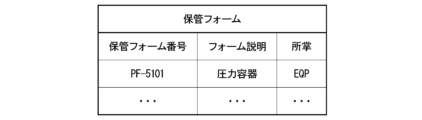
- FIG. 2 is a diagram showing an example of the storage form 131.
- the storage form 131 groups storage operations based on objects, and is information in which information such as storage form number, form description, and jurisdiction are associated with each other.
- the storage form number is information for uniquely identifying the storage form.
- the form description is a description of the object.
- the jurisdiction indicates the jurisdiction regarding the storage of the object.
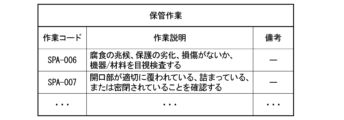
- FIG. 3 is a diagram showing an example of the storage work 132.
- the storage work 132 indicates the content of the storage work, and is information in which information such as a work code, work description, and notes are associated with each other.
- the work code is information for uniquely identifying the storage work.
- the work description indicates the content of the work. Notes indicate notes regarding storage work.
- “storage work” in this embodiment refers to work for storing the target object in good condition, and includes various types of work for storing the target object in good condition, such as maintenance work and maintenance work. shall be held. In the embodiments below, “storage work” may be simply referred to as "work.”
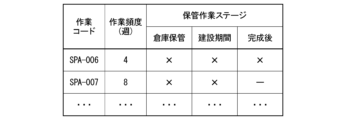
- FIG. 4 is a diagram showing an example of work related information 133.
- the work related 133 indicates the frequency of work and the current storage work stage, and the above-mentioned information such as the work code, work frequency (week), and storage work stage are associated with each other. It is information.
- the work frequency (week) is information indicating the work frequency in weekly units. For example, when the work frequency (week) is 1, it indicates that the work is performed every other week. When the work frequency (week) is 2, it indicates that the work is performed every two weeks.
- the storage work stage indicates the stage at which the object is placed.
- the target object is assumed to be used for construction, and there are two periods: “warehousing” where it is stored in a warehouse before construction, “construction period” during construction, and “completion period” when the construction period is over.
- Three storage operation stages are used: In the following description, the “storage work stage” may be simply expressed as “stage.”
- FIG. 5 is a diagram showing an example of the storage form object type 134.
- the storage form object type 134 is information in which information such as storage form and object type is associated.
- One or more object types are associated with the storage form.
- the object type indicates the type of object.
- the types of objects include generic names for classifying objects, such as tires and pumps.
- FIG. 6 is a diagram showing an example of the object types 135.
- the object type 135 is information in which information such as the object type and the object are associated. This is information that associates an object type with objects belonging to this object type.
- the object type 1 is a pump
- the object 1-A is a centrifugal pump
- the object 1-B is a propeller pump
- the object 1-C is a viscous pump.
- FIG. 7A is a diagram showing an example of storage work object types 136.
- the storage work object type 136 is information in which information such as storage work and object type is associated. For example, this is information in which a pump and a storage operation for the pump are associated with each other.
- FIG. 7B is a diagram showing an example of the object storage location 139.
- the object storage location 139 is information in which information such as the object and the storage location are associated with each other.
- some objects at a plant construction site do not have a fixed mounting position.
- the mounting positions of pumps and static equipment are fixed, but the mounting positions of piping members such as piping valves and instrumentation parts such as instrumentation valves are not fixed.
- the object storage location 139 is information that associates such an object with a storage location.
- FIG. 7C is a diagram showing an example of the storage work storage location 140.
- the storage work storage location 140 is information in which information such as storage work and storage location is associated with each other.
- the storage work storage location 140 is information associated with the storage work for an object that does not have information regarding the above-mentioned attachment position.
- FIG. 8 is a diagram showing an example of the object relationship 137.
- the object related information 137 is information in which information such as the object, the date of receipt, the status flag, the date, and the execution result are associated with each other. For example, this is information that associates a pump, the date on which the pump was received, the condition of the pump, the date on which storage work was performed, and the execution result of storage work.
- the object association 137 is provided for each object.
- the status flag is a flag indicating whether the storage status is a specific status (for example, a defective status).
- the status flag becomes a flag indicating a specific status when the storage status becomes a specific status even once.
- the execution result can be stored as text or image data of the object.
- FIG. 9 is a diagram showing an example of the stage 138.
- the stage 138 is information indicating the start date and end date of warehousing, the start date and end date of the construction period, and the start date and end date after completion.
- the stage 138 may receive a storage work stage input by the operator of the storage work support device 100 through the input/output unit 120 and may store it in the stage 138, or may obtain it from software that manages the process. Furthermore, it may be provided for each object.
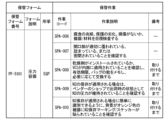
- FIG. 10 is a diagram showing an example of storage work information.
- the storage work information is information that associates the above-mentioned storage form with the storage work. It is assumed that the storage form 131 and the storage work 132 are stored in advance in association with each other in the storage unit 130. As shown in FIG. 5, multiple storage operations may be associated with one storage form. In this way, the storage work information includes one storage work.
- control unit 110 supports the work of storing objects in good condition by controlling each part of the storage work support device 100.
- the control unit 110 includes a storage work information acquisition unit 111, a type correspondence unit 112, a storage work correspondence unit 113, a receipt date acquisition unit 114, a notification unit 115, an extraction unit 116, an execution result acquisition unit 117, A tracking unit 118 is provided. These will be explained using FIG. 11 as well.
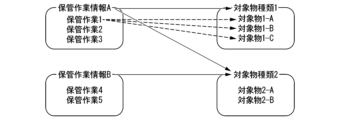
- FIG. 11 is a diagram schematically showing the association by the storage work support device 100.
- FIG. 11 shows storage work information A and B and object types 1 and 2.
- Storage work information A includes storage works 1 to 3.
- Storage work information B includes storage works 4 and 5.
- Object type 1 includes objects 1-A, 1-B, and 1-C.
- Object type 2 includes objects 2-A and 2-B.
- the storage work information acquisition unit 111 acquires storage work information including one or more storage works as shown in FIG.
- the type correspondence unit 112 associates the type of object to be subjected to storage work with storage work information.
- the type correspondence unit 112 associates storage work information A with object types 1 and 2, and also associates storage work information B with object type 2, as shown in FIG. 11, for example.
- the storage work correspondence unit 113 associates the storage work included in the storage work information associated with the type of object as the storage work of the object. For example, as shown in FIG. 11, the storage work handling unit 113 stores storage work 1 included in storage work information A for objects 1-A, 1-B, and 1-C included in object type 1. Correspond as a storage operation.
- the receipt date acquisition unit 114 acquires the date on which the object was received.
- the receipt date acquisition unit 114 receives, for example, a date input by the operator of the storage work support device 100 through the input/output unit 120, and stores it in the object relation 137.
- the notification unit 115 notifies the date of the storage work associated with the object according to the date acquired by the receipt date acquisition unit 114.
- the extraction unit 116 extracts the storage work to be performed at the specified predetermined time and the object for which the storage work is to be performed.
- the specific extraction process will be described later.
- the execution result acquisition unit 117 acquires the execution result of the storage work.
- the acquired execution result is stored in the execution result of object related 137.
- the execution results include the storage status of the object.
- the tracking unit 140 tracks objects in a specific storage state. The specific tracking process will be described later.
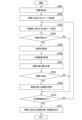
- FIG. 12 is a flowchart showing the flow of processing related to the above-mentioned association.
- the storage work information acquisition unit 111 acquires storage work information including one or more storage works (step S101).
- the type correspondence unit 112 associates the type of object to be subjected to storage work with storage work information (step S102).
- the storage work correspondence unit 113 associates the storage work included in the storage work information associated with the type of object as the storage work of the object (step S103), and ends the process.
- FIG. 13 is a flowchart showing the flow of notification processing executed by the notification unit 115.
- This flowchart shows the process of notifying the schedule of management work for one object. Therefore, when notifying schedules for a plurality of objects, the loop is made as many times as the number of objects.
- the notification unit 115 obtains the current stage from the stage 138 (step S201).
- the notification unit 115 acquires the work code corresponding to the object (step S202).
- the storage work correspondence unit 113 associates the storage work included in the storage work information associated with the type of object as the storage work of the object.
- the notification unit 115 determines whether there is storage work at the current stage (step S203). Since the work-related work 133 described above is associated with a work code and a storage work stage, the notification unit 115 obtains the work-related work 133 from the storage unit 130 to determine whether there is a storage work at the current stage. It can be determined whether or not.
- step S203 If there is no storage work (step S203: NO), the notification unit 115 ends the process. If there is storage work (step S203: YES), the notification unit 115 obtains the date of receipt of the object from the object relation 137 (step S204), and obtains the work frequency from the work relation 133 (step S205). .
- the notification unit 115 calculates a schedule for performing storage work from the receipt date and work frequency (step S206), notifies the calculated schedule (step S207), and ends the process.
- the schedule may be divided in advance into every 7 days, and the storage work may be scheduled for weeks that are an integral multiple of N+1 starting from the week to which the receipt date belongs.
- the schedule is divided in advance such as 4/1-7, 8-15, 16-23, etc.
- the objects received from 4/1 to 7 will be objects that have the same work frequency (week).
- the storage work will be done on the same date.
- the stages change and the storage work differs depending on the stage, so the date on which the stage changes also corresponds to the date of receipt.
- FIG. 14 is a diagram showing an example of schedule notification.
- the storage work schedules for objects 1 to 6 are shown by horizontal bars along with work codes.
- the notification unit 115 notifies the schedule as well as information (work code) indicating the storage work.
- the receiving date of objects 1 to 3 is the beginning of the first week
- the receiving date of object 6 is the middle of the first week. It is assumed that the stages of objects 4 and 5 have changed due to the start of construction work in the second week.
- the work frequency (weeks) for objects 1 and 4 is 1 week
- the work frequency (weeks) for objects 2, 5, and 6 is 2 weeks
- the work frequency (weeks) for object 3 is 3 weeks. It is said that
- the schedule for the storage work for object 1 is shown to be the second week, and the schedule for the storage work for object 2 is shown to be the third week. Further, it is shown that the storage work schedule for objects 1, 3, 4, and 6 is the fourth week. It is also shown that the storage work schedule for object 5 is scheduled for the fourth week.
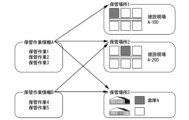
- FIG. 15 is a diagram schematically showing the correspondence between storage locations and storage operations.
- FIG. 15 shows storage work information A and B and storage locations 1, 2, and 3.
- Storage work information A includes storage works 1 to 3.
- Storage work information B includes storage works 4 and 5.
- FIG. 16 is a flowchart showing the flow of the extraction process executed by the extraction unit 116.
- the extraction unit 116 acquires the time (step S301). This period is, for example, a week or a date, and the one specified by the operator is acquired.
- the extraction unit 116 acquires the stage corresponding to the period from the stage 138 (step S302). As described above, the start date and end date of each stage are recorded in the stage 138, so the extraction unit 116 can obtain the stage corresponding to the time.
- the extraction unit 116 obtains the work code corresponding to the target object (step S303).
- the storage work correspondence unit 113 associates the storage work included in the storage work information associated with the type of object as the storage work of the object. Furthermore, in this process, extraction processing is performed on all objects.
- the extraction unit 116 determines whether there is storage work at the corresponding stage (step S304). Since the above-mentioned work-related 133 is associated with a work code and a storage work stage, the notification unit 115 acquires the work-related 133 from the storage unit 130 to determine whether there is a storage work at the corresponding stage. It can be determined whether or not.
- step S304: NO If there is no storage work (step S304: NO), the extraction unit 116 proceeds to step S310. If there is storage work (step S304: YES), the notification unit 115 obtains the date of receipt of the object from the object relation 137 (step S305), and obtains the work frequency from the work relation 133 (step S306). .
- the notification unit 115 calculates the schedule for performing the storage work from the receipt date and the work frequency (step S307), and determines whether the schedule corresponds to the time specified by the operator (step S308). If the schedule does not correspond to the time designated by the operator (step S308: NO), the extraction unit 116 proceeds to step S310. If the date corresponds to the time specified by the operator (step S308: YES), the extraction unit 116 stores the storage work and the object (step S309).
- the extraction unit 116 determines whether the extraction process for all objects has been completed (step S310). If the extraction process for all objects has not been completed (step S310: NO), the extraction unit 116 proceeds to step S303 in order to process the objects for which the extraction process has not been performed. If the extraction process for all objects has been completed (step S310: YES), the extraction unit 116 outputs the storage work stored in step S309 and the objects to be stored (step S311), and continues the process. finish.
- FIG. 17 is a diagram showing an example of extracted information obtained by the extraction process.
- FIG. 17 shows the period (week of April 18th) specified by the operator, the object, and the storage work for the object. By doing so, the operator can confirm at a glance the storage work to be performed at the specified time and the object to be stored. As a result, it is possible to easily plan the schedule of the workers, and therefore, it is possible to carry out efficient operations.
- FIG. 18 is a flowchart showing the flow of tracking processing executed by the tracking unit 118. This extraction process is performed for all objects.
- the tracking unit 118 acquires the status flag of the object related 137 corresponding to the object (step S401).
- the tracking unit 118 determines whether the acquired status flag is a flag indicating a specific status (step S402). If the status flag does not indicate a specific status (step S402: NO), the tracking unit 118 proceeds to step S404.
- step S404 determines whether checking of the status flags has been completed for all objects. If the checks for all objects have not been completed (step S404: NO), the tracking unit 118 proceeds to step S401 in order to process the objects whose status flags have not been checked. If the checks for all objects have been completed (step S404: YES), the tracking unit 118 outputs a tracking list (step S404), and ends the process.
- FIG. 19 is a diagram showing an example of a tracking list output by the tracking process.
- the tracking list shown in FIG. 19 shows, for each object, the date and storage status on that date.
- the storage state is indicated by text or image data of the object, as described above.
- the storage status of pipe The storage status of Pump Y as of March 7, 2007 is shown by an image link, and when the link is selected, the image will be displayed.
- the present invention can be applied to technology that supports work to store objects in good condition.
- Storage work support device 110 Control unit 111 Storage work information acquisition unit 112 Type correspondence unit 113 Storage work correspondence unit 114 Receipt date acquisition unit 115 Notification unit 120 Input/output unit 130 Storage unit 131 Storage form 132 Storage work 133 Work related 134 Storage form Object type 135 Object type 136 Storage work object type 137 Object related 138 Stage
Landscapes
- Engineering & Computer Science (AREA)
- Mechanical Engineering (AREA)
- Management, Administration, Business Operations System, And Electronic Commerce (AREA)
Abstract
Description
110 制御部
111 保管作業情報取得部
112 種類対応部
113 保管作業対応部
114 受領日取得部
115 通知部
120 入出力部
130 記憶部
131 保管フォーム
132 保管作業
133 作業関連
134 保管フォーム対象物種類
135 対象物種類
136 保管作業対象物種類
137 対象物関連
138 ステージ
Claims (8)
- 1つ以上の保管作業を含む保管作業情報を取得する保管作業情報取得部と、
保管作業の対象となる対象物の種類と前記保管作業情報とを対応付ける種類対応部と、
対象物の種類と対応付けられた前記保管作業情報に含まれる保管作業を、前記対象物の保管作業として対応付ける保管作業対応部と、
前記対象物を受領した日付を取得する受領日取得部と、
前記受領日取得部によって取得された日付に応じて、前記対象物に対応付けられた保管作業を行う日程を通知する通知部と、
を備えた保管作業支援装置。 - 前記通知部は、日程とともに、保管作業を示す情報を通知する請求項1に記載の保管作業支援装置。
- 前記種類対応部は、保管作業の対象となる対象物の保管場所と前記保管作業情報とを対応付けることが可能であり、
前記保管作業対応部は、対象物の保管場所と対応付けられた前記保管作業情報に含まれる保管作業を、前記対象物の保管作業として対応付けることが可能である、
請求項1または請求項2に記載の保管作業支援装置。 - 前記種類対応部と前記保管作業対応部は、保管作業の対象となる対象物が、建設現場における取り付け位置に関する情報を有するか否かに応じて、対応付けを切り替える、
請求項3に記載の保管作業支援装置。 - 所定の時期が指定された場合に、指定された所定の時期に行う保管作業と、当該保管作業を行う対象物とを抽出する抽出部を備えた請求項1から請求項4のいずれか1項に記載の保管作業支援装置。
- 保管作業の実行結果を取得する実行結果取得部を備え、
前記実行結果には、対象物の保管状態が含まれ、
保管状態が特定の状態の対象物を追跡する追跡部を備えた請求項1から請求項5のいずれか1項に記載の保管作業支援装置。 - 1つ以上の保管作業を含む保管作業情報を取得する保管作業情報取得ステップと、
保管作業の対象となる対象物の種類と前記保管作業情報とを対応付ける種類対応ステップと、
対象物の種類と対応付けられた前記保管作業情報に含まれる保管作業を、前記対象物の保管作業として対応付ける保管作業対応ステップと、
前記対象物を受領した日付を取得する受領日取得ステップと、
前記受領日取得ステップによって取得された日付に応じて、前記対象物に対応付けられた保管作業を行う日程を通知する通知ステップと、
を備えた保管作業支援方法。 - コンピュータを、
1つ以上の保管作業を含む保管作業情報を取得する保管作業情報取得部と、
保管作業の対象となる対象物の種類と前記保管作業情報とを対応付ける種類対応部と、
対象物の種類と対応付けられた前記保管作業情報に含まれる保管作業を、前記対象物の保管作業として対応付ける保管作業対応部と、
前記対象物を受領した日付を取得する受領日取得部と、
前記受領日取得部によって取得された日付に応じて、前記対象物に対応付けられた保管作業を行う日程を通知する通知部と、
して機能させるためのプログラム。
Priority Applications (2)
| Application Number | Priority Date | Filing Date | Title |
|---|---|---|---|
| JP2024520143A JP7817383B2 (ja) | 2022-05-11 | 2022-05-11 | 保管作業支援装置、保管作業支援方法およびプログラム |
| PCT/JP2022/019953 WO2023218561A1 (ja) | 2022-05-11 | 2022-05-11 | 保管作業支援装置、保管作業支援方法およびプログラム |
Applications Claiming Priority (1)
| Application Number | Priority Date | Filing Date | Title |
|---|---|---|---|
| PCT/JP2022/019953 WO2023218561A1 (ja) | 2022-05-11 | 2022-05-11 | 保管作業支援装置、保管作業支援方法およびプログラム |
Publications (1)
| Publication Number | Publication Date |
|---|---|
| WO2023218561A1 true WO2023218561A1 (ja) | 2023-11-16 |
Family
ID=88730026
Family Applications (1)
| Application Number | Title | Priority Date | Filing Date |
|---|---|---|---|
| PCT/JP2022/019953 Ceased WO2023218561A1 (ja) | 2022-05-11 | 2022-05-11 | 保管作業支援装置、保管作業支援方法およびプログラム |
Country Status (2)
| Country | Link |
|---|---|
| JP (1) | JP7817383B2 (ja) |
| WO (1) | WO2023218561A1 (ja) |
Citations (5)
| Publication number | Priority date | Publication date | Assignee | Title |
|---|---|---|---|---|
| JP2002123713A (ja) * | 2000-10-13 | 2002-04-26 | Sekisui House Ltd | メンテナンス用サッシ部品の注文システム |
| WO2014061604A1 (ja) * | 2012-10-15 | 2014-04-24 | 株式会社日立製作所 | 保守計画立案支援システム、保守計画立案支援方法、保守計画立案支援プログラム |
| WO2017130446A1 (ja) * | 2016-01-29 | 2017-08-03 | 日揮株式会社 | プロジェクト管理装置、プロジェクト管理システム、プロジェクト管理方法およびプログラム |
| JP2021015576A (ja) * | 2019-07-16 | 2021-02-12 | 小西医療器株式会社 | 物品管理システムおよび物品管理方法 |
| WO2022091265A1 (ja) * | 2020-10-28 | 2022-05-05 | 日揮グローバル株式会社 | プロジェクト管理装置、プロジェクト管理方法、及び記録媒体 |
-
2022
- 2022-05-11 JP JP2024520143A patent/JP7817383B2/ja active Active
- 2022-05-11 WO PCT/JP2022/019953 patent/WO2023218561A1/ja not_active Ceased
Patent Citations (5)
| Publication number | Priority date | Publication date | Assignee | Title |
|---|---|---|---|---|
| JP2002123713A (ja) * | 2000-10-13 | 2002-04-26 | Sekisui House Ltd | メンテナンス用サッシ部品の注文システム |
| WO2014061604A1 (ja) * | 2012-10-15 | 2014-04-24 | 株式会社日立製作所 | 保守計画立案支援システム、保守計画立案支援方法、保守計画立案支援プログラム |
| WO2017130446A1 (ja) * | 2016-01-29 | 2017-08-03 | 日揮株式会社 | プロジェクト管理装置、プロジェクト管理システム、プロジェクト管理方法およびプログラム |
| JP2021015576A (ja) * | 2019-07-16 | 2021-02-12 | 小西医療器株式会社 | 物品管理システムおよび物品管理方法 |
| WO2022091265A1 (ja) * | 2020-10-28 | 2022-05-05 | 日揮グローバル株式会社 | プロジェクト管理装置、プロジェクト管理方法、及び記録媒体 |
Also Published As
| Publication number | Publication date |
|---|---|
| JP7817383B2 (ja) | 2026-02-18 |
| JPWO2023218561A1 (ja) | 2023-11-16 |
Similar Documents
| Publication | Publication Date | Title |
|---|---|---|
| JP6596287B2 (ja) | プラント保全支援システム | |
| Grünberg | A review of improvement methods in manufacturing operations | |
| US9600792B2 (en) | Method and apparatus for generating an engineering workflow | |
| JP2014164322A (ja) | 保守作業タイミング判定装置、保守作業タイミング判定システム、保守作業タイミング判定方法およびプログラム | |
| US20160104125A1 (en) | Computing system and method for providing information relating to maintenance actions | |
| JP6329038B2 (ja) | 情報処理装置、工程バッファ算出方法、およびプログラム | |
| JP2015115015A (ja) | 工程管理装置、工程管理プログラムおよび工程管理システム | |
| US9811071B2 (en) | System construction support apparatus | |
| JP7218140B2 (ja) | シミュレーション装置、およびシミュレーション方法 | |
| WO2023218561A1 (ja) | 保管作業支援装置、保管作業支援方法およびプログラム | |
| JP5461265B2 (ja) | 保守作業支援システム | |
| CN113094095A (zh) | 一种敏捷开发进度确定方法及装置 | |
| JP5509062B2 (ja) | 生産シミュレーション装置 | |
| US9672142B2 (en) | Replacement of suspect or marginally defective computing system components during fulfillment test of build-to-order test phase | |
| US11194685B2 (en) | Recording medium for verifying correlation between test signal and test result signal, verification apparatus and verification method | |
| US20210042710A1 (en) | Maintenance record creation device and maintenance record creation method | |
| JP5175891B2 (ja) | プラント工程表示システム | |
| CN108028971A (zh) | 用于机器维护的小时参照值跟踪 | |
| EP4726627A1 (en) | Maintenance planning assistance system and method for generating facility maintenance plan | |
| JP7132021B2 (ja) | 通知装置、通知方法及びプログラム | |
| JP7810066B2 (ja) | 設備を保守するための装置、方法、およびプログラム | |
| JP2005284712A (ja) | 設備保全管理装置及び設備保全管理方法ならびにそのプログラム | |
| US6970809B2 (en) | Automated configuration of on-circuit facilities | |
| JP4459042B2 (ja) | ワークフローシステムおよびワークフローの制御方法およびプログラムおよび記録媒体 | |
| US20200081428A1 (en) | Operation plan creation device, operation plan creation system, operation plan creation method, and program |
Legal Events
| Date | Code | Title | Description |
|---|---|---|---|
| 121 | Ep: the epo has been informed by wipo that ep was designated in this application |
Ref document number: 22941641 Country of ref document: EP Kind code of ref document: A1 |
|
| WWE | Wipo information: entry into national phase |
Ref document number: 2024520143 Country of ref document: JP |
|
| WWE | Wipo information: entry into national phase |
Ref document number: 18863892 Country of ref document: US |
|
| NENP | Non-entry into the national phase |
Ref country code: DE |
|
| 122 | Ep: pct application non-entry in european phase |
Ref document number: 22941641 Country of ref document: EP Kind code of ref document: A1 |