WO2023204278A1 - 医薬組成物、吸着方法、治療方法および予防方法 - Google Patents
医薬組成物、吸着方法、治療方法および予防方法 Download PDFInfo
- Publication number
- WO2023204278A1 WO2023204278A1 PCT/JP2023/015821 JP2023015821W WO2023204278A1 WO 2023204278 A1 WO2023204278 A1 WO 2023204278A1 JP 2023015821 W JP2023015821 W JP 2023015821W WO 2023204278 A1 WO2023204278 A1 WO 2023204278A1
- Authority
- WO
- WIPO (PCT)
- Prior art keywords
- atom
- group
- layer
- less
- pharmaceutical composition
- Prior art date
- Legal status (The legal status is an assumption and is not a legal conclusion. Google has not performed a legal analysis and makes no representation as to the accuracy of the status listed.)
- Ceased
Links
Images


Classifications
-
- A—HUMAN NECESSITIES
- A61—MEDICAL OR VETERINARY SCIENCE; HYGIENE
- A61M—DEVICES FOR INTRODUCING MEDIA INTO, OR ONTO, THE BODY; DEVICES FOR TRANSDUCING BODY MEDIA OR FOR TAKING MEDIA FROM THE BODY; DEVICES FOR PRODUCING OR ENDING SLEEP OR STUPOR
- A61M1/00—Suction or pumping devices for medical purposes; Devices for carrying-off, for treatment of, or for carrying-over, body-liquids; Drainage systems
- A61M1/36—Other treatment of blood in a by-pass of the natural circulatory system, e.g. temperature adaptation, irradiation ; Extra-corporeal blood circuits
- A61M1/3679—Other treatment of blood in a by-pass of the natural circulatory system, e.g. temperature adaptation, irradiation ; Extra-corporeal blood circuits by absorption
-
- A—HUMAN NECESSITIES
- A61—MEDICAL OR VETERINARY SCIENCE; HYGIENE
- A61P—SPECIFIC THERAPEUTIC ACTIVITY OF CHEMICAL COMPOUNDS OR MEDICINAL PREPARATIONS
- A61P7/00—Drugs for disorders of the blood or the extracellular fluid
-
- A—HUMAN NECESSITIES
- A61—MEDICAL OR VETERINARY SCIENCE; HYGIENE
- A61K—PREPARATIONS FOR MEDICAL, DENTAL OR TOILETRY PURPOSES
- A61K33/00—Medicinal preparations containing inorganic active ingredients
-
- A—HUMAN NECESSITIES
- A61—MEDICAL OR VETERINARY SCIENCE; HYGIENE
- A61K—PREPARATIONS FOR MEDICAL, DENTAL OR TOILETRY PURPOSES
- A61K9/00—Medicinal preparations characterised by special physical form
- A61K9/14—Particulate form, e.g. powders, Processes for size reducing of pure drugs or the resulting products, Pure drug nanoparticles
- A61K9/16—Agglomerates; Granulates; Microbeadlets ; Microspheres; Pellets; Solid products obtained by spray drying, spray freeze drying, spray congealing,(multiple) emulsion solvent evaporation or extraction
-
- A—HUMAN NECESSITIES
- A61—MEDICAL OR VETERINARY SCIENCE; HYGIENE
- A61M—DEVICES FOR INTRODUCING MEDIA INTO, OR ONTO, THE BODY; DEVICES FOR TRANSDUCING BODY MEDIA OR FOR TAKING MEDIA FROM THE BODY; DEVICES FOR PRODUCING OR ENDING SLEEP OR STUPOR
- A61M1/00—Suction or pumping devices for medical purposes; Devices for carrying-off, for treatment of, or for carrying-over, body-liquids; Drainage systems
- A61M1/36—Other treatment of blood in a by-pass of the natural circulatory system, e.g. temperature adaptation, irradiation ; Extra-corporeal blood circuits
- A61M1/3687—Chemical treatment
-
- A—HUMAN NECESSITIES
- A61—MEDICAL OR VETERINARY SCIENCE; HYGIENE
- A61P—SPECIFIC THERAPEUTIC ACTIVITY OF CHEMICAL COMPOUNDS OR MEDICINAL PREPARATIONS
- A61P13/00—Drugs for disorders of the urinary system
- A61P13/12—Drugs for disorders of the urinary system of the kidneys
-
- A—HUMAN NECESSITIES
- A61—MEDICAL OR VETERINARY SCIENCE; HYGIENE
- A61P—SPECIFIC THERAPEUTIC ACTIVITY OF CHEMICAL COMPOUNDS OR MEDICINAL PREPARATIONS
- A61P39/00—General protective or antinoxious agents
- A61P39/02—Antidotes
-
- A—HUMAN NECESSITIES
- A61—MEDICAL OR VETERINARY SCIENCE; HYGIENE
- A61P—SPECIFIC THERAPEUTIC ACTIVITY OF CHEMICAL COMPOUNDS OR MEDICINAL PREPARATIONS
- A61P9/00—Drugs for disorders of the cardiovascular system
- A61P9/12—Antihypertensives
-
- B—PERFORMING OPERATIONS; TRANSPORTING
- B01—PHYSICAL OR CHEMICAL PROCESSES OR APPARATUS IN GENERAL
- B01J—CHEMICAL OR PHYSICAL PROCESSES, e.g. CATALYSIS OR COLLOID CHEMISTRY; THEIR RELEVANT APPARATUS
- B01J20/00—Solid sorbent compositions or filter aid compositions; Sorbents for chromatography; Processes for preparing, regenerating or reactivating thereof
- B01J20/02—Solid sorbent compositions or filter aid compositions; Sorbents for chromatography; Processes for preparing, regenerating or reactivating thereof comprising inorganic material
- B01J20/0203—Solid sorbent compositions or filter aid compositions; Sorbents for chromatography; Processes for preparing, regenerating or reactivating thereof comprising inorganic material comprising compounds of metals not provided for in B01J20/04
- B01J20/0211—Compounds of Ti, Zr, Hf
-
- B—PERFORMING OPERATIONS; TRANSPORTING
- B01—PHYSICAL OR CHEMICAL PROCESSES OR APPARATUS IN GENERAL
- B01J—CHEMICAL OR PHYSICAL PROCESSES, e.g. CATALYSIS OR COLLOID CHEMISTRY; THEIR RELEVANT APPARATUS
- B01J20/00—Solid sorbent compositions or filter aid compositions; Sorbents for chromatography; Processes for preparing, regenerating or reactivating thereof
- B01J20/02—Solid sorbent compositions or filter aid compositions; Sorbents for chromatography; Processes for preparing, regenerating or reactivating thereof comprising inorganic material
- B01J20/0203—Solid sorbent compositions or filter aid compositions; Sorbents for chromatography; Processes for preparing, regenerating or reactivating thereof comprising inorganic material comprising compounds of metals not provided for in B01J20/04
- B01J20/0248—Compounds of B, Al, Ga, In, Tl
-
- B—PERFORMING OPERATIONS; TRANSPORTING
- B01—PHYSICAL OR CHEMICAL PROCESSES OR APPARATUS IN GENERAL
- B01J—CHEMICAL OR PHYSICAL PROCESSES, e.g. CATALYSIS OR COLLOID CHEMISTRY; THEIR RELEVANT APPARATUS
- B01J20/00—Solid sorbent compositions or filter aid compositions; Sorbents for chromatography; Processes for preparing, regenerating or reactivating thereof
- B01J20/02—Solid sorbent compositions or filter aid compositions; Sorbents for chromatography; Processes for preparing, regenerating or reactivating thereof comprising inorganic material
- B01J20/0203—Solid sorbent compositions or filter aid compositions; Sorbents for chromatography; Processes for preparing, regenerating or reactivating thereof comprising inorganic material comprising compounds of metals not provided for in B01J20/04
- B01J20/0274—Solid sorbent compositions or filter aid compositions; Sorbents for chromatography; Processes for preparing, regenerating or reactivating thereof comprising inorganic material comprising compounds of metals not provided for in B01J20/04 characterised by the type of anion
-
- B—PERFORMING OPERATIONS; TRANSPORTING
- B01—PHYSICAL OR CHEMICAL PROCESSES OR APPARATUS IN GENERAL
- B01J—CHEMICAL OR PHYSICAL PROCESSES, e.g. CATALYSIS OR COLLOID CHEMISTRY; THEIR RELEVANT APPARATUS
- B01J20/00—Solid sorbent compositions or filter aid compositions; Sorbents for chromatography; Processes for preparing, regenerating or reactivating thereof
- B01J20/02—Solid sorbent compositions or filter aid compositions; Sorbents for chromatography; Processes for preparing, regenerating or reactivating thereof comprising inorganic material
- B01J20/04—Solid sorbent compositions or filter aid compositions; Sorbents for chromatography; Processes for preparing, regenerating or reactivating thereof comprising inorganic material comprising compounds of alkali metals, alkaline earth metals or magnesium
-
- B—PERFORMING OPERATIONS; TRANSPORTING
- B01—PHYSICAL OR CHEMICAL PROCESSES OR APPARATUS IN GENERAL
- B01J—CHEMICAL OR PHYSICAL PROCESSES, e.g. CATALYSIS OR COLLOID CHEMISTRY; THEIR RELEVANT APPARATUS
- B01J20/00—Solid sorbent compositions or filter aid compositions; Sorbents for chromatography; Processes for preparing, regenerating or reactivating thereof
- B01J20/30—Processes for preparing, regenerating, or reactivating
- B01J20/3021—Milling, crushing or grinding
-
- B—PERFORMING OPERATIONS; TRANSPORTING
- B01—PHYSICAL OR CHEMICAL PROCESSES OR APPARATUS IN GENERAL
- B01J—CHEMICAL OR PHYSICAL PROCESSES, e.g. CATALYSIS OR COLLOID CHEMISTRY; THEIR RELEVANT APPARATUS
- B01J20/00—Solid sorbent compositions or filter aid compositions; Sorbents for chromatography; Processes for preparing, regenerating or reactivating thereof
- B01J20/30—Processes for preparing, regenerating, or reactivating
- B01J20/3071—Washing or leaching
-
- B—PERFORMING OPERATIONS; TRANSPORTING
- B01—PHYSICAL OR CHEMICAL PROCESSES OR APPARATUS IN GENERAL
- B01J—CHEMICAL OR PHYSICAL PROCESSES, e.g. CATALYSIS OR COLLOID CHEMISTRY; THEIR RELEVANT APPARATUS
- B01J20/00—Solid sorbent compositions or filter aid compositions; Sorbents for chromatography; Processes for preparing, regenerating or reactivating thereof
- B01J20/30—Processes for preparing, regenerating, or reactivating
- B01J20/3078—Thermal treatment, e.g. calcining or pyrolizing
-
- B—PERFORMING OPERATIONS; TRANSPORTING
- B01—PHYSICAL OR CHEMICAL PROCESSES OR APPARATUS IN GENERAL
- B01J—CHEMICAL OR PHYSICAL PROCESSES, e.g. CATALYSIS OR COLLOID CHEMISTRY; THEIR RELEVANT APPARATUS
- B01J20/00—Solid sorbent compositions or filter aid compositions; Sorbents for chromatography; Processes for preparing, regenerating or reactivating thereof
- B01J20/30—Processes for preparing, regenerating, or reactivating
- B01J20/3085—Chemical treatments not covered by groups B01J20/3007 - B01J20/3078
-
- A—HUMAN NECESSITIES
- A61—MEDICAL OR VETERINARY SCIENCE; HYGIENE
- A61M—DEVICES FOR INTRODUCING MEDIA INTO, OR ONTO, THE BODY; DEVICES FOR TRANSDUCING BODY MEDIA OR FOR TAKING MEDIA FROM THE BODY; DEVICES FOR PRODUCING OR ENDING SLEEP OR STUPOR
- A61M2202/00—Special media to be introduced, removed or treated
- A61M2202/07—Proteins
-
- A—HUMAN NECESSITIES
- A61—MEDICAL OR VETERINARY SCIENCE; HYGIENE
- A61M—DEVICES FOR INTRODUCING MEDIA INTO, OR ONTO, THE BODY; DEVICES FOR TRANSDUCING BODY MEDIA OR FOR TAKING MEDIA FROM THE BODY; DEVICES FOR PRODUCING OR ENDING SLEEP OR STUPOR
- A61M2202/00—Special media to be introduced, removed or treated
- A61M2202/20—Pathogenic agents
-
- A—HUMAN NECESSITIES
- A61—MEDICAL OR VETERINARY SCIENCE; HYGIENE
- A61M—DEVICES FOR INTRODUCING MEDIA INTO, OR ONTO, THE BODY; DEVICES FOR TRANSDUCING BODY MEDIA OR FOR TAKING MEDIA FROM THE BODY; DEVICES FOR PRODUCING OR ENDING SLEEP OR STUPOR
- A61M2207/00—Methods of manufacture, assembly or production
Definitions
- the present disclosure relates to pharmaceutical compositions, adsorption methods, treatment methods, and prevention methods.
- kidney disease The number of patients with kidney disease is increasing year by year, and according to statistics from the Japan Dialysis Society, the number of chronic dialysis patients has increased by approximately 17% from 2010 to 2020.
- kidney function declines due to renal disease, disease-causing substances accumulate in the blood, which can result in uremia, electrolyte metabolism disorders, autoimmune diseases, and the like.
- hemodialysis-type kidney function substitutes and the like are used to remove disease-causing substances from the body.
- Non-Patent Document 1 describes an adsorption type blood purifier using cellulose beads fixed with cetylamine as an adsorbent as a filter used in a hemodialysis type renal function substitute device.
- an adsorbent is being developed that is ingested orally, adsorbs toxic substances within the body, and excretes them from the body.
- Non-Patent Document 2 describes medicinal charcoal that can adsorb gases and poisons in the digestive tract.
- Non-Patent Documents 3 and 4 describe carbon-based adsorbents that can adsorb uremic toxins present in the gastrointestinal tract without being absorbed into the body and can be excreted with stool.
- Non-Patent Document 5 describes a calcium-type cation exchange resin that can exchange potassium ions in the intestinal tract with calcium ions in its structure and lower blood potassium levels.
- Non-Patent Document 6 describes a polycationic polymer that binds to phosphate ions released from food in the gastrointestinal tract and can be excreted as is in feces without being absorbed.
- Non-Patent Document 1 The adsorbent described in Non-Patent Document 1 is premised on acting in the blood circuit of a hemodialysis apparatus using extracorporeal circulation.
- all of the adsorbents described in Non-Patent Documents 2 to 6 target adsorbate existing in the gastrointestinal tract due to oral ingestion, enterohepatic circulation, or production via intestinal bacteria. There is.
- the adsorbents described in Non-Patent Documents 1 to 6 have limited types of adsorbate.
- One of the objects of the present disclosure is to provide a novel pharmaceutical composition, preferably a pharmaceutical composition that can adsorb various disease-causing substances in vivo.
- the present disclosure also aims to provide a novel method for adsorbing, treating, or preventing disease-causing substances.
- the pharmaceutical composition of the present disclosure comprises: comprising two-dimensional particles having one or more layers;
- the layer has the following formula: M m X n (wherein M is at least one group 3, 4, 5, 6, 7 metal, X is a carbon atom, a nitrogen atom or a combination thereof, n is 1 or more and 4 or less, m is greater than n and less than or equal to 5)
- the present disclosure can provide a novel pharmaceutical composition, preferably a pharmaceutical composition that can adsorb disease-causing substances in vivo.
- the present disclosure may also provide novel adsorption, treatment, or prevention methods.
- the pharmaceutical composition of the present disclosure includes two-dimensional particles having a layer main body represented by M m It is useful for the treatment and/or prevention of.
- the two-dimensional particles contained in the pharmaceutical composition of the present disclosure have the ability to adsorb these disease-causing substances, etc., and therefore, oral administration is possible. If this is done, it is expected that disease-causing substances in the blood can be adsorbed and eliminated from the blood through mutual access between the intestinal tract and blood vessels while remaining in the intestinal tract. Furthermore, by adsorbing substances that can be converted into harmful substances after being absorbed into the blood from the intestinal tract, it is expected to adsorb and eliminate harmful effects on the body. Since it is thought that the two-dimensional particles adsorbing disease-causing substances are not absorbed from the intestinal tract, they are expected to pass through the digestive tract and be excreted as is with the stool.
- the metabolic pathway by the pharmaceutical composition of the present disclosure can be said to be the third metabolic pathway, such as dialysis in patients with renal failure. It is expected that this will lead to a reduction in treatment-related treatments.
- the two-dimensional particles of the present disclosure are expected to adsorb disease-causing substances and the like contained in the contents of food in the gastrointestinal tract and prevent them from being absorbed into the gastrointestinal tract.
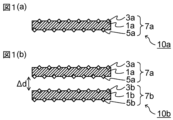
- FIG. 3 is a schematic cross-sectional view showing MXene particles of a layered material in one embodiment of the present disclosure, where (a) shows a single-layer MXene particle and (b) shows a multi-layer (exemplarily bi-layer) MXene particle.
- show. 1 is a schematic cross-sectional view showing a material in one embodiment of the present disclosure.
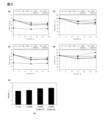
- FIG. It is a graph showing the results of an MXene administration test to renal failure model rats, showing (a) change in urea nitrogen (BUN) value, (b) rate of change in urea nitrogen (BUN) value, and (c) serum creatinine (Cr). (d) rate of change in serum creatinine (Cr) value, and (e) change in kidney organ weight.
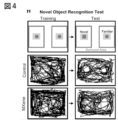
- the results of an MXene administration test to hypertensive mice are shown, and the behavioral areas of mice in cognitive behavior analysis are shown.
- the results of an MXene administration test to hypertensive mice are shown, and the Time of Entries Discrimination Index in cognitive behavior analysis is shown.
- compositions of the present disclosure include two-dimensional particles of layered material having one or more layers;
- the above layer has the following compositional formula: M m X n (wherein M is at least one group 3, 4, 5, 6, 7 metal, X is a carbon atom, a nitrogen atom or a combination thereof, n is 1 or more and 4 or less, m is greater than n and less than or equal to 5)
- the pharmaceutical composition of the present disclosure includes two-dimensional particles having a layer main body represented by M m It is useful for the treatment and/or prevention of.
- the layered material may be understood as a layered compound, and the layer is also expressed as "M m X n T s ". s is an arbitrary number, and conventionally, x or z may be used instead of s.
- the layered material may be referred to as MXene
- the layer may be referred to as an MXene layer
- the two-dimensional particles may be referred to as MXene two-dimensional particles or MXene particles.
- the oxidation number of the element is not limited to 0, and may be any number within the range of possible oxidation numbers of the element.
- M m X n may typically be 2, 3, 4 or 5, but is not limited thereto. Further, n may be 1, 2, 3 or 4, but is not limited thereto. In one aspect, m can be 3 and n can be 2.
- M may be Ti or V
- X may be a carbon atom or a nitrogen atom
- M may be Ti
- X may be a carbon atom
- the MXene can be Ti 3 C 2 T s (in other words, M is Ti, X is C, n is 2, and m is 3).
- the precursor of such MXene (also referred to as "MAX phase”) may be Ti 3 AlC 2 .
- MXene is the MAX phase of the precursor (in one embodiment, represented by M m AX n , where M, m, X and n are as defined above, and A is at least one 12th, 13th, MXene can be produced by removing A atoms contained in the group 15 and 16 elements), but MXene may also contain such A atoms.
- the residual amount of A atoms contained in MXene is preferably 10% by mass or less, more preferably 8% by mass or less, and even more preferably 6% by mass or less, based on the content of A atoms in the precursor. It's possible.
- the residual amount of A atoms may exceed 10% by mass.
- particles in which A atoms are removed only from a part of the MAX phase are also included in the technical scope of the above two-dimensional particles.
- examples of such two-dimensional particles include two-dimensional particles in which A atoms are removed only from the vicinity of the ends in the plane direction of the MAX phase (direction parallel to the plane of the M m X n layer included in the MAX phase). It will be done.
- the residual amount of A atoms may be, for example, 50% by mass or more, further 80% by mass or more, particularly 90% by mass or more.
- the content of lithium in the two-dimensional particles is preferably 0 mass% or more and 0.1 mass% or less, more preferably 0 mass% or more and 0.01 mass% or less, and even more preferably 0 mass% or more and 0.002 mass%. It is as follows. When the lithium content is within the above range, biocompatibility can be improved.
- the lithium content in the two-dimensional particles can be measured by inductively coupled plasma emission spectroscopy (ICP-AES).
- the two-dimensional particles are an aggregate including one layer of MXene particles (hereinafter simply referred to as "MXene particles") 10a (single-layer MXene particles) schematically illustrated in FIG. 1(a).
- MXene particles 10a are composed of a layer main body (M m X n layer ) 1a represented by M m MXene layer 7a having modification or termination T3a, 5a present on at least one of two opposing surfaces). Therefore, the MXene layer 7a is also expressed as "M m X n T s ", where s is an arbitrary number.
- the two-dimensional particles may include one or more layers.
- MXene particles with multiple layers include MXene particles 10b with two layers as schematically shown in FIG. 1(b), but are not limited to these examples.
- 1b, 3b, 5b, and 7b in FIG. 1(b) are the same as 1a, 3a, 5a, and 7a in FIG. 1(a) described above.
- Two adjacent MXene layers (eg, 7a and 7b) of a multilayer MXene particle do not necessarily have to be completely separated and may be in partial contact.
- the single-layer MXene particles 10a are the multi-layer MXene particles 10b that are individually separated and exist in one layer.
- MXene may be a mixture of the single-layer MXene particles 10a and the multi-layer MXene particles 10b, with unseparated multi-layer MXene particles 10b remaining.
- at least one surface of the layer main body 1a represented by M m X n may be planar (two-dimensional); It can be.
- the thickness of each layer (corresponding to the above-mentioned MXene layers 7a and 7b) included in the MXene particles is, for example, 0.8 nm or more and 5 nm or less, particularly 0.8 nm or more and 3 nm or less. Yes (this may vary mainly depending on the number of M atomic layers included in each layer).
- the thickness of each layer is determined as a number average dimension (eg, at least 40 number averages) based on atomic force microscopy (AFM) or transmission electron microscopy (TEM) photographs.
- the interlayer distance (or void size, indicated by ⁇ d in FIG. 1(b)) is, for example, 0.8 nm or more and 10 nm or less, particularly 0.8 nm or more and 5 nm or less, more particularly about 1 nm, and the total number of layers can be 2 or more and 20,000 or less.
- the two-dimensional particles may include MXene particles with a small number of layers.
- the above-mentioned "the number of layers is small” means, for example, that the number of stacked MXene layers is six or less.
- the thickness of the multilayer MXene particles having a small number of layers in the stacking direction is preferably 15 nm or less, more preferably 10 nm or less.
- these "multilayer MXene particles with a small number of layers” may be referred to as “few layer MXene particles.”
- single-layer MXene particles and small-layer MXene particles may be collectively referred to as "single-layer/small-layer MXene particles.”
- the proportion of single-layer/poor-layer MXene particles having a thickness of 15 nm or less may be 0 volume % or more and 100 volume % or less, further 0 volume % or more and 99 volume % or less, and even more 0 volume % or more and 100 volume % or less. It may be at least 50 volume% by volume, particularly at least 0 volume% and at most 30 volume%.
- the long axis of the two-dimensional particles is preferably 1 ⁇ m or more and 20 ⁇ m or less in a plane parallel to each layer (hereinafter also referred to as “two-dimensional plane”).
- the average value of the major axis of the two-dimensional surface may be referred to as "average flake size.”
- the average value of the major axis of the two-dimensional surface is preferably 1.5 ⁇ m or more, more preferably 2.5 ⁇ m or more.
- the average value of the major axis of the two-dimensional surface is 20 ⁇ m or less, preferably 15 ⁇ m or less, and more preferably 10 ⁇ m or less, from the viewpoint of dispersibility in the dispersion medium.
- the long axis of the above two-dimensional plane refers to the long axis when each MXene particle is approximated to an elliptical shape in an electron micrograph of the two-dimensional particle observed from a direction substantially perpendicular to a plane parallel to each layer, and
- the average value of the major axis means the number average of the major axis of 80 or more particles.
- a scanning electron microscope (SEM) or a transmission electron microscope (TEM) photograph can be used as the electron microscope.
- the average value of the major axis of the two-dimensional particles of this embodiment may be measured by dissolving a material containing the two-dimensional particles in a solvent and dispersing the two-dimensional particles in the solvent. Alternatively, it may be measured from a SEM image of the above material.
- the average thickness of the two-dimensional particles of this embodiment is preferably 1 nm or more and 100 ⁇ m or less.
- the thickness is preferably 50 ⁇ m or less, more preferably 20 ⁇ m or less.
- the lower limit of the thickness of a two-dimensional particle may be 1 nm.
- the thickness of the two-dimensional particles can be understood as the length in a direction substantially perpendicular to a plane parallel to each layer, and the average value of the thickness of the two-dimensional particles is determined by an atomic force microscope (AFM) photograph or a transmission type It is determined as a number average size (for example, a number average of at least 40 pieces) based on an electron microscopy (TEM) photograph.
- AFM atomic force microscope
- TEM electron microscopy
- the two-dimensional particles described above may be manufactured by the following manufacturing method, but the two-dimensional particles in the present disclosure are not limited to those manufactured by the following manufacturing method.
- the method for producing two-dimensional particles includes: (a) The following formula: M m AX n (wherein M is at least one group 3, 4, 5, 6, 7 metal, X is a carbon atom, a nitrogen atom or a combination thereof, A is at least one group 12, 13, 14, 15, 16 element, n is 1 or more and 4 or less, m is greater than n and less than or equal to 5) preparing a precursor represented by (b) using an etching solution to remove at least a portion of the A atoms from the precursor to obtain the etched product; (c) cleaning the etched product to obtain a cleaned product; moreover, (d) performing intercalation treatment on the etched product in a dispersion medium using a metal-containing compound to obtain an intercalated product; (e) performing a delamination treatment on the intercalation-treated product to obtain a delamination-treated product.
- M is at least one group 3, 4, 5, 6, 7 metal
- X is a carbon atom, a nitrogen atom or a combination
- the etched product or the delamination product can be used as the two-dimensional particles, and preferably the cleaning product can be used as the two-dimensional particle.
- a predetermined precursor is prepared.
- the predetermined precursor that can be used in this embodiment is a MAX phase that is a precursor of MXene, The formula below: M m AX n (wherein M is at least one group 3, 4, 5, 6, 7 metal, X is a carbon atom, a nitrogen atom or a combination thereof, A is at least one group 12, 13, 14, 15, 16 element, n is 1 or more and 4 or less, m is greater than n and less than or equal to 5) It is expressed as
- A is at least one group 12, 13, 14, 15, or 16 element, usually a group A element, typically a group IIIA element and a group IVA element, more specifically Al, Ga, It may contain at least one selected from the group consisting of In, Tl, Si, Ge, Sn, Pb, P, As, S and Cd, preferably Al or Si.
- the MAX phase is a crystal in which a layer composed of A atoms is located between two layers represented by M m X n (which may have a crystal lattice in which each Has a structure.
- M m X n which may have a crystal lattice in which each Has a structure.
- M m X n layers layers
- a atomic layer a layer of A atoms
- the above MAX phase can be manufactured by a known method. For example, TiC powder, Ti powder, and Al powder are mixed in a ball mill, and the resulting mixed powder is fired in an Ar atmosphere to obtain a fired body (block-like MAX phase). Thereafter, the obtained fired body can be pulverized with an end mill to obtain a powdered MAX phase for the next step.
- step (b) an etching process is performed to remove at least a portion of A atoms from the precursor (MAX phase) represented by M m AX n .
- etching process is performed to remove at least a portion of A atoms from the precursor (MAX phase) represented by M m AX n .
- the conditions for the etching process are not particularly limited, and known conditions can be used. Etching may be performed using an etchant containing F- .
- Such an etching solution may contain hydrofluoric acid, hydrochloric acid, phosphoric acid, etc. as an acid.
- the etching solution includes hydrofluoric acid; a mixture of hydrofluoric acid and hydrochloric acid; a mixture of lithium fluoride and hydrochloric acid; all of which may further contain phosphoric acid.
- water may be used, for example, pure water may be used.
- the etching process may be performed by mixing the above precursor and the above etching solution to form a slurry.
- intercalation treatment may be performed simultaneously in step (b).
- the etching process and the intercalation process can be performed simultaneously.
- step (e) described below may be further performed.
- the content of the metal-containing compound in the total of the precursor, the metal-containing compound, and the etching solution is, for example, 0.001% by mass or more and 10% by mass or less, and further 0. It may be 0.01% by weight or more and 1% by weight or less, particularly 0.1% by weight or more and 1% by weight or less.
- step (c) the processed material obtained by the etching process is cleaned to obtain a cleaned processed material.
- the acid used in the etching process can be sufficiently removed.
- Washing may preferably be carried out using water.
- the amount of water to be mixed with the etching product and the cleaning method are not particularly limited. For example, adding water and performing stirring, centrifugation, etc. may be mentioned.
- Examples of the stirring method include methods using a handshake, an automatic shaker, a shear mixer, a pot mill, and the like.
- the degree of stirring, such as stirring speed and stirring time may be adjusted depending on the amount, concentration, etc. of the etching material to be processed.
- the above-mentioned washing with water may be performed one or more times, and it is preferable to perform washing with water multiple times.
- the above washing with water involves step (i) adding water (to the treated material or the remaining precipitate obtained in (iii) below) and stirring, and step (ii) centrifuging the stirred material.
- step (iii) discarding the supernatant after centrifugation may be performed sequentially, and steps (i) to (iii) may be repeated at least 2 times, for example, 15 times or less. Can be mentioned.
- step (d) the etched product is intercalated using a metal-containing compound containing metal ions in a dispersion medium to obtain an intercalated product. conduct. Thereby, an intercalated product is obtained in which metal ions contained in the metal-containing compound are intercalated between two adjacent M m X n layers.
- the above metal ions may include monovalent metal ions, and examples of the monovalent metal ions include alkali metal ions such as lithium ions, sodium ions, and potassium ions, copper ions, silver ions, gold ions, and the like.
- the metal-containing compound examples include ionic compounds in which the metal ion and anion are combined. Examples include sulfide salts, nitrates, acetates, and carboxylates of the above metal ions, including iodides, phosphates, and sulfates.
- the metal ion is preferably a lithium ion
- the metal-containing compound is preferably a metal-containing compound containing a lithium ion, more preferably an ionic compound of lithium ion, and among iodides, phosphates, and sulfide salts of lithium ion. More preferably, one or more of the following is more preferable. If lithium ions are used as metal ions, water hydrated with lithium ions has the most negative dielectric constant, so it is thought that it will be easier to form a single layer.
- the content of the metal-containing compound in the total of the etched product, the metal-containing compound, and the dispersion medium is, for example, 0.001% by mass or more and 10% by mass or less, furthermore, 0.01% by mass or more and 1% by mass or less, especially 0. .1 mass % or more and 1 mass % or less.
- the dispersibility in the dispersion medium is good.
- the specific method of the intercalation treatment is not particularly limited, and for example, the dispersion medium, the etched product, and the metal-containing compound may be mixed and stirred, or the mixture may be left standing.
- stirring at room temperature can be mentioned.
- the above-mentioned stirring method includes, for example, a method using a stirring bar such as a stirrer, a method using a stirring blade, a method using a mixer, a method using a centrifugal device, and the like.
- the time can be set depending on the production scale, and can be set, for example, between 12 and 24 hours.
- the order of mixing the dispersion medium, the etching product, and the metal-containing compound is not particularly limited, in one embodiment, the metal-containing compound may be mixed after the dispersion medium and the etching product are mixed. Typically, the etching solution after performing the etching process may be used as the dispersion medium.
- step (e) a delamination treatment is performed on the intercalated product obtained by performing the intercalation treatment to obtain a delamination treated product.
- the delamination treatment includes peeling off at least a portion between two adjacent M m X n layers by applying shear stress to the intercalation treated product.
- MXene particles can be made into a single layer or a small number of layers.
- the conditions for delamination treatment are not particularly limited, and it can be performed by a known method.
- a method for applying shear stress to the intercalated product there is a method of dispersing the intercalated product in a dispersion medium and stirring the dispersion medium.
- Stirring methods include stirring using ultrasonication, handshake, automatic shaker, and the like.
- the degree of stirring, such as stirring speed and stirring time may be adjusted depending on the amount, concentration, etc. of the material to be treated. For example, after centrifuging the slurry after the above intercalation and discarding the supernatant liquid, pure water may be added to the remaining precipitate, and the layers may be separated by, for example, stirring with a handshake or an automatic shaker. Can be mentioned.
- Removal of unpeeled substances includes a step of centrifuging, discarding the supernatant, and then washing the remaining precipitate with water. For example, (i) adding pure water to the remaining precipitate after discarding the supernatant and stirring, (ii) centrifuging, and (iii) collecting the supernatant.
- the operations (i) to (iii) may be repeated one or more times, preferably two or more times and 10 or less times to obtain a supernatant liquid containing monolayer/poor-layer MXene particles as a delamination product. It will be done. Alternatively, this supernatant liquid may be centrifuged, and the supernatant liquid after centrifugation may be discarded to obtain a clay containing monolayer/poor-layer MXene particles as a delamination product.
- a cleaning treatment may be further performed at any stage after the intercalation treatment, preferably at a stage after the delamination treatment.
- metal ions and metal-containing compounds used for intercalation can be sufficiently removed.
- a cleaning treatment is performed after step (e).
- the cleaning treatment after the intercalation treatment may be performed in the same manner as in step (c) above.
- the acid-treated product may be washed in the same manner as in step (c) above.
- the cleaning treatment may be performed by replacing the etched product in step (c) with the delamination-treated product or the acid-treated product, respectively.
- the above acid treatment can be carried out by mixing and stirring the delamination treated product and an acid solution.
- Such acids include inorganic acids such as hydrochloric acid, sulfuric acid, nitric acid, phosphoric acid, perchloric acid, hydroiodic acid, hydrobromic acid, and hydrofluoric acid; acetic acid, citric acid, oxalic acid, benzoic acid, sorbic acid, etc.
- An organic acid may be used as appropriate, and the concentration of acid in the acid solution may be adjusted as appropriate depending on the object to be delaminated.
- the above-mentioned stirring can be performed using a handshake, an automatic shaker, a shear mixer, a pot mill, or the like.
- the acid treatment may be performed at least once, and if necessary, the operation of mixing with a fresh acid solution (acid solution not used for acid treatment) and stirring may be performed at least 2 times, for example, within a range of 10 times or less. You can go.
- the intermediates and target products in the production method described above may be isolated by commonly used purification methods.
- purification methods include suction filtration; drying such as heat drying, freeze drying, and vacuum drying.
- the two-dimensional particles are electrolytes (ionic substances) such as Na + , K + , Mg 2+ , Ca 2+ , P (for example, PO 4 3- ); uremic substances; (For example, uremic substances with a molecular weight of 100 or more, especially protein-bound uremic substances such as creatinine and homocysteine; parathyroid hormone, ⁇ 2-microglobulin, tumor necrosis factor (TNF)- ⁇ , etc.) Cytokines such as interleukins, interferons, chemokines, hematopoietic factors, cell growth factors, and tumor necrosis factors (in one embodiment, inflammatory cytokines such as interleukin 18); albumin, M protein, etc. Shows the ability to adsorb disease-causing substances such as proteins; carcinogenic substances; inflammatory substances. Therefore, a pharmaceutical composition containing the two-dimensional particles described above is useful for treating or preventing diseases.
- uremic substances such as Na + , K + , Mg 2
- the above-mentioned diseases include various symptoms associated with renal diseases such as acute kidney injury (including acute renal failure), chronic kidney disease (including chronic renal failure and end-stage renal failure), vascular dementia, and inflammatory bowel disease.
- Symptoms associated with inflammatory diseases such as , hepatitis, and myocarditis; especially symptoms associated with renal damage and symptoms associated with inflammatory diseases.
- uremia hypernatremia, hyperkalemia.
- electrolyte metabolic disorders such as hypermagnesemia, hypercalcemia, and hyperphosphatemia; autoimmune diseases; infectious diseases; inflammatory diseases; endocrine and metabolic diseases; circulatory diseases; blood diseases; gastrointestinal diseases Diseases; neurological diseases; malignant tumors; drug addiction; vascular dementia, inflammatory bowel disease, hepatitis, myocarditis.
- the above-mentioned two-dimensional particles can adsorb the disease-causing substances to an advantage, it is expected that when administered to a subject, they will adsorb the disease-causing substances in vivo and reduce the disease-causing substances in the blood. be done.
- disease-causing substances in the blood can be adsorbed and eliminated from the blood through mutual access between the intestinal tract and blood vessels.
- this will lead to a reduction in the amount of treatment required for dialysis therapy and a reduction in the burden on organs such as the kidneys.
- the pharmaceutical composition according to this embodiment can be made into various dosage forms depending on the usage.
- dosage forms include powders, granules, fine granules, dry syrups, tablets, capsules, liquids, sublingual preparations, and injections, ointments, suppositories, patches, etc. can also be mentioned.
- the pharmaceutical composition according to this embodiment can be configured as a pharmaceutical composition further containing two-dimensional particles as an active ingredient and pharmacologically acceptable additives by a known method depending on the dosage form.
- additives include excipients, disintegrants, binders, lubricants, diluents, buffers, tonicity agents, preservatives, wetting agents, emulsifiers, dispersants, stabilizers, solubilizing agents, etc. can be mentioned.
- the pharmaceutical composition of the present disclosure can be prepared by appropriately mixing the two-dimensional particles and the additive, or by diluting and dissolving the two-dimensional particles with the additive.
- the pharmaceutical composition according to this embodiment can be administered systemically or locally, orally or parenterally (nasally, pulmonaryly, intravenously, rectally, subcutaneously, intramuscularly, transdermally). In one aspect, the pharmaceutical composition according to this embodiment can be administered orally.
- the dosage of the two-dimensional particles, which are its active ingredients is appropriately determined depending on the age, sex, weight, disease, degree of treatment, etc. of the patient.
- the effective dose ranges from approximately 100 mg to 10 g/body per day for an adult (assuming a body weight of 60 kg), and may be administered once or in several divided doses as appropriate.
- a pharmaceutical composition containing the two-dimensional particles described above can be used to produce a medicine for treating or preventing a disease.
- Example 1 [Preparation of MXene]
- two-dimensional particles were produced by sequentially carrying out (1) preparation of a precursor (MAX), (2) etching of the precursor, and (3) washing and drying as detailed below. .
- precursor (MAX) TiC powder, Ti powder, and Al powder (all manufactured by Kojundo Kagaku Kenkyusho Co., Ltd.) were charged in a molar ratio of 2:1:1 into a ball mill containing zirconia balls. and mixed for 24 hours. The obtained mixed powder was fired at 1,350° C. for 2 hours in an Ar atmosphere. The fired body (block) thus obtained was ground with an end mill to a maximum size of 40 ⁇ m or less. Thereby, Ti 3 AlC 2 particles were obtained as a precursor (MAX).
- Example 2 In Example 2, (1) Preparation of the precursor (MAX) was performed in the same manner as in Example 1, and then the following step (2) was performed, and (3) washing and drying were performed in the same manner as in Example 1. Then, two-dimensional particles were produced.
- ⁇ Etching solution composition 50% by mass HF 5mL, 45 mL H2O
- Precursor input amount 3.0g
- ⁇ Etching container 100mL Eye Boy ⁇ Etching temperature: 35°C ⁇ Etching time: 24h ⁇ Stirrer rotation speed: 400 rpm
- Example 3 In Example 3, (1) Preparation of the precursor (MAX) was performed in the same manner as in Example 1, and then the following step (2) was performed, and (3) washing and drying were performed in the same manner as in Example 1. Then, two-dimensional particles were produced.
- ⁇ Etching solution composition 6 mL of 49% by mass HF aqueous solution, 9 mL H2O 85% by mass H3PO4 aqueous solution 45mL
- Precursor input amount 3.0g ⁇ Etching container: 100mL Eye Boy ⁇ Etching temperature: 35°C ⁇ Etching time: 24h ⁇ Stirrer rotation speed: 400 rpm
- Example 4 In Example 4, (1) Preparation of the precursor (MAX) was performed in the same manner as in Example 1, and then the following step (2) was performed, and (3) washing and drying were performed in the same manner as in Example 1. Then, two-dimensional particles were produced.
- ⁇ Etching solution composition LiF 4.8g HCl (9M) 60mL ⁇ Precursor input amount: 3.0g ⁇ Etching container: 100mL Eye Boy ⁇ Etching temperature: 35°C ⁇ Etching time: 24h ⁇ Stirrer rotation speed: 400 rpm (3) Cleaning: Same as Example 1
- Example 5 two-dimensional particles were produced by sequentially carrying out (1) preparation of a precursor (MAX), (2) etching of the precursor, and (3) washing and drying, which will be described in detail below.
- MAX a precursor
- etching of the precursor etching of the precursor
- washing and drying which will be described in detail below.
- precursor (MAX) 73 g of Ti powder, 47.2 g of TiN powder, 20.6 g of Al powder, and 9.2 g of C powder (all manufactured by Kojundo Kagaku Kenkyusho Co., Ltd.) were placed in a zirconia ball. The mixture was placed in a ball mill and mixed for 24 hours. The obtained mixed powder was fired at 1,400° C. for 2 hours in an Ar atmosphere. The fired body (block) thus obtained was ground with an end mill to a maximum size of 40 ⁇ m or less. As a result, Ti 3 AlCN particles were obtained as a precursor (MAX).
- Example 6 two-dimensional particles were produced by sequentially carrying out (1) preparation of a precursor (MAX), (2) etching of the precursor, and (3) washing and drying, which will be described in detail below.
- MAX a precursor
- etching of the precursor etching of the precursor
- washing and drying which will be described in detail below.
- precursor (MAX) 21.5 g of V powder, 6.3 g of Al powder, and 2.3 g of C powder (all manufactured by Kojundo Kagaku Kenkyusho Co., Ltd.) were put into a ball mill containing zirconia balls. and mixed for 24 hours. The obtained mixed powder was fired at 1,550° C. for 2 hours in an Ar atmosphere. The fired body (block) thus obtained was crushed to a maximum size of 45 ⁇ m or less using a jaw crusher. Thereby, V 2 AlC particles were obtained as a precursor (MAX).
- V 2 AlC particles (powder) prepared by the above method etching was performed under the following etching conditions to obtain a solid-liquid mixture (slurry) containing a solid component derived from the V 2 AlC powder.
- Ta. (Etching conditions) ⁇ Precursor: V 2 AlC (45 ⁇ m sieve) ⁇ Etching solution composition: 48% by mass HF 6mL 38.8% by mass HCl 24mL ⁇ Precursor input amount: 3.0g ⁇ Etching container: 100mL Eye Boy ⁇ Etching temperature: 50°C ⁇ Etching time: 48h ⁇ Stirrer rotation speed: 400 rpm
- Example 7 two-dimensional particles were produced by sequentially carrying out (1) preparation of a precursor (MAX), (2) etching of the precursor, and (3) washing and drying, which will be described in detail below.
- MAX a precursor
- etching of the precursor etching of the precursor
- washing and drying which will be described in detail below.
- precursor (MAX) 105.4 g of Ti powder, 32.7 g of Al powder, and 11.9 g of C powder (all manufactured by Kojundo Kagaku Kenkyusho Co., Ltd.) were put into a ball mill containing zirconia balls. and mixed for 24 hours. The obtained mixed powder was fired at 1,550° C. for 2 hours in an Ar atmosphere. The fired body (block) thus obtained was ground with an end mill to a maximum size of 40 ⁇ m or less. As a result, Ti 2 AlC particles were obtained as a precursor (MAX).
- Example 8 two-dimensional particles were produced by sequentially carrying out (1) preparation of a precursor (MAX), (2) etching of the precursor, and (3) washing and drying, which will be described in detail below.
- MAX a precursor
- etching of the precursor etching of the precursor
- washing and drying which will be described in detail below.
- Example 9 two-dimensional particles were produced by sequentially carrying out (1) preparation of a precursor (MAX), (2) etching of the precursor, and (3) washing and drying, which will be described in detail below.
- MAX a precursor
- etching of the precursor etching of the precursor
- washing and drying which will be described in detail below.
- Example 10 In Example 10, (1) preparation of precursor (MAX), (2) etching of precursor, (3) cleaning, (4) Li intercalation, (5) delamination, ( 6) Two-dimensional particles were produced by sequentially carrying out modification with amino groups and drying.
- Li intercalation The Ti 3 C 2 T x -water medium clay prepared by the above method was stirred at 20°C or higher and 25°C or lower for 12 hours using LiCl as the Li-containing compound under the following conditions. , Li intercalation was performed.
- Li intercalation conditions ⁇ Ti 3 C 2 T x - Water medium clay (MXene after washing): Solid content 0.75 g ⁇ LiCl: 0.75g ⁇ Intercalation container: 100mL Eyeboy ⁇ Temperature: 20°C or higher and 25°C or lower (room temperature) ⁇ Time: 10h ⁇ Stirrer rotation speed: 800 rpm
- Comparative example 1 Spherical adsorbent carbon ("Kremezin Rapidly Disintegrating Tablets 500 mg", manufactured by Kureha Co., Ltd.) was pulverized using a mortar and subjected to adsorption evaluation.
- Comparative example 2 An adsorption type blood purifier ("Rixel", manufactured by Kaneka Corporation) was disassembled, and the adsorbent taken out was subjected to adsorption evaluation.
- Comparative example 3 Medicinal charcoal (manufactured by Nichiiko Co., Ltd.) was used for adsorption evaluation.
- Adsorption evaluation method Human plasma collected from a healthy person and 50 mL of the two-dimensional particles of the example, spherical adsorbent carbon of the comparative example, adsorption type blood purifier, or medicinal charcoal (hereinafter also collectively referred to as "adsorbent") The mixture was weighed into a centrifuge tube and shaken for 60 minutes using a thermostatic shaker (Titec BR-33FL) set at 37°C. Thereafter, several mL of the mixed solution was sampled, and the adsorbent was separated using a syringe filter with a hole diameter of 0.45 ⁇ m (Merck Millipore Sterilization Millex, diameter 33 mm, hole diameter 0.45 ⁇ m), and then component analysis was performed.
- adsorbent Human plasma collected from a healthy person and 50 mL of the two-dimensional particles of the example, spherical adsorbent carbon of the comparative example, adsorption type blood purifier, or medicinal charcoal (hereinafter
- Example 1 the amount of human plasma was 10 mL and the amount of adsorbent was 0.6 g, and in Examples 5 to 8 and Example 10, the amount of human plasma was 4 mL, and the amount of adsorbent was 0.2 g. In Example 9, the amount of human plasma was 4 mL, and the amount of adsorbent was 0.2 g.
- component analysis included Na, P, K, urea, creatinine, homocysteine, folic acid, and parathyroid hormone.
- HORMONE ⁇ 2 -microglobulin
- ⁇ 2 -microglobulin interloy chin -18
- TRYPSIN triple
- TNF - ⁇ TUMOR NECROSIS Factor - ⁇
- ⁇ -amm Raze ⁇ -amylase
- albumin Albumin
- component analysis included albumin (Albumin), chloride (Cl), serum urea nitrogen (BUN), ⁇ -amylase (AMY), lipase, Na, K, inorganic phosphorus (IP), ⁇ 2-micro
- BUN chloride
- AMY ⁇ -amylase
- lipase Na, K
- IP inorganic phosphorus
- ⁇ 2-microglobulin Measurement of Na, K, and Cl was carried out by electrode method; measurement of P, inorganic phosphorus, ⁇ -amylase, lipase, and creatinine was carried out by enzymatic method; measurement of urea and serum urea nitrogen was carried out by urease/GLDH/UV method.
- Measurement of homocysteine was carried out by HPLC method; measurement of folic acid was carried out by CLIA method; measurement of parathyroid hormone was carried out by ECLIA method; measurement of ⁇ 2-microglobulin was carried out by latex agglutination method. ; Interleukin-18, trypsin, and TNF- ⁇ were measured by EIA method; albumin was measured by colorimetric method (BGC method).
- the two-dimensional particles of Examples 1 to 4 exhibited the ability to adsorb disease-causing substances, particularly electrolytes (ionic substances), uremic substances, inflammatory cytokines, and other proteins. Therefore, a pharmaceutical composition containing the two-dimensional particles described above may be useful for treating diseases. Furthermore, it was confirmed that the two-dimensional particles of Examples 5 to 10 exhibited the ability to adsorb disease-causing substances, particularly electrolytes (ionic substances), uremic substances, and other proteins. Therefore, a pharmaceutical composition containing the two-dimensional particles described above may be useful for treating diseases.
- Example 1 Animal experiment 1 Administration experiment on renal failure model rats The two-dimensional particles (MXene) produced in Example 1 were administered for 28 days to rats that had 5/6 of their kidneys surgically removed to create an artificial state of renal failure. (10% of the food intake in the high-dose group and 5% in the low-dose group), and the urea nitrogen (BUN) and serum creatinine (Cr) of rats were compared to confirm the therapeutic effect on chronic renal failure.
- BUN urea nitrogen
- Cr serum creatinine
- urea nitrogen (BUN) As shown in Figures 3(a) and 3(b), the values of urea nitrogen (BUN) were as of 15 days after administration in both the 5/6 nephrectomy group, the high dose group, and the low dose group. It was confirmed that the levels were maintained at low levels even after the number of days of administration. Furthermore, a more significant decrease was shown in the high-dose group and low-dose group, which were the MXene-administered groups. The decrease in urea nitrogen (BUN) values is thought to be due to compensatory hypertrophy, and as shown in Figure 3(e), kidney hypertrophy was more pronounced in the high-dose and low-dose groups treated with MXene. confirmed. The Sham group was tested to confirm the effect of stress on renal function during laparotomy, but it was confirmed that there was no noticeable effect.
- the serum creatinine (Cr) values were as high as 15 days after administration in both the 5/6 nephrectomy group, the high-dose group, and the low-dose group. It was confirmed that the levels were maintained at low levels even after the number of days of administration. Furthermore, a more significant decrease was shown in the high-dose group and low-dose group, which were the MXene-administered groups. The decrease in serum creatinine (Cr) values is thought to be due to compensatory hypertrophy, and as shown in Figure 3(e), kidney hypertrophy was more pronounced in the high-dose and low-dose groups treated with MXene. confirmed. The Sham group was conducted to confirm the effect of stress on renal function during open surgery, but it was confirmed that there was no noticeable effect.
- MXene administration removed uremic substances from the body, alleviated symptoms associated with renal damage, and recovered renal function.
- Animal experiment 2 Administration experiment on hypertensive mice Hypertension causes inflammation of brain capillaries, resulting in chronic hypoperfusion. The resulting decline in cognitive function is called vascular dementia.
- administering MXene to mice genetically prone to high blood pressure removed inflammatory substances from the body and confirmed whether cognitive function could be restored.
- the administration period was 56 days, and the dose was 8% of the feed intake. After the administration period, blood pressure changes and cognitive behavior analysis (Novel Object Recognition Test) were conducted.
- a Ctl group to which MXene was not administered was also prepared.
- Times of Entries Discrimination Index [n/(n+f)]-0.5 [where n represents the number of times the new object was touched, and f represents the number of times the conventional object was touched. ] It was calculated based on this and used as an index of memory learning ability.
- the mouse action area is shown in Figure 4, and the Times of Entries Discrimination Index is shown in Figure 5.
- MXene administration removed inflammatory substances and alleviated the symptoms associated with vascular disorders.
- This disclosure includes: [1] Contains two-dimensional particles having one or more layers, The layer has the following formula: M m X n (wherein M is at least one group 3, 4, 5, 6, 7 metal, X is a carbon atom, a nitrogen atom or a combination thereof, n is 1 or more and 4 or less, m is greater than n and less than or equal to 5)
- T is at least one selected from the group consisting of a hydroxyl group, a fluorine atom, a chlorine atom, an oxygen atom, and a hydrogen atom
- a pharmaceutical composition which is used for adsorbing a disease-causing substance in a living body by oral administration.
- the cytokine includes at least one selected from the group consisting of interleukins, interferons, chemokines, hematopoietic factors, cell growth factors, and tumor necrosis. Pharmaceutical composition.
- the disease-causing substance is any one of [1] to [6], including at least one selected from the group consisting of Na + , K + , Mg 2+ , Ca 2+ and PO 4 3- The pharmaceutical composition described in .
- the layer has the following formula: M m X n (wherein M is at least one group 3, 4, 5, 6, 7 metal, X is a carbon atom, a nitrogen atom or a combination thereof, n is 1 or more and 4 or less, m is greater than n and less than or equal to 5)
- the layer has the following formula: M m X n (wherein M is at least one group 3, 4, 5, 6, 7 metal, X is a carbon atom, a nitrogen atom or a combination thereof, n is 1 or more and 4 or less, m is greater than n and less than or equal to 5)
Landscapes
- Chemical & Material Sciences (AREA)
- Health & Medical Sciences (AREA)
- Chemical Kinetics & Catalysis (AREA)
- Organic Chemistry (AREA)
- Public Health (AREA)
- General Health & Medical Sciences (AREA)
- Veterinary Medicine (AREA)
- Life Sciences & Earth Sciences (AREA)
- Animal Behavior & Ethology (AREA)
- Engineering & Computer Science (AREA)
- Medicinal Chemistry (AREA)
- Pharmacology & Pharmacy (AREA)
- Analytical Chemistry (AREA)
- Bioinformatics & Cheminformatics (AREA)
- General Chemical & Material Sciences (AREA)
- Inorganic Chemistry (AREA)
- Heart & Thoracic Surgery (AREA)
- Nuclear Medicine, Radiotherapy & Molecular Imaging (AREA)
- Vascular Medicine (AREA)
- Cardiology (AREA)
- Hematology (AREA)
- Epidemiology (AREA)
- Anesthesiology (AREA)
- Biomedical Technology (AREA)
- Urology & Nephrology (AREA)
- Thermal Sciences (AREA)
- Physics & Mathematics (AREA)
- Toxicology (AREA)
- Diabetes (AREA)
- Pharmaceuticals Containing Other Organic And Inorganic Compounds (AREA)
- Solid-Sorbent Or Filter-Aiding Compositions (AREA)
Priority Applications (4)
| Application Number | Priority Date | Filing Date | Title |
|---|---|---|---|
| EP23791926.1A EP4491187A4 (en) | 2022-04-21 | 2023-04-20 | Pharmaceutical composition, adsorption method, treatment method, and prevention method |
| CN202380034747.6A CN119031922A (zh) | 2022-04-21 | 2023-04-20 | 药物组合物、吸附方法、治疗方法及预防方法 |
| JP2024516313A JPWO2023204278A1 (https=) | 2022-04-21 | 2023-04-20 | |
| US18/919,892 US20250041331A1 (en) | 2022-04-21 | 2024-10-18 | Pharmaceutical composition, adsorption method, treatment method, and prevention method |
Applications Claiming Priority (8)
| Application Number | Priority Date | Filing Date | Title |
|---|---|---|---|
| JP2022-070348 | 2022-04-21 | ||
| JP2022070348 | 2022-04-21 | ||
| JP2022-112701 | 2022-07-13 | ||
| JP2022112701 | 2022-07-13 | ||
| JPPCT/JP2022/037909 | 2022-10-11 | ||
| JP2022163375 | 2022-10-11 | ||
| PCT/JP2022/037909 WO2023203791A1 (ja) | 2022-04-21 | 2022-10-11 | 医薬組成物、吸着方法、治療方法および予防方法 |
| JP2022-163375 | 2022-10-11 |
Related Child Applications (1)
| Application Number | Title | Priority Date | Filing Date |
|---|---|---|---|
| US18/919,892 Continuation US20250041331A1 (en) | 2022-04-21 | 2024-10-18 | Pharmaceutical composition, adsorption method, treatment method, and prevention method |
Publications (1)
| Publication Number | Publication Date |
|---|---|
| WO2023204278A1 true WO2023204278A1 (ja) | 2023-10-26 |
Family
ID=88419979
Family Applications (2)
| Application Number | Title | Priority Date | Filing Date |
|---|---|---|---|
| PCT/JP2023/015821 Ceased WO2023204278A1 (ja) | 2022-04-21 | 2023-04-20 | 医薬組成物、吸着方法、治療方法および予防方法 |
| PCT/JP2023/015824 Ceased WO2023204279A1 (ja) | 2022-04-21 | 2023-04-20 | 吸着材、吸着シート、分離膜、人工透析機器および製造方法 |
Family Applications After (1)
| Application Number | Title | Priority Date | Filing Date |
|---|---|---|---|
| PCT/JP2023/015824 Ceased WO2023204279A1 (ja) | 2022-04-21 | 2023-04-20 | 吸着材、吸着シート、分離膜、人工透析機器および製造方法 |
Country Status (5)
| Country | Link |
|---|---|
| US (2) | US20250032694A1 (https=) |
| EP (1) | EP4491187A4 (https=) |
| JP (2) | JPWO2023204278A1 (https=) |
| CN (2) | CN119031979A (https=) |
| WO (2) | WO2023204278A1 (https=) |
Cited By (2)
| Publication number | Priority date | Publication date | Assignee | Title |
|---|---|---|---|---|
| EP4585218A1 (en) * | 2024-01-12 | 2025-07-16 | Murata Manufacturing Co., Ltd. | Pharmaceutical composition for improving intestinal bacterial flora |
| WO2025225525A1 (ja) * | 2024-04-26 | 2025-10-30 | 株式会社村田製作所 | 導電性粒子、フィルム、ペースト、コンポジット材料、および導電性粒子の製造方法 |
Citations (1)
| Publication number | Priority date | Publication date | Assignee | Title |
|---|---|---|---|---|
| CN115531411A (zh) * | 2022-09-19 | 2022-12-30 | 中南大学湘雅医院 | 一种具备ct成像和治疗双重作用的药物及其制备方法和应用 |
Family Cites Families (3)
| Publication number | Priority date | Publication date | Assignee | Title |
|---|---|---|---|---|
| US11278862B2 (en) * | 2017-08-01 | 2022-03-22 | Drexel University | Mxene sorbent for removal of small molecules from dialysate |
| CN112316157A (zh) * | 2020-11-12 | 2021-02-05 | 苏州北科纳米科技有限公司 | 一种抗氧化MXenes材料的制备方法及应用 |
| JPWO2024101159A1 (https=) * | 2022-11-08 | 2024-05-16 |
-
2023
- 2023-04-20 EP EP23791926.1A patent/EP4491187A4/en active Pending
- 2023-04-20 JP JP2024516313A patent/JPWO2023204278A1/ja active Pending
- 2023-04-20 CN CN202380034701.4A patent/CN119031979A/zh active Pending
- 2023-04-20 WO PCT/JP2023/015821 patent/WO2023204278A1/ja not_active Ceased
- 2023-04-20 CN CN202380034747.6A patent/CN119031922A/zh active Pending
- 2023-04-20 JP JP2024516314A patent/JPWO2023204279A1/ja active Pending
- 2023-04-20 WO PCT/JP2023/015824 patent/WO2023204279A1/ja not_active Ceased
-
2024
- 2024-10-15 US US18/915,818 patent/US20250032694A1/en active Pending
- 2024-10-18 US US18/919,892 patent/US20250041331A1/en active Pending
Patent Citations (1)
| Publication number | Priority date | Publication date | Assignee | Title |
|---|---|---|---|---|
| CN115531411A (zh) * | 2022-09-19 | 2022-12-30 | 中南大学湘雅医院 | 一种具备ct成像和治疗双重作用的药物及其制备方法和应用 |
Non-Patent Citations (17)
| Title |
|---|
| "Pharmaceutical Interview Form ''Kalimate Powder'', ''Kalimate Dry Syrup 92.59%'', ''Kalimate Oral Solution 20%", September 2020, KOWA COMPANY, LTD. |
| "Pharmaceutical Interview Form ''KREMEZIN Tablets 500 mg", September 2018, MITSUBISHI TANABE PHARMA CORPORATION |
| "Pharmaceutical Interview Form ''medicinal charcoal", January 2019, NICHI-IKO PHARMACEUTICAL CO., LTD. |
| "Pharmaceutical Interview Form ''PHOSBLOCK Tablets 250 mg", November 2020, KYOWA KIRIN CO., LTD. |
| "The package insert of medical devices ''Lixelle", January 2017, KANEKA CORPORATION |
| F. DURANTON, G. COHEN, R. DE SMET, M. RODRIGUEZ, J. JANKOWSKI, R. VANHOLDER, A. ARGILES: "Normal and Pathologic Concentrations of Uremic Toxins", JOURNAL OF THE AMERICAN SOCIETY OF NEPHROLOGY, vol. 23, no. 7, 1 July 2012 (2012-07-01), pages 1258 - 1270, XP055176137, ISSN: 10466673, DOI: 10.1681/ASN.2011121175 * |
| HOU LINQIAN, GONG FEI, LIU BO, YANG XIAOYUAN, CHEN LINFU, LI GUANGQIANG, GONG YUEHAN, LIANG CHAO, YANG NAILIN, SHEN XIAN, LIU ZHUA: "Orally administered titanium carbide nanosheets as anti-inflammatory therapy for colitis", THERANOSTICS, IVYSPRING INTERNATIONAL PUBLISHER, AU, vol. 12, no. 8, 1 January 2022 (2022-01-01), AU , pages 3834 - 3846, XP093100691, ISSN: 1838-7640, DOI: 10.7150/thno.70668 * |
| OZULUMBA TOCHUKWU, INGAVLE GANESH, GOGOTSI YURY, SANDEMAN SUSAN: "Moderating cellular inflammation using 2-dimensional titanium carbide MXene and graphene variants", BIOMATERIALS SCIENCE, R S C PUBLICATIONS, GB, vol. 9, no. 5, 10 March 2021 (2021-03-10), GB , pages 1805 - 1815, XP093100637, ISSN: 2047-4830, DOI: 10.1039/D0BM01953D * |
| PIENIAZEK ANNA, BERNASINSKA-SLOMCZEWSKA JOANNA, GWOZDZINSKI LUKASZ: "Uremic Toxins and Their Relation with Oxidative Stress Induced in Patients with CKD", INTERNATIONAL JOURNAL OF MOLECULAR SCIENCES, vol. 22, no. 12, 8 June 2021 (2021-06-08), pages 6196, XP093100687, DOI: 10.3390/ijms22126196 * |
| See also references of EP4491187A4 |
| SHARMA GEETU, MUTHUSWAMY ELAYARAJA, NAGUIB MICHAEL, GOGOTSI YURY, NAVROTSKY ALEXANDRA, WU DI: "Calorimetric Study of Alkali Metal Ion (K + , Na + , Li + ) Exchange in a Clay-Like MXene", THE JOURNAL OF PHYSICAL CHEMISTRY C, AMERICAN CHEMICAL SOCIETY, US, vol. 121, no. 28, 20 July 2017 (2017-07-20), US , pages 15145 - 15153, XP093100680, ISSN: 1932-7447, DOI: 10.1021/acs.jpcc.7b02419 * |
| SUGURU YAMAMOTO: "Molecular mechanisms underlying uremic toxin-induced diseases in chronic kidney diseaseand therapeutic interventions", vol. 58, no. 8, 1 January 2016 (2016-01-01), pages 1250 - 1254, XP009549653 * |
| WANG TIANYI, SUN XIAOYU, GUO XIN, ZHANG JINQIANG, YANG JIAN, TAO SHOUXUAN, GUAN JUN, ZHOU LIN, HAN JIE, WANG CHENGYIN, YAO HANG, W: "Ultraefficiently Calming Cytokine Storm Using Ti 3 C 2 T x MXene", SMALL METHODS, WILEY - V C H VERLAG GMBH & CO. KGAA, DE, vol. 5, no. 5, 1 May 2021 (2021-05-01), DE , pages 2001108, XP093100642, ISSN: 2366-9608, DOI: 10.1002/smtd.202001108 * |
| XIONG WENFANG; WU YIZHANG; SUN KUO-YANG; WU X.S.; ZHOU YI-HUA; CAI HONG-LING; ZOU XIAOPING: "Ultrathin niobium carbide alleviates colitis through absorbing ROS", MATERIALS & DESIGN, ELSEVIER, AMSTERDAM, NL, vol. 213, 23 December 2021 (2021-12-23), AMSTERDAM, NL , XP086935602, ISSN: 0264-1275, DOI: 10.1016/j.matdes.2021.110351 * |
| YOSHITERU HONDA ET AL.: "Study on Adsorption Property of Spherical Adsorption Charcoal (KREMEZIN Active Material", vol. 23, 1997, HOSPITAL PHARMACEUTICAL CO., LTD., pages: 219 - 224 |
| ZHAO QI, SEREDYCH MYKOLA, PRECETTI ELIOT, SHUCK CHRISTOPHER E., HARHAY MEERA, PANG RUI, SHAN CHONG-XIN, GOGOTSI YURY: "Adsorption of Uremic Toxins Using Ti 3 C 2 T x MXene for Dialysate Regeneration", ACS NANO, AMERICAN CHEMICAL SOCIETY, US, vol. 14, no. 9, 22 September 2020 (2020-09-22), US , pages 11787 - 11798, XP093100634, ISSN: 1936-0851, DOI: 10.1021/acsnano.0c04546 * |
| ZHAO XING, WANG LI‐YA, LI JIA‐MENG, PENG LI‐MEI, TANG CHUN‐YAN, ZHA XIANG‐JUN, KE KAI, YANG MING‐BO, SU BAI‐HAI, YANG WEI: "Redox‐Mediated Artificial Non‐Enzymatic Antioxidant MXene Nanoplatforms for Acute Kidney Injury Alleviation", ADVANCED SCIENCE, vol. 8, no. 18, 1 September 2021 (2021-09-01), pages 2101498, XP093100686, ISSN: 2198-3844, DOI: 10.1002/advs.202101498 * |
Cited By (2)
| Publication number | Priority date | Publication date | Assignee | Title |
|---|---|---|---|---|
| EP4585218A1 (en) * | 2024-01-12 | 2025-07-16 | Murata Manufacturing Co., Ltd. | Pharmaceutical composition for improving intestinal bacterial flora |
| WO2025225525A1 (ja) * | 2024-04-26 | 2025-10-30 | 株式会社村田製作所 | 導電性粒子、フィルム、ペースト、コンポジット材料、および導電性粒子の製造方法 |
Also Published As
| Publication number | Publication date |
|---|---|
| EP4491187A4 (en) | 2026-03-18 |
| CN119031979A (zh) | 2024-11-26 |
| CN119031922A (zh) | 2024-11-26 |
| JPWO2023204279A1 (https=) | 2023-10-26 |
| EP4491187A1 (en) | 2025-01-15 |
| JPWO2023204278A1 (https=) | 2023-10-26 |
| US20250032694A1 (en) | 2025-01-30 |
| WO2023204279A1 (ja) | 2023-10-26 |
| US20250041331A1 (en) | 2025-02-06 |
Similar Documents
| Publication | Publication Date | Title |
|---|---|---|
| US20250041331A1 (en) | Pharmaceutical composition, adsorption method, treatment method, and prevention method | |
| JP7493842B2 (ja) | 腎臓の疾患の予防のための薬剤の原体の製造方法 | |
| US4822765A (en) | Process for treating activated carbon with aqueous ammonia | |
| TWI319985B (en) | Adsorbent for oral administration, agent for treating or preventing renal disease, and agent for treating or preventing liver disease | |
| EP1249241B9 (en) | Adsorbent for oral administration | |
| JP5781164B2 (ja) | 経口投与用吸着剤 | |
| JP2001517633A (ja) | リン酸塩結合剤としての、混合または硫酸金属塩化合物 | |
| CN105007759B (zh) | 金属离子-功能性纤维组分络合物组合物、其制备及用途 | |
| CN105616397A (zh) | 治疗慢性肾病的方法 | |
| US20030118581A1 (en) | Adsorbent for oral administration | |
| JP3518878B2 (ja) | 抗ネフローゼ症候群剤 | |
| TWI341732B (en) | Adsorbent for oral administration,agent for treating or preventing renal disease, and | |
| US20250262240A1 (en) | Pharmaceutical compositions and related methods | |
| WO2023203791A1 (ja) | 医薬組成物、吸着方法、治療方法および予防方法 | |
| US6558667B2 (en) | Method for treating renal disease, and pharmaceutical composition for treating renal disease | |
| JP4666467B2 (ja) | 活性炭及びその製造方法並びに腎肝疾患治療薬 | |
| US20250381218A1 (en) | Pharmaceutical compositions for improving intestinal bacterial flora and related treatment methods | |
| CN115006345B (zh) | 一种口服零价钼纳米点的制备方法与应用 | |
| CN110343189B (zh) | 榴莲皮多糖、提取方法及其在制备调节肠道菌群和/或治疗功能性便秘药物方面的应用 | |
| JP3600901B2 (ja) | 経口投与用腎疾患治療又は予防剤 | |
| WO2025084353A1 (ja) | 吸着材、吸着シート、分離膜、人工透析機器および医薬組成物 | |
| EP1407772B9 (en) | Pharmaceutical composition comprising porous spherical carbonaceous substance and its use for the treatment of renal and liver diseases | |
| WO2020211708A1 (zh) | 阴离子黏土用于制备驱铅药物的用途 | |
| KR100600635B1 (ko) | 경구투여용 흡착제 및 상기 경구투여용 흡착제를 포함하는의약조성물 | |
| CN107257682B (zh) | 基于磁赤铁矿用于同时减少胃肠道钠重吸收和磷酸盐重吸收的医药产品 |
Legal Events
| Date | Code | Title | Description |
|---|---|---|---|
| 121 | Ep: the epo has been informed by wipo that ep was designated in this application |
Ref document number: 23791926 Country of ref document: EP Kind code of ref document: A1 |
|
| WWE | Wipo information: entry into national phase |
Ref document number: 2024516313 Country of ref document: JP Ref document number: 2023791926 Country of ref document: EP |
|
| WWE | Wipo information: entry into national phase |
Ref document number: 202380034747.6 Country of ref document: CN |
|
| ENP | Entry into the national phase |
Ref document number: 2023791926 Country of ref document: EP Effective date: 20241011 |
|
| NENP | Non-entry into the national phase |
Ref country code: DE |