WO2023195095A1 - 加工方法、加工システム及び情報取得方法 - Google Patents
加工方法、加工システム及び情報取得方法 Download PDFInfo
- Publication number
- WO2023195095A1 WO2023195095A1 PCT/JP2022/017163 JP2022017163W WO2023195095A1 WO 2023195095 A1 WO2023195095 A1 WO 2023195095A1 JP 2022017163 W JP2022017163 W JP 2022017163W WO 2023195095 A1 WO2023195095 A1 WO 2023195095A1
- Authority
- WO
- WIPO (PCT)
- Prior art keywords
- processing
- holder
- workpiece
- information
- measurement
- Prior art date
- Legal status (The legal status is an assumption and is not a legal conclusion. Google has not performed a legal analysis and makes no representation as to the accuracy of the status listed.)
- Ceased
Links
Images












Classifications
-
- B—PERFORMING OPERATIONS; TRANSPORTING
- B23—MACHINE TOOLS; METAL-WORKING NOT OTHERWISE PROVIDED FOR
- B23K—SOLDERING OR UNSOLDERING; WELDING; CLADDING OR PLATING BY SOLDERING OR WELDING; CUTTING BY APPLYING HEAT LOCALLY, e.g. FLAME CUTTING; WORKING BY LASER BEAM
- B23K26/00—Working by laser beam, e.g. welding, cutting or boring
- B23K26/34—Laser welding for purposes other than joining
- B23K26/342—Build-up welding
-
- G—PHYSICS
- G05—CONTROLLING; REGULATING
- G05B—CONTROL OR REGULATING SYSTEMS IN GENERAL; FUNCTIONAL ELEMENTS OF SUCH SYSTEMS; MONITORING OR TESTING ARRANGEMENTS FOR SUCH SYSTEMS OR ELEMENTS
- G05B19/00—Program-control systems
- G05B19/02—Program-control systems electric
- G05B19/18—Numerical control [NC], i.e. automatically operating machines, in particular machine tools, e.g. in a manufacturing environment, so as to execute positioning, movement or co-ordinated operations by means of program data in numerical form
- G05B19/402—Numerical control [NC], i.e. automatically operating machines, in particular machine tools, e.g. in a manufacturing environment, so as to execute positioning, movement or co-ordinated operations by means of program data in numerical form characterised by control arrangements for positioning, e.g. centring a tool relative to a hole in the workpiece, additional detection means to correct position
-
- B—PERFORMING OPERATIONS; TRANSPORTING
- B22—CASTING; POWDER METALLURGY
- B22F—WORKING METALLIC POWDER; MANUFACTURE OF ARTICLES FROM METALLIC POWDER; MAKING METALLIC POWDER; APPARATUS OR DEVICES SPECIALLY ADAPTED FOR METALLIC POWDER
- B22F10/00—Additive manufacturing of workpieces or articles from metallic powder
- B22F10/20—Direct sintering or melting
- B22F10/22—Direct deposition of molten metal
-
- B—PERFORMING OPERATIONS; TRANSPORTING
- B22—CASTING; POWDER METALLURGY
- B22F—WORKING METALLIC POWDER; MANUFACTURE OF ARTICLES FROM METALLIC POWDER; MAKING METALLIC POWDER; APPARATUS OR DEVICES SPECIALLY ADAPTED FOR METALLIC POWDER
- B22F10/00—Additive manufacturing of workpieces or articles from metallic powder
- B22F10/30—Process control
- B22F10/31—Calibration of process steps or apparatus settings, e.g. before or during manufacturing
-
- B—PERFORMING OPERATIONS; TRANSPORTING
- B22—CASTING; POWDER METALLURGY
- B22F—WORKING METALLIC POWDER; MANUFACTURE OF ARTICLES FROM METALLIC POWDER; MAKING METALLIC POWDER; APPARATUS OR DEVICES SPECIALLY ADAPTED FOR METALLIC POWDER
- B22F10/00—Additive manufacturing of workpieces or articles from metallic powder
- B22F10/60—Treatment of workpieces or articles after build-up
- B22F10/66—Treatment of workpieces or articles after build-up by mechanical means
-
- B—PERFORMING OPERATIONS; TRANSPORTING
- B22—CASTING; POWDER METALLURGY
- B22F—WORKING METALLIC POWDER; MANUFACTURE OF ARTICLES FROM METALLIC POWDER; MAKING METALLIC POWDER; APPARATUS OR DEVICES SPECIALLY ADAPTED FOR METALLIC POWDER
- B22F10/00—Additive manufacturing of workpieces or articles from metallic powder
- B22F10/80—Data acquisition or data processing
-
- B—PERFORMING OPERATIONS; TRANSPORTING
- B22—CASTING; POWDER METALLURGY
- B22F—WORKING METALLIC POWDER; MANUFACTURE OF ARTICLES FROM METALLIC POWDER; MAKING METALLIC POWDER; APPARATUS OR DEVICES SPECIALLY ADAPTED FOR METALLIC POWDER
- B22F10/00—Additive manufacturing of workpieces or articles from metallic powder
- B22F10/80—Data acquisition or data processing
- B22F10/85—Data acquisition or data processing for controlling or regulating additive manufacturing processes
-
- B—PERFORMING OPERATIONS; TRANSPORTING
- B22—CASTING; POWDER METALLURGY
- B22F—WORKING METALLIC POWDER; MANUFACTURE OF ARTICLES FROM METALLIC POWDER; MAKING METALLIC POWDER; APPARATUS OR DEVICES SPECIALLY ADAPTED FOR METALLIC POWDER
- B22F12/00—Apparatus or devices specially adapted for additive manufacturing; Auxiliary means for additive manufacturing; Combinations of additive manufacturing apparatus or devices with other processing apparatus or devices
- B22F12/90—Means for process control, e.g. cameras or sensors
-
- B—PERFORMING OPERATIONS; TRANSPORTING
- B23—MACHINE TOOLS; METAL-WORKING NOT OTHERWISE PROVIDED FOR
- B23K—SOLDERING OR UNSOLDERING; WELDING; CLADDING OR PLATING BY SOLDERING OR WELDING; CUTTING BY APPLYING HEAT LOCALLY, e.g. FLAME CUTTING; WORKING BY LASER BEAM
- B23K26/00—Working by laser beam, e.g. welding, cutting or boring
- B23K26/02—Positioning or observing the workpiece, e.g. with respect to the point of impact; Aligning, aiming or focusing the laser beam
- B23K26/03—Observing, e.g. monitoring, the workpiece
- B23K26/032—Observing, e.g. monitoring, the workpiece using optical means
-
- B—PERFORMING OPERATIONS; TRANSPORTING
- B33—ADDITIVE MANUFACTURING TECHNOLOGY
- B33Y—ADDITIVE MANUFACTURING, i.e. MANUFACTURING OF THREE-DIMENSIONAL [3D] OBJECTS BY ADDITIVE DEPOSITION, ADDITIVE AGGLOMERATION OR ADDITIVE LAYERING, e.g. BY 3D PRINTING, STEREOLITHOGRAPHY OR SELECTIVE LASER SINTERING
- B33Y10/00—Processes of additive manufacturing
-
- B—PERFORMING OPERATIONS; TRANSPORTING
- B33—ADDITIVE MANUFACTURING TECHNOLOGY
- B33Y—ADDITIVE MANUFACTURING, i.e. MANUFACTURING OF THREE-DIMENSIONAL [3D] OBJECTS BY ADDITIVE DEPOSITION, ADDITIVE AGGLOMERATION OR ADDITIVE LAYERING, e.g. BY 3D PRINTING, STEREOLITHOGRAPHY OR SELECTIVE LASER SINTERING
- B33Y50/00—Data acquisition or data processing for additive manufacturing
-
- B—PERFORMING OPERATIONS; TRANSPORTING
- B33—ADDITIVE MANUFACTURING TECHNOLOGY
- B33Y—ADDITIVE MANUFACTURING, i.e. MANUFACTURING OF THREE-DIMENSIONAL [3D] OBJECTS BY ADDITIVE DEPOSITION, ADDITIVE AGGLOMERATION OR ADDITIVE LAYERING, e.g. BY 3D PRINTING, STEREOLITHOGRAPHY OR SELECTIVE LASER SINTERING
- B33Y50/00—Data acquisition or data processing for additive manufacturing
- B33Y50/02—Data acquisition or data processing for additive manufacturing for controlling or regulating additive manufacturing processes
-
- G—PHYSICS
- G05—CONTROLLING; REGULATING
- G05B—CONTROL OR REGULATING SYSTEMS IN GENERAL; FUNCTIONAL ELEMENTS OF SUCH SYSTEMS; MONITORING OR TESTING ARRANGEMENTS FOR SUCH SYSTEMS OR ELEMENTS
- G05B19/00—Program-control systems
- G05B19/02—Program-control systems electric
- G05B19/18—Numerical control [NC], i.e. automatically operating machines, in particular machine tools, e.g. in a manufacturing environment, so as to execute positioning, movement or co-ordinated operations by means of program data in numerical form
- G05B19/19—Numerical control [NC], i.e. automatically operating machines, in particular machine tools, e.g. in a manufacturing environment, so as to execute positioning, movement or co-ordinated operations by means of program data in numerical form characterised by positioning or contouring control systems, e.g. to control position from one programmed point to another or to control movement along a programmed continuous path
-
- G—PHYSICS
- G05—CONTROLLING; REGULATING
- G05B—CONTROL OR REGULATING SYSTEMS IN GENERAL; FUNCTIONAL ELEMENTS OF SUCH SYSTEMS; MONITORING OR TESTING ARRANGEMENTS FOR SUCH SYSTEMS OR ELEMENTS
- G05B19/00—Program-control systems
- G05B19/02—Program-control systems electric
- G05B19/18—Numerical control [NC], i.e. automatically operating machines, in particular machine tools, e.g. in a manufacturing environment, so as to execute positioning, movement or co-ordinated operations by means of program data in numerical form
- G05B19/4097—Numerical control [NC], i.e. automatically operating machines, in particular machine tools, e.g. in a manufacturing environment, so as to execute positioning, movement or co-ordinated operations by means of program data in numerical form characterised by using design data to control NC machines, e.g. CAD/CAM
- G05B19/4099—Surface or curve machining, making three-dimensional [3D] objects, e.g. desktop manufacturing
-
- B—PERFORMING OPERATIONS; TRANSPORTING
- B22—CASTING; POWDER METALLURGY
- B22F—WORKING METALLIC POWDER; MANUFACTURE OF ARTICLES FROM METALLIC POWDER; MAKING METALLIC POWDER; APPARATUS OR DEVICES SPECIALLY ADAPTED FOR METALLIC POWDER
- B22F10/00—Additive manufacturing of workpieces or articles from metallic powder
- B22F10/10—Formation of a green body
-
- B—PERFORMING OPERATIONS; TRANSPORTING
- B22—CASTING; POWDER METALLURGY
- B22F—WORKING METALLIC POWDER; MANUFACTURE OF ARTICLES FROM METALLIC POWDER; MAKING METALLIC POWDER; APPARATUS OR DEVICES SPECIALLY ADAPTED FOR METALLIC POWDER
- B22F10/00—Additive manufacturing of workpieces or articles from metallic powder
- B22F10/20—Direct sintering or melting
-
- B—PERFORMING OPERATIONS; TRANSPORTING
- B22—CASTING; POWDER METALLURGY
- B22F—WORKING METALLIC POWDER; MANUFACTURE OF ARTICLES FROM METALLIC POWDER; MAKING METALLIC POWDER; APPARATUS OR DEVICES SPECIALLY ADAPTED FOR METALLIC POWDER
- B22F12/00—Apparatus or devices specially adapted for additive manufacturing; Auxiliary means for additive manufacturing; Combinations of additive manufacturing apparatus or devices with other processing apparatus or devices
- B22F12/30—Platforms or substrates
-
- B—PERFORMING OPERATIONS; TRANSPORTING
- B22—CASTING; POWDER METALLURGY
- B22F—WORKING METALLIC POWDER; MANUFACTURE OF ARTICLES FROM METALLIC POWDER; MAKING METALLIC POWDER; APPARATUS OR DEVICES SPECIALLY ADAPTED FOR METALLIC POWDER
- B22F5/00—Manufacture of workpieces or articles from metallic powder characterised by the special shape of the product
- B22F5/009—Manufacture of workpieces or articles from metallic powder characterised by the special shape of the product of turbine components other than turbine blades
Definitions
- the present invention relates to the technical field of, for example, a processing method and processing system that can process a workpiece, and an information acquisition method that can acquire information regarding the position of a holder that holds a workpiece.
- Patent Document 1 An example of a processing method for processing a workpiece using a processing device is described in Patent Document 1.
- One of the technical challenges of such a processing method is to process the workpiece with high precision.
- the processing method comprises processing the workpiece using a processing device capable of processing the workpiece by irradiating the workpiece held by a holder with a processing beam.
- the processing beam should be irradiated to process the workpiece based on the holder information acquired before the holder holding the workpiece is installed in the processing device and the measurement information. generating machining path information in the machining coordinate system indicating a target irradiation position; and placing the holder that holds the workpiece taken out from the measuring device at the reference mounting position of the machining device. and processing the workpiece on the holder placed at the reference mounting position of the processing device based on the processing path information.
- the processing method comprises processing the workpiece using a processing device capable of processing the workpiece by irradiating the workpiece held by a holder with a processing beam.
- acquiring holder information including information regarding a position in a processing coordinate system of the processing device of a reference portion of the holder placed at a reference mounting position of the processing device; Installing the holder to be held in a measuring device, and using the measuring device to obtain information regarding the three-dimensional shape of the workpiece on the holder and the measurement coordinates in the measurement coordinate system of the measuring device.
- acquiring measurement information including information regarding the position of the reference portion in the system; taking out the holder that holds the workpiece from the measuring device; and combining the holder information and the measurement information.
- processing path information in the processing coordinate system indicating a target irradiation position at which the processing beam should be irradiated in order to process the workpiece based on the processing time of the workpiece taken out from the measurement device; placing the holder that holds the holder at the reference mounting position of the processing device; and irradiating the workpiece with a non-processing beam different from the processing beam based on the generated processing path information. and detecting the irradiation state of the non-processing beam on the workpiece, and placing the workpiece at the reference mounting position of the processing device based on the generated processing path information and the detection result.
- a processing method including processing the workpiece on the holder.
- the holder is used for processing the workpiece in a processing device capable of processing the workpiece by irradiating the workpiece held by the holder with a processing beam.
- An information acquisition method for acquiring holder information regarding a processing device comprising: placing the holder at a reference mounting position of the processing device; and using the processing beam to obtain information on a processing device in a processing coordinate system of the processing device. By irradiating the processing beam at the coordinates of and measuring the position of the processed portion of the surface of the reference member, and based on the measurement result, the reference portion of the holder placed at the reference mounting position.
- an information acquisition method comprising: acquiring the holder information including information regarding the position in the machining coordinate system.
- a processing method for processing the workpiece using a processing device capable of processing the workpiece by irradiating the workpiece with a processing beam comprising: acquiring machining path information indicating a target movement path of a target irradiation position to be irradiated with the machining beam in order to process the workpiece; emitting a beam; detecting an irradiation state in which the object to be processed is irradiated with the beam; and determining, based on the detection result, that an object different from the object to be processed is irradiated with the processing beam. correcting the acquired processing path information; and irradiating the processing beam to the processing object based on the corrected processing path information, thereby processing the processing object.
- a processing method is provided.
- a processing system is provided that can execute the processing method provided by the first aspect, the second aspect, or the fourth aspect.
- the processing method comprises processing the workpiece using a processing device capable of processing the workpiece by irradiating the workpiece held by a holder with a processing beam. and installing the holder that holds the workpiece on a measuring device, and using the measuring device to determine the three-dimensional shape of the workpiece on the holder in the measurement coordinate system of the measuring device. acquiring measurement information including information about the workpiece, taking out the holder holding the workpiece from the measurement device, and adjusting the processing beam to process the workpiece based on the measurement information.
- machining path information in the machining coordinate system of the machining device that indicates a target irradiation position where the workpiece should be irradiated; Processing including placing the workpiece on a reference placement position of the processing device, and processing the workpiece on the holder placed on the reference placement position of the processing device based on the processing path information.
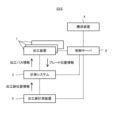
- FIG. 1 is a block diagram showing the overall configuration of a processing system according to this embodiment.
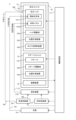
- FIG. 2 is a block diagram showing the system configuration of the processing apparatus of this embodiment.
- FIG. 3 is a sectional view showing the configuration of the processing device of this embodiment.
- FIG. 4(a) is a perspective view showing the structure of a holder that does not hold a workpiece
- FIG. 4(b) is a perspective view showing the structure of a holder that actually holds a workpiece.
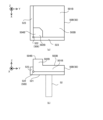
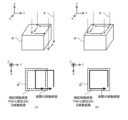
- FIG. 5(a) is a top view of the plate fixing member
- FIG. 5(b) is a cross-sectional view of the plate fixing member (specifically, the AA' cross-sectional view of FIG. 5(a)). .
- FIG. 5(a) is a top view of the plate fixing member
- FIG. 5(b) is a cross-sectional view of the plate fixing member (specifically, the AA' cross-sectional view of FIG. 5(a)). .
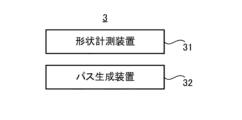
- FIG. 6 is a block diagram showing the configuration of the measurement system.
- FIG. 7 is a block diagram showing the configuration of the shape measuring device.
- FIG. 8 is a block diagram showing the configuration of the path generation device.
- FIG. 9 shows the data structure of the calibration information DB.
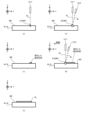
- FIGS. 10(a) to 10(e) is a cross-sectional view showing a situation in which a certain area on a workpiece is irradiated with processing light and a modeling material is supplied.
- FIGS. 11(a) to 11(c) is a cross-sectional view showing the process of modeling a three-dimensional structure.
- FIG. 12(a) is a sectional view showing a processing head that irradiates processing light onto the first direction surface of the workpiece, and FIG.
- FIG. 12(b) shows a processing head that irradiates processing light onto the second direction surface of the workpiece.
- FIG. FIG. 13 is a flowchart showing the flow of the calibration operation.
- FIG. 14 is a sectional view showing an example of the base plate.
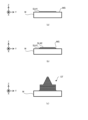
- FIG. 15(a) is a sectional view showing the base plate processed by the processing device, and
- FIG. 15(b) is a top view showing the base plate processed by the processing device.
- FIG. 16(a) is a top view showing an example of a base plate, and
- FIG. 16(b) is a sectional view showing an example of the base plate.
- FIG. 17(a) and 17(c) is a sectional view showing a base plate irradiated with a plurality of guide lights
- each of FIGS. 17(b) and 17(d) is a sectional view showing a base plate irradiated with a plurality of guide lights.
- FIG. 3 is a top view showing the base plate illuminated with light.
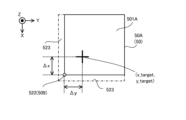
- FIG. 18 is a top view showing the positional relationship between the processing marks on the base plate and the reference portion of the holder.
- FIG. 19 is a cross-sectional view showing the positional relationship between the processing marks on the base plate and the reference portion of the holder.
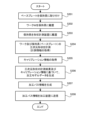
- FIG. 20 is a flowchart showing the flow of the machining path generation operation.
- FIG. 21 shows a measurement model, a target model, and a processing model.
- FIG. 22 shows a measurement model, a target model, and a processing model.
- FIG. 23 is a flowchart showing the flow of machining path evaluation operation.
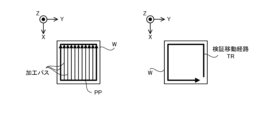
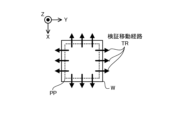
- FIG. 24 shows the verification movement route. 25(a) and 25(b) each show an actual moving path of the verification light irradiation position when the verification light is irradiated onto the workpiece along the verification moving path shown in FIG. 24.
- FIG. 26 shows the positional relationship between the machining path and the workpiece.
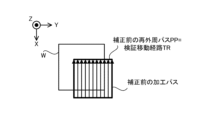
- FIG. 27(a) shows the relationship between the verification light movement path assumed from the verification movement path and the actual movement path of the verification light irradiation position, and
- FIG. 27(b) shows the corrected machining path. show.
- FIG. 28(a) to 28(c) is a cross-sectional view showing a workpiece held by a holder.
- FIG. 29 shows the verification movement route.
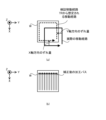
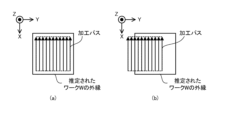
- FIGS. 30(a) and 30(b) shows the positional relationship between the workpiece W (specifically, the estimated outer edge of the workpiece W) and the machining path.
- FIG. 31 shows the verification movement route.
- FIG. 1 is a block diagram showing the overall configuration of the processing system SYS.
- the machining system SYS includes a plurality of machining devices 1, a machining trace measuring device 2, a measuring system 3, and a conveyance device 4.
- the processing system SYS includes a plurality of processing devices 1, but may include a single processing device 1.
- the machining system SYS includes a single machining trace measuring device 2, but may include a plurality of machining trace measuring devices 2.
- the processing system SYS includes a single measurement system 3, but may include a plurality of measurement systems 3.
- the processing system SYS includes a single transport device 4, it may include a plurality of transport devices 4. Note that the processing system SYS does not need to include the transport device 4.
- Each of the plurality of processing devices 1 can process the workpiece W.
- each of the plurality of processing devices 1 is a processing device that can process the workpiece W by irradiating the workpiece W with processing light EL (that is, an energy beam having the form of light).
- processing light EL that is, an energy beam having the form of light
- at least one of the plurality of processing devices 1 may process the workpiece W without using the processing light EL.
- At least one of the plurality of processing devices 1 may be an additional processing device that can perform additional processing on the workpiece W. That is, at least one of the plurality of processing devices 1 may be a modeling device that can form a shaped object on the workpiece W by performing additional processing on the workpiece W. Specifically, the additional processing device can perform additional processing on the workpiece W to form a shaped object that is integrated with the workpiece W or is separable from the workpiece W.
- the modeled object modeled by the additive processing device may mean any object modeled by the additive processing device.
- the additive processing device uses a three-dimensional structure ST (that is, a three-dimensional structure that has size in any three-dimensional direction, a three-dimensional object, in other words, an X-axis (a structure having dimensions in the direction, the Y-axis direction, and the Z-axis direction) may also be modeled.
- a three-dimensional structure ST that is, a three-dimensional structure that has size in any three-dimensional direction, a three-dimensional object, in other words, an X-axis (a structure having dimensions in the direction, the Y-axis direction, and the Z-axis direction) may also be modeled.
- the additional processing device may perform additional processing using any additional processing method (that is, a modeling method) that can form a shaped object.
- additional processing methods include laser metal deposition (LMD), powder bed fusion such as selective laser sintering (SLS), Bonding material injection method (Binder Jetting), material jetting (Material Jetting), stereolithography, and laser metal fusion (LMF).
- LMD laser metal deposition
- SLS selective laser sintering
- Bonding material injection method Binder Jetting
- Material jetting material jetting
- stereolithography stereolithography
- LMF laser metal fusion
- DED Directed Energy Deposition
- the workpiece W may be an item that requires repair and has a defective part.
- the additional processing device may perform repair processing to repair (in other words, repair) the item requiring repair by performing additional processing to form a modeled object to compensate for the missing portion. That is, the additional processing performed by the additional processing device may include additional processing that adds a shaped object to the workpiece W to compensate for a missing portion.
- An example of an item that requires repair and has a defective part is at least a part of a worn turbine.
- an example of an item that requires repair and has a defective part is a turbine blade that constitutes a turbine.
- the turbine include at least one of a power generation turbine, an aircraft engine turbine, and the like.
- the additional processing device may repair (in other words, repair) the worn turbine.
- Another example of an item that needs repair and has a defective part is a worn propeller-shaped part.
- Another example of an item that requires repair and has a defective part is body parts of vehicles such as automobiles, motorcycles, electric vehicles, and railway vehicles.
- Other examples of repair-required items with missing parts include parts for engines such as automobile engines, motorcycle engines, and spacecraft engines.
- Another example of an item that requires repair and has a defective part is a battery part for an electric vehicle.
- the additional processing device may repair these items requiring repair.
- the workpiece W may be a base for modeling the three-dimensional structure ST.
- the additional processing device may manufacture the three-dimensional structure ST from scratch by performing additional processing to form the three-dimensional structure ST on the workpiece W.
- the additional processing device may manufacture the turbine from scratch by performing additional processing on the workpiece W to form a three-dimensional structure ST corresponding to the turbine.
- the work W may be an intermediate product manufactured in the process of modeling the three-dimensional structure ST.
- the additive processing device performs additional processing on the work W, which is an intermediate product of the three-dimensional structure ST, to complete the three-dimensional structure ST, thereby converting the intermediate product into the three-dimensional structure ST. May be manufactured.
- the additional processing device may manufacture a finished turbine product from an intermediate turbine product by performing additional processing on the workpiece W, which is an intermediate turbine product, to complete the turbine.
- the workpiece W may be a base for modeling the three-dimensional structure ST.
- the additional processing device may manufacture the three-dimensional structure ST from scratch by performing additional processing to form the three-dimensional structure ST on the workpiece W. That is, the additional processing performed by the additional processing device may include additional processing that adds a shaped object to the workpiece W to compensate for a missing portion.
- At least one of the plurality of processing devices 1 may be a removal processing device that can perform removal processing on the workpiece W. That is, at least one of the plurality of processing devices 1 may be a removal processing device capable of performing removal processing to remove a part of the workpiece W. In addition to or instead of performing removal processing on the workpiece W, the removal processing device may perform removal processing on a shaped object formed on the workpiece W by the additional processing device.
- each of the plurality of processing devices 1 processes a workpiece W held by a holder 5 (see FIGS. 4(a) to 4(b), etc.), which will be described later. Therefore, the workpiece W is placed on the processing device 1 while being held by the holder 5.
- the holder 5 may be referred to as a jig, a holder, a holding member, a mounting member, a holding member, a mounting member, or a clamp. The structure of the holder 5 will be described in detail later with reference to the drawings.
- the holder 5 includes a base plate 50 (Figs. 4(b)) is placed.
- the base plate 50 disposed on the holder 5 may be considered to be a part of the holder 5.
- the base plate 50 may also be referred to as a reference member.
- the calibration information 3222 is information used for processing the workpiece W by the processing apparatus 1. Therefore, the calibration information 3222 may typically be generated in advance before the processing apparatus 1 actually starts processing the workpiece W.
- the processing device 1 measures the position of the base plate 50 placed on the holder 5, as will be detailed later. Specifically, the processing device 1 measures the position of the base plate 50 in the processing coordinate system of the processing device 1. Plate position information indicating the measurement result of the position of the base plate 50 in the processing coordinate system of the processing device 1 is transmitted from the processing device 1 to the measurement system 3 via a communication network (not shown).
- the processing device 1 further processes the base plate 50 placed on the holder 5, as will be detailed later.
- the base plate 50 processed by the processing device 1 is conveyed from the processing device 1 to the processing trace measuring device 2 .
- the base plate 50 may be transported from the processing device 1 to the processing trace measuring device 2 by the transport device 4.
- the base plate 50 may be transported from the processing device 1 to the machining trace measuring device 2 by a transport device different from the transport device 4.
- the base plate 50 may be transported from the processing device 1 to the processing trace measuring device 2 by a user of the processing system SYS.
- the processing trace measuring device 2 measures the base plate 50 processed by the processing device 1. More specifically, the machining trace measuring device 2 measures the position of the portion of the base plate 50 that has been machined by the processing device 1 (that is, the machining trace). Machining trace position information indicating the measurement result of the position of the machining trace is transmitted from the machining trace measurement device 2 to the measurement system 3 via a communication network (not shown).
- the machining mark measuring device 2 may be any measuring device as long as it can measure the position of the machining mark on the base plate 50.
- the machining mark measuring device 2 may be a measuring device that can measure the position of a machining mark by capturing an image of the base plate 50.
- the measurement system 3 receives (that is, acquires) the plate position information transmitted from the processing device 1. Furthermore, the measurement system 3 receives (that is, acquires) machining trace position information transmitted from the machining trace measuring device 2 . The measurement system 3 generates calibration information 3222 based on the plate position information and the machining trace position information.
- the calibration information 3222 includes information regarding the position of the holder 5 in the machining coordinate system, as will be described in detail later.
- the measurement system 3 further measures the holder 5 that actually holds the workpiece W before the processing device 1 starts actually processing the workpiece W. Specifically, the measurement system 3 measures the holder 5 and the workpiece W actually held by the holder 5. Therefore, the holder 5 that actually holds the workpiece W is installed (in other words, placed or attached) on the measurement system 3 before the processing device 1 starts actually processing the workpiece W. That is, the holder 5 that actually holds the workpiece W is installed in the measurement system 3 before the holder 5 is installed (in other words, mounted or attached) on the processing device 1. .
- the measurement system 3 measures the three-dimensional shapes of the holder 5 and the work W. Note that when the three-dimensional shape of the holder 5 is determined, the position of the holder 5 in the three-dimensional space (for example, the position of the surface of the holder 5) is determined. Therefore, measuring the three-dimensional shape of the holder 5 may be considered to be substantially equivalent to measuring the position of the holder 5 in the measurement coordinate system of the measurement system 3. Similarly, measuring the three-dimensional shape of the work W may be considered to be substantially equivalent to measuring the position of the work W in the measurement coordinate system.
- the measurement system 3 generates machining path information in the machining coordinate system of the machining device 1 based on the measurement information indicating the measurement results of the three-dimensional shapes of the holder 5 and the workpiece W, and the calibration information 3222. do.
- the machining path information indicates a target irradiation position where the machining light EL should be irradiated in order to process the workpiece W.
- the machining path information indicates a target movement path that is a path of a target irradiation position to be irradiated with the machining light EL in order to process the workpiece W.
- the machining path information generated by the measurement system 3 is transmitted from the measurement system 3 to the machining device 1 via a communication network (not shown).
- the processing device 1 receives (that is, acquires) the processing path information transmitted from the measurement system 3.
- the processing device 1 that has received the processing path information processes the workpiece W held by the holder 5 based on the received processing path information. Therefore, after the measurement system 3 measures the three-dimensional shapes of the holder 5 and the workpiece W, the holder 5 holding the workpiece W is transported from the measurement system 3 to the processing device 1 . Specifically, the holder 5 is removed from the measurement system 3, and the removed holder 5 is transported to the processing device 1.
- the holder 5 may be transported from the measurement system 3 to the processing device 1 by the transport device 4.
- the holder 5 may be transported from the measurement system 3 to the processing device 1 by a transport device different from the transport device 4.
- the holder 5 may be transported from the measurement system 3 to the processing device 1 by a user of the processing system SYS.
- the holder 5 transported to the processing device 1 is installed (in other words, mounted or attached) on the processing device 1.
- the processing device 1 can process the workpiece W held by the holder 5.
- the processing system SYS includes a processing device 1 and a measurement system 3, which are separate devices.
- the processing system SYS may include a device in which the processing device 1 and the measurement system 3 are integrated. That is, the processing device 1 and the measurement system 3 may be integrated.
- the machining system SYS may include a device in which the machining device 1 and the machining trace measuring device 2 are integrated. That is, the processing device 1 and the processing trace measuring device 2 may be integrated.
- the processing system SYS may include a device in which the processing trace measuring device 2 and the measurement system 3 are integrated. That is, the machining mark measuring device 2 and the measuring system 3 may be integrated.
- the plurality of processing devices 1 and the measurement systems 3 may be arranged adjacent to each other in a row. In this case, a plurality of processing devices 1 and measurement systems 3 arranged in a row may operate in parallel. In this case, the productivity of the processing system SYS is improved. In other words, the throughput of the processing system SYS is improved.
- the processing system SYS may further include a control server 6. However, the processing system SYS does not need to further include the control server 6.
- the control server 6 may control the operation of the entire processing system SYS.
- the control server 6 may control the operation of each of the plurality of processing devices 1.
- the control server 6 may control the operation of the machining trace measuring device 2.
- the control server 6 may control the operation of the measurement system 3.
- the control server 6 may control the operation of the transport device 4.
- the control server 6 may function as a cloud server.
- the control server 6 may be able to communicate with at least one of the plurality of processing devices 1, the processing trace measuring device 2, the measurement system 3, and the transport device 4 via a communication network including the Internet.
- the control server 6 may function as an edge server.
- the control server 6 is capable of communicating with at least one of the plurality of processing devices 1, processing trace measuring devices 2, measurement systems 3, and transport devices 4 via a communication network including an intranet or a local area network. It's okay.
- the processing system SYS may include a first computer that controls the processing device 1 as part of the processing device 1. That is, the processing device 1 may include the first computer.
- the first computer may be a notebook computer or other type of computer.
- the first computer may function as a control device 17 (see FIG. 2), which will be described later.
- the machining system SYS may include a second computer that controls the machining trace measuring device 2 as part of the machining trace measuring device 2, in addition to or in place of the control server 6 that controls the machining trace measuring device 2. good.
- the machining trace measuring device 2 may include a second computer.
- the second computer may be a notebook computer or other type of computer.
- the processing system SYS may include, as part of the measurement system 3, a third computer that controls the measurement system 3. That is, the measurement system 3 may include a third computer.
- the third computer may be a notebook computer or other type of computer.
- the third computer may function as a machining path generation device 32 (see FIG. 6), which will be described later.
- the processing system SYS may include a fourth computer that controls the transport device 4 as part of the transport device 4. In other words, the transport device 4 may include a fourth computer.
- the fourth computer may be a notebook computer or other type of computer.
- FIG. 2 is a block diagram showing the system configuration of the processing device 1.
- FIG. 3 is a sectional view showing the configuration of the processing device 1.
- FIG. 2 is a block diagram showing the system configuration of the processing device 1.
- FIG. 3 is a sectional view showing the configuration of the processing device 1.
- each of the X-axis direction and the Y-axis direction is a horizontal direction (that is, a predetermined direction within a horizontal plane), and the Z-axis direction is a vertical direction (that is, a direction perpendicular to the horizontal plane). (and substantially in the vertical direction).
- the rotation directions (in other words, the tilt directions) around the X-axis, Y-axis, and Z-axis are referred to as the ⁇ X direction, the ⁇ Y direction, and the ⁇ Z direction, respectively.
- the Z-axis direction may be the direction of gravity.
- the XY plane may be set in the horizontal direction.
- the configuration of the processing device 1, which is an additional processing device will be described as an example of the configuration of the processing device 1.
- the configuration of the processing device 1, which is an additional processing device that performs additional processing using a laser overlay welding method will be described.
- all of the plurality of processing devices 1 may not be the processing devices 1 shown in FIGS. 2 and 3.
- At least one of the plurality of processing devices 1 may be different from the processing device 1 shown in FIGS. 2 and 3.
- the processing device 1 that performs additional processing using the laser overlay welding method performs additional processing by processing the modeling material M using the processing light EL.
- the modeling material M is a material that can be melted by irradiation with processing light EL having a predetermined intensity or higher.
- a modeling material M for example, at least one of a metallic material and a resinous material can be used.
- the modeling material M other materials different from metal materials and resin materials may be used.
- the modeling material M is a powdered or granular material. That is, the modeling material M is a granular material. However, the modeling material M does not have to be powder or granule.
- the modeling material M at least one of a wire-shaped modeling material and a gaseous modeling material may be used.
- a processing device 1 that performs additional processing using a laser overlay welding method sequentially forms a plurality of structural layers SL (see FIG. 11 described later) to create a three-dimensional structure ST in which a plurality of structural layers SL are stacked. to form.
- the processing device 1 first sets the surface of the workpiece W as a modeling surface MS for actually modeling the object, and models the first structural layer SL on the modeling surface MS.
- the processing device 1 sets the surface of the first structural layer SL as a new modeling surface MS, and models the second structural layer SL on the new modeling surface MS. Thereafter, the processing device 1 repeats the same operation to form a three-dimensional structure ST in which a plurality of structural layers SL are stacked.
- the processing apparatus 1 includes a material supply source 11, a processing unit 12, a stage unit 13, an imaging device 14, a light source 15, and a gas supply source, as shown in FIGS. 16 and a control device 17.
- the processing unit 12, the stage unit 13, and the imaging device 14 may be housed in a chamber space 183IN inside the housing 18.
- the material supply source 11 supplies the modeling material M to the processing unit 12.
- the material supply source 11 supplies a desired amount of modeling material M according to the required amount so that the amount of modeling material M required per unit time to perform additional processing is supplied to the processing unit 12. do.
- the processing unit 12 processes the modeling material M supplied from the material supply source 11 to create a modeled object.
- the processing unit 12 includes a processing head 121, a head drive system 122, a position measuring device 123, and a plurality of (for example, two) guide light irradiation devices 124.
- the processing head 121 includes an irradiation optical system 1211 and a material nozzle 1212.
- the processing head 121 includes a single irradiation optical system 1211, but the processing head 121 may include a plurality of irradiation optical systems 1211.
- the processing head 121 includes a plurality of material nozzles 1212, but the processing head 121 may include a single material nozzle 1212.
- the irradiation optical system 1211 is an optical system (for example, a condensing optical system) for emitting the processing light EL. Specifically, the irradiation optical system 1211 is optically connected to the light source 15 that emits the processing light EL via a light transmission member 151 such as an optical fiber or a light pipe. The irradiation optical system 1211 emits the processing light EL propagated from the light source 15 via the light transmission member 151. The irradiation optical system 1211 irradiates processing light EL downward (that is, to the ⁇ Z side). A stage 131 is arranged below the irradiation optical system 1211.
- a light transmission member 151 such as an optical fiber or a light pipe.
- the irradiation optical system 1211 emits the processing light EL propagated from the light source 15 via the light transmission member 151.
- the irradiation optical system 1211 irradiates processing light EL downward (that is, to the ⁇ Z side).
- the irradiation optical system 1211 irradiates the work W with the emitted processing light EL.
- the irradiation optical system 1211 irradiates the workpiece W with the processing light EL from above the workpiece W.
- the irradiation optical system 1211 processes the processing light EL into a target irradiation area EA set on or near the workpiece W as an area to be irradiated (typically focused) with the processing light EL.
- Light EL can be irradiated.
- the state of the irradiation optical system 1211 can be switched under the control of the control device 17 between a state in which the target irradiation area EA is irradiated with the processed light EL and a state in which the target irradiation area EA is not irradiated with the processed light EL. It is.
- the material nozzle 1212 supplies (for example, injects, jets, squirts, or sprays) the modeling material M.
- the material nozzle 1212 is physically connected to the material supply source 11, which is a supply source of the modeling material M, via the supply pipe 111 and the mixing device 112.
- the material nozzle 1212 supplies the modeling material M supplied from the material supply source 11 via the supply pipe 111 and the mixing device 112.
- the material nozzle 1212 may force-feed the modeling material M supplied from the material supply source 11 via the supply pipe 111. That is, the modeling material M from the material supply source 11 and the transport gas (that is, a pressurized gas, for example, an inert gas such as nitrogen or argon) are mixed in the mixing device 112 and then passed through the supply pipe 111.
- a pressurized gas for example, an inert gas such as nitrogen or argon
- the material may be pumped through the material nozzle 1212.
- the material nozzle 1212 supplies the modeling material M together with the transport gas.
- the transport gas for example, purge gas supplied from the gas supply source 16 is used.
- a gas supplied from a gas supply source different from the gas supply source 16 may be used.
- the material nozzle 1212 supplies the modeling material M downward (that is, to the -Z side).
- a stage 131 is arranged below the material nozzle 1212. When the workpiece W is mounted on the stage 131, the material nozzle 1212 supplies the modeling material M toward the workpiece W or the vicinity of the workpiece W.
- the material nozzle 1212 supplies the modeling material M to the irradiation position of the processing light EL (that is, the target irradiation area EA to which the processing light EL from the irradiation optical system 1211 is irradiated). Therefore, the target supply area MA, which is set on the workpiece W or near the workpiece W as the area where the material nozzle 1212 supplies the modeling material M, coincides with (or at least partially overlaps with) the target irradiation area EA. ), the material nozzle 1212 and the irradiation optical system 1211 are aligned.
- the modeling material M supplied from the material nozzle 1212 is irradiated with the processing light EL emitted by the irradiation optical system 1211.
- the modeling material M melts. That is, a molten pool MP containing the molten modeling material M is formed on the workpiece W.
- the material nozzle 1212 may supply the modeling material M to the molten pool MP formed by the processing light EL emitted from the irradiation optical system 1211. However, the material nozzle 1212 does not have to supply the modeling material M to the molten pool MP.
- the processing device 1 may melt the modeling material M from the material nozzle 1212 using the irradiation optical system 1211 before the modeling material M reaches the workpiece W, and may cause the melted modeling material M to adhere to the workpiece W. .
- the head drive system 122 moves the processing head 121 under the control of the control device 17. That is, the head drive system 122 moves the irradiation optical system 1211 and the material nozzle 1212 under the control of the control device 17.
- the head drive system 122 moves the processing head 121, for example, along at least one of the X axis, Y axis, Z axis, ⁇ X direction, ⁇ Y direction, and ⁇ Z direction in the processing coordinate system of the processing device 1.
- the head drive system 122 moves the processing head 121, the relative positions of the processing head 121 and the stage 131 and the work W placed on the stage 131 change.
- the target irradiation area EA and the target supply area MA (furthermore, the molten pool MP) move relative to the workpiece W.
- the position measuring device 123 can measure the position of the processing head 121.
- the position measuring device 123 may include, for example, at least one of an encoder and a laser interferometer.
- the guide light irradiation device 124 is arranged on the processing head 121.
- Guide light irradiation device 124 emits guide light GL.
- the guide light irradiation device 124 emits the guide light GL so that the guide light GL travels through the chamber space 183IN.
- the plurality of guide light irradiation devices 124 are aligned such that the plurality of guide lights GL respectively emitted from the plurality of guide light irradiation devices 124 intersect with each other at a predetermined intersection position below the processing head 121. .
- the plurality of guide light irradiation devices 124 may be aligned so that the plurality of guide lights GL intersect with each other at the focus position of the processing light EL.
- the plurality of guide light irradiation devices 124 are arranged so that the plurality of guide lights GL are used to perform the additional processing by the processing device 1. They may be aligned with each other so that they intersect with each other at the additional processing positions to be processed.
- the additional processing position typically at least partially overlaps with each of the target irradiation area EA and target supply area MA. Note that a method of using such a guide light irradiation device 124 will be described in detail later.
- the stage unit 13 includes a stage 131, a stage drive system 132, and a position measuring device 133.
- the holder 5 is placed on the stage 131.
- the stage 131 may be referred to as an object mounting device.
- the stage 131 can support the holder 5 placed on the stage 131.
- the stage 131 may be able to hold the holder 5 placed on the stage 131.
- the stage 131 may include at least one of a mechanical chuck, an electrostatic chuck, a vacuum chuck, etc. to hold the holder 5.
- the stage 131 does not need to be able to hold the holder 5 placed on the stage 131.
- the holder 5 may be placed on the stage 131 without a clamp.
- the holder 5 holds the workpiece W. Therefore, it may be assumed that the workpiece W is placed on the stage 131 via the holder 5.
- the stage 131 may be considered to support the workpiece W via the holder 5.
- the stage drive system 132 moves the stage 131 under the control of the control device 17.
- the stage drive system 132 moves the stage 131 along, for example, at least one of the X axis, Y axis, Z axis, ⁇ X direction, ⁇ Y direction, and ⁇ Z direction in the processing coordinate system of the processing apparatus 1.
- the stage drive system 132 moves the stage 131, the relative positions of the processing head 121 and the stage 131 and the work W placed on the stage 131 change.
- the target irradiation area EA and the target supply area MA (furthermore, the molten pool MP) move relative to the workpiece W.
- the position measuring device 133 can measure the position of the stage 131.
- the position measuring device 133 may include, for example, at least one of an encoder and a laser interferometer.
- the imaging device 14 is capable of imaging an object to be imaged. Imaging device 14 is typically a camera. In this embodiment, the imaging device 14 images the states of the plurality of guide lights GL emitted by the plurality of guide light irradiation devices 124 described above. Note that the method of using the imaging device 14 will be described in detail later, similar to the method of using the guide light irradiation device 124 described above.
- the light source 15 emits, for example, at least one of infrared light, visible light, and ultraviolet light as processing light EL.
- the processing light EL may include a plurality of pulsed lights (that is, a plurality of pulsed beams).
- the processing light EL may include continuous wave (CW) light.
- the processing light EL may be a laser beam.
- the light source 15 may include a laser light source (for example, a semiconductor laser such as a laser diode (LD).
- the laser light source may include a fiber laser, a CO 2 laser, a YAG laser, an excimer laser, etc.
- the processing light EL does not have to be a laser beam.
- the light source 15 may include at least one of an arbitrary light source (for example, an LED (Light Emitting Diode), a discharge lamp, etc.). ) may also be included.
- the gas supply source 16 is a purge gas supply source for purging the chamber space 183IN inside the housing 18.
- the purge gas includes an inert gas.
- An example of the inert gas is nitrogen gas or argon gas.
- the gas supply source 16 is connected to the chamber space 183IN via a supply port 182 formed in a partition member 181 of the housing 18 and a supply pipe 161 connecting the gas supply source 16 and the supply port 182.
- the gas supply source 16 supplies purge gas to the chamber space 183IN via the supply pipe 161 and the supply port 182.
- the chamber space 183IN becomes a space purged with the purge gas.
- the purge gas supplied to the chamber space 183IN may be exhausted from an outlet (not shown) formed in the partition member 181.
- the gas supply source 16 may be a cylinder containing an inert gas.
- the gas supply source 16 may be a nitrogen gas generator that generates nitrogen gas using the atmosphere as a raw material.
- the gas supply source 16 may supply the purge gas to the mixing device 112 to which the modeling material M from the material supply source 11 is supplied.
- the gas supply source 16 may be connected to the mixing device 112 via a supply pipe 162 that connects the gas supply source 16 and the mixing device 112.
- gas source 16 supplies purge gas to mixing device 112 via supply pipe 162 .
- the modeling material M from the material supply source 11 is supplied (specifically, , pumping). That is, the gas supply source 16 may be connected to the material nozzle 1212 via the supply pipe 162, the mixing device 112, and the supply pipe 111.
- the material nozzle 1212 supplies the modeling material M together with a purge gas for pumping the modeling material M.
- the control device 17 controls the operation of the processing device 1.
- the control device 17 may control the processing unit 12 (for example, at least one of the processing head 121 and the head drive system 122) included in the processing device 1 so as to process the workpiece W.
- the control device 17 may control the stage unit 13 (for example, the stage drive system 132) included in the processing device 1 so as to process the workpiece W.
- the control device 17 controls at least one of the processing unit 12 and the stage unit 13 to process the base plate 50 placed on the holder 5 in order to generate the calibration information 3222 as described above.
- the control device 17 controls at least one of the processing unit 12, the stage unit 13, and the imaging device 14 to measure the position of the base plate 50 disposed on the holder 5 in order to generate the calibration information 3222 as described above. You may control one.
- the control device 17 may include, for example, a calculation device and a storage device.
- the arithmetic device may include, for example, at least one of a CPU (Central Processing Unit) and a GPU (Graphics Processing Unit).
- the storage device may include, for example, memory.
- the control device 17 functions as a device that controls the operation of the processing device 1 by a calculation device executing a computer program.
- This computer program is a computer program for causing the arithmetic device to perform (that is, execute) the operation to be performed by the control device 17, which will be described later. That is, this computer program is a computer program for causing the control device 17 to function so as to cause the processing device 1 to perform the operations described below.
- the computer program executed by the arithmetic device may be recorded in a storage device (that is, a recording medium) included in the control device 17, or may be stored in any storage device built into the control device 17 or externally attachable to the control device 17. It may be recorded on a medium (for example, a hard disk or a semiconductor memory). Alternatively, the computing device may download the computer program to be executed from a device external to the control device 17 via a network interface.
- a storage device that is, a recording medium
- the computing device may download the computer program to be executed from a device external to the control device 17 via a network interface.
- the control device 17 may control the emission mode of the processing light EL by the irradiation optical system 1211.
- the injection mode may include, for example, at least one of the intensity of the processing light EL and the emission timing of the processing light EL.
- the emission mode is, for example, the light emission time of the pulsed light, the light emission period of the pulsed light, and the ratio of the length of the light emission time of the pulsed light to the light emission period of the pulsed light. (so-called duty ratio).
- the control device 17 may control the manner in which the processing head 121 is moved by the head drive system 122.
- the control device 17 may control the manner in which the stage 131 is moved by the stage drive system 132.
- the movement mode may include, for example, at least one of a movement amount, a movement speed, a movement direction, and a movement timing (movement timing). Furthermore, the control device 17 may control the manner in which the modeling material M is supplied by the material nozzle 1212.
- the supply mode may include, for example, at least one of supply amount (particularly supply amount per unit time) and supply timing (supply timing).
- the control device 17 does not need to be provided inside the processing device 1.
- the control device 17 may be provided outside the processing device 1 as a server or the like.
- the control device 17 and the processing device 1 may be connected via a wired and/or wireless network (or a data bus and/or a communication line).
- a wired network for example, a network using a serial bus type interface represented by at least one of IEEE1394, RS-232x, RS-422, RS-423, RS-485, and USB may be used.
- a network using a parallel bus interface may be used.
- a network using an interface compliant with Ethernet typified by at least one of 10BASE-T, 100BASE-TX, and 1000BASE-T may be used.
- a network using radio waves may be used.
- An example of a network using radio waves is a network compliant with IEEE802.1x (for example, at least one of a wireless LAN and Bluetooth (registered trademark)).
- a network using infrared rays may be used.
- a network using optical communication may be used as the wireless network.
- the control device 17 and the processing device 1 may be configured to be able to transmit and receive various information via a network.
- control device 17 may be able to transmit information such as commands and control parameters to the processing device 1 via a network.
- the processing device 1 may include a receiving device that receives information such as commands and control parameters from the control device 17 via the network.
- the processing device 1 may include a transmitting device that transmits information such as commands and control parameters to the control device 17 via the network (that is, an output device that outputs information to the control device 17). good.
- a first control device that performs some of the processing performed by the control device 17 is provided inside the processing device 1, while a second control device that performs another part of the processing performed by the control device 17 is provided inside the processing device 1.
- the control device may be provided outside the processing device 1.
- An arithmetic model that can be constructed by machine learning may be implemented in the control device 17 by the arithmetic device executing a computer program.
- An example of a calculation model that can be constructed by machine learning is a calculation model that includes a neural network (so-called artificial intelligence (AI)).
- learning the computational model may include learning parameters (eg, at least one of weights and biases) of the neural network.
- the control device 17 may control the operation of the processing device 1 using the calculation model.
- the operation of controlling the operation of the processing device 1 may include the operation of controlling the operation of the processing device 1 using a calculation model.
- the control device 17 may be equipped with an arithmetic model that has been constructed by offline machine learning using teacher data.
- the calculation model installed in the control device 17 may be updated by online machine learning on the control device 17.
- the control device 17 uses a calculation model installed in a device external to the control device 17 (that is, a device provided outside the processing device 1). The operation of the processing device 1 may be controlled by using the processing device 1.
- the recording medium for recording the computer program executed by the control device 17 includes CD-ROM, CD-R, CD-RW, flexible disk, MO, DVD-ROM, DVD-RAM, DVD-R, DVD+R, and DVD.
- At least one of optical disks such as RW, DVD+RW and Blu-ray (registered trademark), magnetic media such as magnetic tape, magneto-optical disks, semiconductor memories such as USB memory, and any other arbitrary medium capable of storing programs is used. It's okay to be hit.
- the recording medium may include a device capable of recording a computer program (for example, a general-purpose device or a dedicated device in which a computer program is implemented in an executable state in the form of at least one of software and firmware).
- each process or function included in the computer program may be realized by a logical processing block that is realized within the control device 17 when the control device 17 (that is, a computer) executes the computer program, or It may be realized by hardware such as a predetermined gate array (FPGA (Field Programmable Gate Array), ASIC (Application Specific Integrated Circuit)) included in the control device 17, or a logical processing block. and some of the hardware It may also be realized in a mixed format with partial hardware modules that realize the elements.
- FPGA Field Programmable Gate Array
- ASIC Application Specific Integrated Circuit
- FIG. 4(a) is a perspective view showing the structure of the holder 5 that does not hold the workpiece W
- FIG. 4(b) is a perspective view showing the structure of the holder 5 that actually holds the workpiece W.
- FIG. 4(a) and 4(b) illustrate the holder 5 placed on the stage 131 of the processing device 1.
- the holder 5 includes a bottom member 51, a plurality of support members 52, and a plurality of connection members 53.
- the holder 5 includes four support members 52 (specifically, support members 52#1, 52#2, 52#3, and 52#4). and four connecting members 53.
- the holder 5 may include a single support member 52.
- the holder 5 may include a single connecting member 53. The holder 5 does not need to include the connecting member 53.
- the bottom member 51 is a plate-shaped member.
- the upper surface of the bottom member 51 (in the examples shown in FIGS. 4(a) and 4(b), the surface facing the +Z side) may be a surface along the XY plane.
- the lower surface of the bottom member 51 (in the examples shown in FIGS. 4(a) and 4(b), the surface facing the -Z side) may be a surface along the XY plane.
- the shape of the bottom member 51 is not limited to a rectangle.
- the bottom member 51 is placed on the stage 131 of the processing device 1. Specifically, the bottom member 51 is placed on the stage 131 with the lower surface of the bottom member 51 facing the stage 131. Therefore, the holder 5 is placed on the stage 131 via the bottom member 51.
- the stage 131 supports the holder 5 via the bottom member 51.
- the bottom member 51 may be placed (that is, placed) at a predetermined position on the stage 131. That is, the holder 5 may be placed (that is, placed) at a predetermined position on the stage 131 via the bottom member 51. Note that the position determined as the position where the holder 5 is placed may be referred to as a "reference placement position.”
- a positioning mark may be formed on at least one of the bottom member 51 and the stage 131.
- alignment marks are formed on both the bottom member 51 and the stage 131.
- a plurality of pins 1311 may be formed on the stage 131 as marks for alignment.
- the pin 1311 is a member that protrudes from the stage 131 along the Z-axis direction. Note that the information regarding the position of the pin 1311 on the stage 131 may be known information in the processing system SYS. Furthermore, as shown in FIGS.
- a plurality of through holes 511 may be formed in the bottom member 51 as marks for alignment.
- the through hole 511 penetrates the bottom member 51 along the Z-axis direction.
- the bottom member 51 may be placed on the stage 131 such that the pin 1311 is inserted into the through hole 511.
- the bottom member 51 may be placed on the stage 131 with the pin 1311 inserted into the through hole 511. Therefore, the arrangement of the through holes 511 is the same as the arrangement of the pins 1311.
- the number of through holes 511 is the same as the number of pins 1311 (or may be greater).
- the bottom member 51 is placed on the stage 131 at a position determined by the pin 1311 and the through hole 511 (that is, the reference placement position). Therefore, in this case, the information regarding the mounting position of the bottom member 51 (that is, the mounting position of the holder 5) on the stage 131 becomes known information in the processing system SYS.
- the pin 1311 serving as a mark for alignment does not have to pass through the through hole 511 of the bottom member 51 of the holder 5.
- the side surface of the bottom member 51 for example, in the state illustrated in FIGS. 4(a) and 4(b), one or both of the side surface along the XZ plane and the side surface along the YZ plane is pressed against the pin 1311.
- the positioning mark is not limited to the pin 1311.
- a member having a surface that can come into contact with the bottom member 51 for example, a stopper described later
- may be used. 523) may be used as a mark for alignment.
- At least a portion of the upper surface of the bottom member 51 functions as a mounting surface 510 on which the workpiece W is mounted.
- the workpiece W is placed on the placement surface 510.
- the mounting surface 510 can support the work W placed on the mounting surface 510.
- the mounting surface 510 can hold the work W placed on the mounting surface 510.
- the mounting surface 510 may include at least one of a mechanical chuck, an electrostatic chuck, a vacuum chuck, etc. to hold the workpiece W.
- a workpiece holding member 54 (for example, a jig) may be arranged on the mounting surface 510 to hold the workpiece W.
- the mounting surface 510 may not be able to hold the work W placed on the mounting surface 510. In this case, the workpiece W may be placed on the placement surface 510 without a clamp.
- a single workpiece W may be placed on the placement surface 510.
- a plurality of works W may be placed on the placement surface 510.
- two workpieces W are placed on the placement surface 510.
- Each of the plurality of support members 52 is a columnar member extending upward from the upper surface of the bottom member 51 (in the example shown in FIGS. 4(a) and 4(b), toward the +Z side).
- Each of the plurality of support members 52 is a member for supporting the base plate 50 described above. Therefore, the plurality of support members 52 each support the plurality of base plates 50.
- the plurality of support members 52#1 to 52#4 respectively support the plurality of base plates 50#1 to 50#4. Therefore, a plurality of base plates 50 are arranged on the holder 5.
- a single base plate 50 may be disposed on the holder 5.
- the plurality of support members 52 are arranged at each vertex of a rectangular area on the upper surface of the bottom member 51.
- the arrangement of the plurality of support members 52 is not limited to the example shown in FIGS. 4(a) and 4(b).
- four supporting members 52 are arranged on the bottom member 51.
- the number of support members 52 is not limited to four. Three or less or five or more support members 52 may be arranged on the bottom member 51.
- Each support member 52 includes a plate fixing member 521 to which the base plate 50 is fixed.
- each support member 52 supports the base plate 50 via the plate fixing member 521.
- each support member 52 may support the base plate 50 from below the base plate 50. That is, each support member 52 may support the base plate 50 via the tip of each support member 52.
- each support member 52 may be provided with a plate fixing member 521 at its tip. The tip of each support member 52 may function as the plate fixing member 521. Note that at least one of the plurality of support members 52 does not need to include the plate fixing member 521.
- the base plate 50 may be removably fixed to the plate fixing member 521.
- the base plate 50 may be fixed to the plate fixing member 521 using fixing screws.
- the base plate 50 may be removed from the plate fixing member 521 by loosening the fixing screw.
- the base plate 50 is attached to the plate fixing member 521 so that a reference portion 522 of the holder 5 (see FIGS. 5(a) and 5(b) described later) and the base plate 50 have a predetermined positional relationship. It's okay to be hit.
- the base plate 50 may be supported by the support member 52 so that the reference portion 522 of the holder 5 and the base plate 50 have a predetermined positional relationship.
- the base plate 50 may be arranged on the holder 5 such that the reference portion 522 of the holder 5 and the base plate 50 have a predetermined positional relationship.
- the base plate 50 may be arranged on the holder 5 in a predetermined positional relationship with respect to the reference portion 522 of the holder 5.
- the information regarding the positional relationship between the reference portion 522 of the holder 5 and the base plate 50 may be known information in the processing system SYS.
- FIG. 5B which is a sectional view taken along line AA' in FIG. 5A
- the base plate 50 is in contact with the stopper 523 of the plate fixing member 521.
- a portion of the stopper 523 that contacts the base plate 50 may be used as the reference portion 522 of the holder 5.
- a portion of the stopper 523 that contacts the base plate 50 may be used as the reference portion 522 of the holder 5.
- a portion of the stopper 523 that contacts the reference portion 509 of the base plate 50 is used as the reference portion 522 of the holder 5.
- the apex of the base plate 50 is used as the reference portion 509 of the base plate 50.
- FIGS. 5(a) and 5(b) merely show an example of the reference portion 509 of the base plate 50 and the reference portion 522 of the holder 5. Therefore, a portion of the base plate 50 that is different from the portion shown in FIGS. 5(a) and 5(b) may be used as the reference portion 509 of the base plate 50. For example, any vertex of the base plate 50 may be used as the reference portion 509 of the base plate 50. Similarly, a portion of the holder 5 different from the portions shown in FIGS. 5(a) and 5(b) may be used as the reference portion 522 of the holder 5. For example, a portion of the holder 5 that contacts an arbitrary apex of the base plate 50 may be used as the reference portion 522 of the holder 5.
- the plate fixing member 521 may include a pin-shaped member in addition to or instead of the stopper 523.
- the base plate 50 may be fixed to the plate fixing member 521 with the base plate 50 in contact with a pin-shaped member.
- the plurality of support members 52 may include at least two support members 52 arranged at different positions along the X-axis direction. Furthermore, the plurality of support members 52 may include at least two support members 52 arranged at different positions along the Y-axis direction. More specifically, at least two plate fixing members 521 of the plurality of support members 52 may be arranged at different positions along the X-axis direction. At least two plate fixing members 521 among the plurality of support members 52 may be arranged at different positions along the Y-axis direction. That is, at least two plate fixing members 521 among the plurality of supporting members 52 may have different positions in the lateral direction in supporting the base plate 50.
- At least two plate fixing members 521 among the plurality of support members 52 may have different depth positions.
- “lateral” here may mean the distance from the bottom member 51 in the X-axis direction
- “depth” here means the distance from the bottom member 51 in the Y-axis direction. It's okay.
- at least two of the plurality of base plates 50 arranged on the holder 5 may be arranged at different positions in the lateral direction.
- At least two of the plurality of base plates 50 arranged on the holder 5 may be arranged at positions with mutually different depths.
- the plurality of support members 52 may be arranged on the bottom member 51 so as to surround at least a portion of the mounting surface 510 on which the workpiece W is mounted. That is, the plurality of support members 52 may be arranged around at least a portion of the mounting surface 510. In this case, the plurality of base plates 50 supported by the plurality of support members 52 are also arranged on the holder 5 so that the plurality of base plates 50 surround at least a portion of the mounting surface 510.
- At least two of the plurality of support members 52 may have different heights. More specifically, at least two plate fixing members 521 among the plurality of supporting members 52 may have different heights. That is, the heights of the positions at which at least two plate fixing members 521 of the plurality of supporting members 52 support the base plate 50 may be different. Note that the "height" here may mean the distance from the bottom member 51 in the Z-axis direction. As a result, at least two of the plurality of base plates 50 arranged on the holder 5 may be arranged at different heights. However, all of the plurality of support members 52 may have the same height.
- the height of at least one of the plurality of support members 52 may be set to match the height of the workpiece W placed on the placement surface 510.
- the height of at least one of the plurality of support members 52 may be set to the same height as the height of the workpiece W placed on the placement surface 510.
- the height of at least one of the plurality of support members 52 may be set such that the difference from the height of the workpiece W placed on the placement surface 510 is less than or equal to an allowable amount.
- each support member 52 may be used as the base plate 50. In this case, each support member 52 does not need to separately support the base plate 50.
- each connection member 53 connects two adjacent support members 52. Therefore, each connection member 53 may be a member extending along the direction in which two adjacent support members 52 are lined up. Each connection member 53 may be a member extending in a direction intersecting the direction in which the support member 52 extends. In the examples shown in FIGS. 4(a) and 4(b), the support member 52 extends along the Z-axis direction, and two adjacent support members 52 are lined up along the X-axis direction or the Y-axis direction. , each connecting member 53 may extend along the X-axis direction or the Y-axis direction. In this case, one end of each connecting member 53 may be connected to two adjacent supporting members 52, and one end of each connecting member 53 may be connected to two adjacent supporting members 52.
- a plurality of connecting members 53 may connect two adjacent support members 52.
- FIG. 6 is a block diagram showing the configuration of the measurement system 3. As shown in FIG. As shown in FIG. 6, the measurement system 3 includes a shape measurement device 31 and a machining path generation device 32.
- the shape measuring device 31 is capable of measuring the three-dimensional shape of the object to be measured.
- the measurement system 3 measures the holder 5 that actually holds the workpiece W before the processing device 1 starts actually processing the workpiece W. Therefore, the object to be measured by the shape measuring device 31 may include the holder 5 that actually holds the workpiece W. That is, the object to be measured by the shape measuring device 31 may include the holder 5 that actually holds the workpiece W, and the workpiece W held by the holder 5.
- the shape measuring device 31 includes a shape measuring head 311, a head drive system 312, a stage 313, and a stage drive system 314. However, the shape measuring device 31 does not need to include at least one of the head drive system 312 and the stage drive system 314.
- the shape measurement head 311 is a measurement device that can measure the three-dimensional shape of an object to be measured.
- the shape measurement head 311 projects a light pattern onto the surface of the object to be measured by irradiating measurement light onto the surface, and uses a pattern projection method or a light cutting method to measure the shape of the projected pattern.
- the three-dimensional shape of the object to be measured may also be measured.
- the shape measurement head 311 projects measurement light onto the surface of the measurement target, calculates the time it takes for the projected measurement light to return from the measurement target to the shape measurement head 311, and calculates the time required for the projected measurement light to return from the measurement target to the shape measurement head 311.
- the three-dimensional shape of the object to be measured may be measured using a time-of-flight method in which the distance to the object to be measured is measured at a plurality of positions on the object.
- the shape measurement head 311 uses a moire topography method (specifically, a grating irradiation method or a grating projection method), a holographic interference method, an autocollimation method, a stereo method, an astigmatism method, a critical angle method, and a knife edge method.
- the three-dimensional shape of the object to be measured may be measured using at least one of them.
- the head drive system 312 moves the shape measurement head 311.
- the head drive system 312 moves the shape measurement head 311, for example, along at least one of the X axis, Y axis, Z axis, ⁇ X direction, ⁇ Y direction, and ⁇ Z direction in the measurement coordinate system of the measurement system 3.
- the positional relationship between the measurement range of the shape measurement head 311 and the object to be measured (specifically, the holder 5) changes.
- the shape measurement head 311 has a high possibility of being able to measure the three-dimensional shape of a certain part of the measurement target, the three-dimensional shape of which could not be measured before the shape measurement head 311 moved. In other words, the blind spot of the shape measurement head 311 becomes narrower or eliminated.
- a measurement target object (specifically, the holder 5) is placed on the stage 313.
- the stage 313 can support the holder 5 placed on the stage 131.
- the stage 313 may be able to hold the holder 5 placed on the stage 313.
- the stage 313 may include at least one of a mechanical chuck, an electrostatic chuck, a vacuum chuck, etc. to hold the holder 5.
- the stage 313 does not need to be able to hold the holder 5 placed on the stage 313.
- the holder 5 may be placed on the stage 313 without a clamp.
- the stage drive system 314 moves the stage 313.
- the stage drive system 314 moves the stage 313 along, for example, at least one of the X axis, Y axis, Z axis, ⁇ X direction, ⁇ Y direction, and ⁇ Z direction in the measurement coordinate system of the measurement system 3.
- the stage drive system 314 moves the stage 313
- the positional relationship between the measurement range of the shape measurement head 311 and the object to be measured (specifically, the holder 5) placed on the stage 313 changes.
- the blind spot of the shape measurement head 311 becomes narrower or disappears.
- the machining path generation device 32 generates calibration information 3222 based on the plate position information and the machining trace position information. Further, the machining path generation device 32 generates machining path information based on measurement information indicating the measurement results of the three-dimensional shapes of the holder 5 and the work W, respectively, and the calibration information 3222.
- the machining path generation device 32 includes a calculation device 321, a storage device 322, and a communication device 323. Furthermore, the machining path generation device 32 may include an input device 324 and an output device 325. However, the machining path generation device 32 does not need to include at least one of the input device 324 and the output device 325. Arithmetic device 321 , storage device 322 , communication device 323 , input device 324 , and output device 325 may be connected via data bus 326 .
- the arithmetic device 321 includes, for example, at least one of a CPU (Central Processing Unit) and a GPU (Graphics Processing Unit). Arithmetic device 321 reads a computer program. For example, the arithmetic device 321 may read a computer program stored in the storage device 322. For example, the arithmetic device 321 may read a computer program stored in a computer-readable, non-temporary recording medium using a recording medium reading device (not shown). The arithmetic device 321 may obtain (that is, may download or read) a computer program from a device (not shown) located outside the machining path generation device 32 via the communication device 323 .
- a CPU Central Processing Unit
- GPU Graphics Processing Unit
- the arithmetic device 321 may obtain, via the communication device 323, a computer program stored in a storage device of a device (not shown) located outside the machining path generation device 32 (that is, download it). (or may be loaded). The arithmetic device 321 executes the loaded computer program.
- logical functional blocks for executing the operations that should be performed by the machining path generation device 32 (for example, operations for generating calibration information 3222 and machining path information) are realized in the calculation device 321.
- Ru That is, the arithmetic device 321 can function as a controller for realizing a logical functional block for executing the operations that the machining path generation device 32 should perform. In this case, any device (typically a computer) that executes the computer program can function as the machining path generation device 32.
- FIG. 8 shows an example of logical functional blocks implemented within the arithmetic unit 321.
- a calibration section 3211 and a machining path generation section 3212 are implemented within the arithmetic device 321.
- the calibration unit 3211 generates calibration information 3222.
- the machining path generation unit 3212 generates machining path information.
- the storage device 322 can store desired data.
- the storage device 322 may temporarily store a computer program executed by the arithmetic device 321.
- the storage device 322 may temporarily store data that is temporarily used by the arithmetic device 321 when the arithmetic device 321 is executing a computer program.
- the storage device 322 may store data that the machining path generation device 32 stores for a long period of time.
- the storage device 322 may include at least one of a RAM (Random Access Memory), a ROM (Read Only Memory), a hard disk device, a magneto-optical disk device, an SSD (Solid State Drive), and a disk array device. good. That is, storage device 322 may include a non-temporary recording medium.
- the storage device 322 stores a calibration information DB 3220 that stores calibration information 3222 used to generate machining path information.
- An example of the data structure of the calibration information DB 3220 is shown in FIG.
- the calibration information DB 3220 includes at least one information record 3221.
- Each information record 3221 includes combination information 3223 indicating a combination pattern of the processing device 1 and the holder 5, and calibration information 3222 corresponding to the combination pattern of the processing device 1 and the holder 5 indicated by the combination information 3223. including.
- the calibration information 3222 is information indicating the position of the holder 5 in the processing coordinate system of the processing device 1.
- the calibration information 3222 is information indicating the position of the holder 5 in the machining coordinate system when the holder 5 is installed in the processing device 1 (especially when it is placed at the reference mounting position). be. Therefore, the position of the first holder 5 in the first processing coordinate system of the first processing device 1 is different from the position of the first holder 5 in the second processing coordinate system of the second processing device 1, which is different from the first processing device 1. The position may be different from the position of the first holder 5.
- the position of the first holder 5 in the first processing coordinate system of the first processing device 1 is different from that of the first holder 5 in the first processing coordinate system of the first processing device 1.
- the position may be different from the position of the second holder 5 (for example, the second holder 5 having a different shape from the first holder 5). Therefore, the position of the holder 5 in the processing coordinate system may change depending on the combination of the processing device 1 and the holder 5.
- the calibration information DB 3220 stores calibration information 3222 for each combination of the processing device 1 and the holder 5. That is, the calibration information DB 3220 stores the calibration information 3222 for each combination of a plurality of different processing devices 1 and a plurality of different holders 5 (that is, a plurality of different combinations). For example, in the example shown in FIG.
- the calibration information DB 3220 stores (i) the position of the holder 5 whose holder ID is “0001” in the processing coordinate system of the processing device 1 whose device ID is “0001”; (ii) Calibration information 3222 indicating the position of the holder 5 whose holder ID is “0001” in the processing coordinate system of the processing apparatus 1 whose apparatus ID is “0002”; iii) Calibration information 3222 indicating the position of the holder 5 whose holder ID is "0002” in the processing coordinate system of the processing apparatus 1 whose apparatus ID is "0001”; and (iv) whose apparatus ID is "0002". Calibration information 3222 indicating the position of the holder 5 whose holder ID is “0002” in the processing coordinate system of the processing apparatus 1 is stored.
- the communication device 323 is capable of communicating with at least one of the processing device 1 and the processing trace measuring device 2 via a communication network (not shown).
- the communication device 323 can receive the above-mentioned plate position information (that is, the measurement result of the position of the base plate 50 by the processing device 1) from the processing device 1.
- the communication device 323 can receive the above-described machining trace position information (that is, the measurement result of the position of the machining trace of the base plate 50 by the machining trace measuring device 2) from the machining trace measuring device 2.
- the communication device 323 can transmit the machining path information generated by the machining path generation device 32 to the machining device 1 .
- the input device 324 is a device that accepts input of information to the machining path generation device 32 from outside the machining path generation device 32.
- the input device 324 may include an operating device (eg, at least one of a keyboard, a mouse, and a touch panel) that can be operated by a user.
- the input device 324 may include a reading device that can read information recorded as data on a recording medium that can be externally attached to the machining path generation device 32.
- the output device 325 is a device that outputs information to the outside of the machining path generation device 32.
- the output device 325 may output the information as an image.
- the output device 325 may include a display device (so-called display) capable of displaying an image indicating information desired to be output.
- the output device 325 may output the information as audio.
- the output device 325 may include an audio device (so-called speaker) that can output audio.
- the output device 325 may output information on paper. That is, the output device 325 may include a printing device (so-called printer) that can print desired information on paper.
- the machining system SYS may mainly use the machining device 1 to perform a machining operation for machining the workpiece W. Furthermore, the machining system SYS may perform a calibration operation to generate the calibration information 3222 mainly using the machining device 1 and the machining trace measuring device 2. Furthermore, the machining system SYS may mainly use the measurement system 3 to perform a machining path generation operation for generating machining path information. Further, the machining system SYS may mainly use the machining device 1 to perform a machining path verification operation for determining whether machining path information generated by the machining path generation operation is appropriate. Therefore, below, the machining operation, the calibration operation, the machining path generation operation, and the machining path verification operation will be explained in order.
- the processing device 1 sequentially models, for example, a plurality of layered partial structures (hereinafter referred to as "structural layers") SL arranged along the Z-axis direction. For example, the processing device 1 sequentially shapes a plurality of structural layers SL, one layer at a time, obtained by cutting the three-dimensional structure ST into rounds along the Z-axis direction. As a result, a three-dimensional structure ST, which is a layered structure in which a plurality of structural layers SL are stacked, is modeled.
- a flow of operations for modeling a three-dimensional structure ST by sequentially modeling a plurality of structural layers SL one by one will be described.
- the processing device 1 operates the processing head so that the target irradiation area EA is set at a desired area on the modeling surface MS corresponding to the surface of the workpiece W or the surface of the structured layer SL that has been modeled. At least one of stage 121 and stage 131 is moved. After that, the processing apparatus 1 irradiates the target irradiation area EA with the processing light EL from the irradiation optical system 1211. At this time, the condensing surface on which the processing light EL is condensed in the Z-axis direction may coincide with the modeling surface MS.
- the light condensing surface may be located away from the modeling surface MS in the Z-axis direction.
- a molten pool that is, a pool of metal etc. melted by the processing light EL
- the processing device 1 supplies the modeling material M from the material nozzle 1212 under the control of the control device 17 .
- the modeling material M is supplied to the molten pool MP.
- the modeling material M supplied to the molten pool MP is melted by the processing light EL that is irradiated to the molten pool MP.
- the modeling material M supplied from the material nozzle 1212 may be melted by the processing light EL before reaching the molten pool MP, and the molten modeling material M may be supplied to the molten pool MP. Thereafter, when the processing light EL is no longer irradiated to the molten pool MP due to the movement of at least one of the processing head 121 and the stage 131, the modeling material M melted in the molten pool MP is cooled and solidified (that is, solidified). . As a result, as shown in FIG. 10(c), a shaped object made of the solidified modeling material M is deposited on the modeling surface MS.
- the processing device 1 performs a series of operations including forming a molten pool MP by irradiating the processing light EL, supplying the modeling material M to the molten pool MP, melting the supplied modeling material M, and solidifying the molten modeling material M.
- the modeling process is repeated while moving the processing head 121 along at least one of the X-axis direction and the Y-axis direction with respect to the modeling surface MS, as shown in FIG. 10(d).
- the processing device 1 irradiates the processing light EL to a region on the modeling surface MS where the object is to be formed, but does not irradiate the processing light EL to an area on the modeling surface MS where it is not desired to form the object.
- the processing device 1 moves the target irradiation area EA along a predetermined movement path on the modeling surface MS, and applies the processing light EL to the modeling surface MS at a timing that corresponds to the distribution of the region where the object is to be formed. irradiate.
- the movement path of the target irradiation area EA on the modeling surface MS may be referred to as a processing path (in other words, a tool path).
- the machining pass information described above includes information regarding this machining pass.
- the machining path information is information indicating the machining path. Therefore, the machining path generation device 32 generates machining path information including information regarding the machining path (that is, machining path information indicating the machining path).
- the processing device 1 moves the target irradiation area EA on the modeling surface MS along a predetermined movement path based on the processing path information, and applies processing light at a timing corresponding to the distribution of the area where the object is to be formed.
- EL is irradiated onto the modeling surface MS.
- the processing path is typically a movement path of the target irradiation area EA on the modeling surface MS with the processing device 1 as a reference (in particular, a path irradiated by the processing light EL). (traveling path of the target irradiation position).
- the molten pool MP also moves on the modeling surface MS along a movement path that corresponds to the movement path of the target irradiation area EA.
- the molten pool MP is sequentially formed on the modeling surface MS in the portions irradiated with the processing light EL among the regions along the movement path of the target irradiation area EA.
- a structural layer SL corresponding to a modeled object which is an aggregate of the modeling material M that has been melted and then solidified, is modeled on the model surface MS.
- the structural layer SL corresponds to an aggregate of objects formed on the modeling surface MS in a pattern corresponding to the movement path of the molten pool MP (in other words, in a plan view, the structure layer SL has a shape corresponding to the movement path of the molten pool MP).
- a structural layer SL) having the structure layer SL) is modeled. Note that when the target irradiation area EA is set in an area where it is not desired to model a modeled object, the processing device 1 irradiates the target irradiation area EA with the processing light EL, and even if the supply of the modeling material M is stopped. good.
- the processing device 1 supplies the modeling material M to the target irradiation area EA, and emits processing light of an intensity that does not allow molten pool MP.
- the target irradiation area EA may be irradiated with EL.
- the processing device 1 repeatedly performs operations for modeling the structural layer SL as described above under the control of the control device 17 based on the processing path information. Specifically, first, the processing apparatus 1 performs an operation for modeling the first structural layer SL#1 on the modeling surface MS corresponding to the surface of the workpiece W based on the processing path information (in particular, the structural layer SL#1). #1) based on the information regarding the machining path for modeling #1. As a result, a structural layer SL#1 is formed on the modeling surface MS, as shown in FIG. 11(a). After that, the processing device 1 sets the surface (that is, the upper surface) of the structural layer SL#1 as a new modeling surface MS, and then builds the second structural layer SL#2 on the new modeling surface MS. do.
- the control device 17 In order to print the structural layer SL#2, the control device 17 first operates at least one of the head drive system 122 and the stage drive system 132 so that the processing head 121 moves along the Z-axis relative to the stage 131. Control. Specifically, the control device 17 controls at least one of the head drive system 122 and the stage drive system 132 to set the target irradiation area EA on the surface of the structural layer SL#1 (that is, the new modeling surface MS). The processing head 121 is moved toward the +Z side and/or the stage 131 is moved toward the ⁇ Z side so that the processing head 121 is moved toward the +Z side.
- the processing device 1 generates processing path information (particularly, information regarding the processing path corresponding to the structural layer SL#2) by an operation similar to that for modeling the structural layer SL#1. Based on this, a structural layer SL#2 is formed on the structural layer SL#1. As a result, the structural layer SL#2 is formed as shown in FIG. 11(b). Thereafter, similar operations are repeated until all structural layers SL constituting the three-dimensional structure ST to be modeled on the workpiece W are modeled. As a result, as shown in FIG. 11(c), a three-dimensional structure ST is formed by a layered structure in which a plurality of structural layers SL are stacked.
- the processing device 1 performs additional processing on the first direction surface of the workpiece W (or the already modeled object) facing the first direction, and then Additional processing may be performed on the second direction surface facing in a direction different from the direction surface.
- the processing apparatus 1 may perform additional processing on the first direction surface WS1 of the workpiece W by irradiating the first direction surface WS1 with the processing light EL.
- the processing apparatus 1 irradiates the second direction surface WS2 of the workpiece W facing in a direction different from the first direction surface WS1 with the processing light EL, thereby providing a second direction surface WS1. Additional processing may be performed on the directional surface WS2.
- the processing device 1 changes the positional relationship between the processing head 121 and the stage 131 (in particular, the positional relationship between the processing head 121 and the workpiece W) after performing additional processing on the first direction surface WS1 of the workpiece W. By doing so, additional processing may be performed on the second direction surface WS2 of the workpiece W.
- the processing apparatus 1 determines the positional relationship between the processing head 121 and the stage 131 based on the positional relationship in which the processing head 121 can irradiate the processing light EL onto the first direction surface WS1 of the workpiece W. The positional relationship may be changed so that the second direction surface WS2 can be irradiated with the processing light EL. As an example, as shown in FIG.
- the processing apparatus 1 changes the positional relationship between the processing head 121 and the stage 131 by changing the relative posture between the processing head 121 and the stage 131.
- the positional relationship that allows the processing light EL to be irradiated onto the first direction surface WS1 of the workpiece W may be changed to the positional relationship that allows the processing head 121 to irradiate the processing light EL onto the second direction surface WS2 of the workpiece W. Note that in the example shown in FIG. 12(b), the processing apparatus 1 changes the attitude of the stage 131.
- FIG. 13 is a flowchart showing the flow of the calibration operation.
- the "X-axis, Y-axis, and Z-axis" used in the explanation of the calibration operation shall mean the X-axis, Y-axis, and Z-axis, respectively, in the processing coordinate system, unless otherwise specified. .
- the base plate 50 is attached to the holder 5 (step S101). That is, the base plate 50 is fixed to the plate fixing member 521 of the support member 52 of the holder 5. Since the holder 5 includes the plurality of support members 52, the plurality of base plates 50 are respectively attached to the plurality of support members 52 in step S101.
- the base plate 50 is It does not need to be fixed to the plate fixing member 521.
- the base plate 50 attached to the holder 5 in step S101 will be referred to as a "base plate 50A.”
- the base plate 50A attached to the holder 5 in step S101 is used as the base plate 50 processed by the processing device 1. Therefore, the base plate 50A may be referred to as a processing reference member.
- the base plate 50A may be a plate-shaped member (or a rectangular parallelepiped-shaped member).
- the upper surface of the base plate 50A is used as a reference surface 501A to be processed by the processing device 1.
- the reference surface 501A is typically a flat surface.
- the reference plane 501A may be a plane along the XY plane when the holder 5 is installed in the processing device 1 (in particular, placed at the reference mounting position).
- the base plate 50A shown in FIG. 14 is an example, and a base plate 50A different from the base plate 50A shown in FIG. 14 may be attached to the holder 5 in step S101 of FIG. 13.
- the plurality of support members 52 may include at least two support members 52 arranged at different positions along the X-axis direction. Therefore, the plurality of base plates 50A may also include at least two base plates 50A arranged at different positions along the X-axis direction. That is, the plurality of base plates 50A may include at least two base plates 50A each including at least two reference surfaces 501A arranged at different positions along the X-axis direction.
- the plurality of support members 52 may include at least two support members 52 arranged at different positions along the Y-axis direction. Therefore, the plurality of base plates 50A may also include at least two base plates 50A arranged at different positions along the Y-axis direction. That is, the plurality of base plates 50A may include at least two base plates 50A each including at least two reference surfaces 501A arranged at different positions along the Y-axis direction.
- the holder 5 to which the base plate 50A is attached is placed on the stage 131 of the processing device 1 (step S102). That is, the holder 5 is placed at the standard placement position of the stage 131 (step S102). Note that when the calibration operation is performed, the work W does not need to be placed on the holder 5. Alternatively, when the calibration operation is performed, the workpiece W may be placed on the holder 5.
- the processing device 1 processes the base plate 50A attached to the holder 5 (step S103). Specifically, the processing device 1 processes the base plate 50A by performing processing at predetermined target coordinates within the processing coordinate system. For example, the processing apparatus 1 may use the head drive system 122 to move the processing head 121 so that the processing light EL can be irradiated to a predetermined target coordinate within the processing coordinate system. Thereafter, the processing device 1 may process the base plate 50A by irradiating the processing light EL to predetermined target coordinates. In other words, the processing device 1 may form processing marks on the base plate 50A at the predetermined target coordinates by irradiating the processing light EL onto the predetermined target coordinates.
- the predetermined target coordinates are at least a target position x_target along the X-axis direction and a target position y_target along the Y-axis direction.
- the predetermined target coordinates may include a target position along the Z-axis direction.
- the predetermined target coordinates (x_target, y_target) may be coordinates where the reference surface 501A of the base plate 50A is assumed to be located when the holder 5 is placed at the reference placement position of the stage 131.
- Target coordinates (x_target, y_target) may be set in a predetermined positional relationship with the reference portion 509 of the base plate 50A.
- the corner 5091 of the base plate 50A is considered to be at the same position as the reference portion 509 in the X-axis direction and the Y-axis direction, and target coordinates (x_target, y_target) of a predetermined positional relationship are set for the corner 5091. good.
- a position that is a target distance away from the corner 5091 in the X-axis direction and a position that is a target distance away from the corner 5091 in the Y-axis direction may be set as the target coordinates (x_target, y_target).
- FIGS. 15(a) and 15(b) further show examples of machining marks.
- the processing device 1 cuts a cross-shaped processing mark including two linear processing marks that intersect with each other on a reference surface 501A of the base plate 50A (in particular, (target coordinates).
- the processing device 1 may process the base plate 50A so that the position where the two linear processing marks intersect becomes the target coordinates (x_target, y_target).
- the processing device 1 may form processing marks having a shape different from the shapes shown in FIGS. 15(a) and 15(b).
- the processing device 1 may form dot-like processing marks.
- the characteristics of the machining mark to be formed on the base plate 50A by the machining device 1 may be determined in advance, or may be changed as necessary.
- the characteristics of the machining mark may include at least one of the position, shape, and size of the machining mark.
- the characteristics of the machining mark may be changed depending on the accuracy required for the calibration information 3222. In other words, the characteristics of the machining mark may be changed depending on the accuracy required as the accuracy of the position of the holder 5 indicated by the calibration information 3222.
- the processing device 1 sequentially processes the plurality of base plates 50A. Specifically, the processing apparatus 1 sequentially processes the plurality of base plates 50A by sequentially processing the plurality of base plates 50A at a plurality of target coordinates corresponding to each of the plurality of base plates 50A.
- the processed base plate 50A is transported to the processing trace measuring device 2 (step S104). Thereafter, the processed base plate 50A is placed (in other words, installed or attached) on the processed trace measuring device 2 (step S104). For this reason, first, the holder 5 is removed from the stage 131 of the processing apparatus 1, and the base plate 50A is also removed from the holder 5. However, the base plate 50A may be removed from the holder 5 without the holder 5 being removed from the stage 131 of the processing device 1. Thereafter, the base plate 50A is transported to the machining trace measuring device 2. Thereafter, the base plate 50A is placed on the machining trace measuring device 2.
- the base plate 50A may not be removed from the holder 5, and the holder 5 with the base plate 50A attached thereto may be transported to and placed on the machining trace measuring device 2.
- the plurality of base plates 50A removed from the holder 5 may be sequentially transported and placed on the machining trace measuring device 2.
- the processing device 1 may measure processing marks on the base plate 50A attached to the holder 5 placed on the stage 131.
- the machining mark measuring device 2 measures the position of the machining mark on the base plate 50A (step S105).
- the machining trace measuring device 2 sequentially measures the positions of the machining traces of the plurality of base plates 50A.
- the machining trace measuring device 2 measures the position of a machining trace along at least one of the X-axis direction and the Y-axis direction.
- the machining trace measuring device 2 may measure the position of the machining trace along the Z-axis direction.
- Measuring the position of the machining trace by the machining trace measuring device 2 may mean acquiring information that directly or indirectly indicates the position of the machining trace.
- the machining mark measuring device 2 is a measuring device (typically an imaging device) that can measure the position of the machining mark by imaging the base plate 50A
- the position of the machining mark can be measured by Measurement may mean imaging the base plate 50A.
- the machining mark position information indicating the measurement result of the position of the machining mark may include an image generated by imaging the base plate 50A.
- the image containing the processing marks is information that directly or indirectly indicates the position of the processing marks.
- the machining trace measuring device 2 may transmit this image to the measurement system 3 as machining trace position information.
- the machining trace measuring device 2 calculates the position of the intersection of the plurality of linear machining traces. It may also be measured as the position of the trace. As an example, the machining trace measuring device 2 measures the positions of two points where a virtual outer frame surrounding the machining trace and one linear machining trace intersect, and calculates the position of a line connecting the two points. , it may be measured as the position of one linear machining mark. Thereafter, the machining trace measuring device 2 may measure the position of the intersection of the plurality of linear machining traces as the position of the machining trace.
- the machining trace measuring device 2 selects one of the plurality of machining traces specified by the user of the machining system SYS. The positions of at least two machining marks may be measured. Thereafter, the machining trace measuring device 2 may measure the position of the intersection of the plurality of linear machining traces as the position of the machining trace. Alternatively, if the machining trace has an arbitrary shape, the machining trace measuring device 2 measures the position of the part of the machining trace specified by the user of the machining system SYS as the position of the machining trace. Good too.
- the user while referring to information regarding the measurement results of the machining trace measuring device 2 displayed on a display device (not shown) included in the machining trace measuring device 2, determines the machining trace (or its part) measured by the machining trace measuring device 2. may also be specified. For example, when the machining trace measuring device 2 generates an image in which the machining traces are reflected by capturing an image of the base plate 50A, the user may refer to the image in which the machining traces are reflected while the machining trace measuring device 2 You may also specify the machining mark (or its part) to be measured.
- the user specifies the position of the processing mark in the image displayed on the display device, and then the display device enlarges the image around the specified position to enlarge and display the processing mark, and the user
- the machining trace (or its part) to be measured by the machining trace measuring device 2 may be specified while referring to the enlarged image.
- the machining mark measuring device 2 may measure the position of the reference portion 509 of the base plate 50A. In this case, the machining trace measuring device 2 may output information regarding the positional relationship between the reference portion 509 of the base plate 50A and the position of the machining trace as machining trace position information. For example, the machining trace measuring device 2 may output information regarding the position of the machining trace with respect to the reference portion 509 of the base plate 50A as machining trace position information.
- the machining trace measuring device 2 measures the quasi-reference part 508 (FIG. 15(a) ) and FIG. 15(b)) may be measured.
- An example of the quasi-reference portion 508 of the base plate 50A is a corner (for example, a vertex) of the base plate 50A.
- the quasi-reference portion 508 of the base plate 50A may be a portion that can be directly measured by the machining trace measuring device 2.
- the machining trace measuring device 2 may output information regarding the relationship between the position of the quasi-reference portion 508 of the base plate 50A and the position of the machining trace as machining trace position information.
- the machining trace measuring device 2 may output information regarding the position of the machining trace with respect to the position of the quasi-reference portion 508 of the base plate 50A as machining trace position information.
- the base plate 50A may be placed at a mechanically predetermined position within the machining trace measuring device 2.
- the base plate 50A may be placed on the machining trace measuring device 2 such that the reference portion 509 of the base plate 50A is located at a mechanically predetermined position within the machining trace measuring device 2.
- information regarding the position of the base plate 50A (in particular, the position of the reference portion 509) becomes known information for the machining trace measuring device 2.
- the machining trace measuring device 2 measures the position of the machining trace and outputs information regarding the position of the machining trace with respect to the position of the reference portion 509 or quasi-reference portion 508 of the base plate 50A as machining trace position information. I can do it.
- the machining trace measuring device 2 measures the positions of at least two sides of the base plate 50A that intersect at the apex corresponding to the reference part 509, thereby measuring the position of the base plate 50A.
- the position of the reference part 509 or the quasi-reference part 508 may be measured.
- the machining trace measuring device 2 may measure the positions of the left side and the lower side of the base plate 50A in FIG. 15(b).
- the position where at least two sides intersect is the position of the reference part 509
- the position of the part of the base plate 50A that has a known positional relationship with the position where at least two sides intersect is the position of the quasi-reference part 508.
- the machining trace measuring device 2 outputs information regarding the position of the machining trace relative to the position of the reference portion 509 or quasi-reference portion 508 of the base plate 50A as machining trace position information. I can do it.
- a user of the machining system SYS may input information regarding the position of the reference portion 509 or quasi-reference portion 508 of the base plate 50A to the machining trace measuring device 2.
- the machining trace measuring device 2 outputs information regarding the position of the machining trace with respect to the position of the reference portion 509 or quasi-reference portion 508 of the base plate 50A as machining trace position information. Can be done.
- a new base plate 50 (hereinafter referred to as "base plate 50B") is attached to the holder 5 (step S111). That is, the base plate 50B is attached to the holder 5 instead of the base plate 50A. Specifically, the base plate 50B is fixed to the plate fixing member 521 of the support member 52 of the holder 5. Since the holder 5 includes the plurality of support members 52, the plurality of base plates 50B are respectively attached to the plurality of support members 52 in step S111. The base plate 50B attached to the holder 5 in step S111 is used as the base plate 50 measured by the processing device 1. For this reason, the base plate 50B may be referred to as a measurement reference member.
- the processing device 1 may measure the base plate 50B in parallel with the measurement of the processing marks by the processing mark measurement device 2 described above. That is, the operation in step S105 in FIG. 13 and the operation in step S113 in FIG. 13 may be performed in parallel. In this case, the throughput of the calibration operation is improved.
- the shape measuring device 31 actually measures the workpiece W in parallel with the measurement of the machining trace by the machining trace measuring device 2 in the machining path generation operation described later.
- the holder 5 held in place may be measured. That is, the operation in step S105 in FIG. 13 and the operation in step S204 in FIG. 20, which will be described later, may be performed in parallel. That is, a part of the calibration operation shown in FIG. 13 and a part of the machining path generation operation shown in FIG. 20, which will be described later, may be performed in parallel.
- the calibration information 3222 may be generated after the machining path generation operation has started. That is, the calibration information 3222 may be generated after the holder 5 that actually holds the workpiece W is placed on the shape measuring device 31.
- FIGS. 16(a) and 16(b) An example of the base plate 50B is shown in FIGS. 16(a) and 16(b). As shown in FIGS. 16(a) and 16(b), the shape of the base plate 50B is different from the shape of the base plate 50A.
- the base plate 50B includes a first plate portion 501B and a second plate portion 502B protruding upward from the first plate portion 501B.
- the upper surface of the first plate portion 501B may be used as a reference surface 503B measured by the processing device 1.
- the upper surface of the second plate portion 502B may be used as a reference surface 504B measured by the processing device 1.
- the height of the reference surface 503B is different from the height of the reference surface 504B.
- the shape measuring device 31 can measure the three-dimensional shape of the holder 5 and the workpiece W. (that is, to measure the three-dimensional position of each point on the surface of the holder 5 and each point on the surface of the workpiece W in the measurement coordinate system).
- the shape measurement device 31 measuring the three-dimensional shape of the holder 5 includes the shape measurement device 31 measuring the three-dimensional shape of the base plate 50B (that is, measuring the position of the base plate 50B in the measurement coordinate system). . In this case, the shape measuring device 31 can measure the three-dimensional shape of the base plate 50B more appropriately than when the base plate 50B does not include the second plate portion 502B.
- information regarding the positional relationship between at least one of the reference surfaces 503B and 504B and the reference portion 522 of the support member 52 may be information known in the processing system SYS.
- the information regarding the positional relationship between the reference plane 503B and the reference portion 522 in the Z-axis direction may be information known in the processing system SYS.
- information about the positional relationship between the reference plane 504B and the reference part 522 in the Z-axis direction may be information known in the processing system SYS.
- the shape of the second plate portion 502B in plan view may be asymmetrical.
- the shape of the reference surface 504B of the second plate portion 502B in plan view may be asymmetrical.
- the shape of the reference surface 504B in plan view is a shape obtained by cutting one vertex of a quadrilateral (substantially a pentagon).
- the shape of the reference surface 504B in plan view is such that a notch is partially formed.
- the reference portion 509 of the base plate 50B (that is, the reference portion 522 of the holder 5) and the second plate portion 502B may have a predetermined positional relationship. For example, in the example shown in FIG.
- the apex of the reference surface 504B that faces the notch along the diagonal direction of the reference surface 504B is the reference portion 509 of the base plate 50B (that is, the reference portion of the holder 5). part 522).
- the machining path generation device 32 is The reference portion 522) of the tool 5 can be appropriately specified.
- the characteristics of the base plate 50B may be determined in advance, or may be changed as necessary.
- the characteristics of the base plate 50B may include at least one of the position, shape, and size of the base plate 50B.
- the characteristics of the base plate 50B may be changed depending on the accuracy required for the calibration information 3222. That is, the characteristics of the base plate 50B may be changed depending on the accuracy required as the positional accuracy of the holder 5 indicated by the calibration information 3222. The same applies to the characteristics of the base plate 50A.
- the base plate 50B shown in FIGS. 16(a) and 16(b) is an example, and a base plate 50B different from the base plate 50B shown in FIGS. 16(a) and 16(b) is It may be attached to the holder 5.
- a base plate 50B having the same shape as the base plate 50A may be attached to the holder 5 in step S111.
- the base plate 50A processed by the processing device 1 may be attached to the holder 5 in step S111. That is, the base plate 50A may be used as the base plate 50B. In this case, the base plate 50A whose machining trace position has been measured by the machining trace measuring device 2 may be attached to the holder 5 again in step S111.
- the processing device 1 may measure the position of the base plate 50A before the processing device 1 processes the base plate 50A. After that, the processing device 1 may process the base plate 50A. In this case, there is no need to attach the base plate 50A to the holder 5 again after removing it from the holder 5.
- the base plate 50B measured by the processing device 1 may be attached to the holder 5 in step S101.
- the base plate 50B may be used as the base plate 50A.
- the base plate 50B whose machining trace position has been measured by the machining trace measuring device 2 may be attached to the holder 5 again in step S111.
- the processing device 1 may measure the position of the base plate 50B before the processing device 1 processes the base plate 50B. After that, the processing device 1 may process the base plate 50B. In this case, there is no need to attach the base plate 50B to the holder 5 again after removing it from the holder 5.
- the heights of at least two of the plurality of base plates 50B may also be different.
- the heights of at least two reference surfaces 503B provided on at least two of the plurality of base plates 50B may be different. That is, at least two reference planes 503B may be located at different positions in the Z-axis direction.
- the heights of at least two reference surfaces 504B provided in at least two of the plurality of base plates 50B may be different. That is, at least two reference planes 504B may be located at different positions in the Z-axis direction.
- step S112 the holder 5 to which the base plate 50B is attached is placed on the stage 131 of the processing device 1 (step S112). That is, the holder 5 is placed at the standard placement position of the stage 131 (step S112).
- the processing device 1 measures the position of the base plate 50B (step S113). That is, the processing device 1 acquires information regarding the position of the base plate 50B within the processing device 1. Specifically, the processing device 1 measures the position of the base plate 50B in the processing coordinate system. For example, the processing apparatus 1 may measure the position of the reference surface 503B of the base plate 50B as the position of the base plate 50B. For example, the processing apparatus 1 may measure the position of the reference surface 504B of the base plate 50B as the position of the base plate 50B. In the following description, an example will be described in which the processing apparatus 1 measures the position of the reference surface 504B of the base plate 50B as the position of the base plate 50B.
- the processing device 1 measures at least the position of the base plate 50B in the Z-axis direction (that is, the height of the base plate 50B; hereinafter, the position in the Z-axis direction will be referred to as "Z position"). I will explain about it.
- the processing device 1 may measure the position of the reference surface 504B (that is, the height of the reference surface 504B) in the Z-axis direction.
- the processing apparatus 1 measures the Z position of the reference plane 504B using the plurality of guide light irradiation devices 124 and the imaging device 14. Specifically, as described above, the plurality of guide lights GL emitted from the plurality of guide light irradiation devices 124 intersect with each other at predetermined intersecting positions below the processing head 121 . Therefore, when the reference plane 504B is located at the intersection position, the plurality of guide lights GL intersect on the reference plane 504B, as shown in FIGS. 17(a) and 17(b). As a result, the plurality of guide lights GL form a single beam spot on the reference plane 504B. On the other hand, when the reference plane 504B is not located at the intersection position, as shown in FIGS.
- the plurality of guide lights GL do not intersect on the reference plane 504B. do not have.
- the plurality of guide lights GL each form a plurality of beam spots on the reference plane 504B. Therefore, when a plurality of guide lights GL form a single beam spot on the reference plane 504B, the reference plane 504B is located at an intersection position determined with respect to the processing head 121 in the Z-axis direction. This means that In other words, the Z position of the reference plane 504B in the Z-axis direction can be specified.
- the control device 17 uses a plurality of images based on images generated by the imaging device 14 capturing the states of the plurality of guide lights GL (in particular, the states of the plurality of guide lights GL on the reference plane 504B). At least one of the processing head 121 and the stage 131 is moved along the Z-axis direction so that the guide light GL forms a single beam spot on the reference surface 504B. Thereafter, when the plurality of guide lights GL form a single beam spot on the reference surface 504B, the control device 17 receives the position of the processing head 121 in the processing coordinate system (in particular, the Z position) from the position measurement device 123. ).
- the intersection position in the processing coordinate system is determined.
- the Z position of the reference plane 504B in the machining coordinate system is determined. This is because the reference plane 504B is located at the intersection position.
- the Z position of the reference portion 522 of the holder 5 in the processing coordinate system is determined. This is because, as described above, the information regarding the positional relationship between the reference plane 504B and the reference portion 522 in the Z-axis direction is known information in the processing system SYS.
- the processing device 1 may transmit information regarding the position of the processing head 121 (particularly the Z position) to the measurement system 3 as plate position information indicating the measurement result of the position of the base plate 50.
- the processing apparatus 1 may measure the position of the reference surface 504B by a method different from the method using the plurality of guide light irradiation devices 124 and the imaging device 14.
- the processing device 1 uses the time-of-flight method to measure the time required from irradiating light to the reference surface 504B until the light returns from the reference surface 504B, and determines the position of the reference surface 504B. may be measured.
- the processing device 1 uses optical interferometry to detect interference light generated by interference between light passing through the reference surface 504B and light not passing through the reference surface 504B, to determine the position of the reference surface 504B. You can also measure it.
- the light used in optical interferometry may be light generated by an optical comb light source.
- the processing apparatus 1 may measure the position of the reference surface 504B using the non-contact measurement method using the shape measurement head 311 described above.
- the processing apparatus 1 may measure the position of the reference surface 504B using a contact measurement method using a probe that contacts the reference surface 504B.
- the processing device 1 Since the plurality of base plates 50B are attached to the holder 5, the processing device 1 sequentially measures the positions of the plurality of base plates 50B. As a result, the processing apparatus 1 may transmit plate position information indicating the measurement results of the positions of the plurality of base plates 50 to the measurement system 3.
- the processing apparatus 1 may include a plurality of Z position measuring devices including a plurality of guide light irradiation devices 124 and an imaging device 14. In this case, the processing apparatus 1 may use a plurality of Z position measuring devices to simultaneously measure the positions of the plurality of base plates 50B.
- the measurement system 3 (in particular, the calibration unit 3211 of the machining path generation device 32) generates calibration information 3222 (step S121). Specifically, the calibration unit 3211 acquires the machining trace position information acquired by the machining trace measuring device 2 in step S105 from the machining trace measuring device 2. Furthermore, the calibration unit 3211 obtains from the processing device 1 the plate position information that the processing device 1 obtained in step S113. After that, the calibration unit 3211 generates calibration information 3222 based on the machining trace position information and the plate position information.
- the calibration unit 3211 may calculate the position of the reference portion 522 of the holder 5 in the machining coordinate system in the X-axis direction based on the machining trace position information.
- the position in the X-axis direction will be referred to as the "X position.”
- the calibration unit 3211 may calculate the position of the reference portion 522 of the holder 5 in the machining coordinate system in the Y-axis direction based on the machining trace position information.
- the position in the Y-axis direction will be referred to as "Y position.”
- the calibration unit 3211 may calculate the positional relationship between the machining trace of the base plate 50A and the reference portion 509 of the base plate 50A based on the machining trace position information.
- the calibration unit 3211 determines the position of the machining trace of the base plate 50A and the reference portion 509 of the base plate 50A based on the machining trace position information. The relationship may also be calculated.
- the calibration unit 3211 measures the position of the quasi-reference part 508 based on the machining mark position information. Then, the position of the reference portion 509 of the base plate 50A, which has a known positional relationship with the quasi-reference portion 508, may be calculated. Thereafter, the positional relationship between the machining marks on the base plate 50A and the reference portion 509 on the base plate 50A may be calculated.
- the operation of calculating the positional relationship between the machining marks on the base plate 50A and the reference part 509 of the base plate 50A includes the operation of calculating the distance ⁇ x in the X-axis direction between the machining marks on the base plate 50A and the reference part 509 of the base plate 50A. Good too.
- the operation of calculating the positional relationship between the machining marks on the base plate 50A and the reference part 509 of the base plate 50A includes the operation of calculating the distance ⁇ y in the Y-axis direction between the machining marks on the base plate 50A and the reference part 509 of the base plate 50A. Good too.
- the calibration unit 3211 may calculate at least one of the X position and Y position of the reference portion 509 of the base plate 50A in the processing coordinate system. For example, since machining marks of the base plate 50A are formed at predetermined target coordinates (x_target, y_target) in the machining coordinate system, the X and Y positions of the machining marks in the machining coordinate system are respectively in the X-axis direction. This corresponds to a target position x_target along the Y-axis direction and a target position y_target along the Y-axis direction.
- the calibration unit 3211 adds (or subtracts, depending on the case) the distance ⁇ x calculated based on the machining trace information to the X position x_target of the machining trace, thereby adjusting the base plate 50A in the machining coordinate system.
- the X position of the reference portion 509 may be calculated.
- the calibration unit 3211 adds (or subtracts in some cases) the distance ⁇ y calculated based on the machining trace information to the Y position y_target of the machining trace, thereby determining the reference portion of the base plate 50A in the machining coordinate system.
- the Y position of 509 may be calculated.
- the calibration unit 3211 acquires information regarding the X position and Y position of the reference portion 509 of the base plate 50A as information regarding the X position and Y position of the reference portion 522 of the holder 5.
- the calibration section 3211 may be performed by the machining trace measuring device 2.
- the machining trace measuring device 2 may calculate the positional relationship between the machining trace of the base plate 50A and the reference portion 509 of the base plate 50A.
- the calibration unit 3211 may calculate the X position and Y position of the reference portion 522 of the holder 5 based on the positional relationship calculated by the machining trace measuring device 2.
- the calibration unit 3211 uses the machining mark position information (for example, by capturing an image of the machining mark).
- the position of the intersection of a plurality of linear machining marks may be calculated as the position of the machining trace.
- the calibration unit 3211 calculates the positions of two points where a virtual outer frame surrounding the machining trace and one linear machining trace intersect, and calculates the position of the line connecting the two points. It may also be calculated as the position of one linear machining mark.
- the calibration unit 3211 may calculate the position of the intersection of the plurality of linear machining marks as the position of the machining trace. Thereafter, the calibration unit 3211 may calculate the X position and Y position of the reference portion 522 of the holder 5 based on the position of the machining mark. Alternatively, for example, if the machining trace is the above-mentioned cross-shaped machining trace (or includes a plurality of machining traces that intersect with each other), the calibration unit 3211 may select one of the machining traces of the machining system SYS from among the plurality of machining traces. The positions of at least two machining marks specified by the user may be calculated.
- the calibration unit 3211 may calculate the position of the intersection of the plurality of linear machining marks as the position of the machining trace. Alternatively, for example, if the machining trace has an arbitrary shape, the calibration unit 3211 calculates the position of the part of the machining trace specified by the user of the machining system SYS as the position of the machining trace. It's okay.
- the user may designate a machining trace (or its part) while referring to machining trace position information displayed on an output device 325 (particularly an example of a display device) of the machining path generating device 32.
- the machining trace measuring device 2 when the machining trace measuring device 2 generates an image in which the machining traces are reflected by capturing an image of the base plate 50A, the user may refer to the image in which the machining traces are reflected while the machining trace measuring device 2 generates an image in which the machining traces are reflected. You may also specify the processing mark (or its part) to be measured.
- the user specifies the position of the processing mark in the image displayed on the output device 325, and then the output device 325
- the image may be enlarged to display the machining traces in an enlarged manner centering on the position where the machining marks are displayed, and the user may designate the machining traces (or their parts) while referring to the enlarged image.
- step S102 when the holder 5 is placed at the reference placement position of the processing device 1, if there is no placement error (installation error), the calculated X position of the reference portion 522 in the processing coordinate system and the Y position are as designed. In reality, due to such errors, the calculated X position and Y position of the reference portion 522 in the processing coordinate system may deviate from the designed position.
- the calibration unit 3211 may acquire information on the deviation of the X position and Y position of the reference portion 522 from the designed position as information regarding the X position and Y position of the reference portion 522 of the holder 5.
- the holder 5 since the plurality of base plates 50A are attached to the holder 5, the holder 5 includes a plurality of reference parts 522 corresponding to the plurality of base plates 50A, respectively.
- the calibration unit 3211 may calculate the X position and Y position of each of the plurality of reference parts 522.
- the calibration unit 3211 may further calculate the position of the reference portion 522 of the holder 5 in the Z-axis direction (that is, the Z position) based on the plate position information.
- the plate position information is based on the position of the processing head 121 in the processing coordinate system (in particular, when the plurality of guide lights GL form a single beam spot on the reference surface 504B , Z position). That is, the plate position information indicates the position of the processing head 121 (particularly the Z position) in the processing coordinate system in a state where the reference plane 504B is located at the intersection position where the plurality of guide lights GL intersect. Therefore, as shown in FIG.
- the calibration unit 3211 adds the distance ⁇ z1 between the processing head 121 and the intersection position in the Z-axis direction to the position of the processing head 121 indicated by the plate position information ( Alternatively, the Z position of the reference plane 504B in the machining coordinate system may be calculated by subtracting (as the case may be).
- the information regarding the distance ⁇ z1 between the processing head 121 and the intersection position in the Z-axis direction may be information known in the processing system SYS. Note that the intersection position where the plurality of guide lights GL intersect may be used as the position of the processing head 121 in the processing coordinate system without using the information on the distance ⁇ z1. Further, as shown in FIG.
- the calibration unit 3211 adds the distance ⁇ z2 between the reference surface 504B and the reference portion 522 of the holder 5 in the Z-axis direction to the Z position of the reference surface 504B ( Alternatively, the Z position of the reference portion 522 in the machining coordinate system may be calculated by subtracting (as the case may be).
- the information regarding the distance ⁇ z2 between the reference plane 504B and the reference portion 522 in the Z-axis direction may be information known in the processing system SYS. Note that the intersection position where the plurality of guide lights GL intersect may be used as the position of the processing head 121 in the processing coordinate system without using the information on the distance ⁇ z1.
- the holder 5 since the plurality of base plates 50B are attached to the holder 5, the holder 5 includes a plurality of reference parts 522 corresponding to the plurality of base plates 50B, respectively.
- the calibration unit 3211 may calculate the Z position of each of the plurality of reference parts 522.
- the calibration unit 3211 may calculate the position of the holder 5 in the processing coordinate system based on the positions of the plurality of reference parts 522 (that is, the X position, Y position, and Z position) in the processing coordinate system. .
- the calibration unit 3211 may calculate at least one of the X position, Y position, and Z position of the holder 5.
- the calibration unit 3211 may calculate the position of the holder 5 in the ⁇ X direction, which is the rotation direction around the X axis ( ⁇ X position).
- the calibration unit 3211 may calculate the position of the holder 5 in the ⁇ Y direction, which is the rotation direction around the Y axis ( ⁇ Y position).
- the calibration unit 3211 may calculate the position of the holder 5 in the ⁇ Z direction, which is the rotation direction around the Z axis ( ⁇ Z position).
- the calibration unit 3211 may calculate any one of the X position, Y position, and ⁇ Z position of the holder 5 based on the X position and Y position of one reference portion 522.
- the calibration unit 3211 may calculate any two of the X position, Y position, and ⁇ Z position of the holder 5 based on the X position and Y position of the two reference parts 522.
- the calibration unit 3211 may calculate the X position, Y position, and ⁇ Z position of the holder 5 based on the X position and Y position of at least three reference parts 522.
- the calibration unit 3211 does not need to calculate the X position, Y position, and ⁇ Z position of the holder 5. In this case, the calibration unit 3211 does not need to calculate the X position and Y position of the reference portion 522.
- the processing device 1 does not have to process the base plate 50A.
- the machining mark measuring device 2 does not need to measure the machining marks on the base plate 50A.
- the machining system SYS does not need to include the machining trace measuring device 2.
- the calibration unit 3211 may calculate any one of the Z position, the ⁇ X position, and the ⁇ Y position of the holder 5 based on the Z position of one reference portion 522.
- the calibration unit 3211 may calculate any two of the Z position, the ⁇ X position, and the ⁇ Y position of the holder 5 based on the Z positions of the two reference parts 522.
- the calibration unit 3211 may calculate the Z position, the ⁇ X position, and the ⁇ Y position of the holder 5 based on the Z positions of at least three reference parts 522.
- the calibration unit 3211 does not need to calculate the Z position, ⁇ X position, and ⁇ Y position of the holder 5. In this case, the calibration unit 3211 does not need to calculate the Z position of the reference portion 522.
- the processing device 1 does not need to measure the base plate 50B.
- the processing device 1 does not need to include the plurality of guide light irradiation devices 124 and the imaging device 14.
- the calibration unit 3211 may store the holder position information regarding the calculated position of the holder 5 in the calibration information DB 3220 as at least part of the calibration information 3222.
- the calibration unit 3211 stores the holder position information in the calibration information DB 3220 as at least a part of the calibration information 3222 together with the combination information 3223 indicating the pattern of the combination of the processing device 1 and the holder 5. You may.
- the calibration unit 3211 may store reference position information indicating the positions of each of the plurality of reference parts 522 in the calibration information DB 3220 as at least a part of the calibration information 3222. In this case, the calibration unit 3211 stores the reference position information in the calibration information DB 3220 as at least a part of the calibration information 3222 together with the combination information 3223 indicating the pattern of the combination of the processing device 1 and the holder 5. It's okay.
- the calibration unit 3211 may store the machining trace position information acquired from the machining trace measuring device 2 in the calibration information DB 3220 as at least a part of the calibration information 3222. In this case, the calibration unit 3211 stores the machining trace position information in the calibration information DB 3220 as at least a part of the calibration information 3222 together with the combination information 3223 indicating the pattern of the combination of the machining device 1 and the holder 5. You may.
- the calibration unit 3211 may store the plate position information acquired from the processing device 1 in the calibration information DB 3220 as at least a part of the calibration information 3222. In this case, the calibration unit 3211 stores the plate position information in the calibration information DB 3220 as at least a part of the calibration information 3222 together with the combination information 3223 indicating the pattern of the combination of the processing device 1 and the holder 5. It's okay.
- the processing system SYS performs the above-described calibration operation for each pattern of combinations of the processing device 1 and the holder 5. As a result, calibration information 3222 for each pattern of the combination of processing device 1 and holder 5 is generated (that is, acquired).
- the processing system SYS performs a calibration operation before the first processing device 1 starts processing the workpiece W.
- the processing system SYS performs a calibration operation using one processing device 1 and one holder 5.
- the processing system SYS There is no need to perform a new calibration operation using the first and second holders 5.
- the measurement system 3 (particularly the machining path generation device 32) uses the calibration information 3222 already stored in the calibration information DB 3220 to process the workpiece W held in the one holder 5.
- Processing path information for controlling the processing apparatus 1 may be generated.
- the processing system SYS may be updated by performing a new calibration operation using the device 1 and one holder 5. For example, when the processing device 1 actually processes the work W, the work W is placed on the holder 5.
- the processing system SYS may perform the above-described calibration operation after the work W is placed on the holder 5.
- the processing system SYS may detect at least one of the number of uses and the elapsed time since the previous calibration operation. The calibration operation may be performed again based on the above.
- FIG. 20 is a flowchart showing the flow of the machining path generation operation.
- step S201 the base plate 50 is attached to the holder 5 (step S201).
- step S201 the base plate 50B that was attached to the holder 5 in the above-described calibration operation is attached to the holder 5.
- step S201 may be omitted.
- a base plate 50 different from the base plate 50B may be attached to the holder 5.
- step S202 the workpiece W to be actually processed by the processing device 1 is placed on the holder 5 (step S202). In other words, the workpiece W is held by the holder 5.
- step S203 the transport device 4 transports the holder 5 to the measurement system 3. Thereafter, the transported holder 5 is placed on the stage 313.
- polishing is an example of surface treatment.
- the surface of the workpiece W may be polished by sandblasting.
- the shape measuring device 31 measures the three-dimensional shape of each of the holder 5 placed on the stage 313 and the workpiece W held by the holder 5 (step S204).
- the shape measuring device 31 may measure the three-dimensional shape of the base plate 50B attached to the holder 5 as the three-dimensional shape of the holder 5.
- the shape measurement device 31 transmits measurement information indicating the measurement results of the three-dimensional shapes of the holder 5 and the work W to the machining path generation device 32 (particularly the machining path generation unit 3212).
- the measurement information may include information indicating the three-dimensional positions of the plurality of points on the surface of the holder 5 and the plurality of points on the surface of the workpiece W in the measurement coordinate system of the shape measuring device 31.
- An example of measurement information is point cloud data.
- the shape measuring device 31 may move the shape measuring head 311 using the head drive system 312.
- the shape measuring device 31 may move the stage 313 using a stage drive system 314. That is, the shape measuring device 31 may change the positional relationship between the shape measuring head 311 and each of the holder 5 and the workpiece W.
- the shape measuring device 31 measures the three-dimensional shapes of the holder 5 and the workpiece W in a state where the shape measurement head 311 and the holder 5 and the workpiece W are in a first positional relationship. may be measured.
- the shape measuring device 31 operates the holder 5 and the workpiece W in a state where the shape measuring head 311 and the holder 5 and the workpiece W are in a second positional relationship different from the first positional relationship.
- the three-dimensional shape of each workpiece W may be measured.
- the shape measurement head 311 has a high possibility of being able to measure the three-dimensional shape of a certain part of the measurement target, the three-dimensional shape of which could not be measured before the shape measurement head 311 moved. In other words, the blind spot of the shape measurement head 311 becomes narrower or eliminated.
- At least two of the plurality of connecting members 53 may have different heights, as shown in FIGS. 4(a) and 4(b).
- the possibility that a specific portion of the workpiece W located at the same height as the connecting member 53 is always hidden by the connecting member 53 when viewed from the shape measurement head 311 is reduced.
- the blind spot of the shape measurement head 311 becomes narrower or eliminated.
- the machining path generation unit 3212 of the machining path generation device 32 In parallel with or before and after the operations from step S201 to step S204, the machining path generation unit 3212 of the machining path generation device 32 generates calibration information 3222 corresponding to the pattern of the combination of the machining device 1 and the holder 5. is acquired from the calibration information DB 3220 (step S205). In other words, the machining path generation unit 3212 acquires the calibration information 3222 corresponding to the pattern of the actual combination of the machining device 1 actually used to process the workpiece W and the holder 5 that actually holds the workpiece W. do.
- the machining path generation unit 3212 generates machining path information based on the measurement information acquired in step S204 and the calibration information 3222 acquired in step S205 (steps S206 to S207).
- the machining path generation unit 3212 first generates machining model data (step S206).
- the machining model data represents a three-dimensional model (machining model) having a three-dimensional shape of a workpiece to be machined by the machining device 1 in a machining coordinate system.
- the processing device 1 performs additional processing
- the part to be processed may include a shaped object that the processing device 1 should form on the workpiece W by the additional processing.
- the processing device 1 performs removal processing
- the processed portion may include a structure that the processing device 1 should remove from the workpiece W by the removal processing.
- the machining path generation unit 3212 indicates a three-dimensional model (target model) having a target three-dimensional shape of the workpiece W after machining in a measurement coordinate system.
- target model data may be stored in the storage device 322 in advance, for example.
- the machining path generation unit 3212 measures a three-dimensional model (measurement model) having the current three-dimensional shape (that is, the actual three-dimensional shape) of the workpiece W based on the measurement information. Generate measurement model data shown in a coordinate system. That is, the machining path generation unit 3212 acquires workpiece shape information regarding the current three-dimensional shape (that is, the actual three-dimensional shape) of the workpiece W included in the measurement information, and generates a measurement model from the acquired workpiece shape information. Generate the measurement model data shown. Alternatively, the workpiece shape information itself may be used as measurement model data.
- the machining path generation unit 3212 Measurement information (before movement) indicating the respective three-dimensional shapes of the holder 5 and the workpiece W before at least one of the head 311 and the stage 313 moves, and measurement information after at least one of the shape measurement head 311 and the stage 313 moves.
- Measurement information indicating the three-dimensional shapes of the holder 5 and the workpiece W (after movement) may be integrated to generate one measurement information. That is, the processing path generation unit 3212 may perform stitching (in other words, pasting) of the measurement information. In this case, the machining path generation unit 3212 may generate measurement model data using single measurement information obtained by integrating measurement information (before movement) and measurement information (after movement).
- the machining path generation unit 3212 sets the part of the holder 5 indicated by the measurement information (before movement) to the same position as the same part of the holder 5 indicated by the measurement information (after movement). , measurement information (before movement) and measurement information (after movement) may be integrated.
- the machining path generation unit 3212 generates the measurement information (before movement) so that a certain part of the workpiece W indicated by the measurement information (before movement) is located at the same position as the same part of the workpiece W indicated by the measurement information (after movement). and measurement information (after movement) may be integrated.
- the processing path generation unit 3212 may integrate the measurement information (before movement) and the measurement information (after movement) based on the positions of the plurality of base plates 50B indicated by the measurement information. For example, the machining path generation unit 3212 creates a pattern such that the position of the reference part 509 of a certain base plate 50B indicated by measurement information (before movement) matches the position of the reference part 509 of the same base plate 50B indicated by measurement information (after movement). , measurement information (before movement) and measurement information (after movement) may be integrated.
- the plurality of base plates 50B surround the workpiece W as described above, the accuracy of integrating the measurement information (before movement) and the measurement information (after movement) is improved.
- the machining path generation unit 3212 calculates, as a machining model, a three-dimensional model (difference model) corresponding to the difference between the target model indicated by the target model data and the measurement model indicated by the measurement model data. do. That is, the machining path generation unit 3212 generates differential model data indicating a differential model corresponding to the difference between the target model and the measurement model as machining model data indicating the machining model.
- the measurement model data indicates the actual three-dimensional shape of the work W in the measurement coordinate system
- the target model data indicates the target three-dimensional shape of the work W in the measurement coordinate system. Therefore, as shown in FIG. 21, if the measurement model data and target model data are simply used as they are, the machining path generation unit 3212 generates machining model data indicating the machining model (difference model) in the measurement coordinate system. It's nothing more than that. Therefore, the machining path generation unit 3212 uses measurement information and calibration information 3222 in addition to the measurement model data and target model data to generate machining model data indicating a machining model (difference model) in the machining coordinate system.
- the machining path generation unit 3212 generates machining model data indicating the machining model in the measurement coordinate system calculated in the above-described procedure based on the measurement information and the calibration information 3222.
- the machining model data representing the machining model in the machining coordinate system may be generated by converting into machining model data representing the machining model in the machining coordinate system.
- the measurement information described above includes information regarding the three-dimensional shape of the plurality of base plates 50B attached to the holder 5.
- the machining path generation unit 3212 may calculate the respective positions of the plurality of base plates 50B in the measurement coordinate system based on measurement information (particularly information regarding the three-dimensional shape of the plurality of base plates 50B).
- the machining path generation unit 3212 may calculate the position of each reference portion 509 of the plurality of base plates 50B in the measurement coordinate system based on the measurement information.
- the machining path generation unit 3212 creates a reference for the base plate 50B based on the shape of the second plate portion 502B (in particular, the shape of the reference surface 504B).
- Part 509 may also be specified.
- the machining path generation unit 3212 specifies the shape of the second plate portion 502B (in particular, the shape of the reference surface 504B) based on the measurement information, and The reference portion 509 of the base plate 50B may be specified based on the shape of the base plate 50B. Thereafter, the machining path generation unit 3212 may calculate the position of the identified reference portion 509 of the base plate 50B in the measurement coordinate system based on the measurement information.
- the machining path generation unit 3212 may calculate the positions of at least three side surfaces of the second plate portion 502B based on the measurement information. Feature points on at least three side surfaces of the second plate portion 502B are determined in advance, and the machining path generation unit 3212 performs a fitting process to align the feature points with respect to measurement information (for example, point cloud data of the base plate 50B). By doing so, the positions of at least three side surfaces of the second plate portion 502B may be calculated. Thereafter, the position of the reference portion 509 (for example, the position of the apex) of the base plate 50B may be specified based on the positions of at least three side surfaces of the second plate portion 502B.
- measurement information for example, point cloud data of the base plate 50B
- the machining path generation unit 3212 calculates the position of the notch in the second plate portion 502B based on the positions of at least three side surfaces of the second plate portion 502B, and calculates the position of the reference portion 509 based on the position of the notch. The position may also be calculated. For example, the machining path generation unit 3212 may calculate the position where at least three side surfaces of the second plate portion 502B intersect as the position of the reference portion 509.
- the user may designate the reference portion 509 of the base plate 50B while referring to the measurement information displayed on the output device 325 (particularly the display device) included in the machining path generation device 32.
- the output device 325 displays point cloud data (or any display object showing a three-dimensional shape) which is an example of measurement information, and the user specifies the reference part 509 on the display object such as the point cloud data. You may.
- the machining path generation unit 3212 may calculate the position of the reference portion 509 specified by the user.
- the machining path generation unit 3212 may calculate the position of the reference portion 509 of the base plate 50B by automatically recognizing the reference portion 509 of the base plate 50B. For example, the machining path generation unit 3212 may automatically recognize the reference portion 509 of the base plate 50B by recognizing the shape of the base plate 50B based on template information indicating the shape of the base plate 50B. Thereafter, the machining path generation unit 3212 may calculate the position of the reference portion 509 of the base plate 50B.
- the shape measuring device 31 may automatically measure the reference portion 509 of the base plate 50B by automatically recognizing the reference portion 509 of the base plate 50B.
- the shape measuring device 31 may automatically recognize the reference portion 509 of the base plate 50B by recognizing the shape of the base plate 50B based on template information indicating the shape of the base plate 50B. After that, the shape measuring device 31 may measure the reference portion 509 of the base plate 50B.
- the positions of the plurality of reference parts 509 provided in each of the plurality of base plates 50B are equivalent to the positions of the plurality of reference parts 522 of the holder 5, as described above. Therefore, the machining path generation unit 3212 may be considered to be calculating the positions of the plurality of reference parts 522.
- the measurement information includes information regarding the positions of the plurality of reference parts 522, and it may be assumed that the machining path generation unit 3212 calculates the positions of the plurality of reference parts 522 based on the measurement information. .
- the machining path generation unit 3212 may calculate the position of the holder 5 in the measurement coordinate system based on the positions of the plurality of reference parts 522 in the measurement coordinate system, as necessary. For example, the machining path generation unit 3212 may calculate at least one of the X position, Y position, Z position, ⁇ X position, ⁇ Y direction, and ⁇ Z position of the holder 5 in the measurement coordinate system.
- the calibration information 3222 indicates the position of the holder 5 in the processing coordinate system. Therefore, the machining path generation unit 3212 generates a machining coordinate system based on the position of the holder 5 in the machining coordinate system indicated by the calibration information 3222 and the position of the holder 5 in the measurement coordinate system calculated from the measurement information.
- a transformation matrix for example, a rigid transformation matrix
- the calibration information 3222 indicates the positions of the plurality of reference parts 522 in the processing coordinate system in addition to or instead of the position of the holder 5 in the processing coordinate system.
- the machining path generation unit 3212 uses the positions of the plurality of reference parts 522 in the machining coordinate system indicated by the calibration information 3222 and the positions of the plurality of reference parts 522 in the measurement coordinate system calculated from the measurement information.
- a transformation matrix for example, a rigid transformation matrix
- converting a position in either the machining coordinate system or the measurement coordinate system to a position in the other of the machining coordinate system or the measurement coordinate system can be generated.
- the machining path generation unit 3212 can convert the machining model data representing the machining model in the measurement coordinate system into machining model data representing the machining model in the machining coordinate system using the generated transformation matrix. As a result, the machining path generation unit 3212 can generate machining model data indicating the machining model in the machining coordinate system.
- the machining path generation unit 3212 can generate machining model data that more accurately represents the machining model in the machining coordinate system.
- the machining path generation unit 3212 uses a transformation matrix to generate machining model data and target model data before generating machining model data indicating a machining model in the measurement coordinate system. may be converted. Specifically, the machining path generation unit 3212 generates measurement model data indicating the actual three-dimensional shape of the workpiece W in the measurement coordinate system based on the transformation matrix, and generates measurement model data indicating the actual three-dimensional shape of the workpiece W in the machining coordinate system. It may be converted to the measurement model data shown in the table below.
- the machining path generation unit 3212 Based on the transformation matrix, the machining path generation unit 3212 generates measurement model data that indicates the target three-dimensional shape of the workpiece W in the measurement coordinate system, and generates measurement model data that indicates the target three-dimensional shape of the workpiece W in the machining coordinate system. It may also be converted into measurement model data. Thereafter, the machining path generation unit 3212 processes differential model data indicating a difference model corresponding to the difference between the target model indicated by the converted target model data and the measurement model indicated by the converted measurement model data in the machining coordinate system. Generate as processed model data that represents the model.
- the positional relationship between the workpiece W and the base plate 50B in the measurement coordinate system is specified based on measurement information, and the processing is performed based on the specified positional relationship and the calibration information 3222. It may be considered to be equivalent to the operation of generating model data. This is because both the measurement information and the calibration information 3222 include information regarding the position of the base plate 50B. This is because it can be considered that a transformation matrix is generated based on information regarding the processing, and the position of the workpiece W in the measurement coordinate system is transformed into the position of the workpiece W in the machining coordinate system based on the generated transformation matrix.
- the machining path generation unit 3212 then generates machining path information based on the machining model data generated in step S206 (step S207). Specifically, the machining path generation unit 3212 generates machining path information indicating the position to be irradiated with the machining light EL in order to process the workpiece part having the three-dimensional shape indicated by the machining model data generated in step S206. generate. Note that the operation itself for generating machining path information from a three-dimensional model to be processed may be the same as an existing operation. Therefore, details of the operation of generating machining path information based on machining model data will be omitted.
- the machining path generation unit 3212 transmits (in other words inputs) the machining path information generated in step S207 to the machining device 1 (in particular, the control device 17) (step S208). As a result, the machining path generation operation ends.
- the processing device 1 processes the workpiece W based on the processing path information transmitted from the processing path generation unit 3212. Specifically, first, the holder 5 holding the workpiece W is taken out from the shape measuring device 31. Thereafter, the holder 5 holding the workpiece W is transported from the shape measuring device 31 to the processing device 1. For example, the holder 5 holding the workpiece W may be transported from the shape measuring device 31 to the processing device 1 by the transport device 4. Thereafter, the holder 5 holding the work W is placed on the stage 131 of the processing device 1. That is, the holder 5 is placed at the standard placement position of the stage 131. After that, the processing device 1 starts processing the workpiece W based on the processing path information.
- the machining path information is generated before the machining device 1 processes the workpiece W.
- the machining path generation unit 3212 may generate the machining path information before the holder 5 taken out from the shape measuring device 31 is placed on the machining device 1.
- the machining path generation unit 3212 may generate machining path information after the holder 5 taken out from the shape measuring device 31 is placed on the machining device 1.
- the first processing operation is a processing operation performed by the first processing device 1#1 in order to process the first workpiece W#1 held by the first holder 5#1.
- the machining path generation unit 3212 generates first calibration information corresponding to the pattern of the combination of the first machining device 1#1 and the first holder 5#1.
- first First machining data indicating a machining model in a machining coordinate system
- first machining path information is generated based on the first machining data. Note that a plurality of first workpieces W#1 may be held by the first holder 5#1, but in this example, one first workpiece W#1 is held by the first holder 5#1. Retained.
- the first holder 5#1 is taken out from the first processing device 1#1. After that, the first workpiece W#1 is removed from the first holder 5#1. Thereafter, the second workpiece W#2 is held by the first holder 5#1 (step S202 in FIG. 20). Thereafter, the first holder 5#1 holding the second workpiece W#2 is transferred from the first processing device 1#1 to the measurement system 3 by the transfer device 4 (or by other means). Ru. After that, the first holder 5#1 that holds the second workpiece W#2 is placed on the stage 313 of the shape measuring device 31 (step S203 in FIG. 20).
- the measurement system 3 used to perform the second machining path generation operation may be the same as or different from the measurement system 3 used to perform the first machining path generation operation. good. The same applies to each of the second to fifth specific examples of the machining path generation operation described below.
- the shape measuring device 31 measures the three-dimensional shapes of the first holder 5#1 and the second workpiece W#2 (step S204 in FIG. 20).
- the machining path generation unit 3212 generates first calibration information 3222 #1 corresponding to the combination pattern of the first machining device 1 #1 and the first holder 5 #1 from the calibration information DB 3220. (Step S205 in FIG. 20).
- the machining path generation unit 3212 reuses the first calibration information 3222#1 used in the machining path generation operation for performing the first machining operation, and generates the second machining operation. Performs a machining path generation operation for performing the operation.
- the machining system SYS performs the above-described calibration operation in order to generate second machining path information for machining the second workpiece W #2. You don't have to do it again.
- the processing system SYS The calibration operation for generating the first calibration information 3222#1 corresponding to the pattern of the combination of 5#1 and the first processing device 1#1 does not need to be performed every time processing is performed. Therefore, even if the workpiece W held by the first holder 5#1 is replaced, the processing system SYS can commonly use the first calibration information 3222#1.
- the processing system SYS can appropriately process the second workpiece W#2, and the throughput required for processing the second workpiece W#2 as a whole of the processing system SYS is improved.
- the calibration information 3222 corresponding to the putter of the combination of the first holder 5#1 and the first processing device 1#1 may be generated again. That is, the first calibration information 3222#1 may be updated.
- the machining path generation unit 3212 generates second measurement information indicating the three-dimensional shapes of the first holder 5#1 and the second workpiece W#2, and first calibration information 3222#1. Based on this, second machining data indicating a machining model in the first machining coordinate system of the first machining apparatus 1#1 is generated (step S206 in FIG. 20). Thereafter, the machining path generation unit 3212 generates machining path information for the second machining operation based on the second machining data (step S207 in FIG. 20). That is, the machining path generation unit 3212 controls the first machining device 1#1 to process the second workpiece W#2 held by the first holder 5#1 in the first machining coordinate system. The second machining path information for the process is generated.
- machining path generation operation (2-4-2) Second specific example of machining path generation operation
- the second machining operation is performed on a third workpiece W#1, which is different from the first workpiece W#1, and which is held by a second holder 5#2, which is different from the first holder 5#1.
- This is an operation performed by the first processing device 1#1 in order to process the workpiece W#3.
- the machining system SYS performs the machining path generation operation described below as the second machining path generation operation.
- a plurality of third workpieces W#3 may be held by the second holder 5#2, but in this example, one third workpiece W#3 is held by the second holder 5#2. Retained.
- the first holder 5#1 is taken out from the first processing device 1#1. Furthermore, the third workpiece W#3 is held by the second holder 5#2 (step S202 in FIG. 20). Thereafter, the second holder 5#2 holding the third workpiece W#3 is transported to the measurement system 3 by the transport device 4 (or by other means). Thereafter, the second holder 5#2 that holds the third workpiece W#3 is placed on the stage 313 of the shape measuring device 31 (step S203 in FIG. 20). Thereafter, the shape measuring device 31 measures the three-dimensional shapes of the second holder 5#2 and the third workpiece W#3 (step S204 in FIG. 20).
- the machining path generation unit 3212 generates second calibration information 3222 #2 corresponding to the combination pattern of the first machining device 1 #1 and the second holder 5 #2 from the calibration information DB 3220. (Step S205 in FIG. 20). Note that if the second calibration information 3222#2 corresponding to the pattern of the combination of the first processing device 1#1 and the second holder 5#2 is not stored in the calibration information DB 3220, The processing system SYS may perform a calibration operation using the first processing device 1#1 and the second holder 5#2 in order to generate the second calibration information 3222#2. .
- the machining path generation unit 3212 generates third measurement information indicating the three-dimensional shapes of the second holder 5#2 and the third workpiece W#3, and second calibration information 3222#2. Based on this, third machining data indicating a machining model in the first machining coordinate system of the first machining apparatus 1#1 is generated (step S206 in FIG. 20). Thereafter, the machining path generation unit 3212 generates machining path information for the second machining operation based on the third machining data (step S207 in FIG. 20). In other words, the machining path generation unit 3212 controls the first machining device 1#1 to process the third workpiece W#3 held by the second holder 5#2 in the first machining coordinate system. Third machining path information is generated to perform the process.
- the second machining operation is performed by the first This is an operation performed by the second processing device 1#2, which is different from the processing device 1#1.
- the machining system SYS performs the machining path generation operation described below as the second machining path generation operation.
- a plurality of fourth workpieces W#4 may be held by the first holder 5#1, but in this example, one fourth workpiece W#4 is held by the first holder 5#1. Retained.
- the first holder 5#1 is taken out from the first processing device 1#1. After that, the first workpiece W#1 is removed from the first holder 5#1. Thereafter, the fourth workpiece W#4 is held by the first holder 5#1 (step S202 in FIG. 20). Thereafter, the first holder 5#1 holding the fourth workpiece W#4 is transferred from the first processing device 1#1 to the measurement system 3 by the transfer device 4 (or by other means). . After that, the first holder 5#1 that holds the fourth workpiece W#4 is placed on the stage 313 of the shape measuring device 31 (step S203 in FIG. 20).
- the shape measuring device 31 measures the three-dimensional shapes of the first holder 5#1 and the fourth workpiece W#4 (step S204 in FIG. 20). Furthermore, the machining path generation unit 3212 generates third calibration information 3222 #3 corresponding to the combination pattern of the second machining device 1 #2 and the first holder 5 #1 from the calibration information DB 3220. (Step S205 in FIG. 20). Note that if the first calibration information 3222#3 corresponding to the pattern of the combination of the second processing device 1#2 and the first holder 5#1 is not stored in the calibration information DB 3220, The processing system SYS may perform a calibration operation using the second processing device 1#2 and the first holder 5#1 in order to generate the third calibration information 3222#3. .
- the machining path generation unit 3212 generates fourth measurement information indicating the three-dimensional shapes of the first holder 5#1 and the fourth workpiece W#4, and third calibration information 3222#3. Based on this, fourth machining data indicating a machining model in the second machining coordinate system of the second machining apparatus 1#2 is generated (step S206 in FIG. 20). Thereafter, the machining path generation unit 3212 generates machining path information for the second machining operation based on the fourth machining data (step S207 in FIG. 20). That is, the machining path generation unit 3212 controls the second machining device 1#2 to process the fourth workpiece W#4 held by the first holder 5#1 in the second machining coordinate system. 4th machining path information is generated.
- the first processing device 1#1 may be either an additional processing device or a removal processing device.
- the second processing device 1#2 may be the other of the additional processing device and the removal processing device.
- the processing system SYS can perform both addition processing and removal processing.
- machining path generation operation (2-4-4) Fourth specific example of machining path generation operation
- the second processing operation is performed on the first workpiece W#1 held by the first holder 5#1 (that is, on the first workpiece W#1 that has been processed by the first processing device 1#1).
- This is an operation performed by the third processing device 1#3, which is different from the first processing device 1#1, in order to process the workpiece W#1).
- the machining system SYS performs the machining path generation operation described below as the second machining path generation operation.
- the first holder 5#1 is taken out from the first processing device 1#1. In this case, the holder 5#1 continues to hold the first workpiece W#1. Thereafter, the first holder 5#1, which has been taken out from the first processing device 1#1 and is still holding the first workpiece W#1, is transferred to the first holder 5#1 by the transport device 4 (or by other means). is transported from the processing device 1#1 to the measurement system 3. After that, the first holder 5#1 that holds the first workpiece W#1 is placed on the stage 313 of the shape measuring device 31 (step S203 in FIG. 20).
- the shape measuring device 31 measures the three-dimensional shapes of the first holder 5#1 and the first workpiece W#1 (step S204 in FIG. 20). That is, in the fourth specific example, after the first processing device 1#1 starts processing the first workpiece W#1, the shape measuring device 31 measures the first holder 5#1 and the first workpiece W#1. Measurement information indicating the three-dimensional shape of each W#1 is acquired. Furthermore, the machining path generation unit 3212 generates fourth calibration information 3222 #4 corresponding to the combination pattern of the third machining device 1 #3 and the first holder 5 #1 from the calibration information DB 3220. (Step S205 in FIG. 20).
- the processing system SYS may perform a calibration operation using the third processing device 1#3 and the first holder 5#1 in order to generate the fourth calibration information 3222#4. .
- the machining path generation unit 3212 generates fifth measurement information indicating the three-dimensional shapes of the first holder 5#1 and the first workpiece W#1, and fourth calibration information 3222#4. Based on this, fifth machining data indicating a machining model in the third machining coordinate system of the third machining apparatus 1#3 is generated (step S206 in FIG. 20).
- the machining path generation unit 3212 generates machining path information for the second machining operation based on the fifth machining data (step S207 in FIG. 20). That is, the machining path generation unit 3212 controls the third machining device 1#3 to process the first workpiece W#1 held by the first holder 5#1 in the third machining coordinate system. 5th machining path information is generated.
- the first processing device 1#1 may be either an additional processing device or a removal processing device.
- the third processing device 1#3 may be the other of the additional processing device and the removal processing device.
- the processing system SYS can perform both addition processing and removal processing.
- the third processing device 1#3 may perform finishing processing on the first workpiece W#1 processed by the first processing device 1#1.
- the first processing device 1#1 may be an additional processing device, and the third processing device 1#3 may be a removal processing device.
- the third processing device 1#3 makes the shape of the first workpiece W#1 (in particular, the shaped object) additionally processed by the first processing device 1#1 into a desired shape.
- finishing processing may be performed to remove a part of the first workpiece W#1 (in particular, the shaped object) that has been additionally processed by the first processing device 1#1.
- the third processing device 1#3 is configured so that the surface of the first workpiece W#1 (in particular, the modeled object) subjected to additional processing by the first processing device 1#1 is smooth. A finishing process may be performed to process the surface of the first workpiece W#1 (in particular, a shaped object) that has been additionally processed by the processing device 1#1.
- the first processing device 1#1 may be a removal processing device
- the third processing device 1#3 may be an addition processing device.
- the third processing device 1#3 is configured to control the first workpiece W#1 so that the shape of the first workpiece W#1 removed by the first processing device 1#1 becomes a desired shape.
- Finishing processing may be performed to form a shaped object on the first workpiece W#1 removed by #1.
- the third processing device 1#3 performs removal processing using the first processing device 1#1 so that the surface of the first workpiece W#1 removed by the first processing device 1#1 becomes smooth. Finishing processing may be performed to process the surface of the first workpiece W#1 that has been processed.
- the third processing device 1#3 performs finishing processing on the first workpiece W#1
- the second processing path generation operation is performed on the first workpiece W processed by the first processing operation. Finish processing is performed on the third processing device 1#3 so that the deviation between the actual shape of #1 (that is, measurement information) and the target shape after processing of the first workpiece W#1 is reduced. This may be regarded as equivalent to the operation of generating machining path information.
- the second machining operation is similar to the first machining operation, in order to process the first workpiece W#1 held by the first holder 5#1. This is an operation performed by processing device 1#1.
- the second processing operation is performed by the first processing device 1#1 in order to process the first workpiece W#1 that has been processed by the first processing operation.
- the first machining operation may be different from the first machining operation.
- the machining system SYS performs the machining path generation operation described below as the second machining path generation operation.
- the first holder 5#1 is taken out from the first processing device 1#1. In this case, the holder 5#1 continues to hold the first workpiece W#1. Thereafter, the first holder 5#1, which has been taken out from the first processing device 1#1 and is still holding the first workpiece W#1, is transferred to the first holder 5#1 by the transport device 4 (or by other means). is transported from the processing device 1#1 to the measurement system 3. After that, the first holder 5#1 that holds the first workpiece W#1 is placed on the stage 313 of the shape measuring device 31 (step S203 in FIG. 20).
- the shape measuring device 31 measures the three-dimensional shapes of the first holder 5#1 and the first workpiece W#1 (step S204 in FIG. 20). That is, in the fifth specific example, after the first processing device 1#1 starts processing the first workpiece W#1, the shape measuring device 31 measures the first holder 5#1 and the first workpiece W#1. Measurement information indicating the three-dimensional shape of each W#1 is acquired. Further, the machining path generation unit 3212 generates first calibration information 3222 #1 corresponding to the combination pattern of the first machining device 1 #1 and the first holder 5 #1 from the calibration information DB 3220. (Step S205 in FIG. 20).
- the machining path generation unit 3212 reuses the first calibration information 3222 #1 used in the machining path generation operation for performing the first machining operation, and generates the second machining operation. Performs a machining path generation operation for performing the operation. Thereafter, the machining path generation unit 3212 generates sixth measurement information indicating the three-dimensional shapes of the first holder 5#1 and the first workpiece W#1, and the first calibration information 3222#1. Based on this, sixth processing data indicating a processing model in the first processing coordinate system of the first processing apparatus 1#1 is generated (step S206 in FIG. 20). Thereafter, the machining path generation unit 3212 generates machining path information for the second machining operation based on the sixth machining data (step S207 in FIG. 20). That is, the machining path generation unit 3212 controls the first machining device 1#1 to process the first workpiece W#1 held by the first holder 5#1 in the first machining coordinate system. 6th machining path information is generated.
- the second machining operation may include finishing machining of the workpiece W machined by the first machining operation.
- the first processing device 1#1 performs finishing processing as the second processing operation so that the shape of the first workpiece W#1 processed by the first processing operation becomes a desired shape. You can.
- the first processing device 1#1 performs finishing processing as the second processing operation so that the surface of the first workpiece W#1 processed by the first processing operation becomes smooth. good.
- the second machining path generation operation is configured to reduce the deviation between the actual shape of the first workpiece W#1 (that is, measurement information) and the target shape of the first workpiece W#1 after processing. It may be considered that this operation is equivalent to the operation of generating machining path information that causes finishing machining to be performed in step 1.
- the processing device 1 may temporarily interrupt the first processing operation while it is performing the first processing operation.
- the machining device 1 places a part of the three-dimensional structure ST to be formed on the work W.
- the first processing operation may be temporarily interrupted at the stage of modeling.
- the machining device 1 can perform at least one of the three-dimensional structures ST to be modeled on one workpiece W. After modeling a part of the workpiece W, the first processing operation may be temporarily interrupted before modeling the three-dimensional structure ST on another workpiece W different from the first workpiece W.
- the processing apparatus 1 may perform additional processing of forming at least one structural layer SL on another workpiece W different from the one workpiece W.
- the first machining operation may be temporarily interrupted before starting machining.
- the shape measuring device 31 may measure the three-dimensional shape of the work W during processing.
- the shape measuring device 31 may measure the three-dimensional shapes of the workpiece W being processed and the holder 5 that holds the workpiece W.
- Processing path information may be newly generated.
- the machining path generation device 32 may correct the generated machining path information based on measurement information indicating the measurement result of the three-dimensional shape of the workpiece W that is being processed.
- the machining path generation device 32 detects the difference between the actual shape of the first workpiece W#1 (that is, measurement information) and the target shape of the first workpiece W#1 after machining.
- the machining path information may be generated or corrected so that .
- the processing device 1 may restart the interrupted first processing operation based on the newly generated or corrected processing path information.
- FIG. 23 is a flowchart showing the flow of the machining path verification operation.
- a workpiece W to be actually processed by the processing device 1 is placed on the holder 5 (step S301).
- the workpiece W is held by the holder 5.
- a test workpiece having the same size and shape as the workpiece W to be actually processed by the processing apparatus 1 may be placed on the holder 5.
- the holder 5 holding the workpiece W is placed on the stage 131 of the processing device 1 (step S302). That is, the holder 5 is placed at the standard placement position of the stage 131.
- the processing device 1 acquires processing path information to be verified (step S303). That is, the processing device 1 acquires processing path information for controlling the processing device 1 to process the workpiece W placed on the holder 5 in step S301.
- the processing device 1 acquires processing path information generated by the measurement system 3 from the measurement system 3. In this case, the processing device 1 may determine whether the processing path information generated by the measurement system 3 is appropriate. Alternatively, the processing device 1 may acquire processing path information different from the processing path information generated by the measurement system 3 as the processing path information to be verified. In this case, the processing device 1 may determine whether processing path information different from the processing path information generated by the measurement system 3 is appropriate. For example, the processing device 1 may determine whether the processing path information generated by the processing device 1 is appropriate. For example, the machining device 1 may determine whether machining path information generated by a machining path generation device different from the measurement system 3 and the machining device 1 is appropriate.
- the processing device 1 performs a test irradiation operation to determine whether the processing path information is appropriate under the control of the control device 17 (step S304).
- the test irradiation operation includes an operation of irradiating the workpiece W with the verification light IL based on the machining path information.
- the processing apparatus 1 may use the processing light EL as the verification light IL. That is, the processing apparatus 1 may use the processing light EL, which is the light emitted from the light source 15, as the verification light IL. In this case, the processing apparatus 1 may use processing light EL having different characteristics from the processing light EL for processing the workpiece W as the verification light IL. Specifically, the processing apparatus 1 may use the processing light EL having an intensity lower (in other words, weaker) than the intensity of the processing light EL for processing the work W as the verification light IL. In particular, the processing apparatus 1 may use the processing light EL having an intensity lower than the intensity for melting the workpiece W as the verification light IL.
- the processing apparatus 1 may use the processing light EL having an intensity that is not strong enough to melt the workpiece W as the verification light IL.
- the verification light IL may be referred to as unprocessed light.
- the processing light EL that is, the verification light IL
- the processing light EL having different characteristics from the processing light EL for processing the workpiece W may be considered to be light different from the processing light EL.
- the processing apparatus 1 may use processing light EL having the same characteristics as the processing light EL for processing the workpiece W as the verification light IL.
- the processing apparatus 1 may use processing light EL having an intensity strong enough to melt the workpiece W as the verification light IL.
- the processing apparatus 1 may use light emitted from a light source different from the light source 15 as the verification light IL.
- the processing apparatus 1 may use the guide light GL emitted by at least one guide light irradiation device 124 as the verification light IL.
- the intensity of the verification light IL may be set lower than the intensity of the processing light EL for processing the workpiece W.
- the intensity of the verification light IL may be set lower than the intensity that melts the workpiece W. That is, the intensity of the verification light IL may be set to an intensity that is not strong enough to melt the workpiece W.
- the verification light IL may be referred to as unprocessed light.
- the intensity of the verification light IL may be set to be strong enough to melt the workpiece W.
- the control device 17 irradiates the verification light IL based on the machining path information acquired in step S304.
- a verification movement route TR that is a target movement route of the target irradiation position to be irradiated may be generated.
- the control device 17 may control the processing unit 12 and the stage unit 13 so that the target irradiation position of the verification light IL moves along the generated verification movement route TR. That is, the control device 17 may control the processing unit 12 and the stage unit 13 so that the verification light IL is irradiated onto the workpiece W along the generated verification movement path TR.
- the verification movement route TR may include at least a part of the target movement route of the target irradiation position (target irradiation area EA) of the processing light EL indicated by the processing path information. That is, the verification movement route TR may include at least a part of the machining path.
- the verification movement route TR includes a portion of the machining path indicated by the machining path information that is located at the outermost position on the surface of the workpiece W (outermost path PP). Good too.
- the control device 17 generates a verification movement route TR based on processing path information for modeling at least one structural layer SL of the plurality of structural layers SL formed to form the three-dimensional structure ST. You may.
- the control device 17 may generate the verification movement route TR based on processing path information for modeling the first structural layer SL.
- the control device 17 generates the verification movement path TR that includes at least a part of the target movement path of the target irradiation position (target irradiation area EA) of the processing light EL for modeling the first structural layer SL. good.
- the control device 17 may generate a verification movement path TR that includes a path different from the target movement path of the target irradiation position (target irradiation area EA) of the processing light EL for modeling the first structural layer SL.
- the control device 17 monitors the irradiation state of the verification light IL onto the workpiece W (step S305). Specifically, the imaging device 14 images the state of the verification light IL on the surface of the workpiece W. The control device 17 monitors the irradiation state of the verification light IL onto the workpiece W based on the image generated by the imaging device 14.
- the control device 17 may determine whether or not the verification light IL is irradiated onto an object different from the workpiece W by monitoring the irradiation state of the verification light IL onto the workpiece W (step S305).
- the verification light IL forms a beam spot on the surface of the workpiece W.
- the verification light IL is irradiated onto the surface of an object different from the work W
- the verification light IL forms a beam spot on the surface of the object different from the work W.
- the characteristics of the beam spot formed by the verification light IL on the surface of the workpiece W are likely to be different from the characteristics of the beam spot formed by the verification light IL on the surface of an object different from the workpiece W.
- the size of the beam spot formed by the verification light IL on the surface of the workpiece W is likely to be different from the size of the beam spot formed by the verification light IL on the surface of an object different from the workpiece W.
- the control device 17 calculates the size of the beam spot formed by the verification light IL from the image captured by the imaging device 14, and determines that the verification light IL is different from the workpiece W based on the calculated beam spot size. It may also be determined whether or not an object is irradiated.
- control device 17 determines the size of the image portion in the image where the brightness value is equal to or higher than a predetermined brightness threshold (for example, the number of pixels whose brightness value is equal to or higher than the predetermined brightness threshold in the image) as the size of the beam spot. It may be calculated as
- the control device 17 may determine that the verification light IL is irradiating an object different from the workpiece W when the size of the beam spot becomes larger than a predetermined first size.
- the control device 17 may determine that the workpiece W is irradiated with the verification light IL when the size of the beam spot becomes smaller than a predetermined first size.
- the control device 17 controls whether the verification light IL is irradiated onto an object different from the workpiece W when the brightness of the image portion in which the beam spot is reflected in the image is lower than the predetermined first brightness value. It may be determined that there is.
- the control device 17 may determine that the work W is irradiated with the verification light IL when the brightness of the image portion in which the beam spot is reflected in the image is higher than a predetermined first brightness value. .
- the state of the verification light IL is different from the state of the verification light IL.
- the beam spot is imaged by the imaging device 14 in a defocused state. , the size of the beam spot calculated from the image may become large. This is because the image generated by the imaging device 14 includes an out-of-focus beam spot.
- control device 17 may determine that an object different from the work W is irradiated with the verification light IL when the size of the beam spot becomes larger than a predetermined second size.
- the control device 17 may determine that the work W is irradiated with the verification light IL when the size of the beam spot becomes smaller than a predetermined second size.
- the state of the verification light IL changes from a state in which the workpiece W is irradiated with the verification light IL to a state where the verification light IL
- the control device 17 may determine that the verification light IL is irradiating an object different from the workpiece W when the size of the beam spot becomes smaller than a predetermined third size.
- the control device 17 may determine that the verification light IL is irradiating an object different from the workpiece W when the size of the beam spot becomes larger than a predetermined third size.
- the beam spot changes from the state in which the verification light IL is irradiated on the workpiece W.
- the object may be out of the imaging range of the imaging device 14, which is positioned with respect to the workpiece W so as to image the surface of the workpiece.
- the beam spot size calculated from the image may become zero. This is because the beam spot no longer appears in the image generated by the imaging device 14. Therefore, when the beam spot size becomes zero (that is, the beam spot disappears from the image), the control device 17 determines that the verification light IL is irradiating an object different from the workpiece W. Good too.
- the imaging device 14 may continuously image the state of the verification light IL on the surface of the workpiece W. As a result, the imaging device 14 may generate a plurality of images as time-series data.
- the control device 17 may monitor the irradiation state of the verification light IL onto the workpiece W based on the plurality of images generated by the imaging device 14. For example, the control device 17 calculates the beam spot size of each of the plurality of images, and determines whether the verification light IL is different from the workpiece W based on the difference in the beam spot size between two temporally consecutive images. It may be determined whether different objects are being irradiated.
- the control device 17 determines that the work W is irradiated with the verification light IL when the difference in beam spot size between two temporally consecutive images is smaller than a predetermined difference threshold. Good too. If the difference in beam spot size between two temporally consecutive images is larger than a predetermined difference threshold, the control device 17 determines that the verification light IL is irradiated onto an object different from the workpiece W. It may be determined that Furthermore, the control device 17 specifies the local maximum value of the beam spot size on the graph showing temporal changes in the beam spot size, and determines the position of the workpiece W corresponding to the specified local maximum value (that is, the position corresponding to the local maximum value).
- the state of the verification light IL changes from the state where the verification light IL was irradiated to the workpiece W to the state where the verification light IL was irradiated to an object different from the workpiece W. It may also be specified as a position where the verification light IL changes from a state where the verification light IL is irradiated to an object different from the workpiece W to a state where the verification light IL changes to a state where the workpiece W is irradiated with the verification light IL.
- the intensity of the verification light IL is set to be strong enough to melt the workpiece W
- the verification light IL when the verification light IL is irradiated onto the surface of the workpiece W, the verification light IL will melt the surface of the workpiece W. A molten pool MP is formed.
- the verification light IL when the verification light IL is irradiated onto the surface of an object different from the work W, the verification light IL forms a molten pool MP on the surface of the object different from the work W.
- the characteristics of the molten pool MP formed by the verification light IL on the surface of the workpiece W are likely to be different from the characteristics of the molten pool MP formed by the verification light IL on the surface of an object different from the workpiece W.
- the size of the molten pool MP formed by the verification light IL on the surface of the workpiece W is likely to be different from the size of the molten pool MP formed by the verification light IL on the surface of an object different from the workpiece W.
- the control device 17 calculates the size of the molten pool MP formed by the verification light IL from the image captured by the imaging device 14, and determines whether the verification light IL is connected to the workpiece W based on the calculated size of the molten pool MP. It may be determined whether different objects are being irradiated. Note that the larger the size of the beam spot formed by the verification light IL, the larger the size of the molten pool MP formed by the verification light IL.
- the control device 17 uses the verification light IL based on the size of the molten pool MP, similarly to the case where it is determined whether the verification light IL is irradiated to an object different from the workpiece W based on the size of the beam spot. It may also be determined whether an object different from the workpiece W is irradiated with the IL.
- thermo camera may image the state of the verification light IL on the surface of the workpiece W. This is because the temperature of the molten pool MP is much higher than the temperature of the work W surrounding the molten pool MP, so the molten pool MP can be identified based on the temperature.
- the control device 17 may calculate the size of the molten pool MP formed by the verification light IL based on the thermo image generated by the thermo camera.
- the intensity of the verification light IL is set to be strong enough to melt the workpiece W
- machining marks are formed on the surface of the workpiece W. be done.
- the verification light IL is irradiated onto the surface of an object different from the workpiece W
- machining marks are formed on the surface of the object different from the workpiece W.
- the characteristics of the machining mark formed by the verification light IL on the surface of the workpiece W are likely to be different from the characteristics of the machining mark formed by the verification light IL on the surface of an object different from the workpiece W.
- the size of a machining mark formed by the verification light IL on the surface of the workpiece W is likely to be different from the size of a machining mark formed by the verification light IL on the surface of an object different from the workpiece W.
- the control device 17 calculates the size of the machining mark formed by the verification light IL from the image captured by the imaging device 14, and determines that the verification light IL is different from the workpiece W based on the calculated size of the machining trace. It may also be determined whether or not an object is irradiated. Note that the larger the size of the beam spot formed by the verification light IL, the larger the size of the machining mark formed by the verification light IL.
- control device 17 determines whether the verification light IL is irradiated to an object different from the workpiece W based on the size of the beam spot, and the control device 17 determines whether the verification light IL is irradiated on an object different from the workpiece W based on the size of the machining mark. It may be determined whether or not an object different from the workpiece W is irradiated with the irradiation light.
- FIG. 25(a) shows a first example of an actual movement path of the irradiation position of the verification light IL when the workpiece W is irradiated with the verification light IL along the verification movement path TR shown in FIG.
- the movement path of the irradiation position of the verification light IL assumed from the verification movement path TR shown in FIG. 24 is always located on the surface of the workpiece W, while the irradiation position of the verification light IL shown in FIG. A part of the actual movement path is located on the surface of an object different from the workpiece W. In this case, there is a high possibility that the machining path information used to generate the verification movement route TR is not appropriate.
- step S305 if it is determined that the verification light IL is irradiated onto an object different from the workpiece W (step S305: Yes), the control device 17 It may be determined that the machining path information is not appropriate.
- FIG. 25(b) shows a second example of the actual movement path of the irradiation position of the verification light IL when the workpiece W is irradiated with the verification light IL along the verification movement path TR shown in FIG. It shows.
- the movement path of the irradiation position of the verification light IL assumed from the verification movement path TR shown in FIG. 24 is always located on the surface of the workpiece W, and the actual irradiation position of the verification light IL shown in FIG.
- the movement path is also located on the surface of the workpiece W. In this case, there is a high possibility that the machining path information used to generate the verification movement route TR is appropriate.
- step S305 if it is determined that the verification light IL is irradiated onto the workpiece W (step S305: No), the control device 17 determines that the machining path information acquired in step S303 is It may be determined that it is appropriate.
- step S305 if it is determined that the machining path information acquired in step S303 is not appropriate (step S305: Yes), the control device 17 corrects the machining path information acquired in step S303. It's okay.
- the verification light IL when the verification light IL is irradiated onto an object different from the workpiece W, as shown in FIG. , there is a possibility that there is a shift in the direction along the surface of the workpiece W.
- the verification light IL is irradiated onto a verification movement path TR including the outermost path PP of the machining path, and as a result, the verification light IL is irradiated onto an object different from the workpiece W, the verification light IL corresponds to the verification movement path TR.
- the outermost path PP is shifted from its original position on the surface of the workpiece W in the direction along the surface of the workpiece W.
- the machining path inside the outermost path PP may also be displaced from its original position on the surface of the workpiece W in the direction along the surface of the workpiece W.
- the control device 17 may correct the machining path information so as to correct this machining path shift. That is, the control device 17 may correct the machining path information so that the corrected machining path indicates the original position on the surface of the workpiece W.
- the control device 17 may correct the machining path information based on the positional relationship between the workpiece W and the actual movement path of the irradiation position of the verification light IL. For example, the control device 17 may specify the actual movement path of the irradiation position of the verification light IL from the image captured by the imaging device 14. The control device 17 may specify the movement trajectory of the beam spot (or the molten pool MP or processing trace) as the actual movement path of the irradiation position of the verification light IL. Thereafter, as shown in FIG.
- the control device 17 determines the actual movement path of the irradiation position of the verification light IL from the positional relationship between the workpiece W and the actual movement path of the irradiation position of the verification light IL. At least one of the amount of deviation and the direction of deviation of the irradiation position of the verification light IL, which is assumed from the verification movement path TR, with respect to the movement path may be calculated. In the example shown in FIG. 27A, the control device 17 calculates both the amount of deviation and the direction of deviation by calculating the amount of deviation in the X-axis direction and the amount of deviation in the Y-axis direction.
- the amount of deviation between the actual movement path of the irradiation position of the verification light IL and the movement path of the irradiation position of the verification light IL assumed from the verification movement path TR corresponds to the amount of deviation of the processing path. Therefore, the control device 17 may correct the machining path information by moving the machining path indicated by the machining path information by the calculated deviation amount, as shown in FIG. 27(b). Similarly, the direction of deviation between the actual movement path of the irradiation position of the verification light IL and the movement path of the irradiation position of the verification light IL assumed from the verification movement path TR corresponds to the direction of deviation of the processing path. Therefore, as shown in FIG.
- the control device 17 corrects the machining path information by moving the machining path indicated by the machining path information in a direction opposite to the direction of the calculated deviation. You may. As a result, as shown in FIG. 27(b), the corrected machining path information becomes appropriate machining path information.
- the processing device 1 processes the workpiece W based on the corrected machining path information. As a result, the processing apparatus 1 can process the workpiece W with higher accuracy than when processing the workpiece W based on uncorrected processing path information.
- the processing apparatus 1 may perform the above-described processing path verification operation before starting processing of the workpiece W.
- the processing apparatus 1 may perform the above-described processing path verification operation after starting processing the workpiece W.
- the processing apparatus 1 may perform the above-described processing path verification operation after temporarily interrupting processing of the workpiece W.
- the processing apparatus 1 may perform the test irradiation operation using the verification movement path TR generated in the processing path verification operation performed before starting the processing of the workpiece W.
- the processing device 1 generates a new verification movement route TR that is different from the verification movement route TR generated in the machining path verification operation performed before starting the processing of the workpiece W, and the generated new verification movement route A test irradiation operation may be performed using the TR.
- the machining device 1 performs a test irradiation operation by irradiating the verification light IL onto the workpiece W being machined.
- the processing device 1 may perform a test irradiation operation by irradiating the verification light IL onto a model formed by the additive processing.
- the processing device 1 is a removal processing device, the processing device 1 performs a test irradiation operation by irradiating the verification light IL onto the workpiece W from which some structures have been removed by the removal processing. Good too. Thereafter, the processing apparatus 1 may resume the interrupted processing of the workpiece W after completing the processing path verification operation.
- the machining system SYS may perform the machining path verification operation on all the workpieces W, or only on some of the workpieces W. You can go to the target. Further, the machining system SYS may omit execution of the machining path verification operation. For example, when processing a workpiece W that does not require high processing accuracy, the processing system SYS may start processing the workpiece W without performing a processing path verification operation.
- the processing system SYS of this embodiment is based on the measurement information indicating the measurement results of the three-dimensional shapes of the holder 5 and the workpiece W, and the calibration information 3222. , generate machining path information. For this reason, the machining system SYS can generate machining path information that controls the machining device 1 so as to process the workpiece W with high precision. The reason for this will be explained below with reference to FIGS. 28(a) to 28(c).
- Processing path information is generated based on the three-dimensional shape of W.
- FIG. 28(a) when the holder 5 is placed at the reference placement position of the processing device 1 in an ideal state, the processing device 1 stores the calibration information 3222.
- the workpiece W can be appropriately machined using the machining path information generated without using the machining path information.
- FIG. 28(a) shows an example in which the processing device 1 is an additional processing device. In this case, the processing device 1 can appropriately form a shaped object on the workpiece W.
- the holder 5 is not necessarily placed at the standard placement position of the processing device 1 in an ideal state.
- the holder 5 placed at the standard placement position as shown in FIG. 28(a) may be tilted as shown in FIG. 28(b).
- the holder 5 is rotated by a predetermined amount of rotation around at least one of the rotation axes of the X-axis, Y-axis, and Z-axis from an ideal state.
- the holder 5 placed at the reference placement position may be displaced.
- FIGS. 28(a) to 28(c) show an example in which the processing device 1 is an additional processing device. In this case, as shown in FIG. 28(b), the processing apparatus 1 may unintentionally form a shaped object having an abnormal shape different from the shape appropriate for the workpiece W.
- the machining path information is generated using the calibration information 3222 indicating the actual position of the holder 5 placed at the reference placement position of the machining device 1. Therefore, the rotation and positional deviation of the holder 5 described above are reflected in the machining path information. Therefore, as shown in FIG. 28(c), the processing apparatus 1 can appropriately process the workpiece W using the processing path information generated using the calibration information 3222. In other words, not only when the holder 5 is placed at the standard mounting position of the processing device 1 in an ideal state, but also when the holder 5 is placed at the standard mounting position of the processing device 1 in an ideal state. If not, the processing device 1 can appropriately process the workpiece W. As a result, the processing accuracy of the processing device 1 is improved. In addition, in order to generate calibration information 3222, when processing the base plate 50 attached to the holder 5 with the processing light EL and measuring the position of the processing mark, the processing device 1 and the holder 5 More accurate calibration information 3222 can be generated in combination.
- the calibration information 3222 is generated for each pattern of combinations of the processing device 1 and the holder 5.
- the processing device 1 can control the workpiece W held by the holder 5. can be processed appropriately.
- the measurement system 3 can generate machining path information for each of the plurality of machining devices 1.
- the measurement system 3 can generate processing path information used by the first processing device 1 and processing path information used by a second processing device 1 different from the first processing device 1.
- each of the plurality of processing devices 1 individually generates the processing path information. The throughput required for processing is improved.
- the machining system SYS can perform a machining path verification operation. As a result, if it is determined that the machining path information is inappropriate, the machining system SYS can correct the machining path information. As a result, the processing system SYS can process the workpiece W with higher accuracy than when processing the workpiece W based on uncorrected processing path information.
- the processing system SYS of this embodiment is designed to meet Goal 9 "Create a foundation for industry and technological innovation” and Target 9-4 "By 2030" of the Sustainable Development Goals (SDGs) led by the United Nations. , make infrastructure and industry sustainable by using resources less wastefully and incorporating more environmentally friendly technologies and production methods. All countries should address this according to their capabilities. It is possible to contribute to .
- the machining trace measuring device 2 measures the position of the machining trace of the base plate 50 that has been machined by the processing device 1.
- the processing device 1 may measure the position of the machining trace on the base plate 50.
- the machining device 1 may include a machining trace measuring device 2, and the machining device 1 may use the machining trace measuring device 2 to measure the position of the machining trace on the base plate 50.
- the processing device 1 may use the imaging device 14 of the processing device 1 to measure the position of the processing mark on the base plate 50.
- the processing system SYS processes the base plate 50 using the processing device 1 with the holder 5 placed at the reference mounting position, and , the position of the machining trace may be measured using the machining trace measuring device 2.
- the measurement system 3 may measure the position of the machining mark on the base plate 50.
- the measurement system 3 may include a measurement device for measuring the position of the machining mark on the base plate 50.
- the measurement system 3 may use the shape measurement device 31 to measure the position of the machining mark on the base plate 50.
- the processing device 1 processes the base plate 50, and the calibration information 3222 is generated based on the processing mark position information indicating the measurement result of the position of the processing mark on the base plate 50.
- the processing apparatus 1 does not have to process the base plate 50.
- marks may be formed on the surface of the base plate 50 in advance.
- the calibration information 3222 may be generated based on the measurement result of the position of the mark on the base plate 50.
- the processing device 1 may measure the position of the mark on the base plate 50. Specifically, the processing device 1 measures the position of the mark formed on the base plate 50 installed in the processing device 1 using a measuring device (for example, the processing trace measuring device 2 or the imaging device 14 described above) provided in the processing device 1.
- the measurement system 3 uses the measurement result of the position of the mark formed on the base plate 50 and the positional relationship between the reference part 522 of the holder 5 and the base plate 50. It is possible to calculate the position of the holder 5 in the processing coordinate system (for example, the position of the reference portion 522 in at least one of the X-axis direction and the Y-axis direction) based on the information on the processing coordinate system. Therefore, even if the processing device 1 does not process the base plate 50, the processing system SYS can enjoy the above-described effects. In other words, the processing system SYS is capable of processing the workpiece W with high precision while taking into account variations in the manner in which the holder 5 is placed on the processing device 1 (in other words, the mounting error of the holder 5 on the processing device 1). can.
- the processing system SYS handles the following problems in addition to variations in the mounting manner of the holder 5 on the processing device 1 (in other words, errors in attaching the holder 5 to the processing device 1). Therefore, the workpiece W can be processed with high precision while also taking into account the mounting error of at least one of the processing head 121 and the stage 131. This is because the position of the machining mark formed on the base plate 50 by the processing device 1 depends on the installation error of at least one of the machining head 121 and the stage 131. This is because it corresponds to measuring the position of a machining mark that reflects at least one installation error of the stage 131.
- the processing device 1 may process a member different from the base plate 50.
- a member for example, at least one of thermal paper, photosensitive paper, etc.
- the processing device 1 may irradiate the processing light EL to the member.
- the machining trace measuring device 2 may measure traces (for example, thermal traces or photosensitive traces) formed on the member by the machining light EL.
- the measurement system 3 transmits the generated machining path information to the machining device 1.
- the measurement system 3 may transmit the generated processing path information to the relay server, and the relay server may transmit the processing path information received from the measurement system 3 to the processing device 1.
- the measurement system 3 generates machining path information.
- a device different from the measurement system 3 may generate the machining path information.
- the processing device 1 (in particular, the control device 17) may generate the processing path information.
- the measurement system 3 may transmit measurement information indicating the measurement results of the three-dimensional shapes of the holder 5 and the workpiece W by the measurement system 3, and the calibration information 3222 to the processing device 1.
- the processing device 1 may generate processing path information based on the measurement information and calibration information 3222 received from the measurement system 3.
- a server different from the processing device 1 and the measurement system 3 may generate the processing path information.
- the measurement system 3 may transmit measurement information indicating the measurement results of the three-dimensional shapes of the holder 5 and the workpiece W by the measurement system 3 and the calibration information 3222 to the server.
- the server may generate processing path information based on the measurement information and calibration information 3222 received from the measurement system 3.
- the server may transmit the generated machining path information to the machining device 1.
- the calibration information 3222 generated for each pattern of the combination of the processing device 1 and the holder 5 may be stored in the storage device 322 of the measurement system 3 as batch information linked with a plurality of pieces of information.
- the calibration information 3222 includes machining path information (for example, at least one of the machining path information generated in step S207 of FIG. 20 and the machining path information corrected in step S303 of FIG. 23) and calibration information. 3222 may be stored as batch information linked.
- the calibration information 3222 includes unique information of the workpiece W, a three-dimensional model of the workpiece W (for example, a measurement model), and a three-dimensional part of the workpiece to be machined by the processing device 1.
- a three-dimensional model having a shape that is, a machining model
- a three-dimensional model assuming the shape of the workpiece after repair for example, a target model, and may also be referred to as a post-repair model
- a machining history of the processing device 1 At least one of them and the calibration information 3222 may be stored as linked batch information.
- the batch information may include information regarding the processing device 1 that actually processed the workpiece W among the plurality of processing devices 1.
- the batch information may include information regarding the measurement system 3 that actually measured the workpiece W.
- the batch information may be stored in the processing device 1, in the measurement system 3, or in a device different from the processing device 1 and the measurement system 3.
- batch information may be stored on a server, software on a customer's terminal, or cloud software. Further, the batch information may include information regarding a scheduled time when at least one of processing and measuring the workpiece W will be performed. Further, the batch information may include information regarding the time when at least one of processing and measuring the workpiece W was actually performed. For example, the batch information may include measurement time, processing time, and time series information regarding various operations of the processing system SYS. In this case, batch information may be generated for each pattern of combinations of processing device 1, holder 5, and processing date and time. In this case, the latest information may be used as the batch information, or the batch information may be updated (in other words, overwritten) as appropriate. The batch information may be displayed on a display device so that workers and managers can view it.
- the verification movement path TR along which the irradiation position of the verification light IL moves is the target irradiation position (target irradiation area EA) of the machining light EL indicated by the machining path information. includes at least a part of the target movement path (that is, machining path).
- the verification movement path TR may include a path different from the target movement path of the target irradiation position (target irradiation area EA) of the processing light EL indicated by the processing path information.
- the verification movement route TR may include a route different from the machining pass.
- the verification movement route TR may include a route that intersects at least a portion of the machining path.
- the verification movement route TR may include an intersecting route that intersects with the outermost path PP of the machining paths indicated by the machining path information.
- the verification movement route TR may include a plurality of intersecting routes that intersect with the outermost path PP of the machining paths indicated by the machining path information.
- the processing apparatus 1 may perform a test irradiation operation such that the irradiation position of the verification light IL moves from the inside to the outside of the outermost path PP. However, the processing apparatus 1 may perform the test irradiation operation so that the irradiation position of the verification light IL moves from the outside to the inside of the outermost path PP.
- the verification light IL when the verification movement path TR including a crossing path that intersects the processing path is generated, the verification light IL is There is a high possibility that there will be a timing when the verification light IL should be irradiated onto the workpiece W and a timing when the verification light IL should not be irradiated onto the workpiece W. In other words, there is a high possibility that there will be a timing when the verification light IL should be irradiated onto the workpiece W and a timing when an object different from the workpiece W should be irradiated with the verification light IL.
- the control device 17 monitors the irradiation state of the verification light IL, it is possible for the irradiation state of the verification light IL to change (for example, the size of the beam spot, molten pool MP, or machining mark changes by more than a predetermined amount). becomes more sexual.
- the control device 17 generates the verification movement path TR including the crossing path that intersects the machining path, thereby changing the state of the verification light IL into a state in which the workpiece W is irradiated with the verification light IL and a state in which the verification light IL can be intentionally changed between a state in which the beam is irradiated on an object different from the workpiece W.
- the control device 17 can detect the timing at which the irradiation state of the verification light IL changes. As a result, the control device 17 can estimate the outer edge of the workpiece W by monitoring the irradiation state of the verification light IL. Specifically, the control device 17 can estimate the outer edge of the workpiece W by connecting positions where the irradiation state of the verification light IL changes in a plurality of intersecting paths. As a result, as shown in FIGS. 30(a) and 30(b), the control device 17 estimates the positional relationship between the workpiece W (specifically, the estimated outer edge of the workpiece W) and the machining path. be able to. In this case, as shown in FIG.
- the control device 17 determines that the machining path information is appropriate. It's okay.
- the control device 17 determines that the machining path information is inappropriate. It may be determined that In this case, the control device 17 may correct the machining path information based on the positional relationship between the workpiece W (specifically, the estimated outer edge of the workpiece W) and the machining path.
- the machining system SYS can appropriately determine whether the machining path information is appropriate. . Therefore, the processing system SYS can process the workpiece W with high precision.
- the verification movement route TR may include a route obtained by shifting at least a part of the machining path by a predetermined distance.
- the verification movement route TR may include a route obtained by shifting the outermost path PP of the machining paths indicated by the machining path information by a predetermined distance.
- Marks may be formed on the connecting member 53 of the holder 5.
- a sticker indicating a mark may be attached to the connecting member 53 of the holder 5.
- the mark formed on the connecting member 53 may be used for measuring the holder 5.
- the machining path generation unit 3212 generates a transformation matrix for converting a position in either the machining coordinate system or the measurement coordinate system to a position in the other of the machining coordinate system or the measurement coordinate system by the machining path generation operation. After that, the position of the mark formed on the connecting member 53 in the processing coordinate system may be calculated based on the transformation matrix. Thereafter, the machining path generation unit 3212 may generate machining path information based on the position of the mark in the machining coordinate system.
- a predetermined reading code may be formed on the holder 5.
- a reading code may be formed on at least one of the bottom member 51, the support member 52, and the connection member 53 of the holder 5.
- the readable code may include a one-dimensional code (for example, a barcode).
- the read code may include a two-dimensional code (for example, a QR code (registered trademark)). Note that in addition to or in place of the holder 5, a reading code may be formed on the workpiece W.
- the reading code may include information for identifying the holder 5.
- the reading code may include unique identification information of the holder 5.
- the processing device 1 may identify the holder 5 placed on the processing device 1 by acquiring information included in the read code.
- the measurement system 3 may identify the holder 5 placed on the measurement system 3 by acquiring information included in the read code.
- a control device (for example, a control server 6) different from the processing device 1 and the measurement system 3 controls the holder 5 placed on the processing device 1 or the measurement system 3 by acquiring information included in the reading code. May be identified.
- the information included in the read code may be acquired using a reading device (for example, a code scanner) included in at least one of the processing device 1 and the measurement system 3.
- the information included in the reading code may be acquired using a reading device (for example, a handy scanner) provided by the user.
- At least one of the processing device 1, the measurement system 3, and the control device may acquire information that can be used to process the workpiece W using the holder 5 identified based on the information included in the read code. .
- the holder 5 placed on the processing device 1 or the measurement system 3 is identified as the holder 5 given the identification number "0001" based on the information included in the reading code.
- at least one of the processing device 1, the measurement system 3, and the control device obtains information that can be used to process the workpiece W using information regarding the holder 5 assigned the identification number “0001.” You may obtain it.
- the holder 5 placed on the processing device 1 or the measurement system 3 is identified as the holder 5 given the identification number "0002" based on the information included in the reading code.
- At least one of the processing device 1, the measurement system 3, and the control device can be used to process the workpiece W using information regarding the holder 5 assigned the identification number “0002”. Information may also be obtained.
- the processing device 1 may process the workpiece W using the acquired information.
- the measurement system 3 may generate machining path information using the acquired information.
- Examples of information that can be used to process the workpiece W using the holder 5 include calibration information, processing path information, unique information of the workpiece W, a three-dimensional model of the workpiece W (for example, a measurement model), and a processing device.
- 1 is a three-dimensional model that has the three-dimensional shape of the workpiece to be machined (that is, a machining model), and a three-dimensional model that assumes the shape of the workpiece after repair (for example, a target model, which is called a post-repair model). At least one of the following can be mentioned.
- An example of information that can be used to process the workpiece W using the holder 5 is the batch information described above.
- processing system SYS does not need to generate batch information anew.
- the measurement system 3 identifies the holder 5 using the reading code in step S205 in FIG. Information 3222 may also be obtained.
- the measurement system 3 may identify the holder 5 using the reading code and acquire processing model data corresponding to the identified holder 5.
- the measurement system 3 may identify the holder 5 using the reading code and acquire processing path information corresponding to the identified holder 5. Therefore, the throughput of the processing system SYS is improved.
- the batch information (or each piece of information included in the batch information, hereinafter the same applies in this paragraph) acquired using the reading code may be displayed on a display device.
- batch information may also be displayed.
- a display device of an information terminal for example, a notebook computer, a smartphone, or a tablet terminal
- the user can confirm the contents of the batch information.
- the batch information is the information included in the reading code (that is, the information that uniquely identifies the holder 5). (identification information) may be stored in a state associated with the batch information.
- the processing device 1 processes the workpiece W using the processing light EL.
- the processing device 1 may process the workpiece W using any energy beam.
- Examples of arbitrary energy beams include at least one of charged particle beams and electromagnetic waves.
- Examples of charged particle beams include at least one of electron beams and ion beams.
- SYS Machining system 1 Processing device 12 Processing unit 13 Stage unit 14 Imaging device 17 Control device 2 Machining trace measuring device 3 Measuring system 31 Shape measuring device 32 Machining path generation device 321 Arithmetic device 3211 Calibration section 3212 Machining path generation section 322 Storage device 3220 Calibration information DB 3222 Calibration information 4 Transfer device 5 Holder 50, 50A, 50B Base plate 509 Reference part 51 Bottom member 52 Support member 521 Plate fixing member 522 Reference part 523 Stopper W Work EL Processing light IL Verification light MP Molten pool
Landscapes
- Engineering & Computer Science (AREA)
- Manufacturing & Machinery (AREA)
- Chemical & Material Sciences (AREA)
- Materials Engineering (AREA)
- Physics & Mathematics (AREA)
- Automation & Control Theory (AREA)
- Optics & Photonics (AREA)
- Human Computer Interaction (AREA)
- General Physics & Mathematics (AREA)
- Mechanical Engineering (AREA)
- Plasma & Fusion (AREA)
- Analytical Chemistry (AREA)
- Laser Beam Processing (AREA)
- Machine Tool Sensing Apparatuses (AREA)
- Powder Metallurgy (AREA)
- Length Measuring Devices By Optical Means (AREA)
Priority Applications (6)
| Application Number | Priority Date | Filing Date | Title |
|---|---|---|---|
| PCT/JP2022/017163 WO2023195095A1 (ja) | 2022-04-06 | 2022-04-06 | 加工方法、加工システム及び情報取得方法 |
| US18/853,198 US20250244740A1 (en) | 2022-04-06 | 2022-04-06 | Processing method, processing system, and information acquisition method |
| EP22936495.5A EP4506100A4 (en) | 2022-04-06 | 2022-04-06 | MACHINING METHOD, MACHINING SYSTEM AND INFORMATION ACQUISITION METHOD |
| JP2024513613A JP7740525B2 (ja) | 2022-04-06 | 2022-04-06 | 加工方法、加工システム及び情報取得方法 |
| CN202280093767.6A CN118922271A (zh) | 2022-04-06 | 2022-04-06 | 加工方法、加工系统以及信息取得方法 |
| JP2025146404A JP2025186303A (ja) | 2022-04-06 | 2025-09-03 | 加工方法、加工システム及び情報取得方法 |
Applications Claiming Priority (1)
| Application Number | Priority Date | Filing Date | Title |
|---|---|---|---|
| PCT/JP2022/017163 WO2023195095A1 (ja) | 2022-04-06 | 2022-04-06 | 加工方法、加工システム及び情報取得方法 |
Publications (1)
| Publication Number | Publication Date |
|---|---|
| WO2023195095A1 true WO2023195095A1 (ja) | 2023-10-12 |
Family
ID=88242720
Family Applications (1)
| Application Number | Title | Priority Date | Filing Date |
|---|---|---|---|
| PCT/JP2022/017163 Ceased WO2023195095A1 (ja) | 2022-04-06 | 2022-04-06 | 加工方法、加工システム及び情報取得方法 |
Country Status (5)
| Country | Link |
|---|---|
| US (1) | US20250244740A1 (https=) |
| EP (1) | EP4506100A4 (https=) |
| JP (2) | JP7740525B2 (https=) |
| CN (1) | CN118922271A (https=) |
| WO (1) | WO2023195095A1 (https=) |
Families Citing this family (1)
| Publication number | Priority date | Publication date | Assignee | Title |
|---|---|---|---|---|
| CN121571872A (zh) * | 2026-01-29 | 2026-02-27 | 宁德时代新能源科技股份有限公司 | 极柱焊接方法、装置、设备、存储介质及程序产品 |
Citations (8)
| Publication number | Priority date | Publication date | Assignee | Title |
|---|---|---|---|---|
| JP2000326416A (ja) * | 1999-04-23 | 2000-11-28 | Eos Gmbh Electro Optical Systems | 3次元物体を製造する装置を校正する方法、校正装置、及び3次元物体を製造する装置および方法 |
| JP2002046085A (ja) * | 2000-08-04 | 2002-02-12 | Sharp Corp | レーザマーカ装置および印字方法 |
| JP2005336547A (ja) * | 2004-05-26 | 2005-12-08 | Matsushita Electric Works Ltd | 三次元形状造形物の製造装置及びその光ビーム照射位置及び加工位置の補正方法 |
| JP2009113048A (ja) * | 2007-11-02 | 2009-05-28 | Honda Motor Co Ltd | バルブシートの肉盛り処理方法及びその装置 |
| JP2010000534A (ja) * | 2008-06-23 | 2010-01-07 | Toshiba Corp | レーザ肉盛溶接装置及び方法 |
| US20150034266A1 (en) | 2013-08-01 | 2015-02-05 | Siemens Energy, Inc. | Building and repair of hollow components |
| JP2015139787A (ja) * | 2014-01-27 | 2015-08-03 | 株式会社東芝 | 配管溶接装置、配管溶接システム及び配管溶接方法 |
| WO2019116452A1 (ja) * | 2017-12-12 | 2019-06-20 | 株式会社ニコン | 処理装置及び処理方法、加工方法、並びに、造形装置及び造形方法 |
Family Cites Families (2)
| Publication number | Priority date | Publication date | Assignee | Title |
|---|---|---|---|---|
| WO2020208708A1 (ja) * | 2019-04-09 | 2020-10-15 | 株式会社ニコン | 造形ユニット |
| EP3970883A1 (en) * | 2020-09-18 | 2022-03-23 | Trumpf Sisma S.r.l. | Determining a position of a building platform within a process chamber of an additive manufacturing device |
-
2022
- 2022-04-06 CN CN202280093767.6A patent/CN118922271A/zh active Pending
- 2022-04-06 WO PCT/JP2022/017163 patent/WO2023195095A1/ja not_active Ceased
- 2022-04-06 JP JP2024513613A patent/JP7740525B2/ja active Active
- 2022-04-06 US US18/853,198 patent/US20250244740A1/en active Pending
- 2022-04-06 EP EP22936495.5A patent/EP4506100A4/en active Pending
-
2025
- 2025-09-03 JP JP2025146404A patent/JP2025186303A/ja active Pending
Patent Citations (8)
| Publication number | Priority date | Publication date | Assignee | Title |
|---|---|---|---|---|
| JP2000326416A (ja) * | 1999-04-23 | 2000-11-28 | Eos Gmbh Electro Optical Systems | 3次元物体を製造する装置を校正する方法、校正装置、及び3次元物体を製造する装置および方法 |
| JP2002046085A (ja) * | 2000-08-04 | 2002-02-12 | Sharp Corp | レーザマーカ装置および印字方法 |
| JP2005336547A (ja) * | 2004-05-26 | 2005-12-08 | Matsushita Electric Works Ltd | 三次元形状造形物の製造装置及びその光ビーム照射位置及び加工位置の補正方法 |
| JP2009113048A (ja) * | 2007-11-02 | 2009-05-28 | Honda Motor Co Ltd | バルブシートの肉盛り処理方法及びその装置 |
| JP2010000534A (ja) * | 2008-06-23 | 2010-01-07 | Toshiba Corp | レーザ肉盛溶接装置及び方法 |
| US20150034266A1 (en) | 2013-08-01 | 2015-02-05 | Siemens Energy, Inc. | Building and repair of hollow components |
| JP2015139787A (ja) * | 2014-01-27 | 2015-08-03 | 株式会社東芝 | 配管溶接装置、配管溶接システム及び配管溶接方法 |
| WO2019116452A1 (ja) * | 2017-12-12 | 2019-06-20 | 株式会社ニコン | 処理装置及び処理方法、加工方法、並びに、造形装置及び造形方法 |
Non-Patent Citations (1)
| Title |
|---|
| See also references of EP4506100A4 |
Also Published As
| Publication number | Publication date |
|---|---|
| JP7740525B2 (ja) | 2025-09-17 |
| JP2025186303A (ja) | 2025-12-23 |
| EP4506100A1 (en) | 2025-02-12 |
| CN118922271A (zh) | 2024-11-08 |
| JPWO2023195095A1 (https=) | 2023-10-12 |
| US20250244740A1 (en) | 2025-07-31 |
| EP4506100A4 (en) | 2026-04-15 |
Similar Documents
| Publication | Publication Date | Title |
|---|---|---|
| JP7548358B2 (ja) | 加工システム、加工方法、コンピュータプログラム、記録媒体及び制御装置 | |
| JP7841881B2 (ja) | 造形システム | |
| JP7476886B2 (ja) | 造形ユニット | |
| JP3231517U (ja) | 加工システム | |
| CN116113512A (zh) | 加工系统 | |
| JP2025186303A (ja) | 加工方法、加工システム及び情報取得方法 | |
| JP2025078719A (ja) | 加工システム | |
| WO2021171371A1 (ja) | 加工システム | |
| US20250010540A1 (en) | Processing system | |
| US20250214177A1 (en) | Processing apparatus | |
| WO2025037384A1 (ja) | 情報処理方法、コンピュータプログラム、記録媒体、情報処理装置及び加工装置 | |
| WO2025094388A1 (ja) | 情報処理方法及びブレード補修方法 | |
| JP7786586B2 (ja) | 造形システム | |
| EP4588607A1 (en) | Processing system, data structure, and processing method | |
| WO2025154298A1 (ja) | ログデータ処理装置、加工システム、および計測システム | |
| WO2024142376A1 (ja) | 情報処理方法、情報処理装置、コンピュータプログラム、加工方法及び加工装置 | |
| WO2025154297A1 (ja) | 情報処理方法、加工方法、加工制御装置、および加工制御用コンピュータプログラム | |
| WO2024166291A1 (ja) | 情報処理方法、情報処理装置、加工装置及び加工方法 | |
| WO2023242983A1 (ja) | 加工制御情報生成方法、加工方法及びモデル生成方法 | |
| WO2025115135A1 (ja) | 加工システム、加工方法、造形方法 | |
| WO2025154279A1 (ja) | 計測方法、計測装置及び加工システム | |
| WO2025094329A1 (ja) | 情報出力方法、情報出力装置、検査方法、検査装置、加工方法及び加工システム | |
| WO2023248458A1 (ja) | 造形方法及び造形装置 |
Legal Events
| Date | Code | Title | Description |
|---|---|---|---|
| 121 | Ep: the epo has been informed by wipo that ep was designated in this application |
Ref document number: 22936495 Country of ref document: EP Kind code of ref document: A1 |
|
| WWE | Wipo information: entry into national phase |
Ref document number: 202280093767.6 Country of ref document: CN |
|
| WWE | Wipo information: entry into national phase |
Ref document number: 2024513613 Country of ref document: JP |
|
| WWE | Wipo information: entry into national phase |
Ref document number: 2022936495 Country of ref document: EP Ref document number: 18853198 Country of ref document: US |
|
| NENP | Non-entry into the national phase |
Ref country code: DE |
|
| ENP | Entry into the national phase |
Ref document number: 2022936495 Country of ref document: EP Effective date: 20241106 |
|
| WWE | Wipo information: entry into national phase |
Ref document number: 11202407287Y Country of ref document: SG |
|
| WWP | Wipo information: published in national office |
Ref document number: 18853198 Country of ref document: US |