WO2023188018A1 - 異常検知装置、機械システム及び異常検知方法 - Google Patents
異常検知装置、機械システム及び異常検知方法 Download PDFInfo
- Publication number
- WO2023188018A1 WO2023188018A1 PCT/JP2022/015595 JP2022015595W WO2023188018A1 WO 2023188018 A1 WO2023188018 A1 WO 2023188018A1 JP 2022015595 W JP2022015595 W JP 2022015595W WO 2023188018 A1 WO2023188018 A1 WO 2023188018A1
- Authority
- WO
- WIPO (PCT)
- Prior art keywords
- learning
- condition
- state
- abnormality
- feature
- Prior art date
- Legal status (The legal status is an assumption and is not a legal conclusion. Google has not performed a legal analysis and makes no representation as to the accuracy of the status listed.)
- Ceased
Links
Images










Classifications
-
- G—PHYSICS
- G05—CONTROLLING; REGULATING
- G05B—CONTROL OR REGULATING SYSTEMS IN GENERAL; FUNCTIONAL ELEMENTS OF SUCH SYSTEMS; MONITORING OR TESTING ARRANGEMENTS FOR SUCH SYSTEMS OR ELEMENTS
- G05B23/00—Testing or monitoring of control systems or parts thereof
- G05B23/02—Electric testing or monitoring
- G05B23/0205—Electric testing or monitoring by means of a monitoring system capable of detecting and responding to faults
- G05B23/0218—Electric testing or monitoring by means of a monitoring system capable of detecting and responding to faults characterised by the fault detection method dealing with either existing or incipient faults
- G05B23/0224—Process history based detection method, e.g. whereby history implies the availability of large amounts of data
- G05B23/0227—Qualitative history assessment, whereby the type of data acted upon, e.g. waveforms, images or patterns, is not relevant, e.g. rule based assessment; if-then decisions
- G05B23/0235—Qualitative history assessment, whereby the type of data acted upon, e.g. waveforms, images or patterns, is not relevant, e.g. rule based assessment; if-then decisions based on a comparison with predetermined threshold or range, e.g. "classical methods", carried out during normal operation; threshold adaptation or choice; when or how to compare with the threshold
-
- G—PHYSICS
- G01—MEASURING; TESTING
- G01R—MEASURING ELECTRIC VARIABLES; MEASURING MAGNETIC VARIABLES
- G01R31/00—Arrangements for testing electric properties; Arrangements for locating electric faults; Arrangements for electrical testing characterised by what is being tested not provided for elsewhere
- G01R31/34—Testing dynamo-electric machines
- G01R31/343—Testing dynamo-electric machines in operation
-
- G—PHYSICS
- G05—CONTROLLING; REGULATING
- G05B—CONTROL OR REGULATING SYSTEMS IN GENERAL; FUNCTIONAL ELEMENTS OF SUCH SYSTEMS; MONITORING OR TESTING ARRANGEMENTS FOR SUCH SYSTEMS OR ELEMENTS
- G05B23/00—Testing or monitoring of control systems or parts thereof
- G05B23/02—Electric testing or monitoring
-
- G—PHYSICS
- G05—CONTROLLING; REGULATING
- G05B—CONTROL OR REGULATING SYSTEMS IN GENERAL; FUNCTIONAL ELEMENTS OF SUCH SYSTEMS; MONITORING OR TESTING ARRANGEMENTS FOR SUCH SYSTEMS OR ELEMENTS
- G05B23/00—Testing or monitoring of control systems or parts thereof
- G05B23/02—Electric testing or monitoring
- G05B23/0205—Electric testing or monitoring by means of a monitoring system capable of detecting and responding to faults
- G05B23/0218—Electric testing or monitoring by means of a monitoring system capable of detecting and responding to faults characterised by the fault detection method dealing with either existing or incipient faults
- G05B23/0221—Preprocessing measurements, e.g. data collection rate adjustment; Standardization of measurements; Time series or signal analysis, e.g. frequency analysis or wavelets; Trustworthiness of measurements; Indexes therefor; Measurements using easily measured parameters to estimate parameters difficult to measure; Virtual sensor creation; De-noising; Sensor fusion; Unconventional preprocessing inherently present in specific fault detection methods like PCA-based methods
-
- G—PHYSICS
- G05—CONTROLLING; REGULATING
- G05B—CONTROL OR REGULATING SYSTEMS IN GENERAL; FUNCTIONAL ELEMENTS OF SUCH SYSTEMS; MONITORING OR TESTING ARRANGEMENTS FOR SUCH SYSTEMS OR ELEMENTS
- G05B23/00—Testing or monitoring of control systems or parts thereof
- G05B23/02—Electric testing or monitoring
- G05B23/0205—Electric testing or monitoring by means of a monitoring system capable of detecting and responding to faults
- G05B23/0218—Electric testing or monitoring by means of a monitoring system capable of detecting and responding to faults characterised by the fault detection method dealing with either existing or incipient faults
- G05B23/0224—Process history based detection method, e.g. whereby history implies the availability of large amounts of data
- G05B23/024—Quantitative history assessment, e.g. mathematical relationships between available data; Functions therefor; Principal component analysis [PCA]; Partial least square [PLS]; Statistical classifiers, e.g. Bayesian networks, linear regression or correlation analysis; Neural networks
-
- G—PHYSICS
- G05—CONTROLLING; REGULATING
- G05B—CONTROL OR REGULATING SYSTEMS IN GENERAL; FUNCTIONAL ELEMENTS OF SUCH SYSTEMS; MONITORING OR TESTING ARRANGEMENTS FOR SUCH SYSTEMS OR ELEMENTS
- G05B23/00—Testing or monitoring of control systems or parts thereof
- G05B23/02—Electric testing or monitoring
- G05B23/0205—Electric testing or monitoring by means of a monitoring system capable of detecting and responding to faults
- G05B23/0218—Electric testing or monitoring by means of a monitoring system capable of detecting and responding to faults characterised by the fault detection method dealing with either existing or incipient faults
- G05B23/0243—Electric testing or monitoring by means of a monitoring system capable of detecting and responding to faults characterised by the fault detection method dealing with either existing or incipient faults model based detection method, e.g. first-principles knowledge model
-
- G—PHYSICS
- G06—COMPUTING OR CALCULATING; COUNTING
- G06N—COMPUTING ARRANGEMENTS BASED ON SPECIFIC COMPUTATIONAL MODELS
- G06N20/00—Machine learning
Definitions
- This disclosure relates to detecting abnormalities in mechanical devices.
- Abnormality detection which involves installing sensors on machinery and analyzing signals from the installed sensors to detect failures, deterioration, etc. occurring in production equipment, is an important technology for realizing efficient operation of machinery. be.
- abnormality detection when an abnormality occurs in the mechanical equipment due to aging of mechanical equipment parts or external disturbance, the abnormality can be detected and the operating conditions of the equipment can be changed, the equipment can be stopped, and repairs can be made. It becomes possible to take measures such as Examples of mechanical device parts include ball screws, speed reducers, bearings, pumps, and the like.
- examples of abnormalities that occur in mechanical devices include increased friction, generation of vibration, and damage to the housing.
- Examples of technologies for detecting anomalies include technologies called anomaly detection and outlier detection.
- This anomaly detection technology generates a model by performing machine learning to learn the characteristics of sensor signals during normal conditions. Then, using the generated model, an abnormality is detected by quantitatively evaluating the degree to which the sensor signal obtained during the time period of the monitoring target targeted for abnormality detection deviates from the normal sensor signal. .
- Patent Document 1 discloses a technique for calculating the degree of abnormality using machine learning and further adjusting a threshold value of the degree of abnormality for determining normality or abnormality using load data indicating load conditions of a mechanical device. The technique described in Patent Document 1 aims to improve the accuracy of failure prediction when environmental conditions, load conditions, etc. change.
- the control device described in Patent Document 1 acquires measured values related to the state of mechanical equipment and load conditions of the mechanical equipment when the mechanical equipment is in a normal state, and uses the measured values as learning data to perform learning by machine learning. Generate the model. Further, the control device described in Patent Document 1 acquires measured values related to the state of mechanical equipment from a normal state to an abnormal state, and combines the acquired measured values with a generated learned model. A first threshold value is obtained using .
- the control device described in Patent Document 1 acquires the measured value related to the state of the mechanical equipment and the load condition of the mechanical equipment at the time of evaluation. Then, the control device described in Patent Document 1 acquires the second threshold value based on the acquired load condition at the time of evaluation, the load condition at the time of generating the learned model, and the first threshold value. Then, the control device described in Patent Document 1 determines the state of the mechanical equipment at the time of evaluation based on the learned model, a measured value related to the state of the mechanical equipment at the time of evaluation, and a second threshold value.
- control device of Patent Document 1 corrects the first threshold value to the second threshold value based on the difference in load conditions at the time of learning model generation and evaluation, and corrects changes in mechanical equipment between the time of learning model generation and evaluation. By reflecting this in the second threshold value, the occurrence of false detection is suppressed.
- the second threshold value is not accurately calculated, resulting in inaccurate determination results.
- the judgment result will be inaccurate.
- the control device of Patent Document 1 has a problem in that it is not possible to detect an abnormality with less false detection when detecting the state of a mechanical device whose operating conditions change.
- the abnormality detection device includes a status signal generation unit that generates a status signal by detecting the status of a mechanical device in a time series, and a condition signal generating unit that generates a condition signal by detecting an operating condition indicating the operating status of the mechanical device in a time series.
- condition signal generation unit that generates a state feature based on a state signal
- condition feature generation unit that generates a condition feature based on a condition signal
- state feature generation unit that generates a state feature based on a condition signal
- an initial state learning unit that outputs the results of learning based on the state features for initial learning, which are quantities, as initial state learning results
- the initial condition learning unit outputs the initial condition learning result, and the initial condition learning result or the additional state learning result is acquired as the state learning result, and based on the state learning result and the state feature for detection which is the state feature at the time of detection.
- An abnormality degree calculation unit that calculates the degree of abnormality, acquires the initial condition learning result or the additional condition learning result as the condition learning result, and calculates the unknown degree based on the condition learning result and the condition feature for detection which is the condition feature at the time of detection. and an unknown degree calculation unit that calculates.
- a mechanical system includes a mechanical device, a state signal generation unit that generates a state signal by detecting the state of the mechanical device in chronological order, and a condition in which operating conditions indicating operating conditions of the mechanical device are detected in chronological order.
- a condition signal generation unit that generates a signal, a state feature generation unit that generates a state feature based on a state signal, a condition feature generation unit that generates a condition feature based on a condition signal, and an initial state learning time.
- An initial state learning unit that outputs the result of learning based on the state feature for initial learning, which is the state feature of an initial condition learning unit that outputs the result as an initial condition learning result; and an initial condition learning unit that acquires the initial state learning result or additional state learning result as a state learning result, and combines the state learning result and a state feature for detection which is a state feature at the time of detection.
- An anomaly degree calculation unit that calculates the degree of abnormality based on the condition learning result and the condition feature quantity for detection which is the condition feature quantity at the time of detection, which acquires the initial condition learning result or the additional condition learning result as the condition learning result. and an unknown degree calculation unit that calculates the unknown degree.
- the abnormality detection method includes a status signal generation step of generating a status signal by detecting the status of a mechanical device in a time series, and a condition signal generating a condition signal by detecting an operating condition indicating the operating status of the mechanical device in a time series.
- a condition signal generation step for generating a condition signal a state feature generation step for generating a state feature based on a state signal, a condition feature generation step for generating a condition feature based on a condition signal, and a state feature generation step for initial state learning.
- Initial state learning step that outputs the learning result based on the initial learning state feature quantity which is the amount as the initial state learning result, and the learning result based on the initial learning condition feature quantity which is the condition feature quantity at the time of initial condition learning.
- An initial condition learning step that outputs an initial condition learning result, an initial condition learning result or an additional state learning result is acquired as a state learning result, and based on the state learning result and the state feature for detection which is the state feature at the time of detection.
- An abnormality calculation step that calculates the degree of abnormality, and the initial condition learning result or additional condition learning result is acquired as the condition learning result, and the unknown degree is calculated based on the condition learning result and the condition feature for detection, which is the condition feature at the time of detection. and an unknown degree calculation step of calculating.
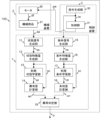
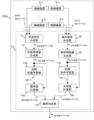
- FIG. 1 is a diagram showing an example of the configuration of a mechanical system according to Embodiment 1.
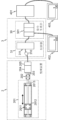
- FIG. 1 is a diagram illustrating the configuration of a mechanical device and a control device according to Embodiment 1.
- FIG. 2 is a diagram illustrating a configuration example in which a processing circuit included in the mechanical system according to Embodiment 1 is configured by a processor and a memory.
- FIG. 3 is a diagram illustrating a configuration example in which a processing circuit included in the mechanical system according to the first embodiment is configured with dedicated hardware.
- FIG. 3 is a diagram showing an example of time waveforms of motor speed and motor torque according to the first embodiment.
- FIG. 3 is a diagram showing an example of time waveforms of motor speed and motor torque during continuous positioning according to the first embodiment.
- FIG. 3 is a diagram showing an example of time waveforms of motor speed and motor torque during continuous positioning according to the first embodiment.
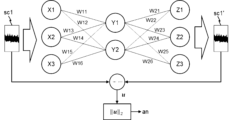
- 1 is a diagram showing an example of an autoencoder according to Embodiment 1.
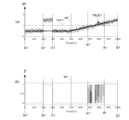
- FIG. 3 is a diagram showing changes over time in the degree of abnormality and determination results of the conventional abnormality detection device according to the first embodiment.
- FIG. 3 is a diagram showing an example of a configuration in which an abnormality determination section is omitted from the abnormality detection device according to the first embodiment.
- 3 is an example of changes over time in the degree of abnormality and the determination result generated by the configuration in which the abnormality determination unit is omitted from the abnormality detection device according to the first embodiment. This is an example different from FIG.
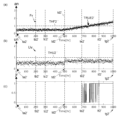
- FIG. 3 is a diagram showing temporal changes in the degree of abnormality, degree of unknown, and determination result generated by the abnormality detection device according to the first embodiment.
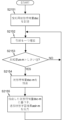
- FIG. 3 is a diagram illustrating an example of an operation flow of the abnormality determination unit according to the first embodiment.
- 1 is a block diagram showing an example of the configuration of a mechanical system according to Embodiment 1.
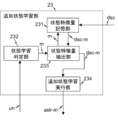
- FIG. 2 is a block diagram showing an example of the configuration of a mechanical system according to a second embodiment.
- FIG. 7 is a block diagram illustrating an example of the configuration of an additional condition learning section according to Embodiment 2.
- FIG. 7 is a block diagram illustrating an example of the configuration of an additional state learning unit according to Embodiment 2.
- FIG. 7 is a flow diagram illustrating an example of the operation of the additional condition learning unit according to the second embodiment.
- FIG. 7 is a flow diagram illustrating an example of the operation of the additional state learning unit according to the second embodiment.
- FIG. 9 is a diagram showing an example of temporal changes in the degree of abnormality, degree of unknown, and determination result generated by a configuration in which the additional condition learning unit and the additional state learning unit are omitted from the abnormality detection device according to the second embodiment.
- FIG. 7 is a diagram showing an example of temporal changes in the degree of abnormality, degree of unknown, and determination result generated by a configuration in which the additional state learning unit is omitted from the abnormality detection device according to the second embodiment.
- FIG. 1 is a diagram showing an example of the configuration of a mechanical system 100 according to the present embodiment.
- the mechanical system 100 includes an abnormality detection device 1 that detects an abnormality occurring in the mechanical device 2, a mechanical device 2, and a control device 3 that controls the mechanical device 2.
- the abnormality detection device 1 includes a state signal generation section 11 that generates a state signal ss, and a state feature amount generation section 12 that generates a state feature amount sc.
- the anomaly detection device 1 also includes an initial state learning unit 13 that performs learning based on the state feature quantity sc and outputs an initial state learning result slr, and an anomaly degree calculation unit 14 that calculates an anomaly degree an.
- the anomaly detection device 1 also includes a condition signal generation unit 15 that generates a condition signal cs, a condition feature generation unit 16 that generates a condition feature cc, and initial condition learning that performs learning based on the condition feature cc. It includes an initial condition learning section 17 that outputs the result clr.
- the abnormality detection device 1 also includes an unknown degree calculation unit 18 that calculates an unknown degree un, and an abnormality determination unit that determines whether the state of the mechanical device 2 is abnormal or normal based on the abnormality degree an and the unknown degree un. 19.
- each of the initial state learning performed by the initial condition learning unit 17 and the additional state learning described in the second embodiment is a form of state learning.
- each of the detection state signal dss, the initial learning state signal lss, and the additional learning state signal alss described in the second embodiment is a form of the state signal ss.
- Each of the initial learning state feature lsc and the detection state feature dsc is a form of state feature.
- each of the initial state learning result slr and the additional state learning result aslr is one form of state learning result.
- initial state learning and initial condition learning may be referred to as initial learning.
- Each of the initial condition learning and the additional condition learning described in Embodiment 2 is a form of condition learning.
- Each of the detection condition signal dcs, the initial learning condition signal lcs, and the additional learning state signal alss described in the second embodiment is one form of the condition signal cs.
- Each of the initial learning condition feature amount lcc and the detection condition feature amount dcc is one form of the condition feature amount cc.
- the initial condition learning result clr and the additional condition learning result aclr described in the second embodiment are one form of the condition learning result.
- the mechanical device 2 in FIG. 1 includes a motor 20 that generates a driving force df, and a mechanical component 21 driven by the driving force df.
- the control device 3 includes a command generation unit 30 that outputs an operating condition oc, and a control unit 31 that outputs electric power pw to the mechanical device 2 based on the operating condition oc.
- Examples of the mechanical equipment 2 include electronic component mounting machines, semiconductor manufacturing equipment, industrial robots, food manufacturing equipment, packaging machines, conveyance equipment, automatic doors, press machines, roll feeders, air conditioning equipment, generators, etc. can.
- the command generation unit 30 generates an operating condition oc that becomes a control signal that defines the operation of the mechanical device 2.
- the command generation unit 30 supplies electric power pw to the mechanical device 2 based on the operating condition oc.
- the motor 20 generates a driving force df for the mechanical component 21 using electric power pw, and drives the mechanical device 2.
- the mechanical component 21 may be any component that operates by the driving force df. Examples of the mechanical component 21 include a movable component that operates by the driving force df of the motor 20, a member that connects movable components, and the like.
- FIG. 2 is a diagram illustrating the configuration of the mechanical device 2 and the control device 3 according to the present embodiment.
- the mechanical device 2 shown in FIG. 2 includes a ball screw 201, a coupling 202, a servo motor shaft 203, and a servo motor 204 corresponding to the motor 20 in FIG.
- the driving force df in FIG. 1 corresponds to the driving torque generated by the servo motor 204 in the example shown in FIG.
- the ball screw 201 includes a movable part 2011 that moves as the ball screw shaft 2013 rotates, a guide 2012 that limits the direction of movement of the movable part 2011, and a ball screw shaft 2013.
- Each of the ball screw shaft 2013 and the servo motor shaft 203 is mechanically connected to the coupling 202.
- the driving force df which is the driving torque generated by the servo motor 204, is transmitted from the servo motor shaft 203 to the ball screw shaft 2013 via the coupling 202.
- the ball screw 201 converts a rotational motion into a linear motion using a screw mechanism, and moves the movable portion 2011 in two directions as shown by the arrows in FIG.
- the guide 2012 improves the accuracy of the operation of the movable part 2011 by assisting in restricting the movement of the movable part 2011 while keeping it movable in the direction of the arrow.
- the movable part 2011 is connected to a mechanical component 21 (not shown), and the mechanical component 21 operates according to the purpose of the mechanical device 2.
- the command generation unit 30 shown in FIG. 2 includes a PLC (Programmable Logic Controller) 301.
- PLC 301 generates a command to move servo motor 204 and outputs it to driver 311. Examples of commands include signals instructing the position, speed, torque, etc. of servo motor 204. Further, this command corresponds to the operating condition oc in FIG.
- a PC Personal Computer
- the PC 401 outputs instructions regarding the operation of the mechanical device 2 to the PLC 301.
- an industrial PC Factory Automation PC or Industrial PC
- the control unit 31 includes a driver 311 and a current sensor 310. Furthermore, an encoder 205 that measures the rotation angle of the servo motor 204 is attached to the mechanical device 2 .
- Current sensor 310 measures the drive current supplied from driver 311 to servo motor 204 . This drive current corresponds to the power pw in FIG.
- the driver 311 performs feedback control of the servo motor 204 based on the measured value of the current sensor 310 and the measured value of the encoder 205, and supplies drive current to the servo motor 204. In other words, the driver 311 causes the operation of the servo motor 204 to follow the command generated by the PLC 301 by executing feedback control.
- the commands generated by the PLC 301 correspond to the operating conditions oc in FIG. 1, as described above.
- the state signal ss used to detect the state of the mechanical device 2 is the motor torque mt.
- the status signal ss of this embodiment is not limited to this example.
- the status signal ss may be any signal that includes information regarding the status of the mechanical device 2.
- Examples of the status signal ss include physical quantities such as position, speed, acceleration, current, voltage, torque, force, pressure, sound, light intensity, etc., detected by a sensor installed in or around the mechanical device 2.
- One example is a signal measured by .
- the status signal ss may be a signal of image information.
- the encoder 205 and the current sensor 310 are illustrated as examples of sensors used to obtain the state quantity sa, but the sensors used to obtain the state quantity sa are not limited to these.
- sensors used to obtain the state quantity sa include a laser displacement meter, an angle encoder, a gyro sensor, a vibration meter, an acceleration sensor, a voltmeter, a torque sensor, a pressure sensor, a microphone, a light sensor, and a camera. These sensors do not necessarily need to be installed close to the mechanical device 2, the motor 20, etc., and may be installed at any location as long as they can generate the state quantity sa.
- an acceleration sensor may be installed on the outer surface of the guide 2012, and the acceleration measured by the acceleration sensor may be output as the status signal ss.
- the outer surface of the guide 2012 is the surface opposite to the side on which the movable portion 2011 is arranged.
- the command generation unit 30 may include a PLC display 402 that displays the status of the PLC 301, and a PC display 403 that displays the status of the PC 401.
- a plurality of drive sources such as the servo motor 204 may be provided for one mechanical device 2.
- a plurality of drivers 311 may be provided for one mechanical device 2 as necessary.
- a single PLC 301 may operate the mechanical device 2 in a unified manner, or a plurality of PLCs 301 may cooperate to operate the mechanical device 2. The above is an explanation of the examples of the mechanical device 2 and the control device 3 shown in FIG. 2.
- the mechanical device 2 that is the target of abnormality detection by the abnormality detection device 1 is not limited to the example shown in FIG.
- the types of abnormalities to be detected are not limited to the examples shown in FIG. 2.
- the abnormality detection device 1 can be widely applied to all phenomena occurring in the mechanical device 2.
- An event occurring in the mechanical device 2, a phenomenon occurring in the mechanical device 2, a state of the mechanical device 2, etc. can be regarded as abnormal.
- Examples of phenomena that can be considered abnormal include foreign matter entering the mechanical device 2, damage to the casing of the mechanical device 2, deterioration of grease, peeling of materials, defective workpieces, fluid defects, improper installation of the device, Examples include poor assembly.
- a situation in which two or more phenomena occur may be detected as an abnormality.
- FIG. 3 is a diagram illustrating a configuration example in which a processing circuit included in mechanical system 100 according to the present embodiment is configured by processor 1151 and memory 1152.
- the processing circuit shown in FIG. 3 may be included in the abnormality detection device 1 shown in FIG. 1, the control device 3, the driver 311 shown in FIG. 2, and the like.
- each function of the processing circuit such as the abnormality detection device 1, the control device 3, and the driver 311, is realized by software, firmware, or a combination of software and firmware.
- Software or firmware is written as a program and stored in memory 1152.
- each function is realized by a processor 1151 reading and executing a program stored in a memory 1152.
- the processing circuit is a program that ultimately causes the processing of the abnormality detection device 1, the control device 3, the driver 311, etc. to be executed. It includes a memory 1152 for storing. It can also be said that these programs cause the computer to execute procedures and methods executed by the abnormality detection device 1, the control device 3, the driver 311, and the like.
- the processor 1151 may be a calculation means called a CPU (Central Processing Unit), a processing device, an arithmetic device, a microprocessor, a microcomputer, or a DSP (Digital Signal Processor).
- the memory 1152 may be a nonvolatile or volatile semiconductor memory, such as a RAM, a ROM (Read Only Memory), a flash memory, an EPROM (Erasable Programmable ROM), or an EEPROM (registered trademark) (Electrically EPROM). Further, the memory 1152 may be configured as a storage means such as a magnetic disk, a flexible disk, an optical disk, a compact disk, a mini disk, or a DVD (Digital Versatile Disc).
- FIG. 4 is a diagram illustrating a configuration example in which the processing circuit included in the mechanical system 100 according to the present embodiment is configured with dedicated hardware.
- the processing circuit shown in FIG. 4 may be included in the abnormality detection device 1 shown in FIG. 1, the control device 3, the driver 311 shown in FIG. 2, and the like.
- the processing circuit 1161 shown in FIG. 4 may be, for example, a single circuit, a composite circuit, a programmed processor, a parallel programmed processor, an ASIC (Application Specific Integrated Circuit), It may be an FPGA (Field Programmable Gate Array) or a combination of these.
- the processing circuit included in the mechanical system 100 may implement a plurality of functions such as the abnormality detection device 1, control device 3, and driver 311 shown in FIG. It may be realized by the processing circuit 1161.
- the abnormality detection device 1, the control device 3, the driver 311, the PLC 401, and the like may be connected via a network. Further, at least one of the abnormality detection device 1, the control device 3, the driver 311, the PLC 401, etc. may exist on the cloud server.
- a device for detecting an abnormality by the abnormality detection device 1 may be separately prepared, and this device may execute the operation of the abnormality detection device 1.
- a device including a battery, a microcomputer, a sensor, a display, and a communication function is prepared, and this device acquires the sound generated by the mechanical device 2 as the status signal ss using a microphone.
- the abnormality detection device 1 may detect the state of the mechanical device 2 based on this state signal ss.
- the PLC display 402, the PC display 403, etc. can be omitted.
- the status of the servo motor 204, the ball screw 201, etc. may be displayed using an LED or the like provided in the driver 311 and the PLC 301 instead of these display devices.
- the determination result of whether the status is normal or abnormal may be displayed using an LED or the like.
- the configuration may be such that the drive of the servo motor 204 is stopped when it is determined that an abnormality has occurred without displaying the state or the determination result regarding the state.
- the speed of the servo motor 204 is obtained from the encoder 205 provided on the servo motor 204, but the present embodiment is not limited to such a form.
- the control signal from the command generation unit 30 that issues a drive command to the motor 20 may be used as the operating condition oc, and the condition signal generation unit 15 may generate the motor speed as the condition signal cs. .
- the servo motor 204 is a rotary type servo motor
- motors other than rotary types include linear servo motors, induction motors, stepping motors, brush motors, and ultrasonic motors.
- the abnormality detection device 1 of this embodiment can be applied.
- the mechanical device 2 may be driven by an internal combustion engine such as a gasoline engine, a jet engine, a rocket engine, or a gas turbine. In this way, the driving source is not limited to one driven by electric power.
- the mechanical device 2 may be driven by natural energy such as wind power, geothermal power, and hydraulic power.
- the mechanical device 2 may be a wind power generation device, a geothermal power generation device, a hydroelectric power generation device, or the like.
- this command can be used as the operating condition THERc.
- the abnormality detection device 1 can detect abnormality with high accuracy by using the command as the operating condition THERc.
- the abnormality detection device 1 can detect abnormalities while suppressing the occurrence of false detections, missed detections, and the like. If the mechanical device 2 is driven by natural energy, such as a wind power generator, the mechanical system 100 may not include the control device 3.
- the mechanical device 2 in FIG. 1 includes a ball screw 201 and a coupling 202 as components, the components of the mechanical device 2 are not limited to these.
- components of the mechanical device 2 other than the ball screw 201 and the coupling 202 include a speed reducer, a guide, a belt, a screw, a pump, a bearing, a casing, and the like. In this way, the abnormality detection device 1 can be applied to various mechanical devices 2.
- the operation of the abnormality detection device 1 will be illustrated.
- an increase in vibration, an increase in friction, etc. due to deterioration of the sliding portion of the ball screw 201 are examples of the abnormality detected by the abnormality detection device 1.
- the state signal generation unit 11 acquires a state quantity sa that detects a physical phenomenon occurring in the mechanical device 2 using a sensor or the like, and outputs it as a time-series state signal ss.
- the physical phenomenon is a quantity that can be detected about the mechanical device 2 using a sensor or the like.
- the state quantity sa may be an amount that is affected by a failure, deterioration, etc. that has occurred in the mechanical device 2.
- the state quantity sa may be a quantity capable of detecting the state of the mechanical device 2, a failure occurring in the mechanical device 2, deterioration, etc. Further, the abnormality detection device 1 may be configured such that the state quantity sa is correlated with the state of the mechanical device 2, a failure occurring in the mechanical device 2, deterioration, etc.
- a time-series signal is a signal that has information associated with each of a plurality of time points.
- the time-series signal may be a signal in which, by specifying a certain time point among a plurality of time-points of the time-series signal, the signal corresponding to that time point or the value indicated by the signal is determined.
- the state signal ss obtained by the state signal generation unit 11 detecting the state of the mechanical device 2 during the initial state learning time is referred to as the initial learning state signal lss.
- the initial state learning time is a time during which the mechanical device 2 is in a normal state.
- the time during which the status signal generation unit 11 detects the status of the mechanical device 2 as a target for abnormality detection is defined as the detection time.
- the state signal ss detected by the state signal generation unit 11 during this detection time is referred to as a detection state signal dss.
- the relationship between the initial state learning time and the detection time is not limited, but if the detection time is later than the initial state learning time, there is an advantage that the results of initial state learning can be used to detect abnormalities. .
- the state quantity sa is the value of the driving torque calculated from the value of the current flowing through the servo motor 204, which is an example of the motor 20. Further, the status signal generation unit 11 measures the value of the drive current using the current sensor 310, converts this current value into a torque value that is the value of the drive torque generated by the servo motor 204, and sets it as the status signal ss. .
- the state quantity sa may change from moment to moment depending on the behavior of the mechanical device 2, time, and the like.
- the state feature generation unit 12 acquires the state signal ss in time series. Then, a state feature quantity sc is generated from the time-series state signal ss.
- the state feature amount sc is preferably an amount obtained by extracting features representing the state of the mechanical device 2. Although the state feature quantity sc does not have to be a time-series signal, it is desirable to generate it in a time-series manner. Further, the state feature generating unit 12 may generate one state feature sc for each set including a plurality of time points at which the state signal ss was generated. Further, the state feature generation unit 12 may generate one state feature sc for each of the plurality of time points at which the state signal ss is generated.
- the state feature amount sc generated by the state feature amount generation unit 12 from the initial learning state signal lss is referred to as the initial learning state feature amount lsc.
- the state feature amount sc generated by the state feature amount generation unit 12 from the detection state signal dss is referred to as the detection state feature amount dsc.
- the initial state learning unit 13 performs learning based on the initial learning state feature lsc and outputs the learning result as an initial state learning result slr.
- the learning performed by this initial state learning section 13 is referred to as initial state learning.
- the initial state learning unit 13 may generate a model regarding the characteristics of the initial learning state signal lss, and output the structure, parameters, etc. of the model as the initial state learning result slr.
- the abnormality detection device 1 may include a learning model that has undergone initial state learning, an outputted initial state learning result slr, and the like.
- a model based on the initial state learning result slr output by the initial state learning unit 13 described in this embodiment may be provided.
- a trained learning model, an outputted initial state learning result slr, etc. are provided, the results of initial state learning can be used without performing initial state learning.
- the abnormality degree calculation unit 14 calculates the abnormality degree an based on the detection state feature amount dsc and the initial state learning result slr.
- the abnormality degree calculation unit 14 may calculate the degree of deviation between the characteristics of the detection state signal dss and the characteristics of the initial learning state signal lss as the abnormality degree an. Further, the abnormality degree calculation unit 14 may calculate the difference between the characteristics of the detection state feature amount dsc and the characteristics of the initial learning state feature amount lsc as the abnormality degree an.
- the abnormality degree calculation unit 14 generates a model from the structure of the model, the parameters of the model, and the like. Then, the abnormality degree calculation unit 14 calculates the difference between the output when the initial learning state feature quantity lsc is inputted into the relevant model and the output when the detection state feature quantity dsc is inputted into the relevant model as an abnormality level. It may be calculated as an.
- the condition signal generation unit 15 acquires the operating condition of the mechanical device 2 as an operating condition oc, and generates it as a condition signal cs.
- the operating condition oc may be anything that indicates the operating condition of the mechanical device 2.
- the operating conditions oc are the set value or command value of the speed of the motor 20, the set value or command value of the acceleration of the motor 20, the set value or command value of the moving distance of the motor 20, etc. shall be.
- the condition signal cs is a command speed ds which is a speed command and is a time-series signal.
- the condition signal cs is a signal obtained by acquiring the operating conditions oc in chronological order.
- Other examples of the operating condition oc and the condition signal cs include jerk, load size, outside temperature, pressure, flow rate, and the like.
- the condition signal cs obtained by the condition signal generation unit 15 detecting the state of the mechanical device 2 during the initial condition learning time is referred to as the initial learning condition signal lcs.
- the initial condition learning time is a time during which the mechanical device 2 is in a normal state.
- the condition signal cs detected by the condition signal generation unit 15 at the detection time which is the time when the state of the mechanical device 2 is to be detected, is referred to as a detection condition signal dcs.
- the relationship between the initial condition learning time and the detection time is not limited, since the results of initial condition learning can be used for abnormality detection, it is preferable that the detection time is a time later than the initial condition learning time. be.
- the initial state learning time and the initial condition learning time do not necessarily have to match.
- the detection time in the description of the detection state signal dss matches the detection time in the description of the detection condition signal dcs.
- the condition feature generation unit 16 generates the initial learning condition feature lcc from the initial learning condition signal lcs. For example, the condition feature generation unit 16 may extract a feature representing the characteristic of the driving condition oc during the initial condition learning time from the initial learning condition signal lcs, and generate it as the initial learning condition feature lcc.
- the initial condition learning unit 17 performs learning based on the initial learning condition feature quantity lcc, and outputs the learning result as an initial condition learning result clr.
- the learning performed by this initial condition learning section 17 is referred to as initial condition learning.
- Initial condition learning, initial state learning, etc. are sometimes referred to as initial learning.
- the initial condition learning unit 17 models the characteristics of the driving condition THERc during the initial condition learning time based on the initial learning condition feature quantity lcc, and outputs the model structure, parameters, etc. as the initial condition learning result clr. Good too.
- the abnormality detection device 1 may be provided with a learned learning model, an outputted initial condition learning result clr, etc. instead of the initial condition learning section 17.
- the anomaly detection device 1 is equipped with a trained learning model, an output initial condition learning result clr, etc., highly accurate anomaly detection can be performed in a short time by using the learning results without performing learning. .
- the calculation load can be reduced.
- the trained learning model may be a model based on the initial condition learning result clr output by the initial condition learning section 17.
- the unknown degree calculation unit 18 calculates the unknown degree un based on the initial condition learning result clr and the detection condition signal dcs.
- the degree of unknown un may be an amount representing the degree of deviation between the initial learning condition signal lcs and the detection condition signal dcs. Further, the unknown degree calculation unit 18 may calculate the degree of deviation in characteristics between the detection condition feature amount dcc and the initial learning condition feature amount lcc as the unknown degree un.
- the initial condition learning result clr includes the structure of the model, the parameters of the model, and the like.
- the unknown degree calculation unit 18 generates a model from the structure of the model, the parameters of the model, and the like. Then, the unknown degree calculation unit 18 calculates the difference between the output when the initial learning condition feature quantity lcc is inputted into the model concerned and the output when the detection condition characteristic quantity dcc is inputted into the concerned model as an unknown value. It may be calculated as un.
- the abnormality determining unit 19 determines whether an abnormality has occurred in the mechanical device 2 based on the abnormality degree an and the unknown degree un, and outputs it as a determination result jr. For example, when the abnormality degree an is larger than a predetermined first threshold and the unknown degree un is smaller than a predetermined second threshold, the abnormality determination unit 19 determines that the state of the mechanical device 2 is abnormal. It may be determined that
- the abnormality determination unit 19 determines the state of the mechanical device 2. may be determined to be normal.
- the case where the degree of abnormality an is less than or equal to the first threshold value is the case where the degree of abnormality an is smaller than the first threshold value or the same as the first threshold value.
- the case where the unknown degree un is greater than or equal to the second threshold value means that the unknown degree un is greater than the second threshold value or is the same as the second threshold value.
- the abnormality detection device 1 can also be configured without the abnormality determination section 19.
- a device external to the abnormality detection device 1 may execute the processing of the abnormality determination unit 19. Further, the processing of the abnormality determination unit 19 may be performed by an operator. Further, the abnormality determination unit 19 performs machine learning using the degree of abnormality an and the degree of unknown un as learning data to generate a model. Then, the abnormality determination unit 19 may perform the determination based on the generated model and the degree of abnormality an and the degree of unknown un acquired at the detection time when the mechanical device 2 is subject to abnormality detection. Further, the abnormality detection device 1 may include a display unit that displays the determination result jr, the degree of unknown un, the degree of abnormality an, and the like.
- FIG. 5 is a diagram showing an example of time waveforms of motor speed ms and motor torque mt according to the present embodiment.
- the condition signal generation unit 15 generates the command speed ds as a condition signal cs.
- the time-series waveform of the command speed ds generated by the condition signal generation unit 15 as the condition signal cs is shown by a dotted line, that is, a broken line.
- the commanded speed ds is the commanded speed ds of the motor defined by the operating condition oc generated by the command generation unit 30.
- the motor speed ms calculated from the measurement results of the encoder 205 is shown by a solid line.
- FIGS. 5(a) and 5(b) shows a time-series waveform of the motor torque mt generated by the status signal generation unit 11 as the status signal ss.
- the horizontal axis in FIGS. 5(a) and 5(b) represents time.
- a point on the time axis in FIG. 5(a) with a symbol and a point on the time axis in FIG. 5(b) with the same symbol as that symbol specify the same time. ing.
- the command speed ds is 0 from time tr0 to time tr1. From time tr1 to time tr2, the command speed ds is a command to accelerate at a constant acceleration. Then, the commanded speed ds, which was 0 at time tr1, reaches the speed Vcmd at time tr2. From time tr2 to time tr3, the command speed ds is maintained at the speed Vcmd.
- the command speed ds is a command to decelerate at a constant acceleration from time tr3 to time tr4. The commanded speed ds, which was the speed Vcmd at time tr3, becomes 0 at time tr4. Then, the command speed ds is maintained at 0 from time tr4 to time tr5.
- the motor speed ms in FIG. 5(a) is an actual value of the speed of the motor 20.
- the motor speed ms is the actual value of the speed of the servo motor 204 in FIG. 2 .
- the servo motor 204 is controlled by the command generation unit 30, that is, by the driver 311 in FIG. 2, so that the motor speed ms follows the command speed ds.
- the relationship between command speed ds and motor speed ms changes depending on the configuration of command generation section 30.
- FIG. 5A illustrates a case where the motor speed ms follows the command speed ds with a slight delay.
- FIG. 5B the time-series waveform of the motor torque mt calculated from the measured value of the current sensor 310 is shown by a solid line.
- the signal directly obtained from the current sensor 310 is a signal obtained by measuring three-phase currents flowing in the servo motor 204 in FIG. 2 (the three-phase currents are not shown).
- the status signal generation unit 11 converts this three-phase current to generate the motor torque mt shown in FIG. 5(b) as a status signal ss.
- sensors may be installed in the mechanical device 2 as appropriate. Furthermore, the sensor may be included in the status signal generation section 11 or included in the abnormality detection device 1. Further, the status signal generation unit 11 may perform conversion on the measured value of the sensor as appropriate. In addition to or in place of the sensors exemplified in the explanation of FIG. The state signal ss may be generated based on the measurement results. Further, examples of the sensor include a torque sensor, a force sensor, a vibration sensor, a gyro sensor, an encoder, a laser displacement meter, a photo sensor, a microphone, and the like. Note that the status signal generation unit 11 may directly generate the three-phase current values detected by the current sensor 310 as the status signal ss. Further, the status signal generation unit 11 may generate the rotation angle of the servo motor 204 obtained from the encoder 205, or the motor speed ms obtained by numerical differentiation or the like from the rotation angle, as the status signal ss.
- the time-series waveform of the motor torque mt explained using FIG. 5A is a waveform that instructs acceleration of the servo motor 204 from time tr1 to time tr2. From time tr3 to time tr4, the waveform instructs the servo motor 204 to decelerate.
- the motor torque mt shown in FIG. 5(b) increases from time tr1 to time tr2. Further, the motor torque mt shown in FIG. 5(b) decreases from time tr3 to time tr4.
- the time waveform in FIG. 5(b) shows how the motor torque mt changes depending on the motor speed ms due to the action of frictional force. For example, from time tr1 to time tr2, although motor speed ms maintains a state of accelerating at the same acceleration, motor torque mt increases as motor speed ms increases.
- FIGS. 5(a) and 5(b) illustrate waveforms when a single drive called positioning is performed from a stopped state of the servo motor 204.
- the number of times of positioning is one, but positioning may be performed multiple times.
- FIG. 5 describes the operation when positioning the mechanical component 21 by the servo motor 204
- the application of the abnormality detection device 1 of this embodiment is not limited to the positioning operation.
- the abnormality detection device 1 of this embodiment can be applied to abnormality detection of a mechanical device 2 that is not controlled following a command.
- the command speed ds includes a period of time when it is constant.
- the time waveform of the command speed ds has a trapezoidal shape.
- the abnormality detection device 1 of the present embodiment can also be applied when the time waveform of the command speed ds is not trapezoidal, such as when there is no time for the command speed ds to become constant, that is, when the waveform is triangular.
- the slope of the speed during acceleration is constant, that is, the acceleration of the command speed ds has a shape close to a rectangle.
- the applicable configuration of the abnormality detection device 1 is not limited depending on the time-series waveform of the command.
- the abnormality detection device 1 of this embodiment is also applied to the waveform of the acceleration of the command speed ds when control is executed to limit the jerk in order to suppress the occurrence of vibrations due to sudden acceleration. can do.
- the abnormality detection device 1 of this embodiment can also be applied to a configuration in which a command is subjected to filter processing or the like.
- the command to the servo motor 204 generated by the PLC 301 is illustrated as the operating condition oc, but the operating condition oc is not limited to the command to the motor 20.
- the operating condition oc may be anything that includes information regarding the operation of the mechanical device 2. Further, it is desirable to select as the operating condition oc an amount that has a small correlation with the occurrence of an abnormality and that affects the state signal ss or the state amount sa as a disturbance.
- the information included in the condition signal cs is information that is unlikely to cause an abnormality that occurs in the mechanical device 2.
- the information included in the condition signal cs is preferably information that may affect the state signal ss as a disturbance. It is desirable to configure the condition signal generation section 15 to generate the condition signal cs as described above.
- the detected value of the operating condition oc or the condition signal cs does not change significantly between a state where an abnormality has occurred and a state where no abnormality has occurred. Furthermore, even if there is a difference between the unknown degree un when there is an abnormality and the unknown degree un when there is no abnormality, this difference must be such that it does not cause a change exceeding the threshold value set for the unknown degree un. It is desirable to be different.
- the abnormality determination unit 19 outputs the determination result of whether or not the mechanical device 2 is in an unknown situation to the control device 3.
- the command generation unit 30 outputs an operating condition oc that changes the mechanical device 2 to a known situation.
- the abnormality determination unit 19 performs abnormality detection based on the unknown degree un and the abnormality degree an. Good too.
- the abnormality determination unit 19 outputs the degree of unknown un to the control device 3 instead of the determination result, and the control device 3 determines whether the mechanical device 2 is in an unknown situation or a known situation. It's okay.
- the abnormality detection device 1 is provided with a display section that displays the determination result jr of whether or not the mechanical device 2 is in an unknown situation, so that when the mechanical device 2 is in an unknown situation, the operator can change the mechanical device 2 to a known situation.
- An operation may be performed to switch to the operating condition sammlungc to be changed.
- the degree of unknown un may be displayed on the display section, so that the worker can determine whether or not he or she is in an unknown situation.
- the information included in the condition signal cs include the outside temperature, the vibration value related to the mechanical device 2, the mass of the workpiece handled by the mechanical device 2, the input to the mechanical device 2 when operating the mechanical device 2, and the like.
- the vibration value related to the mechanical device 2 is a value related to vibration generated in something that is in contact with at least a part of the mechanical device 2.
- the vibration value related to the mechanical device 2 may be a value related to the vibration of something that generates vibration or excites vibration in at least a part of the mechanical device 2. Examples of the above include the floor on which the mechanical device 2 is installed, the pedestal, the surrounding air, and the like. Examples of numerical values related to vibration include vibration amplitude, frequency, and combinations thereof.
- the condition signal generation unit 15 can generate the condition signal cs based on this information. It goes without saying that the condition signal cs may be generated by combining multiple types of information.
- 6 and 7 are diagrams showing examples of time waveforms of the command speed ds and motor torque mt for continuous positioning according to the present embodiment.
- 6(a) and 7(a) show the time waveform of the command speed ds output by the condition signal generation unit 15 as the condition signal cs.
- FIG. 6(a) shows a time waveform in the range from time 0 seconds to time 10 seconds
- FIG. 7(a) shows a time waveform in the range from time 10 seconds to time 20 seconds.
- FIGS. 6(b) and 7(b) show the time waveform of the motor torque mt output by the status signal generation unit 11 as the status signal ss.
- FIG. 6(b) shows a time waveform in the range from time 0 seconds to time 10 seconds
- FIG. 7(b) shows a time waveform in the range from time 10 seconds to time 20 seconds.
- the horizontal axes in FIGS. 6(a), 6(b), 7(a), and 7(b) represent time, and the unit is seconds (s).
- the position on the time axis in FIG. 6(a) marked with a code and the position on the time axis in FIG. 6(b) marked with the same code are at the same time.
- the position on the time axis in FIG. 7(a) marked with a code and the position on the time axis in FIG. 7(b) marked with the same code are at the same time.
- the vertical axis in FIGS. 6(a) and 7(a) represents the command speed ds, and the unit is r/min (round per minute).
- the vertical axis in FIGS. 6(b) and 7(b) represents the motor torque mt, and the unit is Newton meters (Nm).
- FIG. 5 illustrates one positioning
- FIGS. 6 and 7 illustrate 10 consecutive positionings. Each of these ten times of positioning is referred to as positioning D1 to positioning D10.
- Positioning D1 to positioning D10 are different from each other in at least one of command speed, acceleration during acceleration, acceleration during deceleration, moving distance, and the like. For example, in positioning D1, the maximum speed is 3200 r/min, and in positioning D2, the maximum speed is 2200 r/min.
- the acceleration during acceleration is large, and the acceleration during deceleration is smaller than in positioning D1.
- the absolute value of acceleration during acceleration is smaller than positioning D1, and the absolute value of acceleration during deceleration is larger than positioning D1.
- the direction of movement of the servo motor 204 is different from positioning D1, and the direction of speed is negative.
- the moving distance is smaller than in positioning D1 and positioning D2, and the time waveform of the command speed ds, that is, the operating condition oc, has a triangular shape. In this way, the shapes of the command speeds ds for positioning D1 to positioning D10 are different from each other.
- the operating conditions oc generated by the command generation unit 30 are different from positioning D1 to positioning D10.
- the command generation unit 30 generates operating conditions oc according to the operational status of the mechanical device 2. For example, if the mechanical device 2 is a conveyance device, it is desirable to improve the efficiency of the conveyance process, so it is desirable for the command generation unit 30 to generate an operating condition oc that completes each positioning in as short a time as possible. In addition, when a workpiece is being transported that requires reducing shaking, impact, etc., the command generation unit 30 sets an upper limit on speed, acceleration, jerk, etc. Generate operating conditions THERc so as not to exceed. Further, for example, if the mechanical device 2 is an electronic component mounting machine and the installation position of the electronic component is frequently changed, the command generation unit 30 may generate an operating condition where the moving distance and moving direction are different for each positioning. generate.
- the state feature amount generation unit 12 generates the state feature amount sc based on the motor torque mt.
- An example of the motor torque mt is shown in FIG. 6(b) and FIG. 7(b). It is desirable that the state feature amount generation unit 12 generates the state feature amount sc so that the number of variables of the state feature amount sc is the same among the plurality of state feature amounts sc generated in time series.
- the number of variables of the state feature amount sc may be, for example, the number of variable parameters or parameters that each of the state feature amount sc has.
- the plurality of parameters can take different values among the plurality of state feature quantities sc.
- the generated state feature sc is input to the initial state learning section 13 and the abnormality degree calculation section 14, and learning is performed by the initial state learning section 13 based on the state feature sc. Then, the abnormality degree calculation unit 14 calculates the abnormality degree an.
- the state feature amount generation unit 12 sets a set of state feature amounts sc1 as time-series signals obtained from time N of the motor torque mt at equal time intervals from time ts1 to time te1.
- the number of samples of the motor torque mt at this time that is, the number of variables of the state feature amount sc is N.
- the state feature amount sc1 mentioned here is only an example, and the present embodiment is not limited to such a form.
- the sampling period, processing start time ts1, processing end time te1, etc. can be changed as appropriate.
- N may be set to a large value and one set of state feature amounts sc may be generated across multiple positioning steps.
- time-series signals such as the state quantity sa, the state feature quantity sc, the operating condition oc, and the condition feature quantity cc are not limited to signals at equal time intervals.
- the time interval of the time-series signal may be set shorter only in a portion where it is necessary to acquire a large amount of data.
- the state feature amount generation unit 12 sequentially generates state feature amounts sc while changing the target time.
- a value obtained by subtracting time ts2 from time te2 which is the interval between the start time and end time of the process (te2-ts2), and a value obtained by subtracting time ts2 from time te1 to time ts1 are used.
- the value obtained by subtracting the value (te1 ⁇ ts1) may be the same value.
- the state feature amount generation unit 12 generates the state feature amount sc3 from the motor torque mt acquired during the positioning D3 shown in FIG. Further, a state feature amount sc4 is generated from the motor torque mt acquired during the positioning D4. Furthermore, a state feature quantity sc8 is generated from the motor torque mt acquired during the positioning D8 shown in FIG.
- the processing times for generating the state feature amount sc8 from the state feature amount sc1 do not overlap with each other, but in this embodiment, the times for generating the state feature amount sc overlap with each other. It is not limited to the case where it is not done.
- the relationship between time ts1 and time ts2 can be freely selected, such as first, second, or simultaneous.
- multiple processing times may overlap with each other. For example, if the time at which sampling is performed, that is, the processing time, is regarded as one window, the start time of this processing time is shifted by the sample time, which is the time interval of sampling performed at equal intervals. Sampling may be performed and the state feature quantity sc may be used. For example, if the sampling time is 1 millisecond and the number N of variables of the state feature sc, which is the sampling number of one window, is 100, the calculated state feature sc will have 99% of the samples overlapped. , the difference is 1%.
- a method of performing sampling using windows sequentially shifted by a predetermined number of samples in this manner is called a sliding window method. This sliding window method may also be adopted.
- the state signal ss obtained in time series is sampled by a predetermined number of samples and output as one set of state features sc.
- a method of generating the state feature sc that is different from the examples shown in FIGS. 6 and 7 will be illustrated.
- a plurality of statistics are calculated from a time-series condition signal cs to form one set of state feature quantities sc or condition feature quantities cc.
- a numerical value obtained by applying a statistical algorithm to the time-series signal detected as the state quantity sa may be used as the statistical quantity.
- it may be a value that summarizes the characteristics from a certain number of sample data.
- frequency analysis may be performed on a time-series signal to obtain the state feature sc or condition feature cc.
- the gain of a specific frequency, the phase of a specific frequency, etc. may be measured by frequency analysis and used as the state feature amount sc or condition feature amount cc.
- the number of samples during the processing time of the signal used to calculate the feature does not necessarily need to be the same.
- the state feature generation unit 12 arranges the state signals ss obtained in time series by a predetermined number of samples and outputs them as one set of state features sc.
- the state feature amount sc1, the state feature amount sc2, the state feature amount sc3, the state feature amount sc4, and the state feature amount sc8 include information regarding the state of the mechanical device 2 and include a plurality of state features according to the respective operating conditions oc. becomes a vector composed of variables.
- the speed of the servo motor 204 is different between the state feature amount sc1 and the state feature amount sc2.
- the state feature amount sc3 includes a time when the speed of the servo motor 204 is not constant and the servo motor 204 is accelerating.
- positioning D4 includes a time during which the servo motor 204 accelerates, a time when the speed is constant, and a time during which it decelerates, and the state feature amount sc4 samples the time during which the servo motor 204 accelerates.
- the state feature quantity sc8 indicates that the moving distance of the servo motor 204 is minute and the maximum speed is also small.
- the driving situation of the object to be detected is measured as a large number of variables acquired in time series, and the driving situation during learning is measured as a large number of variables acquired in a time series. There was no way to quantitatively evaluate the degree of discrepancy between the two. Furthermore, the problem that it is difficult to quantitatively evaluate the discrepancy between the two situations described above was not recognized.
- the driving situation to be detected is expressed as a time-series detection condition signal dcs. Further, the driving situation during the initial learning time is expressed as an initial learning condition signal lcs.
- the conditional feature generation unit 16 generates the initial learning conditional feature lcc based on the initial learning condition signal lcs. Furthermore, a detection condition feature amount dcc is generated based on the detection condition signal dcs. In the example of FIG. 6, the command speed ds shown in FIGS. 6(a) and 7(a) is used as the condition signal cs. Then, the conditional feature generation unit 16 sets the command speed ds included in each of the plurality of processing times as the detection conditional feature dcc.
- the conditional feature generation unit 16 sets a time series signal of a set of command speeds ds from time ts1 at which positioning D1 is executed to time te1 as conditional feature cc1. Further, a set of command speeds ds from time ts2 at which positioning D2 is executed to time te2 is defined as a condition feature amount cc2. Further, a set of command speeds ds from time ts3 at which positioning D3 is executed to time te3 is defined as a condition feature amount cc3. Further, a set of command speeds ds from time ts4 at which positioning D4 is executed to time te4 is defined as conditional feature quantity cc4 (displayed as conditional feature quantity cc4 in FIG.
- condition feature amount cc8 a set of command speeds ds from time ts8 at which positioning D8 is executed to time te8.
- condition feature amount cc1 conditional feature amount cc2
- conditional feature amount cc3 conditional feature amount cc4
- conditional feature amount cc8 may be used as the conditional feature amount dcc for detection, or as the conditional feature amount lcc for initial learning. good.
- Each corresponds sequentially to a detection state feature amount dsc1, a detection state feature amount dsc2, a detection state feature amount dsc3, a detection state feature amount dsc4, and a detection state feature amount dsc8.
- the fact that the detection condition feature dcc and the detection state feature dsc correspond means that the state signal ss and operating condition THERc used to generate each are detected during the same processing time. means that
- the sampling frequencies of the command speed ds and the motor torque mt are made the same for ease of understanding.
- the number of variables in one set of state feature quantities sc and the number of variables in one set of condition feature quantities cc were made the same.
- this embodiment is not limited to such a form.
- the sampling frequency of the condition signal cs and the sampling frequency of the state signal ss may be different.
- the number of variables in one set of state feature quantities sc may be different from the number of variables in one set of condition feature quantities cc.
- the detection state signal dss and the detection condition signal dcs used to calculate the corresponding detection state feature amount dsc and detection condition feature amount dcc are acquired during the same processing time. Then, the degree of abnormality an and the degree of unknown un are calculated based on data acquired during the same processing time, so that abnormality detection can be performed more accurately.
- conditional feature amount generation unit 16 generates the conditional feature amount cc
- method by which the state feature amount generation unit 12 generates the state feature amount sc may be the same or different.
- calculation of statistics may be used as the method for generating the condition feature amount cc
- frequency analysis may be used as the method for generating the state feature amount sc.
- the initial state learning unit 13 performs learning based on the initial learning state feature lsc and outputs the learning result as an initial state learning result slr. Further, the initial condition learning unit 17 executes learning based on the initial learning condition feature quantity lcc, and outputs the learning result as an initial condition learning result clr.
- FIG. 8 is a diagram showing an example of an autoencoder according to this embodiment.
- An autoencoder is a type of neural network model, and the autoencoder illustrated in FIG. 8 includes an input layer consisting of nodes X1 to X3, an intermediate layer consisting of nodes Y1 and Y2, and nodes Z1 to Z3. It has an output layer.
- Each of the nodes of the autoencoder in FIG. 8 is connected by a plurality of edges given with weights W11 to W26 as parameters. According to the autoencoder in Figure 8, based on the value input to the input layer, the value calculated by the function set on the edge is transmitted to the node in the next layer connected via the edge, and finally You can get the result from the output layer.
- the neural network as a whole constitutes one complex function.
- An autoencoder is a type of unsupervised learning device that learns each parameter (weight) so that the data input to the input layer becomes close to the data output from the output layer. By preparing a large number of input data and adjusting the weight parameter so that the error between the input and output is small for each data, the network learns the characteristics of the input signal. go.
- the number of nodes in the input layer is 3 and the number of nodes in the output layer is 3.
- the number of nodes in the intermediate layer is 2 and the total number of intermediate layers is 1, but the number of nodes and the number of layers in the intermediate layer are not limited to this.
- the initial state learning unit 13 trains the neural network so that when the state feature sc1, which is the state feature lsc for initial learning, is input to the network, sc1', which is the estimated value of the state feature sc1, is obtained as an output. Then, the neural network model after learning is output as an initial state learning result slr.
- the initial state learning result slr only needs to be able to specify the model, and may be, for example, the parameters of the model, the structure of the model, etc.
- the initial condition learning unit 17 trains the neural network so that when the conditional feature quantity cc1, which is the initial learning conditional feature quantity lcc, is input to the network, cc1', which is the estimated value of the conditional feature quantity cc1, is obtained as an output.
- the neural network model after learning is output as the initial condition learning result clr.
- the initial condition learning result clr only needs to be able to specify the model, and may be, for example, the parameters of the model, the structure of the model, etc.
- a configuration using an autoencoder was described as an example of the initial state learning unit 13 and the initial condition learning unit 17, but the present embodiment is not limited to this configuration.
- Examples of configurations of the initial state learning unit 13 and initial condition learning unit 17 that are different from the autoencoder include self-organizing map (SOM), MT method (Mahalanobis Taguchi Method), and principal component analysis. , PCA), One class support vector machine (OCSVM), k Nearest Neighbors method, Isolation Forest, etc. Even if the method is different from the method exemplified above, it is possible to learn the feature values input in advance and evaluate the degree of deviation between the characteristics of the feature values obtained after learning and the characteristics of the learned feature values. This method can be used as a learning method for the initial state learning section 13 or the initial condition learning section 17.
- the initial state learning section 13 and the initial condition learning section 17 are described as having the same structure.
- the structures of the initial state learning section 13 and the initial condition learning section 17 do not necessarily have to be the same, and different learning methods may be combined.
- the number of nodes and the number of edges of the neural networks of the initial state learning unit 13 and the initial condition learning unit 17 be the same.
- the number of input data of the initial state learning section 13 and the initial condition learning section 17 is the same.
- the abnormality degree calculation unit 14 calculates the abnormality degree an based on the initial state learning result slr and the detection state signal dss.
- the degree of abnormality an may be the degree of deviation between the initial learning state signal lss and the detection state signal dss.
- the abnormality degree calculation unit 14 inputs the detection state feature amount dsc into a model configured using the initial state learning result slr. Then, the degree of deviation between the initial learning state feature amount lsc and the detection state feature amount dsc may be calculated, and the degree of deviation, information indicating the degree of deviation, etc. may be used as the abnormality degree an.
- the difference between the state feature sc input to the autoencoder and the estimated value of the state feature sc output from the autoencoder is defined as the abnormality degree an. Good too. Since both the state feature amount sc and the estimated value of the state feature amount sc are vector amounts, the difference between the two is also a vector amount. In the example shown in FIG. 8, since the degree of abnormality an is evaluated as a scalar value, the square root of the sum of squares of the residual vector, which is the difference between the two, is set as the degree of abnormality an.
- the anomaly degree an is not the difference between the input and output as described above, but the difference between the value of the intermediate layer at the time of learning and the value of the intermediate layer at the time of evaluation. There is a way.
- the difference between the average value of the intermediate layer at the time of learning and the value of the intermediate layer at the time of inference (at the time of detection) may be calculated, and the magnitude of the difference may be taken as the abnormality degree an.
- the residual vector obtained by subtracting the average value of the hidden layer during training from the value of the hidden layer during each inference, as in the case of calculating the input/output difference described above. Let the square root of the sum of squares be the abnormality degree an.
- a quantization error (minimum quantization error, MQE) may be used as the anomaly degree an.
- MQE minimum quantization error
- T2 statistic or a Q statistic may be used as the degree of abnormality an.
- T2 statistic or a Q statistic may be used as the degree of abnormality an.
- T2 statistic or a Q statistic may be used as the degree of abnormality an.
- the distance from the origin in the space after mapping may be used as the degree of anomaly an.
- the distance between the feature to be evaluated and k learned features that are close to the feature to be evaluated may be set as the anomaly degree an.
- the unknown degree calculation unit 18 calculates the unknown degree un, which is the degree of deviation between the initial learning condition signal lcs and the detection condition signal dcs, based on the initial condition learning result clr and the detection condition signal dcs. For example, the unknown level calculation unit 18 configures a model using the initial condition learning result clr. Then, the detection condition feature amount dcc is inputted to the configured model, and the degree of deviation between the output from the configured model and the detection condition feature amount dcc is calculated. The degree of this deviation may be defined as the unknown degree un.
- the difference between the input detection condition feature amount dcc and the estimated value output from the model may be used as the unknown degree un. Since both the detection condition feature amount dcc and the estimated value of the detection condition feature amount dcc output from the model are vector quantities, the difference between the vectors also becomes a vector. Therefore, since the unknown degree un is evaluated as a scalar value, the square root of the sum of squares of residual vectors, which is the difference between vectors, may be used as the unknown degree un.
- FIG. 9 is a diagram showing an example of a configuration in which the abnormality determination unit 19 is omitted from the abnormality detection device 1 according to the present embodiment.
- the configuration of the abnormality detection device 1 from which the abnormality determination unit 19 is omitted is referred to as an abnormality detection device 1p.
- the same components and signals as in FIG. 1 are denoted by the same reference numerals.
- the anomaly detection device 1p is configured by omitting the four components of the condition signal generation unit 15, the condition feature amount generation unit 16, the initial condition learning unit 17, and the unknown level calculation unit 18 from the configuration of the anomaly detection device 1 shown in FIG. It was there. Further, the abnormality detection device 1p includes an abnormality determination unit 19a instead of the abnormality determination unit 19 of the abnormality detection device 1 shown in FIG. The differences between the abnormality determining section 19a and the abnormality determining section 19 will be explained.
- the abnormality determination unit 19 performs determination based on the degree of abnormality an and the degree of unknown un. On the other hand, the abnormality determination unit 19a performs determination based on the abnormality degree an without using the unknown degree un.
- FIG. 10 is an example of temporal changes in the degree of abnormality an and the determination result jr generated by the configuration in which the abnormality determination unit 19 is omitted from the abnormality detection device 1 according to the present embodiment.
- FIG. 10 is an example of a temporal change in the degree of abnormality an and the determination result jr generated by the abnormality detection device 1p.
- FIG. 11 is another example, different from FIG. 10, of temporal changes in the degree of abnormality an, the degree of unknown un, and the determination result jr generated by the configuration in which the abnormality determination unit 19 is omitted from the abnormality detection device 1 according to the present embodiment.
- FIG. 11 is an example of a temporal change in the degree of abnormality an and the determination result jr generated by the abnormality detection device 1p.
- FIGS. 10 and 11 are output by the abnormality determination unit 19a of the abnormality detection device 1p.
- FIG. 12 which will be described later, shows an operation in which the abnormality determination unit 19 of the abnormality detection device 1 performs abnormality determination using the unknown degree un. The effect of using the unknown degree un will be explained by comparing the two.
- FIGS. 10 and 11 represent time, and the unit is time (hr).
- FIGS. 10(a) and 11(a) show temporal changes in the degree of abnormality an.
- the vertical axis in FIGS. 10(a) and 11(a) indicates the degree of abnormality an.
- FIGS. 10(b) and 11(b) show temporal changes in the determination result jr.
- the vertical axis in FIGS. 10(b) and 11(b) indicates the determination result jr.
- two positions on the time axis with the same reference numerals represent the same time.
- FIGS. 11(a) and 11(b) two positions on the time axis with the same reference numerals represent the same time.
- the value of the degree of abnormality an is plotted every hour from time ta1, which is the time when ta1 has elapsed since the start of operation of the abnormality detection device 1p, to time tg1. It is assumed that learning of the initial state of the mechanical device 2 has been completed between the start of operation of the abnormality detection device 1p and the time ta1. From time ta1 to time td1, the abnormality degree an is plotted between 0 and 1, although there is some variation, and generally shows characteristics with small changes over time. Further, from time td1 to time tg1, the degree of abnormality an gradually increases as the operating time passes. This reflects that the mechanical device 2 gradually deteriorates after time td1. The abnormality degree an exceeds 1 for the first time at time te1, and after time tf1, all abnormality degrees an exceed 1.
- the threshold value THF1 of the degree of abnormality an used when the abnormality determination unit 19a calculates the determination result jr is set to 1.
- the abnormality determination unit 19a determines that the abnormality is abnormal when the value of the abnormality degree an exceeds the threshold value THF1. Then, if the value of the degree of abnormality an is the same as the threshold value THF1 or less than the threshold value THF1, it is determined to be normal.
- the true abnormality degree TRUE1 of the mechanical device 2 is illustrated by a thick solid line.
- the true abnormality degree TRUE1 is an abnormality degree an based on the state quantity sa that completely eliminates the influence of disturbance, and is a virtual abnormality degree an for easy explanation.
- the state quantity sa for detection is obtained by completely eliminating the influence of disturbance, and the state feature quantity dsc for detection and the degree of abnormality an are calculated based on this state quantity sa.
- An example of the disturbance is that the operating conditions THERc of the mechanical device 2 are changed between the time of learning the initial state and the time of detection.
- the disturbance can be eliminated by returning the operating condition oc to the initial state learning and measuring the state quantity sa for detection.
- the anomaly degree an calculated on the assumption that the true degree of anomaly can be calculated by eliminating the disturbance as the true degree of anomaly.
- This is called the abnormality degree TRUE1.
- the true degree of abnormality TRUE1 is different from the degree of abnormality an estimated by the abnormality detection device 1p.
- the true degree of abnormality TRUE1 is not affected by disturbances such as operating conditions réellec.
- the ideal operation of a general abnormality detection device can be said to be aimed at estimating this true degree of abnormality TRUE1 and detecting an abnormality.
- the abnormality degree an when the abnormality degree an correctly represents the state of the mechanical device 2, the abnormality degree an has the same value as the true abnormality degree TRUE1.
- actual abnormality detection devices are often unable to detect the true degree of abnormality TRUE1 because they are affected by disturbances.
- the true abnormality degree TRUE1 is plotted for easy understanding, and it is not necessarily necessary to calculate the true abnormality degree TRUE1.
- the time change of the determination result jr by the abnormality detection device 1p is plotted every hour.
- the determination result jr is set to 0, and when the mechanical device 2 is abnormal, the determination result jr is set to 1.
- the form of output of the judgment result jr by the abnormality judgment unit 19a is not limited to this form.
- the output form of the determination result jr may be such that it is possible to determine whether the determination result jr is normal or abnormal. Furthermore, it may be possible to know the degree of abnormality.
- the output form of the judgment result jr includes the output of a signal containing the information of the judgment result jr, the display of the judgment result jr to the operator (including not displaying it), and the issuance of an alarm (for example, a sound such as a siren). , red light, etc.), stop the alarm (including not outputting an alarm), stop the mechanical device 2, reduce the operating speed of the mechanical device 2, stop the device connected to the mechanical device 2, stop the mechanical device 2, etc. It also includes instructions for activating the maintenance device of the device 2.
- the determination result jr from time ta1 to time te1 is a normal value, which is a value indicating normality. That is, the value of the determination result jr is 0. Then, the determination result jr changes from a normal value to an abnormal value at least once at time te1.
- the determination result jr from time te1 to time tf1 includes a mixture of normal values and abnormal values due to variations in the degree of abnormality an.
- the mechanical device 2 starts deteriorating at time td1, and the deterioration gradually progresses after time td1.
- the fact that the determination result jr after time td1 is an abnormal value does not correspond to false detection (determination that a normal state is abnormal).
- the abnormality detection device 1p can perform abnormality detection without generating false detection. That is, if the mechanical device 2 is in the situation shown in FIG. 10, false detection will not occur even if the unknown degree un is not used for abnormality detection. Furthermore, the abnormality detection device 1p is able to output an abnormality degree an that is close to the true abnormality degree TRUE1.
- FIG. 11 is an example of the results detected by the abnormality detection device 1p.
- the time slot shown in FIG. 11 and the time slot shown in FIG. 10 are different from each other.
- deterioration of the mechanical device 2 starts at time td1', and after time td1', the mechanical device 2 gradually deteriorates.
- time tb1' to time tc1' the speed of the motor 20 is changed to a value different from the speed of the motor 20 at the time of initial state learning. It is assumed that the motor speed is the same as the motor speed during learning during the period from time ta1' to time tg1', excluding the period from time tb1' to time tc1'.
- FIG. 11(a) shows the change in the degree of abnormality an over time.
- FIG. 11(b) shows a change in the determination result jr over time.
- the horizontal axis in FIGS. 11(a) and 11(b) represents time, and the unit is time (hr).
- time axis of FIG. 11(a) and the time axis of FIG. 11(b) times indicated by the same symbols are the same times.
- FIG. 11 shows data from time ta1', which is the time when ta1' has elapsed since the start of operation of the abnormality detection device 1p, to time tg1'.
- time ta1' which is the time when ta1' has elapsed since the start of operation of the abnormality detection device 1p
- the vertical axis indicates the degree of abnormality an, and data points of the degree of abnormality an are plotted every hour. From time ta1' to time tb1' and from time tc1' to time td1', the abnormality degree an is plotted in the range from 0 to 1, although there is some variation, and it is generally It shows characteristics with small changes over time.
- the abnormality degree an exhibits a characteristic of gradually increasing as the operating time passes, although there is some variation.
- FIG. 10(a) the abnormality degree an exceeds 1 from time tb1' to time tc1'.
- the abnormality degree an is maintained at a value less than 1 from time ta1 to time td1.
- the increase in the degree of abnormality an from time tb1' to time tc1' in FIG. 11A is not due to deterioration of the mechanical device 2.
- This increase in the degree of abnormality an is due to the fact that the operating conditions from time tb1' to time tc1' have been changed from those at the time of initial learning, that is, the operating conditions oc have been changed.
- the threshold value THF1' for the degree of abnormality an was set to 1. It is assumed that the threshold value THF1' is determined from the distribution of the degree of abnormality an when the mechanical device 2 is normal. Further, in FIG. 11(a), the true abnormality degree TRUE1' of the mechanical device 2 is shown by a thick solid line. The description of the true abnormality degree TRUE1' in FIG. 11 is the same as the description of the true abnormality degree TRUE1 described in the description of FIG. 10, and therefore will be omitted.
- the determination result jr is plotted on the vertical axis.
- the determination result jr in FIG. 11(b) is shown by connecting data points acquired every hour with lines.
- the value of the judgment result jr when the mechanical device 2 is normal, the value of the judgment result jr is plotted as 0, and when the mechanical device 2 is abnormal, the value of the judgment result jr is plotted. is plotted as 1.
- the abnormality determination unit 19a compares the abnormality degree an of FIG.
- the determination result jr is set to 0.
- the degree of abnormality an exceeds the threshold value THF1'
- the state of the mechanical device 2 is regarded as abnormal, and the determination result jr is set to 1.
- the abnormality degree an is less than or equal to the threshold value THF1' means that the value of the abnormality degree an is less than the threshold value THF1', or the value of the abnormality degree an is the same as the threshold value THF1'. means.
- the abnormality determination unit 19a determines that the two time periods from time ta1' to time tb1' and from time tc1' to time te1' are determined as determination results jr. Outputs 0 as a value indicating normality. Then, since the degree of abnormality an exceeds 1 from time tb1' to time tc1', the abnormality determination unit 19a outputs the value 1 indicating abnormality as the determination result jr.
- the operating condition oc at the time of detection is maintained the same as at the time of initial learning.
- the operating condition oc is changed from the initial state learning time during a part of the detection time.
- no false detection occurs in the detection results of the abnormality detection device 1p.
- an erroneous detection occurs in the detection result of the abnormality detection device 1p due to the change in the operating condition THERc from the time of initial learning.
- an event in which a determination result indicating that the mechanical device 2 is abnormal when the mechanical device 2 is normal is output is referred to as a false detection.
- abnormality detection outputs the judgment result jr without using the unknown degree un. False detection may occur in the device 1p.
- FIG. 12 is a diagram showing temporal changes in the abnormality degree an, the unknown degree un, and the determination result jr generated by the abnormality detection device 1 according to the present embodiment.
- FIG. 12 shows changes over time when the mechanical device 2 gradually deteriorates after time td1''. Further, from time tb1'' to time tc1'' in FIG. 12, the speed of the motor 20 is changed to a setting different from that at the time of initial learning. Then, from time ta1'' to time tb1'' in FIG. 12 and from time tc1'' to time tg1'', the speed of the motor 20 is set to be the same as that at the time of initial learning.
- FIG. 12(a) shows the change in the degree of abnormality an over time.
- FIG. 12(b) shows the change in the unknown degree un over time.
- FIG. 12(c) shows a change in the determination result jr over time.
- the horizontal axes in FIGS. 12(a), 12(b), and 12(c) represent time, and the unit is time (hr).
- times with the same reference numerals indicate the same times.
- the example shown in FIG. 12 shows data from time ta1'', which is the time when ta1'' has elapsed since the start of operation of the abnormality detection device 1, to time tg1''. It is assumed that the initial learning of the mechanical device 2, that is, the initial state learning and initial condition learning, is completed before time ta1''.
- the abnormality degree an in FIG. 12(a) data points are plotted every hour. From time ta1'' to time tb1'' and from time tc1'' to time td1'' in FIG. 12(a), the values of the abnormality degree an are all from 0 to 1, and the change in value is small. Further, the abnormality degree an gradually increases as time passes from time td1'' to time tg1''.
- the abnormality degree an exceeds 1 from time tb1'' to time tc1''.
- the increase in the degree of abnormality an during this time period is similar to that described for the degree of abnormality an between time tb1' and time tc1' in FIG. 11(a).
- the increase in the degree of abnormality an from time tb1'' to time tc1'' in FIG. This is caused by a change in the conditions, in other words, the operating conditions THERc. That is, in the same way as between time tb1' and time tc1' in FIG. 11, between time tb1'' and time tc1'' in FIG. 12, the speed of the motor 20 is changed from the time of initial learning. It is said that this is caused by
- the abnormality degree an in FIG. 12 exceeds 1 at time te1'', and all abnormality degrees an exceed 1 at times after time tf1''.
- the threshold value THF1'' for the degree of abnormality is set to 1. Note that the threshold value THF1'' may be determined from the distribution of the degree of abnormality an when the mechanical device 2 is normal.
- the true abnormality degree TRUE1'' of the mechanical device 2 which is not influenced by disturbances such as operating conditions réellec, is shown by a thick solid line. ing.
- the explanation about the true abnormality degree TRUE1'' is the same as the explanation about the true abnormality degree TRUE1 in FIG.
- the vertical axis in FIG. 12(b) is the unknown degree un calculated by the unknown degree calculation unit 18.
- the unknowns un are all plotted between 0 and 1 from time ta1'' to time tb1'' and from time tc1'' to time tg1''. ing.
- the threshold value THU1'' for the unknown degree un is set to 1.
- the threshold value THU1'' may be determined from the distribution of the unknown degree un when performing initial condition learning. By determining the threshold value THU1'' from the distribution of the unknown degree un when performing initial condition learning, it is determined whether the abnormality degree an accurately represents the state of the mechanical device 2 from the unknown degree un. can do. For example, the abnormality determination unit 19 determines that when there is a large discrepancy between the unknown degree un calculated at the detection time and the distribution of the unknown degree un during initial condition learning, the abnormality degree an is determined based on the state of the mechanical device 2. It may be determined from the unknown degree un that it is not accurately represented. Further, for example, when the deviation between the calculated unknown degree un and the distribution of the unknown degree un during initial condition learning is small, the abnormality degree an accurately determines the state of the mechanical device 2. If it is expressed as , it may be determined from the unknown degree un.
- the vertical axis in FIG. 12(c) indicates the determination result jr of the presence or absence of an abnormality in the mechanical device 2 determined by the abnormality determination unit 19.
- the determination result jr is plotted by connecting data points calculated every hour with a line.
- the output format of the determination result jr when the state of the mechanical device 2 is normal, the determination result jr is set to 0, and when the state of the mechanical device 2 is abnormal, the determined result jr is set to 1.
- the output format of the determination result jr of this embodiment is not limited to this format.
- the abnormality determination unit 19 compares the abnormality degree an shown in FIG. 12(a) with a threshold value THF1''. Further, the unknown degree un shown in FIG. 11(b) is compared with the threshold value THU1''. Then, the abnormality determining unit 19 considers the state of the mechanical device 2 to be abnormal when the abnormality degree an exceeds the threshold value THF1'' and the unknown degree un is less than or equal to the threshold value THU1'', and the determination result jr Let be 1.
- the state of the mechanical device 2 is considered normal, and the determination result jr is set to 0.
- the case other than the above is at least one of the first case and the second case described below.
- the first case is a case where the degree of abnormality an is equal to or less than the threshold value THF1''.
- the second state is a case where the unknown degree un exceeds the threshold value THU1''.
- the abnormality determination unit 19 uses the unknown degree un when outputting the determination result jr. As shown in FIG. 12C, the abnormality determination unit 19 outputs a value 0 indicating normality as the determination result jr from time ta1'' to time te1''. Further, the abnormality detection device 1 does not cause any false detection. On the other hand, the abnormality determination unit 19a described in FIG. 11 does not use the unknown degree un. Then, as shown in FIG. 11B, the abnormality determination unit 19a generates a value 1 indicating abnormality as the determination result jr from time tb1' to time tc1'. Further, false detection occurs in the abnormality detection device 1a. In this way, according to the explanation comparing FIG. 12 and FIG. 11, the anomaly detection device 1 of the present embodiment can perform anomaly detection with fewer false positives by using the unknown degree un. .
- a threshold value is set for a value obtained by dividing the degree of abnormality an by the degree of unknown un. Then, when this value exceeds a threshold value, it is determined that there is an abnormality. Furthermore, when the value obtained by dividing the degree of abnormality an by the degree of unknown un is less than or equal to the threshold value, it is determined that the condition is normal.
- FIG. 13 is a diagram showing an example of the operation flow of the abnormality determination unit 19 according to the present embodiment.
- the abnormality determination unit 19 obtains a set of the abnormality degree an calculated by the abnormality degree calculation unit 14 and the unknown degree un calculated by the unknown degree calculation unit 18. It is desirable that a set of abnormality degree an and unknown degree un correspond to each other. In other words, it is desirable that the degree of abnormality an and the degree of unknown un be based on information acquired during the same detection time. That is, it is desirable that the detection state signal dss used to generate the abnormality degree an and the detection condition signal dcs used to generate the unknown degree un be acquired at the same detection time.
- the degree of abnormality an is determined as follows. It is desirable that the degree of abnormality an corresponds to the degree of unknown un in this way.
- abnormality detection can be performed with high accuracy. Furthermore, it is possible to perform abnormality detection with fewer occurrences of false detections and oversights.
- step S102 if the abnormality degree an exceeds the threshold value THF1'' and the unknown degree un is less than or equal to the threshold value THU1'', the abnormality determination unit 19 proceeds to step S103. In other cases, the process advances to step S104.
- the case where the unknown degree un is less than or equal to the threshold value THU1'' means that the unknown degree un is the same as the threshold value THU1'', or the unknown degree un is less than the threshold value THU1''. Either.
- Step S102 is a step in which the abnormality determining unit 19 determines whether the condition is abnormal or normal.
- step S103 the abnormality determination unit 19 outputs a determination result indicating that an abnormality has occurred in the mechanical device 2 as a determination result jr.
- step S104 the abnormality determining unit 19 outputs a determination result indicating that the mechanical device 2 is normal as a determination result jr.
- Steps S103 and S104 may include an operation of notifying the user of the determination result jr through an interface or the like as necessary. The above is the explanation of the operation flow in FIG. 12.
- FIG. 14 is a block diagram showing an example of the configuration of a mechanical system 100x according to this embodiment. A variation of this embodiment will be illustrated using FIG. Below, differences from the abnormality detection device 1 will be mainly explained.
- the mechanical system 100x includes an abnormality detection device 1x.
- the abnormality detection device 1x differs from the abnormality detection device 1 in that a learning model is shared when monitoring the mechanical devices 2-n from the plurality of mechanical devices 2-1. When the plurality of mechanical devices 2-1 to 2-n have almost the same characteristics, the effect of the abnormality detection device 1x, which will be explained using FIG. be done.
- An example of the above-mentioned equivalent characteristics is a case where the mechanical devices 2-1 to 2-n are manufactured with the same specifications, but are operated under different operating conditions.
- the motors that drive the mechanical devices 2-1 to 2-n are common, and abnormalities caused by the movement of the motors are exclusively detected, and the operating conditions oc and state quantities sa are , the case may be related to a motor or an object driven by the motor.
- the abnormality detection device 1x acquires the status signal ss-k from the mechanical device 2-k (k is an integer from 1 to n). Further, it is assumed that the operating condition oc-k is acquired from the control device 3-k.
- the initial state learning unit 13x outputs an initial state learning result slr-1 based on the initial learning state feature lsc-1. Then, the abnormality degree calculation unit 14x outputs the abnormality degree an-k for the mechanical device 2-k based on the initial state learning result slr-1 and the detection state feature amount dsc-k.
- the initial condition learning unit 17x outputs the initial condition learning result clr-1 based on the initial learning condition feature quantity lcc-1. Then, the unknown degree calculation unit 18x outputs the unknown degree un-k for the mechanical device 2-k based on the initial condition learning result clr-1 and the detection condition feature amount dcc-k.
- one threshold value is provided for each of the abnormality degree an and the unknown degree un. This is divided into multiple ranges by setting multiple thresholds for the values of the abnormality degree an and the unknown degree un, and based on the combination of the range including the abnormality degree an and the range including the unknown degree un, It may be determined whether it is abnormal or normal.
- the abnormality determination unit 19 outputs three or more types of determination according to the degree of abnormality an and the degree of unknown un. It may also be configured to output the result jr.
- the determination result jr may be determined in four stages: severe abnormality, mild abnormality, milder normality requiring observation, and normality requiring no observation. At this time, a plurality of threshold values may be provided for the abnormality degree an or the unknown degree un described above.
- a plurality of threshold values may be provided for the abnormality degree an or the unknown degree un described above.
- abnormality detection is executed using one set of abnormality degree an and unknown degree un, but multiple sets of abnormality degree an and unknown degree un are calculated, and each The determination result of whether the set is in an abnormal state or a normal state may be output.
- different degrees of abnormality an may be used depending on the group, or the same degree of abnormality an may be used.
- different degrees of unknown un may be used depending on the group, or the same degree of unknown un may be used. Note that the modifications described above can also be implemented in combination with each other.
- the control device of Patent Document 1 expresses the load condition quantitatively using a single numerical value, in other words, using a single scalar value.
- the value of the second threshold value becomes inaccurate, and the result of the determination is likely to be erroneously detected or overlooked.
- Examples of cases in which changes in the state of machinery and equipment cannot be expressed by load conditions include cases where the state of machinery and equipment changes in a complex manner over time, and cases where the load conditions of machinery and equipment remain the same but the external environment changes. be able to.
- condition learning is performed using time-series signals. Therefore, even if a complicated change occurs between the learning model generation time and the evaluation time (detection time), accurate determination can be made.
- An example of the anomaly detection device 1 described in this embodiment includes a state signal generation section 11, a condition signal generation section 15, a state feature generation section 12, a condition feature generation section 16, an initial state learning section 13, and an initial condition learning section. section 17, an abnormality degree calculation section 14, and an unknown degree calculation section 18.
- the status signal generation unit 11 generates a status signal ss that detects the status of the mechanical device 2 in time series.
- the condition signal generation unit 15 generates a condition signal cs that is obtained by detecting operating conditions indicating the operating status of the mechanical device 2 in time series.
- the state feature generation unit 12 generates a state feature sc based on the state signal ss.
- the conditional feature amount generation unit 16 generates the conditional feature amount cc based on the condition signal cs.
- the initial state learning unit 13 outputs the result of learning based on the initial learning state feature amount lsc, which is the state feature amount sc at the time of initial state learning, as an initial state learning result slr.
- the initial condition learning unit 17 outputs the result of learning based on the initial learning condition feature lcc, which is the condition feature cc during initial condition learning, as the initial condition learning result clr.
- the abnormality degree calculation unit 14 acquires the initial state learning result slr or the additional state learning result aslr as a state learning result, and calculates an abnormality based on the state learning result and the state feature amount for detection dsc which is the state feature amount sc at the time of detection. Calculate the degree an.
- the unknown degree calculation unit 18 acquires the initial condition learning result clr or the additional condition learning result aclr as a condition learning result, and calculates the unknown based on the condition learning result and the detection condition feature amount dcc which is the condition feature amount cc at the time of detection. Calculate the degree un.
- it is desirable that the condition feature amount cc is detected at the same time as the state feature amount sc is detected.
- the abnormality detection device 1 of this embodiment may include an abnormality determination section 19.
- the abnormality determination unit 19 detects an abnormality in the mechanical device 2 based on the abnormality degree an and the unknown degree un. Further, the abnormality determination unit 19 determines that the state of the mechanical device 2 is abnormal when the degree of abnormality an is greater than a first predetermined threshold value and the unknown degree un is less than a second predetermined threshold value. judge. Alternatively, it may be determined that the state of the mechanical device 2 is normal when the degree of abnormality an is less than or equal to a first threshold or the degree of unknown un is greater than or equal to a second threshold.
- condition feature amount generation unit 16 may generate a plurality of statistics calculated from the condition signal cs at a plurality of time points as the condition feature amount cc. Further, the condition feature generation unit 16 may generate the frequency characteristic obtained by frequency analysis of the time-series condition signal cs as the condition feature cc. Further, the mechanical device 2 may be operated by being driven by the motor 20.
- the operating condition oc is a control signal that defines the time response shape of at least one of the position of the motor 20, the speed of the motor 20, the acceleration of the motor 20, the jerk of the motor 20, and the driving force of the motor 20. Good too.
- An example of the mechanical system described in this embodiment includes a mechanical device 2, a state signal generation section 11, a condition signal generation section 15, a state feature generation section 12, a condition feature generation section 16, an initial state learning section 13, an initial It includes a condition learning section 17, an abnormality degree calculation section 14, and an unknown degree calculation section 18.
- the status signal generation unit 11 generates a status signal ss that detects the status of the mechanical device 2 in time series.
- the condition signal generation unit 15 generates a condition signal cs that is obtained by detecting operating conditions indicating the operating status of the mechanical device 2 in time series.
- the state feature generation unit 12 generates a state feature sc based on the state signal ss.
- the conditional feature amount generation unit 16 generates the conditional feature amount cc based on the condition signal cs.
- the initial state learning unit 13 outputs the result of learning based on the initial learning state feature amount lsc, which is the state feature amount sc at the time of initial state learning, as an initial state learning result slr.
- the initial condition learning unit 17 outputs the result of learning based on the initial learning condition feature lcc, which is the condition feature cc during initial condition learning, as the initial condition learning result clr.
- the abnormality degree calculation unit 14 acquires the initial state learning result slr or the additional state learning result aslr as a state learning result, and calculates the abnormality degree based on the state learning result and the detection state feature amount dsc which is the state feature amount sc at the time of detection. Calculate an.
- the unknown degree calculation unit 18 acquires the initial condition learning result clr or the additional condition learning result aclr as a condition learning result, and calculates the unknown degree based on the condition learning result and the condition feature amount dcc for detection which is the condition feature amount cc at the time of detection. Calculate un.
- it is desirable that the condition feature amount cc is detected at the same time as the state feature amount sc is detected.
- An example of the anomaly detection method described in this embodiment includes a state signal generation step, a condition signal generation step, a state feature amount generation step, a condition feature amount generation step, an initial state learning step, an initial condition learning step, and an abnormality degree calculation step. , comprising an unknown degree calculation step.
- the status signal generation step generates a status signal ss that detects the status of the mechanical device 2 in time series.
- a condition signal cs is generated by detecting operating conditions indicating the operating status of the mechanical device 2 in time series.
- a state feature sc is generated based on the state signal ss.
- the conditional feature amount generation unit 16 generates the conditional feature amount cc based on the condition signal cs.
- the initial state learning step outputs a learning result based on the initial learning state feature lsc, which is the state feature sc at the time of initial state learning, as an initial state learning result slr.
- the initial condition learning step outputs the result of learning based on the initial learning condition feature amount lcc, which is the condition feature amount cc during initial condition learning, as the initial condition learning result clr.
- the abnormality degree calculation step the initial state learning result slr or the additional state learning result aslr is acquired as the state learning result, and the abnormality degree an is calculated based on the state learning result and the state feature amount dsc for detection which is the state feature amount sc at the time of detection. Calculate.
- the initial condition learning result clr or the additional condition learning result aclr is obtained as the condition learning result, and the unknown degree un is calculated based on the condition learning result and the condition feature amount dcc for detection which is the condition feature amount cc at the time of detection. Calculate.
- the condition feature amount cc is detected at the same time as the state feature amount sc is detected.
- the abnormality detection device 1 even when the operating conditions of the mechanical device 2 change, abnormality detection is performed with less output of erroneous judgment results such as false detection and oversight. can do.
- erroneous judgment results such as false detection or oversight may occur.
- the generation of output can be suppressed.
- the operating condition is the operating condition oc in this embodiment.
- the output of an erroneous determination result refers not only to an erroneous display to a worker or an erroneous output of a signal indicating a determination result, but also to an erroneous change in the operating state of the mechanical device 2. This shall also include becoming a new person.
- the abnormality detection device in a system for detecting abnormalities occurring in the mechanical device 2, even for the mechanical device 2 whose operating conditions change in a complex manner, erroneous judgments such as false detection or oversight may occur. Output of results can be suppressed.
- FIG. 15 is a block diagram showing an example of the configuration of a mechanical system 100a according to this embodiment.
- the mechanical system 100a includes an abnormality detection device 1a instead of the abnormality detection device 1 of the first embodiment.
- the anomaly detection device 1a includes an additional condition learning section 22 and an additional state learning section 23 in addition to the components of the anomaly detection device 1.
- the abnormality detection device 1a includes an unknown degree calculation section 18a instead of the unknown degree calculation section 18.
- the abnormality detection device 1a includes an abnormality degree calculation section 14a instead of the abnormality degree calculation section 14.
- the abnormality detection device 1a includes an abnormality determination section 19a instead of the abnormality determination section 19.
- the abnormality detection device 1a differs from the abnormality detection device 1 in this respect.
- the same or corresponding components as in FIG. 1 of the first embodiment are given the same reference numerals.
- FIG. 16 is a block diagram showing an example of the configuration of the additional condition learning section 22 according to the present embodiment.
- the additional condition learning section 22 includes a condition feature storage section 221 that stores the condition feature amount cc, and a condition learning determination section 222 that determines whether or not to perform additional condition learning that is additional condition learning. Further, the additional condition learning section 22 includes a condition feature amount extraction section 223 that extracts the condition feature amount cc, and an additional condition learning execution section 224 that executes additional condition learning.
- the additional condition learning execution section 224 executes additional condition learning on the detection condition feature amount dcc extracted by the condition feature amount extraction section 223.
- FIG. 17 is a block diagram showing an example of the configuration of the additional state learning section 23 according to the present embodiment.
- the additional state learning unit 23 includes a state feature storage unit 231 that stores the state feature sc, and a state learning determination unit that determines whether to perform additional state learning that is additional state learning for each of the unknowns un. 232. Further, the additional state learning section 23 includes a state feature amount extraction section 233 that extracts the state feature amount sc, and an additional state learning execution section 234 that executes additional state learning. The additional state learning execution unit 234 performs additional state learning on the detection state feature dsc extracted by the state feature extraction unit 233.
- the conditional feature storage unit 221 stores the detection conditional feature dcc for a certain period of time.
- a plurality of detection condition feature amounts dcc are output in time series.
- the unknown degree calculation unit 18a outputs a plurality of unknown degrees un in chronological order based on the initial condition learning result clr and each of the plurality of detection condition feature quantities dcc which are output in chronological order.
- the conditional learning determination unit 222 determines whether or not to perform additional conditional learning for each of the plurality of unknown degrees un. For example, the condition learning determination unit 222 may compare the acquired unknown degree un with a predetermined threshold (third threshold).
- conditional learning determination unit 222 The operation of the conditional learning determination unit 222 will be illustrated.
- One of the plurality of unknown degrees un is defined as an unknown degree un-i (i is an integer of 1 or more).
- one of the plurality of unknown degrees un, which is different from the unknown degree un-i is defined as an unknown degree un-j (j is an integer of 1 or more different from i).
- each of i and j is an argument of the unknown degree un-i and the unknown degree un-j.
- the conditional learning determination unit 222 outputs argument i and does not output argument j.
- the above is an example of the operation of the condition learning determination unit 222.
- the conditional feature extraction unit 223 obtains the argument i output by the conditional learning determination unit 222. Then, the detection condition feature amount dcc-i corresponding to the obtained argument i is extracted from among the plurality of detection condition feature amounts dcc stored in the condition feature amount storage unit 221.
- the additional condition learning execution unit 224 executes condition learning based on the extracted detection condition feature amount dcc-i. This conditional learning is called additional conditional learning.
- the initial condition learning and additional condition learning described in Embodiment 1 are included in conditional learning. In other words, each of initial condition learning and additional condition learning is a form of conditional learning.
- additional condition learning executed by the additional condition learning execution unit 224 is the same as that described in Embodiment 1, except that condition learning is performed based on the detection condition feature dcc instead of the initial learning condition feature lcc. It may be the same form as initial condition learning. Further, the modified example of initial condition learning described in Embodiment 1 is also applicable to additional condition learning. Note that additional condition learning may be performed in the same form as initial condition learning, or may be performed in a different form, but it is preferable to use the same form. By making the additional condition learning and the initial condition learning the same form, the unknown degree un after the additional condition learning is calculated in the same way as the unknown degree un before the additional condition learning, so that the abnormality determination unit 19a executes You can make decisions more consistent.
- the above-described determination performed by the abnormality determination unit 19a is a determination of abnormality detection based on the degree of abnormality an and the degree of unknown un.
- the result of additional condition learning is referred to as additional condition learning result alcr.
- the initial condition learning result clr and the additional condition learning result alcr are included in the condition learning result.
- the additional condition learning execution unit 224 outputs the additional condition learning result alcr-i corresponding to the argument i.
- the above is a description of the components of the additional condition learning section 22 shown in FIG. 16.
- the unknown degree calculation unit 18a updates the condition learning result from the initial condition learning result clr to the additional condition learning result alcr. Then, the unknown degree calculation unit 18a calculates the unknown degree un based on the additional condition learning result alcr, which is the updated condition learning result, and the detection condition feature amount dcc acquired after the update.
- the method of calculating the unknown degree un of the unknown degree calculation unit 18a is that the additional condition learning result alcr is used in place of the initial condition learning result clr before and after acquiring the additive condition learning result alcr. described as the same.
- the method of calculating the unknown degree un may be changed before and after obtaining the additional condition learning result alcr.
- the operation of the abnormality determination section 19a will be described later after the explanation of the additional state learning section 23.
- an argument i is provided for the unknown degree un-i in order to associate the unknown degree un with the conditional feature amount cc (in this case, the detection conditional feature amount dcc).
- a different argument may be used in order to associate the unknown degree un with the condition feature quantity cc.
- the association may be made using a code or symbol that can be attached to data that is different from the argument i.
- a set of mutually corresponding data such as the condition signal cs, condition feature amount cc, and unknown level un may be assigned the same number and associated.
- conditional feature cc used to calculate the unknown degree un-i is defined as a conditional feature cc-i
- the operating condition oc used to obtain the conditional feature cc-i is defined as an operating condition oc-i.
- the time at which the driving condition THERc-i was acquired may be associated by being attached to the unknown degree un and the condition feature quantity cc instead of the argument i.
- the additional state learning unit 23 includes a state feature storage unit 231 , a state learning determination unit 232 , a state feature extraction unit 233 , and an additional state learning execution unit 234 .
- the state feature storage unit 231 stores the detection state feature dsc for a certain period of time. In the example shown in FIG. 17, it is assumed that a plurality of detection state feature amounts dsc are outputted in time series.
- the unknown degree calculation unit 18a outputs a plurality of unknown degrees un in chronological order based on the initial condition learning result clr and each of the plurality of detection condition feature quantities dcc which are output in chronological order.
- the state learning determination unit 232 determines whether or not to perform additional state learning for each of the plurality of unknown degrees un output from the unknown degree calculation unit 18a.
- the state learning determination unit 232 may compare the acquired unknown degree un with a predetermined threshold (fourth threshold).
- a predetermined threshold fourth threshold.
- One of the plurality of unknown degrees un is assumed to be an unknown degree un-m (m is an integer greater than or equal to 1).
- one of the plurality of unknown degrees un, which is different from the unknown degree un-m is defined as an unknown degree un-n (n is an integer of 1 or more different from m).
- m and n are arguments for the unknown degree un-m and the unknown degree un-n, respectively.
- the conditional learning determination unit 222 outputs the argument m and does not output the argument n.
- the above is an example of the operation of the state learning determination unit 232.
- the state feature amount extraction unit 233 extracts the detection state feature amount dsc-m corresponding to the argument (argument m in the example shown in FIG. Extracted from the detection state feature dsc.
- the additional state learning execution unit 234 executes state learning based on the extracted detection state feature amount dsc-m. This state learning is called additional state learning.
- the initial state learning described in Embodiment 1 and the additional state learning described in this embodiment are included in state learning. In other words, each of initial state learning and additional state learning is a form of state learning.
- the form of additional state learning is the same as that in the first embodiment, except that state learning is performed based on the detection state feature dsc instead of the initial learning state feature lsc. It may be the same form as state learning. Note that the additional state learning may be performed in the same form as the initial state learning, or may be performed in a different form, but it is preferable to use the same form.
- the abnormality degree an after the additional state learning is calculated in the same way as the abnormality degree an before the additional state learning, so that the abnormality determination unit 19a executes You can make decisions more consistent.
- the above-described determination performed by the abnormality determination unit 19a is a determination of abnormality detection based on the degree of abnormality an and the degree of unknown un. Note that the modified example of initial state learning described in Embodiment 1 is also applicable to additional state learning.
- additional state learning result aslr the result of additional state learning is referred to as additional state learning result aslr.
- the initial state learning result slr and the additional state learning result aslr are included in the state learning result.
- the additional state learning execution unit 234 outputs the additional state learning result aslr-m corresponding to the argument m.
- the above is a description of each component of the additional state learning section 23 shown in FIG. 17.
- the abnormality degree calculation unit 14a updates the held state learning results from the initial state learning results slr to the additional state learning results aslr. Then, the abnormality degree calculation unit 14a outputs the abnormality degree an based on the additional state learning result aslr, which is the state learning result after the update, and the detection state feature amount dsc acquired after the update.
- the method of calculating the abnormality degree an of the abnormality degree calculation unit 14a may be the same or different before and after updating the state learning result. If the method of calculating the degree of abnormality an is the same before and after updating, the degree of abnormality an can be made consistent.
- the abnormality determination unit 19a outputs the determination result jr based on the abnormality degree an and the unknown degree un, similarly to the abnormality determination unit 19 described in the first embodiment.
- the abnormality degree an and the unknown degree un acquired by the abnormality determination unit 19a are output after the unknown degree calculation unit 18a updates the condition learning result and the abnormality degree calculation unit 14a updates the state learning result. It is something.
- the abnormality detection device 1a of the present embodiment performs additional condition learning in addition to initial condition learning, and performs additional state learning in addition to initial state learning.
- condition learning determination unit 222 may further use the unknown degree un calculated using the additional condition learning result aclr to determine whether or not to perform additional condition learning, and update the condition learning result.
- state learning determination unit 232 further uses the unknown degree un calculated using the additional state learning result aslr to determine whether or not to perform additional state learning, and updates the state learning result as appropriate. good.
- the unknown degree un and the state feature quantity sc may be associated with something other than the argument. It is the same as attaching.
- FIG. 18 is a flow diagram showing an example of the operation of the additional condition learning section 22.
- the initial condition learning unit 17 has already outputted the initial condition learning result clr based on the initial learning condition feature quantity lcc.
- the unknown degree calculation unit 18a has an initial condition learning result clr.
- the conditional feature amount generation unit 16 generates a detection condition feature amount dcc based on the driving condition oc at the detection time. Since the detection condition feature amount dcc is included in the condition feature amount cc, the code of the condition feature amount cc is shown in FIG.
- step S2021 the conditional feature storage unit 221 stores the detection conditional feature dcc.
- step S2022 the conditional learning determination unit 222 increases the number of arguments by one. For example, arguments are sequentially attached to the detection condition feature amount dcc acquired in time series in accordance with the passage of time. This argument may be updated from argument i-1 explained in FIG. 16 to argument i.
- step S2023 the condition learning determination unit 222 determines whether the unknown degree un-i is larger than the third threshold value explained in FIG. 16. This threshold value may be the same value as the threshold value by which the abnormality determination unit 19a determines whether it is appropriate to determine normality or abnormality based on the degree of abnormality an, or it may be a different value.
- the threshold value for determining whether it is appropriate for the abnormality determination unit 19a to determine whether it is normal or abnormal based on the degree of abnormality an is, for example, the threshold value described in the operation example of FIG. 12 of the first embodiment. It is a value like THU1''. If this threshold is set to the same value as when the abnormality determining unit 19a determines normality or abnormality based on the degree of abnormality an, it is not appropriate for the abnormality determining unit 19a to determine normality or abnormality. This is preferable because additional condition learning is executed in the case.
- the additional condition learning unit 22 determines that there is no need to perform additional condition learning for the unknown degree un-i of the argument i, and proceeds to step S2022. In this case, additional conditional learning is not performed for the argument i, and the conditional learning results held by the unknown level calculation unit 18a are maintained without being updated. The calculation of the unknown degree un is subsequently performed based on the condition learning result and the detection condition feature amount dcc possessed by the unknown degree calculation unit 18a. In this case, the argument is increased again in step S2022, and the condition learning determination unit 222 determines whether additional condition learning is to be performed for the updated unknown degree un of the argument i+1.
- step S2023 if the unknown degree un-i is greater than the threshold value, the process proceeds to step S2024.
- the conditional feature extracting unit 223 obtains the argument i, and extracts the conditional feature cc corresponding to the argument i from the conditional feature storage unit 221, in other words, the conditional feature for detection dcc-i. .
- the additional condition learning unit 22 then proceeds to step S2025.
- the additional condition learning execution unit 224 outputs the additional condition learning result aclr-i based on the detection condition feature amount dcc-i extracted by the condition feature amount extraction unit 223.
- the unknown degree calculation unit 18a updates the condition learning results held so far to the additional condition learning results aclr-i.
- the above is the operation flow of the additional condition learning section 22 shown in FIG. 18.
- the unknown degree calculation unit 18a calculates the unknown degree un based on the updated conditional learning results and the detection condition feature amount dcc acquired after the update. This processing by the unknown degree calculation unit 18a is executed for each of the detection condition feature quantities dcc generated by the condition feature quantity generation unit 16 until the condition learning result is updated next time.
- the additional condition learning execution unit 224 outputs the additional condition learning result aclr-i based on the detection condition feature amount dcc-i.
- the number of detection condition feature amounts dcc used for additional condition learning and the argument of the detection condition feature amount dcc can be freely selected.
- a plurality of data acquired after the detection condition feature amount dcc-i may be selected.
- 100 pieces of data are extracted from the detection condition feature amount dcc-i+1 to the detection condition feature amount dcc-i+100.
- the additional condition learning result aclr-i may be output based on the extracted 100 data.
- the conditional learning determination unit 222 may be configured to determine not to update the conditional learning results.
- the condition feature storage unit 221 etc. stores the initial learning condition feature lcc used for initial condition learning. Then, in step S2025 of FIG. 18, the additional condition learning execution unit 224 executes additional condition learning based on the stored initial learning condition feature lcc and the subsequently acquired detection condition feature dcc-i. You may.
- the additional condition learning execution unit 224 uses the initial learning condition feature lcc as part of the learning data for additional condition learning, even when the amount of the acquired detection condition feature dcc is not sufficient. Learning can be performed by filling in data gaps.
- the abnormality determination unit 19a may determine whether or not to perform additional condition learning. In other words, when the abnormality determining unit 19a determines that the unknown degree un is greater than the threshold value, the additional condition learning unit 22 may perform additional condition learning. With this configuration, additional condition learning is performed when the abnormality determination unit 19a determines that the situation is unknown and in which it is inappropriate to determine normality or abnormality, so that abnormality detection can be performed efficiently. It can be carried out. Furthermore, in such a configuration, the conditional learning determination section 222 can be omitted.
- conditional learning determination unit 222 may determine whether or not to perform additional conditional learning based on the unknown degree un to be executed, and the method thereof is not limited to the method described using FIG. 18. For example, a threshold value is set for the degree of unknown un. Then, a judgment as to whether or not the unknown degree un exceeds this threshold value is performed for each of the plurality of uns acquired in time series, and the unknown degree un exceeds the threshold value in a predetermined number of times. If the threshold is exceeded, it may be determined that additional condition learning is to be performed.
- the additional condition learning execution unit 224 acquires a plurality of detection condition feature quantities dcc corresponding to the unknown degree un exceeding the threshold value, and performs additional condition learning based on the plurality of acquired detection condition feature quantities dcc. You may. If it is determined whether or not to perform additional condition learning using this form, it is possible to determine whether or not to perform additional condition learning based on the values of multiple unknown degrees un that are continuous in time series. This has the advantage that it is difficult to make a wrong judgment as to whether or not execution is necessary.
- the abnormality detection device 1a calculates the unknown driving condition oc, the detection condition feature dcc, etc. Obtain information such as quantity dcc. Then, it is possible to perform abnormality detection corresponding to the unknown operating condition THERc, the detection condition feature quantity dcc, and the like. As a result, it is possible to perform abnormality detection with fewer outputs of erroneous determination results such as false detections and oversights for various driving conditions réellec and various detection condition feature quantities dcc.
- FIG. 19 is a flow diagram illustrating an example of the operation of the additional state learning unit 23 according to the present embodiment.
- the initial state learning unit 13 has already outputted the initial state learning result slr based on the initial learning state feature lsc.
- the abnormality degree calculation unit 14a has an initial state learning result slr.
- the state feature quantity generation unit 12 generates a detection state feature quantity dsc based on the state quantity sa at the detection time. Since the detection state feature amount dsc is included in the state feature amount sc, the code of the state feature amount sc is shown in FIG.
- step S2151 the state feature storage unit 231 stores the detection state feature dsc.
- step S2152 for example, the state learning determination unit 232 increases the number of arguments by one. For example, arguments are attached to the detection state feature amount dsc acquired in time series in accordance with the passage of time. This argument may be updated from argument m-1 explained in FIG. 17 to argument m.
- step S2153 the state learning determination unit 232 determines whether the unknown degree un-m is greater than a predetermined threshold. This threshold value may be the same as the threshold value used by the abnormality determination unit 19a to determine whether the abnormality is abnormal or normalized based on the abnormality degree an, or may be a different value.
- the abnormality determination unit 19a determines normality or abnormality. This is preferable because additional state learning is performed when it is inappropriate to perform additional state learning. Further, the threshold value of the state learning determining section 232 may be the same as the threshold value of the condition learning determining section 222, or may be a different value. If the values are the same, one of the condition learning determining section 222 and the state learning determining section 232 can be omitted. Moreover, calculation load can be reduced. Furthermore, when additional condition learning is executed, additional state learning is also executed, so the state learning results and the condition learning results are updated at the same time. In such a case, the abnormality degree calculation unit 14a uses the updated state learning results that match the updated condition learning results used by the unknown degree calculation unit 18a, so that more accurate abnormality detection is performed. be able to.
- step S2152 If the unknown degree un-m is less than or equal to the predetermined threshold, it is determined that there is no need to perform additional state learning for the unknown degree un-m of the argument m, and the additional state learning unit 23 proceeds to step S2152. move on. In this case, additional state learning is not performed for the argument m, and the state learning results used by the abnormality degree calculation unit 14a are maintained without being updated. Then, the abnormality degree an is subsequently calculated based on the state learning result and the detection state feature amount dsc held by the abnormality degree calculation unit 14a. Again, in step S2152, the argument is updated from m to m+1, and the state learning determination unit 232 determines whether additional state learning is to be performed for the next argument m+1.
- step S2153 if the unknown degree un-m is greater than the threshold, the additional state learning unit 23 proceeds to step S2154.
- step S2154 the state feature extraction unit 233 obtains the argument m, and extracts the state feature sc corresponding to the argument m from the state feature storage unit 231, in other words, the detection state feature dsc-m. .
- the additional state learning unit 23 then proceeds to step S2155.
- step S2155 the additional state learning execution unit 234 outputs the additional state learning result aslr-m based on the detection state feature amount dsc-m extracted by the state feature amount extraction unit 233.
- the above is the operation flow of the additional state learning section 23 shown in FIG. 19.
- the abnormality degree calculation unit 14a updates the state learning results held so far to the additional state learning results aslr-m. After the state learning result is updated, the abnormality degree calculation unit 14a calculates the abnormality degree an based on the updated state learning result and the detection state feature amount dsc acquired after the update. The process of the abnormality degree calculation unit 14a that calculates the abnormality degree an based on the updated state learning result and the detection state feature amount dsc acquired after the update is performed until the state learning result is updated next time. This is executed for each of the detection state feature amounts dsc generated by the state feature amount generation unit 12.
- the additional state learning execution unit 234 outputs the additional state learning result aslr-m based on the detection state feature amount dsc-m, but the present invention is limited to this form. It's not a thing.
- the state feature sc used for additional state learning can be freely selected.
- the 100 detection condition features dcc generated after the detection state feature dsc-m such as the detection state feature dsc-m+1 to the detection state feature dsc-m+100, are used for additional state learning. May be used for. Based on these, the additional state learning result aslr-m may be output.
- the additional state learning unit 23 uses only the condition learning results held by the unknown degree calculation unit 18a. It is possible to update the state learning results held by the abnormality degree calculation unit 14a. Therefore, more accurate abnormality detection can be achieved. It is possible to achieve abnormality detection with fewer false positives, missed results, and other incorrect judgment results. Note that a configuration may be adopted in which only the additional condition learning by the additional condition learning section 22 is performed and the state learning result in the abnormality degree calculation section 14a is not updated.
- the additional state learning section 23 may be omitted, and the abnormality degree calculation section 14a may maintain a configuration in which the abnormality degree an is calculated based on the initial state learning result slr and the detection state feature amount dsc. Even in such a configuration, the condition learning result is updated when it is determined that the operating condition is unknown. Compared to the above, it is possible to perform anomaly detection with less output of erroneous judgment results such as false positives and missed results.
- FIG. 20 shows an example of temporal changes in the abnormality degree an, the unknown degree un, and the determination result jr generated by a configuration in which the additional condition learning unit 22 and the additional state learning unit 23 are omitted from the abnormality detection device 1a according to the present embodiment. It is a diagram.
- FIG. 20 shows detection results by the abnormality detection device 1 described in the first embodiment as an example of a configuration that does not include the additional condition learning section 22 and the additional state learning section 23.
- FIG. 21 is a diagram showing an example of temporal changes in the degree of abnormality an, the degree of unknown un, and the determination result jr generated by a configuration in which the additional state learning unit 23 is omitted from the abnormality detection device 1a according to the present embodiment.
- FIG. 21 shows the results of detecting the state of the mechanical device 2 using a configuration in which the additional state learning section 23 is omitted from the abnormality detection device 1a. A comparison will be made between FIG. 20 and FIG. 21 below.
- the state of the mechanical device 2 when the data shown in FIG. 20 is acquired is that no deterioration occurs in the mechanical device 2 until time td2, and that the mechanical device 2 gradually deteriorates after time td2.
- the motor speed is changed to a setting different from that at the time of initial learning.
- the operating condition oc that is, the speed of the motor, is the same as at the time of initial learning.
- FIGS. 20(a) and 21(a) show changes in the degree of abnormality an over time. Data points of anomaly an are plotted hourly.
- FIGS. 20(b) and 21(b) show changes in the unknown degree un over time.
- FIGS. 20(c) and 21(c) show changes in the determination result jr over time.
- the horizontal axis in FIGS. 20 and 21 represents time, and the unit is time (hr).
- positions with the same reference numerals indicate the same time.
- positions with the same reference numerals indicate the same time.
- the example in FIG. 20 shows data from time ta2, which is the time ta2 has elapsed since the start of operation of each abnormality detection device, to time tg2.
- time ta2 which is the time ta2 has elapsed since the start of operation of each abnormality detection device, to time tg2.
- the initial condition learning and the initial state learning are executed between the start time of each operation of the abnormality detection apparatus and the time ta2 when the detection time starts.
- the abnormality degree an from time ta2 to time td2 is plotted between 0 and 1, although there is some variation, and the changes are generally small. Further, in FIG. 20(a), from time td2 to time tg2, the abnormality degree an gradually increases as the operating time passes.
- the threshold value THF2 for the degree of abnormality an is set to 1. The threshold value THF2 may be determined from the distribution of the degree of abnormality an when the mechanical device 2 is normal. Further, in FIG. 20(a), the true abnormality degree TRUE2 of the mechanical device 2 is shown as a solid line for easy understanding. The description of the true abnormality degree TRUE2 is the same as the description of the true abnormality degree TRUE1 explained in FIG. 10, and therefore will be omitted.
- the unknown degrees un are all plotted between 0 and 1 from time ta2 to time tb2 and from time tc2 to time td2 in FIG. 20(b).
- the threshold value THU2 which is the threshold value for the unknown degree un
- the determination result jr in FIG. 20(c) is plotted by connecting hourly data points with lines.
- the determination result jr displays a value of 0.
- the determination result jr displays a value of 1.
- the format of outputting the determination result jr is not limited to this format.
- the abnormality determination unit 19 outputs the determination result jr, similar to the description of FIG. 12 of the first embodiment. Therefore, as shown in FIG. 20(b), the judgment result jr has a value of 0, which indicates normality, since the abnormality degree an is 1 or less from time ta2 to time tg2. It becomes. On the other hand, at times after time td2 in FIG. 20(a), the true abnormality degree TRUE2 gradually increases.
- an abnormal state of the mechanical device 2 is overlooked in being determined as a normal state.
- the occurrence of this oversight is due to the fact that, after time td2, an operating condition oc different from the operating condition oc at the time of initial learning is applied to the mechanical device 2. In other words, oversight occurs due to the difference between the detection condition signal dcs and the initial learning condition signal lcs.
- the example shown in FIG. 21 shows data from time ta2', which is the time ta2' has elapsed since the start of operation of the abnormality detection device, to time tg2'.
- time ta2' which is the time ta2' has elapsed since the start of operation of the abnormality detection device
- time tg2' time tg2'.
- the initial condition learning and the initial state learning are executed between the start time of each operation of the abnormality detection apparatus and the time ta2' when the detection time starts.
- the mechanical device 2 gradually deteriorates after time td2'.
- the motor speed is changed to a different setting from the initial learning time from time tb2' to time tc2' and from time td2' to tg2'.
- the operating condition oc at the time of detection has been changed from the operating condition oc at the time of initial learning. It is assumed that the speed of the motor is the same as that at the time of initial learning for the time from time ta2' to time tb2' and from time tc2' to time td2'. That is, it is assumed that the operating condition oc is the same as the operating condition oc during initial learning.
- time ta2' is the time when time ta2' has passed after the start of operation of the abnormality detection device 1a.
- time tg2' is the time when time tg2' has elapsed after the start of operation of the abnormality detection device 1a. Note that it is assumed that the initial state learning and initial condition learning when the mechanical device 2 is normal is completed at a time before time ta2'.
- data points of the degree of abnormality an are plotted every hour.
- the value of the abnormality degree an is plotted between 0 and 1 from time ta2' to time tb2' and from time tb2' to time td2'.
- the degree of abnormality an is plotted at the value Fv at time tb2'.
- the value Fv is a value exceeding 1.
- the abnormality degree an increases as the operating time passes.
- the threshold value THF2' of the abnormality degree an is set to 1.
- Threshold value THF2' is a predetermined threshold value.
- the threshold value THF2' may be determined from the distribution of the degree of abnormality an when the mechanical device 2 is in a normal state.
- the true abnormality degree TRUE2' of the mechanical device 2 which is not influenced by disturbances such as the operating conditions oc, is shown by a thick line.
- the description of the true abnormality degree TRUE2' is the same as the description of the true abnormality degree TRUE1 explained in FIG. 10 of the first embodiment, and will therefore be omitted.
- the unknown degree un is plotted between 0 and 1 during the period from time ta2' to time tb2' and from time tb2' to time td2'. There is.
- the unknown degree un is plotted on the place value Uv. The position Uv indicates that the value of the unknown degree un exceeds 1 at time tb2'.
- the additional condition learning unit 22 executes additional condition learning at time tb2'. Therefore, an increase in the unknown degree un is suppressed at a time after time tb2'.
- the unknown degree un based on the initial condition learning result clr continues to be output at a time after time tb2. Therefore, the unknown degree un has a value larger than 1 between time tb2 and tc2 and between time td2 and time tg2.
- the determination result jr in FIG. 21(c) differs from FIG. 20(c) in that the mechanical device It is possible to correctly detect an increase in the abnormality degree an of 2 as an abnormality.
- the abnormality detection device 1a determines whether additional condition learning is necessary based on the degree of unknown un. Then, the condition learning results can be updated if necessary. Therefore, even when the operating conditions THERc change, it is possible to perform abnormality detection with fewer false detections and fewer oversights by updating the condition learning results. Further, the abnormality detection device 1a determines whether additional state learning is necessary based on the unknown degree un. Then, the state learning results can be updated if necessary. Therefore, even when the state quantity sa changes with a change in the operating condition oc, it is possible to perform abnormality detection with fewer false detections and fewer oversights by updating the state learning results.
- the abnormality detection device 1a can suppress false detections and oversights even when the operating conditions THERc of the mechanical device 2 change. Further, the abnormality detection device 1a determines whether to perform additional condition learning, additional state learning, etc. based on the time-series detection condition signal dcs. Thereby, even if the operating conditions THERc change in a complicated manner depending on time, it is possible to accurately determine whether or not additional condition learning, additional state learning, etc. need to be performed. Furthermore, when performing additional condition learning and additional state learning using the time-series detection condition signal dcs, the abnormality detection device 1a can accurately Unknown degree un, abnormality degree an, etc. can be calculated.
- the anomaly detection device 1a of this embodiment may further include an additional condition learning section 22 in addition to the components of the anomaly detection device 1 described in the first embodiment.
- the additional condition learning section 22 includes a condition feature storage section 221, a condition learning determination section 222, a condition feature extraction section 223, and an additional condition learning execution section 224.
- the conditional feature storage unit 221 stores the detection conditional feature dcc.
- the conditional learning determining unit 222 determines whether additional conditional learning is to be performed based on the degree of unknown un.
- the conditional feature extraction unit 223 extracts the detection conditional feature dcc used for additional conditional learning from the conditional feature storage 221 when the conditional learning determination unit 222 determines to perform additional conditional learning.
- the additional condition learning execution unit 224 outputs the result of performing additional condition learning based on the extracted detection condition feature amount dcc as an additional condition learning result aclr.
- the anomaly detection method of this embodiment may further include an additional condition learning step in addition to the steps of the anomaly detection method described in Embodiment 1.
- This additional condition learning step includes a condition feature storage step, a condition learning determination step, a condition feature extraction step, and an additional condition learning execution step.
- the condition feature storage step stores the detection condition feature dcc.
- the conditional learning determination step determines whether additional conditional learning is to be performed based on the degree of unknown un.
- the detection conditional feature dcc used for additional conditional learning is stored in the conditional feature storage step. Extract from.
- the additional condition learning execution step outputs the result of performing additional condition learning based on the extracted detection condition feature amount dcc as an additional condition learning result aclr.
- the unknown degree calculation unit 18a may update the condition learning result holding the condition learning result to the additional condition learning result aclr. After updating the condition learning results, the unknown degree calculation unit 18a calculates the unknown degree un based on the updated condition learning results and the detection condition feature amount dcc output from the condition feature amount generation unit after the update. may be calculated.
- the conditional learning determining unit 222 determines that additional conditional learning is to be performed when the unknown degree un exceeds a predetermined third threshold. Then, when the unknown degree un is less than or equal to a predetermined third threshold value, it is determined that additional condition learning is not performed.
- the conditional learning determining unit 222 may determine that additional conditional learning is to be performed only when the plurality of unknown degrees un exceeds a predetermined threshold value a predetermined number of times consecutively in time series.
- the anomaly detection device 1a of this embodiment may include an additional state learning section 23 in addition to the components of the anomaly detection device 1 described in the first embodiment.
- the additional state learning unit 23 includes a state feature storage unit 231, a state learning determination unit 232, a state feature extraction unit 233, and an additional state learning execution unit 234.
- the state feature storage unit 231 stores the detection state feature dsc.
- the state learning determination unit 232 determines whether to perform additional state learning based on the unknown degree un.
- the state feature extraction unit 233 extracts the detection state feature dsc used for additional state learning from the state feature storage 231 when the state learning determination unit 232 determines to perform additional state learning.
- the additional state learning execution unit 234 outputs the result of performing additional state learning based on the extracted detection state feature dsc as an additional state learning result aslr.
- the anomaly detection method of this embodiment may include an additional state learning step in addition to the steps of the anomaly detection method described in Embodiment 1.
- the additional state learning step includes a state feature storage step, a state learning determination step, a state feature extraction step, and an additional state learning execution step.
- the state feature storage step stores the detection state feature dsc.
- the state learning determination step it is determined whether additional state learning is to be performed based on the unknown degree un.
- the detection state feature dsc used for additional state learning is extracted from the detection state feature dsc stored in the state feature storage step. Extract from dsc.
- the additional state learning execution step outputs the result of performing additional state learning based on the extracted detection state feature dsc as an additional state learning result aslr.
- an abnormality detection device with fewer false detections and fewer oversights when detecting the state of the mechanical device 2 whose operating conditions change. Further, by performing additional condition learning when necessary, the condition learning results held by the unknown degree calculation unit 18a can be updated. Further, the condition learning results held by the abnormality degree calculation unit 14a may be updated by performing additional state learning when necessary. This allows for more accurate abnormality detection when detecting the state of the mechanical device 2 whose operating conditions change. Furthermore, the occurrence of false detections and oversights can be reduced.
Landscapes
- Physics & Mathematics (AREA)
- Engineering & Computer Science (AREA)
- General Physics & Mathematics (AREA)
- Automation & Control Theory (AREA)
- Artificial Intelligence (AREA)
- Evolutionary Computation (AREA)
- Mathematical Physics (AREA)
- Testing And Monitoring For Control Systems (AREA)
Priority Applications (6)
| Application Number | Priority Date | Filing Date | Title |
|---|---|---|---|
| DE112022006990.2T DE112022006990T5 (de) | 2022-03-29 | 2022-03-29 | Anomalieerkennungsvorrichtung, mechanisches system und anomalieerkennungsverfahren |
| JP2022551391A JP7260069B1 (ja) | 2022-03-29 | 2022-03-29 | 異常検知装置、機械システム及び異常検知方法 |
| PCT/JP2022/015595 WO2023188018A1 (ja) | 2022-03-29 | 2022-03-29 | 異常検知装置、機械システム及び異常検知方法 |
| US18/850,554 US20250216459A1 (en) | 2022-03-29 | 2022-03-29 | Anomaly detection device, mechanical system, and anomaly detection method |
| CN202280094125.8A CN119072667A (zh) | 2022-03-29 | 2022-03-29 | 异常检测装置、机械系统及异常检测方法 |
| KR1020247030464A KR20240150470A (ko) | 2022-03-29 | 2022-03-29 | 이상 검지 장치, 기계 시스템 및 이상 검지 방법 |
Applications Claiming Priority (1)
| Application Number | Priority Date | Filing Date | Title |
|---|---|---|---|
| PCT/JP2022/015595 WO2023188018A1 (ja) | 2022-03-29 | 2022-03-29 | 異常検知装置、機械システム及び異常検知方法 |
Publications (1)
| Publication Number | Publication Date |
|---|---|
| WO2023188018A1 true WO2023188018A1 (ja) | 2023-10-05 |
Family
ID=86005240
Family Applications (1)
| Application Number | Title | Priority Date | Filing Date |
|---|---|---|---|
| PCT/JP2022/015595 Ceased WO2023188018A1 (ja) | 2022-03-29 | 2022-03-29 | 異常検知装置、機械システム及び異常検知方法 |
Country Status (6)
| Country | Link |
|---|---|
| US (1) | US20250216459A1 (https=) |
| JP (1) | JP7260069B1 (https=) |
| KR (1) | KR20240150470A (https=) |
| CN (1) | CN119072667A (https=) |
| DE (1) | DE112022006990T5 (https=) |
| WO (1) | WO2023188018A1 (https=) |
Cited By (1)
| Publication number | Priority date | Publication date | Assignee | Title |
|---|---|---|---|---|
| EP4708329A1 (en) * | 2024-09-04 | 2026-03-11 | Hitachi GE Vernova Nuclear Energy, Ltd. | Abnormality detection device, abnormality detection method, and program for control rod drive device |
Families Citing this family (3)
| Publication number | Priority date | Publication date | Assignee | Title |
|---|---|---|---|---|
| JP7587172B2 (ja) * | 2023-03-31 | 2024-11-20 | ダイキン工業株式会社 | 情報処理装置、方法、およびプログラム |
| WO2024247716A1 (ja) * | 2023-05-31 | 2024-12-05 | パナソニックIpマネジメント株式会社 | 情報処理方法、情報処理装置、及びプログラム |
| CN121794636A (zh) * | 2023-08-21 | 2026-04-03 | 发那科株式会社 | 异常检测装置、控制装置、异常检测方法、程序以及综合型异常检测系统 |
Citations (2)
| Publication number | Priority date | Publication date | Assignee | Title |
|---|---|---|---|---|
| WO2011125130A1 (ja) * | 2010-04-08 | 2011-10-13 | 株式会社日立製作所 | プラントの診断装置、診断方法、及び診断プログラム |
| JP2013045325A (ja) * | 2011-08-25 | 2013-03-04 | Hitachi Ltd | 制御システムの制御装置及びエレベータシステム |
Family Cites Families (2)
| Publication number | Priority date | Publication date | Assignee | Title |
|---|---|---|---|---|
| JP6840953B2 (ja) * | 2016-08-09 | 2021-03-10 | 株式会社リコー | 診断装置、学習装置および診断システム |
| JP2021086220A (ja) | 2019-11-25 | 2021-06-03 | キヤノン株式会社 | 制御方法、制御装置、機械設備、制御プログラム、記録媒体 |
-
2022
- 2022-03-29 JP JP2022551391A patent/JP7260069B1/ja active Active
- 2022-03-29 KR KR1020247030464A patent/KR20240150470A/ko active Pending
- 2022-03-29 US US18/850,554 patent/US20250216459A1/en not_active Abandoned
- 2022-03-29 WO PCT/JP2022/015595 patent/WO2023188018A1/ja not_active Ceased
- 2022-03-29 CN CN202280094125.8A patent/CN119072667A/zh not_active Withdrawn
- 2022-03-29 DE DE112022006990.2T patent/DE112022006990T5/de not_active Withdrawn
Patent Citations (2)
| Publication number | Priority date | Publication date | Assignee | Title |
|---|---|---|---|---|
| WO2011125130A1 (ja) * | 2010-04-08 | 2011-10-13 | 株式会社日立製作所 | プラントの診断装置、診断方法、及び診断プログラム |
| JP2013045325A (ja) * | 2011-08-25 | 2013-03-04 | Hitachi Ltd | 制御システムの制御装置及びエレベータシステム |
Cited By (1)
| Publication number | Priority date | Publication date | Assignee | Title |
|---|---|---|---|---|
| EP4708329A1 (en) * | 2024-09-04 | 2026-03-11 | Hitachi GE Vernova Nuclear Energy, Ltd. | Abnormality detection device, abnormality detection method, and program for control rod drive device |
Also Published As
| Publication number | Publication date |
|---|---|
| JP7260069B1 (ja) | 2023-04-18 |
| DE112022006990T5 (de) | 2025-01-16 |
| CN119072667A (zh) | 2024-12-03 |
| US20250216459A1 (en) | 2025-07-03 |
| JPWO2023188018A1 (https=) | 2023-10-05 |
| KR20240150470A (ko) | 2024-10-15 |
Similar Documents
| Publication | Publication Date | Title |
|---|---|---|
| JP7260069B1 (ja) | 異常検知装置、機械システム及び異常検知方法 | |
| CN113589163B (zh) | 使用机器学习进行的感应电机状况监视 | |
| US11480952B2 (en) | System, method and control unit for diagnosis and life prediction of one or more electro-mechanical systems | |
| EP3685137B1 (en) | System and method for automated fault diagnosis and prognosis for rotating equipment | |
| US12135543B2 (en) | System and method for automated failure mode detection of rotating machinery | |
| US6260004B1 (en) | Method and apparatus for diagnosing a pump system | |
| EP1955830B1 (en) | A method and a control system for monitoring the condition of an industrial robot | |
| JP6935046B1 (ja) | 情報処理装置及び情報処理方法 | |
| WO2018198111A1 (en) | Systems and methods for monitoring of mechanical and electrical machines | |
| CN114649002A (zh) | 用于发电系统的基于云的声学监测、分析和诊断 | |
| US9644534B2 (en) | Systems and methods for implementing engine cycle count | |
| US20230297854A1 (en) | Learning apparatus, learning method, and failure prediction system | |
| GB2602675A (en) | Diagnostic methods for motor driven apparatus | |
| Yusuf et al. | Application of dynamic neural networks with exogenous input to industrial conditional monitoring | |
| Rahman et al. | Intelligent vibration-based anomaly detection for electric motor condition monitoring | |
| JP6940820B2 (ja) | ロボット制御装置、保守管理方法、及び保守管理プログラム | |
| Sun et al. | Health monitoring of strain wave gear on industrial robots | |
| KR102484471B1 (ko) | 실시간 로봇 상태 진단 방법 및 이러한 방법을 수행하는 장치 | |
| US20220403690A1 (en) | Method for determining and/or verifying a status of a door system, status determination device, system, computer program product | |
| US20250147502A1 (en) | Diagnosis system, diagnosis method, and program | |
| Ambarita et al. | Joint Actuator and Sensor Fault Diagnosis in Wind Turbine Systems | |
| US20260016538A1 (en) | Smart hardware monitoring and fault diagnosis using sensor data analysis | |
| AU2022204047A1 (en) | Method for determining and/or verifying a status of a door system, method for generating a model, status determination device, system, computer program product | |
| KR20250176752A (ko) | 천이상태 및 정상상태 분류 기반의 회전기 진단 장치 및 그 방법 | |
| Sha et al. | A Parallel System Framework and Practice for the Magnetic Levitation Rotary Machinery |
Legal Events
| Date | Code | Title | Description |
|---|---|---|---|
| WWE | Wipo information: entry into national phase |
Ref document number: 2022551391 Country of ref document: JP |
|
| 121 | Ep: the epo has been informed by wipo that ep was designated in this application |
Ref document number: 22935166 Country of ref document: EP Kind code of ref document: A1 |
|
| ENP | Entry into the national phase |
Ref document number: 20247030464 Country of ref document: KR Kind code of ref document: A |
|
| WWE | Wipo information: entry into national phase |
Ref document number: 1020247030464 Country of ref document: KR |
|
| WWE | Wipo information: entry into national phase |
Ref document number: 18850554 Country of ref document: US Ref document number: 202280094125.8 Country of ref document: CN |
|
| WWE | Wipo information: entry into national phase |
Ref document number: 112022006990 Country of ref document: DE |
|
| 122 | Ep: pct application non-entry in european phase |
Ref document number: 22935166 Country of ref document: EP Kind code of ref document: A1 |
|
| WWP | Wipo information: published in national office |
Ref document number: 18850554 Country of ref document: US |
|
| WWW | Wipo information: withdrawn in national office |
Ref document number: 1020247030464 Country of ref document: KR |