WO2023153234A1 - 情報処理装置、情報処理方法および情報処理プログラム - Google Patents
情報処理装置、情報処理方法および情報処理プログラム Download PDFInfo
- Publication number
- WO2023153234A1 WO2023153234A1 PCT/JP2023/002554 JP2023002554W WO2023153234A1 WO 2023153234 A1 WO2023153234 A1 WO 2023153234A1 JP 2023002554 W JP2023002554 W JP 2023002554W WO 2023153234 A1 WO2023153234 A1 WO 2023153234A1
- Authority
- WO
- WIPO (PCT)
- Prior art keywords
- vehicle
- time
- unit
- information
- section
- Prior art date
- Legal status (The legal status is an assumption and is not a legal conclusion. Google has not performed a legal analysis and makes no representation as to the accuracy of the status listed.)
- Ceased
Links
Images




Classifications
-
- G—PHYSICS
- G01—MEASURING; TESTING
- G01C—MEASURING DISTANCES, LEVELS OR BEARINGS; SURVEYING; NAVIGATION; GYROSCOPIC INSTRUMENTS; PHOTOGRAMMETRY OR VIDEOGRAMMETRY
- G01C21/00—Navigation; Navigational instruments not provided for in groups G01C1/00 - G01C19/00
- G01C21/26—Navigation; Navigational instruments not provided for in groups G01C1/00 - G01C19/00 specially adapted for navigation in a road network
- G01C21/34—Route searching; Route guidance
- G01C21/36—Input/output arrangements for on-board computers
- G01C21/3697—Output of additional, non-guidance related information, e.g. low fuel level
-
- G—PHYSICS
- G01—MEASURING; TESTING
- G01C—MEASURING DISTANCES, LEVELS OR BEARINGS; SURVEYING; NAVIGATION; GYROSCOPIC INSTRUMENTS; PHOTOGRAMMETRY OR VIDEOGRAMMETRY
- G01C21/00—Navigation; Navigational instruments not provided for in groups G01C1/00 - G01C19/00
- G01C21/26—Navigation; Navigational instruments not provided for in groups G01C1/00 - G01C19/00 specially adapted for navigation in a road network
- G01C21/34—Route searching; Route guidance
- G01C21/3453—Special cost functions, i.e. other than distance or default speed limit of road segments
- G01C21/3484—Personalized, e.g. from learned user behaviour or user-defined profiles
-
- G—PHYSICS
- G01—MEASURING; TESTING
- G01C—MEASURING DISTANCES, LEVELS OR BEARINGS; SURVEYING; NAVIGATION; GYROSCOPIC INSTRUMENTS; PHOTOGRAMMETRY OR VIDEOGRAMMETRY
- G01C21/00—Navigation; Navigational instruments not provided for in groups G01C1/00 - G01C19/00
- G01C21/26—Navigation; Navigational instruments not provided for in groups G01C1/00 - G01C19/00 specially adapted for navigation in a road network
- G01C21/34—Route searching; Route guidance
- G01C21/36—Input/output arrangements for on-board computers
- G01C21/3626—Details of the output of route guidance instructions
- G01C21/3629—Guidance using speech or audio output, e.g. text-to-speech
-
- G—PHYSICS
- G01—MEASURING; TESTING
- G01C—MEASURING DISTANCES, LEVELS OR BEARINGS; SURVEYING; NAVIGATION; GYROSCOPIC INSTRUMENTS; PHOTOGRAMMETRY OR VIDEOGRAMMETRY
- G01C21/00—Navigation; Navigational instruments not provided for in groups G01C1/00 - G01C19/00
- G01C21/26—Navigation; Navigational instruments not provided for in groups G01C1/00 - G01C19/00 specially adapted for navigation in a road network
- G01C21/34—Route searching; Route guidance
- G01C21/36—Input/output arrangements for on-board computers
- G01C21/3626—Details of the output of route guidance instructions
- G01C21/3641—Personalized guidance, e.g. limited guidance on previously travelled routes
-
- G—PHYSICS
- G01—MEASURING; TESTING
- G01C—MEASURING DISTANCES, LEVELS OR BEARINGS; SURVEYING; NAVIGATION; GYROSCOPIC INSTRUMENTS; PHOTOGRAMMETRY OR VIDEOGRAMMETRY
- G01C21/00—Navigation; Navigational instruments not provided for in groups G01C1/00 - G01C19/00
- G01C21/26—Navigation; Navigational instruments not provided for in groups G01C1/00 - G01C19/00 specially adapted for navigation in a road network
- G01C21/34—Route searching; Route guidance
- G01C21/36—Input/output arrangements for on-board computers
- G01C21/3626—Details of the output of route guidance instructions
- G01C21/3655—Timing of guidance instructions
-
- G—PHYSICS
- G06—COMPUTING OR CALCULATING; COUNTING
- G06Q—INFORMATION AND COMMUNICATION TECHNOLOGY [ICT] SPECIALLY ADAPTED FOR ADMINISTRATIVE, COMMERCIAL, FINANCIAL, MANAGERIAL OR SUPERVISORY PURPOSES; SYSTEMS OR METHODS SPECIALLY ADAPTED FOR ADMINISTRATIVE, COMMERCIAL, FINANCIAL, MANAGERIAL OR SUPERVISORY PURPOSES, NOT OTHERWISE PROVIDED FOR
- G06Q10/00—Administration; Management
- G06Q10/10—Office automation; Time management
- G06Q10/109—Time management, e.g. calendars, reminders, meetings or time accounting
- G06Q10/1093—Calendar-based scheduling for persons or groups
-
- G—PHYSICS
- G08—SIGNALLING
- G08G—TRAFFIC CONTROL SYSTEMS
- G08G1/00—Traffic control systems for road vehicles
- G08G1/09—Arrangements for giving variable traffic instructions
-
- G—PHYSICS
- G01—MEASURING; TESTING
- G01C—MEASURING DISTANCES, LEVELS OR BEARINGS; SURVEYING; NAVIGATION; GYROSCOPIC INSTRUMENTS; PHOTOGRAMMETRY OR VIDEOGRAMMETRY
- G01C21/00—Navigation; Navigational instruments not provided for in groups G01C1/00 - G01C19/00
- G01C21/26—Navigation; Navigational instruments not provided for in groups G01C1/00 - G01C19/00 specially adapted for navigation in a road network
- G01C21/34—Route searching; Route guidance
- G01C21/3453—Special cost functions, i.e. other than distance or default speed limit of road segments
- G01C21/3492—Special cost functions, i.e. other than distance or default speed limit of road segments employing speed data or traffic data, e.g. real-time or historical
-
- G—PHYSICS
- G01—MEASURING; TESTING
- G01C—MEASURING DISTANCES, LEVELS OR BEARINGS; SURVEYING; NAVIGATION; GYROSCOPIC INSTRUMENTS; PHOTOGRAMMETRY OR VIDEOGRAMMETRY
- G01C21/00—Navigation; Navigational instruments not provided for in groups G01C1/00 - G01C19/00
- G01C21/26—Navigation; Navigational instruments not provided for in groups G01C1/00 - G01C19/00 specially adapted for navigation in a road network
- G01C21/34—Route searching; Route guidance
- G01C21/36—Input/output arrangements for on-board computers
- G01C21/3691—Retrieval, searching and output of information related to real-time traffic, weather, or environmental conditions
Definitions
- the present disclosure relates to an information processing device, an information processing method, and an information processing program.
- an information processing device equipped with a navigation function that uses map information to search for a route from a departure point set by a driver to a destination, and provides guidance on a guided route according to the search results.
- Such an information processing device provides route guidance (right/left turn guidance, etc.), traffic information (surrounding congestion, traffic restrictions, high-accident spots, etc.), and recommendation information (recommendations for surrounding facilities) according to the current position of the vehicle. etc.).
- an information processing apparatus that outputs advertisement information at a predetermined timing and uses the above navigation function for free by allocating the advertisement fee.
- an information processing apparatus includes output control means for causing an output means to output a voice advertisement at a predetermined timing that does not conflict with the output timing of voice guidance that is output when moving to a destination.
- the voice advertisement is output at a predetermined timing that does not conflict with the output timing of the voice guidance output when moving to the destination, that is, at the timing when the voice guidance is not output.
- the timing when there is no output of is not only the timing suitable for the output of the voice advertisement, but also the timing when it is easy for the driver who is driving to talk. It is also considered that it is the timing when it is easy to talk with the driver who is driving.
- no consideration is given to enabling the driver who is driving and the person desiring to talk to talk to each other during a time when it is easy for the driver who is driving to talk.
- the present disclosure provides an information processing device, an information processing method, and an information processing program that enable a driver who is driving and a person who desires to talk to talk during a time zone when it is easy for the driver who is driving to talk.
- the information processing apparatus includes an acquisition unit that acquires route information indicating a travel route of a vehicle to a destination, map information corresponding to the travel route, and current position information indicating the current position of the vehicle. and an estimating unit for estimating, based on the route information, the map information, and the current position information, a recommended call time zone for recommending a call to the driver of the vehicle during a travel period during which the vehicle travels along the travel route. and a providing unit that provides schedule information indicating the recommended call time zone to an external device.
- the information processing method acquires route information indicating a travel route of a vehicle to a destination, map information corresponding to the travel route, and current position information indicating the current position of the vehicle. and estimating a recommended call time period for recommending a call to a driver of the vehicle during a travel period during which the vehicle travels along the travel route, based on the route information, the map information, and the current position information. and a providing step of providing schedule information indicating the recommended call time zone to an external device.
- the information processing program acquires route information indicating a travel route of a vehicle to a destination, map information corresponding to the travel route, and current position information indicating the current position of the vehicle. Based on the acquisition procedure, the route information, the map information, and the current position information, a recommended call time period for recommending a call to the driver of the vehicle is estimated during a travel period during which the vehicle travels along the travel route.
- the information processing device is caused to execute an estimation procedure and a provision procedure for providing schedule information indicating the recommended call time period to an external device.
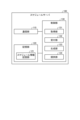
- FIG. 1 is a diagram illustrating a configuration example of an information processing system according to an embodiment.
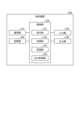
- FIG. 2 is a diagram illustrating a configuration example of a schedule server according to the embodiment;
- FIG. 3 is a diagram illustrating a configuration example of an in-vehicle terminal device according to the embodiment.
- FIG. 4 is a diagram illustrating a configuration example of a terminal device according to the embodiment;
- FIG. 5 is a diagram illustrating an example of integrated schedule information according to the embodiment;
- FIG. 6 is a diagram for explaining processing for accepting a call reservation according to the embodiment.
- FIG. 7 is a diagram showing an example of integrated schedule information reflecting call reservations according to the embodiment.
- FIG. 8 is a flow chart showing an information processing procedure by the schedule server according to the embodiment.
- FIG. 9 is a hardware configuration diagram showing an example of a computer that implements the functions of the information processing apparatus.
- the information processing system 1 estimates a recommended call time period during which the vehicle travels along the set travel route, during which it is recommended to make a call to the driver of the vehicle.
- the recommended call time zone is a time zone (callable time zone) in which a call can be made relatively easily for the driver.
- the information processing system 1 provides a call applicant with schedule information indicating the recommended call time zone, and provides a system in which the call applicant can reserve a call with the driver during the recommended call time zone. .
- this is a time zone in which it is easy for drivers to talk.
- the information processing system 1 estimates, as the recommended call time period, a time period during which the output of the voice guidance output according to the current position of the vehicle is unnecessary. As a result, the information processing system 1 enables the driver who is driving and the person desiring to make a call to talk to each other during a time when it is easy for the driver who is driving to talk.
- FIG. 1 is a diagram showing a configuration example of an information processing system 1 according to an embodiment.
- the information processing system 1 includes a schedule server 100 , an in-vehicle terminal device 200 and a terminal device 300 .
- the schedule server 100, the in-vehicle terminal device 200, and the terminal device 300 are connected via a predetermined network N so as to be communicable by wire or wirelessly.
- the information processing system 1 shown in FIG. 1 may include a plurality of schedule servers 100, a plurality of in-vehicle terminal devices 200, and a plurality of terminal devices 300.
- FIG. 1 is a diagram showing a configuration example of an information processing system 1 according to an embodiment.
- the information processing system 1 includes a schedule server 100 , an in-vehicle terminal device 200 and a terminal device 300 .
- the schedule server 100, the in-vehicle terminal device 200, and the terminal device 300 are connected via a predetermined network N so as to be communicable by wire or wirelessly.
- the schedule server 100 is an information processing device that provides driver's schedule information to a third party other than the driver (for example, a person who wishes to make a call). Specifically, the schedule server 100 acquires from the in-vehicle terminal device 200 information indicating a recommended call time period during which a call to the driver of the vehicle is recommended (hereinafter also referred to as a recommended call time period). Subsequently, the schedule server 100 generates schedule information indicating the recommended call time period. Further, the schedule server 100 transmits the generated schedule information to the terminal device 300 when receiving a transmission request for schedule information from the terminal device 300 of a third party.
- the schedule server 100 when the schedule server 100 accepts a call reservation with the driver from the terminal device 300 , the schedule server 100 transmits schedule information to the in-vehicle terminal device 200 together with information requesting approval of the call reservation. Further, when the schedule server 100 receives information indicating approval of the call reservation from the in-vehicle terminal device 200, the schedule server 100 generates schedule information reflecting the call reservation. Subsequently, the schedule server 100 transmits schedule information reflecting the call reservation to the terminal device 300 and the in-vehicle terminal device 200 .
- the in-vehicle terminal device 200 is an information processing device mounted on the vehicle. Specifically, the in-vehicle terminal device 200 is an information processing device having a navigation function.
- the in-vehicle terminal device 200 is a stationary navigation device installed in a vehicle.
- the in-vehicle terminal device 200 is not limited to a navigation device, and may be a portable terminal device such as a smart phone used by a vehicle driver (hereinafter referred to as a driver).
- the in-vehicle terminal device 200 may be a driver's terminal device in which an application that implements a navigation function is installed. In-vehicle terminal device 200 also outputs voice guidance according to the current position of the vehicle.
- the in-vehicle terminal device 200 provides route guidance (right/left turn guidance, etc.), traffic information (surrounding congestion, traffic regulation, accident-prone spots, etc.), or recommendation information (recommendation of surrounding facilities), depending on the current position of the vehicle. etc.).
- the in-vehicle terminal device 200 estimates a time zone in which the output of the voice guidance output according to the current position of the vehicle is unnecessary, and sets the estimated time zone in which the output of the voice guidance is unnecessary to the recommended call time zone. , to the schedule server 100 .
- the terminal device 300 is an information processing device used by a third party other than the driver.
- the terminal device 300 is implemented by, for example, a smart phone, a tablet terminal, a notebook PC (Personal Computer), a mobile phone, a PDA (Personal Digital Assistant), or the like.
- the terminal device 300 may be an information processing device mounted on a vehicle.
- a case where the third party is a user who wishes to talk with the driver hereinafter referred to as a call requester
- the terminal device 300 also acquires the driver's schedule information from the schedule server 100 and displays the driver's schedule information on the screen.
- the terminal device 300 accepts an input operation regarding reservation of a call with the driver during the recommended call time zone among the schedule information displayed on the screen according to the operation of the call applicant.
- the terminal device 300 transmits information requesting a call reservation with the driver to the schedule server 100 .
- FIG. 2 is a diagram showing a configuration example of the schedule server 100 according to the embodiment.
- the schedule server 100 has a communication section 110 , a storage section 120 and a control section 130 .
- the communication unit 110 is implemented by, for example, a NIC (Network Interface Card) or the like.
- the communication unit 110 is a communication interface that is wired or wirelessly connected to the in-vehicle terminal device 200 and the terminal device 300 via the network N and controls information communication with the in-vehicle terminal device 200 and the terminal device 300 .
- the storage unit 120 is implemented by, for example, a semiconductor memory device such as RAM (Random Access Memory) or flash memory, or a storage device such as a hard disk or optical disk. Specifically, storage unit 120 stores information (information processing programs and data) used for processing in control unit 130 .
- a semiconductor memory device such as RAM (Random Access Memory) or flash memory
- storage unit 120 stores information (information processing programs and data) used for processing in control unit 130 .
- the storage unit 120 has a schedule information storage unit 121.
- the schedule information storage unit 121 stores various information related to the driver's schedule for each in-vehicle terminal device 200 .
- the control unit 130 is a controller, and for example, the CPU (Central Processing Unit), MPU (Micro Processing Unit), ASIC (Application Specific Integrated Circuit), FPGA (Field Programmable Gate Array), etc. control the schedule server 100.
- Various programs (corresponding to an example of an information processing program) stored in an internal storage device are executed by using a storage area such as a RAM as a work area.
- the control unit 130 has an acquisition unit 131 , a reception unit 132 , a generation unit 133 and a provision unit 134 .
- Acquisition unit 131 acquires information indicating the travel period during which the vehicle travels along the travel route, information indicating the recommended call time period during the travel period, and other schedule information of the driver from in-vehicle terminal device 200 via communication unit 110. get.
- the acquisition unit 131 acquires the information indicating the driving period, the information indicating the recommended call time period, and other schedule information of the driver, the information indicating the driving period, the information indicating the recommended call time period, and the driver's Other schedule information is stored in the schedule information storage unit 121 in association with driver identification information that can identify the driver.
- the acquisition unit 131 acquires the schedule information of the call applicant from the terminal device 300 via the communication unit 110 .
- the acquisition unit 131 associates the schedule information of the call applicant with the third party identification information by which the call applicant can be identified, and stores them in the schedule information storage unit 121 .
- the reception unit 132 receives a transmission request regarding the driver's schedule information from the terminal device 300 via the communication unit 110 . Specifically, the receiving unit 132 receives a transmission request regarding the schedule information of the driver identified by the driver identification information together with the driver identification information.
- the generation unit 133 refers to the schedule information storage unit 121 to generate a schedule for the driver identified by the driver identification information received by the reception unit 132 together with the transmission request. Get information. Specifically, the generation unit 133 acquires, as the driver's schedule information, information indicating the driving period, information indicating the recommended call time period, and other schedule information of the driver. Next, based on the acquired schedule information of the driver, the generating unit 133 generates a first integrated schedule that integrates the travel period during which the vehicle travels along the travel route, the recommended call time period during the travel period, and other schedules of the driver. Generate information.
- the generation unit 133 refers to the schedule information storage unit 121 and uses the terminal device 300 that is the transmission source of the transmission request received by the reception unit 132. Get the schedule information of the person who wants to call you. Subsequently, the generation unit 133 generates second integrated schedule information in which the first integrated schedule information and the schedule information of the call applicant are displayed side by side based on the acquired schedule information of the call applicant.
- FIG. 5 is a diagram showing an example of integrated schedule information according to the embodiment.
- the generation unit 133 generates the second integrated schedule information SC1 in which the first integrated schedule information of Taro Yamada, the driver, and the schedule information of Hanako Suzuki, the call requester, are displayed side by side. do.
- the time period "14:30 to 16:30" indicated by the "driving" band indicates the travel period during which the vehicle travels along the movement route.
- the time slot of "15:00 to 16:00" indicated by the "talkable" slot L1 indicates the recommended call time slot during the driving period.
- the providing unit 134 provides the schedule information indicating the recommended call time zone generated by the generating unit 133 to an external device other than the schedule server 100 . Specifically, the providing unit 134 transmits the second integrated schedule information generated by the generating unit 133 to the terminal device 300 .
- the reception unit 132 receives request information regarding a call reservation with the driver from the terminal device 300 via the communication unit 110 .
- the providing unit 134 transmits schedule information indicating the recommended call time period to the in-vehicle terminal device 200 together with information requesting approval of the call reservation.
- the providing unit 134 transmits the second integrated schedule information to the vehicle-mounted terminal device 200 together with information requesting approval of the call reservation.
- the reception unit 132 also receives information indicating approval of the call reservation by the driver from the in-vehicle terminal device 200 via the communication unit 110 .
- the generation unit 133 generates second integrated schedule information reflecting the call reservation.
- the providing unit 134 transmits the second integrated schedule information reflecting the call reservation generated by the generating unit 133 to the terminal device 300 and the vehicle-mounted terminal device 200, respectively.
- FIG. 3 is a diagram showing a configuration example of the in-vehicle terminal device 200 according to the embodiment.
- the in-vehicle terminal device 200 has a communication section 210, a storage section 220, a control section 230, a sensor section 240, an input section 250, an audio output section 260, and a display section 270. .
- the communication unit 210 is implemented by, for example, a NIC.
- the communication unit 210 is a communication interface that is wired or wirelessly connected to the schedule server 100 and the terminal device 300 via the network N and controls information communication between the schedule server 100 and the terminal device 300 .
- the storage unit 220 is implemented by, for example, a semiconductor memory device such as a RAM or flash memory, or a storage device such as a hard disk or optical disc.
- the storage unit 220 stores information (information processing program and data) used for processing in the control unit 230 .
- the storage unit 220 has a map information storage unit 221 and a travel information storage unit 222.
- the map information storage unit 221 stores various kinds of information regarding maps.
- the travel information storage unit 222 stores various types of information regarding travel of the vehicle. Specifically, the travel information storage unit 222 stores route information indicating the travel route of the vehicle to the destination. For example, when a route is set in the navigation function of the in-vehicle terminal device 200, the travel information storage unit 222 selects the travel route selected by the driver from among the travel routes proposed to the driver by the route guidance unit 231. Stores the indicated route information.
- the travel information storage unit 222 also stores travel history information indicating the travel history of the vehicle.
- the control unit 230 is a controller, and various programs (corresponding to an example of an information processing program) stored in a storage device inside the in-vehicle terminal device 200 are stored in a RAM or the like by a CPU, MPU, ASIC, FPGA, or the like, for example. It is realized by executing using a storage area as a work area.
- the control unit 230 includes a route guidance unit 231, an acquisition unit 232, an identification unit 233, an estimation unit 234, a transmission unit 235, a reception unit 236, an output control unit 237, and a reception unit. 238.
- the route guidance unit 231 executes the navigation function of the in-vehicle terminal device 200 . Specifically, when receiving route setting from the driver, the route guidance unit 231 searches for a route to the destination set by the driver. For example, the route guidance unit 231 searches for a route from a departure point set by the driver to a destination set by the driver. For example, the route guidance unit 231 acquires information on the departure point and the destination corresponding to the input operation received by the input unit 250 . Next, when the route guidance unit 231 acquires the information on the departure point and the destination, the route guidance unit 231 refers to the map information storage unit 221 to acquire map information. Subsequently, the route guidance unit 231 searches for a route from the departure point to the destination using the map information.
- the route guidance unit 231 may search for the movement route of the vehicle using the current position of the vehicle at the time of starting the search as the starting point.
- the route guidance unit 231 may store in the travel information storage unit 222 information related to the departure point, the destination, and the travel route corresponding to the search result in association with each other.
- the route guidance unit 231 proposes search results to the driver. Further, when the proposed travel route is selected by the driver, the route guidance unit 231 controls the voice output unit 260 to output voice guidance regarding route guidance according to the travel route selected by the driver.
- the acquisition unit 232 acquires route information indicating the travel route of the vehicle to the destination. Specifically, the acquisition unit 232 refers to the travel information storage unit 222 and acquires route information indicating the currently set travel route selected by the driver from among the travel routes searched by the route guide unit 231. get.
- the acquisition unit 232 acquires map information corresponding to the movement route. Specifically, the acquisition unit 232 refers to the map information storage unit 221 to acquire map information corresponding to the travel route selected by the driver from among the travel routes searched by the route guidance unit 231 . For example, the acquisition unit 232 acquires map information including the movement route selected by the driver.
- the acquisition unit 232 acquires current position information indicating the current position of the vehicle. Specifically, the acquisition unit 232 acquires positioning data generated by the GNSS sensor of the sensor unit 240 from the GNSS sensor of the sensor unit 240 . Subsequently, the acquisition unit 232 acquires latitude information and longitude information indicating the current position of the vehicle as current position information of the vehicle from the acquired positioning data.
- the identifying unit 233 identifies sections in the movement route that do not require output of voice guidance based on the route information, map information, and current position information. Specifically, the identifying unit 233 identifies a section between two adjacent voice guidance output points on the movement route as a section that does not require output of voice guidance. For example, the specifying unit 233 specifies each output point of the voice guidance on the moving route based on the route information and the map information. For example, the specifying unit 233 specifies an output point of voice guidance related to route guidance such as right/left turn guidance based on the route information and the map information. The specifying unit 233 also specifies output points for voice guidance related to traffic information such as traffic restrictions and high-accident spots, based on the route information and the map information.
- the specifying unit 233 specifies an output point of voice guidance related to recommendation information such as recommendation of surrounding facilities based on the route information and the map information. Subsequently, the specifying unit 233 specifies each output point of the voice guidance on the travel route along which the vehicle will travel from now on, based on the current position information.
- the specifying unit 233 specifies a section between two adjacent voice guidance output points on the travel route on which the vehicle travels. do. For example, when the specifying unit 233 specifies the first voice guidance output point (first output point) and the second voice guidance output point (second output point) in the movement route on which the vehicle will travel from now on, the adjacent A section between the first output point and the second output point is specified as the section between the two voice guidance output points.
- the specifying unit 233 specifies the second voice guidance output point (second output point) and the third voice guidance output point (third output point) on the movement route on which the vehicle will travel from now on
- the section between the second output point and the third output point is specified as the section between the output points of the two matching voice guidance.
- the estimating unit 234 estimates a recommended call time period during which the vehicle travels along the travel route during which a call to the driver of the vehicle is recommended. Specifically, based on the route information, the map information, and the current position information, the estimating unit 234 selects a time period during which the vehicle travels along the movement route, during which the voice guidance output is unnecessary, as the recommended call time period. to estimate More specifically, the estimating unit 234 estimates the expected time of arrival at which the vehicle reaches the section specified by the specifying unit 233 where the output of the voice guidance is unnecessary.
- the estimating unit 234 estimates an expected passage time at which the vehicle passes through the section specified by the specifying unit 233 where the output of the voice guidance is unnecessary. Subsequently, the estimating unit 234 estimates that the time period from the estimated arrival time to the estimated passage time is a time period in which the output of voice guidance is unnecessary.
- the estimating unit 234 estimates the expected arrival time at which the vehicle reaches the section between the two adjacent output points of the voice guidance specified by the specifying unit 233 . For example, the estimation unit 234 estimates the expected arrival time at which the vehicle reaches the start point of the section between the two adjacent voice guidance output points specified by the specifying unit 233 . For example, the estimation unit 234 estimates the travel distance from the current position of the vehicle to the starting point of the section identified by the identification unit 233 based on the route information, the map information, and the current position information. Next, the estimating unit 234 divides the estimated traveled distance by the traveling speed of the vehicle (for example, average speed) to obtain the travel time from the current position to the start point of the section (hereinafter also referred to as the first travel time). ). In addition, when estimating the first travel time, the estimating unit 234 adds the first travel time to the current time to estimate the expected time of arrival at the starting point of the section.
- the traveling speed of the vehicle for example, average speed
- the estimating unit 234 estimates the expected passage time at which the vehicle will pass through the section specified by the specifying unit 233 that does not require voice guidance output. More specifically, the estimating unit 234 estimates the expected passage time at which the vehicle passes through the section between the two adjacent voice guidance output points specified by the specifying unit 233 . For example, the estimating unit 234 estimates the expected passage time at which the vehicle passes through the end point of the section between the two adjacent voice guidance output points specified by the specifying unit 233 . For example, the estimation unit 234 estimates the travel distance from the current position of the vehicle to the end point of the section identified by the identification unit 233, based on the route information, the map information, and the current position information.
- the estimating unit 234 divides the estimated traveled distance by the traveling speed of the vehicle (for example, average speed) to obtain the travel time from the current position to the end point of the section (hereinafter also referred to as the second travel time). ). In addition, when estimating the second travel time, the estimating unit 234 adds the second travel time to the current time, thereby estimating the expected passing time of passing through the end point of the section.
- the transmission unit 235 transmits information indicating the recommended call time period estimated by the estimation unit 234 to the schedule server 100 via the communication unit 210 . Specifically, the transmitting unit 235 transmits, as the information indicating the recommended call time period, the information indicating the time period in which the output of the voice guidance estimated by the estimating unit 234 is unnecessary. For example, the transmission unit 235 transmits to the schedule server 100 information indicating the travel period during which the vehicle travels along the travel route, information indicating the recommended call time zone during the travel period, and other schedule information of the driver.
- the receiving unit 236 receives, via the communication unit 210, information requesting approval of the call reservation and schedule information indicating the recommended call time period from the schedule server 100. Specifically, the receiving unit 236 receives the second integrated schedule information from the schedule server 100 together with information requesting approval of the call reservation.
- the output control unit 237 controls the display unit 270 to display the schedule information indicating the recommended call time period received by the reception unit 236 . Specifically, the output control unit 237 controls the display unit 270 to display the second integrated schedule information received by the reception unit 236 . The output control unit 237 also controls the display unit 270 to display information requesting approval of the call reservation.
- the reception unit 238 receives an input operation related to approval of the call reservation from the driver via the input unit 250 . Upon receiving an input operation related to approval of the call reservation from the driver, the reception unit 238 transmits information indicating approval of the call reservation by the driver to the schedule server 100 .
- the receiving unit 236 also receives the second integrated schedule information reflecting the call reservation from the schedule server 100 via the communication unit 210 .
- the output control unit 237 controls the display unit 270 to display the second integrated schedule information reflecting the call reservation received by the reception unit 236 .
- the sensor unit 240 includes various sensors.
- the sensor unit 240 includes a GNSS (Global Navigation Satellite System).
- the GNSS sensor uses GNSS to receive radio waves containing positioning data transmitted from navigation satellites.
- the positioning data is used to detect the absolute position of the vehicle from latitude and longitude information.
- the GNSS used may be, for example, GPS (Global Positioning System), or may be another system.
- the sensor unit 240 also outputs positioning data generated by the GNSS sensor to the control unit 230 .
- the input unit 250 may receive various operations from the driver via a display surface (for example, the display unit 270) using a touch panel function.
- the input unit 250 receives an input operation of information regarding the departure point and the destination from the driver.
- the input unit 250 may also receive various operations from buttons provided on the in-vehicle terminal device 200 or from a keyboard or mouse connected to the in-vehicle terminal device 200 .
- the input unit 250 also includes a voice recognition function (for example, a microphone) to recognize the driver's voice.
- the input unit 250 may receive various operations from the driver through the driver's voice.
- the audio output unit 260 includes a speaker, converts a digital audio signal input from the control unit 230 into an analog audio signal by D/A (Digital/Analog) conversion, and outputs the analog audio signal from the speaker. Output audio. Specifically, voice output unit 260 outputs voice guidance according to the current position of the vehicle. For example, under the control of the control unit 230, the voice output unit 260 outputs route guidance (right/left turn guidance, etc.), traffic information (surrounding congestion, traffic restrictions, high-accident spots, etc.), or Output voice guidance such as recommendation information (recommendations of nearby facilities, etc.).
- route guidance right/left turn guidance, etc.
- traffic information surrounding congestion, traffic restrictions, high-accident spots, etc.
- Output voice guidance such as recommendation information (recommendations of nearby facilities, etc.).
- the display unit 270 is a display screen realized by, for example, a liquid crystal display or an organic EL (Electro-Luminescence) display, and is a display device for displaying various information.
- the display unit 270 displays various information under the control of the control unit 230 .
- the display unit 270 displays the moving route and map information proposed by the route guidance unit 231 .
- the display unit 270 displays the schedule information received by the reception unit 236 under the control of the output control unit 135 .
- the display unit 270 may be referred to as a screen.
- FIG. 4 is a diagram illustrating a configuration example of a terminal device according to the embodiment.
- the terminal device 300 has a communication section 310 , a storage section 320 , a control section 330 , an input section 340 and an output section 350 .
- the communication unit 310 is implemented by, for example, a NIC.
- the communication unit 310 is a communication interface that is wired or wirelessly connected to the schedule server 100 and the in-vehicle terminal device 200 via the network N and controls information communication between the schedule server 100 and the in-vehicle terminal device 200 .
- the storage unit 320 is implemented by, for example, a semiconductor memory device such as a RAM or flash memory, or a storage device such as a hard disk or optical disc.
- the storage unit 320 stores information (information processing program and data) used for processing in the control unit 330 .
- the control unit 330 is a controller.
- various programs (corresponding to an example of an information processing program) stored in a storage device inside the terminal device 300 are stored in a RAM or the like by a CPU, MPU, ASIC, FPGA, or the like. It is realized by executing the area as a work area.
- the control section 330 has a reception section 331 , a transmission section 332 , a reception section 333 and an output control section 334 .
- the reception unit 331 receives an input operation related to a display request for driver's schedule information from a person who wishes to make a call via the input unit 340 .
- the transmitting unit 332 transmits a transmission request regarding the driver's schedule information to the schedule server 100 . Specifically, the transmission unit 332 transmits to the schedule server 100 a request for transmission of the schedule information of the driver identified by the driver identification information together with the driver identification information.
- the receiving unit 333 receives schedule information indicating the recommended call time period from the schedule server 100 via the communication unit 310 . Specifically, the receiver 333 receives the second integrated schedule information from the schedule server 100 .
- the output control unit 334 controls the output unit 350 to display the schedule information indicating the recommended call time period received by the receiving unit 333 . Specifically, the output control unit 334 controls the output unit 350 to display the second integrated schedule information received by the reception unit 333 . In FIG. 5, the output unit 350 displays the second integrated schedule information SC1 under the control of the output control unit 334.
- FIG. 6 is a diagram for explaining call reservation acceptance processing according to the embodiment.
- the output unit 350 superimposes a frame F1 on the second integrated schedule information SC1 to display a time slot in which a call reservation with the driver is desired under the control of the output control unit 334 .
- the width of the frame F1 is variable, and the person wishing to make a call can select a predetermined time such as 30 minutes or 1 hour by changing the width of the frame F1.
- the position of the frame F1 is variable, and the person who wishes to make a call can freely move the position of the frame F1 along the time axis of the second integrated schedule information SC1.
- Accepting unit 331 accepts, via input unit 340, an input operation of moving the position of frame F1 along the time axis of second integrated schedule information SC1 from a person who wishes to make a call. Further, the receiving unit 331 may receive, via the input unit 340, an input operation for changing the width of the frame F1 from the person who wishes to make a call. In this manner, the receiving unit 331 receives an input operation from the person who desires to make a call regarding the time slot in which he/she wishes to reserve a call with the driver. The reception unit 331 also receives an input operation from a person who wishes to make a call to confirm a time period for which he/she wishes to make a reservation for a call with the driver.
- the reception unit 331 may receive an input operation of tapping or clicking a part of the frame F1 from the person who wishes to make a call, as the input operation of determining the time period for which the call reservation is desired with the driver.
- the reception unit 331 transmits request information regarding the call reservation with the driver to the schedule server 100 .
- FIG. 7 is a diagram showing an example of integrated schedule information reflecting call reservations according to the embodiment.
- the receiving unit 333 receives the second integrated schedule information reflecting the call reservation from the schedule server 100 via the communication unit 310 .
- the output control unit 334 controls the output unit 350 to display the second integrated schedule information reflecting the call reservation received by the receiving unit 333 .
- the output unit 350 displays the second integrated schedule information SC2 reflecting the call reservation under the control of the output control unit 334.
- FIG. In FIG. 7, the output unit 350 superimposes the time slot A1 indicating the time slot corresponding to the call reservation on the second integrated schedule information SC2 and displays it under the control of the output control unit 334 .
- Band A1 is displayed superimposed on both the first integrated schedule information of Taro Yamada, the driver, and the schedule information of Hanako Suzuki, the call requester.
- the input unit 340 accepts various operations from the call requester.
- the input unit 340 may receive various operations from the call requester via a display surface (for example, the output unit 350) using a touch panel function.
- the input unit 340 may also accept various operations from buttons provided on the terminal device 300 or from a keyboard or mouse connected to the terminal device 300 .
- the output unit 350 is, for example, a display screen realized by a liquid crystal display, an organic EL display, or the like, and is a display device for displaying various information.
- the output section 350 displays various information under the control of the control section 330 .
- the output section 350 displays the schedule information received by the receiving section 333 under the control of the output control section 334 .
- the input unit 340 and the output unit 350 are integrated.
- the output unit 350 may be referred to as a screen.
- FIG. 8 is a flowchart showing an information processing procedure by the schedule server 100 according to the embodiment.
- the reception unit 132 of the schedule server 100 determines whether or not a transmission request for schedule information has been received from the terminal device 300 (step S1). If the receiving unit 132 determines that the schedule information transmission request has not been received from the terminal device 300 (step S1; No), the process ends. On the other hand, when it is determined that the reception unit 132 has received a transmission request for schedule information from the terminal device 300 (step S1; Yes), the generation unit 133 of the schedule server 100 generates a travel period during which the vehicle travels along the movement route, a travel period Information on the recommended call time zone in and other schedules of the driver is acquired (step S2).
- the generation unit 133 Based on the acquired information, the generation unit 133 generates integrated schedule information that integrates the travel period during which the vehicle travels along the movement route, the recommended call time period during the travel period, and other schedules of the driver (step S3). .
- the providing unit 134 of the schedule server 100 transmits the schedule information generated by the generating unit 133 to the terminal device 300 (step S4).
- the reception unit 132 determines whether or not it has received request information regarding a call reservation with the driver from the terminal device 300 (step S5). If the reception unit 132 determines that the request information regarding the call reservation with the driver has not been received from the terminal device 300 (step S5; No), the processing ends. On the other hand, when the reception unit 132 determines that the request information regarding the call reservation with the driver has been received from the terminal device 300 (step S5; Yes), the provision unit 134 sends the integrated schedule information together with the information requesting approval of the call reservation. It is transmitted to the in-vehicle terminal device 200 (step S6).
- the reception unit 132 determines whether or not information indicating approval of the call reservation has been received from the in-vehicle terminal device 200 (step S7).
- the generation unit 133 generates integrated schedule information reflecting the call reservation (step S8).
- the providing unit 134 transmits integrated schedule information reflecting the call reservation generated by the generating unit 133 to the terminal device 300 and the in-vehicle terminal device 200 (step S9).
- the reception unit 132 determines that the information indicating the approval of the call reservation has not been received from the in-vehicle terminal device 200 (step S7; No)
- the reception unit 132 transmits a notification indicating that the call reservation has not been approved to the terminal device 300. (step S10).
- the specifying unit 233 specifies a section between two adjacent output points of voice guidance on a movement route as a section that does not require the output of voice guidance.
- a section specified as a section that does not require the output of voice guidance is not limited to this.
- the identification unit 233 identifies a section in the movement route where the vehicle does not travel as a section that does not require the output of voice guidance. In general, while the vehicle is traveling in a section where the vehicle does not advance, it is estimated that the voice guidance is not output (in other words, the output of the voice guidance is unnecessary) because the position of the vehicle does not change much. be able to.
- a congested section is considered to be a section in which vehicles do not travel.
- the identification unit 233 identifies a congested section in the travel route as a section that does not require the output of voice guidance.
- the acquisition unit 232 acquires traffic information around the current position of the vehicle via the communication unit 210 from, for example, a server that manages traffic information.
- the specifying unit 233 specifies a congested section in a congested travel route to be traveled from now on.
- the estimating unit 234 estimates the expected arrival time at which the vehicle will reach the congested section identified by the identifying unit 233 . For example, the estimating unit 234 estimates the expected arrival time at which the vehicle reaches the starting point of the congested section identified by the identifying unit 233 . For example, the estimation unit 234 estimates the traveling distance from the current position of the vehicle to the starting point of the congested section identified by the identification unit 233 based on the route information, the map information, and the current position information. Subsequently, the estimating unit 234 divides the estimated traveled distance by the travel speed of the vehicle (for example, average speed) to obtain the travel time from the current position to the start point of the congested section (hereinafter, also referred to as the third travel time). ) is estimated. In addition, when estimating the third travel time, the estimating unit 234 adds the third travel time to the current time to estimate the expected time of arrival at the starting point of the congested section.
- the travel speed of the vehicle for example, average speed
- the estimating unit 234 estimates the expected passage time at which the vehicle will pass through the congested section identified by the identifying unit 233 .
- the estimating unit 234 estimates the expected passage time at which the vehicle will pass the end point of the congested section identified by the identifying unit 233 .
- the estimating unit 234 estimates travel time required for the vehicle to travel through the congested section (hereinafter also referred to as fourth travel time) based on the traffic congestion information.
- the estimating unit 234 adds the fourth travel time to the expected arrival time to reach the end point of the congested section, thereby calculating the expected passage time to pass the end point of the congested section. to estimate
- the estimating unit 234 estimates that the time period from the estimated arrival time to the estimated passage time is a time period in which the output of voice guidance is unnecessary.
- the identifying unit 233 identifies a specific intersection on the travel route as a section that does not require the output of voice guidance.
- the acquisition unit 232 acquires, via the communication unit 210, statistical information (hereinafter also referred to as statistical information) regarding the required passage time for each intersection with a traffic light from, for example, a server that manages traffic information.
- the acquisition unit 232 may acquire statistical information for each traveling direction of the vehicle as the statistical information regarding the required passage time for each intersection.
- the specifying unit 233 determines, as a specific intersection, the required time required to pass through the intersection among the intersections on the travel route to be traveled from now on. to identify intersections where is greater than a predetermined amount of time.
- the estimation unit 234 estimates the expected arrival time at which the vehicle will reach the specific intersection identified by the identification unit 233 . For example, the estimation unit 234 estimates the expected arrival time at which the vehicle reaches the specific intersection identified by the identification unit 233 . For example, the estimation unit 234 estimates the travel distance from the current position of the vehicle to the specific intersection identified by the identification unit 233 based on the route information, map information, and current position information. Subsequently, the estimating unit 234 divides the estimated traveled distance by the traveling speed of the vehicle (for example, average speed) to determine the travel time from the current position to the specific intersection (hereinafter also referred to as the fifth travel time). to estimate In addition, when estimating the fifth travel time, the estimating unit 234 adds the fifth travel time to the current time, thereby estimating the expected time of arrival at the specific intersection.
- the traveling speed of the vehicle for example, average speed
- the estimation unit 234 estimates the expected passage time at which the vehicle will pass through the specific intersection identified by the identification unit 233 . For example, the estimation unit 234 estimates the required passage time required for the vehicle to pass through the specific intersection identified by the identification unit 233, based on the statistical information. For example, the estimating unit 234 acquires a statistical value of the required passage time of the specific intersection as the required passage time for the vehicle to pass through the specific intersection specified by the specifying unit 233 . Further, when estimating the required passing time, the estimating unit 234 adds the required passing time to the expected arrival time at which the vehicle reaches the specific intersection, thereby calculating the time required for the vehicle to pass through the specific intersection specified by the specifying unit 233 . Estimate expected time. Subsequently, the estimating unit 234 estimates that the time period from the estimated arrival time to the estimated passage time is a time period in which the output of voice guidance is unnecessary.
- the specifying unit 233 specifies a section between two adjacent output points of voice guidance on a movement route as a section that does not require the output of voice guidance.
- a section specified as a section that does not require the output of voice guidance is not limited to this.
- the identifying unit 233 identifies an automatically driven section in the movement route as a section that does not require the output of voice guidance. In general, the driver does not drive while the vehicle is traveling in an automated driving section, so it can be estimated that the output of voice guidance such as route guidance and traffic information is unnecessary.
- the identification unit 233 identifies an automated driving section in the movement route as a section that does not require voice guidance output.
- the acquisition unit 232 refers to the map information storage unit 221 to acquire map information indicating an automatic driving section.
- the specifying unit 233 specifies an automatically driving section in the travel route to be traveled from now on.
- the estimating unit 234 estimates the expected arrival time at which the vehicle reaches the automatically driven section specified by the specifying unit 233 . For example, the estimating unit 234 estimates the expected arrival time at which the vehicle reaches the start point of the automatic driving section specified by the specifying unit 233 . For example, the estimation unit 234 estimates the traveling distance from the current position of the vehicle to the starting point of the automatic driving section specified by the specifying unit 233 based on the route information, the map information, and the current position information. Subsequently, the estimating unit 234 divides the estimated traveled distance by the traveling speed of the vehicle (for example, the average speed), so that the travel time from the current position to the start point of the automatic driving section (hereinafter referred to as the sixth travel time ) is estimated. In addition, when estimating the sixth travel time, the estimating unit 234 adds the sixth travel time to the current time, thereby estimating the expected time of arrival at the start point of the automatic driving section.
- the traveling speed of the vehicle for example, the average speed
- the estimating unit 234 estimates the expected time when the vehicle will pass through the automatic driving section specified by the specifying unit 233 . For example, the estimating unit 234 estimates the expected passage time at which the vehicle passes the end point of the automatic driving section specified by the specifying unit 233 . For example, the estimation unit 234 estimates the travel distance from the current position of the vehicle to the end point of the automatic driving section identified by the identification unit 233 based on the route information, the map information, and the current position information. Subsequently, the estimating unit 234 divides the estimated travel distance by the travel speed of the vehicle (for example, the average speed) to obtain the travel time from the current position to the end point of the automatic driving section (hereinafter referred to as the seventh travel time ) is estimated.
- the travel speed of the vehicle for example, the average speed
- the estimating unit 234 when estimating the seventh travel time, adds the seventh travel time to the current time, thereby estimating the expected passing time at which the vehicle will pass the end point of the automatic driving section. Subsequently, the estimating unit 234 estimates that the time period from the estimated arrival time to the estimated passage time is a time period in which the output of voice guidance is unnecessary.
- the identification unit 233 may identify roads familiar to the driver of the vehicle as known road sections that do not require the output of voice guidance. Specifically, the identification unit 233 identifies roads on which the vehicle has traveled a predetermined number of times or more in the travel route and which the vehicle is familiar with as known road sections that do not require the output of voice guidance. In general, when the vehicle is traveling on a familiar road, the driver knows the road, so it can be estimated that the output of the voice guidance is unnecessary during the time period.
- the identification unit 233 identifies known road sections in the movement route as sections that do not require voice guidance output.
- the route guidance unit 231 of the in-vehicle terminal device 200 refers to the travel history information stored in the travel information storage unit 222, and determines whether the vehicle is traveling on a familiar road on which the vehicle has traveled a predetermined number of times or more in the past.
- the voice output unit 260 is controlled so as not to output the voice guidance.
- the identification unit 233 identifies a known road section corresponding to the familiar road where the vehicle has traveled a predetermined number of times or more in the past in the travel route to be traveled from now on.
- the estimation unit 234 estimates the expected arrival time at which the vehicle reaches the known road section identified by the identification unit 233 . For example, the estimation unit 234 estimates the expected arrival time at which the vehicle reaches the starting point of the known road section identified by the identification unit 233 . For example, the estimation unit 234 estimates the traveling distance from the current position of the vehicle to the starting point of the known road section identified by the identification unit 233 based on the route information, map information, and current position information. Subsequently, the estimating unit 234 divides the estimated traveled distance by the traveling speed of the vehicle (for example, average speed) to obtain the travel time from the current position to the start point of the known road section (hereinafter referred to as the seventh travel time ) is estimated. When the estimation unit 234 estimates the seventh travel time, the estimation unit 234 adds the seventh travel time to the current time to estimate the expected time of arrival at the start point of the known road section.
- the traveling speed of the vehicle for example, average speed
- the estimating unit 234 estimates the expected time when the vehicle will pass through the known road section specified by the specifying unit 233 . For example, the estimation unit 234 estimates the expected passage time at which the vehicle will pass the end point of the known road section identified by the identification unit 233 . For example, the estimation unit 234 estimates the traveling distance from the current position of the vehicle to the end point of the known road section identified by the identification unit 233 based on the route information, map information, and current position information. Subsequently, the estimating unit 234 divides the estimated traveled distance by the traveling speed of the vehicle (for example, average speed) to obtain the travel time from the current position to the end point of the known road section (hereinafter referred to as the eighth travel time). ) is estimated.
- the traveling speed of the vehicle for example, average speed
- the estimation unit 234 estimates the eighth travel time
- the estimation unit 234 adds the seventh travel time to the current time, thereby estimating the expected passage time of passing the end point of the known road section. Subsequently, the estimating unit 234 estimates that the time period from the estimated arrival time to the estimated passage time is a time period in which the output of voice guidance is unnecessary.
- the estimation unit 234 may exclude the core time (during meals) during which the recommendation information is output from the time period during which the output of the voice guidance is unnecessary.
- the estimation unit 234 estimates, as the recommended call time period, a time period in which the driving load on the driver of the vehicle is low during the travel period in which the vehicle travels along the movement route.
- the identifying unit 233 Based on the route information and the map information, the identifying unit 233 identifies a high driving load section in which the driving load on the driver of the vehicle is high on the movement route. More specifically, the identification unit 233 identifies, as the high driving load section, a section in the travel route in which right and left turning points are continuous, a section in which many accidents occur, a school zone, or a section with many curves. For example, based on the route information and the map information, the specifying unit 233 specifies a section in which the right and left turn points are continuous or a section with many curves in the movement route.
- the identification unit 233 also acquires, via the communication unit 210, accident-prone spot map information from an external database that manages accident-prone spot map information that displays the positions of accident-prone spots on a map.
- the identifying unit 233 identifies the accident-prone section on the travel route based on the accident-prone point map information, the route information, and the map information.
- the specifying unit 233 acquires road sign information from an external database that manages road sign information regarding installation locations of various road signs, including road signs indicating school zones, via the communication unit 210 .
- the specifying unit 233 specifies the school zone on the movement route based on the road sign information, the route information and the map information.
- the estimating unit 234 estimates the expected arrival time at which the vehicle reaches the high driving load section identified by the identifying unit 233 . For example, the estimating unit 234 estimates the expected arrival time at which the vehicle reaches the start point of the high driving load section identified by the identifying unit 233 . For example, the estimation unit 234 estimates the travel distance from the current position of the vehicle to the starting point of the high driving load section identified by the identification unit 233 based on the route information, the map information, and the current position information. Subsequently, the estimating unit 234 divides the estimated travel distance by the travel speed of the vehicle (for example, the average speed) to obtain the travel time from the current position to the start point of the high driving load section (hereinafter referred to as the eighth travel (also called time). In addition, when estimating the eighth travel time, the estimating unit 234 adds the eighth travel time to the current time to estimate the expected time of arrival at the start point of the high driving load section.
- the eighth travel also called time
- the estimating unit 234 estimates the expected passage time at which the vehicle passes through the high driving load section identified by the identifying unit 233 . For example, the estimating unit 234 estimates the expected passage time at which the vehicle passes the end point of the high driving load section identified by the identifying unit 233 . For example, the estimation unit 234 estimates the travel distance from the current position of the vehicle to the end point of the high driving load section identified by the identification unit 233 based on the route information, the map information, and the current position information. Subsequently, the estimating unit 234 divides the estimated travel distance by the travel speed of the vehicle (for example, the average speed) to obtain the travel time from the current position to the end point of the high driving load section (hereinafter referred to as the ninth travel (also called time). In addition, when estimating the ninth travel time, the estimating unit 234 adds the ninth travel time to the current time, thereby estimating the expected passage time at which the end point of the high driving load section will be passed.
- the travel speed of the vehicle for example, the
- the estimating unit 234 estimates that the time period from the estimated arrival time to the estimated passage time is a high driving load time period in which the driving load on the driver of the vehicle is high. Subsequently, the estimating unit 234 estimates, as a recommended call time period, a time period that is equal to or greater than a predetermined time period from the time periods excluding the high driving load time period estimated from the traveling period in which the vehicle travels along the movement route.
- the estimation unit 234 may periodically recalculate the times when the vehicle reaches and passes through the section corresponding to the recommended call time period.
- the transmission unit 235 newly estimates the time period.
- the schedule server 100 then sends the recommended call time period to the schedule server 100, and the schedule server 100 sends the newly estimated recommended call time period to the terminal device 300 together with information indicating that the recommended call time period has changed. may be transmitted to prompt the terminal device 300 to reset the call reservation.
- the information processing device can notify the person who wishes to make a call of the change in the schedule.
- the information processing device includes an acquisition unit (acquisition unit 232 in the above-described embodiment) and an estimation unit (in the above-described embodiment, It includes an estimating unit 234) and a providing unit (providing unit 134 in the above-described embodiment).
- the acquisition unit acquires route information indicating the travel route of the vehicle to the destination, map information corresponding to the travel route, and current position information indicating the current position of the vehicle.
- the estimating unit estimates a recommended call time zone during which the vehicle travels along the travel route during which a call to the driver of the vehicle is recommended.
- the providing unit provides the external device (an example of the terminal device 300) with schedule information indicating the recommended call time period.
- the information processing device estimates, as the recommended call time zone, a time zone during which it is easy for the driver to talk while the vehicle travels along the travel route, and determines the time zone when it is easy for the driver to make a call while driving.
- the schedule information shown can be provided to the call requester.
- the information processing device can make it possible for a person who wishes to make a call to make a reservation for a call during a time period when it is easy for a driver who is driving to make a call. Therefore, the information processing device can make it possible for the driver who is driving and the person desiring to make a call to talk to each other during a time when the driver is easy to talk.
- the estimation unit estimates, as the recommended call time period, the time period during which the output of the voice guidance output according to the current position of the vehicle is unnecessary.
- the information processing device estimates the time period during which the vehicle travels along the route during which the output of the voice guidance is unnecessary as the recommended call time period, and determines the time period during which the output of the voice guidance is unnecessary.
- the schedule information shown can be provided to the call requester.
- the information processing device can make it possible for a person who wishes to make a call to make a reservation for a call with the driver during a time period during which the output of the voice guidance is unnecessary. Therefore, the information processing device can enable the driver who is driving and the person who wishes to talk to talk during the time period when the output of the voice guidance is unnecessary.
- the information processing apparatus further includes a specifying unit (the specifying unit 233 in the above-described embodiment).
- the specifying unit specifies a section in the travel route for which output of voice guidance is unnecessary based on the route information and the map information.
- the estimating unit estimates the estimated time of arrival at which the vehicle will reach a section where output of voice guidance is not required, and the estimated time of passage at which the vehicle will pass through a section where output of voice guidance is not required. It is estimated that the time period until the estimated passage time is a time period in which the output of the voice guidance is unnecessary.
- the information processing device identifies a section in the travel route where the output of voice guidance is unnecessary, thereby determining the time zone in which the vehicle travels in the section where the output of voice guidance is unnecessary. can be properly estimated as As a result, the information processing device can appropriately estimate the time period during which the output of voice guidance is unnecessary as the recommended call time period.
- the identifying unit identifies a section between two adjacent voice guidance output points on the travel route as a section that does not require the output of voice guidance.
- the estimating unit calculates the estimated arrival time at which the vehicle reaches the section between two adjacent voice guidance output points, and the estimated passage time at which the vehicle passes through the section between the two adjacent voice guidance output points. Then, the time zone from the estimated arrival time to the estimated passage time is estimated to be a time zone in which the output of voice guidance is unnecessary.
- the information processing device identifies a section between two adjacent voice guidance output points on the movement route as a section where the output of voice guidance is unnecessary on the movement route, thereby allowing the vehicle to hear two voices adjacent to each other. It is possible to appropriately estimate the time period during which the vehicle travels in the section between the guidance output points as the time period in which the output of the voice guidance is unnecessary.
- the identification unit identifies a congested section in the travel route as a section that does not require the output of voice guidance.
- the estimation unit estimates the estimated arrival time of the vehicle in the congested section and the estimated passage time of the vehicle passing through the congested section, and outputs the time period from the estimated estimated arrival time to the estimated passage time as voice guidance. is assumed to be an unnecessary time period.
- the information processing device identifies a congested section on the travel route where voice guidance output is not required, thereby specifying a time zone during which the vehicle travels in the congested section. It can be appropriately estimated as an unnecessary time period.
- the identifying unit identifies specific intersections on the movement route as sections that do not require voice guidance output.
- the estimating unit estimates the expected arrival time of the vehicle to reach the specific intersection, and based on the estimated expected arrival time and the statistical value of the time required to pass through the specific intersection, the vehicle is expected to reach the specific intersection.
- the estimated passage time is estimated, and the time period from the estimated arrival time to the estimated passage time is estimated to be a time period in which the output of voice guidance is unnecessary.
- the information processing device specifies a specific intersection on the travel route as a section in which the output of voice guidance is not required, so that the output of voice guidance is not required during the time period when the vehicle passes through the specific intersection. can be estimated appropriately as a time zone.
- the identification unit identifies an automated driving section in the movement route as a section that does not require output of voice guidance.
- the estimation unit estimates the expected arrival time of the vehicle in the automated driving section and the expected passage time of the vehicle passing through the automated driving section, and provides voice guidance for the time period from the estimated arrival time to the expected passage time. It is estimated that the output of is unnecessary time period.
- the information processing device identifies the automatically driving section of the travel route as a section in which the output of voice guidance is unnecessary, so that the output of voice guidance is unnecessary during the time period when the vehicle travels in the automatically driving section. can be estimated appropriately as a time zone.
- the identifying unit identifies known road sections that have been traveled a predetermined number of times or more in the past, as sections that do not require voice guidance output.
- the estimation unit estimates the estimated arrival time of the vehicle to reach the known road section and the estimated passage time of the vehicle passing through the known road section, and provides voice guidance for the time period from the estimated arrival time to the estimated passage time. It is estimated that the output of is unnecessary time period.
- the information processing device identifies known road sections in the travel route as sections in the travel route that do not require the output of voice guidance, thereby eliminating the need to output voice guidance during the time period in which the vehicle travels on the known road sections. can be estimated appropriately as a time zone.
- the estimating unit estimates a high driving load time zone in which the driver of the vehicle has a high driving load during a driving period during which the vehicle travels along the travel route, and estimates a high driving load time period during which the vehicle travels along the travel route.
- a time period that is equal to or longer than a predetermined time period is estimated as a recommended call time period.
- the information processing device estimates, as the recommended call time period, a time period in which the driving load on the driver of the vehicle is low during the travel period in which the vehicle travels along the movement route, and determines the time period in which the driving load on the driver of the vehicle is low.
- the schedule information shown can be provided to the call requester.
- the information processing device can make it possible for a person who wishes to make a call to make a reservation for a call with the driver during a time period when the driving load on the driver of the vehicle is low. Therefore, the information processing device can enable the driver who is driving and the person desiring to make a call to talk to each other during the hours when the driving load on the driver of the vehicle is low.
- the information processing apparatus further includes a specifying unit (the specifying unit 233 in the above-described embodiment).
- the specifying unit Based on the route information and the map information, the specifying unit specifies a high driving load section in which the driving load on the driver of the vehicle is high on the moving route.
- the estimation unit estimates the expected arrival time of the vehicle to reach the high driving load section and the expected passage time of the vehicle passing through the high driving load section, and calculates the time period from the estimated arrival time to the expected passage time. It is estimated that it is a high operating load time period.
- the information processing device can appropriately estimate the time period during which the vehicle travels in the high driving load section as the high driving load time period by identifying the high driving load section in which the driver of the vehicle has a high driving load on the moving route. can do.
- the information processing device determines that the driving load on the driver of the vehicle is low for a period of time equal to or greater than a predetermined time period, which is a time period excluding a high driving load time period, during which the vehicle travels along the movement route. It can be properly estimated as a band.
- the information processing device can appropriately estimate the time period when the driving load on the driver of the vehicle is low as the recommended call time period.
- the identifying unit identifies, as high driving load sections, sections in which right and left turning points are consecutive in the travel route, sections where accidents frequently occur, school zones, or sections with many curves.
- the information processing device identifies, as high driving load sections, sections in which right and left turn points are continuous on the travel route, sections in which many accidents occur, school zones, or sections with many curves, so that the vehicle can detect right and left turn points on the travel route. It is possible to appropriately estimate a time period during which the vehicle travels in a section with continuous , an accident-prone section, a school zone, or a section with many curves as a high driving load time period.
- the information processing apparatus further includes a generation unit (the generation unit 133 in the above-described embodiment).
- the generation unit generates integrated schedule information that integrates the travel period during which the vehicle travels along the travel route, the recommended call time period during the travel period, and other schedules of the driver.
- the information processing device can provide the call requester with the driver's daily schedule information, including the time period during which it is easy for the driver to make a call.
- the information processing device enables a person who wishes to make a call to grasp the driver's entire schedule for a day and make a reservation for a call during a time period when the driver is easy to make a call.
- the providing unit transmits the integrated schedule information to a third party external device, receives a call reservation with the driver from the external device, and when the driver approves the received call reservation, the integrated schedule information reflecting the call reservation to an external device.
- the information processing device can notify the call requester that the driver has approved the notification reservation.
- the information processing device can provide integrated schedule information reflecting the call reservation to the call requester. Therefore, the information processing device can improve usability when a person who wishes to make a call makes a reservation for a call during a time period when it is easy for a driver who is driving to make a call.
- FIG. 9 is a hardware configuration diagram showing an example of a computer that implements the functions of the schedule server 100, the in-vehicle terminal device 200, the terminal device 300, and the like.
- the schedule server 100 according to the embodiment will be described below as an example.
- Computer 1000 includes CPU 1100 , RAM 1200 , ROM 1300 , HDD 1400 , communication interface (I/F) 1500 , input/output interface (I/F) 1600 and media interface (I/F) 1700 .
- the CPU 1100 operates based on programs stored in the ROM 1300 or HDD 1400 and controls each section.
- the ROM 1300 stores a boot program executed by the CPU 1100 when the computer 1000 is started up, a program depending on the hardware of the computer 1000, and the like.
- the HDD 1400 stores programs executed by the CPU 1100 and data used by these programs.
- Communication interface 1500 receives data from another device via a predetermined communication network, sends the data to CPU 1100, and transmits data generated by CPU 1100 to another device via a predetermined communication network.
- the CPU 1100 controls an output device such as a display and an input device such as a keyboard via an input/output interface 1600 .
- CPU 1100 acquires data from an input device via input/output interface 1600 .
- CPU 1100 also outputs the generated data to an output device via input/output interface 1600 .
- an MPU Micro Processing Unit
- a GPU Graphics Processing Unit
- the media interface 1700 reads programs or data stored in the recording medium 1800 and provides them to the CPU 1100 via the RAM 1200 .
- CPU 1100 loads such a program from recording medium 1800 onto RAM 1200 via media interface 1700, and executes the loaded program.
- the recording medium 1800 is, for example, an optical recording medium such as a DVD (Digital Versatile Disc) or a PD (Phase change rewritable disk), a magneto-optical recording medium such as an MO (Magneto-Optical disk), a tape medium, a magnetic recording medium, or a semiconductor memory. etc.
- the CPU 1100 of the computer 1000 implements the functions of the control unit 130 by executing the program loaded on the RAM 1200 .
- CPU 1100 of computer 1000 reads these programs from recording medium 1800 and executes them, but as another example, these programs may be obtained from another device via a predetermined communication network.
- each component of each device illustrated is functionally conceptual and does not necessarily need to be physically configured as illustrated.
- the specific form of distribution and integration of each device is not limited to the one shown in the figure, and all or part of them can be functionally or physically distributed and integrated in arbitrary units according to various loads and usage conditions. Can be integrated and configured.
- 1 information processing system 100 schedule server 110 communication unit 120 storage unit 121 schedule information storage unit 130 control unit 131 acquisition unit 132 reception unit 133 generation unit 134 provision unit 200 in-vehicle terminal device 210 communication unit 220 storage unit 221 map information storage unit 222 traveling Information storage unit 230 control unit 231 route guidance unit 232 acquisition unit 233 identification unit 234 estimation unit 235 transmission unit 236 reception unit 237 output control unit 238 reception unit 240 sensor unit 250 input unit 260 voice output unit 270 display unit 300 terminal device 310 communication Part 320 Storage Part 330 Control Part 331 Reception Part 332 Transmission Part 333 Reception Part 334 Output Control Part 340 Input Part 350 Output Part
Landscapes
- Engineering & Computer Science (AREA)
- Radar, Positioning & Navigation (AREA)
- Remote Sensing (AREA)
- Automation & Control Theory (AREA)
- Business, Economics & Management (AREA)
- General Physics & Mathematics (AREA)
- Physics & Mathematics (AREA)
- Human Resources & Organizations (AREA)
- Entrepreneurship & Innovation (AREA)
- Strategic Management (AREA)
- Health & Medical Sciences (AREA)
- General Health & Medical Sciences (AREA)
- Audiology, Speech & Language Pathology (AREA)
- Multimedia (AREA)
- Data Mining & Analysis (AREA)
- Economics (AREA)
- Marketing (AREA)
- Operations Research (AREA)
- Quality & Reliability (AREA)
- Tourism & Hospitality (AREA)
- General Business, Economics & Management (AREA)
- Theoretical Computer Science (AREA)
- Social Psychology (AREA)
- Navigation (AREA)
- Traffic Control Systems (AREA)
Priority Applications (4)
| Application Number | Priority Date | Filing Date | Title |
|---|---|---|---|
| US18/689,037 US20240385008A1 (en) | 2022-02-08 | 2023-01-27 | Information processing device, information processing method, and non-transitory computer readable storage medium |
| EP23752699.1A EP4478328A4 (en) | 2022-02-08 | 2023-01-27 | INFORMATION PROCESSING DEVICE, METHOD AND PROGRAM |
| JP2023580170A JPWO2023153234A1 (https=) | 2022-02-08 | 2023-01-27 | |
| JP2025195361A JP2026020206A (ja) | 2022-02-08 | 2025-11-14 | 情報処理装置、情報処理方法および情報処理プログラム |
Applications Claiming Priority (2)
| Application Number | Priority Date | Filing Date | Title |
|---|---|---|---|
| JP2022018281 | 2022-02-08 | ||
| JP2022-018281 | 2022-02-08 |
Publications (1)
| Publication Number | Publication Date |
|---|---|
| WO2023153234A1 true WO2023153234A1 (ja) | 2023-08-17 |
Family
ID=87564101
Family Applications (1)
| Application Number | Title | Priority Date | Filing Date |
|---|---|---|---|
| PCT/JP2023/002554 Ceased WO2023153234A1 (ja) | 2022-02-08 | 2023-01-27 | 情報処理装置、情報処理方法および情報処理プログラム |
Country Status (4)
| Country | Link |
|---|---|
| US (1) | US20240385008A1 (https=) |
| EP (1) | EP4478328A4 (https=) |
| JP (2) | JPWO2023153234A1 (https=) |
| WO (1) | WO2023153234A1 (https=) |
Citations (4)
| Publication number | Priority date | Publication date | Assignee | Title |
|---|---|---|---|---|
| JP2009188725A (ja) * | 2008-02-06 | 2009-08-20 | Nec Corp | カーナビゲーション装置、留守番電話システム、留守番電話方法、プログラム、及び記録媒体 |
| JP2010112863A (ja) * | 2008-11-07 | 2010-05-20 | Xanavi Informatics Corp | ナビゲーション装置、および、ナビゲーション装置における推奨経路表示方法 |
| JP2017058301A (ja) | 2015-09-18 | 2017-03-23 | ヤフー株式会社 | 情報処理装置、情報処理方法、及びプログラム |
| US20180107216A1 (en) * | 2016-10-19 | 2018-04-19 | Here Global B.V. | Segment activity planning based on route characteristics |
Family Cites Families (14)
| Publication number | Priority date | Publication date | Assignee | Title |
|---|---|---|---|---|
| CA2372861A1 (en) * | 2001-02-20 | 2002-08-20 | Matsushita Electric Industrial Co., Ltd. | Travel direction device and travel warning direction device |
| US9109918B2 (en) * | 2008-02-25 | 2015-08-18 | At&T Intellectual Property Ii, L.P. | Method and system for managing delivery of content in a navigational environment |
| JP5633482B2 (ja) * | 2011-07-19 | 2014-12-03 | 株式会社デンソー | ナビゲーション装置 |
| US9341489B2 (en) * | 2012-05-29 | 2016-05-17 | Mitsubishi Electric Corporation | Navigation apparatus |
| WO2015040508A1 (en) * | 2013-09-22 | 2015-03-26 | Meekan Solutions Ltd. | Digital calendar systems and methods |
| US9091557B2 (en) * | 2013-10-08 | 2015-07-28 | Toyota Jidosha Kabushiki Kaisha | Navigation system for providing personalized directions |
| US9574890B2 (en) * | 2014-03-04 | 2017-02-21 | Qualcomm Incorporated | Reduced power consumption and improved user experience when navigating along familiar routes |
| JP6443257B2 (ja) * | 2015-01-19 | 2018-12-26 | 株式会社デンソー | 音声学習システム、音声学習方法 |
| TWI575223B (zh) * | 2016-01-07 | 2017-03-21 | 神達電腦股份有限公司 | 導航方法及導航裝置 |
| US9851215B2 (en) * | 2016-04-26 | 2017-12-26 | Telenav, Inc. | Navigation system with geographic familiarity mechanism and method of operation thereof |
| JP2018076006A (ja) * | 2016-11-10 | 2018-05-17 | 株式会社オートネットワーク技術研究所 | 運転負荷推定装置、コンピュータプログラム及び運転負荷推定方法 |
| US11112260B2 (en) * | 2018-11-01 | 2021-09-07 | Verizon Patent And Licensing Inc. | Geospatial navigation methods and systems for providing selective voice guidance to a user of a mobile navigation device |
| US11922530B2 (en) * | 2020-11-24 | 2024-03-05 | Verizon Connect Development Limited | Systems and methods for utilizing models to determine real time estimated times of arrival for scheduled appointments |
| CN112857392A (zh) * | 2021-02-25 | 2021-05-28 | 北京百度网讯科技有限公司 | 导航语音播报方法、装置、设备以及存储介质 |
-
2023
- 2023-01-27 US US18/689,037 patent/US20240385008A1/en active Pending
- 2023-01-27 JP JP2023580170A patent/JPWO2023153234A1/ja active Pending
- 2023-01-27 WO PCT/JP2023/002554 patent/WO2023153234A1/ja not_active Ceased
- 2023-01-27 EP EP23752699.1A patent/EP4478328A4/en active Pending
-
2025
- 2025-11-14 JP JP2025195361A patent/JP2026020206A/ja active Pending
Patent Citations (4)
| Publication number | Priority date | Publication date | Assignee | Title |
|---|---|---|---|---|
| JP2009188725A (ja) * | 2008-02-06 | 2009-08-20 | Nec Corp | カーナビゲーション装置、留守番電話システム、留守番電話方法、プログラム、及び記録媒体 |
| JP2010112863A (ja) * | 2008-11-07 | 2010-05-20 | Xanavi Informatics Corp | ナビゲーション装置、および、ナビゲーション装置における推奨経路表示方法 |
| JP2017058301A (ja) | 2015-09-18 | 2017-03-23 | ヤフー株式会社 | 情報処理装置、情報処理方法、及びプログラム |
| US20180107216A1 (en) * | 2016-10-19 | 2018-04-19 | Here Global B.V. | Segment activity planning based on route characteristics |
Non-Patent Citations (1)
| Title |
|---|
| See also references of EP4478328A4 |
Also Published As
| Publication number | Publication date |
|---|---|
| JPWO2023153234A1 (https=) | 2023-08-17 |
| JP2026020206A (ja) | 2026-02-06 |
| EP4478328A1 (en) | 2024-12-18 |
| EP4478328A4 (en) | 2026-02-18 |
| US20240385008A1 (en) | 2024-11-21 |
Similar Documents
| Publication | Publication Date | Title |
|---|---|---|
| US8457888B2 (en) | Method for reminding users about future appointments while taking into account traveling time to the appointment location | |
| US7031832B2 (en) | Information presentation apparatus and information presentation method | |
| US9228851B2 (en) | Display of estimated time to arrival at upcoming personalized route waypoints | |
| CN105606100B (zh) | 导航系统中用于聚类感兴趣点的装置、系统及方法 | |
| US10768000B2 (en) | Content presentation based on travel patterns | |
| US20080021632A1 (en) | Traffic Condition Report Device, System Thereof, Method Thereof, Program For Executing The Method, And Recording Medium Containing The Program | |
| US20170160092A1 (en) | Routing of vehicle for hire to dynamic pickup location | |
| US10337876B2 (en) | Constrained-transportation directions | |
| JP2005233628A (ja) | 案内経路探索装置、ナビゲーション装置および案内経路の探索方法 | |
| JP2009042051A (ja) | 経路探索方法、経路探索システムおよびナビゲーション装置 | |
| US20160033290A1 (en) | Vehicular information providing apparatus | |
| US20150006077A1 (en) | Navigation route scheduler | |
| JP5038597B2 (ja) | 経路探索方法、自動車移動を含むナビゲーションシステム、経路探索サーバ、ナビゲーション端末装置およびプログラム | |
| US20100179753A1 (en) | Estimating Time Of Arrival | |
| WO2019123813A1 (ja) | 特典情報配信装置及び特典情報配信方法 | |
| JP2009097981A (ja) | ナビゲーション装置、ナビゲーション方法、ナビゲーションプログラム、および記録媒体 | |
| TW200949202A (en) | Navigation system and method for providing travel information in a navigation system | |
| JP2010086187A (ja) | 移動時間算出装置及び移動時間算出システム | |
| JP2004294429A (ja) | 情報提示装置および情報提示方法 | |
| CN104807472A (zh) | 用于提供基于间隔的兴趣点信息的系统和方法 | |
| WO2023153234A1 (ja) | 情報処理装置、情報処理方法および情報処理プログラム | |
| JP2010078486A (ja) | 経路探索装置、情報提示方法、およびコンピュータプログラム | |
| CN107454566B (zh) | 以定时方式允许移动中的用户装置利用与前方实体相关联数字内容的方法和系统 | |
| JP2024079139A (ja) | 情報処理装置 | |
| JP5890823B2 (ja) | 経路情報提示装置及びコンピュータプログラム |
Legal Events
| Date | Code | Title | Description |
|---|---|---|---|
| 121 | Ep: the epo has been informed by wipo that ep was designated in this application |
Ref document number: 23752699 Country of ref document: EP Kind code of ref document: A1 |
|
| WWE | Wipo information: entry into national phase |
Ref document number: 18689037 Country of ref document: US |
|
| WWE | Wipo information: entry into national phase |
Ref document number: 2023580170 Country of ref document: JP |
|
| WWE | Wipo information: entry into national phase |
Ref document number: 2023752699 Country of ref document: EP |
|
| NENP | Non-entry into the national phase |
Ref country code: DE |
|
| ENP | Entry into the national phase |
Ref document number: 2023752699 Country of ref document: EP Effective date: 20240909 |